San Francisco

Late-summer new movies: whole lotta eh (but T minus one month ’till ‘The Master’ opens!)

0

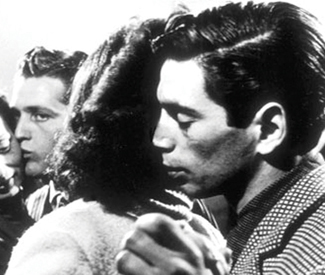
A pair of new Asian films about demons, real and figural, open today: Hara-Kiri: Death of a Samurai and Painted Skin: The Resurrection. Dual review here. The San Francisco Film Society screens 1953 Italian omnibus Love in the City; review here.

Hollywood urges you to spend your dollah dollah bills on creaky action heroes (The Expendables 2); mystical, twee garden-children (The Odd Life of Timothy Green); stop-motion kids who see dead people (ParaNorman); and girl-group melodrama (Sparkle; review and trailer below). A few more options, too, after the jump.

The Awakening In 1921 England Florence Cathcart (Rebecca Hall) is a best-selling author who specializes in exposing the legions of phony spiritualists exploiting a nation still grieving for its World War I dead. She’s rather rudely summoned to a country boys’ boarding school by gruff instructor Robert (Dominic West), who would be delighted if she could disprove the presence of a ghost there — preferably before it frightens more of his young charges to death. Borrowing tropes from the playbooks of recent Spanish and Japanese horror flicks, Nick Murphy’s period thriller is handsome and atmospheric, but disappointing in a familiar way — the buildup is effective enough, but it all unravels in pat logic and rote “Boo!” scares when the anticlimactic payoff finally arrives. The one interesting fillip is Florence’s elaborate, antiquated, meticulously detailed arsenal of equipment and ruses designed to measure (or debunk) possibly supernatural phenomena. (1:47) (Dennis Harvey)

Beloved There is a touch of Busby Berkeley to the first five or so minutes of Christophe Honoré’s Beloved — a fetishy, mid-’60s-set montage in which a series of enviably dressed Parisian women stride purposefully in and out of a shoe shop, trying on an endless array of covetable pumps. As for the rest, it’s a less delightful tale of two women, a mother and a daughter, and the unfathomable yet oft-repeated choices they make in their affairs of the heart. It helps very little that the mother is played by Ludivine Sagnier and then Catherine Deneuve — whose handsome Czech lover (Rasha Bukvic) is somewhat unkindly but perhaps deservedly transformed by the years into Milos Forman — or that the daughter, as an adult, is played by Deneuve’s real-life daughter, Chiara Mastroianni. And it helps even less that the film is a musical, wherein one character or another occasionally takes the opportunity, during a moment of inexplicable emotional duress, to burst into song and let poorly written pop lyrics muddy the waters even further. The men are sexist cads, or children, or both, and if they’re none of those, they’re gay. The women find these attributes to be charming and irresistible. None of it feels like a romance for the ages, but nonetheless the movie arcs through four interminable decades. When tragedy strikes, it’s almost a relief, until we realize that life goes on and so will the film. (2:15) (Lynn Rapoport)

Sparkle What started as a vehicle for American Idol‘s Jordin Sparks will now forever be known as Whitney Houston’s Last Movie, with the fallen superstar playing a mother of three embittered by her experiences in the music biz. Her voice is hoarse, her face is puffy, and her big singing moment (“His Eye Is on the Sparrow” in a church scene) is poorly lip-synced — but dammit, she’s Whitney Houston, and she has more soul than everything else in Sparkle combined and squared. The tale of an aspiring girl group in late-60s Detroit, Sparkle’s other notable points include flawless period outfits, hair, and make-up (especially the eyeliner), but the rest of the film is a pretty blah mix of melodrama and clichés: the sexpot older sister (Carmen Ejogo) marries the abusive guy and immediately starts snorting coke; the squeaky-clean youngest (Sparks, sweet but boring) is one of those only-in-the-movie songwriters who crafts intricate pop masterpieces from her diary scribblings. As far as Idol success stories go, Dreamgirls (2006) this ain’t; Houston fans would do better to revisit The Bodyguard (1992) and remember the diva in her prime. (1:56) (Cheryl Eddy)

http://www.youtube.com/watch?v=3kx1UK7ACmw

2 Days in New York Messy, attention-hungry, random, sweet, pathetic, and even adorable — such is the latest dispatch from Julie Delpy, here with her follow-up to 2007’s 2 Days in Paris. It’s also further proof that the rom-com as a genre can yet be saved by women who start with the autobiographical and spin off from there. Now separated from 2 Days in Paris’s Jake and raising their son, artist Marion is happily cohabiting with boyfriend Mingus (Chris Rock), a radio host and sometime colleague at the Village Voice, and his daughter, while juggling her big, bouncing bundle of neuroses. Exacerbating her issues: a visit by her father Jeannot (Delpy’s real father Albert Delpy), who eschews baths and tries to smuggle an unseemly selection of sausages and cheeses into the country; her provocative sister Rose (Alexia Landeau), who’s given to nipple slips in yoga class and Marion and Mingus’ apartment; and Rose’s boyfriend Manu (Alexandre Nahon), who’s trouble all around. The gang’s in NYC for Marion’s one-woman show, in which she hopes to auction off her soul to the highest, and hopefully most benevolent, bidder. Rock, of course, brings the wisecracks to this charming, shambolic urban chamber comedy, as well as, surprisingly, a dose of gravitas, as Marion’s aggrieved squeeze — he’s uncertain whether these home invaders are intentionally racist, cultural clueless, or simply bonkers but he’s far too polite to blurt out those familiar Rock truths. The key, however, is Delpy — part Woody Allen, if the Woodman were a maturing, ever-metamorphosing French beauty — and part unique creature of her own making, given to questioning her identity, ideas of life and death, and the existence of the soul. 2 Days in New York is just a sliver of life, but buoyed by Delpy’s thoughtful, lightly madcap spirit. You’re drawn in, wanting to see what happens next after the days are done. (1:31) (Kimberly Chun)  
Pussy Riot found guilty, local and global protests today

23

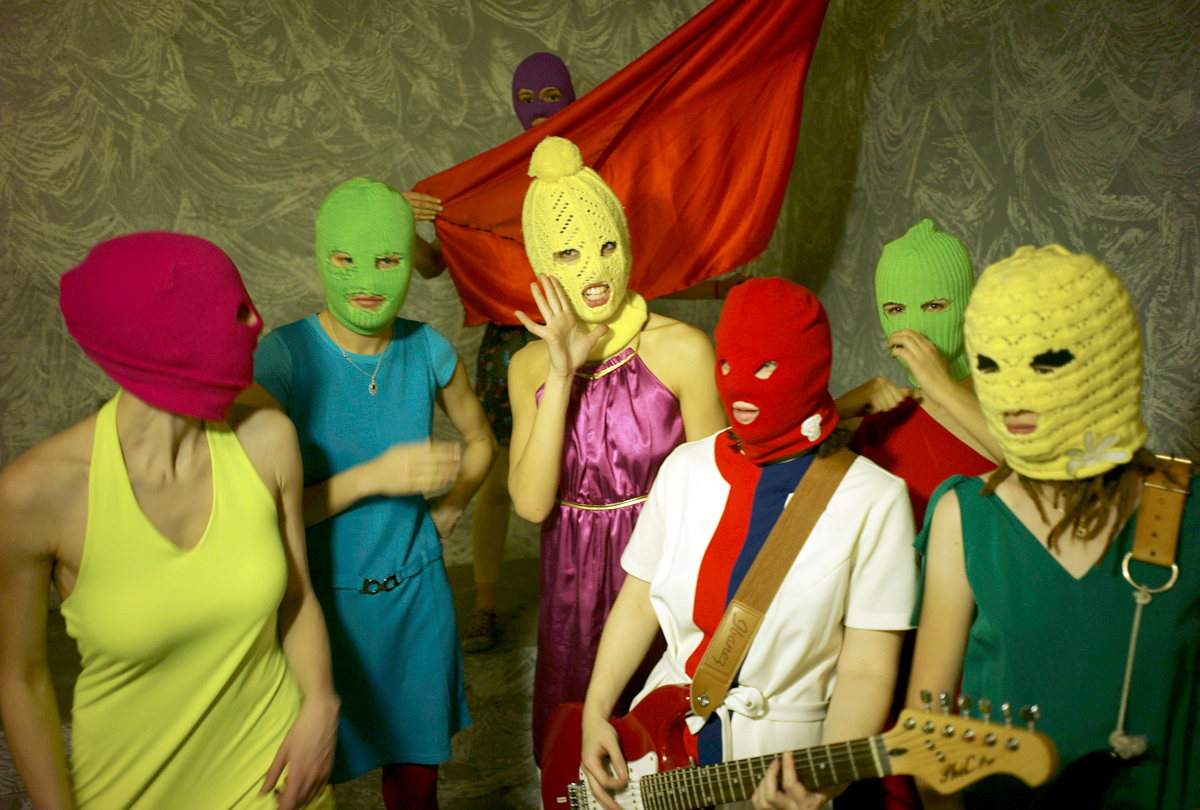
Today, three members of the Russian activist punk band Pussy Riot were sentenced to two years in prison for “hooliganism” stemming from an incident in February, when the trio performed its anti-Putin “Punk Prayer” inside a Russian Orthodox cathedral

Following the verdict, there will be global protests today including one at the Russian Consulate in San Francisco at 3pm and at Justin Herman Plaza at 6:30pm.

http://www.youtube.com/watch?v=ALS92big4TY

It’s a case that has sparked international interest, and become a cause célèbre for musicians and feminists worldwide. Those who have spoken out against the harsh treatment of the trio (who were kept in a cage during the trial, and forced, along with the entire courtroom, to stand for two hours while the judge droned on with the verdict) include Kathleen Hanna – who called the trial a farce – and Yoko Ono, Madonna, Paul McCartney, Pete Townshend, Peaches, and dozens more.

https://www.youtube.com/watch?v=SaJ7GzPvJKw

During that verdict reading, the judge said Pussy Riot “committed an act of hooliganism, a gross violation of public order showing obvious disrespect for society.”

According to Reuters, Moscow’s US embassy said the sentence appeared disproportionate to what the defendants did.

The women, Nadezhda Tolokonnikova, 22, Marina Alyokhina, 24, and Yekaterina Samutsevich, 30 (two of whom are mothers to young children) have said the performance, in which they donned colorful ski masks,was a protest against Vladimir Putin’s ties with the church. The song was less than a minute long, and now the group is set to spend two years in prison for it.

The lyrics of the “Punk Prayer” are below:

St. Maria, Virgin, Drive away Putin
Drive away! Drive away Putin!
(end chorus)

Black robe, golden epaulettes
All parishioners are crawling and bowing
The ghost of freedom is in heaven
Gay pride sent to Siberia in chains

The head of the KGB is their chief saint
Leads protesters to prison under escort
In order not to offend the Holy
Women have to give birth and to love

Holy shit, shit, Lord’s shit!

(Chorus)
St. Maria, Virgin, become a feminist
Become a feminist, Become a feminist
(end chorus)

Church praises the rotten dictators
The cross-bearer procession of black limousines
In school you are going to meet with a teacher-preacher
Go to class – bring him money!

Patriarch Gundyaev believes in Putin
Bitch, you better believed in God
Belt of the Virgin is no substitute for mass-meetings
In protest of our Ever-Virgin Mary!

(Chorus)
St. Maria, Virgin, Drive away Putin
Drive away! Drive away Putin!
(end chorus)

The case, of course, extends far beyond this activist band, questioning bubbling questions of free speech in Putin’s Russia. Thousands are taking a stand, protesting in Barcelona, Berlin, Bonn, Dublin, Hamburg, Kaliningrad, Kiev, London, M
arseille, Melbourne, Moscow, München/Munich, Murmansk, Nantes, New York City, Nice, Odessa, Paris, Perm, Reykjavik, Riga, Samara, Stockholm, St. Petersburg, Tel Aviv, Toronto, Toulouse, Tournai, Belgium, Tver, Västerås, Vilinus, Warszawa, Wien/Vienna  – and San Francisco.

http://www.youtube.com/watch?v=SS1H8IkOm64

Russian Consulate protest
Fri/17, 3pm
2790 Green, SF

Justin Herman Plaza protest
Fri/17, 6:30pm
One Market, SF

Dick Meister: The billionaire’s bill of rights

8

By Dick Meister

Dick Meister, former labor editor of the SF Chronicle and KQED-TV Newsroom, has covered labor and politics for more than a half-century. Contact him through his website, www.dickmeister, which includes more than 350 of his columns.

Billionaire corporate interests and other well financed anti-labor forces are waging a major drive to stifle the political voice of workers and their unions in California that is certain to spread nationwide if not stopped – and stopped now.

At issue is a highly deceptive measure, Proposition 32, on the November election ballot, that its anti-labor sponsors label as an even-handed attempt to limit campaign spending. But actually, it would limit – and severely – only the spending of unions while leaving corporations and other moneyed special interests free to spend as much as they like.

Unions would be prohibited from making political contributions with money collected from voluntary paycheck deductions authorized by their members, which is the main source of union political funds.

 But there would be no limits on corporations, whose political funds come from their profits, their customers or suppliers and the contributions of corporate executives. Nor would there be any limit on the political spending of the executives or any other wealthy individuals. What’s more, corporate special interests and billionaires could still give unlimited millions to secretive “Super PACs” that can raise unlimited amounts of money anonymously to finance their political campaigns.

The proposition would have a “devastating impact” on unions, notes Professor John Logan, director of labor and employment studies at San Francisco State University, writing in  the Hill’s Congress blog.  As he says, it would likely all but eliminate political spending by unions while greatly increasing political spending by business interests and wealthy individuals.

 Anti-labor interests are already outspending unions nationwide by a ratio of more than $15 for every $1 spent by unions. Between 2000 and 2011, that amounted to  $700 million spent by anti-labor forces, while unions spent just a little more than $284 million.

 Proposition 32 would even restrict unions in their communications with their own members on political issues. That’s because money raised by payroll deductions pays for the preparation and mailing of communications to union members, including political materials.

Unfortunately, there’s even more – much more –to Proposition 32. It also would prohibit unions from making contributions to political parties and defines public employee unions as “government contractors” that would be forbidden from attempting to influence any government agency with whom they have a contract.

That restriction applies not only to unions. It also would cover political action committees established by any membership organization,  “any agency or employee representation committee or plan,” such as those seeking stronger civil rights or environmental protections.

Proposition 32 seeks to weaken, that is, any membership group which might seek reforms opposed by wealthy individuals or corporations and their Republican allies.  It’s no wonder the measure is actively opposed, not only by organized labor, but also by the country’s leading good-government groups, including Common Cause and the League of Women Voters.

Yet the proposition’s sponsors have the incredible gall to bill their measure as genuine campaign finance reform. They obviously hope that claim, which Common Cause accurately describes as a “laughable deception,” will win over the many voters who have been demanding reforms and who, in their eagerness, will fail to recognize the measure’s true nature.

“This is not genuine campaign finance reform,” as San Francisco State’s John Logan says, “but a bill of rights for billionaires.”

The losers would include teachers, nurses, police, firefighters and other union members and those who benefit from the essential services they provide – students, the elderly, and the ailing, the poverty stricken, those who work and live in unsafe conditions and other needy citizens, and consumers, environmentalists and others who also are neglected by the profit-chasing corporate interests that dominate political and economic life.

Make no mistake: Lots of money is being funneled into the Proposition 32 campaign by some of the same wealthy backers who bankrolled such anti-labor efforts as the campaign that blocked the massive attempt to recall virulently anti-labor GOP Gov. Scott Walker of Wisconsin this year.

Should the anti-union forces also prevail, it will undoubtedly lead to what Logan says “will promote a tsunami of ballot initiatives in 2013 at the local level and in 2014 at the state level designed to drive down working conditions in both the public and private sectors.”

Logan adds, “Lacking the ability to oppose these reactionary measures under the new election rules, California’s workers could soon face the weakest labor standards in the country”. But if the measure is rejected, it “may slow the momentum behind other attempts to increase the corrosive impact of money in politics.”

It’s true that some states already have laws and regulations seriously limiting labor’s influence. But it’s certain that victory by the anti-labor forces in California will slow any attempts at reform in other states and lead as well to attempts to impose anti-union measures elsewhere, as well as expanding those that already exist.

The stakes are huge. If the 1 percent have their way in California, the country’s largest state, other states are certain to follow.

For more from John Logan, check his piece in the East Bay Express, “If you liked Citizen United, you’ll love Prop 32.” http://www.eastbayexpress.com/ebx/if-you-liked-citizens-united-youll-love-prop-32/Content?oid=330613

Dick Meister, former labor editor of the SF Chronicle and KQED-TV Newsroom, has covered labor and politics for more than a half-century. Contact him through his website, www.dickmeister, which includes more than 350 of his columns.

Appetite: Delicious new cuisine and cocktail reads

0

Fermentation and distillation, hot plats and sugar cones, sweet creams and brokeasses … These eight books were released this spring, and are among the best of what has landed on my desk this year:

TRADITIONAL DISTILLATION: ART AND PASSION
by Huber Germain-Robin

Anyone who knows US craft distilling knows Hubert Germain-Robin, one of the pioneers in the American craft distilling movement. He was making world class, French-style brandies (he is French, after all) since the early ’80s right here in Northern California at Germain-Robin, which he co-founded, an example to generations after him of what true, elegant brandies should be. As he states in the introduction, “When I came to California in 1981, I realized the unbelievable potential of the New World, with such diversity in grape varietals, microclimates, and less demanding restrictions than there are in France.”

He just released his first book, Traditional Distillation, and, as the inside cover states, it’s an ode to the “passion, art and poetry” behind distillation. I’ve seen a few (there’s really not many) technical distillation books that get into still types or cutting the “heads and tails” of a distillation batch. Germain-Robin’s book (the first in a series of books on brandy production) is a thoughtful essay, covering the technical but doing so in an artistic, poetic way. The book boasts an Old World, classic look, delving into the philosophy behind distillation as much as process. A romantic sensibility pervades this book and passion speaks from the pages – there is even poetry and classic art included, doing justice to the reason people like myself (one who rarely had a drink in younger years), fell in love with the artisan craft and history behind distillation. It’s a short, succinct book, but a unique one. Hubert captures the beauty of the craft, giving concrete advice for would-be distillers everywhere, ensuring that his incredible knowledge and legacy is shared with many more.

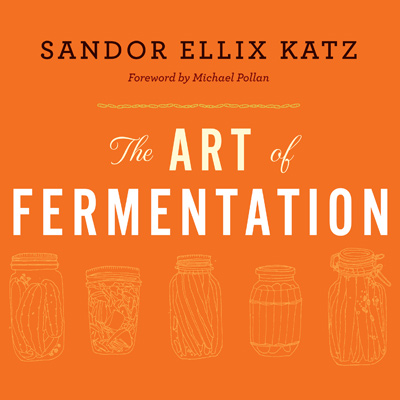
THE ART OF FERMENTATION by Sandor Ellix Katz

Just released June 12, The Art of Fermentation (with forward by none other than Michael Pollan) is sure to be the gold standard on fermentation. Katz published Wild Fermentation in 2003, at the time dubbed the “fermenting bible” by Newsweek. As the press release states for his new, elegantly understated book, he now has an additional decade of experimentation behind this one. The first book of its kind, it contains recipes, yes, but ultimately is a 400+ page textbook on all things fermentation, its history and processes, and DIY steps in a range of categories from meads, wines and ciders to meat, fish and eggs. There’s plenty of study material for food and drink folk alike, whether an extensive section on sour tonic beverages (from kombucha to kvass) or details on fermenting beans, seeds and nuts. Katz’ book makes me want to start fermenting my own potato beer immediately.

TAKE AWAY by Jean-Francois Mallet

Take Away is a lovely photo book. Released in the US in April (first released in France in 2009), this beauty of a book is a virtual escape around the world, immersing the reader in street foodscapes and dishes from Shanghai to the Ukraine. Be warned: perusing this book is difficult on an empty stomach. And for those of us who thrive on travel and exploring every nook and cranny of a city or region, Mallet’s approachable, street savvy photography also induces travel lust.

CINDY’S SUPPER CLUB: Meals from Around the World to Share with Family and Friends by Cindy Pawlcyn

Cindy Pawlcyn is one of California’s trailblazing chefs, aiding Napa in becoming a dining destination when opening Mustard’s Grill nearly 30 years ago along with subsequent restaurants, like Cindy’s Backstreet Kitchen. She’s written a few cookbooks, but I particularly enjoy her newest, out this May: Cindy’s Supper Club. A book based on favorite international recipes prepared in her supper clubs with friends, the recipes span the globe from Russia and Hungary to Lebanon, Peru, Korea. Cindy’s intros to each selected country and recipe feel comfortable, like a chef chatting about their travels and technique as you sit with them in their kitchen. Though recipes tend toward the heartwarming, soulful kind, many list more than ten ingredients and aren’t exactly simple. But for cooks ready to try something new yet not fussy, adventure lies within these pages, whether Flemish meatloaf in spicy tomato gravy or white gazpacho (made of white bread, milk, almonds, garlic, olive oil, sherry vinegar) with peeled white grapes.

PLATS DU JOUR: the girl and the fig’s Journey Through the Seasons in Wine Country by Sondra Bernstein

Just see if you don’t long to move to Sonoma after spending time with Plats du Jour, a large, photographic book capturing Sonoma’s vibrancy. With a range of recipes from Sondra Bernstein’s beloved girl and the fig duo and Italian restaurant, Estate, the book journeys well beyond recipes. Sectioned by seasons, there’s highlights on wine, cheese, and produce, pairing possibilities, origins of foods, cocktail hour menus, and seasonal menus to recreate at home. Interspersed throughout are drink recipes, such as the perennially popular lavender mojito from girl and the fig http://www.platsdujour.net/#!home/mainPage. Photos and stories of trailblazing Sonoma farmers keep the reader rooted to a sense of place. Though the variety of info might initially seem disparate, it weaves into an inspiring whole urging one to seek out ingredients from their own farmers markets and entertain or cook inspired by the invigorating spirit behind Bernstein’s book and the artisans of Sonoma.

SWEET CREAM AND SUGAR CONES
by Kris Hoogerhyde, Anne Walker, and Dabney Gough

Bi-Rite’s ice cream essentially needs no introduction. For those in San Francisco, it’s already an institution. For foodies nationally, the beloved market’s ice cream has been written up in most national food magazines, among the best ice creameries in the country. Thankfully this spring, founders Anne Walker and Kris Hoogerhyde, along with writer Dabney Gough, have released a book, Sweet Cream and Sugar Cones, sharing many of Bi-Rite’s lauded recipes (yes, their legendary salted caramel ice cream, which spawned dozens of imitations around the nation, is included), and many more besides, including sweets far beyond ice cream, from cookies to pie. The book is grouped in ingredient-themed sections like chocolate, coffee, vanilla, citrus or nuts. I take to the herbs and spices section with recipes like basil or peach leaf ice cream, picante galia melon pops, and my favorite Bi-Rite flavor of recent years, Ricanelas (cinnamon and Snickerdoodles). Having already tried a couple of the recipes, they are easy to follow, and, of course, delicious.

SUNSET EDIBLE GARDEN COOKBOOK

Sunset has cornered DIY gardening and cooking for decades in their magazine and cookbooks, with recipes and step-by-step gardening instructions. Their latest book, Edible Garden Cookbook, just out this spring, is another winner with accessible recipes, growing-harvesting-storage-cooking tips and varietal lists on a wealth of vegetables (from peas to cucumbers), herbs (mint to thyme), and fruits (melons to stone fruit). Creative recipe twists enliven everyday dishes like an icebox salad layered in a casserole dish or kabocha squash filled with Arabic lamb stew.

THE BROKEASS GOURMET COOKBOOK by Gabi Moskowitz
(Review by Andi Berlin)

Chasing the elusive paycheck is a tiresome routine, but at least it’ll taste good with the new BrokeAss Gourmet cookbook from San Franciscan Gabi Moskowitz (not to be confused with Broke-Ass Stuart.) The former kindergarten teacher-turned-caterer-turned-Internet-celebrity founded the website BrokeAss Gourmet after seeing friends laid off from tech jobs and eating junk. Taking a conversational, gal-pal tone, Gabi guides us through the essentials of running an eclectic kitchen – from stocking a full pantry to boosting cheap proteins with flavorful sauces. Recipes like vegetable lasagna with wonton wrappers demonstrate her craftiness. The book is high on kitsch: rather than photographs, illustrations of animals stand beside cheeky anecdotes (“Because bacon really does make everything better.”) Moskowitz paints a vivid Bay Area landscape, adapting several recipes from ethnic joints and buzzy spots like Bakesale Betty. And if she relies too heavily on sriracha sauce, forgive her. When you’ve got to shove off to work early morning after morning, it’s often the call of the rooster that gets you going.

Subscribe to Virgina’s twice-monthly newsletter, The Perfect Spot, www.theperfectspotsf.com

As classes begin again, CCSF reconsiders its mission

0

Fall classes at City College of San Francisco began yesterday.  Students streamed through all nine campuses, navigating their schedules.

But they are coming back to a different school than they left. On July 3, Interim Chancellor Pamila Fisher received a letter from the Accrediting Commision of Community and Junior Colleges saying that the school could lose it’s accreditiaton, leading to its closure, unless it is able to succesfully “show cause” for staying open. The letter laid out 14 “major problems” that the accreditation board says CCSF must fix.

Now, the race is on, as students, faculty, staff, administrators, trustees, and community members rush to keep the school open without compromising its unique and succesful qualities.

Welcome Weeks

At the Ocean and Mission campuses, student organizers put on rallies that thousands of passers-by saw on their way to class. Volunteers holding “welcome weeks” events hosted music and speakers, and implored students walking past to talk into the mic about what CCSF means to them. Organized by the Save CCSF coalition that formed in July, the welcome weeks activities, which may include speakers, music, litterature, film screenings, and other events will continue until August 31.

“This is a community, not just a college. And right now, our community is under attack,” said Robert Chu, a former CCSF student who was volunteering with the welcome weeks events.

For Jason Bowden, another student who spoke at the rally, yesterday was the first day of college. Bowden said he is planning to earn his EMT certification and Associate Degree in fire science. “The dream is to be a firefighter,” Bowden said at the rally.

Bowden said he is confident the school will stay open. “Initially, I was freaked out,” he said. “But with 90,000 students, from a sociological perspective it would be disastrous. But I don’t want to say its not going to happen. Stupider things have happened.”

Chu said he was assisted by the Extended Opportunities Programs and Services Program (EOPS).“I’m actually an orphan,” said Chu. “EOPS supported me graciously and helped me out.”

The EOPS office is in a building near Ram Plaza, where the Ocean Campus rally took place yesterday. The adjacent Student Union building houses other programs that aid students, such as Students Supporting Students and the Multi Cultural Resource Center. Nearby, offices of the Veterans Educational Transition Services and Guardian Scholars program, which supports students coming to CCSF from the foster care system.  Some expressed concern that programs like these will be deprioritized for funding as the school tries to meet its accreditation requirements.

The rally’s backdrop was a banner reading “Keep community in community college. Accessibility and affordability are non-negotiable.”

Mission statement

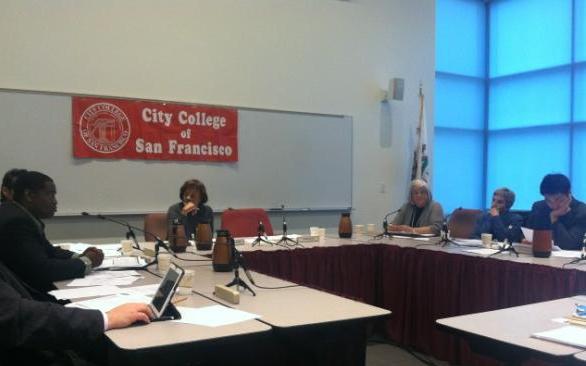
The evening before classes began, at an August 14 special board of trustees meeting, the trustees were discussing their priorities for CCSF moving forward.

The first recommendation in the accreditation board’s report regards CCSF’s mission statement.

“The team recommends that the college establish a prescribed process and timeline to regularly review the mission statement and revise it as necessary,” the text of the reccommendation reads. “The college should use the mission statement as the benchmark to determine institutional priorities and goals that support and improve academic programs, student support services and student learning effectively linked to a realistic assessment of resources”

In the wake of the accreditation crisis, the school set up 15 working groups to focus on different aspects of the process. The mission statement working group, tasked with evaluating the mission statement, and potentially, changing it, presented their work August 14– a new mission statement for the board to consider.

The board approved the first version of the new mission statement, which will be revisted at an August 23 meeting.

The new version includes a few changes. The new mission statement lists four goals: “transfer to baccalaureate institutions; acheivement of Associate Degrees in Art and Science; Acquisition of certificates and career skills needed for success in the workplace;” and “Basic Skills, including learning English as a Second Language.”

The goals that have been cut out of the mission statement: “Active engagement in the civic and social fabric of the community, citizenship preparation; completion of requirements for the Adlt High School Diploma and GED; Promotion of economic development and job growth” and “lifelong leaning, life skills, and cultural enrichment.”

The mission statement already read “CCSF provides educational programs and services to meet the following needs of our diverse community”; the new version adds the phrasing “that promote succesful leaning and student achievement.” Another phrase was added: “the college offers other programs and services supplementrary to our mission, only as resources allow and whenever possible in collaboration with partnering agencies and community business organizations.”

The mission statement working group was one of the first to complete their initial work. As Chancellor Fisher explained in the board of trustees meeting, “We need to finish recommendation one as early as possible because it will affect out planning.”

The working group that wrote the mission statement was comprised of faculty, administrators, trustees, and community members. No students were involved, until two– Associated Students president Shanell Williams and Student Senator Diamond Dave Whitaker– were added to the working group last week. Today, the mission statement working group, with its two new additional members, meets to discuss the ongoing process of documenting CCSF’s priorties. Their meeting is public and will take place 1:30-2:30pm at Batmale Hall.

The Performant: Howard’s End

0

While the Performant is off hugging trees in Oregon, please enjoy this series of interviews with the curators of three innovative performance spaces.

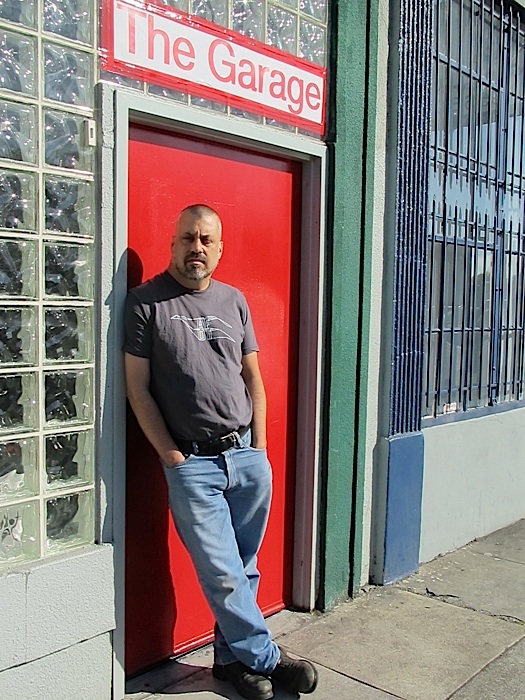
After five years of making the address 975 Howard synonymous with emergent dance, queer, and fringe artists, Joe Landini has packed up The Garage and relocated it further down SOMA way. Now tucked in an industrial zone next to an automotive repair shop, The Garage’s new location at 715 Bryant might lack the allure of being a hidden gem on ramshackle Howard Street, but has the distinct advantage of having fewer neighbors to annoy, a consideration no low-budget performance space can afford to completely ignore. Particularly one as active and prolific as The Garage—which has hosted over 1000 performances for some 50,000 people during its five-year tenure.

“We are awful neighbors!” Landini admits when I swing by to check out the new digs.

“We are loud. We host 120 choreographers a year, 230 shows a year, that’s a lot of music to listen to.” After looking around the Central Market area for three years without finding a space that was both affordable and allowed for public assembly, Landini set his sights on the section of SOMA he knew to have some of the lowest rental rates in the area yet was still mostly accessible via public transportation—a consideration for many of his performers and audiences.
       
After a cacophonous May Day parade from Howard Street to Bryant, led by a merry conglomerate of performers — familiar faces from The Offcenter and Garage performance series such as RAW and AIRspace — The Garage opened back up for business just 24 hours later. The space is still a work-in-progress a few weeks later (aren’t all moving projects?), but its current bare bones state will not seem unfamiliar to its fans (makeshift risers, a table over to the side for the board operator, minimal but effective lighting). What’s most important, from Landini’s POV is that they are finally ADA compliant, and they have repainted the front door red: “theatre’s love tradition.”

In addition to moving into a new physical space, The Garage is occupying a new psychic space, expanding its definition of incubation, by helping its emerging artists connect to spaces where they can create work for larger audiences. Recently, six Garage artists dubbed The WERK Collective, participated in a joint mentorship program between The Garage and ODC <www.odcdance.org>, culminating in a weekend of performance at ODC, the next step up the narrow ladder of professional possibility that defines the San Francisco Bay Area dance community.

“We’re the only free space in the city now and that does attract a very specific group of broke artists,” Joe muses. “We’ve been so lucky to have some of those artists stay with us for the whole five years, and that’s where the partnership with ODC came up, because I had to come up with a way to keep them involved, and they had clearly outgrown the space…so hopefully that’s going to be a model for the future, an artist could start here and then work their way into ODC (which is) pretty well-organized in terms of where they want their artists to go….(ODC Director) Christy Bolingbroke is very sharp, and she has a real clear understanding of the national profile, and what’s happening nationally.”

What has also changed for Landini is a deeper understanding of The Garage’s overall mission and impact on its core community.

“The old space was such a lark…we threw a lot of mud at a lot of walls and some stuff stuck, but that’s not going to work here…..we’re going to have to become a really shrewd organization. I didn’t really have a sense of the importance of the work we were doing. I mean I kind of knew in the back of my mind, because so many people were coming through…and that community rallied to move into this space…they really really got behind it.”

Hate (and free) speech

20

How far can you push free speech? Is it okay for Muni to run ads that are utterly, inexcusably offensive to Arabs and Muslims in the name of political expression?

I’m pretty much always on the side of the First Amendment. And we were furious when a Bay Guardian ad campaign accusing then-mayor WIllie Brown of political corruption suddenly vanished from the sides of the local buses. It’s hard to seek government limitations on any political statement. But if the ads that appeared Aug. 7 on Muni aren’t over the line, they’re pretty close to it.

Here you have an organization described not only by the Southern Poverty Law Center but by the Anti-Defamation League as a hate group buying space on San Francisco buses for ads that effectively disparage a vast religious, ethnic and cultural community as “savages.” The campaign is obviously designed to get publicity; not that many San Franciscans are going to be convinced to join the American Freedom Defense Initiative. Nobody’s opinion on the Middle East will be swayed by this shit.

But this tiny cadre of loonies, led by Pamela Geller, who is really fucking scary, wants attention. In New York, the anti-Muslim group sued when the city tried to take down the same bus ads, and you know they’d love it if that happened here. Muni says it can’t legally pull the ads, which is probably true — although BART has a more restrictive policy.

It’s not just idle rhetoric — this stuff frightens people. “We’re hearing from people that they’re uncomfortable riding Muni,” Zahra Biloo, executive director of the Bay Area office of the Council on American-Islamic Relations, told me.

Obviously, you can’t run ads that enourage someone to engage in violence. Is dehumanizing people and calling them “savages” the same thing? Biloo thinks it’s pretty close: “It’s important for progressive cities to say, ‘not in our city,'” she said.

A change.org petition condemning the ads has more than 2,000 signatures.

On the other hand, I don’t want to give Geller the pleasure of suing San Francisco and making this into a Free Speech cause. Because that’s exactly what she wants, and probably the reason she bought the ads in the first place. So how about this: The supervisors pass a resolution denouncing the ad and the message, and Muni agrees to give CAIR the same number of ads, free, in the same locations (gee, maybe even on the other side of the same buses) to present an alternative message.

At least it’s a start.


Squeeze This: accordion acts you should know

2

Was there anything more unexpected in season three of Mad Men than the scene in which Joan brought out her cherry-red squeezebox, and serenaded a dinner party with “C’est Magnifique?” Accordions were once a bastion of adult gatherings; there were bona fide accordion stars — Dick Contino, who played San Francisco’s Barbary Coast in the 1940s, made it on the pop charts — but in this century, they’ve left the mainstream, resurging underground in pockets of klezmer, pirate polka, Tejano music, and gypsy jazz.

In her new biography, Squeeze This, writer-musician Marion Jacobson delves deep into the history of the instrument and contemplates its place as a cultural technology. At an event this week, Jacobson will likely discuss some of her findings with the Accordion Apocalypse crew (and sign copies of her book), followed by squeezebox-filled performances by Luz Gaxiola, the Mad Maggies, and Sheri Mignano.

In anticipation of her appearance, I asked Jacobson to give us a list of her favorite accordion acts, young and old, traditionalists and rule-breakers. See her responses below:

Marion Jacobson’s Top Five Accordion Acts

Alex Meixner: my definition of an “accordion idol”
https://www.youtube.com/watch?v=0PIEyLNEdOE
 
Gogol Bordello: gypsy punk
http://www.youtube.com/watch?v=aPfeOAhDfbM
 
Five-time Grammy winner Flaco Jimenez, the soul of Chicano and Tejano music
https://www.youtube.com/watch?v=gK1OIuTNsI8
 
Dick Contino: 1950s accordion idol turned hip elder statesman
https://www.youtube.com/watch?v=2pbM9q3zbUo

Weird Al Yankovic: parody + accordion = sublime masterpieces
https://www.youtube.com/watch?v=MRJILK3NxSM
 
Two Accordionists to Watch Out For
 
Cory Pesaturo: no accordionist today has better improv chops
 
http://www.youtube.com/watch?v=TfD3XNa1-6Y
 
Ginny Mac: she sings, too!
https://www.youtube.com/watch?v=DQnvTHxD8Ig
 
In a Category of Their Own Making
 
Those Darn Accordions: Welcome to hell, here’s your accordion

Squeeze This! A Cultural History of the Accordion book event
With author Marion Jacobson, music by Luz Gaxiola, with the Mad Maggies, and Sheri Mignano
Thu/16, 7pm, free
Accordion Apocalypse
255 10th St., SF
(415) 596-5952
www.accordionapocalypse.com

Tastes of Cindy: Drag artists re-enact Cindy Sherman portraits from SFMOMA show

11

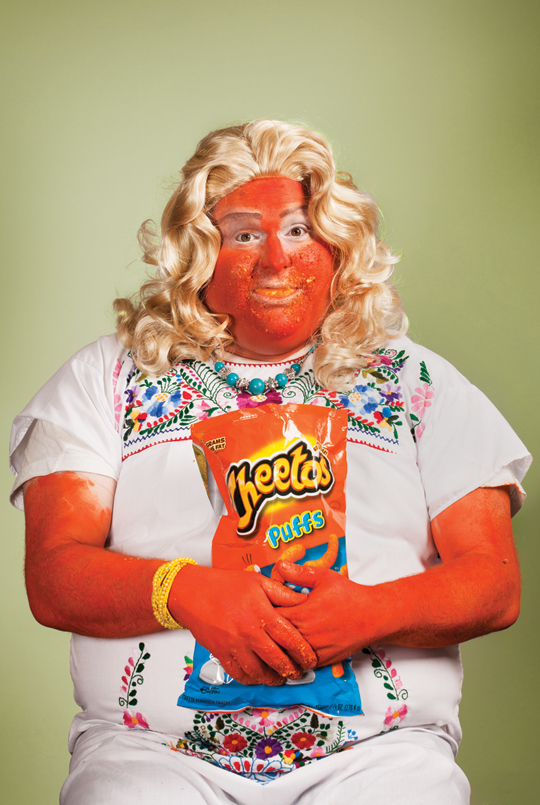
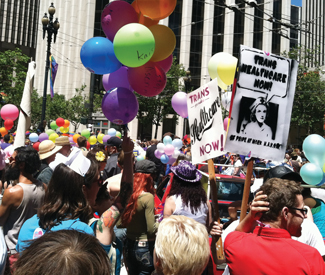
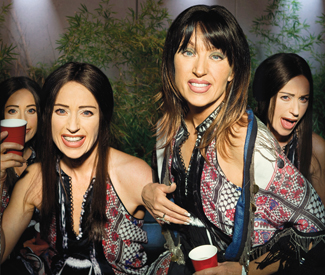
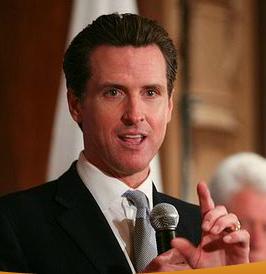
To celebrate the incredibly engaging Cindy Sherman retrospective at the SF MOMA (through October 8), we asked four of San Francisco’s premier drag performance artists to re-enact four of Sherman’s iconic portraits. It’s all about looking twice — or in Sherman’s case, four or five times — and we wanted to see how many layers of gaze her work could hold.

Read Matt Fisher’s review of the retrospective here and Rob Avila’s review of accompanying show, “Stage Presence” here. All re-enactment photos by Keeney + Law.


>> FAUXNIQUE: UNTITLED #351


The truly artistic Fauxnique, aka Monique Jenkinson, currently holds a fellowship through the de Young Museum: she’ll be Artist in Residence for the month of September in the de Young’s Kimball Education Gallery, working in an open studio setting, co-hosting “Dance Discourse Project #13: Working in Museums” with Dancers’ Group and CounterPULSE on Saturday, September 15 at 2pm), and making new work, including “Instrument,” a solo created in an experimental collaboration with choreographers Chris Black, Amy Seiwert, and Miguel Gutierrez premiering at CounterPULSE in November.


>> BOY CHILD: UNTITLED #355


A relative newcomer to the scene, Boy Child stretches drag performance into phantasmagorical new directions, mashing neon hip-hop swagger into goth-electro darkness. Lately, she’s been representing SF in New York and the Pacific Northwest and gaining attention for her photography.


>> LIL MISS HOT MESS: UNTITLED #360


One of the only queens who could have most of SF’s colorful nightlifers dancing the hora to “Hava Nagila” at her Bar Mitzvah x2 party — or falling on their bums at her annual rollerskating birthday jam — Lil Miss Hot Mess will be stepping down as Miss Tiara Sensation during next month’s pageant (Saturday, September 29, 9pm, $10-$20. Rickshaw Stop, SF. www.rickshawstop.com) and enrolling in grad school, to begin her new life as a career girl.


>> LADY BEAR: UNTITLED #354


Always elegantly but firmly large and in charge, Lady Bear hosts monthly parties Hot Rod at the Powerhouse and Dark Room at the Hot Spot here in SF and Cub Scout at the Eagle in LA. As Dragoon the actress, she’s currently starring in the uproarious “Designing Women Live!” (Tuesdays through August 28, 8pm, $20. Rebel, 1760 Market, SF.) and the upcoming “Roseanne: The Play” in September. She also recently starred in a short film, Love and Anger, with Cousin Wonderlette.


Photography: Keeney + Law

Art direction: Brooke Robertson

Assistant: Caitlin Donohue

Concept: Marke B.

Our Weekly Picks: August 15-21

0

WEDNESDAY 15

Family of the Year

The most compelling aspect of Family of the Year’s live show is the transparency of the band members’ genuine affection for each other. The Los Angeles-based indie group weaves together folk influences and male/female vocal harmonies to create a fun, lighthearted brand of nostalgic rock. If this sounds familiar, look no further than West Hollywood, where Edward Sharpe and the Magnetic Zeroes have been doing their own multi-gendered feel-good folk melodies for years. Apparently the Magnetic Zeroes also noticed these similarities, because they asked Family of the Year to tour with them in 2011, shortly after Ben Folds chose them out of 700 bands as his opener at Symphony Hall. (Haley Zaremba)

With the Colourist

9pm, $10

Brick and Mortar Music Hall

1710 Mission, SF

(415) 800-8782

www.brickandmortarmusic.com


THURSDAY 16

Squeeze This! A Cultural History of the Accordion

Was there anything more unexpected in season three of Mad Men than the scene in which Joan brought out her cherry-red squeezebox, and serenaded a dinner party with “C’est Magnifique?” And yet, accordions were once a bastion of adult gatherings; there were bona fide accordion stars — Dick Contino, who played San Francisco’s Barbary Coast in the 1940s, made it on the pop charts — but in this century, they’ve left the mainstream, resurging underground in pockets of klezmer, pirate polka, Tejano music, and gypsy jazz. In her new biography, Squeeze This, writer-musician Marion Jacobson delves deep into the history of the instrument and contemplates its place as a cultural technology. At an event this week, Jacobson will likely discuss some of her findings with the Accordion Apocalypse crew (and sign copies of her book), followed by squeezebox-filled performances by Luz Gaxiola, the Mad Maggies, and Sheri Mignano. (Emily Savage)

7pm, free

Accordion Apocalypse

255 10th St., SF

(415) 596-5952

www.accordionapocalypse.com


Whiskerman

The cover of Whiskerman’s self-titled 2011 album features a sharp dressed man in a a forest clearing, his untamed hair brimming out from behind an animal mask, while he holds up a violin. The intriguing cover art introduces us to a sound no less whimsical and complex: led by Graham Patzner, Whiskerman boasts an inventive alternative rock meets folk sound. The Bay Area band demands attention with softly building songs such as “Brother Jim”, while their rock’n’roll songs like “Blind Saint” are undeniably catchy hits. Patzner comes from a musical family — his brother Lewis (Judgment Day) plays cello in the band, and their eldest brother Anton Patzner plays violin in JD. The work of the Patnzer brothers can be characterized by their attention to musical craft, but also, a certain magical quality. Whiskerman takes each magic moment and stretches it out — until you, and everyone else privy, becomes immersed in the wild sounds that are their nature. (Shauna C. Keddy)

With Con Brio $10, 9pm

Ashkenaz

1317 San Pablo, Berk.

(510) 525- 5054

www.ashkenaz.com


Dr. John and the Lower 911

Locked Down — the latest from the inimitable Dr. John — opens with a Afro-strutting, funky rhythm that’s swamped with confidence. And it’s for good reason, because at this point in his career, the New Orleans based bayou blues rocker has little to prove. An influential session player and solo artist — without whom Beck’s “Loser”, Richard Linklater’s Dazed and Confused, Martin Scorsese’s The Last Waltz, and that band from the Muppets would not be the same — Dr. John has laid his hands on so many genres and has a lengthy list of collaborators that it’s simply exhausting to think about. The Black Keys’s Dan Auerbach lends some playing and production to the new album, which will likely win Grammys in all the relevant categories. (Ryan Prendiville)

With John Cleary

hu/16-Fri/17 9pm, $39.50

Independent

628 Divisadero, SF

(415) 771-1421

www.theindependentsf.com


Alejandro Escovedo and the Sensitive Boys

Alejandro Escovedo’s illustrious career spans four decades, beginning with his role as a founding member of San Francisco punk band the Nuns in the 1970s. From there, he moved to Austin, Tex. to play alternative country and roots rock, first with Rank and File, and later as True Believers with brother Javier. Escovedo released his first solo album in 1992, Gravity, a heartfelt record that explores themes of love and loss while showcasing a variety of his musical influences. Escovedo has performed with his band the Sensitive Boys as of late, and their most recent album, Big Station, sees Escovedo turn up the amps and embrace his heartier, rollicking rock’n’roll side. (Kevin Lee)

With Jesse Malin

8pm, $25

Bimbo’s 365 Club

1025 Columbus

(415) 474-0365

www.bimbos365club.com


FRIDAY 17

Blue Note Rendezvous Cabaret

One of the great things about America is that people are free to blend ideas and concepts to their hearts’ content. (Personal favorite example: Korean tacos.) In this grand tradition, the folks at 50 Mason mix and match Blue Note-flavored music with belly dancing at the quarterly Blue Note Rendezvous Cabaret. Professional gyrators shake and slither to live bands hammering out jazz, swing, and whatever happens to be the music of the night. This installment’s headliners, MWE, call themselves a Middle Eastern marching band, and bring festive sounds that also evoke the Balkans, Greece, and Turkey. Opening five-piece local ensemble Horns a Plenty ditched drums, strings, and piano, instead opting for an all-brass jazz approach. (Lee)

With MWE, Horns a Plenty

9pm, $10

50 Mason Social House, SF

(415) 433-5050

www.50masonsocialhouse.com


Nosaj Thing

Nosaj Thing (pronounced “no such thing”) cemented his position in the post-dubstep community in 2009, no small feat considering the number of already-established Los Angeles-based beatmakers. He gained an international following in 2009 with the release of his haunting, spacey debut LP Drift, along with well-received remixes of Flying Lotus, Charlotte Gainsbourg, and Radiohead. Live performances at Spain’s Sonar festival, at California’s own Coachella — and seemingly everywhere in between — solidified Nosaj’s reputation for dreamy, woozy, electronic hip-hop. Fans are pining for a new full-length but will have to settle for bits and pieces Nosaj will likely drop during his set. Opener Mux Mool has just released Planet High School, a playful mix of ’80s-rooted beats and video game synths. (Lee)

With Mux Mool, Manitous ft. Swoonz, Drewmin

9:30pm, $15

Public Works

161 Erie, SF

(415) 932-0955

www.publicsf.com


SATURDAY 18

Pedalfest

Babes, your bikes put up with a lot. Literally, think of how supportive they are of your behind, through denim and spandex, skirts and shorts. Why don’t you take it somewhere nice? This weekend provides the ultimate opportunity for two-wheeled QT: the East Bay Bike Coalition’s second annual Pedalfest, where bikey will encounter new and interesting peers like the WhymCycle art bike collection, BMX stunt rides, even a bike that, owner attached, swings on a rope through the air in looping aerial acrobatics. Ambition! One of the largest cycle events in the Bay, last year Pedalfest attracted 18,000 happy riders. Kids activities, snacks galore, relay races, and live tunes — JLS is going to be the place to show love for the bike that gets you to where you need to go. (Caitlin Donohue)

11am-8pm, free

Jack London Square

Broadway and 1st St., Oakl.

www.pedalfestjacklondon.com


Midnight Magic

It’s become apparent that the PR agents have discovered the trick to getting my attention: listing the name of a band next to the words “ex-mems of LCD Soundsystem,” thereby exploiting the hole left in one of my bodily organs by that now defunct group. The connection here is a bit tenuous, referring to former members of Hercules and Love Affair (quite a good name drop on its own) enlisted to play backup at LCD’s last shows. Moving beyond the past, the nine piece disco outfit’s releases so far — “Drop Me a Line” and “Beam Me Up” — have a promising, lively romanticism that’s doing all the influences justice. (Prendiville)

With Tron Jeremy, Brother Sister, hosted by Ava Berlin and Andy Vague

10pm, $10-$15

Rickshaw Stop

155 Fell, SF

(415) 861-2011

www.rickshawstop.com


Lee Fields & the Expressions

Lee Fields is a soul singer’s soul singer. Between innumerable session gigs, years of touring with bands like Kool and the Gang, and a string of early-’70s singles that have become legendary among crate-diggers, Fields has paid his dues since 1969. So, it seems deliciously redemptive that in 2012, Fields has found himself in the most prolific stage of his career, churning out records for the bona-fide Truth & Soul label as the bandleader of the Expressions. Faithful Man, released earlier this year, has drawn comparisons to soul heavyweights, from Stax/Volt to James Brown, and as far as throwbacks go, it’s the real deal. Which poses the question: can Fields channel the vitality of his recent recordings when he graces the Independent on Saturday night? One way to find out. (Taylor Kaplan)

With Hard French, Top Cat & Miles Ahead

9pm, $25

Independent

628 Divisadero, SF

(415) 771-1421

www.theindependentsf.com


Mrs. Doubtfire

Dolores Park gets all the hipster love, but li’l sis Duboce Park is not to be overlooked — especially when it hosts an outdoor screening of San Francisco-set 1993 comedy Mrs. Doubtfire, a movie that’s earned a cult following despite its gentle, family-friendly content. A father (Robin Williams) goes undercover as an elderly nanny so he can spend more time with his kids, thus circumventing the court-ordered wishes of his estranged wife (Sally Field). Plus: Harvey Fierstein as the make-up whiz behind Doubtfire’s drag; immortal lines “Hellooo!” and “It was a run-by fruiting!”; and enough camp cachet to inspire at least one portrait tattoo (Google it). Just be sure you bring a low chair or a waterproof cloth to sit on at the screening; Duboce Park’s rep as a doggie paradise is irrefutable. (Cheryl Eddy)

8:15pm, free

Duboce Park

Duboce and Steiner, SF

www.friendsofdubocepark.org


SUNDAY 19

Calvin Johnson

Having founded Olympia, Wash.’s influential K Records and Dub Narcotic Studio, Calvin Johnson has signed, recorded, and collaborated with countless Northwest music icons, from Modest Mouse to the Microphones. Since 2002, he’s issued a handful of solo, (mostly) acoustic efforts, built around his unmistakably drawling baritone. Walk into a thrift store in Olympia, though, and odds are you’ll find a stack of mixtapes for sale, compiled by you-know-who; this Saturday, Johnson will headline the release party for the Believer’s music issue cassette along with a roster of tape-centric outsider-artists handpicked by the king of Oly, himself. (Kaplan)

With Katie & the Lichen, Laura Leif & A.P.B., the Shivas, the Memories, Tomorrow’s Tulips, Mom, Happy Noose

8:30pm, $8

Cafe Du Nord

2170 Market, SF

(415) 861-5016

www.cafedunord.com


Braid

The year 1993 saw the conception of what was soon to be one of the decade’s most influential and controversial genres: emo. Braid was one of the frontrunners of the scene, lamenting lost loves and expressing the melancholy nature of youth over minor chords years before My Chemical Romance would don its first guyliner. The group disbanded through most of the Aughts, but reunited in 2011, for the band’s 600th show. Now that emo has turned into a cabaret of red eyeshadow and comically impractical hairstyles, Braid bears little resemblance to the current wave of emotional rockers, but it can still get down with the sadness. (Zaremba)

With Owen, TS & the Past Haunts

9pm, $20

Slim’s

333 11th St, SF

(415) 255-0333

www.slimspresents.com

The Guardian listings deadline is two weeks prior to our Wednesday publication date. To submit an item for consideration, please include the title of the event, a brief description of the event, date and time, venue name, street address (listing cross streets only isn’t sufficient), city, telephone number readers can call for more information, telephone number for media, and admission costs. Send information to Listings, the Guardian Building, 135 Mississippi St., SF, CA 94107; fax to (415) 487-2506; or e-mail (paste press release into e-mail body — no text attachments, please) to listings@sfbg.com. Digital photos may be submitted in jpeg format; the image must be at least 240 dpi and four inches by six inches in size. We regret we cannot accept listings over the phone.

Stage Listings

0

Performance times may change; call venues to confirm. Reviewers are Robert Avila, Rita Felciano, and Nicole Gluckstern. Submit items for the listings at listings@sfbg.com. For further information on how to submit items for the listings, see Picks.

THEATER

OPENING

Dog Sees God Boxcar Playhouse, 505 Natoma, SF; www.boxcartheatre.org. $16. Opens Wed/8, 8pm. Runs Wed-Sat, 8pm. Through Aug 25. Boxcar Playhouse performs Bert V. Royal’s darkly comedic take on a moody, grown-up Charlie Brown and his Peanuts buddies.

Rights of Passage New Conservatory Theatre Center, 25 Van Ness, SF; www.nctcsf.org. $25-45. Previews Fri/17-Sat/19 and Aug 22-24, 8pm; Sun/20, 2pm. Opens Aug 25, 8pm. Runs Wed-Sat, 8pm; Sun, 2pm. Through Sept 16. New Conservatory Theatre Center presents the world premiere of Ed Decker and Robert Leone’s multimedia play, inspired by global human rights laws in relation to sexual orientation.

BAY AREA

Our Country’s Good Redwood Amphiteatre, Marin Art and Garden Center, 30 Sir Francis Drake, Ross; www.porchlight.net. $15-30. Previews Thu/16, 7:30pm. Opens Fri/17, 7:30pm. Runs Thu-Sun, 7:30pm. Through Sept 8. Porchlight Theatre Company presents an outdoor performance of Timberlake Wertenbaker’s play about Royal Marines and prisoners in an 18th century New South Wales prison colony.

Precious Little Ashby Stage, 1901 Ashby, Berk; www.shotgunplayers.org. $18-25. Previews Sat/19, 8pm; Sun/19, 5pm. Opens Mon/20, 8pm. Runs Wed-Thu, 7pm; Fri-Sat, 8pm (also Sept 1 and 8, 3pm); Sun, 5pm. Through Sept 16. Shotgun Players presents Madeleine George’s new play about an expectant mother who studies near-dead languages and befriends a “talking” gorilla.

ONGOING

Absolutely San Francisco Alcove Theater, 414 Mason, Ste 502, SF; www.thealcovetheater.com. $32-50. Thu/16-Sat/18, 8pm. A multi-character solo show about the unique residents of San Francisco.

Believers Stage Werx, 446 Valencia, SF; www.wilywestproductions.com. $20-25. Thu-Sat, 8pm. Through Aug 25. As a couple of research scientists and a former couple to boot, Rocky Wise (Casey Fern) and Grace Wright (Maria Giere Marquis) are simply mad about love in Wily West’s world premiere of local playwright Patricia Milton’s exuberant but patchy comedy. Employed by a small, less than scrupulous pharmaceutical firm reeling from a product recall and attendant lawsuits, reclusive Rocky toils away after a formula for a drug that will inoculate the user against love — a secret agenda of his own inspired by the broken heart Grace left him with several years earlier. His boss (a comically brassy Jon Fast) thinks he’s working on a commissioned “love activator,” and to that end woos back former employee Grace to keep the fires burning in the lab. The strained reunion does the trick, if not exactly in the way intended. Meanwhile, a wacky born-again receptionist (Kate Jones) —”only recently come to the Lord” (and her Texan drawl by the sound of it) — fields calls from desperate people in a world despoiled by corporate greed and seemingly already in the throes of the end times. There are some moments worthy of a titter or two, but director Sara Staley’s cast is less than precise or compelling with dialogue that is already hit-and-miss. Despite a promising scenario, Believers remains too uneven and muddled to generate much love beyond the stage. (Avila)

Enron Exit Theatre, 156 Eddy, SF; www.enron2012.com. $25. Thu/16-Fri/17, 8pm. In OpenTab’s production of British playwright Lucy Prebble’s 2009 Enron, tragedy plus time equals comedy plus puppets (in imaginative designs by Miyaka Cochrane), as fast-paced satire delivers a timely reconsideration of yet another infamous financial scandal. Some fictional elements shape the plotline but simplifying strategies serve well to clarify the real-life actions and consequences of Ken Lay (GreyWolf) and Jeffry Skilling’s (Alex Plant) deceptive energy-trading juggernaut, the onetime darling of Wall Street and the financial pages. There’s also much verbatim information (echoing the book and documentary, Enron: The Smartest Guys in the Room) enlivening the quick dialogue and underscoring the reckless, hubristic malfeasance that famously preyed on California’s electricity grid and threw Enron’s own employees under the bus. Director Ben Euphrat gets spirited and engaging performances from his principals, with especially nice work from Plant as a cruelly superior Skilling, Laurie Burke as ambitious straight-shooter Claudia Roe (a fictionalized composite creation of the playwright), and Nathan Tucker as manic sycophant Andy Fastow, feeding poisonous Enron debt into three beloved “raptors” (the pet names for some animated shadow companies arising from Fastow’s fast work in “structured finance”). At the same time, the staging can prove rough between concept and execution, with scenic elements sometimes confusing as well as aesthetically ragged (a red fabric serving as a large profit graph, for instance, just looks like some droopy inexplicable drapery at first; and the first puppets to appear are too small to be very effective either). Despite this messiness in terms of mise-en-scène, however, the play is generally clear-eyed and good for more than easy laughs — since no single villain but rather a system and culture are the proper targets here. As Prebble notes, the strategies developed by Enron, far from remaining beyond the pale, are now standard practices throughout the financial and corporate world. That, in some circles, is known as progress. (Avila)

Humor Abuse American Conservatory Theater, 415 Geary, SF; www.act-sf.org. $25-95. Wed/15-Sat/18, 8pm (also Sat/18, 2pm); Sun/19, 2pm. “This is a show about clowning,” advises Lorenzo Pisoni at the outset of his graceful solo performance, “and I’m the straight man.” It’s a funny line, actually — funny because it’s true, and not true. In the deft routines that follow, as well as in the snapshots cast on the atmospherically dingy curtain hung center stage, the career of this Pickle Family Circus brat (already alone in the spotlight by age two) never veers far from the shadow of his father. That fact remains central to the winning comedy and wistful reflection in Humor Abuse. Reared in the commotion and commitment of the famed San Francisco circus founded by his parents Larry Pisoni and Peggy Snider, Lorenzo had a childhood both enviable and unusually challenging. The fact that he shares his name with both a grandfather and his dad’s famous clown persona is instructive. His trials and his triumphs are further conflated — along with his father’s — in such elegant catastrophes as falling down a long flight of stairs. And in his good-humored and honest reflections, the existential poignancy at the heart of such artful buffoonery begins to rise to the surface. The spoken narrative feels a little pinched or abbreviated, in truth, but there are no shortcuts to the skill or wider perspective inculcated by the charming Pisoni and (under direction of co-creator Erica Schmidt) set enthrallingly in motion. (Avila)

The Merchant of Venice Gough Street Playhouse, 1622 Gough, SF; www.custommade.org. $25-32. Thu/16-Sat/18, 8pm; Sun/19, 7pm. Custom Made Theater presents director Stuart Bousel’s generally sharp staging of Shakespeare’s perennially controversial but often-misunderstood play. The lively if uneven production ensures the involved storyline cannot be reduced to the problematical nature of its notorious Jewish villain, Shylock (played with a compellingly burdened intensity by a quick Catz Forsman), but rather has to be seen in a wider landscape of desire in which money, status, sex, gender, political and ethnic affiliations, and human bodies all mix, collide, and negotiate. To this end, this Merchant is set amid a contemporary financial district coterie (given plenty of scope in Sarah Phykitt’s thoughtfully pared-down scenic design), where titular melancholic businessman Antonio (Ryan Hayes) sticks his neck out (or anyway a pound of flesh) for his beloved friend Bassanio (Dashiell Hillman) — no doubt the unspoken source of Antonio’s brooding heart as staged here — as the latter seeks a loan with which to court the lovely and brilliant Portia (a winning Megan Briggs). While the subplot concerning the wooing and flight of Shylock’s daughter, Jessica (Kim Saunders), is less adeptly rendered, fluid pacing and a confident sense of the priorities of the drama overall offer a satisfying encounter with this fascinatingly subtle play. (Avila)

Les Misérables Orpheum Theatre, 1192 Market, SF; www.bestofbroadway-sf.com. $83-155. Tue-Sat, 8pm (also Wed and Sat, 2pm); Sun, 2pm. Through Aug 26. SHN’s Best of Broadway series brings to town the new 25th anniversary production of Cameron Mackintosh’s musical giant, based on the novel by Victor Hugo. The revival at the Orpheum does without the famous rotating stage but nevertheless spares no expense or artistry in rendering the show’s barrage of colorful Romantic scenes (with Matt Kinley’s scenic design drawing painterly inspiration from Hugo’s own oils) or its larger-than-life characters — first and foremost Jean Valjean (a slim but passionate Peter Lockyer), nemesis Javert (Andrew Varela), and rescued orphan beauty Cosette (Lauren Wiley). Chris Jahnke contributes new orchestrations to the rollicking original score by Claude-Michel Schönberg (music) and Herbert Kretzmer (lyrics) in this flagrantly sentimental, somewhat problematic but still-stirring meld of music and melodrama in dutiful overlapping service of box office treasure and powerful humanist aspirations. (Avila)

My Fair Lady SF Playhouse, 533 Sutter, SF; www.sfplayhouse.org. $30-70. Tue-Thu, 7pm; Fri-Sat, 8pm (also Sat, 3pm). Through Sept 29. SF Playhouse and artistic director Bill English (who helms) offer a swift, agreeable production of the Alan Jay Lerner and Frederick Loewe musical, based on George Bernard Shaw’s Pygmalion. The iconic class-conscious storyline revolves around a cocky linguist named Higgins (Johnny Moreno) who bets colleague Colonel Pickering (Richard Frederick) he can transform an irritable flower girl, Eliza Doolittle (Monique Hafen), into a “lady” and pass her off in high society. A battle of wills and wits ensues — interlarded with the “tragedy” of Alfred Doolittle (a shrewd and gleaming Charles Dean) and his reluctant upward fall into respectability — and love (at least in the musical version) triumphs. The songs (“Wouldn’t It Be Loverly,” “I Could Have Danced All Night,” “Get Me to the Church on Time,” and the rest) remain evergreen in the cast’s spirited performances, supported by two offstage pianos (brought to life by David Dobrusky and musical director Greg Mason) and nimble choreography from Kimberly Richards. Hafen’s Eliza is especially admirable, projecting in dialogue and song a winning combination of childlike innocence and feminine potency. Moreno’s Higgins is also good, unusually virile yet heady too, a convincingly flawed if charming egotist. And Frederick, who adds a passing hint of homoerotic energy to his portrayal of the devoted Pickering, is gently funny and wholly sympathetic. (Avila)

The Princess Bride: Live! Dark Room Theater, 2263 Mission, SF; foulplaysf.com/princessbride. $20. Thu-Sat, 8pm. Through Aug 25. Dark Room Productions presents a live tribute to the cult fairy-tale movie.

Project: Lohan Costume Shop, 1117 Market, SF; www.projectlohan.com. $25. Thu/16-Sat/18, 8pm; Sun/19, 7pm. D’Arcy Drollinger pays tribute to the paparazzi target with this performance constructed solely from tabloids, magazines, court documents, and other pre-existing sources.

“Un-Abridged: The Best of Ten Years of Un-Scripted” SF Playhouse, 533 Sutter, SF; www.un-scripted.com. $10-20. Thu/16-Sat/18, 8pm. The veteran Bay Area company celebrates its tenth anniversary season with a four-week retrospective of its favorite long- and short-form improv shows. Check website for schedule.

Vital Signs Marsh San Francisco, 1062 Valencia, SF; (415) 282-3055, www.themarsh.org. $15-50. Sat, 8:30pm. Extended through Aug 25. The Marsh San Francisco presents Alison Whittaker’s behind-the-scenes look at nursing in America.

The Waiting Period MainStage, Marsh San Francisco, 1062 Valencia, SF; (415) 282-3055, www.themarsh.org. $15-50. Fri, 8pm; Sat, 5pm. Extended through Aug 25. Brian Copeland (comedian, TV and radio personality, and creator-performer of the long-running solo play Not a Genuine Black Man) returns to the Marsh with a new solo, this one based on more recent and messier events` in Copeland’s life. The play concerns an episode of severe depression in which he considered suicide, going so far as to purchase a handgun — the title coming from the legally mandatory 10-day period between purchasing and picking up the weapon, which leaves time for reflections and circumstances that ultimately prevent Copeland from pulling the trigger. A grim subject, but Copeland (with co-developer and director David Ford) ensures there’s plenty of humor as well as frank sentiment along the way. The actor peoples the opening scene in the gun store with a comically if somewhat stereotypically rugged representative of the Second Amendment, for instance, as well as an equally familiar “doood” dude at the service counter. Afterward, we follow Copeland, a just barely coping dad, home to the house recently abandoned by his wife, and through the ordinary routines that become unbearable to the clinically depressed. Copeland also recreates interviews he’s made with other survivors of suicidal depression. Telling someone about such things is vital to preventing their worst outcomes, says Copeland, and telling his own story is meant to encourage others. It’s a worthy aim but only a fitfully engaging piece, since as drama it remains thin, standing at perhaps too respectful a distance from the convoluted torment and alienation at its center. (Avila)

War Horse Curran Theatre, 445 Geary, SF; www.shnsf.com. $31-300. Wed-Sat, 8pm (also Wed and Sat, 2pm); Sun, 2pm. Through Sept 9. The juggernaut from the National Theatre of Great Britain, via Broadway and the Tony Awards, has pulled into the Curran for its Bay Area bow. The life-sized puppets are indeed all they’re cracked up to be; and the story of a 16-year-old English farm boy (Andrew Veenstra) who searches for his beloved horse through the trenches of the Somme Valley during World War I, while peppered with much elementary humor too, is a good cry for those so inclined. The claim to being an antiwar play is only true to the extent that any war-is-hell backdrop and a plea for tolerance count a melodrama as “antiwar,” but this is not Mother Courage and no serious attempt is made to investigate the subject. Closer to say it’s Lassie Come Home where Lassie is a horse — very ably brought to life by Handspring Puppet Company’s ingenious puppeteers and designers, and amid a transporting and generally riveting mise-en-scène (complete with pointedly stirring live and recorded music). But the simplistic storyline and its obvious, somewhat ham-fisted resolution (adapted by Nick Stafford from Michael Morpurgo’s novel) are too formulaic to be taken that seriously. And at two-and-a-half-hours, it’s a long time coming. A shorter war, the Falklands say, would have done just as well and gotten people out before the ride began to chafe. (Avila)

BAY AREA

Circle Mirror Transformation Marin Theatre Company, 397 Miller, Mill Valley; www.marintheatre.org. $20-57. Tue and Thu-Sat, 8pm (also Thu/16 and Aug 25, 2pm); Wed, 7:30pm; Sun, 2 and 7pm. Though Aug 26. Marin Theatre Company and Encore Theatre Company co-present the regional premiere of Annie Baker’s comedy about a drama class.

A Doll’s House Willows Theatre, 1975 Diamond, Concord; www.willowstheatre.com. $20-29. Wed/15-Thu/16, 7:30pm (also Wed/15, 3:30pm); Fri/17-Sat/18, 8pm (also Sat/18, 2pm). The large stage at Willows Theatre is a sunken living room with walls the color of butterscotch pudding, a long rumpled powder-blue sofa, scattered seasonal decorations, and a single translucent panel that brings to mind a Bob Barker-era game show set. It’s like a cross between a showroom and homeroom without meaning to be either, but that less than winsome amalgam hits the right note for Irish playwright Frank McGuiness’s modern adaptation of Henrik Ibsen’s 1879 play. Here, the Helmers are just a couple of upstate New Yorkers with slightly funny-sounding names circa Christmas 1959: Nora (a captivatingly buoyant yet subtly shaded Lena Hart) is a bubbly young mother of three, and Torvald (a credibly oblivious Mark Farrell) is a smug but affable bank executive on the rise. A secret intervention in Torvald’s career by a devoted Nora, his up-to-now happily caged “little songbird,” once saved them from ruin (via a reckless loan borrowed on a forged signature), but now it invites a calamitous mixing of formerly separate spheres as the man who loaned Nora the money, once-disgraced Nils Krogstad (a fine, persuasively desperate yet smooth Aaron Murphy), blackmails her to insure his precarious position at her husband’s bank. A panicked Nora confides in old friend and reluctant single-lady Christine (an impressively stoic, subtly wounded Kendra Oberhauser). Meanwhile, terminally ill family friend Dr. Rank (an initially wooden, later warmer Dale Albright) watches Nora from a devoted but helpless vantage. If the plot feels at times like a mirthless episode of I Love Lucy, that again may speak to the aptness of McGuiness’s transposition as much as the sometimes forced way playwright Ibsen has of rearranging the dramatic furniture. But the generally strong cast under Eric Inman’s able direction offers enough vivid dramatic tension to keep us engaged, while suggesting the continuing relevance and limits of the play’s robust critique of marriage and patriarchy. (Avila)

Dolores: Out from the Void Subterranean Arthouse, 2179 Bancroft, Berk; www.subterraneanarthouse.org. $10-15. Thu/16, 8:30pm. On a bare floor at one end of Subterranean Art House’s Berkeley storefront, physical theater maker Carolina Duncan, as her Colombian grandmother, pops opens her cranium like a steamer trunk and retrieves the scrapbook of a boundless life. Here memory and imagination exist in equal measures, as Duncan traces key moments and fleeting images from an arc of days defined by family, romance, and at least one titanic battle between an Amazonian dinosaur and a new secret-agent boyfriend. Combining mime, scattered dialogue, physical comedy, and a live soundscape (a sinuous score courtesy of musician Carlos Kampff, stage left), this loving and whimsical homage, directed by Nikolas Strubbe, comes gracefully delivered and almost always vividly expressed. All the while, Duncan (a recent graduate of SF’s Clown Conservatory and James Donlon and Leonard Pitt’s Flying Actor Studio) exudes an infectious enthusiasm for her subject, who proves as alive in a passing but concrete image of first childhood steps as she does in her final outing, a prolonged spacewalk into the familiar and unknown. (Avila)

A Funny Thing Happened On the Way to the Forum Woodminster Amphitheater, Joaquin Miller Park, 3300 Joaquin Miller Rd, Oakl; www.woodminster.com. $12-56. Thu/16-Sun/19, 8pm. Woodminster Summer Musicals presents the Sondheim comedy.

Happy Hour with Kim Jong Il Cabaret at the Marsh Berkeley, 2120 Allston, Berk; (415) 826-5750,l www.themarsh.org. Free. Fri, 6pm. Through Aug 24. Comedy work-in-progress by Kenny Yun, with live music by cabaret singer Candace Roberts.

Henry V Sequoia High School, 1201 Brewster, Redwood City; www.redwoodcity.org. Free. Sat, 7:30pm; Sun, 2pm. Through Aug 26. San Francisco Shakespeare Festival presents the Bard’s history play as part of its “Free Shakespeare in the Park” series.

Keith Moon/The Real Me TheaterStage at the March Berkeley, 2120 Allston, Berk; www.themarsh.org. $15-50. Fri/17, Sept 13, 20, and 27, 8pm. Mike Berry workshops his new musical, featuring ten classic Who songs performed with a live band.

The Kipling Hotel: True Misadventures of the Electric Pink ’80s Marsh Berkeley, 2120 Allston, Berk; (415) 282-3055, www.themarsh.org. $20-50. Sat, 8:30pm; Sun, 7pm. Extended through Aug 26. This new autobiographical solo show by Don Reed, writer-performer of the fine and long-running East 14th, is another slice of the artist’s journey from 1970s Oakland ghetto to comedy-circuit respectability — here via a partial debate-scholarship to UCLA. The titular Los Angeles residency hotel was where Reed lived and worked for a time in the 1980s while attending university. It’s also a rich mine of memory and material for this physically protean and charismatic comic actor, who sails through two acts of often hilarious, sometimes touching vignettes loosely structured around his time on the hotel’s young wait staff, which catered to the needs of elderly patrons who might need conversation as much as breakfast. On opening night, the episodic narrative seemed to pass through several endings before settling on one whose tidy moral was delivered with too heavy a hand, but if the piece runs a little long, it’s only the last 20 minutes that noticeably meanders. And even with some awkward bumps along the way, it’s never a dull thing watching Reed work. (Avila)

A Midsummer Night’s Dream Forest Meadows Amphitheater, 890 Belle, Dominican University of California, San Rafael; www.marinshakespeare.org. $20-35. Check website for schedule. Through Sept 30. Marin Shakespeare Company performs the Bard’s classic, transported to the shores of Hawaii.

Noises Off Live Oak Theatre, 1301 Shattuck, Berk; www.aeofberkeley.org. $15. Fri/17-Sat/18, 8pm. Actors Ensemble of Berkeley performs Michael Frayn’s backstage comedy.

Roald Dahl’s Willy Wonka and the Chocolate Factory Julia Morgan Theatre, 2640 College, Berk; www.berkeleyplayhouse.org. $17-35. Thu/16 and Sat/18, 7pm (also Sat/18, 2pm); Sun/19, noon and 5pm. Berkeley Playhouse performs a musical based on the candy-filled book, with songs from the 1971 movie adaptation.

“TheatreWorks 2012 New Works Festival” TheatreWorks at Lucie Stern Theatre, 1305 Middlefield, Palo Alto; www.theatreworks.org. $19-25 (fest pass, $65). Various times, through Sun/19. The 11th annual festival features a developmental production of The Trouble With Doug by Will Aronson and Daniel Maté and staged readings of Sleeping Rough by Kara Manning, The Loudest Man on Earth by Catherine Rush, Being Earnest by Paul Gordon and Jay Gruska, and Triangle by Curtis Moore and Thomas Mizer.

PERFORMANCE/DANCE

BATS Improv Bayfront Theater, B350 Fort Mason Center, Marina at Laguna, SF; www.improv.org. Thu-Sat, 8pm. Through Sept 8. $10-25. This week: “Five Deadly Improvisors and No Gnus is Good Gnus” (Thu/16); “Director’s Cut” (Fri/17); “Theatresports: Battle to Play LA” (Sat/18).

“Carmina Burana” Davies Symphony Hall, 201 Van Ness, SF; www.cityboxoffice.com. Fri/17-Sat/18, 8pm. $28-34. The San Francisco Choral Society promises “no ordinary” rendition of the classic, presented as a semi-staged rendition featuring Perceptions Contemporary Dance Company, the Contra Costa Children’s Choir, and other guests.

“Comikaze Lounge” Café Royale, 800 Post, SF; www.comikazelounge.com. Wed/15, 8pm. Free. Comedy showcase with headliner Natasha Muse.

“Competitive Erotic Fan Fiction” Hemlock Tavern, 1131 Polk, SF; www.hemlocktavern.com. Wed/15, 6pm. $10. Ten comedians write and perform erotic fan fiction, with audience input.

Ian Edwards Punchline, 444 Battery, SF; www.punchlinecomedyclub.com. Wed/15-Fri/17, 8pm (also Fri/17, 10pm); Sat/18, 7:30 and 9:30pm. $15-21. The stand-up comedian performs.

“Elect to Laugh” Studio Theater, Marsh San Francisco, 1062 Valencia, SF; (415) 282-3055, www.themarsh.org. Tue, 8pm. Through Nov 6. $15-50. Veteran political comedian Will Durst emphasizes he’s watching the news and keeping track of the presidential race “so you don’t have to.” No kidding, it sounds like brutal work for anyone other than a professional comedian — for whom alone it must be Willy Wonka’s edible Eden of delicious material. Durst deserves thanks for ingesting this material and converting it into funny, but between the ingesting and out-jesting there’s the risk of turning too palatable what amounts to a deeply offensive excuse for a democratic process, as we once again hurtle and are herded toward another election-year November, with its attendant massive anticlimax and hangover already so close you can touch them. Durst knows his politics and comedy backwards and forwards, and the evolving show, which pops up at the Marsh every Tuesday in the run-up to election night, offers consistent laughs born on his breezy, infectious delivery. One just wishes there were some alternative political universe that also made itself known alongside the deft two-party sportscasting. (Avila)

“Electile Dysfunction: The Kinsey Sicks for President” Rrazz Room, 222 Mason, SF; www.therrazzroom.com. Wed/15-Sat/18, 8pm; Sun/19, 7pm. $35-40. The “dragapella beautyshop quartet” satirizes the upcoming election.

“House Special” ODC Theater, 3153 17th St, SF; www.odctheater.org. Sat/18, 8pm. $10-30. ODC Theater presents works-in-progress by David Schleiffers, Anna Sullivan, and Kim Yaged.

“Landscape of the Body” Exit Stage Left, 156 Eddy, SF; www.brownpapertickets.com. Thu/16-Sat/18, 8pm (also Sat/18, 3pm). $15. Bigger Than a Breadbox Theatre Co. presents John Guare’s play about a single mother in 1970s Greenwich Village.

“Live at Deluxe” Club Deluxe, 1511 Haight, SF; comedyatdeluxe.wordpress.com. Mon/20, 9pm. $5. Comedy showcase with headliner Sammy K. Obeid.

“Measure for Measure” Café Royale, 800 Post, SF; sftheaterpub.wordpress.com. Aug 20-21 and 27, 8pm. Free ($5 suggested donation). SF Theater Pub performs the Shakespeare play.

“Merola Grand Finale” War Memorial Opera House, 301 Van Ness, SF; www.sfopera.com. Sat/18, 7:30pm. $25-45. The operatic training program celebrates its final concert of the summer season.

“Richmond-Ermet AIDS Foundation presents a Special One-Night Only Benefit Concert” Marines Memorial Theater, 609 Sutter, SF; www.helpisontheway.org. Mon/20, 7:30pm. $25-45. With Katya Smirnoff-Skye, SF Gay Men’s Chorus ensemble Vocal Minority, and cast members from Les Misérables.

“Ricky Star’s Planet: One-Man Comedy Show” Actors Theatre of San Francisco, 855 Bush, SF; youtube.com/rickystar5. Mon/20, 8pm. The stand-up comedian performs.

“San Francisco Improv Festival” Eureka Theater, 215 Jackson, SF; www.sfimprovfestival.com. Aug 16-25. $5-35. With local improv talent including BATS Improv, Un-Scripted Theater Company, San Jose ComedySportz, and more.

“Stepology presents the 2012 Bay Area Rhythm Exchange” Herbst Theatre, 401 Van Ness, SF; www.cityboxoffice.com. Sat/18, 8pm. $17-25. This dance and live music performance is part of the Bay Area Tap Festival’s 10th anniversary celebration.

“Sunk in Sleep” CounterPULSE, 1310 Mission, SF; www.counterpulse.org. Fri/17-Sun/19, 8pm. $20. Bianca Cabrera’s Blind Tiger Society presents a new evening-length dance work.

Music Listings

0

Since club life is unpredictable, it’s a good idea to call ahead or check the venue’s website to confirm bookings and hours. Prices are listed when provided to us. Visit www.sfbg.com/venue-guide for venue information. Submit items for the listings at listings@sfbg.com. For further information on how to submit items for the listings, see Picks.

WEDNESDAY 15

ROCK/BLUES/HIP-HOP

Estocar, Intangible Animal Grant and Green. 9:30pm, free.

Family of the Year, Colourist Brick and Mortar Music Hall. 9pm, $10.

Guido vs Jason Marion Johnny Foley’s Dueling Pianos. 9:30pm.

Hard Skin, Brilliant Colors, Sydney Ducks, Neon Piss Elbo Room. 9pm, $10.

Hot Panda, Apopka Darkroom Hemlock Tavern. 9pm, $6.

Little Huricane, Vandella, Hudson Bell Bottom of the Hill. 9pm, $10.

Love Ax, Follow, Hodges, Real Numbers Cafe Du Nord. 8pm, $10.

Nathan & Rachel Johnny Foley’s. 9pm, free.

Matthew Santos Hotel Utah. 10pm, $8.

“SF Underground Music Fest” 50 Mason Social House, SF; (415) 433-5050. 8pm, $5. With Jesse Brewster, Tom Huebner and the Real Deal, Brad Brooks, Felsen.

Shannon and the Clams, Audacity, Primitive Hearts Knockout. 9:30pm, $8.

Soul Train Revival feat. Ziek McCarter Boom Boom Room. 8pm, $5.

JAZZ/NEW MUSIC

Cat’s Corner with Nathan Dias Savanna Jazz. 9pm, $10.

Cosmo AlleyCats Le Colonial, 20 Cosmo Place, SF; www.lecolonialsf.com. 7-10pm.

Dink Dink Dink, Gaucho, Eric Garland’s Jazz Session Amnesia. 7pm, free.

Ricardo Scales Top of the Mark, 999 California, SF; www.topofthemark.com. 6:30pm, $5.

FOLK/WORLD/COUNTRY

Marlow Rosado y La Riquena Yoshi’s SF. 8pm, $22.

DANCE CLUBS

Booty Call Q-Bar, 456 Castro, SF; www.bootycallwednesdays.com. 9pm. Juanita MORE! and Joshua J host this dance party.

Coo-Yah! Som., 2925 16th St, SF; (415) 558-8521. 10pm, free. DJs Daneekah and Green B spin reggae and dancehall.

Hardcore Humpday Happy Hour RKRL, 52 Sixth St, SF; (415) 658-5506. 6pm, $3.

Mary Go Round Lookout, 3600 16th St, SF; www.lookoutsf.com. 10pm, $5. Drag with Suppositori Spelling, Mercedez Munro, and Ginger Snap.

Megatallica Fiddler’s Green, 1333 Columbus, SF; www.megatallica.com. 7pm, free. Heavy metal hangout.

That Good Public Works. 9pm, $5. With Hopie, Zyme, Johnny 5, Taso, Triple Cup, AKM, and more.

THURSDAY 16

ROCK/BLUES/HIP-HOP

Steve Barton, Marvin Etzioni Cafe Du Nord. 8:30pm, $15.

Matty Charles Hemlock Tavern. 6pm, $5.

Charli XCX, Neighbourhood, popscene DJs Rickshaw Stop. 9:30pm, $13-$15.

Cherry Poppin’ Daddies Yoshi’s SF. 8pm, $22.

Dr. John and the Lower 911 Independent. 9pm, $39.50.

Alejandro Escovedo, Jesse Malin Bimbo’s. 8pm, $25.

H.U.M.A.N.E.W.I.N.E, Sansa and Shiri Show, Jessica Pony Hunt, Eliza Rickman Amnesia. 7pm, $8-$10.

John Lawton Trio Johnny Foley’s. 9pm, free.

Alexz Johnson, Xiomara Brick and Mortar Music Hall. 8pm, $15-$30.

Mallard, Wimps, Big Drag Thee Parkside. 9pm, $7.

Northerlies, Country Mourns, Shawerma Hemlock Tavern. 9pm, $6.

Phenomenauts, Prima Donna, Dirty Hand Family Band Bottom of the Hill. 9pm, $10.

Rags Tuttle vs Guido Johnny Foley’s Dueling Pianos. 9:30pm.

Twin Shadow, Poolside Great American Music Hall. 9pm, $21.

JAZZ/NEW MUSIC

Ned Boyton Trio Bottle Cap, 1707 Powell, SF; www.bottlecapsf.com. 7-10pm.

Savanna Jazz Vocal Jam with Master Trumpeter Eddy Ramirez Savanna Jazz. 7:30pm, $5.

FOLK/WORLD/COUNTRY

Jeannie and Chuck’s Country Roundup Atlas Cafe, 3049 Alabama, SF; www.atlascafe.net. 8-10pm, free.

“San Francisco Son Jarocho Festival” Brava Theater, 2781 24th St, SF; www.brava.org. 7pm.

Twang! Honky Tonk Fiddler’s Green, 1330 Columbus, SF; www.twanghonkytonk.com. 5pm. Live country music, dancing, and giveaways.

DANCE CLUBS

Afrolicious Elbo Room. 9:30pm, $5-$7. Senor Oz birthday throwdown with DJ Pleasuremaker, plus resident percussionists.

Arcade Lookout. 9pm, free. Indie dance party.

Get Low Som., 2925 16th St, SF; (415) 558-8521. 10pm, free. Jerry Nice and Ant-1 spin Hip-Hop, ’80s and soul.

Nicky Da B, StayGold DJs, Future Perfect DJs Public Works. 9pm, $10.

Thursdays at the Cat Club Cat Club. 9pm, $6 (free before 9:30pm). The best of the 80s with DJs Damon, Steve Washington, Dangerous Dan, and guests.

Tropicana Madrone Art Bar. 9pm, free. Salsa, cumbia, reggaeton, and more with DJs Don Bustamante, Apocolypto, Sr. Saen, Santero, and Mr. E.

FRIDAY 17

ROCK/BLUES/HIP-HOP

Acid Blast, Bar Fight Benders, 806 . S. Van Ness, SF; www.savekusf.org. 9pm, $5. Save KUSF benefit.

Bay Area Heat Johnny Foley’s. 9pm, free.

B-Side Players, La Misa Negra Elbo Room. 10pm, $15.

Buxter Hoot’n, Jugtown Pirates Cafe Du Nord. 9:30pm, $10.

Cobra Skulls, Fucking Buckaroos, Dead Set, Hides Thee Parkside. 9pm, $10.

Dr. John and the Lower 911 Independent. 9pm, $39.50.

Colin Gilmore, Russ Bartlett Amnesia. 6-10pm, $7-$10.

Guido, Rome Balestrieri, Jason Marion Johnny Foley’s Dueling Pianos. 9pm.

Howlin Rain, Strange Vine Rickshaw Stop. 8:30pm, $13-$15.

Meat Market, Spyrals, Lotus Moons Brick and Mortar Music Hall. 9pm, $6-$9.

“Phish After Party” with Polyrhythmics Boom Boom Room. 8pm, $15.

Residential Echoes, Pink Films, Swiftumz Hemlock Tavern. 9:30pm, $7.

Super Diamond, Duran Duran Duran Bimbo’s. 9pm, $22.

Tremor Low, Genevapop, Mothra Washington Bottom of the Hill. 10pm, $10.

Twin Shadow, Poolside Great American Music Hall. 9pm, $21.

Vokab Kompany 330 Ritch. 9pm, $10.

JAZZ/NEW MUSIC

Audium 1616 Bush, SF; www.audium.org. 8:30pm, $20. Theater of sound-sculptured space.

Ben Bacot Savanna Jazz. 7:30pm, $8.

Terry Disely Bottle Cap, 1707 Powell, SF; www.bottlecapsf.com. 5:30-8:30pm.

Jazz Crusaders Yoshi’s SF. 8pm, $40; 10pm, $25.

“Sound of Love” Sound Healing Concert Grace Cathedral, 1100 California, SF; www.soundhealingcenter.com. 7-10pm, $30.

FOLK/WORLD/COUNTRY

Baxtolo Drom Amnesia. 9pm, $7-$10.

“San Francisco Son Jarocho Festival” Brava Theater, 2781 24th St, SF; www.brava.org. 7pm.

Taste Fridays 650 Indiana, SF; www.tastefridays.com. 8pm, $18. Salsa and bachata dance lessons, live music.

DANCE CLUBS

DJ What’s His Fuck Riptide. 9pm, free. Spinning old school punk rock.

Joe Lookout, 3600 16th St.,SF; www.lookoutsf.com. 9pm. Eight rotating DJs, shirt-off drink specials.

Nosaj Thing, Mux Mool Public Works. 9:30pm.

No Way Back and L.I.E.S. Public Works Loft. 10pm, $10-$20. With Legowelt, Xosar, Svengalisghost, Ron Morelli, Solar, Conor.

Old School JAMZ El Rio. 9pm. Fruit Stand DJs spinning old school funk, hip-hop, and R&B.

Paris to Dakar Little Baobab, 3388 19th St, SF; (415) 643-3558. 10pm, $5. Afro and world music with rotating DJs including Stepwise, Steve, Claude, Santero, and Elembe.

Pledge: Fraternal Lookout. 9pm, $3-$13. Benefiting LGBT and nonprofit organizations. Bottomless kegger cups and paddling booth with DJ Christopher B and DJ Brian Maier.

Scene Unseen 1015 Folsom. 10pm, free with RSVP. With Flosstradamus, Riff Raff, Floating Points, and more.

Trannyshack: Stevie Nicks vs. Kate Bush Tribute DNA Lounge. 9:30pm, $15.

SATURDAY 18

ROCK/BLUES/HIP-HOP

Rome Balestrieri, Guido, Jason Marion Johnny Foley’s Dueling Pianos. 9pm.

Catacomb Creeps, Hornss, Guitar Magazine Hemlock Tavern. 5pm, $5.

Cut Loose Band Johnny Foley’s. 9pm, free.

Lee Fields & the Expressions, Hard French, Top Cat & Miles Ahead Independent. 9pm, $25.

“Guitar Slingers and Blues Singers” Great American Music Hall. 8pm, $13. With Volker Strifler, Terry Hiatt, Tia Carroll, Dave Workman, and more.

Mad Mama and the Bona Fide Few Riptide. 9:30pm, free.

Midnight Magic, Tron Jeremy, Brother Sister Rickshaw Stop. 10pm, $10-$15.

Permanent Collection, Bilinda Butchers, Love Cuts Hemlock Tavern. 9:30pm, $7.

Range of Light Wilderness Slim’s. 8pm, $10-$12.

“San Frandelic Summerfest” Thee Parkside. 2pm, $15. With Spindrift, Electric Flower Group, Outlaw, Mr. Elevator & the Brain Hotel, Glitter Wizard, and more.

Super Diamond, Duran Duran Duran Bimbo’s. 9pm, $22.

Thee Mile Pilot, Dramady Bottom of the Hill.10pm, $20.

Tracorum Brick and Mortar Music Hall. 11pm, $5-$10.

JAZZ/NEW MUSIC

Audium 1616 Bush, SF; www.audium.org. 8:30pm, $20. Theater of sound-sculptured space.

Jazz Crusaders Yoshi’s SF. 8 and10pm, $40.

Suzanna Smith Savanna Jazz. 7:30pm, $8.

FOLK/WORLD/COUNTRY

“San Francisco Son Jarocho Festival” Brava Theater, 2781 24th St, SF; www.brava.org. 7pm.

Craig Ventresco and Meredith Axelrod Atlas Cafe, 3049 Alabama, SF; www.atlascafe.net. 4-6pm, free.

DANCE CLUBS

Bootie SF Ninth Anniversary DNA Lounge. 9pm, $20. Bootleg mashup party.

DJ Garth Public Works Oddjob Loft. 10pm, $5-$10.

Fringe Madrone Art Bar. 9pm, $5. Indie music video dance party with DJ Blondie K and subOctave.

Rob Garza, Afrolicious Mighty. 9pm, $15.

OK Hole Amnesia. 9pm.

Paris to Dakar Little Baobab, 3388 19th St, SF; (415) 643-3558. 10pm, $5. Afro and world music with rotating DJs including Stepwise, Steve, Claude, Santero, and Elembe.

Radio Franco Bissap, 3372 19th St, SF; (415) 826 9287. 6 pm. Rock, Chanson Francaise, Blues.

Saturday Night Soul Party Elbo Room. 10pm, $5-$10. With DJs Lucky, Paul Paul, and Phengren Oswald.

Smiths Night SF Rock-It Room. 9pm, free. Revel in 80s music from the Smiths, Joy Division, New Order, and more.

Wild Nights Kok BarSF, 1225 Folsom, SF; www.kokbarsf.com. 9pm, $3. With DJ Frank Wild.

SUNDAY 19

ROCK/BLUES/HIP-HOP

Braid, Owen, TS & the Past Haunts Slim’s. 8pm, $20.

Chiddy Bang Independent. 9pm, $20.

EmptyRoom, mnttaB, Diesel Dudes Hemlock Tavern. 9pm, $6.

John Lawton Trio Johnny Foley’s. 9pm, free.

Calvin Johnson, Katie & the Lichen, Shivas, Memories Cafe Du Nord. 9pm, $8.

Parlor Tricks, Ps & Qs, Liz O Show Brick and Mortar Music Hall. 8pm, $5-$8.

“Tricycle Music Festival” SF Main Library,100 Larkin, SF; www.sfpl.org. 3pm. With Recess Monkey, Frances England, Hipwaders, and more.

JAZZ/NEW MUSIC

Jazz Crusaders Yoshi’s SF. 6pm, $30; 8pm, $35.

Savanna Jazz Vocal Jam with Kelly Park Savanna Jazz. 7pm, $5.

Vagabond Lovers Club with Slim Jenkins, burlesque with Sweet Sasha Va Boom Amnesia. 9pm, $7-$10.

FOLK/WORLD/COUNTRY

Dead Frets O’Reilly’s Irish Club, 622 Green, SF; www.sforeillys.com. 9pm, free.

“San Francisco Son Jarocho Festival” Brava Theater, 2781 24th St, SF; www.brava.org. 7pm.

DANCE CLUBS

Dub Mission Elbo Room. 9pm, $6-$9. With Dreadsquad, Kush Arora, DJ Sep.

Jock Lookout, 3600 16th St, SF; www.lookoutsf.com. 3pm, $2. Raise money for LGBT sports teams while enjoying DJs.

La Pachanga Blue Macaw, 2565 Mission, SF; www.thebluemacawsf.com. 6pm, $10. Salsa dance party with live Afro-Cuban salsa bands.

MONDAY 20

ROCK/BLUES/HIP-HOP

Damir Johnny Foley’s. 9pm, free.

Dunwells Independent. 8pm, $14.

Myonics, HLYR, Bleached Palms Elbo Room. 9pm, $6.

Satisfaction: The International Rolling Stones Show Yoshi’s SF. 8pm, $20.

JAZZ/NEW MUSIC

Bossa Nova Tunnel Top, 601 Bush, SF; (415) 722-6620. 8-11:30pm, free. Live acoustic Bossa Nova.

DANCE CLUBS

Death Guild DNA Lounge. 9:30pm, $3-5. Gothic, industrial, and synthpop with Joe Radio, Decay, and Melting Girl.

Krazy Mondays Beauty Bar, 2299 Mission, SF; www.thebeautybar.com. 10pm, free. Hip-hop and other stuff.

M.O.M. Madrone Art Bar. 6pm, free. DJs Timoteo Gigante, Gordo Cabeza, and Chris Phlek playing all Motown every Monday.

Vibes’N’Stuff El Amigo Bar, 3355 Mission, SF; (415) 852-0092. 10pm, free. Conscious jazz and hip-hop with DJs Luce Lucy, Vinnie Esparza.

TUESDAY 21

ROCK/BLUES/HIP-HOP

Ash Reiter, JJAAXXNN, Blonde Summer Sleepy Todd Amnesia. 9:15pm, $7.

Dana Falconberry, Emily Jane White Hemlock Tavern. 9pm, $8.

Mike Huguenor, Josh Staples, Miss Cloud, Brendan Getzell Bottom of the Hill. 9pm, $9.

Lightin’ Malcom Biscuits and Blues. 8 and 10pm, $15.

Measure, Kirk Hamilton, Whitney Nichole Brick and Mortar Music Hall. 9pm, $5-$8.

Michael Pedicin Quartet Yoshi’s SF. 8pm, $16.

Stan Erhart Band Johnny Foley’s. 9pm, free.

Wooster Boom Boom Room. 8pm, $5.

JAZZ/NEW MUSIC

Gaucho Bottle Cap, 1707 Powell, SF; www.bottlecapsf.com. 7-10pm.

DANCE CLUBS

Brazilian Wax Elbo Room. 9pm, $7. With DJs Carioca and P-Shot.

Eclectic Company Skylark, 9pm, free. DJs Tones and Jaybee spin old school hip hop, bass, dub, glitch, and electro.

Post-Dubstep Tuesdays Som., 2925 16th St, SF; (415) 558-8521.10pm, free. DJs Dnae Beats, Epcot, Footwerks spin UK Funky, Bass Music.

On the Cheap Listings

0

Listings compiled by Caitlin Donohue. Submit items for the listings at listings@sfbg.com. For further information on how to submit items for the listings, see Picks.

WEDNESDAY 15

Smack Dab open mic Magnet, 4122 18th St., SF. www.magnetsf.org. 8pm, open mic sign-up starts at 7:30pm, free. Magnet, the Castro’s neighborhood health clinic hosts this open mic for all ages and genders. Lewis DeSimone, author of Chemistry and The Heart’s History, will be the night’s featured reader but everyone is welcome to bring in up to five minutes of shareable words.

Competitive Erotic Fan Fiction Hemlock Tavern, 1131 Polk, SF. www.hemlocktavern.com. 6-8pm, $10. The San Francisco debut of LA’s sexy comic showdown, this installation of CEFF brings 10 comics to the stage to share their fan fic-themed smut. Some even take audience suggestions in their creative process, so bring your dirty minds.

THURSDAY 16

Ruben Martinez The Booksmith, 1644 Haight, SF. (415) 863-8688, www.booksmith.com. 7:30pm, free. The Western plains of the United States that once were home to Native American tribes and later, roaming cowboys, are now the scene of an entirely different wild frontier. Post-colonial author Martinez reads from his time spent researching Marfa, Texas; the banks of the Rio Grande; and the Tohono O’odham reservation in his research for Desert America: Boom and Bust in the New “New West.”

“Discover the Birds of Honduras” Northbrae Community Church, 941 The Alameda, Berk. (510) 843-2222, www.northbrae.org. 7-9pm, free. The Golden Gate Audubon Society sponsors this talk by Robert Gallardo, who has opened butterfly farms and spent 12 years as a bird guide. Today, Gallardo presents some of the 750 bird species of Honduras, home to nearly 10 percent of the planet’s winged species.

Squeeze This! A Cultural History of the Accordion in America Accordion Apocalypse, 255 10th St., SF. www.accordionapocalypse.com. 7pm, free. Author Marion Jackson penned this look at our country’s relationship with the squeezebox. Should you be inspired to tickle the ivories yourself, you can buy an accordion of your own from the lecture’s gracious hosts.

San Jorocho Festival Brava Theater, 2781 24th St., SF. (415) 641-7657, www.brava.org. 8pm, $6-$35. Brava’s celebration of the Veracruz region of Mexico kicks off tonight with filmmaker Marcos Villalobos presenting his documentary on three Son Jorocho musicians. Son Siglos looks at the cross-border translation of culture – particularly pertinent to this Northern Cali look at Mexican tradition.

SATURDAY18

Street Food Festival Folsom between 20th and 26th Sts. and some other streets, SF. www.sfstreetfoodfest.com. 11am-7pm, free. Some of SF’s hautest eateries and best food entrepreneurs take to the Mission streets for this foodie heaven: hundreds of dishes for $8 and under from across the world, not to mention bars selling artisan cocktails and more.

Balboa Park grand re-opening San Jose and Sgt. Young Drive, SF. www.tpl.org. 11am-2pm, free. The Balboa Park playground has a fresh new look, and the whole neighborhood’s invited to come out and give it a swing. The Trust for Public Land and SF Rec and Parks will be hosting and providing snacks, music, and activities.

Haute Pool Show Chambers at Hotel Phoenix, 601 Eddy, SF. www.hautepoolshow.eventbrite.com. 1-8pm, $5-$15. Shop local fashion by the pool at the city’s rock ‘n’ roll pool while DJs like Omar from Popscene and Brandon Arnovick from Rondo Brothers spin. 30 independent clothesmakers will be participating – the perfect stop-off if you’re looking for weekend threads.

Tell Your Tattoo Story video shoot Mission Cultural Center for Latino Arts, 2868 Mission, SF. (415) 671-0507, www.sfiaf.org. 6:30pm, free. RSVP necessary. The new play Placas (part of the SF International Arts Festival this fall) centers around street gangs and the implications of tattoo removal – but that doesn’t mean that those involved in the production are anti-ink. Sign up to show off your tats and explain their provenance. Footage will be shown as a companion piece when the play debuts.

Alamo Square Flea Market South side of Alamo Square Park, SF. www.alamosquare.org. 9am-3pm, free. Sidestep the Full House-house-seeking tour buses and search for your own vision of superlative San Francisco – the 29th year of this neighborhood-sponsored flea market will feature clothes, housewares, dogs for adoption from Rocket Dog Rescue, and much more.

Pedalfest Jack London Square, Broadway and 1st St., Oakl. www.pedalfestjacklondon.com. 11am-8pm, free. Bikes for days! Art bikes, acrobatic bikes, stunt bikes, foldable bikes, kids bikes, food for bikes – okay, maybe just food for riders, who will also enjoy live music and cavorting with their two-wheeled community. The East Bay Bike Coalition also sponsored last year’s Pedalfest, which attracted over 18,000 attendees.

SUNDAY 19

SF Mime Troupe Yerba Buena Gardens, Mission and Fourth St., SF. www.sfmt.org. 2pm, free. Check out the Bay’s historic radical theater troupe in the rolling hills of downtown’s greenest field. This year’s production is called The Last Election. Shall we reflect on a world without political monkeying about? At least electoral shenanigans birthed a spectacular community theater troupe.

Indie Mart Wisconsin between 16th and 17th Sts., SF. www.indie-mart.com. Noon-7pm, free. Because you know somebody that deserves an August handmade gifty, this regularly-occurring craft fair is coming to Potrero Hill with 100 of the city’s finest makers. Thee Parkside is included in the festivities, so grab some tots and a Bloody before you shop – pricetags will go down way easier.


Healthy transitions

1

yael@sfbg.com

When the Human Rights Campaign, the national LGBT rights group, released its latest scorecard, rating companies by their support for LGBT issues, the healthcare giant Kaiser scored 100 percent. In June, the company’s float in the San Francisco Pride Parade was packed with happy employees.

But as the float passed through the streets, it was met by a group of protesters. Pride at Work complained, loudly, that Kaiser — for all its efforts to work with the community — excludes transgender care from its standard policies.

“We said, let’s push Kaiser,” said Sasha Wright, an organizer with Pride at Work. “They say they’re good for the community. Let’s show them that the queer community demands this.”

It was a perfect sign of the city’s struggle with trans health care. In many ways, San Francisco is exemplary — this is a long ways from Chattanooga, Texas, where state legislator Richard Floyd tried to pass a law instituting steep fines for people who can’t prove their genders match the designated genders of public bathrooms.

And with Healthy San Francisco officials’ recent decision to cover transgender and care, it’s likely this city is leading the nation in trans health.

But that’s a limited distinction — because trans people everywhere, even here, still face sometimes daunting obstacles in getting access even to basic care. And the struggle to change that is becoming a high-profile (and increasingly successful) political fight.

TRANSITIONS AND COSMETIC SURGERY

Kaiser’s insurance plans are typical of the industry. In its 2012-2013 “Traditional Plan,” Kaiser lists “transgender surgeries” among the services excluded from coverage, along with massage therapy and cosmetic surgery.

And Kaiser’s not alone.

Medicare, the federal health plan for low-income people, specifically excludes transgender health care. MediCal, the state version, is required to cover trans care — but will often deny individual applications. And many of the doctors and surgeons who accept MediCal (and many don’t) are unfamiliar with transition-related care.

Then there’s plain old discrimination. A troubling number of people report being denied healthcare — not just healthcare related to their gender identity — because the doctor they saw didn’t want to treat a transgender person.

The State of Transgender California, a 2008 survey by the Transgender Law Center, found that 30 percent of transgender people in California reported that they have “postponed care for illness or preventative care due to disrespect and discrimination from doctors or other healthcare providers. Over 40 percent did so because of economic barriers.”

The study also found that 35 percent of respondents “recount having to teach their doctor or care provider about transgender people in order to get appropriate care.”

To make things worse, American health insurance is overwhelmingly employer-based — and unemployment among trans people is epidemic. A 2011 study from the National Center for Transgender Equality found that trans unemployment was double the national rate and that 47 percent of trans people surveyed had been fired or overlooked for a job.

The World Professional Association for Transgender Health (WPATH) sets the international standard for transgender health care. WPATH states that, for many transgender people, “sex reassignment surgery is effective and medically necessary.” Hormone therapy, voice and communication therapy, as well as non-discriminatory primary and preventative care are also necessary.

But with high rates of poverty and discrimination among transgender people, affording these medically necessary procedures can be nearly impossible. Even in San Francisco, where some politicians and powerful organizations advocate tirelessly for transgender rights, many people are forced to go outside the system altogether to take care of themselves.

“We see transgender folks either not being able to make a transition, or having to spend a lot of money,” said Wright. “I don’t know if you’ve ever been to a top surgery party, but they’re common in San Francisco.”

Mia Tu Mutch, a member of San Francisco’s Youth City Services Committee who advocates for LGBTQ rights inside and outside City Hall, recently started a group that supports and raises funds for people who are transitioning.

“Me and my partner have been shocked at trans incompetency in San Francisco,” said Tu Mutch. “We’ve had several really bad instances of doctors refusing to treat us when they found out that we were trans. There’s still education needed.”

Tu Mutch said that, even though she is covered by a high-quality, trans-inclusive insurance plan, she has spent at least $10,000 out of pocket on transition related expenses.

“People are usually told, ‘get a good job, save all your money,'” she said. “But I’ve been spending 80 percent of my money on transgender related care for the past couple of years. I don’t think the whole ‘pull yourself up by your bootstraps’ thing works.”

HOPE ON THE HORIZON

But the situation is starting to change. In fact, trans organizers say that the medical, insurance and political establishments — particularly in California — are beginning to realize how backward the system is and are open to dramatic changes.

“It is an exciting time,” said Dr. Dawn Harbatkin, executive director or San Francisco’s Lyon Martin Health Center, which offers free and low-cost service to trans people “I didn’t think I would see this during my career.”

Nikki “Tita Aida” Calma, program supervisor at Trans: Thrive, echoed that sentiment. Said Calma, “I’m glad to see this in my lifetime.”

Thanks to groups like Pride at Work and the Transgender Law Center (TLC), city workers in San Francisco and Berkeley are now covered by the trans-inclusive version of Kaiser’s plan. The TLC, along with Lyon Martin and Equality California, came together to form Project Health in 2010, which convinced Healthy San Francisco to drop its transgender exclusions.

Tu Mutch has also worked this year to start FEATHER, or Fundraising Everywhere for All Transitions: a Health Empowerment Revolution.

Meanwhile, lawmakers in Sacramento, and even nationally, are also chipping away at the transgender discrimination that plagues the healthcare system.

Harbatkin told us that there isn’t a specific set of services that make up transgender health care.

“Really good transgender medicine means that you are providing good primary care, that you’re treating a patient as a whole person and taking care of all of their health care needs,” she said.

Lyon Martin provides preventative care like pap smears, breast exams, and prostate exams, treatment for chronic issues like hypertension and diabetes, as well as transition-related care—services that assist transgender people in transitioning to a body that reflects their gender identity.

“The bigger part of providing good medicine is about being culturally competent, culturally sensitive,” Harbatkin said. “Knowing how to address people respectfully and with their appropriate name and pronoun. Knowing about their legal name versus preferred name, or gender markers in terms of billing issues.”

One obstacle transgender patients face is doctors who are unfamiliar with transition-related healthcare, such as hormone therapy and surgeries. But often, trans people are denied care that doctors know well and would perform on cisgender patients, simply because of their gender identity.

Then there’s the challenge low-income people face in finding doctors who accept MediCal.

Harbatkin cited the example of an orchiectomy — surgical removal of the testicles, a procedure done by urologists. Finding a urologist who takes MediCal is fairly routine.

“But finding a surgeon who would do a vaginoplasty who accepts MediCal, that is more challenging,” she said.

And some urologists might perform an orchiectomy for someone with testicular cancer — but refuse to do so for someone who is transitioning from male to female.

That type of discrimination has caught the attention of Assemblymember Tom Ammiano, and his office has been working for several years to change it.

Ammiano aide Wendy Hill has been focusing on eliminating transgender health barriers in California for years. Thanks in part to her efforts, the California Department of Insurance now interprets existing gender equity legislation to include transgender people.

“They’ve clarified a set of recommendations and essentially code sections that spell out that for the purpose of transgender, this law requires gender equity,” Hill said. “If you cover pap smears, you have to cover them for everybody. If you cover breast reconstruction or hysterectomy, you have to cover it for everybody, regardless of gender.”

Now Ammiano’s office is taking on the Department of Managed Health Care and has been documenting cases of discrimination.

“When a citizen calls the Department of Managed Health Care, their helpline, they tag the call so that they know what’s going on,” Hill explains.

“They just tagged the calls based on discrimination. But we got them to tag the calls based on gender discrimination, and then even more specifically, discrimination against transgender people.”

The sort of problem she sees: “A person goes in to be treated for what could potentially be pneumonia, but the physician is having trouble seeing this person because their papers say they’re male but they are trying to see a gynecologist.”

Hill said some of her most interesting moments have been outreach meetings with community members and local businesses.

“I’ve gone in to talk with folks and said, how many of you know someone who’s transgender?” Hill recalls. “And in Sacramento, not that many people raise their hands. And then I say, how many of you identity as transgender? And the transgender people raise their hands. A lot of people don’t know that they already knew transgender people.”

Ammiano, who created Healthy San Francisco, said he was thrilled about the program dropping its transgender exclusions. “This has been in the works for a while,” he said. “We always fully intended to make sure that everyone who needed it was covered.”

Nationally, he said, “I think it’s an uphill battle around eradicating the transphobia and getting services provided without any hassle, but there’s light at the end of the tunnel.”

SUPPORTIVE NETWORK

San Francisco offers plenty of support. Lyon Martin is part of a network of organizations providing health-related services to transgender people.

Trans: Thrive, a project of API, serves as a drop-in center for transgender people, including many who show up there as one of their first stops after coming to San Francisco to escape discrimination and danger in their hometowns. Trans: Thrive provides counseling, computer labs, food, activities, and an all-important clothing closet to cut the extensive costs of a whole new wardrobe that better reflects a person’s gender identity.

Lyon Martin is “a federally qualified health center, so we take MediCal, MediCare, and many commercial insurances and Healthy San Francisco,” said Harbatkin. “And for patients who are uninsured, they are put on a sliding scale based on income and family size. And we continue to see people whether they can afford it or not.”

That means even people with little or no income can access transition-related surgery at Lyon Martin. This can be essential for people who otherwise would rely on MediCal.

The situation will actually be improved with the changes to Healthy San Francisco, as people who access healthcare through the program will have more options for surgeons and specialists.

In the 2008 State of Transgender California report, the TLC made a series of recommendations — and to the surprise of even the TLC staff, many have been adopted.

For example, the Affordable Care Act bars discrimination against people with pre-existing conditions — a term used to deny coverage to trans people. Most medical schools still don’t teach transgender healthcare, but on a local scale, Lyon Martin is working to train healthcare professionals and students to provide quality, culturally appropriate care to transgender patients with a residency program.

But one of the key recommendations — “Enact federal and state legislation prohibiting transgender- and gender-specific exclusions that limit access to comprehensive, quality care in public and private insurance plans” — is still a ways off.

As far as state legislation goes, said Hill, “Assemblymember Ammiano is definitely there. But the Legislature is not there yet. We don’t have enough support for that, to get a bill down to the governor.”

Kristina Wertz, director of Policy and Programs at the TLC, says that significant progress has been made on the recommendations that the 2008 report included.

“We’re really getting there,” said Wertz. “Things have changed. The world of transgender healthcare is very different than it was five. years ago.

“Right now there’s a lot of advocacy to build on the good laws that we already have and make sure they’re effectively implemented.”

Why?

44

steve@sfbg.com

Just a couple years ago, it seemed like the golden age of marijuana in San Francisco, the birthplace of the movement to legalize medical pot and a national leader in creating an effective regulatory framework to govern an industry that had become a legitimate, respected member of the business community.

More than two dozen patient cooperatives jumped through a variety of bureaucratic hoops to become licensed dispensaries, most of them opening storefront businesses that were often the most attractive, clean, and secure retail outlets on their blocks, sometimes in gritty stretches of SoMa, the Tenderloin, or the Mission.

“Pretty much everyone involved agrees that San Francisco’s system for distributing marijuana to those with a doctor’s recommendation for it is working well: the patients, growers, dispensary operators, doctors, politicians, police, and regulators with the planning and public health departments,” I wrote in “Marijuana goes mainstream” (1/28/10).

Since then, San Francisco’s medical marijuana industry has only become more established and professional, complying with new city regulations (such as changing how edibles are packaged to avoid tempting children), paying taxes and fees — and making very few waves. According to city officials, there have been almost no complaints from anyone about the dispensaries — and in San Francisco, people complain about everything.

But in the last six months, the full force of the federal government has brought the hammer down hard on this budding business sector, forcing the closure of eight brick-and-mortar dispensaries and instilling paranoia and insecurity in those that remain.

In just the past few weeks, two of the city’s oldest and most respected dispensaries –- HopeNet and the Vapor Room -– were forced to close their doors.

There’s been little rhyme or reason to which clubs get those dreaded letters warning operators and landlords to shut it down or be subject to asset forfeiture and prison time — and the officials involved have refused to explain their actions, except with moralistic anti-drug statements or unsupported accusations.

“These are people who played by the rules and paid their taxes, and now they’re being punished for it,” said Assembly member Tom Ammiano, a leader in creating a state regulatory framework to govern the distribution of medical marijuana, which California voters legalized in 1996. “This is pure thuggery. They are ignoring due process out of blind prejudice and ambition.”

Ammiano met with Melinda Haag, the US Attorney for the Northern District of California, who has coordinated the local crackdown from her 11th floor office in the Federal Building near City Hall, shortly after she announced her intentions to go after medical marijuana. He said she was like a throwback to a less enlightened era.

“In talking to Haag, not only is she a bit of a bully, but she’s totally uneducated about the issue,” Ammiano told us. When she told him that her office has received many complaints about the dispensaries, he asked to see them -– even making a formal Freedom of Information Act document request –- but she has yet to produce them. “Her duplicity is very moralistic, it’s like going back 100 years.”

Neither Haag nor anyone from the White House or Justice Department would grant an interview to the Guardian to discuss the reasons for and implications of the crackdown, or to answer the list of written questions her office asked us to submit. Instead, Haag gave the Guardian this statement and refused to respond to our follow-up questions:

“Although all marijuana stores are illegal under federal law, I decided to use our limited resources to address those that are in close proximity to schools, parks and playgrounds and operations so large that they constitute marijuana superstores. I hope that those who believe marijuana stores should be left to operate without restriction can step back for a moment and understand that not everyone shares their point of view, and that my office has received many phone calls, letters and emails from people who are deeply troubled by the tremendous growth of the marijuana industry in California and its influence on their communities.”

But in San Francisco, where more than 80 percent of residents consistently support medical marijuana in polls and at the ballot box, most people don’t share Haag’s point of view. And city officials contest many of her claims, from saying the dispensaries are “left to operate without restriction” to her implication that they promote crime or endanger children to the haphazard way she has targeted dispensaries to the characterization that many people are “deeply troubled by the tremendous growth of the marijuana industry.”

In fact, to talk to city officials, virtually nothing Haag says is true.

“We’re not getting nuisance complaints [about the dispensaries],” Dr. Rajiv Bhatia, the city’s medical director who oversees regulation of the dispensaries by the Department of Public Health, told the Guardian. “We’ve had very few complaints over the years and good cooperation with the storefront part of the regulations.”

Almost across the board, city officials and club operators praise one another and the cooperative relationship they’ve established over the last four years. Some of San Francisco’s biggest dispensaries have somehow avoided Haag’s wrath, but their once-open operators are now afraid to speak publicly, warily checking the mailbox each day. A thriving industry eager to pay its taxes and submit to regulation is being driven back underground, with all the uncertainty and hazards that creates.

“The question everyone is asking: Why here, why now, why these businesses? Nobody knows the answer,” Bhatia said. “We’re left to speculate and guess about motives.”

MULTI-AGENCY ATTACK

The federal crackdown has been stunning in both its speed and breadth, with various federal agencies coordinating their attacks. The IRS is auditing the biggest clubs and denying write-offs for routine business expenses, the DEA is threatening asset forfeiture efforts, and Haag and the DOJ are threatening prison time and court injunctions.

Underlying all of that is President Barack Obama, who pledged not to use federal resources to go after those in compliance with state law in the 17 states where medical marijuana is legal. Then, last year, Attorney General Eric Holder suddenly announced a new policy: “It will not be a priority to use federal resources to prosecute patients with serious illnesses or their caregivers who are complying with state laws on medical marijuana, but we will not tolerate drug traffickers who hide behind claims of compliance with state law to mask activities that are clearly illegal.”

When we sought an explanation and clarification from the White House Communications Office about why well-established medical marijuana collectives carefully operating under California law were suddenly deemed “drug traffickers” that wouldn’t be tolerated, they refused to answer and referred us to a statement Obama made to Rolling Stone magazine.

“What I specifically said was that we were not going to prioritize prosecutions of persons who are using medical marijuana. I never made a commitment that somehow we were going to give carte blanche to large-scale producers and operators of marijuana -— and the reason is, because it’s against federal law. I can’t nullify congressional law,” Obama told the magazine.

That simplistic explanation – which conveniently ignores how people are supposed to get this medicine – has infuriated local growers and patients. It’s particularly galling for those who supported Obama and took him at his word in the last election, and who don’t understand why he is suddenly escalating the federal war on drugs, ignoring local laws and values, and re-criminalizing their communities.

FUNERAL PROCESSION

Hundreds of medical marijuana supporters gathered on Aug. 1 for a New Orleans-style funeral procession at the Lower Haight intersection near where Vapor Room had operated -– without incident and with praise as a model business from three successive district supervisors –- from 2004 until the previous day.

The mood was festive and defiant on that sunny afternoon, where advocates from both sides of the bay gathered to express solidarity with the closed clubs and resolve to battle through the recent setbacks.

“I’m feeling the fight,” Steve DeAngelo, star of the reality television show Weed Wars and head of Oakland’s Harborside Health Center, which received Haag’s shut-down-or-else letter last month, told the Guardian. “I don’t think we can allow taking a few hits to break our spirit….We started this struggle to win it and we’re not going to stop until we do.”

Local politicians and business leaders also came to offer their support.

“As president of the Lower Haight Merchants Association, I’m upset that Vapor Room had to shut down,” Thea Selby, who is also running for the District 5 supervisorial seat, told us. “The Vapor Room did a lot of good for this neighborhood and was a great business.”

Marchers, most clad in black, carried “Cannabis is Medicine: Let States Regulate” and other signs -– as well as a makeshift coffin and massive puppet depicting a scowling Haag -– and danced down the middle of the street as Brass Mafia horns belted out lively jazz tunes. By the time the procession reached Haag’s office at the Federal Building, a chill fog had darkened the skies and the mood.

DeAngelo took the bullhorn first and called out Obama directly: “Either you were lying, sir, or your employees are out of step with your policies.” Steph Sherer, executive director of the DC-based Americans for Safe Access, told the crowd, “We need to tell Obama to lose Haag or lose California.”

Ammiano and the other mostly Democratic Party politicians who spoke tried to avoid putting Obama directly into the crosshairs of the angry activists, although he did say those executing this crackdown “are harming Obama’s chances of winning.” He also urged activists to put the pressure on politicians in Sacramento and Washington DC: “We need to be a voice in reshaping what’s happened in these last few months.”

Ammiano said the crackdown “empowers the cartels and the people who use violence,” contrasting that with San Francisco’s civilized approach to regulating marijuana.

“We in San Francisco have been a model for how to regulate this industry and we have been successful. We are not going to let the federal government interfere with our rights in this city,” Sup. David Campos told the crowd.

Cathy Smith, the founder of HopeNet, who was still reeling from watching her club gutted and shuttered the day before, also sounded an angry and defiant tone, urging supporters to make their voices heard by Haag and others.

“Everybody that’s here needs to go up to this evil woman’s office tomorrow and tell them what we think,” Smith said.

The general feeling was that if the feds can target model clubs like HopeNet and Vapor Room –- which had deep community roots and generous compassionate care programs for low-income patients -– then all clubs are in danger.

“I’m very upset that we’re losing two great medical marijuana dispensaries where patients could medicate on site,” said David Goldman, a local ASA activist and member of the city’s Medical Cannabis Task Force, noting how important that is for patients who live in apartments that ban smoking.

HopeNet and Vapor Room were some of the only dispensaries in town where smoking was allowed on site, because they were more than 1,000 feet from schools, playgrounds, or day care facilities, the city’s standard. Bhatia said that’s a very strict standard in a city as dense as San Francisco, which is why only four clubs ever met it.

Yet the feds saw things differently, ostensibly targeting HopeNet because a small private school opened two blocks away last year, and the Vapor Room because the feds didn’t use the city’s standard of being more than 1,000 feet from the playground at Duboce Park, instead deciding the dispensary was a community menace because it was a little under 1,000 feet from that dog-friendly park’s nearest patch of grass.

LAST DAYS

Vapor Room founder Martin Olive was a bundle of complicated emotions on the club’s last day in business (it will still operates as delivery-only, just like HopeNet, Medithrive, and a few other shuttered clubs have done). Initially, he didn’t want to talk to us: “I’m trying to keep a lower profile because it’s scary out there now.”

But he slowly opened up and tried to describe the feeling of watching his proudest accomplishment so rapidly undone by the one-two punch of a letter from the merchant services company cutting off credit card access (just like every dispensary in the city, returning pot sales to a cash-only status) followed days later by Haag’s shut-down letter.

“It’s complicated emotions that I’m feeling -– let down, confused. At the end of the day, I don’t understand why this is happening,” Olive said. “It’s a community tragedy, it really is.”

Vapor Room was a welcoming gathering place for its members and a supporter of a variety of community events and causes.

“I’ve always treated this as if it were just a nice coffee house. I’m not an outlaw,” Olive said. “I almost forgot I was breaking federal law. It was so normal, so legitimate.”

In fact, some club owners say their establishments helped clean up rough streets. “We took care of the entire block. Before us, it was all dealers, so there’s a safety issue,” HopeNet’s Smith told me as the once-welcoming club on 9th Street near Howard was reduced to bare walls.

Patients were also feeling the pain, including a 48-year-old ex-con who said he was paroled two years ago after serving 25 years in prison for attempted murder. “I have anger issues, big time. The only thing that keeps me calm and quiet and not blowing up is medical marijuana,” he told us, seething, before praising HopeNet’s “homelike environment” and supportive community. “It’s important to sit and relax in an environment that is comfortable and safe. All this is doing is pushing us into the streets.”

DRIVEN UNDERGROUND

Before going through his latest official misconduct battles and fighting to return to his job as the elected sheriff, Ross Mirkarimi was the District 5 supervisor who sponsored the creation of the city’s medical marijuana regulatory system, the product of a long and arduous legislative process.

“We developed the system out of stark necessity because neither local government nor state government gave a roadmap to the dispensaries,” Mirkarimi said. “Prop. 215 legalized medical marijuana, but there were no rules around it.”

After an intensely collaborative process that lasted more than a year, the city in 2005 adopted a process for licensing dispensaries that balanced the needs of this nascent industry with concerns by police, patients, disability rights activists, neighborhood groups, and health officials. Mirkarimi said that maybe it’s time for city officials to consider an idea he floated a few years ago of having the city itself directly distribute medical marijuana through General Hospital.

“I still think that’s a good idea, particularly if the feds are going to force medical marijuana dispensaries back into the dark ages.” For all his praise of the city’s dispensaries, Dr. Bhatia will admit that the industry still needed better oversight -– dealing with issues such as standards for growing and transporting cannabis, fiscal transparency, and potency and dosage standards –- but the federal crackdown has scuttled his efforts to expand the city’s regulatory system.

“This DEA action stops us from making progress on the regulation of clubs that we need to make,” Bhatia said. “There are lots of issues, but we had just finished getting the clubs into their housing.” Now the industry is being driven back underground.

Ironically, Haag and other federal officials have accused dispensary operators of profiteering, which they’ll certainly be more free to do now that local officials have lost their leverage to begin regulating the finances of the supposedly nonprofit patient collectives that officially operate each dispensary.

“That was one of the areas that we never developed the tools or capacity to look at,” said Bhatia, who proposed more transparent record-keeping by dispensaries last year, only to have the operators express concern about how the feds might use that information, which turned out to be an understandable fear.

The parking fee’s too low

18

EDITORIAL The San Francisco Municipal Transportation Agency is reviewing its policy on neighborhood parking, which is a positive step: The current system has been in place for more than 30 years and has become an unwieldy mess. But the agency needs to do more than just aggregate districts and set uniform rules; it needs to adjust the concept of preferential parking, meters, and prices to reflect the reality that San Francisco can’t afford (and shouldn’t promote) free parking.

Since 1976, the city has issued permits allowing residents of certain neighborhoods to park for as long as 72 hours on streets that otherwise offer only two-hour parking. The idea was to keep out-of-town commuters from parking near, say, a BART line and leaving their cars all day. The zones also protect neighborhood privileges near busy shopping districts and employment centers.

The zones are designated only when a majority of property owners request it. The fees for the permits are set at $104 a year.

The Examiner reported Aug. 13 that the system is in line for “a major overhaul.” And the first thing the MTA needs to do is look at the price.

Renting a garage in most city neighborhoods runs close to $300 a month. Paid parking in even outlying areas can be as much as $10 a day. A Muni fast pass costs $74 a month.

But the neighborhood parking permits in effect give a piece of the city’s streets — public property — to some residents for $8.60 a month, or about 28 cents a day. At a time when Muni can’t afford to keep its buses rolling, that’s ridiculous.

Easy, cheap on-street parking encourages more residents to buy cars, which is in direct contrast to official city policy. It’s true that the permits also allow people to leave their cars behind and take transit to work — but the cost is so low that the rest of the city’s residents, particularly the lower-income people who pay for Muni rides, are subsidizing car owners.

If the MTA could double the annual fee, it would bring in an additional $6.5 million a year, which could be dedicated to improving Muni. And at $208 a year, the permits would still be an phenomenal bargain. Car owners have been saving money for years (at great cost to the state) from the Schwarzenegger-era reduction in the Vehicle License Fee; paying some of that money back to the city wouldn’t exactly be a brutal hardship.

It’s not easy — the state mandates that local fees be set at the cost of administering the program. But if nothing else, the MTA ought to ask Sacramento for an exemption — and look for creative ways to link subsidized parking to supporting Muni. (Maybe the parking zones get all-day meters that residents can pay for in advance. Maybe create a parking benefit district. There are so many ways around this.)

The MTA screwed up badly the last time it tried to change neighborhood parking rules (in that case, meters), and any new rules will require extensive community outreach. But everyone needs to understand that free on-street parking in a crowded city with far too many cars is not some god-given right. The neighborhood parking program has a lot of benefits and we agree that it helps discourage car commuters from clogging residential streets. But the people who benefit from it ought to pay a fair fee.


Reports, rally, and hearing call for more public benefits from nonprofit hospital chains

7

A rally and legislative hearing in Sacramento tomorrow (Wed/15) will highlight how little community benefits and charity care large nonprofit healthcare corporations offer despite their tax-exempt status. At the center of that critical spotlight is Sutter Health, the healthcare behemoth that owns California Pacific Medical Center and is locked in a high-stakes standoff with the city over whether to rebuild St. Luke’s Hospital in exchange for approval of a massive luxury hospital on Cathedral Hill.

Last year, we reported on a local study that found CPMC provided far less charity care and other community benefits than any other healthcare provider in the city, despite its tax-exempt status and extraction of $744 million in profits from San Francisco between 2006-2010. CPMC reported $189 million in profits for its San Francisco operations last year, and that’s expected increase sharply if Cathedral Hill Hospital is built.

Last week, the California State Auditor issued a scathing report – based on investigating four nonprofit California hospitals, including St. Luke’s – calling for stronger demands on these supposedly nonprofit corporations. Among its findings were “The amounts of community benefits the hospitals provide cannot be used to justify their tax-exempt status” and “Neither federal nor state law requires nonprofit hospitals to deliver specific amounts of community benefits for hospitals to quality for tax-exempt status.”

Tomorrow’s hearing by the California Senate Select Committee on Charity Care and Nonprofit Hospitals, and a rally afterward by the California Nurses Association, will spotlight those problems and call for tougher new standards. CNA’s research arm, the Institute for Health and Socio-Economic Policy, will also unveil a new report that defines the problem and reinforces the need for reform.

“These hospital chains are exploiting their nonprofit status to enjoy enormous tax benefits while returning very little to their communities,” CNA spokesperson Chuck Idelson told the Guardian.

He said the problem began with the “corporatization of health care” in the late-’80s, when deregulation and corporate-friendly legislative changes encouraged the consolidation of health providers and lowering of public accountability standards, coupled with a corporate culture that began providing excessive pay and benefits to executives.

“There used to be better standards, certainly at the federal level, with what they were required to do to maintain nonprofit status,” Idelson said. “But the distinctions of for-profit and not-for-profit has become blurred and the burden is falling of public hospitals like SF General Hospital.”

Nonetheless, Sutter/CPMC continues its aggressive tact with San Francisco city officials, refusing to offer firm guarantees that St. Luke’s – which serves much of the city’s low-income population, second only to General, which would be overwhelmed if St. Luke’s closes – will remain open for at least 20 years and promising only modest improvements in its charity care standards. Despite taunts from Sutter spokespersons that city officials are endangering public safety by stalling the rebuild of St. Luke’s, which isn’t seismically sound, the Board of Supervisors refused to approve the lucrative development agreement last month, delaying consideration until after the election in November in the hopes that CPMC will offer better guarantees and community benefits.

“It’s an extremely timely issue for San Francisco,” Idelson said tomorrow’s hearing (which is from 10am to noon in Room 3191 of the State Capitol) and rally (from 12:15-1pm on the Capitol’s North Steps).

Lens flair

3

arts@sfbg.com

VISUAL ART Cindy Sherman is nearly always described as a groundbreaking postmodern photographer and pioneer. The mostly excellent, just-the-hits traveling retrospective currently visiting the San Francisco Museum of Modern Art is carefully curated to justify that praise. All the high points of Sherman’s prolific career are here, and her virtuosic scrambling of photographic conventions and assumptions are shown in high relief. As an act of institutional pedagogy, it’s certainly effective if not exactly revelatory.

Luckily for us, in pairing her retrospective with the “Stage Presence: Theatricality in Art and Media” group show across the hall, SFMOMA makes interesting work of recasting Sherman as primarily a performance artist who utilizes photography as a tool. “Stage Presence” curator Rudolf Frieling’s scruffy show fashions a strong lens through which to see Sherman’s work from new angles, and if you bounce from one show to the other you’ll see undercurrents drawn out by that context.

>>Drag artists re-enact Cindy Sherman portraits: view our “Tastes of Cindy” photo essay

The retrospective leads off with “Untitled Film Stills,” Sherman’s breakout 1980 series of 69 images, presented together in the show’s first gallery. These black and white photos, staged and composed to resemble European film promotion stills, show Sherman in costume and makeup inhabiting dozens of distinct, recognizable tropes and types. These are not self portraits, and understanding that point is a kind of prerequisite for digging beneath Sherman’s body of work. Although she appears in every image, Sherman is an actor playing a role. Or more precisely, she’s performing the act of recreating herself and slipping between multiple roles.

Completed when Sherman was 26, “Untitled Film Stills” sets out the major themes she would follow for the next 30-plus years: fascination with media and film, deliberate manipulation of photographic conventions, ability to stitch together and swap out identities like costumes, a flair for storytelling, and a complicated allegiance with the characters she invents.

And about those pictures. As both photographer and model for her images, Sherman appropriates, tweaks, and ultimately tries to outrun established photographic idioms. At the heart of these single-frame performances, Sherman couches the act of slipping into character within familiar conventions of portrait work — series formats include publicity stills (“Untitled Film Stills”); centerfolds (her 1981 work commissioned for and then scrapped by Artforum magazine); classical portrait painting (over represented, frankly, in this show); headshots (here, from 2000); and large-scale society portraits (from 2008). By turns creepy, gaudy, lurid, ugly, garish, and exhilarating, her photographs put up a testy fight to keep you from instantly or casually objectifying the woman or man — usually woman — in the image.

While each tableau is meant to show a persona, it’s also meant to keep you at distance. Her facial expressions throughout are steely, usually blank-ish, and they project thin personalities that reveal only slivers of the people behind them. Across series she repeats the same narrative beat in her work, namely a moment of resistance in her characters to being fully captured on film. She’s rubber and you’re glue. Your gaze bounces off her and sticks to you.

Still, don’t be fooled by what may seem to be sarcasm — she is emphatic and earnest about the complications of photography’s lies, and by extension about the sum of ways we can possibly present ourselves to each other. One of the main reasons art historians love Sherman’s work is that she injects complicated arguments into the trajectory of identity and liberation theory. In her work, you see traces of an adaptable, slippery identity that represents itself only by wearing and exchanging costumes and masks. The self in Sherman’s work is an actor that acts, and never leaves the stage. It’s not that mastery of appearances allows for the actual presentation of the real, it’s that appearances are the only thing there is. There is no presentation of the real, only the constructed reality of the presentation.

Viewed together with “Stage Presence,” Sherman’s work fills in for performance artists you might find oddly absent across the hall. She stands in for both Mike Kelley and Paul McCarthy, as well as Bruce Nauman. All the same concerns that those artists (yes, male) are known for — forces played out in the body by abjection, failed desire, absurdity, and the grotesque — abound in her work. In this context it’s hard not to see both commentary on and participation with those artists in her clowns, fashion, and grotesque series. This angle is made most explicit by her work of the last dozen or so years. Less referential to film, her headshots and society portraits since the late 1990s include more plausible, abject characters whose constructed lives and identities are in various states of decay.

For another day or two, Sherman’s photographs can be seen in contrast with the exuberant Jean Paul Gaultier retrospective at the De Young Museum (closing August 19). In some ways Sherman is the yang to Gaultier’s yin, both addressing the slippery nature of identity and the performance of norms through the clothes and apparatuses of presentation. Highly recommended.

CINDY SHERMAN

Through Oct. 8, $11-$18

San Francisco Museum of Modern Art

151 Third St., SF

www.sfmoma.org


Newsom votes for — and pushes — housing for the rich

10

I can’t say if the campaign contributions had anything to do with it (in fact, nobody seems to know when campaign contributions become bribery) but for whatever reason, Lt. Gov Gavin Newsom not only voted for 8 Washington on the State Lands Commission — he pushed hard to make sure the project went through.

According to former City Attorney Louise Renne, who was at the hearing making the case against the project, the director of the governor’s office of finance, Ana Matosantos, sent a proxy. So did state Controller John Chiang. Newsom appeared in person.

And when Matosantos’s person reviewed the evidence, he decided that it wasn’t appropriate for the panel to take any action — thanks to a successful referendum effort, the whole matter is in legal limbo in San Francisco until Nov. 2013. But Newsom was having none of it.

“It was very close at first, the controller’s representative went back and forth,” Renne told me. “But the lieutenant governor was very clear that the matter should be addressed today, and he swayed the vote.”

In the end, it was 2-0 to approve the deal, with Matosantos’s rep abstaining.

So as if there were any doubt, we know where Newsom is when it comes to giving public land to a developer to build housing for the top sliver of the 1 percent.


Off the walls

3

arts@sfbg.com

VISUAL ART As the Cindy Sherman retrospective draws huge crowds to the San Francisco Museum of Modern Art’s fourth floor, visitors will find it the gateway drug par excellence for a neighboring show just a few steps away. Taking in Sherman’s frozen drag — in which visual art harnesses performance as both subject and tactic — is already to broach the invigorating dialogue underway in “Stage Presence: Theatricality in Art and Media.”

>>Drag artists re-enact Cindy Sherman portraits: view our “Tastes of Cindy” photo essay

The eclectic group show, curated by SFMOMA’s Rudolf Frieling, gathers choice pieces from the museum’s collection, plus some vital loans, to consider the increasing role of theatricality as theme and strategy in contemporary art since the 1980s.

It further includes a “live art” component courtesy of the museum’s curator of public programs, Frank Smigiel — a weekly performance series that continues through Labor Day weekend in a commissioned space adjacent to the gallery, a lush little jewel box of a theater-cinema designed by Bay Area artist Tucker Nichols. This week’s performance piece is a highly anticipated appearance by Los Angeles-based troupe My Barbarian: Broke People’s Baroque Peoples’ Theater, a raucous, multi-layered work that figures the American financial system as a garishly absurd spectacle of waste. (In addition to this site-specific series, a performance finale takes place October 4 in the museum’s atrium: Rashaad Newsome’s Shade Compositions, a choreographed choral work for 20 women of color.)

Whether live or otherwise, the bridging of the visual and performing arts in “Stage Presence” encompasses a truly wide range of work. Highlights include some fascinating projected pieces on view in one or another of the floor’s darkened recesses — each one furnished with a glass window allowing visual access from the gallery proper, whether or not one wants to venture into the screening room.

One of these is Charles Atlas’s Hail the New Puritan (1986), which collapses the visual and performing arts by way of a made-for-BBC faux-documentary portrait of Scottish dancer-choreographer Michael Clark, supposedly captured over the course of one monumental but half-desultory day as he and his company rehearse his New Puritan (1984). With endless interruptions and segues — and a soundtrack sharpened by ample doses of post punk’s jolly downers, the Fall (whose Mark E. Smith and Brix Smith even appear in a staged TV “interview” with Clark) — Hail the New Puritan remains a gorgeous work whose ’80s-era aesthetic (a little like Godard meets Culture Club) retains a questioning and mocking insouciance.

http://www.youtube.com/watch?v=PLm0tgyH4cc

It’s such jubilant indifference, including toward previous standards of seriousness or taste, that has contributed to a significant turn in much new work in the 1980s. Frieling, in an email correspondence from Europe, describes it as “a moment where the historic era of performance art and conceptualism had been challenged by a more exuberant, playful, and hybrid way of working — Charles Atlas, Peter Fischli and David Weiss, or Robert Wilson [all represented in the show] being three examples from that time despite their huge differences.”

Other salient themes running through the show explore the conceptual and practical possibilities in rehearsal, reenactment, and the speech act. To this end, the installation Today Is Not a Dress Rehearsal — which repurposes video of a Judith Butler lecture and other materials from an eponymous three-day collaborative performance by Mika Tajima (with her group New Humans) and Charles Atlas in the museum’s atrium in 2009 — offers subtle food for thought amid a visual and aural repositioning of a privileged form of address.

Also intriguing along similar lines is Sharon Hayes’s restrained yet progressively enthralling four channel video work, Symbionese Liberation Army (SLA) Screeds #13, 16, 20, & 29 (2003). In each of four television screens fixed with audio headphones, viewers see and hear the artist reciting from memory each of Patty Hearst’s four video messages to her parents while a hostage of the SLA in 1974, with prompting from an unseen audience each time she veers even slightly from the script. It becomes, especially in the era of Occupy, a resonant occasion for a collective act of remembering as well as re-presenting, re-creating, resituating, and reformulating an iconic but elusive link to a radical past.

“Rethinking formats of presentation is a key to many of the works and the whole show,” says Frieling. “We were ultimately interested in art works that stress this open process while reflecting about the conscious act of staging.” *

“STAGE PRESENCE: THEATRICALITY IN ART AND MEDIA”

Through Oct. 8, $11-$18

San Francisco Museum of Modern Art

151 Third St., SF

www.sfmoma.org


Mid-century modern

0

arts@sfbg.com

FILM After World War II, the hitherto miniscule U.S. market for foreign language films slowly opened up, partly due to G.I.s returning home curious about the countries they’d been stationed in. But mostly it was because bold new voices in European cinema were delivering a new realism that could be sold (even when cut by censors) as more “shocking,” “frank,” and “shameless” than anything Hollywood would hazard for years yet.

While Sweden, France, and other nations would soon catch up, the first to make a significant impact was Italy, whose artists chronicled the ruination it had to recover from after Axis defeat. Italian Neorealism, as the movement came to be called, looked like nothing else before it; even rare social-issue documentaries had been heavily doctored and sanitized by comparison. Reacting against the increasingly incongruous glamour of studio films made as war and Mussolini’s government wreaked havoc, the neorealists (largely film critics turned makers, as with the French New Wave a decade later) eschewed soundstages and trained actors for the real world. Lines between fiction and nonfiction were willfully blurred.

Leading neorealist films (which fast influenced American film noir and other genres) made a splash. That happened thanks to (or in spite of) misleading adverts for movies that were far from sexy: 1945’s Rome, Open City (resistance fighters caught, tortured, and killed by Gestapo), 1946’s Shoeshine (poor kids scapegoated by corrupt cops, thrown in prison), 1948’s The Bicycle Thief (desperate father and son lose the vehicle that provides their threadbare subsistence), 1952’s Umberto D. (old pensioner gets sick, evicted, suicidal). All these were directed by Roberto Rossellini or Vittorio De Sica, the first star neorealists.

By 1953 Italian cinema was moving on. It had begun to export bombshells (Silvana Mangano from 1949’s Bitter Rice, then Sophia Loren and Gina Lollobrigida); soon would come the sword and sandal epics and international co-productions that would make Rome a crazy hive of commercial filmmaking. Neorealism was on its way out, but as a brand it still had familiarity and a certain market appeal. Ergo a “second generation” of directors were introduced via Love in the City (1953), a recently restored six-part omnibus feature opening for a week at the San Francisco Film Society Cinema (side note: SFFS’s residency at Japantown’s New People ends August 31; the organization plans to shift its fall programming to various local venues).

It isn’t a great film so much as a great curio, and a crystal ball forecasting where the local industry would be head for the next 20 years or more. Little of that was immediately apparent, but just months later Federico Fellini (the sole director here who’d already made several well-received features) would cause a sensation with La Strada (1954). The others, including Michelangelo Antonioni, would eventually follow with breakthroughs of their own. The two surviving today are still active — in fact Francesco Maselli and Carlo Lizzani just contributed to a new omnibus feature last year.

Introduced as “a journal created out of film rather than pen and ink” — love being the topic of its first (and last) “issue” — Love in the City announces its “Raw! Revealing! Shocking!” intentions with Lizzani’s psuedodocumentary opening “article,” a series of interviews with alleged prostitutes. The next similarly surveys women driven to attempted suicide. While the style is as yet unidentifiable, the subject of profound, despairing alienation amid the crowd could hardly be more apt for young Antonioni.

Things lighten up considerably with a delightful set piece of amorous shenanigans in a divey dancehall, demonstrating the wry observation that would make Dino Risi one of Italian cinema’s greatest comedy directors. Fellini’s equally bemused vignette finds a young reporter investigating a matchmaking agency for a humorous story sobered by the plight of the poor, earnest would-be bride he meets.

These breezy episodes are followed by the most devastating. Maselli’s Story of Caterina, co-written by De Sica’s scenarist Cesare Zavattini, follows its plain, forlorn heroine (Caterina Rigoglioso) from bad to worse — impregnated and abandoned, she can neither return to the Sicilian family that’s disowned her or work legally in Rome to support her toddler son. The extremes to which she’s driven are bleakest tragedy.

Even the most frivolous of these segments capture the realities of urban poverty with unblinking authenticity. As if acknowledging that so much realism might be bad for the digestion, Love in the City ends on its silliest (and sole upwardly mobile) note. Future Mafioso (1962) director Alberto Lattuada’s The Italians Turn Their Heads finds all Roman mankind neck craning to leer at a procession of pretty women in tight modern fashions, each granted their own distinct lounge-music theme by composer Mario Nascimbene — thus silencing the chorus of wolf-whistles that would have been their real-life soundtrack.

LOVE IN THE CITY

Aug. 17-23, 2, 4:15, 6:30, and 8:45pm (no 6:30pm show Mon/20), $10-$11

SF Film Society Cinema

1746 Post, SF

www.sffs.org