San Francisco

The park bond battle

17

yael@sfbg.com

Recreation and Parks clubhouses are privatized and cut off from public access. Public spaces like the Botanical Gardens and the Arboretum in Golden Gate Park are closed to people who can’t pay the price of admission. Event fees and permit processes have become so onerous that they’ve squeezed out grassroots and free events.

It’s been enough to infuriate a long list of neighborhood groups who have been complaining about the San Francisco Recreation and Park  Department for years.

And now those complaints have led to a highly unusual coalition of individuals and groups across the political spectrum coming together to do what in progressive circles was once considered unthinkable: They’re opposing a park bond.

From environmentalists, tenant advocates, labor leaders, and Green Party members to West Side Republicans and fiscal conservatives,  activists are campaigning to try to defeat Proposition B, the Clean and Safe Neighborhood Parks Bond. 

The bond would allow the city to borrow $195 million for capital projects in several parks around the city. It comes five years after the voters passed a $185 million park bond. 

Environmental groups like San Francisco Tomorrow and SF Ocean Edge oppose the bond, and even the Sierra Club doesn’t support it because “In recent years, we have had many concerns with management of the city’s natural places,” as Michelle Meyers, director of the Sierra Club’s Bay Chapter, told us.  

Matt Gonzalez, the only Green Party member ever to serve as Board of Supervisors president, is part of the opposition, as is progressive leader Aaron Peskin.  Joining them is retired Judge Quentin Kopp, darling of the city’s fiscal conservatives.

The San Francisco Tenants Union wrote a ballot argument opposing Prop. B. The left-leaning Haight Ashbury Neighborhood Council and the more centrist Coalition of San Francisco Neighborhoods both want the bond defeated.

Many of the people opposing Prop. B have never before opposed a city bond act. “This is very difficult for me,” said labor activist Denis Mosgofian. “Some of us always support public infrastructure spending.”

When we called Phil Ginsburg, the director of Rec-Park, for comment, his office referred us to Maggie Muir, who’s running the campaign for Yes on B. She sent a statement saying: “Unfortunately, a small group of individuals are opposing Proposition B because they disapprove of Recreation and Park Department efforts to improve our parks and better serve San Francisco’s diverse communities.” The statement refers to Prop B’s opponents as “single issue activists”

 So who are these activists, and why have they come together to oppose the parks bond?

 Many started with, as Muir put it, a single issue.  Journalist Rasa Gustaitis  didn’t want to see fees to enter the Botanical Gardens and Arboretum in Golden Gate Park.  West of Twin Peaks resident George Wooding was upset that Rec-Park has been leasing public clubhouses to private interests. Landscape Architect Kathy Howard took issue with a plan to renovate Beach Chalet soccer fields, complete with artificial turf and stadium lighting.

After a few years of fighting these small battles, people like Gustaitis, Wooding, and Howard started to see a pattern.  Park property was being privatized.

THE ENTERPRISE

Some city departments, like the airport and the port, are so-called enterprise agencies. They don’t receive allocations from the city’s general fund, and operate entirely on money they charge users. In the case of the airport, most of the money comes from landing fees paid by airlines. The port charges ships that dock here, and takes in rent from its real-estate holdings.

Other departments, like Recreation and Parks, provide free services, funded by taxpayer money. In theory, the department creates and maintains open spaces for public use. The recreation side offers services like classes and after-school activities, many of which are centered in recreation centers and clubhouses in parks throughout the city. 

These have been staffed in the past by recreation directors, adults who coordinated and supervised play, in many cases becoming beloved community figures.

But some city officials want that mission to change. In a time of tight budgets (and facing significant cuts to its operating funds), Rec-Park has been looking for ways to increase revenue by charging fees for what was once free.

In fact, in a 2010 Rec-Park Commission meeting, interim General Manager Jared Rosenfeld said, “the sooner we become an enterprise agency, the better off we will be.”

In August 2010, the department fired 48 recreation directors.  In their place, Rec-Park hired part-time workers who were paid to put on programs but not to staff neighborhood rec centers. The department also hired six more employees in the Property Management Division, tasked with leasing out and renting parks property.

In 2010, the commission also approved a plan to impose a fee for non-residents and require residents to show ID to enter the Arboretum. The once-free public garden was on its way to becoming a cash cow (operated in part by the private San Francisco Botanical Society).

A fledgling group formed to fight the fees – and its members soon connected People from SF Ocean Edge, the Parks Alliance and SPEAK who were not pleased with a proposal to install artificial turf and floodlights at the Beach Chalet soccer field and people who opposed the leasing of clubhouses.

 Mosgofian, a member of the Labor Council and worker with Graphic Communications International Union Local 4-N, helped bring together many disparate groups who, they realized, have a common goal in halting the privatization of the parks system.

“It started with a number of different people who were involved in a number of different efforts to get the Rec and Park Department to do the right thing running into each other and eventually getting together,” said Mosgofian “People from these groups found themselves listening to each other’s efforts and got together.”

Subhed: The empty clubhouse

One of the turning points was the fight over J.P. Murphy Clubhouse in the Sunset.

 In July 2010, Rec-Park quietly began taking clubhouses, previously free and open to anyone in the neighborhood, and putting them up for lease. Nonprofits, some of them offering expensive programs,  took exclusive control of public facilities.

For Rec-Park, it was more money. For neighborhood residents, it was a sign they were being cut off from the resources their tax dollars built and funded.

“They would put a notice on the clubhouse door for a hearing, they would have four or five concerned mothers show up, and they would lease the facility,” said George Wooding, then-president of the West of Twin Peaks neighborhood group that got involved in opposing the clubhouse privatization.

The J.P. Murphy clubhouse in the inner sunset had benefitted from the 2008 bond. The building was renovated at a cost of $3.8 million. But when the shiny new rec center was finished, Rec-Park tried to put it up for lease.

Wooding helped organize strong opposition to the lease. They had already paid for the clubhouse through taxes and bond money, the opposition figured—why shouldn’t it be kept open to the public, free? 

 “I’d had enough. We felt, this is our park,  they just spent a ton of money. They fired the rec director. When Rec-Park came to rent out the facility, we just said no way,” Said Wooding.

The department gave up, and J.P. Murphy wasn’t leased. But without a lessee, the department simply closed the center. It’s empty and dark – although it’s available for $90 an hour rent.

Other similarly frustrating battles were going on around the city. 

Muir called the opposition “short-sighted.” 

“This opposition is punishing the people who use the facilities across the city, children who need safe parks to play in, seniors, and those who are disabled who need ADA compliance,” said Muir.

But Friends of Ethics, another group opposing the bond, argues that Rec-Park shouldn’t get another cent until the agency cleans up its act. In a paid ballot argument against Prop B, the group brought up the controversial process of leasing out the Stowe Lake Boathouse last year. The move to put Bruce McLellan, longtime operator of the family business that sold snacks and rented paddle boats, on a month-to-month lease before auctioning a new lease to the highest bidder created a serious backlash.

 On top of that, commission officials were accused of bias when they recommended a lobbyist, Alex Tourk, to one of the companies vying for the contract. 

 “It’s unseemly and it clouds public trust,” said No on Prop B proponent Larry Bush,  who publishes Citireport. 

The boathouse isn’t the only much-beloved tradition ended under the current Rec-Park administration’s reign. The Power the Peaceful festival, which brought big name musicians and thousands of attendants, all for free, has been priced out due to dramatic increases in fees. So has the Anarchist Book Festival. 

 Bob Planthold, a disability rights advocate who is also a member of Friends of Ethics, says that there are issues in the ADA compliance plans for the Parks Bond as well. Planthold says that money from the last bond measure in 2008 was misspent in terms of disability access.

 “Trails weren’t graded properly. There was no attention to whether there were tree roots that might be rising above the level of the trail that could trip somebody,” said Planthold. “They didn’t do a good, proper, fair job on making trails accessible.”

 The bond got unanimous support from the Board of Supervisors. That’s because it earmarks money for parks that desperately need it throughout the city. 

 But that doesn’t mean all the supervisors are pleased with the way Rec- is being run, either. In July 2010, Sup.  David Campos and then-Sup.  Ross Mirkarimi tried to pass a Charter Amendment to split the appointments to the commission among the mayor and the supervisors. 

 But they couldn’t get the measure through, and the commission remains entirely composed of mayoral appointees.  

So now the voters have a choice: Give more money to what  many say is a badly managed department moving toward the privatization of public property – or shoot down what almost everyone agrees is badly needed maintenance money. Of course, the critics say, Rec-Park can always change its direction then come back and try again in a year or two – but once public facilities become pay-per-use private operations, they tend to never come back. 

Yes on Prop. A rally urges support for City College parcel tax measure

18

Those who work at, attend and support City College of San Francisco have a lot of work ahead of them. The school’s budget has been regularly slashed, losing $20 million last year alone. The school cut 700 classes this semester. After receiving notice that they faced losing accreditation, students, faculty, staff and administrators have been working tirelessly to save the school.

A rally yesterday highlighted one issue of importance to City College: Proposition A.

Prop. A would create a parcel tax of $79 per year for eight years for San Francisco tax payers. The revenue, estimated at $15 million per year, would go to City College.

Prop. A will be one of three ballot measures that increase taxes in November, including Prop 30 and Prop 38. The second two are statewide measures that also raise taxes to fund schools. 

If both Prop. A and Prop. 30 pass it would restore much of the funds cut from City College. If either measure doesn’t pass, the college would face a large deficit.

Several members of the board of supervisors, the school board, and candidates for those seats spoke in support of City College. 

As Community College Board President John Rizzo mentioned at the rally, the school has cut 700 classes this semester alone. For many of those classes, the school still offers the subject but in far fewer class sections, lengthening wait lists and making it more difficult for students to get into the classes they need to graduate.

“This does not restore all the funding, but it goes a good way forward,” said Norman Yee, president of the board of education. Yee attended City College before going on to UC Berkeley, and taught ESL classes at City College for 10 years.

“If it wasn’t for City College I would have gone down a different path,” said Yee.

Alex Tom, Executive Director of the Chinese Progressive Association, emphasized that support for Prop A should be a citywide issue. He also pointed out that supporting City College “Is a big issue for Asian Americans.”

“Most people don’t know that half of the population of City College is Asian students,” said Tom.

Students, labor, and Democratic Party members also lended their voices to support Prop A. “It’s so important and critical for students to have this resource,” said Shanell Williams, president of the Associated Students organization at City College. 

Sup. John Avalos told Guardsman reporter Joe Fitzgerald that the accreditation process is related but separate from the need to pass Prop A. 

“We need to actually fund it, and make sure it’s around,” said Avalos. “If the parcel tax fails, we’ll see a real diminishment of the effectiveness of City College, and that’s something that I think would further deteriorate its ability to get accredited.”

Video by Joe Fitzgerald

Pagoda madness

18

culture@sfbg.com

LIT Either I’m terrible at parking or Philip P. Choy was exactly the right person to author his recently-released San Francisco Chinatown: A Guide to Its History and Architecture (City Lights Publishers, 184pp, $15.95). We find a spot for my car in a well-hidden lot, tucked into an alleyway behind the Chinese Historical Society of America. It’s the first sign of the day that Choy’s knowledge of the area goes beyond tea shops and Peking duck.

“Chinatown…” Choy pauses as we stand outside a sidewalk stall whose owner angrily mutters at us (we’re blocking pedestrian traffic by hovering over his dried sea cucumber display.) “Chinatown is real. There are people here living, relying on Chinatown.”

Choy’s newest publication is not just a faithful retelling of the enclave’s social and architectural history. The book goes out of its way to dispel the stereotypes and fanciful constructions of the neighborhood that the outside world maintains. Choy was born in Chinatown, and as a co-professor of the first collegiate level class in Chinese American history at San Francisco State, he’s well-qualified to tell its story.

With apologies to our embattled shopkeeper, we continue to examine the cukes, first brought to the neighborhood via 1800s trade routes between China and the US. We move past other stalls while Choy points out the historical importance of their wares.

He shows me sandalwood, traditionally burned in Chinese temples, and ginseng root, which had been harvested by Native Americans but became a staple Chinese delicacy.

Choy tells me that the Chinese — who were not-so-charmingly called “mongols” around about 1840 — have suffered alongside Native Americans and other people of color throughout our country’s history, enduring ghettoized living situations and sub-par educational offerings.

As Choy and I wander Grant in search of the infamous pagodas that were built after the 1906 earthquake, we take a small detour up the hill to peek at Gordon J. Lau Elementary School. In the late 1800s a Chinatown father sued the city when his daughter was barred from attending other schools. Though the Supreme Court ruled in his favor, the school district opened the originally-named Chinese Primary School rather than integrate. 

We pass quickly by an East West bank, which was once the home of the first San Francisco paper, the Star. Around the corner stands a cheap retail center, originally the Mandarin Theater, a cultural and artistic mecca for neighborhood residents. Its once-lavish stage now serves as a platform for garish home decorations, its grand balconies now providing seating only to building debris.

Our whirlwind tour ends at the pagoda building Sing Fat, nestled at the corner of Grant Avenue and California Street. It was erected by the San Francisco Chinese Chamber of Commerce and prominent merchants in a post- 1906 earthquake attempt to repackage the once-funky Chinatown as an ornate, prosperous “oriental city.”

But Sing Fat’s pagodas are actually what Choy (an architect himself) calls a “Disneyland approach” to Chinese architecture: unstudied, inauthentic. The only legitimately Chinese quality of the structure is its green, yellow, and red color motif.

“Does any truly, authentically Chinese institution or edifice exist in Chinatown?” I ask, sidestepping tourists to keep up with Choy, who navigates Stockton Street with shocking deftness.

Choy reaches a hand out to avoid my death-by-delivery-truck and laughs. “Doesn’t exist.”

That’s because Chinatown is first and foremost a Chinese American town. And for all its perceived exoticism, the neighborhood has been around since almost the beginning of San Francisco.

Such is the beauty of Choy’s book. It retells a neighborhood’s story that’s too often render mythic by rumors money-hungry tour guides and ignorant outsiders. San Francisco Chinatown illuminates the untold history of the enclave, urging readers to consider its quiet alleyways and SROs housing six people just above the busy streets. The book wants you to consider the political, historical, and cultural implications of Chinatown’s very existence.

Says Choy of the generations who lived in this neighborhood, “they were pioneers of the city. They did more than just open laundries.”

PHILIP CHOY: SAN FRANCISCO CHINATOWN

Oct. 7, 1pm, free

California Historical Society

378 Mission, SF

www.litquake.org


Oct. 27, 11am, free

San Francisco Public Library

100 Larkin, SF

(415) 437-4844

www.sfpl.org

More than ink

2

arts@sfbg.com

THEATER In 2009, Paul S. Flores was at work on his new play, Placas: The Most Dangerous Tattoo, in consultation with Alex Sanchez, founder of Homies Unidos, when a call came from Denver that brought everything to a standstill.

Federal agents were then cracking down nationwide on Mara Salvatrucha (or MS-13), the notorious Salvadoran gang that arose in 1980s Los Angeles among refugees of El Salvador’s US-fueled civil war and later spread in a loose network across North and Central America. Locally, U.S. Immigration and Customs Enforcement (ICE) had launched Operation Devil Horns on the Mission District’s 20th Street contingent. In Denver, flummoxed MS members called Sanchez (a staunch, internationally-respected Salvadoran-born peace activist whose former MS affiliation made him a natural confidant to some) with news of the raids.

Flores, whose play concerns a Salvadoran family impacted by gang life in the Mission, had already interviewed over 60 active and non-active MS members in Los Angeles, San Francisco, and El Salvador. No easy feat, it required a strict adherence to gang protocol, respecting the conditions set by the subjects for their cooperation.

“I had to hide all my video,” remembers Flores. “I had to give it to the reporter [who was helping us] so he could hold it under First Amendment rights — because I didn’t want anybody coming to my house looking for evidence on any of these guys. It’s not like they were telling me who they killed or who they robbed, but these were active and non-active gang members. If you wanted to find out who was who, you could have looked at my videos.”

The crisis passed, and Flores went back to work. But the moment speaks to the international context and complexity of the subject he had set out to dramatize.

In fact, the project, which did not originate with the playwright, was always rooted in the concerns of the local Latino community (particularly its Salvadoran population) as well as larger socio-economic and political realities. The idea for a play about Mission gangs came from Ana Pérez — executive director of the Central American Resource Center (CARECEN), an organization devoted to immigrant family rights and well-being in the Bay Area — soon after the 2008 Bologna family killings in San Francisco’s Excelsior District, which were linked to MS-13 members. Pérez brought the idea to Andrew Wood, executive director of the San Francisco International Arts Festival, who agreed to help produce it (with Mission Cultural Center for Latino Arts coming in as third co-producer). Together they recruited Flores to write it.

Flores isn’t Salvadoran, he’s of Cuban and Mexican extraction, but as a longtime community and youth violence prevention activist as well as prominent Latino artist (a writer-poet well known for, among other things, his work as co-founder of Youth Speaks), he was clearly the most knowledgeable and expert person around. A Mission denizen since 1995, his work in juvenile hall and counseling centers already connected him to the marginalized and at-risk youth of the neighborhood. And his artistic work specifically bridged youth culture and political theater. Placas — a title referring to barrio slang for tattoos, graffiti tags, or a nickname — would be his sixth full-length theatrical production. Still, Flores admits he had no idea what he was getting into.

“I never thought I’d get in this deep, to being in El Salvador in a prison talking to MS members and getting their permission to interview them. That was very cool,” he says respectfully. “Then realizing what was at stake. Having to meet in secret with these guys, having to pay them to interview them — people’s lives were at stake.”

But his research proved remarkably fruitful, despite initial suspicion from people who thought he was probably a cop pretending to be a playwright. “They didn’t tell me about their crimes,” he explains, describing heart-to-heart conversations with young men eager to dispel characterizations of themselves as monsters or thugs. “They were going to tell me about what makes them hurt and what makes them feel love. And that’s what I was looking for.”


ENTER RIC SALINAS, NATIVE SON

Placas opens this week at the Lorraine Hansberry Theatre — a venue chosen partly for its location in neutral territory outside the Mission, where the rivalry between Sureños and Norteños (Southern and Northern gangs) makes staging the play impossible.

In a crucial coup for the production, its main character, Fausto, is played by Ric Salinas, the Salvadoran-born co-founder of Culture Clash, the now LA-based but Mission-bred Latino theater trio and political-satirical juggernaut. Fausto is a middle-aged former gang member back after deportation and years in prison who hopes to reunite with wife Claudia (Cristina Frias) and teenage son Edgar (Ricky Saenz), who is himself just becoming involved with gang life and resists his father’s belated call to familia. As a condition of his parole, Fausto is also getting his old gang tattoos removed (a literal and serious issue that the play subtly expands into a metaphor for identity and renewal).

Salinas says he signed onto the project enthusiastically after reading Flores’s heavily researched script.

“I remember telling him, ‘Wow, I don’t think anyone has ever done this.'”

In a play that draws sometimes verbatim on the real lives of the gang members and former gang members, and the concerns and dynamics of the larger Salvadoran community, Fausto comes particularly indebted to the experiences of Alex Sanchez and another unnamed source the playwright has by necessity kept secret.

Salinas himself, however, shares a particularly violent but formative identification with Fausto, whose opening monologue describes surviving a near fatal shooting — and seeing it as a call to devote himself to his son. In 1989, at the height of the crack epidemic, Salinas was nearly killed in a gang-related shooting, as he attempted to prevent a fight at Harrison and 25th Streets. It had an impact not only on him personally, but on his then-budding career as an artist.

“A 17-year-old kid shot me with a sawed-off shotgun. I survived it; it was a miracle. It gave me a second outlook on life, and it also gave Culture Clash a new outlook: whenever we did something onstage [from then on], it was about something. We weren’t going to just be doing comedy for comedy’s sake.”

Salinas, whose gentle influence on the project has been another important source of the script’s vitality and verisimilitude, is confident the play will not only be involving but will begin conversations long overdue.

“If it starts with the gang, then it will continue with, ‘Ok, who are these people? Who are Salvadorans? What’s a pupusa?'” The actor then recalls with a laugh the song his mother thought should also be represented, a staple of every Salvadoran home.

“It’s ‘La Bala’ by Los Hermanos Flores. So it’s going to be in the play now. This is me educating Paul, and my mom reminding me. It’s really going to be rich in some authentic stuff that’s never seen, you know? But the thing is, it’s going to open up dialogue.”

PLACAS

Through Sept. 16

Opens Thu/6, 8pm; runs Thu-Sat, 8pm and Sun, 3pm, $13-$35

Lorraine Hansberry Theatre

450 Post, SF

www.sfiaf.org

The darn thing’s got wings

0

marke@sfbg.com

SUPER EGO And thus the epic saga of the Eagle Tavern, legendary drunken gay leather biker den of iniquity (which secretly boasted one of the best DJs in the city, Don Baird, on Sundays), closed for a year and a half, ravenously beset upon by upscale restaurant developers, canonized by the Sisters of Perpetual Indulgence, radicalized by queer activists desperate to preserve the scared space around which were scattered the ashes of some of our ancestors, transformed into a symbol of contemporary gentrification, gutted by real estate agents, tossed around by the Board of Supervisors like a hot potato, has finally entered another stage.

Please welcome new gay proprietors Mike Leon and Alex Montiel, who told me they hope to open the SF Eagle (www.sf-eagle.com) by Halloween, they’ll still hold charitable events, they’re looking forward to hosting live music nights again, and they’ll be doing their best to preserve that precious Eagle ambiance. You can read the whole story here, but little patent leather caps off to Glendon Anna Conda Hyde, David Campos, Jane Kim, El Rio (which hosted the Eagle’s wonderfully pervy Sunday beer busts in exile), and everyone else who pushed for the preservation of queer nightlife space in SoMa.

Says Glendon, who really led the push, “People thought we couldn’t preserve queer nightlife in this city — but that’s just a lazy excuse for gentrification. we should all be proud of what happens when we come together. Our nightlife history is a powerful force.”

That’s great. Now if we could only get the EndUp back on track, I could do my old Sunday bar (literally) crawl: Eagle, Lone Star, EndUp. Except for those times when I simply curled up beneath a parked car on Harrison. She was hella classy in the ’00s.


SF ELECTRONIC MUSIC FESTIVAL

There’s a lot going on at this annual feast of nifty experimentation — Negativwobblyland, William Basinski, Dieter Moebius, Cheryl E. Leonard, Guillermo Galindo, soddering trio Loud Objects, Machine Shop’s amplified gongs — kind of freaking out about it, ready for scary beautiful.

Wed/5-Sun/9, various times, prices, and locations. www.sfemf.org


NEW WAVE CITY 20TH ANNIVERSARY

Holy Echo and the Bunnymen! San Francisco’s longest-running party is celebrating two decades? Somebody call Square Pegs. I adore DJs Skip and Shindog — they started being retro about the ’80s almost before the ’80s were over. And their selections (Bauhaus, New Order, the Cure, Depeche Mode) somehow transcend the casket of ubiquity, possibly because of the lively and actually old-school cool crowd still riding the brave new waves of aural devotion. Here’s to 20 more years of Tears for Fears, at which point it will be like listening to Elvis in the ’90s. Or something. Prefab Sprout had a song about it. Just go.

Fri/7, 9pm-3am, $12. DNA Lounge, 375 11th St., SF. www.newwavecity.com


PUSH THE FEELING: LES SINS

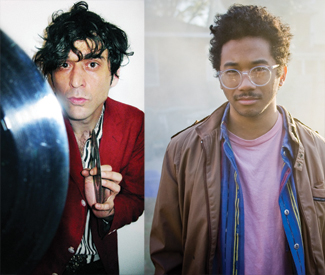
Underground indie impresario Kevin Meenan’s monthly Push the Feeling parties are a hot ticket already — but add in Les Sins and we’re entering another dimension? Who are Les Sins? Oh, just chillwave-plus genius Toro Y Moi dropping a DJ set. For an intimate crowd in Lower Haight. For $5. And you’re one of the only people who know about it.

Fri/7, 9pm, $5. Underground SF, 424 Haight, SF. www.epicsauce.com


DARK ENTRIES THIRD ANNIVERSARY

Speaking of New Wave Cities — Josh Cheon’s Dark Entries label has kept the Bay Area at the forefront of the minimal and dark wave movement, which mines overlooked bands of the synth music past and reverential present acts that are direct descendents of those slightly sinister new waves. (Recent signee Linea Aspera is to die for.) This dark celebration features a live performance by Max + Mara plus a glowering set by Cheon himself, with Nihar, Jason P, and Dreamweapon.

Sat/8, 10pm, $5. SubMission, 2183 Mission, SF. www.darkentriesrecords.com


SOUL CLAP AND DANCE OFF

Considering the garage powerhouse that is Oakland, it’s weird to me that we don’t have a huge dirty-funk, pervy girl group, kooky Hairspray 1960s dance-party scene here. (Hard French and any concert by Shannon and the Clams come close.) NYC DJ Jonathan Toubin was set to bring his great Night Train party here last year, but he was almost killed by a freak accident in Portland that made national headlines (a car drove into his hotel room and ran over him in bed). Well, he’s recovered enough now to get the party going again, and this groovy dance-off will also be an all-ages celebration of life. Celebrity judges and the cream of our underground garage crop will be in attendance.

Sun/9, 7pm, $13, all ages. Great American Music Hall, 859 O’Farrell, SF. www.gamh.com


OPERA IN THE PARK

Dearest drama queens, have you had a hard night out on the town? Do you need your over-the-top batteries recharged? How about just a lovely day on the lawn to check out other cute arts enthusiasts — like me! — swooning along to our hometown opera company’s overwhelming melodiousness? Bring a little (secret) wine, and let’s sing along.

Sun/9, 1:30pm, free. Sharon Meadow, Golden Gate Park, SF. www.sfopera.org


Goodbye to romance

1

cheryl@sfbg.com

FILM A movie called Bachelorette is inevitably going to be accused of riding Bridesmaids‘ coattails, even if — as it happens — Bachelorette‘s source-material play was written years before the 2011 comedy hit theaters.

A coincidence, to say the least, but also a hat tip to the zeitgeist. Bachelorette‘s title evokes not just Bridesmaids, but also TV’s wretchedly addicting The Bachelorette — as well as the wedding-industrial complex, which remains at frenzied heights, recession be damned (I blame Pinterest).

Bachelorette playwright turned scriptwriter-director Leslye Headland may also count herself among the current crop of female writers and directors who are bringing incisive, women-centric entertainment to pop culture’s forefront: Kristin Wiig and Annie Mumolo (Oscar nominees for penning Bridesmaids), Tina Fey, Diablo Cody, and Lena Dunham among them. The latter three’s Mean Girls (2004), Young Adult (2011), and HBO show Girls, respectively, share themes with Bachelorette, an imperfect film that nonetheless does a good job portraying women who are repulsive in realistic ways.

Imagine Young Adult‘s Mavis broken into three parts, stripped of her complexities but with her bad habits intact; you’d more or less have Regan (Kirsten Dunst), Gena (Lizzy Caplan), and Katie (Isla Fisher). A decade ago, they were the popular “B-Faces” at their high school and haven’t matured much since. Competitive Regan is a Type A blonde; Gena’s the queen of one-night stands; and Katie’s a self-destructive party girl. All of them are pushing 30, and though Regan’s the most functional among them, she’s the hardest-hit when she learns that Becky (Bridesmaids‘ Rebel Wilson), always treated as a second-tier B-Face by virtue of being plus-sized, is engaged. “I was supposed to be first,” Regan wails via three-way cell call to Gena and Katie, who’re sympathetic to this sense of entitlement.

The wedding is a fancy New York City affair, so the B-Faces reunite for what they think will be a bachelorette party for the ages. Most of the film takes place during that single night, a madcap, coke-fueled, mean-spirited spiral into chaos that puts Becky’s wedding dress in peril and sees Gena sparring with the high-school boyfriend (Adam Scott) she’s never forgiven or forgotten, Katie OD’ing, and Regan locking horns with the irritatingly hot best man, who also happens to be a complete douchebag (James Marsden). Nothing that transpires is as funny as the high points of The Hangover (2009), though Bachelorette is unafraid to match that film’s raunch factor.

That’s not to say the film lacks any laughs. The scenarios they get themselves into may be exaggerated, but the women themselves often feel unusually true to life. Headland’s dialogue sounds like real people talking (overlapping, snarking), and the script is loaded with 1990s pop-culture references, which makes sense, since the characters are nostalgic for their teenage glory days. Bachelorette also delves into thornier issues — eating disorders, unplanned pregnancies, drug abuse, raging jealousy — that groups of close female friends often grapple with.

However, it’s a problem for the audience when nearly every character is utterly unlikable. Headland’s play was written as part of a series on the deadly sins (Bachelorette was for “gluttony” — obviously reflected in Becky’s weight, but also Katie’s pill-gobbling, Gena’s sluttiness, etc.), and it’s one thing to see a satirical comedy play out onstage. The actors are there in front of your eyes: intermittently hateful, but living, breathing, and palpably human. Blown up to movie size, there’s nothing to temper the toxicity of the characters; even on the small screen, where Bachelorette proved to be a popular On Demand pick prior to its theatrical release, their awfulness can be agonizing.

Back to inevitable comparison point Bridesmaids: sure, Wiig’s hapless maid of honor was prone to cringe-inducing episodes (dear god, the airplane scene), but Bridesmaids took the time to explore the reasons behind her outrageous behavior. Her character was shaped by, not completely defined by, her failings, and through all her fuckups she remained sympathetic. Her sweet conclusion was cheesy, but she’d earned it.

Bachelorette‘s leading ladies are amusingly vile in the moment, but the movie’s so pleased with itself for being “edgy” that its own last-act attempt at sentiment rings jarringly false. Young Adult didn’t need a happy ending, and neither does Bachelorette, a film that would’ve been better served by sticking with its rallying cry: “Fuck everyone!” 


BACHELORETTE opens Fri/7 in San Francisco.

Beyond the Pink

2

marke@sfbg.com

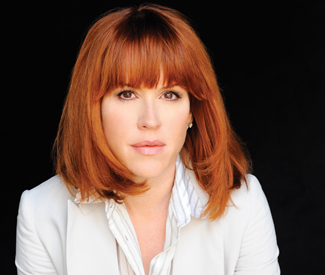
LIT Molly Ringwald is 44, fabulous, and living a dream life in Santa Monica with her gorgeous husband and three daughters. She’s also far from shy when it comes to talking about her storied past as an 1980s movie legend, the red-headed dream girl of choice for a generation of disaffected teens.

No, she didn’t have anything to do with designing Andie’s prom dress in Pretty in Pink (1986). Yes, director John Hughes almost fired Judd Nelson from The Breakfast Club (1985) for being mean to her (Nelson was staying in character). And — sorry those of us who spent hours pushing our boobs together — she cannot put lipstick on with her cleavage. That was “movie magic.”

Also? The quote she gets most on the street is “What’s a-happenin’, hot stuff?”

Ringwald is hot stuff for something else right now. She’s just released When It Happens to You: A Novel in Stories (It Books, 256 pp., $24.99), a debut novel comprised of linked short stories that’s been garnering raves. (She’ll be appearing courtesy of Litquake at the Verdi Club, Thu/6.)

The book deals with the dissolution of the marriage of Phillip and Greta, and the unsettledness that ripples through their family and friends. It’s a naturalistic mosaic of betrayals, full of lovely observations of contemporary human behavior and well-wrought passages that jibe with her love of Gustave Flaubert, Raymond Carver, and poet Mary Oliver — yet still reveal a voice distinctly her own.

The promotion she’s been doing for the book has been revealing too: her sharp wit and playful literary intelligence have had many realizing how much they’ve missed her. (Example: She basically slayed all of Reddit during a community interview when she casually mentioned that she drinks the blood of Kristen Stewart to stay young.) Ringwald called me during a tumultuous morning at her household: her twins were starting their first day of preschool, and she was getting them ready to go. She briefly put one of them on the phone with me, who told me she was excited about her “new backpack and pink nail polish.”


San Francisco Bay Guardian Um, I just talked to one of Molly Ringwald’s kids — that’s kind of a weird time warp for me.

Molly Ringwald Ha, I can see that. Are you OK?


SFBG A bit dazzled, but I’ll survive. Another time warpy thing is finding out how much you’re a self-described “Internet junkie.” I feel that I and so many others connected with your ’80s movies because we were so isolated as weirdos and outsiders. Those movies were like the social networking of the time — not in terms of actually communicating with others like ourselves, but just knowing there were people like us out there …

MR I’ve never thought about it that way, but I certainly know how the presence of the Internet has changed the lives of young people now, which has so much to do with reaching out but also moving forward, always going on to the next thing. My children are Internet natives. And I have to limit myself because I can just dive in to all the distractions. I’m fascinated by the effect it’s having on movies, the opening up, the distribution. I’m working to adapt my book to a screenplay right now, but I could see writing a Web series someday.


SFBG I’m curious how your book took on the form of linked stories. One of the most famous examples of that form is John Steinbeck’s Pastures of Heaven, set in Monterey. Did you model When It Happens to You on any particular linked story collections?

MR You know, the form came about on its own — I wrote one story, and then I was so curious about what was happening with some of the other characters, another came out, then another. I was thinking about all the ways people betray each other, and that theme guided me forward. I didn’t want to do a lot of reading research while I was writing, I was afraid it would overly influence me. After it was all done, I found other linked story collections, like Elizabeth Strout’s Olive Kittredge, which I loved. But there were no intentional influences on the book.


SFBG Themes of motherhood pervade the book — from Greta’s chemical fertility rituals and presence of the super harvest moon in the first story, through the maternal ambivalence of Betty later on, and in between, Marina’s surprise at how much she loves her child Olivia, and her struggle to accept that child’s transgender identity.

MR Motherhood is obviously a huge part of my life right now, and in a way those characters define themselves by their reactions to it. Especially with Marina, I could never understand growing up how anyone could imagine a fulfilling life without wanting or having children — but of course people do. So that character lead me to live in that perspective for a while, so different from what I feel. And society really does judge women through the prism of motherhood.


SFBG You mentioned how much you admire Michel Houllebecq and love Georges Perec — both considered radical experimentalists. Would you ever write something outright experimental?

MR I would love to explore everything I can with my writing, and I do love challenging things. But I feel it still has to retain an emotional component that I can interact with — otherwise it’s like super-abstract jazz fusion [Ringwald is putting out a jazz album next spring], and my brain can’t handle it. I’m reading D.T. Max’s biography of David Foster Wallace right now, and I can totally see where his style was coming from, but that might not be my individual path. But this is my first fiction book, so who knows? *

LITQUAKE: MOLLY RINGWALD IN CONVERSATION

Thu/6, 8pm, $12–$15

Verdi Club

2424 Mariposa, SF

www.litquake.org

Approve clean power SF

20

EDITORIAL The clean energy plan for San Francisco isn’t perfect. It’s going to cost residents a bit extra to join a sustainable, city-run electricity system. Officials at the San Francisco Public Utilities Commission figure that only about 100,000 residential customers will pay the premium to buy renewable energy — fewer if Pacific Gas and Electric Company launches a huge marketing effort to drive potential customers away. And PG&E will still control the distribution lines, the billing, the meters — and will make most of the profit.

It is, in other words, a long way short of a city-owned public-power system.

But it’s an important step in that direction, and the supervisors should approve the plan.

San Francisco has been talking about community choice aggregation for almost a decade, since the state approved legislation allowing cities and counties to form the equivalent of co-ops to buy electric power. The idea is that the city can purchase power in bulk — either at low rates or with a cleaner generation portfolio — and resell it to local customers. CCA programs don’t displace private utilities, which still own the power lines and charge a fee to deliver the electricity to customers.

But they do offer consumers choice: Right now, PG&E can’t even meet the weak, limited state standards for renewable energy, so San Franciscans are buying power from fossil-fuel and nuclear plants. Clean Power SF, as the city program is called, would offer as much as 100 percent renewable electricity — purchased through Shell Energy — at what at first will be a higher price.

But the goal of the program — and after years of wrangling, the SFPUC is now entirely on board with it — is to use the revenue stream from the early stages of electricity sales to build local renewable-energy facilities that can be brought on line to replace the power from Shell. Eventually, although it may be a decade or more down the road, San Francisco can probably generate enough power from solar, wind, and its existing hydroelectric dam to meet around 40 percent of the total power needs. If part of the program involves aggressive demand reduction, that number could go higher.

The locally produced energy would be cheap and green — and would bring down the price of the city alternative. If the city can build, operate, and make money from renewable energy plants, it will also demonstrate that running a municipal utility is entirely feasible. And the initial work of creating a full public power system will be in place.

It’s a modest experiment. Anyone who doesn’t want to pay extra for green power can opt out, and the city won’t even be trying to take on major commercial customers yet. But as the price of renewables comes down, and San Francisco commences its own build-out, it’s almost certain that Clean Power SF will be offering not only cleaner power but better rates.

For all its flaws, this is a program that community activists and city officials have spent years working out — and both sides are, for once, happy it. It needs strong support at the board, to send a message to the mayor that this is something San Franciscans want.

Rep Clock

0

Schedules are for Wed/5-Tue/11 except where noted. Director and year are given when available. Double and triple features marked with a •. All times pm unless otherwise specified.

ARBOR 4210 Telegraph, Oakl; www.shapeshifterscinema.com. Free. "Shapeshifters Cinema:" expanded cinema works by Kerry Laitala with John Davis and Neal Johnson, Thu, 8.

BRIDGE 3010 Geary, SF; www.landmarktheatres.com. $8-10.50. "Studio Ghibli Animation Retrospective:" Spirited Away (Miyazaki, 2001), Fri, 1:47, 7; Nausicaä of the Valley of the Wind (Miyazaki, 1984), Fri, 4:30, 9:40; My Neighbor Totoro (Miyazaki, 1988), English language version Sat, 3. 7; Japanese with English subtitles, Sat, 5, 9; Princess Mononoke (Miyazaki, 1997), Sun, 1:40, 7; Kiki’s Delivery Service (Miyazaki, 1989), Sun, 4:30, 9:50; Porco Rosso (Miyazaki, 1992), Mon, 2, 7; Only Yesterday (Takahata, 1991), Mon, 4:20, 9:10; Castle in the Sky (Miyazaki, 1986), Tue, 1:40, 4:20, 7, 9:40. All films in Japanese with English subtitles, except where noted with My Neighbor Totoro.

CASTRO 429 Castro, SF; (415) 621-6120, www.castrotheatre.com. $8.50-11. •Fast Times at Ridgemont High (Heckerling, 1982), Wed, 7, and Back to School (Metter, 1986), Wed, 8:45. •The Harder They Come (Henzell, 1972), Thurs, 7, and Marley (Macdonald, 2012), Thurs, 9. "QT & PT:" Reservoir Dogs (Tarantino, 1992), Fri, 7:30, and Sidney (Hard Eight) (Anderson, 1996), Fri, 9:30; •Pulp Fiction (Tarantino, 1994), Sat, 1, 7, and Boogie Nights (Anderson, 1997), Sat, 3:55, 9:55; •Magnolia (Anderson, 1999), Sun, 2:30, 8:50, and Jackie Brown (Tarantino, 1997), Sun, 6. Magic Mike (Soderbergh, 2012), Tue, 2, 4:30, 7, 9:20.

CHRISTOPHER B. SMITH RAFAEL FILM CENTER 1118 Fourth St, San Rafael; (415) 454-1222, www.cafilm.org. $6.75-$10.25. Ai Weiwei: Never Sorry (Klayman, 2012), call for dates and times. Beasts of the Southern Wild (Zeitlin, 2012), call for dates and times. Little White Lies (Canet, 2010), call for dates and times. The Queen of Versailles (Greenfield, 2012), call for dates and times. 2 Days in New York (Delpy, 2012), call for dates and times. California Forever (Vassar, 2012), Sun, 7. With filmmakers David Vassar and Sally Kaplan in person; this event, $12.

"FILM NIGHT IN THE PARK" This week: Old Mill Park, 300 block of Throckmorton, Mill Valley; www.filmnight.org. Donations accepted. Mamma Mia! (Lloyd, 2008), Fri, 8. China Camp, San Rafael. The Adventures of Tintin (Spielberg, 2011), Sat, 8.

GOETHE-INSTITUT SAN FRANCISCO 530 Bush, SF; (415) 263-8760. $5 suggested donation. "Homage to Romy Schneider:" Sissi (Marischka, 1955), Wed, 7:30.

GRAND LAKE 3200 Grand, Oakl; www.sf911truth.org. $7-10. 9/11 Truth Film Festival, a benefit for the Northern California 9/11 Truth Alliance, Tue, 2-11.

JACK LONDON SQUARE First Street at Broadway, Oakl; www.jacklondonsquare.com. Free. Fatal Attraction (Lyne, 1987), Thu, sundown.

PACIFIC FILM ARCHIVE 2575 Bancroft, Berk; (510) 642-5249, bampfa.berkeley.edu. $5.50-9.50. "Alternative Visions:" "The Nervous Films of Janie Geiser" (2002-12), Wed, 7. "LA Rebellion: Creating a New Black Cinema:" Daughters of the Dust (Dash, 1991), Thu, 7. "Life is Short: Nikkatsu Studios at 100:" Capricious Young Man (Itami, 1936), Fri, 7; The Warped Ones (Kurahara, 1960), Fri, 7; Season of the Sun (Furukawa, 1956), Sat, 6:30. "A Theater Near You:" The Graduate (Nichols, 1967), Sat, 8:20.

ROXIE 3117 and 3125 16th St, SF; (415) 863-1087, www.roxie.com. $6.50-10. San Francisco United Film Festival, local and global docs, features, and more, Wed-Thu. Tickets ($10) and more info at www.theunitedfest.com. The Ambassador (Brügger, 2012), Wed-Thu, 7, 9. Kumaré (Gandhi, 2011), Sept 7-13, 6:45, 8:45 (also Sat-Sun, 3, 4:45).

SAN FRANCISCO ART INSTITUTE 800 Chestnut, SF; www.iranianfilmfestival.org. $8-10 (festival pass, $80-100). Iranian Film Festival, short and feature films made by or about Iranians, with a tribute to composer Esfandiar Monfaredzade, Sat-Sun, 11am.

TANNERY 708 Gilman, Berk; berkeleyundergroundfilms.blogspot.com. Donations accepted. "Berkeley Underground Film Society:" The Last Picture Show (Bogdanovich, 1971), Sun, 7:30. *

Stage Listings

0

Stage listings are compiled by Guardian staff. Performance times may change; call venues to confirm. Reviewers are Robert Avila, Rita Felciano, and Nicole Gluckstern. Submit items for the listings at listings@sfbg.com. For further information on how to submit items for the listings, see Picks.

THEATER

OPENING

Asteroids: Live! Dark Room Theater, 2263 Mission, SF; (415) 401-7987. $20. Opens Fri/7, 8pm. Runs Fri-Sat, 8pm. Through Sept 29. Interstellar comedy “based very, very loosely on the arcade game.”

Kiss of the Spider Woman Phoenix Theatre, 414 Mason, SF; secondwind.8m.com. $15-35. Opens Fri/7, 8pm. Runs Thu-Sat, 8pm; Sun, 2pm. Through Sept 29. Second Wind presents Manuel Puig’s acclaimed drama about cellmates in a Buenos Aires jail.

Placas Lorraine Hansberry Theater, 450 Post, SF; www.sfiaf.org. $13-35. Opens Thu/6, 8pm. Runs Thu-Sat, 8pm; Sun, 3pm. Through Sept 16. San Francisco International Arts Festival, Central American Resource Center, and the Mission Cultural Center for Latino Arts present Paul S. Flores’ world premiere drama, starring Ric Salinas as a former gang member who tries to mend fences with his family when he gets out of prison.

Port Out, Starboard Home Z Space, 450 Florida, SF; www.foolsfury.org. $12-35. Previews Fri/7-Sat/8, 8pm. Opens Mon/10, 8pm. Runs Thu-Sat and Sept 19, 8pm; Sept 23, 2pm. Through Sept 23. foolsFURY performs the world premiere of Sheila Callaghan’s black comedy.

The Real Americans Marsh Studio Theater, 1062 Valencia, SF; www.themarsh.org. $25-50. Opens Fri/7, 8pm. Runs Fri, 8pm; Sat, 8:30pm. Through Sept 29. Dan Hoyle’s hit show about his trip across America returns.

“San Francisco Fringe Festival” Exit Theatreplex, 156 Eddy, SF; www.sffringe.org. Most shows $10 or less (five-show pass, $40; ten-show pass, $75). Sept 5-16. The 21st annual fest of unconventional, raw theater presents over 200 performances of 42 shows in 12 days.

Strange Travel Suggestions MainStage, Marsh San Francisco, 1062 Valencia, SF; www.themarsh.org. $20-50. Opens Sat/8, 8:30pm. Runs Sat, 8:30pm. Through Sept 29. Author and Ethical Traveler founder Jeff Greenwald (Shopping for Buddhas, Snake Lake) has done his solo show Strange Travel Suggestions dozens if not hundreds of times and still has no idea where it’s going. No wonder he and his audience keep coming back for more. The unknown, an aphrodisiac to the traveler, also makes great catnip for the storyteller. Still, there are consistent elements. There is no need to reinvent the wheel — or the impressive Wheel of Fortune that sits just off center stage, painted with a map of the globe and ringed with symbols abstract and evocative enough to conjure up myriad adventures, peak experiences, and humbling encounters from the vivid grab-bag memory of an accomplished travel writer and inveterate globetrotter. There’s also a real grab bag, just in case, and an oversize tarot card, a sort of visual aid cum talisman sporting a classic image of the Fool, patron saint of the traveler’s heedless leaps of faith. Greenwald’s stories possess a fine sense of humor and a knack for the shrewd detail and telling observation. They also contain a Zen-inflected homespun wisdom no doubt born of leaving home on a regular basis. If slightly self-conscious at times, these tales are always genuine and appealing. In the end, Greenwald’s show, as reliable as it is unpredictable, mimics a genie-from-a-bottle experience: What you get is three spins, three stories, and a lot of unexpected truth. Note: capsule condensed from 2008 feature review of this production. (Avila)

Tripping on the Tipping Point Stagewerx, 446 Valencia, SF; (707) 322-5731. $15-20. Opens Thu/6, 8pm. Runs Thu-Sat, 8pm. Through Sept 29. Human Nature performs a new comedy about global warming.

ONGOING

Henry V Presidio of San Francisco, Main Post Parade Ground Lawn, SF; www.sfshakes.org. Free. Sat-Sun, 2pm. Through Sept 23. The San Francisco Shakespeare Festival celebrates the 30th anniversary of Free Shakespeare in the Park with this history play.

My Fair Lady SF Playhouse, 533 Sutter, SF; www.sfplayhouse.org. $30-70. Tue-Thu, 7pm; Fri-Sat, 8pm (also Sat, 3pm). Through Sept 29. SF Playhouse and artistic director Bill English (who helms) offer a swift, agreeable production of the Alan Jay Lerner and Frederick Loewe musical, based on George Bernard Shaw’s Pygmalion. The iconic class-conscious storyline revolves around a cocky linguist named Higgins (Johnny Moreno) who bets colleague Colonel Pickering (Richard Frederick) he can transform an irritable flower girl, Eliza Doolittle (Monique Hafen), into a “lady” and pass her off in high society. A battle of wills and wits ensues — interlarded with the “tragedy” of Alfred Doolittle (a shrewd and gleaming Charles Dean) and his reluctant upward fall into respectability — and love (at least in the musical version) triumphs. The songs (“Wouldn’t It Be Loverly,” “I Could Have Danced All Night,” “Get Me to the Church on Time,” and the rest) remain evergreen in the cast’s spirited performances, supported by two offstage pianos (brought to life by David Dobrusky and musical director Greg Mason) and nimble choreography from Kimberly Richards. Hafen’s Eliza is especially admirable, projecting in dialogue and song a winning combination of childlike innocence and feminine potency. Moreno’s Higgins is also good, unusually virile yet heady too, a convincingly flawed if charming egotist. And Frederick, who adds a passing hint of homoerotic energy to his portrayal of the devoted Pickering, is gently funny and wholly sympathetic. (Avila)

Rights of Passage New Conservatory Theatre Center, 25 Van Ness, SF; www.nctcsf.org. $25-45. Wed-Sat, 8pm; Sun, 2pm. Through Sept 16. New Conservatory Theatre Center presents the world premiere of Ed Decker and Robert Leone’s multimedia play, inspired by global human rights laws in relation to sexual orientation.

Vital Signs Marsh San Francisco, 1062 Valencia, SF; (415) 282-3055, www.themarsh.org. $15-50. Sun, 7pm. Extended through Sept 16. The Marsh San Francisco presents Alison Whittaker’s behind-the-scenes look at nursing in America.

Twelfth Night San Francisco Maritime National Historic Park, Hyde Street Pier, 2905 Hyde, SF; www.weplayers.org. $30-80. Opens Fri/7, 5:30pm. Runs Fri-Sun, 5:30pm (also Sat-Sun, noon; matinee only Sept 22; no performances Sept 29; evening performances only Oct 6-7). Through Oct 7. We Players board the Balclutha and the Eureka for this jazzy take on Shakespeare’s romance.

The Waiting Period MainStage, Marsh San Francisco, 1062 Valencia, SF; (415) 282-3055, www.themarsh.org. $15-50. Thu-Fri, 8pm; Sat, 5pm. Extended through Sept 29. Brian Copeland (comedian, TV and radio personality, and creator-performer of the long-running solo play Not a Genuine Black Man) returns to the Marsh with a new solo, this one based on more recent and messier events` in Copeland’s life. The play concerns an episode of severe depression in which he considered suicide, going so far as to purchase a handgun — the title coming from the legally mandatory 10-day period between purchasing and picking up the weapon, which leaves time for reflections and circumstances that ultimately prevent Copeland from pulling the trigger. A grim subject, but Copeland (with co-developer and director David Ford) ensures there’s plenty of humor as well as frank sentiment along the way. The actor peoples the opening scene in the gun store with a comically if somewhat stereotypically rugged representative of the Second Amendment, for instance, as well as an equally familiar “doood” dude at the service counter. Afterward, we follow Copeland, a just barely coping dad, home to the house recently abandoned by his wife, and through the ordinary routines that become unbearable to the clinically depressed. Copeland also recreates interviews he’s made with other survivors of suicidal depression. Telling someone about such things is vital to preventing their worst outcomes, says Copeland, and telling his own story is meant to encourage others. It’s a worthy aim but only a fitfully engaging piece, since as drama it remains thin, standing at perhaps too respectful a distance from the convoluted torment and alienation at its center. (Avila)

War Horse Curran Theatre, 445 Geary, SF; www.shnsf.com. $31-300. Wed/5-Sat/8, 8pm (also Wed/5 and Sat/8, 2pm); Sun/9, 2pm. The juggernaut from the National Theatre of Great Britain, via Broadway and the Tony Awards, has pulled into the Curran for its Bay Area bow. The life-sized puppets are indeed all they’re cracked up to be; and the story of a 16-year-old English farm boy (Andrew Veenstra) who searches for his beloved horse through the trenches of the Somme Valley during World War I, while peppered with much elementary humor too, is a good cry for those so inclined. The claim to being an antiwar play is only true to the extent that any war-is-hell backdrop and a plea for tolerance count a melodrama as “antiwar,” but this is not Mother Courage and no serious attempt is made to investigate the subject. Closer to say it’s Lassie Come Home where Lassie is a horse — very ably brought to life by Handspring Puppet Company’s ingenious puppeteers and designers, and amid a transporting and generally riveting mise-en-scène (complete with pointedly stirring live and recorded music). But the simplistic storyline and its obvious, somewhat ham-fisted resolution (adapted by Nick Stafford from Michael Morpurgo’s novel) are too formulaic to be taken that seriously. And at two-and-a-half-hours, it’s a long time coming. A shorter war, the Falklands say, would have done just as well and gotten people out before the ride began to chafe. (Avila)

BAY AREA

Chinglish Berkeley Repertory Theatre, Roda Theatre, 2015 Addison, Berk; www.berkeleyrep.org. $14.50-99. Tue and Thu-Sat, 8pm (also Sat, 2pm; no show Oct 5; no 2pm show Sat/8; additional 2pm shows Thu/6 and Oct 4); Wed and Sun, 7pm (also Sun, 2pm). Through Oct 7. Berkeley Rep presents the West Coast premiere of David Henry Hwang’s Broadway comedy.

The Death of the Novel San Jose Rep, 101 Paseo de San Antonio, San Jose; www.sjrep.com. $23-69. Opens Wed/5, 7:30pm. Check web site for schedule. Through Sept 23. Vincent Kartheiser (a.k.a. Pete Campbell from Mad Men) stars in Jonathan Marc Feldman’s drama about creativity in post-9/11 America at San Jose Rep.

The Elaborate Entrance of Chad Deity Aurora Theatre, 2081 Addison, Berk; (510) 843-4822, www.auroratheatre.org. $32-60. Tue and Sun, 7pm (also Sun, 2pm); Wed-Sat, 8pm. Through Sept 30. Playwright Kristoffer Diaz, a self-professed fan of the aggressively-theatrical spectacle that is professional wrestling, delivers much more than a “wrestling 101” primer for the uninitiated with The Elaborate Entrance of Chad Deity. Beneath the razzle-dazzle of the arena lighting (Kurt Landisman), the gaudy costuming (Maggie Whitaker) and the giant televised image of a hot bikini babe (Elizabeth Cadd, video by Jim Gross) lies the trampled luster of an American Dream. The dreamer, Macedonio “The Mace” Guerra (Tony Sancho), a wiry fall guy for THE Wrestling, wrestles not for money or glory (he is rarely privy to either), but for his love of the strange ballet that occurs in the ring. Guerra’s job is to make his opponents look good, including the pec-flexing, bling-booted Chad Deity (Beethovan Oden), leaving him to wrestle alone with the identity politics of being a marginalized but fully capable warrior battling perennially stacked odds. Willing suspension of disbelief does get stretched pretty thin when the character Vigneshwar Paduar, a smooth-talking hustler chance-met on the basketball courts of Brooklyn, rises to championship levels in record-breaking time as the truly cringe-worthy persona known as “The Fundamentalist,” but Nasser Khan’s skillfully self-possessed performance as Paduar makes it impossible not to root for him all the way. Rod Gnapp as foul-mouthed bossman “EKO” and fight director Dave Maier as a whole squadron of hapless B-list wrestlers round out the excellent cast. (Gluckstern)

The Fisherman’s Wife La Val’s Subterranean, 1834 Euclid, Berk; www.impacttheatre.com. $10-20. Thu-Sat, 8pm. Through Sept 29. The latest from playwright Steve Yockey (Bellwether, Skin) is an exercise in pure pleasure, not least for the devious sea creatures preying lustily and unashamedly on the hapless human flesh of a small coastal town. There, in cracked fairytale fashion, an unsuccessful fisherman named Cooper Minnow (an endearingly nerdy but passionate Maro Guevara) is preparing to set out to sea, leaving at home frustrated wife Vanessa (a wonderfully, volcanically bitchy yet complex Eliza Leoni) and their sinking marriage, when he meets an oddly brazen pair of sexy, sassy bathers in old-fashioned beach attire (the swimmingly synchronized duo of Sarah Coykendall and Roy Landaverde). At more or less the same moment, a devilishly dashing yet prim traveling salesman (poised, nicely offbeat Adrian Anchondo) is offering a clearly aroused Vanessa an erotic woodcut featuring monstrous tentacles groping human victims at a very familiar-looking dock. Will she take the woodcut? Will she ever! And later she’ll defend her husband’s honor and swap places with him too, much to the commercial advantage of the ever-accommodating salesman who — like Yockey’s smart and sure sex farce — has a little something for everyone. Directed with smooth precision by Ben Randle for Berkeley’s Impact Theatre, The Fisherman’s Wife again finds Yockey playing productively with the fine fuzzy line separating human nature from nature at large (as in Large Animal Games, the winning 2009 co-production from Impact and Dad’s Garage). The animals come through for playwright and company once more, with a thoroughly enjoyable comedy whose borrowed maritime mythos has just enough metaphorical pull to lead those so inclined out beyond the shallow waters. (Avila)

Keith Moon/The Real Me TheaterStage at the March Berkeley, 2120 Allston, Berk; www.themarsh.org. $15-50. Sept 13, 20, and 27, 8pm. Mike Berry workshops his new musical, featuring ten classic Who songs performed with a live band.

The Kipling Hotel: True Misadventures of the Electric Pink ’80s Marsh Berkeley, 2120 Allston, Berk; (415) 282-3055, www.themarsh.org. $20-50. Sat, 8:30pm; Sun, 7pm. Extended through Oct 14. This new autobiographical solo show by Don Reed, writer-performer of the fine and long-running East 14th, is another slice of the artist’s journey from 1970s Oakland ghetto to comedy-circuit respectability — here via a partial debate-scholarship to UCLA. The titular Los Angeles residency hotel was where Reed lived and worked for a time in the 1980s while attending university. It’s also a rich mine of memory and material for this physically protean and charismatic comic actor, who sails through two acts of often hilarious, sometimes touching vignettes loosely structured around his time on the hotel’s young wait staff, which catered to the needs of elderly patrons who might need conversation as much as breakfast. On opening night, the episodic narrative seemed to pass through several endings before settling on one whose tidy moral was delivered with too heavy a hand, but if the piece runs a little long, it’s only the last 20 minutes that noticeably meanders. And even with some awkward bumps along the way, it’s never a dull thing watching Reed work. (Avila)

A Midsummer Night’s Dream Forest Meadows Amphitheater, 890 Belle, Dominican University of California, San Rafael; www.marinshakespeare.org. $20-35. Check website for schedule. Through Sept 30. Marin Shakespeare Company performs the Bard’s classic, transported to the shores of Hawaii.

Our Country’s Good Redwood Amphiteatre, Marin Art and Garden Center, 30 Sir Francis Drake, Ross; www.porchlight.net. $15-30. Thu/6-Sat/8, 7:30pm. Porchlight Theatre Company presents an outdoor performance of Timberlake Wertenbaker’s play about Royal Marines and prisoners in an 18th century New South Wales prison colony.

Precious Little Ashby Stage, 1901 Ashby, Berk; www.shotgunplayers.org. $18-25. Wed-Thu, 7pm; Fri-Sat, 8pm (also Sat/8, 3pm); Sun, 5pm. Through Sept 16. Shotgun Players presents Madeleine George’s new play about an expectant mother who studies near-dead languages and befriends a “talking” gorilla.

Time Stands Still TheatreWorks at the Mountain View Center for the Performing Arts, 500 Castro, SF; www.theatreworks.org. $23-73. Tue-Wed, 7:30pm; Thu-Sat, 8pm (also Sat, 2pm); Sun, 2 and 7pm. Through Sept 16. TheatreWorks performs Donald Marguelis’ drama about a couple — one a photojournalist, one a war correspondent — struggling with their recent experiences covering a war.

PERFORMANCE/DANCE

BATS Improv Bayfront Theater, B350 Fort Mason Center, Marina at Laguna, SF; www.improv.org. Thu-Sat, 8pm. $10-25. This week: “An Improv Team Named Desire and Flux Capacitor” (Thu/6); “25th Annual Gala and Fundraiser” (Fri/7); “BATS Improv SF vs. Impro Theatre LA” (Sat/8).

“Comedy Returns to El Rio!” El Rio, 3158 Mission, SF; www.koshercomedy.com. Mon/10, 8pm. $7-20. Stand-up with Diane Amos, Malcolm Grissom, Jill Bourque, Kevin Young, and host Lisa Geduldig.

“Dancing Poetry Festival” Florence Gould Theater, California Palace of the Legion of Honor, Lincoln Park, SF; www.dancingpoetry.com. Sat/8, noon-4pm. $4-15. The 19th annual fest celebrates poetry and dance as a unified art form.

“Elect to Laugh” Studio Theater, Marsh San Francisco, 1062 Valencia, SF; (415) 282-3055, www.themarsh.org. Tue, 8pm. Through Nov 6. $15-50. Veteran political comedian Will Durst emphasizes he’s watching the news and keeping track of the presidential race “so you don’t have to.” No kidding, it sounds like brutal work for anyone other than a professional comedian — for whom alone it must be Willy Wonka’s edible Eden of delicious material. Durst deserves thanks for ingesting this material and converting it into funny, but between the ingesting and out-jesting there’s the risk of turning too palatable what amounts to a deeply offensive excuse for a democratic process, as we once again hurtle and are herded toward another election-year November, with its attendant massive anticlimax and hangover already so close you can touch them. Durst knows his politics and comedy backwards and forwards, and the evolving show, which pops up at the Marsh every Tuesday in the run-up to election night, offers consistent laughs born on his breezy, infectious delivery. One just wishes there were some alternative political universe that also made itself known alongside the deft two-party sportscasting. (Avila)

“A Funny Night for Comedy” Actors Theater of San Francisco, 855 Bush, SF; www.natashamuse.com. Sun/9, 7pm. $10. Natasha Muse and Ryan Cronin host this comedy show, presented in talk-show format, with guests Caitlin Gill, Kaseem Bentley, and Jesse Fernandez.

“Mary Mack Comedy Show” Gallery and Bar 4N5, 863 Mission, SF; www.brownpapertickets.com. Tue/11, 7:30pm. $15. Mandolin-infused folk comedy with Mary Mack.

“A Pinoy Midsummer” Bindlestiff Studio, 185 Sixth St, SF; www.brownpapertickets.com. Thu-Sat, 8pm (also Sat, 2pm). Through Sept 15. $10-20. A re-imagining of Shakespeare with Philippine folklore, shadow puppets, and other Pinoy elements.

“10 Acrobats in an Amazing Leap of Faith” CounterPULSE, 1310 Mission, SF; www.counterpulse.org. Fri/7-Sat/8, 8pm; Sun/9, 2pm. Yuseff El Guindi’s comedy is about a conflicted Muslim family during the month of Ramadan in post-9/11 America.

Alerts

0

WEDNESDAY 29

Bernal Heights outdoor cinema Roccapulco Supper Club, 3140 Mission, SF; www.bhoutdoorcine.org. 7pm, $10 suggested donation. The first of five nights of film screenings in Bernal Heights. At this kickoff party, enjoy drinks, food and music from the Bernal Jazz Quintet before a lineup of short films celebrating community and organizing in the Bay Area. Films include Berkeley High School students on heritage and identity, "Occupy the Auctions Dance Party!" in which Occupy Bernal and ACCE stop evictions on the steps of City Hall, and a tour of Alemany Farm (also the beneficiary of the event’s ticket price), among others. The event also includes the announcement of winners of the Best of Bernal and Spirit of Bernal Awards and the first-year recipients of the Mauricio Vela Youth Film Scholarship.

Occupy, the state of the movement Mediterranean Café, 2475 Telegraph, Berk; www.occupyoakland.org. 7-10pm, free. Einar Stensson, a sociologist at Stockholm University and activist at Occupy Stockholm during the fall of 2011, studied Occupy Oakland for two months. Why did the movement start and spread so quickly around the globe? How is Occupy organized? Who matters in the movement and why? What is the future of Occupy? Come hear his perspectives on where Occupy is, locally and internationally.

FRIDAY 31

Occupy the Bay The 25th Street Collective, 477 25th St., Oakl; www.occupyoakland.org. 6pm, $25. "This week in Oakland, California will go down as a watershed moment. People across America were disgusted by what they saw here. Average Americans trying to stand up and peacefully assemble, to be brutally savaged and attacked by the police department that they pay for." So said Michael Moore to a fired up crowd in the wake of the Oct. 26 Occupy Oakland eviction that rained tear gas and rubber bullets on demonstrators. This is just one of the many historic events caught on tape by filmmakers Jonathan Riley and Kevin Pina, whose documentary Occupy the Bay is screening around the Bay Area before it starts showing in film festivals. On Friday, stick around for special musical performances from Jabari Shaw, Shareef Ali and Super Natural.

Enemies of the state: In their own words Station 40, 3030B 16th St., SF; station40events.wordpress.com. 7pm, free. After a year of Occupy and years more of struggle by people who are not down with the state, there are a lot of people in jail and prison. At this event, organizers will read writing from those locked up. Poems and statements from Truth and Kali of Occupy Oakland and a statement from Jesse Nesbitt, the May Day brick-thrower we profiled ("Who is the Brick Thrower?" 5/8/12). As the event description says, "Any effort at anti-repression in the face of lengthy prison terms must be aimed at bringing down separation at all costs." Come fight the separation and connect.

Original Plumbing birthday celebration Elbo Room, 647 Valencia, SF; www.originalplumbing.com. 10pm, $3-6. Original Plumbing, the trans male quarterly magazine, is throwing a party celebrating its third year on this planet. It now lives in the Brooklyn part of the planet, but it all started in San Francisco, and they’re coming back here to party. "We feel that there is no single way to sum up what it means to be a trans man because we each have different beliefs, life experiences, and relationships to our own bodies," say the organizers, and they started the magazine to document this diversity of experiences. Celebrate with the editors Amos Mac and Rocco Katastrophe, and performances by Rocco Katastrophe with special guests Billie Elizabeth, Nicky Click & Jenna Riot. Birthday cupcakes available!

TUESDAY 4

Rally to save City College City Hall steps, 1 Polk, SF; ProtectOurCityCollege@gmail.com. 12pm, free. A rally in support of Prop A, the local ballot measure that would create a parcel tax for revenue to City College of San Francisco. "If City College is to survive and maintain accessibility, educational quality and the mission of serving low-income and underrepresented students with the best educators and staff, we must pass Prop A," say organizers of the rally, which include students, teachers, staff and supporters.

The SFPUC’s cool new building

12

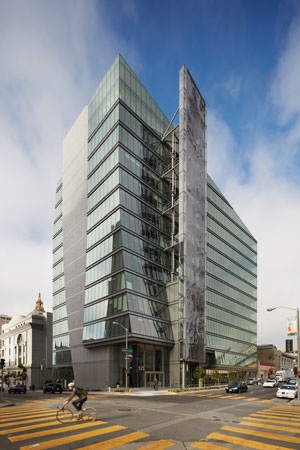
I finallly got a tour of the San Francisco Public Utilities Commission’s cool new building at 525 Golden Gate. It’s about as green as an urban building can be, with solar panels, wind turbines, a wastewater recycling system using the underground root structure of street gardens to clean sewage … the energy use is about 30 percent below a typical building that size, and water use is even lower; the PUC projects about a 60 percent savings, which is a good thing for a water agency that wants to promote conservation. So far, it’s gotten pretty good press.

For a 13-story office building done in a very modern style (not my favorite type of structure), it looks pretty cool, too, with polycarbonate panels that wave in the wind and light up at night. Inside, it’s open and full of light. There’s lots of space for bicycles and an on-site child-care center.

There’s also $4 million worth of public art — most of it purchased or commissioned from local artists. I love the painting and photos, and the cafe on the first floor has a pretty wild giant computerized display that shows the entire water and power system, with interactive popups as you approach different areas.

Nice.

I was a little disappointed that Ed Harrington, the SFPUC general manager, and Barbara Hale, the assistant general manager for power enterprise, had no idea why the power lines from the city’s hydroelectric facilities in the Sierra end in Fremont, where the city’s power gets plugged into the Pacific Gas and Electric system. “I’ve never heard that story,” Hale said. You’d think that I’d written enough about that tale; you’d think P&E’s role in denying the city its legal right to public power would be part of the official history of the Hetch Hetchy system.

But I forgive them; the story is long and complicated, and very rarely told or taught in San Francisco, which has been scrambling for more than 80 years to duck the Congressional mandate that should force us to kick out PG&E. Because here’s the thing: As he heads for retirement, I think Harrington now gets it.

We sat and talked on the top floor of his new building, in an oddly-shaped conference room with a stunning view, and I got the distinct impression that Harrington and Hale want to move the city toward public ownership of the local electrical system. They’re pushing Clean Power SF, which is a critical step down the path to energy independence; Harrington wants this to be part of his legacy. He’s careful not to say anything that sounds like he wants to fully replace PG&E and create a fully municipalized electric utility in San Francisco, but he can’t ignore the facts: The only way this city is going to get to a sustainable energy future is if we own the infrastructure.

Of course, even if we started today, that would happen long after Harrington’s tenure is over.

But when we talked about the city’s water system, he noted that there are all sorts of important policy decisions that we have only been able to make becuase we own the entire system, soup to nuts, water storage, pipes, delivery. And he didn’t try to argue with me when I said that the same clearly applies to power.

Harrington has made his peace with the energy activists who want to make sure that part of the Clean Power SF program involves buidling our own generation facilities. Even with a full build-out of solar and wind on all the land the city has access to, and with the Hetchy Hetchy hydro system, a municipal utility could probably only generate about 40 percent of the city’s current needs. But knock the current needs down by 20 percent (through better efficiency and conservation) and get every homeowner and commercial building to put solar on the roof, and look at wave energy down the road … and it’s not hard to imagine that 25 years from now San Francisco would have no need to buy electricity from PG&E, Shell Energy, or anyone else.

I know, I know, that’s a long time from now. But I wrote my first story about PG&E in 1982. If we’d started back then, we’d be well on our way by now.

So here’s to hoping that this slick $200 million building is the start of a new era for SF’s PUC, which in the past has been openly hostile to public power. Let’s hope that when I’m 80 years old I can write my last PG&E/Raker Act story and move on to something else.


The Vaselines move beyond ‘Kurt Cobain’s favorite band’

6

Hailing from Scotland in the late 1980s, The Vaselines released just a couple of EPs and one full album before originally calling it quits after two short years together. However, thanks to fans like Kurt Cobain, who covered three of their tunes with Nirvana, and exposed the band to larger audiences around the world, new generations have fallen in love with them in the ensuing years.
 
Eugene Kelly and Frances McKee — the duo behind the Vaselines — reformed the group for a series of outstanding shows in 2008, including their first ever concerts in the United States.

“We didn’t really know what to expect, we didn’t know if anybody would be at the shows, or if they’d be interested, because it had been 20 years, and we had never been to America,” says Eugene Kelly over the phone from his home in Glasgow, Scotland.

In addition to performing at Sub Pop Records’ 20th anniversary festival — the Seattle label re-issued their collected works back in 1992 — the Vaselines played several other shows in the US, including New York and San Francisco, where they were inspired by the devoted fan base that came out to see them.
“It’s a great thing to be able to play songs that were written 20 years ago, and there’s an audience for them, and people want to see us play,” says Kelly.

It was this enthusiastic response that prompted the band to come back together to later write and record a new album, Sex With An X (Sub Pop), which came out in 2010, and perfectly captured the unique and infectious spirit of their earlier work.

“When we started doing a few shows, and then started getting more offers, we thought, ‘we can play the same 19 songs that we’ve got forever, or we write some new songs to make it interesting for us, and try to say something new,’ so we just got down to work doing that.”

Although it had been more than two decades since they recorded together, and the group had a far bigger audience than ever before — one that had been listening to the same small output for a long time — Kelly says that there wasn’t any conscious effort to try to sound the same.

“I think it was a natural thing once we got together and started writing — we decided to not try to be beholden to what the sound was like in the past — they’re different recordings 20 years later, so obviously something is going to be different. We just thought, ‘let’s try to just make a record and hopefully it will turn out to be a good one,’ and not work slavishly to try to copy what we had done [before].”

The resulting album was warmly received by fans, as it contained the same signature ingredients as their earlier work, and the band found that they were also able to move beyond simply being labeled ‘Kurt Cobain’s favorite band’— but that doesn’t mean that they don’t appreciate what Nirvana covering “Son of A Gun,” “Molly’s Lips,” and “Jesus Wants Me For A Sunbeam” did for their career.

“We’re quite happy with the association; we wouldn’t really be able to do any of this now if wasn’t for them putting our name into the world, we’re totally grateful. But with the new record, it gave us something else to talk about, and we don’t have to talk about the past — we’re happy with our history, but we’re also looking forward,” says Kelly.

Although the Vaselines won’t be playing any new material at the four shows they’ve currently got booked here in the US, they are always working on new ideas when not on the road.

“I’m writing songs all the time, sometimes it will work for the Vaselines, sometimes it will work for something else at some point— I’d like to do other stuff as well, I’ve always wanted to do a musical, but that’s probably further down the line — I think maybe I’ll do that once I get the punk rock out of my system.”

For now, however, Kelly is happy to continue building on the legacy of the Vaselines, and is encouraged when he meets fans at shows or runs across younger musicians from bands at festivals who tell him what his band has meant to them over the years.

“We only released a couple of records, and the fact that they actually got to the other side of the world, and anybody had the chance to listen to them is amazing. It does make you feel old though when you see these very young people come up to you and say they’ve been listening to you since they were in high school — but if we made anyone pick up a guitar, or bass, or drums, that’s just a great feeling to know that you might have inspired somebody.”

The Vaselines
With Mister Loveless
Fri/31, 9pm, $22
Independent
628 Divisadero, SF.
(415) 771-1421
www.independentsf.com

Dick Meister: Labor Day began in San Francisco in 1886

2

By Dick Meister

Dick Meister, former labor editor of the SF Chronicle and KQED-TV Newsroom, has covered labor and politics for more than a half-century. Contact him through his website, www.dickmeister.com, which includes more than 350 of his columns.

By some reckoning, this is the 118th Labor Day, since it was first observed as a national holiday in 1894. But the observation actually began a quarter-century earlier in San Francisco.

It was on Feb. 21, 1868. Brass bands blared, flags, banners and torch lights waved high as more than 3000 union members marched proudly through the city’s downtown streets, led by shipyard workers and carpenters and men from dozens of other construction trades.

“A jollification,” the marchers called their parade – the climax of a three-year campaign of strikes and other pressures that had culminated in the establishment of the eight-hour workday as a legal right in California.

New York unionists staged a similar parade in 1882 that is often erroneously cited as the first Labor Day parade, even though it occurred 14 years after the march in San Francisco.

Honors for holding the first official Labor Day are usually granted the state of Oregon, which proclaimed a Labor Day holiday in 1887 – seven years before the Federal Government got around to proclaiming the holiday that is now observed nationwide.

But Oregon’s move came nearly a year after Gov. George Stoneman of California issued a proclamation setting aside May 11, 1886, as a legal holiday to honor a new organization of California unions – the year-old Iron Trades Council.

That, said renowned labor historian Ira. B. Cross of the University of California, was “the first legalized Labor Day in the United States

San Francisco also played a major role in that celebration of 1886. The city was the scene of the chief event – a march down Market Street by more than 10,000 men and women from some 40 unions, led by the uniformed rank-and-file of the Coast Seamen’s Union. Gov. Stoneman and his entire staff marched right along with them

The process was seven miles long, took more than two hours to pass any given point, and generated enthusiasm that the San Francisco Examiner said was “entirely unprecedented – even in political campaigns.”

Dick Meister, former labor editor of the SF Chronicle and KQED-TV Newsroom, has covered labor and politics for more than a half-century. Contact him through his website, www.dickmeister.com, which includes more than 350 of his columns.


Jellyfish, oxtail, and more from the Street Food Festival

0

The annual Street Food Festival enlivens blocks of the Mission every year with many of our great food trucks, booths manned by the kitchen staff of our favorite SF restaurants, and a few visiting guests — which at this year’s fest on August 18 included my favorite Portland food cart Eurotrash, and the adorable Linda Green of Ms Linda’s Catering from New Orleans. The most significant addition to the Street Food lineup this year wasn’t a cart at all,  but rather an entire event — the Friday night before the main festival, the Night Market took over the Alemany Farmers Market. In the whipping winds of South San Francisco we sampled unforgettable bites that were not available at the Street Food Fest. The festive, Chinese lantern-laced outdoor space made the Night Market a stand-out. I hope it becomes a yearly feature.

Subscribe to Virgina’s twice-monthly newsletter, The Perfect Spot, www.theperfectspotsf.com

Full captions: 
1. The star of the Night Market was The Boss Hog, the debut of a new project from the Bone & Gristle Boys (SF’s Ryan Farr  of 4505 Meats and Rhode Island’s Matt Jennings of Farmstead). 
 2. One of the best sandwiches I’ve ever had, The Boss Hog is slow-roasted pork, cornmeal-fried pork cutlet, Vermont cheddar, smoked pickles, red onion, greens, jalapeno ranch dressing, Farr’s chicharrones
3. One of my favorite Portland food carts Eurotrash showed off fresh grilled prawns loaded in a baguette with spicy curry slaw
4. At the Night Market, Fifth Floor chef David Bazirgan’s delicious fava bean falafel wrap 
5. Ken Ken Ramen served jellyfish at Friday’s Night Market
6. Vada Pav (spicy potato puff sandwich) from Juhu Beach Club
7. Friday’s festive Night Market — a tradition I hope continues each year
8. State Bird Stuart – State Bird Provisions’ Chef Stuart Brioza assembles burrata and fried garlic bread
9. The top taste of Saturday’s festival was State Bird Provisions’ (Bon Appetit’s 2012 # 1 New US Restaurant) hand-pulled burrata atop addictive fried garlic bread
10. A Korean favorite from the Inner Richmond, To Hyang’s braised oxtail with daikons, carrots, dates, hard-boiled egg


Sugar high

0

cheryl@sfbg.com

DEATH BEFORE DIET San Francisco has a hell of a sweet tooth, judging by all the dessert-themed trucks, artesinal chocolate shops, and curious ice cream flavors dribbling all over everything. For fans of sour and gummy candy who’d prefer a slightly more old-timey experience than the aisles of Walgreens can provide, we also have quite a few candy-focused shops. We sidestepped the prodigious chocolate offerings (for the most part) and tested treats at four of ’em.


Fiona’s Sweetshoppe Tucked into a teeny FiDi storefront, Fiona’s maximizes its snug space with four rows of shelves lined with candy-filled jars. The slogan here is “bewitching candy,” and the selection (much of it imported from Europe and the UK) doesn’t disappoint. Customers can browse a selection of UK candy bars (Cadbury purists rejoice), buy scoops in bulk, or pick up pre-made, ribbon-tied bags of the shop’s most popular wares.

We sampled: Australian Mango Licorice (Fiona’s has a large selection of licorice in different flavors and shapes; this variety is super-soft, chewy, and fruity — and vegan); Lemon Fizzballs (the favorite of the three: lemon drops with a powdery, sour-then-sweet coating); and, bending the chocolate rule a bit, Chocolate Limes (individually-wrapped, citrus hard candy with a dab of chocolate inside). 214 Sutter, SF; www.fionassweetshoppe.com


The Candy Store Russian Hill’s beacon of sugary goodness went national, briefly, thanks to a pop-up stint in Target stores earlier this year. Locals can still hit up the airy space for stylishly packaged indulgences (dark chocolate sea salt caramels are a favorite), lollipops (in sizes ranging from “oversized” to “Godzilla-sized”), nostalgic chocolate bars (Nut Goodies, Mallo Cups), and … ohhhh yeah … jars of sour and gummy goodness.

We tried: Sour Skulls (imported from Sweden, home of extreme metal and, apparently, extremely sour candy); Cinnamon Bears (more sweet than hot); Gummi Filled Whales (marshmallow-y and adorable); and one Gummi Fried Egg (a fruit-flavored conversation piece). 1507 Vallejo, SF; www.thecandystoresf.com


Miette Miette peddles its picture-perfect baked goods at San Francisco’s Ferry Building, Oakland’s Jack London Square, and Larkspur’s Marin County Mart. But candy fans taking a cake break should make a beeline to the Hayes Valley location (449 Octavia, SF). While the retro-styled space (with super-cute seasonal window displays) does feature a pastry case with Miette’s famed cupcakes, cakes, and macarons — the main attraction is pretty obvious: fancy chocolate bars, decadent malt balls, and jars upon jars of bite-sized sweets.

We tasted: Butter Waffles (waffle-shaped hard candy with a refined butterscotch flavor); Sour Apple Belts (a childhood classic); and Lemon Verbena Drops (is it weird to call a candy “sophisticated”? Because these are.) Various Bay Area locations, SF; www.miette.com Shaw’s San Francisco Just two Muni stops from the Castro is West Portal, with its Main Street USA vibe. Situated under a red-and-white awning, Shaw’s — around since 1931 — needs not try to emulate an old-school candy shop, since it already is one. No swish sweets here; in addition to ice cream, fudge, and chocolate truffles, Shaw’s stocks novelty items like Pop Rocks and mounds of sold-by-weight gummies and sour candy, including recognizable items like Swedish Fish and Sour Patch Kids. We inhaled: sour apples, cherries, peaches, and watermelon slices (all fresh, flavorful, soft, and chewy), with a few chocolate-covered gummy bears (a best-seller) for good measure. 122 West Portal, SF; www.shawssf.com

The Turntable Kitchen remixes dinnertime

0

emilysavage@sfbg.com

EAT BEAT I’d venture a guess that no one in this town knows the frosting tipped appeal of hand-mixing music and food more than the couple behind Turntable Kitchen. What started a year and a half ago as a simple (yet highly aesthetically pleasing) website mashing up recipes and records, has grown into a multi-headed creative output machine, with food and music news, giveaways, and physical pairings boxes — on top of the drool-inducing posts.

I caught up with the duo last winter and again this month to find out, among other queries, what ingredient you simply must always have on hand, and the records every collection should include:

San Francisco Bay Guardian For people who have never heard of Turntable Kitchen, can you give a brief rundown on how the concept came together?

Matthew Hickey Turntable Kitchen is a website combining food and music. We do that by pairing recipes Kasey creates in the kitchen with some of my favorite albums. I try to find albums that share the same characteristics as her recipes, pairing them together the way a sommelier would pair wine with food. The idea to start the site was Kasey’s, but we were pairing food and music in our own foggy Inner Sunset apartment long before we launched the site. I’ve always been obsessive about music and Kasey loves to cook. Part of our evening ritual involved her explaining the recipe we were going to make and me then hitting my record collection to find an album to compliment our meal.

SFBG How did you come up with the Pairings Box idea?

MH We liked the idea of sending goodies to our readers in the mail, but we weren’t sure what form that would take. Whatever we did, we wanted it to stay true to the theme of our site. Speaking to the music specific elements: they just made sense for me. I love vinyl records and have an ever-growing record collection. With the ease of digital distribution, though, some of my favorite new music isn’t yet available on vinyl. So the singles we release feature music that I wanted for my collection, but which didn’t already exist on vinyl. I’ve been making mixtapes for my friends for as long as I can remember, so the digital mixtape we include gives me yet another opportunity to share music I love with our supporters.

Kasey Fleisher I have always thought that a big barrier to cooking for many people is having a pantry. A lot of times, a recipe calls for a lot of expensive and/or hard to find ingredients and when you don’t cook often, it’s hard to think, “why not give this a try?” The concept of giving people three recipes and one to two premium dried ingredients gives them that nudge to experiment.

SFBG On the site, what have been the most popular pairing(s) so far?

MH Some of our most popular pairings have been our Pop Overs with Jam paired with Frank Ocean’s channel ORANGE, and Quinoa Sushi paired with Peaking Lights’ new album.

SFBG What’s the most important ingredient to keep in your cupboard?

KF That is a tough question! But I’d probably have to say salt.

SFBG What’s the most important album to keep in your record collection?

MH That is a tough one. If you are going to listen to it by yourself then you’d want your favorite album — whatever that may be. If you want versatile music that sounds great and can be played on any occasion, I highly recommend owning a few Motown records. I don’t think I’ve ever met anyone — young or old — who hates the Four Tops, the Jackson 5, The Supremes, Al Green.

Rich appetites

2

emilysavage@sfbg.com

CHEAPER EATS “By the way, I have the best peanut sauce recipe ever. I would say it’s one of the top three things about me, my peanut sauce recipe.” Author-blogger-chef Gabi Moskowitz mentions over brunch at the Dolores Park Cafe in her Mission neighborhood.

“I develop crushes on peanut sauces and tinker until I get them just right. And — sidebar — peanut sauce, if you make a batch of it and keep it in your fridge, you’re like, 50 percent on your way to dinner.”

Moskowitz is full of helpful asides like this. She initially was discussing her Vietnamese spring rolls recipe, a popular dish she wrote about on her blog — BrokeAss Gourmet — and subsequently included in her first cookbook, The BrokeAss Gourmet Cookbook (Egg & Dart, 224pp, $16.95), released this spring. The book’s subtitle? “Recipes To Keep Your Taste Buds Happy and Your Wallet Thick.”

But the peanut sauce digression is probably the best representation of Moskowitz’s personality. The former kindergarten teacher is friendly and funny, obsessed with good food, and the consummate teacher, always looking for a way to make things better and cheaper. She just wants you to love her peanut sauce and much as she does.

And that’s why the formula for BrokeAss Gourmet dot com, and The Brokeass Gourmet Cookbook, works so well. It’s simple but creative dishes, made with inexpensive components (each ingredient is listed with a price), and explained in a relatable way. Moskowitz always dishes on how she came to these recipes, be it after a rude ex-boyfriend criticized another meal, or a when a close friend fell ill and needed something warm and appetizing in her belly.

The book includes pantry staples and recipes for meals such as lamb-feta burgers, sundried tomato ricotta gnocchi, and garlic-lemon-rosemary chicken (“Third Date Chicken”), which she deems the sluttier version of the legendary “Engagement Chicken.”

The blog, which began in 2009, saw near-instant success, after MSN Money covered it just two weeks after the launch. The morning of the article, Moskowitz says she awoke to see 30,000 hits over 24 hours. Just before the launch, she became aware of the other brokeass, Broke-Ass Stuart — who wrote a popular lifestyle book and runs his own site — and contacted him to let him know. He was fine with the name, as he didn’t plan to cook or include recipes on his own site, and Moskowitz says it was the start of a great friendship. The two support each other on their respective sites.

On the BrokeAss Gourmet site, the chedder-thyme knishes and brown butter pumpkin mac and cheese are the long-running top posts. When Moskowitz was featured in an iPad food app called Appetites, the New York Times wrote it up and included a mention of that creamy fall mac and cheese recipe.

When it came to choosing which posts to include in the cookbook, Moskowitz said she wanted it to be a “really excellent first cookbook for someone” and to show that it’s possible to eat well on a budget.

“I grew up in Sonoma County; I live in the Mission in San Francisco, where food is king. It’s not enough for me to just eat, I think it’s really important to eat well, and to eat fresh food. Even when I was making no money at all, I wasn’t willing to compromise my lifestyle in that way, I wanted to make it work.”

Now that the initial buzz of the cookbook has slowed down a bit, Moskowitz is still wildly busy, keeping up with the blog posts, working on some top-secret TV projects, and finishing the manuscript for her second book: The Brokeass Gourmet Pizza Dough Cookbook. That one is about the different meals you can make with pizza dough, besides the obvious (naan, cinnamon rolls, calzones, donuts, Italian stromboli appetizers).

As with much of her food writing, the concept came from a personal experience. She was invited to a potluck dinner party a few years back and the host asked her to bring a main course. “I had this huge batch of pizza dough and 15 minutes before I was supposed to leave, the host called to say the party was canceled. I was like, ‘ah man, I have all this stuff!’ and I’d basically spent my grocery budget on it, but I found that I could do a million and a half things with pizza dough.”

While she did make a great many dishes with that leftover dough, her weekly go-to meal staple is a bit different. She has a $15.94 Duc Loi Supermarket trip nailed (of course, did a post about it). And her personal comfort dish is built with it: soba or rice noodles with that crush-worthy peanut sauce, shredded vegetables, and shallow-fried cube sprouted tofu. Sometimes garnished with crushed peanuts or sprouts and chili paste.

“I’ll make a big batch of it and seal it in the fridge if I’m having a busy week, and then that’s just what I’ll eat at the end of the day.” Even as the conversation comes to an end, and the Dolores Park Cafe dishes are pushed aside, Moskowitz is still giving tips on low-cost eats.

Stage Listings

0

Stage listings are compiled by Guardian staff. Performance times may change; call venues to confirm. Reviewers are Robert Avila, Rita Felciano, and Nicole Gluckstern. Submit items for the listings at listings@sfbg.com. For further information on how to submit items for the listings, see Picks.

THEATER

OPENING

Henry V Presidio of San Francisco, Main Post Parade Ground Lawn, SF; www.sfshakes.org. Free. Opens Sat/1, 2pm. Runs Sat-Sun and Mon/3, 2pm. Through Sept 23. The San Francisco Shakespeare Festival celebrates the 30th anniversary of Free Shakespeare in the Park with this history play.

Twelfth Night San Francisco Maritime National Historic Park, Hyde Street Pier, 2905 Hyde, SF; www.weplayers.org. $30-80. Previews Sat/1-Sun/2, 5:30pm. Opens Sept 7, 5:30pm. Runs Fri-Sun, 5:30pm (also Sat-Sun, noon; matinee only Sept 22; no performances Sept 29; evening performances only Oct 6-7). Through Oct 7. We Players board the Balclutha and the Eureka for this jazzy take on Shakespeare’s romance.

BAY AREA

Chinglish Berkeley Repertory Theatre, Roda Theatre, 2015 Addison, Berk; www.berkeleyrep.org. $14.50-99. Opens Wed/29, 8pm. Runs Tue and Thu-Sat, 8pm (also Sat, 2pm; no show Oct 5; no 2pm show Sept 8; additional 2pm shows Sept 6 and Oct 4); Wed and Sun, 7pm (also Sun, 2pm). Through Oct 7. Berkeley Rep presents the West Coast premiere of David Henry Hwang’s Broadway comedy.

The Death of the Novel San Jose Rep, 101 Paseo de San Antonio, San Jose; www.sjrep.com. $23-69. Previews Thu/30, 7:30pm; Fri/31-Sun/2, 2pm (also Sun/2), 7pm. Opens Sept 5, 7:30pm. Check web site for schedule. Through Sept 23. Vincent Kartheiser (a.k.a. Pete Campbell from Mad Men) stars in Jonathan Marc Feldman’s drama about creativity in post-9/11 America at San Jose Rep.

ONGOING

Daughter of the Red Tzar Thick House Theatre, 1695 18th St, SF; www.thickhouse.org. $30. Fri/31-Sun/2, 8pm. ScolaVox and First Look Sonoma present the world premiere of Lisa Scola-Prosek’s chamber opera about a meeting between Churchill, Stalin, and Stalin’s teenage daughter.

My Fair Lady SF Playhouse, 533 Sutter, SF; www.sfplayhouse.org. $30-70. Tue-Thu, 7pm; Fri-Sat, 8pm (also Sat, 3pm). Through Sept 29. SF Playhouse and artistic director Bill English (who helms) offer a swift, agreeable production of the Alan Jay Lerner and Frederick Loewe musical, based on George Bernard Shaw’s Pygmalion. The iconic class-conscious storyline revolves around a cocky linguist named Higgins (Johnny Moreno) who bets colleague Colonel Pickering (Richard Frederick) he can transform an irritable flower girl, Eliza Doolittle (Monique Hafen), into a “lady” and pass her off in high society. A battle of wills and wits ensues — interlarded with the “tragedy” of Alfred Doolittle (a shrewd and gleaming Charles Dean) and his reluctant upward fall into respectability — and love (at least in the musical version) triumphs. The songs (“Wouldn’t It Be Loverly,” “I Could Have Danced All Night,” “Get Me to the Church on Time,” and the rest) remain evergreen in the cast’s spirited performances, supported by two offstage pianos (brought to life by David Dobrusky and musical director Greg Mason) and nimble choreography from Kimberly Richards. Hafen’s Eliza is especially admirable, projecting in dialogue and song a winning combination of childlike innocence and feminine potency. Moreno’s Higgins is also good, unusually virile yet heady too, a convincingly flawed if charming egotist. And Frederick, who adds a passing hint of homoerotic energy to his portrayal of the devoted Pickering, is gently funny and wholly sympathetic. (Avila)

Rights of Passage New Conservatory Theatre Center, 25 Van Ness, SF; www.nctcsf.org. $25-45. Wed-Sat, 8pm; Sun, 2pm. Through Sept 16. New Conservatory Theatre Center presents the world premiere of Ed Decker and Robert Leone’s multimedia play, inspired by global human rights laws in relation to sexual orientation.

Vital Signs Marsh San Francisco, 1062 Valencia, SF; (415) 282-3055, www.themarsh.org. $15-50. New show day and date: Sun, 7pm. Extended through Sept 16. The Marsh San Francisco presents Alison Whittaker’s behind-the-scenes look at nursing in America.

The Waiting Period MainStage, Marsh San Francisco, 1062 Valencia, SF; (415) 282-3055, www.themarsh.org. $15-50. Fri, 8pm (starting Sept 6: also Thu, 8pm); Sat, 5pm. Extended through Sept 29. Brian Copeland (comedian, TV and radio personality, and creator-performer of the long-running solo play Not a Genuine Black Man) returns to the Marsh with a new solo, this one based on more recent and messier events` in Copeland’s life. The play concerns an episode of severe depression in which he considered suicide, going so far as to purchase a handgun — the title coming from the legally mandatory 10-day period between purchasing and picking up the weapon, which leaves time for reflections and circumstances that ultimately prevent Copeland from pulling the trigger. A grim subject, but Copeland (with co-developer and director David Ford) ensures there’s plenty of humor as well as frank sentiment along the way. The actor peoples the opening scene in the gun store with a comically if somewhat stereotypically rugged representative of the Second Amendment, for instance, as well as an equally familiar “doood” dude at the service counter. Afterward, we follow Copeland, a just barely coping dad, home to the house recently abandoned by his wife, and through the ordinary routines that become unbearable to the clinically depressed. Copeland also recreates interviews he’s made with other survivors of suicidal depression. Telling someone about such things is vital to preventing their worst outcomes, says Copeland, and telling his own story is meant to encourage others. It’s a worthy aim but only a fitfully engaging piece, since as drama it remains thin, standing at perhaps too respectful a distance from the convoluted torment and alienation at its center. (Avila)

War Horse Curran Theatre, 445 Geary, SF; www.shnsf.com. $31-300. Wed-Sat, 8pm (also Wed and Sat, 2pm); Sun, 2pm. Through Sept 9. The juggernaut from the National Theatre of Great Britain, via Broadway and the Tony Awards, has pulled into the Curran for its Bay Area bow. The life-sized puppets are indeed all they’re cracked up to be; and the story of a 16-year-old English farm boy (Andrew Veenstra) who searches for his beloved horse through the trenches of the Somme Valley during World War I, while peppered with much elementary humor too, is a good cry for those so inclined. The claim to being an antiwar play is only true to the extent that any war-is-hell backdrop and a plea for tolerance count a melodrama as “antiwar,” but this is not Mother Courage and no serious attempt is made to investigate the subject. Closer to say it’s Lassie Come Home where Lassie is a horse — very ably brought to life by Handspring Puppet Company’s ingenious puppeteers and designers, and amid a transporting and generally riveting mise-en-scène (complete with pointedly stirring live and recorded music). But the simplistic storyline and its obvious, somewhat ham-fisted resolution (adapted by Nick Stafford from Michael Morpurgo’s novel) are too formulaic to be taken that seriously. And at two-and-a-half-hours, it’s a long time coming. A shorter war, the Falklands say, would have done just as well and gotten people out before the ride began to chafe. (Avila)

BAY AREA

Blithe Spirit Bruns Amphitheater, 100 California Shakespeare Theater Way, Orinda; www.calshakes.org. $35-71. Wed/29-Thu/30, 7:30pm; Fri/31-Sat/1, 2pm; Sun/2, 4pm. Noël Coward’s 1941 comedy, not exactly a paean to marriage, is nevertheless a romantic romp with just enough meat on its ethereal subject to make a meal of its triangular love affair. Appearing as the relevant points on that geometric form are a witty Coward-esque writer, Charles Condomine (Anthony Fusco), his confident equal and second wife Ruth (René Augesen), and the uninvited ghost of his first wife, Elvira (Jessica Kitchens). The unwieldy ménage arises from Charles’s invitation to a local medium (Domenique Lozano), from whom he hopes to cull a juicy detail or two for his next book. He and Ruth, as well as their other dinner guests, Dr. and Mrs. Bradman (Kevin Rolston and Melissa Smith), do get a fine show out of the eccentric soiree, but soon Charles finds he’s also now being haunted by Elvira, who only he can actually see and hear and who adamantly refuses to leave. Um, yeah: awkward. Anyway, what happens next is solidly entertaining in director Mark Rucker’s polished production for Cal Shakes. Fusco and Augesen are a droll pair, while a beaming Kitchens brings a much appreciated brightness to the proceedings, even as Lozano’s exuberant innocent, Madame Arcati, comes over as perhaps the most persuasive of all. (Avila)

The Elaborate Entrance of Chad Deity Aurora Theatre, 2081 Addison, Berk; (510) 843-4822, www.auroratheatre.org. $32-60. Previews Wed/29, 8pm. Opens Thu/30, 8pm. Runs Tue and Sun, 7pm (also Sun, 2pm); Wed-Sat, 8pm. Through Sept 30. Aurora Theatre Company opens its 21st season with Kristoffer Diaz’s comedy about pro wrestlers.

The Fisherman’s Wife La Val’s Subterranean, 1834 Euclid, Berk; www.impacttheatre.com. $10-20. Thu-Sat, 8pm. Through Sept 29. The latest from playwright Steve Yockey (Bellwether, Skin) is an exercise in pure pleasure, not least for the devious sea creatures preying lustily and unashamedly on the hapless human flesh of a small coastal town. There, in cracked fairytale fashion, an unsuccessful fisherman named Cooper Minnow (an endearingly nerdy but passionate Maro Guevara) is preparing to set out to sea, leaving at home frustrated wife Vanessa (a wonderfully, volcanically bitchy yet complex Eliza Leoni) and their sinking marriage, when he meets an oddly brazen pair of sexy, sassy bathers in old-fashioned beach attire (the swimmingly synchronized duo of Sarah Coykendall and Roy Landaverde). At more or less the same moment, a devilishly dashing yet prim traveling salesman (poised, nicely offbeat Adrian Anchondo) is offering a clearly aroused Vanessa an erotic woodcut featuring monstrous tentacles groping human victims at a very familiar-looking dock. Will she take the woodcut? Will she ever! And later she’ll defend her husband’s honor and swap places with him too, much to the commercial advantage of the ever-accommodating salesman who — like Yockey’s smart and sure sex farce — has a little something for everyone. Directed with smooth precision by Ben Randle for Berkeley’s Impact Theatre, The Fisherman’s Wife again finds Yockey playing productively with the fine fuzzy line separating human nature from nature at large (as in Large Animal Games, the winning 2009 co-production from Impact and Dad’s Garage). The animals come through for playwright and company once more, with a thoroughly enjoyable comedy whose borrowed maritime mythos has just enough metaphorical pull to lead those so inclined out beyond the shallow waters. (Avila)

For the Greater Good, Or The Last Election This week: Nicholl Park, Richmond; www.sfmt.org. Free (donations accepted). Thu/30, 7pm. Also Dolores Park, 19th St at Dolores, SF; www.sfmt.org. Free (donations accepted). Sat/1-Mon/3, 2pm. Various venues through Sept. 8. “Don’t they understand that without us they don’t have anything?” asks Gideon Bloodgood (Ed Holmes), investment banker at the top of the San Francisco Mime Troupe’s vivisection of the “real” American Dream, For the Greater Good, Or the Last Election. But surely the hero of a Mime Troupe show cannot possibly be a billionaire? Well, sort of. Though Bloodgood enriches himself dishonestly with precarious investments and outright theft in this Occupy-era melodrama, he actually does occasionally spare a sentiment for Mom and apple pie, or anyway his daughter Alida (Lisa Hori-Garcia) and cookies baked by the unsuspecting victim of his ill-gotten gains, the Widow Fairweather (Keiko Shimosato Carreiro) — now living at the last Occupy encampment standing in the city. Alida, however, displays no compunction in throwing aside his affection and her prospective seat in Congress, running off to join the occupiers for reasons that truthfully appear about as politically motivated as her father’s parasitic avarice, leaving him to join forces instead with the most unlikely of allies — the impeccable, ingenuous Lucy Fairweather (Velina Brown), heiress to a stolen legacy, and staunch patriot. Based loosely on 19th century play The Poor of New York, The Last Election attempts to turn a presumptive ode to the free market into its swan song with good-humored, if predictable, results. (Gluckstern)

Keith Moon/The Real Me TheaterStage at the March Berkeley, 2120 Allston, Berk; www.themarsh.org. $15-50. Sept 13, 20, and 27, 8pm. Mike Berry workshops his new musical, featuring ten classic Who songs performed with a live band.

The Kipling Hotel: True Misadventures of the Electric Pink ’80s Marsh Berkeley, 2120 Allston, Berk; (415) 282-3055, www.themarsh.org. $20-50. Sat, 8:30pm; Sun, 7pm. Extended through Oct 14. This new autobiographical solo show by Don Reed, writer-performer of the fine and long-running East 14th, is another slice of the artist’s journey from 1970s Oakland ghetto to comedy-circuit respectability — here via a partial debate-scholarship to UCLA. The titular Los Angeles residency hotel was where Reed lived and worked for a time in the 1980s while attending university. It’s also a rich mine of memory and material for this physically protean and charismatic comic actor, who sails through two acts of often hilarious, sometimes touching vignettes loosely structured around his time on the hotel’s young wait staff, which catered to the needs of elderly patrons who might need conversation as much as breakfast. On opening night, the episodic narrative seemed to pass through several endings before settling on one whose tidy moral was delivered with too heavy a hand, but if the piece runs a little long, it’s only the last 20 minutes that noticeably meanders. And even with some awkward bumps along the way, it’s never a dull thing watching Reed work. (Avila)

A Midsummer Night’s Dream Forest Meadows Amphitheater, 890 Belle, Dominican University of California, San Rafael; www.marinshakespeare.org. $20-35. Check website for schedule. Through Sept 30. Marin Shakespeare Company performs the Bard’s classic, transported to the shores of Hawaii.

Our Country’s Good Redwood Amphiteatre, Marin Art and Garden Center, 30 Sir Francis Drake, Ross; www.porchlight.net. $15-30. Thu-Sun, 7:30pm. Through Sept 8. Porchlight Theatre Company presents an outdoor performance of Timberlake Wertenbaker’s play about Royal Marines and prisoners in an 18th century New South Wales prison colony.

Precious Little Ashby Stage, 1901 Ashby, Berk; www.shotgunplayers.org. $18-25. Wed-Thu, 7pm; Fri-Sat, 8pm (also Sat/1 and Sept 8, 3pm); Sun, 5pm. Through Sept 16. Shotgun Players presents Madeleine George’s new play about an expectant mother who studies near-dead languages and befriends a “talking” gorilla.

Time Stands Still TheatreWorks at the Mountain View Center for the Performing Arts, 500 Castro, SF; www.theatreworks.org. $23-73. Tue-Wed, 7:30pm; Thu-Sat, 8pm (also Sat, 2pm); Sun, 2 and 7pm. Through Sept 16. TheatreWorks performs Donald Marguelis’ drama about a couple — one a photojournalist, one a war correspondent — struggling with their recent experiences covering a war.

PERFORMANCE/DANCE

BATS Improv Bayfront Theater, B350 Fort Mason Center, Marina at Laguna, SF; www.improv.org. Thu-Sat, 8pm. Through Sept 8. $10-25. This week: “The Fosse Posse and From Scratch” (Thu/30); “Romantic Comedy Musical” (Fri/1); “Bond…Improvised Bond” (Sat/2).

“Elect to Laugh” Studio Theater, Marsh San Francisco, 1062 Valencia, SF; (415) 282-3055, www.themarsh.org. Tue, 8pm. Through Nov 6. $15-50. Veteran political comedian Will Durst emphasizes he’s watching the news and keeping track of the presidential race “so you don’t have to.” No kidding, it sounds like brutal work for anyone other than a professional comedian — for whom alone it must be Willy Wonka’s edible Eden of delicious material. Durst deserves thanks for ingesting this material and converting it into funny, but between the ingesting and out-jesting there’s the risk of turning too palatable what amounts to a deeply offensive excuse for a democratic process, as we once again hurtle and are herded toward another election-year November, with its attendant massive anticlimax and hangover already so close you can touch them. Durst knows his politics and comedy backwards and forwards, and the evolving show, which pops up at the Marsh every Tuesday in the run-up to election night, offers consistent laughs born on his breezy, infectious delivery. One just wishes there were some alternative political universe that also made itself known alongside the deft two-party sportscasting. (Avila)

“RAWdance presents the Concept Series: 12” 66 Sanchez Studio, SF; www.rawdance.org. Sat/1-Sun/2, 8pm (also Sun/2, 3pm). Pay what you can. Informal and intimate salon of contemporary dance, with Smith/Wymore Disappearing Acts, Yayoi Kambara, Palanza Dance, detour dance, and Chris Black.

Brian Regan Cobb’s, 915 Columbus, SF; www.cobbscomedyclub.com. Fri/31, 8 and 10:15pm; Sat/1, 7:30 and 9:45pm. $45. The comedian performs a rare club date.

“The Romane Event Comedy Show” Make-Out Room, 3225 22nd St, SF; www.pacoromane.com. Wed/29, 8pm. $10. Comedy with Joe Tobin, Mike Spiegelman, Sergio Barajas, Sandra Risser, and host Amy Miller.

“Tagabanua” Union Square Park, Geary and Stockton, SF; www.kularts.org. Sun/2, 2pm. Free. Kularts attempts a world record for largest Palawan dance event with an outdoor performance of Jay Loyola’s folkloric work. Learn the choreography at Kularts’ website and join the flash mob.