San Francisco

The case for reinstating Mirkarimi

113

EDITORIAL We know for a fact that on New Year’s Eve, 2011, Ross Mirkarimi, the elected but unsworn sheriff of San Francisco, had a physical altercation with his wife that left her with a bruised arm. We know she later complained about that bruise on a video lasting less than a minute. Beyond that, nobody except Mirkarimi and Eliana Lopez knows exactly what happened; there were no witnesses except the couple’s three-year-old son, no video taken during the fight, no audio recordings — nothing.

We know that Mirkarimi agreed to plead guilty to misdemeanor false imprisonment — although we also know there was never any evidence that he actually imprisoned anyone.

That’s all we really know about the incident that has set off an expensive, drawn-out, political and legal battle that could change the city’s politics for years to come. If the whole thing seems a little overblown, that’s because it is.

There is nothing in the record that justifies Mayor Ed Lee’s move to suspend Mirkarimi, and nothing that would justify the supervisors voting to remove him from office. In fact, a removal vote would set a dangerous precedent for future mayors in a city that already gives its chief executive far too much power.

Let us examine the three main reasons why the board needs to vote to restore the elected sheriff.

1. If you believe Eliana Lopez, there’s no case.

The only person other than Mirkarimi who can honestly and accurately testify about the events of New Year’s eve is Lopez — and she has been clear, consistent, and convincing in her account.

Lopez acknowledges that she and her husband have had marital issues, that Mirkarimi wasn’t as supportive or her and their young son as he should have been, that he was away from home and working when she should have been sharing domestic duties. She was considering divorce — but was worried that Mirkarimi might gain custody of their boy.

She testified under oath before the Ethics Commission that Mirkarimi was never someone who “beats his wife” (to use Lee’s utterly inappropriate terminology). He had no history of domestic violence with her.

What he did was grab her arm during an argument, leaving a bruise. Inexcusable, but hardly a sign of serious assault. In fact, Lopez testified that she bruises so easily that just playing around with three-year-old Theo can leave marks on her.

Lopez testified that she made the video to use as a tool — a bargaining chip, so to speak — if Mirkarimi ever sought to gain custody of their son. She said she believed that her neighbor, Ivory Madison, who made the video, was a lawyer and that the video would be protected by attorney-client confidentiality. She said she never wanted to go to the police and never felt physically threatened by her husband.

The mayor charged Mirkarimi with attempting to dissuade witnesses and interfere with a police investigation, but those charges were based almost entirely on the testimony of Madison, whose rambling 22-page statement was so full of hearsay that the Ethics Commission tossed almost all of it. There was absolutely no evidence of witness tampering, and those claims were dismissed.

In fact, the only reason the commission recommended removal is the fact that Mirkarimi bruised his wife and pled to a misdemeanor — one that everyone knows he didn’t really commit. Remember: It’s legal, and common, in misdemeanor cases to plead to something you never did to avoid facing trial on more serious charges.

There’s no principled way to accept as credible the testimony of Lopez and still vote to remove the sheriff. If she’s telling the truth — and we believe her — the case should end right there.

2. Mirkarimi was chosen by the voters, and the voters can freely remove him.

Ross Mirkarimi was elected in November, 2011, with a clear majority in a contested race. The state Constitution provides an excellent remedy for replacing an elected official who has lost the confidence of the voting public; it’s called the recall. With a fraction of the effort that’s been spent on this case, people who feel Mirkarimi should no longer serve as sheriff could have collected signatures and forced an election.

The City Charter gives the mayor extraordinary authority — we would say too much authority — to unilaterally suspend an elected official and seek removal. That’s a power that should be wielded only in the most extreme cases, with great deference to the will of the voters.

Lee did no investigation before filing official misconduct charges. He based those charges on unsubstantiated claims, most of which were proven false. There’s a dangerous precedent here: If Mayor Ed Lee can suspend without pay Sheriff Ross Mirkarimi on such limited evidence, the ability of future mayors to misuse this power could be alarming. And remember: There is nothing in the Charter that allows anyone to suspend or seek removal of the mayor.

3. This case mangles “official misconduct.”

There’s another dangerous element to this case, and it’s not just a legal technicality. The New Year’s Eve incident occurred before Mirkarimi took the oath of office; on that day, he wasn’t the sheriff of San Francisco. He was a supervisor.

It’s hard to claim he was guilty of “official misconduct” on a day when he had no official duties. A fascinating, but unsigned analysis by somebody who clearly has a strong legal background is posted on the web (rjemirkarimi.blogspot.com). It notes:

“If the Supervisors approve what the Ethics Commission did on August 16, they will be handing a powerful new political weapon to all mayors, present and future. Good mayors may never misuse it, but other mayors might. No longer will such a mayor be limited to examining an opponent’s conduct while in office. He will have carte blanche and a strong motive to look farther back in time for personal misconduct that occurred before his opponent took office, and to use what he finds to suspend his opponent without pay and remove him from office — all while claiming (as undoubtedly he will) to be engaged in a noble pursuit of truth and justice.”

Let’s be serious: There have been San Francisco mayors with a long record of vindictive politics, or seeking any method possible to punish their enemies. There may well be again. Do we really want to have this case — this weak case driven more by politics than reason and evidence — set the precedent for the grave step of overriding the voters and removing an elected official?

Any of these three reasons ought to be grounds to vote against the mayor’s charges. Together, they make a sound enough case that it’s hard to imagine how the supervisors, sitting as a fair and impartial jury, could come to any conclusion other than returning Mirkarimi to office. We recognize that there are political implications, that Mirkarimi’s foes will target anyone who votes to support him. And just as it’s hard for some politicians to appear “soft on crime,” it’s nearly impossible to survive in San Francisco if you’re considered “soft on domestic violence.” But anyone who doesn’t want tough choices shouldn’t run for public office. It will take courage to do the right thing here — and in the end, that’s what should matter.

Chronic youth

1

cheryl@sfbg.com

FILM It can’t be a coincidence that within a week, a pair of films have been released about 35-year-olds who contemplate hooking up with 19-year-olds. That 16-year age gap — with an immature or other otherwise emotionally stunted thirtysomething on one end, and a precocious millennial on the other — is narrow enough to be plausible, but just wide enough to be awkward.

Now in theaters, Hello I Must Be Going traces the existential flailings of Amy (Melanie Lynskey), so discombobulated post-divorce that she moves back home and takes up with Jeremy (Christopher Abbott), the son of one of her father’s potential clients. Despite their chic Connecticut lifestyle, Mom (Blythe Danner) and Dad (John Rubinstein) have been hit by the recession; Amy’s self-pitying second adolescence only makes the household tension worse. Meanwhile, her hot, clandestine fling with Jeremy, an uninhibited actor, is tested less by their age difference than by his connection to the lucrative account that Amy’s father is desperately trying to land. Of course, there is a cringe-worthy scene where Amy crashes a party, looking for Jeremy, and the bleary-eyed youth who answers the door announces “Someone’s mom is here!”

This week’s Liberal Arts reverses the genders of the controversial couple, with Jesse (How I Met Your Mother‘s Josh Radnor, who also wrote and directed) falling for Zibby (Elizabeth Olsen), a student at the leafy Ohio university he graduated from years before (never named, but filmed at Kenyon College, Radnor’s own alma matter). The two meet when Jesse, now a jaded Brooklynite, visits to celebrate the retirement of Professor Hoberg (Richard Jenkins); unlike Hello‘s Amy and Jeremy, who waste no time knocking boots, the question of whether to consummate the relationship becomes a major plot point.

Liberal Arts is at its best when delineating a specific type of collegiate experience — as safe, privileged bubble where, as Jesse explains, you can announce “I’m a poet!” without anyone punching you in the face. It can also be an oppressive space, as illustrated by a cranky prof who feels trapped by academia (a razor-sharp Lucinda Janney), and a morose classmate of Zibby’s who identifies a little too closely with David Foster Wallace.

And it’s stuff like the Wallace references (again, never named — just identified via heavily dropped hints, for all the cool viewers to catch) that’re ultimately Liberal Arts‘ undoing. Radnor explores some interesting themes, but the film is full of indie-comedy tropes — the friendly stoner (Zac Efron) who randomly appears to dispense life lessons; an anti-Twilight rant that’s a bit too pleased with itself; the unusually attractive character who appears in the first act and is obviously destined for inclusion in the inevitable happy ending.

By contrast, “airless” and “predictable” are not words anyone would use to describe the life of legendary fashion editor Diana Vreeland, colorfully recounted in Diana Vreeland: The Eye Has to Travel, a doc directed by her granddaughter-in-law, Lisa Immordino Vreeland. The family connection meant seemingly unlimited access to material featuring the unconventionally glamorous (and highly quotable) Vreeland herself, plus the striking images that remain from her work at Harper’s Bazaar, Vogue, and the Costume Institute of the Metropolitan Museum of Art.

“Narrated” from interview transcripts by an actor approximating the late Vreeland’s husky, posh tones, the film allows for some criticism (her employees often trembled at the sight of her; her sons felt neglected; her grasp of historical accuracy while working at the museum was sometimes lacking) among the praise, which is lavish and delivered by A-listers like Anjelica Huston, who remembers “She had a taste for the extraordinary and the extreme,” and Manolo Blahnik, who squeals, “She had the vision!”

Glamour also factors into Peter Ford: A Little Prince, a 40-minute documentary directed by Alexander Roman, who’ll attend both Sun/30 screenings with film subject Peter Ford. “My whole life has been defined by being Glenn Ford’s son,” the sixtysomething Peter says. (For all the Jeremys and Zibbys out there, Glenn Ford was a Hollywood superstar in the 1950s.) Home movies and snapshots depicting a blissful domestic life contrast with Peter’s rambling interview, which spans the length of the film and reveals that all those happy scenes were staged for publicity purposes. Less a bio of Glenn, Peter, or Peter’s mother, dancer Eleanor Powell, A Little Prince is more a peek into the psyche of someone who’s spent his life in the shadow of a legend. “Being a movie star’s child is the hardest job in the world,” Peter says — hyperbole clearly wrought from a lifelong identity crisis.

And it wouldn’t be a week in San Francisco without a film festival (or two: check out Nicole Gluckstern’s take on the Berlin and Beyond Film Festival elsewhere in this issue). The folks at SF IndieFest — who already program their flagship fest, plus DocFest and genre showcase Another Hole in the Head — add another to the rolls with the Northern California Action/Sports Film Festival.

Aimed at athletes rather than typical film-fest types (evidence: movies screen at Sports Basement locations, where you can gear up for your next adventure on the way out the door), this three-day event contains the expected array of skiing, skateboarding, and surfing flicks — check out Manufacturing Stoke, which takes a look at how the surf industry has been transformed by a recent trend toward using environmentally-friendly materials to build boards — but also films focusing on more specialized pursuits like bouldering and slacklining.

Fans of Into Thin Air won’t want to miss 40 Days at Base Camp. The base camp in question is the bustling, ever-shifting village — filled with an international population of guides, climbers both soulful and breezy, Sherpas, volunteer medics, and assorted support staff — perched beneath Mount Everest. As personal triumphs mingle with day-to-day activities (and grimmer tasks, like clearing away long-dead bodies that have worked their way up through the ice), one observer accurately dubs the scene “a fascinating microcosm.” *

Liberal Arts and Diana Vreeland: The Eye Has to Travel open Fri/28 in Bay Area theaters.

Peter Ford: A Little Prince screens Sun/30, 11am and 3pm, at Delancey Street, 600 Embarcadero, SF. For tickets ($8) and more information, visit www.alittleprince.net.

Northern California Action/Sports Film Festival runs Fri/28-Sun/30 with films screening simultaneously at Sports Basement locations in SF, Walnut Creek, and Sunnyvale, and Mission Cliffs, 2295 Harrison, SF. For tickets ($5; festival pass, $25) and schedule, visit www.sfindie.com.

Critical Mass at 20

20

steve@sfbg.com

I was in Zeitgeist on a Friday summer evening, at a planning meeting for the 20th anniversary of Critical Mass, when I first heard about the idea of kicking off the celebration week with a renegade bicycle ride over the Bay Bridge.

The people who first shook up the city’s commute two decades ago were going to take the idea of seizing space from cars a step further — and fulfill a longtime cyclist fantasy. They were going to take the bridge.

Chris Carlsson, the author/activist who helped found Critical Mass and has evangelized the concept around the world, reminded me of this super-secret ride last Wednesday when I finally got around to starting my reporting for this story. I was surprised that I’d forgotten about it — but yes, I told him, I still wanted to be there.

>>JOIN IN ON THE FESTIVITIES WITH OUR GUIDE TO THIS WEEK’S CRITICAL MASS EVENTS

“This will galvanize our sense of the week,” Carlsson told me, explaining that Critical Mass has always been about “opening up a space for a conversation,” whether it’s about how urban space is used or who gets to make that decision.

“There is a real necessity to have a place for people to start thinking creatively. That’s Critical Mass’s enduring contribution, 20 years ago and today.”

What started in September 1992 with 48 cyclists pedaling together through San Francisco has become an enduring worldwide phenomenon. On the last Friday of every month, without leaders or direction, this group bike ride simply meanders through the streets, riders smiling and waving at motorists often perplexed at the temporary alteration of traffic laws by a crowd too big to stop or ignore. While views of Critical Mass may differ, the conversation about urban cycling that it started has had an undeniable impact on how people see cities and their power to shape them, placing it high on the list of San Francisco’s proudest cultural exports.

Last Friday evening — a week before thousands of people are expected to show up for the 20th anniversary ride Sept. 28 — I rode over to a meeting in the back of the art gallery at 518 Valencia, the welcome center for the week. The first international arrivals were there: four Europeans who flew to Mexico City, where most of them built tall bikes to cycle up to San Francisco for the anniversary ride, arriving last week after a four-month trek.

They were veterans of Critical Mass events all over Europe, which borrowed the concept from the Bay Area, and they were happy to be going back to its core.

Andrea Maccarone is a 31-year-old Italian who lives in Paris when he isn’t bike touring, which he does quite a bit, last year riding to consecutive Critical Mass events in Paris, Toulouse, Rome, and Madrid. “It began here and spread everywhere,” he said. “A lot of my lifestyle — I’ve been a bike messenger and worked in bike kitchens — is based on what started here.”

His French girlfriend, Marie Huijbregts, described a cultural happening that began when she was 8 years old. “It’s a political movement of cyclists to release the streets from the cars,” the 28-year-old told me. “It’s environmental, do-it-yourself, and a great way to meet people.”

She said she wanted to be here “because it’s supposed to be the biggest one and all the world was invited. It’s symbolic and I wanted to be a part of it.”

Carlsson has watched the event he helped popularize spread to hundreds of cities around the world, from the Biciletada in Sao Paulo to the Cyklojizda in Prague. He loves to see young people who have been energized by Critical Mass and the larger renegade cyclist movement that grew up around it — from DIY bicycle kitchens and art bikes to creative political actions that seize public spaces — “who dream of San Francisco with stars in their eyes.”

But he often feels like we’re the “hole in the donut” of this international urban cycling movement, unable to retain the same intention and energy that it had when Carlsson, Jim Swanson, and a group of their bike messenger and anarchist cyclist friends conceived of the idea (originally called Commute Clot) in the Market Street office of a zine called Processed World.

Carlsson still hears the stories from people whose lives were changed by Critical Mass. But it was only in the last year or so, as the 20th anniversary approached, that he started regularly riding Critical Mass again, with a new generation of participants often drawn by confrontational yahooism, riding well-trod routes and rejecting efforts to suggest destinations as counter to its leaderless ethos.

“It’s extremely predictable now and I’m sick of it,” Carlsson admitted to me, a less diplomatic version of what he wrote in the introduction to the newly released book of essays he edited, Shift Happens: Critical Mass at 20, writing that the “euphoria of cooperative, joyful reinhabitation of urban space is hard to sustain after a awhile.”

Yet that powerful central idea is still there, and it remains as relevant as ever in cities dominated by fast-moving cars. People working together to create “an organized coincidence” can still change the rules of the road, opening up all kinds of new possibilities.

“It is an unpredictable space and you never know what’s going to happen,” Carlsson told me. That’s true of the history of Critical Mass around the world — with its storied clashes with cops and motorists, and its glorious convergences and joyful infectiousness — and it was true of our quest to take the Bay Bridge the next day.


TO THE BRIDGE

We weren’t just being daredevils. The idea of fighting for a freeway lane against six lanes of fast-moving cars, drivers distracted by that epic view of San Francisco, was conceived by Carlsson as a political statement protesting current plans to rebuild the Bay Bridge with a bike lane going only from Oakland to Treasure Island, leaving out that final 2.5-mile stretch into The City.

And for years, the Bay Bridge had been out there as a symbol of where bikes couldn’t go — and in dozens of demonstrations, riders have sought to make it up those ramps, particularly during the Bikes Not Bombs rides protesting the US invasion of Iraq, only to be blocked by police.

Carlsson handed out flyers headlined “A Bay Bridge for Everyone,” harking back to the early pre-Internet “xerocracy” that used flyers to promote Critical Mass ideas or suggest routes. A local historian, Carlsson included photos and descriptions of the Bay Bridge with three lanes of cars in each direction on the top deck, back when the lower deck had trains.

Why couldn’t we have one lane back for bikes? Well, it’s actually under consideration — sort of.

The idea of creating a bicycle/pedestrian lane on the western span is the subject of an ongoing $1.6 million study by Caltrans and the Bay Area Toll Authority, which are looking at attaching paths to the sides of the bridge. That would likely require replacing the decks on the bridge with a lighter new surface to compensate for the added weight, all at a cost of up to $1 billion.

Carlsson thinks that’s ridiculous overkill, and probably intended to scuttle the idea (or else put the blame on bicyclists for the cost of resurfacing the bridge). “For five grand, in three hours it could be done,” he said, arguing that all cyclists need is a lane, a protective barrier, perhaps a lowering of the speed limit — oh, and the political will to recognize that we have as much right to this roadway as motorists.

“It is a sad commentary on the nature of our government that the only way the state transit agency will take bicycling seriously as everyday transportation is when pressured by demonstrations and organized public demands,” Carlsson wrote on the flyer. “Why don’t they take the lead in opening space for cycling instead of doing everything to obstruct, deny, and prevent cycling?”

Even getting to Treasure Island for a bike ride isn’t easy for the car-free. Muni only allows two bikes at a time on its 108 bus, so Carlsson borrowed a van to shuttle almost 20 of us out there in multiple trips. Among the crew were the group that rode up from Mexico City, a Peruvian, and many regular local Critical Mass riders, including Bike Cavalry founder Paul Jordan and LisaRuth Elliott, a 10-year Critical Mass rider who helped edit Shift Happens and coordinate volunteers for the anniversary week, along with a couple of its very early adherents: Hugh D’Andrade and Glenn Bachmann.

“Nobody knew what we were doing,” Bachmann said of that first ride. “We didn’t know what was going to happen. But displacing cars left us this intense euphoria.

Elliott said she was drawn to Critical Mass shortly after she got into urban cycling, attracted by the sense of community that had developed around her transportation choice. She was later inspired to visit Paris and Marseille and other cities that adopted Critical Mass rides.

“They have taken charge and are leading their movements to better bicyclable cities. It’s an adaptable idea,” she told me as we prepared to load our bikes on the van bound for Treasure Island.

Once we were out there, we gathered for a picnic on the beach in Cooper Cove, where we got some sobering news from David Wedding Dress, who talked us through the ride and was going to be trailing our crew in his Mercedes as a safety measure.

“Prepare to be in jail until Monday morning,” he told us. There were also the high winds and dangerous gaps to contend with, offering a bleak prognosis.

A veteran radical activist and bicyclist, Dress has ridden the bridge before and been arrested most times, and he didn’t share Carlsson’s view that we were most likely to get away with it. When Carlsson arrived, he tried to shore up our spirits, saying we’d probably be okay if we maintained the element of surprise.

“We have a right to do this and make that point,” Carlsson said.

Elliott, who was already a wobbler going in, decided not to ride, but 16 of us decided to do it anyway, feeling nervous but excited. When a CHP patrol pulled over a car near our spot and it turned into an hour-long arrest and towing ordeal, which we were forced to wait out, we had plenty of time to think about what we were doing.

As D’Andrade told me as we waited to ride up to the bridge entrance, “What feels to me like the early days of Critical Mass is how scary this is.”


THE EARLY DAYS

In the beginning, the Critical Mass activists say their battle for space was a safety issue infused with a political message, delivered with a smile derived from the joyous new discovery that riding with friends made it much easier. San Francisco streets were designed for automobiles, and to a lesser extent public transit, with cycling relegated to the bike messengers and a few renegades seen by most as simply refusing to grow up.

Even the nascent San Francisco Bicycle Coalition of that era — which grew in numbers and power on a similar trajectory as Critical Mass, despite its policy of maintaining a defensible distance from that outlaw event — was initially dominated by the philosophy that urban cyclists should ride quickly with car traffic and didn’t need separate lanes.

“That’s what I like to remind people is how scary bicycling was in San Francisco in the early ’90s,” D’Andrade said.

I first encountered Critical Mass in 2001 when I was the news editor for the Sacramento News & Review, and Berkeley resident Jason Meggs brought the movement into automobile-centric Sacramento. My reporters and I covered those early rides, which were met with a harsh crackdown by police, who often cited every minor traffic violation.

But Meggs was committed to the concept, as he wrote in his Shift Happens! essay entitled, “The Johnny Appleseed of Critical Mass,” a role he has played over the last 19 years. “Critical Mass made me a video activist and filmmaker; it sent me to jail and then to law school, and again to graduate school for healthy cities. It provided us the space to build a vibrant bicycle culture, and to feel free and alive in cities that otherwise felt hostile, caustic, and alien,” he wrote.

Meggs calculates that he’s been arrested more than 20 times and received more than 100 traffic tickets during Critical Mass events, beginning with the Berkeley Critical Mass that he started in March of 1993, in part to protest plans to widen I-80.

“Those early rides were legendary — moment to moment ecstatic joy and street theater,” he remembered. “The combination of bike activists and freeway fighters with anarcho-environmentalists on wheels was a combination that couldn’t be beat. Like a newscaster once said of Critical Mass, back then we were drunk with power.”

Yet in almost city where it’s sprouted, Critical Mass has had to battle through crackdowns by police, which are often met with greater determination by the cycling community. San Francisco fought through a showdown with Mayor Willie Brown in 1997, when his threats to shut Critical Mass down turned out thousands of cyclists for the next ride.

In 2007, the San Francisco Chronicle sensationalized a conflict between a motorist and Critical Mass, beginning a media campaign that led Mayor Gavin Newsom to order a heavy police presence on subsequent rides — a show of force, but one without any apparent plan or directive — again increasing number of cyclists.

Each time, San Francisco city officials were forced to accept the inevitability of Critical Mass, opting to avoid the route of the harsh, sustained, and costly crackdowns employed in New York City, whose police and city officials essentially went to war with Critical Mass in 2004 and have all-but destroyed it. Portland has also had a tumultuous relationship with its Critical Mass, with police there essentially shutting it down.

Yet Carlsson noted in his Shift Happens essay that the bicycle activism that formed along with those rides still prevailed: “Both cities — not coincidentally I think — have implemented extensive and intensive street-level redesigns to accommodate the enormous increase in daily cycling that followed the rapid growth and ultimate repression of their Critical Mass rides.”

San Francisco has seen an even greater explosion in the number of cyclists on the roadways, so many that spontaneous “mini-Masses” of cyclists form up during the daily commutes on Market Street and elsewhere. But despite the near-universal City Hall support for cycling here, and the SFBC’s status as one of the city’s largest grassroots political advocacy organizations, Carlsson said San Francisco’s cyclists still lack the infrastructure and policies needed to safely get around the city.

That’s one reason why the challenge of Critical Mass is still relevant, he said, and one reason why we were determined to ride our bikes into San Francisco on the Bay Bridge.


ANOTHER DAY

The cops left a little before 6pm, so we massed up and headed for the Bay Bridge, pedaling single-file up a long hill. Soon, the long western span of the bridge came into view, stretching to the downtown destination that we all hoped to reach without incident or arrest, as we passed a sign reading “Pedestrians and Bicycles Prohibited.”

As we crested the hill and dropped down toward the freeway entrance, our pathway seemed clear, with the only real variable being coordinating with Dress in the Mercedes trail car, but Carlsson was on the phone with him and we all assumed that we were about to ride our bikes onto the Bay Bridge.

We were in a fairly tight pack, Maccarone smiling atop the tall bike that had traveled so far to this point, as we rounded the swooping right turn to the point where even cars make a dangerously quick entrance onto the bridge from a complete stop, merging into loud and dense traffic moving at freeway speeds.

We stopped, looked back for Dress, and he wasn’t there. A minute crept by, then another, as cars drove cautiously past us to get onto the freeway, their drivers giving us the same quizzical, confused looks that we’d seen on Critical Mass so many times. Another minute passed, then another, as Carlsson lit one of the road flares that we planned to use as a secondary safety measure to the Mercedes.

Then, a CHP patrol car rounded the bend, the officer sternly telling us over his PA system, “Don’t even think you’re getting on this bridge with those bikes.”

So we turned around and began to head back when Dress finally arrived in his Mercedes, presenting a moment of truth. Did we proceed anyway, even though we had been warned and knew the officer had probably radioed in our presence, taking away the element of surprise and increasing our chances of arrest?

There was dissension in ranks and a clear division among those urging opposite courses of action, but Carlsson and others continued to ride away after talking the Dress, who proceeded onto the freeway. Later, Carlsson said he was still game to go at that moment, but tried to be responsive to the collective: “I was not comfortable imposing going on the bridge on everyone.”

D’Andrade advocated for going anyway, but most felt it was too risky at that point, siding with Carlsson’s argument that is wasn’t about getting arrested: “I like to do something and get away.”

And so it was decided that we would choose a strategic retreat, some pledging to take the bridge some other day, hopefully with greater numbers. Besides, we all had a big week ahead of us, starting the next day with the first official event of Critical Mass’s anniversary week: the Art Bike/Freak Bike Ride and BBQ.

We gathered the next afternoon on the waterfront under sunny blue skies, our aborted bike crew increased in size 10-fold, joined by underground DIY bike crews from San Francisco’s own Cyclecide to the Black Label crews from Minneapolis, Oakland, and Los Angeles, infusing the ride with a countercultural edge.

Urban bike culture is now vast and varied — from the eco-warriors and urban thinkers to wage slaves and renegade tinkerers — and they’ve all found a regular home in Critical Mass. “Twenty years on, people are kinda nostalgic about it, even if they don’t ride in it or think it’s a good idea,” an activist name rRez told me during that beautiful Sunday ride, the one we were able to take because we weren’t in jail.

Carlsson told me on the ride that he was at peace with our failed mission of the day before, a sign that being radical isn’t the same thing as being reckless. “That was a good strategic retreat moment. It’s very adult,” he said. “It was a good experience for all of us, and nothing bad happened and nobody is in jail.”

In a way, that’s the essence of Critical Mass. It isn’t pure anarchy, and it’s not about fighting with the cops or the motorists, something Carlsson sees as straying from its original intent. It’s a joyful gathering, an exercise in the power of people who are willing to challenge the status quo and take well-considered risks to create a society of their choosing.

“In a modern capitalist society, the roads are the lifeblood,” Carlsson said, “and if you block them, you’re a threat.”


CELEBRATE 20 YEARS OF CRITICAL MASS


Wednesday 26

East Bay Ride, meet at West Oakland BART station, 11:45am. Ride along the east shore of the bay to the Rosie the Riveter monument in Richmond.

NOIZ Ride, McKinley statue on the Panhandle at Baker Street, noon. Bring food, drink, and layers for a several hour, non-strenuous ride featuring three live bands.

Shift Happens book release party and discussion, Main SF Library, Latino-Hispanic Room, 100 Larkin St, 5:45 p.m. Discuss Critical Mass and this new book with its writers.

Book release concert, Great American Music Hall, 859 O’Farrell, SF, $15, 8pm. Featuring Seaweed Sway, Aaron Glass and Friends, and Kelly McFarling


Thursday 27

Mosquito Abatement Ride, Meeting place TBA near 16th & Valencia, SF, 11am. One-hour rides with a cycling city contractor.

NYC Critical Mass discussion and video, 518 Valencia, SF, 2pm. Hosted by Times Up New York City.

Bike Polo, Jose Coronado Playground, 21st and Shotwell, SF, 7-9pm. Play with locals and visitors, share a beer.

Bikes, Bands, and Brew: CM’s 20th Bday party, CELLspace, 2050 Bryant, 7pm, $10-20. Bike cultural offerings and music by Grass Widow, Apogee Sound Club, The Rabbles, and Future Twin.


Friday 28

20th Anniversary Critical Mass Ride, Justin “Pee Wee” Herman Plaza, Market and Embarcadero, SF, 6pm

Vintage Bicycle Film Festival, Oddball Films, 275 Capp, SF, $10. Saturday 29 International Critical Mass Symposium, California Institute of Integral Studies, 1453 Mission, Rooms 303/304, 5-8pm. Event will include an open mic and CM20 Anniversary Week photo contest at 7pm Sunday 30 Farewell Bike Ride and Party, 1pm departure from 518 Valencia, 2pm at Ocean Beach. Bring food and drink to share with your new friends and listen to bands on Rock the Bike’s pedal-powered stage. For more events and details, visit www.sfcriticalmass.org


Ballot-access crew hit with huge legal fees

19

Six activists are being hit with overwhelming legal fees after their attempt to reverse California’s new election process was blocked by a wealthy Republican.

Richard Winger, the San Francisco-based editor of Ballot Access News, and five others went to court in 2010 to block the open-primary system, which mandates that the top two finishers in any primary battle move on to the November election. The plaintiffs argued that the provisions were bad for third parties.

The lawsuit named Secretary of State Debra Bowen, but Charles Munger Jr., the chairman of the Santa Clara County Republican Central Committee, won the right to intervene in the case on behalf of the top-two system. He hired the powerhouse law firm Nielsen Merksamer, and Winger’s case, Field v. Bowen, went down to defeat.

Now Munger has convinced the court to award his law firm $243,000 in fees — money that the small band of activists can’t possibly pay. 

“The fees are contrary to law and precedent,”  Winger told us.

Winger, whose annual income was $6,000 for the last two years in a row, says he lives mostly off his savings, doesn’t have a pension and only receives $180 in social security each month.

Since $240,000 is an impossible sum that would wipe out the public-spirited activists — and means nothing to Munger — you have to wonder: What is this really about?

“Sometimes lawyers are really competitive. It’s like a sport to them. They just want to win,” says Winger.

From the outside, the fee request seems like a classic case of schoolyard bullying. In fact, it’s a prime example of what the legal community appropriately calls a S.L.A.P.P. lawsuit (strategic lawsuit against public participation).  Such cases are meant to intimidate one party with legal fees until they abandon the case, something the plaintiffs haven’t done quite yet.

Political insiders are wondering why Secretary of State Debra Bowen hasn’t done more on behalf of the plaintiffs. “She’s leaving these people hanging out to dry,” says Steven Hill, the former director of the Political Reform Program of the New American Foundation. “The ironic thing is that you have a secretary of state who calls herself a progressive, but her name is on a lawsuit that’s being used by Nielsen Merksamer to slap down a public interest lawsuit brought by her own supporters.”

Adding to the irony of Bowen’s lack of involvement is that the very political process that Winger and others were trying to stop is what drove her out of her 2011 congressional bid in California’s 36th district.

That special election — forced after incumbent Jane Harman resigned — was also a test run of the new top-two open primary system.

Bowen’s opponent, liberal centrist Janice Hahn, saw a way to squeeze her out of the race by leveraging the potential candidacy of another leftist liberal, Marcy Winograd. Hahn’s tactics succeeded as Bowen and Winograd essentially split the left-liberal vote, allowing Hahn to reap the primary benefits and move into the general election where she won with ease against Republican Craig Huey.

Nonetheless, Bowen is failing to speak up on the matter.  After multiple requests for an interview, Bowen’s press secretary, Shannan Velayas said in an email: “The Secretary of State’s office does not comment on pending litigation.”


Live Shots: Aesop Rock at the Fillmore

0

The anticipation was killing me. After waiting through 10 weeks of postponement and three openers, I just wanted to see Aesop Rock. Well over two hours past showtime on a Sunday night at the Fillmore, the audience was getting restless.

The show, originally scheduled in July, was canceled just hours before, when someone broke into Aesop Rock’s tour van. Now, 10 weeks later, we were tired of waiting. When Aesop Rock finally burst onto the stage with his touring group (and Hail Mary Mallon bandmates) DJ Big Wiz and Rob Sonic, the energy in the room exploded.

Aesop Rock raced through standout tracks such as “Dark Zero Thirty” and “ZZZ Top” from his new album Skelethon, spitting his verse at lightning speeds. His rapid-fire, pop-culture-referencing, stream-of-consciousness lyrics, which have earned him a reputation as one of the smartest MCs in the industry, sparkled under the stage lights.

The increased speed of the live performance allowed the tracks to take on new life, both more playful and more aggressive.

Halfway through the show, Aesop Rock paused before preforming “Racing Stripes,” a song about a bad haircut, to call up an audience member to get sheared on stage by opening band Dark Time Sunsine. The deal is that the scissors start moving when the beat drops and don’t stop until the song is over.

Aesop Rock has performed this stunt at every stop of his tour, but tonight was a special night. Since it was the last show of the tour, they also pulled up their long-haired tour manager to get his cut by “a person who knows a lot about hair….Ms. Kimya Dawson!” Dawson, who will be releasing an album with Aesop Rock later this year, ran onto the stage, afro bouncing. By the end of the song, both men onstage had extremely, uh, creative asymmetrical haircuts and Dawson had even started in on her subject’s chest hair.

After the barbershop was cleaned up, some of Aesop Rock’s older songs started surfacing. This setlist, to the audience’s delight, contained several odes to San Francisco eateries. “Check it out,” he shouted. “Y’all like late-night eating?” The rapper, who lives in the city, devoted an entire song each to late night diner Grubstake and Polk Street’s 24-hour donut shop Bob’s.
“This city has been fucking fantastic to me,” Aesop Rock shouted in one of his rare moments of earnestness. By the end of the packed two-hour set, he had certainly returned the favor.

A non-game Gamer review: Astro A50 deadphones

3

Guardian video game reviewer Peter Galvin tests out technology designed to enhance the gaming experience. Product was provided for review purposes.

Someone once labeled current gaming headset star Astro Gaming the “Beats of gaming,” referring to the enormously successful Beats by Dre product line of consumer headsets. It’s a comparison Astro itself seems eager to encourage and, while aligning your company with such a ubiquitous brand name makes sense financially, more discerning audiophiles are quick to point out that most of the cash you shell out for a pair of Beats is for name-brand style rather than for sound.

However, Astro Gaming seems to be looking to the Beats phenomenon more as a guide to positioning itself at the top of the industry for premium gaming headphones. The market isn’t exactly teeming with game-specific headsets, so when I say the new Astro A50 (Astro Gaming, $299) headphones are some of the best money can buy in this category it doesn’t automatically mean they’re mind-blowing. It does suggest that Astro’s first big release in three years is conclusively about looking towards the future rather than playing catch-up.

A local San Francisco company, Astro has made a name for itself by selling headsets solely on its own website, and, with the release of the A50, it hopes to expand the web store into a downtown retail space. Gaming is in the process of legitimizing itself for mature players and Astro wants a place in that richer realm, not just for posterity’s sake but because we’re talking about a market that’s growing every day. As the average age of game players rises (currently somewhere between 30 and 35 years old), the industry has seen a rise in gamers and tech enthusiasts with considerably deeper pockets.

Linchpin to Astro’s success is the A50.The wireless A50 headset offers a 5.8 GHz upgrade to the A40s, the best currently on the consumer market. If you like having friends over to play, one base station supports up to 4 voice streams, and all with zero compression. Physically, the sets are heavier, so more padding makes them somewhat bulky. But the size helps comfort and noise reduction, on both sides of the velvety cups, and quality metal parts mean they don’t look or feel like cheap toys.

Set-up is simple. Plug the base station into your console (or audio tuner, and pass-through the TV, which allows you to watch movies and TV with the headset) and you’re synched and set. The set is fully rechargeable, a nice feature, though it charges via USB, so if it’s plugged into your TV or console, it won’t charge while those are off. The idea is that these headphones work right out of the box, offer few problems, and, outside of initial tinkering to get them just how you want them, you might not need to touch anything ever again.

As for sound, the set features a high number of volume stops, Dolby Digital 7.1 “surround” sound and 3 different, customizable sound modes. The faux-surround sound does a pretty good job of mimicking real surround speakers and the attached microphone turns on and off automatically when you bring it into position. There’s a lot of power in the set, a good sense of space, and I didn’t notice any distortion. The most important aspect is the quality of the wireless, something that can be tough to nail in a room increasingly packed with wireless devices. I have a lot of wireless junk, all running at the same time in the same room, and didn’t hear a single pop or click from my A50s, a problem that plagued my old Turtle Beach set.

One wireless snafu deserves mentioning: Microsoft has an exclusive deal with Tritton headsets for wireless chat, and all non-Tritton headsets require you to plug the headset into your controller. This lack of direct Xbox support may disappoint some users, but it’s not Astro’s fault and comes with the territory.
Like past products, the A50 also sports detachable and customizable “tags.” The area of plastic that covers each ear is removable and replaceable with new tags that sport game logos, characters or original art. The customizable aspect of the headphones implies Astro intends the A50s to A) last, and B) be shown off.

You might say if it ain’t broke why fix it, but with three years since the Astro A40 debut, it was not unreasonable to expect something of a revolution. Perhaps the A50 isn’t for the truly discerning audiophile, but it is a refinement of everything Astro has become synonymous with: style, comfort, flexibility, and customization. As long as they continue to include quality in that list, Astro’s likely to come out on top.

The gloves are coming off in competitive D5

52

Candidates in the District 5 supervisorial race – where one recent poll showed almost half of voters undecided about a field of imperfect candidates seeking to represent the city’s most progressive district – have been sharpening their attacks on one another, learning lessons about hardball politics, and fighting over key endorsements.

Christina Olague, the incumbent appointed by Mayor Ed Lee earlier this year, has been taking flak in recent debates from competitors who are highlighting the schism between her progressive history and her more conservative recent votes and alliances. That gulf was what caused Matt Gonzalez to pull his endorsement of Olague this summer and give it to Julian Davis.

London Breed has now suffered a similar setback when US Sen. Dianne Feinstein revoked her endorsement following colorful comments Breed made to the Fog City Journal, which were repeated in the San Francisco Chronicle, blasting her one-time political patron Willie Brown. Breed, whose politics have been to the right of the district, seemed to be trying to assert her independence and win over progressive voters who have different worldviews than her more conservative endorsers.

But she may have gone a bit too far when she told Fog City Journal’s Luke Thomas: “You think I give a fuck about a Willie Brown at the end of the day when it comes to my community and the shit that people like Rose Pak and Willie Brown continue to do and try to control things. They don’t fucking control me – you go ask them why wouldn’t you support London because she don’t do what the hell I tell her to do. I don’t do what no motherfucking body tells me to do.”

Shortly thereafter, Breed said she got a call from Feinstein’s people withdrawing the endorsement. “There were just some concerns about the kind of language I used in the article,” Breed told us.

Sources say Brown has been in payback mode ever since, urging Feinstein and others to stop supporting Breed and switch to Olague. Neither Brown nor Feinstein returned our calls. On the record, Breed was contrite when we spoke with her and reluctant to say anything bad about Brown or Feinstein, except to offer us the vague, “There are a lot of people who respect and like me, and they don’t like what they see happening.”

Breed went after Olague hard during a Sept. 18 debate sponsored by the Haight-Ashbury Neighborhood Council and other groups, blasting Olague for her ties to Brown, Lee, and Chinatown power broker Rose Pak, claiming Olague is too beholden to that crew and D5 needs a more independent supervisor.

Asked to respond to the attack during the debate, Olague said, “I won’t dignify that with a response.” But it seems clear to anyone watching the race that Olague has been getting lots of support from Lee, Pak, and Brown and the political consultants who do their bidding, David Ho and Enrique Pearce, which is one reason many progressives have been withholding their support.

The Breed campaign this week trumpeted its endorsement by three prominent progressive activists: Debra Walker, Roma Guy, and Alix Rosenthal. But it has been Davis that has captured the endorsements of the most progressive individuals and organizations, including a big one this week: the Harvey Milk LGBT Democratic Club, which gave Davis is sole endorsement even though he’s straight and Olague is from the LGBT community.

Davis also snagged the number one endorsement of the San Francisco Tenants Union, a big one for D5, as well as the sole endorsements of Gonzalez, former Democratic Party Chair Aaron Peskin, and Sup. John Avalos. Assembly member Tom Ammiano also endorsed the Davis campaign, adding that to Ammiano’s earlier endorsement of John Rizzo, the other solid progressive in the race. Rizzo also got the Sierra Club and the number one ranking by San Francisco Tomorrow.

But Olague is enjoying quite a bit of union support, including snagging the sole endorsement of the San Francisco Labor Council, whose members in the trades like her controversial vote on the 8 Washington project more than progressives or her competitors, who all opposed the deal. Olague was also endorsed by the United Educators of San Francisco and California Nurses Association.

The biggest union of city workers, SEIU Local 1021, gave its unranked endorsements to Davis, Olague, and Rizzo, as did Sup. David Campos. Sup. Jane Kim – who has also occasionally parted ways with progressives after Ho and Pearce ran her campaign against Walker – gave Olague an early endorsement, but late this week also extended an endorsement to Davis.

“As someone who has championed rank-choice voting, it is important for me that progressives are thoughtful about how we strategize for victory.  I have known Julian Davis a long time, and I believe that he would be a strong leader that fights for progressive values that District 5 cares about, including sustainable streets and livable neighborhoods,” Kim said in a statement given to the Davis campaign.

Another important endorsement in D5 is that of the San Francisco Bicycle Coalition, which carried a faint whiff of controversy this year. The group gave Olague its number one endorsement and Davis its number two, but some SFBC members have secretly complained to us that the fix was in and that Davis actually got more votes from SFBC members, which most people thought was how its endorsements are decided.

SFBC Executive Director Leah Shahum told us she wouldn’t reveal who got the most member votes, but she did say that the SFBC Board of Directors actually decides the endorsements based on several factors. “The member vote is one of the factors the board took into consideration,” she said, listing a candidate’s record, relationship with SFBC, personal history, and other factors. “Nothing special was done in that vote, by any means.”

SFBC has been playing nice with Mayor Lee in the last couple years, despite his broken promise of getting the critical yet controversial Fell/Oak separated bike lanes approved by the SFMTA, which he first said would be done by the end of 2011, then by the end of 2012, but which lately seemed to be dragging into 2013.

At SFBC’s urging, Olague recently wrote a pair of letters to the SFMTA urging quicker action on the project, and it seems to have worked: Shahum said a vote on that project has now been scheduled for Oct. 16, and she’s hopeful that it might now be underway by the end of the year after all. As she said, “We’re thrilled.”

BTW, in case you’re curious, the Guardian’s endorsements come out on Oct. 3.

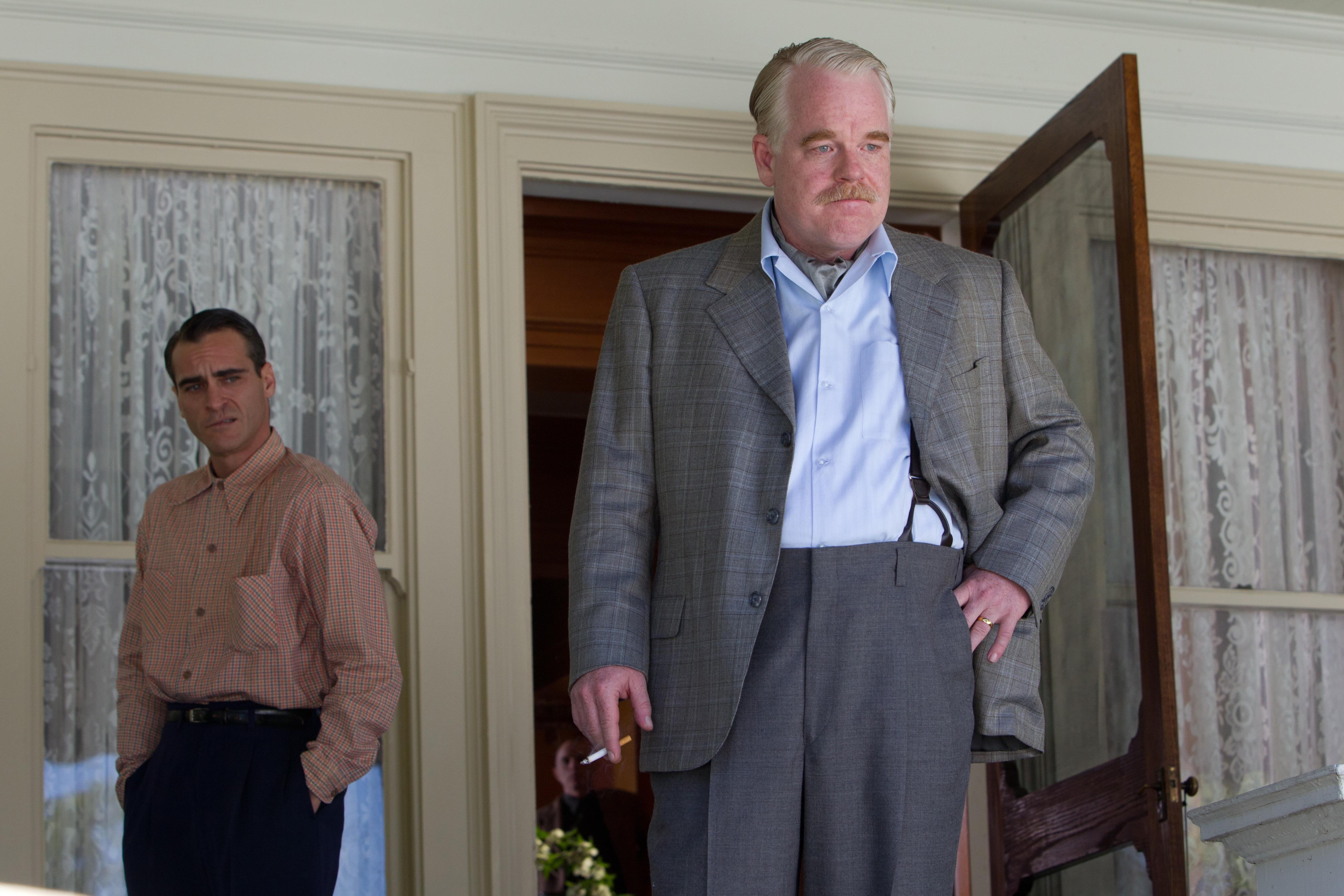
Frenemies in this life, enemies in the next: ‘The Master’ and other new films

0

It’s here at last! Clear your mind and join the Cause!

Yep, The Master opens today, along with a pair of cop movies (one set in gritty LA, the other set in an even grittier megacity of the future). Already in progress is the 3rd i’s San Francisco International South Asian Film Festival. Check out my take on all of the above right herre.

The most excellent Caitlin Donohue takes on Stephen Elliott’s porn-themed About Cherry (screening at the Castro tonight!) here.

As-yet unreviewed due to various reasons (two being: aversions to PG-13 horror flicks, and Channing Tatum overload … seriously, guy, take a vacation!), but most certainly opening today, are House At the End of the Street (alas, not the House Hunters suspense thriller we’ve all been waiting for) and high-school reunion comedy 10 Years. I didn’t make it to my 10-year reunion but I feel confident saying that NOBODY in my class (go Tigers!) showed up with Magic Mike-style abs.

But wait, there’s more! Read on for the rest of the best (and meh-st) of the week.

Hello I Must Be Going Blindsided by her recent divorce, 35-year-old Amy (Melanie Lynskey) flees New York City for quaint Westport, Conn., where she nurses her wounds, mostly by sleeping and watching Marx Brothers movies. Amy’s protracted moping rankles her perfectionist mother (Blythe Danner, bringing nuance to what could have been a clichéd character) and concerns her workaholic father (John Rubenstein). Dad’s trying to land a big client so he can “make back some of the money we lost in the market” — a subtle aside in Sarah Koskoff’s script that suggests Amy’s parents aren’t as well-heeled as they used to be, despite the ongoing renovations to their swanky home, catered dinners, and expensive art purchases. Money woes are just one of Amy’s many concerns, though, and when a distraction presents itself in the form of 19-year-old Jeremy (Girls‘ Christopher Abbott), she finds herself sneaking out at night, making out in her mom’s car, smoking weed, and basically behaving like a teenager herself. As directed by indie actor turned director Todd Louiso (2002’s Love Liza), Hello I Must Be Going is a nicely contained, relatable (self-loathing: we’ve all been there) character study — and props for casting the endearing Lynskey, so often seen in supporting roles, as the film’s messy, complex lead. (1:35) (Cheryl Eddy)

http://www.youtube.com/watch?v=LQbM4bb6Zpk

How to Survive a Plague David France’s documentary chronicles the unprecedented impact political activism had on the course of AIDS in the US — drastically curtailing its death toll within a few years despite considerable institutional indifference and downright hostility. As the epidemic here first surfaced in, and decimated, the gay male community, much of Reagan America (particularly in religious quarters) figured the death sentence was deserved. The President himself infamously refrained from even saying the word “AIDS” publicly until his final year of office, after thousands had died. Both terrified and outraged, the gay community took it upon themselves to demand treatment, education, and research. Most of this urgent 1980s overview is concerned with the rise of ACT-UP, whose angry young men successfully lobbied and shamed corporate, academic, medical, and pharmaceutical bodies into action, with the result that by the mid-90s new drugs existed that made this dreaded diagnosis no longer a necessarily terminal one. France is a journalist who’s been covering AIDS practically since day one, and his first feature (made with the help of numerous first-rate collaborators) is authoritative and engrossing. Just don’t expect much (or really any) attention paid to the contributions made by SF or other activist hotspots — like many a gay documentary, this one hardly notices there’s a world (or gay community) outside Manhattan. (1:49) (Dennis Harvey)

Somewhere Between Five years ago, when filmmaker Linda Goldstein Knowlton adopted a baby girl from China, she was inspired to make Somewhere Between, a doc about the experiences of other Chinese adoptees. The film profiles four teenage girls, including Berkeley resident Fang “Jenni” Lee, whose American lives couldn’t be more different (one girl has two moms and attends a fancy prep school; another, raised by devout Christians, dreams of playing her violin at the Grand Ole Opry) but who share similar feelings about their respective adoptions. The film follows the girls on trips to London (as part of an organized meeting of fellow adoptees), Spain (to chat with people interested in adopting Chinese babies, and where the question “What does it feel like to be abandoned?” is handled with astonishing composure), and China (including one teen’s determined quest to track down her birth family). Highly emotional at times, Somewhere Between benefits from its remarkably mature and articulate subjects, all of whom have much to say about identity and personal history. Lee and filmmaker Goldstein Knowlton will appear in person at select opening shows; visit www.landmarktheatres.com for more information. (1:28) (Cheryl Eddy)

Trouble with the Curve Baseball scout Gus (Clint Eastwood) relies on his senses to sign players to the Atlanta Braves, and his roster of greats is highly regarded by everyone — save a sniveling climber named Sanderson (Matthew Lillard), who insists his score-keeping software can replace any scout. Gus’ skill in his field are preternatural, but with his senses dwindling, his longtime-friend Pete (a brilliant John Goodman) begs Gus’ daughter Mickey (Amy Adams) to go with him — to see how bad the situation is and maybe drive him around. Ultimately, the film’s about the rift between career woman Mickey, and distant dad Gus, with some small intrusions from Justin Timberlake as Mickey’s romantic interest. Trouble with the Curve is a phrase used to describe batters who can’t hit a breaking ball and it’s a nuance — if an incontrovertible one — unobservable to the untrained eye. While Mickey and Gus stumble messily toward a better relationship (with a reasonable amount of compromise), Curve begins to look a bit like The Blind Side (2009), trading the church and charity for therapy and baggage. But what it offers is sweet and worthwhile, if you’re tolerant of the sanitized psychology and personality-free aesthetics. But it’s a movie about love and compromise — and if you love baseball you won’t have trouble forgiving some triteness, especially when Timberlake, the erstwhile Boo-Boo, gets to make a Yogi Berra joke. (1:51) (Sara Vizcarrondo)

Insider/Outsider art: Paul Festa’s ‘Tie It Into My Hand’ at ODC Fri/21-Sat/22

0

In a way, his first film, the experimental documentary Apparition of the Eternal Church (2006), did for Paul Festa what years of classical musical training and fiction writing never yet had: it put him squarely before the eyes and ears of the world as a serious artist. Ironically, he’d never trained as a filmmaker. He was following a musical muse, to be sure, but down an unfamiliar path.

Asking how we listen — why we listen — to music, Apparition gathered an eclectic assortment of interview-subjects (friends, drag queens, his Juilliard mentor Albert Fuller, even his old college prof, renowned critic-scholar Harold Bloom), had them strap on headphones, and then describe their reactions to Olivier Messiaen’s Apparition de l’église éternelle, the composer’s unrelentingly intense 1932 piece for organ. It was a simple notion that produced complex, and completely absorbing, results.

That unscheduled journey through film has been to the benefit of audiences literally around the world, as Apparition not only received awards and enthusiastic reviews but also toured widely in the lead-up to the centenary of Messiaen’s birth in 2008. In April of that year, it screened at San Francisco’s Grace Cathedral as part of a larger program that included Festa on violin, performing the West Coast premiere of Messiaen’s 1933 Fantasy for violin and piano (only published in 2007).

It also marked a vital new turn in Festa’s career, which continues this weekend with the world premiere of Tie It Into My Hand, his new experimental documentary and a fascinating exploration of the artistic life, as rollickingly entertaining as it is insightful and stirring. The premise is again cunningly straightforward: ask a wide range of artists (but no violinists) to give the filmmaker a violin lesson. (After many years of serious study at Juilliard and elsewhere, Festa had retired from playing music in the wake of a hand injury. In the film, he attempts passages from Pyotr Illyich Tchaikovsky’s Violin Concerto.)

Going from the insular world of Juilliard, with its disciplinary rigor and institutional certitudes, to the wide-open prairie of independent filmmaking, is not a typical trajectory for an artist. Festa’s work both expresses and investigates precisely those tensions — between professionalism and amateurism, mentorship and independence, success and failure, glamor and alienation, opinion and taste, beauty and pain — stirred up in his own unconventional path through life and art.
Among the film’s invariably interesting interlocutors are many local artists as well as prominent national figures, but the variety lies as much in the breadth of artistic disciplines represented: actors, drag queens, performance artists (including an uncompromisingly blunt but ever-precise Penny Arcade), poets, musicians (barring only violinists), writers (Daniel Handler, for instance, an old friend from middle and high school years in San Francisco), at least one historian, dancers, theater directors, and playwrights (ACT’s Carey Perloff and Theatre Rhinoceros’s John Fisher being examples in both categories), and painters (including the last recorded interview with the late William Theophilus Brown, for whom Festa had previously modeled and who, as part of the project, produced three color drawings of the violinist-filmmaker).

“It’s a combination of people with whom I’ve had a long acquaintance, some people I had just met at [the Yaddo] artist colony, or wherever else, and then people I was referred to. Apparition of the Eternal Church was really skewed more toward people in my circle. There were only two people in Apparition of the Eternal Church who I met for the first time at the interview.”

If Apparition of the Eternal Church asked questions about the perception of art, and specifically music, for different people, Tie It Into My Hand asks questions about the artistic impulse itself. But the conversations, culled from roughly 120 interviews, range widely, and Festa’s shrewd editing clusters the themes that arise in purposefully harmonic and dissonant clusters, while threading certain leitmotifs throughout. Tie It Into My Hand screens tonight and Sat/22 as part of a triptych of short films (the full program is discussed below), culminating Festa’s theater residency at ODC.

The filmmaker talked about his process, and his circuitous artistic career, while attending to some final color corrections at ODC a couple of days ago. Sitting in the control booth at the back of ODC’s theater, Festa admits he’s not gotten enough sleep of late, but speaks thoughtfully about the necessity of bridging strikingly different artistic terrains.

SFBG You were saying how this project transitioned from a theater piece to a film?

Paul Festa How it went from a theater piece into this film. It’s funny. Carey Perloff has this wonderful line in the film about how men have their nervous breakdowns ten years earlier than women. Well, I had mine right on schedule, six months from my 40th birthday. It had to do with the theater piece, and it had to do with the death of three of four really central mentors to me. Three people died in a four-year period. The first one was George Dusheck, who used to be a reporter here in San Francisco and he dated my mother. He became a really central father figure and mentor. He moved up to Mendocino and introduced me to this whole group of amazing artists and musicians up there. And he died in 2005.

And then Albert Fuller, who you see in this film, who was also the star of Apparition of the Eternal Church, who was the great mentor whose philosophy and whose teaching about music, ostensibly about music, is really what created me as a filmmaker. His imagination about music, his harpsichord music — it had nothing to do with opera or ballet, it wasn’t like he was in the theater, but he had his own theater going on up here. Exposing that to us, he was the origin, and he was the first interview of Apparition of the Eternal Church. And in a sense that whole film is an expression or a crystallization of his teaching. And he died in 2007.

And then this woman Juliette died in 2009. And about three weeks later I had a conversation [about the proposed theater piece at ODC] with a guy who had helped me put on the Grace Cathedral evening. And he kind of looked at me like I’d lost my mind. “What are you talking about? First you did music, and you didn’t make a debut or cut a record. And then you were a writer and you didn’t finish the novel.”

He basically accused me of being a dilettante. He said, “Wow. You’re middle-aged. Do you know that? Are you aware that it’s difficult to get funders and audiences and everyone else to take you seriously?” He didn’t phrase it in quite such a judgmental way; that’s how I took it. He was more amazed that I had the nerve to do that. He’s very wealthy, and he said, “I would be concerned about my own security. Do you have no concern for your own security?”

Well, that’s how I had my nervous breakdown. I became morbidly concerned with my own security. “Holy shit. What have I been doing? Have I been asleep for the last 25 years?” And so at that point I stopped sleeping. There were a lot of practical things [concerning me]. One of the practical things was you can’t even apply to an artist residency or a lot of different things unless you have work that is less than four years old. And Apparition of the Eternal Church, my only film, was about to age-out of that system. So I’d lay awake just trying to think my way out of this disaster that I had somehow engineered for myself. You know, kind of the worst-case nervous-breakdown anxieties.

And I thought, “OK, I’ll make a film, and I’ll introduce the theater piece with this film, and I’ll sort of kill two birds with one stone or I’ll sort of rescue the theater piece and rescue my career with this movie. And it’ll be a silent film comedy, and I’ll accompany it live on the violin. So I’ll keep all the things in the air at once. Kind of like the Grace Cathedral thing, I’ll finally bring everything together. So that became this silent film called The Glitter Emergency, which is set to the second and third movement of the Tchaikovsky violin concerto. So the idea was that that would be the prelude to the theater piece.

What wound up happening was that it ended up being the conclusion to a triptych of films called Three Short Films by Pyotr Illyich Tchaikovsky. The first of which is this thing. The second of which is a ballet fantasy, which we’ll watch a text-based storyboard of, with me playing live, on [Fri/21]. And then there’s The Glitter Emergency. So it’s one kind of enormous short film and two 20-minute short films.

So that’s how it all came about. And every step of the way, ODC was right with me. When I told [former ODC Theater Director] Rob [Bailis] the theater piece had really evolved and would now be a series of short films, he was totally down. ODC has been a really incredible partner for the last three years.

SFBG Tie It Into My Hand does have elements of self-examination of course, which resonates with the context you describe, but part of why it is so very approachable and compelling is the way it invariably goes much further in what it explores. Did you have a sense of what you’d find?

PF It was like Apparition of the Eternal Church in that it was this big experiment. I didn’t know what the hell was going to happen when I walked into these lessons. I mean, I had an idea: I wanted to accomplish what Apparition of the Eternal Church had accomplished, which was to get people to forget that there was a camera on them. When the headphones went on, I realized that’s why you can watch Apparition of the Eternal Church and just watch talking heads for 35 of those minutes: because they’re doing something, and responding to something.

When you get the download from people, usually they become very cerebral and very careful and they speak in measured tones — and these people were kind of losing it, and that was fun to watch. So I wanted to give them something to do, and that’s what the violin lesson did — and it involved music without the headphone conceit. But also I learned, from everywhere I’d been to music school, that the best way to get someone talking is to have them teach. I heard so many great stories from my teachers.

So I hoped, and I think I was right, it would turn out to be a really productive pretext or device for an interview.

SFBG I would agree. In addition to longer conversations, there are just so many wonderful lines in the film; some very funny, others very perceptive, and often both.

PF What are some you remember?

SFBG For instance, one question was, “Is that as painful to play as it is to listen to?”

PF [Laughs] And the answer to that question is, actually, yes. Thank you, Mink Stole.

Tie It Into My Hand

Fri/21-Sat/22, 7pm, $15-$35

ODC Theater

3153 17th St, SF

www.odctheater.org

Vacancy voyeur: Matt Fisher’s shots of a Treasure Island that waits

0

Originally built as an airport for flying boats, Treasure Island’s man-made four square kilometers went on to house the Navy, and now is home to wineries, environmental hazards, electronic music from time to time, 2,500 people — most of them low-income, many of them college students — and tons of unused, abandoned buildings that capture the imagination of artists (check out this video from Tiny Town Productions we posted last year.)

The latest creative type to get inspired is Matt Fisher, a photographer who captured the isle’s luminous creepiness in his shots. Now that there’s plans to build more housing on the isle, Fisher is working on turning the images into a book to capture a moment in time and structures that may not be around much longer. We caught up with him about his tangles with pollution, ghosts, and about why he didn’t shoot any of Treasure Island’s living inhabitants. 

San Francisco Bay Guardian: What inspired you to take on Treasure Island?

Matt Fisher: About six years ago, a friend of mine started working for the Treasure Island Development Authority, which oversees all the properties on the island. Through visits out there and seeing some of the buildings left over from the Navy’s occupation, I became intrigued with the story behind the island. I ended up doing a short-form documentary for Current TV on the island and the location has been lingering with me ever since. I watched it become more populated with residents and businesses, and about two years ago, I finally started taking my camera out there. Current plans for redevelopment to turn Treasure Island into an eco-friendly city had me wondering what would happen to these tarnished old remnants of the island’s past. Would they be forgotten like so many other things? That was when I decided to document the island and the remaining structures as thoroughly as I could.

SFBG: There are thousands of people living out there and I don’t see any of them in your shots — why didn’t you shoot the inhabited portions of the island?

MF: I have always been fascinated by the phenomenon when a human is added to the landscape of a picture, whether it is a painting, video, or photo. Immediately, it seems like your attention is directed at the figure. Humans love to look at other humans. Take the human out of the picture and you start realizing elements of the landscape again, the buildings and the objects. I really tried to keep people out of many of these photos for that reason. The landscape on Treasure Island is so bizarre, I really tried to portray that desolate and eerie feeling to the viewers.

SFBG: I know the island is crazy polluted — did you run into any dicey situations involving waste out there?

MF: I personally didn’t run into any problems out there but most of the pollution problems come from invisible culprits, so maybe I did and just don’t know it yet. Asbestos is running rampant out there and taking out a lot of buildings. Low levels of radiation are also a factor and now the recent news of a botched radiological assessment from the past has the Island’s future looking sketchy again. I really felt like this was a critical time to do this project with all the uncertainties swirling around its growth over the last five years. My hope is that this book can serve as a historical reference to immortalize this mysterious landmass before it’s too late.

SFBG: Ghosts?

MF: I am sad to report I experienced no ghosts. The attached Yerba Buena Island may have a few lurking around though. Indian burial artifacts and other human remains have been found out there while building the Bay Bridge back in the late 1930s. They found a mammoth’s tusk as well!


Extra! Extra! Calling all Nebraska Cornhuskers!

0

Where to watch the Nebraska Cornhuskers game with Idaho State today (Saturday, 9/22/2012)

Well, it was beginning to be a desperation   The former Jean Dibble and I couldn’t figure out how to watch Saturday’s Nebraska football game with Idaho State on television.

We had faithfully watched the first three games on national television, a real treat, as the Huskers started up a e 2-1 record.  Jean and I are both graduates of the University of Nebraska at Lincoln, our grandson Nicholas Perez of Santa Barbara is a freshman mechanical engineering student at Nebraska and has season tickets, and we are now even more faithful fans.

We mentioned our predicament to Richard Boyce, a fellow Cornhusker fan aho is cheerfully addicted to college football,  at the Que Syrah Wine Bar on Thursday night. (That’s where the action is on Thursday nights, with Val

crafting excellent Barcelona-style tapas and Stephanie rolling out the flights of specialty wines from small production wineries.)

Richard had the answer: watch the game at Final Final, the neighborhood sports bar at 2990 Baker St. across from the Presidio. Meanwhile, our daughter, Katrina Perez, who has suddenly become a rabid Husker fan, checked the Nebraska alumni site and emailed us the local “watch site” for watching all Nebraska football games.  It was Final Final.  (The name comes from the days the soldiers got their final drink before heading back to their barracks in the Presidio after a night on the town.)

Amazing.  We have been in San Francisco since 1964 and we never knew there was a sports bar featuring Nebraska games.

So I called the bar to check the reports.  (I have always been leery of the alleged Herb Caen rule: never check the item, you might lose it.) The owner Arnie Prien answered his own phone, just like any good Nebraskan.  He confirmed the reports. It turns out that Arnie is the real thing.  He comes from Lyons, Nebraska, and graduated from the university in 1964. He has been running Final Final for the past 35 years loyally broadcasts Nebraska football games every Saturday.  The NU faithful, he reports, come from all over the
Bay Area to see the games and enjoy NU camaderie.  The game starts at 12:30 p.m. but he warns people to come an hour early to get a seat and first shot at the free popcorn and inexpensive  beer.

As the Nebraska song says, “There is no place like Nebraska.” Even in San Francisco. Go Big Red!

Final Final

2990 Baker St.

San Francisco 94123

415-931-7800

P,.S. The alumni site lists three other “watch sites” in the Bay Area.  Jack’s Brewing Company in Fremont.  Legends and Heroes in Concord.  And Knuckles Sports Bar in Monterey,

Watch the Huskers on these four Bay Area Watch sites: http://bayareahuskers.org/


Haight Street coffeshop plans to Slay at its upcoming Mission location

0

Stanza Coffee is expanding past its Haight Street, hole-in-the-wall roots and into the competitive SF coffee scene, with a badass, Bay Area exclusive espresso machine and a new location in the caffeinated-cool Mission district opening next month.

Part-owner and general manager of Stanza, young Aaron Caddel approached the vacant Haight Street building almost a year ago. Stanza Coffee opened in April, serving Redlands-based roaster Augie’s Coffee to a less-than-frenzied reception. A new coffee place in San Francisco isn’t exactly anything to write home about, after all. However, the quickly increasing business developments indicates good news for the little coffee bar that could. 

While the shop’s decor has a unique dose of rustic glam more akin to a wine bar, featuring heavy red curtains, burnt red walls, wood floors, and a series of wine barrel cafe tables positioned next to the window, Caddel envisions a battalion of interior, exterior, and branding changes for a more comfortable environment. He foresees a lighter, more cohesive color scheme for the dark walls, tables that are more conducive to laptop work, a brighter outside sign, window art with Stanza’s new logo, and maybe even some couches for meandering coffee shop chit-chat. 

Perhaps the most dramatic of developments is Stanza’s upcoming addition of a new, Mission district location at 3126 16th Street by early October. While Stanza’s Haight location stocks both roasts and a wine tasting room, Caddel assures me that the store is really “a coffee shop, not a wine bar.” Indeed, it seems that the rack of locally-sourced MJ Lord’s wines lining the back wall of the shop is merely a pleasant afterthought. The coffee bar menu, including a steaming cup of Ethiopian pour-over accompanied by a Mission Beach Cafe golden raisin-stuffed, vegan bran muffin, or the sweet, slow-drip-cold-brew iced coffee is enough. Luckily for self-proclaimed “coffee purist” Caddel, the Mission front will be more concentrated on the caffeine.

In fact, the Stanza team recently purchased the sole Bay Area distribution rights to the infamous Slayer espresso machine, a hulking, expensive, and wholly badass piece of coffee instrumentation manufactured in Seattle. Caddel tells me this new location will be much more focused on hosting a comfortable (think couches and a back patio) and community-oriented environment: while Haight Ashbury’s combination of hippie-punks and tourists make for a fairly transient customer base, the excited manager can barely contain his enthusiasm when describing the steady clientele he anticipates at the new location. 

Caddel recently closed down a potentially lucrative Union Square pop-up cart due to the fast-paced business’ quick turnover time and ensuing lack in presentation and quality, a product degradation that he says simply “hurt [his] soul.” The vision for the new storefront focuses equally on product and presentation in order to give coffee the contemplation and appreciation the Stanza team believes it’s due. 

Stanza Coffee and Wine Bar

Open Mon.-Fri 6:30am-9pm; Sat.-Sun. 7:30am-9pm

1673 Haight, SF

(415) 529-1592


Yerba Buena Night

0

Yerba Buena Community Benefit District Presents: Eight bands. Nine dance groups. Seven performance artists. Three main stages. Six visual art installations. Supperclubsf performers. Live mural painting. Sculpture garden. Mobile book press… All for free!  A night to remember!

On Saturday, October 13 from 4-10pm in Downtown San Francisco’s Yerba Buena neighborhood, enjoy an evening of free outdoor music, art, dance, and performance. All activities will be staged in Yerba Buena Lane, Jessie Square, and the Yerba Buena Gardens Terrace, including:

Gallery Walk from 4-7pm: Take a tour of the neighborhood’s galleries and view works by some of the most exciting contemporary artists.

Outdoor programming from 7-10pm: Three main stages of musicians, dancers, and performers, a video performance area, a live mural exhibit, an interactive book publishing mobile, and aerial performances.

For more information, follow this link.

SFBG TV: Baklava bonding at the Armenian Food Festival

3

No lines? Space to move and breathe? This can’t be a San Francisco street festival, can it?

But it was. I made a dramatic entrance at last weekend when I was shooting the 55-year old Armenian Food Festival. I floated in like a cartoon character, led by the nose. Yes indeed, I defied all laws of gravity and let my senses guide me to the sizzling kebab meats and free-flowing draft beer, not to mention the whirling dancers and, of course, Armenian eye candy.

My foodie senses were tingling, and I wasn’t the only one. The event began as a get-together for the Armenian community, but more and more people come every year to visit the festival, which is tucked away in Ingleside Heights. And bonus: the event is a benefit St. Gregory’s Church and the KZV Armenian School.

While I did most of my socializing with the kebab stand and beer truck, I did get festival board members VJ Darakjian and Zareh Sarkissian on-camera for an interview. They were big on the fact that “first and foremost, we have something for everyone.” I think they’re right — the night was pretty much summed up when I ran into an old co-worker.

“Hey, Dom! What are you doing here?”

“Duh, dude. Baklava.”

The rich, the poor and the state of SF

68

The latest Forbes 400 is out, the list of the richest Americans, and a record number (according to my annual record-keeping) now live in San Francisco. This is a city with 18 people on the top-billionaires list — and since the list cuts off at $1.1 billion, there are a lot of really, really rich San Franciscans who didn’t quite make it this year. School Board candidate Sam Rodriguez told us his research shows that there are 80,000 millionaires in the city, meaning one in ten San Franciscans is worth a cool mil, and while some of that is just homeowners who bought 20 years ago and now have property worth $1 million — and I haven’t verified his data anyway — it’s hard to argue that this is anything but a very wealthy city.

(It also has, according to Forbes, the second-hippest neighborhood in the nation, and that would be the Mission, which is reaching that fully-gentrified stage where nobody young can afford to live there anymore so it won’t be hip much longer.)

The list comes out at the same time that figures show nearly 7 million Californians are living in poverty, and household income for most people has been stagnant — at best — for more than a decade.

It was a great year for the top 400, though — their median income was up rather dramatically. It seems that, whatever Mitt Romney may say in public or in private, the Obama administration hasn’t been bad at all for the 1 percent.

I keep asking, and I know it’s tiresome, but: Why, in a city with 18 billionaires, do we still have to clear out homeless encampments?

Why are the public schools holding (literally) bake sales to buy paper and pencils? Why have we cut the number of acute psychiatric care beds at SF General from 40 to 10? If San Francisco can’t even talk about taxing the billionaires, is there any hope for the rest of the country?

FYI, here’s The SF 18 (complied by Anna Sterling):

    1
    Riley Bechtel
    $2.9 B
    Chairman and CEO, Bechtel Corp.
    2
    Stephen Bechtel, Jr.
    $2.9 B
    Former Chairman, Bechtel Corp.
    3
    Doris Fisher
    $2.9 B
    Cofounder, Gap
    4
    Dustin Moskovitz
    $2.7 B
    CEO, Asana
    5
    Ray Dolby
    $2.4 B
    Founder and director emeritus, Dolby Laboratories
    6
    John Fisher
    $2.3 B
    President, Pisces, Inc.
    7
    William Randolph Hearst, III
    $2.3 B
    Source of Wealth: Hearst Corp
    8
    Marc Benioff
    $2.2 B
    Chairman and CEO, Salesforce.com
    9
    James Coulter
    $2.1 B
    Source of Wealth: Leveraged buyouts, Self-made
    10
    Gordon Getty
    $2 B
    President and Chairman, Ann & Gordon Getty Foundation
    11
    Phoebe Hearst Cooke
    $1.9 B
    Source of Wealth: Hearst Corp
    12
    Michael Moritz
    $1.9 B
    Partner, Sequoia Capital
    13
    John Pritzker
    $1.8 B
    Source of Wealth: Hotels, investments
    14
    Robert Fisher
    $1.7 B
    Director, Gap
    15
    William Fisher
    $1.7 B
    Director, Gap
    16
    Peter Thiel
    $1.4 B
    Partner, Founders Fund
    17
    Thomas Steyer
    $1.3 B
    Founder & Co-Senior Managing Partner, Farallon Capital Management
    18
    Jack Dorsey
    $1.1 B
    CEO, Square, Inc.


Skin on Skins: Luxurious handcrafted leather goods

0

Before launching Skin on Skins, owner and operator Onder Keskin designed leather goods for several large companies in Istanbul and developed high end retail markets in both in both Europe and the U.S.

Inspired by his love of high quality leather goods and his valuable experience in production and marketing, he started Skin on Skins out of San Francisco.

Skin on Skins specializes in practical, creative, and unique leather goods with each piece being handcrafted from premium hides.

Skin on Skins has appeared in the Indie Mart, Up Your Alley, Urban Air, and Folsom Street Fairs. You can buy his accessories, motorcycle seats, and more online and also at these stores.

For more information, contact Onder at 415-608-2690, or email him at ok@skinonskins.com.


Where is Occupy SF now?

28

On the anniversary of Occupy Wall Street, Occupy San Francisco also celebrated its birthday.

Demonstrations throughout the day Sept. 17, focusing on a variety of topics, converged at 5pm at 555 California, Bank of America’s west coast headquarters. A lively march of about 600 became a street festival down the block. There, protesters stopped for a circus of birthday activities. In one corner, people saddled by debt wrote their debt information on pieces of paper, explained their situations to the crowd, and dropped the papers into a trash can for a symbolic burning. One person also burned cash. “Hell no, we won’t pay,” the crowd chanted.

A few feet over, protesters painted the street with a bright yellow sun declaring “democracy not debt.” Volunteers then fed a free meal to the hundreds in attendance and wheeled in a video screen to watch some recaps of the year’s best moments. Around 8pm, the group left as peacefully as they had come.

In the darkness, a few hundred headed east on Market. When they arrived in Justin Herman Plaza– or Bradley Manning Plaza, as Occupy SF has christened it, in honor of the whistle blowing soldier- a few police stood guard around the perimeter. Undeterred, protesters walked in, and shouts of “happy birthday” gave way to “welcome home.”

The birthday party continued with a night of music. Five tents were pitched, sleeping bags were brought out. Police vehicles carrying truckloads of barricades drove by, but police told protesters they would have to leave the park by 6am, the hour the park opens.

30 or 40 spent the night. In the morning police came back. As ukelele and drums continued to play, tents were dutifully broken down. A few went back to sleep.

Video by Eric Louie

Last fall, Occupy SF could basically be found here. The camp was at Justin Herman Plaza. The ever-expanding list of working groups sometimes met somewhere else, but Occupy was at camp. But after a series of police raids, from Oct. 5 to the raid that finally brought the camp down in December, this camp was no more.

Now, Occupy SF is found all over the place.

As longtime Occupy SF activist Vi Huynh said while celebrating the anniversary: “I think it’s good to honor these milestones because, unlike the mainstream media would have us believe, we haven’t gone away. We’re not dying either. They’re writing our obituaries, but we’re very much alive. And we’re doing things every day.”

Here’s an uncomprehensive list of active groups from Occupy in San Francisco.

101 Market. This is the old camp of Occupy, “re-occupied” in February in response to a national call. At least 30 sleep there every night, and the camp is a veritable fortress of furniture and belongings. They’re mere existence is a refusal to humor the concept of private property. General Assembly meetings occur at 101 Market Tuesdays and Thursdays at 7pm.

Action Council. Action Council is a forum meant to connect Occupy with unions, non-profits, and community groups. They played a big role in planning demonstrations like the Jan. 20 shutdown of the financial district and the May Day solidarity demonstrations. Action Council meets weekly, Sundays at 2pm at Unite Here headquarters, 215 Golden Gate Ave.

All Streets Yoga. Since last winter, All Streets Yoga, formerly known as Decolonize Yoga, has been transforming part of the sidewalk at the 16th and Mission BART station into a yoga studio free for all. Volunteer yoga teachers lay out rugs and lead personalized yoga sessions for anyone who chooses to join. They transform space and creating calm in the busy city landscape. Join them Fridays 5-7pm.

Community Not Commodity. Also known as Bay Occupride, this group formed to protest commercialization of the Pride Parade. On the Sept. 17 anniversary they did a march on the Castro banks and a sit-in to protest sit-lie at Harvey Milk Plaza. CNC describes itself as “a collective assembly of queer/trans-focused community groups with established reputations in the Bay Area that have come together to strengthen and unify our diverse communities. We have come together to confront the 1% within our movement. We work for complete liberation of queer and trans people!” They meet Sundays at noon at Muddy Waters Café, 521 Valencia. See more at www.bayoccupride.com.

Direct Action working group. Direct action is a central tenant of Occupy. It means taking action to prevent something bad or create something good without permission or help of those with political power. In a 1912 essay titled Direct Action, Voltairine de Cleyre cited the Boston Tea Party as an example and wrote that “Every person who ever had a plan to do anything, and went and did it, or who laid his plan before others, and won their co-operation to do it with him, without going to external authorities to please do the thing for them, was a direct actionist. All co-operative experiments are essentially direct action.” The direct action working group meets Wednesdays, 6pm, at the Redstone Building at 2940 16th Street.

Environmental Justice working group. The environmental justice working group keeps the pressure on the corporations that exploit the planet. They’ve protested hydraulic fracturing and the nuclear industry. They meet Tuesdays at 4pm at 101 Market.

Food bank of America. Occupy SF set up the first Food Bank of America to feed thousands of hungry protesters and passers-by on Jan. 20. A Market Street Bank of America branch locked its doors when volunteers set up a food table and passed out hot meals. Now, Food Bank of America continues in front of the mega-bank’s 23rd and Mission branch, where volunteers pass out produce, mostly donated from farmers’ markets, along with literature on switching to credit unions. They’re usually there Thursdays 5-6pm.

Ideological Liberation working group. This working group has produced pamphlets explaining Occupy, trading cards of especially greedy bankers, and postcards summarizing issues like the foreclosure crisis and the National Defense Authorization Act. They also created the Occupy SF Declaration. Brainstorm and write with them on Tuesdays, 7:30-9pm, at the decidedly ideologically un-liberated meeting spot of the Starbucks at 27 Drumm.

Occupy Bay Area United. Occupy Bay Area United spent the night outside 555 California on the eve of the Occupy SF anniversary, an occupation complete with tents and signs. They are “committed to non-violent direct action.” They meet on Sundays, 5-7pm, and post meeting locations on their website, www.obau.org.

Occupy Bernal. This neighborhood-based group is largely considered one of the most effective and desperately needed parts of the Occupy movement in San Francisco. Occupy Bernal is in the business of stopping foreclosures and evictions. “Since January no one we worked with has had an auction. People we work with who already had auctions, we’re stopping their evictions. We’ve stopped six of them so far. So we’re almost done with all the evictions, and we can go back to just stopping the auctions. We have 60 people in line to get loan modifications from Wells,” said Occupy Bernal organizer Buck Bagot. On the anniversary, Occupy Bernal hosted a rally highlighting the disproportionate effects of the foreclosure crisis and veterans and elderly and disabled people. “There were about 100 of us at the protest and five people, all over 80, veterans who are all at risk of losing their homes because they don’t have very much income,” said Bagot. Occupy Bernal meets 7-9pm on the second and fourth Thursday of each month at the Bernal Heights Neighborhood Center at 515 Cortland Ave. See www.occupybernal.org for more information.

Occupy Forum. Occupy Forum started up in early June in the Women’s Building, and has since moved to Justin Herman Plaza. The well-attended forums, usually around 70 people, are a time to discuss issues that concern people in Occupy. From the beginning Occupy has been said to have “no focus”– maybe that’s because those involved saw that everything from greedy banks to income inequality to homelessness to discrimination in loans to healthcare to racism to wars were all connected. The forum is a chance to focus in on a different topic every week. Check them out Mondays at 6pm at Justin Herman Plaza, at Market and Embarcadero.

Occupy the Richmond. A philosophical Occupy. If you’ve ever gotten sick of decrying problems in society and yearned to discuss creative solutions, Occupy the Richmond may be your cup of tea. A philosophical Occupy. Saturdays at 4pm, Occupy the Richmond gets together at 11th Ave. in Mountain Lake Park “to talk about what kind of society we want to organize together,” according to Occupy the Richmond participant Alex Zane. “Occupy opens up the possibility for talking about that. Otherwise, people would be stuck behind their screens freaking out about what kind of society we should organize. We should get together and talk with real, living people about how we’re supposed to reorganize our society,” said Zane.

Outreach working group. A group that spreads the word about Occupy and speaks with people and community organizations about working together. They meet Wednesdays at 7pm at One Rincon Center, also known as 121 Spear.

This article has been corrected. Bradley Manning served as a soldier in the Army, not a marine

Supervisors set Oct. 9 to decide Mirkarimi’s fate

139

The San Francisco Board of Supervisors officially received the official misconduct case against suspended Sheriff Ross Mirkarimi yesterday, starting the clock on the 30-day deadline that the City Charter provides for that body to take action. Board President David Chiu announced a special meeting to consider the case on Oct. 9 at 2pm.

“The last day the Board of Supervisors can act on this is Oct. 17,” Chiu told his colleagues yesterday, reiterating the schedule the board had previous agreed to: a 10-minute presentation by the Ethics Commission, 20 minutes by representatives of Mayor Ed Lee (who brought the case), 20 minutes by Mirkarimi’s side, a five-minute rebuttal by Lee, public comment (which could last for hours), and then deliberation by supervisors.

In addition, attorneys for both sides have until Sept. 25 to submit any legal briefs they want the supervisors to consider, and Mirkarimi’s attorneys are expected to raise objections to an Ethics Commission summary they considered “one-sided,” as well as getting into the issue of whether Lee committed perjury during his sworn testimony in June.

It takes at least nine of the 11 supervisors to remove Mirkarimi, and there is an open question about whether some supervisors should recuse themselves from voting because of conflicts-of-interest, which would essentially count the same as a vote in Mirkarimi’s favor.

Lee was asked on the witness stand whether he spoke with any supervisors about removing Mirkarimi, which he denied. But Building Inspection Commissioner Debra Walker said her longtime friend and political ally Sup. Christina Olague told her Lee had sought her input on the decision. Confronted by journalists, Olague denied the charge but said, “I may have to recuse myself from voting on this.”

Lee was also asked whether he tried to get Mirkarimi a city job in exchange for his resignation, which Lee denied, but former Sup. Aaron Peskin has said that permit expediter and Lee ally Walter Wong (who has refused to answer questions from the media) extended that offer through him, which Mirkarimi didn’t accept. The Ethics Commission refused to consider the perjury allegations, calling them beyond its purview, but Mirkarimi attorney David Waggoner said he plans to submit sworn declarations by Peskin and Walker to the supervisors.

Another possible recusal from the vote would be Sup. Eric Mar, who just happened to be called as a juror in Mirkarimi’s criminal case before it was settled with a plea bargain. There have also been rumors that Board President David Chiu spoke with Lee about Mirkarimi at some point. Last month, Waggoner told the board that he wanted each supervisor to declare whether they have spoken with anyone about Mirkarimi, but their team is proceeding cautiously and wary of offending the supervisors who will now decide the fate of their former colleague.

“We’re going to respectfully ask each member of the board to state under oath who they’ve talked to about the case,” Waggoner told us.

Normally, jurors would be extensively questioned during the voir dire process, and those who had served on an elected body with a defendant for years would almost certainly be removed from the jury pool, which seems to have been the case with Mar’s disqualification on the criminal case. But that’s just one more example of how this unprecedented process is anything but normal, with city officials basically making up the rules as they go along.

Mirkarimi’s wife and alleged victim, Eliana Lopez, has consistently maintained that she was never abused, except by city officials who have sabotaged and humiliated her family and taken away its livelihood. She told the Guardian that the thin charges in this case shouldn’t warrant the removal of an elected official: “You can have different opinions about Ross’s behavior, and people can have different opinions about that, but the people of San Francisco should decide who represents them.”

Lopez said she’s been dismissed and mistreated by Lee, the Ethics Commission, and domestic violence advocates: “These self-appointed white women that are part of the Domestic Violence Consortium are doing everything they can to attack me and insult me while claiming to help me, and never once reaching out to me.”

But she said that she’s hopeful the supervisors will resist political pressure during an emotionally charged election season and do the right thing: “What we need from the supervisors is brave and honest supervisors. The people of San Francisco need that.”

Oh, the cutlery

0

le.chicken.farmer@gmail.com

CHEAP EATS This bums me out: hearing straight-phobic comments from queers. It’s a San Francisco thing. I’ll leave it to better minds than mine to figure out why. But in New Orleans, among our queer community, I never heard anything like it. And in New York City, among Hedgehog’s … nope.

Nothing.

But here, home, in San Francisco, it happens repeatedly. And as much as it used to bother me, as a closeted queer, to hear straight friends (assuming my sameness), make trans- and homophobic statements and jokes, it hurts now to hear the reverse.

Plus which, it’s stupid. So stop it. Just: stop.

Seriously, if we’ve become so proud of being queer that we devalue and disrespect “other,” then it’s time to reread Dr. Seuss.

The one with the Star-Bellied Sneetches, I’m thinking. But really they’re all very good, even “Hop on Pop.” Theodore Dreiser may have been a straight white male, but — like a lot of straight white men, including my dad, and possibly yours — he fucking rocked.

See, so it’s never as simple as Us vs. Them. You, dear heterophobe, have allies — important, awesome, straight allies, like

continued after sports section

CHEAP SPORTS

by Hedgehog

Last week was very football-oriented in our little neck of the Mission, what with the NFL and the San Francisco Women’s Flag Football League both kicking off their seasons and all.

Sunday morning, Kayday and I sat on the sidelines and watched Chicken Farmer and the rest of the team play their season-opener, but between the lack of instant replay and the lack of microphones on the refs, we rarely understood what the hell was going on. According to Chicken Farmer, her team lost. We’ll take her word for that.

And I’d tell you all about the 49ers game Sunday afternoon but that would be pointless since, obviously, you all witnessed it with your very own ocular orbs, right?

So what does that leave me with by way of football-orientated conversation? Gay marriage, of course. The nutshell, for those of you who are communists or live in a sports-free cave, is that Baltimore Ravens linebacker Brendon Ayanbadejo supports same-sex marriage. Openly. A certain Maryland State Delegate name of Burns took exception to Ayanbadejo voicing opinions about politics and wrote a letter to the Raven’s owner requesting that he put a muzzle on Ayanbadejo.

Enter Minnesota Vikings punter Chris Kluwe, who is some kind of Good Will Hunting-type genius (except with words instead of numbers). He has a gay brother-in-law, and apparently is really stoked to see an honest man made of him some day because he wrote a doozy of a letter to this Burns fellow. Look it up. It’s the kind of letter that makes State Delegates blush and concede that maybe linebackers have First Amendment rights, too.

So there you have it, sports fans: 24 hours into the NFL regular season and I have not one but two new favorite football players.

continued from before sports section

….Chris Kluwe and Brendon Ayanbadejo.

But speaking of Dr. Seuss, Hedgehog and me get to don Cat-in-the-Hat hats and solicit donations for the Children’s Book Project at Candlestick before the home-opener Sunday. Meaning: Not only do we get to see the game, we get to annoy tailgaters beforehand.

Now, if only I can get Hedgehog a press pass (plus one), for the rest of the — Wait a minute. Isn’t there a connection now between the Guardian and the Examiner?

My new favorite restaurant is Spoon, that awesome Korean joint at the corner of Ashby and something-or-other in Berkeley, where we ate, coincidentally, with Spoonbender, my new favorite unprofessional football player.

I had this fantastic kimchi fried rice, with beef (or bacon), and topped with a sunny-side-up egg. Spoonbender had Jhap Chae, which she loved, and Hedgehog had (and loved) Kimbop and chicken wings.

Then we went to the park and played catch.

SPOON

Daily 8am-8pm

933 Ashby, Berk.

(510) 704-9555

AE,D,MC,V

No alcohol


Pop love

0

emilysavage@sfbg.com

MUSIC There was a time, not so long ago, when the fanzine was a glittering portal. It was the best avenue for learning about new, underground, innovative music across the country, before the all-powerful grip of the Internet forced us to idly click our way through back catalogs. The ink and paper projects were passed to friends in the same manner one traded handmade mixtapes.

High among those infamous fanzines and punk mags was a pioneering indie pop-centric zine called chickfactor — put out by then-New York based editor-writer-photographer Gail O’Hara and Black Tambourine singer Pam Berry (who moved to London in 1995). Perhaps you’ve heard Belle and Sebastian’s song “Chickfactor” about it?

The publication’s print heyday lasted from 1992 through ’02, and is now present mostly as an online museum, but with some hints of movement in the near future. For one, its first paper issue in 10 years will be released next month, October 2012. And two, to celebrate her zine’s 20th anniversary, O’Hara has put together a series of shows around the country — and in London — featuring bands and musicians that came of age on the pages of the publication.

Just last week I saw something about an EDM blog that’s now putting on club nights up and down the coast. That’s not really what this is. This is a more DIY reunion, of bands, of fans, of readers, and of early twee pop enthusiasts (though the bands and the zine’s founders would probably disagree with the twee part).

“It was just an excuse to have a party with great live music,” says O’Hara, now based in Portland, Oreg. “I am pretty good at setting up shows, and it used to be something I did all the time when I lived in New York and London. One reason I’m good at it is that I ask people who never play, and sometimes they say yes. I really missed doing it, and the 20th anniversary seemed a good excuse to plan something in advance.”

“Many of these bands take a lot of prodding, and I was up for the task,” adds O’Hara.

All of the lineups are slightly different, but share in a common thread of the early twee and indie pop scenes in the ’90s Pacific Northwest. One of the headliners in San Francisco, the Softies, are only doing four shows this year, and the one in SF will be the last one.

The Softies, a beloved guitar-and-vocals duo formed in 1994, was one of those bands that hadn’t played in some time. The Pacific Northwest duo was made up of Rose Melberg and Jen Sbragia, both musicians who were in other bands prior to, during, and after their stint as the Softies (Melberg in Tiger Trap and Go Sailor; Sbragia of the All Girl Summer Fun Band). The Softies’ last show was in 2000 on a brief tour for their last LP, Holiday in Rhode Island.

“We had not even thought about the possibility of playing any shows until [O’Hara] asked us,” says Melberg, “and it never even crossed my mind that we could do it. When [Sbragia] said yes, I was amazed and totally excited. It was a lovely, unexpected surprise.”

Both have young kids and there’s a geographic distance between them now — Melberg in Vancouver BC, and Sbragia in Portland — but they made it work for the chickfactor shows.

Plus, they were never really out of touch, says Sbragia. The Softies first began as an intimate friendship between the two, so it came “as an extension of our friendship” says Melberg.

That closeness was apparent in the music of the Softies, a endearing, melodic blend of influences with tender-hearted vocals that inspire a still-dedicated fan base. It also inspired a somewhat dirty word to those involved: twee.

“[The ‘twee’ label] used to really bother me, because we were writing sad love songs with a lot of meaning packed in. We weren’t singing about daisies and ice cream,” Sbragia says. “But we got lumped in with that. Maybe if you weren’t singing about political ’90s issues then you were twee by default. It doesn’t really bother me anymore.”

chickfactor itself was often mentioned in the same breath as twee, but in truth, it was simply intertwined with indie music and indie pop from the start. “I worked at Spin and took full advantage of advance tapes, free concert tickets, and everything else music related in the early ’90s,” O’Hara explains. “Most of my friends were music intensive nerds too. I had a big Manhattan studio so I put a lot of bands up over the years and set up many concerts at Fez, Under Acme, Tonic, and Mercury Lounge…and I hired musicians to work as writers and/or copy editors at Spin and Time Out New York when I was there.”

She also asked musicians to contribute to chickfactor, including Carrie Brownstein and Stephin Merritt — an aside, O’Hara later co-directed and co-produced the documentary Strange Powers: Stephin Merritt and the Magnetic Fields. And many of the interviews in the zine were casual riffs with soon-to-be-famous indie artists (Stephen Malkmus, Superchunk, Neko Case, Cat Power).

So what’s up for the 30th anniversary, next decade? Who’s left for O’Hara to pester for live shows?

“Well, since you asked. I plan to head into the woods in Northern California and find Kendra Smith and ask her to play. That would be my number one dream. I recently read an entry in a journal from 1995: ‘Kendra Smith called and left a message. She is still working on the chickfactor interview I gave her two years ago.'”

We’re still waiting on that interview, Kendra.

CHICKFACTOR 2012: FOR THE LOVE OF POP

With Stevie Jackon (Belle and Sebastian), the Softies, Lilys, Kim Baxter, Allen Clap, and MC Daniel Handler

Sat/22, 7:30pm, $20–$25

Rickshaw Stop

155 Fell, SF (415) 861-2011

www.rickshawstop.com

Cup-of-tea diplomacy

6

In the spring of 2008, I was invited to give a briefing on human rights to a Bush-appointed US ambassador scheduled to be posted to the Middle East. But the ambassador had little interest in talking about human rights.

“What I want to know is this,” he said. “Is Islam the problem here? Is Islam retarding progress—economically, socially, politically?”

I tried to steer the meeting back to human rights but the ambassador kept persisting. “I mean you’re a Muslim…so do you think Islam is standing in the way?”

I had participated in enough of these discussions to know that in agreeing to meet, both us were checking off boxes: He could say he was listening to the concerns of a human rights advocate; I was able to say I relayed the concerns of my employer, Amnesty International, to a US ambassador.

Most of the ambassadors I met were like this: They thought it neither important nor virtuous to understand—let alone to love—the people of the Middle East. The role of the ambassador, they reminded me, was not to listen to people’s ideals and hopes but rather to convey to people America’s ideals and hopes for them.

When I learned of the killing of the US Ambassador to Libya Christopher Stevens last week, I mourned the sad irony that a US diplomat who wore his love for the Middle East and North Africa on his sleeve would be killed serving the very people who inspired him.

In a YouTube video posted soon after his murder, Ambassador Stevens is seen standing in front of the Lincoln Memorial in Washington DC, the cherry blossoms in full bloom behind him, introducing himself to the Libyan people.

“As-salaam alaikum,” he begins using the traditional Islamic greeting that means “Peace be upon you.” He looks happy, giddy almost.

“Growing up in California, I didn’t know much about the Arab world,” he says. “Then after graduating from the University of California at Berkeley, I traveled to North Africa as a Peace Corps Volunteer.” He taught for two years in the mountains of Morocco and “grew to love this part of the world.”

Colleagues and friends who knew him spoke about his passion for listening. French writer Bernard-Henri Levy admired his “great capacity to listen and his strategy to speak last.” Elizabeth Dibble, his colleague at the State Department, spoke about Stevens’ unique diplomatic style.

“It takes a lot of tea,” she said. “You don’t rush into talking points, you develop a relationship and a personal connection, and a series of connections becomes a network.”

In a moving tribute published on CNN’s website, his friend Judith Drotar spoke about Steven’s remarkable judicious restraint. “What really made Chris exceptional to me, however, was his ability to distance himself,” she writes. “Not the aloof kind of distancing that you might expect from someone in his position, but the kind where one puts emotion and ego aside in order to truly listen, to understand, and then to find a way to build bridges.”

But in the aftermath of Stevens’ death, we are tearing down those very bridges that he worked so hard to build.

The cover of this week’s Newsweek features a close up photo of two bearded, turban clad Muslim men, clutching an Egyptian flag, shouting to the camera under a headline that reads, “Muslim Rage: How I survived it and how we can end it.”

In the article, Ayaan Hirsi Ali writes, “In the age of globalization and mass immigration, such intolerance has crossed borders and become the defining characteristic of Islam.”

Stevens would be ashamed. He worked his whole life to add nuance to our understanding of the Middle East and North Africa. To suggest that one film—or the religion of Islam—alone caused the violence that swept across 16 countries is as incomplete as suggesting that the LA riots of 1992 were sparked only by the Rodney King verdict.

But it’s easy to blame the protests that erupted in 16 Muslim majority countries as a reaction to a film. It is more difficult to examine the policies of our government that have sparked this resentment.

A week before Stevens died, the US fired two drone strikes 80 miles southeast of Sanaa, Yemen. One hit an Al Qaeda operative; the other missed its target, hitting a commuter mini-bus. Fourteen were killed, including three women and a child.

Mansoor al-Maweri was nearby when the attack happened.  “You want us to stay quiet while our wives and brothers are being killed for no reason,” he said. “This attack is the real terrorism.” Hundreds of angry people took to the street. Few cameras were there to beam these protests to television sets in America.

It is attacks like this, as well as the film, that sparked the current outcry. The tragedy is that Stevens would have understood this perhaps more than any other diplomat. Sometimes the explanations are painful; sometimes we do not know what is happening; and sometimes the best course of action for the United States is to pour a cup of tea and listen.

Zahir Janmohamed recently completed a fellowship at the San Francisco Writers’ Grotto and is writing a book about Juhapura, the largest ghetto of Muslims in India

City College has too many teachers. Damn.

12

So the state auditors have determined that City College is in serious financial trouble, which we knew, and has ascertained the reason: There are too many teachers, and they get paid too well.

Damn. That sounds like a terrible situation. Too many teachers! Horrors! Let’s fire some of them today!

Seriously: I know the district has problems, and I know that a lot of people inside the district feel that department heads have too much power, and there’s an awful lot of political patronage going around. It’s been a nightmare for more than a decade, with too many incompetent and corrupt people controlling the College Board, protecting their allies in administration, and treating the place as a personal fiefdom.

I think things have gotten a little better since the ascension of a more progressive majority on the board and the departure of Chancellor Phil Day and his crooked crew, but it’s still a mess.

But isn’t it a sad statement on San Francisco, and California, and the United States today that an auditor could look at a college that serves working-class and poor kids, immigrants, people who need jobs skills, and a broad, diverse community and say: You  have too many teachers? Isn’t is sad that the auditors, in a city that has about the highest cost of living in the Western United States, think teachers — teachers — are getting paid too much money?

Makes you want to throw up.

Yeah, let’s get the City College house in order, and recognize that expenses have to meet revenues, and make the tough decisions. But along the way, let’s ask ourselves: Is this what we really want?


Life boat

2

THEATER “No one is stupid on a cruise.”

Now that’s a line that puts the dumb in wisdom, which is the point. For no one can be stupid where everyone is by definition stupid. And that, in turn, might become the basis for a transformation of some kind.

Not surprisingly, this refrain drops from the lips of a habitual cruise-line passenger (and, arguably, the goofiest, most awkward member in a set of goofy, awkward passengers) aboard the Crown of the Sea, the sleek tourist liner headed out into international waters and some secrecy-shrouded ritual in Port Out, Starboard Home, a new play by Sheila Callaghan (That Pretty Pretty; or, The Rape Play) developed closely with commissioning company foolsFURY.

The culmination of a four-year collaboration between San Francisco’s foolsFURY and the New York playwright (whose We Are Not These Hands also premiered locally in a Crowded Fire production in 2006), Port Out is an ensemble-driven work of physical theater in a high-pitched comic-tragic vein, helmed by foolsFURY artistic director Ben Yalom. The production features some fairly elaborate choreographed sequences devised alternately by company and cast member Debórah Eliezer and SF choreographer Erika Chong Shuch (who, among other things, stages a balletic feeding frenzy at the all-you-can-eat buffet). The current run at Z Space marks the first half of a bicoastal world premiere (with the production opening at New York’s La MaMa in November). Cast and crew hail from both coasts too.

It’s an impressive achievement on the surface. Unfortunately, the play that opened last week is practically all surface. Despite its pretense, and operative nautical metaphor, it never ventures into anything deep, but contentedly bobs around the shallows of the familiar — the commodification of spiritual values and experience — in a satirical key that is more flip than ferocious. If there are things to enjoy along the way (the best scene is a group therapy session that allows fuller scope to some dynamic ensemble acting), they never lead to the storm we sense brewing (but which, at least for the audience, never really breaks).

Milling around a smooth, sloping two-tier white fiberglass hull (a marvelous setting in Dan Stratton’s large and impressive minimalist design), we meet an assortment of types — the repressed but giddy loser (Calder Shilling), the unshackled divorcée (Eliezer), the recklessly over-excited plain woman (Angela Santillo), the obnoxiously sloppy rich white guy (Josiah Polhemus), his meticulous and much put-upon son (Benjamin Stuber), and the half-wild and half-bewildered underage teen with a fake ID (Jessica Unker).

Managing the passengers are a brashly exotic cruise director named Johnny O (Brian Livingston) — sporting a tattooed torso reminiscent of Queequeg — and the mysterious Maya (Amy Prosser), a waifish woman with an abnormally small infant in a shoulder sling whose slow, deliberate movements and pacific mien stand in stark contrast to the frenetic and self-conscious energy of her adult charges (who she’s gearing up for some ominous ritual in international waters, where apparently anything goes).

Callaghan endows these characters with choice details often announced by the opining cast in choral unison: “Gary likes to quote movie lines … it’s fucking annoying,” or “Mack believes people need to think of themselves as unique, and they’ll do anything to preserve this façade. This makes him hate everyone. Especially himself.”

Such lines, reveling in unnecessary insights and an arch specificity, too often ring twee and smug, their garish particulars only rarely of more value than the occasional chuckle. The dialogue between characters or in direct address to the audience tends to retain the same superficial tone.

Much of the dialogue was reportedly digested and recast by Callaghan from improvisations and research conducted by the company (including, at one point, aboard a real cruise ship), but there’s little that feels true to life. The portraiture here is a long way, for instance, from the photographic portrait-masquerades in Cindy Sherman’s work from the 1990s and 2000s, currently on view in San Francisco Museum of Modern Art retrospective. Sherman’s art projects a series of worn-out debutantes, former prom queens, backyard pool bunnies, celebratory single ladies, and so on — types you might find on a cruise, in fact, but conveyed with a force wholly missing here because in Sherman’s work we can identify the real in the type, and the type in the real. This dissonance is powerful — mixing horror and humor, compassion and revelation — and it remains in the open seas just beyond Port Out‘s horizon. *

PORT OUT, STARBOARD HOME

Wed/19-Sat/22, 8pm; Sun/23, 2pm, $12-35

Z Space, 450 Florida, SF

www.foolsfury.org