San Francisco

Live Shots: SantaCon sleighed SF

0

Photos by Bowerbird Photography

A city wide pub crawl wearing santa costumes. How could San Francisco not be thrilled for this annual event, the city where everyone loves to dress up and drink! (Well, OK, some of us were terrified of the more tipsier St. Nicholas cohorts, who may have gotten a little too jolly. But still.)

The annual SantaCon festivities started in Union Square this Saturday, as aantas, Christmas trees, and odd furry animals gathered for the impending debauchery. The variations on the round jolly man were creative and quirky and pretty much came down to whether or not you owned something red and white. And despite the cool weather and drizzle turned downpour, no one seemed to mind, especially layered in their warm, fuzzy outfits. What a fabulous and fitting way to ring in the holidaze!


About that dog Charlie

91

Nothing like a dog story to captivate a city that has so much else going on. And while there are (sadly) dogs euthanized in this city fairly often, mostly because they’re unadoptable or found to be dangerous, the particulars of Charlie’s story — and the press attention it’s gotten — has turned this one incident into a world-wide campaign against the Canine Death Penalty.

You can’t call the City Attorney’s Office about it; the voice mail is full. You can’t call Animal Control and Welfare — the lines direct you to an email address. There are so many callers demanding a reprieve for the American Staffordshire Terrier (aka St. Francis Terrier, aka pit bull) that nobody at City Hall can handle them all.

Supporters have gathered more than 100,000 signatures on a petition to save him. He made the front page of the Examiner. And now, insiders tell me, the folks who run San Francisco are trying to find a clean way out.

Let’s face it: If the execution date goes forward, there will be TV trucks lined up all over, a doggie-death countdown, animal-rights protests — basically, a clusterfuck that will make the City of St. Francis look horrible.

In other words: If you kill the dog, it’s going to be a public-relations disaster.

But here’s the thing: City law gives Police Officer John Denny, of the department’s Vicious and Dangerous Dog Unit, full authority to order a critter euthanized. There is no appeal; his call is final. And he’s made his decision: Death for Charlie.

So Charlie’s owner, David Gizzarelli, has hired a lawyer and is fighting in court. The latest stay expires at the end of December. It’s a long shot that a judge will overrule Denny — but it’s entirely possible that somebody at City Hall will try to find a solution short of the Ultimate Penalty. There are all kinds of options — the dog could be taken away from Denny and adopted somewhere else. Denny could order that the dog be kept on leash at all times (an excellent idea anyway). It could be sent to a behavior-modification trainer.

Look: I’m not a big fan of pit bulls. They’re powerful animals who were bred to be dangerous. They can make fine pets, but I don’t think they should be allowed (in general) to run off leash in crowded areas. The city’s mandatory neuter law is a good thing, and helps, but still: Treat these often-adorable creatures as constant potential — potential — threats, and you’re going to be better off.

Yeah, the dog attacked a police horse. Lots of dogs who have never seen horses freak out around them; a good reason why the cops shouldn’t ride horses into an off-leash dog park.

I’m not a dog trainer or behaviorist, and I haven’t met this dog, but I’m generally against the death penalty, including for animals, if there’s any other feasible option. And whatever the outcome, I can tell you there are lot of other people in official SF who are sick of hearing about Charlie and would really, really like to find a way for it all to go away.

Nite Trax: Ana Sia, back on home court

16

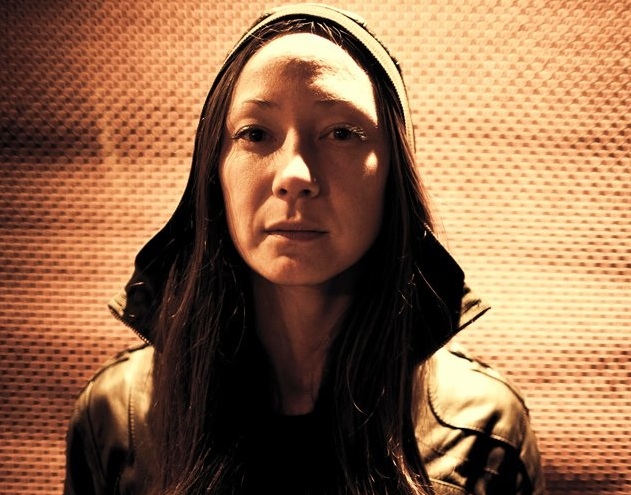
For those of you who haven’t been listening: Ana Sia is kind of a big deal. One of those quaintly San Francisco nightlife things — you blink for a hot minute, and someone familiar on the scene blows up, their hard work rewarded with major festival gigs, a large and growing following, and DJ sets being featured on NPR. Heeeey.

I’ve been a fan of the poised yet energetic Ana for a long while, and I must say I’m pleased as punch for her continued success — and to see what she’s got in store for us as she plays again in SF. (She’s one of the headliners, along with the UK’s excellently house and techy Ben UFO, at Friday night’s As You Like It party at Beat Box.) Onstage, the local Frite Nite label head quickly pulls you into her zone, tempering a concentration born of pure appreciation of the music with some playful bouncing and disarming charm. “I’m having a shit-ton of fun!” you can hear her shouting from the decks.

Categorizing her actual sound, however, can prove challenging.

Ana’s been through a few transfomations. I first became aware of her as a member of the underground techno scene, then as a part of the crunk-meets-dubstep-meets-Burning Man Bassnectar touring juggernaut — at one point pimping herself with a wink as playing “global slut psy-hop,” a moniker which went well with the gaudy scene of the late ’00s. Then, as part of Frite Nite, she became a brainier glitch advocate, delving into more adventurous realms of broken bass. But she’s always been courageous, forceful, and fun — even now, when she’s adding full-on house and ravier techno to the mix, as you can hear below.

Love it. She took a minute to email me the answers to some questions in anticipation of her Friday gig. Welcome back, Ana.

SFBG You’ve been playing all over lately — how does it feel when you come back to San Francisco?

ANA SIAReturning home and playing shows with my peers and in front of what very much feels like family is the greatest part of my schedule. What makes San Francisco so tight is the diversity and multi-cultural melange of the people, and those acknowledgments certainly carry through to the art scene. Connecting with listeners is easier on the home court — I feel much more safe and secure introducing more challenging music and unfamiliar sounds because everyone is so open here, They genuinely understand and love music. Ask any touring artist this question and I bet they say the same about our community here!

SFBGYour sound has really evolved since you were playing here regularly. Can you tell me where you’re at now, and what we can expect?

ANA SIA I think the one thing that has not changed about my sound is that it’s always different than the last time — whether that’s a yay or nay thing is another issue though. But right now, people can expect the agenda i’ve been pushing for a minute now; classy yet ratchet bass music, stepping on the toes of techno-house. And yeah, i’ve always tried to stay ahead of the curve for DJ sets, but honestly all the latest trends and best music out right now is re-introducing fundamental dance music. It’s nothing really super-shiny and new. It’s all slightly more modernized revisions of classic sounds which i’m grateful for. Because for me, my young rave days began with house. 

SFBG What equipment are you using lately — and can you tell us about some of your recent or upcoming releases?

ANA SIA Ableton Live is still my bandmate, but I have this new bossy future-midi controller, the QuNeo. I’m working on an EP right now, probably music that no ones’ expecting but all the tunes are in the territory of the above mentioned. 

SFBG In my mind, your sound is always evolving, you’ve always been on the cutting edge — it’s hard for a writer like me to keep up with you! Who are you listening to now? And since you travel so much, do you have any good stories from the road? 

ANA SIA Such a loaded question! Presently in my playlist of the last few months : Kendrick Lamar, Detroit Swindle, Bambounou, George Fitzgerald, Bach, 2 Chains, Dj Spinn, Lukid. And road stories? that’s classified information. Mostly because i fear self-incrimination. But i will say that it is shocking how many really great sushi restaurants there are in the most unsuspected of places in the middle of America. 

AS YOU LIKE IT with ANA SIA and BEN UFO

Fri/14, 10pm-4am, $15, $10 before 10pm, $20 after

Beatbox

314 11th St., SF.

www.ayli-sf.com

The Performant: Poetry in motion

0

“You Need to Read Poetry” and “Ragged Wing” take flight

Against the back curtain of the stage, empty save a couple of small platforms, a mysterious tree, represented by a rainbow of colored scarves, stretched its silken boughs. Cut to the “great before,” when humans were still a figment of the future, and Mol’-luk (Liz Wand), a brooding, powerful condor, sat perched on a rock, little suspecting that the “mountain” is pregnant with his peregrine falcon son, Wek Wek (Juliana Lustenader), whose dramatic birth by fire was further facilitated by a chorus of rattlesnakes (select members of the oddience armed with noisemakers).

Soon grown, Wek Wek set off on a quest to find the music tree (also the title of the play), a fanciful construction of hidden voices and those bright scarves, undulating over the bodies of Hannah Lennett and Liz Wand. Based on a Miwok legend, and told with an energetic blend of music, movement, and poetic narration, “The Music Tree” fit neatly in with the Oakland-based Ragged Wing Ensemble’s canon of mythology-centric explorations, and kicked off its single weekend run of their inaugural “Fierce Play” series. Three brand new works created and rehearsed in just fourteen days — an exhibition of “theatrical athleticism,” stretching the boundaries of the possible with a truncated yet intensified creation process.

The avian protagonists of “The Music Tree” were good precursors to the second play “Air:born” which opened with a humorous depiction of poor ungainly ostriches, the fastest birds on land but also the heaviest, incapable of flight. “The ostrich is tragic because it came so close.” Of course it isn’t just ostriches that long to be airborne as the following two vignettes demonstrated—with cleverly devised sequences of swooping flight and paper planes—the first featuring Daedalus (Wendi Gross) and Icarus (Marlene Yarosh), the second, the Wright Brothers (Michele Owen and Soren Santos).

The final play, “Fish Tank Piece” started out as a whimsical romance between a frustrated artist (Anna Schneiderman) filling fish tanks with yarn (and charging $475 for them) and her equally frustrated, non-artist boyfriend (Michael Correa), then opened up into a more complex meditation on the meaning of purpose—in work and in life as in love.  A second batch of “Fierce” will be served up in February with all new playwrights, and one hopes the promise shown by these raw flashes of inspiration can be nurtured further, perhaps with a follow-up festival in the coming year.

Meanwhile, back in San Francisco, Performers Under Stress “You Need to Read Poetry!” took a more rehearsed approach to its subject matter: the performance of dozens of the company’s favorite poems, from Langston Hughes to Lucia Perillo. In the theatrical context, each poem became a concise script, as when Nazelah Jamison attempted to seduce Shaye Angelo Acevedo with lines by Nikki Giovanni, or when Valerie Fachman gathered Jamison, Gloria McDonald, and Carina Lastimosa Salazar to her side while reminiscing ala Marge Piercy.

A section on the beats turned the stage into a rowdy café scene, and a segment with guest readers Mellissa Stein and Pireeni Sundaralingam, quietly electrified. Presented as integrative works rather than isolated lines with limited appeal and an intimidating reputation, “You Need to Read Poetry!” takes its message seriously. ”Poetry gets us there,” director Scott Baker writes in his program notes, but where is that? Considering the scope and reach of the presentation, I’m guessing anywhere you want it to.

“You Need to Read Poetry!” runs through December 23

Bindlestiff Studio

185 6th Street, SF

$10-$20

www.performersunderstress.com


Meet your weiner: Sammy Davis reps the Bay in national dachshund races

5

December 27th, friends. That is the day that Sammy Davis competes for our honor. Davis is a weiner dog, winner of this year’s regional Wienerschnitzel Wiener Nationals (which took place during half-time of a Warriors game on November 24th, in case you missed it.) We scored an interview with his owner Sabrina Seiden, who along with partner Patrick Major is currently rubbing Davis’ tiny shoulders in preparation for December 27th’s Holiday Bowl in San Diego, where their pup — the 2007 national champ, fancy! — will expend every drop of energy in his wirey little body in pursuit of bringing home the top honor for the Bay. 

San Francisco Bay Guardian: What kind of wiener is Sammy Davis? How did you know he was a winner?

Sabrina Seiden: Sammy Davis is a Double Dapple black and tan Tweenie. Tweenie means he is in between a standard and mini size. We knew he was a winner when we picked him because of his determination and alpha personality.

SFBG: How did you guys prepare for the race? Give me your game day routine.

SS: Certain secrets cannot be revealed, but we’re willing to let you in on a few tips. To train for the Wienerschnitzel Wiener Nationals, Patrick does a series of conditioning activities with Sammy Davis, which includes practicing running out of his kennel using his favorite squeaky ball as bait. The week of the race, we stop training to build up his energy and eagerness to see his toy ball again. On game day we make sure he eats two hours before the race and we have motivational talks with Sammy Davis to get him pumped up. As soon as we dress him in his Wienerschnitzel Wiener Nationals race vest he’s ready to go!

SFBG: Narrate the race itself for us.

SS: I hold Sammy Davis while Patrick waits at the finish line with the squeaky ball. Now remember, it’s been a week since Sammy Davis has seen his favorite toy so he’s more than eager to dash down the race track. During the qualifying heat, Sammy Davis was really squirmy and focused on Patrick and his ball. I could barely hold him and thought he would jump out of my arms. When I placed him in the Wienerschnitzel Wiener National starting gates, he was determined to get to his ball once again. I leaned down and told him “go, go, go!” and he shot out and won his heat. Patrick noticed that the other dogs hadn’t even left the box and Sammy Davis was already three quarters of the way down the track.

Winning form: Sammy Davis on his November 30th gameday

During the final race we were both worried he wouldn’t run because it was so loud in the stadium, and he was shaking. Sammy Davis doesn’t like loud noises and tends to want to run and hide. We gave him our pep talk to keep him focused. I put him in the Wienerschnitzel starting gates earlier than usual to make him feel more secure and help settle his nerves. When Patrick watched him down at the other end of the track Sammy Davis had a determined look, which gave Patrick reassurance that he was going to be the champion!

Now it’s times to train for the Wienerschnitzel Wiener National Finals in San Diego! This is Sammy Davis’ second trip to Southern California. Warm weather and the $1,000 grand prize will be the perfect way to ring in the New Year.

SFBG: Where does Sammy hope to go with his career? What does success look like for him?

SS: Success to Sammy Davis is making people happy. Sammy Davis is an example of how dogs can help their owners overcome tough times with the comfort of their unconditional love. Patrick was sick for a long time and Sammy Davis’ companionship was key to his recovery. Sammy Davis and Patrick are a winning team on and off the Wienerschnitzel race tracks.

Patrick Major and Sabrina Seiden (right) with a boatload of cash and their intrepid canine Sammy Davis

SFBG: Does Sammy Davis eat wieners?

SS: Sammy Davis is on a strict dog food-only diet, but he does love to steal bagels with cream cheese when he can.

SFBG: What does he think of Scott Weiner’s recent nudity ban?

SS: We’re so proud of Sammy Davis’ accomplishments at the Wienerschnitzel Wiener Nationals and think a little exposure of our winning wiener doesn’t hurt anybody.

W. Kamau Bell plays the Fillmore, but doesn’t hold back for the home crowd

0

A word of advice to the person who shouted, “who’s your favorite clothing designer?,” at W. Kamau Bell during his December 9th show at the Fillmore: a guy who wears a “Legalize Arizona” t-shirt during a night he considers one of the biggest moments of his career probably doesn’t give a shit about fashion. (Initially befuddled by the question, Bell eventually responded “Dickies.”) In addition, to the person who asked Bell whether or not he thought was a whore for being on TV, if he is a one … well you paid for your ticket to the show, right?

Glad we could get that out of the way first.

Bell’s Fillmore gig in the city where he resided for 15 years was one of seven on his Kamau Mau Uprising tour – the name an obvious nod to his radical political leanings. But perhaps none of the other venues held as much significance for him as this one. As he told me in our recent Guardian interview, “in some sense that’s bigger than getting a TV show, when they said that I was going to play the Fillmore.”

The comic’s giddiness in reuniting with the people of his adopted homeland (he grew up in Chicago) was evident as his 6’4” frame came lumbering onto the stage, just moments after opener Dave Thomason’s set. Thomason supposedly was going to go off stage and then come back on to introduce Bell, but Bell apparently didn’t get the memo and strolled right into the spotlight sans introduction from Thomason.

You don’t have to be Nate Silver (a.k.a., White Jesus, according to Bell) to predict how a show like this was going to begin. When a local comedian leaves town to get his own TV show in New York – Totally Biased With W. Kamau Bell was recently renewed for a second season – it’s pretty much de rigueur that he opens by regaling the crowd with an anecdotal New York show biz story followed by some softball home crowd-pleasers.

And that’s how it happened. Bell told a story about the time he appeared on The View with Taylor Swift and his towncar was swarmed by six or seven deranged teenyboppers. As for the home crowd pleaser, Bell teased the East Bay denizens about their reluctance to cross the bridge for pretty much any reason. Low hanging fruit? Sure. Could he have easily flipped which side of the Bay he was joshing? Sure. Was it necessary? Absolutely! Broad home crowd pleasers are hypeman-stand-ins in the world of live comedy.

Once we got past the “homecoming” novelty (it never fully went away) Bell hit full stride, thwacking the audience with his favorite subject: race! A palpable liberal queasiness was rife in the historic theater when Bell struck his harshest notes, especially those recounting his own experiences with racism — he once got called the n-word twice in one night in the Mission.

And then as kicker, he chucked sexuality in the mix:

“Hey I’ve lived in San Francisco for 15 years, I never had any beef with gay people, I had way more beef with Chinese people than gay people. Way more, not even close and that’s why I don’t think we should let Chinese people get married. If there’s one point I’m making tonight it’s that Chinese people should not be allowed to get married…That’s the funny thing about San Francisco, it has this reputation of being gay but it’s way more Asian than gay and on some level, gay trumps Asian.”

For the record W. Kamau Bell isn’t actually against Chinese marriage.

Bell’s best quality is his ability to derive humor from seemingly humorless racial topics, distributing laughter equally among the crowd. At no point during the show did it seem like a certain joke got more laughs from people of a certain race. No one else can make the Fillmore ignite in uproarious laughter with a joke skewering the supposed notion that black people were responsible for Prop. 8 passing.

Bell’s “I’m glad to be back!” moment played out exactly like it was scripted. It took place in the perfect setting. Nostalgia and a familiar audience drove Bell’s success at the Fillmore. His biggest challenge, of course, lies ahead: replicating those fuzzy feelings in TV land. 


San Francisco, Third World country

87

The model is pretty well established, and has proven exceptionally lucrative  for big US corporations like Bechtel and big US banks — and has been an utter disaster for dozens of developing countries: US banks loan money to countries that need infrastructure development — and that money comes right back to US corporations that charge phenomenal prices to build roads, dams, mining operations, whatever, with a nice cut off the top to whatever powerful people need to be bribed (all tax-deductable, of course). And the country that could never afford the loan to begin with impoverishes its people paying the note.

That’s how economic development worked for decades, with the International Monetary Fund and the World Bank leading the way.

Now the world has flipped — and the Chinese national development bank is loaning the money for a project in San Francisco, that will be constructed by China’s equivalent of Bechtel.

Yes, the Chinese Railway Construction Co. will have to adhere to San Francisco’s local-hire law and some of the construction jobs will go to San Franciscans. Obviously, the company will be under immense pressure to hire union workers and pay unions scale. But the profits will go right out of the country — and I bet the contractor will try to pre-fab as much as possible in China, where labor costs are far lower, and use Chinese nationals at deflated wages for as much of the construction as legally allowable.

What does all of this say? On a macro level, it says that the US is slipping as an economic power, which is no big news. But it also suggests that the Treasure Island and Bayview Hutners Point development projects are screwed up enough (and Lennar Corp. is screwed up enough) that no US lending institution wants anything to do with them. The only way these projects work for an investor is if the money comes right back as profits from a builder with close ties to the investor.

Doesn’t give you a whole lot of confidence.


Art Basel diary: Why some people never enter a gallery

0

“My favorite part about Basel is that I haven’t seen a single piece of art,” the 20-something gentleman said through giggles, pleased with himself. His statement was indicative of a simple fact regarding the last week in Miami: a lot of people came during Art Basel not to cruise the 20-plus art fairs, but to party.

>>IF YOU ARE INTO THE ART (YAWN) CHECK OUT CAITLIN DONOHUE’S EPIC JOURNEY THROUGH SIX OF THIS YEAR’S BEST FAIRS AND HAPPENINGS 

His quote was delivered on Sunday, the last day of the madness, and though countless individuals were trying to squeeze in one last look at a Mapplethorpe, Moore, or Kahlo, the two of us had found ourselves poolside at the Standard Hotel, sipping chilled white wine with new-found aquaintances who like me, preferred the works of art not found on canvas. They were more into the moments when the art fair doors were closed, when the Internet celebrities, socialites, and party-goers strapped on their heels to attend the high fashion soirees South Beach.  

Here’s the highlights of my Art Basel nightlife experience: 

Thursday, December 6: I landed in the evening with just enough time to put down my bags and hop in a cab to Lords South Beach Hotel. The building had been transformed by artist Desi Santiago into “The Black Lords.” A giant inflatable black dog engulfed the hotel with glowing, hovering eyes. To celebrate Desi’s creation the Lords threw a private party. 

Once you made it passed the several girls blocking the entrance with iPads containing the evening’s guest list (Miami’s accessory of the season, apparently), you were welcomed into a night with free designer water and an open bar hosted by a tequila brand. In attendance was the coolest of the cool, including San Francisco’s very own drag celebrity, performer, and chef Juanita More and New York-based model Shaun Ross.

Friday, December 7th: After a very long day of attending some of the biggest art fairs in South Beach, I managed to put together a cute look and head to a private party being hosted by DJ Mike Q and artist Matthew Stone. My RSVP included details of where to be picked up by yacht, but since I was running a bit behind, I decided to forgo the boat and zip straight to the party. 

I arrived in front of large gates framed by equally large manicured shrubs. Once the gates opened and I was greeted by a man holding yet another iPad. Once cleared, I was led into an extravagant Moroccan-style riad which included another open bar followed by an amazing Paris is Burning-style ballroom performance by MC Gregg Evisu and dancers Ricco Allure, Kassandra Ebony, and Tamara Prodigy. 

In attendance was San Francisco’s very own performance artists boychild and Dia Dear. I also ran into Shaun Ross again and snapped a quick photograph of him living for the evening’s ball.

Saturday, December 8: My nightlife highlights actually occurred during the day at the NADA Friends and Family pool party, hosted by New York-via-San Francisco performer Alexis Blair Penney of the House of Chez Deep. 

The afternoon started with a spectacular lip sync and performance of Rihanna’s “Diamonds” by Sam Banks, another New York-via-San-Francisco-based drag persona from the House of Chez Deep.

The day’s artists were absolutely captivating and led the audience on a visual journey that occupied the entire of the Deauville Beach Resort‘s majestic outdoor pool area. The day ended with a stunning performance from San Francisco-based performance artist Dia Dear, who had stripped nude and spray-painted herself a very Miami pastel pink. 

Sunday, December 9th: Dehydrated, heat-struck, and exhausted, I found myself cabbing it to the Standard Hotel’s end-of-Basel pool party where this story began. I was determined to take the day easy and nourish myself back to health, but first I had to check out this last event. 

In attendance was San Francisco’s very own drag performer Ben Woozy, LA-based Internet celebrity and fashion icon Niki Takesh, and photographer-model Angela Pham, from the reality TV show Gallery Girls.

I left the pool party early that evening in need of some serious rest and relaxation. I returned to my hotel and had a burger at the local tiki bar and grill by the pool, and spent my last evening at the Russian Turkish Baths’ Amythyst Room. I’m pretty sure though, you’ll never sweat the party out of this boy. 

YEAR IN MUSIC 2012: Top 10s Galore

0

YEAR IN MUSIC Local musicians, rappers, producers, and music writers sound off on the year’s best songs, album releases, shows, personal triumphs, and local acts.


HANNAH LEW, GRASS WIDOW


TOP 10 OF 2012

1. Starting our own label HLR and releasing our own record (Internal Logic)

2. Total Control’s LP

3. Touring with the Raincoats and singing “Lola” with them every night

4. Getting obsessed with Silver Apples

5. Hollywood Nails

6. Wymond Miles LP

7. Scrapers (band)

8. Sacred Paws (band)

9. Making eight music videos and losing my mind

10. Wet Hair’s LP


ANTWON, RAPPER


TOP 10 2012 RAP JAMZ

1. DJ Nate, “Gucci Gogglez” 2. Chief Keef, “Ballin” 3. French Montana, “Shot Coller” 4. Chippy Nonstop, “Money Dance” DJ Two Stacks remix 5. Cash Out, “Cashin’ Out” 6. Future, “Turn on the Lights” 7. Gucci Mane, “Bussin Juggs” 8. Juicy J, “Drugged Out” 9. Lil Mouse, “Don’t Get Smoked” 10. Lil Reese, “Traffic” feat. Chief Keef


MICHAEL KRIMPER, GUARDIAN


THE ENDLESS DESIRE LIST


(IN NO PARTICULAR ORDER, OR, OUT OF ORDER)

1. Les Sins/”Fetch”/12″ (Jiaolong)

Run, fall, catch your desire.

2. The Soft Moon/”Want”/Zeros (Captured Tracks)

Infinite want, can’t have it. O, ye of bad faith.

3. Frank Ocean/”Pyramids”/channel ORANGE (Def Jam)

Pimping Cleopatra, whoring the pyramids.

4. Daphni aka Caribou/”Ye ye”/Jiaolong (Jiaolong)

Affirmation on repeat.

5. Grimes/”Genesis”/Visions (4AD)

Whatever, you know you like it.

6. Todd Terje/”Inspector Norse”/It’s the Arps (Olsen/Smalltown Supersound)

Inspecting never felt so good.

7. Burial/”Kindred”/Kindred (Hyperdub)

Kindred outcasts, jealously desiring their solitude.

8.John Talabot/”Estiu”/Fin (Permanent Vacation)

If a permanent vacation wasn’t hell, this might be its soundtrack.

9. Purity Ring/”Obedear”/Shrines (4AD)

Nothing pure in this abject need.

10. Kendrick Lamar/”A.D.H.D.”/good kid m.A.A.d city (Interscope)

Crack babies: she says, distracted, endless desire.


TYCHO, AKA SCOTT HANSEN


FAVORITE BAY AREA AND BAY AREA-AFFILIATED MUSIC ACTS

1. Toro Y Moi 2. Christopher Willits 3. Blackbird Blackbird 4. Jessica Pratt 5. Sam Flax 6. Ty Segall 7. Yalls 8. Doombird 9. Little Foxes 10. Dusty Brown


BEN RICHARDSON, GUARDIAN


BEST METAL ALBUMS OF 2012

1. Dawnbringer, Into the Lair of the Sun God (Profound Lore)

2. Asphyx, Deathhammer (Century Media)

3. Woods of Ypres, V: Grey Skies & Electric Light (Earache)

4. Uncle Acid and The Deadbeats, Blood Lust (Metal Blade)

5. Pallbearer, Sorrow And Extinction (Profound Lore)

6. Windhand, Windhand (Forcefield Records)

7. Omens EP

8. Hour of 13, 333 (Earache)

9. Gojira, L’enfant Sauvage (Roadrunner)

10. Lord Dying, Demo


CALEB NICHOLS, CHURCHES


TOP 10 VINYL PURCHASED IN 2012, AND WHERE I PURCHASED THEM

1. The Shins, Port Of Morrow (Amazon — forgive me, I had a gift card.)

2. The Walkmen, Heaven (Urban Outfitters clearance — yeah, I know, but you can’t beat brand-new vinyl for $10.)

3. Various Artists, Death Might Be Your Santa Claus (Boo Boo Records, San Luis Obispo. My hometown record store.)

4. Ella Fitzgerald, Live at Montreaux (Boo Boo Records, San Luis Obispo)

5. Mahalia Jackson, Christmas With Mahalia (Abbot’s Thrift, Felton, CA — Great thrift store in the Santa Cruz Mountains.)

6. Benjamin Britten/Copenhagen Boys Choir, A Ceremony Of Carols (Abbot’s Thrift, Felton, Calif.)

7. Thurston Moore, Demolished Thoughts (Urban Outfitters clearance)

8. The Hunches, Exit Dreams (1234Go! Records, Oakland)

9. Various Artists/Angelo Badalamenti, Wild At Heart OST (Streetlight Records, Santa Cruz)

10. Tijuana Panthers, “Crew Cut” seven-inch (Picked up at show — Brick and Mortar Music Hall, San Francisco)


KACEY JOHANSING, SINGER-SONGERWRITER


TOP 10 FAVORITE SONGWRITERS IN THE BAY AREA

1. Sleepy Todd

2. Tommy McDonald of The Range of Light Wilderness

3. Emily Ritz of Yesway and DRMS (biased opinion, I know)

4. Kyle Field of Little Wings

5. Alexi Glickman of Sandy’s

6. Michael Musika

7. Bart Davenport

8. Indianna Hale

9. Jeffrey Manson

10. Sonya Cotton


HALEY ZAREMBA, GUARDIAN


TOP TEN CONCERTS OF 2012

1. El Ten Eleven at the New Parish

2. Good Old War at Slim’s

3. Girls at Bimbo’s

4. St Vincent and Tune-Yards at The Fox

5. Bomb the Music Industry! at Bottom of the Hill

6. Fucked Up at Slim’s

7. Amanda Palmer and the Grand Theft Orchestra at the Fillmore

8. Ariel Pink at Bimbo’s

9. Conor Oberst at the Fillmore

10. Titus Andronicus at the Great American Music Hall


CARLETTA SUE KAY, SINGER-SONGWRITER


BEST OF 2012

1. “See All Knows All,” A Thing By Sonny Smith at The Lost Church.

2. “Silent Music” music ephemera show at Vacation (651 Larkin) curated by Lee Reymore, opening party set by the Fresh and Onlys, after -party pot cookie monsters invade the Gangway.

3. Dusty Stax & The Bold Italic Present: “Summer Soul Friday Night”.

4. Wax Idol’s Hether Fortune fronting the Birthday Party cover band at Vacation.

5. Jessica Pratt’s debut LP (Birth Records).

6. Bambi Lake at the Museum of Living Art.

7. Pruno Truman, aka Heidi Alexander from the Sandwitches “Sleeping with the TV on” b/w Carletta Sue Kay “No, no” (Weird World).

8. Opening for Baby Dee at Brick & Mortar Music Hall.

9. Kelley Stoltz’s cover of “Sunday Morning” on Velvet Underground and Nico by Castle Face & Friends (Castle Face).

10. Christopher Owens premiers Lysandre live at the Lodge.

11. Mark Eitzel’s Don’t Be A Stranger (Merge) and its accompanying promo video series. Featuring Grace Zabriskie, Neil Hamburger, Parker Gibbs et al.


EMILY JANE WHITE, MUSICIAN


TOP 10 SONGS OF 2012 BY FEMALE ARTISTS

1. “Spinning Centers” Chelsea Wolfe: Unknown Rooms

2. “Who Needs Who” Dark Dark Dark: Who Needs Who

3. “Oblivion,” Grimes: Visions

4. “Old Magic” Mariee Sioux: Gift for the End

5. “Apostle” Marissa Nadler: The Sister

6. “In Your Nature” Zola Jesus: seven-inch (w/ David Lynch Re-Mix)

7. “Silent Machine” Cat Power: Sun

8. “Moon in My Mind,” Frankie Rose: Interstellar

9. “Serpents,” Sharon Van Etten: Tramp

10. “Video Games,” Lana Del Rey: Born to Die


MORNIN’ OLD SPORT


FAVORITE ARTISTS/ALBUMS

1.Moons, Bloody Mouth

2.Patti Smith, Banga

3.Mykki Blanco, Cosmic Angel: The Illuminati Prince/ss Mixtape

4.ABADABAD, The Wild EP

5.Kendrick Lamar, Good Kid m.A.A.d city

6.Shady Hawkins, Dead to Me

7.Howth, Newkirk

8. Bikini Kill EP (reissue)

9. Sharky Coast, Pizza Dreamz demo

10. FIDLAR, No Waves/No Ass seven-inch


ROSS PEACOCK AND NATHAN TILTON, MWAHAHA


ALMOST TOP 10 ALBUMS (IN NO PARTICULAR ORDER)

1. Air, Le voyage dans la lune

2. Naytronix, Dirty Glow

3. I Come To Shanghai, Eternal Life Vol. 2

4. Beak, >>

5. Steve Moore and Majeure, Brainstorm

6. Clipd Beaks, Wake

7. Brian Eno, LUX

8. Neurosis, Honor Found in Decay

ALMOST TOP 10 SHOW (IN NO PARTICULAR ORDER)

1. Pulp at the Warfield: Think that was this year. Cocker sings sexy

2. Red Red Red: just saw this guy play at a warehouse in Oakland…live house music made with actual hardware!

3. Flying Lotus at the Fox was pretty epic….. insane visuals.

5. Lumerians at the Uptown

6. Neurosis at the Fox: Fuck!

7. Deerhoof at SXSW ….. maybe the best live band in the universe

8. Indian Jewelry at the Terminal …. strobe light universe


EMILY SAVAGE, GUARDIAN


LIVE SHOWS THAT CREATED THE MOST POSI MEMORIES IN 2012

1. Feb. 14: Black Cobra, Walken, Yob at New Parish

2. Feb. 23: Budos Band and Allah-Lahs at the Independent

3. March 30: Hot Snakes at Bottom of the Hill

4. April 10: Jeff Mangum at the Fox Theater,

5. July 21: Fresh and Onlys and La Sera at Phono Del Sol Music Fest

6. July 28: Total Trash BBQ Weekend at the Continental Club

7. Aug. 11: Metallica at Outside Lands

8. Aug. 31: Eyehategod at Oakland Metro

9. Oct. 9: Saint Vitus at the Independent

10. Oct. 27: Coachwhips and Traditional Fools at Verdi Club


NEW ALBUMS I LISTENED TO ENDLESSLY IN 2012

1. Grass Widow, Internal Logic (HLR)

2. Cloud Nothings, Attack on Memory (Carpark)

3. Ty Segall, Slaughterhouse (In the Red)

4. Dum Dum Girls, End of Daze EP (Sub Pop)

5. Frankie Rose, Interstellar (Slumberland)

6. Godspeed You! Black Emperor, Alleluja! Don’t Bend! Ascend! (Constellation)

7. The Fresh and Onlys, Long Slow Dance (Mexican Summer)

8. THEESatisfaction, awE naturalE (Sub Pop)

9. Terry Malts, Killing Time (Slumberland)

10. Guantanamo Baywatch, Chest Crawl (Dirtnap Records)


TAYLOR KAPLAN, GUARDIAN


TOP 10 ALBUMS OF 2012

1. Hiatus Kaiyote: Tawk Tomahawk (self-released) I could tell you that a bunch of white Australians somehow merged the sound-worlds of Erykah Badu, J Dilla, and Thundercat into a 30-minute, self-released debut LP that rivals the best work of any of those musicians, but you just might have to hear for yourself: hiatuskaiyote.bandcamp.com.

2. Lone: Galaxy Garden (R&S) This is the Lone album we’ve been waiting for. The British laptop producer’s past efforts, while exquisitely lush, were inhibited by a sense of hollow simplicity; Galaxy Garden, his danciest effort yet, shows improvement on nearly every front, from generously layered percussion, to a nuanced, bittersweet take on melody and harmony. A gorgeous fulfillment of Lone’s hedonistic vision.

3. Scott Walker: Bish Bosch (4AD) Difficult as it is to proclaim Bish Bosch 2012’s best album, (its hulking weight and unyielding grimness renders casual listening a difficult proposition) no LP this year has matched its gutsiness and sonic adventurousness, or consolidated so many ideas into a singular space. An array of musical possibilities as dense, thorny, and encyclopedic as a Pynchon novel, with Walker’s quivering, operatic baritone as its sole, anchoring force.

4. Zammuto: s/t (Temporary Residence) Former Books member Nick Zammuto’s solo debut impresses with its vitality and strength of purpose. Despite the heightened emphasis on conventional songwriting this time around, Zammuto strikes that divine balance between bewildering sound-collage and pop approachability that made the Books such an endearing project in the first place.

5. Tame Impala: Lonerism (Modular) Kevin Parker’s first LP as a lone, multitracking solo artist under the Tame Impala moniker, is a bubbly, golden pop album, despite its pervasive theme of existential dread. Its hooks achieve a weird form of transcendence, befitting the Beatles and Britney Spears in equal measure.

6. Laurel Halo: Quarantine (Hyperdub) Much like Oneohtrix Point Never’s Replica (2011), Quarantine is ideal soundtrack material for those late-night, marathon web-surfing sessions that seem to transcend time and space. Halo’s cold, glassy electronics are anchored by dry, straightforward vocals on an album that occupies a mysterious void between vocal pop and ambient electronica.

7. Field Music: Plumb (Memphis Industries) Less a song-cycle than a series of hooks, Field Music’s latest is the work of a band with a hundred wonderful ideas up its sleeve, and only 35 minutes to communicate them. Channeling the impulsive energy of Abbey Road‘s second half with proggy dexterity, Plumb cements this vastly underrated British outfit as one of the most visionary songwriting duos around.

8. THEESatisfaction: awE naturalE (Sub Pop) Splitting the difference between progressive hip-hop and neo-soul, this Seattle duo’s breakthrough record zips through its 30-minute run-time with remarkable tenacity and economy. Bearing the exhilarating energy of J Dilla’s rip-roaring beat-tapes, and shrewd lyricism that effortlessly balances the political, the personal, and the cosmic, awE naturalE feels urgently, confrontationally NOW.

9. Nik Bärtsch’s Ronin: Live (ECM) Not quite nu-jazz, math-rock, or classical minimalism, Swiss ensemble Nik Bärtsch’s Ronin is as compelling, and innovative, as any live band around, tackling Reichian time signatures with the borderline robotic technical ability of Juilliard grads, and the undeniable groove of an airtight funk band.

10. d’Eon: LP (Hippos In Tanks) Approaching the tongue-in-cheek meta-pop of James Ferraro’s Far Side Virtual with a twisted mythology of Christianity and Islam vs. iPhones and the Internet, and a bizarrely heavy dose of Phil Collins’ influence, d’Eon’s LP‘s totally dubious backstory is redeemed by solid songwriting, lush synths, killer keyboard solos, and a ’70s big-time art-rock sensibility. The most convoluted release to date from the prankish Hippos In Tanks imprint.

Honorable mention: Farrah Abraham: My Teenage Dream Ended (self-released) You can’t make this shit up: the year’s weirdest, most haunted and terrifying album wasn’t brought to us by Swans or Scott Walker, but the star of MTV’s Teen Mom. Trapped between the real world, and a web-based alter-reality, it’s the sound of an All American girl, brought up on The Notebook and Titanic, finding herself imprisoned in a Lynchian nightmare.


No brand

0

caitlin@sfbg.com

STREET SEEN To the casual observer, it may have appeared as if I had taken a painful, rainy early morning Muni ride into SoMa for the sole purpose of eating plastic-wrapped Japanese pancakes filled with red bean paste in a chain store. But to adherents of the Muji phenomenon, I was actually witnessing the birth of cross-Pacific retail revolution.

“The minimalism of Muji fits San Francisco perfectly with what the city is trying to do with conservation,” said store manager Eric Kobuchi, who was standing with the cash registers behind of him, and the sleepy-eyed attendees of the November 30th press preview and reception in front of him. His company was to open its first West Coast location (540 Ninth St., SF. www.muji.us) in an hour-and-a-half.

Among minimalism aficionados, this brand is paramount. Muji was born in 1980, originally as a line of 40 house and food items that were sold in Seiyu supermarkets. The name itself means “no label, quality goods.” The items were cheap, but relatively high quality. These savings were possible, said the company, by simplifying packaging and production, and utilizing offbeat materials, like the parts of the fish near the head and tail for its canned fish.

Muji fans kindled to the line’s recycled, plain packaging (the company has courted the “sustainable” label for decades). Being a Muji consumer is an identity unto itself, at least according to the brands’s brilliant ad campaigns. From a 256-page coffee table book of such endeavors presented to me at the preview: “Muji tries to attract not the customer who says ‘This is what I want,’ but rather the one who says, rationally, ‘this will do.'”

Zen. Today, Muji’s selection is an Ikea-Gap mélange. The San Francisco location, says Azami, has a similar, but smaller product selection (minus the food — tight regulations here make importing comestibles complicated), and the same layout and presentation as its Japanese stores. I don’t doubt that little changes have been made to the Muji formula for its West Coast audience — during the press preview, display prices for some of the stock were still only visible in yen.

Muji is but one simple, made-from-recycled-material package in a shopping bag full of newish Japanese brands to hit the Bay Area. Daiso, in my eyes the epitome of dollar (or rather 100 yen, roughly $1.50) store excellence, has been plying lunch boxes, fake eyelashes, party wigs, and stationary on the West Coast since 2005. It has several stores from SF to Milpitas (SF locations at 570 Market and 22 Japantown Peace Plaza).

We have homegrown Japanese retailers as well. Lounging in a bright office lined with shelves of Japanese comics, Seiji Horibuchi explained to me how he came to open retail complex New People (1746 Post, SF. www.newpeopleworld.com) in the heart of San Francisco’s Japantown.

Dressed in head-to-toe Sou Sou, a neo-traditional line of Japanese worker comfortwear whose signature item is its brightly patterned split-toe shoes, Horibuchi says he moved to the city in 1975, and started his anime-manga publishing house Viz Media in his adopted city in 1986. Viz Pictures, a distribution company for Japanese films followed, and then New People was born, originally as a movie theater at which to play Viz titles.

But the project grew, and by its opening in 2009, the J-pop mall included a gift shop, art gallery, and entire floor of Japanese fashion brands like Sou Sou and the babydoll goth Lolita brand Baby, the Stars Shine Bright.

New People is a bit different than the new megachains in town, however. Even the casual visitor can tell Horibuchi’s inventory couldn’t have come from any other country — unlike a lot of Muji’s stock, comprised of simply-universal products, most of New People’s vinyl dolls, high design flatware, and frilly babydoll bonnets could really have only come from Japan.

But Horibuchi understands why brands like Muji choose San Francisco for their debut on this side of the country. “We’re more open to foreign culture,” he says. “San Francisco is very flexible, livable.”

Plus, Asian Americans make up nearly 36 percent of the city’s population — and that ratio has grown in recent years. Companies know that many residents are already familiar with their brand, Horibuchi says. “I’m sure they’ve done enough marketing research.”

A company that has certainly done its marketing research is Uniqlo, which opened a popup shop (117 Post, SF) this summer, then a full-size West Coast flagship store (111 Powell, SF) in Union Square in October. In its opening weeks, the latter attracted 100-plus-person lines of shoppers with cheaply-priced rainbows of colored denim and ultralight down jackets.

In a calm moment on a busy holiday shopping day, I got a chance to talk with Uniqlo’s John “Jack” Zech, a “superstar store manager” according to a publicist that sat with us while we talked.

The three of us had a view of Uniqlo’s specially-designed-for-SF “magic mirror” (put on a down jacket, press a button, and the hue of your garment in the reflection shifts through the line’s different colors), its staircase of melting rainbow tones, and slowly rotating armies of mannequins clad in ski-ready fashions, ensconced in glass cases.

Zech worked in Uniqlo’s Japanese locations for months before the SF stores opened, and he says the company’s goal is to bring the Japanese concept of supreme customer service, irrashai mase, to the rest of the world.

When you walk into Uniqlo, a person in a happi day kimono greets you warmly. But other than that, I couldn’t see much of a difference between the cheery sales staff there versus that of any of the other chain stores in the neighborhood.

You won’t find happi on sale at Uniqlo. Instead, its affordably-priced cashmere, “Heat Tech” clothing — that I promise you, actually tingles and heats your skin up — and $9.90 packable raincoats (the only clothing item made specifically for the SF store) dominate the sales floor.

In 2010, the company’s official language switched to English. All managerial staff worldwide is required to speak it. “We found that people basically need the same things in Japan, France, London, here,” chirps Kech. “[CEO] Tadashi Yanai thinks we can improve the world by being a global company.”

Which snapped me out of the reverie I’d been lulled into by banks of $29.90 beige boot-cuts. Are Uniqlo and Muji really all that different than the globalized brands from the United States? Walmart, after all, has store greeters.

“If the product is good, it will sell,” regardless of geography, Horibuchi told me. These big brands have real cute stuff (admittedly, I would like to draw Santa’s attention to Muji’s $38 cardboard MP3 speakers.) But you’re not being worldly by shopping at them, though you are being globalized.


Our Weekly Picks: December 12-18

0

WEDNESDAY 12/12

"The Lion and the Lamb"

Sam Flores, a graffiti-inspired artist whose work often deals with religious themes, now turns his attention to the conflicting symbols of violence and innocence. His recent paintings, which show a more classical style than previous works, depict the lion and the lamb amongst other figures in chaotic, urban settings. These bold and deeply hued paintings convey the convoluted relationship between good and evil. As a prominent artist in the crossover between urban and fine arts, you may have found his work alongside painter-designer, Jeremy Fish or tagger-tattoo artist, Mike Giant. Like many others, Flores got his start designing for skateboard and clothing companies, but with more and more solo exhibits, his painting has begun to flourish. This show should be a great example of the strong voice he has found. (Molly Champlin)

Through Feb. 12

Opening reception tonight, 6:30pm, free

Fifty24SF

218 Fillmore, SF

(415) 861-1960

www.fifty24sf.com

WEDNESDAY 12/12

Charles Phoenix Holiday Show


Oddball Americana guru Charles Phoenix has explored and celebrated the best in kitschy, cool, and kooky artifacts and history for many years now, having written several books on mid-20th century, deep-fried pop culture, fashion, lifestyle and more. The author of tomes such as Southern California In The 50s, and Americana The Beautiful brings his hilarious holiday show and talk to the city, set to roast not just Christmas, but all of the holidays with his ever-growing collection of slides and tales of his off-beat and always colorful road trip adventures. (Sean McCourt)

8pm, $25

Empress of China Ballroom

838 Grant, SF

www.charlesphoenix.com

WEDNESDAY 12/12

"How The Grouch Stole Christmas"


The Grouch is continuing his annual holiday hip-hop tour through 18 cities across the West Coast. This year the merry night in San Francisco will include performances by Bay Area native Mistah F.A.B., Minneapolis-based artist Prof, DJ Fresh, and of course, the Grouch and Eligh. Apart from the live show, Mistah F.A.B. will host a Battle of the Bands/MCs Showcase where participants will have the platform to show their own talent. The freestyle champion will win a Grouch Merchandise pack and a pair of Able Planet studio headphones. (Soojin Chang)

8pm, $20

Regency Ballroom

1300 Van Ness, SF

www.theregencyballroom.com

THURSDAY 12/13

Subterranean Arthouse’s Third Annual Chanukah Party


Yiddish supergroups, klezmer dance parties, and tzedakah, all wrapped into one shiny gold coin of an evening. The Subterranean Arthouse’s Chanukah Party is part of Heather Klein’s "Hungry for Yiddish: A Mitzvah Project" concert series, which donates proceeds from events to the Berkeley Food Pantry and similar organizations; and the event is co-presented by KlezCalifornia and the Jewish Music Festival. Acts include Klein’s Inextinguishable Trio, Anthony Mordechai-Tzvi Russell, noted Yiddish dance instructor Bruce Bierman, and Saul Goodman’s Klezmer Band. With instructions from Bierman, the lovely Yiddish songs of both Klein and Russell, and Goodman’s brassy klezmer, this should make for a fun, frenzied mid-point party during the festival of lights — and yes, they’ll light the menorah. Chag Sameach, Berkeley. (Emily Savage)

9pm, $10–$20 donation

Subterranean Arthouse

2169 Bancroft, Berk.

Klezmer.brownpapertickets.com

FRIDAY 12/14

Dylan Moran


Perhaps best known to American audiences for his appearances in Shaun of the Dead and Run, Fatboy, Run, Irish comedian Dylan Moran is a huge hit in his native UK, notably for his brilliant role as a cantankerous and drunk, yet lovable book shop owner in the tragically short-lived BBC series "Black Books." His live stand-up is where he’s really making his name now though; his current "Yeah, Yeah" tour is only stopping in New York, Los Angele, and here in San Francisco — consider yourself lucky and don’t miss your chance to see one of funniest comics on either side of the pond. (McCourt)

Also Sat/15, 8pm, $35

Marines Memorial Theatre

609 Sutter, SF

(415) 771-6900

www.marinesmemorialtheatre.com

FRIDAY 12/14

The Mountain Goats


I’d like to sit on some front porch (any porch, really) with John Darnielle and just listen to him tell stories — maybe over a glass of whiskey and several puffs of something. Sometimes telling the truth, but mostly relying on a wild imagination, the Mountain Goat’s dynamic leader has been writing songs about addiction, infidelity, and more sensitive subjects for the last 20 years. The group’s new album, Transcendental Youth, has been an excuse for Darnielle to branch out, inviting avant-symphonic rocker, Matthew E. White, to write horns for the album and working with Owen Pallett to arrange the songs for a collaboration with the a cappella quartet, Anonymous 4. This should be a well-worn show — mixing old and new in a chaotic journey through the picaresque scenes of Darnielle’s mind. (Champlin)

With Matthew E. White

9pm, $28

Fillmore

1805 Geary, SF

(415) 346-6000

www.thefillmore.com

FRIDAY 12/14

"Diez Por Arriba"


The glorious annual flamenco season is in full swing — so much emotion, so much drama, so much invigorating live sound and movement, olé! It’s all a perfect rehearsal for your upcoming family holiday gatherings. Next up, fantastic choreographer Yaelisa and her Caminos Flamencos company, an enthralling troupe that stomps, whirls, hypnotizes, and enraptures like a force of nature, all under the expert musical direction of Jason McGuire "El Rubio." I would say the distinguishing feature of Yaelisa’s work is its generous spirit and breadth of technique. As evidenced by Caminos’ show last year, she favors longer solos and duos, giving each featured performer enough time to weave a spell of exquisite technique and subtle variations. Gorgeous costumes (hello, tight-pantsed toreadors!) and music from an international ensemble helps turn up the magic past 10. (Marke B.)

Also Sat/15, 8pm; Sun/16, 3pm, $20–$40

ODC Theater

3153 17th St., SF

www.caminosflamenco.com

SATURDAY 12/15

"In One Hand A Ghost, The Other An Atom"


As urban art has become more popular, many taggers are making a profit from their work in the gallery world. New2, who has been writing in Australia since the movement began in the early ’80s, is one of these. He’s worked in a variety of spray paint alternatives when bringing his work indoors, including paint, sculpture, and paper. His most recent project, "In One Hand A Ghost, The Other an Atom," uses intricate, paper cut-outs to merge his long tradition of writing (the ghost) with his futuristic take on letters (the atom). In the show, care and thoughtfulness form the same bright colors, geometric currents, and space themes that he has developed in years of experimentation on trains and empty walls. (Champlin)

Through Jan. 5

7pm, free

White Walls Gallery

835 Larkin, SF

(415) 931-1500

www.whitewallssf.com

SATURDAY 12/15

Pilot 61


Making dances — we all know — is a lonely and precarious enterprise. You can’t just sit down on your keyboard and write your poems. You need bodies and a bigger area than your kitchen. That’s why ODC’s Pilot program is such a gift to young choreographers. They get 11 weeks, a studio, a tiny budget, and a lot of feedback. In return, they have to commit to two public performances — of which we are the beneficiary. Seeing what gifted but not-yet-established choreographers come up with is a thrill like few others. In its 61st incarnation, Pilot will introduce Jenni Bregman, David Schleiffers, Katharine Hawthorne, Erin Malley, and Phoebe Osborne. They are calling the program Nightcap. (Rita Felciano)

Also Sun/16, 8pm, $12

ODC Dance Commons

351 Shotwell, SF

(415) 863-9833

www.odctheater.org

SATURDAY 12/15

Found Footage Festival


You’ve seen ’em: those piles of mysterious VHS tapes, often unmarked, gathering dust at Community Thrift. Found Footage Festival curator-hosts Nick Prueher and Joe Pickett live for the thrill that comes from finding bizarre, hilarious cast-off videos — and they’re on the road, sharing their fascination with audiences across the country. The 2012 program of repurposed entertainment looks to be stuffed with gems, gut-busters, and things that make you go "WTF?": ferret-care tips, freaky craft-sponging, and something called "The Sexy Treadmill Workout." Head to the FFF website to whet your appetite with the "VHS Find of the Day" feature. Two words: cat massage. (Cheryl Eddy)

Also Sun/16, 8pm, $13

Roxie Theater

3117 16th St., SF

www.foundfootagefest.com

MONDAY 12/17

Dee Dee and Brandon


Dee Dee from the Dum Dum Girls and Brandon from the Crocodiles are in love — married, in fact, and make a rather swoon-worthy couple. She with her thick-lined lids and vertical striped tights, he with his dark sunglasses. Listen to Dee Dee’s crooning on "Bedroom Eyes" off 2011’s Only In Dreams, in which she repeats "fear I’ll never sleep again" and you start to get a sense of their connection, and the pain they feel apart on separate tours. To view said connection live, in all its gushy splendor, be the voyeur at their joint Rickshaw Stop show tonight; a very special showcase, indeed, where both will perform songs from their respective catalogs and — as I can only imagine — harmonize like old lovers do. Like Johnny and June, Exene and John Doe, all those passionate, oft-heartsick music mates that have come before them, the duo is sugar and spice with a splash of whiskey. (Savage)

With Gio and Stef (Young Prisms)

8pm, $15

Rickshaw Stop

155 Fell, SF (415) 861-2011

www.rickshawstop.com

TUESDAY 12/18

Kinky Friedman


Although he has garnered a considerable amount of national mainstream success in the last 25 years as the author of a series of popular mystery novels and non-fiction books touching on politics, writer and all-around raconteur Kinky Friedman first made a name for himself as a singer and songwriter. In the early 1970s, along with his band the Texas Jewboys (he was raised by Jewish parents in the Lone Star State), he penned a slew of country and twang-tinged tunes such as the rollicking and humorous "They Ain’t Making Jews Like Jesus Anymore." He hits the city tonight as part of his "Bipolar" tour. This is your chance to meet the man, as he promises to "sign anything but bad legislation!" (McCourt)

With Brian Molnar

8pm, $25

Cafe Du Nord

2170 Market, SF

www.cafedunord.com


The Guardian listings deadline is two weeks prior to our Wednesday publication date. To submit an item for consideration, please include the title of the event, a brief description of the event, date and time, venue name, street address (listing cross streets only isn’t sufficient), city, telephone number readers can call for more information, telephone number for media, and admission costs. Send information to Listings, the Guardian, 225 Bush, 17th Flr., SF, CA 94105; or e-mail (paste press release into e-mail body — no attachments, please) to listings@sfbg.com. Digital photos may be submitted in jpeg format; the image must be at least 240 dpi and four inches by six inches in size. We regret we cannot accept listings over the phone.

Film Listings

0

Film listings are edited by Cheryl Eddy. Reviewers are Kimberly Chun, Dennis Harvey, Lynn Rapoport, and Sara Vizcarrondo. For rep house showtimes, see Rep Clock.

OPENING

Any Day Now In 1970s West Hollywood, flamboyant drag queen Rudy (Alan Cumming) and closeted, newly divorced lawyer Paul (Garret Dillahunt) meet and become an unlikely but loving couple. Their opposites-attract bond strengthens when they become de facto parents to Marco (Isaac Leyva), a teen with Down syndrome left adrift when his party-girl mother (Jamie Anne Allman) is arrested. Domestic bliss — school for Marco with a caring special-education teacher (Kelli Williams); a fledgling singing career for Rudy (so: lots of crooning, for Cumming superfans) — is threatened by rampant homophobia, so Rudy and Paul must conceal their true relationship from Paul’s overbearing boss and the other parents at Marco’s school. When the secret gets out, the fact that Marco is being well cared-for matters not to the law; he’s immediately shunted into a foster home while Paul and Rudy battle the court for custody. Actor-turned-director and co-writer Travis Fine (2010’s The Space Between) guides a veteran cast through this based-on-true-events tale, with sensitive performances and realistic characterizations balancing out the story’s broader strokes. (1:43) Embarcadero, Smith Rafael. (Eddy)

The Central Park Five See "The Awful Truth." (1:59) Embarcadero, Shattuck.

The Hobbit: An Unexpected Journey Peter Jackson returns to Tolkien with the first of three movies about the epic adventures of Bilbo Baggins (Martin Freeman). (2:50) California, Cerrito, Marina, Presidio..

Hyde Park on Hudson See "The Awful Truth." (1:35) Clay, Embarcadero.

The Matchmaker In 2006, amid ongoing conflict with Lebanon, an Israeli novelist learns he’s received an unexpected inheritance from a man he knew in 1968, the summer before he turned 16. Most of Avi Nesher’s The Matchmaker takes place during those golden months in Haifa, when young Arik (Tuval Shafir) — lover of Dashiell Hammett, son of Holocaust survivors — takes a job working for a charismatic but vaguely shady matchmaker (comedian Adir Miller, who won the Israeli equivalent of a Best Actor Oscar), following potential clients to assure their quest for love is on the level. His exciting new gig whisks the budding writer out of middle-class monotony and introduces him to a wealth of colorful "Low Rent district" types; he also nurses a raging crush on his best friend’s free-spirited American cousin. Mostly a gently nostalgic tale, The Matchmaker also offers an unusual take on the Holocaust, viewing it from two decades later and using its looming memory to shape the characters who experienced it firsthand — as well as members of the younger generation, like Arik, who pages through The House of Dolls to learn more, even as he refers to the concentration camp where his father was held as simply "there." (1:52) Opera Plaza. (Eddy)

ONGOING

Anna Karenina Joe Wright broke out of British TV with the 9,000th filmed Pride and Prejudice (2005), unnecessary but quite good. Too bad it immediately went to his head. His increasing showiness as director enlivened the silly teenage-superspy avenger fantasy Hanna (2011), but it started to get in the way of Atonement (2007), a fine book didn’t need camera gymnastics to make a great movie. Now it’s completely sunk a certified literary masterpiece still waiting for a worthy film adaptation. Keira Knightley plays the titular 19th century St. Petersburg aristocrat whose staid, happy-enough existence as a doting mother and dutiful wife (to deglammed Jude Law’s honorable but neglectful Karenin) is upended when she enters a mutually passionate affair with dashing military officer Count Vronsky (Aaron Taylor-Johnson, miscast). Scandal and tragedy ensue. There’s nothing wrong with the screenplay, by Tom Stoppard no less. What’s wrong is Wright’s bright idea of staging the whole shebang as if it were indeed staged — a theatrical production in which nearly everything (even a crucial horse race) takes place on a proscenium stage, in the auditorium, or "backstage" among riggings. Whenever we move into a "real" location, the director makes sure that transition draws attention to its own cleverness as possible. What, you might ask, is the point? That the public social mores and society Anna lives in are a sort of "acting"? Like wow. Add to that another brittle, mannered performance by Wright’s muse Knightley, and there’s no hope of involvement here, let alone empathy — in love with its empty (but very prettily designed) layers of artifice, this movie ends up suffocating all emotion in gilded horseshit. The reversed-fortune romance between Levin (Domhall Gleeson) and Kitty (Alicia Vikander) does work quite well — though since Tolstoy called his novel Anna Karenina, it’s a pretty bad sign when the subsidiary storyline ends up vastly more engaging than hers. (2:10) Albany, Metreon, Piedmont, Sundance Kabuki. (Harvey)

Argo If you didn’t know the particulars of the 1979 Iranian Revolution, you won’t be an expert after Argo, but the film does a good job of capturing America’s fearful reaction to the events that followed it — particularly the hostage crisis at the US embassy in Tehran. Argo zeroes in on the fate of six embassy staffers who managed to escape the building and flee to the home of the sympathetic Canadian ambassador (Victor Garber). Back in Washington, short-tempered CIA agents (including a top-notch Bryan Cranston) cast about for ways to rescue them. Enter Tony Mendez (Ben Affleck, who also directs), exfil specialist and father to a youngster wrapped up in the era’s sci-fi craze. While watching 1973’s Battle for the Planet of the Apes, Tony comes up with what Cranston’s character calls "the best bad idea we have:" the CIA will fund a phony Canadian movie production (corny, intergalactic, and titled Argo) and pretend the six are part of the crew, visiting Iran for a few days on a location shoot. Tony will sneak in, deliver the necessary fake-ID documents, and escort them out. Neither his superiors, nor the six in hiding, have much faith in the idea. ("Is this the part where we say, ‘It’s so crazy it just might work?’" someone asks, beating the cliché to the punch.) Argo never lets you forget that lives are at stake; every painstakingly forged form, every bluff past a checkpoint official increases the anxiety (to the point of being laid on a bit thick by the end). But though Affleck builds the needed suspense with gusto, Argo comes alive in its Hollywood scenes. As the show-biz veterans who mull over Tony’s plan with a mix of Tinseltown cynicism and patiotic duty, John Goodman and Alan Arkin practically burst with in-joke brio. I could have watched an entire movie just about those two. (2:00) 1000 Van Ness, Presidio, SF Center, Sundance Kabuki. (Eddy)

Chasing Ice Even wild-eyed neocons might reconsider their declarations that global warming is a hoax after seeing the work of photographer James Balog, whose images of shrinking glaciers offer startling proof that our planet is indeed being ravaged by climate change (and it’s getting exponentially worse). Jeff Orlowski’s doc follows Balog and his Extreme Ice Survey team as they brave cruel elements in Iceland, Greenland, and Alaska, using time-lapse cameras to record glacier activity, some of it quite dramatic, over months and years. Balog is an affable subject, doggedly pursuing his work even after multiple knee surgeries make him a less-than-agile hiker, but it’s the photographs — as hauntingly beautiful as they are alarming — that make Chasing Ice so powerful. Could’ve done without Scarlett Johansson crooning over the end credits, though. (1:15) Embarcadero, Shattuck. (Eddy)

Cloud Atlas Cramming the six busy storylines of David Mitchell’s wildly ambitious novel into just three hours — the average reader might have thought at least 12 would be required — this impressive adaptation directed (in separate parts) by Tom Twyker (1998’s Run Lola Run) and Matrix siblings Lana and Andy Wachowski has a whole lot of narrative to get through, stretching around the globe and over centuries. In the mid 19th century, Jim Sturgess’ sickly American notory endures a long sea voyage as reluctant protector of a runaway-slave stowaway from the Chatham Islands (David Gyasi). In 1931 Belgium, a talented but criminally minded British musician (Ben Whishaw) wheedles his way into the household of a famous but long-inactive composer (Jim Broadbent). A chance encounter sets 1970s San Francisco journalist Luisa (Halle Berry) on the path of a massive cover-up conspiracy, swiftly putting her life in danger. Circa now, a reprobate London publisher’s (Broadbent) huge windfall turns into bad luck that gets even worse when he seeks help from his brother (Hugh Grant). In the not-so-distant future, a disposable "fabricant" server to the "consumer" classes (Doona Bae) finds herself plucked from her cog-like life for a rebellious higher purpose. Finally, in an indeterminately distant future after "the Fall," an island tribesman (Tom Hanks) forms a highly ambivalent relationship toward a visitor (Berry) from a more advanced but dying civilization. Mitchell’s book was divided into huge novella-sized blocks, with each thread split in two; the film wastes very little time establishing its individual stories before beginning to rapidly intercut between them. That may result in a sense of information (and eventually action) overload, particularly for non-readers, even as it clarifies the connective tissues running throughout. Compression robs some episodes of the cumulative impact they had on the page; the starry multicasting (which in addition to the above mentioned finds many uses for Hugo Weaving, Keith David, James D’Arcy, and Susan Sarandon) can be a distraction; and there’s too much uplift forced on the six tales’ summation. Simply put, not everything here works; like the very different Watchmen, this is a rather brilliant "impossible adaptation" screenplay (by the directors) than nonetheless can’t help but be a bit too much. But so much does work — in alternating currents of satire, melodrama, pulp thriller, dystopian sci-fi, adventure, and so on — that Cloud Atlas must be forgiven for being imperfect. If it were perfect, it couldn’t possibly sprawl as imaginatively and challengingly as it does, and as mainstream movies very seldom do. (2:52) 1000 Van Ness, SF Center. (Harvey)

The Collection As soon as you behold the neon sign "Hotel Argento" shining over the grim warehouse-cum-evil dead trap, you know exactly what you’re in for — a wink, and even a little bit of a horror superfan’s giggle. In other words, to tweak that killer Roach Motel tagline: kids check in, but they don’t check out. No need to see 2009’s The Collector — the previous movie by director-cowriter Marcus Dunstan and writer Patrick Melton (winners of the third season of Project Greenlight, now with the screenplays for multiple Saw films beneath their collective belt) — the giallo fanboy and gorehound hallmarks are there for all to enjoy: tarantulas (straight from 1981’s The Beyond), a factory kitted out as an elaborate murder machine, and end credits that capture characters’ last moments. Plus, plenty of fast-paced shocks and seemingly endless splatter, with a heavy sprinkle of wince-inducing compound fractures. The Collection ups the first film’s ante, as gamine Elena (Emma Fitzpatrick) is lured to go dancing with her pals. Their underground party turns out to be way beyond the fringe, as the killer mows down the dance floor, literally, and gives the phrase "teen crush" a bloody new spin. Stumbling on The Collector‘s antihero thief Arkin (Josh Stewart) locked in a box, Elena releases him but can’t prevent her own capture, so killer-bodyguard Lucello (Oz‘s Lee Tergesen) snatches Arkin from the hospital and forces him to lead his team of toughs through a not-so-funhouse teeming with booby traps as well as victims-turned-insidious-weapons. All of which almost convinces you of nutty-nutball genius of the masked, dilated-pupiled Collector (here stuntman Randall Archer), who takes trendy taxidermy to icky extremes — even when his mechanism is threatened by a way smart last girl and a lock picker who’s adept at cracking building codes. Despite Dunstan’s obvious devotion to horror-movie landmarks, The Collection doesn’t turn out to be particularly original: rather, it attempts to stand on the shoulders — and arms and dismembered body parts — of others, in hopes of finding its place on a nonexistent drive-in bill. (1:23) Metreon, 1000 Van Ness. (Chun)

End of Watch Buddy cop movies tend to go one of two ways: the action-comedy route (see: the Rush Hour series) or the action-drama route. End of Watch is firmly in the latter camp, despite some witty shit-talking between partners Taylor (a chrome-domed Jake Gyllenhaal) and Zavala (Michael Peña from 2004’s Crash) as they patrol the mean streets of Los Angeles. Writer-director David Ayer, who wrote 2001’s Training Day, aims for authenticity by piecing together much of (but, incongruously, not all of) the story through dashboard cameras, surveillance footage, and Officer Taylor’s own ever-present camera, which he claims to be carrying for a school project, though we never once see him attending classes or mentioning school otherwise. Gyllenhaal and Peña have an appealing rapport, but End of Watch‘s adrenaline-seeking plot stretches credulity at times, with the duo stumbling across the same group of gangsters multiple times in a city of three million people. Natalie Martinez and Anna Kendrick do what they can in underwritten cop-wife roles, but End of Watch is ultimately too familiar (but not lawsuit-material familiar) to leave any lasting impression. Case in point: in the year 2012, do we really need yet another love scene set to Mazzy Star’s "Fade Into You"? (1:49) Metreon, 1000 Van Ness. (Eddy)

Flight To twist the words of one troubled balladeer, he believes he can fly, he believes he can touch the sky. Unfortunately for Denzel Washington’s Whip Whitaker, another less savory connotation applies: his semi-sketchy airline captain is sailing on the overconfidence that comes with billowing clouds of blow. Beware the quickie TV spot — and Washington’s heroic stance in the poster — that plays this as a quasi-action flick: Flight is really about a man’s efforts to escape responsibility and his flight from facing his own addiction. It also sees Washington once again doing what he does so well: wrestling with the demons of a charismatic yet deeply flawed protagonist. We come upon Whip as he’s rousing himself from yet another bender, balancing himself out with a couple lines with a gorgeous, enabling flight attendant by his side. It’s a checks-and-balances routine we’re led to believe is business as usual, as he slides confidently into the cockpit, gives the passengers a good scare by charging through turbulence, and proceeds to doze off. The plane, however, goes into fail mode and forces the pilot to improvise brilliantly and kick into hero mode, though he can’t fly from his cover, which is slowly blown despite the ministrations of kindred addict Nicole (Kelly Reilly) and dealer Harling (John Goodman at his most ebullient) and the defensive moves of his pilots union cohort (Bruce Greenwood) and the airline’s lawyer (Don Cheadle). How can Whip fly out of the particular jam called his life? Working with what he’s given, Washington summons reserves of humanity, though he’s ultimately failed by John Gatins’ sanctimonious, recovery-by-the-numbers script and the tendency of seasoned director Robert Zemeckis to blithely skip over the personal history and background details that would have more completely filled out our picture of Whip. We’re left grasping for the highs, waiting for the instances that Harling sails into view and Whip tumbles off the wagon. (2:18) 1000 Van Ness, SF Center, Sundance Kabuki. (Chun)

Hitchcock On the heels of last year’s My Week With Marilyn comes another biopic about an instantly recognizable celebrity viewed through the lens of a specific film shoot. Here, we have Anthony Hopkins (padded and prosthetic’d) playing the Master of Suspense, mulling over which project to pursue after the success of 1959’s North by Northwest. Even if you’re not a Hitch buff, it’s clear from the first scene that Psycho, based on Robert Bloch’s true crime-inspired pulpy thriller, is looming. We open on "Ed Gein’s Farmhouse, 1944;" Gein (Michael Wincott) is seen in his yard, his various heinous crimes — murder, grave-robbing, body-part hoarding, human-skin-mask crafting, etc. — as yet undiscovered. Hitchcock, portrayed by the guy who also played the Gein-inspired Hannibal Lecter, steps into the frame with that familiar droll greeting: "Guhhd eevvveeeening." And we’re off, following the veteran director as he muses "What if somebody really good made a horror picture?" Though his wife and collaborator, Alma (Helen Mirren), cautions him against doing something simply because everyone tells him not to, he plows ahead; the filmmaking scenes are peppered with behind-the-scenes moments detailed in Stephen Rebello’s Alfred Hitchcock and the Making of Psycho, the source material for John J. McLaughlin’s script. But as the film’s tagline — "Behind every Psycho is a great woman" — suggests, the relationship between Alma and Hitch is, stubbornly, Hitchcock‘s main focus. While Mirren is effective (and I’m all for seeing a lady who works hard behind the scenes get recognition), the Hitch-at-home subplot exists only to shoehorn more conflict into a tale that’s got plenty already. Elsewhere, however, Hitchcock director Sacha Gervasi — making his narrative debut after hit 2008 doc Anvil: The Story of Anvil — shows stylistic flair, working Hitchcock references into the mise-en-scène. (1:32) California, Metreon, Piedmont, Sundance Kabuki. (Eddy)

In the Family With a running time of just under three hours, writer-director-star Patrick Wang’s In the Family rewards patient viewers with its quietly observed tale of a man battling for custody of his son. Wang’s debut feature has already earned local acclaim, picking up both the Best Narrative Feature Award and the Emerging Filmmaker Award at the 2012 San Francisco International Asian American Film Festival. It returns in an expanded engagement right when Hollywood is rolling out its flashiest year-end fare, which In the Family neither resembles nor aspires to resemble; its story unfolds via remarkably low-key scenes, most of which are shot using extremely long single takes. Not many films, even self-produced indie dramas, dare allow so much breathing room into each sequence. This technique works, for the most part, because the story is so compelling. Joey (Wang) and Cody (Trevor St. John) are a well-matched couple in small-town Tennessee, busy with jobs — Joey’s a contractor; Cody’s a teacher — and raising six-year-old Chip (Sebastian Brodziak). When tragedy strikes, and Cody is killed, Chip, who is Cody’s biological son, is placed in the care of the late man’s sister, Eileen (Kelly McAndrew). It’s weighty stuff, but Wang avoids typical melodrama clichés to convey the depths of his character’s despair; the film’s sole contrivance is containing most of its last act in a deposition scene, complete with a cartoonishly slick lawyer whose cruel questions make sure the viewer knows that homophobia (and racism) are both themes here. It’s a bottom-heavy ending to a film that otherwise prefers observing at a distance, using its long, wordless scenes to convey delicate, organically-shifting emotions. (2:49) Roxie. (Eddy)

Just 45 Minutes From Broadway (1:59) Roxie.

Killing Them Softly Lowest-level criminal fuckwits Frankie (Scoot McNairy) and Russell (Ben Mendelsohn) are hired to rob a mob gambling den, a task which miraculously they fail to blow. Nevertheless, the repercussions are swift and harsh, as a middleman suit (Richard Jenkins) to the unseen bosses brings in one hitman (Brad Pitt), who brings in another (James Gandolfini) to figure out who the thieves are and administer extreme justice. Based on a 1970s novel by George V. Higgins, this latest collaboration by Pitt and director-scenarist Andrew Dominik would appear superficially to be a surer commercial bet after the box-office failure of their last, 2007’s The Assassination of Jesse James By the Coward Robert Ford — one of the great films of the last decade. But if you’re looking for action thrills or even Guy Ritchie-style swaggering mantalk (though there is some of that), you’ll be disappointed to find Killing more in the abstracted crime drama arena of Drive (2011) or The American (2010), landing somewhere between the riveting former and the arid latter. This meticulously crafted tale is never less than compelling in imaginative direction and expert performance, but it still carries a certain unshakable air of so-what. Some may be turned off by just how vividly unpleasant Mendelsohn’s junkie and Gandolfini’s alchie are. Others will shrug at the wisdom of re-setting this story in the fall of 2008, with financial-infrastructure collapse and the hollow promise of President-elect Obama’s "Change" providing ironical background noise. It’s all a little too little, too soon. (1:37) Four Star, Metreon, 1000 Van Ness. (Harvey)

A Late Quartet Philip Seymour Hoffman is fed up playing second fiddle — literally. He stars in this grown-up soap opera about the internal dramas of a world-class string quartet. While the group is preparing for its 25th season, the eldest member (Christopher Walken) is diagnosed with early stage Parkinson’s. As he’s the base note in the quartet, his retirement challenges the group’s future, not just his own. Hoffman’s second violinist sees the transition as an opportunity to challenge the first violin (Mark Ivanir) for an occasional Alpha role. When his wife, the quartet’s viola player (Catherine Keener), disagrees, it’s a slight ("You think I’m not good enough?") and a betrayal because prior to their marriage, viola and first violin would "duet" if you get my meaning. This becomes a grody aside when Hoffman and Keener’s violin prodigy daughter (Imogen Poots) falls for her mother’s old beau and Hoffman challenges their marriage with a flamenco dancer. These quiet people finds ways to use some loud instruments (a flamenco dancer, really?) and the music as well as the views of Manhattan create a deeply settled feeling of comfort in the cold —insulation can be a dangerous thing. When we see (real world) cellist Nina Lee play, and her full body interacts with a drama as big as vaudeville, we see what tension was left out of the playing and forced into the incestuous "family" conflicts. In A Late Quartet, pleasures are great and atmosphere, heavy. You couldn’t find a better advertisement for this symphonic season; I wanted to buy tickets immediately. And also vowed to stay away from musicians. (1:45) Albany, Smith Rafael. (Vizcarrondo)

Life of Pi Several filmmakers including Alfonso Cuarón, Jean-Pierre Jeunet, and M. Night Shyamalan had a crack at Yann Martel’s "unfilmable" novel over the last decade, without success. That turns out to have been a very good thing, since Ang Lee and scenarist David Magee have made probably the best movie possible from the material — arguably even an improvement on it. Framed as the adult protagonist’s (Irrfan Khan) lengthy reminiscence to an interested writer (Rafe Spall) it chronicles his youthful experience accompanying his family and animals from their just shuttered zoo on a cargo ship voyage from India to Canada. But a storm capsizes the vessel, stranding teenaged Pi (Suraj Sharma) on a lifeboat with a mini menagerie — albeit one swiftly reduced by the food chain in action to one Richard Parker, a whimsically named Bengal tiger. This uneasy forced cohabitation between Hindu vegetarian and instinctual carnivore is an object lesson in survival as well as a fable about the existence of God, among other things. Shot in 3D, the movie has plenty of enchanted, original imagery, though its outstanding technical accomplishment may lie more in the application of CGI (rather than stereoscopic photography) to something reasonably intelligent for a change. First-time actor Sharma is a natural, while his costar gives the most remarkable performance by a wild animal this side of Joaquin Phoenix in The Master. It’s not a perfect film, but it’s a charmed, lovely experience. (2:00) 1000 Van Ness, Presidio, SF Center, Sundance Kabuki. (Harvey)

Lincoln Distinguished subject matter and an A+ production team (Steven Spielberg directing, Daniel Day-Lewis starring, Tony Kushner adapting Doris Kearns Goodwin, John Williams scoring every emotion juuust so) mean Lincoln delivers about what you’d expect: a compelling (if verbose), emotionally resonant (and somehow suspenseful) dramatization of President Lincoln’s push to get the 13th amendment passed before the start of his second term. America’s neck-deep in the Civil War, and Congress, though now without Southern representation, is profoundly divided on the issue of abolition. Spielberg recreates 1865 Washington as a vibrant, exciting place, albeit one filled with so many recognizable stars it’s almost distracting wondering who’ll pop up in the next scene: Jared Harris as Ulysses S. Grant! Joseph Gordon-Levitt as Robert Lincoln! Lena Dunham’s shirtless boyfriend on Girls (Adam Driver) as a soldier! Most notable among the huge cast are John Hawkes, Tim Blake Nelson, and a daffy James Spader as a trio of lobbyists; Sally Field as the troubled First Lady; and likely Oscar contenders Tommy Lee Jones (as winningly cranky Rep. Thaddeus Stevens) and Day-Lewis, who does a reliably great job of disappearing into his iconic role. (2:30) Cerrito, 1000 Van Ness, Presidio, SF Center, Shattuck, Sundance Kabuki. (Eddy)

North Sea Texas Growing up is never easy — especially when you know who you are and who you love from a tender young age, and live in a sleepy Belgium coastal hamlet in the early ’70s. Sexual freedom begins at home, as filmmaker Bavo Defurne’s debut feature opens on our beautiful little protagonist, Pim — a melancholy, shy, diligent soul who has a talent for drawing, a responsible nature, and a yen for ritual dress-up in lipstick and lace. He has an over-the-top role model: an accordion-playing, zaftig mother who has a rep as the village floozy. Left alone far too often as his mom parties at a bar named Texas, Pim takes refuge with kindly single-mom neighbor Marcella, her earnest daughter, and her sexy, motorcycle-loving son, Gino, who turns out to be just Pim’s speed. But this childhood idyll is under threat: Gino’s new girlfriend and a handsome new boarder at Pim’s house promise to change everything. Displaying a gentle, empathetic touch for his cast of mildly quirky characters and a genuine knack for conjuring those long, sensual days of youth, Defurne manages to shine a fresh, romantic light on a somewhat familiar bildungsroman, leaving a lingering taste of sea salt and sweat along with the feeling of walking in one young boy’s very specific shoes. (1:36) Opera Plaza. (Chun)

The Perks of Being a Wallflower Move over, Diary of a Wimpy Kid series — there’s a new shrinking-violet social outcast in town. These days, life might not suck quite so hard for 90-pound weaklings in every age category, what with so many films and TV shows exposing, and sometimes even celebrating, the many miseries of childhood and adolescence for all to see. In this case, Perks author Stephen Chbosky takes on the directorial duties — both a good and bad thing, much like the teen years. Smart, shy Charlie is starting high school with a host of issues: he’s painfully awkward and very alone in the brutal throng, his only friend just committed suicide, and his only simpatico family member was killed in a car accident. Charlie’s English teacher Mr. Andersen (Paul Rudd) appears to be his only connection, until the freshman strikes up a conversation with feline, charismatic, shop-class jester Patrick (Ezra Miller) and his magnetic, music- and fun-loving stepsister Sam (Emma Watson). Who needs the popular kids? The witty duo head up their gang of coolly uncool outcasts their own, the Wallflowers (not to be confused with the deeply uncool Jakob Dylan combo), and with them, Charlie appears to have found his tribe. Only a few small secrets put a damper on matters: Patrick happens to be gay and involved with football player Brad (Johnny Simmons), who’s saddled with a violently conservative father, and Charlie is in love with the already-hooked-up Sam and is frightened that his fragile equilibrium will be destroyed when his new besties graduate and slip out of his life. Displaying empathy and a devotion to emotional truth, Chbosky takes good care of his characters, preserving the complexity and ungainly quirks of their not-so-cartoonish suburbia, though his limitations as a director come to the fore in the murkiness and choppily handled climax that reveals how damaged Charlie truly is. (1:43) Bridge, Shattuck. (Chun)

Playing For Keeps Not a keeper: the marketing imagery that makes Gerard Butler look like an insufferable creep with bad hair. Dennis Quaid, seen in a small pic toward the base of the Playing For Keeps poster, gets that thankless role instead in this family-oriented rom-com, which is better than some while still being capable of eliciting very audible yawns from an audience supposedly primed for cutesy hijinks. Butler is George Dryer, a onetime pro soccer star now on the decline yet desperately seeking his next opening — a career as a sportscaster. To get there he has to run a networking gauntlet called coaching children’s soccer, which he gets roped into by ex Stacie (Jessica Biel) and spawn Lewis (Noah Lomax). The ankle biters are the least of his problems: more challenging are hot ‘n’ horny soccer moms like TV sports vet Denise (Catherine Zeta-Jones), cry-face Barn (Judy Greer), and desperate trophy housewife Patti (Uma Thurman), who’s saddled with all-American a-hole Carl (Dennis Quaid). The charisma-oozing George has to practically fight them off, while somehow shooting for that family-first goal. With its sex farce tendencies, rom-com DNA, and vaguely sour attitude toward hard-up moms, hot or not, I’m not sure who Playing For Keeps is really making a play for — perhaps married ladies looking for date-night possibilities and some shirtless Butler action? Projecting believability even under the most plausibility-taxing circumstances, Butler manages, as always, to be the best thing in the movie, though it seems like less of an achievement when his projects tend toward mediocrity. (1:46) Metreon, 1000 Van Ness, Shattuck. (Chun)

Red Dawn A remake of a 1984 movie that seemed a pretty nutty ideological throwback even during the Reagan Era’s revived Cold War air conditioning, Red Dawn should have come out a couple years ago, having been shot late 2009. But in the meantime MGM was undergoing yet another seismic financial rupture, and as the film sat around for lack of the means needed for distribution and marketing, it occurred that perhaps it already had a fatal, internal flaw. You see, this update re-cast our invaders from Russkies to People’s Republicans, tapping into the modern fear of China as debtor and international bully. But: China is also a huge fledgling market for Hollywood product. So a tortured makeover of the remake ensued; scenes were added, re-shot, and digitally altered to impose a drastic narrative change. The new villain is absurd it gets acknowledged as such by dialogue: "North Korea? It doesn’t make any sense!" Yup, in the new Red Dawn a coastal Washington state burg is the first attack point in a wholesale invasion of the U.S. (pop. 315 million) by the Democratic People’s Republic (pop. 25 million). It’s football season, so a Spokane suburb’s team — Wolverines!! — lends its name as battle cry and its revved up healthy young flesh as guerilla martyrs to the fight for, ohm yeah, freedom. Do they drink beer? Do they rescue cheerleader girlfriends from concentration camps? Do they kick North Korean ass? Do you really need to ask? (1:34) Metreon. (Harvey)

Rise of the Guardians There’s nothing so camp as "Heat Miser" from The Year Without a Santa Claus (1974) in Rise of the Guardians,, but there’s plenty here to charm all ages. The mystery at its center: we open on Jack Frost (voiced by Chris Pine) being born, pulled from the depths of a frozen pond by the Man on the Moon and destined to spread ice and cold everywhere he goes, invisible to all living creatures. It’s an individualistic yet lonely lot for Jack, who’s styled as an impish snowboarder in a hoodie and armed with an icy scepter, until the Guardians — spirits like North/Santa Claus (Alec Baldwin), the Tooth Fairy (Isla Fisher), and the Easter Bunny (Hugh Jackman) — call on him to join them. Pitch the Boogeyman (Jude Law) is threatening to snuff out all children’s hopes and dreams with fears and nightmares, and it’s up to the Guardians must keep belief in magic alive. But what’s in it for Jack, except the most important thing: namely who is he and what is his origin story? Director Peter Ramsey keeps those fragile dreams aloft with scenes awash with motion and animation that evokes the chubby figures and cozy warm tones of ’70s European storybooks. And though Pine verges on blandness with his vocal performance, Baldwin, Jackman, and Fisher winningly deliver the jokes. (1:38) Metreon, 1000 Van Ness. (Chun)

A Royal Affair At age 15 in 1766, British princess Caroline (Alicia Vikander) travels abroad to a new life — as queen to the new ruler of Denmark, her cousin. Attractive and accomplished, she is judged a great success by everyone but her husband. King Christian (Mikkel Boe Følsgaard) is just a teenager himself, albeit one whose mental illness makes him behave alternately like a debauched libertine, a rude two year-old, a sulky-rebellious adolescent, and a plain old abusive spouse. Once her principal official duty is fulfilled — bearing a male heir — the two do their best to avoid each other. But on a tour of Europe Christian meets German doctor Johann Friedrich Struenesse (Mads Mikkelsen), a true man of the Enlightenment who not only has advanced notions about calming the monarch’s "eccentricities," but proves a tolerant and agreeable royal companion. Lured back to Denmark as the King’s personal physician, he soon infects the cultured Queen with the fervor of his progressive ideas, while the two find themselves mutually attracted on less intellectual levels as well. When they start manipulating their unstable but malleable ruler to push much-needed public reforms through in the still basically feudal nation, they begin acquiring powerful enemies. This very handsome-looking history lesson highlights a chapter relatively little-known here, and finds in it an interesting juncture in the eternal battle between masters and servants, the piously self-interested and the secular humanists. At the same time, Nikolaj Arcel’s impressively mounted and acted film is also somewhat pedestrian and overlong. It’s a quality costume drama, but not a great one. (2:17) Opera Plaza, Smith Rafael. (Harvey)

The Sessions Polio has long since paralyzed the body of Berkeley poet Mark O’Brien (John Hawkes) from the neck down. Of course his mind is free to roam — but it often roams south of the personal equator, where he hasn’t had the same opportunities as able-bodied people. Thus he enlists the services of Cheryl (Helen Hunt), a professional sex surrogate, to lose his virginity at last. Based on the real-life figures’ experiences, this drama by Australian polio survivor Ben Lewin was a big hit at Sundance this year (then titled The Surrogate), and it’s not hard to see why: this is one of those rare inspirational feel-good stories that doesn’t pander and earns its tears with honest emotional toil. Hawkes is always arresting, but Hunt hasn’t been this good in a long time, and William H. Macy is pure pleasure as a sympathetic priest put in numerous awkward positions with the Lord by Mark’s very down-to-earth questions and confessions. (1:35) Four Star, Opera Plaza. (Harvey)

Seven Psychopaths Those nostalgic for 1990s-style chatty assassins will find much to love in the broadly sketched Seven Psychopaths. Director-writer Martin McDonough already dipped a pen into Tarantino’s blood-splattered ink well with his 2008 debut feature, In Bruges, and Seven Psychopaths reads as larkier and more off-the-cuff, as the award-winning Irish playwright continues to try to find his own discomfiting, teasing balance between goofy Grand Guignol yuks and meta-minded storytelling. Structured, sort of, with the certified lucidity of a thrill killer, Seven Psychopaths opens on Boardwalk Empire heavies Michael Pitt and Michael Stuhlbarg bantering about the terrors of getting shot in the eyeball, while waiting to "kill a chick." The talky twosome don’t seem capable of harming a fat hen, in the face of the Jack of Spades serial killer, who happens to be Psychopath No. One and a serial destroyer of hired guns. The key to the rest of the psychopathic gang is locked in the noggin of screenwriter Marty (Colin Farrell), who’s grappling with a major block and attempting the seeming impossible task of creating a peace-loving, Buddhist killer. Looking on are his girlfriend Kaya (Abbie Cornish) and actor best friend Billy (Sam Rockwell), who has a lucrative side gig as a dog kidnapper — and reward snatcher — with the dapper Hans (Christopher Walken). A teensy bit too enthusiastic about Marty’s screenplay, Billy displays a talent for stumbling over psychos, reeling in Zachariah (Tom Waits) and, on his doggie-grabbing adventures, Shih Tzu-loving gangster Charlie (Woody Harrelson). Unrest assured, leitmotifs from McDonough plays — like a preoccupation with fiction-making (The Pillowman) and the coupling of pet-loving sentimentality and primal violence (The Lieutenant of Inishmore) — crop up in Seven Psychopaths, though in rougher, less refined form, and sprinkled with a nervous, bromantic anxiety that barely skirts homophobia. Best to bask in the cute, dumb pleasures of a saucer-eyed lap dog and the considerably more mental joys of this cast, headed up by dear dog hunter Walken, who can still stir terror with just a withering gaze and a voice that can peel the finish off a watch. (1:45) Metreon. (Chun)

Silver Linings Playbook After guiding two actors to Best Supporting Oscars in 2010’s The Fighter, director David O. Russell returns (adapting his script from Matthew Quick’s novel) with another darkly comedic film about a complicated family that will probably earn some gold of its own. Though he’s obviously not ready to face the outside world, Pat (Bradley Cooper) checks out of the state institution he’s been court-ordered to spend eight months in after displaying some serious anger-management issues. He moves home with his football-obsessed father (Robert De Niro) and worrywart mother (Jacki Weaver of 2010’s Animal Kingdom), where he plunges into a plan to win back his estranged wife. Cooper plays Pat as a man vibrating with troubled energy — always in danger of flying into a rage, even as he pursues his forced-upbeat "silver linings" philosophy. But the movie belongs to Jennifer Lawrence, who proves the chops she showcased (pre-Hunger Games megafame) in 2010’s Winter’s Bone were no fluke. As the damaged-but-determined Tiffany, she’s the left-field element that jolts Pat out of his crazytown funk; she’s also the only reason Playbook‘s dance-competition subplot doesn’t feel eye-rollingly clichéd. The film’s not perfect, but Lawrence’s layered performance — emotional, demanding, bitchy, tough-yet-secretly-tender — damn near is. (2:01) Piedmont, SF Center, Shattuck. (Eddy)

Skyfall Top marks to Adele, who delivers a magnificent title song to cap off Skyfall‘s thrilling pre-credits chase scene. Unfortunate, then, that the film that follows squanders its initial promise. After a bomb attack on MI6, the clock is running out for Bond (Daniel Craig) and M (Judi Dench), accused of Cold War irrelevancy in a 21st century full of malevolent, stateless computer hackers. The audience, too, will yearn for a return to simpler times; dialogue about "firewalls" and "obfuscated code" never fails to sound faintly ridiculous, despite the efforts Ben Whishaw as the youthful new head of Q branch. Javier Bardem is creative and creepy as keyboard-tapping villain Raoul Silva, but would have done better with a megalomaniac scheme to take over the world. Instead, a small-potatoes revenge plot limps to a dull conclusion in the middle of nowhere. Skyfall never decides whether it prefers action, bons mots, and in-jokes to ponderous mythologizing and ripped-from-the-headlines speechifying — the result is a unsatisfying, uneven mixture. (2:23) Marina, Metreon, 1000 Van Ness, Shattuck, Sundance Kabuki. (Ben Richardson)

The Twilight Saga: Breaking Dawn – Part 2 The final installment of the Twilight franchise picks up shortly after the medical-emergency vampirization of last year’s Breaking Dawn – Part 1, giving newly undead Bella Swan (Kristen Stewart) just enough time to freshen up after nearly being torn asunder during labor by her hybrid spawn, Renesmee. In a just world, Bella and soul mate Edward Cullen (Robert Pattinson) would get more of a honeymoon period, given how badly Part 1‘s actual honeymoon turned out. Alas, there’s just enough time for some soft-focus vampire-on-vampire action (a letdown after all the talk of rowdy undead sex), some catamount hunting, some werewolf posturing, a reunion with Jacob (Taylor Lautner), and a few seconds of Cullen family bonding, and then those creepy Volturi are back, convinced that the Cullens have committed a vampire capital crime and ready to exact penance. Director Bill Condon (1998’s Gods and Monsters, 2004’s Kinsey) knows what the Twi-hards want and methodically doles it out, but the overall effect is less sweeping action and shivery romance and more "I have bugs crawling on me — and yet I’m bored." Some of that isn’t his fault — he bears no responsibility for naming Renesmee, for instance, to say nothing of a January-May subplot that we’re asked to wrap our brains around. But the film maintains such a loose emotional grip, shifting clumsily and robotically from comic interludes to unintentionally comic interludes to soaring-music love scenes to attempted pathos to a snowy battlefield where the only moment of any dramatic value occurs. Weighed down by the responsibility of bringing The Twilight Saga to a close, it limps weakly to its anticlimax, leaving one almost — but not quite — wishing for one more installment, a chance for a more stirring farewell. (1:55) Metreon, 1000 Van Ness, Sundance Kabuki. (Rapoport)

Waiting for Lightning The first voice you hear in Waiting for Lightning is pro skateboarder Danny Way’s mother: "I said, ‘Are you crazy? What do you think you’re doing?’" Can’t really blame her for worrying: Waiting for Lightning is a bio-doc following the fearless Way’s rise from littlest squirt at the Del Mar skate park to his determined quest to jump over the Great Wall of China in 2005. Growing up, he faced problems (his dad was killed in jail; his mom partied … a lot; his mentor died in a car crash; he suffered a broken neck after a surfing accident), but persevered to find his calling, pursuing what a peer calls "life-and-death stuntman shit." Like all docs about skateboarding — a sport that depends so much on cameras standing by — there’s no shortage of action footage, and big names like Tony Hawk and Christian Hosoi drop by to heap praise on Way’s talents and work ethic. Lightning is aimed mostly at an audience already fond of watching skate footage; it lacks the artistic heft of 2001’s Dogtown and Z-Boys, or the unusually compelling narrative of 2003’s Stoked: The Rise and Fall of Gator, and the whole "Way is a golden god" theme gets a little tiresome. But it must be said: the Great Wall jump — a self-mythologizing publicity stunt that would do Evel Knievel proud — is rather spectacular. (1:32) Metreon. (Eddy)

Wreck-It Ralph Wreck-It Ralph cribs directly from the Toy Story series: when the lights go off in the arcade, video game characters gather to eat, drink, and endure existential crises. John C. Reilly is likable and idiosyncratic as Ralph, the hulking, ham-fisted villain of a game called Fix-It-Felix. Fed up with being the bad guy, Ralph sneaks into gritty combat sim Hero’s Duty under the nose of Sergeant Calhoun (Jane Lynch), a blond space marine who mixes Mass Effect‘s Commander Shepard with a PG-rated R. Lee Ermey. Things go quickly awry, and soon Ralph is marooned in cart-racing candyland Sugar Rush, helping Vanellope Von Schweetz (a manic Sarah Silverman), with Calhoun and opposite number Felix (Jack McBrayer) hot on his heels. Though often aggressively childish, the humor will amuse kids, parents, and occasionally gamers, and the Disney-approved message about acceptance is moving without being maudlin. The animation, limber enough to portray 30 years of changing video game graphics, deserves special praise. (1:34) Metreon, 1000 Van Ness. (Ben Richardson)

Wrong side of history

1

tredmond@sfbg.com

In June, 2006, the august and powerful Association of Alternative Newsweeklies held its convention in Little Rock, Arkansas — and to the surprise of most of us, former President Bill Clinton agreed to come and speak. He even took questions.

I had one.

“Mr. President,” I said, “when Lyndon Johnson signed the Civil Rights Act, he knew it would cost his party votes in the South. But he did it anyway, because it was the right thing to do. Same-sex marriage is a civil-rights issue; why can’t Democrats like you stand up and support it?”

He ducked brilliantly, telling us all the great things he did for gay people (I know, Jim Hormel, ambassador to Luxembourg). He never answered the question.

That was how much of the Democratic Party leadership was acting in the days (and years) after Gavin Newsom set off a political bombshell in 2004 by legalizing same-sex marriage in San Francisco. Newsom got calls from a wide range of liberal party leaders begging him to reconsider. Even San Francisco Dems made statements that, in retrospect, are mortifying.

So as we prepare for the Supreme Court to decide if it’s on the right side of history, let us take a moment to reflect on all the Democrats who weren’t.

Leading the list is Sen. Dianne Feinstein, who now supports marriage equality but at the time proclaimed that it was “too much, too fast, too soon.” (In other words, just be patient, little gay ones, your time will come. Eventually.)

Even Rep. Barney Frank, the first openly gay member of Congress, said Newsom had broken the law and would only “feed the flames of fear.”

Rep. Nancy Pelosi for the first weeks of the city gay marriage celebrations stayed far, far away from the issue, although (after she realized how immensely popular the move was in her district) she broke down in late March 2004 and said she approved of Newsom’s actions.

Sen. John Kerry, during the 2004 presidential campaign, not only proclaimed that only a man and a woman could get married but said he would support state legislation banning same-sex nuptials. He didn’t publicly change his mind until 2011.

Barack Obama, as a candidate for president, never endorsed same-sex marriage and, according to some accounts, refused to have his picture taken with Newsom at a 2004 fundraiser in SF. In fact, during the 2008 Democratic primary, none of the major candidates endorsed same-sex marriage. Some of the commentary was laughable — then-Gov. Arnold Schwarzenegger proclaimed that “gay marriage is between a man and a woman,” and the Hartford Courant denounced Newsom for “turning City Hall into a wedding mill for homosexuals.” Chronicle columnist Debra Saunders, who said she supported same-sex marriage, said the mayor’s “lawlessness” was “just unbelievable.” But on a more sober note, there were, in February, 2004, exactly zero major national Democratic Party officials who came to Newsom’s support. Most of them ran for cover. And when the US Supreme Court decides, as it must, that marriage is a civil right for all, they’ll have a lot of explaining to do.

Choked out

0

news@sfbg.com

When a struggle occurs in jail, it happens behind closed doors where the only witnesses are usually on opposite sides of the law. And when a struggle between these adversaries results in death of an inmate, a lot of questions emerge, questions that can linger for years if not publicly addressed.

Three years ago, a 31-year old inmate named Issiah Downes died in a San Francisco jail cell following a confrontation with deputies. After a yearlong investigation, San Francisco Chief Medical Examiner Amy Hart determined the death was a homicide. Weeks later, Downes’ mother Esther filed a wrongful death suit against the city, which was ultimately settled for $350,000, a significant sum that could have been even higher if she wasn’t too ill to pursue a trial.

Yet the deputies involved remain on the job, working in the jail, with nobody ever punished for what at least one witness said was a homicide that should have had consequences for more than just city taxpayers.

According to the lawsuit, on September 7, 2009 Downes complained about the televisions in his unit being turned off. Deemed a disturbance, he was transferred to a segregated area of the jail. The transfer turned into a scuffle involving multiple deputies who forced Downes to the ground. He was then moved into a “safety cell” where another struggle broke out and he was held prone on the floor while deputies allegedly applied pressure to his back and neck. After complaining that he could not breathe, Downes lost consciousness and was soon declared dead.

The lawsuit named the deputies involved with restraining Downes as Mel Song, Juan Guitron, Edward Gutierrez, Ken Lomba, Kevin Macksound, and Dan White. No charges were pressed against anyone. What’s more, the Sheriff Department’s Communications Director Susan Fahey confirmed that all the deputies named as defendants in the civil suit are still employed by the department in the jail.

While the story has slowly faded from the headlines, one witness has been knocking on doors across San Francisco in an attempt to tell his version of events and bring some light to this man’s murky death. Dennis Damato was in jail at the time and remembers it being a quiet day as he and other inmates watched college football. “Miami played Florida State,” Damato told the Guardian. “I was on a top bunk at the end of the row.”

From his bunk, Damato saw Downes step into the hallway outside the cell and he says Downes was not resisting deputies or being confrontational. “There was no commotion. This guy wasn’t doing anything,” says Damato, who saw a deputy approach and stand beside Downes. “He (Downes) was just standing there nice and quiet and [a deputy] was standing to his left. I did not see them communicate.”

Damato says he looked away for a moment to check the score of the game and when he turned back, he saw the deputy attacking Downes, who was in handcuffs. “He was bent over, handcuffs in front of him, and the deputy had him in a choke hold,” Damato told us. “Mr. Downes was saying he can’t breathe. His eyes were bulging while being choked and brought down.”

Damato says Downes was already on the floor when more deputies arrived to assist and roughly 15 minutes passed before they dragged Downes to a secluded room. Convinced that Issiah Downes was murdered, Damato has reached out to everyone from the DA’s office to the Sheriff’s Department but he says he was shut down at every turn: “They’d say ‘it’s over with. Go home.'”

The deputies could not be reached for comment because the Sheriff’s Department didn’t make them available or release their contact information as we requested.

After Downes’ death the Medical Examiner’s Office investigated and the subsequent report confirms that Downes suffered blunt trauma to his neck (in addition to his torso and extremities), consistent with Damato’s claim that Downes was strangled.

“Were it not for the physiologic stresses imposed by the struggle and restraint, there is no reasonable medical certainty that Mr. Downes would have died at the moment he did.” Assistant ME Judy Melinek, M.D. Concluded in her report. “The manner of death, homicide, indicates that the volitional actions of others caused or contributed to this death.”

Although Chief Medical Examiner Amy Hart said her findings did not speak to any unlawful behavior on the part of the deputies, Esther Downes’ attorney, Geri Green, says, “I think it was very brave of her to call it a homicide,” noting that the finding strengthened the family’s case against the city.

That “homicide” call came after a yearlong investigation that included analyzing a prone restraint method called “figure four,” which incident reports from deputies say Downes was placed in moments before his death. In a figure four, a person lies in a prone position, hands held behind his/her back with knees bent and feet held in the air. Prone restraint is not uncommon but it is controversial as its various methods have lead to deaths.

Downes weighed more than 300 pounds and the autopsy found evidence of pressure on his neck and back. The report summarizes an interview with a trainer for the Sheriff’s Department who said the hold is often difficult to accomplish on an overweight person. Additionally, other inmates reported hearing Downes yell that he could not breathe and a jail nurse said she could hear loud moaning coming from the safety cell where Downes was restrained.

Fahey said the department looked into the matter. “The department conducts its own internal investigation but its report is not public record,” Fahey told us. The Police Department also investigated but in an email, spokesperson Albie Esparza said the results are confidential under laws protecting peace officers. “The case file was handled by SFPD, however those are not public records under section 6254(f) of the Government Code, which protects case files, even after a case has been terminated.”

Ellen Hirst, a spokesperson for then-Sheriff Mike Hennessey, told reporters at the time that the department believed all procedures were executed properly. The department’s official “Safety Cell Use” policies, which we reviewed, state “A prisoner may remain restrained, with handcuffs, waist chains, and/or leg irons as necessary, while in the safety cell to prevent self-inflicted injury” for no more than one hour. Yet the department’s “Use of Force” policies state, “Choking and the use of carotid restraint are not allowed by the SFSD.”

The ME concluded the cause of death to be probable respiratory arrest during prone restraint with morbid obesity. That conclusion, along with the report’s other findings, lead Esther Downes’ to charge in her lawsuit that the deputies used excessive force and illegal and unconstitutional restraint procedures on her son and “in an effort to conceal the homicide, conspired to cover up the cause and manner of death.”

Attorney Ben Nissenbaum is an associate with the renowned John Burris Law firm in Oakland, which has done extensive work on civil rights and police brutality including the Rodney King case. He says the need to further subdue an inmate in a segregated area of the jail is suspicious.

“Why would you restrain a person in a safety cell?” says Nissenbaum. “They’re already restrained. All you have to do is close the door.”

He also noted that safety cells — unlike the rest of a jail facility — are not equipped with surveillance cameras. “There are no cameras or video inside the safety cells and that is common knowledge among deputies,” Nissenbaum told us.

Although the Sheriff Department’s investigation report is not public record, it doesn’t appear that it found any criminal conduct. San Francisco District Attorney’s Office spokesperson Stephanie Ong Stillman told us, “We would have to be presented with something showing criminal conduct before we prosecute anyone…When someone dies in jail, it’s a Sheriff’s investigation.”

Over at City Hall, the City Attorney’s Office — which deals with civil suits against the City — wasn’t exactly eager to pursue the matter. “We have to consider the cost for the city of taking the case to trial,” says City Attorney spokesperson Matt Dorsey, adding that a trial is often not in the city’s best interest.

The case didn’t go to trial and was officially closed on May 18, 2011, two months after San Francisco settled with Esther Downes for $350,000. She died last June near her home in Hawaii and her surviving relatives declined comment on the lawsuit or Issiah Downes.

Like many of those who find their way into the judicial system, Downes had personal problems. He was morbidly obese, suffered from schizophrenia, received counseling for suicide (at one point he tried to gouge one of his eyes, leaving him partially blind), and had previous convictions for involuntary manslaughter, robbery, assault with a deadly weapon, and battery of a police officer. Yet he was paying his debts to society and getting help. He was a member of what public officials like to call “society’s most vulnerable”, which might turn out to be a great understatement if his mother’s conspiracy charge and Dennis Damato’s story are true.

Final step?

4

steve@sfbg.com

President Barack Obama is fond of reciting the Martin Luther King Jr. quote, “The arc of history is long, but it bends toward justice.” On the issue of marriage equality, that arc looks more like a zig-zagging path that began when San Francisco unilaterally began issuing marriage license to same-sex couples just before Valentines Day in 2004 and ending — its backers hope — in June 2013 with the US Supreme Court affirming the basic constitutional right of everyone to marry whomever they want and to have those marriages treated equally under the law.

“We’ve seen the ups and the downs, the highs and the lows,” said City Attorney Dennis Herrera, who has watched court injunctions blocking marriages by the city, the California Supreme Court ruling that the ban on same-sex marriage violated the state constitution, the 2008 vote amending the constitution through Proposition. 8, and the Ninth Circuit Court ruling that the measure violated federal equal protection standards.

Yet few officials or legal experts are willing to predict with any certainty that this long and winding road will end with a definitive conclusion in June. In fact, Herrera and other same-sex marriage supporters expressed disappointment Dec. 7 when the Supreme Court announced it had decided to review the Ninth Circuit Court ruling that Proposition 8 was unconstitutional.

Letting the ruling in Perry v. Brown stand would have re-legalized same-sex marriages in California, which would have joined the nine other states and the District of Columbia as places where it’s legal for gays and lesbians to get hitched. Yet in taking the case — along with U.S. v. Windsor, which challenges the Defense of Marriage Act and its prohibition on recognizing the inheritance law and tax code rights of same-sex spouses — the court could issue a landmark civil rights ruling striking down all laws that discriminate against same-sex couples.

That’s the hope of California Attorney General Kamala Harris. “Are we a country that is true to its word and true to its spirit, or not?” was how Harris framed the question at a Dec. 7 press conference with Herrera. She focused on the basic equal protection argument and the need to “stand for the principle that we are equal and we will be treated that way.”

Herrera, who had just gotten off a conference call with lead attorneys Theodore Olson and David Boies and the rest of the advocates who are defending same-sex marriage, told reporters that the main goal was a broad ruling: “Ted Olson has made it clear he’s going to make a very broad argument.” Yet the Supreme Court could also issue a narrow ruling, extending the twisty path of this issue.

As for reading the tea leaves, Deputy City Attorney Terry Stewart, who has litigated the city’s position since the beginning, said she doesn’t think anyone knows how this case is going to be resolved — not even the Supreme Court justices themselves. “I don’t think they know, to be honest with you,” Stewart said when asked whether taking the Perry and DOMA cases indicate a willingness to finally settle the broad question of whether same-sex couples should be treated equally to heterosexual couples.

She noted that the Supreme Court waited until the last minute — its decision had initially been expected on Nov. 30 — to decide to take the cases: “They took a long time, so clearly they’re wrestling with it.”

Like many observers, Harris speculated that Justice Kennedy is the likely swing vote if the court reaches a 5-4 ruling on the issue, and some have speculated that Chief Justice Roberts could also be a surprisingly liberal vote on the issue, as he was earlier this year in upholding Obamacare. And the advocates say their optimism is reinforced by the long and meticulous case for marriage equality that advocates put together in the courtroom of federal Judge Vaughn Walker, whose 2010 ruling the Ninth Circuit upheld.

“We worked really hard to put in the best possible case,” Stewart said, while Herrera said, “I can think of no better case to take up than this case…The confidence level of all of us is high.”

Yet even if it turns out that there are a few more turns to navigate before justice prevails on what Harris called “the civil rights struggle of our time,” the advocates are pledging to win marriage equality in California next year, even if that means going back to the ballot. “We’re going to win this fight one way or another,” Sup. Scott Wiener said at the press conference, with Sup. David Campos later adding, “the question is whether the Supreme Court chooses to be on the right side or history or the wrong side of history.” It was a theme that Lt. Gov. Gavin Newsom — who started us down this path with his unilateral decision as mayor to issue marriage licenses to same-sex couples — echoed in public statement he released: “Today’s announcement starts the clock towards the final decision for California. History will one day be divided into the time before marriage equality and the period that follows. And thankfully, we will be on the side of history worthy of being proud of.”

YEAR IN MUSIC 2012: Sinner’s exit

0

emilysavage@sfbg.com

YEAR IN MUSIC “We weren’t supposed to be allowed to play live on the morning news,” Ty Segall says just moments after finishing a meal at In-N-Out, on his way down the coast from San Francisco, the city he can no longer afford to live in, to pick up his 16-year-old sister from his hometown of Laguna Beach. “Giving a bunch of long-haired weirdos really loud amplifiers and free reign on the morning news is just stupid. So I thought that was a great opportunity to do whatever the hell we wanted.”

“And I’m really happy we did that,” he says of the Ty Segall Band’s bizarrely mesmerizing performance of “You’re the Doctor” off this year’s Twins (Drag City), on the Windy City’s WGN Morning News in October. It ended with screeching feedback and Segall repeatedly screaming “Chicago!” into the mic. “It was way too early, so we were already feeling a little weird.” The weirdness rubbed off on the news anchors, who, when the camera panned back to them mid-song, were throwing papers up in the air and pogoing behind their desk. It made for a great split second.

The band also made its late night debut in 2012, on perhaps more appropriate Conan. Segall, drummer Emily Rose Epstein, bassist Mikal Cronin, and guitarist Charlie Moothart seemed a bit more in tune with that set-up and host, playing Twins‘ awesome “Thank God For Sinners.”

The group of old friends toured extensively this year, playing a whole bunch of festivals including Bumbershoot, the Pitchfork Music Festival (“I had no idea what to expect with that one, because like, you know, Pitchfork is almost a mainstream media outlet now. But that was one of the most wild, definitely craziest festival we played”) and Treasure Island in San Francisco (“most beautiful festival…the scenery — it was just psychotic”).

http://www.youtube.com/watch?v=CCMSYRgRdAo

And Segall again had a full hand of releases over these 12 months. He began the year with a White Fence collaboration: Hair (Drag City), following that up with a Ty Segall Band record, Slaughterhouse (In the Red). Then in October he dropped a solo album, Twins (Drag City).

Each record stood for itself. They were recorded with different bands at various locations (Eric Bauer’s studio in Chinatown, the Hangar in Sacramento). Hair was a true collaboration between Segall and White Fence’s Tim Presley, exploring one another’s strengths through fuzzy noise, psychedelic wanderings and the occasional surfy licks. It was originally slated to be an EP, but it was going well, they decided to put out a full LP.

Slaughterhouse kicks off with foaming feedback and maintains a sonic assault of aggressive, noisy guitars, screaming in the ether, throughout — a loud, frenzied, psychedelic garage-punk masterpiece. Bluesy-punk thumper “Wave Goodbye” turns down the riffs on the intro and lets Segall’s nasal intonations take charge, with a ’70s punk approach: “I went to church and I went to school/I played by all of your other rules/but now it’s time to…wave goodbye/Bye bye.” He shrieks that last “bye bye,” simultaneously recalling early Black Sabbath, and sonically flipping the bird.

Twins was the solo triumph, lyrically exploring Segall’s dual personalities between his thrashy stage persona, and his casual, polite, dude-like demeanor off-stage.

“Who can know the heart of youth but youth itself?” — Patti Smith in ‘Just Kids.’

Segall first picked up the guitar at 15 after hearing Black Flag. “I was super into Black Sabbath and Cream and classic rock and then I heard Black Flag and I was like ‘dude, I can play punk.'”

The multi-instrumentalist still plays guitar, first and foremost. Currently, he sticks to a ’66 baby-blue Fender Mustang he calls “Old Blue” or “Blue-y,” but brings along a ’68 Hagstrom as backup.

During the week of Halloween though, Segall, 25, played drums with the first band he joined when he moved to San Francisco eight years back, straight-forward punk act Traditional Fools. It was at Total Trash’s Halloween show at the Verdi Club with a reunited Coachwhips (with Thee Oh Sees’ John Dwyer) and it made for an epic night of reunions for the two men most associated with the current garage rock scene in San Francisco. “I have always thought, and will always think, that John Dwyer is the savior of rock and roll.”

When I bring up the news of Segall’s pal Cronin signing to Merge recently, he has a similar compliment for him: “He’s going to be the savior of us all. I can’t wait until you guys hear his next record; it’s insane.” Segall swears Cronin will be the next big thing.

Late last week, In The Red Recordings announced it would be reissuing Segall and Cronin’s joint 2009 surf-laden, chainsaw-garage record Reverse Shark Attack. In a video from that era for the song “I Wear Black,” Segall and Cronin cruise through town on skateboards in washed-out clips, ever the beach-bred rockers.

It was just three years ago, but that’s lifetime in Ty-land.

As the city has watched him grow Segall has maintained a youthful glow, a raucous, energetic punk spirit surrounded by sun-kissed California locks and a fuck-everything attitude. His sound, however, has expanded. How couldn’t it? He put out three records in 2012, and a dozen more in his relatively short lifetime.

But youthful abandon has caught up Segall. He can longer afford to live and work in San Francisco, the city that loves him so. He plans to move to LA in March or April of 2013. Will the wide sea of local rockers here soon follow suit? How many have we already lost to the rising tides of tech money? It’s a question currently without an answer.

“It’s really expensive,” Segall says. “I’ve loved it there, but I can’t even play music…I can’t work at my home. It’s a drag. I think a lot of musicians and artists are being forced to move out of San Francisco because they can’t afford it, and they can’t really work anymore because they can’t afford housing that allows for noise.”

It seems backward, that a year full of such booming professional success and critical acclaim should be the final year he’s able to afford the life he’s lead for the better part of a decade. But perhaps he just needs a break, to go back and focus all of his time and energy on a single release in the far-off future. Give his tired mind a minute to grasp his explosive last year.

“[In 2013] I’m going to like, get my head wrapped around the next thing and take some time, [and] slowly and lazily start working on demos,” he says. “There’s definitely not going to be a record from me for a year. I just want to focus on one thing and make it as best as I can. I’ve never really focused on just one thing for a year straight, so I’d like to do that.”


EMILY SAVAGE’S LIST OF NEW ALBUMS I LISTENED TO ENDLESSLY IN 2012

1. Grass Widow, Internal Logic (HLR)

2. Cloud Nothings, Attack on Memory (Carpark)

3. Ty Segall, Slaughterhouse (In the Red)

4. Dum Dum Girls, End of Daze EP (Sub Pop)

5. Frankie Rose, Interstellar (Slumberland)

6. Godspeed You! Black Emperor, Alleluja! Don’t Bend! Ascend! (Constellation)

7. The Fresh and Onlys, Long Slow Dance (Mexican Summer)

8. THEESatisfaction, awE naturalE (Sub Pop)

9. Terry Malts, Killing Time (Slumberland)

10. Guantanamo Baywatch, Chest Crawl (Dirtnap Records)


Fresh ranch

1

le.chicken.farmer@gmail.com


CHEAP EATS CHEAP SPORTS

by Hedgehog

Greetings from Portland! Oregon! Chicken Farmer would be writing this, but we have a show tonight and she needs to rest her voice.

I, on the other hand, can talk to youse now because I’m not the greatest singer in the world. There: I admit it. Also, I’m not on strike. But anyway, singing: When you get me in my car with the iPod set to my “singalong” folder and no witnesses, I can “shred,” as the kids say. But if a song is shredded when there’s no one there to hear, does it really shred? No. Clearly not. Because in front of people, it’s a different story.

I had just about got where I could play an instrument, sing on key, and occasionally glance up and show my face to the audience without making the whole house of cards come tumbling down.

Then we got in the car and went on tour. And on I-5 North Chicken Farmer says to me one word: harmony.

Harm what now? No, see, I sing along with the radio. I’m not a barbershop quartetist. But Chicken Farmer (a.k.a. The Experienced Musician) says it will sound awesome. It will, in fact, shred, if I can harmonize with her.

And so it has been for the last few hundred miles now, in the car, singing the same chorus over and over and over again with my right index finger in my right ear, so as to hear myself over Chicken Farmer. It’s hard. Life on the road is hard.

I have a newfound respect for Justin Bieber. Ha. No I don’t.

Anyhow, we drove up here from pretty near where you are right now and our first stop foodwise was La Plazita Taqueria in Madison. That was a cool place. What’s-Her-Face had a carnitas burrito and I had a chicken taco and a beef taco. They have foosball. Nice folks . . .

After that, we drove to Ashland, Oregon, where we played at a piercing studio and ate at Taroko. It’s an Asian Fusion place. A little pricey, but the food was good and the portions of pho were HUGE. What was odd was I ordered eel maki and got salmon skin instead.

You know how when you take a big gulp of water thinking it’s vodka and the shock makes you choke and sputter? Yeah, that. But the highlight so far has been Laundromat Thai, just around the corner from Johnny “Jack” Poetry’s Portland pad. It’s actually got a name, but gets called Laundromat because it shares a building with one and hipsters are too cool to just call things what they are. Tasty red curry, robust massuman, zesty shrimp salad and a friendly drunken noodle. But speaking of Johnny “Jack” . . .


CHEAP LIT

“Potato Salad”

by Johnny “Jack” Poetry

The sky, too, needs to be white, not exactly an oboe awash in Debussy but maybe a clarinet basking in a Hoagy Carmichael chromatic progression & lolling about in mid-register where the clouds are practically smoky curtains—

& a tenor ukulele strummed in a green canoe in a pond where those clouds are floating topsy-turvy amidst the patches of duckweed—

cilantro, chopped fine, is crucial—the odor of leafing thru sheet music in a used bookstore San Francisco late 90s & the musty pages & the breezes off the Pacific slightly green with kelp—

some brand of delicatessen mustard—poignant with horseradish—neglected words on any lemonade June day when it seems there are light years at least to say them while a guitar transmits watermelons bicycles Dorothy Sayers’ mysteries beyond the bluish & optimistic horizon—

which is also white though with a yellow patina—the potatoes are Yukon Golds & some say chop them larger & some say smaller—when we were young we were so extraordinarily young like the strings on a baritone uke strumming Blue Moon like a Ferris wheel & the picnic table beside the lake stands empty as the long twilight starts to edge down—

tho really only fresh Ranch dressing will do—the buttermilk warmth— & plenty of ground black pepper—& the sky, too, needs to be blue as worn denim or blue as a Crayola sky blue crayon melting for hours & hours over Golden Gate Park—

& not thinking too much how it all slowly goes into indigo as the clarinet sighs down to low G & below & deeper blue as is most everything else—


The awful truth

132

cheryl@sfbg.com

FILM Early last week, the Academy of Motion Picture Arts and Sciences announced the 15-film shortlist from which the five Best Documentary nominees will be culled. There are some strong contenders — including The Waiting Room, set at Oakland’s Highland Hospital — but two of 2012’s highest-profile docs were oddly absent: Amy Berg’s West of Memphis (which opens locally Feb. 8) and Ken Burns’ The Central Park Five, which opens Friday. It might be ironic that both films are about injustice.

The exclusion of Memphis could simply be due to thematic fatigue. No amount of producer Peter Jackson’s Middle-earth millions could massage away the fact that 2011’s Paradise Lost 3: Purgatory — the final entry in Joe Berlinger and Bruce Sinofsky’s series of West Memphis Three docs going back to 1996 — was nominated, and lost to a feel-good flick about high school football. (Atom Egoyan’s narrative film based on the case is due in 2013.) The only chance for a WM3 doc to win an Oscar, it seems, will be if the real killers are ever discovered — in which case, place your bets on which movie will be made first: Paradise Lost 4 or West of Memphis 2.

The case at the heart of The Central Park Five is different from the West Memphis ordeal in several notable ways: it was a rape and beating, not a triple murder; there were five teens convicted of the crime, not three; instead of “Satanic Panic,” it had racial overtones (the victim was white; the accused were African American and Latino) inflamed by NYC’s screaming-headline press; and no celebrities bothered to take up the Central Park Five’s cause, unless you count veteran documentarian Ken Burns (who co-directed with his daughter, Sarah Burns, and David McMahon, Sarah’s husband). Also, the real rapist has been found — his confession, corroborated by DNA evidence, is played at the beginning of the film — though he came forward after most of the accused had finished serving their time.

The filmmakers do well to contextualize the case, using news footage and interviews to reconstruct the mood of 1989 New York City. It hardly resembled its glittering present incarnation: there was a crack epidemic, rampant street crime, and an average of six murders a day. Even still, the Central Park jogger attack was sensational enough to spark intense, racially-biased media coverage; the fact that Antron McCray, Kevin Richardson, Raymond Santana, Korey Wise, and Yusef Salaam had confessed to the crime just exacerbated the public hysteria.

But as The Central Park Five makes clear, those confessions were coerced from scared young men who’d already been interrogated for several hours. As the accused recall in present-day interviews, they all had been in the park that night, as part of a larger group whose misdeeds included rock-throwing and harassing passers-by. There was no physical evidence tying them to the jogger (who had no memory of being brutalized), and the timeline of her assault and their movements in the park didn’t quite line up. But “the confessions seemed genuine,” remembers a juror. “It was hard to understand why anyone would make that kind of thing up.”

None of the NYC police or prosecutors involved in the case are interviewed in The Central Park Five. Two reasons: an ongoing civil rights lawsuit filed by the wrongfully convicted men (which now involves the filmmakers — in September, they were subpoenaed for footage of the accused discussing their confessions); and really, who wants to go on record admitting that they failed, and ruined multiple lives as a result? Unlike the WM3, the Central Park Five’s “innocence never got the attention that their guilt did,” historian Craig Steven Wilder points out. Academy Award nomination or not, The Central Park Five may help change that.

Like the injustice doc, another late 2012 trend is the presidential biopic. Weeks after the release of Lincoln, Hyde Park on Hudson arrives with a lighthearted (-ish) take on Franklin D. Roosevelt’s 1939 meeting with King George VI (of stuttering fame) and Queen Elizabeth at FDR’s rural New York estate. Casting Bill Murray as FDR is Hyde Park‘s main attraction, though Olivia Williams makes for a surprisingly effective Eleanor.

But the thrust of the film concerns FDR’s relationship with his cousin, Daisy — played by Laura Linney, who’s relegated to a series of dowdy outfits, pouting reaction shots, and far too many voice-overs. The affair has zero heat, and the film is disappointingly shallow — how many times can one be urged to giggle at someone saying “Hot dogs!” in an English accent? — not to mention a waste of a perfectly fine Bill Murray performance. As that sideburned Democrat bellows in Lincoln, “Howwww dare you!” *


THE CENTRAL PARK 5 opens Fri/14 in the Bay Area; HYDE PARK ON HUDSON opens Fri/14 in San Francisco.

Lee ducks tough questions about Alvarez and diversifying SF’s economy

24

For a career bureaucrat who was appointed mayor supposedly as a sort of straight-shooting un-politician, Mayor Ed Lee today once again demonstrated a real talent for addressing tough questions with a whole lot of words that don’t seem to say much at all. First came his non-responsive answers during Question Time at the Board of Supervisors meeting, followed by the hollow filibuster with reporters asking about the Housing Authority scandal as he briskly walked back to his office.

Asked why he continued to stand by Housing Authority Director Henry Alvarez despite the scandals and accusations of mismanagement and unethical conduct on the job that have placed a cloud over the agency, Lee said he’s just waiting for the investigations and lawsuits to play out, dismissing “the so-called cloud that you referred to.”

Given the obvious problems that Alvarez is now having running an agency whose employees and clients have such a problem with his leadership, I asked whether Lee has considered suspending him, to which he responded that Alvarez hasn’t been convicted of any crimes. So, apparently professional misconduct is a personal matter, but personal misconduct unrelated to one’s job warrants suspension. This is all very confusing.

Even more bewildering was Lee’s answer to the question from Sup. John Avalos. He prefaced his question with one from constituent/comedian Nato Green asking what the city is doing to diversify its economy beyond “the highly paid finance or tech jobs and their low wage servants,” noting that City Economist Ted Egan also recently asked that question in a report calling for “a more balanced distribution of job opportunities.”

So Avalos asked, “What is your plan to create living wage jobs in local-serving industries to prevent the City’s working and middle classes from being displaced by people moving to the city for new upper income jobs in the creative (including high tech), financial, and professional services industries?”

It’s a great and important question that has been increasingly raised by those who understand the risks of placing all our eggs in one economic basket, particularly given this city’s experience with the last dot.com bubble bursting.

But even though Lee had plenty of time to think about the issue and develop an answer, he clearly didn’t have a good one, instead singing the praises of the booming tech industry and his Tech.SF program for training new tech workers, just like his main financier, tech mogul Ron Conway, wants.

Now, Lee did cite industry studies that every tech job sustains four other jobs in the city, mostly in restaurants and tourism-related sectors (ie the “low wage servants” Green mentioned). And Lee touted the construction jobs created by his developer buddies, praising Avalos for his local hire ordinance.

But even the much-praised local hire standard of 25 percent means that 75 percent of those workers are living outside the city. It’s a similar story for the restaurant, retail, and bar jobs that the influx of well-heeled new residents are creating demand for, none of which answers Avalos’ questions about how to diversify our economy and create good jobs for most San Franciscans.

“Trickle down economics can only get us so far and without a specific and far-reaching plan to create local living wage jobs for San Francisco’s working and middle classes, we’ll see us falling behind,” Avalos told the Guardian after hearing the mayor’s “answer.”

But instead of a plan or a direct answer, we got political platitudes from Lee such as, “We’ll be investing in the greatest asset of our city and that’s the residents, our people, and ensuring San Francisco stays a city for the 100 percent.”

To which Avalos responded, “His comment about the 100 percent really means that by favoring the 1 percent, the 99 percent benefit. Well, as a country, we’ve been doing that for years and wealth disparities have only widened.”

Healthy school food delayed by bid protest

0

A proposal to bring fresh, healthy, locally produced food to San Francisco school kids ran into a roadblock when the losing bidder on the deal filed a protest, forcing the School Board to delay acton on the contract.

Revolution Foods of Oakland offered to supply fresh breakfast and lunch fare to the district, replacing the current vendor, Preferred Meal Systems, Inc., which ships in prepackaged, frozen entrees from Illinois.

According to SFUSD bid documents, Revolution’s price was $59,356 a day, and Preferred came in at $61,416. So not only was the local alternative better, it was cheaper.

Gentle Blythe, SFUSD spokesperson, could only say that a bid challenge had been filed, but since Preferred was the only other qualified bidder, it’s pretty clear what happened.

Once a bid challenge is filed, the district has to suspend board approval of the deal and respond to the challenge, which Blythe said should only take a week or so. “We’d like to have this back on the board agenda by the end of December,” she said, so fresh meals can start with the spring semester.

So maybe it’s only a minor setback; we can hope for the best.


The Housing Authority mess

22

Mayor Ed Lee seems to think that the controversy over Housing Authority Director Henry Alvarez is just going to blow over, but he’s wrong. There’s too much here. And it’s not just about the lawsuits employees have filed or the sizable list of unhappy workers.

But before we get into any of that, I have to say: You can’t beat Willie Brown for putting it all in perspective. The former mayor announced in his Chron column Dec. 9 that the Housing Authority (including during his mayoral administration) has always been fundamentally screwed up:

What no one says publicly is that the tenants in public housing are never happy and that the Housing Authority workers usually aren’t all that interested in working. But as long as everyone gets something out of the deal, be it a public-housing unit for a relative or an absence of on-the-job oversight, everyone stays quiet.

So it’s basically structural corruption, all the time. Oh, and what a lovely thing to say about a large group of city employees who have the unenviable job of trying to keep substandard housing units in an underfunded agency somewhat habitable. Guess the problems aren’t at the top; it’s all lazy workers and uppity tenants.

The back story here has been well reported by Larry Bush as Citireport, who over the past year has outlined in detail how Alvarez tried to use his political clout to defund the Housing Rights Commitee, a nonprofit that helps public housing tenants. Turns out the HRC has been a bit of a pain for Alvarez because its staff is agressive about demanding that repairs are made on time and basic maintenance is done.

Alvarez went so far as to contact (presumably on city time) the Tides Foundation, which acts as HRC’s fiscal sponsor, demanding documents that aren’t public record (but that Tides provided anyway). In emails to the mayor’s housing advisor, Doug Shoemaker, Alvarez made clear that he wanted the city to cut of the $90,000 that HRC gets for code-enforcement work.

On April 7, Alvarez sent a rapid-fire series of questions and requests to Shoemaker at the Mayor’s Office of Housing, all apparently intended to uncover problems with the nonprofit and provide grounds for ending city funding. Shoemaker complied with the document requests while trying to cajole Alvarez away from a confrontation with HRC. “I realize that you don’t think I’m doing enough to keep HRC out of your hair,” Shoemaker wrote to Alvarez on April 7, “so I spent part of my evening last night getting the records request (from HRC) rescinded.”

So: The Housing Authority director thinks a widely-respected tenant rights group is “in his hair” and wants to cut off the group’s money because it’s doing its job of helping tenants deal with the HA bureacracy.

Oh, and it’s not as if HRC is making up the problems. Willie Brown can complain all he wants that the tenants are just annoying malcontents, but the record shows there are serious problems with the Housing Authority:

Hundreds of San Francisco families continue to live in tax-payer subsidized housing that fails minimum standards for health, safety, and sanitary conditions, according to recent inspections by the U.S. Department of Housing and Urban Development (HUD). San Francisco’s response is to defer compliance with housing codes “until replacement housing can be found.”

You want an idea of how serious? Check this out.

I’m glad Sup David Campos as asked for a compliance audit on the agency, because in the end, this is really about the tenants.

Oh, and just in case anyone has forgotten, this was the guy Willie Brown had running the Housing Authority.