Richmond

Locally grown

0

cheryl@sfbg.com

FILM First and foremost, make it your business to see Jason Becker: Not Dead Yet, which is playing the San Francisco Film Society’s “Cinema By the Bay” series and the San Francisco Documentary Film Festival, both of which open this week. (See DocFest article elsewhere in this issue.)

Director Jesse Vile’s film shares some themes with The Sessions, in that its subject is a fiercely talented person who manages to be wildly alive despite being almost completely paralyzed. Hailing from Richmond in the East Bay, Jason Becker got his first guitar at age five as a Christmas present; it wasn’t long before his family realized he was a genuine riff-slingin’ musical prodigy. Home movies and MTV-style videos capture the teenage metalhead’s ascension from school talent shows to jam-packed arenas, and his delight at being hired for a highly sought-after gig in David Lee Roth’s post-Van Halen band.

He was just 20 — big-haired, wide-eyed, and fond of saying “Daaaang!” whenever anything took him by surprise — when he sought medical treatment for what he thought was a pinched nerve but what turned out to be ALS, or Lou Gehrig’s disease. Though his body deteriorated rapidly, his remarkably supportive family invented a way for him to communicate using only his eyes. Today, he can no longer play his beloved instrument, but he still makes music — and takes delight in embarrassing whoever’s “translating” for him by cracking off-color jokes.

Closing night selection CXL (from first-time feature director Sean Gillane and writers Theo Miller and Katherine Bruens) follows perpetually bummed-out writer Nolan (Cole Smith), whose Mission District existence is so realistic (oy, that awkward hipster house party) the film could only have been made by a local. Though he still pines for his ex, he falls for Cassie (Lisa Greyson), whose penchant for zany behavior lurches her dangerously close to Manic Pixie Dream Girl status: “I open random doors!” she exclaims when Nolan asks her what she does for fun. Groan.

But wait! Thankfully, CXL changes course before morphing into Ruby Sparks 2 — a dark plot twist ushers in a cheerfully surreal second half, as Nolan’s book, hilariously titled Dehydrated Tears, becomes an unexpected success, and his relationship with Cassie (and with reality) evolves in ways I won’t spoil here. A recurring sight gag has a pack of Nolans trailing behind the real one — suggesting that maybe there are parallel realities at play, or just a guy with a hell of a lot of personal baggage.

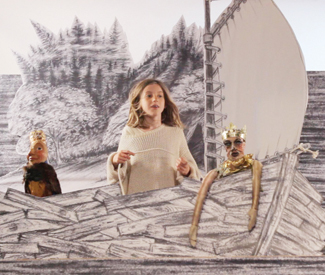
Finally, film fans will remember photographer Lucy Gray for “Big Tilda,” a piece that projected huge digital collages of actor (and San Francisco International Film Festival favorite) Tilda Swinton onto SF’s City Hall as part of SFIFF 2006. “A Conversation with Lucy Gray” includes a screening of her short film debut, Genevieve Goes Boating, about a playwright who pens a whimsical story about a girl who sets sail on a homemade boat — narrated by Swinton, of course. *


“CINEMA BY THE BAY”

Fri/9-Sun/11, $12–<\d>$25

New People Cinema

1746 Post, SF

www.sffs.org

Record-breaking spending floods District 1 with political propaganda

19

District 1 supervisorial candidate David Lee and independent expenditure campaigns supporting him have spent nearly $800,000 – shattering previous spending records for a district election – bombarding Richmond District voters with a barrage of mailers and other media pushing a variety of claims and criticisms about incumbent Sup. Eric Mar that sometimes stretch credulity and relevance.

But is it working? Or is the avalanche of arguments – much of it funded by “big money from Realtors, Landlords, and Downtown Special Interests,” as a recent Mar mailer correctly notes – feeding speculation that Lee would do the bidding of these powerful players on the Board of Supervisors?

Mar campaign manager Nicole Derse thinks that’s the case, arguing the Lee campaign would have leaked internal polls to the media if they were favorable, and it wouldn’t be escalating its attacks on so many fronts hoping for traction, such as yesterday’s press conference hitting Mar on the issue of neighborhood schools.

“They’re pretty desperate at this point and throwing anything out there that they can,” Derse told us, later adding, “I feel good, but we really have to keep the fire up.”

Mar and the independent groups supporting him, mostly supported by the San Francisco Labor Council, have together spent about $400,000. Most of the mailers have been positive, but many have highlighted Lee’s political inexperience and his connections to big-money interests, raising questions about his claims to support tenants and rent control.

Lee campaign manager Thomas Li, who has been unwilling to answer our questions throughout the campaign, did take down some Guardian questions this time and said he’d get us answers, but we haven’t heard back. On the issue of why the Realtors and other groups who seek to weaken tenant protections were supporting Lee, Li simply said, “Our position has been steadfast on protecting rent control and strengthening tenant protections.”

The Lee campaign has repeated that on several mailers – possibly indicating it is worried about that issue and the perception that Lee’s election would give landlords another vote on the board, as tenant and other progressive groups have argued – but most of its mailers recently have attacked Mar on a few issues where they must believe he is vulnerable, even when they distort his record.

Several mailers have noted Mar’s support for a city budget that included funding for a third board aide for each of the 11 supervisors – a budget the board unanimously approved – as well as his support for public campaign financing, despite the fact that Lee’s campaign has taken more than $150,000 in public financing in this election, 30 percent more than Mar’s. They have also criticized Mar for supporting the 8 Washington high-end condo project, even though Lee also voted for the project as a member of the Recreation and Parks Commission.

As this Ethics Commission graphic shows, Lee has been by far the biggest recipient of independent expenditures in this election cycle, with hundreds of thousands of dollars coming from the downtown-funded Alliance for Jobs and Sustainable Growth and the Realtor-created Citizens for Responsible Growth.

Mar and his allies have hit back with mailers noting that most of the funding for the Chinese American Voter Education Project, Lee’s main political and communications vehicle in recent years, has simply gone to pay his $90,000-plus annual salary, which he didn’t fully report on financial disclosure forms required of city commissioners. They have also hit Lee for his support for the Recreation and Parks Department’s closure of recreation centers and other cuts while he “consistently supported privatization of our parks.”

At this point, it’s hard to know how this flood of information and back-and-forth attacks will influence District 1 voters, but we’re now days away from finding out.

One fish, two fish

0

virginia@sfbg.com

APPETITE Sushi bars proliferate around SF, with two more brand new spots opening on Russian Hill and down in the Mission.

ELEPHANT SUSHI

Think of Elephant Sushi as on “island time” (read: chilled out) and you’ll enjoy your experience all the more. Reminiscent of early days at the original Sushi Bistro in the Inner Richmond when it first opened, dreadlocked wait staff and reggae tunes set a relaxed, island vibe at Elephant. It’s soft opening was in late August in the former Sushi Groove space, so Elephant is still in its infancy. Besides the Japan-meets-Jamaica spirit of the cozy space, the restaurant sets itself apart at first glance with real wasabi (which I love eating on its own), housemade soy sauce, and pots of intense, pickled ginger.

Winning points for doing what so few sushi restaurants do, even in our eco-conscious region, Elephant sources mostly wild or sustainably farmed fish, going the funky-fun route in their rolls and appetizers without sacrificing freshness and precision. Walu (Hawaiian term for escolar, the fish occasionally known to cause potentially unpleasant side effects in the… ahem… bathroom) is succulent and buttery here ($5 nigiri/$11 for five-piece sashimi), among the best walu I’ve ever tasted. Sizzling mango seabass ($12) wins on presentation, arriving on fire in a mini-cast iron skillet, thanks to sake and vodka, doused in masago aioli, Japanese chilis, and scallion. Unfortunately, the dish was bland, a let down after the flashy flame of its presentation.

Sipping sake and Sapporo on draft, I ordered crudo ($14) served in four spoons, two of young yellowtail in truffle oil, ponzu sauce, garlic chips and scallions, two of seared scallop in heirloom tomato, pickled wasabi stem, and a tangy yuzu vinaigrette.

If not quite the exquisite bites served at Bar Crudo, this crudo still pops with fresh flavor. Though varying in taste, maki (rolls) seems to be where their whimsical ethos best shines. Spicy king salmon ($9) rolled with cucumber, orange peel, and masago roe in chili sauce is heavy on the orange notes, while the White Out ($15) is a mix of hamachi and avocado draped in more of that luscious walu (seared in this case — I prefer it raw.)

The roll that stayed with me is the Boom Box ($10). I adore raw scallop, served here with avocado, crunchy garlic chips and English cucumber. A ripe banana drape with a sweet soy glaze sets it apart, a spanking fresh, of-the-sea dessert. The banana theme continues in neighboring Swensen’s banana ice cream ($3), all-in-all leaving Elephant Sushi firmly placed in the sleepy Hyde Street ‘hood, a welcome addition that I look forward to watching come into its own.

916 Hyde, SF. (415) 440-1905, www.elephantsushi.com

SUGOI SUSHI

The building formerly housing Spork and pop-up Rice Broker was too cool to stay empty for long. In August, Sugoi Sushi opened in the space serving nigiri ($4.25–$7 for two pieces), five-piece sashimi ($12-15), sushi rolls/maki ($6–$13), and a quite reasonable omakase tasting menu of roughly $40 for a few rounds of sushi. Mini-two person booths remain intact, while red walls, pillows of lime green and red brighten the space.

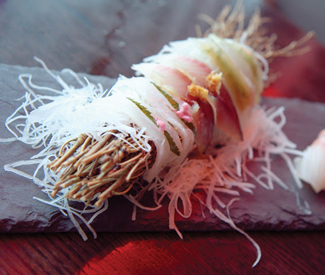
Friendly staff bring out plates that border on works of art — as fine sushi tends to do. In this case, the artistry goes a step beyond. Case in point: a sashimi platter as part of the omakase arrives on a stone slab with a bundle of twigs covered in shredded daikon radish and draped with cuts of fish: masaba, Japanese mackerel ($6); toro. blue fin fatty tuna ($10); and kanpachi, baby yellowtail ($6). Another trio — raw scallops, escolar dotted with lemon seed mustard, and albacore belly bin toro — is presented three ways: in a cup, on a shell, on a pile of daikon.

While presentation immediately impresses, on each of my visits there’s been a funky piece of fish or two, though the restaurant emphasizes sourcing fresh daily. Japanese mackerel on one visit was almost unbearably salty, while Japanese red snapper with truffle oil and sea salt was nearly gummy. Yakitori ($3) at times disappoints, namely the hot dog-like spicy pork sausage. Tender chicken thigh fares better.

Rolls are filling and bright, like the Golden Mountain ($14) packed with toasted salmon, scallop, crab, and avocado, in curry tempura, or the Hot and Cold Tuna ($12), deep-fried spicy tuna covered with maguro roe and seaweed salad. Sashimi-like slices of seared blue fin toro ($18) are a bit salty, but fresh in chili sesame sauce and curry onion tempura, which adds a rich, savory layer to the fish.

While Sugoi is still clearly on the hunt for its identity, suffering from consistency issues, the funky, relaxed space on Valencia Street and the artful eye of its sushi chefs hold promise — it’s still steps beyond the other sushi restaurants lining the street.

1058 Valencia, SF. (415) 401-8442, www.sugoisushisf.com

Subscribe to Virgina’s twice-monthly newsletter, The Perfect Spot, www.theperfectspotsf.com

Profiling those who rely on HANC, which the city is evicting (VIDEO)

6

The Haight Ashbury Neighborhood Council’s (HANC) Recycling Center has fought for the past decade to stay in its tiny corner of Golden Gate Park, behind Kezar stadium, and it may be days from closing. It’s been served with eviction notices from the city and weathered political tirades from politicians on pulpits, and most recently, saw its eviction appeal denied by California’s Supreme Court.

The recycling center, which has been in operation since 1974, wouldn’t be the only loss to the Haight either. Both a community garden and San Francisco native plant nursery are on the site, under the umbrella name of Kezar Gardens. After an eviction for the recycling center, all three would go.

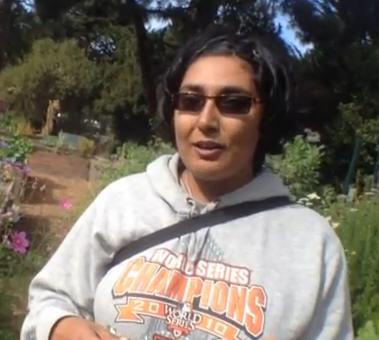
So in what may be their last days, the Guardian decided to take a look at  who is a part of the recycling center’s community. What keeps them coming back – even in the face of eviction? While the final eviction date is nebulous, the reasons for it are not: as the Haight gentrified, more and more neighbors complained about the site’s surrounding homeless population, the noise the recycling center makes, and every other NIMBY complaint in the book.

Contrary to the usual complaints of the recycling center and gardens attracting numerous homeless people, the people detailed in the stories below reflect a diverse community. And there were far more stories that we didn’t include: the busy head of a nonprofit who gardens to keep his sanity, or the two brothers who bring in their recyclables every week as a way for their parents to teach them responsibility. And they’re not the only people who depend on the recycling center and gardens.

“One of the problems [with evicting HANC] is that the small businesses in the area depend on the service of the center,” Sup. Christina Olague, who representing the area, told us. “We don’t want to see it relocated out of the area.”

Olague said that although ideas for a mobile recycling center or a relocation have been batted around, nothing is concrete yet. The Mayor’s Office, the Recreations and Parks Department, and HANC were all going to have more meetings and try to come to a solution that would benefit all sides, she said.

The recycling center and gardens aren’t going down without their supporters making a clamor. They developed a feature documentary about their struggles, titled 780 Frederick. Directed by Soumyaa Kapil Behrens, the film will play at the San Francisco International Film Festivals “Doc Fest” on Nov. 11.

Until then, here’s a glimpse at some of the people who make up the community at the HANC Recycling Center and Kezar Gardens.


Greg Gaar, Native Plant Nursery Caretaker

Longtime groundskeeper and recycling guru Greg Gaar will soon be out of a job, only a year after single-handedly starting a native plant nursery in the Haight Ashbury that serves more than 100 people.

Gaar is the caretaker of the Kezar Garden nursery. He raises Dune Tansy, Beach Sagewort, Coast Buckwheat and Bush Monkey –  all plants originally born and bred from the dunes of old San Francisco.

“I do it because I worship nature, to me that’s god,” Gaar said. He spoke of the plants reverently.

The native plants aren’t as bombastically colorful as the rest of Golden Gate Park, he said, which Gaar calls “European pleasure gardens,” but they’re hearty and durable, like Gaar himself.

Gaar has a weathered face from years of working in the open air, and he grinned large as he talked about his plants. His grey beard comes down a few inches, giving him the look of a spry Santa Claus. Gaar has a history of embracing the counterculture, much like the Haight itself. In 1977, he made his first foray into activism.

At the time, wealthy developers in the city wanted to develop buildings and houses on Tank Hill, one of the few remaining lands of San Francisco with native growth. “Two percent of the city right now has native plants,” he said. It’s a travesty to him, but he did his part to prevent it.

Gaar led the charge against the redevelopers by putting up posters and flyers, and fighting them tooth and nail for the land through old fashioned San Francisco rallying.

In the end, the counterculture activists won, and the city of San Francisco bought the land back from the developers, keeping it for the public trust. The long-ago battle over Tank Hill was a victory, but the fight for the Haight Ashbury Recycling Center may already be lost.

Gaar has deep ties to the recycling center. Among his friends are two ravens, Bobbie and Regina, who recognize Gaar since the first time he fed them 16 years ago. Occasionally, he says, they’ll accompany him on his rounds around the park. The ravens aren’t the only friends he’s made through the recycling center.

They have many patrons looking to make a few bucks off of cans and bottles, many of which are poverty-struck or homeless. Gaar darkened as he spoke of them, because over the years he has lost many friends he’s made through work. The recycling center is a community, and those that are lost are often memorialized in the garden that Gaar grew with his own hands.

In the San Francisco Chronicle, columnist C. W. Nevius frequently calls out the nursery as a “last ditch effort” on the part of the recycling center to stave off closure and legitimize its own existence. In reality, the nursery was brainstormed years before the controversy through Gaar’s inspiration.

Though Nevius may not agree with the ethos Gaar has brought to the recycling center, the city of San Francisco must trust him. The Recreation and Parks Department has offered him a job planting native plants around Golden Gate Park, which is Gaar is welcome to after the recycling center closes. But taking care of native plants is more than a job to Gaar, it’s a calling.

“Isn’t it amazing that we exist on one of the sole planets we know of that supports life?” Gaar said with wide eyes. He sees his job as preserving the natural order, working to keep alive the plants that were part of the city before the first arrival of the spaniards.

Gaar, much like his plants, is part of a shrinking population of the city: the San Francisco native. When the recycling center closes, he’ll be able to spread native plants across Golden Gate Park, another rebel cause in a life of green activism.


Kristy  Zeng, loyal daughter

Kristy Zeng, 30,  talked about everything she does for her family in a matter of fact tone, as if none of it took effort, patience or loyalty.

As she talked, Zeng unloaded over six trash cans worth of recyclables into colored bins. At home, she has two young girls waiting for her, ages three and one, she said. The money she gets from the recyclables is small, but necessary – not for herself, but for her mother.

“My mom’s primary job is this one,” she said. Zeng’s mother is 62 and speaks no English. In the eight years she’s been in San Francisco since immigrating from China, she hasn’t been able to find a job.

“People look at her and say she’s too old,” Zeng said. “She’s too near retirement age.”

So Zeng’s mother hauls cans in her shopping cart every day to earn her keep. She’s one of the folks you can spot around town foraging in bins outside people’s homes, collecting recyclables from picnic-goers in parks, and asking for empties from local bars. The money she earns is just enough to pay for her food.

Even between her husband’s two jobs, Zeng said her family doesn’t have quite enough to fully support her mother. The recyclable collecting is vital income, Zeng said. She and her extended family all live in the Sunset and Outer Richmond, though she wishes they could find a place big enough to live together.

The Haight Ashbury Recycling Center is just close enough to make the chore worth the trip. Zeng was surprised to hear that the center was near closure.

“I would have to find a job,” she said. She usually watches her infant and toddler while her husband is at work. “Mom can’t babysit them, her back isn’t so good. It’s too hard.”

It’s not so bad though, she said, because at 30 years old, Zeng is still young and can handle the extra work. But if the recycling center closed, Zeng and her mom would both have to find a new way to make ends meet.


Steven and Brian Guan learn responsibility

At about five feet tall, wearing an oversized ball-cap and dwarfed by the man-sized jacket he wore, Brian Guan, 12,  definitely stood out at the Haight Ashbury Recycling Center. All around him, grisly old men hauled bins full of cans and bottles – but he didn’t pay them any mind.

Brian had his older brother Steven Guan, 14, to look out for him. Together they hauled in four bags worth of recyclables in plastic bags, walking straight to the empty bins as if it were a routine they’d done a dozen times before.

Which, of course, they had.

“I’ve been doing this for at least a year,” Steven said. Though he looks totally comfortable, the chore definitely introduced him to a different crowd than he’s used to.

The recycling center’s clientele of homeless folks, and people generally older than 14, don’t really bother him, he said. “It’s kinda weird, but it’s no big deal.” Besides, he said, he’s happy to help out his family, who spend a lot of time working.

“My mom works in a hotel, and she collects the cans and stuff there.” His dad does the same.

Their mom is a maid, and dad is a bellhop, working in separate hotels downtown. Steven didn’t know if the money they collect each week was vital for his family’s income, but he does know that the haul isn’t very much.

“It’s usually only like $10,” he said.

So was it even worth the trip? Steven said that if he wasn’t helping out his parents by bringing in recyclables, he’d probably be “at home doing nothing.” A Washington High School student, he doesn’t play on any sports teams and isn’t in any clubs. He spends the majority of his time helping out his family.

The way he figures it, he said, the chore is meant to teach him responsibility.

It looks like it worked.


Dennis Horsluy, a principled man

A lot of the patrons haul cans and bottles to the Haight Ashbury Recycling Center out of need: to feed themselves, clothe themselves, and live. Dennis Horsluy, 44, does not count himself as one of those people.

“It’s pocket change,” Horsluy said. But despite the cost, he’s going to get every red penny back from the government that he’s owed through the California Redemption Value charges on cans and bottles. “It’s just the right thing to do.”

Horsluy said that Sunset Scavenger, now known as Recology, has a stranglehold on San Francisco’s recycling and trash.

“If you leave your recyclables on the curb, it’s like taxation without representation,” he said. You pay for it whether you want to or not. In his own version of “sticking it to the man,” Horsluy makes sure his recycling dollars get back into his hands.

Horsluy is a displaced auto-worker who has only just recently found work again. “I made plenty, and now I make nothing,” he said.

A family man, he has a daughter at Lowell High School, and a son at Stuart Hall High School. He thinks San Francisco has problems much weightier than closing the recycling center, such as the school lottery system that almost had him sending his kids far across town for school.

Horsluy wasn’t surprised that some of the Haight locals had managed to finally oust the recycling center, considering they’ve been complaining for years about how it attracts many of the local homeless population to the area. “I’m sure it’s a problem for the neighbors with their million-dollar homes,” he said.

But the homeless were a problem long before the Haight Ashbury Recycling Center, Horsluy said. San Francisco has a history of generosity, and so it draws more of the needy. Horsluy will be fine without the recycling center, he said, but the more poverty stricken patrons of the center may not be.

“They’re just trying to survive.”


Chris Dye, gardening his troubles away

Some people drink to forget. Chris Dye, 44,  does something similar — he gardens to forget.

While watering the plot of greens he calls his own, Dye spun a yarn that sounded like a San Francisco version of a country song. His ex-wife bleeds his paychecks dry, and he had to leave his dream job at the National Parks Service to make ends meet in Information Technology, a job he pictures as the last place he’d like to be.

He regained a bit of peace in his ordeals through a hardcore passion for San Francisco native plants. “I found a rare kind of phacelia clinging to life in the cement at City College,” Dye said. “You know, down by the art building? When I saw it, I sketched it.”

A day later though it was gone, he said. He fell silent in what was almost a reverent moment for the rare native plant he spotted. Dye is on a personal mission to revive native San Franciscan plants.

The Kezar Gardens give Dye a chance to grow for himself all the interesting native plants he’s interested in. Inspired by the native plant nursery’s caretaker, Greg Gaar, he rattles off all the near-extinct species he’s been able to see and raise. “For me, it’s a personal experiment to figure all this out.”

It’s not all about leafy activism though. Sometimes, it’s just about a good meal. Dye snapped off a leaf and crushed it with his fingers. “This is Hummingbird Sage,” he said, holding it up to his nose for a sniff. “Mix this into a little olive oil, and rub it all over your pot roast, or whatever. It’s fucking amazing.”


Lael and Genevieve Dasgupta

Four-year-old Genevieve marched around the table by the garden, watching as a woman carves a pumpkin for Halloween.

Genevieve and her mother, Lael Dasgupta, recycle there in the Haight once a week, as part of Dasgupta’s hope to get her to learn at a young age about eco-responsibility. They don’t use one of the garden plots in the community garden, because they have a communal backyard at home. They do use some of Greg Gaar’s native plants in their garden, for decoration.

Dasgupta has mostly practical reasons for recycling. “It brings us about $40 to $50 a week… That’s a lot of money,” Dasgupta said.

But despite the location of several other recycling centers in the city, why does Dasgupta bring Genevieve here?

“Dirt, dirt dirt,” she said. “Its just good for her to play in the dirt, and build a healthy immune system. The other recycling centers aren’t as charming.”

Dasgupta said that if Kezar Gardens and the Haight Ashbury Recycling Center were to close, she wouldn’t relish taking her daughter out to the Bayview recycling center. She’s been there, and didn’t enjoy the experience. It’s easy to see that the two are comfortable at Kezar Gardens. Folks around the gardens all seem to know Genevieve, who marches around the place without fear.

The woman who was carving the pumpkins handed one to Genevieve for her to play with. The young girl promptly set to the pumpkin with a marker, making what could be either a set of incomprehensible squiggly lines, or the Milky Way galaxy, depending on your perspective.


Cantonese country cousin

8

caitlin@sfbg.com

FEAST “Comfort food for the working man,” is how longtime Sunset Magazine food writer and Hakka Chinese daughter Linda Lau Anusasananan describes the food she grew up watching her grandmother prepare. Anusasananan spent years penning articles on everyone else’s soul foods in her professional career, and finally decided that the earthy — yet at times incredibly complex — eats that have been developed by the diaspora sprung from her nomadic ancestors deserved a cookbook of their own.

She traveled to Hakka hotspots in China, Malaysia, Toronto, Peru, and the Richmond District to explore the various permutations of the plates (and basins) of her ancestors. The result is her appropriately-titled The Hakka Cookbook (University of California Press, $39.95, 293pp), and a long overdue collection of the unique cuisine with hale roots in country eating. We caught up with her via email to learn more about the roots of Hakka cooking, and the path that led Anusasananan — who makes an appearance this week at Omnivore Books — to her most personal project to date.

>>GO HERE FOR A VEGAN RECIPE FROM THE COOKBOOK PERFECT FOR FALL IN THE BAY AREA

SFBG: In the book, there’s an incredibly elaborate recipe for a Hakka basin feast. Where did the basin feast originate?

LLA: There are several stories about how this dish was invented. Basically it is a multi-course banquet layered in a metal wash basin. Diners gather around the big pan and eat their way from top to bottom. This dish is popular in the New Territories of Hong Kong. One story is that when Emperor Bing of Song moved south during the Mongolian invasion, there weren’t enough dishes to hold food for his entire entourage. Inventive villagers filled their wash basins with the army’s banquet. Another story is that when the Qianlong emperor visited Guangdong, he liked to eat the villagers’ banquet leftovers.

SFBG: Where do you go for decent Hakka food in the Bay?

LLA: There are two SF Hakka restaurants mentioned in the book, Ton Kiang (5821 Geary, SF. (415) 387-8273, www.tonkiang.net) and Hakka Restaurant (4401 Cabrillo, SF. (415) 876-6898, www.hakkarestaurantsanfrancisco.com). Both menus also include other types of Chinese cuisine, and the owners of both are Hakka. At the Hakka Restaurant I love chef Jin Hua Li’s Chinese bacon with preserved greens and the chicken with preserved Greens. I also love the Chinese broccoli with rice wine. At Ton Kiang, they serve a fine salt-steamed chicken, it is moist and smooth.

SFBG: What characteristics of the Hakka people are reflected in their food?

LLA: Migration and adaptation. For example: the Hakka originally came from the north. When they arrived in the south, they wanted to make the dumplings they ate in the north. However, they could not find the wheat to make the flour used to make the dumpling wrappers, so they adapted to the available ingredients and stuffed the pork filling into chunks of tofu, creating a Hakka classic, stuffed tofu.

SFBG: What are the most emblematic ingredients in Hakka food?

LLA: Preserved vegetables, cured meats, soy sauce, rice wine and its by-products.

SFBG: What led you to write The Hakka Cookbook?

LLA: To discover my own Hakka identity through what I know best, food. When I was a child, my grandmother, who we called Popo, always told us, “you should be proud you are Hakka.” She would give us Chinese lessons, and sometimes cooks us dinners. Growing up in a small town where we were the only Chinese, we weren’t interested in learning how to be more unique. We just wanted to fit in. So much of her Chinese lessons were lost on us. Decades later, her words haunted me and I decided to research the meaning of those words after I left Sunset Magazine.

SFBG: In your previous food writing career, how did it feel to have limited access to writing about the food you grew up with?

LLA: In the 1970s and ’80s, we were allowed great freedom to explore. In fact, Sunset Magazine sent me on my first trip to China in 1987 to write about the food there. China had just opened up. A photographer and I spent two weeks scouting the food scene and came back with one of the first stories written about home cooking in China.

I wrote about all kinds of food. When I wrote about ethnic food I had to keep in mind that I was writing for a Western audience. So I would choose dishes and ingredients that might appeal to more mainstream tastes. As advertising and issues shrank, it was more difficult to write about ethnic foods because there were far fewer pages. Those few pages needed to appeal to the largest audience. That’s the reality of publishing.

This book is my own personal journey to write what I wanted. It is not a mainstream subject, so it took me a long time to find a publisher. But I feel, it is waste of time to write a book chasing a trend, you should write about what you think is important. Then hope enough people will also be interested enough to read it.

THE HAKKA COOKBOOK READING

Wed/24 6-8pm, free

Omnivore Books

3885A Cesar Chavez, SF

www.omnivorebooks.com


SF Stories: Annalee Newitz

0

46TH ANNIVERSARY SPECIAL Right now, at UC Berkeley, somebody is inventing a new organism. Across the Bay, at the San Francisco hacker space Noisebridge, somebody is programming a giant array of LEDs they bought from a cheerfully piratical Chinese website that sells the lights on long ribbons rolled tightly into bundles. On Mount Tam, long after the park closes on Saturday night, a group of amateur astronomers has set up telescopes and is surveying Messier objects. In Golden Gate Park, historians are leading walking tours; in the Presidio, the Park Service has just painstakingly recreated a dune ecosystem that had been destroyed by development decades ago. And over at Tech Shop, in SoMa, somebody is inventing a high-tech prosthetic that will turn disabilities into superpowers.

The San Francisco Bay Area is globally famous for its subversive subcultures, from the hippies and punks to the hipsters and steampunks. But what we usually forget is that scientists and engineers are part of the city’s phylogeny of subversives too. The Bay Area was home to the nation’s first conservationist movement in the early twentieth century, as well as the first urban “sidewalk astronomy” club in the 1960s. The Homebrew Computer Club, whose members included a bunch of weirdos who invented the first home PCs, started in Silicon Valley in the 1970s. The people who participated in these groups, like John Muir and Steve Wozniak, were activists. Their goal was to teach everyone about science, so that we could use science to transform our cities and the world.

We did it, too. In the 1960s, conservationists prevented developers from choking the Bay with landfill so they could build more condos. In the 1980s, computer scientists at Stanford and Berkeley organized to educate the public about the incredible dangers of Reagan’s “Star Wars” project, a computerized missile defense system. And today, Bay Area scientists are still trying to save the world. Earthquake engineers at an enormous lab in Richmond are figuring out ways to construct buildings that won’t collapse when the Big One hits. Biologists at Walnut Creek’s Joint Genome Institute are using a fleet of genome sequencers save the environment by figuring out which plants make the best biofuels — and which microorganisms are the best carbon sinks.

It’s no accident that San Francisco is home to two of the country’s most radical experiments in politicized science: the Electronic Frontier Foundation (EFF), which fights legal battles to protect people’s privacy and free speech in the realms of technology; and the Public Library of Science (PLoS), which makes scientific journal articles freely available online under open copyright licenses. Both organizations challenge the conventional wisdom that technology and science should be controlled by an elite few.

Here in the Bay Area, we use education to disturb the peace. We do science in the streets. When it comes to rational inquiry, we do not fuck around. And that is why San Francisco will always be a city with one glowing tentacle wrapped tightly around the future. Of course, our version of tomorrow isn’t ruled by brain-eating zombie authoritarians and mind-controlled mutants. Instead, it’s full of green energy, freely-shared information, robotic exoskeletons for people who are paralyzed, carefully maintained ecosystems, and Utopian experiments with Internet democracy. I know you’ve seen that future, too. It lurks in labs and libraries. Of course there are always reasons to be pessimistic. But sometimes, when you climb a hill and look out at the open Bay, you cannot suppress the feeling that we are inventing a better tomorrow.

Annalee Newitz is a surly media nerd who is editor and time distortion field operator for i09.com.


SF Stories: Benjamin Bac Sierra

5

46TH ANNIVERSARY SPECIAL 

Puro San Fran: These words have inspired me to somewhere beyond my city and to someone beyond myself. Puro San Fran, I have howled into our smashed streets, into the lush jungles of Okinawa, death deserts of Saudi Arabia, the overly intellectual classrooms at U.C. Berkeley — into barrios worldwide.

Puro San Fran can be literally translated into Pure San Francisco, but what exactly is so pure about this Golden Gated city is the subject for this musing.

As an adolescent homeboy from our Mission district, I shouted Puro San Fran with anger, as a demand to combat. In different evolutions, though, St. Francis blessed me with different powers that forced me to confront profound paradoxes, within myself and my home.

Puro San Fran is more than a battle-cry; it is a meditation, a mantra that has soothed me and granted me an identity that has fueled my consciousness. I like to pride myself as a Missionero and Cortlandero before gentrification of those gritty hoods, but it is idealistic impurity to tell the tale that the Mission district is all I knew. I liked to claim those territories as if I, we, owned those streets, but those streets were only half my story.

A veteran Muni bus rider by age 11, I would graffiti tag my name and the name of our break dance crew all over every neighborhood — the Haight, Noe Valley, Soma (back when all that existed there were dull warehouses), the Sunset, Excelsior, etc. At 14 years old, we, brown skinned, would blow white angel-dust smoke halos into San Francisco’s spitting seashore at Ocean Beach. During the crack-era 1980s, we would drink and fight at rat-infested Union Square, a home for black-bearded bums who we would share our Mad-Dog 20/20 wine with. Parading our poverty on 30th street after our many 49ers Superbowl victories, we proclaimed the streets as ours, not knowing or understanding that the actual tar and cement would be “rehabilitated” (gentrified) before we would be, so that now almost all of my former San Franeros have vanished outside its borders.

Except for very brief stints in backyard cities, I did not truly explore outside of San Francisco until I was seventeen and joined the Marine Corps. Before then, I had never even heard of other major Bay Area cities called Santa Rosa, Richmond, Berkeley, or Menlo Park. My world, my life was Puro San Fran, but it was that spirit that also charged me forward, so that now I have trumpeted our unique city everywhere I have traveled. With San Fran spirit, I thrust myself into becoming a student, a writer, a professor, a father, a sinner, and a fuller human being.

San Francisco is changing, as it has always been changing, but we are at our roots Native American hippie Missionary 49er Giant locos. Thanks to our counterculture tradition, we believe in peace and diversity as an essence, yet we contradict ourselves by also being hedonistic kings and queens who wear the golden crown of capitalism on the West Coast. What goes on in Vegas may stay in Vegas, but what goes on here in San Fran becomes a permanent tattoo on our souls, and we like to believe we have them, that stuff of souls. We live in the moment trusting it is forever. Go to AT&T Park during the Giants playoffs; you will feel the forever, and you will fall in love with it. Puro San Fran, therefore, is a hopeless romantic nostalgia for something that never really existed but that always is possible. With that purity, that hopeless possibility, that profound paradox, I write and represent us all. Con Safos.

Benjamin Bac Siera is a San Francisco City College English composition and literature professor and author of Barrio Bushido, an ode to Mission District vato locos.

Open doors await on Affordable Housing Day

2

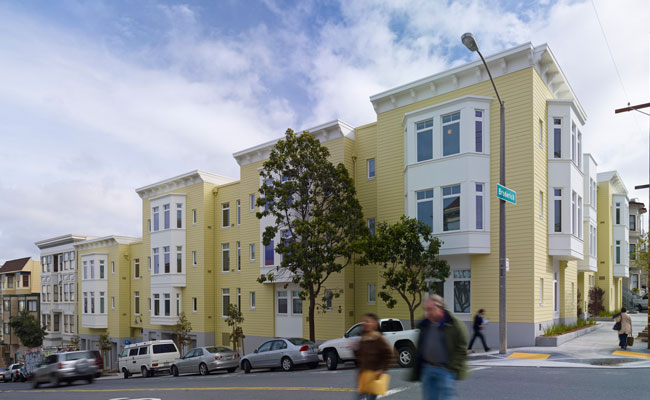
Tomorrow, 10/6 from 1pm-4pm, you can tour several of the city’s affordable housing sites — there’s even a handy citywide bike tour! — and  get an indepth look inside many of the innovative buildings that have recently gone up (or been rehabbed) in San Francisco, helping to house the homeless and make the city an affordable place to live for seniors, families, and people with special needs.

There will be refreshments! And also access to detailed information about the design, finances, and management of the buildings. And if you’re interested in finding out how to apply to live at one of the sites, there’ll be info about that, too. 

For Nosey Parkers like me who just like to go inside buildings and have a good gander, this will be pretty neat. (Also, my husband works in non-profit housing, and I get the backstory on a lot of the great stuff going on at these buildings, but never get to see it all!) And many of the buildings are doing really cool things environmentally and designwise. Complete list of locations and official press release after the jump.

SITE LIST:

Armstrong Place, 3rd Street & Armstrong
Bayview Commons, 4445 3rd Street
Bishop Swing, 275 10th Street
Broadway Family Apartments, 810 Battery Street
CASA, 5199 Mission Street
I Hotel, 868 Kearny Street
Mendelsohn House, 737 Folsom
Mosaica, 2949 19th Street
Notre Dame Plaza, 347 Dolores Street
St. Peters Place, 29th Avenue & Geary Street
The Hayes, 55 Page Street
Westbrook Plaza, 255 7th Street
Zygmunt Arendt House, 850 Broderick

Affordable Housing Day San Francisco to be held on Saturday, October 6
The Council of Community Housing Organizations, the American Institute of Architects San Francisco, and SPUR invite the community to an open house highlighting the benefits of affordable housing in San Francisco.

SAN FRANCISCO ─ As part of a citywide Affordable Housing Day, neighborhood affordable housing organizations throughout San Francisco will open up selected buildings for tours, info sessions and refreshments. Included in the tours will be examples of housing designed for seniors, families and people with special needs. The goal of the citywide day is to provide an opportunity for up close and personal experience with the people and places that make up San Francisco’s affordable housing. Each location will have detailed information about design, finance and management of these housing developments as a sample of the many affordable housing sites across the city. And for individuals interested in obtaining affordable housing, each participating organization will have information about qualifications, the application process, and vacancies.

Fernando Martí, co-director of the Council of Community Housing Organizations which is sponsoring the event, said “These are great examples of housing for everyday San Franciscans, slowing SF’s family flight, so that our children and grandchildren can continue to live in the City they helped build. Affordable housing also preserves the diversity of our neighborhoods, stabilizing communities from gentrification, while improving living conditions.”

There will be building tours throughout the city including the South of Market, Richmond, Mission, Excelsior, Bayview and Western Addition neighborhoods. Participants are welcome to visit all the open house locations, or just stop by the building in their neighborhood. Participating organizations include: Bernal Heights Neighborhood Center, Bridge Housing, Chinatown Community Development Center, Community Housing Partnership, Episcopal Community Services, Mercy Housing, San Francisco Housing Development Corporation, Tenants and Owners Development Corporation, Tenderloin Neighborhood Development Corporation , and The Hayes (55 Page).

“Creating affordable housing helps build our economy, creates jobs in San Francisco and supports families so they can stay, live and succeed in our City,” said San Francisco Mayor Ed Lee. “We must create a permanent source of revenue to fund the production of housing in San Francisco to ensure that seniors, people with disabilities and San Francisco families can continue to call San Francisco home.” Supervisor Christina Olague representing the city’s Western Addition and Hayes Valley neighborhoods where two sites will be open on Affordable Housing Day, said “We are fortunate to have such wonderful examples of affordable housing in my district, it’s a critical part of making diverse and stable neighborhoods.”

Please join us for San Francisco Affordable Housing Day, a free event to be held Saturday, October 6 from 1:00pm – 4:00pm. This is an open house format, so visitors can start at any of the 13 sites.


David Lee and his landlord backers raise the stakes in District 1

29

Realtors and commercial landlords have transformed the supervisorial race in District 1 into an important battle over rent control and tenants’ rights, despite their onslaught of deceptive mailers that have sought to make it about everything from potholes and the Richmond’s supposed decline to school assignments and economic development.

It’s bad enough that groups like the Coalition for Sensible Government – a front group for the San Francisco Association of Realtors, which itself is in the middle of internal struggles over its increasing dominance by landlords rather than Realtors – have been funding mailers attacking incumbent Eric Mar on behalf of downtown’s candidate: David Lee. Combined spending by Lee and on his behalf is now approaching an unheard of $400,000 (we’ll get more precise numbers tomorrow when the latest pre-election campaign finance statements are due).

What’s even more icky and unsettling is the fact that Lee – a political pundit who has been regularly featured in local media outlets in recent years, usually subtly attacking progressives while trying to seem objective – has refused to answer legitimate questions about his shady background and connections or the agenda he has for the city. He refused to come in for a Guardian endorsement interview or even to respond to our questions. His campaign manager, Thomas Li, told me Lee is too busy campaigning to answer questions from reporters, but he assured me that Lee will be more accessible and accountable once he’s elected.

Somehow, I don’t find that very reassuring. But I can understand why Lee is ducking questions and just hoping that the avalanche of mailers will be enough to win this one. In a city where two-thirds of residents rent, but where landlords control most of the city’s wealth, it’s politically risky to be honest about a pro-landlord agenda.

“It’s pretty clear that is a real estate-tenant battleground,” Ted Gullicksen, executive director of the San Francisco Tenants Union, told us. “District 1 is all about rent control, really. If David Lee wins, we’ll see the Board of Supervisors hacking away at rent control protections. The only question is whether it will be a severe hack or outright repeal.”

Real estate and development interests have already been able to win over Sups. Jane Kim and Christina Olague on key votes – and even Mar, who has disappointed many progressives on some recent votes, which many observers believe is the result of the strong challenge by Lee and his allies – but an outright flip of District 1 could really be dangerous.

“I want people to know how high the stakes are in this election. I want people to know that outside special interests are trying to buy this election,” Mar told us.

Mar is far from perfect, but at least he’s honest and accessible. With all the troublesome political meddling that we’ve seen in recent years from Willie Brown and Rose Pak on behalf of their corporate clients, particularly commercial landlords – which has been a big issue in District 5 this election and the mayor’s race last year – progressives were disturbed by rumors that Pak is helping Mar.

When we asked him about it, he didn’t deny it or evade the issue. “Yes, I have the support of just about all the Chinatown leaders, including Rose Pak,” Mar told us. “I’m proud to have a strong Chinese base of support.”

When asked about that support and how it will shape his votes, Mar noted that he also has strong support from labor and progressives, and that he will be far stronger on development and tenants issues than Lee. “I view myself as an independent, thoughtful supervisor who works very hard for the neighborhood,” Mar said. “There’s an accusation [in mailers paid for the Realtors] that the Richmond has become unlivable, and that’s just not true.”

We have a stack of official documents showing how Lee has used his Chinese-American Voter Education Project and his appointment to the Recreation and Parks Commission to personally enrich himself and his wife, using donations from rich corporations and individuals whose bidding he then does, and we mentioned some of that in our endorsements this week. We’ll continue seeking answers from Lee and his allies about their agenda for the city.

In fact, just as I was writing this post, Lee sent a message to supporters responding to our editorial and other efforts to raise these issues. “I know it is shocking, but while working as a full-time employee for CAVEC for the last twenty years, I was paid a salary. But let me tell you this was no six figure job with benefits,” he wrote. Actually, CAVEC’s federal 990 form shows he was paid $90,000 per year, while his wife, Jing Lee, was paid up to $65,000 per year as “program director” up until 2006. 

“We did not receive any money from the government. All of our activities were funded by private donations and grants and our finances were audited on a regular basis,” Lee wrote, not noting that he has refused to make public a full list of his donors, although we know from a 2001 report in Asian Week that they included Chevron, Wells Fargo, Anheuser-Busch, Bank of America, Marriott, Levi Strauss, Norcal Waste Management (now known as Recology), State Farm, and the late philanthropist Warren Hellman, who at the time was funding downtown attacks on progressives through groups including the Committee on Jobs.

District 1 has always been an important San Francisco battleground. During the decade that progressives had a majority on the Board of Supervisors, District 1 was represented first by Jake McGoldrick and then by Mar. Neither McGoldrick nor Mar always voted with the progressives, yet McGoldrick had to endure two failed recall drives funded by business and conservative interests.

Now, they have increased their bet, raising the question that President Barack Obama posed in last night’s presidential debate: “Are we going to double down on the top down policies that got us into this mess?”

Let’s hope not.

Aim for these

0

virginia@sfbg.com

APPETITE Most memorable restaurants boasts an overarching standard of quality to their menus. Other times, one dreams of specific items from certain spots. Here are a few places worth trekking out to for unique dream dishes.


LASAGNA BOLOGNESE AT MARCELLA’S

Lasagna… there are few foods as evocative of my childhood. Until now, Gaspare’s in the Outer Richmond was typically where I’d get my old school lasagna fix. Since May, though, Dogpatch now has a lasagneria, of all fantastic things. Marcella’s Lasagneria and Cucina is a humble corner shop selling Chef Massimo’s aioli spreads (like black truffle or spicy Chardonnay) and other housemade food products, paninis, soups, and pizzas for eating in or taking out. Best of all, six kinds of lasagna to choose from.

Jovial Massimo hails from Italy’s Abruzzo region (I’m charmed by the 1980s-looking photo of him above the counter in chef’s hat with a glass of wine), who regales with tales of early kitchen work and family. The shop is named after his daughter, while his friendly son sometimes works the counter. On a typical visit (open weekdays, 11:30am-7pm), lasagna options are butternut squash, bolognese, wild mushroom, spicy eggplant, spicy sausage, and pesto zucchini. I buy a whole lasagna for a family birthday — yes, it’s celebratory-good — and bring home three slices for dinner (8.50 each), reveling in savory-sweet red sauce and ultra-thin pasta sheets redolent with but not overcome by ricotta and mozzarella.

Butternut squash lasagna is typically white, so that the squash shines. Here it still does, while benefiting from a bit of red sauce. Earthy wild mushroom, spicy eggplant or pesto ricotta are winning. I like classic Bolognese best, the version my mother used to make. Massimo corners lassagna balance: there’s never too much of any one ingredient. The entirety melts in your mouth, as heartwarming as your Italian mama’s cookinge.

1099 Tennessee, SF. (415) 920-2225, www.marcellaslasagneria.com


MILLIONAIRE’S BACON AT BLACKWOOD

There are not many Thai joints in the Marina (Yukol Place has been keeping it real for years), and certainly not one like Blackwood. High ceilings and shades of black and grey set a chic tone, while non-traditional dishes like mushroom egg rolls and unfortunately named Marina Strips — Wagyu beef strips wrapped in baby hearts of palm — fill the menu. Many dishes are larger, more artfully arranged, versions of typical Thai dishes, like papaya salad or Pad See Ew (spelled Pad See You). Thai fusion is apparent in a Thai Wagyu burger ($12) on brioche loaded with a Thai salad of cucumber, carrot, cilantro, sesame. Or in generous, sizzling stone pots ($14-16), akin to Koran bibimbap filled with rice, veggies, meat of choice (I like crispy red snapper in plum dressing), topped with a fried egg.

However, the one destination item is merely a $5 add-on to a breakfast platter (served daily, 8am-4pm). And what an add-on! Blackwood’s only been open since June, but the millionaire’s bacon has already been named on the Discovery Channel Destination America’s United States of Food. Two hefty strips of bacon are dense, shimmery, chewy beauties, caramelized and slightly sweet and smoky. Despite bacon burn-out over the past decade, with bacon gracing every dessert and dish possible, these juicy strips renew and refresh the love, reminiscent of Southern ham in gourmet jerky-like form.

2150 Chestnut, SF. (415) 931-9663, www.blackwoodsf.com


CALABRIAN CHILE SPAGHETTINI AT BLUESTEM

Bluestem Brasserie is no run-of-the-mill downtown shopping break. In fact, it has improved since opening in summer 2011, honing in on its menu, house charcuterie, and whole-animal butchery practices (no part goes to waste). With new executive chef Francis Hogan, there is fresh life in the space frequented by tourists, shoppers, and the Moscone Center crowd. While wine on tap, grass-fed beef, and whole-animal practices are common in SF at large, being centrally situated downtown between SoMa and Union Square, Bluestem is exposing a new range of clientele to the delicious taste of sustainability.

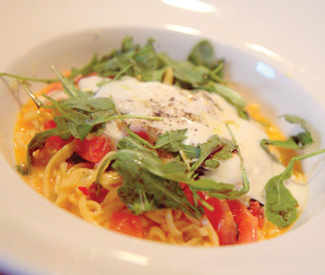
Besides satisfying house pâté (on the charcuterie platter) of pork, pistachio, and the like, a whole roasted branzino ($29) is flaky, perked up with roasted summer chilis or your choice of side, while grass-fed six-ounce filet ($31) or 12-ounce ribeye ($34) steaks are appropriately tender, medium rare, with choice of sauce ($3.75), like bourbon espresso or horseradish-roasted garlic cream. The dish I found myself trekking back for whether at lunch or dinner is Calabrian chile spaghettini ($19). Though I would prefer some heat from Calabrian chiles (I detected none), the heaping bowl of pasta is topped with Early Girl tomatoes, arugula, and basil — the pièce de résistance being melted burrata flowing over the pasta in lush waves. A gentle zesting of lemon rind perfects it. Dessert ($9.50) is no afterthought. The Peaches and Herb “Reunited” sundae was a layered summer treat, but the jar filled with mini-cookies baked in-house, including lemon sugar and peanut butter, made me feel like a kid again. There were so many cookies, I finished the rest for breakfast the next day with coffee.

One Yerba Buena Lane, SF. (415) 547-1111, www.bluestembrasserie.com


This Columbus Day weekend, get blinded with science!

0

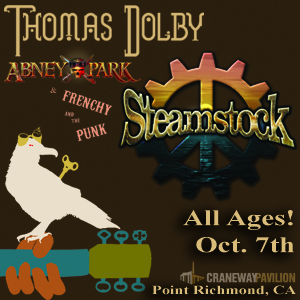
Thomas Dolby, Abney Park, and Frenchy & The Punk headline Steamstock! On October 7, Craneway Pavillion is transported to a time that never was for this fantastic all day Steampunk Music Festival. Find out more and buy tickets at www.steamstock.org and save $5 until September 28 – use discount code: SFBG.

Also appearing are Lee Presson & The Nails, Vernian Process, El Radio Fantastique, Hydrogen Skyline, Brass Farthing, 5 Cent Coffee, Victoria and the Vaudevillains, Vagabondage, Parlour Tricks, and Good Co. with aerialists, belly dancers, fire spinners, and 35 vendors.

Sunday, October 7 from 1pm-Midnight @ Craneway Pavillion, 1414 Harbour Way South, Marina District, Richmond

Stage Listings

0

Stage listings are compiled by Guardian staff. Performance times may change; call venues to confirm. Reviewers are Robert Avila, Rita Felciano, and Nicole Gluckstern. Submit items for the listings at listings@sfbg.com. For further information on how to submit items for the listings, see Picks.

THEATER

OPENING

Foodies! The Musical Shelton Theater, 533 Sutter, SF; www.foodiesthemusical.com. $30-34. Previews Fri/28-Sat/29 and Oct 5, 8pm. Opens Oct 6, 8pm. Runs Fri-Sat, 8pm (no show Nov 17). Open-ended. AWAT Productions presents Morris Bobrow’s musical comedy revue all about food.

Roseanne: Live! Rebel, 1760 Market, SF; www.brownpapertickets.com. $25. Opens Wed/26, 7 and 9pm. Rns Wed, 7 and 9pm (no shows Oct 31). Lady Bear, Heklina, D’Arcy Drollinger, and more star in this tribute to the long-running sitcom.

Shocktoberfest 13: The Bride of Death Hypnodrome, 575 10th St, SF; www.thrillpeddlers.com. $25-35. Opens Thu/27, 8pm. Runs Thu-Sat, 8pm. Through Nov 17. Thrillpeddlers’ annual Halloween horror extravaganza features a classic Grand Guignol one-act and two world premiere one-acts, plus a blackout spook show finale.

"The Strange Case of Citizen de la Cruz" Bindlestiff Studio, 185 Sixth St, SF; www.bindlestiffstudio.org. Opens Sat/29, 8pm. Runs Thu-Sat, 8pm; Oct 7, 2pm. Through Oct 13. Bindlestiff Studio presents Luis Francia’s political thriller.

BAY AREA

Assassins Ashby Stage, 1901 Ashby, Berk; www.shotgunplayers.org. $20-30. Previews Wed/26-Thu/27 and Oct 3-4, 7pm; Fri/28-Sat/29, 8pm; Sun/30, 5pm. Opens Oct 5, 8pm. Runs Wed-Thu, 7pm; Fri-Sat, 8pm; Sun, 5pm. Through Nov 11. Shotgun Players performs the Sondheim musical about John Wilkes Booth, Lee Harvey Oswald, and other famous Presidential killers (and would-be killers).

Topdog/Underdog Marin Theatre Company, 397 Miller, Mill Valley; www.marintheatre.org. $36-57. Previews Thu/27-Sat/29, 8pm; Sun/30, 7pm. Opens Tue/2, 8pm. Runs Tue and Thu-Sat, 8pm (also Oct 6 and 20, 2pm; Oct 11, 1pm); Wed, 7:30pm; Sun, 2 and 7pm. Through Oct 21. Marin Theatre Company performs Suzan-Lori Parks’ Pulitzer Prize winner about a contentious pair of brothers.

ONGOING

Asteroids: Live! Dark Room Theater, 2263 Mission, SF; (415) 401-7987. $20. Fri/28-Sat/29, 8pm. Interstellar comedy "based very, very loosely on the arcade game."

Family Programming: An Evening of Short Comedic Plays Shelton Theater, 533 Sutter, SF; www.brownpapertickets.com. $20. Thu-Sat, 8pm. Through Oct 13. Left Coast Theatre Company performs short plays about gay and alternative families.

Fuck My Life (FML)/Homo File CounterPULSE, 1310 Mission, SF; www.counterpulse.org. $20-30. Thu/27-Sun/30, 8pm. To paraphrase Freud, sometimes a bottle of Tapatío salsa is just a bottle of Tapatío salsa. But definitely not this time. This time it’s a fornicating phallus of foodie fetishism with a Latina edge — and a Latina target, which writer-performer Xandra Ibarra (a.k.a. La Chica Boom) sets about to both embody and deconstruct, and somehow rescue. On a smart-looking bathroom set, with its loving altar to Mexican movie star Lupe Vélez (designed by Richie Israel) rising ominously and significantly over the commode, Ibarra’s sharp and raunchy political burlesque channels rage and despair, dejection and defiance, from within concentric circles of representation, both social and aesthetic. With astute direction by Evan Johnson, Fuck My Life (FML), the culmination of Ibarra’s CounterPULSE residency, unfolds some lovely set pieces and magic moments, made highly persuasive by Ibarra’s sure and formidable skill and presence as a performer. A scene in which she shovels earth into a bathtub, for instance, proves an evocative, eerily beautiful and potent image. But there’s a lot here to unpack, thematically and politically, and in truth the short arc of the show only goes so far, and in ways that remain solidly within established traditions of Latino/a performance from Culture Clash to Guillermo Gomez-Peña. The exceptional charisma of La Chica Boom herself, however, remains a force and focus in its own right, and from there it’s easy to imagine much more to come. On the bill with FML is a work-in-progress performance of Homo File, writer-designer-director Seth Eisen’s multi-media and cross-disciplinary show. It already sports a formidable narrative arc and aesthetic vision as it explores the life of Samuel Steward (1909–1993), an amazingly well, um, connected English professor, writer of homoerotic fiction, famous tattoo artist, and sexual rebel. The 30-odd minutes of material on display delivers a strong sense of this fascinating figure (played by Ned Brauer, with occasional and evocative recourse to some aerial straps), who kept elaborate record of his astounding range of sexual conquests and liaisons in what he called his "stud files," a concatenation that forms a backbone to the story of a life told from the vantage of final days. Meanwhile, Eisen and his winning cast place Steward in a mise-en-scène equally as promiscuous, ranging over dramatic scenes, aerial acrobatics, shadow puppetry, and even a hilariously lewd application of the old teacher’s standby, the overhead projector. (Avila)

Invasion! Boxcar Playhouse, 505 Natoma, SF; crowdedfire.dreamhosters.com. $20-35. Wed/26-Sat/29, 8pm. Crowded Fire mounts the West Coast premiere of Swedish-born playwright Jonas Hassen Khemiri’s postmodern dark comedy, a deconstruction of language and power in an American culture of perpetual war, which made a well-received New York debut last year. Translated from the Swedish by Rachel Willson-Broyles, and directed by Evren Odcikin, the play immediately subverts the usual multi-culti narrative of otherness and tolerance with a po-faced feint (featuring ensemble members Lawrence Radecker and Olivia Rosaldo-Pratt) that ends with a boisterous disruption of the proceedings from unexpected quarters (courtesy of ensemble members George Psarras and Wiley Naman Strasser). From there, we get a series of interrelated largely comical scenes, wherein — in shades of Martin Crimp’s Attempts on Her Life — a certain figure by the name of Abulkasem dissolves into the ultimate cipher, tied to everything from terror to pick-up lines in bars, and meaning absolutely anything and nothing. Nevertheless, in the interstices of language lurks real power — as the play implies most overly in a scene of intentional mistranslation, which twists a hapless and bemused immigrant’s tale into line with the war-on-terror mythos. In the end, the complexity the play adds does not completely dissolve that liberal narrative skewered at the outset, and its efforts remain only half-convincing. The problem may lie partly in the production’s inconsistent, often sluggish pace, as well as a tendency toward didacticism in director Odcikin’s staging. The material of this sardonic play doesn’t support too literal or even empathetic a reading, but rather seems best translated as a raucous premonition, dream, or intimation of our own guilty seduction by the sadistic, totalizing power of such stories. (Avila)

Kiss of the Spider Woman Phoenix Theatre, 414 Mason, SF; secondwind.8m.com. $15-35. Thu/27-Sat/29, 8pm. Second Wind presents Manuel Puig’s acclaimed drama about cellmates in a Buenos Aires jail.

Lorraine Olsen Is Figuratively Speaking SF Playhouse, 533 Sutter, SF; www.theatrevalentine.com. $25. Thu-27-Sat/29, 8pm. The artist model speaks in writer-performer Lorraine Olsen’s new solo show, in which the Bay Area actress recounts her experience as a longtime dues-paying member of the Bay Area Model’s Guild, founded in 1946 by model par excellence, as well as civil rights and labor activist and columnist, Flo Allen (who appears as a character and inspiration here throughout). Audience members are invited to pick up a drawing book and a pencil before taking their seats, as Olsen, her exposed back to the audience, poses pre-show on a tall stool. The narrative opens with a peep inside the thoughts of the model before the classroom (banal ruminations, perhaps unsurprisingly, from the work-a-day world of the professional muse), before moving more substantively into Olsen’s own careening career through art, family trauma, and alcoholism — not all as grim as it sounds, but charged with real emotion just the same. All the while, Olsen, a frank and sympathetic presence, moves in and out of her robe and various poses as she describes a sometimes-chaotic life in which her career as a model provides an unexpected anchor and education. The show, directed by Val Hendrickson, could use further shaping. Several possible framing devices — including one in which the audience comprises a room full of new models — compete here in a way that undermines the coherence of the piece, although the subject in general offers an undeniably interesting perspective on the artistic process. (Avila)

My Fair Lady SF Playhouse, 533 Sutter, SF; www.sfplayhouse.org. $30-70. Wed/26-Thu/27, 7pm; Fri/28-Sat/29, 8pm (also Sat/29, 3pm). SF Playhouse and artistic director Bill English (who helms) offer a swift, agreeable production of the Alan Jay Lerner and Frederick Loewe musical, based on George Bernard Shaw’s Pygmalion. The iconic class-conscious storyline revolves around a cocky linguist named Higgins (Johnny Moreno) who bets colleague Colonel Pickering (Richard Frederick) he can transform an irritable flower girl, Eliza Doolittle (Monique Hafen), into a "lady" and pass her off in high society. A battle of wills and wits ensues — interlarded with the "tragedy" of Alfred Doolittle (a shrewd and gleaming Charles Dean) and his reluctant upward fall into respectability — and love (at least in the musical version) triumphs. The songs ("Wouldn’t It Be Loverly," "I Could Have Danced All Night," "Get Me to the Church on Time," and the rest) remain evergreen in the cast’s spirited performances, supported by two offstage pianos (brought to life by David Dobrusky and musical director Greg Mason) and nimble choreography from Kimberly Richards. Hafen’s Eliza is especially admirable, projecting in dialogue and song a winning combination of childlike innocence and feminine potency. Moreno’s Higgins is also good, unusually virile yet heady too, a convincingly flawed if charming egotist. And Frederick, who adds a passing hint of homoerotic energy to his portrayal of the devoted Pickering, is gently funny and wholly sympathetic. (Avila)

The Normal Heart American Conservatory Theater, 415 Geary, SF; www.act-sf.org. $25-95. Tue, 7pm; Wed-Sun, 8pm (also Sat, 2pm); Sun, 2pm. Through Oct 7. Larry Kramer’s groundbreaking 1985 drama about the AIDS epidemic — winner of a 2011 Tony for Best Revival of a Play — has a limited run at ACT.

The Other Place Magic Theatre, Fort Mason Center, Bldg D, Third Flr, SF; www.magictheatre.org. $22-62. Tue, 7pm; Wed-Sat, 8pm (also Oct 3, 2:30pm); Sun, 2:30 (Oct 7 show at 7pm instead). Through Oct 7. Sharr White’s plot-twisty thriller has its West Coast premiere at Magic Theatre.

The Real Americans Marsh Studio Theater, 1062 Valencia, SF; www.themarsh.org. $25-50. Fri/28, 8pm; Sat/29, 8:30pm. Dan Hoyle’s hit show about his trip across America returns.

Rigoletto War Memorial Opera House, 301 Van Ness, SF; www.sfopera.com. $10-340. Sun/30, 2pm. "Fidelity is for weaklings!" Despite this rousing cry from its philandering villain, SF Opera opens its 90th season with a faithful and winsome double-cast production of Giuseppe Verdi’s immortal Rigoletto. Based on a play by Victor Hugo, the story concerns the titular court jester and hunchback (played opening night by the imposing Serbian baritone Zeljko Lucic, who alternates nights with Italian Marco Vratogna) whose attempt to revenge himself on the goatish Duke of Mantua (Sardinian tenor Francesco Demuro, alternating with Mexican tenor Arturo Chacón-Cruz) for seducing his beautiful daughter, Gilda (the thoroughly enchanting Polish soprano Aleksandra Kurzak, alternating with Russian coloratura soprano Albina Shagimuratova), backfires with tragic consequences. The production includes free simulcast presentations at AT&T Ballpark on consecutive weekends for those more inclined to recline, especially in the fresh free air, but either way the show’s a little staid but charming and the music, under SF Opera’s Nicola Luisotti, utterly transporting. (Avila)

Strange Travel Suggestions MainStage, Marsh San Francisco, 1062 Valencia, SF; www.themarsh.org. $20-50. Sat/29, 8:30pm. Author and Ethical Traveler founder Jeff Greenwald (Shopping for Buddhas, Snake Lake) has done his solo show Strange Travel Suggestions dozens if not hundreds of times and still has no idea where it’s going. No wonder he and his audience keep coming back for more. The unknown, an aphrodisiac to the traveler, also makes great catnip for the storyteller. Still, there are consistent elements. There is no need to reinvent the wheel — or the impressive Wheel of Fortune that sits just off center stage, painted with a map of the globe and ringed with symbols abstract and evocative enough to conjure up myriad adventures, peak experiences, and humbling encounters from the vivid grab-bag memory of an accomplished travel writer and inveterate globetrotter. There’s also a real grab bag, just in case, and an oversize tarot card, a sort of visual aid cum talisman sporting a classic image of the Fool, patron saint of the traveler’s heedless leaps of faith. Greenwald’s stories possess a fine sense of humor and a knack for the shrewd detail and telling observation. They also contain a Zen-inflected homespun wisdom no doubt born of leaving home on a regular basis. If slightly self-conscious at times, these tales are always genuine and appealing. In the end, Greenwald’s show, as reliable as it is unpredictable, mimics a genie-from-a-bottle experience: What you get is three spins, three stories, and a lot of unexpected truth. Note: capsule condensed from 2008 feature review of this production. (Avila)

Tripping on the Tipping Point Stagewerx, 446 Valencia, SF; (707) 322-5731. $15-20. Thu/27-Sat/29, 8pm. Human Nature performs a new comedy about global warming.

Twelfth Night San Francisco Maritime National Historic Park, Hyde Street Pier, 2905 Hyde, SF; www.weplayers.org. $30-80. Fri-Sun, 5:30pm (also Sat-Sun, noon; no performances Sun/29; evening performances only Oct 6-7). Through Oct 7. After spending the summer on Angel Island with their epic-scale production of The Odyssey, the We Players have scaled back with a lo-key rendition of Shakespeare’s Twelfth Night on Hyde Street Pier. Of course when it comes to the We Players, "scaled-back" still means a two-and-a-half hour long participatory jaunt taking place mainly along the length of the pier and aboard the historic ferryboat, the Eureka, which serves primarily as the residence of the grieving Illyrian Countess, Olivia (Clara Kamunde) around whose favors much of the plot revolves. Highlights of the experience include the opportunity to visit historic Hyde Street Pier, a gypsy-jazzy score directed by Charlie Gurke (who also plays the lovelorn Duke Orsino), and the rascally quartet of the prankish Maria (Caroline Parsons), jocular drunk Toby Belch (Dhira Rauch), clueless doofus Andrew Augecheek (Benjamin Stowe), and wise fool Feste (John Hadden). But as We Players productions go, this one feels less inspired in its staging, and much of the action merely shuffles back and forth on the Eureka without incorporating many of the intriguing nooks and views the Hyde Street Pier offers, despite a promising opening scene involving a beach and a rowboat. Also, uncharacteristically for We, the comic timing seemed to be off the evening I saw it, although both Stowe and Hadden ably conveyed their wit without a flaw. Dress warmly, carry a big flask, and you’ll be fine. (Gluckstern)

The Waiting Period MainStage, Marsh San Francisco, 1062 Valencia, SF; (415) 282-3055, www.themarsh.org. $15-50. Thu/27-Fri/28, 8pm; Sat/29, 5pm. Brian Copeland (comedian, TV and radio personality, and creator-performer of the long-running solo play Not a Genuine Black Man) returns to the Marsh with a new solo, this one based on more recent and messier events` in Copeland’s life. The play concerns an episode of severe depression in which he considered suicide, going so far as to purchase a handgun — the title coming from the legally mandatory 10-day period between purchasing and picking up the weapon, which leaves time for reflections and circumstances that ultimately prevent Copeland from pulling the trigger. A grim subject, but Copeland (with co-developer and director David Ford) ensures there’s plenty of humor as well as frank sentiment along the way. The actor peoples the opening scene in the gun store with a comically if somewhat stereotypically rugged representative of the Second Amendment, for instance, as well as an equally familiar "doood" dude at the service counter. Afterward, we follow Copeland, a just barely coping dad, home to the house recently abandoned by his wife, and through the ordinary routines that become unbearable to the clinically depressed. Copeland also recreates interviews he’s made with other survivors of suicidal depression. Telling someone about such things is vital to preventing their worst outcomes, says Copeland, and telling his own story is meant to encourage others. It’s a worthy aim but only a fitfully engaging piece, since as drama it remains thin, standing at perhaps too respectful a distance from the convoluted torment and alienation at its center. (Avila)

BAY AREA

Chinglish Berkeley Repertory Theatre, Roda Theatre, 2015 Addison, Berk; www.berkeleyrep.org. $14.50-99. Tue and Thu-Sat, 8pm (also Sat, 2pm; additional 2pm show Oct 4; no show Oct 5); Wed and Sun, 7pm (also Sun, 2pm). Through Oct 7. Tony Award-winning playwright David Henry Hwang (M. Butterfly) delivers this inconsistent but generally lively and fascinatingly au courant comedy about a down-on-his-luck American businessman (Alex Moggridge) who visits China hoping to win a contract for English-language signage. Hiring a British expat (Brian Nishii) to smooth the way for him, he enters negotiations with a local official (Larry Lei Zhang). Although things seem to be going well (across some hilarious scenes of half-assed simultaneous translation), he finds the deal running inexplicably aground, then finds unexpected help from a hard-nosed, initially hostile, and beautiful Party official (a standout Michelle Krusiec), with whom he soon begins an extramarital affair. But the American (who has a past of his own that eventually comes to light with surprising consequences) has no idea of the machinations taking place behind the formal business meetings and other confused cross-cultural encounters. What unfolds is a sometimes stretched but generally shrewd and laugh-out-loud funny assessment of has-been American delusions through the prism of rising Chinese ambitions and clout, cultural and otherwise. If the central dynamic between the lovers is not always convincing on the individual or metaphorical level, Leigh Silverman directs for Berkeley Rep a super slick production, complete with rotating sets and precisely timed entrances, featuring an enjoyable cast rounded out by Vivian Chiu, Celeste Den, and Austin Ku. (Avila)

The Elaborate Entrance of Chad Deity Aurora Theatre, 2081 Addison, Berk; (510) 843-4822, www.auroratheatre.org. $32-60. Wed/26-Sat/29, 8pm; Sun/30, 2 and 7pm. Playwright Kristoffer Diaz, a self-professed fan of the aggressively-theatrical spectacle that is professional wrestling, delivers much more than a "wrestling 101" primer for the uninitiated with The Elaborate Entrance of Chad Deity. Beneath the razzle-dazzle of the arena lighting (Kurt Landisman), the gaudy costuming (Maggie Whitaker) and the giant televised image of a hot bikini babe (Elizabeth Cadd, video by Jim Gross) lies the trampled luster of an American Dream. The dreamer, Macedonio "The Mace" Guerra (Tony Sancho), a wiry fall guy for THE Wrestling, wrestles not for money or glory (he is rarely privy to either), but for his love of the strange ballet that occurs in the ring. Guerra’s job is to make his opponents look good, including the pec-flexing, bling-booted Chad Deity (Beethovan Oden), leaving him to wrestle alone with the identity politics of being a marginalized but fully capable warrior battling perennially stacked odds. Willing suspension of disbelief does get stretched pretty thin when the character Vigneshwar Paduar, a smooth-talking hustler chance-met on the basketball courts of Brooklyn, rises to championship levels in record-breaking time as the truly cringe-worthy persona known as "The Fundamentalist," but Nasser Khan’s skillfully self-possessed performance as Paduar makes it impossible not to root for him all the way. Rod Gnapp as foul-mouthed bossman "EKO" and fight director Dave Maier as a whole squadron of hapless B-list wrestlers round out the excellent cast. (Gluckstern)

The Fisherman’s Wife La Val’s Subterranean, 1834 Euclid, Berk; www.impacttheatre.com. $10-20. Thu/27-Sat/29, 8pm. The latest from playwright Steve Yockey (Bellwether, Skin) is an exercise in pure pleasure, not least for the devious sea creatures preying lustily and unashamedly on the hapless human flesh of a small coastal town. There, in cracked fairytale fashion, an unsuccessful fisherman named Cooper Minnow (an endearingly nerdy but passionate Maro Guevara) is preparing to set out to sea, leaving at home frustrated wife Vanessa (a wonderfully, volcanically bitchy yet complex Eliza Leoni) and their sinking marriage, when he meets an oddly brazen pair of sexy, sassy bathers in old-fashioned beach attire (the swimmingly synchronized duo of Sarah Coykendall and Roy Landaverde). At more or less the same moment, a devilishly dashing yet prim traveling salesman (poised, nicely offbeat Adrian Anchondo) is offering a clearly aroused Vanessa an erotic woodcut featuring monstrous tentacles groping human victims at a very familiar-looking dock. Will she take the woodcut? Will she ever! And later she’ll defend her husband’s honor and swap places with him too, much to the commercial advantage of the ever-accommodating salesman who — like Yockey’s smart and sure sex farce — has a little something for everyone. Directed with smooth precision by Ben Randle for Berkeley’s Impact Theatre, The Fisherman’s Wife again finds Yockey playing productively with the fine fuzzy line separating human nature from nature at large (as in Large Animal Games, the winning 2009 co-production from Impact and Dad’s Garage). The animals come through for playwright and company once more, with a thoroughly enjoyable comedy whose borrowed maritime mythos has just enough metaphorical pull to lead those so inclined out beyond the shallow waters. (Avila)

Hamlet Bruns Amphitheater, 100 California Shakespeare Theater Way, Orinda; www.calshakes.org. $35-71. Tue-Thu, 7:30pm; Fri-Sat, 8pm (also Sat/29, 2pm); Sun, 4pm. Through Oct 14. California Shakespeare Theater performs a modernized version of the Bard’s classic drama.

Keith Moon/The Real Me TheaterStage at the March Berkeley, 2120 Allston, Berk; www.themarsh.org. $15-50. Thu/27, 8pm. Mike Berry workshops his new musical, featuring ten classic Who songs performed with a live band.

The Kipling Hotel: True Misadventures of the Electric Pink ’80s Marsh Berkeley, 2120 Allston, Berk; (415) 282-3055, www.themarsh.org. $20-50. Sat, 8:30pm; Sun, 7pm. Extended through Oct 14. This new autobiographical solo show by Don Reed, writer-performer of the fine and long-running East 14th, is another slice of the artist’s journey from 1970s Oakland ghetto to comedy-circuit respectability — here via a partial debate-scholarship to UCLA. The titular Los Angeles residency hotel was where Reed lived and worked for a time in the 1980s while attending university. It’s also a rich mine of memory and material for this physically protean and charismatic comic actor, who sails through two acts of often hilarious, sometimes touching vignettes loosely structured around his time on the hotel’s young wait staff, which catered to the needs of elderly patrons who might need conversation as much as breakfast. On opening night, the episodic narrative seemed to pass through several endings before settling on one whose tidy moral was delivered with too heavy a hand, but if the piece runs a little long, it’s only the last 20 minutes that noticeably meanders. And even with some awkward bumps along the way, it’s never a dull thing watching Reed work. (Avila)

A Midsummer Night’s Dream Forest Meadows Amphitheater, 890 Belle, Dominican University of California, San Rafael; www.marinshakespeare.org. $20-35. Fri/28-Sat/29, 8pm; Sun/30, 4pm. Marin Shakespeare Company performs the Bard’s classic, transported to the shores of Hawaii.

PERFORMANCE/DANCE

"Bay Area Flamenco Festival" Palace of Fine Arts, 3301 Lyon, SF; www.festivalflamencogitano.com. Thu/27 and Sun/30, 7pm; Fri/28, 8pm. $30-125. With ¡Fiesta Jerez! Flamenco All-Stars (Thu/27); José Mercé (Fri/28); and Farruco Family (Sun/30). Visit website for information on workshops and related flamenco events.

"Elect to Laugh" Studio Theater, Marsh San Francisco, 1062 Valencia, SF; (415) 282-3055, www.themarsh.org. Tue, 8pm. Through Nov 6. $15-50. Veteran political comedian Will Durst emphasizes he’s watching the news and keeping track of the presidential race "so you don’t have to." No kidding, it sounds like brutal work for anyone other than a professional comedian — for whom alone it must be Willy Wonka’s edible Eden of delicious material. Durst deserves thanks for ingesting this material and converting it into funny, but between the ingesting and out-jesting there’s the risk of turning too palatable what amounts to a deeply offensive excuse for a democratic process, as we once again hurtle and are herded toward another election-year November, with its attendant massive anticlimax and hangover already so close you can touch them. Durst knows his politics and comedy backwards and forwards, and the evolving show, which pops up at the Marsh every Tuesday in the run-up to election night, offers consistent laughs born on his breezy, infectious delivery. One just wishes there were some alternative political universe that also made itself known alongside the deft two-party sportscasting. (Avila)

Keith Hennessy/Circo Zero Yerba Buena Center for the Arts, 701 Mission, SF; www.ybca.org. Thu/27-Sat/29, 8pm. $15-25. The company performs Turbulence (a dance about the economy).

"Naked Girls Reading: Banned Books!" Stage Werx Theatre, 446 Valencia, SF; www.nakedgirlsreading.com. Tue/2, 8pm. $20. The name doesn’t lie: this is a reading series featuring naked ladies (Kristine Wilson, Ophelia Coeur de Noir, Carol Queen, and Twilight Vixen Revue performers).

"Niagara Falling" West wall of the Renoir Hotel, Seventh St at Market, SF; www.flyawayproductions.com. Wed/26-Sat/29, 8:30 and 9:30pm. Free. Flyaway Productions and Dancers’ Group/Onsite present the world premiere of choreographer Jo Kreiter and video artists David and Hi-Jin Hodge’s aerial dance, set on the outside of the Renoir Hotel.

"Picklewater Clown Cabaret Benefit for Paoli Lacy" Stage Werx Theatre, 446 Valencia, SF; picklewaterclowncabaret.bpt.me. Mon/1, 7 and 9pm. $15. Circus extravaganza to help performer and cancer patient Paoli Lacy with her medical bills.

Sandy Perez y Su Lade Dance Mission Theater, 3316 24th St, SF; www.brownpapertickets.com. Sat/29, 8pm. $20. Afro-Cuban music and dance.

"Squeeze Box" Marsh San Francisco, MainStage, 1062 Valencia, SF; www.themarsh.org. Sun/30, 5pm. $50-500. Benefit performance of Ann Randolph’s solo Off-Broadway hit.

"Theatecture on UN Plaza" Civic Center, UN Plaza, Seventh St at Market, SF; www.ftloose.org. Tue, noon-2pm. Through Oct 16. Free. Outdoor performance of Mary Alice Fry’s Honeycomb Zone as part of the "24 Days of Central Market Arts Festival."

"Tiara Sensation Pageant" Rickshaw Stop, 155 Fell, SF; www.rickshawstop.com. Sat/29, 9pm. $20. The Club Something Team (Vivvyanne Forevermore, Glamamore, and DJ Down-e) present "SF’s only non-gender-specific drag performance."

Zhukov Dance Theatre Z Space, 450 Florida, SF; www.zhukovdance.org. Thu/27-Sat/29, 8pm. $30-50. The company performs its fifth annual season, "Product 05," with a preogram that includes the world premiere of Yuri Zhukov’s Coin/C/Dance.

BAY AREA

"Access to Oddities" Central Stage, 5221 Central Ave. A-1, Richmond; www.brianscottproductions.com. Sat/29, 2 and 7:30pm. $12-20. Magic and comedy show presented in a family-friendly matinee and a later show not recommended for children under 8.

"Bay Area Flamenco Festival" Yoshi’s Oakland, 510 Embarcadero West, Jack London Square, Oakl; www.festivalflamencogitano.com. Wed/26, 8pm. $30. Gypsy flamenco guitar with Diego Del Morao.

"Empower: Master of the Three Rings" Chabot College Theater, 25555 Hesperian, Hayward; www.soulciety.org. Sat/29, 1 and 6pm. $20. Also Oct 27, 6pm, Herbst Theater, 401 Van Ness, SF. Soulciety performs a theatrical production that combines spoken word, urban acrobatics, and more.

"Fall Free for All" Various locations, UC Berkeley, Berk; www.calperformances.org. Sun/30, 11am. Free. Cal Performances’ annual free open house features performances across campus from Kronos Quartet, Shogun Players, Gamelan Sekar Jaya, and many more.

"Flamenco Passion!" Bankhead Theater, 2400 First St, Livermore; ww.mylvpac.com. Fri/28, 8pm. $15-48. Caminos Flamencos Dance Company performs.

Rhinocéros Zellerbach Hall, Bancroft at Telegraph, UC Berkeley, Berk; www.calperformances.org. Thu/27-Fri/28, 8pm; Sat/29, 2pm. $30-90. Théâtre de la Ville of Paris performs Ionesco’s absurdist masterpiece.


Critical Mass at 20

20

steve@sfbg.com

I was in Zeitgeist on a Friday summer evening, at a planning meeting for the 20th anniversary of Critical Mass, when I first heard about the idea of kicking off the celebration week with a renegade bicycle ride over the Bay Bridge.

The people who first shook up the city’s commute two decades ago were going to take the idea of seizing space from cars a step further — and fulfill a longtime cyclist fantasy. They were going to take the bridge.

Chris Carlsson, the author/activist who helped found Critical Mass and has evangelized the concept around the world, reminded me of this super-secret ride last Wednesday when I finally got around to starting my reporting for this story. I was surprised that I’d forgotten about it — but yes, I told him, I still wanted to be there.

>>JOIN IN ON THE FESTIVITIES WITH OUR GUIDE TO THIS WEEK’S CRITICAL MASS EVENTS

“This will galvanize our sense of the week,” Carlsson told me, explaining that Critical Mass has always been about “opening up a space for a conversation,” whether it’s about how urban space is used or who gets to make that decision.

“There is a real necessity to have a place for people to start thinking creatively. That’s Critical Mass’s enduring contribution, 20 years ago and today.”

What started in September 1992 with 48 cyclists pedaling together through San Francisco has become an enduring worldwide phenomenon. On the last Friday of every month, without leaders or direction, this group bike ride simply meanders through the streets, riders smiling and waving at motorists often perplexed at the temporary alteration of traffic laws by a crowd too big to stop or ignore. While views of Critical Mass may differ, the conversation about urban cycling that it started has had an undeniable impact on how people see cities and their power to shape them, placing it high on the list of San Francisco’s proudest cultural exports.

Last Friday evening — a week before thousands of people are expected to show up for the 20th anniversary ride Sept. 28 — I rode over to a meeting in the back of the art gallery at 518 Valencia, the welcome center for the week. The first international arrivals were there: four Europeans who flew to Mexico City, where most of them built tall bikes to cycle up to San Francisco for the anniversary ride, arriving last week after a four-month trek.

They were veterans of Critical Mass events all over Europe, which borrowed the concept from the Bay Area, and they were happy to be going back to its core.

Andrea Maccarone is a 31-year-old Italian who lives in Paris when he isn’t bike touring, which he does quite a bit, last year riding to consecutive Critical Mass events in Paris, Toulouse, Rome, and Madrid. “It began here and spread everywhere,” he said. “A lot of my lifestyle — I’ve been a bike messenger and worked in bike kitchens — is based on what started here.”

His French girlfriend, Marie Huijbregts, described a cultural happening that began when she was 8 years old. “It’s a political movement of cyclists to release the streets from the cars,” the 28-year-old told me. “It’s environmental, do-it-yourself, and a great way to meet people.”

She said she wanted to be here “because it’s supposed to be the biggest one and all the world was invited. It’s symbolic and I wanted to be a part of it.”

Carlsson has watched the event he helped popularize spread to hundreds of cities around the world, from the Biciletada in Sao Paulo to the Cyklojizda in Prague. He loves to see young people who have been energized by Critical Mass and the larger renegade cyclist movement that grew up around it — from DIY bicycle kitchens and art bikes to creative political actions that seize public spaces — “who dream of San Francisco with stars in their eyes.”

But he often feels like we’re the “hole in the donut” of this international urban cycling movement, unable to retain the same intention and energy that it had when Carlsson, Jim Swanson, and a group of their bike messenger and anarchist cyclist friends conceived of the idea (originally called Commute Clot) in the Market Street office of a zine called Processed World.

Carlsson still hears the stories from people whose lives were changed by Critical Mass. But it was only in the last year or so, as the 20th anniversary approached, that he started regularly riding Critical Mass again, with a new generation of participants often drawn by confrontational yahooism, riding well-trod routes and rejecting efforts to suggest destinations as counter to its leaderless ethos.

“It’s extremely predictable now and I’m sick of it,” Carlsson admitted to me, a less diplomatic version of what he wrote in the introduction to the newly released book of essays he edited, Shift Happens: Critical Mass at 20, writing that the “euphoria of cooperative, joyful reinhabitation of urban space is hard to sustain after a awhile.”

Yet that powerful central idea is still there, and it remains as relevant as ever in cities dominated by fast-moving cars. People working together to create “an organized coincidence” can still change the rules of the road, opening up all kinds of new possibilities.

“It is an unpredictable space and you never know what’s going to happen,” Carlsson told me. That’s true of the history of Critical Mass around the world — with its storied clashes with cops and motorists, and its glorious convergences and joyful infectiousness — and it was true of our quest to take the Bay Bridge the next day.


TO THE BRIDGE

We weren’t just being daredevils. The idea of fighting for a freeway lane against six lanes of fast-moving cars, drivers distracted by that epic view of San Francisco, was conceived by Carlsson as a political statement protesting current plans to rebuild the Bay Bridge with a bike lane going only from Oakland to Treasure Island, leaving out that final 2.5-mile stretch into The City.

And for years, the Bay Bridge had been out there as a symbol of where bikes couldn’t go — and in dozens of demonstrations, riders have sought to make it up those ramps, particularly during the Bikes Not Bombs rides protesting the US invasion of Iraq, only to be blocked by police.

Carlsson handed out flyers headlined “A Bay Bridge for Everyone,” harking back to the early pre-Internet “xerocracy” that used flyers to promote Critical Mass ideas or suggest routes. A local historian, Carlsson included photos and descriptions of the Bay Bridge with three lanes of cars in each direction on the top deck, back when the lower deck had trains.

Why couldn’t we have one lane back for bikes? Well, it’s actually under consideration — sort of.

The idea of creating a bicycle/pedestrian lane on the western span is the subject of an ongoing $1.6 million study by Caltrans and the Bay Area Toll Authority, which are looking at attaching paths to the sides of the bridge. That would likely require replacing the decks on the bridge with a lighter new surface to compensate for the added weight, all at a cost of up to $1 billion.

Carlsson thinks that’s ridiculous overkill, and probably intended to scuttle the idea (or else put the blame on bicyclists for the cost of resurfacing the bridge). “For five grand, in three hours it could be done,” he said, arguing that all cyclists need is a lane, a protective barrier, perhaps a lowering of the speed limit — oh, and the political will to recognize that we have as much right to this roadway as motorists.

“It is a sad commentary on the nature of our government that the only way the state transit agency will take bicycling seriously as everyday transportation is when pressured by demonstrations and organized public demands,” Carlsson wrote on the flyer. “Why don’t they take the lead in opening space for cycling instead of doing everything to obstruct, deny, and prevent cycling?”

Even getting to Treasure Island for a bike ride isn’t easy for the car-free. Muni only allows two bikes at a time on its 108 bus, so Carlsson borrowed a van to shuttle almost 20 of us out there in multiple trips. Among the crew were the group that rode up from Mexico City, a Peruvian, and many regular local Critical Mass riders, including Bike Cavalry founder Paul Jordan and LisaRuth Elliott, a 10-year Critical Mass rider who helped edit Shift Happens and coordinate volunteers for the anniversary week, along with a couple of its very early adherents: Hugh D’Andrade and Glenn Bachmann.

“Nobody knew what we were doing,” Bachmann said of that first ride. “We didn’t know what was going to happen. But displacing cars left us this intense euphoria.

Elliott said she was drawn to Critical Mass shortly after she got into urban cycling, attracted by the sense of community that had developed around her transportation choice. She was later inspired to visit Paris and Marseille and other cities that adopted Critical Mass rides.

“They have taken charge and are leading their movements to better bicyclable cities. It’s an adaptable idea,” she told me as we prepared to load our bikes on the van bound for Treasure Island.

Once we were out there, we gathered for a picnic on the beach in Cooper Cove, where we got some sobering news from David Wedding Dress, who talked us through the ride and was going to be trailing our crew in his Mercedes as a safety measure.

“Prepare to be in jail until Monday morning,” he told us. There were also the high winds and dangerous gaps to contend with, offering a bleak prognosis.

A veteran radical activist and bicyclist, Dress has ridden the bridge before and been arrested most times, and he didn’t share Carlsson’s view that we were most likely to get away with it. When Carlsson arrived, he tried to shore up our spirits, saying we’d probably be okay if we maintained the element of surprise.

“We have a right to do this and make that point,” Carlsson said.

Elliott, who was already a wobbler going in, decided not to ride, but 16 of us decided to do it anyway, feeling nervous but excited. When a CHP patrol pulled over a car near our spot and it turned into an hour-long arrest and towing ordeal, which we were forced to wait out, we had plenty of time to think about what we were doing.

As D’Andrade told me as we waited to ride up to the bridge entrance, “What feels to me like the early days of Critical Mass is how scary this is.”


THE EARLY DAYS

In the beginning, the Critical Mass activists say their battle for space was a safety issue infused with a political message, delivered with a smile derived from the joyous new discovery that riding with friends made it much easier. San Francisco streets were designed for automobiles, and to a lesser extent public transit, with cycling relegated to the bike messengers and a few renegades seen by most as simply refusing to grow up.

Even the nascent San Francisco Bicycle Coalition of that era — which grew in numbers and power on a similar trajectory as Critical Mass, despite its policy of maintaining a defensible distance from that outlaw event — was initially dominated by the philosophy that urban cyclists should ride quickly with car traffic and didn’t need separate lanes.

“That’s what I like to remind people is how scary bicycling was in San Francisco in the early ’90s,” D’Andrade said.

I first encountered Critical Mass in 2001 when I was the news editor for the Sacramento News & Review, and Berkeley resident Jason Meggs brought the movement into automobile-centric Sacramento. My reporters and I covered those early rides, which were met with a harsh crackdown by police, who often cited every minor traffic violation.

But Meggs was committed to the concept, as he wrote in his Shift Happens! essay entitled, “The Johnny Appleseed of Critical Mass,” a role he has played over the last 19 years. “Critical Mass made me a video activist and filmmaker; it sent me to jail and then to law school, and again to graduate school for healthy cities. It provided us the space to build a vibrant bicycle culture, and to feel free and alive in cities that otherwise felt hostile, caustic, and alien,” he wrote.

Meggs calculates that he’s been arrested more than 20 times and received more than 100 traffic tickets during Critical Mass events, beginning with the Berkeley Critical Mass that he started in March of 1993, in part to protest plans to widen I-80.

“Those early rides were legendary — moment to moment ecstatic joy and street theater,” he remembered. “The combination of bike activists and freeway fighters with anarcho-environmentalists on wheels was a combination that couldn’t be beat. Like a newscaster once said of Critical Mass, back then we were drunk with power.”

Yet in almost city where it’s sprouted, Critical Mass has had to battle through crackdowns by police, which are often met with greater determination by the cycling community. San Francisco fought through a showdown with Mayor Willie Brown in 1997, when his threats to shut Critical Mass down turned out thousands of cyclists for the next ride.

In 2007, the San Francisco Chronicle sensationalized a conflict between a motorist and Critical Mass, beginning a media campaign that led Mayor Gavin Newsom to order a heavy police presence on subsequent rides — a show of force, but one without any apparent plan or directive — again increasing number of cyclists.

Each time, San Francisco city officials were forced to accept the inevitability of Critical Mass, opting to avoid the route of the harsh, sustained, and costly crackdowns employed in New York City, whose police and city officials essentially went to war with Critical Mass in 2004 and have all-but destroyed it. Portland has also had a tumultuous relationship with its Critical Mass, with police there essentially shutting it down.

Yet Carlsson noted in his Shift Happens essay that the bicycle activism that formed along with those rides still prevailed: “Both cities — not coincidentally I think — have implemented extensive and intensive street-level redesigns to accommodate the enormous increase in daily cycling that followed the rapid growth and ultimate repression of their Critical Mass rides.”

San Francisco has seen an even greater explosion in the number of cyclists on the roadways, so many that spontaneous “mini-Masses” of cyclists form up during the daily commutes on Market Street and elsewhere. But despite the near-universal City Hall support for cycling here, and the SFBC’s status as one of the city’s largest grassroots political advocacy organizations, Carlsson said San Francisco’s cyclists still lack the infrastructure and policies needed to safely get around the city.

That’s one reason why the challenge of Critical Mass is still relevant, he said, and one reason why we were determined to ride our bikes into San Francisco on the Bay Bridge.


ANOTHER DAY

The cops left a little before 6pm, so we massed up and headed for the Bay Bridge, pedaling single-file up a long hill. Soon, the long western span of the bridge came into view, stretching to the downtown destination that we all hoped to reach without incident or arrest, as we passed a sign reading “Pedestrians and Bicycles Prohibited.”

As we crested the hill and dropped down toward the freeway entrance, our pathway seemed clear, with the only real variable being coordinating with Dress in the Mercedes trail car, but Carlsson was on the phone with him and we all assumed that we were about to ride our bikes onto the Bay Bridge.

We were in a fairly tight pack, Maccarone smiling atop the tall bike that had traveled so far to this point, as we rounded the swooping right turn to the point where even cars make a dangerously quick entrance onto the bridge from a complete stop, merging into loud and dense traffic moving at freeway speeds.

We stopped, looked back for Dress, and he wasn’t there. A minute crept by, then another, as cars drove cautiously past us to get onto the freeway, their drivers giving us the same quizzical, confused looks that we’d seen on Critical Mass so many times. Another minute passed, then another, as Carlsson lit one of the road flares that we planned to use as a secondary safety measure to the Mercedes.

Then, a CHP patrol car rounded the bend, the officer sternly telling us over his PA system, “Don’t even think you’re getting on this bridge with those bikes.”

So we turned around and began to head back when Dress finally arrived in his Mercedes, presenting a moment of truth. Did we proceed anyway, even though we had been warned and knew the officer had probably radioed in our presence, taking away the element of surprise and increasing our chances of arrest?

There was dissension in ranks and a clear division among those urging opposite courses of action, but Carlsson and others continued to ride away after talking the Dress, who proceeded onto the freeway. Later, Carlsson said he was still game to go at that moment, but tried to be responsive to the collective: “I was not comfortable imposing going on the bridge on everyone.”

D’Andrade advocated for going anyway, but most felt it was too risky at that point, siding with Carlsson’s argument that is wasn’t about getting arrested: “I like to do something and get away.”

And so it was decided that we would choose a strategic retreat, some pledging to take the bridge some other day, hopefully with greater numbers. Besides, we all had a big week ahead of us, starting the next day with the first official event of Critical Mass’s anniversary week: the Art Bike/Freak Bike Ride and BBQ.

We gathered the next afternoon on the waterfront under sunny blue skies, our aborted bike crew increased in size 10-fold, joined by underground DIY bike crews from San Francisco’s own Cyclecide to the Black Label crews from Minneapolis, Oakland, and Los Angeles, infusing the ride with a countercultural edge.

Urban bike culture is now vast and varied — from the eco-warriors and urban thinkers to wage slaves and renegade tinkerers — and they’ve all found a regular home in Critical Mass. “Twenty years on, people are kinda nostalgic about it, even if they don’t ride in it or think it’s a good idea,” an activist name rRez told me during that beautiful Sunday ride, the one we were able to take because we weren’t in jail.

Carlsson told me on the ride that he was at peace with our failed mission of the day before, a sign that being radical isn’t the same thing as being reckless. “That was a good strategic retreat moment. It’s very adult,” he said. “It was a good experience for all of us, and nothing bad happened and nobody is in jail.”

In a way, that’s the essence of Critical Mass. It isn’t pure anarchy, and it’s not about fighting with the cops or the motorists, something Carlsson sees as straying from its original intent. It’s a joyful gathering, an exercise in the power of people who are willing to challenge the status quo and take well-considered risks to create a society of their choosing.

“In a modern capitalist society, the roads are the lifeblood,” Carlsson said, “and if you block them, you’re a threat.”


CELEBRATE 20 YEARS OF CRITICAL MASS


Wednesday 26

East Bay Ride, meet at West Oakland BART station, 11:45am. Ride along the east shore of the bay to the Rosie the Riveter monument in Richmond.

NOIZ Ride, McKinley statue on the Panhandle at Baker Street, noon. Bring food, drink, and layers for a several hour, non-strenuous ride featuring three live bands.

Shift Happens book release party and discussion, Main SF Library, Latino-Hispanic Room, 100 Larkin St, 5:45 p.m. Discuss Critical Mass and this new book with its writers.

Book release concert, Great American Music Hall, 859 O’Farrell, SF, $15, 8pm. Featuring Seaweed Sway, Aaron Glass and Friends, and Kelly McFarling


Thursday 27

Mosquito Abatement Ride, Meeting place TBA near 16th & Valencia, SF, 11am. One-hour rides with a cycling city contractor.

NYC Critical Mass discussion and video, 518 Valencia, SF, 2pm. Hosted by Times Up New York City.

Bike Polo, Jose Coronado Playground, 21st and Shotwell, SF, 7-9pm. Play with locals and visitors, share a beer.

Bikes, Bands, and Brew: CM’s 20th Bday party, CELLspace, 2050 Bryant, 7pm, $10-20. Bike cultural offerings and music by Grass Widow, Apogee Sound Club, The Rabbles, and Future Twin.


Friday 28

20th Anniversary Critical Mass Ride, Justin “Pee Wee” Herman Plaza, Market and Embarcadero, SF, 6pm

Vintage Bicycle Film Festival, Oddball Films, 275 Capp, SF, $10. Saturday 29 International Critical Mass Symposium, California Institute of Integral Studies, 1453 Mission, Rooms 303/304, 5-8pm. Event will include an open mic and CM20 Anniversary Week photo contest at 7pm Sunday 30 Farewell Bike Ride and Party, 1pm departure from 518 Valencia, 2pm at Ocean Beach. Bring food and drink to share with your new friends and listen to bands on Rock the Bike’s pedal-powered stage. For more events and details, visit www.sfcriticalmass.org

Celebrate Mass

1

Check out this week’s cover story on the 20th anniversary of Critical Mass, then proceed directly to the festivities below

WEDNESDAY 26

East Bay Ride, meet at West Oakland BART station, 11:45am. Ride along the east shore of the bay to the Rosie the Riveter monument in Richmond.

NOIZ Ride, McKinley statue on the Panhandle at Baker Street, noon. Bring food, drink, and layers for a several hour, non-strenuous ride featuring three live bands.

Shift Happens book release party and discussion, Main SF Library, Latino-Hispanic Room, 100 Larkin St, 5:45 p.m. Discuss Critical Mass and this new book with its writers.

Book release concert, Great American Music Hall, 859 O’Farrell, SF, $15, 8pm. Featuring Seaweed Sway, Aaron Glass and Friends, and Kelly McFarling

THURSDAY 27

Mosquito Abatement Ride, Meeting place TBA near 16th & Valencia, SF. One-hour rides with a cycling city contractor.

NYC Critical Mass discussion and video, 518 Valencia, SF, 2pm. Hosted by Times Up New York City.

Bike Polo, Jose Coronado Playground, 21st and Shotwell, SF, 7-9pm. Play with locals and visitors, share a beer.

Bikes, Bands, and Brew: CM’s 20th Bday party, CELLspace, 2050 Bryant, 7pm, $10-20. Bike cultural offerings and music by Grass Widow, Apogee Sound Club, The Rabbles, and Future Twin.

FRIDAY 28

20th Anniversary Critical Mass Ride, Justin “Pee Wee” Herman Plaza, Market and Embarcadero, SF, 6pm

Vintage Bicycle Film Festival, Oddball Films, 275 Capp, SF, $10.

SATURDAY 29

International Critical Mass Symposium, California Institute of Integral Studies, 1453 Mission, Rooms 303/304, 5-8pm. Event will include an open mic and CM20 Anniversary Week photo contest at 7pm

SUNDAY 30

Farewell Bike Ride and Party, 1pm departure from 518 Valencia, 2pm at Ocean Beach. Bring food and drink to share with your new friends and listen to bands on Rock the Bike’s pedal-powered stage.


For more events and details, visit www.sfcriticalmass.org

Where is Occupy SF now?

28

On the anniversary of Occupy Wall Street, Occupy San Francisco also celebrated its birthday.

Demonstrations throughout the day Sept. 17, focusing on a variety of topics, converged at 5pm at 555 California, Bank of America’s west coast headquarters. A lively march of about 600 became a street festival down the block. There, protesters stopped for a circus of birthday activities. In one corner, people saddled by debt wrote their debt information on pieces of paper, explained their situations to the crowd, and dropped the papers into a trash can for a symbolic burning. One person also burned cash. “Hell no, we won’t pay,” the crowd chanted.

A few feet over, protesters painted the street with a bright yellow sun declaring “democracy not debt.” Volunteers then fed a free meal to the hundreds in attendance and wheeled in a video screen to watch some recaps of the year’s best moments. Around 8pm, the group left as peacefully as they had come.

In the darkness, a few hundred headed east on Market. When they arrived in Justin Herman Plaza– or Bradley Manning Plaza, as Occupy SF has christened it, in honor of the whistle blowing soldier- a few police stood guard around the perimeter. Undeterred, protesters walked in, and shouts of “happy birthday” gave way to “welcome home.”

The birthday party continued with a night of music. Five tents were pitched, sleeping bags were brought out. Police vehicles carrying truckloads of barricades drove by, but police told protesters they would have to leave the park by 6am, the hour the park opens.

30 or 40 spent the night. In the morning police came back. As ukelele and drums continued to play, tents were dutifully broken down. A few went back to sleep.

Video by Eric Louie

Last fall, Occupy SF could basically be found here. The camp was at Justin Herman Plaza. The ever-expanding list of working groups sometimes met somewhere else, but Occupy was at camp. But after a series of police raids, from Oct. 5 to the raid that finally brought the camp down in December, this camp was no more.

Now, Occupy SF is found all over the place.

As longtime Occupy SF activist Vi Huynh said while celebrating the anniversary: “I think it’s good to honor these milestones because, unlike the mainstream media would have us believe, we haven’t gone away. We’re not dying either. They’re writing our obituaries, but we’re very much alive. And we’re doing things every day.”

Here’s an uncomprehensive list of active groups from Occupy in San Francisco.

101 Market. This is the old camp of Occupy, “re-occupied” in February in response to a national call. At least 30 sleep there every night, and the camp is a veritable fortress of furniture and belongings. They’re mere existence is a refusal to humor the concept of private property. General Assembly meetings occur at 101 Market Tuesdays and Thursdays at 7pm.

Action Council. Action Council is a forum meant to connect Occupy with unions, non-profits, and community groups. They played a big role in planning demonstrations like the Jan. 20 shutdown of the financial district and the May Day solidarity demonstrations. Action Council meets weekly, Sundays at 2pm at Unite Here headquarters, 215 Golden Gate Ave.

All Streets Yoga. Since last winter, All Streets Yoga, formerly known as Decolonize Yoga, has been transforming part of the sidewalk at the 16th and Mission BART station into a yoga studio free for all. Volunteer yoga teachers lay out rugs and lead personalized yoga sessions for anyone who chooses to join. They transform space and creating calm in the busy city landscape. Join them Fridays 5-7pm.

Community Not Commodity. Also known as Bay Occupride, this group formed to protest commercialization of the Pride Parade. On the Sept. 17 anniversary they did a march on the Castro banks and a sit-in to protest sit-lie at Harvey Milk Plaza. CNC describes itself as “a collective assembly of queer/trans-focused community groups with established reputations in the Bay Area that have come together to strengthen and unify our diverse communities. We have come together to confront the 1% within our movement. We work for complete liberation of queer and trans people!” They meet Sundays at noon at Muddy Waters Café, 521 Valencia. See more at www.bayoccupride.com.

Direct Action working group. Direct action is a central tenant of Occupy. It means taking action to prevent something bad or create something good without permission or help of those with political power. In a 1912 essay titled Direct Action, Voltairine de Cleyre cited the Boston Tea Party as an example and wrote that “Every person who ever had a plan to do anything, and went and did it, or who laid his plan before others, and won their co-operation to do it with him, without going to external authorities to please do the thing for them, was a direct actionist. All co-operative experiments are essentially direct action.” The direct action working group meets Wednesdays, 6pm, at the Redstone Building at 2940 16th Street.

Environmental Justice working group. The environmental justice working group keeps the pressure on the corporations that exploit the planet. They’ve protested hydraulic fracturing and the nuclear industry. They meet Tuesdays at 4pm at 101 Market.

Food bank of America. Occupy SF set up the first Food Bank of America to feed thousands of hungry protesters and passers-by on Jan. 20. A Market Street Bank of America branch locked its doors when volunteers set up a food table and passed out hot meals. Now, Food Bank of America continues in front of the mega-bank’s 23rd and Mission branch, where volunteers pass out produce, mostly donated from farmers’ markets, along with literature on switching to credit unions. They’re usually there Thursdays 5-6pm.

Ideological Liberation working group. This working group has produced pamphlets explaining Occupy, trading cards of especially greedy bankers, and postcards summarizing issues like the foreclosure crisis and the National Defense Authorization Act. They also created the Occupy SF Declaration. Brainstorm and write with them on Tuesdays, 7:30-9pm, at the decidedly ideologically un-liberated meeting spot of the Starbucks at 27 Drumm.

Occupy Bay Area United. Occupy Bay Area United spent the night outside 555 California on the eve of the Occupy SF anniversary, an occupation complete with tents and signs. They are “committed to non-violent direct action.” They meet on Sundays, 5-7pm, and post meeting locations on their website, www.obau.org.

Occupy Bernal. This neighborhood-based group is largely considered one of the most effective and desperately needed parts of the Occupy movement in San Francisco. Occupy Bernal is in the business of stopping foreclosures and evictions. “Since January no one we worked with has had an auction. People we work with who already had auctions, we’re stopping their evictions. We’ve stopped six of them so far. So we’re almost done with all the evictions, and we can go back to just stopping the auctions. We have 60 people in line to get loan modifications from Wells,” said Occupy Bernal organizer Buck Bagot. On the anniversary, Occupy Bernal hosted a rally highlighting the disproportionate effects of the foreclosure crisis and veterans and elderly and disabled people. “There were about 100 of us at the protest and five people, all over 80, veterans who are all at risk of losing their homes because they don’t have very much income,” said Bagot. Occupy Bernal meets 7-9pm on the second and fourth Thursday of each month at the Bernal Heights Neighborhood Center at 515 Cortland Ave. See www.occupybernal.org for more information.

Occupy Forum. Occupy Forum started up in early June in the Women’s Building, and has since moved to Justin Herman Plaza. The well-attended forums, usually around 70 people, are a time to discuss issues that concern people in Occupy. From the beginning Occupy has been said to have “no focus”– maybe that’s because those involved saw that everything from greedy banks to income inequality to homelessness to discrimination in loans to healthcare to racism to wars were all connected. The forum is a chance to focus in on a different topic every week. Check them out Mondays at 6pm at Justin Herman Plaza, at Market and Embarcadero.

Occupy the Richmond. A philosophical Occupy. If you’ve ever gotten sick of decrying problems in society and yearned to discuss creative solutions, Occupy the Richmond may be your cup of tea. A philosophical Occupy. Saturdays at 4pm, Occupy the Richmond gets together at 11th Ave. in Mountain Lake Park “to talk about what kind of society we want to organize together,” according to Occupy the Richmond participant Alex Zane. “Occupy opens up the possibility for talking about that. Otherwise, people would be stuck behind their screens freaking out about what kind of society we should organize. We should get together and talk with real, living people about how we’re supposed to reorganize our society,” said Zane.

Outreach working group. A group that spreads the word about Occupy and speaks with people and community organizations about working together. They meet Wednesdays at 7pm at One Rincon Center, also known as 121 Spear.

This article has been corrected. Bradley Manning served as a soldier in the Army, not a marine

Nailed it

0

le.chicken.farmer@gmail.com

CHEAP EATS Hedgehog got me this Groupon for a fancy pantsy mani-pedi at a place in San Mateo puts flower petals and orange slices in your feet water! It’s hard for me to hold a grudge, however, because at the time-of-purchase we were living in New Orleans. For all she knew, San Mateo was a suburb of San Fran, like the Sunset or the Richmond.

Nope. You have to drive.

So I was driving back, all relaxed and pretty and shit, and there was Candlestick … and it was very nearly (at the time) football season … and the only thing I don’t like about getting my nails done is the way you smell for the rest of that day. I mean, I am, at heart, a chicken farmer. Lookswise, I can handle being beautiful, but it’s my nature to smell like hay. Not mimosas.

It takes about 30 minutes to drive from San Mateo to the Mission.

Around about Candlestick, I’m saying, enough became enough. Deciding finally to change the smell of my fingernails, I swerved off the freeway in search of barbecue. In search, specifically, of Franks, where I had eaten once recently on account of another goddamn groupon, this one courtesy of Earl Butter. Who, to his credit, did apologize for eating all the brisket off our three-way-combo before Hedgehog and me ever even knew what hit us.

Turns out the brisket is Frank’s best meat! It’s tender, smoky, and doused in a really good, hot (if you ask for it) basic barbecue sauce, I now know. I got it to go, and they gave me a fork.

But I used my fingers….

CHEAP SPORTS

by Hedgehog

Sunday’s baseball was Mission vs. Mission at Balboa. In my copious notes I dubbed the home team the Good Guys and the away team the Better Guys. Chicken Farmer and our friend Long Tall Phil were playing for the Better Guys, hence that side’s upgrade.

Unfortunately, I don’t know many of the other players’ names and resorted to nicknaming them mostly based on what they were wearing, who they reminded me of, and the few scattered facts I remembered about them from previous games. For example, there was Big Blue, Hairdo, Walnut Creek, Old Timey, Lost Horizons, and In’N’Out. After a while, my play-by-play reads more like I’m calling a horse race.

Anyway, I don’t know how many folks are interested in rec league games, but I think more are probably into Fantasy Baseball. Then again, I don’t know which side of the fence the readership of Cheap Eats falls into demographically so I’ll cover both bases with one bird and say that in my opinion, Fantasy Baseball should allow for at least one Rec League player per team. My reasoning is as follows:

1) Rec Leaguers steal a ton of bases. I am in a Stolen Bases race in my Fantasy League right now and if I had In’N’Out or Gray Shirt Tony, or even Chicken Farmer herself, I wouldn’t need to put all this imaginary pressure on Michael Bourn to do what I’m pretend-paying him for.

2) Rec Leaguers are almost all multi-positional and thus, very useful when setting your lineup. I mean someone who plays left field, short, third, second, catcher and pitcher? And steals three bases in one game?! I mean come on…

3) Major league starting pitchers don’t hold a candle to Rec League pitchers. Unless you count speed, accuracy, or variety of pitches. But the Good Guys starter pitched a complete game! And the Better Guys pitcher went seven innings. Colorado Rockies: take note.

Better Guys, 4. Good Guys, 7.

After the game we went to my new favorite barbecue, which isn’t Franks, but only because you can’t walk to it from our house. You can walk to Southpaw. What my beloved and bristly sportswriter couldn’t have known from the press box was that the whole game in the dugout we were talking about barbecue.

The box score for the Mission’s new smoke house reads: weak, weak ‘cue. At least the ribs and brisket. Go for the sides, which are awesome. Pulled pork with beans and (get this) bechemel over warm potato chips, brussels sprouts with bacon, and my favorite: smoked goat served with fry bread. For that, I will be back.

SOUTHPAW BBQ

Mon, Wed-Fri 5-11:30pm; Sat 3-11:30pm; Sun 11:30am-11:30pm

2170 Mission, SF

(415) 934-9300

AE,D,MC,V

Full bar

Jellyfish, oxtail, and more from the Street Food Festival

0

The annual Street Food Festival enlivens blocks of the Mission every year with many of our great food trucks, booths manned by the kitchen staff of our favorite SF restaurants, and a few visiting guests — which at this year’s fest on August 18 included my favorite Portland food cart Eurotrash, and the adorable Linda Green of Ms Linda’s Catering from New Orleans. The most significant addition to the Street Food lineup this year wasn’t a cart at all,  but rather an entire event — the Friday night before the main festival, the Night Market took over the Alemany Farmers Market. In the whipping winds of South San Francisco we sampled unforgettable bites that were not available at the Street Food Fest. The festive, Chinese lantern-laced outdoor space made the Night Market a stand-out. I hope it becomes a yearly feature.

Subscribe to Virgina’s twice-monthly newsletter, The Perfect Spot, www.theperfectspotsf.com

Full captions: 
1. The star of the Night Market was The Boss Hog, the debut of a new project from the Bone & Gristle Boys (SF’s Ryan Farr  of 4505 Meats and Rhode Island’s Matt Jennings of Farmstead). 
 2. One of the best sandwiches I’ve ever had, The Boss Hog is slow-roasted pork, cornmeal-fried pork cutlet, Vermont cheddar, smoked pickles, red onion, greens, jalapeno ranch dressing, Farr’s chicharrones
3. One of my favorite Portland food carts Eurotrash showed off fresh grilled prawns loaded in a baguette with spicy curry slaw
4. At the Night Market, Fifth Floor chef David Bazirgan’s delicious fava bean falafel wrap 
5. Ken Ken Ramen served jellyfish at Friday’s Night Market
6. Vada Pav (spicy potato puff sandwich) from Juhu Beach Club
7. Friday’s festive Night Market — a tradition I hope continues each year
8. State Bird Stuart – State Bird Provisions’ Chef Stuart Brioza assembles burrata and fried garlic bread
9. The top taste of Saturday’s festival was State Bird Provisions’ (Bon Appetit’s 2012 # 1 New US Restaurant) hand-pulled burrata atop addictive fried garlic bread
10. A Korean favorite from the Inner Richmond, To Hyang’s braised oxtail with daikons, carrots, dates, hard-boiled egg


Stage Listings

0

Stage listings are compiled by Guardian staff. Performance times may change; call venues to confirm. Reviewers are Robert Avila, Rita Felciano, and Nicole Gluckstern. Submit items for the listings at listings@sfbg.com. For further information on how to submit items for the listings, see Picks.

THEATER

OPENING

Henry V Presidio of San Francisco, Main Post Parade Ground Lawn, SF; www.sfshakes.org. Free. Opens Sat/1, 2pm. Runs Sat-Sun and Mon/3, 2pm. Through Sept 23. The San Francisco Shakespeare Festival celebrates the 30th anniversary of Free Shakespeare in the Park with this history play.

Twelfth Night San Francisco Maritime National Historic Park, Hyde Street Pier, 2905 Hyde, SF; www.weplayers.org. $30-80. Previews Sat/1-Sun/2, 5:30pm. Opens Sept 7, 5:30pm. Runs Fri-Sun, 5:30pm (also Sat-Sun, noon; matinee only Sept 22; no performances Sept 29; evening performances only Oct 6-7). Through Oct 7. We Players board the Balclutha and the Eureka for this jazzy take on Shakespeare’s romance.

BAY AREA

Chinglish Berkeley Repertory Theatre, Roda Theatre, 2015 Addison, Berk; www.berkeleyrep.org. $14.50-99. Opens Wed/29, 8pm. Runs Tue and Thu-Sat, 8pm (also Sat, 2pm; no show Oct 5; no 2pm show Sept 8; additional 2pm shows Sept 6 and Oct 4); Wed and Sun, 7pm (also Sun, 2pm). Through Oct 7. Berkeley Rep presents the West Coast premiere of David Henry Hwang’s Broadway comedy.

The Death of the Novel San Jose Rep, 101 Paseo de San Antonio, San Jose; www.sjrep.com. $23-69. Previews Thu/30, 7:30pm; Fri/31-Sun/2, 2pm (also Sun/2), 7pm. Opens Sept 5, 7:30pm. Check web site for schedule. Through Sept 23. Vincent Kartheiser (a.k.a. Pete Campbell from Mad Men) stars in Jonathan Marc Feldman’s drama about creativity in post-9/11 America at San Jose Rep.

ONGOING

Daughter of the Red Tzar Thick House Theatre, 1695 18th St, SF; www.thickhouse.org. $30. Fri/31-Sun/2, 8pm. ScolaVox and First Look Sonoma present the world premiere of Lisa Scola-Prosek’s chamber opera about a meeting between Churchill, Stalin, and Stalin’s teenage daughter.

My Fair Lady SF Playhouse, 533 Sutter, SF; www.sfplayhouse.org. $30-70. Tue-Thu, 7pm; Fri-Sat, 8pm (also Sat, 3pm). Through Sept 29. SF Playhouse and artistic director Bill English (who helms) offer a swift, agreeable production of the Alan Jay Lerner and Frederick Loewe musical, based on George Bernard Shaw’s Pygmalion. The iconic class-conscious storyline revolves around a cocky linguist named Higgins (Johnny Moreno) who bets colleague Colonel Pickering (Richard Frederick) he can transform an irritable flower girl, Eliza Doolittle (Monique Hafen), into a “lady” and pass her off in high society. A battle of wills and wits ensues — interlarded with the “tragedy” of Alfred Doolittle (a shrewd and gleaming Charles Dean) and his reluctant upward fall into respectability — and love (at least in the musical version) triumphs. The songs (“Wouldn’t It Be Loverly,” “I Could Have Danced All Night,” “Get Me to the Church on Time,” and the rest) remain evergreen in the cast’s spirited performances, supported by two offstage pianos (brought to life by David Dobrusky and musical director Greg Mason) and nimble choreography from Kimberly Richards. Hafen’s Eliza is especially admirable, projecting in dialogue and song a winning combination of childlike innocence and feminine potency. Moreno’s Higgins is also good, unusually virile yet heady too, a convincingly flawed if charming egotist. And Frederick, who adds a passing hint of homoerotic energy to his portrayal of the devoted Pickering, is gently funny and wholly sympathetic. (Avila)

Rights of Passage New Conservatory Theatre Center, 25 Van Ness, SF; www.nctcsf.org. $25-45. Wed-Sat, 8pm; Sun, 2pm. Through Sept 16. New Conservatory Theatre Center presents the world premiere of Ed Decker and Robert Leone’s multimedia play, inspired by global human rights laws in relation to sexual orientation.

Vital Signs Marsh San Francisco, 1062 Valencia, SF; (415) 282-3055, www.themarsh.org. $15-50. New show day and date: Sun, 7pm. Extended through Sept 16. The Marsh San Francisco presents Alison Whittaker’s behind-the-scenes look at nursing in America.

The Waiting Period MainStage, Marsh San Francisco, 1062 Valencia, SF; (415) 282-3055, www.themarsh.org. $15-50. Fri, 8pm (starting Sept 6: also Thu, 8pm); Sat, 5pm. Extended through Sept 29. Brian Copeland (comedian, TV and radio personality, and creator-performer of the long-running solo play Not a Genuine Black Man) returns to the Marsh with a new solo, this one based on more recent and messier events` in Copeland’s life. The play concerns an episode of severe depression in which he considered suicide, going so far as to purchase a handgun — the title coming from the legally mandatory 10-day period between purchasing and picking up the weapon, which leaves time for reflections and circumstances that ultimately prevent Copeland from pulling the trigger. A grim subject, but Copeland (with co-developer and director David Ford) ensures there’s plenty of humor as well as frank sentiment along the way. The actor peoples the opening scene in the gun store with a comically if somewhat stereotypically rugged representative of the Second Amendment, for instance, as well as an equally familiar “doood” dude at the service counter. Afterward, we follow Copeland, a just barely coping dad, home to the house recently abandoned by his wife, and through the ordinary routines that become unbearable to the clinically depressed. Copeland also recreates interviews he’s made with other survivors of suicidal depression. Telling someone about such things is vital to preventing their worst outcomes, says Copeland, and telling his own story is meant to encourage others. It’s a worthy aim but only a fitfully engaging piece, since as drama it remains thin, standing at perhaps too respectful a distance from the convoluted torment and alienation at its center. (Avila)

War Horse Curran Theatre, 445 Geary, SF; www.shnsf.com. $31-300. Wed-Sat, 8pm (also Wed and Sat, 2pm); Sun, 2pm. Through Sept 9. The juggernaut from the National Theatre of Great Britain, via Broadway and the Tony Awards, has pulled into the Curran for its Bay Area bow. The life-sized puppets are indeed all they’re cracked up to be; and the story of a 16-year-old English farm boy (Andrew Veenstra) who searches for his beloved horse through the trenches of the Somme Valley during World War I, while peppered with much elementary humor too, is a good cry for those so inclined. The claim to being an antiwar play is only true to the extent that any war-is-hell backdrop and a plea for tolerance count a melodrama as “antiwar,” but this is not Mother Courage and no serious attempt is made to investigate the subject. Closer to say it’s Lassie Come Home where Lassie is a horse — very ably brought to life by Handspring Puppet Company’s ingenious puppeteers and designers, and amid a transporting and generally riveting mise-en-scène (complete with pointedly stirring live and recorded music). But the simplistic storyline and its obvious, somewhat ham-fisted resolution (adapted by Nick Stafford from Michael Morpurgo’s novel) are too formulaic to be taken that seriously. And at two-and-a-half-hours, it’s a long time coming. A shorter war, the Falklands say, would have done just as well and gotten people out before the ride began to chafe. (Avila)

BAY AREA

Blithe Spirit Bruns Amphitheater, 100 California Shakespeare Theater Way, Orinda; www.calshakes.org. $35-71. Wed/29-Thu/30, 7:30pm; Fri/31-Sat/1, 2pm; Sun/2, 4pm. Noël Coward’s 1941 comedy, not exactly a paean to marriage, is nevertheless a romantic romp with just enough meat on its ethereal subject to make a meal of its triangular love affair. Appearing as the relevant points on that geometric form are a witty Coward-esque writer, Charles Condomine (Anthony Fusco), his confident equal and second wife Ruth (René Augesen), and the uninvited ghost of his first wife, Elvira (Jessica Kitchens). The unwieldy ménage arises from Charles’s invitation to a local medium (Domenique Lozano), from whom he hopes to cull a juicy detail or two for his next book. He and Ruth, as well as their other dinner guests, Dr. and Mrs. Bradman (Kevin Rolston and Melissa Smith), do get a fine show out of the eccentric soiree, but soon Charles finds he’s also now being haunted by Elvira, who only he can actually see and hear and who adamantly refuses to leave. Um, yeah: awkward. Anyway, what happens next is solidly entertaining in director Mark Rucker’s polished production for Cal Shakes. Fusco and Augesen are a droll pair, while a beaming Kitchens brings a much appreciated brightness to the proceedings, even as Lozano’s exuberant innocent, Madame Arcati, comes over as perhaps the most persuasive of all. (Avila)

The Elaborate Entrance of Chad Deity Aurora Theatre, 2081 Addison, Berk; (510) 843-4822, www.auroratheatre.org. $32-60. Previews Wed/29, 8pm. Opens Thu/30, 8pm. Runs Tue and Sun, 7pm (also Sun, 2pm); Wed-Sat, 8pm. Through Sept 30. Aurora Theatre Company opens its 21st season with Kristoffer Diaz’s comedy about pro wrestlers.

The Fisherman’s Wife La Val’s Subterranean, 1834 Euclid, Berk; www.impacttheatre.com. $10-20. Thu-Sat, 8pm. Through Sept 29. The latest from playwright Steve Yockey (Bellwether, Skin) is an exercise in pure pleasure, not least for the devious sea creatures preying lustily and unashamedly on the hapless human flesh of a small coastal town. There, in cracked fairytale fashion, an unsuccessful fisherman named Cooper Minnow (an endearingly nerdy but passionate Maro Guevara) is preparing to set out to sea, leaving at home frustrated wife Vanessa (a wonderfully, volcanically bitchy yet complex Eliza Leoni) and their sinking marriage, when he meets an oddly brazen pair of sexy, sassy bathers in old-fashioned beach attire (the swimmingly synchronized duo of Sarah Coykendall and Roy Landaverde). At more or less the same moment, a devilishly dashing yet prim traveling salesman (poised, nicely offbeat Adrian Anchondo) is offering a clearly aroused Vanessa an erotic woodcut featuring monstrous tentacles groping human victims at a very familiar-looking dock. Will she take the woodcut? Will she ever! And later she’ll defend her husband’s honor and swap places with him too, much to the commercial advantage of the ever-accommodating salesman who — like Yockey’s smart and sure sex farce — has a little something for everyone. Directed with smooth precision by Ben Randle for Berkeley’s Impact Theatre, The Fisherman’s Wife again finds Yockey playing productively with the fine fuzzy line separating human nature from nature at large (as in Large Animal Games, the winning 2009 co-production from Impact and Dad’s Garage). The animals come through for playwright and company once more, with a thoroughly enjoyable comedy whose borrowed maritime mythos has just enough metaphorical pull to lead those so inclined out beyond the shallow waters. (Avila)

For the Greater Good, Or The Last Election This week: Nicholl Park, Richmond; www.sfmt.org. Free (donations accepted). Thu/30, 7pm. Also Dolores Park, 19th St at Dolores, SF; www.sfmt.org. Free (donations accepted). Sat/1-Mon/3, 2pm. Various venues through Sept. 8. “Don’t they understand that without us they don’t have anything?” asks Gideon Bloodgood (Ed Holmes), investment banker at the top of the San Francisco Mime Troupe’s vivisection of the “real” American Dream, For the Greater Good, Or the Last Election. But surely the hero of a Mime Troupe show cannot possibly be a billionaire? Well, sort of. Though Bloodgood enriches himself dishonestly with precarious investments and outright theft in this Occupy-era melodrama, he actually does occasionally spare a sentiment for Mom and apple pie, or anyway his daughter Alida (Lisa Hori-Garcia) and cookies baked by the unsuspecting victim of his ill-gotten gains, the Widow Fairweather (Keiko Shimosato Carreiro) — now living at the last Occupy encampment standing in the city. Alida, however, displays no compunction in throwing aside his affection and her prospective seat in Congress, running off to join the occupiers for reasons that truthfully appear about as politically motivated as her father’s parasitic avarice, leaving him to join forces instead with the most unlikely of allies — the impeccable, ingenuous Lucy Fairweather (Velina Brown), heiress to a stolen legacy, and staunch patriot. Based loosely on 19th century play The Poor of New York, The Last Election attempts to turn a presumptive ode to the free market into its swan song with good-humored, if predictable, results. (Gluckstern)

Keith Moon/The Real Me TheaterStage at the March Berkeley, 2120 Allston, Berk; www.themarsh.org. $15-50. Sept 13, 20, and 27, 8pm. Mike Berry workshops his new musical, featuring ten classic Who songs performed with a live band.

The Kipling Hotel: True Misadventures of the Electric Pink ’80s Marsh Berkeley, 2120 Allston, Berk; (415) 282-3055, www.themarsh.org. $20-50. Sat, 8:30pm; Sun, 7pm. Extended through Oct 14. This new autobiographical solo show by Don Reed, writer-performer of the fine and long-running East 14th, is another slice of the artist’s journey from 1970s Oakland ghetto to comedy-circuit respectability — here via a partial debate-scholarship to UCLA. The titular Los Angeles residency hotel was where Reed lived and worked for a time in the 1980s while attending university. It’s also a rich mine of memory and material for this physically protean and charismatic comic actor, who sails through two acts of often hilarious, sometimes touching vignettes loosely structured around his time on the hotel’s young wait staff, which catered to the needs of elderly patrons who might need conversation as much as breakfast. On opening night, the episodic narrative seemed to pass through several endings before settling on one whose tidy moral was delivered with too heavy a hand, but if the piece runs a little long, it’s only the last 20 minutes that noticeably meanders. And even with some awkward bumps along the way, it’s never a dull thing watching Reed work. (Avila)

A Midsummer Night’s Dream Forest Meadows Amphitheater, 890 Belle, Dominican University of California, San Rafael; www.marinshakespeare.org. $20-35. Check website for schedule. Through Sept 30. Marin Shakespeare Company performs the Bard’s classic, transported to the shores of Hawaii.

Our Country’s Good Redwood Amphiteatre, Marin Art and Garden Center, 30 Sir Francis Drake, Ross; www.porchlight.net. $15-30. Thu-Sun, 7:30pm. Through Sept 8. Porchlight Theatre Company presents an outdoor performance of Timberlake Wertenbaker’s play about Royal Marines and prisoners in an 18th century New South Wales prison colony.

Precious Little Ashby Stage, 1901 Ashby, Berk; www.shotgunplayers.org. $18-25. Wed-Thu, 7pm; Fri-Sat, 8pm (also Sat/1 and Sept 8, 3pm); Sun, 5pm. Through Sept 16. Shotgun Players presents Madeleine George’s new play about an expectant mother who studies near-dead languages and befriends a “talking” gorilla.

Time Stands Still TheatreWorks at the Mountain View Center for the Performing Arts, 500 Castro, SF; www.theatreworks.org. $23-73. Tue-Wed, 7:30pm; Thu-Sat, 8pm (also Sat, 2pm); Sun, 2 and 7pm. Through Sept 16. TheatreWorks performs Donald Marguelis’ drama about a couple — one a photojournalist, one a war correspondent — struggling with their recent experiences covering a war.

PERFORMANCE/DANCE

BATS Improv Bayfront Theater, B350 Fort Mason Center, Marina at Laguna, SF; www.improv.org. Thu-Sat, 8pm. Through Sept 8. $10-25. This week: “The Fosse Posse and From Scratch” (Thu/30); “Romantic Comedy Musical” (Fri/1); “Bond…Improvised Bond” (Sat/2).

“Elect to Laugh” Studio Theater, Marsh San Francisco, 1062 Valencia, SF; (415) 282-3055, www.themarsh.org. Tue, 8pm. Through Nov 6. $15-50. Veteran political comedian Will Durst emphasizes he’s watching the news and keeping track of the presidential race “so you don’t have to.” No kidding, it sounds like brutal work for anyone other than a professional comedian — for whom alone it must be Willy Wonka’s edible Eden of delicious material. Durst deserves thanks for ingesting this material and converting it into funny, but between the ingesting and out-jesting there’s the risk of turning too palatable what amounts to a deeply offensive excuse for a democratic process, as we once again hurtle and are herded toward another election-year November, with its attendant massive anticlimax and hangover already so close you can touch them. Durst knows his politics and comedy backwards and forwards, and the evolving show, which pops up at the Marsh every Tuesday in the run-up to election night, offers consistent laughs born on his breezy, infectious delivery. One just wishes there were some alternative political universe that also made itself known alongside the deft two-party sportscasting. (Avila)

“RAWdance presents the Concept Series: 12” 66 Sanchez Studio, SF; www.rawdance.org. Sat/1-Sun/2, 8pm (also Sun/2, 3pm). Pay what you can. Informal and intimate salon of contemporary dance, with Smith/Wymore Disappearing Acts, Yayoi Kambara, Palanza Dance, detour dance, and Chris Black.

Brian Regan Cobb’s, 915 Columbus, SF; www.cobbscomedyclub.com. Fri/31, 8 and 10:15pm; Sat/1, 7:30 and 9:45pm. $45. The comedian performs a rare club date.

“The Romane Event Comedy Show” Make-Out Room, 3225 22nd St, SF; www.pacoromane.com. Wed/29, 8pm. $10. Comedy with Joe Tobin, Mike Spiegelman, Sergio Barajas, Sandra Risser, and host Amy Miller.

“Tagabanua” Union Square Park, Geary and Stockton, SF; www.kularts.org. Sun/2, 2pm. Free. Kularts attempts a world record for largest Palawan dance event with an outdoor performance of Jay Loyola’s folkloric work. Learn the choreography at Kularts’ website and join the flash mob.

The Performant: Left Coasters

0

Right Brain Performancelab stakes a claim Out West. (Ed Note: While the Performant is off hugging trees in Oregon, please enjoy a series of interviews with the curators of three innovative performance spaces.)

Since 1998, Jennifer Gwirtz and John Baumann of Right Brain Performancelab (performing August 24 and 25) have been haunting black box theatres and dance studios with their quirkily cerebral brand of performance art. After staging a variety show in their Richmond District living room as part of Philip Huang’s International Home Theater Festival, they decided to keep running with the concept—and the Due West Salon was born.


SFBG: What is the main purpose of the Due West Salon?

RBP (Jen): The Due West Salon is our way to produce performances in a realistic and resilient way. Performing in a home, specifically our home, is especially wonderful to me because at its core, performance creates sacred space, especially community space. In the world of DIY theater, home theater is something that makes a lot of sense right now. It feels like part of that movement to come back to the local, to create more resilient communities…it’s all of a piece.

SFBG: Talk a little about the house performances you did in New Zealand. What turned you onto the format in the first place?

RBP (John):
In the late 90s, shortly after RBP was formed, we were introduced to New Zealand theater artist Warwick Broadhead.  Warwick was in the Bay Area with his traveling solo production of Lewis Carroll’s “The Hunting of the Snark”, which he performed entirely out of a suitcase complete with portable, remote controllable lights and music. (He’d) arranged to have a show in someone’s living room in the Oakland hills, for a flat fee, a place to stay, and a light supper.  We were in the audience and were both charmed and blown away by the poetry and economics of his production. We talked with Warwick after the show and began planning our trip to New Zealand, eventually deciding to perform our very first show “Not A Step” in his house in Auckland. The aesthetic of low-fi, DIY traveling theater is a terrific thing for art and for the company’s bottom line, focusing on performance rather than production value, encouraging the audience to engage their
 imaginations, and saving much money and effort.

SFBG: Right Brain Performancelab has a uniquely playful approach in a lot of its work. What inspires that, what does it inspire?

RBP (Jen): John and I have always had a playful relationship, which is where this all started. We love to make each other laugh. Then when we started to draw other performers into what we do, we realized that if it wasn’t going to be fun, or at least enjoyable and satisfying in process, then it wasn’t really worth doing. I’ve also had a deep attraction to these old archetypes of the tragic clown and the bumbling clown sorts of characters, as well as to the practice and imagery of Butoh, which can be a deep and skillful clowning practice on a certain level. At the same time, making work with lots of layers, some of them very dark where all the difficult ideas and impulses live is important to both of us.

(John): Jen and I have a deep connection with playfulness in our relationship, which grew out of our common love for The Muppets, Buster Keaton, Carol Burnett, Lily Tomlin and other performers who are playful. We have found it easier to explore weighty subject matter while deploying rubber chickens and funny hats, and it’s surprising how play can generate truly rewarding discoveries, even when working with and honoring a difficult theory or method.
 
SFBG: When is the next Due West Salon?

RBP:
The Due West Salon will take place on August 24 and 25 at 8pm. The link for tickets is here: duewestsalon-aug24-25-2012.eventbrite.com

SFBG: Anything you’d like to add?

RPL (Jen):
I’d love to see home-theater become a real force for great performance in the next ten years. Small is good. Bigger is not necessarily better.


Stage Listings

0

Performance times may change; call venues to confirm. Reviewers are Robert Avila, Rita Felciano, and Nicole Gluckstern. Submit items for the listings at listings@sfbg.com. For further information on how to submit items for the listings, see Picks.

THEATER

OPENING

Dog Sees God Boxcar Playhouse, 505 Natoma, SF; www.boxcartheatre.org. $16. Opens Wed/8, 8pm. Runs Wed-Sat, 8pm. Through Aug 25. Boxcar Playhouse performs Bert V. Royal’s darkly comedic take on a moody, grown-up Charlie Brown and his Peanuts buddies.

Rights of Passage New Conservatory Theatre Center, 25 Van Ness, SF; www.nctcsf.org. $25-45. Previews Fri/17-Sat/19 and Aug 22-24, 8pm; Sun/20, 2pm. Opens Aug 25, 8pm. Runs Wed-Sat, 8pm; Sun, 2pm. Through Sept 16. New Conservatory Theatre Center presents the world premiere of Ed Decker and Robert Leone’s multimedia play, inspired by global human rights laws in relation to sexual orientation.

BAY AREA

Our Country’s Good Redwood Amphiteatre, Marin Art and Garden Center, 30 Sir Francis Drake, Ross; www.porchlight.net. $15-30. Previews Thu/16, 7:30pm. Opens Fri/17, 7:30pm. Runs Thu-Sun, 7:30pm. Through Sept 8. Porchlight Theatre Company presents an outdoor performance of Timberlake Wertenbaker’s play about Royal Marines and prisoners in an 18th century New South Wales prison colony.

Precious Little Ashby Stage, 1901 Ashby, Berk; www.shotgunplayers.org. $18-25. Previews Sat/19, 8pm; Sun/19, 5pm. Opens Mon/20, 8pm. Runs Wed-Thu, 7pm; Fri-Sat, 8pm (also Sept 1 and 8, 3pm); Sun, 5pm. Through Sept 16. Shotgun Players presents Madeleine George’s new play about an expectant mother who studies near-dead languages and befriends a “talking” gorilla.

ONGOING

Absolutely San Francisco Alcove Theater, 414 Mason, Ste 502, SF; www.thealcovetheater.com. $32-50. Thu/16-Sat/18, 8pm. A multi-character solo show about the unique residents of San Francisco.

Believers Stage Werx, 446 Valencia, SF; www.wilywestproductions.com. $20-25. Thu-Sat, 8pm. Through Aug 25. As a couple of research scientists and a former couple to boot, Rocky Wise (Casey Fern) and Grace Wright (Maria Giere Marquis) are simply mad about love in Wily West’s world premiere of local playwright Patricia Milton’s exuberant but patchy comedy. Employed by a small, less than scrupulous pharmaceutical firm reeling from a product recall and attendant lawsuits, reclusive Rocky toils away after a formula for a drug that will inoculate the user against love — a secret agenda of his own inspired by the broken heart Grace left him with several years earlier. His boss (a comically brassy Jon Fast) thinks he’s working on a commissioned “love activator,” and to that end woos back former employee Grace to keep the fires burning in the lab. The strained reunion does the trick, if not exactly in the way intended. Meanwhile, a wacky born-again receptionist (Kate Jones) —”only recently come to the Lord” (and her Texan drawl by the sound of it) — fields calls from desperate people in a world despoiled by corporate greed and seemingly already in the throes of the end times. There are some moments worthy of a titter or two, but director Sara Staley’s cast is less than precise or compelling with dialogue that is already hit-and-miss. Despite a promising scenario, Believers remains too uneven and muddled to generate much love beyond the stage. (Avila)

Enron Exit Theatre, 156 Eddy, SF; www.enron2012.com. $25. Thu/16-Fri/17, 8pm. In OpenTab’s production of British playwright Lucy Prebble’s 2009 Enron, tragedy plus time equals comedy plus puppets (in imaginative designs by Miyaka Cochrane), as fast-paced satire delivers a timely reconsideration of yet another infamous financial scandal. Some fictional elements shape the plotline but simplifying strategies serve well to clarify the real-life actions and consequences of Ken Lay (GreyWolf) and Jeffry Skilling’s (Alex Plant) deceptive energy-trading juggernaut, the onetime darling of Wall Street and the financial pages. There’s also much verbatim information (echoing the book and documentary, Enron: The Smartest Guys in the Room) enlivening the quick dialogue and underscoring the reckless, hubristic malfeasance that famously preyed on California’s electricity grid and threw Enron’s own employees under the bus. Director Ben Euphrat gets spirited and engaging performances from his principals, with especially nice work from Plant as a cruelly superior Skilling, Laurie Burke as ambitious straight-shooter Claudia Roe (a fictionalized composite creation of the playwright), and Nathan Tucker as manic sycophant Andy Fastow, feeding poisonous Enron debt into three beloved “raptors” (the pet names for some animated shadow companies arising from Fastow’s fast work in “structured finance”). At the same time, the staging can prove rough between concept and execution, with scenic elements sometimes confusing as well as aesthetically ragged (a red fabric serving as a large profit graph, for instance, just looks like some droopy inexplicable drapery at first; and the first puppets to appear are too small to be very effective either). Despite this messiness in terms of mise-en-scène, however, the play is generally clear-eyed and good for more than easy laughs — since no single villain but rather a system and culture are the proper targets here. As Prebble notes, the strategies developed by Enron, far from remaining beyond the pale, are now standard practices throughout the financial and corporate world. That, in some circles, is known as progress. (Avila)

Humor Abuse American Conservatory Theater, 415 Geary, SF; www.act-sf.org. $25-95. Wed/15-Sat/18, 8pm (also Sat/18, 2pm); Sun/19, 2pm. “This is a show about clowning,” advises Lorenzo Pisoni at the outset of his graceful solo performance, “and I’m the straight man.” It’s a funny line, actually — funny because it’s true, and not true. In the deft routines that follow, as well as in the snapshots cast on the atmospherically dingy curtain hung center stage, the career of this Pickle Family Circus brat (already alone in the spotlight by age two) never veers far from the shadow of his father. That fact remains central to the winning comedy and wistful reflection in Humor Abuse. Reared in the commotion and commitment of the famed San Francisco circus founded by his parents Larry Pisoni and Peggy Snider, Lorenzo had a childhood both enviable and unusually challenging. The fact that he shares his name with both a grandfather and his dad’s famous clown persona is instructive. His trials and his triumphs are further conflated — along with his father’s — in such elegant catastrophes as falling down a long flight of stairs. And in his good-humored and honest reflections, the existential poignancy at the heart of such artful buffoonery begins to rise to the surface. The spoken narrative feels a little pinched or abbreviated, in truth, but there are no shortcuts to the skill or wider perspective inculcated by the charming Pisoni and (under direction of co-creator Erica Schmidt) set enthrallingly in motion. (Avila)

The Merchant of Venice Gough Street Playhouse, 1622 Gough, SF; www.custommade.org. $25-32. Thu/16-Sat/18, 8pm; Sun/19, 7pm. Custom Made Theater presents director Stuart Bousel’s generally sharp staging of Shakespeare’s perennially controversial but often-misunderstood play. The lively if uneven production ensures the involved storyline cannot be reduced to the problematical nature of its notorious Jewish villain, Shylock (played with a compellingly burdened intensity by a quick Catz Forsman), but rather has to be seen in a wider landscape of desire in which money, status, sex, gender, political and ethnic affiliations, and human bodies all mix, collide, and negotiate. To this end, this Merchant is set amid a contemporary financial district coterie (given plenty of scope in Sarah Phykitt’s thoughtfully pared-down scenic design), where titular melancholic businessman Antonio (Ryan Hayes) sticks his neck out (or anyway a pound of flesh) for his beloved friend Bassanio (Dashiell Hillman) — no doubt the unspoken source of Antonio’s brooding heart as staged here — as the latter seeks a loan with which to court the lovely and brilliant Portia (a winning Megan Briggs). While the subplot concerning the wooing and flight of Shylock’s daughter, Jessica (Kim Saunders), is less adeptly rendered, fluid pacing and a confident sense of the priorities of the drama overall offer a satisfying encounter with this fascinatingly subtle play. (Avila)

Les Misérables Orpheum Theatre, 1192 Market, SF; www.bestofbroadway-sf.com. $83-155. Tue-Sat, 8pm (also Wed and Sat, 2pm); Sun, 2pm. Through Aug 26. SHN’s Best of Broadway series brings to town the new 25th anniversary production of Cameron Mackintosh’s musical giant, based on the novel by Victor Hugo. The revival at the Orpheum does without the famous rotating stage but nevertheless spares no expense or artistry in rendering the show’s barrage of colorful Romantic scenes (with Matt Kinley’s scenic design drawing painterly inspiration from Hugo’s own oils) or its larger-than-life characters — first and foremost Jean Valjean (a slim but passionate Peter Lockyer), nemesis Javert (Andrew Varela), and rescued orphan beauty Cosette (Lauren Wiley). Chris Jahnke contributes new orchestrations to the rollicking original score by Claude-Michel Schönberg (music) and Herbert Kretzmer (lyrics) in this flagrantly sentimental, somewhat problematic but still-stirring meld of music and melodrama in dutiful overlapping service of box office treasure and powerful humanist aspirations. (Avila)

My Fair Lady SF Playhouse, 533 Sutter, SF; www.sfplayhouse.org. $30-70. Tue-Thu, 7pm; Fri-Sat, 8pm (also Sat, 3pm). Through Sept 29. SF Playhouse and artistic director Bill English (who helms) offer a swift, agreeable production of the Alan Jay Lerner and Frederick Loewe musical, based on George Bernard Shaw’s Pygmalion. The iconic class-conscious storyline revolves around a cocky linguist named Higgins (Johnny Moreno) who bets colleague Colonel Pickering (Richard Frederick) he can transform an irritable flower girl, Eliza Doolittle (Monique Hafen), into a “lady” and pass her off in high society. A battle of wills and wits ensues — interlarded with the “tragedy” of Alfred Doolittle (a shrewd and gleaming Charles Dean) and his reluctant upward fall into respectability — and love (at least in the musical version) triumphs. The songs (“Wouldn’t It Be Loverly,” “I Could Have Danced All Night,” “Get Me to the Church on Time,” and the rest) remain evergreen in the cast’s spirited performances, supported by two offstage pianos (brought to life by David Dobrusky and musical director Greg Mason) and nimble choreography from Kimberly Richards. Hafen’s Eliza is especially admirable, projecting in dialogue and song a winning combination of childlike innocence and feminine potency. Moreno’s Higgins is also good, unusually virile yet heady too, a convincingly flawed if charming egotist. And Frederick, who adds a passing hint of homoerotic energy to his portrayal of the devoted Pickering, is gently funny and wholly sympathetic. (Avila)

The Princess Bride: Live! Dark Room Theater, 2263 Mission, SF; foulplaysf.com/princessbride. $20. Thu-Sat, 8pm. Through Aug 25. Dark Room Productions presents a live tribute to the cult fairy-tale movie.

Project: Lohan Costume Shop, 1117 Market, SF; www.projectlohan.com. $25. Thu/16-Sat/18, 8pm; Sun/19, 7pm. D’Arcy Drollinger pays tribute to the paparazzi target with this performance constructed solely from tabloids, magazines, court documents, and other pre-existing sources.

“Un-Abridged: The Best of Ten Years of Un-Scripted” SF Playhouse, 533 Sutter, SF; www.un-scripted.com. $10-20. Thu/16-Sat/18, 8pm. The veteran Bay Area company celebrates its tenth anniversary season with a four-week retrospective of its favorite long- and short-form improv shows. Check website for schedule.

Vital Signs Marsh San Francisco, 1062 Valencia, SF; (415) 282-3055, www.themarsh.org. $15-50. Sat, 8:30pm. Extended through Aug 25. The Marsh San Francisco presents Alison Whittaker’s behind-the-scenes look at nursing in America.

The Waiting Period MainStage, Marsh San Francisco, 1062 Valencia, SF; (415) 282-3055, www.themarsh.org. $15-50. Fri, 8pm; Sat, 5pm. Extended through Aug 25. Brian Copeland (comedian, TV and radio personality, and creator-performer of the long-running solo play Not a Genuine Black Man) returns to the Marsh with a new solo, this one based on more recent and messier events` in Copeland’s life. The play concerns an episode of severe depression in which he considered suicide, going so far as to purchase a handgun — the title coming from the legally mandatory 10-day period between purchasing and picking up the weapon, which leaves time for reflections and circumstances that ultimately prevent Copeland from pulling the trigger. A grim subject, but Copeland (with co-developer and director David Ford) ensures there’s plenty of humor as well as frank sentiment along the way. The actor peoples the opening scene in the gun store with a comically if somewhat stereotypically rugged representative of the Second Amendment, for instance, as well as an equally familiar “doood” dude at the service counter. Afterward, we follow Copeland, a just barely coping dad, home to the house recently abandoned by his wife, and through the ordinary routines that become unbearable to the clinically depressed. Copeland also recreates interviews he’s made with other survivors of suicidal depression. Telling someone about such things is vital to preventing their worst outcomes, says Copeland, and telling his own story is meant to encourage others. It’s a worthy aim but only a fitfully engaging piece, since as drama it remains thin, standing at perhaps too respectful a distance from the convoluted torment and alienation at its center. (Avila)

War Horse Curran Theatre, 445 Geary, SF; www.shnsf.com. $31-300. Wed-Sat, 8pm (also Wed and Sat, 2pm); Sun, 2pm. Through Sept 9. The juggernaut from the National Theatre of Great Britain, via Broadway and the Tony Awards, has pulled into the Curran for its Bay Area bow. The life-sized puppets are indeed all they’re cracked up to be; and the story of a 16-year-old English farm boy (Andrew Veenstra) who searches for his beloved horse through the trenches of the Somme Valley during World War I, while peppered with much elementary humor too, is a good cry for those so inclined. The claim to being an antiwar play is only true to the extent that any war-is-hell backdrop and a plea for tolerance count a melodrama as “antiwar,” but this is not Mother Courage and no serious attempt is made to investigate the subject. Closer to say it’s Lassie Come Home where Lassie is a horse — very ably brought to life by Handspring Puppet Company’s ingenious puppeteers and designers, and amid a transporting and generally riveting mise-en-scène (complete with pointedly stirring live and recorded music). But the simplistic storyline and its obvious, somewhat ham-fisted resolution (adapted by Nick Stafford from Michael Morpurgo’s novel) are too formulaic to be taken that seriously. And at two-and-a-half-hours, it’s a long time coming. A shorter war, the Falklands say, would have done just as well and gotten people out before the ride began to chafe. (Avila)

BAY AREA

Circle Mirror Transformation Marin Theatre Company, 397 Miller, Mill Valley; www.marintheatre.org. $20-57. Tue and Thu-Sat, 8pm (also Thu/16 and Aug 25, 2pm); Wed, 7:30pm; Sun, 2 and 7pm. Though Aug 26. Marin Theatre Company and Encore Theatre Company co-present the regional premiere of Annie Baker’s comedy about a drama class.

A Doll’s House Willows Theatre, 1975 Diamond, Concord; www.willowstheatre.com. $20-29. Wed/15-Thu/16, 7:30pm (also Wed/15, 3:30pm); Fri/17-Sat/18, 8pm (also Sat/18, 2pm). The large stage at Willows Theatre is a sunken living room with walls the color of butterscotch pudding, a long rumpled powder-blue sofa, scattered seasonal decorations, and a single translucent panel that brings to mind a Bob Barker-era game show set. It’s like a cross between a showroom and homeroom without meaning to be either, but that less than winsome amalgam hits the right note for Irish playwright Frank McGuiness’s modern adaptation of Henrik Ibsen’s 1879 play. Here, the Helmers are just a couple of upstate New Yorkers with slightly funny-sounding names circa Christmas 1959: Nora (a captivatingly buoyant yet subtly shaded Lena Hart) is a bubbly young mother of three, and Torvald (a credibly oblivious Mark Farrell) is a smug but affable bank executive on the rise. A secret intervention in Torvald’s career by a devoted Nora, his up-to-now happily caged “little songbird,” once saved them from ruin (via a reckless loan borrowed on a forged signature), but now it invites a calamitous mixing of formerly separate spheres as the man who loaned Nora the money, once-disgraced Nils Krogstad (a fine, persuasively desperate yet smooth Aaron Murphy), blackmails her to insure his precarious position at her husband’s bank. A panicked Nora confides in old friend and reluctant single-lady Christine (an impressively stoic, subtly wounded Kendra Oberhauser). Meanwhile, terminally ill family friend Dr. Rank (an initially wooden, later warmer Dale Albright) watches Nora from a devoted but helpless vantage. If the plot feels at times like a mirthless episode of I Love Lucy, that again may speak to the aptness of McGuiness’s transposition as much as the sometimes forced way playwright Ibsen has of rearranging the dramatic furniture. But the generally strong cast under Eric Inman’s able direction offers enough vivid dramatic tension to keep us engaged, while suggesting the continuing relevance and limits of the play’s robust critique of marriage and patriarchy. (Avila)

Dolores: Out from the Void Subterranean Arthouse, 2179 Bancroft, Berk; www.subterraneanarthouse.org. $10-15. Thu/16, 8:30pm. On a bare floor at one end of Subterranean Art House’s Berkeley storefront, physical theater maker Carolina Duncan, as her Colombian grandmother, pops opens her cranium like a steamer trunk and retrieves the scrapbook of a boundless life. Here memory and imagination exist in equal measures, as Duncan traces key moments and fleeting images from an arc of days defined by family, romance, and at least one titanic battle between an Amazonian dinosaur and a new secret-agent boyfriend. Combining mime, scattered dialogue, physical comedy, and a live soundscape (a sinuous score courtesy of musician Carlos Kampff, stage left), this loving and whimsical homage, directed by Nikolas Strubbe, comes gracefully delivered and almost always vividly expressed. All the while, Duncan (a recent graduate of SF’s Clown Conservatory and James Donlon and Leonard Pitt’s Flying Actor Studio) exudes an infectious enthusiasm for her subject, who proves as alive in a passing but concrete image of first childhood steps as she does in her final outing, a prolonged spacewalk into the familiar and unknown. (Avila)

A Funny Thing Happened On the Way to the Forum Woodminster Amphitheater, Joaquin Miller Park, 3300 Joaquin Miller Rd, Oakl; www.woodminster.com. $12-56. Thu/16-Sun/19, 8pm. Woodminster Summer Musicals presents the Sondheim comedy.

Happy Hour with Kim Jong Il Cabaret at the Marsh Berkeley, 2120 Allston, Berk; (415) 826-5750,l www.themarsh.org. Free. Fri, 6pm. Through Aug 24. Comedy work-in-progress by Kenny Yun, with live music by cabaret singer Candace Roberts.

Henry V Sequoia High School, 1201 Brewster, Redwood City; www.redwoodcity.org. Free. Sat, 7:30pm; Sun, 2pm. Through Aug 26. San Francisco Shakespeare Festival presents the Bard’s history play as part of its “Free Shakespeare in the Park” series.

Keith Moon/The Real Me TheaterStage at the March Berkeley, 2120 Allston, Berk; www.themarsh.org. $15-50. Fri/17, Sept 13, 20, and 27, 8pm. Mike Berry workshops his new musical, featuring ten classic Who songs performed with a live band.

The Kipling Hotel: True Misadventures of the Electric Pink ’80s Marsh Berkeley, 2120 Allston, Berk; (415) 282-3055, www.themarsh.org. $20-50. Sat, 8:30pm; Sun, 7pm. Extended through Aug 26. This new autobiographical solo show by Don Reed, writer-performer of the fine and long-running East 14th, is another slice of the artist’s journey from 1970s Oakland ghetto to comedy-circuit respectability — here via a partial debate-scholarship to UCLA. The titular Los Angeles residency hotel was where Reed lived and worked for a time in the 1980s while attending university. It’s also a rich mine of memory and material for this physically protean and charismatic comic actor, who sails through two acts of often hilarious, sometimes touching vignettes loosely structured around his time on the hotel’s young wait staff, which catered to the needs of elderly patrons who might need conversation as much as breakfast. On opening night, the episodic narrative seemed to pass through several endings before settling on one whose tidy moral was delivered with too heavy a hand, but if the piece runs a little long, it’s only the last 20 minutes that noticeably meanders. And even with some awkward bumps along the way, it’s never a dull thing watching Reed work. (Avila)

A Midsummer Night’s Dream Forest Meadows Amphitheater, 890 Belle, Dominican University of California, San Rafael; www.marinshakespeare.org. $20-35. Check website for schedule. Through Sept 30. Marin Shakespeare Company performs the Bard’s classic, transported to the shores of Hawaii.

Noises Off Live Oak Theatre, 1301 Shattuck, Berk; www.aeofberkeley.org. $15. Fri/17-Sat/18, 8pm. Actors Ensemble of Berkeley performs Michael Frayn’s backstage comedy.

Roald Dahl’s Willy Wonka and the Chocolate Factory Julia Morgan Theatre, 2640 College, Berk; www.berkeleyplayhouse.org. $17-35. Thu/16 and Sat/18, 7pm (also Sat/18, 2pm); Sun/19, noon and 5pm. Berkeley Playhouse performs a musical based on the candy-filled book, with songs from the 1971 movie adaptation.

“TheatreWorks 2012 New Works Festival” TheatreWorks at Lucie Stern Theatre, 1305 Middlefield, Palo Alto; www.theatreworks.org. $19-25 (fest pass, $65). Various times, through Sun/19. The 11th annual festival features a developmental production of The Trouble With Doug by Will Aronson and Daniel Maté and staged readings of Sleeping Rough by Kara Manning, The Loudest Man on Earth by Catherine Rush, Being Earnest by Paul Gordon and Jay Gruska, and Triangle by Curtis Moore and Thomas Mizer.

PERFORMANCE/DANCE

BATS Improv Bayfront Theater, B350 Fort Mason Center, Marina at Laguna, SF; www.improv.org. Thu-Sat, 8pm. Through Sept 8. $10-25. This week: “Five Deadly Improvisors and No Gnus is Good Gnus” (Thu/16); “Director’s Cut” (Fri/17); “Theatresports: Battle to Play LA” (Sat/18).

“Carmina Burana” Davies Symphony Hall, 201 Van Ness, SF; www.cityboxoffice.com. Fri/17-Sat/18, 8pm. $28-34. The San Francisco Choral Society promises “no ordinary” rendition of the classic, presented as a semi-staged rendition featuring Perceptions Contemporary Dance Company, the Contra Costa Children’s Choir, and other guests.

“Comikaze Lounge” Café Royale, 800 Post, SF; www.comikazelounge.com. Wed/15, 8pm. Free. Comedy showcase with headliner Natasha Muse.

“Competitive Erotic Fan Fiction” Hemlock Tavern, 1131 Polk, SF; www.hemlocktavern.com. Wed/15, 6pm. $10. Ten comedians write and perform erotic fan fiction, with audience input.

Ian Edwards Punchline, 444 Battery, SF; www.punchlinecomedyclub.com. Wed/15-Fri/17, 8pm (also Fri/17, 10pm); Sat/18, 7:30 and 9:30pm. $15-21. The stand-up comedian performs.

“Elect to Laugh” Studio Theater, Marsh San Francisco, 1062 Valencia, SF; (415) 282-3055, www.themarsh.org. Tue, 8pm. Through Nov 6. $15-50. Veteran political comedian Will Durst emphasizes he’s watching the news and keeping track of the presidential race “so you don’t have to.” No kidding, it sounds like brutal work for anyone other than a professional comedian — for whom alone it must be Willy Wonka’s edible Eden of delicious material. Durst deserves thanks for ingesting this material and converting it into funny, but between the ingesting and out-jesting there’s the risk of turning too palatable what amounts to a deeply offensive excuse for a democratic process, as we once again hurtle and are herded toward another election-year November, with its attendant massive anticlimax and hangover already so close you can touch them. Durst knows his politics and comedy backwards and forwards, and the evolving show, which pops up at the Marsh every Tuesday in the run-up to election night, offers consistent laughs born on his breezy, infectious delivery. One just wishes there were some alternative political universe that also made itself known alongside the deft two-party sportscasting. (Avila)

“Electile Dysfunction: The Kinsey Sicks for President” Rrazz Room, 222 Mason, SF; www.therrazzroom.com. Wed/15-Sat/18, 8pm; Sun/19, 7pm. $35-40. The “dragapella beautyshop quartet” satirizes the upcoming election.

“House Special” ODC Theater, 3153 17th St, SF; www.odctheater.org. Sat/18, 8pm. $10-30. ODC Theater presents works-in-progress by David Schleiffers, Anna Sullivan, and Kim Yaged.

“Landscape of the Body” Exit Stage Left, 156 Eddy, SF; www.brownpapertickets.com. Thu/16-Sat/18, 8pm (also Sat/18, 3pm). $15. Bigger Than a Breadbox Theatre Co. presents John Guare’s play about a single mother in 1970s Greenwich Village.

“Live at Deluxe” Club Deluxe, 1511 Haight, SF; comedyatdeluxe.wordpress.com. Mon/20, 9pm. $5. Comedy showcase with headliner Sammy K. Obeid.

“Measure for Measure” Café Royale, 800 Post, SF; sftheaterpub.wordpress.com. Aug 20-21 and 27, 8pm. Free ($5 suggested donation). SF Theater Pub performs the Shakespeare play.

“Merola Grand Finale” War Memorial Opera House, 301 Van Ness, SF; www.sfopera.com. Sat/18, 7:30pm. $25-45. The operatic training program celebrates its final concert of the summer season.

“Richmond-Ermet AIDS Foundation presents a Special One-Night Only Benefit Concert” Marines Memorial Theater, 609 Sutter, SF; www.helpisontheway.org. Mon/20, 7:30pm. $25-45. With Katya Smirnoff-Skye, SF Gay Men’s Chorus ensemble Vocal Minority, and cast members from Les Misérables.

“Ricky Star’s Planet: One-Man Comedy Show” Actors Theatre of San Francisco, 855 Bush, SF; youtube.com/rickystar5. Mon/20, 8pm. The stand-up comedian performs.

“San Francisco Improv Festival” Eureka Theater, 215 Jackson, SF; www.sfimprovfestival.com. Aug 16-25. $5-35. With local improv talent including BATS Improv, Un-Scripted Theater Company, San Jose ComedySportz, and more.

“Stepology presents the 2012 Bay Area Rhythm Exchange” Herbst Theatre, 401 Van Ness, SF; www.cityboxoffice.com. Sat/18, 8pm. $17-25. This dance and live music performance is part of the Bay Area Tap Festival’s 10th anniversary celebration.

“Sunk in Sleep” CounterPULSE, 1310 Mission, SF; www.counterpulse.org. Fri/17-Sun/19, 8pm. $20. Bianca Cabrera’s Blind Tiger Society presents a new evening-length dance work.

In Richmond, is it safe to eat your garden fruits and veggies?

12

Questions remain about the safety of eating homegrown fruits and vegetables from gardens in Richmond and other areas affected by a fire at the Chevron refinery August 6.

The official line from Contra Costa County–where residents were told to shelter-in-place during Monday evening’s fire–is to wash the produce in your gardens extra well.

“It’s safe to eat your fruit and vegetables,” said Randy Sawyer, the county’s chief environmenta and hazardous materials officer. “We do recommend that you wash them in a weak soap solution like a dish soap.” If there was harmful residue on the plants, it would be visible, he said. “It wouldn’t be a dust product, it would be sooty.”

But local gardeners and environmentalists beg to differ, and many are anxious about the fire’s potential long-term effect on the area’s urban agriculture. At a tense community meeting on Tuesday night, gardeners from Urban Tilth rolled in wheelbarrows of wilted produce they said was destroyed by the refinery fire, which was contained after a few hours but burned into the night. 

“We have extreme concerns,” Urban Tilth executive director Doria Robinson told the Guardian. “We’re trying to work with soil and air quality scientists to figure out what we need to test and how we can test it to determine what is safe. In the meantime, we can’t stand by the food we have.”

Until we know what chemicals were burning in the fire and what remains in the air, it’s dangerous to assume our garden products are not contamminated, said Robinson, a Richmond resident herself. “If it’s particulate matter or dust, in theory you can wash it off. At the same time, you’re not exactly sure how certain chemicals react. More importantly, if you can wash the plant, what happens to the soil? Heavy metals like mercury are used in some processing. If that stuff was in the plume and it deposited in the soil” there could be lasting detrimental effects on our gardens, she said. 

When a Richmond resident at Tuesday’s community meeting asked what chemicals might be in the air, and Jeff McKay, Deputy Air Pollution Control Officer at Bay Area Air Quality Management District (BAAQMD), listed hydrogen sulfide, benzene, sulfur dioxide, and styrene. All four compounds are either considered poisonous, or suspected to be carcinogens. 

The BAAQMD’ lab analysis report tested for 23 compounds, including Benzene, but not the other three chemicals. Most of the chemicals “have been identified by the state of California as Toxic Air Contaminants,” according to the BAAQMD. And although the same report insists that the air pollution levels were “significantly below federal health standards,” the San Francisco Chronicle reported that 1,700 people ended up in the emergency room with respitory problems during or after the fire. 

Robinson said it is extremely difficult to trace health problems to individual pollutants. 

“The way that companies like Chevron have been able to pollute the air without liability is it’s extremely hard to trace back, and they can point to things like the highways,” she said. “This particular instance was so extreme that if we get a list of what was burning, we might be able to trace it back for the first time.”

Robinson and her team hope to have a plan to test Urban Filth’s produce by Monday, though she said financial barriers will make a comprehensive analysis difficult or impossible. Until the products are deemed safe, the organization is planning on suspending its school programs and refraining from eating from its 11 Richmond gardens, and Robinson urged residents to do the same with their personal plants.

“Before we take someone else’s word for it, we owe it to ourselves and our community” to ensure our food is clean, she said.

On 67th anniversary of bombs in Japan, nuclear energy challenged

4

An hour before the Chevron refinery in Richmond started to burn, Bay Area residents were demonstrating against a different type of energy that posed different environmental and health risks. It was August 6, the 67th anniversary of the day Hiroshima was devastated by a nuclear bomb. August 9 will be the anniversary of the bomb in Nagasaki.

To mark the day, about 50 met in front of the Japanese consulate in San Francisco. They then marched a few blocks to PG&E, bells chiming in beat with chants of “Radiation has no border,” “No nukes, shut the plants down” and “Hiroshima, Nagasaki, Fukushima. Never again, never again, never again.” 

The protest also commemorated the nuclear disaster at Fukushima on March 11, 2011, On Monday, the Japanese government released videos from the day of the disaster.

Speakers emphasized the ill-health effects still felt in the regions where the bombs were dropped.  Between 150,000 and 240,000 people were killed by the bombs, and survivors often suffer cancer and other radiationrelated problems due to their exposure. 

“People are still suffering. Children still have deformities. This is not over,” said Steve Zeltzer, KPFA radio host and member of No Nukes Action Committee 

Long-term reprecussions of military use of nuclear technology are felt strongly Hunter’s Point as well. That was where the US navy docked 79 ships that had been exposed to radiation following a bomb test in Bikini Attol. They docked in San Francisco to be decontaminated and, in the process, released radioactive material. Stationed in Hunter’s Point, and tasked with testing the material on the ships along with other research, was the Naval Radiological Defense Laboratory, which continued testing involving radioactive material in the area for decades. 

“We’re struggling very hard to force them to clean up the nuclear waste that’s buried in BVHP,” said Marie Harrison of Greenaction for Health and Environment. 

“As a mother, grandmother, and great grandmother who happens to live in Bayview-Hunters Point,” said Harrison, “this madness needs to stop. And if we don’t say it, no one else will.”

At the demonstration, protesters passed around a petition calling on the Japanese government. The petition calls for an end to nuclear power in Japan and government funds to evacuate people who remain in Fukushima because they can’t afford to leave.

Protesters also expressed concern about the San Onofre nuclear power plant, which was taken offline in January following a radioactive gas leak. The plant is of concern to San Diego Gas & Electric as well, who say that meeting energy needs for the area will be difficult this summer following the leak.