Richmond

Hectic days in SFPD’s officer-involved shooting unit

Apparently, the one San Francisco Police Department sergeant tasked with investigating officer-involved shootings has been busy. Yesterday morning, the Guardian received an email from SFPD Media Relations officer Albie Esparza, who apologized for taking almost a month to respond to a Guardian request for information.

“It’s simply been very busy with the multiple officer involved shootings we’ve been having in SF recently,” Esparza explained. “The ONE Sergeant who works in the Internal Affairs Officer Involved Shooting unit is aware of your questions and is trying to research that, as well as investigate the three OIS incidents we’ve had recently.” 

Reached by phone, Esparza said he actually meant to say there were four officer-involved shooting investigations; one involves a Daly City officer who fired upon a person in San Francisco city limits in early March. And whoops, as of yesterday, make that five – an officer shot and killed a pit-bull yesterday in Golden Gate Park.

The three shootings Esparza initally referred to include a March 15 officer-involved shooting in the Richmond District; another one on March 5 in Bayview Hunters Point, and a third one on Feb. 15 in the Tenderloin. Only the March 5 shooting resulted in an individual being struck; he wasn’t killed. Police later held a town hall meeting about that incident, which transpired after a high-speed chase that ended in a cul-de-sac. The suspect drove into two police cars and hit an officer, according to the police department’s account, before officers shot at him. Esparza said he did not have information about whether the incident involving the Daly City officer resulted in a fatal gunshot wound.

The Guardian’s original questions, meanwhile, remain unanswered. We submitted a query regarding a fatal officer-involved shooting that killed Pralith Pralourng last July. The 32-year-old Oakland resident had a history of mental illness, and was killed outside a chocolate factory in San Francisco after brandishing a box cutter. Police Chief Greg Suhr has pointed to this case as a prime example for why police ought to be equipped with Tasers. But the SFPD launched a specialized crisis intervention training (CIT) program over the last several years specifically to help officers better respond to calls involving mentally ill individuals. Local advocates weighing in at recent public hearings convened by SFPD said they feared the department could lose sight of CIT de-escalation tactics if the Tasers plan moves forward. 

The Guardian submitted questions to SFPD in late February asking whether the officer who shot and killed Pralourng had been trained under CIT; if any CIT officers were dispatched to the scene, since the call involved a mentally ill individual; and whether CIT de-escalation techniques were attempted prior to the shooting.

After nearly a month, Esparza finally sent a response from SFPD internal affairs. “We were told that because it’s open and active, the file is exempt from disclosure,” he said. Basically, we hit a dead end and were told to try again later. When things aren’t so busy.

The Performant: Whose story?

4

Sifting through the past at The SF History Expo

If history is a tale written by the victors, one wonders who San Francisco’s victors are. A chimeral concept as much as a destination, represented by a Phoenix rising from its own destruction, San Francisco has been lauded as a land of opportunity and “the city that knows how,” and detracted as “ingrown (and) self-obsessed,” a “golden handcuff,” and a “Babylon-by-the-Bay” ever since it surfaced in the national consciousness. A city where eccentrics are celebrated, “family values” extend beyond heteronormativity, and the very real threat of natural disaster colors the mundane with an idealized wash of importance.

This past weekend, the San Francisco Museum and Historical Society’s SF History Expo offered a gateway to the various and colliding stories of San Francisco for people interested in delving into what lies below the surface of the present day, assembling around forty exhibitors and presenters in once spot, to confab, to network, to recruit, and to educate.

Held in San Francisco’s Old Mint, built in 1874 and a rare survivor of the 1906 earthquake, just wandering around the building is a rare treat. The lower level is a veritable warren of small rooms, former vaults with ominously heavy doors, slippery stone floors, old graffiti, and no ventilation, situated off a long brick corridor lined with gas lamps.

Upstairs the rooms are larger, airier, with high ceilings and plenty of light streaming in through large windows, encircling a rather bleak courtyard like a prison exercise yard with high sandstone walls. Crowded with exhibitors, the smallish rooms overflowed with maps, pamphlets, sepia-toned photographs, and glass cases of ephemera,

In a central room, folks from Actions Past in period dress gave demonstrations of Victorian parlor arts, while down the hall the volunteers from the San Francisco Maritime National Historical Park encouraged people to hoist the mainsail on a scale model of historic scow schooner the Alma. At one end of the hall, four neighborhood historical societies from Portrero, Bernal, Visitacion Valley, and the “Western Neighborhoods” (including the faraway lands of the Sunset and the Outer Richmond) shared one room, while on the opposite end the “Guardians of the City,” a historical society dedicated to the Police and Fire departments, rubbed elbows with proponents of “alternative” histories, Shaping San Francisco/FoundSF and Thinkwalks.

Despite this welcome nod to the stories of the typically underrepresented, it did highlight the fact that of all the neighborhood and community historians in attendance, there was hardly a radical element to be found. To be fair, organizations such as the Chinese Historical Society and the GLBT Historical Society did have tables, so the event wasn’t completely devoid of more-than-geographic diversity, but it still could have used a few more nods to the Tenderloin, the Bayview, the Fillmore—or even just a single Sister of Perpetual Indulgence in Victorian drag.

Still, the value of assembling so many various stories under one roof shouldn’t be underestimated. If we consider history not as a static and one-sided document, but a constantly evolving perspective, then the opportunity to compare and contrast a variety of viewpoints has to start somewhere, and who better to spearhead the conversation than a roomful of enthusiasts each advocating the awareness and preservation of a different one?

Most important and interesting to the conversation was probably the attendance of so many amateur historians who gathered around each exhibit to share their personal perspectives on the overviews being offered. One hopes that their contributions to the collective chronicle will not go uncollected, so that future voices will not go unheard.

On the Cheap Listings

0

WEDNESDAY 20

Red Hots Burlesque Show El Rio, 3158 Mission, SF. www.redhotsburlesque.com. 7:30, $5. Get ready for some hot bods, pasties, and outrageous costumes. Head over to El Rio beforehand to take advantage of its happy hour from 5-8pm with pints and wells for just three bucks.

THURSDAY 21

sfnoir Remixology Otis Lounge, 25 Maiden, SF. www.sfnoir.org. 6-9pm, free. Marking the start of sfnoir, a four-day culinary festival honoring black cuisine, some of the city’s top African-American mixologists have created an original cocktail menu starring fresh remixes of traditional favorites, as well as libations representing manifestations of the African diaspora all over the world.

There’s Nothing Beautiful Around Here book release SF Camerawork, 1011 Market, SF. www.owlandtiger.com. 6-9pm, free. Bay Area photographer Paccarik Orue likes to leave viewers with more questions than answers and his new photobook, There’s Nothing Beautiful Around Here does just that. The 48-page book spotlights the city of Richmond, California — not necessarily an area known for it’s beautiful scenery. Orue gives us a closer look at the city and proves that beauty can appear where you might least expect it.

“No Bones About It: The Diversity of Gelatinous Invertebrates in the Deep Sea” The Bone Room, 1573 Solano, Berkl. 7pm, free. www.boneroompresents.com. If you think the giant squids popping up in Monterey are awesome, wait until you find out what other crazy creatures call the Northern Coast home. Many of these species are so fragile they have only recently been observed, filmed, and collected. Tonight Dr. Steve Haddock of the Monterey Bay Aquarium Research Institute will discuss and introduce you to some of the strangest animals our sea has to offer.

FRIDAY 22

“Sugar Does San Francisco” Project One, 251 Rhode Island, SF. www.sugarartandfashionshow.com. 8pm-2am, $15. Purchase tickets online. A cultural smorgasbord showcasing some of San Francisco’s most creative ladies in music, fashion, photography, fine art, and graffiti art. An artist and photography showcase will begin at 8pm, followed by a fashion show featuring emerging and underground local fashion and accessory designers.

SATURDAY 23

Year of the Snake celebration Chinese Historical Society of America, 965 Clay, SF. www.chsa.org. 1pm, free. To celebrate its 50th anniversary the museum is offering free admission in February and holding special events this month and next. Getting the show started is James Beard-awarded Grace Young, author of Stir-Frying to the Sky’s Edges. Young will give a demonstration of her cookbook, impart some wok wisdom and share Chinese New Year culinary customs and superstitions.

San Francisco Crystal Fair Fort Mason Center, Bldg. A, SF. www.crystalfair.com. 10am-6pm, $6 for adults, free for children 12 and under. Crystals, jewels, and minerals, oh my! The 26th annual San Francisco Crystal Fair returns to add some sparkle to your weekend. In addition to the crystals, jewels, and minerals there will also be psychic readings, jewelry, and metaphysical healing tools from over 40 vendors.

Rubberband bookmaking Bayview Branch Library, 5075 Third St., SF. www.sfmcd.org. 12:30-2pm, free. Bookmaking doesn’t have to complicated. The Museum of Craft and Design wants to help you create a handmade book using only two materials — paper and colorful rubber bands. Use your new treasure as a journal, photo album, planner, or whatever you damn well please!

SUNDAY 24

“The World’s Funniest Bubble Show” The Marsh, 1062 Valencia, SF. www.themarsh.org. 11am, $8 for children under 12, $11 for adults. Blowing bubbles in the backyard is entertaining, but this is hour-long show nothing like that. Bubble artist Louis Pearl’s mix of comedy, artistry, and audience participation is captivating enough to keep both children and adults mesmerized. Expect to see square bubbles, bubbles inside bubbles, fog-filled bubbles, bubble volcanoes, and plenty of other bubbly shenanigans.

MONDAY 25

“Nerd Nite East Bay” The New Parkway Theatre, 474 24th St., Oakl. eastbay.nerdnite.com. 8pm, $8. Nerd out and pick up some trivia that is sure to pay off at your next pub quiz. Jessica Richman shares a bit about the microbial cells found in you that outnumber your own cells 10-to-one. Will Fischer will speak about modern manufacturing, and you’ll take a trip to Mars with Guy Pyrzak as he explains how we can take a 249 million miles road trip.

TUESDAY 26

“Snow Falling on Cedars” screening SF State University, Coppola Theatre, 1600 Holloway, SF. creativestate.sfsu.edu. 4:10-8pm, free. This 1999 Academy Award-nominated murder mystery flick “Snow Falling on Cedars” is set in the quiet community of San Piedro where a murder trial has severely disrupted the tranquil norm. Local reporter (Ethan Hawke) gets sucked into solving the case when he discovers his ex-lover was involved. After the screening will be a Q&A with one of the film’s executive editors and Hollywood veteran Lloyd A. Silverman.


Next chapter: Adobe Books hopes to transition into co-op

0

Adobe Books lives on… we hope. The Mission’s beloved 23-year-old bookshop – which reported it would be going out of business multiple times last year – now has plans to stay open as a collective.

Adobe owner Andrew McKinley first reported his shop would be closing in spring of 2012, and then again late summer. His reason: an excessive rent increase for his storefront, in a building at 16th and Valencia Streets. Unless someone was planning to swoop down to be the store’s financial superhero, the proposed rent was too high and McKinley was sure he could no longer afford to keep the shop afloat.

In January, Adobe announced it would hold a final farewell celebration honoring what McKinley has done for the neighborhood. But despite this so-called goodbye ceremony, the shop did not close. McKinley’s superheroes have at long last arrived, in the form of a co-op board.

http://vimeo.com/59473131

Jeff Ray, a longtime member of the Rainbow Grocery collective, is a main player in Adobe’s new phase. Ray became a Mission resident 15 years ago. He remembers Adobe as one of the first neighborhood spots he connected with. “They call it the living room of the Mission and it was kind of my living room for awhile,” he says. “I went to a lot of events and met a lot of people there.” 

Ray and fellow Adobe collective member Kyle Knobel say the first thing they are working out is a location. They are in the process of negotiating the costly rent that was McKinley’s stumbling block, but are also considering relocating to different space nearby if necessary.

The nine-or-so core members – who meet at Adobe on a weekly basis – are also sorting out what type of co-op suits them best. Ray mentions following the business model of Chicago–based co-op, Seminary Bookstore – who list Michelle and Barack Obama as members. With over 50,000 members, anyone can buy in when they purchase three $10 shares. Seminary Bookstore has shareholders all across the globe, a worldwide support system Ray would love for Adobe. 

Ray and Knobel say they envision incorporating additional elements to their new shop’s bookshelves to keep it profitable. The recession-friendly phrase “pop-up” is thrown around quite a bit. Ray says they plan to set up a small pop-up space with Inner Richmond retail shop and art gallery Park Life and has an idea for transforming bookcases into miniature pop-ups for local music labels and magazine companies, possibly selling original artwork, maybe even setting up an art subscription for interested customers. All of this will not be possible without a little help, which is why they have recently launched a fundraising IndieGoGo campaign.

Will the shop’s current beloved owner Andrew McKinley be sticking around? Ray says, “we wanted to make sure he was part [of the switch]. He has been present at every meeting and is hopefully going to stay on.”

On paper, these plans sound ideal – a dying bookshop rising from the ashes in a familiar, yet updated form. It will likely be a long process before the new collectively-run shop becomes a reality. But if we’ve learned anything about the seemingly invincible Adobe Books, it’s that it will manage to stick around, somehow.


When bankers lie

3

By Darwin BondGraham

news@sfbg.com

Although few have ever heard of it, there’s probably no number more important to the global financial system than the London Interbank Offered Rate, or LIBOR. Defined precisely, LIBOR is a set of different interest rates that the world’s largest banks charge one another for cash loans denominated in US dollars.

Because of its centrality to the economic system, and the trust placed in it, LIBOR is used to calculate everything from consumer loans and home mortgages to exotic financial derivatives and investments. LIBOR makes the financial world go round, influencing the price of everything. Fortune 500 companies decide whether or not to invest billions in new factories and product lines based on LIBOR’s direction. Governments rethink their debt levels and spending when LIBOR ticks up and down.

It turns out, however, that LIBOR has been a lie, and that the world’s biggest banks rigged the rate to skim off billions of dollars in value from other corporations and the general public. In a devastating set of revelations that began to surface two years ago, the panel of the largest global banks that set the LIBOR rate conspired to manipulate it, to increase or decrease LIBOR, solely because a higher or lower quote on particular days would allow them to reap millions in instant profits.

US authorities working with regulators in the UK, Japan, Switzerland, and Singapore are currently investigating upwards of two dozen banks in what is probably the single biggest financial crime ever perpetrated. So far, employees of Barclay’s, UBS, and Credit Suisse have been fired, arrested, and charged. Many more criminal prosecutions are surely coming, but the real battle will be in the civil courts and the court of public opinion.

To date only a handful of civil lawsuits have been filed, the first shot fired by the city of Baltimore early last year. Last month, the County of San Mateo, city of Richmond, and the East Bay Municipal Utility District filed their own cases which were quickly consolidated into a growing class action to be heard in New York’s Southern District Federal Court.

Now San Francisco is set to enter the ring. On January 29, Supervisor John Avalos called for public hearings to review the impact of LIBOR manipulation on San Francisco’s finances, starting next week. While other cities and public agencies might be ahead in the federal courts, Avalos’s recommendation takes the investigation further, and in a different direction.

“We’re trying to assess how the LIBOR scandal affects San Francisco, and that’s what the hearing is about,” Avalos told the Guardian. “These banks rigged the financial markets for their own benefit and the global economy suffered as a result.”

While early indications are that San Francisco is better protected than many jurisdictions, Avalos said, “I think it’s important to stand with other cities and counties that are suffering.” Or as his legislative aide Jeremy Pollock told us, “When a major city like San Francisco calls for hearings, it’ll get a lot more attention. The hearing will be an educational process for everyone to understand how this complicated financial world really works.”

Former Supervisor Chris Daly, now the political director for Service Employees International Union Local 1021, which represents most city employees, said there’s a need to hold the banks publicly accountable. “These other jurisdictions that have filed suit haven’t had a big public process. We don’t want to see settlements for less in courtrooms. We want to see the full public exposure of the issue, and in terms of the cause of bank accountability, it is the better approach.”

Avalos has already met with the heads of different city departments and agencies in an effort to determine what kinds of losses the public might have sustained as a result of LIBOR rigging. Pollock said the city’s finance staff and attorneys are currently working closely with the city’s airport, retirement system, and Office of the Treasurer to gauge the size of the problem.

“LIBOR rigging may have impacted the payments under the airport’s swaps,” said Kevin Kone, who oversees capital finance for the San Francisco International Airport. The swaps Kone is referring to include seven interest rate swaps that the airport used to convert variable rate debts into fixed rates for half a billion of SFO’s bonds (see “The losing bets,” 2/28/12).

The swaps require SFO to pay a fixed rate of between 3.4 and 3.9 percent on its half-billion dollars in debt, while the banks pay about 60 percent of LIBOR. When SFO signed these swap contracts years ago, 60 percent of LIBOR was roughly equal to 3.4 percent, meaning the net payments between SFO and the banks basically canceled one another out. However, if LIBOR was later rigged downward by the banks, then the net interest rate payments would shift in favor of the banks, draining hundreds of thousands or even millions from SFO’s capital budget.

“As an example of the order of magnitude, if LIBOR were set artificially low by 0.25 percent for a full two years, the Airport would receive $900,000 less each year (for a total of $1.8 million) than it should from its swap counterparties,” explained Kone in an email.

The airport’s counterparties on its swaps included JP Morgan Chase, Merrill Lynch, and Goldman Sachs. JPMorgan Chase sits on the committee of banks that sets various LIBOR rates, as does Bank of America, which bought Merrill Lynch in 2008. Both JPMorgan Chase and Bank of America are named as conspirators in the LIBOR lawsuits pending in federal court. JPMorgan Chase and Bank of America are also the subject of federal criminal investigations concerning LIBOR rigging.

Other losses may have been suffered by the San Francisco Employees’ Retirement System which makes investments in derivative instruments that are linked to LIBOR. “The retirement board has been looking at this,” said Nadia Sesay, director of the Controller’s Office of Public Finance. “We know Retirement has exposure and they’re assessing their portfolios.”

According to the most recent audit of the Retirement System’s portfolio, SFERs holds two interest rate swaps on its books with a notional value of $15 million. In prior years, SFERs held other swaps. In 2010, the Retirement System’s audit showed three interest rate swaps with a total value of $41 million. Over the last two years these swaps drained $5.3 million from the pension system, and some of these losses might have been due to the downward manipulation of LIBOR. Also on the Retirement System’s books are other investments in bank loans, options, and other securities that might have been impacted by the LIBOR fraud.

Still more losses due to LIBOR-linked instruments on the city’s books will be investments held by the city treasury in pooled funds. Banks offer various investment products to local governments that need a temporary place to park millions or billions in cash; the returns on these investment are often pegged to LIBOR. Just as with the airport’s swaps with JPMorgan and Merrill Lynch subsidiary, often times these so-called “municipal derivatives” investments are sold to cities by the same global banks that sit on the British Banker’s Association panels that determine the various LIBOR rates.

That’s one of the most alarming things about the LIBOR scandal: how absurdly easy it was for just 16 banks to rig the entire world financial system in their favor for several years on end. LIBOR isn’t actually a market rate that is determined by the loans banks make to one another. Rather, it’s a rate the banks claim they would able to secure loans from their peers, and the final LIBOR numbers for any given day are determined not by some independent authority, but instead by the British Bankers Association’s panel members — the banks themselves.

“The problem is that there’s a clear conflict of interest,” explained Rosa Abrantes-Metz, an economist at the NYU Stern School of Business who has closely studied LIBOR and is an expert in financial markets and cartels. “Banks make proprietary trades on instruments related to LIBOR, so they do have an interest in moving LIBOR in their own favor.”

Abrantes-Metz is currently working as an expert in several LIBOR lawsuits. Among her recent research findings in studies that tracked LIBOR alongside other economic indicators is that all the conditions of a potential conspiracy are present, and empirical evidence points toward coordinated fraud. “The banks had, as we say, the means, motive, and opportunity,” concluded Abrantes-Metz.

Regardless of what San Francisco’s public hearings on LIBOR uncover, the road ahead will be long and complicated. When asked about the the expected flood of LIBOR litigation, Abrantes-Metz said it’s just getting started. “We’ve only had the settlements of three banks with the authorities [Barclays, UBS, and Credit Suisse]. I’ve read there are investigations of 14 of the 16 banks that were on the LIBOR panel. That’s just US Dollar LIBOR.”

“Then there’s Euroibor, and there’s 40 banks on that panel. Then there’s Tibor which some overlapping banks with Yen Libor banks,” said Abrantes-Metz, referring to other key global interest rates denominated in Euros and Yen. Like LIBOR, these lesser rates are used to calculate the values and obligations of trillions in securities and payments.

“Those are just the governmental investigations,” said Abrantes-Metz. “I’m sure as more evidence comes out of these settlements it will probably generate more private litigation. I think this is to go on for very many years.”

Meanwhile, a proposal that Avalos made in the fall of 2011 to have the city start a municipal bank is nearing completion of its legal analysis by the City Attorney’s Office. While it’s legally complicated and wouldn’t eliminate the local need for big banks, he said the LIBOR scandal reinforces the need for alternative lending institutions with great public accountability. “My goal is this year to have something on paper that will lead to a municipal bank,” Avalos told us. “These institutions are willing to rig the system, and we could protect ourselves more locally if we had a banking institution.”

Muppets, manholes, and mayhem

0

cheryl@sfbg.com

FILM Vincent Gargiulo is originally from Stockton and lives in San Francisco, but I spoke with him over the phone from Duluth, Minn., where he’s about to start filming his latest project, Duluth is Horrible. “So far, it’s actually lovely,” he admits. “But Duluth is Lovely, nobody wants to watch that movie.”

The title came to him in a dream — he’d never been to Duluth before — but he decided to take the inspiration and run with it. “I came up with a bunch of little stories, semi-based on my life, and decided to set it in Duluth and use that title, and here I am,” he says, noting that he’s casting locals to act in the project. “A lot of people have been supportive, and a lot have not been. But I’m just hanging out with the supportive ones.”

Before his Great Lakes odyssey, Gargiulo was best-known for a pair of videos that brought him a certain amount of notoriety: “David’s Pizza Commercial” (which has over half a million views on YouTube) and “Taste the Biscuit,” which caught comedian George Lopez’s eye and became a running joke on Lopez Tonight. Both clips are excerpts from longer Gargiulo projects; the pizza ad was part of a 1980s TV parody, KNFR From 7:00-7:30.

“I needed some local commercials, and I came up with this pizza song. I thought, ‘I should just give it to a random pizza place,’ so I gave it to David’s Pizza in Stockton — they got a commercial without them knowing about it,” he says. “I thought if anything from that film would have viral potential, it would be that, because the song’s pretty catchy. So I just put it out there, and sure enough, it did. I mean, I like all attention I can get, but I don’t necessarily seek it out. It was funny because a lot of people were interviewing David — he was on talk shows and stuff, and it was fun to watch. And they don’t even mention me at all.”

The San Francisco Independent Film Festival’s local-shorts focus, “Cults, Manholes, and Slide Rail Riders,” contains seven entries, but only one that features humans playing puppets. That’d be Gargiulo’s The Muppetless Movie, a fake movie trailer that pays earnest homage to the Muppets as only a true fan with a crazy idea can. The casting is impeccable: the director busts out a killer Kermit impression, and there’s dead-on Statler and Waldorf banter and an uncannily perfect Gonzo.

“I am a huge Muppets fan,” Gargiulo admits. “The new Muppet movie was coming out at that time, and I was afraid it was gonna suck. So I thought, ‘I’ll make my own Muppet movie, just to be on the safe side.’ Originally I was going to use puppets, but there’s probably more legal issues there. So I decided to have humans do it instead.”

Just about the only thing Manhole 452 has in common with Muppetless is that it’s another standout in “Cults, Manholes, and Slide Rail Riders.” Jeanne C. Finley and John Muse’s eerie short is narrated by an unseen commuter as he nervously rides the 38 Geary downtown from the Richmond. His paranoia: exploding manholes. As the film progresses, his fears are backed up by found footage depicting actual manhole explosions. His unease become ours, as we start to realize he’s onto something real and terrifying.

Muse and Finley have been working together since 1988; for the past several years, it’s been a cross-country collaboration, since Muse teaches at Haverford College in Pennsylvania, and Finley teaches at California College of the Arts in SF. Manhole 452 originally appeared as part of a 2011 installation at Patricia Sweetow Gallery, whose Geary Street location provided early inspiration.

“My antenna was up, as was John’s, around the question of manhole covers,” Finley recalls. “We did a lot of research, and it became really evident that they blow all the time. For example, three days before our show opened, a manhole blew right in front of the gallery. So we were aware of this phenomenon — and then San Bruno happened. A horrible, horrible tragedy.”

Finley decided to count all of Geary Street’s manhole covers. “A lot of weird things have happened on Geary Street,” Finley says. (Manhole 452 specifically points out the former location of Jim Jones’ Peoples Temple.) “It’s a really interesting San Francisco street, and a pretty ugly street, too.”

Soon after, the pair wrote a script based on actual stories that they’d dug up, interwoven with a character they imagined as their narrator: a man who’d had a manhole blow under his car while he was driving down Geary, forcing him to take the bus — and to question the stability of his surroundings.

“A lot of our work deals with inexplicable, unpredictable random events and the relationship of personal will to those random events: how do you confront an event of that nature, and move through it? And as you move on, how do you take it with you?” Finley explains.

Adds Muse, “We tend to try and make free-floating anxieties explicit and real, and give them shape. In this case, it’s the street: the street is a surface, it’s a membrane, it’s porous and delicate. At any moment that membrane could be torn away, and the fragility of everything is suddenly exposed. We thought about that metaphor a lot — the surface of the street as barely protecting us from what’s underneath.” *

“CULTS, MANHOLES, AND SLIDE RAIL RIDERS”

Feb. 17, 2:45pm; Feb. 19, 7:15pm, $12

Roxie Theater

3117 16th St, SF

www.sfindie.com

Banchan, ramen, and squid innards

0

virginia@sfbg.com

APPETITE Authentic Asian cuisine of every category is one of California and the Bay Area’s strengths, with constant new openings, including Richmond’s mellow Daigo Sushi (www.daigosushi.com) and Szechuan outpost Chili House (www.chilihousesf.com). These three spots stand out for one (or a few) reasons.


MUGUBOKA

Passing Muguboka many a time over the years, I meant to visit but never did until recently. What I found: a humble, all-day respite serving an impressive array of free and abundant banchan (mini-dishes accompanying a Korean meal), like myeolchi bokkeum (crispy mini-anchovies), and bottomless tea — making even upper teens-priced entrees a deal. Dining alone, I attempted to finish the banchan… and fail.

There’s a plentiful selection of soups and stews featuring tofu or Korean sausage, and dishes like go dung uh gui (broiled salted mackerel), or hae-mool pajeon, those ever-fabulous seafood and green onion Korean pancakes. I finished with a complimentary, cool pour of sujeonggwa, a sweet Korean punch alive with cinnamon, ginger, peppercorns, and dried persimmon.

Best dish: Muguboka serves a mean hae-mool (seafood) dolsot (stone pot) bibimbop ($16.95), the scorching stone pot arrives with sizzling rice, egg, squid, shrimp, mussels, and veggies, with nori on top. Best suited for: A mellow setting with copious amounts of Korean food. Expect two meals for the price of one.

401 Balboa, (415) 668-6007


RAMEN SHOP

Here’s my early word on Rockridge hotspot Ramen Shop, opened at the beginning of the year and packed since day one with long waits (no reservations). A short, ever-changing menu offers three types of ramen, one dessert, and a handful of appetizers so it’s possible to try the entire menu in one visit.

Chez Panisse alums Sam White, Jerry Jaksich and Rayneil De Guzman already have a hit on their hands, if crowds are any indication. Although early online comments have been trending towards the “frustrated to spend $16 on a bowl of ramen” kind, this is quality ramen — house-made noodles, salt-cured eggs, ultra-fresh ingredients. Meyer lemon infuses shoyu ramen ($15) with bright dimension, while spit-roasted chashu (literally pork roast, often known as char siu) adds heft to particularly flavorful spicy miso ramen ($15).

But my favorites aren’t of the ramen variety. Meyer lemon shows up again in a unique kimchi of house-pickled Napa cabbage ($5) to winning effect, a spirited contrast to chili. Then, wild nettle fried rice steals the show (see “best dish” below). Another surprising winner? Liquor. It’s a rarity to see cocktails with ramen. Straightforward, refreshing mezcal, and rye-based punches ($10) make fine ramen companions, as does a classic hi-ball ($12) of Hibiki 12-year Japanese whiskey with soda. A nutty-tasting black sesame ice cream sandwich ($5) with brown sugar cookies is the right finish.

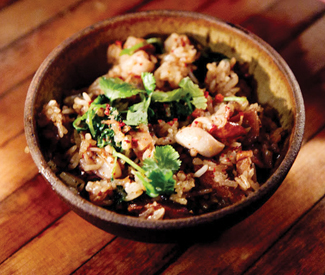
Best dish: Easy… wild nettle fried rice ($9) interlaced with Monterey Bay squid and Llano Seco pork is as comforting as it is gourmet. Best suited for: The joyous convergence of ramen and Japanese whiskey — and for those with time on their hands.

5812 College Ave., Oakl. (510) 788-6370, www.ramenshop.com


ROKU

Since JapaCurry’s Jay Hamada opened Roku in October at the busy Market and Octavia intersection, it’s been imilarly bustling inside. Groups of friends down Japanese beer and fried chicken in the form of karaage ($7) or chicken nan ban ($8), the latter a specialty of Kyushu, Hamada’s Southern Japanese hometown island. Unframed vintage Japanese posters hanging on wood walls impart a warm atmosphere, as do hearty house-made noodles and dishes like mochi bacon yakitori.

During opening weeks, I went straight for dishes I’ve never tried, including shio-kara ($4): room temperature, fermented squid swimming in its own innards. Salty and gummy, it is, as the menu states,”an acquired taste.” Likewise, hotate butter ($12) topped with vivid orange tobiko (fish roe) is unexpected. Scallops are sautéed in butter, but unlike most of our Westernized experiences with the succulent bivalve, the stomach and membrane skirt are left around the scallop flesh. Call it umami, call it funky, the taste is more accurately both. Look elsewhere for better well-known izakaya favorites — Roku’s rare dishes with bold flavor make it interesting.

Best dish: a surprisingly good seafood salad ($13) in an izakaya, laden with red king crab and smoked salmon, tobiko, boiled eggs, yellow bell pepper, and tomatoes over romaine, bright in a yuzu wasabi dressing. Best suited for: The hardcore who want authentic dishes they won’t find on typical menus. Also for groups of friends.

1819 Market, SF. (415) 861-6500, www.rokusf.com

Subscribe to Virgina’s twice-monthly newsletter, The Perfect Spot, www.theperfectspotsf.com


Alerts

0

THURSDAY 17

Refugee Hotel

Contemporary Jewish Museum, 736 Mission, SF. 6:30-8pm. Join photographer Jim Goldberg, photographer Gabriele Stabile, and journalist Juliet Linderman for a discussion about Refugee Hotel, a collection of photography and interviews documenting the arrival of refugees to the United States. Hosted by Voice of Witness, a nonprofit book series published by McSweeney’s Books that illuminates contemporary human rights issues. Free before 5pm; admission is $5 after. Advance tickets encouraged. info@thecjm.org; 415.655.7881. If you can’t make the Thursday event, consider dropping by Gallery Carte Blanche (973 Valencia St, SF) Friday/18 at 6 pm, when Voice of Witness will host a talk and book signing for Refugee Hotel, followed by a reception.


SATURDAY 19

Protest Citizens United at Chevron Refinery

March departs Richmond BART station at noon; rally at Chevron Gate 14 (corner of Castro and Chevron Way), 1pm, Richmond. Chevron is widely known in these parts for letting loose a toxic plume of smoke that blackened skies last year when the refinery caught fire. What you may not have heard is that the oil behemoth also bears the distinction of being the single-largest contributor to a so-called Super PAC (for the GOP, naturally) since the Citizens United decision. On the third anniversary of the Supreme Court’s notorious ruling, which opened the floodgates to skyrocketing corporate contributions to political campaigns, activists are planning a march and rally outside the Chevron Oil Refinery. Live music from the Brass Liberation Orchestra will accompany the 2.5-mile walk, local activists and community leaders will speak at the rally.


MONDAY 21

Fracking in California

Gazebo Room, CPMC Davies Campus, 45 Castro Street, SF. 7-9 p.m. Fracking, or hydraulic fracturing, is an environmentally damaging oil and gas–drilling technique that involves injecting high volumes of pressurized water, sand and toxic chemicals deep into the earth. It’s already taking place in nine California counties, according the Center for Biological Diversity. TransitionSF will host a free presentation on fracking with speakers Rose Braz, Climate Campaign Director of the Center for Biological Diversity; and Adam Scow, California Campaigns Director for Food & Water Watch. The talk will cover the environmental effects of fracking and offer ideas on how environmentalists can take action against it. Free.


No Oscar for the guv’s budget

4

OPINION Given that Gov. Jerry Brown put out his proposed budget the same day that Oscar nominations came out, it’s tempting to make some comparisons.

Brown’s budget, like the nominated musical “Les Misérables,” has plenty of numbers, and will make some people cry.

But I take the new budget seriously, the same as every budget I’ve seen since I got to Sacramento. Unlike most of the recent budgets, this one doesn’t feature a big deficit. Give the Governor some credit for that, but let’s look at how he’s done it. Not all of it is pretty.

To start with, education gets a boost. That’s clearly what California’s voters wanted when they passed Proposition 30 in November. The budget will give more generous increases to the school districts that have more education challenges, and it boosts funding for higher education. We can cheer that.

It also funds the next steps for implementing federal health care reform. That bodes well for efforts to make sure all Americans and all Californians are insured. Under ideal circumstances, of course, we’d be talking about single payer.

There are other, less cheerful things in our future.

There’s an across-the board 20 percent cut to In-home Health Supportive Services beginning in November. This comes from an odd “optimistic” assumption from the governor that the courts that kept him from making those cuts earlier will let him do it now.

Child care funding is flat, which would be tolerable if it weren’t for past cuts. It’s hard to find a better investment in our state than child care. Kids in good child-care programs do better when they get to school. Child care allows more people to work and attend job training. Restoring child-care funding is critical for the state.

Keeping CalWORKS benefits at half of what they used to be is similarly shortsighted, as are cuts to the AIDS Drug Assistance Program, reductions in Medi-Cal provider rates and funding changes for students in higher education.

While preaching austerity, Brown keeps pouring money into a prison system that needs more reform. Sentencing and release programs could be altered to reduce the need for overstuffing prisons without risk to Californians. Overcrowding continues, with one women’s prison in the Central Valley at 180 percent of capacity. This is not stewardship that inspires confidence.

Prison programs to help people beat drug addictions and find jobs when they come out are gone. We are missing a chance for long-term reductions based on rehabilitation. Instead we continue to shuffle bodies around.

Spending choices are not the only problem. The governor skipped some ways of boosting revenue. What about the rules surrounding Proposition 13? Local jurisdictions would benefit from closing loopholes that allow corporations to avoid reassessment when property changes ownership.

I also want discussion of an oil severance tax. Here in the Bay Area — in Richmond and San Bruno — we’ve seen and lived with major downsides of the energy industry. I think it’s time that the oil producers who continue to make big profits pay a tax for the oil that’s taken out of California.

You can see that the Governor’s “director’s cut” budget doesn’t deserve a little gold statue — even if it is the best picture (fiscally) we’ve seen in a few years. We’ll look for silver linings when the Legislature starts working on our playbook.

Assemblymember Tom Ammiano represents the 13th District.

SFBOS grab bag: Diva Breed, Yee’s jig, delayed Chiu, and more

10

Now that the dust has settled from this week’s San Francisco Board of Supervisors inauguration and presidential vote, I thought I’d return to a few random gems that were still stuck in my notebook, waiting to see the light of day.

Under the heading of There’s a New Diva under the Dome, new D5 Sup. London Breed didn’t wait for the official noon inauguration prescribed by the City Charter to take her oath of office, instead holding a packed event at 10am in the North Light Court, where her oath was administered by a key supporter, Attorney General Kamala Harris.

“I held a swearing in earlier to be able to have a large crowd of supporters,” was how Breed explained it to her colleagues later, and it’s certainly true that attendance at the official event was limited by the size of the room. But it’s equally true that gathering a who’s who list of local power brokers to applaud Breed’s ascendance as a key swing vote sends the signal that she expects to be at the table when the big deals get cut.

President David Chiu, who is also no stranger to political power plays, sounded a tone of humble leadership after maneuvering himself with closed-door negotiations into an unprecedented third consecutive term as president, noting that there is still much more work to do.

In fact, Chiu said he was almost late for Breed’s event because, “my bike light got stolen, the Muni bus was late, and then I had a hard time catching a cab.”

Sup. Eric Mar revisited his reelection race last year with a huge understatement – “In my campaign, I had to do a little more work than my colleagues did.” – noting that he and his supporters overcame an unprecedented $1 million in spending against them: “We sent a strong message that the Richmond District is not for sale and never will be.”

Sup. John Avalos gave credit for his surprisingly easy reelection campaign to a unlikely but deserving source: journalist Chris Roberts, who uncovered evidence that Avalos challenger Leon Chow didn’t really live in the district, which he reported in SF Appeal, forcing Chow to withdraw from the race. Avalos called Roberts “an honorary member of our campaign.”

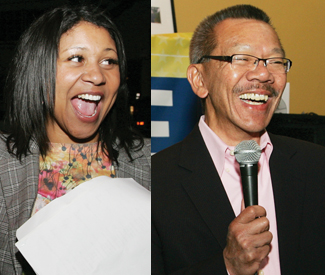
Meetings like this are often just dripping in sanctimony, and this one was no exception, so it was nice to see a moment of genuine child-like exuberance from new D7 Sup. Norman Yee, who at 63 is about twice as old as most of his colleagues. As he thanked supporters and laid out his goals, Yee suddenly seemed overcome by this opportunity, smiling broadly, doing a little jig, and declaring, “Darn, I’m excited!”

I was less impressed by the rambling mini-lecture that Cohen gave on the topic of leadership before she withdrew her nomination as president. “That’s what leadership is about, stepping forward, outside your comfort zone, and doing things,” said the supervisor with a scant legislative record as she quit the race for president before her colleagues were even given the chance to vote on what she said was the importance of having a women of color in charge. “Every person here has that leadership quality within them.”

From both supervisors and the general public, there were also a number of statements made about the history of the board presidency that were not quite right, particularly as it pertained to Cohen and Jane Kim nominating one another for president and the issue women of color being nominated for that slot.

So, for the record, the last time a woman of color (former D10 Sup. Sophie Maxwell) was nominated for board president was 10 years ago. The last time a woman served as president was Barbara Kaufman (1997-99). And the last time there was a woman of color serving as president was Doris Ward, who served from 1991 to mid-1992 when she left to become Assessor. Also, the last three-term president was John Molinari, who served from 1979-83 and ’85-’87.

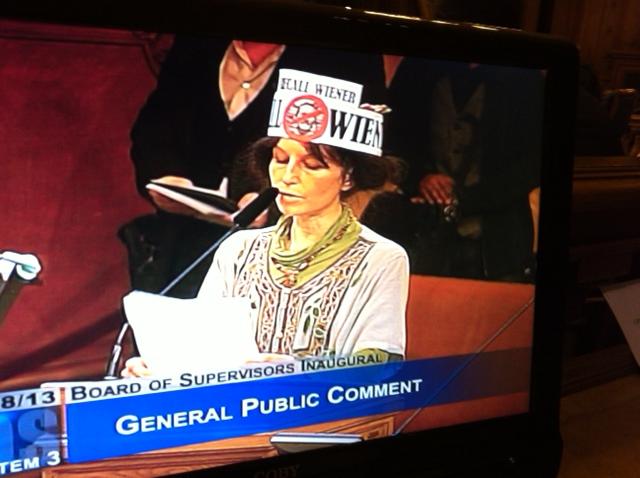
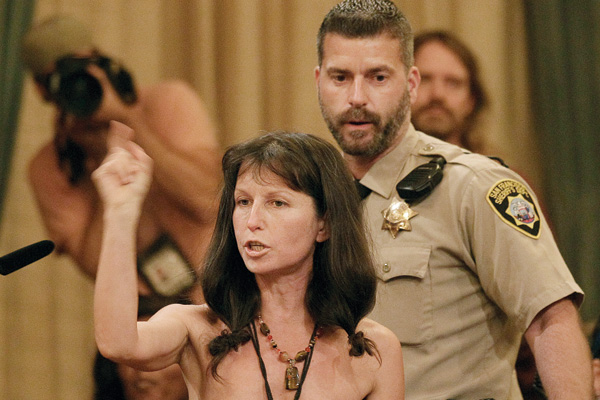
The most colorful moment in public comment was when nudism activist Gypsy Taub came clad in homemade hat that urged people to oppose and recall Sup. Scott Wiener. But because Wiener had already said he wouldn’t accept a nomination as president, she turned her criticism on Chiu, who was also slammed by another leftist speaker who told supervisors, “If you can’t prevent David Chiu from being president, we deserve to be slaves.”

Finally, the meeting included an unremarkable speech by Mayor Ed Lee, who pledged to work with each supervisor and offered this unsupported claim, “We continue to make sure this city is successful for everyone.”

Disappearing poles

5

steve@sfbg.com

Political dynamics on the Board of Supervisors moved into uncertain new territory this week with the inauguration of two new members -– London Breed and Norman Yee –- who break the mold in representing districts that have long been predictable embodiments of opposite ideological poles.

Breed and Yee are both native San Franciscans with deep roots in their respective districts, which they tapped to win hotly contested races against challengers who seemed more closely aligned with the progressive politics of Dist. 5 and the fiscally conservative bent of Dist. 7. Both tell the Guardian that they represent a new approach to politics that is less about ideology and more about compromise and representing the varied concerns of their diverse constituencies.

“I don’t see everything as a compromise, but I want to be sure we find compromises where we can and don’t let personalities get in the way,” said Yee, whose background working in education and facilitating deals as a school board member belies District 7’s history of being represented by firebrand opponents of the progressive movement.

Some of the strongest champions of the pro-tenant, anti-corporate progressive agenda have come from the Haight and Dist. 5, a role that Breed has no intention of playing. “When you talk about the progressives of San Francisco, I don’t know that I fit in that category,” Breed told us. “I’m a consensus builder. I want to get along with people to get what I want.”

Yet what Breed says she wants are housing policies that protect renters and prevent the exodus of African-Americans, and development standards that preserve the traditional character of neighborhoods against corporate homogenization. “I don’t see the difference between my causes and progressive causes,” she said, claiming a strong independence from some of the monied interests that supported her campaign.

We spoke a few days before the Jan. 8 vote for board president (which was scheduled after Guardian press time, and which you can read about at the SFBG.com Politics blog). Neither Yee nor Breed would tip their hands about who they planned to support -– the first potential indication of their willingness to buck their districts’ ideological leanings.

Breed had raised some progressive eyebrows by telling the Guardian and others that she admired moderate Sup. Scott Wiener and would support him for president, but she had backtracked on that by the time we spoke on Jan. 5, telling us, “I’m going into this with an open mind.

“I’m waiting on my colleagues to decide who has the most votes,” Breed said, ing a candid take on valuing compromise over conflict. “I really would like to see us walk into this all together.”

Yee had similar comments. “They’re all competent people and can be leaders, it just depends on where they want to lead us,” he said. “I value people who can work with anyone and see themselves as facilitators more than as dictators.”

Both Breed and Yee come from humble roots that they say give them a good understanding of the needs of the city’s have-nots. Breed was raised in the public housing projects of the Western Addition, an experience that makes her want to solve the current dysfunction in the San Francisco Housing Authority.

“I can’t tell you what needs to be done, but I can tell you something is wrong,” Breed told us. “My goal is to get to the bottom of it and be extremely aggressive about it.”

Yee grew up in Chinatown, his father an immigrant who worked as a janitor, his mother a garment worker. They later lived in the Sunset and the Richmond, and Yee moved into his district’s Westwood Park neighborhood 26 years ago.

When Yee was eight years old, the family saved enough money to open a grocery store at 15th and Noe, and he said that he basically ran the store in his teen years while his father continued working another job.

That was where Yee developed his deep appreciation for the role that small, neighborhood-serving businesses play in San Francisco. In an era before credit cards, he would offer credit lines to local customers struggling to make ends meet; that experience showed him how stores like his family’s were essential parts of the city’s social and economic fabric.

“That’s why I value small businesses,” Yee said, calling that his top focus as a supervisor. “They’re going to have a bigger voice now.”

Yee draws a clear distinction between the interests of small business and that of the larger corporations that dominate the powerful San Francisco Chamber of Commerce. Asked where he might have placed on the Chamber’s recent scorecard ranking supervisors’ votes — where Yee’s predecessor, Sean Elsbernd, got the highest marks — Yee said, “Probably not on their A list. They are just one entity in San Francisco and I’m not going to be judged just by them.”

At 63 years old, Yee is by far the oldest member of the youngest Board of Supervisors in recent memory, while Breed, at 38, is closer to the current average. Yee hopes his age and experience will help him forge compromises among all the supervisors.

“People draw their lines, but I try to listen to people and see where their lines are,” Yee said. “It’s a balancing act, but at the same time, there’s things I’ve been working on all my life, like education and safety net issues, and this district does care about those things. At the same time, they care about their homes. Are these issues in conflict? I don’t think they have to be.”

On the Om Front: Where to breathe deeply this holiday season

0

Do you feel like the world is always about to end? I do. Maybe it’s because we’ve been in a recession almost my entire adulthood. Or because I still remember everyone stocking up on toilet paper and batteries for Y2K. Or because it seems these days like there is always a natural disaster happening somewhere in the world, and if a hurricane or tornado or tsunami isn’t tearing apart a city or a village, some crazy dude is shooting people or devising a shoe bomb or proselytizing that everyone is going to hell in a hand basket lest we give up our immoral ways and fast.

But I have hope. Because dark cannot exist without light. And often, the darker things get, the lighter they’re bound to become. 

Just look at the cycles of the planet. This week, we are approaching the darkest day of the year. And what happens after the darkest day of the year? It gets lighter. This is the way our planet rolls.

So, sure, if you want to get all nihilistic, you can certainly think of these as apocalyptic times. But yogis all over the world are actually juiced about the end of this era. We hope it means the end of the self-centered society, and the beginning of a more unified, global awareness. Conscious conspirators are doing all kinds of things to bring light into our dark world. Recently a group of people came together to create UNIFY, a movement to unite people across cultures all over the world.

One UNIFY event is right here in San Francisco on Fri/21. It’s a flash meditation mob at Union Square that synchs up with meditation mobs throughout the planet (details below). Imagine thousands of people meditating all over the world — from Giza, Egypt to Jerusalem to Times Square — at the same time. If that doesn’t create cosmic shift, I don’t know what will.

I’m going to Union Square to join the crowds and meditate amongst my people. But if you can’t, you can still close your eyes and send good mojo out to the world Friday at noon. We can clean this mess up — but everyone’s got to get some hands dirty and say a prayer. That prayer can be to a deity or a child or a tree, but say it, and say it like you mean it.

In the meantime, check out our short holiday class list below for some of the yoga hot spots for solstice, Christmas, and New Year’s. And remember: It can be tempting to shop, overeat, and weep on your sofa as the days whittle down to their shortest. But if you find yourself in this unfortunate dilemma, pause, click your heels three times, and get thee to the yoga mat. Om.

>>SOLSTICE EVENTS

MC Yogi at Open Secret

Join MC Yogi and The Sacred Sound Society for an evening of light and sound to celebrate the end of an era, and the beginning of a new one, hip-hop yoga style.

Fri/21, 5-7pm vegan feast, 8-9:30pm concert, $15. Open Secret Bookstore, 923 C St., San Rafael. www.opensecretbookstore.com

Winter Solstice Celebration For The Turning Of The Mayan Calendar

Drum-in, sing-in, chant-in, dance-in, and ring-in the new millennium with Daniel Paul and Gina Sala. This sacred ceremony will include taiko drumming, ecstatic kirtan singing and tabla drumming and dancing.

Fri/21, doors open at 6:30pm, program at 7pm, $15 in advance/$20 at door. Nexxus Post Industrial Temple, Craneway Pavilion, 1414 Harbour Way, Richmond. www.ginasala.com

UNIFY Med Mob

Head to Union Square for a globally synchronized flash mob meditation at noon, a part of the worldwide UNIFY movement. People all over the planet will be meditating at the same time to usher in peace and unity for the new era. Bring a blanket and a big dose of zen—it’s going to be packed!

Fri/21, noon, free. Union Square, SF. www.unify.org

>>CHRISTMAS YOGA CLASSES

Hot Vinyasa

Get your sweat on before holidazing in this steamy, fun celebratory class with Brad.

Tue/25, 11am, donations suggested. Urban Flow, 1543 Mission, SF. www.urbanflowsf.com

Hatha Flow

Groove with a mindful, strong flow class with Om Front writer Karen Macklin, and prepare your body and soul for a conscious Christmas Day.

Tue/25, 10:15am, $19 or class card. Yoga Garden, 286 Divisadero, SF. www.yogagardensf.com

>>NEW YEAR’S EVE EVENTS

New Year’s Eve Yoga Celebration & Groove Party

Mark Morford and DJ Eric Monkhouse lead this awesome night of Vinyasa yoga, music, and celebration. Two hours of deep flowing yoga practice, intention-setting, and partying. Yeah.

Dec. 31, 10pm-midnight, $35. Yoga Tree Castro, 97 Collingswood, SF. www.yogatreesf.com

New Years Eve Sacred Celebration

Get down with Jasmine and Astrud of Laughing Lotus, in this celebration of yoga, chanting, music, and dancing.

Dec. 31, 9:30pm-11:55pm, $20. Laughing Lotus, 3271 16th St., SF. sf.laughinglotus.com

>>NEW YEAR’S DAY EVENTS

Iyengar New Year’s Day Class

Join Nora Burnett for an auspicious beginning to the New Year in this annual class of active and restorative poses. After class, chai and light snacks will be served.

Jan. 1, noon-2pm, $40-$50. Iyengar Institute, 2404 27th Ave., SF. www.iyisf.org

Stepping Forward With Purpose

What do you want from your life right now? Make clear intentions for the New Year in this two-hour practice with Darcy Lyon that weaves together asana, meditation, and creative exploration.

Jan. 1, 10am-noon, $25. Yoga Tree Hayes Valley, 519 Hayes, SF. www.yogatreesf.com

San Francisco’s slippery slope is chafing

71

By Nato Green

This week, the San Francisco Board of Supervisors passed a ban on public nudity on a party line vote. By “party line,” I mean the Supes voting against nudity are the ones who never go to parties with lines of coke or conga lines. I’m not saying every single one of the progressive supervisors could be found in the naked suntan lotion massage yurt at Burning Man, just that it’s conceivable.

The ban was proposed by District 8 Supervisor Scott Wiener, and supported by the “moderates,” who are Very Serious about sensible governance. First of all, anyone who ever made fun of Supervisor Eric Mar’s happy meal ban owes him an apology. Second, obviously all other problems in the City have been solved, which has freed up the Supes to kowtow to the whims of the gayeoisie.

People are worried about the effects of aggressive nudity on children, but fortunately we’ve gentrified all the families out of the City. Now we’ll have to export nudists to Solano County if we want kids subjected to them. At any rate, during a nippy San Francisco winter it’s vitally important for children to learn about shrinkage.

Nudity doesn’t necessarily harm children. I grew up in San Francisco. In the ’70s. Naked people were everywhere, bare and unshaven. I didn’t see a fully-clothed adult until I was nine. I didn’t see nakedness as sexual, so much as simply covered in naked. Partly because then, as now, the specific naked people were not easy on the eyes. Not to promote normative body images, but if Christina Hendricks and Ryan Gosling showed up naked, the ensuing celebration by all sexualities would make the Giants Victory Parade look like a tupperware party.

Worst of all, nudity was banned in the Castro. If there’s one neighborhood that arguably draws its spirit from the brandishing of genitalia, it’s the Castro. Harvey Milk did not march so his grandchildren could sequester the penis. It’s almost as if the City wanted to abolish hippies sitting on the sidewalk in the Haight-Ashbury. (Damn you, sit/lie.)

If we’re going to ban sitting on the sidewalk in the Haight and nudity in the Castro, here are more options for possible legislation to achieve the goal of draining our neighborhoods of their distinguishing features.

We should also ban:

  1. Bernal Heights—dykes with dogs.

  2. Mission—fixed-gear bicycles, ironic mustaches, and salvadoreños.

  3. Marina—entitlement.

  4. Richmond—Irish pubs with actual Irish people.

  5. Noe Valley—strollers and handmade baby food.

  6. Western Addition—Black people. Whoops. Too late.

Comedian Nato Green (writer for “Totally Biased with W. Kamau Bell” on FX) headlines the San Francisco Punchline December 19 and 20. Tweet him @natogreen

The Performant: Talk Lobster

0

Killing My Lobster sends up San Francisco

“Funny can mean different things to different people.” Perhaps no tagline better describes the fluctuations of sketch comedy than that of veteran gagsters Killing My Lobster. And they should know, since they’ve been dishing up their irreverent brand of short-attention span comedy since 1997. Even if, as a performance format, sketch comedy isn’t really your thing, the variables built into its basic equation — rotating writers and cast members, wacky themes, and the unique juxtaposition of the ludicrous with the everyday — ensure that, like the weather, if you don’t like something, just wait 10 minutes, and you will probably be rewarded with something you do.

The blink-and-you-missed-it one-night run on Saturday of “Killing My Lobster Takes it to the Streets,” at Stagewerx naturally included the weather in their microhood-specific roundup of familiar, Bay Area moments.

Fog, of course, and even the sun (in the East Bay, natch) got referenced in sketches which ranged topically from botched muggings and marauding food trucks to a series of wildly ineffectual 911 dispatch calls and a night in the life of a drug-loving cabdriver. Using San Francisco as their canvas, the Lobsters created a humorous collage of snapshots of city living, in a city that takes making fun of itself more seriously than most.

Opening with a brief spate of beat-boxing from Tommy Shephed aka Soulati of Felonious, (whose creative partner Dan Wolf directed the show), the first sketch featured the aforementioned mugging. A menacing Brian Allen tried to divest a pair of yupsters of their cash only to have them snort derisively that they don’t carry “money” and obnoxiously compare his mugging skills to that of robbers past, until he was forced to flee out of shame for his poor performance. The obligatory roommates from hell trope got a ribald twist in the form of an orgy, and a flashback to the birth of MUNI gave insight as to why the Richmond District has been deprived of metro lines for all these years. 

Other highlights included a tearful wake being held for an amiable youth, Cody (Anthony Tupasi), who, it turns out, wasn’t dead at all, but might as well be, since he moved to the East Bay, a video of clip-board zombies soliciting donations on 18th Street, a retro-hipster faceoff which included the best line of the evening “I want to have your babies so we can watch them die of cholera,” and a visit to Blue Toad Farm which included the second-best line of the evening: “This is a locally-grown, artisanal, heirloom carrot root.” Maybe you had to be there.

Which brings us right back to that tagline. Humor is so highly subjective that conveying it adequately, sight-unseen, can be a tricky business, and it’s precisely why seeing it live is so important. Fortunately, this is a lesson that KML fans seem to have fully absorbed as the house was packed despite the torrential downpour. And happily this is a lesson that KML seems willing to teach often, the only real question being, what sacred cows will these Lobsters skewer next?  


SFBG TV: Dinner with Cassava

0

“This place just sort of fell into our lap” says Yuka Ioroi, who opened the Richmond neighborhood’s Cassava Cafe and Restaurant earlier this year with husband Kristoffer. “We always wanted to have our own restaurant, but also wanted to start small with a cafe. So we thought, why not just serve a limited-seating dinner?”With Kris’s culinary knowledge, and Yuka’s eye for aesthetics, this small space in the Richmond is a treat, embellished with flowers, delectable foods. It’s a great space for community — you feel right at home here.

I was lucky enough to film a recent, one-off dinner the couple put together. The footage gives you a taste of their culinary chops, and will probably make you hungry regardless of any recently-finished holiday meal.

Not in the mood for dinner? During the day the cafe offers Ritual coffee, toasted sandwiches, pastries, and dishes that showcase Kris’s range of culinary talents. All ingredients either home-made or local.

Cassava Cafe and Restaurant

3519 Balboa, SF

(415) 640-8990

www.cassavasf.com

Mar jubilant at early returns

5

The first precinct reports are coming in — just a few — and they share Sup. Eric Mar holding and even expanding his lead in District 1. Too early to call it, but Mar is jubilant and so are his supporters. Joe Fitzgerald send this report:

If there was a loud and clear message from the Eric Mar supporters at his election party, it was that realtors and rent-control opponents can’t keep a good progressive down.

“We’re going to kick their ass,” said Mar. “We’re going to show that the anti-rent control, realtors and big business people downtown can’t do this again.”

Mar was talking about the barrage of hit mailers that have attacked him relentlessly in the past few weeks.

The residents themselves were fed up with it.

“I like to use two bags to recycle all this shit,” Brian Hudgins, a novelist from the neighborhood told us. He was amazed by how Lee, an obvious moderate, targeted his liberal, progressive apartment complex.

“The mailers turned people off,” Mar said.

Norman Ten is an ardent Mar supporter. Wearing his blue “Eric Mar for Supervisor” shirt, he said that as a scientist, he looks at the facts when he votes.

“That David Lee guy had offices and headquarters over on Post street. Now that’s not even in the Richmond, now is it?” he said.

Chris Daly, the fiery progressive ex-supervisor even made an appearance at Mar’s party. He saw this election as a particularly blatant attack on progressives.

“Its just like my 2006 race,” he said. “But when progressive San Francisco is united, we win.”