Planning

Stretch out

3

culture@sfbg.com

On the Om Front The days are getting longer. The college kids who live next door are throwing parties seven nights a week instead of the usual four. Your dog is asking to be walked so early in the morning that you’re not certain you’ve ever actually gone to sleep. It’s summertime! And it’s the perfect time to get out of town for a few days, and do what yogis (and defeated armies) do best: retreat.

Yoga and meditation retreats can take many forms. They can be active and playful (think Acro Yoga on the Yuba River) or tranquil and introspective (like a silent meditation retreat in Santa Cruz). The Bay Area is a prime launch pad for a whole range of extro- and introverted magical adventures that will stretch your body and your mind into dimensions you never knew existed.

Of course the hardest part about planning a retreat or festival getaway is actually planning it. So, here’s a little help for you. Now, all you need to do is whip out your smart phone or old-school paper calendar, flag the summer days on which you’ll say a temporary sayonara to the daily grind, and book it. See you on the flip side.


ACRO YOGA AND YUBA RIVER

You’ve seen those brightly dressed yogis in Dolores Park on summer Sundays balancing on slack lines and doing crazy partner acrobatic tricks. Learn how to do what they do on this high-energy retreat in Nevada City, led by Jason and Chelsey Magness of the YogaSlackers. Retreat includes all-levels training in Acro Yoga and slacklining plus plenty of time on the river.

June 20-23, $400. Nevada City, CA. www.yogaslackers.com


AS-ONE-WE-FLOW RIVER RETREAT

This “Interdepen-dance” retreat, run by River Guidess, will blow your July 4th out of the water. It features yoga, ecstatic dance, seven miles of mellow rafting (all gear provided), deluxe camping accommodations, organic meals, and live music. The Stanislaus river is so otherworldly that you may start dreaming in an alien language. And the best part: no wetsuits required.

July 4-7, $395–$475, Oakdale, CA. www.riverguidess.com/july-4-2013/


YOSEMITE YOGA

The towering mountains of Yosemite are just a hop, skip, and car ride away, but we city-dwellers rarely make it over there. Toss your yoga mat and some hiking shoes into your backseat, and head for the (really big) hills with Back to Earth’s annual Yosemite Yoga trip. Each day includes guided hiking to gorgeous spots, yoga classes, Thai Massage, delicious meals, campfires, and swimming in local creeks.

July 10-July 14, $675. Yosemite, CA. www.backtoearth.org/trips/yosemite-yoga


WANDERLUST

This is pretty much the hottest local-ish yoga festival of the year. Featuring a panoply of talent, this Lake Tahoe event includes world-class yoga instructors (including several Bay Area teachers like Janet Stone and Pete Guinosso) and like-minded musical artists like Moby, Grammatik, DJ Drez, and The Shimmy Sisters. Oh, and jaw-dropping vistas of Lake Tahoe.

July 18-21, $125–$475. Squaw Valley, North Lake Tahoe, CA. squaw.wanderlustfestival.com


SECOND ANNUAL YOGA ESCAPE

If you’re down for something mellower and more introspective, this Cazadero retreat with Danae Robinett offers yoga, delicious food, and deluxe accommodation amongst redwood trees and wandering wild turkeys. You’ll also get to experience Shake Your Asana, Robinett’s unique combo of yoga and rump-shaking.

July 25-28, $650. Cazadero, CA. www.smore.com/2t0b


INTRODUCTION TO MINDFULNESS MEDITATION RETREAT

Looking to shift your perspective on life for more than just a weekend? Try this introductory silent meditation (and Qi Gong) retreat at the Insight Retreat Center in Santa Cruz. Silent retreats give us the opportunity to look at our thoughts and patterns so that we can start shifting them to better our lives. The insights gained on a silent retreat are well worth corking your pie hole for a few days. You may not even want to talk again when you return. Donation-based.

August 15 to 18, free ($100 refunded deposit). Santa Cruz, CA. www.insightretreatcenter.org


DEEP RESTORATION, DEEP HEALING: ZEN MIND, YOGA BODY RETREAT

If relaxation is on your agenda (and not the kind that requires a cocktail), head to Tassajara, a Zen Buddhist retreat center in Carmel Valley. In this retreat, teachers Samantha Ostergaard and Do-On Robert Thomas will combine Restorative Yoga (an effortless, passive yoga practice) and Zen meditation techniques to create a feeling of calm in the body and mind.

August 22-25, $240, Carmel, CA. www.sfzc.org/tassajara


BHAKTI FEST

Indian chanting or “kirtan” is a juicy part of yoga practice for lots of folks, and this festival is the ultimate event to get your kirtan on. Located in Joshua Tree (close to the state park, but not in it), the festival offers four days of music with bands performing on two different stages all day and night, as well as a mad plethora of yoga classes. Hot desert nights plus divine tunes equals a personal favorite of mine.

September 5-8, $200–$400 plus camping fee. Joshua Tree, CA. www.bhaktifest.com


Alerts

0

WEDNESDAY 12

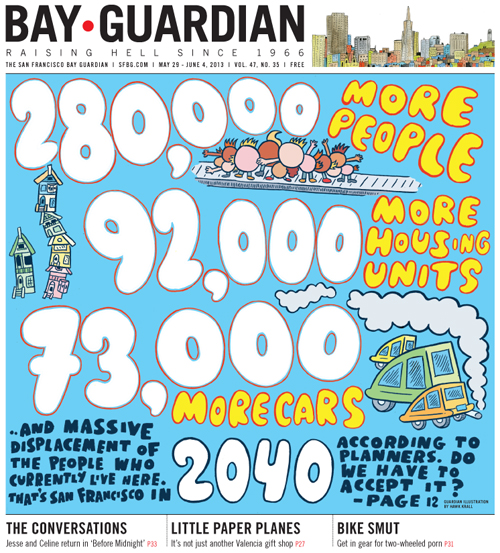
Whose future? Community forum LGBT Community Center, 1800 Market, SF. sfbg.com, ccho@sfic-409.org. 6-8pm, free. In July, the Bay’s Regional governing body is scheduled to approve a state-mandated plan aimed at reducing carbon-emissions that proposes to put 280,000 more people, 92,000 new housing units, 100,000 new jobs (and 73,000 more cars) into SF over the next 30 years. By the proposed Plan’s own assessment: it will increase the risk of neighborhood disruption and displacement of existing residents and businesses, especially among the city’s working class communities. What can we do about it? Join Tim Redmond, San Francisco Bay Guardian; Mike Casey, Unite HERE Local 2; Cindy Wu, San Francisco Planning Commissioner; Maria Zamudio, Causa Justa: Just Cause; and others for this important panel discussion.

THURSDAY 13

Raising the Roof for Renters 111 Minna Gallery, 111 Minna, SF. tenantstogether.org/raisingtheroof2013. 6pm, $30 in advance/ $40 at the door. Tenants are hurting right now, so show your support by attending this fundraiser for Tenants Together — California’s statewide organization for renters’ rights. Celebrate five years of mobilizing tenants statewide for housing justice. Featuring a silent auction, fantastic food, and a cash bar.

SUNDAY 16

Teach-in: class struggle in Turkey Niebyl Proctor Marxist Library, 6501 Telegraph Ave., Oakl. (510) 428-1578. 10:30am-12:30 p.m., free with donation requested. On May 31, without warning, Turkey erupted. For the first time in recent history, women, students, workers, artists, youth, Kurds, Artists, Turks, gays-lesbians, Alevites, doctors, small merchants, environmentalists, unions and progressive associations rose up together. Mehmet Bayram, a long time journalist and Bay Area activist from Turkey, will report on the developments that led to the events and the aftermath. A discussion of politics and class struggle in Turkey will follow.

THURSDAY 20

Rally and protest against Keystone XL Battery East, below Golden Gate Bridge Visitor Center, SF. tinyurl.com/mf6m2ef. Noon, free. Join Bill McKibben of 350.org for a noon rally against the Keystone XL pipeline, followed by a march across the Golden Gate Bridge. This time, environmentalists seeking to halt this major oil infrastructure project will be joined by National Nurses United, who are organizing a day of action in the city against austerity and the Keystone XL.

Developers should pay — on time

7

OPINION San Francisco used to be an eclectic city, filled with working class folks, people of color, lots of artists, and families. But that’s changed dramatically. The black population has dismally plummeted, to 6.3 percent, according to the most recent census. Families of color are streaming out, expensive condos and sky-high rentals are shooting up, and the unique mix that once was the city and made it such a diverse and culturally rich place to live and thrive is changing.

Three years ago, then-Mayor Gavin Newsom decided that private developers in San Francisco needed a local stimulus boost. The housing bubble had burst and taken the economy down with it, but Newsom wanted to ensure that private development in the city continued. So he proposed that private developers be allowed to defer paying the neighborhood impact fees on their projects, thus delaying funding for safety-net programs that help existing residents of working class neighborhoods fight displacement.

His proposal passed in 2010, and since then the Eastern Neighborhoods, SoMa, and the Octavia/Market Area have seen an upswing in private development projects coupled with rising eviction rates and housing costs, while affordable housing throughout the city becomes harder and harder to find. Because neighborhood impact fees were deferred services that would help vulnerable populations were underfunded by a total of almost $53.5 million — in 2011-2012 alone.

That lost money impacted affordable housing construction, affordable child care, development of parks and other types of open spaces, infrastructure and pedestrian-safety measures, neighborhood schools and libraries, and eviction prevention services.

Meanwhile, out-of-town private development companies are set to make millions of dollars building high-end rental units and luxury condominiums that the average San Franciscan can’t afford.

Given that private market-rate residential development in San Francisco is speeding up regardless of displacement dangers, it’s even more necessary today to strengthen and sharpen the tools our neighborhoods have for fighting displacement.

A longstanding question for San Francisco has been how to keep it from becoming a place where only the very wealthy can afford to live while the rest of us have to commute in to the city that we work in and love. Now as we field off another local housing boom fueled by speculation, we are faced again with needing to ensure that we prioritize San Franciscans over profit.

That’s why tenant groups, affordable housing advocates, and San Franciscans fighting for the right to stay in their city will be urging the Planning Commission to end the fee deferrals. The Planning Department staff has studied the issue and recommends that the Newsom program be allowed to expire; that would bring back the funds needed to invest in the vitality and vibrancy of our neighborhoods.

Come join us in helping get San Francisco’s priorities back on track at the Planning Commission meeting Thursday June 13th at 12pm in room 200 of City Hall. Private development is not worth more than the well being of working class communities, immigrants, families, LGBTQ, and tenant communities.

Maria Zamudio is a housing rights organizer for Causa Justa: Just Cause

8 Washington and the Warriors

16

I won’t be a bit surprised if the Warriors start putting money behind Simon Snellgrove’s efforts to win ballot approval for his 8 Washington condo project. And it won’t be just because of general developer solidarity. And I don’t think the basketball team owners are counting on a lot of fans living just down the Embarcadero — odds are a lot of the people who buy Snellgrove’s ultra-luxury condos won’t live in San Francisco much of the time anyway.

No: What the Warriors realize is that the fate of their arena could be linked to the fate of the height-limit battle on Snellgrove’s lot.

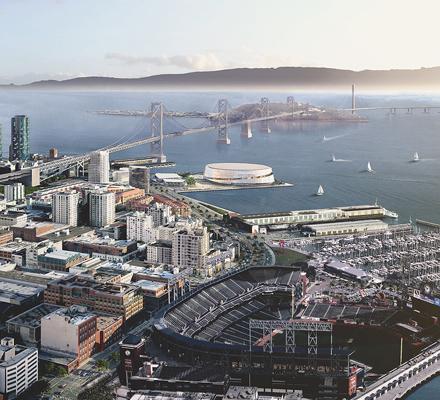
The mayor has called the Warriors Arena his legacy project. The head of the Planning Commission says it’s a done deal. Despite the screwy financing and the serious problems with traffic and transit, this thing is moving forward through official San Francisco on greased skids.

But given the way things work in this city, it’s almost certain that the arena will wind up on the ballot. Either the Warriors will organize an initiative campaign to put it before the voters, or the opponents will. And in this case, both sides will have money — the neighbors who don’t want the project are a relatively well-off bunch.

It’s too late for anything to happen for the Warriors this fall, which means a likely battle in November, 2014. But the voters this fall may very well reject the condo towers, and if they do, it will likely hinge on the notion that San Francisco has historically reduced height limits near the Bay. Polls show most voters don’t want tall buildings on the waterfront. And a strong vote to reinforce that would have impacts for any future projects.

“If 8 Washington goes down,” former Mayor Art Agnos, who opposes both projects, told me, “then the people will have spoken out about big buildings on the waterfront, and the Warriors will be in trouble.”

Remember: The arena is only one piece of the Warriors’ project. There’s also a shopping mall, hotel and highrise housing planned for the area — and without the highrise on Seawall Lot 333, the arena doesn’t pencil out. So you can love the idea of a big ol’ flying saucer thingy on a concrete pad four times the size of Union Square sitting on the edge of the Bay and still not like the idea of (once again) spot-zoning a waterfront lot for high-end condos that will block people’s views.

If I were opposed to the arena, I’d be reaching out to the folks fighting Snellgrove and throwing some cash their way. Because this is the first in a series of battles over the use of waterfront land, and its importance goes far beyond 134 condo units.

Supervisors pose tough but important questions to Mayor Lee

6

There’s a full agenda at the San Francisco Board of Supervisors meeting today, from the condo conversion lottery bypass legislation to approval of the term sheet from the massive development project at Pier 70, but some of the most interesting and potentially newsworthy items are at the very beginning of the agenda, when Mayor Ed Lee will answer questions posed by the supervisors.

Unfortunately, if past is prologue, Lee won’t give direct, substantive answers to the vitally important questions that he’s being asked, just as he dodged a question on the condo conversion debate in February and has kept everyone in the dark of which of the rival measures he supports and which he may veto. Mayoral leadership was desperately needed on that protracted debate, just as it’s needed today on some of the questions he’s being asked.

The first question, posed by Sup. Eric Mar, concerns Plan Bay Area and how it plans to pack 280,000 more people into San Francisco by 2040, which was the subject of a May 28 Bay Guardian cover story and panel dicussion that we’re sponsoring at the LGBT Center tomorrow night.

Mar lays out the massive displacement of existing residents and the traffic gridlock that the plan will create in San Francisco and how the approval process from much of this streamlined development may be given waivers from California Environmental Quality Act review.

Mar notes more than 40 regional groups have come together to try to improve the plan and mitigate its damage, and he plans to ask Lee:

“A consensus has formed around the following recommendations for making Plan Bay Area better:

– Provide $3 billion in additional operating revenue for local transit service and commit to a long-range ‘Regional Transit Operating Program’ to boost transit operating subsidies by another $9 billion over the coming years.

– Move 5 percent of the housing growth from low-income communities (mainly San Francisco, Oakland, and San Jose) to transit-connected suburban job centers.

– Incorporate strong anti-displacement policies for community stabilization measures, such as land banking and preservation of affordable housing in at-risk neighborhoods.

– Director the Planning Department to analyze the impacts of potential CEQA streamling as soon as possible and create strong mitigation measures.

Do you support these measure, and are you committed to a plan with lower displacement level than the current proposal? If you do not support these ideas, why not?”

Excellent  question, and definitely an appropriate one for our chief executive officer, who would have more clout to push for these changes than any of the supervisors.

The second question comes from Board President David Chiu, who makes news by noting that Mayor Lee has continued his predecessor’s underhanded practice of refusing to fill city positions to provide services that the supervisors have decided to fund in the budget, undermining the city’s balance of power and Lee’s rhetoric on collaboration.

“In recent months, Controller data indicates that positions allocated by the Board for librarians, recreation and park staff, building inspection, health and labor enforcement, urban agriculture and other Board priorities were either not filled or only recently hired. Will you commit to ensuring that when the FY 13-14 budget is approved, our Board of Supervisors’ priorities are treated equally to your Administration’s, with positions filled as soon as possible?”

Again, great question about an important current issue, the kind of thing that voters created this question time for, to ensure that there was communication and collaboration between these two branches of government.

The last two questions concern San Francisco’s housing crisis. Sup. David Campos cites the scatching report that he commissioned from the Budget and Legislative Analyst on the dysfunctional and mordibund Housing Authority, which Lee controls, asking “what is your long term vision to save public housing — a significant public asset to San Francisco?”

Sup. John Avalos cites data on the skyrocketing rents in San Francisco and asks, “Are you concerned that your administration’s policies to stimulate economic activity, especially supporting the tech industry, have created one-sided development and only job for high-income ‘appsters,’ and have exacerbated the already extremely limited housing market? Do you have any plans to address the increasing rents, and increasing rate of evictions and displacement of long-time San Francisco renters?”

These are tough questions, but they are central to what kind of city San Francisco is becoming. They were all submitted last week, so the mayor has had time to think about them and he should provide answers and show leadership on these difficult issues. That is his job.

Will he? Check back later and I’ll let you know. The meeting starts at 2pm.

Burning questions

7

steve@sfbg.com

A documentary called Spark: A Burning Man Story is arriving on the big screen, with dreams of wide distribution, at a pivotal moment for the San Francisco-based corporation that has transformed the annual desert festival into a valuable global brand supported by a growing web of interconnected burner collectives around the world.

Is that a coincidence, or is this interesting and visually spectacular (if slightly hagiographic) film at least partially intended to shore up popular support for the leadership of Burning Man as the founders cash out of Black Rock City LLC and supposedly begin to transfer more control to a new nonprofit entity?

Filmed during last year’s ticket fiasco — in which high demand and a flawed lottery system created temporary scarcity that left many essential veteran burners without tickets during the busy preparation season — both the filmmakers and leaders of Burning Man say they needed to trust one another.

After all, technology-entrepreneur-turned-director Steve Brown was given extensive, exclusive access to the sometimes difficult and painful internal discussions about how to deal with that crisis. And if he was looking to make a film about the flawed and dysfunctional leadership of the event — ala Olivier Bonin’s Dust & Illusions — he certainly had plenty of footage to make that storyline work.

But that wasn’t going to happen, not this time — for a few reasons. One, Brown is a Burning Man true believer and relative newbie who took its leaders at face value and didn’t want to delve into the details or criticisms of how the event is managed or who will chart its future. As he told us, that just wasn’t the story he wanted to tell.

“We got trusted by the founders of Burning Man to do this story,” he told us. “They were in the process of going into a nonprofit and they wanted to get their message out into the world.”

Two, Black Rock City LLC needed to sign off on the film for it to be distributed, given that the corporation controls the use of images from the event. “Could Burning Man have prevented us from distributing this film? Yeah, they probably could have,” Brown told us. And during my own experience writing and promoting a book about Burning Man, I learned that its leaders resent criticism and can make or break efforts to promote books or movies to the larger burner community.

Finally, as is increasingly the case with many documentary films, the filmmakers and their subjects are essentially in a partnership. Brown and the LLC’s leaders reluctantly admitted to us that there is a financial arrangement between the two entities and that the LLC will receive revenues from the film, although they wouldn’t discuss details with us.

Chris Weitz, an executive producer on the film, is also on the board of directors of the new nonprofit, The Burning Man Project, along with his wife, Mercedes Martinez. Both were personally appointed by the six members of the LLC’s board to help guide Burning Man into a new era.

Brown insists that these relationships had no influence on the film and that the LLC neither requested nor received any editorial changes. “I made it clear to them that I’m only going to do a film that is completely independent,” Brown said.

And his co-director, Jessie Deeter, is a respected journalist and veteran documentary filmmaker whose strong reputation lured estranged Burning Man co-founder John Law to participate in the film, offering the only real questioning of the event’s leadership (although it focused on the decisions in the late 1990s to continue growing the event, not on its more recent stewardship and questions of relinquishing some control to the larger community).

“I’m fair and I’m really proud of my reputation as a journalist,” Deeter told us, noting how important she thought it was to have Law’s contrarian voice in the film.

Still, both Deeter and Brown are also clear that they believe in the leadership of the event. “I found their intentions to be honorable and positive as they deal with difficult-to-solve problems,” Brown said, while Deeter later told us, “I believe in their intentions.”

More cynical burner veterans may have a few eye-rolling moments with this film and the portrayals of its selfless leadership. While the discussions of the ticket fiasco raised challenging issues within the LLC, its critics came off as angry and unreasonable, as if the new ticket lottery had nothing to do with the temporary, artificial ticket scarcity (which was alleviated by summer’s end and didn’t occur this year under a new and improved distribution system).

And when the film ends by claiming “the organization is transitioning into a nonprofit to ‘gift’ the event back to the community,” it seems to drift from overly sympathetic into downright deceptive, leaving viewers with the impression that the six board members are selflessly relinquishing the tight control they exercise over the event and the culture it has spawned.

Yet our interview with the LLC leadership shows that just isn’t true. If anything, the public portrayals that founder Larry Harvey made two years ago about how this transition would go have been quietly modified to leave these six people in control of Burning Man for the foreseeable future.

CHANGING FOCUS

As altruistic as Spark makes Burning Man’s transition to nonprofit status sound, Harvey made it clear during the April 1, 2011 speech when he announced it that it was driven by internal divisions that almost tore the LLC board apart, largely over how much money departing board members were entitled to.

The corporation’s bylaws capped each board member’s equity at $20,000, a figure Harvey scoffed at as ridiculously low, saying the six board members would decide on larger payouts as part of the transition and they have refused to disclose how much (Sources in the LLC tell me the payouts have already begun. Incidentally, author Katherine Chen claimed in her book Enabling Creative Chaos that the $20,000 cap was set to quell community concerns about the board accumulating equity from everyone else’s efforts, but Harvey now denies that account).

In that speech, Harvey also said the plan was to turn over operation of the Burning Man event to the nonprofit after three years, and then three years later to transfer control over the Burning Man brand and trademarks and to dissolve the LLC (see “The future of Burning Man,” 8/2/11).

Board member Marian Goodell assured us at the time that the LLC would be doing extensive outreach to gather input on what the future leadership of the event and culture should look like: “We’re going to have a conversation with the community.”

But with just a year to go until the event was scheduled to be turned over to the nonprofit board, there has been no substantive transfer, the details of what the leadership structure will look like are murky — and the six board members of Black Rock LLC still deem themselves indispensable leaders of the event and culture.

The filmmakers say that the transition to the nonprofit was one of the things that drew them to the project, but the ticket fiasco came to steal their focus, mostly because the nonprofit narrative was simply too complex and confusing to easily convey on film.

Deeter said they decided to close the film with Law and his questions of whether the event should have been allowed to grow so large. “We insisted on having John Law at the end to counterbalance that idea” of who would be leading the event.

As she said of the transition to a nonprofit: “You know that transition is a really, really complicated thing.”

TRANSITION TIME

Yes, and it’s something that seems to be made even more complicated by Harvey and Goodell, who offered dizzying answers to our questions about how the event and culture will be led going forward. All we can tell at this point is that it’s still a work in progress.

“We’re pretty much on schedule,” Harvey told me, noting that he still hopes to transfer ownership of the event over to the nonprofit next year. “The nonprofit is going well, and then we have to work out the terms of the relationship between the event and the nonprofit. We want the event to be protected from undue meddling and we want it to be a good fit.”

From our conversations, it appears that a new governance structure seems synonymous with the “meddling” they want to avoid.

“We want to make sure the event production has autonomy, so it can water the roads without board members deciding which roads and the number of tickets and how many volunteers,” Goodell said. “We did look at basically plopping the entire thing into the nonprofit, but if you look at what we’re trying to do out in the world, we don’t have any interest in becoming a big, large government agency.”

It was an analogy they returned to a few times: equating a new governance structure with bureaucratic tyranny. They rejected the notion that the new nonprofit would have “control” over the event, even though they want it to have “ownership” of the event.

“You just said the control of the event would be turned over to the nonprofit,” Goodell said.

“No, the ownership,” Harvey added.

“Yeah, there’s a difference,” Goodell said.

That difference seems to involve whether the six current board members would be giving up their control — which she said they are not.

“All six of us plan to stay around. We’re not going off to China to buy a little house along the Mekong River,” Goodell said.

“We want to make sure the event production company has sufficient autonomy, they can function with creating freedom and do what it does best, which is producing the Burning Man event, without being unduly interfered with by the nonprofit organization,” Harvey said.

“That’s why you heard it one way initially, and you’re hearing it slightly differently now, and it could go back again,” Goodell said. “We don’t think it’s sensible, either philosophically or fiscally, to essentially strip away all these entities and take all these employees and plop them in the middle of The Burning Man Project.”

In other words, Black Rock LLC and its six members will apparently still produce the event — and it’s not clear what, exactly, the nonprofit will do.

“We are giving up LLC-based ownership control, we are not giving up the steerage of the culture,” Goodell said. “That we’re not giving up. We’re more necessary now than ever.”

PLAYA AS BACKDROP

There are burners who see things in much simpler terms. Chicken John Rinaldi, the longtime burner and thorn in the LLC’s side, was interviewed for Spark but not included in the film. [CLARIFICATION: Deeter and Rinaldi had one phone conversation “on background,” she says, and both deny that he was “interviewed,” as Deeter had told us]. Rinaldi, Law, and others have repeatedly questioned why the LLC doesn’t create a more inclusive and community-based leadership structure, something that would seem appropriate for an event whose value is derived almost entirely by the volunteer efforts of burners, who acquire no equity in the event even after years of work.

But these aren’t the issues that Spark explores. In following both the leaders of the LLC and storylines involving two different art projects and a theme camp, the filmmakers say the film isn’t really about Burning Man at all, but what it brings out in people.

“This film is about ordinary people following extraordinary dreams,” Brown said at a press screening at the Roxie last month. “Burning Man is the context, but it’s not necessarily what it’s about.”

When I asked Brown about whether he paid the LLC for access and the right to use footage they filmed on the playa — something I know it has demanded of other film and photo projects — Brown paused for almost a full minute before admitting he did.

“We saw it as location fees. We’re making an investment, they’re making an investment,” he said, refusing to provide details of the agreement. “The arrangement we had with Burning Man is similar to the arrangements anyone else has had out there.”

Goodell said the LLC’s standard agreement calls for all filmmakers to either pay a set site fee or a percentage of the profits. “It’s standard in all of the agreements to pay a site fee,” Goodell said, noting that the LLC recently charged Vogue Magazine $150,000 to do a photo shoot during the event.

But the issue of paying subjects is a controversial one in the documentary film world, according to a couple of veteran Bay Area documentary filmmakers we interviewed (one spoke only on background). For documentaries that present themselves as journalism, documentary filmmaker Chris Metzler told us, “The rule is, you don’t pay a subject because it will corrupt the process and authenticity you’re trying to capture.”

That rule has become more of a guideline in recent years, particularly as technological advances have made it easier to become a documentary filmmaker. And even the guideline is a little squishy when it comes to interviewing consultants or powerful people who expect to be compensated for their time, or with wanting to ensure people of limited means can take part in a film’s promotion.

Metzler also said that a financial arrangement can influence a film less than an ideological or cultural affinity. That can be particularly strong in the Burning Man world, as Weitz told us, conceding that most art done on Burning Man ends up being at least a little hagiographic: “I think it’s inevitable whenever anyone writes about or makes a film about Burning Man, because we love it.”

Metzler said he simply doesn’t pay sources, but he also said the determining factor should be, “Does it change what you have access to and how people behave?”

TWO VIEWS

There are at least a couple ways for burner true believers to look at the event, its culture, and its leadership. One is to see Burning Man as a unique and precious gift that has been bestowed on its attendees by Harvey, its wise and selfless founder, and the leadership team he assembled, which he formalized as an LLC in 1997.

That seems to be the dominant viewpoint, based on reactions that I’ve received to past critical coverage (and which I expect to hear again in reaction to this article), and it is the viewpoint of the makers of this film. “They’ve dedicated their lives to creating this platform that allows people to go out and create art,” Brown said.

Another point-of-view is to see Burning Man as the collective, collaborative effort that it claims to be, a DIY experiment conducted by the voluntary efforts of the tens of thousands of people who create the art and culture of Black Rock City from scratch, year after year.

Yes, we should appreciate Harvey and the leaders of the event, and they should get reasonable retirement packages for their years of effort. But they’ve also had some of the coolest jobs in town for a long time, and they now freely travel the world as sort of countercultural gurus, not really working any harder than most San Franciscans.

Should the gratitude we feel toward them really be so much greater than the gratitude they feel toward us, the people who hold fundraisers and make sacrifices and toil for months on end for no compensation to give Burning Man its artistic, cultural, and financial value?

In that sense, it’s the community that has gifted Burning Man to the people who run it. So, as Spark claims, is the LLC really planning to gift it back? We’ll see. As Weitz told me when we discussed that idea and whether it’s really true, “I think everyone wants to live up to that phrase.”

Brown also told us that final phrase might have been a little wishful thinking, or perhaps a prompt for burners: “I wrote that card for the end of the film expressing the intention we heard from the Burning Man founders, but I also wrote it to show that it is a process that is just beginning, and we do not yet know the outcome. My bet is that the community will hold them to it.”

Guardian City Editor Steven T. Jones is the author of The Tribes of Burning Man: How an Experimental City in the Desert is Shaping the New American Counterculture (2011, CCC Publishing).

Ed Lee’s “no social service cuts” budget

6

So Mayor Ed Lee is going to spare social services, and apparently at least part of the Department of Public Heath, from any further budget cuts. That’s good. Lives will be saved.

Lee — like Willie Brown before him — has the luck of serving as mayor during a period of growth, not recession. We don’t know how long the boom is going to last, or what will happen when it ends (as these things always do), but right now, in Sacramento and San Francisco City Hall, there is joy over the fact that revenues are up.

(Lee’s supporters on this blog and elsewhere will say it’s because of the mayor’s “pro-jobs” policies that we have all this new revenue. But remember, he promised tax breaks for Twitter and other tech firms that are moving into mid-Market, so we’re not getting much extra payroll tax revenue there. SF is a disgustingly hot real-estate market right now and more people with more money are moving in, so that’s absolutely a factor. So is the general California recovery.)

Either way, I’m always happy to hear about “no-cuts” budgets. But I have to keep raising the question:

If you’ve already cut about a billion dollars worth of services — which is about what most people on all sides of the political spectrum agree has happened in SF in the past decade — and now you’ve agreed not to cut any more, are you really making progress?

At what point do we need to start planning to restore all the services that are gone?


Guardian event on Plan Bay Area

65

There’s going to be profound change in San Francisco over the next 25 years. If regional planners have their way, we’re talking 280,000 more people — and massive displacement of existing populations. Is that ok? What should we do about it? Is there any alternative, a better way to plan for growth?

I have no problem with increased density and population in San Francisco — but only if we can first protect vulnerable communities. How does that happen? What tools does the city have, and how can they be used?

These aren’t easy questions. Come help us talk about them and look for answers. The Guardian, along with the Council of Community Housing Organizations and Urban IDEA are holding a forum on Plan Bay Area June 12 at 6pm at the LGBT Center. It’s free and open to all.

Among the panelists:

·        Tim Redmond, San Francisco Bay Guardian

·        Mike Casey, Unite HERE Local 2

·        Cindy Wu, San Francisco Planning Commissioner

·        Maria Zamudio, Causa Justa: Just Cause

·        Antonio Diaz, People Organizing to Defend our Economic Rights (PODER)

·        Bob Allen, Urban Habitat

·        Gen Fujioka, Chinatown Community Development Center

·        Peter Cohen, Council of Community Housing Organizations

·        Rachel Brahinsky, University of San Francisco

More information here.

See you there.

Planning for displacement: Short takes

14

Regional planning hits Chinatown

When regional planners at the Metropolitan Transportation Commission funded a study to create a bus-rapid transit system on Van News Avenue, they decided, in the interest of speeding the buses along, to allow only one left turn — onto Broadway.

That would turn Broadway into a much-busier thoroughfare — and have a huge impact on Chinatown, where there’s heavy pedestrian traffic. That, Cindy Wu says, is one of the problems with regional planning — it doesn’t always consider the impacts on existing, fully developed neighborhoods.

Wu is a planner with the Chinatown Community Development Center and a member of San Francisco’s Planning Commission. She’s concerned that Plan Bay Area, with its macro focus, ignores the micro — the people who already live in communities that will feel the pressure.

“Chinatown is performing amazingly,” she told me recently. There’s low car use, high density … all the things ABAG seems to want. And yet, it’s in the Priority Development Area, where new construction could lead to displacement. “It doesn’t get to the neighborhood scale, where people will be forced to control the impacts of growth.”

Gen Fujioka, policy director at CCDC, noted that the plans says people displaced from a San Francisco community like Chinatown can be accommodated elsewhere in the region. “Like that’s an acceptable alternative,” he said.

A (somewhat) better approach

The Draft Environmental Impact Report on Plan Bay Area looked at several alternatives, including doing nothing at all, which everyone pretty much agrees is a bad idea. But interestingly, a proposal put together by community groups, including Public Advocates, Urban Habitat, and TransForm, turned out to do a better job of reaching ABAG’s environmental goals.

In the DEIR models, “Alternative Five,” as it’s described, leads to slightly lower levels of displacement and less car travel. It does that in large part through the imposition of a Vehicle Miles Travelled Tax — a one-cent levy on every mile driven by a private car or light truck in the region.

That, it turns out, does indeed discourage car use. It would also raise more than $600 million a year, most of which would go to public transit and affordable housing. Over 25 years, that’s a lot of cash.

But ABAG planners rejected that proposal, preferring their own alternative.

ABAG and the UN plan for world domination

One of the biggest problems with opposing, or even questioning, ABAG’s Plan Bay Area is that some of the loudest voices against it are, in a word, loony.

Around the Bay Area suburbs, people packing hearings on the plan are talking about the secret United Nations plan to confiscate all private property, burn down suburban homes, and force everyone into tiny cells in teeming cities where our personal freedoms will be systematically destroyed.

You haven’t heard of that? It’s called Agenda 21, and the John Birch Society is convinced that it’s a global plot to destroy America.

Actually, Agenda 21 is a weak, unenforceable document that came out of the UN’s environmental conference in 1992. It suggests — as does SB375, as does just about every sane thinker in civilization — that the world’s growth ought to be planned, sustainable, and energy efficient.

But it’s getting dragged up as grounds to scuttle Plan Bay Area. The black helicopter folks, the Obama Wants To Take My House folks, and a few NIMBYs who just don’t want density in the suburbs, have been wailing about this massive conspiracy in the past few months.

It’s unlikely that the Tea Party types will make common cause with San Francisco progressives on this issue. But there’s a real danger here: If the nut cases get the attention, serious questions about the feasibility of this plan could get lumped in with the ravings of conspiracy kooks.

And as far as the UN taking over California? Hey, at least we’ll get universal health care.

Planning for displacement

70

tredmond@sfbg.com

The intersection of Cesar Chavez and Evans Avenue is a good enough place to start. Face south.

Behind you is Potrero Hill, once a working-class neighborhood (and still home to a public housing project) where homes now sell for way more than a million dollars and rents are out of control. In front, down the hill, is one of the last remaining industrial areas in San Francisco.

Go straight along Evans and you find printing plants, an auto-wrecking yard, and light manufacturing, including a shop that makes flagpoles. Take a right instead on Toland, past the Bonanza restaurant, and you wander through auto-glass repair, lumber yards, plumbing suppliers, warehouses, the city’s produce market — places that the city Planning Department refers to at Production, Distribution, and Repair facilities. Places that still offer blue-collar employment. There aren’t many left anywhere in San Francisco, and it’s amazing that this district has survived.

Cruise around for a while and you’ll see a neighborhood with high home-ownership rates — and high levels of foreclosures. Bayview Hunters Point is home to much of the city’s dwindling African American population, a growing number of Asians, and much higher unemployment rates than the rest of the city.

Now pull up the website of the Association of Bay Area Governments, a well-funded regional planning agency that is working on a state-mandated blueprint for future growth. There’s a map on the site that identifies “priority development area” — in planning lingo, PDAs — places that ABAG, and many believers in so-called smart growth, see as the center of a much-more dense San Francisco, filled with nearly 100,000 more homes and 190,000 new jobs.

Guess what? You’re right in the middle of it.

The southeastern part of the city — along with many of the eastern neighborhoods — is ground zero for massive, radical changes. And it’s not just Bayview Hunters Point; in fact, there’s a great swath of the city, from Chinatown/North Beach to Candlestick Park, where regional planners say there’s space for new apartments and condos, new offices, new communities.

It’s a bold vision, laid out in an airy document called the Plan Bay Area — and it’s about to clash with the facts on the ground. Namely, that there are already people living and working in the path of the new development.

And there’s a high risk that many of them will be displaced; collateral damage in the latest transformation of San Francisco.

CLIMATE CHANGE AND “SMART GROWTH”

The threat of global climate change hasn’t convinced the governor or the state Legislature to raise gas taxes, impose an oil-severance tax, or redirect money from highways to transit. But it’s driven Sacramento to mandate that regional planners find ways to reduce greenhouse gas emissions in California cities.

The bill that lays this out, SB375, mandates that ABAG, and its equivalents in the Los Angeles Basin, the Central Coast, the Central Valley and other areas, set up “Sustainable Communities Strategies” — land-use plans for now through 2040 intended to reduce greenhouse gas emissions by 15 percent.

The main path to that goal: Make sure that most of the 1.1 million people projected to live in the Bay Area by 2040 be housed in already developed areas, near transit and jobs, to avoid the suburban sprawl that leads to long commutes and vast amounts of car exhaust.

The notion of smart growth — also referred to as urban infill — has been around for years, embraced by a certain type of environmentalist, particularly those concerned with protecting open space. But now, it has the force of law.

And while ABAG is not a secret government with black helicopters that can force cities to do its will — land-use planning is still under local jurisdiction in this state — the agency is partnering with the Metropolitan Transportation Commission, which controls hundreds of millions of dollars in state and federal transportation money. And together, they can offer strong incentives for cities to get in line.

Over in Contra Costa and Marin counties, at hearings on the plan, Tea Party types (yes, they appear to exist in Marin) railed against the notion of elite bureaucrats forcing the wealthy enclaves of single-family homes to accept more density (and, gasp, possibly some affordable housing). In San Francisco, it’s the progressives, the transit activists, and the affordable housing people who are starting to get worried. Because there’s been almost zero media attention to the plan, and what it prescribes for San Francisco is alarming — and strangely nonsensical.

Under the ABAG plan, San Francisco would approve 92,400 more housing units for 280,000 more people. The city would host 190,000 more jobs, many of them in what’s called the “knowledge economy,” which mostly means high tech. Second and third on the list: Health and education, and tourism.

The city currently allows around eight cars for every 10 housing units; as few as five in a few neighborhoods, at least 10 in many others. And there’s nothing in any city or regional plan right now that seeks to change that level of car dependency. In fact, the regional planners think that single-occupancy car travel will be the mode of choice for 48 percent of all trips by 2040 — almost the same as it is today.

And since most of the new housing will be aimed at wealthier people, who are more likely to own cars and avoid catching buses, San Francisco could be looking for ways to fit 73,000 more cars onto streets that are already, in many cases, maxed out. There will be, quite literally, no place to park. And congestion in the region, the planners agree, will get a whole lot worse.

That seems to undermine the main intent of the plan: Transit-oriented development only works if you discourage cars. In a sense, the car-use projections are an admission of failure, undermining the intent of the entire project.

The vast majority of the housing that will be built will be too expensive for much of the existing (and even future) workforce and will do little to relieve the pressure on lower income people. But there is nothing whatsoever in the plan to ensure that there’s money available to build housing that meets the needs of most San Franciscans.

Instead, the planners acknowledge that 36 percent of existing low-income people will be at risk for displacement. That would be a profound change in the demographics of San Francisco.

Of course, adding all those people and jobs will put immense pressure on city services, from Muni to police, fire, and schools — not to mention the sewer system, which already floods and dumps untreated waste into the Bay when there’s heavy rain. Everyone involved acknowledged those costs, which could run into the billions of dollars. There is nothing anywhere in any of the planning documents addressing the question of who will pay for it.

THE NUMBERS GAME

Projecting the future of a region isn’t easy. Job and population growth isn’t a straight line, at best — and when you’re looking at a 25-year window in a boom-and-bust area with everything from earthquakes to sea-level rise factoring in, it’s easy to say that anyone who claims to know what’s going to happen in 2040 is guessing.

But as economist Stephen Levy, who did the regional projections for ABAG, pointed out to us, “You have to be able to plan.” And you can’t plan if you don’t at least think about what you’re planning for.

Levy runs the Center for the Continuing Study of the California Economy, and he’s been watching trends in this state for years. He agrees that some of his science is, by nature, dismal: “Nobody projects deep recessions,” much less natural disasters. But overall, he told me, it’s possible to get a grip on what planners need to prepare for as they write the next chapter of the Bay Area’s future.

And what they have to plan for is a lot more people.

Levy said he started with the federal government’s projections for population growth in the United States, which include births and deaths, immigration, and out-migration, using historic trends to allocate some of that growth to the Bay Area. There’s what appears at first to be circular logic involved: The feds (and most economists) project that job growth nationally will be driven by population — that is, the more people live in the US, the more jobs there will be.

Population growth in a specific region, on the other hand, is driven by jobs — that is, the more jobs you have in the Bay Area, the more people will move here.

“Jobs in the US depend on how many people are in the labor force,” he said. “Jobs in the Bay Area depend on our share of US jobs and population depends on relative job growth.”

Make sense? No matter — over the years it’s generally worked. And once you project the number of people and jobs expected in the Bay Area, you can start looking at how much housing it’s going to take to keep them all under a roof.

Levy projects that the Bay Area’s share of jobs will be higher than most of the rest of the country. “This is the home of the knowledge industry,” he told me. So he’s concluded that population in the Bay Area will grow from 7.1 million to 9.2 million — an additional 2.14 million people. They’ll be chasing some 1.1 million new jobs, and will need 660,000 new housing units.

Levy stopped there, and left it to the planners at ABAG to allocate that growth to individual cities — and that’s where smart growth comes in.

For decades in the Bay Area, particularly in San Francisco, activists have waged wars against developers, trying to slow down the growth of office buildings, and later, luxury housing units. At the same time, environmentalists argued that spreading the growth around creates serious problems, including sprawl and the destruction of farmland and open space.

Smart growth is supposed to be an alternative: the idea is to direct new growth to already-established urban areas, not by bulldozing over communities (as redevelopment agencies once did) but by the use of “infill” — directing development to areas where there’s usable space, or by building up and not out.

ABAG “focused housing and jobs growth around transit areas, particularly within locally identified Priority Development Areas,” the draft environmental impact report on the plan notes.

The draft EIR is more than 1,300 pages long, and it looks at the ABAG plan and several alternatives. One alternative, proposed by business groups, would lead to more development and higher population gains. Another, proposed by community activist groups including Public Advocates, Urban Habitat, and TransForm, is aimed at reducing displacement and creating affordable housing; that one, it turns out, is the “environmentally preferred alternative.” (See sidebar).

But no matter which alternative you look at, two things leap out: There is nothing effective that ABAG has put forward to prevent large-scale displacement of vulnerable communities. And despite directing growth to transit corridors, the DEIR still envisions a disaster of traffic congestion, parking problems, and car-driven environmental wreckage.

THE DISPLACEMENT PROBLEM

ABAG has gone to some lengths to identify what it calls “communities of concern.” Those are areas, like Bayview Hunters Point, Chinatown, and the Mission, where existing low-income residents and small businesses face potential displacement. In San Francisco, those communities are, to a great extent, the same geographic areas that have been identified as PDAs.

And, the DEIR, notes, some degree of displacement is a significant impact that cannot be mitigated. In other words, the gentrification of San Francisco is just part of the plan.

In fact, the study notes, 36 percent of the communities of concern in high-growth areas will face displacement pressure because of the cost of housing. And that’s region wide; the number in San Francisco will almost certainly be much, much higher.

Miriam Chion, ABAG’s planning and research director, told me that displacement “is the core issue in this whole process.” The agency, she said, is working with other stakeholders to try to address the concern that new development will drive out longtime residents. But she also agreed that there are limited tools available to local government.

The DEIR notes that ABAG and the MTC will seek to “bolster the plan’s investment in the Transit Oriented Affordable Housing Fund and will seek to do a study of displacement. It also states: “In addition, this displacement risk could be mitigated in cities such as San Francisco with rent control and other tenant protections in place.”

There isn’t a tenant activist in this town who can read that sentence with a straight face.

The problem, as affordable housing advocate Peter Cohen puts it, is that “the state has mandated all this growth, but has taken away the tools we could use to mitigate it.”

That’s exactly what’s happened in the past few decades. The state Legislature has outlawed the only effective anti-displacement laws local governments can enact — rent controls on vacant apartments, commercial rent control, and eviction protections that prevent landlords from taking rental units off the market to sell as condos. Oh, and the governor has also shut down redevelopment agencies, which were the only reliable source of affordable housing money in many cities.

Chion told me that the ABAG planners were discussing a list of anti-displacement options, and that changes in state legislation could be on that list. Given the power of the real-estate lobby in the state Capitol, ABAG will have to do more than suggest; there’s no way this plan can work without changing state law.

Otherwise, eastern San Francisco is going to be devastated — particularly since the vast majority of all housing that gets built in the city, and that’s likely to get built in the city, is too expensive for almost anyone in the communities of concern.

“This plan doesn’t require affordable housing,” Cindy Wu, vice-chair of the San Francisco Planning Commission, told me. “It’s left to the private market, which doesn’t build affordable housing or middle-class housing.”

In fact, while there’s plenty of discussion in the plan about where money can come from for transit projects, there’s virtually no discussion of the billions and billions that will be needed to produce the level of affordable housing that everyone agrees will be needed.

Does anyone seriously think that developers can cram 90,000 new units — at least 85 percent of them, under current rules, high-cost apartments and condos that are well beyond the range of most current San Franciscans — into eastern neighborhoods without a real-estate boom that will displace thousands of existing residents?

Let’s remember: Building more housing, even a lot more housing, won’t necessarily bring down prices. The report makes clear that the job growth, and population boom that accompanies it, will fuel plenty of demand for all those new units.

Steve Woo, senior planner with the Chinatown Community Development Center, sees the problem. In a letter to ABAG, he notes: “Plan Bay Area and its DEIR has analyzed the displacement of low-income people and explicitly acknowledges that it will occur. This is unacceptable for San Francisco and for Chinatown, where the pressures of displacement have been a constant over the past 20 years.”

Adds the Council of Community Housing Organizations: “It would be irresponsible for the regional agencies to advance a plan that purports to ‘improve’ the region’s communities as population grows while the plan simultaneously presents great risk and uncertainty for many vulnerable communities.”

Jobs are at stake, too — not tech jobs or office jobs, which ABAG projects will expand, but the kind of industrial jobs that currently exist in the priority development areas.

Calvin Welch, who has been watching urban planning and displacement issues in San Francisco for more than 40 years, puts it bluntly: “It is axiomatic that market-rate housing drives out blue-collar jobs,” he said.

Of course, there’s another potential problem: Nobody really knows where jobs will come from in the next 25 years, whether tech will continue to be the driver or whether the city’s headed for a second dot-com bust. San Francisco doesn’t have a good record of building for projected jobs: In the mid-1980s, for example, the entire South of Market area (then home to printing, light manufacturing, and other blue-collar jobs) was rezoned for open-floor office space because city officials projected a huge need for “back-office” functions like customer service.

“Where are all those jobs today?” Welch asked. “They’re in India.”

TOO MANY CARS

For a plan that’s designed to reduce greenhouse gas emissions by moving residential development closer to work areas, Plan Bay Area is awfully pessimistic about transportation.

According to the projections, there will be more cars on the roads in 2040, with more — and much worse — traffic. The DEIR predicts that a full 48 percent of all trips in 2040 will be made by single-occupant vehicles — just slightly down from current rates. The percentage of trips on transit will only be a little bit higher — and there’s no significant increase in projected bicycle trips.

That alone is pretty crazy, since the number of people commuting to work by bike in San Francisco has risen dramatically in the past 10 years, and the city’s official goal is that 20 percent of all vehicle trips will be by bike in the next decade.

Part of the problem is structural. Not everyone in San Francisco 2040 is going to be a high-paid tech worker. In fact, the most stable areas of employment are health services and government — and hospital workers and Muni drivers can’t possibly afford the housing that’s being built. So those people will — the DEIR acknowledges — be displaced from San Francisco and forced to live elsewhere in the region (if that’s even possible). Which means, of course, they’ll be commuting further to work. Meanwhile, if current trends continue, many of the people moving into the city will work in Silicon Valley.

Chion and Levy both told me that the transit mode projections were based on historical trends for car use, and that it’s really hard to get people to give up their cars. Even higher gas prices and abominable traffic delays won’t drive people off the roads, they said.

If that’s the case — if auto culture, which is a top source of global climate change, doesn’t shift at all — it would seem that all this planning is pointless: the seas will rise dramatically, and San Franciscans ought to be buying boats.

“The projections don’t take into account social change,” Jason Henderson, a geography professor at San Francisco State University and a local transportation expert, told me. “And social change does happen.”

Brad Paul, a longtime housing activist who now works for ABAG, said these projections are just a start, and that the plan will be updated every four years. “I think we’re finding that the number of people who want to drive cars will go down,” he said.

Henderson argues that the land-use policy is flawed. He suggests that it would make more sense to increase density in the Bay Area suburbs along the BART lines. “Elegant development in those areas would work better,” he said. You don’t need expensive high-rises: “Four and five stories is the sweet spot,” he explained.

Most of the transportation projects in the plan are already in the pipeline; there’s no suggestion of any major new public transit programs. There is, however, a suggestion that San Francisco adopt a congestion management fee for downtown driving — something that city officials say is the only way to avoid utter gridlock in the future.

SIDELINING CEQA

ABAG and the MTC have a fair amount of leverage to implement their plans. MTC controls hundreds of millions of dollars in transit money; ABAG will be handing out millions in grants to communities that adopt its plan. And under state law, cities that allow development in PDAs near transit corridors can gain an exemption from the California Environmental Quality Act.

CEQA is a powerful tool to slow or halt development, and developers (and some public officials) drool at the prospect of getting a fast-track pass to avoid some of the more cumbersome parts of the environmental review process.

Under SB 375 and Plan Bay Area, CEQA exemptions are available to projects that meet the Sustainable Community Strategy standards and are close to transit corridors. And when you look at the map of those areas, it’s pretty striking: All of San Francisco, pretty much every square inch, qualifies.

That means that almost any project almost anywhere in town can make a case that it doesn’t need to accept full CEQA review.

The most profound missing element in this entire discussion is the cost of all this growth.

You can’t cram 210,000 more residents into San Francisco without new schools, parks, and child-care centers. You can’t protect those residents without more police officers and firefighters. You can’t take care of their water and sewer needs without substantial infrastructure upgrades. And even if there’s state and federal money available for new buses and trains, you can’t operate those systems without paying drivers, mechanics, and support workers.

There’s no question that the new development will bring in more tax money. But the type of infrastructure improvements that will be needed to add 25 percent more residents to the city are really expensive — and every study that’s ever been done in San Francisco shows that the tax benefits of new development don’t cover the costs of public services it requires.

When World War II and the post-war boom in the Bay Area brought huge growth to the region, property taxes and federal and state money were adequate to build things like BART, the freeways, and hundreds of new schools, and to staff the public services that the emerging communities needed. But that all changed in 1978, with the passage of Prop. 13, and two years later, with the election of Ronald Reagan as president.

Now, federal money for cities is down to a trickle. Local government has an almost impossible time raising taxes. And instead of hiking fees for new residential and commercial projects, many communities (including San Francisco) are offering tax breaks to encourage job growth.

Put all that in the mix and you have a recipe for overcrowded buses, inadequate schools, overstressed open space (imagine 10,000 new Mission residents heading for Dolores Park on a nice day), and a very unattractive urban experience.

That flies directly in the face of what Plan Bay Area is supposed to be about. If the goal is to cut down on commutes by bringing new residents into developed urban areas, those cities have to be decent places to live. What would it cost to accommodate this level of new development? Five billion dollars? Ten billion? Nobody knows — because nobody has run those numbers. But they’re going to be big.

Because just as tax dollars have been vanishing, the costs of infrastructure keep going up. It costs a billion dollars a mile to build BART track. It’s costing more than a billion to build a short subway to Chinatown. Just upgrading the sewer system to handle current demands is a $4 billion project.

And if the developers and property owners who stand to make vast sums of money off all of this growth aren’t going to pay, who’s left?

The ABAG planners point out, correctly, that there’s a price for doing nothing. If there’s no regional plan, no proposal for smart growth, the population will still increase, and displacement will still happen — but the greenhouse gas emissions will be even worse, the development more haphazard.

But if the region is going to spend all this money and all this time on a plan to make the Bay Area more sustainable, more livable, and more affordable in 25 years, we might as well push all the limits and get it right.

Instead of looking at displacement as inevitable, and traffic as a price of growth, the planners could tell the state Legislature and the governor that it’s not possible to comply with SB375 — not until somebody identifies the big sums of money, multiples of billions of dollars, needed to build affordable housing; not until there are transit options, taxes, and restrictions on driving.

Because continued car use and massive displacement — the package that’s now facing us — just isn’t an acceptable option.


Former planning director explains 8 Washington lies

19

Nice oped piece in the Examiner by former City Planning Director Allan Jacobs about the lies behind the campaign to save 8 Washington from ignominous ballot-box defeat. Jacobs, who knows what he’s talking about, explains the problem with spot-zoning, which is pretty common now in San Francisco.:

San Francisco’s now-famous urban design plan addressed issues of height and bulk of buildings citywide, very much including the waterfront. Those matters became law. The piecemeal game playing that is central to what we are being asked to approve is a terrible way to make public policy — all the more so because it benefits a few high-end developers.

He also debunks some of the lies in the “Open Up the Waterfront” campaign, which is paid for by Developer Simon Snellgrove and his partners (who stand to make a fortune on this deal). Among the claims that signature-gatherers are making:

The project will create more public parks, a more accessible waterfront, and more jobs or a toxic asphalt parking lot and an obstructing 1,735 foot fence with a “members only” club.

Now: Jacobs argues that the “more public space” will include space that will be public only to the owners of the condos. But I also want to say something about this “members only” club.Yeah: The Golden Gate Swim and Tennis Club is restricted to people who pay dues. The new athletic club that Snellgrove is promising to build will also be “members only.” So, by the way, is the YMCA, just down the street. It’s “public” in the sense that anyone can join, “private” in the sense that only dues-paying members are allowed to use it.Anyone can join the current club on the site, for a price. It’s not cheap, but it’s not over-the-top expensive.

We have no idea what the dues at the new club will be, but we know this: The GGSTC has in its bylaws a requirement that it be open to anyone, not just to people who live at Golden Gateway. There is as of now no such requirement for Snellgrove’s new “private” club, which could be limited to the (very) rich owners of the new condos.It won’t be “public” in the way that city rec centers are public, open on a daily basis to anyone who comes in the door (although sometimes you have to pay a few bucks to swim.” So really, the difference between the existing club and the replacement club isn’t relevant to this discussion.

Every developer-driven campaign comes up with some misinformation and claims that don’t survive serious scrutiny. Glad Allan Jacobs is on the case.

New BART director wants to raise fares in San Francisco and end “A” Fast Pass

34

Are BART passengers in San Francisco being subsidized by Muni riders and by BART customers from the suburbs? Or is it the other way around? And does it really matter, or should we just be thankful that people are choosing BART over clogging the roadways in this transit-first city?

These are some of the questions arising from an aggressive effort by the newest, youngest member of the BART Board of Directors, Zakhary Mallett, who has proposed severing BART’s partnership with the San Francisco Municipal Transportation Authority to end their joint “A” Fast Pass program that allows unlimited rides on both systems for $74 per month.

And after he’s done with that, Mallett says he’ll take aim at the BART fare structure that charges $1.75 for rides of six miles or less, saying that San Francisco residents shouldn’t be able to access BART’s relatively luxurious trains for less than the $2 it costs to catch a Muni bus.

These are arguments that the 25-year-old Mallet started making last year when he successfully ran against longtime Director Lynette Sweet of San Francisco, with the El Sobrante resident snatching the District 7 seat that represents slivers of San Francisco, Alameda, and Contra Costa counties.  

Mallett, who has a master’s degree in city planning from UC Berkeley, claims his stand is about “fairer fares” and ending “cross subsidies” among various transit riders. But BART  President Tom Radulovich — the Livable City executive director who has represented San Francisco on the board for more than 16 years — said his new colleague is simply wrong in his assessment, and that’s he’s pushing it in inappropriate ways.

“I think the Fast Pass works,” Radulovich told us. “I’d love to see us go in the opposite direction [that Mallett is proposing], with more passes for more parts of the system.”

Mallett’s basic argument concerns the difference between the “M” Fast Pass, which allows unlimited rides on Muni for $64 per month, and the “A” Fast Pass, which lets riders also use BART for an extra $10 per month. SFMTA pays BART $1.02 for each of those rides, so Mallett believes that riders who take more than 10 trips per month on BART are being subsidized by other Muni riders. Nevermind the fact that the reason people buy Fast Passes is precisely because they are a bargain for heavy users of the transit system.

“My ultimate goal is equity in fares,” Mallett told us. “My concern is certainly subsidies. I’m guessing that there are subsidies.”

Yet Radulovich said that some simple, back-of-the-envelope math shows that Mallett is wrong, as he believes the more detailed fare study now underway will also show. Radulovich said that given Muni fare-box recovery rates of less than 25 percent, it would cost the agency more than $4 to pay for the trips it is paying BART just over $1 to provide.

“If [Fast Pass A] didn’t exist, Muni would need to pull buses off of other lines and put them on the BART lines,” Radulovich said. “What I told Muni is that if BART carried all your passengers, you’d make money. So that argument [being made by Mallet] is really absurd to me.”

Plus, there’s the simple fact that all transit is subsidized by taxpayers because of the public good it does, both as a direct service and as a diversion for people who might otherwise add congestion to the roadways. So we asked Mallett: What’s the harm? Isn’t it good that people are using public transit?

Mallett responded that, “The harm is who is paying for the subsidies, and it is other transit riders.” In fact, he even makes the racial argument that African-American Muni riders from Bayview shouldn’t be subsidizing white BART riders from Glen Park.  

Yet for all his concern about fare equity, Mallet seems to have tried to avoid doing the federal Title VI analysis that would look at whether low-income individuals and certain ethnic or geographic groups of citizens are being hurt by changes in the fare structure.

In late February, Mallett began contacting officials with the Federal Transportation Administration with a series of phone calls and emails to get information and debate the issue, and that written correspondance was obtained by the Bay Guardian.

“BART needs a way out of this agreement and the agreement stipulates that its way out is to provide a ninety (90) day notice, period.  But depending on how Title VI requirements are interpreted, it can greatly hinder our ability to impose a termination of this agreement,” Mallett wrote to Jonathan Ocana of the FTA’s Office of Civil Rights in a March 5 email, apparently following up on their phone conversation.

Mallett tells the Guardian that he wasn’t trying to avoid a Title VI analysis, only to clarify which agency was required to perform it and to let BART move forward with termination if the SFMTA drags its feet on the study. But he also did seem to make arguments that such a study shouldn’t be required.

“I want to point out that, should this agreement be terminated, the ‘value’ of the FastPass is only impacted in that it would no longer work on BART.  That is, the price of the FastPass would remain the same and could still be used on SFMTA/MUNI services at that same price.  The only change is that the convenience of using it on a third party’s service (i.e., BART’s service) would be discontinued,” Mallett wrote.

Marci Malaster, deputy director of the FTA’s Office of Civil Rights, didn’t agree with Mallett’s analysis, as she told him in a March 14 email: “Once a transit rider enters the BART system, he/she is a BART fare-paying customer, regardless of the fare media used.  From the passenger’s perspective, a fare media currently available for use on BART (the Muni Adult “A” FastPass) would no longer be available for use on BART.  Since this effectively results in a fare increase, BART would need to conduct a fare equity analysis to determine whether elimination of this fare media would result in a disparate impact.  In addition to Title VI concerns, Federal transit law requires a public participation process when a fare is increased.”

That seems clear enough, but Mallett didn’t let it go, responding to Malaster by writing, “the mixed messages I have received in my discussions with FTA staff prior to receiving the below response from you makes this determination somewhat suspect in my mind. Among other things I suspect is that my arguments/viewpoints that I articulated to Mr. Ocana telephonically were not properly relayed for your consideration.  I requested that he allow me to speak to whomever the decision maker is and that request was never granted.”

BART General Manager Grace Crunican was apparently not pleased with Mallett for the tenor and content of his communications with FTA staff, particularly after BART got in trouble with the agency last year for avoiding Title VI analysis on its Oakland Airport connection.

She became aware of the correspondance when Mallett CCed her on one of his emails — which he apparently forget about, writing to her on March 19 that “I am not sure where or from whom you received information about my communications” — and when she was contacted by the FTA with concerns about what BART was up to.

“A plain reading of your inquiry could easily lead the FTA to conclude that BART was looking for a way to avoid doing a Title VI analysis in its haste to terminate the FastPass Agreement with SFMTA.  Furthermore, you called into question the integrity of FTA staff in your correspondence.  My letter to the FTA was intended to clearly express to them BART’s intent to comply with whatever determination is made by the FTA and to nip in the bud any impression that we were less than committed to Title VI compliance,” Crunican wrote to Mallett in March 20 email. “I acted because the issue seemed to be escalating quickly, involving both the S.F. and D.C. offices of the FTA.  As you must be aware, the FTA is critical to our success and we are in repair mode following past Title VI issues.  We work very hard to maintain a good relationship with the FTA and anything that appears to be inconsistent coming from the District could be damaging to maintaining that relationship.”

But Mallett told the Guardian that his comments have been misinterpreted. “It is incorrect that I don’t want to do that analysis,” Mallett said, maintaining that it was simply a question of who does the analysis. “I was confused who does what. I understand now that BART and SFMTA have to work together.”

Yet he’s showing no signs of backing off of pushing for San Francisco BART riders to pay higher fares. Mallett made a detailed argument on his campaign website that San Francisco BART riders are being subsidized by other BART and Muni riders. He is hoping the current fare study supports raising fares on short BART trips in San Francisco.  

“I’m of the opinion it is an inefficiently low price. You get more for less, that’s why it’s an inefficient fare,” Mallett told us of BART being cheaper than Muni in San Francisco. “My goal is to efficiently price transportation.”

But Radulovich said that since BART’s inception, the heavy ridership in the system’s core has helped hold down fares for longer trips, which use more energy and staff time and create more wear-and-tear on the system, necessarily making them significantly more expensive than the average San Francisco trip.

“He’s making the opposite argument and it’s not substantiated in my mind,” Radulovich said. “The heavy usage in San Francisco subsidizes the rest of the system.”

Beyond just this issue, Radulovich said he’s bothered by the larger neoliberal ideology that Mallett is representing, which treats transit as a commodity that should use pricing to achieve maximum efficiency, rather than a vital public service that should be available to all income brackets in roughly equal measure, which is the progressive position.

“There is a danger of this neoliberal argument that ignores equity,” Radulovich said of Mallett’s focus on fare efficiency, particularly as it tries to privilege BART use over Muni. “People who are relatively rich will stay on BART and there’s something unsettling about that. Let’s push the poor people onto the bus.”

BART spokesperson Alicia Trost said the agency is currently working on renewing its FastPass agreement with SFMTA and that they are pleased with the arrangement: “We are working with SFMTA to get a new agreement pass and that’s separate from what Director Mallett has said publicly,” she said. “It helps comply with the city’s transit-first policies and we’re supportive of that intent.”

SFMTA spokesperson Paul Rose told us the new Fast Pass agreement woud increase what SFMTA pays for each BART ride from $1.02 now up to $1.19 in the new agreement, but other than that, “We don’t have any specific plans to make any changes.”

Radulovich said BART has come a long way from its early days, that were characterized by the mantra “the rich ride, the poor pay,” because San Francisco and Oakland paid a disproportionate amount of money to become accessible by white people in the suburbans of Contra Costa and San Mateo counties.  

“For the first time in our history, we’re really looking at these equity issues,” Radulovich said, a study that Mallett said he also supports and looks forward to reviewing. But when that involves pitting transit riders against one another, Radulovich said, “We send the wrong message to people who want to use transit.”

UCSF medical centers prepare for strike

On Tuesday morning at 4 a.m., a 48-hour strike will begin at University of California medical centers across the state.

The strike was called by the American Federation of State, County, and Municipal Employees (AFSCME) Local 3299, a union representing more than 13,000 UC patient care technical workers.

AFSCME has been at an impasse on contract negotiations with UC for months. Administrators have pointed to proposed pension reform measures as the central issue, while the union has highlighted rising executive salaries and bonuses that they deem unfair at a time when frontline staff positions have been cut. AFSCME also recently called for new caps on UC executives’ pensions.

Speaking on a conference call earlier today, Jack Stobo, senior vice president for health sciences and services at the UC system, told reporters that the upcoming strike would affect patient care. He said 150 surgeries had to be rescheduled, and estimated that some 100 patient transfers would be delayed. “We have canceled a number of chemotherapy sessions and approximately half of radiation sessions with patients who are about to start radiation therapy,” he added. 

UC administrators pegged the total cost of the two-day strike at about $20 million for the entire system, mostly associated with hiring temporary staffers. They did not provide the number of temporary staffers that would be brought on. Stobo said the strike “will impact our ability to provide the quality services that we’re committed to provide to a large number of patients.”

AFSCME, on the other hand, says it has been working for months to craft a patient protection plan. “We have a patient protection task force in place in the event of a medical emergency,” such as an event that would cause a major influx of patients, AFSCME 3299 spokesperson Todd Stenhouse told the Bay Guardian. “Our workers are the ones … who understand the stakes. That’s why they’ve taken pains to make sure patients are protected.”

Union representatives say they are striking in part due to concern about the long-term erosion of patient care, stemming from cuts to frontline staff positions earlier this year.

“This strike is not just about the next two days – it’s about the fact that UC is endangering its patients every day with chronic understaffing and reckless cost cutting,” said AFSCME 3299 President Kathryn Lybarger. “If we don’t stand up to it now, we are inviting disaster when thousands of new patients begin flooding UC hospitals with the onset of the Affordable Care Act in the coming year.”

Earlier today, a California Superior Court decision enjoined certain respiratory therapists and other critical classifications from striking, but the ruling does not prevent the strike from going forward. The decision stemmed from an effort by UC to halt the strike by petitioning for injunctive relief with the Public Employees Relations Board (PERB). The labor board upheld the union’s right to strike and only sought a temporary injunction in court.

Meanwhile, AFSCME-represented UC service workers will also hold a “sympathy strike” in support of patient care employees, and the University Professional and Technical Employees (UPTE), a union which represents pharmacists, clinical lab scientists, social workers and other health care professionals, is also planning a daylong sympathy strike on May 21. 

Jelger Kalmijn, systemwide president of UPTE, told the Bay Guardian that his union membership had voted to strike because “we support our sisters and brothers who work at UCSF.” He added that UPTE is also in contract negotiations with UC, and noted that pension reform is a key issue. “People stay here because of the benefits and the pension,” Kalmijn said. “It’s a serious concern. When [UC] makes half a billion in profit, why should employees have to give up their right to retire with dignity?”

Psychic Dream Astrology: May 15-21, 2013

0

ARIES

March 21-April 19

If you can’t connect with what motivates you won’t have the energy to pull off your plans in the long term, no matter how awesome your potential is, or how tight your preparations are. Realign yourself with your values and it will remind you of why you’re trying so hard to get where you wanna go this week.

TAURUS

April 20-May 20

It doesn’t matter how awesome your life is, if you feel crappy than everything is tinged with crap. Don’t fix yourself, ’cause you’re not broken, Taurus. You need a little time out so you can recuperate and rejuvenate this week. Work on getting your insides to better match your outsides, pal.

GEMINI

May 21-June 21

The line between play and chaos is a fine one, Gem. You may find yourself struggling with mental blocks this week, but the good news is that you can handle it. Take responsibility for how you participate, ’cause that’s the only thing you have control over. Let everyone else do what they’ve gotta do, you just do you.

CANCER

June 22-July 22

Vulnerability is sweet on puppies but can be wicked uncomfortable for us humans. Don’t let your sensitivities weave a narrative wherein you’re screwed and everyone is against you, Moonchild. Take a deep breathe and notice the difference between what you fear and what’s actually happening this week.

LEO

July 23-Aug. 22

Dealing with your emotions constructively isn’t always easy. This week you may find yourself flooded with feelings and not be sure what to do with them. Find healthy outlets so you don’t make proclamations of love you can’t live with, or buy a years’ membership at a gym you’ll never go to. Sit on what comes up and see if it sticks.

VIRGO

Aug. 23-Sept. 22

It’s hard to think creatively when you’re shaking in your booties, Virgo. Don’t let your anxieties make you feel trapped in a corner this week. You may have to ask others for help, but be on the look out for the creative potential in front of you, even if it’s for something as simple as letting go gracefully.

LIBRA

Sept. 23-Oct. 22

Don’t act like everything is peachy-keen if inside you’re broiling with frustration. While it is good to be diplomatic it is not good to be inauthentic. You may be battling with some hard emotions this week but it’s not the end of the world! Take some time alone with yourself to better cope with what’s upsetting you.

SCORPIO

Oct. 23-Nov. 21

Stay true to what you’re feeling, Scorpio. The best way to enjoy the present is by staying here. Instead of obsessing on the past or projecting into the future, sink your feelers into what you’ve got going for you now. This week it’s important to rejoice where you can and seek to bring pleasure where there is none.

SAGITTARIUS

Nov. 22-Dec. 21

If you act impulsively you might create a firestorm of reactions unintentionally this week. Check in with others before you go making huge changes, Sagittarius. You may feel intuitively certain of a thing but there’s nothing wrong with a little fact checking. Be as considerate to others as you would have them be to you.

CAPRICORN

Dec. 22-Jan. 19

Instead of grabbing hold of your situations and trying to manipulate the people and circumstances around you, you should stay focused on your own crabby self, Capricorn. Strive to embody the changes you’ve been working towards and don’t succumb to fears of failure. Focus on possibilities this week.

AQUARIUS

Jan. 20-Feb. 18

There’s a battle between your anxieties and compulsions, Aquarius. In order to see what’s wrong in your situation you need to challenge your willingness to deal directly with your life. Get systematic. Break your troubles up into bite-sized pieces and deal with them bit by bit. Planning and perseverance will bring you where you need to be this week.

PISCES

Feb. 19-March 20

It’s not your troubles that define you as much as what you make of them, Pisces. Expand your willingness to stay present with your sad, bad, and mad feelings this week. It is only by tolerating your unpleasant emotions that you can see what’s underneath them. In order to take care of yourself you need to better understand what’s wrong.

Jessica Lanyadoo has been a Psychic Dreamer for 18 years. Check out her website at www.lovelanyadoo.com to contact her for an astrology or intuitive reading.


Randy Shaw just loves Capitalism

215

Well: We all know that Randy Shaw, director of the Tenderloin Housing Clinic and editor of BeyondChron, is a loyal, devoted fan of Mayor Ed Lee. We know that he pretty much sees no wrong in the Lee Administration. But his attack on the Chron’s John King for daring to say that there’s a lack of planning on the waterfront is remarkable not only because there IS a lack of planning on the waterfront but because Shaw’s position is essentially that King is (gasp) anti-Captialist.

Seriously:

Ultimately, King’s critique is more directed at the U.S. capitalist system than to Mayor Lee, his predecessors, or other urban mayors. Private developers have long called the shots in urban America because the government does not go into the lucrative business of building and operating office buildings, luxury housing or tourist hotels. In the absence of government development, private interests determine what gets built. And when planners decide, under King’s favored approach, to dictate land use policies for a certain area, success is dependent on attracting private investment.

 Randy: The whole concept of city planning is “dictating land use policies for a certain area.” That’s not just King’s favored approach; it’s the essence of how progressive cities operate. Yes, you (sadly) have to attract private investment, but you don’t have to let the private developers lead the way. You can say: This is the kind of city we want; if you want to build here, build to our terms.

If you don’t do that, you become the wild west.

I’m surprised how far Randy Shaw has moved to the right on development issues in the past year; this piece could have been written by the folks at SPUR. Everything is about serving the needs of the private sector.

So BeyondChron is now the voice of the developers, and the Chronicle is the one raising the critical issues. What an odd world this has become.


DPH: Unaffordable housing is bad for your health

To cover rent on a two-bedroom apartment at “fair market value” in SoMa, a San Francisco minimum-wage earner would have to work 7.4 full-time jobs.

That jaw-dropper of a statistic is just one tidbit in a fascinating dataset featured in a recently published interactive map plotting housing affordability in San Francisco neighborhoods. Combining data from Craigslist and PadMapper, the U.S. Census Bureau’s American Community Survey, and the local minimum wage ($10.24 per hour, widely regarded as generous), the map isn’t the handiwork of affordable housing activists. [Note: this reflects the 2012 minimum wage, the rate now stands at $10.55.]

Instead, it was created by the San Francisco Department of Public Health’s Program on Health, Equity and Sustainability. To view the full map and dig around for data on your neighborhood of interest, go here.

The embedded dataset reveals that the median income in SoMa is $91,000 lower than the $158,000 one would need to afford renting a market-rate two-bedroom. This figure, expressed as $-91,000, is known as the “affordability gap,” and the map plots these gaps neighborhood by neighborhood.

It was rolled out as part of a weeklong effort to raise public awareness about the link between affordable housing and public health, explains Cyndy Comerford, manager of planning and fiscal policy at the Environmental Health division of DPH. The reason? “Unmet housing needs in San Francisco can result in significant public health concerns,” Comerford says.

A lack of affordable rental housing can push more tenants into substandard or overcrowded living situations, she adds. Housing units within reach for lower income residents might be squeezed up against a highway, for instance, putting tenants in close proximity to noise, traffic, or air pollution, thus increasing their risks for experiencing heart or respiratory problems. Substandard housing also makes lead or mold exposure more likely, possibly triggering serious health issues over time.

For residents who fork over a significant percentage of their income for rent, other problems can arise. “It leaves little money for other provisions,” such as healthy food or preventative health care, Comerford adds, so low-income tenants have a higher likelihood of malnourishment or preventable disease related to nutrition.

The map is part of a broader DPH initiative known as the Sustainable Communities Index, which provides datasets for more than 100 health indicators. There’s a whole section on housing, which even covers the negative health effects of eviction: “Involuntary displacement contributes to stress, loss of supportive social networks and increased risk for substandard housing conditions and overcrowding,” DPH points out.

More information is yet to come: “Every day this week, we’ll put out a new bit of information around health and housing,” Comerford says.

Taking a broader view, it appears that sweeping cuts to public programs will present a whole new set of challenges for lower-income populations who have a higher risk of housing-related health problems. As a New York Times opinion piece highlighting the public health ramifications of austerity measures notes, “there are warning signs … that health trends are worsening. Prescriptions for antidepressants have soared. Three-quarters of a million people (particularly out-of-work young men) have turned to binge drinking. Over five million Americans lost access to health care in the recession because they lost their jobs.”

Amid all this, as a consequence of the $85 billion “sequester” that began on March 1, “Public housing budgets will be cut by nearly $2 billion this year,” the New York Times piece continues, “even while 1.4 million homes are in foreclosure.”

The Chron discovers the lack of waterfront planning

12

So the Chronicle’s John King (who’s generally not a bad architecture critic and really seems to understand city planning) finally discovered something that some of us have been talking about for months: There’s no comprehensive planning on the waterfront. Instead, it’s all developer-driven projects that make little sense as part of a well-thought-out future for the area.

Once again, we are hampered by the Chron’s paywall, so unless you subscribe you can’t read the whole story. But here’s the gist of it:

Instead of mapping out how the next frontiers of growth should be filled in, Mayor Ed Lee’s administration is letting developers frame the debate. They select a site, cook up a proposal and then see what will fly.

He notes that there are good touches in the new Warriors proposal, although:

[N]obody envisioned an 18,000-seat arena on a pier until the Warriors called City Hall. The team loved the glamour of the camera-friendly location. The Lee administration saw a chance to fill a void left open when the America’s Cup organizers shifted gears. …. the whole effort is aimed at soothing objections to what the team owners want. It isn’t connected to a pre-existing vision of what this part of the city could be.

There have been successful community-based planning efforts in other parts of town. But the waterfront — which is unique and immensely valuable — is nothing but a collection of projects that developers want. And Lee is going along:

Today, instead, we have a mayor’s office that wants to make things happen. Progress is measured in terms of construction jobs, housing units and new buildings that might lure the likes of Google up north. Planners on the city and state payrolls are put in the reaction mode, massaging the details the best they can.If this continues, some of what gets built could be terrific.Some of it could also be an alien presence in the city around it. And that’s not a legacy that any mayor should want.

It’s all too reminiscent of Dot-Com Boom I, when Willie Brown was in charge and city planning was driven entirely by campaign money. Highrise office buidlings in the residential Mission? No problem — just wave the dollars in front of the mayor. Not saying Lee is that corrupt — but he’s so excited about building stuff that he can’t bother to take a step back and ask: Is this the city we really want?


The zero-sum future

74

tredmond@sfbg.com

It’s going to take longer, sometimes, to get from here to there. Acres of urban space are going to have to change form. Grocery shopping will be different. Streets may have to be torn up and redirected. The rules for the development of as many as 100,000 new housing units in San Francisco will have to be rewritten.

That’s the only way this city — and cities across the country — can meet the climate-change goals that just about everyone agrees are necessary.

Jason Henderson, a geography professor at San Francisco State University, lays out that case in a new book. He argues, persuasively, that the era of easy “automobility” — a time when people could just assume the ease and convenience of owning and using a private car as a primary means of transportation — has come to an end.

Henderson isn’t suggesting that all private vehicles go away; there are places where cars and trucks will remain the only way to move people and supplies around. But in the urban and suburban areas where most Americans live, the automobile as the default option simply has to end.

“In 10 years, there will be less automobility,” he told me in a recent interview. “It’s a simple limit to resources.”

And the sooner San Francisco starts preparing for that, the better off the city and its residents are going to be.


BIG NUMBERS

Henderson’s book, Street Fight: The Politics of Mobility in San Francisco, focuses largely on the Bay Area. But as he points out, the lessons apply all over. The numbers are daunting: Cities, Henderson reports, “use 75 percent of the world’s energy and produce 78 percent of global greenhouse gas emissions.” He adds: “Transportation is the fastest growing sector of energy use and [greenhouse gas] emissions, and this fact is in great measure owing to the expansion of automobility.”

And the United States is the biggest culprit. This nation has 4 percent of the world’s population — and 21 percent of the world’s cars.

To turn around the devastating impacts of climate change, “America will need not only to provide leadership, but also to decrease its appetite for excessive, on demand, high-speed automobility.”

And buying a lot of Priuses, or even electric cars, isn’t going to do the job. “Americans must undertake a considerable restructuring of how they organize cities, and that must include the rethinking of mobility and the allocation of street space.”

The Bay Area is about to enter into a long-term planning cycle that, according to groups like the Association of Bay Area Governments, will involve increased urban density. ABAG, according to its most recent projections, would like to see some 90,000 new housing units in San Francisco.

That’s got plenty of problems — particularly the likelihood of the displacement of existing residents. Henderson agrees that more density is going to be needed in the Bay Area — but he’s surprisingly bullish on the much-denigrated suburb.

“It’s actually quick and easy to retrofit suburbia,” he told me.

And like so much of what he discusses in his book, the primary solution is the old, venerable, human-powered contraption known as the bicycle.

“Existing communities like Walnut Creek are eminently bikeable,” Henderson told me. He suggests expanding development in three-mile circles around BART stations — after getting rid of all the parking. “We could easily get 20 to 30 percent of the trips by bike,” he noted.

In fact, he argues, it’s easier to put bicycle lanes and paths in the suburbs than in San Francisco. The streets tend to be wider, there’s more room in general — and it’s fairly simple to provide barriers from cars that make biking safe for everyone.

In fact, a lot of European cities are less dense than San Francisco — and have far fewer drivers. Even in California, the city of Davis is famous for its bike culture; “In Davis,” Henderson said, “There are all these children riding their bikes to school.”


ACRES OF PARKING

One of the most profound changes San Francisco is going to have to make involves coming to terms with the immense amount of scarce space that’s devoted to cars. Parking spaces may not seem that big — but when you combine the 300-square-foot typical space (larger than many bedrooms and offices) with the space needed for getting into and out of that space, it adds up.

“Parking for 130 cars amounts to about an acre, and the aggregate of all non-residential off-street parking is estimated to be equal in area to several New England states.”

Cars need more than a home parking space — they need someplace to park when they’re used. So in a city like San Francisco that has more than 350,000 cars, a vast amount of urban land must be devoted to parking. In fact, Henderson estimates that parking space in San Francisco amounts to about 79.4 million square feet — or about 79,400 two-bedroom apartments. Off-street parking alone takes up space that could house 67,000 two-bedroom units.

And it’s hella expensive. Building parking adds as much as 20 percent to the cost of a housing unit. He cites studies showing that 20 percent more San Franciscans could afford to buy a condo unit if it didn’t include parking.

But the city still mandates off-street parking for all new residential construction — and while activists have managed to get the amount reduced from a minimum of one parking space per unit to a maximum of around eight spaces per 10 units, that’s still a whole lot of parking.

And if San Francisco is expected to absorb 90,000 more housing units, under current rules that’s 72,000 more cars — which means a demand for 72,000 more parking spaces near offices, shopping districts, and parks. Crazy.

So how do you get Americans, even San Franciscans, to give up what Henderson calls the “sense of entitlement that we can speed across town in a private car?” Some of it requires the classic planning measures of discouraging or banning parking in new development (AT&T Park works quite well as a facility that is primarily accessed by foot and transit). Some of it means putting in the resources to improve public transit.

And a lot of it involves shifting transportation modes to walking and bicycles.

San Francisco has had significant success increasing the use of bikes in the past few years. But there are limits to what you can do by tinkering around the edges, with a few more bike lanes here and there.

There are, for example, the hills. And there’s grocery shopping for a family. Those things need bigger shifts in the use of urban space.

San Francisco’s street grid, for example, sends travelers straight up some nearly impossible inclines. Young, healthy people in great physical condition can ride bikes up those hills, but children and older people simply can’t.

Henderson suggests that the city could install lifts in some areas, but there’s another, more radical (but less energy-intensive) solution: Reroute the grid.

If city streets wound around the sides of hills, instead of heading straight up, walking and biking would be far easier. That would involve major changes, particularly since there’s housing in the way of any real route changes — but in the long term, that sort of concept should, at least, be on the table.

Bikes with cargo trailers make a lot of sense for shopping, Henderson told me — and once big supermarkets get rid of all that parking, the price of food will come down.


THE POLITICS OF NEO-LIBERALS

The biggest challenge, though — and the heart of Henderson’s book — is political. Transportation, he argues, is inherently ideological: “It matters how you get from here to there.” And he notes that progressives, who are willing to think about social responsibility, not just individual rights, see the choices very differently than the neo-liberals, who in this city are often called “moderates.” If the neo-libs have their way, he says, the changes will be too little, too late, and mostly ineffective.

Because Americans are facing a series of choices — and there are no solutions that preserve the old way of life without sacrificing the future of the planet. It’s entirely a zero-sum game: We can slow global climate change, or we can keep driving cars. (Oh, and electric cars — which still require large amounts of power, mostly from fossil-fuel plants — aren’t going to solve the problem any time soon.)

We can shift to bicycles and transit as our primary ways to get around, or we can leave our kids an ecological disaster of unprecedented scope. We can overhaul the entire way we think about urban planning — to make streets friendly to bikes and buses — or we can go down a deadly path of no return.

We can accept the fact that moving around cities may be a little slower, particularly while we adapt. Or we can join the climate-change deniers. “There are a lot of neo-liberals out there who say we can’t start controlling automobility until we have a gold-plated transit system,” Henderson told me. “But this is not a chicken and egg problem. First you have to create the urban space. Then you can build a better system.”

Parking breaks

9

steve@sfbg.com

This was the moment these indignant motorists had been waiting for. The elected supervisors were finally going to get the unelected bureaucrats at the San Francisco Municipal Transportation Agency to back off of plans to manage street parking and install new parking meters in their Western SoMa, northeast Mission, Potrero Hill, and Dogpatch neighborhoods.

Anger and frustration over the parking program has been building for more than a year (see "Pay to park," 1/24/12), and when Sup. Mark Farrell called a May 2 hearing before the Neighborhood Services and Safety Committee, SFMTA’s critics put out the call and dozens showed up to voice their displeasure.

Farrell opened the hearing with a clear statement about where he stands on the issue: "I am very much against expanding parking meters into our residential neighborhoods." He also expressed opposition to the SFMTA’s extension of meter hours to evenings and Sundays and said that would be the subject of another upcoming hearing.

"I think we’re frankly on the wrong track," said Sup. Malia Cohen, who isn’t on the committee but showed up just to voice the frustrations of her District 10 constituents and to help grill SFMTA head Ed Reiskin. She repeated the populist criticisms of the SFMTA, calling its goals "unattainable" and its critics "reasonable," and accusing the agency of not having a comprehensive parking management plan.

"I look forward to you saying, ‘I quit, you win, no more parking meters,’" Cohen said to Reiskin, throwing red meat to the seething crowd, which erupted into loud, raucous, sustained applause and shouts of appreciation at the comment.

Those comments frame a defining problem in San Francisco: The city can’t get to its sustainability and climate-change goals without reducing car use (see "Zero-sum future, p. 12) — but even mild attempts to reduce parking create populist furor.

When Reiskin took the podium to deliver his presentation, he struck an even, diplomatic tone, saying that he understands people’s concerns about the issue. "Parking is a challenging, sensitive, and difficult issue. Parking matters to people," he said.

But then he went on to explain that voters and previous supervisors charged the SFMTA with managing the city’s entire transportation system — Muni, cars, bikes, cabs, pedestrians, and parking — in accordance with the city’s Transit-First policy, which calls for active promotion of alternatives to private automobile use in this dense and growing city.

Then he responded directly to Cohen’s challenge: "I would have to respectfully decline the suggestion that we don’t manage parking. We have an obligation under the Charter to do so."

BALANCING ACT


Reiskin rejects the frequent accusation that SFMTA is anti-car — and the suggestion that the agency should focus on improving Muni before it can realistically expect people to rely less on private automobiles. The reality, he said, is that the city can’t make Muni or bicycling more attractive without regulating automobiles in general and parking in particular.

He said drivers who circle the blocks looking for parking spots constitute 20-30 percent of traffic in this highly congested city, and they are the worst sorts of drivers to have on the roads. They clog traffic by stopping frequently or double-parking, they drive in bike lanes, they do dangerous U-turns, and they are often inattentive and distracted, presenting a danger to pedestrians and cyclists.

The agency’s SF Park program tries to alleviate some of that problem by using market-based pricing at meters and garages to promote turnover in high-demand areas and to ensure the availability of parking spots. But in Potrero Hill and the few other parts of the city that still have unregulated street parking, other issues arise, such as out-of-town commuters parking for free all day and limiting availability in a region slated for lots of new development in the coming years.

"Parking management matters," Reiskin said, adding that without it, "we won’t be able to achieve our goals of having an efficient transit system."

He cited policies in the Eastern Neighborhoods Plan that the supervisors approved that call for parking management and noted growth projections that could draw another 100,000 people into San Francisco in the next 20 years.

"The competition we feel today in the public right-of-way will only grow more intense," Reiskin said.

Farrell argued that families and many individuals need cars to get around: "The use of a car is simply necessary." Reiskin acknowledged that cars are still the top transportation choice in San Francisco and they will remain so for the foreseeable future. But he said that each person who opts to use a bike, Muni, or to walk is an important gain in the efficiency of the overall transportation system, given how much space cars take up, so eliminating free parking is an important incentive.

"There is a clear relationship between transportation choices and costs," Reiskin said. "If there is free parking, a lot more people will choose to drive."

Farrell then repeated the other big criticism that gets aimed at the SFMTA over its parking management program, that it’s simply a "revenue grab" that uses meter and parking citation revenue to make Muni and cycling improvements. But Reiskin said the $200 million in revenues from parking have been fairly consistent, with increases in meter revenue being offset by declining revenue from citations (which he attributed to longer meter hours and new payment options) and lowering the rates in city parking garages to make them more competitive with street parking.

"We’re lowering your rates as much as we’re raising them," Reiskin said after noting that, "We’d much rather get the revenue through the meter than through citations."

Finally, Farrell got down to the crux of the criticism from car owners: why can’t everything else wait until the SFMTA makes Muni more efficient and attractive? This is a car-dominant culture, and people won’t take the bus until it’s easy and reliable. Bike advocates make a similar argument, saying completion of a safe system of bike lanes is the only way to substantially increase cycling in the city. But Reiskin said the SFMTA has to do everything at once lest traffic congestion slow the entire system.

"I know it’s a challenge for you, but it’s a challenge for us with how to respond to it as well," Reiskin replied to Farrell. "I don’t think we have the luxury of putting one part on hold while we make up for decades of underinvestment in public transit."

Sup. David Campos said he understands the frustrations of his northeast Mission constituents and he thought the SFMTA was right to delay the implementation of parking management programs there (the revised plan comes out this summer). But he noted that many of his constituents can’t afford to own a car and they need SFMTA to actively promote other transportation options: "We do need to find a way to do everything and balance this out."

FRUSTRATION WITH SFMTA


No neighborhood epitomizes the tricky balancing act on parking polices more than the northeast Mission, with its tight mix of residential and production, distribution, and repair businesses in a neighborhood where growing parking demand will be exacerbated by plans to convert the parking lot at 17th and Folsom streets into a park.

That was where the anger at the SFMTA’s approach to parking reached a fever pitch last year, spawning opposition groups such as the Northeast Mission Coalition. Angela Sinicropi, who heads that group, is calling for new preferential parking permits for local residents and the PDR businesses in the area.

"It’s not a preference or a choice. Vehicles are a necessary part of these businesses," said Sinicropi, who owns a photography business called Syntax Studio. "We need long-term, all-day parking."

She said her members appreciate SFMTA staff working with residents, but they’re still frustrated by the agency’s reliance on parking meters as the main parking management tool. Others simply slammed the SFMTA — which was set up as an independent agency that would be somewhat immune from political pressures — as out-of-control.

"The problem with the MTA is their lack of transparency and accountability," Rob Francis said.

"MTA has lost its way. They shouldn’t be focused on parking. They should focus on transit," said Potrero Hill resident Jim Wilkins. "As taxpayers, we pay for the streets. We pay to maintain those streets. So we should be given priority on those streets."

"Keep things as they are and be respectful of taxpayers," said Walter Bass, a Potrero Hill property owner, blaming the "bike people" for skewing the agency’s priorities. "SFMTA has lost the privilege to manage parking in San Francisco."

Reiskin sat in the front row listening to angry tirades against him and his agency for more than an hour, yet he stuck by his position that managing parking is far from a privilege — it is a difficult duty and one he doesn’t intend to shirk, even as he tries to heed the public’s concerns.

In the end, the supervisors didn’t really chasten the SFMTA, as its critics had hoped for.

Farrell seemed content to declare, "There are no other plans to expand parking meters throughout San Francisco," after Reiskin said he’s not planning to go beyond the five parking management areas now being created.

"I hope MTA was listening to the public comments and concerns," Cohen offered, hoping the hearing will somehow alleviate the shitstorm from some of her car-driving constituents.

And Campos closed with perhaps the only real conclusion that could be drawn from this hearing: "This won’t be the last time we’ll be talking about this issue."

Behind the attacks on City College

17

OPINION Last year the Accrediting Commission for Community and Junior Colleges harshly sanctioned City College of San Francisco and gave us just nine months to shape up or face the consequences. This was pushed on the community even though the quality of education provided at City College was never in question.

Since then, CCSF has changed student assessment metrics and addressed the governance, institutional planning, and enrollment management issues cited. We have done so even as we have also documented disquieting information about the ACCJC’s damaging role at CCSF and at community colleges throughout California.

Our research into ACCJC found that the commission failed to respect the law and public policy of the state and violated federal common-law due process and California common-law fair procedure. Further, at CCSF and in districts around the state, the ACCJC often acts arbitrarily, capriciously, unfairly, and inconsistently in evaluating colleges, thereby harming the schools and their communities.

San Francisco has shown valiant support for City College despite the drumbeat of negative publicity around our accreditation status.

Recently, the San Francisco Board of Supervisors voted unanimously in support of preserving the quality and diversity of education at City College of San Francisco, of tackling the achievement gap and ensuring equitable opportunities for students, and of utilizing Proposition A funds as intended.

In the age of the 24-7 corporate news cycle, educators and unions are too often portrayed as the opposition in attempts to push austerity, undermine the public sector, and efface the important educational work we do for students. We will not apologize for resisting the downsizing of our students’ educations, for saving jobs, and for protecting educational programs that benefit our students—particularly our most vulnerable students. We will not apologize for attempting to sustain employees’ health, working conditions, and well-being.

When San Franciscans passed Proposition A overwhelmingly last November, it was a ray of light for those of us who have devoted our lives to City College and its students. Providing $15.2 million, the tax was designed to reverse the cuts to classes and employees in our starved public educational system, helping sustain our college for San Franciscans. Now the administration is diverting millions of these dollars and pumping additional money into consultants, lawyers, computers, and maintenance. Under the administration plan, next year less than a third of that money will go toward the educational purposes voters were promised.

Meanwhile, the race to downsize continues. At the negotiating table and in the press, the administration uses the need to retain the college’s accreditation—something all of us agree is crucial—as reason, excuse, and threat. It has shirked its duties at the bargaining table, imposing pay cuts and implementing premature and damaging layoffs of staff and faculty.

We face a host of other dramatic changes that cut into our ability to serve student needs, including a reorganization that pushes faculty expertise and voices further into the background and a shocking lack of substantive dialogue or transparent processes. Our trustees now preside over meetings that squelch public speech, restricting access to a too-small meeting room with the windows literally papered over so that no one can see in or out.

Thankfully, we are not alone in this fight. In Chicago, in Seattle, and in communities around the country afflicted with disingenuous “reforms” and diminished access, we are gathering strength and allies and standing up for the principles that inform our work as educators, responsible for defending and improving quality, accessible public education for the public good.

To join the fight to save our City College, email aft@aft2121.org

Alisa Messer is an English instructor at City College of San Francisco and president of AFT Local 2121, which represents instructors, counselors, and librarians at the college.


Don’t vent, organize and “primary” a Democrat near you

5

By Norman Solomon

Norman Solomon is co-founder of RootsAction.org and founding director of the Institute for Public Accuracy. His books include “War Made Easy: How Presidents and Pundits Keep Spinning Us to Death.” He writes the Political Culture 2013 column.

Progressives often wonder why so many Republican lawmakers stick to their avowed principles while so many Democratic lawmakers abandon theirs. We can grasp some answers by assessing the current nationwide drive called “Primary My Congressman” — a case study of how right-wing forces gain ground in electoral terrain where progressives fear to tread.

Sponsored by Club for Growth Action, the “Primary My Congressman” effort aims to replace “moderate Republicans” with “economic conservatives” — in other words, GOP hardliners even more devoted to boosting corporate power and dismantling the public sector. “In districts that are heavily Republican,” the group says, “there are literally dozens of missed opportunities to elect real fiscal conservatives to Congress — not more ‘moderates’ who will compromise with Democrats. . .”

Such threats of serious primary challenges often cause the targeted incumbents to quickly veer rightward, or they may never get through the next Republican primary.

Progressive activists and organizations could launch similar primary challenges, but — to the delight of the Democratic Party establishment — they rarely do. Why not?

Here are some key reasons:

*  Undue deference to elected Democrats.

Members of Congress and other elected officials deserve only the respect they earn. All too often, for example, plenty of Congressional Progressive Caucus members represent the interests of the establishment to progressives rather than the other way around. 

*  Treating election campaigns more like impulse items than work that requires long-term planning and grassroots follow-through.

The same progressives who’ve spent years planning, launching and sustaining a wide range of community projects are apt to jump into election campaigns with scant lead time. Progressives need to build electoral capacity for the long haul, implementing well-planned strategic campaigns with candidates who come out of social movements and have a plausible chance to win on behalf of those movements.

*  Assuming that millions of dollars are necessary to win.

Yes, successful campaigns require effective fundraising — but money is often a less significant obstacle than a shortage of commitment and willingness to do painstaking grassroots organizing.

*  Self-marginalization by ignoring elections.

Some on the left prefer to stay out of electoral contests while focusing on the next protest demonstration — thus leaving the electoral field to battles between corporate Democrats and Republicans. One sure result: a progressive won’t win.

*  Self-marginalization with third-party efforts in partisan races.

In congressional races, Green Party and other progressive third-party candidates have a zero record of success in our lifetimes. In other races with party affiliations also on the ballot (such as governor and state legislature), victories have been almost nonexistent. In such races, the corporate-military complex is not in the slightest threatened by third-party candidates, who rarely get higher than a low single-digit percentage of the vote. In nonpartisan races, by contrast, there are examples of successful and uplifting campaigns by third-party candidates, as with Green Party member Gayle McLaughlin, the mayor of Richmond, California. 

By changing just a few words in the Club for Growth’s “Primary My Congressman” manifesto, progressives have a road map for electoral progress: In districts that are heavily Democratic, there are literally dozens of missed opportunities to elect real progressives to Congress — not more of those who go along with the Obama White House as it keeps compromising with Republicans.

Anyone serious about getting genuine progressives elected to Congress next year should be engaged in developing campaigns now. To avoid the impulse-item syndrome, that means identifying key races where progressives have a real chance to win, while remaining mindful that election campaigns should be subsets of social movements and not the other way around.

If there’s a defining issue that now separates the Obama party leadership from social decency, it is the president’s push to cut Social Security benefits. Less ballyhooed but also crucial is his push to cut Medicare benefits and the ever-present danger of cuts to already woefully-underfunded Medicaid. Meanwhile, Democratic leaders are unwilling to seriously cut the enormous military budget.

Any incumbent Democrat who is not serving progressive interests should be weighed as a possible primary target. And the most fruitful primary challenges are beckoning in heavily Democratic districts where there are many progressive voters and incumbents aren’t measuring up.

By that standard, the Congress members who may be vulnerable to a primary challenge include the 44 who tout their membership in the Progressive Caucus but have refused to sign the letter (initiated by Congressmen Alan Grayson and Mark Takano) promising not to vote to cut Social Security, Medicare or Medicaid benefits.

A good starting point to consider launching a primary challenge in your area would be to look at those 44 members of Congress who continue to refuse to make such a promise, leaving themselves wiggle room to vote for cuts in three crucial programs of the social compact. To see the list of those self-described “progressives,” click here. (Meanwhile, wherever you live, you can let your Congress member and senators know what you think of proposals for such cuts by clicking here.)

It’s fair to say those 44 members of Congress are among the many Democratic incumbents showing themselves to be more afraid of the Obama White House and the Democratic Party hierarchy than they are of voters in their own districts. Progressives in and around those districts need to do less venting and more organizing.

Norman Solomon is co-founder of RootsAction.org and founding director of the Institute for Public Accuracy. His books include “War Made Easy: How Presidents and Pundits Keep Spinning Us to Death.” He writes the Political Culture 2013 column.