obama

The GOP and class warfare

42

Every political consultant knows that words like “together” and “unite” play well with voters. That’s why you hear them so much on the campaign trail, from races for local office to presidential campaigns. Remember Obama’s signature speech, with his signature line?

Now even as we speak, there are those who are preparing to divide us, the spin masters, the negative ad peddlers who embrace the politics of anything goes. Well, I say to them tonight, there is not a liberal America and a conservative America – there is the United States of America. There is not a Black America and a White America and Latino America and Asian America – there’s the United States of America.

Now the Republicans are claiming that it’s the Obama administration that’s dividing America:

Democrats will “poison the American spirit by pitting one American against another and engaging in class warfare,” Romney said. “I believe in an America that is one nation under God, and I will keep it that way.”

But here’s the thing: Obama actually tried to work with both sides. I wish he hadn’t tried so hard, since the Republicans have no interest in helping him govern, but you can’t say he was a divider. The GOP candidates, on the other hand, can’t possibly succeed without being divisive; as Kos points, that’s all they have:

Their entire schtick is predicated on pitting Americans against Americans. Without such demonization, they would be unable to function as an ongoing concern.

I don’t have to run for office, so I can get away with saying this: I am not a uniter, not in the sense that the politicians are using the word. I want us all to get along and I’m not a fan of violence, but there’s already a war on in this country. There’s a class war — and our side didn’t start it. Americans have already been pitted against each other — not by Obama but by a small group of the very rich and the political toadies who support them, who have systematically dismantled the tax, education and service system that once made at least an attempt at creating a country with a level playing field, a stable middle class and an income and wealth distribution curve that wasn’t grossly distorted.

The one percent has declared war on the rest of us. And we’re supposed to sit here and take it and not fight back?

Or should we attempt to drown corporatocracy in the bathtub?

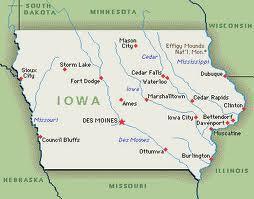
How scary is Iowa?

40

I know, I know: It doesn’t deserve the hype. And Mitt Romney’s going to be the Republican nominee anyway; the rest is all theater. And I was just joking about how it might help Obama if one of the true wingnuts won the Iowa Caucuses.

But in the cold light of a Jan. 4 morning, I have to say:

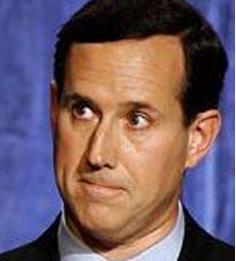
It’s pretty fucking scary that the voters in Iowa not only took seriously but gave a fair amount of support to someone who has made much of his career out of being a homophobe and a racist. Oh, and really, really stupid:

“There are people who were gay and lived the gay lifestyle and aren’t anymore. I don’t know if that’s the similar situation or that’s the case for anyone that’s black. It’s a behavioral issue as opposed to a color of the skin issue, and that’s the diff for serving in the military.”

Seriously: I know that he only got 30,000 votes, and there are a lot of evangelical Christians in Iowa, and I suppose not all of them hate queer people. Al Sharpton — and whatever you say, Sharpton’s no political fool — says that Santorum helps the Democrats by forcing Romney to continue to pander to the right. And I don’t believe that even 25 percent of the Republican voters in the nation as a whole would support someone with Santorum’s views.

But still: It’s 2012. And the most virulently antigay candidate in a right-wing field is right up near the top in the first real contest.

Isn’t that a little bit alarming?

By the roots

0

caitlin@sfbg.com

HERBWISE Where (besides this column, of course) do you get the latest on marijuana? When it comes to distributing accurate information about buds, Steph Sherer, executive director of medical cannabis advocacy group Americans for Safe Access (ASA), makes no bones about her organization’s role. “Most of our members depend on us for news,” she told the Guardian in a recent phone interview.

Even when clashes between marijuana proponents and the government are brought to light — not always a given in this political climate — Sherer finds the one note handling of cannabis issues by the mainstream media troubling. “[Cannabis] gets thrown on [journalists covering] judicial beats instead of getting picked up by the human interest, or the health and science side of things,” she said.

ASA’s response to this dearth of useful reporting on cannabis was to develop a free iPhone application that serves as a media catch-all for medical marijuana advocates. At no cost, anyone concerned with losing their right to access their medicine safely — or who wants to learn the latest about the sticky green — can now download an interface that pulls together news updates, alerts for upcoming political actions, and materials that can add to one’s activism repertoire; things like phone numbers for legal counsel and advocacy training videos.

For Sherer, the app has the potential to empower the people in the crossfire of the ongoing clashes between the federal government and state-legal growing and retail facilities: patients. “We are creating a platform that empowers people to be their own advocate. The people who can advocate for this the best are the people who are affected.” 

ASA EXECUTIVE DIRECTOR STEPH SHERER’S TOP 6 CANNABIS STORIES YOU MIGHT HAVE MISSED IN 2011

1. In March, the National Cancer Institute recognized marijuana’s medical benefit, classifying it as a “complementary alternative medicine.” Days later, the reference was diluted on its website, per the recommendation of the National Institutes on Drug Abuse.

2. After Obama’s Justice Department fought their appeal, Californian breast cancer survivor Dr. Mollie Frye and her husband were sent to prison in April for five years because of their state-legal growing operation.

3. In October, California patient advocates sued the Obama Administration for violating the 10th Amendment by coercing and obstructing local and state officials, preventing them from implementing medical marijuana laws.

4. The governors of Washington State and Rhode Island petitioned the federal government to reschedule cannabis to allow for medical use.

5. In Connecticut and New Jersey, governors continue to move forward with cannabis access legislation despite threats from US Attorneys.

6. 63-year old Norman Smith uses cannabis to mitigate the symptoms of his inoperable liver cancer. Smith is being denied a transplant from Los Angeles’ Cedar Sinai Medical Center until he agrees to stop using cannabis.


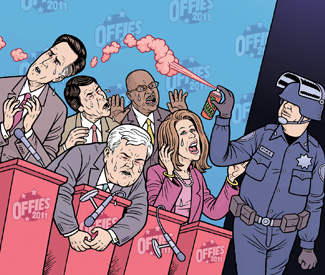
OFFIES 2011

0

It was the year of the Rapture (oh, wait, maybe not), the year of the great Republican resurgence (oh wait, maybe not), the year of Anthony Weiner’s penis and Gerard Depardeiu’s piss, the year of the Kardashians and Charlie Sheen … and the Offies in-basket overflows. Here are our favorite choice moments of 2011.


ACTUALLY, HIS THUMBS ON THE PHONE WERE THE ONES DOING DAMAGE

Anthony Weiner, in a sexting conversation with a middle-aged Nevada Democratic volunteer, described his penis as “ready to do some damage.”


AT LEAST SOMEBODY’S DOING SOMETHING ABOUT THE UNEMPLOYMENT RATE

Hustler publisher Larry Flynt offered Weiner a job


GOOD THING EXPERTISE IN THE ENGLISH LANGUAGE HAS NEVER BEEN A PREREQUISITE OF THE JOB

Presidential candidate Herman Cain, in an interview, said he didn’t know the name of the president of Uzbekistan, which he called UBEKE BEKI KEIE BAH BAH STAND O BAN STAN SO WHAT WHAT?


CERTAINLY NOT THE KIND OF FOOD FOR A MIGHTY MAN WHO SEXUALLY HARASSES HIS SUBORDINATES

Cain said that too many vegetable toppings make a “sissy pizza.”


BECAUSE AN ELECTRIFIED CARTOON MOUSE IS AN INSPIRATION TO US ALL

Cain blamed “elites” for derailing his campaign, then quoted from the Pokemon theme song.


NICE TO SEE HERMAN CAIN HAS COMPANY IN THE DEPARTMENT OF QUALITY POLITICAL CANDIDATES

Joe the Plumber announced he would run for Congress


COULD IT BE — THE STUPIDEST REPUBLICAN CANDIDATE EVER?

Rick Perry couldn’t remember which federal agencies he wanted to shut down.


EXCEPT THAT THE ALMIGHTY HASN’T BEEN ABLE TO TELL US WHICH DEPARTMENTS HE WOULD CUT, EITHER

Michelle Bachman said that the East Coast earthquake and hurricane were signs that God thought the country was spending too much money on government services.


IT APPEARS THE CHRISTIAN RIGHT CAN’T GET ITS STORIES STRAIGHT

Rush Limbaugh said that the power of Hurricane Irene, which caused 53 deaths and $15 billion in property damage, was blown out of proportion to promote “the leftist agenda.”


HMMM… SINCE HERS MAKES A BUSINESS OF “CONVERTING” GAY PEOPLE, WE HAVE TO WONDER WHAT HE TELLS HER TO DO

Bachman said wives should be obedient to their husbands


BUT HEY — THOSE GUYS ALL LOOK ALIKE

Bachman praised Waterloo, Iowa as the home of John Wayne, when it’s actually the home of serial killer John Wayne Gacy


AN EXCEPTIONAL NEW INTERPRETATION OF THE INTELLECTUAL ROOTS OF THE SECOND AMENDMENT

Sarah Palin insisted that Paul Revere “warned the British that they weren’t going to be taking away our arms, by ringing those bells.”


UM, RICK, THE SCHOOLS ARE CLOSED ON CHRISTMAS

A Rick Perry campaign ad said that “something’s wrong with America” because “gays can serve openly in the military but our kids can’t openly celebrate Christmas or pray in school.”


DAMN — THAT MEANS HE REALLY IS A DUMB AS HE LOOKS

Perry insisted he wasn’t drunk when he delivered a rambling speech in New Hampshire


OR MAYBE A LITTLE LIKE FINDING OUT THAT SHE WAS JUST USING YOU ALL ALONG

Sup. David Chiu said meeting Mayor Lee — who he helped put in office — after he broke his promise not to run was “a little like meeting an ex-girlfriend after a breakup.”


AND TALK ABOUT BEING USED

Ed Lee said he didn’t want to run for mayor, but he had trouble saying no to Rose Pak and Willie Brown


IT DOESN’T MATTER — AS THE GREAT RONALD REAGAN ONCE SAID, “FACTS ARE STUPID THINGS.”

Sen. John Kyle announced that 90 percent of Planned Parenthood’s business was abortions, and when it turned out he was wrong by a factor of 30, he said his allegation “wasn’t meant to be factual.”


THE U.S. HAS DEPOSED PEOPLE FOR LESS THAN THAT. OH, WAIT …

Moammar Gadafi said his political opponents were on LSD and kept a stash of photos of Condoleeza Rice.


OH WELL, YOU KNOW HOW GOD IS; HE FLAKES OUT ON DATES ALL THE TIME

Oakland radio minister Harold Camping announced that the end of the world would come Oct. 21.


TOO BAD THAT WILL ONLY COVER THE FIRST SESSION OF THE POOR KID’S THERAPY

A woman who created a media frenzy when she said that she had given her young daughter botox admitted she made the story up so a tabloid would pay her $200.


WHEREAS, OBAMA HAS NEVER DEMANDED THAT TRUMP SHOW HIS REAL HAIR

Donald Trump demanded that Barack Obama show his birth certificate.


IF THE JAPANESE WOULD ONLY CUT GOVERNMENT SPENDING SOME MORE, THIS SORT OF THING WOULDN’T HAPPEN

Rush Limbaugh made fun of Japanese people after the earthquake and tsunami, saying “where Gaia blew up is right where they make all these electric cars.”


THE SCHOOL’S ESTEEMED NAMESAKE, ON THE OTHER HAND, HAD 27 WIVES, SOME AS YOUNG AS 15, AND AT LEAST 64 CHILDREN, SO HE WOULD NEVER HAVE APPROVED OF SUCH A THING

Brigham Young University suspended basketball star Brandon Davies because he sex with his girlfriend.


IT’S AWFUL, THE SACRIFICES OUR POLITICAL LEADERS HAVE TO MAKE IN THE NAME OF THE COUNTRY

Newt Gingrich told the Christian Broadcasting Network that he’d cheated on his wife because he loved America so much.


ON THE OTHER HAND, IF YOU WEREN’T SO FULL OF SHIT THE PLUMBING MIGHT FUNCTION A BIT BETTER

Sen. Rand Paul complained to an energy department official that he didn’t like appliance efficiency standards because “we have to flush the toilet 10 times before it works.”


NATURALLY — CLEANLINESS IS NEXT TO GODLINESS. SORT OF LIKE MARITAL FIDELITY

Gingrich told Occupy protesters to take a bath.


WHAT — HE DOESN’T CONSIDER HIMSELF A “FROTHY MIX OF FECAL MATTER AND LUBE THAT IS SOMETIMES THE BYPRODUCT OF ANAL SEX?”

Former Senator and presidential candidate Rick Santorum complained about what turns up when you put his name in a Google search.


AND NEXT, WE’LL REDEFINE “POOR” AND ELIMINATE FOOD STAMPS

House Republicans tried to redefine “rape” to eliminate funding for abortions


OH WELL, THERE GOES THE SEASON

Stanford University stopped giving student athletes special lists of easy classes


DONALD — YOU’RE FIRED

Donald Trump tried to host a presidential debate but gave up when nobody wanted to be there.


THIS FROM A MAN WITH “INVENTED” INTEGRITY

Gingrich called the Palestinians an “invented” people.


GOOD THING ABOUT THE CRACK — THAT SHIT FUCKS UP YOUR BRAIN

Charlie Sheen opened his Violent Torpedo of Truth Tour in Detroit, where he burned a Two and A Half Men T-shirt, told the crowd that he was “finally here to identify and train the Vatican assassin locked inside each and every one of you,” demanded “freedom from monkey-eyed&ldots;sweat-eating whores,” and said he doesn’t do crack anymore.


AT LEAST HE’S GOT ONE THING GOING FOR HIM: HE JOGS WITH A GUN AND SO FAR HASN’T SHOT HIS OWN BALLS OFF

Rick Perry told the Associated Press that he shot a coyote that had threatened him on his morning jog.


KILL ‘EM ALL AND LET GOD SORT ‘EM OUT

The crowd at a Republican debate cheered after moderator Brian Williams noted that Rick Perry had overseen 234 executions.


ANOTHER GREAT MOMENT IN THE ANNALS OF LAW ENFORCEMENT

A Davis police officer pepper sprayed a group of peaceful protesters who were sitting on the ground.


SINCE THERE’S NO NEWS IN THE WORLD OF THE 1 PERCENT

The New York Post investigated sex at Occupy Wall Street


GOOD THING IT DIDN’T WORK — THE WATER FROM HEAVEN WOULD HAVE MADE THE BUNS ALL SOGGY

Perry held a religious rally to pray for rain at Reliant Stadium in Houston, and urged people to fast, although the concession stands sold hot dogs.


BUT WAIT — IF WE SHUT DOWN THE GOVERNMENT, AREN’T WE … OH, NEVER MIND

Michelle Bachman said she opposes same-sex marriage because “the family is the fundamental unit of the government.”


THE FACT THAT WE’RE EVEN WRITING ABOUT A TEENAGER WHO CALLS HER TITS “SNOWBALLS” IS A SIGN OF THE END OF CIVILIZATION

Child bride Courtney Stodden was kicked out of a pumpkin patch for dressing in daisy dukes and making out with her 53-year old husband, Doug Hutchinson, and she madly tweets things like “Squeezing my snowballs inside of a seasonal sexy little lingerie as I begin to swing around the Christmas tree to hot rock ‘n roll hits!”


IT SELLS, BABY, IT’S SELLS

Kim Kardashian made $12 million for doing essentially nothing.


A NEW DEFINITION OF TERROR: WATCHING A 63-YEAR-OLD MAN WHIP OUT HIS DICK

Gerard Depardieu pissed on the floor of an Air France jet after flight attendants told him he’d have to wait to use the bathroom.


WE’RE GOING TO TAKE A BUNCH OF STEROIDS AND THEN LIE ABOUT IT AND MAYBE WE CAN SPEND A MONTH THERE, TOO

The U.S. Justice Department spent millions of dollars and eight years to convince a judge to sentence Barry Bonds to spend a month at his Beverly Hills estate.

Alerts

0

news@sfbg.com

FRIDAY 6

Pathology of wealth

Progressive author and speaker Michael Parenti discusses this country’s dysfunctional political and economic systems during a lecture entitled “Democracy and the Pathology of Wealth,” describing how corporate capitalism has corrupted key institutions. In his books and talks, Parenti has covered a wide array of political topics, always with great passion and insights, and his perspective has never been more relevant than in the current political moment.

7:30, $12–$10

La Peña Cultural Center

3105 Shattuck, Berk.

(510) 849-2568

www.michaelparenti.org

lapena.org/event/1952


End torture now

A screening of the film Ending U.S.-Sponsored Torture Forever will be followed by a discussion led by members of the Bay Area Religious Campaign Against Torture. Berkeley Peace and Justice Commission member Rita Maran will also be honored for her efforts to get the Berkeley City Council to pass a resolution calling for President Barack Obama to honor commitments he made during his presidential campaign to close the prison at Guantanamo Bay, which became notorious for employing torture and other human rights violations.

7 p.m., $5–$10

Berkeley Fellowship of Unitarian Universalists’ Hall

1924 Cedar, Berk.

www.bfuu.org

(510) 841-4824


SATURDAY 7

Occupy and divest

Omar Barghouti, author of Boycott, Divestment, Sanctions: The Global Struggle for Palestinian Rights, gives a lecture entitled “Occupy Wall Street, Not Palestine!: BDS and the Global Struggle for Justice & Freedom.” Proceeds from the event, where Barghouti will be signing his book, benefit the Middle East Children’s Alliance and its Maia Project, which supplies clean drinking water to the children living in Gaza.

7:30, $10 (but no one turned away)

First Presbyterian Church of Oakland

2619 Broadway, Oakl.

events@mecaforpeace.org

(510) 548-0542

www.mecaforpeace.org


SUNDAY 8

Vigil for gun victims

Candlelight vigils remembers the victims of gun violence are being held around the country to mark the first anniversary for the shootings in Tuscon, Arizona that left six people dead and 13 injured, including U.S. Rep. Gabrielle Giffords. So come and light a candle to honor those affected by this senseless violence. Sponsored by Legal Community Against Violence.

6:30 p.m., free

Yerba Buena Gardens

Mission and Third St., SF

(415) 433-2062

ecartwright@lcav.org

www.bradycampaign.org/toomanyvictims


Mail items for Alerts to the Guardian Building, 135 Mississippi St., SF, CA 94107; fax to (415) 437-3658; or e-mail alert@sfbg.com. Please include a contact telephone number. Items must be received at least one week prior to the publication date.

The Iowa Caucuses are silly (but we’re all watching)

18

We all know (or we ought to) that Iowa is radically unrepresentative of the United States and that the Iowa Caucuses are a dumb barometer for choosing a president and that only really insane news media coverage has made this into such a big event. And this year it’s a freak show, complete with Santorum Salad and a weird World War II reference and that creepy guy calling that deadly dull guy a liar and lots of other fun Republican tomfoolery.

But here’s the question for those of us who don’t vote in Iowa (and wouldn’t be hanging out at a Republican caucus anyway): Is it better for one of the major-league wingnuts to win, or should we all hope that Mitt Romney, who is going to be the nominee anyway, comes out ahead and we can stop wasting our time talking about Michelle Bachman, Ron Paul, Newt Gingrich and that guy named Santorum?

Seriously: Is it better for the country to have the Republicans look even crazier than they really are, and have someone who’s gone far off the deep end become the front-runner, and leave Obama looking like the only grownup in the race — or is it better if Iowans dismiss the worst of the worst and go with someone who’s just a typical opportunistic sack of shit but who once managed to run the liberal state of Massachussetts and probably wouldn’t attempt to have half of San Francisco locked in prison on general principles?

I must admit, I’m tempted to root for the nutjobs.

Louis Dunn asks ex-President Bush: Was the Iraq war worth it?

0

Lead paragraph in the lead story in Thursday’s New York Times (12/29/11):

“BAGHDAD–The Obama administration is moving ahead with the sale of nearly $11 billion worth of arms and training for the Iraqi military despite concerns that Prime Minister Nuri Kamal al-Maliki is seeking to consolidate authority, create a one party Shiite-dominated state and abandon the American-backed power-sharing government.”

B3 note: the graphics and cartoons of Louis Dunn, a former Guardian art director and artist, will be featured regularly in the Guardian, on the Guardian website, and on the Bruce blog.

What the new year brings

0

caitlin@sfbg.com

HERBWISE 2011 was a harsh year for medical marijuana. During its first half, the number of California dispensaries burgeoned. But a federal crackdown in September has left much of the industry shaking in its buds. By bombarding landlords with cease-and-desist letters threatening 40 years of jail time if they continue to let marijuana be sold on their property, the Department of Justice has effectively closed down walk-up operations for many smaller dispensaries.

But as we head into the year of the Mayan overhaul, one thing seems certain: advocates for safe and available access to medical cannabis aren’t going anywhere. How can they? Since Proposition 215 made it legal in 1996, 200,000 Californians have gotten physician recommendations to alleviate health concerns with marijuana. People use it for chronic pain, to make it through chemotherapy, for multiple sclerosis, severe anxiety.

“We can’t wait for the federal government to do the right thing in California,” said the state director of Americans for Safe Access Don Duncan. “As the state of California gets its marijuana house in order there will be less incentive for the feds to come in.”

Duncan and his organization were co-authors of the Medical Marijuana Regulation, Control, and Taxation Act — a unified voter initiative that was turned in to the California Secretary of State’s office last Wednesday, Dec. 21. Other contributors include NORML, the California Cannabis Association, the Humboldt Growers Associations, and the United Food and Commercial Workers — the union that now represents workers across the state, including Oaksterdam University employees.

“We’re hoping that this policy will reassure people that we can have a rational system,” continued Duncan in a phone interview with the Guardian. Duncan is convinced that the recent aggression by the Obama administration can be traced to people’s discomfort with the industry’s wild growth, and that a good faith effort to institute a comprehensive regulation system will assuage people’s confusion and fears about marijuana.

His initiative calls for the establishment of a centralized bureau of medical marijuana enforcement, to be comprised of 21 members from various state government offices, patients, advocates, a physician, a nurse, individuals from the marijuana research and policy fields and six people with experience in dispensary operations.

The bureau would be in charge of cannabis registration, industry regulations, and the use of funds that are generated by administrative fees. The initiative also calls for a sales tax of 2.5 percent on medical marijuana retail sales and states that cities — unless voters approve other guidelines — must follow a minimum zoning restriction of a dispensary for every 50,000 people.

In January, a campaign supporting the initiative will begin to drum up awareness. Backers are hoping that by instituting stricter and more consistent controls of dispensaries and growing operations, 2012 will look a lot brighter for the 200,000 Californians that have relied on their marijuana prescription to live their lives.

“I think this is really going to resonate with voters,” said Duncan. “We just need for officials to be able to step outside the controversy of it all.” It’s a hopeful stance. Let’s see how it holds up in the roiling of the upcoming election year.

Editor’s notes

4

Tredmond@sfbg.com

I’m not good at holidays. When your world is made of deadlines, the holidays are just one more — gotta get the kids presents, gotta get the tree, gotta make plans, gotta do dinner … one more set of hassles. Bah humbug.

And I’ve never been a big fan of New Year’s Eve. Too many people acting like they’ve never been drunk before and will never be drunk again, and everything costs too much. I drink every day; I can miss New Year’s Eve. Party pooper.

So I don’t do my own new year’s resolutions; I do them for other people. This is what I would like everyone else to do in 2012:

I would like the Occupy organizers to put together a massive day of teach-ins and a march on Washington in the spring, to keep the movement alive and bring in a lot more people.

I would like my fellow dog owners to pick up the shit off the sidewalks.

I would like the Department of Parking and Traffic to put up No Left Turn signs on 16th Street at Potrero and Bryant.

I would like Visconti to lower the price on that really cool lava fountain pen.

I would like the transportation whizzes at City Hall to figure out how to put bike lanes on Oak Street so I can ride back from Golden Gate Park as safely as I can ride to the park.

I would like the supervisors to change the rules for Question Time so the mayor doesn’t get all the questions in advance and there’s a chance for real discussion that isn’t stupid and boring.

I would like middle school English teachers in San Francisco to explain to their students that homeless people are not “hobos.”

I would like the Obama Administration to quit hassling pot dispensaries.

I would like the airlines to start serving cocktails before takeoff.

I would like the thriller writers of America to learn how to write decent sex scenes.

I would like Jerry Brown to endorse the initiative to outlaw the death penalty.

I would like everyone in politics to stop saying the words “together” and “shared” since we aren’t together and I don’t want to share with the rich.

Anything else? Happy New Year.

Dick Meister: A decent living for all?

11

Dick Meister, former labor editor of the SF Chronicle and KQED-TV Newsoom, has covered labor and politics for more than a half-century. Contact him through his website, www.dickmeister.com, which includes more than 350 of his columns.

Finally there’s some good news for the millions of Americans who must to live on pay at or close to the legal minimum wage. Eight states are raising their minimum wage on January First, in line with state laws requiring the minimum to keep pace with inflation.

The raises to come are modest by any measurement. But any increase must be welcomed as desperately needed and hopefully as a major start toward increasing the minimum wage everywhere to a level that will provide a decent living to all working Americans, many of them living in poverty or near-poverty.

The minimum wage is just as important now as it was in 1938, when the wage law was enacted as part of the Fair Labor Standards Act, with a promise of guaranteeing workers “a standard of living necessary for health, efficiency and general wellbeing.”

The federal rate was set at 25 cents an hour, with states and local governments free to set their own minimums, as long as they are above the federal rate.

Today’s rates are much higher, of course, although barely adequate. The federal rate is $7.25 an hour, only about $15,000 a year for full-time workers before taxes and other deductions. Eighteen states, more than 100 cities and counties and the District of Columbia have higher rates, but their rates also are clearly inadequate.

During his 2008 election campaign, President Obama proposed raising the minimum to  $9.50 an hour by 2011. But even though that would merely adjust the minimum wage for inflation, Congress and the White House have done little to make it happen.

Some of Obama’s Republican opponents in Congress actually have called for the minimum wage to be abolished, largely because their big money backers in the restaurant business, who employ about 60 percent of all minimum wage workers, are against it, as are many other business and corporate interests.

Congress’ failure to act has left it up to the states. The eight that are raising their rates on New Year’s Day include Arizona, Colorado, Florida, Montana, Ohio, Oregon, Vermont and Washington.  Their rates will increase by 28 to 37 cents an hour to between $7.64 and $9.04. The National Employment Law Project (NELP) calculates that will bring nearly 1.4 million full-time minimum wage workers an extra $582 to $770 per year.

Another 400,000 will get raises as pay rates are adjusted upward to reflect new minimum wage rates. It’s not just individual workers who will benefit from the raises. Like all low-wage workers, they must spend virtually every cent they earn, thus raising the overall demand for goods and services and the hiring of new employees to help provide them.

NELP estimates that the increased consumer spending generated by the raises will add $366 million to the gross domestic product and create the equivalent of more than 3,000 full-time jobs. Other estimates indicate that every dollar increase in wages for workers at the minimum creates more than $3,000 in new spending after a single year.

And we shouldn’t forget that those earning the minimum include many of our most valuable yet needy and exploited workers.  Most work in the service or retail fields, as domestics providing home health care for the elderly and other household services or caring for the children of working mothers, for example. Others work in agriculture.

Many can’t find full-time jobs even at the bare minimum.  More than one-third are the main or sole support of their families. Almost two-thirds are women, many of them single mothers. One-third are African-American, Latino or Asian. Many are recently arrived immigrants. Only a few belong to unions or have other protections aside from the law.

But wouldn’t a minimum wage increase cause businesses to cut back their hiring, as opponents of minimum wage raises claim? No. Studies show that even during times of high unemployment, raising the minimum does not lead to a loss of jobs. Actually, the number of jobs has grown after each of the 19 times the federal minimum has increased over the past 73 years.

Consider this, too: Taxpayers are providing billions of dollars in subsidies to employers of minimum wage workers, since much of the money paid out in public assistance goes to families whose working mothers do not earn enough to be self-supporting. Private charities provide additional millions in aid.

There’s no doubt employers are shifting a significant part of their labor costs to the general public, and no doubt that welfare costs could be reduced substantially if the minimum wage they had to pay was raised to a decent level.

Think of the benefits to society generally if the minimum wage workers who now must depend on government assistance could earn enough to make it on their own.

Think of the benefits to employers. As several studies have shown, raising workers’ pay raises workers’ morale and with it, their productivity, while decreasing absenteeism and replacement costs.

Think of the benefits to small retail businesses. Opponents of a minimum wage increase say they’d be hurt the most by a higher minimum wage, but it’s far more likely they’d be among the greatest beneficiaries. For minimum wage workers have no choice but to spend most of their meager earnings in neighborhood stores for food and other necessities.

Tiffany Williams of the Institute for Policy Studies says raising the minimum wage “would be a step toward restoring dignity for millions of workers, enabling many ordinary working Americans to become part of the economic recovery rather than its collateral damage.”

Hard to argue with that, or with Christine Owens, NELP’s executive director,  who says the minimum wage increases “represent bright spots on an otherwise bleak economic horizon. Workers’ buying power is the secret weapon in the fight to get our economy back on track. States are taking action to protect that critical buying power. Congress should follow their example to realize those benefits for the national economy.”

Let the minimum wage raises in eight states be just the beginning of raises in all states.  Let all Americans have the right to a decent living

Dick Meister, former labor editor of the SF Chronicle and KQED-TV Newsoom, has covered labor and politics for more than a half-century. Contact him through his website, www.dickmeister.com, which includes more than 350 of his columns.

Ammiano meets with U.S. attorney

59

Assemblymember Tom Ammiano finally got a meeting with the U.S. attorney for Northern California, Melinda Haag, Dec.13 to talk about the feds crackdown on medical marijuana — and he left disappointed that Haag didn’t seem to understand what a mess she’s making.

“The meeting didn’t result in any changes,” Ammiano told me. “But it was good that it happened. We cleared the air about the harm that’s being done.”

According to Ammiano’s aide Quintin Mecke, who was also in the meeting, Haag wasn’t at all clear about what she wanted — what, in other words, would end the crackdown. She talked a lot about “proximity to kids,” suggesting that dispensaries that are close to schools were a problem — although that’s a really bogus argument. I’ve been to a number of local dispensaries and my colleague Steve Jones has been to most of them, and every one requires a drivers license and a medical marijuana ID and they’re really serious about security. No high school kids are getting pot from the clubs.

Now: Pot use is up among high school kids nationally (which is another whole issue) but San Francisco Unified School District surveys show that drug use in general, and pot use in particular, is actually declining in this city. So a city that has a lot of pot clubs — highly regulated — is bucking the national trend on pot use among teens.

Ammiano wants to set strong state regulations for clubs, which most of the dispensary owners would welcome. But Haag wasn’t helpful with that, either — she said she wouldn’t make policy recommendations.

So there you have it — the U.S. Attorney is using demonstrably false allegations to pursue a program that she can’t defend — and she won’t help the Legislature find a solution. Thanks, President Obama.


Guardian editorial: And now we recommend a national Occupy Day

9

EDITORIAL In less than three months, the Occupy movement has changed the national political debate — and possibly the course of U.S. history. A small group of protesters, derided in the mainstream media, grew to a massive outpouring of anger at economic inequality. It’s no coincidence that politicans at all levels have begun to respond. At least five different measures aimed at raising taxes on the rich are in the works in California. In Kansas Dec. 6, President Obama made one of the most progressive speeches of his career, talking directly about the need for economic justice.

While even some supposed allies say the encampments weren’t effective, the truth is that the out-front, in-your-face tactic of holding nonstop protests in the financial heart of places like Manhattan and San Francisco got attention. The visibility of the Occupy camps forced everyone to pay attention. The U.S. economy is in a crisis; less disruptive tactics wouldn’t have worked. But now most of the emcampments are gone, broken up by police forces and scattered from the central areas of major cities. It’s crucial that this growing and powerful national movement not fall apart after the almost inevitable crackdown on one style of protest. Occupy needs to look forward and plan its next steps.

Some of that is already happening, with Occupy activists targeting home foreclosures and marching on West Coast ports. But it’s worth considering another tactic, too: Occupy ought to begin planning now for a massive spring mobilization in Washington and a series of nationwide actions that could bring millions more people into the movement.

Part of the strategy of the Occupy camps was to maintain a presence, day after day — and that made perfect sense when the movement was starting. But single-day events, if organized on a massive scale as part of a larger campaign, can have a profound and lasting impact.

The original Earth Day — April 22, 1970 — involved 20 million people across the United States. There were events in hundreds of cities and thousands of high school and college campuses. It brought together old-school, sometime stodgy conservation groups with radical young environmentalists, the United Auto Workers with people concerned about pollution from car exhaust. It was, by any reasonable account, the birth of the modern American environmental movement.

The other great thing about Earth Day — and the reason it makes a great model for the Occupy movement — is that it was largely a grassroots event. Although there was a national office, most of the work was done spontaneously, in local communities, with no top-down direction.

And everyone — from Washington D.C. to the state capitols and city halls — paid attention.

Mass marches and mobilizations helped end the Vietnam War, spark the Civil Rights Movement and fight the anti-labor politics of the Reagan Administration. None of those events took place in isolation, any more than a national Occupy Day would take place in isolation. The nation’s ready for major economic change — and organizing a national event alone could help make stronger connnections among the broad constituency that is the 99 percent.


Occupy’s next steps

6

EDITORIAL In less than three months, the Occupy movement has changed the national political debate — and possibly the course of U.S. history. A small group of protesters, derided in the mainstream media, grew to a massive outpouring of anger at economic inequality — and it’s no coincidence that politicians at all levels have begun to respond. At least five different measures aimed at raising taxes on the rich are in the works in California. In Kansas Dec. 6, President Obama made one of the most progressive speeches of his career, talking directly about the need for economic justice.

While even some supposed allies say the encampments weren’t effective, the truth is that the out-front, in-your-face tactic of holding nonstop protests in the financial heart of places like Manhattan and San Francisco got attention. The visibility of the Occupy camps forced everyone to pay attention. The U.S. economy is in a crisis; less disruptive tactics wouldn’t have worked. But now most of the encampments are gone, broken up by police forces and scattered from the central areas of major cities. It’s crucial that this growing and powerful national movement not fall apart after the almost inevitable crackdown on one style of protest. Occupy needs to look forward and plan its next steps.

Some of that is already happening, with Occupy activists targeting home foreclosures and marching on West Coast ports. But it’s worth considering another tactic, too: Occupy ought to begin planning now for a massive spring mobilization in Washington and a series of nationwide actions that could bring millions more people into the movement.

Part of the strategy of the Occupy camps was to maintain a presence, day after day — and that made perfect sense when the movement was starting. But single-day events, if organized on a massive scale as part of a larger campaign, can have a profound and lasting impact.

The original Earth Day — April 22, 1970 — involved 20 million people across the United States. There were events in hundreds of cities and thousands of high school and college campuses. It brought together old-school, sometime stodgy conservation groups with radical young environmentalists, the United Auto Workers with people concerned about pollution from car exhaust. It was, by any reasonable account, the birth of the modern American environmental movement.

The other great thing about Earth Day — and the reason it makes a great model for the Occupy movement — is that it was largely a grassroots event. Although there was a national office, most of the work was done spontaneously, in local communities, with no top-down direction.

And everyone — from Washington D.C. to the state capitols and city halls — paid attention.

Mass marches and mobilizations helped end the Vietnam War, spark the Civil Rights Movement and fight the anti-labor politics of the Reagan Administration. None of those events took place in isolation, any more than a national Occupy Day would take place in isolation. The nation’s ready for major economic change — and organizing a national event alone could help make stronger connections among the broad constituency that is the 99 percent.

Should Occupy pull back and reinvent itself?

14

Maybe it’s time for the Occupy movement to simply take a bow, step off the national stage for now, and start planning its next big production. Because at this point, Occupy has been a smashing success – winning over its audiences and key critics, influencing the national debate – but it’s in danger of losing that luster if its lingers too long in its current form.

Consider the events of this week. When OccupySF’s long-standing encampment was finally removed by police and city workers, the general public barely noticed or reacted. Unlike during previous police raids, hundreds of supporters didn’t pour in to defend the camp and social media sites didn’t light up with messages of indignation and solidarity.

Why? Well it’s not because people don’t support the movement. Polls have consistently shown most people back Occupy, and even higher percentages support its basic message that the 99 percent are being screwed over by the 1 percent. Top political leaders at every level – Mayor Ed Lee, Gov. Jerry Brown, and President Barack Obama – made statements and speeches this week that echo the themes and ideas that Occupy has injected into the national dialogue.

But the tactic of occupation was only going to get us so far. It was a great way to start a conversation and demonstrate a broad discontent with this country’s inequities and plutocratic excess. Finally, the people have started to challenge those who are exploiting them, and it’s been particularly exciting to see young people fighting to reclaim their stolen futures.

That energy hasn’t dissipated, and it’s interesting to see it morphing into other campaigns, such as the recent takeovers of vacant foreclosed homes, the human rights march planned for tomorrow, and West Coast port shutdown scheduled for Monday. But I predict the crowds blockading the Port of Oakland will be a fraction of the size of the tens of thousands who took to the streets during the Oakland General Strike on Nov. 2.

Then, people were reacting to police violently crushing Occupy Oakland’s peaceful political assembly on Oct. 25, a galvanizing event, much like the raid on Occupy Wall Street and the abusive police tactics against occupiers on the UC Berkeley and UC Davis campuses. Each example showcased the police state’s willingness to use a heavy hand against peaceful protesters, demonstrating for a global audience what an important struggle this is and what we’re up against.

Yet it was hard to summon up much indignation over this week’s raid on OccupySF, even as protesters complained about being given just five minutes to get out and having their belonging seized and destroyed. Mayor Lee had been threatening the raid for weeks and had offered the group a free new home in the Mission – an offer they probably should have taken, one that would have allowed the group to declare victory and have a base of operations throughout the winter.

But unlike my cranky, “you kids get off my lawn” colleagues in the mainstream press, who have consistently derided the movement and valued anti-camping laws over the core constitutional right to peaceably assemble to petition for a redress of grievances, I think Occupy has been extremely important and effective. My desire is to see it evolve and continue.

Mayor Lee and other city officials have praised the goals and worldview of Occupy at every turn, even as they oppose the tactic of camping. As Police Chief Greg Suhr raided OccupySF, he told reporters that “part of the 99 percent removed part of the 99 percent to give the other part of 99 percent some relief,” tipping his hat to Occupy’s basic paradigm. Gov. Brown echoed Occupy’s economic inequity language in his call for higher taxes on the rich this week.

“I’m here in Kansas to reaffirm my deep conviction that we’re greater together than we are on our own. I believe that this country succeeds when everyone gets a fair shot, when everyone does their fair share, when everyone plays by the same rules. These aren’t Democratic values or Republican values. These aren’t 1 percent values or 99 percent values. They’re American values. And we have to reclaim them,” Obama said in his big speech this week, embracing the Occupy paradigm even as he tried to transcend it. But go back and read the whole speech and you’ll see that it would have fit right in during any Occupy General Assembly, with its regular calls to tax the rich, something this movement has given him the political cover to more forcefully advocate.

So the conversation has now begun, thanks largely to this movement. But, as most supporters of Occupy already know, our elected officials won’t simply enact the reforms we need on their own. They will need to be pushed and prodded relentlessly by a restive public, so the supporters of Occupy still have a lot of work to do.

How will they do that and what will it look like? I don’t know, but after watching these smart, creative, courageous, and committed young people and their supporters change the political dynamics of this country over the last three months, I’m anxious to see what they come up with and I stand read to chronicle and support the next phase, whatever it’s called and whenever it begins.

Occupy hip-hop

3

caitlin@sfbg.com

LIT The Occupy movement, though it’s been criticized by many for the lack of racial diversity among protesters, has certainly attracted its share of black rappers. Here in the Bay, Boots Riley has been a vocal supporter, participating in Oakland’s November 2 general strike. On the other side of the country Occupy Wall Street has met Kanye West, not to mention music mogul Russell Simmons (okay, he’s not a rapper) making space in his predatory debit card-selling schedule to stage rants over the influence of lobbyists on the federal government. And how could forget the furor that erupted over Jay-Z’s line of OWS-inspired Rocawear T-shirts?

The admirable efforts of Boots notwithstanding, there was a time when all of hip-hop was going to save the world, not just sell its most vital revolutions for $22 a shirt. The time is ripe, it seems, for some books to pay homage to that fact. And although they vary in the specifics, there are a few that are doing just that.

THE PLOT AGAINST HIP HOP

By Nelson George

(Akashic Books, 176pp, paper, $15.95)

Hip hop academic par excellence Nelson George is occupying the bottom half of a computer screen for a Skype-conducted interview with the Guardian.

George’s latest novel (his third, though he’s better known for his non-fiction, including the seminal Death of Rhythm and Blues) follows the adventures of D. Hunter, a security guard from the projects of Brownsville, Brooklyn. Hunter is embroiled in the murder of Dwanye Robinson, a hip hop academic who bears more than a passing resemblance to George himself. To solve the crime, Hunter must plunge into the untoward world of the hip-hoperati — the movers and shakers and producers and makers that may or may not be out to annihilate the culture’s populist powers.

George isn’t an adherent of all the conspiracy theories in the book. But he is concerned about a “chill factor” that has artists considering the views of corporate sponsors before penning lyrics that speak truth to power.

“This stuff they’re making,” he says, speaking of today’s radio stars in his characteristically familiar tone (he is, after years of writing about them and producing VH1’s Hip Hop Honors awards show, on a first name basis with many of the big guns). “They’re not even hoping for art. They’re just hoping to sell sugar water, T-shirts — whatever Jay(-Z)’s selling this week. I don’t think people were feeling that way about L.L., Eazy E.

“There was a whole period when every success, every commercial was a cause for celebration,” he says. “Now, the whole game has to change.”

And in Occupy, he sees an opportunity. Emcees have made their way down to Zuccotti Park — and not just Simmons and Jigga. Talib Kweli, Lupe Fiasco, and David Banner (of “Whisper Song” fame) have performed and listened at their local Occupy encampment. “I think this will goose people to deal with a lot of things that are going on,” says George.

Reading the rife-with-history Plot Against Hip-Hop can’t hurt one’s knowledge of the institutional forces behind what we hear on the radio. Says George before signing off: “Every book I write is a tool of education.”

THE LEGENDS OF HIP HOP

By Justin Bua

(Harper Design, 160pp, hardcover, $34.99)

Of course, not every one believes in the institutional approach to social change. Hip-hop artist and author Justin Bua follows the personal habit gospel. “Veganism, that would really change the world,” he says. “Everyone should have a garden if they can. When people lead, the leaders follow.”

This individualized vision of change makes sense in relation to Bua’s art. He is a portraitist, famous for “The DJ,” a print of which went viral in the college-dorm-room-poster sense of the word. Though he started out by painting jazz scenes, he created “The DJ” after convincing his distributor that there was a chance that hip-hop images would sell just as well. He was right — that initial foray turned out to be one of the top selling posters of all time.

His most recent project is a love ode to similarly meteoric rises: to the B-boys, graffiti artists, emcees, and producers that made it to the top of the pack. In Legends of Hip-Hop, Bua pairs his trademark expressive faces and limbs with kind-of journal entries that sum up what they to him, or to the world of hip-hop at large. Veganism doesn’t make an appearance — but that’s not to say the book is without social significance for him.

“These people are part of our history,” Bua says during his Guardian interview at vegan Mexican restaurant Gracias Madre. “It’s really in the tradition of the Grecos, the Raphaels, the Rubins.”

And where the old masters painted kings and queens, Bua paints Biggie and Queen Latifah. To Bronx-bred Bua, they are royalty and more than that, the meter sticks of our time. Hip-hop’s effects can even be seen in the Oval Office (President Obama’s is the face that concludes Legends of Hip-Hop).

Bua thinks this power can be harnessed. “If you look at all the money generated by hip-hop — that could change the world.” And by no means does he think that the animal-product-free lifestyle and that of beats and breaks are unrelated.

“I think being vegan is the ultimate expression of hip-hop,” he says before rattling off a list of dairy-free icons. (KRS-ONE, Russell Simmons, Dead Prez, DJ Qbert, and famous breakdancer Mr. Wiggles the are all vegans.) “It’s irreverent, subversive, truth — it’s about having a clear head and mind. The ultimate form of respect is to not eat each other. That’s fucking weird.”

SOME DAY, IT’LL ALL MAKE SENSE

By Common

(Atria Books, 320pp, hardcover, $25)

Common’s autobiography (which he penned with the help of ghostwriter Adam Bradley) debuted in the 20th spot of the New York Times’ hit parade. The book itself is heartrendingly earnest — you’ll find none of the sly jabs of Bua or George hidden among its pages. But in a way, it is the more personal ode to the curative powers of hip-hop than either of those authors’ tomes.

Putting aside the namedropping of ex-lovers (Erykah Badu) and current brothers (Kanye West), Some Day exposes a shocking truth. Common, he himself insists, is no more godly than the rest of us — he just chose the music as the rope that would pull him to that level. Sure, he wrote the woman-worshipping “The Light,” but don’t you still hear him using the word ‘bitch’?

Common has perhaps the most call of the three authors to strike out against Tea Party tomfoolery and mechanized mediocrity in American government. (Lest we forget, when Obama invited him to perform at the White House, the Fox News Palin-Hannity-O’Reilly cabal screeched he was a “vile rapper” in part due to his song for Assata Shakur — something he speaks frankly about.) He also seems to have realized something that many haven’t: hip-hop can be, in fact has proven itself to be, a tool towards whatever ends an artist has in mind.

The player shapes the game. Which is something, I fear, that will take a long time to start making sense to some.

Homes for the 99 percent

0

news@sfbg.com

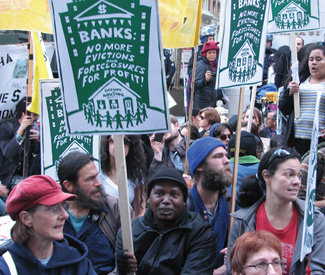
Pressed by foreclosures, evictions, and an economic crisis with the gnawing tenacity of an early winter flu, San Franciscans protested in neighborhoods throughout the city on Saturday, Dec. 3. Marches from four of the city’s most impacted neighborhoods merged in the Financial District to pressure landlords, banks, and what the Occupy movement has dubbed the 1 percent to ease the spreading hardship surrounding housing in San Francisco.

“The 99 percent tenants and homeowners can no longer let the 1 percent banks and real estate speculators destroy our city and our lives so we’re marching in the neighborhoods and on the streets today,” asserted the statement read by the Occupy SF Housing coalition to the crowd gathered in the Financial District. The message echoed through the glass and granite corridors in front of Wells Fargo, passed along in a thousand voices by the now ubiquitous “mic check” style of Occupy crowd communication.

Housing advocates warned that a steady stream of foreclosures, climbing rents, and lagging job opportunities are driving even native San Franciscans out of the city for the relatively affordable housing in the East Bay or forcing them out of the region altogether, transforming the face of San Francisco into an older, whiter, wealthier demographic.

Throughout the economic crisis, San Francisco as a whole has posted lower foreclosure rates than surrounding counties. At first glance, San Francisco, with one in 880 homes facing foreclosure, looks like a safe harbor in the state’s troubled residential real estate market compared with the statewide foreclosure rate of one home in 243, according RealtyTrac. That represents 55,312 residential units across the state. Nationally, one in 563 homes was in some stage of foreclosure as of October 2011, the most recently released numbers.

However, a near absence of foreclosures in affluent, stable, San Francisco neighborhoods like Pacific Heights and Noe Valley hide troubling foreclose rates in the city’s blue collar ZIP codes that far exceed national and statewide levels. In the 94124 zip code that includes the Bayview and Hunters Point, one in 180 homes received foreclosure filings, higher then Oakland’s overall average rate of one in 245 homes — levels that reflect the experience of some of the nation’s most hard hit areas.

Of the 1,513 homes currently listed on the San Francisco housing market, 1,255 were in the pre-foreclosure, auction, or bank-owned stages of the foreclosure process, representing roughly 82 percent of the available housing stock.

At the downtown headquarters of Wells Fargo, Occupy protesters were placing some of the blame for the deepening hardship at the feet of the big banks. According to the Occupy SF Housing coalition, Wells Fargo is the mortgage lender for 226 homes in San Francisco that are in some stage of foreclosure. That represents about 18 percent of the total homes in San Francisco under foreclosure.

In neighborhoods like Hunters Point, these evictions have turned into an economic cascade of household wealth in decline, even for those who have managed to hold onto their homes.

With foreclosures flooding the market, the median sales price for homes in Hunters Point from Aug. 11 to Oct. 11 was $167,500. This represents a decline of 13.2 percent, or $25,500 per home on average, compared to the prior quarter. Sales prices have depreciated 62.6 percent over the last five years in Hunters Point, wiping out equity families have built over years, and leaving those who hang on stuck in underwater mortgages, where their debt far exceeds the value of their home.

“Predatory equity loans make a quick profit (for the lender) at the expense of home owners in the Bayview,” said Grace Martinez of the Alliance of Californians for Community Empowerment (ACCE). “There are 11 homeowners on a two-block stretch of Quesada in default or have already lost their homes.”

While the Obama administration has tried to ease the foreclosure crisis through the federally subsidized Home Affordable Modification Program (HAMP), only a small percentage of people who apply through their mortgage holder for relief under the program receive a loan adjustment. At Wells Fargo, only one in five borrowers applying for HAMP relief have received a loan modification.

Protesters sitting in the streets in front of Wells Fargo demanded that the company establish a moratorium on all foreclosures until it reforms its loan modification practices, halts the eviction of homeowners who have faced foreclosure, and instead offers them a rental option to keep them in their homes — a solution they say will ease the suffering of those caught in the middle of the banking crisis.

The banking and real estate driven economic crash has lead to the largest drop in home ownership nationally since the Great Depression. At the same time that home ownership has become increasingly out of reach for many San Franciscans, increases in rental rates and high competition for rental units are driving out many blue collar San Franciscans from the transit-friendly Mission District, in favor of a generally younger, wealthier, more educated, tech-savvy population.

As rallies took place across the city Saturday in the lead up to the afternoon’s Wells Fargo protest, a group of concerned residents and community groups gathered at 24th and Mission to highlight San Francisco’s other housing crisis — the rental market. The other marches started in the Castro, the Bayview, and the Tenderloin.

Much of the turnover of long-occupied rent controlled housing units in San Francisco comes as a result of the Ellis Act, a state law that allows evictions when an owner’s family wants to move in or when the unit is taken off the rental market. Brenda Nedina’s family is facing an Ellis Act eviction at 874 Shotwell Street.

“I’ve lived in that unit my whole life. My family has lived in the unit for 28 years,” said the tearful, 25-year-old San Franciscan native. “We would love to stay here, but with rents so high, it is not likely that we would find a place in San Francisco.”

Nedina, who works a service industry job at Pier 39, says the economic crisis has made it more difficult for her survive in San Francisco. She has had to cut down her college course load to get by in the tough economy. The troubles will get more complicated if her family is priced out of the city, as critical health services that they rely on are available through their San Francisco residency.

“A lot of people suffer through this as a private problem, but we are making it a public problem, and if the problem belongs to all of us then so does the solution,” said Maria Poblet of Just Cause, hugging a tearful Nedina as she addressed a crowd gathered at 24th and Mission streets.

Latino families like Brenda’s continue to be forced out of the Mission District by rising rent, and less economic opportunity for them in the recession. According to the 2010 U.S. Census, the past decade has seen a 22 percent decrease in the Mission’s Latino population.

“Landlords often abuse the Ellis Act as a way to remove tenants from rent controlled units,” Just Cause organizer Maria Zamudio told the Guardian. “I’m occupying Kaleidoscope free speech zone art space on 24th and Folsom. My slumlord landlord is not down with that mission,” said artist and gallery proprietor Sara Powell, also facing a Ellis Act eviction after pressuring her landlord to address substandard building maintenance issues. Powell’s landlord withdrew a standard eviction process that housing advocates said was unlikely to succeed before launching the Ellis Act eviction.

“With the help off the 99 percent and with right on our side we are going to fight this and we are going to win,” said Powell, whose gallery next door to Philz Coffee is a cornerstone of the neighborhood’s multi-ethnic arts scene. The San Francisco Rent Board has received more than 4,000 petitions to remove rental units from the real estate market since 1999 through the Ellis Act. While Ellis Act evictions have seen some decline during the economic crisis, more Ellis Act evictions are now concentrated in the Mission District, where 40 percent of all Ellis Act petitions are now filed. At the same time, evictions based on breach of lease throughout the city are on track to double pre-recession numbers this year as more and more San Franciscans are have trouble earning enough to keep up with the city’s exorbitant rental rates. According to Just Cause, the average rent for a two-bedroom apartment in the Mission District is now $2,497. “The only way to keep our Chinese, Latino, Arabic, English speaking neighborhood is to fight like hell for our homes,” said Poblet. “Even before Wall Street was occupied, we have been defending this neighborhood. This is the neighborhood of the 99 percent.”


You grow, girl?

0

caitlin@sfbg.com

HERBWISE The average celebrity autobiography follows an arc of learning and growing. The earnestly-made mistake — whether in the form of childhood shenanigan or adult infidelity — and then the ensuing redemption. But rarely do book-sized treatises emerge from the decision to leave the celebrity fold for the greener fields of bud agriculture. Leave it to the girl from the Blair Witch Project to produce that one.

You know Heather Donahue’s snotface. Apparently too well, because as she writes in her new memoir Grow Girl: Once Upon a Time She Made The Blair Witch Project, Then She Went to Pot. Literally (Gotham Books, 286pp., paper, $26) — score nothing for succinct subtitles — too many people took the movie’s faux-reality premise seriously. Casting agents, it seems, couldn’t shake the feeling that this professional actress was merely a kid caught with a Camcorder when a malignant forest spirit got a bee in its bonnet.

But then she met a guy from Nuggettown (an actual place, renamed for anonymity). What ensued was a romance that left Donahue the proud renter of a secluded house in the wood and enough pot-growing equipment that she had to grow to stay afloat financially.

Such a pat story! Throughout Donahue’s at times overly flowery, but on the whole eminently readable narrative, the growth of her fellow (capital G) “Girls” mirrors her struggle against the confines of society — the larger, non-weed growing one but also more interestingly, the grower (capital C) Community of Nuggettown.

For not all is hunky-dory in the land of impressive tri-cone crystal formation. Women in Nuggettown are relegated to supporting roles — the kept “pot wife,” the “grow girl” that is often bossed about by her XY-chromosomed peers. On the cover of the book Donahue is clutching the top of a healthy bud plant to her naked breasts, a stereotypical male fantasy if there ever was one — but it’s ultimately all about empowerment. She blooms from a shattered ex-actress to a fuller human being, all under the Mondo Reflector she installs herself on the grow room ceiling.

One approach the medical marijuana movement might benefit from is humanizing its growers. Imagine a commercial like those for Florida oranges or California cheeses. A proud farmer fluffs up Mary Jane’s leafy bustle while a down-home voiceover plays in the background (“High CBD levels, if you want ’em. Donchaknow.”) Yes, your friendly medicine agriculturist is a person too, says Grow Girl. Possibly a person that reinforces gender stereotypes through a strict hippie code of conduct slash double standard, but a person with debts and passions and doubts nonetheless.

Donahue humanizes the cannabis industry. Some farmers, she writes, are making enough money to keep Nuggettown’s kayak store in business, but any conspicuous consumption masks the fact that it’s not really advisable for smalltown weed people to be saving their ducats in your run-of-the-mill local credit union. These are moms-and-pops, guys!

The book is slightly dated. The storyline ends in Nuggettown’s hope for a persecution-free Barack Obama presidency (Obama’s very promises rendered all the more poignant for today’s reader, informed of the President’s about-face on the issue of raiding state-legal growing facilities). For a brief moment, it seemed like cannabis would slough off the shackles of social stigma and claim to an honored position in our medical establishment.

That didn’t happen, of course — the feds raided Mendocino County’s Northstone Organics in October of this year, for chrissakes. But Mary Jane, still she rises, as does Donahue by book’s end, after agricultural disasters, horrendous break-ups, and shattered expectations.

So, Grow Girl is great if you like your marijuana stories imbued with a general sense of struggle. (And what other kind, really, exists these days?)

More evidence that Occupy is working

19

The Occupy movement has already had an impact on poltics in Washington, DC, and it’s having an impact in California, too. The Chron’s front-page banner headline today reads “Tax measures target wealthy.” By time time the story made it to sfgate, it was buried and carried the downer of a head “Tax-the-rich measures may cancel each other out.” Still, the lead sentence says it all:

The tax-the-rich sentiment behind the Occupy Wall Street movement – and the cash-starved state budget – are reshaping California politics.

I still think at some point Occupy will need to move into the electoral arena (I’d love to see the tent city residents register to vote at Justin Herman Plaza — perfectly legal — and show up to weigh in on the city budget in the spring). But all this talk of the lack of a “clear message” continues to miss the point: Occupy has brought economic injustice back into the mainstream of the political dialogue, and that’s changing the level of discussions from City Hall to Congress.

I’m not saying that Obama and the GOP will suddenly agree to start taxing big corporations and wealthy individuals at the sort of rate they should; it’s not that easy. It won’t be easy to pass a tax measure on the November ballot, either. But just think about the progress we’ve made in a few short months.


Dead horses and fool’s gold

1

arts@sfbg.com

HAIRY EYEBALL What more can art tell us about our culture’s conflicted relationship to celebrity, let alone its own conflicted relationship with celebrity? Not much, I suspect.

Kim Kardashian needs Barbara Kruger, who collaborated with the self-branding phenom on a now infamous cover portrait for W magazine’s 2010 art issue, like a fish needs a bicycle. And Warhol’s silk-screened Marilyns, or even Jeff Koons’ ceramic tribute to the King of Pop and his pet primate, seem positively quaint next to the hollow extravagance of Siren (2008), Marc Quinn’s life size statue of a yoga-posing Kate Moss cast in solid gold. I’m sure, though, that Kruger and Quinn appreciated the press their pieces netted them.

So, kudos to Bay Area artist Ray Beldner for attempting to scout some new routes through well-trod terrain. His two series of portraits at Catharine Clark Gallery are as much about the processes used to create them as they are the famous (and sometimes infamous) faces they depict. The results are decidedly mixed.

For the ghostly digital portraits in the first series, “101 Portraits,” Beldner overlaid the first 101 results that came up in a Google image search for a given subject, resulting in a hazy composite of that person’s publicly circulated image at a particular moment in time that reveals little of their actual likeness.

Some subjects are recognizable by a certain feature (Sarah Palin’s trademark up-do, Barack Obama’s prominent ears), whereas others (Michael Jackson, Britney Spears) are nearly unidentifiable, eraser-marks of their former selves.

The portraits invite allegorical speculation. Is the recognizability of Palin and Obama’s outlines a testament to the consistency of image in politics? Does the illegible smudginess of Jackson and Spears offer a formal comment on their respective falls from grace? But why over think things? Beldner’s composites are at their most intriguing when viewed as useless data sets; palimpsestic reminders that for all of the algorithms Google has churning out its top results, the internet is still something of an impenetrable jungle.

Gimmickry gets the better of Beldner’s other series, “Drawn by the hand of…,” hung in the gallery’s rear space. Wearing silicone gloves made from casts of other people’s hands, Beldner applied colored ink directly to paper. The resulting ventriloquized finger-paintings — whose sparse, monochromatic figurations recall Raymond Pettibon — are too stylistically uniform to say much about the potential affective affinities between the hand used and the person depicted.

Rather, the paintings come off as obvious and sometimes ghoulish sight gags: Jackson (again) was drawn using the hand of a young boy; for Jaycee Lee Dugard’s kidnapper Phillip Garrido, Beldner used the hand of a young girl. If the gesture seems familiar, it’s because it’s old news: another Young British Artist alum of Quinn’s, Marcus Harvey, caused much pearl-clutching with his 1995 portrait of British child murderer Myra Hindley, created by applying gray and black acrylic paint using a plaster cast of a child’s open palm.


ROCK TUMBLER


Leslie Shows’ large-scale mixed media portraits of the many faces of two pyrite chunks are the formidable and beguiling standouts of “Split Array,” her first solo exhibit at Haines Gallery. Despite Shows’ subject matter — fool’s gold — there is no joking around here. The pyrite portraits are the 2006 SECA Award recipient’s most technically finessed exploration of the parallels between geologic formation and the material process of painting to date.

Shows has worked layers of Plexiglas, colored ink, Mylar, crushed glass, metal dust, and mirrored shards onto thin, reflective aluminum panels (which she also engraves) to create trompe l’oeil effects that give her compositions dimensional heft despite their bas relief-like surfaces. When viewed head-on, a silvery pyramid-shaped outcrop seems to emerge from the upper left section of Face K (2011), pulling away from its striated Plexiglas backing. Similarly, Face P (2011) seems to extend infinitely back into the upper right hand corner of its aluminum “canvas” even as bloodied streaks (ink stains, perhaps?) in the lower half foreground the entire composition’s flatness.

However dazzling, the pyrite portraits are not merely the sum of such special effects. A deeper kind of alchemy is going on here beyond Shows’ transformation of industrial materials into representations of a mineral which is, by and large, useless to industry. I’m still trying to put my finger on it. Robert Smithson’s dictum “Nature is never finished” comes to mind as a signpost, although I’m guessing he would’ve had beef with the Faces series.

In Smithson’s gallery installations, the mirrors placed to infinitely reflect piles of shells or dirt were reminders of these natural components’ infinite variety and unknowable totality. Nature could be brought into the white cube but the white cube would never fully exhaust it. Show’s pyrite faces — with their man-made materials and Cubist collapsing of multiple perspectives — arrive at a similar conclusion, but through overt representation rather than presentation. To attempt the latter would risk evoking a naive transcendentalism which in this day and age could amount to a fool’s errand.

RAY BELDNER: PORTRAITS

Through Dec. 23

Catharine Clark Gallery

150 Minna, SF

(415) 399-1439

www.cclarkgallery.com

LESLIE SHOWS: SPLIT ARRAY

Through Dec. 24

Haines Gallery

49 Geary, Fifth Flr., SF

(415) 397-8114

www.hainesgallery.com

Dick Meister: Jobless in wonderland

0

By Dick Meister

Dick Meister, former labor editor of the SF Chronicle and KQED-TV Newsroom, has covered labor and politics for more than a half-century. Contact him through his website, www.dickmeister.com, which includes more than 350 of his columns.

Finding a job is hard enough for the many millions of unemployed American workers. But, believe it or not, the fact that they are jobless keeps many employers from hiring them.

That’s right, being jobless keeps many workers from being hired for many of the jobs that are available.

It’s crazy, I know. But once they’re unemployed, many workers are destined to remain unemployed. Many employers are saying, in effect, that workers who are laid off by other employers, or who can’t get other employers to hire them, must automatically be considered bad workers who they don’t want to hire either.

Up to now, that bizarre practice has generally affected only workers who have been jobless for more than six months, but recent studies show it will soon affect a majority of all the unemployed. That would be particularly rough on women and minorities, whose unemployment rates and length of unemployment are much greater than those of other workers.

So precisely why do employers do it? The National Employment Law Project, which has conducted a major survey of the practices, says “the precise rationale is unknown, but with so many applicants for every job opening, screening out the unemployed is a convenient device for reducing the workload associated with the hiring process.”

Or it may be that “employers presume that workers who are currently employed are more likely to be good performers and have a stronger work ethic than those who are unemployed.” That, of course, “completely ignores the realities of the current labor market, in which millions have become unemployed through no fault of their own.”

As reprehensible and outrageously illogical as the practice of denying available jobs to the unemployed is, some employers don’t bother to hide their part in it. They openly say in ads seeking workers that the long-term unemployed need not apply or that the employer will only consider applicants who are currently employed.

The federal Economic Employment Opportunity Commission (EEOC) is investigating whether to charge such employers with discrimination, which they so very obviously are practicing.

What’s more, President Obama’s American Jobs Act and two companion bills pending in Congress would make it illegal for companies with 15 or more employees to turn down or fail to seek jobless workers to fill vacancies solely because the workers are unemployed.

New Jersey has enacted a state law similar to the proposed federal law, and moves are underway to enact similar laws in at least three other states – New York, Michigan and Illinois.

The federal and state bills cover employment agencies as well as employers and prohibit want ads that disqualify applicants because they are jobless. But what if the agencies and employers had legitimate reasons to find out why applicants lost their previous jobs? Or if they want to otherwise examine their employment history?

That would be perfectly legal. It would not be legal, however, to reject job applicants simply because they lost their last jobs. The EEOC would protect workers who complain of such blatant discrimination from retaliation.

The commission also could order employers to pay workers damages covering the pay and other compensation they lost because of the employer’s violation of the law and at least part of fees workers might pay to attorneys arguing their case.

Although organized labor generally seems satisfied with Obama’s American Jobs Act and its goal of creating two million new jobs, many in labor and elsewhere on the political left consider it an inadequate response to the nation’s massive unemployment problem.

But this much is clear: The act would ban one of the most outrageous practices ever perpetrated on American workers. You need a job because you’re unemployed? Sorry, says the boss, no job for you because you’re unemployed.

Have we fallen into Alice’s Wonderland?

Dick Meister, former labor editor of the SF Chronicle and KQED-TV Newsroom, has covered labor and politics for more than a half-century. Contact him through his website, www.dickmeister.com, which includes more than 350 of his columns.

Dear Obama

0

caitlin@sfbg.com

HERBWISE Dear Obama,

Hey, how are you? You haven’t responded to my tweets, so I though I’d get at you on here. We have some things to discuss.

In all of the hubbub surrounding Occupy, the nationally-coordinated strikes on encampments, the general unrest, and the inspirational organizing taking place during this dour period of history our country is now experiencing, you’ve made next to no response.

But your federal agencies have managed to find time in the middle of said havoc to attack marijuana dispensaries and grow-ops that are legal under state law. Last week, they raided (way too much of that word going around these days) 15 of them in Washington State.

Weird, why?

On a related note, we need to talk about Sativex. Oh what, you thought we didn’t know? Don’t make this turn into a Beyonce video.

Let me tell you what I’m for sure about, and then we can talk about what I don’t understand.

I know for sure that Sativex is a drug developed by British company GW Pharmaceuticals, which declined to answer any of my phone calls while researching this letter so it’s a little unclear where exactly the drug stands on its path to legality in the US (it’s already being prescribed in Europe and Canada). Sativex is used to treat multiple sclerosis spasticity, or muscle tightness. Currently, it is in Stage III trials in the United States for use in the treatment of cancer patients, trials that are being conducted by Otsuka Pharmaceuticals, the company handling the drug’s development in the US.

Sativex (and this really gets to the heart about why I’m writing to you via the Guardian cannabis column) is made from marijuana. It has been tinctured and refined into a mouth spray that contains both THC, and — unlike the synthetically engineered Marinol, which is currently being prescribed in the United States to deal with nausea and lack of appetite in cancer patients — cannabidiol, or CBD, the other cannabinoid in marijuana. It doesn’t work as fast as smoking the stuff though, in a doobie say, or bong.

But it is still cannabis albeit in an adulterated form and if things proceed as they have been, doctors will be able to legally prescribe it. Of course, it’ll be way more expensive than Humboldt’s finest — estimates for cost of treatment are pegged around $16 a day.

Now. The other day, as I wrote in this selfsame column (“Some joy in Mudville”, 10/16/11) I ran into a one Lynette Shaw, who runs the Marin Alliance for Medical Marijuana. She’s a patient herself and has been fighting for safe, comprehensive access to medical cannabis for over two decades. Her Fairfax dispensary, which sits on land the city specifically zoned for the purpose, is in danger of being closed because federal agents have threatened her landlord with jail time for allowing his property to host illegal drug trafficking.

Marin County, for whatever reason, has one of the highest incidents of breast cancer in the country. Is this where Sativex will be marketed?

We’ve all been wondering, Prez, why on Earth your administration would choose this moment in time to make moves on state-legal growing operations. We’ve been told that it’s election year maneuvering, but even that’s not cynical enough for me.

Here is what is not: you’ve received more than $1.6 million from the health sector — doctor’s associations, health insurance companies, pharmaceutical companies — since the beginning of the year. That’s more than any other candidate, in fact you edged out the next runner-up Mitt Romney by over $700,000. It would appear that Big Pharma has identified its horse in this race.

So that’s it on my end. From you, I’m just looking for some answers. Why processed drugs over plants? Why does cannabis have to be passed through a lab and profit the pharmaceutical industry to get fair clinical trial testing? Must all of our medicine be corporatized to be deemed beneficial to us?

My email’s up there.


Sincerely,

A Concerned Citizen

Dick Meister: The lessons of Ohio

0

By Dick Meister

Dick Meister, former labor editor of the SF Chronicle and KQED-TV Newsroom, has covered labor and politics for more than a half-century. Contact him through his website, www.dickmeister.com, which includes more than 350 of his columns.

AFL-CIO President Richard Trumka has drawn some important lessons from last week’s election in Ohio that repealed a state law severely limiting the collective bargaining rights of public employees. Worse, it threatened to inspire passage of similar anti-bargaining laws elsewhere.

Listen to Trumka, a man who obviously knows what he’s talking about. In an article he wrote for Reader Supported News, he cites post-election polls showing that more than half of Ohio’s voters correctly “perceived the law as a political maneuver by Gov. John Kasich and state Republicans to weaken labor unions, rather than a genuine effort to make state government more efficient.”

Another poll, done for the AFL-CIO, showed that more than half the voters also found that Kasich and his allies “are putting the interests of big corporations ahead of average working people.”<–break->

Voters everywhere in the mid-term elections clearly wanted change. But, as Trumpka says, they did not want “political maneuvers and overreach” like those of Kasich and Republican legislators. They want effective action to curb unemployment, create jobs and deal with the other severe economic problems facing the country.

As Trumka notes, public employees, union members, Democrats and liberals voted overwhelmingly to repeal the Ohio law, but so did a majority of voters “from households with no public employee, workers without union representation and independents – as well as 30 percent of Republicans and 36 percent of conservatives.”

One of the key lessons Trumka draws from Ohio’s election is that “the myth of the pampered public employee has been busted. Public employees didn’t cause the economic crisis and they’re not the enemy. Demonization of public employees is neither a strategy nor a solution and the heartland Americans who voted to restore rights for public employees understood that.”

The election also reinforced the continued need for working people, public and private employees alike, to join closely together. That’s what happened in Ohio. There, as Trumka notes, “firefighters, teachers and other public employees were joined by plumbers, pilots and all kinds of private sector employees to win. Worker to worker, neighbor to neighbor, the message spread, and what began as an attempt to divide workers flopped famously. In the end, working people’s solidarity was the message.”

Politicians could also learn important lessons – if they will. For the Ohio voters “showed that when fundamental rights and livelihoods are targeted, working people will not only defend themselves, but come back stronger.”

The outcome of the Ohio vote should show politicians seeking office that it would be wise for them to pay much more attention to the wishes of working and middle class voters than to those of the wealthy and privileged. Says Trumka:

“Cutting taxes for millionaires and billionaires, scapegoating working Americans and their unions and downsizing Social Security and Medicare may get you a standing ovation from the 1%, but the voters who decide elections will not be fooled – and you may just get more than you bargained for.”

Trumka’s correct. But despite the results in Ohio and the lessons they hold for the anti-labor political right, many undoubtedly will continue what the AFL-CIO sees as “part of Wall Street’s strategy to chip away at collective bargaining rights, piece by piece, law by law, until unions and collective bargaining rights are destroyed.”

Working people and their unions can be reasonably certain, at least, that they’ll have strong support in trying to withstand the attack – including support from the Occupy Wall Street movement, which Trumka credits with “redefining the political narrative.”

The next major test will come in the presidential and congressional elections in 2012. They’re especially looking for support from the swing voters who supported President Obama in the 2008 election and generally have the same political views as the majority of Ohio voters.

Trumka describes the swing voters as “working Americans with modest incomes, moderate views and little patience for polices that aren’t fair and don’t work.”

He says politicians seeking election or re-election next year must heed them and “support public policies for the 99 percent – policies that create jobs, invest in America’s future, safeguard Social Security, Medicare and Medicaid, and promote fiscal sanity by requiring millionaires and billionaires to pay their fair share.”

OK, that’s asking for much more than we’ve been getting. But the Ohio vote demonstrated that it is possible to garner the votes necessary to overcome the forces that would deny us vital economic and political rights.

Dick Meister, former labor editor of the SF Chronicle and KQED-TV Newsroom, has covered labor and politics for more than a half-century. Contact him through his website, www.dickmeister.com, which includes more than 350 of his columns.

Will Obama win in 2012?

43

Right now, all the signs say no — the economy isn’t improving, he’s pissing off his base, the GOP kicked his ass in the 2010 midterms, and a vast majority of Americans think the country is headed in the wrong direction. But then, at this time in 1991, all the signs said that George Bush I was unbeatable.

And then, of course, you have the Republican candidates.

That’s why the political consultant brain trust at CalBuzz predicts by a 2-1 margin that Obama will be relected. We’re talking Democrats and Republicans, from across the ideological spectrum (although mostly centrist; there aren’t many radical political consultants, since they have to make a living working with all sorts of candidates).

I always get these things wrong — a good way to win an election-day bet is to listen to my predictions then go the other way — and I’m not the Obama supporter I once was. But I think these folks have a point — is there a single Republican now in the field who won’t self-destruct by the end of next year, in the heat of battle? You can say all you want about his namby-pamby positions and the bimbo eruptions, but Bill Clinton was a hell of a campaigner — and it takes a hell of a campaigner to unseat an incumbent president, no matter how bad he looks in the polls.

Some of their comments:

As much as history points to no president being re-elected with unemployment numbers this high, there is no sign that the GOP can get its act together and nominate anyone capable of defeating Obama. As amazing as it may be the GOP is poised to grasp defeat from the jaws of victory — what a party!

Romney, the probable GOP nominee, combines most of the worst features of Walter Mondale, Michael Dukakis, Al Gore and John Kerry. That’s some feat — and it won’t get him to the White House.

Obama will win . . . more because the Republican field is pathetic.  “Mittens” is the likely winner, but has flip-flopped more than a tuna on the deck of a boat.

Harsh — but possibly true. Thoughts?