Apparently, the one San Francisco Police Department sergeant tasked with investigating officer-involved shootings has been busy. Yesterday morning, the Guardian received an email from SFPD Media Relations officer Albie Esparza, who apologized for taking almost a month to respond to a Guardian request for information.
“It’s simply been very busy with the multiple officer involved shootings we’ve been having in SF recently,” Esparza explained. “The ONE Sergeant who works in the Internal Affairs Officer Involved Shooting unit is aware of your questions and is trying to research that, as well as investigate the three OIS incidents we’ve had recently.”
Reached by phone, Esparza said he actually meant to say there were four officer-involved shooting investigations; one involves a Daly City officer who fired upon a person in San Francisco city limits in early March. And whoops, as of yesterday, make that five – an officer shot and killed a pit-bull yesterday in Golden Gate Park.
The three shootings Esparza initally referred to include a March 15 officer-involved shooting in the Richmond District; another one on March 5 in Bayview Hunters Point, and a third one on Feb. 15 in the Tenderloin. Only the March 5 shooting resulted in an individual being struck; he wasn’t killed. Police later held a town hall meeting about that incident, which transpired after a high-speed chase that ended in a cul-de-sac. The suspect drove into two police cars and hit an officer, according to the police department’s account, before officers shot at him. Esparza said he did not have information about whether the incident involving the Daly City officer resulted in a fatal gunshot wound.
The Guardian’s original questions, meanwhile, remain unanswered. We submitted a query regarding a fatal officer-involved shooting that killed Pralith Pralourng last July. The 32-year-old Oakland resident had a history of mental illness, and was killed outside a chocolate factory in San Francisco after brandishing a box cutter. Police Chief Greg Suhr has pointed to this case as a prime example for why police ought to be equipped with Tasers. But the SFPD launched a specialized crisis intervention training (CIT) program over the last several years specifically to help officers better respond to calls involving mentally ill individuals. Local advocates weighing in at recent public hearings convened by SFPD said they feared the department could lose sight of CIT de-escalation tactics if the Tasers plan moves forward.
The Guardian submitted questions to SFPD in late February asking whether the officer who shot and killed Pralourng had been trained under CIT; if any CIT officers were dispatched to the scene, since the call involved a mentally ill individual; and whether CIT de-escalation techniques were attempted prior to the shooting.
After nearly a month, Esparza finally sent a response from SFPD internal affairs. “We were told that because it’s open and active, the file is exempt from disclosure,” he said. Basically, we hit a dead end and were told to try again later. When things aren’t so busy.
A federal judge will decide March 15 whether to dismiss a lawsuit by the ACLU and the Bay Guardian seeking access to FBI records showing the agency’s involvement with the Occupy movement.
As if often the case, the FBI’s legal motions tell an interesting story that sheds light on what some of the still-unreleased documents might show. The filings make it clear that the FBI was not only spying on the Occupy movement but was sharing data with local law-enforcement agencies — and at some point may have classified some part of the Occupy movement as international terrorists.
The Guardian and the ACLU have been fighting for more than a year to get the agency to release its complete files on Occupy. After a March 8, 2012 Freedom of Information Act request yielded only a few pages, and the FBI claimed it had no more documents, the ACLU filed suit.
In a declaration dated March 15, 2013, David M. Hardy, chief of the FBI’s Information Section, confirms that the agency was sharing information on Occupy with other police agencies. He states that “The mention of the FBI sharing intelligence with another agency doesn’t mean that the document becomes and intelligence or planning document. It is simply documenting that information was shared.”
Among the documents that the feds did release is a Nov. 2, 2011 memo discussing the FBI’s contact with the Port of Stockton Police Department to “share intelligence about Occupy protesters targetting the Port of Oakland.”
And of course, the fact that the FBI is sharing intelligence means that it was gathering intelligence as well.
By law, the FBI can only investigate when there are federal crimes or federal statutes involved, and the vast majority, if not all, of the Occupy actions in cities all over the country were local in nature. Occupy was a famously diverse group of community-based organizations that had no national structure or leadership. In the few instances were Occupy protesters were charged with crimes — mostly in cases of civil disobedience or minor vandalism — there were no federal laws even remotely involved.
In his declaration, however, Hardy defends the FBI’s refusal to release some documents by saying that “the FBI’s general investigative authority … and its general authority to collect records …. provides the statutory basis for the FBI’s role in providing services and support to state and local law enforcement agencies in investigating crimes and terrorism related to the enforcement of federal laws. The FBI is also assigned the lead role in investigating terrorism and in the collection of terrorism threat information within the United States.”
Localized Appreesh is our thank-you column to the musicians that make the Bay. To be considered, contact emilysavage@sfbg.com.
Magic Fight has got fangs. More precisely, the newly formed Oakland “post-indie” band — led by Florida born singer-ukulele player Alex Christopher Haager — just released its very first single, “Fangs” off its forthcoming debut album, Wooden Swords & Stolen Echoes.
And if the first single is any indication of what’s to come (and I think it might be), this record is going to be one to watch. The charming indie pop song begins with a few Casiotone twinkles and a youthful sample, followed by shakers and shimmering harmonies, and the lyrics, “I showed you my fangs and my animal ears/You showed me your scar and your Hollis tattoo/I wanted a bit more than I could chew/So what else is new?”
It’s the kind of song that instantly grabs ahold of your pleasure center, then shakes your shoulders a little to let you know it’s real.
Magic Fight recently recorded a Daytrotter session (so keep an ear out for that) and will play the Brick and Mortar Music Hall this week, opening for the Lawlands, but first it sprinkled some magic spell dust on Localized Appreesh:
Year and location of origin: 2012 Oakland, California!
Band name origin: I had this name floating around in my head as far back as 2008 but I didn’t have a proper project to put it to. I think it was supposed to be some sort of electro-dance band at some point. Apparently there is still a Myspace page under this name with weird, random demos I made when I was living in Berlin.
Band motto: I wouldn’t say we have a motto as such, but when we are practicing and playing, we end up just saying “Yeah!” a lot. So I suppose that could be a motto of sorts. Constant positive self-affirmation?
Description of sound in 10 words or less: Tender-footed rumblesongs overheard escaping a polychrome cabin overlooking the sea.
Instrumentation: These songs and this band were formed around the combination of sounds produced by amplified ukulele, singing human voices, distorted casiotone keyboards, bass, drums and other random percussive items.
Most recent release: We just released a single called “FANGS” that is taken from a forthcoming seven-song album that will (likely) be called WOODEN SWORDS & STOLEN ECHOES. As of this moment, we are planning on self-releasing the album.
Best part about life as a Bay Area band: Aside from the fact that it simply means that we are living in such a great place on Planet Earth, I would say the best thing about it is that there are actually really great musicians and song-makers doing really great things in the Bay Area.
Worst part about life as a Bay Area band: The worst part is that it is often difficult to find those musicians and song-makers. Also everyone seems to be kind of high most the time, which doesn’t always result in high ambitions.
First album ever purchased: The first cassette I was ever given was the self-titled debut from glam gods Winger. But the first album I remember buying for myself was Sense Field’s 1996 record Building. So I have seen my way around the genre-block a few times, to say the least.
Most recent album purchased/downloaded: A good time for this question, because after personally waiting for about 16 years, I downloaded the new LP from My Bloody Valentine a couple weeks ago. Worth the wait. I think. It’s quite lush and good, in any case.
Favorite local eatery and dish: At this moment, I would say the most exciting food I have had recently was at St. Vincent in the Mission and the most exciting beer I have had was at Social Kitchen & Brewery in the Inner Sunset.
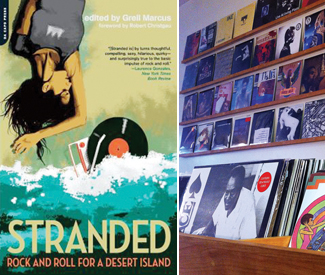
TOFU AND WHISKEY “Rock and roll has never been remotely monolithic,” early Rolling Stone columnist Greil Marcus writes in the introduction to the 1978 book he edited, Stranded: Rock and Roll for a Desert Island (Da Capo Press). “There have always been countless performers to pin your hopes on; though one may have found identity as a member of an audience, one also found it by staking a place in that audience, defining one’s self against it.”
He recalls a time when all rock fans simply had to have an opinion about the Beatles, about Elvis, but notes there’s is no longer a single figure that “one has felt compelled to celebrate or denigrate.”
“The objects of the obsessiveness that has always been a part of being a rock and roll fan…are no longer obvious,” he continues, “which means, for one thing, that while one’s sense of the music may not have perfect shape, it’s probably a lot richer.”
Marcus wrote these words in Berkeley in the late ’70s, though they ring truer today. For Stranded, Marcus invited rock critics such as Lester Bangs, Ellen Willis, and Nick Tosches to answer the basic parlor game question in essay form: “What one rock-and-roll album would you take to a desert island?” He’ll read from the book this Thu/14 at 6pm at a new record shop, also called Stranded, 6436 Telegraph, Oakl. (www.strandedinoakland.com).
The brick-and-mortar Stranded opened about five months ago (in November 2012) and is run by Oakland’s Steve Viaduct, the 36-year-old founder of Superior Viaduct records, an archival label that focused on reissues and archival collections of Bay Area punk and post-punk for its first year and is now in the process of expanding its output. One of those releases was MX-80 Sound’s ’77 album, Hard Attack, which is the record Viaduct says he‘d take to a desert island.
Since the Stranded opened, there have been a handful of shows and author appearances, along with the everyday bustle of record obsessives. “We had pretty modest goals [for Stranded]. We wanted a cool place to hang out and meet other vinyl enthusiasts. With no budget for things like advertising, our biggest milestone has been that we are breaking-even financially and we are having fun doing it.”
I asked Viaduct what bands best exemplified the ethos of the label and shop, and instead he chose a book: “That is a tough question because Superior Viaduct is very much a work in progress. Perhaps the best example of the label’s ethos is our first book, From the Edge of the World: California Punk 1977-81, by photographer Ruby Ray. The photos are amazing. Ruby captures a moment that barely existed in the first place, yet still resonates today.”
Marcus’ appearance came naturally. A noted lover of vinyl, he’d stopped by Stranded a few times and gave the owners of a copy of his book. When Viaduct found out his friend had chosen the book for her Rock N’ Roll Book Club, he decided it was time to invite Marcus to speak at the store. After that, the next events at the shop are Dawn McCarthy and Bonnie “Prince” Billy performing live in-store (March 31), then Rock and the Pop Narcotic author Joe Carducci reading May 3.
Given the crumbling of big box music chains and the US economy as a terrifying whole, it’s a particularly troublesome time to open a store of any kind, let alone one mostly focused on physical music — though there are shining examples to the contrary, such as Burger Records and Amoeba Music — so I was intrigued by the store’s arrival.
“Buying records in stores is more fun for customers and shopkeepers,” Viaduct says, shrugging off the concern. “The personal contact really makes a difference. There is nothing better than to recommend something and a day or two later the person comes back and says, ‘Thanks! That record is great.’ Of course, we know that folks can buy records online, so we do not even try to compete with that.”
1-2-3-4 GO!
One of those shining star examples of making it work in the name of the music you obsessively collect — fellow East Bay record shop and label, 1-2-3-4 Go! (www.1234gorecords.com) is this month celebrating five years in Oakland.
Also noteworthy: the label will be 12 come August (time for a Bar Mitzvah?). It’s notable for discovering and releasing records by trash, thrash, psych, punk, garage, surf, doo-wop, whatever local acts along the lines of Nobunny, Shannon and the Clams, Personal and the Pizzas, Lenz, and Synthetic ID.
With its move to a bigger space, the store is now also noted for its all-ages shows, with many of the above frequenting the location along with out-of-towners from LA and beyond. For the five-year marker, the shop is having a big sale on March 23 and 24, and will celebrate further with its second annual the Go! Go! fest May 16 through 19.
I asked label-store owner Steve Stevenson, a 33-year-old Oakland resident, the same question as Viaduct regarding the problems with opening a store such as this. Stevenson perhaps had it rougher, as his doors first opened in that very tumultuous year of ’08.
“2008 was brutal but there was a ton of support. I had no money to advertise but for the first three weeks I was packed with people who had heard about this record store that was barely bigger than a walk-in closet,” he says. “Honestly, the store struggled for the first three or so years; always making it but always just barely. Since moving in to this new space, things have really taken off. I’m able to hire employees so I don’t have to do everything myself which gives me time to do even more cool stuff for the store and book shows outside of it at places like New Parish.”
“We’re one of the very few record stores in the East Bay and we exist through the support of this community and our mail order customers around the world,” he adds. “We’re always growing, expanding, and trying new things because of this support and there’s no way I can say how much I appreciate it. It’s massive.”
AFROLICIOUS
Is Afrolicious the hardest working world band in the Bay Area? It seems to pop up everywhere. The 12-piece Latin soul-tropical Afrobeat act met at Elbo Room’s energetic weekly Afrolicious party, and is this week playing the Great American Music Hall in celebration of its debut full-length album California Dreaming, released on its own label, Afrolicious Music. With Midtown Social Band, Afrolicious DJs Pleasure Maker and Senor Oz.
Fri/15, 9pm, $15. Great American Music Hall, 850 O’Farrell, SF. www.slimspresents.com
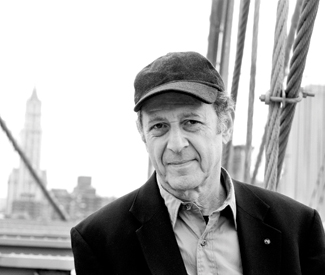
MUSIC From David Bowie and Brian Eno’s forays into ambience, to the unrelenting pulse of trance and house, minimalist icon Steve Reich’s propulsive compositions have irreversibly shaped the pop world’s development since the 1970s. Now, four decades into his career, Reich is reversing the formula with “Radio Rewrite:” a new piece adapted from and inspired by the recordings of alt-rock institution Radiohead.
This Saturday, Stanford University is set to host the US premiere of “Radio Rewrite,” performed by acclaimed new-music ensemble Alarm Will Sound, in a program comprised entirely of Reich’s works.
Credited alongside Philip Glass, Terry Riley, and LaMonte Young for introducing minimalism to classical music, Reich is often cited as the most influential living composer. After moving west from his native NYC to study composition at Mills College in Oakland, and finding his voice with a series of groundbreaking, spoken-word tape loops (’65’s “It’s Gonna Rain” ’66’s “Come Out,”), he headed back east to form his own large ensemble: Steve Reich and Musicians.
The sound Reich achieved with this group was refreshing and unprecedented, combining pianos, strings and mallet instruments to create glassy, resonant textures, and mechanical rhythms that mirrored NYC’s industrial, caffeinated soul. His flagship composition, “Music for 18 Musicians,” (1976) showed a remarkable ability to breathe life into rigid structures, resulting in, arguably, the richest, lushest, most approachable recording of the Minimalist era.
Reich is noted for cutting against the grain of classical traditionalism. The percussive drive of his music reflects his beginnings as a bebop drummer, as well his time spent studying West African percussion and Indonesian gamelan. “Music for 18 Musicians” was released in ’76 by ECM, the esteemed jazz label, earning him cultural capital far beyond the confines of the so-called “new-music ghetto.” And, in 2008, Reich premiered “2×5,” his first piece written for rock-band instrumentation, electric guitars and all. Though Reich might be classified as a classical composer, he remains a musical omnivore.
Similarly, guitarist and composer Jonny Greenwood has built a reputation over the past decade as Radiohead’s experimenter-in-chief, by employing exotic instruments (Ondes Martenot, anyone?) and imaginative guitar techniques, as well as delving into the classical world with compositions of his own. After testing the waters with “Popcorn Superhet Receiver” in 2006, and penning the acclaimed score to Paul Thomas Anderson’s There Will Be Blood, (2007) Greenwood flew to Krakow, Poland in 2011 to take part in Sacrum Profanum: a festival dedicated to Reich’s music, where the two musicians would first meet.
Before Greenwood caught his ear with a solo rendition of 1987’s “Electric Counterpoint,” (a piece written for 14 guitarists), Reich had been unaware of Radiohead. “It was a great performance and we began talking,” Reich told the Independent (UK) recently, in anticipation of “Radio Rewrite”‘s world premiere in London.
“I found his background as a violinist and his present active role as a composer extremely interesting when added to his major role in such an important and innovative rock group,” Reich continues in the Independent article. “When I returned home I made it a point to go online and listen to Radiohead, and the songs ‘Everything in its Right Place’ and ‘Jigsaw Falling into Place’ stuck in my mind.”
In an interview with the Herald Scotland, Reich described his affinity for the two pieces, explaining, “‘Everything’ is a very rich song. It’s very simple and very complex at the same time. What does it mean? Maybe it’s about a relationship, maybe I should ask (Radiohead bandleader) Thom Yorke, but he wouldn’t tell me, I wouldn’t get anywhere with that… For ‘Jigsaw,’ it’s the harmonic jumps of the piece, it’s a beautiful tune.”
Two years later, Reich has re-interpreted both songs as the foundation for “Radio Rewrite.” The five-movement piece takes significant creative liberties, barely resembling the source material at times, Reich explains.
“It was not my intention to make anything like ‘variations’ on these songs, but rather to draw on their harmonies and sometimes melodic fragments and work them into my own piece. This is what I have done. As to whether you actually hear the original songs, the truth is — sometimes you hear them and sometimes you don’t.”
Instrumentation for “Radio Rewrite” consists of flute, clarinet, two vibes, two pianos, electric bass, and a string quartet. Other works included in the all-Reich program are “Clapping Music,” (featuring Mr. Reich, himself) “Piano Counterpoint,” (1985) “City Life,” (1995), “Four Genesis Settings from The Cave,” (1993) and “New York Counterpoint.” (1985)
Debuting the piece is NYC’s Alarm Will Sound, one of the most aggressively modern classical ensembles currently working. Having performed works by Aphex Twin, and collaborated with Dirty Projectors, the 20-piece seems aptly chosen to tackle “Radio Rewrite”‘s inherent genre-ambiguity.
Considering Reich’s enormous influence, the opportunity to witness him approach a younger generation’s music for the first time is a significant one. Implied within “Radio Rewrite” is a collision between two musical worlds, and the exploration of new, unpredictable terrain. Live music rarely seems so promising.
On the Cheap listings by Caitlin Donohue. Submit items for the listings at listings@sfbg.com. For further information on how to submit items for the listings, see Picks.
WEDNESDAY 13
Beats for Lunch Monarch 101 Sixth St., SF. www.sunsetpromotions.com. Noon-2pm, free. It has to be the best party deal in town. Not only do you get in free with pre-registration for this lunchtime disco, but upon entering Monarch’s dark haven from the harsh noon sun, attendees receive their very own organic brown bag lunch. How you’ll eat it neatly while dancing to co-founder of global fusion group Delhi to Dublin, Boogiemeister and DJ Matt Haze is your own challenge to deal with.
Crossroads Irish American Festival reading California Historical Society, 678 Mission, SF. www.irishamericancrossroads.org. 6pm, free. Readings of little-known Irish immigrant writers who lived in San Francisco are interspersed with live harp music at an event perfect for adding cultural learning to your St. Patty’s season.
THURSDAY 14
A Simple Revolution book launch Modern Times Bookstore, 2919 24th St., SF. www.mtbs.com. 6:30pm, free. Judy Grahn celebrates the release of her memoir and raps today about her life as a lesbian in the Bay Area during the 1960s and ’70s.
“Hooch, Harlots, and History: Vice in San Francisco” Old Mint, 88 Fifth St., SF. www.sfhistory.org. 6:30-9:30pm, $10. Rapscallions Broke Ass Stuart, historian Woody LaBounty, and more spin tales of vintage shenanigans, while audience members sip classic cocktails and 21st Amendment Brewery beer.
Ask a Scientist’s Pi Day puzzle party SoMa StrEat Food Park, 428 11th St., SF. www.askascientistsf.com. 7pm, free entry, food purchase suggested. A math and logic puzzle contest in which solo and team competitors (up to six on a side) are invited to bust out the pencils, erasers, and pocket protectors.
FRIDAY 15
“Shifted Perception” Fouladi Projects, 1803 Market, SF. www.fouladiprojects.com. Through May 11. Opening reception: 6-8pm, free. Will painter Marcus Payzant’s work inspire a level-jump in your gray matter? Payzant’s into animist beliefs, instilling deep meaning in relics from the natural world.
“The Art of Dr. Seuss” Dennis Rae Fine Art, 781 Beach, SF. www.dennisraefineart.com. Through March 31. Opening reception: 5-8pm, free. Curator Bill Dreyer will be on hand to introduce the Bay Area to this touring exhibition of the beloved children’s author and illustrator’s hat collection, which are displayed alongside the works of art they inspired.
SATURDAY 16
“Cloth, Clouds, and Survival: Weavers’ Tales from East Timor” de Young Museum, 50 Hagiwara Tea Garden Drive, SF. www.famsf.org. 10am, $10. Cultural anthropologist Jill Forshee presents on her 12 years collecting oral histories from the textile workers who live in one of the world’s poorest countries.
Commonplace Birthday weekend Castle in the Air, 1805 Fourth St., Berk. www.castleintheair.biz. In celebration of Karima Cammel’s picture book Commonplace Birthday, an installation in the author’s Commonplace Mouse children’s series, Castle in the Air studio and art supply shop is hosting a weekend of raising support for Oakland Children’s Hospital. Drop-in crafting sessions for all ages will give visitors the chance to make decorations for sick kids’ birthdays,
St. Patrick’s Day parade and festival Parade starts at Market and Second St., SF. 11:30am, free; festival at Civic Center Plaza, SF. 10am-5pm, free. www.saintpatricksdaysf.com. High step your way downtown today for the biggest leprechaun of all: St. Patty’s Day celebrations. This week’s theme is “Celebrating the Celtic Woman” — SF Fire Department chief Joanna Hayes-White presides over the processional, and will hopefully keep the pub louts in line.
Brain Health Expo Samuel Merritt University Health Education Center, 400 Hawthorne, Oakl. www.samuelmerritt.edu. 10am-3pm, free. Care for your cranium with this day-long event, where you can dig on stress management pointers, ways to prevent hurting that noggin, and tricks for beefing up your memory.
G.I. Joe cosplay at the Cartoon Art Museum Cartoon Art Museum, 655 Mission, SF. www.cartoonart.org. 1-5pm, $7. In celebration of the new G.I. Joe: Retaliation movie, local cosplay group Cobra 1st Legion is taking over the Cartoon Art Museum, providing soldier models for live drawing sessions, and presiding over beaucoup giveaways of comic nerd manna.
“Tarot: Art of Fortune” Modern Eden Gallery, 403 Francisco, SF. www.moderneden.com. Through April 9. Opening reception: 6-10pm, free. Immerse yourself in woo this weekend at this group exhibition curated by local art website Warholian’s founder, Michael Cuffe. The creative works comprise an alternative look at the all-knowing tarot deck.
TUESDAY 19
“Feast of Words: A Literary Potluck” SOMArts Cultural Center, 934 Brannan, SF. www.somarts.org. 7-9pm, $5 with a potluck dish, $10-12 without. Every third Thursday, gourmands and writers congregate at this sit-down reading and eating event. Maggie Weber-Striplin of Pachamama provides the culinary centerpiece at this edition, with a plate inspired by the name of Quiet Lightning, the local reading series that delivers quick bolts of author greatness.
“Colors of Sao Paolo” Glama-rama Salon, 304 Valencia, SF. www.glamarama.com. The Mission salon bedecks its walls with Seren Moran’s vivid color block paintings of sights she took in teaching English in Indaiauba, Brazil.
It really wasn’t a question whether the Robert Glasper Experiment would be any good at the New Parish on Friday night – but how it would go about replicating the success of Black Radio, which recently won the Grammy for R&B album of the year.
That’s an album that features notable collaborators on each track – Erykah Badu, Lupe Fiasco, Bilal, Mos Def/Yasiin Bey, etc. – which could leave pianist Glasper a lot to make up for live. Going into the show I had a few theories: maybe the group would use pre-recorded vocal tracks in places, maybe up-and-coming vocalists would be pulled on stage from Oakland’s music scene, or maybe some surprise guest would be introduced. (Singer José James was nearby at the San Jose Jazz Winter Fest. Maybe he’d finish in a timely manner over there and stop by?)
Glasper didn’t do any of that. When he came to the stage close to midnight, he quickly* introduced the rest of the Experiment – Casey Benjamin, Chris Dave [Ed. note — the drummer that night was actually Mark Colenburg], and “newly signed Blue Note recording artist” Derrick Hodge – and asked the completely packed crowd “Are there any Radiohead fans in the house tonight?” Keytar-playing Benjamin began singing “as your life passed before your eyes,” his voice given an alien quality via a vocoder, and Glasper began loosening up, playing the keys with occasional Mifune-esque shoulder shrugs, and taking the song further and further beyond the source materials.
Seemingly 10 minutes later, when I assumed the band had transitioned to some other song besides “Packt Like Sardines in a Crushd Tin Box,” the band collectively seemed to hone in on the familiar melody.
And then they stepped back, Glasper and company stood to the side, as Hodge played a hefty bass solo. Glasper has a bold personality and a clever streak, as was evident a year and a half ago at Sketchfest, where he improvised on level with Reggie Watts, musically and comically.** Yet most of the time, he’s not a domineering figure, and doesn’t demand attention.
The band reformed, moving into a spacy version of Coltrane’s “A Love Supreme” and then Sade’s “Cherish the Day,” a song featured on Black Radio with singer Lalah Hathaway. But the charming, beaming Benjamin provided computerized soul and a really smashing and free saxophone solo.*** Increasingly, Glasper and company provided a showcase for the vocalist, as they did on Black Radio.
Covering a lot of musical territory with album tracks like “Ah Yeah”, and more interpretive covers including Bobby Caldwell’s “Open Your Eyes”/Common’s “The Light” and Nirvana’s “Smells Like Teen Spirit,”**** the crowd embraced it, shouting out “Tell Me, Robert!” and other encouragements. The guy who shouted “Take your time!” midset had the right idea, but I think the band already had that in mind.
*Well, after mentioning the after-party at Legionnaire Saloon. Asked for more specific directions, Glasper said “I don’t know where the fuck it is. Just go.” **Opposed to this year’s Sketchfest event, where Glasper, Watts, and drummer Chris Dave seemed strangely timid and, well, giggly. Maybe having something to do with this. ***Guy in the back, telling his friend that he could totally play that: full of shit or a talented musical unknown? Based on the girl standing next to him, constantly asking if anyone in the group was hungry, probably the former. ****The best surprise for me was the cover of soul jazz classic “Think Twice” by Donald Byrd, who died last month.
What’s happening in the socially conscious Bay Area this week? Well, there’s a mass rally Thurs/14 to save City College of San Francisco. There are community organizing meetings, like today’s Transgender Month of Action panel co-sponsored by the Harvey Milk LGBT Democratic Club, San Francisco Pride at Work, and others. There’s a free public talk Wed/13 on Asia’s Unknown Uprisings. There’s a kickoff for a national Homes For All campaign to address foreclosure issues in Oakland, also on Wednesday. Oh, and then there’s the Bay Area Anarchist Book Fair on Sat/16 and Sun/17.
What else is going on? Here’s your opportunity to let us know.
The Guardian has always included Political Alerts listings in our pages and online. Now, we’ve launched a new way to spread the word about progressive goings-on. Subscribe to our brand-spanking new Alerts Twitter page and get up to speed on local community happenings.
For local event organizers, there are now two extraordinarily easy ways to let the Guardian know what you’re up to:
1. Mention @sfbg_alerts when you Tweet about your event.
2. Email your event announcement to alert@sfbg.com.
To be considered for print, events for the following Wednesday or later must be received by Friday morning the week prior. So, if your group plans on surrounding a federal building next Wednesday to protest an oil pipeline, for instance, give us a heads up by Friday morning.
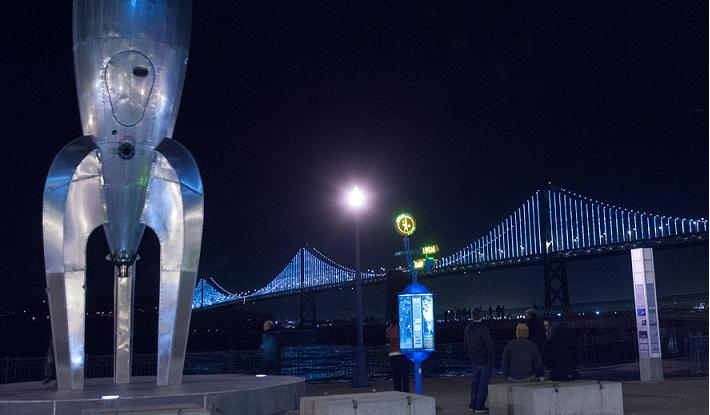
In the wake of The Bay Lights coming on to rave reviews and mesmerized gazes last week, next weekend the Raygun Gothic Rocketship will be taken down from the Pier 14 launch pad it’s occupied since 2010, the latest transitions in San Francisco’s trend of using temporary public art placements to bypass the protracted, emotional, and expensive battles that once defined the siting of sculptures on public lands in San Francisco.
By partnering with private arts organizations and calling the pieces “temporary” – even though almost all of them have been extended past their initial removal deadlines, sometimes by years – the San Francisco Arts Commission, the Port of San Francisco, and other local entities have allowed public art to flourish in the City.
The commission’s longtime public art director Jill Manton told us that temporary public art placements go back to the early ’90s, usually involving smaller pieces while big, years-long controversies continued to rage on over bigger pieces such as “the foot” that never went in on the Embarcadero, the Cupid’s Span piece that Don Fisher did finally place on the waterfront (and which many critics wish had been only a temporary placement), and a big, ill-fated peace sign in Golden Gate Park.
“It’s not as threatening to the public, not as imposing, so it doesn’t seem like a life-or-death decision,” Manton said of the trend toward temporary placements.
But the real turning point came in 2005 when then-Mayor Gavin Newsom, Manton, and other city officials began to embrace the Burning Man art world by bringing a David Best temple into Patricia Green in Hayes Valley, Michael Christian’s Flock into Civic Center Plaza, and Passage by Karen Cusolito and Dan Das Mann onto Pier 14 (a transition point that I chronicle in my book, The Tribes of Burning Man).
Each piece was well-received and had its initial removal deadlines extended. Since then, temporary placements of both original art and pieces that returned from the playa – including Cusolito’s dandelion in UN Plaza, the rocketship, Kate Raudenbush’s Future’s Past in Hayes Valley, and Marco Cochrane’s Bliss Dance on Treasure Island, which is now undergoing a renovation to better protect it against the elements during its longer-than-expected and now open-ended run – have enlivened The City.
“They get to rotate art and people get excited about what’s next,” said Tomas McCabe, director of the Black Rock Arts Foundation, a Burning Man offshoot organization that has helped with fundraising and logistics for most of the burner-built placements.
We spoke by phone on the afternoon of March 8 as he was working with Christian to install The Bike Bridge – a sculpture using recycled bicycle parts that local at-risk teens helped Christian build thanks to a grant from the National Endowment for the Arts – at the intersection of Telegraph and 19th in Oakland as a temporary placement.
The Bike Bridge will officially be unveiled on April 5 during the increasingly popular monthly Art Murmur, and the party will get extra pep from a conference of Burning Man regional representatives that is being held just down the block that day.
McCabe said the connection between Burning Man and the temporary art trend doesn’t just derive from the fact that Bay Area warehouses are filled with cool artwork built for the playa that is now just sitting in storage. It’s also about an artistic style and sensibility that burners have helped to foster.
“We try to help the art pieces have a life after Burning Man, but it’s more the style of community-based art that we promote,” McCabe said, noting that BRAF also helps with fundraising and other tasks needed to support these local art collectives. “We like to see the artists get paid for their work, we’re funny like that.”
Manton said there are currently discussions underway with San Francisco Grants for the Arts (which is funded by the city’s hotel tax) and other parties to put several large pieces built for Burning Man on display in either UN Plaza or Civic Center Plaza, a proposal Manton called UN Playa. “We bring the best of Burning Man to the city,” she said.
Most of the art placements in San Francisco have been labors of love more than anything, and a chance to win over new audiences. When the Five-Ton Crane crew and other artists placed the Raygun Gothic Rocketship on the waterfront in 2010, they had permission from the Port to be there for a year. Then it got extended for another year, and then another six months, and it will finally come down this weekend.
There will be final reception for the Rocketship this Friday evening (with music from the fellow burners in the Space Cowboys’ Unimog) and then the crane will come up on Sunday morning to remove it, in case any Earthlings want to come say hello-goodbye.
“The Rocketship and its crew have had a fantastic 2.5 years on display at Pier 14. Maintenance days were always a pleasure, giving us a chance to talk to people – and see the smiles and joy people got from the installation,” one of its artists, David Shulman, told us. “We’ve had tremendous support from, and would like to thank, the people of San Francisco, the Port of San Francisco, and the Black Rock Arts Foundation. But Pier 14 is intended for rotating displays, and we’re excited to see what comes next.”
Dan Hodapp, a senior waterfront planner for the Port district, said they don’t currently have plans for the site, although he said it will include more temporary art in the future. “The Port Commission and the public are supportive of public art at that location,” Hodapp told us. “But right now, we’re just reveling in the new Bay Lights and we’re not in a hurry to replace the Rocketship.”
Manton said The Bay Lights – the Bay Bridge light sculpture by art Leo Villareal that began what is supposed to be a two-year run (but which Mayor Ed Lee is already publicly talking about extending) on March 5 – has already received overwhelming international media attention and is expected to draw 55 million visitors and $97 million of additional revenue to the city annually.
“It is public art as spectacle. It’s amazing,” Manton said of the piece, which the commission and BRAF played only a small roles in bringing about. “It’s so good for the field of public art.”
She that the success of recent temporary art placements and the role that private foundations have played in funding them have not only caused San Franciscans to finally, truly embrace public art, but it has ended the divisive old debates about whether particular artworks were worth the tradeoff with other city needs and expenditures. And it has allowed the Hayes Valley Neighborhood Association and other neighborhood organizations to curate the art in their public parks.
Meanwhile, even as the Port gives Pier 14 a rest, Hodapp said another temporary artwork will be going up this fall at Pier 92, where old grain silos will be transformed into visual artworks, and that Pier 27 will be turned into a spot for a rotating series of temporary artworks once the Port regains possession of the spot from the America’s Cup in November.
As he told us, “The public really enjoys art on the waterfront, and they’re most supportive when we do temporary art, so there’s a freshness to it.”
Even as renowned labor activist Bill Fletcher Jr. geared up for a talk last Thursday to describe the dire situation he believes the labor movement is facing, local organizers had victories to celebrate.
Fletcher joined organizers from the Filipino Community Center, OUR Walmart, PODER and POWER for a March 7 forum hosted by San Francisco Jobs With Justice, called “Labor at the Crossroads.”
Prior to the discussion, Fletcher told the Guardian he believes the national labor movement is witnessing a “final offensive” from big business and right-wing interests, and “an attempt to destroy unions altogether.” He also criticized a reluctance among national labor leaders to openly recognize the gravity of the situation. Fletcher’s latest book, published last August, is titled They’re Bankrupting Us, and 20 Other Myths About Unions.
Fletcher said he believes labor should place less emphasis on “being invited to this or that social occasion,” and more on reaching out to community-based organizations to foster movement building. He said he thought there was a need for “innovation” by organized labor, such as forging alliances with the unemployed, or reaching out to under-employed workers earning low wages in retail positions. “The labor movement grew by being audacious … by making the comfortable uncomfortable,” he said.
Despite Fletcher’s bleak portrait and the generally discouraging trends of the day, such as the impacts of the sequester, an international move toward austerity and stubbornly high unemployment in the United States, representatives from San Francisco Jobs with Justice nevertheless were able to point to some recent worker victories.
Many San Franciscans who gathered for “Labor at the Crossroads” were encouraged by successful negotiations that resulted in what they viewed as a much-improved deal for the San Francisco CPMC hospital project, which included stronger local hiring requirements and other items labor and community organizers had fought for.
Organizers also applauded last month’s Chinese Progressive Association victory against Dick Lee Pastry on behalf of workers subjected to wage-theft violations. The San Francisco Chinatown restaurant was forced to pay a whopping $525,000 in back wages and penalties.
At the state level, the California Domestic Workers’ Coalition kicked off its mobilization last week in Los Angeles urging passage of the Domestic Workers’ Bill of Rights, authored by Assembly Member Tom Ammiano. The legislation would extend basic labor protections to housekeepers, childcare workers and caregivers, who collectively represent a primarily immigrant workforce. At the national level, momentum is starting to build around the Fair Minimum Wage Act, with supporters calling on lawmakers to raise the minimum wage to $10.10 an hour.
“The union movement should be helping unemployed workers get organized, fight back and fight for jobs,” Fletcher said. “There is no significant organization of the unemployed – no significant force that has taken up this issue and said, we need to build a mass movement around jobs.”
He urged local organizers to identify priorities. “We have to go forward with, what is the vision?” he said. “What do the people of Oakland and San Francisco need?”
I was paging through my neon-orange-and-yellow copy of Tristan Taormino’s Feminist Porn Bookand generally feeling good about International Women’s Day when I discovered that gah! I totally spaced and missed out on a really important porn happening that is sweeping the country: handsome wackjob Craig Gross’ “Porn Kills” tour!
The comely Gross has been motoring about visiting the country’s third tier cities in — yes! — a hearse, enlisting pro-Jesus spoken word poets and Christian video artists who love frosted flakes to spread the word that porn is threatening the collapse of our families. In a hip way, with skulls and stuff.
As amusing as it would have been to read about my adventures at Gross’ March 10 Bakersfield gig, he didn’t send me the press release and I missed it. Rude. Let’s attempt to heal with this week’s sex events:
“Nudes”
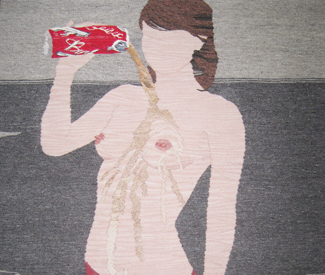
Guerrero Gallery’s celebrating its third birthday with a bunch of naked hotties — “Nudes” is a group exhibition of 18 artists’ depictions of the human form. Our sneak peek favorite has to be Erin Riley’s sensual handwoven tapestries which show scenes of lovers embracing, and one woman really indulging her attraction to Budweiser beer.
Through April 6. Opening reception: Sat/9, 7-11pm, free. Guerrero Gallery, 2700 19th St., SF. www.guerrerogallery.com
Fan Dancing with Balla Fire
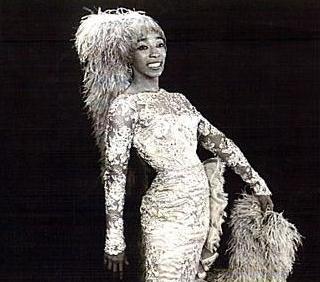
Worry not if your closet doesn’t hide a pair of Dita Von Teese-style, body-sized feather fans — Sin Sisters Burlesque’s Balla Fire says most any flat surfaces will do for this fluttery seminar. And while trash can lids or three-ring binders may not inspire the most sultry of moods, worry not: Ms. Fire, a veteran of the burlesque scene since 2005, has curvy aplomb to spare and enviable teaching skills.
Sun/10, 7-9pm, $30. Center for Sex and Culture, 1349 Mission, SF. www.sexandculture.org
“Titti Trifecta”
That which stokes one’s creative fire is unique to each of us. The shape that reanimates Lee Miltier and Maria Yates’ embers is that of a dildo — a handcrafted, artfully whorled dildo at that. The duo’s Fucking Sculptures are on display all month at this all-female art show in Oakland and as part of the exhibition, Yates will teach a workshop today on how to craft one’s own sex toy.
Through March 29. DIY sex toy workshop: Sun/10, 3-5pm, $5-10 donation suggested. Moco Gallery, 371 17th St., Oakl. facebook.com/mocosoart
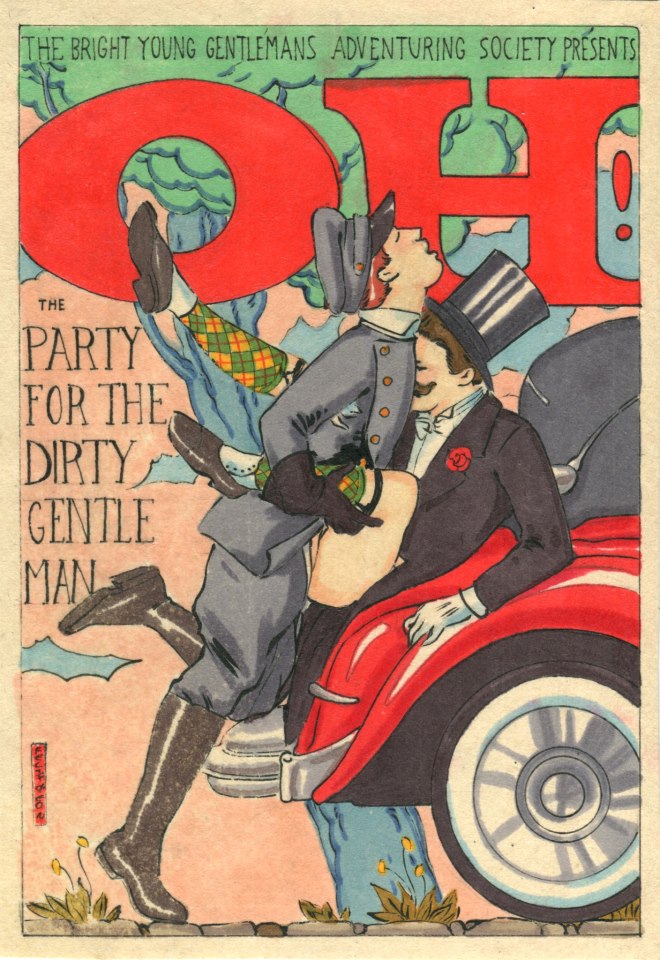
Three years of Oh!
Watch this video:
Tell me you don’t want to be at the third annivesary (so many of those this week!) of host Danimal’s twice-monthly party. Darling DJ Robin Simmons will give you something to listen to beyond the slaps and moans, mmkay?
Wed/13, 10pm-2am, $3. Powerhouse, 1347 Folsom, SF. Facebook event
We’ve been hearing a lot about the Night Light thanks to its hosting of quality local shows; in the past year there have been performances by Warm Soda, Burnt Ones, Religious Girls, Jaberi and Deutsch, and the like. This Saturday, to celebrate 12 months of life, the bar-venue is hosting a free party, and there’ll be eight bands, seven DJs, and three comedians to check out throughout the night. Yes, all free.
First off, a little background. The Night Light is split-level Jack London Square area building with a bar on the bottom level, and a show venue up top. I’ll let the flowery press release give you the rest: “The decor is influenced by Speakeasy era bars, with flocked velvet wall paper, leather couches, and a darkly stained interior. The alcohol inventory focuses heavily on providing a wide selection of whiskies, and the cocktail menu offers new twists on Prohibition fare.” Doesn’t that cozy?
http://www.youtube.com/watch?v=BS3i-YkeXLI
Here’s the good stuff: to celebrate the one-year anniversary, owners Doug Kinsey and Johnny “Scobey” Nackley (see interview above) are offering all-night happy hour, and a complimentary midnight champagne toast – might as well be New Years.
The performances: DJs Delgado and Odiaka from Fresh Jamz and Miggy Stardust will spin downstairs, beginning at 7pm. In the venue section upstairs, there’ll be sets by live bands Clipd Beaks, Spaceburn, Mahgeetah, Bam! Bam!, Old and Gray, Frankie and the Aztecs, Lessons, and Tastyville; DJs Protoghost, Inti Inti, and Rick Moranis (aw, nice to see that name again, even it’s in a different context), along with live comedy by Clark O’Kane, Joey Devine, and Sean Keane.
Ahead of the American Israel Public Affairs Committee’s three-day policy conference in Washington DC, Oakland-based Jewish Voice for Peace and Avaaz.org blanketed the DC Metro with provocative anti-AIPAC posters. The $100,000 marketing campaign features images of young Jews with the words: “AIPAC does not speak for me. Most Jewish Americans are pro-peace. AIPAC is not.” The posters, which are part of a larger campaign to counteract AIPAC’s strong and hawkish influence on American foreign policy, will run for two-weeks in the DC Metro.
The March 5-7 AIPAC conference attracts pro-Israel activists from around the country and this year features an address by Vice President Joe Biden. AIPAC spends nearly $3 million a year lobbying Congress and enjoys widespread support from both major political parties. But according to JVP Executive Director Rebecca Vilkomerson, Jewish-American frustration with AIPAC is mounting.
JVP’s high-profile ad campaign is designed to appeal to more liberal American Jews who are uncomfortable with AIPAC’s continued support for conservative US foreign policy priorities. “AIPAC is the NRA of foreign policy lobbies, it pushes a right-wing agenda that in no way represents the majority of Jewish Americans,” JVP Spokesperson Sydney Levy told the Guardian.
JVP endorses the controversial Boycott, Divestment, and Sanction (BDS) movement which seeks to isolate Israel internationally through a sustained divestment from Israeli institutions. This position has drawn criticism from other local Bay Area Jewish organizations and Levy said JVP has been barred from using space at the San Francisco Jewish Community Relations Council.
During the ongoing conference, AIPAC is expected to launch a campaign to convince Congress to exempt Israel aid from the sequestration budget cuts. But JVP is calling on its grassroots network of more than 35 local chapters to oppose the campaign. “In the era of sequestration, where every item is on the table – from Medicare to Head Start – why isn’t aid to Israel on the table?” asks Levy.
AIPAC did not responded to requests for comment, but we’ll update this post if it does.
SEX Let’s take a trip to Texas for some national news before this week’s sex events.
Clearly, strippers are the reason we have human trafficking. This, at least, appears to be a thought in the noggin of Texas assemblyperson Bill Zedler, who has proposed HB 337, a bill that would require exotic dancers to wear a license certifying that they have taken a course in sex slavery.
The bill is a not-so-subtle attempt to crack down on the number of people who become exotic dancers — the hope is that no one will want official records of their time as a sex worker. “They won’t want to get a license as a stripper from the state of Texas,” Zedler told the Star-Telegram, a newspaper that covers the Dallas-Fort Worth-Arlington region. “This will force everyone to clean up their act. Overall, it will be a benefit to everyone concerned.”
As a government regulation that is slut-shaming while managing to obfuscate the real culprits behind human slavery, HB 337 is a real paradigm of conservative multitasking.
Even better, part of the proposed legislation dictates that the license (which will have its wearer’s legal name on it, all the better to imperil dancers’ well being) be worn while its bearer is working.
In case you’re confused about how that would work, Zedler was happy to provide style tips. “They could wear it around the neck … or on their shoes … or attached to a head band,” he commented to the Star-Telegram. Sexy!
“NUDES”
Guerrero Gallery’s celebrating its third birthday with a bunch of naked hotties — “Nudes” is a group exhibition of 18 artists’ depictions of the human form. Our sneak peek favorite has to be Erin Riley’s sensual handwoven tapestries which show scenes of lovers embracing, and one woman really indulging her attraction to Budweiser beer.
Through April 6. Opening reception: Sat/9, 7-11pm, free. Guerrero Gallery, 2700 19th St., SF. www.guerrerogallery.com
FAN DANCING WITH BALLA FIRE
Worry not if your closet doesn’t hide a pair of Dita Von Teese-style, body-sized feather fans — Sin Sisters Burlesque’s Balla Fire says most any flat surfaces will do for this fluttery seminar. And while trash can lids or three-ring binders may not inspire the most sultry of moods, worry not: Ms. Fire, a veteran of the burlesque scene since 2005, has curvy aplomb to spare and enviable teaching skills.
Sun/10, 7-9pm, $30. Center for Sex and Culture, 1349 Mission, SF. www.sexandculture.org
“TITTI TRIFECTA”
That which stokes one’s creative fire is unique to each of us. The shape that reanimates Lee Miltier and Maria Yates’ embers is that of a dildo — a handcrafted, artfully whorled dildo at that. The duo’s Fucking Sculptures are on display all month at this all-female art show in Oakland and as part of the exhibition, Yates will teach a workshop today on how to craft one’s own sex toy.
Through March 29. DIY sex toy workshop: Sun/10, 3-5pm, $5-10 donation suggested. Moco Gallery, 371 17th St., Oakl. facebook.com/mocosoart
Sixth Annual International Juried Plastic Camera Show
These days, every smartphone-toting amateur can create his or her own hazy vignette to remind us of those groovy days before digital photography. But Instagram and its peers always stop short in their quest for that special quality that only real lo-fi technology — cameras constructed of plastic and the occasional piece of tape — can achieve. In its sixth Plastic Camera Show, RayKo Photo center will exhibit the best 90 photos chosen from thousands of international submissions, with a special focus on Los Angeles-based Thomas Alleman’s black-and-white images that his plastic camera manages to render in a mood that is both cinematic and sordid. Instagram has nothing on these photos. (Laura Kerry) Through April 22 6-8pm opening, free RayKo Photo Center
Student recitals are just one of a number of campus spring rituals. The University Dance Theatre’s at SF State University is no exception. This year’s program, besides showing new works by alumni, faculty, and advanced students, is very much worth trip out into the fog belt. KT Nelson, Co-Artistic Director of ODC/Dance, with whom State has an ongoing relationship, is setting her Transit on student performers. Transit is witty, wistful, and wondrous; sort of a love letter to harried urban lives. Max Chen’s fantastical, multipurpose bikes also pay tribute to the City’s favorite mode of transportation. Nelson knows that spectacular props can steal a show; she didn’t let it happen. Transit focuses its lively energy on where it belongs — the dancing. (Rita Felciano)
To celebrate its 10th year, the San Francisco International Ocean Film Festival is assembling the following: a Cousteau (Jean-Michel, son of Jacques, who will be a special guest at the opening-night gala); a documentary about the first lady of surfing (Brian Gillogly’s Accidental Icon: The Real Gidget); and a shark-themed program highlighted by Steve Dilaridan’s adorably-titled animated short I’m Going to Bite Someone. And that ain’t even taking into account the rest of the over 50 ocean-themed films from some 14 countries. Dive in! (Cheryl Eddy)
Through Sun/10, most films $8–$14 (opening gala, $150)
Chicago’s the Hush Sound was “discovered” in 2005 by Pete Wentz via Panic! At the Disco’s Ryan Ross, but don’t hold that against it. The group’s simple boy-girl harmonies and catchy melodies are at once sincere and whimsical, creating a timeless, folk-tinged pop sound. When the band formed, core songwriters Greta Salpeter and Bob Morris were essentially still children, going to school and lifeguarding, respectively. In the years and three albums that followed, the band mercifully never lost its youthful nature. Now, after a five-year hiatus, the Hush Sound is finally back with a new album in the works — and its ready to relive its youth. (Haley Zaremba)
A Youtube comment on the song “Blackout” from Pickwick’s record, Myths Vol. 3, reads “these fucking albums are nowhere to be found.” Though one should usually ignore Youtube comments, in this case we say, Kamelbutiken, you have a point. For the past year, the band has sold out shows in its native Seattle and earned spots in notable festivals, gaining hype only through the release of a series of seven-inch vinyl records and online videos. It’s hard to believe that with all the recognition they’ve earned, March 12 marks the release of the band’s official debut album. While the soul-and-folk-infused rock the band makes is still nowhere to be found, find Pickwick live at the Independent. (Kerry)
Futuristic beats producer Travis Stewart, a.k.a. Machinedrum, takes cues as much from hip-hop and jungle rhythms as from the current dubstep/wobble craze. The American-born Berlin resident has produced for rising Harlem star Azealia Banks and counts rhymesayer Theophilus London and UK-based dream-techno star Lone as collaborators. Machinedrum keeps his productions quick and tightly-woven, typically floating catchy melodies and some sonorous vocal samples alongside shuffling beats. The multi-faceted Stewart has also earned respect for his recent reinterpretations of giants in their respective genres, Scottish electronic duo Boards of Canada and psychedelic jazzist Sun Ra. (Kevin Lee)
With directors like Cristi Puiu (2005’s The Death of Mr. Lazarescu) and Cristian Mungiu (whose latest, Beyond the Hills, opens March 15) leading the charge, the Romanian New Wave is a well-established phenomenon. So it stands to reason that next-door neighbor Bulgaria would also be eager to come into its own, cinematically speaking — and the inaugural San Francisco Bulgarian Film Festival is here to share some of the country’s recent triumphs with local audiences. Included in the two-day fest are Bulgaria’s 2011 Oscar submission, Tilt, about friends who dream of opening a bar amid the country’s tumultuous early 1990s; and contemporary drama Love.Net, a hit at the 2011 Bulgarian National Film Festival. (Eddy)
Legend has it that Garry Winogrand would shoot an entire roll of film in a single block, barely pausing or taking his eye away from his Leica camera’s viewfinder until he reached the end. As a result, his body of work presents barely mediated views of daily life in postwar America. And it presents a lot of them. Winogrand produced so many rolls of film that he never saw an estimated 250,000 images contained on them before his untimely death in 1984. In a retrospective that will travel the globe after leaving San Francisco, SFMOMA will display about 100 of these never-before-seen prints, adding to an already prolific and important collection. We’re lucky to get to see so many streets through Winogrand’s eyes. (Kerry)
Don’t let Flogging Molly fool you: everything about the band may seem wonderfully drunk and Irish, but like any other illusion, it actually hails from Los Angeles. Vocalist Dave King, however, is a bona fide Irishman, and his thick brogue is the perfect addition to Flogging Molly’s Celtic-flavored punk madness. Whether or not you want to listen to songs about drunken pirates and whiskey in your free time, its live show is a spectacle that anyone could and should enjoy. Though the band has been together and touring since the ’90s, it hasn’t slowed down one iota. That x-factor that makes some live shows over-the-top fun simply can’t be spoken for. Grab a bottle of Jameson and go see for yourself. You can thank me later. (Zaremba)
Efterklang The Danish band Efterklang first gained international plaudits with its soaring 2007 LP Parades on the Leaf Label Ltd and such triumphant, symphonic battle cries as “Mirador” and “Caravan.” Since switching labels to 4AD Ltd., Efterklang has (somewhat regrettably) corralled that bright energy and fostered a more direct, intimate sound. Legend has it that the Danish trio wandered through an abandoned Norwegian coal mining settlement near the North Pole formerly operated by the Soviet Union. The band’s journey and field recordings became source material for last year’s Piramida, in which frontperson Clasper Clausen drops his voice an octave and embarks on mysterious stories of exploration and melancholy. (Lee)
The Moth: “True Stories Told Live.” Where else could we listen to strangers, alone on a stage with their words, telling fantastical-but-true personal stories of Jewish mobster uncles, family embezzlement, Montgomery Clift’s wishes from beyond the grave, the whiskey-soaked life of a rookie reporter, the cult of Radical Honesty, and sexual awakenings during midlife crises? The NY-born series — in which reading from notes is a major no-no — has been going strong since 1997, with monthly StorySLAMs (open mics) in LA, Chicago, Louisville, and Seattle, among other cities. The San Francisco Moth StorySLAM launches today at the Rickshaw Stop and will continue on the second Monday of every month. The first round’s theme is “secrets” so come prepared to divulge the dirt. And as podcast host Dan Kennedy always notes, “we hope you have a story-worthy week.” (Full of secrets you’re willing to share.) (Emily Savage)
The Guardian listings deadline is two weeks prior to our Wednesday publication date. To submit an item for consideration, please include the title of the event, a brief description of the event, date and time, venue name, street address (listing cross streets only isn’t sufficient), city, telephone number readers can call for more information, telephone number for media, and admission costs. Send information to Listings, the Guardian, 225 Bush, 17th Flr., SF, CA 94105; or e-mail (paste press release into e-mail body — no attachments, please) to listings@sfbg.com. Digital photos may be submitted in jpeg format; the image must be at least 240 dpi and four inches by six inches in size. We regret we cannot accept listings over the phone.
Submit items at listings@sfbg.com. For further information on how to submit items for listings, see Picks
WEDNESDAY 6
RayKo’s sixth annual plastic camera show RayKo Photo Center, 428 Third St., SF. www.raykophoto.com. Through April 22. Opening reception: 6-8pm, free. You’d never these cameras’ non-pro status by the breathtaking images they are capable of creating. Highlighted in this year’s RayKo show is LA-based artist Thomas Alleman, who began using a Holga camera in 2001 to document the aftermath of 9/11. His dreamy, dramatic prints perfectly pinpoint the dysfunctional beauty of these toy cameras.
“Beyond THC: Cannabidiol and the future of medical marijuana” Commonwealth Club of California, 595 Market, SF. www.commonwealthclub.org. 5:30pm, $12 members, $7 students, $20 nonmembers. Martin A. Lee, author of Smoke Signals — which focuses on the social history of cannabis — will be speaking about the benefits of cannabidiol (CBD), a non-psychoactive component of marijuana that lacks the “high” effect of THC and contains key medicinal benefits. Lee will discuss how the medical marijuana industry has responded to the discovery of CBD and sign copies of his book afterward.
THURSDAY 7
Robot NightLife California Academy of Sciences, 55 Music Concourse, SF. www.calacademy.org. 6-10pm, $12. This beloved weekly museum soiree delves into sci-fi this evening with a focus on robots. Managing director of Silicon Valley Robotics will speak to the local innovation and commercialization of robots and Academy curator Gary Williams will show off footage of deep-sea corals from Pillar Point Harbor. A robotic performance by art group Survival Research Labs and exceptional designs by robot design studio BeatBots are also on tonight’s schedule.
“Art Star” Otis Lounge, 25 Maiden Lane, SF. www.otissf.com. 10pm-2am, free. If you’re looking to submerge yourself into the city’s art community, head over to Otis Lounge to meet and network with artsy individuals at this monthly first Thursday event. Whether you make, buy, sell, or just love art, all creatives are welcome.
Community dinner St. Cyprian’s Episcopal Church, 2097 Turk, SF. www.saintcyprianssf.org. 7pm, free. Hungry, cash-strapped health nuts listen up. This free dinner created from USF’s garden and local farmers markets is open to everyone and anyone interested. The event lacks any motivation beyond a heartfelt effort to bring the community together through wholesome food.
Writerscorps Live with Tamim Ansary Contemporary Jewish Museum, 736 Mission, SF. www.sfartscommission.org. 6:30-7:30pm, free. Award-winning youth writing program WritersCorps has partnered with the CJM for a multi-generational live reading. Author Tamim Ansary will read from his memoir West of Kabul, East of New York, based on his family’s immigration from Afghanistan to San Francisco. The reading will also showcase WritersCorps teaching artist Minna Dubin and students from Downtown High School, Aptos Middle School, Mission High School, and more.
First Thursday with OM Cocktails Hang Street Gallery, 567 Sutter, SF. www.hangart.com. 6-8pm, free. Organic mixology — premixed in the bottle? Will wonders never cease. Check out this brand’s coconut-lychee cocktails and more at Hang Street’s First Thursday reception.
FRIDAY 8
East Bay Bike Party, location TBA. 7:30, free. eastbaybikeparty.wordpress.com. It’s time to go green, literally. The theme of this month’s East Bay group rideout is the favored color of enviro-fans and Kermit the Frog alike. Whether you want to channel your inner leprechaun or bike around as giant pot leaf, the possibilities are endless. If you’re a Bike Party virgin make sure to also look over the code of conduct to help keep the event as community-friendly as possible.
SATURDAY 9
White Walls gallery 10th anniversary show White Walls, 886 Geary, SF. www.whitewallssf.com. Through April 6. Opening reception 7-11pm, free. Town’s best-known “urban art” gallery hosts this retrospective of a decade of boundary-breaking work within its wall (kind of — the gallery recently moved to a larger space on Geary Street). Check out works from Shepard Fairey, ROA, Apex, Ferris Plock, and of the best who have plied works there.
“Doctors on Board” Oakland Marriott City Center, 1001 Broadway, Oakl. www.pmfmd.com/doctors-on-board. 6am-6:30pm, free to students. Application required. The Physicians Medical Forum is hosting a day of workshops and skills training session helping African American students to attend medical school and residency programs. Prominent physicians will provide information about medical school preparation, medical specialties, and life as a physician.
“Quilt San Francisco” Concourse Exhibition Center, 635 Eighth St., SF. www.sfquiltersguild.org Also Sun/10. 10am-4pm, $10 for two-day pass. This two-day exhibit, organized by the San Francisco Quilters Guild, vividly showcases the revitalization of the traditional art form. 400 quilts and special exhibits will shown the many artistic dimensions of wearable art and modern stitching. There will also be a children’s corner, where kids can get marching orders for a treasure hunt that will lead them to special quilts in the show.
Irish-American children’s hour of music, song and dance San Francisco Public Library, Fisher Children’s Center, 100 Larkin, SF. 11am, free. www.sfpl.org. Crossroads, an annual Irish-American festival timing to open up St. Patrick’s Day season, invites the kiddos to learn traditional Irish dance taught by instructors from the Brosnan School of Irish Dance.
Fourth annual World Naked Bike Ride Meet at Justin Herman Plaza, Market and Embarcadero, SF. www.worldnakedbikeride.org. 11am-4pm, free. Protest global dependency on oil and find out what its like to pedal through Fisherman’s Wharf in the buff. All are welcome to take part — even clothed riders — but those in the buff earn extra badass points, given the uncertain status of the ride under the city’s new anti-public nudity ordinance.
“Permutation Unfolding” Root Division, 3175 17th St., SF. www.rootdivision.org. Opening reception 7-10pm, free. Bring the kids to the opening of this group exhibition exploring the biomorphic formations that can spring from the artistic process (we’re not sure what that means either.) There will be an all-ages creativity station, a perfect place to craft while Markus Hawkins spins an auditory web in an 8pm performance.
SUNDAY 10
Exploratorium’s On the Move Fest Mission District location: Buena Vista Horace Mann School, 3351 23rd St., SF. 11am-4pm, free; Bayview location: Bayview Opera House Ruth Williams Memorial Theatre, 4705 Third St., SF. 11am-4pm; Embarcadero location: Pier 15, 11am-10pm. www.exploratorium.edu. All locations offer free admission. Everyone’s favorite on-hiatus science museum is sending 10 trucks tricked out with the kind of wacky, hands-on exhibits its know for to the Mission, Bayview, and the Embarcadero for a day of science, music, and food. In both Bayview and the Mission, enjoy itinerant filmmaking, projects that encourage attendees to sport costumes and act out a special script which will then be chopped, screwed, and shown to the public.
TUESDAY 12
“Stars of Stand-up Comedy” Neck of the Woods, 406 Clement, SF. www.dannydechi.com. 8pm, $10. Comedian and pencil musician (exactly what that means we are not quite sure, please report back if you go) Danny Delchi is hosting tonight’s show. Long-time Niners field announcer Bob Sarlatte and the quirky Mr. Mystic will be performing alongside a number of other top Bay Area comedians.
Persian New Year Festival Persian Center, 2029 Durant, Berk. www.anotherbullwinkelshow.com. What better way to welcome spring than to jump over a bonfire? Head over to the Persian Center to take part in this ritual that has been passed down since Zoroastrian times. Accompanying the fiery activity will be Persian food, music, and dancing.
The Guardian broke the story last week about an Oakland school police officer, Sgt. Jonathan Bellusa, who came forward as a “whistleblower” in sworn testimony. The day after a group of Oakland-based police-accountability activists leaked an uncertified draft of the officer’s deposition to the media, NBC Bay Area aired an interview with Bellusa, who was involved in the January 2011 fatal shooting of a 20-year-old African American man, Raheim Brown.
Bellusa, who is now on leave from employment, alleges that there was a cover-up in the investigation of the shooting incident by the Oakland School Police Department, which operates independently from the Oakland Police Department as a division of the school district. Shortly after posting the story, the Guardian received a call back from attorney Adante Pointer, who conducted Bellusa’s deposition. Pointer said he didn’t know how the activist group, Against Hired Guns, got a copy of the document but he did point out that all witnesses get a copy of their deposition transcripts.
“I’ve taken a number of depositions over the course of my career, but this is the first time I’ve ever had a police officer admit that their employer was putting pressure on them to give testimony in a particular way,” said Pointer, who works for the Law Offices of John Burris, which is representing Brown’s family in a civil suit against the school police department. “It’s very eye-opening,” he added, particularly if Bellusa’s allegations ring true and “public funds and public resources are being used to cover up this death.”
But Pointer added that some of the things Bellusa stated about the facts of the shooting did not add up with the stories given by Sgt. Barhin Bhatt, who fired the weapon, or witness Tamisha Stewart, Brown’s friend who was seated in a vehicle next to him when he was shot. Bellusa “held firm to this idea that he had been stabbed three to four times with this screwdriver,” Pointer said, referencing a part in the deposition when Bellusa testified he had been hit with the butt end of a screwdriver and feared he would be stabbed in the throat.
But that doesn’t jive with the account of Stewart, who stated in her sworn testimony that the screwdriver stayed in the car ignition during the whole encounter, Pointer told the Guardian. Stewart was held in jail following the shooting for several weeks, and during that time she discussed what had happened with family and friends in telephone conversations, Pointer told the Guardian. What Stewart did not know was that her phone calls, placed from a phone provided by the jail, were being surreptitiously recorded. Pointer said his firm had been provided with tapes of the calls.
In those recorded conversations, “She was candid about everything else,” according to Pointer. “And she said she never saw Raheim try to stab [Bellusa].” Bhatt, meanwhile, told Pointer in his own deposition that he started firing because he saw Brown make a move toward the gear shifter, Pointer said, which also doesn’t add up with Bellusa’s account.
All of which goes to show that, whistleblower cop or no, questions continue to surround the fatal shooting of Brown.
Officially, the city of San Francisco will celebrate Women’s History Month with a ceremony honoring a female representative from each district on March 19 at the Board of Supervisors’ legislative chambers, followed by a reception at the Public Utilities Building at which the Mayor will proclaim a Woman of the Year. If you can stand the excitement, click here for more info.
Let’s not stop there, shall we?
Obama’s proclamation of this year’s WHM directed people to a carefully curated, perfectly dull website. Are we over Women’s History Month? Does the holiday — officially created in 1987 and proclaimed by the President annually starting in 1994 — amount to mere tokenism, as the Atlantic proclaimed today?
We’re all hanging out waiting for feminism’s fourth wave at this point, and with the Republicans having been roundly shamed in the 2012 national elections, most of the activist ire in this city gravitates towards causes with more traction in 2013. (Though this may be changing. See: local author Rebecca Solnit’s teaser for her upcoming book on the global pandemic of violence against women, which will at the least get the blogosphere roiling.) Call this a positive move towards intersectionality if you will.
But I can’t help but think: they gave us a goddamn month, shouldn’t we use it?
It’d be great if March had as many exciting events as February did for Black History Month, which saw a film festival, library events, four-day food and drink extravaganzas in the Bay Area. Excuses to come together, explicitly, in the name of women are rare — though I don’t even think they have to have a History Month (or International Women’s Day, which is March 8) on them to be amazing.
Check the newspaper on Wednesday for our complete list of recommendations on places to kick for Women’s History Month, and even more XX-chromosoned culture than usually through March. I suggested printing t-shirts for your feminist gang now. For now, here’s a couple cool, not necessarily Women’s History Month-specific ways people are recognizing women’s accomplishments this year:
– Retroactive awesome: last week, the City and the NAACP joined forces to honor 93-year old swing dancer Norma Miller at Saint John Coltrane African Orthodox Church. She’s known as the “Queen of Swing” and now travels the world speaking about her life and jazz culture. She’s danced in everything from the Marx Brothers’ A Day at the Races (1937) to Spike Lee’s Malcolm X (1992), and shows up in the Ken Burn’s jazz documentary.
– Mirus Gallery is in the final days of “The Looking Glass: Refraction Through the Female Gaze”, in which 17 female artists interpret the female form, messing with the art world’s standard depictions of woman as vessel for whatever the hell conceit the painter/illustrator/sculptor is trying to get across. Kimberly Brooks, Rachel Walker, Mercedes Helnwein, Claire Pestaille, and Casey O’Connell all have pieces in the show.
– Mother and head of the SF Fire Department Joanne Hayes-White has been named grand marshall of this year’s St. Patrick’s Day parade. Hayes-White made tne news in 2005 when her husband called 911 after she raised lumps on his head with a pint glass, and then again in 2011 when her wages started being garnished for spousal support. Something about supporting her husband and raising her kids just didn’t sit right with her #badass
– Tonight is the First Friday opening of “Titti Trifecta”, an all-female group show at Moco Gallery in Oakland. Expect single mom sculptures, artisanal dildos, and a month-long program of artist talks, feminist film, and DIY sex toy workshops.
Through March 31. Opening reception Fri/1, 7pm, free. Moco Gallery, 371 17th St., Oakl. Facebook: Moco
– International Women’s Day is March 8, but the only women’s demonstration we’ve heard of so far will take place on March 9 at Dolores Park. Women Organized to Resist and Defend (WORD) is organizing this rally and march to bring attention to violence against women. From Ohio to India, this year’s been a doozy, and past anti-violence march turnouts have indicated that people are starting to turn out for their right to be safe. (On a related note, check out this Time photo essay by Sara Naomi Lewcowicz, for which Lewcowicz embedded with a couple who before her lens became the poster children for domestic abuse.)
Two years after his involvement in a police shooting that took the life of a 20-year-old African American man, an Oakland School Police Department officer has come forward as a “whistleblower” in sworn testimony, making allegations of unethical behavior within a department that is already under the scrutiny of federal investigators.
In a deposition delivered earlier this month as part of a civil suit, police SergeantJonathan Bellusa gave a detailed account of what transpired just before his patrol partner, Sgt. Barhin Bhatt, fired several rounds and killed Raheim Brown as the youth was positioned in the passenger’s seat of a car outside a high school dance in January of 2011.
Bellusa gave testimony that in the months that followed, he came under retaliatory pressure from within the department and was “uncomfortable” with various aspects of how the investigation unfolded.
An unedited, uncertified transcript of Bellusa’s deposition, which contains some grammatical and punctuation errors because it was transcribed by an automated system, was made public Feb. 28 by a group of activists organized under a project called “Against Hired Guns.” The group sent a detailed summary and analysis of the deposition, as well as the unedited transcript, to reporters. The activists also posted the contents on a website, againsthiredguns.wordpress.com.
Asked who is behind Against Hired Guns, spokesperson Cat Brooks said they are Oakland activists “who have been doing this work either together on campaigns, or separately inside of our own groups, that see strength in numbers rather than apart. We in general are tired of having flashpoint reactions to police corruption or violence, and are interested in bringing as many people or groups together as possible to have a sustained campaign that is focused on eradicating police violence.”
Bellusa is currently on leave from employment at the Oakland school police department, and the Guardian was unable to reach him by phone on the number listed on the OUSD website. “He’s been gone for quite awhile,” OUSD spokesperson Troy Flint told the Guardian when reached by phone. Asked to comment on the myriad allegations raised in Bellusa’s testimony, Flint said, “We’re going to refrain from comment until we’ve seen the actual suit.”
The deposition was conducted by Attorney Adante Pointer of the Law Offices of John Burris, in connection with a civil rights suit that is being filed against OUSD by Brown’s mother, Lori Davis. Reached by phone, Pointer confirmed that he had taken Bellusa’s deposition several weeks ago, and was surprised that its contents had been made public, since it “is not complete yet.” He added, “I’m thinking to myself, who put that out there?” As of press time, Pointer had not returned a follow up phone call.
Brooks declined to answer questions about how the activists obtained a copy of the uncertified transcript.
Allegations of retaliation for whistleblowing
Roughly a month after the shooting incident, Bellusa said in his deposition, former OUSD Police Chief Pete Sarna let out “a boisterous yell with his [fist] up in the air” and seemed “excited” that “we as a department don’t have to worry about anything.” According to Bellusa’s testimony, Sarna had just received word that his “friend” Pete Peterson had “agreed to do the investigation” of the fatal shooting of Brown.
Asked if he felt pressured by supervisors to make statements consistent with Bhatt’s account of the shooting incident, Bellusa stated, “I have felt that if I gave statements that went against the district that I would be thrown in jail for perjury.”
Bellusa also testified that on an August morning in 2011, after he’d filed the complaint against Sarna for allegedly making racial slurs, he overheard a conversation between OUSD General Counsel Jacqueline Minor and Superintendent Tony Smith. “I over heard Jackie Minor… say they were not going to let John get away with this,” he stated.
In another incident, Bellusa testified that a different OUSD officer informed him that “Chief Sarna’s assistant, Jenny Wong, told a bunch of officers something like: ‘Don’t worry, Sarna is going to beat this case. He’s going to fire John [Bellusa].’”
After Sarna stepped down, Bhatt was briefly appointed interim police chief, unleashing an outcry from OUSD parents outraged that an officer would be promoted to the top post after shooting and killing Brown just months before. Alameda County prosecutors had since cleared Bhatt of any wrongdoing in the shooting that resulted in Brown’s death.
Taken as a whole, Bellusa’s testimony renders a disturbing internal portrait of the Oakland School Police Department, which consists of about a dozen officers and operates independently of the Oakland Police Department as a division of the school district.
The alarming account raises serious questions about internal operations of the department, particularly since it is an independent force operated by the school district at a time when funding cuts have placed the public school system under tremendous budgetary pressure, resulting in recent school closures.
Allegations of corruption
A detailed summary of the transcript provided by Against Hired Guns highlights more disturbing allegations made by Bellusa in the course of his testimony. Among them:
Bellusa asserted that he witnessed Bhatt pour Wild Turkey into a glass while he was on duty. He also said he felt concerned about Bhatt after observing him “clean his firearm for a long period of time.”
Bellusa testified that he “found out” that Sarna and Lou Silva, a former OUSD officer and current district-wide Campus Security and Safety Manager, were “sending their personal cars down to a shop on 16th Avenue… [and] were overcharging the police cars,” apparently in order to have their personal cars repaired for free or at a deep discount.
Bellusa testified, “I found out that he [Sarna] called another officer [and] told him [not to report] what had happened in front of the African American who is a witness to the … racial slurs.”
Officer-involved shooting
Brown was shot and killed outside a dance at Oakland’s Skyline High School on Jan. 22, 2011. He was sitting in the passenger’s seat of a Honda with a friend, Tamisha Stewart, who was in the driver’s seat. Bellusa and Bhatt pulled up behind them in an unmarked patrol car after noticing the lights of the Honda were flashing. Bhatt made his way to the driver’s window, Bellusa testified, while he flanked the rear passenger’s side of the car.
As Bhatt began a verbal exchange with Stewart, Bellusa testified that he noticed Brown was “fidgety” rather than cooperative, which he interpreted as a “red flag.” He opened the passenger door, crouched into what he described as a “catcher’s stance,” and initiated a verbal exchange with Brown. Shortly after opening the door, Bellusa said he made observations that led him to conclude that the car had been stolen.
When Pointer asked him where his hands were at that point, Bellusa stated, “They were on his lap,” according to the transcript. “Were they holding anything?” Pointer asked. “No,” Bellusa responded. “And so did you ask him to step out of the car when you’re having this conversation with him?” Pointer asked. “Not at that time,” Bellusa answered.
Bellusa said Brown then grabbed a screwdriver and stuck into the ignition of the vehicle, directing Stewart to drive. This prompted a struggle between Brown and Bellusa. According to a summary of the transcript written by the group of activists:
“Bellusa lunged into the car, grabbing [Brown] from behind as Brown was leaned over toward the ignition. …Bellusa tried to hold Brown, and then grabbed him, pulling Brown’s shirt and ripping it. Bhatt, leaning in through the driver’s window, hit Brown with his flashlight. … Brown had not yet made any aggressive move toward anyone, according to Bellusa’s description of events.”
A struggle ensued, and Bellusa testified that at one point Brown bit Bellusa’s wrist, prompting Bellusa to pull his hand away and use his “hammer fist” to strike him. Brown then grabbed the screwdriver from the car’s ignition, and “I believe that the backside of the screwdriver [was what] he used at that point to strike me in the chest,” Bellusa testified.
“As the struggle ensued and neither fighter gave in,” activists wrote, “[Brown] turned the screwdriver around and tried to make contact with Bellusa.”
According to Bellusa’s sworn testimony, “I was afraid that I was going to get stabbed in the throat clear as day.” He told his partner to shoot Brown: “I just screamed shoot him, shoot him,” he testified.
The Against Hired Guns summary describes what happened next. “As Bellusa pulled himself out of the car, two shots were quickly fired through the driver’s open window … by Bhatt before his gun jammed. Raheim Brown, Jr. had two bullets lodged in his body. It took Sergeant Bhatt five to ten seconds to clear the chamber of his gun, during which time he said loudly: ‘Fuck! Fuck!’ By this time, Bellusa was out of the car and at a safe distance, he said in his deposition. When asked whether he thought Brown was still a risk after the first two shots, Bellusa replied plainly: ‘No,’ and said that by this point, he had his own gun out. When asked why he didn’t pull his trigger, he replied: ‘Just like I said my statement with OPD, I didn’t see a threat.’
‘Tell me … about the gun’
Bellusa explained in his deposition that he’d noticed a gun sitting in the side pocket of the vehicle during the incident, but did not alert Bhatt that the gun was there until after the shooting had occurred. When Pointer asked, “And prior to you screaming ‘shoot him, shoot him’ you hadn’t said anything related to the gun?” Bellusa responded: “No.”
Shortly after the shooting, Bellusa testified he had an interaction with Sarna, then-OUSD chief, and Smith, the OUSD superintendent. According to details included in the deposition, this conversation took place at Oakland Police Department (OPD) headquarters, after Bhatt and Bellusa had been separated, prior to any formal interview with OPD regarding the shooting.
According to Bellusa’s testimony, Smith questioned him directly. “He said specifically ‘John, tell me where the gun was. Tell me everything you can remember about the gun and what it looked like.’”
Penetrating the Thin Blue Line
An introductory statement from Against Hired Guns notes that Bellusa “will likely be considered a ‘good’ cop” for publicly airing these allegations and making an unusual break from the code of silence that typically binds police departments.
Yet the activists aren’t willing to let the sergeant off the hook so easily. Asked why they took steps to preempt release of this information, Brooks, the spokesperson for Against Hired Guns, told the Guardian, “We thought that it was important so that the debate could be framed as part of the larger context of police and violence in Oakland, as opposed to this cop has now done something good, which makes him a good cop. … He was still present the night Raheim was murdered.”
Against Hired Guns wrote in an analysis included in press materials, “It has now been over two years since Raheim’s family lost him to the violence of policing. They have relentlessly searched for justice and still do not know exactly what happened to him. At the very least, Bellusa or any of the people or agencies he spoke with, could have explained the context of Raheim’s killing to his family members, who continue to grieve and struggle with the loss of their son, father and lover.”
The activists’ summary frames the issue in this way: “Sergeant Bellusa has now penetrated the ‘thin blue line’ that shields corrupt, abusive, violent police officers and departments. We are releasing this information as part of … a series that places the statements of Bellusa’s testimony in the larger overall context of policing in our society [and] the ‘thin blue line’ that protects officers from any consequences.”
It’s a low-key kind of Noise Pop year compared to the past three or four, without the huge, attention-grabbing headliners of yore (looking at you, Flaming Lips at Bimbo’s), but Wednesday’s show at the Hemlock Tavern could have been nuzzled in nicely in any very early NP lineups, which is what made it feel authentically true to the inherent spirit of the festival.
No pomp or glitz, no big names or sold-out, packed-to-the-gills chaos. I initially went to see Olympia, Wash.’s Lake, a twee, lo-fi indie pop quartet with great hooks, but found much enjoyment out of the two bands that sandwiched that act (Cruel Summer and Blank Tapes), perhaps even more so?
I arrived early in Cruel Summer‘s set; I’m told the jangly San Francisco act had only played a few songs to the neatly packed in Hemlock crowd. There were casually smiling faces stretching from the front of the stage back to the sound guy, however there wasn’t that trademark Hemlock hot stink just yet. You could stretch your legs out without knocking into a sweaty mess. Though I detected a wafting hippie scent.
Cruel Summer, which consists of two hard-rocking ladies out front (bespectacled lead singer-guitarist Thea Chacamaty and bassist Chani Hawthorn), along with guitarist Josh Yule and bassist Sean Mosley, created a rolling wave of reverb and noise – so loud it drowned out the vocals – in a “dreamy gazey noisey hazy wavey gravy” way, as the band is wont to describe it. During the loud-sound-wave a few heads in the audience bopped and jerked hard, meeting each thundering drum hit with a nod of approval. Cruel Summer’s been around since 2011, but could easily fit in with ’80s shoegaze scenes or ’90s K Records stock.
The latter goes for second band Lake as well. Actually, Lake is currently on the K roster. And it fits right in. An aside: when I was first learning there was music being made beyond pop radio (‘sup KIIS-FM?) in my early, impressionable tweens, I had a friend with an older sister who was of the super cool girl alternative guild. She and her friends were in to riot grrrl, and twee, and K, and Kill Rock Stars, and the like. They wore cardigans, boat stripes, short skirts with nubby tights, and thick-framed glasses, and had glittery Fenders and drum kits. I feel like the older sis and her crew would’ve dug both Cruel Summer and Lake.
Anyway, Lake played mostly new songs last night, some that had sexy Bossa nova bass lines – the bass was noticeable after Lake asked the crowd if anything needed to be turned up louder. Some got so funky a few people noodled along to the beat. The four band members switched instruments a few times during the set, and three traded off covering male/female lead vocals, including Eli Moore and his wife, the sweet-voiced Ashley Eriksson, who also played keyboards.
Next up was the Blank Tapes; the trio also traded off male/female harmonies and pop hooks, but with a garage-rooted rock’n’roll edge – that was also due in part to standing drummer Pearl Charles smacking just two drums, a floor tom and a snare, often with a mighty thwack. This is also when the scent changed from hippie to pizza, as someone brought in a delicious-smelling pie, and I got jealous.
The dynamic between Charles and Blank Tapes pied-piper/multi-instrumentalist Matt Adams reminded one of my show-going companions of the famed Lee Hazlewood-Nancy Sinatra collaboration. Though on looks alone, it could’ve been Lindsay Weir and Ginger Baker. The band – which has the advantage of a rotating lineup and addresses in both LA and SF – sounded great, alive and full of energy, pumping up an already pleased crowd with crackling beach garage songs like bubbly “Coast to Coast” (a new single on Oakland’s Antenna Farm Records), a song I feel like must be called “Beach Party,” and tracks off 2012’s Sun’s Too Bright (Burger Records) tape. Live, the songs seemed far less relaxed than recorded versions.
It’s the way I imagine Noise Pop began, 21 years back, with talented, eclectic, lo-fi, noise-pop-genre-specific acts from up and down the West Coast huddled in a favorite little local venue, beating the shit out of their instruments. No fuss, no muss.
STREET SEENAs the author of a style column, I spend time trawling the city for innovative new local designers. Clothes that are made here, cute ones. Let me hear about them, I’ll put it in print, swear down.
But there’s not… that much of them. Speaking historically, of course. In the heyday of garment manufacturing, San Francisco churned out mountains of readywear — more than any other city in the country besides New York and Los Angeles.
Then we started to export our business overseas. You’ve heard about how Levi-Strauss used to have a factory on Valencia Street — not just the artsy pop-up shop they opened in 2010? Your jeans aren’t made here anymore guys, unless you’re copping from newbie “Kickstarter brand” Gustin (www.weargustin.com), Holy Stitch (www.juliandash.com), Self Edge (www.selfedge.com), or one of the other small local lines that have popped up in the denim giant’s wake.
These companies cater to locavore customers who “expect their clothing labels to read like restaurant menus,” as Modern Luxury put it in a 2011 article about the state of the SF garment industry. Making clothes locally means less turnaround time, less environmental impact — not to mention the sweet San Francisco cache that locally made palazzo pants hold.
Problem is, the garment factories that the industry needs have been greatly reduced in number.
In a Hayes Valley cafe, Gail Baugh sits at her laptop, shutting it with a morning-time, capable air when I sit at her table. Her outfit says boardroom, accented with exceptions. A beautifully-patterned scarf, and large brooch-like earrings suit this no-nonsense type with a degree in chemistry of textiles, 35 years of experience in the garment industry, and a byline on the book on fashion. Really, Baugh’s The Fashion Designer’s Textile Directory is a best-seller in its particular category on Amazon, she tells me.
She is the president and one of five founding members of PeopleWearSF (www.peoplewearsf.org), a Bay Area garment industry trade association that was formed in 2011 to fill the vacuum left by SF Fashion Industries, which played the role for 75 years before the garment industry collapse. PeopleWearSF’s members flip up to $25 million in yearly sales volume, though it also includes rank beginners in the clothes game.
“If you want a vibrant economy, you have to make stuff,” Baugh tells me matter-of-factly. Her organization — and SFMade (www.sfmade.org), the no-fee membership group who represents local producers and whose cheery stickers adorn a host of local retailers’ windows and product labels here in the city — provide networking opportunities to their members. These include 40-some brands, including outdoor label Triple Aught, longtime Mission District purveyor of pretty Weston Wear, and Babette, the flowing line of neutral-toned women’s wear based out of an Oakland warehouse. Those three manufacture locally, but not all PeopleWearSF members do.
Both trade associations work with public policy — specifically, through the Mayor’s FashionSF Economic Development Initiative — to provide more resources to the garment factories that were once much more prevalent in San Francisco. Efforts to keep the sew-shops open have to operate through a multi-pronged approach. It’s not just soaring rents that close the factories’ doors, but a dwindling high-skilled workforce pool that’s willing to work for the wages typically offered by the factories.
“Sharing resources, communicating issues — it’s a good business policy,” says Steven Pinksy, whose wife started Babette in 1968 and who was also a founding member of PeopleWearSF. Joiners, in other words, are welcome.
Those looking to jumpstart their Bay fashion career could do worse than attend tonight’s Renaissance Entrepreneurship Center’s panel discussion on starting small in fashion, featuring experts from PeopleWearSF, Apparel Wiz, Sheila Moon Apparel, and CBU Productions.
“Manufacturing Micro” Wed/27, 6-9pm, $20. Renaissance Entrepreneurship Center, 275 Fifth St., SF. tinyurl.com/manufacturingmicro
Localized Appreesh is our thank-you column to the musicians that make the Bay. To be considered, contact emilysavage@sfbg.com.
Sigur Rós, Explosions in the Sky, Radiohead, the Antlers – Oakland’s the Dandelion War has received some outsized, and crazy positive, comparisons and reviews during its four short years of existence, particularly thanks to 2012’s excellent, ambient We Were Always Loyal to Lost Causes (Deep Elm) LP.
All of it’s accurate, by the way. The Dandelion War makes mood music for the brain. The post-rock five-piece boasts the build ups and crescendos of Explosions, the alien echoing otherworldliness of mid-career Radiohead, the pleasing falsetto and hypnotic soundscapes of the Antlers, and tiny pulsing heartbeat and cave-deep reverb of a dewy Sigur Rós.
Check tracks “Drifters” and “The Devil’s Black Wool” off We Were Always Loyal to Lost Causes.
So now you need to see it live, right? The Dandelion War plays an enviable opening slot for the final Noise Pop show of this very Noise Poppy week, with Caspian at Bottom of the Hill Sun/3. First up, it took the Localized Appreesh challenge:
Year and location of origin: 2008, San Francisco (currently based in Oakland).
Band name origin: the name was taken from the title of a book by Richard Rosenthal.
Band motto: Good enough for government work.
Description of sound in 10 words or less: “It’s dreamy, shoegazey, and brimming with pathos: in short, lovely” (stolen from Inforty).
Most recent release:We Were Always Loyal to Lost Causes (Deep Elm, 2012).
Best part about life as a Bay Area band: The Bay Area has some incredible local bands and we love being part of that scene.
Worst part about life as a Bay Area band: Cities on the West Coast are so spread out that it’s really hard to tour.
First album ever purchased: (various answers from various band members, names withheld to preserve our dignity) A Hard Day’s Night by the Beatles, Burn Out by Slick Shoes, Appetite for Destruction by Gn’R
Most recent album purchased/downloaded: (same) News from Nowhere by Darkstar, Optica by Shout Out Louds, Glowing Mouth by Milagres Favorite local eatery and dish: Fonda (Albany) for duck tacos, Babalous Mediterranean (Walnut Creek) for the deluxe falafel, El Novillo Taco Truck (Oakland) for the chicken torta
The Dandelion War With Caspian, Native, Boyfrndz Sun/3, 5pm, $12 Bottom of the Hill 1233 17th St., SF www.bottomofthehill.com www.noisepop.com
MUSIC Like most love affairs, there was little indication on our first encounter that it would turn into a lifelong infatuation. I was 17, methodically singing my way through a book of folk tunes, one of which was his first real hit, “Suzanne”. Though I admired it for its lyrical content, it weighed heavy on my range, and I soon moved on to other songs.
When I stumbled across him again, years later, it was as if we had never met. He was older, rougher, seemingly more jaded. His brutal ode “The Future” was dominating the indie-radio airwaves, hot on the heels of its appearance in Oliver Stone’s bombastic Natural Born Killers. When my then-roomie confessed a fondness for his music, it turned that single song on the radio into a sort of clarion call — the key, perhaps, to winning my flatmate’s frustratingly platonic heart. From that time, Leonard Cohen became a constant presence in my life, hovering at the periphery of countless triumphs, challenges, and betrayals, a companionship of almost 20 years that has spanned the globe, and almost every kind of circumstance.
There’s no one song or phase of Cohen’s music that seems to universally predicate the shift from uninitiated or fair-weather fan to true believer. For some it is the Cohen of the 1960s, whose laborious finger-picking and reedy, untrained voice lent equal gravitas to meticulously-plotted stories of resistance fighters and blowjobs, transcendence and squalor. For others it’s the synth-infused litanies to the naked body and the painful futility of the excess of the ’80s, or the flintier, world-weary renegade poised for flight of the early ’90s. Even the most contemporary of Cohen’s “masks,” the “lazy bastard in a suit,” currently rides a wave of almost unprecedented popularity, particularly in the US where he has mostly languished on the fringes of recognition until the last few years.
Underpinned by the spare minimalism of poetry written by a man for whom silence has played a pivotal role as much as language has (including a five-year long retreat at the Mt. Baldy Zen Center), his 2012 album Old Ideas brims over with themes that have appeared in almost every Cohen album over the last 40 years — bittersweet entanglement, elevation of the spirit, the struggles of the flesh — and marks a decided turning point in Cohen’s life, both personal and professional. An old Zen master of the music business arguably at the height of his powers: depression vanquished and horizons expanding exponentially.
Local author, rock journalist, and Leonard Cohen biographer (I’m Your Man, Ecco, 2012), Sylvie Simmons had her first encounter with Cohen in her adolescence as well, but for her the attraction was more immediate.
“The day I hit puberty was the day I heard my first Leonard Cohen record,” she confides over the phone when I call to get her side of her most famous subject. And though “it was outside my usual taste,” she found herself listening to his songs again and again, even today. Now deeply immersed in her own exhaustive world book tour, she’s even found a new thing to be impressed by: Cohen’s unflinching dedication to the road. “He’s got the kind of schedule that would kill an 18-year-old,” she says with a laugh. “He’s definitely a better man than I!”
Seeing Leonard Cohen perform at the Montreal Jazz Festival in ’08, after years of worshiping from afar, will always remain one of my most luminous memories. The prodigal son gone good, working the hometown crowd for an epic three-and-a-half hours, holding his hat over his heart as we applauded each song until our hands were sore, bowing his head humbly again and again, prophet as fellow supplicant. By a twist of good fortune, I managed to see him twice more on that tour — in Oakland and in Paris — and each time, though the controlled orchestration of the event revealed itself more and more, so did the sense of sheer joy emanating from both the stage and the audience, an orgy of admiration, and, a real rarity in the business, of gratitude.
Simmons has an explanation for this gracious humility as well. “He just loves life on the road,” Simmons explains. “He told me it was wonderful…’for a man my age to have a feeling of full employment’.” I rather suspect that this weekend’s events will be just as wonderful for us as they will be for him. Thank you, Leonard Cohen, for being our man.
The phenomenal house DJ and experimental musicmaker on mainstream visibility, transgender globalism, Bay Area queer culture, and the “shopping mall diversity” of the current dance music scene.
Techno has always had room for theorists and intellectuals, from Derrick May to the Mille Plateaux label roster, and social activists, like Moodymann and Underground Resistance. Most of that discourse usually takes place musically, however, with concepts emerging from the vinyl itself. The celebrated DJ Sprinkles, a.k.a. Terre Thaemlitz, the American head of Japan-based label Comatonse, tops all that by making intellectually grounded music glimmering with poetic touches and expounding in interviews and writing on such heady, heated topics as essentialism, gender idenitity, surveillance, and authenticity. She leads workshops, goes on speaking engagements, and isn’t afraid to let loose in interviews. (For example — see below — rather than “born this way” platitudes, she considers her queer identity “beat this way.”)
It’s a beautiful thing, especially in the rare context of controversial truth and radical opinion pouring from the mouth and keyboard of an outspoken transgender major player on the stubbornly homogenous global house-techno DJ scene. Of course, it all comes down to the music — we’ll get a treat when Sprinkles (who chose the name because he wanted something that sounded “totally pussy” in opposition to macho DJ culture, to buck the testosteronal scene) performs Sun/24 at Honey Soundsystem — and Sprinkles certainly has the goods. He’s released umpteen pieces in an astoundng breadth of genres under multiple pseudonyms over the past 20 years. Masterpiece deep house album “Midtown 120 Blues” siezed the top of several best of 2009 charts and was, typically, followed by Soulnessless, a 30-hour “mp3 album” of music and video. Because why the hell not?
I got a chance to exchange emails with Sprinkles before her appearance here. It’ll be an interesting return to the Bay Area, where she lived for several years before decamping to Japan. Here’s all she had to say.
http://www.youtube.com/watch?v=UY79cyv8pH8
SFBGIt’s been 13 years since you lived in Oakland, is that correct? Can you tell me why you decided to leave and what it was like to live here then, with regards to the music, political, and queer scene?
DJ SPRINKLES Yes, it’s been a long time. I used to live across the street from a hotel where the Unabomber once stayed. Honestly, I can’t say I miss California. I never really connected with any queer or transgendered communities in SF or Oakland. Whenever I tried, they seemed immersed in West Coast spiritualism and zodiac bullshit, which I found completely alienating. Most of the transgendered people I met there were prone to metaphysics — by which I mean they were ideologically (and economically and medically) invested in defining their transgenderism in relation to a perceived split between their “physical bodies” and their “true inner selves.” I’m an anti-essentialist, non-op, materialist, anti-spiritualist… so that clearly wasn’t a match with my own transgendered identity.
There was also a weird conservatism in SF’s queer scenes that I associated with the fact a lot of people in SF had been raised in conservative Midwestern towns, so they were in SF to “live the life.” I felt there was a lot of unacknowledged parody and role play going on — people trying to overcome a life of repression and closets by wrapping themselves in rainbow flag culture. Yet, when going to buy groceries or such, I still found myself being harassed as a “fag” on the street like in any other town in the US. I felt my four years there was all quite standard. I don’t really think of the Bay Area as a “special place” for being queer and transgendered.
US identity politics have a particularly inextricable link to the concept of the ghetto — not only as a place of economic strife and forced communal ostracization from a “white middle-class mainstream,” but also as a self-invested “safe space” for non-mainstream social movements. This is part of migrant culture. For example, after my grandparents passed through Ellis Island, they immediately moved to a place where people spoke the same language as their homeland, etc. The Castro, New York’s West Village, Little Italy, China Town… these are all migrant-based communities formed by people seeking safety in numbers in the face of not being welcome elsewhere — these two dynamics of “safety” and “alienation” are inseparable to most US identity politics. So these communal zones all display the problems and contradictions of cultural identification that plague mainstream US culture as an “immigrant nation” that is simultaneously “anti-immigrant” – because the “immigrant” is a brutal reminder that there are no “real Americans” beyond Native Americans, which the majority are not. And of course, the fact that recent generations of immigrants are primarily people of color does not jibe with conventional black/white US race discourse, which continues to be largely devoid of other browns, as well as the concept of the person of color as a willing immigrant (as opposed to the descendant of a slave). This history and context is peculiar to the US social landscape, and it creates a lot of weird identity essentialisms and hostilities around gender, sexuality, race, ethnicity, class…
Not to say other countries don’t have their own fucked up ways of causing and dealing with social problems, but moving to Japan and realizing that pretty much the entirety of Western identity politics did not function here was a big life experience. It was like leaving the Earth’s gravitational pull — it didn’t mean gravity no longer existed, but almost everything I had internalized and believed I understood about my relationship to gravity was no longer helpful in understanding the dynamics of dominations at work in this other context. I wasn’t freed of gravity, but lost in weightlessness. I had to learn to feel weight in a completely different way. This is why so many of my projects dealing with my own immigration and cultural issues consistently invoke the rather limited and problematic US language of black/white race relations. It is a critical gesture intended to highlight the limitations of my having been raised amidst that US language and social conditioning, yet now living within a non-US context with few tools to work with.
Because music’s value is so often tied to an essentialist concept of racial authenticity, it becomes difficult and risky to ask an audience to question their relationships to the very value systems through which they likely purchased the album – but that is also why I choose to work with audio. Not because of its possibilities, but its all-too-clear limitations. Since I am unable to believe in the authenticity or purity of identities of any kind, when I invoke “identifiable” sounds (a “queer” sound, a “black” sound, etc.) I am doing so to question the social relationships around their construction, proliferation, and distribution. The moment we become lazy about our use of those “identifiable” sounds — the minute we take it for granted that the essentialist associations they have come to carry are unquestionable and real reflections of material social experiences — everything becomes one-dimensional and shallow. This is why almost all music is one-dimensional and shallow! [Laughs.] For example, if I can beat a dead horse, my problem with Madonna’s “Vogue” is not that it was “inauthentic,” but that its terms of discourse misrepresented its relationship to vogueing by actively erasing the very contexts of Latina and African-American transgendered culture that inspired it (via lyrics about “It makes no difference if you’re black or white, a boy or a girl”… it TOTALLY made a difference, and THAT SOCIAL REALITY is where any real discussion on vogueing BEGINS.). So I’m interested in these other directions of audio discourse that cannot even occur if one is preoccupied with conflated essentializations of identity and sound. There is never a true point of origin for anything. It’s all referential and contextual. In my opinion, there is no point in discussions focussing on identifying the source of a sound or style — that is a hopelessly futile exercise, although it is the dominant exercise! It’s a distraction from the real discussions needing to be held, and those are discussions on relations of domination.
As a DJ in the late ’80s and early ’90s, there were a lot of drag queens asking me to play Madonna’s “Vogue” when it first came out. I refused, but I could understand their requests. We all have very complicit and complex relationships to dominations, and a perverse desire to celebrate our visibility within the dominant mainstream, no matter how unfamiliar or distorted that reflection may be… often because we are conditioned to feel so unhappy with what we see in the mirror to begin with. Mainstream visibility is like getting approval of the Father. It’s a mental and abusive process. It is also totally standard. So I get it… But there is also that which remains unrepresented and invisible to most. That which existed, and may have already been lost, but did so without seeking approval of the Father. And again, this is generally not a freed or liberated space, but a space of intense hatred for the Father. These are difficult things to speak of and represent, because any act of representation has the potential to be a violation of the cultural site it wishes to speak of. So to speak of them requires obfuscating or complicating the usual functions of language – not through vague poetry, but unexpected flashes of clarity coming from unexpected vectors.
http://www.youtube.com/watch?v=R2iKF_11WbY
SFBGYou left during the first Internet boom I believe, and now SF is in the middle of a second one (although a bit different than the first — the first wave seemed to have much more geeks and freaks in it, while this one seems much more regimented and Ivy League, even while many longtime residents are still feeling the results of “global recession”). When was the last time you were back here? And what are some of your recent thoughts on how house music is being affected by economic circumstances?
DJ SPRINKLES I was only back once about 10 years ago, visiting friends for a few days. When I moved away at the end of 2000, internet and web development had already undergone a rigid formalization. Years earlier, a web designer did a bit of everything. By 2000, developers were already split into specific teams focussing on interface, coding, page flow, etc… all processes were specialized, departmentalized, corporatized. I hadn’t heard about the “second internet boom” there, but the way you describe it doesn’t surprise me since it would surely be an extension of that regimentation that took place in the first boom.
And in a way, the same can be said of this “second boom” (third?) around house music. In the same way almost all websites have taken on the same continuity and feel, so has electronic dance music. You buy an album, and all the tracks sound similar — as opposed to the old days when an electronic dance track like Donna Summer’s “I Feel Love” was tacked on to the end of an otherwise standard soul-band album that didn’t sonically match it at all. Today’s music consumer experience is much more streamlined and organized, which affects how people produce an album as well. Younger generations — 20-somethings — grew up amidst this homogenization, so I am fairly sure they do not feel what I am speaking of… although they may recognize it as a historical process.
I try to play with discontinuity and mixing things up, like in my K-S.H.E album, “Routes not Roots,” which had monologues and ambient tracks interspersed between house cuts. But I once made the mistake of reading people’s blog comments, and they really seemed upset about this kind of thing. “Way to ruin the mix,” or “Why the fuck didn’t you put that monologue at the end of the album?” They have no patience for non-homogeneity. The same goes for my Comatonse Recordings website itself — people seem utterly confused and helpless. If one doesn’t do everything completely standard and at the same level, people get disoriented. It’s a kind of cultural compression going on, similar to audio compression, where everything has to be “punched up” to the same intensity or people feel lost. What the fuck is so wrong with being lost? Why would you expect — let alone insist — your interactions with non-mainstream media to be completely mainstream in process?
http://www.youtube.com/watch?v=B8iF7JQiz50
SFBGI’ve been hanging out recently with the new, young generation of ACT-UP activists who are transcending mere ’90s revival and undertaking a lot of energizing political discourse and action. Were you involved in the queer activist movement back then — or now? Would you characterize your musical project as a form of activism, especially in its more intellectual and challenging aspects?
DJ SPRINKLES That’s nice to hear. Although you use the term “action,” I assume the real interesting stuff has little to do with demos and “direct actions,” and more to do with communal education initiatives, etc.? My direct action days were mostly during the late ’80s and early ’90s, while living in New York. Most of those activities were in conjunction with various caucuses in ACT-UP, and WHAM! (Women’s Health Action & Mobilization).
I do consider my audio and other projects “political” — in theme, and also in their attempts to (dis)engage with standard industry practices. But clearly this is something different than direct action “activism” or community outreach, because my main social engagements are with people working for labels, distributors, music festivals, museums, and other culture industries. Maybe “culture jamming” is a better way to put this kind of political activity. Personally, I found myself distanced from direct action groups because the terms of identification they cultivated out of strategic necessity so often folded back into essentialisms that excluded me on a personal level. So I was always advocating for the recognition and acceptance of something other than myself (like the way “born this way” ideologies take over discussions of LGBT rights… I consider myself more “beat this way,” my queer identity being primarily informed by material ostracism and harassment than by some mythological self-actualization and pride). That, combined with the mid-’90s move away from direct action toward CBO’s (Community Based Organizations) — largely because the tactics of direct action had been so thoroughly coopted by mainstream media – was pretty much the end of my serious direct action involvements. Over the years, enunciating this process has become the core political act of my projects and activities. I do not do this to discourage people from forms of direct action, but as a simultaneous form of critical analysis that hopefully contributes in other ways to our various attempts to react to dominations.
SFBGDo you feel that, as the means of production and distribution have been more and more democratized in the past decade, house and techno music-making and DJing have been living up to their potential as a form of resistance to mainstream capitalism and culture, or do you feel they’ve become more homogenized and/or annexed by neoliberal, bourgeois culture?
DJ SPRINKLES I do not believe the means of production and distribution have become more democratized. I take issue with the way people always confuse “commercial accessibility” with “democratization.” The breadth and variation of today’s music production strategies is no more than a shopping mall diversity. We are all working with similar software on similar platforms. Mac, Windows, Unix… Banana Republic, Abercrombie & Fitch, The Gap… Having said that, if these musics had a potential, I believe it was lost back in the ’90s when anti-sampling legislation (mostly focusing on hip-hop) laid the groundwork for today’s electronic music. It basically reinvigorated house with “musicianship,” “authorship,” and all that crap which used to play far less of a role in this genre’s early days. And the younger generation – basically, today’s 20-somethings who grew up after the whole sampling debates — really don’t seem to understand how record label legal departments work.
So they list up all the samples they recognize in a track in the comment fields of music websites, which is putting the producers they wish to support at risk. There is no sense of how we can cultivate — let alone protect — “underground” media and information in this online era. Everything is about “sharing,” when in fact we need to be developing a parallel discourse around meaningful information distribution patterns, including strategically withholding information from the web. The cliché idea of making “everything accessible for everyone” is not only naîve, but negates the social and cultural specificities that give certain forms of media their alternative values, in particular collage and sampling. Anyone who has used a random image taken from a Google image search on their blog page, and then gotten an email from Getty Images’ legal department asking for back royalties, knows what I’m talking about. Treating subcultural musics as though they are meant for “everyone” — whether this is being done by fans, or the labels and online distributors themselves — is the biggest sign of people not understanding the media they are dealing with. And since all of that is SOP these days, it’s pretty much a sign that the sample-based genres of house is dead. Is talking about house’s political potential in 2013 really all that different than the trend of talking about the radical politics of ’60s rock during the ’80s?
http://www.youtube.com/watch?v=v4M3-t9lw7o
SFBGI feel like, with parties like Honey Soundsystem, there is a huge resurgence of interest in an underground queer dance music culture — a kind of new underground opposed to corporate or low-quality dance music (yet still taking place in corporate spaces). Is this phenomenon occurring in Japan as well? Do you feel there are specific possibilities with this, not just in terms of opportunity for queer DJs to travel but of transformation of queer discourse and politically actualizing a new generation?
DJ SPRINKLES Hey, low-quality is where it’s at. It’s what it’s all about. What was Chicago house if not low quality? It’s important to place value within the “low” in order to counter conventional associations between the terms “good,” “high quality” and “upper class.” I’m not talking about celebrating kitsch, or that kind of petit-bourgeois trivialization of the “low.” I’m talking about finding other values in the “low” that cannot find expression within a language developed to express everything in terms of “low vs. high.” This is ultimately about the identification of other values amidst class struggle.
I don’t think house resonates as a queer medium anymore. Those days are over. Today it is primarily a white, heterosexual, European phenomenon. That was the case early on. I mean, how many Americans became aware of house music in the ’80s by buying Chicago house sold back to us on UK compilations? The US has always treated its own history of electronic music like utter shit… The US is such a fucking rock’n’roll shithole. So I think for people to appreciate house music’s queer roots, and to actively invest in those themes today, requires people becoming deliberate and explicit about those interests. But whether that deliberate action would focus on “queer visibility” or not is another issue. It doesn’t have to focus on “visibility” — especially since visibility has become such an oppressive aspect of dominant LGBT movements. Explicitness can also be about closets. Not only the usual closets born of heterosexism, but less considered closets around sexuality and gender that have been formed by the actions of the “born this way” LGBT mainstream. Well, that’s the direction I try to take it… reflecting on, and constructing, queer and transgendered histories that are as skeptical of Pride[TM] as they are angry about violence. And I do believe, globally speaking, queer and transgendered experiences are much more informed by violence than pride. So this should be reflected in how and where we make noise. In my opinion, music that functions in completely standard ways – socially and economically – does not have much potential for reflecting queer or transgendered contexts in politically precise, helpful or meaningful ways. You end up with essentialist, humanist shit like Lady Gaga’s, “Born This Way.” She is not somebody I would consider an ally.
You know, American media is so fixated on the idea that sexuality and gender must either be biologically predetermined, or a personal choice. The “it’s not a choice” argument is a common theme in television shows, etc. Both of these options revolve around a fiction of free will. Like, if it’s not a choice, then the only other possibility must be some supra-social, biological reason that cannot be questioned. Both of these conclusions preserve the status quo brutality of how culture forces gender and sexual binaries upon us. The thought that our absence of choice might be rooted in social tyrannies – not biological predispositions – remains unthinkable. The mainstream has it half right when they say, “it’s not a choice,” but it’s a half-truth that has been twisted into a decoy from the real issues at hand – the inescapability of the hetero/homo and female/male paradigms. We are given no other choices through which to understand our genders and sexualities. Sexuality is far greater than two or three. The same goes for gender — and yes, I’m speaking biologically, human bodies are way more diverse than A or B. To argue that the reason you deserve rights under a humanist democratic system is because of genetics is a retreat into feudalist logic. It’s the same as an aristocrat arguing that their rights and privileges were deserved because of their family blood-line and DNA. “Born this way” is antithetical to any democratic argument for rights rooted in a social capacity for understanding and transformation. It is astounding that the majority of people cannot comprehend that any “born this way” argument is a complete obliteration of their social agency. “I can’t help it, so give me the same rights as you…” Fuck that. We shouldn’t be asking to participate in the rights and privileges of those who have oppressed us. We should be trying to divest those groups of privileges. That is the best way to help ourselves and minimize the violence we enact on others.
Humanist legislative practices are still rooted in feudal ideologies, and I am convinced the long-term repercussions of this is a cultural entrenchment that makes any democratic project (including US-brand democracy, socialism or communism) an impossibility. We can already see how the post-Cold War world is retreating into clan-based, privatized, anti-state organization structures. Capitalism is increasingly liberated of democratic agendas because — surprise! — capitalism works better with slavery. Capitalism is not about the distribution of wealth, and everyone’s equal chance to partake in a petit-bourgois lifestyle. It is about the isolation of wealth. There is no doubt in my mind that today’s moral insistence that all people must work at whatever job society throws them, and the accompanying presumption that all lower-class unemployed people are “lazy” (which is perpetuated by many lower-class peoples themselves), is an argument for slavery: forced labor in return for base subsistence at best. How is that not the reality of poverty under globalized capitalism?
…and that’s why I hate Lady Gaga. [Laughs.]
http://www.youtube.com/watch?v=y-JtoRxqK8s
SFBGYou have some fascinatingly poetic thoughts about the intersection of transgender issues and immigration, the idea of “living as a ghost” in politicized and police-monitored spaces. Do you have any current thoughts on how globalization continues to affect transgender issues?
DJ SPRINKLES I think the fact that the world’s two largest economies around gender transitioning are in Thailand and Iran, yet the aesthetics of those economies follow largely western models of beauty and body, says a lot about how globalization affects transgendered issues. Thailand’s dominant transgendered culture revolves around the “Ladyboy” — a very essentialist transgendered model that is rooted in heterosexism and the cultural/ideological necessity for some men to “unbecome-man” in order for “straight men” to have sex with other men. Western transgendered discourses love to fetishize the “Ladyboy” as some kind of locally celebrated and accepted third-world transgendered native other, but this is patent orientalism. It refuses to envision how the strict regimentation of social codes for those transgendered people can be oppressive, or how the mythical “transgendered native’s special place at the edge of the village, possibly as a shaman” is a form of segregation. People also never address how such cultures are invariably patriarchies, and their models for transgenderism almost exclusively revolve around the MTF paradigm. And far as I know, Thailand has still not lifted their government prohibition on homosexual government employees, which is relatively new legislation passed just a few years back. This is all part of that context of transgendered production.
Meanwhile, Iran is a country where Islamic law prohibits homosexuality by fatwah. Since the ’70s, gender transitioning has been promoted as a way for men who have sex with men to avoid the death penalty, although many transitioned people still face the possibility of being murdered by their families or local communities. The cost of their procedures is partially subsidized by the Iranian government itself. While some Westerners have attempted to portray that as “progressive,” clearly it is the opposite. Many post-op transsexuals find themselves ghettoized, unemployed and cut off from the family structures that play such important roles in Iran’s social structure.
In both Thailand and Iran one can see how the global growth of gender-transitioning economies is connected to heterosexism and homophobia — something current Western gender analyses attempt to separate from gender transitioning through clear ideological divisions between gender and sexuality. While I believe these divisions between gender and sexuality are important and do have social value in the West, it is clear that the West is not the world. And the West has surely not overcome its heterosexism and homophobia, either. I believe it is more than coincidence that the global proliferation of gender transitioning technologies is happening parallel to medical industries’ attempts to divest of their previously blatant attempts to cure homosexuality, due to such methods falling out of cultural favor in the West and elsewhere. I also believe it is more than coincidence that today’s inescapable “born this way” arguments serve and justify today’s medical agendas so well.
For sure, my stance on medical transitioning has always been that I support peoples’ abilities to transform their bodies as they see necessary. Considering how few options for gender identification are offered to us, I can understand how a person can become no longer able to live within one’s body as it has been defined and shaped by social gender constraints. But, for obvious reasons, I am unable to believe those medical systems which propagated today’s gender binary are capable or willing to offer us a way out of our gender crises. Those industries move us further and further away from cultural environments that enable transgendered people to build medically unmediated relationships to our bodies. I just can’t accept that the medical industry’s methods for mediating our suffering are the only way. It really angers me… particularly since so many transgendered people are impoverished and without health care…
Hmm, you’re probably getting an idea as to why I am never invited to perform my more thematic projects in the US — just to DJ some house and go back home to Japan. [Laughs.]
SFBG Speaking of essentialism, ha: Any food or restaurants you miss from living here?
DJ SPRINKLES Mexican food…! It’s shockingly absent in Japan… and when you do find some, you generally wish you hadn’t. But what a weak note upon which to end this interview. [Laughs.]