Media

Occupy’s next steps

6

EDITORIAL In less than three months, the Occupy movement has changed the national political debate — and possibly the course of U.S. history. A small group of protesters, derided in the mainstream media, grew to a massive outpouring of anger at economic inequality — and it’s no coincidence that politicians at all levels have begun to respond. At least five different measures aimed at raising taxes on the rich are in the works in California. In Kansas Dec. 6, President Obama made one of the most progressive speeches of his career, talking directly about the need for economic justice.

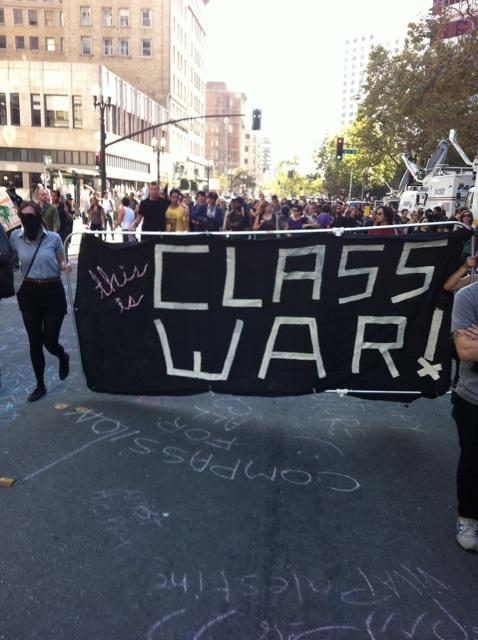
While even some supposed allies say the encampments weren’t effective, the truth is that the out-front, in-your-face tactic of holding nonstop protests in the financial heart of places like Manhattan and San Francisco got attention. The visibility of the Occupy camps forced everyone to pay attention. The U.S. economy is in a crisis; less disruptive tactics wouldn’t have worked. But now most of the encampments are gone, broken up by police forces and scattered from the central areas of major cities. It’s crucial that this growing and powerful national movement not fall apart after the almost inevitable crackdown on one style of protest. Occupy needs to look forward and plan its next steps.

Some of that is already happening, with Occupy activists targeting home foreclosures and marching on West Coast ports. But it’s worth considering another tactic, too: Occupy ought to begin planning now for a massive spring mobilization in Washington and a series of nationwide actions that could bring millions more people into the movement.

Part of the strategy of the Occupy camps was to maintain a presence, day after day — and that made perfect sense when the movement was starting. But single-day events, if organized on a massive scale as part of a larger campaign, can have a profound and lasting impact.

The original Earth Day — April 22, 1970 — involved 20 million people across the United States. There were events in hundreds of cities and thousands of high school and college campuses. It brought together old-school, sometime stodgy conservation groups with radical young environmentalists, the United Auto Workers with people concerned about pollution from car exhaust. It was, by any reasonable account, the birth of the modern American environmental movement.

The other great thing about Earth Day — and the reason it makes a great model for the Occupy movement — is that it was largely a grassroots event. Although there was a national office, most of the work was done spontaneously, in local communities, with no top-down direction.

And everyone — from Washington D.C. to the state capitols and city halls — paid attention.

Mass marches and mobilizations helped end the Vietnam War, spark the Civil Rights Movement and fight the anti-labor politics of the Reagan Administration. None of those events took place in isolation, any more than a national Occupy Day would take place in isolation. The nation’s ready for major economic change — and organizing a national event alone could help make stronger connections among the broad constituency that is the 99 percent.

Kenneth Patchen centennial: poetry that still resonates

1

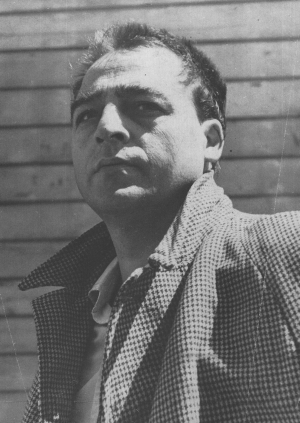
Poet Kenneth Patchen was born in Niles, Ohio, 100 years ago on December 13, 1911. He died in Palo Alto in 1972. Due to a ruptured spinal disk that was never properly treated, Patchen produced some 30 volumes of poetry and prose largely from the confines of his bed — work, nonetheless, that fiercely engaged the modern world that raged on outside. In his words, “I speak for a generation born in one war and doomed to die in another.” For this, the Beats were deeply indebted to his work. Patchen however, who lived in Telegraph Hill in the 1950s, referred to “Ginsberg and Co.” and the media hype surrounding them as a “freak show.”

Patchen had a broad range — he could be political, tender, devotional, and surreal — and unlike the Beats, he vehemently opposed being labeled as one kind of poet or another. Kenneth Patchen: A Centennial Selection (Kelly’s Cove Press, paperback, $25), edited by Patchen’s friend Jonathan Clark, marks the 100th birthday of the indefinable poet. Clark first met Patchen in the 1960s as a teenager living in the same Palo Alto neighborhood as him. He describes the collection as “a personal selection of some poems in which I hear most clearly the voice of the man I remember…those seeking perfection had best look elsewhere…” Fair enough. However, the collection is also a reasonable review of the poet’s scope. And, if indeed modest, it’s still the only book that has observed the centennial.

Although he wrote poems of all kinds, Patchen was always an adamant pacifist with a social conscience. He could be blunt and unsparing in this regard. In an essay from 1946, novelist Henry Miller described Patchen with slight terror and open-mouthed awe as “the living symbol of protest:” “He is a fizzing human bomb ever threatening to explode in our midst.” It’s a disputed description of the man. But if one had been reading Patchen’s work and nothing of his life, it would sound befitting enough. In one poem alone, “What I Want to Know Is,” he refers to politicians as “filthy lying lice,” “foul bastards,” “lousy bastards,” and “frauds and fakers.” Patchen’s pacifism is closely tied to what he sees as the loss of innocence in society, the corrupted human spirit, and is often expressed with animals. Such is the case with the forbidding “The Lions of Fire Shall Have Their Hunting:”
 
The lions of fire
Shall have their hunting in this black land
 
Their teeth shall tear at your soft throats
Their claws kill
…………………………………..

Because you are sick with the dirt of your money
Because you are pigs rooting in the swill of your war
Because you are mean and sly and full of the pus of your
     pious murder

 
Clark has also included a selection of Patchen’s artwork in the book (though the cover and back images are not the poet’s best). Patchen first started painting in 1942 to make cover illustrations for his book The Dark Kingdom, and it eventually led him to reimagine all his subsequent volumes. Larry Smith, Patchen’s biographer, notes that Patchen pioneered “the painted book, the concrete poem in which type set is used to paint the poem on the page, the drawing-and-poem form, the poetry-prose experiments of his anti-novels, and finally the picture-poem form.”

In A Centennial Selection, the artwork ranges from animals reminiscent of Chagall with words floating around them, such as “peace now for all men or amen to all things,” to an untitled work that would have been in line with Patchen’s New York School contemporaries. The latter is proof that Patchen was a painter in his own right, not simply a poet with a paintbrush. Franz Kline, upon seeing his art, called Patchen “more of an artist than most artists today.”
 
Patchen’s poems, especially those with a political edge, are as relevant as they ever were. It’s an appropriate coincidence that the Occupy Movement — and more recently, Take Back the Capitol — should correspond with Patchen’s 100th birthday. From his first volume of poetry in 1936, Before the Brave (which the New York Times categorized as Marxist), Patchen wrangled with the same questions that many people are weighing today — questions of power and greed, corruption, accountability, and of course, war. Patchen, who was invariably poor his whole life, saw things as a collective human struggle, and he placed himself squarely in that struggle with his poetry.
 
As Clark admits, A Centennial Selection has its shortcomings. But it’s a nice way to revisit Patchen’s poems and artwork and to see how both continue to work and be relevant today. Newcomers to Patchen, however, best refer to The Collected Poems.

Here are two of Kenneth Patchen’s best recordings, poems which are included in A Centennial Selection: the droll “State of the Nation” and the unusual “The Origin of Baseball.” Here you can pick up on Patchen’s dark and uncanny sense of humor.

Kenneth Patchen “The State of the Nation” by jmill116

Kenneth Patchen, “The Origin of Baseball” by jmill116

Should Occupy pull back and reinvent itself?

14

Maybe it’s time for the Occupy movement to simply take a bow, step off the national stage for now, and start planning its next big production. Because at this point, Occupy has been a smashing success – winning over its audiences and key critics, influencing the national debate – but it’s in danger of losing that luster if its lingers too long in its current form.

Consider the events of this week. When OccupySF’s long-standing encampment was finally removed by police and city workers, the general public barely noticed or reacted. Unlike during previous police raids, hundreds of supporters didn’t pour in to defend the camp and social media sites didn’t light up with messages of indignation and solidarity.

Why? Well it’s not because people don’t support the movement. Polls have consistently shown most people back Occupy, and even higher percentages support its basic message that the 99 percent are being screwed over by the 1 percent. Top political leaders at every level – Mayor Ed Lee, Gov. Jerry Brown, and President Barack Obama – made statements and speeches this week that echo the themes and ideas that Occupy has injected into the national dialogue.

But the tactic of occupation was only going to get us so far. It was a great way to start a conversation and demonstrate a broad discontent with this country’s inequities and plutocratic excess. Finally, the people have started to challenge those who are exploiting them, and it’s been particularly exciting to see young people fighting to reclaim their stolen futures.

That energy hasn’t dissipated, and it’s interesting to see it morphing into other campaigns, such as the recent takeovers of vacant foreclosed homes, the human rights march planned for tomorrow, and West Coast port shutdown scheduled for Monday. But I predict the crowds blockading the Port of Oakland will be a fraction of the size of the tens of thousands who took to the streets during the Oakland General Strike on Nov. 2.

Then, people were reacting to police violently crushing Occupy Oakland’s peaceful political assembly on Oct. 25, a galvanizing event, much like the raid on Occupy Wall Street and the abusive police tactics against occupiers on the UC Berkeley and UC Davis campuses. Each example showcased the police state’s willingness to use a heavy hand against peaceful protesters, demonstrating for a global audience what an important struggle this is and what we’re up against.

Yet it was hard to summon up much indignation over this week’s raid on OccupySF, even as protesters complained about being given just five minutes to get out and having their belonging seized and destroyed. Mayor Lee had been threatening the raid for weeks and had offered the group a free new home in the Mission – an offer they probably should have taken, one that would have allowed the group to declare victory and have a base of operations throughout the winter.

But unlike my cranky, “you kids get off my lawn” colleagues in the mainstream press, who have consistently derided the movement and valued anti-camping laws over the core constitutional right to peaceably assemble to petition for a redress of grievances, I think Occupy has been extremely important and effective. My desire is to see it evolve and continue.

Mayor Lee and other city officials have praised the goals and worldview of Occupy at every turn, even as they oppose the tactic of camping. As Police Chief Greg Suhr raided OccupySF, he told reporters that “part of the 99 percent removed part of the 99 percent to give the other part of 99 percent some relief,” tipping his hat to Occupy’s basic paradigm. Gov. Brown echoed Occupy’s economic inequity language in his call for higher taxes on the rich this week.

“I’m here in Kansas to reaffirm my deep conviction that we’re greater together than we are on our own. I believe that this country succeeds when everyone gets a fair shot, when everyone does their fair share, when everyone plays by the same rules. These aren’t Democratic values or Republican values. These aren’t 1 percent values or 99 percent values. They’re American values. And we have to reclaim them,” Obama said in his big speech this week, embracing the Occupy paradigm even as he tried to transcend it. But go back and read the whole speech and you’ll see that it would have fit right in during any Occupy General Assembly, with its regular calls to tax the rich, something this movement has given him the political cover to more forcefully advocate.

So the conversation has now begun, thanks largely to this movement. But, as most supporters of Occupy already know, our elected officials won’t simply enact the reforms we need on their own. They will need to be pushed and prodded relentlessly by a restive public, so the supporters of Occupy still have a lot of work to do.

How will they do that and what will it look like? I don’t know, but after watching these smart, creative, courageous, and committed young people and their supporters change the political dynamics of this country over the last three months, I’m anxious to see what they come up with and I stand read to chronicle and support the next phase, whatever it’s called and whenever it begins.

Get read!

0


ROCK AND ROLL ALWAYS FORGETS

By Chuck Eddy

Duke University Press

352 pp., paper, $24.95

Chuck Eddy glides through music criticism like a grumpy fanatic. Each article included in Rock and Roll Always Forgets — culled from Eddy’s vast back catalogue of music journalism articles, beginning with the early 1980s — is packed with cultural references, touchstones, facts, witty asides, a dash of snark, and acknowledgments of once-obscure acts. Yet, he approaches each band like he’s the first to have discovered it. He’s a musical anthropologist, but also, archeologist, digging up the remains of musicians past, lest we forget. Take a piece on a Marilyn Manson show, written in 1996. More than simply describing the stage and the crowd (which he does, expertly: “[they] wore too much black makeup, but they didn’t scare me — most seemed to be upper-middle-class Catholic school teens from the burbs…”). He wanders near profundity, dissecting Manson’s overall persona, his ticks, his own cultural references, and those who came before him, namely Alice Cooper, but a great many more. Most importantly, Eddy alludes to why that all matters in the least. (Emily Savage)


TROPIC OF CHAOS

By Christian Parenti

Nation Books

295 pp., hardcover, $25.99

Through historical research and on-the-ground reporting in Kenya, war-torn areas of Afghanistan, and other regions marked by intense conflict, Christian Parenti offers an unusual and compelling analysis of violence through the lens of the environment. Tropic of Chaos: Climate Change and the New Geography of Violence teases out the idea that increasingly unstable weather patterns stemming from climate change have fueled conflict throughout impoverished areas of the Global South. In the savannahs of northwest Kenya, for instance, deadly cattle raids have intensified as intertribal warfare heats up in the face of water scarcity. Recurring droughts and floods in Afghanistan have made it exceedingly difficult for farmers raise traditional crops, making them increasingly reliant drought-resistant poppy — the raw ingredient for heroin — for economic survival. Parenti also turns a sharp eye upon the repression, surveillance, and counterinsurgency that first-world nations have employed to combat growing violence in water-scarce, conflict-ridden regions, and calls for a more enlightened approach. (Rebecca Bowe)


CAFE LIFE SAN FRANCISCO

by Joe Wolff

Interlink Books

224 pp., paperback $20

Small quirks in this guide to the city’s cafes and coffeehouses — the sixth in a series that includes Sydney, New York, and Venice — will let you know its not strictly, strictly for locals. Java Beach is lumped in with more gearhead-oriented Mojo Bicycle Cafe and Ninth Avenue’s Arizmendi Bakery is filed under the catchall “Sunset District and vicinity.” The introduction’s discussion of “San Fran” versus “Frisco” versus “the City” is one that became boring long ago. But those things matter little. In-depth histories of some of your favorite cafes, from Java Beach to Philz’ to Caffé Baonecci are lucid looks at the facts and rewards of small entrepreneurship in the city. And Roger Paperno’s loving photography of velvet crema and foccacia sheets combines with words to create an ode to the city’s third spaces that any caffeine-laptop addict will appreciate in their stocking. (Caitlin Donohue)


LIONS OF THE WEST: HEROES AND VILLAINS OF THE WESTWARD EXPANSION

By Robert Morgan

Algonquin Books

497 pp., hardcover, $29.95

Biography can be the best history; stories of the people who changed the world (for better, and often for worse) are more compelling than turgid texts of dates and places. Lions of the West recounts the development of the American frontier from the end of the Revolutionary War to the Civil War era through the lives of 10 men. Yeah, all men. In fact, Morgan (by choice or by the longtime bias of American historians) makes it appear as if all of the great and evil deeds done as the nation moved Westward Ho were the province of the male of the species. At times, the profiles are a bit over the top (I don’t really care that much about Kit Carson’s personal life.) Overall, though, it’s a detailed, lively, and informative book that minces no words, especially when discussing the theft of much of the southwest from Mexico. San Franciscans will enjoy learning who Stockton, Sloat, Castro, Winfield, and a few other streets were named after. (Tim Redmond)


VHS: ABSURD, ODD, AND RIDICULOUS RELICS FROM THE VIDEOTAPE ERA

By Joe Pickett and Nick Prueher

Running Press

272 pp., paper, $14

Found Footage Festival founders and comedy writers Joe Pickett and Nick Prueher are apparently the Indiana Joneses of VHS, unearthing remarkable video package cover art that would otherwise be relegated to hoarder basements, bonfires, and anywhere else the worst (a.k.a., the best) videotapes go to die. I salute these dudes, even though the captions they tag each page with aren’t always funny or necessary. Truly, the covers (soft-focus and garish, tacky and baffling) speak for themselves, direct dispatches from ye olden days, long before YouTube brought WTF-ness to anyone with an Internet connection. You see, children, back in the 1980s or 90s, home viewers had to seek this shit out: instruction in squirrel-calling, chair-dancing, seduction, hairstyling (“What the Heck Am I Going to Do With My Hair?”), baby-proofing, spotting counterfeit Beanie Babies, etc. Straight-to-video masterpieces (F.A.R.T.: The Movie). Horrible exercise fads (“Bunnetics: The Buttocks Workout”). Well-meaning but also ghoulish-looking self-improvement vids (“Face Aerobics”). Every page is magical. Your mind will be blown. (Cheryl Eddy)


BI-RITE MARKET’S EAT GOOD FOOD

By Sam Mogannam and Dabney Gough

Ten Speed Press

297 pp., hardcover, $32.50

Bi-Rite Market is the ultimate neighborhood grocery. Shockingly small (with ambition to expand), it’s jam-packed with the best in organic produce, meats, cheeses, and artisan food products, much of it local. Now, Bi-Rite founder Mogannam has a new book loaded with recipes for such inviting delectables as white bean puree with prosciutto crespelle and strawberry rhubarb pie. But don’t relegate it to the cookbook category. Hewing to Bi-Rite’s mantra of creating community through food, the authors share extensive tips on shopping seasonally and locally for the healthiest and best-tasting products, no matter where you may live. You’ll learn what to look for at the grocery, storage and usage tips, and more. Well-illustrated sections feature produce (broken down by season), wine, beer, cheese, deli meats, butchery, baked goods, and even farmer profiles. Bonus: stay tuned for Sweet Cream and Sugar Cones, Bi-Rite’s ice cream and frozen treats recipe book from its renowned creamery, out this April. (No word yet on whether it’ll tell us how to beat the ever-present line outside.) (Virginia Miller)


DAMNED

By Chuck Palahniuk

Doubleday

247 pp., hardcover, $25

Welcome to Hell, as seen through the eyes of 13-year-old Madison Spencer, the daughter of a jet-setting yet eco-hyperconscious movie starlet and philanthropist. This is Dante’s Inferno meets The Breakfast Club, a film that overtly informs the plot and its main characters. As in Palahniuk’s breakout novel Fight Club, it’s hard distinguish between reality and perception as Maddy leads readers past the Vomit Pond, across Dandruff Desert, and right into Satan’s black Town Car. As she recalls her final weeks on earth, you’re pretty sure that she didn’t really die from a marijuana overdose. Clearly, things are not what they seem as the novel looses an American teenager’s perspective on modern life in both the underworld and earthly realm, with wry commentary on everything from pop culture and capitalist excess to the defeated religions whose fallen gods roam Hades. The gags alone — like the telemarketing and chatroom porn the damned deliver to Earth, and Hell’s endless loop of The English Patient — make this a tough book to put down, all the way to its slightly unsatisfying conclusion. (Steven T. Jones)


BEST AMERICAN COMICS 2011

edited by Alison Bechdel

Houghton Mifflin Harcourt,

352 pp., paperback $25

Chris Ware’s textbooky flowcharts; Angie Wang’s Technicolor, spiraling pistil-armed super-flower-heroine; Peter and Maria Hoy’s intricately plotted cause-and-effect grid art — the sixth year of this hardcover assemblage of the year in superlative strip art soars as a holiday gift for your fave comic nerd. Visual trickery and innovative page staging aside, many of the graphic narratives in this book hold up on plot alone. An excerpt from Kevin Mutch’s Fantastic Life effectively mines zombie philosophy, dating paranoia, and begging drinks off your service industry friends for comic gold. Many of the best pieces, perhaps indicative of the graphic novel mood these days, explore the darker side of the human psyche. But what graphic novel fan is unfamiliar with complicated? (Caitlin Donohue)


THE TIPSY VEGAN

By John Schlimm

Lifelong Books/Da Capo

164 pp., paper, $17

Every time I think we’re past the stereotype of the sullen, uptight vegan, I get another comment like, “Wait, don’t you only eat vegetables?” Why yes, I do eat plenty of veggies, but I also eat decadent dishes such as The Tipsy Vegan‘s Party Monster Pancakes, loaded with the sweet nectar of amaretto and drenched in syrup. This book is a carnivorous teetotaler’s nightmare, boasting 75 boozy recipes stuffed with everything from “beer to brandy” for the liquor-loving vegan cooks among us. It’s not, as I initially imagined, a book on vegan cocktails — that would be far too easy. Written by John Schlimm (Ultimate Beer Lover’s Cookbook), a member of “one of the oldest brewing families in the United States,” the book includes booze-infused treats for parties, brunch, and supper: fried avocados, slur-baaaaked peaches with Cointreau, “Bruschetta on a Bender” — all of which kind of sound like stoner food to me. An nice touch: glossy food porn shots on every page. (Emily Savage)


PROJECT DOG

By Kira Stackhouse

self-published

352 pp., hardcover, $34.99

Local photographer Kira Stackhouse experienced an inspiration so intense that she ditched her high-profile marketing job to pursue it: she would photograph specimens of the 50 most popular canine breeds officially registered with the American Kennel Club (“purebred dogs”) that had been purchased from professional breeders — and pair them with photos of the exact same kinds of dogs found in local dog rescues and shelters. The purpose was to start a dialogue about the effects of professional breeding and highlight the many kinds of dogs available for adoption (and also to change peoples’ perceptions about rescue dogs). But a major part of the story — and what makes this book so fantastic — is the wonderful doggy photography and sumptuous layout. Dogs are posed, or pose themselves, against iconic Bay Area backdrops, accompanied by often hilarious, always revealing, biographies and profiles. Project Dog became an online sensation: this book cements its reputation. Available at www.projectdog.net. (Marke B.)


LISTEN TO THIS

By Alex Ross

Picador

384 pp., paper, $18

In the expanded paperback edition of his absorbing and erudite collection of essays, Alex Ross of the New Yorker writes what could be called his mantra as critic: “I have always wanted to talk about classical music as if it were popular music, and popular music as if it were classical.” Ross listened exclusively to classical until he was 20, something he admits may sound “freakish.” But whether he’s describing Björk in her recording studio in Iceland, or composer John Luther Adams’ sound and light installation in Alaska, Ross draws from an immeasurable well of knowledge and plunges into his subject with gusto. He can find commonalities between Radiohead’s “Pyramid Song” and Stravinsky’s Firebird Suite, clear away the myths that have clouded both Franz Shubert and Bob Dylan, and thoroughly explain why OK Computer and John Cage’s 4’33” are equally astonishing. Informative, eye opening, Ross is every lover of music thrown harmoniously into one. (James H. Miller)


MY FAMILY TABLE

By John Besh

Andrews McMeel Publishing

272 pp., hardcover, $35

To know anything about New Orleans’ dining scene is to know John Besh. As one of Nola’s great chefs, he has a number of restaurants, including the acclaimed August, elevating local cuisine in forward-thinking ways. His original book My New Orleans is a striking post-Katrina tome to one of the greatest cities in the world and its vibrant culinary history. It’s a gorgeous coffee table volume packed with photos of the region’s people, places, and foods — more than 200 recipes from Mardi Gras specialties to gumbo, many with a contemporary twist. Besh just released, My Family Table, with welcoming, everyday recipes he cooks with his family that are healthy, fresh, simple, and heartwarming. Besh’s star power (Iron Chef champion and James Beard award-winner that he is) never dominates. Like New Orleans, it’s a visually beautiful book, but this time themed by “School Nights,” “Breakfast with my Boys,” and recipes like “Curried Anything” or “Creamy Any Vegetable Soup.” Closing with the key element of cooking, the communal, he writes: “If asked what my last meal would be, I’d reply, ‘Any Sunday supper at home, cooked with love, for people I love.'” (Virginia Miller)


FOUR SEASONS OF YOSEMITE: A PHOTOGRAPHER’S JOURNEY

By Mark Boster

Time Capsule Press

128 pages, hardcover, $34.95

John Muir would have loved this book, the spectacular result of a passionate love affair with Yosemite National Park involving all of the principals in this impressive project. Muir helped glorify and preserve Yosemite with his voice and pen. Robert Redford, who fell in love with Yosemite as an 11-year-old boy recovering from a mild case of polio, wrote an eloquent introduction to the book. Photojournalist, Mark Boster was smitten by the beauty and grandeur of the Yosemite when he first visited the park as a child with his family. He spent a year in the park detailing its seasonal changes in more than 100 magnificent pictures. “I felt the breezes, analyzed the light, listened to the sound of the rivers and falls, and tried to capture the images that moved me,” he writes in his introduction. Catherine Hamm’s delicate haiku add a poetic touch to many scenes. (The two principals who brought this project to life with loving care are Narda Zacchino, a former editor of LA Times and the Chronicle, and Dickson Louie, a former executive at both those papers. Zacchino serves as publisher and editor and Louie as president and CEO of Time Capsule Press, which specializes in creating books by using the archival content of newspapers and magazines.) Available at www.fourseasonsofyosemite.com (Bruce B. Brugmann)


THE PDT COCKTAIL BOOK

By Jim Meehan

Sterling Epicure

368 pp., hardcover, $24.95

Few bars have made as much impact on the New York cocktail (and thus the international) scene than PDT. Known as an early mover in the speakeasy trend, PDT revives classic recipes and invents new ones in the classic spirit. Bartender Jim Meehan put PDT on the map, and he’s since gone on to write about drink and educate bar managers and tenders everywhere. In the PDT Cocktail Book, he shares more than 300 cocktail recipes in a comprehensive collection inspired by classic tomes like The Savoy Cocktail Book. There are recipes from generations of hard-working bartenders, tips on glassware, bar tools, equipment, garnishes, techniques, a listing of seasonal ingredients, even a spirits primer. In keeping with PDT’s connection to neighboring Crif Dogs who serve creative dogs in the bar, there’s a section of hot dog recipes from big-name chefs who are regulars at the bar, including David Chang (Momofuku), Wylie Dufresne (WD-50), and Daniel Humm (Eleven Madison Park). From the comfort of home, cook up a Mason Dog fried in cornmeal and huitlacoche (corn smut/fungus, a Mexican specialty) to go with the Little Bit of Country cocktail, which mixes bourbon, maple, and jalapeño. (Virginia Miller)


EVERYTHING IS ITS OWN REWARD: AN ALL OVER COFFEE COLLECTION

By Paul Madonna

City Lights

240 pp., hardcover, $27.95

Like Ben Katchor’s classic “Julius Knipl, Real Estate Photographer,” local artist Paul Madonna’s “All Over Coffee” — published every Sunday in the Chronicle and on essential Web zine The Rumpus (www.therumpus.net) — draws me into a psychic space that is at once serene and troubled, surreal and hyperreal. The effect comes as much from the drawing style as the dreamlike non-narrative: both are direct descendants of Winsor McKay’s “Little Nemo.” Madonna gets an extra chills-up-the-spine boost from his illustrations of semi-familiar San Francisco architecture and intersections, lucid as etchings of bleached Kodachrome shots. For this second collection of the strip, he broadens his nib to include not only the City by the Bay, but Paris, Rome, Buenos Aires, and Tokyo. Overheard quotes, snatches of philosophical discourse, interior monologue snippets, existential doubts, random observations, and short stories are floated over the images to capture a peculiarly lovely eddies in the zeitgeist.


I DON’T WANT TO KILL YOU

By Dan Wells

Tor

320 pp., paperback, $11.95

Some of this is sick shit. You need a warped sense of humor and a love for random violence to enjoy the tale of a young man who lives with his mom in a mortuary and fights a demon made of black goo who takes over the minds and bodies of humans. But it’s a different type of thriller — complete with its own kinda sweet moments of teenage love and angst — and it’s packed with great detail. (Did you know that undertakers use Vaseline to fill up bullet holes? Cool.) John Wayne Cleaver, perfect name for a demon hunter, is a sociopath who is beastly to his mother and can’t get along with the other kids . Except for a super-hot chick who he thinks must be a demon, otherwise why would she like such a loser geek? The demon is nasty and gouges out eyes, cuts off tongues, sticks bodies on poles … you gotta check it out. (Tim Redmond)


RICE AND CURRY: SRI LANKAN HOME COOKING

S.H. Fernando, Jr.

Hippocrene Books

224 pp., paperback, $19.95

After a tongue-inflaming visit to the East Village’s fantastic Sigiri restaurant in NYC a couple weeks back, my interest in — and lust for — spicy Sri Lankan treats like kiri hodhi (coconut milk gravy), rossam (coriander-tamarind broth), kool (seafood soup), Jaffna goat curry, and ulundu vai (savory donuts) was, er, inflamed. Fortunately for me, author “Skiz” Fernando recently spent a year on the island rediscovering his roots and delving into the varied cuisine (later serving as a guide for that cheeky culinary colonist Anthony Bourdain). The punchy, informative Rice and Curry is the result, and includes nice introductions to Sri Lankan geography and history, as well as tips on what to stock in your cupboard to achieve the certain Sri Lankan “oomph” that sets the cuisine apart from Indian. A particular passage that profiles Leela, Fernando’s aunt’s ancient maid, offers some real insight into the island’s food tradition and customs — and yields a marvelous, corruscating crab curry from her hometown of Chilaw, just in time for Dungeness season. (Marke B.)


HEDY’S FOLLY: THE LIFE AND BREAKTHROUGH INVENTIONS OF HEDY LAMARR

By Richard Rhodes

Doubleday

261 pp., hardcover, $26.95

An author best-known for his 1986 Pulitzer-winning The Making of the Atomic Bomb, Richard Rhodes might seem like an unlikely biographer for movie stunner Hedy Lamarr, who lit up Golden Age films like Cecil B. DeMille’s 1949 epic Samson and Delilah. But her above-average qualities (she was called “the most beautiful woman in the world”) extended beyond the superficial. After escaping her gilded-cage marriage to an Austrian munitions magnate, Lamarr found success — and five more husbands — in Hollywood; between roles, she started inventing “to challenge and amuse herself.” During World War II, she got serious about her hobby. Showbiz circles led her to avant-garde musician George Antheil, renowned for his groundbreaking composition for 1924 short Ballet Mécanique. As Rhodes writes, “[Lamarr] began thinking about how to invent a remote-control torpedo to attack submarines just at the time she met Antheil, who knew quite a lot about how to synchronize player pianos.” Together, the “charming Austrian girl” and “the bad boy of music” worked on that torpedo, as well as “spread-spectrum radio,” an innovation that paved the way for contemporary wireless technology. Unlikely? Yes. Fascinating? Indeed. Never underestimate a beautiful woman — or a skilled writer’s ability to humanize complicated characters and bring drama to a tale loaded with tech-speak. (Cheryl Eddy)


COME, THIEF

By Jane Hirschfield

Knopf

98 pp., hardcover, $25

As it happens, one of Bay Area poet Jane Hirschfield’s passages currently adorns the famous Kahn and Keville auto repair shop’s marquee in the Tenderloin: “What some could not have escaped/ others will find by decision/ each we call fate.” Well, you could never blame her for not thinking big. As a well-known and approachable poet, she sports a blurb from O, The Oprah Magazine on this, her ninth collection, the first in six years since releasing her arresting After. And while her slightly witchy, be-scarved, grandiloquent persona screams marketable poetess, there’s some understated magic in her latest poems. These ones are full of plums and glass and vague Zen spells that give off, in their overall effect, an rueful, anticipatory sigh. Some childlike wonder seeps in: “Another year ends./ This one, I ate Kyoto pickles,” says “Washing Doorknobs,” my favorite from the collection. “But one thing you’ll never hear from a cat/ is Excuse me” goes “A Small-Sized Mystery.” Sometimes you can almost Hirschfield her straining for ambiguity, the poems’ heavy life lessons tearing through her delicate webs of observation. Still, each poem here showcases Hirschfield’s incisive power. (Marke B.)


PLENTY

By Yotam Ottolenghi

Chronicle Books

287 pp., hardcover, $35

Recently I returned to London, eating my way extensively through the city. One of my gustatory highlights was Yotam Ottolenghi’s beloved bakery and restaurant, Ottolenghi (with four locations). Not only were his baked goods otherworldly delights, his straightforward but elegant dishes using pristine ingredients were among the freshest and satisfying of my London travels. Plenty, his new cookbook, is a cleanly designed book with vivid photos of recipes like broccoli gorgonzola pie and mushroom herb polenta. Most impressive? Ottolenghi’s recipes are 100% vegetarian. The meat-free aspect is barely emphasized, and one feels no lack in the diverse range of flavors (with Middle Eastern influences) presented. Since 2006, Ottolenghi has penned the UK Guardian’s vegetarian column — and he’s not even a vegetarian! This speaks to how respected he’s become as a chef in his use of veggies and grains. Plenty shows this talent off, but most importantly delivers approachable, easy-to-replicate recipes to tickle our palates. (Virginia Miller)


HILLBILLY NATIONALISTS, URBAN RACE REBELS, AND BLACK POWER

By Amy Sonnie and James Tracy

Melville House

201 pp., paper, $16.95

Gazing back in time to the era when the Black Panthers were serving up free breakfast to low income youth and coming into the crosshairs of COINTELPRO, few may be aware that an interracial coalition of radical organizers included a contingent of poor white southerners bent on fighting capitalism in solidarity with communities of color. Written by a cofounder of the Center for Media Justice and a longtime San Francisco housing activist, this detailed bit of radical history spotlights the organizing efforts of poor whites, transplanted from rural Appalachia to the low-income Uptown neighborhood of Chicago, to build coalitions of poor people in solidarity with civil rights leaders. Groups like Jobs or Income Now (JOIN), the Young Patriots, and Rising Up Angry launched campaigns against neglectful landlords and cops who brutalized their youth. They represented the white arc of the multiracial Rainbow Coalition, initiated by the Black Panthers in Chicago as “a code word for class struggle.” Bizarre as it may seem, “It became common to see [Panther] Fred Hampton ‘give a typically awe-inspiring speech on revolutionary struggle, while white men wearing berets, sunglasses, and Confederate rebel flags sewn into their jackets helped provide security for him.'”

(Rebecca Bowe)


MR. KILL

By Martin Limon

Soho Press

376 pp., hardcover, $24

Korea in the 1970s. The United States has 50,000 troops in country, mostly near the Demilitarized Zone, and they don’t always behave. In general, the Korean authorities allow the military to police its own — but when a young Korean woman is brutally raped on a train to Seoul, and the assailant appears to be an American, all hell breaks loose. Martin Limon lived in Korea for ten years, and he does a (fairly) good job of presenting a portrait of the Cold War tensions between the two supposed allies. There’s a little bit of American bias — the author is former military himself — and his potrayal of Korean society isn’t as sensitive or oddly loving as John Burdett’s descriptions of Thailand in the Bankok 8 series. Limon’s great storytelling and his lively and compelling protagonists, Sergeants George Sureno and Ernie Bascom, pull readers past those issues. Perfect gift for someone who likes international crime thrillers. (Tim Redmond)


THE RECIPE PROJECT

By One Ring Zero

Black Balloon Publishing

116 pp., hardcover, $24.95

It’s part cookbook, part music journalism, part rock opus, and hell, part coffee table book. The Recipe Project (subhead “A Delectable Extravaganza of Food and Music”) is a concept spearheaded by New York-based gypsy-klezmer act One Ring Zero. The band’s co-founders, Michael Hearst and Joshua Camp, created songs using the recipes of well-known chefs (Mario Batali, Isa Chandra Moskowitz, Chris Cosentino) as the word-for-word lyrics. The meals themselves served as musical influence; each recipe inspired a different sound. While the songs are not likely ones you’d listen to say, on a long lonesome drive, they do have a glint of childlike glee. It’s conceptual. The true genius of this project is its overall cohesiveness. It’s an all-in-one package. Follow the recipe, listen to the song, get some interesting background factoids. The Recipe Project also includes full recipe playlists, articles by rock journalists, and some pretty interesting interviews with chefs. (Emily Savage)


CARY GRANT: DARK ANGEL

By Geoffrey Wansell

Arcade Publishing

192 pp., hardcover, $24.95

Back in print (it was originally released in 1996), this paen to the dapper star of North By Northwest (1959), An Affair to Remember (1957), Notorious (1946), His Girl Friday (1940), and approximately 10 zillion other classic films is somewhere between a biography and a coffee-table book. It’s worth picking up for the lavish black-and-white photos alone, illustrating the span of Cary Grant’s career with film stills, behind-the-scenes shots, and the occasional almost-candid image (did he ever take a bad picture)? The accompanying text is straightforward, but — as its title suggests — doesn’t shy away from Grant’s well-documented countercultural experiments. (“Grant became so enthusiastic about the value of LSD that he extolled its virtues during the shooting of his next picture.”) Nor does it gloss over Grant’s vices (he smoked 30 to 40 cigarettes a day) and sometimes troubled personal life (he was married five times). But the book’s chief focus is Grant’s brilliant career. As Stanley Donen, who directed him three times, remarks to author Geoffrey Wansell, “He’s thought of as a man who achieved a certain elegance and savoir faire. But in truth he was a fantastic actor.” (Cheryl Eddy)


NATURAL HISTORY OF SAN FRANCISCO BAY

By Ariel Rubissow Okamoto and Kathleen M. Wong

University of California Press

352 pp., paperback, $24.95

Drag queens, beat poets, burlesque dancers, hyphy rappers, dot com techies — the human species of the Bay Area have been well-documented, but information on the non-human dwellers of the bay itself has been left to scattered guidebooks, obscure blogs, and academic sources. Authors Rubissow Okamoto and Wong have collected a wealth of biological and environmental information in their book, published this November. The cross-country saga of the striped bass, the hidden beauty of eelgrass, the varied contentions of the California water wars are presented in highly readable, easily digestible sections. The emphasis here is on environmental impact and recent conservation developments — I did not know that it’s officially dangerous to eat more than one pound a month of fish from the bay! — and the history of decades of restoration triumphs and setbacks is related sleekly and straightforwardly. Absorbing all the information in this illuminating primer helped me appreciate the seething loveliness and churning forces that make up the place I call home. (Marke B.)


The problem with the tax initiative

3

EDITORIAL The Occupy movement — despite police abuse, official hostility and dismissive media — is changing the mainstream of discussion in American politics. For the first time in years, it’s actually possible to talk about raising taxes on the very wealthy. All the polls show strong, and growing, public sentiment in favor of economic equality. It’s a great opportunity to reform California’s tax system — but Gov. Jerry Brown seems unwilling to take advantage of what could be the most important moment in his political career.

At least five groups are preparing tax-reform measures for the November, 2012 ballot. One of them — the so-called Think Long proposal supported by billionaire Nicolas Berggruen and Google executive Eric Schmidt — is largely regressive. Much of the $10 billion it would raise would come from sales taxes on services, which amounts to a whopping new tax on the middle class. Another, known as the Clean Energy Jobs Act (also backed by a billionaire, hedge fund manager Tom Steyer) would force corporations to pay taxes based on sales in the state, which in and of itself isn’t a terrible idea. But that’s the beginning and end of the measure, and half of the $1 billion it would raise would be earmarked for (private sector) clean energy projects.

Then there are the income tax proposals. One, sponsored by a Los Angeles attorney named Molly Munger (whose father happens to be a billionaire investor) would raise almost everyone’s income taxes, although the wealthy would pay more; every penny of the $10 billion in new revenue would be earmarked for education. The Courage Campaign and the California Federation of Teachers want to raise taxes on incomes of more than $1 million, with the money also dedicated to education.

Then there’s the governor’s plan. Brown’s offering a mix of a half-cent sales-tax hike and higher income taxes to raise about $7.5 billion. Some major labor groups are already on board — as are some business groups, which would rather see a tax on consumers than higher taxes on big corporations and the wealthy. His plan may seem pragmatic — but it’s hardly progressive and won’t solve the state’s $13 billion budget shortfall for this year, much less restore funding to the services that have been cut in past budget battles.

All of the plans have problems. While we’re much more aligned with the Courage Campaign’s goal of taxing the rich, and we agree that education is a critical need, there are other critical needs in the state, too (affordable housing, health and social services, for example) and we’re not sure the education earmark makes sense. And most of them don’t go beyond personal income taxes, when taxes on big businesses are often scandalously low.

Brown ought to be taking the best of the various proposals, adding other ideas that have been put forward by Democrats in the Legislature, and producing a final product that would shift the state’s tax burden onto those who can most afford it. That means scrapping the sales tax and replacing it with steeper income tax increases on the highest earners and an oil-severance tax (which could alone bring in as much as $8 billion a year). Higher taxes on financial institutions ought to be part of the deal, too.

With the presidential election driving a high turnout in California, and public anger at the greed of the top one percent defining the electoral debate, it’s foolish to put forward a half-assed measure that doesn’t amount to real reform. Brown and his team need to make some major changes before a tax measure heads to the Nov. 2012 ballot.

Bank of America frets about Occupy

An internal Bank of America email has surfaced, making it clear that the megabank is concerned about the national day of action against evictions and foreclosures being carried out today, Dec. 6, by the Occupy Wall Street movement. The leaked internal memo suggests BofA is taking Occupy housing actions very seriously.

According to the email, which was sent to BofA’s third-party Field Services suppliers, the nationwide protests “could impact our industry.”

“We believe protests will likely take place tomorrow at auction sites, homes that are being foreclosed, homes in the eviction stage, and vacant homes,” the BofA memo notes. “We want to make sure that we are all prepared.”

It goes on to emphasize three points: do not engage with the protesters, ensure that vacant homes are secured, and report “media incidents” to 800-796-8448. I called that number to verify that the email was real, and sure enough, a spokesperson confirmed that it was.

The memo concludes with proof that the Bank of America has been paying close attention to activist websites. “The website occupyourhomes.org has a story posted of a Bank customer we are researching,” the email notes. “The web site has an event finder that can help identify upcoming protests.”

After the Guardian called the BoFA to determine whether the email was real, media relations representative Jumana Bauwens followed up with this statement:

“As a matter of normal course of business, when we are alerted to activities that may affect our real estate owned properties, we inform our third party contractors. This is standard operating procedure. The safety of our associates and third party contractors is our first priority. It is the bank’s policy to protect and secure our properties for the investors who own them. Bank of America is committed to helping our customers with home retention solutions and other foreclosure avoidance programs. Foreclosure is always our last resort.”

Guardian editorial: The problem with the tax initiatives

1

 The Occupy movement — despite police abuse, official hostility and dismissive media — is changing the mainstream of discussion in American politics. For the first time in years, it’s actually possible to talk about raising taxes on the very wealthy. All the polls show strong, and growing, public sentiment in favor of economic equality. It’s a great opportunity to reform California’s tax system — but Gov. Jerry Brown seems unwilling to take advantage of what could be the most important moment in his political career.

At least five groups are preparing tax-reform measures for the November, 2012 ballot. One of them — the so-called Think Long proposal supported by billionaire Nicolas Berggruen and Google executive Eric Schmidt — is largely regressive. Much of the $10 billion it would raise would come from sales taxes on services, which amounts to a whopping new tax on the middle class. Another, known as the Clean Energy Jobs Act (also backed by a billionaire, hedge fund manager Tom Steyer) would force corporations to pay taxes based on sales in the state, which in and of itself isn’t a terrible idea. But that’s the beginning and end of the measure, and half of the $1 billion it would raise would be earmarked for (private sector) clean energy projects.

Then there are the income tax proposals. One, sponsored by a Los Angeles attorney named Molly Munger (whose father happens to be a billionaire investor) would raise almost everyone’s income taxes, although the wealthy would pay more; every penny of the $10 billion in new revenue would be earmarked for education. The Courage Campaign and the California Federation of Teachers want to raise taxes on incomes of more than $1 million, with the money also dedicated to education.

Then there’s the governor’s plan. Brown’s offering a mix of a half-cent sales-tax hike and higher income taxes to raise about $7.5 billion. Some major labor groups are already on board — as are some business groups, which would rather see a tax on consumers than higher taxes on big corporations and the wealthy. His plan may seem pragmatic — but it’s hardly progressive and won’t solve the state’s $13 billion budget shortfall for this year, much less restore funding to the services that have been cut in past budget battles.

All of the plans have problems. While we’re much more aligned with the Courage Campaign’s goal of taxing the rich, and we agree that education is a critical need, there are other critical needs in the state, too (affordable housing, health and social services, for example) and we’re not sure the education earmark makes sense. And most of them don’t go beyond personal income taxes, when taxes on big businesses are often scandalously low.

Brown ought to be taking the best of the various proposals, adding other ideas that have been put forward by Democrats in the Legislature, and producing a final product that would shift the state’s tax burden onto those who can most afford it. That means scrapping he sales tax and replacing it with steeper income tax increases on the highest earners and an oil-severance tax (which could alone bring in as much as $8 billion a year). Higher taxes on financial institutions ought to be part of the deal, too.

With the presidential election driving a high turnout in California, and public anger at the greed of the top one percent defining the electoral debate, it’s foolish to put forward a half-assed measure that doesn’t amount to real reform. Brown and his team need to make some major changes before a tax measure heads to the Nov. 2012 ballot.


UC’s pick of Bratton to investigate pepper spray incident isn’t reassuring

12

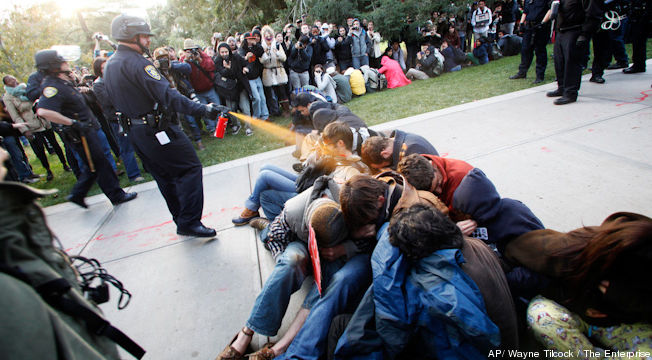
The video images are already iconic, a line of young students sit cross legged, arms linked, at the front edge of an Occupy UC Davis protest, nonviolently protesting the impacts of the economic crisis on the University of California and beyond. As police step forward students begin to chant “the whole world is watching,” and officers disperse fire extinguisher size canisters of pepper spray into the faces of the seated students.

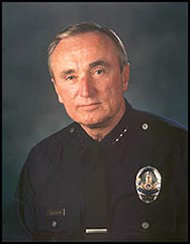
As is turns out the students were right, the whole world was watching, leaving UC Davis with a public relations nightmare that has left the campus police chief and two officers on administrative leave. In the wake of the incident, UC President Mark G. Yudof established an independent review to be conducted within the next 30 days, naming former Los Angeles Police Chief, Bill Bratton, now chairman of Kroll Security, to lead the investigation.

“My intent,” Yudof said, “is to provide the chancellor and the entire University of California community with an independent, unvarnished report about what happened at Davis.”

While UC Davis touts Bratton as “a renowned expert in progressive community policing,” deep questions surround the choice of Bratton. The Council of University of California Faculty Associations (CUCFA) was quick to question the independence of the investigation of police violence at UC Davis, pointing out that Bratton, through Kroll, already holds contracts with the UC system.

“We already know that Kroll has provided security services to at least three UC campuses for the past several years. This in itself would disqualify Mr. Bratton from participating in the investigation,”said CUCFA president Robert Meister. “You would be illustrating the kinds of connection between public higher education and Wall Street that the Occupy UC movement is protesting.”

Bratton also served as president of the Police Executive Research Forum, the police non-profit that facilitated controversial phone discussions between major metropolitan police chiefs in the lead up to the crackdown on the Occupy movement across the nation, raising questions about his ability to lead the UC Davis investigation.

Bratton’s offical bio from the LAPD shows the depth of his involvement in PERF when it states, “He is also the only chief executive to serve two terms as the elected President of the Police Executive Research Forum (PERF).” Bratton was instrumental in the creation of PERF’s hardline 2006 report Police Management of Mass Demonstrations http://www.policeforum.org/library/critical-issues-in-policing-series/MassDemonstrations.pdf for which he receives special recognition in the acknowledgments section of.

“PERF gathered more than 100 invited practitioners and stakeholders at an international forum in San Diego in December 2004 to highlight issues related to mass demonstrations and use-of-force. At this event, Los Angeles Police Chief William J. Bratton set the scene for a lively interaction as he discussed the changing nature of protests and mass demonstration events. He recalled that in the 1960s the issues leading to demonstration events tended to be more community-centered and that the police focus was largely tactical. He noted that today, demonstrations are sometimes orchestrated by far-reaching national and international organizations, coalitions and informal groups subscribing to anarchistic methods,” reads the report.

The manual pays special attention to managing media messaging, devoting a section to media in the wake of a major demonstration: “An integrated media strategy seeks to manage and harness the media attention in order to help achieve the overall policing objectives. By partnering with the media, the potential increases for all parties to win, public confidence to be maintained and the reputation of the law enforcement agencies to be enhanced.”

Though Bratton has moved on as PERF’s president, he keeps close ties with the organization. In April , Bratton was the keynote speaker at a PERF conference on technology and policing held in Washington, DC, a subject Bratton is an expert on due to his role in developing the controversial CompStat system used to “predicatively model” crime in some metropolitan areas.

Bratton is widely recognized as the leading proponent of the “broken windows theory” of policing, which advocates a zero tolerance approach to petty crime. Speaking to the Telegraph(UK) this summer about the historically large youth riots in the UK, he said youth were “emboldened” by over-cautious policing.

“To be effective, a police force should have ‘a lot of arrows in the quiver,’ said Mr Bratton, advocating a doctrine of ‘escalating force’ where weapons including rubber bullets, Tasers, pepper spray and water cannon were all available to commanders,” the paper wrote on August, 12 2011.


Lt. Gov. Press Release

2

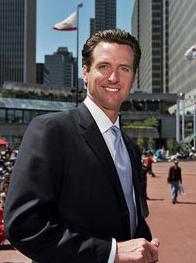
We used to call Gavin Newsom Mayor Press Release because he was always ready to go before the cameras and announce some bold plan that never amounted to anything. And now he’s at it again.

Newsom — to his credit, I must admit — was the only member of the Board of Regents who didn’t flee when the protesters arrived. Instead, he sat down with some of them and announced that “you have my support.”

In fact, he’s happy to denounce the cuts to higher education:

In an interview Thursday, Newsom said he was deeply alarmed by what he called the dismantling of the UC and CSU systems and gently criticized the budget deal struck by Gov. Jerry Brown last year that included steep cuts to financing for both institutions.

“You can’t cut $650 million from both systems and tell me you value the system,” he said. “I believe we could’ve avoided a substantial portion of these cuts.”

Yes: you could have avoided those cuts by raising taxes. But that’s something Newsom refused to do as mayor. He mentions nothing on his website about tax increases on the rich. He said nothing in his campaign about taxes. And unless I’ve missed something, he hasn’t endorsed any of the possible tax measures that might be headed for the November ballot.

So he’s going to go after the student vote in his next campaign — but without alienating big corporate supporters who don’t want to pay more taxes. And with that approach, nothing will happen to improve higher education in the state.

California, meet Lt. Gov. Press Release.

PS: I called and emailed Newsom’s media person, Francisco Castillo, to see if the Lite Gov was going to support any of the November tax measures. If they get back to me, I’ll let you know.

The Performant: TLC for the holidays

0

Try to ignore it as we might, the end of another year draws near, accompanied by all its attendant solstice-cycle celebrations — last ditch attempts to keep warm perhaps. Well, spike the eggnog with everclear and pass the bacon-wrapped latkes, in my book a little conviviality goes a long way in making bearable the quickly darkening days, the applejack-crisp night air. Sure, shaking off the hibernation vibe can be hard to do, but a good compromise between comatose and cabin crazy is to cuddle up to nightlife’s cozier side: intimate venues, good company, low lights, warm interiors. The Lost Church provides all of the above with its lushly-appointed “parlor performance” space and a tight-knit crew of regulars who call the venue their artistic home, plus homegrown music, a multi-media nod to vaudevillian theatre, and quiet cheer.

An ambitious TLC bill awaits the intrepid each Saturday night through December 17. Actually, ambitious musical lineups abound on Thursdays, Fridays, and even one Sunday (the 11th), but in December, Saturdays include a tongue-in-cheek, meta/metaphysical musings of a brief one-act entitled “The Golden Goddess, Demon Dan, and the Doorway to Darkness,” nestled in the center of the evening, the jelly in the sugar donut. A brashly conniving demon (Dan C.) finds himself in literally the middle of nowhere where an extremely bored goddess (the projected image of Jessica K.) is spending her eternity guarding a doorway that no-one wants to open. No-one but Dan, that is, and his persistent, flirty wheedling, rendered de facto charming by a wise-guy cockney accent, gradually wears down the goddess’ resolve. The battle-of-the-immortal-sexes dialogue is interspersed with snatches of Rolling Stones songs (“Sympathy for the Devil,” “It’s All Over Now,” “The Last Time,”) provided by a rock n’ roll “Greek Chorus” fronted by bodacious blues chanteuse Kim K., by far the heavenliest presence on the stage.

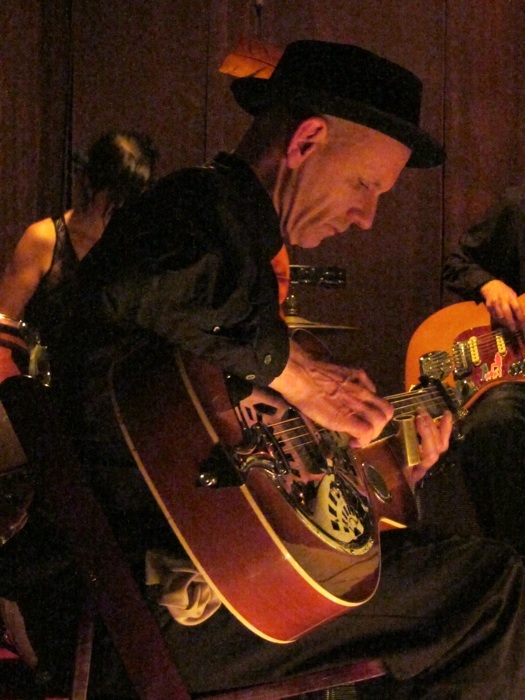
Taking a page from the hootenanny handbook, the theatrical portion of the event is bookended by an assortment of musical acts, a little something something for everyone. Last weekend, the evening opened with Brian B. playing a variety of instruments including a sultry slide guitar, an accordion, and the harmonica while singing a series of introspective ballads which began on a blue note with a love lost and spiraled further downward and outward encompassing junkyards, street corners, and a nod to St. Cecilia, martyred patron saint of music. A quick flurry of rock songs from venue hosts Brett and Elizabeth C. in their joint bass n’ drum incarnation as “Juanita and the Rabbit” followed, and the post-show glow was further prolonged by more singing from the divine Kim K. An evolving work-in-progress, TLC has carefully crafted a tempting cocktail of home comfort blended with retro cool and hot licks, all of which make it a great place to spend the
 holiday, or any, season.

Give The Performant a reason to Twit. Follow @enkohl for of-the-minute updates from the underground.

The impact of Occupy

8

With the city getting ready to crack down on OccupySF, and Occupy encampments around the country under attack, it’s easy to get discouraged. And I know that a lot of the Occupiers aren’t thinking about specific legislation or how the movement translates into action in Washington.

But it does — it does:

In the world where Occupy had never happened, Republicans would’ve held these tax cuts hostage without suffering any ill repercussions. Why would they? The chattering class and Beltway media would be droning on endlessly about deficits and other things that didn’t matter.

In this world, Occupy has thrust income inequality to the forefront of the political debate — so much so that typically immovable Republicans are afraid to feed that narrative.

In other words, a ragtag bunch of hippies with supposedly no demands have done what Democrats have never been able to do — get Republicans to cry “uncle”

And this is just the beginning.

Our Weekly Picks: November 30-December 6

0

WEDNESDAY 30

“Flotsam and Jetsam: The Spray of History”

The ceaselessly inventive Los Angeles filmmaker Lewis Klahr comes to town for two shows this week. Joseph Cornell’s boxes are perhaps the most convenient reference point for Klahr’s richly emotional collage animation, though his handmade films’ range of tones and complex interlacing of pop culture and personal sentiment really merits stand-alone consideration. This PFA program samples Klahr’s recent short films, while the SF Cinematheque show at Yerba Buena Center for the Arts on Friday focuses on Klahr’s ongoing series of sublime musical memory pieces, Prolix Satori. The two shows have no overlapping films, which among other things means you get to appreciate Klahr’s Brill Building ear for titles (A Thousand Julys, False Aging, Wednesday Morning Two A.M., Daylight Moon, Well Then There Now). (Max Goldberg)

7:30 p.m., $9.50

Pacific Film Archive Theater

2575 Bancroft, Berk.

(510) 642-1412

www.bampfa.berkeley.edu

www.sfcinematheque.org


Lemuria

You would think that a band called Lemuria — a hypothetical continent said to have submerged into the depths of the Indian Ocean — would sound along the lines of Vangelis or Tangerine Dream. But the trio from Buffalo, NY, takes after alternative pop-punk predecessors like Superchunk and the Breeders. Sheena Ozella and Alex Kerns started Lemuria in 2004, taking on bass player Jason Draper a year later. Since then, Lemuria has matured into a band that’s at once frisky and endearing, dynamic and biting. On Lemuria’s newest album, Pebble (Bridge 9), Ozella and Kerns alternate on vocals in such a way that inspires deep sighs, like you’ve just spotted an adorable little dog. But when Ozella’s tough and vivacious guitar playing takes a front-seat, you realize that dog can bite. (James H. Miller)

With the Pillowfights!, Matsuri

9 p.m., $10

Bottom of the Hill

1233 17th St., SF

(415) 621-4455

www.bottomofthehill.com


FRIDAY 2

“Danzón”

It’s hard to imagine contemporary dance and performance without the seminal influence of German choreographer-performer Pina Bausch, whose work was so different when it started in the 1970s that it spawned its own genre: dance theater. Bausch’s gorgeous visual aesthetic, wildly eclectic movement, incorporation of speech and unbridled emotion, and her collaborative, searching process all contributed to a remaking of the landscape. The subject of a recent 3D documentary tribute by Wim Wenders, Bausch (who died in 2009) left behind a supreme body of work that her company continues to perform around the world. This weekend, Tanztheater Wuppertal Pina Bausch offers Danzón, Bausch’s poignant, humor-filled celebration of life’s journey in the teeth of death. No 3D specs required. (Robert Avila)

Through Dec. 3, 8 p.m., $30

Zellerbach Hall, Berk.

(510) 642-9988

www.calperformances.org


“True Stories Lounge”

As the cliché goes, truth is stranger than fiction — and knowing that a story is true (or at least somewhat “based on a true story,” Texas Chainsaw Massacre-style) makes it all the more fascinating. The ongoing series “True Stories Lounge” brings together a varied slate of word-wranglers to spin compelling non-fiction tales. This edition’s storytellers include spoken word artist Alan Kaufman, who’ll read from his new memoir, Drunken Angel; comedian Marilyn Pittman, talking through a family tragedy; Salon.com founder David Talbot, reading from his soon-to-be-released book of San Francisco history; Bay Citizen editor Steve Fainaru, a 2008 Pulitzer winner, discussing Iraq; and Brando biographer Peter Manso, reading from his latest Cape Cod-set true crime book. (Cheryl Eddy)

7:30 p.m., $10

Make-Out Room

3225 22nd St., SF

www.makeoutroom.com


Benoit & Sergio

“Sergio used to be my English teacher,” reads a YouTube comment for “Walk and Talk.” How hard it would be to explain a lyric like “My baby does K all day” at a parent-teacher conference? In 2009 Sergio quit the D.C. prep school racket to make music full-time with French expatriate Benoit. The electronic duo has quickly built a reputation on less than a dozen tracks released across Ghostly International, Visionquest, and DFA. With an original sound that mixes ecstatic techno house, melancholic late-night soul, and playfully barbed vocals, this will be the SF debut of the pair’s live show. (Ryan Prendiville)

With No Regular Play and DJ sets by Pillowtalk, Thee Mike B, Rich Korach, and more

9 p.m., $15-20

Public Works

161 Erie, SF

(415) 932-0955

www.publicsf.com


SATURDAY 3

Papercuts

Founder and lead songwriter of Papercuts, Jason Robert Quever, has a knack for softly wooing listeners into his songs. Part of the seductiveness is Quever’s voice. You tend to follow its breathiness until you’re deep in his weightless and roomy dream pop. On Papercuts’ Fading Parade, the band’s debut album on Subpop, which came out earlier this year, Quever can sound like a love sick ghost, padding around and whispering pleas in your ear. His vocals hover over a lulling swathe of reverb, but drums and guitars retain enough crispness so as not to become a colorless drone. It’s a carefully weighted balance, and one that’s well worth witnessing live. (Miller)

With Dominant Legs, Tim Cohen’s Magic Trick

9 p.m., $12

Rickshaw Stop

155 Fell, SF

(415) 861-2011

www.rickshawstop.com


“In the Red — Flaming Lotus Girls Gallery Show”

The Flaming Lotus Girls always go big, pushing the envelope on fire arts innovation every year at Burning Man and other festivals. That’s a big reason why I profiled them in my book, The Tribes of Burning Man: How an Experimental City in the Desert is Shaping the New American Counterculture. And it’s also why they’re in debt, now more than most years. So come mingle, marvel at their fiery artworks, dance to DJs from Space Cowboys and the Ambient Mafia, buy some art (including photo prints of FLG projects) or shwag (from the FLG’s autographed and lipstick-kissed calendar to copies of my book that I’ll be selling and signing there), and help the Flaming Lotus Girls get out of the red and into active preparations for its next big project. (Steven T. Jones)

With Deckward, 8Ball, Olde Nasty, and more

6 p.m.-2a.m., free but donations accepted

SomArts

934 Brannan, SF

(415) 552-1770

www.flaminglotus.com


“The Bay Brewed: A Rock and Roll Beer Festival”

Live music and drinking clearly go well with together. Unfortunately, beer festivals too often conjure up images of boring C list jam bands or old-timers working their way through a bunch of Creedence covers. Not the case with The Bay Brewed, a beer festival and music showcase mash-up put on by the folks over at The Bay Bridged blog. Along with unlimited tastings from 21st Amendment, Anchor Steam, Lagunitas, and Magnolia, among others, admission includes performances by some great local bands. Pick up a complimentary mug and catch the shoegaze-y post-punk of Weekend, the psychedelic rock of Sleepy Sun, the dub-tinged Extra Classic, and the punky power pop of Terry Malts. (Landon Moblad)

2-7 p.m., $55

Verdi Club

2424 Mariposa, SF

(415) 861-9199

www.thebaybridged.com/the-bay-brewed


SUNDAY 4

Cass McCombs

Similar to the nomadic lifestyle he’s maintained over the years, Cass McCombs creates music that can be tough to pin down. Though he was born in Concord and has considered the Bay Area home at various points in his career, the indie singer-songwriter has bounced all over the country, eschewing traditional genre expectations in the process. Wit’s End and Humor Risk, McCombs’ two 2011 albums, fully demonstrate his maturing take on sparse folk, dreamy pop, and melancholic rock spiked with just the right amount of humor.(Moblad)

With White Magic, Liza Thorn

8 p.m., $16

Great American Music Hall

859 O’Farrell, SF

(415) 885-0750

www.slimspresents.com


MONDAY 5

The Sea and Cake

Merely listening to indie veteran the Sea and Cake’s extensive catalog of material is an exhausting feat. With jazz, Brazilian, and African influences, this band has been generating a unique sound for more than 20 years. Characterized by Sam Prekop’s breathy vocals and delicate guitar work, the Sea and Cake has long provided the perfect soundtrack for mellowing out with your friends. The group embraced a more experimental sound for this year’s The Moonlight Butterfly (Thrill Jockey), its first release since 2008. Timelessly hip, yet approachable, start your week off right with the effervescent jams of the Sea and Cake. (Frances Capell)

With Lia Ices

8 p.m., $21

Great American Music Hall

859 O’Farrell, SF

(415) 885-0750

www.slimspresents.com


TUESDAY 6

Jeffrey Lewis & the Junkyard

Jeffrey Lewis is a jack of all trades. His style encompasses both cerebral folk and grungy, distorted garage rock. Though his lyrics may come across as stream-of-conscience tangents, Lewis’ witty songs are brimming with clever and heartbreaking observations. The musician is also an accomplished comic book artist, and his illustrations often accompany his live performances. Topics of discussion include LSD, farm animals, and the history of Communism. Is there anything Lewis can’t do? (Capell)

With the Yellow Dress, Tortured Genies

8 p.m., $10

Rickshaw Stop

155 Fell, SF

(415) 861-2011

www.rickshawstop.com


Other Lives

Other Lives is building a lot of momentum in the wake of Tamer Animals (TBD Records), the band’s latest album. The five-piece from Stillwater, Okla., supported Bon Iver on tour, and afterward, played headline shows across Europe. Eclipsing its recent successes, though, was the announcement that it will support Radiohead on its U.S. Tour, beginning in February. The momentum is certainly deserved. Tamer Animals is dim folk-rock that builds on robust orchestration — violins, cellos, clarinets, and horns all have a grand presence on the record. Once an instrumental collaboration called Kunek, Other Lives still has an appreciation for the slightest sonic details, so that nearly every moment has something to call surprising, if not riveting. (Miller)

With JBM

9 p.m., $12

Cafe Du Nord

2170 Market, SF

(415) 861-5016

www.cafedunord.com


Anna Calvi

Praised by Brian Eno as “the best thing since Patti Smith,” dark songstress Anna Calvi also exudes the fierce swagger and edgy sex appeal of predecessors PJ Harvey and Pat Benatar. Calvi’s flamenco and blues-tinged debut earned her critical acclaim and a Mercury Prize nomination for best album of 2011. A backing band consisting of Mally Harpaz on harmonium and percussion and Daniel Maiden-Wood on drums heightens the drama of Calvi’s cinematic anthems. Armed with a guitar and a voice that’s both sultry and operatic, the fiery Calvi seduces everything in her path. (Capell)

8 p.m., $17 Great American Music Hall 859 O’Farrell, SF (415) 885-0750 www.slimspresents.com 

The Guardian listings deadline is two weeks prior to our Wednesday publication date. To submit an item for consideration, please include the title of the event, a brief description of the event, date and time, venue name, street address (listing cross streets only isn’t sufficient), city, telephone number readers can call for more information, telephone number for media, and admission costs. Send information to Listings, the Guardian Building, 135 Mississippi St., SF, CA 94107; fax to (415) 487-2506; or e-mail (paste press release into e-mail body — no text attachments, please) to listings@sfbg.com. Digital photos may be submitted in jpeg format; the image must be at least 240 dpi and four inches by six inches in size. We regret we cannot accept listings over the phone.

Carved up

0

emilysavage@sfbg.com

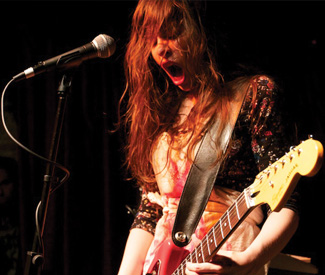
MUSIC Mexican garage punk act Le Butcherettes has been making a clamorous bang touring ’round the world — that noise thanks in no small part to wild ringleader, Teri Gender Bender. Back in early fall, Bender was expertly matched to fellow wild child, Iggy Pop, in a tour that seemed destined to rule. Tragedy struck when Pop was injured during a live show, and the future of the tour was unclear. Fast-forward three months and the rescheduled shows are finally here, going down at the Warfield. Before the tour, I spoke with the enigmatic Bender — a feminist, a performance artist, and most importantly, a rock’n’roll force to be reckoned with.

SFBG What was the reaction when you heard you’d be opening for Iggy Pop?  

Teri Gender Bender All three of us absolutely fell apart with joy. It’s a dream come true for sure, still pinching myself that it can’t be real.  

SFBG Any particularly memorable moments from the tours with Dead Weather, Yeah Yeah Yeahs, or Deftones?

TGB Getting to play in Mexico very early on in this band with Yeah Yeah Yeahs and Dead Weather were such mind blowing experiences. I was only 19 and they were our first big shows. It was a great [yet] nerve racking experience and a real eye opener. We did the Deftones tour with our new lineup, Gabe Serbian who is now the drummer, and Jonathan Hischke who plays bass — I did not have a bass player in the early days of the band. We had a lot of good times and weird times — it’s always strange to play first in front of people who really are there to see the headline band so it’s very hard work to get them to open their ears and minds to a band they have no idea about.

We had a lot of fun also with the Dillinger Escape Plan who were also on the tour. Both Gabe and Jonathan were friends with all of them from their days in their old bands the Locust and Flying Luttenbachers, they all had toured together before. It was also a great honor when Chino invited me to sing with him during their song “Knife Party” each night during the Deftones set. Overall we just feel really fortunate to be able to play with and for all kinds of people, not just one genre.

SFBG How did Serbian end up joining the band?

TGB Gabe joined in December of 2010, I met him through my manager Cathy who has known him for a while and suggested that I try jamming with him. We clicked immediately and that was that. She also introduced me to Jonathan, who lives at her house and was also friends with Gabe, he had just finished his touring with Broken Bells and said he would love to jam with us and again it just felt great. Our first real shows as the band we are were this year’s SXSW, which we all had a blast playing.

SFBG What music did you grow up listening to?

TGB I am not too proud to say I was all about Spice Girls, when I was really You Go Girl power. But I grew up with the music of my father who was all about classic rock and bands like the Beatles played constantly in our house when I was young. However, I will say that definitely the Spice Girls were not Gabe and Jon’s first CDs.

SFBG What inspires your lyrics?

TGB My sadness. Loss, expectations, deceptions, women’s rights.

SFBG Does the live show still include food, blood, and/or animals?

TGB The live show does not have any of those things now, when I first started the band I used many things like blood and meat as metaphors and symbolism — the meat represented how I felt women were treated, but I grew to realize that people don’t see or necessarily understand that was the message meant by the blood and meat but instead took away a whole different meaning and it became bigger than the music and more the talking point of our show from media — it was not meant as some kind of gimmick, so as soon as [I] felt like that was what it was becoming, I stopped because that was not ever the intention.

It came from a place of rage and I channeled those emotions into the music now versus having anything that could be called antics. The only thing left from that period is my bloody apron which really is the notion of the housewife stereotype rebellion. That will go away soon now too as it is also becoming a focus that does not really have the same importance or message once it is co-opted into an icon of the band. 


LE BUTCHERETTES

With Iggy Pop

Sun/4 and Tues/6, 8 p.m., $47

(415) 345-0900

www.thewarfieldtheatre.com

Dead horses and fool’s gold

1

arts@sfbg.com

HAIRY EYEBALL What more can art tell us about our culture’s conflicted relationship to celebrity, let alone its own conflicted relationship with celebrity? Not much, I suspect.

Kim Kardashian needs Barbara Kruger, who collaborated with the self-branding phenom on a now infamous cover portrait for W magazine’s 2010 art issue, like a fish needs a bicycle. And Warhol’s silk-screened Marilyns, or even Jeff Koons’ ceramic tribute to the King of Pop and his pet primate, seem positively quaint next to the hollow extravagance of Siren (2008), Marc Quinn’s life size statue of a yoga-posing Kate Moss cast in solid gold. I’m sure, though, that Kruger and Quinn appreciated the press their pieces netted them.

So, kudos to Bay Area artist Ray Beldner for attempting to scout some new routes through well-trod terrain. His two series of portraits at Catharine Clark Gallery are as much about the processes used to create them as they are the famous (and sometimes infamous) faces they depict. The results are decidedly mixed.

For the ghostly digital portraits in the first series, “101 Portraits,” Beldner overlaid the first 101 results that came up in a Google image search for a given subject, resulting in a hazy composite of that person’s publicly circulated image at a particular moment in time that reveals little of their actual likeness.

Some subjects are recognizable by a certain feature (Sarah Palin’s trademark up-do, Barack Obama’s prominent ears), whereas others (Michael Jackson, Britney Spears) are nearly unidentifiable, eraser-marks of their former selves.

The portraits invite allegorical speculation. Is the recognizability of Palin and Obama’s outlines a testament to the consistency of image in politics? Does the illegible smudginess of Jackson and Spears offer a formal comment on their respective falls from grace? But why over think things? Beldner’s composites are at their most intriguing when viewed as useless data sets; palimpsestic reminders that for all of the algorithms Google has churning out its top results, the internet is still something of an impenetrable jungle.

Gimmickry gets the better of Beldner’s other series, “Drawn by the hand of…,” hung in the gallery’s rear space. Wearing silicone gloves made from casts of other people’s hands, Beldner applied colored ink directly to paper. The resulting ventriloquized finger-paintings — whose sparse, monochromatic figurations recall Raymond Pettibon — are too stylistically uniform to say much about the potential affective affinities between the hand used and the person depicted.

Rather, the paintings come off as obvious and sometimes ghoulish sight gags: Jackson (again) was drawn using the hand of a young boy; for Jaycee Lee Dugard’s kidnapper Phillip Garrido, Beldner used the hand of a young girl. If the gesture seems familiar, it’s because it’s old news: another Young British Artist alum of Quinn’s, Marcus Harvey, caused much pearl-clutching with his 1995 portrait of British child murderer Myra Hindley, created by applying gray and black acrylic paint using a plaster cast of a child’s open palm.


ROCK TUMBLER


Leslie Shows’ large-scale mixed media portraits of the many faces of two pyrite chunks are the formidable and beguiling standouts of “Split Array,” her first solo exhibit at Haines Gallery. Despite Shows’ subject matter — fool’s gold — there is no joking around here. The pyrite portraits are the 2006 SECA Award recipient’s most technically finessed exploration of the parallels between geologic formation and the material process of painting to date.

Shows has worked layers of Plexiglas, colored ink, Mylar, crushed glass, metal dust, and mirrored shards onto thin, reflective aluminum panels (which she also engraves) to create trompe l’oeil effects that give her compositions dimensional heft despite their bas relief-like surfaces. When viewed head-on, a silvery pyramid-shaped outcrop seems to emerge from the upper left section of Face K (2011), pulling away from its striated Plexiglas backing. Similarly, Face P (2011) seems to extend infinitely back into the upper right hand corner of its aluminum “canvas” even as bloodied streaks (ink stains, perhaps?) in the lower half foreground the entire composition’s flatness.

However dazzling, the pyrite portraits are not merely the sum of such special effects. A deeper kind of alchemy is going on here beyond Shows’ transformation of industrial materials into representations of a mineral which is, by and large, useless to industry. I’m still trying to put my finger on it. Robert Smithson’s dictum “Nature is never finished” comes to mind as a signpost, although I’m guessing he would’ve had beef with the Faces series.

In Smithson’s gallery installations, the mirrors placed to infinitely reflect piles of shells or dirt were reminders of these natural components’ infinite variety and unknowable totality. Nature could be brought into the white cube but the white cube would never fully exhaust it. Show’s pyrite faces — with their man-made materials and Cubist collapsing of multiple perspectives — arrive at a similar conclusion, but through overt representation rather than presentation. To attempt the latter would risk evoking a naive transcendentalism which in this day and age could amount to a fool’s errand.

RAY BELDNER: PORTRAITS

Through Dec. 23

Catharine Clark Gallery

150 Minna, SF

(415) 399-1439

www.cclarkgallery.com

LESLIE SHOWS: SPLIT ARRAY

Through Dec. 24

Haines Gallery

49 Geary, Fifth Flr., SF

(415) 397-8114

www.hainesgallery.com

The message of 1968

4

By J.H. Tompkins

LIT On October 16, 1968, in Mexico City, American Olympic sprinters Tommie Smith and John Carlos electrified the world by accepting their medals with heads down and gloved fists thrust proudly in the air. Their defiance provided a fitting end for a year that began with Czechoslovakia’s Prague Spring and America’s military humiliation during the Tet Offensive in Vietnam, and saw the assassination of Dr. Martin Luther King Jr. and its explosive aftermath, the general strike in France, the riveting presence and influence of the Black Panther Party, mushrooming opposition to the draft, and rioting in Chicago during the Democratic Convention.

Like Mohammed Ali, who in 1967 went to prison rather than fight in Vietnam, Smith and Carlos wrote an important page in American history. Like Ali, they have remained true to the principles they embodied years ago. Now, 43 years down the road, it’s hard to find anyone to speak against what they did.

But at the time, precisely because their enemy was weakened by exposure and their supporters inspired, they faced a blistering backlash. They were banished from Olympic Village, and sent back to the United States. Their crime? Smith and Carlos were allegedly guilty of tarnishing the spirit of an Olympic games that were supposed to be above and beyond politics.

Author-columnist-cultural critic Dave Zirin, who with Carlos has just published “The John Carlos Story: The Sports Moment That Changed the World,” has more than a few things to say about the sanctity of sports and the way political context shapes athletes as well as the games they play. These days, a conversation with Zirin has a special quality: not only has he written a book that sheds new light on an important, long-ago event, the present moment is energized by political turmoil that brings to mind the 1960s.

“I was an absolute sports junkie in the ’90s, when I was in college,” Zirin told me in a recent interview. “I memorized stats, followed every sport, it was my oxygen. I didn’t follow politics, much less politics in sports, until something happened that stopped me cold: In 1996 [Denver Nuggets guard] Mahmoud Abdul Rauf made a decision not to stand during the National Anthem. He was asked whether he understood that the flag was a symbol of freedom and equality throughout the world, and he said it may be to some, but to others it’s a symbol of oppression and tyranny. This was before the spread of the Internet, and Rauf’s stand was only covered by the mainstream media. They crushed him.”

Zirin realized then that there was an aspect of sports history he hadn’t concerned himself with, “the place where social justice and sports intersect,” as he put it. It has shaped the work he’s done since.

Among many other things, Zirin writes a column, “Edge of Sports” for the Sports Illustrated Website, has a weekly radio show called “Edge of Sports Radio” on XM, and contributes regularly to The Nation and SLAM Magazine. Along with “The John Carlos Story,” he was written books including “What’s My Name, Fool? Sports and Resistance in the United States,” “Welcome to the Terrordome: The Pain, Politics, and Promise of Sports,” and “A People’s History of Sports in the United States.”

As Zirin and Carlos point out in the book, the futures of both runners were shaped by what they did in Mexico City. They struggled to find jobs, stability, and peace of mind. Still, Zirin writes “Unlike other 1960s iconography — Woodstock, Abbie Hoffman, Richard Nixon — the moment doesn’t feel musty. It still packs a wallop.”

It resonates because the injustices they protested are still rife in America, and because the arena in which they took their stand — sports — creates common ground for so many people.

“I don’t think there’s any place where the contradictions in American society are on such sharp display as in sports,” Zirin told me. “Think back to African American boxing champions Jack Johnson and Joe Louis. Neither made explicit political statements, but they had representative political power, representing power and pride in the context of racism and white supremacy. They weren’t just entertainers but in fact their presence, the inspiration they provided, was a threat to the established order of things.”

In sports today, there’s no doubt that athletes, in particular African American athletes, play a similar role. NBA hall of famer Charles Barkley once objected — perhaps with his tongue somewhat in his cheek — to the idea that he was a role model. Zirin laughed at the mention of this, saying, “Yeah, and the sky isn’t blue. You don’t chose to be a role model, you are one. It’s an objective thing. And if people are going to be role models, like it or not, then we all have to examine what they’re modeling. If you believe that the fact that a player can dunk makes him a great person, that says one thing. If having a sense of purpose in politics is important, then that says something very different.”

When Zirin and Carlos planned their book, both agreed that they weren’t interested in producing a sports memoir. “We didn’t want to say ‘look at me, genuflect at my athletic greatness.’ We wanted to say that not everyone can run at a world-class speed, but anyone can live a life dedicated to a sense of purpose.”

That approach runs head-on into a mainstream media that has made a point of emphasizing how “today’s pampered athletes,” as the media often put it, want nothing more than a fat pay check. There’s truth in this perspective — although it should be noted that both the NFL and NBA have experienced lockouts this year and that the same media outlets rarely describe the fabulously wealthy owners of professional franchises as pampered billionaires.

“I wrote an article,” he explained, called “‘NBA Players: Welcome to the 99%.’ Despite their money and privilege, they found themselves in a position where they were facing arrogant billionaires asking for a bailout because they made a lot of bad business decisions as NBA owners. It’s just like Wall Street bankers want American working people to cover all their bad bets. Will their proposed savings go back to fans? I don’t think so, they’ll just get a bigger slice of the pie.”

Besides, Zirin pointed out that there’s a lot more to the story that rarely reaches the public. Professional sports will publicly punish athletes who are caught crossing certain lines. But when it comes to speaking to the politics of injustice, the leagues try to deal with transgressions behind the scenes.

“There’s a ton of corporate and financial pressure on these athletes,” he says. “And these players talk to each other about guys like Craig Hodges [a guard on three Chicago Bulls championship teams], who in 1992 passed a note to Bush Sr. about Iraq War I when the Bulls visited the White House. He was drummed out of the league for that and these stories are passed down almost like scare stories. At the end of the day, we have to remember what Carlos and Smith did was in the context of global revolt and crisis. It was a symbol of the moment and a perfect merging of movements and moments. We can’t forget that.”

Although Zirin makes a point in his work to include athletes of all nationalities and sexual preferences, he has particular insights into the role African American athletes play in American culture.

“John Thompson says that Black athletes have the blessing of the burden of representation,” he noted. “It’s a burden because if one athlete does something, then it’s an issue for all Black athletes to deal with, for instance Michael Vick’s involvement with dog fighting. It’s not Peyton Manning’s problem that Chris Herron [a white one-time basketball standout from the mid-2000s] got on drugs. It works in a different way for Black athletes. The blessing part is the you’re part of a tradition, you stand on the shoulders of men and women like Jim Brown, Bill Russell, Wyomia Tyus, and Mohammed Ali, and you have an ownership of that tradition. It’s true that Steve Nash and all athletes are part of the tradition, but it runs more seamlessly through the African American community.”

These days, the sports world is talking about another scandal, this time the ugly situation at Penn State. Zirin discusses those problems in the context of a bankrupt culture, where the NCAA — the self-proclaimed moral arbiter of college sports — refuses to speak to hypocrisy that links all the problems in order to ensure its own survival.

Sooner or later, he said, the NCAA will either sink beneath its own corrupt weight, or athletes — who because of the professionalization of youth sports know each other in many cases from their early teens — band together and demand some compensation for the money that they generate. College presidents are the loudest complainers and the most important enablers.”

Occupy standoffs continue as poll finds public support for the movement

11

As OccupyOakland moves to reoccupy Frank Ogawa/Oscar Grant Plaza today and the burgeoning OccupySF encampment braces for another long-threatened raid by police, a new Field Poll finds that about half of registered California voters identify with the Occupy movement and support its goals, which include taxing the rich and limiting the ability of large corporations to corrupt the political and economic systems.

As the San Francisco Chronicle reports, 46 percent of respondants said they identified with the Occupy movement and 58 percent agree with the cause that prompted it, compared with 32 percent who say they disagree with it. Unsurprisingly, those on the left were more likely to support Occupy while those on the right were more likely to oppose it. A previous Field Poll at the height of the right-wing Tea Party movement found it had only about half as much support as Occupy now enjoys.

Still, as it enters its third month and winter descends on the encampments, Occupy faces myriad challenges. In San Francisco, the mainstream media — particularly curdmugeonly Chronicle columnist CW Nevius — has regularly highlighted conflicts and other conditions in the camps and pushed Mayor Ed Lee to follow-through on his threats to clear the tents from Justin Herman/Bradley Manning Plaza. Rumors abound that a raid could come on Wednesday night, when SFPD beefs up its staffing for training exercises.

In Oakland, the site of some of the most violent police crackdowns on Occupy encampments, OccupyOakland members are right now (noon, Tues/29) marching back into their former home and pledging to set up a 24/7 protest in defiance of city officials. While they seem to be stopping short of a full-blown occupation and tent city, they claim to be setting up a model for the next phase of the Occupy movement.

The group’s press release follows:


FOR IMMEDIATE RELEASE:

Contact:

Phil Horne, Esq., Occupy Oakland Vigil Committee

415-874-9800; occupylaw@riseup.net

www.occupyoakland.org

OCCUPY OAKLAND— RE-OCCUPYING OSCAR GRANT a.k.a. FRANK OGAWA PLAZA

On Tuesday, November 29, 2011 at noon, Occupy Oakland activists will retake Frank Ogawa a.k.a. Oscar Grant Plaza in downtown Oakland with a 24-hour, 7 day-a-week vigil.  Occupiers hope to create a model for a new wave of “Occupation” protest throughout the United States. With the vigil, Occupiers will continue asserting rights guaranteed by the United States Constitution to assemble, speak, and petition government for redress of grievances.  The vigil is not the product of a bargain with Mayor Quan, nor is it negotiated with law enforcement–permission from the city is not required to exercise these constitutionally guaranteed rights.

The structures in the plaza will be symbolic and part of the vigil protest. A teepee will remind the public of the former Occupy camp and historic struggles of the Sioux Indians on the Plains of the U.S.; homeless workers in Hoovervilles during the Great Depression; the “Bonus March” to Washington D.C. by unpaid and unemployed veterans in 1932; Resurrection City following the assassination of Martin Luther King; the AIDS vigil of 1980s San Francisco; and the redwood occupations of Judi Bari and Running Wolf.

Occupy Oakland continues its occupation because residents of Oakland and across the US are still fighting for food, shelter, medical care, school, childcare, and other necessities.  The 1% enjoy 40% of U.S. wealth and 50% ownership of Wall Street stocks and bonds.  The bottom 80% split 7% of the former and just 5% of the latter.  The average 35-year-old in the 99% has a net worth less than $3,000.00.  Occupiers ask the public to consider, “How long does it take an unemployed member of the 99% to go through $3,000.00 and become homeless.” In Oakland, the unemployment rate is nearly double that of the national average. These are issues of crucial relevance to our city.

Occupy Oakland’s vigil declares, “If the 1% won’t share voluntarily through a sense of morality and concern for the well-being of all, then through protest and direct action, we will force change!  Occupy the Plaza!  De-colonize the 99%!”

Occupy Oakland will have sign-up sheets starting Tuesday at 11 am. at the Plaza, but sign up is not a prerequisite for participation in the vigil. Supporters are encouraged to come out day or night to participate.  The Plaza is fully accessible to the differently-abled.

About OccupyOakland:

Occupy Oakland is an emerging social movement without leaders or spokespeople. It is one of 1,570 occupations currently occurring around the world in solidarity with Occupy Wall St. For more information about the other occupations, see: http://www.occupytogether.org/

An up-to-date calendar announcing Oakland actions, and more information can be found at:

http://www.occupyoakland.org/


Protesters target UC to demand openness, accountability, and the restoration of cuts

2

UPDATED BELOW — Protesters with ReFund California and other groups are gathering today (Mon/28) at UCSF-Mission Bay and three other UC campuses to protest a teleconference of the UC Board of Regents, which will discuss state funding levels and tuition increases, as well as recent incidents of police violence against nonviolent student protesters.

ReFund California, a coalition of student and labor groups, is angry with the UC’s decision to abruptly cancel the Nov. 16-17 Regents meeting at UCSF, citing public safety concerns surrounding a meeting that the group had been planning a convergence on for months – as well as a hastily called meeting on the day after Thanksgiving.

The group has created a pledge that it wants the Regents to agree to, which includes calling for higher taxes on the rich, a restoration of cuts to the public university systems, removal of commercial land from Prop. 13 property tax caps, and a fee on Wall Street financial transactions.

ReFund California is also dismissive of independent investigations the UC has initiated to look at aggressive police repression of students protests, including police at UC Berkeley using batons and mass arrests to dismantle an OccupyCal tent city and police at UC Davis dousing passive protesters with pepper spray. Video of both incidents went viral and have helped galvanize the overlapping Occupy and student movements.

“No amount of new ‘police protocols’ will prevent violence against students and workers, as long California’s corporate and financial elite along with their representatives among the Regents and administrators of the UC rely on police to address the concerns of students and workers,” the ReFund California Coalition wrote in the letter to the UC.

Today’s action at UCSF – centered around the meeting site at 1675 Owens Street, where a Guardian reporter is on the scene and will offer her report later today – joins similar protests at UC Davis, UCLA, and UC Merced, the four sites where the Regents will gather.

Meanwhile, ReFund and other groups are also angry that the CSU Board of Trustees went ahead with its Nov. 16 meeting behind closed doors, clearing out student protesters and the public before they approved a 9 percent tuition hike, an action that Lt. Gov. Gavin Newsom (a member of that body) denounced.

“While I understand the CSU leadership’s concerns regarding public safety, the spirit of open deliberations has been marred,” Newsom wrote in a Nov. 18 letter to Chancellor Charles Reed, calling for the matter to be re-voted at the Dec. 5 meeting to “allow the full board to hold an open debate, with full public comment and members of the media present.”

In related news, many students and faculty at UC Davis are on strike today to protest the pepper-spraying incident. And tomorrow (Tues/29) at noon, members of OccupyOakland say they plan to retake Frank Ogawa Plaza (which they renamed Oscar Grant Plaza) and set up another 24/7 encampment.

UPDATE NOON: Guardian reporter Christine Deakers says there is a heavy police presence at the UCSF meeting, where only 50 members of the public are allowed inside and most of those seats have been claimed by ReFund California members. When the Regents decided to limit the time for public testimony, the group held a General Assembly in the meeting, drowning out the Regents and causing the meeting to adjourn until 1:30 pm. You can follow her tweets here or here.

UPDATE 1:50 PM: The UC Board of Regents did not reconvene, instead cancelling the rest of the meeting without taking action. The San Francisco Chronicle quotes Newsom as saying he supports the demands of ReFund but that he’s not willing to sign its pledge.

About that “acrimonious fall”

Catch this. Mayor Ed Lee’s mayoral victory had nothing to do with millions of dollars in campaign contributions from private interests, a sophisticated get-out-the vote effort targeting Lee supporters, the advantage of incumbency, some funny business, or a calculated campaign strategy concentrating efforts on absentee ballots.

Instead, the fact that Lee triumphed over voters’ second pick, the significantly less well-funded progressive candidate Sup. John Avalos, is proof that the left in San Francisco has plummeted into a dark abyss. In fact, the progressive movement has descended so far into disarray and become so irrelevant that its condition warrants front page news.

That’s essentially the narrative that Benjamin Wachs and Joe Eskenazi of the San Francisco Weekly offer in their cover article, “Progressively Worse: The Tumultuous Rise and Acrimonious Fall of the City’s Left,” in which they refer to the Guardian as “the movement’s cajoling ward boss, kingmaker, and sounding board.” Gosh, I feel so goddamn important right now.

Once the blood pressure returned to normal, my initial reaction to this piece was that Wachs and Eskenazi seem to misunderstand who and what progressives actually are. They portray the city’s left as a caricature, a brash bunch of power mongers now on the losing end that can be easily summed up with pithy video game references, Happy Meal toy bans, and bikes.

Witness the contrast between the Weekly’s portrayal of progressives (helped along by former Newsomite Eric Jaye), and the portrait of the left the Guardian offers this week with an Op-Ed written by NTanya Lee — an actual progressive who volunteered for the Avalos for Mayor campaign.

Here’s the Weekly on the left:

“This is an eclectic group, one often bound not by mutual interests as much as mutual enmity — toward Brown, his successors, and the corporate interests of ‘downtown.’ As a result, progressive principles are often wildly inconsistent. Progressives favor more government control over people’s lives for their own good, as when they effectively banned McDonald’s Happy Meals. But sometimes progressives say the government needs to let people make their own choices … Progressives believe government should subsidize homeless people who choose to drink themselves to death, while forbidding parents from buying McNuggets because fast food is bad for us. … Without consistent principles, it’s easy to associate progressives with the craziest ideas to come out of City Hall, and the movement’s bad ideas are memorable. … Daly’s pledge to say ‘Fuck’ at every public meeting makes a killer Internet meme. Hey, let’s legalize prostitution and outlaw plastic bags!”

Here’s Lee on the left:

“The Avalos coalition was largely community forces: SF Rising’s base in working class Black, Latino, Filipino and Chinese communities; the Bike Coalition’s growing base of mostly white bike riders; affinity groups like Filipinos, Queers, Latinos and Arabs for Avalos; progressive Democrats; social networks of creative, young progressive activists affiliated with the League of Young Voters; and loyal families and neighborhood leaders from John’s own District 11. The campaign prioritized communicating to voters in four languages, and according to the Chinese press, John Avalos was the only non-Chinese candidate with a significant Chinese outreach program. There were stalwarts from progressive labor unions (most notably SEIU 1021 and USWW) who threw down — but overall, labor played it safe and invested resources in other guys. And then, in the great surprise development of the race, supporters of the new national occupy movement came to be a strong part of the Team Avalos base because the campaign was so well positioned to resonate with the call to take on the one percent.”

When it comes to takeaways from the November election, the Weekly’s conclusion is essentially opposite that of progressives. While many on the left see themselves as regaining momentum and building the power to rise even in the face of defeat by the established powers-that-be, the Weekly casts San Francisco’s left as deflated and out-of-touch.

Speaking of out-of-touch, the SF Weekly refers to San Francisco’s “increasingly imaginary working class.”  But in reality, 61 percent of students attending public schools in S.F. Unified School District qualify for free or reduced lunch, and a majority of San Franciscans cannot afford market-rate housing.

However, the Weekly is correct in pointing out that shifting demographics have dealt a blow to the progressive base.

“Between 2000 and 2010, the city grew older (every age group over 50 increased), wealthier (there are now 58 percent more households earning $125,000 or more), and more heavily Asian (up from around 30 to nearly 35 percent of the city’s population): exactly the groups progressives don’t win with. These voters don’t respond well to campaigns against developments or for city services, because they’re often living in those developments and don’t need city services.”

I take issue with the Asian part of that statement as a sweeping generalization, however, having witnessed the solid organizing work of the Chinese Progressive Association, for example.

The Weekly also says progressives and the Guardian never called out former Mayor Gavin Newsom for ripping off their best ideas. Oh, they didn’t?  That’s news to me.

The Weekly article implies that progressives got trounced by moderates because jobs are priority No. 1 for voters, and the left has no feasible economic plan — but at the same time, the article completely dismisses ideas that the Guardian has put forth, like creating a municipal bank, implementing Avalos’ Local Hire legislation, or taxing the rich.

Taxing the rich is precisely the kind of economic solution the international Occupy movement is clamoring for, and the concept has even attracted a few unlikely supporters, like billionaires Warren Buffet and Sean Parker, who is not some conservative a*hole by the way.

“The Guardian … stays on the progressive agenda because they put it there, along with taxing the rich, tapping downtown to subsidize Muni, and other measures … Proposing the same old solutions to every new problem turns policies into punch lines.”

Speaking of predictable, no profile authored by the Weekly mentioning the Guardian would be complete without some dig about public power. “The Guardian has been flogging public power since Tesla invented the alternating-current generator,” the S.F. Weekly squawks. Those clever reporters, turning policies into punch lines.

But wait, I thought the problem was that progressives couldn’t get it together on the job creation thing. Consider the CleanPower SF program, which has been strongly advocated for by progressive Sup. and Sheriff-elect Ross Mirkarimi (who it turns out is “not toxic,” according to the Weekly, since he was elected citywide and all). According to an analysis by the Local Clean Energy Alliance, CleanPowerSF will create 983 jobs — 4,357 jobs when indirect job creation is factored in — over the course of three years, assuming the 51 percent renewable energy target is met. Presented with this kind of information, the Weekly will only yawn and say, “Are we on that again?”

That being said, our friends’ article might actually have a pearl of wisdom or two buried somewhere in that nauseating sea of sarcasm. Everyone needs to engage in self-reflection. So right after you’re done throwing up, think about how to take advantage of the opportunity this article presents for a citywide dialogue about progressivism in San Francisco.

The faces and voices of Occupy

33

Who are the 99 percent — and what are they saying? It’s not what you read in the daily papers

To read some of the accounts in the daily papers in San Francisco, and hear some of the national critics, you’d think the people in the local Occupy movement were mostly filthy, drunk, violent social outcasts just looking for a place to party. Or that they’re mad-eyed anarchists who can’t wait to break windows and throw bottles at the police. Or that they’re a confused and leaderless band that can’t figure out what it wants.

When you actually go and spend time at Occupy SF and Occupy Cal and Occupy Oakland, as our reporters have done, you get a very different picture.

The Occupy movement is diverse, complex and powerful. It’s full of people with different backgrounds and perspectives. And they all agree that economic injustice and inequality are at the root of the major problems facing the United States today.

Here are some of those people, the faces and the voices of Occupy — and a celebration of the lives they’re living and the work they’re doing.


The student

Jessica Martin reflects on the First Amendment

Guardian photo by Rebecca Bowe

Jessica Martin stood and held her sign high on the steps of Sproul Hall, at the University of California at Berkeley, while a jubilant crowd of students jammed to classic dance party tunes and set up tents. They were invigorated by a general assembly that had attracted thousands following a Nov. 15 student strike and Day of Action called as part of the Occupy movement. (Their tents were cleared in a police raid two days later, yet students responded with flair, suspending tents high in the air with balloons.)

Martin’s sign proclaimed, “Remember the First Amendment,” and she’d written the text of the Constitutional right to free speech on the other side.

“My mother stood on the steps [of the Lincoln Memorial] in D.C. with Martin Luther King as part of the ‘I Have a Dream’ speech,” said the graduating senior, who’s majoring in Japanese and Linguistics. “And now I stand on the steps of Sproul Hall,” — the birthplace of Berkeley’s Free Speech Movement — “in front of the Martin Luther King Student Union, to defend my First Amendment rights.”

She expressed solidarity with students who were brutalized by police Nov. 9 following their first attempt to establish an occupation.

“Part of what [police] are here to serve and protect is the First Amendment,” Martin said. But on that day, “They met the First Amendment with violence.” (Rebecca Bowe)


The artist

Ernest Doty responds to police brutality

Guardian photo by Rebecca Bowe

In Oakland, a young veteran named Scott Olsen suffered a fractured skull and brain injuries after being hit with a police projectile at an Oct. 25 Occupy Oakland protest. Ernest Doty was one of several who ran to Olsen’s aid and carried him to safety.

“Immediately after I saw Scott go down … I knew I had to get him, and get him out of there,” Doty recounted. “I whistled at another guy, and we both ran in. The cops were shooting at us with rubber bullets.” As they ran up, he said, a flash grenade blew up next to Olsen’s face, just inches from his head injury.

Doty, 32, recently moved to the Bay Area from Albuquerque, New Mexico. An artist who also does spoken word performances, he’s camped overnight at Occupy Oakland and has incorporated words and images from the Occupy movement into his artwork and poetry.

He’s also been personally impacted by tragedies arising from police interactions: Both his stepbrother and his cousin — a veteran who suffered from post-traumatic stress disorder — were shot and killed by police in New Mexico.

Occupy Oakland “has managed to create a community out of chaos,” Doty said. “I think that this movement is going to continue to grow. It’s the 1960s all over again, but it’s broader. It’s going to be a long road. I think encampments, marches, and protests are going to continue into the next year.”(Bowe)

Ernest Doty’s next art show is Dec. 2 from 7 to 11 p.m. at Sticks + Stones Gallery, 815 Broadway, in Oakland.


The peacekeeper

Nate Paluga deals with camp conflict

Guardian photo by Mirissa Neff

Does this man look like he’s an occupier? Depends on your perception of the movement. He’s not homeless — he’s a bike mechanic who lives in Nob Hill and whose girlfriend only tentatively accepts that he’s camping in Justin Herman Plaza. He is young, blunt, and possesses the intense gaze of an activist, belied by a snug red-white-and-blue biker’s cap with “USA” emblazoned on the underbelly of its brim.

Paluga, a self-proclaimed philosopher, has grabbed upon the concepts of “fairness and equality” as the core values of Occupy. “This movement means something different to different people, but I haven’t found anyone that disagrees with those being some core values,” he said as he showed off the bike he uses to move as much as 100 pounds of food and equipment for the camp.

His core values are his guidelines in his other role at Occupy SF: peacekeeper. Paluga said he and others often intervene in the disagreements that can arise in a group-run housing situation populated by diverse socioeconomic and cultural backgrounds.

He said that with aggressive individuals it’s important to reinforce why they’re all there. “They’re coming from places where there wasn’t a lot of equality and justice and they’re bringing that with them. You gotta step in and tell them it’s gonna be okay.” (Caitlin Donohue)


The nester

Two Horses’ permanent protest

Guardian photo by Mirissa Neff

Two Horses might have the most welcoming tent at Occupy SF. Brightly stocked flowerboxes and a welcome mat are outside; inside, the one-time property manager and current homeless man has arranged an air mattress, carpet, and princess accommodations for his 12-year-old blind white cat Luna. There’s even a four-foot tall kitty tower.

The agile feline moves toward the sound of his hand tapping on the floor. “I like the idea of a 24-hour protest,” said Two Horses. He came to the camp a few weeks ago and was impressed by the quality and availability of food available in the encampment’s kitchen, where he said donations come from all over (“it comes from the 99 percent”) at all hours of the day and night.

“I knew I had to do something, so I started volunteering.” He now works the late shift, a core kitchen staffer.

When Michael Moore came by the plaza, Two Horses was impressed. “It wasn’t so much what he said but how he came shuffling up with no entourage, no security, no assistant with a clipboard.” He would, however, like to see more communication between Occupy camps, maybe a livestream video screen to see other cities.

He seems quite at home in his surroundings. “My goal is to look as permanent as I can,” he said, the corners of his mouth turning up crookedly, happily. (Donohue)


The healers

Med tent volunteers from the nurses’ union do it for the patients

Guardian photo by Mirissa Neff

Melissa Thompson has a kid who’s looking at college options; she hopes her family can figure out a way to afford education in a state where public university tuition continues to rise.

But that’s not the only reason she’s at Occupy SF. On a cloudy Friday morning, Thompson sat outside the encampment’s med tent, where she tended to cuts, changed the dressing on wounds, and provided socks, blankets, and tools for basic hygiene. It’s her trade — she’s a nurse, one of the many California Nurses Association members sick of cuts to the country’s public and private health options who were eager to lend their services to the movement.

She’s also one of the determined crew that enlivens Occupy Walnut Creek. What’s it like out there? “It’s been good,” she assured us, brightly. “We’re on the corner, by the Bank of America? We’ve had great reactions at Walnut Creek.”

Thompson said she got involved because “I love being a nurse, number one.” Corporate greed, she said, has led to cuts in her patients’ insurance, leaving them to make tough decisions between feeding their family and filling the prescription for their post-dialysis medications.

She said he hopes the politicians are listening to Occupy. “I don’t understand what the problem is. They need to open up their eyes and see how they’ve damaged us.” (Donohue)


The fabulous

Li Morales and Molly Goldberg talk about Queer Occupy

Queers have long been resisting the ravages of the one percent on the 99 percent. Resistance has looked like coming together on our own, on our own terms, with our own names, genders, and chosen families. Like the (decolonize) occupations in San Francisco, Oakland, around the country and world, our resistance is made out of a stubborn imagination, and can be messy. We are a menagerie of magnificent beasts, with all of our struggles and limitations firmly at the center of the fabulous and fucked-up world we make for ourselves.

In HAVOQ/ SF Pride at Work, we imagine queerness not as a What, an identity whose boundaries we seek to police, a platform from which to put forth our One Demand. Rather, we imagine it as a How: a way of being with one another. We call it Fabulosity. And Fabulosity means drawing on queer histories of re-imagining family as a way of expanding circles of care and responsibility. Fabulosity is to affirm the self-determination of every queer to do queer just exactly how they do. It affirms that under the banner of the 99 percent, we are all uniquely impacted by the ravages of the 1 percent and we come with a diversity of strategies and tactics to resist and survive.

In the gray areas lives our emerging autonomy and interdependence — an autonomy not contingent on capitalism’s insistence on utility. We are not useful. We are not legible. And in that lack of utility and that illegibility, we are not controllable. Because we do not have one demand, but rather a cornucopia of desire. We’re making our fabulous fucked-up world for ourselves, with each other. We always have. (Morales and Goldberg)

Li Morales and Molly Goldberg are members of SF Pride at Work/HAVOQ, a San Francisco-based collective of queers organizing for social and economic justice.


The mechanic

reZz keeps Occupy’s tires filled

Photo by David Martinez

On a Sunday afternoon at Occupy SF, Bike Kitchen volunteer reZz exported the education-oriented bike shop’s mission — and its tools — to Justin Herman Plaza. There he stood, fixing alignment on the wheels of passers-by and occupiers — for free. “Occupy Bike Shop,” as he and other volunteers have come to call the service, has been tinkering out in the plaza two to three times a week.

“It’s been lovely,” he said later in a phone interview with the Guardian. “I’ve purposefully been in a place where it’s open to people in the encampment and people who are passing by. People who stop want to see the occupation in it’s most positive light.” reZz wouldn’t consider camping out at Occupy, but that’s not to say that he doesn’t truck with the movement’s message that public space can — and should — be repurposed.

An avid biker himself, he thinks public bike repair is a great re-envisioning tactic. And fixing poor people’s bikes sends its own message. “This year’s junk is an invented need,” he said. “We’re falling into debt because we think we need a new car every year. Part of the idea of fixing people’s bikes and showing them how to do it brings us away from the artificial scarcity whereby the robber barons and capitalists insist we have to struggle against each other instead of working with each other.” (Donohue)


The medic

Miran Istina has cancer — and helps others

Guardian photo by Yael Chanoff

It had grown dark, and the OccupySF camp was restless as many signs pointed to a raid that night at 101 Market Street. But 18-year-old Miran Istina sat calmly on the sidewalk, medical supplies spread over her lap. “As a medic for OccupySF,” said Istina, “It’s my job to have a well-supplied, well-organized medical kit.”

The tall, wide-eyed teenager, who spends some of the time in a wheelchair, is not just a medic at camp. She has done police liaison and media work as well. And she has a remarkable story.

When she was 14, Istina was diagnosed with chronic myelogenous leukemia. Her family had purchased her health insurance only three months before, and the cancer was in stage two, indicating that she had been sick for at least one year. So the company denied her treatment, which would include a bone-marrow transplant, radiation therapy and chemotherapy, on the basis of a pre-existing condition.

Her family bought a van, left Sisters, Oregon, and started searching for somebody who would treat her. They traveled around the country three years, desperate for the life-saving treatment but unable to pay for it.

Just after her 17th birthday, Istina left her parents in New York and began hitchhiking back to Oregon. “That was my way of saying, I’m done looking for treatment. I’m going to do what makes my heart happy.”

After a little over a year of traveling and exploring her interests, Istina made her way to San Francisco. She was sleeping in Buena Vista Park when she “heard some protesters walking by, going ‘occupy San Francisco! Occupy San Francisco. I figured they were a bunch of radicals and that a street kid like me really wouldn’t be welcome.'”

A few nights later, she did go check it out, looking for a safe place to sleep. “They explained to me what it’s about, and why we’re here, and my story directly sat inside of that.”

She has been living and organizing with OccupySF ever since. She got involved with the medic team after spending a night in the hospital for kidney failure, then being treated for nine days, free, in the camp’s medical tent. “They realized I had a lot of skill as a medic, and gave me a kit.”

In the midst of recent media attacks on the OccupySF community, Istina is defensive: “Every community has its assholes. Every community has that pit that no one goes into because it’s just yucky. For some people in San Francisco it’s the Haight, for the the Haightians- you know, the Haight people- it’s the financial district. For other people it’ll be somewhere else. But I love the community here. “I’ve been hurt by a lot of people in my life,” said Istina. “But I think I can make that right by holding to this pure-hearted motto of universal and unconditional love, for everyone. No exceptions.” (Yael Chanoff)

Anonymous targets cop group that coordinated calls on Occupy

9

The hacker group Anonymous has targeted the Police Executive Research Forum (PERF), taking down the website and publicly releasing home phone numbers, addresses, emails, and other personal information of directors and staff.

PERF became an activist target after media outlets, including the Guardian, highlighted the nonprofit think tank’s role in coordinating conference calls with mayors of major metropolitan cities about how to deal with Occupy encampments. Weeks after the conference calls were convened, a series of police raids targeted encampments in major U.S. cities such as New York, Oakland, and Portland.

On Nov. 19, Anonymous Operations tweeted, “A private NGO called #PERF is helping to train & coordinate #Occupy raids nationally … PERF, Expect us!”

The attack occurred the next day, and PERF staff and directors’ personal information was posted online. A screen shot tweeted by Anonymous showed an error message which read: PoliceForum.org seems to be down. 🙁

Reddit posted a hacker conversation about the action. Apparently, not everyone was impressed.

The executive director of PERF is Sherwin B. Chuck Wexler, a member of the Advisory Council for the U.S. Department of Homeland Security. PERF board members include an assortment of police chiefs known for their track records of using heavy-handed tactics against protesters of the anti-globalization movement and mass demonstrations organized around Republican party national conventions. According to a bio for Wexler, “PERF’s research has a direct impact on policy and practice in policing around the world.”

PERF’s website is back up now. Before the attack occurred, the organization responded to the recent media attention with a public statement. “Over the last few days, the Police Executive Research Forum has been the subject of several false articles and blog postings alleging that we have been coordinating police crackdowns on Occupy protests,” the message reads. “This is not true. PERF conducted two conference calls for the sole purpose of allowing police chiefs to compare notes about their experiences with ‘Occupy’ protests.”

Anonymous is famous for releasing YouTube videos about its actions. Here’s the one C@b!nCr3w, the anonymous hackers taking credit for the attack, created about the PERF stunt. (“Don’t dox and drive” refers to “doxing,” hacker slang for releasing individuals’ personal data.)