Media

On the Cheap: September 18 -24, 2013

0

On the Cheap listings are compiled by Guardian staff. Submit items for the listings at listings@sfbg.com. For further information on how to submit items for the listings, see Selector.

WEDNESDAY 18

Robert Boswell Booksmith, 1644 Haight, SF; www.booksmith.com. 7:30pm, free. The author reads from Tumbledown, his first new novel in 10 years.

Tom Kizzia Books Inc., 301 Castro, Mtn. View; www.booksinc.net. 7pm, free. Also Thu/19, 7pm, free, Book Passage, 51 Tamal Vista, Corte Madera; www.bookpassage.com. The Alaska-based author reads from true-crime frontier thriller Pilgrim’s Wilderness.

Antoine Laurain Book Passage, 1 Ferry Bldg, SF; www.bookpassage.com. 6pm, free. The Paris-born author reads from his French bestseller The President’s Hat, a fable set during the Mitterrand years.

Radar Reading Series SF Public Library, 100 Larkin, SF; www.radarproductions.org. 6pm, free. Michelle Tea hosts this series highlighting independent and underground writers and artists. This month: Imogene Binnie, Kevin Simmonds, Wendy C. Ortiz, and Katie Haegele.

THURSDAY 19

“ConVerge” Yerba Buena Center for the Arts, 701 Mission, SF; www.ybca.org. 4-8pm, free. This month’s program features Chris Treggiari and Peter Foucalt’s Mobile Arts Platform project — “an interactive, neighborhood-generated social sculpture” — and its Mobile Screen Print Cart, which explores the history of community posters and enables the creation of new ones.

Molly Haskell Booksmith, 1644 Haight, SF; www.booksmith.com. 7:30pm, free. The film critic discusses her new memoir, My Brother My Sister, which chronicles her younger brother’s transformation into a woman.

“Sights and Sounds of Bayview” Bayview Opera House, 4705 Third St, SF; www.sfartscommission.org. 5:30-9pm (program starts at 7pm), free. This live radio event features multi-media storytelling and music by Bayview residents and workers. Come early for a concert by Pat Wilder and Serious Business and to enjoy the monthly 3rd on Third neighborhood arts party.

“We Heart the Tamale Lady” Knockout, 3223 Mission, SF; indiegogo.com/projects/viva-la-tamale-lady. 9pm, $5-15 sliding scale. Help Virginia Ramos, aka the Tamale Lady, get into the brick-and-mortar biz at this fundraiser, featuring tamales (duh) and live music by Grandma’s Boyfriend, Scraper, Windham Flat, and Quite Polite.

FRIDAY 20

“Bill T. Jones/Arnie Zane Dance Company 30th Anniversary Exhibition” Yerba Buena Center for the Arts, 701 Mission, SF; www.ybca.org. Gallery hours Thu-Sat, noon-8pm, $8-10. Through Nov 3. Alongside a performance series featuring the dance company, YBCA hosts a survey exhibition compiling the sets, props, moving images, and other elements contributed over three decades by visual artists and designers (including Keith Haring, Huck Snyder, and Bjorn Amelan).

Hazel Reading Series 1564mrkt, 1564 Market, SF; www.hazelreadingseries.org. 7pm, $5 suggested donation. Local women writers read “daring and experimental” work.

Sukkot Shabbat Celebration Jewish Community Center of San Francisco, 3200 California, SF; www.jccsf.org. 4:30pm, free. As part of the JCCSF’s weeklong Sukkot celebration, “Outside In,” the organization hosts a free, all-are-welcome holiday Shabbat celebration in its atrium. Visit the web site for related events.

SATURDAY 21

Sarah Clark Cartoon Art Museum, 655 Mission, SF; www.cartoonart.org. 1-3pm, free. The museum’s current cartoonist-in-residence shows and discusses her work, including current project Season Ticket Diaries, based on her experiences as an Oakland A’s fan this season.

“An Evening of Poetry and Prose” San Francisco Buddhist Center, 37 Bartlett, SF; www.sfbuddhistcenter.org. 8pm, $5-30 suggested donation. Bay Area writers Pia Chatterjee, Genny Lim, Kenneth Wong, and Nellie Wong read to benefit Jai Bhim International, a group that provides English lessons and empowerment workshops for Indian youths of all economic backgrounds.

Friends of Duboce Park 16th annual tag sale Duboce Park, Duboce between Steiner and Scott, SF; www.friendsofdubocepark.org. 9am-2pm, free. Support Friends of Duboce Park, which funds improvements to the park — and pick up some sweet bargains! — at this popular annual neighborhood sale.

Mill Valley Fall Arts Festival #57 Old Mill Park, 325 Throckmorton, Mill Valley; www.mvfaf.org. 10am-5pm, $5-10. Also Sun/22. Over 140 artists from around the country showcase their works amid redwood trees. Plus: live music and children’s entertainment.

New Belgium’s Tour de Fat Lindley Meadow, Golden Gate Park, SF; sfbike.org/?fat. 10am-5pm, free. This annual “ballyhoo of bikes and beer” features a bike parade and a bike rodeo, live performances, fire-jumping bike acts, and more. Beer-sale proceeds benefit the San Francisco Bicycle Coalition.

SUNDAY 22

Grady Hendrix and Amanda Cohen Omnivore Books on Food, 3885a Cesar Chavez, SF; www.omnivorebooks.com. 3-4pm, free. The authors present Dirt Candy: A Cookbook, filled with vegetarian recipes from Cohen’s NYC restaurant, creatively illustrated like a graphic novel by artist Ryan Dunlavey. Added bonus: Cohen will be serving Dirt Candy’s famous “Portobello mousse.” *


How far will $10 an hour stretch in 2016?

112

Earlier this week, just as media reports pointed out that America’s wealthiest 1 percent did better in 2012 than almost any other year in history, Gov. Jerry Brown came out in favor of a bill that would raise the state minimum wage to $10 an hour by 2016.

Last night, the Assembly approved the bill on a 51-25 vote, sending it onto the governor’s office. The development is almost certain to provoke howls from pro-business interests claiming it will wreak havoc on the economy. But what will it mean for minimum wage earners, whose take-home pay currently totals less than $300 a week for a full-time job?

Here are some statistics to put into perspective what it means to be a minimum wage earner in a world of rising costs and a widening gulf between top income earners and the rest.

  • The National Low Income Housing Coalition notes that a household must earn $25.78 per hour to afford fair market rent for a two-bedroom apartment without spending 30 percent of their income. Couples earning California’s current $8 minimum wage can muster only a combined $16 an hour before taxes.
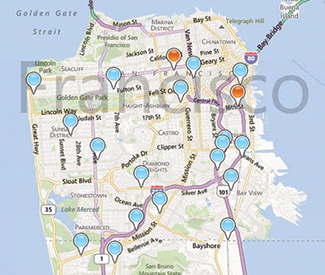
  • Based on this map illustrating San Francisco’s gaping rent affordability gap, a minimum-wage earner (making the 2012 minimum wage of $10.24 an hour) would have to hold down at least 3.4 full-time jobs to rent a two-bedroom apartment at fair market rate – even in the city’s less expensive areas like the Bayview or the Excelsior.
  • Fast food workers around the country are aiming higher than the $10 per hour Californians may have to look forward to by 2016 – organized food service employees have been rallying to be paid $15 an hour, a rate they see as an actual livable wage. According to this nifty calculator created by the Daily Beast, using data from University of Massachusetts economists Jeanette Wicks-Lim and Robert Pollin, the cost of paying McDonald’s workers this much could be recovered by charging 22 cents more for a Big Mac.
  • Finally, it’s worth considering the growing wealth gap between the wealthiest one percent and the rest. From 2007 to 2009, average real income for the bottom 99 percent fell by 11.6 percent, the largest two-year decline since the Great Depression, according to to an analysis by UC Berkeley economist Emmanuel Saez. Meanwhile, the top 1 percent lost an even higher percentage in that time. But then, during the economic recovery from 2009 to 2011, the one percent saw their incomes increase by 11.2 percent, while incomes of the bottom 99 percent shrunk slightly. Then, in 2012, the top one percent scored a 19 percent increase, their collective earnings accounting for 22.5 percent of total U.S. income. As Matthew O’Brien writes in The Atlantic, “it’s the one percent’s economy, and we’re just living in it.”

Mayor Lee distorts reality in defending CleanPowerSF obstruction by his appointees

151

Mayor Ed Lee yesterday answered a series of five questions from the Board of Supervisors about CleanPowerSF, the renewable energy program it approved last year on a veto-proof 8-3 vote, but which three of Lee’s appointees on the San Francisco Public Utilities Commission are now blocking.

Lee reaffirmed his opposition to the program and support for the three commissioners who are refusing to approve a maximum rate for the program, while making a series of statements that were misleading, contradictory, and, according to Sup. John Avalos, some outright falsehoods.

CleanPowerSF would group tens of thousands of city residents into a renewable energy buying pool, a system called Community Choice Aggregation authorized by state legislation, which would compete against Pacific Gas & Electric’s illegal local monopoly. Initally, the energy would be purchased under a contract with Shell Energy, but the main goal of the program is to build city-owned renewable energy facilities by issuing revenue bonds supported by the program’s ratepayers.

Yet the program Lee described has little resemblance to CleanPowerSF — and his statements of support for the concept belie his longstanding opposition to the program and support for PG&E, whose union is leading the campaign to kill CleanPowerSF.

“I know that many members of the Board of Supervisors are upset,” Lee began in his first answer to similar questions posed by Sups. Eric Mar, David Chiu, London Breed, David Campos, and John Avalos, who all represent the odd-numbered districts whose turn it was to submit questions to the mayor for this month’s appearance.

Lee then explained that one of the duties of  the SFPUC is to protect ratepayers, which he called “the overriding concern they have when faced with any issue,” adding that, “The commission ultimately decided that the rate wasn’t a fair rate.”

Ironically, the top rate that the commission is being asked to approve in order to finally launch CleanPowerSF was just 11.5 cents per kilowatt-hour, only slightly more than current PG&E rates and a substantial reduction from the rate that was discussed last year when supervisors approved the program.

PG&E, Lee, and other critics of the program had attacked its high cost, so SFPUC staffers tweaked the program to allow the initial use of Renewable Energy Credits, which support the creation of renewable energy projects, rather than being purely juice directly from solar, wind, and other renewable sources, which is more expensive.

So Lee criticized that change as a departure from what the board approved last year, telling the supervisors that the program should be at least “95 percent renewable on day one,” saying that, “This is what a green power program should look like.”

Yet when it did look like that, Lee opposed it, something he didn’t mention yesterday. And yet he still made the argument that the SFPUC was simply exercising its fiduciary responsibility in blocking a program that has gotten cheaper than when the board approved it.

“The San Francisco Public Utilities Commission did its job in protecting ratepayers,” Lee said. “I agree with the majority of the PUC.”

So, on one hand, Lee said that CleanPowerSF has “gotten progressively more expensive as time goes on,” citing statements made years ago about the goal of trying to meet-or-beat PG&E’s rates, which have been subsidized by taxpayers over the years.

And when the program then got close to matching those rates, he criticized the use of RECs to get there, saying the climate change benefits “need to be real and tangible and not based on vague promises.”

Yet even city-commissioned studies have shown that San Francisco won’t meet its own greenhouse gas reduction goals without substantially changing the energy portfolio of city residents, and CleanPowerSF is the only plan on the table to get there, except for PG&E’s vague promises to offer more renewable energy in the future.

While Lee touted city efforts to improve the energy efficiency of commercial buildings and the recent launch of a regional bike share program — neither of which will come close to meeting city climate change goals — even he acknowledged the “need to expand our in-city renewable energy generation,” citing the $4 million SolarSF as an example.

But Lee never made reference to CleanPowerSF’s plan to build up to $1 billion in renewable energy projects whose impacts would be far more impactful. Instead, he said the program “creates no local jobs,” which wouldn’t be true during the buildout phase.

While praising PG&E, Lee also glossed over the fact that a majority of supervisors still support CleanPowerSF, and that the SFPUC vote was supposed to be on the rate and not these ancillary issues, raising fundamental democratic issues when three mayoral appointees can override the decision of elected supervisors who represent all city residents.

“When a final project is so vastly different than the original intent, the San Francisco Public Utilities Commission has to intervene,” Lee said.

Avalos called many of Lee’s statements “lies,” so I followed Mayor Lee back to his office after the hearing and we had the following conversation as several reporters from other media outlets listened in:   

SFBG: Supervisor Avalos just said that you’ve made a number of statements that are not factually accurate, and certainly misleading, including saying that the program has changed substantially. Given that you opposed the program initially, and you seem to make statements that criticize those changes, and clearly the majority still supports it, how can you make the argument that the PUC is acting against it because the program has changed?

Mayor Lee: Well, you know, I know that elements of this are somewhat complicated cause you have to actually read a lot of volumes of materials to understand the choice aggregation program, cause it has those three aspects and I would….

SFBG: As guidelines, not as rates….

Mayor Lee: I would point to those numbers that were discussed at the board and presented to the [SF] Public Utilities Commission, because that’s what I’m quoting from. I’m taking it, not from even verbiage, I’m taking it exactly from facts that were presented at the commission at the Board of Supervisors and I specifically lifted quotes from the board about their comments about local jobs and all the other things, so, I don’t think I’m inaccurate at all. I think I’m actually quite on point.

SFBG: But the rates have come down from when they approved it and you made it sound like the rates have gone up.

Mayor Lee: The rates were up and they came down in trade off with less green.

SFBG: Right…

Mayor Lee: That’s about the point I was trying to make is that we wanted these other goals to happen and they couldn’t happen cause people were trading off things in order to set the rates and that was going to become a bigger and bigger gap as to what the original goals were. That’s the way…

SFBG: But the board clearly wants this program. Why, as a matter of policy, as a matter of city procedure, why isn’t the elected body the one to make this decision, instead of your appointees?

Mayor Lee: Well, I think that’s the whole reason why they presented it to the Public Utilities Commission. They’re charter mandated to set these rates. It’s not just an automatic acceptance of what the board says. They also independently review what the board has said. And in their independent review, they said they had gone well beyond what they stated their goals were and so they couldn’t set the rates and still honor all the goals that the board was suggesting.

SFBG: But those rates are less than what the Board has approved. How can they be exercising fiscal oversight… I mean, it doesn’t make any sense.

Mayor Lee: I think we have a big disagreement there. They’re mandated by the charter to set those rates responsibly, not just to follow what the board has stated and so, in their independent review, they went and reviewed all the goals that the board has said and said ‘This is not the program that they have stated should be fulfilled.’

SFBG: Even though the majority of the Board of Supervisors disagree with that statement that you just made?

Mayor Lee: Well, you know, then again, are we not respecting peoples’ right to disagree over what is being done here?

SFBG: But your argument that the program changed from what they approved, a  majority is saying ‘that’s not true,’ that you’re misrepresenting that.

Mayor Lee: No, I don’t think that I’m misrepresenting that. I disagree with that.

SFBG: A majority of the Board of Supervisors who approved it says you are.

Mayor: Well, I disagree with that assessment.


Girls like us

0

TOFU AND WHISKEY Before Le Tigre but after the demise of Bikini Kill, Kathleen Hanna created a mystical lo-fi electropop solo project called Julie Ruin. It was a difficult time for the riot grrrl icon; having recently flown the Pacific Northwest coop for Brooklyn, she let the ache out in song.

More than 15 years after that record and a whirlwind of life changes later (Le Tigre hiatus, Beastie Boy husband), Hanna and a newly assembled band of cohorts — Kathi Wilcox, Kenny Mellman, Carmine Covelli, Sara Landeau — reformed that project as the Julie Ruin. The Julie Ruin released its first group full-length, Run Fast, last week on Dischord.

A dancey new wave record bursting with head-bopping beats, lightning bolt electric guitars, and empowering lyrics, it’s set to be another chant-along feminist anthem album. But it’s a small miracle Run Fast was even made. Before she returned to music, Hanna was laid up with a then-mysterious illness for half a decade and this was her first effort back.

In the midst of a massive media blitz, including a live appearance on Late Night with Jimmy Fallon last week, Hanna and I discussed the Julie Ruin’s new record, struggles with neurological Lyme disease, why Photoshop is better than beer, and her young spirit sister, Tavi Gevinson, feminist teen editor of Rookie Magazine:

SF Bay Guardian Why did you decide to return to an earlier project, but with an entirely new band?

Kathleen Hanna I guess because I was starting from a similar place. I was coming up with loops and melodies and instead of just working on them myself, I brought them to the band and expanded on them. When I listen back to the Julie Ruin solo record, I hear kind of demos more than a fully finished record — which I think is great, and I’m proud of that record — but I was like “what if I start with the same idea but it was totally fleshed out?” So musically that was a big part of the project from me.

Also a big part of the project for me was starting from the same emotional place, of, you know, I was leaving Bikini Kill when I did the Julie Ruin solo project and that was a really big change in my life. And then I’m having this other really big change in my life, which is that I haven’t really made music for [nearly] 10 years. And instead of isolating and making this very private thing in my apartment by myself and feeling like I had to go it all alone, I reached out to my friends and said, “Hey, will you help me?” And luckily they said yes.

SFBG What was it like picking up instruments and working on music again after such a long hiatus?

KH It was great [and] it was weird! It was immediate chemistry with my bandmates. It felt like I was getting back to my old self.

I’d been sick for many years and my illness and kind of taken me out of things. I started doing a lot of archival stuff behind the scenes, but I hadn’t played music. It’s funny that I chose to do it when I was really, really sick but part of the reason was I needed some kind of hope to go on. And I didn’t know if we would record or tour or any of that. I just told them, “I want to play music, do you guys want to meet once a week and see how that goes?”

But a lot of times we couldn’t even meet, because I’d be sick. So it was a very slow process. But when I felt well enough to get to rehearsal I would forget I was sick, I would forget any pain I was in, I would forget I was fatigued. It would all come back to me. It was really important in my recovery process because you become all about the illness, especially an illness like Lyme disease, where there’s so much work you have to do to stay well or to get well, constant pills and IVs and specialist appointments.

I saw footage of Bikini Kill in the movie The Punk Singer that was being made about me, and I felt like I was light years away from that. I could barely walk up the stairs. And then I would write a song with my new band and feel like, “I still am that person.”

SFBG Did battling this disease directly inform any of the tracks on Run Fast?

KH I have a form of Lyme disease that affects my brain, neurological Lyme disease, so during a lot of the record I was having a hard time with language, so I would often say the wrong word. So when I was writing lyrics, I sort of just let that go, I didn’t try to go back, it was so much more stream-of-consciousness than I’ve [ever done]. I was like, why does it have to be a total narrative for every song? Why can’t it be abstract?

There are parts of the record where I just go “blah blah blah!” I would go back and fix that when I was feeling better but people would say to put it back in. It sounds alive, it sounds like you. I let that go.

SFBG How collaborative was the songwriting process for the album?

KH In the very beginning when we were writing I would bring in little loops I had made with me singing over it. And I’d be like, “oh, I really like this melody for a verse.” And then they would be like, let’s have that be the starting point. They really wrote all the music and I wrote the lyrics except for [keyboardist] Kenny [Mellman]’s song, “South Coast Plaza.”

SFBG Where did the album art [of a hot pink stuffed creature] come from, and what is it referencing?

KH That cover was made by artist Allyson Mitchell. I went to an art show and saw some of her pieces…[The creature on the cover] is a “familiar” — you know how a witch has a “familiar?” It’s from a large project called Ladies Sasquatch, of these huge, 10-foot-tall lesbian sasquatches and then each of them has a familiar, like a tiny doll, that goes with it, and that’s what’s on the cover.

SFBG It brought up to me the importance of album covers. People don’t seem to care about cover art as much anymore, but it is something that has always come up in your back catalogue. [Ed. note — I resisted the urge here to tell her I have one of her album covers tattooed on my upper arm]

KH If I haven’t made the actual album cover myself…I’ve been very instrumental. I made all the Bikini Kill covers beside the very last one. I did all the drawings and graphics for the zines. I’ve always been really involved. They’re really important to me because I started as a visual artist, and I’m addicted to Photoshop. Like, instead of going to a bar and drinking beer, I sit at home with Photoshop. If I would’ve had Photoshop in the ’90s, I would have been a total crazy person.

But I think it’s really important to set the tone of the record. There’s something really fun and upbeat about [Run Fast] but then there’s something really sinister lurking behind it, maybe it’s my illness, the fact that Kenny writes a really happy-sounding song about euthanasia, “Party City” is about me confronting death, so it really made sense that we picked this kind of adorable yet creepy character for the cover of the record.

SFBG How did you meet teenage editor Tavi Gevinson, and later end up playing a party for her online magazine, Rookie?

KH I sent her this sweater that someone made for me that said “Feminist” on it. It shrank and I was like, “I don’t know anybody tiny enough to fit in this!” I heard about her before Rookie — I sent it to her and she wore it in stuff [for her previous blog, Style Rookie]. So it was this mutual admiration society. People were giving her shit at the time so I reached out to her. You know, she’s a kid. And she’s doing this amazing work. I just think it’s so important that young people take over culture and create their own. She’s really smart and she really wants to be inclusive.

Playing [Rookie’s] party was like a dream come true. It was kind of our first show and it was only for like, 100 kids at this weird outdoor area in a mall. It was one of the weirdest first shows a band can have.

THE JULIE RUIN

With La Sera

Tue/17, 8pm, $18

Slim’s

333 11th St, SF

www.slimspresents.com


Provoc-auteur

1

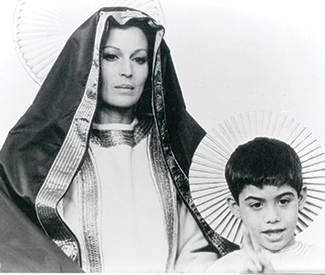
FILM It still boggles the mind that perhaps the most important single figure in the socio-religiously conservative Italy’s artistic media of the 1960s through the mid-’70s — an extraordinarily fertile period, particularly for cinema — was an openly queer Marxist atheist and relentless church critic. Pier Paolo Pasolini stirred innumerable controversies during his life, ending prematurely in his alleged 1975 murder by a teenage hustler. (Conspiracy theories still swirl around its actually being a political or organized-crime assassination.)

He was an acclaimed poet, novelist, screenwriter, director, playwright, painter, political commentator, and public intellectual. In several of those roles he was pilloried — and prosecuted — for obscenity. What seemed pornographic to some at the time now, for the most part, looks simply like heightened, gritty social realism, and frank acknowledgement that sexuality (and morality) comes in all shades. Yet one must admit: Arguably no filmmaker outside the realm of actual porn put so much dick (often uncut, and occasionally erect) right there onscreen.

Pasolini’s film work has a lingering rep as being somewhat rough sledding, in both themes and technique. Certainly he was no extravagant cinematic stylist on the level of Antonioni, Visconti, Fellini, and Bertolucci (though he contributed as a writer to films by the latter two), the other leading Italian auteurs of the time. But it’s surprising how pleasurable on many levels his features look today, as showcased in a traveling retrospective getting its Bay Area exposure at the Castro Theatre, Roxie Theater, and Berkeley’s Pacific Film Archive through Oct. 31.

The two San Francisco dates highlight the three periods of Pasolini’s cinema; the PFA’s more extensive survey (ending with 1975’s Salò, or the 120 Days of Sodom for Halloween, the kind of programmatic coup de grace that leaves you suspended between “genius!” and “WTF?”) running weeks longer. While there are overlaps, the latter provides berth for his neorealist classic feature debut Accatone (1961), shorts, and several documentaries including 1964’s seldom-revived Love Meetings, in which PPP himself interviews Italians about their sexual attitudes — from asking not-so-young kids how babies are born (“the stork brings them”) to grilling adults about gender double-standards regarding marital virginity. Then there’s 1969’s bizarre Pigsty, which put leading 1960s Euro-art-cine weirdos Pierre Clémenti and Jean-Pierre Léaud in separate threads of a two-pronged experimental narrative. It was weird enough to forgo US release until 1974.

There are also such baffling, shit-stirring features as Hawks and Sparrows (1966), an existential comedy suspended between Beckett and A Hard Day’s Night (1964); plus 1968 shocker Teorema, in which Terence Stamp’s mysterious bisexual visitor liberates and destroys a repressed bourgeoisie Italian family.

This weekend’s Castro-Roxie showcases the extent to which Pasolini was a cinematic populist — however inadvertently for such a radical thinker. His “trilogy of life” brought to the screen bawdy medieval stories by Boccaccio (1971’s The Decameron), Chaucer (1972’s Canterbury Tales) and unknown legend scribers (1974’s Arabian Nights.) All were originally rated X. The first is a bawdy delight; the last is a gorgeously melancholic, serpentine lineup of seriocomic stories-within-stories. Canterbury is a mixed bag, as Pasolini had problems structuring it editorially and was despondent over longtime protégé and lover Ninetto Davoli — who was 15 when they first met — leaving him for a woman. Nonetheless, he gave Davoli a big part in the wonderful Nights, albeit one in which his hapless character is finally castrated by angry women. (Touché.)

With their unprecedented amounts of full nudity, offering up sexuality (and normal, imperfect bodies) as something simply natural rather than prurient, each portion of this “phallocentric” trio was instantly notorious. The films became his greatest commercial successes — though curiously he later abjured them, partly out of guilt that so many actors’ “innocent bodies [had] been violated, manipulated, and enslaved by consumerist power.” Who but Pasolini would be depressed by having hits?

That shift from comparative joie de vivre back to bleak commentary on social injustice resulted in unintended swansong Salò, a grueling depiction of classist sadism that usefully transfers the Marquis de Sade’s infamous Bastille-written 1785 120 Days of Sodom to the bitter end of Italy’s World War II-losing fascist era. While in the literary original aristocratic children were kidnapped to be abused by decadent church and secular power mongers, here it’s pointedly spawn of the anti-fascist peasant underclass (all actors assuredly 18-or-plus to avoid prosecution).

The characters forced into ever-escalating sexual and violent degradations to survive, no mercy is spared. Salò remains banned in several countries, notably Asian and Middle Eastern ones. Its largely naked, helpless “young victim” cast (who apparently thoroughly enjoyed the filming, having no idea just how fucked up the material was) proved Pasolini’s last instance of drafting nonprofessionals who struck his eye. As a showcase for such raw talent, it was second only to a film he’d made a decade earlier: 1964’s The Gospel According to St. Matthew, a gritty, black-and-white riposte to the garish CinemaScope Biblical epics of the era. Ironically, that film by a Commie atheist fag remains one of the cinematic depictions of Christ most highly regarded by believers.

Nearly all these movies featured his favorite discoveries Davoli and Franco Citti, the former an endearing comic goofball, the latter a smoldering hunk usually cast as amoral evildoer. Both enjoyed long careers after their mentor died. Their very different types of screen charisma remain high among the delights that Pasolini’s cinema offers today. Davoli will be on hand at the Castro and Roxie screenings. Given his guileless, antic persona in the films, it’s a fair bet he’ll be a riot in person. *

PIER PAOLO PASOLINI

Sat/14, $12

Castro Theatre, 429 Castro, SF

Sun/15, $12

Roxie Theater, 3117 16th St, SF

Sept. 20-Oct. 31, $5.50-$9.50

Pacific Film Archive, 2575 Bancroft, Berk.

www.pasolinifilm.com


The NSA made the most boring and controversial Tumblr in the United States; also, best news reads on spying

11

Tumblr is a hub for social media literate millenials, a magical place for Doctor Who animated GIFs, reblogged Instagram photos of your lunch and an endless sea of porn. But Director of National Intelligence James Clapper has a new use for it: boilerplate press releases meant to stem the tide of negative news against the National Security Agency’s spying practices.

Here’s an excerpt from their Tumblr blog addressing their bad press: 

“While the specifics of how our intelligence agencies carry out this cryptanalytic mission have been kept secret, the fact that NSA’s mission includes deciphering enciphered communications is not a secret, and is not news. Indeed, NSA’s public website states that its mission includes leading ‘the U.S. Government in cryptology … in order to gain a decision advantage for the Nation and our allies.'”

Well of course it’s not news that the NSA spies on folks, that’s their purpose. But when the federal government can read the emails and digital records of ordinary citizens without so much as a constitutional please-and-thank you, something is definitely wrong. And thanks to a bombshell dropped by The UK Guardian, the New York Times and Pro Publica partnering to release Edward Snowden’s newest leak, we now know that the NSA can decrypt just about anything on the internet. 

And sometimes the NSA uses it to spy on their love interests. 

Luckily, there are folks who are on this. The Electronic Frontier Foundation just achieved a major victory by suing the government under the Freedom of Information Act, known as FOIA, to get their hands on documents related to the government’s secret interpretation of Section 215 of the Patriot Act, the law the NSA has used to justify searching through the digital lives of Americans. 

You can read more about their victory here.

The EFF is based in San Francisco, which of course means that there is a video of them at Comic-Con.

And the EFF even outlined ways citizens can help: 

“Faced with so much bad news, it’s easy to give in to privacy nihilism and despair. After all, if the NSA has found ways to decrypt a significant portion of encrypted online communications, why should we bother using encryption at all? But this massive disruption of communications infrastructure need not be tolerated. Here are some of the steps you can take to fight back:

  • Sign the petition to stop NSA spying. Let Congress know that It’s time for a full accounting of America’s secret spying programs—and an end to unconstitutional surveillance. If you are not in the US, please take the time to sign our international petition.
  • In addition to signing our petition, take the time to call your elected representative using the dedicated call line: 1-STOP-323-NSA (1-786-732-3672) to voice your opposition.
  • Use secure communications tools (read some useful tips by security expert Bruce Schneier). Your communications are still significantly more protected if you are using encrypted communications tools such as messaging over OTR or browsing the web usingHTTPS Everywhere than if you are sending your communications in the clear.
  • Finally, the engineers responsible for building our infrastructure can fight back by building and deploying better and more usable cryptosystems.

The NSA is attacking our secure communications on many fronts and we must oppose them using every method we have at our disposal. Engineers, policy makers, and netizens all have key roles to play in standing up to the unchecked surveillance state. The more we learn about the extent of the NSA’s abuses, the more important it is for us to take steps to take back our privacy. Don’t let the NSA’s attack on secure communications be the end game. Let it be a call to arms.”

Get educated, and bone up on the most recent news on the NSA’s spying tactics and policies:


Pro Publica, New York Times, Guardian UK  

Revealed: The NSA’s Secret Campaign to Crack, Undermine Internet Security

http://www.propublica.org/article/the-nsas-secret-campaign-to-crack-undermine-internet-encryption


Electronic Frontier Foundation

NSA Spying on Americans, Full timeline of events

https://www.eff.org/nsa-spying


Guardian.co.uk

The NSA Files — All UK Guardian stories on the NSA spying program

http://www.theguardian.com/world/the-nsa-files


And until everything gets better, I’m going to keep using Tumblr the way it was intended: reblogging GIFs of the best Doctor, David Tennant.

Screen shot of Doctor Who Tumblr post

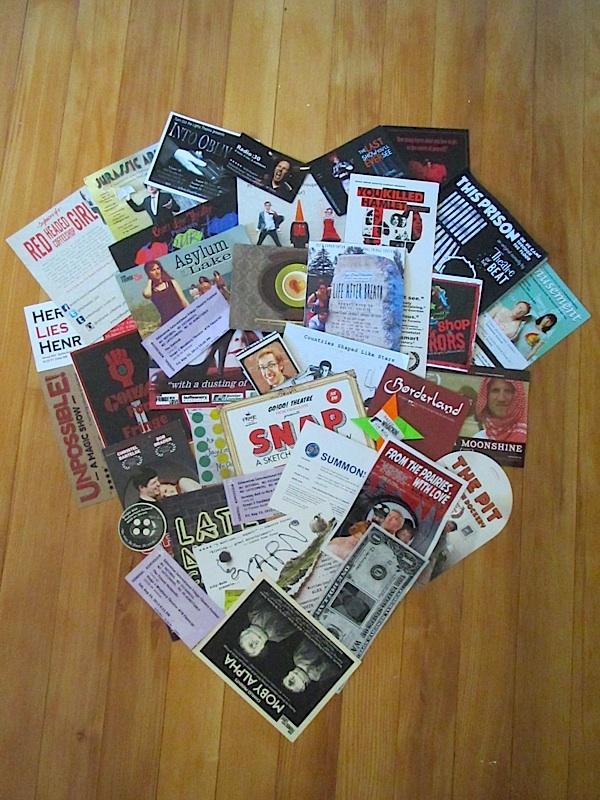
The Performant: Fringe 101, an essential lexicon revisited.

0

With the frenzy of the Edmonton Fringe Festival finally subsided, and Vancouver’s about to begin, myself and the Naked Empire Bouffons are ready for action. We have posters to plaster, our venue to scope out, and fellow artists to schmooze before the festival opens on the fifth, but in the interim I have time to let my attentions wander back momentarily to San Francisco, whose Fringe Festival also opens this week.

Did you know that we boast the second oldest Fringe Festival in the United States (the first being Orlando’s)? And that, along with Vancouver, we represent the final leg of the CAFF (Canadian Association of Fringe Festivals) circuit for touring Fringe artists, despite the small complication of not actually being Canadian? Admittedly our festival is smaller than the Vancouver event (36 shows, as compared to 91 and counting), but it’s still a veritable bacchanal of drama, dance, and comedic derring-do packed into 14 days.

For the frequent fringer and the newcomer to the fold alike, the biggest challenge can be narrowing down the field of options to a manageable handful, and while I always advocate the time-honored tradition of asking other people who have already seen a particular show their opinion of it, I’ve also become rather adept at translating some of the more commonly-used descriptors in program blurbs, which does help with the initial elimination process (note: you should always be willing to change your mind about something you’ve eliminated if the buzz it’s generating is suitably favorable). Since it never hurts to be prepared, here is my personal Fringe Festival program guide glossary, reprinted from its 2011 debut, to help you locate the Fringe experience you’re looking for, whether it be a farce, a fantasy, or a free-for-all.

Bare Bones: We’ve never heard of Kickstarter
Cheese: Neo-surrealists in the house
Classic: We don’t need the rights to present this work
Dark: At least one of the characters dies
Disturbing: If you don’t like fart jokes
Dynamic: Theater Arts undergrads
Edgy: Guaranteed to offend at least one minority group
Erotic: For inexplicable reasons, won’t include nudity
Existential: At least half of the characters die
Experiential: Audience participation required
Experimental: We decided not to bother writing a script
Fresh Take: You’ve seen this play 100 times before
Hilarious: If you like fart jokes
Inspirational: Overcoming the effects of an upper middle-class upbringing
Interactive: Don’t sit in the front row
Internationally-acclaimed: Also performed at the Winnipeg Fringe
Multi-media: If our projector breaks we’re screwed
New Translation: We worked way harder on this show than you can imagine
Noir: Will be wearing great hats
Noirish: Couldn’t afford great hats
Poignant: There will be at least one monologue about innocence lost
Provocative: Will include violence and nudity
Quotes from famous people: Assistant Director used to walk their dogs
Quotes from previous runs: We have had a chance to rehearse this
Reimagined: We don’t actually have the rights to present this work
Sensitive: Over-wrought
Site-Specific: Wear layers
Riveting: The stage manager’s mother-in-law said so
Thought-provoking: Will include either violence or nudity
Uncompromising: Guaranteed to offend pretty much everyone
Unforgettable: No matter how hard you try
Universal: Fart jokes
Visceral: Don’t sit in the front row
Wacky: A kazoo will definitely make an appearance at some point
With a twist: You can see it coming
World Premiere: We haven’t had a chance to rehearse this

Wanna Fringe vicariously through us? Follow @enkohl and @NakdEmprBouffon on the twit-thing for updates and gossip.

Solomon: Obama will launch a huge propaganda blitz–and may attack Syria even if he loses the vote in Congress

22

Norman Solomon is co-founder of RootsAction.org and founding director of the Institute for Public Accuracy. His books include “War Made Easy: How Presidents and Pundits Keep Spinning Us to Death.” Information on the documentary based on the book is at www.WarMadeEasyTheMovie.org.

Grassroots pressure has forced President Obama to seek approval from Congress for an attack on Syria. But Obama is hell-bent on ordering a missile assault on that country, and he has two very important aces in the hole.

The administration is about to launch a ferocious propaganda blitz that will engulf a wide range of U.S. media. And as a fallback, the president is reserving the option of attacking Syria no matter what Congress does.

Until Obama’s surprise announcement Saturday that he will formally ask Congress for authorization of military action against Syria, the impassioned pitches from top U.S. officials in late August seemed to be closing arguments before cruise missiles would hit Syrian targets. But the pre-bombing hyper spin has just gotten started.

The official appeals for making war on yet another country will be ferocious. Virtually all the stops will be pulled out; all kinds of media will be targeted; every kind of convoluted argument will be employed.

Hell hath no fury like war-makers scorned. Simmering rage will be palpable from political elites who do not want to see Congress set an unprecedented precedent: thwarting the will of a president who wants Pentagon firepower unleashed on another country.

President Obama and top Democrats such as House Minority Leader Nancy Pelosi will twist every arm they can to get a “yes” vote for attacking Syria. Meanwhile, most mainline media pundits, numbingly addicted to war, will often chastise and denigrate foes of authorization.

But we have a real chance to prevent a U.S. attack. One cogent argument after another, from intelligence veterans and policy analysts and weapons experts, has debunked the messaging for war on Syria. And some members of Congress — not nearly enough, but some — have begun to speak up with cogent opposition.

One of NPR’s inside-the-box hosts of “All Things Considered” on August 30 asked Rep. Zoe Lofgren (D-Calif.) about the Obama administration’s claim that missile strikes on Syria would be “a limited action” and not “war.” Congresswoman Lofgren replied: “I think that anyone who argues that shooting missiles and dropping bombs on another country is not an act of war has got some further education warranted. If somebody shot cruise missiles at Washington for only one day, we would still consider it an act of war, wouldn’t we?”

Not many members of Congress have Lofgren’s clarity, and many of their votes on authorization are up for grabs. Each of us can help affect the outcome by demanding that our senators and representative oppose the war resolution. We should make our voices heard in all sorts of public venues.

The president’s move for a congressional vote should cause a major escalation of anti-war activism. A straw in the wind: during just a few hours after Obama’s announcement on Saturday afternoon, nearly 10,000 people took the initiative via RootsAction.org to email members of Congress with a “No Attack on Syria” message.

National opinion polling and momentum inside Congress indicate that we can defeat Obama’s war resolution. It’ll be a tremendous fight, but we can prevail.

But even if Obama loses the vote in Congress, there’s a very real danger that he will proceed with ordering an attack on Syria.

Burying the lead almost a dozen paragraphs into a September 1 news story, the New York Times mentioned in passing: “White House officials indicated that Mr. Obama might still authorize force even if Congress rejected it.”

A careful reading of Obama’s Rose Garden announcement on Saturday verifies that he never quite said he will abide by the decision of Congress if it refuses to approve an attack on Syria. Instead, the president filled his statement with hedging phrases, detouring around any such commitment with words like these:

*  “I have decided that the United States should take military action against Syrian regime targets. … And I’m prepared to give that order. But … I’m also mindful that I’m the President of the world’s oldest constitutional democracy.”

*  “I will seek authorization for the use of force from the American people’s representatives in Congress.” 

*  “Over the last several days, we’ve heard from members of Congress who want their voices to be heard. I absolutely agree. So this morning, I spoke with all four congressional leaders, and they’ve agreed to schedule a debate and then a vote as soon as Congress comes back into session.”  

*  “And all of us should be accountable as we move forward, and that can only be accomplished with a vote.” 

*  “I’m ready to act in the face of this outrage. Today I’m asking Congress to send a message to the world that we are ready to move forward together as one nation.”

At the grassroots, people across the United States will be working very hard to prevent congressional approval of an attack on Syria. That activism is imperative. But we should also understand that Obama has not committed himself to abide by the decision that Congress makes.

Norman Solomon is co-founder of RootsAction.org and founding director of the Institute for Public Accuracy. His books include “War Made Easy: How Presidents and Pundits Keep Spinning Us to Death.” Information on the documentary based on the book is at www.WarMadeEasyTheMovie.org.

(Bruce B. Brugmann edits and writes the bruce blog on the Bay Guardian website at sfbg.com.  He is the editor at large of the Bay Guardian and former editor and co-founder and co-publisher with his wife Jean Dibble, 1966-2012.)

Solomon: What the assault on whistleblowers has to do with Syria

1

Norman Solomon is co-founder of RootsAction.org and founding director of the Institute for Public Accuracy. His books include “War Made Easy: How Presidents and Pundits Keep Spinning Us to Death.” Information about the documentary based on the book is at www.WarMadeEasyTheMovie.org.

Without whistleblowers, the mainline media outlets are more transfixed than ever with telling the official story. And at a time like this, the official story is all about spinning for war on Syria.

Every president who wants to launch another war can’t abide whistleblowers. They might interfere with the careful omissions, distortions and outright lies of war propaganda, which requires that truth be held in a kind of preventative detention.

By mid-week, media adrenalin was at fever pitch as news reports cited high-level sources explaining when the U.S. missile attacks on Syria were likely to begin, how long they might last, what their goals would be. But what about other (potential) sources who have documents and other information that contradict the official story?

It’s never easy for whistleblowers to take the risk of exposing secret realities. At times like these, it’s especially difficult — and especially vital — for whistleblowers to take the chance.

When independent journalist I.F. Stone said “All governments lie and nothing they say should be believed,” he was warning against the automatic acceptance of any government claim. That warning becomes most crucial when a launch of war is imminent. That’s when, more than ever, we need whistleblowers who can leak information that refutes the official line.

There has been a pernicious method to the madness of the Obama administration’s double-barreled assault on whistleblowers and journalism. Committed to a state of ongoing war, Obama has overseen more prosecutions of whistleblowers than all other presidents combined — while also subjecting journalists to ramped-up surveillance and threats, whether grabbing the call records of 20 telephone lines of The Associated Press or pushing to imprison New York Times reporter James Risen for not revealing a source.

The vengeful treatment of Bradley (now Chelsea) Manning, the all-out effort to grab Edward Snowden and less-publicized prosecutions such as the vendetta against NSA whistleblower Thomas Drake are all part of a government strategy that aims to shut down unauthorized pipelines of information to journalists — and therefore to the public. When secret information is blocked, what’s left is the official story, pulling out all the stops for war.

From the false Tonkin Gulf narrative in 1964 that boosted the Vietnam War to the fabricated baby-incubators-in-Kuwait tale in 1990 that helped launch the Gulf War to the reports of Iraqi weapons of mass destruction early in this century, countless deaths and unfathomable suffering have resulted from the failure of potential whistleblowers to step forward in a timely and forthright way — and the failure of journalists to challenge falsehoods in high government places.

There are no “good old days” to point to, no eras when an abundance of whistleblowers and gutsy reporters thoroughly alerted the public and subdued the power of Washington’s war-makers. But we’re now living in a notably — and tragically — fearful era. Potential whistleblowers have more reason to be frightened than ever, and mainline journalists rarely seem willing to challenge addiction to war.

Every time a president has decided to go to war against yet another country, the momentum has been unstoppable. Today, the craven foreshadow the dead. The key problems, as usual, revolve around undue deference to authority — obedience in the interests of expediency — resulting in a huge loss of lives and a tremendous waste of resources that should be going to sustain human life instead of destroying it.

With war at the top of Washington’s agenda, this is a time to make our voices heard. (To email your senators and representative, expressing opposition to an attack on Syria, click here.) A loud and sustained outcry against the war momentum is essential — and so is support for whistleblowers.

As a practical matter, real journalism can’t function without whistleblowers. Democracy can’t function without real journalism. And we can’t stop the warfare state without democracy. In the long run, the struggles for peace and democracy are one and the same.

Norman Solomon is co-founder of RootsAction.org and founding director of the Institute for Public Accuracy. His books include “War Made Easy: How Presidents and Pundits Keep Spinning Us to Death.” Information about the documentary based on the book is at www.WarMadeEasyTheMovie.org.

(Bruce B. Brugmann edits and writes the Bruce blog for the Bay Guardian website at sfbg.com.  He is the editor at large and former editor and former co-founder and co-publisher of the Bay Guardian with his wife Jean Dibble, 1966-2012.)

The Selector: August 28-September 3, 2013

0

WEDNESDAY 28

The Troublemaker

Hey, daddy-o! While other outdoor movie nights program known crowd pleasers (and hey, nothing wrong with that — who doesn’t love 1980’s Xanadu under the stars?), trust the Pacific Film Archive to dig a little deeper. Directed by Theodore J. Flicker (it was the perfectly-named filmmaker’s first feature; he was also an improv comedy pioneer and directed dozens of 1970s TV episodes) and co-written with Saturday Night Live stalwart Buck Henry, 1964’s The Troublemaker offers a bouncy throwback to the beatnik era. A chicken farmer dreams of opening a coffeehouse in Greenwich Village; the Mob doesn’t agree, but the finger-snapping cool cats have his back. Wear your beret and come early for the pre-film poetry reading. (Cheryl Eddy)

8:30pm, free

BAM/PFA Sculpture Garden

2575 Bancroft, Berk

www.bampfa.berkeley.edu


Resident Artist Workshop: Victor Talledos, Joy Prendergast, Rachel Elliot

A couple of years ago, Mexican-born and trained ballet dancer Victor Talledos landed in the Bay Area like a comet — fiery, fierce, and impossible to ignore. Joy Prendergast is part of a hotbed of budding women choreographers nourished by the SF Conservatory of Dance. Rachel Elliot, a recent graduate of the Dominican University/LINES Ballet program, spent her study abroad time traveling and watching dance in China. This trio of artists is the latest crop of choreographers showing work in progress they have developed at the Garage’s all essential RAW (Resident Artist Workshop) studio space — 12 weeks of four to six hours free rehearsal time with two scheduled performances.” Small is beautiful” was a mantra in the 1970s. It’s still valid. A little bit of support, consistently offered, can create wonders. (Rita Felciano)

Through Thu/29. 8pm. $10–$20.

Garage

715 Bryant, SF

www.brownpapertickets.com


“Root to Stalk Cooking” with Tara Duggan

Omnivore Books often outdoes itself with inventive workshops and tasty food contests. Still, “Root to Stalk Cooking: The Art of Using the Whole Vegetable” should truly be one for the books. Author Tara Duggan, a James Beard award-winning independent journalist and cookbook author, will talk trash. Well, technically, she’ll talk roots, stalks, tops, ribs, and other pieces of vegetables that tend to get scratched. And she’ll discuss recipes that included those too-often discarded veggie elements. The workshop is not only a unique opportunity to meet an insightful SF native author, but also to learn how to cook delicious meals while still being frugal. Stop wasting and start cooking. (Hillary Smith)

6-7:30 pm, free

Omnivore Books

3885a Cesar Chavez, SF

www.omnivorebooks.com


THURSDAY 29

Café Tacvba

There are parts of the world where ska music is still valued. “Las Flores” is a rude boy-baiting uptempo Café Tacvba song that seemed right at home in 1994, when lead singer Albarrán Ortega was sporting his Coolio-styled hair on an early episode of MTV Unplugged. But how does a song like that hold up almost 10 years later at an epicenter of up-and-coming sounds like Coachella? Well, the Coachella crowd’s enthusiasm for the ska tune spoke volumes about truly heartfelt and infectious rhythms shattering the limitations of what is currently considered cool in music. A lot of genres come and go, but groups like Café Tacvba, which has gone without member changes since its inception in 1989, will continue to motivate listeners with just about any style it plays. Expect the unexpected. (Ilan Moskowitz)

8pm, $37.50–$52.50

Warfield

982 Market, SF

(415) 673-4653

www.thewarfieldtheatre.com


FIDLAR

LA-based garage-punk band FIDLAR creates a mess of distortion-heavy guitar lines, scratchy vocals, and angry percussion, which makes for a wild show guaranteed to permit letting loose. And there may even be some reckless flailing of the arms, if you’re lucky. The group seems to attract more than the typical garage rock fan who simply loves to go batshit in the pit. Enthusiasts stalk their social media pages, pour over their every Tumblr post, and even tattoo themselves with the group’s name, all proving one thing — FIDLAR has made a serious mark in a brief amount of time. And with this almost cult-like following, the four young musicians are touring through the UK and the States until November, tearing up stages with their rambunctious, exhilarating performances. And the band’s relationship with its fans seems to be symbiotic. I suspect the fans are so die-hard and loyal because that’s exactly what the group puts out there on stage: a straightforward, honest, in-the-moment show. (Smith)

With Meat Market

9pm, $14

Bottom of the Hill

1233 17th St.,SF

(415) 626-4455

www.bottomofthehill.com


FRIDAY 30

Macbeth

Witches, betrayals, violence, madness — no wonder Shakespeare’s Macbeth is so popular among both theater troupes and audiences. Case in point: two local companies are mounting adventurously staged versions of “the Scottish play” (does the curse count if your theater is outdoors?), opening on practically the same day, with lengthy runs and non-clashing show times that’ll make it possible for Bard diehards to catch both. Tonight, We Players — who did The Odyssey on Angel Island and Hamlet on Alcatraz — kicks off its production amid historic Fort Point’s foggy, windy, toil-and-trouble-friendly environs; tomorrow, another part of the Presidio, the Main Post Parade Ground Lawn, hosts Free Shakespeare in the Park’s production of the same. No doubt a drama-crazed town like SF has room for both. (Eddy)

We Players’ Macbeth

Through Oct 6

Previews Fri/30-Sun/1, 6pm; opens Sept 5, 6pm; runs Thu-Sun, 6pm, $30–$60

Fort Point, end of Marine Dr, Presidio, SF

www.weplayers.org

Free Shakespeare in the Park’s Macbeth

Through Sept 15

Opens Sat/31, 2pm; runs Sat-Sun and Mon/2, 2pm, free

Main Post Parade Ground Lawn, Presidio, SF

www.sfshakes.org


Hitcher

Hitcher, a movement play based off Jim Morrison’s original, unproduced screenplay, The Hitchhiker, is making its debut tonight. Hitcher combines cinema, movement, and new music from San Francisco bluegrass band dinnerwiththekids. In this production, writer and director Alex Peri tells the story of Billy, a hitchhiker accompanied by an imaginary trio of hobos making his way on the road to be reunited with a prostitute he fell in love with in Mexico. The cast features up-and-coming local artisans Derek Caplan, Michelle Hair, Earl Alfred Paus, Malia Rapisarda, and Kelly Sanchez. This should be of interest to people who worship at the altar of the “Lizard King” and those who enjoy theater and rock ‘n’ roll fusion. If you’re not able to attend its debut, there will be showings of Hitcher through Sept. 8. (Erin Dage)

THROUGH SEPT. 8, 

8PM, $15

THICK HOUSE

1695 18TH ST., SF

(415) 401-8081

WWW.THICKHOUSE.ORG


Handsome Hawk Valentine’s “The Hop”

You don’t need a DeLorean tricked out with a Flux Capacitor driven by Marty McFly to head back in time to the good ol’ 1950s tonight — just head down to the Mission where Handsome Hawk Valentine presents “The Hop,” a blast from the past party with a special “Ladies’ Night” theme. Featuring bands such as local favorites Thee Merry Widows and the Rumble Strippers, the fête also boasts burlesque performances, DJs, a “beefcake contest” sponsored by Bettie Page Clothing, along with free retro styling by Peter Thomas Hair, free photo sessions, and more. Slick back that pomp or strap on those stilettos and get going! (Sean McCourt)

9pm, $13

Elbo Room

647 Valencia, SF

(415) 552-7788

www.elbo.com


SATURDAY 31

Major Powers and the Lo-Fi Symphony

Major Powers and the Lo-Fi Symphony is a raucous, humorous, piano-driven trio that sound like Queen playing symphonic punk rock. Sort of like a light-hearted, more jangly Muse. I cannot recommend its album We Created Monsters enough. It is all free on its website and worth $10 to see live. Freddie Mercury would be proud. Hell, so would Andrew W.K. Not to say that headliner the Greening doesn’t have its own merits — it’ll even give you a free shirt and a bunch of other swag if you buy advanced tickets to this show — but when one of your opening acts sounds like a mix between Madness and Queen and the other is a Latin mod band that sings catchy, upbeat tunes about telenovelas, the star slot in the show is only a scheduling formality. (Moskowitz)

With the Greening, Dot Punto

8:30pm, $10

Bottom of the Hill

1233 17th St., SF

(415) 626-4455

www.bottomofthehill.com


Duane Peters Gunfight

Legendary pro skateboarder and eternal punk rocker Duane Peters has rightfully earned his nickname “The Master of Disaster” — it was hard won over decades of pushing the limits on wheels and decks (not to mention his own battered and bruised body) and inventing a slew of tricks now considered an essential part of skate culture. He quickly approached playing music with the same anything-goes attitude, and has been slamming stages with several bands (U.S. Bombs and Die Hunns) ever since. He comes to the city tonight with Duane Peters Gunfight. Are you ready to drop into the bowl and the pit? (McCourt)

With White Barons, Rock Bottom, Dime Runner

9pm, $10

Thee Parkside

1600 17th St., SF

(415) 252-1330

www.theeparkside.com


SUNDAY 1

Oakland Pride

Yes, yes, “we are family.” But in that case, San Francisco Pride is that loud, messy, half-dressed, downright crazy family — kind of a Kardashians without the Porsches — while younger Oakland Pride hails more from plucky, hardy, loving Little House on the Prairie stock, but with a whole lot more people of color. Not that Oakland Pride’s out in the middle of nowhere, of course, but it’s a much more down-to-earth, self-produced affair that really feels like a family picnic. Everyone’s freaking out that ’90s R&B sensation En Vogue is performing, but don’t miss the big-big Mexican-Chicago sound of Grupo Montez de Durango or the high-energy drag king shenanigans of the Rebel Kings of Oakland. Did we mention that everyone at this thing is smokin’ hot? Not to judge by looks or anything, but whoo-wee. (Marke B)

11am-7pm, $10

20th Street and Broadway, Oakl.

www.oaklandpride.org


MONDAY 2

Ty Segall

If you want to beat a case of the Mondays: Bay Area Lo-fi favorite Ty Segall is playing the entirety of his new album, Sleeper, with experimental folk artist David Novick and that guy from Sic Alps — Mike Donovan. On his new album, Segall is deconstructing his typical sound and going for a more stripped-down approach. For this show (as well as the whole tour), Segall will only be playing Sleeper, and will have a decidedly different setup, featuring two acoustic guitars, electric bass, drums, and the occasional electric guitar. The show should be a great indicator of how fans receive Segall’s new album, and whether or not the old boy still has it. If you like raw, energetic live shows — this performance is not to be missed. (Dage)

With David Novick, Mike Donovan

8pm, $18

Great American Music Hall

859 O’Farrell, SF

(415) 885-0750

www.slimspresents.com


TUESDAY 3

Audra McDonald

What’s that you hear? It’s the sound of every Broadway maven, cabaret jazz aficionado, “Glee”-ful gay man, and fan of incredible music breaking piggy banks, shaking out gowns, and fluffing tuxes to glimpse the effervescent glory of show tune-blues soprano Audra McDonald at the SF Symphony Opening Gala. Singing selections from the American songbook like “Somewhere” and “I Could Have Danced All Night,” McDonald will highlight a jazzy night’s program, which includes George Antheil’s fracture-happy “A Jazz Symphony,” George Gershwin’s “An American in Paris” and tons of free drinks, treats, and people-watching. McDonald’s hilarious, house-rocking performance at the Tonys with Neil Patrick Harris this year brought a new generation of Audra acolytes into the fold; expect the same wattage to light up Davies Symphony Hall. (Marke B.)

7pm-11pm, $160

Davies Symphony Hall

201 Van Ness, SF.

(415) 864-6000

www.sfsymphony.com

Where the art is

4

arts@sfbg.com

FALL ARTS If advance schedules and press releases are any indication, this fall we’ll see a resurgence of nuanced, informed abstract painting in galleries around the Bay Area. Thoughtful formalist and abstract painting is always percolating somewhere beneath the flashier strata of the art world, and I’m heartened to see the number of galleries prepping shows that allow it some spotlight.

Another welcome development is the migration of four solid programs from downtown locations to within a block of each other in Potrero. Epicenter shift? Maybe not. But the Brian Gross, Catharine Clark, Jack Fischer, and George Lawson galleries — along with Hosfelt gallery — definitely give you a reason to add Potrero to your gallery route.


Christopher Burch, Aggregate Space

Christopher Burch offers darkly skewed takes on Song of the South allegories. His installation puts familiar and invented characters into terse psychological situations, recasting and heightening blues music lyrics in ways familiar to fans of Kara Walker. Through Sept. 21. 801 West Grand, Oakl; www.aggregatespace.com.


Alice Cattaneo, Romer Young

The Milanese sculptor starts with fairly modest materials — cardboard, felt, wire — to make precise, fragile assemblages in precise, contradictory ways that recall both Richard Tuttle and Fred Sandback. She’ll be in residency at Romer Young during September creating site-specific work for the Potrero space. Sept. 5—30, 1240 22nd St, SF; www.romeryounggallery.com.


Sandy Kim, Ever Gold

Sandy Kim’s hot, post-Vice photographs mine the now-familiar tropes of confessional, in-your-face documentary much better than most. Her flashy work communicates an immediacy and offhand confidence along with great attention to color and texture. Sept. 5—Oct. 5, 441 O’Farrell, SF; www.evergoldgallery.com.


Linda Geary, Steven Wolf Fine Arts

Linda Geary’s intuitive formalist paintings strike an assured balance of rigor and looseness, clarity and experimentation. Accompanying her paintings will be the group show “Hotbox Forever,” which she curated to include abstract painters Wendy White, Lecia Del-Rios, Jeffrey Gibson, and Maria Weatherford. Sept. 7—Oct. 19, 2747 19th St, Ste A, SF; www.stevenwolffinearts.com.


Erin Lawlor, George Lawson (Potrero gallery)

Parisian Erin Lawlor’s lush, nuanced abstract oil paintings evoke both Baroque dynamism and a cool, contemporary repose, all within a focused manner of execution and fairly subdued color palette. This show inaugurates George Lawson’s expansion into a second SF gallery in Potrero, a very welcome development for fans of abstract painting, as Lawson has a honed eye and a pretty deep stable. Sept. 7—Oct. 5, 315 Potrero, SF; www.georgelawsongallery.com.


Ward Schumaker, Jack Fischer

Ward Schumaker makes loose, gestural, mixed-media paintings, sculpture, and collage that tend to mix formal and narrative concerns by way of text, brushwork, and color field painting. His moody, ruminative compositions display a sure hand and questioning but unfussy approach. Sept. 7—Oct. 12, 311 Potrero, SF; www.jackfischergallery.com.


2012 SECA Art Award: Zarouhie Abdalian, Josh Faught, Jonn Herschend, David Wilson

With its building under construction, the San Francisco Museum of Modern Art is setting up four different site-specific projects to highlight its 2012 SECA Art Award winners, bestowed biennially on the Bay Area’s breakout artists. Zarouhie Abdalian will install programmed bells to ring in front of City Hall in Oakland; Josh Faught will create new woven sculptures for the Neptune Society Columbarium; David Wilson will create multidimensional experiences along walking routes at six outdoor locations; and Jonn Herschend will premiere a short film on the museum’s rooftop taking the building’s closure as a point of departure. Sept. 14—Nov. 17, various locations; www.sfmoma.org.  

Edward Burtynsky, Rena Bransten

Burtynsky is famous for his arresting landscape photography which, like Richard Misrach, interrogates the way humans have irrevocably interrupted natural processes. His Rena Bransten show will feature aerials and large format shots related to water consumption and control in nine countries. Oct. 24—Dec. 14, 77 Geary, SF; www.renabranstengallery.com.  

“David Hockney: A Bigger Exhibition,” de Young Museum

Hockney is one of those artists that on paper ought to be talked about more: prolific, likable, a pioneer in his day, author of a mildly controversial art history book, and all that. His large-scale landscapes from the last decade get the retrospective treatment here, hopefully reminding us why at one point he was one of the world’s most famous living artists. Oct. 26—Jan. 20, 50 Hagiwara Tea Garden Dr., SF; deyoung.famsf.org.  

Chris Fraser, Highlight

Chris Fraser uses splintered and filtered beams of light in installations that recast space in terms of mathematical rigor, reworked scale, and pregnant narrative. Nov. 28—Jan. 18, 17 Kearny, SF; www.highlightgallery.com.

The Selector: August 27 – September 3, 2013

0

WEDNESDAY 8/28


The Troublemaker

Hey, daddy-o! While other outdoor movie nights program known crowd pleasers (and hey, nothing wrong with that — who doesn’t love 1980’s Xanadu under the stars?), trust the Pacific Film Archive to dig a little deeper. Directed by Theodore J. Flicker (it was the perfectly-named filmmaker’s first feature; he was also an improv comedy pioneer and directed dozens of 1970s TV episodes) and co-written with Saturday Night Live stalwart Buck Henry, 1964’s The Troublemaker offers a bouncy throwback to the beatnik era. A chicken farmer dreams of opening a coffeehouse in Greenwich Village; the Mob doesn’t agree, but the finger-snapping cool cats have his back. Wear your beret and come early for the pre-film poetry reading. (Cheryl Eddy)

8:30pm, free

BAM/PFA Sculpture Garden

2575 Bancroft, Berk

www.bampfa.berkeley.edu

WEDNESDAY 8/28


Resident Artist Workshop: Victor Talledos, Joy Prendergast, Rachel Elliot

A couple of years ago, Mexican-born and trained ballet dancer Victor Talledos landed in the Bay Area like a comet — fiery, fierce, and impossible to ignore. Joy Prendergast is part of a hotbed of budding women choreographers nourished by the SF Conservatory of Dance. Rachel Elliot, a recent graduate of the Dominican University/LINES Ballet program, spent her study abroad time traveling and watching dance in China. This trio of artists is the latest crop of choreographers showing work in progress they have developed at the Garage’s all essential RAW (Resident Artist Workshop) studio space — 12 weeks of four to six hours free rehearsal time with two scheduled performances.” Small is beautiful” was a mantra in the 1970s. It’s still valid. A little bit of support, consistently offered, can create wonders. (Rita Felciano)

Through Thu/29. 8pm. $10–$20.

Garage

715 Bryant, SF

www.brownpapertickets.com

WEDNESDAY 8/28


“Root to Stalk Cooking” with Tara Duggan

Omnivore Books often outdoes itself with inventive workshops and tasty food contests. Still, “Root to Stalk Cooking: The Art of Using the Whole Vegetable” should truly be one for the books. Author Tara Duggan, a James Beard award-winning independent journalist and cookbook author, will talk trash. Well, technically, she’ll talk roots, stalks, tops, ribs, and other pieces of vegetables that tend to get scratched. And she’ll discuss recipes that included those too-often discarded veggie elements. The workshop is not only a unique opportunity to meet an insightful SF native author, but also to learn how to cook delicious meals while still being frugal. Stop wasting and start cooking. (Hillary Smith)

6-7:30 pm, free

Omnivore Books

3885a Cesar Chavez, SF

www.omnivorebooks.com

THURSDAY 8/29


Café Tacvba

There are parts of the world where ska music is still valued. “Las Flores” is a rude boy-baiting uptempo Café Tacvba song that seemed right at home in 1994, when lead singer Albarrán Ortega was sporting his Coolio-styled hair on an early episode of MTV Unplugged. But how does a song like that hold up almost 10 years later at an epicenter of up-and-coming sounds like Coachella? Well, the Coachella crowd’s enthusiasm for the ska tune spoke volumes about truly heartfelt and infectious rhythms shattering the limitations of what is currently considered cool in music. A lot of genres come and go, but groups like Café Tacvba, which has gone without member changes since its inception in 1989, will continue to motivate listeners with just about any style it plays. Expect the unexpected. (Ilan Moskowitz)

8pm, $37.50–$52.50

Warfield

982 Market, SF

(415) 673-4653

www.thewarfieldtheatre.com

THURSDAY 8/29


FIDLAR

LA-based garage-punk band FIDLAR creates a mess of distortion-heavy guitar lines, scratchy vocals, and angry percussion, which makes for a wild show guaranteed to permit letting loose. And there may even be some reckless flailing of the arms, if you’re lucky. The group seems to attract more than the typical garage rock fan who simply loves to go batshit in the pit. Enthusiasts stalk their social media pages, pour over their every Tumblr post, and even tattoo themselves with the group’s name, all proving one thing — FIDLAR has made a serious mark in a brief amount of time. And with this almost cult-like following, the four young musicians are touring through the UK and the States until November, tearing up stages with their rambunctious, exhilarating performances. And the band’s relationship with its fans seems to be symbiotic. I suspect the fans are so die-hard and loyal because that’s exactly what the group puts out there on stage: a straightforward, honest, in-the-moment show. (Smith)

With Meat Market

9pm, $14

Bottom of the Hill

1233 17th St.,SF

(415) 626-4455

www.bottomofthehill.com

FRIDAY 8/30


Macbeth

Witches, betrayals, violence, madness — no wonder Shakespeare’s Macbeth is so popular among both theater troupes and audiences. Case in point: two local companies are mounting adventurously staged versions of “the Scottish play” (does the curse count if your theater is outdoors?), opening on practically the same day, with lengthy runs and non-clashing show times that’ll make it possible for Bard diehards to catch both. Tonight, We Players — who did The Odyssey on Angel Island and Hamlet on Alcatraz — kicks off its production amid historic Fort Point’s foggy, windy, toil-and-trouble-friendly environs; tomorrow, another part of the Presidio, the Main Post Parade Ground Lawn, hosts Free Shakespeare in the Park’s production of the same. No doubt a drama-crazed town like SF has room for both. (Eddy)

We Players’ Macbeth

Through Oct 6

Previews Fri/30-Sun/1, 6pm; opens Sept 5, 6pm; runs Thu-Sun, 6pm, $30–$60

Fort Point, end of Marine Dr, Presidio, SF

www.weplayers.org


Free Shakespeare in the Park’s Macbeth

Through Sept 15

Opens Sat/31, 2pm; runs Sat-Sun and Mon/2, 2pm, free

Main Post Parade Ground Lawn, Presidio, SF

www.sfshakes.org

FRIDAY 8/30


Hitcher

Hitcher, a movement play based off Jim Morrison’s original, unproduced screenplay, The Hitchhiker, is making its debut tonight. Hitcher combines cinema, movement, and new music from San Francisco bluegrass band dinnerwiththekids. In this production, writer and director Alex Peri tells the story of Billy, a hitchhiker accompanied by an imaginary trio of hobos making his way on the road to be reunited with a prostitute he fell in love with in Mexico. The cast features up-and-coming local artisans Derek Caplan, Michelle Hair, Earl Alfred Paus, Malia Rapisarda, and Kelly Sanchez. This should be of interest to people who worship at the altar of the “Lizard King” and those who enjoy theater and rock ‘n’ roll fusion. If you’re not able to attend its debut, there will be showings of Hitcher through Sept. 8. (Erin Dage) THROUGH SEPT. 8, 8PM, $15 THICK HOUSE 1695 18TH ST., SF (415) 401-8081 WWW.THICKHOUSE.ORG

FRIDAY 8/30


Handsome Hawk Valentine’s “The Hop”

You don’t need a DeLorean tricked out with a Flux Capacitor driven by Marty McFly to head back in time to the good ol’ 1950s tonight — just head down to the Mission where Handsome Hawk Valentine presents “The Hop,” a blast from the past party with a special “Ladies’ Night” theme. Featuring bands such as local favorites Thee Merry Widows and the Rumble Strippers, the fête also boasts burlesque performances, DJs, a “beefcake contest” sponsored by Bettie Page Clothing, along with free retro styling by Peter Thomas Hair, free photo sessions, and more. Slick back that pomp or strap on those stilettos and get going! (Sean McCourt)

9pm, $13

Elbo Room

647 Valencia, SF

(415) 552-7788

www.elbo.com

SATURDAY 8/31


Major Powers and the Lo-Fi Symphony

Major Powers and the Lo-Fi Symphony is a raucous, humorous, piano-driven trio that sound like Queen playing symphonic punk rock. Sort of like a light-hearted, more jangly Muse. I cannot recommend its album We Created Monsters enough. It is all free on its website and worth $10 to see live. Freddie Mercury would be proud. Hell, so would Andrew W.K. Not to say that headliner the Greening doesn’t have its own merits — it’ll even give you a free shirt and a bunch of other swag if you buy advanced tickets to this show — but when one of your opening acts sounds like a mix between Madness and Queen and the other is a Latin mod band that sings catchy, upbeat tunes about telenovelas, the star slot in the show is only a scheduling formality. (Moskowitz)

With the Greening, Dot Punto

8:30pm, $10

Bottom of the Hill

1233 17th St., SF

(415) 626-4455

www.bottomofthehill.com

SATURDAY 8/31


Duane Peters Gunfight

Legendary pro skateboarder and eternal punk rocker Duane Peters has rightfully earned his nickname “The Master of Disaster” — it was hard won over decades of pushing the limits on wheels and decks (not to mention his own battered and bruised body) and inventing a slew of tricks now considered an essential part of skate culture. He quickly approached playing music with the same anything-goes attitude, and has been slamming stages with several bands (U.S. Bombs and Die Hunns) ever since. He comes to the city tonight with Duane Peters Gunfight. Are you ready to drop into the bowl and the pit? (McCourt)

With White Barons, Rock Bottom, Dime Runner

9pm, $10

Thee Parkside

1600 17th St., SF

(415) 252-1330

www.theeparkside.com

SUNDAY 9/1


Oakland Pride

Yes, yes, “we are family.” But in that case, San Francisco Pride is that loud, messy, half-dressed, downright crazy family — kind of a Kardashians without the Porsches — while younger Oakland Pride hails more from plucky, hardy, loving Little House on the Prairie stock, but with a whole lot more people of color. Not that Oakland Pride’s out in the middle of nowhere, of course, but it’s a much more down-to-earth, self-produced affair that really feels like a family picnic. Everyone’s freaking out that ’90s R&B sensation En Vogue is performing, but don’t miss the big-big Mexican-Chicago sound of Grupo Montez de Durango or the high-energy drag king shenanigans of the Rebel Kings of Oakland. Did we mention that everyone at this thing is smokin’ hot? Not to judge by looks or anything, but whoo-wee. (Marke B)

11am-7pm, $10

20th Street and Broadway, Oakl.

www.oaklandpride.org

MONDAY 9/2


Ty Segall

If you want to beat a case of the Mondays: Bay Area Lo-fi favorite Ty Segall is playing the entirety of his new album, Sleeper, with experimental folk artist David Novick and that guy from Sic Alps — Mike Donovan. On his new album, Segall is deconstructing his typical sound and going for a more stripped-down approach. For this show (as well as the whole tour), Segall will only be playing Sleeper, and will have a decidedly different setup, featuring two acoustic guitars, electric bass, drums, and the occasional electric guitar. The show should be a great indicator of how fans receive Segall’s new album, and whether or not the old boy still has it. If you like raw, energetic live shows — this performance is not to be missed. (Dage)

With David Novick, Mike Donovan

8pm, $18

Great American Music Hall

859 O’Farrell, SF

(415) 885-0750

www.slimspresents.com

TUESDAY 9/3


Audra McDonald

What’s that you hear? It’s the sound of every Broadway maven, cabaret jazz aficionado, “Glee”-ful gay man, and fan of incredible music breaking piggy banks, shaking out gowns, and fluffing tuxes to glimpse the effervescent glory of show tune-blues soprano Audra McDonald at the SF Symphony Opening Gala. Singing selections from the American songbook like “Somewhere” and “I Could Have Danced All Night,” McDonald will highlight a jazzy night’s program, which includes George Antheil’s fracture-happy “A Jazz Symphony,” George Gershwin’s “An American in Paris” and tons of free drinks, treats, and people-watching. McDonald’s hilarious, house-rocking performance at the Tonys with Neil Patrick Harris this year brought a new generation of Audra acolytes into the fold; expect the same wattage to light up Davies Symphony Hall. (Marke B.)

7pm-11pm, $160

Davies Symphony Hall

201 Van Ness, SF.

(415) 864-6000

www.sfsymphony.com

Get to the show, weirdos

2

FALL ARTS There are so many things competing for your precious time: long lines for pricey gourmet coffee, civic responsibilities and volunteer work, actual work, glazed fake cronuts or whatever the kids are into these days. Make live music a priority as well — your days will float by on a pink cloud of fuzzy, hangover-fueled memories.

As we’re lucky enough to live in a region stuffed with musicians and venues that take in touring acts, the options for every week are damn near endless. Here are some shows to take note of this season, one for (nearly) every day of the upcoming months. (Note that dates and locations are subject to change, so always check the venue site.)

>>READ MORE FALL ARTS GUIDES HERE

Plug them in to your Google Calendar. Better yet, stick this list to your wall with chewed-up bubblegum. Either way, impress your friends with superior show knowledge:

Aug. 30 [UPDATE: postponed due to illness] Icona Pop: As silly as it’s always been, bubbly Swedish electro-pop duo Icona Pop is in the running for the arbitrary media-hyped “song of the summer” (or as Slate puts it, the yearly “Summer Song–Industrial Complex”) thanks to party track, “I Love It,” featuring fellow up-and-comer Charli XCX. And, get this, the album from which “Love It” springs, This Is… (Record Company Ten/Big Beat Records), isn’t even out until Sept. 24. Squeeze out the last bits of this very poppy season and hold out for the recorded versions by taking in this live set. Fillmore, SF. www.thefillmore.com

Aug. 31 [Here’s another to make up for that cancellation above] Rin Tin Tiger, French Cassettes Great American Music Hall, SF. www.slimspresents.com

Aug. 31 Sonny and the Sunsets, Shannon and the Clams Chapel, SF. www.thechapelsf.com

Sept. 2 Ty Segall Great American Music Hall, SF. www.slimspresents.com

Sept. 3 Superchunk and Mikal Cronin Fillmore, SF. www.thefillmore.com

Sept. 4 Zomby (live) Public Works, SF. www.publicsf.com.

Sept. 5-6 “UnderCover Presents Bob Dylan’s Highway 61 Revisited:” For this event, the UnderCover Presents collective dives deep into the introspective, folk-rock world of Bob Dylan’s ’65 gem (which gave us “Like a Rolling Stone”) with covers by Carletta Sue Kay, Quinn DeVeaux, Whiskerman, Beth Lisick, and guest music director Karina Denike, among others. Freight & Salvage. www.thefreight.org. Also Sept. 8, Contemporary Jewish Museum. www.cjm.org.

Sept. 6 Mission Creek Oakland: The month-long fall music and arts festival packs a punch with dozens of local bands playing 15 East Bay venues, including the Uptown, the Stork Club, and Children’s Fairyland (!). It kicks off with a free opening party tonight at the Uptown with Naytronix, Clipd Beaks, YNGBMS, and Safeword. Various venues, Oakl. www.mcofest.org.

Sept. 7 Push the Feeling with Exray’s Underground SF, www.undergroundsf.com

Sept. 8 Lil Bub book signing with Nobunny: So Lil Bub is this famous Internet cat and Nobunny is the infamous IRL punky masked Bunny-Man; together they’ll claw through the Rickshaw Stop all day and night. This multipart Burger Bub Mini-Fest includes a Lil Bub book signing and doc film screening, plus live sets by Nobunny, Colleen Green, the Monster Women, and the Shanghais. Paws up, everyone. Rickshaw Stop, SF. www.rickshawstop.com.

Sept. 9 Sex Snobs Elbo Room, SF. www.elbo.com

Sept. 10 Bleeding Rainbow Rickshaw Stop, SF. www.rickshawstop.com.

Sept. 11 Moving Units DNA Lounge, SF. www.dnalounge.com.

Sept. 12 Julie Holter Great American Music Hall, SF. www.slimspresents.com.

Sept. 13 120 minutes presents Death in June Mezzanine, SF. www.mezzaninesf.com.

Sept. 14 Rock the Bells: the annual touring hip-hop fest returns, headlined by Kid Cudi, A$AP Mob. feat. A$AP Rocky, E-40, and Too $hort, Common, and Bone Thugs-N-Harmony on Sept. 14; Wu-Tang Clan, Black Hippy feat. Kendrick Lamar, and Deltron 3000 on Sept. 15. Shoreline Amphitheatre, Mtn View. www.livenation.com.

Sept. 16 Kate Boy Rickshaw Stop, SF. www.rickshawstop.com.

Sept 17 Julie Ruin: Kathleen Hanna returns to her pre-Le Tigre output but beefs it up with a full band including fellow Bikini Kill bandmate Kathi Wilcox and is set to release bouncy feminist dancepop record Run Fast Sept. 3. A few weeks later the Brooklyn band lands in SF. Slim’s, SF. www.slimspresents.com.

Sept. 18 Berkeley Old Time Music Convention Various venues, Berk. www.berkeleyoldtimemusic.org

Sept. 19 Hard Skin 1-2-3-4 Go!, Oakl. 1234gorecords.com.

Sept. 20 Foxygen Independent, SF. www.theindependentsf.com

Sept. 21 Tape Deck Mountain and Battlehooch El Rio, SF. www.elriosf.com.

Sept. 22 “Radio Silence presents: Doe Eye performing Arcade Fire” Brick and Mortar Music Hall, SF. www.brickandmortarmusic.com.

Sept. 24 Wax Tailor Mezzanine. www.mezzaninesf.com.

Sept. 26 Zola Jesus Palace of Fine Arts, SF. www.palaceoffinearts.org.

Sept. 27 Peter Hook and the Light Mezzanine, SF. www.mezzaninesf.com.

Sept. 28 “Station to Station:” This train-travelin’ art and music experiment, organized by artist Doug Aitken, pulls a stop in Oakland with live performances by Dan Deacon, Savages, No Age, Sun Araw and the Congos, Twin Shadow, and more. And the train itself is designed as a moving kinetic light sculpture, so expect a bright show. 16th St. Station, Oakl. www.stationtostation.com.

Sept. 30 Chelsea Wolfe Great American Music Hall, SF. www.slimspresents.com

Oct. 1 Peach Kelli Pop Hemlock Tavern, SF. www.hemlocktavern.com.

Oct. 3Brick and Mortar Music Hall, SF. www.brickandmortarmusic.com.

Oct. 4-6 Hardly Strictly Bluegrass: Bonnie Raitt, Bettye LaVette, Nicki Bluhm & the Gramblers, Devil Makes Three, Chris Isaak, Mark Lanegan, First Aid Kit, Sallie Ford & the Sound Outside. As the free annual fest releases lineup names in glorious song medleys, this is who we know for sure will fill GG Park with folk-country-hardly-strictly-bluegrass notes this year, as of press time. There will be more added in the coming weeks, so check the site. Golden Gate Park, SF. www.hardlystrictlybluegrass.com.

Oct. 5 Har Mar Superstar Bottom of the Hill, SF. www.bottomofthehill.com.

Oct. 7 No Joy Brick and Mortar Music Hall, SF. www.brickandmortarmusic.com.

Oct. 8 Fucked Up Terror Oakland Metro Opera House, Oakl. www.oaklandmetro.org.

Oct. 9 Iceage Rickshaw Stop, SF. www.rickshawstop.com.

Oct. 10 Thee Oh Sees Chapel, SF. www.thechapelsf.com

Oct. 11 Extra Action Marching Band Mezzanine, SF. www.mezzaninesf.com

Oct. 12 Marky Ramone with Andrew W.K.: Is this pairing crazy enough that it just might work? While Joey Ramone has sadly passed on to punk rock heaven (lots of leather and skinny jeans), drummer Marky Ramone is carrying on the legacy by enlisting pizza guitar-having party rocker Andrew W.K. as his frontperson. The band known as Marky Ramone’s Blitzkrieg performs classic Ramones songs. Independent, SF. www.theindependentsf.com.

Oct. 13 Legendary Pink Dots DNA Lounge, SF. www.dnalounge.com.

Oct. 14 Langhorne Slim Great American Music Hall, SF. www.slimspresents.com

Oct. 15 Tim Kasher Rickshaw Stop, SF. www.rickshawstop.com.

Oct. 16 Dustin Wong Great American Music Hall, SF. www.slimspresents.com.

Oct. 17 CHVRCHES Fox Theater, Oakl. www.thefoxoakland.com.

Oct. 18 Robert Glasper Experiment SFJazz Center, SF. www.sfjazz.org.

Oct. 19 Treasure Island Music Festival: the forward-thinking two-day fest out on windswept Treasure Island includes Atoms for Peace, Beck, Major Lazer, Little Dragon, Animal Collective, James Blake, Holy Ghost!, Sleigh Bells, and more. Giraffage, and Antwon are the locals on the bill. Treasure Island, SF. www.treasureislandfestival.com.

Oct. 20 Goblin Warfield Theatre, SF. www.thewarfieldtheatre.com.

Oct. 21 Hunx & His Punx Chapel, SF. www.thechapelsf.com.

Oct. 22 Brian Wilson and Jeff Beck Paramount Theater, Oakl. www.paramounttheatre.com.

Oct. 23 Oh Land Independent, SF. www.theindependentsf.com.

Oct. 24 Woodkid Regency Ballroom, SF. www.theregencyballroom.com.

Oct. 25 The Blow Bottom of the Hill. www.bottomofthehill.com.

Oct. 26 Airfield Broadcasts: For this large-scale event, composer Lisa Bielawa will turn Chrissy Field into a giant “musical canvas” in which listeners can interact with broad sounds floating through the area with the help of nearly a thousand professional and student musicians including orchestras, choruses, bands, and experimental new groups. The musicians will begin in the center of the field then slowly move outwards, playing Bielawa’s original score. Chrissy Field, SF. www.airfieldbroadcasts.org.

Oct. 29 The Jazz Coffin Emergency Ensemble El Rio, SF. www.elriosf.com.

Oct. 30 Save Ferris Regency Ballroom, SF. www.theregencyballroom.com.

Oct. 31 Danzig Warfield, SF. www.thewarfieldtheatre.com.

Nov. 1 Janelle Monáe: Futurist soul crooner Janelle Monáe has had a big year, releasing “Q.U.E.E.N.” with Erykah Badu in the spring, and more recently she fired off Miguel duet “PrimeTime.” The last time the pompodoured singer made it to SF she was dancing down the aisles at the SF Symphony’s Spring Gala (earlier this year), but a darkened venue is much more her speed. Think she’ll be wearing black and white? Warfield Theatre, SF. www.thewarfieldtheatre.com.

Nov. 7 Wanda Jackson: The stylish rockabilly queen, and former real life Elvis paramour — and crackling vocalist behind tracks like “Fujiyama Mama” and “Let’s Have a Party” — is still brash and still touring at age 75. And she’s still putting out new tunes too, with her own 2012 LP Unfinished Business, and just before that a collaboration with Jack White on The Party Ain’t Over (2011). Yes, the party continues. Chapel, SF. www.thechapelsf.com.

Nov. 8 Of Montreal Great American Music Hall, SF. www.slimspresents.com.

Nov. 13 Those Darlins Chapel, SF. www.thechapelsf.com.

Nov. 14 Kayhan Kalhor and Ali Bahrami Fard SFJazz Center, SF. www.sfjazz.org.

Nov. 16 Melt Banana Oakland Metro Opera House, Oakl. www.oaklandmetro.org.

Nov. 17 Rhys Chatham: This is vastly bigger than your average rock concert. See, avant-punk composer Rhys Chatham will perform the West Coast premiere of his “A Secret Rose” with an orchestra of 100 electric guitars. That’s right, 100-times the shred. The Other Minds-presented hourlong performance will include musicians from Guided By Voices, Akron/Family, Tristeza, and more. Craneway Pavilion, Richmond. www.brownpapertickets.com.

Nov. 18 Misfits Oakland Metro Opera House, Oakl. www.oaklandmetro.org.

Nov. 22 Kate Nash Fillmore, SF. www.thefillmore.com.


Big game hunting

0

arts@sfbg.com

FALL ARTS As summer slips away for another year, our consolation prize is that we are about to witness one of the most jam-packed seasons gaming has ever seen. Not only are we welcoming two spiffy new game consoles for the first time in six years, but here are six games that prove those suddenly less-shiny systems you already have are not going quietly.


GETTING IN EARLY

Before bidding summer a true farewell, we can enjoy a few releases that sneaked in at the tail end of August.

Saints Row IV  (Volition, Inc.; out now) is the best Saints game so far, marrying the gritty crime-sandbox foundation of its past with the incongruity of superpowers. As president of the United States, you’re tasked with entering the computer simulation of a small city to fight aliens with super-speed and telekinesis, as well as with novel alien weapons like the Inflato-ray, the Abduct-O-Matic, and the Dubstep Gun, which shoots actual rays of concentrated dubstep. It’s all very silly, but the series has found the sweet spot between funny and stupid and manages to remain there for the length of the game.

Similarly, The Bureau: XCOM Declassified (2K Marin; out now) seeks to join the strategy tactics of its past with the in-vogue third-person shooter — albeit with less successful results. Set in America of the 1960s, The Bureau is meant to divulge the humble beginnings of an alien-busting government organization known as the XCOM (Extraterrestrial Combat) unit. Unfortunately, the game’s publicly turbulent development is reflected in its rough-edged, bland shooter mechanics. Still, for franchise devotees there’s fun and horror in seeing the XCOM franchise try on a new hat.


GANGBUSTERS

Telltale Games’ The Walking Dead was undoubtedly last year’s breakout success. A zombie game more interested in the bits that didn’t involve mowing down hordes of the undead, the series of five short “episodes” forced players to make quick life-or-death decisions with no single correct answer. Season one made a good case for video games as a viable storytelling medium and, with The Walking Dead Season Two  slated for this fall (release date TBD), we’re about to find out if Telltale can make a nation of gamers cry twice.

You probably already knew there was a new Grand Theft Auto coming: it’s kind of a big deal. This year’s Grand Theft Auto V  (Rockstar North; Sept. 17) brings the series back to Los Santos, the faux-Los Angeles setting last seen in 2004’s Grand Theft Auto: San Andreas, and boasts a healthy three simultaneously playable protagonists (compared to most games’ paltry one). GTA V will no doubt give us beaucoup gunfights and explosions — but it’s the little diversions like deep-sea diving, tennis, yoga, shopping, and bike riding that make this one look special. Finally, a version of The Sims that involves committing felonies!


NEW IPS

If one word could describe this generation of blockbuster gaming, it would likely be sequels. So it’s encouraging to see a pair of promising new titles offering diversions that haven’t been iterated upon a billion times before.

Beyond: Two Souls  (Quantic Dream; Oct. 8) is from the studio that brought you Heavy Rain, the ultra-cinematic choose-your-own adventure detective game about a serial killer who drowns his victims in rainwater. Beyond, too, seems intent on imitating film, sporting a convincing, motion-captured performance by Ellen Page as a young girl who has spent her life linked to a ghost. Willem Dafoe also stars? Sold!

Finally, much-buzzed-about WATCH_DOGS (Ubisoft Montreal; Nov. 19) draws on our fear of surveillance and technology’s overwhelming dominance of our everyday lives, and takes that fear to the extreme. As an uber-hacker capable of manipulating the technology around him — from street lights to ATMs to your social media profile — using his cellphone, WATCH_DOGS might be the rare sci-fi game with brains.

“Refeeding” is prison authorities’ new word for force-feeding

The practice of force-feeding inmates has a branding problem.

The issue first came to light after a U.S. District Judge last week granted the California Department of Rehabilitation and Corrections, or CDRC, the ability to feed inmates who are hunger striking even if they signed “Do Not Resuscitate” waivers, commonly known as DNR’s. The order called any DNR granted during the beginning of the hunger strike 50 days ago as invalid.

As the negotiations wind on, it’s looking more inevitable that the hunger strike holdouts will soon be near death. But when the prisons start force-feeding inmates, a whole new problem will arise: image.

The CDRC have given all the concessions they’re willing to give, they said, and if an inmate dies while fasting they’d become a martyr. At some point, the prisons may have to feed the inmates via liquid in an IV, or even via tubes.

The tubes are inserted through the nose and directly into their stomachs, and conjure images of alleged terrorists at Guantanamo Bay. 

In a video made by musician Mos Def, aka Yasiin Bey, Bey allowed himself to be force fed to bring attention to Guantanamo’s detainees. Bey is strapped to a chair, and a clear plastic tube is inserted through his nose as he screams, writhes, and begs for it to stop.

“The tube went in and the first part of it is not that bad, but then you get this burning,” he said in the video. “It starts to be like really unbearable, like something is reaching into the back of my brain…. I really couldn’t take it.”

For Mos Def, the feeding was brief. For inmates, the process can take two hours.

To address that issue the California Department of Corrections and Rehabilitation (CDCR) has taken to calling force feeding “refeeding,” which is term that already has a definition: feeding someone who has recently ended a fast. It has medical significance because a whole host of ailments can occur when someone who is ending a fast is fed the wrong foods, or fed too quickly. They can even die. 

But now the CDCR has used the word “refeeding” to mean feeding inmates who have already signed DNRs and are fed to prevent death. The word was in every major news report on the court’s recent decision, from Democracy Now to Al Jazeera.

“Refeeding” is the new force-feeding. 

Joyce Hayhoe, legislative director of California Correctional Health Care Services, wanted to make it clear that no one has been force-fed yet, and that refeeding was not force feeding.

“What I would like to say is we’re not force-feeding anybody,” she told the Guardian. “When doctors do not have a valid DNR, in the absence of any other information, when we have an inmate we cannot communicate with, we’re going to save their lives.”

But the sticking point in her statement is the word “valid,” advocates say. What is a valid DNR? The health care providers allege that some inmates began the hunger strike because of intimidation by senior gang members in the jails. Hayhoe said one inmate hid food so his fellow hunger strikers would not know, and that “implied something” to her.

There were 12,000 inmates who started the hunger strike on July 8, according to counts by the prisons themselves. Of those, it’s entirely conceivable that a few were coerced, said Dr. Ronald Ahnen, a politics professor at Saint Mary’s College focusing on prison reform.

“Is it possible some prisoners were coerced,” due to the sheer number of inmates involved, he said in an interview. But, “if you read the call from the hunger strike forward, and you heard from the reps in Pelican Bay (Prison), they have always stated emphatically and clearly that the hunger strike is voluntary. They have said no one should continue with the hunger strike longer than they were willing or able to do.”

Now the number of inmates in the hunger strike is down to 92, according to the CDRC. Of those, 41 have been on a hunger strike continuously since it began on July 8.

Hayhoe said there are only a handful of strikers with DNRs left, but would not reveal specific numbers. 

Ahnen, who is affiliated with the hunger strikers as a reform advocate but did not speak as their spokesperson, said that though those numbers have dwindled, they’re still significant.

“What amazes me is, 41 people who have been without food for 50 days. I think the major media is missing the importance of that,” he said. “When you think of the Irish hunger strike that we all think of from 1980, that’s 23 individuals who all died. We now have 42, risking their lives to have humane conditions in their confinement. Its very, very historic.”

Lost in the debate over food are the actual reasons for striking. The inmates have five core issues which you can see at their website here, but mostly they revolve around quality of life in Segregated Housing Units, commonly referred to as the SHU. The prisoners say it is solitary confinement, and they can be thrown in there easily by being told they have affiliations with gangs.

“I’ve had prisoners tell me their investigators say they can use any evidence and implicate anyone (as a gang member),” Ahnen said.

And the inmates have little recourse once they’ve been labeled a gang member and thrown in the SHU. Toshio Meronek covered this for Bay Guardian last month (“Hungry for Reform,” 7/3/13), saying it would take nearly 20 years to conduct reviews of the over 10,000 inmates presently held in solitary confinement in California.

In a statement circulated shortly after the CDCR’s on Thursday, State Senator Mark Leno wrote, “I have concerns that this review process is moving too slowly and I would like to see it accelerated.”

The hunger strike is one of the inmate’s last tools to reform that system. Now, in a cell that strips away most all human freedoms, “refeeding” may take away an inmate’s choice to die.

The federal judge’s decision to strip away that right reverberated across the world. The United Nations Special Rapporteur on torture, Juan E. Méndez, issued a statement saying “it is not acceptable to use threats of forced feeding or other types of physical or psychological coercion against individuals who have opted for the extreme recourse of a hunger strike.”

Hayhoe, from the prison’s health services, said there is some wiggle room in having your request to not be resuscitated honored.

“If a person has signed a DNR during the hunger strike, the best thing they can do is start having discussions with his primary care physician and expressing their need,” she said. The inmates have been sustained on Gatorade and vitamins, she said, and are not yet at the point of needing resuscitation.

Ahnen also clarified that the violent method of force-feeding may not be used. Another way to do it, he said, is to feed patients through an IV should they lapse into unconsciousness.

“This is a more likely scenario,” he said, but it is still force-feeding. Hayhoe said she would contact a doctor to see when each method would be used, but did not have the information immediately available.

These inmates are close to dehydration, close to organ failure, and close to death for their principles, Ahnen said, and now their political stand won’t be honored. They’ll be force-fed, no matter what terminology is used to describe it.

“Make no mistake about it, if a prisoner is being fed against their will, this is force feeding,” he said.

And with the flip of a word, the inmates have lost their right to die.

To learn see future actions on the hunger strike, visit http://prisonerhungerstrikesolidarity.wordpress.com/take-action-2/ .

Chronicle: Don’t question the City College takeover, just submit to the flawed ACCJC

71

I have very low expectations from editorials in the San Francisco Chronicle, which generally share a worldview with the Chamber of Commerce and carry water for some powerful Establishment figure or another. But today’s editorial on City Attorney Dennis Herrera’s lawsuit defending City College is so bad and illogical that it reads like an Onion parody of a Chronicle editorial.

Clearly put up to it by some of the most reactionary figures in the Mayor’s Office, Chronicle Editorial Page Editor John Diaz or one his lackeys parrot the submissive stance that Mayor Ed Lee has taken toward outsiders with corporatist agenda that have seized control of City College and sought to make a high-profile example of it.

“The city’s leaders should be calling for tough love, not coddling dysfunction. Fortunately, Mayor Ed Lee has done just that – but, regrettably, the city attorney is going in the opposite direct [sic],” the Chronicle wrote.

And by “tough love,” they apparently mean obedient and unquestioning compliance with an obscure accrediting agency’s demand that City College slash community-based curriculum; close facilities relied on by both students and local nonprofit groups; rip up contracts with faculty and force instructors to live on part-time wages; distill course offerings down to just what serve corporations, universities, and banking interests; and other aspects of an educational agenda that hasn’t been properly vetted in public hearings or approved by any elected body.

Herrera is to be applauded for pointing out the overreach and conflicts-of-interest on the Accrediting Commission of Community and Junior Colleges, which were also recently criticized by the US Department of Education. And we’re excited to see what Herrera uncovers during the discovery process in his lawsuit against a secretive, corporate-connected, document-shredding agency that broke its own internal rules in its treatment of City College.

The Chronicle graciously refers to these unavoidable facts in a brief paragraph, writing that the ACCJC “is not without flaws. It’s secretive, and its internal policies drew a rebuke from the U.S. Department of Education after City College faculty filed complaints about its conduct.”

But then it dimisses that and shows a suspicious incuriosity about why the ACCJC is being so secretive and what its agenda might be, instead doubling down on criticizing City College in a way that is so over-the-top that this fine institution is unrecognizable to anyone who is actually familiar with it, which Diaz and company clearly aren’t.   

“The needed changes include hiring a comptroller to organize financial controls, making sure students pay for classes, and overhauling a loose-fit governance system that puts faculty, students and staff in charge of operations with inadequate administrative controls. Lee has strongly endorsed an overhaul of City College’s ramshackle operations,” the Chronicle writes.

Unlike us here at the Guardian, where I’ve written two recent editorials in support of democracy and local control and critical of Lee and others who have been too quick to cooperate with the toppling of the locally elected Board of Trustees, the Chronicle apparently believe in more authoritarian methods of governance.

“The first repairs are now under way. The powers of the elected community college board are on hold, and a special trustee dispatched by state Community College Chancellor Brice Harris is in charge,” the Chronicle writes.

And as we report in our upcoming issue, that special trustee also has no interest in questioning the ACCJC’s process or methods or even allowing the public to review internal communications. It’s a shame that bootlickers like Lee and the Chronicle have sold out such an important local institution to their corporate masters, but luckily for San Francisco, Herrera, the California Federation of Teachers, the Guardian, other progressive media voices, and hundreds of our community partners aren’t giving up so easily, instead pushing for an open, truthful, democratic, and transparent discussion about City College’s mission and its future.

The other thing Chelsea Manning said, and more updates

By now, we all now that Pfc. Bradley Manning, who was sentenced to 35 years on Aug. 21 for leaking classified U.S. government documents, would like to enter the next phase of her life as a woman named Chelsea. “I want everyone to know the real me,” Manning said in a statement. “I am Chelsea Manning. I am a female.”

But the message on gender identity wasn’t Manning’s only public statement the day the sentencing was decided. There was also this, a heartfelt explanation of why the whistleblower did what she did, titled, “Sometimes you have to pay a heavy price to live in a free society.” Manning writes:

“It was not until I was in Iraq and reading secret military reports on a daily basis that I started to question the morality of what we were doing. It was at this time I realized in our efforts to meet this risk posed to us by the enemy, we have forgotten our humanity. We consciously elected to devalue human life both in Iraq and Afghanistan. When we engaged those that we perceived were the enemy, we sometimes killed innocent civilians. Whenever we killed innocent civilians, instead of accepting responsibility for our conduct, we elected to hide behind the veil of national security and classified information in order to avoid any public accountability.”

Meanwhile, Bay Area supporters who rallied for Manning at the San Francisco Pride Parade and every other juncture – including attending the trial in Fort Meade, gathering on the day verdict was announced and most recently launching a campaign calling for the WikiLeaker’s pardon – also gathered at Justin Hermann Plaza Aug. 21 in response to the sentence.

The SFPD and CCTV


Yesterday, we told you about CommunityCam, a new online mapping platform that displays surveillance camera locations throughout San Francisco. We’d placed a phone call to Sgt. Dennis Toomer of the San Francisco Police Department’s Media Relations Unit to ask whether SFPD has an eye toward collaboration on this effort, but didn’t hear back until after publishing the post. In a voice message, Toomer explained the manner in which SFPD utilizes CCTV footage to investigate crimes. He said:

“The SFPD does not own or operate any [permanently installed] cameras. There are some cameras throughout the city, but those are operated by the Department of Emergency Management. Consequently, we don’t monitor cameras either. At events like the Pride Parade, Bay to Breakers, we have put up our own cameras along the parade routes, or along the race routes, just for the purpose of deploying resources.

“As soon as the event is over, those cameras come back down, and we don’t store any kind of video footage. What we do is, we rely on the public, the commercial businesses, banks, stores, you name it, to provide us with video if a crime occurs in that area – but it’s not something that we monitor. We ask the public to provide us with any kind of video tape, or cameras or surveillance that they operate. We don’t maintain our own system. Again, the city cameras that are around in certain areas – like the Tenderloin, Bayview, I believe out in Ingleside – those are all operated and managed by DEM.”

Where the Uber meets the road 

We recently reported that Uber, the smartphone-enabled ride service that does not wish to be lumped in with rideshares or taxis, is facing a class action lawsuit from drivers who claim they were cheated out of hard-earned tips.

Uber spokesperson Andrew Noyes initially declined to comment, but has since emailed an official response (which does not actually contain any answers to the Guardian’s questions). Here is what Noyes had to say about the lawsuit, which Uber has not yet received:

“While we have not yet been served with this complaint, the allegations made against our company are entirely without merit and we will defend ourselves vigorously. Uber values its partners above all else and our technology platform has allowed thousands of drivers to generate an independent wage and build their own small businesses on their own time. Frivolous lawsuits like this cost valuable time, money and resources that are better spent making cities more accessible, opening up more possibilities for riders and providing more business for drivers.”

One thousand surveillance cams in SF and counting

If you walk through densely populated commercial corridors on a regular basis, chances are you’re being recorded. Based on information compiled by CommunityCam, a data visualization project plotting the location of security cameras, there are at least 1,100 surveillance devices installed throughout San Francisco – and possibly many more.

Billed as a “community service initiative” designed to make neighborhoods safer, the CommunityCam platform was developed by VideoSurveillance.com, a proprietor of IP-connected CCTV systems that has served customers ranging from California Pacific Medical Center to Harvard University to Lockheed Martin.

The web-based platform reveals the precise locations of visible security cameras throughout the city, incorporating a crowd-sourcing component that allows anyone to plot the location of a camera.

San Francisco neighborhoods with the highest concentration of surveillance cameras include the Financial District, the areas around North Beach and Chinatown, and the Marina, the data shows. The vast majority of the cameras are privately owned, but the map plots all visible security cameras regardless of whether they’re operated by commercial interests or public agencies.

VideoSurveillance.com president Josh Daniels, a Portland resident who previously lived in San Francisco, launched the effort, which he described as an effort to improve public safety.

“The CommunityCam network of cameras gives community residents a way to investigate when an incident occurs,” Daniels said in an interview with the Guardian. Noting that accidents such as cyclist collisions or physical assaults were common in San Francisco streets, he said, “it’s just impossible to investigate these kinds of incidents in San Francisco” without the presence of security cameras. He called the project “a way to let people know that video surveillance can be used in very positive ways.”

While Daniels is not formally partnering with police, he described law enforcement as  “very interested in the locations of the cameras” and said he’d met with law enforcement groups in San Francisco as well as neighborhood groups, landlords, and building managers. He added that across the board, police agencies are “very strapped from a financial resources standpoint,” so his project can serve as a tool for those agencies without additional cost.

And collaboration with law enforcement could expand further down the road, Daniels said. “In the future there’s potential to expand the program and expand the services to give law enforcement access to privately held cameras,” Daniels said, “but that’s a long way off.” Media representatives from SFPD had not responded to the Guardian’s request for comment by press time.

While the CommunityCam platform introduces a new level of transparency to private security systems installed throughout the city, it also raises a number of questions. While it’s billed as a public safety program designed to illustrate the useful attributes of CCTV, CommunityCam also serves to illustrate the growing surveillance infrastructure in public space, a phenomenon that necessarily raises questions about the erosion of privacy in a hyper-connected world.

The early-stage data-mapping project also presents questions about how this tool could ultimately be developed and utilized, particularly if it’s used toward developing a broader or more centralized surveillance infrastructure. If public safety officials or private security entities use the data to identify gaps where public space isn’t being monitored, it could be used to justify the installation of still more cameras.

Earlier this year, the Guardian spotlighted San Francisco’s pilot project testing out “smart” streetlights that would be wired into a centralized IP-connected system, with possible future uses as street surveillance. We’ve also kept an eye on the San Francisco Police Department’s efforts to collect surveillance footage from local bars.

Privacy and civil liberties advocates have flagged concerns about the proliferation of CCTV cameras in public spaces. Privacy advocates focused on CCTV are particularly active in the UK, where studies suggest the average Londoner is caught on camera 300 times per day on average, and new technologies such as cameras that incorporate license plate readers have been adopted in smaller cities.

Daniels said he’s very familiar with these concerns, but was dismissive of the idea that security cameras in public space presented any sort of encroachment on personal privacy. “My own opinion is that I don’t believe I have an expectation to privacy in a public setting,” he said.

While Daniels noted that CommunityCam is the first-ever attempt to plot security cameras in an interactive online format, it’s not actually true. Last summer, European privacy activists who wished to draw attention to the proliferation of CCTV cameras led a game called “camspotting” in Brussels, part of an international activism effort known as “1984 Action Day.” After going out and logging camera locations, they plotted them on an online map.

Canned again

6

news@sfbg.com

In the newest of the city’s recycle-pocalypse saga, two Safeway recycling centers are shuttering their services, further narrowing the places in San Francisco where consumers can get their can and bottle deposits back from the government.

The Japantown Safeway on Geary Boulevard already evicted its team of recyclers, and the Safeway at Church and Market streets will soon follow suit.

Early media reports suggested the services would soon be replaced by reverse vending machines, but Safeway spokesperson Wendy Gutshall told the Guardian it’s still exploring all of its options.

“In San Francisco, it is easy to recycle with curbside recycling,” she told us. “The vending machines are a relatively new option and we have been testing them in other locations.”

Safeway has two options for those locations, in lieu of a recycling center: Pay a state-mandated fee to offset a lack of recycling, or to use the reverse vending machines.

The vending machines are a growing problem for San Francisco consumers, advocates say, because they process only one can or bottle at a time, making it nearly impossible for consumers who bring bags full of recyclables to process their buyback in a timely manner.

Ed Dunn, the executive director of the Haight Ashbury Neighborhood Council, which formerly oversaw the recycling center at Kezar Gardens in Golden Gate Park, thinks this is a trend that may not stop.

“This wave of closures will trigger (more closures) in in-store recycling across the northern half of the City,” he said. And the numbers back that up. There were 30 recycling centers in San Francisco as recently as 1990, and the state agency Cal Recycle shows there are now only 20 — an unspecified number of which are recycling vending machines.

Cal Recycle said only two of them are vending machines, but a visit to some of the sites revealed there are more than two, and that there may be a discrepancy in its data.

Safeway’s option of just paying the fee is a growing trend, Cal Recycle said. As recycling centers in San Francisco go the way of the dodo, consumers and small businesses feel the pinch. The lack of recycling centers triggers state laws requiring local businesses to pay fees of up to $100 a day if they don’t provide buyback when a nearby recycling center closes.

Supermarkets who make more than $2 million annually, like the two aforementioned Safeways, serve as “convenience zones,” mandated by California law. Those zones cover a half-mile radius around a supermarket that are convenient places for consumers to bring their recyclables to get back their five or ten cents per can or bottle.

But when large supermarkets like Safeway apply for exemptions with the state at a cost of $100 a day, or $36,000 a year, the burden of recycling falls onto each one of the businesses in a half mile radius around those supermarkets.

That liquor store on the corner? They have to pay people for their bags of recycling, or pay the same fees as the Safeway. Many businesses can’t afford either option, said Regina Dick-Endrizzi, the director of city’s Office of Small Business. That, and they don’t have the space available to put the reverse vending machines as an “out.”

“When you’re a transit-first city, it’s harder. This law was really written for suburbia,” she told the Guardian. “We’re getting denser.”

San Francisco’s density means Safeway’s decision can affect many local businesses. If a convenience zone in Santa Rosa closed, for instance, maybe five businesses would be affected — and they’d have plenty of space in a parking lot to deal with recycling.

But when the Haight Ashbury recycling center closed down, more than 50 businesses were affected.

The state bill was crafted in 1986, which makes it outdated in a number of ways, Dick-Endrizzi said. But the convenience zone requirements need to be amended on a state level, meaning a fix could be months or years away. “This is not going to be a quick solve,” she said.

In the meantime, stores must apply for exemptions, which are numbering too many in San Francisco at this point, said Mark Oldfield, communications director for Cal Recycle.

“The point of the convenience zones to have places for people to recycle,” he told us. “If they’re all exemptions, there’s no place for convenience.”

But even when supermarkets put in recycling machines, consumers and the city still lose out, critics say.

Kevin Drew, the zero waste coordinator at the city’s SF Environment, brought the problem to the Small Business Commission in December. “I’ve heard concerns from homeowners and consumers saying ‘There’s not a place to take my bottles and cans, I’ve got to drive there, and there’s a huge long line when I get there.'”

That’s the rub: When many San Franciscans think of people who collect bottles and cans, they think of the homeless, maybe vagrants, certainly poor, who take them from our curbside bins and trash cans. But even if you don’t identify with those folks, they’re not the only ones depending on these recycling centers.

“My experience in going to the centers and seeing what happens is that where there are certainly is a robust group of scavengers and poachers,” Drew told the Small Business Commission. “There’s a steady flow of people from a restaurant, people coming with kids… You’d be surprised.”

He said that of the $18 million a year in recycling San Francisco produces, two-thirds of that comes from recycling centers. So if you think “everyone” uses curbside recycling, think again. The Guardian’s research bears out the idea that there are still regular folks using recycling centers. As we covered the city’s closure of the Haight Ashbury Recycling Center (see “Canned,” 12/4/12), we met families, kids who brought in recycling for their allowance, bar and restaurant owners who wanted to make money back instead of paying for curbside recycling, and yes, vagrants. One of the customers we talked to was Kristy Zeng, a 30-year-old immigrant from China who worked with her 62-year-old mother to support the family with recycling revenues. “People look at her and say she’s too old [to get another job],” Zeng said. Finally, there’s the impact to the city to consider. Anyone who has ever been in Dolores Park on a sunny afternoon understands the role that recyclers play in keeping San Francisco clean and providing an elegant way for the poor to earn a living. With Safeway’s decision, both benefits are being diminished.

Alerts: August 21 – 27, 2013

0

WEDNESDAY 21

Breaking News: The future of open news and local storytelling Hub Media Lab, The San Francisco Chronicle Building, 925 Mission, SF. Hubmedialabsf.com. 6:30pm, $15. Local news outlets and mobile app founders will discuss the future of news distribution in the Bay Area in the context of maintaining an informed citizenry. Panelists will include Lydia Chavez, Founder of Mission Local; Laura Ramos, Executive Producer of The Bold Italic; Michael Coren, Co-founder of Publet and Burt Herman, Co-Founder of Storify.

FRIDAY 23

Egypt: A revolution in crisis 2969 Mission, SF. www.answersf.org. 7pm, $5–$10. Since the Egyptian Revolution began in January 2011, hundreds have been killed and thousands more wounded. The Egyptian military seized power on July 3, following massive protests against the government of Mohammad Morsi. What do these developments mean for the future of Egypt and the broader region? What is the role of the U.S.? Panelists include Omar Ali, an Egyptian-American activist with ANSWER, and Mazda Majidi, co-author of Socialists & War.

SATURDAY 24

Women’s Rights Day: A tribute to immigrant women New Valencia Hall, 747 Polk, SF. www.radicalwomen.org. 7:30-9:30pm, $3. This tribute to immigrant women will feature a screening of the documentary “Rape in the Fields,” unmasking the sexual violence against female agricultural workers. Hear from guest speaker, former farm worker and Los Angeles Radical Women member Yolanda Alaniz, co-author of Viva La Raza: A History of Chicano Identity and Resistance. Arrive at 6:30pm for dinner, which will be available for a donation of $8.50.


Rally for civil rights Steps of San Francisco City Hall, SF. bayardrustincoalition.com. 3:30-5:30pm, free. The Bayard Rustin LGBT Coalition is organizing this civil rights rally to commemorate the 50th anniversary of the 1963 March on Washington for Jobs and Freedom, where Dr. Martin Luther King delivered his famed “I have a dream” speech. The event will also honor the memory of Bayard Rustin, a gay man who was a prominent strategist of this historic event.

Outside Lands 2013 winners (Paul McCartney, Chic, Bombino) and losers

7

Hall & Oates, or Trombone Shorty? Willie Nelson, or Vampire Weekend? This year’s Outside Lands presented its 65,000 attendees with some perplexing choices, resulting in what might’ve been the festival’s most eclectic lineup of its now six-year run. As always, Golden Gate Park was a most picturesque venue, with patches of sunlight punctuating the heavy fog, great nighttime atmosphere provided by the purply-lit trees, and a generous smattering of what Grizzly Bear’s Edward Droste called, “the bougiest food stands I’ve ever seen at a festival.”

Now, without further adieu, here’s a rundown of several acts that’ve left me beaming in the days since Outside Lands came to a close:

BEST OF THE BEST:

Paul McCartney
“How many people have learned to play that one on guitar?” Paul McCartney asked his enraptured audience after a beautiful solo performance of “Blackbird.” (A sea of hands went up, of course.) Watching the crowd’s reactions to McCartney’s most indelible songs, ranging from ecstatic to reflective, it was obvious: this music really means things to people.

Much like Stevie Wonder last year, Sir Paul delivered an unrelenting hit parade on Friday night, delving into the Beatles and Wings back-catalogues for three hours (!) of immediately recognizable songs, pulled directly from the audience’s collective consciousness, and relayed back again. Sure, McCartney’s stadium-ready backing band has largely sterilized the exploratory wildness of the Beatles’ post-mop-top sound, but what a joy it was to be serenaded by the elder statesman of rock ‘n’ roll, giving it his all at the ripe old age of 71.

McCartney was shrewd to forgo his newer material (honestly, who came to hear that anyway?), in favor of Beatles and Wings songs, ranging from black-tie pop ditties like “Eight Days a Week,” and “Paperback Writer,” (performed on the very guitar he wrote it on), to the explosive, technicolor invention of “Being For the Benefit of Mr. Kite,” and “Magical Mystery Tour,” to wistful ballads like “Yesterday,” (which featured the Kronos Quartet on strings, no less) to the giddy excess of “Helter Skelter” and “Live and Let Die.”

It was surreal to be in the presence of such a towering cultural figure, especially as he rattled off casual anecdotes about hanging with Hendrix and Clapton. Despite his stature, though, McCartney’s stage presence was utterly charming, and the rousing singalong he initiated to his ultimate anthem, “Hey Jude,” was the festival’s most communal moment.

Chic
Faced with the unenviable task of filling a D’Angelo sized void (the neo-soul comeback king cancelled his Friday night appearance at the last minute for unspecified health reasons), Chic hopped onstage with an arsenal of disco-funk party jams, and drove the crowd wild. On any Outside Lands bill before this one, Chic might’ve been disregarded as a throwback novelty act, but considering bandleader Nile Rodgers’ high-profile rhythm guitar work on “Get Lucky,” Daft Punk’s “anthem of the summer,” the entire crowd, young and old, had something to be excited about.

Dressed in white, head to toe, Rodgers’ impeccably tight backing band ripped through a number of Chic originals (“Good Times,” “Le Freak”) as well as a handful of his productions for other artists: most notably Diana Ross’ “I’m Coming Out” and David Bowie’s “Let’s Dance.” Rodgers’ ultra-syncopated rhythm guitar cut through the fabric of each song, and fascinatingly, the looming shadow of “Get Lucky” seemed to place his ever-modular approach to the instrument in a new, fashionable context.

Bombino
Much like Tinariwen, another group from the Tuareg region of West Africa that’s garnered intercontinental attention, Bombino of Niger injects the skipping rhythms and flickering melodies of their homeland’s folk music with a dose of unmistakably Western groove: namely, psychedelic rock and American blues. Bandleader Omara Mochtar hardly spoke a word to the audience, but his lively, smiley stage presence was endearing, especially as he delivered flaming guitar licks that would perk up Hendrix’s ears.

While Bombino’s hooks and melodies were certainly involving, the real magic was in those woozy, hypnotic grooves, often suggestive of the Grateful Dead at its most transportive. Dressed in traditional garb, and reveling in the power of extended jams, Bombino’s set was a welcome departure from the indie rock/EDM same-yness Outside Lands is prone to suffer from.

Nine Inch Nails
Trent Reznor is totally buff now. He looks like the kind of gym-rat who might bully the creator of Pretty Hate Machine for his lunch money. But more notably, he’s sober, happily married, and seems invigorated by the prospect of revisiting his ’90s project that introduced industrial music to the pop mainstream. Reznor and Co. took the stage with great conviction on Saturday night, making an assertive case for NIN 2.0’s relevance in the restructured music world of 2013.

Sure, Reznor’s dream-team touring lineup didn’t quite materialize (King Crimson guitarist Adrian Belew and Eric Avery, the bassist of Jane’s Addiction dropped out early on, citing creative differences), yet his backing band was airtight and incredibly versatile, folding marimbas and even Chinese violins into the usual rock band instrumentation, and resulting in some of the most compelling sonics of the whole weekend. With computer guru Josh Eustis (formerly of Telefon Tel Aviv) on board, NIN’s electronics were richer in detail than ever.

The band’s forceful renditions of bangers such as “Head Like a Hole,” “The Hand That Feeds,” and “Closer” channeled the catharsis that runs through Reznor’s music like a freight train. “Something I Can Never Have,” was the subdued ballad of the night: dramatic and moodily lit, but never contrived or unintentionally goofy. “Hurt,” put the entire audience in singalong mode, suggesting a twisted spin on Pink Floyd’s communal anthem, “Wish You Were Here.” New songs, “Copy of A” and “Come Back Haunted,” were engaging and strong, portraying a band too inspired to lean on its past achievements.                   

As far as spectacle goes, NIN trounced any and all competition. Constantly wheeling instruments and projection screens around, the band utilized the depth of the stage unlike any festival band I’ve ever seen.

It’s always inspiring to see a band return to form with such strength of purpose; between the fantastic visuals, the band’s versatility, and Reznor’s newfound vigor, NIN initiated an astounding return on Saturday night, maybe even turning a new generation of EDM kids on to their brand of industrial menace.

RUNNERS UP:

Jurassic 5 made an explosive comeback after more than five years off the radar. Rappers Chali 2na, Akil, Zaakir, and Mark 7even laid down verses that bounced effortlessly off each other, with DJs Nu-Mark and Cut Chemist providing a thick, but minimal, backbone. The LA-based group delivered one of the most downright fun sets of the entire festival, filling Outside Lands’ glaring hip-hop void with boundless energy.

Willie Nelson was warm and welcoming as ever, with his family band in tow, and a rasp to his Lou Reed-ish speak-singing delivery that’s only grown more endearing with age. “Always On My Mind,” was especially tender, and made me want to give the ponytailed icon a big hug.

Grizzly Bear has a tendency to take the stage with an off-putting sense of self-importance, like the fastidious pastel-wearers their critics accuse them of sounding like. Unlike their uptight performance at the Fox Theater in Oakland last year, the Brooklyn quartet seemed to let loose in the festival environment. The results were fiery, especially on Shields’ dynamic closer, “Sun In Your Eyes.”

Hall & Oates took the stage authoritatively with their signature brand of agreeable soft rock, but more interesting was the crowd’s reaction: many older audience members seemed to take their music at face value, while younger attendees seemed torn between sincere and ironic appreciation.

Jessie Ware‘s vocal prowess, and the quality of her nu-R&B productions, suggest a self-serious performer, but her jokey, self-deprecating stage persona resulted in a disarming, hugely engaging set. A cover of Marvin Gaye’s “I Want You,” thrown in the middle of her groove-laden “No To Love” was an especially nice surprise.

COMPLAINTS:

The National delivered some heartfelt ballads on rust-belt hopelessness, and alcoholism, among other things, and went so far as to bring the Kronos Quartet and Bob Weir on stage. While their set might’ve been incredibly involving in a smaller, indoor venue, something about the band’s intimate songs being performed in the social-media-playground environment of the Lands End stage felt very off.

Vampire Weekend has noticeably beefed up its sound, and grown less insufferably twee since debuting in 2009, but the cutesy, Ivy-League preppiness that continues to draw fans to Ezra Koenig and his Columbia brethren still repels me. Like this year’s much lauded LP Modern Vampires of the City, their set wasn’t exactly “bad,” but that’s the most I have to say for it.

Rudimental surely meant well. The nine-piece, UK based, drum ‘n’ bass-inflected pop ensemble brought infectious energy to the stage, but the result was overwrought and heavy-handed, resembling a busy plate of fusion food with too many sparring elements to result in anything coherent.

Yeah Yeah Yeahs aren’t a low quality band by any means, and songs like “Heads Will Roll” and “Maps” were smartly written, and well delivered, but vocalist Karen O’s incendiary presence made her backing musicians come across as expendable, by comparison.

Red Hot Chili Peppers certainly amped the audience up with their signature Cali vibes, but my overall impression was of a band whose brand-name status has far surpassed its creative potency. Chad Smith and Flea provided a blistering funk-punk rhythm section, especially on bangers like “Higher Ground,” their iconic Stevie Wonder cover, but vocalist Anthony Kedis looked withdrawn, and not quite stoked to be doing his job. The band can certainly fill stadiums in 2013 (and hey, more power to ’em), but at this point, the Chili Pep empire seems to have lapsed into the zone of diminishing returns.