Media

How San Francisco should really be helping the Philippines

49

There were a couple good stories in today’s San Francisco Chronicle related to concerns the Guardian and its readers have sounded in recent months: Mayoral appointees blocking CleanPowerSF against the will of the elected Board of Supervisors, and the massive scale of the proposed Warriors Arena, which is now getting slightly downsized.

It was getting a little lonely beating the drum over the anti-democratic actions of the Mayor Ed Lee and his minions to undermine the only plan San Francisco has to substantially decrease its greenhouse gas emissions and meet its own ambitious goals for addressing climate change. Glad to see the Chronicle turn up the heat, at least in its news section (unlike the neocon neanderthals that write the paper’s editorials).

While the mainstream media sometimes does good work, it usually fails to connect the dots, which is an important journalistic function. So if I would find fault with the otherwise solid and long overdue story by reporters Marisa Lagos and David R. Baker, it would be with its failure to note that CleanPowerSF is really the only plan for seriously addressing climate change, which is one of the biggest and most impactful challenges we face.

This morning on KQED’s Forum, while discussing the devastating typhoon that struck the Philippines — one of the strongest ever recorded — they did connect the dots between the severity of that storm and the warming oceans of the world, albeit in fairly detached and non-urgent way.

So please allow me to connect another dot.

“Our hearts go out to all of those who have suffered in the Philippines from possibly the world’s strongest storm. The people of the Philippines are in our thoughts and prayers today, and we will continue to support them in the days and months ahead as we learn the true impact caused by Typhoon Haiyan,” Mayor Lee said Friday in a prepared statement sent to the media. “San Francisco stands ready to aid in the rebuilding and recovery efforts. The work of rebuilding communities begins immediately, and San Francisco understands how important a sustained, vigorous recovery effort is. Our City stands ready with the Bay Area Filipino-American community to assist today and into the future to help in the rebuilding efforts in the Philippines.”

What he didn’t mention was climate change. While it’s great that San Franciscans stand ready to address the effects of this and other natural disasters — which all the global warming models show will become stronger and more frequent — why aren’t we willing to show more leadership in addressing the root cause of this problem?

Instead of collaborating with developers on ever more ambitious schemes to build expensive buildings on a waterfront that will already be challenged by rising seas, the Mayor’s Office should be channeling its energies into making San Francisco a role model for other 21st century cities to follow.

The real challenges that we and other cities around the world face now are how to address poverty, the energy and transportation needs of a growing population, and a planet in peril; instead, this Mayor’s Office is focused on poaching Oakland’s basketball team and building more housing for the 1 percent.

If Mayor Lee is serious about the sympathies he’s expressing for vulnerable populations in the developing world, then he and allies should do more than send care packages when they are devastated by the byproducts of the wasteful and overly consumptive economic policies that they are promoting.  

Hearing to probe safety at BART and issues related to recent tragedy

10

The Assembly Committee on Labor and Employment will hold a hearing in San Francisco tomorrow (Thu/7 at 10am) looking at workplace safety issues in the BART system, one initially prompted by the district’s record of unaddressed safety violations, but which took on special resonance when two BART workers were killed on the tracks on Oct. 19.

Assemblymember Phil Ting called for the hearing back in June, but he postponed it until the district resolved a protracted contract impasse with its three unions that resulted in two four-day strikes this year, with an agreement finally reached two days after the tragedy — and at least partially prompted by it.

Ting told the Guardian that he was motivated by dozens of violations from the California Occupational Safety and Health Administration that the district has received since its last fatality in 2008 — which were highlighted by the unions and reported by us — and the fact that “BART ended up appealing them instead of going to fix them.”

“It’s so unfortunate that we have this tragedy, which will create a greater sense of urgency on this issue,” Ting said, noting that he wants to focus on, “How do we move forward and fix these problems?”

Beyond those safety issues lurk another important issue that we at the Guardian have been raising, but which most journalists have ignored and the district has tried to avoided addressing: Was the district ignoring safety concerns by its unions to train replacement drivers on that ill-fated train, and did its preparations to run limited service during a strike harden its negotiating stance and force the strikes and ultimately the tragedy?

It may be many months before the National Transportation Safety Board investigation arrives at conclusions about what caused the fatalities, but it has already said that a trainee was at the helm at the time. Although the NTSB has told the district not to publicly discuss the accident, that doesn’t cover the labor negotiations that led up to it, and the Guardian has finally been able to get some responses from the district to our questions (below, you can find an extended exchange between me and BART spokesperson Alicia Trost), but key questions remain unanswered.

Will tomorrow’s hearing illuminate the connection between the labor impasse and the tragedy? “We’ll have to touch on some of it,” Ting told us. “But I’m not sure what they’ll say.”

BART Board President Tom Radulovich discussed the issues with the Guardian, and he cautioned about any rush to judgement about the cause of the Oct. 19 accident and whether it was connected to preparations that the district was making to possibly offer replacement service, which the board would have had to approve.

Although he said the board was briefed by district officials about the possibility of offering service, Radulovich said he didn’t consider the idea feasible and that “a lot of directors had misgivings about even the possibility of running replacement service.”

Radulovich also defended the eventual deal as resulting from compromises on both sides and not simply the district sweetening its offer and dropping some of its work rule demands — which the unions had blamed for the Oct. 17 breakdown in negotiations — and “I don’t think [limited replacement service] would have broken a strike.”

But SEIU Local 1021 Political Director Chris Daly, who was part of the union’s negotiating team, said the district was “bargaining toward a strike” all year and that the threat of running replacement service was taken seriously by the unions, all of whom warned the district it would be unsafe.

“We would have lost this fight if they had put limited service on,” Daly told us, noting how that would have allowed the district to weather a strike long enough to break the will of union members.

Daly also disputes the district’s characterization that relaxed work rules demands by the unions settled the impasse, telling us, “In the end, the deal was a little more compromise on substance, but not as much as that would have occurred in the binding arbitration that we proposed before the strikes.”

The district rejected that offer, setting the stage for the latest strike, and Daly said the only reason why BART softened its stance was because the tragedy made BART realize its plan to run replacement service was not longer a viable option: “There is not question in anyone’s mind that was the breakthrough.”

Both Radulovich and district officials insist there were no active plans to run replacement service, although BART spokesperson Alicia Trost made clear that the district had publicly raised that possibility and that training to that end was already underway at the time the tragedy.

Radulovich insists that the district wasn’t bargained toward a strike and that “we just wanted a balanced package.” But he also wasn’t at the bargaining table, and he says that he’s not aware of how much driver training had been done and whether it was being done on the ill-fated train in preparation for replacement service.

“I still have a lot of questions and I do want to see the facts,” Radulovich told us.    

We at the Guardian also still have a lot of questions, which Trost was dodging until just a few days ago, when my last blog post on the topic finally prompted a substantial response. So here’s our most recent email exchange:


SFBG: Who at the district proposed training replacement drivers and did the board approve that training?
Did the district discuss warnings from the unions that such training would be unsafe? Why was the decision made to go ahead with the training anyway?
Why did it take days for BART to admit a trainee was driving the train that killed those men? And wasn’t casting that train as solely on a maintenance run deceptive?
Does the district regret the decision to train replacement drivers?
What role did the tragedy play in BART’s decision to sweeten its final offer and end the strike?
Did anyone at the district discuss with Tom Hocke how running replacement service could help break a strike? Do you deny that running limited service would help to break a strike?
Did the possibility of running replacement service allow the district to take a tougher stance at the bargaining table? And did this tragedy help the district conclude that running such service wasn’t a viable option?
Can you characterize what you meant by an “extended strike” and explain why training took place immediately at the onset if the strike?


BART: The District wanted a plan in place to run limited train service in the event of a prolonged strike.  The intent was never to replace workers, as our workers would be welcomed back once a strike ended, but to provide some limited congestion relief if the Bay Area was faced with a long, crippling and economically devastating strike. 

If the district was going to provide this limited service for the public it would need more certified managers which is why we were training. At the same time we were negotiating in good faith and trying to prevent a strike from happening in the first place. Our priority was always to get to a deal and avoid an unnecessary strike.  Once the unions went on strike for the second time we continued to negotiate and leave the door open for a deal. Which is exactly what happened. A deal came together and BART never needed to go to the board with a limited train service plan. Safety is always our top priority and is always the first, second and third consideration in everything we do. 

The NTSB immediately put a gag order on BART officials just hours after the tragic deaths, which remains in place today. Only the NTSB can provide information surrounding the incident. The NTSB announced the train was being used for both maintenance and training purposes. Under the gag order, BART is allowed to site what the NTSB has reported to date. 

The tragedy certainly redoubled everyone’s efforts to get to a deal.   The breakthrough came when the unions presented language on Beneficial Past Practice on Sunday night. This opened the door to continue to work off the progress that had been made on the economic components with the mediators just days before and resolve the remaining issues. 


SFBG: Thanks for finally getting back to me, but I don’t think you directly answered any of the questions that I posed.


BART: Did BART management consider the warnings (include one in the form of a

lawsuit) that running that service was unsafe?  Safety is always our top priority and is always the first, second and third consideration in everything we do.

And did the tragedy reinforce that safety question and signal to the district that running trains during a strike was probably unwise and that the district should sweeten its contract offer?

We have to run trains during a strike to exercise the system (details sent in a earlier email.) If you are talking about running passenger service, we never needed to move forward with such a plan as we were not faced with a prolonged strike.  The tragedy certainly redoubled everyone’s efforts to get to a deal.   The breakthrough came when the unions presented language on Beneficial Past Practice on Sunday night. This opened the door to continue to work off the progress that had been made on the economic components with the mediators just days before and resolve the remaining issues.

Who at the district proposed training replacement drivers and did the board approve that training?

The Operations Department was conducting the training as publically discussed by Paul Oversier to the MTC and to the media.  The board does not need to approve training.  (on background: I do not know if or who officially “proposed it.”  The first I learned of the concept was the MTC meeting.)

Did the district discuss warnings from the unions that such training would be unsafe? Why was the decision made to go ahead with the training anyway?

Safety is always our top priority and is always the first, second and third consideration in everything we do. The District wanted a plan in place to run limited train service in the event of a prolonged strike.

Why did it take days for BART to admit a trainee was driving the train that killed those men? And wasn’t casting that train as solely on a maintenance run deceptive?   

During the press conference immediately following the accident, a reporter asked where the train was going.  Mr. Oversier explained the train had just dropped off the graffiti train and was headed back to Concord.  He said he didn’t know who was driving the train as he had just arrived to the scene. The NTSB immediately put a gag order on BART

officials just hours after the tragic deaths, which remains in place today. Only the NTSB can provide information surrounding the incident. The NTSB announced the train was being used for both maintenance and training purposes. Under the gag order, BART is allowed to site what the NTSB has reported to date, which is why we can now point out the fact the train was both a training train and a maintenance/inspection trains we routinely run during strikes to exercise the system and deploy staff to assignments.
Does the district regret the decision to train replacement drivers?

This is a difficult question to answer without a summary of findings from the NTSB.
What role did the tragedy play in BART’s decision to sweeten its final

offer and end the strike?

The tragedy certainly redoubled everyone’s efforts to get to a deal.   The breakthrough came when the unions presented language on Beneficial Past Practice on Sunday night. This opened the door to continue to work off the progress that had been made on the economic components with the mediators just days before and resolve the remaining
issues.

Did anyone at the district discuss with Tom Hocke how running replacement

service could help break a strike?

No, the intent was to provide some contingencies for the travelling public being adversely impacted by the unions decision to strike.  

Do you deny that running limited service would help to break a strike?

The intent was never to replace workers, as our workers would be welcomed back once a strike ended, but to provide some limited congestion relief if the Bay Area was faced with a long, crippling and economically devastating strike.  Skeletal service would never be able to replace BART’s normal operation but it could provide a tiny bit of
congestion relief to the public.  BART’s bargaining team was always focused
on getting a deal with union leadership- one that would be approved by the
workers as well.

Did the possibility of running replacement service allow the district to take a tougher stance at the bargaining table? And did this tragedy help the district conclude that running such service wasn’t a viable option?

Our priority was always to get to a deal and avoid an unnecessary strike. Once the unions went on strike for the second time we continued to negotiate in good faith and leave the door open for a deal. Which is exactly what happened. A deal came together and BART never needed to go to the board with a limited train service plan.

Can you characterize what you meant by an “extended strike” and explain why training took place immediately at the onset if the strike?

There was never an exact time period placed on what an “extended strike” would be, but
union leadership indicated publically they were prepared for a month long strike which would be the “longest and bloodiest strike” we’ve ever seen. We began initial training weeks before the strike- as widely covered by the media.  If the district was going to provide limited service for the public it would need more certified managers than we had.


Theater Listings: November 6 – 12, 2013

0

Stage listings are compiled by Guardian staff. Performance times may change; call venues to confirm. Reviewers are Robert Avila, Rita Felciano, and Nicole Gluckstern. Submit items for the listings at listings@sfbg.com.

THEATER

OPENING

Emmett Till: A River NOH Space in Project Artaud, 2840 Mariposa, SF; www. theatreofyugen.org. $20-30. Opens Thu/7, 8pm. Runs Thu-Sat, 8pm; Sun, 2pm. Through Nov 17. Theatre of Yugen presents a world premiere by Kevin Simmonds and Judy Halebsky; it uses classical Japanese Noh drama to tell the story of civil rights-era murder victim Emmett Till.

The Gershwins’ Porgy and Bess Golden Gate Theatre, One Taylor, SF; www.shnsf.com. $60-210. Opens Sun/10, 2pm. Runs Tue-Sat, 8pm (no show Nov 28; check website for matinee schedule); Sun, 2pm. Through Dec 8. The Tony-winning Broadway revival launches its national tour in San Francisco.

My Beautiful Launderette New Conservatory Theatre Center, 25 Van Ness, SF; www.nctcsf.org. $25-45. Opens

Fri/8, 8pm. Runs Wed-Sat, 8pm; Sun, 2pm. Through Dec 22. New Conservatory Theatre Center performs Andy Gram and Roger Parsley’s adaptation of Hanif Kureishi’s award-winning screenplay.

The Rita Hayworth of this Generation Garage, 715 Bryant, SF; www.715bryant.org. $10-15. Opens Wed/6, 8pm. Runs Wed-Thu, 8pm. Through Nov 21. Tina D’Elia performs her multi-character solo play.

BAY AREA

A Bright New Boise Aurora Theatre, 2081 Addison, Berk; www.auroratheatre.org. $32-50. Previews Fri/8-Sat/9 and Nov 13, 8pm; Sun/10, 2pm; Tue/12, 7pm. Opens Nov 14, 8pm. Runs Tue, 7pm; Wed-Sat, 8pm; Sun, 2 and 7pm. Through Dec 8. Aurora Theatre presents Samuel D. Hunter’s tale of an ex-Evangelical cult member attempting to bond with his estranged son before the end of the world.

ONGOING

The Barbary Coast Revue Stud Bar, 399 Ninth St, SF; eventbrite.com/org/4730361353. $10-40. Wed, 9pm (no show Nov 27). Through Dec 18. Blake Wiers’ new “live history musical experience” features Mark Twain as a tour guide through San Francisco’s wild past.

Bengal Tiger at the Bagdad Zoo SF Playhouse, 450 Post, SF; www.sfplayhouse.org. $30-100. Tue-Thu, 7pm; Fri-Sat, 8pm (also Sat, 3pm). Through Nov 16. In Rajiv Joseph’s Pulitzer-nominated Bengal Tiger at the Bagdad Zoo, the dead quickly outnumber the living, and soon the stage is littered with monologist ghosts lost in transition. In Joseph’s world, at least, death is but another phase of consciousness, a plane of existence where a man-eating tiger might experience a crisis of conscience, and a brash young soldier with a learning disability might suddenly find himself contemplating algebraic equations and speaking Arabic — knowledge that had eluded his comprehension in life. Will Marchetti’s portrayal of the titular tiger is on the static side, though his wry intelligence and philosophical awakening comes as a welcome contrast to the willfully obtuse world view of the American soldiers (Gabriel Marin and Craig Marker) guarding him. But it’s Musa (Kuros Charney), a translator for the Americans and a former gardener and topiary “artist,” who eventually emerges as the play’s most fully realized character and also the most tragic, becoming that which he dreads the most, a beast in a lawless land, egged on by the ghost of his former employer, the notoriously sadistic Uday Hussein (Pomme Koch). At times, director Bill English’s staging feels too understated and contained for a play that’s so muscular and expansive (an understatement not carried over into Steven Klems’ appropriately jarring sound design) focused less on its metaphysical implications than on its mundane surface, but however imperfect the production and daunting the script, it remains a fascinating response to an unwinnable war — the war against our own animal natures. (Gluckstern)

BoomerAging: From LSD to OMG Marsh San Francisco, 1062 Valencia, SF; www.themarsh.org. $15-50. Tue, 8pm. Extended through Dec 17. Will Durst’s hit solo show looks at baby boomers grappling with life in the 21st century.

Dirty Little Showtunes New Conservatory Theatre Center, 25 Van Ness, SF; www.nctcsf.org. $25-45. Wed/6-Sat/9, 8pm; Sun/10, 2pm. Lyricist-performer Tom Orr and director F. Allen Sawyer’s sassy but loving remix of iconic Broadway songs returns in another iteration, this one at the New Conservatory Theatre Center, complete with a willing and able cast of five (Rotimi Agbabiaka, David Bicha, Jesse Cortez, Randy Noak, Orr), piano accompaniment by musical director Scrumbly Koldewyn, and some rudimentary if evocative choreography by Jayne Zaban. Truly silly, sometimes inspired, the show mixes favorite parodies from past productions with some new ones. Orr’s wit shines throughout, even if it does not necessarily outshine every borrowed theme. Gilbert and Sullivan, for example, are hardly upstaged as much as celebrated with Bicha belting out, “I Am the Very Model of a Modern Homosexual.” More sentimental numbers about T cell counts or gay marriage, while an understandable part of the landscape of gay life explored here, can feel a little strained in the context of the generally ribald. But the high-spirited nature of this whimsical show makes pardonable even the less-dirty parts. (Avila)

Driving Miss Daisy Buriel Clay Theater at the African American Art and Culture Complex, 762 Fulton, SF; www.african-americanshakes.org. $12.50-37.50. Fri-Sat, 8pm; Sun, 3pm. Through Nov 17. African-American Shakespeare Company performs Alfred Uhry’s Pulitzer-winning drama.

Foodies! The Musical Shelton Theater, 533 Sutter, SF; www.foodiesthemusical.com. $32-34. Fri-Sat, 8pm. Open-ended. AWAT Productions presents Morris Bobrow’s musical comedy revue all about food.

Gruesome Playground Injuries Tides Theatre, 533 Sutter, SF; www.tidestheatre.org. $20-40. Wed/6-Sat/9, 8pm. Tides Theatre performs Rajiv Joseph’s drama about two people who first meet as eight-year-olds in the school nurse’s office.

Hedwig and the Angry Inch Boxcar Theatre, 505 Natoma, SF; www.boxcartheatre.org. $27-43. Thu-Sat, 8pm. Open-ended. John Cameron Mitchell’s cult musical comes to life with director Nick A. Olivero’s ever-rotating cast.

I Married an Angel Eureka Theatre, 215 Jackson, SF; www.42ndstmoon.org. $25-75. Wed-Thu, 7pm; Fri, 8pm; Sat, 6pm (also Sat/9, 1pm), Sun, 3pm. Through Nov 17. 42nd Street Moon performs the Rodgers and Hart classic.

The Jewelry Box: A Genuine Christmas Story The Marsh San Francisco, 1062 Valencia, SF; www.themarsh.org. $15-40. Fri, 8pm; Sat, 5pm. Through Dec 28. Brian Copeland performs the world premiere of his new, holiday-themed work, an Oakland-set autobiographical tale that’s a prequel to his popular Not a Genuine Black Man.

The Life Machine DanzHaus, 1275 Connecticut, SF; www.faultlinetheater.com. $15-20. Fri/8-Sat/9, 8pm; Sun/10, 2pm. A naïve and restive young woman (Gwen Kingston), working as admin for a high-powered and ethically questionable business firm, marries her pig-headed and lecherous boss (Nick Medina) in a desperate bid to escape the drudgery of the work-a-day world. Instead, she finds her suffocating marriage and unwanted motherhood its own prison. An extramarital affair with a latter-day beatnik (Jon Oleson) gives her a first taste of life and freedom, for which she pays the ultimate price when things go south. Set in a palpably near future, this socially rich dystopic drama acknowledges several “reflective texts” as influences, including Donna Haraway’s “A Cyborg Manifesto” and (as evidenced in some of Maxx Kurzunshki and Clive Walker’s wide-ranging and remarkable video design) Godfrey Reggio and Philip Glass’s Koyaanisqatsi. But the piece remains in large part an astute revamping and updating of Sophie Treadwell’s Machinal. Director Cole Ferraiuolo’s inspired retooling of that 1928 expressionist stage classic proves a potent contemporary lens on the persistent anomie of the people, and growing enemies of the state, in a self-congratulatory high-tech and hyper-connected world. Sophie Needelman’s mercurial choreography for five dancers, meanwhile, evokes everything from the crush of the daily commute to the cyborg cogs of the post-industrial work world or the drift of the moon across a fathomless sky. At the heart of this worthwhile production from impressive newcomers FaultLine are a handful of strong and intelligent performances. These are led by Kingston’s dynamic, rigorously unsentimental performance as a tragically alienated every-woman, who must suffer any number of mundane indignities before her apotheosis as a deeply violent and repressed society’s convenient cipher. (Avila)

Lovebirds Marsh San Francisco, 1062 Valencia, SF; www.themarsh.org. $15-100. Thu/7-Fri/8, 8pm; Sat/9, 8:30pm. Workshop performances of Marga Gomez’s 10th solo show, about different characters seeking romance in the 1970s.

Peter and the Starcatcher Curran Theatre, 445 Geary, SF; www.shnsf.com. $40-160. Tue-Sat, 8pm (also Wed and Sat, 2pm; no show Nov 28); Sun, 2pm. Through Dec 1. Fanciful, Tony-winning prequel to Peter Pan.

Shakespeare Night at the Blackfriars (London Idol 1610) Phoenix Arts Association Annex Theatre, 414 Mason, SF; www.subshakes.com. $20-25. Fri-Sat, 8pm; Sun, 7pm. Through Nov 17. Subterranean Shakespeare performs George Crowe’s comedy about a playwriting contest between Ben Jonson, Thomas Middleton, Francis Beaumont, and the ghost of Christopher Marlowe.

“Shocktoberfest 14: Jack the Ripper” Hypnodrome, 575 10th St, SF; www.thrillpeddlers.com. $25-35. Thu-Sat, 8pm. Through Nov 23. It’s lucky 14 for the Thrillpeddlers’ annual Halloween-tide Shocktoberfest, and while there are few surprises in this year’s lineup, there’s plenty of reliable material to chew on. Opening with A Visit to Mrs. Birch and the Young Ladies of the Academy, a ribald Victorian-era “spanking drama,” the fare soon turns towards darker appetites with a joint Andre De Lorde-Pierre Chaine work, Jack the Ripper. Works by De Lorde — sometimes referred to as the “Prince of Fear” — have graced the Hypnodrome stage over the years, and this tense Victorian drama, though penned in the 30s, is suitably atmospheric. Although it becomes pretty evident early on who dunnit, it’s the why that lies at the heart of this grim drama, and in the course of that discovery, the play’s beleaguered lawmen reveal themselves to be no less ruthless than the titular Ripper (John Flaw) in pursuit of their quarry. Norman Macleod as Inspector Smithson particularly embodies this unwholesome dichotomy, and Bruna Palmeiro excels as his spirited yet doomed bait. Inspired by Oscar Wilde’s Salome, the Thrillpeddlers’ piece by the same name is perhaps the weak link in the program, despite being penned by the ever-clever Scrumbly Koldewyn, and danced with wanton abandon by Noah Haydon. Longtime Thrillpeddlers’ collaborator Rob Keefe ties together the evening’s disparate threads under one sprawling big top media circus of murder, sex, ghosts, and sensationalism with his somewhat tongue-in-cheek, San Francisco-centric The Wrong Ripper. (Gluckstern)

Sidewinders Exit on Taylor, 277 Taylor, SF; www.cuttingball.com. $10-50. Thu, 7:30pm; Fri-Sat, 8pm (also Sat, 2pm); Sun, 5pm. Through Nov 17. Cutting Ball opens its 15th season with the world premiere of Basil Kreimendahl’s absurdist romp through gender queerness. In a cartoonish, desolate wasteland (designed by Michael Locher), Dakota (Sara Moore), a bleached-blonde gunslinger in buckskin fringes, and Bailey (DavEnd), a possibly AWOL soldier rocking high-heeled boots and a single drop earring, wrestle with the conundrum of what to call their respective genitals. And more to the point, what to do with them after they figure it out. Or as Bailey bluntly puts it, “Who am I supposed to fuck?” But there’s more to being stranded in the uncharted wilderness at stake than “organ confusion,” and soon they must channel their uncommon alliance into finding a way back out. What they find instead include a regal figure of indeterminate gender possessed of extra limbs (Donald Currie), a suicidal servant with surgical skills (Norman Muñoz), and a growing realization that wilderness, like identity, is relative. Moore and DavEnd make a good comedic team, their endless banter, circular logic and exaggerated facial gymnastics giving them the philosophical gravitas of a Looney Tunes episode, while Currie’s turn as mutated muse is unexpectedly moving. Recent winner of the prestigious Rella Lossy award, this intriguing world premiere marks playwright Basil Kreimendahl’s first professional production, though it seems safe to say that it won’t be the last. (Gluckstern)

BAY AREA

Can You Dig It? Back Down East 14th — the 60s and Beyond Marsh Berkeley, 2120 Allston, Berk; www.themarsh.org. $15-50. Sat, 8:30pm; Sun, 7pm. Extended through Dec 15. Don Reed’s new show offers more stories from his colorful upbringing in East Oakland in the 1960s and ’70s. More hilarious and heartfelt depictions of his exceptional parents, independent siblings, and his mostly African American but ethnically mixed working-class community — punctuated with period pop, Motown, and funk classics, to which Reed shimmies and spins with effortless grace. And of course there’s more too of the expert physical comedy and charm that made long-running hits of Reed’s last two solo shows, East 14th and The Kipling Hotel (both launched, like this newest, at the Marsh). Can You Dig It? reaches, for the most part, into the “early” early years, Reed’s grammar-school days, before the events depicted in East 14th or Kipling Hotel came to pass. But in nearly two hours of material, not all of it of equal value or impact, there’s inevitably some overlap and indeed some recycling. Reed, who also directs the show, may start whittling it down as the run continues. But, as is, there are at least 20 unnecessary minutes diluting the overall impact of the piece, which is thin on plot already — much more a series of often very enjoyable vignettes and some painful but largely unexplored observations, wrapped up at the end in a sentimental moral that, while sincere, feels rushed and inadequate. (Avila)

Don’t Dress For Dinner Center REPertory Company, 1601 Civic, Walnut Creek; www.centerrep.org. $33-52. Wed, 7:30pm; Thu-Sat, 8pm (also Nov 23, 2:30pm); Sun, 2:30pm. Through Nov 23. Center REP performs Marc Camoletti’s sequel to his classic farce Boeing-Boeing.

A King’s Legacy Pear Avenue Theatre, 1220 Pear, Mtn View; www.thepear.org. $10-35. Thu-Sat, 8pm; Sun, 2pm. Through Nov 24. Pear Avenue Theatre performs Elyce Melmon’s world premiere, a drama about King James VI of Scotland.

A Little Princess Julia Morgan Theater, 2640 College, Berk; www.berkeleyplayhouse.org. $17-60. Thu-Fri, 7pm (Nov 28, shows at 1 and 6pm); Sat, 1 and 6pm; Sun, noon and 5pm (no 5pm show Dec 1). Through Dec 8. Berkeley Playhouse opens its sixth season with Brian Crawley and Andrew Lippa’s musical adaptation of the Frances Hodgson Burnett story.

Metamorphoses South Berkeley Community Church, 1802 Fairview, Berk; www.infernotheatre.org. $10-25. Thu and Sat-Sun, 8pm; Fri, 9pm (no show Sat/9). Through Nov 23. Additional performance Sat/9, 8pm, $5-20, Laney College, 900 Fallon, Oakl. Inferno Theatre performs a multimedia, contemporary adaptation of Ovid’s classic.

The Pianist of Willesden Lane Berkeley Repertory Theatre, Thrust Theatre, 2015 Addison, Berk; www.berkeleyrep.org. $29-89. Tue and Thu-Sat, 8pm (also Thu/7, Dec 5, and Sat, 2pm; no matinee Sat/9; no show Nov 28); Wed and Sun, 7pm (also Sun, 2pm). Through Dec 8. Mona Golabek stars in this solo performance inspired by her mother, a Jewish pianist whose dreams and life were threatened by the Nazi regime.

Red Virgin, Louise Michel and the Paris Commune of 1871 Berkeley City Club, 2315 Durant, Berk; www.centralworks.org. $15-28. Thu-Sat, 8pm; Sun, 5pm. Through Nov 24. Central Works presents a new play (with live music) by Gary Graves about the Paris Commune uprising.

Social Security Muriel Watkin Gallery, 1050 Crespi Drive, Pacifica; (650) 359-8002. $10-25. Fri-Sat, 8pm; Sun, 2pm. Through Nov 24. Pacifica Spindrift Players performs Andrew Bergman’s classic comedy.

strangers, babies Ashby Stage, 1901 Ashby, Berk; www.shotgunplayers.org. $20-35. Wed-Thu, 7pm; Fri-Sat, 8pm; Sun, 5pm. Through Nov 17. Shotgun Players present Linda McLean’s drama about a woman confronting her past.

Swing Shift Onboard the SS Red Oak Victory, 1337 Canal, Berth 6A, Richmond; www.galateanplayers.com. $18-20. Fri/8-Sat/9, 8pm; Sun/10, 3pm. Galatean Players Ensemble Theatre perform Kathryn G. McCarty’s adaptation of Joseph Fabry’s novel, performed aboard a ship in the yards where Fabry once worked.

PERFORMANCE/DANCE

BATS Improv Bayfront Theater, B350 Fort Mason Center, SF; www.improv.org. $20. This week: “DuoProv Championship,” Fri, 8pm, through Nov 29; “Family Drama,” Sat, 8pm, through Nov 30.

“Best of the 2013 San Francisco Fringe Festival” Exit Studio, 156 Eddy, SF; www.theexit.org. Fri/8-Sat/9, 8pm. $15-25. This week: 53 Letters (“Best of” series continues through Nov. 23)

Jim Brickman Venetian Room, Fairmont San Francisco, 950 Mason, SF; www.bayareacabaret.org. Sun/10, 5pm (with David Burnham) and 8pm (solo). $48. Romantic piano sensation Brickman plays, joined at the earlier show by Broadway tenor David Burnham.

“Broadway Bingo” Feinstein’s at the Nikko, Hotel Nikko, 222 Mason, SF; www.feinsteinssf.com. Wed, 7-9pm. Ongoing. Free. Countess Katya Smirnoff-Skyy and Joe Wicht host this Broadway-flavored night of games and performance.

“Cabinet of Wonders” Jewish Community Center of SF, Kanbar Hall, 3200 California, SF; www.jccsf.org. Mon/11, 8pm. $30-40. Musician-author Wesley Stace curates and hosts this variety show, featuring Eugene Mirman, Alec Ounsworth, Dean & Britta, Bobcat Goldthwaite, and others.

“Comedy Returns to El Rio!” El Rio, 3158 Mission, SF; www.brownpapertickets.com. Mon/11, 8pm. $7-20. With Micia Mosely, David Hawkins, Sampson McCormick, Emily Epstein White, and Lisa Geduldig.

“Competitive Erotic Fan Fiction” Punchline, 444 Battery, SF; www.punchlinecomedyclub.com. Tue/12, 8pm. $15. Ten comics (Nato Green, Caitlin Gill, Sean Keane, and others) perform erotic fan fic.

CounterPULSE 1310 Mission, SF; www.counterpulse.org. This week: Instrument by Monique Jenkinson (aka Fauxnique), Fri/8, 8pm and Sat/9, 7pm, $20-30; “Beware the Band of Lions (They’re Dandy Lions),” with Bandelion, Sun/10 and Nov 17, 3pm, free (reservations required as space is extremely limited; to request an invitation, email info@dandeliondancetheater.org).

Flyaway Productions Joe Goode Annex, 401 Alabama, SF; www.flyawayproductions.com. Fri/8-Sat/9 and Nov 13-16, 7:30 and 9:30pm. $25. Choreographer Jo Kreiter and designer Sean Riley present the world premiere of Give a Woman a Lift.

“Hysterical Historical San Francisco, Holiday Edition” Shelton Theater, 533 Sutter, SF; www.sheltontheater.org. Sun, 7pm. Through Dec 29. $30-40. Comic Kurt Weitzman performs.

Roslyn Kind Feinstein’s at the Nikko, Hotel Nikko, 222 Mason, SF; www.feinsteinssf.com. Fri/8, 8pm; Sat/9, 7pm. $30-60 ($20 food and beverage minimum per person). The Broadway star performs.

Kunst-Stoff Dance Company ODC Theater, 3153 17th St, SF; www.kunst-stoff.org. Fri/8-Sat/9, 8pm; Sun/10, 7pm. $25-45. The company marks its 15th anniversary with retrospectives, contained in two different programs: recreated old works and new works inspired by repertory.

“Mission Position Live” Cinecave, 1034 Valencia, SF; www.missionpositionlive.com. Thu, 8pm. Ongoing. $10. Stand-up comedy with rotating performers.

“ODC/Dance Unplugged” ODC Dance Commons Studio B, 351 Shotwell, SF; www.odctheater.org. Fri/8, 7pm. $25. Get a unique, behind-the-scenes look at Triangulating Euclid, a new collaboration between Brenda Way, KT Nelson, and Kate Weare.

“Okeanos Intimate” Aquarium of the Bay, Pier 39, SF; www.capacitor.org. Sat, 4:30 and 7pm. $20-30 (free aquarium ticket with show ticket). Extended through Dec 28. Choreographer Jodi Lomask and her company, Capacitor, revive 2012’s Okeanos — a cirque-dance piece exploring the wonder and fragility of our innate connection to the world’s oceans — in a special “intimate” version designed for the mid-size theater at Pier 39’s Aquarium of the Bay. The show, developed in collaboration with scientists and engineers, comes preceded by a short talk by a guest expert — for a recent Saturday performance it was a down-to-earth and truly fascinating local ecological history lesson by the Bay Institute’s Marc Holmes. In addition to its Cirque du Soleil-like blend of quasi-representational modern dance and circus acrobatics — powered by a synth-heavy blend of atmospheric pop music — Okeanos makes use of some stunning underwater photography and an intermittent narrative that includes testimonials from the likes of marine biologist and filmmaker Dr. Tierney Thys. The performers, including contortionists, also interact with some original physical properties hanging from the flies — a swirling vortex and a spherical shell — as they wrap and warp their bodies in a kind of metamorphic homage to the capacity and resiliency of evolution, the varied ingenuity of all life forms. If the movement vocabulary can seem limited at times, and too derivative, the show also feels a little cramped on the Aquarium Theater stage, whose proscenium arrangement does the piece few favors aesthetically. Nevertheless, the family-oriented Okeanos Intimate spurs a conversation with the ocean that is nothing if not urgent. (Avila)

Point Break Live!” DNA Lounge, 373 11th St, SF; www.dnalounge.com. Dec 6 and Jan 3, 7:30 and 11pm. $25-50. Interactive interpretation of Kathryn Bigelow’s 1991 classic. (Some tickets include meatball sandwiches!)

“San Francisco Magic Parlor” Chancellor Hotel Union Square, 433 Powell, SF; www.sfmagicparlor.com. Thu-Sat, 8pm. Ongoing. $40. Magic vignettes with conjurer and storyteller Walt Anthony.

“Solitude” Brava Theater Center, 2781 24th St, SF; www.brava.org. Thu/7-Sat/9, 8pm (also Sat/9, 3pm). $15-35. LA’s Latino Theater Company performs Evelina Fendandez’s critically acclaimed play about Chicaco life and culture.

“Upside-Downton Abbey” Palace of Fine Arts Theatre, 3301 Lyon, SF; www.lamplighters.org. Sun/10, 4pm (silent auction at 3pm). $35-97. Also Nov 24, 4pm, $58-83, Mountain View Center for the Performing Arts, 500 Castro, Mtn View; www.mvcpa.com. Lamplighters Musical Theatre’s annual gala performance spoofs the popular British soap opera.

“WERK! Performance Festival 2013” Dance Mission Theater, 3316 24th St, SF; www.werkcollective.org. Fri/8-Sun/10, 8pm (also Sun/10, 4pm). $20. Choreographers Alyce Finwall, Samantha Giron, Timothy Rubel, and Ashley Trottier share the weekend.

BAY AREA

Diablo Ballet Smith Center, Ohlone College, 43600 Mission, Fremont; www.diabloballet.org. Sat/9, 2 and 8pm. Also Nov 15-16, 8pm (also Nov 16, 2pm), Lesher Center for the Arts, 1601 Civic, Walnut Creek; www.lesherartscenter.org. $20-52. The company’s 20th season kicks off with Our Waltzes Trilogy and A Swingin’ Holiday.

“Dogugaeshi” Zellebach Playhouse, Dana at Bancroft, UC Berkeley, Berk; www.calperformances.org. Wed/6-Fri/8, 8:30pm (also Thu/7-Fri/8, 6pm); Sat/9-Sun/10, 2 and 7pm. $48-76. The latest from innovative puppeteer Basil Twist.

“Rapunzel” Marin Theatre Company, 397 Miller, Mill Valley; www.marintheatre.org. Sat/9-Sun/10, 10am and 12:30pm. $15-20. Marin Theatre Company performs a fairy-tale play for all ages. *


Keep it reel

2

cheryl@sfbg.com

FILM Central India’s Gulabi Gang, composed of rural women fighting violence and oppression, has become a popular media subject, and it’s not hard to see why: Not only does it offer an inspiring story, it’s visually compelling, since its members dress in matching, hot-pink saris. Pink Saris, in fact, was the title of documentarian Kim Longinotto’s portrait of the group; it played in the 2011 San Francisco International Film Festival. Now, there’s Gulabi Gang, Nishtha Jain’s doc, which screens as part of the San Francisco International South Asian Film Festival, presented by 3rd i. (A Bollywood narrative, Gulaab Gang, is reportedly in production as well.)

Front and center in Jain’s film is formidable leader Sampat Pal, who speaks loudly and carries a big stick she’s perfectly willing to use. Though the Gulabi Gang’s trademark acts of physical retaliation are only discussed anecdotally, we do get to see the activists sharply criticize corrupt village leaders and dismissive cops. We also tag along as the women circulate among communities recruiting new members. The main plot thread follows Pal as she investigates a woman’s suspicious death — likely a murder, and one that’s being shoddily covered up by her husband and his family. (Later, it’s revealed that the wife was just 15 or 16, having been married off at age 11.)

Pal, who founded the group in 2006, is a skilled agitator, speaking for the voiceless and cannily grabbing whatever platform is available. “The video camera is recording it all,” she declares after visiting a crime scene that’s clearly been tampered with. “Your artistry will be shoved up your asses.”

But though Pal is backed up by fellow activists (Gulabi Gang notes that the group has some 150,000 members), Jain is careful to show that a happy ending is impossible amid an epidemic of violence against women. “Only God knows what happened,” the teen bride’s own father remarks with case-closed dismissiveness. Still, the women press on, and there’s hope to be found in their determination, and in the fact that there’s a trend of women’s rights docs coming out of India lately. Another, Invoking Justice — about women in southern India who’ve formed their own “Jamaat” to handle disputes traditionally settled by men according to Islamic Sharia law — screened at the Center for Asian American Media’s 2013 CAAMfest.

There’s a bit of feminist subtext to be found in Beyond All Boundaries, about India’s obsession with the sport of cricket. Er, ‘scuse me: “It’s not a sport — it’s a religion!” according to a first-act interviewee, hyperbole that starts to feel like fact once Boundaries gets rolling. Sushrut Jain’s doc, shot during the lead-up to the 2011 World Cup, follows three young people who’ve found their identities via cricket: homeless megafan Sudhir, who bicycles (sometimes for weeks) to every India match and coats himself with paint to become a living embodiment of team spirit; 12-year-old cricket prodigy Prithvi, whose skills are his golden ticket out of poverty, and (one hopes) a means to escape his sports-Svengali father; and Akshaya, an 18-year-old with a horrific home life who’s dropped out of school to pursue her dreams of playing professionally.

Reaching cricket’s elite level is no easy pursuit, even for a very talented boy — but for a girl, it’s nearly impossible. (Think of it this way: even in big-budget America, pro teams for women are pretty damn scarce.) And even if Akshaya makes it, whatever pay she earns will be laughably low; a coach interviewed in Boundaries is embarrassed to name the salary range on camera. But she has to try, since cricket is the only bright spot in what’s been a trying life. She seems so deserving that it’s hard to blame the filmmakers for stepping in and paying for medical care when an injury threatens an important try-out session.

Though Prithvi’s story contains some worrisome figures — the rich benefactor who’s funding the boy’s early career ominously notes, “If he doesn’t make it as a cricketer, that would be like a curse to me”; the youngster’s father, who jovially admits he “has to” hit his son from time to time — his future prospects seem brighter than Akshaya’s. Most uplifting is the tale of Sudhir, whose devotion to cricket makes him a misfit in his estranged family, but a hero to fellow supporters who admire his dedication.

Boundaries is more character piece than Cricket 101, but even if you don’t know its rules (seriously, why so many runs?), the language of sports fandom is universal. And in this case, it’s political: “Cricket was one way of showing the colonial rulers that we were your equal,” a sports journalist points out, and indeed the race to the World Cup finals, against long-standing rivals like Pakistan, makes for some highly charged matchups.

Elsewhere in the fest — which celebrates “100 Years of Indian Cinema” as well as offering a “Spotlight on Pakistan” — is a must-see for film history buffs: Celluloid Man, a nearly three-hour portrait of 80-year-old P.K. Nair, “the Henri Langolis of India” who founded the country’s National Film Archive. His is described as an “obsessive passion” (hey, for some it’s cricket, for some it’s film), and Shivendra Singh Dungarpur’s doc is an appropriately thorough, affectionate tribute, jammed with clips from movies Nair helped rescue and preserve. *

SF INTERNATIONAL SOUTH ASIAN FILM FESTIVAL: BOLLYWOOD AND BEYOND

Nov 6-16, $10-$125

Various venues, SF and Palo Alto

www.thirdi.org


Media let BART slide

2

BART continues to stonewall important questions about whether it was training scab drivers to break the recent strike by its unions when its trainee-driven train killed two workers on Oct. 19 — a stance made possible by the failure of the mainstream media to connect the dots or correct the anti-union bias that characterized its coverage of this long labor impasse.

Local journalists have failed to highlight the connection between that tragedy and the subsequent decision by the district to suddenly soften its stance and sweeten its offer, within hours of the National Transportation Safety Board revealing that a trainee was driving and that BART’s “maintenance run” story was a deception.

Local media outlets did dutifully report that a trainee was driving, but they failed to point out to readers and viewers the significance of that disclosure or ask the district whether the training was intended to break the strike and whether that plan fed the district’s hardline bargaining stance.

We have asked those questions of the district, and when we got misleading obfuscations, we asked again and again, and our questions are still being largely ignored. And here’s why they matter: Because if the district was planning to run trains during the strike, it reinforces the unions’ contention that the district forced a strike that it was preparing to break, a plan that became untenable when two people died, just as the unions warned might happen if the district ran trains without experienced drivers.

BART spokesperson Alicia Trost did finally confirm to us that, “BART has been training some non-union employees to operate limited passenger train service in the event of an extended strike if so authorized by the Board of Directors,” but she and BART Board President Tom Radulovich have each ignored our follow-up questions and requests to discuss this is greater detail.

This should be a huge scandal, the kind of thing that might force General Manager Grace Crunican to resign and BART directors to lose their seats — except for the fact that the media are ignoring this simple, obvious narrative and failing to do their job.

The East Bay Express, a rare exception on the local media landscape, published an excellent article on Oct. 30 about how the San Francisco Chronicle and Bay Area News Group (which includes the Oakland Tribune, Contra Costa Times, and San Jose Mercury News) misled the public about the BART standoff.

Not only have these daily newspapers written some truly atrociously anti-worker editorials, but even the supposedly objective news stories have been clearly biased in their emphasis and omissions, including the current failure to demand accountability.

But this could backfire considering the truth will probably come out eventually, even if it’s long after the media spotlight has moved on. NTSB investigations can take up to a year, but they are remarkably thorough and it will probably eventually discuss why these drivers were being trained.

The Assembly Committee on Labor and Employment announced on Oct. 29 that it will also hold a hearing to “get to the bottom” of the tragedy, and one can only hope that someone on that committee will grill the district about its intentions in running that ill-fated train and conducting new driver training just one day into the latest strike.

Filipino group snubs mayor over evictions

4

The board members of a local Filipino heritage organization, with ties to a high-profile eviction defense battle at San Francisco’s International Hotel in the late 1970s, have declined to an accept an award that San Francisco Mayor Ed Lee had planned to extend to them as part of a Filipino American History celebration because they are angry about a growing trend of senior evictions.

In a written statement sent to the media by board member Tony Robles, the Manilatown Heritage Foundation explained that it couldn’t accept the award as long as “elders are being preyed upon, evicted and given a de facto death sentence thereof.”

The Manilatown Heritage Foundation board members were informed by Board of Supervisors President David Chiu that Lee had planned to recognize the I-Hotel as part of an annual cultural history celebration at City Hall, the statement noted.

“Part of the occasion was to honor the I-Hotel and its many tenants and activists for its contribution to Filipino American history,” board members explained.

In 1976, the I-Hotel was targeted for demolition, prompting a historic eviction defense battle led by housing activists who rallied to the defense of the impacted tenants. As a young attorney who worked with the Asian Law Caucus, Ed Lee was involved in that fight — as an activist defending tenants’ rights to stay. He frequently referred to this chapter of his personal history while running for mayor in 2011, to demonstrate his sensitivity to concerns about affordable housing.

But now that Lee is well into his mayoral term, a surge of evictions of low-income seniors is worsening on his watch. Tenant defense organizations such as Eviction Free San Francisco are showing up outside landlords’ homes and offices to protest eviction notices that threaten to push low-income seniors with few options out of the city.

“The I-Hotel fight was for dignity and it lived by the premise that housing is a human right,” the group’s statement explained. “The fight for the I-Hotel galvanized the community around the fight for affordable housing, particularly for seniors who sacrificed much and on whose shoulders we stand. The fight included tenants, elders, activists, artists and students who recognized that the real estate developers and financial interests were out of control—power unchecked.” 

Home from prison

3

rebecca@sfbg.com

Danielle Evans, director of Women’s Services at the Center on Juvenile and Criminal Justice, likes to tell the story of a woman who managed to turn over a new leaf after spending a year in a residential support program.

The client was found on the streets of San Francisco, pregnant, after an overdose. She was over 40, had never graduated from high school, and had a string of drug offenses on her rap sheet. She had multiple children who had been given up for adoption, and she was homeless.

But after getting emergency treatment at San Francisco General Hospital and entering substance abuse counseling and transitional housing from there, she was able to overcome her drug addiction, regain custody of her daughter from Child Protective Services, and enroll in a vocational program for janitorial work.

The woman was aided through a yearlong stay at Cameo House, a transitional home for homeless pregnant women and new moms run by CJCJ. After living there with her daughter while getting pointers on parenting from the staff, she’s now working toward her GED and has a goal of landing a job — something she’s never had.

“I’m like, look where you came from and where you are today,” Evans reflected. The client’s daughter is now a healthy two-year-old, Evans said, and “she is so motivated to be a good mom.”

It’s not a typical narrative. A recent event hosted by New America Media focused on the personal stories of Bay Area youth who’ve grown up with parents entangled in the criminal justice system. More often, those parent-child relationships are strained or nonexistent, especially in cases where parents are far away from home, serving out prison sentences.


CHILDREN OF REENTRY

For many, having a parent behind bars has the potential of becoming a vicious cycle, but new realizations about how harmful that childhood experience can be are giving rise to a new way of thinking about how to deal with parents in the criminal justice system.

New approaches include alternatives to incarceration, something that’s gaining momentum in this era of prison overcrowding and realignment, which has shifted some responsibility of housing inmates from the state to California counties.

Children of incarcerated parents are three times as likely as their peers to wind up in the criminal justice system, Jessica Flintoff, director of the Reentry Division at San Francisco’s Adult Probation Department, said at the New America Media forum in downtown San Francisco. Some policies that the county has embraced are designed to factor in long-term youth impacts, at the time when key decisions are being made about their parents’ fates.

The event featured a series of short films and multimedia projects spotlighting the experiences of youth and their formerly incarcerated parents, with a focus on what happened when the parents returned home.

Young producers, working with the nonprofit Silicon Valley DeBug and community newspaper Richmond Pulse, created the projects through hours of interviews in which parents and kids divulged intensely personal details about their experiences. The idea behind the Children of Reentry media project was to open up a conversation that kids with incarcerated parents often shy away from, because of an associated stigma.

The project conveyed intimate narratives about an experience that an estimated 2.7 million children of incarcerated parents are familiar with nationwide: A son who got to know his father in a prison visitation room; a mother who gave birth to her daughter in prison only to be separated until completing her sentence; a father who barely knew his daughter before her 21st birthday because he’d been in prison for the duration of her childhood.


WHAT DO KIDS NEED?

In San Francisco, the mission of the San Francisco Adult Probation Department explicitly includes a goal of “breaking the intergenerational cycle of incarceration,” Flintoff explained at the forum.

The city tries to take a child’s needs into account before the parent is sentenced, she said. Under this system, a deputy probation officer is required to conduct an investigation into the needs of the affected children, and even maps out a genogram of the convicted person’s familial ties, to convey to a judge what kind of situation the child will wind up in once their parent is imprisoned.

The sentencing then takes this background information into account. “The criminal justice system is a series of decisions,” Flintoff said. “We can make different decisions at every turn.”

The impact of parental incarceration on youth has been a hot topic lately. In August, a White House conference was devoted to understanding the problem, which is fueled by an American incarceration rate that’s four times higher than it was in the 1970s.

Research has yielded sobering data. According to the American Bar Foundation, which hosted the White House conference, roughly half of all inmates serving time in U.S. prisons are parents. Communities of color are disproportionately impacted — nationwide, one in four black children has had a parent behind bars at some point. These youth tend to have a tougher time once they reach adulthood, with typically lower rates of academic achievement, decreased chances of graduating from college, and a higher percentage facing unemployment.

“I feel like I saw both of my parents in each video,” Mailee Wang said after the series of short film screenings, tearing up a little. Wang, whose mother and father each spent time in prison, is now program director at Project WHAT! (We’re Here And Talking), an initiative run by local nonprofit Community Works that aims to assist these impacted youth.

“Having a prison mentality is real,” she added. “How do you lock somebody up, and keep them from their kids, and release them, and expect that prison mentality to turn off? It’s chaos when the person returns home. People talk about family reunification, but what does that look like?”

SERVICES INSTEAD OF PRISON

Meanwhile, a new partnership between San Francisco and CJCJ seeks to eliminate the traumatizing effect of parental incarceration by swapping out time behind bars for a different rehabilitative approach. That option involves sending would-be inmates to Cameo House, the transitional home that already helps homeless moms to get on track as providers for their young kids.

Housed in an 11-unit Victorian in the Mission, the center offers group therapy, parenting classes, training for job seekers, and other kinds of support services to help put women in the position of being able to provide for their kids. Cameo House contracts with the Department of U.S. Housing and Urban Development to provide the services, and receives local funding and assistance from private donors.

Under this alternative, pregnant women or mothers with children under six who are facing prison or jail time could be placed in Cameo House instead of being made to spend time behind bars away from their kids.

“It’s an option on the table, where before it was, ‘you’re going to county jail, and there is no other option,'” Evans said. “But we’re saying, ‘hey, let’s try this. Let’s intervene where intervention is needed. Let’s not re-traumatize this family.'”

A big Oscar contender opens! Plus: two politically charged docs, ‘Diana,’ and more new movies

1

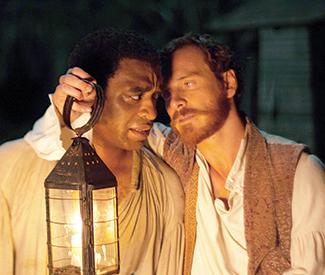
The movie you need to see this weekend, ASAP, is 12 Years a Slave — one of the most important releases of the year, and a likely contender for all possible awards, including Best Actor and Best Picture. (Review here.) Also new to theaters is the Cannes-winning, controversy-stirring Blue is the Warmest Color. (Review here.)

Read on for more short takes on today’s new releases, plus a 1979 cult classic that’s ripe for rediscovery.

http://www.youtube.com/watch?v=Q2Ir5LsraA4

About Time Richard Curtis, the man behind 2003’s Love Actually, must be enjoying his days in England, rolling in large piles of money. Coinciding with the 10-year anniversary of that twee cinematic love fest comes Curtis’ latest ode to joy, About Time. The film begins in Cornwall at an idyllic stone beach house, as Tim (Domhnall Gleeson) describes his family members (Bill Nighy is dad; Richard Cordery is the crazy uncle) and their pleasures (rituals (tea on the beach, ping pong). Despite beachside bliss, Tim is lovelorn and ready to begin a career as a barrister (which feels as out of the blue as the coming first act break). Oh! And as it happens, the men in Tim’s family can travel back in time. There are no clear rules, though births and deaths are like no-trespass signs on the imaginary timeline. When he meets Mary (Rachel McAdams), he falls in love, but if he paves over his own evening by bouncing back and spending that night elsewhere, he loses the path he’s worn into the map and has to fix it. Again and again. Despite potential repetition, About Time moves smoothly, sweetly, slowly along, giving its audience time enough to feel for the characters, and then feel for the characters again, and then keep crying just because the ball’s already in motion. It’s the most nest-like catharsis any British film ever built. (2:03) (Sara Maria Vizcarrondo)

http://www.youtube.com/watch?v=8oOG3vUkKUM

A.K.A. Doc Pomus “All greatness comes from pain.” The simple statement comes from Raoul Felder, brother of legendary R&B songwriter Doc Pomus, in the beautiful, crushing mediation on his brother’s life, A.K.A. Doc Pomus, opening theatrically this week after serving as the closing-night film of the 2012 San Francisco Jewish Film Festival. Doc wrote some of the greatest music of a generation: R&B and early rock’n’roll standards such as “This Magic Moment,” “A Teenager in Love,” “Save the Last Dance For Me,” and “Viva Las Vegas” — songs made famous by the likes of Dion, the Drifters, and Elvis Presley. Jewish, debilitated by polio, and vastly overweight, Doc defied expectations while struggling with a lifetime of outsider status and physical pain. William Hechter and Peter Miller’s doc offers a revealing look at his remarkable life. (1:38) Vogue. (Emily Savage)

http://www.youtube.com/watch?v=axLcfpj7xeU

Diana The final years of Diana, Princess of Wales are explored in what’s essentially a classed-up Lifetime drama, delving into the on-off romance between “the most famous woman in the world” (Naomi Watts) and heart surgeon Hasnat Khan (Naveen Andrews). Relationship roadblocks (his Muslim family, back home in Pakistan, is hesistant to accept a divorced, Christian Brit as their son’s partner) are further complicated by extraordinary circumstances (Diana’s fame, which leads to paparazzi intrusions on the very private doctor’s life), but there’s real love between the two, which keeps them returning to each other again and again. By the third or fourth tearful breakup — followed by a passionate reunion — Diana’s story becomes repetitive as it marches toward its inevitable tragic end. Still, director Oliver Hirschbiegel (2004’s Downfall, another last-days-in-the-life biopic, albeit of a slightly different nature) includes some light-hearted moments, as when a giggling Diana smuggles Hasnat through the palace gates (past guards who know exactly what she’s up to). As you’d expect, Watts is the best thing here, bringing warmth and complexity to a performance that strives to reach beyond imitation. (1:52) (Cheryl Eddy)

http://www.youtube.com/watch?v=2UNWLgY-wuo

Ender’s Game Asa Butterfield (star of 2011’s Hugo), Harrison Ford, and Ben Kingsley appear in this adaptation of Orson Scott Card’s sci-fi novel. (1:54)

http://www.youtube.com/watch?v=mueIglaVYDk

Free Birds Owen Wilson and Woody Harrelson lend their voices to this animated turkey tale. (1:31)

http://www.youtube.com/watch?v=m3_hKv4pEM4

God Loves Uganda Most contemporary Americans don’t know much about Uganda — that is, beyond Forest Whitaker’s Oscar-winning performance as Idi Amin in 2006’s The Last King of Scotland. Though that film took some liberties with the truth, it did effectively convey the grotesque terrors of the dictator’s 1970s reign. But even decades post-Amin, the East African nation has somehow retained its horrific human-rights record. For example: what extremist force was behind the country’s Anti-Homosexuality Bill, which proposed the death penalty as punishment for gayness? The answer might surprise you, or not. As the gripping, fury-fomenting doc God Loves Uganda reveals, America’s own Christian Right has been exporting hate under the guise of missionary work for some time. Taking advantage of Uganda’s social fragility — by building schools and medical clinics, passing out food, etc. — evangelical mega churches, particularly the Kansas City, Mo.-based, breakfast-invoking International House of Prayer, have converted large swaths of the population to their ultra-conservative beliefs. Filmmaker Roger Ross Williams, an Oscar winner for 2010 short Music by Prudence, follows naive “prayer warriors” as they journey to Uganda for the first time; his apparent all-access relationship with the group shows that they aren’t outwardly evil people — but neither do they comprehend the very real consequences of their actions. His other sources, including two Ugandan clergymen who’ve seen their country change for the worse and an LGBT activist who lives every day in peril, offer a more harrowing perspective. Evocative and disturbing, God Loves Uganda seems likely to earn Williams more Oscar attention. (1:23) Roxie. (Cheryl Eddy)

http://www.youtube.com/watch?v=AxGgkEHmHHg

Kill Your Darlings Relieved to escape his Jersey home, dominated by the miseries of an oft-institutionalized mother (Jennifer Jason Leigh) and long-suffering father (David Cross), Allen Ginsberg (Daniel Radcliffe) enters Columbia University in 1944 as a freshman already interested in the new and avant-garde. He’s thus immediately enchanted by bad-boy fellow student Lucien Carr (Dane DeHaan), a veteran of numerous prestigious schools and well on the road to getting kicked out of this one. Charismatic and reckless, Carr has a circle of fellow eccentrics buzzing around him, including dyspeptic William S. Burroughs (Ben Foster) and merchant marine wild child Jack Kerouac (Jack Huston). Variably included in or ostracized from this training ground for future Beat luminaries is the older David Kammerer (Michael C. Hall), a disgraced former academic who’d known Carr since the latter was 14, and followed him around with pathetic, enamored devotion. It’s this last figure’s apparent murder by Carr that provides the bookending crux of John Krokidas’ impressive first feature, a tragedy whose motivations and means remain disputed. Partly blessed by being about a (comparatively) lesser-known chapter in an overexposed, much-mythologized history, Kill Your Darlings is easily one of the best dramatizations yet of Beat lore, with excellent performances all around. (Yes, Harry Potter actually does pass quite well as a somewhat cuter junior Ginsberg.) It’s sad if somewhat inevitable that the most intriguing figure here — Hall’s hapless, lovelorn stalker-slash-victim — is the one that remains least knowable to both the film and to the ages. (1:40) (Dennis Harvey)

http://www.youtube.com/watch?v=IMnr-R7BkkU

Last Vegas This buddy film may look like a Bucket List-Hangover hybrid, but it’s got a lot more Spring Breakers in it than you’d expect — who beats Vegas for most bikinis per capita? Four old friends reunite for a wedding in Vegas, where they drink, gamble, and are confused for legendary men. Morgan Freeman sneaks out of his son’s house to go. Kevin Kline’s wife gave him a hall pass to regain his lost sense of fun. Kline and Freeman trick Robert De Niro into going — he’s got a grudge against Michael Douglas, so why celebrate that jerk’s nuptials to a 30-year-old? The conflicts are mostly safe and insubstantial, but the in-joke here is that all of these acting legends are confused for legends by their accidentally obtained VIP host (Romany Malco). These guys have earned their stature, so what gives? When De Niro flings fists you shudder inside remembering Jake LaMotta. Kline’s velvety comic delivery is just as swaggery as it was during his ’80s-era collaborations with Lawrence Kasdan. Douglas is “not as charming as he thinks he is,” yet again, and voice-of-God Freeman faces a conflict specific to paternal protective urges. Yes, Last Vegas jokes about the ravages of age and prescribes tenacity for all that ails us, but I want a cast this great celebrated at least as obviously as The Expendables films. Confuse these guys for better? Show me who. (1:44) (Sara Maria Vizcarrondo)

http://www.youtube.com/watch?v=-v5ZXAxTGHg

Let the Fire Burn In 1985 a long-simmering conflict between Philadelphia police and the local black liberation group MOVE came to a catastrophic conclusion. Ordered to leave their West Philly building after numerous neighborhood complaints about unsanitary conditions, incessant noise, child endangerment and more, the commune refused. An armed standoff came to a halt when a helicopter dropped two FBI-supplied water gel bombs on the roof, killing 11 MOVE members (including five kids) and creating an uncontrollable fire that destroyed some 60 nearby homes. It’s hard to deny after watching Jason Osder’s powerful documentary that MOVE then looked like one crazy cult — its representatives spouting extreme, paranoid rhetoric in and out of court; its child residents (their malnutrition-bloated stomachs nonsensically explained as being due to “eating so much”) in visibly poor health; its charismatic leader John Africa questionably stable. But whatever hazards they posed to themselves and the surrounding community, it’s also almost undeniable here that city law enforcement drastically overreacted, possibly in deliberate retaliation for an officer’s shootout death seven years earlier. The filmed and amply media-reported trials that ensued raised strong suspicions that the police even shot unarmed MOVE members trying to escape the blaze. This outrageous saga, with numerous key questions and injustices still dangling, is an American history chapter that should not be forgotten. Let the Fire Burn is an invaluable reminder. (1:35) (Dennis Harvey)

http://www.youtube.com/watch?v=HIKQCZDYfEI

Man of Tai Chi Keanu Reeves directs and plays a supporting role in this contemporary Beijing-set martial-arts drama. (1:45)

http://www.youtube.com/watch?v=N6lImifpiZM

The Pin Canadian film about a romance between two Eastern European youths, in hiding during World War II. (1:23)

The Visitor Directed by “Michael J. Paradise” (aka Giulio Paradisi), this 1979 Italian-US. co-production is belatedly starting to acquire a cult following. Joanne Nail is Barbara, mother of Katy (Paige Conner), a seemingly normal little girl with a disconcerting tendency to swear like a longshoreman when out of ma’s earshot. Also unbeknownst to mom is that her boyfriend (Lance Henriksen, no less), as well as characters played by Mel Ferrer, Glenn Ford, John Huston, Sam Peckinpah, and the inimitable Shelley Winters are all very interested — on the good and the evil side — in Katy, a “miracle of nature” with “immense powers.” Those powers apparently include making Kareem Abdul-Jabbar’s basketball explode at the hoop, and sending teenage boys through plate glass at an ice rink. Some of the adults nosing around Katy really, really want Barbara to give her a similarly gifted baby brother, others do not. It all involves some kind of interplanetary conspiracy to … well, beats me, frankly. Its utter senselessness part of the charm, The Visitor includes any number of bizarre moments, including Winters’ evident enjoyment of slapping some sense into Katy (the child thesp later confirmed that the Oscar winner went a little too Method in that scene), and crusty old Huston intoning the line “I’m, uh, the babysitter.” This glossy sci-fi horror mess. which the Roxie is showing in a new digital transfer, borrows elements freely from 1977’s Exorcist II: The Heretic (a fiasco that inspired very little imitation), 1976’s The Omen (or rather 1978’s Damien: Omen II) and, strangely, Orson Welles’ 1947 The Lady from Shanghai (directly ripping off its famous hall of mirrors scene). Yet there’s a certain undeniable originality to its incoherence. (1:48) Roxie. (Dennis Harvey)

Angered by senior evictions, Filipino American activists decline award

The board members of a local Filipino heritage organization, with ties to a high-profile eviction defense battle at San Francisco’s International Hotel in the late 1970s, have declined to an accept an award that San Francisco Mayor Ed Lee had planned to extend to them as part of a Filipino American History celebration because they are angry about a growing trend of senior evictions.

In a written statement sent to media by board member Tony Robles, the Manilatown Heritage Foundation explained that it couldn’t accept the award as long as “elders are being preyed upon, evicted and given a de facto death sentence thereof.”

The Manilatown Heritage Foundation board members were informed by Board of Supervisors President David Chiu that Lee had planned to recognize the I-Hotel as part of an annual cultural history celebration at City Hall, the statement noted. “Part of the occasion was to honor the I-Hotel and its many tenants and activists for its contribution to Filipino American history,” board members explained.

In 1976, the I-Hotel was targeted for demolition, prompting an historic eviction defense battle led by housing activists who rallied to the defense of the impacted tenants. A significant fixture in what was once a predominantly Filipino neighborhood known as Manilatown, the I-Hotel housed 196 tenants, predominantly low-income Filipino immigrants. 

“The I-Hotel fight was for dignity and it lived by the premise that housing is a human right,” Manilatown Heritage Foundation members explained in the written statement. “The fight for the I-Hotel galvanized the community around the fight for affordable housing, particularly for seniors—who sacrificed much and on whose shoulders we stand. The fight included tenants, elders, activists, artists and students who recognized that the real estate developers and financial interests were out of control—power unchecked.” 

The fight dragged on, at one point more than two thousand people surrounded the building to blockade the doors in an effort to prevent an eviction from going forward. The battle over the I-Hotel also brought on a famous San Francisco episode in which then-Sheriff Richard Hongisto served five days in his own jail for refusing to carry out the eviction order. In the end, the tenants were finally ousted. But the epic battle ultimately helped to produce a different outcome, many years later: The property became the site of low-cost senior housing, complete with a commemorative display in the interior documenting the dramatic I-Hotel fight.

As a young attorney who worked with the Asian Law Caucus, San Francisco Mayor Ed Lee was involved in that fight – as an activist defending tenants’ rights to stay. He frequently referred to this chapter of his personal history while running for mayor in 2011, to demonstrate his sensitivity to concerns about affordable housing.

But now that Lee is well into his mayoral term, a surge of evictions of low-income seniors is worsening on his watch. Tenant defense organizations such as Eviction Free San Francisco are showing up outside landlords’ homes and offices to protest eviction notices that threaten to push low-income seniors with few options out of the city. Some evictions have caught the attention of mainstream media, such as the ouster of elderly Chinatown couple Gum Gee Lee and Poor Heung Lee and their disabled daughter, Shiuman Lee.

Some advocates have proposed legislative solutions; meanwhile, the situation has evidently become so criticial that even city’s Human Services Agency is seeking outside assistance to provide eviction prevention services for elderly and disabled tenants facing Ellis Act evictions.

And today, the board of the Manilatown Heritage Foundation drew a line in the sand to send Lee a clear message by refusing to accept the honor of recognition in the current housing climate. So far, mayoral spokesperson Christine Falvey has not responded to the Bay Guardian’s request for comment in response to the Manilatown Heritage Foundation’s statement.

“Given the current state of San Francisco housing by forces out to make a killing by killing our communities, we as the torch bearers of the I-Hotel struggle and in the memory of its displaced elders and advocates Al Robles, Bill Sorro, Felix Ayson, Wahat Tampao and others, cannot, in good consciousness, accept any honor or award while elders are being preyed upon, evicted and given a de facto death sentence thereof. And it doesn’t matter if the honor is bestowed by Mayor Lee, President Obama or the pope. We have to say no.”

Here’s the full statement from the Manilatown Heritage Foundation. Here’s an historical essay about the I-Hotel from Shaping San Francisco’s digital archive at FoundSF.org.

Media misses connection between BART tragedy and settlement

23

BART continues to stonewall important questions about whether it was training scab drivers to break the recent strike by its unions when its trainee-driven train killed two workers on Oct. 19 — a stance made possible by the failure of the mainstream media to connect the dots or correct the anti-union bias that characterized its coverage of this long labor impasse.

The failure of local journalists to highlight the connection between that tragedy and the subsequent decision by the district to suddenly soften its stance and sweeten its offer — within hours of the National Transportation Safety Board revealing that a trainee was driving and that BART’s “maintenance run” story was a deception — is as myopic as it is appalling.

After all, the daily newpapers, television stations, and wire services did finally, dutifully report that a trainee was driving, even as they failed to point out to readers and viewers the significance of that disclosure or ask the district, “Why were you training drivers during a strike? Were you planning to offer service during the strike?”

We have asked those questions of the district, and when we got misleading obfuscations, we asked again and again, and our questions are still being largely ignored (actually, we just got a limited but important response, see below). And here’s why they matter: Because if the district was planning to run trains during the strike, it reinforces the unions’ contention that the district was hard-bargaining to force a strike that it was preparing to break, a plan that became untenable when two people died, just as the unions warned might happen if the district ran trains without experienced drivers.

This should be a huge scandal, the kind of thing that might force General Manager Grace Crunican to resign and BART directors to lose their seats — except for the fact that the media is ignoring this simple, obvious narrative and failing to do its job.

The East Bay Express, which today published an excellent article on how the San Francisco Chronicle and Bay Area News Group (which includes the Oakland Tribune, Contra Costa Times, and San Jose Mercury News) mislead the public about the BART standoff, is the only other media outlet in the region to join the Bay Guardian in highlighting the relevant facts in this story.

Not only have these newspapers written some truly atrociously anti-worker editorials, but even the supposedly objective news stories have been clearly biased in their emphasis and omissions. Why else would they repeatedly emphasize a proposal by an obscure Republican member of the Orinda City Council to prohibit future BART strikes — a bit of election-related grandstanding that has no chance of passing in Democrat-controlled Sacramento — while failing to analyze why BART suddenly sweetened its offer beyond what Crunican said the district could afford?

But this could be a situation that backfires on local media managers considering that the truth will probably come out eventually, even if it’s long after the media spotlight has moved on. NTSB investigations can take up to a year, but they are remarkably thorough and it will probably eventually discuss why these drivers were being trained.

The Assembly Committee on Labor and Employment announced yesterday that it will also hold a hearing to “get to the bottom” of the tragedy, and one can only hope that someone on that committee will grill the district about its intentions in running that ill-fated train and conducting new driver training just one day into the latest strike.

UPDATE: As I was posting this story, I finally heard back from BART spokesperson Alicia Trost, who made it sound like preparations to break the strike weren’t news — even though it may be news to most newspaper readers.

“The District has publicly acknowledged, dating back to a September 13, 2013 Metropolitan Transportation Commission subcommitee meeting, that BART has been training some non-union employees to operate limited passenger train service in the event of an extended strike if so authorized by the Board of Director. The Board was never requested to authorize revenue service during the strike,” she wrote by email.

Yet those public aknowledgements don’t appear to have made it to the public. And when the Chronicle’s Matier & Ross did run an anonymously sourced item breaking the news that BART may be training replacement drivers, BART refused to comment, the duo soft-peddled the scoop, and the relevation failed to make it into the larger narratives the newspaper offered about BART.

And even now, Trost followed up her admission by minimizing its importance, saying that the ill-fated train was also being run for maintenance purposes, which the NTSB had also reported.

“BART has to ‘exercise the system’ by running trains on the tracks to prevent rust build up. Rust can build up quickly and will interfere with train service. BART continued to run inspection trains throughout the entire strike just as it did during the July strike,” she wrote.

But the real issue is whether the district deliberately triggered two strikes that the heavily impacted public angrily blamed on workers, thanks largely to how the standoff had been cast by the mainstream media and the district. After all, BART chose a notoriously anti-union labor consultant as its lead negotiator, a decision that even Willie Brown criticized in his Sunday column, although Brown cast the district as just dumb instead of intentionally forcing a strike.

I’m still waiting for Trost to answer my follow-up questions, and I’ll update this post if and when I hear back. I’m also still waiting to hear from BART Board President Tom Radulovich, whose progressive credibility has been tarnished in the eyes of some for playing such a lead role in BART’s media strategy.

Thankfully, the divisive standoff between BART and its unions seems to be over, but the questions about what really drove it and how its conclusion came about are still relevant and largely unanswered. And that says a great deal about the state of journalism today.

Meister: A Halloween invasion from Mars

0

Guardian columnist Dick Meister is a longtime Bay Area journalist.

“2X2L calling CQ … 2X2L calling CQ, New York … Isn’t there anyone on the
air? Isn’t there anyone on the air? Isn’t there anyone?”

Millions of Americans — panic-stricken, many of them — waited anxiously
for a response to the message, delivered over the CBS radio network in slow,
flat, mournful tones on the crisp Halloween eve of Oct. 30, 1938.

“Isn’t … there … anyone?”

There wasn’t. Listeners heard only the slapping sounds of the Hudson River.

Many of New York’s residents were dead. The others had fled in panic from
“five great machines,” as tall as the tallest of the city’s skyscrapers,
that the radio announcer at CQ, New York, had described in the last words he
would ever utter. The metallic monsters had crossed the Hudson “like a man
wading a brook,” destroying all who stood in their way.

“Our army is wiped out, artillery, air force — everything wiped out,”
gasped the radio announcer.

It was the War of the Worlds, Mars versus Earth, and the Martians were
winning with horrifying ease. Their giant machines had landed in the New
Jersey village of Grovers Mill, and soon they would be coming to your town,
too … and yours … and yours. Nothing could stop them.

The War of the Worlds had sprung with frightening clarity from the extremely
fertile imagination of Orson Welles and the other young members of the
Mercury Theater of the Air who adopted Wells’ novel and dramatized it so
brilliantly — and believably — from the CBS radio studios on that long ago
Halloween eve.

Their use of realistic sounding bulletins and other tools of radio news
departments made it sound as if Martian machines truly were everywhere, and
everywhere invincible.

Studies done at the time show that at least one million of the program’s
estimated six million listeners panicked.

“People all over the United States were praying, crying, fleeing frantically
to escape death from the Martians,” noted Hadley Cantril, an actual
Princeton professor who directed the most detailed study of the panic that
was caused in part by the pronouncements of “Richard Pierson,” a bogus
Princeton professor played by Welles.

“Some ran to rescue loved ones. Others telephoned farewells or warnings,
hurried to inform neighbors … summoned ambulances and police cars … For
weeks after the broadcast, newspapers carried human interest stories
relating the shock and terror of local citizens.”

“When the Martians started coming north from Trenton we really got scared,”
a New Jerseyian told one of Professor Cantril’s interviewers. “They would
soon be in our town. I drove right through Newberg and never even knew I
went through it … I was going eighty miles an hour most of the way. I
remember not giving a damn, as what difference did it make which way I’d get
killed.”

Those who didn’t join the streams of cars that clogged the highways clogged
the phone lines or huddled in cellars and living rooms to await the end,
some with pitchfork, shotgun or Bible in hand.

“I knew it was something terrible and I was frightened,” a woman recalled.
“When they told us what road to take, and to get up over the hills, and the
children began to cry, the family decided to go. We took blankets and my
granddaughter wanted to take the cat and the canary.”

It was an extremely rare occurrence., as Cantril noted: “Probably never
before have so many people in all walks of life and in all parts of the
country become so suddenly and so intensely disturbed …”

And never since then has the country experienced such deep and widespread
fear and anxiety. Not even after Japan’s surprise attack on Pearl Harbor
three years later. Not even in the wake of the terrorist attacks of Sept.
11, 2001.

It was a unique display of widespread panic. Many people actually believed
their very world was coming to an end and there was nothing anyone could do
to stop it.

Welles had made clear at the start that the presentation was fictional. But
radio listeners generally paid little attention to opening announcements,
and many Sunday night listeners commonly turned first to the very popular
Edgar Bergen-Charley McCarthy show that was broadcast over another network
in the same 8 p.m. time slot, turning to the Mercury Theater out of
curiosity only later.

What they heard that Sunday were primarily news reports and commentaries
ingeniously patterned on the real reports and commentaries that were
constantly interrupting programs to report the aggressive actions of Nazi
Germany and other events that would shortly lead to the outbreak of World
War II.

People expected to hear the worst. Most also expected that what they heard
would be accurate, radio having supplanted newspapers as the most trusted
and relied upon of the mass media.

It helped, too, that much of the information was presented by “experts” …
Welles and other make-believe professors from universities around the world,
supposed astronomers, army officers and Red Cross officials, even the
otherwise unidentified “secretary of the interior.”

“I believed the broadcast as soon as I heard the professor from Princeton
and the officials in Washington,” as one listener recalled.

Even relatively sophisticated and well-informed listeners were fooled by
what Cantril cited as the program’s “sheer dramatic excellence.”

Events developed slowly, starting with the relatively credible — brief news
bulletins calmly reporting some “atmospheric disturbances,” later some
“explosions of incandescent gas,” and finally the discovery of what appeared
to be a large meteorite. Only then came the incredible — the discovery that
the “meteorite” was a Martian spaceship, reported in a halting, incredulous
manner by the “reporter” supposedly broadcasting live from Grovers Mill.

The police, the New Jersey State Guard, the army — none could subdue the
invaders. Finally, the “secretary of the interior” announced that man could
do no more, that the only hope for deliverance from the Martians was to
“place our faith in God.”

Few listeners were in a position to make independent judgements about
matters Martian. Few knew astronomy, and what standards does one use to
judge an invasion from Mars anyway?

Listeners could easily have turned to other radio networks for the truth, of
course, but many were too caught up in the masterful drama of the CBS
program to think of that.

Even some people who lived near the alleged invasion site were fooled. “I
looked out the window and everything was the same as usual,” said one, “so I
thought it hadn’t reached our section yet.”

The second half of the hour-long broadcast, with “Professor Pierson”
wandering dazedly through the deserted and ravaged streets of New York,
should have made it obvious to even the most gullible that they had been
listening to drama rather than news. Welles, shocked and shaken by the
listener response, followed that quickly with an ad-libbed assurance that it
had all been make-believe.

But by then, many people had left their radios. They had other ways in which
to spend their last hours on earth.

Copyright © 2013 Dick Meister
Guardian columnist Dick Meister is a longtime Bay Area journalist
.

Stage Listings Oct. 30-Nov. 5, 2013

0

Stage listings are compiled by Guardian staff. Performance times may change; call venues to confirm. Reviewers are Robert Avila, Rita Felciano, and Nicole Gluckstern. Submit items for the listings at listings@sfbg.com.

THEATER

OPENING

Driving Miss Daisy Buriel Clay Theater at the African American Art and Culture Complex, 762 Fulton, SF; www.african-americanshakes.org. $12.50-37.50. Opens Sat/2, 8pm. Runs Fri-Sat, 8pm; Sun, 3pm. Through Nov 17. African-American Shakespeare Company performs Alfred Uhry’s Pulitzer-winning drama.

I Married an Angel Eureka Theatre, 215 Jackson, SF; www.42ndstmoon.org. $25-75. Previews Wed/30-Thu/31, 7pm; Fri/1, 8pm. Opens Sat/2, 6pm. Runs Wed-Thu, 7pm; Fri, 8pm; Sat, 6pm (also Nov 9, 1pm), Sun, 3pm. Through Nov 17. 42nd Street Moon performs the Rodgers and Hart classic.

The Jewelry Box: A Genuine Christmas Story The Marsh San Francisco, 1062 Valencia, SF; www.themarsh.org. $15-40. Opens Fri/1, 8pm. Runs Fri, 8pm; Sat, 5pm. Brian Copeland performs the world premiere of his new, holiday-themed work, an Oakland-set autobiographical tale that’s a prequel to his popular Not a Genuine Black Man.

Peter and the Starcatcher Curran Theatre, 445 Geary, SF; www.shnsf.com. $40-160. Opens Tue/5, 8pm. Runs Tue-Sat, 8pm (also Wed and Sat, 2pm; no show Nov 28); Sun, 2pm. Through Dec 1. Fanciful, Tony-winning prequel to Peter Pan.

BAY AREA

A King’s Legacy Pear Avenue Theatre, 1220 Pear, Mtn View; www.thepear.org. $10-35. Previews Thu/31, 8pm. Opens Fri/1, 8pm. Runs Thu-Sat, 8pm; Sun, 2pm. Through Nov 24. Pear Avenue Theatre performs Elyce Melmon’s world premiere, a drama about King James VI of Scotland.

A Little Princess Julia Morgan Theater, 2640 College, Berk; www.berkeleyplayhouse.org. $17-60. Previews Thu/30, 7pm and Sat/2, 1pm. Opens Sat/2, 6pm. Runs Thu-Fri, 7pm (Nov 28, shows at 1 and 6pm); Sat, 1 and 6pm; Sun, noon and 5pm (no 5pm show Dec 1). Through Dec 8. Berkeley Playhouse opens its sixth season with Brian Crawley and Andrew Lippa’s musical adaptation of the Frances Hodgson Burnett story.

Social Security Muriel Watkin Gallery, 1050 Crespi Drive, Pacifica; (650) 359-8002. $10-25. Opens Fri/1, 8pm. Runs Fri-Sat, 8pm; Sun, 2pm. Through Nov 24. Pacifica Spindrift Players performs Andrew Bergman’s classic comedy.

ONGOING

The Barbary Coast Revue Stud Bar, 399 Ninth St, SF; eventbrite.com/org/4730361353. $10-40. Wed, 9pm (no show Nov 27). Through Dec 18. Blake Wiers’ new “live history musical experience” features Mark Twain as a tour guide through San Francisco’s wild past.

Bengal Tiger at the Bagdad Zoo SF Playhouse, 450 Post, SF; www.sfplayhouse.org. $30-100. Tue-Thu, 7pm; Fri-Sat, 8pm (also Sat, 3pm). Through Nov 16. In Rajiv Joseph’s Pulitzer-nominated Bengal Tiger at the Bagdad Zoo, the dead quickly outnumber the living, and soon the stage is littered with monologist ghosts lost in transition. In Joseph’s world, at least, death is but another phase of consciousness, a plane of existence where a man-eating tiger might experience a crisis of conscience, and a brash young soldier with a learning disability might suddenly find himself contemplating algebraic equations and speaking Arabic —knowledge that had eluded his comprehension in life. Will Marchetti’s portrayal of the titular tiger is on the static side, though his wry intelligence and philosophical awakening comes as a welcome contrast to the willfully obtuse world view of the American soldiers (Gabriel Marin and Craig Marker) guarding him. But it’s Musa (Kuros Charney), a translator for the Americans and a former gardener and topiary “artist,” who eventually emerges as the play’s most fully realized character and also the most tragic, becoming that which he dreads the most, a beast in a lawless land, egged on by the ghost of his former employer, the notoriously sadistic Uday Hussein (Pomme Koch). At times, director Bill English’s staging feels too understated and contained for a play that’s so muscular and expansive (an understatement not carried over into Steven Klems’ appropriately jarring sound design) focused less on its metaphysical implications than on its mundane surface, but however imperfect the production and daunting the script, it remains a fascinating response to an unwinnable war — the war against our own animal natures. (Gluckstern)

BoomerAging: From LSD to OMG Marsh San Francisco, 1062 Valencia, SF; www.themarsh.org. $15-50. Tue, 8pm. Extended through Dec 17. Will Durst’s hit solo show looks at baby boomers grappling with life in the 21st century.

Carrie: The Musical Victoria Theatre, 2961 16th St, SF; www.rayoflighttheatre.com. $25-36. Wed/30-Sat/2, 8pm (also Sat/2, 2pm). Teen bullying is très topical at the moment, making Stephen King’s terrifying tale of a telekinetic girl pushed to the breaking point by her unsympathetic classmates ripe for revival. Although it flopped on Broadway in 1988, Carrie: The Musical has aged more gracefully than you might expect, thanks to the timeliness of its overarching theme and a judicious 2012 facelift of its script and score. In Ray of Light Theatre’s slam-dunk production, Carrie unfolds a bit like an after-school special on scapegoating, except with show tunes and, of course, the stratospheric consequences of the final, tragic revenge sequence. The songs themselves are mainly forgettable in terms of hooks and lyrics, but the vibrant young cast makes the most of them, with excellent harmonizing and powerful range. Amanda Folena’s tight choreography borrows the sinuous hip rolls and stomp of a Janet Jackson routine and just a touch of twerk, while Joe D’Emilio’s lighting and Erik Scanlon’s video design work in unholy symbiosis to create the supernaturally charged ambience of Carrie’s world. As Carrie, Cristina Ann Oeschger really shines, embodying the heartbreaking fragility of a lonely outcast whose optimism has not yet been entirely crushed, while Heather Orth as her frighteningly pious mother, Margaret White, reveals the vulnerability of her equally lonely character that many portrayals miss altogether. Standouts among the solid supporting cast include Jessica Coker as a compassionate gym teacher and Riley Krull as the ultimate mean girl. (Gluckstern)

Dirty Little Showtunes New Conservatory Theatre Center, 25 Van Ness, SF; www.nctcsf.org. $25-45. Wed-Sat, 8pm; Sun, 2pm. Through Nov 10. Lyricist-performer Tom Orr and director F. Allen Sawyer’s sassy but loving remix of iconic Broadway songs returns in another iteration, this one at the New Conservatory Theatre Center, complete with a willing and able cast of five (Rotimi Agbabiaka, David Bicha, Jesse Cortez, Randy Noak, Orr), piano accompaniment by musical director Scrumbly Koldewyn, and some rudimentary if evocative choreography by Jayne Zaban. Truly silly, sometimes inspired, the show mixes favorite parodies from past productions with some new ones. Orr’s wit shines throughout, even if it does not necessarily outshine every borrowed theme. Gilbert and Sullivan, for example, are hardly upstaged as much as celebrated with Bicha belting out, “I Am the Very Model of a Modern Homosexual.” More sentimental numbers about T cell counts or gay marriage, while an understandable part of the landscape of gay life explored here, can feel a little strained in the context of the generally ribald. But the high-spirited nature of this whimsical show makes pardonable even the less-dirty parts. (Avila)

Drowning Ophelia Mojo Theatre Space, 2940 16th St, #217, SF; www.repurposedtheatre.com. $20. Thu/31-Sat/2, 8pm. Jane (Katharine Otis) is a young woman teetering on the verge of a breakdown who plays period dress-up with would-be suitor Edmund (Will Trichon) but can’t avoid the character at her back: Hamlet‘s Ophelia (Kirsten Dwyer), chiding and chilling from her bathtub in the middle of the room. As Jane’s attention gets drawn back to her alter ego, scenes from the past with recently deceased brother Adam (Ryan Hayes) replay themselves with Ophelia as her stand-in. These go from innocent to menacing, as meanwhile Jane’s almost endlessly patient boyfriend finally seems to have had enough of the clash between their playful pretending and the unforeseen visitors in Jane’s head. While a promising gambit from newcomer Repurposed Theatre, the world premiere of Pennsylvania-based playwright Rachel Luann Strayer’s slightly unwieldy play makes less of this intriguing situation than one might hope. The literary and theatrical bent to Jane’s split personhood is apt on more than one level — she’s not only desperate to secure a sense of order for her disordered mind, but a scripted basis for a romantic ideal forever tarnished by her relationship with her brother (vaguely creepy in his boyish confidence in Hayes’s alert performance). But there’s little sense of a larger psychosocial reality — whether of patriarchal misogyny, or violence more generally — and, as a result, little to be gained from the too-obvious and too emphatic incest-madness theme, outside of an impressive performance from Otis, whose somewhat hampered character is nevertheless a powerful presence throughout. Capable supporting turns, including Dwyer’s intense and vital Ophelia, and director Ellery Schaar’s generally sharp staging (under Julien Elstob’s moody lighting) contribute to making a nicely atmospheric production. (Avila)

First Stage Werx, 446 Valencia, SF; www.firsttheplay.com. $25-35. Thu/31-Sat/2, 8pm; Sun/3, 2pm. Altair Productions, the Aluminous Collective, and PlayGround present the world premiere of Evelyn Jean Pine’s play, which imagines a 20-year-old Bill Gates’ experiences at a 1976 personal computer conference.

Foodies! The Musical Shelton Theater, 533 Sutter, SF; www.foodiesthemusical.com. $32-34. Fri-Sat, 8pm. Open-ended. AWAT Productions presents Morris Bobrow’s musical comedy revue all about food.

444 Days Z Below, 470 Florida, SF; www.goldenthread.org. $10-45. Thu/31-Sat/2, 8pm (also Sat/2, 3pm); Sun/3, 3pm. Golden Thread Productions presents the world premiere of founding artistic director Torange Yeghiazarian’s drama about the reunion between a former Iranian revolutionary, Laleh (Jeri Lynn Cohen), and a former American diplomat from the American embassy in Tehran, Harry (Michael Shipley) — her captive in more ways than one during the 444 days of the 1979-81 Iran hostage crisis. Some 25 years after this international “affair,” Laleh and Harry meet again at the bedside of their critically ill and comatose daughter, Hadyeh (Olivia Rosaldo-Pratt), whose non-biological father Amin (an offstage character) is Laleh’s longtime comrade and another of the onetime hostage takers. If it sounds like a politically loaded situation, it is, which is as much a problem as a virtue in director Bella Warda’s production. Yeghiazarian laces her dialogue with light humor, irony, and romance throughout, but the play allows little room for its characters to really breathe — indeed, Laleh’s first words to Harry after 25 years are, unlikely enough, a well-rehearsed screed. In the contortions its characters must speak (to which a friendly nurse, played by Sheila Collins, adds something like the average American’s perspective), the play remains too intent on delivering a political message about the intractable relationship, then and now, between the US and Iran — and the unnatural sacrifice of the generation that has come up since the severing of US-Iranian diplomatic ties after the revolution of 1979. (Avila)

Gruesome Playground Injuries Tides Theatre, 533 Sutter, SF; www.tidestheatre.org. $20-40. Wed-Sat, 8pm. Through Nov 9. Tides Theatre performs Rajiv Joseph’s drama about two people who first meet as eight-year-olds in the school nurse’s office.

Hedwig and the Angry Inch Boxcar Theatre, 505 Natoma, SF; www.boxcartheatre.org. $27-43. Thu-Sat, 8pm. Open-ended. John Cameron Mitchell’s cult musical comes to life with director Nick A. Olivero’s ever-rotating cast.

Lovebirds Marsh San Francisco, 1062 Valencia, SF; www.themarsh.org. $15-100. Thu-Fri, 8pm; Sat, 8:30pm. Through Nov 9. Workshop performances of Marga Gomez’s 10th solo show, about different characters seeking romance in the 1970s.

Randy Roberts Live! Alcove Theatre, 414 Mason, SF; www.randyroberts.net. $40. Thu/31-Sat/2, 9pm. The famed female impersonator performs.

Shakespeare Night at the Blackfriars (London Idol 1610) Phoenix Arts Association Annex Theatre, 414 Mason, SF; www.subshakes.com. $20-25. Fri-Sat, 8pm; Sun, 7pm. Through Nov 17. Subterranean Shakespeare performs George Crowe’s comedy about a playwriting contest between Ben Jonson, Thomas Middleton, Francis Beaumont, and the ghost of Christopher Marlowe.

“Shocktoberfest 14: Jack the Ripper” Hypnodrome, 575 10th St, SF; www.thrillpeddlers.com. $25-35. Thu-Sat and Wed/30, 8pm. Through Nov 23. It’s lucky 14 for the Thrillpeddlers’ annual Halloween-tide Shocktoberfest, and while there are few surprises in this year’s lineup, there’s plenty of reliable material to chew on. Opening with A Visit to Mrs. Birch and the Young Ladies of the Academy, a ribald Victorian-era “spanking drama,” the fare soon turns towards darker appetites with a joint Andre De Lorde-Pierre Chaine work, Jack the Ripper. Works by De Lorde — sometimes referred to as the “Prince of Fear” — have graced the Hypnodrome stage over the years, and this tense Victorian drama, though penned in the 30s, is suitably atmospheric. Although it becomes pretty evident early on who dunnit, it’s the why that lies at the heart of this grim drama, and in the course of that discovery, the play’s beleaguered lawmen reveal themselves to be no less ruthless than the titular Ripper (John Flaw) in pursuit of their quarry. Norman Macleod as Inspector Smithson particularly embodies this unwholesome dichotomy, and Bruna Palmeiro excels as his spirited yet doomed bait. Inspired by Oscar Wilde’s Salome, the Thrillpeddlers’ piece by the same name is perhaps the weak link in the program, despite being penned by the ever-clever Scrumbly Koldewyn, and danced with wanton abandon by Noah Haydon. Longtime Thrillpeddlers’ collaborator Rob Keefe ties together the evening’s disparate threads under one sprawling big top media circus of murder, sex, ghosts, and sensationalism with his somewhat tongue-in-cheek, San Francisco-centric The Wrong Ripper. (Gluckstern)

Sidewinders Exit on Taylor, 277 Taylor, SF; www.cuttingball.com. $10-50. Thu, 7:30pm; Fri-Sat, 8pm (also Sat, 2pm); Sun, 5pm. Through Nov 17. Cutting Ball opens its 15th season with the world premiere of Basil Kreimendahl’s absurdist romp through gender queerness. In a cartoonish, desolate wasteland (designed by Michael Locher), Dakota (Sara Moore), a bleached-blonde gunslinger in buckskin fringes, and Bailey (DavEnd), a possibly AWOL soldier rocking high-heeled boots and a single drop earring, wrestle with the conundrum of what to call their respective genitals. And more to the point, what to do with them after they figure it out. Or as Bailey bluntly puts it, “Who am I supposed to fuck?” But there’s more to being stranded in the uncharted wilderness at stake than “organ confusion,” and soon they must channel their uncommon alliance into finding a way back out. What they find instead include a regal figure of indeterminate gender possessed of extra limbs (Donald Currie), a suicidal servant with surgical skills (Norman Muñoz), and a growing realization that wilderness, like identity, is relative. Moore and DavEnd make a good comedic team, their endless banter, circular logic and exaggerated facial gymnastics giving them the philosophical gravitas of a Looney Tunes episode, while Currie’s turn as mutated muse is unexpectedly moving. Recent winner of the prestigious Rella Lossy award, this intriguing world premiere marks playwright Basil Kreimendahl’s first professional production, though it seems safe to say that it won’t be the last. (Gluckstern)

BAY AREA

Can You Dig It? Back Down East 14th — the 60s and Beyond Marsh Berkeley, 2120 Allston, Berk; www.themarsh.org. $15-50. Sat, 8:30pm; Sun, 7pm. Extended through Dec 15. Don Reed’s new show offers more stories from his colorful upbringing in East Oakland in the 1960s and ’70s. More hilarious and heartfelt depictions of his exceptional parents, independent siblings, and his mostly African American but ethnically mixed working-class community — punctuated with period pop, Motown, and funk classics, to which Reed shimmies and spins with effortless grace. And of course there’s more too of the expert physical comedy and charm that made long-running hits of Reed’s last two solo shows, East 14th and The Kipling Hotel (both launched, like this newest, at the Marsh). Can You Dig It? reaches, for the most part, into the “early” early years, Reed’s grammar-school days, before the events depicted in East 14th or Kipling Hotel came to pass. But in nearly two hours of material, not all of it of equal value or impact, there’s inevitably some overlap and indeed some recycling. Reed, who also directs the show, may start whittling it down as the run continues. But, as is, there are at least 20 unnecessary minutes diluting the overall impact of the piece, which is thin on plot already — much more a series of often very enjoyable vignettes and some painful but largely unexplored observations, wrapped up at the end in a sentimental moral that, while sincere, feels rushed and inadequate. (Avila)

Don’t Dress For Dinner Center REPertory Company, 1601 Civic, Walnut Creek; www.centerrep.org. $33-52. Wed, 7:30pm; Thu-Sat, 8pm (also Nov 23, 2:30pm); Sun, 2:30pm. Through Nov 23. Center REP performs Marc Camoletti’s sequel to his classic farce Boeing-Boeing.

I and You Marin Theatre Company, 397 Miller, Mill Valley; www.marintheatre.org. $37-58. Wed/30, 7:30pm; Thu/31-Sat/2, 8pm (also Sat/2, 2pm); Sun/3, 2 and 7pm. Lauren Gunderson’s world premiere explores how Walt Whitman’s words affect the lives of two teenagers.

Lettice and Lovage Hillbarn Theatre, 1285 East Hillsdale, Foster City; www.hillbarntheatre.org. $23-38. Thu/31-Sat/2, 8pm; Sun/3, 2pm. Hillbarn Theatre, now in its 73rd season, performs Peter Shaffer’s raucous comedy.

Metamorphoses South Berkeley Community Church, 1802 Fairview, Berk; www.infernotheatre.org. $10-25. Thu and Sat-Sun, 8pm; Fri, 9pm (no show Nov 9). Through Nov 23. Additional performance Nov 9, 8pm, $5-20, Laney College, 900 Fallon, Oakl. Inferno Theatre performs a multimedia, contemporary adaptation of Ovid’s classic.

The Pianist of Willesden Lane Berkeley Repertory Theatre, Thrust Theatre, 2015 Addison, Berk; www.berkeleyrep.org. $29-89. Opens Wed/30, 8pm. Runs Tue and Thu-Sat, 8pm (also Nov 7, Dec 5, and Sat, 2pm; no matinee Nov 9; no show Nov 28); Wed and Sun, 7pm (also Sun, 2pm). Through Dec 8. Mona Golabek stars in this solo performance inspired by her mother, a Jewish pianist whose dreams and life were threatened by the Nazi regime.

Red Virgin, Louise Michel and the Paris Commune of 1871 Berkeley City Club, 2315 Durant, Berk; www.centralworks.org. $15-28. Thu-Sat, 8pm; Sun, 5pm. Through Nov 24. Central Works presents a new play (with live music) by Gary Graves about the Paris Commune uprising.

Rich and Famous Dragon Theatre, 2120 Broadway, Redwood City; www.dragonproductions.net. $15-35. Thu/31-Sat/2, 8pm; Sun/3, 2pm. Dragon Theatre performs John Guare’s surreal musical comedy.

strangers, babies Ashby Stage, 1901 Ashby, Berk; www.shotgunplayers.org. $20-35. Wed-Thu, 7pm; Fri-Sat, 8pm; Sun, 5pm. Through Nov 17. Shotgun Players present Linda McLean’s drama about a woman confronting her past.

Swing Shift Onboard the SS Red Oak Victory, 1337 Canal, Berth 6A, Richmond; www.galateanplayers.com. $18-20. Fri-Sat, 8pm; Sun, 3pm. Through Nov 10. Galatean Players Ensemble Theatre perform Kathryn G. McCarty’s adaptation of Joseph Fabry’s novel, performed aboard a ship in the yards where Fabry once worked.

Warrior Class Mountain View Center for the Performing Arts, 500 Castro, Mtn View; www.theatreworks.org. $19-73. Wed/30, 7:30pm; Thu/31-Sat/2, 8pm (also Sat/2, 2pm); Sun/3, 2 and 7pm. TheatreWorks performs Kenneth Lin’s incisive political drama.

PERFORMANCE/DANCE

Alonzo King LINES Ballet Fall Home Season 2013 Yerba Buena Center for the Arts, Lam Research Theater, 700 Howard, SF; www.linesballet.org. Wed/30-Thu/31, 7:30pm; Fri/1-Sat/2, 8pm; Sun/3, 5pm. $30-65. Featuring the SF premiere of Writing Ground, a collaboration with writer Colum McCann, and a world-premiere new work set to Bach.

“Best of the 2013 San Francisco Fringe Festival” Exit Studio, 156 Eddy, SF; www.theexit.org. Fri/1-Sat/2, 8pm. $15-25. This week: Genie and Audrey’s Dream Show! (“Best of” series continues through Nov. 23)

“Broadway Bingo” Feinstein’s at the Nikko, Hotel Nikko, 222 Mason, SF; www.feinsteinssf.com. Wed, 7-9pm. Ongoing. Free. Countess Katya Smirnoff-Skyy and Joe Wicht host this Broadway-flavored night of games and performance.

CounterPULSE 1310 Mission, SF; www.counterpulse.org. This week: “After the Tone,” performed by Cara Rose DeFabio, Sat/2-Sun/3, 8pm, $20. “Beware the Band of Lions (They’re Dandy Lions),” with Bandelion, Sun/3, Nov 10, and 17, 3pm, free (reservations required as space is extremely limited; to request an invitation, email info@dandeliondancetheater.org).

“Crones Meet Bride of Lesbostein” Garage, 715 Bryant, SF; www.crackpotcrones.com. Wed/30-Thu/31, 8pm. $18. Crackpot Crones perform.

“An Evening with Hal Holbrook” Jewish Community Center of SF, 3200 California, SF; www.jccsf.org. Thu/31, 7pm. $25-35. The veteran actor discusses his memoir, Harold: The Boy Who Became Mark Twain.

Feinstein’s at the Nikko Hotel Nikko, 222 Mason, SF; www.feinsteinssf.com. This week: “An Evening with Rita Wilson,” Thu/31-Fri/1, 8pm; Sat/2, 7pm, $40-60.

“Grand Guignol” Z Space, 450 Florida, SF; www.grandguignolsf.com. Wed/30-Sat/2, 7 and 10pm; Sun/3, 2pm. $15-195. Horror play inspired by Paris’ legendary splatterhouse Theatre du Grand Guignol.

“The Handsomest Drowned Man in the World” Dance Mission Theater, 3316 24th St, SF; www.dancemission.com. Fri/1, 9pm; Sat/2, 9:30pm; Sun/3, 7pm. Free. SF State’s Rainbow Theatre performs a stage adaptation of Gabriel Garcia Marquez’s short story.

“Layla Means Night” ODC Theater, 3153 17th St, SF; www.odctheater.org. Wed/30-Sun/3, 7 and 9pm. $35-50. Rosanna Gamson/World Wide’s dance theater work transforms the ODC building into a 1,001 Arabian Nights-inspired fantasyland.

“Mission Position Live” Cinecave, 1034 Valencia, SF; www.missionpositionlive.com. Thu, 8pm. Ongoing. $10. Stand-up comedy with rotating performers.

“Okeanos Intimate” Aquarium of the Bay, Pier 39, SF; www.capacitor.org. Sat, 4:30 and 7pm. $20-30 (free aquarium ticket with show ticket). Extended through Dec 28. Choreographer Jodi Lomask and her company, Capacitor, revive 2012’s Okeanos — a cirque-dance piece exploring the wonder and fragility of our innate connection to the world’s oceans — in a special “intimate” version designed for the mid-size theater at Pier 39’s Aquarium of the Bay. The show, developed in collaboration with scientists and engineers, comes preceded by a short talk by a guest expert — for a recent Saturday performance it was a down-to-earth and truly fascinating local ecological history lesson by the Bay Institute’s Marc Holmes. In addition to its Cirque du Soleil-like blend of quasi-representational modern dance and circus acrobatics — powered by a synth-heavy blend of atmospheric pop music — Okeanos makes use of some stunning underwater photography and an intermittent narrative that includes testimonials from the likes of marine biologist and filmmaker Dr. Tierney Thys. The performers, including contortionists, also interact with some original physical properties hanging from the flies — a swirling vortex and a spherical shell — as they wrap and warp their bodies in a kind of metamorphic homage to the capacity and resiliency of evolution, the varied ingenuity of all life forms. If the movement vocabulary can seem limited at times, and too derivative, the show also feels a little cramped on the Aquarium Theater stage, whose proscenium arrangement does the piece few favors aesthetically. Nevertheless, the family-oriented Okeanos Intimate spurs a conversation with the ocean that is nothing if not urgent. (Avila)

Point Break Live!” DNA Lounge, 373 11th St, SF; www.dnalounge.com. Fri/1, Dec 6, and Jan 3, 7:30 and 11pm. $25-50. Interactive interpretation of Kathryn Bigelow’s 1991 classic. (Some tickets include meatball sandwiches!)

“Project Nunway V: Dissident Futures” Yerba Buena Center for the Arts, 701 Mission, SF; www.ybca.org. Sat/2, 8pm. $15-99.99. The Sisters of Perpetual Indulgence’s annual gala benefits local nonprofits and features high-fashion looks crafted from recycled materials. Related events (check website for details) include an altar project, “Angel of the Future Dead;” an after-party; and a screening of 1983’s Yentl.

“The Romane Event Comedy Show” Make-Out Room, 3225 22nd St, SF; www.pacoromane.com. Wed/30, 7:30pm. $10. Special Halloween edition of Paco Romane’s popular monthly stand-up showcase.

“San Francisco Magic Parlor” Chancellor Hotel Union Square, 433 Powell, SF; www.sfmagicparlor.com. Thu-Sat, 8pm. Ongoing. $40. Magic vignettes with conjurer and storyteller Walt Anthony. Seasonal alert: the show takes on a “spook-tacular” bent this week, with special shows Thu/31-Sat/2, 8pm.

13th Floor Dance Theater Studio B at ODC Dance Commons, 351 Shotwell, SF; www.13thfloordance.org. Sat/2, 8pm. $18-23. Jenny McAllister’s company performs the world premiere of Being Raymond Chandler.

Zaccho Dance Theatre Zaccho Studio, 1777 Yosemite, Studio 330, SF; www.zaccho.org. Fri/1-Sun/3, 1-5pm. Free. The company performs Joanna Haigood’s Between Me and the Other World, a performance installation exploring W.E.B. Dubois’ concept of double consciousness.

Zhukov Dance Theatre SFJazz Center, 201 Franklin, SF; www.zhukovdance.org. Wed/30, 8pm. $25-55. The company marks its sixth annual season, “Product 06,” with world premieres by Yuri Zhukov and guest choreographer Idan Sharabi.

“What Stays” Turquoise Yantra Grotto, 32 Turquoise Way, SF; www.performancelab.org. Fri/1-Sat/2, 8pm. $20-50. Home-theater performance by Right Brain Performancelab. Visit website for information on Nov 8-9 shows at a private home in Oakland.

BAY AREA

Mariachi Vargas de Tecalitlán Zellerbach Hall, Bancroft at Telegraph, UC Berkeley, Berk; www.calperfs.berkeley.edu. Sun/3, 7pm. $18-48. Celebrate Day of the Dead with the veteran Mexican folk ensemble’s traditional and popular tunes. Show up early (5-7pm) for free face painting and folkloric dance performances outside the venue, in Lower Sproul Plaza.

“Rapunzel” Marin Theatre Company, 397 Miller, Mill Valley; www.marintheatre.org. Sat-Sun, 10am and 12:30pm. $15-20. Through Nov 10. Marin Theatre Company performs a fairy-tale play for all ages.

Shanghai Ballet Zellerbach Hall, Bancroft at Telegraph, UC Berkeley, Berk; www.calperfs.berkeley.edu. Fri/1-Sat/2, 8pm. $30-92. The company performs The Butterfly Lovers, choreographed by Xin Lili. *


 

Film listings and reviews Oct. 30-Nov.5, 2013

0

Film listings are edited by Cheryl Eddy. Reviewers are Kimberly Chun, Dennis Harvey, Lynn Rapoport, Sam Stander, and Sara Maria Vizcarrondo. For rep house showtimes, see Rep Clock.

OPENING

About Time Richard Curtis, the man behind 2003’s Love Actually, must be enjoying his days in England, rolling in large piles of money. Coinciding with the 10-year anniversary of that twee cinematic love fest comes Curtis’ latest ode to joy, About Time. The film begins in Cornwall at an idyllic stone beach house, as Tim (Domhnall Gleeson) describes his family members (Bill Nighy is dad; Richard Cordery is the crazy uncle) and their pleasures (rituals (tea on the beach, ping pong). Despite beachside bliss, Tim is lovelorn and ready to begin a career as a barrister (which feels as out of the blue as the coming first act break). Oh! And as it happens, the men in Tim’s family can travel back in time. There are no clear rules, though births and deaths are like no-trespass signs on the imaginary timeline. When he meets Mary (Rachel McAdams), he falls in love, but if he paves over his own evening by bouncing back and spending that night elsewhere, he loses the path he’s worn into the map and has to fix it. Again and again. Despite potential repetition, About Time moves smoothly, sweetly, slowly along, giving its audience time enough to feel for the characters, and then feel for the characters again, and then keep crying just because the ball’s already in motion. It’s the most nest-like catharsis any British film ever built. (2:03) (Vizcarrondo)

A.K.A. Doc Pomus “All greatness comes from pain.” The simple statement comes from Raoul Felder, brother of legendary R&B songwriter Doc Pomus, in the beautiful, crushing mediation on his brother’s life, A.K.A. Doc Pomus, opening theatrically this week after serving as the closing-night film of the 2012 San Francisco Jewish Film Festival. Doc wrote some of the greatest music of a generation: R&B and early rock’n’roll standards such as “This Magic Moment,” “A Teenager in Love,” “Save the Last Dance For Me,” and “Viva Las Vegas” — songs made famous by the likes of Dion, the Drifters, and Elvis Presley. Jewish, debilitated by polio, and vastly overweight, Doc defied expectations while struggling with a lifetime of outsider status and physical pain. William Hechter and Peter Miller’s doc offers a revealing look at his remarkable life. (1:38) Vogue. (Emily Savage)

Blue is the Warmest Color See “Hot and Cool.” (2:59) Embarcadero.

Diana Naomi Watts stars in this exploration of the last two years in the life of Princess Diana. (1:52) Shattuck.

Ender’s Game Asa Butterfield (star of 2011’s Hugo), Harrison Ford, and Ben Kingsley appear in this adaptation of Orson Scott Card’s sci-fi novel. (1:54) Presidio.

Free Birds Owen Wilson and Woody Harrelson lend their voices to this animated turkey tale. (1:31)

God Loves Uganda Most contemporary Americans don’t know much about Uganda — that is, beyond Forest Whitaker’s Oscar-winning performance as Idi Amin in 2006’s The Last King of Scotland. Though that film took some liberties with the truth, it did effectively convey the grotesque terrors of the dictator’s 1970s reign. But even decades post-Amin, the East African nation has somehow retained its horrific human-rights record. For example: what extremist force was behind the country’s Anti-Homosexuality Bill, which proposed the death penalty as punishment for gayness? The answer might surprise you, or not. As the gripping, fury-fomenting doc God Loves Uganda reveals, America’s own Christian Right has been exporting hate under the guise of missionary work for some time. Taking advantage of Uganda’s social fragility — by building schools and medical clinics, passing out food, etc. — evangelical mega churches, particularly the Kansas City, Mo.-based, breakfast-invoking International House of Prayer, have converted large swaths of the population to their ultra-conservative beliefs. Filmmaker Roger Ross Williams, an Oscar winner for 2010 short Music by Prudence, follows naive “prayer warriors” as they journey to Uganda for the first time; his apparent all-access relationship with the group shows that they aren’t outwardly evil people — but neither do they comprehend the very real consequences of their actions. His other sources, including two Ugandan clergymen who’ve seen their country change for the worse and an LGBT activist who lives every day in peril, offer a more harrowing perspective. Evocative and disturbing, God Loves Uganda seems likely to earn Williams more Oscar attention. (1:23) Roxie. (Eddy)

Kill Your Darlings Relieved to escape his Jersey home, dominated by the miseries of an oft-institutionalized mother (Jennifer Jason Leigh) and long-suffering father (David Cross), Allen Ginsberg (Daniel Radcliffe) enters Columbia University in 1944 as a freshman already interested in the new and avant-garde. He’s thus immediately enchanted by bad-boy fellow student Lucien Carr (Dane DeHaan), a veteran of numerous prestigious schools and well on the road to getting kicked out of this one. Charismatic and reckless, Carr has a circle of fellow eccentrics buzzing around him, including dyspeptic William S. Burroughs (Ben Foster) and merchant marine wild child Jack Kerouac (Jack Huston). Variably included in or ostracized from this training ground for future Beat luminaries is the older David Kammerer (Michael C. Hall), a disgraced former academic who’d known Carr since the latter was 14, and followed him around with pathetic, enamored devotion. It’s this last figure’s apparent murder by Carr that provides the bookending crux of John Krokidas’ impressive first feature, a tragedy whose motivations and means remain disputed. Partly blessed by being about a (comparatively) lesser-known chapter in an overexposed, much-mythologized history, Kill Your Darlings is easily one of the best dramatizations yet of Beat lore, with excellent performances all around. (Yes, Harry Potter actually does pass quite well as a somewhat cuter junior Ginsberg.) It’s sad if somewhat inevitable that the most intriguing figure here — Hall’s hapless, lovelorn stalker-slash-victim — is the one that remains least knowable to both the film and to the ages. (1:40) Shattuck. (Harvey)

Last Vegas This buddy film may look like a Bucket List-Hangover hybrid, but it’s got a lot more Spring Breakers in it than you expect — who beats Vegas for most bikinis per capita? Four old friends reunite for a wedding in Vegas, where they drink, gamble, and are confused for legendary men. Morgan Freeman sneaks out of his son’s house to go. Kevin Kline’s wife gave him a hall pass to regain his lost sense of fun. Kline and Freeman trick Robert De Niro into going — he’s got a grudge against Michael Douglas, so why celebrate that jerk’s nuptials to a 30-year-old? The conflicts are mostly safe and insubstantial, but the in-joke here is that all of these acting legends are confused for legends by their accidentally obtained VIP host (Romany Malco). These guys have earned their stature, so what gives? When De Niro flings fists you shudder inside remembering Jake LaMotta. Kline’s velvety comic delivery is just as swaggery as it was during his 80s era collaborations with Lawrence Kasdan. Douglas is “not as charming as he thinks he is,” yet again, and voice-of-God Freeman faces a conflict specific to paternal protective urges. Yes, Last Vegas jokes about the ravages of age and prescribes tenacity for all that ails us, but I want a cast this great celebrated at least as obviously as The Expendables films. Confuse these guys for better? Show me who. (1:44) Presidio. (Vizcarrondo)

Let the Fire Burn In 1985 a long-simmering conflict between Philadelphia police and the local black liberation group MOVE came to a catastrophic conclusion. Ordered to leave their West Philly building after numerous neighborhood complaints about unsanitary conditions, incessant noise, child endangerment and more, the commune refused. An armed standoff came to a halt when a helicopter dropped two FBI-supplied water gel bombs on the roof, killing 11 MOVE members (including five kids) and creating an uncontrollable fire that destroyed some 60 nearby homes. It’s hard to deny after watching Jason Osder’s powerful documentary that MOVE then looked like one crazy cult — its representatives spouting extreme, paranoid rhetoric in and out of court; its child residents (their malnutrition-bloated stomachs nonsensically explained as being due to “eating so much”) in visibly poor health; its charismatic leader John Africa questionably stable. But whatever hazards they posed to themselves and the surrounding community, it’s also almost undeniable here that city law enforcement drastically overreacted, possibly in deliberate retaliation for an officer’s shootout death seven years earlier. The filmed and amply media-reported trials that ensued raised strong suspicions that the police even shot unarmed MOVE members trying to escape the blaze. This outrageous saga, with numerous key questions and injustices still dangling, is an American history chapter that should not be forgotten. Let the Fire Burn is an invaluable reminder. (1:35) Opera Plaza, Shattuck. (Harvey)

Man of Tai Chi Keanu Reeves directs and plays a supporting role in this contemporary Beijing-set martial-arts drama. (1:45) Metreon.

The Pin Canadian film about a romance between two Eastern European youths, in hiding during World War II. (1:23) Opera Plaza.

12 Years a Slave See “To Hell and Back.” (2:14) California, Embarcadero.

The Visitor Barbara (Joanne Nail) Directed by “Michael J. Paradise” (aka Giulio Paradisi), this 1979 Italian-US. co-production is belatedly starting to acquire a cult following. Joanne Nail is Barbara, mother of Katy (Paige Conner), a seemingly normal little girl with a disconcerting tendency to swear like a longshoreman when out of ma’s earshot. Also unbeknownst to mom is that her boyfriend (Lance Henriksen, no less), as well as characters played by Mel Ferrer, Glenn Ford, John Huston, Sam Peckinpah, and the inimitable Shelley Winters are all very interested — on the good and the evil side — in Katy, a “miracle of nature” with “immense powers.” Those powers apparently include making Kareem Abdul-Jabbar’s basketball explode at the hoop, and sending teenage boys through plate glass at an ice rink. Some of the adults nosing around Katy really, really want Barbara to give her a similarly gifted baby brother, others do not. It all involves some kind of interplanetary conspiracy to … well, beats me, frankly. Its utter senselessness part of the charm, The Visitor includes any number of bizarre moments, including Winters’ evident enjoyment of slapping some sense into Katy (the child thesp later confirmed that the Oscar winner went a little too Method in that scene), and crusty old Huston intoning the line “I’m, uh, the babysitter.” This glossy sci-fi horror mess. which is the Roxie is showing in a new digital transfer, borrows elements freely from 1977’s Exorcist II: The Heretic (a fiasco that inspired very little imitation), 1976’s The Omen (or rather 1978’s Damien: Omen II) and, strangely, Orson Welles’ 1947 The Lady from Shanghai (directly ripping off its famous hall of mirrors scene). Yet there’s a certain undeniable originality to its incoherence. (1:48) Roxie. (Harvey)

ONGOING

All Is Lost As other reviewers have pointed out, All Is Lost‘s nearly dialogue-free script (OK, there is one really, really well-placed “Fuuuuuck!”) is about as far from J.C. Chandor’s Oscar-nominated script for 2011’s Margin Call as possible. Props to the filmmaker, then, for crafting as much pulse-pounding magic out of austerity as he did with that multi-character gabfest. Here, Robert Redford plays “Our Man,” a solo sailor whose race to survive begins along with the film, as his boat collides with a hunk of Indian Ocean detritus. Before long, he’s completely adrift, yet determined to outwit the forces of nature that seem intent on bringing him down. The 77-year-old Redford turns in a surprisingly physical performance that’s sure to be remembered as a late-career highlight. (1:46) Albany, SF Center, Sundance Kabuki. (Eddy)

Blue Jasmine The good news about Blue Jasmine isn’t that it’s set in San Francisco, but that it’s Woody Allen’s best movie in years. Although some familiar characteristics are duly present, it’s not quite like anything he’s done before, and carries its essentially dramatic weight more effectively than he’s managed in at least a couple decades. Not long ago Jasmine (a fearless Cate Blanchett) was the quintessential Manhattan hostess, but that glittering bubble has burst — exactly how revealed in flashbacks that spring surprises up to the script’s end. She crawls to the West Coast to “start over” in the sole place available where she won’t be mortified by the pity of erstwhile society friends. That would be the SF apartment of Ginger (Sally Hawkins), a fellow adoptive sister who was always looked down on by comparison to pretty, clever Jasmine. Theirs is an uneasy alliance — but Ginger’s too big-hearted to say no. It’s somewhat disappointing that Blue Jasmine doesn’t really do much with San Francisco. Really, the film could take place anywhere — although setting it in a non-picture-postcard SF does bolster the film’s unsettled, unpredictable air. Without being an outright villain, Jasmine is one of the least likable characters to carry a major US film since Noah Baumbach’s underrated Margot at the Wedding (2007); the general plot shell, moreover, is strongly redolent of A Streetcar Named Desire. But whatever inspiration Allen took from prior works, Blue Jasmine is still distinctively his own invention. It’s frequently funny in throwaway performance bits, yet disturbing, even devastating in cumulative impact. (1:38) Clay, Metreon. (Harvey)

Captain Phillips In 2009, Captain Richard Phillips was taken hostage by Somali pirates who’d hijacked the Kenya-bound Maersk Alabama. His subsequent rescue by Navy SEALs came after a standoff that ended in the death of three pirates; a fourth, Abduwali Abdukhadir Muse, surrendered and is serving a hefty term in federal prison. A year later, Phillips penned a book about his ordeal, and Hollywood pounced. Tom Hanks is perfectly cast as Phillips, an everyman who runs a tight ship but displays an admirable ability to improvise under pressure — and, once rescued, finally allows that pressure to diffuse in a scene of memorably raw catharsis. Newcomer Barkhad Abdi, cast from an open call among Minneapolis’ large Somali community, plays Muse; his character development goes deep enough to emphasize that piracy is one of few grim career options for Somali youths. But the real star here is probably director Paul Greengrass, who adds this suspenseful high-seas tale to his slate of intelligent, doc-inspired thrillers (2006’s United 93, 2007’s The Bourne Ultimatum). Suffice to say fans of the reigning king of fast-paced, handheld-camera action will not be disappointed. (2:14) Four Star, Marina, 1000 Van Ness, SF Center, Sundance Kabuki. (Eddy)

Carrie Is the world ready for a candy-covered Carrie? It’s a sad state of affairs when the best thing about a movie, particularly a wholly superfluous remake like this, is its creepy poster. That’s the closest thing this Carrie has to offer next to that retina-scorching, iconic 1976 image of blood-saturated Sissy Spacek that continues to lend inspiration to baby Billiths everywhere. Nonetheless, like a shy violet cowering in the gym showers, this Carrie comes loaded with potential, with Boys Don’t Cry (1999) director Kimberly Peirce at the helm, the casting of Julianne Moore and Chloe Grace Moretz in the critical mother-daughter roles, and the unfortunately topical bullying theme. Peirce makes a half-hearted attempt to update the, um, franchise when the tormented Carrie (a miscast Moretz) is virally videoed by spoiled rival Chris (Portia Doubleday), but the filmmaker’s heart — and guts — aren’t in this pointless exercise. We speed through the buildup — which unconvincingly sets up Carrie’s torments at home, instigated by obviously mentally ill, Christian fundamentalist mom Margaret (Moore), and at school, where the PE teacher (Judy Greer) pep-talks Carrie and Sue Snell (Gabriella White) is mysteriously hellbent on paying penance for her bullying misdeeds — to the far-from-scary denouement. Let’s say mean-spirited reflexive revenge-taking is no real substitute for true horror and shock. Supposedly drawn to Carrie for its female-empowerment message, Peirce nevertheless isn’t cut out to wade into horror’s crimson waters — especially when one compares this weak rendition with Brian De Palma’s double-screen brio and high-camp Freudian passion play. (1:32) Metreon, 1000 Van Ness. (Chun)

Cloudy With a Chance of Meatballs 2 (1:35) Metreon, 1000 Van Ness.

The Counselor The reviews are in, and it’s clear Ridley Scott has made the most polarizing film of the season. Most of The Counselor‘s detractors blame Cormac McCarthy’s screenplay, the acclaimed author’s first that isn’t drawn from a prexisting novel. To date, the best film made from a McCarthy tale is 2007’s No Country for Old Men, and The Counselor trawls in similar border-noir genre trappings in its tale of a sleek, greedy lawyer (Michael Fassbender) who gets in way over his head after a drug deal (entered into with slippery compadres played by Brad Pitt and Javier Bardem) goes wrong. Yes, there are some problems here, with very few unexpected twists in a downbeat story that’s laden with overlong monologues, most of them delivered by random characters that appear, talk, and are never seen again. But some of those speeches are doozies — and haters are overlooking The Counselor‘s sleazy pleasures (many of which are supplied by Cameron Diaz’s fierce, feline femme fatale) and attention to grimy detail. One suspects cult appreciation awaits. (1:57) Four Star, Marina, Metreon, 1000 Van Ness, Sundance Kabuki. (Eddy)

Don Jon Shouldering the duties of writer, director, and star for the comedy Don Jon, Joseph Gordon-Levitt has also picked up a broad Jersey accent, the physique of a gym rat, and a grammar of meathead posturing — verbal, physical, and at times metaphysical. His character, Jon, is the reigning kingpin in a triad of nightclubbing douchebags who pass their evenings assessing their cocktail-sipping opposite numbers via a well-worn one-to-10 rating system. Sadly for pretty much everyone involved, Jon’s rote attempts to bed the high-scorers are spectacularly successful — the title refers to his prowess in the art of the random hookup — that is, until he meets an alluring “dime” named Barbara (Scarlett Johansson), who institutes a waiting period so foreign to Jon that it comes to feel a bit like that thing called love. Amid the well-earned laughs, there are several repulsive-looking flies in the ointment, but the most conspicuous is Jon’s stealthy addiction to Internet porn, which he watches at all hours of the day, but with a particularly ritualistic regularity after each night’s IRL conquest has fallen asleep. These circumstances entail a fair amount of screen time with Jon’s O face and, eventually, after a season of growth — during which he befriends an older woman named Esther (Julianne Moore) and learns about the existence of arty retro Swedish porn — his “Ohhh&ldots;” face. Driven by deft, tight editing, Don Jon comically and capably sketches a web of bad habits, and Gordon-Levitt steers us through a transformation without straining our capacity to recognize the character we met at the outset — which makes the clumsy over-enunciations that mar the ending all the more jarring. (1:30) 1000 Van Ness, SF Center, Sundance Kabuki. (Rapoport)

Enough Said Eva (Julia Louis-Dreyfus) is a divorced LA masseuse who sees naked bodies all day but has become pretty wary of wanting any in her bed at night. She reluctantly changes her mind upon meeting the also-divorced Albert (James Gandolfini), a television archivist who, also like her, is about to see his only child off to college. He’s no Adonis, but their relationship develops rapidly — the only speed bumps being provided by the many nit-picking advisors Eva has in her orbit, which exacerbate her natural tendency toward glass-half-empty neurosis. This latest and least feature from writer-director Nicole Holofcener is a sitcom-y thing of the type that expects us to find characters all the more adorable the more abrasive and self-centered they are. That goes for Louis-Dreyfus’ annoying heroine as well as such wasted talents as Toni Colette as her kvetching best friend and Catherine Keener as a new client turned new pal so bitchy it makes no sense Eva would desire her company. The only nice person here is Albert, whom the late Gandolfini makes a charming, low-key teddy bear in an atypical turn. The revelation of an unexpected past tie between his figure and Keener’s puts Eva in an ethically disastrous position she handles dismally. In fact, while it’s certainly not Holofcener’s intention, Eva’s behavior becomes so indefensible that Enough Said commits rom-com suicide: The longer it goes on, the more fervently you hope its leads will not end up together. (1:33) Balboa, SF Center, Sundance Kabuki. (Harvey)

Escape From Tomorrow Escape From Tomorrow acquired cachet at Sundance this year as a movie you ought to see because it probably wouldn’t surface again. The reason was its setting, which composites two of the most photographed (and “happiest”) places on Earth. They’re also among the most heavily guarded from any commercial usage not of their own choosing. That would be Disney World and Disneyland, where Escape was surreptitiously shot — ingeniously so, since you would hardly expect any movie filmed on the sly like this to be so highly polished, or for its actors to get so little apparent attention from the unwitting background players around them. That nobody has pulled the fire alarm, however, suggests Disney realized this movie isn’t going to do it any real harm. While its setting remains near-indispensable, what writer-director Randy Moore has pulled off goes beyond great gimmickry, commingling satire, nightmare Americana, cartooniness, pathos, and surrealism in its tale of 40-ish Jim (Roy Abramsohn), which starts on the last day of his family vacation — when his boss calls to fire him. What follows might either be hallucinated by shell-shocked Jim, or really be a grand, bizarre conspiracy, with occurrences appearing to be either imaginary or apocalyptic (or both). Lucas Lee Graham’s crisp B&W photography finds the grotesquerie lurking in the shadows of parkland imagery. Abel Korzeniowski’s amazing score apes and parodies vintage orchestral Muzak, cloying kiddie themes, and briefly even John Williams at his most Spielbergian. All the actors do fine work, slipping fluidly if not always explicably from grounded real-world behavior to strangeness. But the real achievement of Escape From Tomorrow is that while this paranoid fantasy really makes no immediate sense, Moore’s cockeyed vision is so assured that we assume it must, on some level. He’s created a movie some people will hate but others will watch over and over again, trying to connect its almost subliminal dots. (1:43) Roxie. (Harvey)

Escape Plan It’s fascinating how ruined faces and silvered goatees can lend an air of, uh, gravitas to even the most muscle-bound action-movie veterans. The logic: Sylvester Stallone and Arnold Schwarzenegger have been around so long that they must possess more than a few brain cells to rub together. And rub they do — to surprisingly pleasing effect in this cut-above-the-next-Expendables-sequel meeting of blockbuster behemoths. Stallone’s Ray Breslin is a prison security specialist so nerdily devoted to his work that he gets himself locked up to test his clients’ jails. He gets in over his head when he’s thrown into the most secure private prison in the world, which happens to be run by former Blackwater mercenaries. It’s essentially the next, rather permanent-looking step after your not-so-friendly rendition flight. Breslin befriends security man Rottmayer (Schwarzenegger), who’s in the clink on behalf of his “digital Robin Hood” boss. Menaced by warden Hobbs (Jim Caviezel) and brawny Drake (Vinnie Jones), the two prisoners kick off a changeable game, Muslim prisoner Javed (Faran Tahir) in tow. Director Mikael Håfström lays out the plans with geeky enthusiasm by way of zippy point-of-view shots that are supposed to let you into Breslin’s noggin. Shockingly, after Stallone’s recent brain-dead exercises (2012’s Bullet to the Head), it’s not an unhappy experience in this smarter-than-it-looks post-9/11 prison-break drama that wears its complicated feelings about War on Terror-era crime and punishment — and torture — on its sleeve. Still, matters never get too bleeding-heart liberal here, at the risk of alienating the stars’ audiences. Sly obviously embraces this opportunity to play smarter than usual, while the ex-Governator sinks his choppers into his role with glee, trotting out a Commando-style slo-mo gun-swinging move that will have his geek brigade cheering. (1:56) 1000 Van Ness, SF Center. (Chun)

The Fifth Estate After being our guide through the world of 1970s Formula One racing in Rush, Daniel Brühl is back serving that same role — and again grumbling in the shadows cast by a flashier character’s magnetism — for a more recent real life story’s dramatization. Here he’s German “technology activist” Daniel Domscheit-Berg, who in 2007 began collaborating with the enigmatic, elusive Julian Assange (Benedict Cumberbatch) on WikiLeaks’ airing of numerous anonymous whistleblowers’ explosive revelations: US military mayhem in Afghanistan; Kenyan ruling-regime corruption; a Swiss bank’s providing a “massive tax dodge” for wealthy clients worldwide; ugly truths behind Iceland’s economic collapse; and climactically, the leaking of a huge number of classified U.S. government documents. It was this last, almost exactly three years ago, that made Assange a wanted man here and in Sweden (the latter for alleged sexual assaults), as well as putting US Army leaker Chelsea (née Bradley) Manning in prison. The heat was most certainly on — although WikiLeaks was already suffering internal woes as Domscheit-Berg and a few other close associates grew disillusioned with Assange’s megalomania, instability, and questionable judgment. It’s a fascinating, many-sided saga that was told very well in Alex Gibney’s recent documentary We Steal Secrets: The Story of WikiLeaks, and this narrative feature from director Bill Condon (2004’s Kinsey, 2006’s Dreamgirls, the last two Twilights) and scenarist Josh Singer feels disappointingly superficial by contrast. It tries to cram too information in without enough ballasting psychological insight, and the hyperkinetic editing and visual style intended to ape the sheer info-overload of our digital age simply makes the whole film seem like it’s trying way too hard. There are good moments, some sharp supporting turns, and Estate certainly doesn’t lack for ambition. But it’s at best a noble failure that in the end leaves you feeling fatigued and unenlightened. (2:04) 1000 Van Ness, SF Center, Sundance Kabuki. (Harvey)

Gravity “Life in space is impossible,” begins Gravity, the latest from Alfonso Cuarón (2006’s Children of Men). Egghead Dr. Ryan Stone (Sandra Bullock) is well aware of her precarious situation after a mangled satellite slams into her ship, then proceeds to demolition-derby everything (including the International Space Station) in its path. It’s not long before she’s utterly, terrifyingly alone, and forced to unearth near-superhuman reserves of physical and mental strength to survive. Bullock’s performance would be enough to recommend Gravity, but there’s more to praise, like the film’s tense pacing, spare-yet-layered script (Cuarón co-wrote with his son, Jonás), and spectacular 3D photography — not to mention George Clooney’s warm supporting turn as a career astronaut who loves country music almost as much as he loves telling stories about his misadventures. (1:31) Balboa, Metreon, 1000 Van Ness, Presidio, Sundance Kabuki, Vogue. (Eddy)

Informant Local filmmaker Jamie Meltzer’s complex, compelling Informant makes its theatrical bow at the Roxie a year and a half after it premiered at the 2012 San Francisco International Film Festival (it’s been playing festivals nearly nonstop since). The doc explores the strange life of Brandon Darby, a lefty activist turned FBI informant turned Tea Party operator who helped send two 2008 Republican National Convention protestors to jail. He’s a polarizing guy, but the film, which is anchored by an extensive interview with Darby, invites the audience to draw their own conclusions. (Side note: if you conclude that you want to yell at the screen and give Darby a piece of your mind, chances are you won’t be alone.) (1:21) Roxie. (Eddy)

Insidious: Chapter 2 The bloodshot, terribly inflamed font of the opening title gives away director James Wan and co-writer and Saw series cohort Leigh Whannell’s intentions: welcome to their little love letter to Italian horror. The way an actor, carefully lit with ruby-red gels, is foregrounded amid jade greens and cobalt blues, the ghastly clown makeup, the silent movie glory of a gorgeous face frozen in terror, the fixation with 1981’s The Beyond — lovers of spaghetti shock will appreciate even a light application of these aspects, even if many others will be disappointed by this sequel riding a wee bit too closely on its financially successful predecessor’s coattails. Attempting to pick up exactly where 2011’s Insidious left off, Chapter 2 opens with a flashback to the childhood of demonically possessed Josh Lambert (Patrick Wilson), put into a trance by the young paranormal investigator Elise. Flash-forward to Elise’s corpse and the first of many terrified looks from Josh’s spouse Renai (Rose Byrne). She knows Josh killed Elise, but she can’t face reality — so instead she gets to face the forces of supernatural fantasy. Meanwhile Josh is busy forcing a fairy tale of normalcy down the rest of his family’s throats — all the while evoking a smooth-browed, unhinged caretaker of the Overlook Hotel. Subverting that fiction are son Dalton (Ty Simpkins), who’s fielding messages from the dead, and Josh’s mother Lorraine (Barbara Hershey), who sees apparitions in her creepy Victorian and looks for help in Elise’s old cohort Carl (Steve Coulter) and comic-relief ghost busters Specs (Whannell) and Tucker (Angus Sampson). Sure, there are a host of scares to be had, particularly those of the don’t-look-over-your-shoulder variety, but tribute or no, the derivativeness of the devices is dissatisfying. Those seeking wickedly imaginative death-dealing machinations, or even major shivers, will curse the feel-good PG-13 denouement. (1:30) Metreon. (Chun)

Jackass Presents: Bad Grandpa (1:32) Metreon, 1000 Van Ness, Presidio.

Machete Kills Herewith we have the first sequel to a film (2010’s Machete) spawned from a fake trailer (that appeared in 2007’s Grindhouse). Danny Trejo’s titular killer has been tasked by the POTUS (Charlie Sheen, cheekily billed by his birth name, Carlos Estevez) to take down a Mexican madman (Demian Bechir) who’s an enemy of both his country’s drug cartels and the good ol’ USA. But it’s soon revealed (can you have plot spoilers in a virtually plotless film?) that the real villain is weapons designer Voz (Mel Gibson), a space-obsessed nutcase who’d fit right into an Austin Powers movie. The rest of Machete Kills, which aims only to entertain (with less social commentary than the first film), plays like James Bond lite, albeit with a higher, bloodier body count, and with famous-face cameos and jokey soft-core innuendos coming as fast and furious as the bullets do. As always, Trejo keeps a straight face, but he’s clearly in on the joke with director Robert Rodriguez, who’d be a fool not to continue to have his exploitation cake and eat it too, so long as these films — easy on the eyes, knowingly dumb, and purely fun-seeking — remain successful. (1:47) Metreon, 1000 Van Ness. (Eddy)

Metallica: Through the Never The 3D IMAX concert film is lurching toward cliché status, but at least Metallica: Through the Never has more bite to it than, say, this summer’s One Direction: This is Us. Director Nimród Antal (2010’s Predators) weaves live footage of the Bay Area thrash veterans ripping through hits (“Enter Sandman,” “For Whom the Bell Tolls,” etc.) into a narrative (kinda) about one of the band’s roadies (The Place Beyond the Pines‘ Dane DeHaan). Sent on a simple errand, the hoodie-wearing hesher finds himself caught in a nightmarish urban landscape of fire, hanging bodies, masked horsemen, and crumbling buildings — more or less, the dude’s trapped in a heavy metal video, and not one blessed with particularly original imagery. The end result is aimed more at diehards than casual fans — and, R-rated violence aside, there’s nothing here that tops the darkest moments of highly personal 2004 documentary Metallica: Some Kind of Monster. (1:32) Metreon. (Eddy)

Muscle Shoals Hard on the heels of Dave Grohl’s Sound City comes another documentary about a legendary American recording studio. Located in the titular podunk Northern Alabama burg, Fame Studio drew an extraordinary lineup of musicians and producers to make fabled hits from the early 1960s through the early ’80s. Among them: Percy Sledge’s “When a Man Loves a Woman,” a slew of peak era Aretha Franklin smashes, the Rolling Stones’ “Brown Sugar,” and those cornerstones of Southern rock, Lynyrd Skynyrd’s “Freebird” and “Sweet Home Alabama.” Tales of how particular tracks came about are entertaining, especially when related by the still-lively likes of Etta James, Wilson Pickett, and Keith Richards. (Richards is a hoot, while surprisingly Mick Jagger doesn’t have much to say.) Director Greg Camalier’s feature can be too worshipful and digressive at times, and he’s skittish about probing fallouts between Fame’s founder Rick Hall and some long-term collaborators (notably the local in-house session musicians known as the Swampers who were themselves a big lure for many artists, and who left Fame to start their own successful studio). Still, there’s enough fascinating material here — also including a lot of archival footage — that any music fan whose memory or interest stretches back a few decades will find much to enjoy. (1:51) Opera Plaza. (Harvey)

Runner Runner Launching his tale with a ripped-from-the-headlines montage of news reports and concerned-anchor sound bites, director Brad Furman (2011’s The Lincoln Lawyer) attempts to argue his online-gambling action thriller’s topicality, but not even Anderson Cooper can make a persuasive case for Runner Runner‘s cultural relevance. Justin Timberlake plays Richie Furst, a post-2008 Wall Street casualty turned Princeton master’s candidate, who is putting himself through his finance program via the morally threadbare freelance gig of introducing his fellow students to Internet gambling. Perhaps in the service of supplying our unsympathetic protagonist with a psychological root, we are given a knocked-together scene reuniting Richie with his estranged gambling addict dad (John Heard). By the time we’ve digested this, plus the image of Justin Timberlake in the guise of a grad student with a TAship, Richie has blown through all his savings and, in a bewildering turn of events, made his way into the orbit of Ben Affleck’s Ivan Block, a shady online-gambling mogul taking shelter from an FBI investigation in Costa Rica, along with his lovely adjutant, Rebecca (Gemma Arterton). Richie’s rise through the ranks of Ivan’s dodgy empire is somewhat mysterious, partly a function of the plot and partly a function of the plot being piecemeal and incoherent. The dialogue and the deliveries are also unconvincing, possibly because we’re dealing with a pack of con artists and possibly because the players were dumbfounded by the script, which is clotted with lines we’ve heard before, from other brash FBI agents, other sketchily drawn temptresses, other derelict, regretful fathers, and other unscrupulous kingpins. (1:31) Metreon. (Rapoport)

Rush Ron Howard’s Formula One thriller Rush is a gripping bit of car porn, decked out with 1970s period details and goofily liberated camera moves to make sure you never forget how much happens under (and around, and on top of) the hood of these beastly vehicles. Real life drivers James Hunt and Niki Lauda (played by Chris Hemsworth and Daniel Brühl, respectively) had a wicked rivalry through the ’70s; these characters are so oppositional you’d think Shane Black wrote them. Lauda’s an impersonal, methodical pro, while Hunt’s an aggressive, undisciplined playboy — but he’s so popular he can sway a group of racers to risk their lives on a rainy track, even as Lauda objects. It’s a lovely sight: all the testosterone in the world packed into a room bound by windows, egos threatening to bust the glass with the rumble of their voices. I’m no fan of Ron Howard, but maybe the thrill of Grand Theft Auto is in Rush like a spirit animal. (The moments of rush are the greatest; when Lauda’s lady friend asks him to drive fast, he does, and it’s glorious.) Hunt says that “being a pro kills the sport” — but Howard, an overly schmaltzy director with no gift for logic and too much reliance on suspension of disbelief, doesn’t heed that warning. The laughable voiceovers that bookend the film threaten to sink some great stuff, but the magic of the track is vibrant, dangerous, and teeming with greatness. (2:03) SF Center, Sundance Kabuki. (Vizcarrondo)

Torn An explosion at a mall throws two families into turmoil in this locally-shot drama from director Jeremiah Birnbaum and scenarist Michael Richter. Maryam (Mahnoor Baloch) and Ali (Faran Tahir) are Pakistani-émigré professionals, Lea (Dendrie Taylor) a working-class single mother. Their paths cross in the wake of tragedy as both their teenage sons are killed in a shopping center blast that at first appears to have been caused by a gas-main accident. But then authorities begin to suspect a bombing, and worse, the principals’ dead offspring — one as a possible Islamic terrorist, another for perhaps plotting retaliation against school bullies. As the parents suffer stressful media scrutiny in addition to grief and doubt, they begin to take their frustrations out on each other. An earnest small-scale treatment of some large, timely issues, the well-acted Torn holds interest as far as it goes. But it proves less than fully satisfying, ending on a note that’s somewhat admirable, but also renders much of the preceding narrative one big red herring. (1:20) Opera Plaza, Shattuck. (Harvey)

The Trials of Muhammad Ali If you’ve seen an Ali doc before (or even the 2001 biopic), a lot of the material in The Trials of Muhammad Ali will feel familiar. But Bill Siegel’s lively investigation, which offers interviews with Louis Farrakhan and Ali’s former wife Khalilah, among others, does well to narrow its focus onto one specific — albeit complicated and controversial — aspect of Ali’s life: the boxing champ’s Nation of Islam conversion, name change, and refusal to fight in Vietnam. And as always, the young, firebrand Ali is so charismatic that even well-known footage makes for entertaining viewing. (1:26) Opera Plaza, Shattuck. (Eddy)

Wadjda Hijabs, headmistresses, and errant fathers fall away before the will and wherewithal of the 11-year-old title character of Wadjda, the first feature by a female Saudi Arabian filmmaker. Director Haifaa al-Mansour’s own story — which included filming on the streets of Riyadh from the isolation of a van because she couldn’t work publicly with the men in the crew — is the stuff of drama, and it follows that her movie lays out, in the neorealist style of 1948’s The Bicycle Thief, the obstacles to freedom set in the path of women and girls in Saudi Arabia, in terms that cross cultural, geographic, and religious boundaries. The fresh star setting the course is Wadjda (first-time actor Waad Mohammed), a smart, irrepressibly feisty girl practically bursting out of her purple high-tops and intent on racing her young neighborhood friend Abudullah (Abdullrahman Algohani) on a bike. So many things stand in her way: the high price of bicycles and the belief that girls will jeopardize their virginity if they ride them; her distracted mother (Reem Abdullah) who’s worried that Wadjda’s father will take a new wife who can bear him a son; and a harsh, elegant headmistress (Ahd) intent on knuckling down on girlish rebellion. So Wadjda embarks on studying for a Qu’ran recital competition to win money for her bike and in the process learns a matter or two about discipline — and the bigger picture. Director al-Mansour teaches us a few things about her world as well — and reminds us of the indomitable spirit of girls — with this inspiring peek behind an ordinarily veiled world. (1:37) Opera Plaza. (Chun)

Zaytoun It’s 1982 in war-torn Beirut, and on the semi-rare occasion that streetwise 12-year-old Palestinian refugee Fahed (Abdallah El Akal) attends school, he’s faced with an increasing number of empty desks, marked by photos of the dead classmates who used to sit there. His own father is killed in an air strike as Zaytoun begins. When an Israeli pilot (Stephen Dorff — a surprising casting choice, but not a bad one) is shot down and becomes a PLO prisoner, Fahed’s feelings of hatred give way to curiosity, and he agrees to help the man escape back to Israel, so long as he brings Fahed, who’s intent on planting his father’s olive sapling in his family’s former village, along. It’s not an easy journey, and a bond inevitably forms — just as problems inevitably ensue when they reach the border. Israeli director Eran Riklis (2008’s Lemon Tree) avoids sentimentality in this tale that nonetheless travels a pretty predictable path. (1:50) Smith Rafael. (Eddy)


Alerts Oct. 30-Nov. 5, 2013

0

THURSDAY 31

March to protect City College CCSF Civic Center Campus, 750 Eddy, SF. 3:30pm, free. Join supporters of the embattled City College of San Francisco for a major mobilization to protect this critical educational resource. A week of action will culminate with this march to deliver several thousand postcards to Mayor Ed Lee, urging him to protect City College. Advocates say City College is crucial and must be preserved to protect educational access for low-income and immigrant communities, veterans, older adults, displaced workers, and so many others.


FRIDAY 1


Conference on media and democracy University of San Francisco, 2130 Fulton, SF. www.udcconference.org. 9am with sessions through Sun/3, $125 registration. More than 200 radical media activists, scholars and students will convene for “The Point is to Change It: Media Democracy and Democratic Media in Action,” a three-day conference sponsored by The Union for Democratic Communications, Project Censored and the Department of Media Studies at the University of San Francisco. Researchers, activists and media-makers will present their investigations of the most pressing problems with top-down corporate- and government-controlled media; showcase exemplars of independent, alternative media; and share some of the latest methods in media education. This conference represents a unique partnership, bringing together academic and independent researchers, educators, students, and media justice activists from across the U.S. and Canada, the Middle East, China, Africa and Latin America.

SATURDAY 2


What is Social Justice? Art Internationale Gallery, 963 Pacific Ave., SF. www.socialjusticemonth.org. 7pm, free. November is social justice month, and the Revolutionary Poets Brigade is hosting this event to explore some key questions. What is Social Justice? What is Social Injustice? Speakers include Jack Hirschman, former SF poet laureate, Ethel Long-Scott of the Women’s Economic Agenda Project, John Curl, author of For all the People, and poets Sarah Page, Sarah Menefee, Ayat Jalal-Bryant and Aja Couchois Duncan. SUNDAY 3 Hottest bike party of the year City View at the Metreon, 135 Fourth St., SF. www.sfbike.org. 6-10:30pm, $20–$60. The San Francisco Bicycle Coalition’s Winterfest celebration will bring thousands of bike-loving people together for a bash in celebration of cycling. Festivities will include an art auction, a bike auction and a community silent auction.

Fight back to save your home

36

By Tommi Avicolli Mecca and Fred Sherburn-Zimmer

OPINION The good news from San Francisco these days is that tenants are fighting back in a big way to save their homes. Speculators and investors intent on making a killing in a sizzling real estate market are not always having an easy time getting rid of those who stand between them and obscene profits.

While tenant resistance has become a hot ticket item in the local mainstream media, legislators are introducing a slew of new laws aimed at curbing speculation and the housing crisis. Even the Mayor’s Office has gotten into the act, intervening in at least two recent high-profile evictions: the Lee family and 1049 Market.

A low-income elderly Chinese couple and their disabled daughter, the Lee family chose to stay and fight when the Sheriff’s Department gave them notice that it was coming to lock them out after an Ellis Act eviction. Hundreds showed up in support, with a large number of people willing to block the door and risk arrest. TV went live from the protest. Within no time at all, the Mayor’s Office stepped in to negotiate with the landlord for more time so that the Lees could find an affordable place to live. While the Lee family didn’t ultimately get to stay, their struggle brought public attention to what is happening here in San Francisco.

When the tenants in the artist live/work lofts at 1049 Market received letters from their new landlord saying that the city was forcing him to evict them because of an outstanding code violation from 2007 that he inherited when he bought the building, they didn’t take it lying down. It wasn’t true that the city was making him evict anyone. He had the option to bring the building up to code, something he found “economically infeasible.”

Tenants from 1049 Market contacted Housing Rights Committee where we work, and we helped them organize. We were afraid the landlord’s other two buildings on the same block might meet the same fate. The story made the cover of the San Francisco Examiner about a week later.

Suddenly, the Department of Building Inspection announced that it had discretion in terms of the code violations, especially the costliest of them. DBI’s deputy director sent the notice of violation back to its staff for review. The city began meeting with the landlord to try and prevent the tenants from being evicted.

Negotiations are still in progress, but the fact that the City has stepped in so aggressively on the side of the tenants is a major victory. Of course, it’s due to tenants fighting back when so many people told them they couldn’t win.

Jeremy Mykaels, a gay disabled man who’s lived in the Castro for the past 40 years and in his current apartment for almost 18, decided not to move when new owners (investors from Atherton and Union City) threatened him with an Ellis eviction. They went through with it after he turned down a buyout.

Eviction Free San Francisco, a direct action group, organized protests in SF, Atherton, and Union City. Attorney Steve Collier of Tenderloin Housing Clinic challenged the eviction in court. A judge just threw out the eviction on a technicality. The jury is out on whether the investors will start the process all over again. Fight back. It could save your home. 

Tommi Avicolli Mecca and Fred Sherburn-Zimmer work at the Housing Rights Committee.

New movies! Including a few scary ones (no thanks to Hollywood)!

0

Incredibly, Hollywood is allowing this hallowed weekend to pass without releasing a single horror movie. (Unless you count Jackass Presents: Bad Grandpa, which I don’t.) Frights galore exist in local rep houses, however (right this way for a calendar), and for those who’d simply like turn off the lights, pretend nobody’s home, and eat all the Fun Size Snickers themselves, there’s some non-seasonal fare worth checking out (plus, two of those rep-house chillers!) in the below reviews.

All Is Lost As other reviewers have pointed out, All is Lost‘s nearly dialogue-free script (OK, there is one really, really well-placed “Fuuuuuck!”) is about as far from J.C. Chandor’s Oscar-nominated script  for 2011’s Margin Call as possible. Props to the filmmaker, then, for crafting as much pulse-pounding magic out of austerity as he did with that multi-character gabfest. Here, Robert Redford plays “Our Man,” a solo sailor whose race to survive begins along with the film, as his boat collides with a hunk of Indian Ocean detritus. Before long, he’s completely adrift, yet determined to outwit the forces of nature that seem intent on bringing him down. The 77-year-old Redford turns in a surprisingly physical performance that’s sure to be remembered as a late-career highlight. (1:46) (Cheryl Eddy)

http://www.youtube.com/watch?v=6ML50I0mVHY

The Counselor Ridley Scott directs Cormac McCarthy’s script about a lawyer (Michael Fassbender) who gets involved in the drug underground. The supporting cast includes Javier Bardem, Cameron Diaz, and Brad Pitt. (1:57)

http://www.youtube.com/watch?v=C_O2OATk97k

I Am a Ghost In local director H.P. Mendoza’s latest, a young woman named Emily (Anna Ishida) wanders the claustrophobic corridors of a sumptuously decorated Victorian house, repeating her actions in each room in a perfunctory loop: frying eggs, flipping through old photographs, dusting the furniture, stretching in bed. Besides herself, the place initially appears to be uninhabited, until the house begins to creak and groan restlessly around her, and a disembodied voice begins to address her by name. It doesn’t give too much away to reveal at this point that Emily is a ghost, and the voice purportedly that of a professional medium (Jeannie Barroga) who has been hired to assist her out of the house and “into the light.” Unraveling who Emily is and what is keeping her from ascending to the next level takes up most of the rest of the film, and the eerie tension that builds as Emily’s memories return, filling in the unpleasant blanks, explodes at the end with a brutal chaos only otherwise hinted at in earlier scenes. Ishida’s Emily is full of complexity and confusion, and much of the movie’s real “horror” stems from her own sense of powerlessness and realization that the world that she’s inhabiting doesn’t appear to be one rooted in reality, or at least in other people’s realities. Experimental musician and Fringe Festival performer Rick Burkhardt makes a terrifying cameo as the presumed source of Emily’s inability to move on — and speaking of experimental music, the movie’s score, penned by Mendoza, does a lot to create the sense of creeping unease that characterizes most of the film. (1:14) Castro. (Nicole Gluckstern)

http://www.youtube.com/watch?v=sTlnlam8ZYM

Informant Local filmmaker Jamie Meltzer’s complex, compelling Informant makes its theatrical bow at the Roxie a year and a half after it premiered at the 2012 San Francisco International Film Festival (it’s been playing festivals nearly nonstop since). The doc explores the strange life of Brandon Darby, a lefty activist turned FBI informant turned Tea Party operator who helped send two 2008 Republican National Convention protestors to jail. He’s a polarizing guy, but the film, which is anchored by an extensive interview with Darby, invites the audience to draw their own conclusions. (Side note: if you conclude that you want to yell at the screen and give Darby a piece of your mind, chances are you won’t be alone.) (1:21) Roxie. (Cheryl Eddy)

http://www.youtube.com/watch?v=_MSrAwfagG4

Jackass Presents: Bad Grandpa Hidden-camera pranks with Jeff Tremaine, Johnny Knoxville, and other Jackass alums. (1:32)

Space Battleship Yamato The year is 2199, five years after mysterious aliens began bombarding Earth with radiation. The scrappy humans who’ve managed to survive by living underground are rapidly dying out — so a crew assembles for a deep-space “journey of hope” to a planet where a “radiation elimination device” might be acquired. Based on a 1974 Japanese anime series (it aired in the US under the name Star Blazers), this live-action adventure contains plenty of CG-enhanced battles and a cast stuffed with stock characters: the gifted, brash young pilot who’s haunted by a dark past (Takuya Kimura, whose flowing locks betray his teen-idol origins); the tough chick who gradually softens (Meisa Kuroki); the grizzled, wise captain (Tsutomu Yamazaki of 2009’s Departures), etc. Fans of the original series may gobble this up, but the casual viewer might find there’s not much to distinguish the overlong Space Battleship Yamato — saddled with a score that vacillates between bombastic and sentimental — from space operas (particularly Battlestar Galactica) that’ve come before. (2:18) Four Star. (Cheryl Eddy)

http://www.youtube.com/watch?v=xg5nvnUMbbg

Spine Tingler! The William Castle Story Other Cinema anticipates Halloween in vintage style with Jeffrey Schwarz’s 2007 documentary about the late, beloved Hollywood schlockmeister. After a mostly undistinguished early career in programmer mysteries, Westerns, and 3D features, William Castle found his métier in the late 1950s making horror thrillers with B budgets (and C scripts) but A-plus marketing gimmicks. Macabre (1958) offered life insurance policies to patrons who might die of fright; the next year’s The Tingler infamously gave patrons in select theater seats slight electric shocks; the same year’s House on Haunted Hill had ushers yank a plastic skeleton over the audience’s heads; Mr. Sardonicus (1961) gave ticket buyers a chance to vote on its title character’s fate. (It was so predictable that they’d vote for mortal punishment, an alternative “happy ending” never actually existed.) Straight-Jacket (1964) had Joan Crawford as a battle-ax axe murderess, a concept that could sell itself. Castle’s perpetual hopes to gain respect and make a “serious” picture were somewhat rewarded by Rosemary’s Baby, even if he wound up merely producing that 1968 smash. (He’d hoped to direct, but was smart enough to realize Roman Polanski was the more inspired choice.) This fond portrait includes input from various Castle collaborators, admirers and family members, as well as plenty of priceless clips. Guest host Christian Divine will offer additional retro horror goodies during this evening of cheap thrills. (1:22) Other Cinema at Artists’ Television Access. (Dennis Harvey)

http://www.youtube.com/watch?v=MjyJI2YTOm4

Torn An explosion at a mall throws two families into turmoil in this locally-shot drama from director Jeremiah Birnbaum and scenarist Michael Richter. Maryam (Mahnoor Baloch) and Ali (Faran Tahir) are Pakistani-émigré professionals, Lea (Dendrie Taylor) a working-class single mother. Their paths cross in the wake of tragedy as both their teenage sons are killed in a shopping center blast that at first appears to have been caused by a gas-main accident. But then authorities begin to suspect a bombing, and worse, the principals’ dead offspring — one as a possible Islamic terrorist, another for perhaps plotting retaliation against school bullies. As the parents suffer stressful media scrutiny in addition to grief and doubt, they begin to take their frustrations out on each other. An earnest small-scale treatment of some large, timely issues, the well-acted Torn holds interest as far as it goes. But it proves less than fully satisfying, ending on a note that’s somewhat admirable, but also renders much of the preceding narrative one big red herring. (1:20) Opera Plaza, Shattuck. (Dennis Harvey)

http://www.youtube.com/watch?v=XF_jh3_p_gw

The Trials of Muhammad Ali If you’ve seen an Ali doc before (or even the 2001 biopic), a lot of the material in The Trials of Muhammad Ali will feel familiar. But Bill Siegel’s lively investigation, which offers interviews with Louis Farrakhan and Ali’s former wife Khalilah, among others, does well to narrow its focus onto one specific — albeit complicated and controversial — aspect of Ali’s life: the boxing champ’s Nation of Islam conversion, name change, and refusal to fight in Vietnam. And as always, the young, firebrand Ali is so charismatic that even well-known footage makes for entertaining viewing. (1:26) (Cheryl Eddy)

Yeezus stares down yetis, climbs volcanoes, is born again at the Oracle Arena

2

Kanye West is at an enviable place in his career. Everyone knows who he is. He’s reached near iconic, almost mythic status. The problem is, everyone knows who Kanye West is, even if they don’t listen to his music. I’m fairly certain there are people I’m related to who are only familiar with him largely because he impregnated and proposed to a beautiful woman with a large, rich family, sextape, hard-working publicist, and contract with an unscrupulous cable TV network (in roughly that order). They likely also know him as an egotistical and crazy loudmouth, for reasons too long to detail here.

In sum, Mr. West’s celebrity has threatened to obscure and confuse his accomplishments. Luckily, his newest stage production, Yeezus, represents the history of Kanye West, according to Kanye West.

Stage production may not be the best term, but Yeezus is not a typical concert. Unless you want to consider it a prog-rock concert. Which it may be, in terms of elaborate structuring and an overwhelming amount of obvious symbolism. Also, it has a large mountain on stage. A sort of small-scale Matterhorn, which alternates as an iceberg and a volcano, depending on how it is video mapped, and if flash pots are going off.

Shot from the right angle (please see the photo here provided by West’s people) it was positively expressionistic. Otherwise ignore the rigging showing out the sides, or the crew members placing a box near the top for West to complete his summit, which he did, triumphantly, at points throughout.

http://www.youtube.com/watch?v=ar-sduhNbi4

Yeezus, the character Mr. West plays, a masked figure drawn out of obscurity by a group of cult-like robed women at the outset, reached a spotlight at the end of a long stage. Thus began the journey, which went through five distinct stages. They were easy to follow, listed on screen above the mountain: Fighting, Rising, Falling, Searching, Finding. The songs that followed were not a chronology, but rather represented his career in retrospect. For instance, the highlight of the Fighting section was  “New Slave,” the first single off  West’s current Yeezus album, but in this context a reflection on his entry into the music business, and a struggle to maintain freedom from corporations that attempt to control artists.

Rising began with the phrase “pride always preludes the crash…the bigger the ego the harder the fall.” Did you catch those references? If so, please mark another two boxes on your Yeezus Biblical Allusion Scorecard. You already marked one for Yeezus, right? Keep it handy because more followed, when Yeezus came down from the top of the mountain, appearing shirtless to the prog rock sounds of King Crimson’s “20th Century Schizoid Man.”

This was “Power” and Yeezus had it, confirmed moments later during the Foreigner-sampling “Cold,” when a girl in the audience gleefully showed her breasts to Yeezus not once, but twice. Given the black mask, there was little reaction from Yeezus. But in any case Tony Montana was right, and a song or two later the cultish women from the beginning returned in nude body-suits. Yeezus was literally swarmed by women.

For obvious reasons “I Am a God” has been one of the more controversial tracks on Yeezus and at first the performance of it was expectedly problematic, with Yeezus’s harem kneeling down before him. It was a criticism-baiting moment, until the menagerie awkwardly lifted him into the air as he screamed. It was the first sign of things going wrong for the play’s ‘hero’, and when he performed “Can’t Tell Me Nothing” from Graduation, the singer finally started to project a little emotion, mask and all; the catwalk in the middle of the crowd — despite the weight of the lyrics “To whom much is given, much is tested” — began to raise, as Yeezus was increasingly insulated from the world around him.

After a long dramatic pause (Yeezus took arguably way too many over the course of the evening, sometimes leaning against the mount, sometimes reclining in mock exhaustion) he stopped to speak and connect for the first time, detailing that the next song, “Coldest Winter” was written after his mother died, describing a crisis of faith, and a life that was “spiraling.” Fake snow falls from the ceiling of the Oracle Center. Depending on your sympathies, it could be the most touching moment of the night.

I found it short lived because it segued into the Falling section, which if meant to be bad, succeeded. By then the metaphors and imagery were so in my face that I feared the opening lines, “Who will give me wings, I ask, wings of a dove?” would actually cue West, er, Yeezus donning angel wings and flying around the room on wires. Instead, a red-eyed yeti simply crouched on one side of the mountain, until Yeezus stared it down and it retreated. There was a storm on the stage and some truly awful guitar shredding on “Hold My Liquor,” and I basically started tuning out.

http://www.youtube.com/watch?v=Co0tTeuUVhU

After staring down the yeti a second time and singing “Heartless,” it seemed like the sun was rising. Until then it had all been so rehearsed that when a mic suddenly crackled and Yeezus retreated back stage to fix the issue, all I could think was, “hey, we’re off our regularly scheduled programming, maybe something exciting will happen.”

But instead Yeezus returned to jump on the spring loaded part of the catwalk, triggering explosions and turning the mountain into a volcano. This was relatively restrained, compared to a few songs later, when the mountain cracked open for the Searching section, and a church procession of women emerged, bearing smoking thuribles, candles, the Virgin Mary, and motherfucking Jesus on the cross.

And Yeezus, now wearing a bulky trench and a white jeweled balaclava, was in pastor mode. Which he could do since he totally had the crowd eating out of the palm of his hand. Playing a single key on a controller lead to rapturous applause. (Never had a performer received so much applause for doing so little.) He paused to soak it in and repeated to the same effect. Twice, before leading into the celebratory and douche-shaming “Runaway.”

This lead to the wonkiest part of the night, with Yeezus on the pulpit running through a list of issues with misquotations and the media, which I won’t, for obvious reasons, attempt to summarize. I will say that at one point he asked people to put their hands in the air if they believe they could do anything, and if you are the kind of person who would have their hand up, you probably would have dug it.

The point is anything is possible through the power of prayer, and Yeezus prayed for his fiance. (Apparently she was at the show, or her mother, or Pharrell from N.E.R.D. In an embarrassing moment, the crowd got overly excited when they thought they recognized one of the three between sets.)

The audience went through some emotional transformatory Campbell-esque hero’s journey. (Made particularly intense for me by the guy two seats over trying to get his girl to not breakup with him during the entire show.)

We came to the final part, Finding, and the words “God arrives at the right time…” Yeezus performed “Harder” and the crowd was magically re-energized, probably in part by the lasers reflecting off his disco ball balaclava. Yeezus talked about how he feels like he got a second chance in life, and sings “Through the Wire,” the breakout song from The College Dropout. On cue…

…Jesus appeared.

And our Lord walked up to Yeezus, who exclaimed, “White Jesus!”

As if sensing something was amiss in this sudden display of humor, Jesus pulled off Yeezus’s mask to reveal that it was Kanye West all along. He went full circle, the nightmare was over, the trauma was over, etc.

http://www.youtube.com/watch?v=MYF7H_fpc-g

Obviously they played “Jesus Walks” and a whole slew of jams. West went on a spiritual discovery, stripping off all the bullshit and pretense, returning to a simpler era. (You couldn’t see his face because it was covered with opulent jewels, get it? It was symbolism.)

Presumably his next tour will be back to basics. Just a flat stage and a mic. In a sense, he’s born again, and all it took was the power of prayer, love, and a good woman. May they live happily ever after.

But, if they divorce then future albums will probably be better. And then he’ll perform “Gold Digger” again.

###

Opener: Kendrick Lamar

Pictured as a bat hanging upside down from a streetlamp was probably the perfect visual for opener Kendrick Lamar, the latest champion of West Coast hip-hop, who borrows the extraterrestrial imagination of ATLiens era Outkast and Lil’ Weezy’s, uh, wheeze. Already established with two solid albums, Lamar recently leapt in profile for a single enormous, lung bursting verse on Big Sean’s “Control.”

http://www.youtube.com/watch?v=SaMreUKk5Fk

As if the technicality alone wasn’t impressive, he also had the gall to mention that he’d like to kill all but about half a dozen other rappers, which upset more than that. On the Yeezus tour, Lamar also seems to be working on some myth building of his own, visualizing a Compton that’s as much a fantasy as the Oakland in “California Love,” that’s more Terence Malick than George Miller: horses riding down the city streets, living room floors practically covered with spent liquor bottles, slo-mo drumlines, foxy women hitting speed bags/traipsing down railroad tracks, and flashes of gun violence.

Backed up by a full band, Lamar was aggressive and energetic in a way that West only occasionally let himself reach, all the way from “Money Trees” off his exactly one year old album good kid, m.A.A.d city through to the end. Lamar seems to see himself as a successor to Tupac, particular in dread-filled terms, as an air of gun violence pervades a lot of his songs, augmented by the sound of shots. But midway through the set, after ripping ASAP Rocky’s “Fuckin’ Problem” he launched into the a signature track saying, “As long as I’m representing the West Coast, nobody — nobody — will kill the fuckin’ vibe.” We hope so.

Fame and blame

0

cheryl@sfbg.com

LIT Every student of salacious San Francisco history knows the tale of Roscoe “Fatty” Arbuckle. Over Labor Day weekend in 1921, the silent-film comedian hosted a rager at Union Square’s Hotel St. Francis (now known as the Westin St. Francis), the largest hotel on the West Coast at the time. Starlet Virginia Rappe fell ill at the party, and when she died days later as a result of internal injuries, Arbuckle went on trial (three times) for the crime.

The resulting media frenzy was the first of its kind, a show-biz scandal in the earliest days of movie stars. The public greeted it with both disgust and relentless curiosity. The industry reacted first by shunning Arbuckle — to this day, he’s rarely championed on the level of Buster Keaton or Charlie Chaplin — and then ushering in nearly four decades of the Motion Picture Production Code, “moral” guidelines by which studios self-censored film content.

Delving into l’affaire de Arbuckle is Room 1219: The Life of Fatty Arbuckle, the Mysterious Death of Virginia Rappe, and the Scandal that Changed Hollywood (430 pp., Chicago Review Press, $29.95), Greg Merritt’s page-turner that explores not just the trial, but the often-misunderstood lives of both Arbuckle and Rappe. I called him up to further discuss the book, a must-read for film-history buffs.

SF Bay Guardian Why were you drawn to this story?

Greg Merritt To me, it had always been the ultimate Hollywood scandal. And there just wasn’t a good book that really dealt fairly with the two principals, Arbuckle and Rappe.

SFBG How did Arbuckle’s fame impact his trial?

GM People were just getting to know these movie stars. They saw them in their little towns, up on the big screen. And suddenly, this character that people thought of as a friend — they changed their opinion of him basically overnight. There were headlines calling him a beast. That is paramount to this whole story, that he was one of the first people to experience what it was like to be a movie superstar, and then he was accused of rape and murder.

SFBG What bearing did the Arbuckle case have on the film industry?

GM It stopped his career in 1921, which is huge; we never got to see what he could have done, especially since [at that time] comedy features were a phenomenon that hadn’t really developed yet. And it changed the public’s whole relationship with movie stars. Suddenly, people wanted to know what these stars were really like, not just the PR from the studios. Not just the bad, but what they were really, truly like.

And then probably the most important way that it affected the industry was the wave of movie self-censorship [that followed in its wake]. [The case] received so much condemnation that Hollywood had to censor itself to avoid actual censorship.

SFBG What role did Prohibition play?

GM It was all part of the changing society. This was the beginning of the Jazz Age, a time when women were coming out to nightclubs — before that, public drinking had been kind of a guys’ thing. When this erupted in 1921, a lot of the [outrage] was about how Fatty was at a party with these women who weren’t his wife, and effectively breaking the Prohibition laws, although the laws were complicated about where or when you could drink. It was the Victorian Age versus the Jazz Age — it was kind of the first culture war.

SFBG Was it hard finding information on Virginia Rappe? Why has she been so misunderstood?

GM Surprisingly, it wasn’t hard to find out information about her. She was putting herself out there in the papers, doing interviews when she was a model and a costume designer, and I was able to find out so much about her story.

As for why she was treated so poorly, I think both sides just used her during the case. The press built her up as this innocent, and then the defense did the opposite. Decades afterwards, no one stood up for her, and she was called a slut or a prostitute or whatever. The case was eventually, essentially, blamed on her.

SFBG Why do you think history has distorted so many of the facts of this case?

GM I think the rumors were probably so spectacular that they eventually sort of replaced the facts. Now, when I talk to people, most haven’t heard of Fatty Arbuckle. Or if they have, they only know that he supposedly raped someone with a bottle. That story just took off, and now it seems to be the only thing people know about this case. It’s incredible, because he was the second-biggest movie star at the time after Charlie Chaplin. People ask me, “Can you imagine a scandal being this big today?” It’s really hard to imagine someone so hugely popular being accused of murder today. O.J. Simpson wasn’t Fatty Arbuckle, you know. It just doesn’t compare. *

Lessons of the BART standoff

99

EDITORIAL BART and its unions reached a tentative deal on new contracts late Monday (10/21) night, the next day restoring service that had been disrupted by the second four-day strike this year. Now, it’s time for everyone to move on from this impasse — and the ugly demonization of workers that accompanied it — and try to heal the damage that was done.

Sadly, it appears to have taken the senseless deaths of two BART employees on Oct. 19 to reinforce the safety concerns that unions have raised from the beginning, undermine critics’ belittling claims that “the trains run themselves” and don’t need trained workers, and back the district down from its aggressive brinksmanship and preparations to run limited service during what could have been a long strike.

There are still many questions to be answered. Was the district forcing a strike with its “final offer” and last minute decision to seek more authority over work rules? Would it really have offered service to the public using scab drivers? Was the driver training that was happening on that ill-fated train a factor in the tragedy?

We may not have a definitive answer to that last question for quite awhile, but we already learned from the NTSB that BART officials were deceiving the general public when they claimed the train was simply on a maintenance run to remove graffiti and when they offered misleading answers to the Guardian’s direct questions about whether driver training was being done.

Unfortunately, that was just the latest example of a pattern of behavior unbefitting of officials in a public agency. It began with the decision to pay almost $400,000 to a notoriously anti-union contract negotiator. It continued through stall tactics and an aggressive public relations strategy. And it culminated with seeking sweeping authority over work rules at the 11th hour and following up with training new drivers as soon as a strike was underway, apparently hoping to run enough service that the unions would be forced to accept a bad contract.

None of that should have happened, and it was only possible because the financially healthy district played off of the conservative campaigns against public employee unions of recent years to undermine the public image of their workers and deny them reasonable raises and safety improvements.

The media is also culpable, particularly the editorial writers at the San Francisco Chronicle and Bay Area News Group, which ran vitriolic and false rants condemning workers and unions, even supporting Republican calls to outlaw strikes by transportation workers.

Only in the funhouse mirror they created was it possible to credibly push the ridiculous claim that unions were striking because they were afraid of using email. It’s not necessary to dehumanize and demean our adversaries. We in the progressive Bay Area are better than that, and maybe now we can act like it.

Film Listings and Reviews

0

Film listings are edited by Cheryl Eddy. Reviewers are Kimberly Chun, Dennis Harvey, Lynn Rapoport, Sam Stander, and Sara Maria Vizcarrondo. For rep house showtimes, see Rep Clock. For complete film listings, see www.sfbg.com.

OPENING

All Is Lost As other reviewers have pointed out, All is Lost‘s nearly dialogue-free script (OK, there is one really, really well-placed “Fuuuuuck!”) is about as far from J.C. Chandor’s Oscar-nominated script for 2011’s Margin Call as possible. Props to the filmmaker, then, for crafting as much pulse-pounding magic out of austerity as he did with that multi-character gabfest. Here, Robert Redford plays “Our Man,” a solo sailor whose race to survive begins along with the film, as his boat collides with a hunk of Indian Ocean detritus. Before long, he’s completely adrift, yet determined to outwit the forces of nature that seem intent on bringing him down. The 77-year-old Redford turns in a surprisingly physical performance that’s sure to be remembered as a late-career highlight. (1:46) Albany, SF Center, Sundance Kabuki. (Eddy)

The Counselor Ridley Scott directs Cormac McCarthy’s script about a lawyer (Michael Fassbender) who gets involved in the drug underground. The supporting cast includes Javier Bardem, Cameron Diaz, and Brad Pitt. (1:57) Marina.

I Am a Ghost In local director H.P. Mendoza’s latest, a young woman named Emily (Anna Ishida) wanders the claustrophobic corridors of a sumptuously decorated Victorian house, repeating her actions in each room in a perfunctory loop: frying eggs, flipping through old photographs, dusting the furniture, stretching in bed. Besides herself, the place initially appears to be uninhabited, until the house begins to creak and groan restlessly around her, and a disembodied voice begins to address her by name. It doesn’t give too much away to reveal at this point that Emily is a ghost, and the voice purportedly that of a professional medium (Jeannie Barroga) who has been hired to assist her out of the house and “into the light.” Unraveling who Emily is and what is keeping her from ascending to the next level takes up most of the rest of the film, and the eerie tension that builds as Emily’s memories return, filling in the unpleasant blanks, explodes at the end with a brutal chaos only otherwise hinted at in earlier scenes. Ishida’s Emily is full of complexity and confusion, and much of the movie’s real “horror” stems from her own sense of powerlessness and realization that the world that she’s inhabiting doesn’t appear to be one rooted in reality, or at least in other people’s realities. Experimental musician and Fringe Festival performer Rick Burkhardt makes a terrifying cameo as the presumed source of Emily’s inability to move on — and speaking of experimental music, the movie’s score, penned by Mendoza, does a lot to create the sense of creeping unease that characterizes most of the film. (1:14) Castro. (Nicole Gluckstern)

Informant Local filmmaker Jamie Meltzer’s complex, compelling Informant makes its theatrical bow at the Roxie a year and a half after it premiered at the 2012 San Francisco International Film Festival (it’s been playing festivals nearly nonstop since). The doc explores the strange life of Brandon Darby, a lefty activist turned FBI informant turned Tea Party operator who helped send two 2008 Republican National Convention protestors to jail. He’s a polarizing guy, but the film, which is anchored by an extensive interview with Darby, invites the audience to draw their own conclusions. (Side note: if you conclude that you want to yell at the screen and give Darby a piece of your mind, chances are you won’t be alone.) (1:21) Roxie. (Eddy)

Jackass Presents: Bad Grandpa Hidden-camera pranks with Jeff Tramaine, Johnny Knoxville, and other Jackass alums. (1:32) Presidio.

Space Battleship Yamato The year is 2199, five years after mysterious aliens began bombarding Earth with radiation. The scrappy humans who’ve managed to survive by living underground are rapidly dying out — so a crew assembles for a deep-space “journey of hope” to a planet where a “radiation elimination device” might be acquired. Based on a 1974 Japanese anime series (it aired in the US under the name Star Blazers), this live-action adventure contains plenty of CG-enhanced battles and a cast stuffed with stock characters: the gifted, brash young pilot who’s haunted by a dark past (Takuya Kimura, whose flowing locks betray his teen-idol origins); the tough chick who gradually softens (Meisa Kuroki); the grizzled, wise captain (Tsutomu Yamazaki of 2009’s Departures), etc. Fans of the original series may gobble this up, but the casual viewer might find there’s not much to distinguish the overlong Space Battleship Yamato — saddled with a score that vacillates between bombastic and sentimental — from space operas (particularly Battlestar Galactica) that’ve come before. (2:18) Four Star. (Eddy)

Spine Tingler! The William Castle Story Other Cinema anticipates Halloween in vintage style with Jeffrey Schwarz’s 2007 documentary about the late, beloved Hollywood schlockmeister. After a mostly undistinguished early career in programmer mysteries, Westerns, and 3D features, William Castle found his métier in the late 1950s making horror thrillers with B budgets (and C scripts) but A-plus marketing gimmicks. Macabre (1958) offered life insurance policies to patrons who might die of fright; the next year’s The Tingler infamously gave patrons in select theater seats slight electric shocks; the same year’s House on Haunted Hill had ushers yank a plastic skeleton over the audience’s heads; Mr. Sardonicus (1961) gave ticket buyers a chance to vote on its title character’s fate. (It was so predictable that they’d vote for mortal punishment, an alternative “happy ending” never actually existed.) Straight-Jacket (1964) had Joan Crawford as a battle-ax axe murderess, a concept that could sell itself. Castle’s perpetual hopes to gain respect and make a “serious” picture were somewhat rewarded by Rosemary’s Baby, even if he wound up merely producing that 1968 smash. (He’d hoped to direct, but was smart enough to realize Roman Polanski was the more inspired choice.) This fond portrait includes input from various Castle collaborators, admirers and family members, as well as plenty of priceless clips. Guest host Christian Divine will offer additional retro horror goodies during this evening of cheap thrills. (1:22) Artists’ Television Access. (Harvey)

Torn An explosion at a mall throws two families into turmoil in this locally-shot drama from director Jeremiah Birnbaum and scenarist Michael Richter. Maryam (Mahnoor Baloch) and Ali (Faran Tahir) are Pakistani-émigré professionals, Lea (Dendrie Taylor) a working-class single mother. Their paths cross in the wake of tragedy as both their teenage sons are killed in a shopping center blast that at first appears to have been caused by a gas-main accident. But then authorities begin to suspect a bombing, and worse, the principals’ dead offspring — one as a possible Islamic terrorist, another for perhaps plotting retaliation against school bullies. As the parents suffer stressful media scrutiny in addition to grief and doubt, they begin to take their frustrations out on each other. An earnest small-scale treatment of some large, timely issues, the well-acted Torn holds interest as far as it goes. But it proves less than fully satisfying, ending on a note that’s somewhat admirable, but also renders much of the preceding narrative one big red herring. (1:20) Opera Plaza, Shattuck. (Harvey)

The Trials of Muhammad Ali If you’ve seen an Ali doc before (or even the 2001 biopic), a lot of the material in The Trials of Muhammad Ali will feel familiar. But Bill Siegel’s lively investigation, which offers interviews with Louis Farrakhan and Ali’s former wife Khalilah, among others, does well to narrow its focus onto one specific — albeit complicated and controversial — aspect of Ali’s life: the boxing champ’s Nation of Islam conversion, name change, and refusal to fight in Vietnam. And as always, the young, firebrand Ali is so charismatic that even well-known footage makes for entertaining viewing. (1:26) Opera Plaza, Shattuck. (Eddy) *


The Selector: October 23-29, 2013

0

WEDNESDAY 23

Nederlands Dans Theater

With this program, Nederlands Dans Theater is sticking its neck out. For the last 33 years, the company’s bone-deep identity, its very soul and the refined contemporary perspective on ballet, was associated with one man, Jiry Kylian, the choreographer and artistic director who took his troupe around the world to highest acclaim. He recently turned the reins over to resident choreographers, the British-born Paul Lightfoot and Spain-native Sol Leon, who as artistic partners have co-choreographed for Nederlands for the last 20 years. Though Kylian’s rep will not be neglected, we’ll get an inkling of how the two of them will shape the company’s future. No Kylian on this visit, but two contrasting West Coast premieres: Lightfoot’s Sehnsucht (Longing), to Beethoven, and Leon’s Schmetterling (Butterfly) to a score by the Magnetic Fields. (Rita Felciano)

Also Thu/24, 8pm, $30–$92

Cal Performances

Zellerbach Hall, Berk.

(510) 642-9988

www.calperformances.org


THURSDAY 24

CitiesAlive NightLife

Once, long ago, Earth was covered in green grass, shrubs, moss, and trees, with not a roof or window to be seen, and plenty of oxygen to get around. One day in the future, land could look the same from above, and it’ll happen sooner than later through the educational efforts of CitiesAlive, a green roof and wall conference, which will host this week’s Nightlife at the Cal Academy of Sciences. Thump and bump to DJ Sep, cocktail in hand, through the festivities, which include mastering tricks to grow your own living things — herbs, fungi, you name it — from your urban flat with Gudrun Ongania and Wanda Keller of VEG and the City, eating flowers with rooftop garden blogger Kristin McArdle, tasting Terry Oxfords of Urban Bee SF’s city-bee honey, and going on a virtual tour of the greatest green buildings to currently grace Earth. (Kaylen Baker)

6pm, $12

California Academy of Sciences

55 Music Concourse, SF

(415) 379-8000

www.calacademy.org


Forest Fringe SF

There’s the Edinburgh Fringe and then there’s Forest Fringe. A mini-fest roaming the outskirts of the world’s largest arts festival, Forest Fringe started in 2007 as a platform for more experimental work and has become an itinerant force in its own right. This week it comes to the Bay Area, as part of an exhilarating ongoing artistic exchange between the UK and the Bay, initiated two years ago by the theater department of the University of Chichester in collaboration with local artists and organizations. CounterPULSE hosts this week’s varied four-night program of UK-based artists, including returning duo Action Hero, as well as Andy Field, Brian Lobel, Lucy Ellinson, and Sam Halmarack and the Miserablites. There’s also an evening devoted to work by both UK and local artists — a set of hothouse collaborations devised entirely within the preceding week. (Robert Avila)

Through Sun/27, 8pm, $10–$30

CounterPULSE

1310 Mission, SF

www.counterpulse.org


FRIDAY 25

Abstract Alchemist of Flesh

GRAHHR! Opening night of the Berkeley Video and Film Festival premieres Abstract Alchemist of Flesh (55 min), the Colin Still-directed documentary on the Bay Area’s literary lion, Michael McClure, with the poet himself on hand. Featuring new and archival footage of such friends and fellow travelers as Allen Ginsberg, Dennis Hopper, Ray Manzarek, and Terry Riley, Abstract Alchemist provides an extended glimpse into the poetry and collaborative methods of a countercultural figure from the days when they built ’em to last. Also on the bill is The Party in Taylor Mead’s Kitchen, a short documentary on everyone’s favorite (and recently deceased) Warholian dadaist; the William Burroughs-based experiment One Night at the Aristo; and a second premiere, Moment of the Making, focusing on the sculpture of McClure’s partner, the artist Amy Evans-McClure. (Garrett Caples)

7:15pm, $8–$12

East Bay Media Center

1939 Addison, Berk.

(510) 843-3699

www.berkeleyvideofilmfest.org


Kisses

Boy-girl duo Kisses is some kind of weird fun. Its poppy sound incorporating analog keyboards, simple percussion, and pleasant harmonies is easy listening at its finest. But the pair isn’t afraid to employ negative space in its tracks, and often places simple beats next to minimal lyrics, creating a sound that falls somewhere between pop and a ’70s tribute group. The dream pop enthusiasts released their second full-length album Kids in LA this past September and have been touring the US with the Blow since the beginning of October. Singer Jesse Kivel embodies a somber nostalgic romantic behind the mic, and keyboard-soundboards Zizi Edmundson, tinkering nonchalantly and occasionally oozing vocally into the mic, makes apathy cool again. (Hillary Smith)

With the Blow and the Ian Fays

9:30pm, $16

Bottom of the Hill

1233 17th St, SF

(415) 626-4455

www.bottomofthehill.com


SuicideGirls: Blackheart Burlesque Tour

After six tour-less years, the SuicideGirls are back with their Blackheart Burlesque Tour, presented by Inked Magazine. Redefining ideas of female beauty through sexy and silly performance, seven talented SuicideGirls take the country by storm on a tour full of gorgeous stripteases and nods to popular culture, including favorites such as Star Trek, The Avengers, Game of Thrones, The Big Lebowski, Pulp Fiction, Planet of the Apes, and The Rocky Horror Picture Show. Choreographer to the stars Manwe Sauls-Addison has assembled only the best for this raunchy and riotous show. (Kirstie Haruta)

9pm, $25

Fillmore

1805 Geary, SF

(415) 346-6000

www.thefillmore.com


Deer Tick

In 2013 Deer Tick is proving that the only constant is change. The Providence alt-country outfit has always been reliable and consistent in its consistent touring, heavy drinking, and all-around debauchery. But that was before frontperson and primary songwriter John McCauley dealt with an imploded engagement, a father gone to prison, and the realization that maybe it was time to start drinking responsibly. Deer Tick has scaled back its usual 200+ shows per year schedule, and its penchant for escapism, focusing instead on showmanship and honest, personal songwriting. Negativity, its newest studio album, is almost entirely autobiographical. But don’t worry, it’s still Deer Tick — the shows will still be a riotous, sweaty mix of originals and covers, and despite the band’s clean-up act, audience drunkenness and hooliganism is still highly encouraged. (Haley Zaremba)

With Robert Ellis

9pm, $21

Slim’s

333 11th St, SF

(415) 255-0333

www.slimspresents.com


SATURDAY 26

Por-Trai-Ture

Lindsey Renee Derry likes to go it alone. You can’t blame her. One could almost pity anyone having to share the stage with her, even though she worked with Jon Navas/Compagnie Fracas in Montreal for five years. At Kunst-Stoff, earlier this year, she proved herself a mesmerizing soloist whose power, range and fearlessness is strongly ballet-based but whose approach to dance ranges beyond what her training would have implied. For Por-Trai-Ture, she is reaching to back to a piece that José Navas set on her but expanding it by working with excellent choreographers. No doubt Sidra Bell from New York, Alex Ketley from SF, and Iratxe Ansa from Spain will challenge her in unexpected ways as will video designer Erin Malley. (Felciano)

Also Sun/27, 8pm, $10-$15

Kunst-Stoff Arts

1 Grove, SF

portraiture.brownpapertickets.com


Haunted Hoedown IV

Local folk favorite Rin Tin Tiger hosts its fourth annual Haunted Hoedown at Bottom of the Hill tonight. Celebrate Halloween a few days early by donning your coolest costume and heading out for a night of music and spooky fun. Riding on the recent release of its new album, Splinter Remedies, headliner Rin Tin Tiger is joined by fellow San Francisco rockers Vandella and the Moxie Kids. And what would a Halloween show be without the chance to indulge your sweet tooth? While you’re picking up your CDs and T-shirts, trick-or-treat at the merch tables and enjoy some free candy! (Haruta)

8:30pm, $12

Bottom of the Hill

1233 17th St, SF

(415) 626-4455

www.bottomofthehill.com


SUNDAY 27

Chef Boulud

Where does a celebrity chef, that god-like being in a starched and double-buttoned smock worshipped by a lucky few behind foaming duck terrine, go for a good time? When not looking after 10 award-winning restaurants, writing a seventh cookbook, or winning more Michelin stars and James Beard awards, Lyon-born Chef Daniel Boulud comes to San Francisco, assurément. As part of the JCCSF’s Food For Thought series, Boulud talks to Lucky Peach’s Chris Ying about his new cookbook, Daniel: My French Cuisine (Grand Central Life & Style, 2013), which will feature 75 Daniel-worthy recipes and 12 made-by-the-hearth French classics. Don’t miss the man who’s influenced American cuisine with his edible je-ne-sais-quoi for the past 20 years. (Baker)

7pm, $25

Jewish Community Center of San Francisco

3200 California, SF

(415) 292-1200

www.jccsf.org


MONDAY 28

CocoRosie

Bianca and Sierra Casady — nicknamed Coco and Rosie by their mother — grew up under unusual circumstances, bouncing around from city to city with their nomadic mother, doing “vision quests” with their Iowa farmer father who had a fascination with Native American religion, and being encouraged to practice art and creativity rather than worry about finishing school. The sisters eventually became estranged, reuniting in Paris in 2003, where they formed their wonderfully weird and experimental indie pop duo. Always unexpected and startlingly beautiful, the sisters’ music is unlike anything you’ve heard, and the live performance, never skimping on spontaneity or costume changes, endeavors to match their twisted whimsy. (Zaremba)

8pm, $28

Regency Ballroom

1300 Van Ness, SF

theregencyballroom.com


TUESDAY 29

Noise Pop’s “Musical Pursuit” Trivia Night

Show off your musical know-all at Noise Pop’s monthly “Musical Pursuit” trivia night! With sonic trivia covering contemporary and vintage tunes, it could be anyone’s game. Prizes change monthly and could include anything from gift certificates, to concert tickets, to your bar tab. This month, the prize is a biggie: Everyone on the winning team will win a badge to next year’s Noise Pop fest. And the second place prize is tickets to the Flaming Lips on Halloween. So come prepared, your head crammed with musical knowledge. Enjoy drink specials, eats by SF Burger Brawl winner Wes Rowe, and music by Jamie Jams of Debaser. (Haruta)

6pm, free

1772 Market, SF

(415) 371-9705

www.noisepop.com


Horror double features with HobGoblin

For those of us who prefer to stretch out anticipation of the best holiday of the year into a week-long (or month-long) affair, there’s no better way to ramp up to the Big H than checking out a horror-film double feature. Over two nights, the Balboa Theatre and November Fire Productions unspool a trio of silent horror classics with brand-new soundtracks performed live by HobGoblin, plus other aural enhancements, including spooky sound effects. Tonight, it’s OG vamp Nosferatu (1922) and the sleepwalking stalker of The Cabinet of Dr. Caligari (1920); tomorrow, 1920’s don’t-play-with-black-magic tale The Golem screens with a tribute to Bob Wilkins, the late, great host of TV’s Creature Features. (Cheryl Eddy)

Through Oct. 30

7:30pm, $10

Balboa Theatre

2630 Balboa, SF

www.cinemasf.com/balboa