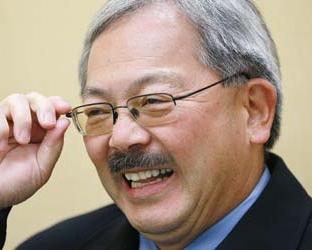
Mayor Ed Lee

Small Business Commissioners support Pet Food Express over local stores

34

San Francisco’s Small Business Commission has recently come under fire for its promotion of corporate interests and, most recently, advocating for an allegedly predatory pet store chain known as Pet Food Express.

In 2009, the Small Business Commission voted in favor of denying Pet Food Express’ application for a location on Lombard Street in the Marina District. Subsequently, the Planning Commission also denied the request, seemingly blocking Pet Food Express’ efforts to set up shop in the Marina. 

San Francisco’s formula retail legislation requires chain stores like Pet Food Express to apply for a conditional use permit in order to receive approval for opening new locations.

But now, Pet Food Express is back after recently filing another identical application with the SBC for the exact same spot on Lombard Street, and this time some members of the SBC are oddly supporting the chain.

As Pam Habel, owner of local Marina pet store Catnip & Bones, pointed out at the commission meeting on June 10, Pet Food Express already has a location on California Street just one mile away. At the same meeting, Susan Landry, owner of another Marina pet store, Animal Connection, added that nothing has changed in the past four years that would point toward the Marina community needing or wanting this Pet Food Express, since four pet-related stores exist within a mile of the proposed Lombard Street location.

“We were really surprised and disappointed that the commission no longer seemed to be an advocate of small business and even made comments indicating sympathy for the big chain pet store,” Habel and Landry, told the Bay Guardian jointly via email. “Commissioner Adams even said it seemed unfair to him to penalize a business that had started out small and now are being victimized for their success since they are one of the largest pet store chains in the U.S.”

So what has changed since 2009 that is now making the SBC consider supporting the proposed Pet Food Express? For one, Mayor Ed Lee’s corporate-friendly appointees to the SBC, including developer Luke O’Brien and President Stephen Adams, a manager for Sterling Bank & Trust.

Additionally, San Francisco Animal Care and Control Director Rebecca Katz lobbied for approval of the Pet Food Express while holding a blind Chihuahua adorned with a sweater at the June 10 meeting. Katz cited Pet Food Express’ many financial contributions to her agency as reasoning behind supporting the chain’s new location and expansion. According to Animal Care and Control spokeswoman Deb Campbell, Pet Food Express donates an estimated $50,000 to $70,000 in supplies annually to the city department.

“The more business Pet Food Express does, the more they grow and the more they give back to the community,” Katz told the Bay Guardian. “We take in about 10,000 animals a year on a budget of about $40 million.”

Kathleen Dooley, one of the SBC’s few existing members still in favor of promoting local business over big business, met Katz’s lobbying with criticism.

“She went up and lobbied for Pet Food Express and implied if it wasn’t for them no pets would be adopted and the animal world would be in chaos,” Dooley told the Bay Guardian. “They already have a number of stores in San Francisco, but they act as if this one on Lombard would change the tide.”

But Katz says that her public promotion of Pet Food Express is not lobbying. “I spoke to the Ethics Commission and they told me it is okay for me to talk about what Pet Food Express does for us,” said Katz.

Few of the arguments in favor of the Pet Food Express’s intrusion into the Marina actually acknowledge the store’s potential detrimental impact on the existing local businesses. Katz even publically said she thought it was ironic to protest another corporation coming into the Marina, where so many chain businesses already exist.

“The size of the Lombard location would allow for an adoption center which would have a huge impact,” said Katz. “Whereas residents have to drive to the California Street location, now they could walk.”

Unfortunately for local Marina businesses, the SBC, whose professed goal is to “work to support and enhance an environment where small businesses can succeed and flourish,” may be doing just the opposite by supporting a chain business that will undoubtedly endanger the many locally owned pet stores.

“As small businesses in San Francisco, we rely on the SBC as our voice at City Hall, not as a sympathetic voice for chain stores,” said Habel and Landry. “Because of their response last month, we no longer feel that we can look to the SBC to support small business in San Francisco.”

In her presentation before the commission, Landry drew an analogy to the previous opening of a Blockbuster on Lombard Street. Following the corporation’s entrance into the community, all four independent video stores in Cow Hollow closed within a year.

At the same meeting, Commissioner Mark Dwight acknowledged the predatory nature of Pet Food Express, who has sat on the same property for four years in order to continuously rally support in favor of the proposed location.

The pet supply stores in the Marina could face the same fate as the local video rental shops if Pet Food Express succeeds in opening on Lombard Street.

“When chain stores go in, commercial rents go up and the small mom and pop businesses are priced out of the neighborhood and replaced by even more chain stores as they are the only ones who, with their corporate structures, can easily afford high rents,” said Landry and Habel. “This is about more than one Pet Food Express application on Lombard, this is part of our battle to retain the heart and soul of our neighborhood commercial corridors.”

Supreme Court same-sex marriage decisions: DOMA invalidated, Prop 8 case dismissed, SF reacts [UPDATED]

27

Watch this space throughout the day for breaking news on the decision and reactions. Tonight there will be a celebration of the Court’s decisions at Castro and Market Streets at 6:30pm. (Join  the Guardian beforehand, 6-9 at the Pilsner in the castro, at its annual pre-Pride event.) 

DOMA INVALIDATED

The Supreme Court released its ruling this morning that the Defense of Marriage Act, which denies federal recognition of same-sex marriage, “is unconstitutional as a deprivation of the equal liberty of persons that is protected by the Fifth Amendment.”

“DOMA singles out a class of persons deemed by a State entitled to recognition and protection to enhance their own liberty,” according to the majority opinion. “DOMA’s principal effect is to identify a subset of state sanctioned marriages and make them unequal.” The Court voted 5-4, with Justice Kennedy, who wrote the majority opinion, as the decisive vote along the usual liberal/conservative lines. You can read the full opinion here

This means that same-sex marriages performed in states that have legalized such marriages will be recognized by federal law.  

PROP 8 DISMISSED ON STANDING

As for Hollingsworth v. Perry, the Prop 8 case, it was dismissed on standing, due to the fact that the State of California refused to defend the case that would uphold Prop 8 (which denied same-sex marriage).That meant private citizens were left to defend a state statute, which was unprecedented, and the Court refused to rule on those grounds.

We have never before upheld the standing of a private party to defend the constitutionality of a state statute when state officials have chosen not to. We decline to do so for the first time here,” the majority Court statement (which broke along the typical 5-4 line) said. That means there is no specific decision from the Court regarding Prop 8, and the previous ruling, by Judge Vaughan Walker and upheld by the Ninth Circuit Court, that invalidated Prop 8 as discriminatory, stands.

This may mean that same-sex marriages in California can resume as early as July.

You can read the full Prop 8 ruling here.

Scene this morrning at SF City Hall, with Mayor Ed Lee and Lt. Gov. Newsom. Photo by Dan Bernal.

[UPDATE] REACTIONS AT CITY HALL

Steven T. Jones reports from SF City Hall:

City Hall was totally packed at 7am when the US Supreme Court convened — tons of journalists, lots of couples, many signs in the crowd. Two screens were set up, one with a live blog from court chamber, the other with the CNN live feed. Huge cheers erupted at 7:11 when the decision was announced striking down DOMA and forcing the federal government to recognize the rights of same-sex married couples.  Then at 7:38, when the Prop 8 statement came down, the room went nuts. 

A moment later, an array of current and former city officials appeared at the top of the City Hall main staircase. Mayor Ed Lee and Lt. Gov. Gavin Newsom escorted a fragile Phyllis Lyon down the stairs — she, along with the late Del Martin, were the first same-sex couple to get legally married in California in 2004 — flanked by the rest of the city family, all with big smiles.

“Welcome to the people’s house of San Francisco,” Mayor Lee said, thanking the crowd “for sharing in this historic moment.”

“It feels good to have love triumph over ignorance,” he said.

At 7:44, City Attorney Dennis Herrera and Chief Deputy City Attorney Terry Stewart, who had been on the City Hall steps addressed reporters’ question on the legal details of the ruling, joined the crew to sustained applause as Lee recognized them. He then introduced Newsom, who in 2004 as San Francisco mayor allowed same-sex marriages to be performed, as “one person who used the power of this office to make history and show his love for the city.”

“San Francisco is not a city of dreamers, but a city of doers,” Newsom said. “Here we don’t just tolerate diversity, we celebrate our diversity.” He thanked Herrera and everyone who contributed to this moment. “It’s people with a true commitment to equality that brought us here.”

Newsom introduced Kate Kendall with the National Center for Lesbian Rights, who has led the coalition of groups that have push for marriage equality. She looked around the crowd and said, “Fuck you, Prop 8!”

The crowd roared, and she said that she had scanned the room for children, and promised to “put a dollar in the swear jar” if necessary. But she said that, “We have lived for too many years under that stigmatizing piece of crap.”

Then Herrera took the podium, turned to Newsom, and said, Now you can say, ‘Whether you like it or not!'” — a joking reference to Newsom’s same-sex marriage rallying cry, which some blamed for boosting the anti-same-sex marriage cause.

“We wouldn’t be here today if it wasn’t for Gavin Newsom’s leadership,” Herrera continued. ““I remember in 2004 when people were saying it was too fast, too soon, too much.”

But today, that long effort has been vindicated, Now, he said, “It’s about changing the hearts and minds of people and educating them.” He also pledged to continue the fight that began here in City Hall more than nine years ago: “We will not rest until we have marriage equality throughout this country.”

Gavin Newsom being interviewed inside City Hall. Photo by Steve Jones

Finally Stewart, who has argued cases related to San Francisco’s stand before both the US and California Supreme Courts, praised both the Prop. 8 and DOMA rulings and the precedents they set. “In the DOMA case decision, the Supreme Court expressed a stong equal protection philosophy…that will help legalize same sex marriage in other states.”

Three members of the Board of Supervisors were also invited by Kendell to address the huge City Hall crowd: Board President David Chiu and Sups. David Campos and Scott Wiener, the only two current supervisors who are gay.

Chiu noted that the bust of slain Sup. Harvey Milk is prominently positioned outside the Board Chambers, a reminder of the long struggle for gay rights that San Franciscans have led. “That work lives on today,” he said.

He added the hope that the work done here will ripple out of across the country because, he said, “As goes San Francisco, so goes California, so goes the rest of the country.”

Campos, an attorney who has long been in a committed relationship, said, “It’s a very emotional moment for those of us who are part of the LGBT community.” He said this Supreme Court ruling is the first time it has really acknowledged “that we are people and we have dignity,” and that the rulings sends a clear message to Congress that legislation like DOMA is unconstitionally discriminatory.

Wiener praised the resilience of the LGBT community, from the early days of enduring the AIDS crisis and fighting for federal support through the current campaign for marriage equality. And he cheered the fact that, “Those marriages that we see under the rotunda [in City Hall] will get a little more diverse.”

11:30 AM UPDATE: Style and substance

While Newsom strutted around like a proud peacock in front of City Hall — clearly the leading man in this epic story with the happy ending, much in demand by the television crews — Herrera and Stewart briefed various reporters on the details of the case that they had just won.

Gavin Newsom outside City Hall. Photo by Steve Jones.

“I wanted a merits ruling, but a standing ruling is a victory too,” Herrera told us, making the distinction between the court ruling that banning same-sex marriage is unconstitutional on the grounds of equal protection under the law — which it did not do — and the 5-4 ruling it did issue: that those who appealed the Ninth Circuit Court ruling invalidating Prop. 8 lack proper legal standing to do so.

The standing ruling leaves same-sex marriage opponents more wiggle room to argue that the ruling might only apply to the couples named in the suit, or in just the counties that took part, which also included Alameda and Los Angeles, positions they were already signaling in press statements.

But Herrera said that he would vigorously contest that kind of challenge, which he considers to be without merit, telling us, “The injunction is not limited in its scope.”

UPDATE: SFPD isn’t worried

Police Chief Greg Suhr, who attended the City Hall event, said the timing on the ruling during Pride Week couldn’t be better. “It’s nice that it all lined up for us,” he told us. “This town is going to rock ‘til the wheels come off.”

Asked whether he has any heightened security concerns about the Pride Parade in the wake of a ruling that is controversial to some, Suhr said that he’s not worried. He said SFPD is now fully staffed and all available personnel working this weekend, although he will try allow many of his gay and lesbian officers to join the celebration if they want.

“We’re going to police what’s likely to be the biggest party this city has ever seen,” Suhr said, adding that his policing philosophy is, “We plan for the worst and hope for the best.”


On pins and needles

3

steve@sfbg.com

[UPDATE: The Supreme Court has overturned DOMA and dismissed the Prop 8 case. Read our full coverage here.]

As San Francisco’s LGBT community and its supporters prepared for Pride Weekend, the whole city was anxiously awaiting the imminent US Supreme Court ruling on same-sex marriage. That case began here more than nine years ago when then-Mayor Gavin Newsom decided to let gay men and lesbians marry and the City Attorney’s Office launched a long and torturous legal battle.

The synchronous timing of the two events couldn’t be better. (Well, it could have been better for the Bay Guardian‘s deadline if the ruling has come out June 25, instead of when this issue will be hitting the streets on June 26, but you can read our full, live coverage here at sfbg.com tomorrow.)

LGBT activists are planning a massive rally at Castro and Market streets starting at 6:30pm on June 26, along with another performance stage at Market and 19th streets featuring Donna Sachet emceeing performances ranging from DJs to drag and other live performances, like an early start to an already packed Pride Weekend. (For more info, see www.dayofdecision.org.)

Of course, at press time it was still unclear whether we’ll see a joyous springboard for a raucous Pride that many are hoping for, with total victory and marriage equality becoming the law of the land; a bitter repudiation of LGBT rights reminiscent of Nov. 4, 2008, when the street celebrations over President Barack Obama’s election victory were tempered by frustration over voters approving Prop. 8 and banning same-sex marriage; or something in between.

The ruling will cap a see-sawing legal and political battle for which the City Attorney’s Office calculates it has written more than a half-million pages of legal briefings for more than 50 judges at various levels, including four trips before the California Supreme Court in four separate but related cases before making arguments to the US Supreme Court in March.

If the ruling doesn’t legalize same-sex marriage in California, activists say they’ll immediately return the struggle back into the political arena and use the momentum of the ruling (and the three states that legalized same-sex marriage this year, bringing the total to 12) to win at the ballot box (it would take a popular vote to undo Prop. 8).

If that happens, look for our own Sen. Mark Leno — who got the California Legislature to approve his legislation legalizing same-sex marriage, twice, only to have it vetoed by then-Gov. Arnold Schwarzenegger — to play a lead role.

“The only option is to re-amend the constitution to eliminate the discriminatory Prop. 8,” Leno told us. That measure could be placed on the 2014 ballot by either the Legislature or an initiative, which Leno said will be decision for the coalition of same-sex marriage supporters.

There are benefits and drawbacks to both options. Gathering signatures for an initiative is expensive, but that effort would also help launch the campaign to win over California voters. In the Legislature, four supportive Democrats will likely move to other offices this year, including a Senator and Assemblymember who are each joining the Los Angeles City Council, but Leno is still confident.

“We stand prepared with legislation already drafted to move forward with a bill if that’s what the coalition decides,” Leno said. “And we are confident we have the 27 votes we need [in the Senate], maybe even 28.”

City Attorney’s Office Press Secretary Matt Dorsey has been doing regular email briefings for journalists who are here from around the world, ready to report from the place where it all began as soon as the ruling comes down.

City Attorney Dennis Herrera, Chief Deputy City Attorney Terry Stewart, and their team are prepared to analyze the ruling as soon as it is released just after 7am (Pacific time) and to deliver the first press briefing on the steps of City Hall at 7:30-8am. Mayor Ed Lee, Newsom, and other officials will host a live viewing of the ruling at 7am in City Hall, following by their own press conference.

Dissecting the ruling could be a tricky task given that there at least four major scenarios that the ruling could trigger, each of those with lots of sub-scenarios that depend on the scope and details of the ruling. Everything for legalizing same-sex marriage across the country to a technical ruling that kicks it all back to a lower court are possible.

“In 10 years [working for the City Attorney’s Office], I’m never seen an outcome that could go in so many different directions,” Dorsey told us.

If the ruling invalidates Prop. 8, that decision would be formalized in about a month, then returning jurisdiction over the case to the Ninth Circuit Court of Appeal, which will then issue a formal notice of decision that gives it the force of law, according to a June 11 memo the City Attorney’s Office wrote for other city officials.

It notes, “Depending on how the Supreme Court decides the case, marriages could resume as soon as mid-to-late July.”

Sadik-Khan and her groupies urge bold action on the streets of San Francisco

8

San Francisco and our timid Mayor Ed Lee could learn a few things from New York City, where Mayor Michael Bloomberg and his Transportation Commissioner Janette Sadik-Khan — who became a national hero to urban cycling advocates while being villified by some in NYC — have quickly created hundreds of miles of new bike lanes and the nation’s biggest bike sharing program.

That was the enthusiastic (if more diplomatically worded) message delivered on June 20 during the San Francisco Bicycle Coalition’s annual Golden Wheel Awards, where Sadik-Khan gave the keynote speech to a large, rapt crowd. She was introduced by SFBC Director Leah Shahum and Municipal Transportation Agency Director Ed Reiskin, who almost upstaged Sadik-Khan and one another in their calls for San Francisco to take more aggressive action.    

“Cities need to try new things on their streets and public spaces,” Shahum said, echoing the message Sadik-Khan regularly delivers. “We need to try new things and we need to do it now.”

It was a message that became a mantra, as she repeated it again and again, urging the city to do more experimentation on the streets and less long analysis. Part of that is slowing down cars to “actually prioritize the safety and health of our citizens on every street in the city.”

Shahum and Reiskin both admitted being star-struck by Sadik-Khan, with Reiskin saying his intro was “like my teenaged daughter introducing Brittany Spears.” Shahum said she’s often guided by the acronym WWJSKD: What Would Janette Sadik-Khan Do?

Reiskin, a regular cyclist, told the story of moving to New York City in 1991, selling the last car he owned (cue the applause by the large crowd of cyclists), but that he didn’t bring a bike because at that time, the common thinking was, “Who’d be crazy enough to ride a bike in Manhattan?”

But in just the last few years, Sadik-Khan has led the transformation of New York City into one of the most bike-friendly cities in the country. “If she can do that there, why can’t we do that here?” Reiskin asked, later adding, “It’s phenomenal what’s happened there.”

He called Sadik-Khan a cross between famed urbanist Jane Jacobs and Robert Moses, who was responsible for more public development projects than any New Yorker. “She’s got the Jane Jacobs sensibility, but getting shit done like Robert Moses,” Reiskin said.

When Sadik-Khan took the stage, humbled by an introduction that she said could only be followed by turning water into wine, she gave credit for her accomplishments to the leadership of Mayor Bloomberg and the “unbelievable political courage” it took to build 350 miles of bike lanes in six years despite sometimes strong opposition.

In the process, Bloomberg and Sadik-Khan started an alternative transportation arms races of sorts, prodding Chicago, Washington DC, San Francisco, and other cities to also beef up their bike infrastructure. “I think it’s great that there’s this national competition on who can be the greenest,” she said, later adding, “The future of cities is the key to our planet.”

She showed slides of various streetscape improvements that she led, often replacing lanes of parked cars with protected cycle tracks, including along tony Prospect Park, which she called, “the most controversial piece of land outside the Gaza Strip” for the backlash and lawsuits it sparked.

“When you push the status quo, the status quo often pushes back on you,” she said.

What has given Sadik-Khan such rock star status in the urban cycling world is her willingness to tough out the criticisms and let the results speak for themselves, noting that if some idea doesn’t work, it’s usually fairly easy to undo. Yet she arrived armed with stats showing her approach works, for both bicyclists and the business community.

She fought through arguments that cycle tracks along 8th and 9th avenues would hurt business, and she said those same businesses report a 50 percent increase in revenue since they went in three years ago. Same thing on 1st Avenue, where commercial vacancies dropped 47 percent. Citywide, 70 new bike shops opened during the recession to serve a burgeoning population of cyclists in the city.

She also talked about her latest and greatest innovation, the CitiBike sharing program that offers more than 6,000 bikes at locations densely spread along the bike network throughout the city, all with no public funds involved. “We think density is destiny in this instance,” she said. By contrast, San Francisco has taken years to launch its anemic bike-sharing program with just 350 bikes.  

Sadik-Khan called bike sharing “a gateway drug” that encourages more urban cycling in cities around the country, with all the environmental benefits that creates. Her studies have shown the new bike network and sharing program have added an average of 15,000 new cyclists to the city each day, and that it’s become a major tourist draw.   

Some of her slides also showed how elegant some of the improvements have been, from the cycle tracks to the bike racks that have sprouted up all over the city. “We brought good design into the public realm,” she said, encouraging San Francisco, with his reputation for innovation and good design, to do the same thing. “You have such design talent in San Francisco and I look forward to seeing what you come up with.”

But as Sadik-Khan and Shahum both repeatedly emphasized, it takes bold political leadership that is also pushed by civic groups like SFBC and the public in general, prodding on timid elected officials. As Sadik-Khan said, “People are way far ahead of public officials in understanding what works.”

Indeed, two days later on the streets of San Francisco, bike activists demonstrated that reality, staging an amazing Bicycle Music Festival that drew thousands of people to Golden Gate Park for a day of music from its pedal-powered stages.

Then, from 5-6pm, a colorful crowd of more than 1,000 people mounted their bikes and followed lounge singer Jason Brock on a bike-pulled stage that wound through the city to the next stop for the festival in the Mission District, a sort of musical, organized Critical Mass that produced big grins on everyone involved.

Led by key festival organizer Fossil Fool and his Rock the Bike comrades, and taking a cue from Sadik-Khan and fervent supporters that she’s developed here and across the country, perhaps it’s still possible to create a parade that our leaders can be persuaded to step in front of.

WWJSKD?

Did the Hayes Valley Farm occupation help or hurt the cause of liberating urban space?

16

Did the recent activist occupation of a temporary urban farming plot help “liberate the land,” as they claimed, or might it actually make property owners less likely to allow community-based temporary uses on land awaiting development? And did the farmers of this once-fallow land inadvertently provide a new toehold to challenge a proposed housing project?

Promptly after Hayes Valley Farm ended its three-year stint to make way for long-planned housing that would be built on the lot, a group of activists (many from Occupy San Francisco) calling itself Liberate the Land took residency for nearly two weeks, renaming it Gezi Gardens in solidarity with protesters at Gezi Square in Turkey. At 2am on June 13, Gezi Gardens was raided by police and the activists ejected.

The rise and fall of Gezi Gardens has had some people within the San Francisco urban agriculture community questioning whether or not the occupation was helpful in promoting the cause for more green space in the city. For some involved in the urban agriculture community, the end of Hayes Valley Farm reflects a not-so-distant future for other green spaces in the community.

Pastor Megan Rohrer is executive director of Welcome: A Communal Response to Poverty and project coordinator for The Free Farm, a community garden on St. Paulus Lutheran Church’s land on Gough and Eddy Street. That plot, temporarily turned into green space with permission from the landlord, St. Paulus Lutheran Church, is scheduled to end its three-year stint in December to make way for housing construction, much like Hayes Valley Farm.

The Free Farm’s land will sprout a housing project with all low-income housing units, whereas the project being built on the Hayes Valley Farm site will have 40 low-income units out of 180 total condos. Regardless, the possibility of a similar situation to what happened with Hayes Valley Farm has Rhorer on edge.

“I have a nervous feeling that what happened with Hayes Valley Farm may happen with my garden. I just want everything to end smoothly and peacefully,” Rohrer said. “I respect what the Occupy folks are doing in bringing awareness, but feel that what they did was a little disingenuous. Since the start of Hayes Valley Farm, there was an understanding that condos would be built over it. It was going to happen eventually.”

Longtime San Francisco activist Diamond Dave Whitaker was one of the people that occupied Gezi Gardens. He’s not sure if the occupation will be prove helpful to the urban agriculture movement in San Francisco.

“I’m not sure. What I do know is that Gezi Gardens was one of the few wild spaces left here,” Whitaker said. “Not everything has to be done within the law. Time will tell if what happened there helped urban agriculture here.”

Katy Broker-Bullick, a site steward at the 18th and Rhode Island community garden, told us the occupation of Gezi Gardens served to spark a dialogue about green spaces in San Francisco.

“I appreciate what the Occupiers are doing at Hayes Valley Farm in so much as it draws attention to innovative, community-based green spaces in San Francisco, and serves to foster a balanced, open discussion of the function and importance of such sites for community connection and innovation in urban spaces,” Broker-Bullick said.

Assemblymember Phil Ting (D-SF) is also weighing in on the discussion of urban green spaces in the city. Although he does not have a stance on the occupation of Gezi Gardens, he has made strides in trying to make urban agriculture more accessible with San Francisco’s Urban Agriculture Incentive Zones Act, Assembly Bill 551. It calls for property owners to sign a contract that would zone their land strictly for agriculture for 10 years in exchange for decreased property taxes.

Ting doesn’t necessarily support those who occupied Gezi Gardens, but said this: “What I do believe is that we should be doing what we can to keep green spaces in San Francisco.”

Some groups in the city may respect what the Liberate the Lands attempts at occupying Gezi Gardens, but the politically active Hayes Valley Neighborhood Association wasn’t one of them.

On June 7, nearly a week before the raid of Gezi Gardens, HVNA President William Bulkley penned a letter to Mayor Ed Lee, pleading to end the occupation of that land: “The HVNA board of directors feels that the current situation on Parcels O and P places a health and safety risk to both the participants and our neighbors. We respectfully request that, as mayor, you direct your staff to take appropriate action in a swift and timely fashion.”

Yet Rohrer also said Occupy activists are a much-needed part of San Francisco’s urban agriculture community. “It’s because of the hard work from people who have been connected to Occupy that spaces, like the Free Farm, are running,”  Rohrer said. “We have a lot of Occupy folk who volunteer that put their hearts and souls into the soil.”

There are efforts to halt building on Gezi Gardens, though many of the people who had occupied the lot have “scattered to the wind,” Whitaker said.

Mona Lisa Wallace, an attorney working with Liberate the Land, is attempting to halt construction based on the grounds that an accurate environmental impact report was not done because the land was found to be exempt from a more current report. Wallace said the last report was done five years ago when Parcels O and P were classified as “disturbed land.” Since then, plants and wildlife have flourished on Hayes Valley Farm.

She said an appeal to the exemption from a current environmental impact report will be filed at the the Board of Supervisor’s office on Friday. “Over the years a habitat has been created for hummingbirds, bees, crows, and quail,” Wallace said. “The exemption from the environmental impact report does not free them from being in compliance with federal and state law.”


Guardian forum on Plan Bay Area draws big, engaged crowd

72

San Franciscans who want to help shape how this city grows — rather than just leaving it up to regional planners and market forces — packed a large conference room last night for a community forum presented by the Bay Guardian: “Whose Future? What Does the Regional ‘Plan Bay Area’ Really Mean for San Francisco?”

Moderated and organized by Guardian Editor/Publisher Tim Redmond, and co-sponsored by the Council of Community Housing Organizations (CCHO) and Urban Institute for Development and Economic Alternatives (UrbanIDEA), the session began with a overview of what’s now being planned for the San Francisco of 2040.

Gen Fujoika of the Chinatown Community Development Center said that Plan Bay Area, which is being jointly developed by the Association of Bay Area Governments and Metropolitan Transportation Commission (which will hold a hearing on the plan tomorrow, Fri/14, at 9:30am in Oakland), doesn’t pay for itself yet it will include strong incentives that will shape development in the region.

“It is in some sense a plan and I think we need to critique the hell out of that plan,” he said. “As we think of Plan Bay Area as a vision statement, we need to think about whether it’s our vision.”

As illustrated by the Plan Bay Area maps that the lined the walls of the LGBT Center conference room, the plan’s “priority development areas” that are slated for dense, streamlined development are also the same areas identified as “communities of concern” with vulnerable, low-income populations, making the plan a recipe for mass displacement.

Fujoika quoted a comment that Mayor Ed Lee made on Tuesday when asked by Sup. Eric Mar about the issue: “San Francisco has some of the toughest anti-displacements laws in the country.” While that may be true, Fujoika said that the plummeting numbers of African-Americans in the city and Plan Bay Area’s displacement projections for San Francisco show those laws simply aren’t up the challenge.

“If we have the toughest anti-displacement position in the country, then we are in some trouble,” he said, calculating that the affordable housing needed to prevent extreme gentrification in the city would total $6.8 billion, and that the affordable housing fund created by voters last year is only projected to raise $1.3 billion by 2030.

Fujoika said that he and the other panelists aren’t against growth and development, “but we are for equitable growth,” which would involve more community buy-in for the plan, more money for affordable housing and infrastructure needs, and more of the growth burden being shared by other Bay Area communities.

San Francisco Planning Commission Chair Cindy Wu cited growth projections for Chinatown as a good example of the problem, noting that is already a dense, complete neighborhood that would suffer from the greatly increased traffic that would be funneled through it and other negative impacts of unfettered growth.

“It’s not just growth for growth’s sake, it’s who gets to live there and who gets those jobs,” she said. Wu called for more community organizing around this and other development plans, citing as a good example the coalition-building that forced California Pacific Medical Center to agree to a multi-hospital project with far better community benefits than the deal it originally cut with the Mayor’s Office.

It was a point echoed by Maria Zamudio with Causa Justa, who said Plan Bay Area will worsen pressures that are already displacing the Mission District residents she works with, or forcing them to live in unsafe housing. “They’re going to push our families out of the city and maybe out of the region,” she said.

To combat the power that this plan and profit-minded property owners will exert over how San Francisco grows, San Francisco Labor Council President Mike Casey, head of UNITE-HERE Local 2, said that progressive San Franciscans will need to work cooperatively with organized labor, a relationship that has suffered during these tough economic times.

“Unfortunately, I think we’ve become alienated and marginalized from each other,” Casey said, calling on activists to not let differences over individual projects or issues interfere with solidarity over the larger, longer struggle for equity and justice.

“Not everyone agrees that a strong labor movement is the cornerstone of a more progressive vision,” Casey said, arguing that displacement of working class people from the city has a cascading effect in gentrifying the city. “The demographics of a city shape very much what the politics of protest look like.”

And those politics of protest will be more crucial than ever in resisting the demands that powerful capitalists will make on San Francisco in the coming years, a point that all seven panelists seemed to agree on.

Bob Allen of Urban Habitat said the planning research groups represented on the panel need to find ways to funnel more funding into grassroots organizing, both in San Francisco and regionally. Otherwise, we’ll see the “suburbanization of poverty,” with Plan Bay Area funneling the best jobs and most expensive housing into urban areas and leaving everyone else to fend for themselves in communities that don’t have the tenant protections and other hard-won social justice programs that San Franciscans have struggled for.

“Local control can be a way of saying ‘I don’t want black or brown people to live in my suburban community,” Allen said.

Ironically, Plan Bay Area is ostensibly driven by concerns over climate change and the argument that it’s better to concentrate development along transit corridors, which is why almost all of San Francisco and much of Oakland is proposed for development that would be given waivers from some California Environmental Quality Act scrutiny.

Yet the plan doesn’t fund the transit upgrades that would be needed to serve that growth or create restrictions on automobile use that might encourage more transit use. Instead, Fujoika said low-income people who actually use transit would be the diplaced in favor of wealthier residents who might not.

“Transit has become an amenity rather than a necessity,” Wu said.

The forum, which was attended by more than 130 people, included a lively discussion that involved dozens of audience members who offered their own views, ideas, and strategies for how to move forward. Among them was Brian Basinger of the AIDS Housing Alliance, who said that he is working with a coalition to reform the Ellis Act, which allows landlords to evict tenants from rent-controlled apartments.

“We could move this as early as January,” Basinger said of the reform legislation now being developed with allies in the Legislature, urging attendees to get involved.

After the audience discussion, the meeting closed with Peter Cohen of the CCHO summarizing the high points and getting people to sign up on lists that were circulated to be involved with next steps. And Rachel Brahinsky, a former Guardian staff writer who is now a professor at USF’s Leo T. McCarthy Center for Public Service and the Common Good, urged attendees to fight for San Francisco to remain inclusive and diverse: “San Francisco is the place it is because people have kept fighting.”

Everyone but Mayor Lee sees SF’s worsening “housing affordability crisis”

43

There was a clear theme that ran through yesterday’s Board of Supervisors meeting from beginning to end, something understood equally by renters, homeowners, and politicians from across the political spectrum: San Francisco has a crisis of housing affordability that is forcing people from the city.

And the only person who doesn’t seem to understand or care about that is the person with the most power to deal with the situation, Mayor Ed Lee, who opened the meeting by essentially dismissing both short- and long-term gentrification forces and claiming “our city has some of the toughest anti-displacement laws in the country.”

It was a claim that Lee made twice, first in response to a question by Sup. Eric Mar about Plan Bay Area and the massive displacement of current San Franciscans that it would create by 2040. And it was also how he answered a question by Sup. John Avalos about rents that are now skyrocketing beyond what most San Franciscans can afford.

I followed Mayor Lee back to his office, asking him to explain his claim, and he cited the city’s “elaborate” rent control laws and the Rent Board recently hiring new personnel as he briskly retreated toward his office. But surely he’s aware that displacement is already happening and getting worse, I told him, citing Rent Board figures showing that evictions are now at a 12-year high.

Lee looked at me dubiously and said, “I’ll have to check the figures on that.” I followed up today with Press Secretary Christine Falvey to ask whether Lee did check those figures — which show 1,757 evictions in the last year, up from 1,395 the previous, both numbers representing returns to the mass displacement of the last dot-com boom — and I’ll update this post if/when I hear back.

“It shows he’s out of touch with what’s happening in San Francisco,” Avalos told me in response to the mayor’s remarks.

Lee seemed to bristle at the suggestion that his aggressive economic development policies might have a downside that he’s going to have to deal with at some point. He touts the 44,000 jobs the city has added during his mayoral tenure, even deflecting criticism that he’s too focused on the technology industry by citing estimates that every tech job creates at least four other jobs (seemingly oblivious to the fact that most of these are low-wage service sector jobs, the very people who are being forced from the city).

“I’m just hoping you’re not blaming the 44,000 jobs we helped created,” Lee told Avalos, saying that he understands the concern about the rising cost of living, “but those are 44,000 people drawing a paycheck and taking care of their families.”

Yes, Mr. Mayor, but those paychecks are having an increasingly tough time paying for housing in San Francisco. That concern animated the condo conversion debate that took place later in the meeting, voiced by those focused on the lack of affordable homeownership opportunities and those focused on reducing the city’s rental stock to create those opportunities.

“I don’t think saying ‘it’s good that we have a growing economy’ is enough to address the issue,” Sup. David Campos said during the condo debate, referring to Lee’s earlier remarks.

Speaking near the end that discussion, Campos summarized the concerns expressed by both sides and sought to put the legislation into perspective: while important, the condo deal is a drop in the anti-displacement bucket. “We are only dealing with the issue of affordability in San Francisco on the margins,” he said, later adding, “I don’t think we’re doing enough to deal with the fundamental issue of who gets to live in San Francisco.”

The debate on the condo conversion began with its original author — Sup. Mark Farrell, who represents District 2, the wealthiest and most conservative in the city — explaining his desire to help middle class people who want to own homes remain in the San Francisco.

“This is the most affordable form of home ownership in San Francisco today,” Farrell said of tenancies-in-common, the fiscally and legally precarious middle step between an apartment and condominium. Later, he said, “We need more affordable homeownership opportunities and not less.”

Farrell argued that “this didn’t need to be a zero sum game,” but that’s exactly what the stock of rent-controlled apartments is in San Francisco, where only housing built before 1979 is protected from the market forces that can drive rents up to whatever a landlord demands.

“We have a fixed rent control stock. Every apartment that converts to a a condo is one less unit,” said Board President David Chiu, who worked with Sups. Jane Kim and Norman Yee and tenant group to amend Farrell’s legislation to help both renters and homeowners.  

“These units were once the homes of tenants who were displaced,” Kim said, objecting to the notion that one person’s apartment should be another person’s affordable homeownership opportunity and arguing that the city should be building more condos for first-time homebuyers instead of cannabalizing the homes of the nearly two-thirds of city residents who rent.

Like Chiu and Kim, Yee said that he wanted to help the TIC owners of today without simply clearing out of the backlog and letting the condo lottery continue unabated, which would green-light even more conversion of apartments. “We want to curb the speculation,” Yee said.

That idea that the city should help people who live in the city, without simply feeding the speculative investors who profiteer off of housing in San Francisco, was a strong theme among critics of condo conversion.

A pro-tenant crowd packed the Board Chambers. Although barred by board rules from addressing the condo legislation directly (that occurred at the committee level), one commenter said, “Giving any more power to the real estate market in San Francisco should be considered a crime.”

To help ward off real estate speculators once the annual condo conversion lottery resumes in 2024, the legisation also limited future conversions to buildings of less than four units, instead of the current cap of six units, a change that Farrell resisted.

“This is not an academic exercise anymore,” Farrell said of the condo conversion restrictions that were added to the legislation. “This will negatively impact thousands of TIC owners in the city.”

Farrell’s original co-sponsor, Sup. Scott Wiener, had a more pro-tenant point-of-view, objecting to the changes that Chiu inserted on more narrow grounds. In his comments, he noted how close the two sides were and how they share the same basic goal: preventing displacement of current city residents.  

“The one thing we can all agree with is we have a housing affordability crisis,” Wiener said, praising the city’s rent control and tenant protection laws, but adding, “TIC owners are also part of this city.”

The price of dealing with the rapid growth in the city — whether it comes to infrastructure or housing affordability — was also a point that Wiener made earlier in the meeting as the board approved the term sheet for a massive office and residential development project proposed at Pier 70.

“We are not doing what we need to do to support the public transportation needed for those projects,” Wiener said, also referring to other projects along the waterfront (the Warrior Arena at Pier 30 and the Giants/Anchor Steam project at Pier 46) and in the southeastern part of the city. “We don’t have the transit infrastructure to support our current population, let alone new growth.”

It’s about striking a balance, as Chiu said he did with the condo legislation, and not just a balance between renters and TIC owners. It’s about striking a balance between how to protect the San Francisco of today while planning for the San Francisco of tomorrow.

Yes, that means working with market rate housing developers, and it also means diverting some of their would-be profits into the city’s affordable housing fund and its infrastructure needs. Yes, it means private-sector job creation, but it also means more public sector jobs and providing a safety net for people without jobs or who work as artists or social workers or other professions that are being driven from the city. And it means beefing up our public housing and turning around the exodus of African-Americans, concerns raised at the meeting by Sup. Malia Cohen.

We at the Guardian last year looked at how Oakland has become cooler than San Francisco, largely because of the displacement from here. And now, even many people within the tech community have begun to decry the gentrifiction that is being driven by Mayor Lee’s narrow economic development vision.

“Plan Bay Area is an opportunity to think regionally and strategically about planned growth,” Lee said when addressing Mar’s question, sidestepping the direct answer that Mar sought on a set of specific proposals for mitigating some of the displacement planned for San Francisco and maintaining this city’s diversity.

Yes, we do have an opportunity to think strategically about the city we’re becoming and who gets to live in it, but only if we don’t think “jobs” is the answer to every question.

Supervisors approve condo legislation with veto-proof majority

64

The San Francisco Board of Supervisors today voted to approve compromise legislation that will allow more than 2,000 tenancy-in-common homeowners to convert to condominiums in exchange for a 10-year moratorium on the city’s current condo conversion lottery that now allows 200 conversions annually.

Approved by a veto-proof 8-3 majority after some last amendments were shot down by the six supervisors who most steadfastly supported the version that Board President David Chiu took the lead on crafting, this was a big victory for tenant groups who strongly opposed the original legislation, which did not include the moratorium and other restrictions.

“It’s great. We’re going to see a significant drop in condo conversions in the future. All of us tenants are very happy,” San Francisco Tenants Union head Ted Gullicksen told us after the hearing, which was packed with tenant supporters.

Sup. Mark Farrell, who sponsored the original legislation, decried how divisive the issue had become, criticized the approved version as deviating from his original intent of helping TIC owners in exchange for a fee that would help fund new affordable housing, and said, “This doesn’t need to be a zero sum game.”

But Chiu and the five supervisors who supported his version – Jane Kim, Norman Yee, David Campos John Avalos, and Eric Mar – noted the finite number of rent-controlled apartments in the city and the need to protect them from being converted into condos.

“How do we balance the needs of tenants who fear being evicted with TIC owners looking for relief?” Chiu said of the balance he aimed to strike, which he continued to tweak with new amendments today, including allowing TICs with all owner-occupied units to move forward if the legislation is challenged in court, an event that would otherwise freeze all condo conversions until the lawsuit is resolved.

Sup. London Breed wanted even greater flexibility in that so-called “poison pill” aspect of the legislation, which tenant groups had insisted on to prevent the bypass from going through even if the moratorium was challenged. Breed proposed allowing condo conversion applications to proceed for a year after a lawsuit was filed, but Chiu said that would let TIC owners convert to condos while challenging other aspects of the legislation, such as the lifetime leases for tenants in converted buildings.

Breed and Sup. Malia Cohen, who privately and rather grimly conferred with one another and sometimes Chiu before the item began a little after 4pm, were clearly the two swing votes on the question of whether the legislation would reach the crucial eight-vote threshold needed to override a possible mayoral veto. Mayor Ed Lee has refused to take a position on the issue, leaving both sides in the dark.

But after the motion to insert Breed’s amendments failed on a 5-6 vote, the board voted 8-3 to approve Chiu’s version of the legislation, with Sups. Farrell, Scott Wiener, and Katy Tang opposed. A subsequent vote on a version of the legislation backed by Farrell and Wiener – which contained a weaker poison pill and more flexible owner-occupancy provisions – then failed on a 4-7 vote, with Breed joining the three dissenting supervisors.

Underscoring this legislation was what some supervisors called a “housing affordability crisis” in San Francisco, an issue that Mayor Lee was asked about at the start of the meeting, which he deflected by claiming “our city has some of the toughest anti-displacement laws in the nation.”

We’ll analyze that discussion and offer more details on the condo conversion debate and the politics behind it tomorrow in the space, so check back then.      

Supervisors pose tough but important questions to Mayor Lee

6

There’s a full agenda at the San Francisco Board of Supervisors meeting today, from the condo conversion lottery bypass legislation to approval of the term sheet from the massive development project at Pier 70, but some of the most interesting and potentially newsworthy items are at the very beginning of the agenda, when Mayor Ed Lee will answer questions posed by the supervisors.

Unfortunately, if past is prologue, Lee won’t give direct, substantive answers to the vitally important questions that he’s being asked, just as he dodged a question on the condo conversion debate in February and has kept everyone in the dark of which of the rival measures he supports and which he may veto. Mayoral leadership was desperately needed on that protracted debate, just as it’s needed today on some of the questions he’s being asked.

The first question, posed by Sup. Eric Mar, concerns Plan Bay Area and how it plans to pack 280,000 more people into San Francisco by 2040, which was the subject of a May 28 Bay Guardian cover story and panel dicussion that we’re sponsoring at the LGBT Center tomorrow night.

Mar lays out the massive displacement of existing residents and the traffic gridlock that the plan will create in San Francisco and how the approval process from much of this streamlined development may be given waivers from California Environmental Quality Act review.

Mar notes more than 40 regional groups have come together to try to improve the plan and mitigate its damage, and he plans to ask Lee:

“A consensus has formed around the following recommendations for making Plan Bay Area better:

– Provide $3 billion in additional operating revenue for local transit service and commit to a long-range ‘Regional Transit Operating Program’ to boost transit operating subsidies by another $9 billion over the coming years.

– Move 5 percent of the housing growth from low-income communities (mainly San Francisco, Oakland, and San Jose) to transit-connected suburban job centers.

– Incorporate strong anti-displacement policies for community stabilization measures, such as land banking and preservation of affordable housing in at-risk neighborhoods.

– Director the Planning Department to analyze the impacts of potential CEQA streamling as soon as possible and create strong mitigation measures.

Do you support these measure, and are you committed to a plan with lower displacement level than the current proposal? If you do not support these ideas, why not?”

Excellent  question, and definitely an appropriate one for our chief executive officer, who would have more clout to push for these changes than any of the supervisors.

The second question comes from Board President David Chiu, who makes news by noting that Mayor Lee has continued his predecessor’s underhanded practice of refusing to fill city positions to provide services that the supervisors have decided to fund in the budget, undermining the city’s balance of power and Lee’s rhetoric on collaboration.

“In recent months, Controller data indicates that positions allocated by the Board for librarians, recreation and park staff, building inspection, health and labor enforcement, urban agriculture and other Board priorities were either not filled or only recently hired. Will you commit to ensuring that when the FY 13-14 budget is approved, our Board of Supervisors’ priorities are treated equally to your Administration’s, with positions filled as soon as possible?”

Again, great question about an important current issue, the kind of thing that voters created this question time for, to ensure that there was communication and collaboration between these two branches of government.

The last two questions concern San Francisco’s housing crisis. Sup. David Campos cites the scatching report that he commissioned from the Budget and Legislative Analyst on the dysfunctional and mordibund Housing Authority, which Lee controls, asking “what is your long term vision to save public housing — a significant public asset to San Francisco?”

Sup. John Avalos cites data on the skyrocketing rents in San Francisco and asks, “Are you concerned that your administration’s policies to stimulate economic activity, especially supporting the tech industry, have created one-sided development and only job for high-income ‘appsters,’ and have exacerbated the already extremely limited housing market? Do you have any plans to address the increasing rents, and increasing rate of evictions and displacement of long-time San Francisco renters?”

These are tough questions, but they are central to what kind of city San Francisco is becoming. They were all submitted last week, so the mayor has had time to think about them and he should provide answers and show leadership on these difficult issues. That is his job.

Will he? Check back later and I’ll let you know. The meeting starts at 2pm.

Rival condo conversion measures finally up for board vote

58

Controversial condominium conversion lottery bypass legislation is finally headed for a vote by the full Board of Supervisors this Tuesday. Befitting legislation that has stirred strong emotions and traveled a twisting political path over the last six months, there are new dramas and uncertainties cropping up at the last minute, including the lingering unknown of where Mayor Ed Lee stands.

Originally co-sponsored by Sups. Mark Farrell and Scott Wiener, the legislation was intended to allow 2,000-plus tenancy-in-common owners to buy their way past the city’s lottery that allows 200 conversions to condominiums each year. But tenant groups and their progressive allies strenuously opposed the idea, and it was amended by Sups. David Chiu, Jane Kim, and Norman Yee working with tenants to couple the bypass with a 10-year moratorium on new conversions, thus clearing the backlog without opening the door to speculators taking more rent-controlled apartments off the market.

The Land Use Committee voted June 3 (2-1, with Chiu and Kim voting yes and Wiener opposed) to send the tenant-supported legislation to the full board and keep a Wiener-backed rival measure stuck in committee. But since then, Wiener invoked a board rule allowing four supervisors to pull the stalled legislation out of committee, getting Farrell and Sups. Katy Teng and London Breed to place that rival measure on Tuesday’s agenda as well.

Tenant groups decried the move and have put out the call for supporters to flood City Hall for the 2pm meeting, but Wiener told us that the differences in the two pieces of legislation are minor. One difference deals with whether transfers of ownership interest will affect an applicant’s spot in the queue and the other involves the so-called poison pill inserted by tenant groups, which would freeze the conversion process if anyone challenges the legislation in court, as real estate interests have threatened to do.

Wiener said the tenant-backed legislation’s changes to condo conversion eligibility, such as a 10-year wait period and banning future conversions of buildings with more than five units, that would remain in place after a successful legal challenge is an unfair overreach. But Chiu said tenant groups have already compromised as much as they can and they need this protection: “This is a carefully constructed compromise, and for the first time tenants groups are supporting thousands of condo conversions.”

Breed’s concerns about the poison pill provision — which was why she said she went along with Wiener’s play to bring up the rival measure — go even beyond Wiener’s. While most concerns involved a lawsuit from real estate interests, Breed worries about a pro-tenant litigant who wants to stop all condo conversions.

“If anyone chose to sue, it would help renters by shutting down everything completely. Where is the incentive not to sue?” Breed told us, noting that she still doesn’t have a solution to the problem, but she wanted the leverage of rival measures in order to address the issue. “I’m hoping it’s a win-win for renters and TIC owners,” she said. “Everyone else is not my concern right now.”

But the real estate interests will almost certainly try to preserve an ability for speculators to continue funneling more rent-controlled apartments into the real estate market, and just yesterday, the San Francisco Association of Realtors announced the hiring of an influential new point person on lobbying and housing issues: Mary Jung, a former spokesperson for then-Mayor Gavin Newsom before moving over to represent PG&E, and who was last year elected chair of the Democratic County Central Committee.

That could make a difference when it comes to Mayor Lee, who has resisted efforts by both sides to weigh in on the issue, saying only that he supports both tenants and TIC owners and that he understands the concerns about opening the door to a flood of new conversion requests.

“The one wild card here is no one know where the mayor is,” Wiener told us, noting that neither side is likely to get the eight votes that would be needed to override a veto. “The mayor, if he wanted to, could have significant leverage in crafting a compromise.”
Chiu said that he’s confident that his version of the legislation has the six votes needed to pass, but that it is still unclear what Mayor Lee will support, despite Chiu asking Lee to weigh in publicly in February and privately during a meeting yesterday. As Chiu told us, “We’ll see.”

The adulation of the technoriche

31

It’s hardly news at this point that billionaire tech mogul Sean Parker tore up a public campground to build the sets for his $10 million fantasy wedding in Big Sur. And it’s been widely reported that Parker paid a $2.5 million fine to the Coastal Commission, which he tried to spin as a wonderful environmental gift to improve the state park system.

But I read with interest in the Chron that both Lite Guv Gavin Newsom and Attorney General Kamala Harris were reportedly at the wedding. Both are very smart people; both have the ability to observe the world around them. So I have to wonder:

Didn’t either Newsom or Harris think it was a little bit odd to see all this new development in a protected area? Did it occur to either of them that their richy-rich-rich pal, who has a history of snubbing laws he doesn’t like, might have done the same thing here?

Could the state’s top law-enforcement official and a member of the state Lands Commission really look at artificial ponds and large new structures, which involved bulldozers to create, and not say:

Huh? Aren’t there rules against this sort of thing?

Okay, it was a wedding, and nobody wants to be the one to throw the turd in the punchbowl. The politician guests were there to celebrate with a person who is capable of helping to fund future campaigns (and since both Harris and Newsom are considered possible candidates for governor when Jerry steps down, I bet they had a great time together).

But didn’t either of them feel at least a little weird about it?

I called Newsom’s office and left a message for Dierdre Hussey, his press person. She hasn’t called back. Nick Pacilio in Harris’s office told me someone would get right back to me; hasn’t happened yet. So we don’t know what the two were thinking.
But I do know this: The level of adulation of the technoriche has reached levels we haven’t seen since the Gilded Age.

Technology columnist James Temple puts it this way:

To the outside observer, Parker’s actions look like contempt for the piddling rules that we non-billionaires can’t buy our way around. And they certainly do nothing to alter the increasingly popular local view of the tech class as selfish and aloof, conspicuously relishing their venture capital rounds and IPO winnings, as a growing portion of the Bay Area population struggles to make the skyrocketing rents.

And politicians seem to adore the most selfish and aloof (and clueless) among them.

Take Mayor Ed Lee’s comments about Airbnb. The company is clearly cheating on its taxes. The city treasurer investigated the situation and ruled unequivocally that airbnb needs to collect and remit the Transit Occupancy Tax money that should be charged on its rooms.
When Michael Krasny asked the mayor on Forum about the issue, Lee defended airbnb (which is funded by his buddy Ron Conway), saying that the company is just “making arguments” about whether it owes the tax.

But that’s just false: The arguments are over. The company argued with the tax collector and lost. And it isn’t arguing anywhere anymore — not in court, not in the political sector. It’s just …. not paying. And because it’s a tech company, and Conway is nurturing it, the mayor seems just fine with that.

It appears that big corporations are big corporations. They may claim that they won’t be evil, and they may be headed by people in their 20s who dress like hipsters, and they may make really cool products — but their operating just like the robber barons of old. And the great wealth they’ve created has, to a great extent, also created great arrogance.

Before the trolls accuse me of fomenting class warfare, let me repeat: I didn’t start this war. I didn’t rig the political and tax systems so that the middle class would be wiped out as all of the net new wealth in a generation goes to the top 1 percent. I’d much prefer we all share in the bounty, as the middle class and working class did in the post-War era.

Meanwhile: Does anyone really need a $10 million wedding in a state park?

SF homeless services budget item < 0.25 percent of Larry Ellison’s net worth

Billionaire Larry Ellison, the vainglorious CEO of Oracle and yachtsman responsible for bringing the America’s Cup to San Francisco, has come a long way since 2010, when he first floated the idea of hosting the elite regatta against a Golden Gate backdrop.

On Forbes’ 2010 list of the world’s wealthiest individuals, Ellison’s estimated net worth of $28 billion earned him a spot in sixth place. That amount gave him a slight edge over the current GDP of Panama, but the superrich seafarer is doing waaaaay better than that Central American nation these days. On the 2013 Forbes roster, the tech mogul rose to No. 5, and his estimated net worth had ballooned considerably, to an estimated $43 billion.

As it happens, the additional $15 billion Ellison managed to attract in the last three years is nearly twice the total spending plan unveiled by San Francisco Mayor Ed Lee last week, when he presented the largest proposed city budget in history.

Lee made a point of noting in press statements that he’d taken pains to preserve social services; even tossing an additional $3.8 million toward funding for homeless prevention and housing subsidies. Nevertheless, some dust seems to be kicking up over how equitably Lee would have public dollars distributed across the board.

With the America’s Cup looming on the horizon, the mayor’s budget now awaiting supervisors’ review, and an ever-widening gulf between the haves and the have-nots in San Francisco, we began to ponder: Just how does Ellison’s wealth compare to the amount spent on, say, homeless services in San Francisco?

In Lee’s proposed 2014-2015 budget, “homeless services” is allotted $101,669,214 via the Human Services Agency, about $1.5 million less than the amount included in the city’s 2013-2014 budget. 

That figure could also be expressed as 0.236 percent of Ellison’s estimated net worth. Decimal dust.

Within a week or so, we’re told, the Human Services Agency will release an updated estimate of the city’s homeless population, along with historical comparisons suggesting whether the ranks of the un-housed has grown or waned in recent years. Weeks after that, San Francisco’s waterfront will be transformed by a sporting event that only the superrich can afford to compete in.

Some wins, some losses in Sacto

9

The state Assembly and Senate passed the usual flurry of bills on May 31, the last day for initial-house approval, with some unusual drama that temporarily sidelined a medical-marijuana bill by Assemblymember Tom Ammiano.

By the time it was all over, several other Ammiano bills passed, a measure by Assemblymember Phil Ting to ease the way for a Warriors arena on the waterfront won approval, and state Sen. Mark Leno got most of his major legislation through.

The pot bill, AB 473, would have established a state regulatory framework for medical cannabis, something that most advocates and providers support. Still, because the subject is marijuana, it was no easy sell and at first, a lot of members, both Republicans and Democrats, expressed concern that the measure might restrict the ability of local government to ban or limit dispensaries.

Ammiano, in presenting the bill, made it clear that it had no impact on local control, and that was enough to get 38 votes. Typically, when a bill is that close to passage, the chair asks the sponsor if he or she wants to “hold the call” that is, freeze the vote for a few minutes so supporters can make sure all of their allies are actually on the floor and voting and to try, if necessary, to round up a couple of wobblers.

In this case, though, Speaker Pro Tem Nora Campos, of San Jose, simply gaveled the vote to a close while Ammiano was scrambling to get her to hold it. “That’s very unusual, not good behavior,” one Sacramento insider told me.

Ammiano was more respectful toward Campos, simply calling it a “procedural mistake.” He told us he would be looking for other ways to move the bill. “The door is never fully closed up here,” he said.

However that turns out, the veteran Assemblymember, now in his final term, won a resounding victory with the passage of his Domestic Workers Bill of Rights, AB 241. The bill would give domestic workers some of the same labor rights as other employees, including the right to overtime pay and breaks. “These workers, who are mostly women, keep our households running smoothly, care for our children, and enable people with disabilities to live at home and remain engaged in our communities,” Ammiano said. “Why shouldn’t they have overtime protections like the average barista or gas station attendant?”

An Ammiano bill restricting the ability of prosecutors to use condom possession as evidence in prostitution cases also cleared, as did a bill tightening safety rules on firearms.

Ting’s bill, AB 1273, would allow the state Legislature, not the Bay Conservation and Development Commission, to make a key finding on whether the new area is appropriate for the shoreline. Mayor Ed Lee and the Warriors strongly backed the measure, clearly believing it would make the path to development easier. Ammiano voted against it showing that the San Francisco delegation is by no means unanimous on this issue.

Leno had a string of significant victories. A bill called the Disclose Act, which would mandate that all campaign ads reveal, in large, readable type, who is actually paying for them, cleared with the precise two-thirds majority needed and it was a straight party-line vote. Every single Republican was in opposition. “They know that if their ads say “paid for by Chevron and PG&E, the won’t work as well,” Leno told us.

He also won approval for a bill that would ease the way for people wrongfully imprisoned for crimes they didn’t commit to receive the modest $100 a day payment the state theoretically owes them. There are 132 people cleared of crimes and released from prison, but the process of applying for the payment is currently so onerous that only 11 have actually gotten a penny. “We victimized these people, and we shouldn’t make them prove their innocence twice,” Leno said.

Bills to better monitor price manipulation by oil companies and to expand the trauma recovery program pioneered by San Francisco General Hospital also cleared the Senate floor.

But Leno had a disappointing loss, too: A bill that would have helped tenants collect on security deposits that landlords wrongfully withheld died with only 12 vote a sign of how powerful the real-estate industry remains in Sacramento.


Ed Lee’s “no social service cuts” budget

6

So Mayor Ed Lee is going to spare social services, and apparently at least part of the Department of Public Heath, from any further budget cuts. That’s good. Lives will be saved.

Lee — like Willie Brown before him — has the luck of serving as mayor during a period of growth, not recession. We don’t know how long the boom is going to last, or what will happen when it ends (as these things always do), but right now, in Sacramento and San Francisco City Hall, there is joy over the fact that revenues are up.

(Lee’s supporters on this blog and elsewhere will say it’s because of the mayor’s “pro-jobs” policies that we have all this new revenue. But remember, he promised tax breaks for Twitter and other tech firms that are moving into mid-Market, so we’re not getting much extra payroll tax revenue there. SF is a disgustingly hot real-estate market right now and more people with more money are moving in, so that’s absolutely a factor. So is the general California recovery.)

Either way, I’m always happy to hear about “no-cuts” budgets. But I have to keep raising the question:

If you’ve already cut about a billion dollars worth of services — which is about what most people on all sides of the political spectrum agree has happened in SF in the past decade — and now you’ve agreed not to cut any more, are you really making progress?

At what point do we need to start planning to restore all the services that are gone?


Da Mayor, local hire advocate

Even as Sup. John Avalos continues to be raked over the coals by San Francisco Examiner columnist Melissa Griffin for his so-called “peacocking, disrespectful demeanor” and “flexible hate speech standards,” the progressive District 11 supervisor nevertheless earned something akin to praise May 22 from an unlikely figure: former San Francisco Mayor Willie Brown.

The San Francisco Chronicle columnist, attorney (Brown mentioned in his speech that he paid $50 a semester for law school), sometimes PG&E consultant, self-proclaimed “buddy” of former California Gov. Arnold Schwarzenegger, and all-around power broker delivered his Annual Lecture on Political Trends at the Commonwealth Club yesterday. He plugged his own column, saying, “On Sunday, you can read a column that can’t be disputed. Because it’s my version of the facts.”

Brown is known for his cozy relationship with Mayor Ed Lee and is politically at odds with Avalos, who ran against Lee in 2011. Emphasizing his support for Lee, Brown lauded him for clinching the city’s right to host Super Bowl 2016 events in San Francisco. He pointed out, “That Super Bowl is going to be exactly when he’s possibly seeking reelection.”

Brown also mentioned accompanying the mayor on a recent trip to China, where Lee was reportedly “treated as if he was the president of America instead of just the mayor of San Francisco.”

However, Da Mayor had a bone to pick. He launched into a tale of how he often wanders down to the city’s bustling construction sites, marked by “these 24 or 25 cranes that you see around town” (presumably he finds time for this aimless wandering this between international excursions, dining with the Gettys in North Beach, and palling around with his “buddy” Schwarzenegger?). “Invariably I take a look at the cars, the crews,” he said, and has concluded that “they’re not San Franciscans.” Not only are private development projects being built by out-of-towners, he said, no local hire requirement was imposed upon the city’s Central Subway contractors. 

Giving voice to a cause long championed by Avalos, a progressive who fought doggedly to enact a local hire ordinance, Brown expressed frustration that locals aren’t the ones scoring gigs in the city’s construction bonanza.  

Then he gave Avalos a sort of backhanded compliment, calling him “the strongest advocate for local hire,” but saying “he hasn’t followed up the way he should follow up, to ensure that people who live here get the jobs.”

It seems unfair to lay the blame for this at Avalos’ feet, but Da Mayor seems to be on the money as far as this point is concerned: As long as SF has embarked on a building frenzy, shouldn’t it be residents who reap the benefits of decent paying construction gigs?

Airbnb is still snubbing SF, even after a NY judge rules it illegal there

39

Now that a judge in New York has ruled that Airbnb is illegal there, a model that violates city tenant laws and state law, that should put pressure on the San Francisco-based company to finally stop snubbing cities and find a way to exist within local regulatory frameworks and finally start paying its taxes.   

It was good to hear KQED’s Forum discuss Airbnb this morning – it was getting lonely as the only local reporter highlighting the company’s open defiance of San Francisco’s ruling that it should be paying the city’s Transient Occupancy Tax, just like hotels – and to finally question an Airbnb executive on an issue the company has been refusing to address publicly (yes, they still aren’t returning my calls).

But the answer that David Hantman, Airbnb’s global head of public policy, gave this morning was pretty astounding in its hypocritical arrogance. He acknowledged the tax ruling by San Francisco and the company’s lack of compliance, and said the company was waiting for clarification on the various issues related to the questions of the legality of some of the short-term rentals it facilitates before paying its taxes.

In other words, this company is making tens of millions of dollars annually in San Francisco alone on a business model that it developed – one that often runs afoul of local land use and tenant laws, and in violation of people’s leases – and it’s up to city officials to find a solution to this company’s problems before it will pay taxes?!?

To his credit, Board of Supervisors President David Chiu has been trying to do just that for months, slogging through a number of complex and difficult issues that arise from this business model, and he has been clear throughout that Airbnb should be paying its taxes to the city, which it isn’t.

“It’s reasonable to ask people who benefit from the economic transactions we’re talking about to pay their fair share,” Chiu reiterated on Forum, citing the cost to the city of serving the 16 million tourists who visit the city each year.

Coincidentally, there’s a German television crew from ARD (Germany’s equivilent of the BBC) in San Francisco this week doing a story on Airbnb and the shareable economy, interviewing me about my coverage of the company, as well as others, including Airbnb co-founder Nathan Blecharczyk.

The ARD reporter told me this afternoon that Blecharczyk was animated and expansive when discussing how wonderful his company is and how it’s changing the world, but he became terse and unresponsive when she raised the issue of local taxes and regulations.

As I said on camera today, Airbnb and other shareable economy companies are cool, I’ve used them myself, and they’re certainly here to stay. But I just don’t understand their unwillingness to be good corporate citizens and to pay the taxes they owe to support the city services that their customers use.

Chiu has clearly said that Airbnb should pay the TOT — which my reporting has shown would bring $1.8 million annually into city coffers — and that paying its taxes will be a part of the regulatory package he’s working on. But sources have also told me that negotiations have been hard slog, largely because of Airbnb’s unwillingness to play by the rules and because of the unqualified support the company has from Mayor Ed Lee, whose main political fundraiser, Ron Conway, is also a major investor in Airbnb.

Hopefully the New York ruling and growing media scrutiny will prompt the young executives at Airbnb to finally become good faith partners in a city that has been so good to them — a city whose leaders seem anxious to return the favor and legalize Airbnb’s operations in San Francisco.


Do falling jobless numbers mean we’re smart and focused, or rich and exclusive?

73

The unemployment rate continues to drop in San Francisco and all over California, according to new numbers released today by the California Employment Development Department, which were trumpeted by Mayor Ed Lee as vindication for his economic development policies.

“San Francisco’s steady economic recovery is the result of our continued focus on job creation, education and training residents for the demands of the 21st century workforce. San Franciscans are getting back to work across the spectrum of job sectors – from hospitality to construction to technology to service industry jobs and we will continue to help these sectors grow in our City,” Lee said in a press release.

But are Lee’s neoliberal policies of promoting technology and other corporations with tax breaks and city-subsidized training programs and financing mechanisms really creating the rosy economic picture he’s painting? And even if it is helping to promote boom times, at what point have we essentially reached full employment, the point at which we should maybe turn our focus and resources to addressing the rising cost of living here?

After all, San Francisco’s unemployment rate of 5.4 percent is third only to Marin County (4.6 percent) and San Mateo County (5.1 percent). Those three counties also just happen to be the three counties with the highest per capita incomes in the state, a fact that explains our jobless rate more than the mid-Market payroll tax exemption and other taxpayer giveaways.

“Unemployment rates tend to be lowest in areas with high education attainment,” Ruth Kavanagh, EDD’s labor market consultant for this area, told us when we called to discuss the disparties among counties.

What about the rising cost of living in San Francisco? Clearly, this is becoming a much more difficult city for the unemployed and marginally employed to remain living in. How much are gentrification, evictions, and the exodus to the East Bay (Alameda County’s rate is 7 percent, still better than the statewide rate of 8.5 percent) and other locales a factor in our low jobless rate?

Kavanagh said the EDD doesn’t directly track that and so she couldn’t address the question. But she did say that the Bay Area was indeed experiencing the fastest job growth in the state, driven largely by the tech industry. In the last year, this three-county area has added 9,600 jobs in Professional Business Services (which includes tech) and 4,600 each in Leisure & Hospitality and Construction.

Indeed, in his State of the City speech in January, Lee touted the 23 construction cranes on the city skyline as the best gauge of the state of the city. And if counting jobs is one’s only measure of success, San Francisco is doing as well as can be expected. Kavanagh said most economists consider “full employment” within the capitalist system to be somewhere between 4-5 percent.     

Yet Lee says he’s not backing off from his full-throttle focus on economic development. “San Francisco’s unemployment rate today stands at a five-year low and I will continue to pursue policies that get people back to work, support San Francisco families and invest in our City’s future,” he said. “This Summer through San Francisco Summer Jobs +, we are setting an aggressive goal of putting 6,000 youth to work in paid jobs and internships, and I will continue working hard to make sure all San Franciscans have access to good paying jobs.”

Now if only we all had access to reasonably priced housing, health care, food, entertainment, and a transportation system built to handle a growing population.

-sigh-

Now get back to work!

Can the tech boom solve our housing crisis? No, but it can make it worse

64

 San Francisco Housing Action Coalition and San Francisco Magazine posed an intriguing question at a forum they sponsored last night in the W Hotel: “San Francisco’s Housing Crisis: Can the Tech Boom Help Us?” Unfortunately, it wasn’t a question they ever really addressed at an event of, by, and for developers and their most ardent supporters.

Instead, the event was mostly just pro-development boosterism supporting HAC’s goal of building 100,000 new homes in SF over the next 20 years, and the discussion seems to show that the tech boom will exacerbate the housing crisis without ever addressing it, particularly given the local tax breaks and subsidies Mayor Ed Lee keeps giving the industry.

“San Francisco must radically increase its anemic housing production,” HAC Executive Director Tim Colen said during the introduction.

The pro-development cheerleading was slightly offset by the dose of reality offered by panelist Peter Cohen of the San Francisco Council of Community Housing Organizations, who noted that market rate developers aren’t building for today’s San Franciscans, 61 percent of whom make less than 120 percent of the Area Median Income. 

“We don’t believe the market will ever touch the 120 and lower,” Cohen said, later offering, “How do we build for the kind of San Francisco we have now?”

San Francisco Magazine Editor-in-Chief Jon Steinberg, who moderated the panel, said this event grew out of an important and widely acclaimed story that David Talbot wrote for the magazine last fall, “How Much Tech Can One City Take?” that raised critical questions about the wisdom of the big bet that San Francisco has placed on an industry driven by speculative bubbles.

“We got more responses from readers than anything we published in our history,” Steinberg said of the article, before shamefully expressing second thoughts on publishing it. “I felt the writer had been a little hard on our friends in the tech industry.”

He introduced UC Berkeley Economics Professor Enrico Moretti, whose 2012 book “The New Geography of Jobs” argues for reducing regulations that hinder housing production in cities, by saying that if he’d read it before publishing Talbot’s excellent article, “I think it would have had a little different tenor.”

Yet Moretti’s presentation was an overly simplistic Economics 101 argument that housing prices go up when demand is strong and supply is weak. “It doesn’t take a degree in economics to know those workers will bid up the price of housing,” Moretti said after noting San Francisco added 21,500 job but just 2,548 new housing units last year.

That’s the basic line we hear a lot these days, that only a massive housing construction boom will keep housing prices down and prevent mass displacement. “The only answer is to radically increase the supply,” said SPUR Executive Director Gabriel Metcalf, noting that means tossing out many of the city’s historic preservation and height and density restrictions. “All we have to do is get out of the way and allow housing to increase to make it normal again.”

Metcalf confidently predicted that housing prices and rents would drop if the city pursued that kind of unfettered housing boom, offering to buy Cohen a beer if he was wrong. Yet even Moretti’s research shows that Metcalf would probably lose that bet.

Moretti compared San Francisco to Seattle, which is also experiencing a comparable high-tech job boom that exacerbated a housing supply shortage, which Seattle responded to by following the prescription of HAC and building thousands of new condos in the downtown core.

The result was that rents in Seattle have increased 31 percent less than San Francisco’s, which he called significant, despite the fact that rents are still on the rise there even with a massive influx of new people and condos and all the infrastructure challenges that presents (it’s widely accepted that new development in San Francisco doesn’t pay for the full cost of infrastructure needed to serve it, which is a huge issue in the transportation sector alone).

Nobody had a good answer to Cohen’s point that building tons of market rate housing won’t actually do much to prevent the displacement of a majority of current city residents. As he put it, “What’s missing is who is that housing for, who is it actually serving?”

Metcalf welcomes the wholesale transformation of San Francisco – “It will be a change, a total change, and guess what? That could be great.” – but even he argues for the importance of policies that protect those on the bottom half of the economic scale, from rent control to more government-subsidized affordable housing production.

As Metcalf, one of the biggest market rate development cheerleaders in city, said, “If it were not for rent control, I would have been forced out of the city by now.”

Ultimate zero

3

rebecca@sfbg.com

In January, Mayor Ed Lee appeared on the PBS NewsHour to talk up the city’s Zero Waste program, an initiative to eliminate all landfilled garbage by 2020 by diverting 100 percent of the city’s municipal waste to recycling or compost. “We’re not going to be satisfied,” with the 80 percent waste diversion already achieved, Lee told program host Spencer Michels. “We want 100 percent zero waste. This is where we’re going.”

But somewhere in Te Anau, New Zealand, an environmental scholar tuning into an online broadcast of the program was having none of it. “I sat there thinking, no, you’re not. It would be great if you were, but you’re not — for obvious reasons,” said Robert Krausz, who’s working toward a PhD in environmental management, describing his reaction during a Skype call with the Bay Guardian.

Krausz, a Lincoln University scholar originally from Canada, spent three years studying municipal zero-waste initiatives internationally, and completed an in-depth, 40-page analysis of San Francisco’s Zero Waste program as part of his doctoral thesis.

He may as well have taken aim at a sacred cow. The city’s Zero Waste program has near-universal support among local elected officials, and has garnered no shortage of glowing media attention. San Francisco’s track record of diverting 80 percent of waste from the landfill is well ahead of the curve nationally, scoring 15 percent higher than Portland, Ore., a green hub of the Pacific Northwest, and 20 percentage points or higher above Seattle, according figures provided by Recology, San Francisco’s municipal waste hauler.

Despite the city’s well-earned green reputation, Krausz arrived at the pessimistic conclusion that “San Francisco’s zero waste to landfill by 2020 initiative is headed for failure.” In seven years’ time, he predicts, the program deadline will be marked with a day of reckoning rather than a celebratory gala. “I think the city is setting itself up,” Krausz told the Guardian. “Somebody’s going to be holding the bag in 2020.”


ANOTHER AFFLUENT CITY

Sporting a goatee and glasses, Krausz comes across as the type you might find locking up his bike outside a natural foods store with canvas bags at the ready. When he visited San Francisco, he said he was ready to be wowed by the example of an ecologically enlightened city, yet ultimately left in disappointment. “It was just another affluent American city, in terms of consumption.”

The problem, he argues, is that people are still buying way too much disposable stuff — and a significant amount can’t be recycled. Plastic bags, food wrapping, pantyhose, plastic film, pet waste, construction materials with resin in them (like the popular Trex decking), and particularly disposable diapers have nowhere to go but into the landfill.

San Francisco produces a total of about six kilograms of trash per person per day before diversion is factored in — three times the U.S. national average. That’s a sobering figure that puts a slight dent in the city’s eco-conscious image. It’s not really fair to denizens of the city by the Bay, because it counts trash generated by 20 million annual visitors, daytime employees, developers, and businesses as well as residents. Nevertheless, the trash output ranks well above the per capita average for the Eurozone, which clocks in at a minimalistic 0.5 kg per person per day.

The city has earned its bragging rights for making strides toward diverting waste from the landfill — yet truckloads of waste still leave the famously green city every day. Since 2003, Krausz notes, San Francisco’s overall waste generation has actually increased, from 1,900 to 2,200 kilograms per person per year. At the same time, the per capita amount of waste going into a landfill has dropped, from about 1,000 to 500 kilograms per year. That’s still a lot of garbage.

Krausz argues that San Francisco has no comprehensive plan for achieving Zero Waste, while at the same time having little control over “top of the pipe” consumption, which generates a glut of trash. “While the city has achieved success at managing waste at the end-of-pipe, it has thus far failed to address the fundamental problem of consumption, which is driving waste generation,” his study notes.

Guillermo Rodriguez and Jack Macy of San Francisco’s Department of the Environment counter that there is a strategy, involving a host of different measures ranging from education, to policy initiatives, to incentive programs aimed at reducing waste. They think zero waste is possible. “We’re probably at 99 percent diversion here in this office,” said Macy, who serves as the city’s Commercial Zero Waste Coordinator. “At least 90 percent of the discard stream is recyclable and compostable,” he added. And as for the last 10 percent, “that pie will be shrinking as we find more markets” for recyclables.

Krausz also raised skepticism about Recology’s bid for a landfill contract that would extend until 2025, five years beyond the deadline for all waste elimination. To that, Recology’s Eric Potashner responded that state law requires 15 years of disposal capacity to guarantee a safety net, regardless of municipal aspirations.

Krausz is critical of San Francisco officials for promising zero waste, but he acknowledges that manufacturers of disposable goods, not city officials, are to blame. Ambitious legislative measures such as San Francisco’s mandatory composting program and a ban on plastic bags have been enacted and achieved tangible results, but for items like ubiquitous thin-film plastics, dirty diapers, synthetic materials, and the like, good solutions have yet to be found.

Krausz’ study also determined that no city on the planet that’s set out to do so has ever actually succeeded at achieving zero waste. “If you are a city that is a member of Western civilization as we know it, you’re not going to be zero waste to landfill, because you participate in the global economy,” Krausz states plainly.


SF’S TRASH PIT

On a recent Friday morning, Recology’s Potashner and Paul Giusti led a tour of the city’s recycling and waste processing facilities. It featured a stop at the transfer station, housed in a large warehouse off of Tunnel Road where all the refuse from the black trash bins is deposited before being carted off to the Altamont Landfill. A sweet, pungent aroma hung in the air. “We call this the pit,” Giusti explained as we approached a sunken area that could have contained multiple Olympic-sized swimming pools, extending a story or two below us into the earth. “This is the last frontier,” Potashner added. “The last 20 percent.”

It was filled with an astonishing quantity of trash, making a tractor that ambled awkwardly over top the mound to compact it down appear toy-like in comparison. The sea of discarded material contained every hue, and floating around in the debris were orange juice containers, cardboard boxes, and thousands upon thousands of (banned) plastic bags. Between 200 and 300 garbage trucks eject their contents into the pit each day, and a single truck can hold up to four tons of trash.

Giusti started working for Recology, formerly NorCal Waste Systems, in 1978, following in the footsteps of his father. Back then, the pit was more like a mountain: “When I would dump my truck, I could walk up this pile,” he said, gesturing toward a set of sprinklers suspended from the ceiling to indicate how high it once extended. State data confirms the story: In 2011, according to CalReycle, San Francisco sent 446,685 tons of waste to the landfill. That number has steadily declined over time; in 2007, it stood at 628,914 tons.

Asked for his reaction to Krausz’s thesis that the Zero Waste program won’t ever actually get to zero, Guisti turned the question around by asking, what’s the harm in trying? “Let’s say you said, zero waste is unattainable,” he said. “Then what’s the number? I think zero waste is an ambitious goal — but if we get to 90 or 95 percent, what a tremendous achievement.” Setting the highest of bars is important, he said, because striving for it provides the motivation to keep diverting waste from the landfill.

In order to actually reduce the city’s garbage from 446,685 tons to zero in the next seven years, Zero Waste program partners Recology and San Francisco’s Department of the Environment face a twofold challenge. First, they must prevent compostable and recyclable material from getting into the landfill pile. Second, they must find solutions for diverting the waste that currently has nowhere else to go but the landfill. With a combination of seeking new markets for recyclables, using technology that can sort out the recyclable and compostable matter, and implementing incentives and educational outreach programs, they’re still focused on the goal. “It’s hard to tell how close we’ll get to zero in 2020,” Macy said. So even if zero waste does not actually mean zero waste in the end, that goal “sends a message that we want to move toward being as sustainable as we can.”