LGBT

Alerts: November 6 – 12, 2013

0

WEDNESDAY 6

Talk on Ohlone history 518 Valencia, SF. shapingsf.org. 7:30pm, free. This free public talk sponsored by Shaping San Francisco is about ongoing history. Doesn’t European and American history in San Francisco begin with genocide? Today, we have the chance to talk with people who descended from some of those who lived here before 1775, when Europeans arrived. We can’t change what happened, but what can we learn about San Francisco, the US, Europe, the Ohlone and Native America from this dialogue? This is part of a larger conversation spearheaded by the Ohlone Profiles Project, to counteract a history of discrimination.


Big Oil in the East Bay Berkeley Ecology Center, 2530 San Pablo, Berk. 7-9pm, free. A panel discussion with scientists and community activists about East Bay refineries, which export more petroleum than any other metropolitan region in the country, their plans for expansion, their impact on local communities’ health and the climate, and what can be done to combat them. The event will be hosted by 350 Bay Area, the Sunflower Alliance, Idle No More, and the Ecology Center.


THURSDAY 7


Film Screening: “Call Me Kuchu” Roxie Theater, 3117 16th St, SF. 7-9pm, free. Screening of the award-winning documentary chronicling the life and death of the first openly gay man in Uganda, activist David Kato. The film follows Kato’s fight for the human rights of the LGBT community within one of the most homophobic countries in the world, where a bill making homosexuality punishable by death was proposed in 2009. Directors Katherine Fairfax Wright and Malika Zouhali-Worrall are expected to attend the San Francisco screening of the documentary.

SATURDAY 9

San Francisco Green Festival Concourse Exhibition Center, 635 8th St, SF. 10am-6pm Sat/9, 11am-5pm Sun/10. www.greenfestivals.org. $10–$25, free for cyclists who park with Clif Bar Bike Valet and youth under 18. This weekend-long festival features talks by leaders in the social justice and environmental community, an organic beer and wine pavilion, live cooking demos, hundreds of eco-friendly businesses and informational workshops on green living. The Green Festival is a project of Green America and Global Exchange.  

Poets and speakers on human trafficking Emerald Tablet Gallery, 80 Fresno, SF. 7pm, free. As part of social justice month, the Revolutionary Poets Brigade will host speakers such as filmmaker Jeffrey Brown and poets Alejandro Murguia, Agneta Falk, Mahnaz Badihian and others. The focus of the evening will be seeking justice for victims of human trafficking.

UPDATED: Board narrowly approves closing city parks at night

44

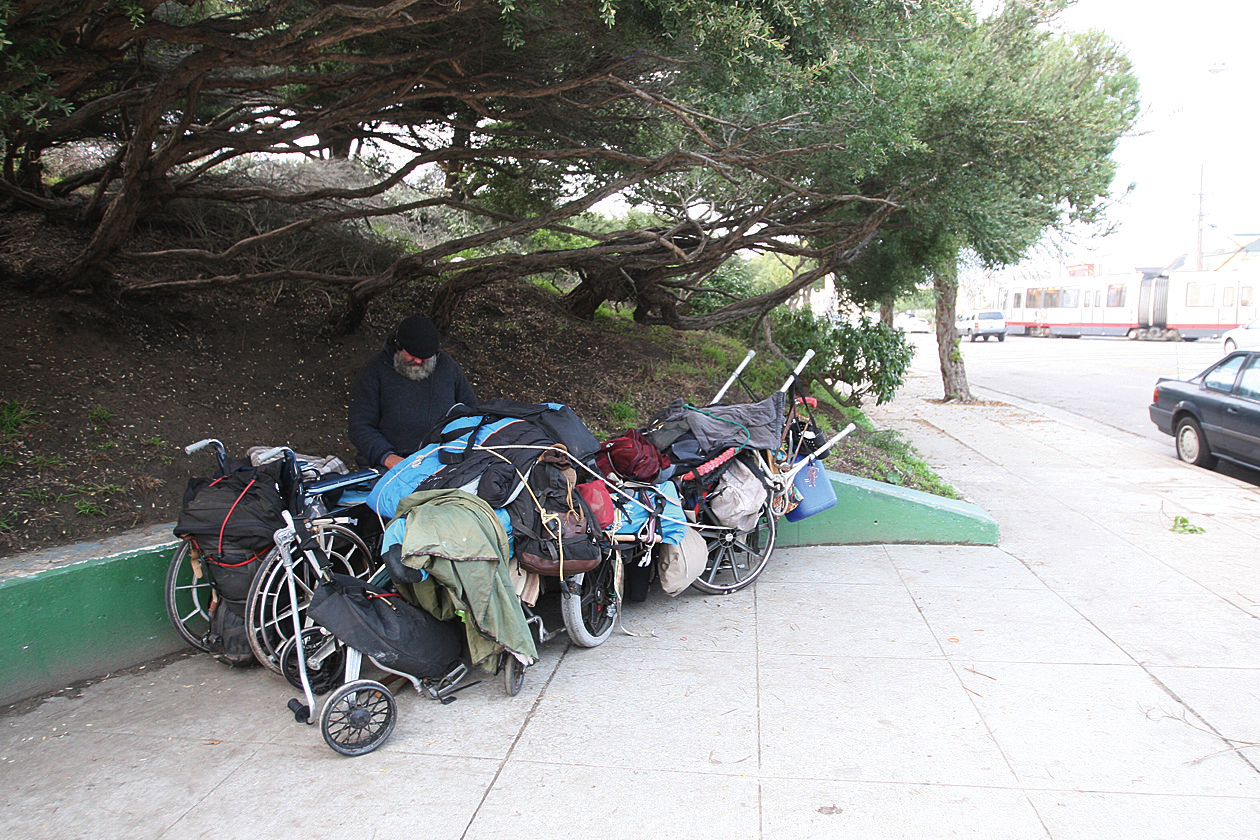
The San Francisco Board of Supervisors today narrowly approved Sup. Scott Wiener’s legislation to close parks and large plazas from midnight to 5am, a measure that Wiener said was about preventing vandalism but which progressive activists called an attack on the homeless.

The vote was 6-5, with Sups. John Avalos, London Breed, David Campos, Jane Kim, and Eric Mar voting against the proposal. The key swing votes in the decision were Breed — who wrote an op-ed for this week’s Guardian (posting soon) explaining her position — and Sup. Norman Yee, who was elected last year in Dist. 7 with progressive support.

To address the homeless issue, Kim asked for an amendment to make an exception for sleeping in the parks. Without the amendment, “we are criminalizing poverty and issuing fines people will never pay, and not getting the results we wanted,” she said. 

Hundreds of homeless lay their heads to rest in the parks of San Francisco every night as the city struggles to meet housing demand, which is already illegal under city law. Kim’s amendment says those sleeping in parks are to be cited under previously existing codes against sleeping in parks and not double-fined under this ordinance. Wiener supported the amendment and it was inserted into the legislation, although that didn’t end the debate over the legislation or win over its main opponents.

As the legislation was first introduced, Wiener made the argument he’s made many times before. Closing the parks at night is about vandalism, he said. 

“We need to establish a clear baseline that establishes hours for the park to combat vandalism and dumping,” Sup. Scott Wiener told the board. He made the case that most major cities in the U.S. have laws closing their parks and playgrounds at night, and that even New York City had them on the books.

Wiener also directly and flatly denied that his legislation was an attack on the homeless. 

“If the police wanted to remove people sleeping and camping in parks, they already have the tools to do that. This legislation does not give them those tools beyond what they have,” he said. 

But opponents of the measure, who have been organizing against it for weeks, said it will target the homeless and be selectively enforced. As Mar said at the hearing, “I think this is a really mean-spirited ordinance.”

And that’s when the avalanche of arguments began. Campos, Mar, Avalos, and Kim all  passionately defended the homeless that sleep in the parks. But no one brought more facts to the argument than Breed.

“We have 1,339 shelter beds and 6,000 people in San Francisco with nowhere to sleep,” she said. “I’ve been told again and again this will not target the homeless. But if it doesn’t target the homeless or the investment banker or the firefighter, who will this law target? Suspicious looking people in hoods? Teenagers?” 

The room took on a chill as she evoked echoes of Trayvon Martin and others who have been selectively targeted in the name of justice. Enforcement was her next bone of contention. There are only a handful of park police, often only two, that patrol over 220 parks in San Francisco, she said. 

If the ordinance is supposed to combat vandalism, it doesn’t even do that effectively, she said to the board: “We don’t have a legislative problem, we have an enforcement problem.”

To that end, Yee amended Wiener’s proposal to identify more funding for the park police. Everyone on all sides of the argument acknowledged that two to three officers to cover over 4,000 acres of San Francisco parks was woefully inadequate. 

It’s still unclear where that funding will come from, and how much it will be. 

After the meeting the Guardian asked Police Chief Greg Suhr, who was present for the meeting, if the homeless would be targeted under the ordinance.

“We’re not that Police Department,” he said. But he also said the controversial Sit/Lie Ordinance doesn’t target homeless people either, a claim that homeless advocates would dispute. “We’re a reasonable suspicion detention department.” 

An audio interview with Police Chief Greg Suhr just after the park closure legislation passed, where we asked Suhr, “Will the homeless be targeted?”

Tom Temprano, president of the Harvey Milk LGBT Democratic Club, disagreed. 

“I think that anyone who tells you the homeless will not be targeted in legislation that closes our parks at night are lying to you. There’s no other way to read this legislation,” he said. Temprano was one of the lead organizers of the sleep-in protest of the ordinance, which we previously covered.

When we asked if the ordinance would spur increased law enforcement in the parks, Suhr referred us elsewhere. 

“I leave the deployments to the station captains… certainly [the captains] have a pulse on what’s going on in the parks,” he said. 

So we called Captain Greg Corrales at Park Station, which oversees one of the most populous sections of Golden Gate Park, filled to the brim with campers. Corrales told us he didn’t imagine this ordinance would spur him to increase patrols or enforcement.

“There will not be more officers. The hours of the park have been posted on signs in the park, and past closing time people were cited for failure to abide by the signs,” he said. 

They cite 10-20 people for sleeping in the park per night, he said. As Kim noted, often these don’t lead to any prosecutions at all. 

But as for vandalism, Corrales said that there was recently a vandal throwing rocks through the windows of the Conservatory of Flowers and McLaren Lodge in Golden Gate Park. Would the ordinance help curb people from that kind of behavior?

“We’re already enforcing park closure,” he said. “It really doesn’t have much impact on us.” 


A big Oscar contender opens! Plus: two politically charged docs, ‘Diana,’ and more new movies

1

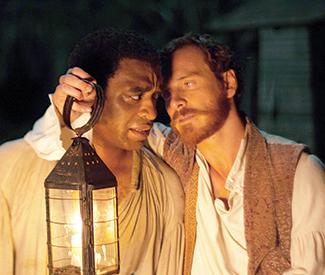
The movie you need to see this weekend, ASAP, is 12 Years a Slave — one of the most important releases of the year, and a likely contender for all possible awards, including Best Actor and Best Picture. (Review here.) Also new to theaters is the Cannes-winning, controversy-stirring Blue is the Warmest Color. (Review here.)

Read on for more short takes on today’s new releases, plus a 1979 cult classic that’s ripe for rediscovery.

http://www.youtube.com/watch?v=Q2Ir5LsraA4

About Time Richard Curtis, the man behind 2003’s Love Actually, must be enjoying his days in England, rolling in large piles of money. Coinciding with the 10-year anniversary of that twee cinematic love fest comes Curtis’ latest ode to joy, About Time. The film begins in Cornwall at an idyllic stone beach house, as Tim (Domhnall Gleeson) describes his family members (Bill Nighy is dad; Richard Cordery is the crazy uncle) and their pleasures (rituals (tea on the beach, ping pong). Despite beachside bliss, Tim is lovelorn and ready to begin a career as a barrister (which feels as out of the blue as the coming first act break). Oh! And as it happens, the men in Tim’s family can travel back in time. There are no clear rules, though births and deaths are like no-trespass signs on the imaginary timeline. When he meets Mary (Rachel McAdams), he falls in love, but if he paves over his own evening by bouncing back and spending that night elsewhere, he loses the path he’s worn into the map and has to fix it. Again and again. Despite potential repetition, About Time moves smoothly, sweetly, slowly along, giving its audience time enough to feel for the characters, and then feel for the characters again, and then keep crying just because the ball’s already in motion. It’s the most nest-like catharsis any British film ever built. (2:03) (Sara Maria Vizcarrondo)

http://www.youtube.com/watch?v=8oOG3vUkKUM

A.K.A. Doc Pomus “All greatness comes from pain.” The simple statement comes from Raoul Felder, brother of legendary R&B songwriter Doc Pomus, in the beautiful, crushing mediation on his brother’s life, A.K.A. Doc Pomus, opening theatrically this week after serving as the closing-night film of the 2012 San Francisco Jewish Film Festival. Doc wrote some of the greatest music of a generation: R&B and early rock’n’roll standards such as “This Magic Moment,” “A Teenager in Love,” “Save the Last Dance For Me,” and “Viva Las Vegas” — songs made famous by the likes of Dion, the Drifters, and Elvis Presley. Jewish, debilitated by polio, and vastly overweight, Doc defied expectations while struggling with a lifetime of outsider status and physical pain. William Hechter and Peter Miller’s doc offers a revealing look at his remarkable life. (1:38) Vogue. (Emily Savage)

http://www.youtube.com/watch?v=axLcfpj7xeU

Diana The final years of Diana, Princess of Wales are explored in what’s essentially a classed-up Lifetime drama, delving into the on-off romance between “the most famous woman in the world” (Naomi Watts) and heart surgeon Hasnat Khan (Naveen Andrews). Relationship roadblocks (his Muslim family, back home in Pakistan, is hesistant to accept a divorced, Christian Brit as their son’s partner) are further complicated by extraordinary circumstances (Diana’s fame, which leads to paparazzi intrusions on the very private doctor’s life), but there’s real love between the two, which keeps them returning to each other again and again. By the third or fourth tearful breakup — followed by a passionate reunion — Diana’s story becomes repetitive as it marches toward its inevitable tragic end. Still, director Oliver Hirschbiegel (2004’s Downfall, another last-days-in-the-life biopic, albeit of a slightly different nature) includes some light-hearted moments, as when a giggling Diana smuggles Hasnat through the palace gates (past guards who know exactly what she’s up to). As you’d expect, Watts is the best thing here, bringing warmth and complexity to a performance that strives to reach beyond imitation. (1:52) (Cheryl Eddy)

http://www.youtube.com/watch?v=2UNWLgY-wuo

Ender’s Game Asa Butterfield (star of 2011’s Hugo), Harrison Ford, and Ben Kingsley appear in this adaptation of Orson Scott Card’s sci-fi novel. (1:54)

http://www.youtube.com/watch?v=mueIglaVYDk

Free Birds Owen Wilson and Woody Harrelson lend their voices to this animated turkey tale. (1:31)

http://www.youtube.com/watch?v=m3_hKv4pEM4

God Loves Uganda Most contemporary Americans don’t know much about Uganda — that is, beyond Forest Whitaker’s Oscar-winning performance as Idi Amin in 2006’s The Last King of Scotland. Though that film took some liberties with the truth, it did effectively convey the grotesque terrors of the dictator’s 1970s reign. But even decades post-Amin, the East African nation has somehow retained its horrific human-rights record. For example: what extremist force was behind the country’s Anti-Homosexuality Bill, which proposed the death penalty as punishment for gayness? The answer might surprise you, or not. As the gripping, fury-fomenting doc God Loves Uganda reveals, America’s own Christian Right has been exporting hate under the guise of missionary work for some time. Taking advantage of Uganda’s social fragility — by building schools and medical clinics, passing out food, etc. — evangelical mega churches, particularly the Kansas City, Mo.-based, breakfast-invoking International House of Prayer, have converted large swaths of the population to their ultra-conservative beliefs. Filmmaker Roger Ross Williams, an Oscar winner for 2010 short Music by Prudence, follows naive “prayer warriors” as they journey to Uganda for the first time; his apparent all-access relationship with the group shows that they aren’t outwardly evil people — but neither do they comprehend the very real consequences of their actions. His other sources, including two Ugandan clergymen who’ve seen their country change for the worse and an LGBT activist who lives every day in peril, offer a more harrowing perspective. Evocative and disturbing, God Loves Uganda seems likely to earn Williams more Oscar attention. (1:23) Roxie. (Cheryl Eddy)

http://www.youtube.com/watch?v=AxGgkEHmHHg

Kill Your Darlings Relieved to escape his Jersey home, dominated by the miseries of an oft-institutionalized mother (Jennifer Jason Leigh) and long-suffering father (David Cross), Allen Ginsberg (Daniel Radcliffe) enters Columbia University in 1944 as a freshman already interested in the new and avant-garde. He’s thus immediately enchanted by bad-boy fellow student Lucien Carr (Dane DeHaan), a veteran of numerous prestigious schools and well on the road to getting kicked out of this one. Charismatic and reckless, Carr has a circle of fellow eccentrics buzzing around him, including dyspeptic William S. Burroughs (Ben Foster) and merchant marine wild child Jack Kerouac (Jack Huston). Variably included in or ostracized from this training ground for future Beat luminaries is the older David Kammerer (Michael C. Hall), a disgraced former academic who’d known Carr since the latter was 14, and followed him around with pathetic, enamored devotion. It’s this last figure’s apparent murder by Carr that provides the bookending crux of John Krokidas’ impressive first feature, a tragedy whose motivations and means remain disputed. Partly blessed by being about a (comparatively) lesser-known chapter in an overexposed, much-mythologized history, Kill Your Darlings is easily one of the best dramatizations yet of Beat lore, with excellent performances all around. (Yes, Harry Potter actually does pass quite well as a somewhat cuter junior Ginsberg.) It’s sad if somewhat inevitable that the most intriguing figure here — Hall’s hapless, lovelorn stalker-slash-victim — is the one that remains least knowable to both the film and to the ages. (1:40) (Dennis Harvey)

http://www.youtube.com/watch?v=IMnr-R7BkkU

Last Vegas This buddy film may look like a Bucket List-Hangover hybrid, but it’s got a lot more Spring Breakers in it than you’d expect — who beats Vegas for most bikinis per capita? Four old friends reunite for a wedding in Vegas, where they drink, gamble, and are confused for legendary men. Morgan Freeman sneaks out of his son’s house to go. Kevin Kline’s wife gave him a hall pass to regain his lost sense of fun. Kline and Freeman trick Robert De Niro into going — he’s got a grudge against Michael Douglas, so why celebrate that jerk’s nuptials to a 30-year-old? The conflicts are mostly safe and insubstantial, but the in-joke here is that all of these acting legends are confused for legends by their accidentally obtained VIP host (Romany Malco). These guys have earned their stature, so what gives? When De Niro flings fists you shudder inside remembering Jake LaMotta. Kline’s velvety comic delivery is just as swaggery as it was during his ’80s-era collaborations with Lawrence Kasdan. Douglas is “not as charming as he thinks he is,” yet again, and voice-of-God Freeman faces a conflict specific to paternal protective urges. Yes, Last Vegas jokes about the ravages of age and prescribes tenacity for all that ails us, but I want a cast this great celebrated at least as obviously as The Expendables films. Confuse these guys for better? Show me who. (1:44) (Sara Maria Vizcarrondo)

http://www.youtube.com/watch?v=-v5ZXAxTGHg

Let the Fire Burn In 1985 a long-simmering conflict between Philadelphia police and the local black liberation group MOVE came to a catastrophic conclusion. Ordered to leave their West Philly building after numerous neighborhood complaints about unsanitary conditions, incessant noise, child endangerment and more, the commune refused. An armed standoff came to a halt when a helicopter dropped two FBI-supplied water gel bombs on the roof, killing 11 MOVE members (including five kids) and creating an uncontrollable fire that destroyed some 60 nearby homes. It’s hard to deny after watching Jason Osder’s powerful documentary that MOVE then looked like one crazy cult — its representatives spouting extreme, paranoid rhetoric in and out of court; its child residents (their malnutrition-bloated stomachs nonsensically explained as being due to “eating so much”) in visibly poor health; its charismatic leader John Africa questionably stable. But whatever hazards they posed to themselves and the surrounding community, it’s also almost undeniable here that city law enforcement drastically overreacted, possibly in deliberate retaliation for an officer’s shootout death seven years earlier. The filmed and amply media-reported trials that ensued raised strong suspicions that the police even shot unarmed MOVE members trying to escape the blaze. This outrageous saga, with numerous key questions and injustices still dangling, is an American history chapter that should not be forgotten. Let the Fire Burn is an invaluable reminder. (1:35) (Dennis Harvey)

http://www.youtube.com/watch?v=HIKQCZDYfEI

Man of Tai Chi Keanu Reeves directs and plays a supporting role in this contemporary Beijing-set martial-arts drama. (1:45)

http://www.youtube.com/watch?v=N6lImifpiZM

The Pin Canadian film about a romance between two Eastern European youths, in hiding during World War II. (1:23)

The Visitor Directed by “Michael J. Paradise” (aka Giulio Paradisi), this 1979 Italian-US. co-production is belatedly starting to acquire a cult following. Joanne Nail is Barbara, mother of Katy (Paige Conner), a seemingly normal little girl with a disconcerting tendency to swear like a longshoreman when out of ma’s earshot. Also unbeknownst to mom is that her boyfriend (Lance Henriksen, no less), as well as characters played by Mel Ferrer, Glenn Ford, John Huston, Sam Peckinpah, and the inimitable Shelley Winters are all very interested — on the good and the evil side — in Katy, a “miracle of nature” with “immense powers.” Those powers apparently include making Kareem Abdul-Jabbar’s basketball explode at the hoop, and sending teenage boys through plate glass at an ice rink. Some of the adults nosing around Katy really, really want Barbara to give her a similarly gifted baby brother, others do not. It all involves some kind of interplanetary conspiracy to … well, beats me, frankly. Its utter senselessness part of the charm, The Visitor includes any number of bizarre moments, including Winters’ evident enjoyment of slapping some sense into Katy (the child thesp later confirmed that the Oscar winner went a little too Method in that scene), and crusty old Huston intoning the line “I’m, uh, the babysitter.” This glossy sci-fi horror mess. which the Roxie is showing in a new digital transfer, borrows elements freely from 1977’s Exorcist II: The Heretic (a fiasco that inspired very little imitation), 1976’s The Omen (or rather 1978’s Damien: Omen II) and, strangely, Orson Welles’ 1947 The Lady from Shanghai (directly ripping off its famous hall of mirrors scene). Yet there’s a certain undeniable originality to its incoherence. (1:48) Roxie. (Dennis Harvey)

The art of dialogue

1

arts@sfbg.com

THEATER Maybe there’s no better way to grasp your own time and place than by leaving it — in this case, trading San Francisco for Wroclaw, Poland, and Pacific Standard Time for a whiplashing case of jet lag. Wroclaw was home base for a little more than a week during the recent Dialog Festival (Oct. 11–18; dialogfestival.pl/en), which was in its seventh season as a major biennial international theater festival created and programmed by Krystyna Meissner, a force in Polish and European theater for decades.

Joining a cohort of Americans, including several from the Bay Area, most of whom had been invited to the festival by the Center for International Theatre Development (an organization with which I’ve recently become formally associated), we were treated to work by artists from Poland, Germany, Holland, South Africa, Rwanda, Estonia, Iran, Canada, Mexico, Spain, and Hungary. The topic this year, “Violence makes the world go ’round,” was a proposition answered variously and often ingeniously by the productions on offer. The best of these expertly delivered that consciousness-altering blow you want from theater or any art form, as well as much food for thought — not only about the reality of violence in the world today, but the place in it all of the artist, the individual, the public, the spectator, and the theater itself.

For now, one example will have to suffice: a staging of British playwright Sarah Kane’s 1998 play, Cleansed, by Polish director Krzysztof Warlikowski. This was actually one of two separate stagings of the same play in the festival this year; the other was by renowned Dutch director Johan Simons, working with Germany’s Münchner Kammerspiele, who offered three Kane plays in a single evening. (It was also one of two pieces from Warlikowski at the festival, the other being his latest work, Warsaw Cabaret.)

Warlikowski is widely known as one of the masters of the Polish theater today, and his staging of the Kane play is still in demand 12 years after its controversial premiere in 2001. Seeing this legendary production was an extraordinary opportunity, and its impact was in no way diminished by the hype.

Cleansed comprises a discrete set of scenes in which a sadistic “doctor” named Tinker perpetrates vicious humiliations and atrocities on a group of inmates. Among the latter is a grieving woman who has entered the doctor’s wicked sanatorium to commune with the spirit of her dead brother, a heroin addict murdered gruesomely by Tinker in an early scene. There is also a gay couple whose commitment to each other is brutally tested by the awful interventions of Tinker.

Warlikowski’s production unfolds as a harrowing yet gorgeously languid fever dream. Set on a small stage, with an institutional bathroom wall at the back, the strikingly crisp and potent images throughout distort in the reflective surfaces bounding the space. Often drowned in a shifting sea of garish light, accentuated with piercingly beautiful music (the songs derived from the text are sung in the original English), the stage nevertheless leaves ample room for brilliant performances. These deftly created characters and relationships speak eloquently to the deep compassion and understanding there throughout Kane’s penetrating nightmare. (In a seductive and telling move, Warlikowski tacks on a monologue about desperate love, taken from Kane’s Crave, at the outset of the evening.)

Kane’s own productive extremes as a playwright — her cool formal intelligence and invention, as well as her anguished, aching, and uncompromising vision — were served perfectly by the precise and enveloping aesthetic of this exquisite production. But what was it that brought this play and this director together in the first place? And what was the nature of its early impact? In a talkback with the director the following day, a Polish journalist and critic helped set the scene.

“I saw Cleansed many years ago,” he remembered, “at a time when the LGBT movement in Poland was just coming out of the closet. At the time, it was truly a shocking piece. Now it’s a piece that I’m proud of. I’m proud to see how much has changed. Back in the day, the mayor of Warsaw tried to ban the Pride parade and there was only one politician who dared to show up. I remember there being several hundred of us, separated by a double line of police officers — mind you, the demonstration was legal — and above the heads of the police officers, stones were flying at us.”

Warlikowski recalled, “After the first reading we gave up on it. I decided we wouldn’t do Cleansed but do Hamlet instead. It’s a little difficult to imagine now, but I was really shattered by the stones flying at participants of the LGBT Pride Parade. We were working on Angels in America in some dingy little basement. I felt excluded. I felt like I was underground. Groups of women would roam the streets and tear down the posters for Cleansed. Director Krystyna Meissner would go around town to keep them from being torn down.

“I added the monologue from Crave because I thought that would be the only way to get Polish theatergoers to see the piece. The first response was horrible. Whereas people saw the dismemberment as theatrical and acceptable, they were more offended by two guys kissing, and people would get up and leave the room. That’s not something we can really understand today. So there had to be this ten-minute monologue, speaking of love, to trick you into staying for the rest.

“I remember watching the show sitting next to a couple, probably a yuppie couple, new middle-class, in their late 30s. During the first monologue, the woman never looked up. I felt I was embarrassing her. And for the Catholic nation that we still are, it was a lot to expect. Hence all the embellishments, everything that brings in a dimension that makes the dialogue possible — dialogue with the piece and dialogue with society.” *


For more on the Dialog festival, visit www.sfbg.com/pixel_vision.

Film listings and reviews Oct. 30-Nov.5, 2013

0

Film listings are edited by Cheryl Eddy. Reviewers are Kimberly Chun, Dennis Harvey, Lynn Rapoport, Sam Stander, and Sara Maria Vizcarrondo. For rep house showtimes, see Rep Clock.

OPENING

About Time Richard Curtis, the man behind 2003’s Love Actually, must be enjoying his days in England, rolling in large piles of money. Coinciding with the 10-year anniversary of that twee cinematic love fest comes Curtis’ latest ode to joy, About Time. The film begins in Cornwall at an idyllic stone beach house, as Tim (Domhnall Gleeson) describes his family members (Bill Nighy is dad; Richard Cordery is the crazy uncle) and their pleasures (rituals (tea on the beach, ping pong). Despite beachside bliss, Tim is lovelorn and ready to begin a career as a barrister (which feels as out of the blue as the coming first act break). Oh! And as it happens, the men in Tim’s family can travel back in time. There are no clear rules, though births and deaths are like no-trespass signs on the imaginary timeline. When he meets Mary (Rachel McAdams), he falls in love, but if he paves over his own evening by bouncing back and spending that night elsewhere, he loses the path he’s worn into the map and has to fix it. Again and again. Despite potential repetition, About Time moves smoothly, sweetly, slowly along, giving its audience time enough to feel for the characters, and then feel for the characters again, and then keep crying just because the ball’s already in motion. It’s the most nest-like catharsis any British film ever built. (2:03) (Vizcarrondo)

A.K.A. Doc Pomus “All greatness comes from pain.” The simple statement comes from Raoul Felder, brother of legendary R&B songwriter Doc Pomus, in the beautiful, crushing mediation on his brother’s life, A.K.A. Doc Pomus, opening theatrically this week after serving as the closing-night film of the 2012 San Francisco Jewish Film Festival. Doc wrote some of the greatest music of a generation: R&B and early rock’n’roll standards such as “This Magic Moment,” “A Teenager in Love,” “Save the Last Dance For Me,” and “Viva Las Vegas” — songs made famous by the likes of Dion, the Drifters, and Elvis Presley. Jewish, debilitated by polio, and vastly overweight, Doc defied expectations while struggling with a lifetime of outsider status and physical pain. William Hechter and Peter Miller’s doc offers a revealing look at his remarkable life. (1:38) Vogue. (Emily Savage)

Blue is the Warmest Color See “Hot and Cool.” (2:59) Embarcadero.

Diana Naomi Watts stars in this exploration of the last two years in the life of Princess Diana. (1:52) Shattuck.

Ender’s Game Asa Butterfield (star of 2011’s Hugo), Harrison Ford, and Ben Kingsley appear in this adaptation of Orson Scott Card’s sci-fi novel. (1:54) Presidio.

Free Birds Owen Wilson and Woody Harrelson lend their voices to this animated turkey tale. (1:31)

God Loves Uganda Most contemporary Americans don’t know much about Uganda — that is, beyond Forest Whitaker’s Oscar-winning performance as Idi Amin in 2006’s The Last King of Scotland. Though that film took some liberties with the truth, it did effectively convey the grotesque terrors of the dictator’s 1970s reign. But even decades post-Amin, the East African nation has somehow retained its horrific human-rights record. For example: what extremist force was behind the country’s Anti-Homosexuality Bill, which proposed the death penalty as punishment for gayness? The answer might surprise you, or not. As the gripping, fury-fomenting doc God Loves Uganda reveals, America’s own Christian Right has been exporting hate under the guise of missionary work for some time. Taking advantage of Uganda’s social fragility — by building schools and medical clinics, passing out food, etc. — evangelical mega churches, particularly the Kansas City, Mo.-based, breakfast-invoking International House of Prayer, have converted large swaths of the population to their ultra-conservative beliefs. Filmmaker Roger Ross Williams, an Oscar winner for 2010 short Music by Prudence, follows naive “prayer warriors” as they journey to Uganda for the first time; his apparent all-access relationship with the group shows that they aren’t outwardly evil people — but neither do they comprehend the very real consequences of their actions. His other sources, including two Ugandan clergymen who’ve seen their country change for the worse and an LGBT activist who lives every day in peril, offer a more harrowing perspective. Evocative and disturbing, God Loves Uganda seems likely to earn Williams more Oscar attention. (1:23) Roxie. (Eddy)

Kill Your Darlings Relieved to escape his Jersey home, dominated by the miseries of an oft-institutionalized mother (Jennifer Jason Leigh) and long-suffering father (David Cross), Allen Ginsberg (Daniel Radcliffe) enters Columbia University in 1944 as a freshman already interested in the new and avant-garde. He’s thus immediately enchanted by bad-boy fellow student Lucien Carr (Dane DeHaan), a veteran of numerous prestigious schools and well on the road to getting kicked out of this one. Charismatic and reckless, Carr has a circle of fellow eccentrics buzzing around him, including dyspeptic William S. Burroughs (Ben Foster) and merchant marine wild child Jack Kerouac (Jack Huston). Variably included in or ostracized from this training ground for future Beat luminaries is the older David Kammerer (Michael C. Hall), a disgraced former academic who’d known Carr since the latter was 14, and followed him around with pathetic, enamored devotion. It’s this last figure’s apparent murder by Carr that provides the bookending crux of John Krokidas’ impressive first feature, a tragedy whose motivations and means remain disputed. Partly blessed by being about a (comparatively) lesser-known chapter in an overexposed, much-mythologized history, Kill Your Darlings is easily one of the best dramatizations yet of Beat lore, with excellent performances all around. (Yes, Harry Potter actually does pass quite well as a somewhat cuter junior Ginsberg.) It’s sad if somewhat inevitable that the most intriguing figure here — Hall’s hapless, lovelorn stalker-slash-victim — is the one that remains least knowable to both the film and to the ages. (1:40) Shattuck. (Harvey)

Last Vegas This buddy film may look like a Bucket List-Hangover hybrid, but it’s got a lot more Spring Breakers in it than you expect — who beats Vegas for most bikinis per capita? Four old friends reunite for a wedding in Vegas, where they drink, gamble, and are confused for legendary men. Morgan Freeman sneaks out of his son’s house to go. Kevin Kline’s wife gave him a hall pass to regain his lost sense of fun. Kline and Freeman trick Robert De Niro into going — he’s got a grudge against Michael Douglas, so why celebrate that jerk’s nuptials to a 30-year-old? The conflicts are mostly safe and insubstantial, but the in-joke here is that all of these acting legends are confused for legends by their accidentally obtained VIP host (Romany Malco). These guys have earned their stature, so what gives? When De Niro flings fists you shudder inside remembering Jake LaMotta. Kline’s velvety comic delivery is just as swaggery as it was during his 80s era collaborations with Lawrence Kasdan. Douglas is “not as charming as he thinks he is,” yet again, and voice-of-God Freeman faces a conflict specific to paternal protective urges. Yes, Last Vegas jokes about the ravages of age and prescribes tenacity for all that ails us, but I want a cast this great celebrated at least as obviously as The Expendables films. Confuse these guys for better? Show me who. (1:44) Presidio. (Vizcarrondo)

Let the Fire Burn In 1985 a long-simmering conflict between Philadelphia police and the local black liberation group MOVE came to a catastrophic conclusion. Ordered to leave their West Philly building after numerous neighborhood complaints about unsanitary conditions, incessant noise, child endangerment and more, the commune refused. An armed standoff came to a halt when a helicopter dropped two FBI-supplied water gel bombs on the roof, killing 11 MOVE members (including five kids) and creating an uncontrollable fire that destroyed some 60 nearby homes. It’s hard to deny after watching Jason Osder’s powerful documentary that MOVE then looked like one crazy cult — its representatives spouting extreme, paranoid rhetoric in and out of court; its child residents (their malnutrition-bloated stomachs nonsensically explained as being due to “eating so much”) in visibly poor health; its charismatic leader John Africa questionably stable. But whatever hazards they posed to themselves and the surrounding community, it’s also almost undeniable here that city law enforcement drastically overreacted, possibly in deliberate retaliation for an officer’s shootout death seven years earlier. The filmed and amply media-reported trials that ensued raised strong suspicions that the police even shot unarmed MOVE members trying to escape the blaze. This outrageous saga, with numerous key questions and injustices still dangling, is an American history chapter that should not be forgotten. Let the Fire Burn is an invaluable reminder. (1:35) Opera Plaza, Shattuck. (Harvey)

Man of Tai Chi Keanu Reeves directs and plays a supporting role in this contemporary Beijing-set martial-arts drama. (1:45) Metreon.

The Pin Canadian film about a romance between two Eastern European youths, in hiding during World War II. (1:23) Opera Plaza.

12 Years a Slave See “To Hell and Back.” (2:14) California, Embarcadero.

The Visitor Barbara (Joanne Nail) Directed by “Michael J. Paradise” (aka Giulio Paradisi), this 1979 Italian-US. co-production is belatedly starting to acquire a cult following. Joanne Nail is Barbara, mother of Katy (Paige Conner), a seemingly normal little girl with a disconcerting tendency to swear like a longshoreman when out of ma’s earshot. Also unbeknownst to mom is that her boyfriend (Lance Henriksen, no less), as well as characters played by Mel Ferrer, Glenn Ford, John Huston, Sam Peckinpah, and the inimitable Shelley Winters are all very interested — on the good and the evil side — in Katy, a “miracle of nature” with “immense powers.” Those powers apparently include making Kareem Abdul-Jabbar’s basketball explode at the hoop, and sending teenage boys through plate glass at an ice rink. Some of the adults nosing around Katy really, really want Barbara to give her a similarly gifted baby brother, others do not. It all involves some kind of interplanetary conspiracy to … well, beats me, frankly. Its utter senselessness part of the charm, The Visitor includes any number of bizarre moments, including Winters’ evident enjoyment of slapping some sense into Katy (the child thesp later confirmed that the Oscar winner went a little too Method in that scene), and crusty old Huston intoning the line “I’m, uh, the babysitter.” This glossy sci-fi horror mess. which is the Roxie is showing in a new digital transfer, borrows elements freely from 1977’s Exorcist II: The Heretic (a fiasco that inspired very little imitation), 1976’s The Omen (or rather 1978’s Damien: Omen II) and, strangely, Orson Welles’ 1947 The Lady from Shanghai (directly ripping off its famous hall of mirrors scene). Yet there’s a certain undeniable originality to its incoherence. (1:48) Roxie. (Harvey)

ONGOING

All Is Lost As other reviewers have pointed out, All Is Lost‘s nearly dialogue-free script (OK, there is one really, really well-placed “Fuuuuuck!”) is about as far from J.C. Chandor’s Oscar-nominated script for 2011’s Margin Call as possible. Props to the filmmaker, then, for crafting as much pulse-pounding magic out of austerity as he did with that multi-character gabfest. Here, Robert Redford plays “Our Man,” a solo sailor whose race to survive begins along with the film, as his boat collides with a hunk of Indian Ocean detritus. Before long, he’s completely adrift, yet determined to outwit the forces of nature that seem intent on bringing him down. The 77-year-old Redford turns in a surprisingly physical performance that’s sure to be remembered as a late-career highlight. (1:46) Albany, SF Center, Sundance Kabuki. (Eddy)

Blue Jasmine The good news about Blue Jasmine isn’t that it’s set in San Francisco, but that it’s Woody Allen’s best movie in years. Although some familiar characteristics are duly present, it’s not quite like anything he’s done before, and carries its essentially dramatic weight more effectively than he’s managed in at least a couple decades. Not long ago Jasmine (a fearless Cate Blanchett) was the quintessential Manhattan hostess, but that glittering bubble has burst — exactly how revealed in flashbacks that spring surprises up to the script’s end. She crawls to the West Coast to “start over” in the sole place available where she won’t be mortified by the pity of erstwhile society friends. That would be the SF apartment of Ginger (Sally Hawkins), a fellow adoptive sister who was always looked down on by comparison to pretty, clever Jasmine. Theirs is an uneasy alliance — but Ginger’s too big-hearted to say no. It’s somewhat disappointing that Blue Jasmine doesn’t really do much with San Francisco. Really, the film could take place anywhere — although setting it in a non-picture-postcard SF does bolster the film’s unsettled, unpredictable air. Without being an outright villain, Jasmine is one of the least likable characters to carry a major US film since Noah Baumbach’s underrated Margot at the Wedding (2007); the general plot shell, moreover, is strongly redolent of A Streetcar Named Desire. But whatever inspiration Allen took from prior works, Blue Jasmine is still distinctively his own invention. It’s frequently funny in throwaway performance bits, yet disturbing, even devastating in cumulative impact. (1:38) Clay, Metreon. (Harvey)

Captain Phillips In 2009, Captain Richard Phillips was taken hostage by Somali pirates who’d hijacked the Kenya-bound Maersk Alabama. His subsequent rescue by Navy SEALs came after a standoff that ended in the death of three pirates; a fourth, Abduwali Abdukhadir Muse, surrendered and is serving a hefty term in federal prison. A year later, Phillips penned a book about his ordeal, and Hollywood pounced. Tom Hanks is perfectly cast as Phillips, an everyman who runs a tight ship but displays an admirable ability to improvise under pressure — and, once rescued, finally allows that pressure to diffuse in a scene of memorably raw catharsis. Newcomer Barkhad Abdi, cast from an open call among Minneapolis’ large Somali community, plays Muse; his character development goes deep enough to emphasize that piracy is one of few grim career options for Somali youths. But the real star here is probably director Paul Greengrass, who adds this suspenseful high-seas tale to his slate of intelligent, doc-inspired thrillers (2006’s United 93, 2007’s The Bourne Ultimatum). Suffice to say fans of the reigning king of fast-paced, handheld-camera action will not be disappointed. (2:14) Four Star, Marina, 1000 Van Ness, SF Center, Sundance Kabuki. (Eddy)

Carrie Is the world ready for a candy-covered Carrie? It’s a sad state of affairs when the best thing about a movie, particularly a wholly superfluous remake like this, is its creepy poster. That’s the closest thing this Carrie has to offer next to that retina-scorching, iconic 1976 image of blood-saturated Sissy Spacek that continues to lend inspiration to baby Billiths everywhere. Nonetheless, like a shy violet cowering in the gym showers, this Carrie comes loaded with potential, with Boys Don’t Cry (1999) director Kimberly Peirce at the helm, the casting of Julianne Moore and Chloe Grace Moretz in the critical mother-daughter roles, and the unfortunately topical bullying theme. Peirce makes a half-hearted attempt to update the, um, franchise when the tormented Carrie (a miscast Moretz) is virally videoed by spoiled rival Chris (Portia Doubleday), but the filmmaker’s heart — and guts — aren’t in this pointless exercise. We speed through the buildup — which unconvincingly sets up Carrie’s torments at home, instigated by obviously mentally ill, Christian fundamentalist mom Margaret (Moore), and at school, where the PE teacher (Judy Greer) pep-talks Carrie and Sue Snell (Gabriella White) is mysteriously hellbent on paying penance for her bullying misdeeds — to the far-from-scary denouement. Let’s say mean-spirited reflexive revenge-taking is no real substitute for true horror and shock. Supposedly drawn to Carrie for its female-empowerment message, Peirce nevertheless isn’t cut out to wade into horror’s crimson waters — especially when one compares this weak rendition with Brian De Palma’s double-screen brio and high-camp Freudian passion play. (1:32) Metreon, 1000 Van Ness. (Chun)

Cloudy With a Chance of Meatballs 2 (1:35) Metreon, 1000 Van Ness.

The Counselor The reviews are in, and it’s clear Ridley Scott has made the most polarizing film of the season. Most of The Counselor‘s detractors blame Cormac McCarthy’s screenplay, the acclaimed author’s first that isn’t drawn from a prexisting novel. To date, the best film made from a McCarthy tale is 2007’s No Country for Old Men, and The Counselor trawls in similar border-noir genre trappings in its tale of a sleek, greedy lawyer (Michael Fassbender) who gets in way over his head after a drug deal (entered into with slippery compadres played by Brad Pitt and Javier Bardem) goes wrong. Yes, there are some problems here, with very few unexpected twists in a downbeat story that’s laden with overlong monologues, most of them delivered by random characters that appear, talk, and are never seen again. But some of those speeches are doozies — and haters are overlooking The Counselor‘s sleazy pleasures (many of which are supplied by Cameron Diaz’s fierce, feline femme fatale) and attention to grimy detail. One suspects cult appreciation awaits. (1:57) Four Star, Marina, Metreon, 1000 Van Ness, Sundance Kabuki. (Eddy)

Don Jon Shouldering the duties of writer, director, and star for the comedy Don Jon, Joseph Gordon-Levitt has also picked up a broad Jersey accent, the physique of a gym rat, and a grammar of meathead posturing — verbal, physical, and at times metaphysical. His character, Jon, is the reigning kingpin in a triad of nightclubbing douchebags who pass their evenings assessing their cocktail-sipping opposite numbers via a well-worn one-to-10 rating system. Sadly for pretty much everyone involved, Jon’s rote attempts to bed the high-scorers are spectacularly successful — the title refers to his prowess in the art of the random hookup — that is, until he meets an alluring “dime” named Barbara (Scarlett Johansson), who institutes a waiting period so foreign to Jon that it comes to feel a bit like that thing called love. Amid the well-earned laughs, there are several repulsive-looking flies in the ointment, but the most conspicuous is Jon’s stealthy addiction to Internet porn, which he watches at all hours of the day, but with a particularly ritualistic regularity after each night’s IRL conquest has fallen asleep. These circumstances entail a fair amount of screen time with Jon’s O face and, eventually, after a season of growth — during which he befriends an older woman named Esther (Julianne Moore) and learns about the existence of arty retro Swedish porn — his “Ohhh&ldots;” face. Driven by deft, tight editing, Don Jon comically and capably sketches a web of bad habits, and Gordon-Levitt steers us through a transformation without straining our capacity to recognize the character we met at the outset — which makes the clumsy over-enunciations that mar the ending all the more jarring. (1:30) 1000 Van Ness, SF Center, Sundance Kabuki. (Rapoport)

Enough Said Eva (Julia Louis-Dreyfus) is a divorced LA masseuse who sees naked bodies all day but has become pretty wary of wanting any in her bed at night. She reluctantly changes her mind upon meeting the also-divorced Albert (James Gandolfini), a television archivist who, also like her, is about to see his only child off to college. He’s no Adonis, but their relationship develops rapidly — the only speed bumps being provided by the many nit-picking advisors Eva has in her orbit, which exacerbate her natural tendency toward glass-half-empty neurosis. This latest and least feature from writer-director Nicole Holofcener is a sitcom-y thing of the type that expects us to find characters all the more adorable the more abrasive and self-centered they are. That goes for Louis-Dreyfus’ annoying heroine as well as such wasted talents as Toni Colette as her kvetching best friend and Catherine Keener as a new client turned new pal so bitchy it makes no sense Eva would desire her company. The only nice person here is Albert, whom the late Gandolfini makes a charming, low-key teddy bear in an atypical turn. The revelation of an unexpected past tie between his figure and Keener’s puts Eva in an ethically disastrous position she handles dismally. In fact, while it’s certainly not Holofcener’s intention, Eva’s behavior becomes so indefensible that Enough Said commits rom-com suicide: The longer it goes on, the more fervently you hope its leads will not end up together. (1:33) Balboa, SF Center, Sundance Kabuki. (Harvey)

Escape From Tomorrow Escape From Tomorrow acquired cachet at Sundance this year as a movie you ought to see because it probably wouldn’t surface again. The reason was its setting, which composites two of the most photographed (and “happiest”) places on Earth. They’re also among the most heavily guarded from any commercial usage not of their own choosing. That would be Disney World and Disneyland, where Escape was surreptitiously shot — ingeniously so, since you would hardly expect any movie filmed on the sly like this to be so highly polished, or for its actors to get so little apparent attention from the unwitting background players around them. That nobody has pulled the fire alarm, however, suggests Disney realized this movie isn’t going to do it any real harm. While its setting remains near-indispensable, what writer-director Randy Moore has pulled off goes beyond great gimmickry, commingling satire, nightmare Americana, cartooniness, pathos, and surrealism in its tale of 40-ish Jim (Roy Abramsohn), which starts on the last day of his family vacation — when his boss calls to fire him. What follows might either be hallucinated by shell-shocked Jim, or really be a grand, bizarre conspiracy, with occurrences appearing to be either imaginary or apocalyptic (or both). Lucas Lee Graham’s crisp B&W photography finds the grotesquerie lurking in the shadows of parkland imagery. Abel Korzeniowski’s amazing score apes and parodies vintage orchestral Muzak, cloying kiddie themes, and briefly even John Williams at his most Spielbergian. All the actors do fine work, slipping fluidly if not always explicably from grounded real-world behavior to strangeness. But the real achievement of Escape From Tomorrow is that while this paranoid fantasy really makes no immediate sense, Moore’s cockeyed vision is so assured that we assume it must, on some level. He’s created a movie some people will hate but others will watch over and over again, trying to connect its almost subliminal dots. (1:43) Roxie. (Harvey)

Escape Plan It’s fascinating how ruined faces and silvered goatees can lend an air of, uh, gravitas to even the most muscle-bound action-movie veterans. The logic: Sylvester Stallone and Arnold Schwarzenegger have been around so long that they must possess more than a few brain cells to rub together. And rub they do — to surprisingly pleasing effect in this cut-above-the-next-Expendables-sequel meeting of blockbuster behemoths. Stallone’s Ray Breslin is a prison security specialist so nerdily devoted to his work that he gets himself locked up to test his clients’ jails. He gets in over his head when he’s thrown into the most secure private prison in the world, which happens to be run by former Blackwater mercenaries. It’s essentially the next, rather permanent-looking step after your not-so-friendly rendition flight. Breslin befriends security man Rottmayer (Schwarzenegger), who’s in the clink on behalf of his “digital Robin Hood” boss. Menaced by warden Hobbs (Jim Caviezel) and brawny Drake (Vinnie Jones), the two prisoners kick off a changeable game, Muslim prisoner Javed (Faran Tahir) in tow. Director Mikael Håfström lays out the plans with geeky enthusiasm by way of zippy point-of-view shots that are supposed to let you into Breslin’s noggin. Shockingly, after Stallone’s recent brain-dead exercises (2012’s Bullet to the Head), it’s not an unhappy experience in this smarter-than-it-looks post-9/11 prison-break drama that wears its complicated feelings about War on Terror-era crime and punishment — and torture — on its sleeve. Still, matters never get too bleeding-heart liberal here, at the risk of alienating the stars’ audiences. Sly obviously embraces this opportunity to play smarter than usual, while the ex-Governator sinks his choppers into his role with glee, trotting out a Commando-style slo-mo gun-swinging move that will have his geek brigade cheering. (1:56) 1000 Van Ness, SF Center. (Chun)

The Fifth Estate After being our guide through the world of 1970s Formula One racing in Rush, Daniel Brühl is back serving that same role — and again grumbling in the shadows cast by a flashier character’s magnetism — for a more recent real life story’s dramatization. Here he’s German “technology activist” Daniel Domscheit-Berg, who in 2007 began collaborating with the enigmatic, elusive Julian Assange (Benedict Cumberbatch) on WikiLeaks’ airing of numerous anonymous whistleblowers’ explosive revelations: US military mayhem in Afghanistan; Kenyan ruling-regime corruption; a Swiss bank’s providing a “massive tax dodge” for wealthy clients worldwide; ugly truths behind Iceland’s economic collapse; and climactically, the leaking of a huge number of classified U.S. government documents. It was this last, almost exactly three years ago, that made Assange a wanted man here and in Sweden (the latter for alleged sexual assaults), as well as putting US Army leaker Chelsea (née Bradley) Manning in prison. The heat was most certainly on — although WikiLeaks was already suffering internal woes as Domscheit-Berg and a few other close associates grew disillusioned with Assange’s megalomania, instability, and questionable judgment. It’s a fascinating, many-sided saga that was told very well in Alex Gibney’s recent documentary We Steal Secrets: The Story of WikiLeaks, and this narrative feature from director Bill Condon (2004’s Kinsey, 2006’s Dreamgirls, the last two Twilights) and scenarist Josh Singer feels disappointingly superficial by contrast. It tries to cram too information in without enough ballasting psychological insight, and the hyperkinetic editing and visual style intended to ape the sheer info-overload of our digital age simply makes the whole film seem like it’s trying way too hard. There are good moments, some sharp supporting turns, and Estate certainly doesn’t lack for ambition. But it’s at best a noble failure that in the end leaves you feeling fatigued and unenlightened. (2:04) 1000 Van Ness, SF Center, Sundance Kabuki. (Harvey)

Gravity “Life in space is impossible,” begins Gravity, the latest from Alfonso Cuarón (2006’s Children of Men). Egghead Dr. Ryan Stone (Sandra Bullock) is well aware of her precarious situation after a mangled satellite slams into her ship, then proceeds to demolition-derby everything (including the International Space Station) in its path. It’s not long before she’s utterly, terrifyingly alone, and forced to unearth near-superhuman reserves of physical and mental strength to survive. Bullock’s performance would be enough to recommend Gravity, but there’s more to praise, like the film’s tense pacing, spare-yet-layered script (Cuarón co-wrote with his son, Jonás), and spectacular 3D photography — not to mention George Clooney’s warm supporting turn as a career astronaut who loves country music almost as much as he loves telling stories about his misadventures. (1:31) Balboa, Metreon, 1000 Van Ness, Presidio, Sundance Kabuki, Vogue. (Eddy)

Informant Local filmmaker Jamie Meltzer’s complex, compelling Informant makes its theatrical bow at the Roxie a year and a half after it premiered at the 2012 San Francisco International Film Festival (it’s been playing festivals nearly nonstop since). The doc explores the strange life of Brandon Darby, a lefty activist turned FBI informant turned Tea Party operator who helped send two 2008 Republican National Convention protestors to jail. He’s a polarizing guy, but the film, which is anchored by an extensive interview with Darby, invites the audience to draw their own conclusions. (Side note: if you conclude that you want to yell at the screen and give Darby a piece of your mind, chances are you won’t be alone.) (1:21) Roxie. (Eddy)

Insidious: Chapter 2 The bloodshot, terribly inflamed font of the opening title gives away director James Wan and co-writer and Saw series cohort Leigh Whannell’s intentions: welcome to their little love letter to Italian horror. The way an actor, carefully lit with ruby-red gels, is foregrounded amid jade greens and cobalt blues, the ghastly clown makeup, the silent movie glory of a gorgeous face frozen in terror, the fixation with 1981’s The Beyond — lovers of spaghetti shock will appreciate even a light application of these aspects, even if many others will be disappointed by this sequel riding a wee bit too closely on its financially successful predecessor’s coattails. Attempting to pick up exactly where 2011’s Insidious left off, Chapter 2 opens with a flashback to the childhood of demonically possessed Josh Lambert (Patrick Wilson), put into a trance by the young paranormal investigator Elise. Flash-forward to Elise’s corpse and the first of many terrified looks from Josh’s spouse Renai (Rose Byrne). She knows Josh killed Elise, but she can’t face reality — so instead she gets to face the forces of supernatural fantasy. Meanwhile Josh is busy forcing a fairy tale of normalcy down the rest of his family’s throats — all the while evoking a smooth-browed, unhinged caretaker of the Overlook Hotel. Subverting that fiction are son Dalton (Ty Simpkins), who’s fielding messages from the dead, and Josh’s mother Lorraine (Barbara Hershey), who sees apparitions in her creepy Victorian and looks for help in Elise’s old cohort Carl (Steve Coulter) and comic-relief ghost busters Specs (Whannell) and Tucker (Angus Sampson). Sure, there are a host of scares to be had, particularly those of the don’t-look-over-your-shoulder variety, but tribute or no, the derivativeness of the devices is dissatisfying. Those seeking wickedly imaginative death-dealing machinations, or even major shivers, will curse the feel-good PG-13 denouement. (1:30) Metreon. (Chun)

Jackass Presents: Bad Grandpa (1:32) Metreon, 1000 Van Ness, Presidio.

Machete Kills Herewith we have the first sequel to a film (2010’s Machete) spawned from a fake trailer (that appeared in 2007’s Grindhouse). Danny Trejo’s titular killer has been tasked by the POTUS (Charlie Sheen, cheekily billed by his birth name, Carlos Estevez) to take down a Mexican madman (Demian Bechir) who’s an enemy of both his country’s drug cartels and the good ol’ USA. But it’s soon revealed (can you have plot spoilers in a virtually plotless film?) that the real villain is weapons designer Voz (Mel Gibson), a space-obsessed nutcase who’d fit right into an Austin Powers movie. The rest of Machete Kills, which aims only to entertain (with less social commentary than the first film), plays like James Bond lite, albeit with a higher, bloodier body count, and with famous-face cameos and jokey soft-core innuendos coming as fast and furious as the bullets do. As always, Trejo keeps a straight face, but he’s clearly in on the joke with director Robert Rodriguez, who’d be a fool not to continue to have his exploitation cake and eat it too, so long as these films — easy on the eyes, knowingly dumb, and purely fun-seeking — remain successful. (1:47) Metreon, 1000 Van Ness. (Eddy)

Metallica: Through the Never The 3D IMAX concert film is lurching toward cliché status, but at least Metallica: Through the Never has more bite to it than, say, this summer’s One Direction: This is Us. Director Nimród Antal (2010’s Predators) weaves live footage of the Bay Area thrash veterans ripping through hits (“Enter Sandman,” “For Whom the Bell Tolls,” etc.) into a narrative (kinda) about one of the band’s roadies (The Place Beyond the Pines‘ Dane DeHaan). Sent on a simple errand, the hoodie-wearing hesher finds himself caught in a nightmarish urban landscape of fire, hanging bodies, masked horsemen, and crumbling buildings — more or less, the dude’s trapped in a heavy metal video, and not one blessed with particularly original imagery. The end result is aimed more at diehards than casual fans — and, R-rated violence aside, there’s nothing here that tops the darkest moments of highly personal 2004 documentary Metallica: Some Kind of Monster. (1:32) Metreon. (Eddy)

Muscle Shoals Hard on the heels of Dave Grohl’s Sound City comes another documentary about a legendary American recording studio. Located in the titular podunk Northern Alabama burg, Fame Studio drew an extraordinary lineup of musicians and producers to make fabled hits from the early 1960s through the early ’80s. Among them: Percy Sledge’s “When a Man Loves a Woman,” a slew of peak era Aretha Franklin smashes, the Rolling Stones’ “Brown Sugar,” and those cornerstones of Southern rock, Lynyrd Skynyrd’s “Freebird” and “Sweet Home Alabama.” Tales of how particular tracks came about are entertaining, especially when related by the still-lively likes of Etta James, Wilson Pickett, and Keith Richards. (Richards is a hoot, while surprisingly Mick Jagger doesn’t have much to say.) Director Greg Camalier’s feature can be too worshipful and digressive at times, and he’s skittish about probing fallouts between Fame’s founder Rick Hall and some long-term collaborators (notably the local in-house session musicians known as the Swampers who were themselves a big lure for many artists, and who left Fame to start their own successful studio). Still, there’s enough fascinating material here — also including a lot of archival footage — that any music fan whose memory or interest stretches back a few decades will find much to enjoy. (1:51) Opera Plaza. (Harvey)

Runner Runner Launching his tale with a ripped-from-the-headlines montage of news reports and concerned-anchor sound bites, director Brad Furman (2011’s The Lincoln Lawyer) attempts to argue his online-gambling action thriller’s topicality, but not even Anderson Cooper can make a persuasive case for Runner Runner‘s cultural relevance. Justin Timberlake plays Richie Furst, a post-2008 Wall Street casualty turned Princeton master’s candidate, who is putting himself through his finance program via the morally threadbare freelance gig of introducing his fellow students to Internet gambling. Perhaps in the service of supplying our unsympathetic protagonist with a psychological root, we are given a knocked-together scene reuniting Richie with his estranged gambling addict dad (John Heard). By the time we’ve digested this, plus the image of Justin Timberlake in the guise of a grad student with a TAship, Richie has blown through all his savings and, in a bewildering turn of events, made his way into the orbit of Ben Affleck’s Ivan Block, a shady online-gambling mogul taking shelter from an FBI investigation in Costa Rica, along with his lovely adjutant, Rebecca (Gemma Arterton). Richie’s rise through the ranks of Ivan’s dodgy empire is somewhat mysterious, partly a function of the plot and partly a function of the plot being piecemeal and incoherent. The dialogue and the deliveries are also unconvincing, possibly because we’re dealing with a pack of con artists and possibly because the players were dumbfounded by the script, which is clotted with lines we’ve heard before, from other brash FBI agents, other sketchily drawn temptresses, other derelict, regretful fathers, and other unscrupulous kingpins. (1:31) Metreon. (Rapoport)

Rush Ron Howard’s Formula One thriller Rush is a gripping bit of car porn, decked out with 1970s period details and goofily liberated camera moves to make sure you never forget how much happens under (and around, and on top of) the hood of these beastly vehicles. Real life drivers James Hunt and Niki Lauda (played by Chris Hemsworth and Daniel Brühl, respectively) had a wicked rivalry through the ’70s; these characters are so oppositional you’d think Shane Black wrote them. Lauda’s an impersonal, methodical pro, while Hunt’s an aggressive, undisciplined playboy — but he’s so popular he can sway a group of racers to risk their lives on a rainy track, even as Lauda objects. It’s a lovely sight: all the testosterone in the world packed into a room bound by windows, egos threatening to bust the glass with the rumble of their voices. I’m no fan of Ron Howard, but maybe the thrill of Grand Theft Auto is in Rush like a spirit animal. (The moments of rush are the greatest; when Lauda’s lady friend asks him to drive fast, he does, and it’s glorious.) Hunt says that “being a pro kills the sport” — but Howard, an overly schmaltzy director with no gift for logic and too much reliance on suspension of disbelief, doesn’t heed that warning. The laughable voiceovers that bookend the film threaten to sink some great stuff, but the magic of the track is vibrant, dangerous, and teeming with greatness. (2:03) SF Center, Sundance Kabuki. (Vizcarrondo)

Torn An explosion at a mall throws two families into turmoil in this locally-shot drama from director Jeremiah Birnbaum and scenarist Michael Richter. Maryam (Mahnoor Baloch) and Ali (Faran Tahir) are Pakistani-émigré professionals, Lea (Dendrie Taylor) a working-class single mother. Their paths cross in the wake of tragedy as both their teenage sons are killed in a shopping center blast that at first appears to have been caused by a gas-main accident. But then authorities begin to suspect a bombing, and worse, the principals’ dead offspring — one as a possible Islamic terrorist, another for perhaps plotting retaliation against school bullies. As the parents suffer stressful media scrutiny in addition to grief and doubt, they begin to take their frustrations out on each other. An earnest small-scale treatment of some large, timely issues, the well-acted Torn holds interest as far as it goes. But it proves less than fully satisfying, ending on a note that’s somewhat admirable, but also renders much of the preceding narrative one big red herring. (1:20) Opera Plaza, Shattuck. (Harvey)

The Trials of Muhammad Ali If you’ve seen an Ali doc before (or even the 2001 biopic), a lot of the material in The Trials of Muhammad Ali will feel familiar. But Bill Siegel’s lively investigation, which offers interviews with Louis Farrakhan and Ali’s former wife Khalilah, among others, does well to narrow its focus onto one specific — albeit complicated and controversial — aspect of Ali’s life: the boxing champ’s Nation of Islam conversion, name change, and refusal to fight in Vietnam. And as always, the young, firebrand Ali is so charismatic that even well-known footage makes for entertaining viewing. (1:26) Opera Plaza, Shattuck. (Eddy)

Wadjda Hijabs, headmistresses, and errant fathers fall away before the will and wherewithal of the 11-year-old title character of Wadjda, the first feature by a female Saudi Arabian filmmaker. Director Haifaa al-Mansour’s own story — which included filming on the streets of Riyadh from the isolation of a van because she couldn’t work publicly with the men in the crew — is the stuff of drama, and it follows that her movie lays out, in the neorealist style of 1948’s The Bicycle Thief, the obstacles to freedom set in the path of women and girls in Saudi Arabia, in terms that cross cultural, geographic, and religious boundaries. The fresh star setting the course is Wadjda (first-time actor Waad Mohammed), a smart, irrepressibly feisty girl practically bursting out of her purple high-tops and intent on racing her young neighborhood friend Abudullah (Abdullrahman Algohani) on a bike. So many things stand in her way: the high price of bicycles and the belief that girls will jeopardize their virginity if they ride them; her distracted mother (Reem Abdullah) who’s worried that Wadjda’s father will take a new wife who can bear him a son; and a harsh, elegant headmistress (Ahd) intent on knuckling down on girlish rebellion. So Wadjda embarks on studying for a Qu’ran recital competition to win money for her bike and in the process learns a matter or two about discipline — and the bigger picture. Director al-Mansour teaches us a few things about her world as well — and reminds us of the indomitable spirit of girls — with this inspiring peek behind an ordinarily veiled world. (1:37) Opera Plaza. (Chun)

Zaytoun It’s 1982 in war-torn Beirut, and on the semi-rare occasion that streetwise 12-year-old Palestinian refugee Fahed (Abdallah El Akal) attends school, he’s faced with an increasing number of empty desks, marked by photos of the dead classmates who used to sit there. His own father is killed in an air strike as Zaytoun begins. When an Israeli pilot (Stephen Dorff — a surprising casting choice, but not a bad one) is shot down and becomes a PLO prisoner, Fahed’s feelings of hatred give way to curiosity, and he agrees to help the man escape back to Israel, so long as he brings Fahed, who’s intent on planting his father’s olive sapling in his family’s former village, along. It’s not an easy journey, and a bond inevitably forms — just as problems inevitably ensue when they reach the border. Israeli director Eran Riklis (2008’s Lemon Tree) avoids sentimentality in this tale that nonetheless travels a pretty predictable path. (1:50) Smith Rafael. (Eddy)


 

Shit happened (Oct. 23-29)

6

Tenant proposals and Guardian forum address eviction crisis

Tenant advocates have proposed a sweeping set of legislative proposals to address what they’re calling the “eviction epidemic” that has hit San Francisco, seeking to slow the rapid displacement of tenants by real estate speculators with changes to land use, building, rent control, and other city codes.

“In essence, it’s a comprehensive agenda to restrict the speculation on rental units,” Chinatown Community Development Center Policy Director Gen Fujioka told the Guardian. “We can’t directly regulate the Ellis Act [the state law allowing property owners to evict tenants and take their apartments off the rental market], but we’re asking the city to do everything but that.”

The package was announced Oct. 24 on the steps of City Hall by representatives of CCDC, San Francisco Tenants Union, Housing Rights Committee of SF, Causa Justa-Just Cause, Tenderloin Housing Clinic, UNITE HERE Local 2, Community Tenants Association, and Asian Americans Advancing Justice.

“San Francisco is falling into one of the deepest and most severe eviction crises in 40 years,” SFTU Director Ted Gullicksen said. “It is bad now and is going to get worse unless the city acts.”

The announcement came a day after the Lee family — an elderly couple on Social Security who care for their disabled daughter — was finally Ellis Act evicted from its longtime Chinatown home after headline-grabbing activism by CCDC and other groups had twice turned away deputies and persuaded the Mayor’s Office to intervene with the landlord.

But Mayor Ed Lee has been mum — his office ignored our repeated requests for comment — on the worsening eviction crisis, the tenant groups’ proposals, and the still-unresolved fate of the Lees, who are temporarily holed up in a hotel and still hoping to find permanent housing they can afford.

The package proposed by tenant advocates includes: require those converting rental units into tenancies-in-common to get a conditional use permit and bring the building into compliance with current codes (to discourage speculation and flipping buildings); regulate TIC agreements to discourage Ellis Act abuse; increase required payments to evicted tenants and improve city assistance to those displaced by eviction; require more reporting on the status of units cleared with the Ellis Act by their owners; investigate and prosecute Ellis Act fraud (units are often secretly re-rented at market rates after supposedly being removed from the market); increase inspections of construction on buildings with tenants (to prevent landlords from pressuring them to move); prohibit the demolition, mergers, or conversions of rental units that have been cleared of tenants using no-fault evictions in the last 10 years (Sup. John Avalos has already introduced this legislation).

“The evidence is clear. We are facing not only an eviction crisis but also a crisis associated with the loss of affordable rental housing across the city. Speculative investments in housing has resulted in the loss of thousands affordable apartments through conversions and demolitions. And the trend points to the situation becoming much worse,” the coalition wrote in a public statement proposing the reforms.

Evictions have reached their highest level since the height of the last dot-com boom in 1999-2000, with 1,934 evictions filed in San Francisco in fiscal year 2012-13, and the rate has picked up since then. The Sheriff’s Department sometimes does three evictions per day, last year carrying out 998 court-ordered evictions, Sheriff Ross Mirkarimi told us, arguing for an expansion of city services to the displaced.

At “Housing for Whom?” a community forum the Guardian hosted Oct. 23 in the LGBT Center, panelists and audience members talked about the urgent need to protect and expand affordable housing in the city. They say the current eviction epidemic is being compounded by buyouts, demolitions, and the failure of developers to build below-market-rate units.

“We’re bleeding affordable housing units now,” Fred Sherburn-Zimmer of Housing Right Committee said last night, noting the steadily declining percentage of housing in the city that is affordable to current city residents since rent control was approved by voters in 1979. “We took out more housing than we’ve built since then.”

Peter Cohen of the Council of Community Housing Organizations actually quantified the problem, citing studies showing that only 15 percent of San Franciscans can afford the rents and home prices of new housing units coming online. He said the housing isn’t being built for current city residents: “It’s a demand derived from a market calculation.”

Cohen said the city’s inclusionary housing laws that he helped write more than a decade ago were intended to encourage developers to actually build below-market-rate units in their projects, but almost all of them choose to pay the in-lieu fee instead, letting the city find ways to build the affordable housing and thereby delaying construction by years.

“It was not about writing checks,” Cohen said. “It was about building affordable units.”

Discussion at the forum began with a debate about the waterfront luxury condo project proposed for 8 Washington St., which either Props. B or C would allow the developer to build. Project opponent Jon Golinger squared off against proponent Tim Colen, who argued that the $11 million that the developer is contributing to the city’s affordable housing fund is an acceptable tradeoff.

But Sherburn-Zimmer said the developer should be held to a far higher standard given the obscene profits that he’ll be making from waterfront property that includes a city-owned seawall lot. “Public land needs to be used for the public good.”

Longtime progressive activist Ernestine Weiss sat in the front row during the forum, blasting Colen and his Prop. B as a deceptive land grab and arguing that San Francisco’s much ballyhooed rent control law was a loophole-ridden compromise that should be strengthened to prevent rents from jumping to market rate when a master tenant moves out, and to limit rent increases that exceed wage increases (rent can now rise 1.9 percent annually on rent controlled apartment).

“That’s baloney that it’s rent control!” she told the crowd. (Steven T. Jones)

Students fight suspensions targeting young people of color

Sagging pants, hats worn indoors, or having a really bad day — the list of infractions that can get a student suspended from a San Francisco Unified School District school sounds like the daily life of a teenager. The technical term for it is “willful defiance,” and there are so many suspensions made in its name that a student movement has risen up against it.

The punishment is the first step to derailing a child’s education, opponents said.

Student activists recognize the familiar path from suspensions to the streets to prisons, and they took to the streets Oct. 22 to push the SFUSD to change its ways. Around 20 or so students and their mentors marched up to City Hall and into the Board of Education to demand a stop of suspensions over willful defiance.

A quarter of all suspensions in SFUSD for the 2011-12 school year were made for “disruption or defiance,” according to the California Department of Education. Half of all suspensions in the state were for defiance.

When a student is willfully defiant and suspended, it’s seen as a downward spiral as students are pushed out of school and onto the streets, edging that much closer to a life of crime.

“What do we want? COLLEGE! What are we gonna do? WORK HARD!” the students shouted as they marched to the Board of Education’s meeting room, on Franklin Street.

They were dressed in graduation gowns of many colors, signs raised high. They smiled and danced and the mood was infectious. One driver drove by, honked and said “Yes, alright!” Assorted passersby of all ethnicities cheered on the group. The students were from 100% College Prep Institute, a Bayview tutoring and mentoring group founded in 1999 aiming to educate students of color in San Francisco. Their battle is a tough one. Though African American students make up only 10 percent of SFUSD students, they accounted for 46 percent of suspensions in 2012, according to SFUSD data. Latinos made up the next largest group, at 30 percent. (Joe Fitzgerald Rodriguez)

Techies to NSA: Stop spying on us!

Thousands of privacy and civil liberties activists, including many from the Bay Area, headed to Washington DC for an Oct. 26 rally calling for surveillance legislation reform, in response to National Security Agency spying programs. It was organized by more than 100 groups that have joined together as part of the Stop Watching Us coalition. The group has launched an online petition opposing NSA spying, and planned to deliver about 500,000 signatures to Congress. Many of the key drivers behind Stop Watching Us, from the Electronic Frontier Foundation to Mozilla, are based in San Francisco. (Rebecca Bowe)

Guardian forum examines who San Francisco is building housing for

218

Our original intention for “Housing for Whom?” — a Bay Guardian community forum tomorrrow night (Wed/23) at the LGBT Center — was to look at the hottest items on an otherwise lackluster fall election: Propositions B and C, which would allow a controversial waterfront luxury condo project to be build at 8 Washington St.

So we booked key proponents on the each side the measure: Jon Golinger, president of the Telegraph Hill Dwellers and a key opponent of the project; and Tim Colen of the Housing Action Coalition, one of three proponents of Prop. B. We’re excited to hear what they have to say and to discuss the measures.

But in the weeks since then, there’s been explosion of public concern over the related issues of gentrification and evictions, accompanied by a renewal of progressive activism that has scored some notable victories, all of its set against a skylight of construction cranes building a glut of high-end housing in Upper Market and other areas.

So we’ve decided to broaden our discussion to look at the implications of the city’s current housing and economic development policies, examining what the San Francisco of the the future will look like if we continue on our current course and what can be done to control our destiny.

To help guide that discussion, our panel will also include Fred Sherburn-Zimmer, an activist with the Housing Rights Committee who recently went through her own personal eviction battle; and Peter Cohen of the Council of Community Housing Organization, who will offer an overview of the housing now being built and the challenges in meeting the needs of current city residents.

We’ll also be turning to you, Guardian readers, for your input and observations. And to help with that, the crowd will include veterans of the successful recent campaign to prevent high-ending clothing chain Jack Spade from opening a store in the Mission and the struggles to prevent the Lee family eviction and a mass eviction on Market Street that would be the biggest single eviction since the I Hotel.

Moderating the discussion will be yours truly, Editor Steven T. Jones, and News Editor Rebecca Bowe. So come join us from 6-8pm at on the fourth floor of the LGBT Center, 1800 Market St.   

Homeless advocates fight Wiener’s effort to close parks at night

135

The Coalition on Homelessness has launched a campaign to defeat Sup. Scott Wiener’s legislation to close down all city parks and most major plazas from midnight to 5am, which the Board of Supervisors is set to consider on Oct. 29. Activists are targeting three swing votes who could decide the controversial issue: Sups. London Breed, Norman Yee, and Katy Tang.

In an email blast to supporters, COH urged people to contact those three supervisors to raise their concerns, even suggesting a script that includes these arguments, “It further eliminates access to public space for all, it will displace homeless people, and is a waste of city funds.”

COH Executive Director Jennifer Friedenbach told the Guardian that she has the support of the four most progressive supervisors — John Avalos, David Campos, Jane Kim, and Eric Mar — and that she just needs two of the three swing votes that COH is targetting to kill the measure outright and avoid the kind of compromise that has become Board President David Chiu’s specialty this year.

She said the measure would be particularly harmful to the homeless LGBT community and other vulnerable populations that seek refuge at night in Golden Gate Park and other hidden spots, but that it’s bad for everyone. “It forces them out into the storefronts and streets and neighborhoods and nobody will be happy with that,” she said.

Wiener denies that the measure is aimed at the homeless, telling the Guardian that his intent is to address graffiti, illegal dumping, and damage done to park facilities overnight. “We’ve had an epidemic of vandalism in our parks and it’s getting worse,” Wiener told us. “It’s a significant problem and it absolutely degrades people’s ability to use the parks.”

Friedenbach said she appreciates that Wiener isn’t aiming his rhetoric at the homeless, even though she said that’s who will be most effected by it.

“It’s great in terms of not bashing homeless people, but we know everytime something like this comes up, it increases public anger toward homeless people,” she told. And she notes that the measure is being trumpeted by people who do want to use it to go after the homeless, including Mayor Ed Lee, who went off script last month and told the Examiner that he hopes the measure will be a tool to clear the homeless from Golden Gate Park.

“The mayor said it was a great idea because we need to get the homeless people out of the park,” Friedenbach told us, noting also that, “Wiener has had a thing of going after homeless people.”

Wiener denies that this is about the homeless, and he responded to Lee’s comments by telling us, “I can’t speak for anyone else.” He also said that it’s already illegal to sleep in the parks and “to the extent the police want to do sweeps in the parks, they can already do so.”

The measure would apply the closing hours to all property controlled by the Recreation and Parks Department, which includes every city park and the city’s largest plazas, including Civic Center Plaza, Justin Herman Plaza, and Union Square.

“One thing people don’t think about is this also applies to the plazas,” Friedenbach told us. “A lot of our plazas are hangout spots late at night, and there’s no reason they shouldn’t be.”

Wiener said that small plazas, such as Harvey Milk and Jane Warner plazas in the Castro, aren’t under RPD jurisdiction and therefore aren’t effected by his legislation. And he said the ordinance was already modified to allow people to walk through the affected plazas without stopping, and that he’s open to further amendments.

As for his chances of success in the face COH’s activism on the issue, he told us, “I’m not sure what’s going to happen on the 29th.”

Commodifying urban real estate hurts the culture of big cities

98

When urban real estate is turned into merely a commodity — or just another safe place for the wealthy to park their cash in uncertain economic times, while also providing pied-a-terres in which to crash a few times a year — it tears at the social fabric of big cities such as San Francisco, New York City, and London.

That’s been the message in some excellent, widely circulated articles in the last week or so — including David Byrne’s Guardian article about New York City and “London’s Great Exodus” in Sunday’s NY Times — and it’s one that San Franciscans should be thinking about as we work through current eviction and gentrification battles and vote on the 8 Washington project through Props. B&C in a few weeks.

It’s also something that we’ll be discussing at Housing for Whom?, a free community forum that the Guardian is sponsoring on Oct. 23 from 6-8pm at the LGBT Center, 1800 Market Street, featuring opponents and proponents of those measures along with other activists and experts.

While both London and New York City may be ahead of the curve in letting capitalists and the real estate market drive away creative types and destroy what once made those cities great, San Francisco isn’t far behind, particularly given its current housing and economic development policies.

Another striking article on the issue comes from San Francisco Urban Research Association Executive Director Gabriel Metcalf, who wrote an article published in The Atlantic on Monday. It repeats his previous calls for San Francisco to build 5,000 new housing units per year and opens with a line many of us have uttered: “My friends keep moving to Oakland.”

But Metcalf (who hasn’t yet returned my calls for comment) also takes this familiar observation and his promotion of market rate housing a step further, basically calling for San Francisco and Oakland to start acting as one city: Rich people in SF, cool people and workers in Oakland, ala Brooklyn and Manhattan.

“If we were one city, San Francisco could spend some of its incredible wealth on the things Oakland needs, like hiring more cops and teachers, not to mention more transit connections between the two cities,” Metcalf writes. “This is not an argument for annexation but a call to think about the answers to our problems from a regional perspective. We can’t solve affordable housing or transit access within the limits of any one city.”

Actually, I’d argue that we can and should solve these problems within our borders rather than just ceding San Francisco to the wealthy. Yes, regional planning is good, and yes, there are things that San Francisco can do for Oakland (perhaps starting with not poaching it professional basketball team).

But regionalism isn’t the same thing as plutocracy — and San Francisco is still worth fighting for rather than just letting it go to the highest bidders.


BEST OF THE BAY 2013: LOCAL HEROES

0

Bruce Brugmann, Jean Dibble, and Tim Redmond

The San Francisco Bay Guardian — which has had a significant impact on the Bay Area’s cultural and political dynamics and dialogue over the last 47 years — was largely the creation of three people with complementary skills and perspectives, an amalgam that gave the Guardian its voice and longevity.

Although they are no longer involved with running the paper, we’re honoring their contribution and legacy with a form of recognition they created: a Local Hero Award in our Best of the Bay issue, an annual edition that has been adopted by almost every alt-weekly in the country.

Bruce Brugmann and Jean Dibble launched the Guardian in October 1966 after years of planning by the married couple, and they ran it as co-publishers until the paper’s sale to the San Francisco Newspaper Co. last year, with Dibble running the business side and Brugmann in charge of editorial and serving as its most public face.

“We were one of the few husband and wife newspaper teams, a real mom and pop operation,” Brugmann told us. “We couldn’t have done it without the two of us, we needed both of our skill sets.”

They met in 1956 at the University of Nebraska, where Brugmann studied journalism and served as editor of the Daily Nebraskan, starting his long career as journalistic rabble-rouser. Dibble studied business, which she would continue in graduate school at Harvard University’s Radcliffe College while Brugmann got a master’s in journalism at Columbia University.

As graduation neared, they started talking about forming a newspaper together, an idea that percolated while Brugmann served in the US Army, where he wrote for Stars and Stripes, and Dibble moved to San Francisco with their two kids to work in personnel and administrative positions.

After the Army, they settled in Wisconsin, where Brugmann worked as a reporter for the Milwaukee Journal before moving to the Bay Area to work on launching the Guardian while Brugmann supported the family working for the Redwood City Tribune.

“We came out here with the idea of doing it and we immediately started planning. Jean did the prospectus, a damn good prospectus,” Brugmann said.

The Guardian published sporadically in the beginning, but it tapped into a vibrant counterculture that was clashing with the establishment and began publishing important articles highlighting inequities in the Vietnam War draft and exposing local political scandals, including how Pacific Gas & Electric illegally acquired its energy monopoly.

“A lot of it was just keep your head down and keep going,” Dibble said. “We never talked about alternatives, it was just what we were going to do.” The Guardian covered the successful revolts against new freeways in the city and plans to build Manhattan-style skyscrapers, publishing the book The Ultimate Highrise in 1971. In the mid-’70s, the Guardian won a successful unfair competition lawsuit against the Chronicle and the Examiner over their joint operating agreement, allowing the paper to become a free newsweekly. “Eventually, things got better, and we got some large advertisers in the ’80s and they really helped kick us off,” Dibble said. That was also when Tim Redmond, a journalist and activist steeped in radical politics, started writing for the Guardian, going on to serve as the paper’s executive editor and guiding voice for more than 30 years. “Tim was always more radical than I was,” Brugmann said, giving Redmond credit for the Guardian’s groundbreaking coverage of tenant, environmental, and economic justice issues. “Every publisher needs an editor who was more radical than they are to push them.” The two journalists had a prolific partnership, mentoring a string of journalists who would go on to national acclaim, turning the Guardian into a model for alt-weeklies across the country, exposing myriad scandals and emerging arts and cultural trends, and helping to write and pass the nation’s strongest local Sunshine Ordinance. “We always wanted to make things better,” Brugmann said of what drove the Guardian. “Even the battles that we lost, we got major concessions. Yerba Buena is much better because of the stories we did at the time, same thing with Mission Bay…San Francisco is much better that we were here. And we’re really proud and we appreciate the work of the current Guardian staff in keeping the Guardian flame alive.”


LOCAL HEROES: Kate Kendell

The night Proposition 8 passed was one of the hardest of Kate Kendell’s life. She remembers it with startling detail — and she should, because she was one of the most prominent opponents of the measure to overturn marriage equality in California.

“I was hopeful right up until the end that Prop. 8 would be defeated,” she said, speaking slowly as she pulled her thoughts from what sounded like a dark place. “Our initial polling numbers said we’d probably lose, but I really hoped in the deepest heart of my heart that when people got in there that they’d punch their vote in favor of the person they knew.”

But as the voters of California showed in that 2008 election, sometimes the good guys lose.

Kendell, executive director of the National Center for Lesbian Rights, fought the good fight since she started there in 1994. The NCLR litigates, creates policy, and performs outreach for LGBT civil rights on a national level, with headquarters in San Francisco. After years of anticipation, she poured herself into the campaign against the proposition that would make her marriage illegal, and then the measure passed.

That night she hung her head in disbelief. She felt physically ill, and her mind roiled in grief equaled only by the death of one of her parents. “It felt like that,” she said.

Kendell and her wife, Sandy, went home without speaking a word, and when she got in the door she tried to pull it together. Steeling herself to face her family, Kendell walked out of the bathroom and burst into tears. Her son said simply “this just means we have to fight more.”

So she did, and we all won.

That led to the moment for which Kendell may be remembered for a long time to come. When Prop. 8 was overturned by the US Supreme Court this year, a flock of San Francisco politicians descended the steps inside the rotunda at City Hall. Kendell took to the podium and spoke to the nation.

“My name is Kate Kendell with the National Center for Lesbian Rights,” she said, “and fuck you, Prop. 8!” The crowd erupted into cheers.

She regrets saying it now, but history will likely forgive her for being human. For someone whose own marriage’s validity was threatened and who spent two decades fighting for equality, she earned a moment of embarrassing honesty.

Kendell’s infamous declaration may be how she’s known, but one of her key decisions behind the scenes shaped the LGBT equality movement as well. When then-Mayor Gavin Newsom’s administration wanted a couple to be the first in his round of renegade gay marriages in 2004, it was Kendell who suggested Del Martin and Phyllis Lyon.

The two were in a relationship since 1953, pioneers of LGBT activism in San Francisco. Kendell said it was only right that they were first to read their vows in the city they helped shape. “Were it not for their contributions, visibility, and courage in the ’50s and ’60s, we wouldn’t be in that room with Newsom contemplating marriage licenses,” she said. “I’m just happy they said yes. It was absolutely appropriate.” And it’s with that sense of history that she herself pioneers forward, pushing in states across the US what Harvey Milk fought for in California — workplace protections for the LGBT community. “In 38 states, you can be fired from your job or being lesbian, gay, bisexual, or transgender. That has to change,” she said. “When the next chapter of history is written, it will be about a nation that treats the LGBT community as equals.”


Theo Ellington

Last year, when San Francisco Mayor Ed Lee floated the idea of implementing stop-and-frisk, a practice that many civil rights advocates say amounts to racial profiling, Theo Ellington stepped up to create a Change.org petition to oppose the idea — and won.

The policy would have given San Francisco police officers the authority to stop and search any individual who “looks suspicious,” in an effort to get guns off the streets.

“I found it was basically a predatory policing practice that didn’t belong in a city like San Francisco,” Ellington told us. His petition garnered a little more than 2,300 signatures, “enough to show policymakers we were paying attention,” he guesses. Faced with mounting pressure and a community outcry, Lee ultimately abandoned the idea.

“That was a win, I think, for everyone fighting for what’s really a civil right,” the 25-year-old, native San Franciscan told us in a recent phone interview. “It’s not a black issue or a white issue,” but it did strike a nerve and provide Ellington with some momentum for coalition building.

Ellington was born and raised in San Francisco’s Bayview Hunters Point neighborhood, home to a significant portion of the city’s dwindling black population. The campaign against stop-and-frisk helped catalyze his still-evolving political organization, the Black Young Democrats of San Francisco, of which he is president.

Go to BYDSF’s website and you’re confronted with some startling statistics about the experience of black San Franciscans: In the last 20 years, the African American community has dwindled to only 6 percent of the city’s population; meanwhile, the high school dropout rate stands at 38 percent, the unemployment rate is 18 percent, and the level of poverty stands at a disheartening 20 percent.

To tackle these looming challenges, BYDSF now faces the hurdle of getting local elected officials to care. “Since then, we have been trying to build our membership and figure out where we fit in the political climate of SF,” Ellington says.

His group’s chief concerns include closing the achievement gap in San Francisco public schools, doing something about the escalating cost of housing, and finding better solutions for public transit. “There’s the housing need, obviously. It’s a need that working class folks in general are facing,” he said.

He’s pursing a master’s degree in urban affairs at the University of San Francisco, and says he’s taken it upon himself to learn everything he can about how cities operate. To that end, he often ponders vexing questions: “How do you figure out a way to give those same opportunities to everyone? How do you provide opportunities for all income levels?”

His successful opposition campaign to stop-and-frisk didn’t stop Mayor Lee from appointing him to the Commission on Community Investment and Infrastructure, which oversees the successor to the San Francisco Redevelopment Agency. A major project under that body’s purview is the Hunters Point Shipyard development, a massive undertaking led by construction firm Lennar Urban, practically in Ellington’s backyard. Having grown up in the neighborhood, he sees himself as being in a unique position to ensure that the developers are providing jobs for local residents as required under the agreement. “It allows me to speak to both sides — on the community level, and in City Hall,” he said. “There are certain social dynamics you won’t understand unless you have lived in the community.” Ultimately, Ellington says, his goal is to push local politicians to find ways of making San Francisco a place where people of all income levels can find their way. “There’s a lot more work to do,” he said. “I think San Francisco is at a real pivotal point, where we can choose to go in the right direction … or we can choose the opposite.”


LOCAL HEROES: Shanell Williams

Shanell Williams is a chameleon activist, spearheading the effort to save City College of San Francisco from many fronts.

When City College fought off a statewide initiative to save money by stigmatizing struggling students, she defended the school as an Occupy activist. With a banner raised high, she faced down the California Community College Board of Governors, shouting their wrongs aloud at a meeting attended by hundreds. The board was stunned but her fellow activists were not, because that’s who Williams is: an uncompromising defender of San Francisco.

Now, as City College faces a fight for its existence, Williams is defending it again, this time as a duly elected CCSF student trustee.

Williams is at the forefront of Save CCSF, an Occupy-inspired group publicly protesting the Accrediting Commission of Community and Junior Colleges, the body trying to shut down City College. San Francisco is holding its breath until next July to hear if the accrediting commission will close the city’s only community college — and Williams was one of the key organizers helping students’ voices rise up to decry the decision to close the school.

She has reason to fight hard, growing up watching her community ravaged by those in power who purported to do good. She is a black woman and San Francisco native raised in the Fillmore and the long history of redevelopment and its role in the flight of The City’s African American population shaped her ethos. To Williams, there are forces that care about money at the expense of communities and those forces need to be fought.

“How are we supporting people to have a decent quality of life?” she said, and that’s the way she’s approached saving her community since a young age.

In 2003, while in high school, Williams got a taste of politicking as a member of San Francisco’s Youth Commission, appointed by then-Mayor Willie Brown. “I think he’s a very interesting character with a lot of influence over the city,” she said, with just an edge of steel to her voice.

As a teenaged politician, she discovered the work of the Human Rights Commission and was inspired. While a student of Washington High School and then Wallenberg High, she had a tough home life and entered the foster care system, getting a firsthand look at how the state takes care of its youth.

It galvanized her, honed her, and made her yearn for change. “I just innately had a sense of wanting to see justice and fairness,” she said.

Energized, she joined the Center for Young Women’s Development, the Youth Treatment Education Court, Urban Services YMCA, the Youth Leadership Institute, and more. She joined so many organizations and taught so many youth and government officials that even she can’t remember all of them off the top of her head.

At one point, she even taught judges across the country about cultural competency. “We had this whole spoken word performance thing we did,” she said, laughing.

In 2010, as Williams took classes at City College, she waved the banner defending San Francisco’s community college students. She pushed for city-level minimum wage requirements for City College workers, who earned dollars less. She also pushed back against state requirements to cut off priority registrations to those who took too long in the community college system — because she’s been there herself.

“They need a few chances to get it right and become a good student,” she said. When the struggle to save City College is done, win or lose, Williams sees herself remaining an advocate for students for years to come. At 29 years old, she’s still a student herself, and she eagerly awaits the day she’ll transfer to Cal or Stanford as an Urban Studies major. It all comes back to defending her city. “We have to broaden the movement,” she said. “The enemy is not about color, it’s about wealth inequality. It’s not just about City College either. It’s about the austerity regime that doesn’t care about working class people and poor folks.”


San Franciscans for Healthcare, Jobs, and Justice

When the San Francisco Mayor’s Office cut a deal with Sutter Health and its California Pacific Medical Center affiliate for an ambitious rebuild of hospital facilities — which would shape healthcare services in San Francisco for years to come — community activists began to find serious flaws in the proposal.

So they organized and banded together into a coalition to challenge the powerful players pushing the plan, eventually helping to hash out a better agreement that would benefit all San Franciscans. Representing an alliance between labor and community advocates, the coalition was called San Franciscans for Healthcare, Jobs, and Justice.

When the whole affair began, it seemed as if the CPMC rebuild would incorporate a host of community benefits — but those promises evaporated after the healthcare provider walked away from the negotiating table, unhappy with the terms.

Then a second agreement, with much weaker public benefits, came out of a second round of talks between CPMC and the Mayor’s Office. But by then, so much had been given up that “we were stunned,” said Calvin Welch, who joined the coalition on behalf of the Council of Community Housing Organizations. “We met with [Mayor Ed Lee] and told him, this is absolutely unacceptable.”

But the mayor wasn’t willing to address their concerns at that time. When the deal failed to win approval after a series of hearings at the Board of Supervisors, however, “the unacceptable deal that the mayor created melted in the sun of full disclosure,” Welch said.

That plan would have allowed St. Luke’s Hospital, a critically important facility for low-income patients, to shrink to just 80 beds with no guarantee that it would stay open in the long run. CPMC’s commitment to providing charitable care to the uninsured was disappointingly low. And while the project was expected to create 1,500 permanent jobs in San Francisco, the deal only guaranteed that 5 percent of those positions would go to existing San Francisco residents.

Enter the movers and shakers with San Franciscans for Healthcare, Housing, Jobs, and Justice. The coalition took its place at the negotiating table, along with CPMC, a mediator, and an unlikely trio of supervisors that included Board President David Chiu and Sups. David Campos and Mark Farrell. Over several months, the coalition put in some serious time and energy to push for a more equitable outcome.

“We pushed so hard for a smaller Cathedral Hill [Hospital] and a larger St. Luke’s,” Welch said, describing their strategy to safeguard against the closure of St. Luke’s. They also pushed for CPMC to make a better funding contribution toward affordable housing, a stronger guarantee for hiring San Franciscans at the new medical center, and improvements to transit and pedestrian safety measures as conditions of the deal.

Under the terms that were ultimately approved, St. Luke’s will remain a full-service hospital, and CPMC will commit to providing services to 30,000 “charity care” patients and 5,400 Medi-Cal patients per year.

CPMC also agreed to contribute $36.5 million to the city’s affordable housing fund, and promised to pay $4.1 million to replace homes it displaces on Cathedral Hill. Under the revised deal, 30 percent of construction jobs and 40 percent of permanent entry-level positions in the new facilities would be promised to San Francisco residents.

One of the greatest victories of all, Welch said, was how well coalition members worked together. “This was the most straight-up equal collaboration with labor and community people, equally supporting one another, that I’ve ever been involved with,” Welch said. Even though they were motivated to participate by different sets of concerns, the two sides remained mutually supportive, Welch said. During the long, grueling hearings, “The nurses never left,” he noted in amazement. “The nurses stuck around for all the community stuff.”


Photos by Evan Ducharme

Best of the Bay 2013 Editors Picks: Arts and Entertainment

0

ARTS AND ENTERTAINMENT

EDITORS PICKS

Editors picks are chosen by Guardian editors for special recognition for brightening the Bay Area experience.

BEST BAWDY BOWIE WORSHIP

It takes a lot to stand out in this town. Bands and entertainers are a dime a dozen, and quality cover or innovative, hilarious “tribute” acts fill venue lineups year-round. The First Church of the Sacred Silversexual, however, is a glittery entity all its own. Raucous and roiling with glam-rock glee, it’s an orgasmic sensation of all things David Bowie wrapped in tinfoil and pumped full of sparkly gospel soul. The boisterous crew of theatrical musicians and singers packs onto stages and blows the Bowie horn: All ye who enter here, know the Thin White Duke’s (or Ziggy Stardust’s, or Alladin Sane’s) name. The oft-adoring crowd, with lyrics sheets in hand, responds in time. It’s a Suffragette City spectacle that “tap dances on the lines between religion and revelry, beatitude and blasphemy, rock show and revival.” Wham, bam, thank you ma’am!

www.sacredsilversexual.com


BEST SECRET VERSE

Tired of hum-drum literary events involving lecterns, monotones, and rumpled suit jackets? Has Janey Smith got the antidote for you. One part poetry reading, one part beer bust, and one part urban exploration escapade, literary gatherings at the Squat turn the pedestrian concept of a reading into a situational ritual. After assembling in Smith’s lower Haight apartment for mingling and judicious imbibing, the crowd is ushered silently to a secret location: an abandoned flat lit by dozens of tea candles with a small pile of rubble on the floor serving as a podium for the invited poets. The echo of empty rooms, the brave flickers of candlelight, and the rapt attention of the crowd makes poetry at the Squat resonate that much more, attracting a stalwart crew of hardcore wordsmiths and armchair literati alike.

851thesquat.tumblr.com


BEST HIP-HOP NAMECHECK

Jaunty East Bay rapper-producer IamSu! has released a barrage of clever mixtapes and collaborated with the likes of big-timers like 2 Chainz, Wiz Khalifa, Juvenile, E-40, and Roach Gigz — but his career can be traced back to Youth Radio, a nonprofit media center based in Oakland. Like so many others before and since, the talented 23-year-old MC got his start there at age 15 and learned all about the art of beat making. Fast-forward a decade and IAmSu! (born Sudan Ahmeer Williams) is getting some serious love for attention-grabbing lyrics, bold beats, and his casual return to hyphy, not to mention team efforts with his crew HBK (Heart Break Kids) Gang. He still reps his hometown even while sending it up in hits like “Goin’ Up” feat. Khalifa, nonchalantly tossing out rhymes like “Ask around I got hell of love in the Bay/Get money give a fuck what a hater say” over a wobbly beat in a video directed by Kreayshawn and featuring cameos by locals like Gigz. He may be bursting outside the bounds of the Bay, but his output remains a family affair.

www.hbkgang.com


BEST JAZZ FLIGHT

The home base for SFJazz was decades in the making, but the popular nonprofit jazz organization finally got its own permanent home this year — and the SFJazz Center‘s sparkling new glass building is a marvel of modern sound. The $63 million, state-of-the-art facility includes balconies, perches, a fancy restaurant, and a smaller performing space for up-and-comers. But the main bowl-shaped auditorium deep inside the venue is where all that jazzy action comes alive, a circular space with platforms that can accordion and retract to make room for different kinds of setup. Resident artistic directors like Jason Moran have made good use of that unique space; during his stay, Moran opened up the bottom level for an actual skateboarder’s half-pipe with live skating demos, and also widened it up for a Fats Waller dance party. And of course a diverse roster of jazz greats — McCoy Tyner, Eddie Palmieri, Esperanza Spaulding, Hugh Masekela, Bill Frissell — have reached the new rafters with their flights of sound.

201 Franklin, SF. (866) 920-5299, www.sfjazz.org


BEST THREE-POINT SWISH

At first, the idea of opening a successful gay sports bar in the Castro might have struck some as either a shameful back-in-the-closet move (only manly men allowed, no swishing!) or another apocalyptic omen of gay assimilation (we’ve become the jocks who beat us up!). But then you watch the diverse crowds — including, yes, the swishy — pack into Hi Tops to cheer on our major championship teams and our lesser-recognized sports organizations and heroes. You see the Sports Illustrated picture of two male 49ers fans enthusiastically kissing — the first such photo to appear in that magazine. You check out the super-spiffy design of the place, which repurposes vintage bleachers, b-ball court floors, lockers, and cage lights. You sample the playful drink menu, which features an actual cocktail made with Muscle Milk, and a bar menu that twists standard game day food in a slightly gourmet direction. Finally, you see how owners Jesse Woodward, Dana Gleim, and Matt Kajiwara have created a community of like-minded queer sports fans who can finally express their mutual admiration openly, proudly, and loudly. Holy crap, is that a ball in your hand?

2247 Market, SF. (415) 551-2500, www.hitopssf.com


BEST PEACH OF A PLAYWRIGHT

We’re declaring 2012-2013 the theatre season of Lauren Gunderson, y’all. Ever since this prolific Georgia native’s Exit, Pursued by a Bear debuted at Crowded Fire Theater in 2011, Gunderson’s scripts are smart, sassy, and fueled by revenge and science. “I think I write about scientists more than I write about science,” she told Creative Loafing Atlanta. “You could say that science is the landscape and ether of the plays, but the hearts and dreams of the scientists are what we’re really watching.” That empathetic approach to science may help explain why her plays have the taken tech-nerdy Bay Area by storm. This season alone saw the Bay Area-based productions of no fewer than five of her scripts: Emilie La Marquise du Chatalet Defends Her Life Tonight by the Symmetry Theatre Company in Berkeley, Toil and Trouble at Impact Theatre, By and By with the Shotgun Players, The Taming with Crowded Fire Theater, plus I and You at the Marin Theatre Company. Love a rising star? There’s still time to bolster your “I saw her back when” cred when both TheatreWorks and SF Playhouse produce her works in early 2014.

www.laurengunderson.com


BEST MIDWEEK THROWDOWN

For fans of great house music, packed dance floors, cute crowds, and sweating out the workweek, Wednesdays are the new Fridays, thanks to the stellar Housepitality party crew. Promoters and DJs Mikey Tello and Miguel Solari, along with about a dozen fantastic resident local DJs, bring in international underground superstars every week to get us over hump day (and play havoc with our Thursday mornings). But the Housepitalers go beyond merely roping in midweek talent — they’ve built a devoted community of new and old school dance mavens, crossing generational divides through the spirit of darned good music and a loving vibe. Now in their third year, they also dig deep to introduce the Bay to fresh talent and obscure legends: not too many parties on Earth can boast bringing in “DJ’s DJ” (and an inventor of Detroit techno) D. Wynn one week and then contemporary Bulgarian live acid house act Kink the next. Who needs sleep, anyway?

Wednesdays, 10pm-2am at F8, 1192 Folsom, SF. www.housepitalitysf.com


BEST CYBER-GLADIATORIAL WARFARE

Humans beware. The great robot revolution is nigh, and builders of combat robots have done us no favors by creating machines whose sole function is to destroy. Way to go, guys. But, on second thought, maybe it’s for the best that these “combots” exist, and are still obeying their owners by fighting battles — exclusively with each other — inside a giant, bulletproof pen at the annual International RoboGames. This gives us an opportunity now to study their moves — before they launch their surprise attack on the human race. Combots have advantages such as brute force, whirling blades, super-sumo skills, and general imperviousness to pain. There are even androids that perform kung fu (shudder). But by observing them in action now, we can start formulating our defense strategy ahead of time. Thanks, RoboGames, for giving us this opportunity for the past decade.

www.robogames.net


BEST DEFENDER OF INDIE AISLES

Along with closely-affiliated nonprofit San Francisco Neighborhood Theater Foundation, CinemaSF has stepped up to keep a pair of historic theaters located in non-trendy neighborhoods — the Vogue and the Balboa — alive and thriving, especially after a Kickstarter campaign earlier this year raised dough to ease the Balboa’s digital-upgrade costs. (The Vogue, thankfully, was already 21st century-ready.) It would be an easy moneymaker to simply screen the latest Hollywood releases, and while both theaters do show first-run stuff, they also offer exclusive and special-interest programming on the side, such as the Balboa’s “Popcorn Palace” kiddie series, and the Vogue’s hosting of San Francisco Film Society events like November’s “Taiwan Film Days.” Have we mentioned how awesome it is not to always watch a movie on your laptop alone in your tiny room, or be bombarded by sense-numbing multiplex gimmickry? Here’s to many more years of great indie flicks shared in great spaces with friendly film fans.

www.voguesf.com


BEST BEAUX-ARTS REVIVAL

After 33 years of provoking thought and conversation about contemporary ideas and letters, City Arts and Lectures has a brand-new venue for hosting its famed series of onstage chats with boldfaced names (recent roll-call: Margaret Atwood, Richard Dawkins, Christopher Guest, Zadie Smith, Jaron Lanier, Marc Maron, Jhumpa Lahiri). But the Nourse Theater isn’t actually new at all — it was built in 1927, which makes it nearly as old as the Castro Theatre. The late Beaux-Arts beauty, once used as the High School of Commerce theater, sat neglected and closed for over 30 years. Now spiffily refurbished (think plush new seats and top-of-the-line sound and lighting) under the guidance of City Arts & Lectures founder Sydney Goldstein, with fabulously Rococo-like architectural details preserved, the hulking building on Hayes is fully revived and ready for heady artistic musings and bleeding-edge pronouncements.

275 Hayes, SF. www.cityarts.net/nourse


BEST GAY LEATHER BIKER ROCK AND ROLL RESURRECTION

When it was announced in 2011 that legendary Soma gay leather biker bar the Eagle Tavern was closing, much of the queer population was stunned. Sure, although charitable Sunday afternoon beer busts and renowned Thursday Night Live local rock showcases were packed, the large bar and patio were not exactly swarmed the rest of the time — and the owners had recently sunk much of their money into the revamped Hole in the Wall Saloon. But the Eagle’s closure became a flashpoint for what many saw as the homogenization of SF’s gay population and the gentrification of traditional queer spaces. A determined activist coalition rallied the city’s political forces and helped find new gay buyers — Alex Montiel and Mike Leon — who vowed to keep the spot’s rough-and-tumble, rock and roll gay vibe while revamping the interior and programming to appeal to a new generation of sexy, bearded, kinky men and friends. The SF Eagle flew again in 2013, and has been by all accounts a success: still down and dirty, but the coolest “new” gay hangout in the city.

398 12th St, SF. www.sf-eagle.com


BEST YEARLY WIDDERSHINS

How long does it take to make a tradition? Surely a longevity spanning four decades denotes a yearly gathering that has taken hold of a group’s psyche. If this is indeed the case, consider the pagan faction Bay Area Reclaiming’s Spiral Dance a full-blown, locally born folkway. The rite takes place each year during the Halloween season, or Samhain, as the pagan holiday of death and regeneration is best known. During the gathering — which also serves as Reclaiming Bay Area’s biggest fundraiser of the year — dance, acrobatics, elaborate altars, and song mark a program largely geared around the spiral dance itself, in which group members move in a whorl (widdershins, as the counterclockwise movement is known in faiths from Wicca to Judaism) that invokes rebirth as the cold season approaches. It’s a gorgeous, all-inclusive sight, regardless of the number or character of the deities to which you pay homage. (You’re invited too, atheist babes.)

www.reclaimingspiraldance.org


BEST PUNK-LIT SPIT ‘N SHINE

Oh, how we love Sister Spit — that incubator of radical feminist artists and punk-lit creators, host for two decades of some the best Bay Area spoken word performances. But the performance series (birthed by Michelle Tea and Sini Anderson back in 1994, and then again in 2006) may well hold more significance to those outside of the Bay. After all, when Sister starting touring in the late ’90s, packing its erudite rabble-rousers into a series of ramshackle vans, towns like Detroit and Tucson got a very special dose of San Francisco’s “talented, tattooed, and purple pigtailed” poets, writers, sexual outlaws, and more. Cultural ambassadors, we deem them all. The series continues to go on the road — with writers like Ali Liebgott, Eileen Myles, Robin Akimbo, and many more — and grow. Earlier this year publisher City Lights debuted its new Sister Spit imprint with a glorious anthology of pieces performed at past events, Sister Spit: Writing, Rants and Reminiscence from the Road.

www.sisterspit.com


BEST PET SOUNDS

Different Fur Studios is esteemed by the current generation of music fans for churning out a staggering variety of hip music from San Francisco — A B & the Sea, Main Attrakionz, Lilac, the She’s — and beyond. Given the storied studio’s long history, however, it’s no wonder it’s still helping define the sound of the Bay. It was founded in 1968, at the height of San Francisco sonic weirdness, by Patrick Gleeson, an energetic electronic music composer who brought in the likes of Herbie Hancock, Jonathan Richman and the Modern Lovers, Stevie Wonder. The Fur stands on end: alert to the changing times and latest trends. Nowadays, it’s known for being highly Web-savvy, recording live iTunes-exclusive tracks, and uploading videos of in-studio sessions (like those of Little Dragon, Girls, Toro Y Moi, Big K.R.I.T., and more). Praise be to a different Pat — current owner and engineer Patrick Brown — who as a champion of local acts and labels alike keeps tradition alive in the heart of the Mission.

www.differentfurstudios.com


BEST GAYMER HANGOUT

Gay gamers often have friends they can brag to about their Xbox Live gamerscore. And they often have friends they can take to the club. And never shall those two groups of friends meet. Yet for one glorious weekend in Japantown last August, LGBT nerds united to celebrate indie queer games and to dress in Princess Peach drag (her five o’clock shadows were fetching). GaymerX was the first LGBT video game convention in the nation, and its panels included executives from gaming super-giant Electronic Arts, where gaymers lobbied for more inclusion in a white-male-hetero-normative-dominated industry. The dance floor was rocking, as Pikachu, Kratos, Mario and a host of other costumed fans shook their pixilated tail feathers. The voice actress who portrayed the killer robot from Portal, GLAaDOS, even helped two beautiful bear boys get married on stage with her signature song “Still Alive.” And best of all, the convention announced its second run for next July at an even bigger space. As Mario would say, “Let’s-a-go!”

www.gaymerconnect.com


BEST “HOUSE” MUSIC

Hang out with rad musicians like Peter Case, Alejandro Escovedo, Nataly Dawn, Sean Hayes, The Mother Hips, Ben Kweller, Heather Combs, John Vanderslice, and Chuck Prophet at a genial house party — and then watch them play a full concert in the living room? This convivial scene (you may actually be able to pet a cat while singing along) is what KC Turner’s House Concert series is all about. Here, nothing separates the performers from their patrons, save a few extra inches of legroom and the use of a microphone. In the music business, it seems almost inevitable that you’ll wind up selling some portion of your soul to make a living, but so far the fresh-faced, formidably-prolific KC Turner seems to be avoiding that fate by helping to create the world — and by extension, the music business — he wants to live in. We are all the better for it. Just please try not to spill any wine on the rug.

www.kcturnerpresents.com


BEST BURST OF PAN-ASIAN PRIDE

In 1973, Japantown’s Nihonmachi Street Fair was devised along the lines of community protest — in the face of sweeping neighborhood redevelopment, the celebration of Japanese heritage was a line in the sand, a declaration that one of SF’s unique neighborhoods would not be erased by the vagaries of urban renewal. (Nihonmachi means, roughly, “Japantown.”) Forty years later, it is an enduring statement of the power of community, and the festival considers itself a representation of the Pan-Asian cultural experience in San Francisco. During the early August weekend of Nihonmachi, awesome food, unique crafts, and musical performances fill the streets, and Asian traditions like the Chinese Lion Dance, Hawaiian music, and Filipino acrobatics fill the stages. An estimated 30,000 people attended this year — fest organizers wager they were largely first-time fans of this neighborhood triumph, which only confirms the community’s deepening roots.

www.nihonmachistreetfair.org


BEST PLAYING FIELD LEVELER

One game has the player land on a purple planet and get asked out on a date by a giant sea monster. Another has you shimmy a bumble-bee’s booty in the right sequence to win. Some of the games touch serious subjects like coming out for the first time, or dealing with poverty. And you can make one, too! The games on DIY text-based gaming platform Twine are wild and varied, but they’re always first person narratives. Remember “Choose Your Own Adventure” books? It’s kind of like that. Birthed three years ago by Chris Klimas, Twine really took off in the past year after being trumpeted by Anna Anthropy, a game designer known for “Dys4ia,” which chronicled her start in hormone replacement therapy. That’s the beauty of Twine: it’s a format suited to telling very personal stories in an interactive way. You don’t need to know any programming at all to make a free Twine game — it’s all text, so you just need to know how to write. And the games that result are presented as web pages containing a maze of hyperlinks: a pretty good metaphor for life.

www.auntiepixelante.com/twine


BEST BOOMBOX AFFAIR

The spirit of the underground is still alive in Larry Gonello Jr.’s world. The ace renegade soulful house and techno DJ was everywhere this year — from official street festival to not-so-official one, from licensed afterhours loft party to extralegal sunrise beach rave — joining in the fabulous mobile soundsystem tradition pioneered by great tricyclist Amandeep Jawa’s speaker-wired Trikeasaurus Rex, Monkeylectric’s Off-Grid Party Trailer, or anyone whose strapped an old transistor radio onto a bike during critical mass and rocked the freak out to Michael Jackson. Gonello’s Boombox Affair, though, usually went one better: wiring together an array of large, vintage, insanely covetable boom boxes to form a wall of sound at his pop-up dance parties. Adding a couple innocuous bass bins, he creates a DIY soundsystem that looks cool as hell while moves the crowd. “Sick” is the word usually uttered by first-time viewers. But by the time that overused yet totally appropriate word is swallowed up by beats, they’re already dancing.

www.boomboxaffair.com


BEST STICK TO THE SCRIPT

Books on tape, books on schmape. If you’re looking for the words of great literature to leap off the page (or titanium dioxide electrophoretic screen, if you’re Kindlin’), look no further than the 20-year-old tradition that is Z Space’s Word for Word series. In 1993, the legend goes, Susan Harloe and JoAnne Winter founded the company in order to “tell great stories with elegant theatricality, staging performances of classic and contemporary fiction.” The first production, of Dorothy Parker story “The Standard of Living,” played to a packed house. Seventy staged works — from classics like Sherwood Anderson’s homey Winesburg, Ohio and Tennessee Williams’ homo-textual “Two on a Party” to cutting edge contemporary works like Siobhan Fallon’s resonant Iraq War-fallout story cycle “You Know When the Men Are Gone” and Nathan Englander’s post-Holocaust domestic tale “What We Talk About When We Talk About Anne Frank” (performed at the Jewish Community Center) — and a tour of France later, the inimitable W4W troupe just took on the title story of Dan Chaon’s 2012 collection Stay Awake for Litquake. In a delightful meta-move, Word for Word will stage 36 stories by SF’s patron saint of the theater, Sam Shepard, in May 2014.

www.zspace.com/w4w


BEST DANCE SÉANCE

Everybody’s saying the feisty, freaky soul of San Francisco is dying. Finally someone did something about it, in the form of resurrecting one of the city’s most treasured cult arts figures, Ed Mock. A black, gay, free-spirited improvisational dance pioneer who died of AIDS in 1986: welp, you can’t get much more “vanishing San Francisco” than that. (Ntozake Shange’s For Colored Girls Who Have Considered Suicide When the Rainbow Is Enuf premiered in his studio. Enuf said.) The fact that Mock and his eponymous dance company heavily encouraged, trained, and influenced a generation of young artists surely helped cement his immortality. So much so that former student and UC Berkeley dance instructor Amara Tabor-Smith, who met Mock when she was 14 and joined his company three years later, joined with several collaborators in June to bring his specter back to the byways of our fair town. He Moved Swiftly But Gently Down the Not Too Crowded Street: Ed Mock and Other True Tales in a City That Once Was consisted of 11 site-specific performances that journeyed through Mock’s life, from “A Roomful of Black Men” in LaSalle Pianos to various “acts of improvisatory disruptions” up and down Valencia Street. You could feel Mock smiling fearlessly, glorious in a giant pink tutu, back on the streets.


Best of the Bay 2013: BEST GAYMER HANGOUT

0

Gay gamers often have friends they can brag to about their Xbox Live gamerscore. And they often have friends they can take to the club. And never shall those two groups of friends meet. Yet for one glorious weekend in Japantown last August, LGBT nerds united to celebrate indie queer games and to dress in Princess Peach drag (her five o’clock shadows were fetching). GaymerX was the first LGBT video game convention in the nation, and its panels included executives from gaming super-giant Electronic Arts, where gaymers lobbied for more inclusion in a white-male-hetero-normative-dominated industry. The dance floor was rocking, as Pikachu, Kratos, Mario and a host of other costumed fans shook their pixilated tail feathers. The voice actress who portrayed the killer robot from Portal, GLAaDOS, even helped two beautiful bear boys get married on stage with her signature song “Still Alive.” And best of all, the convention announced its second run for next July at an even bigger space. As Mario would say, “Let’s-a-go!”

www.gaymerconnect.com

Help us keep raising hell

70

EDITORIAL The last couple years have been some of the most difficult and precarious in the Guardian’s 47 years of printing the news and raising hell in San Francisco. We’ve been struggling to survive and thrive, both the newspaper and the larger progressive political and alternative arts communities the Guardian is a part of, at a moment when this city needs us more than ever.

But the good news is that people are awakening to what has been lost as our resources have waned. We see it in the resurgent movements against evictions and gentrification and for better transit and bike lanes, in a rare referendum campaign challenging the 8 Washington project and its lies, in the lively online discussions we facilitate, and in the community support that the Guardian and other nascent progressive media projects are receiving.

Most people don’t trust the mainstream political, economic, and media institutions to understand or explain what’s happening to San Francisco and the greater Bay Area. Technology has created an explosion of new media outlets, but it’s come at the price of common narratives and gathering places where we can join together, discuss the issues, and then assert our collective will.

This is where the Guardian comes in, and it’s why we must find the way to grow through these tough years and regain our standing as the premier forum for discussing and promoting San Francisco’s values and needs. And for that, we need your help and support.

In some ways, it’s a situation similar to when Bruce B. Brugmann and Jean Dibble started the Bay Guardian in October 1966, when San Francisco was at the epicenter of social movements and technological innovation that were challenging entrenched economic interests and the inertia of the status quo.

The Guardian gave voice to new ideas about human rights and responsibilities, sexuality and identity, art and expression, diversity and tolerance, and many of the other issues and values that have animated San Francisco for the last half-century. Along with papers such as the Village Voice, Boston Phoenix, and Chicago Reader, the Guardian helped create the model for alternative newsweeklies that came to proliferate in every major US city, expanding the political and cultural dialogue in the country.

But that model is faltering. The Phoenix, which was founded the same year as the Guardian, closed its doors earlier this year, falling victim to the same economic pressures that are plaguing the entire newspaper industry. And the Voice soldiers on as a relatively apolitical corporate clone of its former feisty self after being bought out by a Phoenix-based chain driven by the kind of bottom-line Wall Street values that alt-weeklies were originally launched to oppose.

Regular readers of the Guardian know how we’ve fought for our independence and sustainability over the last year (see “On Guard,” June 19, and “New Guardian leadership wants your input,” July 23), and that we’ve approached it in a way that was consistent with our values on transparency, fearless truth-telling, and partnership with our progressive community.

And now, on the Guardian’s anniversary, we are recommitting to the mission stated on our masthead, “to print the news and raise hell,” while updating that mission for the digital age in myriad ways, some of which we’ll be announcing soon. This region is at a crossroads, choosing between greedy, myopic elitism and egalitarian sustainability, and we need strong media voices like the Guardian to clarify that choice.

For that, we need your help. Read the paper and then pass it to a friend. Post our stories to your favorite online forum. Buy an ad to promote your business, event, or cause. Participate in our community forums, including our Oct. 23 discussion of high-rises and waterfront development at the LGBT Center. Send us good story tips. And, most importantly, help us promote the idea that an informed and engaged citizenry is the foundation of democracy — and the only way to save the soul of San Francisco.


On the Cheap: October 2 – 8, 2013

0

On the Cheap listings are compiled by Guardian staff. Submit items for the listings at listings@sfbg.com. For further information on how to submit items for the listings, see Selector.

WEDNESDAY 2

Nicholson Baker Booksmith, 1644 Haight, SF; www.booksmith.com. 7:30pm, free. The author reads from his new novel Traveling Sprinkler, featuring the same protagonist as his previous best-seller, The Anthologist.

Marty Brounstein Northbrae Community Church, 941 the Alameda, Berk; (510) 526-3805. 7:30pm, $5 suggested donation. The author speaks about his book Two Among the Righteous Few: A Story of Courage in the Holocaust.

Cory Doctorow SF Main Library, 100 Larkin, SF; www.sfpl.org. 6pm, free. The noted author appears in conjunction with “One City One Book: San Francisco Reads,” discussing his novel Little Brother.

LGBT Career Fair SF LGBT Center, 1800 Market, SF; register at lgbtcareerfair30.eventbrite.com. Noon-3pm, free. The nation’s largest LGBT career fair unites job seekers with leading Bay Area employers.

THURSDAY 3

Bob Shacochis Booksmith, 1644 Haight, SF; www.booksmith.com. 7:30pm, free. The author reads from his new thriller The Woman Who Lost Her Soul.

FRIDAY 4

St. Vartan Armenian Church Bazaar and Food Festival St. Vartan Armenian Church, 650 Spruce, Oakl; www.stvartanoakland.org. 5:30pm-midnight (also Sat/5, noon-midnight), $1-3. Calling all Armenian food fans: this fest is your jam for authentic cuisine, with full meals available until 8pm. Also on tap are cultural displays, dancing, games for kids, and more.

SATURDAY 5

Arab Cultural Festival Union Square, Powell at Geary, SF; www.arabculturalcenter.org. Noon-6pm, free. This year’s theme is “Celebrating the Golden Era of Arabic Music,” so expect to see an array of traditional music (including Algerian singer Fella Oudane and Palestine hip-hop crew DAM), theater, and folkloric dance performances taking the stage. Between acts, browse a bazaar featuring jewelry, crafts, and other artwork — plus spices, teas, traditional foods, and more.

Berkeley Indigenous Peoples Day Pow Wow and Indian Market Civic Center Park, Allston at MLK, Berk; www.ipdpowwow.org. 10am-6pm, free. A full day of indigenous culture, with Native California and Aztec dancers, drumming, dance contests, Native American food and crafts, and more.

SF SPCA’s 145th Anniversary Carnival SF SPCA, 201 Alabama, SF; www.sfspca.org. 11am-6pm, free. Adoption fees are waived all weekend in honor of the organization’s landmark anniversary, which will be celebrated with a carnival-themed street fair. Food trucks, a Steve Silver’s Beach Blanket Babylon cast performance, and a doggie costume contest (registration begins at 11am; contest at 1:15pm) are sure to be among the highlights.

“Star Wars Reads Day!” Books Inc., 601 Van Ness, SF; (415) 776-1111. 7pm, free. With authors Pablo Hidalgo (of starwars.com) and Steven Sansweet (“head of fan relations” at Lucasfilm), plus movie trivia, giveaways, and “members of the Golden Gate Garrison of the 501st Legion,” which means you’re pretty likely to see at least one fantastically realistic R2-D2 rolling around.

SUNDAY 6

“Bikes to Books” tour and reading For bike tour, meet at Jack London (north side) and South Park, SFl www.burritojustice.com. 10:30am-2pm, free. Reading, Jack Kerouac Alley (near Broadway and Columbus), SF; www.burritojustice.com. 2-4pm, free. Follow the “Bikes to Books” literary street map (created by Guardian contributor Nicole Gluckstern and local-history buff Burrito Justice) from Jack London to Jack Kerouac, then settle in for a City Lights Bookstore-adjacent reading hosted by Evan Karp.

“A Day on the Water” Cesar Chavez Park, Berkeley Marina, Berk; tennrlw.wix.com/a-day-on-the-water. 11am-6pm, free. Free waterfront music festival heavy on the reggae and classic-rock genres, with Zulu Spear, Rock Candy, Caesar Myles and the Dreaded Truth, and more.

Coit Tower 80th Birthday Celebration News conference at Coit Tower, 1 Telegraph Hill, SF; www.protectcoittower.org. 10am, free. Party and art show, Live Worms Gallery, 1345 Grant, SF; www.sflivewormsgallery.com. 6-9pm, free. Celebrate the SF landmark and its benefactor, Lillie Hitchcock Coit, with a Coit Tower birthday cake in the morning. In the evening, head to Live Worms to check out artwork by muralists who worked on the original project, plus new works by San Francisco artists inspired by Coit Tower.

MONDAY 7

Lily Brett Booksmith, 1644 Haight, SF; www.booksmith.com. 7:30pm, free. The NY-based author reads from her new book, Lola Bensky, about a teenage rock journalist covering London’s late-1960s scene.

TUESDAY 8

Colin Winnette Booksmith, 1644 Haight, SF; www.booksmith.com. 7:30pm, free. The author reads from Fondly, a tale of a Texas family comprising two linked novellas. *


Blow your mind

6

rebecca@sfbg.com

SEX Examples of Americans’ obsession with sex abound. It seemed the mainstream media would never get over Miley Cyrus’ ostentatious twerking at the Video Music Awards. Politician Anthony Weiner managed to live down his sexting scandal, only to mar his comeback with still more sexting. Robin Thicke’s “Blurred Lines” broke records for its searing popularity, but its rape-y message inspired a feminist parody, substituting the lyrics “you’re a good girl” with “you’re a douchebag.”

One researcher in the field of human sexuality estimates that 95 percent of all the sexual activity humans have — in every society — is for pleasure, not for reproduction. Despite the fact that almost everyone is apparently having sex for the sake of sex, we still live in a country where certain public schools stick to abstinence-only sex education with zero information about birth control. Meanwhile, right-wing opposition to women’s reproductive rights threatens to send laws governing access to abortion and contraceptives hurtling back to the Dark Ages.

Given the ongoing cultural clash, it’s fitting that San Francisco — famous for its sexual institutions like the Folsom Street Fair, Kink.com, Good Vibrations, and the Lusty Lady (may she rest in peace) — is poised to lead the way in offering one of the only Ph.D. programs in human sexuality nationwide.

San Francisco already boasts numerous pioneers in sexual education and related studies. City College of San Francisco, for example, began offering one of the first gay literature courses in the country in 1972, leading to the 1989 establishment of the first Gay and Lesbian Studies Department nationwide. And the National Sexuality Resource Center at San Francisco State University was created to promote sexual literacy, with the goal of replacing misinformation about sexuality and dispelling negative attitudes with evidence-based research on sexual health, education and rights.

The newest Ph.D. program will be housed at the California Institute of Integral Studies (CIIS, www.ciis.edu), and is scheduled to get under way in 2014. Gilbert Herdt, an anthropologist who founded SF State’s National Sexuality Resource Center and has been working in the field of human sexuality for some 35 years, is the program director.

Formerly a professor at Stanford and the University of Chicago, Herdt had long dreamed of creating a Ph.D. program with a multidisciplinary approach to human sexuality, an effort he believes would have been stymied a decade ago by political resistance.

“A lot of people are shocked when they realize there is only one Ph.D. program in the United States on human sexuality,” Herdt notes, referencing a program offered at Philadelphia’s Widener University focused on sex education. The CIIS program will be the first accredited doctoral program in human sexuality in the western United States.

It took decades for women’s studies and gender studies to be considered Ph.D.-worthy academic disciplines, Herdt points out. But when it comes to this endeavor, “there’s one big difference: Human sexuality remains a taboo in the United States.”

Consider this. In the Netherlands, Germany and France, sex education in schools can begin as early as kindergarten. Here in the US, states such as Florida still lack comprehensive programs offering in-depth information on sexually transmitted disease or contraception. It might not come as much of a surprise that Western Europe has lower rates of unwanted teen pregnancy, HIV and STDs.

Sex ed was eroded as part of a political backlash. “In the ’70s, there began to be a series of moral campaigns — some were directed against abortion … some were directed against homosexuality,” Herdt notes. “When Reagan was elected, it ushered in a whole new social campaign — and for the first time, opposition to sex education and opposition to abortion was joined, and served as a bridge to connect different groups who had previously never been working together: groups that were against gun control, groups that were against abortion rights, and groups that were against homosexuality.”

All of which has led to the current state of affairs, and as things stand, “I consider the United States one of the most backward countries when it comes to comprehensive sexual education and positive values regarding sexual behavior,” Herdt says. But he’s hoping to play a role in changing that.

The Ph.D. program at CIIS seeks to train a new generation of experts in human sexuality with a pair of concentrations. The first centers on clinical practice for contemporary practitioners, marriage and family therapists or psychiatrists. The current training requirement for clinicians on human sexuality is a measly eight hours, which “just shows the disregard that society has for sexual pleasure, and sexual wellbeing and relationship formation, and so on,” in Herdt’s view.

The second concentration centers on sexual policy leadership. Asked to identify some of the most pressing policy issues of concern to sexologists, the program director said existing gaps in comprehensive sex education is a top priority, and predicted transgender rights would intensify as a major issue. “I also feel that the Republican assault on women’s bodies, women’s contraceptive and reproductive rights — this is a huge and very dangerous area.”

Herdt became involved with CIIS through a conference called Expanding the Circle, which merges the LGBT community with individuals working in higher education from throughout the country. Prior to that, he ran the National Sexuality Resource Center at SF State. Asked why he’d looked to CIIS rather than a major university to house the program, Herdt responded, “these large premier institutions, such as Stanford and Berkeley — you know, they have many, many extremely important programs … But they do have a more traditional emphasis when it comes to disciplines.”

At CIIS, on the other hand, he found openness to the kind of academic program he envisioned. Pepper Schwartz, a professor of sociology at the University of Washington, columnist and author of numerous books on sex, will be a professor there along with Sean Cahill, director of Health Policy Research at The Fenway Institute and co-author of LGBT Youth in America’s Schools.

Promoting sexual literacy is just as important of a program goal as influencing policy, Herdt said. “Americans really continue to have very sex-negative attitudes when it comes to the body, the integration of sexuality with all the elements of their lives. So many people feel that sex is fragmented in their lives, and they don’t have a holistic sense of wellbeing.”

While advancements in neuroscience, psychology and other forms of research have all served to further our understanding of sexuality, Herdt bristles at the idea that it is all hard-wired.

“I’m very much aware that Americans continue to have a view that when it comes to the important things in sexuality, they’re all hard-wired in the brain,” he says. “I do not agree with that view. I believe that the most important things in human sexuality are the things we learn in society. The values we learn, the ethics, the way we can form relationships. The way we learn to love. Or not to love, to hate. These are such tremendously important issues in human sexuality and human development.” He added, “Let’s put it in its proper way: It’s interactive.”

Put up your dukes: 40 years of SF’s Grand Ducal Council

0

The global gay charitable network (which started in SF) known as the Imperial Council has been in the news of late: Empress I, Jose Sarria, the Widow Norton, passed away earlier this month and was given a grand funeral at Grace Cathedral that was covered throughout the world.

Now the other major Court Council, the Grand Ducal Council of San Francisco, founded to have a bit more fun, is also getting some attention. On Sat/28 the SF Grand Ducal Council SF Grand Ducal Council will crown the newly elected monarchs for the 40th Reign. at an elaborate and festive coronation event, open to all. (Elections were held last Saturday, and we won’t know who won until the ceremony.)

The theme, chosen by outgoing monarchs Paloma Volare and Moses “Moe Jo” Garcia is “Dancing With the Czars at the Ice Castle.” I exchanged emails with Moe Jo about the theme, the Council, and the Grand Ducal mission:

SFBG Tell us a little about the Grand Ducal Council and what you do.
MOE JO The San Francisco Council of Grand Dukes and Grand Duchesses, Inc., also known as the San Francisco Ducal Council, was founded in 1972 to provide diverse areas of the San Francisco community with charitable and personal support, and has positively affected hundreds of people and groups that may be overlooked by other fundraising organizations. The Ducal Council receives no support from government resources, and depends on fundraisers such as this event (the coronation), and donations from individuals and business.

SFBG Do you feel like you and Paloma accomplished what you set out to do during your reign?
MOE JO Absolutely, when we first started this reign back in September 2012 we both wanted to reach out even more to parts of the community that previously we barely had touched. We had a plan to reach out to the Latino and Transgender communities, plus we wanted to educate the LGBT community even more on what the Grand Ducal Council of San Francisco is all about. I truly believe that we did accomplish those goals. Furthermore, we reached out to new people and as a result we have four or more new members that hold permanent titles (Royal Daddy’s Boy, Royal Baby Boy and Girl, Mr. Royal Bunny, etc.).

SFBG Can you tell me a bit about the Coronation? The theme intrigues me! What can we expect? Is there anything super-special for the 40th year?
MOE JO “Coronation XL (40): Dancing With the Czars at the Ice Castle” will be a celebration of what the Grand Ducal Council of San Francisco is all about… Diversity! We will be celebrating all cultures and different countries that we represent. The audience will be taken to a place where Royalty, fashion, and glamor will be showcased. There will be several surprises during coronation, and the only way anyone will experience them is if they attend this wondrous event!


SFBG
Obviously the death of Jose, Empress I affected the Council. Will there be a special tribute?
MOE JO Most definitely, we will have a memorial at the entrance of the ballroom with an oversized picture and beautiful red roses surrounding it. We have also included a special page in our coronation book where we have placed individuals who we have lost in the past year to let them know that although they are gone, they will never be forgotten.

SFBG Will you miss wearing your crown and cape? Or do you get to keep them?
MOE JO Having a crown for the year was very nice. Although the crown was never the main point of the reign, it sure felt good to wear it from time to time. Unfortunately, we do not get to keep the crown: on the night of coronation, I will be crowning the new Grand Duke so the crown I wore this year I will be placing it on his head. I can honestly say I will not miss the crown, I did everything in my power to raise a lot of money and we raised over $53,000 for local charities. I worked hard and did all I could, and I am very proud of this great achievement… A crown? I am sure I will purchase one down the road… 🙂

Grand Ducal Coronation XL (40): Dancing With the Czars at the Ice Castle

Sat/28, 5pm, $40

Hotel Whitcomb

1231 Market, SF.

www.sfducal.org

Special thanks to volunteer of the year Colby Michaels for helping with this interview.

Hormone replacement therapy and video games: Anna Anthropy talks Dy5phoria

2

Video games go to alien worlds all the time, but rarely have they explored a transgender person’s identity until Dys4ia. The 2012 Adobe Flash game traced designer Anna Anthropy’s hormone replacement therapy journey, guiding the player through trying on women’s clothing for the first time, dealing with the agony of shaving, and correcting all the people who call you “sir” instead of “ma’am.”

Anthropy was kind enough to let the Guardian interview her in her Oakland home, dodge her energetic cats, and record an audio interview where she walks us through her new game, Dy5phoria, the new chapter and pseudo-sequel to Dys4ia. You can also read a selection from the audio interview below. 

SF Bay Guardian How do you pronounce the new title? 

Anna Anthropy I’ve been calling it Dys-five-ia out loud, but it’s spelled like Dys4ia with a 5 instead of an S. 

SFBG You’re hitting steam now with added content, can you tell us what’s new?

AA Dys4ia is made up of four chapters which represent different times in my life when I was starting to go on hormone replacement therapy. Dy5phoria which will come with Dys4ia is a fifth chapter that follows what’s happened in my life since the place Dys4ia ended.

SFBG Not quite a sequel but downloadable content?

AA Like a fifth chapter, if you will. 

Listen to the full 26 minute interview in the Sound Cloud file above.

SFBG Can you talk about what seperated it from mainstream games?

AA Oh god I’m so sick of talking about Dys4ia, but I will! It’s essentially a collection of short fast scenes, kind of like Wario Ware, that represents the different facets of what happened to me in this part of my life. The frustrations of dealing with gatekeepers and being misgendered. It’s also about the moments of beauty and hope that reassure me that things maybe are getting closer to how I want them to be in my life.

SFBG What were those moments of hope?

AA One of the things that happens to me in Dys4ia is my tits get bigger, and that was nice.

One of the things in Dy5phoria that has changed is the ways I’ve externalized my femininity more and felt prettier and better about being a girl. It was important that mixed in the bullshit I put in the reasons about why this is important to me.

SFBG Can you talk about how Dy5phoria is different than what came before it?

AA In Dys4ia the avatars in the scenes are really inconsistent. Depending on the context I might be a blobby stick figure, or a shield, a razor, a little munchy thing depending on the experience. My body was going through flux at the time, it made sense for the game to represent that by not having a consistent avatar. In Dy5phoria all the levels have a consistent avatar that look like me and who I’ve become comfortable being.

There’s a different motif in the game, there’s some consistency now, some sort of permanence.

SFBG There’s an 8-bit retro style right? It’s like an NES game.

AA Kind of. I don’t want it to be Nintendo retro because I think thats twee and bad, I think that’s overused.

SFBG Omni retro?

AA Sure.

SFBG Tell me where you are in development and what you’re doing today.

AA My process for this game is that every day I sit down and do a single scene. The one I’m working on today is about painting my nails, and the ways I’ve found to externalize my femininity more. The level is just that: a hand with a nail polish brush. Its just that.You paint my nails, and then its over.

Nails painted in screenshot of Dy5phoria

SFBG Well thats the power of videogames right? You carry out the narrative act, as opposed to simply watching it. You mentioned the TSA level earlier. What happened to you and what’s the problem making that read well?

AA There’s a level in Dy5phoria when I was groped by the TSA at the airport. The way that big horrible scanning thing works is there’s a button with a female and a male button. I’ve had it go either way. This particular time I got scanned as male. On the screen parts of me came up as suspicious areas, and there on the screen there were squares around my tits.

My tits came up as an anomaly, and this guy (security) was obliged to grope my breasts. I’m attempting to translate this to a scene in Dy5phoria. I don’t think it’s reading as well as it could because it’s a bit too complicated. 

SFBG Do you think your game designer chops have improved since you did Dys4ia?

AA It’s more like my interests have changed. I’m a lot less interested in making digital games than I used to be. I’ve sort of been envisioning what a fifth chapter of Dys4ia would look like, but when the opportunity came I’m actually more interested in board games than sitting down and coding a game. This is the last game I want to code myself, but I kind of have to because Dys4ia is all mine, all my project. This is kind of a closing of the book for me, in a lot of ways. 

SFBG So you’ll never do digital games again?

AA It’s not that I won’t do digital games again, I’m actually announcing a new game at Indiecade. I just don’t want to do the programming myself. I’ve always learned the coding I needed to do, a mish mash. That’s why I work on Twine games because I don’t have to do any coding. Dy5phoria will be the last project I’ll code myself but it won’t be my last digital game.

SFBG You mentioned you’re sick of talking about Dys4ia, but when I was at GaymerX I met this gal who recently transitioned her gender and was working at your workshop there. She has so completely totally inspired by you. You should have seen her face.

AA I did in fact see her face, she came up to my autograph session, and told me the game was meaningful. Those comments make me feel really good. I’m sick of answering questions about Dys4ia but I’m not sick of hearing it means something to people. That’s why I do anything, I want to make things that will actually connect with people. She told me and other people have told me Dys4ia gave her the confidence to make the decision to start going on hormones.

Hormones have been positioned as the central experience of being trans, which I don’t think is good, because there are trans people who don’t go on hormones. But for those people that are thinking of going on hormones is I hoped Dys4ia would give some sense about what that would be like an the challenges and really really nice things of being on hormones would be like. If it has done that for people I feel accomplished in that regard. 

SFBG And it seems sometimes you’re at the center to this kind of very indie, very LGBT conscious, very different game movement that seems to be happening a lot here in the Bay Area and other places as well. Can you talk about what’s bringing the rise of that about?

AA I think what’s important to outsiders of the mainstream game industry that the industry is mostly pitching to straight cis males. I think what’s making it possible for people to participate are tools like Twine, a hypertext tool where only recently people started realizing they could use it to make games.

Because the tool is so simple if you’re capable of writing you’re capable of making a game with Twine. You can make almost journal style, personal games. There are a lot more autobiographical games coming out with this tool.

The industry is spending millions to make games, they don’t have the liberty to make something risky and personal and weird. If something takes a few hours to make or a few days or a week, you can make what you want.

These avenues of gaming that are barred to queer and marginalized people, people who are barred from making games in this sexist, cisnormative tech culture have found an avenue in making games in Twine and other free game tools. There are avenues for making games for people who the industry don’t think are its mainstream. 

D5phoria is due out on Steam in the fall. You can play the first in the series, Dys4ia, here

Manning contingent wins Pride award

25

Ah, the sweet rainbow flavor of comeuppance. As the fascinating and part-tragic, part-inspiring saga of Chelsea Manning continues to unfold, at least one portion of the struggle has reached a satisfying conclusion.

The disastrous move by this year’s Pride Board to negate the election of Bradley Manning as a community grand marshal in the parade — locking out press and protestors, canceling meetings, and kicking up a general shitstorm in the process — only served to bring out three blocks’ worth of marching supporters in the Bradley Manning Supprt Network Contingent this year. Now, that contingent has won the “Best Overall Pride Contingent Award,” voted on by the public.

Sorry, Pride Board :/

Here’s the press release from Grand Marshal, Not Court Martial, a related group:

This past June 30, the Bradley Manning Support Network (BMSN) marched for its third consecutive year in San Francisco’s Pride Parade.

The BMSN was the largest non-corporate contingent in this year’s parade and was named by judges, along with four other groups, as an “Absolutely Fabulous Marching Contingent.” In addition, at last night’s SF Pride’s Check Granting Party, it also won the award for “Absolutely Fabulous Overall Contingent.”

The vote for the “Absolutely Fabulous Overall Contingent” was put out to the community on SF Pride’s web site. BMSN was up against three other groups: Abada Capoeira, Bay Area Youth Summit, and Mormons for Marriage Equality.

The winning of these awards comes on the heels of a two-month debacle in which SF Pride rescinded the nomination of Bradley (now Chelsea) Manning as a Community Grand Marshal. Local LGBT and veteran activists held demonstrations and a teach-in (as well as a Community Meeting called by Pride at the urging of SF Supervisor David Campos) to try to get Manning reinstated.

The contingent featured former military strategist, 82 year old Daniel Ellsberg, who in 1971 leaked secret documents known as the Pentagon Papers to the New York Times. Ellsberg, adorned with a pink boa around his neck, was accompanied in the parade by his wife, Patricia.

Manning was sentenced this past Wednesday to 35 years in prison for releasing thousands of classified documents including the infamous “Collateral Murder” video, which shows a U.S. Army helicopter gunning down Iraqi civilians and two Reuters journalists. This sentence will automatically be sent to the Army Court of Criminal Appeals. Manning’s lawyer and numerous organizations are calling on President Obama to pardon Manning, who could be paroled after 10 years, three of which have already been served.

Following the sentencing, Manning issued a public statement declaring: “As I transition into this next phase of my life, I want everyone to know the real me. I am Chelsea Manning. I am a female. Given the way that I feel, and have felt since childhood, I want to begin hormone therapy as soon as possible. I hope that you will support me in this transition. I also request that, starting today, you refer to me by my new name and use the feminine pronoun (except in official mail to the confinement facility). I look forward to receiving letters from supporters and having the opportunity to write back.”