LGBT

Alerts: August 21 – 27, 2013

0

WEDNESDAY 21

Breaking News: The future of open news and local storytelling Hub Media Lab, The San Francisco Chronicle Building, 925 Mission, SF. Hubmedialabsf.com. 6:30pm, $15. Local news outlets and mobile app founders will discuss the future of news distribution in the Bay Area in the context of maintaining an informed citizenry. Panelists will include Lydia Chavez, Founder of Mission Local; Laura Ramos, Executive Producer of The Bold Italic; Michael Coren, Co-founder of Publet and Burt Herman, Co-Founder of Storify.

FRIDAY 23

Egypt: A revolution in crisis 2969 Mission, SF. www.answersf.org. 7pm, $5–$10. Since the Egyptian Revolution began in January 2011, hundreds have been killed and thousands more wounded. The Egyptian military seized power on July 3, following massive protests against the government of Mohammad Morsi. What do these developments mean for the future of Egypt and the broader region? What is the role of the U.S.? Panelists include Omar Ali, an Egyptian-American activist with ANSWER, and Mazda Majidi, co-author of Socialists & War.

SATURDAY 24

Women’s Rights Day: A tribute to immigrant women New Valencia Hall, 747 Polk, SF. www.radicalwomen.org. 7:30-9:30pm, $3. This tribute to immigrant women will feature a screening of the documentary “Rape in the Fields,” unmasking the sexual violence against female agricultural workers. Hear from guest speaker, former farm worker and Los Angeles Radical Women member Yolanda Alaniz, co-author of Viva La Raza: A History of Chicano Identity and Resistance. Arrive at 6:30pm for dinner, which will be available for a donation of $8.50.


Rally for civil rights Steps of San Francisco City Hall, SF. bayardrustincoalition.com. 3:30-5:30pm, free. The Bayard Rustin LGBT Coalition is organizing this civil rights rally to commemorate the 50th anniversary of the 1963 March on Washington for Jobs and Freedom, where Dr. Martin Luther King delivered his famed “I have a dream” speech. The event will also honor the memory of Bayard Rustin, a gay man who was a prominent strategist of this historic event.

Drawn together

1

marke@sfbg.com

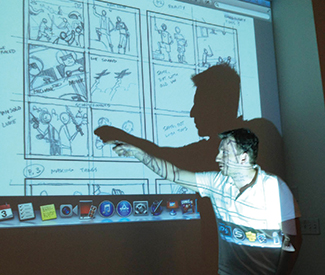
CAREERS AND ED Longtime Bay Area comics superhero Justin Hall basically wrote the textbook on LGBT comics-as-artform (No Straight Lines: Four Decades of Queer Comics, Fantagraphics, 2011) and just came back from a trip to Southeast Asia, where he taught Buddhist monks to express themselves via comic strips.

So when the California College of the Arts launched its new MFA program in comics, Hall was a natural pick to be among the first professors to teach the art, craft, and history of graphic storytelling on a graduate level. The two-year (with summer sessions) 60-student, low-residency program features classes, workshops, talks, and mentorship opportunities designed to immerse students in comics and begin to build an academic base for their study. It looks really cool.

SFBG How do you form a teaching curriculum for something like comics? 

Justin Hall I teach the History and Cultural Impact class during the program’s first summer session. It’s a pretty intense class; for three hours a day I give lectures on the artistic and political history and cultural diversity of the art form, and hold critical discussions on selected readings.

We cover everything from the remarkable rise of the comic strip in the early American newspapers; to the explosion of manga in post-WWII Japan; to the Comics Code Authority and how it wiped out the majority of American romance, horror, and crime comics in the 1950s; to the reimagining of the superhero in the Silver Age; to the development of the competing “clean line” and “comic dynamic” styles in Franco-Belgian comics; to the outrageous work of the underground comix creators, many of them who based here in San Francisco.

I’ve taught some great undergraduate comics classes over the years, but the graduate students are engaged on a different level. I can lecture for hours on the subversive aspects of Wonder Woman, the influences of Japanese woodblocks on Tintin comics, and the artistic legacy of Little Nemo in Slumberland, and their brains don’t melt. They just ask for more. I love it! It’s a slice of geek heaven.

SFBG What’s the homework like? 

JH Over the course of the two years and three Julys, the students will have the majority of work finished on a book-length graphic novel or comics collection, which they can then self-publish on the web or in print, or take to publishers. That’s in addition to individual workshop and online assignments.

SFBG What kind of career opportunities are there for graduates who aren’t immediately contracted to Marvel? 

JH We certainly hope that our graduates find success as creators of comics and graphic novels. There is an exciting expansion of material happening right now in North America, moving beyond the traditional superhero stories and into every genre. While comics are certainly no get-rich-quick scheme, they can allow creators to develop their story ideas with complete control, which can result in a property like The Walking Dead.

Outside of the traditional comic book market, book publishers are now interested in graphic novels, as evinced by the success of works like Alison Bechdel’s bestselling Fun Home. The internet is opening up new territories of creative and professional expansion;

we’re also going to see comics academia snowball, and our graduates will be poised to get those teaching jobs. Comics classes prove extremely popular across the board at high schools, community centers, colleges, and universities, and I have no doubt we’ll see more programs like CCA’s pop up.

Finally, the skills developed at the MFA in Comics don’t just apply to comics themselves; after all, comics require a complex toolbox of writing, illustration, design, calligraphy, color theory, etc. Ultimately, what we’re teaching is how to develop narrative in both verbal and visual ways, and those skills will prove extremely useful in a world that increasingly blends the two. I imagine many of our graduates will wind up in related fields such as animation, advertising, book art, and design, but with a unique perspective on storytelling and communication.

Our plan ends, of course, with comics conquering the world!

For more info, see www.cca.edu/academics/graduate/comics


Guardian forum sparks lively discussion

26

We had a packed house last night for our community forum on the future of the Bay Guardian and the progressive movement in the Bay Area, with lots of great input, advice, gratitude, and just a bit of acrimony. It was even more informative and inspiring than we had hoped for and we appreciate everyone coming out and speaking so frankly.

As Sup. David Campos (who just announced his candidacy for the California Assembly) said last night, “The Bay Guardian has been the conscience of the [progressive] movement and I think it’s important for the Guardian to continue to play that role,” and that’s a role that the new generation of Guardian leaders will continue playing while also reaching out to a new generation of Guardian readers.  

We’ll have a full rundown in next week’s paper, along with an extended letters to the editor section to make up for shutting down online comments this week, so for now let me just offer a brief overview. In addition to Campos, the crowd of around 100 people included Sup. John Avalos, Sheriff Ross Mirkarimi, and City College of San Francisco Trustees Rafael Mandelman and Chris Jackson.

The crowd also included Todd Vogt, CEO of the San Francisco Print Media Company, who got an earfull from progressive activists Gabriel Haaland, Chris Cook, and others over the abrupt departure of longtime Guardian Editor Tim Redmond in June, with concerns expressed over the Guardian’s credibility and editorial autonomy.

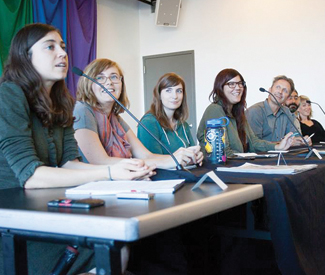
Both Vogt and those on the Guardian’s panel — which included (from right in the photo above) Publisher Marke Bieschke, Editor Steven T. Jones, Music Editor Emily Savage, Senior A&E Editor Cheryl Eddy, Art Director Brooke Robertson, and News Editor Rebecca Bowe — emphasized that the Guardian has full editorial autonomy and control over what we cover and how, and who we endorse. The mission of the paper — “To print the news and raise hell,” and to be an indispensible guide to Bay Area arts and culture — hasn’t changed.

We’re all still digesting everything what was said last night (both at the forum in the LGBT Center and an informal session afterwards at Zeitgeist that went late), and we will be factoring it into what we do and continuing this ongoing conversation with all of you. We also welcome everyone’s input and advice, which you can send to us at news@sfbg.com.

A special thanks to Alix Rosenthal for moderating the public input — and to everyone who came — for somehow keeping the comments and questions clear, concise, and constructive.

Onward!

UPDATE: Journalist Josh Wolf has written an excellent summary of the forum here at on the Journalism That Matters website. Check it out.

8/6 UPDATE: We just turned comments back on after shutting them off for a week-long experiment.

Alerts: July 31 – August 7, 2013

0

Whose paper? Your paper! A community forum about the Guardian LGBT Community Center, 1800 Market, SF. tinyurl.com/lvl9vla. 6-8pm, free. Join the staff of the SF Bay Guardian for a community forum on the future of San Francisco’s oldest alternative newsweekly. Nearly a month after longtime editor-publisher Tim Redmond left the newspaper after 31 years, Guardian staff members have reached an agreement with our parent company ensuring full editorial autonomy and control. This forum will help us determine where to go from here. We will seek community input, engage in dialogue with our readers, and discuss the Guardian’s important role in the Bay Area media and political landscape as we work to rejuvenate the newspaper and reach a new generation of readers.


Hear Alice Walker’s deliciously enlightened poetry and prose First Congregational Church of Berkeley, 2345 Channing, Berk. tinyurl.com/lqcsfph. 7:30pm, $15–$18. Internationally celebrated author, poet and activist Alice Walker will speak at this benefit for KPFA Radio and read from her recent works, The Cushion in the Road: Meditation and Wandering as the Whole World Awakens (Essays); and The World Will Follow Joy: Turning Madness Into Flowers (New Poems) Walker has written seven novels, four collections of short stories, four children’s books, and many volumes of essays and poetry. She’s best known for The Color Purple, the 1983 novel for which she won the Pulitzer Prize in Fiction. This event will be hosted by Brian Edwards Tiekert.

THURSDAY 1

Rally for a human rights attorney stuck in prison with cancer Federal Building, 90 Seventh St., SF. lynnestewart.org. Noon-2pm, free. Roughly 10 years ago, the Guardian wrote about the case of Lynne Stewart, a National Lawyers Guild member and radical human rights attorney who dedicated her career to representing unpopular clients who faced civil liberties violations. She was convicted of providing material support to terrorists in 2005, an accusation supporters say is false, and was eventually sentenced to federal prison for 10 years. Now age 73, Stewart is battling cancer behind bars and has petitioned the Federal Bureau of Prisons for compassionate release. The request has been denied, and so supporters are rallying to show their support for Stewart.

FRIDAY 2

Panel: How to win the environment Nourse Theater, 275 Hayes, SF. tinyurl.com/n77mqsv. 7pm, $10. Want to know how the build “a winning movement” on climate change? If so, these folks know what they’re talking about. Bill McKibben, founder of 350.org, will speak on this panel along with Gopal Dayaneni of the Oakland-based Movement Generation Justice and Ecology Project, Rev. Sally Bingham of Interfaith Power & Light, Katy Roemer of the California Nurses Association, and Antonia Juhasz, author of The Tyranny of Oil and Black Tide.

Real men deconstruct manliness

There was an interesting moment at last night’s Harvey Milk LGBT Democratic Club’s Annual Dinner and Gayla, when Pentagon Papers leaker Daniel Ellsberg, all dolled up in a hot-pink feathered boa, reflected on Pfc. Bradley Manning’s “manliness” during his award acceptance speech on the gay whistleblower’s behalf.

When Manning, who sometimes reportedly self-identified as female and went by Breanna, courageously exposed government secrets, it exemplified what “a real man” would do, Ellsberg said. Yet when Lyndon B. Johnson (disastrously) vowed to forge ahead in Vietnam, it was partly because he feared being seen as “an unmanly man,” he added, all of which throws into question the very concept of masculinity. Earlier this year, Ellsberg and his wife, Patricia, joined the Bradley Manning contingent of the San Francisco Pride Parade to represent Manning following the heated debate over the Pride board’s decision to rescind Manning’s Grand Marshal appointment.

Meanwhile, deconstructing what it means to “be a man” is apparently becoming a thing. On a different end of the spectrum, Jennifer Siebel Newsom, wife of Lt. Gov. Gavin Newsom, surpassed her $80,000 target on Kickstarter for a film delving into the “crisis” surrounding masculinity. The pitch starts with a clip of the Newsoms’ blond, blue-eyed tot, Hunter, while mom questions whether he’ll grow up to be “caring and compassionate” or “a depressed, disconnected portrayal of masculinity.”

We dig the concept and all, but jeez – was it really necessary for an affluent celebrity married to one of the most powerful men in California to use Kickstarter?

New Guardian leadership wants your input

0

San Francisco Print Media Company last week named Marke Bieschke as publisher and Steven T. Jones as editor of the San Francisco Bay Guardian, elevating two longtime Guardianistas into the top spots, guaranteeing them editorial autonomy, and letting them work with the community to chart its future.

As a first step in that process, the Guardian will hold a public forum on July 31 from 6-8pm in the LGBT Center, 1800 Market Street, to solicit input and discuss the Guardian’s unique role in the Bay Area’s political and journalistic landscape. Helping to coordinate the forum is Guardian writer Rebecca Bowe, who has accepted the position of news editor. The forum and subsequent discussions will form the basis for a strategic plan that will help guide the Guardian into a new era.

The newspaper’s future was uncertain a month ago following the abrupt departure of longtime Guardian Editor-Publisher Tim Redmond in a dispute with the owners over layoffs and the Guardian’s autonomy. The company’s Vice President of Editorial Operations Stephen Buel, who is also editor of the San Francisco Examiner, was named interim Guardian publisher and Bieschke its interim editor.

Heeding concerns in the community about whether the Guardian would remain an independent, progressive voice in San Francisco, Bieschke and Jones negotiated terms with SF Print Media Company CEO Todd Vogt that guarantee them full editorial control, the addition of three new advertising sales positions and another staff writer, and guaranteed minimum staffing levels during a rebuilding period.

Bieschke and Jones, who are in their early 40s and have been with the Guardian for around 10 years each, say they are excited for the opportunity to work collaboratively with Guardian staff and its community to rejuvenate the paper, attract new readers, and achieve economic sustainability.

“Losing Tim’s leadership was hard on all of us at the Guardian, and we struggled with what to do next. But ultimately, the Guardian plays such an important role in San Francisco — particularly now, at a pivotal moment for this gentrifying city and its progressive movement — that we wanted to find a way to keep that voice alive, maintain our credibility, and reach out to a new generation of Bay Area residents,” Jones said.

The San Francisco Bay Guardian was founded in 1966 by Jean Dibble and Bruce B. Brugmann, who continues to blog and serve as editor-at-large for the Guardian. The couple retired from regular duties when the financially troubled paper was sold to Canadian investors headed by Vogt in the spring of 2012, a deal engineered by Redmond, whose writing is always welcome in the pages of the Guardian as he pursues a new media venture.

“I’m stoked to bring a different energy and openness to innovation to the Guardian, while respecting our legacy and strengthening our bonds with the progressive, alternative community,” Bieschke said. “Obviously, Steve Jones and I stand on the shoulders of giants, and we’re so grateful to our Guardian family, past and present, for blazing a trail for world class progressive journalism, arts and culture coverage, and community-building in the Bay Area. In that spirit, I’m eager to reconnect with our readers and partner with them to amplify the Guardian voice and continue to change the Bay Area for the better.”

Vogt said he’s excited by the prospects of new generation of Guardian leadership: “I’m happy about this. I think it’s appropriate that two recognized leaders in the progressive community are in charge of the Guardian and I look forward to seeing what they do with it.”

Years of cutbacks have distilled the Guardian newsroom down to just a few excellent journalists, but all say they’re excited for the chance to rejuvenate the paper, build its readership and revenues, and work more closely with the community.

“We all hope you’ll help us to guard San Francisco’s values, appreciating all of its best cultural, artistic, and culinary offerings in the process,” Jones said. “We love the San Francisco Bay Area, in all its messy urban glory, and we think it’s worth fighting for.”

After Oscar, after Trayvon…

49

rebecca@sfbg.com

Even before Cephus “Uncle Bobby” Johnson picked up the phone on Feb. 27, 2012, he wasn’t having an easy day. His nephew, Oscar Grant, would have celebrated his 26th birthday on that date if he had not been killed by a gunshot wound on Jan. 1, 2009.

Grant was shot by BART police officer Johannes Mehserle while lying face down on a train platform, an incident that was caught on film, prompted riots in Oakland, drew international scrutiny, and became the subject of the award-winning film Fruitvale Station by Oakland filmmaker Ryan Coogler.

In the years since Grant’s death, Johnson and his wife, Beatrice X, founded the Oscar Grant Foundation to develop a support network for families who’ve lost loved ones due to police violence. It was his involvement in this work that led Johnson to be contacted that day, and informed that a 17-year-old boy named Trayvon Martin had been gunned down in Florida one day earlier.

It wasn’t a police shooting but nevertheless, “We knew at this point that we had to go to Florida,” Johnson recalled. “What we’ve decided is that whenever a family experienced that, we would definitely try and get to them.”

Fast forward to July 13, almost exactly three years after violent protests erupted in Oakland following the news that Mehserle, who was charged with second degree murder, had been convicted of involuntary manslaughter instead. A new wave of demonstrations flared up as word spread that George Zimmerman, the neighborhood watch volunteer who killed Martin, had been acquitted.

“We weren’t surprised,” Johnson, who returned to Florida last month to observe the jury selection process for Zimmerman’s trial, told the Guardian. “But it was still painful.”

The verdict in this high-profile case has brought discussions about racial profiling and unequal treatment in the criminal justice system to the forefront. Even President Barack Obama touched on the theme in comments to White House reporters on July 19, saying, “Trayvon Martin could have been me 35 years ago.”

At the national level, new findings on “implicit bias” — unconscious prejudices that research in psychology has shown can persist in individuals (including poorly trained police officers), even if they consciously reject racial stereotypes — has started to inform policy debates around racial profiling.

“Policy needs to recognize that implicit bias exists,” Maya Wiley, founder and president of the New York City-based Center for Social Inclusion, told us. “Rep. John Conyers introduced a bill last year to prohibit racial profiling in law enforcement. That bill, if made law, would collect data on stops by race, as well as provide resources for training. That is a step in the right direction.”

But things get complicated, Wiley says, because “research shows that people of color, women, the elderly, may all experience discrimination as a result of implicit bias. There is no remedy in the law for this. … I think what is important now is to fight Stand Your Ground Laws which empower people to act on their implicit biases.”

At a July 16 rally held on the steps of San Francisco City Hall, Rev. Malcolm Byrd, pastor of San Francisco’s First A.M.E. Zion Church, illustrated his point about racial profiling by donning a hoodie and sneakers at the rally.

“I wanted to come looking suspicious,” he explained. “I wanted to give you an image that America has of young black men. I look suspicious. This is my country. I love my country. Yet, I look suspicious.”

Last year, Mayor Ed Lee’s proposal to introduce a stop-and-frisk policy, which would have allowed police officers to randomly stop individuals who appeared to be suspicious in an effort to get weapons off the streets, was abandoned in the face of widespread community concern.

Officers who undergo training at the San Francisco Police Department Academy must complete 52 hours of “cultural diversity” training, according to SFPD spokesperson Sgt. Dennis Toomer, which includes a mandatory four-hour intensive geared toward preventing racial profiling. State law mandates just 16 hours for such training for law enforcement agencies, Toomer told us.

But despite supplemental police training and the efforts of grassroots organizations that carefully monitor police activity, the Bay Area has witnessed a number of fatal shootings at the hands of police since Grant’s death, and many draw a link between these cases and the broader issue of racial profiling.

When asked about the outreach efforts of the Oscar Grant Foundation, Johnson began to rattle off a long list of names — mostly young black men, from places ranging from Oakland to Vallejo to Stockton to San Leandro — who were killed by police, and whose families his organization has reached out to.

They have also been in touch with several families in New York City who lost loved ones in similar situations, Johnson said. In many cases, the individuals were killed despite being unarmed, and officers later explained their actions by saying they’d mistakenly believed the shooting victims had firearms.

After several years of taking an up-close look at the investigative and legal proceedings that unfold in the aftermath of officer-involved shootings, Johnson has reached the conclusion that from case to case, “The playbook is pretty much the same. The officer first alleges he felt threatened — it’s all about the thought process of the officer. It’s always found to be justifiable because the officer feared for his life.”

One long-term goal of the Oscar Grant Foundation is to build up a coalition that can mount a meaningful challenge to the California Peace Officers Bill of Rights, a law enacted some 30 years ago that affords special protections for law enforcement officers facing misconduct charges. Johnson and others are critical of provisions such as officers’ rights to keep confidential information out of their personnel files, which can prevent significant information from being disclosed during a criminal trial. Meanwhile, others throughout the Bay Area seem primed to push for change in the wake of the Zimmerman verdict. “On Sunday, every black church in the nation was talking about what? Trayvon Martin, and what we need to do,” Andrea Shorter, a member of the San Francisco Commission on the Status of Women, said during the July 16 rally. “Two weeks ago, and we were all standing here as San Franciscans to rejoice … because we knew that LGBT people could be treated as first class citizens. The job is not done.” San Francisco NAACP President Rev. Amos Brown, who organized the rally, vowed that his organization “will push for a civil suit to bring this Zimmerman gentlemen to justice.” The national NAACP is petitioning U.S. Attorney General Eric Holder to open a civil rights case against Zimmerman. Sups. London Breed, Malia Cohen, Jane Kim, and David Campos also delivered speeches at the rally. “For the first time in my life, after growing up and going to funeral after funeral after funeral after funeral, of all boys and black men throughout my life, I see people in this audience who are not African American, who are just as hurt as I am, who are just as sick of this as I am,” Breed said. “And we are all in this together. We have got to work together if we want to change it.”

Alerts: July 24 – 31

0

WEDNESDAY 24

Milk Club Dinner & Gayla Roccapulco Supper Club, 3140 Mission, SF. http://milkdinner2013.eventbrite.com. 7-10pm, $40 and up. Join the Harvey Milk LGBT Democratic Club in celebrating 37 years of queer progressive leadership. Featuring U.S. Army Lieutenant Dan Choi, staunch advocate for the successful repeal of the U.S. military’s “Don’t Ask, Don’t Tell” policy affecting LGBT service members, as keynote speaker. Milk Club honorees include whistleblower Bradley Manning, queer activist group ACT UP, the San Francisco Gay Men’s Chorus and others.

THURSDAY 25

Forum: The worst international trade deal you’ve never heard of First Unitarian Universalist Society of San Francisco, 1187 Franklin, SF. 7-9pm, free. You may or may not have heard of the Trans-Pacific Partnership, a multinational “free-trade” agreement that’s being hashed out largely behind closed doors. Why should you are? Here’s a hint: It’s being orchestrated by the likes of Chevron, Halliburton, Walmart, and major financial firms among others. Join experts in globalization and learn about international resistance to this shady trade deal.

SATURDAY 27

Party with Meiklejohn Civil Liberties Institute 1715 Francisco St., Berk. (510) 848-0599. 1:30-4pm, donation requested. This benefit gathering for a unique think tank on human rights will include a special treat: Oakland attorney Walter Riley will deliver a talk on “getting the Oakland Police Department to obey the law.” And just in case you require more discussion on our eroding civil liberties to make your hair stand up, there will also be discussion about how drones violate the California Constitution.

TUESDAY 30

Teach-in: immigration and labor ILWU Local 34 union hall, 801 2nd St., SF. (415) 362-8852, http://www.lclaa.org. 7-9pm, free. Join the International Longshore and Workers Union for this Laborfest event, offering a concise history of labor and immigration in California. The history of the Bracero Program is key to understanding the current Congressional debate about immigration reform. Featuring members of the Association of Braceros of Northern California. Al Rojas, a labor organizer and with Labor Council For Latin America Advancement, LCLAA, of Sacramento, will discuss the continuing struggle of California Braceros for justice and the connection of the struggle for immigrant rights.


Call to action issued at San Francisco vigil for Trayvon Martin

A group of African American community leaders gathered outside San Francisco City Hall July 16 for a rally and candlelight vigil in memory of Trayvon Martin, the 17-year-old black youth who was gunned down in Sanford, Florida by George Zimmerman. Protests have flared up throughout the nation since Zimmerman was acquitted on a second-degree murder charge this past weekend, spurring renewed dialogue about race.

Rev. Amos Brown, president of the San Francisco NAACP, introduced a host of speakers including pastors from black churches, the San Francisco Interfaith Council, members of the Bayview Hunters Point Community, and others. While speakers touched on a variety of topics including San Francisco’s dwindling black population and the economic pressures facing those unable to find work in an increasingly unaffordable city, much of the discussion revolved around a need to mount a significant challenge against racial profiling and to seek a different outcome in Zimmerman’s case.

The NAACP “will use all of our legal and moral resources at the national level, and will push for a civil suit to bring this Zimmerman gentlemen to justice,” said Brown. The national NAACP has created a petition urging U.S. Attorney General Eric Holder to open a civil rights case against Zimmerman.

Sups. London Breed, Malia Cohen, Jane Kim, and David Campos also delivered speeches at the rally.

“The injustice in Florida is a threat to all of us,” Breed said. “The injustice in Florida is a threat to African American boys. The fact that we have to look our children in the eye and explain why somebody can kill a kid and get away with it and not be charged and walk out of the courtroom a free man, how do you explain that?”

Rev. Malcolm Byrd, pastor of First A.M.E. Zion Church in San Francisco, illustrated his point about racial profiling by wearing a hoodie, jeans, and sneakers to the rally. He opened with comments referencing how Martin was deemed “suspicious” due to his appearance. His comments also alluded to the idea that Zimmerman was allowed to walk free in Florida, the same state where a woman was sentenced to three years in prison for shooting and killing a pit bull.

Despite the very real sense of outrage that many people expressed, some spoke about using the Zimmerman verdict as an opportunity to push for broader social change.

“In San Francisco, we know how to lead the way,” said LGBT activist Andrea Shorter. “On Sunday, every black church in this nation was talking about what? Trayvon Martin.” Shorter added that community members had succeeded in halting a proposal to introduce a stop-and-frisk policing policy that had the potential to increase racial profiling, and that there was momentum in place for a national effort to “dismantle racist profiling policies” and repeal stand-your-ground laws.

“For the first time in my life, after growing up and going to funeral after funeral after funeral after funeral, of all boys and black men throughout my life, I see people in this audience who are not African American, who are just as hurt as I am, who are just as sick of this as I am,” Breed noted. “And we are all in this together. We have got to work together if we want to change it.”

Cohen sounded a similar note. “I think one of the things that have transpired now that the verdict has come out is that there has been a serious call to action,” she said.

“Being black in America is to be the beneficiary of great inheritance,” said Obai Rambo of the San Francisco Black Young Democrats. “History will mark this day as one of the greatest opportunities for building equality and justice.”

Photographs by Justin Benttinen. Audio slideshow by Rebecca Bowe.

New generation of Guardian leadership seeks community partnership

52

San Francisco Print Media Company has named Marke Bieschke as publisher and Steven T. Jones as editor of the San Francisco Bay Guardian, elevating two longtime Guardianistas into the top spots, guaranteeing them editorial autonomy, and letting them work with the community to chart its future.

As a first step in that process, the Guardian will hold a public forum on July 31 from 6-8pm in the LGBT Center, 1800 Market Street, to solicit input and discuss the Guardian’s unique role in the Bay Area’s political and journalistic landscape. Helping to coordinate the forum is Guardian writer Rebecca Bowe, who has accepted the position of news editor. The forum and subsequent discussions will form the basis for a strategic plan that will help guide the Guardian into a new era.

The newspaper’s future was uncertain a month ago following the abrupt departure of longtime Guardian Editor-Publisher Tim Redmond in a dispute with the owners over layoffs and the Guardian’s autonomy. The company’s Vice President of Editorial Operations Stephen Buel, who is also editor of the San Francisco Examiner, was named interim Guardian publisher and Bieschke its interim editor.

Heeding concerns in the community about whether the Guardian would remain an independent, progressive voice in San Francisco, Bieschke and Jones negotiated terms with SF Print Media Company CEO Todd Vogt that guarantee them full editorial control, the addition of three new advertising sales positions and another staff writer, and guaranteed minimum staffing levels during a rebuilding period.

Bieschke and Jones, who are in their early 40s and have been with the Guardian for around 10 years each, say they are excited for the opportunity to work collaboratively with Guardian staff and its community to rejuvenate the paper, attract new readers, and achieve economic sustainability.

“Losing Tim’s leadership was hard on all of us at the Guardian, and we struggled with what to do next. But ultimately, the Guardian plays such an important role in San Francisco — particularly now, at a pivotal moment for this gentrifying city and its progressive movement — that we wanted to find a way to keep that voice alive, maintain our credibility, and reach out to a new generation of Bay Area residents,” Jones said.

The San Francisco Bay Guardian was founded in 1966 by Jean Dibble and Bruce B. Brugmann, who continues to blog and serve as editor-at-large for the Guardian. The couple retired from regular duties when the financially troubled paper was sold to Canadian investors headed by Vogt in the spring of 2012, a deal engineered by Redmond, who is always welcome in the pages of the Guardian as he pursues a new media venture.

“I’m stoked to bring a different energy and openness to innovation to the Guardian, while respecting our legacy and strengthening our bonds with the progressive, alternative community,” Bieschke said. “Obviously, Steve Jones and I stand on the shoulders of giants, and we’re so grateful to our Guardian family, past and present, for blazing a trail for world class progressive journalism, arts and culture coverage, and community-building in the Bay Area. In that spirit, I’m eager to reconnect with our readers and partner with them to amplify the Guardian voice and continue to change the Bay Area for the better.”

Vogt said he’s excited by the prospects of new generation of Guardian leadership: “I’m happy about this. I think it’s appropriate that two recognized leaders in the progressive community are in charge of the Guardian and I look forward to seeing what they do with it.”

Bieschke joined the Bay Guardian in 2005 as culture editor, coming on staff after covering nightlife in his Super Ego column, and he was made managing editor in 2010. His background includes online editorial and management level positions at Citysearch and PlanetOut Partners, as well as managing a bookstore in the Inner Richmond.

“I’m also excited to help diversify San Francisco’s media environment by bringing two decades of queer Arab-American activist experience to the role,” Bieschke said.

Jones is a Northern California native who was hired as the Guardian’s city editor in 2003, coming from Sacramento News & Review, where he served as news editor. Before that, he was a full-time staff writer for two other alternative newsweeklies, two daily newspapers, and one community weekly, all in California, since graduating from Cal Poly-SLO with a journalism degree in 1991.

Years of cutbacks have distilled the Guardian newsroom down to just a few excellent journalists: senior editor Cheryl Eddy, who has shaped the paper’s film and arts coverage since 1999; Bowe, an award-winning investigative reporter who returned to the Guardian in January from a one-year stint with the Electronic Frontier Foundation; and Music Editor Emily Savage, who knows the beats of this city better than anyone; with Art Director Brooke Robertson leading the Guardian’s creative presentation.

“We all hope you’ll help us to guard San Francisco’s values, appreciating all of its best cultural, artistic, and culinary offerings in the process,” Jones said. “We love the San Francisco Bay Area, in all its messy urban glory, and we think it’s worth fighting for.”

Jazzie Collins: forever fighting the good fight

24

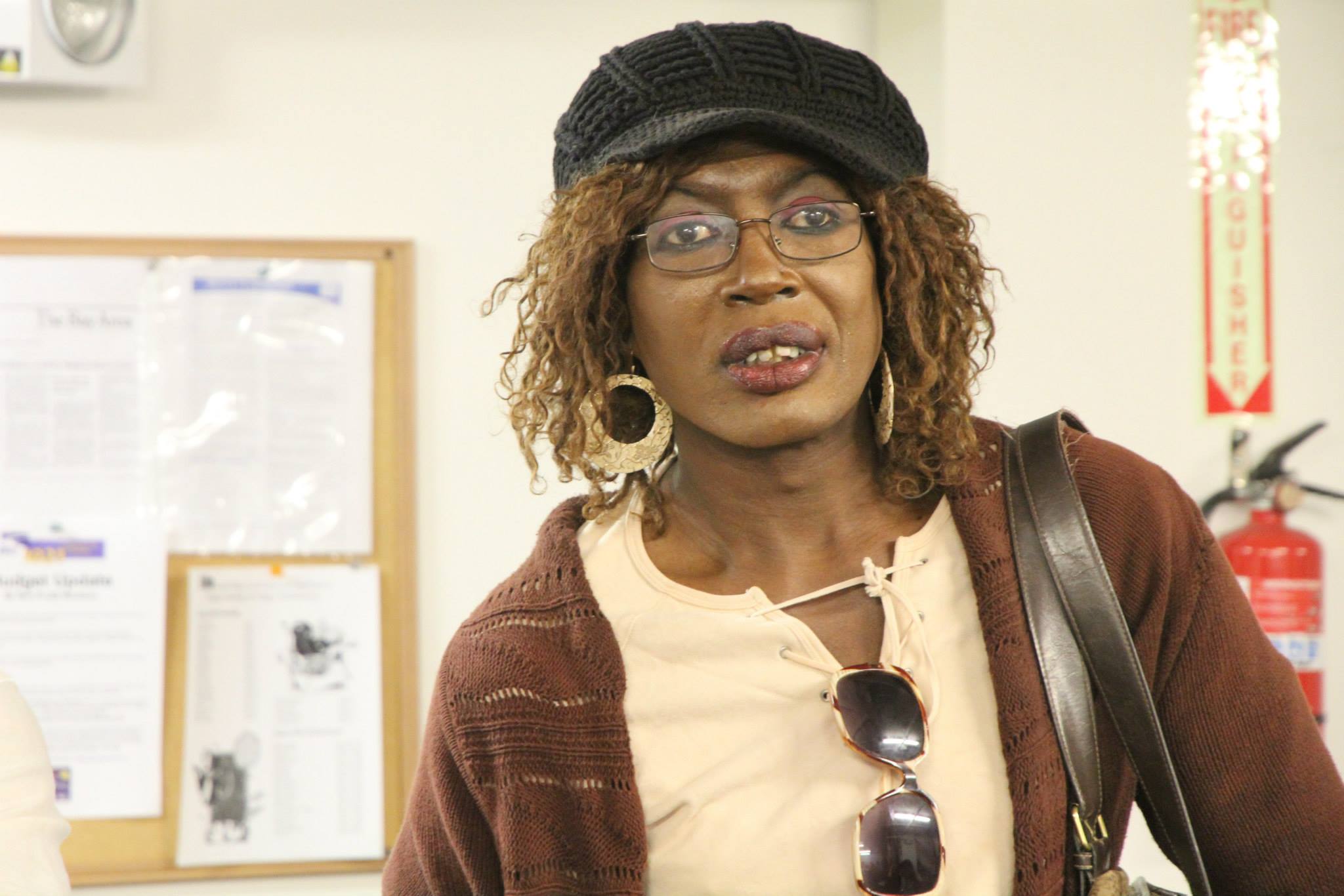
Dedicated trans rights and economic equality activist Jazzie Collins passed away this week. She was honored in June in the State Assembly for LGBT History Month, and was on the board of the annual Trans March, among many other honors and activities. There will be a legacy party and fundraiser for Jazzie’s end-of-life expenses at El Rio tomorrow, Sat/13, 3pm-8pm. Below is a remembrance from her good friend Tommi Avicolli Mecca.

Some people die, but they remain with you for the rest of your life. Death just can’t keep them away.

Such a person is Jazzie Collins, African American transgender woman and tireless fighter for social and economic justice for tenants, seniors, people with disabilities, the homeless, those without healthcare, LGBT folks, and so many others. An organizer of the annual Trans March and co-chair of the city’s LGBT Aging Policy Task Force, she recently received an award from the LGBT caucus of the state assembly for her many years of activism.


Born in Memphis, Jazzie, 54, died in the early morning hours of July 11 at Kaiser Hospital, leaving a huge hole in the heart of San Francisco.

I don’t remember when I first met Jazzie. I’m pretty certain it was at one of the countless demos in the late 90s we attended to protest the displacement of working-class and poor people during the dot-com boom. She was involved in so much of the incredible activism happening in the Mission at that time, whether it involved feeding people from Mission Agenda’s food pantry, planning direct action with the Mission AntiDisplacement Coalition, or helping elect fellow activist Chris Daly as the neighborhood’s district supervisor.

Our paths crossed often, sometimes at the monthly meetings of Senior Action Network (now Senior Disability Action) where she worked, or a tenants rights demo on the steps of City Hall just before we went inside to take advantage of our two minutes at the mic during public comment. Jazzie was never at a loss for words.

One of the original members of QUEEN (Queers for Economic Equality  Now), she helped organize several protests, including one outside the store run by the Human Rights Campaign in the Castro. We were furious that the national gay rights group pushed to exclude transgender people from ENDA (Employment Non-Discrimination Act), the federal gay employment rights bill.

When a call went out from the Board of Supervisors for its newly formed LGBT Aging Policy Task Force, Jazzie called me and told me in no uncertain terms that I had to apply. She had already sent in her application and wanted to make sure another strong housing advocate was on the task force.

We sat together at the hearing, waiting for our chance to sell ourselves to the supervisors. After we were both appointed, and as we left the room, Jazzie started talking about what she wanted the task force to do, especially on housing issues. She was always a woman with a vision. Or a cause.

Jazzie called me whenever there was something to be done. She’d say, “We gotta do something about this.” It didn’t matter how busy I was. I knew I could never say no to her.

Jazzie, my sister, wherever you are now, I know you’ll always be beside me when I’m out there fighting the good fight.

Hey, baby

0

culture@sfbg.com

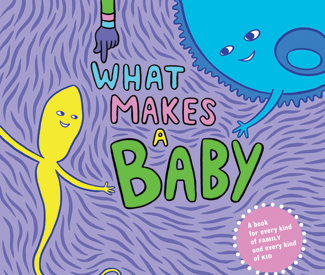
LIT A new children’s book with a social justice, all-inclusive approach to reproduction? To anyone who might question the need for such a thing, look no further than Toronto-based sexual health educator and writer Cory Silverberg‘s enormously successful crowdfunding campaign to get it published: $65,000 in one month. Not too bad to kickstart a picture book, eh?

Silverberg, along with illustrator Fiona Smyth, noticed that the existing resources for parents to explain to preschool-aged children where they came from are by default heterosexual and gender binary-based, thus excluding many families and children. These books also don’t provide much guidance on topics like adoption or alternative fertilization methods. Silverberg’s fundraising campaign gave LGBT parents an opportunity to prove demand for a factual, age-appropriate, children’s book inclusive to all families regardless of how many people were involved, what the orientation, gender identity, or other make up of the family is, or how it came to be that way.

Parents in the Bay Area offered a lot of the support. Dr. Sonja Mackenzie, faculty at the Health Equity Institute and Center for Research and Education on Gender and Sexuality (CREGS) at San Francisco State University is a queer parent of two children, aged three and seven. Dr. Mackenzie started looking for resources about birth and reproduction when her daughter was two and she was pregnant with her second child. She and her partner sought out media providing age-appropriate but real information about reproduction that reflected their two-mom family structure. For years they found nothing.

Which is why when she saw the What Makes A Baby campaign, she pre-ordered copies for their daughter’s first grade class and their son’s preschool class. Dr. Mackenzie said her favorite parts of the book are the questions that ask children to reflect on “who helped bring together the sperm and the egg that made you?” — because of the possibilities for varied family structures that question allows for. That, she says, “is beyond what we have ever seen represented in children’s books.” She also notes the tear-jerker at the close of the book that asks, “Who was waiting for you to be born?” alongside a depiction of many and varied people surrounding a baby.

Bay Area backer Vicki Hudson, parent to two kids aged four and one, also started looking for books when her wife was pregnant with their second child. What Makes A Baby “enables many different types of families to feel represented. Our story was there.” She also appreciated the physiological accuracy of the preschool material. Hudson believes that using accurate reproductive terms empowers children.

Another family structure included in the story’s framework is that of a single parent household. Hilary Brooks of Berkeley is a single mother by choice, whose five-year-old daughter has a known sperm donor. Brooks was excited about the book because she was “ecstatic to see this entry for young children… it’s more accurate, includes everyone, and will not alienate many of the children it needs to reach.” Once she received her copy she was not disappointed, “I love that love is included in this book, and that it is reframed as love for every child from their family — instead of originating in hetero lovemaking, like it was in the sex-ed books I read growing up.” Which is a main premise of Silverberg’s work, to provide a sexual education resource that is straight friendly, but is also for the parents who don’t have anything else right now.

Are mainstream publishers beginning to recognize this demand? There’s still an overwhelming amount of stigma associated with any book related to alternative sexuality. Despite the actual facts of life, books like What Makes A Baby are still too risky for mainstream publishers, it seems. Or maybe it just takes a little pitch in a language they understand. After the outpouring of immediate and public financial support for Silverberg’s book, he was approached by multiple publishing houses, and has signed a three-book deal with Seven Stories Press, beginning with What Makes A Baby. Silverberg’s next volume might well be What Makes a Book Contract.

CORY SILVERBERG: WHAT MAKES A BABY AUTHOR RECEPTION AND “CROWDFUNDING FOR SEX” WORKSHOP

Fri/12, 7:30 reception, free. 8:30 workshop, $10-$50 sliding scale

Center for Sex and Culture

1349 Mission, SF.

(415) 902-2071

www.sexandculture.org

Possibly the coolest queer mental health concert tour ever

1

Accidental Bear Queer Music Summer Tour Benefit for LGBTQ Mental Health Services and Suicide Prevention. Now, that’s a mouthful.

“It’s the longest, most ridiculous title ever,” Accidental Bear blog owner and founder Mike Enders said in a Guardian interview.

It’s basically a really queer, really cool music concert series travelling to five cities with performances by Logan Lynn, Big Dipper, Conquistador, Darling Gunsel, and Rica Shay, who all put a different spin on the concept of “queer music.”

But it’s also a two-fer. It’s giving exposure to the bands playing while raising money to donate to LGBT foundations in support of mental health including the San Francisco-based Stonewall Project, the LAGay and Lesbian Center, Ali Forney Center, Pride Foundation, and Q Center.

“All of these people [performing] are up-and-coming and some people have been around longer than others,” Enders said. “I wanted to have people who are going to draw a crowd and each one of these bands has their own group or pull.”

There are some big characters and personalities performing, and it’s going to be a high energy show. It’s also something you don’t want to bring your grandma to.

“Parts of the show are going to be X-rated,” Enders said. “Not like, nude, but Big Dipper, he has a lot of songs about his private parts. His version of the twerking that’s going on, is a song he has out called ‘Dick Bounce.’”

The Accidental Bear Tour is going to be a fun, queer time that also aims to eliminate the stigma that surrounds mental health and bring awareness to the alarming rates of suicide in the LGBTQ community.
Enders has a personal connection to the cause as well.

“In 2007, I started having these out-of-the-blue horrible panic attacks. And, being someone who didn’t have a lot of money, that was uninsured, I couldn’t find a resource, couldn’t find anybody to help,” Enders said.

He went to LGBT-specific services that couldn’t help due to him being uninsured, or being put on the end of a waiting list.

“I ended up in the emergency room,” Enders said. “If you’re unaware of what’s actually happening with a panic attack, a lot of times people think they’re having a heart attack. It was just kind of an eye opener. Luckily, I had good support around me, but I just realized there’s a real lack in services.

“The fact is, everyone in their life has dealt with a mental health issue. It’s kind of embarrassing admitting it now. It’s weird with the stigma to it.”

Tickets start at $15, and are on sale now. The tour kicks off here in San Francisco on July 5 at Beatbox, and will travel to LA, Portland, Seattle, and finish in New York City on the 19th.

“This is something that the queer world is missing right now,” Enders said. “Everything right now’s like DJs and dance music.”

The Accidental Bear Tour features dance, rap, hip hop, and electro music – a little something for everyone.

It’s going to be a great, big, gay time, with awesome performances while simultaneously fighting for a good cause.

AB SUMMER TOUR

8pm, $15
Beatbox
314 11th St., SF.
www.accidentalbear.com

HOT PINK LIST 2013: HIP-HOP NATION

0

If anything will tip the scale when it comes to mainstream hip-hop’s acceptance of pansexual twerking in its midst (hi, Frank Ocean and Mykki Blanco), it will be the simple fact that this new class of queers just bnrings the game better: pops ass more profoundly, wears the shit out of some Hood By Air, and can channel Aaliyah, Slick Rick, and Le1f on the same track. In the Bay (site of many early LGBT hip-hop pioneers), queer rap shines: Monthly El Rio twerkfest Swagger Like Us and new party-on-the-block R U That Somebody spin vogue circles with 2 Chainz, and strong female rappers like Raw-G, Aima the Dreamer, and Micah Tron bang out sharp lyrics and catchy hooks. Those looking for more theoretical grounding found power this year at La Peña Cultural Cultural Center’s Hip Hop Beyond Gender event series, where intersectionalities of class, race, and gender joined in unstoppable flow.

Hip-Hop Nation: Aima the Dreamer, HOTTUB, Hawa Arsala, Yetunde Olagbaju, Tonia Beglari, DJ Jaqi Sparrow, Sky Madden, Raw G, Marco de la Vega, Kelly Lovemonster, DJ Boyfriend, davO, Matrixxman.

Photos by: Angela Dawn, Debbie Smith, Hawa Arsala/Browntourage, Aubrie Pick, Polaroid SF, Brian Moran, Shot in the City, Hannah Cairns, Robbie Sweeney, Molly Decoudreaux.

Supreme Court same-sex marriage decisions: DOMA invalidated, Prop 8 case dismissed, SF reacts [UPDATED]

27

Watch this space throughout the day for breaking news on the decision and reactions. Tonight there will be a celebration of the Court’s decisions at Castro and Market Streets at 6:30pm. (Join  the Guardian beforehand, 6-9 at the Pilsner in the castro, at its annual pre-Pride event.) 

DOMA INVALIDATED

The Supreme Court released its ruling this morning that the Defense of Marriage Act, which denies federal recognition of same-sex marriage, “is unconstitutional as a deprivation of the equal liberty of persons that is protected by the Fifth Amendment.”

“DOMA singles out a class of persons deemed by a State entitled to recognition and protection to enhance their own liberty,” according to the majority opinion. “DOMA’s principal effect is to identify a subset of state sanctioned marriages and make them unequal.” The Court voted 5-4, with Justice Kennedy, who wrote the majority opinion, as the decisive vote along the usual liberal/conservative lines. You can read the full opinion here

This means that same-sex marriages performed in states that have legalized such marriages will be recognized by federal law.  

PROP 8 DISMISSED ON STANDING

As for Hollingsworth v. Perry, the Prop 8 case, it was dismissed on standing, due to the fact that the State of California refused to defend the case that would uphold Prop 8 (which denied same-sex marriage).That meant private citizens were left to defend a state statute, which was unprecedented, and the Court refused to rule on those grounds.

We have never before upheld the standing of a private party to defend the constitutionality of a state statute when state officials have chosen not to. We decline to do so for the first time here,” the majority Court statement (which broke along the typical 5-4 line) said. That means there is no specific decision from the Court regarding Prop 8, and the previous ruling, by Judge Vaughan Walker and upheld by the Ninth Circuit Court, that invalidated Prop 8 as discriminatory, stands.

This may mean that same-sex marriages in California can resume as early as July.

You can read the full Prop 8 ruling here.

Scene this morrning at SF City Hall, with Mayor Ed Lee and Lt. Gov. Newsom. Photo by Dan Bernal.

[UPDATE] REACTIONS AT CITY HALL

Steven T. Jones reports from SF City Hall:

City Hall was totally packed at 7am when the US Supreme Court convened — tons of journalists, lots of couples, many signs in the crowd. Two screens were set up, one with a live blog from court chamber, the other with the CNN live feed. Huge cheers erupted at 7:11 when the decision was announced striking down DOMA and forcing the federal government to recognize the rights of same-sex married couples.  Then at 7:38, when the Prop 8 statement came down, the room went nuts. 

A moment later, an array of current and former city officials appeared at the top of the City Hall main staircase. Mayor Ed Lee and Lt. Gov. Gavin Newsom escorted a fragile Phyllis Lyon down the stairs — she, along with the late Del Martin, were the first same-sex couple to get legally married in California in 2004 — flanked by the rest of the city family, all with big smiles.

“Welcome to the people’s house of San Francisco,” Mayor Lee said, thanking the crowd “for sharing in this historic moment.”

“It feels good to have love triumph over ignorance,” he said.

At 7:44, City Attorney Dennis Herrera and Chief Deputy City Attorney Terry Stewart, who had been on the City Hall steps addressed reporters’ question on the legal details of the ruling, joined the crew to sustained applause as Lee recognized them. He then introduced Newsom, who in 2004 as San Francisco mayor allowed same-sex marriages to be performed, as “one person who used the power of this office to make history and show his love for the city.”

“San Francisco is not a city of dreamers, but a city of doers,” Newsom said. “Here we don’t just tolerate diversity, we celebrate our diversity.” He thanked Herrera and everyone who contributed to this moment. “It’s people with a true commitment to equality that brought us here.”

Newsom introduced Kate Kendall with the National Center for Lesbian Rights, who has led the coalition of groups that have push for marriage equality. She looked around the crowd and said, “Fuck you, Prop 8!”

The crowd roared, and she said that she had scanned the room for children, and promised to “put a dollar in the swear jar” if necessary. But she said that, “We have lived for too many years under that stigmatizing piece of crap.”

Then Herrera took the podium, turned to Newsom, and said, Now you can say, ‘Whether you like it or not!'” — a joking reference to Newsom’s same-sex marriage rallying cry, which some blamed for boosting the anti-same-sex marriage cause.

“We wouldn’t be here today if it wasn’t for Gavin Newsom’s leadership,” Herrera continued. ““I remember in 2004 when people were saying it was too fast, too soon, too much.”

But today, that long effort has been vindicated, Now, he said, “It’s about changing the hearts and minds of people and educating them.” He also pledged to continue the fight that began here in City Hall more than nine years ago: “We will not rest until we have marriage equality throughout this country.”

Gavin Newsom being interviewed inside City Hall. Photo by Steve Jones

Finally Stewart, who has argued cases related to San Francisco’s stand before both the US and California Supreme Courts, praised both the Prop. 8 and DOMA rulings and the precedents they set. “In the DOMA case decision, the Supreme Court expressed a stong equal protection philosophy…that will help legalize same sex marriage in other states.”

Three members of the Board of Supervisors were also invited by Kendell to address the huge City Hall crowd: Board President David Chiu and Sups. David Campos and Scott Wiener, the only two current supervisors who are gay.

Chiu noted that the bust of slain Sup. Harvey Milk is prominently positioned outside the Board Chambers, a reminder of the long struggle for gay rights that San Franciscans have led. “That work lives on today,” he said.

He added the hope that the work done here will ripple out of across the country because, he said, “As goes San Francisco, so goes California, so goes the rest of the country.”

Campos, an attorney who has long been in a committed relationship, said, “It’s a very emotional moment for those of us who are part of the LGBT community.” He said this Supreme Court ruling is the first time it has really acknowledged “that we are people and we have dignity,” and that the rulings sends a clear message to Congress that legislation like DOMA is unconstitionally discriminatory.

Wiener praised the resilience of the LGBT community, from the early days of enduring the AIDS crisis and fighting for federal support through the current campaign for marriage equality. And he cheered the fact that, “Those marriages that we see under the rotunda [in City Hall] will get a little more diverse.”

11:30 AM UPDATE: Style and substance

While Newsom strutted around like a proud peacock in front of City Hall — clearly the leading man in this epic story with the happy ending, much in demand by the television crews — Herrera and Stewart briefed various reporters on the details of the case that they had just won.

Gavin Newsom outside City Hall. Photo by Steve Jones.

“I wanted a merits ruling, but a standing ruling is a victory too,” Herrera told us, making the distinction between the court ruling that banning same-sex marriage is unconstitutional on the grounds of equal protection under the law — which it did not do — and the 5-4 ruling it did issue: that those who appealed the Ninth Circuit Court ruling invalidating Prop. 8 lack proper legal standing to do so.

The standing ruling leaves same-sex marriage opponents more wiggle room to argue that the ruling might only apply to the couples named in the suit, or in just the counties that took part, which also included Alameda and Los Angeles, positions they were already signaling in press statements.

But Herrera said that he would vigorously contest that kind of challenge, which he considers to be without merit, telling us, “The injunction is not limited in its scope.”

UPDATE: SFPD isn’t worried

Police Chief Greg Suhr, who attended the City Hall event, said the timing on the ruling during Pride Week couldn’t be better. “It’s nice that it all lined up for us,” he told us. “This town is going to rock ‘til the wheels come off.”

Asked whether he has any heightened security concerns about the Pride Parade in the wake of a ruling that is controversial to some, Suhr said that he’s not worried. He said SFPD is now fully staffed and all available personnel working this weekend, although he will try allow many of his gay and lesbian officers to join the celebration if they want.

“We’re going to police what’s likely to be the biggest party this city has ever seen,” Suhr said, adding that his policing philosophy is, “We plan for the worst and hope for the best.”