Kids

Supervisors propose increased funding for youth services

José-Luis Mejia says he’s seen a little bit of everything in his work with transitional-age youth.

A few have died suddenly; others wound up incarcerated. Then there are those who beat the odds by attending top-level universities, opening up their own businesses, or dedicating themselves to public service.

When a mentor interacts with youth aging out of foster care, Mejia said, “you don’t know what that young person is going through.” He himself had the experience of turning his life around as a young person after growing up in a violent household; he credits publically funded programs for at-risk youth with supporting his transformation.

As associate director of Transitional Age Youth San Francisco, Mejia was part of a grassroots coalition that has been working for about two years on crafting a measure that aims to increase funding for youth programs, seeking to give a boost to transitional-age youth services in particular.

The culmination of that effort was today’s introduction at the Board of Supervisors of a suite of new proposals to support youth programs, including a pair of charter amendments that will appear on the November ballot.

The first, sponsored by Sup. John Avalos with Sups. David Campos, Malia Cohen, Jane Kim, Norman Yee, and London Breed as cosponsors, would renew the existing Children’s Fund, renaming it the Children and Youth Fund, and increasing the property-tax set-aside that supports it from three cents per $100 of assessed valuation to five cents.

Throughout the room at a press conference held in City Hall today with members of the Board and a coalition of youth advocates, attendees sported hats with neon stickers that read: “Our kids are worth two cents.”

As part of this measure, funding would be designated for programs set up to aid “disconnected transitional-aged youth,” including homeless or disabled youth, unmarried parents, those who identify as LGBTQ or are aging out of foster care, and other specified categories. The amendment would also create a Commission on Children, Youth, and Their Families, to oversee the Department of Children Youth and their families.

“At the end of this process, I hope to have the support of eleven members of the board,” Avalos noted. However, members of the Board of Supervisors who are sponsoring the legislation have already received from pushback from Mayor Ed Lee, who has reportedly been pressuring supervisors not to support Avalos’ measure. (Lee’s press office did not return a call seeking comment.)

“As we all know, San Francisco is experiencing incredible economic activity,” Avalos said at this afternoon’s press conference. “We’re experiencing growth and speculation that is lifting many boats, but not lifting all boats. And some of the people who are not doing so well are children and families – we’ve seen a decline in our population of families with children, over the past few decades, and it’s time that we … put the resources forward that are going to make it possible for San Francsicans and families to find affordability here.”

A second, closely related charter amendment, carried by Sup. Jane Kim with Yee as a cosponsor, would renew the Public Education Enrichment Fund, eliminate its expiration date, and provide for universal access to early childhood education for kids between three and five years instead of starting at age four.

The Public Education Enrichment Fund and the Children’s Fund, created after being placed on the ballot in 1991, currently set aside over $100 million for children and youth in San Francisco. The funding sources would sunset if action were not taken to extend them.

Rep Clock: April 30 – May 6, 2014

0

Schedules are for Wed/30-Tue/6 except where noted. Director and year are given when available. Double and triple features marked with a •. All times pm unless otherwise specified.

ARTISTS’ TELEVISION ACCESS 992 Valencia, SF; www.atasite.org. $6-10. “Other Cinema:” “In and Out of Afghanistan,” Sat, 8:30.

BALBOA THEATRE 3630 Balboa, SF; cinemasf.com/balboa. $7.50-10. Super Duper Alice Cooper (Dunn, Harkema, and McFadyen, 2014), Thu, 7, 9:30. “Popcorn Palace:” School of Rock (Linklater, 2003), Sat, 10am. Matinee for kids.

CASTRO 429 Castro, SF; (415) 621-6120, www.castrotheatre.com. $8.50-11. •The Bride Wore Black (Truffaut, 1968), Wed, 7, and Obsession (De Palma, 1975), Wed, 9. •Daisies (Chytilová, 1966), Thu, 7:30, and Times Square (Moyle, 1980), Thu, 9. San Francisco International Film Festival, Fri. See complete schedule and ticket info at festival.sffs.org. •Pee-Wee’s Big Adventure (Burton, 1985), Sat, 3:45, 8:30, and It’s a Mad, Mad, Mad, Mad World (Kramer, 1963), Sat, 5:30. Frozen (Buck and Lee, 2013), Sun, 1. Presented sing-along style; advance tickets ($10-16) at www.ticketweb.com.

CHRISTOPHER B. SMITH RAFAEL FILM CENTER 1118 Fourth St, San Rafael; (415) 454-1222, www.cafilm.org. $6.50-$10.75. times. Super Duper Alice Cooper (Dunn, Harkema, and McFadyen, 2014), Thu and May 8, 7. For No Good Reason (Paul, 2013), May 2-6, call for times. Locke (Knight, 2014), May 2-6, call for times. Decoding Annie Parker (Bernstein, 2013), Sun, 7. This event, $12.

CLAY 2261 Fillmore, SF; www.landmarktheatres.com. $10. “Midnight Movies:” The Neverending Story (Petersen, 1984), Fri-Sat, midnight.

GOETHE INSTITUT SAN FRANCISCO 530 Bush, Second Flr, SF; goethe.de/ins/us/saf/enindex.htm. $5. •Jonas in the Jungle (Sempel, 2013), Wed, 6:30, and Animals of Art (Sempel, 2011), Wed, 8:40. With director Peter Sempel in person.

JEWISH COMMUNITY CENTER OF SF 3200 California, SF; www.jccsf.org. $25. “Mark Cantor’s Giants of Jazz on Film: Broadway to Hollywood and All That Jazz,” films featuring jazz performances, Sat, 8.

MECHANICS’ INSTITUTE 57 Post, SF; milibrary.org/events. $10. “CinemaLit Film Series: Comedy Tonight:” Groundhog Day (Ramis, 1993), Fri, 6.

MISSION CULTURAL CENTER FOR LATINO ARTS 2868 Mission, SF; www.missionculturalcenter.org. $15. Tamale Road: A Memoir from El Salvador (Villatoro, 2012), Fri, 7.

PACIFIC FILM ARCHIVE 2575 Bancroft, Berk; (510) 642-5249, bampfa.berkeley.edu. $5.50-9.50. “Film 50: History of Cinema:” After Life (Kore-eda, 1999), Wed, 3:10. San Francisco International Film Festival, through May 8. See complete schedule and ticket info at festival.sffs.org.

PARAMOUNT THEATRE 2025 Broadway, Oakl; www.ticketmaster.com. $18-29.75. “Project YouthView 2014: The Power of Youth in Film,” youth-created short films and more, Fri, 7.

ROXIE 3117 and 3125 16th St, SF; (415) 863-1087, www.roxie.com. $6.50-11. “Iran Via Documentaries:” Bassidji (Tamadon, 2009), Wed, 7. Next Goal Wins (Jamison and Brett, 2014), Wed, 7, 9; Thu, 9:30. The Unknown Known (Morris, 2013), Wed, 9:30. “PlayGround Film Festival,” short films adapted from plays by Bay Area writers, Thu, 6:45, 8:15. This event, $10-20. “Synesthesia Film Festival: Screening #2,” short films, Thu, 7. The M Word (Jaglom, 2013), May 2-8, 6:45, 9:15.

YERBA BUENA CENTER FOR THE ARTS 701 Mission, SF; www.ybca.org. $8-10. “Astonishing Animation: The Films of Hayao Miyazaki and Studio Ghibli:” Nausicaä of the Valley of the Wind (Miyazaki, 1984), Thu, 7:30; Sun, 5; Whisper of the Heart (Kondo, 1995), Sat, 7:30; Sun, 3:30; Kiki’s Delivery Service (Miyazaki, 1989), Sun, 1. *


Stalin: Darkness Visible

0

arts@sfbg.com

I remember the day I met J.Stalin, 10 years ago. He bounced into the Mekanix’s East Oakland studio, walked up to me, and shook my hand.

“I’m J.Stalin. I write and record two songs a day,” he said proudly. Rail-thin, barely 5 feet tall, he looked like a middle-schooler. While he’s thickened somewhat in adulthood, the pint-size rapper retains an air of adolescence that’s one of the keys to his enduring success. Kids in the hood love Stalin because he seems like them and his music speaks to them. He looks like what he once was, a d-boy on the corner slanging rocks. Yet his music is versatile, with a profound undercurrent of melancholy to his storytelling and a huge streak of ’80s R&B in his sound, both of which appeal to adults. Even without radio support, this potent combination has made him one of the most popular rappers not simply in Oakland but in the Bay Area, period, and when I hear a car roll up playing a local artist, more often than not these days, that artist is J.Stalin.

“Make sure you put that in,” Stalin says. “I’m the most played person on the streets in cars.”

It reminds me of our first meeting — but only a little, for, despite his youthful appearance, it’s hard to discern the eager youngster of a decade ago in the somber adult he’s become in his late 20s.

We’re sitting poolside in a middle-of-nowhere suburb where J’s tucked himself away with his girlfriend and 2-month-old son. I couldn’t imagine living out here, but it’s the perfect retreat for a rapper, away from the distractions of the hood. Coming from the cramped public housing of West Oakland’s Cypress Village, Stalin can appreciate the surrounding blandness in ways I can’t. And, of course, he’s on the road frequently, fresh from a sold-out West Coast tour with Husalah and Roach Gigz and about to embark on a series of appearances for his new album, S.I.D. (Shining In Darkness) (Livewire/Fontana), which will take him as far afield as Ohio.

https://www.youtube.com/watch?v=9ETUKFgYaEw

Named for his cousin, Sidney Malone, who died in 2008 at age 25 after suffering cardiac arrest during pacemaker surgery, S.I.D. showcases a different side of Stalin’s music than previous releases, even as it leans heavily on production from his longtime producers, the Mekanix, in addition to tracks by Mob Figaz maestro Roblo and HBK member P-Lo.

“With this record, I wanted to get back to making fun music,” he says. “When you come from the streets, and done been through hella shit, sometimes that’s all you want to talk about. It ain’t even like you rappin’. You just expressing your emotions. I love making street music, but my own music be depressing to me sometimes. I’m always going to give you that classic Stalin, but that’s the difference between this album and the last album: I wanted more uptempo tracks you can dance to.”

“I didn’t want to just name it, ‘In Memory of Sid,’ so I came up with Shining In Darkness, because that’s where the Bay at,” he continues. “We shining over here but the industry don’t put a spotlight on it. It’s just a darkness to the rest of the country. The more I started recording on it the more the meaning unfolded to me. Like when you hear it, you’re like, ‘Why don’t the world know about this nigga?’ But at the same time I just wanted to keep Sid’s memory alive; that was my biggest fan.”

In another departure, S.I.D. is Stalin’s first disc since July of last year, when he released his DJ Fresh-produced double-disc Miracle & Nightmare on 10th Street (Livewire/World’s Freshest), his first project to crack the Billboard rap charts, at #60.

“It’ll be like nine months since I dropped a project,” he says. “I’ve been focusing on putting out dope albums instead of flooding the music with quick mixtapes and shit.”

It’s a sign of how much rap has changed since the analog era, when E-40’s innovation as an independent artist was to drop an album “like a pregnant beeyatch, every 8 or 9 months,” compared with the lethargic, every year or two pace of major-label acts. Raised in the generation of the laptop studio, Stalin was among the innovators delivering a constant stream of music to his fans in the form of mixtapes, collaborations, and side projects in between proper solo albums. Waiting nine months between projects is almost unheard of for J, who has something like 30 discs to his credit at this point.

“I’ve been trying to work more strategically,” he says. “Work smarter, not harder. I’ve been doing more of the clothing line, selling Livewire Clothing at all my shows. Been doing a lot of pop-up stores in stores selling them, plus we got the online store. I popped off my website; I be giving away free music on there. My new artists Lil June and L’Jay, you can download they albums on my website.”

This is another key to Stalin’s success: He’s always thought of himself not simply as an artist, but as the CEO of Livewire Records, a company he has conjured into existence through sheer force of will, his own talent, and an uncanny ability to form alliances and develop artists. Even the short list of Livewire artists — Shady Nate, Philthy Rich, Stevie Joe, Lil Blood — is impressive, and Stalin is constantly building the roster. He still talks to major labels from time to time, but the decline of their business model, coupled with his success going through Universal’s independent distribution channel, Fontana, there’s not much the majors can offer him these days.

“Really, if ain’t nobody trying to give me money to put out multiple artists and projects, there’s not really no point. We at the position now where all the things that the label is talking about, we damn near can do ourselves,” he concludes. “Unless they giving out some millions — not one million, millions.”

https://www.youtube.com/watch?v=7e78hZlPwks

Manscape

0

arts@sfbg.com

FILM It’s no wonder John Turturro’s Fading Gigolo is already shaping up as one of the year’s few indie hits so far — like many such before it, it offers a titillating surface premise belied by the reassuring confirmation of a staid moral outlook beneath. The writer-director plays Fioravante, a middle aged native Brooklynite whose working hours as a florist are shrinking; meanwhile older friend Murray (Woody Allen) faces closing the bookstore his family has operated for three generations. The latter hits upon an unlikely moneymaking scheme when his female dermatologist mentions she and her best friend would pay for the first-time novelty of a three-way. Murray proposes Fioravante provide the meat in their sandwich, and despite all initial resistance, he consents to a trial one-on-one with the client — played by Sharon Stone, so it’s not exactly a huge sacrifice. This goes well, as do appointments with her BFF Sofia Vergara, another socialite bombshell in unlikely need of professional erotic assistance.

It’s with the addition of a third customer that things get complicated: Fioravante gets referred to Avigal (Vanessa Paradis), whose status as widow of an older Hasidic rabbi requires a suffocating level of propriety. Starved for affection, she lets Fioravante (passing himself off as a Sephardic Jew) touch her ostensibly aching back, which is just as bad as a five-alarm coital orgasm so far as her community elders are concerned. Their clandestine meetings do not escape the vigilant notice of an officious neighborhood patroller (Liev Schreiber) already smitten with Avigal, and whose suspicions of criminal activity are enflamed by jealousy.

It’s ironic that while most screen depictions of heterosexual prostitution feature nothing but young, beautiful women servicing men of more realistically variable attractiveness, this ostensible role-reversal keeps the gender inequity just so. Fioravante is a not-so-young, not-particularly handsome man (albeit one made attractive by Turturro’s air of gentlemanly gravity here) who gets only hot numbers as Janes — it’s still a male fantasy, only now the guy is getting paid. Fading Gigolo‘s general affability lets it get away with a boatload of cultural and casting stereotypes, not least Vergara as a fiery Latina who might as well have muy caliente tattooed on her voluptuous flesh. For “plain,” virtuous contrast we get a glammed-down Paradis, the model-singer-actor who’s been France’s leading pop pinup for about a quarter-century. Then there’s Sharon Stone, playing Sharon Stone, which is to say archly channeling two things: a) Aren’t I hotter than ever? and b) I am smarter than the rest of you combined (and hotter too).

There are no unattractive women here — in fact Brooklyn itself seems to have been airbrushed free of clutter, human and otherwise. Even Allen, doing his usual dithery standup shtick, gets a spouse (Tunisian singer M’Barka Ben Taleb) half his age, and who further extends the film’s gloss of multiculturalism as harmless exotica. (It wasn’t clear to me whether the dark-skinned kids running around were their kids, or grandkids — while Avigal’s six children are kept conveniently off screen, lest they spoil the mood of desire.)

Fading Gigolo goes down very easily, even if on his fifth feature behind the camera Turturro remains a sometimes stilted director and careless scenarist. Taking a leaf from Allen’s notebook, this romantic fantasy is shot in warm, soft tones, draped in cool jazz, and takes place in an idealized New York City that’s part nostalgia, part pure imagination. The scented-bath atmosphere allows you to overlook the clumsier, poorly developed bits. And the film’s sometimes naive good nature almost lets it get away with being an entirely narcissistic male daydream of what women really want: an average (but secretly exceptional) guy whom beauties throw themselves at because he alone understands they want to be wooed.

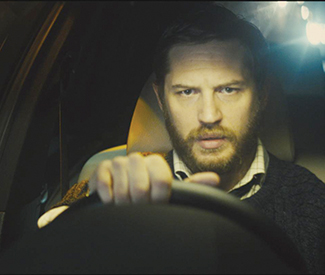
Another guy performing a sort of perfected masculinity for the benefit of needy others is Tom Hardy’s titular character in Steven Knight’s Locke. This virtual solo show has the actor as Ivan Locke, a 40-ish construction manager driving to London on the eve of “the biggest cement pour” ever attempted in Europe. But he’s driving away from that, to the shrill indignation of superiors who expect his reliable on-site supervision, and the increasingly drunken panic of the flunky (voice of Andrew Scott) he’s deputized to take his place. The reason for this unprecedented dereliction of responsibility is that Ivan is committed to another responsibility, to “take care of my fuckup.”

As we gradually realize during his 85-minute drive, that means showing up for the premature birth of the baby he’s sired by a fragile, rather hysterical-sounding woman (Olivia Colman) in the brief sole detour from marital infidelity he’s ever taken. Doing so may well end his career, as well as his long-standing marriage to the mother of his sons. But our protagonist is determined at any cost not to become his own late father (with whom he has imaginary conversations), a wastrel who never made good on his obligations to family or anyone else.

Shot repeatedly in real time with multiple cameras over 12 nights (the actors voicing Bluetooth callers also performed “live” in conference-call fashion), then assembled from 16 full-length takes, Locke is a striking experiment that never quite escapes an air of theatrical stunt. In retrospect you realize most of its tension derives not from the core emotional crises, but from narrative red herrings — primarily our terror that anyone multitasking this recklessly behind the wheel is an accident waiting to happen. But the chameleonic Hardy, playing a rather square, middle-class, essentially humorless type unlike any he’s done before, makes this effortfully “decent” man so compelling you can’t look away. If there’s anything this actor can’t do, he hasn’t tried it yet. *


FADING GIGOLO and LOCKE open Fri/2 in SF.

Brilliant exodus

0

marke@sfbg.com

VISUAL ART/LIT

Passover ended last week — Bubbe’s back in Florida, gefilte fish leftovers have been composted, and matzoh crumbs no longer spangle your favorite hoodie. But the saga of an oppressed people throwing off its shackles under the auspices of a vengeful yet baffling god remains timeless. Arthur Szyk and the Art of the Haggadah, a magical exhibition at the Contemporary Jewish Museum (www.thecjm.org) through June 29, displays the story of the Jews’ ancient exodus from Egypt as illustrated in one of the world’s most beautiful books.

Szyk (1894-1951), a Jewish Pole who emigrated first to France in 1927 and then to the UK and US, was an ambitious and popular illustrator and artist whose work became more politically engaged with the rise of National Socialism in Germany. As early as 1933, he equated Hitler with the pharaoh of the Torah in his work. This eventually led to a fully illustrated Haggadah, the Passover dinner ceremony guide that retells the story of the Jews’ flight from Egypt.

Taking what seems like equal influence from illuminated medieval manuscripts, Art Nouveau style, Eastern European folk art, and satirical cartoons, the 48 exquisite illustrations teem with contemporary references — for example, the “wicked son” in the story of the four sons sports a Hitler-like mustache. (Many of the drawings also prominently featured swastikas, until they were painted over upon the book’s release in 1940, perhaps in capitulation to the British publisher.)

Beyond the prescient political bite, though, of this classic book — like many Jewish kids, my husband received a replica as a bar mitzvah present — lies its sheer artfulness. The small pages, Mughal miniature-like, brim with gorgeous calligraphy, eye-popping design elements (Szyk based his layouts on graph paper), touching portraits, and a veritable bestiary of symbolic animals. It’s an epic piece of storytelling, which has become part of the epic story itself.

A really good kiss

1

THE WEEKNIGHTER Weekends are for amateurs. Weeknights are for pros. That’s why each week Broke-Ass Stuart (www.brokeassstuart.com) will be exploring a different San Francisco bar, bringing you stories about the places and people who make San Francisco one of the most phenomenal cities in the world. Who wants a drink?

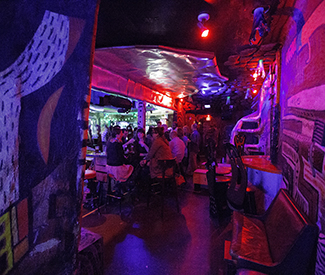
 I used to hang out at the Noc Noc (557 Haight Street, SF. 415-861-5811) for too many hours in a row just so I could make out with the bartender after she got off work. She’d feed me bottles of powerful sake and I’d sit around bullshitting with the half dozen or so other dudes who’d come by with hopes of getting in her pants.

“This might be the night,” I imagined them telling themselves each evening on the walk over; it was the same thing regulars patrons of hot bartenders have been telling themselves since the day hot bartenders were invented.

I’d convinced myself I wasn’t one of them, since it was me that she made out with after her shift, but more often than not she’d get off and we’d cross Haight Streeet to Molotov’s so I could watch her play pool with all the dudes who hung around fawning over her at the bar. I’m not a competitive person and even more so, hate being forced into vying for someone’s attention, so I got tired of the scene fairly quickly and stopped doing it. Still, she was a really good kisser.   

I spent a lot of time at the Noc Noc in my youth though. Many years ago I dated a USF girl who was under 21 and we’d go there because she and her friends could get in. They never carded back in those days (don’t worry ABC, they do now) and we’d sit on the Beetlejuice looking chairs, amongst the psychedelic cave paintings and the black lights, drinking sake and beer. I’d tell those naïve USF kids wild stories about what it was like to be over 21 even though I was just barely so, but it was good enough to impress them and my girlfriend and I would make out and be in love up and down Haight Street. Other people would see us and feel sick or jealous or both. She was also a really good kisser.

The name Noc Noc derives from Nocturnal Nocturne. When Ernest Takai opened the Lower Haight joint in 1986 it was the “first place to play industrial, ambient, dance, acid jazz in San Francisco” or so the website tells me. I didn’t know any of this stuff until right now when I went to the Noc Noc’s website. Anytime I’d ever asked anyone at the bar why the place looked so fucking perfectly unusual I got a bunch of drunk stories that basically amounted to “some crazy ass Japanese dude opened the place and I think he was an artist and liked music or something,” which was good enough for me.

Vagueness makes a bar story good and allows room for mystery, which is something the world is sorely lacking these days. When you can answer any question that’s ever been asked, simply by Googling it, mystery becomes the first casualty of too much information.   

One of my favorite Joni Mitchell lines is, “Everything comes and goes, marked by lovers and styles of clothes.” And like always, Joni is right. We keep track of who we were back when, by remembering the people we dated and the silly shit we wore. But the same goes for the places we hung out in. The Noc Noc opened in 1986 and its dark corners and dark beats have been a cornerstone for kissing San Franciscans ever since. Making out with someone is one of the last bits of mystery left in the world. You have no idea where that path will lead but the initial excitement it makes you feel is worth all the Googleable knowledge in the world. Google is a lot of things, but it will never be a really good kisser.

Stuart Schuffman aka Broke-Ass Stuart is a travel writer, poet, and TV host. You can find his online shenanigans at www.brokeassstuart.com

Projections

27

The 57th San Francisco International Film Festival runs April 24-May 8. Screening venues include the Castro Theatre, 429 Castro, SF; New People Cinema, 1746 Post, SF; Pacific Film Archive, 2575 Bancroft, Berk; and Sundance Kabuki Cinemas, 1881 Post, SF. For tickets (most shows $15) and complete schedule, visit festival.sffs.org.

Harmony Lessons (Emir Baigazin, Kazakhstan/Germany/France, 2013) Darwinian natural selection seems to be the guiding principle at the rural Kazakh school where bright farm boy Aslan (Timur Aidarbekov) is sent to further his education. What he learns there is mostly about survival, as he soon discovers the institution is dominated by an elaborate system of bullying and extortion in which a few older students terrorize the younger and weaker. Emir Baigazin’s striking debut feature applies a rigor both aesthetic and intellectual to a familiar theme here, his script as methodical as his minimalist compositions in dissecting the havoc wreaked by (and eventual unraveling of) a corrupt system that’s a microcosm of a societal whole. Fri/25, 3:30pm, Kabuki; May 4, 12:45pm, Kabuki; May 5, 6:15pm, Kabuki. (Dennis Harvey)

When Evening Falls on Bucharest or Metabolism (Corneliu Porumboiu, Romania/France, 2013) Romanian moviemaker Corneliu Porumboiu (2009’s Police, Adjective) turns his lens around, toward the casting couch and the oh-so-delicate damage done, in his third feature film. An everyday kind of corruption, sex, lies, and video — zipless, tapeless, and forging way beyond the limits of film — is the name of the game when a director (Bogdan Dumitrache) nonchalantly drops a nude scene on his actress (Diana Avramut) and the two try out a few ideas, on-camera for the screen and off-camera in the bedroom. The hardly working relationship plays both ways, as the moviemaker bends in turn to his producer, in this minimalist albeit layered glimpse into the unlovely guts of the last sacred cow: the so-called creative process. Fri/25, 3:45pm, New People; Sat/26, 6:30pm, Kabuki; Mon/28, 8:30pm, PFA. (Kimberly Chun)

Hellion (Kat Candler, US) Beer drinking and metal tees, shit-talking and shit-kicking, boys and their toys and their broken dreams — the signatures of director-writer Kat Candler are familiar even to those unversed in her 2006 Jumping Off Bridges and the short that this extended-play feature is based on. Yet somehow the motocross-fixated Jacob (Josh Wiggins) is finding his own fresh hell amid this testosterone-scape: with the death of his mother, his faded baseball star of a father (Aaron Paul) is struggling to hold the family together and kick his tendency to take refuge at the bottom of a beer can. Meanwhile younger brother Wes (Deke Garner) has been taken away and placed with the boys’ Aunt Pam (Juliette Lewis). Candler makes this hell of hurts fresh with her close attention to detail, relishing the whipped cream sandwiches and sofa bounce-offs of home-alone kids as well as the throttled rage of the Metallica and Slayer soundtrack, and charged performances from all, in particular Paul, also an executive producer here, and Lewis, two small-town castaways just a hair less lost than the kids. Fri/25, 6:30pm, Kabuki; Tue/29, 4pm, Kabuki. (Chun)

Blind Dates (Levan Koguashvili, Georgia, 2013) This rather wonderful deadpan comedy from Georgia (the former Soviet territory, not Jimmy Carter’s home) revolves around two best friends, male schoolteachers looking for love on the mutual brink of 40. Doleful-looking history prof Sandro (Andro Sakhvarelidze) and robust soccer coach Iva (Archil Kikodze) seem hapless and thwarted at every turn, yet simultaneously oblivious to scads of available women around them. The gentle, rueful tenor sneaks up on you, delivering some big laughs and narrative surprises as well as a very soulful sum impact. One of this year’s SFIFF sleepers (with no US distribution in sight), this droll yet bighearted gem is not to be missed. Fri/25, 9pm, Kabuki; Sun/27, 8:15pm, PFA; Tue/29, 6:30pm, New People. (Harvey)

Child of God (James Franco, US, 2013) You may not know that SFIFF It Guy James Franco has directed nearly two dozen shorts, documentaries, and features since 2005, in addition to his acting and miscellaneous multimedia dabblings. Don’t worry: You haven’t missed much. But this adaptation of a 1973 Cormac McCarthy novel is a great leap forward from his prior efforts, most of which felt like pretentious grad school thesis films. Scott Haze is startlingly good as Lester Ballard, a Tennessee hillbilly whose lack of conventional home, family, social instincts, or behavioral restraint gets him perpetually in trouble with the law — trouble that takes a macabre turn when he finds a dead woman’s body. The story’s shock value might easily have played as exploitative or ludicrous, but Franco hits the right tenor of mad intensity to reflect Lester’s near-feral state, in which acts that might appall any “civilized” mindset make perfect sense to him. Fri/25, 9:30pm, Kabuki; Mon/28, 3:45pm, New People. (Harvey)

The Double (Richard Ayoade, UK, 2013) Simon (Jesse Eisenberg) is a lowly clerk who gets nothing but indifference and scorn both at work and in his pitiful private life. Things slip even more insidiously beyond his control with the arrival of James (Eisenberg again), his exact doppelgänger — though no one else seems to notice that — and a climber as ruthlessly efficient as Simon is hapless. Not only does he steal his look-alike’s ideas in a rapid rise to the top, he seems to take great pleasure in kicking Simon further downward. Applying a Kafkaesque gloss to Dostoyevsky’s novella, with stylistic hat-tips to the Coens and Terry Gilliam, Richard Ayoade’s second feature is very different from his prior Submarine (2010) in all ways but one: It, too, is both overwhelmed and rendered fascinating by an excess of high directorial “style” whose self-consciousness infuses every frame and puts quote marks around every emotion. As a result, The Double is a striking objet d’art you’ll either love or hate — or enjoy aesthetically while being annoyed by its sacrifice of depth for a showoff surface. Sat/26, 1pm, Kabuki; Tue/29, 9:15pm, Kabuki. (Harvey)

Tangerines (Zaza Urushadze, Estonia/Georgia, 2013) It’s 1992, and carpenter Ivo (Lemit Ulfsak) and farmer Marcus (Elmo Nuganen) are old neighbors who are practically the only residents left in their rural Abkhazia village — everyone else has fled the approaching war between Georgian and Russia-backed North Caucasian forces that erupted over this disputed land after the USSR’s dissolution. The 60-something men have stayed behind out of habit, and to harvest Marcus’ latest (perhaps last) tangerine crop. When a shootout on Ivo’s doorstep leaves him stuck with one wounded soldier from each side, these uninvited guests must be kept from outside discovery — and from one another’s throats — as they recover. Wry and poignant, Georgian writer-director Zaza Urushadze’s antiwar microcosm is beautifully crafted, particularly in Rein Kotov’s gorgeous photography of the verdant countryside. Sat/26, 9pm, Kabuki; Sun/27, 6:15pm, Kabuki; May 6, 8:30pm, PFA. (Harvey)

The Sacrament (Ti West, US, 2013) This very disappointing latest by Ti West, of flavorful indie horrors The House of the Devil (2009) and The Innkeepers (2011), basically puts a piece of tracing paper over the climactic events at Jonestown, changing the names but otherwise refusing to do anything different — or really anything at all — with that historical model of mass religious cult freak out. Joe Swanberg, A.J. Bowen, and Kentucker Audley play filmmakers who visit a secretive jungle compound in order to figure out if somebody’s sister (Amy Seimetz) is staying there of her own free will or not. She seems to be doing OK, and in fact appears to be the favored apostle of enigmatic leader “Father” (Gene Jones). But once the strangers get a glimpse behind the facade of their carefully stage-managed visit, they glean that not everyone is happy here — indeed, some may be desperate to escape. Despite some good performance moments, there’s little psychological insight or real suspense to this fictionalized take on the 1978 catastrophe at Rev. Jim Jones’ Guyana settlement, and its quasi-“found footage” aesthetic feels very tired. Sat/26, 11:45pm, Kabuki; Mon/28, 9pm, Kabuki. (Harvey)

https://www.youtube.com/watch?v=UD8TrqVrFyU

All That Jazz (Bob Fosse, US, 1979) Stage and screen choreographer and director Bob Fosse’s autobiographical phantasmagoria modeled itself on Fellini’s very Italian 1963 8 1/2 (which also inspired the stage/film musical Nine), but its heart is pure, cold American show-biz brass. Roy Scheider is terrific as Fosse alter ego Joe Gideon, a driven workaholic whose decades of numerous excesses (pills, smoking, women, etc.) have put him at serious risk of a fatal heart attack just as he’s simultaneously starting rehearsals for a Broadway musical and finishing up editing on a Hollywood feature. The external pressure is exceeded only by his own compulsive perfectionism. He reviews his life of professional triumphs and failed relationships as it very possibly sputters toward an end. Like Joe’s character (and creator), Jazz is egomaniacal, charming, over-the-top, sexy, sexist, indulgent, and overbearing — a glitzy portrait of a brilliant heel, with dazzling musical numbers. Seldom revived in recent years, it’s being shown in a newly restored print. Sun/27, 12:30pm, Kabuki; May 2, 8:30pm, PFA. (Harvey)

Belle (Amma Asante, UK, 2013) The child of a British naval officer and a Caribbean slave, Belle (Gugu Mbatha-Raw) is deposited on the doorstep — well, the estate grounds — of her father’s relatives in 1769 England after her mother dies. Soon she’s entirely orphaned, which makes her a wealthy heiress and aristocratic title holder at the same time that she is something less than human in the eyes of her adopted society. For Belle is black (or more properly, mixed-race), and thus a useless curiosity at best as a well-bred noblewoman of the “wrong” racial makeup. Based on a murky actual historical chapter, Amma Asante’s film is that rare sumptuous costume drama which actually has something on its mind beyond romance and royalty. Not least among its pleasures is a fine supporting cast including Tom Wilkinson, Miranda Richardson, Penelope Wilton, and Emily Watson. Sun/27, 6:30pm, Kabuki; Tue/29, 3:30pm, Kabuki. (Harvey)

https://www.youtube.com/watch?v=nL-0RLaFcSg

Stray Dogs (Tsai Ming-liang, Taiwan/France, 2013) The fate of those left behind — the homeless, the stray dogs — amid the go-go aggression of tiger markets is ostensibly Tsai Ming-liang’s first concern in what he’s said is his last film. But the “Second Wave” Taiwanese director can’t help but leave a mark — those amazing performances, those achingly long, meditative shots — that makes you hungry for more. Ever so loosely knitting together a series of lengthy, gorgeously composed images that resemble still lifes of a metamorphosing Taipei that’s rapidly leaving its cultural core, the family, in the dust, Stray Dogs wanders, hangs, then drifts once more, much like the homeless father (Tsai regular Lee Kang-sheng) and two children at its rootless center. Dad holds an advertising sign at an intersection — necessitating what might be the longest urination shot in cinema and a singular burst into poetry and song — while the kids feed themselves with supermarket samples and wash up in public restrooms. Will they be brought together by the missing matriarch, in the form of a grocery store manager, or just a random instance of art or beauty in a crumbling building? Beauty, it seems, is everywhere, Tsai seems to signal, and time — here, spent and bent to new ends — might or might not tell, while this mesmerizing, testing, and ultimately rewarding digital farewell to the movies keeps you hanging on. Mon/28, 6pm, Kabuki; Tue/29, 3:15pm, New People; April 30, 6:30pm, PFA. (Chun)

The Overnighters (Jesse Moss, US) If you’re looking for a movie to affirm the resilient generosity of the American spirit (or economy), this isn’t it. But Bay Area filmmaker Jesse Moss’ new documentary is as engrossing as it is dismaying. When a fracking-related job boom hits low-population North Dakota, close-knit Williston — which had a population of just 12,000 at the millennium’s turn — suddenly becomes a magnet for the unemployed and desperate. That includes a diverse racial mix of men, including some transients, a few felons and ex-cons, plus others whom many locals are willing to skittishly term “trash.” There’s scant housing available to accommodate them; Pastor Jay Reinke of Concordia Lutheran tries to help out by letting some new arrivals sleep on the church (and even his family home’s) floor. But his congregation is increasingly unhappy about that, as is the community in general. The Overnighters grows more complicated, however, than a simple portrait of small-town closed-mindedness and a clergyman acting like Jesus would. Not every charity case is grateful, or honest, or manageable. Meanwhile, Rev. Reinke’s own psychological baggage starts looking pretty dang heavy well before a game changing late revelation that is painful on about 20 different levels. Mon/28, 6:30pm, Kabuki; May 3, 1pm, New People. (Harvey)

The Other One: The Long Strange Trip of Bob Weir (Mike Fleiss, US) Bob Weir gets a little of his share of the critical limelight in this doc by Mike Fleiss, which focuses on Weir’s personal life and gives Grateful Dead chronology a light scramble. It kicks off with a cruise across the Golden Gate Bridge with the SF-born musician, who was taught to drive by Neal Cassady and gleans admiration from both expected quarters (Sammy Hagar) and less so (The National, which tries a brief jam with Weir) and drops tidbits about his dyslexia, early hangouts with Palo Alto banjo player Jerry Garcia, his chronic shoulder pain, and songwriting approaches (“There’s no logic to it. It comes through the window when it wants to come though the window”), along with a visit to the famed Dead house at 710 Ashbury with his wife and daughters. Couched amid a bevy of performance snippets, none very long, the road-weathered rhythm guitarist comes off as a bit of tough nut to crack and almost too humdrum in his current downplayed presentation to ever really lead us on a truly “long, strange trip.” Still, this document serves as a decent primer for the rock generalist on the man (though not of his bands apart from the Dead) and goes a little way toward generating gratitude for the man oft dubbed an unsung hero. Tue/29, 8:50pm, PFA; May 2, 9:30pm, Kabuki. (Chun)

Eastern Boys (Robin Campillo, France, 2013) We first meet well-off, middle-aged single gay man Daniel (Olivier Rabourdin) as he’s cruising a Paris train station for rough trade in writer-director Robin Campillo’s bravura opening sequence. He settles on impish Marek (Kirill Emelyanov), negotiates an assignation, and goes home. But later on it’s not Marek who turns up on Daniel’s doorstep, but a couple dozen young former-Soviet-bloc illegal émigrés who take over his luxury apartment for an epic party as they cart his possessions out the door. (This unpleasant passage is the most difficult to swallow, as there’s no explanation why our protagonist is so passive about being robbed.) Yet Marek does eventually turn up, and despite all, a relationship develops — always at risk of incurring anger from “Boss” (Danill Vorobyev), the thuggish leader of the immigrant community Marek has aligned himself with. Like the Laurent Cantet films (1999’s Human Resources, 2001’s Time Out, 2008’s The Class) Campillo has edited, Eastern Boys doesn’t fill in all its narrative blanks, but is grounded in recognizable characters we can empathize with as the scenario takes unexpected turns. It’s a provoking movie that’s ultimately well worthwhile. April 30, 9:10pm, PFA; May 2, 6pm, Kabuki; May 4, 8:45pm, New People. (Harvey)

Kumiko, the Treasure Hunter (David Zellner, US) Fargo (1996), now also an FX series, is having a moment — and as bracingly sweet, tragicomic, and strange as its inspiration, Kumiko, the Treasure Hunter sets course from where the Coen Brothers left off. Essential ingredients include another moviemaking team of brothers, David and Nathan Zeller, and a waterlogged VHS tape of the North Dakota micro-epic, the latter leading one woman into white-out lunacy beyond the grinding conformity of Tokyo office work or small-town Minnesota mundanities. Shy, odd, and obsessive Kumiko (Rinko Kikuchi) is the nail that must be pounded down, as the Japanese saying goes; as she trudges through her job at a large, alienating company, her fantasy world is fueled by a video of Fargo she finds buried in a sea cave. Those grainy images set her on a quest among the determinedly kawaii in Japan and the hilariously humane in the States, which she compares to that of the conquistadors’. Even when accompanied by the Octopus Project’s vivid electronic score, which spells out the horror of this journey, Kumiko’s no Aguirre — though, like Fargo, her adventure’s end is based on a true case. A wonderfully weird — and ultimately compassionate — vamp on the power of fantasy and obsession that crosses international datelines. May 1, 8:45pm, Kabuki; May 3, 2:30pm, Kabuki; May 4, 12:30pm, Kabuki. (Chun)

Difret (Zeresenay Berhane Mehari, Ethiopia) Zeresenay Berhane Mehari’s film dramatizes a shocking human rights issue in Ethiopia: the continuing acceptance in rural areas of forcibly abducting young women for marriage. Fourteen-year-old Hirut (Tizita Hagere) is walking home from school one day when she’s surrounded by seven armed men, dragged off to a hut, then raped by the suitor whose marriage proposal she’d already rejected. When later she kills him in an escape attempt, tribal law decrees she be executed (and buried alongside him as “wife”). But a city lawyer for a women’s rights organization (Meron Getnet) takes up her cause. This is powerful material, but Difret would be a better film, and even better advocacy, if it didn’t handle its fictive events in such heavy-handed, pedestrian, everything spelled-out-for-you fashion. May 1, 6:30pm, Pacific Film Archive; May 3, 3:15pm, Kabuki; May 7, 3:30pm, Kabuki. (Harvey)

Abuse of Weakness (Catherine Breillat, France/Belgium/Germany, 2013) Those who last saw Isabelle Huppert as a dutiful daughter in 2012’s Amour will be both thrilled and piqued to see the tables turned so remarkably in Catherine Breillat’s Abuse of Weakness. Huppert gives an unapologetic, stunning tour de force performance in what appears to be a story torn from the filmmaker’s own life, when Breillat suffered a series of strokes in the ’00s and ended up entangled in a loving and predatory friendship with con man Christophe Rocancourt. Here, moviemaker and writer Maud (Huppert) is particularly vulnerable when she meets celebrity criminal and best-selling writer Vilko (Kool Shen). She is determined to have him star in her next film, despite the protestations of friends and family, and he helps her in return — by simply helping her get around and giving her focus when half her body seems beyond her control, while his constant machinations continue to compel her. Crafting a layered, resonant response to what seems like an otherwise clear-cut case of abuse, Breillat seems to have gotten something close to one of her best films out of the sorry situation, while Huppert reminds us — with the painful precision of this intensely physical role — why she’s one of France’s finest. May 1, 9pm, Kabuki. (Chun)

Of Horses and Men (Benedikt Erlingsson, Iceland/Germany, 2013) Benedikt Erlingsson’s astonishing directorial debut weaves together a half dozen disparate stories involving beautiful horses and mostly unlucky humans in and near a modern Icelandic small town. It’s a horsey movie like no other, each surprising tale marked to various degrees by black comedy, cruel fate, very earthy humor, and hints of the fantastical. Nature being a harsh mistress, some events here are rather shocking or tragic — those who automatically despise any film in which animals come to harm (only in dramatic terms, of course) had best stay clear. But less delicate souls may well find this unique equine-themed mix of folk art and fable exhilaratingly original. May 2, 4:30pm, Kabuki; May 3, 8:45pm, Kabuki; May 5, 6pm, Kabuki. (Harvey)

Salvation Army (Abdellah Taïa, Morocco, 2013) Paris-based Moroccan writer Abdellah Taïa adapts his presumably autobiographical 2006 novel in this accomplished feature. Teenaged Abdellah (Said Mrini) is stuck in the middle of a large, rambunctious family where his parents continually fight, sometimes violently, and he has to keep his feelings hidden — not least because they largely revolve around an infatuation with older brother Slimane (Amine Ennaji). While that attraction remains forbidden, Abdellah does find ways to access love or at least sex with other older men, though these sometimes exploitative interludes leave him dissatisfied. Salvation Army would be an effective if unmemorable portrait-of-the-artist-as-a-young-queer if it didn’t take an abrupt, unexpected jump forward 10 years, to chart the rough early days of a now-adult protagonist (Karim Ait M’Hand) in supposedly more gay-friendly (but not necessarily immigrant-friendly) France. It’s these later scenes that lend this directorial debut by (so far) the only out gay Arab Moroccan scribe its lingering gravity. May 2, 9pm, Kabuki; May 4, 8:30pm, PFA; May 6, 6:30pm, Kabuki. (Harvey)

Intruders (Noh Young-seok, South Korea, 2013) Noh Young-seok’s insidiously clever black comedy-thriller takes its time getting to the nasty stuff — although things start getting weird for our protagonist right away, when his bus ride to a remote resort region is interrupted by an overly-friendly local who will figure in his troubles later on. Sang-jin (Jun Kuk-ho) is here to spend some alone time finishing a screenplay. But he’s unlikely to get much work done, given various pesterings from the hitherto mentioned ex-con New Best Friend (Oh Tae-kyung), an obnoxious quartet of skiers, some hostile poachers, and … well, you’ll have to wait until the very end to get the complete list of unwanted guests. As misunderstandings and bodies pile up, Intruders cleverly finds ways to make the worst possible scenario even worse. May 2, 9:45pm, Kabuki; May 7, 9:30pm, Kabuki; May 8, 5:30pm, Kabuki. (Harvey)

Palo Alto (Gia Coppola, US) Adapted from the 2010 short story collection by James Franco, first-time director Gia Coppola’s depressive, aimless tale of disaffected youth tracks the ennuis and misadventures of a handful of Palo Alto teenagers: shy, inexperienced April (Emma Roberts), teetering on the edge of an affair with her soccer coach (Franco); naively promiscuous Emily (Zoe Levin); budding head case Fred (Nat Wolff); and his friend Teddy (Jack Kilmer, son of Val, who plays April’s out-to-lunch stepfather), who ambivalently participates in Fred’s mayhem while pining after April. Adult supervision is nearly Peanuts-level sparse — in other Peninsula households, helicopter parents may be fine-tuning the lives of their children down to the last extracurricular; here, the stoned, distracted elders who occasionally wander in front of the camera are more like flaky, absentee roommates. Meanwhile, their young charges fill the empty hours with copious amounts of alcohol consumption, random property destruction, and a round or two of social crucifixion. May 3, 7:30pm, Kabuki. (Lynn Rapoport)

The Lady Eve (Preston Sturges, US, 1941) Superficially the most conventional of Preston Sturges’ classics — being a romantic comedy vehicle for two major stars — this 1941 gem is no less great for it. Barbara Stanwyck plays Jean, the feminine lure in a team of wily con artists who spy easy prey in Henry Fonda, a fabulously wealthy “bumble-puppy” more interested in studying Amazonian snakes than inheriting the family brewery fortune. They relieve him of considerable cash at the card table, but when Jean decides she really does love the big dope and comes clean, he thinks she’s still lying. Now a woman scorned — and whatta woman! — Jean hatches a spectacular revenge scheme to teach him the lesson he deserves. As is Sturges’ wont, the film goes over the top a bit toward the end. But who cares, when Eve is so brilliantly written and performed, not to mention consistently hilarious. Film critic David Thomson and journalist-novelist Geoff Dyer will be present for this screening in conjunction with Thomson’s acceptance of the Mel Novikoff Award. May 4, 3pm, Kabuki. (Harvey)

https://www.youtube.com/watch?v=z5rVCYqW8U4

Ping Pong Summer (Michael Tully, US) Eighties teen flicks of the My Bodyguard (1980), smart-dweebs-beat-the-bullies ilk are paid homage in Michael Tully’s deadpan satire, which is closer in spirit to the Comedy of Lameness school whose patron saint is Napoleon Dynamite. Radley (Marcello Conte) is an average teen so excited to be spending the summer of 1985 in Ocean City, Md., with his family that he renames himself “Rad Miracle.” He acquires a New Best Friend in Teddy (Myles Massey), who as the whitest black kid imaginable might make even Rad look cool by comparison. However, they are both dismayed to discover the local center for video gaming and everything else they like is ruled by bigger, older, cuter, and snottier douchebag Lyle Ace (Joseph McCaughtry) and his sidekick. Only kicking Lyle’s ass at ping pong — with some help from a local weirdo (a miscast Susan Sarandon, apparently here because she’s an offscreen ping pong enthusiast) — can save Rad’s wounded dignity, and the summer in general. A big step up from Tully’s odd but pointless prior Septien (2011), this has all the right stuff (including a soundtrack packed with the likes of Mr. Mister, the Fat Boys, Mary Jane Girls, New Edition, Whodini, and Night Ranger) to hilariously parody the era’s inanities. But it’s just mildly amusing — a droll attitude with lots of period detail but not much bite. May 4, 6:30pm, Kabuki; May 7, 8:45pm, New People. (Harvey)

The One I Love (Charlie McDowell, US) Sophie (Elisabeth Moss) and Ethan (Mark Duplass) have hit a speed bump in their relationship — they don’t have fun together like they used to, and even direct attempts to replicate that past magic fall completely flat. Ergo they take the advice of a couples counselor (Ted Danson) and book a weekend at a country getaway he swears has done “wonders” for all his previous clients in relationship trouble. Things get off to a pleasant enough start, but the duo’s delight at recapturing their old mojo becomes complicated when they realize … well, it’s best to know as little as possible going into The One I Love, a first feature for director Charlie McDowell and scenarist Justin Lader that approaches a fantastical narrative idea with a poker face and considerable ingenuity. Duplass and (especially) Moss are terrific in roles that eventually require some very complicated (and subtle) nuances. May 6, 9:15pm, Kabuki. (Harvey)

Night Moves (Kelly Reichardt, US, 2013) Not to be confused with Arthur Penn’s same-named 1975 Gene Hackman thriller, Kelly Reichardt’s latest film nonetheless is also a memorably quiet, unsettling tale of conspiracy and paranoia. It takes us some time to understand what makes temporary allies of jittery Josh (Jesse Eisenberg), Portland, Ore.-style alterna-chick Dena (Dakota Fanning) and genial rural recluse Harmon (Peter Sarsgaard), beyond it being a mission of considerable danger and secrecy. When things don’t go exactly as planned, however, the three react very differently to the resulting fallout, becoming possibly greater threats to one another than the police or FBI personnel pursuing them. While still spare by mainstream standard, this is easily Reichardt’s most accessible work, carrying the observational strengths of 2010’s Meek’s Cutoff, 2008’s Wendy and Lucy, and 2006’s Old Joy over to a genuinely tense story that actually goes somewhere. May 7, 9pm, Kabuki; May 8, 7:30pm, Kabuki. (Harvey)


Film Listings: April 23 – 29, 2014

0

Film listings are edited by Cheryl Eddy. Reviewers are Kimberly Chun, Dennis Harvey, Lynn Rapoport, and Sara Maria Vizcarrondo. For rep house showtimes, see Rep Clock.

SF INTERNATIONAL FILM FESTIVAL

The 57th San Francisco International Film Festival runs April 24-May 8. Screening venues include the Castro Theatre, 429 Castro, SF; New People Cinema, 1746 Post, SF; Pacific Film Archive, 2575 Bancroft, Berk; and Sundance Kabuki Cinemas, 1881 Post, SF. For tickets (most shows $15) and complete schedule, visit festival.sffs.org. For coverage, see film section.

OPENING

Alan Partridge Steve Coogan recently took a serious-movie detour in last year’s Philomena, but he’s primarily a comedian — famed stateside for roles in cult movies like 24 Hour Party People (2002) and The Trip (2011). In his native England, he’s also beloved for playing buffoonish, image-obsessed host Alan Partridge in multiple TV and radio series — and now, a feature film, in which a giant media conglomerate takes over Alan’s North Norwich Digital radio station and gives it a cheesy corporate makeover. When he learns staffing cuts are afoot, Alan secretly throws his longtime friend and fellow DJ Pat (Colm Meany) under the bus. Though he’s oblivious to Alan’s betrayal, the depressed and disgruntled Pat soon bursts into the station, toting a shotgun and taking hostages, and Alan is designated the official go-between — to his utter delight, since he becomes the center of the surrounding media circus (“I’m siege-face!” he crows), and his already-inflated head balloons to even more gargantuan proportions. Along the way, he and Pat continue broadcasting, taking calls from listeners, spinning Neil Diamond records, and occasionally interfacing with an increasingly annoyed police force. Fear not if you haven’t seen any previous Alan Partridge outings — this film is stand-alone hilarious. (1:30) Embarcadero, Shattuck, Smith Rafael. (Eddy)

Brick Mansions This Luc Besson-produced thriller about an undercover Detroit cop stars Paul Walker in one of his final roles. (1:30) Presidio.

Dancing in Jaffa World champion ballroom dancer Pierre Dulaine, possessed of perfect posture and a flamboyant personality, returns to his native Jaffa, a city he hasn’t laid eyes on since his family (Palestinian mother, Irish father) fled in 1948. His love of teaching was dramatized in 2006’s Take the Lead — hey, if someone’s gonna make a movie about your life, you could do worse than being played by Antonio Banderas — but his task in Dancing in Jaffa is a far less glitzy one. Here, the real-life Dulaine aims to train a group of 11-year-olds how to merengue, rumba, tango, and jive, which is tall order under any circumstances, since these kids are still firmly entrenched in the awkward “boys/girls are icky” zone. Complicating matters even further is Dulaine’s determined quest to pair up tiny dancers from both Jewish and Palestinian Israeli schools, despite skeptical parents and religious restrictions against mingling with the opposite sex; it’s his fervent hope that performing together will help the kids see past their differences, and signal hope for the future. Though her documentary hits the expected beats — a depressed youngster we meet early in the film is delightfully (yet unsurprisingly) transformed by the power of dance — director Hilla Medalia (2007’s To Die in Jerusalem) does an admirable job contextualizing the students’ stories, capturing the cultural tensions that permeate everyday life in Jaffa. And a hat-tip to the kids themselves, who become surprisingly graceful hoofers despite all initial suggestions to the contrary. (1:28) Opera Plaza. (Eddy)

The German Doctor Argentine writer-director Lucía Puenzo (2007’s XXY) adapts her novel Wakolda for this drama imagining a post-World War II chapter in the life of Nazi doctor Josef Mengele. It’s 1960, and there’s a new doctor residing in Bariloche, Argentina — a stunningly picturesque town in the Andean foothills that seems to harbor an awful lot of Germans. Polite, well-dressed “Helmut” (Alex Brendemühl) befriends innkeepers Eva (Natalia Oreiro) and Enzo (Diego Peretti), taking a special interest in their 12-year-old daughter Lilith (Florencia Bado), whose petite frame (cruel classmates call her “dwarf”) awakens his let’s-experiment impulses. He gets even more attached when he finds out a pregnant Eva is carrying twins. Meanwhile, Israeli agents are moving in, having just snagged Mengele’s fellow war criminal Eichmann in Buenos Aires, and Lilith’s family soon catches on to their new friend’s true identity. Measured, multi-lingual performances — Brendemühl is both suave and menacing as the “Angel of Death,” forever penciling in his grotesque medical sketchbook — and the contrast between The German Doctor‘s dark themes and the Patagonian beauty of its setting bring haunting nuance to Puenzo’s twisted-history tale. (1:33) Embarcadero, Shattuck. (Eddy)

“Human Rights Watch Film Festival” The 2014 fest wraps up with a pair of nightmarish tales about men who endured wrongful imprisonment. Marc Wiese’s Camp 14 — Total Control Zone follows the solemn Shin Dong-hyuk, who was born in a North Korean death camp and managed to escape not only the camp, but the country itself; he’s thought to be the only person ever to do so. He endured unimaginable horrors both physical (beatings, starvation, torture) and mental (being forced to watch his mother and brother’s executions), and finally gathered the courage to flee when he met a recent detainee who was full of tales from the outside world. These days, he no longer lives in fear; he’s based in South Korea but travels the world speaking with human-rights groups. But he’s a man understandably scarred by his past, living in a nearly empty apartment and rarely raising his voice above a whisper. Meanwhile, American injustice gives a showcase performance in An Unreal Dream: The Michael Morton Story, Al Reinert’s emotional documentary about an innocent man convicted of killing his wife, thanks to some shoddy good ol’ boy police work. Though his own son turned against him as his years behind bars stretched into decades, Morton — now free and reconciled with his family, thanks to the Innocence Project — remains an inspiring, almost beatific example of the power of forgiveness. In Morton’s case, it helps that the real murderer was eventually nabbed and punished; in Camp 14, we meet a pair of former guards who shrug off the horrific cruelty they regularly inflicted on prisoners — and we’re reminded of the hundreds of thousands of North Koreans who remain behind bars, serving life sentences for made-up “crimes.” Not a shred of closure to be found in that one. Yerba Buena Center for the Arts. (Eddy)

Next Goal Wins World Cup fever is imminent — first game is June 12! — so there’s no better timing for this doc, which chronicles the transformation of American Samoa’s soccer team from international joke (thanks to a record-breaking 31-0 drubbing by Australia in 2001) to inspirational underdogs. Filmmakers Steve Jamison and Mike Brett visit the close-knit island nation just as Dutch hired-gun coach Thomas Rongen swoops in to whip the team into shape. Though he’s initially unimpressed, Rongen soon realizes that what his players lack in athletic ability, they make up for in heart, particularly beleaguered keeper Nicky Salapu (coaxed out of retirement, he’s still haunted by the 2001 loss) and upbeat Jaiyah Saelua, who is 100 percent accepted by her teammates, even though she happens to be transgender (“I’m not a male or a female — I’m a soccer player!”) Next Goal Wins is ultimately as much a window into American Samoan culture as it is a sports saga, adding richness to a tale that’s already heart-poundingly rousing. (1:30) Roxie. (Eddy)

The Other Woman Cameron Diaz, Leslie Mann, and Kate Upton star in this comedy about a trio of women who gang up on the man (Game of Thrones’ Nikolaj Coster-Waldau) who’s been playing them all. (1:49) Presidio.

The Quiet Ones Jared Harris (Mad Men) stars in this spooky Hammer Films drama about an Oxford professor studying the supernatural. (1:38)

Teenage This collage documentary by Matt Wolf (2008’s Wild Combination: A Portrait of Arthur Russell) is based on Jon Savage’s Teenage: The Creation of Youth Culture, spanning the adolescent experience from 1875-1945. First-person narrators (voiced by Jena Malone and Ben Whishaw, among others) reflect on the lives of teens from the US, the UK, and Germany, emphasizing current events (notably the stock market crash and World Wars I and II, the latter including segments on the Hitler Youth), and social problems (child labor, racial intolerance) and changes (the rise of Hollywood idols and teen gangs), as well as dance, fashion, nightlife (London’s Bright Young Things get a special spotlight), and music fads. Stock footage, vintage images, textured sound design, and creative reenactments shape this unusually artistic look at the rise of an age group that didn’t merit distinct status 150 years ago — but has since become popular culture’s most influential force, for better and worse. (1:17) Opera Plaza, Shattuck. (Eddy)

Walking with the Enemy Movie history abounds with dramas about the obvious dangers and complicated delights of passing during World War II — Agnieszka Holland’s Europa Europa (1990) and Paul Verhoeven’s Black Book (2006) come immediately to mind. But despite the inherent interest in this story (based on a real person, Pinchas Tibor Rosenbaum), Walking with the Enemy doesn’t hold its own next to those efforts. Elek (Jonas Armstrong), the handsome, intrepid son of a rabbi, is working in Budapest doing what any red-blooded young man of any era might, joking with his boss and flirting with the adorable Hannah (Hannah Tointon). When Hungary’s relations with the Nazis sour, the country’s Jewish citizens are gradually packed off and subjected to deadly crackdowns instigated by Adolf Eichmann, and Hungary’s Regent Horthy (Ben Kingsley) seems powerless to do very much, apart from allowing the neutral Swiss consulate to issue a stream of documents claiming the city’s Jewish denizens as its own. When two SS officers come calling in the Jewish quarter, attack Hannah, and are ultimately killed, fluent German speaker Elek and his friends snatch at the desperate measure of donning their uniforms to spy on their oppressors and save as many Jews as they can. What may have made for a fascinating tale, however, is reduced to broad strokes, awkward choices like onscreen IDs, and comically simplistic characterization, making Walking feel more like a TV movie or an educational film than anything with real power. (2:08) (Chun)

ONGOING

Bears (1:26) 1000 Van Ness, Shattuck.

Captain America: The Winter Soldier Marvel’s most wholesome hero returns in this latest film in the Avengers series, and while it doesn’t deviate from the expected formula (it’s not a spoiler to say that yes, the world is saved yet again), it manages to incorporate a surprisingly timely plot about the dangers of government surveillance. Steve Rogers (Chris Evans), hunkiest 95-year-old ever, is still figuring out his place in the 21st century after his post-World War II deep freeze. Nick Fury (Samuel L. Jackson) has him running random rescue missions with the help of Black Widow (Scarlett Johansson), but SHIELD is working on a top-secret project that will allow it to predict crimes before they occur. It isn’t long before Cap’s distrust of the weapon — he may be old-fashioned, but he ain’t stupid — uncovers a sinister plot led by a familiar enemy, with Steve’s former BFF Bucky doing its bidding as the science-experiment-turned-assassin Winter Soldier (Sebastian Stan). Anthony Mackie, Robert Redford, and series regular Cobie Smulders are fine in supporting roles, and Johansson finally gets more to do than punch and pose, but the likable Evans ably carries the movie — he may not have the charisma of Robert Downey Jr., but he brings wit and depth to a role that would otherwise be defined mainly by biceps and CG-heavy fights. Oh, and you know the drill by now: superfans will want to stick around for two additional scenes tucked into the end credits. (2:16) Balboa, Marina, Metreon, 1000 Van Ness, Sundance Kabuki. (Eddy)

Cesar Chavez “You always have a choice,” Cesar Chavez (Michael Peña) tells his bullied son when advising him to turn the other cheek. Likewise, actor-turned-director Diego Luna had a choice when it came to tackling his first English-language film; he could have selected a less complicated, sprawling story. So he gets props for that simple act — especially at a time when workers’ rights and union power have been so dramatically eroded — and for his attempts to impact some complicated nuance to Chavez’s fully evident heroism. Painting his moving pictures in dusty earth tones and burnt sunlight with the help of cinematographer Enrique Chediak, Luna vaults straight into Chavez’s work with the grape pickers that would come to join the United Farm Workers — with just a brief voiceover about Chavez’s roots as the native-born son of a farm owner turned worker, post-Depression. Uprooting wife Helen (America Ferrera) and his family and moving to Delano as a sign of activist commitment, Chavez is seemingly quickly drawn into the 1965 strike by the Mexican workers’ sometime rivals: Filipino pickers (see the recent CAAMFest short documentary Delano Manongs for some of their side of the story). From there, the focus hones in on Chavez, speaking out against violence and “chicken shit macho ideals,” hunger striking, and activating unions overseas, though Luna does give voice to cohorts like Dolores Huerta (Rosario Dawson), growers like Bogdanovitch (John Malkovich), and the many nameless strikers — some of whom lost their lives during the astonishingly lengthy, taxing five-year strike. Luna’s win would be a blue-collar epic on par with 1979’s Norma Rae, and on some levels, he succeeds; scanning the faces of the weathered, hopeful extras in crowd scenes, you can’t help but feel the solidarity. The people have the power, as a poet once put it, and tellingly, his choice of Peña, stolidly opaque when charismatic warmth is called for, might be the key weakness here. One suspects the director or his frequent costar Gael García Bernal would make a more riveting Chavez. (1:38) Metreon. (Chun)

Divergent Based on the blockbuster dystopian-future YA novel by Veronica Roth (the first in a trilogy), Divergent is set in a future city-state version of Chicago in which society is divided into five character-based, color-coded factions: Erudite, Amity, Candor, Abnegation, and Dauntless. Like her peers, Beatrice Prior (Shailene Woodley), the film’s Abnegation-born teenage heroine, must choose a permanent faction — with the help of a standardized aptitude test that forgoes penciling in bubbles in favor of virtual reality psychic manipulation. When the test fails to triangulate her sole innate personality trait, she learns that she belongs to a secret, endangered sixth category: Divergent, an astonishing set of people who are not only capable of, say, acts of selflessness but can also produce intelligent thought, or manifest bravery in the face of danger. Forced to hide her aberrant nature in a society whose leaders (Kate Winslet) are prone to statements like “The future belongs to those who know where they belong,” and seemingly bored among Abnegation’s hive of gray cardigan-wearing worker bees, Beatrice chooses Dauntless, a dashing gang of black-clad, alterna-rock music video extras who jump on and off moving trains and live in a warehouse-chic compound whose dining hall recalls the patio at Zeitgeist. Fittingly, a surly, tattooed young man named Four (Theo James) leads Beatrice, now Tris, and her fellow initiates through a harsh proving regimen that, if they fail, will cast them into an impoverished underclass. Director Neil Burger (2006’s The Illusionist, 2011’s Limitless) and the behemoth marketing force behind Divergent are clearly hoping to stir up the kind of madness stoked by the Twilight and Hunger Games series, but while there are bones a-plenty to pick with those franchises, Divergent may have them beat for pure daffiness of premise and diameter of plot holes — and that’s after screenwriters Evan Daugherty and Vanessa Taylor’s major suturing of the source material’s lacunae. The daffiness doesn’t translate into imaginative world-building, and while a couple of scenes convey the visceral thrills of life in Dauntless, the tension between Tris and Four is awkwardly ratcheted up, and the film’s shift into a mode of crisis is equally jolting without generating much heat. (2:20) Metreon, 1000 Van Ness. (Rapoport)

Dom Hemingway We first meet English safecracker Dom (Jude Law) as he delivers an extremely verbose and flowery ode to his penis, addressing no one in particular, while he’s getting blown in prison. Whether you find this opening a knockout or painfully faux will determine how you react to the rest of Richard Shepard’s new film, because it’s all in that same overwritten, pseudo-shocking, showoff vein, Sprung after 12 years, Dom is reunited with his former henchman Dickie (Richard E. Grant), and the two go to the South of France to collect the reward owed for not ratting out crime kingpin Mr. Fontaine (Demian Bichir). This detour into the high life goes awry, however, sending the duo back to London, where Dom — who admits having “anger issues,” which is putting it mildly — tries to woo a new employer (Jumayn Hunter) and, offsetting his general loutishness with mawkish interludes, to re-ingratiate himself with his long-estranged daughter (Emilia Clarke). Moving into Guy Ritchie terrain with none of the deftness the same writer-director had brought to debunking James Bond territory in 2006’s similarly black-comedic crime tale The Matador, Dom Hemingway might bludgeon some viewers into sharing its air of waggish, self conscious merriment. But like Law’s performance, it labors so effortfully hard after that affect that you’re just as likely to find the whole enterprise overbearing. (1:33) Metreon, Sundance Kabuki. (Harvey)

Draft Day (2:00) 1000 Van Ness, Presidio, SF Center, Sundance Kabuki.

Faust It’s taken nearly three years for Aleksandr Sokurov’s Faust to get to the Bay Area. That seems apt for what was surely, in 2011, the least popular recipient of the Venice Film Festival’s Golden Lion in decades. Sokurov is a bit of a weirdo; even his popular triumphs — 1997’s rhapsodic Mother and Son; 2002’s extraordinary 300-years-of-history-in-one-traveling-shot Russian Ark — are very rarefied stuff, disinterested in conventional narrative or making their meanings too clear. In production scale, Faust is Sokurov’s biggest project, which hardly stops it also being possibly his most perverse. It rings bells redolent of certain classic 1970s Herzog features, and of course Sokurov’s own prior ones (as well as those by his late mentor Tarkovsky). But it has a stoned strangeness all its own. It’s not 140 minutes you should enter lightly, because you are going to exit it headily, drunk off the kind of questionable homebrew elixir that has a worm floating in it. In a clammy mittle-Yurropeon town in which the thin margin between pissy bourgeoisie and dirty swine is none too subtly delineated when a funeral march collides with a cartful of porkers, Professor Faust (the marvelously plastic Johannes Zeiler) dissects a corpse in his filthy studio. Impoverished and hungry, the questionably good doctor is an easy mark for Mephistophelean moneylender Mauricius Muller (physical theater specialist Anton Adasinsky), an insinuating snake who claims the soul is “no heavier than a coin,” and will happily relieve Faust of his in return for some slippery satisfactions. Coming complete with the director’s trademark distortion effects (in both color tinting and image aspect), Faust has a soft, queasy, pickled feel, like a disquieting dream too fascinating to wake yourself from. (2:14) Roxie. (Harvey)

Finding Vivian Maier Much like In the Realms of the Unreal, the 2004 doc about Henry Darger, Finding Vivian Maier explores the lonely life of a gifted artist whose talents were discovered posthumously. In this case, however, the filmmaker — John Maloof, who co-directs with Charlie Siskel — is responsible for Maier’s rise to fame. A practiced flea-market hunter, he picked up a carton of negatives at a 2007 auction; they turned out to be striking examples of early street photography. He was so taken with the work (snapped by a woman so obscure she was un-Google-able) that he began posting images online. Unexpectedly, they became a viral sensation, and Maloof became determined to learn more about the camerawoman. Turns out Vivian Maier was a career nanny in the Chicago area, with plenty of former employers to share their memories. She was an intensely private person who some remembered as delightfully adventurous and others remembered as eccentric, mentally unstable, or even cruel; she was a hoarder who was distrustful of men, and she spoke with a maybe-fake French accent. And she was obsessed with taking photographs that she never showed to anyone; the hundreds of thousands now in Maloof’s collection (along with 8mm and 16mm films) offer the only insight into her creative mind. “She had a great eye, a sense of humor, and a sense of tragedy,” remarks acclaimed photographer Mary Ellen Mark. “But there’s a piece of the puzzle missing.” The film’s central question — why was Maier so secretive about her hobby? — may never be answered. But as the film also suggests, that mystery adds another layer of fascination to her keenly observed photos. (1:23) Clay, Shattuck. (Eddy)

The Galapagos Affair: Satan Came to Eden Extensive archival footage and home movies (plus one short, narrative film) enhance this absorbing doc from San Francisco-based Dayna Goldfine and Dan Geller (2005’s Ballets Russes). It tells the tale of a double murder that occurred in the early 1930s on Floreana — the most remote of the already scarcely-populated Galapagos Islands. A top-notch cast (Cate Blanchett, Diane Kruger, Connie Nielsen, Josh Radnour) gives voice to the letters and diary entries of the players in this stranger-than-fiction story, which involved an array of Europeans who’d moved away from civilization in search of utopian simplicity — most intriguingly, a maybe-fake Baroness and her two young lovers — and realized too late that paradise isn’t all it’s cracked up to be. Goldfine and Geller add further detail to the historic drama by visiting the present-day Galapagos, speaking with residents about the lingering mystery and offering a glimpse of what life on the isolated islands is like today. (2:00) Embarcadero, Shattuck. (Eddy)

The Grand Budapest Hotel Is this the first Wes Anderson movie to feature a shootout? It’s definitely the first Anderson flick to include a severed head. That’s not to say The Grand Budapest Hotel, “inspired by” the works of Austrian novelist Stefan Zweig, represents too much of a shift for the director — his intricate approach to art direction is still very much in place, as are the deadpan line deliveries and a cast stuffed with Anderson regulars. But there’s a slightly more serious vibe here, a welcome change from 2012’s tooth-achingly twee Moonrise Kingdom. Thank Ralph Fiennes’ performance as liberally perfumed concierge extraordinaire M. Gustave, which mixes a shot of melancholy into the whimsy, and newcomer Tony Revolori as Zero, his loyal lobby boy, who provides gravitas despite only being a teenager. (Being played by F. Murray Abraham as an older adult probably helps in that department.) Hotel‘s early 20th century Europe setting proves an ideal canvas for Anderson’s love of detail — the titular creation rivals Stanley Kubrick’s rendering of the Overlook Hotel — and his supporting cast, as always, looks to be enjoying the hell out of being a part of Anderson’s universe, with Willem Dafoe, Jeff Goldblum, and Adrien Brody having particularly oversized fun. Is this the best Wes Anderson movie since 2001’s The Royal Tenenbaums? Yes. (1:40) Balboa, California, 1000 Van Ness, Piedmont, Presidio, SF Center, Sundance Kabuki, Vogue. (Eddy)

A Haunted House 2 (1:26) 1000 Van Ness, SF Center.

Heaven is for Real (1:40) Metreon.

Jodorowsky’s Dune A Chilean émigré to Paris, Alejandro Jodorowsky had avant-garde interests that led him from theater and comic book art to film, making his feature debut with 1968’s Fando y Lis. Undaunted by its poor reception, he created El Topo (1970), a blood-soaked mix of spaghetti western, mysticism, and Buñuellian parabolic grotesquerie that became the very first “midnight movie.” After that success, he was given nearly a million dollars to “do what he wanted” with 1973’s similarly out-there The Holy Mountain, which became a big hit in Europe. French producer Michel Seydoux asked Jodorowsky what he’d like to do next. Dune, he said. In many ways it seemed a perfect match of director and material. Yet Dune would be an enormous undertaking in terms of scale, expense, and technical challenges. What moneymen in their right mind would entrust this flamboyant genius/nut job with it? They wouldn’t, as it turned out. So doc Jodorowsky’s Dune is the story of “the greatest film never made,” one that’s brain-exploding enough in description alone. But there’s more than description to go on here, since in 1975 the director and his collaborators created a beautifully detailed volume of storyboards and other preproduction minutiae they hoped would lure Hollywood studios aboard this space phantasmagoria. From this goldmine of material, as well as input from the surviving participants, Pavich is able to reconstruct not just the film’s making and unmaking, but to an extent the film itself — there are animated storyboard sequences here that offer just a partial yet still breathtaking glimpse of what might have been. (1:30) Embarcadero. (Harvey)

The Lunchbox Ila (Nimrat Kaur) is a self-possessed housewife and a great cook, whose husband confuses her for another piece of furniture. She tries to arouse his affections with elaborate lunches she makes and sends through the city’s lunchbox delivery service. Like marriage in India, lunchbox delivery has a failure rate of zero, which is what makes aberrations seem like magical occurrences. So when widow Saajan (Irrfan Khan) receives her adoring food, he humbly receives the magical lunches like a revival of the senses. Once Ila realizes her lunchbox is feeding the wrong man she writes a note and Saajan replies — tersely, like a man who hasn’t held a conversation in a decade — and the impossible circumstances lend their exchanges a romance that challenges her emotional fidelity and his retreat from society. She confides her husband is cheating. He confides his sympathy for men of lower castes. It’s a May/December affair if it’s an affair at all — but the chemistry we expect the actors to have in the same room is what fuels our urge to see it; that’s a rare and haunting dynamic. Newcomer Kaur is perfect as Ila, a beauty unmarked by her rigorous distaff; her soft features and exhausted expression lend a richness to the troubles she can’t share with her similarly stoic mother (Lillete Dubey). Everyone is sacrificing something and poverty seeps into every crack, every life, without exception — their inner lives are their richness. (1:44) Albany, Opera Plaza. (Vizcarrondo)

Noah Darren Aronofsky’s Biblical epic begins with a brief recap of prior Genesis events — creation is detailed a bit more in clever fashion later on — leading up to mankind’s messing up such that God wants to wipe the slate clean and start over. That means getting Noah (Russell Crowe), wife Naameh (Jennifer Connelly), and their three sons and one adopted daughter (Emma Watson) to build an ark that can save them and two of every animal species from the imminent slate-wiping Great Flood. (The rest of humanity, having sinned too much, can just feed the fishes.) They get some help from fallen angels turned into Ray Harryhausen-type giant rock creatures voiced by Nick Nolte and others. There’s an admirable brute force and some startling imagery to this uneven, somber, Iceland-shot tale “inspired” by the Good Book (which, needless to say, has endured more than its share of revisions over the centuries). Purists may quibble over some choices, including the device of turning minor Biblical figure Tubal-Cain (Ray Winstone) into a royal-stowaway villain, and political conservatives have already squawked a bit over Aronofsky’s not-so-subtle message of eco-consciousness, with Noah being bade to “replenish the Earth” that man has hitherto rendered barren. But for the most part this is a respectable, forceful interpretation that should stir useful discussion amongst believers and non believers alike. Its biggest problem is that after the impressively harrowing flood itself, we’re trapped on the ark dealing with the lesser crises of a pregnancy, a discontented middle son (Logan Lerman), and that stowaway’s plotting — ponderous intrigues that might have been leavened if the director had allowed us to hang out with the animals a little, rather than sedating the whole menagerie for the entire voyage. (2:07) 1000 Van Ness, SF Center, Shattuck, Sundance Kabuki. (Harvey)

Oculus Tim (Brenton Thwaites) and Kaylie (Karen Gillan) are grown siblings with a horrible shared past: When they were children, their parents (Rory Cochrane, Katee Sankhoff) moved them all into a nice suburban house, decorating it with, among other things, a 300-year-old mirror. But that antique seemed to have an increasingly disturbing effect on dad, then mom too, to ultimately homicidal, offspring-orphaning effect. Over a decade later, Tim is released from a juvenile mental lockup, ready to live a normal life after years of therapy have cleaned him of the supernatural delusions he think landed him there in the first place. Imagine his dismay when Kaylie announces she has spent the meantime researching aforementioned “evil mirror” — which turns out to have had a very gruesome history of mysteriously connected deaths — and painstakingly re-acquiring it. She means to destroy it so it can never wreak havoc, and has set up an elaborate room of camcorders and other equipment in which to “prove” its malevolence first, with Tim her very reluctant helper. Needless to say, this experiment (which he initially goes along with only in order to debunk the whole thing for good) turns out to be a very, very bad idea. The mirror is clever — demonically clever. It can warp time and perspective so our protagonists don’t know whether what they’re experiencing is real or not. Expanding on his 2006 short film (which was made before his excellent, little-seen 2011 horror feature Absentia), Mike Flanagan’s tense, atmospheric movie isn’t quite as scary as you might wish, partly because the villain (the spirit behind the mirror) isn’t particularly well-imagined in generic look or murky motivation. But it is the rare new horror flick that is genuinely intricate and surprising plot-wise — no small thing in the current landscape of endless remakes and rehashes. (1:44) Metreon, 1000 Van Ness, Shattuck. (Harvey)

On My Way Not for nothing too does the title On My Way evoke Going Places (1974): director Emmanuelle Bercot is less interested in exploring Catherine Deneuve’s at-times-chilled hauteur than roughing up, grounding, and blowing fresh country air through that still intimidatingly gorgeous image. Deneuve’s Bettie lost her way long ago — the former beauty queen, who never rose beyond her Miss Brittany status, is in a state of stagnation, working at her seafood restaurant, having affairs with married men, living with her mother, and still sleeping in her girlhood room. One workday mid-lunch hour, she gets in her car and drives, ignoring all her ordinary responsibilities and disappearing down the wormhole of dive bars and back roads. She seems destined to drift until her enraged, equally lost daughter Muriel (Camille) calls in a favor: give her son Charly (Nemo Schiffman) a ride to his paternal grandfather’s. It’s chance to reconnect and correct course, even after Bettie’s money is spent, her restaurant appears doomed, and the adorable, infuriating Charly acts out. The way is clear, however: what could have been a musty, predictable affair, in the style of so many boomer tales in the movie houses these days, is given a crucial infusion of humanity and life, as Bercot keeps an affectionate eye trained on the unglamorous everyday attractions of a French backwater and Deneuve works that ineffable charm that draws all eyes to her onscreen. Her Bettie may have kicked her cigarette habit long ago, but she’s still smokin’ — in every way. (1:53) Embarcadero. (Chun)

Only Lovers Left Alive Jim Jarmusch has subverted genre films before — you don’t have to dig deep to find fierce defenders of 1995 Western Dead Man — but his latest, Only Lovers Left Alive, is poised to be his biggest commercial hit to date. That’s not merely because it’s a vampire film, though this concession to trendiness will certainly work in its favor, as will the casting of high-profile Avengers (2012) star Tom Hiddleston. But this is still a Jarmusch vampire movie, and though it may be more accessible than some of the director’s more existential entries, it’s still wonderfully weird, witty, and — natch — drenched in cool. The opening credits deploy a gothic, blood red font across a night sky — a winking nod to the aesthetics of Hammer classics like Horror of Dracula (1958). Then, the camera begins to rotate, filming a record as it plays, and symbolizing the eternal life of the two figures who’ve entered the frame: gloomy Adam (Hiddleston, rocking a bedhead version of Loki’s dark ‘do), who lurks in a crumbling Detroit mansion, and exuberant Eve (Tilda Swinton, so pale she seems to glow), who dwells amid piles of books in Tangier. These two live apart, partially due to the hassle of traveling when one can’t be in the sun (red-eye flights are a must). Yet they remain entangled in spirit, a phenomenon referenced amid much talk of what Einstein called “spooky action at a distance,” and when at last they reunite, it’s glorious. Unlike those old Hammer films, there’s no stake-wielding Van Helsing type pursuing these creatures of the night; if there’s a villain, it’s actual and emotional vampire Ava (Mia Wasikowska), Eve’s bad-penny sibling, who swoops in for a most unwelcome visit. But Only Lovers Left Alive‘s biggest antagonist is simply the outside world, with its epidemics of dull minds and blood-borne diseases. The delight Jarmusch takes in tweaking the vampire mythos is just as enjoyable as his interest in exploring the agony, ecstasy, and uneventful lulls of immortality. (2:03) Embarcadero, Shattuck, Sundance Kabuki. (Eddy)

Particle Fever “We are hearing nature talk to us,” a physicist remarks in awe near the end of Particle Fever, Mark Levinson’s intriguing doc about the 2012 discovery of the Higgs boson particle. Earlier, another scientist says, “I’ve never heard of a moment like this in [science] history, where an entire field is hinging on a single event.” The event, of course, is the launch of the Large Hardon Collider, the enormous machine that enabled the discovery. Though some interest in physics is probably necessary to enjoy Particle Fever, extensive knowledge of quarks and such is not, since the film uses elegant animation to refresh the basics for anyone whose eyes glazed over during high-school science. But though he offers plenty of context, Levinson wisely focuses his film on a handful of genial eggheads who are involved in the project, either hands-on at the European Organization for Nuclear Research (CERN), or watching from afar as the mighty LHC comes to life. Their excitement brings a welcome warmth to the proceedings — and their “fever” becomes contagious. (1:39) Opera Plaza, Shattuck. (Eddy)

The Raid 2 One need not have seen 2011’s The Raid: Redemption to appreciate this latest collaboration between Welsh director Gareth Evans and Indonesian actor, martial artist, and fight choreographer Iko Uwais — it’s recommended, of course, but the sequel stands alone on its own merits. Overstuffed with gloriously brutal, cleverly choreographed fight scenes, The Raid 2 — sometimes written with the subtitle “Berendal,” which means “thugs” — picks up immediately after the events of the first film. Quick recap of part one: a special-forces team invades an apartment tower controlled by gangsters. Among the cops is idealistic Rama (Uwais). Seemingly bulletproof and fleet of fists and feet, Rama battles his way floor-by-floor, encountering machete-toting heavies and wild-eyed maniacs; he also soon realizes he’s working for a police department that’s as corrupt as the gangster crew. The Raid‘s gritty, unadorned approach resonated with thrillseeking audiences weary of CG overload. A second Raid film was inevitable, especially since Evans — who became interested in Indonesian martial arts, or pencak silat, while working on 2007 doc The Mystic Art of Indonesia — already had its story in mind: Rama goes undercover within a criminal organization, a ploy that necessitates he do a prison stint to gain the trust of a local kingpin. Naturally, not much goes according to plan, and much blood is shed along the way, as multiple power-crazed villains set their sinister plans into motion. With expanded locations and ever-more daring (yet bone-breakingly realistic) fight scenes aplenty — including a brawl inside a moving vehicle, and a muddy, bloody prison-yard riot — The Raid 2 more than delivers. Easily the action film of the year so far, with no contenders likely to topple it in the coming months. (2:19) Metreon, 1000 Van Ness, Sundance Kabuki. (Eddy)

The Railway Man The lackluster title — OK, it’s better than that of director Jonathan Teplitzky’s last movie, 2011’s Burning Man, which confused sad Burners everywhere — masks a sensitive and artful adaptation of Eric Lomax’s book, based on a true story, about an English survivor of WWII atrocities. As Railway Man unfolds, we find Eric (Colin Firth), a stammering, attractive eccentric, oddly obsessed with railway schedules, as he meets his sweet soul mate Patti (Nicole Kidman) in vaguely mid-century England. Their romance, however, takes a steep, downward spiral when Patti discovers her new husband’s quirks overlay a deeply damaged spirit, one with scars that never really healed. As Eric grows more isolated, his best friend Finlay (Stellan Skarsgard) reveals some of their experiences as POWs forced to toil on the seemingly impossible-to-build Thai-Burma Railway by Japanese forces. The brutality of the situation comes home when the young Eric (played by Jeremy Irvine of 2011’s War Horse) takes the rap for building a radio and undergoes a period of torture. The horror seems rectifiable when Finlay discovers that the most memorable torturer Nagase (played at various ages by Tanroh Ishida and Hiroyuki Sanada) is still alive and, outrageously, leading tours of the area. Revenge is sweet, as so many other movies looking at this era have told us, but Railway Man strives for a deeper, more difficult message while telling its story with the care and attention to detail that points away from the weedy jungle of a traumatic past — and toward some kind of true north where reconciliation lies. (1:53) Albany, Embarcadero, Piedmont. (Chun)

Rio 2 (1:41) Four Star, Metreon, 1000 Van Ness.

That Demon Within Hong Kong action director Dante Lam’s latest resides firmly within his preferred wheelhouse of hyper-stylized cops-and-robbers thriller, though this one’s more ghoulish than previous efforts like 2008’s Beast Stalker. Merciless bandits — identities concealed behind traditional masks — have been causing all kinds of trouble, heisting diamonds, mowing down bystanders, blowing up cars, exchanging mad gunfire with police, etc. After he’s injured in one such battle, sinister Hon (Nick Cheung), aka “the Demon King,” stumbles to the hospital, where cop Dave (Daniel Wu) donates blood to save the man’s life, not realizing he’s just revived HK’s public enemy number one. The gangster is soon back to his violent schemes, and Dave — a withdrawn loner given to sudden rage spirals — starts having spooky hallucinations (or are they memories?) that suggest either the duo has some kind of psychic connection, or that Dave is straight-up losing his mind. Meanwhile, a police inspector everyone calls “Pops” (Lam Kar-wah) becomes obsessed with taking Hon down, with additional tension supplied by crooked cops and infighting among the criminal organization. Does an overwrought, mind-warpingly brutal finale await? Hell yes it does. (1:52) Metreon. (Eddy)

Transcendence Darn those high-tech romantics, hiding out and planning global takeover in their shadowy Berkeley Craftsmen and hippie-dippie leafy grottos. That’s one not-so-great notion emanating from this timely thriller, helmed by a first-time director (and veteran cinematographer) Wally Pfister and writer Jack Paglen. In line with the dreamy, brainy idealism of its protagonists — and the fully loaded promises of artificial intelligence — Transcendence starts with a grand idea teeming with torn-from-the-tech-headlines relevancy, only to spiral off course, seemingly far out of the control of its makers. Ray Kurzweil-like scientist Will Caster (Johnny Depp) is in the midst of refining his work on artificial intelligence when Luddite terrorists shoot him, using a bullet coated with radioactive material, after a lecture on the UC Berkeley campus. That tragedy allows Will and devoted wife Evelyn (Rebecca Hall) a chance to put his ideas into action and to attempt to preserve that beautiful mind, with the help of friend and kindred researcher Max (Paul Bettany). Yet once his intelligence gets online, out to a Burning Man-like tabula rasa desert, and in the cloud, quite literally, there apparently are no limits in sight. Transcendence‘s stoppers, however, are all too human, including technical flubs that betray its newbie filmmaker’s limitations; script slip-ups that, for instance, highlight a rather dated fear of “Y2K”; and a narrative that ends up reading a bit too much like a technophobic Invasion of the Body Snatchers. (1:59) California, Four Star, Marina, Metreon, 1000 Van Ness, Sundance Kabuki. (Chun)

Under the Skin At the moment, Scarlett Johansson is playing a superhero in the world’s top blockbuster. Her concurrent role in Jonathan Glazer’s Under the Skin — the tale of an alien who comes to earth to capture men, but goes rogue once her curiosity about the human world gets the better of her — could not be more different in story or scope. Her character’s camouflage (dark wig, thickly-applied lipstick) was carefully calibrated to make her unrecognizable, since Glazer (2000’s Sexy Beast) filmed the alien’s “pick-up” scenes — in which Johansson’s unnamed character cruises around Glasgow in a nondescript van, prowling for prey — using hidden cameras and real people who had no idea they were interacting with a movie star. The film takes liberties with its source material (Michel Farber’s novel), with “feeding” scenes that are far more abstract than as written in the book, allowing for one of the film’s most striking visual motifs. After the alien seduces a victim, he’s lured into what looks like a run-down house. The setting changes into a dark room that seems to represent an otherworldly void, with composer Mica Levi’s spine-tingling score exponentially enhancing the dread. What happens next? It’s never fully explained, but it doesn’t need to be. When the alien begins to mistakenly believe that her fleshy, temporary form is her own, she abandons her predatory quest — but her ill-advised exploration of humanity leads her into another dark place. A chilling, visceral climax caps one of the most innovative sci-fi movies in recent memory. (1:47) California, SF Center, Sundance Kabuki. (Eddy)

Watermark Daring to touch the hem of — and then surpass — Godfrey Reggio’s trippy-movie-slash-visual-essays (1982’s Koyaanisqatsi, 2013’s Visitors) and their sumptuous visual delights and global expansivenesses, with none of the cheese or sensational aftertaste, Watermark reunites documentarian Jennifer Baichwal and photographer Edward Burtynsky, the latter the subject of her 2006 film, Manufactured Landscapes. Baichwal works directly with Burtynsky, as well as DP Nick de Pencier, as the artist assembles a book on the ways water has been shaped by humans. Using mostly natural sound and an unobtrusive score, she’s able to beautifully translate the sensibility of Burtynsky’s still images by following the photographer as he works, taking to the air and going to ground with succinct interviews that span the globe. We meet scientists studying ice cores drilled in Greenland, Chinese abalone farmers, leather workers in Bangladesh, and denizens on both sides of the US/Mexico border who reminisce about ways of life that have been lost to dams. Even as it continually, indirectly poses questions about humans’ dependence on, desire to control, and uses for water, the movie always reminds us of the presence and majesty of oceans, rivers, and tributaries with indelible images — whether it’s a time-lapse study of the largest arch dam in the world; the glorious mandalas of water drilling sites related to the Ogallala Aquifer; or a shockingly stylized scene of Chinese rice terraces that resembles some lost Oskar Kokoschka woodcut. While striking a relevant note in a drought-stricken California, Watermark reaches a kind of elegant earthbound poetry and leaves one wondering what Baichwal and Burtynsky will grapple with next. (1:31) Opera Plaza, Shattuck. (Chun)

Le Week-End Director Roger Michell and writer Hanif Kureishi first collaborated two decades ago on The Buddha of Suburbia, when the latter was still in the business of being Britain’s brashest multiculti hipster voice. But in the last 10 years they’ve made a habit of slowing down to sketching portraits of older lives — and providing great roles for the nation’s bottomless well of remarkable veteran actors. Here Lindsay Duncan and Jim Broadbent play a pair of English academics trying to re-create their long-ago honeymoon’s magic on an anniversary weekend in Paris. They love each other, but their relationship is thorny and complicated in ways that time has done nothing to smooth over. This beautifully observed duet goes way beyond the usual adorable-old-coot terrain of such stories on screen; it has charm and humor, but these are unpredictable, fully rounded characters, not comforting caricatures. Briefly turning this into a seriocomedy three-way is Most Valuable Berserker Jeff Goldblum as an old friend encountered by chance. It’s not his story, but damned if he doesn’t just about steal the movie anyway. (1:33) Embarcadero, Shattuck. (Harvey) *


California, from scratch

0

esilvers@sfbg.com

I was 12 years old in 1996, which is the year Jawbreaker, the punk band that’s been (somewhat controversially) called “the sound of the Mission,” disbanded for good. I started listening to them about four years later, and really only started listening-listening to them, in the way that Jawbreaker fans listen to Jawbreaker — obsessively, open-veined, with every part of your body engaged — a few years after that, when I was in college in San Diego, 500 miles from the ’90s Bay Area punk scene that I had only just begun to realize was special once it (and I) was all but gone.

I suspect, however, and a few friends’ Jawbreaker-love stories have confirmed this, that it doesn’t matter how old you are when you start listening to Jawbreaker, because Jawbreaker songs — in the universality of their lyrical angst, wedged as they are in that the puzzle-piece-shaped sweet spot between well-crafted pop and sore throat-inducing (in singer Blake Schwarzenbach’s case, throat polyp-causing) punk rock — will make you feel like a teenager. And not in the hopeful, peppy way people usually mean when they say something “made them feel like a teenager.” I mean, really, confused, hormonal, nostalgic, angry, in love, frustrated, drunk, fist-in-air triumphant, wistful about something you can’t quite place, and generally just fucking waterlogged with feeling.

The band’s enduring popularity and the reverence with which it’s still treated among the ’90s punk/emo-loving population — Google image-search “Jawbreaker tattoo” if you don’t believe me — is certainly, in large part, thanks to that: As an adult, that mood gets harder to access; you don’t often stumble onto art which opens a portal into that level of emotion. Jawbreaker picks you up and hurls you down it before you know what’s happening.

Drummer Adam Pfahler, the driving force behind the past few years of remastered re-issues of Jawbreaker’s iconic albums (on his own label, Blackball Records) has been plenty busy since that band met its demise. He opened Lost Weekend Video on Valencia, and still works there a few days a week. He lives in Bernal Heights; he has two teenage daughters. He’s played in at least a dozen other bands, including J Church and Whysall Lane. So does it bug him that people still mainly associate him with Jawbreaker, some 18 years after they broke up?

“Not at all — I’m totally grateful for that band, and the fact that people still feel that strongly about it is insane,” says the drummer, during a phone interview in which he multi-tasks impressively: He has about 20 minutes before it’s time to run to an evening practice with his new band, California, and he’s making pasta for his kids while answering questions.

“I’m definitely not running from that legacy. I love it, and so do Blake [Schwarzenbach] and Chris [Bauermeister, Jawbreaker’s bassist],” he says. “It is a little funny because I’ve been playing all along…it’s just that certain things take hold or get seen better than others.”

Of course, certain things, like this new project, have the benefit of being able to attach the words “Ex-Jawbreaker/Green Day” to a flier or listing, as the Rickshaw Stop has advertised California’s April 24 show — the band’s third official outing — though Pfahler’s a bit uncomfortable with using his star power that way. Hopefully, he says, the band will be earning that buzz on its own soon enough.

After all, California, a three-piece, is something of a Bay Area punk supergroup: On guitar and vocals you have Green Day‘s Jason White, who, despite having played lead guitar on the band’s tours for the past decade or so, only “officially” became a member in 2012; he also shares guitar and vocal duties with Billie Joe Armstrong in the long-running side project (and supergroup of its own, in a way) Pinhead Gunpowder. Bass and backup vocals are courtesy of Dustin Clark of The Insides; Pfahler is on drums.

“I’d kind of been starting to do stuff under my own name in 2011, just to try writing my own songs again,” says White, noting that Green Day is on an “indefinite break” — though he did just get off the phone with Armstrong, who called to tell him about how crazy it was to play with the Replacements at Coachella the previous night. (White, with a laugh: “I hadn’t wanted to go at all but now I’m super jealous, and bummed that I wasn’t there.”)

White started playing out acoustically about three years ago, at places like the Hotel Utah. When he was asked to play a friend’s 40th birthday party, he invited Clark to play bass; Clark asked Pfahler, whom he’d been playing with (they’re old friends — also SF experimental rockers Erase Errata, featuring Clark’s wife, Bianca Sparta, on drums, used to play in the basement of Lost Weekend). All three are veterans of the scene; all three were excited about trying something new.

“I’m at a place where I just want to try any and everything, stretch out on my own, experiment with some different ideas,” says White, who says he’s also a huge Jawbreaker fan. “And all three of us have pretty distinct individual tastes, which has made for a really nice mix of the three, I think.”

california
California at the Hemlock Tavern earlier this month. Photo by Greg Schneider.

There’s no music online for fans to listen to or buy just yet — and thanks to a name cribbed from a novella by Pfahler’s friend, the writer Amra Brooks, the band’s virtually un-Googlable — but a handful of demos they’ve recorded suggest a leaning toward the poppier end of the spectrum than you might expect from these three. White’s vocals are clean, earnest, not trying too hard to be too much, reminiscent of the Promise Ring, or of the days (day?) before “emo” became code for whiny and tossed around like a dirty word; tight, punchy, early Green Day-esque bridges and hooks are grounded, kept from being overly sugary by the heft of the rhythm section.

“This is very much a new band, in the garage band sense of the word — I’m happy to pester people with texts and emails to get them to come see our shows, because I’m really proud of this one,” says Pfahler. It’s an especially collaborative band, he says, which tend to be the kind he enjoys — as opposed to “just being the guy back there, being told to count to four.” They have plans to record in the next few months, but right now is the best part, says Pfahler: seeing what works and what doesn’t after hours of practicing, seeing how people react at live shows, when the songs are still malleable. “It’s a little like the early, fun part of a relationship,” is how White puts it. Pfahler: “If you’re fortunate enough to have the opportunity to play them out this early on in the process, once you record it’s almost like the death of those songs.”

Pfahler does feel fortunate, in a number of ways. As a longtime Mission District resident and business owner, he’s had a front-row seat for the neighborhood’s drastic changes over the past two decades. Is he tired of the conversation about gentrification?

“I am a little tired of it, but I’m no less passionate about how I feel,” he says. “It’s harsh. It limits things. We’re feeling that in the shop in a very real way, and certainly people are buying fewer records — but they’re paying for high cuisine, organic wine, you know. There’s no shortage of new bands screaming about this stuff, and they definitely have something to be mad about. It’s good fodder for angry music. When Jawbreaker settled here it was a pretty fertile time; you could get things going back then. I mean, the practice space I use now is shared between 13 people, and it costs more than my first apartment did. And there’s no bathroom! It would definitely be tough to be a kid trying to make music here.”

“At the same time, I think my kids are lucky to be here,” he says, as he beckons one of them to the stove to test the pasta. “Even with this craziness going on. They get around on public transportation, they go to shows. They’re going to be the backlash. They’re smart kids and they have really good bullshit detectors.

“That generation, I have a lot of hope for.”

CALIFORNIA
With El Terrible and Vela Eyes
Thu/24, 8pm, $10
Rickshaw Stop
155 Fell, SF
www.rickshawstop.com

Also: We’d be remiss to not mention the musical offerings the SFIFF has planned this year: Thao and the Get Down Stay Down and Stephen Merritt of the Magnetic Fields will each be performing live original scores during film festival offerings, on Tue/29 and Tue/6, respectively, at the Castro Theatre. Cross-media creative pollination never sounded so sweet. For tickets: http://tinyurl.com/l8srz9j

Events: April 16 – 22, 2014

0

Listings are compiled by Guardian staff. Submit items for the listings at listings@sfbg.com. For further information on how to submit items for the listings, see Selector.

WEDNESDAY 16

“Globular Clusters of the Milky Way” Randall Museum, 199 Museum Way, SF; www.randallmuseum.org. 7:30pm, free. Calling all Cosmos fans: UC Santa Cruz Professor of Astronomy Graeme Smith delivers this talk as part of the San Francisco Amateur Astronomers’ 2014 lecture series.

Myra McPherson Green Arcade, 1680 Market, SF; www.thegreenarcade.com. 7pm, free. The author discusses The Scarlet Sisters: Sex, Suffrage, and Scandal in the Gilded Age.

Elizabeth Scarboro and Louise Aronson Booksmith, 1644 Haight, SF; www.booksmith.com. 7:30pm, free. The authors read from My Foreign Cities and A History of the Present Illness, respectively.

“Smack Dab” Magnet, 4122 18th St, SF; www.magnetsf.org. 8pm, free. Open mic for writers and musicians, with featured performer Blair Hansen.

Kevin Young City Lights Bookstore, 261 Columbus, SF; www.citylights.com. 7pm, free. The poet reads from his new collection, Book of Hours.

THURSDAY 17

Kaya Press 20th Anniversary City Lights Bookstore, 261 Columbus, SF; www.citylights.com. 7pm, free. With Sesshu Foster, Gene Oishi, Amamath Rawa, and Shailja Patel.

“The Natural and Cultural History of Yerba Buena Island” Randall Museum, 199 Museum Wy, SF; www.randallmuseum.org. 7:30pm, free. The 2014 SF Natural History Lecture Series continues with this talk about Yerba Buena Island’s ecological secrets by Ruth Gravanis.

FRIDAY 18

“Birding the Hill” Corona Heights Park, behind Randall Museum, 199 Museum Way, SF; www.randallmuseum.org. 8am, free. Beginning birders are welcome to this 2.5 hour walk scouting the park’s avian inhabitants.

SATURDAY 19

Emil DeAndreis Green Apple Books, 506 Clement, SF; www.greenapplebooks.com. 6pm, free. The author reads from Beyond Folly.

Earth Day Bay Area Discovery Museum, Fort Baker, 447 McReynolds, Sausalito; www.baykidsmuseum.org. 9am-5pm, $11. Live music, hands-on craft projects using recycled materials, storytelling, and more for kids and their families.

Earth Day SF UN Plaza, Civic Center, SF; www.earthdaysf.org. 10am-6pm, free. This year’s theme is “A Call to Action,” so look for speakers and booths addressing climate change, green activism, and other social-justice topics. Of course, there will also be plenty of music (by headliners New Monsoon and the Earth Day All Star Band, among others), dance performances, an eco fashion show, a sustainable chef showcase, and more.

“Earth Day on the Bay” Marine Science Institute, 500 Discovery Pkwy, Redwood City; www.sfbaymsi.org. 10am-5pm, free. The Institute opens to the public just once a year, and today’s the day. Families are invited for hands-on science fun (touch a shark!).

“Eggstravaganza 2014” Sharon Meadow, Golden Gate Park, SF; www.sfrecpark.org. 11am-3pm, $8. Egg hunts, carnival rides, games, live entertainment, and a barbecue competition between city agencies highlight this family-friendly Easter event.

“Great Egg Hunt” Dunsmuir Hellman Historic Estate, 2960 Peralta Oaks Court, Oakl; www.dunsmuir-hellman.com. Noon-3pm, $3-5. Oakland’s largest egg hunt (also on tap: a petting zoo, face painting, crafts, and more) covers the grounds of the 1899 mansion.

Northern California Cherry Blossom Festival Japantown, SF; www.sfcherryblossom.org. Times and prices vary. Through Sun/20. Celebrate Japanese culture and the Japanese American community at this 47th annual street fair, boasting food booths, live music, martial arts demonstrations, and more.

“Party for the Planet” Oakland Zoo, 9777 Golf Links Rd, Oakl; www.oaklandzoo.org. 10am-3pm, $11.75-15.75. 50 local environmental organizations participate in this zoo bash, which will feature over 50 “interactive Earth Stations” throughout the facility. Plus: live animal presentations, live music, and more.

“SuperAwesome: Art and Giant Robot” and “Vinyl: The Sound and Culture of Records” Oakland Museum of California, 1000 Oak, Oakl; www.museumca.org. 11am-5pm, $6-20. Through July 27. Two new exhibits open today at OMCA: the first highlighting 15 artists associated with Asian and Asian American pop culture-focused magazine Giant Robot, and the second exploring “the social and cultural phenomenon of listening to, collecting, and sharing records.”

SUNDAY 20

“Easter in Golden Gate Park” Hellman Hollow, Golden Gate Park, SF; www.thesisters.org. Children’s Easter, 10am; main event, noon. Free. Hunky Jesus has risen! And this year, he’s got Foxy Mary with him! It’s the 35th year for the Sisters of Perpetual Indulgence’s flamboyant Easter festivities. Crucial info: the theme is “The Emerald Jubilee, A ‘Trip” to Oz;” and since Dolores Park is temporarily closed, it all goes down in Golden Gate Park.

Jack Kerouac School of Disembodied Poetics 40th Anniversary Party City Lights Bookstore, 261 Columbus, SF; www.citylights.com. 5pm, free. Andrea Rexillus hosts readings by Robert Gluck, Juliana Spahr, Cedar Sigo, Eric Baus, Michelle Naka Pierce, and Chris Pusateri.

“The Szyk HaggadahContemporary Jewish Museum, 736 Mission, SF; www.thecjm.org. 1-2pm, free with museum admission ($10-12). Also April 27, 3-4pm. The Arthur Szyk scholar discusses the artist’s masterwork in this gallery talk.

Union Street Easter Parade and Spring Celebration Union between Gough and Fillmore, SF; www.sresproductions.com. 10am-5pm, free. A parade, an Easter bonnet contest, live entertainment, and lots of kid-friendly fun highlight this 23rd annual event.

TUESDAY 22

Doug Fine Booksmith, 1644 Haight, SF; www.booksmith.com. 7:30pm, free. Celebrate Earth Day with this reading by the author of Hemp Bound: Dispatches from the Front Lines of the Next Agricultural Revolution.

Sixteen Rivers Press reading City Lights Bookstore, 261 Columbus, SF; www.citylights.com. 7pm. With poetry readings by Beverly Burch and Murray Silverstein. *


Blood lush

0

cheryl@sfbg.com

FILM It’s difficult to think of an American filmmaker who has so consistently conveyed a sense of cool more than Jim Jarmusch. Since his cinematic emergence — minimalistic, black-and-white early efforts Stranger than Paradise (1984) and Down By Law (1986) helped launch the era’s culture-changing indie film movement — he’s never been pretentious or tempted by a big paycheck to direct something that doesn’t adhere to his unique artistic vision. This vision tends to include characters who are highly intelligent loners; scenes of driving, especially at night; unexpected yet perfect soundtrack choices (Screamin’ Jay Hawkins!); and casting international actors (Roberto Benigni) in their first notable stateside roles, as well as musicians (Tom Waits, the RZA).

Jarmusch has subverted genre films before — you don’t have to dig deep to find fierce defenders of 1995 Western Dead Man or 1999 gangster tale Ghost Dog: The Way of the Samurai — but his latest, Only Lovers Left Alive, is poised to be his biggest commercial hit to date. That’s not merely because it’s a vampire film, though this concession to trendiness will certainly work in its favor, as will the casting of high-profile Avengers (2012) star Tom Hiddleston. But this is still a Jarmusch vampire movie, and though it may be more accessible than some of the director’s more existential entries, it’s still wonderfully weird, witty, and — natch — drenched in cool.

The opening credits deploy a gothic, blood red font across a night sky — a winking nod to the aesthetics of Hammer classics like Horror of Dracula (1958). Then, the camera begins to rotate, filming a record as it plays, and symbolizing the eternal life of the two figures who’ve entered the frame: gloomy Adam (Hiddleston, rocking a bedhead version of Loki’s dark ‘do), who lurks not in a crumbling Transylvanian castle, but a crumbling Detroit mansion, and exuberant Eve (Tilda Swinton, so pale she seems to glow), who dwells amid piles of books in Tangier.

These two — are they the first couple in history, or just named for them? — live apart, partially due to the hassle of traveling when one can’t be in the sun (red-eye flights are a must). Yet they remain entangled in spirit, a phenomenon referenced amid much talk of what Einstein called “spooky action at a distance.” Adam spends his nights stroking his rare-instrument collection and composing dirges he’s reluctantly been sharing, despite his distrust of the “rock ‘n’ roll kids” who like to ring his doorbell. In centuries past, he hung out with Byron and Shelley, but believes today’s humans are “zombies” who live in fear of their own imaginations. (Never before has anyone pronounced “YouTube” with such sneering disdain.) Basically, he’s over it — going so far as to enlist Ian (Anton Yelchin), the one Detroit scenester he trusts, to track down a very special type of bullet. Made of wood. You know where this is going.

Over the phone from Morocco (she uses an iPhone; he uses electronics wizardry to rig calls through his old-school TV), Eve senses something’s not right, so she mobilizes for a long-overdue visit. Their reunion is glorious, complete with cruises around Detroit’s decaying landscape, with an in-jokey pause outside the childhood home of Jack White, who appeared in Jarmusch’s 2003 Coffee and Cigarettes and no doubt inspired Adam’s character.

Since, lest we forget, these romantic, sunglass-clad hipsters are also ancient vampires, the acquisition of blood untainted by modern illnesses is shown to be a continuous concern. Murder is not ideal, especially when one is highly invested in keeping an extremely low profile, so Adam has a deal worked out with a nervous local doctor, hilariously played by Jeffrey Wright; Eve gets “the good stuff” from her Tangier hook-up, fellow undead-ite Christopher Marlowe (Jarmusch regular John Hurt). The drug-addiction metaphor, a frequent vampire-tale device, is made overtly obvious; sips of blood inspire ecstatic swoons, and a dwindling supply is seen as justification for reckless behavior.

Unlike those old Hammer films, there’s no stake-wielding Van Helsing type pursuing these creatures of the night. Unlike the Twilight films, there’s no rival supernatural faction, either. If there’s a villain, it’s actual and emotional vampire Ava (Mia Wasikowska), Eve’s bad-penny sibling, who swoops in during a full moon for a most unwelcome visit. She’s been bumming around LA (“Ugh, zombie central,” groans Adam), but misses her sister — and as exaggeratedly obnoxious as this character is, living forever while everyone else ages and dies around you would get lonely. Plus, it’s Jarmusch’s way of making sure things don’t get too serious. Sure, some vampires are soulful, existentially tortured musical geniuses — but some of ’em are shallow, impulsive brats who just wanna have fun. It takes all kinds.

Only Lovers Left Alive‘s biggest antagonist is simply the outside world, with its epidemics of dull minds and blood-borne diseases. “The vampire is a resonant metaphor,” Jarmusch writes in the film’s press notes. “Adam and Eve are metaphors for the present state of human life.” But the takeaway isn’t dour in the slightest, for this is also a gorgeously filmed (by frequent François Ozon collaborator Yorick Le Saux), sharply realized dark comedy. The delight Jarmusch takes in tweaking the vampire mythos — sunlight most certainly kills, but garlic is “a superstition” — is just as enjoyable as his interest in exploring the agony, ecstasy, and uneventful lulls of immortality. *


ONLY LOVERS LEFT ALIVE opens Fri/18 in San Francisco.

Like brothers do

2

SUPER EGO I’ve been a huge, squealing, panty-tossing fan of the Bronx-born Martinez Brothers since they were 14 and 17. Don’t call NAMBLA: If you’ve ever seen Chris and Steve work their supreme magic on the turntables, you know these two bopping, smiling dudes have wise old souls and an infectious spirit of musical joy.

When the brothers burst onto the scene, a new generation was rediscovering disco and house via the Internet: here, suddenly, like Athena springing from Zeus’s brow, appeared two vinyl wunderkinder versed fluently, it seemed, in Warehouse, Loft, and Paradise Garage — thanks, in part, to their club-hopping dad. Now they’re barely in their 20s, have gone through their globetrotting headliner and Ibiza-residency phases, tuned their style to a deeper post-minimal vibe (including some ace hip-hop), and started digging more extensively into their roots.

“You know, we just want to play good music, to treat music as an adventure again for everybody, not play to any tired expectations,” Chris told me over the phone as he headed from the brothers’ studio in Queens back to his house. “But we also want to bring our cultural background into it, keep repping where we and the music are from.”

To that end, the brothers have launched their own label Cuttin Headz, and paired with Detroit’s Seth Troxler for another label, Tuskegee, devoted to releasing dance music from black and Latino origin.

Cuttin’ Headz (the name’s cribbed from an ODB Wu-Tang demo) “is all about freedom for us,” Chris said. “We put so much care into each release, and now we’re taking that to a new level, learning some new skills to put it all in place.” As for Tuskegee, it’s bringing a necessary corrective to the pale, pale dance scene, as well as unearthing some surprising roots.

“Our point of view right now is coming from that moment in the ’90s right before house music became taboo to young kids into hip-hop. We want to bring the ‘urban environment’ feel back into house, real deep house and real techno that feels like the city.”

Meanwhile, they’re hitting Coachella before making it up here. “San Francisco has such a place in my heart,” Chris gushed. “We wish we were there back in the day when SF was so crazy, but luckily there’s still remnants of that spirit to be found. Hang in there, we love you!”

AS YOU LIKE IT WITH THE MARTINEZ BROTHERS Fri/18, 9pm-4am, $20–$25. Monarch, 101 Sixth St, SF. www.monarchsf.com


GUY GERBER

My favorite “emotive techno” Israeli wizard returns to up things to another level with his stylish musical chops. Prepare for liftoff. At the Base party.

Thu/17, 10pm, $10. Vessel, 85 Campton Pl., SF. www.vesselsf.com

MINILOGUE

Excellently deep electronic grooves with an intelligent, psychedelic glow from this Swedish duo. This party’s being put on by the Symbiosis folks, so there’ll be a little burner fairy dust in the air.

Thu/17, 10pm-4am, $20. Mighty, 119 Utah, SF. www.mighty119.com


INC.

Another brother act, Andrew and Daniel Aged from LA come on like “Black-winged angels of nu-R&B” and head up an evening of pretty darkness at the fantastic 120 Minutes monthly. With Brogan Bentley, S4NtA_MU3rTE, and Chauncey_CC. Fri/18, 10pm, $15 advance. Elbo Room, 647 Valencia, SF. www.elbo.com


FLIGHT FACILITIES

Looking back, 2009 was a year of epic (as in actually epic) house records. The dancefloor-devastating treatment these two remixing Australians visited upon the Lowbrows’ “Dream in the Desert” was a high point. They make their own lovely, hugely popular tunes as well.

Fri/18, 9pm, $20. Mezzanine, 444 Jessie, SF. www.mezzaninesf.com


NINA KRAVIZ

No matter where you fall in the polarizing debate about what she represents in terms of the current state of DJ stardom, Russia’s Nina Kraviz is defintely kinda weird and also definitely kinda magic. And she will make you dance.

Sat/19, 9pm-3am, $25 advance. Harlot, 46 Minna, SF. www.harlotsf.com


Film Listings: April 9 – 15, 2014

0

Film listings are edited by Cheryl Eddy. Reviewers are Kimberly Chun, Dennis Harvey, Lynn Rapoport, and Sara Maria Vizcarrondo. For rep house showtimes, see Rep Clock.

OPENING

Cuban Fury Nick Frost, Rashida Jones, and Chris O’Dowd star in this comedy about competitive salsa dancing. (1:37)

Dom Hemingway We first meet English safecracker Dom (Jude Law) as he delivers an extremely verbose and flowery ode to his penis, addressing no one in particular, while he’s getting blown in prison. Whether you find this opening a knockout or painfully faux will determine how you react to the rest of Richard Shepard’s new film, because it’s all in that same overwritten, pseudo-shocking, showoff vein, Sprung after 12 years, Dom is reunited with his former henchman Dickie (Richard E. Grant), and the two go to the South of France to collect the reward owed for not ratting out crime kingpin Mr. Fontaine (Demian Bichir). This detour into the high life goes awry, however, sending the duo back to London, where Dom — who admits having “anger issues,” which is putting it mildly — tries to woo a new employer (Jumayn Hunter) and, offsetting his general loutishness with mawkish interludes, to re-ingratiate himself with his long-estranged daughter (Emilia Clarke). Moving into Guy Ritchie terrain with none of the deftness the same writer-director had brought to debunking James Bond territory in 2006’s similarly black-comedic crime tale The Matador, Dom Hemingway might bludgeon some viewers into sharing its air of waggish, self conscious merriment. But like Law’s performance, it labors so effortfully hard after that affect that you’re just as likely to find the whole enterprise overbearing. (1:33) Elmwood. (Harvey)

Draft Day Kevin Costner stars in this comedy-drama set behind the scenes of the NFL. (2:00) Presidio.

Finding Vivian Maier Much like In the Realms of the Unreal, the 2004 doc about Henry Darger, Finding Vivian Maier explores the lonely life of a gifted artist whose talents were discovered posthumously. In this case, however, the filmmaker — John Maloof, who co-directs with Charlie Siskel — is responsible for Maier’s rise to fame. A practiced flea-market hunter, he picked up a carton of negatives at a 2007 auction; they turned out to be striking examples of early street photography. He was so taken with the work (snapped by a woman so obscure she was un-Google-able) that he began posting images online. Unexpectedly, they became a viral sensation, and Maloof became determined to learn more about the camerawoman. Turns out Vivian Maier was a career nanny in the Chicago area, with plenty of former employers to share their memories. She was an intensely private person who some remembered as delightfully adventurous and others remembered as eccentric, mentally unstable, or even cruel; she was a hoarder who was distrustful of men, and she spoke with a maybe-fake French accent. And she was obsessed with taking photographs that she never showed to anyone; the hundreds of thousands now in Maloof’s collection (along with 8mm and 16mm films) offer the only insight into her creative mind. “She had a great eye, a sense of humor, and a sense of tragedy,” remarks acclaimed photographer Mary Ellen Mark. “But there’s a piece of the puzzle missing.” The film’s central question — why was Maier so secretive about her hobby? — may never be answered. But as the film also suggests, that mystery adds another layer of fascination to her keenly observed photos. (1:23) Clay, Shattuck. (Eddy)

The Galapagos Affair: Satan Came to Eden Extensive archival footage and home movies (plus one short, narrative film) enhance this absorbing doc from San Francisco-based Dayna Goldfine and Dan Geller (2005’s Ballets Russes). It tells the tale of a double murder that occurred in the early 1930s on Floreana — the most remote of the already scarcely-populated Galapagos Islands. A top-notch cast (Cate Blanchett, Diane Kruger, Connie Nielsen, Josh Radnour) gives voice to the letters and diary entries of the players in this stranger-than-fiction story, which involved an array of Europeans who’d moved away from civilization in search of utopian simplicity — most intriguingly, a maybe-fake Baroness and her two young lovers — and realized too late that paradise isn’t all it’s cracked up to be. Goldfine and Geller add further detail to the historic drama by visiting the present-day Galapagos, speaking with residents about the lingering mystery and offering a glimpse of what life on the isolated islands is like today. (2:00) Embarcadero, Shattuck. (Eddy)

Interior. Leather Bar. James Franco and Travis Mathews’ “docufilm” imagines and recreates footage cut from the 1980 film Cruising. (1:00) Roxie.

Joe “I know what keeps me alive is restraint,” says Nicolas Cage’s titular character, a hard-drinking, taciturn but honorable semi-loner who supervises a crew of laborers clearing undesirable trees in the Mississippi countryside. That aside, his business is mostly drinking, occasionally getting laid, and staying out of trouble — we glean he’s had more than enough of the latter in his past. Thus it’s against his better judgment that he helps out newly arrived transient teen Gary (the excellent Tye Sheridan, of 2012’s Mud and 2011’s The Tree of Life), who’s struggling to support his bedraggled mother and mute sister. Actually he takes a shine to the kid, and vice versa; the reason for caution is Gary’s father, whom he himself calls a “selfish old drunk.” And that’s a kind description of this vicious, violent, lazy, conscienceless boozehound, who has gotten his pitiful family thrown out of town many times before and no doubt will manage it once again in this new burg, where they’ve found an empty condemned house to squat in. David Gordon Green’s latest is based on a novel by the late Larry Brown, and like that writer’s prose, its considerable skill of execution manages to render serious and grimly palatable a steaming plate load of high white trash melodrama that might otherwise be undigestible. (Strip away the fine performances, staging and atmosphere, and there’s not much difference between Joe and the retro Southern grind house likes of 1969’s Shanty Tramp, 1974’s ‘Gator Bait or 1963’s Scum of the Earth.) Like Mud and 2011’s Killer Joe, this is a rural Gothic neither truly realistic or caricatured to the point of parody, but hanging between those two poles — to an effect that’s impressive and potent, though some may not enjoy wallowing in this particular depressing mire of grotesque nastiness en route to redemption. (1:57) (Harvey)

The New Black The Human Rights Watch Film Festival (April 10-27 at Yerba Buena Center for the Arts) kicks off with Yoruba Richen’s look at uneasy tensions between African American Christians and marriage-equality activists. Though Richen is careful to give voice to both sides, The New Black‘s most charismatic figure is Sharon Lettman-Hicks of the National Black Justice Coalition, who’s straight and a churchgoer, but is tirelessly dedicated to LGBT rights both professionally and personally — as in a scene in which a backyard barbecue at her home turns into a friendly but assertive education session for her less open-minded relatives. Elsewhere, we meet an African American church leader who’s against same-sex marriage but isn’t portrayed as a one-note villain; a group of young LGBT political volunteers, many of whom are estranged from intolerant parents; an adorable two-mom family hoping to make their partnership legal; and the gospel singer formerly known as Tonéx, whose decision to come out greatly affected his burgeoning Christian music career. Maryland’s same-sex marriage referendum, decided during the 2012 election, is the film’s focal point, but it also boldly digs into deeper issues, exploring why a community that fought so hard for its own civil rights a generation ago has such trouble supporting the LGBT cause. (1:22) Yerba Buena Center for the Arts. (Eddy)

Oculus Tim (Brenton Thwaites) and Kaylie (Karen Gillan) are grown siblings with a horrible shared past: When they were children, their parents (Rory Cochrane, Katee Sankhoff) moved them all into a nice suburban house, decorating it with, among other things, a 300-year-old mirror. But that antique seemed to have an increasingly disturbing effect on dad, then mom too, to ultimately homicidal, offspring-orphaning effect. Over a decade later, Tim is released from a juvenile mental lockup, ready to live a normal life after years of therapy have cleaned him of the supernatural delusions he think landed him there in the first place. Imagine his dismay when Kaylie announces she has spent the meantime researching aforementioned “evil mirror” — which turns out to have had a very gruesome history of mysteriously connected deaths — and painstakingly re-acquiring it. She means to destroy it so it can never wreak havoc, and has set up an elaborate room of camcorders and other equipment in which to “prove” its malevolence first, with Tim her very reluctant helper. Needless to say, this experiment (which he initially goes along with only in order to debunk the whole thing for good) turns out to be a very, very bad idea. The mirror is clever — demonically clever. It can warp time and perspective so our protagonists don’t know whether what they’re experiencing is real or not. Expanding on his 2006 short film (which was made before his excellent, little-seen 2011 horror feature Absentia), Mike Flanagan’s tense, atmospheric movie isn’t quite as scary as you might wish, partly because the villain (the spirit behind the mirror) isn’t particularly well-imagined in generic look or murky motivation. But it is the rare new horror flick that is genuinely intricate and surprising plot-wise — no small thing in the current landscape of endless remakes and rehashes. (1:44) (Harvey)

Rio 2 More 3D tropical adventures with animated birds Blu (Jesse Eisenberg) and Jewel (Anne Hathaway) and their menagerie of pals, with additional voices by Andy Garcia, Leslie Mann, Bruno Mars, Jamie Foxx, and more. (1:41) Four Star, Presidio.

Under the Skin See “The Hunger.” (1:47)

ONGOING

Afternoon of a Faun: Tanaquil Le Clercq Writer-director Nancy Buirski’s documentary follows the short, brilliant career of a young dancer named Tanaquil Le Clercq, who came up in the New York City ballet world of the 1940s and ’50s. Le Clercq was discovered by George Balanchine, married him (as three other dancers had done before her), sparked a paradigm shift in the ballet world regarding what was considered the quintessential dancer’s body, had numerous ballets set on her by Balanchine and Jerome Robbins, and then, at the peak of her career, at age 27, was stricken by polio and left paralyzed in both legs. The film takes its time moving toward this catastrophe, recounting Le Clercq’s early adult life through interviews with her contemporaries and tracking her professional progress through gorgeous archival footage of her performances. Equally moving archival material are the letters from a longtime correspondence between Le Clercq and Robbins that documented two very different periods of her life: the first, when Robbins was choreographing ballets for her, including Afternoon of a Faun, and professing his love; the second, after her paralysis, when she wrote him a series of poignant communications describing her impressions of her illness and her new, circumscribed world. The film has some trouble holding on to its center — as in life, Balanchine proves a magnetic force, and Afternoon of a Faun feels inexorably drawn to his professional and personal details. We don’t get enough of Le Clercq, which you could say is the tragedy of her story — nobody did. But the letters do provide a sense of someone resourceful and responsive to life’s richness and joys, someone who would get past this crisis and find a way to reshape her life. (1:31) Opera Plaza. (Rapoport)

Bad Words Settling a grudge score whose precise origin remains unclear until late in the game, world-class misanthrope Guy Trilby (Jason Bateman) is celebrating his 40th birthday by competing in a national spelling bee. Yes, spelling bees are generally for children, and so is this one. But Guy has found a legal loophole permitting his participation, and the general hate wending his way from contest staff (Allison Janney, Philip Baker Hall) — let alone the tiger-mom-and-dad parents ready to form a lynch mob — is just icing on the cake where he’s concerned. What’s more, as some sort of majorly underachieving near-genius, he’s in fact well equipped to whup the bejesus out of overachieving eight-year-olds when it comes to saying the right letters out loud. The only people on his side, sorta, are the online journalist (Kathryn Hahn) reporting on his perverse quest, and the insidiously cute Indian American competitor (Rohan Chand) who wants to be besties, or perhaps just to psych him out. (Note: The tyke’s admitted favorite word is “subjugate.”) Written by Andrew Dodge, this comedy in the tradition (a little too obviously) of 2003’s Bad Santa and such provides the always enjoyable Bateman with not only a tailor-made lead role, but a directorial debut as well. He does just fine by both. Yet as nicely crafted and frequently-pretty-funny Bad Words is, at core it’s a rather petty movie — small, derivative, and cynically mean-spirited without the courage of genuine biliousness. It’s at once not-half-bad, and not half as badass as it pretends to be. (1:29) 1000 Van Ness, SF Center, Sundance Kabuki. (Harvey)

Breathe In In Drake Doremus’s lyrical tale of a man in midlife crisis, Guy Pearce plays Keith Reynolds, a high school music teacher living in upstate New York with his wife, Megan (Amy Ryan), and teenage daughter, Lauren (Mackenzie David). Quietly harboring his discontent, Keith spends solitary moments wistfully sifting through glory-days photographs of his former band and memories of the undomesticated life he and Megan led two decades ago in New York City, which the two revisit in a low-toned call-and-response that doesn’t need to erupt into a blistering argument to clarify their incompatible positions. The melancholy calm is disrupted by the arrival of a British exchange student named Sophie (Felicity Jones, who also starred in Doremus’s 2011 film, Like Crazy). Evading a scene of loss and heartbreak at home, 18-year-old Sophie has come to spend a semester at Lauren’s high school, a juxtaposition that presents us with two wildly distinct species of teenager. Lauren is a brittle, popular party girl whom we watch making poor choices with a predatory classmate; Sophie is a soulful, reserved young woman whose prodigious talent at the piano first jars Keith out of his malaise into an uncomfortable awareness. A scene before Sophie’s arrival in which the family plays Jenga and Keith pulls out the wrong piece, toppling the tower, perhaps presses its ominous visual message too hard. Meanwhile, similarities to 2012’s Nobody Walks underscore the argument that this subject matter is an old, tired tale. But for the most part, the intimacy that develops between Keith and Sophie is constructed with delicate restraint, and Doremus and writing partner Ben York Jones have crafted a textured portrait of a man trying to repossess the past. (1:37) Metreon. (Rapoport)

Captain America: The Winter Soldier Marvel’s most wholesome hero returns in this latest film in the Avengers series, and while it doesn’t deviate from the expected formula (it’s not a spoiler to say that yes, the world is saved yet again), it manages to incorporate a surprisingly timely plot about the dangers of government surveillance. Steve Rogers (Chris Evans), hunkiest 95-year-old ever, is still figuring out his place in the 21st century after his post-World War II deep freeze. Nick Fury (Samuel L. Jackson) has him running random rescue missions with the help of Black Widow (Scarlett Johansson), but SHIELD is working on a top-secret project that will allow it to predict crimes before they occur. It isn’t long before Cap’s distrust of the weapon — he may be old-fashioned, but he ain’t stupid — uncovers a sinister plot led by a familiar enemy, with Steve’s former BFF Bucky doing its bidding as the science-experiment-turned-assassin Winter Soldier (Sebastian Stan). Anthony Mackie, Robert Redford, and series regular Cobie Smulders are fine in supporting roles, and Johansson finally gets more to do than punch and pose, but the likable Evans ably carries the movie — he may not have the charisma of Robert Downey Jr., but he brings wit and depth to a role that would otherwise be defined mainly by biceps and CG-heavy fights. Oh, and you know the drill by now: superfans will want to stick around for two additional scenes tucked into the end credits. (2:16) Balboa, Marina, Metreon, 1000 Van Ness, Sundance Kabuki. (Eddy)

Cesar Chavez “You always have a choice,” Cesar Chavez (Michael Peña) tells his bullied son when advising him to turn the other cheek. Likewise, actor-turned-director Diego Luna had a choice when it came to tackling his first English-language film; he could have selected a less complicated, sprawling story. So he gets props for that simple act — especially at a time when workers’ rights and union power have been so dramatically eroded — and for his attempts to impact some complicated nuance to Chavez’s fully evident heroism. Painting his moving pictures in dusty earth tones and burnt sunlight with the help of cinematographer Enrique Chediak, Luna vaults straight into Chavez’s work with the grape pickers that would come to join the United Farm Workers — with just a brief voiceover about Chavez’s roots as the native-born son of a farm owner turned worker, post-Depression. Uprooting wife Helen (America Ferrera) and his family and moving to Delano as a sign of activist commitment, Chavez is seemingly quickly drawn into the 1965 strike by the Mexican workers’ sometime rivals: Filipino pickers (see the recent CAAMFest short documentary Delano Manongs for some of their side of the story). From there, the focus hones in on Chavez, speaking out against violence and “chicken shit macho ideals,” hunger striking, and activating unions overseas, though Luna does give voice to cohorts like Dolores Huerta (Rosario Dawson), growers like Bogdanovitch (John Malkovich), and the many nameless strikers — some of whom lost their lives during the astonishingly lengthy, taxing five-year strike. Luna’s win would be a blue-collar epic on par with 1979’s Norma Rae, and on some levels, he succeeds; scanning the faces of the weathered, hopeful extras in crowd scenes, you can’t help but feel the solidarity. The people have the power, as a poet once put it, and tellingly, his choice of Peña, stolidly opaque when charismatic warmth is called for, might be the key weakness here. One suspects the director or his frequent costar Gael García Bernal would make a more riveting Chavez. (1:38) Elmwood, Metreon. (Chun)

Divergent Based on the blockbuster dystopian-future YA novel by Veronica Roth (the first in a trilogy), Divergent is set in a future city-state version of Chicago in which society is divided into five character-based, color-coded factions: Erudite, Amity, Candor, Abnegation, and Dauntless. Like her peers, Beatrice Prior (Shailene Woodley), the film’s Abnegation-born teenage heroine, must choose a permanent faction — with the help of a standardized aptitude test that forgoes penciling in bubbles in favor of virtual reality psychic manipulation. When the test fails to triangulate her sole innate personality trait, she learns that she belongs to a secret, endangered sixth category: Divergent, an astonishing set of people who are not only capable of, say, acts of selflessness but can also produce intelligent thought, or manifest bravery in the face of danger. Forced to hide her aberrant nature in a society whose leaders (Kate Winslet) are prone to statements like “The future belongs to those who know where they belong,” and seemingly bored among Abnegation’s hive of gray cardigan-wearing worker bees, Beatrice chooses Dauntless, a dashing gang of black-clad, alterna-rock music video extras who jump on and off moving trains and live in a warehouse-chic compound whose dining hall recalls the patio at Zeitgeist. Fittingly, a surly, tattooed young man named Four (Theo James) leads Beatrice, now Tris, and her fellow initiates through a harsh proving regimen that, if they fail, will cast them into an impoverished underclass. Director Neil Burger (2006’s The Illusionist, 2011’s Limitless) and the behemoth marketing force behind Divergent are clearly hoping to stir up the kind of madness stoked by the Twilight and Hunger Games series, but while there are bones a-plenty to pick with those franchises, Divergent may have them beat for pure daffiness of premise and diameter of plot holes — and that’s after screenwriters Evan Daugherty and Vanessa Taylor’s major suturing of the source material’s lacunae. The daffiness doesn’t translate into imaginative world-building, and while a couple of scenes convey the visceral thrills of life in Dauntless, the tension between Tris and Four is awkwardly ratcheted up, and the film’s shift into a mode of crisis is equally jolting without generating much heat. (2:20) Metreon, 1000 Van Ness, Sundance Kabuki. (Rapoport)

Ernest & Celestine Belgian animators Vincent Patar and Stéphane Aubier are best known for the stop-motion shorts series (and priceless 2009 subsequent feature) A Town Called Panic, an anarchic, absurdist, and hilarious creation suitable for all ages. Their latest (co-directed with Benjamin Renner) is … not like that at all. Instead, it’s a sweet, generally guileless children’s cartoon that takes its gentle, watercolor-type visual style from late writer-illustrator Gabrielle Vincent’s same-named books. Celestine (voiced by Pauline Brunner) is an orphaned girl mouse that befriends gruff bear Ernest (the excellent Lambert Wilson), though their improbable kinship invites social disapproval and scrapes with the law. There are some clever satirical touches, but mostly this is a softhearted charmer that will primarily appeal to younger kids. Adults will find it pleasant enough — but don’t expect any Panic-style craziness. (1:20) Elmwood, Opera Plaza. (Harvey)

Non-Stop You don’t want to get between Liam Neeson and his human shield duties. The Taken franchise has restyled the once-gentle acting giant into the type of weather-beaten, all-business action hero that Harrison Ford once had a lock on. Throw in a bit of the flying-while-addled antihero high jinks last seen in Flight (2012) and that pressured, packed-sardine anxiety that we all suffer during long-distance air travel, and we have a somewhat ludicrous but nonetheless entertaining hybrid that may have you believing that those salty snacks and the seat-kicking kids are the least of your troubles. Neeson’s Bill Marks signals the level of his freestyle alcoholism by giving his booze a stir with a toothbrush shortly before putting on his big-boy air marshal pants and boarding his fateful flight. Marks is soon contacted by a psycho who promises, via text, to kill one person at a time on the flight unless $150 million is deposited into a bank account that — surprise — is under the bad-good air marshal’s name. The twists and turns — and questions of who to trust, whether it’s Marks’ vaguely likeable seatmate (Julianne Moore) or his business class flight attendant (Michelle Dockery) — keep the audience on edge and busily guessing, though director Jaume Collet-Serra doesn’t quite dispel all the questions that arise as the diabolical scheme plays out and ultimately taxes believability. The fun is all in the getting there, even if the denouement on the tarmac deflates. (1:50) Four Star. (Chun)

The Grand Budapest Hotel Is this the first Wes Anderson movie to feature a shootout? It’s definitely the first Anderson flick to include a severed head. That’s not to say The Grand Budapest Hotel, “inspired by” the works of Austrian novelist Stefan Zweig, represents too much of a shift for the director — his intricate approach to art direction is still very much in place, as are the deadpan line deliveries and a cast stuffed with Anderson regulars. But there’s a slightly more serious vibe here, a welcome change from 2012’s tooth-achingly twee Moonrise Kingdom. Thank Ralph Fiennes’ performance as liberally perfumed concierge extraordinaire M. Gustave, which mixes a shot of melancholy into the whimsy, and newcomer Tony Revolori as Zero, his loyal lobby boy, who provides gravitas despite only being a teenager. (Being played by F. Murray Abraham as an older adult probably helps in that department.) Hotel‘s early 20th century Europe setting proves an ideal canvas for Anderson’s love of detail — the titular creation rivals Stanley Kubrick’s rendering of the Overlook Hotel — and his supporting cast, as always, looks to be enjoying the hell out of being a part of Anderson’s universe, with Willem Dafoe, Jeff Goldblum, and Adrien Brody having particularly oversized fun. Is this the best Wes Anderson movie since 2001’s The Royal Tenenbaums? Yes. (1:40) Balboa, 1000 Van Ness, Presidio, SF Center, Sundance Kabuki, Vogue. (Eddy)

Gravity “Life in space is impossible,” begins Gravity, the latest from Alfonso Cuarón (2006’s Children of Men). Egghead Dr. Ryan Stone (Sandra Bullock) is well aware of her precarious situation after a mangled satellite slams into her ship, then proceeds to demolition-derby everything (including the International Space Station) in its path. It’s not long before she’s utterly, terrifyingly alone, and forced to unearth near-superhuman reserves of physical and mental strength to survive. Bullock’s performance would be enough to recommend Gravity, but there’s more to praise, like the film’s tense pacing, spare-yet-layered script (Cuarón co-wrote with his son, Jonás), and spectacular 3D photography — not to mention George Clooney’s warm supporting turn as a career astronaut who loves country music almost as much as he loves telling stories about his misadventures. (1:31) Metreon. (Eddy)

The Great Beauty The latest from Paolo Sorrentino (2008’s Il Divo) arrives as a high-profile contender for the Best Foreign Language Film Oscar, already annointed a masterpiece in some quarters, and duly announcing itself as such in nearly every grandiose, aesthetically engorged moment. Yes, it seems to say, you are in the presence of this auteur’s masterpiece. But it’s somebody else’s, too. The problem isn’t just that Fellini got there first, but that there’s room for doubt whether Sorrentino’s homage actually builds on or simply imitates its model. La Dolce Vita (1960) and 8 1/2 (1963) are themselves swaying, jerry-built monuments, exhileratingly messy and debatably profound. But nothing quite like them had been seen before, and they did define a time of cultural upheaval — when traditional ways of life were being plowed under by a loud, moneyed, heedless modernity that for a while chose Rome as its global capital. Sorrentino announces his intention to out-Fellini Fellini in an opening sequence so strenuously flamboyant it’s like a never-ending pirouette performed by a prima dancer with a hernia. There’s statuary, a women’s choral ensemble, an on-screen audience applauding the director’s baffled muse Toni Servillo, standing in for Marcello Mastroianni — all this and more in manic tracking shots and frantic intercutting, as if sheer speed alone could supply contemporary relevancy. Eventually The Great Beauty calms down a bit, but still its reason for being remains vague behind the heavy curtain of “style.” (2:22) Opera Plaza. (Harvey)

It Felt Like Love Set on the outer edges of Brooklyn and Queens, writer-director Eliza Hittman’s debut feature tracks the summertime wanderings and missteps of 14-year-old Lila (Gina Piersanti), whose days mainly consist of trailing in the wake of her more sexually experienced and perpetually coupled-off best friend, Chiara (Giovanna Salimeni). The camera repeatedly finds Lila in voyeur mode, as Chiara and her boyfriend, Patrick (Jesse Cordasco), negotiate their physical relationship and redefine the limits of PDA, unfazed by Lila’s silent, watchful presence. It’s clear she wants some part of this, though her motivations are a murky compound of envy, loneliness, and longing for a sense of place among her peers. A brief encounter with an older boy, Sammy (Ronen Rubinstein), whom Chiara knows — more of a sighting, really — provides the tiniest of openings, and Lila forces her way through it with an awkward insistence that is uncomfortable and sometimes painful to witness. Lila lacks Chiara’s fluid verbal and physical vernacular, and her attempts at mimicry in the cause of attracting Sammy’s attention only underline how unready and out of her depth she is. As Lila pushes into his seedy, sleazy world — a typical night is spent getting wasted and watching porn with his friends — their encounters don’t look like they feel like love, though Piersanti poignantly signals her character’s physical desire in the face of Sammy’s bemused ambivalence. Hittman unflinchingly leads her hapless protagonist through scenes that hover uneasily between dark comedy and menace without ever quite landing, and this uncertainty generates an emotional force that isn’t dispelled by the drifting, episodic plot. (1:22) Roxie. (Rapoport)

Jinn (1:37) Metreon.

Jodorowsky’s Dune A Chilean émigré to Paris, Alejandro Jodorowsky had avant-garde interests that led him from theater and comic book art to film, making his feature debut with 1968’s Fando y Lis. Undaunted by its poor reception, he created El Topo (1970), a blood-soaked mix of spaghetti western, mysticism, and Buñuellian parabolic grotesquerie that became the very first “midnight movie.” After that success, he was given nearly a million dollars to “do what he wanted” with 1973’s similarly out-there The Holy Mountain, which became a big hit in Europe. French producer Michel Seydoux asked Jodorowsky what he’d like to do next. Dune, he said. In many ways it seemed a perfect match of director and material. Yet Dune would be an enormous undertaking in terms of scale, expense, and technical challenges. What moneymen in their right mind would entrust this flamboyant genius/nut job with it? They wouldn’t, as it turned out. So doc Jodorowsky’s Dune is the story of “the greatest film never made,” one that’s brain-exploding enough in description alone. But there’s more than description to go on here, since in 1975 the director and his collaborators created a beautifully detailed volume of storyboards and other preproduction minutiae they hoped would lure Hollywood studios aboard this space phantasmagoria. From this goldmine of material, as well as input from the surviving participants, Pavich is able to reconstruct not just the film’s making and unmaking, but to an extent the film itself — there are animated storyboard sequences here that offer just a partial yet still breathtaking glimpse of what might have been. (1:30) Embarcadero. (Harvey)

The Lego Movie (1:41) Metreon, 1000 Van Ness.

The Lunchbox Ila (Nimrat Kaur) is a self-possessed housewife and a great cook, whose husband confuses her for another piece of furniture. She tries to arouse his affections with elaborate lunches she makes and sends through the city’s lunchbox delivery service. Like marriage in India, lunchbox delivery has a failure rate of zero, which is what makes aberrations seem like magical occurrences. So when widow Saajan (Irrfan Khan) receives her adoring food, he humbly receives the magical lunches like a revival of the senses. Once Ila realizes her lunchbox is feeding the wrong man she writes a note and Saajan replies — tersely, like a man who hasn’t held a conversation in a decade — and the impossible circumstances lend their exchanges a romance that challenges her emotional fidelity and his retreat from society. She confides her husband is cheating. He confides his sympathy for men of lower castes. It’s a May/December affair if it’s an affair at all — but the chemistry we expect the actors to have in the same room is what fuels our urge to see it; that’s a rare and haunting dynamic. Newcomer Kaur is perfect as Ila, a beauty unmarked by her rigorous distaff; her soft features and exhausted expression lend a richness to the troubles she can’t share with her similarly stoic mother (Lillete Dubey). Everyone is sacrificing something and poverty seeps into every crack, every life, without exception — their inner lives are their richness. (1:44) Embarcadero. (Vizcarrondo)

Mistaken for Strangers Tom Berninger, brother to the National vocalist Matt Berninger, is the maker of this doc — ostensibly about the band but a really about brotherly love, competition, and creation. It spins off a somewhat genius conceit of brother vs. brother, since the combo is composed of two sets of siblings: twins Aaron and Bryce Dessner on guitars and Scott and Bryan Devendorf on bass and drums respectively. The obvious question — what of singer Matt and his missing broheim? Turns out little bro Tom is one of those rock fans — of metal and not, it seems, the National — more interested in living the life and drinking the brewskis than making the music. So when Matt reaches out to Tom, adrift in their hometown of Cincinnati, to work as a roadie for the outfit, it’s a handout, sure, but also a way for the two to spend time together and bond. A not-quite-realized moviemaker who’s tried to make his own Z-budget scary flicks but never seems to finish much, Tom decides to document, and in the process gently poke fun at, the band (aka his authority-figures-slash-employers), which turns out to be much more interesting than gathering their deli platters and Toblerone. The National’s aesthetic isn’t quite his cup of tea: they prefer to wrap themselves in slinky black suits like Nick Cave’s pickup band, and the soft-spoken Matt tends to perpetually stroll about with a glass of white wine or bubbly in hand when he isn’t bursting into fourth-wall-busting high jinks on stage. Proud of his sib yet also intimidated by the National’s fame and not a little envious of the photo shoots, the Obama meetings, and the like, Tom is all about having fun. But it’s not a case of us vs. them, Tom vs. Matt, he discovers; it’s a matter of connecting with family and oneself. In a Michael Moore-ian sense, the sweet-tempered Mistaken for Strangers is as much, if not more so, about the filmmaker and the journey to make the movie than the supposed subject. (1:15) Roxie. (Chun)

The Monuments Men The phrase “never judge a book by its cover” goes both ways. On paper, The Monuments Men — inspired by the men who recovered art stolen by the Nazis during World War II, and directed by George Clooney, who co-wrote and stars alongside a sparkling ensemble cast (Cate Blanchett, Matt Damon, John Goodman, Jean Dujardin, Bob Balaban, Hugh “Earl of Grantham” Bonneville, and Bill Fucking Murray) — rules. Onscreen, not so much. After they’re recruited to join the cause, the characters fan out across France and Germany following various leads, a structural choice that results in the film’s number one problem: it can’t settle on a tone. Men can’t decide if it wants to be a sentimental war movie (as in an overlong sequence in which Murray’s character weeps at the sound of his daughter’s recorded voice singing “White Christmas”); a tragic war movie (some of those marquee names die, y’all); a suspenseful war movie (as the men sneak into dangerous territory with Michelangelo on their minds); or a slapstick war comedy (look out for that land mine!) The only consistent element is that the villains are all one-note — and didn’t Inglourious Basterds (2009) teach us that nothing elevates a 21st century-made World War II flick like an eccentric bad guy? There’s one perfectly executed scene, when reluctant partners Balaban and Murray discover a trove of priceless paintings hidden in plain sight. One scene, out of a two-hour movie, that really works. The rest is a stitched-together pile of earnest intentions that suggests a complete lack of coherent vision. Still love you, Clooney, but you can do better — and this incredible true story deserved way better. (1:58) Four Star. (Eddy)

Mr. Peabody and Sherman Mr. P. (voiced by Ty Burrell) is a Nobel Prize-winning genius dog, Sherman (Max Charles) his adopted human son. When the latter attends his first day of school, his extremely precocious knowledge of history attracts jealous interest from bratty classmate Penny (Ariel Winter), with the eventual result that all three end up being transported in Peabody’s WABAC time machine to various fabled moments — involving Marie Antoinette, King Tut, the Trojan Horse, etc. — where Penny invariably gets them in deep trouble. Rob Minkoff’s first all-animation feature since The Lion King 20 years ago is spun off from the same-named segments in Jay Ward’s TV Rocky and Bullwinkle Show some decades earlier. It’s a very busy (sometimes to the brink of clutter), often witty, imaginatively constructed, visually impressive, and for the most part highly enjoyable comic adventure. The only minuses are some perfunctory “It’s about family”-type sentimentality — and scenarist Craig Wright’s determination to draw from history the “lesson” that nearly all women are pains in the ass who create problems they must then be rescued from. (1:30) 1000 Van Ness. (Harvey)

Muppets Most Wanted Building on the success of The Muppets, Jim Henson’s beloved creations return to capitalize on their revitalized (and Disney-owned) fame. This follow-up from Muppets director James Tobin — technically, it’s the seventh sequel to the original 1979 Muppet Movie, as Dr. Bunsen Honeydew points out in one of the film’s many meta moments — improves upon the 2011 film, which had its charms but suffered by concentrating too much on the Jason Segal-Amy Adams romance, not to mention annoying new kid Walter. Here, human co-stars Ricky Gervais, Tina Fey, and others (there are more cameos than you can count) are relegated to supporting roles, with the central conflict revolving around the Muppets’ inability to notice that Constantine, “the world’s most dangerous frog,” has infiltrated their group, sending Kermit to Siberian prison in his place. Constantine and his accomplice (Gervais, whose character’s last name is “Badguy”) use the Muppets’ world tour as a front for their jewel-heist operation; meanwhile, his infatuated warden (Fey) forces Kermit to direct the annual gulag musical. Not helping matters are a bumbling Interpol agent (Ty Burrell) and his CIA counterpart (Sam the American Eagle, natch). Really, all that’s needed is a simple plot, catchy songs, and plenty of room to let the Muppets do their thing — Miss Piggy and Animal are particularly enjoyable here; Walter’s still around, but he’s way more tolerable now that he’s gotten past his “man or muppet” angst — and the film delivers. All the knowing winks to the grown-up fans in the audience are just an appreciated bonus. (1:46) 1000 Van Ness, SF Center. (Eddy)

Need for Speed Speed kills, in quite a different way than it might in Breaking Bad, in Aaron Paul’s big-screen Need for Speed. “Big” nonetheless signals “B” here, in this stunt-filled challenge to the Fast and the Furious franchise, though there’s no shame in that — the drive-in is paved with standouts and stinkers alike. Tobey (Paul) is an ace driver who’s in danger of losing his auto shop, also the hangout for his pals (Scott Mescudi, Rami Malek, Ramon Rodriguez) and young sidekick Pete (Harrison Gilbertson), when archrival Dino (Dominic Cooper) arrives with a historic Mustang in need of restoration. Tragedy strikes, and Tobey must hook up with that fateful auto once more to win a mysterious winner-takes-all race, staged by eccentric, rich racing-fiend Monarch (Michael Keaton). Along for the ride are the (big) eyes and ears for the Mustang’s new owner — gearhead Julia (Imogen Poots). All beside the point, since the racing stunts, including a showy helicopter canyon save, are the real stars of Speed, while the touchstone for stuntman-turned-director Scott Waugh — considering the car and the final SF and Northern California race settings — is, of course, Bullitt (1968), which is given an overt nod in the opening drive-in scene. The overall larky effect, however, tends toward Smokey and the Bandit (1977), especially with Keaton’s camp efforts at Wolfman Jack verbiage-slanging roaring in the background. And despite the efforts of the multicultural gallery of wisecracking side guys, this script-challenged popcorn-er tends to blur what little chemistry these characters have with each other, skip the residual car culture insights of the more specific, more urban Fast series, and leave character development, in particular Tobey’s, in the dust in its haste to get from point A to B. (2:10) Metreon. (Chun)

Noah Darren Aronofsky’s Biblical epic begins with a brief recap of prior Genesis events — creation is detailed a bit more in clever fashion later on — leading up to mankind’s messing up such that God wants to wipe the slate clean and start over. That means getting Noah (Russell Crowe), wife Naameh (Jennifer Connelly), and their three sons and one adopted daughter (Emma Watson) to build an ark that can save them and two of every animal species from the imminent slate-wiping Great Flood. (The rest of humanity, having sinned too much, can just feed the fishes.) They get some help from fallen angels turned into Ray Harryhausen-type giant rock creatures voiced by Nick Nolte and others. There’s an admirable brute force and some startling imagery to this uneven, somber, Iceland-shot tale “inspired” by the Good Book (which, needless to say, has endured more than its share of revisions over the centuries). Purists may quibble over some choices, including the device of turning minor Biblical figure Tubal-Cain (Ray Winstone) into a royal-stowaway villain, and political conservatives have already squawked a bit over Aronofsky’s not-so-subtle message of eco-consciousness, with Noah being bade to “replenish the Earth” that man has hitherto rendered barren. But for the most part this is a respectable, forceful interpretation that should stir useful discussion amongst believers and non believers alike. Its biggest problem is that after the impressively harrowing flood itself, we’re trapped on the ark dealing with the lesser crises of a pregnancy, a discontented middle son (Logan Lerman), and that stowaway’s plotting — ponderous intrigues that might have been leavened if the director had allowed us to hang out with the animals a little, rather than sedating the whole menagerie for the entire voyage. (2:07) Marina, 1000 Van Ness, SF Center, Sundance Kabuki. (Harvey)

Nymphomaniac: Volume I Found battered and unconscious in a back alley, Joe (Charlotte Gainsbourg) is taken in by good Samaritan Seligman (Stellan Skarsgaard), to whom she explains “It’s all my fault — I’m just a bad human being.” But he doesn’t believe there are such things. She seeks to enlighten him by narrating the story of her life so far, from carnally curious childhood to sexually voracious adulthood. Stacy Martin plays her younger self through a guided tour of excesses variously involving Christian Slater and Connie Nielsen as her parents; a buncha guys fucked on a train, on a teenage dare; Uma Thurman as one histrionically scorned woman; and Shai LaBeouf as a first love who’s a cipher either because he’s written that way, or because this particular actor can’t make sense out of him. For all its intended provocation, including some graphic but unsurprisingly (coming from this director) unerotic XXX action, von Trier’s latest is actually less offensive than much of his prior output: He’s regained his sense of humor here, and annoying as its “Look at me, I’m an unpredictable artist” crap can be (notably all the stuff about fly-fishing, cake forks, numerology, etc. that seems randomly drawn from some Great Big Book of Useless Trivia), the film’s episodic progress is divertingly colorful enough. But is Joe going to turn out to be more than a two-dimensional authorial device from a director who’s never exactly sussed women (or liked people in general)? Will Nymphomaniac arrive at some pointed whole greater than the sum of its naughty bits? The answer to both is probably “Nah.” But we won’t know for sure until the two-hour second half arrives (see review below) of a movie that, in fairness, was never really intended to be split up like this. (1:50) Opera Plaza, Smith Rafael. (Harvey)

Nymphomaniac, Volume II The second half of Lars von Trier’s anecdotal epic begins with Joe (Charlotte Gainsbourg) recalling the quasi-religious experience of her spontaneous first orgasm at age 12. Then she continues to tell bookish good Samaritan Seligman (Stellan Skarsgard) — who reveals he’s an asexual 60-something virgin — the story of her sexually compulsive life to date. Despite finding domestic stability at last with Jerome (Shia LeBeouf), she proves to have no talent for motherhood, and hits a tormenting period of frigidity eventually relieved only by the brutal ministrations of sadist K (Jamie Bell, burying Billy Elliott for good). She finds a suitable professional outlet for her peculiarly antisocial personality, working as a sometimes ruthless debt collector under the tutelage of L (Willem Dafoe), and he in turn encourages her to develop her own protégé in the form of needy teenager P (Mia Goth). If Vol. I raised the question “Will all this have a point?,” Vol. II provides the answer, and it’s (as expected) “Not really.” Still, there’s no room for boredom in the filmmaker’s most playfully arbitrary, entertaining, and least misanthropic (very relatively speaking) effort since his last four-hour-plus project 20 years ago, TV miniseries The Kingdom. Never mind that von Trier (in one of many moments when he uses Joe or Seligman as his mouthpiece) protests against the tyranny of political correctitude that renders a word like “Negro” unsayable — you’re still free to feel offended when his camera spends more time ogling two African men’s variably erect dicks in one brief scene that it does all the white actors’ cocks combined. But then there’s considerably more graphic content all around in this windup, which ends on a predictable note of cheap, melodramatic irony. But that’s part of the charm of the whole enterprise: Reeling heedlessly from the pedantic to the shocking to the trivial, like a spoiled child it manages to be kinda cute even when it’s deliberately pissing you off. (2:10) Embarcadero, Smith Rafael. (Harvey)

On My Way Not for nothing too does the title On My Way evoke Going Places (1974): director Emmanuelle Bercot is less interested in exploring Catherine Deneuve’s at-times-chilled hauteur than roughing up, grounding, and blowing fresh country air through that still intimidatingly gorgeous image. Deneuve’s Bettie lost her way long ago — the former beauty queen, who never rose beyond her Miss Brittany status, is in a state of stagnation, working at her seafood restaurant, having affairs with married men, living with her mother, and still sleeping in her girlhood room. One workday mid-lunch hour, she gets in her car and drives, ignoring all her ordinary responsibilities and disappearing down the wormhole of dive bars and back roads. She seems destined to drift until her enraged, equally lost daughter Muriel (Camille) calls in a favor: give her son Charly (Nemo Schiffman) a ride to his paternal grandfather’s. It’s chance to reconnect and correct course, even after Bettie’s money is spent, her restaurant appears doomed, and the adorable, infuriating Charly acts out. The way is clear, however: what could have been a musty, predictable affair, in the style of so many boomer tales in the movie houses these days, is given a crucial infusion of humanity and life, as Bercot keeps an affectionate eye trained on the unglamorous everyday attractions of a French backwater and Deneuve works that ineffable charm that draws all eyes to her onscreen. Her Bettie may have kicked her cigarette habit long ago, but she’s still smokin’ — in every way. (1:53) Embarcadero. (Chun)

Particle Fever “We are hearing nature talk to us,” a physicist remarks in awe near the end of Particle Fever, Mark Levinson’s intriguing doc about the 2012 discovery of the Higgs boson particle. Earlier, another scientist says, “I’ve never heard of a moment like this in [science] history, where an entire field is hinging on a single event.” The event, of course, is the launch of the Large Hardon Collider, the enormous machine that enabled the discovery. Though some interest in physics is probably necessary to enjoy Particle Fever, extensive knowledge of quarks and such is not, since the film uses elegant animation to refresh the basics for anyone whose eyes glazed over during high-school science. But though he offers plenty of context, Levinson wisely focuses his film on a handful of genial eggheads who are involved in the project, either hands-on at the European Organization for Nuclear Research (CERN), or watching from afar as the mighty LHC comes to life. Their excitement brings a welcome warmth to the proceedings — and their “fever” becomes contagious. (1:39) Opera Plaza. (Eddy)

The Raid 2 One need not have seen 2011’s The Raid: Redemption to appreciate this latest collaboration between Welsh director Gareth Evans and Indonesian actor, martial artist, and fight choreographer Iko Uwais — it’s recommended, of course, but the sequel stands alone on its own merits. Overstuffed with gloriously brutal, cleverly choreographed fight scenes, The Raid 2 — sometimes written with the subtitle “Berendal,” which means “thugs” — picks up immediately after the events of the first film. Quick recap of part one: a special-forces team invades an apartment tower controlled by gangsters. Among the cops is idealistic Rama (Uwais). Seemingly bulletproof and fleet of fists and feet, Rama battles his way floor-by-floor, encountering machete-toting heavies and wild-eyed maniacs; he also soon realizes he’s working for a police department that’s as corrupt as the gangster crew. The Raid‘s gritty, unadorned approach resonated with thrillseeking audiences weary of CG overload. A second Raid film was inevitable, especially since Evans — who became interested in Indonesian martial arts, or pencak silat, while working on 2007 doc The Mystic Art of Indonesia — already had its story in mind: Rama goes undercover within a criminal organization, a ploy that necessitates he do a prison stint to gain the trust of a local kingpin. Naturally, not much goes according to plan, and much blood is shed along the way, as multiple power-crazed villains set their sinister plans into motion. With expanded locations and ever-more daring (yet bone-breakingly realistic) fight scenes aplenty — including a brawl inside a moving vehicle, and a muddy, bloody prison-yard riot — The Raid 2 more than delivers. Easily the action film of the year so far, with no contenders likely to topple it in the coming months. (2:19) Metreon. (Eddy)

Rob the Mob Based on a stranger-than-fiction actual case, this rambunctious crime comedy stars Michael Pitt and Nina Arianda as Tommy and Rosie, a coupla crazy kids in early 1990s Queens — crazy in love, both before and after their strung-out robbery antics win them both a stint in the pen. When Tommy gets out 18 months later, he finds Rosie has managed to stay clean, even getting a legit job as a debt collector for positive-thinking nut and regular employer of strays Dave (a delightful Griffin Dunne). She wants Tommy to do likewise, but the high visibility trial of mob kingpin John Gotti gives him an idea: With the mafia trying to keep an especially low profile at present, why not go around sticking up the neighborhood “social clubs” where wise guys hang out, laden with gold chains and greenbacks but (it’s a rule) unarmed? Whatta they gonna do, call the police? This plan is so reckless it just might work, and indeed it does, for a while. But these endearingly stupid lovebirds can’t be counted on to stay under the radar, magnetizing attention from the press (Ray Romano as a newspaper columnist), the FBI, and of course the “organization” — particularly one “family” led by Big Al (Andy Garcia). Written by Jonathan Fernandez, this first narrative feature from director Raymond DeFitta since his terrific 2009 sleeper hit City Island is less like that screwball fare and more like a scaled down, economically downscaled American Hustle (2013), another brashly comedic period piece inspired by tabloid-worthy fact. Inspiration doesn’t fully hold up to the end, but the film has verve and style to spare, and the performances (also including notable turns from Cathy Moriarty, Frank Whaley, Burt Young, Michael Rispoli, Yul Vazquez and others) are sterling. (1:42) Embarcadero. (Harvey)

Sabotage Puzzle over the bad Photoshop job on the Sabotage poster. The hard-to-make-out Arnold Schwarzenegger in the foreground could be just about any weathered, sinewy body — telling, in gory action effort that wears its grit like a big black sleeve tattoo on its bicep and reads like an attempt at governator reinvention. Yet this blood-drenched twister, front-loaded with acting talent and directed by David Ayer (2012’s End of Watch), can’t quite make up its mind where it stands. Is it a truth-to-life cop drama about a particularly thuggy DEA team, an old-fashioned murder mystery-meets-heist-exercise, or just another crowd-pleasing Pumping Arnie flick? Schwarzenegger is Breacher, the leader of a team of undercover DEA agents who like to caper on the far reaches of bad lieutenant behavior: wild-eyed coke snorting (a scene-chomping Mireille Enos); sorry facial hair (Sam Worthington, as out of his element as the bead at the end of his goatee); unfortunate cornrows (Joe Manganiello); trash-talking (Josh Holloway); and acting like a suspiciously colorless man of color (Terrence Howard). We know these are bad apples from the start — the question is just how bad they are. Also, how fast can the vanilla homicide cops (Olivia Williams, Harold Perrineau) lock them down, as team members are handily, eh, dismembered and begin to turn on each other and Schwarzenegger gets in at least one semi-zinger concerning an opponent with 48 percent body fat? Still, the sutured-on archetypal-Arnie climax comes as a bit of a shock in its broad-stroke comic-book violence, as the superstar pulls rank, sabotages any residual pretense to realism, and dons a cowboy hat to tell his legions of shooting victims, “I’m different!” Get to the choppers, indeed. (1:49) Metreon, 1000 Van Ness. (Chun)

300: Rise of An Empire We pick up the 300 franchise right where director Zack Snyder left off in 2006, with this prequel-sequel, which spins off an as-yet-unreleased Frank Miller graphic novel. In the hands of director Noam Murro, with Snyder still in the house as writer, 300: Rise of an Empire contorts itself, flipping back and forth in time, in an attempt to explain the making of Persian evil prince stereotype Xerxes (Rodrigo Santoro) —all purring androgyny, fashionable piercings, and Iran-baiting, Bush-era malevolence — before following through on avenging 300‘s romantically outnumbered, chesty Spartans. As told by the angry, mourning Spartan Queen Gorgo (Lena Headey of Game of Thrones), the whole mess apparently began during the Battle of Marathon, when Athenian General Themistokles (Sullivan Stapleton) killed Xerxes’s royal father with a well-aimed miracle arrow. That act ushers in Xerxes’s transformation into a “God King” bent on vengeance, aided and encouraged by his equally vengeful, elegantly mega-goth naval commander Artemisia (Eva Green), a Greek-hating Greek who likes to up the perversity quotient by making out with decapitated heads. In case you didn’t get it: know that vengeance is a prime mover for almost all the parties (except perhaps high-minded hottie Themistokles). Very loosely tethered to history and supplied with plenty of shirtless Greeks, taut thighs, wildly splintering ships, and even proto-suicide bombers, Rise skews toward a more naturalistic, less digitally waxy look than 300, as dust motes and fire sparks perpetually telegraph depth of field, shrieking, “See your 3D dollars hard at work!” Also working hard and making all that wrath look diabolically effortless is Green, who as the pitch-black counterpart to Gorga, turns out to be the real hero of the franchise, saving it from being yet another by-the-book sword-and-sandal war-game exercise populated by wholesome-looking, buff, blond jock-soldiers. Green’s feline line readings and languid camp attitude have a way of cutting through the sausage fest of the Greek pec-ing order, even during the Battle of, seriously, Salamis. (1:43) Metreon, 1000 Van Ness. (Chun)

The Unknown Known After winning an Oscar for 2003’s The Fog of War: Eleven Lessons from the Life of Robert S. McNamera, Errol Morris revisits the extended-interview documentary format with another Secretary of Defense, Donald Rumsfeld. The film delves into Rumsfeld’s lengthy political career — from Congress to the Nixon, Ford, and George W. Bush administrations — drawing insights from the man himself and his extensive archive of memos (“there have to be millions”) on Vietnam, 9/11, Osama bin Laden, the “chain of command,” torture, the Iraq War, etc., as well as archival footage that suggests the glib Rumsfeld’s preferred spin on certain events is not always factually accurate (see: Saddam Hussein and WMDs). Morris participates from behind the camera, lobbing questions that we can hear and therefore gauge Rumsfeld’s immediate reaction to them. (The man is 100 percent unafraid of prolonging an awkward pause.) A gorgeous Danny Elfman score soothes some of the anger you’ll feel digesting Rumsfeld’s rhetoric, but you still may find yourself wanting to shriek at the screen. In other words, another Morris success. (1:42) Elmwood, Presidio. (Eddy)

Le Week-End Director Roger Michell and writer Hanif Kureishi first collaborated two decades ago on The Buddha of Suburbia, when the latter was still in the business of being Britain’s brashest multiculti hipster voice. But in the last 10 years they’ve made a habit of slowing down to sketching portraits of older lives — and providing great roles for the nation’s bottomless well of remarkable veteran actors. Here Lindsay Duncan and Jim Broadbent play a pair of English academics trying to re-create their long-ago honeymoon’s magic on an anniversary weekend in Paris. They love each other, but their relationship is thorny and complicated in ways that time has done nothing to smooth over. This beautifully observed duet goes way beyond the usual adorable-old-coot terrain of such stories on screen; it has charm and humor, but these are unpredictable, fully rounded characters, not comforting caricatures. Briefly turning this into a seriocomedy three-way is Most Valuable Berserker Jeff Goldblum as an old friend encountered by chance. It’s not his story, but damned if he doesn’t just about steal the movie anyway. (1:33) Embarcadero. (Harvey)

The Wind Rises Hayao Miyazaki announced that Oscar nominee The Wind Rises would be his final film before retiring — though he later amended that declaration, as he’s fond of doing, so who knows. At any rate, it’d be a shame if this was the Japanese animation master’s final film before retirement; not only does it lack the whimsy of his signature efforts (2001’s Spirited Away, 1997’s Princess Mononoke), it’s been overshadowed by controversy — not entirely surprising, since it’s about the life of Jiro Horikoshi, who designed war planes (built by slave labor) in World War II-era Japan. Surprisingly, a pacifist message is established early on; as a young boy, his mother tells him, “Fighting is never justified,” and in a dream, Italian engineer Giovanni Caproni assures him “Airplanes are not tools for war.” But that statement doesn’t last long; Caproni visits Jiro in his dreams as his career takes him from Japan to Germany, where he warns the owlish young designer that “aircraft are destined to become tools for slaughter and destruction.” You don’t say. A melodramatic romantic subplot injects itself into all the plane-talk on occasion, but — despite all that political hullabaloo — The Wind Rises is more tedious than anything else. (2:06) Sundance Kabuki. (Eddy) *


 

Mozart meets Method Man

0

By Micah Dubreuil

arts@sfbg.com

Sitting cross-legged on a pillow on the hardwood floor of a bare room in East Oakland, Korean-born, conservatory-trained composer JooWan Kim is doing two things that aren’t usually paired together: Conducting an elaborate, traditional tea ceremony and expressing his passion for N.W.A. Kim thrives on unexpected combinations: The composer, who spent seven years in Berkeley studying Zen meditation and Taoist internal alchemy (breathing exercises, he explains), has just finished his second of three arrangements of songs from Enter the 36 Chambers, the Wu-Tang Clan‘s seminal 1993 debut.

Kim leads Ensemble Mik Nawooj (his name backwards), a composer’s ensemble that could be termed a hip-hop orchestra, a chamber rap group, or maybe just the oddest band west of the Mississippi. Kim simply says: “We play pop music.” Of course, most people don’t imagine a pop group consisting of flute, clarinet, violin, cello, piano, a Soprano opera singer, upright bass, drums, and two MCs.

Most people are not JooWan Kim.

The result is a sound that juxtaposes the rapid-fire staccato of rap with the bombastic percussiveness and dramatic tension of western classical music. It’s unapologetic and truly like nothing else.

Kim, who moved to the US from Korea at age 20, had a somewhat different upbringing from your average hip-hop enthusiast. “My parents listened to classical music, and just like all Asian kids, I had the choice of playing piano or violin,” he says. ” I liked the piano.” He emigrated to study at Boston’s prestigious Berklee College of Music, then followed it up with a masters in composition from the SF Conservatory of Music. It was while at the Conservatory that Kim first began experimenting with a classical/hip-hop hybrid, presenting the first live piece “as a joke” in 2005. He began to consider doing it seriously when the performance received some unexpected attention from local press and musicians.

His first experience as a hip-hop listener, however, was less encouraging. “I hated them. I hated them so much, with a passion,” Kim says of the first songs he heard. Not a native to the language, he struggled to interpret the music. As his English began improving, however, his attitude towards hip-hop changed. “Once I realized the social context and the kind of things that they were saying, it blew me away. I could understand the necessity in the music — it’s a very sincere and powerful expression,” he says. “If you listen to concert music, it doesn’t have the same urgency,” says Kim, who has decided to prioritize making music for a broad audience (what he calls “pop”).

A broad audience is indeed front and center for EMN. The orchestra is returning to Yoshi’s Oakland on April 17 to preview the Wu-Tang arrangements, in addition to an upcoming residency at the Red Poppy Art House. The group has been performing in rooms normally considered rock clubs — Milk Bar, Brick & Mortar Music Hall, The New Parish — and are raising funds for their debut EP.

Kim’s hardly alone in his embrace of cross-cultural pollination. To celebrate their 21st anniversary, the Yerba Buena Center for the Arts commissioned the orchestra to arrange a total of six pieces for a November show called Clas/Sick Hip Hop II: 93 Til’ (a nod to local hip-hop legends Souls of Mischief, and the significance of the year 1993 in hip-hop). YBCA Director of Performance Marc Bamuthi Joseph affirms: “It is part of my gig to authentically recognize hip-hop as a great canonical American form.”

Joseph picked Kim as an arranger for his project in part because of his fresh perspective, coming from Korea and the conservatory — “there’s a playfulness that’s possible,” not being weighed down by certain historical precedents, he says. Though Joseph recognizes the s substantial history of both hip-hop and classical music in the Bay Area, he says he wasn’t entirely surprised that it took an outsider to fuse the two.

“When I came here, I realized it was very different in the sense that pop music was deeply associated with subcultures,” explains Kim. “Koreans don’t have that. Europeans don’t even have that either, in terms pop music. I thought that was weird, so I continued to listen to whatever I wanted to.” What marks EMN as unique is the marriage of classical techniques to this omnivorous disregard for cultural authority (a definitively hip-hop attitude).

mik nawooj

Indeed, JooWan Kim has a bit of a rebellious streak. “I decided to add drums and MCs to make people pissed off, and certainly I did,” Kim says of his first performance with the Ensemble. As he walks over to a grand piano to play selections of Wu-Tang’s “Shame on a Nigga,” there is a striking contrast between Kim’s clear delight in ruffling feathers and his calm, controlled demeanor, maintained through two to three hours of meditation each morning — a practice Kim began after studying with Taoist master Hyonoong Sunim at the Zen Center in Berkeley.

Kim believes meditating has transformed both him and his music. “It’s the most valuable thing I’ve ever done,” he says. “I don’t feel angry or depressed that often anymore. I’m at a point where I can let things pass.”

He reflects on the artistic potential that has opened up as he finishes his tea. “A lot of times people have it backward in terms of understanding art or music — that you’re learning all these techniques and then you’ll somehow write this great music,” he says. “It’s actually the other way around. All these qualities that you have, anger or depression or love: they come out in the music. That’s why people who didn’t learn anything about music can write great music, because they somehow overcame themselves.”

Ensemble Mik Nawooj

Thu/17, 10pm, $15
Yoshi’s Oakland
510 Embarcadero West, Oak.
(510) 238-9200
www.yoshis.com

https://www.youtube.com/watch?v=O84Yv6OVP8s

The Milkman delivers

1

esilvers@sfbg.com

LEFT OF THE DIAL It’s a question most musicians are all too familiar with. If you tell someone at a party that you’re a working musician, that person is inevitably going to ask — after a few polite questions about your hardcore band/classical jazz quartet/street-corner performance art where you alternate reading Blake passages with playing the accordion — “So, you have a day job?”

In a city like San Francisco, especially, the answer is almost always “yes.” And there’s no shame in that! Bartender, barista, Whole Foods cashier, teacher, graphic designer, marijuana dispensary employee — I’ve heard all of these in just the last month or so of musician interviews. A person’s gotta eat.

And then there’s Tim Marcus. On a recent, rainy Tuesday afternoon, the guitarist was hunkered down in a small bedroom-turned-electrical engineering workshop in the Lower Haight apartment he shares with his girlfriend. Marcus, 35, is one of the most sought after steel guitar players in the Bay Area. He spent the latter half of the aughts with the now-defunct (but much loved) San Francisco Americana band Or, the Whale. A few hours after this interview, he’ll be playing Amnesia with alt-country rocker Tom Rhodes; two days later he’s heading out on the road for a three-week East Coast tour with San Francisco folk songstress Kelly McFarling. But right now he’s at his day job: Flanked by stacks of glass tubes, fuses, and various tiny metal parts whose purpose we can only guess at, he’s building an amplifier. And not just any amplifier. An amplifier of pedal steel dreams.

amp

As the founder, owner, and sole employee of Milkman Sound, Marcus has created a living from building toys — and he’s the first to call them that — for musicians who are just as choosy as he is.

“I started playing guitar when I was 10, and played in bands all through middle school, high school, college,” says Marcus. “I started doing it professionally in the early 2000s. And there just wasn’t what I’d consider to be a boutique option [for amplifiers] for pedal steel guitars. If you drive a car, most people buy a Ford or a Subaru, but you have the option to buy a Ferrari. As a pedal steel player, in particular, you really wound up shoehorned into buying Fords and Chevrolets, things that are made for [regular] guitar players.”

He gained the technical know-how required to build amplifiers from a couple places. Back East, he worked for a company that did repairs on audio-visual equipment, where he’d hand off old or unused parts to a friend who built amps in exchange for his tutelage. After moving out to San Francisco, Marcus went to work for BBI Engineering, an SF company that installs AV and theatrical systems for museums “and other places that use automated amps, where you walk in, push a button and everything happens,” he says. “I learned a lot about making things that work well, that aren’t going to break if they’re subjected to kids poking at them day, in day out.”

Frustrated at being unable to get the clarity and quality of sound he wanted out of his guitar, Marcus started small, ordering the best parts he could find — some vintage, some new, with a priority on materials made in America — to build one amplifier for himself. He still has it (it’s sitting in a custom Milkman slipcover in the corner of the workshop, which, Marcus notes, is more easily navigated than usual — he just shipped out a bunch of amps) but he’s revamped that first one more times than he can count.

He’s an admitted perfectionist as well as a workaholic, he says, but it runs in the family: the name “Milkman” is a nod to his longstanding family business in Connecticut, starting with a small dairy farm his great-grandfather bought and built out. “The spirit of my great-grandfather was like ‘I’m going to sell something that I make,’ and my family’s always continued that,” says Marcus. “That definitely plays a role in my work ethic.”

Since he built that first amp four years ago, he’s been crafting custom amps for guitar and steel players all over the country. He does every part of production himself — friends have asked to help so they can learn, but he’s “crazy OCD about doing everything” with his own hands — and he builds each amp to a customer’s specifications, one at a time. He’s branched out into amplifiers for regular guitarists, and for bass players. Each amp takes him a couple of days to build, and then he tests it meticulously by (someone’s gotta do it) playing guitar through it lots of different ways.

Marcus still buys parts from small US-based companies where possible, including many in California, which he says is expensive but worth it for the quality. They don’t manufacture the glass tubes that go into amplifiers in the US at all, anymore, he explains, which is a shame, because the ones produced here in the ’50s and ’60s were great — they played an unsung role in creating what we think of as the early American rock ‘n’ roll sound. (Marcus can and will explain the history of amplifiers to you, as well as the differences between every iteration of each part that goes into them, at the drop of a hat.) The majority of his cabinets come from a revered one-man shop in Nashville, though Marcus has just begun working with a family business in Oakland to try to make the operation even more local.

amp

The price for all this care and OCD-level handiwork? Milkman amps run from $900 for a five-watt “half pint” amp to $3000 for the more powerful models. But for the musicians Marcus is catering to, that’s well worth it — last year, he sold 40 amplifiers; this year, by the end of March, he’d already shipped 20. Milkman amps have been out on tour in Eric Clapton’s band, thanks to acclaimed steel player and producer Greg Leisz taking a liking to Marcus’ simple, vintage rock ‘n’ roll aesthetic and careful technical work; they can also be heard on the most recent Daft Punk and Norah Jones records.

Maybe most impressively: Marcus seems to have cracked a code. He’s surviving in San Francisco by doing something he loves — and something that allows him to stay here as a working musician. He stopped working for his old audio-visual company about a year ago.

“I know I’m extraordinarily lucky that I’ve figured out a way to have music be something I can make a living off of,” he says. “I mean, I don’t get rich playing pedal steel. I wouldn’t be able to pay my rent playing pedal steel. If I lived in Nashville, or even LA, maybe; not here.

“But there’s also pride in that,” he says. “That’s why it says ‘Made in San Francisco, USA’ on the front. It’s not easy to do things in San Francisco, so when you do I think it’s just that much more awesome. I kind of got into the pirate ship mentality, and working for myself is great. I get up early — but I haven’t set an alarm clock in a long time.”

Get action

4

cheryl@sfbg.com

CAREERS AND ED Ah, the bright lights of Hollywood — so close, and yet thankfully far enough away to allow Bay Area filmmakers to develop their own identities. The SF scene thrives thanks to an abundance of prolific talent (exhibit A: have you noticed how many film festivals we have?), and continues to grow, with a raft of local programs dedicated to teaching aspiring Spielbergs — or better yet, aspiring Kuchars — the ins and outs of the biz.

San Francisco’s big art schools all have film programs. California College of the Arts offers both a BFA and an MFA in film, with an eye toward keeping students trained not just in cinema’s latest technological advancements, but its ever-changing approaches to distribution and exhibition. One look at the staff roster and it’s not hard to see why CCA’s program is so highly-acclaimed, with two-time Oscar winner Rob Epstein (1985’s The Times of Harvey Milk; 1995’s The Celluloid Closet; 2013’s Lovelace); indie-film pioneer Cheryl Dunye (1996’s The Watermelon Woman; 2001’s The Stranger Inside); and noted experimental artist Jeanne C. Finley, among others. www.cca.edu

The Art Institute of California has a Media Arts department that offers a whole slew of programs, including BS degrees in digital filmmaking and video production, digital photography, and media arts and animation, as well as an MFA in Computer Animation. The school, which offers a number of online courses, is affiliated with the for-profit Argosy University system and aims for “career-focused education.” www.artinstitutes.edu/san-francisco/

The San Francisco Art Institute has this to say about its programs: “The distinguished filmmaker Sidney Peterson initiated filmmaking courses at SFAI in 1947, and the work made during that period helped develop “underground” film. From the 1950s to the early 1970s, filmmakers at the school such as Bruce Conner, Robert Nelson, Stan Brakhage, and Gunvor Nelson brought forth the American avant-garde movement. Our current faculty is internationally renowned in genres including experimental film, documentary, and narrative forms.” The school has embraced new technology and offers extensive digital resources, but it also supports artists who prefer working with celluloid. 16mm and Super 8 filmmaking lives! www.sfai.edu/film

The Academy of Art University may be largely known around SF for the number of buildings it owns downtown, but it does have a School of Motion Pictures and Television that offers AA, BFA, and MFA diplomas, augmented by an extensive online program. Its executive director is Diane Baker, eternal pop-culture icon for her role in 1991’s Silence of the Lambs (“Take this thing back to Baltimore!”) Other faculty members include acclaimed choreographer Anne Bluethenthal. Students can also take classes from Guardian contributor Jesse Hawthorne Ficks, who programs the popular “Midnites for Maniacs” series at the Castro Theatre and is the school’s film history coordinator.

“I teach 11 different theory classes, including the evolution of horror, Westerns, melodramas, musicals, and ‘otherly’ world cinema, as well as a close-up on Alfred Hitchcock,” Ficks says. “But bar none, the History of Female Filmmakers class seems to create the biggest debates. Some find it sexist to emphasize gender — as artists, why can’t we transcend that concept? Except why have the majority of textbooks forgotten, ignored, or even re-written these women out of history? If the argument is that female filmmakers just aren’t good enough to be ranked alongside their male counterparts, how about watching more than one film by Alice Guy, Lois Weber, Frances Marion, Dorothy Arzner, Maya Deren, Ida Lupino, or Agnes Varda? And that’s just the first six weeks of class.” www.academyart.edu

The eventual fate of the City College of San Francisco is still being decided, but for now, its cinema department offers students a mix of hands-on (classes in cinematography, editing, sound, etc.) and theory (film theory, film history, genre studies, etc.) classes. The spring 2014 course catalog included such diverse offerings as “Focus on Film Noir,” “The Documentary Tradition,” “Pre-Production Planning,” and “Digital Media Skills.” Since 2000, the department has showcased outstanding student work in the City Shorts Film Festival, which last year screened both on-campus and at the Roxie Theater. www.ccsf.edu

Tucked into the city’s foggiest corner is San Francisco State University, whose cinema department remains strongly tied to the school’s “core values of equity and social justice,” according to its website, with a special focus on experimental and documentary films. The faculty includes acclaimed filmmakers Larry Clark and Greta Snider, and students can earn a BFA, an MFA, or an MA (fun fact: like I did!) www.cinema.sfsu.edu

On the newer end of the spectrum is the eight-year-old Berkeley Digital Film Institute, which offers “weekend intensives” to smaller groups of students. Dean Patrick Kriwanek says the school teaches “LA-style,” or commercial-style, filmmaking. “Our teachers all come from the American Film Institute or have worked on features,” he says. “We’re trying to train our kids to produce the same level of work that you’d see out of UCLA or USC grad schools — excellent work that’s thoughtful.”

The school also takes the practical side of entertainment into account. “I always joke that we try to be 51 percent art school and 49 percent business school, but it’s really true,” he adds. “You really have to be a business person if you want to succeed.” www.berkeleydigital.com

On this side of the bay, at Mission and Fifth streets to be precise, there’s the San Francisco School of Digital Filmmaking, which aims to “create filmmakers with careers in the entertainment industry.” Faculty members include Frazer Bradshaw, director of the acclaimed indie drama Everything Strange and New (2009) and screenwriter Pamela Gray (1999’s A Walk on the Moon). In addition to months-long programs, the school offers workshops like a crowd funding how-to (an essential area of expertise for any independent artist these days) and a single-day “boot camp-style” intro to digital filmmaking. www.filmschoolsf.com *


Q&A: Punk veteran Jonny “Two Bags” Wickersham

0

After more than 20 years of playing an important role in the formation and evolution of a variety of bands including the Cadillac Tramps, Youth Brigade, U.S. Bombs and Social Distortion, Jonny “Two Bags” Wickersham is finally stepping into the spotlight on his own with his first solo record, the excellent Salvation Town, (Isotone Records/Thirty Tigers) which hit stores earlier this week.

Steeped in a tasty mix of roots rock and Americana, the collection of 10 original songs has been a long time coming, due to a variety of reasons, according to Wickersham, who plays San Francisco tonight and tomorrow [Thu/3 and Fri/4], opening for Chuck Ragan at Slim’s and the Great American Music Hall.

“I worked on it really sporadically over the past couple of years — Social D was very busy after we put out Hard Times and Nursery Rhymes, and we were constantly on the road for two and a half years. On breaks in between tour runs I’d go in the studio and work on it a little bit. It’s actually been finished for over a year, aside from the artwork, and this is a pretty good time to put it out because Social D has been on a break for while,” says Wickersham over the phone from his home in Los Angeles.

Although he grew up in the outhern California punk scene, and has played with some of the luminaries of the genre, Wickersham says there has always been a thread of other, older influences running through his music.

“As far as the influences I had growing up over the years, most of it comes from two places, the first being the music I heard growing up at home; my father was a musician, and he basically raised me by playing in bar bands, so the music that I heard spanned rock n’ roll, funk and country.”

“When I got into punk rock, which was around 1980, at the same time I was discovering Stiff Little Fingers, The Clash, and then California bands like Black Flag and The Adolescents, I was discovering The Blasters and X — that part of the L.A. punk scene was sort of rockabilly, and the Americana part of that scene. To me, that was part of punk rock, it wasn’t separate,” says Wickersham.

“I’m not a purist — there are a lot of people who are rockabilly purists or they’re country music purists, I’ve never been a purist about any type of music that I like, I stumble across what I stumble across, and I have sounds I like.”

https://www.youtube.com/watch?v=jLXahFkB0lY

Much of the record is built around Wickersham’s acoustic guitar, with a wide variety of friends and guests adding their talents to different songs, including Jackson Browne, Pete Thomas (longtime drummer for Elvis Costello), singer Gaby Moreno, and his Social Distortion band mates Brent Harding, Danny McGough and David Hidalgo, Jr.
 
“I didn’t initially want to go ‘solo,’ and be the ‘solo artist’ guy, coming from my background, for some reason that was so uncomfortable. The intention was to start a band that I can be the songwriter of as a vehicle to do my stuff, the way I want,” says Wickersham.

“There were just so many players that ended being involved, though, so I thought, well this isn’t a band, this really is a solo record, with a bunch of guest artists.”

The extra touches brought by his friends, such as shared vocals, accordion, and guitar solos all add to the great overall sound of the album, but the real strength of the record is the solid foundation of the songs themselves, all written solely by Wickersham with the exception of just a couple.

With catchy hooks and strongly emotive melodies paired with frank lyrics about his hard-lived past such as “I’ve got one foot in the gutter, and one foot kickin’ in the door to heaven,” the collection of songs was written over the course of many years.

Wickersham says getting to this point as a songsmith has taken a lot of hard work — but he’s had a lot of inspiration along the way as well.

“I was just learning how to write songs in the early days of the Cadillac Tramps, and Brian Coakely, who played guitar along with me in that band, is a great songwriter, he’s always been really prolific, and he works really hard at it. He really was the first person that I had ever met in my life that took the craft of songwriting as seriously as he did. When you’re coming up in punk bands—everybody wrote their own songs and stuff—but it wasn’t viewed as ‘I’m a songwriter,’ you know what I mean?” Wickersham laughs.

“Then I played with Youth Brigade, and did a record with them, one that I’m very proud to be part of, but again, Shawn [Stern] wrote the bulk of that stuff, as he should, it’s Youth Brigade—it’s Shawn, Mark and Adam’s band.”

Wickersham also played with Duane Peters and U.S. Bombs for a while before joining Social Distortion in 2000 after the death of his friend Dennis Danell, and has since co-written several songs with front man Mike Ness.

“When I started playing with Social D, and for Mike [Ness] to ask me to be part of the songwriting was just an amazing honor; he hadn’t written with anybody in the band aside from some stuff he did with John Mauer in the early 90s and the very, very early stuff that he and Dennis wrote together,” says Wickersham.

“With each one of those I learned a little bit more about songwriting and what it was I wanted to do as a songwriter. So it’s been a long time coming — I guess I’m just kind of a slow learner!”

Although he took everything that he learned from writing in all the bands he’s played with over the years, Wickersham wanted to make sure that he set himself apart from them at the same time.

“I didn’t want it to sound like any other band I have been in, but with me singing, that was a really intentional thing. One of the things about this record that was kind of freaking me out a little bit while we were making it was that it just didn’t seem natural to make it have a lot of big guitar on it, it just wasn’t working. I kept trying to get that guitar foundation, that bedrock that I’m so used to doing. So most of the songs ended up having an acoustic rhythm, and a different style of electric rhythm.”

Wickersham says that when he was still planning on having the project turn into an actual band, he spent a lot of time trying to come up with a name for the group—a task that he says was much more daunting that he thought it would be.

“Everything cool that I could come up with had been taken. No one will ever get to find a cool band name like The Pretenders or The Jam again, some simple, one-word bitchin’ thing. Now I understand why so many of these young kids are forming bands with names that are like a paragraph long,” Wickersham laughs.

Eventually the name that came to him was Salvation Town, which was the name of a song by his friend’s band Joyride, a title that Wickersham says spoke to him about growing up in Southern California, the punk scene, skateboarding and more.

The “Two Bags” moniker has stuck with him for many years, and Wickersham says there were several reasons that the nickname was given to him back in the old days.

“I was very young when they gave me that nickname, it’s almost like a lifetime ago. It’s kind of a threefold thing; it’s a take on the old Slickers tune ‘Johnny Too Bad,’ and then had to do with drugs, and back then, so many of us kids in that world ended up living out on the street.”

Wickersham has come a long way since his turbulent youth, and Salvation Town appears to be the start of a fruitful path for the 45 year-old guitar slinger, who is most pleased with the results.

“I’m super proud, I couldn’t be happier with the way it turned out.”
 
https://www.youtube.com/watch?v=WBGDkD0uQi8

Jonny “Two Bags” Wickersham
Opening for Chuck Ragan & The Camaraderie and The White Buffalo
 
Thursday, April 3
8pm, $21-$23
Slim’s
333 11th St, SF
(415) 522-0333
 
Friday, April 4
8pm, $21-$23
Great American Music Hall
859 O’Farrell, SF
(415) 885-0750

 
www.slimspresents.com