Independent

Sanitized insanity

0

TRASH The term “Hollywood” has become a many-splendored pejorative, applicable to anything trite, vulgar, politically liberal, morally lax, and so on and so forth. Yet as much as they might like to think they’re so-not That, what red-corpuscled Americans with an electrical socket in their dwelling — or simply senses to absorb stray bits of popular culture when they venture outside — aren’t influenced by if not downright addicted to some facets of the entertainment industry?

It takes enormous effort to approach purity in this regard: a combination of home-schooling, mainstream-society-shunning, self-sustaining, off-grid living that pretty much requires the clock be turned back to pioneer days, before oughty-mobiles and other fancy products of modernity. Certain radical polygamist sects of recent notoriety might be the closest anyone in the Lower 48 gets these days to unhooking more than one stubborn individual or three off the infinitely tentacled monster of pop media.

Of course those people are weirdos whom mainstream Mormons prefer not to be associated with, especially when they’re running for President. To be a regular LDS Church member means having a looser, somewhat disapproving yet tolerant attitude toward Hollywood products. It means, for instance, deeming MTV too racy for basic cable. (Think of the children!) It means wanting your cake, but eating it with less decadent icing. However, many a chef chafes at a consumer scraping the offending spices, toppings, and toplessnesses from his or her labored-over creations just because said consumer is on some special diet. From the consumer’s POV, of course, the issue is different: they paid for the item; why shouldn’t they doctor it as stomach and conscience decrees?

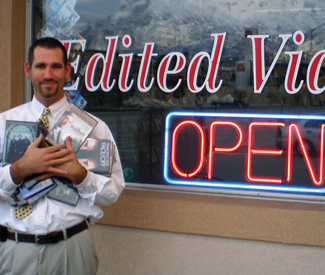
That debate, acted out in the heart of Mormonlandia, is at the crux of Andrew James and Joshua Ligari’s documentary Cleanflix. Its eventually very twisty tale starts out with the simple arrival of a supply to meet a demand — in this case, “cleaned up” versions of Hollywood movies offered for rental or purchase in a handful of Utah stores starting around the turn of the millennium.

Handily removing “sex, nudity, profanity, and gory violence” — pretty much in precisely that descending order of importance — from commercial movies for home viewing, Ray Lines’ original CleanFlicks identified a community need and filled it. This success did not pass unnoticed. In fact even as CleanFlicks sold its stores and moved into online distribution, competitors were multiplying like plygs (children of polygamous families), each one howling as the next invaded their territory.

There are many things you can’t do, or at least are strongly discouraged from doing, in the Mormon-dominated state of Utah. But practicing cutthroat capitalism is not one of them — quite the opposite. Money corrupts just like power, however, and Cleanflix veers in unexpected directions as one of its principal characters, a seemingly affable and earnest man of faith, turns out to be a purported fornicating stoner pornmonger whose only spirituality was spelled with a $. The heat gets such that he has to flee the state, briefly landing in Gomorrah itself, Hollywood.

Even as it stumbles upon such lurid human interest, Cleanflix keeps an eye on the bigger picture, notably the question: who has the right to alter a copyrighted work? Some “clean” video shops clung to the notion that since they purchased and tweaked each and every DVD themselves, they were free to do what they wanted with them. Besides, don’t the big studios often create censored versions of their own films for airplane screenings and such?

The industry begged to differ, eventually winning court victories that shut down most (if not all) of the independent “content filtering” businesses. We hear from directors like Steven Soderbergh and Neil LaBute (the latter an ex Mormon), who bristle at the hubris behind “changing something that doesn’t belong to you,” saying that it’s naive at best to think in taking a few bricks out of an artistic house you won’t cause the whole structure to collapse. Then of course there’s the worry that such tampering “cultivates a tolerance for censorship” and uses legitimizes “a shamefulness toward sexuality,” no matter what the artist’s original intention might have been.

Ye olden American hypocrisy in matters of sex vs. violence — so opposite the attitudes flaunted by our socialistic European brethren — is glimpsed in “cleansed” movies like 1996’s Fargo that many patrons find permissible with all its extreme bloodletting intact (remember that wood chipper?), but one mention of the word “penis” tastefully excised. The mind reels at some successfully censored cinema noted here, like 1999’s The Matrix with all its umpteen non-graphic killings removed, or even sacrosanct Schindler’s List (1993) minus any concentration camp details unsuitable for the entire family.

Some movies, however, resist all taming. Ray Lines admits there was no point trying to scrub up 1990’s seemingly harmless Pretty Woman (whose Cinderella is a streetwalker). As for 2005’s Brokeback Mountain, well … “We didn’t do that one on principle,” a CleanFlicks editor says. Just as the monkey at the typewriter will sooner or later write Hamlet, so in the infinite diversity of human experience, once in a great while homophobia is going to be good news for homosexuals.


CLEANFLIX

Sun/15-Tues/17, 7 and 9 p.m. (also Sun/15, 2 p.m.)

Roxie Theater

3117 16th St., SF

(415) 863-1087

www.roxie.com

Ed Lee and District 5

12

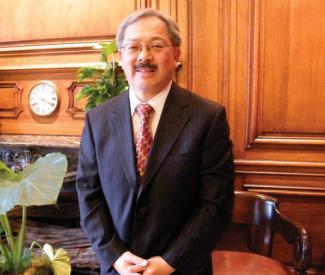
It’s all gossip at this point because if anybody other than Ed Lee knows who Ed Lee is going to appoint to the District 5 seat, that person isn’t talking. It’s no surprise the Chuck Nevius, who really loves Mayor Ed, thinks it’s just fine and dandy that he’s taking his sweet time to name a replacement for Ross Mirkarimi, but a some people who live in the district aren’t so happy.

Here’s the thing: The new supervisor will hav to be appointed and take office pretty soon, since Mirkarimi is officially sworn in as sheriff Jan. 8, and so is effectively already off the Board of Supervisors. Either Lee makes his choice by Jan. 10, the next board meeting, or the supes will meet one member short — and the district will have no representation.

Not the end of the world, of course, but: No matter when Lee pulls the string now, the new person will have to hire a staff, make connections across the district, get up to speed on the issues and move into a difficult and complicated job without any transition time at all. No time for preparation, no time to meet with Mirkarimi or his staff to figure out what’s going on — nothing.

If Lee had made his choice a few weeks ago, that person could have been doing what Mirkarimi has been doing in the sheriff’s office — meeting with the outgoing office holder, going to briefings, assembling a team etc.

So Lee’s indecision isn’t just bad for the district; it’s bad for the person he appoints.

Oh, and by the way: Nevius has part of his analysis a little wrong. He claims that

The Guardian, the progressive playbook, has already made its pitch, twice writing that Planning Commission President Christina Olague would be acceptable.

Actually, we haven’t endorsed or promoted anyone for the job (and that’s probably just as well, since anyone I suggest will never get the mayor’s support). We did run an opinion piece by Gabriel Haaland saying that Olague would be acceptable to him. All we’ve done is described the profile we’d like to see:

It’s critical that the mayor appoint a District 5 supervisor who is a credible progressive, someone who supports higher taxes on the rich and better city services for the needy and is independent of Lee’s more dubious political allies.

Either way, it’s time for Lee to make a decision.

What? Glenn Beck in for Strephanie Miller on Green 960

20

As we were driving to work this morning (1/4/2012), we were surprised and angered to find Glenn Beck, the rightwing  broadcaster who was too much for Fox News, replacing Stephanie Miller, the liberal, articulate, and clever talk show host on Green 960. How in the world could that be?  How in the world could the Clear Channel broadcast conglomerate put Beck on morning drive time on Green 960, which up to now had “proudly” proclaimed itself as the progressive radio station in progressive San Francisco? .How could it make this crucial political change at the very start of the presidential electon season?  Was it because Clear Channel is now owned by another conglomerate involving Mitt Romney? (In 2008, a Boston-based private equity firm purchased Clear Channel in a leveraged buyout, according to the Bradblog.)  Has Clear Channel/Romney no shame?

I have often tried in vain through the years to contact Clear Channel for explanation or comment on news stories. This time, I  am happy to turn the job over to the Bradblog below, operated by Brad Friedman, who runs an excellent independent blog specializing in investigative reporting, broadcast analysis, and election integrity issues.

Read what he has to say and get good and mad. Clear Channel is screwing the City and County of San Francisco yet again. Resist! B3
http://www.bradblog.com/?p=8974


Our Weekly Picks: January 4-10

0

WEDNESDAY 4

Starfucker

Reptilians, the latest LP from Portland, Ore.’s Starfucker, shows a clear obsession with death. But, you might not realize it from the opening track, “Born,” which takes a Flaming Lips style approach and brings some rock skuzz to a child-like stare into the abyss. This band keeps getting bigger (as does its audience — this Oakland date was added after two scheduled shows this week sold out,) and now with five touring members, the sounds gotten more expansive: euphoric electronica, Australian/Minogue-ish pop, 8bit arpeggios, Pixies’ bass lines, plus the signature Alan Watts samples. It could be a little much for a synth rock group, but for now, considering impending annihilation, Starfucker doesn’t seem to give a fuck. (Ryan Prendiville)

With Painted Palms, and Feelings

9 p.m., $20–$23

New Parish

579 18th St., Oakl.

(415) 371-1631

www.thenewparish.com


Week End

Yes, there was a standout 2011 movie called Weekend — Nottingham guy meets bound-for-America Nottingham guy for a one-night stand that turns out to be something more — but this screening is of another film with a very similar name, 1967’s Week End. Pro-tip: add Weekend to your Netflix queue and add Week End to your weekend plans. Jean-Luc Godard’s surreal, prescient satire of our ever-declining civilization, featuring cinema’s most epic (and most epically-filmed) traffic jam, unspools on the big screen in the form of a brand-new 35mm print. Oui-kend! (Cheryl Eddy)

Fri/6-Sun/8, 7 and 9:15 p.m. (also Sat/7-Sun/8, 2:30 and 4:45 p.m.), $7.50–<\d>$10

Castro Theatre

429 Castro, SF

(415) 621-6120


Grass Widow

Celebrate the first Friday of 2012 in Oakland with a free performance by San Francisco’s popular harmonizing punk trio, Grass Widow. Traipse through forward-thinking art instillations at nearby galleries as part of Art Murmur, then pop into the Uptown for an early start — doors are at 6 p.m. so there’s ample drinking time before bands. And those bands are high quality. Every time I see Grass Widow live, I’m smacked with its sheer blistering force; last catching the act upon its return from tour at a Public Works show featuring the resurgent Erase Errata, I was again swept up by the pummeling skills of guitarist Raven Mahon, drummer Lillian Maring, and bassist Hannah Lew. Art, drinks, and cheap-o rock’n’roll, it’ll be a solid First Fridays escape from reality. (Emily Savage)

With Culture Kids, Churches, and Wave Array

9 p.m., free

Uptown 1928 Telegraph, Oakl.

(510) 451-8100

www.uptownnightclub.com


Stripmall Architecture

The video for Stripmall Architecture’s “Radium Girls” features a neon-painted Rebecca Coseboom making weird “come hither” faces as she sings into the camera. It’s trippy and alluring, and it’s precisely how I would describe the local quartet’s dark-tinted pop music. Though Stripmall Architecture might be somewhat under your radar, founding couple Rebecca and Ryan Coseboom have worked with DJ Shadow, and Cocteau Twins guitarist Robin Guthrie, and toured the country with Bob Mould. The group wails on guitars and synthesizers, but Rebecca’s angelic voice is the driving force of its sound. After watching “Radium Girls,” I found a bunch of clips of the freaky light show the band puts on for live performances. So, you should probably check them out. (Frances Capell)

With Return to Mono and TIGERcat

9 p.m., $10

Rickshaw Stop

155 Fell, SF

(415) 861-2011

www.rickshawstop.com


FRIDAY 6

Frank & Tony

Francis Harris (a.k.a. Adultnapper) has a gift for building minimal tracks. One of the best songs of the last year, “Idiot Fair (feat. Black Light Smoke)” was a restrained bit of deep tech house released on Berlin’s Poker Flat Recordings. A steady bump with a little shake and some alternating clipped keys and snares for five minute — it didn’t slow build, it pleasantly idled — until a pair of brooding, stressed male vocals dropped into play. While Scissor and Thread — a Brooklyn-based label Harris started with players including French DJ (Tony) Anthony Collins — bills itself as an independent rather than dance imprint, the releases so far from Harris and Black Light Smoke sound quite promising. (Prendiville)

With Adnan Sharif (Forward), Michael Perry (Fedora)

9:30 p.m., $10–$15

Public Works

161 Erie, SF

(415) 932-0955

www.publicsf.com


The Proud

Local playwright Aaron Loeb’s previous work was entitled Abraham Lincoln’s Big, Gay Dance Party and featured a chorus line of dancin’ beardos in stovepipe hats. His latest, The Proud, workshopping at Dance Brigade’s Dance Mission Theater, features a more serious subject matter (presented in collaboration with Iraq Vets Against the War, the play is about post-traumatic stress disorder) — but a no less memorable chorus, in the form of Dance Bridgade’a formidable drummers and dancers. The Proud is drawn from interviews with Bay Area veterans of Iraq and Afghanistan, focusing on both PTSD and — in keeping with Dance Brigade’s commitment to feminist themes — the treatment of women in the military. Even in “staged reading” form, The Proud promises to be powerful stuff. (Eddy)

Sat/7, 8 p.m.; Sun/8, 6 p.m.; Mon/9, 5 p.m., free

Dance Mission Theater

3316 24th St., SF

(415) 826-4441

www.dancemission.com


SATURDAY 7

“Primo”

What gentle vibrations run through a family that produces a plural of career artists? Somewhere back in the generations was a genetic seed planted, later blooming into progeny given to walking the world with paint-spattered paws and dreamy gazes fixed on rooftops or the curvature of a cat’s cheekbones? Pending a scientific conclusion, we can look to the new art exhibition by cousins Hugh and David D’Andrade for clues. Budding geneticists will find comparisons of the two’s bodies of work — Hugh’s illustrative dream world most recently featured on an iconic Occupy flier, David’s sweeps of pigment that seem almost sculpture-like — to be catnip for the dabbler in DNA studies. (Caitlin Donohue)

Through Feb. 18

Opening reception: 6-9:30 p.m., free

a.Muse gallery

614 Alabama, SF

(415) 279-6281

www.yourmusegallery.com


“Accordions with Love II”

This event is actually a double whammy, two full shows of squeezebox pride. First, there’s the early show, “Accordion Babes Review” which kicks off at happy hour and includes accordion-filled sets by Yeti, Amber Lee & the Anomalies, Luz Gaxiola & Circus Finelli, Vagabondage, and more. Next up, there’s “The Big Squeeze,” the nighttime show beginning at 9 p.m. This one features Mark Growden, Gabrielle Ekedal & Angus Matin, Eggplant Casino, and yes, even more. It’s a packed lineup, one that should envitably lead to your perfect come-on for the night, “My, how your accordion bellows.” (Savage)

5 p.m. and 9 p.m., $10 per show

Amnesia

835 Valencia, SF

(415) 970-0012

www.amnesiathebar.com

Phonte and 9th Wonder

It’s a little hard to wrap my head around the notion that Charity Starts At Home, released in September, is the debut solo album from North Carolina Justus League rapper Phonte. One of the most straight-talking, artistically varied artists around, Phonte has done practically everything but a solo album: classic underground records with the group Little Brother, the electronic R&B project Foreign Exchange with Dutch producer Nicolay (hip-hop’s answer to the Postal Service), and alter-egos like Tigallo and the hilariously authentic old school soul singer, Percy Miracles. Among it’s highlights, Charity sees the MC once again collaborating (after a 6 year break) with top-tier producer and former Little Brother member 9th Wonder. (Prendiville)

With Median, Rapsody

9 p.m., $22-40

New Parish

579 18th St., Oakl.

(415) 371-1631

www.thenewparish.com


SUNDAY 8

The Future of Motive Power

Nikola Tesla died at the New Yorker Hotel in 1943, alone and without a cent to his name. In the last years of his life, the “electric wizard” behind wireless communication and the induction motor had been promoting a death ray, subsisting on vegetable potions, and obsessing about pigeons (he claimed to love one pigeon like “a man loves a woman”). Future Motive Power, a play by the local performance ensemble Mugwumpin, is inspired by the inventor-wizard’s life, its peculiarities and myths, and the science that lives in its wake. Created specifically for the historic Old Mint, it’s a self-proclaimed “performative fever dream.” (James H. Miller)

8 p.m., $30 includes drinks and hors d’oeuvres

Old Mint

88 Fifth St., SF

(415) 967-1574

www.mugwumpin.org


MONDAY 9

Soft White Sixties

A congregant at the church of classic, mind-reeling Seventies rock, Soft White Sixties once described its sound as “Rock ‘n’ roll, heavy on the roll, dipped in soul.” This audio-fanatic show is particularly fitting for SWS and its followers for it’s part of Communion, a live music forum began in the UK by Mumford & Sons’ Ben Lovett, Kevin Jones, and noted producer Ian Grimbl. Established in 2006 London, Communion began as a monthly showcase for emerging singer-songwriters, a modern-day creative salon. It came to San Francisco near the end of last year, and continues to produce unique lineups and fanciful collaborations monthly at Cafe Du Nord. (Savage)

With Zane Carney, Big Eagle, Gabriel Kelly, and Amy Blashkie

8:30pm, $12.

Cafe Du Nord

2170 Market, SF

(415) 861-5016

www.cafedunord.com


TUESDAY 10

Thee Cormans

In the grand tradition of costumed surf punk bands that straddle rock’n’roll and comedic timing (Phantom Surfers, Mummies), here comes Thee Cormans, a green-skinned, gorilla-masked, bug-eyed gang of wily monster motorcyclists in ripped vests riding curling waves of reverb. And like its rowdy foreparents, this fuzzed out Southern California based band has a live show that puts tender mumbling indie acts to shame. That exuberance also fits in neatly with Thee Cormans’ label, In the Red, which itself is making waves for a future-retro mishmosh output of eccentric weirdos, cultured punks, and generally genre-less acts. Viva costumery. (Savage)

With the Shrouds, the Khans, and Swiss Family Skiers

8:30 p.m., $6

Hemlock Tavern

1131 Polk, SF

(415) 923-0923

www.hemlocktavern.com 

The Guardian listings deadline is two weeks prior to our Wednesday publication date. To submit an item for consideration, please include the title of the event, a brief description of the event, date and time, venue name, street address (listing cross streets only isn’t sufficient), city, telephone number readers can call for more information, telephone number for media, and admission costs. Send information to Listings, the Guardian Building, 135 Mississippi St., SF, CA 94107; fax to (415) 487-2506; or e-mail (paste press release into e-mail body — no text attachments, please) to listings@sfbg.com. Digital photos may be submitted in jpeg format; the image must be at least 240 dpi and four inches by six inches in size. We regret we cannot accept listings over the phone.

City Hall’s 2012 agenda

16

EDITORIAL There’s so much on the to-do list for San Francisco in 2012 that it’s hard to know where to start. This is a city in serious trouble, with unstable finances, a severe housing crisis, increased poverty and extreme wealth, a shrinking middle class, crumbling and unreliable infrastructure, a transportation system that’s a mess, no coherent energy policy — and a history of political stalemate from mayors who have refused to work with progressives on the Board of Supervisors.

Now that Ed Lee has won a four-year term, he and the supervisors need to start taking on some of the major issues — and if the mayor wants to be successful, he needs to realize that he can’t be another Gavin Newsom, someone who is an obstacle to real reform.

Here are just a few of the things the mayor and the board should put on the agenda for 2012:

• Fill Sup. Ross Mirkarimi’s seat with an economic progressive. This will be one of the first and most telling moves of the new Lee administration — and it’s critical that the mayor appoint a District 5 supervisor who is a credible progressive, someone who supports higher taxes on the rich and better city services for the needy and is independent of Lee’s more dubious political allies.

• Make the local tax code more fair — and bring in some new revenue. Everybody’s talking about changing the payroll tax, which makes sense: Only a small fraction of city businesses even pay the tax (which is not a “job killer” but is far too limited). Sup. David Chiu had a good proposal last year that he abandoned; it called for a gross receipts tax combined with a commercial rent tax — a way to get big landlords and companies (like law firms) that pay no business tax at all to contribute their fair share. That’s a good starting point — but in the end, the city needs more money, and the new system should be set up to bring in at least $100 million more a year.

• Create a linkage between affordable and market-rate housing. This has to be one of the key priorities for the next year: San Francisco’s housing stock is way out of balance, and it’s getting worse. The city’s own General Plan mandates that 60 percent of all new housing should be available at below-market-rate prices; the best San Francisco ever gets from the developers of condos for the rich is 20 percent. The supervisors need to enact legislation tying the construction of new market-rate housing to an acceptable minimum level of affordable housing to keep the city from becoming a place where only the very rich can live.

• Demand a good community-benefits agreement from CPMC. The California Pacific Medical Center has a massive new hospital project planned for Van Ness Avenue — and so far, CPMC officials are refusing to provide the housing, transportation and public health mitigations that the city is asking for. This will be a key test of the new Lee administration — the mayor has to demonstrate that he’s willing to play hardball, and refuse to allow the project to move forward unless hospital officials reach agreement with community activists on an acceptable benefits agreement.

• Make CleanEnergySF work. A recent study by the website Energy Self-Reliant States shows that by 2017 — in just five years — the cost of solar energy in San Francisco will drop below the cost of Pacific Gas and Electric Company’s fossil-fuel and nuclear mix. So the city’s new electricity program, CleanEnergySF, needs to be planning now to build out both a large-scale solar infrastructure system and small-scale distributed generation facilities on residential and commercial roofs and set the agenda of offering clean, cheaper energy to everyone in the city. The money from the city’s generation can be used to purchase distribution facilities to phase out PG&E altogether.

• Don’t let Oracle Corp. take over even more of the waterfront. The America’s Cup continues to move forward — but at every step of the way, multibillionaire Oracle CEO Larry Ellison is trying to squeeze the city for more. Mayor Lee has to make it clear: We’ve given one of the richest people in the world vast amounts of valuable real estate already. He doesn’t need a giant TV screen in the Bay or more land swaps or more city benefits. Enough is enough.

There’s plenty more, but even completing part of this list would put the city on the right road forward. Happy new year.

Guardian editorial: City Hall’s 2012 agenda

20

EDITORIAL There’s so much on the to-do list for San Francisco in 2012 that it’s hard to know where to start. This is a city in serious trouble, with unstable finances, a severe housing crisis, increased poverty and extreme wealth, a shrinking middle class, crumbling and unreliable infrastructure, a transportation system that’s a mess, no coherent energy policy — and a history of political stalemate from mayors who have refused to work with progressives on the Board of Supervisors.

Now that Ed Lee has won a four-year term, he and the supervisors need to start taking on some of the major issues — and if the mayor wants to be successful, he needs to realize that he can’t be another Gavin Newsom, or Willie Brown, mayors who were an obstacle  to real reform.

Here are just a few of the things the mayor and the board should put on the agenda for 2012:

+Fill Sup. Ross Mirkarimi’s seat with an economic progressive. This will be one of the first and most telling moves of the new Lee administration — and it’s critical that the mayor appoint a District 5 supervisor who is a credible progressive, someone who supports higher taxes on the rich and better city services for the needy and is independent of Lee’s more dubious political allies.

+Make the local tax code more fair — and bring in some new revenue. Everybody’s talking about changing the payroll tax, which makes sense: Only a small fraction of city businesses even pay the tax (which is not a “job killer” but is far too limited). Sup. David Chiu had a good proposal last year that he abandoned; it called for a gross receipts tax combined with a commercial rent tax — a way to get big landlords and companies (like law firms) that pay no business tax at all to contribute their fair share. That’s a good starting point — but in the end, the city needs more money, and the new system should be set up to bring in at least $100 million more a year.

+Create a linkage between affordable and market-rate housing. This has to be one of the key priorities for the next year: San Francisco’s housing stock is way out of balance, and it getting worse. The city’s own General Plan mandates that 60 percent of all new housing should be available at below-market-rate prices; the best San Francisco ever gets from the developers of condos for the rich is 20 percent. The supervisors need to enact legislation tying the construction of new market-rate housing to an acceptable minimum level of affordable housing to keep the city from becoming a place where only the very rich can live.

+Demand a good community-benefits agreement from CPMC. The California Pacific Medical Center has a massive new hospital project planned for Van Ness Avenue — and so far, CPMC officials are refusing to provide the housing, transportation and public health mitigations that the city is asking for. This will be a key test of the new Lee administration — the mayor has to demonstrate that he’s willing to play hardball, and refuse to allow the project to move forward unless hospital officials reach agreement with community activists on an acceptable benefits agreement.

+Make CleanEnergySF work. A recent study by the website Energy Self-Reliant States shows that by 2017 — in just five years — the cost of solar energy in San Francisco will drop below the cost of Pacific Gas and Electric Company’s fossil-fuel and nuclear mix. So the city’s new electricity program, CleanEnergySF, needs to be planning now to build out both a large-scale solar infrastructure system and small-scale distributed generation facilities on residential and commercial roofs and set the agenda of offering clean, cheaper energy to everyone in the city. The money from the city’s generation can be used to purchase distribution facilities to phase out PG&E altogether.

+Don’t let Oracle Corp. take over even more of the waterfront. The America’s Cup continues to move forward — but at every step of the way, multibillionaire Oracle CEO Larry Ellison is trying to squeeze the city for more. Mayor Lee has to make it clear: We’ve given one of the richest people in the world vast amounts of valuable real estate already. He doesn’t need a giant TV screen in the Bay or more land swaps or more city benefits. Enough is enough.

There’s plenty more, but even completing part of this list would put the city on the right road forward. Happy new year.


Live Shots: Main Attrakionz and G-Side at Independent

0

Despite all the local and national attention Oakland’s “Best Duo Ever” Main Attrakionz has been receiving lately, the Independent was less populated than I expected last Tuesday night. It was an appreciative bunch, however, with a handful of bloggers and collaborators joining fans to show the act love.

There’s something strange and wonderful happening in independent hip-hop these days – rappers, producers, managers, and friends from an array of backgrounds and styles have formed a diverse and tight-knit circle via the Internet, and a family vibe was apparent at Tuesday’s show.

Cloud rappers Main Attrakionz came out the gate with crazy energy. MondreMAN wore a flannel (with tag on), Super Mario t-shirt, and fuzzy white beanie. Squadda B was in head-to-toe sweats. Oddly enough, Main Attrakionz’ manager Walkmaster Flex took on the role of hype-man for the evening.

I exchanged knowing glances and smiles with James Laurence of Friendzone during the dreamy, sedated, Friendzone-produced “Chuch.” Even without the verse from Detroit, Mich.’s Danny Brown, “Cloud Skatin’” from Blackberry Ku$h was a personal highlight. The set also featured a cameo from one of my favorite up-and-comers and Green Ova family member, Shady Blaze, who showed up to throw down on “Hood Nigga.” Though the turnout was lacking, those in attendance looked thoroughly impressed (and pretty high).

I’d been listening to some of headliner G-Side’s melodic hip-hop in the weeks prior to the show, but I consider Tuesday’s set my first proper introduction to the Huntsville, Ala., duo. ST 2 Lettaz and Yung Clova have been rapping together for over a decade, and this pair has amazing chemistry and is flat-out great at rapping. The crowd filled out and got moving for G-Side’s highly animated set, which featured vocalist Joi Tiffany, lots of weed, and an encore. By the end of the night, I was a full-fledged fan of the sweat-drenched Southern duo.

All photos by Diego Gamez.

The right way to rebuild CPMC

9

OPINION As 2011 comes to an end, San Francisco witnesses yet another year with community stakeholders and city officials mired in conflict over Sutter Health’s plans to rebuild its massive CPMC hospital system. In what has proven over the years to be an intensely complicated, politicized, and polarizing issue, one important point has been left out of the public dialogue — this conflict is entirely resolvable.

Very few parties have stated outright opposition to Sutter’s CPMC project. In fact, the unifying demand of a city-wide coalition with nearly 60 community and labor organizations is to “Rebuild CPMC, the Right Way.”

What exactly is the “right way?”

It’s simple: There’s a proven tool used in cities across America known to resolve complex standoffs such as this one — a community benefits agreement (CBA).

A CBA would bring this project to a resolution in two ways. First, it would provide direct accountability between the community and CPMC. A CBA is a legally binding contract between a developer and community and labor organizations that can be enforced on an ongoing basis without city involvement. And a CBA gives valuable assurances to developers that community and labor organizations will not politically or legally oppose the project — and in many cases, results in these groups providing public support.

Community stakeholders are often positioned to negotiate a stronger agreement than the city. They best understand the needs that have to be met in their neighborhoods and the adverse consequences that have to be avoided. And the city isn’t legally allowed to address any labor issue subject to a collective bargaining agreement — but a CBA is an independent agreement that can bring unions to the table in a meaningful way to resolve basic workers’ rights issues.

A recently released study by Hastings College of the Law cites the enormous profits made by CPMC ($744 million from 2006 to 2010), yet points out that the organization spends proportionally far less on charity care for poor residents than other private nonprofit hospitals. At a time when the 99 percent are standing up to corporate profiteering, a strong CBA can be a tool to help address the growing inequality in this city.

Among other things, a strong CBA should include:

Appropriate mitigation fees to address the full impact CPMC’s new workforce will have on one of the nation’s most expensive housing markets. CPMC estimates the project will increase demand for San Francisco housing by 1,440 new households.

More job opportunities for San Franciscans. CPMC is projecting an increase of over 4,100 new jobs by 2030, but the city has only negotiated a promise that 40 permanent jobs a year for the first five years will go to San Francisco residents.

Basic worker’s rights, including the right for current CPMC employees who are displaced to transfer to comparable jobs at new facilities and the right for workers at the new Cathedral Hill campus to join a union of their choosing without management intimidation.

Stipulation of key community clinics for CPMC to partner with. Although CPMC says it will increase its Medi-Cal service, it currently refuses to link its new hospital to any of the major clinics Medi-Cal patients use to access services.

A stronger guarantee to operate St. Luke’s Hospital over the long term. CPMC has agreed to a 20-year guarantee but has insisted on a “trigger” clause that will release it from this obligation, of which the details are unknown right now.

Without a CBA, the ongoing struggle between CPMC and affected communities across San Francisco will continue to delay this project. CPMC should meet with community stakeholders before any development agreement is approved and negotiate a community benefits agreement.

Steve Woo is a Community Organizer with Tenderloin Neighborhood Development, Emily Lee is a Lead Organizer at Chinese Progressive Association, and Gordon Mar is Executive Director of Jobs with Justice.

Editor’s notes

2

steve@sfbg.com

Hugely influential political figures died in the last week: Czech playwright-turned-president Vaclav Havel, North Korea’s “dear leader” Kim Jong-Il, and writer Christopher Hitchens, who shaped perceptions of war and religion. But it was the death of investment banker Warren Hellman that has most affected me and the rest of San Francisco.

It wasn’t just because I knew and greatly respected the man, but it was how I came to know Warren and the unique role that he played in this polarized city. Up until 2007, I saw Hellman as just another wealthy Republican power broker pumping money into conservative campaigns that the Bay Guardian and progressives were constantly fighting.

Even before Occupy coined that new paradigm, I saw him as part of the one percent working to keep the 99 percent down, and I bitterly resented what the very rich were doing to San Francisco. But increasingly, Hellman began to break with his downtown allies, partnering with bicyclists, burners, and music lovers on various pursuits. So I decided to do an in-depth profile of this courageously independent man (see “Out of downtown,” 5/19/07) and that evolved into an ongoing relationship.

Like everyone else, I appreciate what Warren has done for San Francisco, particularly his creation of the Hardly Strictly Bluegrass Festival, the Bay Citizen, the San Francisco Foundation, and other important institutions. He felt an obligation to use his wealth for the common good.

But even more striking was his humble and cooperative approach. He believed luck matters more than ability in people’s socioeconomic status. So Warren brought goodwill and real curiosity to all his interactions — he wanted to learn from San Franciscans of all kinds, to let them shape him and this city. I can think of no better example to follow during this holiday season and the fraught political year that follows.

Marco De La Vega’s top 10 substances that have influenced music in 2011

3

For so many more year-end music lists, click here and pick up this week’s paper.

120 Minutes’ Marco De La Vega (@S4NTA_MU3RTE) lists his top 10 substances that have influenced music in 2011:      

1. Adderall: Not just because Bay-local comeup, Kreayshawn, spits bout slangin’ em (“gnarly, radical, on the block I’m magical… see me at your college campus baggie full of Adderalls” or even because of Kendrick Lamar’s thoughtfully spaced out track “A.D.H.D.” but mostly because of its association with hyperactive, creative, and willfully scattered children. Odd Future blew up, Tyler the Creator dropped Goblin, A$AP Rocky put out one of the strongest releases of the year with LIVELOVEA$AP. All kinds of kids were spittin’ up mixtapes right outta high school and then signing multimillion dollar contracts.

2. DMT: Dimethyltryptamine is some fucked up shit, and I mean that in the most complementary way possible. A small glimpse behind the fabric of reality. There were a few releases this year that resemble and reflect this completely alien and confusing greater truth. Oneohtrix Point Never’s Replica, James Ferraro’s Far Side Virtual, and Laurel Halo’s flawless EP, Hour Logic (Hippos In Tanks).

3. Nitrous Oxide: whippets are back and that shit makes everything sound like you’re living in a vacuum cleaner. As much as I despise the hyperwobbly, fist pumpin’ sounds of brosteppers like Rusko, and (cringe) Skrillex, I can’t deny that that shit is selling cars; dubstep car commercials. Also, to be fair, real dubstep and what is often called post-dubstep is some amazing music and some of its less commercially viable/more critically acclaimed artists have put out some beautiful work. Zomby dropped Dedication this year on 4AD and that shit is sick. James Blake’s debut album is also impossibly good.

4. Pills: maybe it’s just the kids I roll with, but I assume that most sensitive, well thought, independent rock is made by people on pills (think old Brian Jonestown Massacre or Jesus and Mary Chain). The second I heard that track “Vomit” off of friends and local heroes Girls new album Father, Son, Holy Ghost, I had to raid my own medicine cabinet, take a couple Vicodin, and listen to a stack of records including that, Tamaryn, King Dude, Chelsea Wolfe, and Zola Jesus.’Bout as close to heaven as a guy like me can get.

5. Coke: coke always has and always will rule the dancefloor. It goes further than that though; coke rap is alive and well. Trap rap (rap about drug dealing) in general is continuing to run shit. And when you got Lex Luger droppin’ some of the illest beats around for songs that are 90 percent chorus, how can you go wrong? This is a very serious statement — the Ferrari Boyz (Gucci Mane and Waka Flocka Flame) mixtape that came out about a week before that overhyped, tired, abomination that is Watch the Throne, has some of the best tracks this year.

6. K: club drugs in general are back, and nothing says party like as strong debilitating dissociative. I mentioned this album earlier when I was talking about DMT, but it’s good and weird enough that it needs to be mentioned twice. James Ferraro’s Far Side Virtual.

7. Acid: my favorite substance. LSD is an extended barrage of overwhelming sensory input, particularly sight and sound, and should therefor be discussed in those terms. Sight: this year has been all about projections, lasers, and smoke — there are a lot of amazing producers playing live right now, and a dude with a laptop ain’t a show, so it’s important to add some flare. Sound: from mixtapes like White Ring’s tranced out Chaind and Nike7up’s crazy melted-pop gem 33:33 to Araabmuzik’s breathtakingly unfuckwithable album Electronic Dream, this has been the strongest showing dosed out music has had since the mid ’90s.

8. MDMA: like I was saying earlier, club drugs are huge right now. Best part about the ecstasy thing though is that we’re not talking pressies here, just pure crystalized love. You can hear it in the work of groups like Sleep 8 Over and (of course) Pure X. But I think it’s most evidenced by song’s like The Weeknd’s “High for This” and on Pictureplane’s brilliantly positive album Thee Physical (Lovepump United).

9. Weed: not that weed ever goes away, but it’s had a really strong year. Seems like everybody’s smoking blunts and flipping pounds these days. Wiz Khalifa, A$AP, Lil B, Lil Wayne, Miley fucking Cyrus. and of course Zip and a Double Cup himself, Juicy J., which brings us to our big winner…

10. Promethazine: Lean, purple drank, double cup, sizzurp — codeine cough syrup has a lot of names, and it’s been an important factor in rap, particularly Southern rap, for a very long time. But that influence is spreading. Bands like Salem have created whole new subgenres of music built off applying the late great DJ Screw’s production sensibilities as liberally as possible. New York Rappers like A$AP Rocky are singing the praises of Screw and Pimp C while repping Harlem and putting New York back on the map. I think 2012 is gonna be all about double cup dinner parties and art walks. Do yourself a favor, call your doctor and fake a cough, pop in Clams Casino’s Instrumental mixtape and/or LIVELOVEA$AP and chill for a bit.


“Vomit” blew minds:
http://www.youtube.com/watch?v=ze6rg4ixjOI&ob=av2e

A really dumb article about bookstores

35

You never know what you’re going to get on Slate, which tends toward the neo-liberal and sometimes libertarian, but I just read a particularly awful piece by technology writer Farhad Manjoo, who thinks that local bookstores are economically inefficient and should just go away:

Compared with online retailers, bookstores present a frustrating consumer experience. A physical store—whether it’s your favorite indie or the humongous Barnes & Noble at the mall—offers a relatively paltry selection, no customer reviews, no reliable way to find what you’re looking for, and a dubious recommendations engine.

For a tech writer, Manjoo has a remarkably shoddy understanding of economics:

After all, if you’re spending extra on books at your local indie, you’ve got less money to spend on everything else—including on authentically local cultural experiences. With the money you saved by buying books at Amazon, you could have gone to see a few productions at your local theater company, visited your city’s museum, purchased some locally crafted furniture, or spent more money at your farmers’ market. Each of these is a cultural experience that’s created in your community. Buying Steve Jobs at a store down the street isn’t.

He conveniently ignores that fact that money spent a locally owned, independent business stays in the community — and thus creates more local economic activity and more jobs (not to mention tax revenue for local government). Money spent at Amazon goes to an out-of-town operation that doesn’t even pay state sales tax. You want to read about the well-documehted economic value of shopping at a local story, you can find plenty here and here and here.

And let’s talk about the One Percent — would you rather that your money helps the owner of a small local store buy food for his or her kids, or see the money go to one of the richest people in the world?

But there’s another point here. Like local coffee shops, local bookstores are places where people gather and have actual human interactions. I see my neigbors there; we talk about what we’re reading. When I’m done with books, I can sell them back — and someone else can buy them, used, and I can use the money to buy another new book. Which is a pretty efficient economic system.

And there are things you can’t put a price on: At Red Hill Books, the allegedly inefficent, overpriced local bookstore in Bernal Heights, the employees know me and my kids — and when my daughter, who is a voracious reader, finishes one series of books, they know what to recommend next.

That’s not a “recommendations engine” — that’s a live person.

If Farhad Manjoo wants to live in robo-world where a machine tells you what to eat, drink and read, fine — but I still think human beings, inefficient as we are, do a better job at selling books.


Plugging the flow

0

rebeccab@sfbg.com

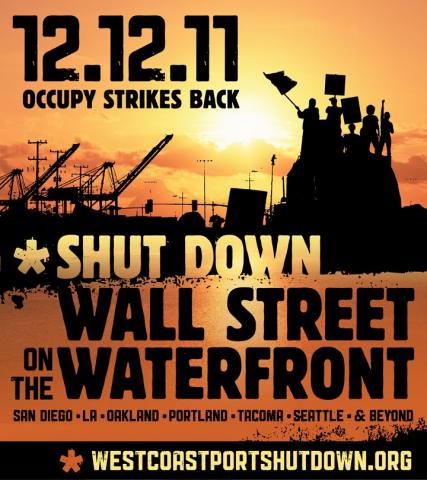
When significant events related to the Occupy movement occur in the pre-dawn hours, it usually means a protest encampment has been raided. But on Dec. 12, Occupy protesters were the ones carrying out a strategic plan before sun up.

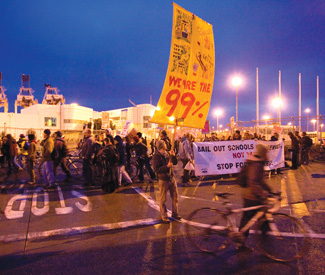
Activists organized by OccupyOakland effectively blocked cargo shipments from moving through several Port of Oakland terminals that day, as part of a coordinated West Coast Port Blockade that featured similar actions in other cities including San Diego, Portland, Seattle, and Longview, Washington.

About 150 longshore workers were sent home from their morning shifts at Oakland shipping terminals because protesters were marching in circular picket lines outside the gates.

The day began when more than 1,000 protesters met up at the West Oakland BART station at 5:30 a.m., sleepily raising signs and banners in the chilly morning air as they proceeded down 7th Street toward the port. Once they reached the sprawling shipping hub, they formed picket lines outside terminal entrances. Police were on the scene and clad in riot gear, but no clashes with protesters occurred early in the day.

Around 7 a.m., when the morning shift would have typically started, two International Longshore & Warehouse Union (ILWU) dockworkers — who declined to give their names — stood near the Hanjin Shipping gate at berths 55 and 56. Past the gate, a cargo vessel which had likely come from Japan was berthed and waiting to unload.

The men calmly surveyed the roughly 200 chanting Occupy activists as they marched around and around in a circular picket. “Ain’t nobody going to cross it,” one offered. The other gestured toward the protesters. “These are Americans wanting American jobs,” he said.

Around 10 a.m. outside the same terminal, protest organizer and Oakland hip-hop artist Boots Riley declared the first part of the port shutdown to be a victory. “Longshoremen are going home now,” he said. “Effectively, the Port of Oakland is shut down.” Later in the afternoon, protesters returned to prevent the start of an evening shift.

Until recently, the nationwide Occupy movement manifested as tent cities springing up everywhere in rebellion against the lopsided economic conditions. After a series of police raids cleared the tents away, however, organizers in the Bay Area and beyond took a different tack with the port blockade.

Working in tandem with allies from labor, occupiers from San Diego all the way up to Anchorage directed their gaze at international shipping hubs, critical infrastructure for multinational businesses importing and exporting goods between Asia and North America.

Cargo terminals make for heavyweight targets, as five of the nation’s 10 largest ports are located along the West Coast. The value of annually traded goods flowing in and out of Oakland alone is $34 billion, and authorities there estimate some $8 million could be lost if business were to be halted for a full day.


MAKING HISTORY

OccupyOakland unanimously approved the call for a coordinated West Coast port blockade at a Nov. 18 General Assembly.

“The ports play a pivotal role in the flow and growth of capital for the 1 percent in this country and internationally,” occupiers explained on a website announcing the port shutdown. “For that reason alone it is the ideal place to disrupt their profit machine.”

The ports weren’t selected as a target for that reason alone, but rather as an affront to specific corporations whose labor practices have sparked the ire of port workers. Export Grain Terminal (EGT) and its parent company, Bunge, Ltd., came into Occupy’s crosshairs because of their ongoing dispute with ILWU Local 21 in Longview, Wash., stemming from what longshoremen characterize as union-busting practices.

Port terminal operator Stevedoring Services of America (SSA Marine) and its parent company’s primary shareholder, Goldman Sachs, were also singled out in support of low-wage port truckers whose employment classification as independent contractors bars them from unionizing.

The third objective of the blockade, according to organizers, was to strike back against a series of police raids that dismantled Occupy encampments nationwide.

It wasn’t the first time cargo ships traversing the Pacific would be stalled by a politically motivated coast-wide port blockade. In 2008, ILWU members coordinated a West Coast port shutdown in dissent of the Iraq War.

In 1984, longshoremen and anti-apartheid activists blocked South African cargo to boycott the apartheid regime, noted ILWU member Stan Woods. Similar shutdowns, carried out in response to politically explosive issues going back to 1934, have been led by community activists forming picket lines at port entrances to prevent dockworkers from beginning their shifts.

Occupy’s call for a coordinated blockade brought an unprecedented twist to this historic trend, representing the first time a group unaffiliated with dockworkers had called for a shutdown spanning the entire West Coast. It left some seasoned organizers wondering anxiously how things would unfold, while others saw it as a gust of wind in the sails of the labor movement.

“One of the good things about the Occupy movement is that it’s challenging leaders of progressive institutions,” Woods said. “The old way … isn’t working. There’s been a one-sided class war, and there has to be a two-sided class war.”

Organizer Barucha Peller noted that the Occupy movement could be galvanizing for non-unionized workers, too. “Our movement is giving a framework for the 89 percent of workers who are not in unions,” she said.

For occupiers up and down the West Coast, the port shutdown also seemed to present a kind of test as to whether their young movement could successfully “exert its collective muscle,” as an OccupyOakland press statement put it, and effectuate a mass mobilization even after police raids flattened their encampments.


A ROUGH VOYAGE

In the weeks leading up to Dec. 12, even as Bay Area Occupy organizers plastered fliers about the blockade everywhere, met with union members, and organized outreach events to garner community support, they stumbled into challenges. Robert McEllrath, the president of the ILWU, publicly criticized the blockade plan, saying organizers had failed to reach out to union officials before unanimously approving the call to action.

“Any decisions made by groups outside of the union’s democratic process do not hold water, regardless of the intent,” McEllrath wrote. He seemed troubled that Occupy had attached itself to a union struggle without adequate communication, but an official endorsement of a third-party blockade by the ILWU would have landed the union in legal trouble.

“Whenever a group of people decide to march into a workplace in an effort to shut it without respecting the democratic decision-making process, it’s not an ideal situation,” ILWU spokesperson Craig Merrilees told the Guardian.

Some rank-and-file ILWU members saw things differently. “The rank and file do support the principles of the community, and Occupy,” said Anthony Lavierge, an ILWU steward. “Longshoremen had a good response to [the Nov. 2 port blockade]. It was empowering to a lot of people that so many came out.”

Another rank-and-file union member said, “the majority of ILWU workers are supportive of what’s going on, definitely.”

One rank-and-file ILWU member and self-described anarchist published a critique online raising concerns that OccupyOakland had failed to bring local union officials on board before approving the call to action.

In response, OccupyOakland organizer Mike King said, “We never brought it to them, because it’s not something they could endorse.” Yet he added that they had sought to include the rank-and-file from the start.

“We have done far more outreach for Dec. 12,” than in the days prior to the Nov. 2 port shutdown, which brought tens of thousands of activists to the street, King said. “Leading up to Nov. 2, we never expected half that many people would show up.”

Occupiers in San Diego, Los Angeles, Portland, Vancouver, Anchorage, and other cities all signed up to participate, and the idea drew support from activist groups as far away as Japan who vowed to perform solidarity actions in their own communities.

Nevertheless, the international union president’s statement prompted a flurry of mainstream news articles — along with some downright derisive columns — casting occupiers as out of sync with the very workers they claimed to stand with.

In Oakland, authorities of the targeted facility posed another obstacle. The Port of Oakland took out full-page ads in local daily newspapers and the New York Times urging the community to “Keep the Port Open.” The ads borrowed the language of the movement by proclaiming that the port “employs the 99 percent.” Port spokesperson Robert Bernardo emphasized this message in an interview with the Guardian. “When you shut down a port, you lose jobs,” he said. “Local jobs.”

Sue Piper, special assistant to Oakland Mayor Jean Quan, noted prior to Dec. 12 that the mayor was working with police and port officials to ensure that the port remained open for business. On the morning of the port blockade, however, police stood down and did not prevent protesters from circling up in front of terminal entrances.


BIG FISH TO FRY

Lost in much of the mainstream coverage of the port blockade were Occupy Oakland’s three main objectives. The protesters aimed to demonstrate solidarity with low-income port truckers laboring in service of the powerful SSA Marine; stand with ILWU Local 21 members in their face-off against EGT; and deliver a show of resistance against coordinated police raids of Occupy encampments nationwide.

In October, 26 Los Angeles truckers working for a port company called Toll Group were fired after wearing Teamsters truckers’ union jerseys to their shifts to demonstrate their wish to unionize. Because they’re classified as independent contractors instead of employees, it’s illegal for the truckers to join unions. They’re paid per shipment rather than per hour, which translates to hours of unpaid labor spent in the queue, and must cover their own job-related costs.

Occupy Los Angeles caught wind of the incident and began to talk about doing an action in solidarity with the truckers.

“The date of Dec. 12 was originally suggested by people in Los Angeles,” explained Dave Welsh, a delegate of the San Francisco Labor Council and secretary of the Committee to Defend the ILWU. “It’s also Our Lady of Guadalupe feast day, a Mexican holiday. Since many truckers of the Port of LA are Mexican, they picked that date. One focus [of the blockade] is support for truckers and their demand for better wages, working conditions, etc.”

On the day of the blockade, an open letter from port truckers was published on the website of the Coalition for Clean and Safe Ports, an advocacy group. “We are inspired that a non-violent democratic movement that insists on basic economic fairness is capturing the hearts and minds of so many working people,” the message read. “Thank you ’99 Percenters’ for hearing our call for justice. We are humbled and overwhelmed by recent attention. Normally we are invisible.”

The second major target of the blockade was EGT, which constructed a new grain terminal on Port of Longview property at the edge of the Columbia River in southern Washington, about an hour’s drive from Portland, Ore.

EGT’s parent company is Bunge, Ltd., a major agribusiness firm that has come under fire for everything from tax evasion, to rampant clearing of Amazon rainforest lands for soybean cultivation, to the use of slave labor in Brazil.

Although the terminal construction first brought hope to a small community inflicted with 15 percent unemployment , ILWU Local 21 President Dan Coffman says things soured when EGT brought in out-of-state laborers to build the facility, then refused to hire members of his union.

Coffman contends that EGT’s lease with the port means the company is required to hire Local 21 workers, but EGT disputes this, and has been locked in a federal court battle with the port. The dispute has prompted union members to stage port blockades of their own, resulting in some arrests.

Peller, the Occupy Oakland organizer, announced on a megaphone Dec. 12 that occupiers in southern Washington had shut down the Port of Longview, according to a text message from ILWU Local 21. Union members wanted to thank the movement for the show of support, she added.

“They thought they could just run over a small local,” Coffman told the Guardian, referencing EGT. “Well, David met Goliath. We’re going to fight them till the bitter end.”

George Chen’s list of things that didn’t suck in 2011

0

For so many more year-end music lists, click here and pick up this week’s paper.

Musician and writer George Chen says, “2011: man, most of it was shitty, but here were the good things:”

1. Helm. Luke Younger from Birds of Delay, Halloween weekend in London. Best noise set I’ve seen in a while, it helped that there was a fan blowing his bangs out of his hoodie. He has an album called Cryptography out on Kye.

2. White Lung. Youngins from Vancouver B.C. playing sick, straight forward punk. Saw them in a bowling alley.

3. Village of Spaces’ Alchemy and Trust album. It took a village to put this out, or at least four labels working in conjunction. Dan Beckman’s (Uke of Spaces Corners) quiet folk masterpiece.

4. Divorce. A band from Glasgow that exists in kind of a cultural vacuum there, a bit like the early ’00s trapped in amber, but then cracked open and given adrenal supplements. They are coming to America in July 2012.

5. Trash Kit put out an album in 2010, but I only got to see them once in 2011. Sadly, they have broken up. Finger-picky jaunty punk with weird rhythms.

6. Andrew W.K. This was not particularly “good”, but distinct encapsulation of the zeitgeist. My band played a show with him at Dem Passwords. He didn’t actually watch us or anything, he showed up right before going on with an entourage. Fans started force-feeding him bananas, Redbull, and whiskey and it turned into a freakish spectacle. I took a nap during his set, came back in, and he was still going for like two and a half hours, driving his fans away. Respect, the modern Andy Kaufman.

7. This Invitation. Chen Santa Maria went on a California tour with Warren in April and it was sparsely attended, but perhaps we’re to blame for that. It’s nice to see one of your oldest friends get some recognition for their work, which Aquarius did by giving their stamp of approval to his three (!) double CDs.

8. Cacaw from Chicago, a few ex-Coughs peeps project. They are now broken up, but this summer they came through and it was a monstrous sludge engine. Dark and fierce.

9. Anika. Technically a 2010 release, but she played at the Independent in October. The lady herself has a passive stage presence, but the music of the whole group (members of Portishead and Beak>) is best described as “Nico fronting PiL” (someone at the LA Times can claim that one).

10. SF Comedy. I still feel like an outsider at all this, but holy shit, there’s good stuff going on right now. Perhaps it is a national, even international renaissance in comedy, but the energy and talent going on here feels as exciting to me as the music scene used to feel. I actually don’t want to name names although the free show at the Rite Spot is a good place to start. I also noticed that none of the music I put on this list has anything to do with the Bay Area. Sorry, music. I just listen to podcasts now.

Young Canadian punk band White Lung:

The tops of 2011

0


CHERYL EDDY, GUARDIAN


TOP 10 METAL SHOWS OF 2011 (CHRONOLOGICAL ORDER)

1. Feb. 2: Motörhead, Clutch, and Valient Thorr at Warfield

2. March 11: Weedeater, Zoroaster, Kvelertak, and Begotten at Thee Parkside

3. March 12: Slough Feg, Christian Mistress, and Witch Mountain at Hemlock

4. April 3: Saint Vitus, Red Fang, and Howl at Mezzanine

5. June 7: Orange Goblin and Gates of Slumber at Bottom of the Hill

6. Aug. 12: Eyehategod, Impaled, Laudanum, and Brainoil at Oakland Metro

7. Aug. 16: Pentagram at Mezzanine

8. Oct. 13: Enslaved at Slim’s

9. Nov. 3: Mastodon and Red Fang at Warfield

10. Nov. 19: Kyuss Lives! and Black Cobra at Regency Ballroom


JOSH CHEON, DARK ENTRIES RECORDS


TOP 10 NEW RELEASES OF 2011

1. Container, S/T LP (Spectrum Spools) 2. Staccato du Mal, Sin Destino (Weird Records) 3. Bronze, Copper (RVNG Intl.) 4. Grouper, Dream Loss/Alien Observer (Yellow Electric) 5. White Fence, Is Growing Faith (Woodist) 6. Belong, Common Era (Kranky) 7. Widowspeak, S/T LP (Captured Tracks) 8. Total Control, Henge Beat (Iron Lung) 9. Iceage, New Brigade (What’s Your Rupture?) 10. Brotman & Short, Heights (Cold Dick)


GEORGE CHEN, MUSICIAN AND WRITER


2011: MAN, MOST OF IT WAS SHITTY. BUT HERE WERE THE GOOD THINGS

1. Helm. Luke Younger from Birds of Delay, Halloween weekend in London. Best noise set I’ve seen in a while, it helped that there was a fan blowing his bangs out of his hoodie. He has an album called Cryptography out on Kye. 2. White Lung. Youngins from Vancouver B.C. playing sick, straight forward punk. Saw them in a bowling alley. 3. Village of Spaces’ Alchemy and Trust album. It took a village to put this out, or at least four labels working in conjunction. Dan Beckman’s (Uke of Spaces Corners) quiet folk masterpiece. 4. Divorce. A band from Glasgow that exists in kind of a cultural vacuum there, a bit like the early ’00s trapped in amber, but then cracked open and given adrenal supplements. They are coming to America in July 2012. 5. Trash Kit put out an album in 2010, but I only got to see them once in 2011. Sadly, they have broken up. Finger-picky jaunty punk with weird rhythms. 6. Andrew W.K. This was not particularly “good”, but distinct encapsulation of the zeitgeist. My band played a show with him at Dem Passwords. He didn’t actually watch us or anything, he showed up right before going on with an entourage. Fans started force-feeding him bananas, Redbull, and whiskey and it turned into a freakish spectacle. I took a nap during his set, came back in, and he was still going for like two and a half hours, driving his fans away. Respect, the modern Andy Kaufman. 7. This Invitation. Chen Santa Maria went on a California tour with Warren in April and it was sparsely attended, but perhaps we’re to blame for that. It’s nice to see one of your oldest friends get some recognition for their work, which Aquarius did by giving their stamp of approval to his three (!) double CDs. 8. Cacaw from Chicago, a few ex-Coughs peeps project. They are now broken up, but this summer they came through and it was a monstrous sludge engine. Dark and fierce. 9. Anika. Technically a 2010 release, but she played at the Independent in October. The lady herself has a passive stage presence, but the music of the whole group (members of Portishead and Beak>) is best described as “Nico fronting PiL” (someone at the LA Times can claim that one). 10. SF Comedy. I still feel like an outsider at all this, but holy shit, there’s good stuff going on right now. Perhaps it is a national, even international renaissance in comedy, but the energy and talent going on here feels as exciting to me as the music scene used to feel. I actually don’t want to name names although the free show at the Rite Spot is a good place to start. I also noticed that none of the music I put on this list has anything to do with the Bay Area. Sorry, music. I just listen to podcasts now.


JHAMEEL, MUSICIAN


TOP 10 SONGS FOR 2011

1. “Cruel” by St. Vincent 2. “Don’t Fuck with my Money” by Penguin Prison 3. “Holocene” by Bon Iver 4. “Bam Bam” by King Charles 5. “King of Diamonds” by Motopony 6. “Don’t Move” by Phantogram 7. “5 O’Clock” by T-Pain 8. “White Lie” by Jhameel 9. “Love U More” by Sunday Girl (RAC Mix) 10. “Imprint” by Amtrac


MARC RIBAK, TOTAL TRASH FEST


TOP 10 RECORDS I AM DIGGING DURING THANKSGIVING WEEK

1. The Fall, Wonderful and Frightening World of the Fall (particularly the tape that includes singles)

2. The Spits, Kill the Cool (demos and rarities, LP on In the Red)

3. Reigning Sound, Time Bomb High School and Too Much Guitar (LPs on In The Red)

4. The Ronettes, Presenting the Fabulous Ronettes featuring Veronica, and Phil Spector’s A Christmas Gift for You.

5. Devo, Workforce to the World (early live bootleg)

6. The Marvelettes, Greatest Hits (LP on TAMLA)

7. Coachwhips, Bangers Versus Fuckers (LP on Narnack)

8. South Bay Surfers, Battle of the Bands (LP on Norton)

9. Tav Falco and the Unaproachable Panther Burns, Panther Phobia (In the Red Records)

10. Jonathan Richman, Rockin’ and Romance (LP on Twin/Tone)


FRANCES CAPELL, GUARDIAN


TOP TEN SELF-RELEASED ALBUMS OF 2011

1. WU LYF, Go Tell Fire To The Mountain Recorded in an abandoned church, the full-length debut from British heavy pop quartet WU LYF was funded by membership fees for the band’s deviant fan club, the Lucifer Youth Foundation.

2. Death Grips, Ex Military The sinister debut mixtape from Sacramento’s Death Grips is an explosion of dark, twisted shout-rap and noisy, industrial beats.

3. Nick Diamonds, I Am An Attic Former Unicorn and current member of Islands and Mister Heavenly, Nick Diamonds (a.k.a. Nick Thorburn) released his understated, haunting solo album via Bandcamp.

4. Clams Casino, Instrumental Mixtape Clams Casino’s collection of swirling, synth-laden instrumentals crafted for the likes of Lil B and Soulja Boy reveals the genius of this visionary New Jersey producer.

5. Big K.R.I.T, Return of 4Eva Of all the exciting rap mixtapes released in 2011, Southern heavy-hitter Big K.R.I.T.’s Return of 4Eva is my favorite.

6. Frank Ocean, nostalgia, Ultra. This R&B pop gem presents Frank Ocean as, perhaps, the only member of the OFWGKTA family who proved worthy of the hype in 2011.

7. Fort Lean, Fort Lean (EP) Though it’s only 12 minutes long, Fort Lean’s infectious, summery debut EP is a promising glimpse of things to come for this indie five-piece from Brooklyn, NY.

8. Friendzone, Kuchibiru Network II I chose East Bay duo Friendzone’s Kuchibiru Network 2 over Main Attrakionz’s 808’s & Dark Grapes II, as it showcases Main Attrakionz at its best along with tasty selections from Oakland’s Shady Blaze and Finally Boys, Japanese producer Uyama Hiroto, and more.

9. Small Black, Moon Killer In addition to some of Small Black’s catchiest electronic pop songs to date (like the Nicki Minaj-sampling “Love’s Not Enough”), this mixtape features two appearances by Das Racist’s Himanshu Suri, and some inspired remixes from Star Slinger and Phone Tag.

10. The Weeknd, House of Balloons This is a no brainer. Canadian-Ethiopian R&B prodigy the Weeknd’s debut mixtape House of Balloons is the best album of the year, period. (Frances Capell)


LAURA GRAVANDER, DIRTY CUPCAKES


TOTALLY NEPOTISTIC LIST OF THE TOP TEN LIVE BANDS OF 2011

1. ELECTRO: This is the band of 8-year-old girls I mentored this summer as a volunteer at Bay Area Girls Rock Camp. After learning two chords from scratch, they wrote a droney, unintentionally avant-garde five-minute anti-bullying opus with a rap breakdown that blew my mind at their July showcase at the Oakland Metro. This is the future.

2. Uzi Rash: Swamp reptile Max Nordile and his band of trashy weirdos play music that is both grating and catchy, and deceptively complex. See them live and they will freak you out, and possibly hit you in the eye socket with an empty 40 oz. (it happened to me).

3. Shannon and the Clams: Seeing the Clams live feels like being magically reunited with your childhood dog — happy and nostalgic, a little bit sad. This metaphor is especially apt if you and your childhood dog loved to DANCE! 4. Younger Lovers: Killer guitar parts, dance-crazy beats, and singer-drummer-songwriter Brontez’s onstage bitching makes Younger Lovers’ shows unpredictable and exciting. Plus, their guitarist is super-cute!

5. King Lollipop: Elfin hillbilly plays bubblegum rockabilly (or something like that!) backed by six drummers who sound like a marching band meets drum circle, minus the lame.

6. Human Waste: Freaky spacesuited dystopian moog-punk from the Moon. Rumored to consist of members of Uzi Rash, Shannon and the Clams, and Dirty Cupcakes. More space waste to come in 2012.

7. Glitter Wizard: Intricate, impressive glam rock. And once, mid-song, I saw frontman Wendy Stonehenge light his hand on fire!

8. PIGS: This three-piece plays metal for people who love metal. Ripping it up soon in a scummy warehouse near you.

9. Knifey Spoony: Oakland punk rockers with impressive live show and unexpectedly melodic hooks. Singer-guitarist Steve Oriolo studied music in college but uses his powers for good (rock), not evil (anything that doesn’t rock).

10. Sweet Nothing: I’m a sucker for two-piece bands and girl drummers, and Ian and Melissa always rock my face off.


KUSH ARORA AND THE INGROOVES OFFICE STAFF


TOP 10 RELEASES OF 2011

1. Los Rakas, Chancletas Y Camisetas (Soy Raka Inc.) 2. Am and Shawn Lee, Celestial Electric (ESL Records) 3. People Under The Stairs, Highlighter (Piecelock 70 ) 4. Toddla T, Watch Me Dance (Ninja Tune) 5. Boris, New Album (Sargent House) 6. Kendrick Lamar, Section.80 (Top Dawg Entertainment/Section 80) 7. Youth Lagoon, The Year of Hibernation (Fat Possum) 8. Little Dragon, Ritual Union (Peacefrog Holdings Ltd) 9. Jay Rock, Follow Me Home (Strange Music) 10. Vybz Kartel, Colouring Book EP (Tad’s Records)


MARCO DE LA VEGA (@S4NTA_MU3RTE), 120 MINUTES


TOP 10 SUBSTANCES THAT HAVE INFLUENCED MUSIC IN 2011

1. Adderall: Not just because Bay-local comeup, Kreayshawn, spits bout slangin’ em (“gnarly, radical, on the block I’m magical… see me at your college campus baggie full of Adderalls”) or even because of Kendrick Lamar’s thoughtfully spaced out track “A.D.H.D.” but mostly because of its association with hyperactive, creative, and willfully scattered children. Odd Future blew up, Tyler the Creator dropped Goblin, A$AP Rocky put out one of the strongest releases of the year with LIVELOVEA$AP. All kinds of kids were spittin’ up mixtapes right outta high school and then signing multimillion dollar contracts.

2. DMT: Dimethyltryptamine is some fucked up shit, and I mean that in the most complementary way possible. A small glimpse behind the fabric of reality. There were a few releases this year that resemble and reflect this completely alien and confusing greater truth. Oneohtrix Point Never’s Replica, James Ferraro’s Far Side Virtual, and Laurel Halo’s flawless EP, Hour Logic (Hippos In Tanks).

3. Nitrous Oxide: whippets are back and that shit makes everything sound like you’re living in a vacuum cleaner. As much as I despise the hyperwobbly, fist pumpin’ sounds of brosteppers like Rusko, and (cringe) Skrillex, I can’t deny that that shit is selling cars; dubstep car commercials. Also, to be fair, real dubstep and what is often called post-dubstep is some amazing music and some of its less commercially viable/more critically acclaimed artists have put out some beautiful work. Zomby dropped Dedication this year on 4AD and that shit is sick. James Blake’s debut album is also impossibly good.

4. Pills: maybe it’s just the kids I roll with, but I assume that most sensitive, well thought, independent rock is made by people on pills (think old Brian Jonestown Massacre or Jesus and Mary Chain). The second I heard that track “Vomit” off of friends and local heroes Girls new album Father, Son, Holy Ghost, I had to raid my own medicine cabinet, take a couple Vicodin, and listen to a stack of records including that, Tamaryn, King Dude, Chelsea Wolfe, and Zola Jesus.’Bout as close to heaven as a guy like me can get.

5. Coke: coke always has and always will rule the dancefloor. It goes further than that though; coke rap is alive and well. Trap rap (rap about drug dealing) in general is continuing to run shit. And when you got Lex Luger droppin’ some of the illest beats around for songs that are 90 percent chorus, how can you go wrong? This is a very serious statement — the Ferrari Boyz (Gucci Mane and Waka Flocka Flame) mixtape that came out about a week before that overhyped, tired, abomination that is Watch the Throne, has some of the best tracks this year.

6. K: club drugs in general are back, and nothing says party like as strong debilitating dissociative. I mentioned this album earlier when I was talking about DMT, but it’s good and weird enough that it needs to be mentioned twice. James Ferraro’s Far Side Virtual.

7. Acid: my favorite substance. LSD is an extended barrage of overwhelming sensory input, particularly sight and sound, and should therefor be discussed in those terms. Sight: this year has been all about projections, lasers, and smoke — there are a lot of amazing producers playing live right now, and a dude with a laptop ain’t a show, so it’s important to add some flare. Sound: from mixtapes like White Ring’s tranced out Chaind and Nike7up’s crazy melted-pop gem 33:33 to Araabmuzik’s breathtakingly unfuckwithable album Electronic Dream, this has been the strongest showing dosed out music has had since the mid ’90s.

8. MDMA: like I was saying earlier, club drugs are huge right now. Best part about the ecstasy thing though is that we’re not talking pressies here, just pure crystalized love. You can hear it in the work of groups like Sleep 8 Over and (of course) Pure X. But I think it’s most evidenced by song’s like The Weeknd’s “High for This” and on Pictureplane’s brilliantly positive album Thee Physical (Lovepump United).

9. Weed: not that weed ever goes away, but it’s had a really strong year. Seems like everybody’s smoking blunts and flipping pounds these days. Wiz Khalifa, A$AP, Lil B, Lil Wayne, Miley fucking Cyrus. and of course Zip and a Double Cup himself, Juicy J., which brings us to our big winner…

10. Promethazine: Lean, purple drank, double cup, sizzurp — codeine cough syrup has a lot of names, and it’s been an important factor in rap, particularly Southern rap, for a very long time. But that influence is spreading. Bands like Salem have created whole new subgenres of music built off applying the late great DJ Screw’s production sensibilities as liberally as possible. New York Rappers like A$AP Rocky are singing the praises of Screw and Pimp C while repping Harlem and putting New York back on the map. I think 2012 is gonna be all about double cup dinner parties and art walks. Do yourself a favor, call your doctor and fake a cough, pop in Clams Casino’s Instrumental mixtape and/or LIVELOVEA$AP and chill for a bit.

Rearview mirror

0

emilysavage@sfbg.com

Year in Music “Out of all the records I’ve recorded, that was the worst experience,” says prolific Dinosaur Jr. bassist and Sebadoh guitarist Lou Barlow. He’s speaking of Bug, the classic, feedback opening alternative rock album Dinosaur Jr. released on SST in 1988.

Why then, did the band tour the East Coast during the spring of 2011, playing the album start to finish, and why does it continue to play it now — appearing at the Fillmore this week? “All the negative associations I had with it are gone. What I hear now is a really great batch of songs that J [Mascis] wrote.” He goes on to describe the early days of Dinosaur Jr., “when we formed it was my first textured, creatively ambitious band — and that was at the age of 17 — so it’s a real part of my DNA now. Musically, it’s a very familiar spot to be at.”

There, in a history-rich bed with a familiar texture, is the spot where aging rock fans crave to be. According to Simon Reynold’s exhaustive and polarizing 2011 tome Retromania, it’s also the space in which we all now inhabit, new listeners and old. His introductory words are harsh, if provoking. “The 2000s [was] the decade of rampant recycling: bygone genres revived and renovated, vintage sonic material, reprocessed and recombined. Too often with new young bands, beneath their taut skin and rosy cheeks, you could detect the sagging grey flesh of old ideas.” Brutal.

In some sections, Reynolds is dead on, and his methodology applies equally to the year in rock that was 2011 (though the book was written in the summer of 2010). We couldn’t possibly look back at these twelve months without including the grander trail of rock’n’roll, and how it was again repackaged throughout the year.

Given the retro-crazed times we live in, to judge the year, we must also fall deeper down the nostalgia inkwell, in part due to the onslaught of monster reunion tours, complete album trips, rereleased records, anniversary celebrations, and retro reverential new rock/garage/punk acts of 2011. One point Reynolds makes, is that the span of time elapsed between creative endeavor and nostalgia for said endeavor is rapidly fading.

Just recently the Weakerthans — which formed in 1997 — spent four power-pop nights at the Independent, playing one whole album from its catalogue each night. Earlier this year, Archers of Loaf launched a reunion tour (13 years after its demise) and the reissue of four of its studio albums on Merge. There were also reunion shows and tours from the Cars, Kyuss, Pulp, Cibo Matto, Masters of the Hemisphere, Death From Above 1979 (big up to Treasure Island Music Festival), and strangely, J. Geils Band, the Monkees, and System of a Down.

There were rereleased Smashing Pumpkins albums, a Throbbing Gristle greatest hits, and a Hot Snakes one-off (at press time) at All Tomorrow’s Parties’ Nightmare Before Xmas in Minehead, England — a fest also headlined by Archers of Loaf.

There was Nirvana’s Nevermind 20 year anniversary celebration, and Metallica’s 30 years strong, though the output for these celebrations was obviously disparate given the nature of the acts. Nirvana’s label released a series of singles and special edition anniversary batches. Metallica took perhaps the most surprising turn a no-frills metal act could — it paired with Lou Reed and released a confusing collaboration, Lulu, though the real anniversary celebration was yet to come — a four-night, devil-horned, juicy guest-starred tête-à-tête for hardcore fans at the Fillmore.

There were also the bands that just felt retro, or at least, stood with one foot in rock’s not-so-distant past. But the good ones were more reverent than carbon vintage copy, acts like Dum Dum Girls and Cults, played on romantic ideals of ’60s garage and slipped in some doo-wop and girl group-esque vocals, but neither directly mimics a particular era. In its debut follow-up, Only In Dreams (Sub Pop), Dum Dum Girls also referenced a distinct ’90s Mazzy Star vibe. Meanwhile, Canadian chanteuse Austra looped back to the ’80s with prominent synth and operatic love songs, and the Beets happily alluded to its own ’60s garage-meets-Ramones influences on fourth album Let The Poison Out (Hardly Art), like something out of a Nuggets boxset; a modern, bilingual Seeds.

Locally, longtime Ty Segall band member Mikal Cronin finally made the move to San Francisco in 2011. Raised on surf and garage rock down south, he brought with him a distinctive nostalgic sound; his solo self-titled record — released this year on Trouble in Mind — was one of the most intriguing of the year. Like many now living and playing in SF, he’s drawn to vintage rock’n’roll and garage, but his style stands out above the pack.

This year he released a multifarious record of crusted garage-punk and swirling psych-pop, glamorized with the hazy, sand-swept beach days pictured in vintage Polaroids. Opening track “Is It Alright” could be plucked from a psychedelic Beach Boys LP, laid thicker with grime. And Cronin, when pressed, reveals a long history of influences — along with current bands such as Thee Oh Sees and Strange Boys — mentioning longtime favorites “Emitt Rhodes, Del Shannon, the Beatles, the Beach Boys,” adding “I’ve been trying to relisten to the classics” And yes, the remaining Beach Boys were said to be planning yet another reunion for next year, a thrill for likely a few young fans (though the same can not be said for Brian Wilson’s 2011 Disney covers album).

Here’s another spot where Reynolds and I tend to split: I’m an unabashed rearview mirror fan. And while I agree that the “re-s” in our sonic world are sometimes overwhelmingly dull, the opportunity to see live bands that broke up before I was cognizant has just too strong a pull on my psyche. Even Reynolds seems to consent to that last bit, stating in Retromania, “The exceptions to my ‘no reunions’ policy are a few bands that I loved as a youth but never managed to see live.” So wouldn’t that be the case for someone in every audience? The giant pink headphones-wearing toddler I saw at the Iggy Pop show undoubtedly missed the punk singer’s first 40 odd years of shows. Now, will somebody please reunite Operation Ivy, Minor Threat, and Neutral Milk Hotel for complete album tours, or is that too sacrilegious for your precious memories? It’d just be for my own comfort, obviously. *


EMILY SAVAGE’S TOP 10 SHOWS OF 2011

Feb. 26: No Age, Grass Widow, and Rank/Xerox at Rickshaw Stop

April 27: Steve Ignorant plays Crass songs at Slim’s

June 1: Gayngs at Independent

July 13: King Khan & Gris-Gris, Shannon & the Clams, King Lollipop/1-2-3-4 Go! Records Showcase at Oakland Metro Opera House

Sept. 22: Hightower, Black Cobra, and Walken at Yerba Buena Center for the Arts

Oct. 6: CSS at Fillmore

Oct. 13: Gardens & Villa at Bottom of the Hill

Nov. 5: Wild Flag at Great American Music Hall

Dec. 4: Iggy Pop at Warfield

Dec. 10: Tycho at Independent

The Hangover: Dec. 8-11

1

**Environmental concerns aside, there is something satisfying about delving into the lost art of film photography. Or maybe I was thrilling to analogue on account of all the pretty cameras that were on sale at the opening of Union Square’s new Lomography store on Thursday, Dec. 8. Pretty patterns, candy colors — coupled with the hand-infused vodkas in flavors like sasparilla, orange peel, and bayleaf being churned out by experimental mixers Cocktail Lab, the creative possibilities were intoxicating. The store specializes in cameras that produce Instagram-esque shots, check out the thousands of color-soaked photos that have been uploaded to its website by film freaks around the country. (Caitlin Donohue)

**A couple words used (and possibly made up) to describe Jose James’ show at New Parish on Friday night: swoontastic and babymakingmusic. The rising neo-crooner gigged in San Jose and SF the preceding two  evenings, but for our money it’s hard to beat the intimacy of the small Oakland venue. Whereas James’s previous shows in the Bay Area featured more traditional jazz with restrained piano accompaniment, on this tour he was backed up with a full band capable of illustrating his range. It made for a super talented quintet including keyboardist Kris Bowers (who appeared on Kanye and Jay Z’s Watch the Throne album), bassist Solomon Dorsey, trumpet player Takuya Kuroda (a familiar collaborator of James’s), and standout drummer Nate Smith. (Ryan Prendiville) 

**If there was one cohesive thread linking the entirety of the sold-out Tycho show at the Independent on Saturday night, it would be water. Basic H20. Though, more to the truth, water spruced up with rolling waves, psychedelic cuts, vintage surfers, and a hazy orangeish moon on the horizon — the latter a constant in the current Tycho aesthetic, gracing the cover of the recently released album, Dive (Ghostly International). Behind the live three-piece, there was a running stream of visuals with a few shots that appeared to be out of surfer-cinematographer George Greenough’s groundbreaking 1975 surf film, Crystal Voyager. Tycho’s ebb and flow rose with its backdrop; there was silvery synth and acid-popped live drum hits laced together with smooth, wandering guitar and rippling bass. With shots of giant kohl-rimmed eyes and warming balls of sun, the performance was complete. And what better night to see Tycho (a.k.a. SF’s Scott Hanson, a.k.a graphic designer ISO50) than the evening of the blood-red lunar eclipse? (Emily Savage)

**It’s been over a year since Dave Portner – the yelping member of Animal Collective better known as Avey Tare – released his crocodile-inspired solo debut Down There (Paw Tracks). Maybe Tare needed to spend some time away from the songs that dealt with divorce, death, and illness, as he only recently set out on tour in support of the album. He finished his brief solo tour on Sunday night at Oakland’s New Parish, and I couldn’t wait to finally check him out. The dismal grey weather was well-suited to Tare’s dark and murky debut. A youthful crowd clad in an unsettling amount of lumberjack plaid filled the venue. Onstage was a creepy Yoda skeleton and a white sequined cloth-draped table with a few baby crocodiles placed around several electronic instruments. (Frances Capell) 

Occupy shuts down morning shift at Port of Oakland

Usually, when significant events related to the Occupy movement occur in the pre-dawn hours, it means an encampment has been raided. But this morning, Occupy protesters were the ones carrying out a strategic plan before the sun came up.

A main objective of today’s Port of Oakland shutdown — the second in two months initiated by Occupy Oakland — was to strike back against the police raids that dismantled their camps.

Protesters led by Occupy Oakland effectively shut down the morning shift at the Port of Oakland today, Dec. 12, as part of a Coordinated West Coast Port Blockade that Occupy groups from San Diego to Anchorage have been planning since Nov. 18, when Occupy Oakland’s General Assembly unanimously approved the call to action.

Several hundred activists met up at the West Oakland BART station at 5:30 a.m. and proceeded to march down Seventh Street to the sprawling shipping hub, where they formed picket lines outside terminal entrances to prevent workers from entering the gates for the 7 a.m. shift. Shortly after they began picketing, truckers waiting to load or unload cargo began turning around to exit port property.

There were several busloads of protesters in addition to those who traveled to the port on foot, as well as a bicycle contingent. While most protesters filed through the streets in an uncharacteristically quiet march that seemed muted due to a lack of sleep, a few displayed gusto with a sound system, shiny homemade flags, and flashy outfits. Some showed up toting a life-sized cut-out of Lt. John Pike, the University of California Davis officer who became notorious for dispersing teargas into student protesters’ eyes, with the face cut out so people could pose for photos.

Police arrived on the scene clad in riot gear, but did not attempt to prevent protesters from circling up around the gate entrances and forming picket lines. They stood in formations in front of the gates weilding batons and teargas launchers, though protesters had no intention of entering the gates and only sought to block them. Alameda County Sheriff buses circled the area as well.

Around 7 a.m., when the morning shift would have typically started, two ILWU dockworkers (who declined to give their names) stood near the Hanjin Shipping gate at berths 55 and 56, surveying the picket line. Past the gate, a cargo vessel which had likely come from Japan was berthed and waiting to unload.

“Ain’t nobody going to cross it,” one of the men offered. The other gestured toward protesters and said, “These are Americans wanting American jobs.” Asked how he felt about the picket, he responded, “We don’t support it, because it’s not in our contract — but I do see some issues, like we’re hurting, too.” The ILWU members said longshoremen turned away because of the picket line wouldn’t be paid for the day, because they’re only registered as having reported to work if they’re physically on the terminal. They also noted that there was a relatively light workload at Oakland terminals on this particular day.

The official objectives of the port blockade, aside from showing resistance against crackdowns on Occupy encampments, were to demonstrate Occupy’s solidarity with longshore workers and port truckers. The International Longshore & Warehouse Union (ILWU) Local 21, based in Longview, Wash., has been locked in a legal dispute with Export Grain Terminal (EGT) stemming from what workers characterize as union-busting practices.

Port truckers, particularly in Los Angeles, have been unable to unionize due to their employment classification as independent contractors, and protesters sought to highlight their struggle as well. Picketers held signs declaring solidarity with the ILWU and truckers against the one percent — global shipping companies owned in part by agribusiness giant Bunge, Ltd. and Goldman Sachs, respectively, who profit from their labor.

Speaking into a megaphone, organizer Barucha Peller announced that occupiers in southern Washington had shut down the Port of Longview, according to a text message from ILWU Local 21. Union members wanted to thank the movement for the show of support.

By around 10 a.m., an independent arbitrator had ruled that the picket posed a health and safety risk to longshore workers, so the dockworkers were sent home, effectively halting port activity for the first part of the day. “I’m really impressed that so many people got up at five o’clock in the morning,” Anthony Lavierge, a steward with ILWU, said into the megaphone. “It’s officially shut down. The longhshore labor is officially going home.” However, protesters planned to return to the port later on to prevent the start of an evening shift.

Following the announcement that workers had gone home for the day, protesters marched back to West Oakland BART station. A second march to the port is planned for 4 p.m., leaving from 14th and Broadway streets in downtown Oakland following a 3 p.m. rally. A third march to the port is scheduled to leave the West Oakland BART station at 5 p.m.

ILWU attitudes toward port blockade aren’t so simple

The Chronicle’s Andrew Ross describes Occupy organizers as “brilliant” in a sarcastic tone for vowing to move ahead with the Dec. 12 West Coast port blockade, despite public statements from the longshore union’s president criticizing the plan. But Ross’ article misses the mark, and seems to ignore alliances that have been forged between various sectors of labor and the Occupy movement in recent months.

“Trouble is, the folks they purport to be in solidarity with don’t seem hot on the idea to ‘effectively shutdown the hubs of commerce’ at all,” Ross writes. The Chronicle’s narrative is clear: Here you have some everyday working people trying to do their jobs, make ends meet, and put food on the table. They don’t want to see business as usual disrupted by a bunch of out-of-touch radicals who claim to speak for them.

But in reality, workers’ attitudes toward the port shutdown are far more nuanced. After all, longshore and warehouse workers are feeling the pinch as advances in technology reduce the number of jobs to be filled along waterfront shipping facilities, and many truck drivers who haul cargo to and from West Coast ports are barely able to make ends meet since they’re employed as independent contractors and paid low hourly wages without union representation.

The president of the International Longshore and Warehouse Union (ILWU), Robert McEllrath, issued a statement Dec. 6 in which he criticized the plan for a west coast port blockade, which occupiers in Oakland, Los Angeles, Seattle, Portland, Vancouver, and Anchorage have all vowed to participate in on Dec. 12.

The official aim of the Occupy port shutdown is to demonstrate solidarity with longshore workers engaged in a labor dispute against EGT in Longview, Wash., and to stand with port truckers in Los Angeles whose attempts to unionize have been thwarted. The action is also meant as payback for raids against Occupy encampments in Portland, Oakland, Los Angeles, and other major cities, which were carried out in the wake of coordinated teleconferences between metropolitan mayors and a powerful organization of former police chiefs engaged in shaping law enforcement practices.

“Support is one thing,” wrote McEllrath, the ILWU president. “Organization from outside groups attempting to co-opt our struggle in order to advance a broader agenda is quite another and one that is destructive to our democratic process and jeopardizes our over two year struggle in Longview.”

ILWU spokesperson Craig Merrilees echoed McEllrath’s statement, telling the Guardian, “The Occupy Oakland group failed to respect the ILWU’s democratic decision-making structure. It’s unfortunate — it could’ve been handled differently.”

Dan Coffman, president of ILWU Local 21 in Longview, Washington, had just gotten out of a court hearing with grain terminal operator EGT when the Guardian caught up with him by phone. His union has been locked in an ongoing struggle against EGT, stemming from the multinational corporation’s attempts hire non-union workers and erode standard worker benefits such as overtime pay at a new grain terminal built on Port of Longview property.

“The ILWU has no involvement in [the port blockade] whatsoever,” Coffman explained. “We are not organizing this, and we are not promoting it.”

Yet he emphasized that, speaking as individual, “I’m a 99 percenter. Things have got to change. We’ve got to get some sanity back in this country. It’s obscene what they’re doing to working people and poor people in this country.”

Some rank and file members of ILWU said they agreed with the principles of the Occupy movement.

“Longshoremen had a good response to the [Nov. 2 general strike and port blockade],” Anthony, a longshoreman who’s worked at the Port of Oakland for more than a decade, told the Guardian in a phone interview. “It was empowering to a lot of people that so many people came out.” He added, “The rank and file do support the principles of the community and Occupy.”

The Port of Oakland ran full-page ads in major newspapers last week condemning plans for a port blockade, yet incorporating a key phrase of the Occupy movement into its message. “Port of Oakland is where the 99% work,” the ad proclaimed. “Occupy groups have called for a ‘total west coast ports shutdown’ on December 12th. Port of Oakland maritime operations were partially shut down on November 2nd. What did that accomplish? Lost work hours, lost shifts, and lost wages for workers and their families.”

Asked about the ad, Anthony called it “a lot of propaganda.”

Tremaine Waters, another longshoreman at the Port of Oakland, told the Guardian, “The majority of ILWU workers are supportive of what’s going on. They understand the situation occurring in America right now.” He added that if community members organize a picket line on Dec. 12, “I would say, yes, the ILWU members will respect it.”

Clarence Thomas, a third generation Oakland longshoreman, discussed the planned port shutdown in an interview with Worker’s World. Thomas emphasized that ILWU traditions and practices dictate that union members do not cross community picket lines.

“A picket line is a public demonstration — whether called by organized labor or not,” Thomas said in the interview. “It is legitimate. There are established protocols in these situations. To suggest to longshoremen that they shouldn’t follow them demands clarification. It is one thing to state for the record that the union is not involved, but another thing to erase the historical memory of ILWU’s traditions and practices included in the Ten Guiding Principles of the ILWU adopted at the 1953 biennial convention in San Francisco,” Thomas said. He added, “Labor is now officially part of the Occupy movement. That has happened.”