Independent

Sundance Diary, volume six: dramarama

0

In a series of posts, Midnites for Maniacs curator-host and Academy of Art film-history teacher Jesse Hawthorne Ficks reports on the 2012 Sundance Film Festival. Check out his first, second, third, fourth, and fifth entries.

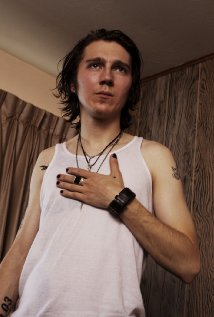
So Yong Kim’s character study For Ellen is only 93 minutes long, but the experience of watching it felt like it took an eternity. But — even though the film did not win awards at this year’s festival — it resonated; it was filled with many memorable, quiet moments. Paul Dano (never before so vulnerable) takes the reigns as a struggling musician who, while taking a break from touring to sign the papers for his long-overdue divorce, is forced to confront his own selfish tendencies when his custody rights start slipping through his fingers.

Writer-director Kim (2008’s Treeless Mountain) uses long, handheld takes that often prevent the viewer from seeing the actual feelings of our anti-hero. This subtle slice-of-life portrait never wavers from its sullen tone, which might explain why many critics seemed underwhelmed after its screening. For Ellen doesn’t give its flawed protagonist an easy way out, in a way that’s reminiscent of Darren Aranofsky’s The Wrestler (2008). 

Ira Sachs (2005’s Forty Shades of Blue) delivered his most personal film to date with Keep the Lights On; oddly enough, it might be a little too personal for its own good. Chronicling an extremely passionate and self-destructive relationship from the late 90s to the present, Sachs transparently exposes the very modern Chelsea neighborhood life of daily phone sex, random hook-ups, and casual usage of hard drugs — all wrapped up in a self-absorbed universe that I am sure more people in this generation can relate to than would actually like to admit. The indie auteur’s latest beautifully-shot effort goes overboard with its honesty (especially toward the end) and I was left in an emotional limbo, wanting to care but feeling like I had read too much of someone’s personal diary.

Barely recognized as mumblecore’s first female director, Ry Russo-Young seems to have graduated to full-fledged indie director with Nobody Walks, which won a Special Jury Prize for Excellence in Independent Film Producing. Most audience members were at the screening thanks to star John Krasinski (The Office), who delivers his usual charm. But truly stealing the show was Olivia Thirlby, whose irresponsible yet utterly motivated 23-year-old artist is so wonderfully performed that you forget about some of the major cues the film has taken from Lisa Cholodenko’s Laurel Canyon (2002) and Tom Kapinos’s Californication. Lena Dunham, who made 2011’s monumental Tiny Furniture, co-wrote the film, and her unromanticized take on strong female voices shines quite brightly here.      

But nothing in this year’s Dramatic Competition could compare to Ben Lewin’s The Surrogate, which won both the U.S. Dramatic Audience Award and a Special Jury Prize for Ensemble Acting. Truly delivering hands-down next year’s best actor performance, John Hawkes (2010’s Winter’s Bone) portrays Berkeley, Calif. journalist Mark O’Brien, whose poetry, autobiographical writings, and physical limitations gave writer/director Ben Lewin more than you could ever ask for. O’Brien’s real-life story was already told in Jessica Yu’s 1995 Academy Award-winning documentary Breathing Lessons: The Life and Work of Mark O’Brien, which hauntingly showcased O’Brien’s inspired and difficult life. For his narrative take, Lewin has pinpointed a very specific part of the story, creating a timeless romance and life-altering drama that ranks alongside Dalton Trumbo’s Johnny Got His Gun (1938) and David Lynch’s The Elephant Man (1980).

http://www.youtube.com/watch?v=SnUuVxL0UJ4

But it’s the acting that makes this film so unforgettable. Hawkes conveys complicated emotions and captures O’Brien’s soft-spoken syntax without ever slipping into pretension. William H. Macy throws in some very needed humor as an understanding, catch-22’d priest, and Helen Hunt gives the film that certain extra sense of surprise and understanding. It’s a cliché to say so, but it’s true: the film left nary a dry eye in the house. The Surrogate will be “the little film that could” for 2012 and for years after.

Up next: night owl Jesse Hawthorne Ficks tackles more Park City at Midnight movies.

Bronstein and mergers are not what local journalism needs

11

Local, independent, public interest journalism – which is what Warren Hellman sought to create by founding the Bay Citizen in 2009 – could be undermined by a proposed merger between that newsroom and the Center for Investigative Reporting (CIR) under the leadership of former San Francisco Chronicle Editor Phil Bronstein.

It is unseemly that Bronstein is claiming support for the idea from Hellman, who died in December, making comments to the Bay Citizen that misrepresent Hellman’s intentions. How do I know? Because I spoke with Hellman about his concerns about the Bay Area media landscape and what it needed several times before he announced its creation – a story that I broke on the Guardian website, scooping this incipient newsroom and others by a day.

“We’re forming a new media news center. Basically, it will be a not-for-profit 501c3 that will be source of Bay Area news,” Hellman said in that article. “It will focus on local news events, including politics and the arts, the kind of thing that is just dying at the Chronicle.”

That interview was a culmination of conversations that I’d had with Hellman on the subject for more than a year. He thought the Chronicle was doing a terrible job at covering the city – a legacy that began under the leadership of Bronstein, who was always more concerned with high-profile projects that might win awards and with expanding the paper’s reach and focus into suburbia than the bread-and-butter local coverage of issues and events that were important to San Franciscans.

In his comments to Bay Citizen, Bronstein (who has not returned our request for comment) cynically leaves the impression that Hellman would have supported his takeover bid, and that what he wanted was a combination of investigative reporting and quirky features like “Rascal of the Week, Crook of the Week, hilarious stuff.”

He might as well be describing the Chronicle, which was not what Hellman was seeking to duplicate. Nor was he pursuing the CIR model of using philanthropy and grants to fund journalism projects that would run in the Chronicle and other mainstream newspapers. No, what Hellman wanted was more media outlets with less dependence on advertising revenue, not to simply subsidize a newspaper that he thought was lacking.

Frankly, this whole proposal is very suspicious. Bronstein officially left Hearst Newspapers, which owns the Chronicle, just last month to play an unspecified new role at CIR, where he sits on the board. He and other Chronicle brass opposed and belittled the Bay Citizen when it was created, but since then, the Bay Citizen has been real bright spot on the local media landscape, often scooping the Chronicle on important stories that run in the New York Times, for which BC supplies content. And now, Bronstein wants to execute a deal that would potentially kill that competition.

I’m really not sure what’s going on at the Bay Citizen these days, or why all its top brass seems to be jumping ship. But it’s clearly not all bad. The departure of top executive Lisa Frazier – who consulted on BC’s creation and then gave herself a ridiculously high salary – seems like good news, at least for BC’s bottom line. I acknowledge that some kind of change might be needed.

But whatever happens, it should be about maintaining and improving strong local news coverage. The BC board only has one token journalist on it, and that’s not a good sign. CIR does good work and has a good journalistic ethos, but its board should realize that merging with BC (and cutting almost $2 million from their combined operations, as Bronstein is reportedly proposing) is bad for local journalism and bad for San Francisco.

Corporate journalism is the problem to which nonprofit journalism was the supposed antidote. That was Hellman’s vision. But we’re all in trouble if this experiment gets co-opted by a longtime Hearst company man, the very person who undermined local coverage and public interest journalism in the first place, a corporatist with a history of undermining competition with his illegal Chronicle-Examiner JOA, his backroom deal with Media News Group, and other bottom line tactics.

That’s bad enough, but to falsely invoke the spirit of the recently deceased to justify it, that’s just disgusting.

Sundance Diary, volume four: more docs!

0

In a series of posts, Midnites for Maniacs curator-host and Academy of Art film-history teacher Jesse Hawthorne Ficks reports on the 2012 Sundance Film Festival. Check out his first, second, and third entries.

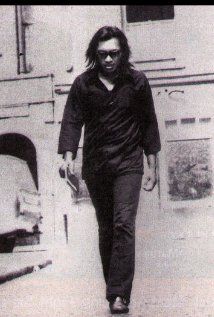
Winner of both the World Documentary Audience Award and the Special Jury Prize for its celebration of the artistic spirit is every musicologist’s dream film: Malik Bendjelloul’s Searching for Sugar Man. This larger-than-life tale is about obscure Detroit singer-songwriter Rodriguez, who created two brilliant albums, Cold Fact (1969) and Coming from Reality (1971), which some have compared to Bob Dylan’s greatest works. Yet virtually no one bought either of the records … except South Africans. The film reveals a fan base of millions, comprised of multiple generations who have viewed Rodriguez’s songs as political anthems for 40 years. And that’s just the first 15 minutes of the film!

Rodriguez’s lyrics and lifestyle celebrated a working-class hero mentality that seems to be as precious as the songs themselves, and Benjelloul’s film about his impact on a seemingly far-removed audience is a standout. But here’s a warning: be careful while reading any reviews of this film before you see it! Every single critic I’ve read has spoiled major dramatic points in the film, so try your best to catch it before you come into contact with any spoilers.

A few more for your doc queue:

The makers of 2006’s Jesus Camp, Heidi Ewing and Rachel Grady, picked up the U.S. Documentary Editing Award for their latest, Detropia. It poetically unearths a hopeless, dying city using beautifully dramatic storytelling, though the film itself feels a bit unfinished towards the final act. Kristi Jacobson and Lori Silverbush’s Finding North takes on hunger in America; many left the film wondering how they could take action to help ease the epidemic. David France’s superb How to Survive a Plague, about AIDS activists in the late 80s, left me and quite a few other critics totally devastated. France’s film is truly an emotional equivalent to last year’s U.S. Documentary Grand Jury Award winner about assisted suicide, How to Die in Oregon. This year’s World Cinema Documentary Editing Award went to Lisanne Pajot and James Swirsky’s Indie Game: The Movie, which follows a group of independent video game designers pouring a psychotic amount of hard work into their creation, Super Meat Boy.

But the most memorable among this year’s crop of socially-aware docs was Lauren Greenfield’s Queen of Versailles, which won the U.S. Directing Award for Best Documentary. The film follows an uber-rich U.S. family whose lavish lifestyle is slowly being toppled by the current recession. The inverted journey invites audiences to begin by scapegoating the couple (as it happens, the paterfamilias, David Siegel, is suing Sundance and the filmmakers for defamation). But as things onscreen turn sour, director Greenfield masterfully brings things back around, holding up a culture-of-entitlement mirror to the audience. This film stuck with me for days after the screening.  

Coming up next: Jesse Hawthorne Ficks on Sundance’s midnight movies (duh), and more!

Tycho

1

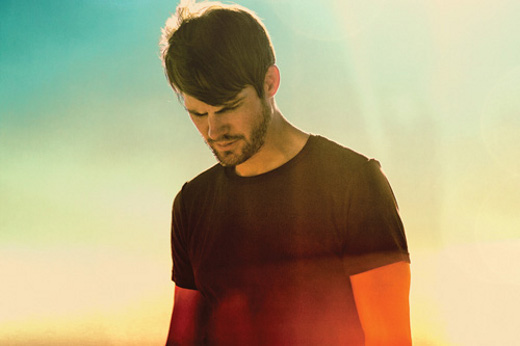
It felt like we were all on the verge at Tycho’s (www.tychomusic.com) December show at the Independent, the breaking point of something momentous, a perfect merging of visuals and sounds. In an effortlessly cool — though I’m sure highly engineered — production, Tycho, a.k.a graphic designer Scott Hansen, played synthesizers with live guitars and drums out front of a screen splashed with fuzzy orange surf images, rolling waves and crashing water.

It was the backdrop to the expressive and expansive Dive (Ghostly International), the first official release in years from the Sacramento native-longtime San Franciscan. And it was the ultimate sensory experience. Now on tour on the East Coast and in Europe, Tycho recently blogged, “I spent the last year locked in my basement working on the album so it’s been really refreshing to be out here performing it for people.”

Description of sound: Ambient / Psychedelic / Electronic.

Like most about the Bay Area music scene: Any show at the Independent.

What piece of music means the most to you and why: I couldn’t really pick one instrument in particular. I see the studio and all of the equipment in it as a single instrument, so I suppose that means the most.

Favorite local eatery and dish: Thai Time — Red Chicken Curry (or anything else there).

Who would you most like tour with: Midlake.

District lines: a community alternative

7

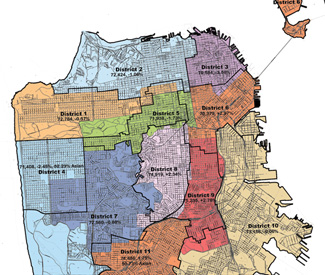
Early in April, a nine-member task force most San Franciscans have never heard of will draw lines that could change local politics for a decade. The Redistricting Task Force is using the 2010 U.S. Census data to adjust supervisorsial districts to reflect changes in the city’s population. Some shifts are dramatic — the area now covered by District 6 has some 25,000 new residents, and will have to shrink. Others will have to grow. And the way the new boundaries are set could affect the representation of ethnic groups, the political leanings of the board members, and the ability of progressives to pass legislation.

The task force has held a series of hearings on individual district lines. The S.F. Board of Realtors and other downtown groups are drawing their own maps. But almost nobody on the left has been looking at the city as a whole and how the different district lines can impact our ability to get six votes.

As campaign consultant David Looman puts it, “what downtown wants is clear — they want to quarantine all the progressives in districts five, six and nine, so they can control the rest.” What do the rest of us want?

The Guardian held a forum on the topic Jan 26, and about 70 people from across the wide rainbow that is the city’s progressive moment attended. The goal: To create a community alternative to what downtown, the Mayor’s Office, and possibly a majority of the task force members is suggesting.

>>VIEW THE MAP HERE

The map above represents a first draft. Fernando Marti, a community architect and housing activist, did the heavy lifting, looking for ways to keep ethnic communities, neighborhoods, and other so-called communities of interest together, while still avoiding the downtown quarantine.

It’s not an easy task, and there was a lot of discussion around some of the lines. Many of the people in the room were unhappy with the border between District 8 and District 6; in the next draft, that will probably be moved back from Valencia to Guerrero.

There was discussion about whether Japantown should be in District 1 or District 5, whether Portola should be in District 9 or split up, how the District 6 lines should be drawn, and much more.

It’s a work in progress — but we’re publishing it to get some feedback, to let people know that the process is going on, and to let progressive and independent neighborhood activists know that the task force decision, which can’t be appealed or overturned, is critical to the city’s future.

Rep Clock

0

Schedules are for Wed/8-Tues/14 except where noted. Director and year are given when available. Double and triple features are marked with a •. All times p.m. unless otherwise specified.

ARTISTS’ TELEVISION ACCESS 992 Valencia, SF; www.atasite.org. $6-10. Dirty Looks presents: City of Lost Souls, Fri, 8. “Mindscapes,” short films, Sat, 8.

CALIFORNIA COLLEGE OF THE ARTS 1118 Eighth St, SF; www.dirtylooksnyc.org. Free. Dirty Looks presents: “Queer Conversations on Culture in the Arts,” with selections from the “Female Trouble” experimental shorts program and a conversation with Margaret Tedesco, Thurs, 7.

CASTRO 429 Castro, SF; (415) 621-6120, www.castrotheatre.com. $7.50-10. •Pickpocket (Bresson, 1959), Wed, 3:30, 7:15, and American Gigolo (Schrader, 1979), Wed, 4:55, 8:45. •Beauty and the Beast (Cocteau, 1946), Thurs, 3:05, 7, and No Such Thing (Hartley, 2001), Thurs, 4:55, 8:50. “Midnites for Maniacs: I’m Black and I’m Proud:” •I’m Gonna Git You Sucka (Wayans, 1988), Fri, 7:30; Pootie Tang (Louis CK, 2001), Fri, 9:30; CB4 (Davis, 1993), Fri, 11:30. French American International School presents: “I-Speak: Celebrating 50 Years of International Education,” Sat, 6:30. This event, $5-10; tickets at www.internationalsf.org. •Do The Right Thing (Lee, 1989), Sun, 2, 8, and Malcolm X (Lee, 1992), Sun, 4:15. “Love: Ali MacGraw:” Love Story (Hiller, 1970), Tues, 8. With pre-show gala performance and MacGraw in person; for tickets ($25-45), visit www.ticketfly.com.

ELMWOOD 10070 San Pablo, El Cerrito; www.rialtocinemas.com. Free. “Community Cinema:” More Than a Month: One Man’s Journey to End Black History Month (Tilghman, 2012), Wed, 7.

CHRISTOPHER B. SMITH RAFAEL FILM CENTER 1118 Fourth St, San Rafael; (415) 454-1222, www.cafilm.org. $6.75-10.25. “Rafael Film Club:” “Jan Wahl,” Thurs, 1. Pina (Wenders, 2011), call for dates and times. “Mostly British Film Festival:” Route Irish (Loach, 2010), Wed, 7; Albatross (MacCormick, 2011), Thurs, 7. “2012 Oscar Nominated Short Films,” narrative and documentary (separate admission), Feb 3-9, call for times.

LAMORINDA THEATRES Four Orinda Theatre Square, Orinda; www.caiff.org. $12-15. “California Independent Film Festival,” 11 features, plus docs, shorts, and educational seminars, Feb 10-16.

MECHANICS’ INSTITUTE 57 Post, SF; (415) 393-0100, rsvp@milibrary.org. $10. “CinemaLit Film Series: Hollywood Dames: Beauty and Brains:” Intermezzo (Ratoff, 1939), Fri, 6.

PACIFIC FILM ARCHIVE 2575 Bancroft, Berk; (510) 642-5249, bampfa.berkeley.edu. $5.50-9.50. “Documentary Voices:” The Green Wave (Ahadi, 2010), Wed, 7. “Seconds of Eternity: The Films of Gregory J. Markopoulos:” “Markopoulos: The Early Films (1940-49)” Thurs, 7; “Eros and Myth (1950-63),” Sat, 6:30. “Austere Perfectionism: The Films of Robert Bresson:” The Trial of Joan of Arc (1962), Fri, 7; Les dames du Bois du Boulogne (1945), Fri, 8:25; Lancelot of the Lake (1974), Sat, 8:30. “Screenagers: 14th Annual Bay Area High School Film and Video Festival,” Sat, 3. “Howard Hawks: The Measure of Man:” The Criminal Code (1931), Sun, 4:30; Bringing Up Baby (1938), Tues, 7. “African Film Festival 2012:” Viva Riva! (Munga, 2010), Sun, 6:30.

ROXIE 3117 and 3125 16th St, SF; (415) 863-1087, www.roxie.com. $6.50-10. Come Back, Africa (Rogosin, 1959/2012), Wed-Thurs, 6:45, 8:30. Drive (Winding Refn, 2011), Wed, 8:45. Into the Abyss (Herzog, 2011), Wed, 6:45. SF IndieFest, Feb 9-23. Visit www.sfindie.com for complete schedule.

SFFS | NEW PEOPLE CINEMA 1746 Post, SF; www.sffs.org. $10-11. Domain (Chiha, 2010), Wed-Thurs, 2, 4:30, 7, 9:30. Once Upon a Time in Anatolia (Ceylan, 2011), Feb 10-16, 2, 5:30, 8:30.

VOGUE 3290 Sacramento, SF; www.mostlybritish.org. $12.50. “Mostly British Film Festival:” Black Butterflies (van der Oest, 2011), Wed, 5; London Boulevard (Monahan, 2010), Wed, 7:15; The Great White Silence (Ponting, 1924), Wed, 9:30; A Passionate Woman (2010), Thurs, 5; Route Irish (Loach, 2010), Thurs, 7:30.

VORTEX ROOM 1082 Howard, SF; www.myspace.com/thevortexroom. $7 donation. “The Second Coming of the Vortex Room:” The Second Coming of Suzanne (Barry, 1974), and Marjoe (Kernochan and Smith, 1972), Thurs, 8.

YERBA BUENA CENTER FOR THE ARTS 701 Mission, SF; (415) 978-2787, www.ybca.org. $6-8. “Bros Before Hos:” The Killing of a Chinese Bookie (Cassavetes, 1976), Thurs, 7:30; “Female Trouble,” experimental shorts program presented by Dirty Looks curator Bradford Nordeen, Sun, 2.

Stage Listings

0

Stage listings are compiled by Guardian staff. Performance times may change; call venues to confirm. Reviewers are Robert Avila, Rita Felciano, and Nicole Gluckstern. Submit items for the listings at listings@sfbg.com. For further information on how to submit items for the listings, see Picks.

THEATER

OPENING

Glengarry Glen Ross Actors Theatre of San Francisco, 855 Bush, SF; (415) 345-1287, www.brownpapertickets.com. $26-40. Opens Fri/3, 8pm. Runs Fri-Sat, 8pm. Through March 24. David Mamet’s cutthroat comedy, courtesy of the Actors Theatre of San Francisco.

Higher Theater at Children’s Creativity Museum, 221 Howard, SF; (415) 749-2228, www.act-sf.org. $10-65. Previews Wed/1-Fri/3, 8pm; Sat/4, 2pm. Opens Sun/5, 7pm. Runs Tues-Sat, 8pm (Tues/7, show at 7pm; also Wed, Sat-Sun, 2pm; no matinee Feb 8). Through Feb 19. American Conservatory Theatre presents Carey Perloff’s smart and sexy world premiere.

Vigilance Phoenix Theatre, 414 Mason, SF; (415) 335-6087, secondwind.8m.com. $20-25. Opens Fri/3, 8pm. Runs Thurs-Sat, 8pm; Sun, 2pm. Through Feb 25. Second Wind performs Bay Area playwright Ian Walker’s thriller.

The Waiting Period MainStage, Marsh San Francisco, 1062 Valencia, SF; (415) 282-3055, www.themarsh.org. $15-50. Previews Thurs/2, 8pm. Opens Fri/3, 8pm. Runs Fri, 8pm; Sat, 5pm. Through March 24. Brian Copeland returns with a new solo show about his struggles with depression.

BAY AREA

Counter Attack! Ashby Stage, 1901 Ashby, Berk; (510) 444-4755, ext. 114, www.stagebridge.org. $18-25. Opens Wed/3, 7:30pm. Runs Wed-Thurs, 7:30pm; Fri-Sat, 8pm (also Sat, 2pm); Sun, 2pm. Through March 4. Stagebridge presents the world premiere of Joan Holden’s waitress-centric play.

A Steady Rain Marin Theatre Company, 397 Miller, SF; (415) 388-5208, www.marintheatre.org. $34-55. Previews Thurs/2-Sat/4, 8pm; Sun/5, 7pm. Opens Tues/7, 8pm. Runs Tues and Thurs-Sat, 8pm (also Feb 11 and 25, 2pm; Feb 16, 1pm); Wed, 7:30pm; Sun, 2 and 7pm. Through Feb 26. Marin Theatre Company performs Keith Huff’s neo-noir drama.

ONGOING

Cabaret Young Performers Theatre, Fort Mason Center, Bldc C, Room 300, Marina at Laguna, SF; (415) 381-1638, cabaretsf.wordpress.com. $25-45. Thurs-Sat, 8pm; Sun, 7pm. Through Feb 19. Shakespeare at Stinson and Independent Cabaret Productions perform the Kander and Ebb classic in an intimate setting.

Food Stories: Pleasure is Pleasure Z Space, Theater Artaud, 450 Florida, SF; www.brownpapertickets.com. $20-55. Wed/1-Thurs/2, 7pm; Fri/3-Sat/4, 8pm; Sun/5, 2pm. Word for Word serves up two short stories with a gastronomical theme — T.C. Boyle’s Sorry Fugu and Alice McDermott’s Enough — fleshed out in W4W’s trademark verbatim style by a versatile six-person ensemble under direction of John Fisher. First course, by Boyle, is a nicely acted but fairly drab comic soufflé that tastes pretty familiar. Its setting is a restaurant turned upside down by the ambition of its portly, middle-aged, married chef (Soren Oliver), obsessed with winning over the big paper’s notoriously dismissive and all-powerful food critic (Molly Benson), who turns out to be a secretly insecure bombshell with a perennial dinner companion nicknamed The Palate (Gendell Hernandez). Fisher’s cast comes together well after a few hiccups, and the staging, while sometimes erratic, includes some inspired moments. But the story as a whole has little more to it than the food-as-sex seduction we see coming early on, and consequently lacks any real suspense. More satisfying all around is McDermott’s Enough, a salty, well acted, and fluidly staged condensation of a single lifetime — bracketed by scenes of eager tonguing of ice cream dregs. In this family history of a sweetly sybaritic but otherwise ordinary American woman (played variously by Delia MacDougall and Patricia Silver) food and sex are intertwined again but hardly, as the author stresses, in a metaphorical sense: “Pleasure is pleasure,” after all, and life is good to the last drop. (Avila)

*Humor Abuse American Conservatory Theater, 415 Geary, SF; (415) 749-2228, www.act-sf.org. $10-85. Wed/1-Sat/4, 8pm (also Wed/1 and Sat/4, 2pm); Sun/5, 2pm. “This is a show about clowning,” Lorenzo Pisoni advises his audience at the outset of his graceful solo performance, “and I’m the straight man.” It’s a funny line, actually — funny because it’s true, and not true. In the deft routines that follow, as well as in the snapshots cast on the atmospherically dingy curtain hung center stage, the career of this Pickle Family Circus brat (already alone in the spotlight by age two) never veers far from the shadow of his father. That fact remains central to the winning comedy and wistful reflection in Humor Abuse. Reared in the commotion and commitment of the famed San Francisco circus founded by his parents Larry Pisoni and Peggy Snider, Lorenzo had a childhood both enviable and unusually challenging. The fact that he shares his name with both a grandfather and his dad’s famous clown persona is instructive. His trials and his triumphs are further conflated — along with his father’s —in such elegant catastrophes as falling down a long flight of stairs. And in his good-humored and honest reflections, the existential poignancy at the heart of such artful buffoonery begins to rise to the surface. The spoken narrative feels a little pinched or abbreviated, in truth, but there are no shortcuts to the skill or wider perspective inculcated by the charming Pisoni and (under direction of co-creator Erica Schmidt) set enthralling in motion. (Avila)

*Little Brother Gough Street Playhouse, 1620 Gough, SF; www.custommade.org. $25-32. Thurs-Sat, 8pm; Sun, 7pm. Through Feb 25. Custom Made Theatre Co. performs Josh Costello’s adaptation of Cory Doctorow’s San Francisco-set thriller.

Not Getting Any Younger Marsh San Francisco, Studio Theater, 1062 Valencia, SF; (415) 826-5750, www.themarsh.org. $15-50. Fri, 8pm; Sat, 5 and 8:30pm. Extended through Feb 25. Marga Gomez is back at the Marsh, a couple of too-brief decades after inaugurating the theater’s new stage with her first solo show — an apt setting, in other words, for the writer-performer’s latest monologue, a reflection on the inevitable process of aging for a Latina lesbian comedian and artist who still hangs at Starbucks and can’t be trusted with the details of her own Wikipedia entry. If the thought of someone as perennially irreverent, insouciant, and appealingly immature as Gomez makes you depressed, the show is, strangely enough, the best antidote. (Avila)

Olivia’s Kitchen Exit Theatre, 156 Eddy, SF; www.generationtheatre.com. $20-40. Fri-Sat, 8pm; Sun, 3pm. Through Feb 19. GenerationTheatre offers this “remix” of Shakespeare’s Twelfth Night.

“SF Sketchfest” Various venues, SF; www.sfsketchfest.com. $10-75. Wed/1-Sat/4. The 11th San Francisco Comedy Festival invades 15 venues in 17 days with local and celebrity-packed (and local-celebrity-packed) performances, film events, improv shows, and more.

Vice Palace: The Last Cockettes Musical Thrillpeddlers’ Hypnodrome, 575 10th St, SF; (415) 377-4202, www.thrillpeddlers.com. $30-35. Fri-Sat, 8pm. Through March 3. Thrillpeddlers revives the Cockettes’ 1972 musical extravaganza.

Waiting for Godot Royce Gallery, 2901 Mariposa, SF; (415) 336-3522, www.tidestheatre.org. $20-38. Thurs-Sat, 8pm. Through Feb 18. The fuchsia papier-mâché tree and swirling grey-on-white floor pattern (courtesy of scenic designer Richard Colman) lend a psychedelic accent to the famously barren landscape inhabited by Vladimir (Keith Burkland) and Estragon (Jack Halton) in this production of the Samuel Beckett play by newcomers Tides Theatre. Director (and Tides’ producing artistic director) Jennifer Welch layers the avant-garde classic with some audio accents as well (although Jon Bernson’s minimalist industrial soundscape is a bit low in the mix to be very effective). More compelling is the gentle, sad humor and couched intelligence captured expertly by Halton in the circular but deliberate rhythms of his hapless tramp. Burkland as pal Vladimir exudes a palpable presence as well, though lacks the same focus. Timing is all in vaudeville — the parallel universe from whence these tangible modernist archetypes hail — as well as in a play whose plot goes intentionally nowhere, or rather loops back on itself in an implied dance with eternity. The halting aspect to Tides’ staging gets compounded with the arrival of brash whip-cracker Pozzo (a suitably stentorian but inconsistent Duane Lawrence) and his pitiful slave Lucky (a haunted, generally sharp Renzo Ampuero, made up to look like a goth doll à la some Tim Burton movie). That said, the best moments here broadcast the brooding beauty of the play, with its purposely vague but readily familiar world of viciousness, servility, trauma, want, fear, grudging compassion, and the daring, fragile humor that can look it all squarely in the eye. (Avila)

BAY AREA

Arms and the Man Lesher Center for the Arts, Margaret Lesher Theater, 1601 Civic, Walnut Creek; (925) 943-7469, www.centerrep.org. $38-43. Wed, 7:30pm; Thurs-Sat, 8pm; Sun, 2:30pm. Through Feb 25. Center REPertory Company presents George Bernard Shaw’s classic romantic comedy.

Body Awareness Aurora Theatre, 2081 Addison, Berk; (510) 843-4822, www.auroratheatre.org. $34-55. Previews Wed/1, 8pm. Opens Thurs/2, 8pm. Runs Tues, 7pm; Wed-Sat, 8pm; Sun, 2 and 7pm. Through March 4. Aurora Theatre performs Annie Baker’s comedy.

Ghost Light Berkeley Repertory Theatre, Thrust Stage, 2025 Addison, Berk; (510) 647-2949, www.berkeleyrep.org. $14.50-73. Tues, Thurs-Sat, 8pm (also Sat and Feb 16, 2pm); Wed and Sun, 7pm (also Sun, 2pm). Through Feb 19. Berkeley Rep performs Tony Taccone’s world-premiere play about George Moscone’s assassination, directed by the late San Francisco mayor’s son, Jonathan Moscone.

*The Kipling Hotel: True Misadventures of the Electric Pink ’80s New venue: Marsh Berkeley, 2120 Allston, Berk; (415) 282-3055, www.themarsh.org. $20-50. Sat, 8:30pm; Sun, 7pm. Through Feb 12. This new autobiographical solo show by Don Reed, writer-performer of the fine and long-running East 14th, is another slice of the artist’s journey from 1970s Oakland ghetto to comedy-circuit respectability — here via a partial debate-scholarship to UCLA. The titular Los Angeles residency hotel was where Reed lived and worked for a time in the 1980s while attending university. It’s also a rich mine of memory and material for this physically protean and charismatic comic actor, who sails through two acts of often hilarious, sometimes touching vignettes loosely structured around his time on the hotel’s young wait staff, which catered to the needs of elderly patrons who might need conversation as much as breakfast. On opening night, the episodic narrative seemed to pass through several endings before settling on one whose tidy moral was delivered with too heavy a hand, but if the piece runs a little long, it’s only the last 20 minutes that noticeably meanders. And even with some awkward bumps along the way, it’s never a dull thing watching Reed work. (Avila)

The Pitmen Painters TheatreWorks at Mountain View Center for the Arts, 500 Castro, SF; (650) 463-1960, www.theatreworks.org. $19-69. Tues-Wed, 7:30pm; Thurs-Sat, 8pm (also Sat, 2pm); Sun, 2 and 7pm. Through Feb 12. TheatreWorks performs a new comedy from the author of Billy Elliot about a group of British miners who become art world sensations.

The World’s Funniest Bubble Show Marsh Berkeley, TheaterStage, 2120 Allston, Berk; (415) 826-5750, www.themarsh.org. $8-50. Extended run: Feb 12, 19, 26, March 11, and 18, 11am. Louis “The Amazing Bubble Man” Pearl returns with this kid-friendly, bubble-tastic comedy.

PERFORMANCE/DANCE

“Cabaret of Love” Stage Werx, 446 Valencia, SF; www.brownpapertickets.com. Mon, 7 and 9pm. $15. Picklewater Clown Cabaret performs in celebration of Valentine’s Day.

Company C Contemporary Ballet Yerba Buena Center for the Arts, 701 Mission, SF; (415) 978-2787. Feb 17, 8pm; Feb 18, 6:30pm (gala benefit); and Feb 19, 3pm. $23-175. The company opens its 10th anniversary season.

“Elect to Laugh” Studio Theater, Marsh San Francisco, 1062 Valencia, SF; (415) 282-3055, www.themarsh.org. Tues, 8pm. Ongoing through Nov 6. $15-50. Will Durst and friends perform in this weekly political humor show that focuses on the upcoming presidential election.

“The Eric Show” Milk Bar, 1840 Haight, SF; www.milksf.com. Tues, 8pm (ongoing). $5. Local comedians perform with host Eric Barry.

“Fortunate Daughter” Stage Werx, 446 Valencia, SF; www.brownpapertickets.com. Sun/5, March 4, April 1, May 6, 7pm. $20. Thao P. Nguyen performs her solo show about being caught between her family and her friends in the queer community.

“The Mandrake” Hastings Studio Theater, 77 Geary, SF; (415) 749-2228, www.act-sf.org. Wed/1-Sat/4 and Feb 8-11, 7:30pm. $15. American Conervatory Theater’s MFA class of 2013 performs Machiavelli’s 16th century satire of Italian society.

“The News” Somarts Cultural Center, 934 Brannan, SF; www.somarts.org. Tues/7, 7:30pm. $5. This new monthly queer performance series highlights new and experimental works and works in progress. “Precious Drop: African and Afro-Fusion Dance, Music, and Theater” CounterPULSE, 1310 Mission, SF; 1-800-350-8850, www.counterpulse.org. Fri/3-Sat/4, 8pm. $20. Mohamed Lamine Bangoura with Jaara Dance and Drum and Bu Falle African Drum and Dance present a work-in-progress about the global importance of water. BAY AREA “Cordelia, Mein Kind” TheaterStage at Marsh Berkeley, 2120 Allston, Berk; (415) 282-3055, www.themarsh.org. Thurs/2-Fri/3, 8pm; Sat/4, 5pm; Sun/5, 3pm. $15-50. The Marsh Berkeley collaborates with the Magnes Collection of Jewish Art and Life to present this multimedia Australian import by Deborah Leiser-Moore. “The Second Sin Again…” Black Repertory Group Theater, 3201 Adeline, Berk; www.punanytickets.com. Sat/4, 7pm. $25. Punany Poets perform a mix of erotic poetry, dance, comedy, and theater.

Bangarang: DIY hip-hop collective Doomtree is back

0

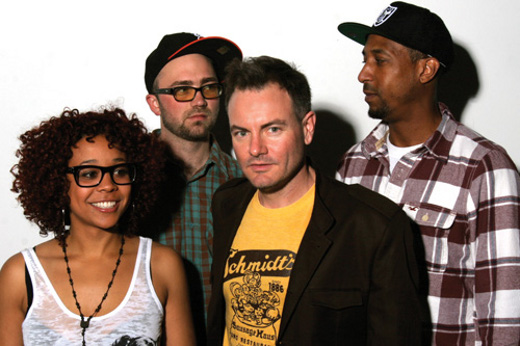
There’s something undeniably envy-inducing about a music collective. Everyone lives their separate lives yet they have continuing influence on one another; they hover nearby for comfort and camaraderie, maintain a steadfast family, and encourage a breeding ground for creatives. The emcees, DJs, lyricists, and producers in the Twin Cities-based DIY hip-hop collective/label Doomtree seem to have that system down pat. Under their own monikers, they create praise-worthy individual records. Together, the group carves out quality time and records masterpieces.

“Every year we do an end of the year, label showcase at First Avenue which is kind of like our legacy club in Minneapolis” says sole female emcee Dessa (Maggie Wander) as the group van careens down the mountains in some “white, alien-looking terrain” a week into a tour that takes it to San Francisco this week. 

“We initially started doing that show as a test of our own draw. Over the years it’s morphed into this like, pagan celebration of the preceding year,” she adds. “It’s hours of music together, you can see how much time we’ve spent together as friends, and occasional roommates – living together in conversion vans and sharing hotel beds.”

Last November’s No Kings, the latest full-length from the seven-piece, is one of those rare accomplishments in the music world; it’s at once fun and earnest, boasts quality rhymes, good beats, and catchy hooks, and features a rotating Lazy Susan of frontpersons. No kings, no group leader. The record is obviously the work of a collective, a rather in tune one at that – most went to high school together, some have been friends since junior high.

Among the catchiest of the No Kings bunch is a little hip-hop track dubbed “Bangarang” – yes, also the name of a Skrillex song and EP but, no, it’s not remotely dubstep. Doomtree’s is tougher and amusing, with a hearty beat and quick-spitting flow. The lyrics mesh the funny with the thought-provoking – “all these rappers sounds the same/beats/sound the same/raps/sound the same.” and later, “I built more than a rap career/I’ve got my family here.” The band wisely chose to feature the song in a video based around a karaoke night, meaning the words scroll across the screen for the viewer as well. Oh, and that karaoke night is hosted by a sensually stripping Har Mar Superstar, the perfect star for such a video.

http://www.youtube.com/watch?v=E2dX_k6MvWM

“We thought it would be fun to showcase the personalities within Doomtree, and a goofier side to the performers,” says Dessa. “And we’ve been friends with that dude [Har Mar] for a really long time.” Har Mar is part of the sex-oozy Gayngs collective (also of Minneapolis), which runs in the same circles as Doomtree.

The idea for the video came about when producer-DJ Lazerbeak (Aaron Mader) was sitting at a bar with the producer who made the video and they agreed a karaoke video would be easy, and they could get Har Mar to run up on tables, singing and screaming. Then we get to the core of the reason for it: it’s cheap and looks great. “We’re an independent label, and we’re artists owned and operated, so keeping costs down is the name of the game!” Dessa says.

The obvious question, to me at least, was if the group itself enjoys the occasional karaoke night out. Does art imitate life? In this case, no. No, it doesn’t.  Dessa and Lazerbeak giggle when I pose the question. “We’ve never done it,” Dessa says. “A big no,” Lazerbeak laughs. Whatever guys.

Doomtree

With 2Mex
Tues/31, 9 p.m., $16
Slim’s
333 11th St., SF
www.slimspresents.com

How should San Franciscans vote?

36

The Board of Supervisors Rules Committee will consider competing proposals for changing how elections are conducted in San Francisco tomorrow (Thu/26) at 2 p.m., taking public testimony and voting on which ideas should go before voters in June.

Sups. Sean Elsbernd and Mark Farrell propose to end the ranked-choice voting (RCV) system and go back to runoff elections, while Sups. David Campos and John Avalos propose modifying RCV to allow more than three candidates to be ranked and changing the public campaign financing system to make qualifying more difficult and thus thin the electoral herd a bit. They would also consolidate odd-year elections for citywide offices into a single year, a proposal that Sup. Scott Wiener is also offering as a stand-alone measure.

“We believe our current election system fundamentally works. However, we heard concerns from voters during our last election that it was difficult to discern the different ideas and ideologies of the numerous candidates in the race. We are introducing an ordinance today that is designed to address this concern,” Avalos said in a public statement on Jan. 10 when their measure was introduced.

That package came in reaction to the proposal to repeal the RCV system that voters approved in 2002, a campaign that has been strongly promoted for years by political moderates, downtown groups such as the San Francisco Chamber of Commerce, and the San Francisco Chronicle and other mainstream media outlets.

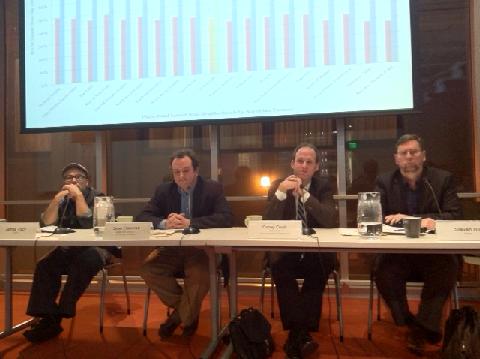
During a forum at the San Francisco Planning and Urban Research Association last week, Elsbernd debated Steven Hill – the author and activist who created the city’s RCV system – on the issue. Much of it came down to differences over how to gauge the will of voters and allow them to make good decisions.

Hill’s argues that runoff elections – which have traditionally been held in December, although the current proposal could create either June/November or September/November elections – tend to have very low turnout of voters (who tend to be more white, rich, and conservative than in general elections). And they are usually dominated by nasty, corporate-funded independent expenditures campaigns designed to sully the more progressive candidate.

“Let’s face it, December was just a terrible time of year for an election,” Hill said, adding that September would be just as bad, June is too early, and both options would also likely have low turnouts.

Hill said that while RCV may have flaws, so does every electoral system, but that RCV is an accurate gauge of voter preference. He displayed charts and statistics showed that the winning candidate in every election since RCV started has won a majority of the continuing ballots, which are those that remain after a voter’s first three choices have been eliminated.

But Elsbernd seized on that idea to say, “Continuing ballots, that’s what this issue is all about.” He made the distinction between continuing ballots and total ballots cast, saying the latter is what’s important and that few winners under RCV receive a majority of total ballots cast.

“Our elected officials should be elected by a majority of the votes cast,” Elsbernd said.

He said that runoff elections offer voters a clear distinction between different candidates and their ideologies, and he even dangled a proposition that might have appealed to progressives in the last mayor’s race: “Wouldn’t we have loved our month of Ed Lee debating John Avalos about the future of San Francisco?”

Elsbernd cited crowded field free-for-all races like the District 10 race of 2010, in which Malia Cohen came from behind to win using RCV, saying they muddy up the contests. “The benefit of the runoff is you get that true one on one,” Elsbernd said, calling for “real discussion, real debates, about what San Franciscans want.”

Yet Hill said the crowded fields of candidates in some recent races wasn’t caused by RCV, a system that promotes real democracy by giving voters more than one choice of candidates rather than being stuck with the lesser of two evils. And rather than showing the problems with RCV, Hill said Cohen’s election (an African-American woman elected to serve a largely African-American district) and that of Mayor Jean Quan in Oakland (who came from behind to beat Don Perata, who many perceived as a corrupt party boss) show how RCV can help elevate minority and outsider candidates.

All those arguments – and many, many more – will likely be made during what’s expected to be a long afternoon of public testimony.

The best medicine

0

<P>arts@sfbg.com
<P>
<P><B>FILM</B> French actor Val&eacute;rie Donzelli made her first feature as writer-director with 2009’s <I>The Queen of Apples</I>, which trawled the film festival circuit for a couple of years &#151; eventually getting its title tweaked to <I>The Queen of Hearts</I> &#151; before making its unheralded U.S. debut at the 2010 Mill Valley Film Festival. It got a minor theatrical release in France and none at all here.
<P>All this goes to show that, contrary to all optimistic wisdom, not every film will find its audience. Not even when it is, in fact, the kind of movie that tends to win audience awards. <I>Queen</I> was endlessly energetic, quirky, and endearing, in the manner of 1960s independent films whose youthful makers needed to prove they could do every trick and break every rule in the book. It was charming despite being almost too cute for words, and a mite too pleased with itself. The slender story aimed for little more than charm: Donzelli played a hapless young Parisian flinging herself from one comically doomed love to another before winding up with Mr. Right, played (as were all the Mr. Wrongs) by J&eacute;r&eacute;mie Elka&iuml;m, who in 2000 was the unstable gay teen in S&eacute;bastien Lifshitz’s memorable <I>Come Undone</I>. <I>Queen</I> may have been uneven, but it was frequently so funny that hardly mattered.
<P>Obviously somebody noticed, however, since Donzelli is now back with a second feature she co-stars in, and co-wrote with, Elka&iuml;m. (Evidently other people like this team as well &#151; in the interim they got cast opposite one another in &Eacute;lise Gerard’s 2010 <I>Belleville-Tokyo</I>.) It’s even playing at a theater near you, at least for the next five minutes.
<P>Though more ambitious as (largely) a serious drama, <I>Declaration of War</I> reprises the same flaws as its predecessor, being over-stuffed with stylistic digressions, a little too eager to please at times. But once again it’s a very likable piece of work that largely works on its own terms.
<P>While <I>Queen </I>was primarily content to poke fun at the great French tradition of slender twentysomethings moping lovesick about Paris, <I>War </I>declares itself on something inherently humorless: a child’s grave illness. Juliette (Donzelli) meets Romeo (Elka&iuml;m) &#151; yep, that’s a bit much &#151; at a punk club, where his pogoing catches her eye. After a very 1960s montage of love al fresco (although they do not run through any flower fields), out pops the no less auspiciously named Adam, and all is well apart from some higher-than normal new-parent exhaustion issues related to the baby crying just about every waking moment.
<P>Eventually, however, Adam’s tendency to barf, cough, and tilt his head leftward while showing no interest in learning to walk raises suspicions confirmed by Dr. Prat (B&eacute;atrice De Sta&euml;l, who was also a standout as the heroine’s neurotic flatmate in <I>Queen</I>): little Adam has a brain tumor, and there’s a long uncertain road ahead that puts infinite strain on the young couple’s individual emotions, collective resources and future together.
<P>Even in this much more sober story context, Donzetti can’t resist cramming in every stylistic whim that comes to mind, from superimpositions to interior voices and multiple anonymous narrators, not excluding a bursting into song. The cost of her chasing after such spontaneity is that sometimes a gamble falls flat, calling attention to itself without adding anything, like the soundtrack choice of some overly gimmicky electronica when Juliette freaks out during her child’s CAT Scan. Eclecticism isn’t always an ideal tactic, especially when a subject like this one demands a certain groundedness.
<P>But many of her tactics work, finding humor in surprising places and refreshing some familiar devices of domestic tragedy. Donzetti has a very sure touch with actors; she and the ingratiating Elka&iuml;m work so well together that we don’t mind their characters remain in some ways underdeveloped. (In fact this seems somewhat intentional &#151; Juliette and Romeo plunge into serious commitment before they’re fully formed adults, and the script doesn’t spare them the odd outburst that’s childishly unflattering.) Much less melodramatic than its title would suggest, <I>Declaration of War </I>is uneven but full of life and ideas &#151; there’s room for Donzetti to refine her directorial instincts, but one hopes they stay a little messy. 
<B>DECLARATION OF WAR </B>opens Fri/27 in Bay Area theaters.

Whatever happened to Baby Jaymes?

1

arts@sfbg.com

MUSIC One day in November 2004, my then-girlfriend returned to our Oakland apartment all excited. “I just heard this on KMEL,” she said. She handed me a CD, Baby Jaymes, Ghetto Retro (Underground Soul), while she unwrapped the included Ghetto Retro EP and cued up “Nice Girl.” “He sounds like Prince,” she enthused—we were Prince geeks—”but he’s from East Oakland!”

Something in the way the vocals were layered, the tasty guitar and bass details under aloof keyboards, and the idiosyncratic, non-pimp, non-player personality that disclosed itself seemed to justify the comparison, particularly as we moved on to the LP. The hidden track “Ev’ry Nuance,” for example, could be a Lovesexy outtake, even as its more lo-fi aesthetic seemed to allude knowingly to 1999-era bootlegs.

http://www.youtube.com/watch?v=YJrO8GoozIE

Comparisons to Prince would be made in nearly every review of Ghetto Retro, though the insistence was a little misleading. While Prince is definitely an influence, BJ — as he’s known — isn’t especially well-versed in the Purple One’s catalog. Some of the resemblance stems from the common influence of 1960s and ’70s soul; Motown, particularly Smokey Robinson, and Stax loom much larger for Baby Jaymes, and in many ways, the similarly pint-sized singer is the anti-Prince, possessing no conventional technical musical ability, depending on collaborators to translate the melodies and arrangements he hears in his head.

In 2007, I had the experience of watching him cajole a string trio from blank incomprehension into a soaring, unscripted overdub reminiscent of a Paul Riser classic. Yet I’ve also seen the comparatively simple matter of a guitar overdub founder for want of a common vocabulary.

“It’s all about energy to me,” BJ says, “but I can’t always articulate it in a way that musicians understand. But if I articulate it emotionally they might be like, yes! and we’re there. I used to knock myself out because I can’t play, but that’s part of my gift. I’ve gotten to the place where I’m ok with that.”

The other major difference is the difference between Minneapolis and East Oakland, for while Prince has profoundly influenced hip-hop, he’s never known what to do with it, whereas it’s second nature to BJ, hailing from the notorious Rollin’ 100s (99th and MacArthur, to be exact).

Much of Ghetto Retro is built on heavily manipulated samples, augmented with instruments, and though he’s the furthest thing from a thug — I’ve never heard him cuss, though I have heard him say “my goodness” and even “golly”—Baby Jaymes sounds entirely natural with Turf Talk on his 2008 single “The Bizness” or The Jacka on his new EP, Whatever Happened to Baby Jaymes?, released late last year on Hiero-imprint Clear Label Records.

THE SHIFT

The EP’s title, BJ admits, was the brainchild of Souls of Mischief and Hieroglyphics member and Clear Label head Tajai Massey, both punning off the Bette Davis film and nodding to the seven-year wait since Ghetto Retro. BJ initially resisted.

“I disappeared,” he admits. “But I don’t want people to think I wasn’t doing anything.”

“I was bummed out with the artist thing,” he continues. “People remember me — which is a good thing. But I couldn’t imagine life not having anonymity. To this day I can’t go anywhere in the Town without seeing at least one person that knows me. It can be overwhelming.”

BJ’s local profile, elevated by airplay on KMEL, national press from Fader and XLR8R, and even a 2005 GOLDIE, was complicated by the chronic difficulty of making money as a Bay Area urban artist. In the mid-’00s, besides longstanding major label distinterest, Bay Area independent artists suddenly saw their financial foundations crumble with the decline of CD sales.

“You have to preserve your mystique,” he says, “but you don’t have money to be that guy all the time. I might really be on the bus and you see me on the bus and it just kills my whole thing for you. So I decided I just wanted to make music, not make music to be famous.”

Instead BJ moved to L.A. to pursue licensing deals in movies and TV. Even before Ghetto Retro, he’d already tapped into Hollywood money, writing a song (“Without a Daddy” by Touché) that appears in Oliver Stone’s Any Given Sunday (1999). (His own version appears on Ghetto Retro as “Black Girl/White Girl.”) Since relocating, he’s racked up an oddball assortment of screen credits, from a few seconds of music in a Nicole Kidman vehicle (2007’s The Invasion) to production work on Fox’s intro to the 2008-09 NFC Championship broadcast (apparently Cleatus the Robot’s first foray into hip-hop).

More recently NCIS used a snippet “so small and incidental, you can barely hear it,” but this brings in incomparably more money than dropping a Bay Area hip-hop soul classic. Essentially BJ makes the bulk of his modest income off five song placements and would like to bring that number up to around 40 reliable ones, which he estimates would bring in a comfortable enough existence to fulfill his artistic ambitions.


THE PROVERBIAL RETURN

For, despite his earlier discomfort, Baby Jaymes’s artistic ambitions remain, and Tajai was able to induce him to sign to Clear Label to record a new album, for which the seven-song Whatever Happened is simply a calling card. Still, after so long a hiatus, the EP is a joy to hear. I’d wondered if BJ and long-time collaborator, producer Marc Garvey, would shy away from the sound they’d crafted in favor of something more obviously commercial, but instead they’ve dug deeper, returning to the samples-plus-hip-hop-drums core that makes Ghetto Retro feel so warm and timeless.

The single, “Heart & Soul,” captures the throbbing drama of a kind of vintage R&B that concerns matters of deeper import than Bentleys and Belvedere, serving by turns as a declaration of love and an artistic manifesto. Yet BJ also shows off a new swag with an inventive reimagining of 50 Cent’s “21 Questions” over a live band, co-produced by Ledisi mastermind Sundra Manning.

This more than anything else gives a foretaste of the album to come, judging from the unreleased tracks he played me, all of which featured live instrumentation. This is a far more expensive way to make a record, but he hopes to have complete and release it sometime in 2012.

“Honestly, if Tajai hadn’t said, ‘We should do a record, I’ll help you pay for it,’ I probably wouldn’t have been able to do it,” he says, clearly relishing the new material. “I do it for the love of music, nothing else.” *


Stage Listings

0

Stage listings are compiled by Guardian staff. Performance times may change; call venues to confirm. Reviewers are Robert Avila, Rita Felciano, and Nicole Gluckstern. Submit items for the listings at listings@sfbg.com. For further information on how to submit items for the listings, see Picks.

THEATER

OPENING

Vice Palace: The Last Cockettes Musical Thrillpeddlers’ Hypnodrome, 575 10th St, SF; (415) 377-4202, www.thrillpeddlers.com. $30-35. Opens Fri/27, 8pm. Runs Fri-Sat, 8pm. Through March 3. Thrillpeddlers revives the Cockettes’ 1972 musical extravaganza.

BAY AREA

Arms and the Man Lesher Center for the Arts, Margaret Lesher Theater, 1601 Civic, Walnut Creek; (925) 943-7469, www.centerrep.org. $38-43. Previews Fri/27-Sat/28, 8pm; Sun/29, 2:30pm. Opens Tues/31, 7:30pm. Runs Wed, 7:30pm; Thurs-Sat, 8pm; Sun, 2:30pm. Through Feb 25. Center REPertory Company presents George Bernard Shaw’s classic romantic comedy.

Body Awareness Aurora Theatre, 2081 Addison, Berk; (510) 843-4822, www.auroratheatre.org. $34-55. Previews Fri/28-Sat/28 and Feb 1, 8pm; Sun/29, 2pm; Tues/31, 7pm. Opens Feb 2, 8pm. Runs Tues, 7pm; Wed-Sat, 8pm; Sun, 2 and 7pm. Through March 4. Aurora Theatre performs Annie Baker’s comedy.

ONGOING

Cabaret Young Performers Theatre, Fort Mason Center, Bldc C, Room 300, Marina at Laguna, SF; (415) 381-1638, cabaretsf.wordpress.com. $25-45. Thurs-Sat, 8pm; Sun, 7pm. Through Feb 19. Shakespeare at Stinson and Independent Cabaret Productions perform the Kander and Ebb classic in an intimate setting.

Food Stories: Pleasure is Pleasure Z Space, Theater Artaud, 450 Florida, SF; www.brownpapertickets.com. $20-55. Wed-Thurs, 7pm; Fri-Sat, 8pm; Sun, 2pm. Through Feb 5. Word for Word presents performances of short stories by T.C. Boyle and Alice McDermott.

Future Motive Power Old Mint, 88 Fifth St, SF; www.mugwumpin.org. $15-30. Fri/27-Sun/29, 8pm. Mugwumpin takes on the life of Nikola Tesla in its latest performance piece.

*Humor Abuse American Conservatory Theater, 415 Geary, SF; (415) 749-2228, www.act-sf.org. $10-85. Tues-Sat, 8pm (also Wed and Sat, 2pm); Sun, 2pm. Through Feb 5. “This is a show about clowning,” Lorenzo Pisoni advises his audience at the outset of his graceful solo performance, “and I’m the straight man.” It’s a funny line, actually — funny because it’s true, and not true. In the deft routines that follow, as well as in the snapshots cast on the atmospherically dingy curtain hung center stage, the career of this Pickle Family Circus brat (already alone in the spotlight by age two) never veers far from the shadow of his father. That fact remains central to the winning comedy and wistful reflection in Humor Abuse. Reared in the commotion and commitment of the famed San Francisco circus founded by his parents Larry Pisoni and Peggy Snider, Lorenzo had a childhood both enviable and unusually challenging. The fact that he shares his name with both a grandfather and his dad’s famous clown persona is instructive. His trials and his triumphs are further conflated — along with his father’s —in such elegant catastrophes as falling down a long flight of stairs. And in his good-humored and honest reflections, the existential poignancy at the heart of such artful buffoonery begins to rise to the surface. The spoken narrative feels a little pinched or abbreviated, in truth, but there are no shortcuts to the skill or wider perspective inculcated by the charming Pisoni and (under direction of co-creator Erica Schmidt) set enthralling in motion. (Avila)

*New Fire: To Put Things Right Again Brava Theater, 2781 24th St, SF; (415) 647-2822, www.brava.org. $10-30. Thurs/26-Sat/28, 8pm; Sun/29, 3pm. You hear a lot of lip service these days to “community-building,” even when that community might represent the merest sliver, unable to reach out or expand beyond its own narrow parameters. That is not the kind of community playwright Cherríe Moraga is interested in paying lip service to, and her latest work New Fire reaches out in all possible directions, most notably digging deep into sacred spaces frequently left out of the conversation altogether. Structured not as a conventional (by Western standards) play, but as a healing ceremony centered around the story’s single protagonist, Vero (Dena Martinez), Celia Herrera Rodriguez’ staging and design blend seamlessly with Alleluia Panis’ ecstatic choreography to create a world where the sacred and the mundane coexist, almost unremarked, but certainly remarkably. Combining new media such as video by Emily Encina, with ancient ritual, the most electrifying moments are those rendered wholly without spoken words — the steady heartbeat of percussion, the ululation of Charlene O’Rourke’s magnificent chanting, the stealthy creeping of spirit figures whose faces are hidden by the wide brims of vibrantly painted hats. But don’t go in expecting a woo-woo, earth mother love fest: New Fire, is heavy with dark moments. But as El Caminante (Robert Owens-Greygrass) points out, such darkness can be beautiful too. (Gluckstern)

Not Getting Any Younger Marsh San Francisco, Studio Theater, 1062 Valencia, SF; (415) 826-5750, www.themarsh.org. $15-50. Fri, 8pm; Sat, 5 and 8:30pm. Extended through Feb 25. Marga Gomez is back at the Marsh, a couple of too-brief decades after inaugurating the theater’s new stage with her first solo show — an apt setting, in other words, for the writer-performer’s latest monologue, a reflection on the inevitable process of aging for a Latina lesbian comedian and artist who still hangs at Starbucks and can’t be trusted with the details of her own Wikipedia entry. If the thought of someone as perennially irreverent, insouciant, and appealingly immature as Gomez makes you depressed, the show is, strangely enough, the best antidote. (Avila)

Olivia’s Kitchen Exit Theatre, 156 Eddy, SF; www.generationtheatre.com. $20-40. Fri-Sat, 8pm; Sun, 3pm. Through Feb 19. GenerationTheatre offers this “remix” of Shakespeare’s Twelfth Night.

“SF Sketchfest” Various venues, SF; www.sfsketchfest.com. $10-75. Through Feb 4. The 11th San Francisco Comedy Festival invades 15 venues in 17 days with local and celebrity-packed (and local-celebrity-packed) performances, film events, improv shows, and more.

Waiting for Godot Royce Gallery, 2901 Mariposa, SF; (415) 336-3522, www.tidestheatre.org. $20-38. Thurs-Sat, 8pm. Through Feb 18. Tides Theatre Company debuts with a bold interpretation of the Beckett classic.

BAY AREA

Ghost Light Berkeley Repertory Theatre, Thrust Stage, 2025 Addison, Berk; (510) 647-2949, www.berkeleyrep.org. $14.50-73. Tues, Thurs-Sat, 8pm (also Sat and Feb 16, 2pm); Wed and Sun, 7pm (also Sun, 2pm). Through Feb 19. Berkeley Rep performs Tony Taccone’s world-premiere play about George Moscone’s assassination, directed by the late San Francisco mayor’s son, Jonathan Moscone.

*The Kipling Hotel: True Misadventures of the Electric Pink ’80s New venue: Marsh Berkeley, 2120 Allston, Berk; (415) 282-3055, www.themarsh.org. $20-50. Sat, 8:30pm; Sun, 7pm. Through Feb 12. This new autobiographical solo show by Don Reed, writer-performer of the fine and long-running East 14th, is another slice of the artist’s journey from 1970s Oakland ghetto to comedy-circuit respectability — here via a partial debate-scholarship to UCLA. The titular Los Angeles residency hotel was where Reed lived and worked for a time in the 1980s while attending university. It’s also a rich mine of memory and material for this physically protean and charismatic comic actor, who sails through two acts of often hilarious, sometimes touching vignettes loosely structured around his time on the hotel’s young wait staff, which catered to the needs of elderly patrons who might need conversation as much as breakfast. On opening night, the episodic narrative seemed to pass through several endings before settling on one whose tidy moral was delivered with too heavy a hand, but if the piece runs a little long, it’s only the last 20 minutes that noticeably meanders. And even with some awkward bumps along the way, it’s never a dull thing watching Reed work. (Avila)

The Pitmen Painters TheatreWorks at Mountain View Center for the Arts, 500 Castro, SF; (650) 463-1960, www.theatreworks.org. $19-69. Tues-Wed, 7:30pm; Thurs-Sat, 8pm (also Sat, 2pm); Sun, 2 and 7pm. Through Feb 12. TheatreWorks performs a new comedy from the author of Billy Elliot about a group of British miners who become art world sensations.

The World’s Funniest Bubble Show Marsh Berkeley, TheaterStage, 2120 Allston, Berk; (415) 826-5750, www.themarsh.org. $8-50. Extended run: Feb 12, 19, 26, March 11, and 18, 11am. Louis “The Amazing Bubble Man” Pearl returns with this kid-friendly, bubble-tastic comedy.

PERFORMANCE/DANCE

“The Best of Times” Alcazar Theatre, 650 Geary, SF; www.42ndstmoon.org. Thurs/26, 7pm. $70. 42nd Street Moon salutes Tony-winning Broadway composer-lyricist Jerry Herman.

“The Eric Show” Milk Bar, 1840 Haight, SF; www.milksf.com. Tues, 8pm (ongoing). $5. Local comedians perform with host Eric Barry.

“Father Panic!” Garage, 975 Howard, SF; (415) 518-1517, www.975howard.com. Fri/27-Sat/28, 8pm, $15. Dan Carbone’s latest autobiographical performance piece.

“Hidden Classics Reading Series” Exit on Taylor, 277 Taylor, SF; www.cuttingball.com. Sun/29, 3pm. Free. Cutting Ball Theater presents two August Strindberg readings: Miss Julie and A Dream Play.

“Loved By You: A Self-Love Story” TJT, 470 Florida, SF; www.brownpapertickets.com. Sat/28-Sun/29, 8pm. $15. Lori Shantzis performs her solo show about self-acceptance.

“Musicircus” Walt Disney Family Museum, 104 Montgomery, the Presidio, SF; www.calartsf.net. Sat/28, 1:30-5:30pm and 6-9pm. Free. CalArts Alumni and the Walt Disney Family Museum present this marathon performance event and showcase concert.

Paufve Dance Dance Mission Theater, 3316 24th St, SF; www.brownpapertickets.com. Fri/27-Sat/28, 8pm; Sun/29, 7pm. $15-18. The company premieres the dance theater work So I Married Abraham Lincoln.

“The Rivalry” Kanbar Hall, Jewish Community Center of San Francisco, 3200 California, SF; www.jccsf.org. Sun/29, 4pm. $42-55. LA Theaterworks presents this performance of Norman Corwin’s depiction of the Lincoln-Douglas debates.

“The XXX Factor” Eureka Theater, 215 Jackson, SF; www.ticketweb.com. Tues/31, 8pm, $15. Comedy Noir performs a new show satirizing televised talent contests (with “mentors” Sarah Palin and John Wayne Gacy, among others).

BAY AREA

Company C Contemporary Ballet Castro Valley Center for the Arts, 19501 Redwood, Castro Valley; (510) 889-8961. Sat/28, 7:30pm and Sun/29, 2pm. $15-27. Also Feb 17, 8pm; Feb 18, 6:30pm (gala benefit); and Feb 19, 3pm, $23-175. Yerba Buena Center for the Arts, 701 Mission, SF; (415) 978-2787. The company opens its 10th anniversary season.

“The Gondoliers” Lesher Center for the Arts, 1601 Civic, Walnut Creek; www.lamplighters.org. Fri/27-Sat/28, 8pm (also Sat/28, 2pm); Sun/29, 2pm. $20-53. Lamplighters Music Theatre performs the Gilbert and Sullivan operetta.

“Lycanthropos: The Werewolf in Story and Song” Parish Hall, St. Alban’s Church, 1501 Washington, Albany; (510) 528-1685. Sun/29, 7pm. $25-30. Tim Rayborn uses spoken word, song, and exotic instruments to illuminate the werewolf legend, from the Middle Ages to the Renaissance.

“Saturday Night Special: Broken Resolutions” Nick’s Lounge, 3218 Adeline, Berk; www.nickslounge.com. Sat/28, 7-9:30pm. Free. Open mic featuring LJ Moore and Chanel Timmons.

“What’s Strunk and White, and Read All Over?: The Elements of Style” Pegasus Books Solano, 1855 Solano, Berk; www.1stpersonsingular.com. Wed/25, 7:30pm. Free. Calling all copy editors: First Person Singular dramatizes The Elements of Style.

Public TV, for sale

2

OPINION The San Mateo Community College District Board of Trustees has announced the upcoming sale of its independent public television station, KCSM-TV. Some potential new owners are cause for alarm.

A January 10th walk-though for potential bidders was attended by the Christian broadcasting giant Daystar Television. The fastest-growing faith-based network in the country, Daystar’s mission is to reach souls with the good news of Jesus Christ as one of a “new breed of televangelists.”

While the prospect of San Mateo Community College bringing Daystar to the Peninsula is the most dramatic possible outcome of the district’s decision to sell, some of the other bidders present challenges as well.

Public Media Company, controlled by radio brokers Public Radio Capital and much in the news for its role in the still-contested sale of KUSF’s radio license to the formerly commercial station KDFC, also toured the station on Jan. 10.

Public Media Company/Public Radio Capital is based in Boulder, Colorado. The intertwined family of limited liability companies has been buying up college radio stations at fire-sale prices all over the country and folding them into tight National Public Radio classical or jazz-only formats. Independent musicians have expressed alarm at the loss of accessible college radio outlets, and the San Francisco Board of Supervisors denounced the loss of KUSF to San Francisco’s cultural fabric in a 2011 resolution.

Other possible bidders included the mysterious Locust Point Networks, a website without a definition beyond “an early stage telecommunications company,” and Cheifet Productions, which produced programming on Silicon Valley for the PBS Nightly Business Report. Also in the potential market are Independent Public Media, a satellite TV service created by one of the founders of Free Speech TV, and KAXT, a South-Bay based family of foreign-language stations founded by a former KGO reporter.

In the Bay Area, public broadcasting is dominated by the vast KQED, which owns television and radio stations from Sacramento to Salinas to San Jose. KQED has long been criticized for a paucity of local programming and news, and a fondness for cooking shows.

The absorption of independent outlets into the KQED structure promises more standardization and less variety for peninsula residents.

The district claims the sale of the educational, noncommercial TV license is a necessity because operating an independent public television station is not compatible with the core mission of educating students. But the district will continue to operate the radio station Jazz 91 radio station.

District officials also said that the TV station was losing money. But a financial statement posted with bid materials seemed to include many shared radio/TV expenses.

The district trustees meet Jan. 25 at 6:00 p.m. at the College of San Mateo, 3401 College of San Mateo Drive. They should be told in no uncertain terms that a sale to a Christian broadcaster is unacceptable — and that that any sale must protect the public interest in localism, independence, and a diversity of points of view. 

Tracy Rosenberg is the executive director of Media Alliance, a Bay Area nonprofit that advocates for democratic communications. www.media-alliance.org


We want the airwaves

12

MUSIC It was written in an email exchange more than two months before 90.3 FM, better known as KUSF, was abruptly taken off the air. “We expect there will be a vocal minority that will be unhappy with the sale.” That cold-corporate speak delivered plainly from one of the involved entities was an ominous and understated prediction.

One year has passed since Jan. 18, 2011, when the station eventually was silenced in a shrouded and complex deal involving conglomerates, brokers, and non-disclosure agreements. However, the University of San Francisco’s attempt to sell the station’s broadcast license to Public Radio Capital and the University of Southern California’s Classical Public Radio Network (CPRN) for $3.75 million is not a done deal.

The Federal Communications Commission (FCC) has yet to approve the sale that has thus far been thwarted by a collective of volunteers who secured legal counsel in order to preserve over 33 years of independent, community radio and to resume broadcasting at the 90.3 frequency.

According to attorney Peter Franck, co-counsel for Friends of KUSF, a hearing would be the next step in the flurry of legal action if all goes well in the effort to save the station. He’s optimistic that the chances are greater with every day that passes that the sale will be denied and is confident the FCC is taking the situation seriously.

“I think it’s a very important case and the trend of college stations disappearing isn’t good. It’s about keeping the airwaves public,” he said.

CPRN initially said the move to acquire the frequency was out of a genuine desire to preserve classical music. But according to the group Save KUSF, Entercom — one of the top five largest radio broadcasting companies in the U.S., is a for-profit entity that was instrumental in orchestrating the deal. Classical and formerly commercial programming, previously heard on KDFC 102.1, took over 90.3 while the ubiquitous sounds of classic rock (KFOX) began emanating from 102.1 and Entercom’s studios.

Dorothy Kidd, a media studies professor at USF, who has adamantly opposed the sale because the university kept faculty and students in the dark, speculated that Entercom is footing the bill to keep KDFC afloat, presumably losing hundreds of thousands of dollars.

The much larger issue of media consolidation of course goes beyond KUSF. Tracy Rosenberg from Oakland-based Media Alliance noted that colleges and universities are selling their non-commercial educational licenses for millions of dollars.

WRVU (Vanderbilt University, Nashville) and KTRU (Rice University, Houston) are going through similar struggles with corporate radio lusting after their licenses. But on a positive note, Rosenberg said smaller, independent stations are banding together and that a coalition has emerged from this issue. “San Francisco is not the same city or as culturally vital without KUSF,” she said.

The absence of the station immediately sparked the ire of the community who felt deceived by USF. The man in the middle of it all who claimed responsibility for the decision and took some heat for it was USF President Father Stephen A. Privett. A day after the deal was made public; he held an uncomfortable public meeting on campus. There he repeated that KUSF would continue in an “online only” format. In addition, a promise was made that a “teaching lab” would be put in place for students. Though he couldn’t guarantee the full $3.75 million in would-be revenue was going to the department.

After talking to faculty, students, and alumni it became clear that no such media lab for students was in place. “The online station is not up and running and most likely will not be until the legal battle is over,” said Chad Heimann, a graduate from the Media Studies Department who was also a KUSF volunteer. He added that he thinks USF doesn’t want to invest in the online station until they know that the station will be sold.

“As far as I know, students are not getting an equivalent educational experience. The new digital studio has not been set up,” Professor Kidd concurred. She called any lab offers “rhetoric” on the school’s part, and that the money has been held up, while USF spends on legal fees. According to Friends of KUSF lawyers, CPRN and USF are using FCC lawyers in Washington for their joint response to legal action.

With costly litigation involved in the pending decision, there are claims that CPRN and USF didn’t comply with FCC law and that KUSF’s studios were dismantled prematurely in May. Additionally, questions have been raised about the operating agreement between the potential buyer and seller and the legality of their fundraising practices.

When the FCC asked for copies of emails from the University’s President regarding the sale, they were told Father Privett deletes his emails. “The IT department keeps backup copies. Their claim that they’re gone is ridiculous,” Franck said.

Father Privett could not be reached for comment as he was in Africa on business, but according to USF’s media relations department, they, along with CPRN, maintain commitment to the transaction and await FCC action, hoping the matter is resolved in the near future.

The legalese may leave you asking, where have all the DJs gone? “One of the issues moving forward is going beyond a grass-roots effort,” said Friends of KUSF treasurer Damin Esper. They did reach the milestone of fundraising $50,000 by November, mostly by holding benefits, like their upcoming DJ night at Bender’s.

Last spring KUSF- in- Exile emerged as a web stream coming out of the Bayview District’s Light Rail Studios with assistance from WFMU. With roughly 80 volunteers, and a music library being re-built from scratch, they remain committed to the cause, protesting in front of Entercom and playing local music, cultural and independent programming in a nonprofit, commercial-free format, all in the name of community.

Andre Torrez is a longtime volunteer and DJ with KUSF and now KUSF-in-Exile.


SAVE KUSF BENEFIT

Fri/20, 9 p.m., $5–$10 donation

Bender’s Bar and Grill

806 S. Van Ness, SF

(415) 824-1800

www.savekusf.org

Stage Listings

0

Stage listings are compiled by Guardian staff. Performance times may change; call venues to confirm. Reviewers are Robert Avila, Rita Felciano, and Nicole Gluckstern. Submit items for the listings at listings@sfbg.com. For further information on how to submit items for the listings, see Picks.

THEATER

OPENING

Cabaret Young Performers Theatre, Fort Mason Center, Bldc C, Room 300, Marina at Laguna, SF; (415) 381-1638, cabaretsf.wordpress.com. $25-45. Previews Thurs/19-Fri/20, 8pm. Opens Sat/21, 8pm. Runs Thurs-Sat, 8pm; Sun, 7pm. Through Feb 19. Shakespeare at Stinson and Independent Cabaret Productions perform the Kander and Ebb classic in an intimate setting.

Olivia’s Kitchen Exit Theatre, 156 Eddy, SF; www.generationtheatre.com. $20-40. Opens Fri/20, 8pm. Runs Fri-Sat, 8pm; Sun, 3pm. Through Feb 19. GenerationTheatre offers this “remix” of Shakespeare’s Twelfth Night.

“SF Sketchfest” Various venues, SF; www.sfsketchfest.com. Jan 19-Feb 4. $10-75. The 11th San Francisco Comedy Festival invades 15 venues in 17 days with local and celebrity-packed (and local-celebrity-packed) performances, film events, improv shows, and more.

Waiting for Godot Royce Gallery, 2901 Mariposa, SF; (415) 336-3522, www.tidestheatre.org. $20-38. Opens Fri/20, 8pm. Runs Thurs-Sat, 8pm. Through Feb 18. Tides Theatre Company debuts with a bold interpretation of the Beckett classic.

BAY AREA

The Pitmen Painters TheatreWorks at Mountain View Center for the Arts, 500 Castro, SF; (650) 463-1960, www.theatreworks.org. $19-69. Previews Wed/18-Fri/20, 8pm. Opens Sat/21, 8pm. Runs Tues-Wed, 7:30pm; Thurs-Sat, 8pm (also Sat, 2pm); Sun, 2 and 7pm. Through Feb 12. TheatreWorks performs a new comedy from the author of Billy Elliot about a group of British miners who become art world sensations.

ONGOING

Food Stories: Pleasure is Pleasure Z Space, Theater Artaud, 450 Florida, SF; www.brownpapertickets.com. $20-55. Wed-Thurs, 7pm; Fri-Sat, 8pm; Sun, 2pm. Through Feb 5. Word for Word presents performances of short stories by T.C. Boyle and Alice McDermott.

Future Motive Power Old Mint, 88 Fifth St, SF; www.mugwumpin.org. $15-30. Fri-Sun, 8pm. Through Jan 29. Mugwumpin takes on the life of Nikola Tesla in its latest performance piece.

Humor Abuse American Conservatory Theater, 415 Geary, SF; (415) 749-2228, www.act-sf.org. $10-85. Tues-Sat, 8pm (Tues/24, show at 7pm; also Wed and Sat, 2pm; no matinee Wed/18); Sun, 2pm. Through Feb 5. ACT presents Lorenzo Pisoni and Erica Schmidt’s tale (based on Pisoni’s life; he is also the sole performer) of a child growing up amid San Francisco’s Pickle Family Circus.

*New Fire: To Put Things Right Again Brava Theater, 2781 24th St, SF; (415) 647-2822, www.brava.org. $10-30. Thurs-Sat, 8pm; Sun, 3pm. Through Jan 29. You hear a lot of lip service these days to “community-building,” even when that community might represent the merest sliver, unable to reach out or expand beyond its own narrow parameters. That is not the kind of community playwright Cherrie Moraga is interested in paying lip service to, and her latest work New Fire reaches out in all possible directions, most notably digging deep into sacred spaces frequently left out of the conversation altogether. Structured not as a conventional (by Western standards) play, but as a healing ceremony centered around the story’s single protagonist, Vero (Dena Martinez), Celia Herrera Rodriguez’ staging and design blend seamlessly with Alleluia Panis’ ecstatic choreography to create a world where the sacred and the mundane coexist, almost unremarked, but certainly remarkably. Combining new media such as video by Emily Encina, with ancient ritual, the most electrifying moments are those rendered wholly without spoken words — the steady heartbeat of percussion, the ululation of Charlene O’Rourke’s magnificent chanting, the stealthy creeping of spirit figures whose faces are hidden by the wide brims of vibrantly painted hats. But don’t go in expecting a woo-woo, earth mother love fest: New Fire, is heavy with dark moments. But as El Caminante (Robert Owens-Greygrass) points out, such darkness can be beautiful too. (Gluckstern) Not Getting Any Younger Marsh San Francisco, Studio Theater, 1062 Valencia, SF; (415) 826-5750, www.themarsh.org. $15-50. Fri, 8pm; Sat, 5 and 8:30pm. Extended through Feb 25. Marga Gomez is back at the Marsh, a couple of too-brief decades after inaugurating the theater’s new stage with her first solo show — an apt setting, in other words, for the writer-performer’s latest monologue, a reflection on the inevitable process of aging for a Latina lesbian comedian and artist who still hangs at Starbucks and can’t be trusted with the details of her own Wikipedia entry. If the thought of someone as perennially irreverent, insouciant, and appealingly immature as Gomez makes you depressed, the show is, strangely enough, the best antidote. (Avila)

BAY AREA

Ghost Light Berkeley Repertory Theatre, Thrust Stage, 2025 Addison, Berk; (510) 647-2949, www.berkeleyrep.org. $14.50-73. Tues, Thurs-Sat, 8pm (also Sat, Thurs/19, and Feb 16, 2pm; no matinee Sat/21); Wed and Sun, 7pm (also Sun, 2pm). Through Feb 19. Berkeley Rep performs Tony Taccone’s world-premiere play about George Moscone’s assassination, directed by the late San Francisco mayor’s son, Jonathan Moscone.

*The Kipling Hotel: True Misadventures of the Electric Pink ’80s New venue: Marsh Berkeley, 2120 Allston, Berk; (415) 282-3055, www.themarsh.org. $20-50. Sat, 8:30pm; Sun, 7pm. Through Feb 12. This new autobiographical solo show by Don Reed, writer-performer of the fine and long-running East 14th, is another slice of the artist’s journey from 1970s Oakland ghetto to comedy-circuit respectability — here via a partial debate-scholarship to UCLA. The titular Los Angeles residency hotel was where Reed lived and worked for a time in the 1980s while attending university. It’s also a rich mine of memory and material for this physically protean and charismatic comic actor, who sails through two acts of often hilarious, sometimes touching vignettes loosely structured around his time on the hotel’s young wait staff, which catered to the needs of elderly patrons who might need conversation as much as breakfast. On opening night, the episodic narrative seemed to pass through several endings before settling on one whose tidy moral was delivered with too heavy a hand, but if the piece runs a little long, it’s only the last 20 minutes that noticeably meanders. And even with some awkward bumps along the way, it’s never a dull thing watching Reed work. (Avila)

*The Wild Bride Berkeley Repertory Theatre, Roda Theatre, 2015 Addison, Berk; (510) 647-2949, www.berkeleyrep.org. $14.50-73. Wed/18, 7pm; Thurs/19-Sat/21, 8pm (also Sat/21, 2pm); Sun/22, 2pm. In the first act of Kneehigh Theatre’s The Wild Bride, the destinies of an innocent girl (Audrey Brisson), her moonshine-making father (Stuart Goodwin), and a predatory devil in a cheap suit (Stuart McLoughlin) become inextricably entwined by an ill-fated bargain. Steeped in European fairytale logic and American folk and blues music, Bride is inventively staged at the base of a giant tree, combining mime, puppetry, dance, live music, Cirque du Soleil-style vocals, acrobatics, and taut verse into a swooping, expressionistic fable. Accidentally promised to the devil by her doting but drink-dulled dad, “The Girl” suffers first the creepy indignity of being perved on by her preternatural suitor, and secondly the horror of having her hands chopped off by her own father, actions which drive her to flee into the woods, morphing into a character known only as “The Wild” (played by Patrycja Kujawska). After a stint as an unlikely, Edward Scissorhands-esque queen, The Wild too is driven from comfort and morphs a second time into a third character “The Woman” (Éva Magyar), an experience-toughened mother bear who kicks the devil’s ass (literally), and triumphs over adversity, without even uttering a single word. At turns dark, dexterous, fanciful, and fatal, Bride rises above the usual holiday fare with a timeless enchantment. (Gluckstern)

The World’s Funniest Bubble Show Marsh Berkeley, TheaterStage, 2120 Allston, Berk; (415) 826-5750, www.themarsh.org. $8-50. Extended run: Sat/21, Feb 12, 19, 26, March 11, and 18, 11am. Louis “The Amazing Bubble Man” Pearl returns with this kid-friendly, bubble-tastic comedy.

PERFORMANCE/DANCE

Caroline Lugo and Carolé Acuña’s Ballet Flamenco Peña Pachamama, 1630 Powell, SF; www.brownpapertickets.com. Sun/22, 6:15pm. $15-19. Flamenco song and dance from a mother-daughter team.

Davalos Dance Company CounterPULSE, 1310 Mission, SF; www.counterpulse.org. Fri/20-Sat/21, 8pm. $20. The contemporary dance company performs “A Wintry Mix.”

“The Gondoliers” Yerba Buena Center for the Arts, 701 Mission, SF; www.lamplighters.org. Fri/20-Sat/21, 8pm (also Sat/21, 2pm); Sun/22, 2pm. $15-48. Also Jan 27-28, 8pm (also Jan 28, 2pm); Jan 29, 2pm. $20-53. Lamplighters Music Theatre performs the Gilbert and Sullivan operetta.

“Nameless forest” Yerba Buena Center for the Arts, 701 Mission, SF; (415) 978-2787, www.ybca.org. Thurs/19-Sat/21, 8pm. $5-25. Multidisciplinary performance matching the talents of choreographer Dean Moss with sculptor-poet Sungmyung Chun.

San Francisco Cabaret Opera Café Royale, 800 Post, SF; (415) 641-6033. Wed/18, 8pm. Free. Performance of “The Kurt Weill Project.”

“The Screwtape Letters” War Memorial Opera House, 301 Van Ness, SF; (415) 392-4400, www.screwtapeonstage.com. Sat/21, 4 and 8pm; Sun/22, 3pm. $29-59. Adaptation of the C.S. Lewis novel about spiritual warfare from a demon’s POV.

BAY AREA

Company C Contemporary Ballet Lesher Center for the Arts, 1601 Civic, Walnut Creek; (925) 943-7469. Fri/20-Sat/21, 8pm (also Sat/21, 3pm). $23-45. Also Jan 28, 7:30pm and Jan 29, 2pm, $15-27. Castro Valley Center for the Arts, 19501 Redwood, Castro Valley; (510) 889-8961. Also Feb 17, 8pm; Feb 18, 6:30pm (gala benefit); and Feb 19, 3pm, $23-175. Yerba Buena Center for the Arts, 701 Mission, SF; (415) 978-2787. The company opens its 10th anniversary season.

Peking Acrobats Zellerbach Hall, Bancroft at Telegraph, UC Berkeley, Berk; www.calperformances.org. Fri/20-Sat/21, 8pm; Sun/22, 3pm. $20-52. The Chinese folk acrobatic company performs.

Let him entertain you

0

FILM The most famous and honored Hollywood directors have always been easily identifiable by style, genre, emotional tenor, or all the above. There’s Hitchcock with his wryly misanthropic suspense, and John Ford’s outdoor archetypes of masculinity. Even Steven Spielberg, who’s made just about every kind of narrative, has a telltale penchant for sweep and sentimentality running through everything from Jaws (1975) to The Adventures of Tintin (2011).

But the director probably responsible for more popularly embraced classics than any other during the industry’s golden age remains less familiar by name than many inferior talents, and his was the classic case of a lifetime achievement Oscar offered as thinly veiled apology for being ignored by the Academy over a long, conspicuous career haul. Howard Hawks could be said to bring all this upon himself: while far from modest, he was never much interested in self-promotion, or publicity in general. Nor did his films provide the obvious auteur identification points of a recognizable visual style, or consistent interest in particular genres or story elements.

They’re immaculately crafted, with some thematic similarities one can poke an analytic stick at after extended scrutiny. Yet as much as Hawks fought for creative freedom, often exasperating studio executives with his stubborn independence, he had few pretensions (or tolerance) toward art, pretty much measuring his movies’ value by their box-office performance. As has been noted elsewhere, that wasn’t because he was a bottom-line-focused hack, but because for decades his personal taste really did seem precisely in synch with the majority public’s.

The Pacific Film Archive’s “Howard Hawks: The Measure of Man” offers plenty of opportunity to weigh that discriminating yet popular appeal via a retrospective that’s thorough if not quite exhaustive. It reaches from his earliest extant feature (1926 comedy Fig Leaves) to his penultimate (’67 John Wayne horse opera El Dorado).

Between, there’s an almost staggering array of gems, more than any one life’s work should encompass: the seminal gangster flick (1932’s Scarface); deathless screwball classics Twentieth Century (1934), Bringing Up Baby (1938), His Girl Friday (1940), and Ball of Fire (1941); war epics (1930’s The Dawn Patrol, 1941’s Sergeant York); Western totems Red River (1948) and Rio Bravo (1959); setting the standard for cinematic sexual cool via the invention of Bogart and Bacall (1944’s To Have and Have Not, 1945’s The Big Sleep). Hawks wasn’t particularly attracted to musicals or sci-fi. Yet he made one of the all-time most enduring titles in each category, Gentlemen Prefer Blondes (1953) and The Thing from Another World (1951, with “official” directing credit going to Christian Nyby).

Hawks came from Gentile gentry, which lent him an air of entitlement he didn’t mind using to intimidate the largely Jewish, working-class backgrounded studio chiefs he infuriated by running way over budget and schedule. The motion picture business was an odd, borderline-disreputable choice for his like just post-World War I. Yet its wooliness (not to mention the never-ending wellspring of pretty girls) struck his fancy, and he worked in numerous capacities before getting to direct a first feature in 1923.

Later he’d dismiss his silent-era films as apprenticeship, though the few that survive have their points — 1928’s A Girl in Every Port introduces an ongoing motif of jokily tough-loving male camaraderie and finds a quintessential Hawksian woman in coltish flapper legend Louise Brooks, while the same year’s hunk of “Arab sheik” exotica Fazil has some unusually vivid (for Hawks) depictions of sexual desire.

With sound, however, Hawks was immediately in his element: snappy patter and hardboiled realism (or something like) were more to his liking than the pictorial emotionalism of the silent screen, even if as a director he remained close-lipped toward cast and crew to a “sphinx-like” degree. (The many superficially contradictory comments about his on-set demeanor gleaned from collaborators in Todd McCarthy’s definitive biography Howard Hawks: The Grey Fox of Hollywood reveal a technique that liberated some and frustrated others.)

Scarface, which prompted his first of many censorship battles, came out as the gangster vogue was considered kaput. Yet it was a sensation, and remains the only such film from that era still shockingly violent, sexual, and modern. It’s arguable that the Hawksian template wasn’t fully formed until 1939’s Only Angels Have Wings. Its loose, episodic script suited his essential disinterest in narrative (which would become a problem in the 1960s), allowing all the greater focus on a tight group of wisecracking, poker-faced men in daily peril (as mail-delivering pilots in the remotest tropics), while Jean Arthur’s dogged pursuit of a seemingly disinterested Cary Grant posited women as an infrequently worthy adversary-companion on rare occasions invited into the boys’ club. (In the screwball comedies, however, berserk woman often simply torments man into submission.)

Allergic to mush stuff, Hawks liked slim, sporty, husky-voiced women — ones an ever-decreasing fraction of his age as time passed, both on and off screen. (Though Gentlemen made her, he professed zero understanding of bodacious Marilyn Monroe’s appeal.) Yet as with his three marriages, he seldom stuck with one for long, almost never casting leading ladies twice while working recurrently with Grant, Wayne, Gary Cooper, and numerous behind-the-camera personnel.

After a long, nearly unbroken string of hits, his touch began slipping in the mid-1950s; like many old-school Hollywood greats, he seemed quite out of synch with the times a decade later. By then Hollywood was probably relieved to be rid of a filmmaker who’d always used his success as leverage in getting maximum paydays (though as a compulsive gambler he was forever in debt), as well as against studio interference. He avoided long-term contracts whenever possible, acting like an independent agent long before seismic industry changes essentially dismantled the contract system for everyone. His politics were conservative, but seldom flexed — he had little use for politicking unless it helped him get more freedom (and money).

Hawks could be arrogant personally, yet was nothing if not unpretentious about his art, at one late point insisting “I never made a ‘statement.’ Our job is to make entertainment.” An unproduced screenplay from his twilight years describes central characters in terms one imagines he’d readily apply to himself: “Tough, resourceful, cheerfully ruthless but always within limits, deeply loyal to a friend but never sentimental, equally needing women, adventure, and a spice of danger to make life worth living.”

“HOWARD HAWKS: THE MEASURE OF MAN”

Jan. 13-April 17, $5.50-$9.50

Pacific Film Archive

2757 Bancroft, Berk.

(510) 642-5249

bampfa.berkeley.edu