Homeless

This Week’s Picks: November 27 – December 3, 2013

0

WEDNESDAY 11/27


Snoopy!!!

Charlie Brown and friends come to life in 42nd Street Moon’s holiday show, Snoopy!!!, based on the classic Peanuts comic strip by Charles M. Schulz. Sing along with “Chuck,” Peppermint Patty, Lucy, Linus, and Sally, Woodstock, and — primarily — Snoopy, the focus of this sequel to the evergreen You’re a Good Man, Charlie Brown. From the songwriters who brought you the Marx Brothers musical Minnie’s Boys come sweet little numbers like “Where Did That Little Dog Go?” (hint: check the roof of his dog house). (Kirstie Haruta)

Through Dec. 15, $25-$75

Previews tonight, 7pm and Fri/29, 2 and 8pm

Opens Sat/30, 6pm; runs Wed-Thu, 7pm; Fri, 8pm; Sat, 6pm (family/student matinee Dec 7, 1pm); Sun, 3pm

Eureka Theatre

215 Jackson, SF

www.42ndstmoon.org


4 All Tour with Nadastrom, Salva, and Sinden

Where’s that bag of Thanksgiving-related metaphors? Food? Let me try again. Still food? Every. Fucking. Year. Well, don’t get confused whether this show constitutes a three (one of the acts is a duo) or four-course meal. It’s a pre-holiday smorgasbord of &ldots; ugh, I can’t do this. Listen, you know these guys: SF’s Frite Nite labelhead Salva, UK cross-pollinating producer Sinden, and DC’s “progenitors of moombahton” Nadastrom, all who have seemingly begun collaborating after transplanting to the LA beat scene, releasing an “All Posse Cut” in preparation for this tour. Go eat it up with your ear holes. (Ryan Prendiville)

9pm-3am, $15

Public Works

161 Erie, SF

www.publicsf.com

THURSDAY 11/28


Life Time Turkey Day 5K

Yes, yes, you’ve long designated this day as “Slothfest 2013,” and are planning to stuff yourself with stuffing — and everything else on the table, for that matter. But take a moment (probably about 30 of them, if you’re an average jogger) to rev up your metabolism and help less-fortunate locals by participating in the Life Time Turkey Day 5K, a point-to-point fun run that starts in SOMA and winds down Embarcadero and up Howard, eventually ending at City Hall. Proceeds benefit the SF and Marin food banks, and participants are asked to bring nonperishable items to donate at the starting line. (Cheryl Eddy)

8am, $20-$49

Starts at Terry Francois at Third St (behind AT&T park), SF

www.turkeyday-5k.com

FRIDAY 11/29


The Velveteen Rabbit

I propose we rename Black Friday “Bunny Friday” in honor of ODC/Dance, which for the last 26 years, on the day after Thanksgiving, has welcomed audiences both young and not so young to The Velveteen Rabbit — the company’s delightful, non-sentimental show about love and affection, growing up, and growing old. The 90-minute piece still works because of its quality ingredients. KT Nelson’s smart and clean choreography is demanding but keeps a child’s perspective in mind. Benjamin Britten’s recorded score could have been composed for Velveteen, while Geoff Hoyle’s masterful narration, in fact, was. And if you ever loved Brian Wildsmith’s color-saturated children’s book illustrations, you’ll adore his designs for the stage. (Rita Felciano)

Fri/29-Sun/1 and Dec 8 and 15, 2pm; Dec 5-6 and 12-13, 11am; Dec 7 and 15, 1 and 4pm, $20-$75

Yerba Buena Center for the Arts

Lam Research Theater

700 Howard, SF

odcdance.org/velveteenrabbit


Sing-along Sound of Music

At age five I saw The Sound of Music (1965) for the first time, pressing pause during intermission to go to sleep and dream of Maria’s wedding, while Nazis searched for the Von Trapp family over my bowl of Cheerios the next morning. By age seven I had added the word “confidence” to my vocabulary list. That same year I learned all the words to the soundtrack — which my family owned on vinyl — yodeling in harmony with my sisters. In college I visited the Trapp Family Lodge in Stowe, Vt. Six months ago I went on a Sound of Music bicycle tour in Salzburg, Austria. Do I even have to add that this week you’ll find do-re-mi at the Castro Theatre, in costume, for the annual Sound of Music sing-along? (Kaylen Baker)

Nov 28-Dec 8, 7pm (also Sat-Sun, 1pm; no evening show Sun/1; no shows Mon/2-Tue/3 or Dec 6), $10-$15

Castro Theatre

429 Castro, SF

www.castrotheatre.com


Pretty Lights

Among an increasingly fragmented (and crowded) landscape of popular electronic music, the sound of Colorado’s Pretty Lights has stood out by being assuredly familiar, tied into the fabric of Southern hip-hop, R&B, and blues. So it would make some sense that among his peers Derek Vincent Smith would risk the potentially retrogressive move of bringing a live band into what has now become an arena-sized EDM light show. But for Smith — whose recent A Color Map of the Sun was pressed on vinyl — analog isn’t so much the future but the present. (Prendiville)

Tonight with Tycho, the Grouch and Eligh, Odesza

Sat/30 with Tipper, Ana Sia, Paul Basic

7pm, $45-$70

Bill Graham Civic Auditorium

99 Grove, SF

www.apeconcerts.com

SATURDAY 11/30


Red Fang

Portland, Ore., quartet Red Fang made its name on riff-heavy bangers, clever videos, and constant touring. On Whales and Leeches, the band’s second album for Relapse Records, the hard-charging fuzz is back, and there’s a video featuring “beer zombies” already in the works. Thanks to that hectic touring schedule, though, Red Fang had only two months to write the record, which resulted in a welcome embrace of some of its more idiosyncratic sonic tendencies, glimpsed only briefly in the past. This approach also extends to song titles — listen for hard-charging single “Blood Like Cream” when the band returns to SF, site of some of its earliest successes. (Ben Richardson)

With Shrine, Indian Handicrafts

8:30pm, $18

Slim’s

333 11th St, SF

www.slimspresents.com


Seth Troxler

For the last few years this clown prince of Detroit has reigned like a king. Well, at least concerning Resident Advisor’s annual poll, going from no. 3 to no. 2 to no. 1, consecutively. Depending on what you think of RA’s readership (and popularity contests), this could roughly translate to “Best DJ in the World.” Either way, in the same amount of time Troxler’s releases have reduced to a trickle, likely a result of co-managing a label (Visionquest), starting a restaurant, and, uh yeah, keeping up a busy touring schedule. So catch the charismatically irreverent DJ firsthand, or hold your comments until the next poll comes out. (Ryan Prendiville)

With Felix Dickinson, Galen, Solar, Anthony Mansfield, Rich Korach, Jason Kendig, Dax Lee, Josh Vincent

9pm, $18

Public Works

161 Erie, SF

www.publicsf.com

SUNDAY 12/1


Family Hanukkah Celebration

There’s one more thing to be grateful about this Thanksgiving: Hanukkah’s already begun! This year the Jewish Community Center of San Francisco is throwing a party, with wine and deliciously hot, oil-fried nosh catered by La Mediterranee. Get Bubbie bopping on the dance floor to live music performed by Octopretzel, the five-member kid-friendly genre-hopping Jewish group, and clap your hands to Isaac Zones on the guitar. All are welcome, even the goyim out there, and all are encouraged to bring your hanukkiyah lit with candles to add to the light of the grand menorah, as well as an old favorite book as a donation to JCCSF’s fundraiser for Project Homeless Connect. (Baker)

4pm, $20

Jewish Community Center of San Francisco

Fisher Family Hall

3200 California, SF

www.jccsf.org

MONDAY 12/2


Iconic Hair Movie Night presents Edward Scissorhands

That old shampoo can’t be doing much to flatten your do, especially in this humid weather. Why not play it up then, and roll on down to Morphic Salon for this month’s Iconic Hair Movie Night, where you can curl up for a showing of Tim Burton’s Edward Scissorhands (1990). Starring then-couple Johnny Depp and Winona Ryder, this dark and tender cinematic tale of star-crossed and finger-bladed romance in an unjustly square world might be just the thing to inspire dripping dreads, a bit of ginger fringe, or a frizzy beehive bonnet. The only damage done will be to your heart, which this film will pierce, through the deadly combination of compassion and extremely pointy scissors. (Kaylen Baker)

7pm, free (RSVP requested to info@morphicbeauty.com)

Morphic Salon

660 Market, Suite 210, SF

www.houseofmorphic.com

TUESDAY 12/3


Dodie Bellamy reads Cunt Norton

Patriarchal voices of classic literature getting you down? San Francisco author Dodie Bellamy felt the same way, so she did something about it. In the same vein as her book Cunt-Ups, Bellamy has taken the 1975 Norton Anthology of Poetry and “cunted” it in her own new collection of poetry, Cunt Norton, published by Les Figues. In 33 unabashedly erotic love poems, Bellamy reimagines the history of English poetry, transforming the words of Chaucer, Shakespeare, Emerson, and other celebrated writers into works that throb with fresh vitality. (Haruta)

7pm, free

City Lights Books

261 Columbus, SF

www.citylights.com


The News: Fresh Queer Performance

Head over to the SOMArts Cultural Center the first Tuesday of every month to celebrate new, experimental, and in-progress works culled from the considerable talent lurking among the Bay Area’s queer artists. This month, it’s a showcase of contemporary dance and movement art curated by performer Jesse Hewit: the inimitable Mica Sigourney; drag duo Bellows; “anti-dance” maker Abby Crain; Detour Dance duo Kat Cole and Eric Garcia; Kathleen Hermesdorf, director of La Alternativa/Alternative Conservatory; dancer and explorer of social issues Phoebe Osborne; SALTA members Mara Poliak and Maryanna Lachman; body/age/sex-positive dance troupe Sexitude; and community-building women’s dance group Viv. (Haruta) 7:30pm, $5 SOMArts Cultural Center 934 Brannan, SF www.somarts.org

Alerts: November 27 – December 3, 2013

0

WEDNESDAY 27

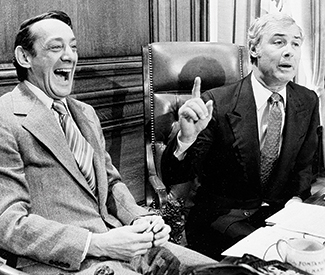
Harvey Milk and George Moscone Memorial Harvey Milk Plaza, Castro and Market, SF. tinyurl.com/MilkMoscone. 7pm, free. A candlelight vigil and march will be held in remembrance of the 35th anniversary of the murders of San Francisco Supervisor Harvey Milk and Mayor George Moscone. The event is meant to honor their memories and bring people together. It is being co-sponsored by a broad coalition, including the Harvey Milk LGBT Democratic Club.


FRIDAY 29


Black Friday Roller Disco Party San Francisco Women’s Building, 3543 18th St, SF. (415) 820-3907. 8pm-12am, free. SF Indiefest and Black Rock Roller Disco present a Black Friday roller disco party inside the Women’s Building auditorium. Disco costumes encouraged! Skate rentals will be provided, or bring your own.


SATURDAY 30


Citizen Journalism Symposium East Bay Media Center, 1949 Addison, Berk. 3pm, free. Live streamers, bloggers and social media mavens will converge for a series of conversations on citizen journalism, featuring those who helped capture Occupy Wall Street protests and a discussion led by host Clark Sullivan on ethics in citizen journalism. Bring your smartphone, laptop, curiosity, and enthusiasm.


MONDAY 2

World AIDS Day forum San Francisco LGBT Community Center, 1800 Market, SF. 6:30-8:30pm, free. This year’s forum, titled “Getting to Zero in San Francisco: How Close Are We?” offers attendees the latest news on San Francisco’s progress in fighting HIV/AIDS from experts in the field. They will also be informed about programs that are helping the city get closer to its goal of zero new HIV infections. The interactive town hall forum structure of the event enables it to be as informative as possible, and ensures audience engagement with the topic. TUESDAY 3 #GivingTuesday: Project Homeless Connect 3200 California, SF. (415) 292-1286 or sstickel@jccsf.org. 10am-8pm, free. People ages 12 and up are asked to come help put together personal hygiene kits for homeless people in San Francisco. Participants may come anytime during either of two shifts, which run 10am-1pm and 3-4:30pm. Afterward, everyone is invited to a Hanukkah Candle Lighting, which will begin at 4:30pm. The kits will be distributed by volunteers the following week at Bill Graham Civic Center Auditorium. This event is part of #GivingTuesday, which is a national day dedicated to charitable activities.

Serial evictors named in mapping project

The San Francisco Anti-Eviction Mapping Project – the same tenant advocates who produced this time-lapse of Ellis Act evictions – have published a new interactive data visualization, displaying locations of properties where seniors and disabled tenants were ousted by no fault of their own.

Showing data over the last three years, the map plots locations of where tenants were evicted under the Ellis Act, and displays the identities of the responsible landlords for each affected unit.

“Waiting lists for public senior housing take years. Often senior and/or disabled tenants are forced to leave San Francisco altogether, or end up on the street homeless,” Anti-Eviction Mapping Project organizers wrote in a statement accompanying the interactive map. “If dispossessed from the city, they often lose access to vital city-subsidized healthcare and community support that they had been reliant upon.”

At today’s (Tue/26) Board of Supervisor’s Meeting, legislation seeking to assist seniors affected by Ellis Act evictions won preliminary approval by the full board. Called the Ellis Act Displaced Emergency Assistance Ordinance, it prioritizes evicted seniors when they seek to access affordable housing programs administered by the city.

“We need this measure to keep residents who have no other means of permanent housing from becoming homeless,” said Board President David Chiu, who cosponsored the legislation along with Sups. David Campos, Jane Kim, Eric Mar and London Breed.

The Anti-Eviction Mapping Project also released a time-lapse plotting the total number of no-fault evictions from 1997 to 2013. A counter that starts when you hit the play button breaks down the number of units where evictions were carried out under the Ellis Act, via owner move-in evictions, and through demolition.

The grand total for that timeframe is 11,766 no-fault evictions. That’s counting units, not individual tenants. Owner move-in evictions made up the lion’s share, with 6,952 units affected. Watch the visualization here.

Meanwhile, tenant advocates who are developing these data-driven presentations are also conducting a survey to gather information for another mapping project in the works.

More than a memorial

16

When Mayor George Moscone and Sup. Harvey Milk were assassinated in their City Hall offices on Nov. 27, 1978, San Francisco changed in innumerable ways. Among those ways is the city lost two of the leading progressive advocates for renters and affordable housing ever elected here.

Today, as San Franciscans mark this tragedy with their annual memorial march, organizers and activists have broadened and elevated the event by enlisting the support of 20 community organizations now doing work to combat the eviction, gentrification, and affordable housing crises that are gripping the city.

“We wanted to make this even more than just a candlelight vigil,” David Waggoner, one of the organizers of the event, told the Guardian. “We want to use this time to remember Harvey and George’s legacy in really fighting for the underdog.”

He noted that attendance at the march has waxed and waned from year to year, but the coalition putting this one together promises to have a strong turnout this year because of the surging progressive activism around housing issues and the need to organize the community to save the soul of the city.

“There is very little to stop what’s happening with the rapid gentrification,” Waggoner said, but he also noted, “By building coalitions, the same way Harvey and George did, we can fight.”

“We’re not only honoring the history of Harvey Milk and George Moscone, but we’re honoring their legacy by making them relevant today,” Brian Basinger, head of the AIDS Housing Alliance/SF, told us. “The Milk March is going to be very exciting. We have over 20 community groups invited and helping us put it together.”

Basinger said the progressive activism will continue through the 25th annual World AIDS Day on Dec. 1, and that participants in both events will be asked to present their demands to the city for dealing with the AIDS and housing crises. That list will be presented at City Hall during a noon rally on Dec. 2.

He said that affordable housing issues are LGBT issues given that nearly 30 percent of the city’s homeless population identifies as LGBT, while that identification makes up just 15 percent of the overall city population.

“Those of us who are lucky enough to talk to the folks who knew Harvey remind us that it’s about coalition-building,” Basinger said, noting that many of Milk’s contemporaries are now being forced to leave the city by evictions or economic displacement.

One voice from that era who is still around and active is gay activist Cleve Jones, who was an intern in Milk’s office at the time of the assassination and wrote a poignant guest editorial in the Nov. 21 issue of the Bay Area Reporter about what Milk and Moscone advocated.

“They fought for renters, honored labor, and built coalitions to connect, not divide, us from each other,” Jones wrote. “They would, I’m sure, be pleased by the progress that has been achieved on some of the issues they cared about. But they would be alarmed by the growing chasm between rich and poor, they would be angered by the evictions of the elderly, disabled, and people with AIDS. They would be fighting to keep City College open and they would be outraged by the violence and despair experienced by so many in our city’s neighborhoods.”

Organizers of the event say they think this is just the kind of memorial that Milk and Moscone would have wanted.

“We want the housing crisis to be front and center,” Waggoner said. “We want this to be a time for people to connect with the legacy of Milk and Moscone in a very direct way.”

The march begins at 7pm in Milk Plaza, Castro and Market streets, and continues with a rally outside City Hall.


Out of the fog

0

cheryl@sfbg.com

FILM In movies, maybe more than in life, trouble awaits outsiders who poke into cults that don’t take kindly to outsiders. Sound of My Voice (2011) is a recent example, but The Wicker Man (1973) remains probably the gold standard of “Pardon me, but I’ll be infiltrating your society, passing judgment, and suffering the inevitable consequences” cinema. For every recruitment-happy group (step right up, young ladies, and throw your lot in with 2011’s Martha Marcy May Marlene), there are plenty more that would just as soon be left alone.

A new entry into this genre, Holy Ghost People, comes courtesy of Mitchell Altieri, half of the directing duo known as the Butcher Brothers (the other “brother,” Phil Flores, co-wrote and co-produced). You may remember the BBs from their 2006 breakout, The Hamiltons — about a family with a bloody secret. It’d make a perfectly nightmarish double-feature with another recent indie horror, Jim Mickle’s We Are What We Are. Holy Ghost People, which borrows its title and some archival footage from the 1967 documentary about Pentecostal churchgoers in West Virginia (now in the public domain, it’s viewable on YouTube), aims more for dread than gore, and represents an artistic step forward for the San Francisco-bred pair.

If certain choices don’t entirely work (a bookending voice-over feels unnecessary, given the film’s vivid visuals; the score can feel intrusive at times), Holy Ghost People is bolstered by some blistering performances, chiefly from co-writer Joe Egender as Brother Billy, the boyish leader of a church compound tucked into the Southern wilderness. (The film was shot at a summer camp — a setting not used so creepily since the first few Friday the 13th flicks.) Stumbling not-so-innocently into Billy’s lair are unlikely friends Wayne (Brendan McCarthy) and Charlotte (Emma Greenwell), who pretend to be spiritual wanderers when really they’re searching for Charlotte’s long-lost sister, last seen spiraling into junkie oblivion.

Anyone — but particularly Billy, whose tidy pompadour and welcoming words can’t hide the fact that he’s as sinister as the serpents he handles during sermons — can see that Wayne, a haunted alcoholic, and Charlotte, who’s battling her own demons, aren’t who they claim to be. Still, they’re cautiously accepted by lower-ranking members, including Sister Sheila (Cameron Richardson), a soft-spoken blonde whose beauty is marred by prominent facial scars.

As events get freakier in God’s country (or is it?), Holy Ghost People doesn’t quite offer a grand payoff to all that suspense — though it does establish a new clause to that old cinematic rule about guns: If you see a poisonous snake in the first act, damn certain it’ll bite someone by the end.

Holy Ghost People kicks off the San Francisco Film Society’s fifth annual Cinema By the Bay Festival, which showcases movies made “in or about the Bay Area,” as well as works made by artists with Bay Area connections. This agreeably loose thematic structure allows the Tennessee-shot Holy Ghost People to share marquee space with SF-centric doc American Vagabond, by Finnish director Susanna Helke.

American Vagabond, about homeless LGBT youth, is particularly timely in light of the SF Board of Supervisors’ recent vote to close parks overnight. Golden Gate Park is home for James and Tyler, a young couple who’ve fled their close-minded families, dreaming of a better life in the rainbow capital of California. Guided by James’ poetic, confessional narration — as well as other voices that chime in to share their experiences — American Vagabond is a specific, deeply personal story that also offers a broader comment on how gay youths and the homeless are treated, even in a city as progressive as SF. And it does take some unexpected turns, as when James reunites with the family that rejected him — though the reasons for the reconciliation are not happy ones.

Elsewhere in the fest, take note of Berry Minott’s The Illness and the Odyssey, a medical whodunit of sorts that explores the history and controversy surrounding Lytico-Bodig, a neurological disease found almost exclusively in Guam. For years, scientists have believed that finding its cause would be like “a Rosetta stone,” according to Dr. Oliver Sacks, resulting in cures for Alzheimer’s, Parkinson’s, and related illnesses. But since nobody can settle on a hypothesis — is it infectious? Caused by plants? The result of a curse? — and nobody really wants to share research (what, and let that Nobel Prize slip away?), there’s been little progress other than clashing speculation, to the great annoyance of those in Guam whose families are affected by the disease. Ultimately, The Illness and the Odyssey is more about the scientific process than anything else, with plenty of prickly personalities (in both current and vintage footage) stepping up to share their views.

Also worth a mention: In Hak Jang’s The Other Side of the Mountain, a Korean War-era romance (with musical numbers) that happens to be the first-ever North Korea/US cinematic co-production. And don’t miss “Street Smarts: YAK Films’ Dance Then and Now,” an Oakland-born phenomenon that has spawned a international array of films showcasing so-called urban dance — staged on subway cars, in intersections, and other unexpected places — of the most limber, slinky, sassy, acrobatic, and awe-inspiring varieties. *

CINEMA BY THE BAY FESTIVAL

Fri/22-Sun/24, $10-$25

Roxie Theater

3117 16th St, SF

www.sffs.org


Albany Bulb squatters lose in court and turn to direct action to resist evictions

4

Yesterday marked a big day for Albany Bulb residents. The Bulb, a closed landfill turned homeless encampment, has been under the threat of eviction by the Albany City Council for the last month. 

After an afternoon in a San Francisco courtroom, Judge Charles Breyer of the US District Court for the Northern District of California denied a stay away order filed by the residents’ attorneys seeking to prevent an imminent eviction by the City of Albany. Later that day, after an Alban City Council meeting, residents and activists marched to the Bulb and set up a permanent occupation in protest of the impending eviction.

The stay away order was filed last week in order to prevent eviction during the winter. Osha Neumann, one of the residents’ attorneys and a longtime artist whose work is represented at the Bulb, said that it was unusually cruel to make the residents, some with severe disabilities and mental health issues, move off the Bulb without any homeless shelters or temporary housing available in Albany.

“They haven’t said what is the urgency or need to do it in the middle of winter,” Neumann said of the city, “It’s nonsense.”

Albany Housing Advocates was also a plaintiff, along with 10 of the Bulb residents in the lawsuit.  Julie Winklestein, the president of the AHA was in the court audience, said she hoped that the stay away order would be given: “We decided for a temporary restraining order to keep the conversation going.”

And while that conversation was put to a halt, another has started.

According to a press release issued by area activists and Bulb residents sent early this morning, “activists say they will be participating in trainings, hosting workshops, and planning more actions targeting the City of Albany, as well as the Sierra Club and Citizens for East Shore Parks, recreationalist organizations that are sponsoring the eviction.”

Based on information obtained in court documents, $570,000 was allocated to remove the Bulb residents, based on an Albany City Council decision made on October 21, with $171,000 spent on the cleanup of the campsites and the remainder spent on two portable trailers with bunk beds to serve as transitional housing for six months.

 Many of the campers, such as six-year resident Amber Lynn Whitson, believe that the transitional housing isn’t responsive enough for disabled people, as they believe it would not be open during the day.

“It’s ridiculous that they say they don’t know of any specific disabilities,” said Whitson about the city’s attempt provide transitional housing.

“If I’m not back there, I’m on the streets,” Kris Sullivan, an 18-month Bulb resident said about the encampment. “We’re safe back there.” 

SF General will lose much of its federal subsidy under Obamacare

137

As President Obama’s Affordable Care Act is phased in over the next couple years, San Francisco General Hospital will lose at least 25 percent of the $123 million it receives from the federal government to offset costs of caring for the uninsured, but hopefully that will be offset by its expansion of those who will have health insurance.

General Hospital receives those funds for being a so-called “safety-net hospital,” a place where those without insurance can still get quality healthcare. Even though the need for such safety nets is supposed to diminish under Obamacare, SF General will remain a critically important safety-net hospital.

Many San Franciscans – including non-U.S. citizens who won’t qualify for coverage under the Affordable Care Act, as well as homeless individuals – will continue to rely on the hospital when in need of medical care.

Yet here and nationwide, concern is brewing about whether funding for safety-net hospitals could be impacted if enrollment in the new state health exchanges doesn’t reach anticipated levels.

“The financial question every state is asking is: What are the newly eligible patients going to do? What plan will they enroll in? Will they enroll?” Greg Wagner, CFO of the San Francisco Department of Public Health, told the Guardian, referring to the health insurance marketplaces created under the Affordable Care Act.

Most safety-net hospitals in the country are bolstered with federal subsidies, and are especially reliant on funds known as disproportionate share hospital payments, or DSH. However, those subsidies are about to be slashed with machete-like strokes.

All told, as much as $18 billion nationwide could be siphoned away from safety-net hospitals by 2020. Compounding that is another $22 billion that could be cut from Medicare subsidies, depending on the number of insured.

There’s an expectation that the looming safety-net budget cut will be offset by the burgeoning population of insured residents who would flock to state health exchanges. It makes sense: Instead of absorbing the entire cost of an uninsured patient, hospitals would be getting money from newly active insurance policies, and no money would be lost.

The New York Times recently ran a story detailing how low-income patients in Georgia may be put in a precarious position under federal healthcare reform because safety-net hospitals in Georgia might not be able to make up for lost funding once DSH payments evaporate.

California isn’t likely to experience this problem to the same degree, Wagner said, because the state chose to expand Medi-Cal, the state version of Medicaid, to include all low-income residents and not just those who previously qualified under a narrow set of criteria. Georgia had the same option to expand, but chose to keep its Medicaid qualifications in place, like many states led by Republicans looking to tweak President Obama.

As things stand, enrollment in Covered California – the state’s health insurance marketplace under the Affordable Care Act – remains low. Until enrollment closes at the end of March, it’s an open question whether it will reach the necessary levels to make up for pending cutbacks.

So far, 59,000 Californians had completed applications and enrolled in health insurance plans within the new marketplace as of Nov. 13. That’s a drop in the bucket, considering that 2.3 million are eventually expected to enroll. According to state data, 203,904 applications had been started online (reflecting an estimated 370,000 individuals). In addition to those applying for Covered California plans, another 72,000 people were determined eligible for Medi-Cal. 

“SF General operates on a huge amount of federal money,” Wagner explained. “Some comes directly from the federal government, and some comes from DSH.” He said the hospital received $123 million in DSH funds last year, “and not all of that will go away” once cuts go into effect.

“Healthy SF will still be around after March 31,” said Wagner. “We’re still retaining the program for anybody not eligible for Medi-Cal, and through Healthy SF those people can still access primary healthcare.”
He even said that under extreme circumstances, like the delivery of a child, for instance, some undocumented immigrants will have the opportunity to enroll in Medi-Cal. 
And it’s not all gloom-and-doom on the subsidy front, either. There is a safety-valve for the safety-net hospitals: If everyone who is expected to enroll in Covered California actually does so, the funding will be available without the need to rely on federal aid. 
But in order to achieve that idyllic plateau, a serious push is needed on the enrollment level. Granted, those enrollment figures should rise. But what if they don’t? 
“If people don’t enroll in the new programs, it will be a big problem,” said Wagner. “If we have a significantly lower enrollment number than we initially predicted, we will have some major financial issues. There’s still some uncertainty.”

He added, “We’ll still provide care for the uninsured at SF General. The money will decrease, but it won’t disappear. By no means will all of the money go away. The hope is that the newly enrolled will offset the decreasing number of uninsured, then the federal government could take the DSH payment and redirect it to the providers.” 

That being said, “we still have lots of optimism moving forward,” Wagner said. “We think people will enroll.”

[Correction: We corrected the amount of the reduction from 50 percent down to 25 percent].


Keep it reel

2

cheryl@sfbg.com

FILM Central India’s Gulabi Gang, composed of rural women fighting violence and oppression, has become a popular media subject, and it’s not hard to see why: Not only does it offer an inspiring story, it’s visually compelling, since its members dress in matching, hot-pink saris. Pink Saris, in fact, was the title of documentarian Kim Longinotto’s portrait of the group; it played in the 2011 San Francisco International Film Festival. Now, there’s Gulabi Gang, Nishtha Jain’s doc, which screens as part of the San Francisco International South Asian Film Festival, presented by 3rd i. (A Bollywood narrative, Gulaab Gang, is reportedly in production as well.)

Front and center in Jain’s film is formidable leader Sampat Pal, who speaks loudly and carries a big stick she’s perfectly willing to use. Though the Gulabi Gang’s trademark acts of physical retaliation are only discussed anecdotally, we do get to see the activists sharply criticize corrupt village leaders and dismissive cops. We also tag along as the women circulate among communities recruiting new members. The main plot thread follows Pal as she investigates a woman’s suspicious death — likely a murder, and one that’s being shoddily covered up by her husband and his family. (Later, it’s revealed that the wife was just 15 or 16, having been married off at age 11.)

Pal, who founded the group in 2006, is a skilled agitator, speaking for the voiceless and cannily grabbing whatever platform is available. “The video camera is recording it all,” she declares after visiting a crime scene that’s clearly been tampered with. “Your artistry will be shoved up your asses.”

But though Pal is backed up by fellow activists (Gulabi Gang notes that the group has some 150,000 members), Jain is careful to show that a happy ending is impossible amid an epidemic of violence against women. “Only God knows what happened,” the teen bride’s own father remarks with case-closed dismissiveness. Still, the women press on, and there’s hope to be found in their determination, and in the fact that there’s a trend of women’s rights docs coming out of India lately. Another, Invoking Justice — about women in southern India who’ve formed their own “Jamaat” to handle disputes traditionally settled by men according to Islamic Sharia law — screened at the Center for Asian American Media’s 2013 CAAMfest.

There’s a bit of feminist subtext to be found in Beyond All Boundaries, about India’s obsession with the sport of cricket. Er, ‘scuse me: “It’s not a sport — it’s a religion!” according to a first-act interviewee, hyperbole that starts to feel like fact once Boundaries gets rolling. Sushrut Jain’s doc, shot during the lead-up to the 2011 World Cup, follows three young people who’ve found their identities via cricket: homeless megafan Sudhir, who bicycles (sometimes for weeks) to every India match and coats himself with paint to become a living embodiment of team spirit; 12-year-old cricket prodigy Prithvi, whose skills are his golden ticket out of poverty, and (one hopes) a means to escape his sports-Svengali father; and Akshaya, an 18-year-old with a horrific home life who’s dropped out of school to pursue her dreams of playing professionally.

Reaching cricket’s elite level is no easy pursuit, even for a very talented boy — but for a girl, it’s nearly impossible. (Think of it this way: even in big-budget America, pro teams for women are pretty damn scarce.) And even if Akshaya makes it, whatever pay she earns will be laughably low; a coach interviewed in Boundaries is embarrassed to name the salary range on camera. But she has to try, since cricket is the only bright spot in what’s been a trying life. She seems so deserving that it’s hard to blame the filmmakers for stepping in and paying for medical care when an injury threatens an important try-out session.

Though Prithvi’s story contains some worrisome figures — the rich benefactor who’s funding the boy’s early career ominously notes, “If he doesn’t make it as a cricketer, that would be like a curse to me”; the youngster’s father, who jovially admits he “has to” hit his son from time to time — his future prospects seem brighter than Akshaya’s. Most uplifting is the tale of Sudhir, whose devotion to cricket makes him a misfit in his estranged family, but a hero to fellow supporters who admire his dedication.

Boundaries is more character piece than Cricket 101, but even if you don’t know its rules (seriously, why so many runs?), the language of sports fandom is universal. And in this case, it’s political: “Cricket was one way of showing the colonial rulers that we were your equal,” a sports journalist points out, and indeed the race to the World Cup finals, against long-standing rivals like Pakistan, makes for some highly charged matchups.

Elsewhere in the fest — which celebrates “100 Years of Indian Cinema” as well as offering a “Spotlight on Pakistan” — is a must-see for film history buffs: Celluloid Man, a nearly three-hour portrait of 80-year-old P.K. Nair, “the Henri Langolis of India” who founded the country’s National Film Archive. His is described as an “obsessive passion” (hey, for some it’s cricket, for some it’s film), and Shivendra Singh Dungarpur’s doc is an appropriately thorough, affectionate tribute, jammed with clips from movies Nair helped rescue and preserve. *

SF INTERNATIONAL SOUTH ASIAN FILM FESTIVAL: BOLLYWOOD AND BEYOND

Nov 6-16, $10-$125

Various venues, SF and Palo Alto

www.thirdi.org


Home from prison

3

rebecca@sfbg.com

Danielle Evans, director of Women’s Services at the Center on Juvenile and Criminal Justice, likes to tell the story of a woman who managed to turn over a new leaf after spending a year in a residential support program.

The client was found on the streets of San Francisco, pregnant, after an overdose. She was over 40, had never graduated from high school, and had a string of drug offenses on her rap sheet. She had multiple children who had been given up for adoption, and she was homeless.

But after getting emergency treatment at San Francisco General Hospital and entering substance abuse counseling and transitional housing from there, she was able to overcome her drug addiction, regain custody of her daughter from Child Protective Services, and enroll in a vocational program for janitorial work.

The woman was aided through a yearlong stay at Cameo House, a transitional home for homeless pregnant women and new moms run by CJCJ. After living there with her daughter while getting pointers on parenting from the staff, she’s now working toward her GED and has a goal of landing a job — something she’s never had.

“I’m like, look where you came from and where you are today,” Evans reflected. The client’s daughter is now a healthy two-year-old, Evans said, and “she is so motivated to be a good mom.”

It’s not a typical narrative. A recent event hosted by New America Media focused on the personal stories of Bay Area youth who’ve grown up with parents entangled in the criminal justice system. More often, those parent-child relationships are strained or nonexistent, especially in cases where parents are far away from home, serving out prison sentences.


CHILDREN OF REENTRY

For many, having a parent behind bars has the potential of becoming a vicious cycle, but new realizations about how harmful that childhood experience can be are giving rise to a new way of thinking about how to deal with parents in the criminal justice system.

New approaches include alternatives to incarceration, something that’s gaining momentum in this era of prison overcrowding and realignment, which has shifted some responsibility of housing inmates from the state to California counties.

Children of incarcerated parents are three times as likely as their peers to wind up in the criminal justice system, Jessica Flintoff, director of the Reentry Division at San Francisco’s Adult Probation Department, said at the New America Media forum in downtown San Francisco. Some policies that the county has embraced are designed to factor in long-term youth impacts, at the time when key decisions are being made about their parents’ fates.

The event featured a series of short films and multimedia projects spotlighting the experiences of youth and their formerly incarcerated parents, with a focus on what happened when the parents returned home.

Young producers, working with the nonprofit Silicon Valley DeBug and community newspaper Richmond Pulse, created the projects through hours of interviews in which parents and kids divulged intensely personal details about their experiences. The idea behind the Children of Reentry media project was to open up a conversation that kids with incarcerated parents often shy away from, because of an associated stigma.

The project conveyed intimate narratives about an experience that an estimated 2.7 million children of incarcerated parents are familiar with nationwide: A son who got to know his father in a prison visitation room; a mother who gave birth to her daughter in prison only to be separated until completing her sentence; a father who barely knew his daughter before her 21st birthday because he’d been in prison for the duration of her childhood.


WHAT DO KIDS NEED?

In San Francisco, the mission of the San Francisco Adult Probation Department explicitly includes a goal of “breaking the intergenerational cycle of incarceration,” Flintoff explained at the forum.

The city tries to take a child’s needs into account before the parent is sentenced, she said. Under this system, a deputy probation officer is required to conduct an investigation into the needs of the affected children, and even maps out a genogram of the convicted person’s familial ties, to convey to a judge what kind of situation the child will wind up in once their parent is imprisoned.

The sentencing then takes this background information into account. “The criminal justice system is a series of decisions,” Flintoff said. “We can make different decisions at every turn.”

The impact of parental incarceration on youth has been a hot topic lately. In August, a White House conference was devoted to understanding the problem, which is fueled by an American incarceration rate that’s four times higher than it was in the 1970s.

Research has yielded sobering data. According to the American Bar Foundation, which hosted the White House conference, roughly half of all inmates serving time in U.S. prisons are parents. Communities of color are disproportionately impacted — nationwide, one in four black children has had a parent behind bars at some point. These youth tend to have a tougher time once they reach adulthood, with typically lower rates of academic achievement, decreased chances of graduating from college, and a higher percentage facing unemployment.

“I feel like I saw both of my parents in each video,” Mailee Wang said after the series of short film screenings, tearing up a little. Wang, whose mother and father each spent time in prison, is now program director at Project WHAT! (We’re Here And Talking), an initiative run by local nonprofit Community Works that aims to assist these impacted youth.

“Having a prison mentality is real,” she added. “How do you lock somebody up, and keep them from their kids, and release them, and expect that prison mentality to turn off? It’s chaos when the person returns home. People talk about family reunification, but what does that look like?”

SERVICES INSTEAD OF PRISON

Meanwhile, a new partnership between San Francisco and CJCJ seeks to eliminate the traumatizing effect of parental incarceration by swapping out time behind bars for a different rehabilitative approach. That option involves sending would-be inmates to Cameo House, the transitional home that already helps homeless moms to get on track as providers for their young kids.

Housed in an 11-unit Victorian in the Mission, the center offers group therapy, parenting classes, training for job seekers, and other kinds of support services to help put women in the position of being able to provide for their kids. Cameo House contracts with the Department of U.S. Housing and Urban Development to provide the services, and receives local funding and assistance from private donors.

Under this alternative, pregnant women or mothers with children under six who are facing prison or jail time could be placed in Cameo House instead of being made to spend time behind bars away from their kids.

“It’s an option on the table, where before it was, ‘you’re going to county jail, and there is no other option,'” Evans said. “But we’re saying, ‘hey, let’s try this. Let’s intervene where intervention is needed. Let’s not re-traumatize this family.'”

Why I oppose closing our parks

47

OPINION I have great respect for Recreation & Park General Manager Phil Ginsburg, my colleague Sup. Scott Wiener, and my constituents and friends who support the parks closure legislation. I certainly share their concerns about damage to our parks. But I do not think this law is the appropriate means to address it.

I have six fundamental problems with the legislation.

My first concern is the impact this could have on our neighborhoods. There are an estimated 7,350 homeless youth and adults in San Francisco. Many find a shelter bed; some wind up in jail or a hospital. Over 4,300 people, though, have nowhere to sleep.

As the supervisor for District 5, it would be irresponsible for me not to think about this, not to consider what will happen if homeless people are evicted from the parks and wind up sleeping on the doorsteps of my constituents in the Haight, Inner Sunset, or Buena Vista. This would be unjust for the homeless and worse for the neighborhoods.

Second, we have an enforcement problem, not a regulation problem. The Park Code already prohibits: camping, sleeping between 8pm-8am, dumping, drinking (in most parks), being under the influence, damaging the parks, or making loud, “unreasonable” noises.

Unfortunately, at night there are only two or three park patrol officers on the beat for all 220 parks across 3,500 acres.

We can’t enforce the codes we have. Rather than adding a broad, redundant code, I would like targeted improvements to the codes and their enforcement.

Third, it could cost more to enforce this law than we would actually save. Vandalism is distributed all over the park system and does not all occur between midnight and 5am. A dramatic increase in officers could decrease vandalism, but that would cost more than any savings realized.

Fourth, I am sympathetic to the almost-Libertarian argument made by some constituents that: “My tax dollars pay for those parks and if I want to use them at 4am, that is my prerogative.”

Firefighters and others who work late shifts should be allowed to walk their dogs in the park when they get off work. Whenever I raise this point, I am told by the law’s supporters, “Oh it won’t be enforced against them.”

This is exactly the problem, and my fifth concern — that this law will be selectively enforced. If it’s not intended to target the homeless, the firefighter, or the well-groomed neighbor, who is the law designed to target? Suspicious looking people? Teenagers? Young men in hooded sweatshirts?

Lastly, I think there are perfectly legitimate reasons to use the parks at night, and I don’t think our government should be admonishing us otherwise.

Acts can be criminal. Vandalism, dumping, drug use — those are acts. I am not comfortable preemptively criminalizing a person’s presence, or everyone’s presence, in order to deter the few who commit those acts. I am not comfortable limiting everyone’s freedom in order to deter those who abuse that freedom.

But frankly, I am also not comfortable with how politically charged the issue of homelessness has become in San Francisco. Whether this particular law passes or fails, 7,350 people will wake up tomorrow morning not knowing where they will sleep tomorrow night.

We must be creative, unconventional. For example, we could repurpose fallow city buildings as temporary shelters. Would this idea be received as an opportunity or an insult? I hope the former, but I suspect the latter.

We have a political climate in this city which, for a variety of reasons, seems to default to the status quo on homelessness. Well, we need change. We need to acknowledge that not every call for service is a “handout,” nor every call for enforcement a “criminalization.”

Relegating 4,300 people to a cold spot of concrete or grass every night is not compassion; working creatively to change it is not malice. It is leadership. And it is exactly what we need.

London Breed is the District 5 supervisor. The board was scheduled to make its first of two votes on Wiener’s legislation Nov. 5 after our press time. Visit www.sfbg.com/politics for the latest.

UPDATED: Board narrowly approves closing city parks at night

44

The San Francisco Board of Supervisors today narrowly approved Sup. Scott Wiener’s legislation to close parks and large plazas from midnight to 5am, a measure that Wiener said was about preventing vandalism but which progressive activists called an attack on the homeless.

The vote was 6-5, with Sups. John Avalos, London Breed, David Campos, Jane Kim, and Eric Mar voting against the proposal. The key swing votes in the decision were Breed — who wrote an op-ed for this week’s Guardian (posting soon) explaining her position — and Sup. Norman Yee, who was elected last year in Dist. 7 with progressive support.

To address the homeless issue, Kim asked for an amendment to make an exception for sleeping in the parks. Without the amendment, “we are criminalizing poverty and issuing fines people will never pay, and not getting the results we wanted,” she said. 

Hundreds of homeless lay their heads to rest in the parks of San Francisco every night as the city struggles to meet housing demand, which is already illegal under city law. Kim’s amendment says those sleeping in parks are to be cited under previously existing codes against sleeping in parks and not double-fined under this ordinance. Wiener supported the amendment and it was inserted into the legislation, although that didn’t end the debate over the legislation or win over its main opponents.

As the legislation was first introduced, Wiener made the argument he’s made many times before. Closing the parks at night is about vandalism, he said. 

“We need to establish a clear baseline that establishes hours for the park to combat vandalism and dumping,” Sup. Scott Wiener told the board. He made the case that most major cities in the U.S. have laws closing their parks and playgrounds at night, and that even New York City had them on the books.

Wiener also directly and flatly denied that his legislation was an attack on the homeless. 

“If the police wanted to remove people sleeping and camping in parks, they already have the tools to do that. This legislation does not give them those tools beyond what they have,” he said. 

But opponents of the measure, who have been organizing against it for weeks, said it will target the homeless and be selectively enforced. As Mar said at the hearing, “I think this is a really mean-spirited ordinance.”

And that’s when the avalanche of arguments began. Campos, Mar, Avalos, and Kim all  passionately defended the homeless that sleep in the parks. But no one brought more facts to the argument than Breed.

“We have 1,339 shelter beds and 6,000 people in San Francisco with nowhere to sleep,” she said. “I’ve been told again and again this will not target the homeless. But if it doesn’t target the homeless or the investment banker or the firefighter, who will this law target? Suspicious looking people in hoods? Teenagers?” 

The room took on a chill as she evoked echoes of Trayvon Martin and others who have been selectively targeted in the name of justice. Enforcement was her next bone of contention. There are only a handful of park police, often only two, that patrol over 220 parks in San Francisco, she said. 

If the ordinance is supposed to combat vandalism, it doesn’t even do that effectively, she said to the board: “We don’t have a legislative problem, we have an enforcement problem.”

To that end, Yee amended Wiener’s proposal to identify more funding for the park police. Everyone on all sides of the argument acknowledged that two to three officers to cover over 4,000 acres of San Francisco parks was woefully inadequate. 

It’s still unclear where that funding will come from, and how much it will be. 

After the meeting the Guardian asked Police Chief Greg Suhr, who was present for the meeting, if the homeless would be targeted under the ordinance.

“We’re not that Police Department,” he said. But he also said the controversial Sit/Lie Ordinance doesn’t target homeless people either, a claim that homeless advocates would dispute. “We’re a reasonable suspicion detention department.” 

An audio interview with Police Chief Greg Suhr just after the park closure legislation passed, where we asked Suhr, “Will the homeless be targeted?”

Tom Temprano, president of the Harvey Milk LGBT Democratic Club, disagreed. 

“I think that anyone who tells you the homeless will not be targeted in legislation that closes our parks at night are lying to you. There’s no other way to read this legislation,” he said. Temprano was one of the lead organizers of the sleep-in protest of the ordinance, which we previously covered.

When we asked if the ordinance would spur increased law enforcement in the parks, Suhr referred us elsewhere. 

“I leave the deployments to the station captains… certainly [the captains] have a pulse on what’s going on in the parks,” he said. 

So we called Captain Greg Corrales at Park Station, which oversees one of the most populous sections of Golden Gate Park, filled to the brim with campers. Corrales told us he didn’t imagine this ordinance would spur him to increase patrols or enforcement.

“There will not be more officers. The hours of the park have been posted on signs in the park, and past closing time people were cited for failure to abide by the signs,” he said. 

They cite 10-20 people for sleeping in the park per night, he said. As Kim noted, often these don’t lead to any prosecutions at all. 

But as for vandalism, Corrales said that there was recently a vandal throwing rocks through the windows of the Conservatory of Flowers and McLaren Lodge in Golden Gate Park. Would the ordinance help curb people from that kind of behavior?

“We’re already enforcing park closure,” he said. “It really doesn’t have much impact on us.” 


Red herring or not, park closure vote delayed while supes seek police input

26

There is only one police chief in this town, and no law regarding the usage of public parks shall pass without him. Or so they said yesterday when Sup. Scott Wiener continued for a week consideration by the Board of Supervisors of his controversial proposal to close the city’s parks and plazas at night.

Wiener – champion of the legislation that homeless advocates say specifically target the City’s homeless population — motioned for continuance on the hotly contested agenda item after Police Chief Greg Suhr was unavailable to discuss how the measure might be enforced. The motion was seconded by Sup. Malia Cohen and passed without objection. 

But the continuance request means that Wiener will have to deal with what he calls an “epidemic of vandalism” for another week as well. The legislation would amend the “Park Code to establish hours of operation for City parks from 5am to midnight, with certain exceptions; and make environmental findings.” 

“It’s long been illegal to sleep or camp in parks,” said Sup. Wiener. “[Police] don’t need another law.” 

“This. Is. About. Vandalism,” Recreation and Parks Department General Manager Phil Ginsburg told the Guardian. “The homeless won’t be thrown out. The laws are already on the books, man.”

And while Wiener and those in the RPD have continued their insistence that that the legislation was written explicitly to target late-night vandalism, illegal dumping, and other nefarious activities not related to homelessness, opposition to the legislation say it’s “red herring” legislation that, on its face, claims to combat vandalism, but underneath is actually a bill targeting the homeless.

Wiener disagrees with this stance, however, and actually called the argument made by the legislation’s opposition — that the bill is a “red herring” ostensibly aimed at vandalism, but that really targets the homeless — a “red herring” as well. A red herring, historically, is a distraction. It’s a Trojan Horse, a magician’s assistant, a tool designed to confuse and obfuscate actual information or intent. 

It is a term that first found a foothold in the hunting world, but made it’s transcendental leap into the world of politics. Politicians have employed the use of “red herrings” in the past. But why would a group called the Coalition on Homelessness actually support vandalism, as the supervisor’s “red herring” comments would suggest?

When this fact was pointed out, Wiener told the Guardian that he “wasn’t going to speculate.” (And neither will we, at least as to why the supervisor chose to use the phrase “red herring” to describe the COH’s argument in the first place.)

But regardless of rhetoric, next week’s vote promises to be close. COH Executive Director Jennifer Friedenbach told the Guardian last week that she had the support of the four most progressive supervisors — John Avalos, Jane Kim, David Campos and Eric Mar — and needed just two of the three swing votes to shoot down the legislation. Those three undecided votes rest in the hands of Sups. London Breed, Katy Tang and Norman Yee.

“This is going to be a close vote,” said Wiener.

But a vote that will have to wait a week.


The Selector: October 30-Nov. 5, 2013

0

WEDNESDAY 30

The Nightmare Before Christmas

“Boys and girls of every age, wouldn’t you like to see something strange?” If so, (and especially if you recognize these lyrics), then come with us and you will see Tim Burton’s The Nightmare Before Christmas (1993) at SoMa StrEat Food Park, where this week’s StrEat Flicks features everyone’s favorite stop-motion musical fantasy. Trick or treat, grown-up style, between the food trucks with a cup of beer or sangria. Next, grab a bag of popcorn and plop down under the heat lamps and get ready to sing along, because “this is Halloween.”(Kaylen Baker).

7pm, free

SoMa StrEat Food Park

428 11th St, SF

www.somastreetfoodpark.com


Psycho with the San Francisco Symphony

Alfred Hitchcock is still rightfully considered the master of suspense in film, and he often used music to help achieve his desired results, frequently with composer Bernard Herrmann. Fans are in for a special treat this Halloween season as the San Francisco Symphony will perform the scores to several movies live while the films are projected on a large screen behind the musicians — from the shrieking strings of Psycho (Wed/30, 8pm) and the sweeping score of Vertigo (Fri/1, 8pm), to an organ accompaniment for the silent classic The Lodger (Thu/31, 7:30pm) and a “Greatest Hits” medley (Sat/2, 8pm) featuring guest host actress Eva Marie Saint, who starred in North by Northwest (1959).

(Sean McCourt)

Through Sat/2, $20–$156

Davies Symphony Hall

201 Van Ness, SF

(415) 864-6000

www.sfsymphony.org


THURSDAY 31

Halloween ComicFest

Fill your little jack-o’-lantern buckets with candy and free comics at Mission: Comics & Art, which will be participating in this year’s Halloween ComicFest. But free goodies are just the tip of the iceberg. The comic shop will also be hosting Ben Catmull for a signing of his new, eerie book Ghosts and Ruins. In this coffee table art book from Fantagraphics, Catmull has illustrated an array of haunted houses and written stories about the origins of each of their hauntings. Don’t say Shelley’s name 13 times while looking into the pond by the house where she was drowned, or you may suffer the same fate in your sleep. Don’t miss this chance to pick the author’s brain about Shelley’s story and more! (Kirstie Haruta)

5pm, free

Mission: Comics & Art

3520 20th St, Suite B SF

(415) 695-1545

www.missioncomicsandart.com


The Flaming Lips’ Halloween Blood Bath

Oklahoma City psych rockers the Flaming Lips’ mold-breaking performances are as varied as the band’s back catalog. Motorcycle exhaust filled punk orgies, dazzling Christmas light powered spectacles, car stereo orchestras, and for at least the last decade, the technicolor, eyeball melting, heart swelling celebrations of pure weirdo pop, accented by confetti cannons and costumed menagerie. Now it’s switching up again, retiring elements that came close to being trademarks. (No space bubble, kids. Go see Diplo, who ripped it off, as he does every gimmick.) With their latest, The Terror, the Lips seem to be on their own private dark side of the moon, and the current tour promises to be a different kind of spectacle. (Ryan Prendiville)

With Tame Impala, White Denim

7pm, $47.50

Bill Graham Civic Auditorium

99 Grove, SF

www.apeconcerts.com


The Shondes

If you love to dance, can whip up a mean zombie costume, and have a feminist fire in your heart, Café du Nord is the place to be this Halloween. Touring on their powerful fourth release, The Garden, Brooklyn-based the Shondes make a San Francisco stop just in time for some spooky, queer-friendly festivities, bringing their bright klezmer-pop-rock and hopeful, anthemic lyrics — chants that will likely be bouncing around in your head for the rest of the weekend. The Shondes are joined by Bay Area rockers Naïve Americans and the Galloping Sea for a dance-worthy show and a ’90s zombie-themed costume contest. That interpretation is up to you, just make it good and scary, because there will be judges and prizes. (Haruta)

8:30pm, $7

Café du Nord

2170 Market, SF

(415) 861-5016

www.cafedunord.com


FRIDAY 1


American Indian Film Festival

Now in its 38th year, the American Indian Film Festival continues its tradition of spotlighting films by and about Native Americans, with an emphasis on unique and independent works. Opening night unspools Chasing Shakespeare, a magical-realism family drama starring Danny Glover and two of the most prolific First Nation acting legends: Tantoo Cardinal and Graham Greene (both of whom also appear in closing-night film Maina). The rest of the fest brings a screening of Star Wars (1977) with Navajo subtitles; The Lesser Blessed, with SF-born Benjamin Bratt; and, at the SFJazz Center, the star-studded American Indian Motion Picture Awards Show. (Cheryl Eddy)

Through Nov. 9, $7–$20

Delancey Street Theatre

600 Embarcadero, SF

www.aifisf.com


“Bad Dads: Wes Anderson Tribute”

Bask in the cloying quirkiness of the worlds created by filmmaker Wes Anderson at Spoke Art’s fourth annual art show tribute to Anderson’s films. “Bad Dads” will feature works by artists like Joshua Budich and Rich Pellegrino, celebrating everything from The Royal Tenenbaums (2001) to Moonrise Kingdom (2012). Of the newest film, there’ll be Budich’s pulpy screenprint of Moonrise Kingdom‘s main cast divided by a jag of lightning and Michael Ramstead’s lifelike oil painting of “Suzy” as a raven. The exhibit’s opening weekend kicks off with an all-ages Halloween costume party on Fri/1, and continue on through Sunday, when the celebrations move to the Castro Theatre for a triple feature showing of Bottle Rocket (1996), The Royal Tenenbaums, and Moonrise Kingdom. Dress up to channel your inner Gwyneth Paltrow or Bill Murray and immerse yourself in tribute art and film for the weekend. (Haruta)

Through Nov. 23

Exhibition, 6pm, free; Sunday movie screening, 1pm, $12

Spoke Art

816 Sutter, SF

(415) 796-3774

www.spoke-art.com


AYLI Presents Freaky Friday with Maya Jane Coles

During previous appearances in the city, London artist Maya Jane Coles has come dangerously close to being outpaced by her popularity. Pressed to the sides of Monarch during her set last year, my extensive catalog of deep struts and funky steps was reduced to a little heady bobbing for lack of space. It’s a relief that AYLI is bringing her to the more spacious venue of Public Works, particularly now that Coles released her Comfort LP, a vocally-oriented bit of silky house, featuring guest appearances by Kim Ann Foxman and Karin Park. (The track with Park, “Everything,” is the album’s standout.) Still, given how packed this party is on the lineup side, including co-headlining Romanian-born techno producer Cosmin TRG, it may be wise to stake prime floor space early. (Prendiville)

With Bells & Whistles, Brian Knarfield, Cubik & Origami LIVE, more

9pm-4am, $20 presale

Public Works

161 Erie, SF

(415) 932-0955

www.publicsf.com


SUNDAY 3

“Zombie Love”

The signs are all there: After dates you feel a dull numbness where your heart should be, you move in slow motion while life around you runs away, and late at night you’re knocking on your ex’s door. Face it: You’ve contracted Zombie Love. Since there’s no cure, you may as shuffle down to the Make-Out Room with other reanimated life forms for a night of flesh-decaying stories from the Portuguese Artists Colony. Guest readers include Camille T. Dungy, Joe Loya, Sylvie Simmons, and Christopher Worrall, while Three Times Bad regenerates the mood with alternative bluegrass wailings. Additionally, four live writers (friends, not food) scratch out and read aloud stories on some romantically undead prompt for a chance to perform at the next PAC event. (Baker)

5pm, $5-10

Make-Out Room

3225 22nd St, SF

(415) 647-2888

www.portugueseartistscolony.com


MONDAY 4

“Words On Dance with Ashley Wheater & Joanna Berman”

Joanna Berman was born in San Rafael; Ashley Wheater in Bigger, Scotland. Berman spent her entire career with the San Francisco Ballet. Wheater joined after his stints with the London Festival Ballet, Australian Ballet, and the Joffrey Ballet. At SFB they excelled in classical as well as contemporary roles. He retired from dancing in 1996; she in 2002. Both were 36. He did so because of a neck injury; she because she wanted to start a family. Following a format “Words On Dance” has successfully developed over the last 20 years — their conversation together offers an intriguing insider perspective on the world of ballet. The evening includes archival footage of Wheater’s performance career and a film showing him in his new role as artistic director with the Joffrey Ballet which he rejoined in 2007. (Rita Felciano)

7pm, $30

ODC Theatre

3153 17th St., SF

www.odctheater.org


TUESDAY 5

Blitzen Trapper

Blitzen Trapper exists in a parallel universe. The world frontperson Eric Earley has created though Blitzen Trapper’s 13 years and seven albums is filled with magical realism and a detached, fantastical worldview (in which life is a Western and classic rock is still king). Earley’s close relationship with the unreal extends further than his lyrics — the first sentence of the band’s bio reads, in complete earnest, “When I was 23, I had a waking vision of a creature trying to get inside my apartment,” an experience that pushed Earley to quit school and form a band. Blitzen Trapper’s history is an incredible one — its first two albums were self-released during a period of homelessness — and its success as an alt-country band in an indie rock world is even more incredible. (Haley Zaremba)

With Alialujah Choir

8pm, $23

Regency Ballroom

1300 Van Ness, SF

www.theregencyballroom.com


What jobs?

16

For all its shiny gadgets and gleaming new luxury condo towers, San Francisco nevertheless houses a huge demographic that lives at or below poverty.

Officially, it affects about 12 percent of the city’s population, according to the most recent US Census data. Experts from the Stanford Center on Poverty and Inequality calculated an adjusted poverty figure to capture a more accurate portrait of economic disadvantage. According to that alternative yardstick, which factors in location-based costs such as the price of housing, a full 23.4 percent of San Franciscans live in poverty.

City agencies have documented ethnic identities, languages, neighborhoods of residence, and other data concerning poor people who seek assistance through city-administered services. But even though millions of dollars have flowed through city coffers to boost prospects for those who lack steady work, there’s scant documentation showing what this has actually achieved.

Despite budgeted expenditures totaling nearly $70 million for workforce development in 2013-14, not a single San Francisco city official can say how many individuals managed to rise above poverty as a result.


FIVE YEARS, NO IMPROVEMENT

At the behest of Board of Supervisors President David Chiu, the city’s Budget & Legislative Analyst recently analyzed the city’s myriad workforce development programs. It found that there is no standard measure to track the results of the programs, which are administered across 14 city departments.

The analysts recommended convening a committee to get a handle on it, “so there would be somebody accountable for compiling that information,” noted Severin Campbell, a principal at city budget analyst Harvey Rose Associates.

The analysis was a follow-up to a similar audit performed in 2007. The previous study concluded that the system to help struggling people obtain job skills and get hired “was fragmented, with inconsistent planning and coordination of resources and inadequate monitoring of programs to ensure that the programs’ goals and outcomes were achieved.”

Analysts who examined the workforce development system in 2007 discovered a lack of evidence that “individuals receiving services were eventually placed into jobs leading to economic self-sufficiency.”

To cure this dysfunction, the Board of Supervisors formulated a plan. In November 2007, it created Administrative Code Section 30, a new policy centralizing oversight of all workforce development initiatives under the Office of Economic and Workforce Development, overseen by the Mayor’s Office.

In 2007, OEWD’s annual budget for its workforce division was $547,841. By 2012-13, that amount had swelled to $19.3 million. The federal government contributes a lot, but citywide, about 65 percent of workforce development spending comes from local funds.

“Since 2007, the city has worked hard to incorporate the recommendations that came from the audit,” OEWD spokesperson Gloria Chan told the Bay Guardian earlier this year. She said the workforce division of OEWD “has made significant strides and progress to improve the city’s workforce system.”

But the latest Budget & Legislative Analyst report tells a different story. “The city continues to lack citywide policy and oversight of its workforce development system,” it notes. “Many of the key provisions of Administrative Code Section 30 have not been implemented.”

Five years have passed, and little seems to have changed. “We didn’t find a broken system,” Campbell said, “but it wasn’t what the city had envisioned.”

The report noted that the shortcomings could be partially attributed to constraints on funding provided by outside entities like the federal government, making collaboration among departments difficult.

Nevertheless, the lack of a cohesive citywide workforce development strategy coincided with one of the worst economic downturns in US history. While certain sectors have experienced recovery by now, many low-income San Franciscans are still grappling with losses sustained during the Great Recession.

A recent survey of panhandlers, commissioned by Union Square business owners, found that the majority were homeless individuals who said they didn’t have jobs, and thus couldn’t afford rent. Some apparently interpreted these findings as a revelation; the survey results were recently spotlighted on the front page of the San Francisco Chronicle.


LOOKING FORWARD TO WHAT?

Tiffany Green is one of the 10,883 clients served by San Francisco’s workforce development system in 2012-13. She’d previously worked at the security desk of a Tenderloin services provider, but left that job because she couldn’t find anyone to look after her young son during her shifts — and the job didn’t pay enough to cover child care costs.

So she enrolled in CalWORKS, a state program administered by the city’s Human Services Agency, which offers subsidized child care, food stamps, and cash aid for low-income parents while they complete six-month job training gigs with employers who have partnerships with the city.

She was less than optimistic when asked if she thought it would lead to a steady job. “The outcome is going to be everybody else’s outcome, which is nothing to look forward to,” she said, adding that for all her friends and family members who’d completed similar six-month job training programs, she didn’t know of any who’d landed full-time jobs as a direct result.

Karl Kramer, director of the San Francisco Living Wage Coalition, said his organization has been working with city agencies to build pathways to help participants in the programs connect with opportunities for full-time employment in civil service positions.

His organization is pushing for legislation to reform one of those initiatives, the Community Jobs Program, “to make it a real job training program that fast tracks participants into available entry-level city jobs. The reports that we get is, for people who have been through the programs, it leads to very few full-time jobs,” Kramer said. So far, his group hasn’t gotten much traction with city officials.

Steve Arcelona, deputy director in charge of Economic Support and Self-Sufficiency at the Human Services Agency, didn’t respond to multiple voicemails seeking comment.


UNEVEN RECOVERY

The report comes at an odd time — in San Francisco’s current economic climate, new jobs are being created all the time, and the unemployment rate has declined. But experts note that recovery has been uneven, and only certain sectors have reason to be optimistic about the future.

“The San Francisco region is doing better than most,” Chris Haney, executive director of the California Budget Project, told us.

The city boasts a rise in “high-scale, high-production, better paying jobs” in the flourishing tech sector, accompanied by a rise in “lower-paying service jobs,” he said. “But we’re not seeing a tremendous amount of growth in the middle class, middle paying categories.”

The dilemma follows a broader trend of wage inequality that’s persisted over the last couple decades, he added, giving rise to what economists have dubbed the “missing middle.” A decline in the unemployment rate can mask this dysfunction, he said, because “you may have folks who are employed, but they’re employed at lower wages than before … What’s coming back isn’t as solid as it was previously.”

It’s against this precarious backdrop that, despite $70 million dedicated to connecting the low-income or disadvantaged with decent jobs over the past year, the city’s workforce development system appears to be plagued by dysfunction. Chiu recently introduced legislation to implement the Budget Analyst’s recommendations of undertaking yet another system overhaul.

But for many still struggling to get by, few short-term solutions are in sight. Ever-increasing housing costs make the “missing middle” phenomenon especially thorny in the Bay Area, Haney noted. “It’s harder and harder for low and middle income folks to live in the region,” he said. “They are being given clear signals that they need to move.”

Guardians of Fospice

0

joe@sfbg.com

DEATH ISSUE Like in any hospital, the doctors at the San Francisco Society for the Prevention of Cruelty to Animals shelter deal with the living and the dying on a daily basis. But in these halls, the dying often have no homes and no families — unless they’re lucky enough to leave through the front door.

The SPCA is a unique safe haven for the furred, a pioneering “no-kill” shelter. The distinction doesn’t mean no death, it means the staff actively avoids euthanization of animals that have a chance of being adopted, including those that are already in the process of dying.

The doctors, technicians, and support personnel have a unique challenge: While most pet owners — or pet guardians, the official replacement term San Francisco adopted in 2002 — deal with the death of a beloved pet once or twice in a lifetime, the people here learn to deal with losing the animals they love every week.

The term they use is “compassion fatigue,” and the specialists here have to learn how to manage emotions surrounding death of animals that number in the hundreds every year.

Dr. Kate Kuzminski, the director of shelter medicine at the SF SPCA, gives us a tour. Our first stop is a small checkup room, where two adopted kittens, Liam and Otto, are pacing on a table.

“Here’s your opportunity to see poopy kittens,” their guardian, Judy, says. Though she’s playful, diarrhea can be dangerous for kittens if left unchecked. Diarrhea leads to dehydration, which leads to death.

Kuzminski looks them over, pulling the unhealthily scrawny young cats by the scruff of the neck. They’re a dark, dusky grey, with poofy fur, and about the length of her hand. After just a minute of looking them over, she prescribes a treatment and moves on. The brevity of her visit seems callous at first, until she tells us that she has more than 300 animals clamoring for her attention.

The most vulnerable of the animals under her care are kittens, Kuzminski explains. “We have a great foster program, but without the foster program they would likely die,” she says. It costs thousands of dollars to care for one kitten for a few days.

kittens

Two kittens in beginning of life care at the SF SPCA snuggle. 

Compartments along one wall hold about three kittens each, many hooked into little IVs that kept them hydrated. The kittens tumble and play with each other as she discusses their likelihood of living. The facility has an extraordinary success rate, she says, but sometimes there’s a limit on what the vets can do.

The kittens mew and meow in the background as she outlines their options.

When an animal is suffering, sometimes the answer is euthanasia. But for those with kidney disease, cancer, or other debilitating conditions, the SPCA’s “Fospice” program is sometimes the answer. Fospice is the combination of two ideas: Foster care, and hospice. It’s end of life care for homeless pets.

Alison Lane is the Fospice coordinator, overseeing 13 or so animals at any one time. “Most of these cats, and sometimes dogs, if they were in any other shelter, they’d be euthanized,” Lane says. “They’re hard to adopt out.”

The foster owners are provided free food and vet care for the animals they nurse into death. Photos of the pets and their owners are on Lane’s door — one cat watches fish float by on an iPad. The pets often last much longer in Fospice than they’re expected to, she says.

“Amore is only three years old but has congenital heart failure. She’s been out for three years now, the doctors were certain she only had three weeks to live,” Lane says. “But we’re not looking to extend their lives necessarily, we just want to make their quality of life better.”

The SFPCA’s hospice found homes for 1,045 cats and kittens and 115 puppies in 2012. But there are only a dozen or so animals in Fospice care. When one dog had to be euthanized just a few weeks ago, the staff held a “last day of life” party for her and the owner.

Laura Mullen, a foster technician, tells us it was healing for her and the staff.

“We had an Amber party, with balloons and flowers and she got hamburgers and all sorts of things. Amber had a good time, a good snack, and had her family around her. It ended on a happy note,” she said.

Mullen needed it more than most because she usually assists Dr. Kuzminski when an animal is euthanized. She says kitten season is often the hardest. Between December and March, they see anywhere between 30-40 kittens a day. Mullen is a 12-year veteran of the SPCA, so when the less experienced techs can’t handle it emotionally, she steps in to assist with euthanasia.

dr kuzminski


Dr. Kate Kuzminski is Director of Shelter Medicine at the SF SPCA. 

First, they separate the animal into a room on its own. It’s very important the other animals don’t see the process, Mullen says. They sedate the animal, and touch its eyelids to make sure they are asleep. Then they administer the euthanizing fluid and watch it take its last breaths and check for a pulse with a stethoscope.

Kuzminski said when they euthanize an animal, they often email the volunteers, techs, and vets who spent the most time with them so they can say goodbye. Before she asks for a tech to help her ease an animal to its final sleep, she asks about how the person is feeling that day.

“I always check in with Lauren, ‘are you okay with doing this today?’ It’s easy to get burnt out,” she said. Kuzminski’s colleagues do the same for her. Though she’s seen a lot of animals through their last days, she says the hardest loss she’s dealt with on the job was a dog named Coco.

When Coco came in, she was already suffering. She couldn’t walk, and couldn’t eat. They amputated her leg. When her esophagus closed, they took turns feeding her intravenously. The small staff grew to love Coco. The team worked with her for six weeks, in shifts. Ultimately, she didn’t make it. When Coco was euthanized, Kuzminski was out of town on business.

“The difficult thing about when Coco died was I wasn’t here for my staff,” she says, her voice fluttering a bit as she speaks. “You really want to win.”

But sometimes, you don’t win. And with the short lifespan, fragility, and sheer number of animals in pet-loving San Francisco, the staff of the SF SPCA sees a lot of death. For Lane, it helps to think of death as a part of life, something she learned here.

“As sad as death is, it’s inevitable. We all try to make the death, the passing of this animal, as easy and as comfortable as we can make it,” she tells us.

When a pet passes, they give a card to the foster owners, but it’s not a condolence card. It’s a thank-you card. “I think I’m much less afraid of (death),” she says. “You get that feeling of, well, we’ve done everything we can, and now we say goodbye. It’s not an awful thing, it’s not terrible. It’s about how you’ve spent your life. “

kittens

kittens

kittens