History

Frameline is underway! Plus: crooners, ping-pong champs, and more, in new movies

0

Frameline 38, the San Francisco International LGBT Film Festival, kicked off last night and runs through June 29; check out our big list o’ blurbs right here. Elsewhere, Clint Eastwood directs a musical, Guy Pearce prowls the outback, a very good suburban noir emerges from the Netherlands, a documentary takes on the cost of higher education, and more! Read on for the goods (and bads). 

https://www.youtube.com/watch?v=j-VBgShBKlY

 Borgman Popping out from his underground hidey hole, narrowly escaping organized armed vigilantes — indicating an ongoing, possibly global secret battle this movie is content to leave entirely unexplained — the titular figure (Jan Bijvoet) shambles to a nearby home and demands comfort. Refused, he persists, and housewife Marina (Hadewych Minis) acquiesces — at first on the sly, as husband Richard (Jeroen Perceval) has already beaten their paunchy, disheveled, weird would-be guest. But soon Borgman is insinuating himself with the well-off suburban couple’s three children, gradually warping the family dynamic until he has everyone under his power. You’ve seen this kind of “Enigmatic stranger invades complacent bourgeoisie home, wreaks liberating and/or terrifying havoc” thing before, both in thrillers and in artier parables from Teorema (1968) to The King (2005). There is nothing wildly original about Dutch filmmaker Alex van Warmerdam’s seductive, macabre black comedy in outline, not its satire of oblivious upper-middle-class entitlement or even (perhaps especially) when the too-generous hosts and any unlucky interlopers start getting killed off one by one. You can debate Borgman’s precise point, or whether it has one at all. But there’s a tart, bracing quality to this cruel absurdist joke that is as perversely delightful as the film is utterly misanthropic. (1:53) (Dennis Harvey)

A Coffee in Berlin How do you say “mumblecore” in German? Jan Ole Gerster’s debut feature has certain arty pretensions — it’s shot in black-and-white, and scored with peppy jazz — but it’s more or less a rambling day in the life of law school dropout Niko (Tom Schilling). It happens to be the very day Niko’s golf-loving father decides to stop funding his shiftless son’s slacker lifestyle, though that crisis (which, you know, Lena Dunham built an entire HBO comedy around) receives nearly equal heft as a cutesy ongoing gimmick that sees Niko incapable of getting a cup of coffee anywhere in Berlin. Hipster ennui can be compelling if it has some underlying energy and purpose (see: 2013’s Frances Ha, to which this film has been compared), but A Coffee in Berlin comes up short on both. That said, it does offer an intriguing portrayal of Berlin — a city whose modern-chic façade barely contains the history that haunts it — and some of its supporting characters, particularly Friederike Kempter as a former schoolmate of Niko’s who has outgrown him emotionally by about one thousand percent, provide pleasant enough distractions. (1:28) (Cheryl Eddy)

Fateful Findings Oh my. With the technical sophistication of Birdemic (2008), Doris Wishman-worthy attention to superfluous detail, and the obliviousness of The Room (2008) toward any semblance of narrative or character continuity, this supernatural drama — or, uh, something like that — is making a bid to be the latest so-bad-it’s-surreal midnight movie hit. Writer-director-producer-editor-star Neil Breen, a man of many hats if no apparent talents, plays Dylan, a writer. As a child, he and friend Leah had found a mushroom that turned into a jewelry box (““Look what I found! A treasure! It’s a magical day!”), and which will come to effect their lives in ways that never make any sense whatsoever. They reunite as re-infatuated adults (Jennifer Autry now playing Leah), which is bad news for the pill-popping wife (Klara Landrat) Dylan is kinda over anyway. Meanwhile, their friends Jim (David Silva) and Amy (Victoria Valene) fight a lot, because he drinks to compensate for their nonexistent sex life, and she’s just incredibly bitchy. Eventually we realize that Dylan is working on a new book that will shockingly expose the rampant global corporate and political corruption that apparently no one has ever noticed before. The climax, which must be seen to be believed, has him triumphantly announcing these (extremely vague) revelations to the cheers of invisible thousands, while disgraced officials are seen committing suicide en masse rather than, you know, retiring to the Canary Islands. There’s a fine line between the hilarious and tortuous that is exactly where Fateful Findings lives. With its flatlined pacing, not-from-this-planet dialogue (Dylan straight facedly tells a dead body “I can’t help you outta this one”), gratuitous nudity, and curious insistence that its characters express emotions by throwing things (laptops, pieces of meat, etc.), this inscrutable vanity project is indeed unique. What it lacks to get you through the (many) boring parts is the compelling personality of a Tommy Wiseau — Breen is (like everyone here) awful, but he’s just a zero onscreen, not a fascinating weirdo. You will want to be drunk for this movie. (1:40) Clay. (Dennis Harvey)

Ivory Tower The latest “issue doc” to come down the pipeline is this very timely and incisive look at the cost of higher education from director Andrew Rossi (2011’s Page One: Inside the New York Times). Rossi is a Yale and Harvard Law grad, and he begins his film in the hallowed halls of the latter to frame the question: In the era of skyrocketing tuition, and with the student loan debt hovering at a trillion bucks, is college still worth it? The answer is left open-ended, though with the very strong suggestion that nontraditional education (including community colleges, online learning, and the Silicon Valley-spawned “uncollege” movement) is certainly something worth exploring, particularly for the non-wealthy. Along the way, we do see some positive tales (a kid from the mean streets of Cleveland gets a full-ride scholarship to Harvard; students at rural Deep Springs College follow philosophy discussions with farm work; African American women at Spelman College thrive in an empowering environment), but there’s a fair amount of cynicism here, too, with a hard look at how certain state schools are wooing deep-pocketed out-of-staters with fancy athletic stadiums, luxurious amenities, and a willingness to embrace, however unofficially, their hard-partying reputations. Segments following a student protest at New York’s Cooper Union, a formerly free school forced to consider collecting tuition after a string of financial troubles, echo Frederick Wiseman’s epic At Berkeley (2013), a thematically similar if stylistically very different work. (1:37) (Cheryl Eddy)

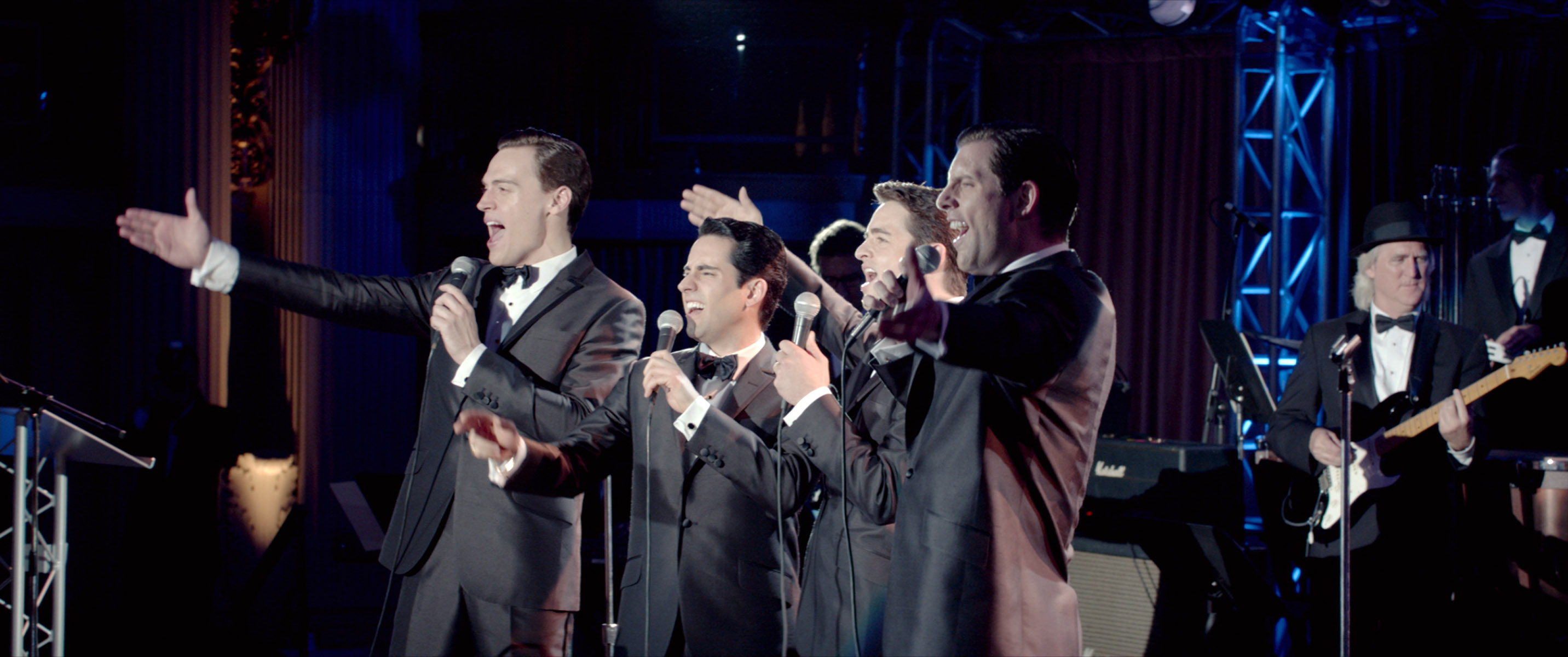
Jersey Boys The musical that turned the back story of Frankie Valli and the Four Seasons — the 1960s hit making machines behind upbeat doo-wop ditties like “Sherry,” “Big Girls Don’t Cry,” “Walk Like a Man,” and a zillion more; you will recognize all of them — into Broadway gold ascends to the big screen thanks to director Clint Eastwood, a seemingly odd choice until you consider Eastwood’s own well-documented love of music. Jersey Boys weaves a predictable tale of show biz dreams realized and then nearly dashed, with a gangster element that allows for some Goodfellas-lite action (a pre-fame Joe Pesci is a character here; he was actually from the same ‘hood, and was instrumental in the group’s formation). With songs recorded live on-set, à la 2012’s Les Misérables, there’s some spark to the musical numbers, but Eastwood’s direction is more solid than spontaneous, with zero surprises (even the big finale, clearly an attempt at a fizzy, feel-good farewell, seems familiar). Still, the cast — including Tony winner John Lloyd Young as Valli, and Christopher Walken as a sympathetic mobster — is likable, with Young in particular turning in a textured performance that speaks to his years of experience with the role. Interview with cast members Young, Michael Lomenda (who plays original Four Season Nick Massi), and Erich Bergen (as Bob Gaudio, the member who wrote most of the group’s hits), right here. (2:14) (Cheryl Eddy)

Ping Pong Summer Eighties teen flicks of the My Bodyguard (1980), smart-dweebs-beat-the-bullies ilk are paid homage in Michael Tully’s deadpan satire, which is closer in spirit to the Comedy of Lameness school whose patron saint is Napoleon Dynamite. Radley (Marcello Conte) is an average teen so excited to be spending the summer of 1985 in Ocean City, Md. with his family that he renames himself “Rad Miracle.” He acquires a new best friend in Teddy (Myles Massey), who as the whitest black kid imaginable might make even Rad look cool by comparison. However, they are both dismayed to discover the local center for video gaming and everything else they like is ruled by bigger, older, cuter, and snottier douchebag Lyle Ace (Joseph McCaughtry) and his sidekick. Only kicking Lyle’s ass at ping pong — with some help from a local weirdo (a miscast Susan Sarandon, apparently here because she’s an off screen ping pong enthusiast) — can save Rad’s wounded dignity, and the summer in general. A big step up from Tully’s odd but pointless prior Septien (2011), this has all the right stuff (including a soundtrack packed with the likes of the Fat Boys, Mary Jane Girls, New Edition, Whodini, and Night Ranger) to hilariously parody the era’s inanities. But it’s just mildly amusing — a droll attitude with lots of period detail but not much bite. (1:32) Roxie. (Dennis Harvey)

The Rover Future days have never seemed quite so bleak as they are depicted in the wild, wild Aussie west of The Rover — rendered by Animal Kingdom (2010) director David Michod, who co-wrote The Rover with Joel Edgerton. Let’s just say we’re probably not going to see any primo Burner ensembles inspired by this post-apocalyptic yarn: Michod ventures to a plausible future only a decade out, after a global economic collapse, and breaks down the brooding road trip to its hard-boiled bones, setting it in a beauteous, lawless, and unceasingly violent outback. A heist gone wrong leads a small gang of robbers to steal the car belonging to monosyllabic, ruthless mystery man Eric (Guy Pearce). The latter wants his boxy little sedan back, badly, and, in the cat and mouse game that ensues, seems willing to die for the trouble. Meanwhile, one of the gang of thieves — the slow, dreamy Rey (Robert Pattinson), who has been left to die of a gunshot wound in the dirt — turns out to be more of a survivor than anyone imagined when he tracks down the tracker hunting for his brother and cohorts. Michod seems most interested in examining and turning over the ties that bind, in a mean time, an eminently absurdist moment, when everything else has fallen away in the face of sheer survival. Cineastes, however, will appreciate the elemental, existential pleasures of this dog-eat-dog Down Under out-Western, not the least of which include the performances. Pearce’s rework of the Man With No Name exudes intention in the very forward thrust of his stance, and Pattinson breaks his cool — and the confines of typecasting — as a blubbering, babbling, thin-skinned man-child. Clad in the mystic expanses of the South Australia desert, which tip a hat to John Ford Westerns as well as scorched-earth-of-the-mind movies such as El Topo (1970) and Paris, Texas (1984), The Rover is taken to the level of tone poem by the shuddering, moaning cellos of Antony Partos’s impressive, atonal electroacoustic score. (1:42) (Kimberly Chun)

Think Like a Man Too Kevin Hart and company head to Vegas in this sequel to the 2012 hit comedy based on Steve Harvey’s best-selling relationship tome. (2:02)

Boom asks “What’s the matter with San Francisco?” and offers insightful answers

68

“What’s the matter with San Francisco?” asks the Summer 2014 issue of the Boom: A Journal of California, a quarterly magazine produced by the University of California Press, tapping an amazing array of writers to explore the struggle for the soul of San Francisco that has captured such widespread media attention in the last year.

The question on its cover, which all of the articles in this beautifully produced 114-page magazine explore from varying perspectives, is a nod to Thomas Frank’s insightful 2004 book, What’s the matter with Kansas? And the answer in both cases, argue writers Eve Bachrach and Jon Christensen in their cover story article, is the people.

“Specifically, the people who act time and again against their own interests, people who adhere to a narrow political line, whether it’s antipopulist in the nineteenth century or antiprogressive in the twentieth. By focusing on one set of values, this analysis asserts, the people don’t notice what they’re really losing until it’s too late — and San Francisco is no different,” they write.

At this important moment in time, San Francisco is fighting to retain the last significant remnants of the cultural and economic diversity that have made this such a world-class city, with today’s hyper-gentrification building off of previous waves of displacement to change the city in fundamental ways.

Sure, this struggle between capital and community has been part of San Francisco since its founding, a dynamic that animates our civic life and feeds important political movements that trickle out across the country. And local writer/historian Chris Carlsson has a great article documenting those movements, from the Freeway Revolt of the 1960s to the pro-tenant and anti-displacement activism around the last dot.com boom.

“Read one way, this short history demonstrates the relentless power of money in defining who is a San Franciscan and who can stay and who must go. But read another way, this history shows that there is historic precedent for optimism that the worst consequences of today’s creative destruction of the city can be averted if we know and use our history,” Carlsson wrote.  

But in a Q&A interview with author Rebecca Solnit, both celebrates that dynamic and explains why things are different this time: “You can image San Francisco as full of dynamic struggle that’s been pretty evenly matched between the opposing sides since the Gold Rush. There have always been idealists and populists and people who believe in mutual aid in the City of San Francisco. And there have also been ruthless businessmen and greedy people: the ‘come in and get everything and be accountable to nobody and hoard your pile of glittering stuff’ mentality has been here since the city was founded. But it has not been so powerful that it has rubbed out the other side.

“Now, however, it feel like Silicon Valley is turning San Francisco into its bedroom community. There’s so much money and so much power and so little ability to resist that it is pushing out huge numbers of people directly, but it is also re-creating San Francisco as a place that is so damn expensive that nobody but people who make huge amounts of money will be able to live here.”

After building off of previous gains, the capitalists of today, those who refuse to even acknowledge the political landscape and dynamics that have been developed over generations, seem to be moving in for the kill, armed with more powerful weapons of accumulation and displacement than their predecessors had or were willing to deploy.

“So what’s the matter with San Francisco? It’s becoming a bedroom community for Silicon Valley, while Silicon Valley becomes a global power center for information control run by a bunch of crazy libertarian megalomaniacs. And a lot of what’s made San Francisco really generative for the environmental movement and a lot of other movements gets squeezed out. And it feels like the place is being killed in some way,” Solnit said.

Yet the issue pointedly avoids falling into us-vs.-them traps or trite demonization of techies, ultimately seeking to provide a more nuanced look at the city’s current cultural and economic clashes than the various East Coast publications have brought to the task. And the best of it is “The Death of the City? Reports of San Francisco’s demise have been greatly exaggerated.”

Written by Rachel Brahinsky, a former Bay Guardian staff writer who is now a professor at the University of San Francisco, the article echoes other concerns about the threats and challenges facing San Francisco, but she finds a potential “seed of the solution” in the city’s current zeitgeist.

For one thing, she challenges the convenient blaming of “techies” for the problems facing San Francisco, noting that some of the city’s best progressive organizing has been done by those with skills and/or jobs in the technology sector, often by people who despise the corporate managers and investors who run the industry as much as outsiders do.

“The problem isn’t tech, but corporate tech,” she writes.

Brahinsky also urges readers to broaden their lenses to consider San Francisco as part of the broader Bay Area, which now much confront the growing challenges of rising economic inequality and gentrification as a region, using the clashes here as a catalyst to finally pursue what she calls “ethical urbanism.”

“What is to be done? There is no lone policy shift that will salve these corporate tech wounds. There are many good solutions under debate now; with continued pressure they may become law in the same way that rent control moved from impossible to mainstream in 1978,” she writes.

The prescription she then offers includes fostering greater community engagement, developing regional policies that promote “community development without displacement,” not blaming techies for the sins of landlords, finding ways to increase the density of development without displacing or sapping vital public services, using open source tech tools to increase awareness and broaden the progressive movement, and “you need to fight like hell for the kind of city you want.”

Finally, in closing, she writes, “The San Francisco region’s most potent dreams are made of the kinds of struggles that refuse the sweeping change brought by the economistic forces of urbanism. What we witnessed in the winter of 2014 was a reawakening of this side of ‘San Francisco,’ a part of the city as mythic and real as the Gold Rush. The ongoing cacophony of protests, corporate tech-activist happy hours, housing lectures and forums, and the ballast of anti-eviction committees brought together by two months of tenants conventions are all signs of this legacy regathering steam. What happens next?” 

Enter if you dare! Spirited local actors highlight Jefferson Street’s ghoulish new attraction

3

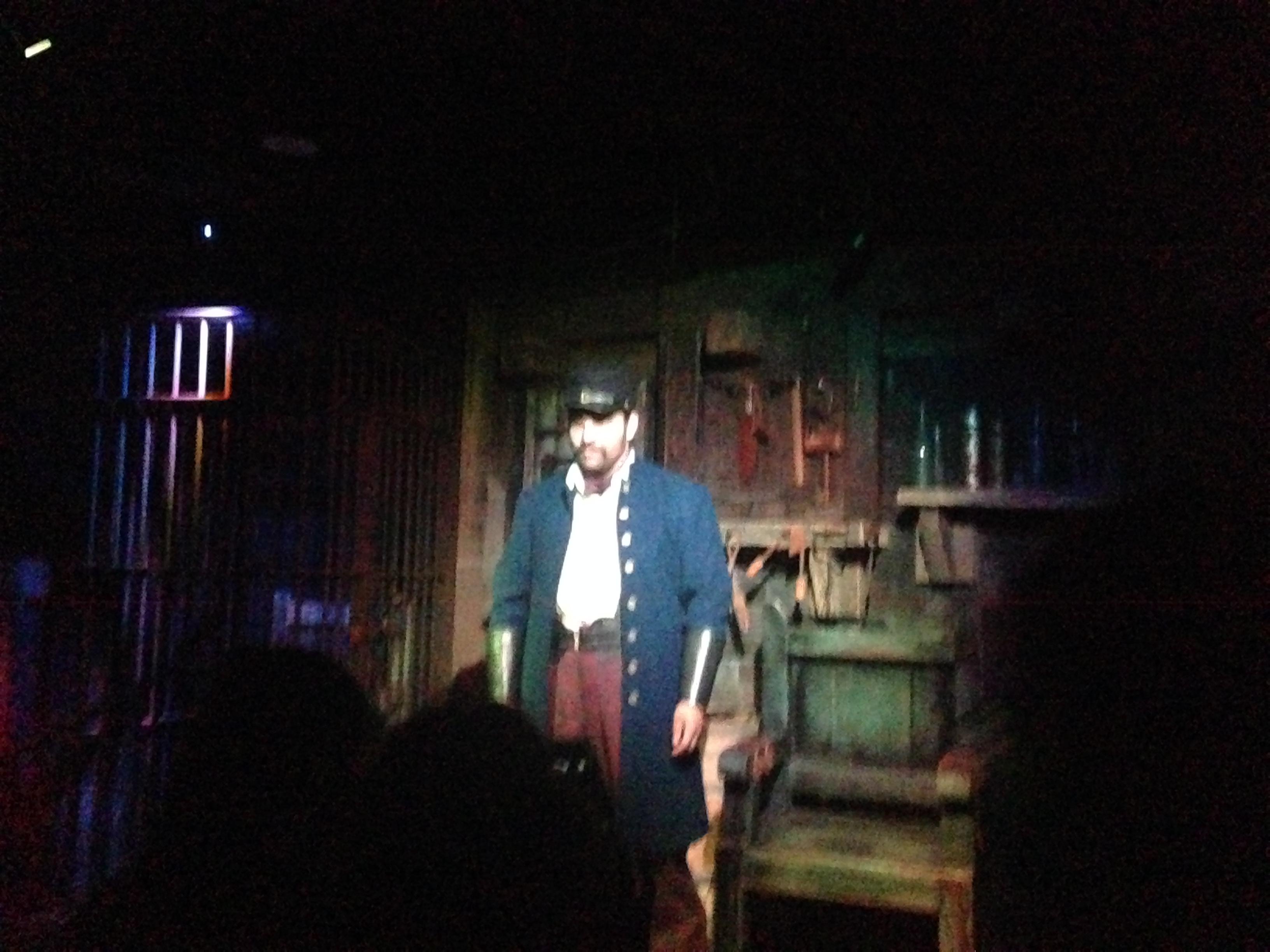
A new attraction is coming to Fisherman’s Wharf June 26, and it’s pretty surreal. The San Francisco Dungeon, the eighth in a series by Merlin Entertainments and the first stateside (most of the other dungeons focus on medieval history and are scattered throughout Western Europe), is a subterranean labyrinth where actors lead patrons on a hodgepodge tour of creepy SF-inspired historical haunts. 

There’s obviously a lot to be skeptical of here. For one, Merlin, which is centered in the UK, is a gargantuan enterprise second only to Disney in the themed tourist trap world — other assets include Madame Tussauds, Legoland, and a bevy of contrived wildlife safaris. San Franciscans already talk a ton of smack about the half-assed efforts by huge corporate attractions on Jefferson St. to appear “local” — the one or two scattered Californian sports figures or cultural icons in Tussauds, for example, don’t conceal the sterility of the whole operation. 

My visit to the Dungeon didn’t run entirely contrary to these concerns.

The stories that the actors tell occasionally slip into generalities that have little to do with the city, some of the rooms are similarly vague, and the exclusion of the 1906 Earthquake (despite the Dungeon’s focus on 1857-1907), while explained away by artistic director Kieron Smith as too large-scale of an event to cover, feels wrong. There’s also a random water ride that, while impressive from an engineering perspective in that a boat and mini-canal was placed in a very contained space, distracts from any legitimate exchange of history or theatrics. We didn’t get to ride it though, so I’m really in no place to judge. 

Despite its adherence to certain stereotypes, the Dungeon transcends a lot of the more toxic elements that drag down other Jeffersonian locales. Smith, an extremely charming Brit who wrote the entire script for the 50-odd minute tour and has done so at all other Dungeon locations, seems genuinely passionate about the city’s more macabre lore and clearly did his research. Most of the actors’ ghoulish tales of drunken Barbary Coasters and mining ghosts are subtle and relatively specific. I can imagine the full show being nominally educational. 

The preview we received included a scary 1850s Alcatraz ghost tale that packed a legitimate punch. The barred Alcatraz Room, one of nine themed areas, provided a chilling backdrop for a crazed young woman’s recounting of her military prisoner father’s murder and subsequent haunting of the Rock. When the lights flickered and the dead father appeared, complete with gory makeup, the entire room shrieked deliriously. 

Another room, a facsimile of the headquarters of the San Francisco Hounds, a sinister crime organization that flourished in the city after the Gold Rush, was less compelling. An actor playing real-life Hounds leader Sam Roberts mimicked torture tools (including a gag penis-cutter that elicited a few half-hearted laughs) and nervously beckoned the group out of the room when the sounds of a police raid interrupted his demonstration. 

Despite the inconsistency in humor and scares, the actors themselves were all enthusiastic and believable. Since beginning rehearsal a month ago, they have learned to play every part in the tour and will alternate roles when the Dungeon opens. Many of the performers have real chops, and while they likely don’t see two-minute frenetic monologues to scared tourists as their career zeniths, the Dungeon, unlike many of the other less interactive wharf traps, is employing burgeoning artists. 

In addition to hiring local actors, the Dungeon has also worked with several area businesses. Wee Scotty, the prolific costumers headed by Lynne Gallagher, provide all of the period clothes, which look authentic and have an effectively drab and dusty aesthetic. Daniel’s Wood Land scavenged wood from the ruins of a Japanese internment camp in Arizona to panel the walls of many of the rooms — the fact that the rooms looked like they feasibly could have been from over 100 years ago as opposed to cheap plastic imitations makes the experience feel slightly more real. 

The Dungeon isn’t revolutionary — it still belongs in the gimmicky world of Fisherman’s Wharf. The artistic enthusiasm and local involvement, however, lends the entertainment a realness and grittiness that elevates it above most other overpriced diversions. 


Opens June 26, $19-$26

San Francisco Dungeon 

145 Jefferson, SF

http://sanfrancisco.thedungeons.com

Doo-wop (that thing): talking with the cast of ‘Jersey Boys’

0

The backstage musical that turned the story of Frankie Valli and the Four Seasons — known for 1960s doo-wop ditties like “Sherry,” “Big Girls Don’t Cry,” “Walk Like a Man,” and a zillion more; you will recognize all of them — into Broadway gold ascends to the big screen Fri/20 thanks to director Clint Eastwood, a seemingly odd choice until you consider Eastwood’s own well-documented love of music. 

Jersey Boys weaves a predictable tale of show biz dreams realized and then nearly dashed, with a gangster element that allows for some Goodfellas-lite action (a pre-fame Joe Pesci is a character here; he was actually from the same ‘hood, and was instrumental in the group’s formation). With songs recorded live on-set, à la 2012’s Les Misérables, there’s some spark to the musical numbers, but Eastwood’s direction is more solid than spontaneous, with zero surprises (even the big finale, clearly an attempt at a fizzy, feel-good farewell, seems familiar). 

Still, the cast — including 2006 Tony winner John Lloyd Young as Valli, and Christopher Walken as a sympathetic mobster — is likable, with Young in particular turning in a textured performance that speaks to his years of experience with the role. I spoke with Young, Michael Lomenda (who plays original Four Season Nick Massi), and Erich Bergen (as Bob Gaudio, the member who wrote most of the group’s hits) when the trio made a recent visit to San Francisco to promote the movie.

https://www.youtube.com/watch?v=6tC1yOUvvMo

SF Bay Guardian This must be a crazy time for you guys.

John Lloyd Young It’s a very exciting time for all three of us, and including our fourth colleague Vincent Piazza [who plays Four Season co-founder Tommy DeVito]. This is our first major studio feature film, and we got to be directed by Clint Eastwood. 

SFBG Did he ever break into song on the set?

Michael Lomenda [Laughs.] It was very interesting, actually, to see him between takes trying to capture that Frankie Valli falsetto. I think it was an ongoing challenge for him the whole 38 days that we shot, to try and figure out how to manipulate his voice in that way.

JLY It was a tongue-in-cheek challenge, because it was all playful. He knew he wasn’t gonna sing like Frankie!

SFBG Few can! Though, you’ve been able to do it for several years. How do you keep your voice in shape to hit those notes?

JLY Well, you either have a falsetto or you don’t. If you have it, you just keep it in shape the same way any singer does. Obviously, singers, there’s certain things we can’t do. We can’t go out and yell all night in a bar. We shouldn’t smoke, we shouldn’t drink. The voice is very delicate. Those are very delicate muscles. Anything you do that’s not good for your body in general won’t be good for your voice. But, basically, just living a clean life. And Frankie Valli himself will tell you the same thing.

SFBG It’s interesting that you bring up clean living. I hadn’t seen the stage show, and I didn’t know much about the group before I saw the movie. But in every show-biz biopic, there’s always some kind of vice (usually drugs or booze, as in Walk the Line) that threatens to ruin the performer’s success. Here, it’s the mobster subplot — mobsters are not the typical vice.

Erich Bergen I think that’s one of the things that’s very interesting is that Frankie didn’t get into [drugs or alcohol]. That’s sort of the reason why he’s still around and he’s still on the road, because he’s been able to preserve not only his gift, but his life. Of course, he went through some harsh things in life. He went through a couple of marriages and divorces, and obviously he lost a daughter. Actually, and we don’t go into this in the movie, but he’s lost two daughters. He’s lived a very hard life. He didn’t need drugs or alcohol; that hard life came to him naturally. 

I think that’s what makes this story so interesting: we’re watching someone whose life is hitting him in the face. And we sort of identify with that. I don’t know about you, but for me personally, when I watch a lot of biopics and they start to get into the drugs and all that type of stuff — that’s where I sort of lose them a little bit, because that’s just sort of the generic story at this point. What makes Jersey Boys work is that we really connect with these guys because we identify with them. It’s written in a way that even when they’re not at their highest point, when they’re doing things that aren’t so great — especially the character of Tommy DeVito — we still root for them, and we still want them to succeed. 

SFBG The movie really shows how hard they had to work to be successful. It’s a stark contrast to the music business of today, where someone can become famous overnight thanks to a YouTube video.

EB That’s exactly what we talk about when we’re asked the question, “What makes this story so interesting?” If you look at the groups of today, whether it’s a One Direction or a Justin Bieber, before we actually know their songs, we know what they had for breakfast. But [the Four Seasons] really came at a time when you were trying to hide your real story and project out a shiny, clean image, because that’s what everyone wanted. That’s why Jersey Boys can exist today, because the story was never known. 

JLY I have a thought about that, too, which is that nowadays — without naming anyone by name — a lot of successful music acts are created as an idea in a marketing boardroom first, and then they find someone to fit that image. You know what I’m saying? It seems like the marketers are the stars nowadays. The more you can get an audience to feel there’s something really exciting there, and then get them there, then you’ve won. But when they get there and they don’t have a great experience, well, you already got their money, so who cares?

But I think at the time of Jersey Boys, to succeed you had to work really hard. There were only three networks, and there were very few print outlets. If you actually got on the cover of a magazine, or you got on a network, you made it. But you had to have something to show for it. You had to have talent, and especially that generation of Baby Boomers — the biggest generation we’ve ever had in American history. That’s a lot of people competing for which of the talented ones among them would become known. And the Four Seasons had the talent, but they also had that special, very distinctly East Coast, riveting-to-an-audience kind of thing, with that Mob connection that makes their story unique among that era of bands.

SFBG The movie makes it clear that they had to succeed, because they didn’t have anything to go back to.

ML It’s true. These guys are from the wrong side of the tracks. You have some choices. You can go in the army, you can get mobbed up, or you can become famous, as they say in the film. We also sort of say that they did two out of the three. But I think their music spoke for itself. They broke when their music had to speak for them, and that’s what made them successful.

EB The proof of that is that everyone knows these songs, but not the band. There are so many songs we don’t even get to in this movie, because we’d run out of time! That tells you how much talent they really had as performers, writers, producers — all of those things. Their catalog is endless, and yet nobody knew they were all by the same group.

JL I just saw Clint Eastwood on the Today show, and when they introduced him, they said the Four Seasons had 71 chart-topping hits. 71! I think that’s incredible for that band, coming out of that decade.

SFBG They were also commercially savvy. The songs were so catchy. No wonder people liked them.

ML I think that’s they key to why their music has stood the test of time. Maybe it’s commercially viable, and it is good pop music. But if you did a little deeper into some of the lyrics — for example, “Dawn” is one of my favorite songs, and they’re singing, “Dawn, go away, I’m no good for you, think about what the future would be with a poor guy like me…” It’s that kind of lyric that brings depth so what initially could be perceived as just pop, bubblegum music. It spoke to an audience that I think was sort of the fabric of America.

JLY Their early attempts at marketing are sort of outlined in the movie. You got [producer] Bob Crewe giving them advice on how to get their songs out there. You have Bob Gaudio figuring out how to get his songs out there. I know, and am friends with, the real Bob Gaudio, and it’s funny, he’s a hugely successful songwriter, but he almost seems more proud of his business successes than he does of his songwriting. He gets pumped by being smart in business as he gets pumped by writing a good song.

SFBG As actors, does it present a particular challenge to play a real person, a famous person, particularly if that person is still living? Or were you able to put your own stamp on the characters?

EB I think John had the most pressure out of all of us, because he’s playing someone that’s so well-known, and John can tell you about that experience. But for the rest of us, we really did invent these characters. Even though they were real people, and while we wanted to pay respect to these people, and their families, we did have the luxury of not having to play John Lennon and Paul McCartney. They’re not well-known to the public. So we did get to use our skills as actors and create characters from the ground up.

JLY One of the benefits as an actor approaching the role of Frankie, even in the beginning in the original cast, is that he is known. People know what he looks like and they know what he sounds like. He did some talk show stuff, so they kind of know how he moves. So I knew that I needed to get his physical attributes down. I needed to evoke his sound, look like him, talk like him. But outside of those physical things, the internal life of Frankie Valli, we don’t really know. We didn’t know. 

When I was researching the original Broadway show, all I could find were maybe 12 minutes of footage of him at the Museum of Television and Radio. That was, like, the year before YouTube broke, so now there’s footage of him everywhere, but I didn’t have the benefit of that. But now I have seen a lot of YouTube and everything. So I thought, as long as I get those physical characteristics down, the story of the Four Seasons, the story of Frankie Valli, is still largely unknown to audiences. So I had free reign to kind of build the psychological reality of the character using my own imagination, and the cues that I had from the script. And knowing Bob Gaudio, Frankie Valli’s real-life best friend, and the things he told me about Frankie, and knowing, of course, the man himself. 

But I didn’t feel pressure so much. The pressure I felt was to honor the people who put this movie together, which was Frankie and Bob, and to portray the character in a way that was compelling and riveting to an audience so that we’d have as successful a show as we could have. And now, I think that I feel very proud of what we’ve accomplished with this movie, and I think it’s an enhancement, actually, of what has been out there all these years, with the successful stage musical across the world. 

SFBG How true is the movie to the stage production?

ML It’s actually very similar. We were lucky to work with [screenwriters and musical authors] Marshall [Brickman] and Rick [Elice] on the film, which I think we were all very grateful for, because it meant that we didn’t have to learn too many new lines. [Laughs.] But it was great. I think when I first found out that the movie was being done, I was really concerned that the final product would be true to the stage, because the script is so fantastic. But beauty of film is that you get to flesh out certain relationships, and certain storylines. I think fans of Jersey Boys are going to love a lot of the scenes that they loved from the stage version, but they’re also going to go crazy over the other stuff, the extra stuff that is put into the film.

The stage production is directed in a very slick fashion, but logistics dictate that you have to move from scene to scene very quickly to keep up the energy going in the two-and-a-half hour show. But what Mr. Eastwood does so beautifully with this movie, and with all of his movies, is create a real environment that’s rich and tangible, that you can really sense in the theater. I think Jersey Boys fans are going to love that as well.

JYL If people love the stage show of Jersey Boys, the movie is going to give then a much deeper, more thorough, and much more detailed experience.

SFBG I did not realize, until I was reading up on the movie, that there were Jersey Boys superfans who have seen the show hundreds of times.

EB Michael and I opened the national tour of Jersey Boys in San Francisco, and six years later Michael closed that tour in the same theater. This was my first discovery with anything remotely like that. I remember seeing these fans come in over and over again. At first I thought, “What are they doing?” and “Where are they getting the money that they’re buying such great seats three times a week?” I remember I got a letter one time, we all got these letters, from a fan who said, “I know you probably think it’s crazy that I’m here all the time, but this is the first time I’ve felt happy in 10 years.”

When we get things like that, we don’t really know what to make of that. But we are so thrilled that it’s had an impact. I don’t know if it can be explained. People often ask us, “What is it about Jersey Boys that keeps people coming back?” I don’t know if I know. I don’t know if anyone knows. I know that when people come to see the show, they’re affected by it for whatever reason. It moves them, it changes them. They are really passionate about it, and we’re just sort of lucky that we got to be a part of that somehow. I don’t really know what else to say about it!

JYL I have something else to say about it, and that is: if a person has seen the stage play of Jersey Boys 100 times, let them know, please, on our behalf, that for the price of one Broadway ticket, they can see this movie 10 times! [All three laugh.] So we hope that they decide to make their investment in 10 tickets for the movie. 

SFBG What’s up next for you guys? More musicals?

ML I think we’ve all been bitten by the movie bug. To start on a Clint Eastwood set, we’ve been a bit blessed and totally spoiled. So, I think certainly, we would all like to dive further into this genre and explore it.

EB I agree. My album comes out next week, some new music that I just recorded down in Nashville, and I’m in a new series on CBS this fall called Madame Secretary. I will also be hosting lots of Jersey Boys viewing parties once the DVD comes out. [Laughs.]

JLY I have a new album that I just released, My Turn — it’s R&B hits from the 60s in my voice, not Frankie’s, and it’s on iTunes and Amazon. I’m also a recent appointee by Barack Obama to the President’s Committee on the Arts and Humanities. So I’ll be working with kids in the lowest-performing schools, re-inserting arts into their curriculum to increase their school performance and their school culture. The actor Kal Penn and I will be sharing a school district in Des Moines, Iowa. I’m really looking forward to it.

JERSEY BOYS opens Fri/20 in Bay Area theaters.

Who moved my cheese?

2

culture@sfbg.com

THE WEEKNIGHTER Weekends are for amateurs. Weeknights are for pros. That’s why each week Broke-Ass Stuart (www.brokeassstuart.com) will be exploring a different San Francisco bar, bringing you stories about the places and people who make San Francisco one of the most phenomenal cities in the world. Who wants a drink?

I think it was SF writer Brock Keeling who told me The Lion Pub (2062 Divisdero St, SF. 415-567-6565) used to be a gay bar. Well, I mean he didn’t tell me, I read it on his old site SFist, but you get the point. There was some reference to “remembering when the Lion Pub was a gay bar” and I thought, actually I don’t remember that at all. To me the Lion Pub had always been that place that had the cheese spread and that acted as the Normandy in the Marina’s D-Day-like onslaught of Divisidero. It was the first place over the hill where the waves of guys in collared shirts and gals in uncomfortable shoes had landed before slowly, intrepidly, marching south.

It’s hard to be nostalgic for a something you never experienced, but you can sure as hell romanticize it… not that I’m really doing either. As a straight guy I don’t imagine myself trekking all the way over to Lower Pac Heights to frequent a gay bar, especially when I live close to so many on Folsom Street. But Pete Kane’s recent article in SF Weekly about the death of gay culture in SF got me thinking about the peculiarities of The Lion Pub’s transformation. When the bar switched teams in the early 2000s it must’ve been jarring for the regular patrons. What had been a gay bar since 1971 (according to the Gay Bar History Log on The Cinch’s website) was suddenly being filled with the kind of people who still called their friends “fags” when they were busting their balls.

This was the early 2000s after all, way before Ellen or Michael Sam, and not long after Matthew Shepard. Now I’m not saying for sure that shitty things happened, because I want to believe this is/was the San Francisco we all think it is/was. But what I am saying is that the switch from a gay bar to a Marina bar must’ve been mind-boggling.

But I wouldn’t know. I wasn’t there. [Ed Note: It was weird, but OK. —Ye Olde Marke B.] The first time I visited The Lion Bar was probably in 2006 and I was incredibly impressed. It felt somewhere between a fern bar (its hidden gay legacy peeking through) and a Victorian parlor, it had a disco ball, and most importantly it had free food. I was researching the “free food” section for my book Broke-Ass Stuart’s Guide to Living Cheaply in San Francisco, and someone had tipped me off to the Lion Pub. Rumor was they put out a big cheese spread and even did free sushi on some nights.

So of course I had to go investigate. Walking in that first night I could smell the fresh fruit juice and could spy attractive people milling around. It was bigger than I expected and it wasn’t till I walked around a bit that I found what I was looking for: cheese and crackers! When I asked the barkeep how often they did this, he just kinda shrugged his shoulders and said, “Pretty much whenever they feel like it,” and let it at that.

I haven’t been back to the Lion’s Pub in years but rumor has it that the luminous cheese spread is no more, which bums me out. But maybe next time I’m in the area I’ll pop in anyways for one of its notorious greyhounds — and I’ll try to imagine what it was like back before everything got so straight. I’ll bring my own cheese spread just for old times’ sake.

Stuart Schuffman aka Broke-Ass Stuart is a travel writer, poet, and TV host. You can find his online shenanigans at www.brokeassstuart.com


A heart in San Francisco

5

arts@sfbg.com

THEATER This week, at New Conservatory Theatre Center, San Francisco’s Evan Johnson remounts his popular 2013 solo play, Pansy. It’s the story of a disaffected twentysomething gay man who discovers a cache of videocassettes in the basement of his SF apartment building — made by someone who could be considered his doppelganger, a club kid long since felled by AIDS. The play functions in part as a communion between a younger generation of queer San Franciscans and the early era of the AIDS crisis.

Of course, there are those who, in their lives as well as work, continue to bridge the two eras, maintaining a vital link to this fraught but fecund period in SF’s queer/queered history. One of them is the inimitable Justin Vivian Bond. Mx. Bond has long since been based in New York, and yet v (to apply the preferred prefix and pronoun to someone who has gracefully sidestepped the dominant gender binary) grew into an artist here, and has returned to SF many times over the years, including for packed performances produced by Marc Huestis at the Castro Theatre.

Although maybe still most often identified with the cabaret sensation Kiki and Herb — a Tony-nominated, long-running duet with Kenny Mellman, in which Bond excelled as the perennially sloshed Kiki Durane — Bond’s career has hardly slowed since K&H were put to rest more than five years ago. In fact, the output for this internationally acclaimed artist, actor, performer, and singer-songwriter has been impressive: In addition to innumerable musical performances, there are two fine albums, a spunky and poignant memoir about growing up as a trans kid in suburban 1970s Maryland, and a recent turn as the Widow Begbick (singing original songs by Duncan Sheik) in a New York production of Bertolt Brecht’s A Man’s a Man.

A powerfully soulful and charismatic performer, Bond brings Love Is Crazy!, an evening of songs about love in all its aspects, to Feinstein’s at the Nikko this weekend.

SF Bay Guardian In the late 1980s and early ’90s, AIDS made SF a dark place, but it was also a time of exceptional artistic, intellectual, and political ferment. How did that affect the development of your career?

Justin Vivian Bond I majored in theater in college, but I couldn’t really see a place for myself in mainstream theater. At my freshman evaluation they told me I had to butch up; I had to be able to pass as a straight man in order to make a living in the theater. Fortunately, I’ve been able to prove them wrong! But that was sort of a frustrating and unappealing way to live my life.

So I moved to San Francisco. I was going to probably go back to college and get a degree in art history and teach. But instead, I found Theatre Rhinoceros and queer performance and Queer Nation. It was a time when there was a tremendous amount of activism around HIV and AIDS. I worked at A Different Light bookstore, so I was exposed to the greatest queer minds of the day, brilliant writers and artists that would come in there. It was also, looking back now, the golden age of queer publishing. It was when Mike Warner published Fear of a Queer Planet. It was an intellectual and creative surge for queer people. Rick Jacobsen was still alive, and he did the Kiki Gallery [1993–1995]. I worked with him on a show that was written by Christian Huygen called Waiting for Godet, which appropriated Waiting for Godot and made it about two drag queens. It was so much fun, and really exciting. And I was in Hidden: A Gender with Kate Bornstein at Theater Rhinoceros. We toured that around the country — that was my New York stage debut.

I was at the Alice B. Theatre in Seattle when the NEA Four were defunded. Three of the four were at that festival. That was when I decided that I was going to devote my life to queer performance and to having the voices of queer people heard in as many places as possible. That propelled me to stay in the role of Kiki longer than I might have liked to, because it eventually brought me to Carnegie Hall and a Tony nomination on Broadway. [After that] I thought, OK, now I can really start honoring my own creativity, aside from making political statements. Fortunately for me, once I gave up that character and started performing as myself, I feel like things have been going pretty well. And it all started for me in San Francisco, which is why I love it so much.

SFBG Was there always a political dimension to your work?

JVB Having my art spring from a political place — exposed to the queer politics, really the life-or-death politics, that were happening back then — really justified my impulse to be an artist. I’m not saying that everything I’ve ever done has been politically astute or important, but there is a political perspective behind everything I do. That helps me justify asking a bunch of people to pay attention to me. If I didn’t feel like I was actually saying something, I’d probably be embarrassed to be on the stage, really.

SFBG What are the origins of Love Is Crazy!? You took it first to Paris. Was it a show you made specifically for that city?

JVB It kind of evolved. When I was last in San Francisco, actually, I was getting ready to host a benefit for the Lambda Legal Defense [and Education] Fund. Sometimes I’ll just pick a word and put it on my iPod, then let all the songs with that word in them play. That particular day, I had recently become single, so I hit “love,” and this list of songs played. I thought, “I should just write down this list and that could be my next show.” And that’s what I did for a show here in New York called “Mx. Bond’s Summer Camp.” I liked that show but over time I sort of finessed it. Now, not all the songs have the word love in them. Some are songs from both of my records. I was going to Paris, and I decided I wanted to do this Valentine’s Day show in front of the Eiffel Tower. I had a really wonderful time with it, so I decided to tour that show this year. So that’s what it is, craaazy love. And it’s got some good anecdotes in it.

SFBG I’m curious about the origins of your distinctive singing voice.

JVB For Kiki, I sang with a character voice. I started performing Kiki when I was like 28 or 29. I was just coming into my own voice at that time, and I kind of sang in that voice for 15 years. In San Francisco, during the last run of Kiki and Herb, I met this person who I fell in love with, and went on the road with, from San Francisco up to Canada. I kind of got back in touch with my queer roots, and I started writing my own songs, because I needed to find my own voice. It really helped me to get myself into the mindset of what I wanted to say, as opposed to what I wanted to say as this character.

I wrote several songs that were on my record Dendrophile. And I started singing songs that really resonated with me, including “The Golden Age of Hustlers,” which is a song by Bambi Lake and Jonathan Basil, who lives in the Bay Area. It’s about San Francisco and Polk Street. It’s an elemental song for me. And that’s how I started to rediscover my own voice. I had also just been in London; I went to Central Saint Martins College for my MA in scenography, which is like performance installation. One of my teachers was talking about Nina Simone, and how when you hear her sing you hear the life that she’s lived. I set out to try and make my voice reflective of my experience, so that when people hear my singing voice, they’ll sort of know what my life has been like and the world that I inhabit through it. That was my goal. And it really is a very satisfying thing, I have to say.

SFBG To be concentrating on your voice?

JVB And my life, and what my voice can say. 

JUSTIN VIVIAN BOND

Sat/21-Sun/22, $35-$50

Feinstein’s at the Nikko

222 Mason, SF

www.feinsteinssf.com


Psychic Dream Astrology: June 18 – 24, 2014

0

Mercury is still Retrograde, which means you should go easy on those who screw up your plans.

ARIES

March 21-April 19

It’s not only OK to be afraid, it’s kind of awesome. There’s nothing worth having that wouldn’t be scary to lose, Aries. Embrace the need for bravery this week, and understand that it’s coming up because you are taking chances that have high personal stakes, and that’s a very good thing.

TAURUS

April 20-May 20

Nurture what you love, but don’t make promises that you’re not 100% positive that you can keep, my friend. You may feel strongly in the moment but let things develop with time. Don’t overcommit now and set yourself up to have to do the painstaking work of dialing back in the coming months.

GEMINI

May 21-June 21

You’ve got to change, but with intention and not all willy-nilly. This is the time to make clear decisions and steadily act them out, even if it kills you. There are always many truths, but this week you need to fixate on the big picture and make sure your actions are supporting what’s true for you on that level.

CANCER

June 22-July 22

Just because you need to give it up doesn’t mean that it won’t hurt, Cancer. You know what you need to do but your emotions are distracting you and confusing matters. Pain is not always a sign that something is wrong, sometimes it’s just a side effect of caring. Let go of what you know you’ve outgrown, pal.

LEO

July 23-Aug. 22

You don’t need (or get) to know how things are going to turn out before you put yourself out there. This is a good time to be clear about your boundaries and needs so you can not only forge ahead, but be emotionally true to yourself and your collaborators as you do. You don’t need perfection this week, just authenticity.

VIRGO

Aug. 23-Sept. 22

The only way to get to where you want to be is to go through the long-standing mazes of your outdated and inhibiting patterns. Don’t be scared of history repeating itself, because it’s happening so that you can participate differently this time. Make new and improved choices in the face of old fears, Virgo.

LIBRA

Sept. 23-Oct. 22

It’s safe to fall in love, Libra. Well, it’s not exactly safe, it’s actually quite dangerous, but it’s a risk worth taking this week. Pour yourself wholeheartedly into a project or person that you care deeply for. If you’re going to risk failure, do it in the pursuit of something great.

SCORPIO

Oct. 23-Nov. 21

If you get too fixated on your goals you won’t achieve them in the right way, Scorpio. Be honest with yourself about what’s motivating you and make sure that it’s integrated with your larger plans. Getting there quickly is not as important as getting there ready for what comes next this week.

SAGITTARIUS

Nov. 22-Dec. 21

The people in your life deserve a little extra TLC this week. Invest more deeply with others whether that means you need to schmooze, call your mother, or tend to your friendships. You need people and they need you, so spread your Sagittarian love around and share your good vibes in a way that feeds everyone.

CAPRICORN

Dec. 22-Jan. 19

You’re going through such big stuff right now so don’t waste your energy by getting caught up in power struggles, even with yourself, Cap. You need to practice the fine art of forgiveness so that you can get out of your own way and let transformation flow through your life. Don’t pick fights you can’t win, my friend.

AQUARIUS

Jan. 20-Feb. 18

There’s no sense in pointing fingers or rehashing the details, Water Bearer, ’cause you’re ready to deal with your situation. Hop into the ring, get involved with the messy complexities of your life. Maintaining your go-to detached attitude will only carry on the disconnection you’re feeling this week.

PISCES

Feb. 19-March 20

Have a good time but don’t be a Pollyanna, Pisces. There’s some stuff that kind of sucks and is giving you a case of the sads that you’re trying to avoid or wait out. Don’t expect things to change without you changing first. Deal with your troubles before they get worse this week.

Want more in-depth, intuitive or astrological advice from Jessica? Schedule a one-on-one reading that can be done in person or by phone. Visit www.lovelanyadoo.com


Get up

0

marke@sfbg.com

SUPER EGO Fellow freakazoids, I’m disturbed. There’s an alarming new microtrend in nightlife: daylife. More specifically: morninglife. Halp!

First NYC’s Daybreaker party hit our shores a couple weeks ago, enticing hundreds of people to line up outside Audio at 8am for two hours of pre-work dancing ($15-$20) that apparently involved giant jellyfish costumes, a brass band (just to make sure you were awake?), and Four Barrel coffee — no alcohol here. I didn’t make it, because fuck that. But I was intrigued! Daybreaker’s AM disc jockey DJ Bradley P is a quality cutie, and the after-vids were rad. I’m waiting to hear if more are in the works.

Now comes Morning Gloryville from London (Wednesday, June 25, 6:30am-10:30am, $20. Heron Arts, 7 Heron, SF. www.morninggloryville.com), which places itself at the nexus of Burning Man, Ministry of Sound, and 24-Hour Fitness. Kind of a spiritual neon-flashmob throwdown, with wigs, massages, and smoothies. “Rave your way into the day!” It looks real cute. And exhausting.

I should have seen this coming the moment fluorescent Fitbits and post-ironic ’80s “Get Physical” dance routines started hitting the dance floors. Of course, SF has a long, glorious, deranged history of morning parties, from 6am Sunday Church at the End Up in the ’70s to recent blasts at North Beach’s Monroe and our own occasional Morning Glory party. I’ve loved dancing in the wee hours ever since I hung out in West Berlin in the ’80s and discovered high school kids hit the clubs before going to school.

But this new wave is just so darn wholesome — complete with slick marketing campaigns, relentless cheerfulness, and franchise ambitions. Despite my liver’s squeaky pleas, I’m not quite ready to come over to the “nightlife as workout routine” side, let alone sans cocktails. At least not yet. Yes, this fantastic ass came from tripping the light fantastic four-six nights a week. But these massive biceps? Grasping my vodkas, dear. Perhaps one day I’ll see the light.


BAIKAL

Sound Department continues to delve monthly into the more thought-provoking side of electronic music. This 11th installment features Berlin multi-layerist Baikal, who’s been building a body of impeccable (yet quite danceable) tech-work.

https://www.youtube.com/watch?v=roAxi8EQ6dk

Fri/20, 9pm-3am, $10. Monarch, 101 Sixth St., SF. www.monarchsf.com


GRIT & GLAMOUR

New show “Gorgeous” at the Asian Art Museum challenges and redefines the notion of beauty in “Eastern” art: Fantastic-sounding opening party makes it all come to life, with deep techno tunes from Dr. Sleep and Robot Hustle, bounce jams from DavO and Natalie Nuxx, vogue extravaganza from House of Nu Benetton, milky tea, fresh nail designs, full bar, and an afterparty at the Stud.

Fri/20, 7pm-11pm, $20–$25. Asian Art Museum, 200 Larkin, SF. www.asianart.org


LEE BANNON

Based-goth monthly funhole 120 Minutes presents this brilliant, trip-hoppy Ninja Tuner, drifting on gorgeous, post-glitch waves to the darker side.

Fri/20, 10pm, $8–$10. Elbo Room, 647 Valencia, SF. www.elbo.com


LOCO DICE

Maestro of that muscular quasi-minimal Ibiza sound — and not bad to look at, either — Mr. Dice blew me away last time he touched down, a couple years back. He’ll be on the 1015 system this time: All aboard the silver spaceship.

Fri/20, 9pm-4am, $20–$25. 1015 Folsom, SF. www.1015.com


LOUIE VEGA

Here’s a “flashback” night for ya: Master at Work and Latin house legend. He’ll be stretching back into his roots with some Afrobeat, samba, disco, and soul at Mighty. With old school heroes David Harness and Jayvi Velasco.

Fri/20, 10pm-4am, $20 advance. Mighty, 119 Utah, SF. www.mighty119.com


KAFANA BALKAN

“Join us for wild brass, abandon, and reverberating floors” — you can say that again, as this whirling, stomping Balkan delight returns to its Rickshaw Stop home. DJ Zeljko, Fanfare Zambaleta live band, Elizabeth Strong, and the Foxglove Sweethearts belly dancers bring gypsy joy to an adoring crowd.

Sat/21, 9pm, $15. Rickshaw Stop, 155 Fell, SF. www.rickshawstop.com


MAYA JANE COLES

The superfly UK whiz kid with a knack for connecting dance music history dots continues to thrill in the spotlight. She’s headlining a powerhouse night featuring NYC early-’90s fantasist Kim Ann Foxman, Alex Arnout, Young Marco, Bells & Whistles, and more at the As You Like It party.

https://www.youtube.com/watch?v=eV4ZiUSFvIQ

Sat/21, 9pm-5am, $20–$25 advance. Public Works, 161 Erie, SF. www.ayli-sf.com


WERD.

The classic Sunday weekly ran at now-closed Otis Lounge for more than seven years — now it’s at Monarch and sweeter than ever. This week’s ace tech-house guest Peter Blick helps break things in.

Sun/22, 9pm, $5. Monarch, 101 Sixth St., SF. www.monarchsf.com


If you even have time to make it to the movies between World Cup matches…

0

…read on for our takes on the new flicks of the week. Pssst: lots of good stuff still to come at DocFest, too!

Alone Yet Not Alone Remember that Christian historical drama that was Oscar-nominated for Best Song but then got kicked out of the running because of the songwriter’s sketchy campaign tactics? No? Well, here ’tis. (1:43)

https://www.youtube.com/watch?v=INW6i6K1NmQ&feature=kp

Gore Vidal: The United States of Amnesia Nicholas Wrathall’s highly entertaining documentary pays tribute to one of the 20th century’s most brilliant, original, and cranky thinkers, with extensive input from the man himself before his death in 2012 at age 86. The emphasis here is less on Vidal’s life as a literary lion and often glittering celebrity social life than on his parallel career as a harsh scold of US social injustices and political corruption. (Needless to say, recent history only sharpened his tongue in that department, with George W. Bush dismissed as “a goddam fool,” and earlier statements such as “This is a country of the rich, for the rich and by the rich” seeming more apt than ever.) He’s a wellspring of wisdoms both blunt and witty, sometimes surprising, as in his hindsight doubts about the virtues of JFK (a personal friend) as a president. We get plenty of colorful archival clips in which he’s seen verbally jousting with such famous foes as William F. Buckley and Norman Mailer, invariablyreducing them to stammering fury while remaining exasperatingly unruffled. His “out” homosexuality and outré views on sexuality in general (at odds with an increasingly assimilationist gay community) kept him controversial even among many liberals, while conservatives were further irked by his rock-solid family connections to the ruling elite. In our era of scripted political rhetoric and pandering anti-intellectualism, it’s a joy merely to spend an hour and half in the company of someone so brilliantly articulate on seemingly any topic — but particularly on the perpetually self-mythologizing, money-worshipping state of our Union. (1:29) (Dennis Harvey)

How to Train Your Dragon 2 Sequel to the 2010 animated hit about Vikings and their dragon buddies, with voices by Jay Baruchel, Cate Blanchett, Gerard Butler, Djimon Honsou, America Ferrera, Kit Harington, Jonah Hill, and others. (1:42) 

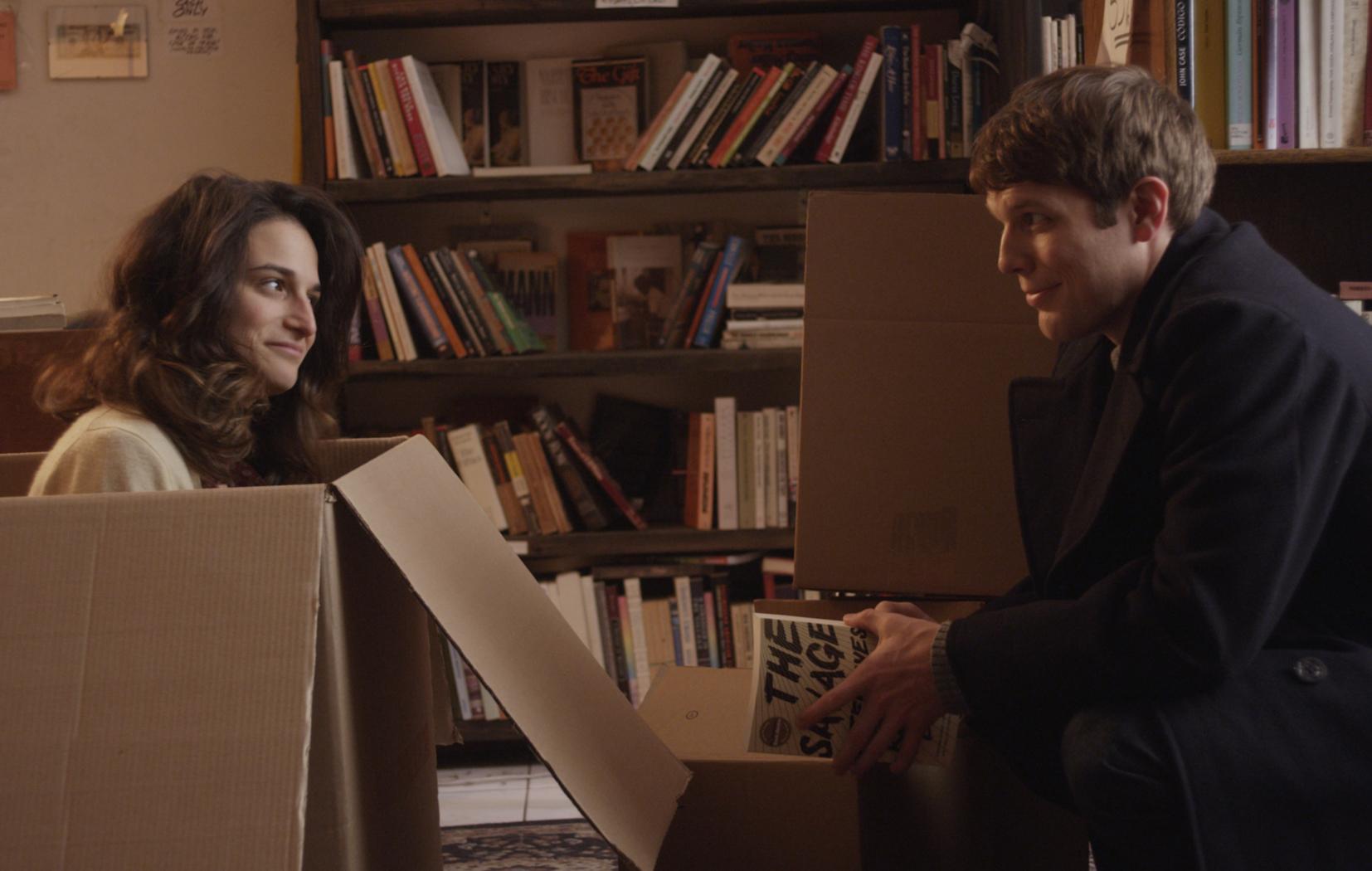
Obvious Child We first encounter the protagonist of writer-director Gillian Robespierre’s funny, original film — a Brooklyn-dwelling twentysomething named Donna (Jenny Slate), who works at a lefty secondhand bookstore and makes regular (if unpaid) appearances at a local comedy night — onstage mining such underdiscussed topics as the effects of vaginal discharge on your garden-variety pair of underwear. This proves a natural segue to other hefty nuggets of embarrassment gold concerning her love life, to the dismay of boyfriend Ryan (Paul Briganti), auditing from the back of the club. He pretty much deserves it, however, for what he’s about to do, which is break up with her in a nasty, well-populated unisex bathroom, taking time to repeatedly glance at the texts coming through on his phone from Donna’s good friend, with whom he’s sleeping. So when Donna, mid-drowning of sorrows, meets a nice-looking fellow named Max (Jake Lacy) at the bar, his post-fraternity-presidency aesthetic seems unlikely to deter her from a one-night stand. The ensuing trashed make-out dance-off in Max’s apartment to the Paul Simon song of the title is both comic and adorable. The fractured recap of the evening’s condom-free horizontal events that occurs inside Donna’s brain three weeks later, as she hunkers down with her best friend, Nellie (Gaby Hoffmann), in the bookstore’s bathroom after peeing on a stick, is equally hilarious — and unwanted-pregnancy jokes aren’t that easy to pull off. Robespierre’s treatment of this extended windup and of Donna’s decision to have an abortion is a witty, warmhearted retort to 2007’s Knocked Up, a couple generations’ worth of Hollywood rom-com writers, and an entertainment industry that continues to perform its sweaty contortions of storytelling in the gutless cause of avoiding the A-word. (1:15) (Lynn Rapoport)

The Signal Sharing its title with a 2007 film — also a thriller about a mysterious transmission that wreaks havoc in the lives of its protagonists — this offbeat feature from co-writer and director William Eubank belies its creator’s deep affection for, and knowledge of, the sci-fi genre. Number one thing The Signal is not is predictable, but its twists feel organic even as the story takes one hairpin turn after another. MIT buddies Nic (Brenton Thwaites) and Jonah (Beau Knapp) are driving Nic’s girlfriend, Haley (Olivia Cooke), cross-country to California. Complicating the drama of the young couple’s imminent separation is Nic’s deteriorating physical condition (it’s never explained, but the former runner apparently has MS or some other neurological disease). The road trip turns dark when the trio (who also happen to be hackers) realize an Internet troll they’ve tangled with in the past is stalking them. After a brief detour into found-footage horror — fooled ya, Eubank seems to be saying; this ain’t that kind of movie at all! — the kids find themselves embroiled in ever-more-terrifying realities. To give away more would ruin the fun of being shocked for yourself, but think Twilight Zone meets Area 51 meets a certain futuristic trilogy starring Laurence Fishburne, who turns up here to play a very important role in Nic and company’s waking nightmare. (1:37) (Cheryl Eddy)

Supermensch: The Legend of Shep Gordon See “Puff Piece.” (1:24) 

https://www.youtube.com/watch?v=qm8UaNdq24c&feature=kp

22 Jump Street In this TV-inspired sequel, “Previously on 21 Jump Street…” is all the backstory we get. 22 wastes no time sending Officers Schmidt (Jonah Hill) and Jenko (Channing Tatum) back to school to solve another case. A few details have changed (they’re in college now, where the drug of choice is “Why Phy”), but the situation is self-consciously boilerplate, which lets the filmmakers cast (ironic) judgment on sequels — and imply the TV show was redundant. College proves hilarious, from the rundown of dorm room essentials to Schmidt’s walk of shame, and the touchstones are sharp and embarrassing. An extended fight between Schmidt and a girl (Jillian Bell, fabulous) twists gender issues and sexual assault into gloriously absurd politics. Best of all is a fairly understated joke in front of the Benjamin Hill School of Film Studies. I laughed as much at 22 as I did at 21, but 22 spends so much time calling out its number-two status that it almost becomes performance art. (1:45) (Sara Maria Vizcarrondo)

Shrimp Boy denied bail

Raymond “Shrimp Boy” Chow, who has a criminal history in Chinese gangs and was indicted along with Sen. Leland Yee and a slew of others in a high-profile FBI operation, was denied bail June 11.

U.S. Magistrate Nathanael Cousins struck down his defense attorneys’ motion for pretrial release on the grounds that Chow might pose a danger to the community due to his position as leader of the Chee Kung Tong (CKT), characterized as a Chinese crime syndicate by the FBI. Chow’s charges include seven counts of money laundering, one count of conspiracy to sell stolen cigarettes, and two counts of conspiracy to sell stolen liquor.

“The government’s advancing this conspiracy theory that my client is in charge of this organized crime syndicate. On that basis the judge is deciding to hold him,” said defense attorney Curtis Briggs. “It’s the Chinese Freemasons, it’s not a crime syndicate,” Briggs added. “It’s a fraternal organization. They’re going to be muddied up and dirtied up because the govermnent is pursing a racketeering case against them.”

Another wrinkle: “Now the government’s issued a deportation warrant againt him,” Briggs noted. “Even if we got him out, he’d be in immigration custody.”

A 23-page motion for release on bail for Chow, filed by Briggs and attorneys Gregory Bentley and Tony Serra, paints a very different picture of the targeted Chinatown figure than the all-powerful gangster portrayed by federal authorities.

The FBI complaint, unveiled in March, paints Chow as an international crime boss holding “supreme authority” as Dragonhead of the CKT.

In this role, the FBI charged, Chow was “the supervisor” of criminal relationships between Yee, political consultant Keith Jackson, and Chow’s associates, who had knowledge of and approved all criminal operations of the CKT and received payment for the various criminal dealings he facilitated. The complaint even noted that Chow had once told an undercover FBI agent that he served as a judge within the CKT; “if one member kills another member, Chow decides if the killing was justified.”

The mob boss who had returned yet again to a life of crime, all while swearing he’d given it all up, couldn’t be more different from the humble ex-convict described in his defense attorneys’ motion for release. Yee and Jackson, who faced charges on firearms trafficking, among other counts, were released on bail totaling $500,000 and $250,000, respectively. Prior to being taken into custody, Chow had already been wearing an ankle monitoring bracelet due to his pending case with immigration authorities.

In letters of support written on his behalf referenced in the motion, Chow was described as a community leader whose actions in recent years stemmed from nothing less than “a spiritual commitment … to make the San Francisco community a better place for all people even if it came at a great personal sacrifice to him.” A letter of support was even written by Wendy MacNaughton, an illustrator, journalist and author of Meanwhile in San Francisco.

Chow had apparently been working on his autobiography prior to being taken down by the FBI.

The motion recounts how Chow, born into “devastating financial conditions” in China, was taken in by the Chinese Triad at the age of seven “and for the next ten years scraped by and supported himself and his family through Triad related activities.” At 16, he was arrested and beaten by Chinese police in custody. Soon after, his family fled to the United States for a better life.

“Chow was recruited by local Chinatown so-called ‘gangs,’” the motion states. “As with many immigrant children with no resources, Chow was exploited by these groups for his desperate need for protection, acceptance, and recognition.” He served multiple prison sentences for various gang-related criminal activities.

But in 2003, when he was serving out a ten-year prison term, Chow became thoroughly disenchanted with the criminal lifestyle,” his defense attorneys wrote. “His revelation occurred when the façade of the gangster life disintegrated as each and every one of his criminal associates, people who he thought of as ‘brothers,’ turned their back on him and participated in activities which blatantly harmed the community.”

Chow’s girlfriend, Alicia Lo, had volunteered to act as a third-party custodian and post property bonds on her two San Francisco properties in order to facilitate his pretrial release.

In written testimony, she described him as caring and generous, saying she would buy him “second-hand clothes so he looked sharp in public,” only to later discover that he “would at times give these clothes away to addicts on the street so they could look presentable at job interviews.”

Yet in making his determination, the federal magistrate noted that there is “more than clear and convincing evidence that Mr. Chow would pose a danger to the community” if released.

Puff piece

2

arts@sfbg.com

FILM Sometimes a movie can only be called a gift — a gift intended for somebody other than the viewer. Clearly a film is a vanity project if its primary intent seems to flatter its maker. But what about when it’s a love letter from one rich, entitled celebrity to another? Then the vanity grows complicated, not least by the fact that we’re expected to pay for the privilege of watching one ass kiss another.

Anyone who blinked probably missed Super Duper Alice Cooper, which mostly did just one-night showings across the nation in April. That rockumentary was duly “authorized” but awfully entertaining, with the wit to tell its original shock-rocker’s tale entirely through archival footage plus a running oral history of latter-day interviews. Mike Myers’ directorial bow Supermensch: The Legend of Shep Gordon tells the same story for its first half hour — Gordon being the “Jewish kid from Long Island” who stumbled into being Cooper’s manager, shepherding (har) him to fame with an uncanny knack for promotional stunts and image-shaping.

He eventually provided those services and more to a highly eccentric roster of talents including Wonder Bread pop thrush Anne Murray, R&B vibrator Teddy Pendergrass, and (an end-scroll informs) King Sunny Ade, Ben Vereen, Raquel Welch, Michelle Shocked, Rick James, and Frankie Valli. He co-founded Alive Films, which produced and distributed an innovative slate of indie and foreign features. Discovering that the world’s greatest chefs were “treated like shit” (?!), he had the foresight to create the whole “celebrity chef racket” in which they have reality TV shows and hawk their own supermarket products, for which we presumably must be grateful.

In a respite from bedding and occasionally marrying other “tens,” he kept Sharon Stone off the dating market for two years, for which we should probably also be grateful. She introduced him to the Dalai Lama, of whom he says, “Every time His Holiness walks into a room I feel like I’ve taken the greatest shower of my life.” (Apparently, he feels spiritually cleansed.) Dropping more names than a telephone book in a shredder, Gordon shares amusing anecdotes about Cary Grant and Steve Jobs alike. He is a wellspring of generosity who supported an ex-girlfriend’s orphaned grandchildren and secured financial stability for an elderly Groucho Marx. Meeting Myers via Cooper on the set of 1992’s Wayne’s World, he subsequently housed the famously difficult comedian turned (here) documentarian for two months at his Maui compound when the erstwhile Austin Powers was going through a rough stretch.

“He’s the nicest man I’ve ever met, hands down,” Myers gushes onscreen, while some other famous person (Michael Douglas? I forget) calls Gordon “the nexus for everybody who means anything in the entire world.”

Supermensch is a professional funny guy’s documentary, which means it can’t help manipulating things (wacky klezmer soundtrack; campy re-enactments; celebrity testimonials from Tom Arnold, Sammy Hagar, and Sylvester Stallone) in ways that beg for approval. Gordon is no doubt a great host, a good cook, a consummate cocksman, and a social and business genius. But watching this movie is like paying to see a $5,000-per-plate benefit dinner via closed circuit TV — as if it were a humbling honor to witness famous people pat each other on the back.

It’s a given here that the tragedy of Gordon’s life is his not being able to foster a biological family of his own — no matter that he’d out-bachelored many a former lover who might have realized it. “I felt really lonely for him,” says one loyal personal assistant re: the moment he woke up from near fatal surgery (cue Radiohead track “Everything In Its Right Place”) and was disappointed her less-than-gorgeous self was at his bedside. The by-association narcissism Supermensch exudes is exceeded only by the depressingly low self-esteem of she who pities a man who hasn’t yet found his impossible feminine ideal. *


SUPERMENSCH: THE LEGEND OF SHEP GORDON opens Fri/13 in San Francisco.

Anxious art

0

arts@sfbg.com

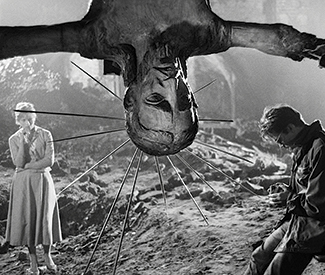
FILM Poland had not been a major hub of film production in the early decades of the medium, and its industry stabilized without getting very interesting in the years after World War II, when a Soviet-backed Stalinist regime founded state-controlled Film Polski. This shotgun wedding of art and bureaucracy wasn’t ideally conducive to creative expression, however. By the mid-1950s younger filmmakers, many graduates from the recently founded National Film School in Lodz, agitated for more independence — which, surprisingly, they won.

The resulting United Groups of Film Production almost immediately began producing work that won international attention and came to be known as the “Polish Film School” of cinema. Then in the 1970s a second wave of distinctive talents arrived, their troubled and ambivalent movies coming to be known as the Cinema of Moral Anxiety movement. Presented by Martin Scorsese, the touring “Masterpieces of Polish Cinema” retrospective playing Berkeley’s Pacific Film Archive offers 13 features spanning three decades.

https://www.youtube.com/watch?v=3-CQj8n3Rek&feature=kp

The series kicks off this weekend with perhaps the most famous films by two polar (ahem) opposites of the school’s first wave: fantasist Wojciech Has and sober, socially conscious realist Andrzej Wajda. The latter sounded a new Polish cinema’s opening salvo with 1955’s A Generation, and is still at it 60 years later. Last year he continued his never-ending project of dramatizing 20th century Polish history with the biographical Walesa: Man of Hope (as yet unreleased in the US), and might yet be active when he hits 90 in 2016.

An honorary Oscar winner, Wajda has been the most imposing presence in Polish cinema for nearly his entire career, even if he’s not the nation’s most fabled cinematic son — that would be Roman Polanski, a sensibility as slippery as Wajda is solid (and sometimes stolid), as well as a director who fled to the West at his first opportunity. (Polanski made a rare return after the fall of Communism, acting the lead in Wajda’s atypical period comedy Zemsta in 2002.) The four features representing Wajda in the PFA series see his development from an edgy young voice to the master artisan of large-canvas, often polemical works on subjects of official import.

Ashes and Diamonds (1958) introduced the striking screen presence of Zbigniew Cybulski — one consciously modeled on the magnetic malcontents of James Dean, and Marlon Brando in 1953’s The Wild One — as one of two resistance fighters tasked with assassinating a Communist official just days after the end of World War II. While his partner copes with this now-pointless mission by going on an epic drunk, Cybulski’s Maciek expresses his ambivalence in distracted pursuit of a barmaid (Ewa Krzyzewska). His iconic death scene would influence many others, notably those in Godard’s Breathless and Truffaut’s Shoot the Piano Player (both 1960). The actor coped with his subsequent international stardom by doing everything to excess; there was grief but not much surprise among those who knew him when he died in a drunken fall at a train station in 1967, not yet 40 but looking much older.

He also has supporting roles in Jerzy Kawalerowicz’s 1959 slice-of-life demi-thriller Night Train, and in Wajda’s Innocent Sorcerers from the next year — both long journeys toward dawn, the second set in a jazz-soaked, raffishly disillusioned Warsaw where it’s “harder to catch a taxi than a girl.” The two other Wajda titles here are later epics: 1975’s The Promised Land, a long, lavish and shrill indictment of worker-exploitative Industrial Revolution capitalism; and 1981’s Man of Iron, dramatizing the rise of the Solidarity movement. Man won the Golden Palm at Cannes, but also angered Polish officials sufficiently to drive its director abroad for some years, making films in Germany and France.

By contrast, political — or any — reality is infrequently found in the works of the late Has, whose best films are hothouse phantasmagorias rich in surreal imagery and dreamlike illogic. The PFA series kicks off with his 1964 The Saragossa Manuscript, perhaps that decade’s first “head” film, and duly named by Jerry Garcia as his favorite film. (The musician was involved in the PFA acquiring a print before his death.) Its picaresque maze of tall stories, with beautiful available women ornamenting most of them, remains a stoner’s delight. In a similar vein, Has’ The Hour-Glass Sanatorium a decade later is a triumph of Gothic jumble-sale production design, its own hapless hero pulled down a richly colored rabbit’s hole of dress-up role playing and various perversities at the titular institution.

A much more straightforward costume extravaganza is 1960’s Black Cross, aka Knights of the Teutonic Order, about the 15th century struggle between Poles and Christian invaders that led to the Battle of Grunwald. Its director Aleksander Ford was a major figure in establishing the post-war state film industry, yet not long after this expensive epic he was purged in a late-decade anti-Semitic campaign, and his unsuccessful attempts at a career overseas ended with suicide in 1980 Florida. A very different historical piece is Kawalerowicz’s 1961 Mother Joan of the Angels, a treatment of the same 17th century alleged convent demon infestation that inspired Ken Russell’s 1971 The Devils, and one that’s as quiet and stark as the latter film is hysterical.

The leading lights of the later Cinema of Moral Anxiety movement—which mostly eschewed such grand gestures and bizarre subjects for small, disquieting modern narratives — are represented in three films toward the series’ end. Krzysztof Zanussi’s 1976 Camouflage and 1980 The Constant Factor are terse, bitter portraits of institutional corruption. The late Krzysztof Kieslowski’s pre-Three Colors series breakout A Short Film About Killing (1987) is, if anything, bleaker: Drawn together by chance and then by tragedy, its protagonists live in a Warsaw where injustice is practically in the air — thanks to the oppressively tinted cinematography — and the climactic events of a murder and an execution have their existential pointlessness underlined by each being excruciatingly prolonged. *

MARTIN SCORSESE PRESENTS MASTERPIECES OF POLISH CINEMA

June 14-Aug 21, $5.50-$9.50

Pacific Film Archive

2575 Bancroft, Berk

www.bampfa.berkeley.edu

Tropical impressions

0

cheryl@sfbg.com

FILM We’re neck-deep in local film festival season right now — which, yeah, is kind of 12 months out of the year around here, but the SF Silent Film and Green Film festivals just ended, DocFest is underway, and Frameline starts June 19 — but there are plenty of reasons to carve out time for Yerba Buena Center for the Arts’ outstanding New Filipino Cinema mini-fest this weekend.

A big one is opening-night selection How to Disappear Completely; director Raya Martin, a bright light in the Philippines’ burgeoning indie film scene, will appear in person at the screening. This is a good thing, since Disappear is a bit of a head-scratcher, but in a commendable way — part coming-of-age drama, part dreamy puzzle, part old-school exploitation flick (I can’t be the only viewer who sees Martin’s shot of someone pawing through a pot full of intestines and immediately thinks of Herschell Gordon Lewis). Martin told the Philippine Star that Disappear was partially inspired by 1980s American horror filmmakers like Wes Craven, and there are fragments of 1984’s Nightmare on Elm Street lurking in this tale of a troubled tomboy (Ness Roque) whose vibrations of high-tension fear conjure a sinister spirit only she can see. This, on top of threats both natural — her island home is dark and lush, with nature’s stormy menace permeating every frame — and domestic: “You think the road home is safe? No one will hear you when you scream,” snarls her mother, who has a bit of Carrie White’s Bible-thumping mama in her.

Mom’s not even the biggest issue, though — that’d be the girl’s drunk, leering father (Noni Buencamino, one of the country’s most acclaimed actors — along with his wife, Shamaine Buencamino, who plays his wife in Disappear), who lurches around with a loaded shotgun and spends all his money betting on cockfights. Aside from its more experimental sequences, which are set to a buzzing electronic soundtrack (and thankfully, no Radiohead), Disappear‘s deliberately loose narrative pivots around strained dinner-table conversations among this dangerously dysfunctional family. Most of the longer passages of dialogue take the form of recitations: Bible stories (Lot and his daughters get a thematically appropriate shout out); folklore (a surprisingly funny tale involving a royal chicken); and a school recital on Filipino history, in which the young heroine plays a gun and her classmates, portraying vengeful villagers, warn the parent-filled audience: “We are going to hunt you down!”

Disappear‘s title card appears a full hour in, or nearly at the end of this 79-minute tale; it’s a blazing beacon in a film otherwise dominated by water imagery. Things only get bleaker, more surreal, and more shockingly violent from there. “If you’re wondering why we’re making such a fuss about new Filipino cinema, this is a great place to start,” explain series co-programmers Joel Shepard and Philbert Ortiz Dy in their program notes.

A far sunnier view of youth in the Philippines emerges in Sigrid Andrea P. Bernardo’s Anita’s Last Cha-Cha, also about a tomboy, whose coming-of-age through first love begs the question why this film isn’t called Anita’s First Cha-Cha instead. Anita is 12 and not ready to embrace puberty, despite her widowed mother’s best efforts to dress her up like a princess for the community’s annual fertility festival. This all changes when she catches sight of long-limbed lovely Pilar, the former town beauty who’s returned after a stint studying physical therapy abroad. As Pilar sets up a massage practice in her house (not surprisingly, the local men line up for appointments), Anita begins spending all of her time daydreaming about the older woman.

Of course, her fantasy girlfriend — who has a tortured romantic past with Anita’s age-appropriate male cousin — is just that, and the two become allies as the story takes a melodramatic turn. Writer-director Bernardo will attend the screening in person to discuss her feature debut.

Probably the most high-profile entry in the YBCA series is Sean Ellis’ urban thriller Metro Manila, which won an Audience Award at the 2013 Sundance Film Festival, as well as the top prize at that year’s British Independent Film Awards. Ellis is a Brit, but Metro Manila is acted (splendidly) by an all-Filipino cast. After a meager harvest, naïve farmer Oscar (Jake Macapagal) convinces his wife, Mai (Althea Vega), to move with their small children to the big city in search of work. But the grimy metropolis proves a dangerous place, and what’s essentially a predictable tale of country-bumpkin-learns-a-hard-lesson-on-the-mean-streets is elevated by a ruthlessly desperate tone and a killer performance by John Arcilla (as Oscar’s shifty new co-worker). Even better: a couple of clever last-act twists that shake up the story’s seemingly inevitable arc.

These three films are just a surface glimpse of what New Filipino Cinema has in store. Closing night’s screening of Brillante Mendoza’s Thy Womb, starring veteran superstar Nora Aunor, is already sold out, but fret not: The film, the much-praised latest from the director of 2009’s controversial Kinatay, returns to the YBCA for its own engagement June 26-29. Also screening post-fest is Lav Diaz’s acclaimed Norte, The End of History (June 19-20), a 250-minute epic inspired by Crime and Punishment. *

NEW FILIPINO CINEMA

Wed/11-Sun/15, $8-$10

Yerba Buena Center for the Arts

701 Mission, SF

Event Listings: June 18-24, 2014

0

Listings are compiled by Guardian staff. Submit items for the listings at listings@sfbg.com. For further information on how to submit items for the listings, see Selector.

WEDNESDAY 18

“Exploding Stars, Dark Energy, and the End of the Universe” Randall Museum Theater, 199 Museum Way, SF; www.randallmuseum.org. 7:30pm, free (donations encouraged). UC Berkeley astrophysicist and cosmologist Brad Tucker leads this lecture presented by the San Francisco Amateur Astronomers.

Susan Jane Gilman Book Passage, 1 Ferry Bldg, SF; www.bookpassage.com. 6pm, free. The author reads from her debut novel, The Ice Cream Queen of Orchard Street.

“Peter Orlovsky, A Life in Words” City Lights Bookstore, 261 Columbus, SF; www.citylights.com. 7pm, free. The late poet is remembered with Peter Orlovsky, a Life in Words: Intimate Chronicles of a Beat Writer, read by Bill Morgan, Joanne Kluger, and Michael McClure.

Tom Spanbauer Books Inc., 2275 Market, SF; www.booksinc.net. 7:30pm, free. The author reads from his first novel in seven years, I Loved You More.

THURSDAY 19

“Ink: The Enduring Art of Tattoos” Creativity Explored Gallery, 3245 16th St, SF; www.creativityexplored.org. Opening reception tonight, 7-9pm. Free. Exhibit through Aug 6 (Mon-Fri, 10am-3pm; Thu, 10am-7pm; Sat-Sun, noon-5pm). Creativity Explored artists present works inspired by tattoo art in this group exhibition.

FRIDAY 20

Community of Writers at Squaw Valley benefit reading Starr King Room, First Unitarian Universalist Church, 1187 Franklin, SF; www.squawvalleywriters.org. 7pm, $12-24. Readings by poets Don Mee Choi, Robert Hass, Harryette Mullen, C.D. Wright, and Matthew Zapruder.

SATURDAY 21

“Action and Adventure: The Beginning of Modern Comics” Escapist Comic Bookstore, 3090 Claremont, Berk; www.escapistcomics.com. 3-5pm, free. Gerard Jones (Men of Tomorrow: Geeks, Gangsters, and the Birth of the Comic Book) and Nicky Wheeler-Nicholson (granddaughter of the founder of DC Comics) discuss the early days of comics.

“Step Back” Meet in front of City Lights Bookstore, 261 Columbus, SF; www.radarproductions.org. 4pm, free. Radar presents this walking tour (with performances!) through the queer origins of North Beach with author and historian Nan Alamilla Boyd (Wide Open Town: A History of Queer San Francisco to 1965).

San Mateo SummerFest B Street between Tilton and Sixth Aves, San Mateo; www.sresproductions.com. 10am-6pm, free. Also Sun/22. Historic downtown San Mateo hosts this summer fair, with arts and crafts, cooking demos, live entertainment, and more.

“Sexy Summer Dance Party” One Grove Street, SF; www.ftloose.org. 7-11pm, $20-50 donation. Raise money for nonprofit art group Footloose at this event, featuring live music by Stephanie Teel Band and Rasa Vitalia, plus raffles, a silent auction, and more.

“What the Truck?” Jack London Square, Broadway at Embarcadero, Oakl; www.jacklondonsquare.com. 11am-5pm, free. Not just food trucks, though there’ll be plenty of those; this event also boasts art trucks, toy trucks, a mobile photo bus, and fashion boutiques on wheels.

SUNDAY 22

“Sunday Storytime Hour” Cartoon Art Museum, 655 Mission, SF; www.cartoonart.org. 11am-noon, included with museum admission ($4-8). Reading for kids spotlighting the John Klassen books This is Not My Hat and I Want My Hat Back, plus treats from Arizmendi Bakery. Wear your favorite hat!

“We Shape Our City” Old Mint, 88 Fifth St, SF; www.sfhistory.org. 1-4pm, $5-10. Ongoing every Sunday. The San Francisco Museum and Historical Society hosts docent-led tours of the historic landmark, as well as showcasing a number of exhibits, including photographic explorations of various SF neighborhoods and the new “We Shape Our City,” dedicated to local innovators.

MONDAY 23

Kenneth Turan Book Passage, 1 Ferry Bldg, SF; www.bookpassage.com. 6pm, free. The veteran film critic reads from Not to Be Missed.

TUESDAY 24

Jeffrey Renard Allen Booksmith, 1644 Haight, SF; www.booksmith.com. 7:30pm, free. The author reads from Song of the Shank.

Joanna Smith Rakoff Book Passage, 1 Ferry Bldg, SF; www.bookpassage.com. 6pm, free. The author shares her memoir, My Salinger Year.

Adam Wilson and Lucy Corin City Lights Bookstore, 261 Columbus, SF; www.citylights.com. 7pm, free. The authors share What’s Important Is Feeling and One Hundred Apocalypses. *


Stage Listings: June 11-17, 2014

0

Stage listings are compiled by Guardian staff. Performance times may change; call venues to confirm. Reviewers are Robert Avila, Rita Felciano, and Nicole Gluckstern. Submit items for the listings at listings@sfbg.com.

THEATER

OPENING

“The Bakla Show 3” Bindlestiff Studio, 185 Sixth St, SF; http://baklashow3.bpt.me. $10-20. Opens Thu/12, 8pm. Runs Thu-Sat, 8pm. Through June 28. Three short works focusing on the struggles of Pinoy LGBT youth.

Body of Water Southside Theater, Fort Mason Center, Bldg D, Third Flr, Marina at Laguna, SF; www.brownpapertickets.com. $15-35. Opens Fri/13, 7:30pm. Runs Fri-Sat, 7:30pm; Sun, 2:30pm. Through June 28. A Theatre Near U presents an original indie-rock teen musical, with songs by Jim Walker.

The Weir Shelton Theater, 533 Sutter, SF; www.sheltontheater.org. $38. Opens Thu/12, 8pm. Runs Thu-Sat, 8pm. Through July 12. Shelton Theater performs Conor McPherson’s acclaimed tale about a spooky night in an Irish pub.

BAY AREA

American Buffalo Aurora Theatre, 2081 Addison, Berk; www.auroratheatre.org. $32-60. Previews Fri/13-Sat14 and June 18, 8pm; Sun/15, 2pm; Tue/17, 7pm. Opens June 19, 8pm. Runs Tue and Sun, 7pm (also Sun, 2pm); Wed-Sat, 8pm. through July 13. Aurora Theatre closes its 22nd season with David Mamet’s powerful drama.

ONGOING

Brahmin/I: A One-Hijra Stand-Up Comedy Show Thick House, 1695 18th St, SF; www.crowdedfire.org. $15-35. Wed-Sat, 8pm. Through June 28. Crowded Fire Theater presents Aditi Brennan Kapil’s “outrageous play masquerading as a stand-up comedy routine.”

The Crucible Gough Street Playhouse, 1620 Gough, SF; www.custommade.org. $10-35. Thu/12-Sat/14, 8pm; Sun/15, 7pm. Custom Made Theatre Co. performs Arthur Miller’s drama.

Devil Boys From Beyond New Conservatory Theatre Center, 25 Van Ness, SF; www.nctcsf.org. $25-45. Wed-Sat, 8pm; Sun, 2pm. Through June 28. New Conservatory Theatre Center performs Buddy Thomas and Kenneth Elliot’s campy sci-fi saga.

Each and Every Thing Marsh San Francisco Main Stage, 1062 Valencia, SF; www.themarsh.org. $20-50. Previews Thu/12-Fri/13, 8pm. Opens Sat/14, 8:30pm. Runs Thu-Fri, 8pm; Sat, 8:30pm. Through July 12. Dan Hoyle presents his latest solo show, about the search for real-world connections in a tech-crazed world.

Feisty Old Jew Marsh San Francisco Main Stage, 1062 Valencia, SF; www.themarsh.org. $25-100. Sat-Sun, 5pm. Extended through July 13. Charlie Varon performs his latest solo show, a fictional comedy about “a 20th century man living in a 21st century city.”

Foodies! The Musical Shelton Theater, 533 Sutter, SF; www.foodiesthemusical.com. $32-34. Fri-Sat, 8pm. Open-ended. AWAT Productions presents Morris Bobrow’s musical comedy revue all about food.

God Fights the Plague Marsh San Francisco Studio Theater, 1062 Valencia, SF; www.themarsh.org. $15-100. Previews Sat/14, 8:30pm; Sun/15, 7pm. Opens June 21, 8:30pm. Runs Sat, 8:30pm; Sun, 7pm. Through Aug 10. The Marsh presents a solo show written by and starring 18-year-old theater phenom Dezi Gallegos.

Homo File CounterPULSE, 1310 Mission, SF; www.counterpulse.org. $20-35. Fri/13-Sat/14, 8pm; Sun/15, 7pm. Writer-designer-director Seth Eisen’s homage to queer rebel Samuel Stewart (1909–1993), whose polymorphous career spanned the better part of the 20th century, was last seen at CounterPULSE in a trim and appealing 40-minute version that capped his artistic residence there in 2012. Since then the work has ballooned across two acts and, unfortunately, lost its focus. What was a compact but meaningful exploration of a polymath and sexual rebel, boldly negotiating the social hierarchies of a deeply repressive and homophobic culture, has become a vague, sometimes difficult to follow story with little more to recommend it than a hedonistic joie de vivre (though even the raunch feels listless and somewhat perfunctory). The expanded production still sports the playful puppetry (shadow and otherwise), overhead and video projections, and aerial choreography of the original — and these do produce some interesting or enjoyable moments — but the show’s polyphonic elements get drastically watered down in a sprawling, lumbering, and unevenly performed dramatic narrative. This is marked by a lot of leaden dialogue and underwhelming songs in scenes that feel either unnecessary or under-explored. The subject (played dutifully but without much illumination by Brian Livingston), along with a seven-actor ensemble of supporting characters, traverses the mutually exclusive worlds of academia and the literary avant-garde (where Michael Soldier as both sexologist Alfred Kinsey and Gertrude Stein is a notable treat); the working-class homosexual underworld of sailors and tattoo parlors; and even the conventionality of a part-time heterosexual romance (where a nicely understated Katharine Otis as Emmy Curtis begins to cast an intriguing angle on Stewart’s complex makeup). But the import of Stewart’s unique vantage and influence on it all as well as his peculiar aloofness in the midst of everything are fuzzily evoked at best. For all the media employed to depict him and his world, we come away with little sense of either. (Avila)

The Homosexuals New Conservatory Theatre Center, Decker Theatre, 25 Van Ness, SF; www.nctcsf.org. $25-45. Wed-Sat, 8pm; Sun, 2pm. Through June 28. This mildly intriguing and fitfully engaging drama from rising Chicago playwright Philip Dawkins (whose Failure: A Love Story is currently having its Bay Area debut at Marin Theater Company) explores the tensions — sexual, generational, and otherwise — among a small circle of mostly gay friends via a central figure, Evan (a sharp Robert Rushin), who ends up in relationships with almost everyone. Beginning in 2010, as 29-year-old Evan breaks up with older histrionic theater director Peter (a drolly world-weary Matt Weimer), each successive scene jumps back two years and one relationship, until the final scene unites the entire circle as they welcome naïve Iowa teen Evan out of the closest and to the big city. It’s also a new millennium, of course, some distance now from Stonewall and the first wave of the AIDS crisis, and one of the more interesting aspects of the drama (which benefits from an overall strong cast under the direction of Arturo Catricala) is the generational divide between Evan and his circle. This divide feels downright political in the aggressive showdown between Evan and the apathetic art teacher and predatory libertine Mark (a persuasive Keith Marshall), but there’s a political edge at the outset, in Evan’s pointed refusal to join Peter in referring to himself as a “homosexual,” insisting instead on the word “gay” tout court. Despite this underlying issue and some witty dialogue, however, there’s little of interest in most of the dynamics between Evan and his circle. The play’s structure accordingly becomes a slightly tedious countdown, at least until the final scene, which cashes in on the power of hindsight to produce a limited, wistful tremor of reflection. (Avila)

In the Tree of Smoke Great Star Theater, 636 Jackson, SF; www.brownpapertickets.com. $25. Thu-Sat, 8pm. Through June 28. Circus Automatic performs an new evening of immersive, experimental circus.

Macbeth Fort Point (beneath the Golden Gate Bridge), SF; www.weplayers.org. $30-75. Thu-Sun, 7pm. Through June 29. We Players’ latest site-specific undertaking is nothing less than the Scottish play at San Francisco’s historic Civil War-era Fort Point, under the southern base of the Golden Gate Bridge. And a better location for Shakespeare’s brooding, bloody, and spooky civil war drama is hard to imagine. The grandeur of the multi-story red-brick edifice with its mammoth steel doors, magnificent inner courtyard, graceful arches, spiral stairwells, mysterious passageways, canon casemates looking onto the Pacific — as well as old canons and cannonballs — add up to a deeply atmospheric setting. Moreover, directors Ava Roy and John Hadden and their production team make good use of it, moving the audience around the grounds for the better part of three hours amid picturesque staging of scenes, a wonderfully powerful quartet of musicians (made up of percussionist Brent Elberg, trumpeter Aaron Priskorn, saxophonist Charlie Gurke, and trombonist Mara Fox alternating with Rick Brown), and reverberant cries from the weyard sisters (Julie Douglas, Maria Leigh, Caroline Parsons), the enraged MacDuff (Dixon Phillips), or usurper Macbeth’s hapless victims. As the titular hero-villain, John Hadden is generally imposing if not always convincing, while Ava Roy’s forceful Lady M cuts an elegant, at times ethereal figure in her magnificent black gown (the admirable costumes throughout are by Julia Rose Meeks and Master Seamstress Dana Taylor). In general, the acting proves the weakest link, but the overall spectacle makes this a unique and rather compelling outing. (Avila)

The Orphan of Zhao ACT’s Geary Theater, 415 Geary, SF; www.act-sf.org. $20-120. Opens Wed/11, 8pm. Runs Wed-Sat and June 24, 8pm (also Wed and Sat, 2pm); Tue/17, 7pm. Through June 29. Tony winner BD Wong stars in James Fenton’s acclaimed Chinese-legend adaptation at American Conservatory Theater.

Pearls Over Shanghai Hypnodrome Theatre, 575 10th St, SF; www.thrillpeddlers.com. $30-35. Thu-Sat, 8pm. Extended through June 28. Five years ago, Thrillpeddlers breathed new life into a glitter-dusted piece of Sixties flotsam, beautifully reimagining the Cockettes’ raunchy mock-operetta Pearls Over Shanghai (in collaboration with several surviving members of San Francisco’s storied acid-drag troupe) and running it for a whopping 22 months. Written by Cockette Link Martin as a carefree interpretation of a 1926 Broadway play, the baldly stereotyped Shanghai Gesture, it was the perfectly lurid vehicle for irreverence in all directions. It’s back in this revival, once again helmed by artistic director Russell Blackwood with musical direction by Cockette and local favorite Scrumbly Koldewyn. But despite the frisson of featuring some original-original cast members — including “Sweet Pam” Tent (who with Koldewyn also contributes some new dialogue) and Rumi Missabu (regally reprising the role of Madam Gin Sling) — there’s less fire the second time around as the production straddles the line between carefully slick and appropriately sloppy. Nevertheless, there are some fine musical numbers and moments throughout. Among these, Zelda Koznofsky, Birdie-Bob Watt, and Jesse Cortez consistently hit high notes as the singing Andrews Sisters-like trio of Americans thrown into white slavery; Bonni Suval’s Lottie Wu is a fierce vixen; and Noah Haydon (as the sultry Petrushka) is a class act. Koldewyn’s musical direction and piano accompaniment, meanwhile, provide strong and sure momentum as well as exquisite atmosphere. (Avila)

Seminar San Francisco Playhouse, 450 Post, Second Flr, SF; www.sfplayhouse.org. $20-100. Wed/11-Thu/12, 7pm; Fri/13-Sat/14, 8pm (also Sat/14, 3pm). San Francisco Playhouse performs Theresa Rebeck’s biting comedy.

“Sheherezade 14” Exit Theater, 156 Eddy, SF; www.playwrightscentersf.org. $25. Thu-Sat, 8pm. Through June 21. The Playwrights’ Center of SF and Wily West Productions host this annual festival of fully-produced short plays.

Shit & Champagne Rebel, 1772 Market, SF; shitandchampagne.eventbrite.com. $25. Fri-Sat, 8pm. Open-ended. D’Arcy Drollinger is Champagne White, bodacious blond innocent with a wicked left hook in this cross-dressing ’70s-style white-sploitation flick, played out live on Rebel’s intimate but action-packed barroom stage. Written by Drollinger and co-directed with Laurie Bushman (with high-flying choreography by John Paolillo, Drollinger, and Matthew Martin), this high-octane camp send-up of a favored formula comes dependably stocked with stock characters and delightfully protracted by a convoluted plot (involving, among other things, a certain street drug that’s triggered an epidemic of poopy pants) — all of it played to the hilt by an excellent cast that includes Martin as Dixie Stampede, an evil corporate dominatrix at the head of some sinister front for world domination called Mal*Wart; Alex Brown as Detective Jack Hammer, rough-hewn cop on the case and ambivalent love interest; Rotimi Agbabiaka as Sergio, gay Puerto Rican impresario and confidante; Steven Lemay as Brandy, high-end calf model and Champagne’s (much) beloved roommate; and Nancy French as Rod, Champagne’s doomed fiancé. Sprawling often literally across two buxom acts, the show maintains admirable consistency: The energy never flags and the brow stays decidedly low. (Avila)

The Speakeasy Undisclosed location (ticket buyers receive a text with directions), SF; www.thespeakeasysf.com. $65-100 (gambling chips, $7-10 extra; after-hours admission, $10). Wed-Sat, 7:30, 7:40, 7:50, 8pm, and 9pm admittance times. Extended through June 21. Boxcar Theater’s most ambitious project to date is also one of the more involved and impressively orchestrated theatrical experiences on any Bay Area stage just now. An immersive time-tripping environmental work, The Speakeasy takes place in an “undisclosed location” (in fact, a wonderfully redesigned version of the company’s Hyde Street theater complex) amid a period-specific cocktail lounge, cabaret, and gambling den inhabited by dozens of Prohibition-era characters and scenarios that unfold around an audience ultimately invited to wander around at will. At one level, this is an invitation to pure dress-up social entertainment. But there are artistic aims here too. Intentionally designed (by co-director and creator Nick A. Olivero with co-director Peter Ruocco) as a fractured super-narrative — in which audiences perceive snatches of overheard stories rather than complete arcs, and can follow those of their own choosing — there’s a way the piece becomes specifically and ever more subtly about time itself. This is most pointedly demonstrated in the opening vignettes in the cocktail lounge, where even the ticking of Joe’s Clock Shop (the “cover” storefront for the illicit 1920s den inside) can be heard underscoring conversations (deeply ironic in historical hindsight) about war, loss, and regained hope for the future. For a San Francisco currently gripped by a kind of historical double-recurrence of the roaring Twenties and dire Thirties at once, The Speakeasy is not a bad place to sit and ponder the simulacra of our elusive moment. (Avila)

36 Stories by Sam Shepard Z Below, 470 Florida, SF; www.36stories.org. $35-55. Wed-Thu, 7pm; Fri-Sat, 8pm; Sun, 3pm. Through June 22. Word for Word has been at the business of putting literature on the stage, verbatim, for some time, and far from slowing down, this new production shows the company operating at the height of its powers. Among the best manifestations of the company’s particular concerns and talents, 36 Stories by Sam Shepard not only shows off the considerable virtues of Shepard’s short-story writing (usually overshadowed by his justly acclaimed plays) but unfolds as a stellar piece of theater in its own right. Shrewdly adapted and directed by company charter member Amy Kossow, the production repeatedly finds opportunities in the writing for dramatic transmission and exchange among the performers — a kick-ass ensemble composed of Patrick Alparone, Carl Lumbly, Delia MacDougall, JoAnne Winter, and Rod Gnapp as “The Writer” — the latter a sleepless wanderer crisscrossing the country by car, from whose head and manual typewriter the low characters, tall tales, and electrical encounters issue forth with sharp, sometimes zany humor; smoldering sexual heat; and a shapeless foreboding. Word for Word’s loyal fans need little encouragement, but all interested in a gratifying night in the theater will want to catch this one before it goes. (Avila)

Too Much Light Makes the Baby Go Blind Boxcar Theatre, 505 Natoma, SF; www.sfneofuturists.com. $11-16. Fri-Sat, 9pm. Ongoing. The Neo-Futurists perform Greg Allen’s spontaneous, ever-changing show that crams 30 plays into 60 minutes.

Triassic Parq Eureka Theater, 215 Jackson, SF; www.rayoflighttheatre.com. $25-36. Wed-Sat, 8pm (also June 21 and 28, 2pm). Through June 28. Ray of Light Theatre presents the Bay Area premiere of Marshall Pailet’s musical involving “dinosaurs, show tunes, and sex changes.”

Walk Like A Man Costume Shop, 1117 Market, SF; www.therhino.org. $15-35. Wed/11-Sat/14, 8pm; Sun/15, 3pm. Falling in love with your boss, surviving child abuse, losing a loved one in war, dealing with your straight daughter’s shame around her mom’s butch wardrobe — these are only a few of the circumstances encountered in a raucous and affecting evening of celebrating desire and being true to yourself, as Theatre Rhinoceros presents 10 stories of love and sex among a diverse set of African American women. Culled from the titular collection of erotic fiction by Atlanta-based author Laurinda D. Brown, the evening unfolds with a pert and playful finesse thanks to director John Fisher and a strong, charismatic five-women ensemble (made up of Alexaendrai Bond, Kelli Crump, Nkechi Emeruwa, Daile Mitchum, and Desiree Rogers). Sexy and brazen, raunchy and wrenching, this series of vignettes, spread out over two acts, comes with nary a dull moment and plenty of climaxes. (Avila)

BAY AREA

Candida Town Hall Theatre, 3535 School, Lafayette; www.townhalltheatre.com. $20-32. Thu/12-Sat/14, 8pm. Town Hall Theatre performs the Shaw classic.

The Crazed Berkeley City Club, 2315 Durant, Berk; www.centralworks.org. $15-28. Thu-Sat, 8pm; Sun, 5pm. Through June 23. Central Works performs Sally Dawidoff’s play, based on Ha Jin’s novel about coming of age in Communist China.

Daylighting: The Berkeley Stories Project Ashby Stage, 1901 Ashby, Berk; www.shotgunplayers.org. $20-35. Wed-Thu, 7pm; Fri-Sat, 8pm; Sun, 5pm (June 22, show at 2pm). Through June 22. Shotgun Players present Dan Wolf’s new play inspired by real-life tales from Berkeley residents past and present.

Dead Man’s Cell Phone Masquers Playhouse, 105 Park Place, Point Richmond; www.masquers.org. $22. Fri-Sat, 8pm; Sun, 2pm. Through June 28. Masquers Playhouse performs Sarah Ruhl’s imaginative comedy.

Failure: A Love Story Marin Theatre Company, 397 Miller, Mill Valley; www.marintheatre.org. $37-58. Tue and Thu-Sat, 8pm (also Sat/14 and June 28, 2pm; June 19, 1pm); Wed, 7:30pm; Sun, 2 and 7pm. Through June 29. Marin Theatre Company performs Philip Dawkins’ play about love and loss, with puppets and live music.

Hershey Felder as Leonard Bernstein in Maestro Berkeley Repertory Theatre, Thrust Stage, 2025 Addison, Berk; www.berkeleyrep.org. $29-87. Tue and Thu-Sat, 8pm (also Sat, 2pm); Wed and Sun, 7pm (also Sun, 2pm). Through June 22. Juno-winning actor and musician Hershey Felder (George Gershwin Alone) performs his latest solo show.

The Intelligent Homosexual’s Guide to Capitalism and Socialism with a Key to the Scriptures Berkeley Repertory Theatre, Roda Theatre, 2015 Addison, Berk; www.berkeleyrep.org. $14.50-89. Tue, Thu-Sat, 7:30pm (also Sat and June 26, 2pm); Wed and Sun, 7pm (also Sun, 2pm). Through June 29. Berkeley Rep’s Tony Taccone, a comrade of Tony Kushner’s from way back in the Angels in America days, directs this revised version of the playwright’s 2009 play, whose long title is a riff on an earlier one by George Bernard Shaw. It concerns the fractured Italian American family of a diehard Communist longshoreman named Gus (Mark Margolis in an impressive, anchoring performance), now retired, who has announced his intention to kill himself and leave his Brooklyn brownstone to the grown children to sell and divide among themselves. In today’s inflated real estate market, that’s not chump change either. His announcement plunges the family into chaos, though truth be told they were all kind of a mess already. Son Pill (Lou Liberatore) is a married gay high school history teacher having a torrid affair with a young hustler (Jordan Geiger), which has already cost him $30,000 of his sister’s hard-earned money. His sister, Empty (Deidre Lovejoy), meanwhile couldn’t care less about the baby to whom her partner (Liz Wisan) is about to give birth, courtesy of the donated sperm from her kid brother Vito (Joseph J. Parks) — who comes across as the contrarian of the family: he’s neither gay nor a Communist. Other significant others are on hand, as well as Gus’s sister Clio (an effective, comically deadpan Randy Danson), a onetime nun who later became a Maoist in Peru and now seems some sloshy mix of the two. And for that reason she, along with Gus, symbolizes more than most the real dilemma here: a lack of something to believe in, of a structure for explaining and shaping experience and modeling action toward a better (post-capitalist) world. At nearly four hours, the play is Kushner’s version of the great American three-act family drama — those personal yet prophetic portraits by your O’Neills, your Millers, your Shepards. Tracy Letts made a similar bid with 2007’s August: Osage County. I don’t think either play really makes it into the pantheon, but while Letts’ play was ultimately slicker, more entertaining, Kushner’s has more in it, more to talk about of real relevance. Not that the production isn’t also entertaining — stage business with pregnant lesbians and mysterious briefcases buried in the wall are deployed to elating effect. But the play’s various subplots and characters are not equally interesting and the machinations of the plot and the sometimes-overlapping dialogue can be overwrought. But despite the tedium this produces, the political questions opened up here are liable to continue rattling around the brain after the curtain comes down, leaving one with a small but worthwhile buzz. (Avila)

Marry Me A Little Mountain View Center for the Performing Arts, 500 Castro, Mtn View; www.theatreworks.org. $19-73. Tue-Wed, 7:30pm; Thu-Sat, 8pm (also Sat, 8pm); Sun, 2 and 7pm. Through June 29. TheatreWorks performs Stephen Sondheim’s intimate musical.

Nantucket Marsh Berkeley MainStage, 2120 Allston, Berk; www.themarsh.org. $25-100 (all tickets include a picnic dinner). Thu and Sat, 7pm. Extended through July 19. Nantucket Island, a wisp of shifting sand 30 miles off the coast of Cape Cod, Mass., is the evocative setting for this autobiographical story from writer-performer Mark Kenward — less the tourists’ Nantucket of summer holidays, mind you, than the inhabitants’ gray and isolated winter. And just as its bleak weather stood for the tempestuous mood of Herman Melville’s Ishmael before he sets sail again in Moby Dick, so the environment for Kenward’s coming-of-age darkly foreshadows a terrible downward spiral. The only son and oldest child of two in a nuclear family from Normal, Ill., that really seemed to fit the bill — complete with a dad who, “in his entire life, only missed four days of shaving” — Mark becomes the odd-boy out upon the Kenwards’ relocation to the remote island. An affable, poised, physically demonstrative performer with a residual Midwestern charm, Kenward describes an upbringing in a household overshadowed by a high-strung, controlling, deeply unhappy mother who, as luck would have it, also becomes his high school English teacher. This relationship is the ground for much of the play’s humor, but also a trauma that blows in like a winter squall. Directed keenly, if perhaps a little too stiffly, by Rebecca Fisher, and accompanied at points by a watery island backdrop (courtesy of video designer Alfonso Alvarez), Nantucket discharges some of its messy human themes a bit too neatly but maintains an inescapable pull. (Avila)

Other Desert Cities Barn Theatre, 30 Sir Francis Drake, Ross; www.rossvalleyplayers.com. $10-26. Thu/12, 7:30pm; Fri/13-Sat/14, 8pm; Sun/15, 2pm. Ross Valley Players perform Jon Robin Baitz’s Pultizer-nominated drama about a tense family holiday.

South Pacific Cushing Memorial Amphitheater, 801 Panoramic Hwy, Mill Valley; www.mountainplay.org. $20-60. Sun/15, 2pm (arrive one hour prior to show time). Mountain Play Association performs the classic Rodgers and Hammerstein musical.

The 25th Annual Putnam County Spelling Bee Lesher Center for the Arts, 1601 Civic, Walnut Creek; www.centerrep.org. $37-65. Wed, 7:30pm; Thu-Sat, 8pm (also Saturdays in June, 2:30pm); Sun, 2:30pm. Through June 21. Center REP performs the Tony-winning musical by William Finn and Rachel Sheinkin.

PERFORMANCE/DANCE

“Bitch and Tell: A Real Funny Variety Show” Kunst-Stoff Arts, One Grove, SF; www.brownpapertickets.com. Fri/13-Sat/14, 8pm. $8-10. Footloose presents this variety show with Bob McIntyre, Nick Stargu, Carolina “CoiCoi” Duncan, and others.

Caroline Lugo and Carolé Acuña’s Ballet Flamenco Peña Pachamama, 1630 Powell, SF; www.carolinalugo.com. June 22, 29, July 12, 19, and 27, 6:30pm. $15-19. Flamenco performance by the mother-daughter dance company, featuring live musicians.

“Dash: Improv in a Flash” Un-Scripted Theater Company, 533 Sutter, Second Flr, SF; www.un-scripted.com. Sat, 10pm. $15. Ongoing through Aug 30. A late-night, free-form improv show with Un-Scripted Theater Company.

“Dream Queens Revue” Aunt Charlie’s Lounge, 133 Turk, SF; www.dreamqueensrevue.com. Wed/11, 9:30pm. Free. Drag with Collette LeGrande, Ruby Slippers, Sophilya Leggz, Bobby Ashton, and more.

Feinstein’s at the Nikko 222 Mason, SF; www.feinsteinssf.com. This week: “Judy Kaye Sings Bernstein and Sondheim,” Thu/12-Fri/13, 8pm, $35-50; Christine Ebersole in “Strings Attached,” Sat/14-Sun/15, 7pm, $60-85.

“Global Dance Passport Showcase” ODC Dance Commons Studio B, 351 Shotwell, SF; www.odctheater.org. Sat/14, 8pm; Sun/15, 4 and 7pm. $10. ODC presents a sampler of world dance.

“Hubba Hubba Revue’s Burlesque Nation” DNA Lounge, 375 11th St, SF; www.dnalounge.com. Fri/13, 9:30pm. $15-30. Burlesque performers from NY, Miami, LA, Germany, Australia, and more.

“Imaginary Activism: The Role of the Artist Beyond the Art World” Modern Times Bookstore Collective, 2919 24th St, SF; (415) 282-9246. Sat/14, 8pm. Free. A new monologue by acclaimed performance artist Guillermo Gomez Peña.

“Magic at the Rex” Hotel Rex, 562 Sutter, SF; www.magicattherex.com. Sat, 8pm. Ongoing. $25. Magic and mystery with Adam Sachs and mentalist Sebastian Boswell III.

Natasha Carlitz Dance Ensemble Dance Mission Theater, 3316 24th St, SF; www.carlitzdance.org. Fri/13-Sat/14, 8pm. $15-18. Performing Momentum, dance works exploring the magic of mathematics.

“Out of Line Improv” Stage Werx, 446 Valencia, SF; outoflineimprov.brownpapertickets.com. Sat, 10:30pm. $12. Ongoing. A new, completely improvised show every week.

“Rites and Passages” Nourse Theatre, 275 Hayes, SF; www.cityboxoffice.com. Sat/14, 8pm. $18-36. The San Francisco Girls Chorus closes its season with a concert of music by Eastern European composers (Bartók, Stravinsky), plus performances by the Joe Goode Performance Group and pianists Kanoko Nishi and Sarah Cahill.

“San Francisco Comedy College” Purple Onion at Kells, 530 Jackson, SF; www.purpleonionatkells.com. $5-10. “New Talent Show,” Wed-Thu, 7. Ongoing. “The Cellar Dwellers,” stand-up comedy, Wed-Thu, 8:15pm and Fri-Sat, 7:30pm. Ongoing.

“Sojourners” Commonwealth Club of California, 595 Market, SF; www.magictheatre.org. Mon/16, 6pm. Free. Staged reading of Nigerian storyteller Mfoniso Udofia’s new work. Presented as part of the Magic Theatre’s Martha Heasly Cox Virgin Play Series.

“This Lingering Life” Z Space, 450 Florida, SF; www.theatreofyugen.org. Previews Thu/5, 7pm. Opens Fri/6, 8pm. Wed/11-Thu/12, 7pm; Fri/13-Sat/14, 8pm. $15-50. Theatre of Yugen performs the world premiere of Chiori Miyagawa’s drama, inspired by nine Japanese Noh plays from the 14th century.

“Yerba Buena Gardens Festival” Yerba Buena Gardens, 760 Howard, SF; www.ybgfestival.org. Free. Through Oct 26. This week: Destani Wolf, Thu/12, 12:30-1pm; Venezuelan Music Project, Fri/13, 11-11:30am; “The Art of the Descarga” with the John Santos Sextet, Sat/14, 1-2:30pm; Native Contemporary Arts Festival, Sun/15, noon-3pm; “Poetic Tuesday,” Tue/17, 12:30-1:30pm.

BAY AREA

“Immigrant Stories: Personal Stories Honoring the Immigrant Experience” La Peña Cultural Center, 3105 Shattuck, Berk; www.livingartsplayback.com. Sat/14, 8pm. $18-20. Playback Theater presents an evening dedicated to honoring the experiences of immigrants, with audience input guiding the performance.

“MarshJam Improv Comedy Show” Marsh Berkeley, 2120 Allston, Berk; www.themarsh.org. Fri, 8pm. Ongoing. $10. Improv comedy with local legends and drop-in guests.

“The Next Big Thing” Laney College Theater, 900 Fallon, Oakl; www.bigmoves.org. Sat/14, 8pm; Sun/15, 2pm. $18. Big Moves presents its all-new dance and music spectacular, featuring residence dance company emFATic DANCE.

“Precious Drop: Our Relationship to Water” Malonga Casquelourd Theater, 1428 Alice, Oakl; www.afriquesogue.com. Sat/14, 7pm; Sun/15, 2pm. $10-15. Live music, dance, and multimedia elements contribute to this contemplation of water and culture, inspired by African folklore.

“Virago Theatre Company New Play Reading Series” Flight Deck, 1540 Broadway, Oakl; www.theflightdeck.org. Wed/11, 5:30pm; June 18, 25, and July 2, 7pm. Wed/11, $10-25; other dates free. This week: Danii Kharms: A Life in One Act and Several Dozen Eggs by Nancy Cooper Frank. *


 

The Selector June 11-17, 2014

0

WEDNESDAY 11

Luke Sweeney

“Miss Me?” Luke Sweeney asks in the lead track from his forthcoming album Adventure:Us, and in response I’d probably deny, avoid eye contact, but then demurely say, “Um…maybe a li’l bit.” Truth be told I’ve been quite won over by the album, maybe because of the apparent shared affectation for Mark Bolan’s swinging shuffle, George Harrison’s weepsy guitar, Jeff Tweedy’s pop twang, and a little bit of Question Mark and the Mysterians mysterious…something or other. Now Sweeney is returning to SF from a California tour with a homecoming show at Monarch (of all places.) Luke, please don’t leave us like that again. (Ryan Prendiville)

With Farallons, Tidelands

9pm, $5 – $8

Monarch

101 6th St, SF

(415) 284-9774

www.monarchsf.com


Guided By Voices

Guided By Voices’ Robert Pollard is one of the most insanely prolific songwriters in rock history. Since its inception in 1983 in Dayton, Ohio, Guided By Voices has released 22 studio albums, 17 EPs, and 39 singles. Each of these records contains around 20 songs, most hovering around the one-minute mark. Within these little vignettes of genius (read: insanity) Pollard explores surrealist narratives, charmingly compact and catchy melodies, and genuine emotional impact. 30 years into their career, GBV play hard, drink hard, and make much younger rockers look washed-up and tame. The band also rarely tours, so don’t miss tonight’s show. There’s no knowing what they’ll play, but it’s going to be a night to remember. (Haley Zaremba)

With Bobby Bare, Jr.

8pm, $38

Regency Ballroom

1300 Van Ness, SF

www.theregencyballroom.com


THURSDAY 12


San Francisco Black Film Festival

At a time when cultural landmarks like Marcus Books are being evicted from the historic Fillmore district, this festival, which celebrates African-American contributions to cinema, might strike a more poignant tone than ever before. Now in its 16th year, the three-day fest aims to present films that “reinforce positive images and dispel negative stereotypes” and connect Black filmmakers from around the Bay Area and beyond. This opening evening features the Life of King, starring Cuba Gooding Jr. as Eugene Brown, who turned his life around after 18 years in prison, funneling his passion for chess into a way to help inner-city youth in Washington, D.C. (Emma Silvers)

Through Sun/15

Prices and showtimes vary, see website for details

Jazz Heritage Center

1320 Fillmore, SF

www.sfbff.org


FRIDAY 13


Alice Glass

Alice Glass is one of the most dynamic frontpeople in the music industry. Half of Toronto’s infamous electro-duo Crystal Castles, Glass’ clear, piercing voice and fiercely frenetic stage presence make her a stunning vocalist and onstage force of nature. Hard-partying and un-compromising, Glass is a born performer, commanding arenas and collecting a following of cult-like fans with ease. Since she ran away at 14 to join a punk squat, fronting an all-girl crust-punk band called Fetus Fatale, Glass has been making a name for herself as a skilled musician and magnetic personality. Combining punk and hardcore aesthetics with harshly catchy electronics, Glass’ music is a unique concoction that will make you dance your ass off. (Zaremba)

With Sad Andy, 28 Mansions, We Are Isis (side room)

10pm, $17.50

1015 Folsom, SF

(415) 431-1200

www.1015.com


Hayes Carll & Bob Schneider

“The World’s Greatest Living Songwriters of All Time” is a pretty cocky name for a tour, but this team delivers. Both singer-songwriters from the state of Texas, Carll and Schneider are performing together for the first time in their careers. Carll, from just outside of Houston, has been lauded as a modern songwriting heavyweight among the likes of Townes Van Zandt, Guy Clark, and Ray Wylie Hubbard. Carl’s songs sound timeless, although his content speaks to a modern world. Bob Schneider has been making music in Austin for decades with various bands: Joe Rockhead, the Scabs, Ugly Americans. Schneider’s output reaches across pop, rock, folk, and country, while his uncensored songwriting has some labeling his music “adult alternative.” This is a show songwriters can’t miss.

8pm, $21

859 O’Farrell, SF

(415) 885-0750

www.slimspresents.com


#MyGreatCat Pop-Up Photo Gallery

You’d be lying if you said you’ve never been victim of the Internet black hole dedicated to cats. There’s no denying that the world wide web is the best thing to have happened to our pets. Take a look at the @Cats_of_Instagram account and you’ll find 1.4 million people who are just like you! From the silly to the cuddly to the serious, these fuzzy fellows have a wide range of adorable emotions, which is why @Cats_of_Instagram are hosting a pop-up photo gallery in the middle of Union Square for your viewing pleasure. “What’s so great about a cat” is the theme of the exhibition. Last month, Instagram users were encouraged to post photos and the hashtag #MyGreatCat for a chance to be part of the exhibit. Photos by teenage pet photographer Jessica Trinh will also be on display and the founders of @Cats_of_Instagram will be at the event too. Cat lovers unite for a heart-warming night that (you’ve been warned) may leave you melted into a pile of goo. (Laura B. Childs)

11am-7pm, free

Union Square, SF

www.catsofinstagram.com


SATURDAY 14


Queer Women of Color Film Festival

Now in its tenth year, the Queer Women of Color Film Festival kicks off Pride Month with 32 short films, all of which are captioned for the benefit of deaf and hearing-impaired audience members — a presentation choice that reflects the festival’s quest to empower (and entertain) its diverse community. Standout programs include the doc-heavy “Seeds of Resistance,” spotlighting themes of cultivation and community organizing; “Girl Power!,” with films celebrating the younger generation; and a panel discussion with queer cinema pioneers Cheryl Dunye and Madeleine Lim on “the art and transformative power of film.” (Cheryl Eddy)

Starts Fri/13, through Sun/15, free ($5-$10 suggested donation)

Brava Theater Center

2789 24th St, SF

www.qwocmap.org


Phuture

Commercially, the Roland TB-303 was discontinued in ’84. Should have been obsolete, but when a trio from Chicago got their hands on the bass synthesizer the next year, they discovered something else: the sound of the future. On Phuture’s seminal “Acid Tracks” the overdriven sound that gave birth to acid house is unmistakable. Perhaps feeling the impact of their legacy on music more than ever, original members DJ Pierre and Spanky (along with Lothario “Rio” Lee) are prepping a new album and performing together again, on a tour that brings them from a recent gig at the Sydney Opera House to Sunset’s annual picturesque bayside “electronic music picnic.” (Ryan Prendiville)

With Kyle Hall, Beautiful Swimmers, Awesome Tapes from Africa, J-Boogie, Galen, Solar, J-Bird

Noon-9:30pm, $20 – $30

Great Lawn, Treasure Island

www.sunsetmusicelectric.com


SUNDAY 15


Buzz Osborne

Having earned a well-deserved reputation as one of the heaviest purveyors of down-tuned, sludgy rock as the leader of The Melvins, Buzz Osborne likely turned some heads when he announced he was putting out an acoustic album. That release, This Machine Kills Artists (Ipecac Recordings), which hit stores earlier this month, isn’t as much of a departure as one might think, however — songs like “Dark Brown Teeth” aren’t fluffy folk, they’re still vintage Osborne. When Nirvana thanked him at their Rock N Roll Hall of Fame induction, it was for good reason; he helped shape the sound that defined hard rock in the early ’90s, and he continues to do so today. (Sean McCourt)

8pm, $15

Great American Music Hall

859 O’Farrell, SF

(415) 885-0750

www.slimspresents.com


MONDAY 16

Tupac Birthday Celebration

Tupac Shakur lives on — in holograms, in our hearts, and tonight, at the Elbo Room. In honor of what would have been the late rapper’s 43rd birthday, the club is hosting a birthday party featuring the music of Tupac and other special guests, hosted by Bay Area rapper/activist/event producer Sellassie. Enjoy the moving and eloquent music Shakur left behind and celebrate the impact he still has on hip-hop and culture today. (Childs)

9pm, $5

Elbo Room

647 Valencia, SF

(415) 552-7788

www.elbo.com


TUESDAY 17


Yann Tiersen

Yann Tiersen wants you to know that he is more than just composer of film soundtracks. Perhaps best known for his musical score for the french film Amélie, the Breton musician’s passion lies in touring and recording studio albums. His music just happens to fit seamlessly into films. Though renowned in France for his studio albums, Tiersen remains mostly known as the guy who created the magical accordion and piano driven tunes that fuel Amélie’s imaginative adventures. However, tonight at the Regency Ballroom, Tiersen will play from his own albums, his most recent, “Ï” (aka Infinity) in particular. Those expecting a classical performance will be sorely disappointed. Heavily influenced by punk music, Tiersen’s minimalist tracks range from noisy to melancholic with his five-piece band. The musical influence of each of his nine album varies greatly, but his musical style simple and recognizable. With each album, he shows a new facet to his talent, proving that he is so much more than an orchestral composer. (Childs)

8pm, $25

Regency Ballroom

1290 Sutter, SF

(415) 673-5716

www.theregencyballroom.com

The Guardian listings deadline is two weeks prior to our Wednesday publication date. To submit an item for consideration, please include the title of the event, a brief description of the event, date and time, venue name, street address (listing cross streets only isn’t sufficient), city, telephone number readers can call for more information, telephone number for media, and admission costs. Send information to Listings, the Guardian, 225 Bush, 17th Flr., SF, CA 94105; or e-mail (paste press release into e-mail body — no attachments, please) to listings@sfbg.com. Digital photos may be submitted in jpeg format; the image must be at least 240 dpi and four inches by six inches in size. We regret we cannot accept listings over the phone.

The Pogues’ James Fearnley on Shane MacGowan, the difference time can make, and the diary that became his new memoir

0

Mixing a high proof distillation from the sounds of traditional Irish folk music with the piss and vinegar attitude and energy of punk rock, The Pogues burst upon the music scene in London in 1984 with Red Roses For Me, and further established themselves with the albums that followed, such as Rum, Sodomy and the Lash (1985), and what many consider to be their masterpiece, If I Should Fall From Grace With God (1988).

The band’s output showcased their stellar musicianship and the masterful songwriting talents of singer Shane MacGowan, whose reputation for wild antics and marathon bouts of drinking took on mythic proportions, and eventually lead to a decade-long estrangement within the band.

The epic rise and fall of the “Boys From The County Hell” has finally been properly chronicled, and by perhaps the best person to do so — Pogues accordion player James Fearnley himself.

Drawing on years’ worth of personal diaries, Fearnley’s book, Here Comes Everybody: The Story of The Pogues (Chicago Review Press) was released last month in the United States, and paints a thorough and deeply rich picture of what life was like as a member of one of most raucous — and supremely talented — bands in rock history.

https://www.youtube.com/watch?v=DrBLqp-s__o

“I kept a diary because I really enjoyed looking at things and experiencing things and knowing that later on I was going to put it down in words, so it made me pay attention — I like to pay attention,” says Fearnley.

“Years and years ago somebody said, ‘If somebody is going to write a book about the Pogues, it’s going to be you, James.’ And I heard that a few times, I was always the guy down in the breakfast room in the hotel scribbling away in my notebook, and in tour buses as well.”

The book came about after Fearnley had taken some writing workshops when he moved to Los Angeles, and Shane MacGowan kept appearing as a subject in his work.

“I think there is a sense of understanding that you come to, about the people that you write about and my reactions to them and my feelings with them, particularly about Shane, who is an extremely inspiring person to write about.”

Fearnley says that the many years that had passed since the original break-up of the band provided some helpful distance from the situations, and a new outlook on what took place in their lives.

“It’s useful to approach one’s experiences back then without so much luggage of self-worth, or lack of self-worth, that one had back then, and to have a look at what was actually going on. I think it’s one’s curiosity about things that helps you kind of move through, rather than get stuck in self-judgement or beating yourself up.”

After producing a large amount of material from the writing workshops, a friend had read some of it, and offered to pass it along to an agent; from that point on, the book came along fairly quickly — but as Fearnley points out, it took a long time to get to that place.

“It’s been in the air for quite a while, it came out of this slow, simmering, cooking process, I suppose — it wasn’t like I just said, ‘Oh, this is what I’m going to do now.’”

pogues

Steeped in detail, the different chapters transport readers to varying times in the life of the Pogues; it starts at the end of the story, where the group had to decide that it had come to the point where they had to fire MacGowan.

Fearnley’s descriptions of the moments leading up to the sacking should make fans feel as they were there in the room with them, in this case a tense situation punctuated with minute elements of information that one might not expect, but that provoke an immediate reaction — after building the scene, he adds a simple sentence, “The room smelled like toothpaste.” A detail that might night seem very important, but that lends the reader a sensory experience jumping off from the page.

“If you are going to write something, use all the sense. I scanned around to remember, what my senses were in that room, and that was the one that came up first,” says Fearnley.

Based on just some of the stories included in the book, the fact that the band members all survived the tumultuous 1980s and 90s is nothing short of a miracle — though guitarist Philip Chevron, to whom the memoir is dedicated, passed away last year from cancer.

“We did a couple of shows before Christmas in England last year without Philip there, and knowing that he would never come back, they were very emotional. I’m going to miss him.”

Fans can be assured that The Pogues’ story will live on forever now though, meticulously archived in Fearnley’s fascinating chronicle.

“I always liked Philip Larkin, he said about his writing was that it was an act of preservation — writing to preserve an event or emotion that he had had,” says Fearnley. “I suppose in writing a memoir, that’s an act of preservation in itself, so I felt that was my job, to bring everything to bear on making it sort of live again in a way.”

James Fearnley
June 9, 7:30pm
Moe’s Books
2476 Telegraph, Berk.
(510) 849-2087
www.moesbooks.com

Norman Solomon: Obama escalates his war on journalism

2

By Norman Solomon

 (Norman Solomon is executive director of the Institute for Public Accuracy and co-founder of RootsAction.org. His books include “War Made Easy: How Presidents and Pundits Keep Spinning Us to Death.” Information about the documentary based on the book is at www.WarMadeEasyTheMovie.org.)

In a memoir published this year, the CIA’s former top legal officer John Rizzo says that on the last day of 2005 a panicky White House tried to figure out how to prevent the distribution of a book by New York Times reporter James Risen. Officials were upset because Risen’s book, State of War, exposed what — in his words — “may have been one of the most reckless operations in the modern history of the CIA.”

The book told of a bungled CIA attempt to set back Iran’s nuclear program in 2000 by supplying the Iranian government with flawed blueprints for nuclear-bomb design. The CIA’s tactic might have actually aided Iranian nuclear development.

When a bootlegged copy of State of War reached the National Security Council, a frantic meeting convened in the Situation Room, according to Rizzo. “As best anyone could tell, the books were printed in bulk and stacked somewhere in warehouses.” The aspiring censors hit a wall. “We arrived at a rueful consensus: game over as far as any realistic possibility to keep the book, and the classified information in it, from getting out.”

But more than eight years later, the Obama White House is seeking a different form of retribution. The people running the current administration don’t want to pulp the book — they want to put its author in jail.

The Obama administration is insisting that Risen name his confidential source — or face imprisonment. Risen says he won’t capitulate.

The Freedom of the Press Foundation calls the government’s effort to force Risen to reveal a source “one of the most significant press freedom cases in decades.”

Pentagon Papers whistleblower Daniel Ellsberg says: “The pursuit of Risen is a warning to potential sources that journalists cannot promise them confidentiality for disclosing Executive Branch criminality, recklessness, deception, unconstitutional policies or lying us into war. Without protecting confidentiality, investigative journalism required for accountability and democracy will wither and disappear.”

A recent brief from the Obama administration to the nation’s top court “is unflinchingly hostile to the idea of the Supreme Court creating or finding protections for journalists,” Politico reported. The newspaper added that Risen “might be sent to jail or fined if he refuses to identify his sources or testify about other details of his reporting.”

This threat is truly ominous. As Ellsberg puts it, “We would know less than we do now about government abuses, less than we need to know to hold officials accountable and to influence policy democratically.”

So much is at stake: for whistleblowers, freedom of the press and the public’s right to know. For democracy.

That’s why five organizations — RootsAction.org, The Nation, the Center for Media and Democracy / The Progressive, Fairness & Accuracy In Reporting (FAIR) and the Freedom of the Press Foundation — have joined together to start a campaign for protecting the confidentiality of journalists’ sources. So far, in May, about 50,000 people have signed a petition telling President Obama and Attorney General Eric Holder to end legal moves against Risen.

Charging that the administration has launched “an assault on freedom of the press,” the petition tells Obama and Holder: “We urge you in the strongest terms to halt all legal action against Mr. Risen and to safeguard the freedom of journalists to maintain the confidentiality of their sources.”

The online petition — “We Support James Risen Because We Support a Free Press” — includes thousands of personal comments from signers. Here’s a sampling of what they had to say:

“Freedom of the press and freedom of speech are the cornerstones of our democracy. Stop trying to restrict them.”  Jim T., Colorado Springs, Colorado

“Protected sources are essential to a real democracy. Without whistleblowers, there is no truth.”  Jo Ellen K., San Francisco, California

“Enough of the government assault on freedom of the press! Whistleblowers are heroes to the American people.”  Paul D., Keaau, Hawaii

“It seems our government is out of control. The premise of deriving power from the people would appear to be a quaint notion to most within the three branches. Instead they now view us as subjects that must bend to their will rather than the other way around.”  Gary J., Liberty Township, Ohio

“‘Journalism is printing what someone else does not want printed. Everything else is public relations.’ — George Orwell”  Todd J., Oxford, Michigan

“As a writer, I support freedom of the press around the world as a vital first step toward regaining control of our compromised democracies.”  Patricia R., Whitehorse, YT, Canada

“You promised an open and transparent administration. Please keep that promise.”  Willard S., Cary, North Carolina

“Without a free press, we really have nothing.”  Robin H., Weehawken, New Jersey

“The Obama administration’s attack on press freedom is an issue of grave concern. Why are we spending billions of dollars going after supposed ‘terrorists’ when the greatest threat to democracy resides right here in Washington, DC.”  Karen D., Detroit, Michigan

“Damn you, Obama! You become more like Nixon daily!”  Leonard H., Manchester, Michigan

“Congratulations, Mr. Risen!”  Marian C., Hollister, California

“The U.S. is becoming an increasingly frightening place to live, more than a little like a police state. President Obama, you have been a huge disappointment. I expected better from you.”  Barbara R., Newport, Rhode Island

“Come on, President Obama… you’re a Constitutional scholar. You know better than this. Knock it off.”  James S., Burbank, California

“There can be no true freedom of the press unless the confidentiality of sources is protected. Without this, no leads, informants or whistleblowers will be motivated to come forward. Reporters should not be imprisoned for doing their job.”  Chris R., North Canton, Ohio

“You took an oath to ‘preserve, protect and defend the Constitution of the United States,’ freedom of the press!”  Diane S., San Jose, California

“Whatever became of the progressive Obama and the change you promised? Evidently it was a load of campaign bull puckey, making you just another politician who says whatever it takes to get elected. In other words, you and your administration are a complete sham. As for your constitutional scholarship, it would appear to be in the service of undermining the Constitution a la Bush and Cheney.”  Barry E., Bryn Mawr, Pennsylvani

“Without a free press, our republic is paper-mache. Remember John Peter Zenger! We must not shoot the messenger — we must raise the bar for conduct and probity!”  Lance K., Chelsea, Massachusetts

“A free press is the only counterbalance to crony capitalism, corrupt legislators, and a pitifully partisan Supreme Court, that continues to destroy our Constitutional protections.”  Dion B., Cathedral City, California

“I implore you to RESPECT THE FIRST AMENDMENT.”  Glen A., Lacey, Washington

“Did you not learn in grade school that freedom of the press is essential to a free country?”  Joanne D., Colorado Springs, Colorado

“We’ve been down this road before. What amazes me is that we condemn other countries for stifling freedom of the press, then turn around and do the same thing to advance our own purposes. Are we proponents of democracy and a free press or not?”  William M., Whittier, California

“Journalism is a vital component of a democracy, and it is a core function protected by the freedom of expression enshrined in both international and domestic law. You must stop harassing and persecuting journalists and their sources who are providing a vital public service in prying open the activities of governments that are illegitimately concealed from the public. If the public is not informed of state actions executed in their name, they cannot evaluate and render consent to those actions through the vote. This secrecy therefore subverts democracy, and you must stop using police powers to destroy the whistleblowers who enable government accountability to the public.”  Jim S., Gatlinburg, Tennessee

“I support freedom of the press, not the attorney general’s vicious abuse of his position!”  Bettemae J., Albuquerque, New Mexico

“Compelling reporters to reveal their sources just means that sources will stop talking to reporters. That will cripple the free press. If you think that’s not important, please resign immediately.”  Stephen P., Gresham, Oregon

“As an old woman who remembers the lies of Lyndon Johnson, Richard Nixon, Ronald Reagan, Bill Clinton, George W. Bush (especially) and the current administration, I do not trust my own government to tell me the truth anymore.  Freedom of the press is my only chance [to] find out what the truth is. Protect reporters’ sources!”  Monica O., Lomita, California

“Without freedom of the press, we might as well kiss democracy goodbye!”  Melvin M., Vashon, Washington

“I am ashamed of this administration, its policies and its Department of Justice — what a travesty of criminal turpitude and mass media complicity. ‘Transparency’ — hah! Cheap campaign rhetoric.”  Mitch L., Los Altos Hills, California

“Walk the walk or stop talking about democracy. Free press is the basis of our constitution.”  Carl D., Manassas, Virginia

“No free press, no democracy!”  James F., Moab, Utah

“If you force the media to reveal its sources, no one will ever come forth with a news story or lead again. I’m sure this is precisely what the politicians and big business want. Then there’d be absolutely no accountability. We need an effective shield law rather than persecuting journalists and news organizations for reporting the news.”  Jim S., Ladera Ranch, California

“Freedom of the Press is the hallmark of a free society. Your administration has done everything in its power to subvert Freedom of the Press by jailing whistleblowers and reporters who uncover wrong doing. This must stop!”  Ed A., Queens, New York

“We have very few real journalists left. Let’s not jail them!”  Karen H., West Grove, Pennsylvania

“As the press goes, so goes citizens’ rights.”  Kathy F., West Bend, Wisconsin

“I have been shocked at how this administration has treated the American people’s right to know, prosecuting reporters, whistleblowers, and others who have had the temerity to cast light into the dark corners of our government. You bring the whole concept of democracy into disrepute and set a bad example for the rest of the world.”  Marjorie P., Montpelier, Vermont

“We need our investigative reporters more now than ever in history. Keep our press free.”  Joan R., Novato, California

“Investigative reporting is becoming too rare in the U.S., and compelling J. Risen to reveal his sources will only make such reporting even rarer. Is this your deliberate intent?”  Elaine L., Elk Grove, California

“I am responding in support of James Risen. Freedom of the press is one of the cornerstones of our democracy and should never be trampled on by government.”  Lois D., San Jacinto, California

“Freedom of the press is more important than some stinking government attempt to find out how bad shenanigans made it into the press. Quit this crap about trying to make a reporter reveal his or her sources. We need good reporting a lot more than lousy stinking politicians trying to shut up the truth.”  Ralph M., Bakerstown, Pennsylvania

“Without a free press tyranny will ensue.”  Bob P., Holland, Pennsylvania

“I thought Mr. Obama was supposed to be a Constitutional lawyer and swore to uphold it. I thought the Attorney General was supposed to also protect the Constitution. It seems you both have abandoned those duties. Prove you hold the Constitution as the authority from which you derive your own and cease this persecution of a reporter who epitomizes one of the crucial things the Constitution stands for — a truly free press.”  Michael S., Tukwila, Washington

“I’ve seen mud more transparent than the Obama admin.”  Paul H., Carlton, Oregon

“Wow, this coming from the Obama administration who supposedly is for open govt. Isn’t it a police state when the govt cracks down on reporters for telling the truth? James Risen is a hero who will go to jail before revealing his source and the fact that you want to throw him in jail is the real crime here.”  Gayle J., Seattle, Washington

“Shocking.”  Peggy K., Soldiers Grove, Wisconsin

“You have way overstepped your authority. I consider myself a moderate, but your aggressive pursuit of journalists and whistleblowers strikes fear in my heart. Your use of intimidation to weaken the press is contributing to the dismantling of our democracy.”  Marcia B., Pittsburgh, Pennsylvania

“Quit trying to silence journalists! This is a Vladimir Putin approach to government. Hope and Change? Get Real!”  Rich W., Grass Valley, California

“Stop destroying our heroes, the courageous whistleblowers and journalists, including Risen and others who should be thanked, not prosecuted! You know damn well that the People want these people honored!”  Nancy G., Palm Desert, California

“Please recognize the need for a journalist to be free of coercion to reveal confidential sources. Bravo to James Risen for having the courage to resist this onerous government intimidation.”  Thomas S., Pittsburgh, Pennsylvania

“We are already seeing freedom of the press undermined by consolidation of media ownership. The founding fathers believed that we could only keep this republic if we have free press and an informed public. Stop the suppression of information. Free access to information is not an optional ingredient.”  Janelle J., Buffalo, Missouri

“Stop persecuting journalists and whistleblowers. Information is the lifeblood of a democracy.”  William C., Sherman Oaks, California

“Our government has become big brother. Journalists must not be forced to name their sources if we are to know the truth.”  Carolyn S., Los Angeles, California

“A free press is gone if confidential sources are revealed.”  Vincent H., Rutledge, Tennessee

“Frankly, Mr. President, I’m surprised at you, and I have to say, disappointed. This seems like something that happens in totalitarian countries.”  Karen B., Felton, California

“Freedom of the press is already under siege because big business controls so much of the message. The Obama administration must respect James Risen’s right to withhold his source.”  Patricia B., Marco Island, Florida

“Whistleblowers are vital to keeping our democracy from turning into a police state. And a free press is vital to keeping us informed. Drop this case, and uphold the principles of our Constitution.”  Cynthia D., E. Boston, MA

“The press should be free to do its job! How about some of that ‘most transparent administration’ stuff. If an administration has nothing to hide it has nothing to fear.”  Mike H., Terre Haute, Indiana

“James Risen is an investigative reporter of high repute who should not be subjected to state harassment and punishment for upholding his pledge of confidentiality to his sources. These encroachments on our Fourth Estate’s watchdog function as a check on the abuse of power must not stand.”  Barbara K., Santa Fe, New Mexico

“You both have to stop talking out of both sides of your mouth, i.e. lying. We are fighting for freedom of the press. Stop being enemies to us people.”  Judith N., North Bonneville, Washington

“Please don’t trash the Bill of Rights. Protect the freedom and independence of the press. Drop the case against James Risen.”  Andrew M., Lower Gwynedd, Pennsylvania

“Daniel Ellsberg was right. James Risen is right.”  Leonore J., Toledo, Ohio

“When the light of free press is no more, darkness prevails and evildoers flourish. I know this is what this corrupt government wants but over our dead bodies.”  Felix C., San Antonio, Texas

“What Mr. Risen did in this instance, was not criminal. Rather it was EXACTLY what a free press should do, without fear of reprisal. Stop the strong arm tactics.”  John S., Trumbull, Connecticut

“The investigative work of journalists sheds light on the world and what is happening. The increasing punishment of journalists is pushing our world and news into a scary age of non-information. Safeguard the confidentiality of journalists and their sources.”  Christin B., Barnegat Light, New Jersey

“Stop persecuting journalists and truth tellers.”  Phyllis B., Desert Hot Springs, California

Norman Solomon is executive director of the Institute for Public Accuracy and co-founder of RootsAction.org. His books include “War Made Easy: How Presidents and Pundits Keep Spinning Us to Death.” Information about the documentary based on the book is at www.WarMadeEasyTheMovie.org.

(The Bruce blog is written and edited by Bruce B. Brugmann, editor at large of the San Francisco Bay Guardian. He is the former co-founder and co-publisher with his wife Jean Dibble, 1966-2012.)

James Risen is printing the news and raising hell for a damn good cause in the best jounalistic tradition. He needs our support. B3