History

The Damned on playing small venues, headgear that protects you from spit, and why they won’t stop ’til the Stones do

7

For nearly four decades now, legendary British rockers The Damned have been haunting stages around the world with their brand of gothic-inspired punk.

Since storming onto the London punk scene in 1976, the band has evolved and survived multiple line-up changes over the years, with the group now led by founding members Dave Vanian and Captain Sensible, who are keeping the original spirit of The Damned alive and well.

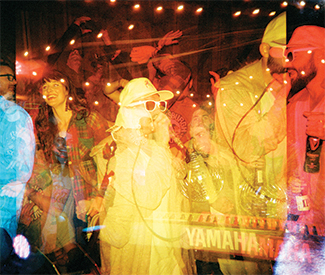
Today, Vanian’s punk-meets-rockabilly crooner vocals and Sensible’s wildly blistering guitar are backed up by the jackhammer rhythm section of drummer Pinch and bassist Stu West, along with keyboardist Monty Oxy Moron, who often looks like a possessed version of Beethoven, his hands flailing wildly about when not pounding the keys.

Bay Area fans are in for a treat this week as The Damned play two shows in Northern California ahead of their appearance at the Ink-N-Iron festival in Long Beach — and these are the only U.S. gigs on the books for the year.

“I love visiting San Francisco, it’s the most European city in North America and a vegetarian’s paradise. My home is in Brighton, the gay capital of the UK and a lot of the relaxed liberal attitude we have there is over here too,” says Captain Sensible, via email. “I like the way the Bay Area is a collection of villages all with their different vibe, but mainly it’s the smart, friendly people here that make a visit such fun.”

Looking back over almost 40 years of on and off history as a band, Sensible offers a candid assessment of what life has been like as a member of The Damned.

“I’m not one for regrets, we’ve had a splendid crack as a band. A lot of things that went pear shaped was our own stupid fault — and how we survived the mania of the 70s / 80s without anyone dropping dead I’ve no idea. But as you can imagine it was bloody good fun in a time when bands could pretty much do what ever they wanted in the studio without label types breathing down our necks; in fact, when they did turn up we always put on a little show for them, band splitting up, drummer climbing in a grand piano to add nonsensical avant-garde overdubs on a straightforward punk tune, food fights. They got the idea in the end and left us alone, and we actually made a few decent records despite all the chaos.”

The Damned were the first punk band from the UK to release a single — “New Rose” — and an album, Damned Damned Damned.

https://www.youtube.com/watch?v=rTfyUqVqX-0&feature=kp

They also broke ground as the first to cross the pond and tour the United States, a jaunt that saw them play the infamous Mabuhay Gardens in San Francisco back in 1977.

“It’s all a blur as you can imagine, but we met loads of young upstarts who told us they were getting their bands together. It was a great time, a clean slate if you like. And it felt good to give the jaded stadium rock stars of the time a kick up the arse.”

“I also remember American beer being universally appalling. In fact I would cram my suitcase with as much booze as possible, if you can believe that. Now, of course Californian craft beer is the cutting edge of brewing and we intend to visit a few breweries this trip.”

As for Sensible’s now-signature stage attire — a red beret and crazy sunglasses — it turns out it had nothing to do with trying to make a fashion statement: It was born from the environment that came to epitomize live shows in the early days of the punk movement.

“The truth is that at first I only wore a beret to stop the ‘gob’ (spit) getting in my hair. After Johnny Rotten and Rat Scabies had their famous spitting incident at a Pistols gig in ’76 it became part of the punk scene for a year or so. The problem was the hot stage lights baked the gob in your hair and it was almost impossible to remove the hard lumps afterwards, so I wore a beret and sunglasses to stop it getting into my eyes. That’s the true story, it wasn’t fashion — it was self preservation!”

Fans will be able to hear all sorts of first-hand accounts and behind the scenes stories in the near future when a documentary film about The Damned is released, made by Wes Orshoski, the filmmaker behind “Lemmy,” the award-winning portrait of the iconic Motorhead frontman.

“I took Wes to do an interview outside the former home of my parents — where I spent my school years — and no sooner was the camera rolling than a drug crazed mugger made a grab for it and a good old fashioned punch up ensued in which $50,000 worth of film equipment got completely trashed. Wes ended up being rushed to hospital. He probably needed a rabies antidote,” says Sensible.

“I should have mentioned to him that I was born and raised in the roughest part of South London — where one person’s posh movie gear is someone else’s years supply of crack cocaine.”

Despite difficulties such as that jarring incident, Sensible says that the rest of the project has been proceeding along well.

“He’s captured some very funny footage already as the Damned are quite a strange bunch these days. People think they know us, but I reckon there will be a few surprised faces when the film is released.”

One fact that casual fans of The Damned might not know is that Captain Sensible is a huge train buff — he’s driven steam engines in England, and even had a diesel locomotive named after him.

“There was a company that had a punk fan as boss and he named his locos after his heroes. John Peel, Joe Strummer — mine was originally going to be called Morrissey but it came to the guy’s attention that he made a point NEVER to travel by train. Whereas I do all the time, so I got it instead!”

Unfortunately, Cotswold Rail went out of business a few years ago, and when the engine was sold, a disgruntled employee that was owed money stole the nameplates.

“I’d maybe buy ‘em if he offered, gotta be worth a fiver, eh?” says Sensible.

While the Damned often perform at large music festivals around the world these days, Sensible still favors smaller shows, like the one the band will play at Slim’s on Wed/4.

“I prefer the club gigs, the closeness to the audience. And when I see bands, that’s also the environment I prefer. Festivals with screens and the musicians half a mile away on a distant stage is not great is it? The problem is that now we are a certain age, and there’s not likely to be another club tour as it’s a bit knackering.”

Although Sensible mentions that the members of The Damned aren’t exactly spring chickens anymore, he’s adamant that they have no intention of hanging it up anytime soon.
 
“The Damned ain’t going to quit while the Stones are still lurching on,” he says. “We’re not gonna be beat by a bunch of old Tories.”

https://www.youtube.com/watch?v=8m2JyiggwAU

The Damned, with Koffin Kats and Stellar Corpses
Wednesday, June 4
8pm, $30
Slim’s
333 11th St., SF
(415) 255-0333
www.slimspresents.com

Secret passages

0

culture@sfbg.com

THE WEEKNIGHTER Weekends are for amateurs. Weeknights are for pros. That’s why each week Broke-Ass Stuart (www.brokeassstuart.com) will be exploring a different San Francisco bar, bringing you stories about the places and people who make San Francisco one of the most phenomenal cities in the world. Who wants a drink?

It was weird that Anthony wanted to go to Bourbon & Branch (501 Jones St, SF. 415-346-1735) for his birthday. “But you don’t drink,” I said, hoping to find out why someone who’d never had a drop of booze in his life, due to being born with a bum liver, would want to go to a fancy bar. “I know that, dummy,” he told me. “But I heard they have a secret room that opens up when you pull a book!”

He had me there. Bourbon & Branch has a few secret rooms that open up when you do various Hardy Boys-esque actions. It’s one of the bar’s many charms. When it opened in 2006, there were no mustache bars in San Francisco. You know what I mean by mustache bars — the ones where a bow tie and suspender wearing, mustachioed man squeezes tiny tinctures into your drink from a utensil clearly invented by alchemists. They are omnipresent in current-day San Francisco but when Bourbon & Branch opened, it was the first one in the city.

At this point, anyone who spends a lot of time in bars is pretty tired of cocktails that are too precious and take too much time, and most of us are waiting for the backlash when places go back to specializing in a shot and a beer. But the thing that makes Bourbon & Branch great is that, while it can take a lot of credit for kicking off the pre-Prohibition cocktail craze in San Francisco, it still does it better than any of them. Why? Because of it’s attention to detail.

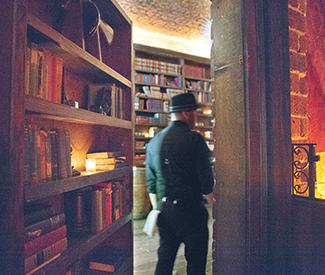
They say you’ll always remember your first one. But often times your second one is far better. The first speakeasy style bar I went to was Little Branch back when I lived in NYC, and it was cool. But it wasn’t until I moved back to San Francisco that I saw the trope played out to its full potential. Walking into Bourbon & Branch that first time in 2008 made the history nerd in me squeal. It felt like a real speakeasy. It was full of dark wood and was low lit by candles and a chandelier. Bartenders in ties and fedoras shook things vigorously while making cocktails that hadn’t been popular in half a century. People were only served if they were seated and they were encouraged to speak quietly.

And then I got to the backroom where suddenly the bookshelf opened and an entire other bar was laid out before me, filled with people drinking similarly well-made drinks while laughing and talking loudly. “Where the fuck am I,” I asked myself before realizing I couldn’t afford the place and leaving out the backdoor.

So a few years ago when Anthony said he wanted to go here for his birthday my first reaction was, “Motherfucker, why are we gonna go somewhere with $12 cocktails when you don’t even drink?” His answer was relatable to any of us who have ever dreamed of traveling through time or going on the kind of adventures you only see in movies or read about in books. He wanted to go through the secret passageway and spend time in a San Francisco that no longer exists.

So do I.

Stuart Schuffman aka Broke-Ass Stuart, is a travel writer, poet, and TV host. You can find his online shenanigans at www.brokeassstuart.com


This Week’s Picks: June 4 – 10, 2014

0

WEDNESDAY 4


‘Mr. Irresistible’

Multifaceted showman and irrepressible art-dragster D’Arcy Drollinger, the brains and falsies behind such contemporary camp classics as Shit & Champagne and Sex and the City Live!, is poised to deliver on his biggest project since Project: Lohan, or even 2010’s cutting-edge Scalpel!: A sci-fi musical comedy about love and robots and office work entitled Mr. Irresistible. First produced in workshop form last year at New York’s La Mama E.T.C., the Aesop-inspired story of unpopular Eileen Morchinsky and her titular mechanical friend (purchased from a magazine ad and destined to turn her life right around) sails into the fairly exotic Alcazar Theatre for a limited run, aloft on a score by Christopher Winslow, book and lyrics by Drollinger, and some big-wig talent. (Robert Avila)

Through June 8, 8pm; Sun. 7pm only, $25

Alcatraz Theatre

650 Geary, SF

(415) 766-4588

www.mrirresistiblemusical.com


The Damned

Remember, kid: Heroes get remembered, but legends never die. Yes, we’re talking about THE Damned. Formed in 1976, The Damned were the first punk band in the UK to release a single, a record, or tour the United States. They cut their teeth opening for bands like the Sex Pistols and T. Rex, and are still going strong. Not only were they punk rock pioneers, they also were some of the frontrunners of the goth scene in the ’80s, and now, nearly into their fourth decade, The Damned are still going strong. With an ever-changing lineup and an incredible repertoire of revolutionary tunes, these dudes are incredible at evolving and even better at performing. They’re not to be missed tonight at Slim’s. (Haley Zaremba)

With Koffin Kats, Stellar Corpses

9pm, $30

Slim’s

333 11th St, SF

(415) 225-0333

www.slimspresents.com


THURSDAY 5


XV: St. James Infirmary 15-Year Anniversary Party

Lost in the outpouring of accolades in the wake of the great Maya Angelou’s passing last week was her crucial time as a sex worker, which she chronicled, unashamed, in her 1974 book Gather Together in My Name. It’s indicative of the stigma sex workers still face when even the well-documented past of the nation’s literary godmother is scrubbed free of any reference. San Francisco’s own groundbreaking St. James Infirmary, the first occupational safety and health clinic for sex workers in the United States, deals with the damage of that stigma by offering non-judgmental medical and social services. The organization also knows how to celebrate: This huge party and fundraiser boasts one of the city’s best house DJs, David Harness, as well as porn-star-turned-DJ Ricky Sinz, movers and shakers from the international sex workers rights movement, sexy pole dancing, a Kink.com demonstration dungeon, and oodles more. The whole joint will be singin’ and swingin’ and getting’ merry like Christmas. (Marke B.)

9pm-3am, $20 ($40 includes free lapdance)

Temple

540 Howard, SF

www.templesf.com


Urban Air Market Summer Night Block Party

Urban Air Market’s newest addition to its community-enriched neighborhood events around the city begins tonight. Head on over to Fern Alley — a hidden walkway located between Polk and Larkin Streets — for this one-night affair. In partnership with the Lower Polk Art Walk, Urban Air Market is hosting a summer night block party of sustainable art, fashion, food, and live music at this unassuming Tenderloin location. While occasionally occupied by a small farmers’ market, tonight Fern Alley will be bustling with food trucks, henna tattooing, face painting, interactive fashion film installations, live bands, and countless booths from sustainable and local brands: Oaklandish, Synergy Organic Clothing, Indosole, and Skunkfunk USA to name a few. (Laura B. Childs)

6pm, free

Fern Alley (Fern St. between Polk and Larkin St.)

www.urbanairmarket.com


Nature For Sale

For the past few years, Bolivian-born artist Javier Rocabado has been producing stunning, icon-like portraits of famed gays like RuPaul, early AIDS activists, and local beauties. All these figures have been posed with gold halos against Rocabado’s signature dollar-bill background, glowing with symbolic meaning. (Rocabado paints only the backside of the dollar.) His new series turns to nature: Beautiful bird specimens, frogs, and weeping monkeys take on aspects of holy saints. “I want to point out the universally ridiculous thinking of ‘economics is first’ under Capitalism. Through this new series of paintings, I strive to create images of animals that allow the viewers to experience the false pride in human civilization to conquer nature and profit from it,” he says. Dark spirits of Chevron, BP, and other disaster-fueling multinationals hover at the borders of his exquisite new works, but their sheer gorgeousness radiates hope as well as guilt. (Marke B.)

Through July 1, opening party 8-11pm, free

Public Barber Salon

571 Geary, SF

www.publicbarbersalon.com


FRIDAY 6


‘Test’

Test is not great, but it’s a beautiful, honest film that evokes the mid-’80s, when AIDS was ravaging San Francisco’s gay community, a time when a test had become available but no cure was in sight. The film follows a naïve young man’s coming of age (a splendid Scott Marlow of LEVY Dance) as a gay man and as dancer in a local modern dance company. The film excellently captures what it meant living at the edge of uncertainty, when nothing could be taken for granted and yet, despite of it all, everything seemed possible. Test includes extensive and fine dance sequences choreographed by the remarkable Sidra Bell. Fun to see was just how many other local dancers were involved in this small, but big-hearted movie. (Rita Felciano)

Opens June 6, times vary

Presidio Theater

2340 Chestnut, SF

(415) 776-2388


Rialto Cinemas Elmwood

2966 College, Berk.

(510) 433-9730


The Buzzcocks

It must be punk rock royalty week at Slim’s, because just two days after The Damned grace the SoMa stage the Buzzcocks are coming to town. Part of the Holy Trinity that also includes the Clash and the Sex Pistols, the Buzzcocks are a crucial piece of UK punk history. Bringing the world such killer tunes as “Ever Fallen in Love” and “What Do I Get,” challenging British radio with songs like “Orgasm Addict” and confronting the punk community with an open and serious examination of homosexuality, the Buzzcocks are a tireless and fearless force of nature. Plus, 38 years into their career, they’re still touring regularly and have a new record out this year. Is there anything more punk than refusing to succumb to gray hair or body fat? (Zaremba)

With Doug Gillard, Images

8pm, $35

Slim’s

333 11th St, SF

(415) 225-0333

www.slimspresents.com


SATURDAY 7


Les Claypool’s Duo De Twang

Les Claypool has an amazing eye for weirdness. His band Primus has made a decades-long career out of defying every possible genre classification, wearing monkey masks onstage, and naming their albums things like Pork Soda and Sailing the Seas of Cheese. Now Claypool is going the opposite direction, creating the most minimalist, deconstructed music possible, with one vocal, one bass, one guitar, and one makeshift percussion tool — but don’t worry, it’s still bizarre. In his Duo De Twang, which was originally organized as a one-off for Hardly Strictly Bluegrass, Claypool teams up with longtime buddy and collaborator Bryan Kehoe to play originals and tasty twang covers (including the Bee Gees and Alice in Chains). The show promises down-to-earth, intimate weirdness, plus seriously incredible musicianship. (Zaremba)

With Reformed Whores

9pm, $38

Great American Music Hall

859 O’Farrell, SF

(415) 885-0750

www.slimspresents.com


tUnE-yArDs

What a difference five years makes: Merrill Garbus moved to the Bay around that time, as word quickly spread about the undeniable force of her musical vision, one that draws from African, folk, and electro-acoustic quarters, and her visceral one-woman performances. Since her maiden tUnE-yArDs outing, BiRd-BrAiNs, she’s put out the album that every critic could agree on in 2011, whokill, which scored her the coveted top spot in that year’s Pazz and Jop poll. Her third full-length, Nikki Nack, takes tUnE-yArDs further, into Garbus’s fascination with Haitian artistic traditions, as she turned to the country’s boula drum to lay the groundwork for the recording’s intoxicating call and response. (Kimberly Chun)

With the Seshen

9pm, $26

The Fillmore

1805 Geary, SF

(415) 346-6000

www.thefillmore.com


SUNDAY 8


Silent Frisco Beats on Ocean Beach

Summertime throwdowns are the types of shows the brilliant Silent Frisco have made their niche — take a pristine outdoor environment, add groovin’ music and people, let fun ensue. “Scene Not Heard” as the Silent team puts it. The key to making these public shows possible is ditching speakers and substituting wireless headphones, removing complaint-inducing noise, and leaving the amusingly awesome sight of befuddled onlookers observing limbs gyrating to what appears to be silence. For this event, two channels allow movers and shakers to select from a rotation of California electronic music talent throughout the day. Fresh off touring with The Glitch Mob, Ana Sia will bring big, bouncy, driving bass, while Dutch grandmasters Kraak & Smaak headline with two hours of their lush, disco-tinged sound. (Kevin Lee)

With Kraak & Smaak, Ana Sia, Pumpkin, JLabs, Motion Potion, and more

11am, $20; kids and dogs free (all-ages show)

Ocean Beach Great Highway at Balboa Ave, SF

www.silentfrisco.com


TUESDAY 10


Tom Robbins

“If Tibetan Peach Pie doesn’t read like a normal memoir, that may be because I haven’t exactly led what most normal people would consider a normal life,” forewarns writer Tom Robbins in the preface of his first nonfiction book. With that on readers’ minds, Robbins reflects on his colorful adventures, from an accident laden-youth in Depression-era North Carolina in which his mother dubbed him “Tommy Rotten,” to an established literary career in Washington state. Along the way, Robbins studies the weather in Korea, experiments with acid, embarks on international religious journeys, tangos with Hollywood, and discovers some love. Tibetan Peach Pie‘s 41 succinct tall tales crackle with a Robbins’ rare blend of warmth, wisdom, and wit. (Lee)

In conversation with Isabel Duffy

7:30pm, $27

Nourse Theatre

275 Hayes, SF

(415) 392-4400


The Guardian listings deadline is two weeks prior to our Wednesday publication date. To submit an item for consideration, please include the title of the event, a brief description of the event, date and time, venue name, street address (listing cross streets only isn’t sufficient), city, telephone number readers can call for more information, telephone number for media, and admission costs. Send information to Listings, the Guardian, 225 Bush, 17th Flr., SF, CA 94105; or e-mail (paste press release into e-mail body — no attachments, please) to listings@sfbg.com. Digital photos may be submitted in jpeg format; the image must be at least 240 dpi and four inches by six inches in size. We regret we cannot accept listings over the phone.

Film Listings: June 4 – 10, 2014

0

Film listings are edited by Cheryl Eddy. Reviewers are Kimberly Chun, Dennis Harvey, Lynn Rapoport, and Sara Maria Vizcarrondo. For rep house showtimes, see Rep Clock.

DOCFEST

The 13th San Francisco Documentary Film Festival runs June 5-19 at the Brava Theater, 2781 York, SF; Roxie Theater, 3117 16th St, SF; and Oakland School of the Arts Theater, 530 19th St, Oakl. For tickets (most shows $12) and complete schedule, visit www.sfindie.com. For commentary, see “Peculiar Thrills.”

OPENING

Edge of Tomorrow Tom Cruise and Emily Blunt star in this sci-fi thriller about an alien war being fought by soldiers caught in a seemingly endless time loop. (1:53) Four Star, Presidio.

The Fault in Our Stars Shailene Woodley stars in this based-on-a-best-seller romance about two teens who meet at a cancer support group. (2:05) Marina.

Night Moves Not to be confused with Arthur Penn’s same-named 1975 Gene Hackman thriller, Kelly Reichardt’s latest film nonetheless is also a memorably quiet, unsettling tale of conspiracy and paranoia. It takes us some time to understand what makes temporary allies of jittery Josh (Jesse Eisenberg), Portland, Ore.-style alterna-chick Dena (Dakota Fanning) and genial rural recluse Harmon (Peter Sarsgaard), beyond it being a mission of considerable danger and secrecy. When things don’t go exactly as planned, however, the three react very differently to the resulting fallout, becoming possibly greater threats to one another than the police or FBI personnel pursuing them. While still spare by mainstream standard, this is easily Reichardt’s most accessible work, carrying the observational strengths of 2010’s Meek’s Cutoff, 2008’s Wendy and Lucy, and 2006’s Old Joy over to a genuinely tense story that actually goes somewhere. (1:52) Metreon. (Harvey)

Rigor Mortis Spooky Chinese folklore (hopping vampires) meets J-horror (female ghouls with long black hair) in this film — directed by Juno Mak, and produced by Grudge series helmer Takashi Shimizu — inspired by Hong Kong’s long-running Mr. Vampire comedy-horror movie series. Homage takes the form of casting, with several of Vampire‘s key players in attendance, rather than tone, since the supernatural goings-on in Rigor Mortis are more somber than slapstick. Washed-up film star Chin Siu-ho (playing an exaggerated version of himself) moves into a gloomy apartment building stuffed with both living and undead tenants; his own living room was the scene of a horrific crime, and anguished spirits still linger. Neighbors include a frustrated former vampire hunter; a traumatized woman and her white-haired imp of a son; a kindly seamstress who goes full-tilt ruthless in her quest to bring her deceased husband back to life; and an ailing shaman whose spell-casting causes more harm than good. Shot in tones so monochromatic the film sometimes appears black-and-white (with splashes of blood red, natch), Rigor Mortis unfortunately favors CG theatrics over genuine scares. That said, its deadpan, world-weary tone can be amusing, as when one old ghost-chaser exclaims to another, “You’re still messing around with that black magic shit?” (1:45) Metreon. (Eddy)

Test Writer-director Chris Mason Johnson sets his film at a particular moment in the early years of the AIDS epidemic — when the first HIV blood test became publicly available, in 1985 — within a milieu, the world of professional modern dance, that rarely makes an appearance in narrative films. Test‘s protagonist, Frankie (Scott Marlowe), is a young understudy in a prestigious San Francisco company, and the camera follows him on daily rounds from a rodent-infested Castro apartment, where he lives with his closeted roommate, to the dance studio, where he marks the steps of the other performers and waits anxiously for an opportunity to get onstage. Larger anxieties are hovering, moving in. We get a rehearsal scene in which a female dancer recoils from her male partner’s embrace, lest his sweat contaminate her; conversations about the virus in changing rooms and at parties; a sexual encounter between Frankie and a stranger, after which he stares at the man as if he might be a mortal enemy; a later, aborted encounter in which the man sits up in bed, appalled and depressed, after Frankie hesitantly proffers a condom, remarking, “They say we should use these&ldots;” A neighbor watches Frankie examine himself for skin lesions. Rock Hudson dies. Frankie warily embarks on a friendship with a brash, handsome fellow dancer (Matthew Risch) who offers a counterpoint to his cerebral, watchful reserve. And throughout, the company rehearses and performs, in scenes that beautifully evoke the themes of the film, a quiet, thoughtful study of a person, and a community, trying to reorient and find footing amid a cataclysm. (1:29) Elmwood (director in person Sat/7, 7:15pm show), Presidio (director in person Fri/6, 8:30pm; Sat/7, 3:50pm; and Sun/8, 6:15pm shows). (Rapoport)

We Are the Best! Fifteen years after Show Me Love, Lukas Moodysson’s sweet tale of two girls in love in small-town Sweden, the writer-director returns to the subject of adorably poignant teen angst. Set in Stockholm in 1982, and adapted from a graphic novel by Moodysson’s wife, Coco Moodysson, We Are the Best! focuses on an even younger cohort: a trio of 13-year-old girls who form a punk band in the interest of fighting the power and irritating the crap out of their enemies. Best friends Bobo (Mira Barkhammar) and Klara (Mira Grosin) spend their time enduring the agonies of parental embarrassment and battling with schoolmates over personal aesthetics (blond and perky versus chopped and spiked), nukes, and whether punk’s dead or not. Wreaking vengeance on a group of churlish older boys by snaking their time slot in the local rec center’s practice space, they find themselves equipped with a wealth of fan enthusiasm, but no instruments of their own and scant functional knowledge of the ones available at the rec center. Undaunted, they recruit a reserved Christian classmate named Hedvig (Liv LeMoyne), whose objectionable belief system — which they vow to subvert for her own good — is offset by her prodigious musical talents. Anyone who was tormented by the indignities of high school PE class will appreciate the subject matter of the group’s first number (“Hate the Sport”). And while the film has a slightness to it and an unfinished quality, Moodysson’s heartfelt interest in the three girls’ triumphs and trials as both a band and a posse of friends suffuses the story with warmth and humor. (1:42) Embarcadero, Shattuck, Smith Rafael. (Rapoport)

ONGOING

Cold in July Though he’s best-known for his cut-above indie horror flicks (2010’s Stake Land; 2013’s We Are What We Are), Jim Mickle’s most accomplished film to date explores new turf for the writer-director: small-town noir. Cold in July, a thriller ranging across East Texas, circa 1989, is adapted from the novel by Joe R. Lansdale, who — buckle up, cultists — also penned the short story which spawned 2002’s Bubba Ho-Tep. That said, there are no supernatural elements afoot here; all darkness springs entirely from the coal-black hearts beating in its characters. Well, some of its characters, anyway; though Cold in July begins with a killing, the trigger hand is attached to mild-mannered Richard Dane (Dexter‘s Michael C. Hall, rocking a splendid mullet). The masked man he shot was breaking into his home; Richard was just protecting his family, and the crime is breezed over by the police. Unlike Viggo Mortensen’s secret gangster in 2005’s A History of Violence, a film which begins with a similar premise, Richard has zero past aggression to draw on; dude’s got a history of mildness — with a heretoforth untapped curiosity about the wilder side of life awakened by a sudden bloody act. The good guy/bad guy dynamic is twisted, tested, and taken to extremes as the story progresses; it’s the sort of film best viewed without much knowledge of its plot twists, which are numerous and cleverly plotted. Throughout, the film expertly works its 1980s setting as both homage to and embodiment of the era’s gritty thrillers; its synth-heavy score and the casting of Wyatt Russell (son of Kurt) add to the feeling that Cold in July was crafted after much time spent in the church of St. John Carpenter. Amen to that. (1:49) Opera Plaza. (Eddy)

The Dance of Reality His unique vision recently re-introduced to audiences by unmaking-of documentary Jodorowsky’s Dune, cinematic fabulist Alejandro Jodorowsky is back with his first film in a quarter-century. This autobiographical fantasia shows all initial signs of being a welcome yet somewhat redundant retread of his cult-famed early work (1970’s El Topo, 1973’s The Holy Mountain), as Santa Sangre was in 1989. It starts with the filmmaker himself fulminating wisdoms about the spiritual emptiness of a money-centric world, then appearing as guardian angel to his child self (Jeremias Herskovits). Little Alejandro is raised by a bullying, hyper macho father (Brontis Jodorowsky) and warm, indulgent mother (soprano Pamela Flores, singing every line of dialogue) who naturally clash at every turn. Jodorowsky’s stunning eye for bizarre imagery (abetted by DP Jean-Marie Dreujou’s handsome compositions) hasn’t faded, so there are delights to be had even in what fans might consider an over-familiar parade of dwarfs, amputees, anti clerical burlesques (like a dress-up dog beauty contest at church), Chaplinesque circus sentimentality, and other simple if surreal illustrations of society’s eternal victims and overlords. At a certain point, however, the misdeeds of father Jaime force his self-exile. The film’s consequent picaresque allegory of epic suffering toward redemption becomes cheerfully goofy, its symbol-strewn path increasingly funny and sweet rather than burdened by import. A large part of that appeal is due to junior Jodorowsky Brontis, who demonstrates considerable farcical esprit while flashing more full-frontal nudity than Michael Fassbender and Ewan McGregor combined ever dreamed of obliging. Shot in the family’s native Chile on a purported crowd funded budget of $3 million — could Hollywood provide so much original spectacle for 30 times that amount?—The Dance of Reality finds its 84-year-old maker as frisky as a pony, one that provides an endearingly unpredictable ride. (2:10) Opera Plaza, Shattuck. (Harvey)

The Grand Seduction Canadian actor-director Don McKellar (1998’s Last Night) remakes 2003 Quebecois comedy Seducing Doctor Lewis, about a depressed community searching for the town doctor they’ll need before a factory will agree to set up shop and bring much-needed jobs to the area. Canada is still the setting here, with the harbor’s name — Tickle Head — telegraphing with zero subtlety that whimsy lies ahead. A series of events involving a Tickle Head-based TSA agent, a bag of cocaine, and a harried young doctor (Taylor Kitsch) trying to avoid jail time signals hope for the hamlet, and de facto town leader Murray (Brendan Gleeson) snaps into action. The seduction of “Dr. Paul,” who agrees to one month of service not knowing the town is desperate to keep him, is part Northern Exposure culture clash, part Jenga-like stack of lies, as the townspeople pretend to love cricket (Paul’s a fanatic) and act like his favorite lamb dish is the specialty at the local café. The wonderfully wry Gleeson is the best thing about this deeply predictable tale, which errs too often on the side of cute (little old ladies at the switchboard listening in on Paul’s phone-sex with his girlfriend!) rather than clever, as when an unsightly structure in the center of town is explained away with a fake “World Heritage House” plaque. Still, the scenery is lovely, and “cute” doesn’t necessarily mean “not entertaining.” (1:52) Embarcadero. (Eddy)

Ida The bomb drops within the first ten minutes: after being gently forced to reconnect with her only living relative before taking her vows, novice nun Anna (Agata Trzebuchowska) learns that her name is actually Ida, and that she’s Jewish. Her mother’s sister, Wanda (Agneta Kulesza) — a Communist Party judge haunted by a turbulent past she copes with via heavy drinking, among other vices — also crisply relays that Ida’s parents were killed during the Nazi occupation, and after some hesitation agrees to accompany the sheltered young woman to find out how they died, and where their bodies were buried. Drawing great depth from understated storytelling and gorgeous, black-and-white cinematography, Pawel Pawilowski’s well-crafted drama offers a bleak if realistic (and never melodramatic) look at 1960s Poland, with two polar-opposite characters coming to form a bond as their layers of painful loss rise to the surface. (1:20) Clay. (Eddy)

The Immigrant Ewa (Marion Cotilliard) is an orphaned Polish émigré who’s separated from her sickly sister at Ellis Island in 1921, and scheduled for deportation as an alleged “woman of low morals.” She’s rescued from that by Bruno (Joaquin Phoenix), though he’s not quite the agent of charity he seems — in fact, Ewa doesn’t realize she’s actually been recruited for a prostitution racket he thinly veils as a theatrical troupe. Still, she stays, believing she has no other viable path to freeing her sister from quarantine, she allows her own degradation for money’s sake. This latest collaboration between Phoenix and director-coscenarist James Gray is a handsome period piece that’s done skillfully and tastefully enough to downplay — but not quite hide — the fact that its moral melodrama might as well have been written (as well as set) nearly a century ago. Cotilliard is fine in her best English-language role to date, and Phoenix is compelling as usual; Jeremy Renner is somewhat miscast as a distant-third lead. But whether you find The Immigrant poignant or forced will depend on your tolerance for a script whose every turn is all too predictable. (2:00) Metreon. (Harvey)

Maleficent Fairytale revisionism is all the rage these days, what with the unending power of Disney princesses to latch into little girls everywhere and bring parental units (and their wallets) to their knees. Yet princesses almost seem beside the point in this villain’s-side-of-the-story tale — Maleficent (Angelina Jolie), the queen of the fairies in the magical moors, wronged by Stefan (Sharlto Copley), who saws off her wings in order to win a crown. Accompanied by her shape-shifting minion, crow Diaval (Sam Riley), Maleficent attends the christening of King Stefan’s first-born daughter, Aurora, hot on the heels of three clownish good fairies (Lesley Manville, Imelda Staunton, Juno Temple), and delivers a curse that will have this future Sleeping Beauty (Elle Fanning) prick her finger on a spindle and sink into a deathlike coma until her true love’s kiss. Will that critical smooch be delivered  by Prince Bieber, er, Phillip (Brenton Thwaites)? Considering the potential for Disney’s trademark, heart-tugging enchantment to get magically tangled up in girl power, it’s tough to suck up the disappointment in the ooey-gooey, gummy-faced troll-doll aesthetics of the art direction and animation, as well as first-time director Robert Stromberg’s choppy, dashed-through storytelling. Part of the problem is that there’s almost zero threat here, despite its antihero’s devilish presence — is there ever any doubt that a healthy resolution will win out, even at the expense of blood ties? Best to find dangerous pleasures where one can — namely in the vivid Jolie, cheekbones honed to a razor edge, who spits biting remarks at her accursed charge, beneath Joan Crawford-esque eyebrows and horns crying out for club-kid Halloween treatments. (1:37) Marina, Metreon, 1000 Van Ness, Shattuck, Sundance Kabuki, Vogue. (Chun) *


Peculiar thrills

0

arts@sfbg.com

FILM Documentaries are often the best section of any given film festival. But even die-hard fans admit to occasional Social Issue Fatigue — that feeling you get when you’ve just seen too many all-too-convincing portraits of real life injustices, reasons why the planet is dying, etc. “It was great — I’ll just go kill myself now” is a reaction few want to experience, you know, three times in one day. Yet it’s a typical plaint heard on queue at events like Toronto’s Hot Docs, let alone the touring United Nations Association Film Festival (a virtual global wrist-slitting orgy).

You’d be hard-pressed to have such a hard time at our own SF DocFest, however. For 13 years it’s managed to emphasize the entertaining and eccentric over grim reportage. To be sure, the latest edition, opening Thu/5 (with programs primarily at the Roxie and Oakland School for the Arts) has its share of films on topically important subject themes. Centerpiece presentation The Internet’s Own Boy: The Story of Aaron Swartz poignantly recalls the short history of the brilliant young programmer-activist whose fate is especially chilling given the potential imminent death of net neutrality. Of Kites and Borders examines the harsh lives of children in the Tijuana area; Goodbye Gauley Mountain has Bay Area “eco-sexuals” Annie Sprinkle and Beth Stephens uniquely protesting the mountaintop removal industry in the Appalachians. But among 2014 SF DocFest’s 40 or so features, only Ivory Tower — about the increasingly high cost of higher U.S. education — offers straight-up journalistic overview of an urgent social issue.

More typical of DocFest’s sensibility are its numerous portraits of peculiar individuals and even more peculiar obsessions. In the jobs-make-the-man department, there’s An Honest Liar, whose magician subject The Amazing Randi has made it his personal mission to expose those who’d use his profession’s tricks to defraud the vulnerable; The Engineer, profiling the sole criminologist working in gang crime-ridden El Salvador; Bronx Obama, in which one man’s uncanny resemblance to the POTUS sets him on a lucrative but discomfiting career of impersonation for (mostly) audiences of hooting conservatives; and Vessel, whose protagonist Dr. Rebecca Gomperts sails the world trying to make abortions available to women whose countries ban the procedure.

There are no less than three features about people trying to succeed among the professionally tough: Fake It So Real (the South’s independent pro wrestling circuit), Bending Steel (a Coney Island performing strongman) and Glena (struggling mother hopes to hit paydirt as a cage fighter).

On the obsessive side, Wicker Kittens examines the world of competitive jigsaw puzzling. Jingle Bell Rocks! examines the netherworld of serious Christmas-music aficionados; Vannin’ observes the 1970s customized-van culture still alive today. Magical Universe is Jeremy Workman’s very first-person account of his friendship with an elderly Maine widower who turns out to have secretly created epic quantities of bizarre Barbie-related art. Hairy Who and the Imagists recalls the somewhat less “outsider”-ish achievements of Chicago’s ’60s avant-garde art scene, while Amos Poe’s 1976 The Blank Generation, DocFest 13’s sole archival feature, flashes back to punk’s birth throes at CBGB’s.

Another legendary moment is remembered in Led Zeppelin Played Here, about an extremely early, ill-received 1969 Zep show at a Maryland youth center that few attended, but many claim to have. Portraits of artists expanding their forms in the present tense include Trash Dance (a choreographer collaborates with truckers and their big rigs) and When My Sorrow Died (theremin!).

Exerting a somewhat wacked fascination is the cast of We Always Lie to Strangers, which is somewhat spotty and unfocused as an overall picture of tourist mecca Branson, Mo. — Vegas for people who don’t sin — but intriguing as a study of showboy/girl types stuck in a milieu where gays remain closeted and Broadway-style divas need to keep that bitching hole shut 24/7. Further insight into your entertainment options is provided by Doc of the Dead (on zombiemania) and self-explanatory Video Games: The Movie.

One pastime nearly everyone pursues — looking for love — gets sobering treatment in Love Me, one of several recent documentaries probing the boom in Internet “mail order brides” from former Soviet nations. Its various middle-aged sad sacks pursuing much younger Eastern bombshells mostly find themselves simply ripped off for their troubles. Those looking for quicker, cheaper gratification may identify with Back Issues: The Hustler Magazine Story.

Of particular local interest is the premiere of Rick Prelinger’s No More Road Trips, culled from his collection of nearly 10,000 vintage home movies. A preview screening of First Friday offers a first peek at this forthcoming documentary about tragic violence at the monthly arts festival in Oakland last year. True Son follows 22-year-old Michael Tubbs’ attempt to win a City Council seat and reverse the fortunes of his beleaguered native Stockton. The “Don’t Call It Frisco!” program encompasses shorts about the Bay Bridge troll, a Santa Rosa animal “retirement home,” and a salute to South Bay hardcore veterans Sad Boy Sinister.

DocFest ends June 19 with that rare thing, a documentary about downbeat, hard-to-encapsulate material that’s won considerable attention simply because it’s so beautifully crafted and affecting. Andrew Droz Palermo and Tracy Droz Tragos’ Rich Hill focuses on three kids in worse-than-average circumstances in a generally depressed Missouri town of 1,400 souls. Harley is an alarmingly temperamental teen housed on thin ice with his grandmother while his mother sits in prison for reasons that explain a great deal about him. Potty-mouthed Appachey is a little hellion perpetually setting off his exasperated, multi-job-juggling single mother, living in near-squalor.

Still, both are at least superficially better off than Andrew, an almost painfully resilient and hopeful boy constantly uprooted by an obscurely damaged mother and a father who can’t hold a job to save his life. “We’re not trash, we’re good people,” he tells us early on, later rationalizing his continuing dire straits with “God must be busy with everyone else.” He’s the heartbreaking face of a hardworking, religious, white American underclass that is being betrayed into desperation by the politicians who claim to share its values.

DOCFEST 13

June 5-19

Check website for venues, times, and prices

www.sfindie.com


Good green: Lessons from the 4th annual SF Green Film Festival

0

I can count on my two hands the days it’s rained in San Francisco this year. You’d have to be living in a cave to not know that our city is having its worst drought in decades.

For that reason, the theme of the fourth annual San Francisco Green Film Festival is “Water in the West.” The festival, which began on Thu/29, is pushing us to reevaluate our relationship with water. As our state is faced with its worst drought since 1977, it is imminent that we answer the question on everyone’s minds: What is the future of water in California?

With over 60 films coming from 21 countries, the SFGFF is tackling our complicated relationship with water. Like a river flowing through the week-long festival, six feature films address this issue in varying ways: DamNation, Watermark, Come Hell or High Water: The Battle for Turkey Creek, The Great Flood, Lost Rivers, and Chinatown.

Yesterday’s centerpiece film at the Roxie Theater, Watermark, explores humans’ relationship with water, traveling to countries far beyond what most of us have experienced. The film, directed by Canadian documentary filmmaker Jennifer Baichwal and landscape photographer Edward Burtynsky, superimposes breathtaking aerial perspectives of water scenes from around the world. Watermark travels to the National Ice Laboratory in Greenland, the disturbing and daunting Xiluodu Dam in China, a heavily-polluted leather tannery in Bangladesh, a pilgrimage of 30 million people bathing in the Ganges river, and a parched, cracked desert in Mexico where the Colorado River used to run wild, among many other beautiful sites.

The film exposes the manifold layers of our water consumption and offers awe-inspiring cinematography but leaves something to be desired. With no narrator and minimal context, the documentary shows rather than tells. It excels visually, but flounders thematically. We see how the world consumes water for farming, for energy, for spiritual and recreational purposes and most importantly for survival but what does it all mean?

The Green Film Festival finds answers with a handful of other films. On Saturday night, Come Hell or High Water: The Battle for Turkey Creek was awarded the Green Tenacity Award for capturing the inspiring community fight for environmental justice in Mississippi. Over the weekend, the festival hosted two shorts showcases, several workshops, various panel discussions and nightly feature films, including a special 40th anniversary screening of Chinatown.

The event’s opening ceremony last Thursday night was fittingly held at the Aquarium of the Bay. It’s difficult to process the imminence of climate change with the majestical bay at fingertips length. But the opening night’s feature film DamNation drove the point home. The award winning documentary weaves together the ecological, political, economical and psychological implications of river dams. Focusing on the Pacific Northwest, the 87-minute film tracks the “era of dam removal.”

With nature-drenched cinematography and a candid narrator — co-director Ben Knight who admits in the first five minutes to his embarrassingly minimal knowledge on rivers dams when he signed onto the film — DamNation offers an excellent introduction to how the removal of river dams restore watershed ecosystems, revive fish migrations, improve water quality and the lives of adjacent communities and cultures. “The great beauty about wild fish is we don’t have to do a damned thing for them except leave them the hell alone,” says one of the activists in the film. At the end of the night, DamNation took home a 3-D printed award for Best Feature Film. The festival came full circle with Sunday night’s showing of The Great Flood, a film-music collaboration about the Mississippi River Flood of 1927, a catastrophe that prompted the “era of dams.”

The first leg of the Green Film Festival offered a wide array of perspectives about the green movement. Water is the world’s most precious resource and it affects all environmental issues from food security, healthy kids, and livable cities. The festival continues on with daily panel discussions and films promoting social change. Wednesday night’s Lost Rivers is the final installation of the six-part “Water in the West” theme. “Do you know what is hiding beneath our cities?” the film asks. Lost Rivers retraces history in search for disappeared rivers around the world. The film not only offers insight on how and why most rivers in major cities have disappeared today but also answers the question of whether we will see these rivers again.

Activism is rooted in community. For the fourth year, the Green Film Festival is engaging with the community through discussion and film. The community support in San Francisco is heartening. From the filled theaters to the community organizations who’ve partnered with this event: Earthjustice, American Rivers, Save the Bay, Restore the Delta and many others.

Water is invaluable to our daily lives but we treat water as an inexhaustible resource. The films showcased this week prove that this is not the case. Climate change is imminent and we are at the root of it. We can make a difference through education, engagement, activism, and our vote. And if you’re too lazy to do any of that, why not watch a film?

MONDAY JUNE 2

Seeds of Time + panel discussion with Sandy McLeod, director; Cary Fowler, agriculturalist; Greg Dalton, Climate One 

6pm, Roxie Theater


A Will for the Woods

8:30pm, Roxie Theater


TUESDAY JUNE 3

Free Screening: Thin Ice: The Inside Story of Climate Science

12pm, SF Public Library


Angel Azul  + panel discussion with Marcy Cravat, director

6pm, Roxie Theater


Uranium Drive-In

8:15pm, Roxie Theater


WEDNESDAY JUNE 4

Lost Rivers

6pm, Roxie Theater


Wrenched: The Legacy of the Monkey Wrench Gang + discussion with Ariana Garfinkel, archivist; David J. Cross, Earth First! photographer; Karen Pickett, activist; and other guest activists from the film.

8pm, Roxie Theater


Closing Night Wrap Party

10pm, Slate Bar

Citizen Agnos comes on strong for Proposition B in support of his Athenian oath

3

By Bruce B. Brugmann  (with the complete  text of Art Agnos speech  to the  May 21 dinner of San Francisco Tomorrow)

When Art Agnos was sworn in as mayor in 1988, he used the Athenian Oath that was taken by young men reaching the age of majority in Athens 2000 years ago.  He shortened the oath (as many did) to say: “I promise…upon my honor…to leave my city better than I found it.”

For Agnos, a Greek steeped in Greek traditions, the oath was a serious matter. “At the heart of our vision,” Agnos said in his inaugural address, “ is a refusal to let San Francisco become an expensive enclave  that locks out the middle class, working families and the poor. At the center of our strategy is a belief in the basic right of people to decent jobs and housing.”  

Twenty-six years later, Citizen Agnos was working hard  in private life to leave his city better than he had found it. He led a citizens’ movement that stopped the monstrous 8 Washington project, knocked the Warriors off the piers, forced the Giants to lower their  highrise expectations,  and promoted Proposition  B that would stop  the Wall on the Waterfront and require a public vote on any increases  to current height limits on port property.

 And Agnos is having the time of his life doing all this, as he made clear in his remarks to San Francisco Tomorrow, the one organization in town that has been manning the barricades in every major Manhattanization battle all these years  on the waterfront and everywhere else.  He enjoys taking on Mayor Lee and “the high tech billionaire political network that wants to control city hall and fulfill their vision of who can live here and where.” And he must relish  the Chronicle’s C.W.Nevius and the paper’s editors and their self-immolating bouts of hysteria.  

Agnos gave a splendid speech and confirms that he really is our best ex-mayor. I particularly liked his point about the “power to decide” on development. “Today that power to decide is in a room In City Hall. I know that room. I have been in that room. 

“You know who is in there? It is the lobbyists,..the land use lawyers…the construction union representatives..the department directors..and other politicians. You know who is not in that room. You.Prop B changes that dynamic and puts you in the room that matters. No more ‘advisory committees’ that get  indulged and brushed off. No more ‘community outreach’ that is ignored. It will all matter.”

Yes, yes, yes, a thousand times yes, on B and stopping the Manhattanization of the waterfront. b3

Agnos remarks to San Francisco Tomorrow 

I am delighted to speak to the members and friends of SFT about the waterfront tonight…and a special shout out to Jane Morrison as one of the pioneer professional  women in the media… and one of the  finest Social Service Commissioners in our City’s history. I also welcome the opportunity to join you in honoring tonight’s unsung heroes…Becky Evans with whom I have worked closely over the past year and half …Tim Redmond  the conscience of the progressive community for the past 35 years…Sarah Short and Tommi Avicolli Mecca from the Housing Rights Committee who stand up every day for poor and working people who need a voice in our city.

Twenty-four years ago in 1990, I made one of the best decisions of my mayoralty when I listened to the progressive environmental voice of San Francisco and ordered the demolition of the Embarcadero Freeway. That freeway was not only a hideous blight but also a wall that separated the city from its waterfront. Hard to believe today…but it was a very controversial decision back then… just 3 years before…in 1987 the voters had defeated a proposal by Mayor Feinstein to demolish it. The Loma Prieta Earthquake gave us a chance to reconsider that idea in 1990. Despite opposition of 22,000 signatures on a petition to retrofit the damaged freeway… combined with intense lobbying from the downtown business community led by the Chamber of Commerce, North Beach, Fisherman’s Wharf and especially Chinatown…we convinced the Board of Supervisors to adopt our plan to demolish the freeway… by one vote.

And the rest is history…until today. 

After a period of superb improvements that include a restored Ferry Building…the Ball park… new public piers where one can walk further out into the bay than ever before in the history of this city… the 
Exploratorium…the soon to be opened Jim Herman Cruise Ship terminal…Brannan Wharf Park…there is a new threat. Private development plans that threaten to change the environment of what Herb Caen first called “our newest precious place” …not with an ugly concrete freeway wall…but with steel and glass hi-rises that are twice as tall.

Today…the availability of huge amounts of developer financing …combined with unprecedented influence in city hall and the oversight bodies of this city…the Waterfront has become the new gold coast of San Francisco. Politically connected developers seek to exploit magnificent public space with hi-rise, high profit developments that shut out the ordinary San Franciscan from our newest precious place. We love this city because it is a place where all of us have a claim to the best of it…no matter what our income…no matter that we are renter or homeowner…no matter what part of the city we come from.

And connected to that is the belief that waterfront public land is for all of us…not just those with the biggest bank account or most political influence. 

That was driven home in a recent call I had from a San Franciscan who complained about the high cost of housing for home ownership or rent…the high cost of Muni…museum admissions…even Golden Gate Bridge tours and on and on. When he finished with his list, I reminded him I was mayor 23 years ago and that there had been 4 mayors since me,  so why was he complaining to me?
“Because you are the only one I can reach!” he said.

Over the past few weeks…that message has stuck with me.  And I finally realized why. This is what many people in our city have been seeking… someone who will listen and understand. Someone who will listen…understands… and acts to protect our newest precious place…our restored waterfront. You see…it was not just about luxury high-rise condos at 8 Washington last year…It was not just a monstrous 
basketball arena on pier 30-32 with luxury high-rise condos and a hotel across the street on public land. It’s about the whole waterfront that belongs to the people of San Francisco…all 7 and half miles of it… from the Hyde Street Piers to India Basin. And it must be protected from the land use mistakes that can become irrevocable. 

This is not new to our time…8 Washington and the Warriors arena were not the first horrendous proposals…they were only the latest. Huge… out of scale… enormously profitable projects… fueled by exuberant boosterism from the Chamber of Commerce… have always surfaced on our waterfront. 50 years ago…my mentor in politics…then Supervisor Leo McCarthy said, “We must prevent a wall of high rise apartments along the waterfront…and we must stop the filling in of the SF bay as a part of a program to retain the things that have made this city attractive.” That was 1964…

In 2014…Former Board of Supervisors President Aaron Peskin said it best this way…”It seems like every 10 years…every generation has to stand up to some huge development that promises untold riches
  as it seeks to exploit the waterfront and our public access to it.” Public awareness first started with the construction of the 18 stories of Fontana towers east and west in 1963. That motivated then Assemblyman Casper Weinberger to lead public opposition and demand the first height limits… as well as put a stop to 5 more Fontana style buildings on the next block at Ghirardelli Square. This was the same Casper Weinberger who went on to become Secretary of HEW and Secretary of Defense under President Ronald Reagan.

In 1970 the Port Commission proposed to rip out the then “rotting piers” of piers 1 – 7 just north of the Ferry Building. They were to be replaced with 40 acres of fill (3 X Union Square) upon which a 1200-room hotel and a 2400 car garage would be built. It passed easily through Planning and the Board of Supervisors. When the proposal was rejected on 22 to 1 vote by BCDC, Mayor Alioto complained, “We just embalmed the rotting piers.” No… we didn’t …we saved them for the right project…and if one goes there today… they see it…the largest surviving renovated piers complex with restaurants, walk in cafes, port offices, free public docking space, water taxis and complete public access front and back. 

In 2002… that entire project was placed on the U.S. National Historic Register. But my favorite outrageous proposal from that time was the plan to demolish another set of “rotting piers” from the Ferry Building south to the Bay Bridge. And in place of those rotting piers… the plans called for more landfill to create a Ford dealership car lot with 5000 cars as well as a new Shopping center. That too…was stopped.

So now it’s our turn to make sure that we stop these all too frequent threats to the access and viability of our waterfront.

In the past 2 weeks…we have seen momentum grow to support locating the George Lucas Museum on piers 30-32 or the sea wall across the Embarcadero.I love the idea…but where would we be with that one be if a small band of waterfront neighbors and the Sierra Club had not had the courage to stand up to the Warriors and City Hall 2 years ago. Once again they used the all too familiar refrain of “rotting piers” as an impending catastrophe at piers 30-32.

Proposition B will help prevent mistakes before they happen. Most of all… Prop B will ensure protection of the port on more permanent basis by requiring a public vote on any increases to current height limits on Port property.All of the current planning approval processes will stay in place…Port Commission…Planning commission…Board of Permit Appeals…Board of Supervisors…will continue to do what they have always done. But if a waiver of current height limits along the waterfront is granted by any of those political bodies…it must be affirmed by a vote of the people. Prop B does not say Yes or No…it says Choice. It is that simple. The people of SF will make the final choice on height limit increases on port property. 

The idea of putting voters in charge of final approval is not new. In the past the people of San Francisco have voted for initiatives to approve a Children’s budget…a Library budget…retaining neighborhood fire stations… minimum police staffing… as well as require public authorization for new runway bay fill at our airport. And at the port itself… there have been approximately 18 ballot measures to make land use and policy decisions.

So…we are not talking about ballot box planning…we are talking about ballot box approval for waivers of existing height limits on public property. Opponents like Building Trades Council, Board of Realtors, 
and Chamber of Commerce are raising alarms that we will lose environment protections like CEQA by creating loopholes for developers. 
Astonishing! 

Prop B is sponsored by the Sierra Club…Tonight we honor Becky Evans of the Sierra Club who sponsored Proposition B. That same set of opponents are joined by city bureaucrats issuing “doomsday” reports stating that we will lose thousands of units of middle class housing… billions of dollars in port revenues…elimination of parks and open space on the waterfront. Astonishing!

These are the same bureaucrats who issued glowing reports a couple of years ago that the America’s Cup would mean billions in revenue for the port and the city. And they wanted to give Oracle’s Larry Ellison 66-year leases to develop on 5 of our port piers for that benefit! Now…how did THAT work out? So far…city hall will admit to $11 million dollars in known losses for the taxpayers.

Another opponent… SPUR says any kind of housing will make a difference and there are thousands in the pipe line… so don’t worry.
Astonishing!

We have not seen one stick of low income or affordable housing proposed on the waterfront since the 80s and 90s when Mayor Feinstein and I used waterfront land for that very purpose. Hundreds of low-income housing dwellings like Delancey Street and Steamboat Point Apartments…affordable and middle class housing like South Beach Marina apartments and Bayside village comprise an oasis of diversity and affordable housing in the midst of ultra expensive condos. For me…that was part of an inaugural promise made in January 1988…I said, “At the heart of our vision is a refusal to let San Francisco become an expensive enclave that locks out the middle class, working families and the poor. At the center of our strategy is a belief in the basic right of people to decent jobs and housing. 

Yes…that was the commitment on public land on the waterfront by 2 mayors of a recent era… but not today. Indeed…San Francisco has been rated the #1 least affordable city in America…including NY Manhattan. That is one of the many reasons we see middle class  people…as well as working poor…being forced to leave San Francisco for Oakland and elsewhere in the bay area. That reality was reinforced in the February 10, 2014 issue of Time Magazine…Mayor Lee said, “I don’t think we paid any attention to the middle class. I think everybody assumed the middle class was moving out.”

Today…An individual or family earning up to $120,000 per year …150 per cent of the median in this city… do not qualify for a mortgage and can’t afford the rent in one of the thousands of new housing units opening in the city. The Chronicle reported a couple of weeks ago that a working family of  3 who have lived in a rent-controlled studio apartment in the Mission is offered $50 K to leave. That is what the purely developer driven housing market offers. And that philosophy is reinforced by a planning commission whose chair was quoted in December 2013 issue of SF Magazine saying, “Mansions are as just as important as housing.”

Prop B changes that dynamic by putting the Citizen in the room with the “pay to play” power brokers. That is what it is all about my friends. Power.

Former SF city planning director and UC School of City Planning Professor…Alan Jacobs recently related what he called the Jacobs Truism of land economics: “Where political discretion is involved in land use decisions…the side that wins is the side with the most power. And that side is the side with the most money.” Prop B will ensure that if developers are going to spend a lot of money to get a height waiver on port property …the best place to spend it will be to involve, inform, and engage the citizen as to the merit of their request…not on the politicians.

Today that power to decide is in a room in City Hall. I know that room…I have been in that room. You know who is there? It is the lobbyists…the land use lawyers…the construction union representatives…the departmental directors… and other politicians. You know who is not in the room? YOU. The hope is that someone in that room remembers you. But if you really want your voice to be heard…you have to go to some departmental hearing or the Board of Supervisors…wait for 3 or 4 hours for your turn… and then get 2 minutes to make your case. Prop B changes that dynamic and puts you in the room that matters. No more “advisory committees” that get indulged and brushed off. No more “community outreach” that is ignored. 

It will all matter. That is why today there is no opposition from any waterfront developer…They get it. We are going to win. It is easy to see how the prospect of Prop B on the ballot this June has changed the dynamics of high-rise development along the waterfront. The Warriors have left and purchased a better location on private land in Mission Bay. The Giants have publicly announced that they will revise their plans with an eye to more appropriate height limits on port land. Forest City is moving with a ballot proposal to use Pier 70 to build new buildings of 9 stories…the same height as one of current historic buildings they will preserve on that site for artists.

The Pier 70 project will include 30 percent low-income…affordable and middle class housing on site… along with low-tech industries, office space and a water front promenade that stretches along the entire shoreline boundary. A good project that offers what the city needs will win an increase in height limits because it works for everybody. A bad one will not. My friends…I have completed my elected public service career. There will be no more elections for me.

And as I review my 40 years in public life…I am convinced of one fundamental truth. The power of the people should… and must… determine what kind of a city this will be. It must not be left to a high tech billionaire political network that wants to control city hall to fulfill their vision of who can live here and where. It starts with you… the people of this city’s neighborhoods… empowered to participate in the decisions that affect our future. You are the ones who must be vigilant and keep faith with values that make this city great. This city is stronger when we open our arms to all who want to be a part of it…to live and work in it…to be who they want to be…with whomever they want to be it with. Our dreams for this city are more powerful when they can be shared by all of us in our time…

We are the ones …here and now… who can create the climate to advance the San Francisco dream to the next generation. And the next opportunity to do that will be election day 
June 3. Thank you.

B3 note: The full Athenian oath: “We will never bring disgrace on this our City by an act of dishonesty or cowardice. We will fight for the ideals and Sacred Things of the City both alone and with many. We will revere and obey the City’s laws and will do our best to incite a like reverence and respect in those above us who are prone to annul them or set them at naught. We will strive unceasingly to quicken the public’s sense of civic duty. Thus, in all ways, we will transmit this City not only, not less, but greater and more beautiful than it was transmitted back to us.”  The National League of Cities publishes the oath and says it “was recited by the citizens of Athens, Greece, over 2,000 years ago. It is frequently referenced by civic leaders in modern times as a timeless code of civic responsibility.” 

(The Bruce blog is written and edited by Bruce B. Brugmann, editor at large of the San Francisco Bay Guardian. He is the former editor and co-founder and co-publisher of the Guardian with his wife Jean Dibble, 1966-2012. He can be reached at Bruoe@sfbg.com) 


Where evil grows

0

cheryl@sfbg.com

FILM For film fans, there’s a delight that comes from charting a talented director’s progress from obscurity to cult fame to “next-big-thing” status. I remember settling in to watch Jim Mickle’s 2010 breakout Stake Land (his first feature was 2006’s micro-budget creature feature Mulberry Street, which played multiple festivals on the genre circuit). I knew it was a vampire movie, a weary subject thanks to Twilight mania, but it soon became clear that Stake Land was not a by-the-numbers affair: Within the first five minutes, a crusty fang-slinger devours a human infant. “This is not a film to be fucked with,” I scribbled in my review, and filed away the name “Jim Mickle” for future consideration.

Last year, he returned with We Are What We Are, a remake of a Mexican chiller about cannibals fighting to keep their secret traditions alive despite pesky interference from the modern world. It was his third film with writing partner Nick Damici — also the lead in Mickle’s first two films, though he moved to a supporting role in We Are, which focused mostly on the teen sisters at its core. Set in rural upstate New York, We Are had its share of gore, but it also went deeper, teasing out a macabre and surprisingly detailed history of its flesh-eating family.

“To me, it’s more of a dark story about faith and religion,” he told me in an interview at the time. “I was much more interested in the girls’ story, and the story of a family trying to hold together after a tragic event.”

Now comes Mickle’s most accomplished film to date, and it’s even less overtly horror (though it contains a multitude of terrifying moments): Cold in July, a thriller ranging across East Texas, circa 1989. The script by Team Mickle-Damici is adapted from the novel by Joe R. Lansdale, who — buckle up, cultists — also penned the short story which spawned 2002’s Bubba Ho-Tep. That said, there are no supernatural elements afoot here; all darkness springs entirely from the coal-black hearts beating in its characters.

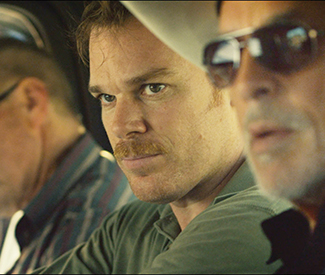
Well, some of its characters. Cold in July begins with a killing, but the trigger hand is attached to mild-mannered frame-store owner Richard Dane (Dexter‘s Michael C. Hall, rocking a splendid mullet). The masked man he shot was breaking into the Dane family home; Richard was just protecting his wife (Vinessa Shaw) and young son (Brogan Hall). That he accidentally, kinda, nailed the burglar — spraying brains everywhere, necessitating amusing later scenes of weary clean-up and furniture replacement — is breezed over by the police (including a cowboy-hatted Damici). “Sometimes, the good guy wins,” they assure him.

The good guy/bad guy dynamic is twisted, tested, and taken to extremes as Cold in July continues; it’s the sort of film best viewed without much knowledge of its plot twists, which are numerous and cleverly plotted. (Which is to say: You may read on, genre junkie, without fear of spoilers, because I don’t wanna ruin anyone’s viewing enjoyment.) The day after his run-in with vigilante justice, Richard realizes he’s the number one conversation topic in his small town, and his shiny local-hero status has attracted the attention of the dead robber’s father (Sam Shepard), just out of the clink and skilled in the art of Cape Fear-style menace.

What happens next is best left a surprise, though it does involve Don Johnson as a flamboyant, convertible-driving pig farmer; plenty more bloodshed; a meeting at a drive-in that just happens to be screening Night of the Living Dead (1968); and the line “You don’t wanna fuck with the Dixie Mafia.” Throughout, Cold in July expertly works its 1980s setting as both homage to and embodiment of the era’s gritty thrillers; its synth-heavy score and neo-noir lensing (by frequent Mickle collaborators Jeff Grace and Ryan Samul, respectively) and the casting of Wyatt Russell (son of Kurt; he was also in We Are What We Are) in a key role add to the feeling that Cold in July was crafted after much time spent in the church of St. John Carpenter. There’s humor, too, deployed with careful timing that doesn’t compromise the slow-burning tension that builds throughout — as when Richard celebrates some good news by headbanging to period-perfect power rock in his enormous, wood-paneled station wagon.

Most intriguingly, and for all its retro trappings, Cold in July offers a very modern exploration of masculinity via all of its leads, though Richard is obviously the embodiment of this theme. “I’ve been waiting for something big like this,” he says to his wife before slithering away on a secret road trip (she thinks he’s talking about landing an important new client). Unlike Viggo Mortensen’s secret gangster in 2005’s A History of Violence, which begins with a similar premise (family guy shoots someone in self-defense, opening a can of worms in the process), Richard has zero past aggression to draw on; dude’s got a history of mildness — with a heretoforth untapped curiosity about the wilder side of life awakened by a sudden bloody act. Once again, Mickle has delivered an unfuck-with-able film. Can’t wait to see what he does next. *


COLD IN JULY opens Fri/30 in Bay Area theaters.

Eternal beauty

1

arts@sfbg.com

FILM Hollywood in the 1920s was shameless about inventing fictitious back stories for its stars, especially those “exotics” exploited for their allegedly foreign-bred mystery and sexual magnetism. The enormous success of Rudolph Valentino — whose 1921 breakthrough feature The Four Horsemen of the Apocalypse opens this year’s San Francisco Silent Film Festival — sparked a particular craze for “Latin lover” types whose true ethnicity was often disguised. (One such heartthrob, Ricardo Cortez, was in fact Jewish New Yorker Jacob Krantz — and when word got out that he was no Spaniard, the studio “confessed” that he was “really” Viennese.)

Yet the era’s leading Latina actress required little such invention, because her biography already sounded like a studio press release. Dolores del Rio was born Maria Dolores Asúnsolo y López Negrete to a wealthy, well-connected Mexico City family of Spanish ancestry. Convent-educated, she married at age 16 a patron of the arts over twice her age, with whom she honeymooned in Europe for two years. Upon returning home, she attended a wedding at which her beauty caught the eye of Edwin Carewe — a Hollywood producer, director, agent, and manager who in all those capacities soon began making her a star. Her first hit was as the main girl fought over by ever-sparring BFF Marines in World War I comedy-adventure What Price Glory?, a 1926 smash.

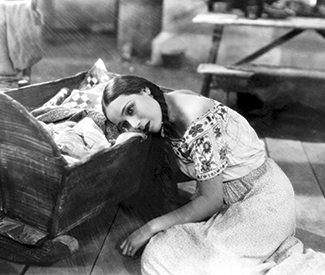
Her exquisite three-quarter-moon face, framed by long jet-black hair, then graced a series of romances in which she played Russian peasants, tropical maidens, hot-blooded gypsies, Carmen (of operatic fame), and Ramona (1928) — the latter a gorgeous half-caste in old Spanish California. She’s yearned over by the genteel master of the ranchero (Roland Drew), but prefers virile Indian shepherd Alessandro (Ohioan Warner Baxter, shirtless but wearing plenty of shiny bronzer). This third screen version of a hugely popular 1884 novel was boosted at the box office by an original title song recorded by many (including trilling soprano del Rio herself), and featured in the 1928 film’s synchronized-sound version (which offered sound effects and music but no dialogue).

Ramona was assumed lost for decades until a Czech-market print was discovered recently, its restoration premiering in Los Angeles just two months ago. The 2014 SF Silent Film Festival is full of movies that belie their age in one way or another — yet this hunk of overripe hooey feels a thousand years old. It’s surely the worst film in the festival, what with its mean-crone stepmother (“If you marry without my consent, the jewels will go to the church!”), teetering pileup of melodramatic crises, and particularly howl-worthy happy ending. Nor has del Rio’s heavily gestural performance aged well, with nary a genuine note to be found in an emotional gamut that galumphs from cow-eyed innocence to amnesiac shock. Still, she’s gorgeous. Whether cast as prole or grande dame, her looks were so striking it was natural for del Rio to become a beauty icon, promoting cosmetics and fashion as “the perfect feminine figure” — a title she won in leading movie mag Photoplay’s 1933 poll of industry glamour experts.

Del Rio was very conscious of her image — and of her responsibility representing Mexican culture to the world. Unlike rival Lupe Velez, she preferred projecting a more languorous, refined persona than the stereotypically comic, tantrum-throwing “hot mama” Latina. She disliked skimpy costumes and risqué scenes (though one of her biggest hits would be 1932’s Bird of Paradise, a charming bauble of pure eye-candy in which her island princess and Joel McCrea’s sailor pitch woo wearing as little as possible). She turned down the female lead in 1934’s Viva Villa!, suspecting that film’s take on recent Mexican history would be controversial at home. (Indeed, it was banned there.)

Her public character was invariably elegant and dignified — never mind that sometimes her affairs preceded her divorces. One high-profile lover was 10-years-younger Orson Welles. He took her to Citizen Kane‘s 1941 premiere and starred her in 1943’s spy intrigue Journey Into Fear. But when their relationship flamed out, and Hollywood’s affection too had cooled, del Rio at last returned to Mexico. There, she soon established herself as the local film industry’s leading female star — exclusively playing suffering, virtuous heroines — winning a total of four Ariels (Mexico’s Oscar) and very rarely returning to English-language features. When she did, it was no longer as the hothouse object of desire, but as a sacrificing mother, notably to Elvis in Flaming Star (1960) and to Sal Mineo in Cheyenne Autumn (1964), both times playing Native Americans à la the half-Indian Ramona. Such semi-color blind casting and “proud matriarch” roles provided a logical last act to a career that was honorable and iconic — if seldom quite so impressive in, y’know, the acting department.

Ramona may survive primarily as a somewhat campy cultural artifact, but nearly everything else in this year’s Silent Fest remains outstanding artistically, including 1928 German heartbreaker Under the Lantern, and the same year’s fine British working-class drama Underground. There’s also 1923’s The Sign of Four, an excellent Sherlock Holmes adventure, so long as you can overlook some very dated race and class attitudes; atypical early works by Ozu (1933 gangster saga Dragnet Girl) and Dreyer (sprightly 1920 The Parson’s Widow); a goofy Soviet science fiction (1936’s Cosmic Voyage); mountain climbing documentary The Epic of Everest (1924); plus vehicles for Douglas Fairbanks, Buster Keaton, and pioneering French comedian Max Linder (1921’s Seven Years Bad Luck). *

SAN FRANCISCO SILENT FILM FESTIVAL

Thu/29-Sun/1, most shows $15-20

Castro Theatre

429 Castro, SF

www.silentfilm.org


Event Listings: May 28-June 3, 2014

0

Listings are compiled by Guardian staff. Submit items for the listings at listings@sfbg.com. For further information on how to submit items for the listings, see Selector.

WEDNESDAY 28

Cassandra Dallett Pegasus Books Downtown, 2349 Shattuck, Berk; www.pegasusbookstore.com. 7:30pm, free. The author celebrates her poetic memoir, Wet Reckless.

Madison Young Booksmith, 1644 Haight, SF; www.booksmith.com. 7:30pm, free. The author and sex-positive activist reads from her memoir, Daddy.

THURSDAY 29

“BiConic Flashpoints: Four Decades of Bay Area Bisexual Politics” GBLT History Museum, 4127 18th St, SF; www.glbthistorymuseum.org. Opening reception 7-9pm, $3-5. A new multimedia exhibit explores the history of bisexual activism in the Bay Area since the 1970s.

“Chemical Reactions NightLife” California Academy of Sciences, 55 Music Concourse, Golden Gate Park, SF; www.calacademy.org. 6-10pm, $12. “Think before you drink” with author Adam Rogers (Proof:: The Science of Booze), get a close-up (like, microscopic) look at beer brewing, dance to disco with DJ BANG!, and more.

SATURDAY 31

“Babylon Salon” Cantina SF, 580 Sutter, SF; www.babylonsalon.com. 6:30pm, free. With readings by Kathryn Ma, Dave “Davey D” Cook, Porter Shreve, and Kirstin Chen, plus a musical performance by singer-songwriter Ying-sun Ho.

Chocolate and Chalk Art Festival Shattuck between Rose and Vine, Berk. www.anotherbullwinkelshow.com/chocolate-chalk-art. 10am-5pm, free. Chalk artists compete for prizes while turning the sidewalks into eye candy — and speaking of candy, sweet tooth-ers can pick up ticket packs ($20 for 20) to sample chocolate items galore, including exotic treats like picante habañero chocolate gelato.

“Ecology Center Farmers’ Markets Family Fun Festival” Civic Center Park, MLK at Center, Berk; www.ecologycenter.org. 10am-3pm, free. Petting zoos (baby goats!), bouncy houses, an obstacle course, puppet-making using recycled materials, a zine-making station, and more green fun.

Maddie’s Pet Adoption Days Pet Food Express, 3868 Piedmont, Oakl; www.mainecoonadoptions.com (check web site for additional locations). 9am-3pm, free. Also Sun/1, 10am-3pm. Nonprofit cat-rescue organization Maine Coon Adoptions offers free adoptions of cats and kittens in honor of Maddie’s Pet Adoption Days, the largest free pet adoption event in the country.

SUNDAY 1

“Poetry Unbound #13” Art House Gallery, 2905 Shattuck, Berk; berkeleyarthouse.wordpress.com. 5pm, $5. Reading with COPUS, Charles Curtis Blackwell, and Kayla Sussell, with a brief open mic hosted by Clive Matson and Richard Loranger.

MONDAY 2

“Invisible Hands: Voices from the Global Economy” David Brower Center, Goldman Theater, 2150 Allston, Berk; www.browercenter.org. 7pm, free. The Brower Center and Voice of Witness partner for this book launch (Invisible Hands) and panel discussion on the state of labor the global economy.

“13 Crime Stories from Latin America: McSweeney’s Quarterly Concern #46” Booksmith, 1644 Haight, SF; www.booksmith.com. 7:30pm, free. Editor Daniel Gumbiner and translators Katherine Silver and Joel Streiker discuss this new collection of work by contemporary writers from 10 different countries.

“Todd Trexler: A Solo Exhibition of His Legendary Portraits” Magnet, 4122 18th St, SF; www.magnetsf.org. Gallery hours: Mon-Tue and Sat, 11am-6pm; Wed-Fri, 11am-9pm. Opening reception June 6, 7-10pm. Free. Legendary poster artist Todd Trexler (the Cockettes, Sylvester, Divine) shows his work in the first exhibit of its kind in over 40 years.

TUESDAY 3

“Creating Children’s Books: An Immigrant’s Story” San Francisco Main Library, 100 Larkin, SF; www.sfpl.org. 6pm, free. Author Yuyi Morales (Niño Wrestles the World) delivers the SFPL’s 18th annual Effie Lee Morris Lecture, discussing the need for diversity in children’s literature.

James Fearnley Booksmith, 1644 Haight, SF; www.booksmith.com. 7:30pm, free. The music biographer discusses Here Comes Everybody: The Story of the Pogues. *


Fool me once…

8

rebecca@sfbg.com

As any job seeker knows, it’s tough to compete for a desirable gig if you can’t point to a solid track record. You might think this would be especially true for city contractors who stand to make a killing on lucrative construction projects.

Take, for instance, a $283.2 million San Francisco Public Utilities Commission contract awarded to perform an absolutely essential service: making seismic and hydraulic retrofits to water-treatment units.

With close to $300 million in taxpayer dollars on the line, not to mention the general importance of having a properly functioning water treatment system in the event of an earthquake, you might think the city would kick some tires and make a few inquiries about the company’s track record before signing a deal.

But according to the results of an audit issued May 20 by the Office of the Controller, local agencies do not “consider past performance in the construction contract award process.”

Which is to say, there is no mechanism preventing city agencies from awarding high-paying construction gigs — over and over again — to bidders who have done a terrible job in the past.

For the water-treatment fixes, the SFPUC wound up selecting what the controller’s audit charitably termed a “poor-performing” contractor. It didn’t go well: The company “delivered poor quality control, and applied poor project management,” according to the audit.

It issued 87 “change orders” — adding work beyond what was outlined in the original contract — consequently padding the bill by an additional $2.1 million. And this contractor was hit with 70 noncompliance notices, issued when a contractor isn’t following the obligations spelled out in the contract. Sending out those notices eats up city resources, auditors noted, while following up on them necessitates further inspections and site visits.

Although the audit didn’t name the contractor, the amount allocated and work described suggests that it was Keiwit Infrastructure West Co., hired to take on a water treatment plant retrofit project at the SFPUC’s Harry Tracy facility, which treats drinking water that originates at the Crystal Springs Reservoir System.

According to the project website, “Seismic retrofits and electrical upgrades will allow us to reliably provide up to 140 million gallons of water per day, for 60 days, within 24 hours of a major earthquake. Harry Tracy serves several communities on the Peninsula in addition to San Francisco.” The company didn’t return a call from the Guardian seeking comment.

Why was a problematic contractor entrusted with such a critical project? According to the audit, city law does in fact require a contractor to have “a record of prior timely performance,” and a history of dealing with the city “in good faith.”

But there’s no system for holding contractors to these standards. Since the city has no system in place for evaluating bids based on a contractors’ past performance, it’s anyone’s guess whether this contractor had a poor track record before being hired — and there is nothing to prevent the firm from being hired yet again despite the problems encountered by the SFPUC.

The city contracting process follows a scoring system to ensure that the contract award is impartial and equitable — but since it doesn’t factor in a contractor’s prior track record, that’s never formally considered.

And because the city doesn’t require contractor evaluations, or maintain any centralized database of records showing how well contractors have carried out their duties in the past, “poor-performing contractors — even contractors incapable of performing the work on which they bid — can secure additional city contracts,” auditors found.

This SFPUC contract was just one example. The report also highlighted a case study from the San Francisco International Airport, in which a construction crew botched a welding job performed as part of a $15 million contract to build a pedestrian bridge and mezzanine to an airport terminal. The report outlines what went wrong, citing “inadequate installation and missed steps in the welding procedures; bolt holes were misaligned and measured incorrectly.” As a result, SFO issued 59 noncompliance notices.

A contractor hired by the Department of Public Works, for a $5.2 million neighborhood branch library project, was reportedly “aggressive and argumentative … focused on preparing a claim instead of the project,” and “left the job midway through the project,” the audit notes. After that went south, the city spent $85,000–$100,000 on litigation, finally completing the job with the city’s own workforce.

The coming decade promises to be golden for city contractors who work in the construction sector. San Francisco has budgeted more than $25 billion for ambitious projects under its capital improvement plan, so many lucrative construction opportunities will arise.

The Controller’s City Services auditor has kept a watchful eye on construction over the past couple years, Director of City Audits Tonia Lediju told the Guardian. That led to the discovery that the city lacks a process for tracking contractors’ past performance when making hiring decisions.

“Given what we learned from our previous audits, not to mention … our reliance on contractors to accomplish our city’s capital plan, the Controller’s Office decided to conduct this audit to more formally assess the adequacy of the departments’ contractor evaluation processes,” Lediju explained.

As part of the audit, the Controller’s Office surveyed construction management staff at various city agencies, finding that a full 70 percent of them reported encountering poor-performing contractors “at least occasionally.”

To address the gaping problems in the construction contracting system, the Office of the Controller recommended that city agencies work with the Mayor’s Office, the Board of Supervisors, and the City Attorney’s Office to strengthen the law by requiring contractor performance evaluations to be completed — and to consider those evaluations when awarding contracts. With $25 billion in spending over the next 10 years, this might be a wise move.

Agnos offers waterfront development history lesson during SFT speech

19

[Editor’s Note: This is the text of a speech that former Mayor Art Agnos gave at San Francisco Tomorrow’s annual dinner on May 21. We reprint it here in its entirely so readers can hear directly what Agnos has been saying on the campaign trail in support of Prop. B]

I am delighted to speak to the members and friends of SFT about the waterfront tonight…and a special shout out to Jane Morrison as one of the pioneer professional women in the media and one of the finest Social Service Commissioners in our City’s history.

I also welcome the opportunity to join you in honoring tonight’s unsung heroes: Becky Evans, with whom I have worked closely over the past year and half; Tim Redmond, the conscience of the progressive community for the past 35 years; and Sara Shortt and Tommi Avicolli Mecca from the Housing Rights Committee, who stand up every day for poor and working people who need a voice in our city.

Twenty-four years ago, in 1990, I made one of the best decisions of my mayoralty when I listened to the progressive environmental voice of San Francisco and ordered the demolition of the Embarcadero Freeway. That freeway was not only a hideous blight but also a wall that separated the city from its waterfront.

Hard to believe today, but it was a very controversial decision back then. Just three years before, in 1987, the voters had defeated a proposal by Mayor Feinstein to demolish it. The Loma Prieta Earthquake gave us a chance to reconsider that idea in 1990.

Despite opposition of 22,000 signatures on a petition to retrofit the damaged freeway, combined with intense lobbying from the downtown business community led by the Chamber of Commerce, North Beach, Fisherman’s Wharf, and especially Chinatown, we convinced the Board of Supervisors to adopt our plan to demolish the freeway, by one vote.

And the rest is history — until today.

After a period of superb improvements — that include a restored Ferry Building, the ball park, two new public piers where one can walk further out into the bay than ever before in the history of this city, the Exploratorium, the soon to be opened Jim Herman Cruise Ship Terminal, Brannan Wharf Park — there is a new threat.

Private development plans that threaten to change the environment of what Herb Caen first called “our newest precious place,” not with an ugly concrete freeway wall, but with steel and glass high-rises that are twice as tall. Today, the availability of huge amounts of developer financing, combined with unprecedented influence in City Hall and the oversight bodies of this city, the waterfront has become the new gold coast of San Francisco.

Politically connected developers seek to exploit magnificent public space with high-rise, high profit developments that shut out the ordinary San Franciscan from our newest precious place. We love this city because it is a place where all of us have a claim to the best of it, no matter what our income, no matter that we are renter or homeowner, no matter what part of the city we come from.

And connected to that is the belief that waterfront public land is for all of us, not just those with the biggest bank account or most political influence. That was driven home in a recent call I had from a San Franciscan who complained about the high cost of housing for home ownership or rent, the high cost of Muni, museum admissions, even Golden Gate Bridge tours, and on and on.

When he finished with his list, I reminded him I was mayor 23 years ago and that there had been four mayors since me, so why was he complaining to me? “Because you are the only one I can reach!” he said.

Over the past few weeks, that message has stuck with me. And I finally realized why. This is what many people in our city have been seeking, someone who will listen and understand. Someone who will listen, understands, and acts to protect our newest precious place, our restored waterfront.

You see, it was not just about luxury high-rise condos at 8 Washington last year. It was not just a monstrous basketball arena on Pier 30-32 with luxury high-rise condos and a hotel across the street on public land. It’s about the whole waterfront that belongs to the people of San Francisco, all seven and a half miles of it, from the Hyde Street Piers to India Basin. And it must be protected from the land use mistakes that can become irrevocable.

This is not new to our time: 8 Washington and the Warriors arena were not the first horrendous proposals, they were only the latest. Huge, out of scale, enormously profitable projects, fueled by exuberant boosterism from the Chamber of Commerce, have always surfaced on our waterfront.

Fifty years ago, my mentor in politics, then-Supervisor Leo McCarthy said, “We must prevent a wall of high rise apartment along the waterfront, and we must stop the filling in of the SF bay as a part of a program to retain the things that have made this city attractive.”

That was 1964. In 2014, former Board of Supervisors President Aaron Peskin said it best this way: “It seems like every 10 years, every generation has to stand up to some huge development that promises untold riches as it seeks to exploit the waterfront and our public access to it.”

Public awareness first started with the construction of the 18 stories of Fontana towers east and west in 1963. That motivated then-Assemblyman Casper Weinberger to lead public opposition and demand the first height limits, as well as put a stop to five more Fontana-style buildings on the next block at Ghirardelli Square. This was the same Casper Weinberger who went on to become Secretary of HEW [formerly the Department of Health, Education, and Welfare] and Secretary of Defense under President Ronald Reagan.

In 1970, the Port Commission proposed to rip out the then “rotting piers” of Piers 1 – 7 just north of the Ferry Building. They were to be replaced with 40 acres of fill (three times the size of Union Square) upon which a 1200-room hotel and a 2400 car garage would be built.

It passed easily through Planning and the Board of Supervisors. When the proposal was rejected on 22 to 1 vote by BCDC [the San Francisco Bay Conservation and Development Commission], Mayor Alioto complained, “We just embalmed the rotting piers.”

No, we didn’t, we saved them for the right project. And if one goes there today, they see it, the largest surviving renovated piers complex with restaurants, walk-in cafes, Port offices, free public docking space, water taxis, and complete public access front and back. In 2002, that entire project was placed on the U.S. National Historic Register.

But my favorite outrageous proposal from that time was plan to demolish another set of “rotting piers” from the Ferry Building south to the Bay Bridge. And in place of those rotting piers, the plans called for more landfill to create a Ford dealership car lot with ,5000 cars as well as a new shopping center. That too was stopped.

So now it’s our turn to make sure that we stop these all too frequent threats to the access and viability of our waterfront. In the past two weeks, we have seen momentum grow to support locating the George Lucas Museum on Piers 30-32 or the sea wall across the Embarcadero.

I love the idea, but where would we be with that one if a small band of waterfront neighbors and the Sierra Club had not had the courage to stand up to the Warriors and City Hall two years ago. Once again, they used the all too familiar refrain of “rotting piers” as an impending catastrophe at Piers 30-32.

Proposition B will help prevent mistakes before they happen. Most of all, Prop. B will ensure protection of the Port on a more permanent basis by requiring a public vote on any increases to current height limits on Port property. All of the current planning approval processes will stay in place — Port Commission, Planning Commission, Board of Permit Appeals, Board of Supervisors, all will continue to do what they have always done.

But if a waiver of current height limits along the waterfront is granted by any of those political bodies, it must be affirmed by a vote of the people. Prop B does not say Yes or No, it says Choice. It is that simple. The people of SF will make the final choice on height limit increases on Port property.

The idea of putting voters in charge of final approval is not new. In the past, the people of San Francisco have voted for initiatives to approve a Children’s budget, a Library budget, retaining neighborhood fire stations, minimum police staffing, as well as to require public authorization for new runway bay fill at our airport. And at the Port itself, there have been approximately 18 ballot measures to make land use and policy decisions.

So we are not talking about ballot box planning, we are talking about ballot box approval for waivers of existing height limits on public property. Opponents like Building Trades Council, Board of Realtors, and Chamber of Commerce are raising alarms that we will lose environment protections like CEQA by creating loopholes for developers. Astonishing!

Prop B is sponsored by the Sierra Club. Tonight we honor Becky Evans of the Sierra Club who sponsored Proposition B. That same set of opponents are joined by city bureaucrats issuing “doomsday” reports stating that we will lose thousands of units of middle class housing, billions of dollars in Port revenues, elimination of parks and open space on the waterfront. Astonishing!

These are the same bureaucrats who issued glowing reports a couple of years ago that the America’s Cup would mean billions in revenue for the Port and the city. And they wanted to give Oracle’s Larry Ellison 66-year leases to develop on five of our Port piers for that benefit! Now, how did THAT work out? So far, City Hall will admit to $11 million in known losses for the taxpayers. Another opponent, SPUR [San Francisco Planning and Urban Research Association], says any kind of housing will make a difference and there are thousands in the pipeline, so don’t worry. Astonishing!

We have not seen one stick of low income or affordable housing proposed on the waterfront since the ‘80s and ‘90s when Mayor Feinstein and I used waterfront land for that very purpose. Hundreds of low-income housing dwellings like Delancey Street and Steamboat Point Apartments, affordable and middle class housing like South Beach Marina apartments and Bayside village, comprise an oasis of diversity and affordable housing in the midst of ultra expensive condos.

For me, that was part of an inaugural promise made in January 1988. I said, “At the heart of our vision is a refusal to let San Francisco become an expensive enclave that locks out the middle class, working families, and the poor. At the center of our strategy is a belief in the basic right of people to decent jobs and housing.”

Yes, that was the commitment on public land on the waterfront by two mayors of a recent era, but not today. Indeed, San Francisco has been rated the #1 least affordable city in America, including NY Manhattan. That is one of the many reasons we see middle class people, as well as working poor, being forced to leave San Francisco for Oakland and elsewhere in the Bay Area.

That reality was reinforced in the February 10, 2014 issue of Time Magazine. Mayor Lee said, “I don’t think we paid any attention to the middle class. I think everybody assumed the middle class was moving out.”

Today, an individual or family earning up to $120,000 per year — 150 percent of the median in this city — does not qualify for mortgage and can’t afford the rent in one of the thousands of new housing units opening in the city. The Chronicle reported a couple of weeks ago that a working family of three who have lived in a rent-controlled studio apartment in the Mission was offered $50,000 to leave.

That is what the purely developer-driven housing market offers. And that philosophy is reinforced by a Planning Commission whose chair was quoted in December 2013 issue of SF Magazine saying, “Mansions are just as important as housing.”

Prop B changes that dynamic by putting the citizen in the room with the “pay to play” power brokers. That is what it is all about my friends: Power.

Former SF city planning director and UC School of City Planning Professor Alan Jacobs recently related what he called the Jacobs Truism of land economics: “Where political discretion is involved in land use decisions, the side that wins is the side with the most power. And that side is the side with the most money.”

Prop B will ensure that if developers are going to spend a lot of money to get a height waiver on Port property, the best place to spend it will be to involve, inform, and engage the citizen as to the merit of their request, not on the politicians. Today that power to decide is in a room in City Hall. I know that room. I have been in that room.

You know who is there? It is the lobbyists, the land use lawyers, the construction union representatives, the departmental directors, and other politicians. You know who is not in the room? You. The hope is that someone in that room remembers you.

But if you really want your voice to be heard, you have to go to some departmental hearing or the Board of Supervisors, wait for three or four hours for your turn, and then get two minutes to make your case. Prop B changes that dynamic and puts you in the room that matters. No more “advisory committees” that get indulged and brushed off. No more “community outreach” that is ignored.

It will all matter. That is why today there is no opposition from any waterfront developer. They get it. We are going to win. It is easy to see how the prospect of Prop B on the ballot this June has changed the dynamics of high-rise development along the waterfront.

The Warriors have left and purchased a better location on private land in Mission Bay. The Giants have publicly announced that they will revise their plans with an eye to more appropriate height limits on Port land. Forest City is moving with a ballot proposal to use Pier 70 to build new buildings of nine stories, the same height as one of current historic buildings they will preserve on that site for artists.

The Pier 70 project will include 30 percent low-income, affordable and middle class housing on site, along with low-tech industries, office space, and a waterfront promenade that stretches along the entire shoreline boundary. A good project that offers what the city needs will win an increase in height limits because it works for everybody. A bad one will not.

My friends, I have completed my elected public service career. There will be no more elections for me. And as I review my 40 years in public life, I am convinced of one fundamental truth: The power of the people should, and must, determine what kind of a city this will be.

It must not be left to a high-tech billionaire political network that wants to control City Hall to fulfill their vision of who can live here and where. It starts with you, the people of this city’s neighborhoods, empowered to participate in the decisions that affect our future. You are the ones who must be vigilant and keep faith with values that make this city great.

This city is stronger when we open our arms to all who want to be a part of it, to live and work in it, to be who they want to be, with whomever they want to be it with. Our dreams for this city are more powerful when they can be shared by all of us in our time.

WE are the ones, here and now, who can create the climate to advance the San Francisco dream to the next generation. And the next opportunity to do that will be election day June 3.

Thank you.


Bay Guardian Community Forum! Bikes, buses, and budgets: How to create the transportation system San Franciscans need

58

Join the San Francisco Bay Guardian as we explore the current swirl of challenges and initiatives that will determine how people get around San Francisco. We’ll discuss transportation funding measures recently placed on the fall ballots this year and in 2016, big ideas such as tearing down I-280 and taking a Bay Bridge deck for bikes and buses, and the gap between political rhetoric and realities on the street along with a panel of key experts and activists. This is a free community event, and attendees will be entered into a raffle for an A2B electric bicycle, with a winner selected at the end of the event.

Panelists:

Supervisor Scott Wiener — Wiener represents San Francisco’s Supervisorial District 8 (Castro, Upper Market) and he has taken the lead role on the Board of Supervisors and Metropolitan Transportation Commission in advocating for dedicated funding sources for transportation project and challenging his colleagues to get serious about the challenges we face.

Professor Jason Henderson — As a geography professor at San Francisco State University, Henderson has focused his research and teaching on urban transportation issues. He’s also the author of Street Fight: The Politics of Mobility in San Francisco and he writes the Guardian’s popular and controversial monthly Street Fight column.

Chema Hernández Gil — Hernández Gil is a community organizer with the San Francisco Bicycle Coalition, San Francisco largest member-based grassroots advocacy organization, which has recently been highlighting funding shortfalls in creating the bicycling infrastructure needed to accommodate a growing number of cyclists. 

Susan King — King coordinates the popular Sunday Streets program, which creates temporary car-free spaces in San Francisco, the latest endeavor in a long history of transportation activism ranging from working for Livable City to helping found WalkSF to serving on the city’s Bicycle Advisory Committee to working on transit justice campaigns.


Moderators: Guardian Editor-in-Chief Steven T. Jones and News Editor Rebecca Bowe


Agenda:

6-7pm: Panel discussion — Prompted by questions from the moderators, panelists will share their insights into what kind of the transportation system San Francisco needs to address a growing population amid global warming and other environmental challenges, how to overcome the multi-billion-dollar funding shortfalls that have been identified, the political/ideological context of this debate, and other issues.

7-7:15pm: Break and networking — Stretch your legs, meet fellow concerned citizens, enjoy snacks provided by the Guardian, sign up for the A2B bike raffle, and prepare your remarks

7:15-8pm: Comments and questions: What do you think San Francisco needs from its transportation system and how do we get it? This is your chance to offer your ideas and/or ask questions of our panelists (note: Wiener has a prior engagement and will only be there for first hour, sorry). This is also a time for panelists to raise big, thought-provoking ideas and get audience feedback.

8pm-?: Haven’t had enough? Join the diehards over at Zeitgeist to continue the discussion over pitchers of beer and burgers. 


The legacy of Harvey Milk, and remembering the “Twinkie Defense”

23

Today is Harvey Milk’s birthday, but are we celebrating the life of a champion for social justice, or only remembering his assassination? As San Franciscans mourn the city supervisor who fought for gay rights and other progressive issues in San Francisco and statewide, we thought we’d share with you selected articles from our “Milk Issue, [11/18/08]” that discussion his death by examining his life. 

The year was 2008, and to commemorate the opening of the biopic film, Milk, we devoted an issue of the Bay Guardian to honoring the man who gave ’em hope.

In the first selected piece, Guardian founding publisher Bruce Brugmann recalls his first brush with Milk, and the last time he saw him alive. In our second piece, the Guardian’s current Publisher Marke B. asks if the LGBT movement canonizes Milk’s death without honoring what his life stood for, an important lesson to remember now. The third selection by current and former Guardian Editors-in-Chief, Steven T. Jones and Tim Redmond respectively, who remember Milk’s progressive politics. Our fourth piece, penned by soon-to-be termed out Assemblyperson Tom Ammiano, a Milk political ally who dissects the oh-too-familiar tone of discrimination rising up from the opposition to naming San Francisco Airport after Milk. Lastly, a reporter who covered the Milk assassination takes us through a first person account of covering the trial of Milk’s killer, Dan White.

And as an extra bonus, we’ve embedded the issue from after the Dan White trial as a PDF at the bottom of this page.

Check them out below, and remember Milk not only as a man who died, but as a man who lived, and raised hell. 

The Bay Guardian “Milk” issue, circa 2008:


I REMEMBER HARVEY

Toward the end of the supervisorial campaign in 1973, I got an intercom call from Nancy Destefanis, our advertising representative handling political ads. Hey, she said, I got a guy here by the name of Harvey Milk who is running for supervisor and I think you ought to talk to him.

Milk? I replied. How can anybody run for supervisor with the name of Milk?

Continued here


THE APATHY AND THE ECSTACY

“OMG! Marriage is the new AIDS!” a friend screeched to me through her cell phone after witnessing West Hollywood’s cop-clashing response to the passage of Proposition 8. She meant, of course, the unexpected, exhilarating, and somewhat clumsy reemergence of queer protest energy that has overtaken many a civic center and public park since the November election and its attendant LGBT letdown.

Continued here.


POLITICS BEHIND THE PICTURE

The new Harvey Milk movie, which opens later this month, begins as a love story, a sweet love story about two guys who meet in a subway station and wind up fleeing New York for San Francisco. But after that, the movie gets political — in fact, by Hollywood standards, it’s remarkably political.

The movie raises a lot of issues that are alive and part of San Francisco politics today. The history isn’t perfect (see sidebar), but it is compelling. And while we mourn Milk and watch Milk, we shouldn’t forget what the queer hero stood for.

Continued here.


MILK’S REAL LEGACY

Ever since Supervisor David Campos announced his proposal to add Harvey Milk’s name to SFO, there’s been an unending string of criticism — mostly from one source — that has an eerily familiar ring to it.

We heard it years ago when we tried to change the name of Douglas School in the Castro to Harvey Milk Civil Rights Academy. Believe it or not, it took seven years before the School Board finally voted for the name change — and there was still bitterness. This was a school in Harvey’s neighborhood that Harvey personally helped when he was alive.

Continued here.


BEHIND THE TWINKIE DEFENSE

This month marks the 30th anniversary of the assassination of San Francisco Mayor George Moscone, who wanted to decriminalize marijuana, and Supervisor Harvey Milk, the first openly gay individual to be elected to public office in America. November also marks the release of a film about the case titled Milk. Although a former policeman, homophobic Dan White, had confessed to the murders, he pleaded not guilty. I covered his trial for the Bay Guardian.

I’m embarrassed to admit that I said “Thank you” to the sheriff’s deputy who frisked me before I could enter the courtroom. However, this was a superfluous ritual, since any journalist who wanted to shoot White was prevented from doing so by wall-to-wall bulletproof glass…

Continued here

San Francisco Bay Guardian after Harvey Milk’s death by FitztheReporter


San Francisco Bay Guardian after Harvey Milk's death by FitztheReporter

This Week’s Picks: May 28 – June 3, 2014

0

WEDNESDAY 21


Brody Dalle

There is a serious deficit of female fierceness in punk rock at the moment. The music industry as a whole is a boys’ club, and it’s incredibly difficult for women to make a name for themselves in rock. Not only has Brody Dalle done this, she’s done it three times over, fronting beloved LA punk bands the Distillers and Spinnerette, and now as a solo artist, with her new record Diploid Love. She’s an inspiration in many ways — as a formidable frontperson, gifted musician, badass artist, and mother — and now, over 15 years since the Distillers began writing and performing, her work is tighter than ever. Diploid Love is a departure from the straightforward punk aesthetic of the Distillers and the pure rock ‘n’ roll of Spinnerette — the songs range from ballads and torch songs to angry rockers, all of them solid and heartfelt. Dalle’s versatility is impressive, but I’m happy to say that through it all she manages to keep her trademarked sonic sneer that made us fall in love with her to begin with. (Haley Zaremba)

$14, 8pm

Slim’s

333 11th St, SF

(415) 255-0333

www.slimspresents.com


‘Milk’

On May 21, 1979, Dan White was convicted of manslaughter and sentenced to just seven years in jail for assassinating Mayor George Moscone and Supervisor Harvey Milk. Thirty-five years ago today, the city took to the streets in outrage over the lenient sentence of a murderer. The White Night riots began with a march down Castro Street, continued into violent protests at City Hall and finished with police retaliation, tear gas, vandalization, and injury. Needless to say, Harvey Milk lived on as a hero of the gay rights movement in San Francisco and around the country. In honor of this anniversary, the Castro Theatre is celebrating Milk’s legacy with a special screening of Gus Van Sant’s Academy Award-winning Milk, starring Sean Penn as our favorite gay rights activist. The film chronicles the last eight years of Milk’s life, and how he changed this city for the better. (Laura B. Childs)

5:30pm and 8pm, $11

Castro Theatre

429 Castro, SF

(415) 621-6350

www.castrotheatre.com


THURSDAY 22


The Acro-Cats

If you attended either the Roxie’s or Oakland’s cat video festival a couple weeks ago and have been in feline withdrawal ever since, have no fear — the cat circus is here. Yes, it’s the Acro-Cats, an all-kitty circus troupe, complete with a cat rock band, that’s touring the country. Feats of derring-do will include cats jumping through hoops, cats jumping on tightropes, cats riding on skateboards, cats balancing on balls…you get the idea. They also arrive in a “Cat Car.” Founder Samantha Martin has taken in over a dozen stray or orphaned cats and found homes for 130 more in her lifetime; a percentage of ticket sales will go to kitty rescue programs. Sounds like a purrr-fect evening to me. (Emma Silvers)

Through Sun/25, 8:30pm, $24

The Southside Theatre at Fort Mason Center, SF

www.circuscats.com


Black Flag

Legendary punk band Black Flag blazed the path for underground music in the United States during the 1970s and ’80s with its rigorous work ethic, groundbreaking recordings, and relentless touring that built a network and foundation for independent artists that still exists today. Recently resurrected by Greg Ginn, the founder-guitarist-primary songwriter and sole continuous member, the band released its first new record in nearly two decades last year, and is once again hitting the road and ripping through the new tunes along with old favorites like “TV Party,” “Six Pack” and “Rise Above.” (Sean McCourt)

With HOR, Cinema Cinema and Violence Creeps

8pm, $20-$25

Brick and Mortar Music Hall

1710 Mission, SF

(415) 800-8782

www.brickandmortarmusic.com


Rock ‘n’ roll history: ‘American Jukebox’

“Plug into this jukebox and see the face and figures behind the greatest American Music,” says the co-founder of City Lights Bookstore, Lawrence Ferlinghetti, about American Jukebox. For Christopher Felver’s newest photography book, 240 photographs from tours and encounters with musicians over the past 25 years have been compiled into a photographic journey chronicling the heritage of American music and capturing its lively spirit. Scattered between playlists, autographed lyrics, record sleeves, and anecdotes are portraits of musicians caught in action on stage or posed under Felver’s lens. From Doc Watson to John Cage and Sonny Rollins to Patti Smith, American Jukebox celebrates the vitality of the music industry and its rich history. The photographer will appear in person to read and sign books. (Childs)

7pm, free

Books Inc. Bookstore Opera Plaza

601 Van Ness, SF

(415) 776-1111

www.booksinc.net


FRIDAY 23


The Avengers

One of the best bands to come out of the San Francisco punk scene in the late 1970s, the Avengers mixed impassioned politics and social commentary into their potent blend of dynamic and invigorated music. Fronted by singer Penelope Houston, they secured themselves a place in history when they opened for the Sex Pistols’ final gig at Winterland in January of ’78 and threatened to steal the show. Though they lasted only a couple of years before they broke up, the group made a lasting impression — and now, 35 years later, Houston and original guitarist Greg Ingraham are back and better than ever. (McCourt)

With Kicker and California

9pm, $15

The Chapel

777 Valencia, SF

(415) 551-5157

www.thechapelsf.com


Rocketship

They might not have ever achieved widespread mainstream success, but the Sacramento-based band Rocketship had enough of a devoted following in the ’90s that news of their reunion for this year’s Popfest caused more than a little ripple of excitement among indie-pop lovers. This Slumberland Records showcase, part of the little indie-fest-that-could’s special weekend of bringing fuzz- and grunge-pop favorites from the ’90s and aughts back together, has a pretty stellar lineup from start to finish — you’re sure to see some cardigan-sporting superfans out in full force. (Emma Silvers)

With The Mantles, Bouracer, and The Softies

8pm, $18-$20

Rickshaw Stop

155 Fell, Sf

www.rickshawstop.com


SATURDAY 24

“The Hop”

Looking for a blast from the past party for this holiday weekend? Then check out Handsome Hawk Valentine’s “The Hop,” which will feature rockabilly bands including guitar slinger extraordinaire Deke Dickerson and his Ecco-Fonics and Kay Marie, along with Sin Sisters Burlesque. Slick back that pomp or put on those stilettos and get gone — but if you don’t have time before you get there, don’t worry: You can get in on some free retro hairstyling and photos, and then hoot and holler for the Bettie Page Clothing “Rockabilly Prom King and Queen” contest before you dance the night away. (McCourt)

9pm, $12

Elbo Room

647 Valencia, SF

(415) 552-7788

www.elbo.com


International Beer Festival

In the 30 years since the first International Beer Festival, a lot has changed. It all began with a selection of five beers (Pabst being one of the highlights) to now over 100 international and local craft brewers. Expect local brews from SF staples and Bay Area bites from local gems like the O-inducing Pizza Orgasmica. For over three decades, this beer festival has served as the perfect excuse to drink for a good cause — two birds, one stone — since the festival is entirely organized and staffed by parents of Telegraph Hill Cooperative Nursery School students. The proceeds are donated to Tel-Hi’s preschool, which will fund the school’s programs for the entire year. Now that’s drinking responsibly. (Childs)

7pm, $75

Festival Pavilion

Fort Mason Center, SF

www.sfbeerfest.com


SUNDAY 25


‘Grease’ Sing-A-Long

Whether you’re more of a fast-talkin’, gum-smackin’ Pink Lady or a dead ringer for Olivia Newton-John’s good girl Sandy, your stylistic choices will be welcome at this Castro Theatre tradition. Get ready for “Summer Lovin’,” “Greased Lightnin’,” “Beauty School Dropout,” and boatloads more overt sexual innuendo — a lot of which sounds pretty damn un-PC by today’s standards (“Tell me more, tell me more, did she put up a fight? Wait, what?!”) — than you probably noticed when you and your friends were all obsessed with this movie and crushing hard on John Travolta back at theater camp. The good news: Frankie Avalon was a teen-dream idol for a reason, Stockard Channing’s Rizzo is still the coolest of them all, and your hair goop is safe here. (Silvers)

2:30pm and 7pm, $16

Castro Theatre

429 Castro, SF

(415) 621-6350

www.castrotheatre.com


MONDAY 26


Perfect Pussy

One of the buzziest bands of 2014, frenetic Syracuse-based punk rockers Perfect Pussy didn’t need the shock-value band name to make headlines — but it hasn’t hurt. The hype around the five-piece reached a fever pitch sometime around SXSW, when it became clear that vocalist Meredith Graves’ unusually confessional, literate writing (for noise punk) and take-no-bullshit delivery translated into a seriously mind-screwing live show, music blog darlings or no. She’s also been pretty articulate about feminism in interviews. In short: probably not a flash in the pan, and well worth seeing live. (Silvers)  

With Potty Mouth, Wild Moth, Crabapple

8pm, $10-$12, all ages

Rickshaw Stop 155 Fell, SF

www.rickshawstop.com


The Guardian listings deadline is two weeks prior to our Wednesday publication date. To submit an item for consideration, please include the title of the event, a brief description of the event, date and time, venue name, street address (listing cross streets only isn’t sufficient), city, telephone number readers can call for more information, telephone number for media, and admission costs. Send information to Listings, the Guardian, 225 Bush, 17th Flr., SF, CA 94105; or e-mail (paste press release into e-mail body — no attachments, please) to listings@sfbg.com. Digital photos may be submitted in jpeg format; the image must be at least 240 dpi and four inches by six inches in size. We regret we cannot accept listings over the phone.

Gettin’ festy

0

esilvers@sfbg.com

LEFT OF THE DIAL Earlier this month, Oakland singer-songwriter Ash Reiter was at Hipnic, an annual three-day music festival in Big Sur thrown by promoters folkYEAH!, featuring Cass McCombs, the Fresh & Onlys, the Mother Hips, Nicki Bluhm & the Gramblers, and plenty of other Bay Area folky faves. Held at the Fernwood Resort and campgrounds, with families gathering under the shade of redwoods, it’s one of the cozier, more homegrown summer festivals in the greater Bay Area — there’s nary a Coachella-esque VIP section in sight — but a three-day pass still comes in at a cool $240.

Looking around, Reiter saw how the ticket price had shaped the crowd.

“There was obviously some great music, but that kind of boutique festival thing is so expensive that a lot of the audience seemed like older, well-off folks, parents — I mean, those are the people who can afford to go to these things,” she recalls. “I’m sure a lot of the bands playing wouldn’t be able to go to that festival, if they weren’t playing.”

It was that kind of thinking that sparked the idea for Hickey Fest, a three-day festival now in its second year and named for its location in Standish Hickey State Park in Mendocino County, “where the South Fork of the Eel River shimmers against the backdrop of the majestic redwoods,” according to the fest’s flyers. Born of the desire to curate a “musical experience outside of just your average festival, a chance for musicians to actually hang out and talk to each other and get to know each other that’s not just in a loud rock club,” Reiter launched Hickey Fest over Memorial Day weekend last year, with a lineup of friend-bands like Warm Soda, Farallons, Cool Ghouls, and Michael Musika. The goal: A festival her musician friends would actually enjoy, in an atmosphere that wouldn’t be “as overwhelming as a BottleRock or an Outside Lands.” She estimates some 500 to 600 people attended in total.

This year’s festival, which runs June 20-22 in the same location, includes another local-love lineup, including Papercuts, Sonny and the Sunsets, Black Cobra Vipers, and more. A $60 ticket gets you three days of music and camping. “I wanted it to be about community, about putting the fun back in music,” says Reiter, who will also perform. “So I did intentionally try to make it as cheap as possible.”

It’s a sentiment rarely heard from music promoters, especially as the days get longer and the work-ditching gets ubiquitous and the college kids are all turned loose for the summer. Festival season is upon us, Bay Area, and make no mistake: It’s a great way to see touring bands from all over the country. It’s a great platform for local bands, who get the chance to play bigger stages and reach new audiences. And as a music fan, it’s a great way to spend a shit-ton of money.

FIELD OF DREAMS

In the summer of 1969, when Woodstock was changing the meaning of “music festival” on the East Coast via Jimi solos and free, mud-covered love, plans were taking shape for a San Francisco festival that, had it actually taken place, would have been legendary: The Wild West Festival, scheduled for Aug. 22-24, was designed as a three-day party, with regular (ticketed) concerts each night in Kezar Stadium, while other bands performed free music all day, each day, in Golden Gate Park.

Bill Graham and other SF rock scene movers and shakers worked collaboratively on organizing the festival, which — had it happened — would have seen Janis Joplin, the Grateful Dead, Jefferson Airplane, Sly and the Family Stone, Santana, Country Joe and the Fish, the Steve Miller Band, and half a dozen other iconic bands of the decade all taking the stage within 72 hours.

Why’d it fall apart? According to most versions of the story, too many of those involved wanted the whole damn thing to be free. Graham, among others, countered that, while the free music utopia was a nice idea, lights, a sound system, and other basic accoutrements of a music festival did in fact cost American dollars. The plans collapsed amid in-fighting, and the infamous Altamont free music festival was planned as a sort of make-up for December of that year — an organizational disaster of an event that came to be known for the death of Meredith Hunter, among other violence, signaling the end of a certain starry-eyed era.

So yeah, money has always been a sticky part of live music festivals. But the industry has boomed in a particularly mind-boggling way over the last decade; never before have ticket prices served as such a clear barrier to entry for your average, middle-class music fan. Forget Hipnic: In the days after Outside Lands sold out, enterprising San Franciscans began plonking their three-day festival passes onto the “for sale” section of Craigslist at upwards of $1,000 each.

The alternative? The “screw that corporate shit, let’s do our own thing” attitude, which is, of course, exactly the kind of attitude that’s birthed the bumper crop of smaller summer festivals that have sprung up in the Bay Area over the past few years, like Phono del Sol (July 12, an indie-leaning daylong affair in SF’s Potrero del Sol Park, started by hip-kid music blog The Bay Bridged in 2010, tickets: $25-$30) and Burger Boogaloo (a cheekily irreverent punk, surf, and rockabilly fest over July 4 weekend in Oakland’s Mosswood Park — weekend pass: $50). Both pair bigger, buzzy acts with national reach like Wye Oak (Phono del Sol) or Thee Oh Sees and the great Ronnie Spector (Burger Boogaloo) with a slew of local openers.

“I’ve played a few festivals, and when it’s a really big thing, you realize there are just so many other huge bands that people would rather see,” says Mikey Maramag, better known as the folk-tronica brains behind SF’s Blackbird Blackbird. He’ll be sharing a bill with Thao and the Get Down Stay Down, Nick Waterhouse, White Fence, A Million Billion Dying Suns, and others at Phono del Sol — which, judging by last year’s attendance, could draw some 5,000 to 6,000 people.

“I think at smaller festivals you have more people who take the time to really listen, appreciate the music more, really big fans,” he says. “There are fewer artists on this bill [than at large festivals] but they’re all great ones — I’m especially excited to see Wye Oak.”

Maramag will be debuting some songs from his new album, Tangerine Sky, out June 3; the show will serve as a welcome-home from a quick national tour to promote it.

Then there are the even more modest summer offerings, like SF Popfest, which takes place over four days (May 22-25) at various small venues in the city. It’s not exactly a traditional festival — you’re not likely to find slideshows online of the “BEST POPFEST FASHION!!1!” the way we’ve unfortunately become accustomed to from Coachella — but for the small contingent of super passionate ’90s indie-pop fans in the Bay Area (hi!), this is one not to miss.

“I’ve been getting a lot of calls from people who think it’s a very different kind of festival than it is. App people. This one guy had some kind of offer about a parking app for festivals, I think? Which would really not make any sense at all,” says Josh Yule, guitarist for SF jangle-pop maestros Cruel Summer, who received the mantle of SF Popfest organizer from his predecessor in the mid-aughts (older history of the festival is a little hazy, as it’s always been primarily organized by musicians for musicians — for fun and, says Yule, absolutely no profit whatsoever). There was talk of getting some beer sponsors at some point, but he decided against it. “We have friends working the door at most of these things. I was a punk kid in high school, I guess, I tend to stay away from things that would make this go in a more corporate direction.”

This year’s fest is centered around reunions of bands who’ve been broken up for a while, like cult-favorite Sacramento popsters Rocketship, who haven’t played together in at least a decade; the band will be at the Rickshaw Stop Fri/23 for a Slumberland Records showcase. Dressy Bessy, Dreamdate, the Mantles, Terry Malts, and plenty others will all make appearances throughout the fest, as well as a few newer bands, like the female-fronted Stockton garagey-punk band Monster Treasure.

“Obviously it’s not gonna be thousands of people, it’s not going to be outside — it’s going to be 100 to 200 like-minded individuals who all enjoy the same thing, and they all get it,” says Yule. “We got these bands back together to play and they’re all excited about it even though there’s no [financial] guarantee…It’s that community that I’ve always been involved in and sometimes I feel like it’s not around anymore. So it’s nice to go ‘Oh wait, there it is. It’s still there, and it’s still strong.'”

CROWD SURFING

For local bands just starting to make a name for themselves, of course, there’s nothing like a larger and yes, very corporate festival for reaching new audiences. Take the locals stage at LIVE 105’s BFD, the all-day radio-rock party celebrating its 20th year June 1 at the Shoreline: Curated by the station’s music director, Aaron Axelsen — aka the DJ who’s launched 1,000 careers, thanks to his Sunday night locals-only show, Soundcheck, as well as booking up-and-comers for Popscene — the locals stage at BFD has a pretty good track record for launching bands onto the next big thing. The French Cassettes, one of SF’s current indie-pop darlings, sure hope that holds true for them.

“Aaron Axelsen has been really generous to us. I think we’re all clear that none of this would be happening without him,” says singer-guitarist Scott Huerta. The band will be playing songs from its newest album, out on cassette (duh) at the end of May. “But we’re super excited just to be in there. Hopefully we make some new fans. I know I used to find out about new bands by going to BFD and just passing by that stage. It’s by all the food vendors, so as long as people are hungry, we’ll be good. Don’t eat before you come.”

For the Tumbleweed Wanderers, an Oakland-based soul-folk-rock band that’s been hustling back and forth across the country for the past year, hitting the stage at Outside Lands (Aug. 8-10) — that festival everyone loves to hate and hates to love — will be the culmination of years of playing around the festival, quite literally.

“In 2011, we busked outside, and I think that’s the year [our keyboard player] Patrick almost got arrested?” says Rob Fidel, singer-guitarist, with a laugh. “Then the next year we got asked to play Dr. Flotsam’s Hell Brew Review, which is this thing in the park just outside Outside Lands, and we did that for an hour and a half every day for free. And then busked outside. I like to say we played Outside Lands more than any other band that year.

“But to be on the other side of that all of a sudden is awesome,” he says, noting that the band will be playing some tunes from a new record set for release later this year. “It was the same when we played the Fillmore for the first time — we used to busk outside of there and the venue would get super pissed, and now, oh look, that same guy’s carrying our amps…but I think the experience of working our way up like that has kinda taught us you’re gonna see the same people on the way up as on the way down. And we’ve worked really hard these past few years. It’s nice to feel like we’ve earned it.”

It’s only a slight exaggeration to say there are roughly 1,000 other music festivals happening throughout the Bay Area this summer — at the Guardian, our inboxes have been filling up with press releases and show announcements since February; check out the roundup below for a mere smattering of what’s going on. And, ticket price hand-wringing aside, you don’t need to be rich to rock out: Stern Grove’s free Sunday lineups, with heavy hitters like Smokey Robinson, Andrew Bird, Rufus Wainwright, and the Zombies, are among the best we’ve seen. In the East Bay, the Art+Soul Festival is always a source of up-and-comers in hip-hop, funk, and more — this year for the whopping price of $15.

So, yeah, we never got that Janis and Sly and Jefferson Airplane show. So be it. As a music fan in the Bay Area, there’s no better time than summer to smack yourself, remember that you’re super lucky to live here, grab a sweater (because layers), and get out to hear some music. Call it your own damn three-month-long Wild West Festival. We’ll see you in the bathroom line.


May

SF Popfest, May 22-25, locations vary throughout SF, www.sfpopfest.com

Audio on the Bay, Craneway Pavilion, Richmond, May 23-25, www.insomniac.com

BottleRock Napa Valley, Napa, May 30-June 1, www.bottlerocknapavalley.com


June

LIVE 105’s BFD, June 1, Shoreline Amphitheatre, Mountain View, www.live105.cbslocal.com

Not Dead Yet Fest, June 7, Thee Parkside, SF, www.notdeadyetfest.com

OMINODAY Music Festival, June 7, McLaren Park, SF, www.ominoday.weebly.com

The San Francisco Jazz Festival, June 11-22, locations vary. www.sfjazz.org

Reggae in the Hills, Calaveras County Fairgrounds, June 13-15, www.reggaeinthehills.com

Hickey Fest, June 20-22, Leggett, www.hickeyfest.wordpress.com

San Francisco Free Folk Festival, June 21-22, Presidio Middle School, SF, www.sffolkfest.org

Berkeley World Music Festival, June 22, People’s Park, Berk., www.berkeleyworldmusic.org


July

High Sierra Music Festival, July 3-6, Quincy, www.highsierramusic.com

Burger Boogaloo, July 5-6, Mosswood Park, Oak., www.burgerboogaloo.com

Phono del Sol, July 12, Potrero del Sol Park, SF, www.phonodelsol.com

Northern Nights, July 18-20, Mendocino/Humboldt, www.northernnights.org


August

Art + Soul Oakland, Aug. 2-3, City Center, Oak., www.artandsouloakland.com

Outside Lands, Aug. 8-10, Golden Gate Park, SF, www.sfoutsidelands.com

First City Festival, Aug. 23-24, Monterey, www.firstcityfestival.com


Throughout the summer: Stern Grove Festival, Sundays, www.sterngrove.org; People in Plazas, dates vary, throughout downtown SF, www.peopleinplazas.org.

Wear no evil

2

arts@sfbg.com

CULTURE

Do you know where your clothes come from: Bangladesh? China? Possibly. Clothes are a commodity whose origins are often taken for granted. Fashion followers glamorize garments as collectible items, while others value comfort above all. In most cases, customers will size up a garment’s price or style first, rather than considering where or how it was manufactured.

But consider this: The production end of the apparel industry impacts the world significantly. The fashion industry employs one-sixth of the world’s population. An estimated 250 million children work in sweatshops. The lack of regulation results in unfair labor and pollution around the world. It is the second most polluting industry, second only to oil. Due to the toxic waste discharge in China, you can tell what colors are in season by looking at the rivers. The deadliest garment-factory accident in history, the Bangladesh factory collapse last year, killed 1,129 workers and injured twice as many.

The fact of the matter is, if you care about where your craft beer came from, whether your apple is organic, or if your latte contains fair-trade coffee, you need to be applying that same consciousness to your clothes. Read on for ways to whip your fashion karma into shape.

sustainableshop

Click the image above to see our flowchart, “So you want to shop sustainably…”


SHOP SOCIAL

Global warming isn’t going anywhere. Why not help save the world (as summers grow hotter) one T-shirt at a time? Many independent (and several mainstream) brands have partnered with nonprofits to support the environment. Eco-friendly SF-based brand Amour Vert (www.amourvert.com) developed the Plant A T(r)EE program, in which a tree is planted in the US with each T-shirt purchase. According to the company, 15,000 have taken root so far, with plans to reach 100,000 by 2015. Other eco-conscious brands, including Alternative Apparel (www.alternativeapparel.com), support the workers behind the products. Though the company sources its materials in Peru, it works to ensure fair labor practices. Both of these brands design fashionable apparel with organic cotton and other natural, sustainable fabrics — which can result in higher prices. But if your clothing budget allows, it pays to focus on quality, not quantity.


SHOP SECONDHAND

Thrift shopping is probably the easiest and cheapest way to reduce your carbon footprint. The average American throws out 68 pounds of textiles every year. By buying secondhand, you’re saving water and energy that would otherwise be used to manufacture new products, not to mention keeping textile waste out of landfills — and curating your own unique style in the process.

When you clean out your closet, donate your duds to a local thrift store instead of discarding them. Somewhere, there’s a vintage shopper who will treasure that sparkly mini-dress you wore one long-ago New Year’s Eve.


SHOP LOCAL

Why haunt the mall when San Francisco has a plethora of homegrown makers? Eco-friendly apparel defies stereotypes (it’s not just hemp dresses anymore) thanks to independent, multi-brand shops like the Mission District’s Gravel & Gold (www.gravelandgold.com) and new Hayes Valley spot Gather (www.gathersf.com), both of which thoughtfully select products to create a connection with the craftspeople behind the designs. Progressive street style brands like San Franpsycho (www.sanfranpsycho.com) and Oaklandish (www.oaklandish.com) celebrate local love while keeping their manufacturing nearby. You can also find city blocks packed with locally made goods at craft and street fairs like the roving Urban Air Market (www.urbanairmarket.com).

But be wary. A label reading “Made in the US” does not guarantee the garment was produced under fair labor conditions. Despite labor laws, sweatshops still exist on our shores. Be an informed, aware shopper, and make sure your dollars are supporting an ethical company before you make a purchase. *


Neighborhood papers tell the story of SF

1


By Jessica Lipsky

news@sfbg.com

Before many San Francisco residents traded their newspaper subscriptions for Internet media, a dozen monthly papers covered the beat of the city’s distinct neighborhoods. Nine of these papers, whose heyday came with radical changes in the ’70s and ’80s, are being digitally archived by local historical organization Found SF.

“The papers all have their own personalities,” said Found SF organizer LisaRuth Elliott. “You get a sense of even how those change over time too, whether it’s a hard hitting article or it’s talking about the evolution of how the street businesses changed in Noe Valley. Archiving these papers opens up the gates for all the stuff we don’t know, and that you want to find out about, in San Francisco.”

Over the course of six months, Found SF volunteers will archive two decades’ worth of content from papers published throughout the city — the Noe Valley Voice, Tenderloin Times, Visitation Valley Grapevine, Richmond ReView, Potrero View, the New Fillmore, El Tecolote, North Mission News, and the Glen Park Perspective — in partnership with the Internet Archive and San Francisco Public Library. Since beginning the project in January, Found SF has scanned over 200 issues and tagged each with searchable keywords.


BILINGUAL VOICES

While several of the papers have come and gone, the publication that inspired the project is still going strong. Born from 1968 riots at San Francisco State for relevant ethnic education, the Mission’s El Tecolote was founded in 1970 as a bilingual paper dedicated to social activism. The paper made great inroads in the mid-’70s fighting for equitable health services, such as a bilingual emergency phone system, while covering Latino arts and civil wars in Nicaragua and El Salvador.

“We started El Tecolote to fill the gap of the mainstream media, which wasn’t covering this neighborhood with any real consistency; if it did it was often times negative news,” founder Juan Gonzales said. “The mission was to really be a voice for the neighborhood and hopefully move the spirit of organizing ahead to make some social change.”

In addition to taking a hard line on local politics and immigrant issues, the archives document the evolution of San Francisco from various perspectives. Residents of lower-income neighborhoods were displaced, and many districts leveled, during urban renewal projects in the 1950s and 1960s, while a 1973-75 recession caused further damages. The resulting plight set the stage for journalism driven by demand for hyper-local coverage of LGBT and feminist rights, gentrification, and third-world issues.

“In the mid-’70s there was consciousness around neighborhoods as social centers and places where community organizing was happening,” Elliott said. “People are facing eviction, they’re protesting, there are these vigils happening, and people talking about gaining rights for long-term things. We’re still working with the legacy of some of the housing decisions [San Francisco] made around that time due to the activism,” she added, citing the Tenderloin Times’ advocacy for SROs in the face of hotel development west of Union Square.


RESILIENCE IN HARD TIMES

The New Fillmore — established in 1986 as the city became inflicted with crack and AIDS epidemics, just as Reaganism swept in — was at the heart of socioeconomic changes that transformed parts of San Francisco from what felt like a blue-collar town to an increasingly white-collar city. Approximately 30 blocks in the Fillmore and Western Addition were leveled and left vacant until the ’80s, and the monthly paper played an important role in chronicling the return of businesses to the once thriving neighborhood.

“We ended up with the worst of both worlds in the Fillmore,” said Thomas Reynolds, who took over publishing the New Fillmore in 2006. Redevelopment efforts initially provoked no organized public protest, he said, but later “generated a lot of activism. The New Fillmore managed to capture a lot of the change that was coming to the neighborhood, and a lot of the flavor and history of the neighborhood that was being lost.” The paper encouraged civic engagement through a regular architecture column that featured local homes and helped owners register their historic buildings.

Several papers served neighborhoods with large refugee and immigrant populations, many of whom didn’t speak or read English. The Tenderloin Times promoted social services and encouraged activism through coverage of Southeast Asian and local politics, while publishing simultaneously in English, Lao, Cambodian, and Vietnamese over its two-decade run. Others chronicled changes in demographics, including an influx of Chinese residents into Visitation Valley and a population shift in the Mission from predominately Chicano to more Central Americans.

The Noe Valley Voice also took an international turn when escaped Irish prisoner Liam Carl toured the U.S. to expose harsh conditions in British jails. Carl entered the country illegally and was housed in a Noe Valley home in the fall of 1980, telling the Voice, “If [prisoners] thought that perhaps there was a chance that they could be heard through less drastic measures … and maybe bring about some change without so many people having to die, perhaps I can save lives.”

While the newspapers often differed in their coverage, each featured complementary stories chronicling the 1989 Loma Prieta earthquake. Common features included how to check for damage, profiles on restaurants that fed the neighborhood or, as one Noe Valley Voice headline described the experience of meeting neighbors during a power outage: “We Could See the Stars.” Ahead of the 25th anniversary in October, Found SF has examples of quake coverage online.

“It makes me think that the city is comprised of all these little villages and it’s a little hard to say San Francisco has one direction, one value system,” Elliott said. “The papers show the wide variety of people who live in the city … but it’s all very much at a very personal level. They know each other. They’re telling stories about each other.”

For more information on the neighborhood newspaper archiving project, or to volunteer, visit foundsf.org.


Guardian Intelligence: May 21 – 27, 2014

0

P>Because nothing screams “invest in healthcare” like an aging Sammy Hagar: The former Van Halen rocker teamed up with Metallica’s James Hetfield, Green Day’s Billie Joe Armstrong, Train’s Pat Monahan, Nancy Wilson of Heart, and other rock ‘n roll veterans for a special one-time acoustic show at The Fillmore May 15, benefiting the Pediatric Cancer program at UCSF Benioff Children’s Hospital — what organizers were calling the first annual “Acoustic-4-A-Cure” show. That’s a lot of oversized egos for one stage, but hey, we can’t knock rockin’ for a good cause.


HAIL THE TRAIL

Celebrate the 25th anniversary of the San Francisco Bay Trail — still a work in progress, with 60 percent of the “ring around the Bay” having been completed — Sat/24, at a re-dedication of the Rosie the Riveter World War II National Historic Park visitor center in Richmond. The center houses exhibits dedicated to civilian efforts on the home front during World War II, embodied by the iconic female factory worker. The festive ceremony will be a vintage-themed affair, complete with WWII-era big band jazz, swing dancing, and a costume contest. And in a nod to our current century, the event will also unveil the first Bay Trail smartphone app. Let the summer hiking season begin! www.baytrail.org


PROP. 13 PRESSURE

Public policy group Evolve California sent out a survey to California candidates for public office, and discovered that a full 80 percent support reforming Prop. 13. The nearly four-decades-old law bases property taxes on purchase price, not current market value, and is often blamed for lost revenues that could go toward, say, rescuing California’s public education system from the dregs. The vast majority of hopefuls running for federal, state, and local office said they’d support reassessing commercial properties at market value, as long as small businesses, homeowners, and renters remain protected.


GUTS OF THE CITY

A daylong conference Sat/31 will expose curious participants to some of the lesser-known aspects of city life: The design and planning of public transit, water systems, wireless networks, and other kinds of urban infrastructure. MacroCity, to be held at the Brava Theater on 24th Street in the Mission, will feature talks on everything from San Francisco’s modern military ruins, to the city’s transportation history, to water systems feeding San Francisco. Visit themacrocity.com for more.


BISON: “YAWN”

One Bay to Breakers participant apparently heard the call of the wild, as the poncho-clad man was caught on video jumping into the Golden Gate Park bison paddock. Two officers arrested him in short order, and the SFPD Richmond station tweeted afterwards, “The bison seemed unimpressed.”


PORN DISCRIMINATION

San Francisco based porn star Eden Alexander was rushed to an emergency room after a near-fatal reaction to a common prescription drug. But when she tried using crowd-funding site Giveforward to cover the cost of her treatment, she was told by its payment operators, WePay, that her fundraiser would be cancelled because its terms state “you will not accept payments … in connection with pornographic items.” Alexander only sought funding for her medical costs.


MISSION: RUMBA

Dust off your feather headdress — it’s time yet again for Carnaval (Fri/23-Sun/25) when Harrison between 16th and 24th streets becomes one giant celebration of the music, dance, food, and art of Latin America. This year’s theme is “La Rumba de la Copa Mundial,” or a Celebration of the World Cup, which starts June 12 in Brazil. Sure, there’ll be plenty of drunken revelry, but this is also a great showcase of the deep-rooted Latino arts scene that’s holding on here, determinedly, even as the Mission changes: Look for the Arte Expo, featuring works from the Mexican Museum, Mission Cultural Center, Galleria de la Raza, Accion Latina, BRAVA, and Precita Eyes. The parade’s on Sun/25; see www.carnavalsanfrancisco.org to plan your route.


WANGIN’ IT

Insanely talented Chinese pianist Yuja Wang drops in on our SF Symphony once a year to tickle the ivories and steal a few hearts. Seriously: Her annual appearance here has become an event as eagerly anticipated as the return of the swallows to Capistrano or a sweet, light beating at the Folsom Street Fair. This time around (Thu/22-Sun/25, www.sfsymphony.org) she’ll be taking on Prokofiev’s magical, romping Piano Concerto No. 1 and Litolff’s whirling scherzo from Concerto Symphonique — a double treat for music lovers.


MEAT US SOON

We had doubts about 4505 Meats moving into the old Brother-in-Law BBQ #2 space on Divisadero — that hood moved upscale long ago, but a fancy BBQ in that particular space had the potential to be more sacrilegious than celebratory. Well, at least one local outlet is smitten: SFist has been drooling over 4505’s $18 “Big Mac” — “two beef patties lovingly caressing a block of fried macaroni and cheese” — and “famed bacon-studded hot dogs wrapped in macaroni and cheese and then deep fried.” We’ll let you know how all that goes down, once we can afford it!

An evening with Herbie Hancock and Nancy Pelosi at the SFJAZZ Gala

2

By Micah Dubreuil

If you were driving down Fell street last Friday, you might have come upon an unexpected detour. This would have been the block cordoned off for the first annual SFJAZZ Gala in their new facilities at 201 Franklin St. The building opened in January 2013, and in addition to featuring near-perfect acoustics in the main auditorium — arguably the best on the West Coast for jazz — it provides a sophisticated space for a social and fundraising event such as this one.

The Gala was officially honoring pianist and composer Herbie Hancock, and featured performances by Hancock himself in addition to the SFJAZZ Collective, Booker T., Charles Bradley and his Extraordinaires, Terrance Brewer, the SFJAZZ High School All-Stars, and a number of special guests. Standout performances were delivered by Avishai Cohen and Warren Wolf of the SFJAZZ Collective, in particular. And then of course there was Charles Bradley, whose emotional commitment is so thorough that he seems always to be on the verge of tears. Seeing Hammond Organ master Booker T. in a room as small as the Joe Henderson Lab was also a rare and unique experience.

cb
Charles Bradley. All photos by Scott Chernis, courtesy of SFJAZZ.

The High School All-Stars played exceptionally well, highlighted by an inspired arrangement of Hancock’s “Eye of the Hurricane.” It must have been no simple feat for the teenagers (particularly the pianists) to perform mere feet from the legendary Hancock, but they acquitted themselves with distinction. It’d be easy to take the profoundly high level of youth musical achievement in the Bay Area for granted, if not for events like these reminding us that, you know, actual programs drive these accomplishments — programs like the SFJAZZ ensemble, the Berkeley High jazz program, the California Jazz Conservatory (formerly known as the Jazz School) and a number of others — and those programs take passion, effort, and funding. All told, their sweeping institutional support of this music is a remarkable achievement in its own right.

high school
The SFJAZZ High School All Stars, with Paula West

Presenting the SFJAZZ Lifetime Achievement award to Hancock was saxophonist and composer Wayne Shorter, who was himself honored in 2008. After receiving the award, Hancock performed a solo interpretation of Shorter’s classic “Footprints,” which was followed by a SFJAZZ arrangement of the same tune. If I had one criticism, the night’s overall programming was extremely safe, featuring nearly all well-traveled (but beautiful) standards by Hancock (and one by Shorter), including Maiden Voyage, Watermelon Man, and Actual Proof. The only deep cut, as it were, was “And What If I Don’t” from Hancock’s 1963 release, My Point of View, performed by the SFJAZZ Collective. However, the programming reflected the nature of the event: A fundraiser aimed at gaining financial support from perhaps a broader audience than merely hardcore jazz fans — though, to be sure, plenty of those were also in attendance.

When the tally was in, SFJAZZ raised over $1.4 million for its educational and artistic programs, which is roughly in line with previous fundraisers. The event reflected this level of ambition, with a red carpet entrance and deliciously decadent food from local and national culinary artisans: Oysters from Tomales Bay, bacon-wrapped mochi, heirloom tomatoes topped with white chocolate. The statuesque models flanking the front doors with platters of champagne might have been a bit much, but otherwise the event was classy and dignified, with a crowd (which included House Minority Leader Nancy Pelosi) dressed to impress; the invitation has read “black tie optional.” Master of ceremonies Robert Townsend, who directed Eddie Murphy’s stand-up film Raw (among other achievements) was jocular, jovial, and energetic. Even his (undeniably offensive) parody of sign-language interpreters received hearty laughter from the mostly-full auditorium.

booker
Booker T. Jones

Watching Shorter and Hancock sit by the side of the stage, it was hard not to reflect on their 50-year history of close collaboration and friendship. Jazz is obviously a major cultural institution, now propelled by organizations such as SFJAZZ, but for decades it was driven primarily by the passion and fearlessness of musicians like Hancock and Shorter. Their personal achievements are nothing short of colossal, and jazz itself would not be what it is today without them. In his acceptance speech, though, Hancock intoned that the jazz spirit “was all about we,” not the individual. He complimented hishosts for continuing those values: “SFJAZZ is all about sharing.” Here’s hoping the coming years keep allowing them to do just that.