History

Promo: Win tickets to see DJ Qbert at Mezzanine!

0

DJ Qbert is back (check out last week’s cover story on the Bay Area turntablist here), he’s brought friends with him, and there’s no telling what is going to happen!

Win tickets to witness a once in a lifetime GALAXXIAN experience with some of planet Earth’s most out of this world performers, including Dan the Automator, Del the Funky Homosapien (Hieroglyphics), PEACE (Freestyle Fellowship), Bambu (Soul Assassins), and more.

Be a part of history and celebrate the upcoming release of Extraterrestria, DJ Qberts first album since 1998, and gain support for one of the largest music driven Kickstarter campaigns in history. Read more at djqbert.com.

Get tickets here. Enter to win here.

Thursday, February 13 at 9pm @ Mezzanine, 444 Jessie, SF | $10


This Week’s Picks: February 12 – 18, 2014

0

WEDNESDAY 12

When The Landscape Is Quiet Again: North Dakota’s Oil Boom

In a land far, far away, the greedy hands of oilmongers are ripping apart Sarah Christianson’s home state. “Almost every local person I spoke with out there expressed some version of this sentiment: ‘I’m so glad so-and-so is dead, so they don’t have to see what’s happened to this place,'” says the photographer. Over the past year, Christianson documented the consequences of North Dakota’s newest oil boom: oil wells built on her parent’s mineral acres, drilling rigs planted on desolate horizons, natural gas flare pits disrupting untouched valleys. Her latest project, “When the Landscape is Quiet Again” hosted by SF Camerawork through April 19, examines the lasting repercussions of North Dakota’s 1973 oil boom, the new damages being inflicted today and the dichotomous effects on this economically depressed region. Opening reception will be held the following day at 6pm. (Laura B. Childs)

Free

SFCamerawork

1011 Market, 2nd floor, SF

www.sfcamerawork.org


Octopalooza

Are you a two-fisted drinker? Think you can keep up with an eight-armed party animal? Tonight’s your chance to do exactly that, and drink like a fish — literally! Head down to the waterfront tonight for “Octopalooza,” an SF Beer Week event celebrating cephalopods that will allow people to eat, drink and dance, all under the water. Featuring beers from San Francisco’s Pacific Brewing Laboratory (with labels such as “Squid Ink” and “Nautilus”) the fete will also include food from Pier 39 restaurants, octopus talks, squid dissections, squid ink block printing and a silent disco. Price of admission includes four drink tickets. (Sean McCourt)

6:30-9:30pm, $35

Aquarium of the Bay

Pier 39, SF.

www.aquariumofthebay.com

(415) 623-5300


THURSDAY 13

Breakfast: A History

Many modern Americans might have struggled with breakfast in the mid-1800’s, according to author Heather Arndt Anderson: “Bacon and eggs, pancake with syrup, and hot coffee were now considered as ‘injurious’ to one’s health as masturbation.” Anderson explains in her book Breakfast: A History how Americans’ healthy living attitudes at that time spurred the development of granola as a popular food. Anderson’s origin stories and accessible anthropological analysis showcase how the early day cuisine from different eras shape what we eat today. “Breakfast” also explores how culture, linguistics, religion and mass media elevated the morning meal’s status to the most important meal of the day. (Kevin Lee)

6:30pm-7:30pm

Omnivore Books

3885 Cesar Chavez, SF

(415)282-4712

www.omnivorebooks.com

Free


Valentine’s Day Gay Romance from Cleis Press

Don’t mind the fogged-up windows at Books Inc. in the Castro on Wednesday night. Cleis Press has a steamy evening in store for you! This pre-Valentine’s Day book reading will celebrate the best parts of gay romance with tales of first times, young love, and longtime commitments. The independent queer publishing company has lined up three celebrated gay erotica authors for a night of hot-and-heavy prose followed by a book signing. Rob Rosen will share a titillating excerpt from one of his recent erotic novels, while Felice Picano and Lewis DeSimone will read from Best Gay Romance 2014, a sexy and lustful anthology that tackles all matters of the heart, soul, and bedroom. (Laura B. Childs)

7:30pm, free

Books Inc. The Castro

2275 Market, SF

www.booksinc.net


FRIDAY 14

Thao and The Get Down Stay Down

Hometown hero Thao Nguyen has been very busy of late, touring her band’s newest album We the Common, writing and recording short films with the likes of Ira Glass for Funny or Die, shooting music videos (and getting shut down by the SFPD) on the new Bay Bridge, and volunteering frequently for the California Coalition for Women Prisoners. Thao and the Get Down Stay Down’s music, a folk-rock blend, is simultaneously intimate and socially conscious, with her most recent work featuring themes of community and gratitude. Nguyen has been playing San Francisco shows semi-frequently for years, but this night will see her headlining the beloved and historied Fillmore for the first time, so this gig is sure to be electric. (Haley Zaremba)

With Sonny and the Sunsets

9pm, $20

The Fillmore

1805 Geary, SF

(415) 346-3000

www.thefillmore.com


CCR Headcleaner

Does your ideal Valentine’s Day date entail seeing a mixture of psych-infused sludge rock and girl-dominated punk bands, all for thecost of $5? If yes, then consider your plans made. CCR Headcleaner, Quaaludes and Mane are throwing a bash during everybody’s favorite Hallmark holiday at Hemlock Tavern. Local raucous rockers CCR Headcleaner recently made waves with its split EP alongside Ty Segall’s stoner garage rock band, Fuzz, for the “Less Artists More Condos” 7″ series. Playing with CCR Headcleaner is Quaaludes, a San Francisco punk girl band that draws influences from the likes of grunge and riot grrrl. Opening is ’80s goth-tinged post-punk girl band, Mane. Though each band draws from different influences, each band brings an unfiltered, raw quality to its performance. So grab your partner, sweetie, S.O. – or whatever you call them – and march on over to the Hemlock for a grimy punk show. (Erin Dage)

With Quaaludes, Mane

9pm, $5

Hemlock Tavern

1131 Polk, SF

(415) 923-0923

www.hemlocktavern.com


Hubba Hubba Revue

Looking for a Valentine’s event that’s sure to blow all the others away? Slip into the world of scandalous speakeasies, flirtatious flappers and gun-toting gangsters tonight when Bay Area burlesque group Hubba Hubba Revue presents a special “St. Valentine’s Day Massacre” themed show. Enjoy bootlegged beverages while watching a bevy of beauties from around the world perform on stage, including Lilly Tiger from Berlin and Fever Blister from LA — expect spats to be stripped, and fedoras to be flung — all giving a racy take on romance from the roaring twenties. (Sean McCourt)

9pm, $15-$30

DNA Lounge

375 11th St., SF

(415) 626-1409

www.dnalounge.com

www.hubbarevue.com


Company C Contemporary Ballet

Some 12 years ago, Company C Contemporary Ballet started modestly with student performers; it now has a fine group of professional dancers and an infrastructure that supports it. After this season they’ll change to a “project-based” format that is less financially demanding and artistically more flexible. Artistic Director Charles Anderson has always had a knack for programming his own pieces in conjunction with intriguing works by other. That’s not likely to change. His is and will remain a ballet company featuring choreography that showcases 21st century dance. Among two of Anderson’s works, this program features Charles Moulton’s ingenious Nine Person Precision Ball Passing; Susan Jaffe’s Weather — who knew that the great ABT Ballerina choreographed? — and Yuri Zhukov’s expanded Railroad Joint. (Rita Felciano)

Feb. 13 and 14, 8pm. $25-48

Feb. 15, 6pm Gala. Feb. 16, 3pm

YBCA, LAM Research Center Theater, SF

(415) 978-2787

www.ybca.org


SATURDAY 15

Myron & E

The Stones Throw record label is sort of the indie Motown of the 21st century, and their latest output, Myron and E, has instantly become some of the coolest cats on the LA-based cadre of vinyl evangelists. The deliciously soulful duo will be bringing its spunky horns, soothing rhythms, and hypnotic vocals to the Independent in support of their debut LP Broadway. The lead single “If I Gave You My Love” showcases the duo’s one-two punch of Barry White-esque vocals on the chorus, surrounded by peppy falsetto. Myron and E got together in the Bay after Myron escaped from LA, where he was working on the sketch comedy show “In Living Color.” If there ever was an occasion to bust out your special bowtie and fancy dancing shoes, it’s this show. (George McIntire)

9pm, $20 adv, $22 door

The Independent

628 Divisadero, SF

(415) 771-1421

www.theindependentsf.com


B.A.R.F.

February 15 is the date that many people will join in one area for their common love of BARF (Bay Area Record Label Fair). Vomit word-play aside, here are the details: local organizations Father/Daughter Records and Professional Fans have come together to spearhead the first annual event honoring record labels across the Bay Area. Labels such as Polyvinyl, Castle Face, 1-2-3-4 Go! Records, Slumberland, and many more will be selling their music all under one roof for such an occasion. To sweeten the deal, uber-talented bands representing local labels such as “difficult” punks Twin Steps, pop-punk sister duo Dog Party, power-pop sensations Cocktails, and psych-rocker Al Lover will be performing at the gig! And the best part about this event? There’s no need to cough up cash to get in. (Erin Dage)

With Twin Steps, Dog Party, Cocktails, Al Lover

12pm, Free

Thee Parkside

1600 17th St, SF

(415) 252-1330

www.theeparkside.com


John Talabot at Icee Hot

After slow simmering yet heavy hitting releases like ‘Sunshine,’ John Talabot released his debut ƒIN in 2012 to crossover attention. Add in a single live performance with collaborator Pional leading to touring with The xx, the only question would be what 2013 bring. The answer: an equally lauded entry into DJ-Kicks mix series, with Talabot taking his ability to sustain an emotional moment in time — dark, melancholic, tender, whatever — and extended it into a career-up to-here defining set. It’s perhaps the best entry yet into his sound, as much forward looking (including new songs “Without You” and “Siderall”) as tied to the past, with obscurities like Jurgen Paape’s remix of “Kron” by Sillikron reaching back to nights spent as a windowlicking trainspotter in Barcelona clubs, notebook in hand. (Ryan Prendiville)

With Galcher Lustwerk, Ghosts on Tape, Shawn Reynaldo, DJ Will

10pm-4am, $5-15 presale

Public Works

161 Erie, SF

(415) 932-0955

www.publicsf.com


SUNDAY 16

East Bay Comic Con

You don’t have to go all the way down to San Diego this year to get your comic book and pop culture fix — just check out East Bay Comic Con, a brand new event that will feature a host of comic book vendors along with several special guests including Richard Kiel (who played “Jaws,” the towering villain with metal teeth in two James Bond films) and John Stanley (author and host of KTVU’s classic TV show “Creature Features”). James O’Barr, the creator of The Crow, will also be on hand, and will kick off the party with a screening of the film based on his comic the night before. (Sean McCourt)

Movie screening and Q&A

7pm Sat/15, Free for first 350 fans

Brenden Theater

1985 Willow Pass Rd., Concord

East Bay Comic Con

10am-4:30pm, $5 (children 8 and under free)

Concord Hilton 1970 Diamond Blvd., Concord

www.eastbaycomiccon.com


TUESDAY 18

“Committed Cinema: Tony Buba” Braddock, Penn., got its big-screen moment last year with the release of Out of the Furnace, Scott Cooper’s occasionally overwrought tale of two brothers battling grim destinies in the crumbling steel town. As it turns out, documentarian Tony Buba has been lensing his blue-collar hometown for decades, and the filmmaker dubbed “a national treasure” by the Anthology Film Archives is coming to Berkeley to share his work and converse with USF education professor Rick Ayers. Tonight, “The Braddock Chronicles” compiles shorts from 1972-85. More shorts precede screenings of narrative Lightning Over Braddock: A Rustbowl Fantasy (1988), and his most recent doc, 2013’s We Are Alive! The Fight to Save Braddock Hospital, on consecutive nights. (Cheryl Eddy)

Feb 18-20, 7pm, $5.50-$9.50

Pacific Film Archive

2575 Bancroft, Berk.

bampfa.berkeley.edu

Rep Clock: February 12 – 18, 2014

0

Schedules are for Wed/12-Tue/18 except where noted. Director and year are given when available. Double and triple features marked with a •. All times pm unless otherwise specified.

ARTISTS’ TELEVISION ACCESS 992 Valencia, SF; www.atasite.org. $7-12. “Sistah Sinema: A Queer Women of Color Valentine,” short films, Fri, 8. “Small Press Traffic: Douglas Kearney, Claudia Rankine, Normal Cole,” reading, Sun, 5.

BALBOA THEATRE 3630 Balboa, SF; cinemasf.com/balboa. $7.50-10. “Popcorn Palace:” The Muppet Movie (Frawley, 1979), Sat, 10am. Matinee for kids.

BERKELEY FELLOWSHIP OF UNITARIAN UNIVERSALISTS 1924 Cedar, Berk; www.bfuu.org. $5-10. Rosa Luxemburg (von Trotta, 1986), Thu, 7.

CASTRO 429 Castro, SF; (415) 621-6120, www.castrotheatre.com. $8.50-11. •Fargo (Coen and Coen, 1996), Wed, 7, and The Man Who Wasn’t There (Coen and Coen, 2001), Wed, 8:55. •Age of Consent (Powell, 1969), Thu, 6:30, and Lolita (Kubrick, 1962), Thu, 8:30. “Marc Huestis presents:” The Color Purple (Spielberg, 1985), Valentine’s Day Celebration with Oscar nominee Margaret Avery (“Shug”) in person, Fri, 7:30 (gala), 8:45 (film only). This event, $11-35; advance tickets at www.ticketfly.com. Annie (Huston, 1982), presented sing-along style, Sat-Sun, 1. This event, $10-16; advance tickets at www.ticketweb.com. •Miami Blues (Armitage, 1989), Sat, 6, and Scarface (De Palma, 1983), Sat, 8. •Baraka (Fricke, 1992), Sun, 5:05, 9, and Samsara (Fricke and Magidson, 2011), Sun, 7. •The Hunger Games: Catching Fire (Lawrence, 2013), Mon, 2:30, 8, and The Hunger Games (Ross, 2012), Mon, 5:20.

CHRISTOPHER B. SMITH RAFAEL FILM CENTER 1118 Fourth St, San Rafael; (415) 454-1222, www.cafilm.org. $6.50-$10.75. times. “Oscar Nominated Short Films 2014,” call for dates and times. Gloria (Lelio, 2013), call for dates and times. The Past (Farhadi, 2013), call for dates and times. The New Public (Gunther, 2013), Wed, 7. Merrily We Roll Along, recorded live at West End London’s Harold Pinter Theatre, Sun, 7; Feb 23, 1; Feb 28, 7. “Mostly British Film Festival,” Feb 18-20. Visit www.mostlybritish.org for schedule.

CLAY 2261 Fillmore, SF; www.landmarktheatres.com. $10. “Midnight Movies:” Harold and Maude (Ashby, 1971), Fri-Sun, midnight.

DAVIES SYMPHONY HALL 201 Van Ness, SF; www.sfsymphony.org. $25-80. “A Symphonic Night at the Movies:” “A Night at the Oscars,” famous clips and movie music with the SF Symphony, Sat. 8.

EXPLORATORIUM Pier 15, SF; www.exploratorium.edu. Free with museum admission ($19-25). “Resonance: The Freddy McGuire Show,” with video artist Anne McGuire and collagist Wobbly, Thu, 7. “Saturday Cinema:” “Lovesick Cinema,” short films, Sat, 1, 2, 3.

MECHANICS’ INSTITUTE 57 Post, SF; milibrary.org/events. $10. “CinemaLit Film Series: Villains We Love:” No Way to Treat a Lady (Smight, 1968), Fri, 6.

NEW PARKWAY 474 24th St, Oakl; www.thenewparkway.com. $10. The Motherhood Archives (Lusztig, 2013), Tue, 7. With filmmaker Irene Lusztig in person.

PACIFIC FILM ARCHIVE 2575 Bancroft, Berk; (510) 642-5249, bampfa.berkeley.edu. $5.50-9.50. “Film 50: History of Cinema:” Singin’ in the Rain (Donen and Kelly, 1952), with lecture by Emily Carpenter, Wed, 3:10. “African Film Festival 2014:” “Between Cultures: Recent African Shorts,” Wed, 7. “Against the Law: The Crime Films of Anthony Mann:” T-Men (1948), Thu, 7; Raw Deal (1948), Fri, 8:50. “Funny Ha-Ha: The Genius of American Comedy, 1930-1959:” Gentlemen Prefer Blondes (Hawks, 1953), Fri, 7. “The Brilliance of Satyajit Ray:” The Big City (1963), Sat, 5:45. “Jean-Luc Godard: Expect Everything from Cinema:” Contempt (1963), Sat, 8:20. “Committed Cinema: Tony Buba:” “The Braddock Chronicles” (1972-85), Tue, 7.

ROXIE 3117 and 3125 16th St, SF; (415) 863-1087, www.roxie.com. $6.50-11. SF IndieFest, through Feb 20. For program info, visit www.sfindie.com.

TANNERY 708 Gilman, Berk; berkeleyundergroundfilms.blogspot.com. Donations accepted. “Berkeley Underground Film Society:” “LOOP Presents:” “Soundies!”, cinematic jukebox of rare musical films, Sat, 7:30; Take the Money and Run (Allen, 1969), Sun, 7:30.

VOGUE 3290 Sacramento, SF; www.mostlybritish.org. $12.50. “Mostly British Film Festival,” 25 classic and new films from the UK, Ireland, Australia, and India, Feb 13-20.

YERBA BUENA CENTER FOR THE ARTS 701 Mission, SF; www.ybca.org. $8-10. “2013 British Arrow Awards,” award-winning commercials, Thu-Sat, 4, 6, 8; Sun, 2, 4, 6. *


A very Indy decade

0

esilvers@sfbg.com

LEFT OF THE DIAL If there’s one thing Allen Scott remembers from opening the Independent 10 years ago, it’s the rush. Not the emotional high (though surely that was a factor too), but the literal rushing around that was necessary to open a state-of-the-art live concert space with a capacity of 500 “on a shoestring budget.”

“We barely got open on time,” recalls Scott, the managing owner of the venue at 628 Divisadero — the latest in a long line of storied San Francisco clubs that have shared that address. “We had friends painting it right up until about the day before we opened. We’d moved the sound system in but didn’t have alarms set up, so we were taking turns sleeping on the stage overnight. People would come by and say ‘When are you opening?’ and we’d say ‘In a couple days,’ and they’d laugh, like ‘Good luck with that.’ The night we opened, the fire department signing everything off while the band was sound-checking.”

That band was I Am Spoonbender, and that show was the first of more than 2,500 that have taken place within the Independent’s walls since February 2004. If the space feels like it has a deeper history than that, it’s for good reason: In the late 1960s, it was home to the Half Note, a popular jazz club that saw the likes of Miles Davis and Thelonius Monk; the house band featured George Duke and a young Al Jarreau. In the early ’80s it became the VIS Club, and served as a hub for local punk, new wave, and experimental bands; by the late ’80s it was the Kennel Club, and hosted up-and-comers like Nirvana and Janes Addiction. In the mid-’90s, it was reborn as the Justice League, nurturing burgeoning electronic and hip-hop acts — Fat Boy Slim, Jurassic 5, the Roots, and plenty others all found enthusiastic crowds. To put it mildly, if those walls could talk, they’d tell a lot of good party stories. Next week’s lineup of shows will only add to the vault: From Feb. 19 through Feb. 26, the Independent will host Allen Stone, John Butler Trio, Beats Antique, DJ Shadow, Two Gallants (below), Rebelution, and Girl Talk in a series of special performances to celebrate the club’s 10th anniversary.

Two Gallants play The Indepednent Feb. 23

As the club has changed, San Francisco — as it is wont to do — changed around it. The formerly gritty Western Addition is now shiny NoPa (at least according to real estate agents); what was once a bustling center for the city’s African-American population and jazz scene is now more of a bustling dining destination for the upper-middle-class. Regardless, says Scott, there’s no question that the Independent is “in the heart of the city…being part of this neighborhood, this community, is so important to us.”

Scott was just a young San Francisco promoter with an impressive track record when he was approached in 2003 by Gregg Perloff and Sherry Wasserman — proteges of Bill Graham and owners of the scrappy, barely-year-old concert promotion/marketing team Another Planet Entertainment — to run booking and promotions at the unopened venue.

“The name ‘The Independent’ came up through some discussions with music industry friends,” Scott told SF Weekly at the time of the club’s opening. “The whole idea of the Wal-Marting of America applies to the music industry as well. We wanted to stand alone: independent thinking, independent music. We’re an independent company. Of course, it was also an elbow in the side of the corporate giant out there.” (Perloff had just parted ways with Clear Channel under less-than-friendly circumstances.)

A decade later, of course, APE runs a couple of the biggest festivals in Northern California, and functions as the exclusive promoter for Berkeley’s Greek Theatre, Oakland’s Fox Theater, and the Bill Graham Civic Auditorium in San Francisco, among others. And Scott’s now the vice president of APE. But The Independent, now the smallest APE operation, is still his baby.

“We wanted a utilitarian room that had great sound, great lights, and perfect sight lines,” he says. “And because it’s a box, the sight lines there really are perfect — no matter where you’re standing in the room, you can make eye contact with the performers and vice-versa. I think it’s the best-sounding room in the city. And I’d say it has the best lights of any venue underneath the size of the Fillmore.”

Nicki Bluhm is among the local artists who now regularly pack larger venues (see: her sold-out Fillmore show Jan. 25) but maintain a soft spot for the Independent. “[The club] treats their artists with so much respect,” she says, adding that the atmosphere there has led to some of her band’s most memorable shows. Also memorable, says Scott: Obama’s first presidential win, when the club held a free results-viewing party with live music. “When he won, the place erupted, and everyone spilled out into the streets…so there was a band playing inside and people just raging outside,” he recalls. “Very San Francisco.”


What does a quintessentially Brooklyn-loft-party-post-punk band sound like when two of its principal members relocate to LA? Judging by VoyAager, the lush, layered, immersively and epically spacey new album from experimental stalwarts Aa (“big A, little a”), it sounds like someone sent an assortment of synthesizers, samplers, and drum sets into the future, and the future is an industrial cityscape full of curiously advanced life forms who don’t communicate in a narrative sense, but they sure have lots of energy, and they like writing melodies (though not the kind you’ll likely hear on the radio anytime soon). Life sounds rough around the edges on this planet, but you kinda don’t ever want to leave. (Give the first track a listen at the end of this story.)

John Atkinson, the drummer-heavy band’s main vocalist and one of said members who relocated to the West Coast about three years ago, said the album — the band’s first in seven years — is actually the culmination of nearly seven years of recording. “We all work on songs together even when we’re not in the same place,” explains Atkinson, who lived (and recorded some of his parts) in France in the mid-aughts. Though Aa’s lineup and instrumentation seem to be constantly in flux (at this point, says Atkinson, there’s something of an East Coast lineup and a West Coast one), the band’s sound is distinctly more cohesive and melodic than on its 2007 debut, gAame.

Aa perform, with Lil B looking on.

“We don’t want to be making straight-ahead pop songs, but at the same time, I’d say the sounds of pop music have broadened our palette, while sticking to the way we like to put songs together,” says Atkinson. The changing lineup has helped the band’s sound evolve, as well: “Everyone listens to different music…dark industrial heavy stuff, electronic stuff, metal, punk, another drummer is into Samba, world music and jazz…everyone brings something different, so it’s great to watch that kind of stew congeal into something that still sounds like us.”

Playing the Hemlock on Feb. 15 will be the second stop on a weeklong West Coast tour that will take the guys up to Seattle, after which Atkinson will be making a point to stop at every basketball stadium he can on the way back down — the Jersey native is a fairly new appreciator (not a bandwagon fan, he wants to be clear) of California basketball.

As for the NYC/LA transition in general: “New York’s always gonna be home to me, but every time I go back, so much has changed about Brooklyn — all these condos, cookie-cutter new restaurants, and the vibe of the city is just not what it used to be,” he says, “LA is a really hard city to get to know, but that also means there’s a ton of interesting new stuff to discover all the time. It’s starting to feel like home.”

Last but definitely not least: Don’t forget to check out the first Bay Area Record Label Fair, (or B.A.R.F., which is funny whether or not you are 12, admit it), at Thee Parkside on Feb. 15, the brainchild of SF promoters Professional Fans and the city’s own Father/Daughter Records. Some 18 different labels will be represented at the daylong affair, plus live performances from Cocktails, Dog Party, and others TBD. Oh yeah, and it’s free — so bite your tongue the next time you find yourself saying that everything in this city has gotten too expensive.


The Independent’s 10th Anniversary Celebration
Feb. 19 – Feb. 26, show times and prices vary
Independent
628 Divisadero, SF
www.theindependentsf.com

Aa
With Alan Watts, Wand, and Violent Vickie
Saturday, Feb. 15 9pm, $8
Hemlock Tavern 1131 Polk, SF
www.hemlocktavern.com

B.A.R.F.
Saturday, Feb. 15 12pm – 5pm, free
Thee Parkside
1600 17th Street, SF
www.theeparkside.com

Events: February 12 – 18, 2014

0

Listings are compiled by Guardian staff. Submit items for the listings at listings@sfbg.com. For further information on how to submit items for the listings, see Selector.

WEDNESDAY 12

Black History Month programs San Francisco Maritime National Historical Park, aboard the Balclutha, Hyde St Pier, and in the Visitor Center, 499 Jefferson, SF; nps.gov/safr. Daily throughout Feb (9:30am-5pm in the Visitor Center, free): “African Americans in the Maritime Trades: A Photographic Exhibition.” Sat/15-Sun/16 (3pm in the Visitor Center, free): “The Saga of Captain William Shorey,” slide lecture. Sun/16 and Feb 23 (2:15pm aboard the Balclutha, $5): “The Great Migration in Alaska: African Americans, the Alaska Packers Association, and the Politics of Race at Sea, 1896-1929,” interactive program. Feb 22 (1-1:45pm aboard the Balclutha, $5): “Chanteys: The African American and Caribbean Connection,” musical program.

“Darwin Day Celebration” Revolution Books, 2425 Channing, Berk; www.revolutionbooks.org. 7pm, free. Presentations and videos on the topic “Evolution: What it Means for Science and the Struggle to Radically Change the World.”

Habitot Children’s Museum Valentine Play Date Habitot Children’s Museum, 2065 Kittredge, Berk; www.habitot.org. Children with special needs and their families are invited to this free afternoon of hands-on, safe, and accessible fun at the museum.

Cecile Pineda Latino Hispanic Community Room, San Francisco Main Library, 100 Larkin, SF; www.sfpl.org. 6:30pm, free. The Neustadt International Prize for Literature nominee, also a noted anti-war activist, reads from her award-winning first novel, Face.

San Francisco Middle School Science Fair Randall Museum, 199 Museum Wy, SF; www.randallmuseum.org. On display through Feb 21; museum hours Tue-Sat, 10am-5pm. Free. Check out all the exhibits in the 32nd annual fair, with participants hailing from 30 local public and private schools. The 200 projects on display are chosen from 4,000 total entries, with prizes going to the top three winners in each grade. Sat/15, 10am-2pm, visit the “Science Fair Fest,” celebrating the fair and engaging in interactive science experiments.

THURSDAY 13

Falu Bakrania Booksmith, 1644 Haight, SF; www.booksmith.com. 7:30pm, free. The author reads from Bhangra and Asian Underground: South Asian Music and the Politics of Belonging in Britain.

Eileen Cronin Book Passage, 1 Ferry Bldg, SF; www.bookpassage.com. 6pm, free. The author reads from Mermaid: A Memoir of Resilience.

“Curator’s Talk with Professor Al Camarillo” California Historical Society, 678 Mission, SF; www.californiahistoricalsociety.org. 6-8pm, $5. The curator and Stanford university prof discusses the exhibit “Juana Briones y Su California: Pionera, Fundadora, Curandera,” as well as the life and legacy of its subject.

“Ricky Vincent: Party Music: The Inside Story of the Black Panthers’ Band” Humanist Hall, 390 27th St, Oakl; www.humanisthall.org. 7:30pm, $15. With hip-hop historian Davey D, Marcus Books proprietor Blanche Richardson, original Black Panthers, and others.

“Valentine’s Day from Cleis Press” Books Inc., 2275 Market, SF; www.booksinc.net. 7:30pm, free. The veteran LGBT publisher visits the indie bookseller for a night of reading and romance, with authors Felice Picano, Lewis DeSimone, and Rob Rosen, plus the releases of the Best Gay Romance 2014 and Best Gay Erotica 2014 anthologies.

FRIDAY 14

Mass wedding Downtown Berkeley BART Plaza, Berk; www.downtownberkeley.com. 5pm, free. Any and all couples (queer and straight, as long as you have your IDs and a valid marriage license) can get hitched at this mass wedding to celebrate Valentine’s Day and the end of Prop 8 and DOMA; three couples will win a mini honeymoon package for dinner, hotel, theater tickets, and more Berkeley-centric gifts. Yes, there will be cake.

SATURDAY 15

Chinese New Year Spring Festival Chinese Culture Center, 750 Kearny, Third Flr, SF; www.c-c-c.org. 11am-3pm, free. This year’s theme, “Old School/New School,” is embodied by performances by Starr King Elementary School students and Pacific Wushu, as well as China Dance Theater, traditional lion dancing, calligraphy art activities, and more. Make sure to visit the exhibit Between Modern and Contemporary: Fong Chung-ray, highlighting the work of the abstract art pioneer.

“Oakland Art Murmur’s Third Saturday Guided Gallery District Tour: Developing a Critical Eye” Meet at Manna Gallery, 473 25th St, Oakl; oaklandartmurmur.org/walking-tours. 2-4pm, free. Free guided walking tour of several galleries in Uptown Oakland.

“Valentine’s Day Weekend at Playland-Not-at-the-Beach” Playland-Not-at-the-Beach, 10979 San Pablo, El Cerrito; www.playland-not-at-the-beach.org. Sat/15-Mon/17, 10am-5pm. $10-15. Special Valentine’s-themed games and prizes in addition to all of the arcade’s usual attractions: pinball, amusement devices, penny arcades, and more.

SUNDAY 16

“Ex Postal Facto Lectures” Koret Auditorium, San Francisco Main Library, 100 Larkin, SF; www.sfpl.org. 1-4:30pm, free. Correspondence art is the topic of this lecture series, with panels entitled “The History of West Coast Mail Art” and “Artistamps and Their Makers: Seeing the World in Miniature,” plus a reception and “passport stamping.” Participants include artists Lowell Darling, Leslie Caldera, Carl Chew, and Anna Banana, as well as James Cline, James Felter, Harley, and Ginny Lloyd.

TUESDAY 18

“Capp Street Project’s 30th Birthday Party” CCA Wattis Institute for Contemporary Arts, 350 Kansas, SF; www.wattis.org. 8pm, free. Celebrate the groundbreaking visual-arts residency program Capp Street Project with 1980s jams, a display of custom-crafted piñatas by Capp Street alum, and more.

Peter Mountford Booksmith, 1644 Haight, SF; www.booksmith.com. 7:30pm, free. The author reads from The Dismal Science and discusses his work with Peter Orner. *


Full steam ahead

0

arts@sfbg.com

BEER Just across McCovey Cove from AT&T Park, the San Francisco Giants and Anchor Brewing Company are concocting a beer-filled future for Pier 48. As part of the Mission Rock development project, the new Anchor brewery, slotted to break ground in late 2015, would allow Anchor to quadruple production and remain in San Francisco.

The proposed brewery will eventually contain a restaurant, museum, educational space, and distillery. It’s being designed with giant windows that will offer an unprecedented view of operations. Brewing would be transparent enough to be observed while casually strolling the pier or even from certain seats inside the ballpark.

“As you come in and you look into the brewery, the first thing you’ll see will be one of the cold fermentors,” says architect Olle Lundberg, referring to the large cooling pans or “cool ships” Anchor still uses to chill its boiled beer batches. “The bar for the restaurant will look out over that, so you’ll be looking out over this kind of sea of beer into the brewery. If that doesn’t inspire you to drink, I don’t know what will.”

Anchor has been poised to expand for years. It even has a copper German brewhouse ready to install in the new facility. It’s been sitting in storage since it was purchased in the early 1990s by then-CEO Fritz Maytag. He left the collection of kettles, mash tuns, and fermentors unused when his plans for a new brewery were sidelined by that rarest of business concerns: happiness.

“In 1990 the brewery was doing about 100,000 barrels, which made it the number one craft brewery in the country,” says CEO Keith Greggor in his cheery British accent. “Further expansion was going to be very difficult, very costly. At the same time, [Maytag] got very interested in distilling and he decided, ‘You know what? I’m number one. I don’t need to focus on being the biggest and the baddest. I’m happy with what I’m doing and I’m going to focus on distilling now.’ And he was one of the first in that kind of craft distilling revolution that’s happened.”

This was the second craft revolution that Maytag, the great-grandson of Maytag Appliance founder Frederick Maytag, helped to ignite. In 1965, he was enjoying a “Steam Beer” at a North Beach restaurant when he was told it would be the last he would ever have: the brewery, which had survived Prohibition decades earlier, was closing. Hearing this, he purchased a controlling share of the company, saving from extinction not only a brewery in operation since 1896, but one of the only known styles of beer to have originated in America. “Steam Beer,” technically classified as “California Common Beer,” is a lager fermented at ale temperatures.

But times have changed since 1965. Craft brewing has been revived in America to the point that decorative plastic hops are A Thing. And competition demands more than being the only kid on the block with flavorful barley-pop. So in addition to the new brewery plans, Anchor will be discontinuing its bock beer and Humming Ale, while offering a new saison and an IPA.

“We like to say that we’re resting those beers,” says Greggor of the discontinued lines. “We have to respond to the consumer and retail demand for beer. And the demand for today is: ‘I want new. I want new.'”

And new it will be. Since 2010, when Maytag sold the brewery to the Griffin Group of Novato, most noted for their work with Skyy Vodka, Anchor has introduced several new beers to its regular line, including Brekle’s Brown, California Lager, and Big Leaf Maple. One the most recent is Small Beer, which draws from well-trod brewing techniques, making a lighter, more session-able ale from the mash of Old Foghorn — a more robust, flavorful brew.

And the Mission Rock development hopes to get even more out of those spent grains. As part of a proposed district-wide energy management facility, Anchor’s waste and run-off could be used to create methane for heating, and gray-water for toilets and sprinklers.

“We’re looking at all kinds of crazy, fun ideas for waste recapture,” says Fran Weld, director of real estate for the Giants. (The team, which is partnered with the Port of San Francisco on the project, asked Anchor to be the first tenant.) “The idea of looking at a district-wide solution is you can consolidate all of those chilling towers and boilers that the developers would otherwise build. You can do fewer of them because of the fact that you’re meeting the demands of the site as a whole — so your baseline of required energy is much lower.”

Still awaiting final approval from city agencies, the Mission Rock plan also includes mixed-use office, retail, restaurant, and manufacturing spaces, as well as affordable housing. But perhaps most remarkable is the development will enable San Francisco’s oldest and largest manufacturer to remain within the city, though at no small cost.

“You can imagine there are much, much cheaper places for them to build this facility,” says Lundberg, whose design firm is joint-venturing the project with Bohlin Cywinski Jackson. “They could just keep Potrero Hill as a kind of, you know, boutique signature facility and then make most of their product in Chico or somewhere. But instead they’ve decided that they really want to be here and they want to do it all here and there’s a big number attached to that.”

When asked if he has considered a opening an additional brewery elsewhere (as Petaluma-based Lagunitas has done in Chicago), Greggor is almost offended.

“I believe that Anchor belongs in San Francisco. That’s our history, that’s our heritage,” says Greggor. “People have an affinity to us, whether they drink beer or not, they like us being part of the city. They applaud our efforts to stay on in the city and make beer here even though it’s a very expensive environment to do so. And we ourselves are all committed personally and passionately to the city. And we don’t want to go anywhere else! We’ll make less money and live here, please.” *

Thirsty for more? Check out all the sudsy goings-on at SF Beer Week (www.sfbeerweek.org), including events featuring Anchor beers, now through Sun/16.


Masterpiece theater

0

cheryl@sfbg.com

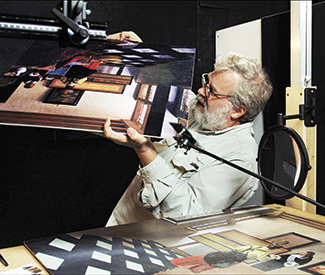
FILM “I’m not a painter,” admits Tim Jenison at the start of Tim’s Vermeer. He is, however, an inventor, a technology whiz specializing in video engineering, a self-made multimillionaire, and possessed of astonishing amounts of determination and focus. Add a bone-dry sense of humor and he’s the perfect documentary subject for magicians and noted skeptics Penn & Teller (longtime Jenison pal Penn “hosts,” while Teller directs), who capture his multi-year quest to “paint a Vermeer.”

What now? Yep, you read that right: Inspired by artist David Hockney’s book Secret Knowledge: Rediscovering the Lost Techniques of the Old Masters, Jenison became interested in the theory that 17th century painters used lenses and mirrors, or a camera obscura (a device familiar to anyone who’s ever been to San Francisco’s Cliff House), to help create their remarkably realistic works. He was especially taken with Vermeer, famous for works like Girl with a Pearl Earring (1665), feeling a “geek kinship” with someone who was able to apply paint to canvas and make it look like a video image. It took some trial-and-error (and one great bathtub “Eureka!” moment), but Jenison soon figured out a way that would allow him — someone who barely knew how to hold a brush — to transform an old photograph into a strikingly Vermeer-like oil painting.

From the film’s early moments, it’s apparent that Jenison, who can fix anything and is obsessed with knowing how things work, is of the “go big or go home” school of thought. Witness his comically giant pipe organ — constructed of organs scavenged from multiple churches — which he plays using self-taught skills gleaned from careful study of a player piano he restored during his Iowa childhood. So when he decides to paint a Vermeer, specifically The Music Lesson (1662-65), he refuses to half step in any way, declaring that he’ll only use materials Vermeer would have had access to. He’ll grind his own pigments and glass lenses, and construct an exact replica of the room in Vermeer’s house where the painting was made.

A trip to Delft, Netherlands, is arranged, with time spent studying the light, architecture, layout of Vermeer’s studio, period-appropriate furniture and pottery, and Dutch (he eventually learns to read Dutch). He also jaunts to London to discuss the project with Hockney (“It’s very clever!” the esteemed painter chuckles over Jenison’s technique), and catch a glimpse of the original painting, concealed from public eyes deep within Buckingham Palace.

Back in the San Antonio warehouse he plans to transform into Vermeer 2.0, he chats with Philip Steadman, like-minded author of Vermeer’s Camera: Uncovering the Truth Behind the Masterpieces, a book Steadman says caused “great anguish” among historians. It was controversial, he notes, to suggest that Vermeer didn’t just grab a brush and paint what he saw; this “alternate history” challenges the common perception of how an Old Master worked. But technology creeps into every aspect of Jenison’s project, with both uber-modern sophistication (3D computer modeling to make sure the proportions of his “music room” exactly match the original painting) and 1600s flair, as Jenison stares into the humble mirror that allows him to replicate his subject on canvas.

Jenison’s attention to detail is staggering; a montage compresses the 200-plus days spent assembling each piece of the room by hand. When the actual painting finally begins, the movie is two-thirds over — a smart filmmaking choice, since as Jenison, ever the jokester, admits, “This project is a lot like watching paint dry.” In many of these scenes, Jenison films himself laboring over the work’s many tiny, precise details, including individual stitches on a rug.

Slow moments aside, Tim’s Vermeer is otherwise briskly propelled by the insatiable curiosity of the man at its center. Jenison’s finished work offers more proof than any theory ever could about how 17th century artists were able to “paint with light” so realistically, but it avoids concluding that Vermeer was more machine than artist. Instead, it offers a clear challenge to anyone who subscribes to the modern notion that “art and technology should never meet.” Why shouldn’t they, when the end results are so sublime? *


TIM’S VERMEER opens Fri/14 in San Francisco.

The layout

0

SUPER EGO “A man, a plan, a gram: anal canal!” Why some queen just shrieked this quasi-palindrome in my earhole at 5am outside the 7-Eleven — not the Castro one, I have my pride — absolutely no idea. But the poor, bedraggled dear has a point: BE PREPARED.

Next week is the Guardian’s fab annual Goldies issue, a wall-to-wall celebration of up-and-coming artists. And there’s no room in it for your beloved Super Ego (old). So here’s looking ahead to the next hot fortnight’s-worth of shindigs. Of course, the biggest hoot of all will be the Guardian 25th Annual Goldies party (Fri/21, 8-11pm, $10. Folsom Street Foundry, 1425 Folsom, SF.) DJs Primo and Wam Bam Ashleyanne will do a special soul-groove “golden oldies” set — and it’s $10 for all the beer you can drink. Plus, duh, the coolest people. Stick it in your calendar, already.


QBERT

Last week’s SFBG cover star, scratch legend Qbert, joins with Dan The Automator, Del The Funky Homosapien, and more local hip-hop/turntable heroes for a wild time, in support of his crowdsource campaign for his new album, Extraterrestria/Galaxxxian (www.djqbert.com).

Thu/13, 9pm, $10 advance. Mezzanine, 444 Jessie, SF. wwww.mezzaninesf.com


SLOW HANDS

Talk about heartthrobs, yum. This cutie brought major sexy back to dance floors when he slowed tempos down to a crawl and let everyone stretch out. Now he’s all about crooning live and steaming things up with Tom Croose as the Worst Friends duo — also appearing at this As You Like It lovefest.

Fri/14, 10pm-4am, $10–$20. Beatbox, 314 11th St, SF. www.ayli-sf.com


JOHN TALABOT

That thing where a DJ is also a magician, creating a whole new psychedelic-ecstatic universe out of common sounds, rearranging how you hear music forever. He’s also Spanish and wears a lot of tinfoil over his face for photos. At the Icee Hot party.

Sat/15, 10pm-4am, $10 advance. Public Works, 161 Erie, SF. www.publicsf.com


DISCO DADDY

There is a thing called Bear Weekend with a long and dramatic history (let’s not get into it) — and here’s this year’s fun-furry climax: DJ Bus Station John turns the Eagle leather biker bar into a glorious old school gay disco evening t-dance. Bring your own chic towel, but no Schick razors, please. “Endorsed by the Tamale Lady,” fyi.

Sun/16, 7pm-midnight, $5. SF Eagle, 398 12th St, SF. www.sf-eagle.com


HONEY SOUNSYSTEM PRESIDENTS EVE

Celebrate the presidents with Honey’s lovely residents: P-Play, Kendig, Josh Cheon, and Robot Hustle give the cute queer boys, girls, and others steamy techno all night long. (Hot straight people also eligible.)

Sun/23,10pm-4am, $10 advance. Beatbox, 314 11th St, SF. www.beatboxsf.com


GILLES PETERSON

“Rare groove” would be nothing without this absolutely incredible, omnivorous DJ. And neither would Diplo. Experience a Whole Earth Catalog of sounds in his mindblowing sets. I love him.

Fri/21, 10pm-3am, $20. Mighty, 119 Utah, SF. www.mighty119.com


CARL CRAIG + FRANCOIS K

If you know anything about dance music, you have probably just wet yourself. If not, let’s be clear: One of Detroit techno’s most poetic innovators and one of the best disco, house, and dub producers of all time will be on the decks, as part of Red Bull Music Academy Bass Camp 2014.

Sat/22, 9:30pm-3:30am, $15–$20. Public Works, 161 Erie, SF. www.publicsf.com


KEVIN SAUNDERSON

Happy eighth birthday to the Lights Down Low party. And happier birthday to us dancers! LDL’s bringing in this true legend, basically one of three guys who invented techno — from Detroit, duh — and changed the world forever.

Sat/22, 9pm-3am, $15–$20. Monarch, 101 Sixth St, SF. www.monarchsf.com


PUT ON THE BREAKS

I’ve been wondering when this would happen. A breakbeat revival has been hitting the underground rave and techno connoisseur scene for a couple years. Now there’s an official dedicated party. Noice. With Kapt N Kirk, Tamo, Nerd Nate, and more.

Sat/22, 10pm-3am, free before midnight (RSVP at www.mighty119.com). Mighty, 119 Utah, SF.


HONEY DIJON

Beloved and classic DJ Nikita is headed off to London. But first he’s counting down eight monthly London Calling parties with incredible special guests, like NYC banging house royalty Honey Dijon and Tedd Patterson.

Sun/23, 2pm-2am, $10 advance. Audio, 316 11th St, SF. www.audiosf.com


Farewell to an ally and union brother

1

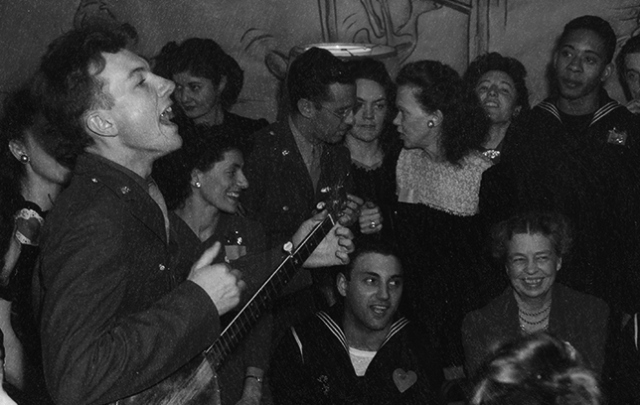
Pete Seeger played a critical role for labor and all working people. As a labor troubadour, he traveled the world singing out for labor. That is why he came to ILWU [International Longshore and Warehouse Union] Local 10 in the Bay Area in 1941. The US government had tried four times to deport Harry Bridges, the Australian-born leader of the ILWU, in an effort to destroy the union. Together, Seeger and Woody Guthrie sang out to the union’s rank and file strike committee a song called a “Ballad To Harry Bridges.”

The government was unsuccessful in its efforts to deport Bridges, but unfortunately most of the left unions like the Marine Cooks and Stewards were eventually destroyed by the hysterical witch-hunts launched by the government — some with the active support of not only bosses but some union officials. Regardless, affiliations and actions like Seeger’s 1941 appearance in San Francisco were the reason Seeger was brought before the House UnAmerican Activities Committee in 1955, and eventually sentenced to two years in prison. From the HUAC transcript:

Mr. Tavenner: The Committee has information obtained in part from the Daily Worker indicating that, over a period of time, especially since December of 1945, you took part in numerous entertainment features. I have before me a photo static copy of the June 20, 1947, issue of the Daily Worker. In a column entitled “What’s On” appears this advertisement: “Tonight — Bronx, hear Peter Seeger and his guitar, at Allerton Section housewarming.” May I ask you whether or not the Allerton Section was a section of the Communist Party?

Mr. Seeger: Sir, I refuse to answer that question, whether it was a quote from the New York Times or the Vegetarian Journal.

Seeger was accused of singing for functions of the Communist party, and for McCarthy and company, this was a deadly crime. Seeger also fought for integration, and against the segregated workplace, in conjunction with the left-wing unions — like the Marine Cooks and Stewards and even the Painter’s Local 4 in San Francisco, led by Dow Wilson — that were fighting segregation. Ships in the port of San Francisco were prevented by the members of the Marine Cooks and Stewards from sailing until their crews were integrated. This direct action of workers on the waterfront was a very real threat to big business, which wanted to destroy labor power and continue segregation as a tool of the bosses.

ILWU longshore leader Bridges also won the support of the black community by promising them that if they supported the strike, they would get union jobs on the waterfront, and he kept his word; today, ILWU 10 still has a large percentage of African Americans. Racism, as Seeger knew, played a virulent role in US history, and his songs were a powerful cultural counterpoint to the reigning ideology and racism of the time.

This is why he was prevented from going on national television during the blacklist period after the Communist witch-hunts. The corporate-controlled media in the United States had an ax to grind, and keeping Seeger, Paul Robeson, and other singers and intellectuals like Noam Chomsky off the airwaves is something that continues today. It is not surprising that in many network TV depictions of Seeger’s life, they conspicuously fail to point out that these same networks banned his voice from the airwaves for decades. Of course the power of Pete Seeger, his songs, music, and personal magnetism could not be banned, and they broke through despite the government and corporate efforts.

Working people of San Francisco, the Bay Area, and the world have lost a great ally and union brother, but his words will ring out for eons.

This coming year’s LaborFest will commemorate the 80th anniversary of the San Francisco General Strike, bringing this history and culture back for the working people today who face similar attacks on their rights to a union, decent health and safety conditions, and a future for themselves and their families.

Steve Zeltzer is the host of KPFA WorkWeek Radio and a member of the LaborFest organizing committee.

Higher wages and tenants’ rights, for the win

10

As we document in this week’s cover story, a citywide coalition has sprung up to fight for tenants’ rights in the face of mounting evictions and soaring rents, and momentum on this issue is steadily growing.

But that isn’t the only sign of a newly invigorated movement that’s beginning to count its victories and advance forward on behalf of tenants, workers, and thousands of San Franciscans who are less focused on turning a quick profit and more concerned with bringing about positive change. Last week brought several high notes on this front.

Citywide legislation that will limit discriminatory practices by employers and housing providers by reforming background check policies won initial approval at the Feb. 4 San Francisco Board of Supervisors meeting.

Introduced by Sup. Jane Kim, the Fair Chance Act is part of a “ban the box” movement, backed by local grassroots organizations that came together to champion the rights of individuals who’ve encountered barriers to improving their lives due to past convictions that have left them with a permanent stigma.

At the meeting, Kim mentioned a woman who’d been told she “need not apply” for a job working as a cook — because of a simple shoplifting conviction from when she was in high school. The ordinance will require certain employers and housing providers to refrain from criminal history checks until after an initial job interview, and would make certain kinds of information off-limits, such as arrests that never resulted in a conviction.

Meanwhile, an initiative to curb height limits on waterfront development amassed enough signatures last week to qualify for the June ballot. That effort grew out of a successful referendum last November against the 8 Washington project, a key pushback where San Francisco voters rejected luxury condominiums at the ballot.

The Chinese Progressive Association and Jobs With Justice held a celebration last week to commemorate the 10-year anniversary of the passage of the city’s minimum wage ordinance.

While it remains the highest in the nation, San Francisco’s 2014 minimum wage of $10.74 an hour still isn’t enough to make ends meet, so allies of low-wage workers are launching the Campaign for a Fair Economy to push for a higher minimum wage at the ballot and to implement a higher wage standard for major retailers and chain stores.

There remains much to rail against, to be sure. A Craigslist ad for a $10,500-per-month two-bedroom apartment in the Mission generated a barrage of angry commentary from those who read it as doomsday for the historically Latino area, especially since the tone-deaf author used the word caliente to describe the neighborhood.

But the start of 2014 has already delivered some promising victories for progressives, and many have their sights set on even greater horizons.


Locals Only: Steep Ravine

0

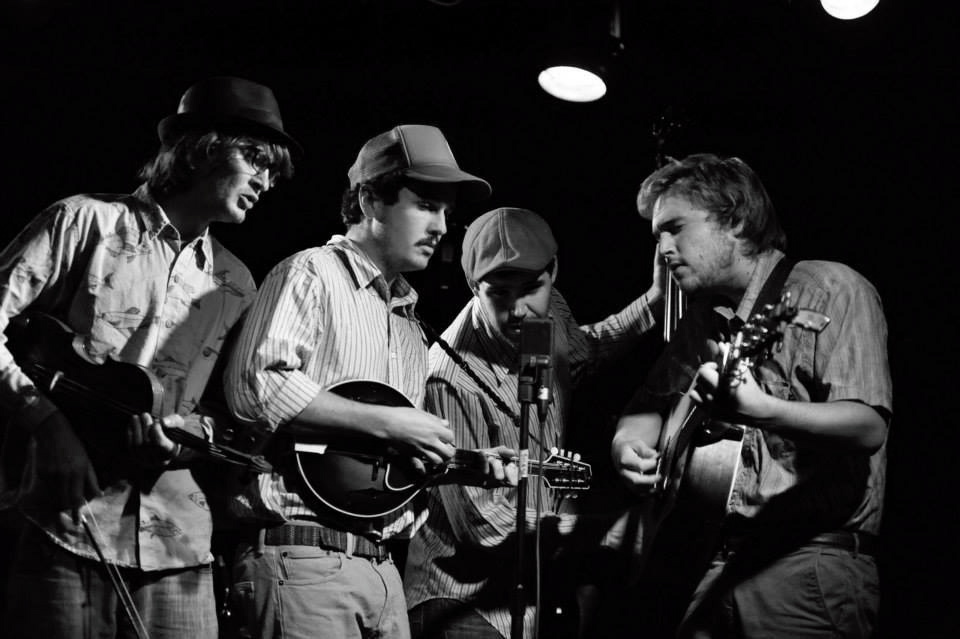
There’s something in Steep Ravine’s music that sounds older than their (fresh-out-of-college) years: It’s a calmness, a soulfulness, a complete lack of pretention — which is not something that can be said for many bands of young dudes who hope to be the Next Big Thing in bluegrass and Americana. These Bay Area natives (Berkeley, Mill Valley, Menlo Park, and Watsonville, to be specific) are far from over-serious, but they take this music and its history seriously, and the result is pretty sweet. Ahead of their album release show at the Starry Plough this Friday, Feb. 7, we caught up with guitarist and vocalist Simon Linsteadt to hear about their influences, burrito preferences, and the difficulties of starting a band while getting hassled by UCSC security officers.

SF Bay Guardian: How did you all meet and when did the band form?

Simon Linsteadt: [Violinist] Jan Purat and I met in high school, where we first began playing music together. We played Django Reinhardt songs like “Daphne” and “After You’ve Gone,” among other things. It was always acoustic. Then Jan went to UC Santa Cruz, and I followed a couple years later after I graduated high school. By then Jan had already established himself as the go-to fiddle player in Santa Cruz and had a band with Alex, our bass player. We would jam at parties and out in the Porter Quad, which was the big courtyard outside of my dorm where all Porter students would hang out. Sometimes we would play way too late at night and the security officers would have to boot us.

It was at the end of that year that we met Andy, a UCSC graduate who lived in town working as a farmer. He was clearly the most slammin’ mandolinist we had ever met, and it was immediately obvious that he had a rare pair of golden ears. We immediately became friends and started to busk down on Pacific Avenue, and we gained a little bit of recognition among the eclectic group of locals and UCSC students. It was around Christmas of 2012 that Alex started playing with us; we had him join us for a holiday show at the Sweetwater Music Hall in Mill Valley. Alex is one of those few individuals who has an extremely “deep pocket” as we like to say, meaning his sense of time is crystal clear and just perfectly on point. We started playing as a quartet around the Bay Area performing original tunes, our spin on traditional bluegrass, and some gypsy jazz songs. After a year, we all at once recorded our debut album, embarked on a 40-day tour across the US, and in October 2013 we all moved into a house together in Richmond.
 
SFBG: Where does the band name come from?

SL: The name Steep Ravine comes from an amazing spot on Mt. Tamalpais. I personally always liked the name of the Steep Ravine trail, and always saw it as a cool potential band name. A lot of lyrics on our album are inspired by the many excursions I have taken on Mt. Tam. Near the top of the trail is an area called Ridgecrest. When we first got together as a band, we went up there one day to play some music. It is an amazing lookout about 1000 feet up from the ocean and it looks out over the whole Bay Area, out to sea as far as the Farallon islands, and on clear days, all the way north to the lighthouse on the bottom of the Point Reyes Peninsula. Pretty astounding.

https://www.youtube.com/watch?v=lILi3ldsM_g#t=58

SFBG: How would you describe your sound? What did you grow up listening to/playing, and who are some of your mentors?
 

SL: We’re all uniquely inspired by different musical styles, but it’s safe to say that we all come together around the genre of “bluegrass,” and we all love it very much. It’s some of the most energetic, soulful, expressive music out there. It is interesting though how we all found ourselves there. Jan Purat was classically trained from an early age, and can sight-read crazy classical pieces that look like chicken scratch at most to the rest of us. He has also studied his share of jazz. I picked up the guitar around the age of 10 after listening to Neil Young, who is my all-time hero as a songwriter and musical force, and I have studied my share of jazz as well. Andy O’Brien is a fabulous mandolinist who can play solos with the same sheer power and technicality as the greats in traditional bluegrass. He also has a very unique capability of bringing that energy and classic sound into the songs we compose, with very colorful melodic and rhythmic ideas. As I call to him downstairs asking him what his musical influences were growing up, he responds “Jerry, and The Beatles.” Alex grew up playing the drums, and was inspired by the bands like The Meters and the greats of Afrobeat. He also grew up with bluegrass and folk music in his family. He is a rock solid bassist with an explosive rhythmic feel.  In terms of our sound as a band, I don’t really know how to answer that. What we write is not really bluegrass, or jazz, or singer-songwriter, or folk, or whatever you want to call it. Maybe somewhere in between those.

In terms of influences…the obvious ones that come to mind are Bill Monroe, Frank Wakefield, Kenny Baker, Doc Watson, Norman Blake. This is just a small list, but it represents the folks who were true musical forces back in the day, and who inspired many, many musicans through out the years. But just as we came to bluegrass from a range of genres, when we arrange and write music, all of these genres filter though the genre of bluegrass, and we are left with something that is entirely our own. I was personally turned onto bluegrass by Jacob Groopman, who is a fabulous guitarist, mandolinist, and vocalist. He plays with Front Country and Melody Walker, two really hot bluegrass Americana acts from the Bay Area. He taught me to flatpick and showed me the album Manzanita by Tony Rice when I was 16 or 17, and that was the beginning of the end. Andy O’Brien studied mandolin with Jeremy Lampel in Santa Cruz, and Jan has studied with Chad Manning and Evan Price, to name a couple.  We are also very fortunate to live down the road from Bill Evans, banjoist extraordinaire, who has been something of a mentor to us over the past half year or so. There is a rich bluegrass, folk, and jazz scene throughout the Bay Area, and many of these people live right here in the East Bay. We feel very fortunate to be surrounded by such a friendly and talented community of driven musicians.

SFBG: What’s on tap for the band this year?

SL: We have some exciting touring coming up, from spring to fall. We will be playing at the Parkfield Bluegrass Festival, Four Corner Folk Festival in Pagosa Springs, The Redwood Ramble in Mendocino, Pickamania in New Mexico, The Fathers Day bluegrass festival in Nevada City on the Vern Stage, the Folklife Festival in Seattle, and the Cloverdale Fiddle Festival. And we’re always writing new songs and compiling compositional idea for our next album, which we predict that we hope to start recording in the fall of 2014.
 
SFBG: Bay Area food item you couldn’t live without?

SL: Jeez, Jan and I would probably say Gordo’s Taqueria or the Cheeseboard. And I think we all could agree upon the fact that there are some amazing grocery stores especially in Berkeley that have great, fresh produce, such as Berkeley Bowl and Monterey Market. We keep our fridge stocked. Also, Andy and Alex are both very experienced gardeners, farmers, and landscapers, and they have planted a very lush garden at our house in Richmond, which is filled with mustard greens, kale, beets, herbs, and some very heady cacti.


Steep Ravine (CD release party), Fri/7
With McCoy Tyler Band and Windy Hill
8pm, $6
Starry Plough
www.thestarryplough.com

Sue Hestor’s 70th birthday party: “We Shall Overcome.”

110

By Bruce B. Brugmann

Plus: Tim Redmond reports on Sue Hestor and her environmental legacy on his new local  website 48 Hills.org.  

How do you say happy birthday to a San Francisco icon like Sue Hestor?

Some 200 of her friends, allies, pro bono legal clients, political heavies, and fellow warriors against big developers and their pals in City Hall gathered Saturday at Delancey Street for a surprise party to celebrate Sue’s 70th birthday.

When she arrived, she was obviously surprised to find a band playing “We shall overcome” and her friends standing, clapping, cheering, and singing  in admiration for a woman who has spent more than four decades as a citizen activist and attorney fighting for one good cause after another, usually at bad odds against the big guys, often for clients without pay. It was truly a historic moment in the history of San Francisco politics. 

I first knew Sue when she popped up as a feisty volunteer in the Alvin Duskin anti-high rise campaign of the the early 1970s. The Bay Guardian was doing an investigative book, “The Ultimate HIghrise,” on the impact of highrises on the city. She pitched in on the project and was in the book’s  staff photo, jauntily wearing her trademark straw hat, standing next to the hole in the ground for the Yerba Buena Center development.

 We billed a central feature of the book as “the world’s first comprehensive study of the true cost of skyscrapers.” Our research group demonstrated that highrises cost much more in services than they bring back in revenue,  a finding that infuriated the Chamber of Commerce because they could never effectively refute it. We also laid out in detail for the first time the power structure behind pellmell Manhattanizaton, how destructive those policies are, how they shift the tax burden from dowotown to neighborhoods and small business, who profits from them, why there are more muckmakers than muckrakers. Our talented art director Louis Dunn provided brilliant graphics that drove home the damaging points about highrises.

Our conclusion was most prophetic: “The most disturbing finding can’t be quantified–but it should be shouted to the heavens.  It is this: unless the city of San Francisco reverses past practice and immediately enacts an ironclad land-use policy such as Duskin’s proposed height limit, the long scoffed at ‘Manhattanization’ of the entire city is a surefire, 100%-guaranteed inevitability.” 

I like to think this project and its results were a fitting start to Sue’s career in land use litigation and terrorizing big developers, City Hall enablers, and their ever more virulent forms of Manhattanization. 

In the early l990s, I called on Sue again, this time to be the founding chair of the spanking new Sunshine Task Force. It was a new task force formed to enforce the Sunshine Ordinance, which gave citizens the right to make complaints about government secrecy and its tradition of keeping City Hall safe for PG&E, big landlords, and developers etal. The task force would, I knew, drive the bureaucrats nuts and  it thus needed a strong attorney as chair who would be smart enough and tough enough to go up against the city attorney and the crocodiles in the back bays of City Hall.

 The neat thing was that nobody could kick Sue off the task force.  She was one of two members who were “grandfathered” in by the ordinance–an attorney (Sue)  and a media rep (B3) –who were selected by the Northern Chapter of the Society of Professional Journalists, not the supervisors. She performed admirably and got the task force on a firm footing as the first and still the best local open government task force in the country, if not the world. 

Through the years of development battles, it was often Sue and Calvin, Calvin and Sue.  Calvin being Calvin Welch, a crafty environmental and neighborhood strategist who worked with Sue and others in developing counters and initiatives and all kinds of hellish moves to beat or slow down and mitigate development.  He said Sue’s career could be summed up in two words: “cumulative impacts.”  The good thing was that we all knew, when the developers brought up their heavy artillery or their sneaky back alley maneuvers, Sue and Calvin would be there to blow the whistle and take on the fight. Call Sue, call Calvin was the watchword but they usually called us first at the Bay Guardian. 

Let me call now on Tim Redmond, a Guardian reporter who covered Sue and Calvin and the highrise battles from 1982 on, to explain what Calvin meant.  Tim laid out the political points in his piece, “Sue Hestor’s birthday and a lesson in SF environmental history,” on his new local  website “48 Hills.org.”  Read Tim’s first paragraphs for the fun stuff on Sue and the last paragraphs for the really important contributions she has made to the city and urban planning, as explained by Calvin.

As Tim concludes, “In 1964, Hestor, representing San Franciscans for Reasonable Growth, sued and won a stunning decision in the California Court of Appeal mandating that the city start studying the cumulative impacts of development. As Welch noted, ‘there was an obligation for developers to prioritize mitigations.’ That’s where the affordable housing program, the transit-impact fees–and the entire concept of analyzing development on the macro, not the micro level emerged.  That was the idea behind the 1986 measure Prop. M, which included no height limits at all–but did include programs and policies designed to protect neighborhoods from the effects of unlimited growth.” 

Well, the Hestor faithful may not have “overcome” the big developers and their latest monstrous Manhattanization plans.   But they have come pretty damn close. On Sunday, the day after Sue’s party, the Warriors caved on its waterfront project and Matier and Ross did a Chronicle column with the head, “Warriors call for timeout on Waterfront arena plan.” And on Monday, the waterfront warriors marched triumphantly into City Hall and, as the  Chronicle’s John Cote reported,  “turned in more than double the number of signatures needed to qualify a measure for the June 3 ballot that would require voter approval for any development on the San Francisco waterfront to exceed existing height limits.”

That could kill the massively inappropriate project.  “If passed,” the Chronicle continued, “the measure would put a check on high-rise hotels and condo towers along the bay and require voter approval for height increases for three major waterfront development plans, the Golden State Warriors’ proposal for an 18,000-seat arena complex, the San Francisco Giants’ plan for an urban neighborhood on what is their main parking lot and the development of the industrial Pier 70 area.”

Whew! That’s what I call a nifty bit of Hestoring and Calvinizing.   b3

If you don’t like the news, go out and make some of your own. (Wes “Scoop” Nisker on KSAN radio during the dark days of the Vietnam War.) 

(The Bruce blog is written and edited by Bruce B. Brugmann, editor at large of the Bay Guardian.  He is the former editor and co-founder and co-publisher of the Bay Guardian with his wife Jean Dibble, from 1966 to 2012.)


Rep Clock: February 5 -11, 2014

0

Schedules are for Wed/5-Tue/11 except where noted. Director and year are given when available. Double and triple features marked with a •. All times pm unless otherwise specified.

ARTISTS’ TELEVISION ACCESS 992 Valencia, SF; www.atasite.org. $5-7. “OpenScreening,” Thu, 8. For participation info, contact programming@atasite.org. Boom: The Sound of Eviction (2001), Fri, 7:30.

BALBOA THEATRE 3630 Balboa, SF; cinemasf.com/balboa. $7.50-10. “Popcorn Palace:” The Seventh Voyage of Sinbad (Juran, 1958), Sat, 10am. Matinee for kids. Barbie: The Pearl Princess (2014), Sun, 10am.

BERKELEY FELLOWSHIP OF UNITARIAN UNIVERSALISTS 1924 Cedar, Berk; www.bfuu.org. $5-10. In Transition 2.0, Thu, 6:30. More info at www.transitionberkeley.com.

CASTRO 429 Castro, SF; (415) 621-6120, www.castrotheatre.com. $8.50-11. “SF Sketchfest:” “NPR’s Ask Me Another,” Wed, 8 (this event, $25-35); “Tribute to Alan Arkin:” The In-Laws (Hiller, 1979), Thu, 7 ($25); Cabin Boy (Resnick, 1994), Fri, 7:30 (20th anniversary screening, hosted by Peaches Christ with Chris Elliot in person, $20); Top Secret! (Abrahams, Zucker, and Zucker, 1984), Sat, 1 (30th anniversary screener with writers-directors in person, $20); “The Benson Movie Interruption:” The Twilight Saga: New Moon (Weitz, 2009), Sat, 4:20 ($20); Revenge of the Nerds (Kanew, 1984), Sat, 8:30 (30th anniversary screening with cast in person, $30). Visit www.sfsketchfest.com for tickets and more info on SF Sketchfest events. •The Lady From Shanghai (Welles, 1947), Sun, 3, 7, and Gilda (Vidor, 1946), Sun, 4:45, 8:45. •I Am Divine (Schwarz, 2013), Mon, 7:30, and Bettie Page Reveals All (Mori, 2012), Mon, 9:10. “Veteran Documentary Corps,” short documentaries, Tue, 7. Special event; purchase tickets ($10-50) at www.veterandocs.org.

CHRISTOPHER B. SMITH RAFAEL FILM CENTER 1118 Fourth St, San Rafael; (415) 454-1222, www.cafilm.org. $6.50-$10.75. The Girls in the Band (Chaikin, 2011), call for dates and times. “Oscar Nominated Short Films 2014,” call for dates and times. The Past (Farhadi, 2013), call for dates and times. Gloria (Lelio, 2013), Feb 7-13, call for times. Breathing Earth (2012), Sun, 7.

CLAY 2261 Fillmore, SF; www.landmarktheatres.com. $10. “Midnight Movies:” The Room (Wiseau, 2003), Sat, midnight.

CRANEWAY PAVILION 1414 Harbour Way South, Richmond; www.craneway.com. $20-30. “Lunafest Film Festival,” short films by, for, and about women, Fri, 6:30.

EXPLORATORIUM Pier 15, SF; www.exploratorium.edu. Free with museum admission ($19-25). “Saturday Cinema:” “Teachers Institute Film Festival,” Sat, 11am-2pm.

MECHANICS’ INSTITUTE 57 Post, SF; milibrary.org/events. $10. “CinemaLit Film Series: Villains We Love:” Caged (Cromwell, 1950), Fri, 6.

NEW PARKWAY 474 24th St, Oakl; www.thenewparkway.com. Free. “First Friday Shorts,” films from Creative Growth Video Production Workshop, Fri, 6.

OAKLAND PUBLIC LIBRARY Rockridge Branch, 5366 College, Oakl; www.oaklandlibrary.org. Free. “90-Second Newbery Film Festival,” Sat, noon.

OSHER MARIN JCC 200 N. San Pedro, San Rafael; www.marinjcc.org. $10-20. “Best of the San Francisco Jewish Film Festival:” Arab Labor, Tue, 7. Three episodes from season four of the Israeli TV show.

PACIFIC FILM ARCHIVE 2575 Bancroft, Berk; (510) 642-5249, bampfa.berkeley.edu. $5.50-9.50. “Film 50: History of Cinema:” M (Lang, 1931), with lecture by Emily Carpenter, Wed, 3:10. “African Film Festival 2014:” Tey (Gomis, 2012), Wed, 7. “Funny Ha-Ha: The Genius of American Comedy, 1930-1959:” Will Success Spoil Rock Hunter? (Tashlin, 1957), Thu, 7. “Against the Law: The Crime Films of Anthony Mann:” Strange Impersonation (1946), Fri, 7; Desperate (1947), Fri, 8:30. “Screenagers: 16th Annual Bay Area High School Film and Video Festival,” Sat, 3. “Jean-Luc Godard: Expect Everything from Cinema:” Vivre sa vie (1962), Sat, 6:30; Les carabiniers (1963), Sat, 8:15. “The Brilliance of Satyajit Ray:” Three Daughters (1961), Sun, 3. “Documentary Voices:” The Specialist (Sivian, 1999), Tue, 7.

ROXIE 3117 and 3125 16th St, SF; (415) 863-1087, www.roxie.com. $6.50-11. SF IndieFest, Feb 6-20. For program info, visit www.sfindie.com.

TANNERY 708 Gilman, Berk; berkeleyundergroundfilms.blogspot.com. Donations accepted. “Berkeley Underground Film Society:” “LOOP Presents:” What’s Up, Tiger Lily? (Allen, 1966), Sat, 7:30; Duck Soup (McCarey, 1933), Sun, 7:30.

TEMESCAL ART CENTER 511 48th St, Oakl; www.shapeshifterscinema.com. Free. “Shapeshifters Cinema: Lori Varga,” old and new analog film work, Sun, 8.

YERBA BUENA CENTER FOR THE ARTS 701 Mission, SF; www.ybca.org. $8-10. “Femina Potens’ ASKEW Film and Performance Festival,” screenings and performances, Thu-Sat. *


Q up

10

MUSIC “I always wanted to know how music sounded in outer space. And with certain types of crystals you can supposedly tune into different frequencies, receive other transmissions. Often I meditate with crystals, go to sleep, and dream about music from outer space. Then I wake up, make stuff like that on the turntables, and take it from there.”

That’s a lot of there to take it from, but DJ Qbert is no stranger to mixing the cosmic with the underground. A legendary emissary of scratch who became the international representative of turntable culture in the 1990s along with his “band” Invisibl Skratch Piklz, Q has always mixed a heavy dose of Bay Area flavor into his masterly sets — which aren’t typical DJ sets by any means, but untethered, jazz-like flights during which a set of turntables and a crossfader, manipulated lightning-fast, become their own kind of spaceship. His polyrhythmic scratch concertos summon white noise, radio interference, oceanic undertow, Looney Tunes quick cuts, vintage advertising jingles, embryonic hip-hop, Big Brother menace, and fiendish, childlike glee. Great beauty, too, especially when you think of them as pure sonic expression, floating free of time and space. Not that you can’t dance your ass off to most of it, mind you.

We were talking about his new album Extraterrestria, dropping in March on the Thud Rumble label and backed by a huge Kickstarter campaign that aims not just to fund the disc, a marketing campaign and a tour, but also typical Qbert innovations like amazing touch-sensitive digital album packaging that simulates DJ controller equipment. (More details at www.djqbert.com)

“The album is actually two albums in one, two different discs,” Qbert, looking tight in a buttondown shirt and track pants, told me. “Extraterrestria is music from another galaxy, hip-hop beats from other planets, collected by the Galactic Scratch Federation. It’s as bizarre and unique as I could make it, a collection of weird noises and different time signatures with as much scratching as possible. The second disc is called Galaxxxian, which is hip-hop from earth beamed into space: raw, primitive. It features a bunch of MCs — Kool Keith, Del Tha Funky Homosapien, Mr. Lif, Soul Khan, Bambu — doing their thing, which a lot of time, you know, means going for the sex, drugs, and hip-hop and roll. We’re not quite on the extraterrestrial level, yet.”

Other biggies like Dan the Automator, Chad Hugo of the Neptunes, cellist-trombonist Dana Leong, and rapper El-P (here a producer) also contributed. “What with the recession and everything, a lot of us have been trading with each other, so we can continue collaborating. Like I’ll do a beat for your album if you do a verse on mine. Something where the money’s phased out, a barter thing. It’s put us back in touch with what’s real,” Qbert said.


TWIST THE FORCE

As we talked on the second floor of the California Academy of Sciences, the first floor was rapidly filling up for the Academy’s weekly Nightlife party, this week a launch celebration and fundraiser for Extraterrestria — and a reunion of sorts for turntablism heads, albeit one bursting with fresh young faces. As b-boys and fly girls made their way through exotic landscapes, whale skeletons, stuffed giraffes, a butterfly-flooded rainforest dome, and aquarium displays including live stingrays, giant octopi, frisky penguins, Claude the albino alligator, and phosphorescent jellyfish, I couldn’t help but be reminded of the deliciously loopy, phantasmagorical animated movie version of Qbert’s era-defining previous album Wave Twisters, released 16 years ago.

That’s a long time between official releases, but it wasn’t like Qbert had been kidnapped by aliens. Although his live performance schedule was less-than-usual bonkers, he still made regular appearances, by himself or as part of his extended Bay Area scratch crew family. He popularized turntable techniques in a series of instructional videos and launched online educational community Qbert Skratch University, in 2009. He also went all in on the equipment tip, putting out his own brand of turntable cartridges and needles, an Invisibl Skratch Piklz-branded mixer, “and of course our own vinyl to scratch with — which is really vinyl on one side and a digital interface on the other, for use with DJ software like Traktor.”

Fifteen years has also seen the rise of social media and a more user-friendly Internet. Has that changed the way he produces beats or performs at all? “Of course it’s been great for finding new sounds to use,” Qbert said. “If I want to hear, say, a tarantula farting, I can look it up instantly and hear that. On the other hand, most of my old sets are up there now, with all their mistakes, and a lot of times I’m cringing and say in a small voice, ‘Please, please let them delete that.’ It keeps me on my toes now, knowing everything can be recorded in all its glory. But because I’ve actually been working on this album for seven years, all that’s been incorporated — it’s not like a shock. I use what I can use.

“But I try not to be trapped in the present. I often think back to the past, to cats like Sun Ra, Miles Davis, Louis Armstrong. That timeless, improvisational jazz feeling where you practice and practice, but when the time comes you’re just an instrument connecting with the god-force, channeling the sound through you, swinging through that ocean of feeling. When you’re in that zone, that’s the most wonderful thing. It’s a meditation, a spiritual thing. We’re all spirits, so we have to connect to other spirits and the most high, whatever you want to call it — God, Allah — connect to that creator source and use it because it’s yours to use. Like how some writers just flow and do that automatic writing, they’re just instruments. We’re just instruments you know, it all flows through us.”


SKRATCHING ROOTS

When Qbert, raised in SF’s Excelsior neighborhood, astonished the DJ world by winning its spun-out version of the Olympics, the DMC World Championships, not once (solo, 1991) but three more times in a row after that (as part of Rocksteady DJs with Mixmaster Mike and Apollo) it was an unparalleled triumph not just for local scratch and hip-hop community, but for Bay Area Filipino American culture as well.

http://www.youtube.com/watch?v=u2ZFsQjaOTI

As music critic and Guardian contributor Oliver Wang details meticulously in his forthcoming book Legions of Boom: Mobility, Identity and Filipino American Disc Jockeys in the San Francisco Bay Area (Duke University Press), a vibrant scene of Filipino mobile DJ crews — independent groups of teenage sound and lighting specialists hired to provide entertainment for weddings, graduations, and parties — thrived here since the 1970s. When hip-hop eclipsed disco on the request lists in the 1980s, the mobile crews defined streetwise Bay Area Filipino youth culture and provided a fertile training ground (and sometimes needed cash) for young DJ up-and-comers.

Qbert’s domination of the DJ world could be read as the apex of that scene, which faded in the 1990s with the rise of digital technology. And of course Qbert went on to create his own crew of fellow Filipino DJs: The Invisibl Skratch Piklz, with Shortkut, Apollo, Mix Master Mike, and several others. The Piklz went on to become insanely popular, establishing scratching and other turntable manipulations as a form of art and a highly marketable genre — turntablism — that changed the sound of hip-hop and dance music. Mix Master Mike went on to become, in essence, the fourth Beastie Boy; one early ISP member was A-Trak, current turntable-wielding heartthrob of the superstar EDM crowd.

In fact, the current popularity of turntable-rooted DJs like A-Trak and the burgeoning trip-hop and late ’90s revival makes the timing of Qbert’s return auspicious. “A-Trak runs a dance music scene and I think it’s great that he brings the scratching into it, he’s really unique in that field — so more power to him for turning on a different crowd to the sound. But for me it’s never really gone away, pure scratching. There’s a zillion underground cats who are genius at what they do — Quest, Deeandroid and Ceslkii, Disk, tons more. And maybe the widespread recognition isn’t there, maybe it isn’t in your face like it once was, but they’re all around. It’s like the guys who still do yo-yo tricks. They don’t know things have moved on. They keep practicing and practicing and doing incredible things, regardless of how many people are following. They’re always battling, always progressing. Never put down your yo-yo, man,” he laughs.

As for connecting to a new generation, working with (gasp!) turntables and (double gasp!) vinyl at this stage of DJ history is a deliberate artistic choice. Even with a resurgence of interest in analog techniques — a specific reaction to digital overload — does Qbert fear that scratching will be seen as merely a retro novelty?

“I think no one can deny that, whether you’re old or young, using a turntable to make a scratch sound — well, you can’t deny that it sounds really bugged out. How else are you going to make that sound unless you’re actually moving the sound with your own hand? Just to hold the sound and grab it, move it back and forth — that’s unique and fascinating to people. It’s like a sci-fi movie in real life, a sound that people have heard since maybe they were little kids, but one that also points to a future where man meets machine. It’s a real manipulation, a sound design in itself. What other instrument can do that?”


The return of Pyno Man

1

LEFT OF THE DIAL As legend has it, there was a time when you couldn’t walk the streets of Berkeley without running into him. He accosted you from posters adorning bar bathroom doors; he lurked around corners, plastered to telephone poles. He was mischievous, sometimes foul-mouthed, usually up to no good, but he always meant well. He wanted you to rock out. He was Pyno Man, and he was everywhere.

“Pyno Man was basically just the dream anybody has of being great, but instead of working a regular job and having fantasies about doing crazy rockstar things, he’s actually trying it all the time and failing. So he’s out there on the street acting like a rockstar, but everyone just thinks he’s crazy,” explains John Seabury, artist, creator of Pyno Man, and bass player for the relatively short-lived but locally legendary East Bay garage-punk outfit Psycotic Pineapple, for which the wild-eyed, mohawked, anthropomorphized pineapple served as mascot. “To me, that was logical.”

A staple of the East Bay punk club scene of the late ’70s, Psycotic Pineapple held court at the Keystone in Berkeley, sometimes playing SF’s fabled Mabuhay Gardens with friend bands, like the (underrated) power-pop maestros the Rubinoos. PP songs were about youth and drugs and sex, and you could count on them for an insane live show. But something in the band’s demeanor set them apart from the prevailing punk attitudes of the time: There wasn’t much they took seriously — least of all themselves.

“We didn’t really call them punks at that time, because that just wasn’t what we would call people who played music like them. They were just outlaws in a way, because they brought this sort of pop aesthetic to punk music. They were thumbing their nose at it and wrapping their arms around it at the same time,” says John Cuniberti, a producer, mastering engineer, and longtime friend of the band who helped the guys finally re-issue Psycotic Pineapple’s sole album, Where’s the Party?, on CD in 2012 — something that led to the band playing its first live show in more than two decades, which inspired Cuniberti to make a documentary about the band in the process.

There was something determinedly fun about Psycotic Pineapple, says Cuniberti. “I was working with the Dead Kennedys at the same time [’70s], and it was political, straight-up social commentary, songs about death and war and all these things. These guys played pop songs about relationships — really well-written pop songs, the songwriting was always very compelling to me — but they were rowdy, and they did it with an ‘I don’t care if you like us or not’ kind of attitude. There was an outrageousness to it.”

The band put out its lone record 1980, packed with 11 gleefully irreverent tracks that ran just over 25 minutes altogether. In 1981, something happened that no one could have predicted: Guitar player Henricus Holtman suffered a brain aneurysm, hindering his dexterity on his right side. The band stopped playing live. While most members remained involved in the local music scene — Seabury’s art adorns posters and t-shirts for a ton of other bands — Psycotic Pineapple mostly became the stuff of Bay Area folklore. But the fans were still out there. More than 30 years after PP disbanded, about a year after the band’s official reunion show at Bottom of the Hill, the music somehow doesn’t sound dated at all. They’ll headline the Gilman this week for the first time, with Pinole’s own Bobby Joe Ebola and the Children MacNuggits (whom could be said to follow in PP’s footsteps in terms of ethos, if not sound) opening.

“I don’t think the music feels old, but I’ve always thought that,” says Seabury, whose art fills a booklet that accompanies the re-issue CD. “By the time we broke up a lot of bands were starting to imitate that kind of attitude — Camper Van Beethoven, some others. I think we would have fit right into the alternative rock scene. We were kind of like these New Wave clowns making fun of punkers&ldots;which, as far as bands we gigged with go, their fans didn’t really like it. I remember opening for 999 and the Dickies, and both of their fans just hated us. They were booing us already, so we decided to close the set with ‘We’re an American Band,’ and that’s when the bottles started flying.”

They haven’t gotten to play together too often since the official reunion — for one, keyboard player Alexi Karlinski lives in Eastern Europe for most of the year. But while he’s back in the Bay for this stint, the guys plan to record a few new songs.

Maybe don’t call it a comeback just yet, says Cuniberti. But “I think they’re worth listening to, and there’s a lot of music being made that I can’t say that about. The songwriting is so good, and it’s timely, it still sounds fresh. You can hear in this record that they really love what they’re doing.”

While we’re immersed in the warm glow of East Bay punk history: 1-2-3-4 Go! Records, the independent record store, label, and all-ages venue housed in a deceptively small couple of rooms on 40th Street in Oakland, is expanding into the recently vacated space next door. From their crowdfunding campaign:

“A few weeks ago we were told our next door neighbors would be leaving and we could take a section of their space for an expansion. The catch is that we need to take the space by February 1st or it would go to someone else. As a small business with employees to take care of and regular bills to pay we don’t tend to have a lot of extra expansion capital on hand, especially on short notice. So we come to you, the good people who have supported us all these years and ask for you to join us in bringing the store to this next level and to continue to offer the great music and art we have been in our venue space.

In order to complete this expansion we need to do the following;

Knock out the adjoining wall.

Paint the interior and exterior to match our existing space

All new lighting that will stretch the length of both spaces.

Build additional custom fixtures; record bins, shelving etc.

Purchase new product; Records, books, supplies, turntables etc.

Purchase new Mic’s, Cords and Stands for the venue.

Close the store for 7 to 14 days (oof!)

Our plan is to have our Grand Re-Opening on March 15th to coincide with our 6th anniversary. We will have a sale during the day and a private event from 7pm to 10pm with food, drinks and music for supporters who come in at the $50 and above level who RSVP.”

As of this writing they have just under a week to go and still need to raise about $7,000. Want your as-of-yet unborn kids to know what actual record stores are? You know what to do: 1234gorecords.com.

Back here on this side of the Bay, A Million Billion Dying Suns — the psych-rock project of busy guitar virtuoso Nate Mercereau, who tours with Sheila E., among others (last week he was backing Dave Chappelle at the SFJazz Center) — have embarked on a mini-residency of sorts at the Knockout, starting with a Feb. 11 show. They recently had a song featured in a GoPro commercial, accompanying Shaun White as he blasts through snow-covered hills, but the band’s had my attention for about a year now, especially since the arrival last November’s Strawberry EP, with its slow-building, expertly crafted wall of spaced-out guitar fuzz, particularly on “Strawberry Letter 23,” a cover/homage to Shuggie Otis.

“I record a lot of stuff by myself, and Shuggie Otis has been a huge inspiration in that respect,” says Mercereau, who recently moved to LA, though he finds himself back in SF “every two weeks or so” — the band’s studio is still here. “Though it was also for our friend [manager and friend to many an SF musician] Steve Brodsky, who passed away last year. He really loved that song, and it felt like a way to do something for him.”

The Knockout feels a little small for the seriously powerful five-piece, Mercereau will acknowledge, but he wanted a residency at “a place our friends can walk to, a down-home punk rock spot that’s in the neighborhood.” If all goes well, he says, AMBDS will have another few shows here shortly, regardless of his new home base. “It’s easier than you might think,” he says. “We just live on Highway 5.”

PSYCOTIC PINEAPPLE
With Rock N’ Roll Adventure Kids, Bobby Joe Ebola and the Children MacNuggits, and the Gregors
Friday, Feb. 7, 7:30pm, $10
924 Gilman Street
924 Gilman, Berkeley
www.924gilman.org

A MILLION BILLION DYING SUNS
With What Fun Life Was and Lemme Adams
Tuesday, Feb. 11, 8:30pm, $6
Knockout
3223 Mission, SF
www.theknockout.com

…And horror for all

2

arts@sfbg.com

CULTURE Like a mad scientist who has decided to open up his secret laboratory and show off his work to select guests, Metallica guitarist Kirk Hammett hosts “Fear FestEvil,” a convention bringing together the worlds of horror and heavy metal. Hammett has long been a horror film aficionado, and has amassed an extensive movie memorabilia collection of original props, costumes, posters, toys, and more over the years — an obsession that dates back to his childhood growing up in San Francisco.

“I first got into horror movies as a young kid — I think I was five years old when I saw my first horror movie, The Day of the Triffids, and totally loved it,” remembers Hammett. “I used to go to San Francisco Comic Book Company, which was one of the very first comic book stores in the country, at 23rd and Mission, and that was my repository for buying comic books and magazines. I just got into it and never got out of it.”

The idea for the festival — er, festevil — grew out of Hammett’s desire to share his extensive horror-movie collection with fans; it’s the same urge that first inspired his 2012 book, Too Much Horror Business, stuffed with color photos of his creepy cache. Following the success of that tome, he set up “Kirk’s Crypt,” an exhibit at Metallica’s Orion festival in 2012 and 2013 where fans could catch a glimpse of his collection in person. The next logical step, as Hammett saw it, was to create a mini-convention in his hometown.

“It was so fun, and such a big hit at the festival, I thought, why can’t I keep on doing this, but do it here in the Bay Area, and make it bigger and better, with more stuff, more guests, and with some bands that would fit in music-wise,” says Hammett.

“It’s my way of taking my collection and sharing it and turning it into a more giving process, because for years and years I collected — and collectors to a certain extent are selfish, you know, they collect things for themselves. After a while, I got tired of that feeling, so I decided that I would share it with like-minded people.”

Scheduled guests include several luminaries in the horror and sci-fi genres, such as makeup and special effects innovator Tom Savini, Night of the Living Dead (1968) co-writer John A. Russo, and A Nightmare on Elm Street series star Heather Langenkamp. There will also be some actors whose faces might not be familiar to the public, but are fan-beloved for portraying iconic movie monsters: Kane Hodder, who slaughtered countless camp counselors as Jason Voorhees in four of the Friday The 13th films, and Haruo Nakajima, aka the man who donned Godzilla’s iconic rubber suit in 12 movies, including the original 1954 classic.

“I’ve known Tom Savini for a while now, but for the most part, I don’t really know these people, and for me to be able to have them appear at the festival, and for me to get to meet them, is fantastic. That’s another reason this festival is happening — so I can meet these people for myself! It means as much to me as it does to the person who buys a ticket and comes to the convention.”

The descendents of three of horror’s high royalty — Bela Lugosi, Boris Karloff, and Lon Chaney — will also be in the (haunted) house. “It’s incredible that I have a relationship with the Karloff, Lugosi, and Chaney families,” Hammett enthuses. “It’s a really, really big thrill.”

Adding a dimension to the event that hasn’t been widely seen before in the world of conventions, Hammett wanted to add metal music to the horror genre mix. “To me, it’s such an obvious thing. One of the reasons I embraced heavy metal was because of the imagery, and because the feelings I felt when I listened to heavy metal were very similar to those when I was watching horror movies.”

In addition to bands performing on Friday and Saturday nights — including Carcass, Exodus, and Death Angel — the fest also features music-minded guests who have ventured into horror-film production, such as Scott Ian and Slash, and those who have had a long history of using horror imagery in their artwork and lyrics, like guitar player Doyle of the Misfits. Hammett hero Count Dracula, noted fan of music made by “children of the night,” would surely approve. *


KIRK VON HAMMETT’S FEAR FESTEVIL

Thu/6, 7pm-midnight (preview); Fri/7, noon-midnight; Sat/8 11am-midnight, $37.50–$175

Regency Ballroom

1300 Van Ness, SF

www.fearfestevil.com

Gimme 5: Must-see shows this week

0

The Bay Area music-related Internets was ablaze this week with the rumor that whiskey-fueled nights at the Mission’s belovedly divey Elbo Room may be numbered, thanks to everyone’s favorite new word to pronounce like it’s an epithet: Condos. The Elbo Room’s current owners and management say they’re just that — rumors — and until we hear more, we refuse to panic. A factual statement, however: If you don’t want your local music venues and endearingly gross watering holes to go the way of the dinosaurs (first victims of the Ellis Act, obviously), you should probably get out and see some live music. Now. Some options:

WED/5

Action Bronson
Action Bronson lives life large. Imposing both physically and lyrically, the Queens native and former gourmet chef draws upon his joys in life — food, drugs, and women — to construct poetically intricate and technically impressive rhymes. His mix tapes are full of love songs, both highly eloquent and frequently offensive, written about the grit or urban life and the beauty of a great meal. Lines about “pissing through your fishnets” are sprinkled among odes to “bone marrow roasted/ spread it on the rosemary bread/ lightly toasted,” all delivered with Bronson’s sure, sharp-tongued talent. At his live shows, Bronson is extremely interactive with his (extremely devoted) fans, passing back and forth joints, liquor, and jokes from the stage to the audience. With the brand new addition of Odd Future thrash punks Trash Talk to the lineup, this show is sure to be insane. (Haley Zaremba)
With Trash Talk
8pm, $25
Slim’s
333 11th Ave, SF
www.slimspresents.com
https://www.youtube.com/watch?v=yfP7qK0khuQ

THU/6

Marcus Shelby
It’s tough to think of a harder working man in the Bay Area’s jazz scene than Marcus Shelby. The upright bassist and 15-piece band-leader is a force to be reckoned with in his own right; the people he surrounds himself with take live shows to the next level. At this special Black History Month performance, the band will be joined by Martin Luther, Kev Choice, Tiffany Austin, Valerie Trout, and Howard Wiley, with legendary, Mississipi-born jazz and blues vocalist Faye Carol in a featured role. The orchestra will draw from past compositions, including “Harriet Tubman,” “Soul of the Movement: Meditations on Dr. Martin Luther King Jr.,” and “Port Chicago,” as well as performing some of a new musical work called “Walls,” which celebrates the 50th anniversary of the Civil Rights Law.
8pm, $20
Yoshi’s SF
1330 Fillmore, SF
www.yoshis.com
https://www.youtube.com/watch?v=UrSBoArCUJ0

Oneohtrix Point Never
Picking up on the ’90s-era abstract, contemplative side of Warp Records, recent signee Oneohtrix Point Never’s R Plus Seven is thoroughly brain busting. The elements are disparate: vocals that begin without reference and depart without finishing, gamelan reminiscent rhythms seemingly performed on the Cosmic Key, and an ever-present effect best described as the stuttering sound of audio on an overburdened CPU. Partly playful, with New Age and stereotypically “world” music samples ripped off of Pirate Bay (where, to be fair, R Plus Seven gets the “plunderphonics” genre tag), the album still manages to sound wholly reverent. To what? Let me get back to you on that. (Ryan Prendiville)
With Holly Herndon (Live A/V), Marco de la Vega, DJ Will, Chad Salty
10pm-3am, $17.50-20
1015 Folsom
1015 Folsom St., SF
www.1015.com

FRI/7

Lucius
Do you ever enjoy feeling like your life is the end credits of a coming-of-age movie, wherein you loved and lost and learned and are now careening down the highway, wind in your hair, on to new adventures? No? Well then don’t go see Lucius, because that’s how this refreshingly earnest, uber professional indie-pop five-piece from Brooklyn makes us feel. Considering how big Lorde got last year, it’s almost confusing that lead vocalists Jess Wolfe and Holly Laessig, with their clear, sweet harmonies and Berklee-bred sensibility aren’t huge yet, but you get the feeling that they’re more concerned with having fun on stage than “blowing up.” Still: Catch ’em before it costs an arm and a leg.
With You Won’t
8:30pm, $16
Independent
628 Divisadero, SF
www.theindependentsf.com

SAT/8

Tony Molina

He’s perhaps still best known as a veteran of SF’s hardcore scene (fronting Caged Animal, among others), so Tony Molina surprised a few people with last October’s Six Tracks EP. Solo, he’s still loud, electric, full of restless energy — but there are also nods here to ’80s hair bands, with a sweet, angsty, hook-heavy frame that riffs off the poppiest Guided By Voices and Dinosaur Jr. songs. It’s no surprise, then, that Molina told Spin: “To me, hardcore is about being in a band, and pop’s more about writing and recording. I’m always going to want to try playing in a new hardcore band. But I also love the idea of trying to make something that gives you the feeling you get when you hear a Teenage Fanclub record.” Mission accomplished.
With Life Stinks, Violent Change, and Swiftumz
9pm, $5
Hemlock Tavern
1131 Polk, SF
www.hemlocktavern.com


Monologos de la Vagina finds new actress to replace controversial conservative

62

Following national controversy over the resignation of a politically conservative actress from the local Spanish-language production of The Vagina Monologues, producer Eliana Lopez announced yesterday that the production has found a replacement.

Actress Alba Roversi, a veteran of the Spanish language Monologos de la Vagina, will take the place of Maria Conchita Alonso, whose departure from the play had Fox News crying foul over her being “forced out” for her conservative political views. 

Any chance to needle San Francisco, right? 

Roversi starred in over 20 Spanish language soap operas, though she may not have the same name recognition in the US as Alonso, whose filmography includes Predator 2 and The Running Man (with our former Governator). Roversi is in, and Alonso is out.

Alonso stirred the pot when she backed Tea Party gubernatorial candidate Tim Donnely in an ad on YouTube that garnered just over 100,000 hits. Donnely is running a long-shot campaign to unseat the ever popular Jerry Brown this November on a core right-wing platform.

“We’re Californians, I want a gun in every Californian’s gun safe, I want the government out of our businesses and our bedrooms,” he says in the controversial ad, standing in a cowboy hat next to Alonso. 

“He has ‘big ones,’ and he is angry,” Alonso says in Spanish, by way of translation.

The ad had San Franciscans fired up, diverting attention away from a performance celebrating women to a political shouting match, Lopez told the Guardian. Threats of boycotts put Monologos de la Vagina in the crosshairs. Alonso told media outlets she stepped down from the play to protect her fellow performers.

The video in question, a campaign ad for Donnely starring Alonso and her dog Tequila. 

“The other actors don’t have to go through this,” she said to Fox News & Friends host Clayton Morris. “They don’t deserve this. It’s on me only, they can do whatever they want with me.” 

Why so pissed, San Francisco? Well, the historically Latino Mission district has good reason to not be a fan of Donnely. The Tea Party wunderkind rose to fame as a former member of the gun toting border-patrollers, the Minutemen. From the LA Weekly circa 2010

Tim Donnelly took two handguns on his first tour with the Minutemen, back in ’05. His Colt .45 was photogenic, like that of an Old West gunslinger. But before heading to the Mexico border, Donnelly took it to the range and couldn’t hit the target. So he bought a Model 1911c — a semiautomatic that would shoot straight, if it came to that.

The key to Donnelly’s primary election victory was his pledge to introduce Arizona’s immigration law here. If elected, he will be Sacramento’s leading foe of illegal immigration.

Donnely was geared up to fire off his Colt by the US-Mexico border and essentially promised to bring a culture of fear to California immigrants. Is it a wonder that Eliana Lopez felt that Alonso’s endorsement of him didn’t quite jibe with the politics of San Francisco? 

“Of course she (Alonso) has a right to say whatever she wants. But we’re in the middle of the Mission. Doing what she is doing is against what we believe,” Lopez, who is also starring in the play, said in her most oft-mentioned quote in national media outlets. 

In particular, it didn’t jibe with reasons for bringing the Spanish-language Monologos de la Vagina to the Mission’s Brava Theater, a message that may be lost in the controversy surrounding Alonso’s controversial departure. 

It’s a time of increasing gentrification, when the city’s Latinos/as fear displacement and a loss of their history and esteem. She sees it through the eyes of her young son, Theo, as fewer and fewer Spanish speakers surround his daily life in San Francisco. Lopez wanted to send a clear message: our culture matters. 

Latinas are worthy of celebration.

“I’ve been working on this show for almost a year trying to raise the money, find the venue, the sponsors,” she said. “My feeling was, as Latinas we have such beautiful things to offer. We have great actors and actresses who can bring things to the Mission and feel proud of. Inside me I felt, I want to bring that here, I want to do it. We can bring attention to our culture in a beautiful way, a high quality way.” 

With a new actress in place, she’s ready to move beyond the controversy, she said. 

“How do you say in English? The show must go on.” 

Sundance, part one: crowd-pleasers and dino heists

0

Check out Jesse’s intro to his Sundance Film Festival series here.

This year, there were few films that stood out as across-the-board crowd pleasers. Gareth Evans’ violent, 148-minute The Raid 2: Berandal (UK/Indonesia) — a sequel to his 2011 cult hit — is an absolute must-see, as is the latest from Wet Hot American Summer (2001) director David Wain, They Came Together (US); it’s a comedy spoof that pitches Paul Rudd and Amy Poehler into a slew of rom-com tropes and clichés (delivering some huge laughs in the process).

http://www.youtube.com/watch?v=3MuXrN8L9ro

But the festival’s biggest surprise was perhaps Martha Stephens and Aaron Katz’s Land Ho! (US/Iceland). From the press notes: “A pair of aging ex-brothers-in-law set off to Iceland in an attempt to reclaim their youth through Reykjavik nightclubs, trendy spas, and rugged campsites. This bawdy adventure is a throwback to 1980s road trip comedies, as well as a candid exploration of aging, loneliness, and friendship.” And it really delivered. So it’s no surprise Sony Pictures Classics picked up this hot dog, aiming to bring its magic to audiences beyond Sundance. Stars Paul Eenhoorn (from one of last year’s secret treasures, Chad Hartigan’s This Is Martin Bonner) and relative newcomer Earl Lynn Nelson (who popped up in Martha Stephens’ spellbinding 2012 Pilgrim Song) could be looking at Independent Spirit Award nominations. Yeah, it’s a year away, but I’m calling it now.

Another film that got a distributor at the fest: Todd Miller’s Dinosaur 13 (US), a documentary about a team of independent paleontologists in South Dakota who in 1990 unearthed the largest, most complete Tyrannosaurus rex ever found. What ensues is a twisted and even stomach-churning tale that questions who “Sue” (as the skeleton was dubbed) belongs to. This was one of the most thought-provoking (and, possibly, argument-inducing) films of the fest. Are the paleontologists pirates? Does the government have control of the land, or should the discovery belong to the landowner? And what if those lands are tribal lands? If this sounds intriguing, it is, and you won’t have to wait long to see it for yourself, since Dinosaur 13 was picked up by CNN Films and Lionsgate for a million bucks (or around one-eighth of the value of a T-rex skeleton, as it turns out). 

Along the same lines was Andrew Rossi’s Ivory Tower (US), which does its best to explore the dilemmas facing modern universities — tuition hikes, trillion-dollar debts (did you really need that brand-new swimming pool?), etc. — and what they mean for their students. It poses the modern questions of onsite vs. online, skills vs. information, and most importantly “Is college worth it anymore?” The film feels as confused as the questions it’s attempting to delve into, but I was still deeply affected by many moments. I’d recommend everyone involved with education [ed. note: Ficks is the Film History Coordinator at the Academy of Art University] to jump in.

Stay tuned for more of Jesse Hawthorne Ficks’ Sundance (and Slamdance!) screening adventures, including tomorrow’s look at Richard Linklanter’s epic Boyhood.

An ally and a union brother: Pete Seeger’s legacy in the labor movement

0

Pete Seeger’s sweet voice was, among other things, a clear, articulate, consistently outspoken one for workers’ rights. In honor of Seeger’s legacy of activism, we reached out to longtime community activist and LaborFest co-founder Steve Zeltzer to hear about what he meant to the labor movement in the Bay Area and beyond.

Pete Seeger played a critical cultural role for labor and all working people. As a labor troubadour, he traveled the entire country and many places around the world singing out for labor. That is why he came to ILWU [International Longshore and Warehouse Union] Local 10 in the Bay Area in 1941. The U.S. government had tried four times to deport Harry Bridges, the Australian-born leader of the ILWU, in an effort to destroy the union. Together, Seeger and Woody Guthrie sang out to the union’s rank and file strike committee a song called a “Ballad To Harry Bridges.”

The government was unsuccessful in their efforts to deport Harry Bridges, but unfortunately most of the left unions like the UE and Marine Cooks and Stewards were eventually destroyed by the hysterical witchhunts launched by the government — some with the active support of not only bosses but some union officials. Regardless, affiliations and actions like Seeger’s 1941 appearance in San Francisco were the reason Seeger was brought before the House UnAmerican Activities Committee in 1955, and eventually sentenced to two years in prison. From the HUAC transcript:

MR. TAVENNER: The Committee has information obtained in part from the Daily Worker indicating that, over a period of time, especially since December of 1945, you took part in numerous entertainment features. I have before me a photostatic copy of the June 20, 1947, issue of the Daily Worker. In a column entitled “What’s On” appears this advertisement: “Tonight – Bronx, hear Peter Seeger and his guitar, at Allerton Section housewarming.” May I ask you whether or not the Allerton Section was a section of the Communist Party?

MR. SEEGER: Sir, I refuse to answer that question, whether it was a quote from the New York Times or the Vegetarian Journal.

Seeger was accused of singing for functions of the Communist party, and for McCarthy and company, this was a deadly crime.

Seeger also fought for integration, and against the segregated workplace, in conjunction with the left-wing unions — like the Marine Cooks and Stewards and even the Painter’s Local 4 in San Francisco, led by Dow Wilson — that were fighting segregation. Ships in the port of San Francisco were prevented by the members of the Marine Cooks and Stewards from sailing until their crews were integrated. This concrete direct action of workers on the waterfront was a very real threat to big business, which wanted to weaken and destroy labor power and continue segregation as a tool of the bosses.

ILWU longshore leader Harry Bridges also won the support of the Black community by promising them that if they supported the strike, they would get union jobs on the waterfront, and he kept his word. Today ILWU 10 still has a large percentage of African Americans due to what happened in 1934. (Unfortunately, even today in San Francisco, many bosses in the major hotels refuse to hire young Black workers, carrying on the racist discrimination that was practiced more openly in San Francisco in the 1930s, 1940s, and 1950s.) Racism, as Seeger knew, played a virulent role in U.S. history, and his songs were a powerful cultural counterpoint to the reigning ideology and racism of the time.

This is why he was prevented from going on national television during the blacklist period after the Communist witchhunts. The corporate-controlled media in the United States had an axe to grind, and keeping Seeger, Paul Robeson, and other singers and intellectuals like Noam Chomsky off the airwaves is something that continues today. It is not surprising that this in many network TV depictions of Seeger’s life, they conspicuously fail to point out that these same networks banned his voice from the airwaves for many decades. Of course the power of Pete Seeger, his songs, music, and personal magnetism could not be banned, and they broke through despite the government and corporate efforts.

Working people of San Francisco, the Bay Area and the world have lost a great ally and union brother, but his words will ring out for eons.

This coming year’s LaborFest will commemorate the 80th anniversary of the San Francisco General Strike, bringing this history and culture back for the working people today who face similar attacks on their rights to a union, decent health and safety conditions, and a future for themselves and their families.

Steve Zeltzer, KPFA WorkWeek Radio, LaborFest organizing committee

This Week’s Picks: January 29 – February 4, 2014

0

WEDNESDAY 29

Yuck

The year 2013 was a tumultuous one for this London indie outfit. It recorded and released its sophomore album within a matter of months, simultaneously announcing the record and frontman Daniel Blumberg’s departure from the band. This was a surprising turn of events for a band that should have been basking in the afterglow of the critical success of its 2011 debut, not to mention universal adoration by both music journalists and the blogosphere. Instead of disbanding or recruiting a new vocalist, guitarist Max Bloom has stepped up to the mic and taken a turn from its shoegaze-tinged debut to embrace other forms of alternative rock, but don’t worry — it still sounds like it emerged from a time capsule buried in 1997. (Haley Zaremba)

With GRMLN, The She’s

8pm, $15

The Independent

628 Divisadero, SF

(415) 771-1421

www.theindependentsf.com


THURSDAY 30

Performance Research Experiment #2

It sounds deceptively dry, but “Performance Research Experiment #2” is a fairly accurate description of what Jess Curtis and his partners will show this weekend: It’s simultaneously a show and a scientific inquiry of what a performance does to a viewer — like it or not. Some of it will be sheer fun, some of it puzzling, and some of it difficult to watch. Curtis admits that the experience can be “intense.” The work — about a dozen two-minute episodes performed by Curtis and his partner on stage Joerg Mueller with media artist Yoann Trellu — raises fascinating questions about our bodies’ involuntary responses to what comes at them. This performance shows that science and art, contrary to common assumptions, can in fact inhabit the same universe. (Rita Felciano)

Jan. 30-Feb.1, 8pm, $15-20

Joe Goode Annex

499, Alabamba St. SF

http://www.brownpapertickets.com/event/537659


“Melt: The Art of Macaroni and Cheese”

Oakland food writer and chef Stephanie Stiavetti has gone and done something we were all waiting for: made our near-constant urge to eat only macaroni and cheese for dinner seem like a reasonable, adult thing to do. Her new cookbook marries the sophistication of handcrafted artisan cheeses from around the world with the simple joy produced only by the smell of perfectly browned, parmesan-covered pasta filling your kitchen. There are classic recipes, to be sure; there’s also an entire roasted pumpkin stuffed with Italian sausage, pasta and Fontina. She’ll talk all things mac-and-cheesy at this reading, and of course — don’t forget your Lactaid — she’ll be bringing samples. (Emma Silvers)

6:30pm, free

Omnivore Books on Food

3885a Cezar Chavez, SF

(415) 282-4712

www.omnivorebooksonfood.com


FRIDAY 31

Jean-Luc Godard: Expect Everything from Cinema

We know him best for his 1959 black-and-white debut Breathless, a genre-changing film that came to epitomize the French New Wave with its philosophical angst, tender tragedies, and haphazard American-Western heroism — all set in Paris of the ’60s, with recklessness, heavy eyeliner, and a rejection of the traditional love story. Yet Jean-Luc Godard produced a number of works, and when viewed together they form an inventive collection, to say the least. Beginning Jan. 31, BAM/PFA will screen Godard’s shorts and features in the film series “Expect Everything From Cinema,” allowing Godard die-hards and New Wave newbies the chance to see his films on the big screen, and begin to recognize characteristics of his work on a continuum, from subversive political messages to his ambiguous-realism style. (Kaylen Baker)

Times vary per week, visit BAMPFA website for details, $9.50

Pacific Film Archive Theater

2575 Bancroft Way, Berkeley

(510) 642-1124

bampfa.berkeley.edu


Dirty Harry

Of all of Clint Eastwood’s many iconic film roles, that of rogue San Francisco Police Detective Harry Callahan in 1971’s Dirty Harry is perhaps the most indelible. Shot on location throughout the city and Marin County, the film mixed the traditional cop drama with a harsh and gritty approach, incorporating then-recent events such as the Zodiac into the script about a serial killer terrorizing the populace. Here’s your chance to cheer on one of the most famous — but misquoted — lines in film history: “You’ve got to ask yourself one question: ‘Do I feel lucky?’ Well, do ya, punk?!” Feature preceded by cartoons, newsreels, games, and more. (Sean McCourt)

8pm, $5

Paramount Theatre

2025 Broadway, Oakland

(510) 465-6400

www.paramounttheatre.com


SATURDAY 1

Reggie and the Full Effect

For a guy who played with classic emo outfits like the Get Up Kids and My Chemical Romance, Kansas City’s James Dewees sure seems like a happy guy. His solo act, Reggie and the Full Effect, is the polar opposite of Dewees’ other musical endeavors. This bizarre and completely hilarious side project bounces back and forth between genres as varied as hardcore, emo pop, and bluegrass, sporting song titles like “Happy Chickens” and “Revenge is a Dish Best Served at Park Chan-Wook’s.” Though Dewees hit the road for a farewell tour in 2008, he’s back this year with a new album (thanks, Kickstarter) and his first solo tour in half a decade. The only thing to expect from this show is the unexpected. And trust us, the unexpected is very, very entertaining. (Zaremba)

With Dads, Pentimento

8:30pm, $16

Bottom of the Hill

1233 17th St, SF

(415) 626-4455

www.bottomofthehill.com


Millennium Film Journal: 35th Anniversary Celebration

Sprung from the still-vital Millennium Film Workshop, which had its edgy beginnings in New York City’s fertile 1960s Lower East Side scene, the bi-annual Millennium Film Journal has been studying and celebrating avant-garde film since 1978 (and has since expanded to include video and works in other mediums, too). This San Francisco Cinematheque presentation welcomes current editor Grahame Weinbren to celebrate the publication’s 58th issue with a program of film and video by Stella Brennan, Catherine Elwes, and others, as well as a slideshow that looks back through its long and varied history on the printed page. (Cheryl Eddy)

7:30pm, $6-$10

Yerba Buena Center for the Arts

701 Mission, SF

www.sfcinematheque.org


SUNDAY 2

The Fourth Annual Super Bowl: Men In Tights

If you’d rather do your taxes than watch three hours of football this weekend, join SF Indiefest at the Roxie for the Fourth Annual Super Bowl: Men in Tights comedy show — “Come for the comedy, stay for the commercials.” Indiefest’s SportsSweater comedians will provide hysterical (and most likely incorrect) play-by-play commentary, raunchy sketches, and general debauchery while the game plays on Roxie’s big screen. Ad junkies rejoice, as the only untouched part of the Superbowl comes every 15 minutes. Watch America’s top-notch commercials uninterrupted by the horde of jokesters. And what Sunday football viewing is complete without beer, wine, bloodies, and snacks? Tickets benefit the Roxie Theater and IndieFest. (Laura Childs)

3pm, $10

The Roxie

3117 16th, SF

www.roxie.com


The Toasters

Everything has changed since 1981. The Soviet Union has fallen, the Internet has taken over the world, smartphones have taken over our brains, and no one listens to Kim Carnes. One thing, however, has stayed completely, unflaggingly consistent: New York’s checker-caped crusaders of third-wave ska. Thirty-three years, nine albums, and 40 lineup changes later, the Toasters are still skanking. Though they haven’t released a new record since 2007, these ska kings have been touring nearly constantly for three decades. If you’re looking for up-and-coming, hip, or new and different, this is not the show for you. But if you’re looking for an absolute blast with some well-practiced dudes who know how to put on a show better than just about anyone, you definitely want to be at the Gilman tonight. (Haley Zaremba)

With Monkey, Jokes for Feelings, The Skunkadelics, Skank Bank

5pm, $10

924 Gilman, Berkeley

(510) 524-8180

www.924gilman.org


Groundhog Day

If you’re among the grouchy, local Niners fans looking for something else to do this Sunday, why not enjoy the uniquely brilliant 1993 comedy Groundhog Day screening on the holiday itself? The cult classic stars Bill Murray as a cantankerous TV reporter who is grudgingly sent to cover the annual proceedings in Punxsutawney, Pa., only to be trapped in a mysterious time loop where he is forced to repeat the same day, over and over again. Following his journey, going from annoyed and suicidal to finally embracing life and love, this funny and touching film was added to the National Film Registry in 2006. (Sean McCourt)

2pm, $8-$8.50

CineArts @ Empire Theater

85 West Portal, SF

(415) 661-2539

www.cinemark.com


MONDAY 3

Burroughs at 100: The Films of William S. Burroughs

William S. Burroughs is best known for his powers with the written word. Specifically, his tendency to do terrible, wonderful, innovative, influential, shocking and heroin-laced things with it over the course of 18 novels, six collections of short stories, and four collections of essays. His work in films, however — the result of collaboration with artist Brion Gysin and filmmaker Anthony Balch at the Beat Hotel in Paris — showcases an entirely new side to the writer, who was interested in the ways visual art could adapt his “cut-up” method and other themes in his writing. Part of City Lights’ celebration of Burrough’s 100th birthday, the films Towers Open Fire, The Cut-Ups, and Bill and Tony will be screened with commentary by Burrough’s friend, filmmaker, and film historian Mindaugis Bagdon. (Emma Silvers)

8pm, free

City Lights Bookstore

261 Columbus, SF

www.citylights.com


TUESDAY 4

From Russia Without Love: The 2014 Winter Olympics and Human Rights in Russia

Two good things, at least, that have come from the worldwide outrage at the horrifying persecution of homosexuals going on right now in Russia: a wake-up call that, despite many encouraging gains, us LGBTs are far from out of the woods yet. (The other good thing? Tons of hilarious memes of Putin in drag. Oh, and also we discovered which vodkas were actually Russian, so we could boycott them.) This discussion with educators and advocates will discuss the treatment of Russian homosexuals and queer athletes and spectators in the shadow of the upcoming Winter Olympic Games in Sochi. The panel includes Dr. Krista Hanson, SFSU professor of Russian culture, and Helen Carroll, sports project director at the National Center for Lesbian Rights. (Marke B.)

5:30pm, $8-$20

Commonwealth Club

595 Market, SF

www.commonwealthclub.org

Rep Clock: January 29 – February 4, 2014

0

Schedules are for Wed/29-Tue/4 except where noted. Director and year are given when available. Double and triple features marked with a •. All times pm unless otherwise specified.

ANSWER COALITION 2969 Mission, SF; www.answersf.org. $5-10 donation (no one turned away for lack of funds). We Are the Palestinian People (1973), Wed, 7.

BALBOA THEATRE 3630 Balboa, SF; cinemasf.com/balboa. $7.50-10. “Popcorn Palace:” Jason and the Argonauts (Chaffey, 1963), Sat, 10am. Matinee for kids. Barbie: The Pearl Princess (2014), Sun/2 and Feb 9, 10am.

BAY MODEL 2100 Bridgeway, Sausalito; www.tiburonfilmfestival.com. Free. Heaven’s Mirror: A Portuguese Voyage (Mellars, 2011), Tue, 6.

CASTRO 429 Castro, SF; (415) 621-6120, www.castrotheatre.com. $8.50-12. Check website for shows and times.

CHRISTOPHER B. SMITH RAFAEL FILM CENTER 1118 Fourth St, San Rafael; (415) 454-1222, www.cafilm.org. $6.50-$10.75. The Girls in the Band (Chaikin, 2011), call for dates and times. The Past (Farhadi, 2013), call for dates and times. The Act of Killing (Anonymous, Cynn, and Oppenheimer, 2013), Wed, 6:30. With filmmaker Joshua Oppenheimer in person. “Oscar Nominated Short Films 2014,” Jan 31-Feb 6, call for times.

CLAY 2261 Fillmore, SF; www.landmarktheatres.com. $10. “Midnight Movies:” Teenage Mutant Ninja Turtles (Barron, 1990), Fri-Sat, midnight.

ELLEN DRISCOLL PLAYHOUSE 325 Highland, Piedmont; www.diversityfilmseries.org. Free. “Diversity Film Series:” The Waiting Room (Nicks, 2012), Wed, 7. With filmmaker Peter Nicks in person. Film also screens Sat, 3pm, New Parkway, 474 24th St, Oakl.

EXPLORATORIUM Pier 15, SF; www.exploratorium.edu. Free with museum admission ($19-25). “Saturday Cinema:” Gyre: Creating Art from a Plastic Ocean, Sat, 1. Followed by a talk with photographer Kip Evans, plus a hands-on workshop with artist Claudio Garzón on crafting art from marine debris (2-4:30pm).

MIGHTY 119 Utah, SF; richwho.eventbrite.com. $15-20. “The Future of Soul,” with projections by filmmaker Terence Nance and music spun by King Britt, Rich Medina, and J Boogie, Fri, 9.

PACIFIC FILM ARCHIVE 2575 Bancroft, Berk; (510) 642-5249, bampfa.berkeley.edu. $5.50-9.50. “Film 50: History of Cinema:” The Lodger: A Story of the London Fog (Hitchcock, 1926), with lecture by Emily Carpenter, Wed, 3:10. “Funny Ha-Ha: The Genius of American Comedy, 1930-1959:” The Palm Beach Story (Sturges, 1942), Wed, 7; Adam’s Rib (Cukor, 1949), Sat, 8:15. “Jean-Luc Godard: Expect Everything from Cinema:” Breathless (1965), Fri, 7; Le petit soldat (1960), Fri, 8:50; A Woman Is a Woman (1961), Sat, 6:30. “African Film Festival 2014:” Burn It Up Djassa (Solo, 2012), Thu, 7; Zarafa (Bezançon and Lie, 2012), Sun, 3; Fidaï (Ounouri, 2012), Tue, 7. “The Brilliance of Satyajit Ray:” Davi (1960), Sun, 4:45.

PARAMOUNT THEATRE 2025 Broadway, Oakl; www.ticketmaster.com. $5. Dirty Harry (Siegel, 1971), Fri, 8.

ROXIE 3117 and 3125 16th St, SF; (415) 863-1087, www.roxie.com. $6.50-11. 12 O’ Clock Boys (Nathan, 2013), Jan 31- Feb 6, 6:30, 8:15 (also Sat-Sun, 4:30). 24 Exposures (Swanberg, 2013), Fri-Mon, 10:15 (also Sat-Sun, 2). “Super Bowl XLVII: Men in Tights,” large-screen showing of the big game with running comedy commentary, Sun, 2. Jobriath AD (Turner, 2012), Tue, 7 and 9:15.

YERBA BUENA CENTER FOR THE ARTS 701 Mission, SF; www.ybca.org. $8-10. “Ravishing, Radical, and Restored: The Films of Jack Smith:” Normal Love (1963-65), Thu, 7:30. SF Cinematheque presents: “Millennium Film Journal: 35th Anniversary Celebration,” Sat, 7:30. *


Drought

41

steve@sfbg.com

I remember the dead lawns, 90-second timed showers, empty fountains and pools, and water cops issuing tickets for washing one’s dirty car. “If it’s yellow let it mellow, if it’s brown flush it down,” went the toilet edict they taught us in school. Water was too precious to just wantonly flush away.

I was 8 years old in 1976-77 during California’s last severe drought, but I retain vivid, visceral memories of that time. Water was an ever-present concern. I learned how dependent we are on the natural world and the role that individual responsibility plays in collective action, particularly in times of turmoil.

Everyone’s yards were brown; nobody’s cars were clean. We were in it together.

But even deeply implanted memories and learned behaviors fade. I may still feel subtle emotional pangs when I watch the water running down the drain when I shave or wash the dishes, yet I’d content myself with the knowledge that water is a renewable resource and we were no longer in a severe drought.

Or at least I was able to do that until this season. California experienced its driest year in recorded history in 2013, and it’s still not raining as we go to press. Yes, there are welcome predictions of finally getting some rain this week, but not the sustained precipitation we need to make a difference.

If current long-range weather forecasts hold true, this winter could be even drier than last winter, causing by far the most severe drought in state history, worse than ’76-’77, even worse than 1923-24, the driest winter ever and the beginning of a seven-year drought.

“We’re facing the worst drought California has ever seen,” Gov. Jerry Brown told reporters on Jan. 17 as he proclaimed a state of emergency, invoking powers to redirect water resources and asking Californians to reduce their consumption by 20 percent.

Yet as dire as this situation may be — and we’ll have a better idea by the end of March, when more stringent water restrictions will be enacted if we don’t get some serious rainfall by then — one of the scariest aspects to this drought is that it may be just a preview of things to come.

This could be the new normal by the end the century. Most reputable climate change models predict California’s average temperature will increase 3-8 degrees by 2100. That’s enough to radically change our climate, causing shorter winters with less precipitation, and more of it coming in the form of rain than snow, undermining the elegant system of storing water within the Sierra snowpack.

That also translates into more extreme conditions, from more flooding in the winter and spring to more dangerous heat waves and wildfires in the summer and fall — and more frequent and severe droughts.

“People should reflect on how dependent we are on rain, nature, and other another,” Brown said at the end of his news conference. “This is Mother Nature. At some point we have to decide to live with nature and get on nature’s side and not abuse the resources we have.”

That theme of interdependence was one he returned to several times during that 14-minute event. Brown was governor during that last big drought in ’76-’77, and when a reporter asked what lessons he took from that experience, he said, “We’re dependent on rain, we’re dependent on one another.”

He expressed confidence that Californians will find their way through even the most severe drought, although he acknowledged it will exacerbate existing conflicts between cities and rural areas, farmers and environmentalists, and Northern and Southern California as each fights for its interests.

“This takes a coming together of all the people of California to deal with this serious and prolonged event of nature,” Brown said. “This is going to take a lot of support and a lot of collaboration on the part of everybody.”


STATE OF DENIAL

California is on a collision course with reality. Whether or not it’s this drought that wakes us up, at some point we’ll awaken to the fact that a growing population can’t survive on dwindling water resources without a major shift in how we operate.

“California does not today live within its means. We want more water than nature is naturally providing, even in normal years,” said Dr. Peter Gleick, president of the Oakland-based Pacific Institute and a world-renowned expert on water issues whose research has fueled United Nations studies as well as his own books. “Some of the most serious impacts of climate change are going to be on water.”

That’s particularly true for California, whose large population and huge agricultural and other water-dependent industries belie a Mediterranean climate that is actually quite fragile and susceptible to droughts and the impacts of climate change.

“You’ve got 30 million people perched on the edge of a physical impossibility, unless we act with huge speed,” said Bill McKibben, an author and researcher who founded 350.org, one of the leading advocacy organizations for addressing climate change.

Gleick and McKibben are leading voices on the related issues of water policy and climate change, respectively, and they both told the Guardian that this drought should finally get people serious about conservation, efficiency, reducing our carbon output, and generally living in greater harmony with the natural world.

“The current drought ought to be a wake-up call to tell us we have to start thinking about our water resources differently,” Gleick told us, calling for far greater efficiency in how we use water, particularly in cities and the agriculture industry. “California has made great progress over the last several decades, but we’re nowhere near where we could be or should be.”

From low-flow toilets and shower heads to smarter irrigation techniques and recycled wastewater, California has made tremendous advances in its water efficiency since the last big drought. But Gleick and McKibben both say California needs a seismic shift in its thinking to grapple how a growing population can function within a changing climate.

“The assumption has always been that as we get larger populations, we’ll figure out their resource needs,” Gleick said, pointing out that climate change challenges that assumption and calls for more proactive thinking. “We need to do a better job at planning for future resource needs.”

Times of crisis can trigger that kind of shift in thinking. Gleick said Australia’s “Millennium drought” from 1995 to 2009 began with basic conservation measures and eventually led to a complete overhaul of water rights, “policies that we haven’t even contemplated” in California.

But Californians may soon be forced into such contemplations.

“It’s physics in action. This is what happens when you start to change the way the world has worked throughout human history,” McKibben told us. “Some people will be empowered to act, and some will have to go into denial. A truly interesting test will be Jerry Brown — he ‘gets it’ on climate, but he’d love to frack as well apparently. He’s like a Rorschach for the state.”

Brown’s call to work with nature and one another is encouraging, but neither Gleick nor McKibben were willing to wager that Brown is ready to lead the big discussion Californians need to have about our long-term needs.

Yet Gleick says something will have to start that conversation before too long: “It’s either going to take a more severe drought or better political leadership.”


FIRES IN JANUARY

California is a tinderbox right now, with a high risk of wildfires that could get unimaginably worse by this summer.

“We’re experiencing conditions in California that we typically see in August,” CalFire spokesperson Daniel Berlant told us. “We never really moved out of fire season in Southern California.”

And that will only get worse as global warming changes California’s climate.

“As summers get longer, it extends the window for fires,” Berlant said. “It’s a clear sign that this generation is seeing more and bigger fires.”

Farmers are also worried, facing the prospect of fields going fallow.

“There is considerable anxiety on farms and ranches throughout California,” Dave Kranz, spokesperson for the California Farm Bureau, told the Guardian. “We know it’s going to be bad, we just don’t know how bad.”

He described ranchers selling their animals before they reach market weight and farmers considering whether to plant field crops and how to keep trees and vines alive if things get bad.

“You have people irrigating crops in January, which is a very unusual occurrence,” Kranz said. And if the rains don’t come this winter, “hundreds of thousands of acres of land would be left unplanted.”

Kranz said that “farmers have become significantly more efficient in their water use,” citing stats that crop production doubled in California between 1967 and 2005 while the water used by the industry dropped 13 percent. “We talk about more crop per drop.”

But Gleick also said the fact that agriculture accounts for 80 percent of water use in California must be addressed, something that Kranz acknowledges. For example, he said Central Valley fields that once grew cotton, which takes a lot of water, have mostly switched to almonds. Pistachios are also big now, partially because they can be grown with saltier water.

“Farmers adapt, that’s what they’ve done historically in response to weather trends and market demands,” he said.

“There’s only so much water and much of it is spoken for for the environment,” Kranz said, acknowledging species needs but also complaining about much of the last big rains, in November and December of 2012, were released to protect the Delta smelt. “We should have saved some of that water.”

While the 1927-28 winter was the driest on record in the state, dropping just 17.1 inches of rain, this winter already looks worse, with just 3.5 inches falling so far as of Jan. 27. That could change quickly — indeed, a chance of rain was finally in the forecast for Jan. 30 and Feb. 2 — but it doesn’t seem likely that we’ll get enough to end this drought.

“Right now, we are saying the odds do not indicate a Miracle March, which is not good,” a meteorologist with the National Weather Service’s Climate Prediction Center told the San Jose Mercury News on Jan. 16 following release of its three-month forecast.

The worse it gets, the more heated the political battles will become over how to address it.

“You’re going to hear a lot of talk about additional water storage,” Kranz said. “We’re paying now for not creating more storage 10-15 years ago. Droughts happen in California.”

But even Kranz and his generally conservative constituency is talking about tweaks to existing reservoirs — such as increasing Shasta Lake’s capacity and expanding the Sykes Reservoir in Colusa County — rather than big new dam projects.

Gleick agrees that the era of building big dams in California is over. “You can’t build a new dam in California, with their enormous political, economic, and environmental costs.”

And that makes the challenges this state faces all the more vexing.


PAST AND FUTURE

California has dealt with drought many times before, including several that lasted for a few years. The last sustained drought was in 1987-1992, but it wasn’t nearly as dry as earlier droughts, such the 1928-1934 drought, the worst one on record.

Officials try to learn from each drought, studying what happened and trying to develop long-term solutions, such as the water banking and distribution systems established during the 1976-77 drought. Yet a study by the Department of Water Resources in 1978 also concluded that we’re essentially at the mercy of nature.

“The 1976-77 drought has again shown that finite nature of our resources and our limited ability to control nature,” read the introduction to the report “The 1976-77 California Drought: A Review.”

DWR’s then-Director Ronald Robie warned at the time that there was no way to predict when or how severe the next drought might be. “We can be assured, however, that drought will return,” he wrote, “and, considering the greater needs of that future time, its impact, unless prepared for, will be much greater.”

Those words could carry a special resonance now, but it’s even scarier given long-range climate change forecasts that Robie wasn’t taking into account when he wrote those words. California estimates it will add more than 15 million people between 2010 and 2060, crossing the 50 million people mark in 2049.

“California could lead the nation into renewable energy. You’ve got the sun. But it would take a 21st century statesman. I guess we’ll find out whether Brown’s that guy — he could be, freed from the need for political popularity after this next election,” McKibben said, calling Brown “a true visionary in many ways, but also a politician. What a fascinating gut check!”

Gleick said that he sometimes gets asked whether climate change is causing the current California drought or other specific weather incidents, and he said that question misses the crucial point: “All of our weather today is influenced by climate change.”

As the climate changes and the world warms, that becomes the new normal for California and other regions, affecting all of its weather patterns. “As goes our climate,” Gleick said, “so goes our water, and we’re not ready.”