Film

Turn Me On, Dammit! in theaters now

0

Critical sensation Turn Me On, Dammit! starts today, Friday, June 15 at Landmark’’s Embarcadero Theatre!

“”If you love Easy A and Napolean Dynamite, you have to check out this movie.” -Emerald Pellot, GURL

“”Funny… and poignant without ever seeming leering or exploitative. The way this salty-sweet comedy  treats the hormone-addled turmoil of its 15-year-old heroine Alma (Helene Bergsholm) feels something close to revolutionary. I don’t want to overburden this mild-mannered 76-minute Norwegian debut, but it’s true.”” -Alison Willmore, Movieline

“”A breakthrough. You’ve never seen a teen coming-of-age film like it. Find it and see it.”” -Marshall Fine, Hollywood & Fine

“”Sensational! An extraordinary story!”” -Homa Khaleeli, NYLON

Laced with warmth and quirky humor, Turn Me On, Dammit! is a whimsical and refreshingly honest coming of age story about the blossoming sexuality of a teenage girl. Visit www.landmarktheatres.com for Embarcadero showtimes. View the trailer below.

www.turnmeondammit.com

Turn Me On, Dammit! trailer

In case you have time between Frameline screenings: new movies!

1

This week: Frameline, Frameline, Frameline! Our coverage here. Ticket and schedule info here.

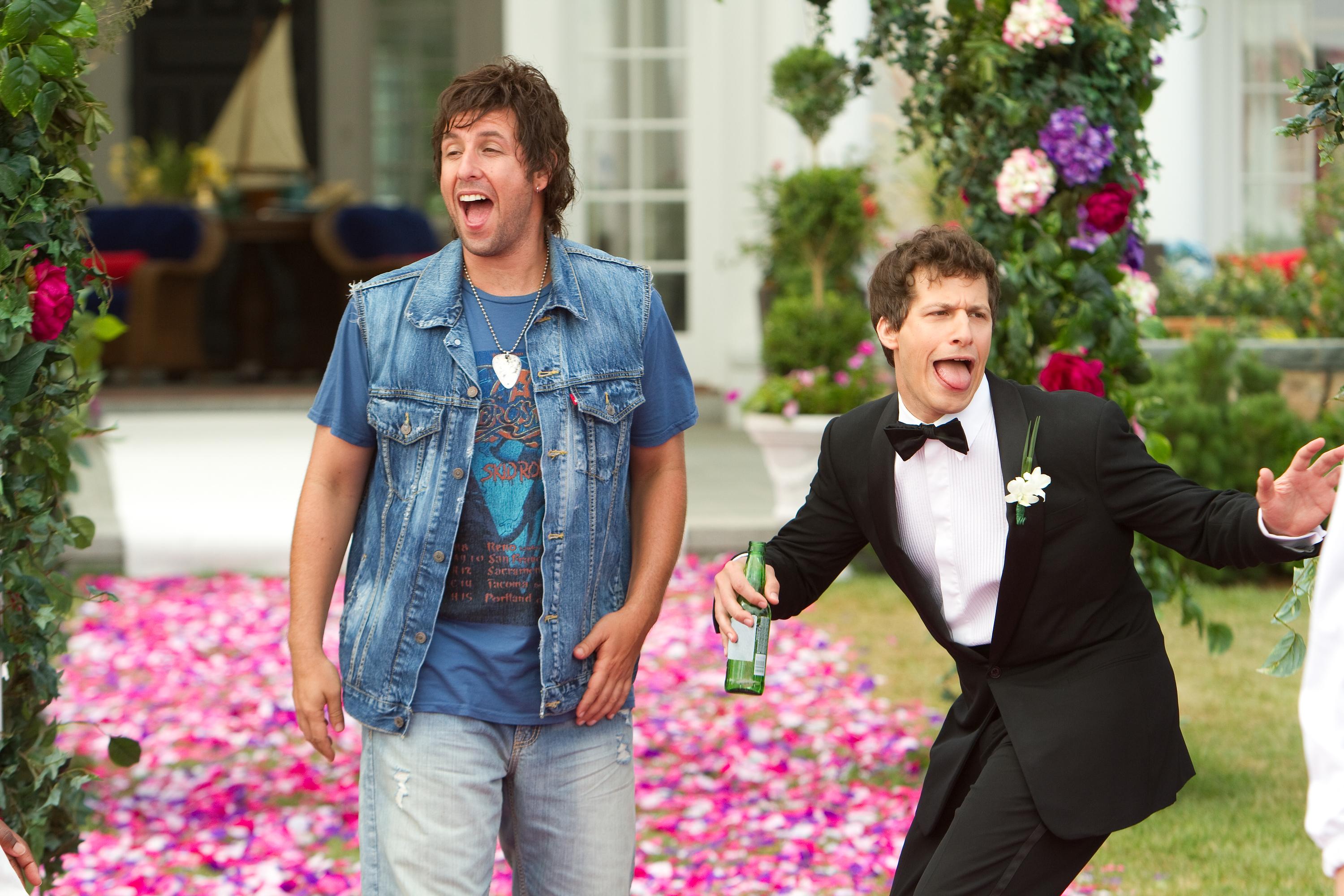
Hollywood’s two big releases are the Adam Sandler-Andy Samberg arrested-development yukfest That’s My Boy, and the Tom Cruise hair metal musical Rock of Ages. If you’re excited about either, you probably aren’t the type of person who gives two shits what movie critics say. Just a guess. So, enjoy. As you were.

Also of note for movie fans: the San Francisco Museum and Historical Society opens “The Stuff That Dreams Are Made Of: San Francisco and the Movies” this weekend. It features work by Madeleine Ellster herself, Kim Novak, plus:

“The exhibition paints a picture of the amazing breadth of the Bay Area’s film history and filmmaking community, using educational text panels, photographs, posters, vintage cameras, movie props and other objects. Slide shows, lectures, book signings, oral history recordings, screenings, and multimedia will also be part of the exhibition.”

(I can’t confirm there will be a Harry Callahan street shootin’ simulator, but that would be pretty awesome, no?)

But back to the movie theater:

This weekend, it’s a Duplass-a-thon, as Dennis Harvey reviews mumblecore’s first sex symbol in Safety Not Guaranteed and Your Sister’s Sister. Below, you’ll find our takes on another mumblecore overachiever, Greta Gerwig, who less success with the wee-bit-twee Lola Versus; handcuffed-together-at-a-music-festival (don’t ya hate when that happens?) rom-rom Tonight You’re Mine, featuring Natalie Tena (Osha for all my fellow Game of Thrones devotees also going through withdrawals); delightful coming-of-age Norwegian import Turn Me On, Dammit!; and The Woman in the Fifth, the latest movie to remind us that yes, Kristin Scott Thomas can totally speak French! And maybe the first to let us know that Ethan Hawke can, too.

http://www.youtube.com/watch?v=b5hYBMZft9w

Lola Versus Greta Gerwig’s embattled late-twentysomething, the titular Lola, apologetically invokes the Saturn return to explain the chaos that enters her life when her emotionally underdeveloped boyfriend proposes, panics, and dumps her. Workaday elements of the industry-standard romantic comedy surface, lightly revised: a crass, loopy BFF (co-writer Zoe Lister Jones) who can’t find true love and says things like “I have to go wash my vagina”; a vaguely soulful male friend (Hamish Linklater, 2011’s The Future) who’s secretly harboring nonplatonic feelings (or maybe just an opportunistic streak); wacky yet vaguely successful Age of Aquarius parents (a somewhat toneless Debra Winger and a nicely gone-to-seed Bill Pullman). One can see why it would be tempting to blame a planet’s galactic travels for the solipsistic meandering that Lola engages in, bemusedly lurching, often under chemical influences, from one bout of poor decision-making to the next. She claims to be searching for a path out of the chaos into some calmer place (fittingly, she’s a comp lit Ph.D. candidate who’s writing her dissertation on silence), but as the movie transports us mercilessly from one scene of turmoil to the next, we have little reason to believe her. The script has funny moments, and Gerwig sometimes succeeds in making Lola feel like a charming disaster, but her personal discoveries, while certainly valuable, feel false and forced. (1:26) (Lynn Rapoport)

Tonight You’re Mine Ah, the old chained-together gimmick, so effective in creating conflict in movies like 1973 women-in-prison classic Black Mama, White Mama. Alas, Tonight You’re Mine contains zero escaped cons, and is instead a pretty contrived love story about two rockers who’re inexplicably handcuffed together, mid-argument, by a mysterious man prowling the grounds at Scotland’s massive T in the Park music festival. Whether or not Adam (Luke Treadaway, last seen getting very stoned mid-alien invasion in 2011’s Attack the Block) and Morello (Game of Thrones‘ Natalie Tena) will ditch their clearly-wrong-for-them partners and fall for each other is hardly up for debate. What saves Tonight You’re Mine is its authentic rock-festival atmosphere; director David Mackenzie filmed amid the actual chaos of the 2010 T in the Park fest, so there’s plenty of mud, inebriated extras, and background music swirling around the budding romance. Also, though her character is underdeveloped here, Tena has a punky appeal that suggests a star on the rise. (1:20) (Cheryl Eddy)

http://www.youtube.com/watch?v=eySFZRVcHYM

Turn Me On, Dammit! The 15-year-old heroine of writer-director Jannicke Systad Jacobsen’s Turn Me On, Dammit! is first heard in voice-over, flatly cataloging the over familiar elements of the small town in rural Norway where she lives — and first seen lying on the kitchen floor of her house sharing an intimate moment with a phone sex operator named Stig (Per Kjerstad). Largely ruled by her hormones and longing to get it on with someone other than herself and the disembodied Stig, Alma (Helene Bergsholm) spends large segments of her life unspooling sexual fantasies starring Artur (Matias Myren), the boy she has a crush on, and Sebjorn (Jon Bleiklie Devik), who runs the grocery store where she works and is the father of her two closest friends: burgeoning political activist Sara (Malin Bjorhovde) and full-fledged mean girl Ingrid (Beate Stofring). Back in real life, a strange and awkward physical interaction with Artur leads Alma, excited and confused, to describe the experience to her friends, a mistake that precipitously leads to total social ostracism among her peers. With the possible exception of some unnecessary dog reaction shots during the aforementioned opening scene, documentary maker Jacobsen’s first narrative feature film is an engaging and impressive debut, presenting a sympathetic and uncoy depiction of a young girl’s sexuality and exploiting the rich contrast between Alma’s gauzier fantasies and the realities of her waking world to poignantly comic effect. (1:16) (Rapoport)

The Woman in the Fifth A rumpled American writer with a hinted-at dark past (Ethan Hawke) shows up in Paris, to the horror of his French ex-wife and confused delight of his six-year-old daughter. An ill-advised nap on public transportation results in all of his bags being stolen; broke and out of sorts, he takes a grimy room above a café and a gig monitoring the surveillance-cam feed at what’s obviously some kind of illegal enterprise. During the day he stalks his daughter and romances both sophisticated Margit (Kristen Scott Thomas) and nubile Ania (Joanna Kulig); he also dodges his hostile neighbor (Mamadou Minte) and shady boss (Samir Guesmi). Based on Douglas Kennedy’s novel, the latest from Pawel Pawlikowski (2004’s My Summer of Love), offers some third-act twists (gory, distressing ones) that suggest Hawke’s character (and, by extension, the viewer) may not be perceiving reality with 100 percent accuracy. Moody, melancholy, not-entirely-satisfying stuff. (1:23) SF Film Society Cinema. (Eddy)

Local jazz, blues behind bars, and backing-band memories: new music docs

0

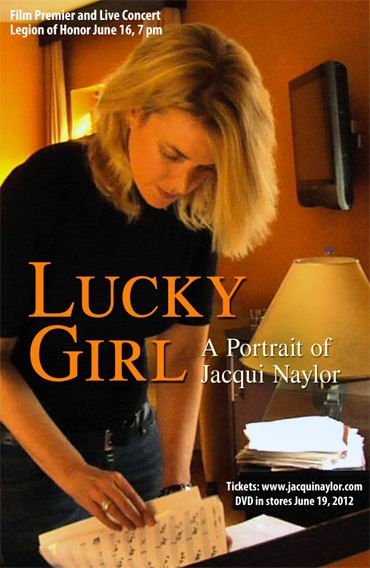
Jazz singer Jacqui Naylor — Buddhist, Hayes Valley resident, mash-up innovator — premieres her new doc, Lucky Girl: A Portrait of Jacqui Naylor, with a live concert at the Palace of Fine Arts Sat/16 (the DVD will be available in stores Tue/19).

The film, produced by the Bay Area’s ARTiDOCs, is about as far from Behind the Music-style tell-all as you could get; Naylor seems blissfully happy with her life, being completely creatively and personally fulfilled (see also: the film’s title, named for her 2011 CD). No scandals or dark secrets revealed here; this is a straightforward look at a working artist, briefly touching on her career beginnings (at the suggestion of teachers at American Conservatory Theater, she chose music over acting) and including mini-profiles on the artists she collaborates with, including husband Art Khu.

http://www.youtube.com/watch?v=DiBY1U4b8oI&feature=player_embedded

Fans (whom she prizes highly — and takes their suggestions seriously) will enjoy the film’s many musical interludes, which showcase snippets and entire songs of Naylor performing and rehearsing in the Bay Area, Seattle, and Istanbul. Her repertoire includes original songs, pop and jazz standards, and standards freshened up with her signature “acoustic smashing” — singing the lyrics to “My Funny Valentine” over the instrumentation for AC/DC’s “Back in Black,” for example. Will this versatile performer dust off more heavy-metal flair for Saturday’s show? It could totally happen. She’s taking requests: jacqui@jacquinaylor.com.

Lucky Girl: A Portrait of Jacqui Naylor (with reception and concert)
Sat/16, 7pm, $35
Florence Gould Theater
Legion of Honor
100 34th Ave., SF
www.jacquinaylor.com

**

Coming to the Kabuki and Smith Rafael this weekend is Music from the Big House, a soulful doc from filmmaker Bruce McDonald (2008’s Pontypool) about fellow Canadian Rita Chiarelli‘s experiences working with musician-inmates at Louisiana’s Angola Prison.

Angola Prison — earlier the subject of an acclaimed short documentary about its famous rodeo — has a well-known, rich musical history; in the 30s, John and Alan Lomax recorded Leadbelly while he was serving time there. Chiarelli, a blues superstar in her native country, says she initially traveled to the American South a decade ago to “visit the birthplace of the blues” — a journey that included a stop at America’s largest maximum security prison (5,000 inmates), where she discovered a thriving musical culture. Inspired (“the trueness totally moved me”), a planned concert for the prisoners became a concert with the men, including groups playing good ol’ boy country, gospel, Stevie Wonder jams, and Chiarelli’s own brand of raw, rootsy blues.

Gorgeously filmed in black and white, and crisply edited, McDonald’s film emphasizes the joy and feelings of freedom the men have achieved through their musical pursuits. But it also acknowledges its inescapable setting, filming the dorm-style cell blocks, a visiting day filled with seldom-seen wives and children, the barbed wire encircling the years. “When you’re playing music it’s easy to forget where you are,” the husky-voiced Chiarelli reflects. “But they’re still in prison and that’s rough.”

Though most of the featured men don’t directly address their crimes (their various offenses, including rape and murder, are addressed in the film’s sobering end credits), themes of deep regret and redemption run throughout the film. Kind of like the blues.

Music From the Big House
June 15-21, 2:15, 4:10, 7, and 9:20pm (with live performance by Rita Chiarelli Sat/16, 7pm)
Sundance Kabuki Cinema
1881 Post, SF
www.sundancecinemas.com

Also Sun/17, 7pm, $12 (with live performance by Chiarelli)
Christopher B. Smith Rafael Film Center
1118 Fourth St., San Rafael
(415) 454-1222
www.cafilm.org

**

And next weekend, get a sneak peek at an as-yet-unreleased (and not on DVD) documentary about acclaimed session musicians the Wrecking Crew, presented by the San Francisco Chapter of the Audio Engineering Society.

http://www.youtube.com/watch?v=-xs2kJn6PBE&feature=plcp

The film sounds kind of similar to the excellent 2002 doc Standing in the Shadows of Motown, about Motown’s legendary Funk Brothers: the Wrecking Crew was hugely active in 1960s Los Angeles, adding their musicianship to hits by the Beach Boys, Frank and Nancy Sinatra, the Monkees, the Mamas and the Papas, and more. (The film contains so many songs that its release has been held up over music-rights issues).

Producer-director Danny Tedesco — son of Wrecking Crew guitarist Tommy Tedesco — will be on hand to discuss the film, which he’s been working on for over 15 years, after each screening.

The Wrecking Crew
June 23, 2:30 and 7pm, $20
Auctions By the Bay Theater
2700 Saratoga, Alameda
www.brownpapertickets.com

Beach daze with buzzing brother act Wildlife Control

0

What would it be like if a day of your life was filmed then released into the wilds of the web? Better yet, what if you and your brother were musicians, and you produced, directed, and released your first big, innovative music video – shot over a full day at Ocean Beach in San Francisco – and it ended up going viral on Youtube, before the release of a full-length album?

Well, your band Wildlife Control would be a rather buzzed about act. And it would leave the people wanting even more (debut EP Spin was released this March). Brothers Neil and Sumul Shah, hailing from a rural Pennsylvania town – now based in Brooklyn and San Francisco respectively – spent a day in early February filming said music video for their new single “Analog or Digital” on a windswept beach, using a unique combination of time-lapse and stop-motion techniques.

In the video, it appears that the background is moving faster than real time, while the band’s movements are stagnant, choppy, like a slow-moving slideshow; it creates an effect that looks their feet are closely hovering over the sand.

This effect was created by a series of more than 3,000 individual photographs. The process was tiring for the brothers, holding the poses for such a long stretch of time, “We got really stiff” laughed Sumul during a conversation at Cafe Mediterranean in Berkeley.

Wildlife Control’s sound is far from rigid, it’s based in breezy pop – poppy enough to appeal to mainstream audiences – and layered with rock’n’roll riffs, and some jazz influences. There are layers to peel back with each listen, more depth than initially meets the ear.

http://www.youtube.com/watch?v=boGyFAYomBo

“We grew up in a whole family of musicians, Sumul reflected. “Our parents both imparted the importance of music from an early age. They wanted us to dive deep into it. Our dad is a trained classical Indian musician.” In fact, he plays Tabla on their future full-length release. “Music was all around, all the time; from an early age we always heard good music.”

Sumul added that – along with that family of musicians – he was also inspired by teachers, other artists, and inspirational folk with a clarity of vision, ticking off a list that included Steve Jobs, the Beatles, and Johann Sebastian Bach.

“When we would go with our friends in their parents’ minivan, I didn’t get what they listened to. The cheesy kids’ music was just not what we were exposed to in our family,” he laughed. “There is a necessity to some extent to have music appropriate for kids, but I don’t believe they should need their own weird kids’ music. A child can appreciate music like the Beatles.”

While the brothers grew up surrounded by music and have been playing together for some time, they’ve just barely dipped their toes in the modern world of viral music videos. With the “Analog or Digital” video, they made a concerted effort to capture their personalities.

“We thought, what better way to do it then to film an entire day to ourselves, and then compress that down into the three minutes of the song,” Sumul said. “Certain aspects of it were very planned out, but otherwise we just wanted to have fun and be ourselves.”

The song is anchored by a steady drum line, and the story-telling of the lyrics instantly create a potential for nostalgia; the musical bridge adds a dramatic flair that makes the song all the more memorable.

“It’s interesting that it went viral; all we really want is to make music for anyone who wants to hear it and be exposed to it.”  Sumul said. “To live in an age where we can get so much fan response amazes us,” adding, “we totally live in the future and we love that.”

Wildlife Control
With Coast Jumper
Mon/18, 8pm, $13
Brick and Mortar Music Hall
1710 Mission, SF
(415) 800-8782
www.brickandmortarmusic.com

The Performant: Interpreting Iraq

0

Aftermath at Stagewerx attempts to humanize recent refugee experience.

An austere set greets the assembled theater-goers in the black box arena of Stagewerx: a projection of a shop-lined street in the Middle East, a few chairs, an aerial photograph of Iraq perched on an easel, an incongruous television, and a pair of shoes.

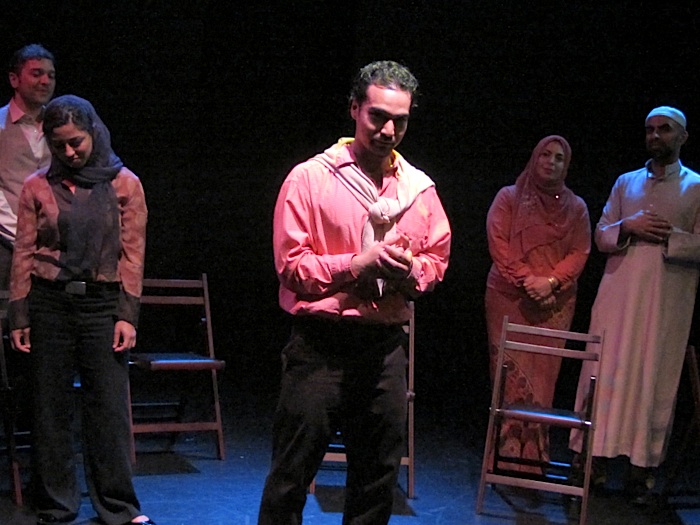
A lone figure in a headscarf and wide trousers, Rafidain (Yara Badday), approaches the centerstage and begins to speak in Arabic, offering chai, looking anxiously over her shoulder for her interpreter, Shahid (Mohamed Chakmahchi). In Theatre Period’s ongoing production of Aftermath, the year is 2008, the location is Jordan, and all of the characters are Iraqi refugees, their stories gleaned from a series of interviews conducted by Jessica Blank and Erik Jensen on the subject of the 2003 US invasion and occupation of Iraq, and its ongoing repercussions. 

Throughout the course of the play, the individual character traits of the interviewees reveal themselves through text and minimal movement. The independent fierceness of Rafidian, a pharmacist; the brash materialism of action-film aficionado and dermatologist Yassar (Shoresh Alaudini); the righteous anger of Imam Abdul-Aliyy (Munaf Alsafi); the only partially-subdued optimism of a pair of exiled theater artists played by Andrea Ali and Hassan Alnawar.

Facing reality: a scene from Aftermath. Guardian photo by Nicole Gluckstern

A familiar ritual accompanies each introduction, as each character offers tea, coffee, baklava, a peek at the family photo album or a proud pair of diplomas — acts of culturally-ingrained hospitality reminiscent of similar scenes in Joe Sacco’s documentary graphic novel, Palestine.  

Since most of the text is in English, the role of the “interpreter,” a composite character created by Blank and Jensen, spends much of his stage time interpreting not language, but rather the timeline and the historical role of tribalism in Iraq for audience edification.

As for the other characters, their discourse is scripted directly from interview material: a Christian woman, Basmina (Jasmin Kimberley Ali) describing the sound of falling bombs, a young couple (Dolfakar Mardan and Susu Attar) struggling with painful nostalgia for the home they built themselves and then had to leave behind, the dignified Abdul-Aliyy elucidating the tortures he survived during his unwarranted incarceration at Abu Ghraib. The play focuses not so much on creating a linear narrative, but on creating awareness that each character is not mere statistical data to collect — they are full-fledged, multifaceted members of the human race. 

The production is not without its awkwardness. The material is intense, often discomfiting, and unadorned, mirrored by the minimal staging, stark lighting, and the stilted bearing of a few of the actors, (some of whom have never performed in a play before).

The scenes play out mostly like a televised eyewitness documentary, populated primarily by static talking heads, any intricacies of decor (save the television) left to the audience to visualize on their own. But ultimately with a play like this, the less that detracts from the simple honesty of the stories being told the better. There’s simply no need to dress this production up with stagecraft, the stories are compelling enough on their own.

Aftermath

Through June 30, $25

Stagewerx

446 Valencia, SF

www.stagewerx.org

www.theatreperiod.com


‘Block Reportin’ 101′ and more at the San Francisco Black Film Festival

0

Frameline is hitting screens tomorrow (our coverage here, here, and here), but this weekend also unspools another local festival worth your filmgoing time: the San Francisco Black Film Festival, which kicks off Fri/15 with Robert Townsend’s latest, based-on-a-true-story drama In the Hive. It’s about a group of at-risk teens struggling to continue their educations (with the help of tough-love administrators played by Loretta Devine and Michael Clarke Duncan).

http://www.youtube.com/watch?v=sFARWl3Q92A

The rest of the fest includes a “Focus on Fathers Family Day” featuring a new short doc by Kevin Epps; a games and animation-focused program topped off by a panel with Leo Sullivan (Fat Albert) and Morrie Turner (Wee Pals); and, of course, a huge slate of features and shorts, on a wide-cast net of subjects: pick-up basketball, hip-hop in Ghana, “good hair,” and more. Don’t miss mockumentary Thugs, The Musical — SF comedian Kevin Avery’s show biz satire in the vein of Townsend’s 1987 Hollywood Shuffle.

Of particular local interest is the Sat/16 screening of Block Reportin’ 101, S. “C-ya” Samura’s documentary about community activist and journalist J.R. Valray, “People’s Minister of Information,” and his work at the Bay Area’s own Block Report Radio. Check out the trailer below, and Valray’s own radio report on the SFBFF here.

Fri/15-Sun/17, $5-$50
Various venues, SF
www.sfbff.org

FREE tickets for Frameline 36

0

This year’s edition of the San Francisco International LGBT Film Festival runs Thursday, June 14 through Sunday, June 24 and is themed “Find Your Story.”

To reflect the diversity within the LGBT community, curators of Frameline 36 have gathered more than 200 films, from shorts to global documentaries and mainstream Hollywood-star narratives. Find more info here.

To receive a pair of vouchers redeemable online for any film, email sfbgpromos@sfbg.com with “Frameline 36” in the subject and provide your name and address. This promo is good while supplies last.

Out for more

0

arts@sfbg.com

FRAMELINE It was Blue (1993) and Swoon (1992) and Frisk (1995), or My Own Private Idaho (1991) and The Hours and Times (1991). Paris Is Burning (1990). The Incredibly True Adventure of Two Girls in Love (1995).

It probably depended a little on who you were and what you’d seen lately that made you feel grateful to be coinciding with this point on the timeline of queer cinema. For me, it was Lilies (1996) and Go Fish (1997), and All Over Me (1997) and Beautiful Thing (1996), and every other gay teen romance, and any totally f***ed up thing Gregg Araki chose to put onscreen (including 1995’s Doom Generation, billed as “a heterosexual film by Gregg Araki,” which made straight look like a fairly provisional state of being). It was kind of like irony or porn — I couldn’t exactly define it, but I was pretty sure I knew it when I saw it while bingeing, mid–gay adolescence, on whatever the 1990s had to offer in the way of LGBT experience on film. “It” being this thing called New Queer Cinema, a term that film critic and scholar (and past Guardian contributor) B. Ruby Rich had coined in a 1992 essay in the British film journal Sight & Sound.

Rich, these days teaching in UC Santa Cruz’s Film and Digital Media Department, offered up the idea of New Queer Cinema as a way to frame a ragged-edged genre that she saw emerging. Populating it were films that told unfamiliar, upsetting, outrageous, and sometimes deeply lyrical stories of queer experience, forcing a more complicated picture onto the screen. As many of them gained a cultural foothold (seldom reaching deep into the mainstream, but drawing respectable numbers of art-house-goers), they made a space around themselves for more such films to follow their unsettling examples.

Over the next decade and beyond, the genre, and the larger, disparate queer culture, welcomed a world of untold stories; films like My Own Private Idaho and later Velvet Goldmine (1998) and Boys Don’t Cry (1999) entered the popular culture by way of some combination of star and story power; and one morning we woke up to the sight of significant swaths of the country heading to the multiplex to watch a swoony, gloomy tale of two cowboys in love.

Now, somehow, Brokeback Mountain (2005) is starting to seem like a long time ago, and you could say that New Queer Cinema has both evolved and devolved, a fact reflected in the rom-com-packed LGBT section of your friendly neighborhood video store as well as in each passing year’s Frameline festival catalog. This year, the San Francisco International LGBT Film Festival offers the opportunity to compare and contrast, casting its eyes back on the genre 20 years after Rich pronounced its existence and sketched its parameters.

In addition to presenting Rich with its annual Frameline Award, the fest has programmed a retrospective of four films that offer a sense of New Queer Cinema’s expansive scope and permeable borders: Alex Sichel’s dark-and-light, riot grrrl music–infused All Over Me (costarring a baby-faced Leisha Hailey from The L Word); Ana Kokkinos’s Head On (1998), about a reckless but closeted young man living in a tight-knit Greek Australian community; Gregg Araki’s violent, trashily romantic, HIV-inflected road movie The Living End (1992); and Cheryl Dunye’s experimental mix of documentary and dyke drama The Watermelon Woman (1996). (In 2012’s Mommy Is Coming, also screening, Dunye adds to the mix Berlin sex clubs, explicit taxicab-backseat role play, and a parent-child dynamic likely to leave you flinching in horror.)

Elsewhere in the fest, French writer-director Virginie Despentes’s Bye Bye Blondie has a mosh pit soundtrack and follows, clumsily, Araki’s frenetic and unrestrained example. Béatrice Dalle (1986’s Betty Blue) and Emmanuelle Béart (2002’s 8 Women) play former teenage punk rock sweethearts who met in a mental institution and reunite after a long estrangement to reenact the past and rip open old wounds. A high point, though not for their relationship, occurs when Dalle’s slightly unhinged character tells a woman at a highbrow cocktail party, populated by Paris’s public-intellectual set, that her dress is sectarian, before physically assaulting another guest. Cloying and soap operatic, offering the gauzy fantasy fulfillment of a Harlequin Romance, Nicole Conn’s A Perfect Ending nevertheless earns points for its premise of an uptight housewife who employs the services of a call girl — and for casting Morgan Fairchild as a madam who uses her Barbie collection as a staffing organizational tool.

Other queer stories are more successfully delineated. Aurora Guerrero’s coming-of-age tale Mosquita y Mari, which screened at the SF International Film Fest in April, soulfully and subtly captures the ambiguous friendship that develops between two Latina high schoolers struggling with unspoken feelings as well as pressures both familial and financial. In Joshua Sanchez’s Four, adapted from a play by Christopher Shinn, Fourth of July fireworks and a mood of lonely isolation serve as a backdrop to four disparate individuals’ uncomfortable attempts to find physical and emotional connection. Stephen Cone’s The Wise Kids is set in and around a Southern Baptist church in Charleston, South Carolina, and tracks a trio of teenagers as they sort out the facts of their religious and sexual identities.

There’s a startlingly small quantity of queer baby-making going on in this year’s fest compared with recent years, and the family proposed in writer-director Jonathan Lisecki’s romantic comedy Gayby (as well as Ash Christian’s Petunia) is not necessarily nuclear or easy to encapsulate in kindergarten on “Let’s draw our family tree!” day, marrying the concept of queer family to the Heather-has-two-mommies narrative. The film’s gay-boy Matt and straight-girl BFF Jenn decide that it’s time to settle down and start a family together, but reject the idea of turkey basting or consulting a fertility specialist in favor of comically awkward, highly unerotic, goal-oriented sexual intercourse.

Come to think of it, their method could resonate with the procreation-only, can’t-wait-to-be-raptured crowd, who might be less enthusiastic when the pair switch to good old-fashioned DIY insemination and Matt’s friend Nelson (a scene-stealing Lisecki) brings over a container of holy cat cremains to sanctify the proceedings. Either way, with queer spawning sometimes serving as the rope in a tug-of-war argument about heteronormativity, queer identity, transgression, and basic rights, an unruly rom-com about queer family planning is a fitting entry in a genre and a festival that have both grown into panoramic representations of the queer world.

FRAMELINE36

June 14-24, most shows $9-$11

Various venues

www.frameline.org

You @ the festival

0

cheryl@sfbg.com

FRAMELINE What happens when a human being becomes a meme? This is the question at the heart of Me @ The Zoo, about YouTube celebrity Chris Crocker — destined to be forever known for his sobbing rant imploring the universe to “Leave Britney alone!”

What could have been a one-joke documentary is, to filmmakers Chris Moukarbel and Valerie Veatch’s credit, a layered look at insta-fame in the internet age, the perils of cultivating an oversized persona (particularly while living in a small, closed-minded town), and the hard lesson that life in the spotlight also equals life under a microscope.

Far from being reducible to a single screen grab, Chris Crocker is a deeply complicated person. As the film begins, he knows exactly who he would like to be — her name rhymes with “Britney Spears” — but is a little less certain about who he actually is. Growing up in Bristol, Tenn. (“A good place to live,” an oft-filmed town sign reassures us), Crocker was bullied for being gay; in high school, home-schooling became necessary. With few friends and little supervision (his troubled mother is a peripheral presence; he lives with his grandparents — the parents of his completely absent father), the bright, charismatic, attention-starved teen turned to the burgeoning world of internet video.

Despite homophobic haters all too happy to shower him with ugly, threatening comments, he became a MySpace sensation with his manic, lip-glossed, gender-bending videos. He cultivated a bratty catch phrase: “Bitch, please!” When YouTube appeared in 2005 (the doc’s title comes from the site’s very first upload), Crocker was one of its early addicts, and his fame grew along with his subscriber count. He danced, he provoked his tough-as-nails grandma, he modeled wigs, and he vlogged, often with exaggerated emotion. When his idol took a dive into paparazzi-documented insanity in 2007 (Feb.: head shave; Sept.: disastrous “comeback” performance on MTV), of course he made a video about it. He could not have known that the clip, which currently has over 43 million views, would go viral, and that suddenly everybody would know about Chris Crocker.

Yay! It’s what he wanted! But was it? “I love acting like I don’t want it,” he gleefully announces, faux-shunning photographers trailing behind him on a visit to Los Angeles. But the Crocker zeitgeist ends nearly as soon as it starts. His reality show (to be called Chris Crocker: Behind the Curtains) fails to find a network, and he soon becomes yesterday’s novelty-news hook. Back in Tennessee, he’s surprisingly sanguine about his short-shrift stab at stardom and eventual slide into notoriety: “I’m one of the first people who’s famous for not being famous,” he says. And later: “I can’t stop being myself.”

As the kids say, haters gonna hate. But when being yourself brings you such joy, who cares? Nickolas Bird and Eleanor Sharpe’s effervescent Ballroom Rules follows a team of Australian same-sex ballroom dancers as they train for the Gay Games. The action revolves around Melbourne’s only LGBT-centric ballroom studio, Dance Cats, and its crew of dedicated learners. Comparisons to 1992’s Strictly Ballroom (frustrating practice sessions; copious sequins; stuffy jerks who oversee the mainstream ballroom scene) can be made, except same-sex dancers must be what the movie calls “ambi-dance-trous” — able to switch leader-follower roles mid-routine. That the Dance Cats crew is such a warm, often hilarious group who’ve overcome much (homophobia is the least of it) to get where they are makes Ballroom Rules that much more inspiring.

Also inspiring: the Lance Bass-produced Mississippi: I Am, Harriet Hirshorn and Katherine Linton’s short doc about what it’s like to be a gay teen in the deep South. Hint: it sucks year-round, but prom season is especially dicey. Julie Wyman’s STRONG!, about Olympic weightlifter Cheryl Haworth, follows the 290-pound athlete as she hefts mind-blowing amounts in the gym and speaks honestly about her issues with confidence and body image. Haworth is a delight (her nickname is “Fun”), and while STRONG!‘s more serious themes are important, the off-the-cuff scenes with its subject (her car, a hilariously retro 1979 Lincoln Continental, is dubbed “Mary Todd”) are just as memorable.

Two more docs worth mentioning, about a pair of men whose fascinating lives are ideally suited for cinematic exploration: the PBS-ish Revealing Mr. Maugham, about hugely successful playwright and author W. Somerset Maugham, whose works are still being made into films today; and Times of Harvey Milk-ish Vito, about groundbreaking activist and Celluloid Closet author Vito Russo — a spot-on opening-night choice for Frameline. 

www.frameline.org

Gimme more

0

For more on this year’s Frameline Film Festival, including times and prices, go to www.frameline.org

Mixed Kebab (Guy Lee Thys, Belgium/Turkey, 2012) A My Beautiful Launderette-type mix of culture clashes ethnic, religious, sexual, and otherwise, Guy Lee Thys’ Belgian-Turkish feature risks over-contrivance, but comes out a tasty blend of narrative and thematic ingredients. Ibrahim, a.k.a. Bram (Cem Akkanat), is the apple of his émigré Antwerp family’s eye, but then he’s kept his hunky-gay-man-at-large double life entirely off their conservative Muslim radar. Even as his best-friendship with Kevin (Simon Van Buyten) looks set to turn into something much more, he goes along with plans for an arranged marriage to Elif (Gamze Tazim), an educated cousin desperate to escape the gender restrictions of Turkey and her father’s home. Several factors will erode those best-laid plans, however, not least the prying eyes of Bram’s black-sheep brother Furkan (Lukas De Wolf), who goes from rebellious juvenile delinquency to obnoxious moral fundamentalism under a far-right local imam’s influence. Thu/14, 10pm, Castro. (Dennis Harvey)

North Sea Texas (Bavo Defurne, Belgium, 2011) Growing up is never easy — especially when you know who you are and who you love from a tender young age, and live in a sleepy Belgium coastal hamlet in the early ’70s. Sexual freedom begins at home, as filmmaker Bavo Defurne’s debut feature opens on our beautiful little protagonist, Pim — a melancholy, shy, diligent soul who has a talent for drawing, a responsible nature, and a yen for ritual dress-up in lipstick and lace. He has an over-the-top role model: an accordion-playing, zaftig mother who has a rep as the village floozy. Left alone far too often as his mom parties at a bar named Texas, Pim takes refuge with kindly single-mom neighbor Marcella, her earnest daughter, and her sexy, motorcycle-loving son, Gino, who turns out to be just Pim’s speed. But this childhood idyll is under threat: Gino’s new girlfriend and a handsome new boarder at Pim’s house promise to change everything. Displaying a gentle, empathetic touch for his cast of mildly quirky characters and a genuine knack for conjuring those long, sensual days of youth, Defurne manages to shine a fresh, romantic light on a somewhat familiar bildungsroman, leaving a lingering taste of sea salt and sweat along with the feeling of walking in one young boy’s very specific shoes. Fri/15, 9:30pm, Castro. (Kimberly Chun)

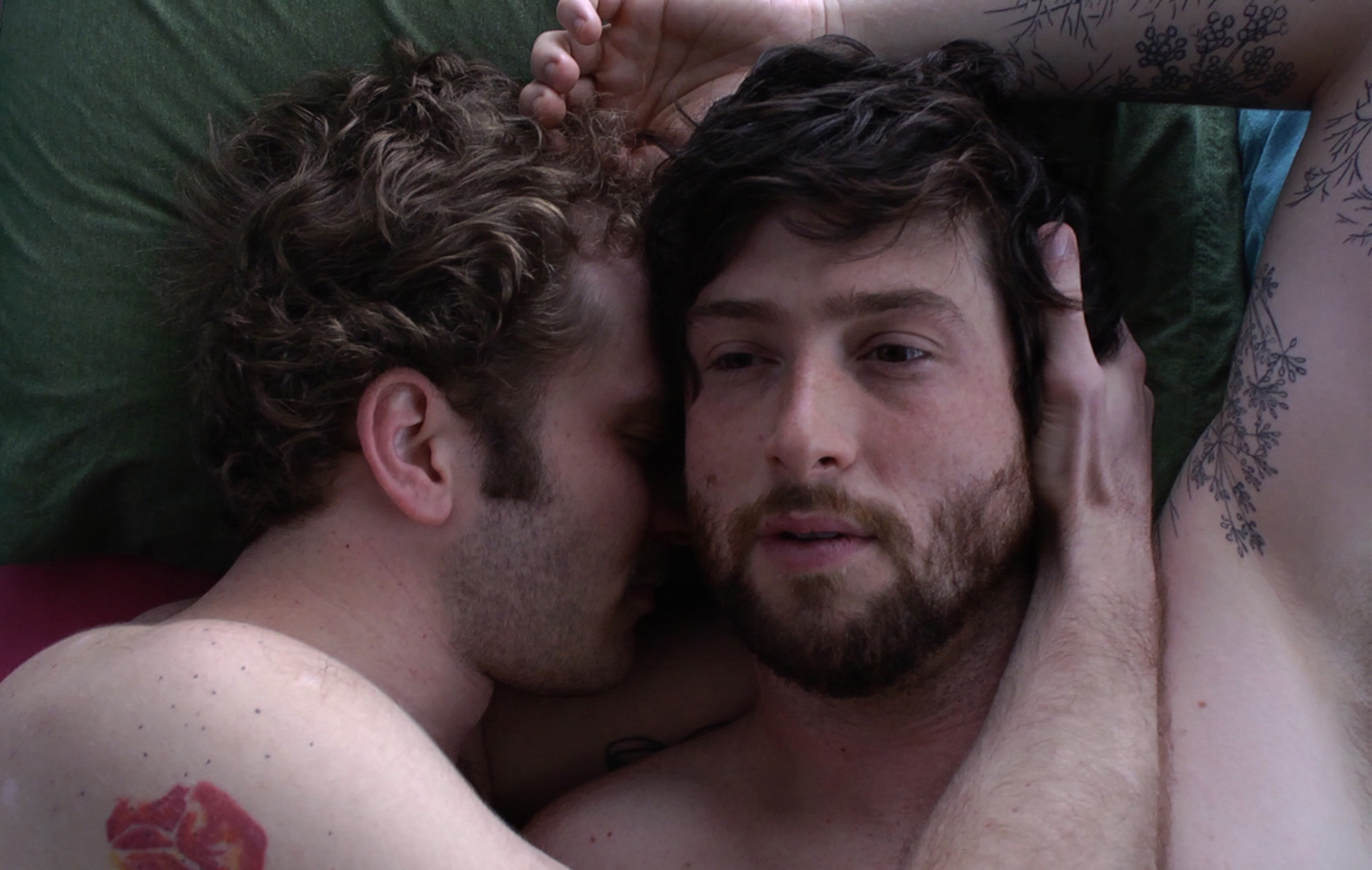
I Want Your Love (Travis Mathews, US, 2011) Local director Travis Mathews’ first full-length feature — produced by porn impresario Jack Shamama and the good, pervy folks at Naked Sword — is so beautifully shot, edited, paced, and true to life for a certain young, scruffy, artsy fag demographic (not to mention brimming with explicit sex scenes) that you probably won’t notice that hardly anything happens plotwise. A cute performance artist named Jesse, played by one of our top performance artists also named Jesse, is getting ready to move back to Ohio due to those all-too-familiar San Franciscan money woes, but maybe also to forge some deeper connection to life. That’s about it. The true joy here is seeing most of the Bay Area’s gay underground arts scene nailing peripheral roles: Brontez Purnell hilariously steals the movie, cute naked gay boys abound, and the whole thing really does come off as a lovely West Coast boho version of last year’s UK indie hit Weekend, with more fog and condoms. Sun/17, 9:30pm, Castro. (Marke B.)

Beauty (Oliver Hermanus, South Africa/France, 2011) The destructive toll of repression, psychological and otherwise, is vividly illustrated in Oliver Hermanus’ stark minimalist drama. Francois (Deon Lotz) is a middle-aged Afrikaaner husband and father living an entirely concealed double life: the hidden part acted out in secret orgies with other men as successful, privileged, and closeted as he. (When one member of this very exclusive “club” brings a black lover along, the reaction makes clear how sharp South Africa’s race/class divisions remain.) Francois’ control of that schizophrenic existence is masterful — until he spies Christian (Charlie Keegan), a model-handsome new corporate colleague, a close friend’s son, and eventually his younger daughter’s boyfriend. Despite all those red flags, his obsession builds toward a shocking, uncontrollable explosion. A deliberately chilly and unpleasant work of art à la Michael Haneke, Beauty weighs the consequences of living a lie, and finds them aptly repellent. Mon/18, 9:30pm, Castro. (Harvey)

 My Best Day (Erin Greenwell, US, 2012) Sans name stars or a catchy plot hook, Erin Greenwell’s indie comedy attracted little attention at Sundance, and it’s kinda buried in the Frameline program — a pity, since its uncontrived, even-handed balance of gay male, lesbian, and straight protagonists would have been perfect for a higher-profile slot. Not to mention that it’s totally goofy, funny, surprising, and sweet. Over the course of one Fourth of July in Bangor, Penn., a motley assortment of hapless but endearing characters circle one another warily, desiring everything from family reunion to crush-realization to acknowledgement of a closeted relationship. They’re all delightful, although there’s no getting around the wholesale scene stealing of Ashlie Atkinson, whose motorcycle- and slutty local-girl-covetous refrigerator-repair dyke dials down her “Muffler” in Another Gay Movie (2006) to create a character of nuanced comic beauty. My Best Day is unpretentious but so low-key skillful and open-hearted that in the end it feels ever-so-slightly profound. Tue/19, 7pm, Elmwood; June 20, 9:30pm, Castro. (Harvey)

Keep the Lights On (Ira Sachs, US, 2012) At times almost too intimately painful to watch, Ira Sachs’ autobiographical drama charts the long-term disintegration of a relationship between a filmmaker and a bright, adored but addicted and duplicitous soulmate. When expat Danish documentarian Eric (the exceptional Thure Lindhardt) first hooks up with publishing-biz newbie Paul (Zachary Booth), they have sexual chemistry and more. But the Manhattan life they build together is increasingly hole-riddled by Paul’s mood variances, unexplained absences, and other signs of serious drug usage. Sachs lets the narrative be controlled by the empty spaces such a habit leaves for concerned loved ones — time and circumstances often leap forward without full explanation, placing us in Eric’s frustrated position as a man in love with a man whose returned love is both genuine and entirely untrustworthy. Keep the Lights On is unabashedly difficult viewing. But it’s also the best (as well as the first gay-focused) feature Sachs has made since his equally unsettling 1997 debut The Delta. June 20, 6:30pm, Castro. (Harvey)  

Most likely to succeed

0

arts@sfbg.com

FILM Actors writing and directing movies in order to get work as actors can be a dicey business. It worked for the likes of Ed Burns and Vin Diesel, at least in terms of their becoming (however precariously) Hollywood stars. But anyone who’s seen a sizable share of independent features at B-list film festivals knows that more often than not, actor-originated projects can lead to excessive displays of vanity, indulgence, and shameless if frequently unconscious imitation of other movies. (Cassavetes, Scorsese, and Tarantino being the most deathlessly recycled models.)

It’s not that actors aren’t smart; it’s that as in so many things, a collectivist venture like moviemaking benefits from the checks and balances of each collaborator’s clear-eyed perspective on one another’s input. Mark Duplass is now getting roles in mainstream movies and TV — he’s in Kathryn Bigelow’s upcoming Navy SEALs movie, for one — but you can’t say that that was necessarily the plan, or point. You certainly can’t say the so-called “mumblecore” genre he helped invent with sibling Jay (his co-writer and director on five features to date starting with 2005’s The Puffy Chair) is about actorly indulgence, either, much as its specimens might sometimes meander short of structure or meaning. They’ve been outward-looking — out to communities beyond acting school or potential William Morris representation, at least.

And Mark Duplass has been good in them, sometimes almost invisibly so. He stole the show in Lawrence Kasdan’s recent misfire Darling Companion by simply acting sanely amidst a starrier ensemble hell-bent on quirky hysteria. His slightly-shlumpy yet subtler (than Seth Rogen/Jason Segal/Jack Black) appeal is more prominent in two movies that happen to be opening this week, neither written or directed by a Duplass. He’s very good in both of them, albeit in unshowy, average-yoink ways no awards body might ever recognize.

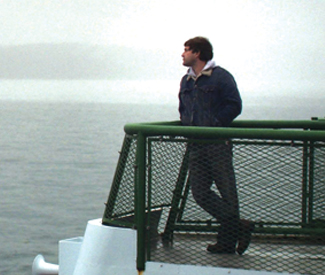
Your Sister’s Sister is the new movie from Lynn Shelton, who sort of came late to the mumblecore table — her first feature, We Go Way Back (2006), was nothing like it — and who directed Duplass in her shaggily amusing, throwaway Humpday (2009). This latest opens more somberly, at a Seattle wake where his Jack makes his deceased brother’s friends uncomfortable by pointing out that the do-gooder guy they’d loved just the last couple years was a bully and jerk for many years before his reformation. This outburst prompts an offer from friend-slash-mutual-crush Iris (Emily Blunt) that he get his head together for a few days at her family’s empty vacation house on a nearby island.

Arriving via ferry and bike, he is disconcerted to find someone already in residence — Iris’ sister Hannah (Rosemarie DeWitt), who’s grieving a loss of her own (she’s split with her girlfriend). Several tequila shots later, two Kinsey-scale opposites meet, which creates complications when Iris turns up the next day. A bit slight in immediate retrospect and contrived in its wrap-up, Shelton’s film is nonetheless insinuating, likable, and a little touching while you’re watching it. That’s largely thanks to the actors’ appeal — especially Duplass, who fills in a blunderingly lucky (and unlucky) character’s many blanks with lived-in understatement.

San Francisco-born director Colin Trevorrow’s narrative debut feature Safety Not Guaranteed, written by Derek Connolly, is more striking both overall and in performance. It’s got an improbable setup: not that rural loner Kenneth (Duplass) would place a personal ad for a time travel partner (“Must bring own weapons”), but that a Seattle alt-weekly magazine would pay expenses for a vainglorious staff reporter (Jake Johnson, hilarious) and two interns (Aubrey Plaza, Karan Soni) to stalk him for a fluff feature over the course of several days. The publishing budget allowing that today is true science-fiction.

But never mind. Inserting herself “undercover” when a direct approach fails, Plaza’s slightly goth college grad finds she actually likes obsessive, paranoid weirdo Kenneth, and is intrigued by his seemingly insane but dead serious mission. For most of its length Safety falls safely into the category of off-center indie comedics, delivering various loopy and crass behavior with a practiced deadpan, providing just enough character depth to achieve eventual poignancy. Then it takes a major leap — one it would be criminal to spoil, but which turns an admirable little movie into something conceptually surprising, reckless, and rather exhilarating.


YOUR SISTER’S SISTER and SAFETY NOT GUARANTEED open Fri/15 in Bay Area theaters.

Same time next year

0

GAMER There was a moment when it seemed this year’s Electronic Entertainment Expo (better known as E3) would be the most exciting since way back in 2006, the year Wii and PlayStation 3 premiered. This January, rumors swirled around Sony and Microsoft, that they were developing next generation consoles, and perhaps looking to premiere them alongside Nintendo’s big Wii U reveal.

But Microsoft’s decision instead was to coast on their current success as market leader, and Sony chose to concentrate on setting themselves apart in an increasingly multi-platform marketplace by focusing on peripherals and exclusives. So, at least one more year for this generation of gaming, making E3 2012 pretty interchangeable with 2011.

Nintendo’s presentation played it safe with first-party games that were either already known (Pikmin 3) or practically indistinguishable from past installments (New Super Mario Bros. 2), and left innovation for new Wii U software to third party developers. Playing nice with outside development teams will go a long way towards winning back the “hardcore” crowd Nintendo desperately craves but the dearth of exciting games evoked too-fresh memories of last year’s disastrous 3DS launch.

Speaking on the Wii U at an investor presentation prior to E3, Nintendo president Satoru Iwata stated “There is always a limit to our internal resources … if I said that an overwhelmingly rich software lineup would be prepared from day one, it would be too much of a promise to make.” Attendees at Nintendo’s conference would have been wise to heed that warning, as an initially excited crowd grew more restless with each announcement that wasn’t a hi-definition Zelda or Metroid game.

On the other side of the coin, Microsoft opened with a guaranteed bread-winner for the Xbox and their only exclusive blockbuster releasing this year, Halo 4. Coupled with the annual release of Call of Duty, the Xbox is in a safe spot, and Microsoft was smart to concentrate the rest of their show on apps and an application they’re calling SmartGlass, even if doing so created some disappointment in the crowd. An experiment in tablet crosstalk, SmartGlass is just one example of the “second-screen” gameplay all three publishers appear keen on for 2013.

Last of the “big three” publishers, Sony attempted to entice consumers into supporting the low-selling PlayStation Move and the new PSVita handheld, but their exclusive titles remained the most compelling reason to own a PlayStation. A new project from Quantic Dream, Beyond: Two Souls improves on Heavy Rain‘s cinematic storytelling, and Naughty Dog’s post-apocalyptic survival piece The Last of Us wowed audiences with gruesome one-on-one combat. Sony also featured the Expo’s biggest failure: way too much time devoted to a buggy and simplistic augmented reality book, Wonderbook, based on the Harry Potter franchise.

Concentrating on games over peripherals, Ubisoft had arguably this year’s best showing. New action/stealth IP WATCH_DOGS, about a hacker who can control the power of a city’s technology, had many declaring it E3’s biggest surprise, and Ubisoft also delivered strong demos for Splinter Cell: Blacklist, Assassin’s Creed III, Far Cry 3, and Rayman Legends, the last of which harnessed the possibilities of the Wii U in ways even Nintendo couldn’t match.

On the E3 show floor, the Tomb Raider series’ reboot is emotionally engrossing and includes a more robust upgrade system than the game it most closely resembles, Uncharted. Where Uncharted is known for strong story and characters, Tomb Raider competes with a terrifying sense of helplessness and mature storytelling. Making its debut at E3, Star Wars 1313 also made a lot of promises about being first to set a “mature” game in the Star Wars universe. It’ll be interesting to see if LucasArts uses that freedom as a tableau to create a truly interesting story, or if it becomes a bar to hit in terms of language and violence. Either way, 1313 features some of the most realistic motion capture I’ve ever seen, and lighting and animation that rivals entries in the film series. If there was a constant among the big E3 games, it was the year 2013. Publishers are tired of getting beat up each fall by Call of Duty‘s annual release and have relocated to next spring. Most titles demoed at E3 have been slotted for 2013’s first quarter, which currently looks as stuffed with games as November usually does. It’ll be interesting to see who stands their ground and who makes one last push to the barren summer months. If 2013 looks to be an exciting time to be a gamer, in 2012 it remains business as usual. 

Rep Clock

0

Schedules are for Wed/13-Tue/19 except where noted. Director and year are given when available. Double features (and more) are marked with a •. All times pm unless otherwise specified.

ARTISTS’ TELEVISION ACCESS 992 Valencia, SF; www.atasite.org. $6. Toxic Energy ~ Little Miss Potentiality Returns (Drori), Sat, 8.

CASTRO 429 Castro, SF; (415) 621-6120, www.castrotheatre.com. $7.50-11. •Stranger Than Paradise (Jarmusch, 1984), Wed, 3, 7, and Down By Law (Jarmusch, 1986), Wed, 4:50, 8:50. Frameline 36: San Francisco LGBT Film Festival, June 14-24. Visit www.frameline.org for schedule.

CHRISTOPHER B. SMITH RAFAEL FILM CENTER 1118 Fourth St, San Rafael; (415) 454-1222, www.cafilm.org. $6.75-10.25. Bel Ami (Donnellan and Ormerod, 2012), call for dates and times. Bernie (Linklater, 2012), call for dates and times. I Wish (Kore-eda, 2011), call for dates and times. Peace, Love and Misunderstanding (Beresford, 2011), call for dates and times. Music from the Big House (McDonald, 2011), Sun, 7. With film subject Rita Chiarelli in person and in performance; this event, $12.

“FILM NIGHT IN THE PARK” This week: Old Mill Park, 300 block of Throckmorton, Mill Valley; www.filmnight.org. Donations accepted. Enchanted (Lima, 2007), Fri, 8. Dolores Park, Dolores at 19th St, SF. Mamma Mia! (Lloyd, 2008), Sat, 8.

LUMIERE 1572 California, SF; www.48hourfilm.com. “48 Hour Film Project,” premiere screenings, June 13-21, 6:45. 9:15.

PACIFIC FILM ARCHIVE 2575 Bancroft, Berk; (510) 642-5249, bampfa.berkeley.edu. $5.50-9.50. “Gregory Peck: An Agreeable Gentleman:” The Keys of the Kingdom (Stahl, 1944), Wed, 7; The Snows of Kilimanjaro (King, 1952), Fri, 8:50; Pork Chop Hill (Milestone, 1959), Sat, 6:30; Roman Holiday (Wyler, 1953), Sat, 8:30. “Tribute to Ken Russell (1927-2011):” Gothic (1986), Thu, 7:30. With live pre-show performance by Ken Russell tribute band Brale. “Three Czech New Wave Classics:” Fruit of Paradise (Chytilová, 1970), Fri, 7. “Afterimage: Three Nights with Nathaniel Dorsky:” “Films of Nathaniel Dorsky: The Quartet (2008-2010),” Sun, 7:30.

ROXIE 3117 and 3125 16th St, SF; (415) 863-1087, www.roxie.com. $6.50-10. The Color Wheel (Ross Perry, 2011), Wed-Thu, 9. Gerhard Richter Painting (Belz, 2011), Wed-Thu, 7. “The Life and Times of Nathaniel Hornblower:” “MCA Tribute Pre-Show,” Wed, 7; Awesome; I Fuckin’ Shot That! (Yauch, 2006), Wed, 8; Gunnin’ For That #1 Spot (Yauch, 2008), Thu, 7; Exit Through the Gift Shop (Banksy, 2010), Thu, 8:45. Frameline 36: San Francisco LGBT Film Festival, June 15-23. Visit www.frameline.org for schedule. San Francisco Black Film Festival, Sat, 2. Visit www.sfbff.org for schedule.

SF FILM SOCIETY CINEMA 1746 Post, SF. $10-11. The Story of Film: An Odyssey, Part Three: Postwar Cinema (1940s) and Sex and Melodrama (1950s) (Cousins, 2011), Sat, noon. British TV series; new episodes every Sat through June 21. The Wages of Fear (Clouzot, 1953), Wed-Thu, 2:30, 5:30, 8:30. New 35mm print. The Woman in the Fifth (Pawlikowski, 2011), June 15-21, 3, 5, 7, 9.

TOP OF THE MARK InterContinental Mark Hopkins, One Nob Hill, SF; www.topofthemark.com. Free. “Summer Movie Nights:” Arsenic and Old Lace (Capra, 1944), Tue, 7:30. Wine tasting at 5:30.

YERBA BUENA CENTER FOR THE ARTS 701 Mission, SF; (415) 978-2787, www.ybca.org. $6-8. “New Filipino Cinema:” Florentina Hubaldo, CTE (Diaz, 2012), Sun, 1.

Our Weekly Picks: June 13-19

0

WEDNESDAY 13

Rappin’ 4-Tay

More Champagne, Mr. 4-Tay? It’s been almost 20 years since Anthony Forté dropped the infectious Bay Area anthem “Playaz Club,” but I think it’s safe to assume the answer is still a resounding, “Yes.” Born and raised in the Fillmore District of San Francisco, the rapper will be performing at Mezzanine for the Tupac Birthday Celebration in honor of what would have been the fallen artist’s 41st name day. Presented by local emcee and activist Sellassie, a bevy of hip-hop stars will be joining Forté in the spotlight as they remember a musical pioneer. In 1996, Forté was featured on the track “Only God Can Judge Me” on Shakur’s critically acclaimed album, All Eyez on Me. Party forecast: Mostly cloudy with a heavy chance of champagne. (Julia B. Chan)

With Mac Mall, Ray Luv, Spice 1

8pm, $15 advance

Mezzanine

444 Jessie, SF

(415) 625-8880

www.mezzaninesf.com


Action Bronson

This NY-based loudmouth foodie rapper is not for the easily offended. When Action Bronson is not creating social media scandals (a too-far Instagram photo he’s since deleted and apologized for) or spitting tongue-in-cheek verses, Bronson, a former gourmet chef, can be found filming his YouTube cooking series Action in the Kitchen. Bronson’s appeal stems from his ability to seamlessly mix elaborate food imagery into otherwise raunchy-style verse. Who doesn’t want to listen to a song about both “bitches” and prosciutto? (Haley Zaremba)

9pm, $17

With Richie Cunning, Davinci

Independent

628 Divisadero, SF

(415) 771-1421

www.theindependentsf.com


THURSDAY 14

Turtle Power Nightlife

Get aquatic at the Cal Academy of Sciences with a turtle-powered installment of their Thursday NightLife series. The diverse array of performances and activities offered will surely keep your head swimming: watch dance troupe Capacitor performing an excerpt from “Okeanos” (a portrait of the ocean as body, environment, resource, metaphor, and force), then show your skills in the classic Teenage Mutant Ninja Turtles Nintendo game. Talk to conservation groups and sea turtle researcher J. Nichols; next observe the sea turtle skulls on your own. Check out a dive show in the Philippine Coral Reef, and finally, take in some movies in the Planetarium (Sea Turtle Spotlight and Earthquake). Turtle power indeed! (Shauna C. Keddy)

With DJ Jaysonik (Hottub/Le Heat)

6pm, $10–<\d>$12

California Academy of Sciences

55 Music Concourse Drive

Golden Gate Park, SF

(415) 379-8000

www.calacademy.org


The Slippery Slope

Take the lounge-lizard persona of Tom Waits circa Nighthawks at the Diner, sprinkle it with some surf and exotica overtones, and dunk it in the heady atmosphere of a David Lynch score; you might end up with something like Oakland’s the Slippery Slope. This self-described “psychedelic cabaret” ensemble recently expanded to a 10-piece, with the addition of a horn section, hinting at a funkier, groovier approach. However, with its sultry vocals, reverb-soaked guitars, and vast sense of space intact, the Slippery Slope’s warped vision of lounge music remains front and center. (Taylor Kaplan)

With the Bodice Rippers, Go Van Gogh

9pm, $10

Bottom of the Hill

1233 17th St., SF

(415) 626-4455

www.bottomofthehill.com


FRIDAY 15

“DEEPER Architectural Meditations”

Site-specificity is a specialty of Lizz Roman and Dancers, and their upcoming CounterPULSE show, “DEEPER Architectural Meditations,” will not be an exception. Expect to see a side of CounterPULSE you might never have previously taken note of, as Lizz and her merry troupe reveal the hidden nooks and crannies of the space with their body of work, not to mention with their bodies. Exposing not just the architectural complexities of CounterPULSE but also those of the irresistible impulse to interact communally with our immediate environment, the Lizz Roman team will perform all over the CounterPULSE space with live backing from WaterSaw and guest DJ Jerome Lindner. (Nicole Gluckstern)

Through July 1, 8pm, $20–<\d>$25

CounterPULSE

1310 Mission, SF

(415) 626-2060

www.counterpulse.org


How to Dress Well

Like the rest of us, Tom Krell must dream in light and shadows. Unlike the rest of us, he is able to translate those dreams into signature ethereal compositions full of dark emotions and R&B passions. Experimental pop producer How to Dress Well has been well received among critics, bloggers, and music lovers alike since popping onto the radar by posting his own tunes online in 2009. Krell’s singing voice can be described as pleasant but when coupled with his piercing falsetto, is a force steeped in textures. His lo-fi, DIY approach to an urban-sounding kind of electronic music is well done and the result is hypnotic. Touring in anticipation of his Acéphale debut album Total Loss, Krell recently released first single “Ocean Floor for Everything.” (Chan)

With Babe Rainbow, Finally Boys 9pm, $14 Rickshaw Stop 155 Fell, SF (415) 861-2011 www.rickshawstop.com


Sarah Jaffe

Sarah Jaffe’s smoky voice should be a good kickoff for your weekend. Jaffe is an enthralling musician — this Texas crooner’s voice is as layered as her music is driving. She’s currently touring in support of her recently released album The Body Wins, hailed by Interview Magazine as “show[ing] a new shade of musical maturity.” Let her denser, still emotional sounds draw you in, and let the newfound musical complexity she displays on this album wrap around you like a balmy summer night. Secret Colours opens, a fun dance-rock band with a pyschedelic, “newgaze,” and garage rock sound. (Keddy)

9pm, $12

New Parish

570 18th St., Oakl.

(510) 444-7474

www.thenewparish.com


San Francisco Black Film Festival

The San Francisco Black Film Festival kicks off tonight with Robert Townsend’s latest: based-on-a-true-story drama In the Hive, about a group of at-risk teens struggling to continue their educations (with the help of tough-love administrators played by Loretta Devine and Michael Clarke Duncan). The rest of the fest includes a “Focus on Fathers Family Day” featuring a new short doc by Kevin Epps; a games and animation-focused program topped off by a panel with Leo Sullivan (Fat Albert) and Morrie Turner (Wee Pals); and, of course, a huge slate of features and shorts, on a wide-cast net of subjects: pick-up basketball, hip-hop in Ghana, “good hair,” and more. Don’t miss mockumentary Thugs, The Musical — comedian Kevin Avery’s show biz satire in the vein of Townsend’s 1987 Hollywood Shuffle. (Cheryl Eddy)

Fri/15-Sun/17, $5–<\d>$50

Various venues, SF

www.sfbff.org


SATURDAY 16

Motion City Soundtrack

So pop-punk didn’t die with Avril Lavigne’s career after all. More than 15 years after its conception and 10 years past its life expectancy, Minneapolis rock band Motion City Soundtrack just released Go, its fifth studio album. Leaked by Epitaph Records almost a month early, the record is a continuation of singer Justin Pierre’s established flare for sunny melodies and pitch-black lyrics. With song titles such as “Everyone Will Die” and “The Worst is Yet to Come” listeners might expect to hear something much heavier than the danceable tracks that the quintet has become known for. Instead, Pierre explores his many neuroses in a soaring falsetto that promises to get stuck in your head. No headbanging required. (Zaremba)

8pm, $22

With the Henry Clay People, the Front Bottoms

Slim’s

333 11th St, SF

(415) 255-0333

www.slimspresents.com


SUNDAY 17

Emily Jane White and Mariee Sioux

Lucky us, Amoeba Music is offering a free showcase for its Home Grown Independent Artist Series stars of May and June: Emily Jane White and Mariee Sioux. Sioux’s music is focused on narratives and sparse guitar work. White is also noted for her vocals and story-like lyrics. White’s third album, Ode to Sentience, finds her compositions as lush as ever, filled out with organ, pedal steel guitar, and electric guitar. In still images, White is often seen walking in a forest or sitting pensively by a pond, like some sort of mystical being in a painting — and her music allows you to close your eyes and picture that you too are traveling through a misty forest filled with rich stories and woodland creature secrets. Sioux and White will weave tales at this afternoon show. (Keddy)

4pm, free

Amoeba Music

2455 Telegraph, Berk.

(510) 549-1125

www.amoeba.com


Marduk

Formed in Sweden in 1990, legendary black metal group Marduk was designed, in the words of founding member Morgan Hakansson, to be “the most blasphemous metal act ever.” Although they draw from similar lyrical themes as other groups in their genre, with the requisite references to Satanism and gore, Marduk adds several other diabolical layers, notably adding historical imagery and themes from World War II in more recent recorded offerings. Last year’s Iron Dawn EP continued the band’s mighty campaign for metal dominance, and local fans won’t want to miss the only Northern California appearance on this blitzkrieg, er, tour. (Sean McCourt)

With 1349, Withered, Weapon, Black Fucking Cancer, DJ Rob Metal.

6:30pm, $25

DNA Lounge

375 11th St., SF.

(415) 626-1409

www.dnalounge.com


Lemonade

The boys are back in town! The former Mission dwelling, burrito scarfing, epic house party throwing trio — better known as Lemonade — is rolling back into San Francisco behind the release of the beautifully emotive and love-laced LP Diver. Now based in Brooklyn, singer Callan Clendenin, drummer Alex Pasternak, and bassist Ben Steidel (who is currently playing keyboards for their live shows) are embarking on pretty pop territory as the latest full-length finds them coasting on warm waves of synth melodies, tropical sensibilities, and a lush ambience layered in R&B grooves and coos — in easy-to-digest, 3-to-5 minute increments. The Rickshaw show will see the guys playing mostly newer tunes, with an ensuing dance party all but assured. (Chan)

With LE1F, Water Borders

8pm, $12

Rickshaw Stop

155 Fell, SF

(415) 861-2011

www.rickshawstop.com

The Guardian listings deadline is two weeks prior to our Wednesday publication date. To submit an item for consideration, please include the title of the event, a brief description of the event, date and time, venue name, street address (listing cross streets only isn’t sufficient), city, telephone number readers can call for more information, telephone number for media, and admission costs. Send information to Listings, 71 Stevenson Street, Second Floor, SF, CA 94105 or email (paste press release into email body — no attachments, please) to listings@sfbg.com. Digital photos may be submitted in jpeg format; the image must be at least 240 dpi and four inches by six inches in size. We regret we cannot accept listings over the phone.

On the Cheap Listings

0

Submit items for the listings at listings@sfbg.com. For further information on how to submit items for the listings, see Picks.

THURSDAY 14

Screening of Ken Russel’s Gothic Pacific Film Archive, 2575 Bancroft, Berk. bampfa.berkeley.edu. 7:30pm, $9.50. Director Ken Russell passed away this year, but his 1986 feature film continues to transport audiences. Gothic takes audiences into the country estate where Lord Byron (Gabriel Byrne), Mary Shelley (Natasha Richardson), and her partner Percy Bysshe Shelly (Julian Sands), give birth to the idea for Frankenstein’s monster. Prior to the screening, listen to a brief set by the world’s only Ken Russell tribute band Brale.

Oakland Landmarks book signing Cathedral Gift Shop, 2121 Harrison, Oakl. www.cltcathedral.org. Noon-1:30pm, free. Oakland historian and columnist AnnaLee Allen and artist Heidi Wyckoff raised enough donations through Kickstarter to publish their new book Oakland Landmarks, a melding of Wyckoff’s watercolor images and Allen’s detailed descriptions of historical sites. The project is a tribute to the city in honor of its 160th birthday this year. Today, come meet the author and illustrator, eager to sign your copy this afternoon.

Celebrate Flag Day with America the Philosophical Mechanic’s Institute, 57 Post, SF. (415) 393-0114, www.milibrary.org. 6pm, $12, members free. Just in time for Flag Day, award-winning book critic Carlin Romano challenges the idea that our nation is anti-intellectual. Using the examples of talk shows, social media, blogs, and an online trend he calls “cyber philosophy,” he argues that the USA is still a nation of innovation and public debate. Listen as Romano speaks up for the intelligence of you and yours at tonight’s reading.

FRIDAY 15

Rex Ray pop-up show and Information release Gallery 16, 501 Third St., SF. www.gallery16.com. Also Sat/16, 6pm-9pm, free. To celebrate Rex Ray’s new book, Information, this pop-up gallery displays images of his artwork, photographs, and private moments of inspiration. The new book highlights a collection of happenings that the artist says inspired his life’s work. Ask him more about it in person.

Faetopia reclaims vacant Castro space for public joy Vacant Tower Records building, 2286 Market, SF. www.faetopia.com. Through Fri/22, event times vary, $10 suggested donation. Faetopia imagines a world where queer people are honored and respected for their gifts and perspectives. Artists and collaborators have created a space for the LGBTQQ community and their allies in the long, vacant storefront. During the day, Faetopia will host a visual arts gallery, workshops, meditations, teach-ins, and more. Theater, poetry, cinema, and sexy book readings in a land where the arts reign supreme.

SATURDAY 16

“The Stuff That Dreams are Made of: San Francisco and the Movies” Old Mint, Fifth St. and Mission, SF. www.sanfranciscomuseum.org. Through Sat/24, 11am-4pm, $10. Thanks largely to cinema, people everywhere know about our city by the bay, even if they’ve never visited it. To highlight the movies and filmmakers that make San Francisco one of the world’s film capitals, the San Francisco Museum and Historical Society present this exhibition.

Father’s Day weekend at Playland-Not-at-the-Beach 10979 San Pablo, El Cerrito. www.playland-not-at-the-beach.org. 10am-5pm, $15. Don’t let Dad spend his special day sitting on the couch watching other people play. Accompany him to Playland, where the two of you can raise a ruckus with pinball and carnival games galore — there’s even an ugly tie contest. Pops also gets $3 off admission this weekend — perfect for Playland’s theme of the week: celebrating everyday American heroes.

San Francisco Crystal Fair Fort Mason Center, SF. www.crystalfair.com. 10am-6pm; also Sun/17 10am-4pm, $6. The Pacific Crystal Guild hosts a magical mix of crystals, minerals, beads, jewelry, and the healing arts today and tomorrow. Crystal enthusiasts can gawk at some of the most hard-to-find gems around, and those new to the world of geology can learn about the history and potential healing powers of these natural treasures.

North Beach Festival North Beach neighborhood, SF. www.sresproductions.com. Also Sun/17, 10am-6pm, free. One of the country’s original outdoor festivals, this 58th annual event brings you to the city’s Little Italy for 125 arts and crafts booths, 20 gourmet food booths, three stages of live entertainment, Italian street painting, beverage gardens, and the blessing of the animals. Join in this longstanding San Francisco tradition.

Marin Art Festival, Marin Civic Center, 3501 Civic Center Dr., San Rafael. (415) 388-0151, www.marinartfestival.com. 10am-6pm, $10. Enjoy the famed Marin oyster feast while you view the works of more than 250 fine artists. This annual event takes place in the spectacular Marin Civic Center designed by Frank Lloyd Wright, so be sure to look up and down and all around at the architecture while you’re there.

SUNDAY 17

Open Cockpit for Father’s Day Oakland Aviation Museum, 8252 Earhart, Building No. 621, Oakl. www.oaklandaviationmuseum.org. Noon-4pm, $9. Sit in a Korean War MiG-15 next to Dad, and feel what it would have been like to fly for the “other side” in America’s first war of the jet age. Learn about the training involved for naval flight officers in the 1970s via a Navy A-6 simulator trailer, horse around on a carrier deck in the Navy A-3 Sky Warrior, tour the Solent Flying Boat from Indiana Jones: Raiders of the Lost Ark.

MONDAY 18

Baasics.2: The Future Oberlin Dance Collective Theater, 3153 17th St., SF. www.baasics.com. 7:30pm-9:30pm, free. Do flying cars and android housekeepers to mind when you ponder the future? Will humanity populate other planets and interact with extraterrestrial beings? Or, do you fret about the imminent environmental catastrophe, the rise of a totalitarian mega-state, and the end of our species? This event brings together Bay Area artists, inventors, researchers, and musicians whose projects and musings provide a sense of what they think lies ahead.

TUESDAY 19

Activists read from The Harvey Milk interviews: In His Own Words HRC Store, 575 Castro, SF. (415) 387-2272. 6pm, free. This newly released collection of never-before published transcripts of unrehearsed interviews with Harvey Milk will be read live tonight by Bay Area activists and novelists. Learn about the local icon on a deeper level.


Zombies are so last week. This week: ALIENS RULE!

0

Prometheus, fuck yeah! Finally, after way too many spoiler-y trailers, Ridley Scott’s new sci-fi epic reaches theaters. My review below, along with a few others this week worth seeing, if aliens and such don’t float your boat. (But seriously, Prometheus! Worth seeing, even if aliens don’t float your boat.)

Also worth checking out: the Pacific Film Archive’s series highlighting local experimental talent Nathaniel Dorsky (Max Goldberg’s write-up here) and the Yerba Buena Center for the Arts’ exciting “New Filipino Cinema” programming (Dennis Harvey reports here, with a bonus midnight-movie DVD recommendation here).

Elena The opening, almost still image of breaking dawn amid bare trees — the twigs in the foreground almost imperceptibly developing definition and the sky gradually growing ever lighter and pinker in the corners of the frame — beautifully exemplifies the crux of this well-wrought, refined noir, which spins slowly on the streams of dog-eat-dog survival that rush beneath even the most moneyed echelons of Moscow. Sixtyish former nurse Elena (Nadezhda Markina) is still little more than a live-in caretaker for Vladimir (Andrey Smirnov), her affluent husband of almost 10 years. She sleeps in a separate bed in their modernist-chic condo and dutifully funnels money to her beloved layabout son and his family. Vladimir has less of a relationship with his rebellious bad-seed daughter (Yelena Lyadova), who may be too smart and hedonistic for her own good. When a certain unlikely reunion threatens Elena’s survival — and what she perceives as the survival of her own spawn — a kind of deadly dawn breaks over the seemingly obedient hausfrau, and she’s driven to desperate ends. Bathing his scenes in chilled blue light and velvety dark shadows, filmmaker Andrey Zvyagintsev (2003’s The Return) keeps a detached but close eye on the proceedings while displaying an uncanny talent for plucking the telling detail out of the wash of daily routine and coaxing magnetic performances from his performers. (1:49) (Kimberly Chun)

Peace, Love and Misunderstanding How is that even as a bona fide senior, Jane Fonda continues to embody this country’s ambivalence toward women? I suspect it’s a testament to her actorly prowess and sheer charisma that she’s played such a part in defining several eras’ archetypes — from sex kitten to counterculture-heavy Hanoi Jane to dressed-for-success feminist icon to aerobics queen to trophy wife. Here, among the talents in Bruce Beresford’s intergenerational chick-flick-gone-indie as a loud, proud, and larger-than-life hippie earth mama, she threatens to eclipse her paler, less colorful offspring, women like Catherine Keener and Elizabeth Olsen, who ordinarily shine brighter than those that surround them. It’s ostensibly the tale of high-powered lawyer Diane (Keener): her husband (Kyle MacLachlan) has asked for a divorce, so in a not-quite-explicable tailspin, she packs her kids, Zoe (Olsen) and Jake (Nat Wolff), into the car and heads to Woodstock to see her artist mom Grace (Fonda) for the first time in two decades. Grace is beyond overjoyed — dying to introduce the grandchildren to her protests, outdoor concerts, and own personal growhouse — while urbanite Diane and her kids find attractive, natch, diversions in the country, in the form of Jude (Jeffrey Dean Morgan), Cole (Chace Crawford), and Tara (Marissa O’Donnell). Yet there’s a lot of troubled water for the mother and daughter to cross, in order to truly come together. Despite some strong characterization and dialogue, Peace doesn’t quite fly — or make much sense at its close — due to the some patchy storytelling: the schematic rom-com arch fails to provide adequate scaffolding to support the required leaps of faith. But that’s not to deny the charm of the highly identifiable, generous-spirited Grace, a familiar Bay Area archetype if there ever was one, who Fonda charges with the joy and sadness of fallible parent who was making up the rules as she went along. (1:36) (Chun)

[No trailer on purpose. Spoilers, y’all.]

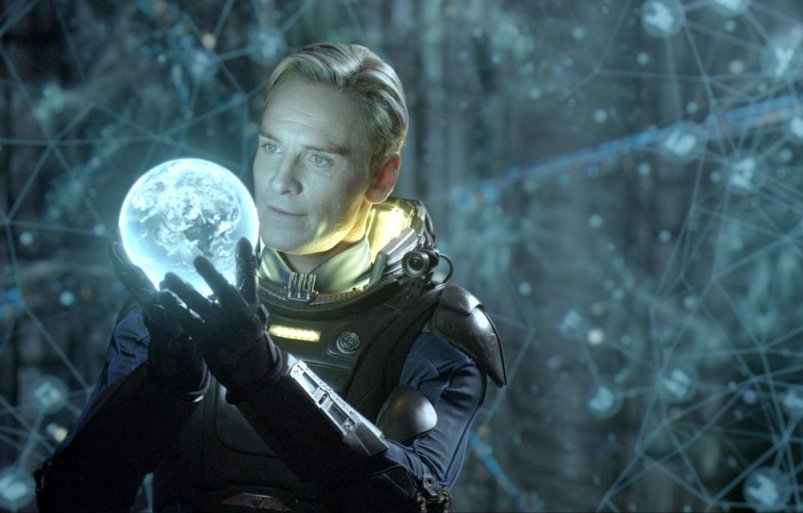
Prometheus Ridley Scott’s return to outer space — after an extended stay in Russell Crowe-landia — is most welcome. Some may complain Prometheus too closely resembles Scott’s Alien (1979), for which it serves as a prequel of sorts. Prometheus also resembles, among others, The Thing (1982), 2001: A Space Odyssey (1968), and Event Horizon (1997). But I love those movies (yes, even Event Horizon), and I am totally fine with the guy who made Alien borrowing from all of them and making the classiest, most gorgeous sci-fi B-movie in years. Sure, some of the science is wonky, and the themes of faith and creation can get a bit woo-woo, but Prometheus is deep-space discombobulation at its finest, with only a miscast Logan Marshall-Green (apparently, cocky dude-bros are still in effect at the turn of the next millennium) marring an otherwise killer cast: Noomi Rapace as a dreamy (yet awesomely tough) scientist; Idris Elba as Prometheus‘ wisecracking captain; Charlize Theron as the Weyland Corportation’s icy overseer; and Michael Fassbender, giving his finest performance to date as the ship’s Lawrence of Arabia-obsessed android. (2:03) (Cheryl Eddy)

Demand and ye shall receive: Wolfe enters the realm of VOD

0

Good news for fans of the watch-movies-at-home lifestyle (stay tuned for tomorrow’s post aimed at new-movies-in-the-theater junkies): just in time for Pride season (and just a week ahead of Frameline 36, the San Francisco International LGBT Film Festival), Wolfe — “the largest exclusive distributor of gay and lesbian films” — launched a worldwide video-on-demand service.

Zip on over to Wolfeondemand.com to check out the 30 titles available for instant streaming (kind of like Netflix, you “rent” the film for viewing via home computer, iPad, iPhone, or even iPodTouch). The company plans to have its entire library of features and docs available eventually, but for now, check out films like Tomboy, which spent just a brief time in Bay Area theaters last year but was among Guardian critic Lynn Rapoport’s top three of 2011 (read her review here).

http://www.youtube.com/watch?v=Jb-Oys-IcWE

In her blog on the Huffington Post, Wolfe founder Kathy Wolfe (speaking of Frameline, she and her groundbreaking company won the Frameline Award in 2010; check out my interview with her here), explained her motivation for starting the VOD service:

“Our goal all along has been to provide LGBT audiences with access to films that reflect their lives, but in reality, that’s not as simple as it sounds. There are certain territorial and language barriers that can complicate matters. As online distribution options have evolved, we’ve made it a priority to find ways Wolfe could provide our audiences unprecedented, timely access to our films, while at the same time discouraging the illegal ‘sharing’ of our films.”

Also among the current selections at Wolfe On Demand: critically acclaimed 2010 Peruvian import Undertow; read Dennis Harvey’s review here.

Womb raiders

0

TRASH A primary figure in Philippine folklore dating back centuries, the aswang is a monster that has taken many forms — shape shifting being one constant. But arguably the most prevalent, at least in pop culture today, is that of a vampiric “witch” who uses the guise of a seemingly harmless old woman to ingratiate herself wherever there are pregnant women or young families, with the goal of eventually making a snack of the newborn or not-quite-yet-born. They manage the latter selection by using an extremely long proboscis to suck the … oh, you don’t want to know. (Although surely that image will someday be used by the ever-more-hysterical anti-abortion forces.)

Yerba Buena Center for the Arts’ “New Filipino Cinema” series (see Film story) features a mockumentary about Lilia Cuntapay, a senior actor whose modicum of local fame has come from playing variations on these mythical creatures, notably in the never-ending Shake, Rattle & Roll horror movie franchise. But for all the aswang’s ongoing ubiquity in the Philippines — a popular costumed Aswang Festival was held for several years in provincial Capiz until the Catholic Church got it shut down as “devil worship” — it’s rarely surfaced in entertainment abroad. Of course other cultures have their own traditional ghouls to play with. But it’s hard to deny that the baby lifeforce-sucking hag is a concept rather low on international-export value

One major exception is among the great underappreciated U.S. indie horrors of the last 20 years: 1994’s Aswang, shot on 16mm in and around Milwaukee for a reported grand total of $70,000, was the first feature for young Midwesterners Wrye Martin and Barry Poltermann. Their screenplay, devised from a story idea by Philippines-raised friend Frank Anderson, was the heartwarming tale of a lass in conventional “trouble” who finds a savior who’ll do what’s best for both her and her unwanted baby. Or so she thinks.

Knocked up by an irresponsible mullet-head boyfriend, barely-legal Katrina (Tina Ona Paukstelis) refuses to abort, instead agreeing to an unusual advertised offer: she will carry the child to term, posing as the bride of Peter Null (James Spader-ish Norman Moses). The last male heir to an aristocratic émigré Filipino clan, he claims he and his actual wife cannot conceive, and must resort to this ruse to inherit the family fortune. In an uncomfortable meeting presided over by a hilariously bored lawyer (John Garekis), the parties meet and sign the necessary contractual documents.

Seven months later, now ready-to-pop Katrina and her “husband” reunite, driving from the city to Chez Null, a rambling, isolated rural property with an aura of going-to-seed grandeur. She’s introduced to regal matriarch Olive (Flora Coker), given a creepy once-over by Tagalog-only-speaking housekeeper Cupid (Mildred Nierras), and pointedly told not to visit a small adjacent house where Peter’s sister Claire (Jamie Jacobs Anderson) is, ahem, not well. An uninvited, unwelcome guest of sorts also shows up, one Dr. Roger Harper (Josh Kishline). He says he’s just renting a vacation cottage nearby, but seems to be poking an investigative nose into some Null family mischief that is most definitely not for public consumption.

It does, however, involve consumption — as Katrina finds out after being put to bed heavily drunk on Cupid’s homemade special cider. Waking groggily, she senses a disturbance under the covers. To her considerable distress, it turns out she’s getting an intrusive visit from what one crew member later called a “50-foot tongue with a mind of its own.” Thus begins, just half an hour into the film’s 82 minutes, a nonstop escalation of grotesquely funny, tasteless mortal crises that rank ought to rank Aswang up there with The Evil Dead (1981) and Re-Animator (1985) for freaky, semi-camp gore-horror ingenuity.

Ought to, but Aswang sort of fell through the cracks, despite gaining some attention (not all favorable) as part of the Sundance Film Festival’s first-ever midnight sidebar. Theatrical release never came to pass; the U.S. video distributor released it cut, redubbed The Unearthing, and dumped into low-end retail outlets. Fame and fortune did not ensue for the filmmakers, who’ve separately stayed active in various capacities — editing, producing, even directing a documentary record of Charles Nelson Reilly’s one-man stage show — but never again created anything remotely like their crazily intense debut

The Mondo Macabro DVD release, out a few years now, has helped Aswang gain a small cult following, as well as regain its original title. Among factoids revealed in the extras are that most cast members were drafted from longtime Milwaukee avant-garde company Theatre X, though male lead Moses was, incongruously, a regional stage musical star. (Despite his memorably unhinged performance here, he seems to have never made another film.)

The making-of documentary is amusingly contentious, with some participants still discomfited by the paces they were put through, others retroactively doubting the directors’ competence, scruples, or whether they even shot particular scenes. They may still not quite know what they got themselves into, but hopefully time will prove it was something perversely great. Aswang does aswangs proud.

Pinoy rising

0

arts@sfbg.com

FILM Cinema has had a long and colorful history in the Philippines, with a first “golden age” of home-grown product in the 1950s, a turn toward exportable exploitation films in the ’60s, notable new-wave directors (like Lino Brocka) emerging in the ’70s, and so forth — sustaining one of the world’s most prolific film industries despite difficulties political and otherwise. At the turn of the millennium those wheels were wobbling and slowing, however, hard-hit by a combination of too many low-grade formula films, shrinking audiences, and stiffer competition from slick imported entertainments. The commercial sector stumbled on, but as a shadow of its robust former self.

But there’s something percolating beyond hard consonants on the archipelago these days, signs of a new DIY vigor coming from independent sectors juiced by the inexpensive accessibility of digital technology, undaunted (at least so far) by problems of exhibition and income-generating at home. It’s a sprawling, unpredictable, work-in-progress scene that some figure could well become the next “it” spot for cineaste types seeking one of those spontaneous combustions of fresh talent that arise occasionally where you least expect it — like Romania, to name one recent example.

One person who definitely thinks that’s the case is Joel Shepard, Yerba Buena Center for the Arts’ longtime Film/Video Curator. He’s traveled to the Philippines several times in recent years (once serving on the jury at CineManila), and has previously programmed a few prime examples of the country’s edgy new voices — particularly Brilliante Mendoza, whose notorious 2009 police-corruption grunge horror Kinatay (a.k.a. Butchered) was one of the most hotly divisive Cannes jury-prize winners in recent history. Now YBCA is presenting “New Filipino Cinema,” Shepard’s first “big fat snapshot” — hopefully to be continued on an annual basis — of a wildly diverse current filmic landscape, assembled in collaboration with Manila critic Philbert Ortiz Dy.

Shepard’s program notes call the Philippines “an extremely fascinating country…but the more I learned about the place and its people, the less I felt like I actually understood anything. The truth felt more and more slippery.” One might get a similar sensation watching the films in this expansive (nearly 30 titles, shorts included) sampler, in that they’re all over the map stylistically and thematically — from lyrical to gritty, satirical to anarchistic — suggesting no single defining “movement” or aesthetic to New Filipino Cinema.

Nor should they, since these movies reflect very different cultures, politics, and issues in regions hitherto underrepresented onscreen. After all, Manila isn’t the only place you can get your hands on a digital camera; and Tagalog is primary language for just one-third of all Filipinos.

The series opener has significant local ties: Loy Arcenas is a lauded stage set designer who’s worked frequently with our own American Conservatory Theater. Unavailable for preview, in description his feature directorial debut Niño (2011) sounds redolent of Luchino Visconti and The Garden of the Finzi-Continis (as well as, perhaps, 1975’s Grey Gardens) as it depicts a once grand family of Spanish émigrés living in decrepit splendor, diminished over generations by political inconvenience and a proud, fatal inability to adapt.

Their aristocratic pretensions are a far cry from the rowdier real life captured or depicted in other YBCA selections. A bizarre footnote to the United States’ complicated, incriminating relationship with the Philippines is documented in Monster Jiminez’s Kano: An American and His Harem (2010). Its subject is a Yankee Vietnam vet whose military pension allowed him to construct a sort of one-man imperialist paradise centered around his penis. Whether he was a gracious benefactor, a bullying rapist, or both is a puzzle only clouded further by contradictory input from former/current wives and mistresses (even while he’s in prison), stateside relatives who recall a childhood ideal to shape a sociopath, and the authorities who’ve lately kept him in prison.

War is ongoing, marriage an impractical hope in Arnel M. Mardoquio’s impressive Crossfire (2011), whose young lovers in southern region Mindanao must dodge government-vs.-rebel-vs.-bandit guns as well as a rural poverty sufficient to make our heroine vulnerable to being offered as a lender-debt payoff. Their plight is starkly contrasted with the spectacular scenery of countryside few tourists will ever hazard.

Its atmospheric opposite is Lawrence Fajardo’s Amok (2011), whose thousand threads of seemingly free-floating narrative depict life dedicatedly melting down all race, age, class, and economic divisions during a heat wave passage through one of Manila’s busiest intersections. What birth and development keeps apart gets nail-gunned together, however, once this string of naturalistic vignettes hits a plot device that delivers deus ex machina to all with no melodramatic restraint. Fate also lays heavy hand on the junior protagonists of Mes de Guzman’s At the Corner of Heaven and Earth (2011), a crude but honest neo-realist drama about four orphaned and runaway boys trying to eke out a marginal existence in Nueva Vizcaya.

Should this all sound pretty grim, be informed there’s lots of levity — albeit much of it gallows-humored — on the YBCA slate. Jade Castro’s exuberantly silly Remington and the Curse of the Zombadings (2011) finds the funny in homophobia as its crass young hero (a farcically deft Mart Escudero) is “cursed” by an angry queen he’d insulted to become gay himself; meanwhile somebody goes around their regional burg assassinating cross-dressers via ray-gun. Plus: zombies, and the proverbial kitchen sink. Also on the frivolous side is Antoinette Jadaone’s mockumentary Six Degrees of Separation from Lilia Cuntapay (2011), in which the titular veteran screen thespian struggles for recognition after decades playing bit parts and occasional showier ones, notably as witchy folkloric “aswang” attempting to suck the lifeblood from newborn babes. (See aswang-related coverage in this week’s Trash column, too.)

Yet those are but moderately playful New Filipino Cinema exercises compared to the determined off-map outrages practiced by Mondomanila (2011). This gonzo eruption of spermazoidal huzzah! by multimedia Manila punk underground mover Khavn de la Cruz seeks to leave no societal cavity unexplored, or unoffended. Opening with an infamous quote from Brokedown Palace (1999) star Claire Danes, who characterized Manila as a “ghastly and weird city … [with] no sewage system,” it delivers both fuck-you and fuck-me to that judgment via 75 minutes of mad under caste collage. There isn’t much plot. But there’s variably judged arson, pedophilia, yo-yo trick demonstrations, poultry abuse, upscale mall shopping, voyeuristic pornographia, Tagalog rap, rooftop drum soloing, and limbless-little-person salesmanship of duck eggs.

Further complicating your comprehension of a very complex scene, the YBCA series encompasses avant-garde shorts by veteran John Torres and newer experimentalists. There’s also a free afternoon Indie-Pino Music Fest Sat/9, and on June 17 there’s a postscript: Lav Diaz’s Florentina Hubaldo, CTE, the six-hour latest epic in a career whose patience-testing wide open cinematic spaces make Béla Tarr look like Michael Bay. 

“NEW FILIPINO CINEMA”

June 7-17, $8

Yerba Buena Center for the Arts

701 Mission, SF

www.ybca.org

Rites of passage

0

arts@sfbg.com

FILM It’s commonly said of Nathaniel Dorsky’s films that they are beautiful beyond words. Which is true as far as it goes, but then the same could be said of many poems and they are words. What’s clear is that Dorsky is absorbed with a classical fulfillment of form, and as such his films do better with poetics than interpretation (he has himself supplied a fine entry point with his slim volume Devotional Cinema). Poetics in this context means respecting the mystery and proceeding gingerly with gesture, metaphor, and detail. No one ever says of a Dorsky film, “I liked it the more I thought about it.” Conversely, watching a second or third time one marvels to find the beauty springing to life with the same force, subtler and lovelier now for this trick of renewal. No one ever says of a sunset, “I’ve seen this one before.”

A three-part retrospective at the Pacific Film Archive beginning June 10 retraces the last decade of Dorsky’s work. The Return (2011) and August and After (2012) receive local premieres this weekend, accompanied by the delicate Pastourelle (2010). June 17 brings his “Quartet,” to my mind a signal achievement of the young century. The series concludes June 24 with three earlier films confirming Dorsky’s mastery of an open (sometimes called polyvalent) form of montage: Song and Solitude (2006), Threnody (2004), and The Visitation (2002). How fitting that these films should be spaced out over consecutive days of rest! They will be shown on 16mm because that is what they are (last I checked the museums still show the Old Masters in paint).

It’s our good fortune to share a city with Dorsky: opportunities to see the films with him as a guide come a little more frequently, and the phenomena that supply his visual repertoire are that much more familiar. Here are the blossoms, the Chinatown lanterns, the drifting Muni trains, the ocean skies, and the seasons as we only dare to see them in deepest reverie.

Dorsky began making movies under the influence of people like Stan Brakhage and Gregory Markopoulos, filmmakers who strove for an intrinsic cinematic language (while the auteurists chiseled out an essential cinema, they sought cinema’s essence). After relocating to San Francisco in 1971, he reemerged with Hours for Jerome (1980-1982), a dense exercise in spiritual autobiography culled from pastoral years in New Jersey. The films began arriving with greater regularity after Triste (1998) and continue apace even after the desertion of his beloved Kodachrome.

The silence of Dorsky’s films is lush, providing intoxicating accompaniment to the slowed projection of 18 frames per second which dips the photographic action just out of the flow of representation. The crescendos that surge past the finish of his films invariably leave me surprised that I haven’t been listening to music, as the black of the theater seems clarified in the same way silence is after an expressive composition. Pushing the analogy further, the relationship between movement and stillness in his films is akin to that of sound and rest in music, the two leaved together as intonation. We really need a new word to describe the juddering movement of branches and buds that punctuate Dorsky’s films. “Quiver” is close, but it doesn’t capture the spring in the frame, like dancers on a stage.

A couple of months ago, Dorsky showed something called Kodachrome Dailies from the Time of Song and Solitude (Reel 1) at Lincoln Center: Song and Solitude-era footage in the chronological order in which it was shot. The material had a completely distinct character viewed this way. Dorsky talked of it as a journal. The loose form made it easier to relate to his eye being grasped by something in the world, and yet one missed the justice of the cuts.

If pressed for a defining quality of these films, I would say rightness —each shot developing to its fullness, tuned to what comes before and after. The fact that this formal refinement is itself the focus of the films creates a suspension of time which, after all, is a basic condition of paradise. Certainly the films are colored by experience, as August and After for instance is clearly marked by grief, yet this is never what they are “about.” Trust is placed in the self-expression of the film stock — its luster and dusk.

Dorsky’s films will reintroduce you to what branches make of the sky and how the grass gladdens when the sun reappears from its shade. I think this is what people are talking about when they say the films remind them of childhood. “A child said What is the grass? fetching it to me with full/hands;/How could I answer the child? I do not know what it is any/more than he./I guess it must the flag of my disposition, out of hopeful/green stuff woven.” We could choose many lines of verse to say the same, but Whitman’s will do. There is something mystical in Dorsky’s slightly ajar illuminations of worldly objects and features. And yet so too is there something altogether sensible and almost courtly in their formal arrangements. The shots of dogs make us chuckle because we’re in a position to recognize our own recognition, all too human.

On first viewing The Return struck me as a deeply melancholy work, its darkly reflecting surfaces and doublings bearing the impression of lost sleep. August and After, on the other hand, is more immediate in its effect and a superior example of how Dorsky’s style can serve distinct emotional structures (threnody here). Tender impressions taken near the end of George Kuchar’s life, the filmmaker surrounded by family and friends, are framed in the light of long afternoons. Everything that follows is touched by these pictures of intimacy: two workers sliding down a skyscraper, a distant glass door sweeping a ray of light across a café, agitated steps into bramble. A rhythmic montage focuses on packages and fruits carried down the street, the actual things transfigured into pure color. When the film’s ship finally sails, it does so with such grace as to say love without saying.

“AFTERIMAGE: THREE NIGHTS WITH NATHANIEL DORSKY”

June 10, 17, and 24, 7:30pm, $5.50-$9.50

Pacific Film Archive

2575 Bancroft, Berk.

(510) 642-5249

bampfa.berkeley.edu

Rep Clock

0

Schedules are for Wed/6-Tue/12 except where noted. Director and year are given when available. Double features (and more) are marked with a •. All times pm unless otherwise specified.

ARTISTS’ TELEVISION ACCESS 992 Valencia, SF; www.atasite.org. $6. “Colectivo Cinema Errante presents: Brazilian Voices of Cinema:” Limite (Peixoto, 1931) with “Clarice’s Cups” (Piffer, 2011), Sun, 8.

CASTRO 429 Castro, SF; (415) 621-6120, www.castrotheatre.com. $7.50-11. Titanic 3D (Cameron, 1997/2012) Wed-Thu, 7 (also Wed, 2:30). Yellow Submarine (Dunning, 1968), Fri and Sun-Tue, 7, 9 (also Sun, 2:30, 4:45). Newly restored version. “Midnites for Maniacs: Killer Summer All-Day Five Film Fest:” •One Crazy Summer (Holland, 1986), Sat, 2:30; Wet Hot American Summer (Wain, 2001), Sat, 4:45; Friday the 13th (Cunningham, 1980), Sat, 7:15; Dead Alive (Jackson, 1992), Sat, 9:20; The Burning (Maylam, 1981), Sat, 11:30. $13 for one or all five films.

CHRISTOPHER B. SMITH RAFAEL FILM CENTER 1118 Fourth St, San Rafael; (415) 454-1222, www.cafilm.org. $6.75-10.25. Bernie (Linklater, 2012), call for dates and times. First Position (Kargman, 2011), call for dates and times. I Wish (Kore-eda, 2011), call for dates and times. Bel Ami (Donnellan and Ormerod, 2012), June 8-14, call for times. Peace, Love and Misunderstanding (Beresford, 2011), June 8-14, call for times. Shining Night: A Portrait of Composer Morten Lauridsen (Stillwater, 2012), Sun, 7. With film subject Morten Lauridsen and filmmaker Michael Stillwater in person.

“FILM NIGHT IN THE PARK” This week: Central Field, Broadway at Bank, Fairfax; www.filmnight.org. Donations accepted. Rio (Saldanha, 2011), Fri, 8.

PACIFIC FILM ARCHIVE 2575 Bancroft, Berk; (510) 642-5249, bampfa.berkeley.edu. $5.50-9.50. “Peter Greenaway: Cinema and Painting:” Rembrandt’s J’Accuse (Greenaway, 2008), Fri, 7; Nightwatching (Greenaway, 2007), Sat. 6. “From the Collection:” “Trailer Trash: A Mini-Movie Extravaganza,” Fri, 8:50. “Three Czech New Wave Classics:” Daisies (Chytilová, 1966), Sat, 8:30. “Afterimage: Three Nights with Nathaniel Dorsky:” “Films of Nathaniel Dorsky: Recent Films (2010-2012),” Sun, 7:30.

ROXIE 3117 and 3125 16th St, SF; (415) 863-1087, www.roxie.com. $6.50-10. “New Czech Film Films US Tour 2012:” Long Live the Family (Sedlácek, 2011), Wed, 6:30; Leaving (Havel, 2011), Thu, 6:30. The Color Wheel (Ross Perry, 2011), Wed-Thu, 7:15, 9.

SF FILM SOCIETY CINEMA 1746 Post, SF. $10-11. Hide Away (Eyre, 2011), Wed-Thu, 3, 5, 7, 9. The Story of Film: An Odyssey, Part Two: Expressionism, Impressionism, and Surrealism: Golden Age of World Cinema (1920s) and The Arrival of Sound (1930s) (Cousins, 2011), Sat, noon. British TV series; new episodes every Sat through June 21. The Wages of Fear (Clouzot, 1953), June 8-14, 2:30, 5:30, 8:30. New 35mm print.

TOP OF THE MARK InterContinental Mark Hopkins, One Nob Hill, SF; www.topofthemark.com. Free. “Summer Movie Nights:” Mary Poppins (Stevenson, 1964), Tue, 7:30. Wine tasting at 5:30.

2969 MISSION SF; www.answersf.org. $5-10 (no one turned away for lack of funds). Under the Bombs (Aractingi, 2007), Sat, 7.

YERBA BUENA CENTER FOR THE ARTS 701 Mission, SF; (415) 978-2787, www.ybca.org. $6-8. “New Filipino Cinema:” Niño (Arcenas, 2011), Thu, 7:30; Kano: An American and His Harem (Jimenez, 2010), Fri, 1; “Poetry and Mystery: Films By John Torres,” Fri, 4; At the Corner of Heaven and Earth (de Guzman, 2011), Fri, 7; Boundary (Bautista, 2011), Fri, 9; “Sex, Drugs, and the Avant-Garde: Filipino Shorts,” Sat, 1; Six Degrees of Separation from Lilia Cuntapay (Jadaone, 2011), Sat, 4; Rakenrol (Henares, 2011), Sat, 7; Remington and the Curse of the Zombadings (Castro, 2011), Sat, 9:30; Friday Friday (Various directors, 2011), Sun, 1; Mondomanila (de la Cruz, 2011), Sun, 3; Crossfire (Mardoquio, 2011), Sun, 5; Amok (Fajardo, 2011), Sun, 7; Forever Loved (Gozum, 2012), Sun, 2 (free screening in YBCA Large Conference Room). Novellus Theater, 700 Howard, SF; www.qwocmap.org. Free. “Queer Women of Color Film Festival,” Fri-Sun.