Film

Film Listings

0

Film listings are edited by Cheryl Eddy. Reviewers are Kimberly Chun, Max Goldberg, Dennis Harvey, and Lynn Rapoport. For rep house showtimes, see Rep Clock. For complete film listings, see www.sfbg.com.

OPENING

Bel Ami Judging from recent attempts to shake off the gloomy atmosphere and undead company of the Twilight franchise, Robert Pattinson enjoys a good period piece, but hasn’t quite worked out how to help make one. Last year’s Depression-era Water for Elephants was a tepid romance, and Declan Donnellan and Nick Ormerod’s belle epoque–set Bel Ami is an ungainly, oddly paced adaptation of the Guy de Maupassant novel of the same name. A down-and-out former soldier of peasant stock, Georges Duroy (Pattinson) — or “Bel Ami,” as his female admirers call him — gains a brief entrée into the upper echelons of France’s fourth estate and parlays it into a more permanent set of social footholds, campaigning for the affections of a triumvirate of Parisian power wives (Christina Ricci, Uma Thurman, and Kristin Scott Thomas) as he makes his ascent. His route is confusing, though; the film pitches forward at an alarming pace, its scenes clumsily stacked together with little character development or context to smooth the way, and Pattinson’s performance doesn’t clarify much. Duroy shifts perplexingly between rapacious and soulful modes, eyeing the ladies with a vaguely carnivorous expression as he enters drawing rooms, dining rooms, and bedrooms, but leaving us with little sense of his true appetites or other motivations. (1:42) Clay, Smith Rafael. (Rapoport)

Double Trouble When crooks nab a priceless painting from a Taipei museum, two security guards — wannabe hero Jay (Jaycee “Son of Jackie” Chan) and Chinese-tourist-on-vacation Ocean (Xia Yu) — reluctantly team up to recover the piece. A road trip of sorts ensues, laden with petty bickering, wacky melees, bonding moments, mistaken identity, gangsters both comical and sinister, and other buddy-comedy trappings. As expected, there are a few high-flying fight scenes; in the film’s production notes, director David Hsun-Wei Chang reveals he was inspired by the Rush Hour movies. Alas, Chan is neither as charismatic nor as breathtakingly nimble as his father (and, obvi, Xia is no Chris Tucker). It should be noted, however, that one of the slithery art thieves is played by underwear model Jessica C., famed in Hong Kong for her “police siren boobs.” So there’s that. (1:29) Metreon. (Eddy)

Elena The opening, almost still image of breaking dawn amid bare trees — the twigs in the foreground almost imperceptibly developing definition and the sky gradually growing ever lighter and pinker in the corners of the frame — beautifully exemplifies the crux of this well-wrought, refined noir, which spins slowly on the streams of dog-eat-dog survival that rush beneath even the most moneyed echelons of Moscow. Sixtyish former nurse Elena (Nadezhda Markina) is still little more than a live-in caretaker for Vladimir (Andrey Smirnov), her affluent husband of almost 10 years. She sleeps in a separate bed in their modernist-chic condo and dutifully funnels money to her beloved layabout son and his family. Vladimir has less of a relationship with his rebellious bad-seed daughter (Yelena Lyadova), who may be too smart and hedonistic for her own good. When a certain unlikely reunion threatens Elena’s survival — and what she perceives as the survival of her own spawn — a kind of deadly dawn breaks over the seemingly obedient hausfrau, and she’s driven to desperate ends. Bathing his scenes in chilled blue light and velvety dark shadows, filmmaker Andrey Zvyagintsev (2003’s The Return) keeps a detached but close eye on the proceedings while displaying an uncanny talent for plucking the telling detail out of the wash of daily routine and coaxing magnetic performances from his performers. (1:49) Lumiere. (Chun)

Madagascar 3: Europe’s Most Wanted The animated zoo animals (voiced by Ben Stiller, Chris Rock, David Schwimmer, and Jada Pinkett Smith) join a circus. Hence the clown wigs. (1:33)

Peace, Love and Misunderstanding How is that even as a bona fide senior, Jane Fonda continues to embody this country’s ambivalence toward women? I suspect it’s a testament to her actorly prowess and sheer charisma that she’s played such a part in defining several eras’ archetypes — from sex kitten to counterculture-heavy Hanoi Jane to dressed-for-success feminist icon to aerobics queen to trophy wife. Here, among the talents in Bruce Beresford’s intergenerational chick-flick-gone-indie as a loud, proud, and larger-than-life hippie earth mama, she threatens to eclipse her paler, less colorful offspring, women like Catherine Keener and Elizabeth Olsen, who ordinarily shine brighter than those that surround them. It’s ostensibly the tale of high-powered lawyer Diane (Keener): her husband (Kyle MacLachlan) has asked for a divorce, so in a not-quite-explicable tailspin, she packs her kids, Zoe (Olsen) and Jake (Nat Wolff), into the car and heads to Woodstock to see her artist mom Grace (Fonda) for the first time in two decades. Grace is beyond overjoyed — dying to introduce the grandchildren to her protests, outdoor concerts, and own personal growhouse — while urbanite Diane and her kids find attractive, natch, diversions in the country, in the form of Jude (Jeffrey Dean Morgan), Cole (Chace Crawford), and Tara (Marissa O’Donnell). Yet there’s a lot of troubled water for the mother and daughter to cross, in order to truly come together. Despite some strong characterization and dialogue, Peace doesn’t quite fly — or make much sense at its close — due to the some patchy storytelling: the schematic rom-com arch fails to provide adequate scaffolding to support the required leaps of faith. But that’s not to deny the charm of the highly identifiable, generous-spirited Grace, a familiar Bay Area archetype if there ever was one, who Fonda charges with the joy and sadness of fallible parent who was making up the rules as she went along. (1:36) Embarcadero, Smith Rafael. (Chun)

Prometheus Ridley Scott returns to Alien (1979) turf with this sci-fi thriller starring Charlize Theron, Michael Fassbender, Idris Elba, Noomi Rapace, and Guy Pearce. (2:03)

ONGOING

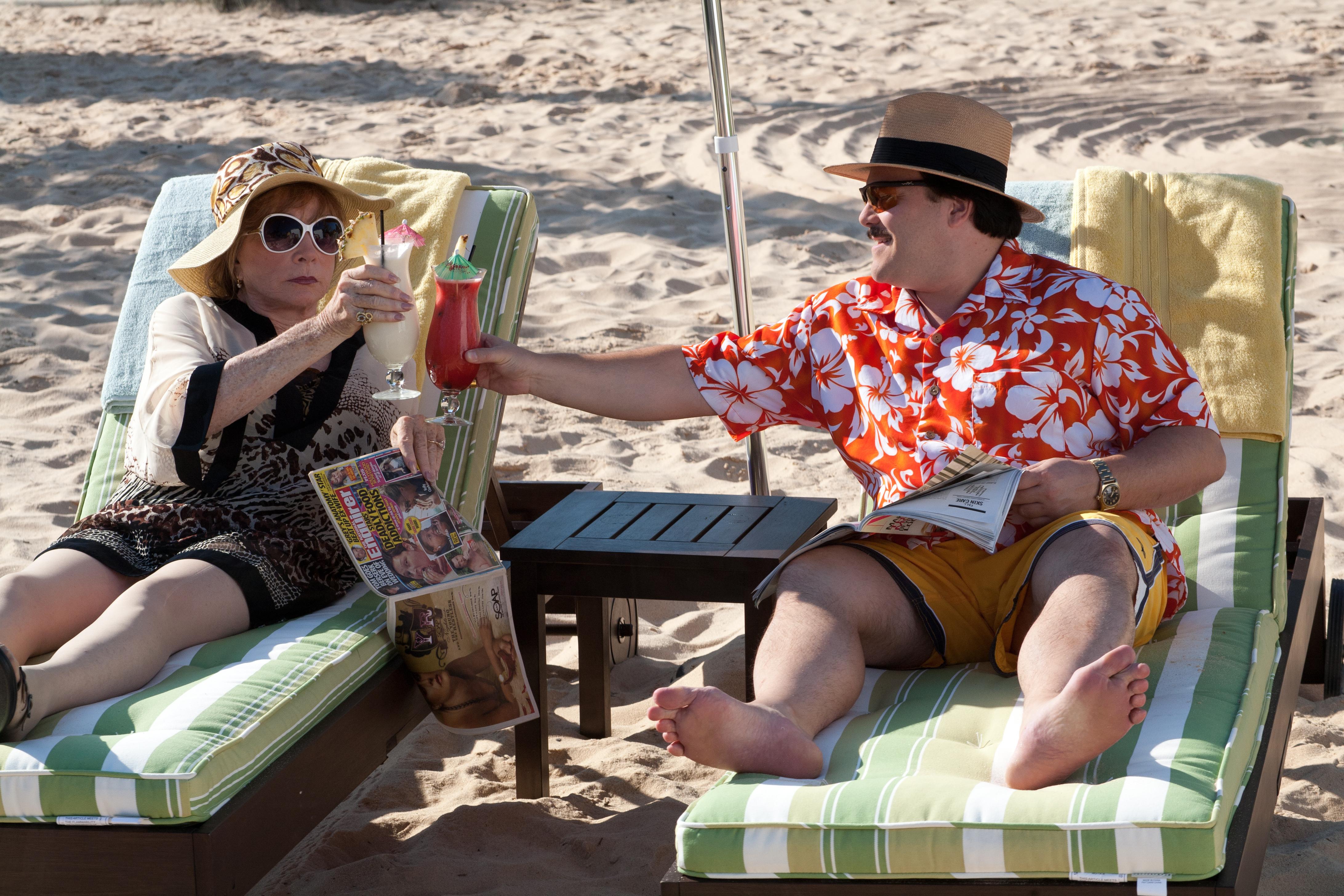
Bernie Jack Black plays the titular new assistant funeral director liked by everybody in small-town Carthage, Tex. He works especially hard to ingratiate himself with shrewish local widow Marjorie (Shirley MacLaine), but there are benefits — estranged from her own family, she not only accepts him as a friend (then companion, then servant, then as virtual “property”), but makes him her sole heir. Richard Linklater’s latest is based on a true-crime story, although in execution it’s as much a cheerful social satire as I Love You Philip Morris and The Informant! (both 2009), two other recent fact-based movies about likable felons. Black gets to sing (his character being a musical theater queen, among other things), while Linklater gets to affectionately mock a very different stratum of Lone Star State culture from the one he started out with in 1991’s Slacker. There’s a rich gallery of supporting characters, most played by little-known local actors or actual townspeople, with Matthew McConaughey’s vainglorious county prosecutor one delectable exception. Bernie is its director’s best in some time, not to mention a whole lot of fun. (1:39) Embarcadero, Smith Rafael. (Harvey)

A Cat in Paris This year’s Best Animated Film nominees: big-budget entries Kung Fu Panda 2, Puss in Boots, and eventual winner Rango, plus Chico and Rita, which opened just before Oscar night, and French mega-dark-horse A Cat in Paris. Sure, Jean-Loup Felicioli and Alain Gagnol’s film failed to cash in on 2011’s Paris craze, but it’s still a charming if featherweight noir caper, being released stateside in an English version that features the voices of Marcia Gay Harden and Anjelica Huston. A streetwise kitty named Dino spends his days hanging with Zoey, a little girl who’s gone mute since the death of her father — a cop killed in the line of duty. Zoey’s mother (Harden), also a cop, is hellbent on catching the murderer, a notorious crook named Costa who runs his criminal empire with Reservoir Dogs-style imprecision. At night, Dino sneaks out and accompanies an affable burglar on his prowlings. When Zoey falls into Costa’s clutches, her mom, the thief, and (natch) the feisty feline join forces to rescue her, in a series of rooftop chase scenes that climax atop Notre Dame. At just over an hour, A Cat in Paris is sweetly old-fashioned and suitable for audiences of all ages, though staunch dog lovers may raise an objection or two. (1:07) Opera Plaza. (Eddy)

The Color Wheel Carlen Altman, a nervous comedian who moonlights as a Jewish rosary maker, was doing stand-up in Brooklyn when filmmaker Alex Ross Perry approached her about collaborating on a project. The idea for a brother-sister movie came to be: The Color Wheel, a droll and perverse take on vexed lives in transition, tinged with 16mm. Perry directed, produced, and edited the film while co-writing with Altman. When the film begins, a dopey JR (Altman) shows up at the apartment of her misanthropic brother Colin (Perry). JR convinces him to help move her stuff out of her professor ex-boyfriend’s place. Inevitably, their Northeastern road trip follows other tangents, taking the pair on a hilarious and sad journey that raises more questions than answers about their fraught relationship. They meet a lot of jerks, but no one more so than themselves; their characters, filterless with no desire to grow up or shut up, are far behind everyone they encounter. With all its zeitgeisty humor and lovably awful people, The Color Wheel takes some dark turns — it begins as a charming, dour comedy, but ends up viscerally queasy and pitiful, with its two leads as mixed-up as ever. (1:23) Roxie. (Ryan Lattanzio)

I Wish It’s tempting to hold Hirokazu Kore-eda’s I Wish up to that other kids adventure story in the theaters, Wes Anderson’s Moonrise Kingdom, but that’s a disservice to Anderson: his arch look back at an age of innocence comes off as loftily contrived in contrast to this gently empathetic, ground-level view of children’s dreams and desires, one that falls well short of preciousness, thanks to Kore-eda’s acute eye for a changing Japan. Brothers Koichi and Ryunosuke (real-life sibs Koki and Ohshiro Maeda) are living apart like their two parents: the former bunks with his mother (Nene Otsuka) and grandparents in Kagoshima, where he plots to get his parents together again and frets over the ash-spewing still-active volcano; the latter is busy enabling his laid-back guitar-playing father (Jo Odagiri of 2003’s Bright Future) on the other side of the island, where he grows fava beans, eats takeout, and hangs out with pals like budding actress Megumi (Kara Uchida). These offspring of Peter Pan-like parents, who have had a tough time growing up and fulfilling their own dreams, have been forced to grow up fast — but Koichi is pinning his hopes on something faster: the new bullet train line that will link his town with his brother’s. He gets it in his mind that if a wish is made when the first trains pass each other, a miracle, like his bickering parents’ reunion, will occur. The kids conspire to grab to that magical moment, by hook or crook, and a little help from an elderly couple that might have stepped out of an older, more gracious Japan, as rhapsodized by Yasujiro Ozu. And as with his devastating portrait of abandoned kids eking out a living on their own, Nobody Knows (2004), Kore-eda effortlessly coaxes great performances out of his child actors. Like Nobody Knows‘s Akira, Koichi and Ryunosuke are determined to persevere, post-familial meltdown, through all personal Armageddons, be they triggered by volcano, tsunami, or heartbreak. (2:08) Opera Plaza, Smith Rafael. (Chun)

Moonrise Kingdom Does Wes Anderson’s new film mark a live-action return to form after 2007’s disappointingly wan Darjeeling Limited? More or less. Does it tick all the Andersonian style and content boxes? Indubitably. In the most obvious deviation Anderson has taken with Moonrise, he gives us his first period piece, a romance set in 1965 on a fictional island off the New England coast. After a chance encounter at a church play, pre-teen Khaki Scout Sam (newcomer Jared Gilman) instantly falls for the raven-suited, sable-haired Suzy Bishop (Kara Hayward, ditto). The two become pen pals, and quickly bond over the shared misery of being misunderstood by both authority figures and fellow kids. The bespectacled Sam is an orphan, ostracized by his foster parents and scout troop (much to the dismay of its straight-arrow leader Edward Norton). Suzy despises her clueless attorney parents, played with gusto by Bill Murray and Frances McDormand in some of the film’s funniest and best scenes. When the two kids run off together, the whole thing begins to resemble a kind of tween version of Godard’s 1965 lovers-on the-lam fantasia Pierrot le Fou. But like most of Anderson’s stuff, it has a gauzy sentimentality more akin to Truffaut than Godard. Imagine if the sequence in 2001’s The Royal Tenenbaums where Margot and Richie run away to the Museum of Natural History had been given the feature treatment: it’s a simple yet inspired idea, and it becomes a charming little tale of the perils of growing up and selling out the fantasy. But it doesn’t feel remotely risky. It’s simply too damn tame. (1:37) Metreon, Sundance Kabuki. (Michelle Devereaux)

Snow White and the Huntsman It’s unclear why the zeitgeist has blessed us this year with two warring iterations of the Snow White fairy tale, one broadly comedic (April’s Mirror Mirror), one starkly emo. But it was only natural that Kristen Stewart would land in the latter rendering, breaking open the hearts of swamp beasts and swordsmen alike with the chaste glory of her mien. As Snow White flees the henchmen and hired killers dispatched by her seriously evil stepmother, Queen Ravenna (Charlize Theron), and traverses a blasted, virulent forest populated with hallucinogenic vapors and other life-threatening obstacles, Stewart need not act so much as radiate a dazzling benignity, weeping the tears of a martyr rather than a frightened young girl. (Unfortunately, when required to deliver a rallying declaration of war, she sounds as if she’s speaking in tongues after a heavy hit on the crack pipe.) It’s slightly uncomfortable to be asked, alongside a grieving, drunken huntsman (The Avengers’ Chris Hemsworth), a handful of dwarfs (including Ian McShane and Toby Jones), and the kingdom’s other suffering citizenry, to fall worshipfully in line behind such a creature. But first-time director Rupert Sanders’s film keeps pace with its lovely heroine visually, constructing a gorgeous world in which armies of black glass shatter on battlefields, white stags dissolve into hosts of butterflies, and a fairy sanctuary within the blighted kingdom is an eye-popping fantasia verging on the hysterical. Theron’s Ravenna, equipped in modernist fashion with a backstory for her sociopathic tendencies, is credible and captivating as an unhinged slayer of men, thief of youth, destroyer of kingdoms, and consumer of the hearts of tiny birds. (2:07) Metreon, 1000 Van Ness. (Rapoport) *

Just when you thought it was safe to go back in the theater: new movies!

0

Admit it: you’ve already searched showtimes for Piranha 3DD (I totally did). It wasn’t screened for critics (duh). There’s plenty more to report on in the world o’cinema, however, including buzzed-about indie The Color Wheel at the Roxie and Smith Rafael (check out Ryan Lattanzio’s review/interview here) and the latest from Wes Anderson, Moonrise Kingdom (Michelle Devereaux has mixed feelings here).

By dint of its cast (which includes an Oscar winner, a vampire baby mama, a superhero, and a cocksucker), Snow White and the Huntsman will probably rake in the most of any new movie. But is it worth seeing?

Snow White and the Huntsman It’s unclear why the zeitgeist has blessed us this year with two warring iterations of the Snow White fairy tale, one broadly comedic (April’s Mirror Mirror), one starkly emo. But it was only natural that Kristen Stewart would land in the latter rendering, breaking open the hearts of swamp beasts and swordsmen alike with the chaste glory of her mien. As Snow White flees the henchmen and hired killers dispatched by her seriously evil stepmother, Queen Ravenna (Charlize Theron), and traverses a blasted, virulent forest populated with hallucinogenic vapors and other life-threatening obstacles, Stewart need not act so much as radiate a dazzling benignity, weeping the tears of a martyr rather than a frightened young girl. (Unfortunately, when required to deliver a rallying declaration of war, she sounds as if she’s speaking in tongues after a heavy hit on the crack pipe.) It’s slightly uncomfortable to be asked, alongside a grieving, drunken huntsman (The Avengers‘ Chris Hemsworth), a handful of dwarfs (including Ian McShane and Toby Jones), and the kingdom’s other suffering citizenry, to fall worshipfully in line behind such a creature. But first-time director Rupert Sanders’s film keeps pace with its lovely heroine visually, constructing a gorgeous world in which armies of black glass shatter on battlefields, white stags dissolve into hosts of butterflies, and a fairy sanctuary within the blighted kingdom is an eye-popping fantasia verging on the hysterical. Theron’s Ravenna, equipped in modernist fashion with a backstory for her sociopathic tendencies, is credible and captivating as an unhinged slayer of men, thief of youth, destroyer of kingdoms, and consumer of the hearts of tiny birds. (2:07) (Lynn Rapoport)

Also among this week’s top offerings: an Oscar-nominated animated film, a touching coming-out story, and the latest fractured-childhood tale from Japanese director Hirokazu Kore-eda.

A Cat in Paris This year’s Best Animated Film nominees: big-budget entries Kung Fu Panda 2, Puss in Boots, and eventual winner Rango, plus Chico and Rita, which opened just before Oscar night, and French mega-dark-horse A Cat in Paris. Sure, Jean-Loup Felicioli and Alain Gagnol’s film failed to cash in on 2011’s Paris craze, but it’s still a charming if featherweight noir caper, being released stateside in an English version that features the voices of Marcia Gay Harden and Anjelica Huston. A streetwise kitty named Dino spends his days hanging with Zoey, a little girl who’s gone mute since the death of her father — a cop killed in the line of duty. Zoey’s mother (Harden), also a cop, is hellbent on catching the murderer, a notorious crook named Costa who runs his criminal empire with Reservoir Dogs-style imprecision. At night, Dino sneaks out and accompanies an affable burglar on his prowlings. When Zoey falls into Costa’s clutches, her mom, the thief, and (natch) the feisty feline join forces to rescue her, in a series of rooftop chase scenes that climax atop Notre Dame. At just over an hour, A Cat in Paris is sweetly old-fashioned and suitable for audiences of all ages, though staunch dog lovers may raise an objection or two. (1:07) (Cheryl Eddy)

http://www.youtube.com/watch?v=j-v4K8pRQ74

Chely Wright: Wish Me Away Grab a jumbo-sized box of tissues for this doc, which follows country singer Chely Wright as she counts down the days until her very public coming-out — via full-court-press media blitz. In candid interviews (which feel more like therapy sessions) and some extremely emotional, self-shot home video footage, a fragile Wright recounts the reasons why she stayed closeted for so long: her troubled upbringing in small-town Kansas, a steely determination to make it in a biz not known for open-mindedness, and her own deeply-held religious beliefs. Hiding who she was led to years of personal agony, even as her career took off (her biggest hit: 1999 number-one “Single White Female”). With this level of honest, raw build-up, Wright’s decision to come out feels like a full-scale personal revolution. It’s an inspiring tale. (1:36) Elmwood. (Eddy)

I Wish It’s tempting to hold Hirokazu Kore-eda’s I Wish up to that other kids adventure story in the theaters, Wes Anderson’s Moonrise Kingdom, but that’s a disservice to Anderson: his arch look back at an age of innocence comes off as loftily contrived in contrast to this gently empathetic, ground-level view of children’s dreams and desires, one that falls well short of preciousness, thanks to Kore-eda’s acute eye for a changing Japan. Brothers Koichi and Ryunosuke (real-life sibs Koki and Ohshiro Maeda) are living apart like their two parents: the former bunks with his mother (Nene Otsuka) and grandparents in Kagoshima, where he plots to get his parents together again and frets over the ash-spewing still-active volcano; the latter is busy enabling his laid-back guitar-playing father (Jo Odagiri of 2003’s Bright Future) on the other side of the island, where he grows fava beans, eats takeout, and hangs out with pals like budding actress Megumi (Kara Uchida). These offspring of Peter Pan-like parents, who have had a tough time growing up and fulfilling their own dreams, have been forced to grow up fast — but Koichi is pinning his hopes on something faster: the new bullet train line that will link his town with his brother’s. He gets it in his mind that if a wish is made when the first trains pass each other, a miracle, like his bickering parents’ reunion, will occur. The kids conspire to grab to that magical moment, by hook or crook, and a little help from an elderly couple that might have stepped out of an older, more gracious Japan, as rhapsodized by Yasujiro Ozu. And as with his devastating portrait of abandoned kids eking out a living on their own, Nobody Knows (2004), Kore-eda effortlessly coaxes great performances out of his child actors. Like Nobody Knows’s Akira, Koichi and Ryunosuke are determined to persevere, post-familial meltdown, through all personal Armageddons, be they triggered by volcano, tsunami, or heartbreak. (2:08)(Kimberly Chun)

Top 10 movies you need to see before the zombie apocalypse

0

Attention! THIS IS NOT A DRILL! We are at zombie threat level red (as in oozing, dripping, blood red … don’t deny it, you clicked the photo link just like I did). So, what’s a proactive citizen to do? Bar your doors, board up the windows, start rationing the Cheetos, and immediately overload your brrrraaaaaaaaiiiinnnn with these shambling, flesh-eating highlights (and lowlights) of undead cinema. And this is by no means a complete list. Use it as a jumping-off point to enrich your ongoing zombie education. WHAT YOU LEARN MAY SAVE YOUR LIFE.

10) Hell of the Living Dead (1980). Nobody does trashy zombies like the Italians. “Sorry boys, I’m not on the menu after all!”

9) The Living Dead at the Manchester Morgue (1974). Also known as Let Sleeping Corpses Lie. And don’t let the title fool you; Spanish director…Italian producer.

8) The Return of the Living Dead (1985). Dan O’ Bannon’s punk-rock comedy that reinterprets the word of High Commander of Zombie Affairs, George A. Romero (“You mean the movie lied?”) and may be the only z-film to date to ask this all-important question: “Do you wanna par-tay?”

7) Day of the Dead (1985). Speaking of Romero, this oft-overlooked installment in his classic trilogy suggests that, yes, zombies have feelings too.

http://www.youtube.com/watch?v=eVPJU5XrF_I

6) Nightmare City (1980), also known as City of the Walking Dead. Directed by Umberto Lenzi, who would go on to achieve even greater notoriety with 1981’s Cannibal Ferox (a.k.a. Make Them Die Slowly). Oh, you thought Zombieland (2009) was the first zombie movie to feature a thrilling roller coaster scene? Nope.

5) Dead Snow (2009). The subtitled version is better than the dubbed version, but all versions of this Norwegian import contain zombies. Nazi fuckin’ zombies.

http://www.youtube.com/watch?v=ap4TiNIKQJ8

4) Shock Waves (1977). While we’re on the subject of Nazi zombies, that is.

3) Lucio Fulci smorgasbord: Zombie (1979), with immortal tag line “We are going to eat you!” seen at the top of this post; City of the Living Dead (1980), featuring maybe, probably the most repulsive vomit scene in a movie ever; and his dripping-with-maggoty-bayou-sludge masterpiece: The Beyond (1981).

2) Sugar Hill (1974). Blaxploitation heroine Sugar Hill has a posse … of zombies.

1) Shaun of the Dead (2004). Sorry Danny Boyle, but Shaun is the best British zombie movie of all time. See you at the Winchester!


Little runaways

0

arts@sfbg.com

FILM It’s hard to make any grand pronouncements about Wes Anderson’s Moonrise Kingdom. Does the Boy King of Quirk’s new film mark a live-action return to form after 2007’s disappointingly wan Darjeeling Limited? More or less. Does it tick all the Andersonian style and content boxes? Indubitably.

In the most obvious deviation Anderson has taken with Moonrise, aside from a new font for the title sequence (Futura, we hardly knew ye), he gives us his first period piece. The tale is set in 1965, when New Penzance Island (entirely fictional, but ostensibly off the New England coast) is populated by children who would rather listen to educational records about British composer Benjamin Britten on their portable turntables than the latest Stones album — ironically, this is perhaps Anderson’s only film not to feature any ’60s British Invasion pop. (There is, however, plenty of Hank Williams on the soundtrack to lend some low-fi kitsch.)

After a chance encounter at a church play (Noye’s Fludde, Britten’s operatic version of Noah and the ark), pre-teen Khaki Scout Sam (newcomer Jared Gilman) instantly falls for the raven-suited, sable-haired Suzy Bishop (Kara Hayward, ditto). It’s not hard to understand why — Hayward’s sad doe eyes and petulant mouth bring to mind a mini-version of the prototypical Godard femme fatale; she’s Anna Karina in a training bra. The two become pen pals, and quickly bond over the shared misery of being misunderstood by both authority figures and fellow kids.

The bespectacled, corncob pipe–smoking Sam is an orphan, ostracized by his foster parents and scout troop (much to the dismay of its straight-arrow leader Edward Norton). Suzy despises her clueless attorney parents, played with gusto by Bill Murray and Frances McDormand in some of the film’s funniest and best scenes (they both call each other “counselor” when arguing). Suzy’s mother has cuckolded her dad by having an affair with island cop Bruce Willis (in full middle-age-man mode, looking a bit like a decrepit Tintin), who takes an interest in the troubled Sam.

But that interest can’t stop the two kids from running off together into the woods to play Blue Lagoon. It’s hard to blame them. “Does it concern you that your daughter’s just run away from home?” Mrs. Bishop asks her husband. “That’s a loaded question,” he responds after a significant beat. The whole thing begins to resemble a kind of tween version of Godard’s 1965 lovers-on the-lam fantasia Pierrot le Fou. (Suzy even stabs a boy with scissors in a pivotal scene.) But like most of Anderson’s stuff, it has a gauzy sentimentality more akin to Truffaut than Godard.

Imagine if the sequence in 2001’s The Royal Tenenbaums where Margot and Richie run away to the Museum of Natural History had been given the feature treatment. It’s a simple yet inspired idea. And it becomes a charming little tale of the perils of growing up and selling out the fantasy. It’s also very funny — any movie that features Tilda Swinton, bedecked in navy cape and jaunty hat, as a soulless bureaucrat who refers to herself exclusively as “Social Services,” can’t be all wrong.

Still, something is missing. Much of Anderson’s wit and charm stems from a postmodern out-of-time quality, a sense of existence just this side of real. But that ironic detachment seems to be methodically sapping his ability to make a different kind of love connection: the one between his onscreen romance and his audience’s collective heart. Yes, it’s beautiful, exotic, lovely, and romantic (in both the lower-case and upper-case “R” senses). But it doesn’t feel remotely risky. And so it doesn’t seem real. In a word, it’s simply too damn tame.

Even when Hurricane Maybelline descends on the island, there is never any sense of mortal danger, emotional or otherwise. At one point Sam gets cold-cocked by a bolt of lightning, quickly rises as his head still smokes, and announces, “I’m okay.” I don’t think anyone in the audience was surprised. Even the possibility of the Great Flood itself washing everything away seems a bit of a skin game.

As his characters do, Wes likes his toys. I like his toys as well. But I wonder if it might be time for him, like Sam and Suzy, to grow up a little and put away some childish things. He can feel free to hold onto the portable turntable, though — especially if he puts on some old Stones records.


MOONRISE KINGDOM opens Fri/1 in San Francisco.

Two for the road

0

arts@sfbg.com

FILM They met at a comedy club in Brooklyn. Carlen Altman, a nervous comedian who moonlights as a Jewish rosary maker, was doing stand-up when filmmaker and Tisch graduate Alex Ross Perry approached her about collaborating on a project.

"I came down from the experience of having my first movie out there in the world," said Perry, who directed the little-seen indie Impolex (2009) when he was only 24. "I started thinking about success, disappointment and the way that people grow apart from one another."

The idea for a brother-sister movie came to be. Altman and Perry, both 28, drafted the film in the summer of 2009 and shot it a year later. "You feel like you're stuck with someone and have been your whole life," Perry said of his time spent working with Altman on The Color Wheel, a droll and perverse take on vexed lives in transition, tinged with 16mm. Perry directed, produced, and edited the film while co-writing with Altman.

When the film begins, a dopey JR (Altman) shows up at the apartment of her misanthropic brother Colin (Perry). She is met with disdain by his girlfriend and by Colin, blue-balled by his stuffy long-term relationship. JR convinces him to help move her stuff out of her professor ex-boyfriend's place. Inevitably, their Northeastern road trip follows other tangents, taking the pair on a hilarious and sad journey that raises more questions than answers about their fraught relationship. They meet a lot of jerks, but no one more so than themselves.

"We were both really cranky filming," Altman recalled. "It [really] felt like we were brother and sister."

Both characters have had little personal and professional success, though JR, a would-be news anchor, even less than her brother.

Many of the characters' repellant mannerisms and frustrating habits are hewn from the real-life Perry and Altman — with exaggerations, of course.

"JR is more representative of what both of us actually feel and how we perceive ourselves in her creative ideas and lack of shame," Perry said. "My character represents the cautious side, what both of us feel like we should be doing."

Altman took the name of her character from a scrappy tomboy she once met at summer camp. "In terms of personality, my character is kind of my worst nightmare," Altman said of JR, who is really aggressive about success but has no specific passions of her own. "She's like 'Hey, look at me!' but, oh my god, there's nothing to look at. I feel shy about asking for favors, and I wanted to paint a picture of someone who is so not shy about asking."

Though the film is as talky, anxious, and self-revising as anything from the mumblecore school, Perry and Altman possess more maturity and even more cynicism than their profligate classmates. On the converse, their characters, filterless with no desire to grow up or shut up, are far behind everyone they encounter, from Colin's harpy high school crush to JR's haughty celebrity idol.

With all its zeitgeisty humor and lovably awful people, The Color Wheel takes some dark turns. What begins as a charming, dour comedy ends up viscerally queasy and pitiful, with its two leads as mixed-up as ever.

"The ending was my idea from the very beginning. It was easy to build it in a way that was natural and organic," Perry said of the film, which encourages, almost immediately, a repeat viewing.

Applauded by Cahiers du Cinéma and Mubi, among other cinephilic publications, The Color Wheel, a film that begins and ends in transit, no doubt has a long life ahead.

In the meantime, Altman wants to make a documentary about her Lionhead rabbit. And Perry, initially rejected by myriad producers and investors, hopes "there will be some traction after my two films," he said. "Maybe someone will help this guy."

Maybe someone will help these guys. *


THE COLOR WHEEL opens Fri/1 at the Roxie; also plays Sun/3 at the Smith Rafael Film Center.

Music Listings

0

Music listings are compiled by Emily Savage. Since club life is unpredictable, it’s a good idea to call ahead or check the venue’s website to confirm bookings and hours. Prices are listed when provided to us. Visit www.sfbg.com/venue-guide for venue information. Submit items for the listings at listings@sfbg.com. For further information on how to submit items for the listings, see Picks.

WEDNESDAY 30

ROCK/BLUES/HIP-HOP

Rome Balestrieri vs. Randy Johnny Foley’s Dueling Pianos. 9:30pm.

Tim Barry, Kevin Seconds, Julie Karr, Travis Hayes Thee Parkside. 8pm, $10.

Chris James and the Showdowns, Adversary, Cello Street Quartet, Real Brick and Mortar Music Hall. 9pm, $5-$8.

James McCarthy, Jetty Swart Cafe Du Nord. 8pm, $17.

Nico Vega, Fake Your Own Death, Death Valley High Rickshaw Stop. 8pm, $10.

Pro Blues Jam with Keith Crossan Biscuits and Blues. 8 and 10pm, $15.

Terry Savastano Johnny Foley’s. 9pm, free.

Sir Lord Von Raven, Hussy, Big Drag Hemlock Tavern. 9pm, $6.

Wintersleep, French Cassettes, Love Axe Bottom of the Hill. 9pm, $10.

JAZZ/NEW MUSIC

Cat’s Corner with Nathan Dias Savanna Jazz. 9pm, $10.

Cosmo AlleyCats Le Colonial, 20 Cosmo Place, SF; www.lecolonialsf.com. 7-10pm.

Dink Dink Dink, Gaucho, Michael Abraham Amnesia. 7pm, free.

Ricardo Scales Top of the Mark, 999 California, SF; www.topofthemark.com. 6:30pm, $5.

DANCE CLUBS

Aisle 45 Elbo Room. 9pm, $5. DJS Mauby, Mo-Luxx, and Romanowski spin vinyl soul, funk, rare grooves.

Booty Call Q-Bar, 456 Castro, SF; www.bootycallwednesdays.com. 9pm. Juanita MORE! and Joshua J host this dance party.

Coo-Yah! Som., 2925 16th St, SF; (415) 558-8521. 10pm, free. DJs Daneekah and Green B spin reggae and dancehall with weekly guests.

Mary Go Round Lookout, 3600 16th St, SF; www.lookoutsf.com. 10pm, $5. Drag with Suppositori Spelling, Mercedez Munro, and Ginger Snap.

Megatallica Fiddler’s Green, 1333 Columbus, SF; www.megatallica.com. 7pm, free. Heavy metal hangout.

Southern Fried Soul Knockout. 9:30pm, $3. With selectors Medium Rare and Psychy Mikey spinning greasy southern soul.

THURSDAY 31

ROCK/BLUES/HIP-HOP

Annie Bacon and Her Oshen, Adios Amigo, Al Lover & the Haters, My Second Surprise Cafe Du Nord. 9pm, $10.

Ape Machine, Symbolick Jews, Rosa Grande Knockout. 9pm, $5.

“Cash’d Out: Tribute to Johnny Cash” Yoshi’s. 8pm, $18.

Daughtry, Safetysuit, Mike Sanchez Warfield. 7:30pm, $34.50-$44.50.

Ferocious Few, Lawlands, City Tribe Amnesia. 9pm, $8-$10.

Michael “Hawkeye” Herman Biscuits and Blues. 8 and 10pm, $15.

Hospitality, Waterstider, popscene DJs Rickshaw Stop. 9:30pm, $13.

Daniel Krass vs. Rome Balestrieri Johnny Foley’s Dueling Pianos. 9:30pm.

Secret Secretaries, Mark Nelsen, Fleeting Trance, Spiral Electric Thee Parkside. 9pm, $7.

Stripminers, Gram Rabbit, Dirty Hand Family Band Brick and Mortar Music Hall. 9pm, $7-$10.

Steve Taylor-Ramirez Johnny Foley’s. 9pm, free.

Xiu Xiu, Yamantaka // Sonic Titan, Father Murphy Bottom of the Hill. 9pm, $14.

Waiting Room, Collin Ludlow-Mattson and the Folks, Arabs Hemlock Tavern. 9pm, $6.

Wet Illustrated, Mallard, Swiftumz, Chris Thayer Verdi Club. 8pm, $7.

JAZZ/NEW MUSIC

Stompy Jones Top of the Mark, 999 California, SF; www.topofthemark.com. 7:30pm, $10.

Ned Boynton Trio Bottle Cap, 1707 Powell, SF; www.bottlecapsf.com. 7-10pm.

FOLK/WORLD/COUNTRY

Twang! Honky Tonk Fiddler’s Green, 1330 Columbus, SF; www.twanghonkytonk.com. 5pm. Live country music, dancing, and giveaways.

DANCE CLUBS

Afrolicious Elbo Room. 9:30pm, $5. DJ-host Pleasuremaker spins Afrobeat, Tropicália, electro, samba, and funk

Arcade Lookout. 9pm, free. Indie dance party.

BASE: Number 19 Showcase Vessel, 85 Campton, SF; www.vesselsf.com. 10pm, $10-$15. With Art Department, Tone of Arc.

Get Low Som., 2925 16th St, SF; (415) 558-8521. 10pm, free. Jerry Nice and Ant-1 spin Hip-Hop, 80’s and Soul with weekly guests.

Thursdays at the Cat Club Cat Club. 9pm, $6 (free before 9:30pm). Two dance floors bumpin’ with the best of 80s mainstream and underground with DJ’s Damon, Steve Washington, Dangerous Dan, and guests.

Tropicana Madrone Art Bar. 9pm, free. Salsa, cumbia, reggaeton, and more with DJs Don Bustamante, Apocolypto, Sr. Saen, Santero, and Mr. E.

FRIDAY 1

ROCK/BLUES/HIP-HOP

Rome Balestrieri, Daniel Krass, Jason Marion Johnny Foley’s Dueling Pianos. 9pm.

Jer Ber Jones, Mini Pearl, Necklace, Vain Hein Thee Parkside. 9pm, $15. With MC Crumbsnatcher, DJ Dingbat.

Tom Jonesing 50 Mason Social House, SF; www.50masonsocialhouse.com. 7pm.

Greg Laswell, Elizabeth Ziman, Callow Bottom of the Hill. 9pm, $15.

Billy Martin & Will Blades Duo, On the Spot Trio Great American Music Hall. 9pm, $18-$20.

Leighton Meester & Check in the Dark, Dana Williams Slim’s. 8:30pm, $21.

Minibosses, crashfaster, Matthew Joseph Payne Hemlock Tavern. 9:30pm, $10.

Mogwai, Chad VanGaalen Regency Ballroom. 9pm, $27.

Poor Man Brick and Mortar Music Hall. 9pm, $10-$12.

Ron Thompson & the Resistors Biscuits and Blues. 8 and 10pm, $20.

Ticket to Ride Johnny Foley’s. 9pm, free.

Zodiac Death Valley, Mark Matos & Os Beaches, Little Owl, Ash Reiter Rickshaw Stop. 8pm, $10.

JAZZ/NEW MUSIC

Audium 1616 Bush, SF; www.audium.org. 8:30pm, $20. Theater of sound-sculptured space.

Black Market Jazz Orchestra Top of the Mark, 999 California, SF; www.topofthemark.com. 9pm, $10.

Terry Disely Bottle Cap, 1707 Powell, SF; www.bottlecapsf.com. 5:30-8:30pm, free.


FOLK/WORLD/COUNTRY

Bamboleo Yoshi’s. 8 and 10pm, $25.

Taste Fridays 650 Indiana, SF; www.tastefridays.com. 8pm, $18. Salsa and bachata dance lessons, live music.

DANCE CLUBS

Balam Acab Elbo Room. 10pm, $8. 120 Minutes presents, with resident DJs S4NtA_MU3rTe, Nako, and Planet Death.

Braza! Som., 2925 16th St, SF; (415) 558-8521. 10pm, $5-$10. DJs Sabo, Kento, Elan spin Brazilian, Batucada, Samba.

Duniya Dancehall Bissap, 3372 19th St, SF; (415) 826 9287. 10pm, $10. With live performances by Duniya Drum and Dance Co. and music by Wontanara Revolution. DJ Juan Data spins bhangra, bollywood, dancehall, African, and more.

Joe Lookout, 3600 16th St.,SF; www.lookoutsf.com. 9pm. Eight rotating DJs, shirt-off drink specials.

Old School JAMZ El Rio. 9pm. Fruit Stand DJs spinning old school funk, hip-hop, and R&B.

Paris to Dakar Little Baobab, 3388 19th St, SF; (415) 643-3558. 10pm, $5. Afro and world music with rotating DJs including Stepwise, Steve, Claude, Santero, and Elembe.

Strangelove: Wax Trax! Vs Metropolis Records Cat Club. 9:30pm, $3-$7. Classic industrial with DJs Tomas Diablo and Joe Radio, and new goth with DJs Ronin and Daniel Skellington.

Strategik Four-Year with Colombo Public Works. 9pm, $15-$20.

Toolroom Knights: Gina Star Vessel, 85 Campton, SF; www.vesselsfcom. 10pm.

SATURDAY 2

ROCK/BLUES/HIP-HOP

Apogee Sound Club, My Name is Joe, True Mutants Thee Parkside. 3pm, free.

Audiofauna, Whiskerman, Lila Rose Amnesia. 9pm, $7-$10.

Barn Owl, Suishou no Fune, Tone Volt Hemlock Tavern. 9:30pm, $7.

Bay Area Heat Johnny Foley’s. 9pm, free.

Elektrik Sunset Riptide, 3639 Taraval, SF; www.com. 9:30pm, free.

Rick Estrin & the Nightcats Biscuits and Blues. 8 and 10pm, $20.

Grieves & Budo, Sol, So Timeless Slim’s. 9pm, $15.

Hundred Days, Frail, Cires Bottom of the Hill. 9pm, $10.

Indigenous, Plateros Brick and Mortar Music Hall. 9pm, $12-$15.

Ernest Ranglin’s 80th Birthday Celebration Great American Music Hall. 9pm, $20-$24. With Vinyl and Ernest Ranglin, DJ Dukey.

JC Rockit, Rome Balestrieri, Daniel Krass Johnny Foley’s Dueling Pianos. 9pm.

Slough Feg, Cormorant, Young Hunter Thee Parklside. 9:30pm, $8.

Started-Its, Worth Taking, Glass Gavel, Posole Cafe Du Nord. 9:30pm, $10-$12.

JAZZ/NEW MUSIC

Audium 1616 Bush, SF; www.audium.org. 8:30pm, $20. Theater of sound-sculptured space.

FOLK/WORLD/COUNTRY

Americana Jukebox Plough and Stars. 9:30pm, $6-$10. With American Nomad, Melody Walker, Jacob Groopman.

Bamboleo Yoshi’s. 8 and 10pm, $25.

Devine’s Jug Band 50 Mason Social House, SF; www.50masonsocialhouse.com. 7pm.

Craig Ventresco & Meredith Axelrod Atlas Cafe, 3049 20th St, SF; www.atlascafe.net. 4-6pm, free.

DANCE CLUBS

Bootie SF: Mashup Hologram Show DNA Lounge. With DJ Tyme, Nathan Scott, aerialist Marina Luna, Sample This, and more. 9pm, $10-$20.

Cockfight Underground SF, 424 Haight, SF; (415) 864-7386. 9pm, $7. Rowdy dance night for gay boys .

Foundation Som., 2925 16th St, SF; (415) 558-8521. 10pm, $5-$10. DJs Shortkut, Apollo, Mr. E, Fran Boogie spin Hip-Hop, Dancehall, Funk, Salsa.

Haceteria: Etbonz & Ash Williams Deco Lounge, 510 Larkin, SF; www.decosf.com. 9pm, free before 10:30pm, $5 after. With residents Tristes Tropiques, Smac, and Jason P.

Kontrol: Seven Year Anniversary and Grand Finale Endup. 10pm; free before 11pm, $20 after. With Heiko Laux. Pillowtalk (live), Alland Byallo, Craig Kuna, Sammy D, and Nikola Baytala.

Neon Vinyl Loft Party Public Works Loft. 10pm, $10. Future-retro disco with ENSO, B-Love, and IYLA.

Paris to Dakar Little Baobab, 3388 19th St, SF; (415) 643-3558. 10pm, $5. Afro and world music with rotating DJs including Stepwise, Steve, Claude, Santero, and Elembe.

Saturday Night Soul Party Elbo Room. 10pm, $5-$10. DJs Lucky, Paul Paul, and Phengren Oswald spin ’60s soul 45s.

SUNDAY 3

ROCK/BLUES/HIP-HOP

Broadway Calls, Hear the Sirens, Arteries Thee Parkside. 8pm, $10.

G.B.H., Far From Finished, Attitude Adjustment Independent. 8pm, $20.

Kally Price Old Blues and Jazz Band Amnesia. 8pm, $5.

Rocket Summer, Scene Aesthetic, States Slim’s. 7:30pm, $15-$17.

Terry Savastano Johnny Foley’s. 9pm, free.

Spot 1019, Blank Stares, Verms Bottom of the Hill. 1pm, $10.

Viking Moses, Nouveller, Plates of Cake Hemlock Tavern. 9pm, $7.

Zero Pop, Scintillant, Hurricane Thursday Brick and Mortar Music Hall. 8pm, free.

JAZZ/NEW MUSIC

Bella Trio SF Community Music Center, 544 Capp, SF; www.sfcmc.org. 7:30pm, $10.

Obstreperous Doves SIMM New Music Series, Musicians Union Hall, 116 Ninth St., SF; www.noertker.com. 7:30pm, $8-$10.

FOLK/WORLD/COUNTRY

San Francisco Mandolin Orchestra Mission Dolores, SF; www.sfmandolin.org. 5pm.

Twang Sunday Thee Parkside. 4pm, free. With Tiny Television.

DANCE CLUBS

Dub Mission Elbo Room. 9pm, $6. DJs Sep and Maneesh the Twister spin dub, dubstep, and roots. With guest Bumps.

Jock Lookout, 3600 16th St, SF; www.lookoutsf.com. 3pm, $2. Raise money for LGBT sports teams while enjoying DJs and drink specials.

La Pachanga Blue Macaw, 2565 Mission, SF; www.thebluemacawsf.com. 6pm, $10. Salsa dance party with live Afro-Cuban salsa bands.

MONDAY 4

ROCK/BLUES/HIP-HOP

Alright, Speak Friend, Oh No Joe, Moonlight Orchestra Elbo Room. 9pm, $5.

Theresa Anderson Swedish American Hall. 8pm, $14.

Crystal Fighters, Is Tropical Independent. 8pm, $15.

Damir Johnny Foley’s. 9pm, free.

Duke Spirit, Hacienda Slim’s. 8pm, $18.

JAZZ/NEW MUSIC

Bossa Nova Tunnel Top, 601 Bush, SF; (415) 722-6620. 8-11:30pm, free. Live acoustic Bossa Nova.

“Resounding Compassion: A Concert for Peace” SF Conservatory of Music, 50 Oak, SF; www.com. 8pm, $30. With Shinja Eshima, voilinist Chihiro Fukuda, butoh dance performance, and more.

FOLK/WORLD/COUNTRY

Bluegrass Mondays Amnesia. 9pm. With Belle Monroe and Her Brewglass Boys.

DANCE CLUBS

Death Guild DNA Lounge. 9:30pm, $3-5. Gothic, industrial, and synthpop with Joe Radio, Decay, and Melting Girl.

Krazy Mondays Beauty Bar, 2299 Mission, SF; www.thebeautybar.com. 10pm, free. Hip-hop and other stuff.

M.O.M. Madrone Art Bar. 6pm, free. DJs Timoteo Gigante, Gordo Cabeza, and Chris Phlek playing all Motown every Monday.

Vibes’N’Stuff El Amigo Bar, 3355 Mission, SF; (415) 852-0092. 10pm, free. Conscious jazz and hip-hop from 1960s-early ’90s with DJs Luce Lucy, Vinnie Esparza, and more.

TUESDAY 5

ROCK/BLUES/HIP-HOP

A Silent Film Cafe Du Nord. 8pm, $12.

Between the Cities Are Stars, Objects/Animals, Waking Wander Bottom of the Hill. 9pm, $8.

Blammos, Re-Volts, Gravys Drop, Mr. Elevator & the Brain Hotel Knockout. 9pm, $7.

Nicki Bluhm and the Gramblers, Brothers Comatose, DJ Britt Govea Rickshaw Stop. 7:30pm, $10.

Each Other, Hags Hemlock Tavern. 9pm, $6.

“Give the Drummer Some: The Best Drummer-Led Bands Around” Yoshi’s. 8pm, $22. With Steve Smith & Vital Information.

John Garcia Band Biscuits and Blues. 8 and 10pm, $15.

Juan Perro Slim’s. 8pm, $26.

Melted Toys, Survival Guide, 8TH Grader Brick and Mortar Music Hall. 9pm, free.

Ming & Ping, Mike Diva, NVR-NDR Elbo Room. 9pm, $10.

Shook Twins Hotel Utah. 8pm, $7.

JAZZ/NEW MUSIC

Gaucho Bottle Cap, 1707 Powell, SF; www.bottlecapsf.com. 7-10pm, free.

Candace Roberts 50 Mason Social House, SF; www.50masonsocialhouse.com. 7pm.

FOLK/WORLD/COUNTRY

Old Tire Swingers Grant and Green. 9pm, free.

DANCE CLUBS

Eclectic Company Skylark, 9pm, free. DJs Tones and Jaybee spin old school hip hop, bass, dub, glitch, and electro. Post-Dubstep Tuesdays Som., 2925 16th St, SF; (415) 558-8521.10pm, free. DJs Dnae Beats, Epcot, Footwerks spin UK Funky, Bass Music. * *

Rep Clock

0

Schedules are for Wed/30-Tue/5 except where noted. Director and year are given when available. Double and triple features are marked with a •. All times pm unless otherwise specified.

ARTISTS’ TELEVISION ACCESS 992 Valencia, SF; www.atasite.org. $6-10. “Unexpected View,” sound and film performances by Paul Clipson and more, Thu, 8.

CASTRO 429 Castro, SF; (415) 621-6120, www.castrotheatre.com. $7.50-11. •Written on the Wind (Sirk, 1956), Wed, 3:05, 7, and The Tarnished Angels (Sirk, 1958), Wed, 5:05, 9. •A Fistful of Dollars (Leone, 1964), Thu, 2:30, 7, and The Outlaw Josey Wales (Eastwood, 1976), Thu, 4:25, 9. Grand Illusion (Renoir, 1937), Fri-Sun, 7, 9:20 (also Sat-Sun, 2, 4:30).

CHRISTOPHER B. SMITH RAFAEL FILM CENTER 1118 Fourth St, San Rafael; (415) 454-1222, www.cafilm.org. $6.75-10.25. Bernie (Linklater, 2012), call for dates and times. First Position (Kargman, 2011), call for dates and times. Marley (Macdonald, 2012), call for dates and times. I Wish (Kore-eda, 2011), June 1-7, call for times. The Color Wheel (Ross Perry, 2011), Sun, 7. Filmmakers Carlen Altman and Alex Ross Perry in person.

PACIFIC FILM ARCHIVE 2575 Bancroft, Berk; (510) 642-5249, bampfa.berkeley.edu. $5.50-9.50. No screenings scheduled; programming resumes June 8.

ROXIE 3117 and 3125 16th St, SF; (415) 863-1087, www.roxie.com. $6.50-10. Indie Game: The Movie (Pajot and Swirsky, 2012) Wed-Thu, 9:15. Keyhole (Maddin, 2012), Wed-Thu, 7:15, 9:15. “New Czech Film Films US Tour 2012:” Identity Card (Trojan, 2010), Wed, 6:30; Walking Too Fast (Špacek, 2010), Thu, 6:30. The Color Wheel (Ross Perry, 2011), June 1-7, 7:15, 9 (also Sat-Sun, 3:15, 5). “Club Chuckles presents On Cinema with Tim Heidecker and Gregg Turkington:” Moment By Moment (Wagner, 1978), Sat, 11. This event, $15.

SF FILM SOCIETY CINEMA 1746 Post, SF. $10-11. Once Upon a Time in Anatolia (Ceylan, 2011), Wed-Thu, 2, 5:30, 8:30. Hide Away (Eyre, 2011), Fri and June 4-7, 3, 5, 7, 9; Sat-Mon, 3. The Story of Film: An Odyssey: Part One, The Birth of Cinema (1900-1920) (Cousins, 2011), Sat, noon. British TV series; new episodes every Sat through June 21. “An Evening of Wholphin Love,” Sat, 7, 9.

TOP OF THE MARK InterContinental Mark Hopkins, One Nob Hill, SF; www.topofthemark.com. Free. “Summer Movie Nights:” Gone With the Wind: Part Two (Fleming, 1939), Wed, 7:30; North By Northwest (Hitchcock, 1959), Tue, 7:30. Wine tasting at 5:30.

VOGUE 3290 Sacramento, SF; www.cinemasf.com. $20. “City Scenes: Installments One and Two:” Foul Play (Higgins, 1978), presented by Vetiver, Thu, 9; The Conversation (Coppola, 1974), presented by Chuck Prophet, Fri, 9. With live music performances at 8 both nights.

YERBA BUENA CENTER FOR THE ARTS 701 Mission, SF; (415) 978-2787, www.ybca.org. $6-8. “War and Remembrance: The Films of Aleksei Guerman:” Trial on the Road (Guerman, 1971), Thu, 7:30. *

Danzig on Doyle, his fans, Verotik, and that Metallica anniversary

0

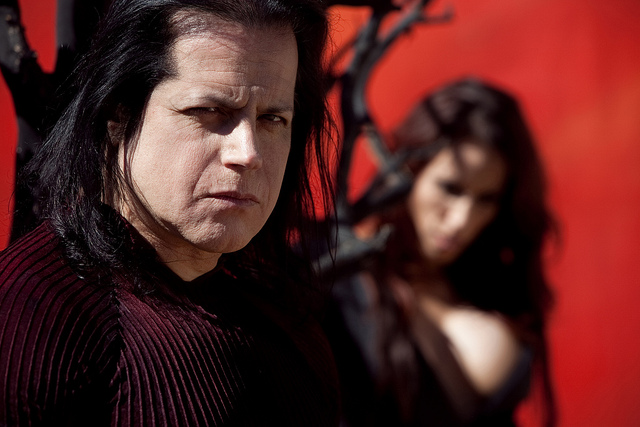
Glenn Danzig has spawned a cult following with his dark and brooding voice, and the sinisterly seductive imagery of his lyrics. From the early days – some 35 years back – as front person for horror punk icons the Misfits, to metal-infused Samhain, and finally to the eponymous Danzig, where he achieved a degree of mainstream success, he has taken macabre themes, blasted them with an obsessive sheen, and come up with some of the most hauntingly memorable songs this side of hell.

Danzig comes to the Warfield on Sunday night on the second stop of a brief two-week tour that finds the 56-year-old icon reuniting with Misfits guitarist Doyle Wolfgang Von Frankenstein. Doyle comes as a special guest for a handful of concerts that promise to feature a set of classic tunes with his old band mate.

Speaking over the phone from Los Angeles, the man who has made a living bellowing songs like “All Hell Breaks Loose,” “Skulls,” “Twist of Cain,” “Mother” and countless others is for the most part fairly soft-spoken, and keeps his responses short and to the point.

When first asked about the upcoming show with Doyle, he simply said, “We do a Danzig set, and then about two-thirds of the way in we bring out Doyle and do a bunch of old stuff.”

Later on though, Danzig did agree that the music he’s made has had a lasting impact on those who grew up listening to it, along with kids today just now discovering the Misfits and Samhain, or even newer solo releases such as 2010’s Deth Red Sabaoth.

“That’s the great part, because no one sees all the bullshit you have to go through, so when people come up and tell you what your stuff means to them, it’s pretty cool.”

Danzig was in San Francisco most recently last December, when he was a special guest at Metallica’s 30th anniversary run at the Fillmore, singing “Die Die, My Darling” and “Last Caress,” two Misfits tunes that Metallica covered in their early days as a band.

“I hadn’t seen those guys in a while, and James called me up, and was telling me that the kids were getting to see it for $19.81 total — they were doing it for all the right reasons. I think they just wanted to let fans have a great time, and it was a lot of fun, I got to see a lot of old friends.”

Speaking of covers, Danzig himself is currently finishing up work on an as-yet-untitled album of cover songs, the first of which, “Devils Angels,” is available to listen to on his website. The record, which is due out in the late summer or early fall, is one of many projects that the singer has on his plate at the moment, or hopes to in the near future.

Once the covers album is completed and released, Danzig plans to record Black Aria III, the latest in a series of classical solo projects, and then set about working on the next Danzig record.

In addition to making music, Danzig has been writing several different horror and fantasy-themed comic books over the years, published by his own company, Verotik. One of his titles, Ge Rouge, has been in the development stages of being made into a film for several years, but has run into differing problems.

“We had it going with one production company, but we had to yank it because it just wasn’t going anywhere with them — eventually you get tired of doing all these re-writes on it, and you just say, ‘Look man, either you’re doing this or you’re not doing it!’” says Danzig.

“We had a bunch of other people that wanted to see it, but we couldn’t show it to them because we had a contract – once we’re out of the contract we can start showing it to other people. And I’m always writing scripts, so…we’ll see,” he laughs.

Danzig
Sun/27, 8pm, $35-$38
Warfield
982 Market St, SF
www.thewarfieldtheatre.com

Vibrators! Aliens! Cops on the edge! New movies are here!

0

As we all breathlessly count the days — nay, milliseconds — until the June 1 release of Piranha 3DD, there’s still plenty to gnaw on this Memorial Day weekend. Chernobyl Diaries screens tonight (i.e., the night before it opens) which is usually not a great sign, but it’s likely critic-proof anyway (even for me, someone who’s not entirely opposed to the idea of a new genre: nuclear-meltdown-sploitation! Sit down, 1979’s China Syndrome. This one’s got screaming teens and spooky spooks!) Er, anyway … check back tomorrow for my review of that one.

Meanwhile, apply your brain and/or sense of social justice while watching Michael Glawogger’s final entry in his “globalization trilogy,” Whores’ Glory (Dennis Harvey’s review here), or adjust your popcorn levels accordingly for these other recommends:

http://www.youtube.com/watch?v=gkEw3mWs86g

Hysteria Tanya Wexler’s period romantic comedy gleefully depicts the genesis of the world’s most popular sex toy out of the inchoate murk of Victorian quackishness. In this dulcet version of events, real-life vibrator inventor Mortimer Granville (Hugh Dancy) is a handsome young London doctor with such progressive convictions as a belief in the existence of germs. He is, however, a man of his times and thus swallows unblinking the umbrella diagnosis of women with symptoms like anxiety, frustration, and restlessness as victims of a plague-like uterine disorder known as hysteria. Landing a job in the high-end practice of Dr. Robert Dalrymple (Jonathan Pryce), whose clientele consists entirely of dissatisfied housewives seeking treatments of “medicinal massage” and subsequent “parosysm,” Granville becomes acquainted with Dalrymple’s two daughters, the decorous Emily (Felicity Jones) and the first-wave feminist Charlotte (Maggie Gyllenhaal). A subsequent bout of RSI offers empirical evidence for the adage about necessity being the mother of invention, with the ever-underused Rupert Everett playing Edmund St. John-Smythe, Granville’s aristocratic friend and partner in electrical engineering. (1:35) Embarcadero, Shattuck, Sundance Kabuki. (Lynn Rapoport)

http://www.youtube.com/watch?v=IyaFEBI_L24

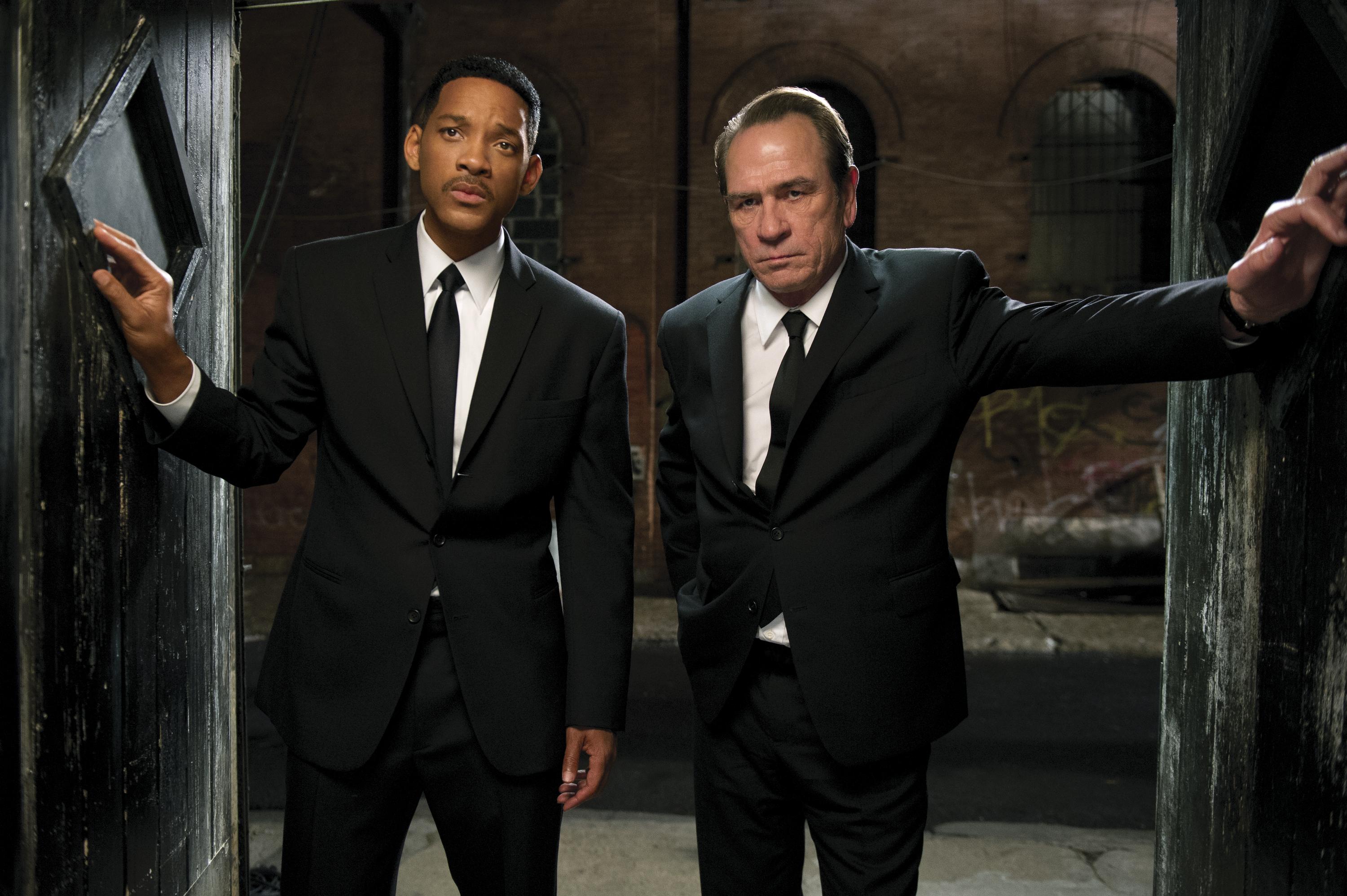
Men in Black III Why not? It’s been ten years since Men in Black II (the one where Lara Flynn Boyle and Johnny Knoxville — remember them? — played the villains), Will Smith has barely aged, and he hasn’t made a full-on comedy since, what, 2005’s Hitch? Here, he does a variation on his always-agreeable exasperated-guy routine, clashing with his grim, gimlet-eyed partner Agent K (Tommy Lee Jones, and in a younger incarnation, a spot-on Josh Brolin) in a plot that involves a vicious alien named Boris (Flight of the Conchords’ Jermaine Clement), time travel, Andy Warhol, the moon (as both space-exploration destination and modern-day space-jail location), and lines that only Smith’s delivery can make funny (“This looks like it comes from planet damn.”) It’s cheerful (save a bit of melodrama at the end), crisply paced, and is neither a must-see masterpiece nor something you should mindfully sleep through if it pops up among your in-flight selections. Oh, and it’s in 3D. Well, why not? (1:42) Everywhere. (Cheryl Eddy)

Polisse Comparisons to The Wire are not to be tossed around lightly, but when the Hollywood Reporter likened Polisse to an entire season of the masterpiece cop show packed into a single film, it was onto something. Director, co-writer, and star Maïwenn (the object of desire in 2003’s High Tension) hung out with real officers serving in Paris’ Child Protection Unit, drawing inspiration from their dealings with pedophiles, young rape victims, negligent mothers, pint-sized pickpockets, and the like (another TV show worth mentioning in comparison: Law & Order: SVU). But Polisse (the title is deliberately misspelled, as if by a child) is no simple procedural; it plunges the viewer directly into the day-to-day lives of its boisterous characters, who are juggling not just stressful careers but also plenty of after-hours troubles, particularly relationship issues. Between heart wrenching moments on the job (and off), the unit indulges in massive cut-loose episodes of what amounts to group therapy: charades, dance parties, and room-clearing arguments, most of which involve huge quantities of booze. Watching Polisse is a messy, emotional, rewarding experience; no wonder it picked up the Jury Prize at the 2011 Cannes Film Festival. (2:07) Embarcadero, Shattuck. (Eddy)

Hej, creativity! 4 bonkers Stockholm art projects

0

What creative forms would you expect at the near-ends of the earth? My recent trip to Stockholm, Sweden was weird in the way that travel usually is, more just-like-home moments than alien fears realized of winding up cold and frozen because I forget to transcribe the 17th letter in the name of the street I was staying on.

Honestly, I went for the close-to-the-North-Pole party (did you know you can swim just about anywhere in Stockholm? Sunrise after-afterparty dips abound), but surprise! I ran into artistic inspiration. That’s really having your herring burger and eating it too. Here’s four people and projects that really did it for me, Swedishly speaking.

Sweden has epic, resplendent design history that Ikea has made so common with its bastardized, disposable bedframes (I have a personal vendetta against a certain bedframe, pardon my vehemence.) Every time I walked into someone’s Stockholm apartment I felt like I’d happened onto what taste was like before the Martha Stewart magazine happened – colorful, but with the acknowledgment that life is better amid function and simple form. Things make sense here. Men and women get 16 months of paid leave from work when they have a baby. 

In contrast, the artists that most impressed me were all pretty bonkers. Call me contrary? 

THE SCANDAL 

I’ve been down this road before, but there was no way I would miss checking in with the now-infamous Makode Linde, baker of Racist Cakegate 2012, worldwide Internet meme, and Stockholm club kid forever, when I was in his hometown. (He also directs rad videos, like this one for ex-Lykke Li chorist and current hit single maker Zhala.)

I first ran into real-life Linde one blurry Sunday afternoon in Berlin at Berghain’s Panorama bar (the best place in the world for techno church hipster zombies.) In a sea of glassy eyes and black T-shirts, Linde had on a yellow plaid suit and a smile, which in my flair-adore book makes him artist enough to begin with. “Makode just gives it to you,” as a friend of mine put it regarding his penchant for exuberant party dress.

Linde invited me to his retrospective at Galleri Kleerup‘s new showroom just around the corner from the opera in old town Stockholm and I acquiesed, only to wind up there with all my luggage in tow en route to the flight that would take me away from Sweden. The only thing there to greet me was a sign saying “TILLBAKA 16:30.” I waited until 17:00 and no one was tillbaka and I had a flight to catch. So thank god for massive plate windows and Swedish acceptance of creepers smashing their nose to them, because otherwise I wouldn’t have been able to see the show. 

The Linde retrospective puts his howling cake performance in perspective. His famous cake-head (himself, actually poking his face through a hole in the cake-table) blackface makes since when, after viewing his body of work, you realize that he’s created an world that’s entirely blackface. Giraffes, Betty Boop, bunny rabbits, Jesus on the cross, a Chinese good luck cat, a taxidermied crow. On a stack of shipping pallets in the middle of the room sat a small, ready-to-offend army of these talismans, all from his “Afromantics” series. 

What are they warding off? Complacency, perhaps. In a country where the GDP continues to grow despite economic mushiness in other EU countries, it’s still totally cool among even young alternative types to refer to any illegal after-party venue in Stockholm as a “black club.” Stockholm’s not the whitest city I’ve ever been in (shout-out to my nonetheless beloved Portland!), but it’s pretty close — and casual racism still comes in a pretty raw form. 

Linde’s had some pretty heavy – and not at all misguided – accusations thrown at him. But standing in that pretty little cobblestone plaza in Stockholm, next to the Danish embassy in whose plate glass windows were displayed an immalculate and modest light pink ballerina gown from years past, I grokked him and his Rorschach test splotches of black faces with big red lips and wide white eyes.

I could understand how he was surprised when people said he couldn’t claim the African experience, because in some superficial ways he has to rep for it in this town.

THE INDIE ACTION-ADVENTURE-PRISON-BIKER-HAIR BAND QUEER FILM

There was only one room devoted to screening a single movie trailer, over and over again, at Konstfack, Sweden’s “second-best” (in the words of a friend) arts and design school. A few chairs sat complacently in front of a screen constantly counting down the seconds til the next screening of Dyke Hard

Could this film have been shot in San Francisco? Yes, and if director Bitte Andersen succeeds in getting her entry into the Frameline Film Festival it most certainly it will find a audience here. A wacky tale of dyke band gone wild, taking on the forces of evil in a world where Lycra makes some, if not all injustices better? It’s an SF no-brainer. Andersen, along with production team Alexi Carpentieri and Martin Borell, started the project as a series of trailers – a sci-fi movie, a prison movie, a biker flick, and a horror.

“I guess watching a very large amount of genre film for many years and being a queer woman inspired me to make some genre film that wouldn’t be alienating for myself and other queers and/or women,” Andersen told me. Eventually, she and her team decided to combine all the trailers into a single film, Dyke Hard.

Shooting is taking about a year (I narrowly missed being cast in a seminal scene in which the mayor – played by a prominent Stockholm queer club promoter – announces a venue conflict between a battle of the bands and a martial arts tournament. Sports fans and music fans attack each other, only to be reprimanded eloquently by a bighearted member of the protagonist band.) The Kickstarter for the project swings into gear next week, so holler at them if you want to ensure that we are indeed, dyked hard. 

DARK GLAMAZON

This is what public art looks like in Sweden: an emaciated giant propped up against (or propping up) the foyer of a luxury shopping mall. She’s got on platform lace-up Timberlands, a studded leather jacket, and of course: no pants. 

Her name is “Pretty Vacant,” and her name is Cajsa Von Zeipel, the artist that is. In person, Von Zeipel somehow succeeds in being more glamorous than her drugged-out fashion waifs. She moonlights in boyfriend Tobias Bernstrup‘s Italo disco act, standing behind a keyboard and a wind machine in a patent leather bustier, silky kimono, ass-length blonde hair, and vertiginous high heels that she pretty much never doesn’t wear.

The artist is from a tiny town of 3,000 in Sweden, where she told me for fun she tried out icecream as a beauty product (facials) and generally felt like the weirdest one in school. But if that was the case, then we’re talking a serious ugly duckling-swan situation.

Von Zeipel and Bernstrup’s shared studio feels like an ode to feminine beauty. He’s been known to perform in triple-breasted lingerie armor and is partial to equally dangerous heel heights.

And early awkwardness might also give a clue into Von Zeipel’s art. There are no creatures more high fashion than her sculptures, but at the same time there is a bite to them. Their faces are twisted, their height disorienting. Pretty beautiful, yes — but also pretty freaky.

FEMINIST BLING

Of late, much has been made of craftivism, a reaction to the diminution of women’s work and general aesthetic scorn for things that grandmas get up to around big round tables with their friends. The belittling depiction of craft has been addressed in a feminist takeback that’s seen the rise of knit graffiti, the resurfacing of Gee’s Bend quilts in fine art museums, and more. 

In Stockholm, queer feminist radio and TV host-DJ Kakan Hermansson is taking these lessons straight to the nail salon. Her graduate school exhibition at Konstfack is half video installation, half baroque still life – two-foot tall ceramic statues of fingers, capped with nail art erupting with My Little Ponys, Destiny’s Child collage, gems, sparkles, “GIRLS” spelled out in gold script. 

If you view the installation as I did through the fog of a mid-afternoon hangover and a bag of popcorn, Hermansson’s accompanying video is more than engaging — it’s important. Her mama bear voice soothes as hands (hers) confidently remove polish from, re-paint, and glitterize the paws of volunteers who spill personal trauma throughout their treatment. Sexual violence, drug dealing mishap, partnerships gone awry. This is a safe space, a place where women can go to recharge and strengthen bonds with each other. The ceramic statues call attention to the lushness that is art contained on the tips of our fingers, while the videos emphasize that not everything that goes on in beauty salons is superficial. 

Film Listings May 23-29, 2012

0

Film listings are edited by Cheryl Eddy. Reviewers are Kimberly Chun, Max Goldberg, Dennis Harvey, and Lynn Rapoport. For rep house showtimes, see Rep Clock at www.sfbg.com. Complete film listings also posted at www.sfbg.com.

OPENING

Chernobyl Diaries A group of young tourists visit the nuked-out husk of Chernobyl in this spook flick written and produced by Paranormal Activity series creator Oren Peli. (1:26)

Hysteria Tanya Wexler’s period romantic comedy gleefully depicts the genesis of the world’s most popular sex toy out of the inchoate murk of Victorian quackishness. In this dulcet version of events, real-life vibrator inventor Mortimer Granville (Hugh Dancy) is a handsome young London doctor with such progressive convictions as a belief in the existence of germs. He is, however, a man of his times and thus swallows unblinking the umbrella diagnosis of women with symptoms like anxiety, frustration, and restlessness as victims of a plague-like uterine disorder known as hysteria. Landing a job in the high-end practice of Dr. Robert Dalrymple (Jonathan Pryce), whose clientele consists entirely of dissatisfied housewives seeking treatments of “medicinal massage” and subsequent “parosysm,” Granville becomes acquainted with Dalrymple’s two daughters, the decorous Emily (Felicity Jones) and the first-wave feminist Charlotte (Maggie Gyllenhaal). A subsequent bout of RSI offers empirical evidence for the adage about necessity being the mother of invention, with the ever-underused Rupert Everett playing Edmund St. John-Smythe, Granville’s aristocratic friend and partner in electrical engineering. (1:35) Embarcadero, Shattuck, Sundance Kabuki. (Rapoport)

Keyhole Guy Maddin’s latest is a loose — very loose — take on Homer’s Odyssey, among other elements tossed into a fragmentary whole. Loose enough to keep 30s gangster Ulysses Pick (Jason Patric) traveling no further than between rooms in his decrepit former home. He arrives there with an inept gang, a “drowned” girl (Brooke Palsson) who sure doesn’t act like she’s already dead, a gagged kidnapping victim (David Wontner) who turns out to be his own son — our protagonist is slipshod in the realm of family responsibilities, to say the least — and a powerful desire to see his estranged wife (Isabella Rosellini), who is less than enthused. Already on the premises is the latter’s elderly father, kept naked and chained to her bed for reasons unknown. Impulsive random screwings, killings that immediately give rise to ghosts, an electric chair powered by exercycles, Udo Kier, and other miscellaneous weirdness dots the progress of this phantasmagorical, free associative work — though it’s a lot less fun than that may sound. Maddin is in an experimental mood here (working for the first time in digital, for one thing), and it’s difficult to say just what he’s aiming for, or whether he succeeds. The handsome, cluttered, black-and-white results do ultimately cast a certain spell, but this may be a reliably idiosyncratic director’s least fully realized stab at dream logic and semi-new personal terrain since Twilight of the Ice Nymphs 15 years ago. (1:34) Roxie. (Harvey)

Men in Black 3 Usually movies screw up when casting the younger version of a character, but Josh Brolin as a young Tommy Lee Jones does kinda make sense. (1:42) Four Star, Presidio, Shattuck.

Polisse Comparisons to The Wire are not to be tossed around lightly, but when the Hollywood Reporter likened Polisse to an entire season of the masterpiece cop show packed into a single film, it was onto something. Director, co-writer, and star Maïwenn (the object of desire in 2003’s High Tension) hung out with real officers serving in Paris’ Child Protection Unit, drawing inspiration from their dealings with pedophiles, young rape victims, negligent mothers, pint-sized pickpockets, and the like (another TV show worth mentioning in comparison: Law & Order: SVU). But Polisse (the title is deliberately misspelled, as if by a child) is no simple procedural; it plunges the viewer directly into the day-to-day lives of its boisterous characters, who are juggling not just stressful careers but also plenty of after-hours troubles, particularly relationship issues. Between heart wrenching moments on the job (and off), the unit indulges in massive cut-loose episodes of what amounts to group therapy: charades, dance parties, and room-clearing arguments, most of which involve huge quantities of booze. Watching Polisse is a messy, emotional, rewarding experience; no wonder it picked up the Jury Prize at the 2011 Cannes Film Festival. (2:07) Embarcadero, Shattuck. (Eddy)

Whores’ Glory See “Far From Heaven.” (1:59) Lumiere, Shattuck.

ONGOING

Battleship During idle moments before the action revs up, the aliens start menacing, and the deadly razor balls-cum-air mines start rampaging, wrap your noggin around these random brainwaves: can Taylor Kitsch be any better named? Is it possible for Alexander Skarsgård’s glassy eyes to get any deader? Where are all the Hawaiians, Asians, and people of color in this white-bread vision of Hawaii? All matters to puzzle over in this toy franchise hopeful directed by ex-Chicago Hope regular Peter Berg. The 2007 Transformers is the best this gung-ho hybrid of up-with-the-military “Army of One” commercial and alien invasion flick — with plenty of blow-’em-up-real-good explosions and a dab of J-monster movies, but the writing never quite rises to the occasion. Here, an international group of navy folk and their ships are convening in Hawaii for playful war games, though the exercises turn somewhat more serious when alien vessels splash down in the middle of the fun —and some mild, no-investment family drama: Alex (Kitsch) is the screw-up younger brother of stony-faced naval man Stone (Skarsgård) and courting the daughter (Brooklyn Decker) of the fleet commander (Liam Neesom), who seems to hate his guts. The ultimate battle with space invaders, however, promises to turn that all around, as Alex is forced to sailor up and lead crew mates like Rihanna and work with former opponents like Captain Nagata (Tadanobu Asano). Here, at least, in the shadow of Pearl Harbor, U.S. and Japanese naval dudes can heal the wounds of World War II and bond in battle against the last unimpeachable interstellar villains who couldn’t give a rat’s ass if you say “I sunk your battleship.” But Berg’s muddled direction doesn’t help when it comes to piecing out the chronology and balancing assorted perspectives in this latest effort to equate militarism with the games big and little kids play. (2:11) 1000 Van Ness, SF Center. (Chun)

Bernie Jack Black plays the titular new assistant funeral director liked by everybody in small-town Carthage, Tex. He works especially hard to ingratiate himself with shrewish local widow Marjorie (Shirley MacLaine), but there are benefits — estranged from her own family, she not only accepts him as a friend (then companion, then servant, then as virtual “property”), but makes him her sole heir. Richard Linklater’s latest is based on a true-crime story, although in execution it’s as much a cheerful social satire as I Love You Philip Morris and The Informant! (both 2009), two other recent fact-based movies about likable felons. Black gets to sing (his character being a musical theater queen, among other things), while Linklater gets to affectionately mock a very different stratum of Lone Star State culture from the one he started out with in 1991’s Slacker. There’s a rich gallery of supporting characters, most played by little-known local actors or actual townspeople, with Matthew McConaughey’s vainglorious county prosecutor one delectable exception. Bernie is its director’s best in some time, not to mention a whole lot of fun. (1:39) Embarcadero, Piedmont, Shattuck, Smith Rafael. (Harvey)

The Best Exotic Marigold Hotel (1:42) Albany, Marina, Piedmont, SF Center, Sundance Kabuki.

Bully Anyone who’s ever been a kid on the wrong side of a bully — or was sensitive and observant enough not to avert his or her eyes — will be puzzling over the MPAA’s R rating of this doc, for profanity. It’s absurd when the gory violence on network and basic cable TV stops just short of cutting characters’ faces off, as one blurred-out bus bully threatens to do to the sweet, hapless Alex, dubbed “Fish Face” by the kids who ostracize him and make his life hell on the bus. It’s a jungle out there, as we all know — but it’s that real, visceral footage of the verbal (and physical) abuse bullied children deal with daily that brings it all home. Filmmaker Lee Hirsch goes above and beyond in trying to capture all dimensions of his subject: the terrorized bullied, the ineffectual school administrators, the desperate parents. There’s Kelby, the gay girl who was forced off her beloved basketball team after she came out, and Ja’Maya, who took drastic measures to fend off her tormenters — as well as the specters of those who turned to suicide as a way out. Hirsch is clearly more of an activist than a fly on the wall: he steps in at one point to help and obviously makes an uplifting effort to focus on what we can do to battle bullying. Nevertheless, at the risk of coming off like the Iowa assistant principal who’s catching criticism for telling one victim that he was just as bad as the bully that he refused to shake hands with, one feels compelled to note one prominent component that’s missing here: the bullies themselves, their stories, and the reasons why they’re so cruel — admittedly a daunting, possibly libelous task. (1:35) Smith Rafael. (Chun)

The Cabin in the Woods If the name “Joss Whedon” doesn’t provide all the reason you need to bum-rush The Cabin in the Woods (Whedon produced and co-wrote, with director and frequent collaborator Drew Goddard), well, there’s not much more that can be revealed without ruining the entire movie. In a very, very small nutshell, it’s about a group of college kids (including Chris “Thor” Hemsworth) whose weekend jaunt to a rural cabin goes horribly awry, as such weekend jaunts tend to do in horror movies (the Texas Chainsaw and Evil Dead movies are heavily referenced). But this is no ordinary nightmare — its peculiarities are cleverly, carefully revealed, and the movie’s inside-out takedown of scary movies produces some very unexpected (and delightfully blood-gushing) twists and turns. Plus: the always-awesome Richard Jenkins, and in-jokes galore for genre fans. (1:35) Metreon, Shattuck. (Eddy)

Dark Shadows Conceptually, there’s nothing wrong with attempting to turn a now semi-obscure supernaturally themed soap opera with a five-year run in the late 1960s and early ’70s into a feature film. Particularly if the film brings together the sweetly creepy triumvirate of Tim Burton, Johnny Depp, and Helena Bonham Carter and emerges during an ongoing moment for vampires, werewolves, and other things that go hump in the night. Depp plays long-enduring vampire Barnabas Collins, the undead scion of a once-powerful 18th-century New England family that by the 1970s — the groovy decade in which the bulk of the story is set — has suffered a shabby deterioration. Barnabas forms a pact with present-day Collins matriarch Elizabeth (Michelle Pfeiffer) to raise the household — currently comprising her disaffected daughter, Carolyn (Chloë Grace Moretz), her derelict brother, Roger (Jonny Lee Miller), his mournful young son, David (Gulliver McGrath), David’s live-in lush of a psychiatrist, Dr. Hoffman (Carter), and the family’s overtaxed manservant, Willie (Jackie Earle Haley) — to its former stature, while taking down a lunatic, love-struck, and rather vindictive witch named Angelique (Eva Green). The latter, a victim of unrequited love, is the cause of all Barnabas’s woes and, by extension, the entire clan’s, but Angelique can only be blamed for so much. Beyond her hocus-pocus jurisdiction is the film’s manic pileup of plot twists, tonal shifts, and campy scenery-chewing by Depp, a startling onslaught that no lava lamp joke, no pallid reaction shot, no room-demolishing act of paranormal carnality set to Barry White, and no cameo by Alice Cooper can temper. (2:00) California, Metreon, 1000 Van Ness, Sundance Kabuki. (Rapoport)

The Dictator As expected, The Dictator is, yet again, Sacha Baron Cohen doing his bumbling-foreigner shtick. Said character (here, a ruthless, spoiled North African dictator) travels to America and learns a heaping teaspoon of valuable lessons, which are then flung upon the audience — an audience which, by film’s end, has spent 80 minutes squealing at a no-holds-barred mix of disgusting gags, tasteless jokes, and schadenfreude. If you can’t forgive Cohen for carbon-copying his Borat (2006) formula, at least you can muster admiration for his ability to be an equal-opportunity offender (dinged: Arabs, Jews, African Americans, white Americans, women of all ethnicities, and green activists) — and for that last-act zinger of a speech. If The Dictator doesn’t quite reach Borat‘s hilarious heights, it’s still proudly repulsive, smart in spite of itself, and guaranteed to get a rise out of anyone who watches it. (1:23) California, 1000 Van Ness, Presidio, SF Center, Sundance Kabuki. (Eddy)

Elles Graphic sex scenes distinguish this otherwise fairly unremarkable tale of Anne (Juliette Binoche), a magazine writer whose blah life (sure, she has a luxurious apartment, but it’s populated by a distant husband, a sullen teenager, and a younger son who’d rather interface with technology than humans) becomes even more unbearable when she begins a new assignment: an article on college students who moonlight as call girls. The always-reliable Binoche brings depth to her role as a bored woman who finds herself unexpectedly titillated by her close brush with dirty thrills, but her eventual rebellion is anti-climactic after all that naughty build-up. Elles does plenty to earn its NC-17 rating, but filmmaker Malgoska Szumowska could’ve titled it Ennui instead. (1:36) Lumiere, Shattuck. (Eddy)

First Position Bess Kargman’s documentary follows a handful of exceptional young ballet dancers, ranging in age from 10 to 17, over the course of a year as they prepare for the Youth America Grand Prix, the world’s largest ballet scholarship competition. Those who make it from the semifinals (in which some 5,000 dancers aged 9 to 19 perform in 15 cities around the world) to the finals (which bring some 300 contestants to New York City) compete for scholarships to prestigious ballet schools, dance-company contracts, and general notice by both the judges and the company directors in the audience. The film’s subjects come from varied backgrounds — 16-year-old Joan Sebastian lives and studies in NYC, far from his family in Colombia; 14-year-old Michaela was born in civil war-torn Sierra Leone and adopted from an orphanage by an American couple in Philadelphia; 11-year-old Aran, an American, lives in Italy with his mother while his father serves in Kuwait. The common threads in their stories are the daily sacrifices made by them as well as their families, whose energies and other resources are largely poured into these children’s single-minded pursuit. We get a vague sense of the difficult world they are driving themselves, in nearly every waking hour, to enter. But the film largely keeps its focus on the challenges of preparing for the competition, offering us many magnificent shots of the dancers pushing their bodies to mesmerizing physical extremes both on- and offstage. (1:34) Embarcadero, Shattuck, Smith Rafael. (Rapoport)

The Five-Year Engagement In 2008’s Forgetting Sarah Marshall, viewers were treated to the startling, tragicomic sight of Jason Segel’s naked front side as his character got brutally dumped by the titular perky, put-together heartbreaker. In The Five-Year Engagement, which he reunited with director Nicholas Stoller to co-write, Segel once again sacrifices dignity and the right to privacy, this time in exchange for fake orgasms (his own), ghastly hand-knit sweaters, egregious facial-hair arrangements, and various other exhaustively humiliating psychological lows — all part of an earnest, undying quest to make people giggle uncomfortably. Segel plays Tom, a talented chef with a promising career ahead of him in San Francisco’s culinary scene (naturally, food carts get a cameo in the film). On the one-year anniversary of meeting his girlfriend, Violet (Emily Blunt), a psychology postgrad, he asks her to marry him in a meticulously planned, gloriously botched proposal scene coengineered by Tom’s oafish friend Alex (Chris Pratt), little realizing that this romantic gesture will soon lead to successive frozen winters in the Midwest (Violet gets offered a job at the University of Michigan), loss of professional stature, cabin fever, mead making, bow-hunting accidents, the titular nuptial postponement, and other, more gruesome events. The humor at times descends to some banally low depths as Segel and Stoller explore the terrain of the awkward, the poorly socialized, and the playfully grotesque. But Segel and Blunt present a believable, likable relationship between two warm, funny, flawed people, and, however disgusted, no one should walk out before a scene in which Violet and her sister (Alison Brie) channel Elmo and Cookie Monster to elaborate on the themes of romantic idealism and marital discontent. (2:04) 1000 Van Ness, SF Center. (Rapoport)

Footnote (1:45) Opera Plaza.

Girl in Progress (1:30) SF Center.

God Bless America Middle-aged office drone Frank (Joel Murray) is not having a good day-week-month-year-life. His ex-wife is about to happily remarry; his only child is a world-class brat who finds father-daughter time “boring;” his neighbors are a young couple who only get more loudly obnoxious when politely asked to keep the noise down. When that and insistent migraines keep Frank awake night after night, the parade of pundit and reality stupidities on TV only turn his insomnia into wide awake fury. Then he’s fired from his job for unjust reasons — on the same day he gets a diagnosis of brain cancer. Mad as hell, not-gonna-take-it-anymore, he impulsively decides to make a “statement” by assassinating a viral-video poster child for “entitlement.” This attracts admiring attention from extremely pushy, snarky teen Roxy (Tara Lynne Barr), who appoints herself Bonnie to his reluctant Clyde. They drive around the country bestowing “big dirt naps” on other exemplars of what’s wrong with America today, including religious hate mongers, rude moviegoers, and the purveyors of American Idol-type idiotainment. Comedian Bobcat Goldthwait’s latest feature as writer-director has its head in the right place, and so many good ideas, that it’s a pity this gonzo satire-rant runs out of steam so quickly. Aiming splattering paintball gun at the broadest possible targets, it covers them with disdainful goo but not as much wit as one would like. Plus, Barr’s hyper precocious smart mouth is yet another annoying Juno (2007) knockoff — never mind that she counts Diablo Cody among her (many) pet peeves. If God Bless winds up closer to Uwe Boll’s Postal (2007) than, say, Network (1976) in scattershot impact, it nonetheless almost makes it on sheer outré audacity and will alone. A movie that hates everything you hate should not be sneezed at; if only it hated them with more parodic snap, thematic depth and narrative structure. (1:44) Lumiere. (Harvey)

Headhunters Despite being the most sought-after corporate headhunter in Oslo, Roger (Aksel Hennie) still doesn’t make enough money to placate his gorgeous wife; his raging Napoleon complex certainly doesn’t help matters. Crime is, as always, the only solution, so Roger’s been supplementing his income by stealthily relieving his rich, status-conscious clients of their most expensive artworks (with help from his slightly unhinged partner, who works for a home-security company). When Roger meets the dashing Clas Greve (Nikolaj Coster-Waldau of Game of Thrones) — a Danish exec with a sinister, mysterious military past, now looking to take over a top job in Norway — he’s more interested in a near-priceless painting rumored to be stashed in Greve’s apartment. The heist is on, but faster than you can say “MacGuffin,” all hell breaks loose (in startlingly gory fashion), and the very charming Roger is using his considerable wits to stay alive. Based on a best-selling “Scandi-noir” novel, Headhunters is just as clever as it is suspenseful. See this version before Hollywood swoops in for the inevitable (rumored) remake. (1:40) California, Clay. (Eddy)

The Hunger Games Katniss Everdeen (Jennifer Lawrence) is a teenager living in a totalitarian state whose 12 impoverished districts, as retribution for an earlier uprising, must pay tribute to the so-called Capitol every year, sacrificing one boy and one girl each to the Hunger Games. A battle royal set in a perilous arena and broadcast live to the Capitol as gripping diversion and to the districts as sadistic propaganda, the Hunger Games are, depending on your viewpoint, a “pageant of honor, courage, and sacrifice” or a brutal, pointless bloodbath involving children as young as 12. When her little sister’s name comes up in the annual lottery, Katniss volunteers to take her place and is joined by a boy named Peeta Mellark (Josh Hutcherson), with whom she shares an old, unspoken bond. Tasked with translating to the screen the first installment of Suzanne Collins’s rabidly admired trilogy, writer-director Gary Ross (2003’s Seabiscuit, 1998’s Pleasantville) telescopes the book’s drawn-out, dread-filled tale into a manageable two-plus-hour entertainment, making great (and horrifying) use of the original work’s action, but losing a good deal of the narrative detail and emotional force. Elizabeth Banks is comic and unrecognizable as Effie Trinket, the two tributes’ chaperone; Lenny Kravitz gives a blank, flattened reading as their stylist, Cinna; and Donald Sutherland is sufficiently creepy and bloodless as the country’s leader, President Snow. More exceptionally cast are Woody Harrelson as Katniss and Peeta’s surly, alcoholic mentor, Haymitch Abernathy, and Stanley Tucci as games emcee Caesar Flickerman, flashing a bank of gleaming teeth at each contestant as he probes their dire circumstances with the oily superficiality of a talk show host. (2:22) 1000 Van Ness, SF Center. (Rapoport)

Indie Game: The Movie Much like the film business, the video-game biz is mostly controlled by a few huge companies with thousands of employees, hell-bent on ensnaring as many of the billions of dollars spent on games annually as possible. And then, as James Swirsky and Lisanne Pajot’s documentary explores, there are the little guys, who are “not trying to be professional” or produce glossy content for the masses. Instead, these individuals (or pairs) take advantage of the miracle of digital distribution to follow their own visions and create their own games. The best-case scenarios — illustrated by San Francisco indie developer Jonathan Blow and his hugely successful Braid — can reap enormous creative and financial rewards, but getting there — as the struggles facing the creators of Super Meat Boy and Fez plainly attest can be a mentally and physically draining process, filled with frustration and self-doubt, exacerbated by the taunts of haters online. A thoughtful, artfully-shot peek at one tiny corner of a behemoth industry, Indie Game also offers a surprisingly tense, raw look at some very bright minds struggling to triumph on their own terms. (1:36) Roxie. (Eddy)

Jiro Dreams of Sushi Celebrity-chef culture has surely reached some kind of zeitgeist, what with the omnipresence of Top Chef and other cooking-themed shows, and the headlines-making power of people like Paula Deen (diabetes) and Mario Batali (sued for ripping off his wait staff). Unconcerned with the trappings of fame — you’ll never see him driving a Guy Fieri-style garish sports car — is Jiro Ono, 85-year-old proprietor of Sukiyabashi Jiro, a tiny, world-renowned sushi restaurant tucked into Tokyo’s Ginza station. Jiro, a highly-disciplined perfectionist who believes in simple, yet flavorful food, has devoted his entire life to the pursuit of “deliciousness” — to the point of sushi invading his dreams, as the title of David Gelb’s reverential documentary suggests. But Jiro Dreams of Sushi goes deeper than food-prep porn (though, indeed, there’s plenty of that); it also examines the existential conflicts faced by Jiro’s two middle-aged sons. Both were strongly encouraged to enter the family business — and in the intervening years, have had to accept the soul-crushing fact that no matter how good their sushi is, it’ll never be seen as exceeding the creations of their legendary father. (1:21) Bridge, Shattuck. (Eddy)

Marley Oscar-winning documentarian Kevin Macdonald (1999’s One Day in September; he also directed Best Actor Forest Whitaker in 2006’s The Last King of Scotland) takes on the iconic Bob Marley, using extensive interviews — both contemporary (with Marley friends and family) and archival (with the musician himself) — and performance and off-the-cuff footage. The end result is a compelling (even if you’re not a fan) portrait of a man who became a global sensation despite being born into extreme poverty, and making music in a style that most people had never heard outside of Jamaica. The film dips into Marley’s Rastafari beliefs (no shocker this movie is being released on 4/20), his personal life (11 children from seven different mothers), his impact on Jamaica’s volatile politics, his struggles with racism, and, most importantly, his remarkable career — achieved via a combination of talent and boldness, and cut short by his untimely death at age 36. (2:25) Opera Plaza, Smith Rafael. (Eddy)

Marvel’s The Avengers The conflict — a mystical blue cube containing earth-shattering (literally) powers is stolen, with evil intent — isn’t the reason to see this long-hyped culmination of numerous prequels spotlighting its heroic characters. Nay, the joy here is the whole “getting’ the band back together!” vibe; director and co-writer Joss Whedon knows you’re just dying to see Captain America (Chris Evans) bicker with Iron Man (a scene-stealing Robert Downey Jr.); Thor (Chris Hemsworth) clash with bad-boy brother Loki (Tom Hiddleston); and the Hulk (Mark Ruffalo) get angry as often as possible. (Also part of the crew, but kinda mostly just there to look good in their tight outfits: Jeremy Renner’s Hawkeye and Scarlett Johansson’s Black Widow.) Then, of course, there’s Nick Fury (Samuel L. Jackson) running the whole Marvel-ous show, with one good eye and almost as many wry quips as Downey’s Tony Stark. Basically, The Avengers gives you everything you want (characters delivering trademark lines and traits), everything you expect (shit blowing up, humanity being saved, etc.), and even makes room for a few surprises. It doesn’t transcend the comic-book genre (like 2008’s The Dark Knight did), but honestly, it ain’t trying to. The Avengers wants only to entertain, and entertain it does. (2:23) Marina, Metreon, 1000 Van Ness, Presidio, Sundance Kabuki. (Eddy)

Monsieur Lazhar When their beloved but troubled teacher hangs herself in the classroom — not a thoughtful choice of location, but then we never really discover her motives — traumatized Montreal sixth-graders get Bachir Lazhar (Fellag), a middle-aged Algerian émigré whose contrastingly rather strict, old-fashioned methods prove surprisingly useful at helping them past their trauma. He quickly becomes the crush object of studious Alice (Sophie Nelisse), whose single mother is a pilot too often away, while troublemaker Simon (Emilien Neron) acts out his own domestic and other issues at school. Lazhar has his own secrets as well — for one thing, we see that he’s still petitioning for permanent asylum in Canada, contradicting what he told the principal upon being hired — and while his emotions are more tightly wrapped, circumstances will eventually force all truths out. This very likable drama about adults and children from Quebec writer-director Philippe Falardeau doesn’t quite have the heft and resonance to rate among the truly great narrative films about education (like Laurent Cantet’s recent French The Class). But it comes close enough, gracefully touching on numerous other issues while effectively keeping focus on how a good teacher can shape young lives in ways as incalculable as they are important. (1:34) Opera Plaza, Smith Rafael. (Harvey)

The Pirates! Band of Misfits Aardman Animations, home studio of the Wallace and Gromit series as well as 2000’s Chicken Run, are masters of tiny details and background jokes. In nearly every scene of this swashbuckling comedy, there’s a sight gag, double entendre, or tossed-off reference (the Elephant Man!?) that suggests The Pirates! creators are far more clever than the movie as a whole would suggest. Oh, it’s a cute, enjoyable story about a kind-hearted Pirate Captain (Hugh Grant) who dreams of winning the coveted Pirate of the Year award (despite the fact that he gets more excited about ham than gold) — and the misadventures he gets into with his amiable crew, a young Charles Darwin, and a comically evil Queen Victoria. But despite its toy-like, 3D-and-CG-enhanced claymation, The Pirates! never matches the depth (or laugh-out-loud hilarity) of other Aardman productions. Yo ho-hum. (1:27) Metreon, 1000 Van Ness. (Eddy)

Safe The poster would be slightly more on-point if its suave thug of a star, Jason Statham, were hiding behind the scrunched-faced Catherine Chan rather than the other way around — because at times it’s tough to see this alternately enjoyable and credibility-taxing action flick as more than some kind of naked play for the Chinese filmgoer. Jamming the screen with a frantic kineticism, director-writer Boaz Yakin seems to be smoothing over the problems in his vaguely stereotype-flaunting, patchy puzzle of a narrative with a high body count: the cadavers pile like those in an old martial arts flick — made in Asia, it’s implied, where life is cheap and spectacle is paramount. Picking up in the middle, with flashbacks stacked like firewood, Safe opens on young math prodigy Mei (Chan) on the run from the Russian mafia. A pawn and virtual slave of the Chinese mob, she holds a number in her head that all sorts of ruthless crime factions want. To her rescue is mystery man Luke Wright (Statham), who has had his own deadly tussle with the same Russian baddies and is now on the street and on the verge of suicide, believe it or not. It’s tough to wrap your head around the fact that any of Statham’s rock-hard tough guys could possibly crumble — or even have a sense of humor. You’ll need one to accept the ludicrous storyline as well as the notion that a jillion bullets could be fired and never hit his superhuman street-fighting man. (1:35) Metreon. (Chun)

Think Like a Man (2:02) Metreon.

Titanic 3D (3:14) Metreon.

21 Jump Street One of the more pleasant surprises on the mainstream comedy landscape has to be this, ugh, “reboot” of the late-’80s TV franchise. I wasn’t a fan of the show — or its dark-eyed, bad-boy star, Johnny Depp — back in the day, but I am of this unexpectedly funny rework overseen by apparent enthusiast, star, co-writer, and co-executive producer Jonah Hill, with a screenplay by Scott Pilgrim vs. the World (2010) co-writer Michael Bacall. There’s more than a smidge of Bacall’s other high school fantasy, Project X, in the buddy comedy premise of nerd (Hill’s Schmidt) meets blowhard (Channing Tatum’s Jenko), but 21 Jump Street thankfully leapfrogs the former with its meta-savvy, irreverent script and har-dee-har cameo turns by actors like Ice Cube as Captain Dickson (as well as a few key uncredited players who shall remain under deep cover). High school continues to haunt former classmates Schmidt and Jenko, who have just graduated from the lowly police bike corps to a high school undercover operation — don’t get it twisted, though, Dickson hollers at them; they got this gig solely because they look young. Still, the whole drug-bust enchilada is put in jeopardy when the once-socially toxic Schmidt finds his brand of geekiness in favor with the cool kids and so-called dumb-jock Jenko discovers the pleasures of the mind with the chem lab set. Fortunately for everyone, this crew doesn’t take themselves, or the source material, too seriously. (1:49) Metreon. (Chun)

What to Expect When You’re Expecting You needn’t direct what you know, but the first major misstep in this ensemble comedy was tapping a man, Kirk Jones (2005’s Nanny McPhee), to helm. Apparently Nicole Holofcener, Nancy Meyers, and Nora Ephron were too busy — busy making films not based on self-help bestsellers. Instead, What to Expect shows how marginal women can be to certain Hollywood blockbuster decision makers. On the surface, it’s all about the gals and their experiences, as an array of women from somewhat different, if pretty uniformly bourgie, walks of life — fitness star Cameron Diaz, baby store owner Elizabeth Banks, food truck chef Anna Kendrick, and trophy wife Brooklyn Decker — all find themselves knocked up. The odd woman out, surprisingly, is the boho photog played by Jennifer Lopez, who aspires to nest with a baby adopted from Ethiopia. But despite the frantic efforts of Banks, who shoulders the comedy burden here with hormones gone wild and gassy, and the climax, which should choke up all present and wannabe moms, the women are consistently upstaged by the bros, primarily the “Dudes Group” of dads headed up by Chris Rock and Thomas Lennon. Unlike the far-too-prominent, shruggable storyline involving an expectant father and son (Dennis Quaid and Ben Falcone), that crew gets the funniest, and perhaps most perceptive lines, in a baldly patriarchal play to the fellows forced into the cineplexes. Can’t the ladies catch a break, even as their waters are breaking? (1:50) Metreon, 1000 Van Ness, Presidio, Shattuck, Sundance Kabuki. (Chun)

Where Do We Go Now? With very real, deadly sectarian conflict on their doorstep, a group of Lebanese village women are making it up as they go along in this absurdist, ultimately inspiring dramedy with a dash of musical. Once sheltered by its isolation and the cheek-to-jowl intimacy of its denizens, the uneasy peace between Muslims and Christians in this small town threatens to shatter when the outside world begins to filter in, first through town-square TV broadcasts then tit-for-tat jabs that appear ready to escalate into violence. So the village’s women conspire to preserve harmony any way they can, even if that means importing a motley cadre of Ukrainian “exotic” dancers. What results is a post debauchery climax that almost one-ups 2009’s The Hangover — and a film that injects ground-level merriment and humanity into the headlines, thanks to director, co-writer, and star Nadine Labaki (2007’s Caramel), who has a gimlet eye and a generous spirit. (1:40) Opera Plaza. (Chun) *


Our Weekly Picks: May 23-29, 2012

0

WEDNESDAY 23

Ash Reiter

Looking for a sound to kick off that summer breeze? Ash Reiter’s band is ideal listening on a sunny day at the beach, or even while braving the San Francisco fog. Lead singer and songwriter Ash Reiter is a crooner with a voice that critics compare to Cat Power, and a sound that is influenced by Grizzly Bear, the Kinks, and the Strokes. She lives in the Berkeley hills with her band’s drummer (boyfriend Will Halsey). Their latest EP Heatwave is a perfect warm up for this springtime performance, to keep us tied over until their upcoming summer full-length release, Hola. Idea the Artist and Jeremy Rourke support, with their inventive opera and stop-motion art takes on performance, respectively. (Shauna C. Keddy)

With Idea the Artist and Jeremy Rourke

9pm, $10

Cafe Du Nord

2170 Market, SF

(415) 861-5016

www.cafedunord.com


Mark Lanegan

With his gravelly and growling, yet still tenderly emotive voice, Mark Lanegan has lent his hauntingly striking talents to a variety of projects over the past 25-plus years. First as the lead singer of grunge favorites Screaming Trees, then as a solo artist, and now continuing with a string of superb collaborations with artists such as Mad Season, Queens of The Stone Age, the Twilight Singers, the Gutter Twins, and Isobell Campbell. Lanegan remains one of the best rock vocalists out there today. His latest effort, this year’s Blues Funeral is another superb release, featuring standout tracks “The Gravedigger’s Song” and “Harborview Hospital.” (Sean McCourt)

9pm, $25

Great American Music Hall

859 O’Farrell, SF

(415) 885-0750

www.slimspresents.com


THURSDAY 24

I Break Horses

Listen to “Winter Beats” and the title song from 2011’s Hearts, and you’ll probably have Stockholm, Sweden’s I Break Horses figured as a purely dreamy, slightly cold shoegazing act. Just listen to those mesmerizing synth arpeggios and slow, distantly winsome vocals. But as soon as the snares start cracking on “Wired” and build into a beat that a person could actually bounce around a bit too, some of the ice starts melting away, as the sun comes out a little bit. Or maybe your body is heating up, revealing an exciting range to the duo of Maria Lindén and Fredrik Balck, who opened for M83 on the most recent tour. (Ryan Prendiville)

With Silver Swans, DJs Omar and Aaron

9:30 p.m., $14 Advance

Rickshaw Stop

155 Fell, SF

(415) 861-2011

www.rickshawstop.com


Midnight

As anyone who has ever used the internet can tell you, anonymity breeds misanthropy. Midnight is a Cleveland quartet whose members don executioner’s hoods onstage, and their blank faces combine perfectly with band’s brand of filthy, antagonistic thrash. The primary musical influences are obviously Venom and Motorhead, in all their sleazy glory, and Midnight churns out fuzzy carnage on songs like “You Can’t Stop Steel,” “Lust, Filth, and Sleaze,” and “Endless Sluts.” For a return to the satanic chaos that launched black metal in the ’80s, just wait until Midnight. (Ben Richardson)

With Toxic Holocaust, Zombie Holocaust, Crypt Keeper 9pm, $12 Thee Parkside 1600 17th St., SF (415)-252-1530 www.theeparkside.com


FRIDAY 25

The Twelves

Perhaps it was destiny that Rio de Janiero duo João Miguel and Luciano Oliveira would produce music together, since they happen to share the same birth date of July 12. The Twelves have been dubbed the Brazilian Daft Punk because of an affinity for dance-electro-house music. While Daft Punk may lean toward producing original work, the Twelves are best known for their string of party remixes on tracks rooted in different genres, including MIA, Asobi Seksu, and Two Door Cinema Club. And they have a welcome unabashedness when it comes to remixing and mashing up on the fly during live sets. (Kevin Lee)

With Volta Bureau, Girls N Boomboxes

9pm, $18.50

Mezzanine

444 Jessie, SF

(415) 625-8880

www.mezzaninesf.com


SATURDAY 26

“Harlem’s Poetic Rebellion: A Salon for the People”

“The world is before you and you need not leave it as it was when you entered.” Kali Boyce and Celeste Chan, founders of the lively Queer Rebels performance organization take James Baldwin’s immortal words to heart, using the legacies of the past to reinvigorate the present. Taking inspiration from the genius flurry of artistic and social developments that was the Harlem Renaissance in the 1920s and ’30s, they present a night of music, poetry, and stage entertainment by nine queer African American performers. Dancer and punk stalwart Brontez Purnell, filmmaker and LunaSea founder Crystal Mason, Youth Speaks champion Joshua Merchant, “Drag King of the Blues” TuffnStuff, and “big, bold and beautiful treasure” The Lady Ms. Vagina Jenkins, among others, will contribute to keeping the light of black culture flaming. (Marke B.)

7pm, $12–<\d>$15

La Peña Cultural Center

3105 Shattuck Av, Berk.

www.lapena.org


It Came From Beneath The Sea

While there are a host of special events taking place across the Bay Area this weekend marking the 75th anniversary of the Golden Gate Bridge being built, only one celebrates its destruction! As part of a series of film screenings of movies that feature the iconic landmark, The Presidio Trust and Walt Disney Family Museum are presenting a free outdoor showing of the 1955 sci-fi classic It Came From Beneath The Sea, which features a giant mutant octopus — brought to life by the legendary Ray Harryhausen — that terrorizes San Francisco and pulls the bridge apart in glorious fashion. (McCourt)

6-10pm, free

Presidio, Main Post Green, SF

www.presidio.gov


SUNDAY 27

San Francisco Carnaval Parade

Carnavalescos, let’s go! Limber up that bodystocking and get ready to shake your all-over tailfeathers, that glorious festival of SF-style Latin-Carribean-Brazilian exuberance is at (maraca-shaking) hand. Join thousands of brightly clad revelers as they fill the Mission streets with joyful noise and colorful sites — provided by some of the Bay’s favorite performance groups, like the Loco Bloco drum troupe, Ballet Folklorico Nicaragua Viva, Xiuhcoatl Danza Azteca, Grupo Samba Rio, Our Boys Steel Orchestra, and dozens more. And chow down on the cultural treats of the super-festive, possibly Cachaça-soaked Carnaval street festival, going on all weekend. SF Carnaval dates back to 1979 and featured some of the first samba schools in California, so your shimmy-and-shake and bang-on-the-drum is historical, too. (Marke B.)

9:30am-noon, free. Street festival, 10am-6pm (festival also Sat/26)

Parade begins at 24th Street and Bryant. Street festival located at 23rd Street and Harrison, SF

www.sfcarnaval.org


Danzig with Doyle

Over the course of the past 35 years, Glenn Danzig has spawned a cult following with his dark and brooding voice, and the sinisterly seductive imagery of his lyrics. From the early days as front man for horror punk icons the Misfits, to metal-infused Samhain, and finally to the eponymous Danzig, where he achieved a degree of mainstream success, he has taken haunting and macabre themes, blasted them with an obsessive sheen, and come up with some of the most evil sounding, yet memorable songs this side of hell. Tonight’s show promises to feature special guest Misfits guitarist Doyle, to run through a set of classic tunes with his old bandmate. (McCourt)

8pm, $38

Warfield

982 Market, SF

www.thewarfieldtheatre.com


MONDAY 28

“Wanted Man: Johnny Cash at San Quentin”

We all know there was only one Johnny Cash, but leave it to Anton Patzner (of the Bay Area string metal duo Judgement Day), Laura Weinbach (Foxtails Brigade), Joe Lewis, and Josh Pollock to tackle a reinterpretation of Johnny Cash’s legendary prison performance for one night only, on Memorial Day. Patzner, Lewis, and Weinbach are going by the name the East Bay Three for this show, and one can only guess how Patzner will bring in his infamous violin skills to this inventive concept. The band challenges the audience to act like a “house full of roaring inmates” as Cash was graciously greeted with during his performance, and they ask us, “Been out of your cell lately?” (Keddy)

8pm, $15

Ashby Stage

1901 Ashby, Berk.

(510) 841-6500

www.shotgunplayers.org


TUESDAY 29

Active Child

Pat Grossi lobbied his mom to tryout for the Philadelphia’s Boys Choir when he was a kid, which likely influenced the soaring sound he now projects as Los Angeles-based Active Child. AC combines his ethereal vocals and harmonious harp chords with reverbs and electronic drum samples to produce music with an almost hymnal quality to it. Think if the pastoral sensibilities of Bon Iver merged with the synth-pop of M83 or Washed Out and you’ll have the general idea. 2011’s You Are All I See engrosses and haunts listeners with its intimate visceral sermons on identity. (Lee)

With Lord Huron

8:30pm, $15

Independent

628 Divisadero, SF

(415) 771-1421

www.theindependentsf.com 


The Guardian listings deadline is two weeks prior to our Wednesday publication date. To submit an item for consideration, please include the title of the event, a brief description of the event, date and time, venue name, street address (listing cross streets only isn’t sufficient), city, telephone number readers can call for more information, telephone number for media, and admission costs. Send information to Listings, the Guardian Building, 135 Mississippi St., SF, CA 94107; fax to (415) 487-2506; or e-mail (paste press release into e-mail body — no text attachments, please) to listings@sfbg.com. Digital photos may be submitted in jpeg format; the image must be at least 240 dpi and four inches by six inches in size. We regret we cannot accept listings over the phone.

Rep Clock May 23-29, 2012

0

Schedules are for Wed/23-Tue/29 except where noted. Director and year are given when available. Double and triple features are marked with a •. All times pm unless otherwise specified.

ARTISTS’ TELEVISION ACCESS 992 Valencia, SF; www.atasite.org. $6. “Other Cinema: New Experimental Works,” Sat, 8:30. “Colectivo Cinema Errante presents: Brazilian Voices of Cinema:” At Midnight I’ll Take Your Soul (Marins, 1964) with “Love from Mother Only” (Ramalho, 2003), Sun, 8.

BAY THEATER Aquarium of the Bay, Pier 39, Embarcadero at Beach, SF; www.aquariumofthebay.com. $10-20. “An Evening of Surfing Films,” hosted by Maverick’s surfer Grant Washburn, Thu, 6.

CASTRO 429 Castro, SF; (415) 621-6120, www.castrotheatre.com. $7.50-11. •Harold and Maude (Ashby, 1971), Wed, 3:05, 7, and Brewster McCloud (Altman, 1970), Wed, 4:55, 8:50. •Barfly (Schroeder, 1987), Thu, 7, and Road House (Harrington, 1989), Thu, 9. •Nightmare Alley (Goulding, 1947), Fri, 7, and The Warriors (Hill, 1979), Fri, 9:10. “Marx Brothers Mania:” •Monkey Business (1931), Sat, 2:30, 7:30; Horse Feathers (1932), Sat, 4, 8:50; and Animal Crackers (1930), Sat, 5:25. •Hugo (Scorsese, 2011), Mon-Tue, 7 (also Mon, 2:20), and The Adventures of Tintin (Spielberg, 2011), Mon-Tue, 9:25 (also Mon, 4:45).

CHRISTOPHER B. SMITH RAFAEL FILM CENTER 1118 Fourth St, San Rafael; (415) 454-1222, www.cafilm.org. $6.75-10.25. Bernie (Linklater, 2012), call for dates and times. Bully (Hirsch, 2012), call for dates and times. First Position (Kargman, 2011), call for dates and times. Marley (Macdonald, 2012), call for dates and times. Monsieur Lazhar (Falardeau, 2011), call for dates and times.

PACIFIC FILM ARCHIVE 2575 Bancroft, Berk; (510) 642-5249, bampfa.berkeley.edu. $5.50-9.50. No screenings scheduled; programming resumes June 8.

RICKSHAW STOP 155 Fell, SF; www.musicvideorace.com. $12. “Music Video Race,” featuring new videos and live music by local bands, Sat, 7:30.

ROXIE 3117 and 3125 16th St, SF; (415) 863-1087, www.roxie.com. $6.50-10. “I Wake Up Dreaming 2012: The French Have a Name for It!”: •He Walked By Night (Werker, 1948), Wed, 6:20, 9:45, and The Underworld Story (Endfield, 1950), Wed, 8; •Guns, Girls, and Gangsters (Cahn, 1959), Thu, 6:30, 9:45, and Inside Detroit (Sears, 1956), Thu, 8. Indie Game: The Movie (Pajot and Swirsky, 2012), May 18-24, 7, 9 (also Sat-Sun, 5). Keyhole (Maddin, 2012), May 25-31, 7:15, 9:15 (also Sat-Sun, 3:15, 5). “New Czech Film Films US Tour 2012:” Four Suns (Sláma, 2012), Tue, 6:30; Matchmaking Mayor (Hníková, 2011), Tue, 8:45.

SF FILM SOCIETY CINEMA 1746 Post, SF. $10-11. •Le Rayon Vert (Summer) (Rohmer, 1986), Wed-Thu, 2:15, 6:45, and Four Adventures of Reinette and Mirabelle (Rohmer, 1987), Wed-Thu, 4:30, 9. Once Upon a Time in Anatolia (Ceylan, 2011), May 25-31, 2, 5:30, 8:30.

TOP OF THE MARK InterContinental Mark Hopkins, One Nob Hill, SF; www.topofthemark.com. Free. “Summer Movie Nights:” Gone With the Wind: Part One (Fleming, 1939), Tue, 7:30. Wine tasting at 5:30.

YERBA BUENA CENTER FOR THE ARTS 701 Mission, SF; (415) 978-2787, www.ybca.org. $6-8. “War and Remembrance: The Films of Aleksei Guerman:” My Friend Ivan Lapshin (Guerman, 1984), Thu, 7:30; The Seventh Companion (Guerman and Aronov, 1967), Sat, 7:30; The Fall of Otrar (Amirkulov, 1991), Sun, 2.

Far from heaven

0

arts@sfbg.com

FILM Austrian writer-director Michael Glawogger’s narrative features include several comedies, which you wouldn’t necessarily guess from viewing his internationally better-known documentaries — in particular the “globalization trilogy” that began with 1998’s Megacities and continued with 2005’s Workingman’s Death. The first was a global survey of desperate lives on economic bottom-rung, from heroin-addicted NYC con artists to homeless Moscow beggars to sewer scavengers, slaughterhouse laborers, extensively pawed strippers, and so forth. The second was another look at modes of survival no one would choose, if they had a choice, from tapped-out Ukrainian coal mines to abandoned freight ships that Pakistanis risk their lives mining for scrap.

Constantly drawn to the ugly and wince-producing, these films nonetheless had a certain abstract grandeur wrought from cinematographer Wolfgang Thaler’s striking images and the director’s purist refrain from any external commentary. They were also criticized in some circles for questionably staged sequences, and for creating a sort of pornocopia of picturesque suffering halfway between Koyaanisqatsi (1982) and Mondo Cane (1962).

Now Glawogger and Thaler are back with their final panel in the series. The two-hour Whores’ Glory is itself a triptych, this time limiting itself to one profession — the world’s proverbial oldest — as it portrays life and business in three prostitution districts around the world. The services performed may (or may not) be the same, but the ways of conducting trade, and the attitudes toward it, are very different.

In Bangkok’s upscale enterprise “Fishtank,” the invariably young, slim women sit behind a glass partition to be checked out by customers until their number is called; the very non-PC comments uttered on either side go unheard on the other. Employees clock-punch in and out of work, have their own on site beauty parlor, and shrug “A job is a job.” Indeed, they seem more like unusually good-looking office temps than anything else, and are treated as such in an atmosphere of well-scrubbed corporate capitalism.

Faridpur, Bangladesh’s “City of Joy” area, by contrast, is a slum whose professional denizens are quarrelsome, foul-mouthed, high-drama, and often look well underage. Though primly clad by Western standards, they labor under a heavy societal mantle of shame — several we meet arrived here after being “driven out” of multiple prior locations. Others were sold by their impoverished families into one-year contractual obligations that one suspects will drag on much longer. “The crazy girl” is forever wailing, older women hector younger ones, a lot of raunchy talk is heard (“I tell them Allah didn’t create my mouth for that purpose” is the least of it), and johns flee the camera.

One exception is a junior barber who talks about coming here once or twice a day, and says that if prostitutes didn’t exist, horny men would assault “respectable women” on the streets. Therein lies the trouble, of course: the notion that sex (good sex at least) is never respectable, or that men can’t be expected to restrain themselves when faced with that massive cock-tease comprising 51 percent of humanity.

Finally, “La Zona” in Reynosa, Mexico is home to older, hardened, philosophical women as frank as their cheerfully horny customers. It’s a falling-down-drunk party scene in which one customer allows himself to be filmed in the act, while a retired sex worker describes a particular specialty she used to perform with an ice cube (“They bleat like goats”). The men curse and complement the women in the same breaths, Madonna-whore complex operating at maximum speed; one guy cruising around in a truck works himself into such a froth just discussing the local talent that you wonder if he’ll dirty-talk himself to climax. Yet there’s a forlorn quality to it all — even when a pro proclaims “I’m paid for it, I enjoy it. I’m paid to have fun,” the surroundings suggest she’s making the best of a deal that didn’t come with any better alternatives.

As usual Glawogger allows no overt commentary or judgment in another immaculately packaged object d’verite, this one sometimes a little too chicly scored to chill room tracks by CocoRosie, PJ Harvey, and such. More than its predecessors, though, Whores’ Glory could have used a little editorializing, or at least contextualizing. Is it even desirable to artfully yet passive observe this of all trades, so frequently rife with exploitation and complex moral issues? Raising myriad questions it’s too aesthetically clean to hazard addressing, the film becomes less an inquiry into than a scrapbook of prostitution ’round the world — a duty- (as well as STD-) free form of sex tourism for anthropologically inclined First Worlders. *


WHORES’ GLORY opens Fri/25 in Bay Area theaters.

Party like it’s 1986: “Big Fun in the Big Town”

0

Toward the end of Big Fun in the Big Town (released today and available here), Dutch filmmaker Bram Van Splunteren’s love letter to the birth of hip-hop in NYC, we’re treated to an interview with a young LL Cool J at his Grandma’s house in Queens. The newly released documentary, compiled from footage that’s been collecting dust in a European warehouse since 1986, is full of these revelatory moments, painting a vivid picture of an art form in the process of defining and justifying itself.

http://www.youtube.com/watch?v=iqnyQ5vhH7o

It’s endearing and revealing to witness younger versions of superstars like Run-DMC, Grandmaster Flash, and Russell Simmons discussing their artistic philosophy early on in their careers, hungry for the success and celebrity we now know they achieved. Van Splunteren effortlessly conveys his passion for hip-hop, and talent for filmmaking, without upstaging the musicians at the film’s center. Edited with a deft hand, Big Fun in the Big Town breezes through its 40-minute running time, offering a fresh take on one of the great paradigm shifts in American music history.

State of debate

yael@sfbg.com

On May 24, a panel of three Jewish activists and authors from the Bay Area will discuss the historical figures and ancestors that inspire their work today. The event was originally scheduled to take place at the Jewish Community Library, operated by the Bureau of Jewish Education (BJE), which is largely supported by the Jewish Community Federation (JCF, or “the Federation”).

Leaders at the BJE canceled the event in January after discussions about its content with organizers of the panel, who then found another venue: Congregation Sha’ar Zahav. That seemed like a harmless turn of events that has nothing to do with the Israeli-Palestinian conflict, at least not directly.

But with the current state of discourse in the Bay Area’s Jewish community, just beneath the surface are complex dynamics that raise issues of censorship, bonds forged by religion, whether certain criticisms of Israel should be off-limits, and a battle for the hearts of minds of Jews in the diaspora.

Anti-war activist Rae Abileah has found herself at the middle of this battle. She is on the panel to discuss her great uncle Joseph Abileah, an Israeli pacifist who was charged and tried in 1949 after he refused to join the army as part of Israel’s mandatory military service.

Abileah is a member of Code Pink who is outspoken about her opposition to the Israeli occupation in Palestine. The panel is meant to discuss decades-old work, not the current state of affairs domestically or in Israel, but Abileah’s inclusion made it too political for some.

In March, the panelists — which also include Julie Gilgoff and Elaine Elinson — and event organizer Diana Scott wrote an open letter to the Jewish Community Library saying, “We find it particularly troubling that an act of censorship has occurred at the Library — an institution that it supposed to be a symbol of open thought in learning in the Jewish Community.”

David Waksberg, the director of the BJE who was instrumental in the decision-making process, said it was nothing of the sort. “We had very honest, productive, and respectful discussions about why the program wasn’t for us,” he told me.

The letter concludes: “We seek to make clear that Federation policies, designed to foster the appearance of Jewish solidarity by shutting down the vital exchange of ideas in the Jewish community, are divisive and intolerable. They are also ultimately ineffective in suppressing dissent, and, paradoxically, undermine the values and mission of some of our most cherished Jewish institutions.”

“The Jewish Community Federation didn’t tell us whether or not to do this program,” Waksberg insists. “They didn’t pressure us one way or another.”

The open letter also discusses funding guidelines, adopted in 2010 by the Federation. The guidelines restrict funding for events that “endorse the BDS (boycott-divestment-sanctions) movement or positions that undermine the legitimacy of the State of Israel.”


DELEGITIMIZING ISRAEL?

The guidelines have meaning beyond these specific circumstances. They represent a conflict in what counts as diversity of opinion, what counts as dissent, and the incredibly loaded concept of “delegitimizing Israel.”

The guidelines were a response to a controversial 2009 screening of Rachel, a documentary on the life of Rachel Corrie, a 24-year-old who was killed when she stood in front of a bulldozer on its way to level a Palestinian home. The film was screened at the San Francisco Jewish Film Festival followed by speaker Cindy Corrie, Rachel’s mother. The film-going crowd yelled and booed, and the Federation threatened to quit funding the festival.

The next year was declared by some Jewish leaders to be the Year of Civil Discourse. The Jewish Community Relations Council (JCRC), the self-described “central public affairs arm of the organized Bay Area Jewish Community,” organized a year of programming and discussion, with an aim to “elevate the level of discourse in the Jewish community when discussing Israel.” The J Weekly, the magazine of the Jewish Bay Area, reported that “[organizers] agree that the Year of Civil Discourse was a success,” though these organizers acknowledged their work was far from over.

Indeed, the controversies rage on. Two months before the Year of Civil Discourse officially ended Dec. 13, the Museum of Children’s Art in Oakland canceled an exhibit, “A Child’s View from Gaza”, that would have showcased drawings by Palestinian children, after pressure from Jewish organizations.

The director of the JCRC, Doug Kahn, became a spokesperson against the exhibit, butting up against groups like the Middle East Children’s Alliance and Bend the Arc (formerly Progressive Jewish Alliance). In March, an event that would have featured author and journalist Peter Beinart lost support after the JCC of the East Bay learned that one of the event’s moderators was on the board of Bend the Arc. Add this panel to the mix, and the six months since the Year of Civil Discourse ended have proven how taboo topics like BDS and Israeli violence in Palestine remain volatile.

BDS in particular has emerged as an untouchable issue. The campaign is a result of a 2005 Palestinian call for boycott and divestment from Israeli companies, and economic sanctions on Israel. BDSmovement.net, which provides news and background information regarding BDS efforts, lists three goals to the protest: “Ending [Israel’s] occupation and colonization of all Arab lands and dismantling the Wall; recognizing the fundamental rights of the Arab-Palestinian citizens of Israel to full equality; and respecting, protecting and promoting the rights of Palestinian refugees to return to their homes and properties as stipulated in UN resolution 194.”

The campaign has seen effects worldwide. Abileah has organized to promote BDS, in particular working to get Bay Area stores to stop carrying Ahava, skin-care products made in what she calls an illegal Israeli settlement in Palestine.

The BDS campaign is “a tried and true nonviolent tactic to get the Israeli government to uphold international law,” Abileah told me. “We decided to be in solidarity.”

But some Jewish leaders feel BDS goes too far.

“The term delegitimizing Israel refers to the intent to eliminate the Jewish and democratic State of Israel by portraying it as an illegitimate nation,” Kahn wrote in an email. “The boycott/divestment/sanctions movement’s leadership has made clear that this is their ultimate agenda and one of the movement’s explicit objectives would achieve that aim resulting in a dire threat to nearly half of the world’s Jewish population that lives in Israel.”

BDS is mentioned several times in the Federation funding guidelines, and stands out as the only specific example of what it means to “undermine the legitimacy of the state of Israel.”


ISOLATE THE EXTREMISTS

But organizations like the Federation and the JCRC aren’t the only ones interested in the path that Israel-Palestine discourse among Bay Area Jews takes. The Reut Institute, a think tank based in Tel Aviv, “has been committed to responding to the assault on Israel’s legitimacy since 2008,” according to the introduction to its 2011 report: “San Francisco as a Delegitimization Hub.”

The report ranks San Francisco and London among the “few global hubs of delegitimization.” It also warns of the dangers of San Francisco in particular as top-delegitimizing city, noting “the role of the San Francisco Bay Area as a generator and driver of broader trends, or as a hub of social experiments…What won’t pass in San Francisco won’t pass anywhere else, and what happens in San Francisco doesn’t stay in San Francisco.'”

San Francisco gets this attention from Reut because of dissent within its Jewish community, which the institute calls globally unparalleled. “While in London delegitimization is being promoted primarily by groups that are not part of the Jewish community…an increasing number of Jews in the San Francisco Bay Area have become ‘agnostic’ towards Israel, and are fueling the delegitimization campaign.”

The report’s authors, Reut’s “national security team,” do not spend much time explaining what “delegitimizing Israel” means. When it does, BDS again stands out as one of the only concrete examples. According to the report, in the Bay Area “the number of individuals who are willing to stand up for Israel is declining while others have been fueling the delegitimization campaign, many times unintentionally, by engaging in acts of delegitimization — namely, actions or campaigns framed by their initiators as a reaction to a specific Israeli policy, which in practice aim to undermine Israel’s political and moral foundations. Examples include support for the BDS movement and the 2010 Gaza Flotilla,” a protest in which ships full of supporters and cargo tried to make it to Palestinian land in violation of an Israeli embargo.

The report labels those looking to delegitimize Israel “extremists.” It warns, however, that those questioning Israel’s policies, when rebuked by its “tradition defenders,” may be swayed into trusting the extremists. It therefore advocates a “broad tent approach,” advising that Jews in the Bay Area initiate a “community-wide deliberation” with an “aim to…drive a wedge between the extremists and those who principally support the legitimacy of Israel’s existence regardless of policy agreements.”

It’s important, according to the report, to make sure that supporters of BDS are seen as “extremists.” The “broad tent” is supposed to contain all Jews, with a diversity of opinions — except those supporting BDS and other acts of “delegitimization.” In light of this goal, the report praises the Federation’s funding guidelines and the Year of Civil Discourse.

“Through the funding guidelines drafted by a JCRC-JCF Working Group…the San Francisco Bay Area has set the standard nationally as the first American Jewish community to develop guidelines delineating red lines that go hand-in-hand with the broad tent approach,” Reut reports. “Additionally, we regard the Year of Civil Discourse…led by the JCRC, as important best practices that could be emulated in other places.”


ORTHODOXY

The Bay Area’s left-leaning Jewish organizations may be influential, but under such a hot spotlight, they tread carefully. Congregation Sha’ar Zahav is one such organization. Last year, the synagogue surveyed its members to test opinions on Israel.

“In general, the survey shows that we have a liberal left-leaning congregation,” said Terry Fletcher, a member of Sha’ar Zahav who now heads a committee created to follow up on the survey results. “People tend to blame, shall we say, both sides of the conflict, both Israelis and Palestinians, somewhat equally.”

Fletcher’s committee has organized events and discussions in the wake of the survey since January. “One idea was that we would start with something non-controversial,” Fletcher told me. “But we couldn’t think of anything that everyone on the committee considers non-controversial.”

The programming has featured discussions on evolving relationships with Israel and questioned their nuances. But Fletcher says they haven’t been able to venture into BDS territory.

“I would love it if we could get to a place where we could actually address that,” Fletcher reflected. “And we would want to do it from a balanced perspective. But it’s such an emotional issue.”

There are practical concerns as well. According to Fletcher, the Federation gives a small amount of funding for scholarships for Sha’ar Zahav’s religious school. The money that funded Fletcher’s committee’s programming came from Sha’ar Zahav’s general fund, when there was enough of it. She says that the committee is now operating without a budget due to tight finances. Even so, if the committee’s programming were to breech the Federation’s funding guidelines, it might put the program in jeopardy.

“To me, that’s what’s so problematic about these guidelines,” Fletcher said. “The guidelines are saying, if you want money from us, we have restrictions on what your organization can do. Even though our programming is not funded by the Federation, because it funds something completely unrelated, it could get cut.”

Fletcher also questions that paradigm of “delegitimizing Israel.”

“I think this is a term that people who defend Israel use to label people who criticize Israel in a certain way,” she said. “Many of us would answer that it’s Israel’s own policies that are delegitimizing Israel in the eyes of the world. I don’t find it a useful term.”

Sha’ar Zahav will be hosting the Reclaiming Jewish Activism panel. Davey Shlasko, a member of the congregation who helped facilitate the new arrangement, thinks the concern about Abileah’s associations were misplaced.

“I think it is unfortunate that the predicted objection to Rae’s other work was enough of a concern to cancel an event that is actually about drawing inspiration from our ancestors,” Shlasko told me via email.

But it’s in looking back at history that the panel acquires so much meaning. “It is safe to say that living in the United States, Jews have never been more empowered, safe, and connected to the community they live in,” mused one source, who wished to remain anonymous. “It is inevitable that with such success, the need to band together changed. The group identity changes. Sometimes it’s that fight, that need to rally together, that keeps the group intact.”

For Abileah, “the event will be Jewish activists talking about our ancestors.” She’s upset about the event’s cancellation, but not surprised.

“For a lot of Jewish people it can be challenging to speak out against this issue because you don’t know where your friends stand on this, or your synagogue or even your family,” she said. “There are a lot of people who we say are PEP: progressive except Palestine. My family and community have been supportive, but I’ve gotten hate mail and threats of violence.”

“It sounds like these Jewish institutions that are censoring have so much power, like they’re the mainstream Jewish voice. But I think the majority of Jewish Americans want a resolution to the conflict and are opposed to the occupation,” she said.

And how does she think Joseph Abileah would react to this situation? “I’d like to think that he would be shocked and hurt by it,” she said. “It’s sad to see so much fracture in the Jewish community over this issue.”

Smalltown confidential

0

arts@sfbg.com

FILM When trial locations are moved, it is generally because the crime is so notorious, or the local populace so riled, that it is not expected the plaintiff can avoid a hostile jury. It is seldom, if ever, moved for the precise opposite reasons: say, because a defendant is wildly popular and the person he’s accused of murdering was considered “possibly the meanest woman in East Texas.”

Nonetheless, that scenario actually happened 15 years ago when wealthy Carthage, Tex. widow Marjorie Nugent, her absence finally a cause for concern rather than relief after several months, was discovered in her garage freezer under various frozen edibles. The immediately confessed culprit was none other than one Bernhardt Tiede II, the town’s beloved assistant funeral home director turned full-time companion to the elderly Mrs. Nugent. The mild-mannered, much-younger Tiede had simply snapped under the weight of her abuse one day, impulsively pumping four bullets into her backside. Trouble was, at least according to the ambitious local district attorney, that pretty much no one in Carthage blamed him, or felt the crime deserved much more than a slap on the wrist.

What might have appeared an obvious case of money-hungry predation to outsiders — after all, Tiede had become the sole beneficiary of Nugent’s will, in theory forever separating the family fortune from already-exasperated relatives she’d estranged herself from — didn’t look that way to townspeople. Bernie was generous to a fault with his own money; once he’d ingratiated himself to Marjorie, he accomplished the impossible and got her to use her money to help the local needy and contribute to charities. (Check forgery allowed this to continue after her death, until he was arrested.) He’d liberated her from a miserly, hermit-like old age, encouraging her to enjoy life on lavish vacations and cultural outings — which he also enjoyed, natch.

But then, Bernie was a tonic to everyone. At the funeral home he’d been a consummate consoler, corpse make-up artist, seller of upscale caskets, and had sung hymns with the theatrical fervor of a musical-theater queen. (He was also highly active in the local community theater.) He doted on all old ladies, while seemingly oblivious to the overtures of women nearer his age. Even if those gay rumors were true, well, conservative Carthage could turn a blind eye in his case.

Ergo the trial was, at D.A. request, moved to more neutral terrain. This bizarre love-story-gone-wrong of sorts is dramatized in Richard Linklater’s delicious new film, an ideal reunion with his School of Rock (2003) lead Jack Black. Bernie has Black as the pie-sweet titular figure, Shirley MacLaine — face like an old leather boot ready to kick a dog — as the formidable Marjorie, and Matthew McConaughey as Danny “Buck” Davidson, the vainglorious D.A. determined to make his name on this case. They’re all great, but in a way the film’s star is its Greek chorus: a colorful array of Carthage townsfolk (many played by actual residents) narrating and commenting on events that, naturally, they still gossip about today.

In town recently for Bernie‘s San Francisco International Film Festival screening, Linklater says the project had a hard time getting financed precisely because of that running pseudo-documentary commentary, nearly all of it lifted from quotes in co-scenarist Skip Hollandsworth’s original Texas Monthly reportage.

“There was so much of it — no one could make the leap with me,” the director explains. “[To funders] it just didn’t seem like a real movie. Yet now [the commentary] ends up a lot of people’s favorite element.” Once his lead actors signed on, things fell into place, although they still had to squeak by on a tight 22-day shooting schedule.

Linklater calls Bernie “my little ambiguous love letter” to East Texas, where he grew up. “It’s a place you get out of if you feel at all different, like I did in moving to Austin,” he says.

Returning homeward to shoot the film, he found locals “suspicious — they think they’re going to be portrayed as hicks — but still very friendly and open. They all had opinions.” He says the case illustrates “how arbitrary our justice system is,” and that once the trial was moved Tiede was prosecuted “for his otherness — [the D.A. describing] him flying first class on vacations to jurors who’ve never been on a plane.”

Wild rumors still swirl in Carthage, from alleged sex tapes (of Tiede and gentlemen friends) to Nugent family members’ belief that Bernie “still has [stolen] millions stashed in Swiss bank accounts.” Linklater scoffs at such unsubstantiated tales — after all, the truth on record is already quite satisfyingly strange enough. 2


BERNIE opens Fri/18 in Bay Area theaters.

Battles without honor and humanity: this week’s new movies

0

While all the cool kids are at Cannes, us losers are stuck stateside to contemplate the two big Hollywood movies opening this week: Battleship, which stars Liam Neeson, the guy still smarting from his titular role in the reigning biggest flop of all time, and aliens (and has no chance of being the best movie based on a board game); and The Dictator (review below). Your choice is clear.

You could also feed your Jack Black obsession (already running red-hot with the new Tenacious D album, natch) with Richard Linklater’s new comedy, Bernie (review here). You could expand your cinematic horizons at the San Francisco Cinematheque’s third annual “Crossroads” festival. Or, while weeping over blogs detailing Cannes flicks you won’t get to see until 2013, you could organize your summer movie plan of attack.

And, of course, feed your Sno-Cap habit with The Dictator and other top picks from the rest of this week’s opening slate:

The Dictator As expected, The Dictator is, yet again, Sacha Baron Cohen doing his bumbling-foreigner shtick. Said character (here, a ruthless, spoiled North African dictator) travels to America and learns a heaping teaspoon of valuable lessons, which are then flung upon the audience — an audience which, by film’s end, has spent 80 minutes squealing at a no-holds-barred mix of disgusting gags, tasteless jokes, and schadenfreude. If you can’t forgive Cohen for carbon-copying his Borat (2006) formula, at least you can muster admiration for his ability to be an equal-opportunity offender (dinged: Arabs, Jews, Asians, African Americans, white Americans, women of all ethnicities, and green activists) — and for that last-act zinger of a speech. If The Dictator doesn’t quite reach Borat‘s hilarious heights, it’s still proudly repulsive, smart in spite of itself, and guaranteed to get a rise out of anyone who watches it. (1:23) Balboa, Presidio. (Cheryl Eddy)

Indie Game: The Movie Much like the film business, the video-game biz is mostly controlled by a few huge companies with thousands of employees, hell-bent on ensnaring as many of the billions of dollars spent on games annually as possible. And then, as James Swirsky and Lisanne Pajot’s documentary explores, there are the little guys, who are “not trying to be professional” or produce glossy content for the masses. Instead, these individuals (or pairs) take advantage of the miracle of digital distribution to follow their own visions and create their own games. The best-case scenarios — illustrated by San Francisco indie developer Jonathan Blow and his hugely successful Braid — can reap enormous creative and financial rewards, but getting there — as the struggles facing the creators of Super Meat Boy and Fez plainly attest — can be a mentally and physically draining process, filled with frustration and self-doubt, exacerbated by the taunts of haters online. A thoughtful, artfully-shot peek at one tiny corner of a behemoth industry, Indie Game also offers a surprisingly tense, raw look at some very bright minds struggling to triumph on their own terms. (1:36) Roxie. (Eddy)

http://www.youtube.com/watch?v=eDDzjcAoiwo

Payback Jumping off Margaret Atwood’s Payback: Debt and the Shadow Side of Wealth, her 2008 meditation on borrowing and lending and the way those acts reverberate through culture, documentarian Jennifer Baichwal finds a thought-provoking, graceful, seemingly free-form way into the writer’s ideas. The film dips into the dynamics between a handful of unlikely debtors and creditors scattered around the globe: two families in Northern Albania tied by a blood feud over disputed land and dishonor; organizing migrant workers and their employers in Florida; and the BP oil spill and an unsuspecting environment. Baichwal, like Atwood, uncovers few easy answers — especially when it comes to handling disasters on the scale of the BP spill — all the while treating her material with elegantly considered imagery and handling her subjects with a cool intelligence. That approach might leave some yearning for an uptick in emotional connection, or simply some connect-the-dots storytelling and, dare we say, drama. Meanwhile fans of the director’s Manufactured Landscapes (2006) will see Payback as its writerly relation, a tone poem about the crimes we’ve manufactured and muddled. (1:26) Lumiere, Shattuck. (Kimberly Chun)

Where Do We Go Now? With very real, deadly sectarian conflict on their doorstep, a group of Lebanese village women are making it up as they go along in this absurdist, ultimately inspiring dramedy with a dash of musical. Once sheltered by its isolation and the cheek-to-jowl intimacy of its denizens, the uneasy peace between Muslims and Christians in this small town threatens to shatter when the outside world begins to filter in, first through town-square TV broadcasts then tit-for-tat jabs that appear ready to escalate into violence. So the village’s women conspire to preserve harmony any way they can, even if that means importing a motley cadre of Ukrainian “exotic” dancers. What results is a post debauchery climax that almost one-ups 2009’s The Hangover — and a film that injects ground-level merriment and humanity into the headlines, thanks to director, co-writer, and star Nadine Labaki (2007’s Caramel), who has a gimlet eye and a generous spirit. (1:40) Embarcadero. (Chun)

‘Reclaiming Jewish Activism’: easier said than done

0

This article has been updated

A panel in which three local activists will talk about how their Jewish ancestors inform their present-day work seemed harmless enough. But in the Bay Area’s friction-prone Jewish community, its cancellation has led the organizers to write a letter in protest and accusations that one of the area’s biggest funders of Jewish events, the Jewish Community Federation (JCF), is participating in McCarthy-style censorship.

The panelists- Julie Gilgoff, Elaine Ellinson, and Rae Abileah- are all authors and activists. Bend the Arc (formerly the Progressive Jewish Alliance) and the Workmens Circle organized the event. They planned to hold the panel in the Jewish Library, run by the Bureau of Jewish Education (BJE), which funds most of its grants and programming through the JCF.

In late January, the Library cancelled the panel. It will now be held at Congregation Sha’ar Zahav.In an open letter to the Library, the event organizers write, “six decades after McCarthyism’s assault on progressives and their values, we reassert that censorship by association is dangerous and unconscionable.”

David Waksberg, CEO of the Bureau of Jewish Education, said that the BJE didn’t want to suppress the event all together. “In the end we decided not to do it with the understanding that they would be going forward at another location,” he said.

“I don’t know how it’s censorship when you agree, you guys go have your meeting, just don’t have it at my place. How is that censorship? No one’s telling them they can’t speak,” Waksberg said.

“The program involves two authors who have written about activism domestically,” Waksberg explained, “and another individual who has been involved with BDS related to Israel.”

BDS-  the boycott, divestment and sanctions campaign that activists throughout the world have used as a protest against the Israeli occupation in Palestine- is at the center of the conflict, right beside Rae Abileah.

Abileah will take part in the panel to discuss her great uncle, Joseph Abileah, an influential Israeli peace activist and war resister in the 1940s. 

“I grew up in the Bay Area Jewish community,” Abileah told us. “I was part of the Diller Teen Fellowship,” a program BJE puts on, “where we had Jewish gatherings, trainings and meetings.”

She’s also outspoken in her opposition to Israeli occupation in Palestine.

Abileah works for CODEPINK Women for Peace and Jewish Voice for Peace. She has travelled to Gaza CODEPINK in 2009 for a Gaza Freedom March with participants worldwide. She has also organized BDS campaigns.

“In 2005 the Palestinian civil society called for BDS as tried and true nonviolent tactic to get the Israeli government to uphold international law. We decided to be in solidarity,” said Abileah. She has since organized to spread a boycott of Ahava products, “Dead Sea beauty products made in an illegal settlement in the West Bank.”

According to Abileah, “several stores in the Bay Area have stopped carrying it.”

Abileah says she is proud to support nonviolent forms of protest like BDS and hunger striking, noting the lengthy hunger strike undertaken by Palestinian prisoners that ended just yesterday.

The hunger strike was successful. Israel agreed to prisoners’ demands to end solitary confinement (for 19 prisoners), allow more family visits, and to free some of those held in “administrative detention,” or imprisonment without trial, although the demand to end administrative detention was not met.

BDS has had successes worldwide as well. And it has become a controversial issue in the Bay Area.

Waksberg said, “we were concerned this would be an event that would have a lot of people yelling at each other.” This would not be unprecedented.

The ongoing rift is possibly best exemplified by the controversy surrounding the 2009 screening at the SF Jewish Film Festival of Rachel, a documentary about the life of 24-year-old Rachel Corrie. Corrie was killed in 2003 when, as part of a campaign to stop Israeli settlements, she stood in front of a bulldozer on its way to demolish a Palestinian family’s home.

The showing of the film, as well as the festival board’s decision to invite Corrie’s mother to speak after the film, sparked outrage. A portion of the audience booed and hissed at supportive references to the Israeli government.

Largely in response to that event, the JFC rewrote its funding guidelines in 2010. The guidelines outline a policy of not funding organizations that promote violence, attempt to “proselytize Jews away from Judaism” or work on “undermining the legitimacy of Israel.”

The idea of fighting for or against “Israel’s legitimacy” is invoked often but is vague- what exactly does it mean to oppose Israel’s “legitimacy” or “right to exist”? In In the guidelines, one thing seems to clearly do so: BDS campaigns.

In the guidelines’ section on “potentially controversial Israel-related programming,” the types of programs “not consistent with JCF’s policy” has three bullet points, all singling out support for BDS as unacceptable. The programs that are inconsistent are ones where the “overall experience” “endorse or prominently promote the BDS movement,”  “Individual programs that endorse the BDS movement or positions that undermine the legitimacy of the State of Israel,” and co-sponsoring public programs featuring supporters of BDS.

The open letter states that “The Federation’s 2010 revised funding guidelines, which prohibit grant recipients from associating with organizations and individuals who oppose its strong support for Israel, apparently triggered the cancellation.”

Wakberg says that these guidelines didn’t play a role in the BJE’s decision to drop the Reclaiming Jewish Activism panel.

“The JCF didn’t tell us whether or not to do this. This was our decision about what we thought was right for the library,” he said.

“There was going to be an event,” Waksberg said, “and there is going to be an event.”

Yes, the event will go on. But so, it seems, will tensions in the Bay Area’s Jewish community.