Film

Appetite: Spring weekend in Los Angeles yields intriguing tastes

0

I recently returned to my old SoCal stomping grounds for yet another long weekend. This time I stayed at funky, restored motel, The Farmer’s Daughter, gazing over a pool filled with giant rubber duckies, the hotel’s birds greeting me each morning in the lobby. Colorful and quirky, the hotel (with welcoming, engaging staff) is a worthwhile home base, ideally located across the street from the original LA Farmers Market. You won’t find farmers here, rather, it’s a permanent, open air mall of food purveyors.

Though not always gourmet, a few newcomers add foodie cred to the market. However, I hope to never see the demise of old school diners, pie shops and vendors selling unnaturally bright red popcorn and the like – it’s a charming slice of LA history.


On the newer side of things, Short Cake is one of the top Farmers Market destinations. I spent every morning there, happily downing shakeratos ($5 – four shots of espresso shaken with ice and simple syrup) and cappuccinos from one of my favorites, Verve Coffee of Santa Cruz. SF local TCHO chocolate shows up in Short Cake’s mochas, while Amy Pressman’s baked goods are among the best in all of LA.

She trained at Spago with friend and partner Nancy Silverton (Mozza, Pizzeria Mozza). At Short Cake she crafts ridiculously good eats like a curry raisin scones or bacon-cheddar-three chili croissant bread pudding. I rarely repeat places, but this one was worth returning to for breakfast three days in a row.

Another pleasing return this trip? A sunny, playful lunch at Roy Choi’s A-Frame, which I reviewed soon after it opened last year and still find an affordable winner.

BIERBEISL, Beverly Hills

I’m a sucker for cuisines done well, particularly the less commonly seen like Scandinavian, Eastern European or Burmese. I don’t get enough Austrian food. The new BierBeisl, just off Rodeo Drive in Beverly Hills (though not at all like Rodeo Drive – instead, it’s casual, spare and cozy), is one of the better Austrian restaurants around.

Starting with a cool BierBeisl carpaccio, thinly sliced pork roast is delicately doused in a Styrian Gold (Austrian pumpkin seed oil) vinaigrette – a unique, elegant starter. Assorted Austrian charcuterie ($18) and cheeses (add $10) are a brilliant example of the best to come out of the country, vivid with house spreads and rustic rye and pretzel breads.

There’s modern, fresh dishes like seared lamb loin with goat cheese polenta (the most expensive dish, a pricey $36), but I veer towards the traditional, like Vienna Schnitzel ($19-25 for pork, turkey or veal) garnished with lemon and lingonberries plus choice of side: potato salad, roasted parsley potatoes, fries, mixed green salad. House sausages from their sausage menu are a highlight, particularly a Swiss cheese-infused Käsekrainer ($10), lightly peppery and similar to a Polish sausage, while a traditional bratwurst with sauerkraut ($9) likewise satisfies.

Sausages come with a slice of rustic bread and dollops of tarragon mustard and fresh horseradish. The bratwurst is particularly zippy with the Radler Grapefruit: half Stiegl Goldbräu beer, half all-natural grapefruit soda ($6 for 10 oz.; $8 for 16.9 oz.)

Something unusual behind the bar? Reisetbauer Austrian Whisky. Yes, Austrian whisky – distilled in copper pot stills from malted barley, aged in Chardonnay and Trockenbeerenauslese oak wine casks. I appreciated the rogue, hearty spirit of this whisky, lively with chocolate, caramel, hazelnut, bread.

FORMOSA, West Hollywood

Formosa is a Hollywood classic bar/restaurant since 1925 with a storied past. There’s John Wayne’s regular booth which was extended a few feet to hold his long frame when he’d crash after a few drinks. Stars like Bette Davis or Dean Martin would take a cocktail break in between filming at the studios next door (once Pickford-Fairbanks Studio and now The Lot), connected to Formosa by underground walkways. Heavy on history and ghost stories of famed patrons whose photographs line the walls, Formosa has not been known for quality food or drink for years.

But this is not your mama’s Formosa. Though still slowly undergoing its transformation (including mischievous new menu offerings like a fried, spicy peanut butter sandwich), visiting the bar a few times in April I witnessed new bar manager Kate Grutman (previously at Sotto) refreshing the menu and bottle selection – not with fussy cocktails but with well-crafted, playful turns on the likes of a banana daiquiri, aka John Cazale ($10), the secret ingredient being a Fernet rinse, adding a minty, herbal layer. Her Bloody Mary twist is brilliant. Duck Down ($11) is Akvinta Vodka washed with duck confit, mixed with Vince’s original Formosa Bloody Mary mix, lime, Siracha hot sauce, and — wait for it — pickled gobo root (crisp, sweet, and earthy, it’s a member of the burdock root family). I tasted the washed vodka on its own: savory confit imparts a meaty, lush, joyously decadent spirit. It makes for a superior Bloody Mary.

Grutman upgrades dive bar favorites with quality ingredients, as with the Formosa Sour ($9), essentially an improved Midori Sour made from her house Midori liqueur: French honeydew, sugar, orange flower water and lychees with a hint of green food coloring to maintain the neon spirit of the junk food liqueur. Start with an aperitif of The Seven Year Itch ($10), referencing Marilyn Monroe’s potato chips and champagne scene in the film – they go one step further serving housemade chips with a cocktail of bubbles, Cynar, sugar, cherry liqueur and lemon. A perfect finish is Joan Crawford’s Chained ($9), essentially a Sherry Flip with Harvey’s Bristol Cream, Punt e Mes sweet vermouth, garnished with cinnamon. Creamy and savory, it’s dessert.

Grutman is clearly having fun with this menu – and drinking it is likewise a pleasure. Her grandfather was once a Formosa regular so she clearly maintains respect for the unique history of the place, studying old menus, celebrity clientele and films they made at the studios next door, which she’s naming cocktails after. Though there are minor updates happening throughout the building, the place retains its musty, classic Hollywood charm with dim lighting, red booths, rooftop bar, and circa 1930’s Chinese decor. You could still call it a dive but one where you don’t have to check taste at the door. I love witnessing one of the remnants of Old Hollywood reinvent itself while retaining its rich character, ready for more decades ahead.

LUKSHON by Sang Yoon, Culver City

Friends and fellow reviewers have found Lukshon http://www.lukshon.com/read uneven. In my experience, there were a couple brilliant dishes intermingled with a couple disappointments, though my overall meal was strong. I’d return.

The outdoor patio is a mellow alternative to a chic but cacophonous dining room. On a gorgeous LA night, the patio, fronted by a modern rock fireplace, becomes an urban respite.

Attentive, relaxed service made me immediately a fan of Lukshon, while a menu of single origin teas (from San Francisco’s special Red Blossom Tea Co.) and expertly-prepared cocktails confirm the restaurant’s “whole package” status. Asian twists on classic cocktails work, like a vividly tart Lukshon Sour ($11 – Michter’s Rye, lemon, tamarind, palm sugar, kumquats), a smoky Fujian Cure ($11 – Isle of Skye 8yr Scotch, lemon, galangal root, lapsang souchong black tea), or the savory, martini-spirited Formosa ($11): Ethereal gin, Lillet Blanc, atomized mizhiu tou (Taiwanese rice wine), and ginger pearl onions.

Green papaya salad ($9) was a less-than-pleasing version of the classic Thai salad, tasting oddly funky though ingredients were fresh. Chiang Mai curry noodles ($13) read as an enticing list of ingredients (coconut, chile, tumeric, lemongrass, chicken, prawn, yu choy, rice noodles), but came off a tad bland though still satisfying.

The kitchen excelled, however, with fantastic sweetbreads fried “orange chicken” style ($11) in a sweet-sour orange sauce, tender and tossed in scallion, ginger, and pickled lettuce. I’m dreaming of returning just for this dish. A side of yu choy ($7 – a Chinese vegetable), cooked in shaoxing wine and garlic with savory, aged ham is quite a pleasurable way to eat your greens. Short rib rendang ($17) is like the ultimate meatloaf, one cooked in malay spices, red chile lemongrass rempah (a spice paste), drizzled with coconut cream. Sigh.

A simple dessert of flan-like palm sugar caramel custard layered with rice krispies is a delicate finish, with a side of candy cap mushroom ice cream. Lukshon is trendy, yes, but talented chef Sang Yoon hints at the joys of California dining, where our dense Asian cultures and year-round, unparalleled produce combine with classic European cooking technique in inventive dishes.

ink.sack, West Hollywood

Top Chef star Michael Voltaggio smartly opened a sandwich shop half block from his casually hip fine dining restaurant ink., cheekily named ink.sack. Sandwiches come on the mini side at a cheap $4-7, though big enough that I’m unable to finish two. I wish all sandwich shops offered mini versions to vary tastes – and had staff as friendly as ink.sack’s.

Miso-cured albacore tuna is dubbed “spicy tuna” though I could have used more Sriracha mayo to make the sandwich actually spicy and offset a bit of dryness to the tuna. I delighted in sandwiches like The Jose Andres, aka “The Spanish Godfather”, a tribute to the man himself (of The Bazaar, one of my top LA restaurants), filled with Serrano ham, chorizo, and Manchego cheese. But my favorite is a twist on a Reuben with thinly shaved corned beef tongue, Swiss, sauerkraut, and Russian dressing.

EVELEIGH, West Hollywood

True: Eveleigh is the moneyed hipster’s hangout, from a bone marrow, charcuterie-heavy food menu to craft cocktails. But it stands out with a gorgeous setting off a trendy stretch of Sunset Boulevard and quality food and drink. You first pass through the front patio, green with trees and astro turf, into an open dining room with a center bar and ubiquitous fireplace, animal heads and book-lined, gastropub décor. The back of the restaurant is a huge patio covered in plastic with LA views. The space enchants, while my perch at the bar interfaced with busy, disengaged (but still professional, mannered) bartenders.

Though I’ve seen the like of these dishes countless times over the years, each one was well-executed and gratifying, whether bright crushed peas, mint, almonds, Arbequina olive oil and burrata cheese ($12) or a juicy, medium-rare Eveleigh burger (expensive at $19) topped with fontina cheese, pickles and tomato-chorizo relish.

Cocktails ($12) likewise are vivid, balanced and worth a stop on their own. Though, like a thousand cocktailian bars these days, they craft fine, spirituous classics, I’m most pleased with the farm fresh, seasonal side of the menu where they shine with fresh California ingredients and drinks like a Lucky Louie: rhum argicole, kumquats, star anise, ginger, fresh lime.

CURRYWURST, Mid-City West

I “heart” currywurst, that Berlin specialty of grilled dogs doused in German curry. Add chips (fries) if you wish. Currywurst, a few steps from my Farmers Daughter hotel base, is an affordable winner in the currywurst realm (like Berlin Currywurst in Silver Lake). With housemade sausages (my tops is the Hungarian pork) topped with satisfying curry (red German curry is akin to an amped-up, curry laden ketchup), friendly staff and cheap prices make this an ideal snack or lunch.

POUR VOUS, Mid-Wilshire

My bar disappointment this visit was Pour Vous, a sexy, French-influenced den with gorgeous décor, particularly a sunken, circular section with fireside seating. I thrilled to a French-heavy spirit menu highlighting Calvados, absinthe, Armagnac, Cognac. In theory, this could be a dream bar – an underdone concept I’d be thrilled to see well-executed. Maybe it is better early on a weeknight or depending on the bartender?

But on a Friday near midnight, it’s cacophonous, mobbed and irritating. The elegant space is dominated by well-dressed, middle-aged guys with young, blonde girlfriends (sporting breast implants, of course) with a pick-up scene of well-heeled 20-40-somethings on the prowl.

Though such a scene is always irritating (that cliché LA, Vegas, Miami feel), the clash of this crowd in such a romantic setting would be slightly lessened if drinks were excellent. At $14-15 a pop for many cocktails, they should be stellar.

Though it sounded amazing, a medicinally sweet, cloying Le Samourai ($14 – Armagnac, framboise, rhubarb, “umami”) was virtually undrinkable, while a Vadouvan Lassi ($15) could have been brilliant with rhum agricole, lime, coconut, falernum, Vadouvan curry and bitters, but ended up tasting like bland, minimally spiced milk on ice, the curry and the agricole lost in the milk. Tasting my friends’ drinks didn’t get me much further, while disengaged bartenders and a costly bill confirmed just how unsatisfying the entire experience was. I left convinced this is not so much a cocktail-spirits aficionado’s destination as a meat market dressed in pretty clothes.

Subscribe to Virgina’s twice-monthly newsletter, The Perfect Spot, www.theperfectspotsf.com

Art breakthroughs and country music with Sonny Smith

0

Sonny Smith’s dedicated yet freewhelin’ attitude towards life and art have brought him to his ninth record release this week, Longtime Companion (Polyvinyl Records), with his band the Sonny & the Sunsets. Yes, amid traveling to Central America, undertaking the sprawling “100 Records” art project, writing and performing monologues, and providing scripts for theater and film, Smith found the time to record yet another album.

A longtime San Francisco music scene fixture, Smith is now giving the North Bay a try, specifically San Rafael, with his 8-year-old son. That said, Smith is nowhere near slowing down on his prolific cycle of creativity. His new record has a diverse, country edge. The title track from Longtime Companion features enough flute-work to feel reminiscent of Nick Drake, while the track “Year of the Cock” has a straight-up Johnny Cash vibe.

I spoke to Smith over the phone about his album release, songs as comics, and how having a family has changed his outlook as an artist. Sonny & the Sunsets play Amoeba Music San Francisco tonight:

SFBG How did your time in Central America affect your songwriting and creative influences?

Sonny Smith It was the first time I had my own breakthrough. I wrote a screenplay. I was sitting around playing guitar, trying out songs, and the screenplays became songs. I began writing songs that were linear stories with characters and plots and that stuck with me for years – it started there.

http://www.youtube.com/watch?v=WV70ZV0bX1w

SFBG I read in an interview that after your “100 Records” project ended, you were interested in undertaking another huge project called “Record Plant” – are you still planning to get back to that?

SS Yes I have been thinking about that but it’s morphed into a project called “Protest Factory.” People would come make protest signs, like posters, and musicians would make songs to go with the signs. I would like the poster-making to be open to the public, not just artist friends such as musicians.

SFBG Do you visualize your songs in images, like the record covers musicians made for your project? Or is storytelling your main focus?

SS They go together: sometimes I draw comic panels first for a song idea, like a storyboard. It is like making a little mini movie, I draw it out and fit it all together. Sometimes in the end I discover it’s actually not a song, it’s a visual thing. It is a strange, weird process.

SFBG Did the recording process of the new album feel like a breeze compared to the “100 Records” project?

SS It was very casual, with a couple of friends, when we had time. Actually the “100 Records” project was pretty spread out, so it was fairly casual as well. This time around it was definitely beer cans and afternoons, no uptight studios and all that shit.

SFBG Do you make a point of creating theme albums or does a vibe just strike you as you write?

SS It’s organic. I don’t set out to make a themed record, but songs do come in groupings. It’s natural that you write a few songs and they all share a kind of theme. After around five or six songs, you start to see what it is, and that can inform the rest of the record a little bit.

I didn’t set out to make a country record, but since three or four country songs came out, once I had enough, I said ‘Oh yeah, this is definitely a country record.’ Then I decided to work on more country songs because then I knew I had a record. It was not preconceived – it’s midway through that you start to notice a theme.

SFBG How do you decide what will become a script, and what will become a song?

SS You embark on something, and at some point it reveals itself as what it really is and should be – a lot of things change midstream. For example, recently I started out trying to make a novel, and then I realized it just wasn’t meant to be a book; at some point I couldn’t force it, I could see that is what it is.

I did a play-monologue type thing this year. At first it began as comic books, but at some point I realized it was more of a monologue. I try not to deny it too much, and instead let it be what wants to be. My work does change a lot – if a song does not work for whatever reason, for example, then often I realize it is meant to be a poem. On the other hand, if a poem does not translate into a song, then I let it be what it is.

SFBG How did you end up working with Miranda July?

SS I met her when she was making her first movie [Me, You and Everyone We Know] and she read this cool story over music for a project I was working on. We only worked together for an afternoon and sent a few emails back and forth. You can’t really say you know someone or that it was much of an experience from that amount of interaction – well except we did go to Africa together for a brief love affair. [laughs]

SFBG Any other artists you’d love to work with?

SS One person I was thinking of recently is basically an intangible goal: when I was watching Moonrise Kingdom I was thinking that if I met Wes Anderson, I would see if he wanted to make a sci-fi movie with me. It’s unlikely, but you never know!

SFBG What is one really memorable moment of inspiration or just something that really stands out over your career so far?

SS There are great moments where you feel like you have broken through something – a personal breakthrough, where you did something you had in mind. If I happen to be with other people when that happens, it is exciting. When I was in Central America it was a pivotal moment where I said ‘What is being made here? This is really cool!’

The “100 Records” project came about because the visual artists – that ended up making the record covers –  were making covers that were going to be sketches inside a book. Then the art eclipsed the book idea. It was scary, I thought ‘Oh man, I have to do this?!’ Exciting too. I think it’s good to get in over your head, so you have to hike out, as long as it’s not too hard.

http://www.youtube.com/watch?v=gTxChvAp47U

SFBG Do you have a particular place where you’ve enjoyed performing most out of all your travels thus far?

SS
The Make-Out Room feels like home. [Also,] we have played at a grocery store in Portland, right next to the broccoli. There was no sound system or stage, I just know the manager and we enjoyed playing there.

SFBG What made you choose San Francisco as your home base, and what’s your take on the current Bay Area music scene?

SS I was born here and left for a while – but when I came back, it was more like coming home. I don’t know if I would be staying for as long if it wasn’t for my 8-year-old girl. I try not to think about it too much. It’s an exciting music scene – but I think it has always been exciting and always will be, some years it just gets more attention than others.

SFBG
How has having a family changed your approach to making art?

SS In the earlier years before they go to school, you have to exploit the little bit of time you have to yourself. It can help in a way, because once you have obstacles it actually makes your brain synapses work – you create solutions. If I was rich and lived in some pad and could sleep in until noon every day and lounge around a pool, that would not be conducive to being creative. Maybe that’s why often when people make that much money, they’re not as creative anymore. You need a balance. Kids are creative and much more free, so if you let that rub off on you at all then you’ll be effective.

Sonny & the Sunsets
Fri/29, 6pm, free
Amoeba Music SF
1855 Haight St.
(415) 831-1200
www.amoeba.com

A queerness in Harlem, finely revived

0

Visual alchemy, fabulous feminist story-telling, and something deemed “hyper-literate busking” abound at 2012’s Queer Rebels of the Harlem Renaissance fesitval, three nights of art and performance (Thu/28-Sat/30) by 21 LGBTQ African Americans.

Part of the 15th National Queer Arts Festival, Queer Rebels of the Harlem Renaissance continues the legacy of the droves of artists, performers, and activists who questioned stale societal standards in a myriad ways during the heyday of the New York City neighborhood’s 1920s and 30s creative blossoming: from sensual lyrics of Bessie Smith to the pointed poetics of Langston Hughes, the artists of the Harlem Renaissance continue to testify to the assertion that social causes are rarely separate and constantly progressing.

“The explosion of artistic, intellectual, and sexual freedom during the Harlem Renaissance created new possibilities,” explains Celeste Chan over the phone. She co-directs the performance series with Kali Boyce — together they’re known as the Queer Rebels. “We think that dialogue on race, gender, and sexuality grew naturally during the Harlem Renaissance because these were people’s real experiences, and what they wanted to create art about. We’re thankful for the elders and the artists who paved the way for us, whose shoulders we stand on.”

Queer Rebels of the Harlem Renaissance reinforces the idea that it is necessary to understand a past in order to create a future. Thus, paying proper homage to the Harlem Renaissance artists who opened the possibility for social change and activist dialogue, the performance schedule for Queer Rebels consists largely of dance, story-telling and readings, and music. Earl Thomas, Sista Monica, and “Drag King of the Blues” TuffNStuff operate within the jazz and blues traditions — however, the show also expands to mediums of artistic expression not so common in 1920’s America, such as political film,  contemporary music, and visual alchemy with appearances from the likes of short-filmmaker Crystal Mason, punk rock dancer Brontez Purnell, and visual artist Adee Roberson. 
(Check out the incredible-sounding lineup here.)

“Artists and queers are up against a lot, and have always been society’s outsiders, the ones who have and will lead the way,” says Chan, “Today, we are able to live unapologetically queer lives and create our own spaces because of the work that the Harlem Renaissance artists did.”

QUEER REBELS OF THE HARLEM RENAISSANCE

Thu/28.-Sat/30, 8pm, $15-$25

African American Art and Culture Complex

762 Fulton, SF.

www.queerrebels.com

Tickets:  www.brownpapertickets.com/event/246312


Rio Grande

0

virginia@sfbg.com

APPETITE Who needs menus when the bartenders are this good? The granddaddy of the speakeasy resurgence, New York’s Milk and Honey, has been doing the menu-less thing since 2000, while places like LA’s Library Bar get their inspiration from daily changing, farmers market produce. Two fascinating new SF bars are serving custom cocktails their own way, only able to go sans menu because of strong talent behind the bar. Reviewed online on the Guardian’s Pixel Vision blog is the intimate, amusingly named Big; here is my take on the other menu-less charmer, Rio Grande.

I’ve written about Bon Vivants (cocktail designers Scott Baird and Josh Harris, operations specialist and behind-the-scenes mover Jason Henton) numerous times over the years, from early days at 15 Romolo to recent cocktail menu creation at Berkeley’s new Comal. Anticipating their long-awaited Mission bar Trick Dog, I’ve been having fun in the meantime with multiple visits to Rio Grande, a bar they just launched as part of ATO (A Temporary Offering) in the Kor Group’s Renoir Hotel, a genius pop-up project where local entrepreneurs can test concepts, from FoodLab restaurants to shops and art events.

Using the hotel’s vacant, three-room space, revolving projects invigorate the stretch of Market near Seventh Street. Rio Grande is unlike any other bar in town. Evoking a South of the Border cantina, or what the Vivants dub “Tarantino and Once Upon a Time in Mexico meet border town roadhouse,” here funky kitsch glitz marries laidback ease, as tequila, mezcal, whiskey, and canned beer flow.

Under the gaze of Wild Turkey bourbon and Espolon tequila logos emphasizing the bar’s whiskey-tequila union, the ceiling sports a Virgin of Guadalupe shrine in front of a painting of 1970s adult film actress Vanessa del Rio, a Baird crush after whom he named the Del Rio cocktail (reposado tequila, fino sherry, St. Germain elderflower, orange bitters). The Del Rio will soon be served on tap, while the current on-tap cocktail is an Old Fashioned.

The bar was initially launched as a pop-up, in keeping with ATO’s rotating offerings, but the Renoir folks like it enough to try and find a way for it to stay. If it can’t, the Vivants will move it to various locales as a gypsy bar. Here’s hoping it remains while they launch other nomadic bars — a fine concept.

Rio Grande was, impressively, built out in three weeks: Henton says there were days they’d still be wielding power saws at 5:30am, building high-top tables or implementing one of Harris’ many estate sale-flea market finds. (He stalks local sales for vintage pieces like the bar’s fascinating ceiling fans and the cowhide splayed in the entrance. Harris even gathered Mexican national newspapers from 1945-’47 to became the wallpaper behind the bar.) The bar itself boasts a pole on either end for whatever shenanigans might ensue, while a mini-stage is set for live music. Even without bands, tunes are perfection: a little hard rock, a lot of classic country — think Waylon, Hank I and II, your general outlaw cowboy musicians.)

To exist sans menu, it’s crucial that bartenders be talented, knowledgeable and versatile. Rio Grande couldn’t be more on the right path with hand-chosen barkeeps Morgan Shick and Russell Davis, assisted by Trick Dog chef Chester Watson. Shick is one half of Jupiter Olympus, a bar-restaurant consulting company that throws some crazy, imaginative parties. I’ve judged a number of cocktail contests where Shick (who’s worked at bars from Marzano to Michael Mina) was an entrant: his sense of balance and ingenuity stand out every time. Davis, besides being named Nightclub and Bar’s 2012 Bartender of the Year, recently crafted a brilliant soda fountain menu at Ice Cream Bar and can be found actually igniting flames at Rio Grande for special cocktails.

According to Harris, the Vivants wanted “to take all the pretentiousness out of the bar scene and make it fun”, which is why Tecate and Dos Equis flow just as freely as Del Maguey. During my visits, I’ve sipped a mezcal and yellow chartreuse winner and a bitter amaro beauty on crushed ice (Julep snow cone-style). Speaking of ice, it’s hand-cut here, a pleasure to watch. During one visit, Shick made a mezcal, grapefruit soda drink accented with crème de cassis (black currant liqueur), lime, Luxardo Maraschino liqueur, and salt: smoky, salty and citrusy. Spiced fall notes shine in his mixture of Siete Leguas anejo tequila, made with Averna for a tinge of bitter balance, Angostura orange bitters, sweet vermouth and apple brandy. I’m in love with a finish of Old Bardstown bourbon, Nocino walnut liqueur, Balcones’ rum-like Rumble (made from Texas wildflower honey, Mission figs, turbinado sugar), plus dry vermouth and triple sec. Dry, sweet, full, it’s still bracing enough to put hair on your chest.

“Watch for some potentially interesting surprises musically,” says Harris of the tiny stage, and for Tarantino Tuesdays, when Tarantino films and soundtracks accompany your pour.

RIO GRANDE

1108 Market, SF

Subscribe to Virgina’s twice-monthly newsletter, The Perfect Spot, www.theperfectspotsf.com


Rep Clock

0

Schedules are for Wed/27-Tue/3 except where noted. Director and year are given when available. Double features and marked with a •. All times pm unless otherwise specified.

CASTRO 429 Castro, SF; (415) 621-6120, www.castrotheatre.com. $8.50-11. •Pina (Wenders, 2011), Wed, 3:05, 7, and Cave of Forgotten Dreams (Herzog, 2010), Wed, 5:05, 9. •Barbarella (Vadim, 1968), Thu, 3:05, 7, and Cherry 2000 (De Jarnatt, 1987), Thu, 5, 8:55. Grease (Kleiser, 1978), June 29-July 5, 7 (also Sat-Sun, 2:30; no show July 4). Presented sing-along style; this event, $10-15.

CHRISTOPHER B. SMITH RAFAEL FILM CENTER 1118 Fourth St, San Rafael; (415) 454-1222, www.cafilm.org. $6.75-$10.25. Bel Ami (Donnellan and Ormerod, 2012), call for dates and times. Bernie (Linklater, 2012), call for dates and times. Oslo, August 31st (Trier, 2011), call for dates and times. Peace, Love and Misunderstanding (Beresford, 2011), call for dates and times. Pink Ribbons, Inc. (Pool, 2011), June 29-July 5, call for times.

LIFECROWD MOVIE THEATRE 356 Sixth St, SF; www.lifecrowd.com. Free (advance sign-up required). Dazed and Confused (Linklater, 1993), Thu, 7.

PACIFIC FILM ARCHIVE 2575 Bancroft, Berk; (510) 642-5249, bampfa.berkeley.edu. $5.50-9.50. "Gregory Peck: An Agreeable Gentleman:" Duel in the Sun (Vidor, 1969), Wed, 7; Arabesque (Donen, 1966), Fri, 7. "One-Two Punch: Pulp Writers Dorothy B. Hughes, Mickey Spillane, Elmore Leonard:" My Gun is Quick (White, 1957), Thu, 7; The Girl Hunters (Rowland, 1963), Thu, 8:50; Stick (Reynolds, 1985), Sat, 6:30; Valdez is Coming (Sherin, 1971), Sat, 8:40. "Three Czech New Wave Classics:" Valerie and Her Week of Wonders (Jires, 1969), Fri, 9.

ROXIE 3117 and 3125 16th St, SF; (415) 863-1087, www.roxie.com. $6.50-10. Gerhard Richter Painting (Belz, 2011), Thu, 6:30. Marley (Macdonald, 2012), Thu, 8:30. Ultrasonic (Rao, 2011), Wed-Thu, 7, 8:45. Arab Film Festival presents: The War Around Us (Omeish, 2012), Wed, 7:30. With director Abdallah Omeish in person. Beyond the Black Rainbow (Cosmatos, 2011), June 29-July 5, 7:15. 9:30 (also Sat-Sun, 2:30, 4:45). The Connection (Clarke, 1962), June 29-July 5, 7, 9:15 (also Sat-Sun, 2:30, 4:45).

SF FILM SOCIETY CINEMA 1746 Post, SF. $10-11. The Story of Film: An Odyssey, Part Five: American Cinema of the 70s and Movies to Change the World (Cousins, 2011), Sat, noon. British TV series; new episodes weekly through July 21. Found Memories (Murat, 2011), Wed-Thu, 2:30, 4:30, 6:30, 8:30. Corpo Celeste ( Rohrwacher, 2011), June 29-July 5, 2:30, 4:30, 6:30.

Midnight in Woodyland

0

arts@sfbg.com

FILM Woody Allen’s film legacy is not like anybody else’s — his imitators don’t count — and is likely to grow ever more interesting in retrospect, as it becomes clear how even his (by now many) bad or indifferent movies still provided some idiosyncratic diversity in American comedy. (For the most part his few straight dramas are, face it, only really interesting as digressions from his strengths.)

At present, however, he suffers from a sense that he’s been too prolific for too long. It’s been nearly two decades since a new Woody Allen was any kind of “event,” and the 19 features since Bullets Over Broadway (1994) have been hit and-miss — the “hits” just nice rather than truly memorable, the misses landing with a soft, listless thud. Every few films there’s a heralded “return to form,” whether it’s Melinda and Melinda (2004), Match Point (2005), Vicky Christina Barcelona (2008), or last year’s Midnight in Paris. But they’re just pretty good, and no one should be surprised anymore when something as dismal as Cassandra’s Dream (2007) or Anything Else (2003) pops up between them.

Still, there’s the hope that Allen is still capable of really surprising us — or that his audience might, as they did by somewhat inexplicably going nuts for Midnight in Paris. That mild, harmless amusement had a half-developed clever concept and a snugly-fitting lead in Owen Wilson, one of few actors who’ve held on to their own personality while playing Allen’s surrogate. It was Allen’s most popular film in eons, if not ever, probably helped by the fact that he wasn’t in it — for reasons beyond the real-life distaste some have felt toward him ever since the Mia/Soon-Yi fracas. With increasing age, he’s become an onscreen liability to his own movies.

http://www.youtube.com/watch?v=dZcip9HY1Pw

Unfortunately, he’s up there again in the new To Rome With Love, familiar mannerisms not hiding the fact that Woody Allen the Nebbish has become just another Grumpy Old Man. He has trouble making eye contact with other actors, and his fussbudgeting is now a long way from cute, well into annoying. He’s meant to annoy the other characters in his scenes, but still, there’s a doddering quality that isn’t intended, and is no longer within his control.

But then To Rome With Love is a doddering picture — a postcard-pretty set of pictures with little more than “Have a nice day” scribbled on the back in script terms. Viewers expecting more of the travelogue pleasantness of Midnight in Paris may be forgiving, especially since it looks like a vacation, with Darius Khondji’s photography laying on the golden Italian light and making all the other colors confectionary as well. But if Paris at least had the kernel of a good idea, Rome has only several inexplicably bad ones; it’s a quartet of interwoven stories that have no substance, point, credibility, or even endearing wackiness. The shiny package can only distract so much from the fact that there’s absolutely nothing inside, not even Styrofill.

Allen’s segment has him as Jerry, a retired opera director married to Judy Davis (wasted, which could be said of everyone here), reaching the Eternal City to meet the fiancé (Flavio Parenti) of his daughter (Alison Pill). He’s distracted by discovering the latter’s father (tenor Fabio Armiliato) is a superb singer — albeit only in the shower. The joke is that Jerry gets him to sing publicly … in showers. Yep, that’s the whole joke.

The other threads are, if anything, even feebler. Through inane mix-ups a honeymooning couple (Alessandro Tiberi, Alessandra Mastronardi) end up separated, paired respectively with a prostitute (Penélope Cruz) and veteran movie star (Antonio Albanese).

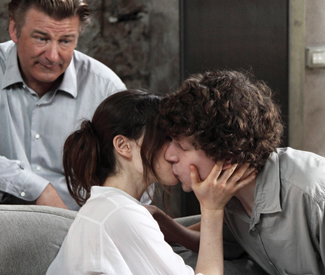
The relationship between study-abroad students Jack (Jesse Eisenberg) and Sally (Greta Gerwig) is complicated when her seductive actress friend (Ellen Page) shows up; Alec Baldwin plays a visiting architect who, for no apparent reason, acts as their omnipresent adviser à la the Bogart ghost in 1972’s Play It Again, Sam.

Worst of all is an utterly stupid non-story in which Roberto Benigni — who doesn’t need to imitate Woody because he’s already annoyingly mannered enough — plays an ordinary family man suddenly treated, and paparazzi-hounded, as a celebrity. There’s no explanation for this, and the presumably intended spoof of meaningless media fascinations famous-for-being-famous folk is so cluelessly handled you wonder if Allen was having a senior moment while writing it.

At the beginning a stereotypical traffic-directing polizia tells the camera directly that he sees all of Rome pass by and knows all their stories. At the end, he tells us there are plenty more where the ones we’ve just seen came from. Pretty as it’s been to look at, after 112 barely chuckle-prodding minutes of To Rome With Love that sounds very much like a threat.


TO ROME WITH LOVE opens Fri/29 in San Francisco.

Our Weekly Picks: June 27-July 3

0

WEDNESDAY 27

“Turbulence (a dance about the economy)”

Breaking down the proscenium is one thing. Favoring installations over stage presentation is another. But messing with the distinction of representation and participation is something else entirely. No one I know of so radically questions the very essence of performance as does Keith Hennessy. What do you call it when in the process of creation, the viewer disappears into the action? For Hennessy it’s a political act. “Turbulence, (a dance about the economy),” which he describes as a “collaborative failure,” was already in the making when Occupy Wall Street exploded. Just as in life, during the “Turbulence” presence at CounterPULSE last December, some people stepped up, others left, the majority sat and waited. (Rita Felciano)

8pm, free

CounterPULSE

1310 Mission, SF

(415) 626-2060

www.counterpulse.org


THURSDAY 28

Andy Rourke of the Smiths (DJ set)

Your inner disco dancer better not be dead, because Smiths bassist Andy Rourke is coming to town, with a crate of records in tow. Ever since he moved to NYC from across the pond, Rourke has become a fixture in the city’s DJ circuit. Instead of aiming for a unified sound with his sets, he jumps impulsively between pop, funk, and electronica, compiling a vibrantly erratic patchwork quilt of his musical influences. Will Rourke tip his hat to the Mozfather with a few beloved Smiths numbers when we least expect it? Only one way to find out, so, clubgoers of the world unite! (Taylor Kaplan)

With Aaron Axelsen and Omar

10pm, $12

Rickshaw Stop

155 Fell, SF

(415) 861-2011

www.rickshawstop.com


Russian Circles

These dudes produce a lot of noise for just three people. The Chicago-based Russian Circles employ heavy use of effects pedals to layer their instrumental, wallowing metal, creating a deep pitß of sound. Their songs seamlessly transition from chugging, mathematical guitar riffs to soft, melodic interludes. In concert, the band is impressively able to replicate and expand upon their complex recorded work, which features enough tempo, time signature, and key shifts to awe anyone with a basic understanding of music theory. It’s metal for the thinking (wo)man, but not to worry, it still shreds. (Haley Zaremba)

With Deafheaven, And So I Watch You From Afar

8pm, $14

Great American Music Hall

859 O’Farrell, SF

(415) 885-0750

www.gamh.com


FRIDAY 29

“The Official Blues Brothers Revue”

With an all-star musical cast and the comedic genius of John Belushi and Dan Aykroyd, the beloved 1980 film The Blues Brothers paired one of the best soundtracks of all time with an action packed storyline that continues to thrill. The movie — which screens at the Paramount Theatre in Oakland on Friday night — has also inspired a top notch musical tribute show, “The Official Blues Brothers Revue,” featuring the talents of Wayne Catania and Kieron Lafferty as Jake and Elwood, all with the approval of Belushi’s estate and Aykroyd. So put on your suits, shades, and fedoras and get ready to join the boys this weekend on their “mission from God!” (Sean McCourt)

Fri/29-Sat/30, 8 and 10pm, $25–$35

Yoshi’s

1330 Fillmore, SF

(415) 655-5600

www.yoshis.com


Pepper 19-Year Anniversary

It’s been 19 years since a gaggle of scruffy dance-and-drink fanatics took over Monday nights at Don’s Different Ducks bar in the Lower Haight, spun some funky house records, and imbibed with abandon, often using the plywood-covered pool table as a dance floor. Pepper, they called it, and although it’s moved around a lot since the Don’s days (it was one of the Guardian’s favorite roving parties of the 1990s), it’s still held strong, retaining its ragtag aura even as its players have become lionized. For this installment, at 222 Hyde in the Tenderloin, DJ Charlotte the Baroness returns from her new home in Chicago to join originator Toph One, fresh out of the hospital after a tragic hit-and-run, on the decks with the Pepper family. Good friends, good fortune, new faces, no-holds-barred dancing. (Marke B.)

9pm, $5

222 Hyde, SF

(415) 345-8222

www.222hyde.com


Dent May

She visits from Brooklyn, he attempts to show her a fun time. “You Can’t Force a Dance Party,” from 2009’s The Good Feeling Music of Dent May & His Magnificent Ukulele, wryly introduced May as an affective personality to rival Jonathan Richman and Jens Lekman. It’s not hard to see the autobiographical elements in his music when he sings of his native state, “For you I’ll try so hard to make you see, it ain’t so bad in Mississippi.” Dropping out of NYU, May returned home to work on music and helped found the Cats Purring arts collective/”infotainment cult.” With his new release, Do Things — a slice of sun that sounds like the product of playing with a drum machine after listening to “Wouldn’t It Be Nice” on repeat/acid — May proves that the party is wherever he goes. (Prendiville)

With Quintron and Miss Pussycat

9pm, $9–$12

New Parish

579 18th St., Oakl.

www.thenewparish.com


Sat/30 9:30pm, $10–$12

With Quintron and Miss Pussycat, Shannon and the Clams

Elbo Room

647 Valencia, SF (415) 552-7788

www.elbo.com


Sandwell District

The SF techno scene blossomed nicely in spring, a kaleidoscope of pixellated textures, live experiments, and visiting representatives of a global scene unburdened from any anti-intellectual strains by the rise of pop EDM. There was also some damn good dancing to be had, no lie. Perhaps auguring a summer full of even deeper, and, perhaps, harder sounds, a showcase from Berlin’s Sandwell District label kicks the season off with some sophisticated boom-boom from Function, Rrose, and Silent Servant at Public Works, presented by the As You Like It party crew. Entrancing UK slow-burn disco king Mark E gives something to swing our skirts to upstairs, and the whole shebang kicks off with the debut of Amélie Ravalec’s documentary Paris/Berlin: 20 Years of Underground Techno. (Marke B.)

9pm, $15–$20

Public Works

161 Erie, SF

(415) 932-0955

www.ayli-sf.com


SATURDAY 30

The Slow Motion Cowboys

The music of the Slow Motion Cowboys has a subtle summery ease — it makes you want to pick up a banjo and play along, perhaps while sipping some lemonade out on the porch. You’d close your eyes and strum along to the sounds of upright bass, gentle guitar picking, baritone ukulele, and fiddle. The group’s original songwriting style and arrangements capture that wistful feeling of yearning that so characterizes classic folk and bluegrass music. While contemporary enough to strike interest in a city audience, their sound is country enough to provide you with much needed peace of mind on a Saturday night out on the town. (Shauna C. Keddy)

6pm, $8–$10

Amnesia

835 Valencia, SF

(415) 970- 0012

www.amnesiathebar.com


Kafana Balkan

Admit it: you could use a lot more woozy oompah-pah in your life, a splash of wheeling fiddle-dee-dee, soaring hurrah, and bouncey bass arpeggio. Forget the automated four-four march of your quotidian existence, and whirl away from the rat race like a romanticized gypsy, a musical nomad free of the cubicle, the log-in, the comments section, the endless update. Kafana Balkan, one of our best Romani-inspired parties, mixes gypsy tunes and strong drink with a wee bit of playa dust to conjure non-stop ecstatic dancing: this blowout with live powerhouses Brass Menazeri and Fishtank Ensemble (and fantastic DJ Zeljko) is just the ticket to chase away any reality blues. (Marke B.)

9pm, $15

Great American Music Hall

859 O’Farrell, SF.

www.slimspresents.com


SUNDAY 1

Party Hard(ing)

When it comes to the high stakes game of gentrification, the Divisadero Corridor — lovingly dubbed DivCo by the passels of farmers market-minded individuals that have repopulated the once-African American, once-Western Addition — is betting high. The neighborhood has the critical mass of sustainability activists needed to launch high profile wars against big bank incursion, and drive the conversation on what kinds of new businesses belong on their street. The Harding Theater at 616 Divisadero is a new battle site. Neighborhood groups hope to thwart the efforts of condo developers and make it a community space. Today, come party and fundraise to that end with local vendors, barbers, musicians, and chefs in a gorgeous Alamo Square mansion. (Caitlin Donohue)

7-10pm, $20

Westerfield Mansion

1988 Fulton, SF

Facebook: Party Hard(ing)

www.nddivis.org


Lower Dens

Ever since Lower Dens made some year-end lists with 2010’s Twin Hand Movement, bandleader Jana Hunter has kept Kraftwerk’s Radio-Activity in heavy rotation. And, it shows. The Baltimore outfit’s breakthrough follow-up record, Nootropics, doubles down on thick, Krautrockabilly grooves, with the Zen-like propulsion of Lou Reed cruising the Autobahn. The production aesthetic is fascinating in its ability to sound both dry and soaked in reverb, and the album’s second half reveals a newfound interest in Musique concrète, giving the material an artier edge. Sure, they’ve upped their studio game, but the question remains: how will the band rock these songs in a live setting? (Kaplan)

With No Joy, Alan Resnick

8pm, $15

Independent

628 Divisadero, SF

(415) 771-1421

www.theindependentsf.com


MONDAY 2

The Casualties

Punk’s not dead! The Casualties made sure of it when they formed in New York in 1990 with the purpose of bringing punk back to its roots, in the style of the Exploited and pre-Rollins Black Flag. More than 20 years and eight studio albums later, they’re following through on their proclamation “The punx are fucking here/ You know who we are/ We’re here til the end/ Die hards! Die hards!” With over two decades to perfect their stage dives and liberty spikes, the Casualties are guaranteed to deliver a killer show. Expect some brutal circle pits. (Zaremba)

With Nekromantix, Down By Law, Lower Class Brats, the Sheds

7pm, $16

Oakland Metro Opera House

630 Third St, Oakl.

(510) 763-1146

www.oaklandmetro.org

The Guardian listings deadline is two weeks prior to our Wednesday publication date. To submit an item for consideration, please include the title of the event, a brief description of the event, date and time, venue name, street address (listing cross streets only isn’t sufficient), city, telephone number readers can call for more information, telephone number for media, and admission costs. Send information to Listings, the Guardian Building, 135 Mississippi St., SF, CA 94107; fax to (415) 487-2506; or e-mail (paste press release into e-mail body — no text attachments, please) to listings@sfbg.com. Digital photos may be submitted in jpeg format; the image must be at least 240 dpi and four inches by six inches in size. We regret we cannot accept listings over the phone.

Film Listings

0

Film listings are edited by Cheryl Eddy. Reviewers are Kimberly Chun, Max Goldberg, Dennis Harvey, and Lynn Rapoport. For rep house showtimes, see Rep Clock.

OPENING

The Amazing Spider-Man Spidey returns in a post-Raimi reboot. (Opens Tue/3.) (2:18)

Beyond the Black Rainbow Sci-fi in feel and striking look even though it’s set in the past (1983, with a flashback to 1966), Canadian writer-director Cosmatos’ first feature defies any precise categorization — let alone attempts to make sense of its plot (such as there is). Arboria is a corporate “commune”-slash laboratory where customers are promised what everyone wants — happiness — even as “the world is in chaos.” Just how that is achieved, via chemicals or whatnot, goes unexplained. In any case, the process certainly doesn’t seem to be working on Elena (Eva Allan), a near-catatonic young woman who seems to be the prisoner as much as the patient of sinister Dr. Nyle (Michael Rogers). The barely-there narrative is so enigmatic at Arboria that when the film finally breaks out into the external world and briefly becomes a slasher flick, you can only shrug — if it had suddenly become a musical, that would have been just as (il-)logical. Black Rainbow is sure to frustrate some viewers, but it is visually arresting, and some with a taste for ambiguous, metaphysical inner-space sci-fi à la Solaris (1972) have found it mesmerizing and profound. As they are wont to remind us, half of its original audience found 1968’s 2001: A Space Odyssey boring, pointless and walk out-worthy, too. (1:50) Roxie. (Harvey)

The Connection The first re-release in a project to restore all of quintessential 1960s American independent director Shirley Clarke’s features, this 1961 vérité-style drama was adapted from a controversial off-Broadway play by Jack Gelber. Set exclusively in a dingy Greenwich Village crash pad, it captures a little time in the lives of several junkies there — many off-duty jazz musicians — listlessly waiting for the return of their dealer, Cowboy. To mimic the stage version’s breaking of the fourth wall between actors and spectators, Clarke added the device of two fictive filmmakers who are trying to record this “shocking” junkie scene, yet grow frustrated at their subjects’ levels of cooperation and resistance. With actors often speaking directly to the camera, and all polished stage language and acting preserved, The Connection offers a curious, artificial realm that is nonetheless finally quite effective and striking. A prize-winner at Cannes, it nonetheless had a very hard time getting around the censors and into theaters back home. Hard-won achievement followed by frustration would be a frequent occurrence for the late Clarke, who would only complete one more feature (a documentary about Ornette Coleman) after 1964’s Cool World and 1967’s Portrait of Jason, before her 1997 demise. She was a pioneering female indie director — and her difficulty finding projects unfortunately also set a mold for many talented women to come. (1:50) Roxie. (Harvey)

Corpo Celeste A 13-year-old girl comes of age in Italy’s deeply Catholic Calabrian region. (1:40) SF Film Society Cinema.

Magic Mike A movie about male strippers with an unlikely director (Steven Soderbergh) and a predictably abs-tastic cast: Channing Tatum, Matthew McConaughey, and Joe Manganiello. (1:50)

People Like Us The opening song — James Gang’s can’t-fail “Funk #49” — only partially announces where this earnest family drama is going. Haunted by a deceased music-producer patriarch, barely sketched-out tales of his misadventures, and a soundtrack of solid AOR, this film has mixed feelings about its boomer bloodlines, much like the recent Peace, Love and Misunderstanding: these boomer-ambivalent films are the inverse of celebratory sites like Dads Are the Original Hipsters. Commodity-bartering wheeler-dealer Sam (Chris Pine) is skating on the edges of legality — and wallowing in his own kind of Type-A prickishness — so when his music biz dad passes, he tries to lie his way out of flying back home to see his mother Lillian (Michelle Pfeiffer), with his decent law student girlfriend (Olivia Wilde). He doesn’t want to face the memories of his self-absorbed absentee-artist dad, but he also doesn’t want to deal with certain legal action back home, so when his father’s old lawyer friend drops a battered bag of cash on him, along with a note to give it to a young boy (Michael Hall D’Addario) and his mother Frankie (Elizabeth Banks), he’s beset with conflict. Should he take the money and run away from his troubles or uncover the mysterious loved ones his father left behind? Director and co-writer Alexa Kurtzman mostly wrote for TV before this, his debut feature, and in many ways People Like Us resembles the tidy, well-meaning dramas about responsibility and personal growth one might still find on, say, Lifetime. It’s also tough to swallow Banks, as gifted as she is as an actress, as an addiction-scarred, traumatized single mom in combat boots. At the same time People Like Us isn’t without its charms, drawing you into its small, specific dramas with real-as-TV touches and the faintest sexy whiff of rock ‘n’ roll. (1:55) Shattuck. (Chun)

Pink Ribbons, Inc. This enraging yet very entertaining documentary by Canadian Léa Pool, who’s better known for her fiction features (1986’s Anne Trister, etc.), takes an excoriating look at “breast cancer culture” — in particular the huge industry of charitable events whose funds raised often do very little to fight the cease, and whose corporate sponsors in more than a few cases actually manufacture carcinogenic products. It’s called “cause marketing,” the tactic of using alleged do gooderism to sell products to consumers who then feel good about themselves purchasing them. Even if said product and manufacturer is frequently doing less than jack-all to “fight for the cure.” The entertainment value here is in seeing the ludicrous range to which this hucksterism has been applied, selling everything from lingerie and makeup to wine and guns; meanwhile the march, walk, and “fun run” for breast cancer has extended to activities as extreme (and pricey) as sky-diving. Pool lets her experts and survivors critique misleading the official language of cancer, the vast sums raised that wind up funding very little prevention or cure research (as opposed to, say, lucrative new pharmaceuticals with only slight benefits), and the products shilled that themselves may well cause cancer. It’s a shocking picture of the dirt hidden behind “pink-washing,” whose siren call nonetheless continues to draw thousands and thousands of exuberant women to events each year. They’re always so happy to be doing something for the sisterhood’s good — although you might be doing something better (if a little painful) by dragging friends inclined toward such deeds to see this film, and in the future question more closely just whether the charity they sweat for is actually all that charitable, or is instead selling “comforting lies.” (1:38) Opera Plaza, Shattuck, Smith Rafael. (Harvey)

Ted Here’s that crass comedy about a talking teddy bear from Seth MacFarlane you didn’t ask for. (1:46) California.

To Rome with Love See “Midnight in Woodyland.” (1:52) Albany, Embarcadero.

Tyler Perry’s Madea’s Witness Protection Pretty sure Madea has made more movies than James Bond at this point. (1:54)

ONGOING

Abraham Lincoln: Vampire Hunter Are mash-ups really so 2001? Not according to the literary world, where writer Seth Graham-Smith has been doing brisk trade in gore-washing perfectly interesting historical figures and decent works of literature — a fan fiction-rooted strategy that now reeks of a kind of camp cynicism when it comes to a terminally distracted, screen-aholic generation. Still, I was strangely excited by the cinematic kitsch possibilities of Graham-Smith’s Lincoln alternative history-cum-fantasy, here in the hands of Timur Bekmambetov (2004’s Night Watch). Historians, prepare to fume — it helps if you let go of everything you know about reality: as Vampire Hunter opens, young Lincoln learns some harsh lessons about racial injustice, witnessing the effects of slavery and the mistreatment of his black friend Will. As a certain poetic turn would have it, slave owners here are invariably vampires or in cahoots with the undead, as is the wicked figure, Jack Barts (Marton Csokas), who beats both boys and sucks Lincoln’s father dry financially. In between studying to be a lawyer and courting Mary Todd (Mary Elizabeth Winstead), the adult Lincoln (Benjamin Walker) vows to take revenge on the man who caused the death of his mother and enters the tutelage of vampire hunter Henry (Dominic Cooper), who puts Abe’s mad skills with an ax to good use. Toss in a twist or two; more than few freehand, somewhat humorous rewrites of history (yes, we all wish we could have tweaked the facts to have a black man working by Lincoln’s side to abolish slavery); and Bekmambetov’s tendency to direct action with the freewheeling, spectacle-first audacity of a Hong Kong martial arts filmmaker (complete with at least one gaping continuity flaw) — and you have a somewhat amusing, one-joke, B-movie exercise that probably would have made a better short or Grindhouse-esque trailer than a full-length feature — something the makers of the upcoming Pride and Prejudice and Zombies should bear in mind. (1:45) 1000 Van Ness, SF Center, Sundance Kabuki. (Chun)

Bel Ami Judging from recent attempts to shake off the gloomy atmosphere and undead company of the Twilight franchise, Robert Pattinson enjoys a good period piece, but hasn’t quite worked out how to help make one. Last year’s Depression-era Water for Elephants was a tepid romance, and Declan Donnellan and Nick Ormerod’s belle epoque–set Bel Ami is an ungainly, oddly paced adaptation of the Guy de Maupassant novel of the same name. A down-and-out former soldier of peasant stock, Georges Duroy (Pattinson) — or “Bel Ami,” as his female admirers call him — gains a brief entrée into the upper echelons of France’s fourth estate and parlays it into a more permanent set of social footholds, campaigning for the affections of a triumvirate of Parisian power wives (Christina Ricci, Uma Thurman, and Kristin Scott Thomas) as he makes his ascent. His route is confusing, though; the film pitches forward at an alarming pace, its scenes clumsily stacked together with little character development or context to smooth the way, and Pattinson’s performance doesn’t clarify much. Duroy shifts perplexingly between rapacious and soulful modes, eyeing the ladies with a vaguely carnivorous expression as he enters drawing rooms, dining rooms, and bedrooms, but leaving us with little sense of his true appetites or other motivations. (1:42) Lumiere, Smith Rafael. (Rapoport)

Bernie Jack Black plays the titular new assistant funeral director liked by everybody in small-town Carthage, Tex. He works especially hard to ingratiate himself with shrewish local widow Marjorie (Shirley MacLaine), but there are benefits — estranged from her own family, she not only accepts him as a friend (then companion, then servant, then as virtual “property”), but makes him her sole heir. Richard Linklater’s latest is based on a true-crime story, although in execution it’s as much a cheerful social satire as I Love You Philip Morris and The Informant! (both 2009), two other recent fact-based movies about likable felons. Black gets to sing (his character being a musical theater queen, among other things), while Linklater gets to affectionately mock a very different stratum of Lone Star State culture from the one he started out with in 1991’s Slacker. There’s a rich gallery of supporting characters, most played by little-known local actors or actual townspeople, with Matthew McConaughey’s vainglorious county prosecutor one delectable exception. Bernie is its director’s best in some time, not to mention a whole lot of fun. (1:39) Balboa, Embarcadero, Shattuck, SF Center, Smith Rafael. (Harvey)

The Best Exotic Marigold Hotel (1:42) Albany, Piedmont, Sundance Kabuki.

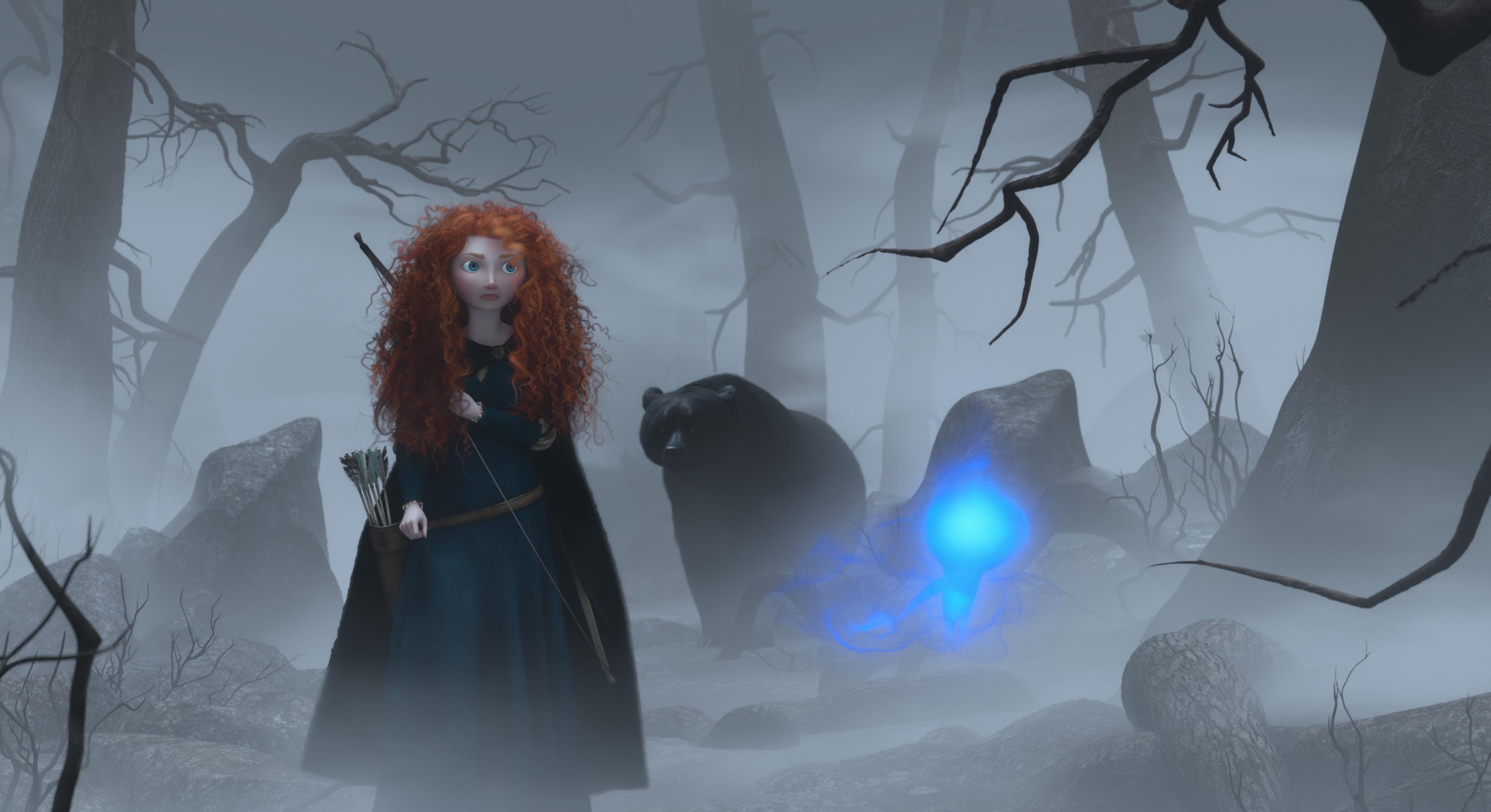
Brave Pixar’s latest is a surprisingly familiar fairy tale. Scottish princess Merida (voiced by Kelly Macdonald) would rather ride her horse and shoot arrows than become engaged, but it’s Aladdin-style law that she must marry the eldest son of one of three local clans. (Each boy is so exaggeratedly unappealing that her reluctance seems less tomboy rebellion than common sense.) Her mother (Emma Thompson) is displeased; when they quarrel, Merida decides to change her fate (Little Mermaid-style) by visiting the local spell-caster (a gentle, absent-minded soul that Ursula the Sea Witch would eat for brunch). Naturally, the spell goes awry, but only the youngest of movie viewers will fear that Merida and her mother won’t be able to make things right by the end. Girl power is great, but so are suspense and originality. How, exactly, is Brave different than a zillion other Disney movies about spunky princesses? Well, Merida’s fiery explosion of red curls, so detailed it must have had its own full-time team of animators working on it, is pretty fantastic. (1:33) Balboa, 1000 Van Ness, Shattuck, Sundance Kabuki. (Eddy)

A Cat in Paris This year’s Best Animated Film nominees: big-budget entries Kung Fu Panda 2, Puss in Boots, and eventual winner Rango, plus Chico and Rita, which opened just before Oscar night, and French mega-dark-horse A Cat in Paris. Sure, Jean-Loup Felicioli and Alain Gagnol’s film failed to cash in on 2011’s Paris craze, but it’s still a charming if featherweight noir caper, being released stateside in an English version that features the voices of Marcia Gay Harden and Anjelica Huston. A streetwise kitty named Dino spends his days hanging with Zoey, a little girl who’s gone mute since the death of her father — a cop killed in the line of duty. Zoey’s mother (Harden), also a cop, is hellbent on catching the murderer, a notorious crook named Costa who runs his criminal empire with Reservoir Dogs-style imprecision. At night, Dino sneaks out and accompanies an affable burglar on his prowlings. When Zoey falls into Costa’s clutches, her mom, the thief, and (natch) the feisty feline join forces to rescue her, in a series of rooftop chase scenes that climax atop Notre Dame. At just over an hour, A Cat in Paris is sweetly old-fashioned and suitable for audiences of all ages, though staunch dog lovers may raise an objection or two. (1:07) Opera Plaza. (Eddy)

The Dictator As expected, The Dictator is, yet again, Sacha Baron Cohen doing his bumbling-foreigner shtick. Said character (here, a ruthless, spoiled North African dictator) travels to America and learns a heaping teaspoon of valuable lessons, which are then flung upon the audience — an audience which, by film’s end, has spent 80 minutes squealing at a no-holds-barred mix of disgusting gags, tasteless jokes, and schadenfreude. If you can’t forgive Cohen for carbon-copying his Borat (2006) formula, at least you can muster admiration for his ability to be an equal-opportunity offender (dinged: Arabs, Jews, African Americans, white Americans, women of all ethnicities, and green activists) — and for that last-act zinger of a speech. If The Dictator doesn’t quite reach Borat‘s hilarious heights, it’s still proudly repulsive, smart in spite of itself, and guaranteed to get a rise out of anyone who watches it. (1:23) Metreon, Shattuck. (Eddy)

Elena The opening, almost still image of breaking dawn amid bare trees — the twigs in the foreground almost imperceptibly developing definition and the sky gradually growing ever lighter and pinker in the corners of the frame — beautifully exemplifies the crux of this well-wrought, refined noir, which spins slowly on the streams of dog-eat-dog survival that rush beneath even the most moneyed echelons of Moscow. Sixtyish former nurse Elena (Nadezhda Markina) is still little more than a live-in caretaker for Vladimir (Andrey Smirnov), her affluent husband of almost 10 years. She sleeps in a separate bed in their modernist-chic condo and dutifully funnels money to her beloved layabout son and his family. Vladimir has less of a relationship with his rebellious bad-seed daughter (Yelena Lyadova), who may be too smart and hedonistic for her own good. When a certain unlikely reunion threatens Elena’s survival — and what she perceives as the survival of her own spawn — a kind of deadly dawn breaks over the seemingly obedient hausfrau, and she’s driven to desperate ends. Bathing his scenes in chilled blue light and velvety dark shadows, filmmaker Andrey Zvyagintsev (2003’s The Return) keeps a detached but close eye on the proceedings while displaying an uncanny talent for plucking the telling detail out of the wash of daily routine and coaxing magnetic performances from his cast. (1:49) Lumiere. (Chun)

Found Memories The literal Portuguese-to-English translation of this film’s title — “stories that exist only when remembered” — is clunky, but more poignantly accurate than Found Memories. At first, it’s not entirely clear if Brazilian Júlia Murat is making a narrative or a documentary. In an tiny, isolated community populated by elderly people, Madalena (Sonia Guedes) follows a schedule she’s kept for years, probably decades: making bread, attending church, doing chores, tending the cemetery gates, writing love letters to a long-absent partner (“Isn’t it strange that after all these years, I still find your things around the house?”), and grousing at the “annoying old man” who grinds the town’s coffee beans. One day, young photographer Rita (Lisa Fávero) drifts into the village, an exotic import from the outside, modern world. Slowly, despite their differences, the women become friends. That’s about it for plot, but as this deliberately-paced film reflects on aging, dying, and memories (particularly in the form of photographs), it offers atmospheric food for thought, and a few moments of droll humor. Note, however, that viewer patience is a requirement to reap its rewards. (1:38) SF Film Society Cinema. (Eddy)

Headhunters Despite being the most sought-after corporate headhunter in Oslo, Roger (Aksel Hennie) still doesn’t make enough money to placate his gorgeous wife; his raging Napoleon complex certainly doesn’t help matters. Crime is, as always, the only solution, so Roger’s been supplementing his income by stealthily relieving his rich, status-conscious clients of their most expensive artworks (with help from his slightly unhinged partner, who works for a home-security company). When Roger meets the dashing Clas Greve (Nikolaj Coster-Waldau of Game of Thrones) — a Danish exec with a sinister, mysterious military past, now looking to take over a top job in Norway — he’s more interested in a near-priceless painting rumored to be stashed in Greve’s apartment. The heist is on, but faster than you can say “MacGuffin,” all hell breaks loose (in startlingly gory fashion), and the very charming Roger is using his considerable wits to stay alive. Based on a best-selling “Scandi-noir” novel, Headhunters is just as clever as it is suspenseful. See this version before Hollywood swoops in for the inevitable (rumored) remake. (1:40) Lumiere. (Eddy)

The Hunger Games Katniss Everdeen (Jennifer Lawrence) is a teenager living in a totalitarian state whose 12 impoverished districts, as retribution for an earlier uprising, must pay tribute to the so-called Capitol every year, sacrificing one boy and one girl each to the Hunger Games. A battle royal set in a perilous arena and broadcast live to the Capitol as gripping diversion and to the districts as sadistic propaganda, the Hunger Games are, depending on your viewpoint, a “pageant of honor, courage, and sacrifice” or a brutal, pointless bloodbath involving children as young as 12. When her little sister’s name comes up in the annual lottery, Katniss volunteers to take her place and is joined by a boy named Peeta Mellark (Josh Hutcherson), with whom she shares an old, unspoken bond. Tasked with translating to the screen the first installment of Suzanne Collins’s rabidly admired trilogy, writer-director Gary Ross (2003’s Seabiscuit, 1998’s Pleasantville) telescopes the book’s drawn-out, dread-filled tale into a manageable two-plus-hour entertainment, making great (and horrifying) use of the original work’s action, but losing a good deal of the narrative detail and emotional force. Elizabeth Banks is comic and unrecognizable as Effie Trinket, the two tributes’ chaperone; Lenny Kravitz gives a blank, flattened reading as their stylist, Cinna; and Donald Sutherland is sufficiently creepy and bloodless as the country’s leader, President Snow. More exceptionally cast are Woody Harrelson as Katniss and Peeta’s surly, alcoholic mentor, Haymitch Abernathy, and Stanley Tucci as games emcee Caesar Flickerman, flashing a bank of gleaming teeth at each contestant as he probes their dire circumstances with the oily superficiality of a talk show host. (2:22) 1000 Van Ness. (Rapoport)

Hysteria Tanya Wexler’s period romantic comedy gleefully depicts the genesis of the world’s most popular sex toy out of the inchoate murk of Victorian quackishness. In this dulcet version of events, real-life vibrator inventor Mortimer Granville (Hugh Dancy) is a handsome young London doctor with such progressive convictions as a belief in the existence of germs. He is, however, a man of his times and thus swallows unblinking the umbrella diagnosis of women with symptoms like anxiety, frustration, and restlessness as victims of a plague-like uterine disorder known as hysteria. Landing a job in the high-end practice of Dr. Robert Dalrymple (Jonathan Pryce), whose clientele consists entirely of dissatisfied housewives seeking treatments of “medicinal massage” and subsequent “parosysm,” Granville becomes acquainted with Dalrymple’s two daughters, the decorous Emily (Felicity Jones) and the first-wave feminist Charlotte (Maggie Gyllenhaal). A subsequent bout of RSI offers empirical evidence for the adage about necessity being the mother of invention, with the ever-underused Rupert Everett playing Edmund St. John-Smythe, Granville’s aristocratic friend and partner in electrical engineering. (1:35) Opera Plaza. (Rapoport)

The Intouchables Cries of “racism” seem a bit out of hand when it comes to this likable albeit far-from-challenging French comedy loosely based on a real-life relationship between a wealthy white quadriplegic and his caretaker of color. The term “cliché” is more accurate. And where were these critics when 1989’s Driving Miss Daisy and 2011’s The Help — movies that seem designed to make nostalgic honkies feel good about those fraught relationships skewed to their advantage—were coming down the pike? (It also might be more interesting to look at how these films about race always hinge on economies in which whites must pay blacks to interact with/educate/enlighten them.) In any case, Omar Sy, portraying Senegalese immigrant Driss, threatens to upset all those pundits’ apple carts with his sheer life force, even when he’s shaking solo on the dance floor to sounds as effortlessly unprovocative, and old-school, as Earth, Wind, and Fire. In fact, everything about The Intouchables is as old school as 1982’s 48 Hrs., spinning off the still laugh-grabbing humor that comes with juxtaposing a hipper, more streetwise black guy with a hapless, moneyed chalky. The wheelchair-bound Philippe (Francois Cluzet) is more vulnerable than most, and he has a hard time getting along with any of his nurses, until he meets Driss, who only wants his signature for his social services papers. It’s not long before the cultured, classical music-loving Philippe’s defenses are broken down by Driss’ flip, somewhat honest take on the follies and pretensions of high culture — a bigger deal in France than in the new world, no doubt. Director-writer Olivier Nakache and Eric Toledano aren’t trying to innovate —they seem more set on crafting an effervescent blockbuster that out-blockbusters Hollywood — and the biggest compliment might be that the stateside remake is already rumored to be in the works. (1:52) Embarcadero. (Chun)

The Invisible War Kirby Dick’s searing documentary takes a look at the prevalence of rape within U.S. military ranks, a problem whose unbelievably high levels of occurrence would long ago have caused huge public outcry and imposed reform in any other institutional context. Yet because it’s the military — where certain codes of loyalty, machismo, and insularity dominate from the grunt level to the highest ranks — the issue has not only been effectively kept secret, but perpetrators almost never suffer any disciplinary measures, let alone jail time or dishonorable discharges. Meanwhile the women — some studies estimate 20% of all female personnel (and 1% of the men) suffer sexual assault from colleagues — are further traumatized by an atmosphere that creates ideal conditions for stalking, rape, and “blame the victim” aftermaths from superiors. (Indeed, for many the superior to whom they would have reported an attack was the one who attacked them.) Most end up quitting promising service careers (often pursued because of generations of family enlistment), dealing with the serious mental health consequences on their own. The subjects who’ve come forward on the issue here are inspiring in their bravery, and dedication to a patriotic cause and vocation that ultimately, bitterly betrayed them. Their stories are so engrossing that The Invisible War is as compulsively watchable as its topic and statistics are inherently appalling. (1:39) Metreon. (Harvey)

Jiro Dreams of Sushi Celebrity-chef culture has surely reached some kind of zeitgeist, what with the omnipresence of Top Chef and other cooking-themed shows, and the headlines-making power of people like Paula Deen (diabetes) and Mario Batali (sued for ripping off his wait staff). Unconcerned with the trappings of fame — you’ll never see him driving a Guy Fieri-style garish sports car — is Jiro Ono, 85-year-old proprietor of Sukiyabashi Jiro, a tiny, world-renowned sushi restaurant tucked into Tokyo’s Ginza station. Jiro, a highly-disciplined perfectionist who believes in simple, yet flavorful food, has devoted his entire life to the pursuit of “deliciousness” — to the point of sushi invading his dreams, as the title of David Gelb’s reverential documentary suggests. But Jiro Dreams of Sushi goes deeper than food-prep porn (though, indeed, there’s plenty of that); it also examines the existential conflicts faced by Jiro’s two middle-aged sons. Both were strongly encouraged to enter the family business — and in the intervening years, have had to accept the soul-crushing fact that no matter how good their sushi is, it’ll never be seen as exceeding the creations of their legendary father. (1:21) Bridge. (Eddy)

Madagascar 3: Europe’s Most Wanted (1:33) Metreon, 1000 Van Ness.

Marvel’s The Avengers The conflict — a mystical blue cube containing earth-shattering (literally) powers is stolen, with evil intent — isn’t the reason to see this long-hyped culmination of numerous prequels spotlighting its heroic characters. Nay, the joy here is the whole “getting’ the band back together!” vibe; director and co-writer Joss Whedon knows you’re just dying to see Captain America (Chris Evans) bicker with Iron Man (a scene-stealing Robert Downey Jr.); Thor (Chris Hemsworth) clash with bad-boy brother Loki (Tom Hiddleston); and the Hulk (Mark Ruffalo) get angry as often as possible. (Also part of the crew, but kinda mostly just there to look good in their tight outfits: Jeremy Renner’s Hawkeye and Scarlett Johansson’s Black Widow.) Then, of course, there’s Nick Fury (Samuel L. Jackson) running the whole Marvel-ous show, with one good eye and almost as many wry quips as Downey’s Tony Stark. Basically, The Avengers gives you everything you want (characters delivering trademark lines and traits), everything you expect (shit blowing up, humanity being saved, etc.), and even makes room for a few surprises. It doesn’t transcend the comic-book genre (like 2008’s The Dark Knight did), but honestly, it ain’t trying to. The Avengers wants only to entertain, and entertain it does. (2:23) Metreon, 1000 Van Ness. (Eddy)

Men in Black III Why not? It’s been ten years since Men in Black II (the one where Lara Flynn Boyle and Johnny Knoxville — remember them? — played the villains), Will Smith has barely aged, and he hasn’t made a full-on comedy since, what, 2005’s Hitch? Here, he does a variation on his always-agreeable exasperated-guy routine, clashing with his grim, gimlet-eyed partner Agent K (Tommy Lee Jones, and in a younger incarnation, a spot-on Josh Brolin) in a plot that involves a vicious alien named Boris (Flight of the Conchords’ Jermaine Clement), time travel, Andy Warhol, the moon (as both space-exploration destination and modern-day space-jail location), and lines that only Smith’s delivery can make funny (“This looks like it comes from planet damn.“) It’s cheerful (save a bit of melodrama at the end), crisply paced, and is neither a must-see masterpiece nor something you should mindfully sleep through if it pops up among your in-flight selections. Oh, and it’s in 3D. Well, why not? (1:42) 1000 Van Ness, SF Center, Shattuck. (Eddy)

Moonrise Kingdom Does Wes Anderson’s new film mark a live-action return to form after 2007’s disappointingly wan Darjeeling Limited? More or less. Does it tick all the Andersonian style and content boxes? Indubitably. In the most obvious deviation Anderson has taken with Moonrise, he gives us his first period piece, a romance set in 1965 on a fictional island off the New England coast. After a chance encounter at a church play, pre-teen Khaki Scout Sam (newcomer Jared Gilman) instantly falls for the raven-suited, sable-haired Suzy Bishop (Kara Hayward, ditto). The two become pen pals, and quickly bond over the shared misery of being misunderstood by both authority figures and fellow kids. The bespectacled Sam is an orphan, ostracized by his foster parents and scout troop (much to the dismay of its straight-arrow leader Edward Norton). Suzy despises her clueless attorney parents, played with gusto by Bill Murray and Frances McDormand in some of the film’s funniest and best scenes. When the two kids run off together, the whole thing begins to resemble a kind of tween version of Godard’s 1965 lovers-on the-lam fantasia Pierrot le Fou. But like most of Anderson’s stuff, it has a gauzy sentimentality more akin to Truffaut than Godard. Imagine if the sequence in 2001’s The Royal Tenenbaums where Margot and Richie run away to the Museum of Natural History had been given the feature treatment: it’s a simple yet inspired idea, and it becomes a charming little tale of the perils of growing up and selling out the fantasy. But it doesn’t feel remotely risky. It’s simply too damn tame. (1:37) California, Metreon, Piedmont, Sundance Kabuki, Vogue. (Michelle Devereaux)

Oslo, August 31st Heroin movies are rarely much fun, and Oslo is no exception, though here the stress lies not in grisly realism but visceral emotional honesty. Following an abortive, Virginia Woolf-esque suicide attempt during evening leave from his rehab center, recovering addict Anders visits Oslo for a job interview. He reconnects bittersweetly with an old friend, tries and fails to meet up with his sister, and eventually submerges himself in the nightlife that once fueled his self-destruction. Expressionistic editing conveys Anders’ sense of detachment and urge for release, with scenes and sounds intercut achronologically and striking sound design which homes in on stray conversations. A late intellectual milieu is signified throughout, quite humorously, by serious discussions of popular television dramas, presumably an update of similar concerns addressed in Pierre Drieu La Rochelle’s 1931 novel Le Feu follet, on which the film is based. (1:35) Opera Plaza, Smith Rafael. (Sam Stander)

Peace, Love and Misunderstanding How is that even as a bona fide senior, Jane Fonda continues to embody this country’s ambivalence toward women? I suspect it’s a testament to her actorly prowess and sheer charisma that she’s played such a part in defining several eras’ archetypes — from sex kitten to counterculture-heavy Hanoi Jane to dressed-for-success feminist icon to aerobics queen to trophy wife. Here, among the talents in Bruce Beresford’s intergenerational chick-flick-gone-indie as a loud, proud, and larger-than-life hippie earth mama, she threatens to eclipse her paler, less colorful offspring, women like Catherine Keener and Elizabeth Olsen, who ordinarily shine brighter than those that surround them. It’s ostensibly the tale of high-powered lawyer Diane (Keener): her husband (Kyle MacLachlan) has asked for a divorce, so in a not-quite-explicable tailspin, she packs her kids, Zoe (Olsen) and Jake (Nat Wolff), into the car and heads to Woodstock to see her artist mom Grace (Fonda) for the first time in two decades. Grace is beyond overjoyed — dying to introduce the grandchildren to her protests, outdoor concerts, and own personal growhouse — while urbanite Diane and her kids find attractive, natch, diversions in the country, in the form of Jude (Jeffrey Dean Morgan), Cole (Chace Crawford), and Tara (Marissa O’Donnell). Yet there’s a lot of troubled water for the mother and daughter to cross, in order to truly come together. Despite some strong characterization and dialogue, Peace doesn’t quite fly — or make much sense at its close — due to the some patchy storytelling: the schematic rom-com arch fails to provide adequate scaffolding to support the required leaps of faith. But that’s not to deny the charm of the highly identifiable, generous-spirited Grace, a familiar Bay Area archetype if there ever was one, who Fonda charges with the joy and sadness of fallible parent who was making up the rules as she went along. (1:36) Smith Rafael. (Chun)

Prometheus Ridley Scott’s return to outer space — after an extended stay in Russell Crowe-landia — is most welcome. Some may complain Prometheus too closely resembles Scott’s Alien (1979), for which it serves as a prequel of sorts. Prometheus also resembles, among others, The Thing (1982), 2001: A Space Odyssey (1968), and Event Horizon (1997). But I love those movies (yes, even Event Horizon), and I am totally fine with the guy who made Alien borrowing from all of them and making the classiest, most gorgeous sci-fi B-movie in years. Sure, some of the science is wonky, and the themes of faith and creation can get a bit woo-woo, but Prometheus is deep-space discombobulation at its finest, with only a miscast Logan Marshall-Green (apparently, cocky dude-bros are still in effect at the turn of the next millennium) marring an otherwise killer cast: Noomi Rapace as a dreamy (yet awesomely tough) scientist; Idris Elba as Prometheus‘ wisecracking captain; Charlize Theron as the Weyland Corportation’s icy overseer; and Michael Fassbender, giving his finest performance to date as the ship’s Lawrence of Arabia-obsessed android. (2:03) Metreon, 1000 Van Ness, Sundance Kabuki. (Eddy)

Rock of Ages (2:03) 1000 Van Ness, SF Center, Sundance Kabuki.

Safety Not Guaranteed San Francisco-born director Colin Trevorrow’s narrative debut feature Safety Not Guaranteed, written by Derek Connolly, has an improbable setup: not that rural loner Kenneth (Mark Duplass) would place a personal ad for a time travel partner (“Must bring own weapons”), but that a Seattle alt-weekly magazine would pay expenses for a vainglorious staff reporter (Jake Johnson, hilarious) and two interns (Aubrey Plaza, Karan Soni) to stalk him for a fluff feature over the course of several days. The publishing budget allowing that today is true science-fiction. But never mind. Inserting herself “undercover” when a direct approach fails, Plaza’s slightly goth college grad finds she actually likes obsessive, paranoid weirdo Kenneth, and is intrigued by his seemingly insane but dead serious mission. For most of its length Safety falls safely into the category of off-center indie comedics, delivering various loopy and crass behavior with a practiced deadpan, providing just enough character depth to achieve eventual poignancy. Then it takes a major leap — one it would be criminal to spoil, but which turns an admirable little movie into something conceptually surprising, reckless, and rather exhilarating. (1:34) Metreon, Shattuck. (Harvey)

Seeking a Friend for the End of the World A first directorial feature for Lorene Scafaria, who’d previously written Nick and Norah’s Infinite Playlist (2008) — another movie dubiously convinced that sharing its Desert Island Discs equals soulfulness — Seeking is an earnest stab at something different that isn’t different enough. Really, the film isn’t anything enough — funny, pointed, insightful, surprising, whatever. Lars von Trier’s Melancholia (2011), for all its faults, ended the world with a bang. This is the whimper version. An asteroid is heading smack toward Earth; we are fucked. News of this certainty prompts the wife of insurance company rep Dodge Peterson (Steve Carell) to walk out — suggesting that with just days left in our collective existence, she would rather spend that time with somebody, anybody, else. When vandals force Dodge to flee his apartment building, he teams up with “flaky, irresponsible” neighbor Penny (Keira Knightley) for a tepid road-trip dramedy. Carell’s usual nuanced underplaying has no context to play within — Dodge is a loser because he’s … what? Too nice? His character’s angst attributable to almost nothing, Carell has little to play here but the same put-upon nice guy he’s already done and done again. So he surrenders the movie to Knightley, who exercises rote “quirky girl” mannerisms to an obsessive-compulsive degree, her eyes alone overacting so hard it’s like they’re doing hot yoga on amphetamines. It’s an empty, showy performance whose neurotically artificial character one can only imagine a naturally reserved man like Dodge would flee from. That we’re supposed to believe otherwise stunts Scafaria’s parting exhale of pure girly romanticism — admirable for its wish-fulfillment sweetness, lamentable for the extent that good actors in two-dimensional roles can’t turn passionate language into emotion we believe in. (1:41) Metreon, 1000 Van Ness, Piedmont, Shattuck, Sundance Kabuki. (Harvey)

Snow White and the Huntsman It’s unclear why the zeitgeist has blessed us this year with two warring iterations of the Snow White fairy tale, one broadly comedic (April’s Mirror Mirror), one starkly emo. But it was only natural that Kristen Stewart would land in the latter rendering, breaking open the hearts of swamp beasts and swordsmen alike with the chaste glory of her mien. As Snow White flees the henchmen and hired killers dispatched by her seriously evil stepmother, Queen Ravenna (Charlize Theron), and traverses a blasted, virulent forest populated with hallucinogenic vapors and other life-threatening obstacles, Stewart need not act so much as radiate a dazzling benignity, weeping the tears of a martyr rather than a frightened young girl. (Unfortunately, when required to deliver a rallying declaration of war, she sounds as if she’s speaking in tongues after a heavy hit on the crack pipe.) It’s slightly uncomfortable to be asked, alongside a grieving, drunken huntsman (The Avengers’ Chris Hemsworth), a handful of dwarfs (including Ian McShane and Toby Jones), and the kingdom’s other suffering citizenry, to fall worshipfully in line behind such a creature. But first-time director Rupert Sanders’s film keeps pace with its lovely heroine visually, constructing a gorgeous world in which armies of black glass shatter on battlefields, white stags dissolve into hosts of butterflies, and a fairy sanctuary within the blighted kingdom is an eye-popping fantasia verging on the hysterical. Theron’s Ravenna, equipped in modernist fashion with a backstory for her sociopathic tendencies, is credible and captivating as an unhinged slayer of men, thief of youth, destroyer of kingdoms, and consumer of the hearts of tiny birds. (2:07) Metreon, 1000 Van Ness, Shattuck. (Rapoport)

That’s My Boy (1:55) SF Center.

Ultrasonic Is it madness to imagine a stylish new twist on the claustrophobic conspiracy thriller? Multi-hyphenate director, co-writer, and cinematographer (and musician and software engineer) Rohit Colin Rao manages just that with this head-turning indie feature film debut, while managing to translate a stark indie aesthetic encapsulated by Dischord and Touch and Go bands, lovers of Rust Belt warehouses and waffle houses, culture vultures who revere both Don DeLillo and Wisconsin Death Trip, and critics who lean too hard on the descriptor “angular.” Musician Simon York (Silas Gordon Brigham) is one denizen firmly placed in that cultural landscape, but the pressures of funding his combo’s album, coping with the diminishing returns of his music teacher livelihood, and anticipating the arrival of a baby with his wife, Ruth (Cate Buscher), seem to be piling on his murky brow. Simon begins to hear a hard-to-pin-down sound that no one else can detect, though Ruth’s eccentric and possibly certified conspiracy-theorist brother Jonas (Sam Repshas) is quick to affirm — and build on — his fears. Painting his handsome, stylized mise-en-scène in noiry blacks and wintry whites, Rohit positively revels in this post-punk jewel of a world he’s assembled, and it’s a compelling one even if it’s far from perfect and ultimately shies away from the deepest shadows. (1:30) Roxie. (Chun)

Your Sister’s Sister The new movie from Lynn Shelton — who directed star and (fellow mumblecore director) Mark Duplass in her shaggily amusing Humpday (2009) — opens somberly, at a Seattle wake where his Jack makes his deceased brother’s friends uncomfortable by pointing out that the do-gooder guy they’d loved just the last couple years was a bully and jerk for many years before his reformation. This outburst prompts an offer from friend-slash-mutual-crush Iris (Emily Blunt) that he get his head together for a few days at her family’s empty vacation house on a nearby island. Arriving via ferry and bike, he is disconcerted to find someone already in residence — Iris’ sister Hannah (Rosemarie DeWitt), who’s grieving a loss of her own (she’s split with her girlfriend). Several tequila shots later, two Kinsey-scale opposites meet, which creates complications when Iris turns up the next day. A bit slight in immediate retrospect and contrived in its wrap-up, Shelton’s film is nonetheless insinuating, likable, and a little touching while you’re watching it. That’s largely thanks to the actors’ appeal — especially Duplass, who fills in a blunderingly lucky (and unlucky) character’s many blanks with lived-in understatement. (1:30) Embarcadero, Shattuck, Sundance Kabuki. (Harvey)


Win a pair of tickets to the premiere of Brooklyn Boheme and the SFNY Wrap Party afterwards

0

SFNY brings BK-to-the-BAY with the Bay Area premiere of Brooklyn Boheme, a feature documentary by Diane Paragas and Nelson George, at the historic Clay Theatre in the Fillmore District of San Francisco. Brooklyn Boheme pays homage to the black arts movement that flourished in Fort Greene, Brooklyn throughout the mid-80′s and 90′s. Brooklyn Boheme speaks to experiences familiar to many artistically significant neighborhoods across the US – the formation of a thriving community in the wake of inequality and marginalization, the creative potential of those communities, and the effects of gentrification as a result of various forms of urban renewal. Writer, historian, director, and Brooklyn resident Nelson George will be in attendance for an intimate discussion following the film.

Join San Francisco’s freshest DJ’s for the official after-party and the very last SFNY event, to be held at a secret location deep in the heart and soul of the City. For the past three years, SFNY has successfully connected local independent artists and businesses by providing opportunities for creative collaborations amongst attendees. With five milestone events to date, KM/FM has had the privilege of rocking alongside some of NYC’s most distinguished selectors at some of NYC’s most iconic designer hotels. SFNY humbly invites the left coast to do the right thing one last time… for more information about the event click here.

Enter for your chance to win a pair of tickets by emailing sfbgpromos@sfbg.com with the title as ‘SFNY’ and include your name and mailing address. One lucky winner will receive a pair off tickets to the event.  Winner will be announced on Monday, July 2nd.

Thursday, July 5, 7pm doors open, 8pm screening, 9:30pm discussion with Nelson George @ the Clay Theater, 2261 Fillmore Street, SF | $15
SFNY Wrap Party Secret Location, TBA, 10pm-2am • 21+

DO go in the basement! Lost Weekend’s new Cinecave opens this week

1

Exciting news rumbling from beneath Valencia Street’s staunchly independent Lost Weekend Video: the micro-theater Cinecave is opening this week with events Thu/29 and Fri/30, after an awesomely successful Kickstarter campaign. The 25-seat screening room, available for members of Lost Weekend’s Cineclub (join at the store), boasts real movie theater seats, a brand-new screen, and kickin’ sound system.

So, what-all’s gonna go down in the Cinecave? According to Lost Weekend’s Kickstarter page:

“We have an enthusiastic staff with wide-ranging tastes all eager to program fun and engaging screenings … from rare films available only on film or from our extensive collection of unavailable-to-rent imports, to sinfully satisfying Buffy marathons. We have projectors and access to thousands of films on video and 16mm film. We’ll also continue to work with local film collectives, present premieres of locally produced shorts and features, ladies’ nights, works in progress, and workshops for filmmakers.

“We’ll have obscure von Trier docs, Van Damme-athons and maybe even stand-up comedy. There will definitely be something for everyone. Most importantly, we’ll still be here and San Francisco will still have access to our many rare films either through traditional rentals or through the shared experience of a live screening. Let’s get people off of their computers and hanging out with each other again. Let’s watch some movies!”

The Cinecave will unveil a regular schedule in July; it’ll also be available for rentals for private events (contact the store for info). There’ll be an open house Thu/29 and an opening night event Sat/30 hosted by Jesse Hawthorne Ficks, a.k.a. the programmer-host of the popular “Midnites for Maniacs” film series at the Castro. Ficks, an occasional Guardian contributor who calls Lost Weekend his “neighborhood video store,” will be programming a once-a-month event at the ‘Cave that celebrates the video format. (Of the opening night event, he hints that the top-secret flicks will be “two of my all-time favorite movies;” reservations for both screenings begin at noon Sat/30 by phone or in person at Lost Weekend.)

“A lot of people have nostalgic feelings toward video stores. I hung out at video stores when I was a kid! But I was trying to think of what would be a good way to get people to come to a video store who have maybe never even been to a video store, a younger generation,” he says. “The idea was, just as the death of film is happening, the death of the video tape, or the laser disc, seemed to be just as important or nostalgic to my generation. I decided that I would host a night that would only screen movies that are available on VHS, Beta, or laser disc — actually putting the video tape in. Sometimes it gets fucked up, and you have to fast-forward, and there are those weird lines…”

So if the tape gets fucked up, I hear you wondering, what’s the point? Well, some movies are only available on these formats and will likely never be released on DVD. Some movies are available on DVD, but certain versions are only available on outdated formats. For collectors and other serious film fanatics, this is important.

“The holy grail for me of laser discs is Texasville. Sequel to The Last Picture Show, it didn’t do too well when it came out, but then, surprisingly, [it had] some real champions. On laser disc only, [there was a version of Texasville] with an extra 30 minutes. And that footage has never been restored to DVD or Blu-Ray. It’s not available on 35mm. The only way you can see the director’s cut on Texasville is on laser disc,” he says.

http://www.youtube.com/watch?v=YoQHwru0Qh8

“I started looking around at more of these movies that sort of fall between the cracks. It happens with every [change in medium] — there are all these lost films,” he explains. “You can get a lot of movies streaming nowadays, but there are also a lot that you can’t get that were even released on DVD or Blu-ray. So I think that’s where the idea [for my Cinecave programming] came from: ‘What weird films have we never even heard of, because they’re only on some obscure format that we don’t even have a player for anymore?'”

“The films that I’m going to screen cannot be screened even in a movie theater. So this isn’t just, that it’s not available on DVD or Netflix. I am running into so many difficult situations [as a programmer] with studios with 35mm prints, where they have a print maybe in the archives but they won’t mail it out. Or they don’t have a print in the archives, but they won’t let you screen a collector’s print. Literally, these movies can’t be seen in rep house programming, and they can’t be seen streaming or on DVD. It’s this weird loophole that I wanted to try and emphasize with this video madness series.”

As a film fan, Ficks is excited by the ‘Cave joining the local cinema scene. “I know they have different programmers who are going to come in. It feels like it’ll be a personal experience,” he says. “Also, I think them renting the theater out is really is amazing — when you go down there, you’ll be like, ‘Shit, I really want to bring my friends here one late night and show my favorite TV show.’ It’s like the greatest living-room set-up you could imagine.”

Open House Fri/29, 8-11pm, free
Opening Night Sat/30, 7 and 9:45pm, suggested donation $10
Lost Weekend Video
1034 Valencia, SF
(415) 643-3373
www.lostweekendvideo.com
www.midnightsformaniacs.com

7 spots for mental regeneration this week

0

Pride is over, and we’re willing to wager your depleted brain cells could stand for some stimulus. Whether you’re into sitting in dimly-lit rooms in North Beach listening to fiction read in a thick Hungarian accent, or dressing to the nines and perusing some edgy new performance art, here are seven cultural hot spots in the city this week.

László Krasznahorka

A Hungarian author emerges from his reclusivity in the hills of Szentlászló in order to present the San Francisco literati with a reading from his novel of scheming, sex, failure, hope, communism, freaky farm collectives, tango, and the devil. Sounds like a can’t-miss situation. City Lights will host celebrated author László Krasznahorka to read Satantango (yes, that’s satan-tango), the book that inspired the seven-and-a-half hour film by remodernist filmmaker, Béla Tarr. 25 years after its original publication date, the novel has finally been translated by George Szirtes, so now we plebeian Californians can get our Hungarian apocalyptic fix. 

Thu/28 7:30pm, free

City Lights Bookstore

261 Columbus, SF

(415) 362-8193

www.citylights.com

Kala Art Institute artist talks 

The busy thoroughfare of Berkeley’s San Pablo Avenue makes an appropriately unsettling backdrop for the Kala Art Institute’s first night of artist talks. From large-scale industrial sculpture, to dystopian watercolor, to engineered photographs of imaginary landscapes, artists Randy Colosky, Vanessa Marsh, and Alison Frost’s work treads an uncanny path between real and surreal. It defamiliarizes the familiar in a fashion of which even Freud would be proud. This series of talks features discussions from Kala fellows during their residencies at the gallery, so look forward to more free inspiration (and free refreshments, which are, um, always a welcome addition for any easel-toting San Francisco artist) in July, August, and September.

Wed/27, 7pm, free 

Kala Gallery 

2990 San Pablo, Berk 

(510) 841-7000

www.kala.org

Raw SF Solstice 

Despite its strictly fashionable cocktail attire mandate and swanky SOMA venue, June’s Raw SF installation offers something for even the freakiest. With a mission to showcase and support emerging, underground artists during the first 10 years of their careers, RAW displays innovative visual art, film, fashion, music, hair and makeup artistry, photography, modeling, and performance art. San Francisco’s installation attendees can also expect henna, organic refreshments, food trucks, a DJ, and a ceremonial tea service.

Thu/28, 7pm-12am, $10 pre-sale tickets, $15 door, $5 after-party (after 9pm)

1015 Folsom, SF

(888) 729-7545

www.rawartists.org

Readers Café and Bookstore poetry series

In support of the San Francisco Public Library, the dusty shelves of Readers Café and Bookstore will be available after hours for the last installment of the shop’s Thursday night poetry readings. Palestinian American poet and historical children’s fiction writer Lorene Zarou-Zouzounis and San Francisco beatnik Martin Hickle will read from their respective collections, and special prices on food and drink will be on offer as you contemplate questions of life and poetry while you gaze out at the Bay from this Fort Mason storefront. 

Thu/28, 6:30pm, free

Readers Bookstore

Building C, Room 165, Fort Mason Center, SF

(415) 771-1076

www.friendssfpl.org

“Evolve: A Woman’s Journey”

Turn what was intended to be a sangria-fueled and nail-painting girls’ night into a celebration of femininity with some real punch. The Fort Mason center showcases Patrick Stull’s work in a diverse series of art from almost all mediums – digital, oil, graphite, sculpture, casting, mixed media, and even original music that chronicles the emotional and physical experience of pregnancy. Much of the art is built to a life-size scale to deal with a subject matter that is as life-large as it gets. 

Fri/29, 9pm, $25

Fort Mason Center

2145 3rd St., SF

www.patrickstull.com

“Only Birds Sing the Music of Heaven in This World”

A million thanks to whoever decided to make food trendy. Combining some of the things NorCal natives hold dear (that’d be food, art, and agriculture) the Museum of Craft and Folk Art hosts a show with curator Harrell Fletcher that displays past and contemporary representations of agriculture, farming, and labor. With a certain focus on alternative farming project imagery, the show links agriculture art with social activism and community building through engaging with various genres, including folk art, outsider art, and craft. 

Sat/30, 11am-6pm, GA $5

Museum of Craft and Folk Art

51 Yerba Buena, SF

(415) 227-4888 

www.mocfa.org

Librotraficante Bay Area Banned Book Reading

As school board officials threaten to ban ethnic studies books and authors — not to mention the subject entirely — in Arizona, Libotraficante is hosting this afternoon of readings from banned books. With more than a dozen performers set to read from controversial tomes, the event is sure to be anything but boring. 

Sun/1 noon-4:30pm, free

Koret Auditorium, San Francisco Public Library

100 Larkin, SF

www.sfpl.org

Free classes for all

0

Why should you need an expensive libereral arts education to ponder the question of realism, or pricey equipment to take a film making class? You don’t- the University of the Commons (UOTC) dove into its schedule of free, open to all classes a few weeks ago, and the effort is growing.

In a panel discussion at the summer session’s launch June 2, speakers placed the school in a radical context, mentioning other efforts such as D-Q University and Black Panther liberation schools like the Oakland Community School. 

The group’s mission statement says that the UOTC “aims to inspire participants to evolve more equitable and just societies and live more empowered and fulfilling lives.” The school isn’t accredited and students won’t get any formal acknowledgment of having taken classes there. 

It does, however, have some system-approved teachers. Dr. Barbara-Ann Lewis, who is teaching a class called Science Literacy to any and all who show up, is no newbie. She received her PhD in Soil Science from UC Berkeley in 1971, worked as a scientist at Argonne National Laboratory for seven years, and then taught environmental engineering at Northwestern for another 27. Since then she worked a stint as a violin-maker (“it’s good to have a trade,” she told me).

So what’s a pro like Lewis doing in a place like this? For her, its almost civic duty. “I want to teach the public,” she said. “The public votes, but has no idea about some of the real science behind the environmental issues.”

But in many of her university classes, “I had the standard students. They pay tuition, they come in, they don’t know too much about what’s going on in the world. They’ve lost their curiosity.”

She found students with that curiosity in her experience teaching with the Free University of San Francisco last year, Lewis says. “I had an 18-year-old and I had a 50-year-old in the class, lots of kinds of people, who all wanted to learn.”

Warren Lake of the San Francisco Free School, a similar effort that teaches free classes in the city, attended the launch in hopes of joining forces in some way with the UOTC. The Free School, Lake says, started with free yoga classes and has naturally offered movement, dance and other “right-brain pursuits,” compared to the UOTC’s heady academic offerings. Lake sees the Free School as “both a place to incubate teachers and for students to get together.” But when it comes to transferable skills and help along career paths, the picture is more complicated.

The Free School has been around for a few years now, and Lake says the accreditation issue is something he’s “thought about a lot.”

“There are different ways to show expertise,” said Lake. “Making a documentary or writing a book can often work as well as a college degree for showing you are interested of invested in something. There are different ways to market the experience.”

The University of the Commons is a great effort. But it brings up some questions. Who is it for? People who want an education but can’t afford one, now that the cost-free California community college system is a thing of the past? People who are already pretty well educated but always enjoy learning, not to mention generally fulfilling experiences? Students who want to supplement un-creative traditional schooling? People looking for friends and community who enjoy some learning on the side? Real change, liberation?

A Guardian article on a similar effort last year- the San Francisco Free University- pointed out that their effort was promising, admirable, and potentially very beneficial. It was also very white.

June 18, the pretty white- though, as members pointed out, also pretty female and queer- UOTC collective spent the majority of their meeting talking about “diversity and outreach.” They talked about teaching ethnic studies and women’s studies courses that are being cut out of public university curriculum. They talked about ideas for partnerships with organizations around the city that work with different groups, asking to see what kinds of free classes people there might want to participate in or teach. They talked about resources for classes in Mandarin and Spanish. They hope to plug in to existing efforts, and they hope to grow.

As of now, the classes range in the attendance. The students of Occupy U, a class discussing what worked and what didn’t in recent social justice efforts that focuses on Occupy, is about 11 mostly activist types, while From Mahler to the Music Video, a class tracing the history of music, has about 70 students that the instructor John Smalley says includes everyone from “professional musicians to homeless people.”

Next week will be the third week of classes, but you can still join in, although it might be a good idea to contact the instructor beforehand.

Science Literacy w/ Barbara-Ann Lewis

Tuesdays 5:30-7:30pm, Modern Times, 2919 24th St., SF

Responsive Cinema w/ Rand Crook

Tuesdays 7-9pm, the Emerald Tablet, 80 Fresno, SF

Intro to Western music: from Mahler to the music video w/ John Smalley

Saturdays 11am-1pm, Latino/Hispanic Community Meeting Room B, Main San Francisco Public Library, 100 Larkin, SF

History in digital culture w/ Molly Hankwitz

Sundays 6-8pm

Mutiny Radio Café, 2781 21st St

Occupy U w/ Stardust

Sundays 6-8pm, Modern Times, 2919 24th St., SF

www.uotc.org/wordpress

Pixar! Vampires! And more new movies to tide you over ’till the return of a certain web-slinger…

1

This week: Frameline continues. Where have you been?

Hollywood’s great hopes this week involve, as Game of Thrones would say, “the pointy end”: the arrow-slingin’ grrl rebel (a character type that’s all the rage lately) in Pixar’s Brave and and the monster-staking activities of the 16th prez in Abraham Lincoln: Vampire Hunter. (Let’s be honest, Abe: mash-ups are kinda 2001, and vampires are so 2008.) Our reviews below.

Also from the factory of mass-marketed dreams is Steve Carell’s uninspiring road trip into the apocalypse, Seeking a Friend for the End of the World. Read Dennis Harvey’s review here.

Abraham Lincoln: Vampire Hunter Are mash-ups really so 2001? Not according to the literary world, where writer Seth Graham-Smith has been doing brisk trade in gore-washing perfectly interesting historical figures and decent works of literature — a fan fiction-rooted strategy that now reeks of a kind of camp cynicism when it comes to a terminally distracted, screen-aholic generation. Still, I was strangely excited by the cinematic kitsch possibilities of Graham-Smith’s Lincoln alternative history-cum-fantasy, here in the hands of Timur Bekmambetov (2004’s Night Watch). Historians, prepare to fume — it helps if you let go of everything you know about reality: as Vampire Hunter opens, young Lincoln learns some harsh lessons about racial injustice, witnessing the effects of slavery and the mistreatment of his black friend Will. As a certain poetic turn would have it, slave owners here are invariably vampires or in cahoots with the undead, as is the wicked figure, Jack Barts (Marton Csokas), who beats both boys and sucks Lincoln’s father dry financially. In between studying to be a lawyer and courting Mary Todd (Mary Elizabeth Winstead), the adult Lincoln (Benjamin Walker) vows to take revenge on the man who caused the death of his mother and enters the tutelage of vampire hunter Henry (Dominic Cooper), who puts Abe’s mad skills with an ax to good use. Toss in a twist or two; more than few freehand, somewhat humorous rewrites of history (yes, we all wish we could have tweaked the facts to have a black man working by Lincoln’s side to abolish slavery); and Bekmambetov’s tendency to direct action with the freewheeling, spectacle-first audacity of a Hong Kong martial arts filmmaker (complete with at least one gaping continuity flaw) — and you have a somewhat amusing, one-joke, B-movie exercise that probably would have made a better short or Grindhouse-esque trailer than a full-length feature — something the makers of the upcoming Pride and Prejudice and Zombies should bear in mind. (1:45) (Kimberly Chun)

http://www.youtube.com/watch?v=TEHWDA_6e3M

Brave Pixar’s latest is a surprisingly familiar fairy tale. Scottish princess Merida (voiced by Kelly Macdonald) would rather ride her horse and shoot arrows than become engaged, but it’s Aladdin-style law that she must marry the eldest son of one of three local clans. (Each boy is so exaggeratedly unappealing that her reluctance seems less tomboy rebellion than common sense.) Her mother (Emma Thompson) is displeased; when they quarrel, Merida decides to change her fate (Little Mermaid-style) by visiting the local spell-caster (a gentle, absent-minded soul that Ursula the Sea Witch would eat for brunch). Naturally, the spell goes awry, but only the youngest of movie viewers will fear that Merida and her mother won’t be able to make things right by the end. Girl power is great, but so are suspense and originality. How, exactly, is Brave different than a zillion other Disney movies about spunky princesses? Well, Merida’s fiery explosion of red curls, so detailed it must have had its own full-time team of animators working on it, is pretty fantastic. (1:33) (Cheryl Eddy)

And, as always, there’s more! A doc shot on the frontlines of the Middle East conflict; a doc shot on the frontlines of the sexual-assault epidemic in the American military; a heroin movie; and a “claustrophobic conspiracy thriller” opening at the Roxie that looks to be this week’s hidden-gem pick.

http://www.youtube.com/watch?v=XID_UuxiGxM

5 Broken Cameras Palestinian Emad Burnat bought his first camcorder in 2005 with the intention of bottling family memories, but when Israeli forces began the construction of settlements in Bil’in (his home village in the West Bank) Burnat stumbled into activist-filmmaker territory. In documenting his community’s nonviolent resistance to the Israeli occupation, Burnat’s friends and family (much like his cameras) are shot at, injured, and even killed. His son Gabreel’s first words are “wall” and “cartridge,” epitomizing the psychological toll of the struggle. Israeli forces are depicted as an eerily faceless entity, with colonialist aspirations run amok. Burnat isn’t interested in highlighting the political delicacy of the situation, and frankly, he’s given us something far more powerful than your average piece of fair-and-balanced journalism on the Israel-Palestine conflict. Splitting the difference between home-video montage and war-zone nightmare, 5 Broken Cameras skillfully merges the political and the personal, profoundly humanizing the Palestinian movement for independence. (1:30) (Taylor Kaplan)

http://www.youtube.com/watch?v=3fBaFQk6aE0

The Invisible War Kirby Dick’s searing documentary takes a look at the prevalence of rape within U.S. military ranks, a problem whose unbelievably high levels of occurrence would long ago have caused huge public outcry and imposed reform in any other institutional context. Yet because it’s the military — where certain codes of loyalty, machismo, and insularity dominate from the grunt level to the highest ranks — the issue has not only been effectively kept secret, but perpetrators almost never suffer any disciplinary measures, let alone jail time or dishonorable discharges. Meanwhile the women — some studies estimate 20% of all female personnel (and 1% of the men) suffer sexual assault from colleagues — are further traumatized by an atmosphere that creates ideal conditions for stalking, rape, and “blame the victim” aftermaths from superiors. (Indeed, for many the superior to whom they would have reported an attack was the one who attacked them.) Most end up quitting promising service careers (often pursued because of generations of family enlistment), dealing with the serious mental health consequences on their own. The subjects who’ve come forward on the issue here are inspiring in their bravery, and dedication to a patriotic cause and vocation that ultimately, bitterly betrayed them. Their stories are so engrossing that The Invisible War is as compulsively watchable as its topic and statistics are inherently appalling. (1:39) (Dennis Harvey)

Oslo, August 31st Heroin movies are rarely much fun, and Oslo is no exception, though here the stress lies not in grisly realism but visceral emotional honesty. Following an abortive, Virginia Woolf-esque suicide attempt during evening leave from his rehab center, recovering addict Anders visits Oslo for a job interview. He reconnects bittersweetly with an old friend, tries and fails to meet up with his sister, and eventually submerges himself in the nightlife that once fueled his self-destruction. Expressionistic editing conveys Anders’ sense of detachment and urge for release, with scenes and sounds intercut achronologically and striking sound design which homes in on stray conversations. A late intellectual milieu is signified throughout, quite humorously, by serious discussions of popular television dramas, presumably an update of similar concerns addressed in Pierre Drieu La Rochelle’s 1931 novel Le Feu follet, on which the film is based. (1:35) (Sam Stander)

http://www.youtube.com/watch?v=vVKLCRnb51U

Ultrasonic Is it madness to imagine a stylish new twist on the claustrophobic conspiracy thriller? Multi-hyphenate director, co-writer, and cinematographer (and musician and software engineer) Rohit Colin Rao manages just that with this head-turning indie feature film debut, while managing to translate a stark indie aesthetic encapsulated by Dischord and Touch and Go bands, lovers of Rust Belt warehouses and waffle houses, culture vultures who revere both Don DeLillo and Wisconsin Death Trip, and critics who lean too hard on the descriptor “angular.” Musician Simon York (Silas Gordon Brigham) is one denizen firmly placed in that cultural landscape, but the pressures of funding his combo’s album, coping with the diminishing returns of his music teacher livelihood, and anticipating the arrival of a baby with his wife, Ruth (Cate Buscher), seem to be piling on his murky brow. Simon begins to hear a hard-to-pin-down sound that no one else can detect, though Ruth’s eccentric and possibly certified conspiracy-theorist brother Jonas (Sam Repshas) is quick to affirm — and build on — his fears. Painting his handsome, stylized mise-en-scène in noiry blacks and wintry whites, Rohit positively revels in this post-punk jewel of a world he’s assembled, and it’s a compelling one even if it’s far from perfect and ultimately shies away from the deepest shadows. (1:30) Roxie. (Chun)

Glass on Glass: an extended interview with the composer

7

Few living composers can claim more influence over the landscape of modern classical music than Philip Glass. A glance at his expansive discography — comprised of symphonies, operas, ballets, film scores, and a broad range of collaborative efforts — reveals a restlessly creative artist, with little regard for categorization. Even after turning 75 earlier this year, Glass continues to work as prolifically as ever.

The latest installment in Glass’ storied career finds the composer joining forces with acclaimed singer-songwriter-harpist Joanna Newsom, for an exclusive, one-off performance Mon/25 to benefit Big Sur’s Henry Miller Memorial Library.

In a phone conversation with the Guardian last week, from his home in Manhattan, Glass detailed the evolution of his creative alliance with Newsom, his burning desire to work with Ornette Coleman and Wynton Marsalis, his likeness to Brian Eno, and his refusal to be labeled a “minimalist”, among a host of other topics.

Our interview was much too extensive for Wednesday’s feature to contain, so read on for more words of wisdom from Glass.

http://www.youtube.com/watch?v=N1C3FtvOZ4g

San Francisco Bay Guardian Are you working on any of your own material recently? Anything you can share with us, that you’re working on for your own purposes?

Philip Glass I finished an opera for Linz, Austria, based on a story about [Austrian novelist-playwright Peter Handke], and now I’m working on another opera, based on… well, that’s a Walt Disney. Besides that, I’m working with Godfrey Reggio on one of his new movies. He’s the one who made Koyaanisqatsi and Powaqqatsi. Besides that, I’m doing concerts. The one [in San Francisco] of course… and I have three in New York this week, and one in Chicago next weekend.

SFBG Solo piano performances?

PG They’re mostly ensemble concerts with my own group. There will be one in New York called the River to River Festival. That’s a group that’s been together for about 35 years or so, and we’re playing pieces that are retrospective of music from those years. Then, I will be doing some collaborative pieces. One concert I’m doing, I’m playing with Laurie Anderson. And I did one last night with Stephin Merritt. The concert in Chicago, which is next weekend, I’m doing with a wonderful violinist named Tim Fain [accompanying Glass and Newsom Mon/25], which is mostly chamber music of mine.

So, I tend to do a variety of things. It keeps everything very interesting for me. It means I’m always practicing and rehearsing [laughs], but it’s more fun to do that than to just play the same thing over and over again. I don’t do that very much.

SGBG Moving on to the show in San Francisco coming up: I spoke with [Magnus Toren, executive director of the Henry Miller Memorial Library] on the phone the other day, and said he’d heard that your rehearsals with Joanna Newsom and Tim Fain are going very well.

PG Yeah, we got along very well, and I’ve known Tim a long time. I knew Joanna from her records when we met for the first time. She spends a lot of time in New York. We met very recently, and we had two sessions here. We’re going to have another rehearsal out there.

What we’re doing, basically… it’s her music and my music. I’m playing one of her new songs, and then she and Tim are playing a number of songs together. Then, we’re playing some of my trios that I adapted for harp, piano, and violin. We’re also doing solo pieces. Violin, harp, and piano: it’s kind of a classic combination. They’re instruments that go very well together, and we found … she’s an excellent player, anyway, and a wonderful singer. But, we found that our music works very well together.

SFBG Are there any songs of [Newsom’s], or just elements of her music that you really connect to?

PG She has a unique way of approaching the harp. I’m not a harpist, so I can’t give you the technical details, but when you hear her play, she has her own style. The way that certain pianists have a certain way of playing the piano. You know, you hear them, you say, “Oh, that’s so-and-so.” You know right away who it is.

She has a bigger tonal range than harp players usually use, because she can change keys very easily, very rapidly. And so, that gives her a lot of flexibility in terms of the tonality. That’s the one thing that I noticed right away. She has a command of the whole range of the instrument, and she can adapt her voice to it very, very well.

SFBG In a recent interview, you said, “all the collaborations I’ve done, have been a way for me to put myself in a place where I haven’t been before.” Based on the time you’ve spent rehearsing with Joanna and Tim, where is this collaboration taking you, that you’ve never been before?

PG I’ve used the harp a lot in orchestral music, where it becomes part of the orchestra. It might not stand out that much. But now, with a harpist right in front of me, there were parts of the instrument that worked very well with parts of my music, and I was able to hear it. Although I knew the instrument, in terms of a large ensemble, I’ve never been in such an intimate relationship with it. It brings out a texture in the music I write, which I’m hearing almost for the first time.

SFBG Besides Newsom, are there any other new artists you’ve been listening to recently, or any currently working musicians who you admire, or take inspiration from?

PG I’m going back to working with a wonderful kora player named Foday Suso. He’s from the Gambia. We toured a lot in the late ’90s, and the early part of this decade, and we’re just trying to start touring again. We haven’t played in a few years. There will be a new percussion ensemble, and we’re going to be playing with them. But, we have concerts coming up in Seattle, and Mexico City, and actually one in Carmel.

I would guess, in terms of a new player, I think Joanna is the newest of the new, given the people I know. I just, last night, was doing a concert with, and played one piece with, Stephin Merritt. I liked playing with him. He’s a very good singer. Do you know his work?

SFBG Magnetic Fields, right?

PG Yeah, that’s right. So, he’s another person I’ve just worked with very recently, who I enjoyed working with.

SFBG So, you’re really known for your collaborations. You’ve done a lot of them. Is there any kind of consistent contribution that you feel you bring to collaborative projects?

PG One of the things that interests me the most is when I work with people who don’t have a background in Western music, as such. Wu Man, who is a wonderful pipa player (it’s like a Chinese mandolin, you could say), we’ve done work together. I’ve worked with Mark Atkins from Australia. He’s a didgeridoo player.

A percussion group from Brazil called Uakti. What I really like, is going outside of my home base. You know, my home base is basically central European art music, as it grew up in Europe and then took root in America. I find, when I’m playing with people from Africa, or Australia, or China, or Japan, or Korea, I find it very stimulating.

SFBG Are there any artists in particular who you’d love to collaborate with?

PG I did a very extensive piece with Leonard Cohen recently [The Book of Longing], and I liked that. I could go back to that collaboration again. But, it’s been four or five years since we did that piece. There are two people I’ve talked to, we’ve never had the time to do it: one is Ornette Coleman, and the other is Wynton Marsalis. We keep on talking about it, but you have to get in the same room long enough to do some work [laughs].

I’d love to go back and do some more pieces with Ravi Shankar, who is still alive, and still writing. I got to know his daughter, Anoushka. Wonderful sitar player. So, that’s a young person I would like to work with. But, she knows that. Ever since she was eight years old. She’s become a wonderful player, these days.

SFBG A few other questions about your music. You seem to reject the “minimalism” tag…

PG Well, here’s the problem: if you would like people to come to a concert of minimalism, and they come to the concert, you’re not going to hear it [laughs]. The reason I object to descriptions that are not going to be found [is that] instead of helping the audience, it creates a kind of obstacle.

The pieces I wrote in ’73, ’74, ’75, ’76: yeah, sure! But, I’m not playing any of those pieces in the concert in San Francisco. I can, and I have. I played Koyaanisqatsi with Godfrey Reggio’s film at the Hollywood Bowl last year. And, that’s close to that period. It was written in 1979. So, it wouldn’t be so outlandish to call it minimalist, but actually, the pieces I’m writing today … it’s misleading.

I don’t know what your situation is, but often, editors will try to find something to sum it up and make a headline of a piece: “Minimalist composer arrives with Joanna Newsom.” But, that’s not going to happen! [Laughs]. So, those are catchy lines, and they’re maybe good journalism, but they’re actually poor preparation.

Look: I’ve been writing music for 40 years. It’s not the same music. So, when people ask me about that, I say, “well, let’s talk about what the concert’s going to be.” Now, in this particular concert, I’m doing pieces with Joanna, and with Tim, that have been written in the last ten years. So, there’s no minimalism in it at all.

When people talk about [Einstein on the Beach]: of course. It resonates with reality. That was the heartland of minimalism in the mid-’70s, and Einstein was one of the apotheosis pieces of that time, that caught that spirit, caught that technique. But, we’re not doing Einstein. We will be doing Einstein at Berkeley, at the Zellerbach, in October.

SFBG Do you have a way, maybe a shorthand, to classify what you’re doing now?

PG You kind of brought it up, yourself. I work with musicians from many different areas, so I’ve become a collaborator. In a way, that informs more about what I do than almost anything else. I don’t care how I’m remembered, in a way, but how I might be remembered as someone who worked with a lot of different people, from Allen Ginsberg, to Twyla Tharp. [That’s the distinctive thing], and it’s definitely reflected in the form of the work.

SFBG A lot of people who were brought up on popular music, even jazz, see a certain exclusivity in classical music. But, looking at your body of work, in contrast, you’ve produced a wide range of work on commission, from operas…

PG Yeah, I got over that label right away! [Laughs].  I’m not even a new music composer anymore. I’m just a composer.

I mean, part of my agenda was to get out of the ghetto, get out of the new music ghetto, into a bigger musical world, where I could work with David Bowie, or Emmylou Harris, or Joanna Newsom. I could work with anybody, and it wouldn’t be a surprise. No one’s going to say “what is he doing now?” because I’ve done it so much that it’s more like, “there he goes again!” [laughs]

SFBG You’ve collaborated with Brian Eno in the past.

PG Yes, that was part of the collaboration with David Bowie, because during the days where they were doing pieces like Heroes and Low (I turned those into symphonies) Brian was a collaborator, for sure.

Also I had a record company at one time [Point Records], and we produced a new performance of Music for Airports [with Bang on a Can]. So, I’ve been involved with his music more than casually. I mean, I’ve actually been involved in recordings, and working on scores with his music. Very interesting composer. Very interesting guy.

SFBG Along those lines: he’s is another artist who’s really made a reputation on versatility, on working within a lot of musical settings. So, do you feel like you might have more in common with, perhaps, someone like Eno, than some of the more traditional figures in Western art music?

PG Well, I think that’s a very good point, because Eno crosses lines very casually, very easily. He wasn’t interested in being in any particular [genre]. I came up at Juilliard, and then [I had] a very high-end academic teacher in Paris called Nadia Boulanger. People who come from that background don’t usually do a lot.  [Pauses]. Trying to think. There was a great producer who produced some Michael Jackson [Quincy Jones]. He was a student of Nadia Boulanger as well. People turn up, but it’s not that common, to be truthful.

SFBG Another quotation from a recent interview, concerning your philosophy on music: you said, “music is a place, and is as real as Chicago, or Indianapolis, or the city you live in. It’s an absolute place, and once you know where that place is, you can go there.” Do you try to bring your audience, your listeners, to a certain place with your music?

PG Well, it’s not that I try to. I’m there already, so if they’re coming to my concerts, they’re going to be there, too. I think that it’s not so much the intention. It’s, more or less, a result of how I work, and who I am. If I tried to do it, I couldn’t do it any better than just, naturally doing what’s natural to me.

I think that’s not uncommon among musicians. We live in this world. It’s not a pastime. It amounts to, almost, an obsession for most musicians. They almost can’t think of anything else, to be truthful. They’re probably boring people to be around if you’re not a fellow musician [laughs]. But, the allure of the world of music is very powerful, and when you’re caught up in it, that’s what it is.

SFBG The place in music that you occupy: do you form any visual associations with it?

PG Not really, though in dreams, I can see things. The language of music is aural. It’s not about seeing; it’s about hearing.

SFBG Is there a piece, or even a section of a piece of yours, that you feel really succinctly encapsulates your approach to music, or what you strive for?

PG Einstein was the piece in the ’70s that captured that for me. But then, six years later, I was doing Koyaanisqatsi. Before Einstein, there was Music in Twelve Parts. Then, after that, there were three operas I did, to the work of Jean Cocteau. These are things that come up throughout my life. Certain pieces kind of sum up everything you’ve been thinking about, and you become aware of it afterwards. It’s hard to know it when it’s happening.

When I look back on certain pieces, [in the mid-’90s there was] Symphony No. 2, which, I didn’t think very much of when I wrote it. And the violin concertos from that time. They both became emblematic pieces of a certain kind.

I can see pieces that way: pieces that seem to sum up a period of search and work, and they seem to be the contestants of those ideas. And then, you move on to, then maybe three, four years of experimentation, of working through things. And then, another piece will pop up, that kind of sums it up. That happens to everybody.

A Benefit for Big Sur’s Henry Miller Memorial Library
Philip Glass and Joanna Newsom with Tim Fain
Mon/25, $62.50-$140
Warfield
982 Market, SF
(415) 345-0900
www.thewarfieldtheatre.com

El Rio Presents: Fabulosa, my kind of party

0
El Rio Presents: Fabulosa, the 5th annual benefit for women’s and LGBT charities.  Clear your schedule for the weekend of July 20-23 for what is sure to be a weekend you won’t want to miss.  Come out to enjoy a women-inspired weekend full of music by DJ Brown Amy of Hard French, an outdoor film exhibition by Frameline and QWOCMAP, attend workshops, craft fairs and get a relaxing massage. 

Festival is open to all ages and genders and all proceeds will benefit women’s and LGBT charities. Camping spots, bunkhouse beds, and meal plans, including gluten-free, vegan, and omnivore options are still available for this magical weekend on a gorgeous, green-facility ranch.  Events take place at the Walker Creek Ranch, a campsite just 40 miles North of San Francisco.  Escape from the city for a weekend and come out and enjoy what will sure to be a good time, all while benefiting a great charity!  

To get discounted weekend passes or day passes, and for more information about the event click here.

Friday thru Sunday, June 20-22 @ Walker Creek Ranch, Petaluma, CA | tickets start at $20/day or $180 weekend including meals!

Philip Glass and Joanna Newsom’s one-off concert to save the Henry Miller Memorial Library

0

He’s worked with the likes of Ravi Shankar, Leonard Cohen, Woody Allen, and Allen Ginsberg. Next week, one of the most influential living composers, Philip Glass, will add singer-songwriter-celebrated harpist Joanna Newsom to his list of collaborators.

On Monday, they will take the Warfield stage, along with violinist Tim Fain, in a one-off performance to benefit Big Sur’s Henry Miller Memorial Library.

A fixture of Northern California’s artistic heritage, the library will face closure this fall unless it manages to raise $150,000 to upgrade its water system to existing code. Glass and Newsom, both proponents of the library, have joined forces to secure its future.

Dedicated to the acclaimed author of Tropic of Cancer, who moved to Big Sur in 1944, the Henry Miller Memorial Library isn’t a library in the conventional sense.

The small wooden cabin, serving as a bookstore and community center, is nestled in a redwood grove on the Big Sur coastline, right beside a grassy area where concerts are held. The stage has drawn performers as varied as Laurie Anderson and Fleet Foxes, all of whom have found something special in its intimate, picturesque setting.

According to executive director Magnus Toren, the library “ties into what Big Sur represents for many people, which is… getting out of the hustle-bustle of regular life, oftentimes urban life. It’s a little bit of a sanctuary… As soon as you enter through the gate, you feel transported into a different kind of world.”

http://www.youtube.com/watch?v=Xbkp6wd5s0k

Glass, a Manhattanite, was inspired by the library’s setting when he gave his first concert there in 2008, describing it as, “a very, very idyllic place to perform.”

Yet, his attachment to California didn’t stop there. In 2011, Glass established the Days & Nights Festival, a two-week multimedia arts showcase held in Carmel Valley, which will present the upcoming benefit at the Warfield, along with folkYEAH!.

Given their respective backgrounds, the thought of a collaboration between Glass and Newsom has raised some eyebrows.

Credited alongside Steve Reich and Terry Riley for radically altering the direction of 20th century classical music, Glass is celebrated for his early minimalist works (Einstein on the Beach; Music in Twelve Parts) his film scores (Koyaanisqatsi), an immense collection of symphonies, operas, and ballets, and of course, his many collaborative projects.

Glass’ symphonic renditions of David Bowie’s Low and Heroes are a testament to his “maverick” status in the world of composition.

Newsom too has an individualist appeal. The native Californian has garnered a large following over the past decade for her innovative, highly percussive approach to the harp.

Noted for her eccentric, high-pitched voice (she can recall a young girl and an elderly woman in the same breath) and genre-bending songwriting methods, Newsom is esteemed as any singer-songwriter of her generation. “She has a command of the whole range of the [harp], and can adapt her voice to it very well,” Glass explained during a phone call last week.

On her most acclaimed album, Ys, (co-written with revered pop-collagist Van Dyke Parks) Newsom filtered extensive “songs” through a flowing set of dynamics, more befitting of a classical composition than an indie-folk record.

“Artistically, and musically, [the collaboration is] just so interesting,” Toren says. “They’re both iconoclastic. They’re both on the outer edge of certain areas in music. And so, I felt… there could be some synchronicity, some kind of chemistry. And, I think that’s what’s happening.”

Based on the success of several rehearsals in New York, Glass speaks enthusiastically about the collaboration, and the new places it has taken him as an artist. “[Although] I’ve used the harp a lot in orchestral music, I’ve never been in such an intimate relationship with it… It brings out a texture in the music I write… which I’m hearing, almost for the first time.”

Next Monday, the audience should expect solo material from Newsom, Glass, and Fain, in addition to collaborative renditions of Newsom’s songs and Glass’ trios.

When asked if he accepts the title of “classical composer”, Glass was quick to identify himself as a collaborator, above all.

“Part of my agenda,” he explained, “was to get out of the new-music ghetto, into a bigger musical world, where I could work with David Bowie, or Emmylou Harris, or Joanna Newsom… and it wouldn’t be a surprise. No one’s going to say ‘what is he doing now?’ because I’ve done it so much that it’s more like, ‘there he goes again!'”

A Benefit for Big Sur’s Henry Miller Memorial Library
Philip Glass and Joanna Newsom with Tim Fain
Mon/25, $62.50-$140
Warfield
982 Market, SF
(415) 345-0900
www.thewarfieldtheatre.com

Rep Clock

0

Schedules are for Wed/20-Tue/26 except where noted. Director and year are given when available. Double features (and more) are marked with a •. All times pm unless otherwise specified.

ARTISTS’ TELEVISION ACCESS 992 Valencia, SF; www.atasite.org. $6. “Colectivo Cinema Errante presents: Brazilian Voices of Cinema:” Dona Flor and Her Two Husbands (Barreto, 1976), Sun, 8.

BALBOA 3630 Balboa, SF; www.cinemasf.com/vogue. $7.50-10. “Best of God” and “Best of Drugs,” illustrated talks by comedian Owen Egerton using religious films and educational scare films, Wed (“God”) and Thu (“Drugs”), 7:30.

BERKELEY FELLOWSHIP OF UNITARIAN UNIVERSALISTS 1924 Cedar, SF; (510) 841-4824. Donations welcome. A Noble Lie: Oklahoma City 1995 (Lane, 2011), Sat, 7.

CASTRO 429 Castro, SF; (415) 621-6120, www.castrotheatre.com. Frameline 36: San Francisco LGBT Film Festival, Wed-Sun. Visit www.frameline.org for schedule and tickets. •Pina (Wenders, 2011), June 26-27, 7 (also June 27, 3:05), and Cave of Forgotten Dreams (Herzog, 2010), June 26-27, 9 (also June 27, 5:05).

CHRISTOPHER B. SMITH RAFAEL FILM CENTER 1118 Fourth St, San Rafael; (415) 454-1222, www.cafilm.org. $6.75-10.25. Bel Ami (Donnellan and Ormerod, 2012), call for dates and times. Bernie (Linklater, 2012), call for dates and times. Peace, Love and Misunderstanding (Beresford, 2011), call for dates and times.

“FILM NIGHT IN THE PARK” This week: Old Mill Park, 300 block of Throckmorton, Mill Valley; www.filmnight.org. Donations accepted. Enchanted (Lima, 2007), Fri, 8. Dolores Park, Dolores at 19th St, SF. Mamma Mia! (Lloyd, 2008), Sat, 8.

LUMIERE 1572 California, SF; www.48hourfilm.com. “48 Hour Film Project,” premiere screenings, June Wed-Thu, 6:45, 9:15.

PACIFIC FILM ARCHIVE 2575 Bancroft, Berk; (510) 642-5249, bampfa.berkeley.edu. $5.50-9.50. “Behind the Scenes: The Art and Craft of Cinema with Editor Curtiss Clayton:” To Die For (Van Sant, 1995), Wed, 7; Rick (Clayton, 2003), Fri, 7; Maladies (Carter, 2012), Fri, 9:20. “Gregory Peck: An Agreeable Gentleman:” The Man in the Grey Flannel Suit (Johnson, 1956), Thu, 7; To Kill a Mockingbird (Mulligan, 1962), Sun, 4:45. “One-Two Punch: Pulp Writers Dorothy B. Hughes, Mickey Spillane, Elmore Leonard:” In a Lonely Place (Ray, 1950), Sat, 6:30; Fallen Sparrow (Wallace, 1943), Sat, 8:30. “Afterimage: Three Nights with Nathaniel Dorsky:” “Films of Nathaniel Dorsky: Devotional Songs (2002-04),” Sun, 7:30.

ROXIE 3117 and 3125 16th St, SF; (415) 863-1087, www.roxie.com. $6.50-10. Frameline 36: San Francisco LGBT Film Festival, Wed-Sat. Visit www.frameline.org for schedule and tickets. How to Grow a Band (Meatto, 2011), Wed-Thu, 9:15. Marley (Macdonald, 2012), Wed-Thu, 6:30. Ultrasonic (Rao, 2011), June 22-28, 7, 8:45 (also Sat-Sun, 3:30, 5:15).

SF FILM SOCIETY CINEMA 1746 Post, SF. $10-11. The Story of Film: An Odyssey, Part Four: European New Wave; New Directors, New Forms (1960s) (Cousins, 2011), Sat, noon. British TV series; new episodes every Sat through June 21. Found Memories (Murat, 2011), June 22-28, 2:30, 4:30, 6:30, 8:30. The Woman in the Fifth (Pawlikowski, 2011), Wed-Thu, 3, 5, 7, 9.

LGBT Pride: the good, the bad and the ugly

0

OPINION No doubt about it, LGBT Pride is a mixed bag.

Long gone are the days when Gay Freedom Day, later Gay Pride, was a one-day affair, a protest march and celebration to commemorate the Stonewall Riots in New York City in June, 1969.

These days, it’s a month-long, corporate-sponsored, $1.8 million-dollar, glitzy affair with events at fancy hotels and a “parade” (not a march) that remains totally out of touch with the radical, grassroots activism that first created it. Not only are contingents charged to participate, but curbside barricades make it impossible for onlookers to jump in, and participants are asked to “donate” to enter the festival after the parade. Even if the pride committee waives the fee for small groups, why does anyone have to pay to be part of pride?

Especially given that it has corporate sponsors with very deep pockets. Some of those sponsors are strange — and ugly — bedfellows indeed. They include Wells Fargo and B of A, two banking institutions that have been foreclosing queer and other people out of their homes. Their motto might well be, “We take Pride in evicting you.” What does it say about our community that we allow these institutions to use our events to buy good PR? Banks don’t deserve good PR, especially when the government is not holding them accountable in any real way for what they continue to do to us.

Fortunately, there are pride events that remain true to the fiery, uncompromising spirit that was demonstrated by those queens who refused to go quietly into the paddy wagons 43 years ago. Including the Faetopia “pop-up queer arts, ecology, theater and community center” at the old Tower Records space at Market and Noe, with lots of great events continuing through June 22 (www.faetopia.com); and the Vito Russo documentary, Vito, at the Frameline Film Festival last week. Vito’s life of gay and AIDS activism is a reminder of why Pride month exists. It’s just a shame that Wells Fargo is a sponsor of the festival.

You won’t find banks sponsoring the Trans and the Dyke marches (Friday, June 22 and Saturday, 23 respectively). Nothing in Pride month comes closer to being like the 1970s gay Pride marches (that I miss so much) than these two grassroots efforts.

Finally, a coalition calling itself OccuPride plans to protest the “increasingly commercialized” Pride parade that caters “only to those of us with money to spend.” According to a press statement, it will also “honor our radical roots for full liberation for women, people of color, immigrants, the disabled, all the oppressed and marginalized.” Sounds like a Gay Liberation Front manifesto I helped write 42 years ago. Join up with OccuPride on June 24 at 10 AM at Mission and Main, or at Taylor and Turk at 2:30 PM for a rally on the site of the former Compton’s Cafeteria where, three years before Stonewall, drag queens rioted.

Like Vito a reminder of where we came from.

A longtime queer and tenants rights activist, Tommi Avicolli Mecca was involved with organizing Philly’s first pride march in 1972. He is editor of Smash the Church, Smash the State: the Early Years of Gay Liberation (City Lights).

Film Listings

0

Frameline36, the San Francisco International LGBT Film Festival, runs through Sun/24 at Castro Theatre, 429 Castro, SF; Roxie Theater, 3117 16th St., SF; Victoria Theatre, 2961 16th St., SF; and Rialto Cinemas Elmwood, 2966 College, Berk. For tickets (most shows $9-$11) and schedule, visit www.frameline.org.

OPENING

Abraham Lincoln: Vampire Hunter America’s 16th president jumps aboard the bloodsucker bandwagon. (1:45) Presidio.

Brave Kelly Macdonald, Emma Thompson, and Billy Connolly star in Pixar’s fantasy about a strong-willed girl who brings turmoil upon her Scottish kingdom when she defies a long-held tradition. (1:33) Balboa, Presidio, Shattuck.

5 Broken Cameras Palestinian Emad Burnat bought his first camcorder in 2005 with the intention of bottling family memories, but when Israeli forces began the construction of settlements in Bil’in (his home village in the West Bank) Burnat stumbled into activist-filmmaker territory. In documenting his community’s nonviolent resistance to the Israeli occupation, Burnat’s friends and family (much like his cameras) are shot at, injured, and even killed. His son Gabreel’s first words are “wall” and “cartridge,” epitomizing the psychological toll of the struggle. Israeli forces are depicted as an eerily faceless entity, with colonialist aspirations run amok. Burnat isn’t interested in highlighting the political delicacy of the situation, and frankly, he’s given us something far more powerful than your average piece of fair-and-balanced journalism on the Israel-Palestine conflict. Splitting the difference between home-video montage and war-zone nightmare, 5 Broken Cameras skillfully merges the political and the personal, profoundly humanizing the Palestinian movement for independence. (1:30) Embarcadero, Shattuck. (Taylor Kaplan)

Found Memories The literal Portuguese-to-English translation of this film’s title — “stories that exist only when remembered” — is clunky, but more poignantly accurate than Found Memories. At first, it’s not entirely clear if Brazilian Júlia Murat is making a narrative or a documentary. In an tiny, isolated community populated by elderly people, Madalena (Sonia Guedes) follows a schedule she’s kept for years, probably decades: making bread, attending church, doing chores, tending the cemetery gates, writing love letters to a long-absent partner (“Isn’t it strange that after all these years, I still find your things around the house?”), and grousing at the “annoying old man” who grinds the town’s coffee beans. One day, young photographer Rita (Lisa Fávero) drifts into the village, an exotic import from the outside, modern world. Slowly, despite their differences, the women become friends. That’s about it for plot, but as this deliberately-paced film reflects on aging, dying, and memories (particularly in the form of photographs), it offers atmospheric food for thought, and a few moments of droll humor. Note, however, that viewer patience is a requirement to reap its rewards. (1:38) SF Film Society Cinema. (Eddy)

The Invisible War Kirby Dick’s searing documentary takes a look at the prevalence of rape within U.S. military ranks, a problem whose unbelievably high levels of occurrence would long ago have caused huge public outcry and imposed reform in any other institutional context. Yet because it’s the military — where certain codes of loyalty, machismo, and insularity dominate from the grunt level to the highest ranks — the issue has not only been effectively kept secret, but perpetrators almost never suffer any disciplinary measures, let alone jail time or dishonorable discharges. Meanwhile the women — some studies estimate 20% of all female personnel (and 1% of the men) suffer sexual assault from colleagues — are further traumatized by an atmosphere that creates ideal conditions for stalking, rape, and “blame the victim” aftermaths from superiors. (Indeed, for many the superior to whom they would have reported an attack was the one who attacked them.) Most end up quitting promising service careers (often pursued because of generations of family enlistment), dealing with the serious mental health consequences on their own. The subjects who’ve come forward on the issue here are inspiring in their bravery, and dedication to a patriotic cause and vocation that ultimately, bitterly betrayed them. Their stories are so engrossing that The Invisible War is as compulsively watchable as its topic and statistics are inherently appalling. (1:39) Metreon. (Harvey) 

Oslo, August 31st Heroin movies are rarely much fun, and Oslo is no exception, though here the stress lies not in grisly realism but visceral emotional honesty. Following an abortive, Virginia Woolf-esque suicide attempt during evening leave from his rehab center, recovering addict Anders visits Oslo for a job interview. He reconnects bittersweetly with an old friend, tries and fails to meet up with his sister, and eventually submerges himself in the nightlife that once fueled his self-destruction. Expressionistic editing conveys Anders’ sense of detachment and urge for release, with scenes and sounds intercut achronologically and striking sound design which homes in on stray conversations. A late intellectual milieu is signified throughout, quite humorously, by serious discussions of popular television dramas, presumably an update of similar concerns addressed in Pierre Drieu La Rochelle’s 1931 novel Le Feu follet, on which the film is based. (1:35) Elmwood, Embarcadero, Smith Rafael. (Sam Stander)

Seeking a Friend for the End of the World See “Apocalypse Meh.” (1:41) Marina, Piedmont, Shattuck.

Ultrasonic Is it madness to imagine a stylish new twist on the claustrophobic conspiracy thriller? Multi-hyphenate director, co-writer, and cinematographer (and musician and software engineer) Rohit Colin Rao manages just that with this head-turning indie feature film debut, while managing to translate a stark indie aesthetic encapsulated by Dischord and Touch and Go bands, lovers of Rust Belt warehouses and waffle houses, culture vultures who revere both Don DeLillo and Wisconsin Death Trip, and critics who lean too hard on the descriptor “angular.” Musician Simon York (Silas Gordon Brigham) is one denizen firmly placed in that cultural landscape, but the pressures of funding his combo’s album, coping with the diminishing returns of his music teacher livelihood, and anticipating the arrival of a baby with his wife, Ruth (Cate Buscher), seem to be piling on his murky brow. Simon begins to hear a hard-to-pin-down sound that no one else can detect, though Ruth’s eccentric and possibly certified conspiracy-theorist brother Jonas (Sam Repshas) is quick to affirm — and build on — his fears. Painting his handsome, stylized mise-en-scène in noiry blacks and wintry whites, Rohit positively revels in this post-punk jewel of a world he’s assembled, and it’s a compelling one even if it’s far from perfect and ultimately shies away from the deepest shadows. (1:30) Roxie. (Chun)

Ongoing 

Bel Ami Judging from recent attempts to shake off the gloomy atmosphere and undead company of the Twilight franchise, Robert Pattinson enjoys a good period piece, but hasn’t quite worked out how to help make one. Last year’s Depression-era Water for Elephants was a tepid romance, and Declan Donnellan and Nick Ormerod’s belle epoque–set Bel Ami is an ungainly, oddly paced adaptation of the Guy de Maupassant novel of the same name. A down-and-out former soldier of peasant stock, Georges Duroy (Pattinson) — or “Bel Ami,” as his female admirers call him — gains a brief entrée into the upper echelons of France’s fourth estate and parlays it into a more permanent set of social footholds, campaigning for the affections of a triumvirate of Parisian power wives (Christina Ricci, Uma Thurman, and Kristin Scott Thomas) as he makes his ascent. His route is confusing, though; the film pitches forward at an alarming pace, its scenes clumsily stacked together with little character development or context to smooth the way, and Pattinson’s performance doesn’t clarify much. Duroy shifts perplexingly between rapacious and soulful modes, eyeing the ladies with a vaguely carnivorous expression as he enters drawing rooms, dining rooms, and bedrooms, but leaving us with little sense of his true appetites or other motivations. (1:42) Lumiere, Smith Rafael. (Rapoport) 

Bernie Jack Black plays the titular new assistant funeral director liked by everybody in small-town Carthage, Tex. He works especially hard to ingratiate himself with shrewish local widow Marjorie (Shirley MacLaine), but there are benefits — estranged from her own family, she not only accepts him as a friend (then companion, then servant, then as virtual “property”), but makes him her sole heir. Richard Linklater’s latest is based on a true-crime story, although in execution it’s as much a cheerful social satire as I Love You Philip Morris and The Informant! (both 2009), two other recent fact-based movies about likable felons. Black gets to sing (his character being a musical theater queen, among other things), while Linklater gets to affectionately mock a very different stratum of Lone Star State culture from the one he started out with in 1991’s Slacker. There’s a rich gallery of supporting characters, most played by little-known local actors or actual townspeople, with Matthew McConaughey’s vainglorious county prosecutor one delectable exception. Bernie is its director’s best in some time, not to mention a whole lot of fun. (1:39) Embarcadero, Four Star, Presidio, Shattuck, Smith Rafael. (Harvey)

The Best Exotic Marigold Hotel (1:42) Albany, Four Star, Piedmont, SF Center, Sundance Kabuki.

A Cat in Paris This year’s Best Animated Film nominees: big-budget entries Kung Fu Panda 2, Puss in Boots, and eventual winner Rango, plus Chico and Rita, which opened just before Oscar night, and French mega-dark-horse A Cat in Paris. Sure, Jean-Loup Felicioli and Alain Gagnol’s film failed to cash in on 2011’s Paris craze, but it’s still a charming if featherweight noir caper, being released stateside in an English version that features the voices of Marcia Gay Harden and Anjelica Huston. A streetwise kitty named Dino spends his days hanging with Zoey, a little girl who’s gone mute since the death of her father — a cop killed in the line of duty. Zoey’s mother (Harden), also a cop, is hellbent on catching the murderer, a notorious crook named Costa who runs his criminal empire with Reservoir Dogs-style imprecision. At night, Dino sneaks out and accompanies an affable burglar on his prowlings. When Zoey falls into Costa’s clutches, her mom, the thief, and (natch) the feisty feline join forces to rescue her, in a series of rooftop chase scenes that climax atop Notre Dame. At just over an hour, A Cat in Paris is sweetly old-fashioned and suitable for audiences of all ages, though staunch dog lovers may raise an objection or two. (1:07) Opera Plaza. (Eddy) 

Dark Shadows Conceptually, there’s nothing wrong with attempting to turn a now semi-obscure supernaturally themed soap opera with a five-year run in the late 1960s and early ’70s into a feature film. Particularly if the film brings together the sweetly creepy triumvirate of Tim Burton, Johnny Depp, and Helena Bonham Carter and emerges during an ongoing moment for vampires, werewolves, and other things that go hump in the night. Depp plays long-enduring vampire Barnabas Collins, the undead scion of a once-powerful 18th-century New England family that by the 1970s — the groovy decade in which the bulk of the story is set — has suffered a shabby deterioration. Barnabas forms a pact with present-day Collins matriarch Elizabeth (Michelle Pfeiffer) to raise the household — currently comprising her disaffected daughter, Carolyn (Chloë Grace Moretz), her derelict brother, Roger (Jonny Lee Miller), his mournful young son, David (Gulliver McGrath), David’s live-in lush of a psychiatrist, Dr. Hoffman (Carter), and the family’s overtaxed manservant, Willie (Jackie Earle Haley) — to its former stature, while taking down a lunatic, love-struck, and rather vindictive witch named Angelique (Eva Green). The latter, a victim of unrequited love, is the cause of all Barnabas’s woes and, by extension, the entire clan’s, but Angelique can only be blamed for so much. Beyond her hocus-pocus jurisdiction is the film’s manic pileup of plot twists, tonal shifts, and campy scenery-chewing by Depp, a startling onslaught that no lava lamp joke, no pallid reaction shot, no room-demolishing act of paranormal carnality set to Barry White, and no cameo by Alice Cooper can temper. (2:00) SF Center. (Rapoport)

The Dictator As expected, The Dictator is, yet again, Sacha Baron Cohen doing his bumbling-foreigner shtick. Said character (here, a ruthless, spoiled North African dictator) travels to America and learns a heaping teaspoon of valuable lessons, which are then flung upon the audience — an audience which, by film’s end, has spent 80 minutes squealing at a no-holds-barred mix of disgusting gags, tasteless jokes, and schadenfreude. If you can’t forgive Cohen for carbon-copying his Borat (2006) formula, at least you can muster admiration for his ability to be an equal-opportunity offender (dinged: Arabs, Jews, African Americans, white Americans, women of all ethnicities, and green activists) — and for that last-act zinger of a speech. If The Dictator doesn’t quite reach Borat‘s hilarious heights, it’s still proudly repulsive, smart in spite of itself, and guaranteed to get a rise out of anyone who watches it. (1:23) 1000 Van Ness, SF Center, Shattuck. (Eddy)

Double Trouble When crooks nab a priceless painting from a Taipei museum, two security guards — wannabe hero Jay (Jaycee “Son of Jackie” Chan) and Chinese-tourist-on-vacation Ocean (Xia Yu) — reluctantly team up to recover the piece. A road trip of sorts ensues, laden with petty bickering, wacky melees, bonding moments, mistaken identity, gangsters both comical and sinister, and other buddy-comedy trappings. As expected, there are a few high-flying fight scenes; in the film’s production notes, director David Hsun-Wei Chang reveals he was inspired by the Rush Hour movies. Alas, Chan is neither as charismatic nor as breathtakingly nimble as his father (and, obvi, Xia is no Chris Tucker). It should be noted, however, that one of the slithery art thieves is played by underwear model Jessica C., famed in Hong Kong for her “police siren boobs.” So there’s that. (1:29) Metreon. (Eddy)

Elena The opening, almost still image of breaking dawn amid bare trees — the twigs in the foreground almost imperceptibly developing definition and the sky gradually growing ever lighter and pinker in the corners of the frame — beautifully exemplifies the crux of this well-wrought, refined noir, which spins slowly on the streams of dog-eat-dog survival that rush beneath even the most moneyed echelons of Moscow. Sixtyish former nurse Elena (Nadezhda Markina) is still little more than a live-in caretaker for Vladimir (Andrey Smirnov), her affluent husband of almost 10 years. She sleeps in a separate bed in their modernist-chic condo and dutifully funnels money to her beloved layabout son and his family. Vladimir has less of a relationship with his rebellious bad-seed daughter (Yelena Lyadova), who may be too smart and hedonistic for her own good. When a certain unlikely reunion threatens Elena’s survival — and what she perceives as the survival of her own spawn — a kind of deadly dawn breaks over the seemingly obedient hausfrau, and she’s driven to desperate ends. Bathing his scenes in chilled blue light and velvety dark shadows, filmmaker Andrey Zvyagintsev (2003’s The Return) keeps a detached but close eye on the proceedings while displaying an uncanny talent for plucking the telling detail out of the wash of daily routine and coaxing magnetic performances from his cast. (1:49) Lumiere. (Chun)

Headhunters Despite being the most sought-after corporate headhunter in Oslo, Roger (Aksel Hennie) still doesn’t make enough money to placate his gorgeous wife; his raging Napoleon complex certainly doesn’t help matters. Crime is, as always, the only solution, so Roger’s been supplementing his income by stealthily relieving his rich, status-conscious clients of their most expensive artworks (with help from his slightly unhinged partner, who works for a home-security company). When Roger meets the dashing Clas Greve (Nikolaj Coster-Waldau of Game of Thrones) — a Danish exec with a sinister, mysterious military past, now looking to take over a top job in Norway — he’s more interested in a near-priceless painting rumored to be stashed in Greve’s apartment. The heist is on, but faster than you can say “MacGuffin,” all hell breaks loose (in startlingly gory fashion), and the very charming Roger is using his considerable wits to stay alive. Based on a best-selling “Scandi-noir” novel, Headhunters is just as clever as it is suspenseful. See this version before Hollywood swoops in for the inevitable (rumored) remake. (1:40) Lumiere. (Eddy)

The Hunger Games Katniss Everdeen (Jennifer Lawrence) is a teenager living in a totalitarian state whose 12 impoverished districts, as retribution for an earlier uprising, must pay tribute to the so-called Capitol every year, sacrificing one boy and one girl each to the Hunger Games. A battle royal set in a perilous arena and broadcast live to the Capitol as gripping diversion and to the districts as sadistic propaganda, the Hunger Games are, depending on your viewpoint, a “pageant of honor, courage, and sacrifice” or a brutal, pointless bloodbath involving children as young as 12. When her little sister’s name comes up in the ann­ual lottery, Katniss volunteers to take her place and is joined by a boy named Peeta Mellark (Josh Hutcherson), with whom she shares an old, unspoken bond. Tasked with translating to the screen the first installment of Suzanne Collins’s rabidly admired trilogy, writer-director Gary Ross (2003’s Seabiscuit, 1998’s Pleasantville) telescopes the book’s drawn-out, dread-filled tale into a manageable two-plus-hour entertainment, making great (and horrifying) use of the original work’s action, but losing a good deal of the narrative detail and emotional force. Elizabeth Banks is comic and unrecognizable as Effie Trinket, the two tributes’ chaperone; Lenny Kravitz gives a blank, flattened reading as their stylist, Cinna; and Donald Sutherland is sufficiently creepy and bloodless as the country’s leader, President Snow. More exceptionally cast are Woody Harrelson as Katniss and Peeta’s surly, alcoholic mentor, Haymitch Abernathy, and Stanley Tucci as games emcee Caesar Flickerman, flashing a bank of gleaming teeth at each contestant as he probes their dire circumstances with the oily superficiality of a talk show host. (2:22) 1000 Van Ness. (Rapoport)

Hysteria Tanya Wexler’s period romantic comedy gleefully depicts the genesis of the world’s most popular sex toy out of the inchoate murk of Victorian quackishness. In this dulcet version of events, real-life vibrator inventor Mortimer Granville (Hugh Dancy) is a handsome young London doctor with such progressive convictions as a belief in the existence of germs. He is, however, a man of his times and thus swallows unblinking the umbrella diagnosis of women with symptoms like anxiety, frustration, and restlessness as victims of a plague-like uterine disorder known as hysteria. Landing a job in the high-end practice of Dr. Robert Dalrymple (Jonathan Pryce), whose clientele consists entirely of dissatisfied housewives seeking treatments of “medicinal massage” and subsequent “parosysm,” Granville becomes acquainted with Dalrymple’s two daughters, the decorous Emily (Felicity Jones) and the first-wave feminist Charlotte (Maggie Gyllenhaal). A subsequent bout of RSI offers empirical evidence for the adage about necessity being the mother of invention, with the ever-underused Rupert Everett playing Edmund St. John-Smythe, Granville’s aristocratic friend and partner in electrical engineering. (1:35) Opera Plaza. (Rapoport)

The Intouchables Cries of “racism” seem a bit out of hand when it comes to this likable albeit far-from-challenging French comedy loosely based on a real-life relationship between a wealthy white quadriplegic and his caretaker of color. The term “cliché” is more accurate. And where were these critics when 1989’s Driving Miss Daisy and 2011’s The Help — movies that seem designed to make nostalgic honkies feel good about those fraught relationships skewed to their advantage—were coming down the pike? (It also might be more interesting to look at how these films about race always hinge on economies in which whites must pay blacks to interact with/educate/enlighten them.) In any case, Omar Sy, portraying Senegalese immigrant Driss, threatens to upset all those pundits’ apple carts with his sheer life force, even when he’s shaking solo on the dance floor to sounds as effortlessly unprovocative, and old-school, as Earth, Wind, and Fire. In fact, everything about The Intouchables is as old school as 1982’s 48 Hrs., spinning off the still laugh-grabbing humor that comes with juxtaposing a hipper, more streetwise black guy with a hapless, moneyed chalky. The wheelchair-bound Philippe (Francois Cluzet) is more vulnerable than most, and he has a hard time getting along with any of his nurses, until he meets Driss, who only wants his signature for his social services papers. It’s not long before the cultured, classical music-loving Philippe’s defenses are broken down by Driss’ flip, somewhat honest take on the follies and pretensions of high culture — a bigger deal in France than in the new world, no doubt. Director-writer Olivier Nakache and Eric Toledano aren’t trying to innovate —they seem more set on crafting an effervescent blockbuster that out-blockbusters Hollywood — and the biggest compliment might be that the stateside remake is already rumored to be in the works. (1:52) Embarcadero. (Chun)

Jiro Dreams of Sushi Celebrity-chef culture has surely reached some kind of zeitgeist, what with the omnipresence of Top Chef and other cooking-themed shows, and the headlines-making power of people like Paula Deen (diabetes) and Mario Batali (sued for ripping off his wait staff). Unconcerned with the trappings of fame — you’ll never see him driving a Guy Fieri-style garish sports car — is Jiro Ono, 85-year-old proprietor of Sukiyabashi Jiro, a tiny, world-renowned sushi restaurant tucked into Tokyo’s Ginza station. Jiro, a highly-disciplined perfectionist who believes in simple, yet flavorful food, has devoted his entire life to the pursuit of “deliciousness” — to the point of sushi invading his dreams, as the title of David Gelb’s reverential documentary suggests. But Jiro Dreams of Sushi goes deeper than food-prep porn (though, indeed, there’s plenty of that); it also examines the existential conflicts faced by Jiro’s two middle-aged sons. Both were strongly encouraged to enter the family business — and in the intervening years, have had to accept the soul-crushing fact that no matter how good their sushi is, it’ll never be seen as exceeding the creations of their legendary father. (1:21) Bridge. (Eddy)

Lola Versus Greta Gerwig’s embattled late-twentysomething, the titular Lola, apologetically invokes the Saturn return to explain the chaos that enters her life when her emotionally underdeveloped boyfriend proposes, panics, and dumps her. Workaday elements of the industry-standard romantic comedy surface, lightly revised: a crass, loopy BFF (co-writer Zoe Lister Jones) who can’t find true love and says things like “I have to go wash my vagina”; a vaguely soulful male friend (Hamish Linklater, 2011’s The Future) who’s secretly harboring nonplatonic feelings (or maybe just an opportunistic streak); wacky yet vaguely successful Age of Aquarius parents (a somewhat toneless Debra Winger and a nicely gone-to-seed Bill Pullman). One can see why it would be tempting to blame a planet’s galactic travels for the solipsistic meandering that Lola engages in, bemusedly lurching, often under chemical influences, from one bout of poor decision-making to the next. She claims to be searching for a path out of the chaos into some calmer place (fittingly, she’s a comp lit Ph.D. candidate who’s writing her dissertation on silence), but as the movie transports us mercilessly from one scene of turmoil to the next, we have little reason to believe her. The script has funny moments, and Gerwig sometimes succeeds in making Lola feel like a charming disaster, but her personal discoveries, while certainly valuable, feel false and forced. (1:26) Metreon. (Rapoport)

Madagascar 3: Europe’s Most Wanted (1:33) Balboa, Metreon, 1000 Van Ness, Presidio.

Marvel’s The Avengers The conflict — a mystical blue cube containing earth-shattering (literally) powers is stolen, with evil intent — isn’t the reason to see this long-hyped culmination of numerous prequels spotlighting its heroic characters. Nay, the joy here is the whole “getting’ the band back together!” vibe; director and co-writer Joss Whedon knows you’re just dying to see Captain America (Chris Evans) bicker with Iron Man (a scene-stealing Robert Downey Jr.); Thor (Chris Hemsworth) clash with bad-boy brother Loki (Tom Hiddleston); and the Hulk (Mark Ruffalo) get angry as often as possible. (Also part of the crew, but kinda mostly just there to look good in their tight outfits: Jeremy Renner’s Hawkeye and Scarlett Johansson’s Black Widow.) Then, of course, there’s Nick Fury (Samuel L. Jackson) running the whole Marvel-ous show, with one good eye and almost as many wry quips as Downey’s Tony Stark. Basically, The Avengers gives you everything you want (characters delivering trademark lines and traits), everything you expect (shit blowing up, humanity being saved, etc.), and even makes room for a few surprises. It doesn’t transcend the comic-book genre (like 2008’s The Dark Knight did), but honestly, it ain’t trying to. The Avengers wants only to entertain, and entertain it does. (2:23) Metreon, 1000 Van Ness, Sundance Kabuki. (Eddy)

Men in Black III Why not? It’s been ten years since Men in Black II (the one where Lara Flynn Boyle and Johnny Knoxville — remember them? — played the villains), Will Smith has barely aged, and he hasn’t made a full-on comedy since, what, 2005’s Hitch? Here, he does a variation on his always-agreeable exasperated-guy routine, clashing with his grim, gimlet-eyed partner Agent K (Tommy Lee Jones, and in a younger incarnation, a spot-on Josh Brolin) in a plot that involves a vicious alien named Boris (Flight of the Conchords’ Jermaine Clement), time travel, Andy Warhol, the moon (as both space-exploration destination and modern-day space-jail location), and lines that only Smith’s delivery can make funny (“This looks like it comes from planet damn.“) It’s cheerful (save a bit of melodrama at the end), crisply paced, and is neither a must-see masterpiece nor something you should mindfully sleep through if it pops up among your in-flight selections. Oh, and it’s in 3D. Well, why not? (1:42) 1000 Van Ness, SF Center, Shattuck. (Eddy)

Moonrise Kingdom Does Wes Anderson’s new film mark a live-action return to form after 2007’s disappointingly wan Darjeeling Limited? More or less. Does it tick all the Andersonian style and content boxes? Indubitably. In the most obvious deviation Anderson has taken with Moonrise, he gives us his first period piece, a romance set in 1965 on a fictional island off the New England coast. After a chance encounter at a church play, pre-teen Khaki Scout Sam (newcomer Jared Gilman) instantly falls for the raven-suited, sable-haired Suzy Bishop (Kara Hayward, ditto). The two become pen pals, and quickly bond over the shared misery of being misunderstood by both authority figures and fellow kids. The bespectacled Sam is an orphan, ostracized by his foster parents and scout troop (much to the dismay of its straight-arrow leader Edward Norton). Suzy despises her clueless attorney parents, played with gusto by Bill Murray and Frances McDormand in some of the film’s funniest and best scenes. When the two kids run off together, the whole thing begins to resemble a kind of tween version of Godard’s 1965 lovers-on the-lam fantasia Pierrot le Fou. But like most of Anderson’s stuff, it has a gauzy sentimentality more akin to Truffaut than Godard. Imagine if the sequence in 2001’s The Royal Tenenbaums where Margot and Richie run away to the Museum of Natural History had been given the feature treatment: it’s a simple yet inspired idea, and it becomes a charming little tale of the perils of growing up and selling out the fantasy. But it doesn’t feel remotely risky. It’s simply too damn tame. (1:37) California, Metreon, Piedmont, Sundance Kabuki. (Michelle Devereaux)

Music From the Big House See review at sfbg.com/pixel_vision. (1:27) Sundance Kabuki.

Peace, Love and Misunderstanding How is that even as a bona fide senior, Jane Fonda continues to embody this country’s ambivalence toward women? I suspect it’s a testament to her actorly prowess and sheer charisma that she’s played such a part in defining several eras’ archetypes — from sex kitten to counterculture-heavy Hanoi Jane to dressed-for-success feminist icon to aerobics queen to trophy wife. Here, among the talents in Bruce Beresford’s intergenerational chick-flick-gone-indie as a loud, proud, and larger-than-life hippie earth mama, she threatens to eclipse her paler, less colorful offspring, women like Catherine Keener and Elizabeth Olsen, who ordinarily shine brighter than those that surround them. It’s ostensibly the tale of high-powered lawyer Diane (Keener): her husband (Kyle MacLachlan) has asked for a divorce, so in a not-quite-explicable tailspin, she packs her kids, Zoe (Olsen) and Jake (Nat Wolff), into the car and heads to Woodstock to see her artist mom Grace (Fonda) for the first time in two decades. Grace is beyond overjoyed — dying to introduce the grandchildren to her protests, outdoor concerts, and own personal growhouse — while urbanite Diane and her kids find attractive, natch, diversions in the country, in the form of Jude (Jeffrey Dean Morgan), Cole (Chace Crawford), and Tara (Marissa O’Donnell). Yet there’s a lot of troubled water for the mother and daughter to cross, in order to truly come together. Despite some strong characterization and dialogue, Peace doesn’t quite fly — or make much sense at its close — due to the some patchy storytelling: the schematic rom-com arch fails to provide adequate scaffolding to support the required leaps of faith. But that’s not to deny the charm of the highly identifiable, generous-spirited Grace, a familiar Bay Area archetype if there ever was one, who Fonda charges with the joy and sadness of fallible parent who was making up the rules as she went along. (1:36) Opera Plaza, Shattuck, Smith Rafael. (Chun)

Prometheus Ridley Scott’s return to outer space — after an extended stay in Russell Crowe-landia — is most welcome. Some may complain Prometheus too closely resembles Scott’s Alien (1979), for which it serves as a prequel of sorts. Prometheus also resembles, among others, The Thing (1982), 2001: A Space Odyssey (1968), and Event Horizon (1997). But I love those movies (yes, even Event Horizon), and I am totally fine with the guy who made Alien borrowing from all of them and making the classiest, most gorgeous sci-fi B-movie in years. Sure, some of the science is wonky, and the themes of faith and creation can get a bit woo-woo, but Prometheus is deep-space discombobulation at its finest, with only a miscast Logan Marshall-Green (apparently, cocky dude-bros are still in effect at the turn of the next millennium) marring an otherwise killer cast: Noomi Rapace as a dreamy (yet awesomely tough) scientist; Idris Elba as Prometheus‘ wisecracking captain; Charlize Theron as the Weyland Corportation’s icy overseer; and Michael Fassbender, giving his finest performance to date as the ship’s Lawrence of Arabia-obsessed android. (2:03) Metreon, 1000 Van Ness, Sundance Kabuki. (Eddy)

Rock of Ages (2:03) California, Four Star, Marina, 1000 Van Ness, SF Center, Sundance Kabuki.

Safety Not Guaranteed San Francisco-born director Colin Trevorrow’s narrative debut feature Safety Not Guaranteed, written by Derek Connolly, has an improbable setup: not that rural loner Kenneth (Mark Duplass) would place a personal ad for a time travel partner (“Must bring own weapons”), but that a Seattle alt-weekly magazine would pay expenses for a vainglorious staff reporter (Jake Johnson, hilarious) and two interns (Aubrey Plaza, Karan Soni) to stalk him for a fluff feature over the course of several days. The publishing budget allowing that today is true science-fiction. But never mind. Inserting herself “undercover” when a direct approach fails, Plaza’s slightly goth college grad finds she actually likes obsessive, paranoid weirdo Kenneth, and is intrigued by his seemingly insane but dead serious mission. For most of its length Safety falls safely into the category of off-center indie comedics, delivering various loopy and crass behavior with a practiced deadpan, providing just enough character depth to achieve eventual poignancy. Then it takes a major leap — one it would be criminal to spoil, but which turns an admirable little movie into something conceptually surprising, reckless, and rather exhilarating. (1:34) Metreon, Shattuck. (Harvey)

Snow White and the Huntsman It’s unclear why the zeitgeist has blessed us this year with two warring iterations of the Snow White fairy tale, one broadly comedic (April’s Mirror Mirror), one starkly emo. But it was only natural that Kristen Stewart would land in the latter rendering, breaking open the hearts of swamp beasts and swordsmen alike with the chaste glory of her mien. As Snow White flees the henchmen and hired killers dispatched by her seriously evil stepmother, Queen Ravenna (Charlize Theron), and traverses a blasted, virulent forest populated with hallucinogenic vapors and other life-threatening obstacles, Stewart need not act so much as radiate a dazzling benignity, weeping the tears of a martyr rather than a frightened young girl. (Unfortunately, when required to deliver a rallying declaration of war, she sounds as if she’s speaking in tongues after a heavy hit on the crack pipe.) It’s slightly uncomfortable to be asked, alongside a grieving, drunken huntsman (The Avengers’ Chris Hemsworth), a handful of dwarfs (including Ian McShane and Toby Jones), and the kingdom’s other suffering citizenry, to fall worshipfully in line behind such a creature. But first-time director Rupert Sanders’s film keeps pace with its lovely heroine visually, constructing a gorgeous world in which armies of black glass shatter on battlefields, white stags dissolve into hosts of butterflies, and a fairy sanctuary within the blighted kingdom is an eye-popping fantasia verging on the hysterical. Theron’s Ravenna, equipped in modernist fashion with a backstory for her sociopathic tendencies, is credible and captivating as an unhinged slayer of men, thief of youth, destroyer of kingdoms, and consumer of the hearts of tiny birds. (2:07) Metreon, 1000 Van Ness, Shattuck. (Rapoport)

That’s My Boy (1:55) Metreon, SF Center.

Turn Me On, Dammit! The 15-year-old heroine of writer-director Jannicke Systad Jacobsen’s Turn Me On, Dammit! is first heard in voice-over, flatly cataloging the over familiar elements of the small town in rural Norway where she lives — and first seen lying on the kitchen floor of her house sharing an intimate moment with a phone sex operator named Stig (Per Kjerstad). Largely ruled by her hormones and longing to get it on with someone other than herself and the disembodied Stig, Alma (Helene Bergsholm) spends large segments of her life unspooling sexual fantasies starring Artur (Matias Myren), the boy she has a crush on, and Sebjorn (Jon Bleiklie Devik), who runs the grocery store where she works and is the father of her two closest friends: burgeoning political activist Sara (Malin Bjorhovde) and full-fledged mean girl Ingrid (Beate Stofring). Back in real life, a strange and awkward physical interaction with Artur leads Alma, excited and confused, to describe the experience to her friends, a mistake that precipitously leads to total social ostracism among her peers. With the possible exception of some unnecessary dog reaction shots during the aforementioned opening scene, documentary maker Jacobsen’s first narrative feature film is an engaging and impressive debut, presenting a sympathetic and uncoy depiction of a young girl’s sexuality and exploiting the rich contrast between Alma’s gauzier fantasies and the realities of her waking world to poignantly comic effect. (1:16) Opera Plaza. (Rapoport)

The Woman in the Fifth A rumpled American writer with a hinted-at dark past (Ethan Hawke) shows up in Paris, to the horror of his French ex-wife and confused delight of his six-year-old daughter. An ill-advised nap on public transportation results in all of his bags being stolen; broke and out of sorts, he takes a grimy room above a café and a gig monitoring the surveillance-cam feed at what’s obviously some kind of illegal enterprise. During the day he stalks his daughter and romances both sophisticated Margit (Kristen Scott Thomas) and nubile Ania (Joanna Kulig); he also dodges his hostile neighbor (Mamadou Minte) and shady boss (Samir Guesmi). Based on Douglas Kennedy’s novel, the latest from Pawel Pawlikowski (2004’s My Summer of Love), offers some third-act twists (gory, distressing ones) that suggest Hawke’s character (and, by extension, the viewer) may not be perceiving reality with 100 percent accuracy. Moody, melancholy, not-entirely-satisfying stuff. (1:23) SF Film Society Cinema. (Eddy)

Your Sister’s Sister The new movie from Lynn Shelton — who directed star and (fellow mumblecore director) Mark Duplass in her shaggily amusing Humpday (2009) — opens somberly, at a Seattle wake where his Jack makes his deceased brother’s friends uncomfortable by pointing out that the do-gooder guy they’d loved just the last couple years was a bully and jerk for many years before his reformation. This outburst prompts an offer from friend-slash-mutual-crush Iris (Emily Blunt) that he get his head together for a few days at her family’s empty vacation house on a nearby island. Arriving via ferry and bike, he is disconcerted to find someone already in residence — Iris’ sister Hannah (Rosemarie DeWitt), who’s grieving a loss of her own (she’s split with her girlfriend). Several tequila shots later, two Kinsey-scale opposites meet, which creates complications when Iris turns up the next day. A bit slight in immediate retrospect and contrived in its wrap-up, Shelton’s film is nonetheless insinuating, likable, and a little touching while you’re watching it. That’s largely thanks to the actors’ appeal — especially Duplass, who fills in a blunderingly lucky (and unlucky) character’s many blanks with lived-in understatement. (1:30) Albany, Embarcadero, Sundance Kabuki. (Harvey)

 

Apocalypse meh

0

arts@sfbg.com

FILM Being a movie star is a precarious business. It seemed very good news when The 40 Year Old Virgin (2005) made Steve Carell one after years of very good work as a sketch comedian and supporting player (and with years of The Office to come). He was smart, funny, personable, and versatile. But Little Miss Sunshine (2006) and the animated Despicable Me (2010) aside, movies have been trying to pound his round peg into a square hole ever since. Evan Almighty (2007), Dan in Real Life (2007), Get Smart (2008), Date Night (2010), Dinner for Schmucks (2010), Crazy, Stupid, Love (2011) — there are worse lists (see: Eddie Murphy, Adam Sandler), but each failed him and its audience in some way. At this point he seems just a few more flops away from re-entering the network sitcom world.

Seeking a Friend for the End of the World won’t help. A first directorial feature for Lorene Scafaria, who’d previously written Nick and Norah’s Infinite Playlist (2008) — another movie dubiously convinced that sharing its Desert Island Discs equals soulfulness — it’s an earnest stab at something different that isn’t different enough.

Specifically, it’s a little too similar in premise to the 1998 Canadian Last Night (which wasn’t all that hot, either). But the problem is more that Scafaria’s film isn’t anything enough — funny, pointed, insightful, surprising, whatever. Lars von Trier’s Melancholia (2011), for all its faults, ended the world with a bang. This is the whimper version.

An asteroid is heading smack toward Earth; we are fucked. News of this certainty prompts the wife of insurance company rep Dodge Peterson (Carell) to walk out — suggesting that with just days left in our collective existence, she would rather spend that time with somebody, anybody, else. A born self-defeatist, he accepts this rejection as proof of total failure in life. So while the multitudes go nuts with apocalyptic fervor — partying, fucking, weeping, etc. — he anticipates quietly crawling toward the hereafter on a business-as-usual schedule.

Public hysteria turns from giddy to violent, however, and rioting vandals force Dodge to flee his apartment building. By now, however, he has acquired two strays: A mutt he names Sorry (after the terse note its owner left in surrendering custody) and professedly “flaky, irresponsible” neighbor Penny (Keira Knightley), who’s just broken up with her useless boyfriend (Adam Brody) and missed the last available planes to England, where her family lives. She decides she must reunite Dodge with the long-ago love of his life — an event that could have happened months ago, had the mail carrier not delivered that woman’s flame-rekindling letter by mistake to Penny’s mailbox, and if she hadn’t simply forgotten to slip it under his door.

Thus ensues a tepid road-trip dramedy of episodic encounters with interesting actors — William Petersen, Martin Sheen — primed to shine in better material than they get. (One fresh if hardly slam-dunk sequence has comedian T.J. Miller as the host at Friendly’s, a chain restaurant where “everyone’s your friend,” perhaps because its orgiastically inclined staff seems to be “rolling pretty hard” on Ecstasy.) Needless to say, however, Carell and Knightley’s odd couple connects en route.

Except they don’t, in the chemistry terms that this halfway adventurous, halfway flatlined film ultimately, completely depends upon. Carell’s usual nuanced underplaying has no context to play within — Dodge is a loser because he’s … what? Too nice? Too passive? Has obnoxious friends (played early on by, in ascending order of humiliation, Rob Corddry, Patton Oswalt, Connie Britton, and Melanie Lynskey)?

His character’s angst attributable to almost nothing, Carell has little to play here but the same put-upon nice guy he’s already done and done again. So he surrenders the movie to Knightley, who exercises rote “quirky girl” mannerisms to an obsessive-compulsive degree, her eyes alone overacting so hard it’s like they’re doing hot yoga on amphetamines. It’s the kind of role, conceived to be dithering-helpless-eccentric-charming, that too often plays instead as annoying. Knightley makes it really annoying. She’s certainly been capable before — and might yet be in Joe Wright’s forthcoming Anna Karenina, scripted by Tom Stoppard. Here she’s so forcedly over-agitated she sucks life from scenes in which she never seems to be acting with fellow cast-members, but rather with line-feeders or a video monitor. It’s an empty, showy performance whose neurotically artificial character one can only imagine a naturally reserved man like Dodge would flee from.

That we’re supposed to believe otherwise stunts Scafaria’s parting exhale of pure girly romanticism — admirable for its wish-fulfillment sweetness, lamentable for the extent that good actors in two-dimensional roles can’t turn passionate language into emotion we believe in.


SEEKING A FRIEND FOR THE END OF THE WORLD opens Fri/22 in Bay Area theaters.