Film

Film Listings: August 14 – 20, 2013

0

Film listings are edited by Cheryl Eddy. Reviewers are Kimberly Chun, Dennis Harvey, Lynn Rapoport, and Sara Maria Vizcarrondo. For rep house showtimes, see Rep Clock.

OPENING

Adjust Your Tracking: The Untold Story of the VHS Collector See “Midsummer Mayhem.” (1:24) Balboa.

The Artist and the Model The horror of the blank page, the raw sensuality of marble, and the fresh-meat attraction of a new model — just a few of the starting points for this thoughtful narrative about an elderly sculptor finding and shaping his possibly finest and final muse. Bedraggled and homeless beauty Mercè (Aida Folch) washes up in a small French town in the waning days of World War II and is taken in by a kindly woman (Claudia Cardinale), who seems intent on pleasantly pimping her out as a nude model to her artist husband (Jean Rochefort). As his former model, she knows Mercè has the type of body he likes — and that she’s capable of restoring his powers, in more ways than one, if you know what I mean. Yet this film by Fernando Trueba (1992’s Belle Époque) isn’t that kind of movie, with those kinds of models, especially when Mercè turns out to have more on her mind than mere pleasure. Done up in a lustrous, sunlit black and white that recalls 1957’s Wild Strawberries, The Artist and the Model instead offers a steady, respectful, and loving peek into a process, and unique relationship, with just a touch of poetry. (1:41) Opera Plaza. (Chun)

Blue Exorcist: The Movie Though it’s spawned from Kazue Kato’s manga-turned-TV-series, familiarity with the source material is not necessary to enjoy Blue Exorcist: The Movie‘s supernatural charms. Set in True Cross Academy Town — named for the Hogwarts-ish school of exorcism at its center — the film opens with a folk tale about an adorable demon that wrecked an entire town by turning all of its inhabitants into lazy slackers. The creature was eventually captured, but nobody knows where it’s been hiding — until boyish exorcist-in-training Rin, half-demon himself, encounters a suspiciously adorable critter while chasing yet another demon, this one huge and prone to damaging city blocks (and cracking open things that should remain sealed in the process). Trouble ahead! Blue Exorcist does contain some yep-this-is-anime moments (there’s a powerful female exorcist … who wears a tiny bikini top that barely contains her enormous bazongas), but it’s mostly fun fantasy, with a sly sense of humor (“Let’s put a beatdown on these Tokyo demons!”) and some endearingly flawed heroes. (1:28) Four Star. (Eddy)

Drug War See “Midsummer Mayhem.” (1:45) Four Star, Metreon.

Europa Report See “Midsummer Mayhem.” (1:30) Opera Plaza, Shattuck.

In a World… Lake Bell (Childrens Hospital, How to Make It in America) writes, directs, and stars in this comedy about a women who sets her sights on a career in movie-trailer voiceovers. (1:33) Shattuck.

Jobs Yep, it’s that biopic, in which Ashton Kutcher portrays Apple CEO Steve Jobs. (2:02) Presidio.

Kick-Ass 2 Hit-Girl (Chloë Grace Moritz) and company return in this sequel to the 2010 superhero hit. (1:43) California.

Lee Daniels’ The Butler Forest Whitaker stars as the White House’s longtime butler in this based-on-a-true-story tale, with the added bonus of some creative POTUS casting (John Cusack as Richard Nixon; Alan Rickman as Ronald Reagan; Robin Williams as Dwight Eisenhower). (1:53) Balboa, Marina, Piedmont.

Paranoia A young go-getter (Liam Hemsworth) gets drawn into the world of corporate espionage thanks to a feud between evil tech billionaires (Harrison Ford and Gary Oldman). (1:46)

Portrait of Jason See “Real to Reel.” (1:47) Roxie.

ONGOING

The Act of Killing What does Anwar Congo — a man who has brutally strangled hundreds of people with piano wire — dream about? As Joshua Oppenheimer’s Indonesia-set documentary The Act of Killing discovers, there’s a thin line between a guilty conscience and a haunted psyche, especially for an admitted killer who’s never been held accountable for anything. In fact, Congo has lived as a hero in North Sumatra for decades — along with scores of others who participated in the country’s ruthless anti-communist purge in the mid-1960s. In order to capture this surreal state of affairs, Oppenheimer zeroes in on a few subjects — like the cheerful Congo, fond of flashy clothes, and the theatrical Herman Koto — and a method, spelled out by The Act of Killing‘s title card: “The killers proudly told us stories about what they did. To understand why, we asked them to create scenes in whatever ways they wished.” Because Congo and company are huge movie buffs, they chose to recreate their crimes with silver-screen flourish. There are costumes and gory make-up. There are props: a stuffed tiger, a dummy torso with a detachable head. There are dancing girls. Most importantly, however, there are mental consequences, primarily for Congo, whose emotional fragility escalates as the filming continues — resulting in an unforgettable, at-times mind-blowing viewing experience. (1:55) Opera Plaza, Shattuck, Smith Rafael. (Eddy)

The Attack After an explosion in Tel Aviv kills 17, respected surgeon Amin Jaafari (Ali Suliman of 2005’s Paradise Now) — an Palestinian with Israeli citizenship, who deflects moments like a bleeding man on his operating table gasping, “I want another doctor!” with a certain amount of practiced detachment — is called to ID a body nestled in the morgue of his hospital. It’s his wife, Siham (Reymonde Amsellem, seen in flashbacks) — the apparent suicide bomber. Amin can’t believe it, but Israeli officers sure do, and the doctor is interrogated for hours about his wife’s alleged terrorist leanings and her suspicious behavior in the days leading up to the attack. When Siham’s involvement in the bombing is confirmed, Amin visits family in the West Bank, intent on discovering more about her secret fundamentalism and answering one simple question: “Why?” Emotions and tension run high as he digs into a world that’s been carefully constructed to keep unsympathetic parties from obtaining access. Lebanese-born director Ziad Doueiri, directing from a script he co-wrote from the 2008 novel by Yasmina Khadra (former Algerian army major Mohammed Moulessehoul, who wrote under his wife’s name to evade military censorship), delivers a suspenseful tale that offers new perspective on the Palestine-Israel divide. (1:42) Shattuck. (Eddy)

Blackfish The 911 call placed from SeaWorld Orlando on February 24, 2010 imparted a uniquely horrific emergency: “A whale has eaten one of the trainers.” That revelation opens Gabriela Cowperthwaite’s Blackfish, a powerful doc that offers a compelling argument against keeping orcas in captivity, much less making them do choreographed tricks in front of tourists at Shamu Stadium. Whale experts, former SeaWorld employees, and civilian eyewitnesses step forward to illuminate an industry that seemingly places a higher value on profits than it does on safety — skewed priorities that made headlines after veteran trainer Dawn Brancheau was killed by Tilikum, a massive bull who’d been involved in two prior deaths. Though SeaWorld refused to speak with Cowperthwaite on camera, they recently released a statement calling Blackfish “shamefully dishonest, deliberately misleading, and scientifically inaccurate” — read the filmmaker’s response to SeaWorld’s criticisms at film blog Indiewire, or better yet, see this important, eye-opening film yourself and draw your own conclusions. (1:30) SF Center, Shattuck. (Eddy)

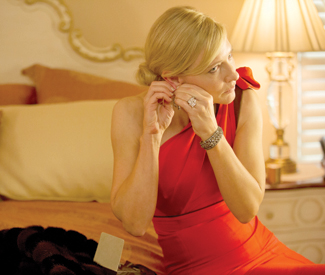
Blue Jasmine The good news about Blue Jasmine isn’t that it’s set in San Francisco, but that it’s Woody Allen’s best movie in years. Although some familiar characteristics are duly present, it’s not quite like anything he’s done before, and carries its essentially dramatic weight more effectively than he’s managed in at least a couple decades. Not long ago Jasmine (a fearless Cate Blanchett) was the quintessential Manhattan hostess, but that glittering bubble has burst — exactly how revealed in flashbacks that spring surprises up to the script’s end. She crawls to the West Coast to “start over” in the sole place available where she won’t be mortified by the pity of erstwhile society friends. That would be the SF apartment of Ginger (Sally Hawkins), a fellow adoptive sister who was always looked down on by comparison to pretty, clever Jasmine. Theirs is an uneasy alliance — but Ginger’s too big-hearted to say no. It’s somewhat disappointing that Blue Jasmine doesn’t really do much with San Francisco. Really, the film could take place anywhere — although setting it in a non-picture-postcard SF does bolster the film’s unsettled, unpredictable air. Without being an outright villain, Jasmine is one of the least likable characters to carry a major US film since Noah Baumbach’s underrated Margot at the Wedding (2007); the general plot shell, moreover, is strongly redolent of A Streetcar Named Desire. But whatever inspiration Allen took from prior works, Blue Jasmine is still distinctively his own invention. It’s frequently funny in throwaway performance bits, yet disturbing, even devastating in cumulative impact. (1:38) Albany, Clay, Metreon, Piedmont. (Harvey)

The Canyons Now that “train wreck” is an official celebrity category popular media ignore at their peril, certain people and projects are deemed doomed automatically. Lindsay Lohan can’t redeem herself — she’d lose her entertainment value by regaining any respect. Ergo, The Canyons was earmarked as a disaster from the outset. How could it be otherwise, with the former Disney luminary co-starring opposite porn superstar James Deen in an envelope-pushing screenplay from literary bad boy Bret Eaton Ellis (Less Than Zero, American Psycho)? Lohan’s widely reported difficulty on set only heightened a sense that The Canyons would be a pretentious, full-frontal crapfest. But The Canyons isn’t exactly bad. Instead, it’s a middling exercise in upscale erotic-thrillerdom, beautifully crafted (on a Kickstarter dime), clever yet superficial in terms of psychological depth. Ellis trades on his usual themes of corrosive privilege, sex, and violence to deliver a rather simplistic if sardonic lesson in Hollywood amorality that director Paul Schrader angles toward credibility, turning the film into a stern, chilly, minimalist exercise in psychological suspense. A little underwhelming at first (in part because Lohan’s performance is little wobbly, Deen’s a tad one-note), it actually improves with repeat viewings. (1:40) Roxie. (Harvey)

The Conjuring Irony can be so overrated. Paying tribute to those dead-serious ’70s-era accounts of demonic possession — like 1973’s The Exorcist, which seemed all the scarier because it were based on supposedly real-life events — the sober Conjuring runs the risk of coming off as just more Catholic propaganda, as so many exorcism-is-the-cure creepers can be. But from the sound of the long-coming development of this project — producer Tony DeRosa-Grund had apparently been wanting to make the movie for more than a dozen years — 2004’s Saw and 2010’s Insidious director James Wan was merely applying the same careful dedication to this story’s unfolding as those that came before him, down to setting it in those groovy VW van-borne ’70s that saw more families torn apart by politics and cultural change than those ever-symbolic demonic forces. This time, the narrative framework is built around the paranormal investigators, clairvoyant Lorraine Warren (Vera Farmiga) and demonologist Ed Warren (Patrick Wilson), rather than the victims: the sprawling Perron family, which includes five daughters all ripe for possession or haunting, it seems. The tale of two families opens with the Warrens hard at work on looking into creepy dolls and violent possessions, as Carolyn (Lili Taylor) and Roger Perron (Ron Livingston) move into a freezing old Victorian farmhouse. A very eerie basement is revealed, and hide-and-seek games become increasingly creepy, as Carolyn finds unexplained bruises on her body, one girl is tugged by the foot in the night, and another takes on a new invisible pal. The slow, scary build is the achievement here, with Wan admirably handling the flow of the scares, which go from no-budg effects and implied presences that rely on the viewer’s imagination, to turns of the screws that will have audiences jumping in their seats. Even better are the performances by The Conjuring‘s dueling mothers, in the trenches of a genre that so often flirts with misogyny: each battling the specter of maternal filicide, Farmiga and Taylor infuse their parts with an empathetic warmth and wrenching intensity, turning this bewitched horror throwback into a kind of women’s story. (1:52) 1000 Van Ness, SF Center. (Chun)

Despicable Me 2 The laughs come quick and sweet now that Gru (Steve Carell) has abandoned his super-villainy to become a dad and “legitimate businessman” — though he still applies world-class gravitas to everyday events. (His daughter’s overproduced birthday party is a riot of medieval festoonage.) But like all the best reformed baddies, the Feds, or in this case the Anti-Villain League, recruit him to uncover the next international arch-nemesis. Now a spy, he gets a goofy but highly competent partner (Kristen Wiig) and a cupcake shop at the mall to facilitate sniffing out the criminal. This sequel surpasses the original in charm, cleverness, and general lovability, and it’s not just because they upped the number of minion-related gags, or because Wiig joined the cast; she ultimately gets the short end of the stick as the latecomer love-interest (her spy gadgets are also just so-so). However, Carell kills it as Gru 2 — his faux-Russian accent and awkward timing are more lived-in. Maybe the jokes are about more familiar stuff (like the niggling disappointments of family life) but they’re also sharper and more surprising. And though the minions seemed like one-trick ponies in the first film, those gibberish-talking jellybeans outdo themselves in the sequel’s climax. (1:38) 1000 Van Ness, SF Center, Shattuck. (Vizcarrondo)

Elysium By the year 2154, the one percent will all have left Earth’s polluted surface for Elysium, a luxurious space station where everyone has access to high-tech machines that can heal any wound or illness in a matter of seconds. Among the grimy masses in burned-out Los Angeles, where everyone speaks a mixture of Spanish and English, factory worker Max (Matt Damon) is trying to put his car-thief past behind him — and maybe pursue something with the childhood sweetheart (Alice Braga) he’s recently reconnected with. Meanwhile, up on Elysium, icy Secretary of Defense Delacourt (Jodie Foster, speaking in French and Old Hollywood-accented English) rages against immigration, even planning a government takeover to prevent any more “illegals” from slipping aboard. Naturally, the fates of Max and Delacourt will soon intertwine, with “brain to brain data transfers,” bionic exo-skeletons, futuristic guns, life-or-death needs for Elysium’s medical miracles, and some colorful interference by a sword-wielding creeper of a sleeper agent (Sharlto Copley) along the way. In his first feature since 2009’s apartheid-themed District 9, South African writer-director Neill Blomkamp once again turns to obvious allegory to guide his plot. If Elysium‘s message is a bit heavy-handed, it’s well-intentioned, and doesn’t take away from impressive visuals (mercifully rendered in 2D) or Damon’s committed performance. (2:00) Balboa, Marina, Metreon, 1000 Van Ness, Sundance Kabuki. (Eddy)

Fruitvale Station By now you’ve heard of Fruitvale Station, the debut feature from Oakland-born filmmaker Ryan Coogler. With a cast that includes Academy Award winner Octavia Spencer and rising star Michael B. Jordan (The Wire, Friday Night Lights), the film premiered at the 2013 Sundance Film Festival, winning both the Audience Award and the Grand Jury Prize en route to being scooped up for distribition by the Weinstein Company. A few months later, Coogler, a USC film school grad who just turned 27, won Best First Film at Cannes. Accolades are nice, especially when paired with a massive PR push from a studio known for bringing home little gold men. But particularly in the Bay Area, the true story behind Fruitvale Station eclipses even the most glowing pre-release hype. The film opens with real footage captured by cell phones the night 22-year-old Oscar Grant was shot in the back by BART police, a tragedy that inspired multiple protests and grabbed national headlines. With its grim ending already revealed, Fruitvale Station backtracks to chart Oscar’s final hours, with a deeper flashback or two fleshing out the troubled past he was trying to overcome. Mostly, though, Fruitvale Station is very much a day in the life, with Oscar (Jordan, in a nuanced performance) dropping off his girlfriend at work, picking up supplies for a birthday party, texting friends about New Year’s Eve plans, and deciding not to follow through on a drug sale. Inevitably, much of what transpires is weighted with extra meaning — Oscar’s mother (Spencer) advising him to “just take the train” to San Francisco that night; Oscar’s tender interactions with his young daughter; the death of a friendly stray dog, hit by a car as BART thunders overhead. It’s a powerful, stripped-down portrait that belies Coogler’s rookie-filmmaker status. (1:24) California, Metreon, 1000 Van Ness, Presidio, Sundance Kabuki. (Eddy)

Hannah Arendt New German Cinema’s Margarethe von Trotta (1975’s The Lost Honor of Katharina Blum, 1986’s Rosa Luxemburg) delivers this surprisingly dull biopic about the great German-Jewish political theorist and the heated controversy around her New Yorker article (and subsequent book) about Israel’s 1961 trial of Nazi Adolph Eichmann. Played with dignified, slightly vulnerable countenance by the inimitable Barbara Sukowa, Arendt travels from her teaching job and cozy expat circles in New York to Jerusalem for the trial. There she comes face to face with the “banality of evil” in Eichmann, the petty careerist of the Holocaust, forcing her to “try and reconcile the shocking mediocrity of the man with his staggering deeds.” This led her to further insights into the nature of modern society, and triggered a storm of outrage and vitriol — in particular from the Commentary crowd of future neocons — all of which is clearly of relevance today, and the impetus for von Trotta’s revisiting this famous episode. But the film is too mannered, too slick, too formulaic —burdened by a television-friendly combination of posture and didacticism, and bon mots from famous and about famous figures in intellectual and literary history to avoid being leaden and tedious. A mainstream film, in other words, for a very unconventional personality and dissident intellectual. While not exactly evil, there’s something dispiriting in so much banality. (1:49) Opera Plaza, Shattuck, Smith Rafael. (Robert Avila)

The Heat First things first: I hated Bridesmaids (2011). Even the BFF love fest between Maya Rudolph and Kristen Wiig couldn’t wash away the bad taste of another wolf pack in girl’s clothing. Dragging and dropping women into dude-ly storylines is at best wonky and at worst degrading, but The Heat finds an alternate route. Its women are unlikable; you don’t root for them, and you’re not hoping they become princesses because such horrifying awkwardness can only be redeemed by a prince. In Bridesmaids and Heat director Paul Feig’s universe, friendship saves the day. Sandra Bullock is Murtaugh to Melissa McCarthy’s Riggs, with tidy Bullock angling for a promotion and McCarthy driving a busted hoopty through Boston like she’s in Grand Theft Auto. Circumstances conspire to bring them together on a case, in one of many elements lifted from traditional buddy-cop storylines. But! The jokes are constant, pelting, and whiz by like so much gunfire. In one running gag, a low-rung villain’s worst insult is telling the women they look old — but neither character is bothered by it. It’s refreshing to see embarrassment humor, so beloved by chick flicks, get taken down a peg by female leads who don’t particularly care what anyone thinks of them. (1:57) SF Center. (Vizcarrondo)

The Hunt Mads Mikkelsen has the kind of face that is at once strikingly handsome and unconventional enough to get him typecast in villain roles. Like so many great foreign-accented actors, he got his big international break playing a bad guy in a James Bond film — as groin-torturing gambler Le Chiffre in 2006 franchise reviver Casino Royale. Currently, he’s creeping TV viewers out as a young Dr. Lecter on Hannibal. His ability to evoke both sympathy and a suspicion of otherness are particularly well deployed in Thomas Vinterberg’s very Danish The Hunt, which won Mikkelsen the Best Actor prize at Cannes last year. He plays Lucas, a lifelong small-town resident recently divorced from his son’s mother, and who currently works at the local kindergarten. One day one of his charges says something to the principal that suggests Lucas has exposed himself to her. Once the child’s misguided “confession” is made, Lucas’ boss immediately assumes the worst. She announces her assumptions at a parent-teachers meeting even before police can begin their investigation. By the time they have, the viral paranoia and suggestive “questioning” of other potential victims has created a full-on, massive pederasty scandal with no basis in truth whatsoever. The Hunt is a valuable depiction of child-abuse panic, in which there’s a collective jumping to drastic conclusions about one subject where everyone is judged guilty before being proven innocent. Its emotional engine is Lucas’ horror at the speed and extremity with which he’s ostracized by his own community — and its willingness to believe the worst about him on anecdotal evidence. Engrossing, nuanced, and twisty right up to the fade-out, The Hunt deftly questions one of our era’s defining public hysterias. (1:45) Smith Rafael. (Harvey)

Kid-Thing At last year’s Sundance Festival, Beasts of the Southern Wild rode its deserved attention all the way to the Oscars. Yet another, in some ways eerily similar Southern-wild-child tale — this latest by the Zellner Brothers, two things that are actually good about today’s Texas — was almost completely ignored. A pity, because it, too, is rather bizarre and inspired. Ten-year-old Annie (Sydney Aguirre) is a little terror running amok in the backwoods with scant-to-zero supervision by an airhead father (Nathan Zellner) much more interested in hanging with his equally dim sometime-demolition-derby-driver pal Caleb (David Zellner). Furious at a neglect she probably can’t even pinpoint as such, Annie acts out in all kinds of ways — from minor vandalism and crank calls to scaring local kids who don’t want to play with her anyway. Her clashing desire for company and resistance toward any authority reach a crisis when one day she hears a voice crying for help in the woods — an elderly woman (voiced by Susan Tyrell) has apparently fallen in a deep hole can’t get herself out of. The latter’s increasingly desperate pleas that Annie get outside assistance trigger mixed emotions in a child who’s at once sympathetic yet suspicious, because nothing in her own experience has taught her to trust adults making demands. This could have been played for grim tragic realism, but the Zellners still inject a large strain of absurdist humor even as they make Annie’s troubled psychology disturbingly vivid — greatly assisted by one helluva performance from wee Miss Aguirre (who could no doubt bring the wrath of God if circumstances necessitated). Though no one seems to be paying attention in commercial terms, these filmmakers are true originals who keep growing artistically in intriguing ways. Kid-Thing‘s belated week-long booking is one of those times when you just have to thank Zoroaster for a venue like the Roxie that’s willing to go out on a limb because a movie is just so damn interesting without necessarily being pleasant. (1:22) Roxie. (Harvey)

Lovelace We first meet Linda Boreman (Amanda Seyfried) in 1970 as a slightly prudish 21-year-old living under the thumb of her strict Catholic parents (Robert Patrick, Sharon Stone) in suburban Florida. Then she meets Chuck Traynor (Peter Sarsgaard), a titty-bar owner and all-around swinging dude who turns her on to all kinds of stuff —including the how-not-to-gag-while-giving-a-b.j. trick that would rocket her to fame two years later. The vehicle for that was Deep Throat, a crudely made XXX feature that arrived at just the right time to ignite the “porn chic” vogue and break down censorship laws. (It grossed as much as $600 million, all of which disappeared into the pockets of mob financiers.) Halfway through Rob Epstein and Jeffrey Friedman’s film, “Linda Lovelace” is basking in the glow of celebrity at a private screening orchestrated by Hugh Hefner (James Franco). At that point, however, the movie rewinds to present the dark underside of the Traynors’ marriage, in which (according to Linda several years later) she was regularly beaten, pimped, and kept a virtual prisoner. This second narrative feature from the Oscar-winning local documentarians is a much more straightforward biopic than 2010’s Howl. Andy Bellin’s script pretty much hews to the version of events put forward by the subject’s 1980 book Ordeal — an account still disputed in parts by some former associates. After a first section that’s a savvy, lively recreation of the Me Decade’s dawn (with particular attention to the era’s garish fashions and décor), film’s latter half turns into a somewhat one-note, familiar saga of domestic abuse, escape and recovery, albeit with a few very powerful scenes. The directors have assembled a great cast, with Juno Temple, Chris Noth, Hank Azaria, Wes Bentley, Eric Roberts, Bobby Cannavale, and Chloe Sevigny all turning up (sometimes unrecognizably) in supporting roles. For a different, fully contextualized take on a watershed moment in American cultural (and sexual) history, check out Fenton Bailey and Randy Barbato’s excellent 2005 documentary Inside Deep Throat. (1:32) Metreon. (Harvey)

Monsters University Seven-year-old Mike Wazowski is even more adorable than grown-up, Billy-Crystal-voiced Mike Wazowski. It’s a pity, then, that one of the big lessons Monsters University teaches is that the essence of monster-identity is how scary one is. What Mike loses in frightfulness he forcefully recovers in spunk, and after a trip to the scare floor that briskly reminds us the premise of 2001’s Monsters, Inc., mini-Mike becomes the first ever career-driven Pixar character. (For this, I love him.) We all know he eventually becomes a superstar in this scare-powered retro-verse, but first he has to overcome frat boy-inflicted embarrassment and flunk out of school. The most noteworthy thing about Pixar’s first prequel is how very massively its characters fail — it’s a lovely tilt that suggest the greatness of tomorrow begins when you overcome the failures of today. The administrators of Monsters University (in particular Helen Mirren’s dragon-lady Dean) require formal perfection in the scares they grade, but in the world of actual scarers, oddness and difference actually become advantages. It’s all theory but no rulebook. And doesn’t that sound like a good lesson from the studio that once proudly said “story is king,” yet now scrambles to meet Disney’s once-a-year feature demands? Such rigidity comes at a price. (1:50) SF Center. (Vizcarrondo)

Pacific Rim The fine print insists this film’s title is actually Warner Bros. Pictures and Legendary Pictures Pacific Rim (no apostrophe, guys?), but that fussy studio demand flies in the face of Pacific Rim‘s pursuit of pure, dumb fun. One is tempted to picture director/co-writer Guillermo del Toro plotting out the battle scenes using action figures — Godzillas vs. Transformers is more or less what’s at play here, and play is the operative word. Sure, the end of the world seems certain, thanks to an invading race of giant “Kaiju” who’ve started to adapt to Earth’s decades-long countermeasures (giant robot suits, piloted by duos whose minds are psychically linked), but there’s far too much goofy glee here for any real panic to accumulate. Charlie Hunnam is agreeable as the wounded hunk who’s humankind’s best hope for salvation, partnered with a rookie (Rinko Kikuchi) who’s eager, for her own reasons, to kick monster butt. Unoriginal yet key supporting roles are filled by Idris Elba (solemn, ass-kicking commander); Charlie Day (goofy science type); and Ron Perlman (flashy-dressing, black-market-dealing Kaiju expert). Pacific Rim may not transcend action-movie clichés or break much new ground (drinking game idea: gulp every time there’s an obvious reference or homage, be it to Toho or Bruckheimer), but damn if it doesn’t pair perfectly with popcorn. (2:11) Metreon, 1000 Van Ness. (Eddy)

Percy Jackson: Sea of Monsters (1:46) 1000 Van Ness, SF Center.

Planes Dane Cook voices a crop duster determined to prove he can do more than he was built for in Planes, the first Disney spin-off from a Pixar property. (Prior to the film’s title we see “From The World of Cars,” an indicator the film is an extension of a known universe — but also not quite from it.) And indeed, Planes resembles one of Pixar’s straight-to-DVD releases as it struggles for liftoff. Dreaming of speed, Dusty Crophopper (Cook) trains for the Wings Around the World race with his fuel-truck friend, Chug (Brad Garrett). A legacy playing Brewster McCloud and Wilbur Wright makes Stacy Keach a pitchy choice for Skipper, Dusty’s reluctant ex-military mentor. Charming cast choices buoy Planes somewhat, but those actors are feathers in a cap that hardly supports them — you watch the film fully aware of its toy potential: the race is a geography game; the planes are hobby sets; the cars will wind up. The story, about overcoming limitations, is in step with high-value parables Pixar proffers, though it feels shallower than usual. Perhaps toys are all Disney wants — although when Ishani (a sultry Priyanka Chopra) regrets an integrity-compromising choice she made in the race, and her pink cockpit lowers its eyes, you can feel Pixar leaning in. (1:32) Metreon, 1000 Van Ness, Shattuck. (Vizcarrondo)

Prince Avalanche It has been somewhat hard to connect the dots between David Gordon Green the abstract-narrative indie poet (2000’s George Washington, 2003’s All the Real Girls) and DGG the mainstream Hollywood comedy director (2008’s Pineapple Express, yay; 2011’s Your Highness and The Sitter, nay nay nay). But here he brings those seemingly irreconcilable personas together, and they make very sweet music indeed. Paul Rudd and Emile Hirsch play two men — one a fussy, married grown-up, another a short-attention-spanned manchild — spending the summer in near-total isolation, painting yellow divider lines on recently fire-damaged Texas roads. Their very different personalities clash, and at first the tone seems more conventionally broad than that of the 2011 Icelandic minimalist-comedy (Either Way) this revamp is derived from. But Green has a great deal up his sleeve — gorgeous widescreen imagery, some inspired wordless montages, and a well-earned eventual warmth — that makes the very rare US remake that improves upon its European predecessor. (1:34) Shattuck. (Harvey)

Red 2 Are blockbusters entitled to senior moments? Even the best can fail the test — and coast along on past glories on their way to picking up their checks — as Red 2 makes the fatal error of skimping on the grunt work of basic storytelling to simply take up where the first installment on these “retired, extremely dangerous” ex-black ops killers left off. Master hitman Frank (Bruce Willis) and his girlfriend Sarah (Mary-Louise Parker) are semi-contentedly nesting in suburbia when acid-damaged cohort Marvin (John Malkovich) warns them that they’re about to get dragged back into the life. Turns out the cold war isn’t quite as iced out as we all thought, and a portable nuclear device, the brainchild of a physicist (Anthony Hopkins) once in Frank and Marvin’s care, just might be in Moscow. Good-old-days-style high jinks ensue, along with the arrival of old chums like Victoria (Helen Mirren), former flames such as Katja (Catherine Zeta-Jones), and new-gen assassins like Han (Byung-hun Lee). Plus, jet-setting, and the deaths of many, many nameless soldiers, goons, and Iranian embassy staffers (almost all played for laughs, as cued by the comic book-y intertitles). A pity that the thrown-together-ish, throwback story line — somewhat reminiscent of those trashy, starry ’60s clusters, like the original 1960 Ocean’s Eleven — lazily relies on the assumption that we care a jot about the Frank and Sarah romance (the latter now an stereotypically whiny quasi-spouse) and that Frank can essentially talk any killer into joining him out of, er, professional courtesy or basic human decency. Wasting the thoroughbred cast on hand, particularly in the form of Mirren and Hopkins, one wishes the makers had only had the professional courtesy not to phone this effort in. (1:56) Metreon. (Chun)

The Smurfs 2 (1:45) Metreon, 1000 Van Ness, Shattuck.

The Spectacular Now The title suggests a dreamy, fireworks-inflected celebration of life lived in the present tense, but in this depiction of a stalled-out high school senior’s last months of school, director James Ponsoldt (2012’s Smashed) opts for a more guarded, uneasy treatment. Charming, likable, underachieving, and bright enough to frustrate the adults in his corner, Sutter (Miles Teller, 2012’s Project X) has long since managed to turn aimlessness into a philosophical practice, having chosen the path of least resistance and alcohol-fueled unaccountability. His mother (Jennifer Jason Leigh), raising him solo since the departure of a father (Kyle Chandler) whose memories have acquired — for Sutter, at least — a blurry halo effect, describes him as full of both love and possible greatness, but he settles for the blessings of social fluidity and being an adept at the acquisition of beer for fellow underage drinkers. When he meets and becomes romantically involved with Aimee (Shailene Woodley), a sweet, unpolished classmate at the far reaches of his school’s social spectrum, it’s unclear whether the impact of their relationship will push him, or her, or both into a new trajectory, and the film tracks their progress with a watchful, solicitous eye. Adapted for the screen by Scott Neustadter and Michael H. Weber (2009’s 500 Days of Summer) from a novel by Tim Tharp, The Spectacular Now gives the quirky pop cuteness of Summer a wide berth, steering straight into the heart of awkward adolescent striving and mishap. (1:35) SF Center, Shattuck, Sundance Kabuki. (Rapoport)

Star Trek Into Darkness Do you remember 1982? There are more than a few echoes of Star Trek II: The Wrath of Khan in J. J. Abrams’ second film retooling the classic sci-fi property’s characters and adventures. Darkness retains the 2009 cast, including standouts Zachary Quinto as Spock and Simon Pegg as comic-relief Scotty, and brings in Benedict “Sherlock” Cumberbatch to play the villain (I think you can guess which one). The plot mostly pinballs between revenge and preventing/circumventing the destruction of the USS Enterprise, with added post-9/11, post-Dark Knight (2008) terrorism connotations that are de rigueur for all superhero or fantasy-type blockbusters these days. But Darkness isn’t totally, uh, dark: there’s quite a bit of fan service at work here (speak Klingon? You’re in luck). Abrams knows what audiences want, and he’s more than happy to give it to ’em, sometimes opening up massive plot holes in the process — but never veering from his own Prime Directive: providing an enjoyable ride. (2:07) Metreon. (Eddy)

This Is the End It’s a typical day in Los Angeles for Seth Rogen as This Is the End begins. Playing a version of himself, the comedian picks up pal and frequent co-star Jay Baruchel at the airport. Since Jay hates LA, Seth welcomes him with weed and candy, but all good vibes fizzle when Rogen suggests hitting up a party at James Franco’s new mansion. Wait, ugh, Franco? And Jonah Hill will be there? Nooo! Jay ain’t happy, but the revelry — chockablock with every Judd Apatow-blessed star in Hollywood, plus a few random inclusions (Rihanna?) — is great fun for the audience. And likewise for the actors: world, meet Michael Cera, naughty coke fiend. But stranger things are afoot in This Is the End. First, there’s a giant earthquake and a strange blue light that sucks passers-by into the sky. Then a fiery pit yawns in front of Casa Franco, gobbling up just about everyone in the cast who isn’t on the poster. Dudes! Is this the worst party ever — or the apocalypse? The film — co-written and directed by Rogen and longtime collaborator Evan Goldberg — relies heavily on Christian imagery to illustrate the endtimes; the fact that both men and much of their cast is Jewish, and therefore marked as doomed by Bible-thumpers, is part of the joke. But of course, This Is the End has a lot more to it than religious commentary; there’s also copious drug use, masturbation gags, urine-drinking, bromance, insult comedy, and all of the uber-meta in-jokes fans of its stars will appreciate. (1:46) 1000 Van Ness, Shattuck. (Eddy)

Turbo It’s unclear whether the irony of coupling racing — long the purview of white southern NASCAR lovers — with an animated leap into “urban” South Central LA is lost on the makers of Turbo, but even if it is, they’re probably too busy dreaming of getting caught in the drift of Fast and Furious box office success to care much. After all, director David Soren, who came up with the original idea, digs into the main challenge — how does one make a snail’s life, before and after a certain magical makeover, at all visually compelling? — with a gusto that presumes that he’s fully aware of the delicious conundrums he’s set up for himself. Here, Theo (voiced by Ryan Reynolds) is your ordinary garden snail with big, big dreams — he wants to be a race car driver like ace Guy Gagne (Bill Hader). Those reveries threaten to distract him dangerously from his work at the plant, otherwise known as the tomato plant, in the garden where he and brother Chet (Paul Giamatti) live and toil. One day, however, Theo makes his way out of the garden and falls into the guts of a souped-up vehicle in the midst of a street race, gobbles a dose of nitrous oxide, and becomes a miraculous mini version of a high-powered race car. It takes a meeting with another dreamer, taco truck driver Tito (Michael Pena), for Theo, a.k.a. Turbo, to meet up with a crew of streetwise racing snails who overcome their physical limitations to get where they want to go (Samuel L. Jackson, Snoop Dogg, Maya Rudolph, Michael Bell). One viral video, several Snoop tracks, and one “Eye of the Tiger” remix later, the Indianapolis 500 is, amazingly, in Turbo’s headlights — though will Chet ever overcome his doubts and fears to get behind his bro? The hip-hop soundtrack, scrappy strip-mall setting, and voice cast go a long way to revving up and selling this Cinderella tall/small tale about the bottommost feeder in the food chain who dared to go big, and fast; chances are Turbo will cross over in more ways than one. (1:36) 1000 Van Ness, SF Center. (Chun)

20 Feet From Stardom Singing the praises of those otherwise neglected backup vocalists who put the soul into that Wall of Sound, brought heft to “Young Americans,” and lent real fury to “Gimme Shelter,” 20 Feet From Stardom is doing the rock ‘n’ roll true believer’s good work. Director Morgan Neville follows a handful of mainly female, mostly African American backing vocal legends, charts their skewed career trajectories as they rake in major credits and keep working long after one-hit wonders are forgotten (the Waters family) but fail to make their name known to the public (Merry Clayton), grasp Grammy approval yet somehow fail to follow through (Lisa Fischer), and keep narrowly missing the prize (Judith Hill) as label recording budgets shrivel and the tastes, technology, and the industry shift. Neville gives these industry pros and soulful survivors in a rocked-out, sample-heavy, DIY world their due on many levels, covering the low-coverage minis, Concert for Bangladesh high points, gossipy rumors, and sheer love for the blend that those intertwined voices achieve. One wishes the director had done more than simply touch in the backup successes out there, like Luther Vandross, and dug deeper to break down the reasons Fischer succumbed to the sophomore slump. But one can’t deny the passion in the voices he’s chosen to follow — and the righteous belief the Neville clearly has in his subjects, especially when, like Hill, they are ready to pick themselves up and carry on after being told they’re not “the Voice.” (1:30) Shattuck, Smith Rafael, Sundance Kabuki. (Chun)

2 Guns Rob a bank of cartel cash, invade a naval base, and then throw down against government heavies — you gotta expect to find a few bullet-hole-sized gaps in the play-by-play of 2 Guns. The action flick is riddled with fun-sized pleasures — usually centered on the playful banter and effortless chemistry between stars Denzel Washington and Mark Wahlberg — and the clever knot of a narrative throws a twist or two in, before director Baltasar Kormákur (last year’s Wahlberg vehicle Contraband) simply surrenders to the tidal pull of action. After visiting Mexican mafia kingpin Papi (Edward James Olmos) and finding the head of their contact in a bag, Bobby (Washington) and Stig (Wahlberg) decide to hit Papi where he’ll feel it: the small border bank where his men have been making drops to safe deposit boxes. Much like Bobby and Stig’s breakfast-time diner gab fest, which seems to pick up where Vincent and Jules left off in Pulp Fiction (1994), as they trade barbs, truisms, and tells, there’s more going on than simply bank robbery foreplay. Both are involved for different reasons: Bobby is an undercover DEA agent, and Stig is a masquerading navy officer. When the payout is 10 times the expected size, not only do Papi, Bobby’s contact Deb (Paula Patton), and Stig’s superior Quince (James Marsden) come calling, but so does mystery man Earl (Bill Paxton), who seems to be obsessed with following the money. We know, sort of, what’s in it for Bobby — all fully identifiable charm, as befits Washington, who makes it rain charisma with the lightest of touches. But Stig? The others? The lure of a major payday is supposed to sweep away all other loyalties, except a little bromantic bonding between two rogue sharp shooters, saddled, unfortunately, with not the sharpest of story lines. (1:49) Metreon, 1000 Van Ness, Sundance Kabuki. (Chun)

The Way, Way Back Duncan (Liam James) is 14, and if you remember being that age you remember the awkwardness, the ambivalence, and the confusion that went along with it. Duncan’s mother (Toni Collette) takes him along for an “important summer” with her jerky boyfriend, Trent (Steve Carell) — and despite being the least important guy at the summer cottage, Duncan’s only marginally sympathetic. Most every actor surrounding him plays against type (Rob Corddry is an unfunny, whipped husband; Allison Janney is a drunk, desperate divorcee), and since the cast is a cattle call for anyone with indie cred, you’ll wonder why they’re grouped for such a dull movie. Writer-directors Nat Faxon and Jim Rash previously wrote the Oscar-winning screenplay for 2011’s The Descendants, but The Way, Way Back doesn’t match that film’s caliber of intelligent, dry wit. Cast members take turns resuscitating the movie, but only Sam Rockwell saves the day, at least during the scenes he’s in. Playing another lovable loser, Rockwell’s Owen dropped out of life and into a pattern of house painting and water-park management in the fashion of a conscientious objector. Owen is antithetical to Trent’s crappy example of manhood, and raises his water wing to let Duncan in. The short stint Duncan has working at Water Wizz is a blossoming that leads to a minor romance (with AnnaSophia Robb) and a major confrontation with Trent, some of which is affecting, but none of which will help you remember the movie after credits roll. (1:42) California, Metreon, Presidio, Sundance Kabuki. (Vizcarrondo)

We’re the Millers After weekly doses on the flat-screen of Family Guy, Modern Family, and the like, it’s about time movieland’s family comedies got a little shot of subversion — the aim, it seems, of We’re the Millers. Scruffy dealer David (Jason Sudeikis) is shambling along — just a little wistful that he didn’t grow up and climb into the Suburban with the wife, two kids, and the steady 9-to-5 because he’s a bit lonely, much like the latchkey nerd Kenny (Will Poulter) who lives in his apartment building, and neighboring stripper Rose (Jennifer Aniston), who bites his head off at the mailbox. When David tries to be upstanding and help out crust punk runaway Casey (Emma Roberts), who’s getting roughed up for her iPhone, he instead falls prey to the robbers and sinks into a world of deep doo-doo with former college bud, and supplier of bud, Brad (Ed Helms). The only solution: play drug mule and transport a “smidge and a half” of weed across the Mexican-US border. David’s supposed cover: do the smuggling in an RV with a hired crew of randoms: Kenny, Casey, and Rose&sdquo; all posing as an ordinary family unit, the Millers. Yes, it’s that much of a stretch, but the smart-ass script is good for a few chortles, and the cast is game to go there with the incest, blow job, and wife-swapping jokes. Of course, no one ever states the obvious fact, all too apparent for Bay Area denizens, undermining the premise of We’re the Millers: who says dealers and strippers can’t be parents, decent or otherwise? We may not be the Millers, but we all know families aren’t what they used to be, if they ever really managed to hit those Leave It to Beaver standards. Fingers crossed for the cineplex — maybe movies are finally catching on. (1:49) California, Four Star, Metreon, 1000 Van Ness, Presidio, Sundance Kabuki. (Chun)

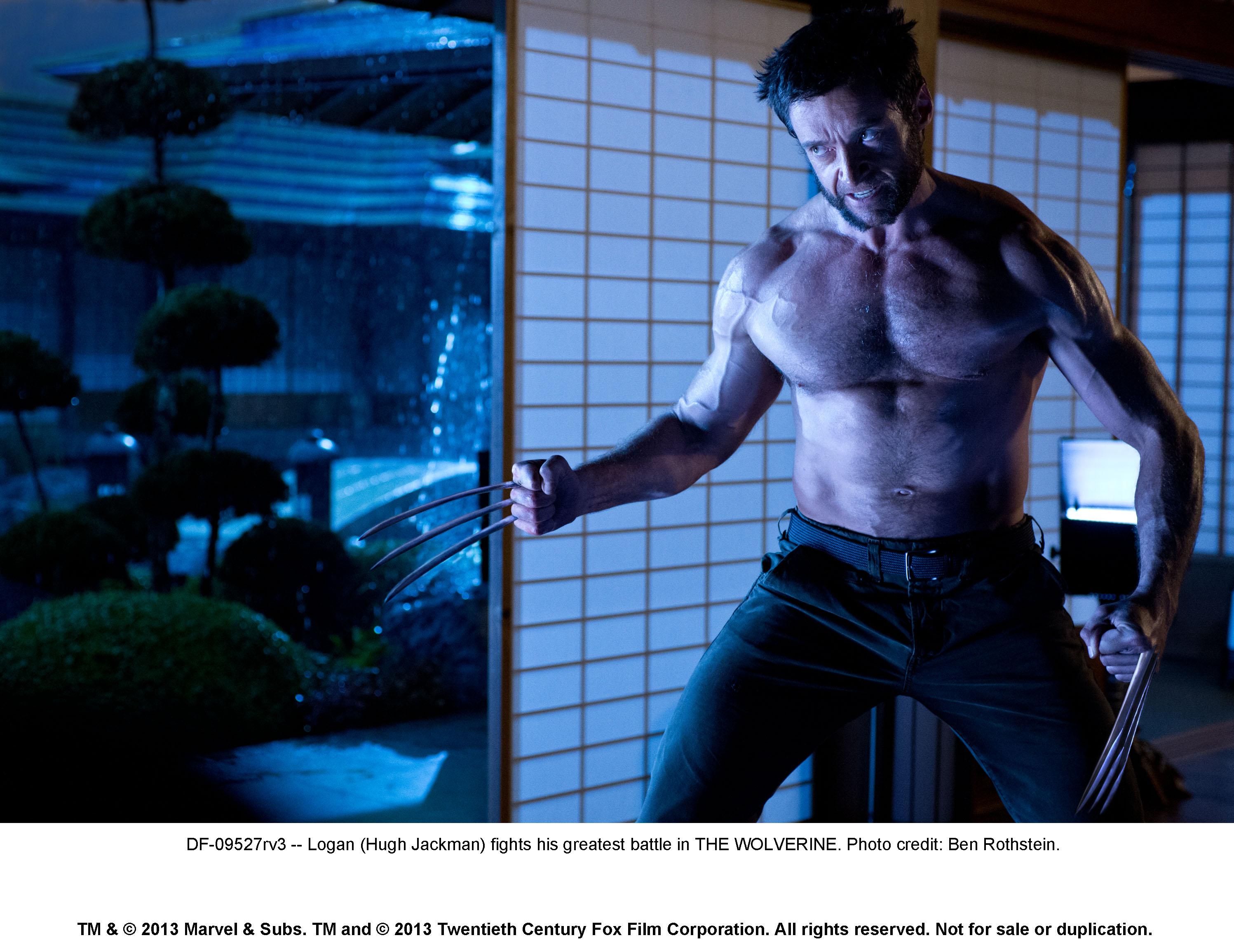
The Wolverine James Mangold’s contribution to the X-Men film franchise sidesteps the dizzy ambition of 2009’s X-Men Origins: Wolverine and 2011’s X-Men: First Class, opting instead for a sleek, mostly smart genre piece. This movie takes its basics from the 1982 Wolverine series by Chris Claremont and Frank Miller, a stark dramatic comic, but can’t avoid the convoluted, bad sci-fi plot devices endemic to the X-Men films. The titular mutant with the healing factor and adamantium-laced skeleton travels to Tokyo, to say farewell to a dying man who he rescued at the bombing of Nagasaki. But the dying man’s sinister oncologist has other plans, sapping Wolverine of his healing powers as he faces off against ruthless yakuza and scads of ninjas. The movie’s finest moments come when Mangold pays attention to context, taking superhero or Western movie clichés and revamping them for the modern Tokyo setting, such as a thrilling duel on top of a speeding bullet train. Another highlight: Rila Fukushima’s refreshing turn as badass bodyguard Yukio. Oh, and stay for the credits. (2:06) Metreon, 1000 Van Ness, Sundance Kabuki. (Sam Stander)

World War Z Or, Brad Pitt saves the world from undead beings with rotted brains but super-sharp hearing. Somehow, Max Brooks’ innovative multi-character book — written in the form of interviews with survivors of a recent zombie outbreak — becomes by-the-numbers action horror in the hands of director Marc Forster (2008’s Quantum of Solace, a.k.a. that Bond movie nobody remembers), complete with credit sequence filled with real news reports of environmental disasters, global unrest, and even a little shout-out to that guy who ate another guy’s face off last year in Florida. No bath-salt jokes here, though; instead, we have Pitt playing a verrrry serious former UN investigator — former, because he quit to spend more time with his family, a promise he actually considers keeping even when the survival of the world hinges, apparently, on his very specific expertise. He jets around the world (South Korea! Israel! Wales?) in search of a cure, but it’s obvious from the beginning — when he escapes immediate death in the initial rampage with his picture-perfect wife (Mireille Enos) and two daughters — that he’ll eventually suss out a planet-saving solution. (Sorry, but if that’s a spoiler you’ve never seen a movie before.) A few nifty setpieces can’t save World War Z from more or less embodying the descriptor “meh,” with its undynamic 3D, uninspiring CG, and cobbled-together script, complete with reassuring final voice-over. And one more thing: for the love of flesh-ripping gore, can we please make this the last PG-13 zombie movie? (1:56) 1000 Van Ness, Sundance Kabuki. (Eddy) *
 

Reel to real

1

arts@sfbg.com

FILM At a moment when gay people and gay rights have never been more prominent — from the escalating numbers of states and countries permitting gay marriage to the controversy over Olympics-hosting Russia’s murky new anti-gay legislation — it’s hard to imagine the climate in which Portrait of Jason premiered in late 1967. The “new permissiveness” was just beginning to impact American cinema; soon there would be a small vogue of mainstream films addressing homosexuality in one way or another. But they would mostly be condescending, tragic, hostile and/or grotesquely comedic — you could argue there wasn’t a truly sympathetic Hollywood feature about a non-stereotypical gay relationship until 1982’s Making Love. (Which flopped, despite all publicity, and encouraged no imitations.)

Today it’s a common complaint that them perverts are too damn omnipresent in the news, on TV, everywhere — their heightened public profile somehow violating the “rights” of others to ignore or hate on them. But nearly half a century ago, Shirley Clarke’s documentary “portrait” of one rather flaming real-life personality — not just gay, but African American, too — seemed unprecedentedly exotic. No less than then-Supreme God of All Cinema (and supremely heterosexual) Ingmar Bergman called it “the most extraordinary film I’ve ever seen in my life … absolutely fascinating.” He probably found mankind’s first moon landing two years later less startling.

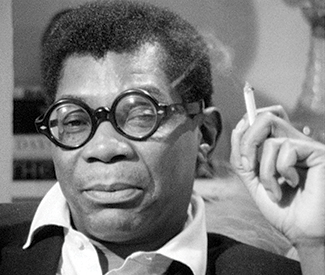
The latest in Milestone Films’ “Project Shirley” series of restored Clarke re-releases, Portrait of Jason can’t be experienced that way now. Any surviving exoticism is now related to the subject’s defining a certain pre-Stonewall camp persona, and the movie’s reflecting a 1960s cinema vérité style of which its director was a major proponent. Perhaps influenced by fellow New Yorker Andy Warhol’s early films, the setup couldn’t be simpler: instead of staring at the Empire State Building or somebody sleeping for X number of hours, we spend 12 hours in the company of Jason Holliday, née Aaron Payne. (He explains someone named Sabu in San Francisco during his “three, four, five years” there “was changing people’s names to suit their personality,” adding “San Francisco is a place to be created, believe me.”)

Or rather Clarke and her then-partner, actor Carl Lee, spend those hours — from 9 pm to 9 am — with Jason, while we get a 107-minute distillation. Nattily attired, waving a cigarette around while downing an epic lineup of cocktails, Jason is a natural performer who relishes this filmic showcase as “my moment.” No matter what, he says, he will now “have one beautiful something that is my own.”

At first Clarke and Lee simply let him riff, prompting him to speak calculated outrages they’ve probably already heard. (“What do you do for a living, Jason?” “I’m a … I’m a stone whore. And I’m not ashamed of it.”) He seems to be trying out material for a nightclub act that’s part Lenny Bruce, part snap diva. “I guess I’m a male bitch, because I have a tendency to go around and unglue people. I’ve spent so much of my time bein’ sexy I haven’t gotten anything else done. I’ve been balling from Maine to Mexico.” He shares anecdotes of working as a “houseboy” for rich white women during his in SF; he dons ladies’ hats and a feather boa to do imitations of Scarlett O’Hara, Miss Prissy, Katharine Hepburn, and Carmen Jones.

He’s indeed the life of his own party — increasingly smashed as wee hours encroach in Clarke’s Chelsea Hotel room — but there’s a certain desperation to this act that she and particularly Lee eventually pounce on. The exact nature of the two men’s relationship intrigues once Lee starts goading Jason to cut the “bullshit” and pony up some truths. “We know you’re a big con artist and you don’t really give a shit about nothin’ and nobody,” the off-camera Lee barks, later referencing some “dirty lies” Jason had allegedly spread about him.

By the time the former is calling the latter a “fuckin’ nasty bitch,” the film has become a queasy mix of exploitation and collusion. “Nervous and guilty and simple as I am,” Jason has a braggadocio that camouflages a self-loathing he’s just as willing to expose. When actual tears-of-a-clown are shed, the filmmakers seem cruel. Still, the “portrait” is incomplete — Clarke and Lee don’t press their subject to explicate the past spousal abuse, suicide attempt, and “nuthouse” and jail stays he drops into conversation as casually as he mentions a friendship with Miles Davis.

Two years later Yoko Ono and John Lennon would film the extremely disturbing Rape — 77 minutes of a camera crew silently, aggressively following an increasingly bewildered and panicked young woman around Manhattan, reducing her to a whimpering wreck. It was a human experiment in the name of art as striking as it was sadistic. While less traumatic, Portrait of Jason also stretches a very 1960s notion of cinema-as-angry-analyst’s-couch to uncomfortable lengths.

Clarke, who died in 1997 — one year before Jason — remains a fascinating, underappreciated figure who suffered all the consequences of being a stubbornly individual filmmaker in an era when women directors were rare and little-respected. (Not that that’s changed greatly since.) Switching from dance to movies in the ’50s, she earned an Oscar nomination for a 1960 short, then won one outright for a 1963 documentary about poet Robert Frost. Yet her career was constantly stymied, finally forcing her into academia. French director Agnès Varda’s 1969 curio Lions Love has her playing herself, a matter-of-fact New Yorker baffled equally by the Hollywood industry she’s trying to enter and by the upscale hippie ménage à trois antics of her hosts, Warhol star Viva and Hair co-creators Gerome Ragni and James Rado.


PORTRAIT OF JASON opens Fri/16 at the Roxie.

Midsummer mayhem

3

cheryl@sfbg.com

FILM It’s been a zzz summer at the multiplex. The number one movie of the year is Iron Man 3, a highly unmemorable blockbuster. (Quick: Who played the villain? Had to think about it for a second, didn’t you?) With the exception of The Heat and The Conjuring, most everything that’s grossed a crap-ton of dollars recently is either a sequel or based on some well-worn property.

Fear not, genre fans. This weekend, a quartet of films lurks just below the surface, lacking big-budget hype yet worthy of your attention. Among them are a chilly sci-fi epic, a high-octane cop thriller, a classic slab of Italian sleaze, and an eerily relatable (um, if you’re me) documentary about VHS fanatics.

Directed by Ecuador’s Sebastián Cordero (2004’s Crónicas), deep-space tale Europa Report benefits from its interesting international cast, including Michael Nyqvist (Mikael Blomkvist in the Swedish Girl With a Dragon Tattoo series); Romanian Anamaria Marinca (2007’s 4 Months, 3 Weeks and 2 Days); Bay Area-born Daniel Wu, who’s a megastar in Hong Kong; and South African Sharlto Copley, also in concurrent sci-fi release Elysium. Together, they comprise the bulk of a crew crammed into an elegant ship bound for Europa, a moon of Jupiter that may have water — and therefore, life — beneath its icy surface.

These journeys never end well, do they? As we’re told by grim-faced Dr. Unger (Embeth Davidtz), what we’re watching has been pieced together from “recently declassified footage” — and yes, that makes Europa Report yet another “found-footage” movie. By now, it’s a stale way to tell a story, though it’s mostly plausible in this case; time-stamped scenes are cut together from cameras mounted aboard the spacecraft. From the start, we know the mission is doomed. But even if its conclusion is a little abrupt and dissatisfying, at least Europa Report heaps on the claustrophobic atmosphere while rocketing toward the inevitable.

Far more unpredictable is the sleek, gloomy Drug War, the latest from Hong Kong’s Johnnie To — a director who needs no introduction for fans of his prolific output (2001’s Fulltime Killer, 2005’s Election, 2006’s Exiled, 2009’s Vengeance). Unlike To’s previous crime dramas, Drug War was shot in mainland China, where heavy-handed censors rule. According to the film’s press notes, To decided “nobody will disagree with the idea of arresting drug dealers,” particularly in a country fond of imposing death sentences for drug-related offenses. The tactic appears to have worked, since this thing’s dripping with vicious shootouts — even as it subtly points out China’s surveillance-state abundance of CCTV cameras, and examines how just far criminals will go to avoid those draconian punishments.

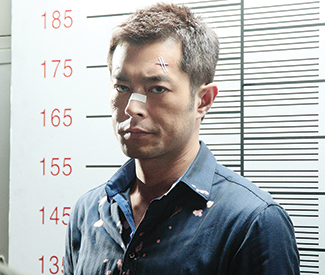
Timmy Choi (Louis Koo), for one, is terrified of execution. Busted for manufacturing meth after his factory explodes, Timmy runs up against Captain Zhang (Sun Honglei), a no-nonsense drug cop who reluctantly takes on a new informant with the goal of busting a kingpin higher up the cartel’s chain of command. Timmy’s a slippery character whose motivations remain murky right up until the last act; it’s all Zhang can do to keep up, which he does for the most part.

In one incredible sequence, the cop pretends to be Chang, a taciturn junkie with important connections, accompanying Timmy for a meeting with the flashy “Haha,” named for his booming, staccato laugh. With a quick wardrobe change and seconds to spare, Zhang then morphs into Haha to meet with the real Chang. In the process, tiny cameras are deployed, drugs are snorted, and loyalties are stretched razor-thin. It’s a tour de force — yet remarkably unforced — moment for both actor and director.

Back to censors for a minute, since their kind used notoriously brutal shears on the works of Italian horror legend Dario Argento during his late 1970s-early 80s heyday. With the advent of special-edition DVDs and the like, films like 1982’s Tenebre have finally been seen in all their glory. But how often do you get a chance to see Tenebre on 35mm? Thanks to Los Angeles’ Cinefamily, the film — more erotic-thriller giallo than standard spook show — will unfurl for one night only at the Roxie.

The movie follows the nightmarish exploits of American author Peter Neal (Tony Franciosa), who visits Rome to promote Tenebre, his latest murder mystery. It’s not long before a Neal-obsessed maniac starts dropping bodies (weapon of choice: straight razor; victims of choice: scantily clad women). Along the way, there’s a pulse-pounding Goblin soundtrack; a sultry supporting turn by Veronica Lario (as Peter Neal’s ex-wife — in real life, she’s in the process of divorcing Silvio Berlusconi); B-movie sensation John Saxon (as Neal’s agent) looking natty in a fedora; and all the spurting gore and bad dubbing Argento fans demand.

Argento isn’t explicitly mentioned by the subjects of Adjust Your Tracking: The Untold Story of the VHS Collector, opening Friday at the Balboa Theatre, but it’s a sure bet they appreciate his work. Dan M. Kinem and Levi Peretic’s documentary peeks into the tidy lairs of borderline hoarders (all horror and genre fans) who oversee their massive VHS collections with a mixture of pride, good-natured defensiveness, and culty spirit.

A few celebrities drop by (Troma’s Lloyd Kaufman admits he prefers DVDs “because of the extras”), but this is mostly regular-dude turf, with a home-video history lesson (“Blockbuster ruined it for everybody”) mixed into the nostalgia. High points include extended discussions of “VHS covers that lie to you,” as in, when box artwork promises wonders that aren’t actually in the film; and of Tales from the Quadead Zone, a (terrible) film so exquisitely rare it sparked an eBay bidding war and inspired at least one tattoo. *

EUROPA REPORT, DRUG WAR, and ADJUST YOUR TRACKING: THE UNTOLD STORY OF THE VHS COLLECTOR open Fri/16 in Bay Area theaters. TENEBRE screens Fri/16 at the Roxie.

The Selector: August 7 -13, 2013

0

WEDNESDAY 7

White Fence

Listen to White Fence’s psych-folk track “To The Boy I Jumped In The Hemlock Alley,” off the spring-released full-length Cyclops Reap, and it may renew your faith in classic songwriting. Or at least make you feel like you’re listening to the Beatles for the first time on acid. The woozy tune has a consistently mellow flow sliced through with glistening pysch riffs that sound like a flaming saw singeing through campfire wood. The album picks up quicker elsewhere, in blistering, boiling Nuggets-fashion on electrifying “Pink Gorilla.” But this much is now expected from LA/SF songwriter-guitarist Tim Presley — he’s the main force of White Fence — a consistently compelling and inventive musician, and frequent collaborator with the likes of Ty Segall. The show tonight includes essential openers like local singer-songwriter Jessica Pratt and Foxygen’s Bob Dylan-esque singer Jonathan Rado performing his solo work, Law and Order. (Emily Savage)

8pm, $12

Rickshaw Stop

155 Fell, SF

(415) 861-2011

www.rickshawstop.com


THURSDAY 8

Goodnight, Texas

Having blown up in the past year, San Francisco’s Goodnight, Texas has gotten the opportunity to make its pleasantly earnest vocals, foot-stomping banjo riffs, and catchy melodies quite public. Frontperson Avi Vinocur conveys a nostalgic realness in his voice so immediate that it’s almost impossible not to get pulled away into one of the group’s old-time, dust-and-bones, gritty country blues stories. Something real and excitably beautiful translates in the group’s music. Listen to the pure vocals alongside pleasant acoustic melodies and simply try not to believe everything Vinocur is singing — it’s damn hard. (Smith)

With Fox and Woman,and Vandella

8pm, $10

Cafe Du Nord

2170 Market,SF

(415) 861-5016

www.cafedunord.com


casebolt and smith

Very charming, very chatty Los Angeles-based duet dance theater company casebolt and smith (comprised of Liz Casebolt and Joel Smith) visits San Francisco with O(h) — “a title that makes no sense,” the group muses in a YouTube clip of the work. Also contained therein: an energetic, rollin’-like-Ike-and-Tina riff on “Proud Mary;” a deadpan conversation about breakdancing (“I’ve taken, like, two classes”), underpants-clad flailing; and show-tune crooning, with a sudden nervous pause to wonder if the singer maybe should be singing in a lower register. In other words, it’s not your typical night of dance, but neither is it entirely goofy — all those self-deprecating jokes and pop-culture references are worked into a sly commentary on the dancemaking process. (Cheryl Eddy)

Through Sat/10, 8pm, $28

ODC Theater

3153 17th St, SF

www.odctheater.org


The Calamity Cubes

They’re an unexpected group, and the Calamity Cubes’ take on country music is unpredictable. Instead of the lonesome, lovesick ramblings of a cowboy, the group creates a vibe more like that of a cowpoke who just fell off his horse. They play harder than country, calling their style “thrashicana.” The twangy tugs of banjo, upright bass, and acoustic guitar teeter on bluegrass only to be played with such force and speed that punk wouldn’t be a far off description either. The trio may be rough around the edges, but its sound is anything but. Extremely versatile, the group’s tunes go from a basic country number with howling vocals to an electrified thrash of a song with energy that can’t be ignored. (Hillary Smith)

With the Goddamn Gallows, Kountry Kittens

9pm, $12

Bottom of the Hill

1233 17th St., SF

(415) 626-445

www.bottomofthehill.com


FRIDAY 9

Bay Area Deaf Dance Festival

Under the leadership of artistic director Antoine Hunter, who’s also among the performers with his Urban Jazz Dance Company, the first-ever Bay Area Deaf Dance Festival aims to “showcase the contributions of the deaf community to the arts, raise deaf awareness in non-deaf populations, and encourage artistic expression in Bay Area residents.” The three-day event features collaborations between deaf and hearing-impaired artists with hearing artists in both the performing and visual arts realms. Participants include Half-N-Half, composed of children of deaf adults who incorporate ASL storytelling into their act; Beethoven’s Nightmare, a musical group whose name pays tribute to the famously deaf composer; the National Deaf Dance Theater; the all-male, all-deaf troupe Wild Zappers; dance-physical theater group Lux Aeterna Dance Company, and more. (Eddy)

Through Sun/11, 7:30pm, $20

Dance Mission Theater

3316 24th St, SF

www.dancemission.com


Jessye Norman

The last time we saw grand opera diva Jessye Norman, she was typing out a French love letter on the SF Symphony stage in a stunning Issey Miyake gown, before tasting a fruit smoothie made by conductor Michael Tilson Thomas. It was all part of John Cage’s brilliantly random 1970 Song Books composition, which moved the crowd to tears of joy. A longtime traveler through many musical realms, the regal Norman is game for anything. This time with the Symphony she’ll be giving a recital of another songbook, the American one, with selections from Gershwin, Arlen, and Rodgers and Hammerstein. (She’ll be coming directly from Washington, DC, where she’ll take part in a 50th commemoration of the March on Washington by slipping into the shoes of the great Marian Anderson.) There won’t be any smoothies this time, but the music will be fresh and light. (Marke B.)

Fri/9, $15–$115

Davies Symphony Hall

201 Van Ness, SF.

(415) 864-6000

www.sfsymphony.org


Glass Candy

The synth-heavy, electro-punk group that is Glass Candy returns to San Francisco this weekend, fresh off a jarring slot at that oh-so-hip Pitchfork Music Festival. The broader crowds still, after all these years, seem not quite sure what to make of the amorphous, experimental, and ever-evolving duo. And that’s precisely what keeps it interesting. Producer Johnny Jewel (also of Chromatics, and co-owner of dance label Italians Do It Better) and casual, Nico-esque vocalist Ida No have been doing this whole Glass Candy gig since ’96, yet each tour, each new release (2003’s Love Love Love, 2007’s B/E/A/T/B/O/X) brings some different flavor of stimulating Italo-disco glitter cut with speed and Kraut. This is also why those who’ve fallen in line behind the duo have long been itching for a new record, the promised Body Work, which is purportedly coming out soon, after a teaser single of “Halloween” released on Oct. 31, 2011. (Savage)

With Omar Perez, Stanley Frank, Bus Station John

9pm, $20

Mezzanine

444 Jessie, SF

(415) 625-8800

www.mezzaninesf.com


SATURDAY 8/10

Pistahan Parade and Festival

The Bay Area is home to a robust Filipino American population, which means Filipino American Arts Exposition’s annual Pistahan Parade and Festival — now in its 20th year — offers authentic tastes, sounds, and sights for all who attend. Highlights include the energetic parade (today, 11am, begins at Civic Center and ends near Yerba Buena Gardens), which offers prizes for the best costume, best choreography, and best overall contingent. Plus: a Culinary Pavilion (whose adobo will conquer the competition? Who will gobble the most balut?); a Martial Arts Pavilion (with kids battling it out for stick-fighting supremacy); and a generous array of entertainment on multiple stages, including youth dance crews, traditional dance and music performances, comedian Rex Navarette, and a pair of reality stars (X Factor Philippines winner KZ Tandingan, and American Idol semi-finalist Jordan Segundo). (Eddy)

Through Sun/11, 11am-5pm, free

Yerba Buena Gardens

Mission at Third St, SF

www.pistahan.net


Cheech and Chong

“Dave’s not here man!” But the original dynamic duo of dope, Cheech and Chong, is indeed going to be in the city tonight to light up the comedy scene in the way that only it can do. Once again bringing their marijuana-laced humor and stoned stage show to their fans around the world, Cheech Marin and Tommy Chong may be older, but the humor of their act remains ageless. The two pontiffs of pot recently released an animated film, using clips from many of their records and skits — here’s your chance relive those classic bits live (and high) in person — get your tickets now before they all go up in smoke! (Sean McCourt)

7:30pm, $35–$79.50

America’s Cup Pavilion

Piers 27/29, SF

www.livenation.com


King Tuff

King Tuff, the man, the myth, the guy with the “sun medallion” is coming along with his pals and bandmates to play at Brick and Mortar Music Hall the day before his Outside Lands performance. Mixing glam and garage rock, King Tuff crafts music that makes you want to shuffle on the dance floor. He’s come into success with career milestones such as being added to the lineup at OSL — he’s usually known for playing smaller fests like Burger Record’s Burgerama

and 1-2-3-4 Go! Records’ Go! Go! Fest. The artist has also reached #8 in Billboard’s Heatseeker Albums with Was Dead, after its late May reissue on Burger Records. In short, come see this animal before it disappears into the vast expanse known as Golden Gate Park (for Outside Lands, duh)! (Erin Dage)

With the Men, Twin Peaks

10pm, $20

Brick and Mortar Music Hall

1710 Mission, SF

(415) 371-1631

www.brickandmortarmusic.com


SUNDAY 8/11

King Kong vs Godzilla

With Pacific Rim still hanging in there at the box office, what better time than now to revisit one of the original massive monster mash ups? As part of Will Viharo’s awesome “Thrillville” series of film events, August Ragone — award-winning author of Eiji Tsuburaya: Master of Monsters, which looked at the life of the Japanese special effects legend — will host King Kong vs Godzilla, the 1962 romp that pitted the two titanic creatures against each other in a no-holds-barred, city-smashing smackdown. Hear about the making of the movie, see behind the scenes photos, then grab some beers and get ready to rumble! (McCourt)

6pm, $6

New Parkway

474 24th St., Oakl.

www.thenewparkway.com


TUESDAY 8/13

Jeff Rosenstock (of Bomb the Music Industry!)

Blistering, honest punk rock from a man and his laptop: Jeff Rosenstock manages to take the stripped-down guitar and computer layout of a minimal Beck set and flip it on its ear with DIY punk rockness. Doing so, he creates unexpectedly intricate, yet rambling, song structures. Basically, he’s a room-galvanizing force of singalongs, like with the track “Amen” from his new album I Look Like Shit, which asks “So what’s the difference if the bombs fall from the sky? So what’s the difference if you like being alive?” Rosenstock, who previously sung about an unending purgatory of watered-down all-ages shows clashing with his dreams of maturing as a musician, will be playing with labelmates Dog Party, teenage sisters representing the age bracket of most of Rosenstock’s fans. Also that guy from Andrew Jackson Jihad whom everyone’s always talking about (Sean Bonnette) and Hard Girls, who write songs about the movie Major Payne. (Ilan Moskowitz)

8:30pm, $10

Bottom of the Hill

1233 17th Street, SF (415) 626-4455

www.bottomofthehill.com

Rep Clock: August 6 – 13, 2013

0

Schedules are for Wed/7-Tue/13 except where noted. Director and year are given when available. Double and triple features marked with a •. All times pm unless otherwise specified.

ARTISTS’ TELEVISION ACCESS 992 Valencia, SF; www.atasite.org. $5-10. “OpenScreening,” Thu, 8. Email programming@atasite.org for submission info. “New! Form! Fiction!”: “The Nova Avon: Social Media Fiction Screening, Performance, and Maker Opportunity,” Fri, 7.

CASTRO 429 Castro, SF; (415) 621-6120, www.castrotheatre.com. •Un Flic (Delon, 1972), Wed-Thu, 2:45, 7, and Max et les ferrailleurs (Sautet, 1971), Wed-Thu, 4:45. 8:55. •This Is Spinal Tap (Reiner, 1984), Fri, 7:30, and Sgt. Pepper’s Lonely Hearts Club Band (Schultz, 1978), Fri, 9:10. •Big Wednesday (Milius, 1978), Sat, 6, and Apocalypse Now (Coppola, 1979), Sat, 8:20. •M (Lang, 1931), Sun, 1, 6, and Metropolis (Lang, 1927), Sun, 3:15, 8:05.

CHRISTOPHER B. SMITH RAFAEL FILM CENTER 1118 Fourth St, San Rafael; (415) 454-1222, www.cafilm.org. $6.75-$10.25. Hannah Arendt (von Trotta, 2012), call for dates and times. The Hunt (Vinterberg, 2012), call for dates and times. Rebels With a Cause (Kelly, 2012), call for dates and times. Storm Surfers 3D (McMillan and Nelius, 2012), call for dates and times. 20 Feet From Stardom (Neville, 2013), call for dates and times. The Hole (Dante, 2009), Fri and Tue, 4:30, 6:45. Ain’t In It For My Health: A Film About Levon Helm (Hatley, 2012), Fri, Tue, Aug 14-15, 8:45.

CLAY 2261 Fillmore, SF; www.landmarktheatres.com. $10. “Midnight Movies:” The Room (Wiseau, 2003), Sat, midnight.

ERIC QUESADA CENTER 581 Valencia, SF; www.mitfamericas.org. $5-10. Revolutionary Medicine: A Story of the First Garifuna Hospital (Freeston, 2013), Tue, 7.

“FILM NIGHT IN THE PARK” This week: Creek Park, 451 Sir Frances Drake Blvd, San Anselmo; www.filmnight.org. Free (donations appreciated). Being There (Ashby, 1979), Fri, 8; Lincoln (Spielberg, 2012), Sat, 8.

FOUR STAR 2200 Clement, SF; www.lntsf.com. $10. “Live From the Red Square,” concert film featuring Russian opera stars Anna Netrebko and Dmitri Hvorostovsky, Fri, 6; Sat-Sun, 11:30am.

JACK LONDON SQUARE Market lawn, Harrison at Water, Oakl; www.jacklondonsquare.com. Free. Skyfall (Mendes, 2012), Thu, sundown.

NEW PARKWAY 474 24th St, Oakl; www.thenewparkway.com, www.cinekink.com. Donations accepted. “Best of CineKink,” sexy short films, Thu, 7.

PACIFIC FILM ARCHIVE 2575 Bancroft, Berk; (510) 642-5249, bampfa.berkeley.edu. $5.50-9.50. “A Call to Action: The Films of Raoul Walsh:” High Sierra (Walsh, 1941), Wed, 7; They Drive By Night (Walsh, 1940), Sat, 6:30; White Heat (Walsh, 1949), Sat, 8:30. “Tales of Love: The Enchanted World of Jacques Demy:” The Young Girls of Rochefort (Demy, 1967), Thu, 7; The Young Girls Turn 25 (Varda, 1993), Fri, 7; The World of Jacques Demy (Varda, 1994), Sun, 6:45. “Dark Nights: Simenon and Cinema:” Red Lights (Kahn, 2003), Fri, 8:45. “Castles in the Sky: Masterful Animation from Studio Ghibli:” Whispers of the Heart (Kondo, 1995), Sun, 4:30.

ROXIE 3117 and 3125 16th St, SF; (415) 863-1087, www.roxie.com. $6.50-11. Downloaded (Winter, 2013), Wed-Thu, 7:15, 9:30. Terms and Conditions May Apply (Hoback, 2013), Wed-Thu, 7:15, 9:30. Low Movie (How to Quit Smoking) (Harder, 2013), Thu, 7:15, 8:45. The Canyons (Schrader, 2013), Aug 9-15, 7:15, 9:30 (also Sat-Sun, 2:45, 4:45). Kid-Thing (Zellner, 2013), Aug 9-15, 7 (also Sat-Sun, 5).

YERBA BUENA CENTER FOR THE ARTS 701 Mission, SF; www.ybca.org. $8-10. Harana (Bautista, 2012), Fri-Sun, 7 (also Sat-Sun, 1, 3, 5). *


It takes a village

1

emilysavage@sfbg.com

TOFU AND WHISKEY Paige & the Thousand is the new solo project from singer-songwriter Lindsay Paige Garfield. Or wait, she has also gone by just Lindsay Garfield professionally, as with her former seven-piece indie-folk group Or, the Whale. But what’s in a name?

“I kind of didn’t realize how confusing it was going to be when I decided to name my band after my middle name. But I just thought it sounded better than Lindsay & the Thousand,” Garfield says. “And I really wanted to use ‘& the Thousand.’ She cheerfully adds that I may call her whatever I like.

The thousand part of the band name is a literary reference from one of her favorite books, Watership Down, a 1972 adventure novel about rabbits forced from their farm because their farmer is trying to kill them, and the journey they undertake. (It’s an allegory about struggle against tyranny and the corporate state.) For her part, Garfield says she doesn’t personally identify with that narrative but for her, it brings to mind her Jewish vaudeville ancestors and relatives who emigrated to the States from Eastern Europe. And she wanted to honor their memory and struggles with her new music.

The sound she’s been working on as Paige & the Thousand has roots similar to Or, the Whale but also travels to different offshoots of twangy folk, country, and Americana, even dipping into Celtic traditions, and shows similar chord progressions to her own rich history of Jewish music, which she long ago sang in synagogue choir as a child.

That “& the Thousand” also refers to “all the people that guided me along my musical path, believed in me, supported me.”

Garfield, who lives in Pacific Heights after half a decade in the Mission, tapped into that support for her debut EP, We Are Now The Times, which she self-released late last year. She wrote the songs for it solo, usually coming up with lyrics based on literary or cinematic references, made-up tales, or true-to-life villains, but recorded the EP in a highly collaborative, two-part process. While working on the basic tracks at Magnolia Records in Novato with engineer Jeremy D’Antonio, she enlisted friends from Or, the Whale to come in and layer additional instrumental sparkle. That included bassist Sean Barnett, and Dan Luehring who played drums, along with a handful more.

She then sent the tracks down to LA’s Zeitgeist Studios, to her cousin Mike Feingold, who is also in Erika Badu’s band. Long working with R&B artists, Feingold’s first Americana record was Garfield’s EP. “I sang at his Bar Mitzvah, that’s the last time we worked together,” she says.

Feingold’s fingerprints are all over We Are Now The Times, with production, and with a variety of instruments including baritone guitar and tuba. And he solicited the help of his friends Blake Mills (Band of Horses, Norah Jones) and pianist Patrick Warren (Bob Dylan), along with a musician in New Orleans playing pedal steel, and another friend from Boston on banjo and mandolin.

So the recording of this four-song EP was indeed a national group effort, but the songs at the core of it began with Garfield, alone in her room.

The album closer, twinkling piano ballad “Let’s Descend,” with which you picture barefoot dancing in the dewy summer grass at midnight, was written about a German film called Wings of Desire. It’s one of Garfield’s favorite flicks, which is in turn based on the poetry of Peter Handke. It seems the album title, We Are Now The Times, is also taken from dialogue in Wings of Desire. And she even got permission from the director’s publishing company in Germany to license some dialogue from the film in the song.

So she’s inspired by films and novels, but also the story-song custom inherit in classic folk music. “I’m not a traditionalist, but I do like the idea of telling stories,” she says.

The best example of that on the EP is the made-up story of “Billy’s Blues,” a travelin’ country-hooked blues ditty. “I just wanted to write like, a Bobbie Gentry, ’60s rhythm and blues kind of song, because I really love that stuff,” adding, “I’m definitely working on a bunch of songs that are in that vein now.”

The album opener, “Baby It’s Time,” is a more personal tale about a breakup, a relationship gone sour. On the upbeat countrified track, Garfield sings oh-so-sweetly, “Baby, baby, it’s time/time for you to say you’re mine/baby, baby it’s time/say you want me/and if you don’t just let me go.”

The backstory on plucky “Play the Martyr” most surprised me, and then required a fresh-eared listening. It’s about a cocaine-addicted former boss in the restaurant industry (an industry in which Garfield still happily works, without the asshole). He was a sadistic megalomaniac — a “complete monster” she says — who chased her down and singled her out with his rage. One day she’d had it and quit, so affected by the entire experience that she wrote a song about it. Now go back and listen to that track again.

Music is clearly her release. The Boston native has been writing songs since grade school, but got serious about it in college, while in the music program at the University of Miami. She was endlessly inspired by all the music geeks surrounding her there. Though she eventually moved out to San Francisco in 2002, with the hopes of working in the music industry here, but quickly realized she’d rather be playing the music. So she started a band and began playing little coffeehouse shows. “It taught me about how to treat people [in bands], being good to people who are inspired enough to play my music with me.” She collected experiences, got better, and formed new acts.

She met Alex Robins from Or, the Whale in the mid-aughts through Craigslist. “At that point I was really ready to do something more collaborative,” she says. The seven-piece country collective eventually saw midlevel success, playing shows with groups like Fleet Foxes, the Dodos, and Two Gallants, and performing on Good Morning America. But with seven people, comes seven different needs and ideas. People needed to agree on songs, which made it difficult. And eventually, members wanted to move on, have children, expand.

So all those experiences led Garfield to where she is now: Paige & the Thousand. “Creatively, I wanted it to have fewer boundaries, I wanted to be able to play songs I liked and not have anyone tell me that I couldn’t.”

Paige & the Thousand plays Awaken Café this weekend with fellow ampersand-lovers Robb Benson & the Shelk, EarlyBizrd & the Bees. Fri/9, 8pm, $7. Awaken Café, 1429 Broadway, Oakl. www.awakencafe.com.


ICKY BOYFRIENDS

Ew, gross, Icky Boyfriends are back. JK, each successive grave-rise from the trashy ’90s-born Bay Area “noisefuck” band is worth mentioning because the local band is just that entertaining live. To get the full lo-fi freakout inherent in the Icky Boyfriends experience, listen to 2005’s 61-track career retrospective A Love Obscene, which features tracks such as “Burrito,” “Passion Assassin,” “Kids in Fresno,” and “King of Zeitgeist.” You might also note the band features current Hemlock booker/guitarist-singer of Hank IV, Anthony Bedard, on drums. Also, I’ve recently uncovered the fact that Bedard and burlesque legend Dixie Evans once went on the talk show Maury, for the episode “My Sexy Lover Is My Complete Opposite.” YouTube it, immediately.

With Wet Illustrated, Violent Change. Thu/8, 9pm, $8. Eagle Tavern, 3981 12th St., SF. www.sf-eagle.com.

Rotfest IV with 3 Stoned Men, Cameltoe, UKE Band. Sat/10, 5pm, $10. Hemlock Tavern, 1131 Polk, SF. www.hemlocktavern.com.


SAN CISCO

Too-cute Australian quartet San Cisco is riding on a wave of bubblegum indie-pop and garage guitar hooks, with comparisons to Vampire Weekend, new Bible of Teendom single “Awkward” off its self-titled debut LP, and a cover of Daft Punk’s “Get Lucky.” And then there’s swinging pop track “Fred Astaire” outfitted with the cherry red-lipped and pompadoured retro dance hall video you might expect. Abandon hope of true grit all ye who enter here, because this particular track is pure Velveeta cheese, and it tastes great between two slices of soda bread. With Smallpools.

Mon/12, 8pm, $15. Slim’s, 333 11th St., SF. www.slimspresents.com.


Theater Listings: August 7 – 13, 2013

0

Stage listings are compiled by Guardian staff. Performance times may change; call venues to confirm. Reviewers are Robert Avila, Rita Felciano, and Nicole Gluckstern. Submit items for the listings at listings@sfbg.com. For complete stage listings, visit www.sfbg.com.

THEATER

OPENING

Marius Southside Theatre, Fort Mason Center, Bldg D, SF; www.generationtheatre.com. $20-35. Opens Thu/8, 8pm. Runs Thu-Sat, 8pm; Sun, 3pm. Through Aug 25. GenerationTheatre performs R. David Valayre’s new English translation of Marcel Pagnol’s classic about a man who dreams of traveling the seas.

ONGOING

Can You Dig It? Back Down East 14th — the 60s and Beyond Marsh San Francisco, 1062 Valencia, SF; www.themarsh.org. $15-50. Sat, 8:30pm; Sun, 7pm. Through Aug 25. Don Reed’s new show offers more stories from his colorful upbringing in East Oakland in the 1960s and ’70s. More hilarious and heartfelt depictions of his exceptional parents, independent siblings, and his mostly African American but ethnically mixed working-class community — punctuated with period pop, Motown, and funk classics, to which Reed shimmies and spins with effortless grace. And of course there’s more too of the expert physical comedy and charm that made long-running hits of Reed’s last two solo shows, East 14th and The Kipling Hotel (both launched, like this newest, at the Marsh). Can You Dig It? reaches, for the most part, into the “early” early years, Reed’s grammar-school days, before the events depicted in East 14th or Kipling Hotel came to pass. But in nearly two hours of material, not all of it of equal value or impact, there’s inevitably some overlap and indeed some recycling. Reed, who also directs the show, may start whittling it down as the run continues. But, as is, there are at least 20 unnecessary minutes diluting the overall impact of the piece, which is thin on plot already — much more a series of albeit often very enjoyable vignettes and some painful but largely unexplored observations, wrapped up at the end in a sentimental moral that, while sincere, feels rushed and inadequate. (Avila)

God of Carnage Shelton Theater, 533 Sutter, SF; www.sheltontheater.com. $26-38. Thu-Sat, 8pm. Through Sept 7. Shelton Theater performs Yasmina Reza’s award-winning play about class and parenting.

Gold Rush! The Un-Scripted Barbary Coast Musical Un-Scripted Theater Company, 533 Sutter, Second Flr, SF; www.un-scripted.com. $10-20. Thu-Sat, 8pm. Through Aug 24. The Un-Scripted Theater Company performs an improvised musical about gold-rush era San Francisco.

Gorgeous Hussy: An Interview With Joan Crawford Exit Theatre, 156 Eddy, SF; www.wilywestproductions.com. $15-35. Fri/9 and Aug 15-16, 8pm. Running in repertory with Lawfully Wedded (below), this world premiere by Morgan Ludlow imagines a young writer’s encounter with the legendary movie star.

How to Make Your Bitterness Work for You Stage Werx Theatre, 446 Valencia, SF; www.stagewerx.org. $15-25. Mon-Tue, 8pm. Through Aug 27. Kent Underwood is a motivational speaker and self-help expert with some obvious baggage of his own in this solo play from former comedy writer and stand-up comedian Fred Raker (It Could Have Been a Wonderful Life). The premise, similar to that of Kurt Bodden’s Steve Seabrook: Better Than You (ongoing at the Marsh), has the audience overlapping with participants in an Underwood seminar. Underwood, however, two years on the seminar circuit and still unable to get his book published, deviates from the script to answer texts related to a possible career breakthrough. Meanwhile, with the aid of some bullet points and illustrative slides, he explains the premise of said manuscript, “How to Make Your Bitterness Work For You,” as the sad truth of his own underdog status emerges between the laugh lines. But where Bodden is careful to make his Seabrook a somewhat believable character despite the absurdity of it all (or rather, while firmly embracing the absurdity of the self-help industry itself), Raker and director Kimberly Richards put much more space between the playwright/performer and his character, which turns out to be a less effective strategy. Verisimilitude might not have mattered much if the comic material were stronger. Unfortunately, despite the occasional zinger, much of the humor is weak or corny and the narrative (interrupted at regular intervals by an artificial tone representing the arrival of a fresh text message) too contrived to sell us on the larger story. (Avila)

Keith Moon: The Real Me Eureka Theatre, 215 Jackson, SF; www.brownpapertickets.com. $40. Thu-Sat, 8pm; Sun, 7pm. Extended through Aug 18. Was Keith Moon the greatest rock ‘n’ roll drummer ever? Veteran solo performer and drum stylist Mick Berry doesn’t exactly come out and say so, but his biographical play about Moon definitely makes a good case for the possibility. Keith Moon: The Real Me, written and performed by Berry, kicks off with a literal bang, a hi-octane cover of “Baba O’Riley,” featuring Berry’s exuberantly crashing cymbals layered over the iconic, rapidfire synth riff that runs throughout the song. Though the characters of the play are all portrayed by Berry — with references to all the requisite sex, drugs, and self-destruction thrown into the mix — a full band stands at the ready behind two transparent screens to flesh out the show’s strongest element: the rock-and-roll. In order to channel Moon’s full-throttle drumming, Berry enlisted the assistance of Frank Simes, the music director of the Who’s 2012-2013 tour, while to channel Moon’s freewheeling but insecure personality, he enlisted local director Bobby Weinapple. The script itself is still ragged, and a couple of key moments, particularly when Moon’s car is attacked in early 1970, are presented in such a way that the context comes later, which is confusing if you don’t already know the history of the incident. But if you don’t mind a bit of chat with your rock concert, you’ll probably find this fusion of the two intriguing. Just remember, when the nice concessions people offer you complimentary earplugs, take them. (Gluckstern)

Lawfully Wedded: Plays About Marriage Exit Theatre, 156 Eddy, SF; www.wilywestproductions.com. $15-35. Thu/8, Sat/10, and Aug 17, 8pm. Running in repertory with Gorgeous Hussy (above), this world premiere “collage of scenes and stories” by Morgan Ludlow, Kirk Shimano, and Alina Trowbridge takes on marriage equality.

Oil and Water This week: Troupe Studio Space, 855 Treat, SF; www.sfmt.org. Wed/7, 7pm, free (suggested donation $20; seating is limited so RSVP suggested at brownpapertickets.com/event/391924). Also Sat/10, 7pm, free, Community Park, East 14th and F St, Davis; and Sun/11, 4pm, free, Southside Park, Bandshell, Sixth and T St, Sacramento. After presenting 53 seasons of free theater in the parks of San Francisco (and elsewhere), the San Francisco Mime Troupe faced a financial crisis in April that threatened to shut down this season before it even started. The resultant show, funded by an influx of last-minute donations, is one cut considerably closer to the bone than in previous years: instead of one two-hour musical, it’s two loosely-connected one-acts riffing on general environmentalist themes. In Deal With the Devil, a surprisingly sympathetic (not to mention downright hawt) Devil (Velina Brown) shows up to help an uncertain president (Rotimi Agbabiaka) regain his conscience and win back his soul, while in Crude Intentions adorable, progressive, same-sex couple Gracie (Velina Brown) and Tomasa (Lisa Hori-Garcia) wind up catering a “benefit” shindig for the Keystone XL Pipeline giving them the opportunity to perpetrate a little guerrilla direct action on a bombastic David Koch (Hugo E Carbajal). Throughout, the performers remain upbeat if somewhat over-extended as they sing, dance, and slapstick their way to the sobering conclusion that the time to turn things around in the battles over global environmental protection is now — or never. (Gluckstern)

So You Can Hear Me Marsh San Francisco, 1062 Valencia, SF; www.themarsh.org. $15-50. Fri, 8pm; Sat, 5pm. Extended through Aug 24. A 23-year-old with no experience, just high spirits and big ideals, gets a job in the South Bronx teaching special ed classes and quickly finds herself in over her head. Safiya Martinez, herself a bright young woman from the projects, delivers this inspired accounting of her time not long ago in perhaps the most neglected sector of the public school system — a 60-minute solo play that makes up for its slim plot with a set of deft, powerful, lovingly crafted characterizations. These complex portraits, alternately hysterical and startling, offer their own moving ruminations on a violent but also vibrant stratum of American society, deeply fractured by pervasive poverty and injustice and yet full of restive young personalities too easily dismissed, ignored, or crudely caricatured elsewhere. An effervescent, big-hearted, and very talented performer, Martinez’s own bounding personality and contagious passion for her former students (as complicated as that relationship was), makes this deeply felt tribute all the more memorable. (Avila)

Steve Seabrook: Better Than You Marsh San Francisco, 1062 Valencia, SF; www.themarsh.org. $15-50. Sat, 8:30pm. Extended through Aug 24. The bitter fruit of the personal growth industry may sound overly ripe for the picking, but Kurt Bodden’s deftly executed “seminar” and its behind-the-scenes reveals, directed by Mark Kenward, explore the terrain with panache, cool wit, and shrewd characterization. As both writer and performer, Bodden keeps his Steve Seabrook just this side of overly sensational or maudlin, a believable figure, finally, whose all-too-ordinary life ends up something of a modest model of its own. (Avila)

Stories High XII: The Soma Edition Bindlestiff Studio, 185 Sixth St, SF; www.bindlestiffstudio.org. $10-20. Thu-Sat, 8pm. Through Aug 17. Four mini-plays about “living, working, playing, and struggling” in SoMa, written by Dianne Aquino Chui, Paolo Salazar, Cristal Fiel, and Conrad Panganiban.

Sweet Bird of Youth Tides Theatre, 533 Sutter, Second Flr, SF; www.tidestheatre.org. $20-40. Wed-Sat, 8pm. Through Aug 24. Tides Theatre performs Tennessee Williams’ Gulf Coast-set drama about an improbable couple.

Wunderworld Creativity Theater, 221 Fourth St, SF; www.wunderworld.net. $10-15. Sat/10-Sun/11, 2pm (also Sat/10, 11am; Sun/11, 5pm). In an irresistible boost to the Children’s Creativity Museum’s new Creativity Theater (formerly Zeum), beloved Bay Area comedian, playwright, and performer Sara Moore (Show Ho) teams up with gifted co-writer and performer Michael Phillis (The Bride of Death) and director Andrew Nance for a largely wordless, but gabble-packed, family-friendly comedy that asks what Alice might find down the rabbit hole were she to tumble down it again as an octogenarian? The 60-minute play showcases the elastic features and sharp comedic instincts of both Moore (as a hilarious and heartfelt Alice, whom no one recognizes these days unless she stretches her face smooth again) and Phillis (who kicks things off with a mimed pre-curtain speech deserving of its own encore, before coming back as the now droopy-eared White Rabbit). Equally endearing are performances by Dawn Meredith Smith (as Caterpillar, Red Queen, and a rest home nurse), choreographer Rory Davis (as the Cheshire Cat), and the inimitable Joan Mankin as Alice’s bored nursing-home roommate and the Mad Hatter. (Avila)

BAY AREA

A Comedy of Errors Forest Meadows Amphitheater, 890 Bella, Dominican University of California, San Rafael; www.marinshakespeare.org. $20-37.50. Presented in repertory Fri-Sun through Sept 29; visit website for performance schedule. Marin Shakespeare Company presents a cowboy-themed spin on the Bard’s classic.

No Man’s Land Berkeley Repertory Theatre, Roda Theatre, 2015 Addison, Berk; www.berkeleyrep.org. $35-135. Tue and Thu-Sat, 8pm (also Thu and Sat, 2pm; no matinee Aug 29); Wed and Sun/11, 7pm (also Aug 28, 2pm); Aug 18 and 25, 2pm. Through Aug 31. Acting legends and erstwhile X-Men Patrick Stewart and Ian McKellen star in this pre-Broadway engagement of Harold Pinter’s play.

Sea of Reeds Ashby Stage, 1901 Ashby, Berk; www.shotgunplayers.org. $20-35. Wed-Thu, 7pm; Fri-Sat, 8pm; Sun, 5pm. Through Aug 18. Although the introduction of supporting characters, musicians, and a musical score (by Marco D’Ambrosio) breaks new ground for a longtime solo artist, Sea of Reeds is classic Josh Kornbluth. Directed by longtime creative partner David Dower, the show features the boyish comedic persona, the intricate storytelling, and the biographical referents that have given him a loyal following over the years. Diehard fans aside, the show’s cheesy, somewhat self-regarding conceit of staging “spontaneous” interactions between Kornbluth and his trainer (Beth Wilmurt) may not work with everyone. Perhaps more challenging, though, is the persistence of a less than fully examined disjunction between the political values of his parents and his own political and ethical evolution — a disjunction highlighted here in the narrative’s fraught Middle Eastern setting and its vague navigation between the violence of religious zealotry and a plea for tolerance. (Avila)

The Wiz Julia Morgan Theater, 2640 College, Berk; www.berkeleyplayhouse.org. $17-60. Wed-Thu and Sat, 7pm (also Sat, 2pm); Sun, noon and 5pm. Through Aug 25. The first time I saw the movie version of The Wiz with Diana Ross, Michael Jackson, Richard Pryor, and Lena Horne (among others) it pretty much blew my young, Wizard of Oz-loving mind, swapping funky R&B for syrupy ballads, sophisticated silver pumps in place of the familiar sequined red ones, and mean city streets and subways in place of the more bucolic surroundings of the 1939 Victor Fleming film. Unfortunately, from a certain perspective, the 1970s feel just about as dated today as the 1930s, and consequently The Wiz doesn’t seem quite as innovative as it once did. And while there are some nods to the political climate of today made by the creative team behind the Berkeley Playhouse’s production (such as a pair of almost randomly-wielded rainbow flags, and a handful of t-shirts printed with peace-and-love messages), they mostly steer clear of making any kind of overt statements, even in regards to the all black casting (now thoroughly integrated). Similarly, many of the trappings of the “seventies” have also been axed in favor of more fanciful, almost cartoonish, costuming and choreography. It’s long for a children’s musical, clocking in at around two-and-a-half hours, but that seems no deterrent to the plucky Wiz Kidz youth ensemble who tread the floorboards as a pack of munchkins, a band of sweatshop laborers, and a groovy bunch of glammed-up citizens of the Emerald City. Grown-up voices of special note belong to Taylor Jones as Dorothy, Nicole Julien as Aunt Em/Glinda, Amy Lizardo as Addaperle, Reggie D. White as Tin Man, and Sarah Mitchell as Evillene. (Gluckstern) *


Film Listings: August 7 – 13, 2013

0

Film listings are edited by Cheryl Eddy. Reviewers are Kimberly Chun, Dennis Harvey, Lynn Rapoport, and Sara Maria Vizcarrondo. For rep house showtimes, see Rep Clock. For complete film listings, visit www.sfbg.com.

OPENING

The Act of Killing See “The Killer Inside Me.” (1:55) Opera Plaza, Shattuck.

The Attack After an explosion in Tel Aviv kills 17, respected surgeon Amin Jaafari (Ali Suliman of 2005’s Paradise Now) — an Palestinian with Israeli citizenship, who deflects moments like a bleeding man on his operating table gasping, “I want another doctor!” with a certain amount of practiced detachment — is called to ID a body nestled in the morgue of his hospital. It’s his wife, Siham (Reymonde Amsellem, seen in flashbacks) — the apparent suicide bomber. Amin can’t believe it, but Israeli officers sure do, and the doctor is interrogated for hours about his wife’s alleged terrorist leanings and her suspicious behavior in the days leading up to the attack. When Siham’s involvement in the bombing is confirmed, Amin visits family in the West Bank, intent on discovering more about her secret fundamentalism and answering one simple question: “Why?” Emotions and tension run high as he digs into a world that’s been carefully constructed to keep unsympathetic parties from obtaining access. Lebanese-born director Ziad Doueiri, directing from a script he co-wrote from the 2008 novel by Yasmina Khadra (former Algerian army major Mohammed Moulessehoul, who wrote under his wife’s name to evade military censorship), delivers a suspenseful tale that offers new perspective on the Palestine-Israel divide. (1:42) Shattuck. (Eddy)

The Canyons See “Catch a Falling Star.” (1:40) Roxie.

Elysium By the year 2154, the one percent will all have left Earth’s polluted surface for Elysium, a luxurious space station where everyone has access to high-tech machines that can heal any wound or illness in a matter of seconds. Among the grimy masses in burned-out Los Angeles, where everyone speaks a mixture of Spanish and English, factory worker Max (Matt Damon) is trying to put his car-thief past behind him — and maybe pursue something with the childhood sweetheart (Alice Braga) he’s recently reconnected with. Meanwhile, up on Elysium, icy Secretary of Defense Delacourt (Jodie Foster, speaking in French and Old Hollywood-accented English) rages against immigration, even planning a government takeover to prevent any more “illegals” from slipping aboard. Naturally, the fates of Max and Delacourt will soon intertwine, with “brain to brain data transfers,” bionic exo-skeletons, futuristic guns, life-or-death needs for Elysium’s medical miracles, and some colorful interference by a sword-wielding creeper of a sleeper agent (Sharlto Copley) along the way. In his first feature since 2009’s apartheid-themed District 9, South African writer-director Neill Blomkamp once again turns to obvious allegory to guide his plot. If Elysium‘s message is a bit heavy-handed, it’s well-intentioned, and doesn’t take away from impressive visuals (mercifully rendered in 2D) or Damon’s committed performance. (2:00) Balboa, Marina. (Eddy)

Kid-Thing At last year’s Sundance Festival, Beasts of the Southern Wild rode its deserved attention all the way to the Oscars. Yet another, in some ways eerily similar Southern-wild-child tale — this latest by the Zellner Brothers, two things that are actually good about today’s Texas — was almost completely ignored. A pity, because it, too, is rather bizarre and inspired. Ten-year-old Annie (Sydney Aguirre) is a little terror running amok in the backwoods with scant-to-zero supervision by an airhead father (Nathan Zellner) much more interested in hanging with his equally dim sometime-demolition-derby-driver pal Caleb (David Zellner). Furious at a neglect she probably can’t even pinpoint as such, Annie acts out in all kinds of ways — from minor vandalism and crank calls to scaring local kids who don’t want to play with her anyway. Her clashing desire for company and resistance toward any authority reach a crisis when one day she hears a voice crying for help in the woods — an elderly woman (voiced by Susan Tyrell) has apparently fallen in a deep hole can’t get herself out of. The latter’s increasingly desperate pleas that Annie get outside assistance trigger mixed emotions in a child who’s at once sympathetic yet suspicious, because nothing in her own experience has taught her to trust adults making demands. This could have been played for grim tragic realism, but the Zellners still inject a large strain of absurdist humor even as they make Annie’s troubled psychology disturbingly vivid — greatly assisted by one helluva performance from wee Miss Aguirre (who could no doubt bring the wrath of God if circumstances necessitated). Though no one seems to be paying attention in commercial terms, these filmmakers are true originals who keep growing artistically in intriguing ways. Kid-Thing‘s belated week-long booking is one of those times when you just have to thank Zoroaster for a venue like the Roxie that’s willing to go out on a limb because a movie is just so damn interesting without necessarily being pleasant. (1:22) Roxie. (Harvey)

Lovelace We first meet Linda Boreman (Amanda Seyfried) in 1970 as a slightly prudish 21-year-old living under the thumb of her strict Catholic parents (Robert Patrick, Sharon Stone) in suburban Florida. Then she meets Chuck Traynor (Peter Sarsgaard), a titty-bar owner and all-around swinging dude who turns her on to all kinds of stuff —including the how-not-to-gag-while-giving-a-b.j. trick that would rocket her to fame two years later. The vehicle for that was Deep Throat, a crudely made XXX feature that arrived at just the right time to ignite the “porn chic” vogue and break down censorship laws. (It grossed as much as $600 million, all of which disappeared into the pockets of mob financiers.) Halfway through Rob Epstein and Jeffrey Friedman’s film, “Linda Lovelace” is basking in the glow of celebrity at a private screening orchestrated by Hugh Hefner (James Franco). At that point, however, the movie rewinds to present the dark underside of the Traynors’ marriage, in which (according to Linda several years later) she was regularly beaten, pimped, and kept a virtual prisoner. This second narrative feature from the Oscar-winning local documentarians is a much more straightforward biopic than 2010’s Howl. Andy Bellin’s script pretty much hews to the version of events put forward by the subject’s 1980 book Ordeal — an account still disputed in parts by some former associates. After a first section that’s a savvy, lively recreation of the Me Decade’s dawn (with particular attention to the era’s garish fashions and décor), film’s latter half turns into a somewhat one-note, familiar saga of domestic abuse, escape and recovery, albeit with a few very powerful scenes. The directors have assembled a great cast, with Juno Temple, Chris Noth, Hank Azaria, Wes Bentley, Eric Roberts, Bobby Cannavale, and Chloe Sevigny all turning up (sometimes unrecognizably) in supporting roles. For a different, fully contextualized take on a watershed moment in American cultural (and sexual) history, check out Fenton Bailey and Randy Barbato’s excellent 2005 documentary Inside Deep Throat. (1:32) Elmwood. (Harvey)

Percy Jackson: Sea of Monsters In this sequel to 2010’s Percy Jackson & the Olympians: The Lightning Thief, the titular teen son of Poseidon (Logan Lerman) searches for the legendary Golden Fleece. (1:46) Elmwood.

Planes Yet more animated, anthropomorphized modes of transport for the kiddies; this one’s from Disney (it’s a Cars series spin-off) and features the lead vocals of dubious comedian Dane Cook. (1:32) Shattuck.

Prince Avalanche It has been somewhat hard to connect the dots between David Gordon Green the abstract-narrative indie poet (2000’s George Washington, 2003’s All the Real Girls) and DGG the mainstream Hollywood comedy director (2008’s Pineapple Express, yay; 2011’s Your Highness and The Sitter, nay nay nay). But here he brings those seemingly irreconcilable personas together, and they make very sweet music indeed. Paul Rudd and Emile Hirsch play two men — one a fussy, married grown-up, another a short-attention-spanned manchild — spending the summer in near-total isolation, painting yellow divider lines on recently fire-damaged Texas roads. Their very different personalities clash, and at first the tone seems more conventionally broad than that of the 2011 Icelandic minimalist-comedy (Either Way) this revamp is derived from. But Green has a great deal up his sleeve — gorgeous widescreen imagery, some inspired wordless montages, and a well-earned eventual warmth — that makes the very rare US remake that improves upon its European predecessor. (1:34) Opera Plaza, Shattuck. (Harvey)

The Spectacular Now The title suggests a dreamy, fireworks-inflected celebration of life lived in the present tense, but in this depiction of a stalled-out high school senior’s last months of school, director James Ponsoldt (2012’s Smashed) opts for a more guarded, uneasy treatment. Charming, likable, underachieving, and bright enough to frustrate the adults in his corner, Sutter (Miles Teller, 2012’s Project X) has long since managed to turn aimlessness into a philosophical practice, having chosen the path of least resistance and alcohol-fueled unaccountability. His mother (Jennifer Jason Leigh), raising him solo since the departure of a father (Kyle Chandler) whose memories have acquired — for Sutter, at least — a blurry halo effect, describes him as full of both love and possible greatness, but he settles for the blessings of social fluidity and being an adept at the acquisition of beer for fellow underage drinkers. When he meets and becomes romantically involved with Aimee (Shailene Woodley), a sweet, unpolished classmate at the far reaches of his school’s social spectrum, it’s unclear whether the impact of their relationship will push him, or her, or both into a new trajectory, and the film tracks their progress with a watchful, solicitous eye. Adapted for the screen by Scott Neustadter and Michael H. Weber (2009’s 500 Days of Summer) from a novel by Tim Tharp, The Spectacular Now gives the quirky pop cuteness of Summer a wide berth, steering straight into the heart of awkward adolescent striving and mishap. (1:35) (Rapoport)

We’re the Millers After weekly doses on the flat-screen of Family Guy, Modern Family, and the like, it’s about time movieland’s family comedies got a little shot of subversion — the aim, it seems, of We’re the Millers. Scruffy dealer David (Jason Sudeikis) is shambling along — just a little wistful that he didn’t grow up and climb into the Suburban with the wife, two kids, and the steady 9-to-5 because he’s a bit lonely, much like the latchkey nerd Kenny (Will Poulter) who lives in his apartment building, and neighboring stripper Rose (Jennifer Aniston), who bites his head off at the mailbox. When David tries to be upstanding and help out crust punk runaway Casey (Emma Roberts), who’s getting roughed up for her iPhone, he instead falls prey to the robbers and sinks into a world of deep doo-doo with former college bud, and supplier of bud, Brad (Ed Helms). The only solution: play drug mule and transport a “smidge and a half” of weed across the Mexican-US border. David’s supposed cover: do the smuggling in an RV with a hired crew of randoms: Kenny, Casey, and Rose&sdquo; all posing as an ordinary family unit, the Millers. Yes, it’s that much of a stretch, but the smart-ass script is good for a few chortles, and the cast is game to go there with the incest, blow job, and wife-swapping jokes. Of course, no one ever states the obvious fact, all too apparent for Bay Area denizens, undermining the premise of We’re the Millers: who says dealers and strippers can’t be parents, decent or otherwise? We may not be the Millers, but we all know families aren’t what they used to be, if they ever really managed to hit those Leave It to Beaver standards. Fingers crossed for the cineplex — maybe movies are finally catching on. (1:49) California, Four Star, Presidio. (Chun) *


Catch a falling star

0

arts@sfbg.com

FILM Now that “train wreck” is an official celebrity category popular media ignores at its peril, certain people and projects are deemed doomed automatically. Lindsay Lohan can’t redeem herself — she’d lose her entertainment value by regaining any respect. Ergo, The Canyons — the first theatrical feature she’s starred in since 2007, the year of triple A-bombs Georgia Rule, Chapter 27, and I Know Who Killed Me — was earmarked as a disaster from the outset.

How could it be otherwise, with the now-disgraced former Disney luminary co-starring opposite porn superstar James Deen in an envelope-pushing screenplay from literary bad boy Bret Eaton Ellis (Less Than Zero, American Psycho)? Its apparent rejection from the Sundance and SXSW festivals, plus Lohan’s widely reported difficulty on set — not to mention Ellis’ dissatisfaction with the “langorous” final results — only heightened a sense that The Canyons would be a pretentious, full-frontal crapfest. Even US distributor IFC has been highly reluctant to let anyone see the film more than a week in advance of its opening dates, as if assuming any reviews would be damning ones.

We live in a reality-TV-dominated world of sharply divided winners and losers now. Now that she’s typecast as an off screen fuckup, Lohan’s professional endeavors must follow suit. They have to be bad, because we enjoy her failing so much.

But The Canyons isn’t exactly bad, despite the gloatingly negative publicity rained on it. (And despite the fact that we do, eventually, catch a glimpse of Deen’s famous johnson.) Instead, it’s a middling exercise in upscale erotic-thrillerdom, beautifully crafted (on a Kickstarter dime), clever yet superficial in terms of psychological depth. Its indictment of jaded LA life centers on glamorous couple Tara (Lohan) and Christian (Deen). The latter is a producer slash trust-fund brat who’s pushed an “open relationship” credo onto his trophy spouse, yet turns pathologically jealous once it’s clear she’s cheating with wannabe actor Ryan (Nolan Funk), the boyfriend of his former assistant Gina (Amanda Brooks).

This isn’t headed anywhere pleasant. Ellis trades on his usual themes of corrosive privilege, sex, and violence to deliver a rather simplistic if sardonic lesson in Hollywood amorality that director Paul Schrader angles toward credibility. His sleek feature is the latest for an important American filmmaker who wrote the scripts for Scorsese milestones Taxi Driver (1976), Raging Bull (1980), and The Last Temptation of Christ (1988), as well as writing-directing such less generally heralded yet admired titles as Blue Collar (1978), Hardcore (1979), American Gigolo (1980), and Affliction (1997).

No one would call the serious-minded Schrader a sexploitationist. Yet many of his films cast sexuality in a queasy, predatory light — the runaway daughter sucked into porn in Hardcore, TV star Bob Crane’s sex addiction in Auto Focus (2002), those murderous-when-aroused Cat People (1982), and the decadent wealthy couples preying on younger specimens in both The Comfort of Strangers (1990) and The Canyons. Schrader turns the latter into a stern, chilly, minimalist exercise in psychological suspense. A little underwhelming at first (in part because Lohan’s performance is little wobbly, Deen’s a tad one-note), it actually improves with repeat viewings.

I caught up with Schrader in a recent phone interview. He said the project came about because funding for another Ellis screenplay he was going to direct fell through. “I said, ‘What you do, Bret, writing about beautiful people doing bad things in nice rooms, is something we can do for much less money.'”

So they funded it themselves (with Kickstarter donors). Originally contacted to make a cameo appearance, Lohan wanted in as both lead and co-producer once she’d read the script. Deen was Ellis’ idea, prevailing despite Schrader’s initial skepticism. “These two boldfaced names from porn and celebrity culture — it just became irresistible. You’ve got to find a way to make some noise on a microbudget film like this,” he says, and that casting turned out to be a publicity godsend.

Asked if it was a difficult shoot, he says, “Every shoot is difficult. Sometimes you run out of money, sometimes the weather turns against you. And sometimes you have high-strung performers. Lindsay needs to live in a world of crisis. It’s unnecessary — but that’s what she needs.”

When it’s suggested that The Canyons is like American Gigolo with women now the primary sexual commercial properties, Schrader corrects: “It’s with smart phones as the primary sexual commercial property.” The characters’ obsessive use of social media — they spend dinners barely maintaining conversation as they stare at their phones, and use Grindr-like apps for casual hookups — is one aspect of their alienated state.

Another is that they work in a film business when “the whole notion of theatrical cinema is changing. That was the concept from the beginning: making cinema for the post-theatrical era.” (The Canyons, already available in streaming formats, opens with a montage of shuttered Los Angeles movie houses.) “This was designed to be distributed through the Internet and cable. I saw these kids as not really caring about movies. I told the cast this was about some twentysomething Angelenos who went to see a movie, but the theater closed. And they stayed in line because they had nowhere else to go.” 

THE CANYONS opens Fri/9 at the Roxie.

The killer inside me

18

cheryl@sfbg.com

FILM What does Anwar Congo — a man who has brutally strangled hundreds of people with piano wire — dream about?

As Joshua Oppenheimer’s Indonesia-set documentary The Act of Killing discovers, there’s a thin line between a guilty conscience and a haunted psyche, especially for an admitted killer who’s never been held accountable for anything. In fact, Congo has lived as a hero in North Sumatra for decades — along with hundreds of others who participated in the country’s ruthless anti-communist purge in the mid-1960s.

In order to capture this surreal state of affairs, Oppenheimer zeroes in on a few subjects — like the cheerful Congo, fond of flashy clothes, and the theatrical Herman Koto — and a method, spelled out by The Act of Killing‘s title card: “The killers proudly told us stories about what they did. To understand why, we asked them to create scenes in whatever ways they wished.” Because Congo and company are huge movie buffs, they chose to re-create their crimes with silver-screen flourish.

There are garish costumes and gory makeup. Koto cross-dresses as a Wild West damsel in distress. There are props: a stuffed tiger, a dummy torso with a detachable head. There are dancing girls. And there are mental consequences, primarily for Congo, whose emotional fragility escalates as the filming continues.

The Act of Killing is, to be succinct, mind-blowing. It’s overwhelming and shocking. The unseen Oppenheimer — who openly converses with his subjects from behind the camera — is the film’s main director, with assists from co-directors Christine Cynn and “Anonymous;” given the subject matter, it’s not surprising that many Indonesian crew members are credited that way.

To understand how The Act of Killing came to be, I tracked down Oppenheimer, who’s been giving a steady stream of interviews with the film’s release. Initially, he says, he went with Cynn to Indonesia to interview plantation workers who were being poisoned by herbicides. Though the workers were in desperate need of a union, it soon became apparent that “the biggest problem they had in organizing was fear. Their parents or grandparents had been in a strong plantation workers’ union until 1965 — when they were put in concentration camps by the army because they were accused of being communist sympathizers. Many were [eventually] killed by local death squads. So the workers were afraid this could happen again.”

Oppenheimer and Cynn soon returned to make “a film about what had happened in 1965 — the horrors that this community had lived through, and also the regime of fear and corruption that was based on what had happened.” But the task proved more difficult than they’d planned.

“It turned out that survivors had been officially designated ‘unclean’ by the military and by the government, and were under surveillance. They weren’t allowed access to decent jobs. They even had to get special permission to get married,” Oppenheimer says. “So when we filmed the survivors, we would invariably be stopped by the police. They would take our tapes and our cameras, and detain us. It was very difficult to get anything done. And it was frightening, especially for the survivors.”

Along the way, Oppenheimer began visiting neighbors — “initially, quite cautiously” — whom survivors suspected of being involved in the disappearances of their loved ones. “The perpetrators would invite me in, and I would ask them about their pasts, and what they did for a living,” he recalls. “Immediately they would start talking about their role in the killings. Horrible stories, told in a boastful register, often in front of their children, grandchildren, or wives. Then they would invite me to the places where they killed and show me how they went about it. They’d launch into these spontaneous demonstrations. I was horrified.”

He was also intrigued. Before going any further, he went to Jakarta to speak with human rights organizations — making sure it wouldn’t be “too dangerous or too sensitive” to make the documentary he envisioned. “The human rights advocates said, ‘You must continue. You’re on to something terribly important. Nobody has talked to the perpetrators before,'” he says. “And the survivors told us to continue, because [a film like this] will point out something that everybody knows is true, but has been too afraid to say.”

So Oppenheimer returned to North Sumatra, filming every perpetrator he could find. (They were all boastful, he says.) “My questions started to shift from what happened in 1965 — to what on earth is going on now? Are they trying to keep everybody afraid by telling these terrible stories? Are they trying to convince themselves that what they did was justified? Or is it both at once?”

Because the men where so open with Oppenheimer, he felt comfortable asking more pointed questions about their actions. The method of the film, he says, evolved organically as a result. “I said, ‘You participated in one of the biggest killings in human history. Your whole society’s based on it. Your life has been shaped by it. I want to understand what it means, so show me what you’ve done, however you want. I will film the process and the reenactments. I will put this together and try and understand what this means, and how you want to be seen, and how you see yourself.'”

He met Anwar Congo during the course of these interviews. “He was the 41st perpetrator I filmed,” Oppenheimer remembers. “I think I lingered on him because somehow his pain was close to the surface. The past was present for him. That really upset me. And when he danced on the roof [where he’d committed multiple murders], I realized that this was at once a grotesque and horrific allegory for their impunity.”

Congo, whose gangster career began as a movie-ticket scalper, proved a fascinating and troubling main subject. “Anwar would watch the reenactments [of the killings he participated in] and suggest these embellishments. He would feel something was wrong with them,” Oppenheimer says. “But what he felt was wrong with them, but he couldn’t voice consciously, was that what he did was wrong. He didn’t dare say that, because he’s never been forced to admit what he did was wrong. As [another perpetrator says], ‘Killing is the worst thing you can do. But if you’re paid well enough, go ahead and do it, but make up a good excuse so you can live with yourself.’ Well, the government provided a good excuse in the form of propaganda, and Anwar has clung to that ever since. It’s not a surprise that at the end of the film, the reenactments become the prism through which he sees the horror of what he’s done.”

He continues. “People ask me, does Anwar feel remorse at the end of the film? I would say no, because remorse implies a kind of conscious, resolved awareness. Does he regret what he’s done? I would say, categorically, yes. He has nightmares. He is tormented.”

Though The Act of Killing, which is executive-produced by Errol Morris and Werner Herzog, is opening across America, its target audience in Indonesia will have more limited access. Still, Oppenheimer maintains, there’s hope; human-rights organizations have been screening the film for locals, including survivors and journalists. Those who have seen it, he says, have embraced it.

“The film has allowed Indonesians to say, ‘We have to address gangsterism and corruption in the government, and we have to address the fact that this whole system has been built on mass graves.’ It has enabled people to talk, without fear, about what they know to be true about their country. But there is a long way to go.” 

THE ACT OF KILLING opens Fri/9 in Bay Area theaters.

Buuuurrrrp! Comedy Central’s “Drunk History” stumbles through San Francisco

1

Calling all boozehounds! Tomorrow night, Comedy Central’s popular Drunk History series takes on the great, liquid courage-infused city of San Francisco.

Host Derek Waters — a veteran guest of the San Francisco International Film Festival, with this past year’s “Inside the Drunken Mind of Derek Waters” and 2010’s “A Drunken Evening with Derek Waters” (sense the theme?) — guides this weekly stumble through history, which features sloshed, slurring storytellers narrating re-enactments of great (or not-so-great) moments in time.

For the San Francisco theme, we get the story of Mary Ellen Pleasant (played by Lisa Bonet), popularly known as “the Mother of Human Rights in California,” or — as storyteller Artemis Pebdani of It’s Always Sunny in Philadelphia calls her — “the head bitch in charge.” Later, Pebdani confuses Godfather of Soul James Brown with abolitionist John Brown, and tries to blame sudden fart noises on the chair she’s sitting in.

Moving on, actor Derrick Beckles spins the tale of Mark Twain (played by Eastbound & Down’s Steve Little), “master provocateur,” whose inflammatory San Francisco newspaper articles made him “straight-up America’s Most Wanted.” We learn how Twain came to write his breakthrough story, “The Celebrated Jumping Frog of Calaveras County” (apparently there was a laptop involved), with an assist from Waters playing a drunk as narrated by a drunk. Meta!

Finally, comedian Natasha Leggero breaks down the Patty Hearst saga, with the infamous heiress-kidnap victim-bank robber played by Kristen Wiig in a series of, uh, wigs. (Terry Crews cameos as a beefy SLA member. “Symbionese isn’t a word,” Leggero informs us. “They made it up.”) It’s a rambling tale, maybe the most rambling here, punctuated by a party scene where Waters does his first Jell-O shot, and a tequila-chugging Leggero drifts into her final thought: “[Patty Hearst] was really…attractive. [Long pause.] I have to get some water.”

Drunk History airs Tuesdays at 10pm on Comedy Central.

Woody does SF in “Blue Jasmine” … plus more new movies!

3

Remember that brief, exciting period last year when Woody Allen sightings were being breathlessly reported on ’round town, particularly in the Mission? Here’s your chance to see Allen’s take on San Francisco (it ain’t exactly glossy) in Blue Jasmine, which boasts a stellar performance by likely Oscar nominee Cate Blanchett as someone you would not want to have as a houseguest. Dennis Harvey’s take on the film here.

Also opening today: a doc about Napster, a so-so biopic of political theorist Hannah “Banality of Evil” Arendt, an action flick for Denzel Washington completists, and likely Oscar nominee (um…) Smurfs 2. What can I say…if you’re not a Woody Allen fan, it’s kind of a slower week. Read on for short reviews.

Downloaded The startlingly fast rise and even more abrupt demise of Napster is chronicled in this entertaining documentary by Alex Winter (yes, of Bill & Ted fame). Shawn Fanning dropped out of college in 1999 to work on an idea of greatly improving the then-tortuous downloading and sharing of MP3 files, soon moving to the Bay Area and drawing other friends (including co-founder Sean Parker) to launch Napster for real. When the program launched in mid-1999, it quickly took the world of music fans by storm, allowing any user to post or access any song for free — rapidly building a massive library that won tens of millions of fervent participants. But what the company saw as a “community building” global-record-swapping-party was viewed by an ill-prepared and appalled record industry itself as blatant copyright infringement. Artists themselves were sharply divided, with some (like Seal here) thinking Napster brought “true democracy back into the music business” while others, most notably Metallica and Dr. Dre (who both sued, as did various labels) loudly proclaimed that it was blatant theft of their work. (It’s worth noting that these were among the comparatively few acts who’ve gotten rich rather than screwed by the biz.) The somewhat one-sided thesis in this doc (on which Fanning is an executive producer) supports the founders’ continued plaint that “sharing” wasn’t “piracy” and that they always intended to integrate themselves with the established industry as legitimate fee-charing digital distributors — though each side says the other wouldn’t negotiate. In any case, after little more than two years, Napster was shut down by court decisions — though file sharing continues, and the industry’s poor adjustment to new technologies has seen it in fiscal freefall ever since. Napster staff, musicians, executives, and others offer their two cents here, with DJ Spooky providing an original score. (1:46) Roxie. (Dennis Harvey)

http://www.youtube.com/watch?v=iIUbQR9b1P8

Hannah Arendt New German Cinema’s Margarethe von Trotta (1975’s The Lost Honor of Katharina Blum, 1986’s Rosa Luxemburg) delivers this surprisingly dull biopic about the great German-Jewish political theorist and the heated controversy around her New Yorker article (and subsequent book) about Israel’s 1961 trial of Nazi Adolph Eichmann. Played with dignified, slightly vulnerable countenance by the inimitable Barbara Sukowa, Arendt travels from her teaching job and cozy expat circles in New York to Jerusalem for the trial. There she comes face to face with the “banality of evil” in Eichmann, the petty careerist of the Holocaust, forcing her to “try and reconcile the shocking mediocrity of the man with his staggering deeds.” This led her to further insights into the nature of modern society, and triggered a storm of outrage and vitriol — in particular from the Commentary crowd of future neocons — all of which is clearly of relevance today, and the impetus for von Trotta’s revisiting this famous episode. But the film is too mannered, too slick, too formulaic —burdened by a television-friendly combination of posture and didacticism, and bon mots from famous and about famous figures in intellectual and literary history to avoid being leaden and tedious. A mainstream film, in other words, for a very unconventional personality and dissident intellectual. While not exactly evil, there’s something dispiriting in so much banality. (1:49) (Robert Avila)

http://www.youtube.com/watch?v=vQbSGLaVJ5c

The Smurfs 2 Look at it this way: any enterprise that employs Neil Patrick Harris can’t be all bad. (1:45)

http://www.youtube.com/watch?v=LyruH2JikwM

2 Guns Rob a bank of cartel cash, invade a naval base, and then throw down against government heavies — you gotta expect to find a few bullet-hole-sized gaps in the play-by-play of 2 Guns. The action flick is riddled with fun-sized pleasures — usually centered on the playful banter and effortless chemistry between stars Denzel Washington and Mark Wahlberg — and the clever knot of a narrative throws a twist or two in, before director Baltasar Kormákur (last year’s Wahlberg vehicle Contraband) simply surrenders to the tidal pull of action. After visiting Mexican mafia kingpin Papi (Edward James Olmos) and finding the head of their contact in a bag, Bobby (Washington) and Stig (Wahlberg) decide to hit Papi where he’ll feel it: the small border bank where his men have been making drops to safe deposit boxes. Much like Bobby and Stig’s breakfast-time diner gab fest, which seems to pick up where Vincent and Jules left off in Pulp Fiction (1994), as they trade barbs, truisms, and tells, there’s more going on than simply bank robbery foreplay. Both involved for different reasons: Bobby is an undercover DEA agent, and Stig is a masquerading navy officer. When the payout is 10 times the expected size, not only do Papi, Bobby’s contact Deb (Paula Patton), and Stig’s superior Quince (James Marsden) come calling, but so does mystery man Earl (Bill Paxton), who seems to be obsessed with following the money. We know, sort of, what’s in it for Bobby — all fully identifiable charm, as befits Washington, who makes it rain charisma with the lightest of touches. But Stig? The others? The lure of a major payday is supposed to sweep away all other loyalties, except a little bromantic bonding between two rogue sharp shooters, saddled, unfortunately, with not the sharpest of story lines. (1:49) (Kimberly Chun)

Rep Clock: July 31 – August 6, 2013

0

Schedules are for Wed/31-Tue/6 except where noted. Director and year are given when available. Double and triple features marked with a •. All times pm unless otherwise specified.

ALBANY 1115 Solano, Albany; www.landmarketheatres.com. $7. “Family Series:” Where The Wild Things Are (Jonze, 2009), Sat-Sun, 10:30am.

CASTRO 429 Castro, SF; (415) 621-6120, www.castrotheatre.com. San Francisco Jewish Film Festival, Wed-Thu. See www.sfjff.org for program information. “R. Kelly Trapped in the Closet: The Interactive Sing-Along,” Fri-Sun, 8. Advance tickets ($12) at www.ticketweb.com. Chitty Chitty Bang Bang (Hughes, 1968), presented sing-along style, Sat-Sun, 2. Advance tickets ($9-12) at www.ticketweb.com.

CHRISTOPHER B. SMITH RAFAEL FILM CENTER 1118 Fourth St, San Rafael; (415) 454-1222, www.cafilm.org. $6.75-$10.25. The Hunt (Vinterberg, 2012), call for dates and times. One Track Heart: The Story of Krishna Das (Frindel, 2012), call for dates and times. Rebels With a Cause (Kelly, 2012), call for dates and times. Storm Surfers 3D (McMillan and Nelius, 2012), call for dates and times. 20 Feet From Stardom (Neville, 2013), call for dates and times. Hannah Arendt (von Trotta, 2012), Aug 2-8, call for times.

CLAY 2261 Fillmore, SF; www.landmarktheatres.com. $10. “Midnight Movies:” “A Nightmare to Remember: Volume One,” short films hosted by Miss Misery, Sat, midnight.

“FILM NIGHT IN THE PARK” This week: Dolores Park, 19th St at Dolores, SF; www.filmnight.org. Free (donations appreciated). The Princess Bride (Reiner, 1987), Sat, 8.

NEW PARKWAY 474 24th St, Oakl; www.thenewparkway.com. Free. “First Friday Shorts,” works by local women filmmakers, Fri, 6-8.

NEW PEOPLE CINEMA 1746 Post, SF; www.jffsf.org. $13. “J-Pop Summit Festival: Japan Film Festival of San Francisco,” new films and anime from Japan, Wed-Sun.

PACIFIC FILM ARCHIVE 2575 Bancroft, Berk; (510) 642-5249, bampfa.berkeley.edu. $5.50-9.50. “Tales of Love: The Enchanted World of Jacques Demy:” Jacquot (Varda, 1991), Wed, 7; Model Shop (Demy, 1969), Fri, 9; Donkey Skin (Demy, 1970), Sun, 6:30. “A Call to Action: The Films of Raoul Walsh:” “Behind the Scenes: Film Critics Dave Kehr and Michael Fox in Conversation:” Wild Girl (Walsh, 1932), Thu, 7; “Book Signing and Discussion with Dave Kehr:” The Lawless Breed (Walsh, 1953), with a discussion of Kehr’s book, When Movies Mattered, Sat, 6; Pursued (Walsh, 1947), Sat, 8:40. “Dark Nights: Simenon and Cinema:” Betty (Chabrol, 1992), Fri, 7. “Castles in the Sky: Masterful Animation from Studio Ghibli:” From Up on Poppy Hill (Miyazaki, 2011), Sun, 4:30.

ROXIE 3117 and 3125 16th St, SF; (415) 863-1087, www.roxie.com. $6.50-11. Big Star: Nothing Can Hurt Me (DiNicola and Mori, 2012), Wed, 6:45, 9. Plimpton! Starring George Plimpton As Himself (Bean and Poling, 2012), Wed-Thu, 6:45, 8:45. “Triple Fisher: The Lethal Lolitas of Long Island,” Thu, 7:30, 9:15. Downloaded (Winter, 2013), Aug 2-8, 7:15, 9:30. *


Theater Listings: July 31 – August 7, 2013

0

Stage listings are compiled by Guardian staff. Performance times may change; call venues to confirm. Reviewers are Robert Avila, Rita Felciano, and Nicole Gluckstern. Submit items for the listings at listings@sfbg.com.

THEATER

OPENING

Stories High XII: The Soma Edition Bindlestiff Studio, 185 Sixth St, SF; www.bindlestiffstudio.org. $10-20. Opens Thu/1, 8pm. Runs Thu-Sat, 8pm. Through Aug 17. Four mini-plays about “living, working, playing, and struggling” in SoMa, written by Dianne Aquino Chui, Paolo Salazar, Cristal Fiel, and Conrad Panganiban.

BAY AREA

No Man’s Land Berkeley Repertory Theatre, Roda Theatre, 2015 Addison, Berk; www.berkeleyrep.org. $35-135. Opens Sat/3, 8pm. Runs Tue and Thu-Sat, 8pm (also Thu and Sat, 2pm; no matinee Aug 29); Wed, Sun/4, and Aug 11, 7pm (also Sun/4 and Aug 28, 2pm); Aug 18 and 25, 2pm. Through Aug 31. Acting legends and erstwhile X-Men Patrick Stewart and Ian McKellen star in this pre-Broadway engagement of Harold Pinter’s play.

ONGOING

Can You Dig It? Back Down East 14th — the 60s and Beyond Marsh San Francisco, 1062 Valencia, SF; www.themarsh.org. $15-50. Sat, 8:30pm; Sun, 7pm. Through Aug 25. Don Reed’s new show offers more stories from his colorful upbringing in East Oakland in the 1960s and ’70s. More hilarious and heartfelt depictions of his exceptional parents, independent siblings, and his mostly African American but ethnically mixed working-class community — punctuated with period pop, Motown, and funk classics, to which Reed shimmies and spins with effortless grace. And of course there’s more too of the expert physical comedy and charm that made long-running hits of Reed’s last two solo shows, East 14th and The Kipling Hotel (both launched, like this newest, at the Marsh). Can You Dig It? reaches, for the most part, into the “early” early years, Reed’s grammar-school days, before the events depicted in East 14th or Kipling Hotel came to pass. But in nearly two hours of material, not all of it of equal value or impact, there’s inevitably some overlap and indeed some recycling. Reed, who also directs the show, may start whittling it down as the run continues. But, as is, there are at least 20 unnecessary minutes diluting the overall impact of the piece, which is thin on plot already — much more a series of albeit often very enjoyable vignettes and some painful but largely unexplored observations, wrapped up at the end in a sentimental moral that, while sincere, feels rushed and inadequate. (Avila)

Foodies! The Musical Shelton Theater, 533 Sutter, SF; www.foodiesthemusical.com. $30-34. Fri-Sat, 8pm. Open-ended. AWAT Productions presents Morris Bobrow’s musical comedy revue all about food.

God of Carnage Shelton Theater, 533 Sutter, SF; www.sheltontheater.com. $26-38. Thu-Sat, 8pm. Through Sept 7. Shelton Theater performs Yasmina Reza’s award-winning play about class and parenting.

Gold Rush! The Un-Scripted Barbary Coast Musical Un-Scripted Theater Company, 533 Sutter, Second Flr, SF; www.un-scripted.com. $10-20. Thu-Sat, 8pm. Through Aug 24. The Un-Scripted Theater Company performs an improvised musical about gold-rush era San Francisco.

Gorgeous Hussy: An Interview With Joan Crawford Exit Theatre, 156 Eddy, SF; www.wilywestproductions.com. $15-35. Thu/1, Sat/3, Aug 9, and 15-16, 8pm. Running in repertory with Lawfully Wedded (below), this world premiere by Morgan Ludlow imagines a young writer’s encounter with the legendary movie star.

Hedwig and the Angry Inch Boxcar Theatre, 505 Natoma, SF; www.boxcartheatre.org. $27-43. Thu-Sat, 8pm. Open-ended. John Cameron Mitchell’s cult musical comes to life with director Nick A. Olivero’s ever-rotating cast.

How to Make Your Bitterness Work for You Stage Werx Theatre, 446 Valencia, SF; www.stagewerx.org. $15-25. Mon-Tue, 8pm. Through Aug 27. Kent Underwood is a motivational speaker and self-help expert with some obvious baggage of his own in this solo play from former comedy writer and stand-up comedian Fred Raker (It Could Have Been a Wonderful Life). The premise, similar to that of Kurt Bodden’s Steve Seabrook: Better Than You (ongoing at the Marsh), has the audience overlapping with participants in an Underwood seminar. Underwood, however, two years on the seminar circuit and still unable to get his book published, deviates from the script to answer texts related to a possible career breakthrough. Meanwhile, with the aid of some bullet points and illustrative slides, he explains the premise of said manuscript, “How to Make Your Bitterness Work For You,” as the sad truth of his own underdog status emerges between the laugh lines. But where Bodden is careful to make his Seabrook a somewhat believable character despite the absurdity of it all (or rather, while firmly embracing the absurdity of the self-help industry itself), Raker and director Kimberly Richards put much more space between the playwright/performer and his character, which turns out to be a less effective strategy. Verisimilitude might not have mattered much if the comic material were stronger. Unfortunately, despite the occasional zinger, much of the humor is weak or corny and the narrative (interrupted at regular intervals by an artificial tone representing the arrival of a fresh text message) too contrived to sell us on the larger story. (Avila)

Keith Moon: The Real Me Eureka Theatre, 215 Jackson, SF; www.brownpapertickets.com. $40. Extended run: Thu/1-Sat/3, 8pm; Sun/4, 7pm. Was Keith Moon the greatest rock ‘n’ roll drummer ever? Veteran solo performer and drum stylist Mick Berry doesn’t exactly come out and say so, but his biographical play about Moon definitely makes a good case for the possibility. Keith Moon: The Real Me, written and performed by Berry, kicks off with a literal bang, a hi-octane cover of “Baba O’Riley,” featuring Berry’s exuberantly crashing cymbals layered over the iconic, rapidfire synth riff that runs throughout the song. Though the characters of the play are all portrayed by Berry — with references to all the requisite sex, drugs, and self-destruction thrown into the mix — a full band stands at the ready behind two transparent screens to flesh out the show’s strongest element: the rock-and-roll. In order to channel Moon’s full-throttle drumming, Berry enlisted the assistance of Frank Simes, the music director of the Who’s 2012-2013 tour, while to channel Moon’s freewheeling but insecure personality, he enlisted local director Bobby Weinapple. The script itself is still ragged, and a couple of key moments, particularly when Moon’s car is attacked in early 1970, are presented in such a way that the context comes later, which is confusing if you don’t already know the history of the incident. But if you don’t mind a bit of chat with your rock concert, you’ll probably find this fusion of the two intriguing. Just remember, when the nice concessions people offer you complimentary earplugs, take them. (Gluckstern)

Lawfully Wedded: Plays About Marriage Exit Theatre, 156 Eddy, SF; www.wilywestproductions.com. $15-35. Fri/2, Aug 8, 10, and 17, 8pm. Running in repertory with Gorgeous Hussy (above), this world premiere “collage of scenes and stories” by Morgan Ludlow, Kirk Shimano, and Alina Trowbridge takes on marriage equality.

Sex and the City: LIVE! Rebel, 1760 Market, SF; trannyshack.com/sexandthecity. $25. Wed, 7 and 9pm. Open-ended. It seems a no-brainer. Not just the HBO series itself — that’s definitely missing some gray matter — but putting it onstage as a drag show. Mais naturellement! Why was Sex and the City not conceived of as a drag show in the first place? Making the sordid not exactly palatable but somehow, I don’t know, friendlier (and the canned a little cannier), Velvet Rage Productions mounts two verbatim episodes from the widely adored cable show, with Trannyshack’s Heklina in a smashing portrayal of SJP’s Carrie; D’Arcy Drollinger stealing much of the show as ever-randy Samantha (already more or less a gay man trapped in a woman’s body); Lady Bear as an endearingly out-to-lunch Miranda; and ever assured, quick-witted Trixxie Carr as pent-up Charlotte. There’s also a solid and enjoyable supporting cast courtesy of Cookie Dough, Jordan Wheeler, and Leigh Crow (as Mr. Big). That’s some heavyweight talent trodding the straining boards of bar Rebel’s tiny stage. The show’s still two-dimensional, even in 3D, but noticeably bigger than your 50″ plasma flat panel. Update: new episodes began May 15. (Avila)

So You Can Hear Me Marsh San Francisco, 1062 Valencia, SF; www.themarsh.org. $15-50. Fri, 8pm; Sat, 5pm. Extended through Aug 24. A 23-year-old with no experience, just high spirits and big ideals, gets a job in the South Bronx teaching special ed classes and quickly finds herself in over her head. Safiya Martinez, herself a bright young woman from the projects, delivers this inspired accounting of her time not long ago in perhaps the most neglected sector of the public school system — a 60-minute solo play that makes up for its relatively slim plot with a set of deft, powerful, lovingly crafted characterizations. These complex portraits, alternately hysterical and startling, offer their own moving ruminations on a violent but also vibrant stratum of American society, deeply fractured by pervasive poverty and injustice and yet full of restive young personalities too easily dismissed, ignored, or crudely caricatured elsewhere. An effervescent, big-hearted, and very talented performer, Martinez’s own bounding personality and contagious passion for her former students (as complicated as that relationship was), makes this deeply felt tribute all the more memorable. (Avila)

Steve Seabrook: Better Than You Marsh San Francisco, 1062 Valencia, SF; www.themarsh.org. $15-50. Sat, 8:30pm. Extended through Aug 24. Self-awareness, self-actualization, self-aggrandizement — for these things we turn to the professionals: the self-empowerment coaches, the self-help authors and motivational speakers. What’s the good of having a “self” unless someone shows you how to use it? Writer-performer Kurt Bodden’s Steve Seabrook wants to sell you on a better you, but his “Better Than You” weekend seminar (and tie-in book series, assorted CDs, and other paraphernalia) belies a certain divided loyalty in its own self-flattering title. The bitter fruit of the personal growth industry may sound overly ripe for the picking, but Bodden’s deftly executed “seminar” and its behind-the-scenes reveals, directed by Mark Kenward, explore the terrain with panache, cool wit, and shrewd characterization. As both writer and performer, Bodden keeps his Steve Seabrook just this side of overly sensational or maudlin, a believable figure, finally, whose all-too-ordinary life ends up something of a modest model of its own. (Avila)

Sweet Bird of Youth Tides Theatre, 533 Sutter, Second Flr, SF; www.tidestheatre.org. $20-40. Wed-Sat, 8pm. Through Aug 24. Tides Theatre performs Tennessee Williams’ Gulf Coast-set drama about an improbable couple.

Wunderworld Creativity Theater, 221 Fourth St, SF; www.wunderworld.net. $10-15. Sat-Sun, 2pm (also Sat, 11am; Sun, 5pm). Through Aug 11. In an irresistible boost to the the Children’s Creativity Museum’s new Creativity Theater (formerly Zeum), beloved Bay Area comedian, playwright, and performer Sara Moore (Show Ho) teams up with gifted co-writer and performer Michael Phillis (The Bride of Death) and director Andrew Nance for a largely wordless, but gabble-packed, family-friendly comedy that asks what Alice might find down the rabbit hole were she to tumble down it again as an octogenarian? The 60-minute play showcases the elastic features and sharp comedic instincts of both Moore (as a hilarious and heartfelt Alice, whom no one recognizes these days unless she stretches her face smooth again) and Phillis (who kicks things off with a mimed pre-curtain speech deserving of its own encore, before coming back as the now droopy-eared White Rabbit). Equally endearing are performances by Dawn Meredith Smith (as Caterpillar, Red Queen, and a rest home nurse), choreographer Rory Davis (as the Cheshire Cat), and the inimitable Joan Mankin as Alice’s bored nursing-home roommate and the Mad Hatter. (Avila)

BAY AREA

A Comedy of Errors Forest Meadows Amphitheater, 890 Bella, Dominican University of California, San Rafael; www.marinshakespeare.org. $20-37.50. Presented in repertory Fri-Sun through Sept 29; visit website for performance schedule. Marin Shakespeare Company presents a cowboy-themed spin on the Bard’s classic.

The Loudest Man on Earth Lucie Stern Theatre, 1305 Middlefield, Palo Alto; www.theatreworks.org. $19-73. Wed/31, 7:30pm; Thu/1-Sat/3, 8pm (also Sat/3, 2pm); Sun/4, 2 and 7pm. TheatreWorks presents the world premiere of Catherine Rush’s unconventional romantic comedy starring acclaimed actor Adrian Blue, who is deaf.

A Maze Live Oak Theatre, 1301 Shattuck, Berk; www.justtheater.org. $15-30. Thu/1-Sun/4, 8pm. Just Theater performs Rob Handel’s drama about multiple characters re-inventing their identities, running in repertory with Underneath the Lintel (below).

Oil and Water This week: Lakeside Park, Bellevue at Perkins, Oakl; www.sfmt.org. Wed/31-Thu/1, 7pm. Free. Also Sat/3, 2pm, Frances Willard/Ho Chi Minh Park, Hillegass and Derby, Berk; www.sfmt.org. Free. Also Sun/4, 2pm, Yerba Buena Gardens, Mission at Third St, SF; www.sfmt.org. Free. Through Sept 2. It’s a rough year for mimes, or at any rate for the San Francisco Mime Troupe who, after presenting 53 seasons of free theater in the parks of San Francisco (and elsewhere), faced a financial crisis in April that threatened to shut down this season before it even started. The resultant show, funded by an influx of last-minute donations, is one cut considerably closer to the bone than in previous years. With a cast of just four actors and two musicians, plus a stage considerably less ornate then usual, even the play has shrunk in scale, from one two-hour musical to two loosely-connected one-acts riffing on general environmentalist themes. In Deal With the Devil, a surprisingly sympathetic (not to mention downright hawt) Devil (Velina Brown) shows up to help an uncertain president (Rotimi Agbabiaka) regain his conscience and win back his soul, while in Crude Intentions adorable, progressive, same-sex couple Gracie (Velina Brown) and Tomasa (Lisa Hori-Garcia) wind up catering a “benefit” shindig for the Keystone XL Pipeline giving them the opportunity to perpetrate a little guerilla direct action on a bombastic David Koch (Hugo E Carbajal) with a “mole de petróleo” and a smartphone. Throughout, the performers remain upbeat if somewhat over-extended as they sing, dance, and slapstick their way to the sobering conclusion that the time to turn things around in the battles over global environmental protection is now — or never. (Gluckstern)

Sea of Reeds Ashby Stage, 1901 Ashby, Berk; www.shotgunplayers.org. $20-35. Wed-Thu, 7pm; Fri-Sat, 8pm; Sun, 5pm. Through Aug 18. The stage comes unusually populated in this latest from well-known Bay Area monologist and red-diaper baby Josh Kornbluth: a four-piece musical ensemble (El Beh, Jonathan Kepke, Olive Mitra, and Eli Wirtschafter) sits stage right, a standing table with some reed-making equipment appears stage left. Front and center is Kornbluth and his oboe, before him a music stand and behind him three “reeds”—freestanding concave walls of a bamboo-hue (designed by Nina Ball). But there’s more: Kornbluth’s physical trainer (Amy Resnick, replaced by Beth Wilmurt beginning August 7), bounding up from her seat in the first row to lend Kornbluth support or, more productively, prod him in the right direction as he takes the long road home to setting up a promised recital of Bach’s Cantata No. 82. That set up hinges on his recent bar mitzvah, at 52, in Israel, and its unexpected connections between his life-long oboe playing, his Communist upbringing in New York, his mixed marriage, his conversations with a local rabbi, and the Book of Exodus (specifically, Moses’s trail-blazing for the Israelites across the Red Sea, a.k.a., the Sea of Reeds). Although the introduction of supporting characters, musicians, and a musical score (by Marco D’Ambrosio) breaks new ground for the longtime soloist, Sea of Reeds is classic — indeed classical (thanks to a final few tenuous bars from the promised Bach cantata) — Kornbluth. Directed by longtime creative partner David Dower, the show features the boyish comedic persona, the intricate storytelling, and the biographical referents that have given him a loyal following over the years. Diehard fans aside, the show’s cheesy, somewhat self-regarding conceit of staging “spontaneous” interactions between Kornbluth and his trainer may not work with everyone. Perhaps more challenging, though, is the persistence of a less than fully examined disjunction between the political values of his parents and his own political and ethical evolution — a disjunction highlighted here in the narrative’s fraught Middle Eastern setting and its vague navigation between the violence of religious zealotry and a plea for tolerance. (Avila)

The Spanish Tragedy Forest Meadows Amphitheater, 890 Bella, Dominican University of California, San Rafael; www.marinshakespeare.org. $20-37.50. Presented in repertory Fri-Sun through Aug 11; visit website for performance schedule. Marin Shakespeare Company performs Thomas Kyd’s Elizabethan revenge tragedy.

Underneath the Lintel Live Oak Theatre, 1301 Shattuck, Berk; www.justtheater.org. $15-30. Wed/31, 8pm; Sat/3-Sun/4, 3pm. Just Theater performs Glen Berger’s literary comedy, running in repertory with A Maze (above).

The Wiz Julia Morgan Theater, 2640 College, Berk; www.berkeleyplayhouse.org. $17-60. Wed-Thu and Sat, 7pm (also Sat, 2pm); Sun, noon and 5pm. Through Aug 25. The first time I saw the movie version of The Wiz with Diana Ross, Michael Jackson, Richard Pryor, and Lena Horne (among others) it pretty much blew my young, Wizard of Oz-loving mind, swapping funky R&B for syrupy ballads, sophisticated silver pumps in place of the familiar sequined red ones, and mean city streets and subways in place of the more bucolic surroundings of the 1939 Victor Fleming film. Unfortunately, from a certain perspective, the 1970s feel just about as dated today as the 1930s, and consequently The Wiz doesn’t seem quite as innovative as it once did. And while there are some nods to the political climate of today made by the creative team behind the Berkeley Playhouse’s production (such as a pair of almost randomly-wielded rainbow flags, and a handful of t-shirts printed with peace-and-love messages), they mostly steer clear of making any kind of overt statements, even in regards to the all black casting (now thoroughly integrated). Similarly, many of the trappings of the “seventies” have also been axed in favor of more fanciful, almost cartoonish, costuming and choreography. It’s long for a children’s musical, clocking in at around two-and-a-half hours, but that seems no deterrent to the plucky Wiz Kidz youth ensemble who tread the floorboards as a pack of munchkins, a band of sweatshop laborers, and a groovy bunch of glammed-up citizens of the Emerald City. Grown-up voices of special note belong to Taylor Jones as Dorothy, Nicole Julien as Aunt Em/Glinda, Amy Lizardo as Addaperle, Reggie D. White as Tin Man, and Sarah Mitchell as Evillene. (Gluckstern)

PERFORMANCE/DANCE

“Amplitude I” Yerba Buena Center for the Arts, 701 Mission, SF; www.ybca.org. Fri/2, 7-9pm. Free with gallery admission ($8-10). Writers Ed Bok Lee, D. Scot Miller, Aleida Rodriguez, and Pireeni Sundaralingam share poetry addressing “the impact of migration and diasporic experiences on identity.”

BATS Improv Bayfront Theater, B350 Fort Mason, SF; www.improv.org. Fri-Sat, 8pm. Through Aug 31. $20. The company’s 19th annual Summer Improv Festival kicks off this week with “Split Decision.”

“Burlesque and Why! (The Naked Truth)” Stage Werx, 446 Valencia, SF; www.burlesqueandwhy.com. Thu/1, 8pm; Fri/2-Sat/3, 10pm (also Sat/3, 7pm); Sun/4, 5 and 8pm. $5-35. Red Hots Burlesque presents its first stage show, with performers sharing “behind-the-curtain” stories.

Caroline Lugo and Carolé Acuña’s Ballet Flamenco Peña Pachamama, 1630 Powell, SF; www.carolinalugo.com. Sun/4, Aug 17, and 25, 6:15pm. $15-19. Flamenco performance by the mother-daughter dance company, featuring live musicians.

“The Fantasy Club” Alcove Theater, 414 Mason, SF; www.thealcovetheater.com. Fri-Sat, 8pm; Sun, 5pm. Through Aug 11. $15-18.50. All Terrain Theater performs Rachel Bublitz’s world-premiere comedy about a sexy housewife caught between her husband and her high-school crush.

Bobcat Goldthwait Cobb’s Comedy Club, 915 Columbus, SF; www.cobbscomedyclub.com. Fri/2, 8 and 10pm; Sat/3, 7:30 and 9:45pm. $25. The comedian, director, and NPR personality performs.

“Mission Position Live” Cinecave, 1034 Valencia, SF; www.missionpositionlive.com. Thu, 8pm. Ongoing. $10. Stand-up comedy with rotating performers.

“Le nozze di Figaro” Everett Auditorium, 450 Church, SF; www.merola.org. Thu/1, 7:30pm; Sat/3, 2pm. $25-60. Merola Opera Program performs Mozart’s classic comedy.

“ODC/Dance presents Summer Sampler” ODC Theater, 3153 17th St, SF; www.odcdance.org. Fri/2-Sat/3, 8pm. $30-45. Featuring the world premiere of Kimi Okada’s Two If By Sea; Triangulating Euclid, a collaboration between Brenda Way, KT Nelson, and Kate Weare; and Weare’s The Light Has Not the Arms to Carry Us.

“The Romane Event Comedy Show” Make-Out Room, 3225 22nd St, SF; www.pacoromane.com. Wed/31, 8-10pm. $10. The comedy show celebrates its 100th edition with performers Bucky Sinister, Joe Tobin, Ronn Vigh, David Gborie, Scott Simpson, and Paco Romane.

“San Francisco Magic Parlor” Chancellor Hotel Union Square, 433 Powell, SF; www.sfmagicparlor.com. Thu-Sat, 8pm. Ongoing. $40. Magic vignettes with conjurer and storyteller Walt Anthony.

“Trapeze 8: Hot August Hoo-Ha” Rickshaw Stop, 155 Fell, SF; www.rickshawstop.com. Fri/2, 9pm. $10. “Big bass burlecto-swing party” with DJs Delachaux, the Klown, and JSIN-J, plus burlesque performances by Lux O’ Matic, Fou Fou Ha, Eva D’ Luscious, and more.

“Union Square Live” Union Square, between Post, Geary, Powell, and Stockton, SF; www.unionsquarelive.org. Through Oct 9. Free. Music, dance, circus arts, film, and more; dates and times vary, so check website for the latest.

BAY AREA

“Love in the Dark: Pauline Kael and the Movies” Ashby Stage, 1901 Ashby, Berk; www.shotgunplayers.org. Mon/5, 8pm. $15. The Shotgun Cabaret presents Mary Baird in this First Person Singular production about the legendary film critic.

“The Phantom Tollbooth” Ward Nine Chapel Auditorium, 1501 Walnut, Berk; www.stagedoorconservatory.org. Thu/1-Sat/3, 7:30pm. $15-25. Stage Door Conservatory presents the stage adaptation of the children’s adventure novel. *


Boom boom

0

emilysavage@sfbg.com

TOFU AND WHISKEY Rye Rye went underground for a blip there. Discovered at 15 in a Baltimore club by Blaqstarr, then later introduced and signed to MIA’s Interscope imprint, N.E.E.T. Recordings, the burgeoning dancer, colorful fashion icon, and hip-hop artist seemed destined for immediate stardom. Then she got pregnant, and her debut album, originally slated for release in 2009, was delayed.

After a great many guest spots and collaborations, she came roaring back solo in 2012 with the release of that debut, Go! Pop! Bang!, and an acting gig in the film remake of 21 Jump Street. She popped up again in 2013 with her spring-released track “After Party” off casually impending mixtape RYEde or Die, and this June as a guest star on Asher Roth’s “Actin Up” (which later ended up also including Justin Bieber and Chris Brown).

She’ll be back in the Bay Area this week, after swinging through Oakland as the opener for Scissor Sisters last year at the Fox. This Hard French after party with Micahtron, however, should be a much more intimate, Rye Rye-centric event (Sat/3, 9pm, $20. Public Works, 161 Erie, SF. www.publicsf.com)

The 22-year-old’s style is bold and her voice positively bursts with energy and sonic Funfetti on tracks like the aforementioned frenzied dance single “After Party,” which includes call-backs to both MIA and Missy Elliott (whom she calls her main inspirations, in addition to Kanye West). She’s equally tough and confident on aggressively fun songs like Go! Pop! Bang!‘s “Dance.” And in the video for tender club hit “Boom Boom,” also off Go! Pop! Bang! — which samples the ’90s Vengaboys’ pop hit “Boom Boom Boom” — Rye Rye stars in a live action video game, showcasing both her dance skills and multihued lavender, sky blue, and pink bangs. Plus, she’s been known to tear up the dancefloor in person, at her own shows.

Yet on the phone, she’s quiet, coy, and talks in a girlish tone. Though she does mention several times that she’s a generally shy person, so this likely accounts for the tiny voice I hear whispering through the phone line from a hot day in Baltimore. She talks to me while watching cartoons with her young daughter, who she says likes her mom’s songs and already dances to them. “She knows it all,” Rye Rye says.

In talking about her own early days, as a teen going out with her older sister, Rye Rye says hip-hop was king, but there was some club music and R&B at the spots they’d hit up. At the time, she was in a group that used to dance all over Baltimore, which is what led to her making her own music. Fortuitously, her sister was friends with Blaqstarr, and she met him in a club then later rapped on his answering machine. “I saw him in the club that night, and he asked me to spit it for him and I was like, being shy so I told him no. But we started working in the studio together then eventually met MIA and Diplo.”

Those sessions led to her first mixtape, and eventually, Go! Pop! Bang! For RYEde or Die, she’s still in the midst of working on new tracks, but says she’s taking her time on this one because she’s not quite sure the direction she wants to go in just yet. “I’m deciding if I want to base it on things I deal with, you know? So I’m just still writing on it, trying to plan it out.”

In between writing new tracks and taking her daughter to the pool (her favorite spot this summer), Rye Rye says she’d also be open to more acting gigs, after enjoying her brief stint on the 21 Jump Street set. She got hooked up with the part when MIA told her the directors of the film were fans of her music and wanted her number, then pulled her in for an audition in LA with Jonah Hill, without a script. She and Jonah just riffed in front of casting directors, and she was picked for the role. The casual sentence that eventually ended up being her most memorable moment in the film? “Meanwhile you two were standing around, finger-popping each other’s assholes.” She says it dressed as a cheerleader with bleached bangs, putting emphasis on the word “popping,” and somehow manages to make the line sound cute.

Similar to how MIA’s “Paper Planes” later became synonymous with Pineapple Express — a track on which Rye Rye also contributed — the 21 Jump Street film theme was a bouncy electro-pop club banger by Rye Rye and Esthero.

Now, the rapper is courting meetings and looking ahead to some sporadic gigs until a proper tour at the end of the year, but says she isn’t too concerned about the future. “Everything for me is always just kind out of the blue,” she says. “You know I just go with the flow.”


WOOF

As first reported by the Bay Bridged, Different Fur Studio owner and engineer Patrick Brown and Robert Pera have come together to release a beat-heavy electro hip-hop album under the name WOOF. The record, Thrill of it All, is the debut LP from the duo, and was released a couple of weeks back on Bandcamp. It began as an instrumental record, then grew to include guest vocals handpicked by the duo from a broad reach of zeitgeist-y rappers and emcees including locals like Nanosaur, A-1, and Richie Cunning, along with Mykki Blanco, Mistah F.A.B., and Chicago MC Show You Suck. There’s also a Matrixxman remix of the song “Pretend,” which features Bird Call. woofbeats.bandcamp.com.


AL LOVER

Experimental electronic producer Al Lover has been quoted as saying “the psych music of today is what the producers of tomorrow will sample.” So the local music-maker recently cut out the middle man, and went straight to the source, creating his own tripped out electro-psych tracks. That meant collaborating with Tim Presley aka White Fence on this month’s seven-inch “Snake Hands,” released through the UK’s PNKSLM Records, which is Lover’s first ever solo vinyl release. (Note that White Fence also has a show coming up Aug. 7 at the Rickshaw Stop.) “Snake Hands” is a single from his forthcoming LP Space Magick. Consummate beat-fiend that he is, Lover also flipped the switch back the other way this summer and put up a collection of remixes, recorded over a one-year period. That includes trance-ready instrumental mixes of tracks by fellow (or former) locals like Nick Waterhouse, Fuzz, and Burnt Ones, along with a standout take on Grinderman’s “Bellringer Blues.” He’ll be showcasing a live beat set at Bottom of the Hill tonight. With Coo Coo Birds, Face Tat, Bubblegum Crises.

Wed/31, 9pm, $8. Bottom of the Hill, 1233 17th St., SF. www.bottomofthehill.com.


SPACE VACATION

You guys, Space Vacation is like SF’s own Spinal Tap, distilling the many aspects of theatrical heavy metal into an entertaining metal act you must see live. The group plays actual sing-along heavy metal (in the vein of Iron Maiden and Def Leppard) but also brings along show-enhancing efforts like smoke and lasers. The quartet plays the all-day, all-ages Summer Throwdown event at DNA Lounge this weekend with Son of a SuperCar, Systemic Decay, Look a Flying Pig, Dammit, Serville, and a handful more. Lean in and throw the devil horns during the daylight.

Sun/4, 4:30pm, $15. DNA, 375 11th St, SF. www.dnalounge.com.


LIGHTNING DUST, LOUISE BURNS, SPELLS

There seems to be an uptick in occult fascination lately, or am I just now really paying attention? This whole lineup — a free show through Wood Shoppe — has the witchy vibe, with Vancouver’s Lightning Dust and Louise Burns, and SF’s own Spells. Lightning Dust’s Amber Webber (of Black Mountain) and Josh Wells began as a whispery folk duo in 2007. However, their spooky third LP, June’s Fantasy (Jagjaguwar), is said to be inspired more by “skeletal synth pop, modern R&B beats, the films of John Carpenter and…absolute minimalism.” Louise Burns has that chilled ’80s darkwave thing down. And Spells, the newest project from songwriter Jennifer Marie, incorporates synth and vintage organs into eerie, lovely nightmarescapes (check locally appropriate “Fog”).

Tue/6, 8pm, free. Brick and Mortar Music Hall, 1710 Mission, SF. www.brickandmortarmusic.com.

On the Cheap: July 31 – August 7, 2013

0

On the Cheap listings are compiled by Guardian staff. Submit items for the listings at listings@sfbg.com. For further information on how to submit items for the listings, see Selector.

WEDNESDAY 31

Michael Hearst Booksmith, 1644 Haight, SF; www.booksmith.com. 7:30pm, free. The musician and author presents “Unusual Creatures,” describes as a “nerdy, family-friendly sort of Ted talk” about some of the planet’s most bizarre animals.

Andrea Carla Michaels and Bernadette Luckett Book Passage, One Ferry Building, SF; www.bookpassage.com. 6pm, free. The contributors read from a new anthology of women comedy writers, No Kidding: Women Writers on Bypassing Parenthood.

THURSDAY 1

Asian Art Museum $5 admission Asian Art Museum, 200 Larkin, SF; www.asianart.org. 5-9pm, $5. The Asian Art Museum stays open late every Thursday, and visitors who arrive after 5pm pay just $5 (regular adult admission is $12). Current exhibits include “In the Moment: Japanese Art from the Larry Ellison Collection.”

“Downtown Berkeley MusicFest” Downtown Berkeley BART Plaza, Berk; www.downtownberkeleymusicfest.org. 5-7pm, free. The sixth annual fest kicks off with concerts by Andre Thierry and Zydeco Magic, and Talk of da Town.

Larry O. Dean and Hugh Behm-Steinberg Moe’s Books, 2476 Telegraph, Berk; www.moesbooks.com. 7:30pm, free. The Chicago-based Dean and the Berkeley-based Behm-Steinberg read from their latest poetry collections.

FRIDAY 2

“Downtown Berkeley MusicFest” Berkeley Public Library, 2090 Kittredge, Berk; www.downtownberkeleymusicfest.org. 12:15-1pm, free. The sixth annual fest continues with the Steve Gannon Blues Band.

“Oakland Art Murmur: First Friday Gallery Walk” Art project spaces in Jack London, Downtown, and Uptown, Oakl; www.oaklandartmurmur.org. 6-9pm, free. Check the website for an open studios map to the galleries and other art venues staying open late for this monthly event.

SATURDAY 3

Bay Area Peace Lantern Ceremony North end of Aquatic Park (near Interstate 80 and the west end of Addison), Berk; progressiveportal.org/lanterns. 6:30pm, free. Commemorate the bombing of Hiroshima and Nagasaki with the floating of peace lanterns on the park’s lagoon. Arrive at 6:30 to construct lanterns; at 7pm, there will be musical and cultural performances, messages from the mayors of Hiroshima and Nagasaki, and a report from a bombing survivor. Lanterns launch at 8pm.

Fruit Pie Contest Omnivore Books on Food, 3885a Cesar Chavez, SF; www.omnivorebooks.com. 3-4pm, free for entrants ($5 if you’re tasting only). The food-focused bookstore hosts the ultimate pie-making smack down (cobblers, crisps, tarts, crumbles, and buckle-type desserts also allowed). Show up a little before 3pm with your creation cut into as many pieces as you can — because the more people who taste it, the better chance you have of winning. Top vote-getter splits the door money with the shop and gets bragging rights ’till next time. (Non-bakers need pay only $5 to taste all the goodies.)

Vintage Paper Fair Golden Gate Park, Hall of Flowers (County Fair Bldg), Ninth Ave at Lincoln, SF; www.vintagepaperfair.com. 10am-6pm, free. (Also Sun/4, 11am-5pm, free). Antique paper fans, look no further for a vast selection of “postcards, trade cards, stereoviews, photography, labels, brochures” and more to add to your collection. Appraisals are also offered free of charge.

SUNDAY 4

“Beat Generation Instawalk” Meet at Jack Kerouac Alley (near Broadway and Grant), SF; www.thecjm.org. 1-4:30pm, free. In conjunction with its exhibit “Beat Memories: The Photographs of Allen Ginsberg,” the Contemporary Jewish Museum hosts an Instagram-based scavenger hunt through North Beach that ends at the museum — where participants can win Beat-themed prizes and get free museum admission by showing their Instagram photos.

MONDAY 5

Alexander Maksik Booksmith, 1644 Haight, SF; www.booksmith.com. 7:30pm, free. Litquake co-sponsors this reading by the author of A Marker to Measure Drift.

TUESDAY 6

S.G. Browne Booksmith, 1644 Haight, SF; www.booksmith.com. 7:30pm, free. The author reads from Big Egos, a satirical look at identity in the not-too-distant future.

“Neither Friar Nor Conquistador” Emerald Tablet, 80 Fresno, SF; www.emtab.org. 7-9pm, free. An evening dedicated to the history of Monterey’s Spanish immigrant community, featuring a screening of labor activist Michael Muñoz’s short film The Spanish Pruners Strike 1932, as well as a reading from his biography, Change From Within. *


Downwardly mobile

0

arts@sfbg.com

FILM The good news about Blue Jasmine isn’t that it’s set in San Francisco — more on that later — but that it’s Woody Allen’s best movie in years. Although some familiar characteristics are duly present, it’s not quite like anything he’s done before, and carries its essentially dramatic weight more effectively than he’s managed in at least a couple decades. Yes, Match Point (2005) and Cassandra’s Dream (2007) were “serious” too, but they were basically thrillers (one pretty good, one awful) that, whatever their other qualities, demonstrated that he doesn’t have much feel for suspense.

Blue Jasmine is, in a very different way, full of tension — because its protagonist is uncomfortable in almost any situation, often teetering on the edge of a full-on anxiety attack. Yet these are recent developments. Not long ago Jasmine (Cate Blanchett) was the quintessential Manhattan society hostess, with homes hither and thither (including the Hamptons, naturally), ever-so-busy planning dinner parties, sitting on charity boards, and going to Pilates class. Her immaculately put-together elegance isn’t Brahmin-bred: a natural upscaler, she remade herself from humble roots to suit the role of picture-perfect wife to Hal (Alec Baldwin), a master of the universe type whose questionably legal investment schemes and not-particularly-discreet infidelities she turns a willful blind eye toward. (It helps that he’s a really, really good liar.)

But at the start here, that glittering bubble of money and privilege has burst — exactly how revealed in flashbacks that spring surprises up to the script’s end — with the result that marriage and material comfort are now gone. Penniless, fleeing her husband’s public disgrace (he seems Allen’s belated commentary on the bankster-induced crash of ’08), Jasmine has crawled to the West Coast to “start over” in the sole place available where she won’t be mortified by the pity of erstwhile society friends. That would be the SF apartment of Ginger (Sally Hawkins), a fellow adoptive sister who was always looked down on by comparison to pretty, popular, clever Jasmine.

Theirs is an uneasy alliance — arguably the most discomfiting flashback is to Ginger’s Manhattan visit with now ex-husband Augie (Andrew Dice Clay), a mini-festival of thinly veiled class snobbery. Ginger has good reason to resent her big sis, whose attempted financial assistance via slippery Hal actually wound up destroying the visitors’ marriage. (Allen’s casting can sometimes seem stunt-like and overdependent on “who’s hot now.” Yet its top to-bottom brilliance here is personified by comedian Clay’s excellence in a small but important role.) Still, she’s too big-hearted to say no.

Ergo, Jasmine arrives at the flat Ginger shares with her two young sons — nose immediately curling at its IKEA/thrift-shop modesty and the boys’ noisy energy — with no clear idea what she’ll do, or how she’ll support herself. She has no marketable skills, and god forbid she’d take something as lowly as Ginger’s supermarket-cashier job. Yet she continues to judge everything by standards she can no longer afford, notably sis’s new beau Chili (a terrific Bobby Cannavale), another working-class stiff who justifiably worries Jasmine will convince her she can “do better.”

Surfacing later in the SF portion of the narrative are three men who might actually fulfill that “bettering” function: Dr. Flicker (Boardwalk Empire‘s Michael Stuhlbarg), a grab-handy dentist from whom she reluctantly accepts a receptionist gig. Then at a party she drags Ginger to in order to blatantly find men of the “quality” they both “deserve,” the latter duly meets seemingly good catch Al (Louis C.K.), while the former reels in a much bigger fish in Dwight (Peter Sarsgaard), a dreamboat diplomat who’s just the ticket for a woman who’s never paid her own way in anything but trophy-wife good taste.

It’s somewhat disappointing that Blue Jasmine doesn’t really do much with San Francisco. Ginger lives in a nondescript neighborhood (near the start of South Van Ness). There are no gay characters, racial diversity is limited to background players, and good as they are, Cannavale and Clay have the kinds of personalities that yell “Jersey!” and “Brooklyn!,” respectively. There are a few shots nodding at the colorful, pretty, touristy side of the city, but that’s not the world Ginger lives or that Jasmine lands in. Really, the film could take place anywhere — although setting it in a non-picture-postcard SF (despite the warm tones of Javier Aguirresarobe’s cinematography) does bolster the film’s unsettled, unpredictable air.

Without being an outright villain, Jasmine is one of the least likable characters to carry a major US film since Noah Baumbach’s underrated Margot at the Wedding (2007), whose central dynamics (Nicole Kidman as neurotic older sister who destroyed Jennifer Jason Leigh’s prior marriage, and might now destroy her imminent second one) bear an eerie similarity. The general plot shell, moreover, is strongly redolent of A Streetcar Named Desire.

But whatever inspiration Allen took from prior works, Blue Jasmine is still distinctively his own invention. It’s frequently funny in throwaway performance bits, yet disturbing, even devastating in cumulative impact. Like Streetcar (and Margot for that matter), this is a movie as much about undiagnosed mental illness as it is about family (dis-)loyalties and class conflicts.

One of those actors who can do just about anything, Blanchett is fearless here — it’s a great role she burrows into so deeply it’s a wonder she ever came back out. Her Jasmine is cringe-inducing, terrified, superficial, unconsciously cruel. Yet she’s simultaneously so helpless that we can’t help but hope she’ll find her feet again, a rooting interest answered by the most haunting Woody Allen fadeout since 1985’s The Purple Rose of Cairo

BLUE JASMINE opens Fri/2 in Bay Area theaters.

Heads Up: 7 must-see concerts this week

1

There will be R. Kelly “Trapped in the Closet” sing-alongs all weekend long at the Castro Theatre. It’s not quite a show, though I wouldn’t dare describe it as a standard film either. It’ll be an experience, so it’s on the list of must-sees. Sorry not sorry.

Add to that El-P and Killer Mike, Sebadoh, Rye Rye’s Hard French “After Party,” Rancid, and more — and you won’t be hurting for choices this week. Hop to it, furry friends.

Here are your must-see Bay Area concerts this week/end:

El-P and Killer Mike
Last year, Brooklyn producer-rapper El-P told the Guardian, “I want to make music that is the signifier of fighting to live, fighting for sanity, recognizing that it ain’t what it should be. So…I’m going to run into the middle of the street, and take my clothes off, and scream.” This year, he and frequent collaborator rapper Killer Mike released shiny yet hart-hitting Run the Jewels through an eponymous project, in which the two swiftly exchange verses — which should make for a poppin’ live show. (Note: they also play the Indy Tue/30, but it’s sold out. Try your luck elsewhere on the web for tickets to that one.)
With Despot, Kool AD
Wed/31, 8pm, $20
Independent
628 Divisadero, SF
www.theindependentsf.com
http://www.youtube.com/watch?v=c_rwa4ZbKgA

Al Lover
Experimental electronic producer Al Lover has been quoted as saying “the psych music of today is what the producers of tomorrow will sample.” So the local music-maker recently cut out the middle man, and went straight to the source, creating his own tripped out electro-psych tracks. That meant collaborating with Tim Presley a.k.a. White Fence on this month’s seven-inch “Snake Hands,” released through the UK’s PNKSLM Records, which is Lover’s first ever solo vinyl release. (Note that White Fence also has a show coming up Aug. 7 at the Rickshaw Stop.) “Snake Hands” is a single from Lover’s forthcoming LP Space Magick.
With Coo Coo Birds, Face Tat, Bubblegum Crises.
Wed/31, 9pm, $8
Bottom of the Hill
1233 17th St., SF
www.bottomofthehill.com
http://www.youtube.com/watch?v=zn_32zQmOn4

Sebadoh
“Attention fuzz pedal enthusiasts and indie rock fans alike: Lo-fi godfathers Sebadoh are coming to town! Formed as an offshoot of vocalist and guitarist Lou Barlow’s band, Dinosaur Jr., Sebadoh takes influences from proto punk and noise bands and presents it in a tight, dissonant package. The band has two sides: Barlow’s folk-infused songs and vocalist and bass player Jason Loewenstein’s more aggressive punk tunes. Both combine for an energetic, all be it schizophrenic set. Sebadoh will be hitting the Bay Area, promoting its newest EP, Secret EP and building up hype for its first full length album in 14 years, Defend Yourself, expected to drop in September.” — Erin Dage
With Octa#grape
Wed/31, 9pm, $15
Cafe Du Nord
2170 Market, SF
(415) 861-5016
www.cafedunord.com
http://www.youtube.com/watch?v=OG_YsBHWVag

R. Kelly Trapped in the Closet: The Interactive Sing-Along
“What’s the only thing better than watching R. Kelly’s “Trapped in the Closet”? Packing in the Castro with hundreds of like-minded hip-hopera fans and singing along to that shizz. That’s right: “R. Kelly Trapped in the Closet: The Interactive Sing-Along” brings the controversial, inimitable R&B star’s soapy extravaganza (well, the first 22 chapters of it, anyway) to the big screen for all to croon along, complete with “custom subtitles.” Prepare your pipes for “Bump ‘N Grind,” “Ignition (Remix),” and other hits — plus cliffhangers galore (“Oh my god, a rubber!”), careless gunplay, a little-person stripper named “Big Man,” a Will Oldham cameo, and further lurid, hilarious, and — at last! — participatory insanity.” — Cheryl Eddy
Fri/2-Sun/4, 8pm, $12
Castro Theatre
429 Castro, SF
www.ticketweb.com
http://www.youtube.com/watch?v=zFosUj6A22c

Rancid
Don’t you remember hearing …And Out Comes the Wolves (1995) hit “Time Bomb” over the crackling speakers of Tower Records and your friend’s older, cooler sibling behind the counter telling you the pop-punk band was formed after the demise of Operation Ivy, and by the way, that was a very important ska-punk band that fizzled before its time? Just me? Most now-grownup kids of a certain breed, of certain suburban pockets, went through this period of connection to Tim Armstrong, Matt Freeman, and Co., be it “Ruby Soho,” “Roots Radicals,” or the endless conversations about why Rancid will never be Op Ivy/Op Ivy would never have made it big like Rancid. Blah, blah, blah. Relive youth, and blast out of guilty pleasureville.
Fri/2-Sat/3, 7:30pm, $28
Warfield
982 Market, SF
www.thewarfieldtheatre.com
http://www.youtube.com/watch?v=DhKHAopx7D0

Rye Rye
After a great many guest spots and collaborations, Rye Rye came roaring back solo in 2012 with the release of debut, Go! Pop! Bang!, and an acting gig in the film remake of 21 Jump Street. She popped up again in 2013 with her spring-released track “After Party” off casually impending mixtape RYEde or Die, and this June as a guest star on Asher Roth’s “Actin Up” (which later ended up also including Justin Bieber and Chris Brown). She’ll be back in the Bay Area this week, after swinging through Oakland as the opener for Scissor Sisters last year at the Fox. This Hard French after-party with Micahtron, however, should be a much more intimate, Rye Rye-centric event.
Sat/3, 9pm, $20
Public Works
161 Erie, SF
www.publicsf.com
http://www.youtube.com/watch?v=zJez9DKoxX0

Space Vacation
You guys, Space Vacation is like SF’s own Spinal Tap, distilling the many aspects of theatrical heavy metal into an entertaining metal act you must see live. The group plays actual sing-along heavy metal (in the vein of Iron Maiden and Def Leppard) but also brings along show-enhancing efforts like smoke and lasers. The quartet plays the all-day, all-ages Summer Throwdown event at DNA Lounge this weekend With Son of a SuperCar, Systemic Decay, Look a Flying Pig, Dammit, Serville, and more
Sun/4, 4:30pm, $15
DNA
375 11th St, SF
www.dnalounge.com
http://www.youtube.com/watch?v=6SUrYbxHZ-k

Counterpoint: an appreciation of ‘The Lone Ranger’

11

Warning: slight spoilers ahead.

I will say it and I will say it loudly: Gore Verbinski’s The Lone Ranger is perhaps the most subversive Hollywood film since Paul Verhoeven’s still misunderstood sci-fi masterpiece, Starship Troopers (1997).

Not only does this sneaky, revisionist epic attempt to recontextualize the history of Western films, screenwriters Justin Haythe, Ted Elliott, and Terry Rossio — working directly from Zane Grey’s 1915 novel The Lone Star Ranger — have designed an ambitious journey through America’s tainted, tattered history. And like Starship Troopers, the combination of ruthless “all-American” violence, ironic historical references, and off-beat slapstick comedy give The Lone Ranger legs that audiences will get to uncover for decades to come. (Sadly it will have to happen after the film leaves US theaters this week.)
http://www.youtube.com/watch?v=Myl32ezlRSo

I watched this uniquely uncompromising popcorn-pleaser three times. By my second viewing, I caught even more references to old Westerns, ranging from the countless scenes set in John Ford’s Monument Valley to the ironic singing of the Christian hymn “Shall We Gather at the River” (as in Sam Peckinpah’s 1969 The Wild Bunch). But what surprised me even more than the homages to, say, the beginning of Sergio Leone’s Once Upon a Time in the West (1966), or the train-chase climax of Buster Keaton’s The General (1926), was the feeling that Verbinski and company were exploring not just the different styles from different decades, but the historical themes of those films.

Consider the nod to Frank Capra’s Mr. Smith Goes To Washington (1939): “Willet Creek” — the name of a corrupt government dam project in the Capra film — is hinted at as a conquest by the corrupt railroad boss played by Tom Wilkinson. Or, during a bank-robbing sequence that’s reminscent of Arthur Penn’s Bonnie & Clyde (1967), the scene suddenly freeze-frames, challenging the morality of the heroes by even having a character in the film stating his own confusion.

Another consistent theme throughout The Lone Ranger‘s big-budget spectacle is “nature is out of balance.”  A spirit horse drinks bottles of alcohol and chooses the “wrong” hero as its master, while innocent fluffy bunnies suddenly sprout fangs and launch attacks on scorpions. While these sudden shifts in tone may feel off-beat or random, I would argue that these screwball comedy moments are in fact motivated allegorical references to the traumatic events that coincided with the building of America’s cross-country railroad.  The film rebounds from an horrific event — as when a very bad dude cuts the heart out of a character we’re rooting for — by leaping right into the Buster Keaton-esque antics of Johnny Depp’s surreally wacked-out Tonto, which are inevitably played for dark comedy laughs.

Consider also the scene in which Tonto and the Lone Ranger (played stupendously stupid by the subtly subdued Armie Hammer) follow a horse, presumably returning to its wanted-outlaw master, through miles of empty desert. At a crucial juncture, the horse suddenly keels over. The cruelty is purposeful, even relentless — and what does Tonto do? He shuffles up to it, gives it a knock (literally, kicking a dead horse), and states to his partner, “He’s dead.”

Another example comes when Tonto and the Lone Ranger have been buried neck-deep in sand. Suddenly, a potential rescuer appears on the horizon. “The US Army! Finally, someone who’ll listen to reason!” our optimistic hero exclaims — only to barely avoid getting his skull hoof-clopped when the military men gallop right over them. The two feel like they are channelling Laurel and Hardy, or perhaps Jack and Wang from John Carpenter’s Big Trouble in Little China (1986).

The film’s unrelenting flair for layered irony regarding “How the West Was (Actually) Won” is solidified with its revisionist narrator in the form of an ancient Tonto, miraculously still alive in Depression-era San Francisco. The true complexity of The Lone Ranger is due to its frame story, in which Old Tonto spins his Wild West yarn for a wide-eyed youngster who represents the audience. Is he sharing truth, or are they all tall tales? Are Tonto’s truth-stretching stories in fact emblematic of how America chooses to interpret its own history?

Often, when the film cuts from the 1860s to 1933, Tonto slips items between the eras: a rock, an arrow, a bag of peanuts. This sort of inconsistency is quite purposeful in its awareness of how often American history is re-written by its storyteller — it’s also a bold attempt of this subversive masterpiece to undo as many of our history’s inaccuracies as possible.

Though a common criticism of The Lone Ranger was its nearly two and a half hour running time, I’m actually curious to know what Verbinski cut from the film. There’s a shocking amount of mindless bloodshed among the film’s innocent bystanders: Chinese railroad workers, American Indians, random townsfolk. This is perfectly punctuated when digging beneath the seemingly irrelevant prostitute played by Helena Bonham Carter (who is cleverly named Red Harrington.) Her ivory leg (which conceals a lascivious leg-gun) is yet another bloodied byproduct of the men who are blazing their train-of-terror across America. Ironically, the train is named The Constitution.

At one point Tonto wonders, “What does the white man kill for?” The Lone Ranger makes it clear: in this case, heartless slaughter is a necessary step in acquiring as much silver as possible. This “gold rush” allegory is perhaps even unpleasant to consider, and even more so to watch on the big screen for 149 minutes. (Remember, The Lone Ranger wasn’t exactly showered with glowing reviews.)

Which brings us to the final shot of this magnus opus of sorts. It arrives — in the fashion of other blockbuster-type movies these days — after the credits have started to roll. Tonto appears, all dressed up in a white-man’s suit and heading back into Monument Valley. This melancholic, even transcendental sequence delivers a different kind of message as opposed to hinting at what characters will appear in the sequel. (Given the film’s disastrous box-office take, Lone Ranger 2 seems nigh impossible, anyway.)

This meditative walk can be interpreted as history (represented by Tonto) slipping back into the past, or perhaps the truth leaving without anyone noticing. For me, it proved how intricately thoughtful The Lone Ranger truly is. Perhaps this film about two old-school heroes (who urge anyone who’d listen never take their own masks off) was a bit too modern for audiences in 2013. Hopefully, eventually, viewers will come to appreciate this inspired, unlikely, uncompromised, maniacal treasure.

Jesse Hawthorne Ficks runs MiDNiTES FOR MANiACS, a series devoted to celebrating dismissed, underrated, and overlooked films. He is also the Film History Coordinator at Academy of Art University.

For further reading, check out Cheryl Eddy’s Guardian review of The Lone Ranger here.

SF Jewish Film Festival, Hugh Jackman, killer whales, and more: new movies!

3

This week: the 33rd San Francisco Jewish Film Festival takes off with screenings all over the Bay Area; check out my take on some of the documentary selections here. Also, the harrowing documentary Blackfish opens, a film that will make you never want to visit SeaWorld again (with good reason). My interview with the film’s director, Gabriela Cowperthwaite, here.

Elsewhere, Hollywood hopes you’re ready for yet more claw-bearing Hugh Jackman (in The Wolverine), Danish actor Mads Mikklesen shines as a falsely-accused man in The Hunt; indie darling Andrew Bujalski delivers what may be his finest film to date with Computer Chess; a majorly great/bad/quotable/mind-blowing cult film plays the Clay’s midnight series; and more. Read on for our short takes.

http://www.youtube.com/watch?v=vnoHSnJsy6Q

Computer Chess Mumblecore maestro Andrew Bujalski (2002’s Funny Ha Ha; 2005’s Mutual Appreciation) makes his first period picture, kinda, with this stubbornly, gloriously retro saga set at an early-1980s computer-chess tournament (with a few ventures into the freaky couples-therapy seminar being held at the same hotel). The technology is dated, both on and off-screen, as hulking machines with names like “Tsar 3.0” and “Logic Fortress” battle for nerdly supremacy as a cameraman, wielding the vintage cameras that were actually used to film the feature, observes. Tiny dramas highlighting the deeply human elements lurking amid all that computer code emerge along the way, and though the Poindexters (and the grainy cinematography) are authentically old-school, the humor is wry and awkwardly dry — very 21st century. Keep an eye out for indie icon Wiley Wiggins, last seen hiding from Ben Affleck’s hazing techniques in 1993’s Dazed and Confused, as a stressed-out programmer. (1:32) (Cheryl Eddy)

http://www.youtube.com/watch?v=qNHPB-dS1t0

Fame High This doc by Scott Hamilton Kennedy (2008’s The Garden) steps behind the doors of the LA County High School for the Arts, where teens toil in (and out of) the classroom to achieve their artistic dreams. There’s the jazz pianist with the overbearing stage dad; the sheltered ballerina whose Juilliard aspirations depend on her learning to loosen up on the dance floor; the sparkplug actress who hails from a theatrical family; and the harpist-singer whose mother moved with her from small-town Wisconsin to nurture her talents. As the year progresses, Fame High tracks each teen’s struggle to negotiate academics and arts, their relationships with their parents, budding romances, and rebellions both tentative and full-blown. In a culture in which insta-fame seems the norm, thanks to reality TV competitions and the internet, Fame High serves as a reminder that most show-biz careers are built on hard work and difficult lessons — with the added bonus of likeable, well-chosen subjects, all of whom happen to be easy to root for. (1:41) Elmwood. (Cheryl Eddy)

http://www.youtube.com/watch?v=ieLIOBkMgAQ

The Hunt Mads Mikkelsen has the kind of face that is at once strikingly handsome and unconventional enough to get him typecast in villain roles. Like so many great foreign-accented actors, he got his big international break playing a bad guy in a James Bond film — as groin-torturing gambler Le Chiffre in 2006 franchise reviver Casino Royale. Currently, he’s creeping TV viewers out as a young Dr. Lecter on Hannibal. His ability to evoke both sympathy and a suspicion of otherness are particularly well deployed in Thomas Vinterberg’s very Danish The Hunt, which won Mikkelsen the Best Actor prize at Cannes last year. He plays Lucas, a lifelong small-town resident recently divorced from his son’s mother, and who currently works at the local kindergarten. One day one of his charges says something to the principal that suggests Lucas has exposed himself to her. Once the child’s misguided “confession” is made, Lucas’ boss immediately assumes the worst. She announces her assumptions at a parent-teachers meeting even before police can begin their investigation. By the time they have, the viral paranoia and suggestive “questioning” of other potential victims has created a full-on, massive pederasty scandal with no basis in truth whatsoever. The Hunt is a valuable depiction of child-abuse panic, in which there’s a collective jumping to drastic conclusions about one subject where everyone is judged guilty before being proven innocent. Its emotional engine is Lucas’ horror at the speed and extremity with which he’s ostracized by his own community — and its willingness to believe the worst about him on anecdotal evidence. Engrossing, nuanced, and twisty right up to the fade-out, The Hunt deftly questions one of our era’s defining public hysterias. (1:45) (Dennis Harvey)

http://www.youtube.com/watch?v=S4uPcFRBJbM

Plimpton! Starring George Plimpton as Himself Tom Bean and Luke Poling’s Plimpton! Starring George Plimpton as Himself, an affectionate portrait of the longtime Paris Review editor and “professional collector of experiences” who wrote books, articles, and made TV specials about his delight in being “the universal amateur.” His endeavors included playing football with the Detroit Lions, hockey with the Boston Bruins, and the triangle with the New York Philharmonic, among even more unusual pursuits. Some called him a dilettante (to his face while he was alive, and in this doc, too), but most of the friends, colleagues, and family members here recall Plimpton — born to an upper-crust New York family, he was friends with the Kennedys and worshipped Hemingway — as an irrepressible adventurer who more or less tailored a journalism career around his talents and personality. (1:29) Roxie. (Cheryl Eddy)

http://www.youtube.com/watch?v=R6OoZNdAQuA

Samurai Cop Terrible movies deserve restoration too! Such is the case with this under-the-radar 1989 direct-to-video atrocity whose slowly accumulated cult audience now has a newly restored print to watch in apt contexts like the Clay’s midnight series. It’s a martial arts movie shot in the US by an Iranian director (Amir Shervan), with at least one porn star (Krista Lane of such classics as Fatal Erection, Days Gone Bi, Mammary Lane, and The Bitches of Westwood) in the cast. Shervan also wrote the script, and to say the dialogue is a tad ESL would be a very kind way of putting it. Low-end Miami Vice-like duo Joe (Matt Hannon) and Frank (Mark Frazer) are cops on the trail of Japanese gangsters led by Mr. Fugiyama (Gerard Okamura), with Robert Z’Dar (from 1988’s Manic Cop) as their main enforcer. Joe acts like the slimiest swingin’-dick stud on the fern bar scene, his spray-tanned, long-feathered-hair vanity just partially excused when he takes off his shirt to reveal Tarzan-worthy musculature. (Hitherto a film-crew carpenter, Hannon understandably never acted again.) Frank is, er, African American. (Black sidekicks never require much character definition in this sort of movie.) Between fight scenes that feature some of the most ludicrous martial-arts howls ever (personal favorite: “Wafu!”), we get numerous gratuitous soft core sex scenes that briefly provide a female full-frontal glimpse. Other highlights include the peppy aerobics-workout synth score, an outrageously swishy “comedy gay” Costa Rican waiter, and the opening credit “Hollywood Royal Pictures presents.” You will laugh, you will cry (from the pain). While Samurai Cop will no doubt be an experience to remember watched on the big screen with an unruly crowd, you might also want to check out its DVD extras, the most memorable of which is an interview with today’s Z’Dar — a huge, burly actor now incongruously hair-dyed, rouge-painted and otherwise completely weird-looking. (1:36) Clay. (Dennis Harvey)

http://www.youtube.com/watch?v=7UrOOoOXLV8

The To Do List Mistress of deadpan Aubrey Plaza stars in this raunchy comedy about a recent high-school grad determined to go all the way (and then some) before she ships off to college. (1:44)

http://www.youtube.com/watch?v=AWemNKXIou4

The Wolverine James Mangold’s contribution to the X-Men film franchise sidesteps the dizzy ambition of 2009’s X-Men Origins: Wolverine and 2011’s X-Men: First Class, opting instead for a sleek, mostly smart genre piece. This movie takes its basics from the 1982 Wolverine series by Chris Claremont and Frank Miller, a stark dramatic comic, but can’t avoid the convoluted, bad sci-fi plot devices endemic to the X-Men films. The titular mutant with the healing factor and adamantium-laced skeleton travels to Tokyo, to say farewell to a dying man who he rescued at the bombing of Nagasaki. But the dying man’s sinister oncologist has other plans, sapping Wolverine of his healing powers as he faces off against ruthless yakuza and scads of ninjas. The movie’s finest moments come when Mangold pays attention to context, taking superhero or Western movie clichés and revamping them for the modern Tokyo setting, such as a thrilling duel on top of a speeding bullet train. Another highlight: Rila Fukushima’s refreshing turn as badass bodyguard Yukio. Oh, and stay for the credits. (2:06) (Sam Stander)