Elections

Demos control Sacramento. Completely.

51

The sleeper in this election is the apparent supermajority for the Democrats in both houses of the Legislature. This is huge news, if it holds; for the first time since the passage of Prop. 13 in 1978, which mandated a two-thirds vote to raise taxes, it’s actually possible to govern and set fiscal policy without the no-taxes-ever-no-way Republicans being obstructionist.

In fact, as the Chron points out, Republicans would be essentially irrelevant in Sacramento.

That doesn’t mean everything’s just fine and dandy in the Legislature — the moderate-to-conservative Dems are sometimes as bad as the Republicans. But it means that if the Democratic leadership can craft a sane budget plan that raises some taxes (beyond what Gov. Brown did with Prop. 30), there’s a chance it could actually pass and the state could get back on track.

Of course, that assumes the governor will be on board, and he may not. Brown promised that he would never raise taxes without a vote of the people, and he got his vote, and it was close, and I bet he says: no more. Which is a problem, because Prop. 30, while absolutely necessary to keep California from falling off a cliff, only stabilizes the state’s revenue situation. It does nothing to restore the billions in cuts that have been made in the past decade and doesn’t even begin to put the state in a position to invest in, say, new education initiatives.

This could be a profound moment, a chance to make the state great again (and in the process, prove what can happen if you get rid of the minority-rule that’s crippled the Legislature for decades). It’s too great an opportunity to miss.

Prop. 34: We’re making progress

0

It’s always easy after a losing campaign to make excuses and play up the positive, but there really is some good news in the Prop. 34 loss. For starters, it put the death penalty back on the agenda in the state. That’s a big deal — one of the reasons there were so many undecided voters going into the last couple of weeks of the election was the fact that there haven’t been any executions in a while, so the major news media haven’t been talking about the issue. For a lot of younger voters, it’s never even been on the radar.

George McIntire reported from the No on 34 party last night, and said that Jeanne Woodford, the former San Quentin warden who was the lead proponent of the measure, remained upbeat. She pointed out that the last time the death penalty was on the ballot, 70 percent of the voters supported it. Now, that’s down to a narrow 55 percent — and with a little more money to get the message out, the nubmers could have been narrower still.

So we’re moving in the right direction. It’s not as fast as I’d like, but the death penalty is on life support and won’t be around forever.

D5 race displays key SF political dynamics

70

There’s so much to say about the District 5 supervisorial race, whose top five finishers’ parties I attended tonight, gathering interesting perspectives from each candidate. But given the late hour, I’m just going to run a few thoughts and quotes and save most of it for a more in-depth report tomorrow, because there’s a fascinating story to be told here.

Christina Olague, John Rizzo, and Julian Davis – respectively the second through fourth place candidates – each presented as more progressive than the likely winner, London Breed, who has an 8-point lead going into the final ballot tally and ranked choice tabulation. They and their allies raised concerns that renters were undermined by Breed’s victory in one of the city’s most progressive districts.

“It was a lie. I’m a renter, I live in a rent-controlled apartment,” she told us just before midnight outside in party at Nickie’s on Haight. “I will do everything to protect rent control. I will work with the Tenants’ Union. I’m here to be everybody’s supervisor.”

She pledged to work productively with all the progressive groups who opposed her, such at SEIU Local 1021, whose members “ take care of my mom at Laguna Honda,” while others are her friends.

“The pettiness of politics is over and it’s time to move forward,” Breed said.

It was a widely sounded theme among jubilant progressives tonight, but D5’s (likely) runner-up Olague sounded a bit of bitterness when we caught up with her a little after 11pm as she was leaving her party at Rassela’s on Fillmore. “The Left and the Right both came at me,” she told us.

She felt unfairly attacked by progressives after being appointed to the D5 seat by Mayor Ed Lee, saying her only bad vote was in favor of the 8 Washington luxury condo project, which Sup. Eric Mar also backed without losing progressive support. “From the beginning, people were hypercritical of me in ways that might not be completely fair.”

Then, this fall, Mayor Lee’s people – chief of staff Steve Kawa, tech point person Tony Winnicker, and billionaire backer Ron Conway – turned on her after a series of votes culminating in the one to reinstate Sheriff Ross Mirkarimi, resisting what she labeled “a power play” aimed at progressives.

Yet she believes her key vote in favor of CleanPowerSF, coming after her support for Sup. John Avalos getting new revenue out of the business tax reform Prop. E, was really what turned Conway and the downtown crowd against her and attracted outrageous attacks that she condoned domestic violence and supported Big Oil.

“They don’t want to say it, but it was the whole thing around CleanPowerSF. Do you think PG&E wanted to lose its monopoly?” she said. “It’s not about disloyalty, it’s about power.”

Julian Davis was similarly deflective about his campaign’s fourth place finish, despite having a strong presence on the streets today and lots of energy at his crowded campaign party at Club Waziema, after he weathered a loss of prominent progressive endorsements over his handling of sexual misconduct allegations.

“It’s been a challenging few weeks, but I’ve kept my head held high in this campaign,” Davis said, decrying the “self-fulfilling prophecy of the local media” that didn’t focus on the progressive endorsers who stayed with him, such as former D5 Sup. Matt Gonzalez and the SF Tenants Union.

Third place finisher John Rizzo, whose party at Murio’s Trophy Room party reflected his less-than-exuberant campaign, was generally positive about the night, although he expressed some concerns about the agenda of the “people putting up hundreds of thousands of dollars” into this race and the D1 contest, where progressive favorite Eric Mar won a strong victory.

I stopped by Breed’s party twice tonight: at the end, and a little before 10pm, when the results were coming over the television proclaiming that voters in Maryland approved same-sex marriage and Colorado voter legalized marijuana – and the room erupted in cheers – and Oregon voters rejected legalizing weed, drawing big boos.

Breed’s was a liberal crowd, a D5 crowd, and a largely African American crowd. Rev. Arnold Townsend, who is on the Elections Commission and local NAACP board, told me as I left Breed’s party the second time, “It’s a good election for my community. The black community was energized by this.”

New school board member Matt Haney, whose party at Brick & Mortar was my final stop of the night, also likes Breed and said her likely victory was another part of “a good night for progressive San Francisco,” which stands for important egalitarian values. “We are the ones about equity and compassion. That’s what this city is about.”

Oh nice, Obama won: What the celebration looked like at El Rio last night

0

“Some weird, Kool Aid-tasting shot. I don’t really know what it was, but it was something.” 

— was passed around at the League of Pissed-Off Voters‘ party at El Rio last night right after Obama’s acceptance speech. Generally speaking, this was not the bar to spend last night hashing out the district races and local ballot measures (though the back patio housed its fair share of politicos weary of the election trail.) This was where you went to celebrate, wholeheartedly, the next four years of President Barack “we actually like that his middle name is Hussein” Obama, and the trouncing of those who would seek political office by qualifying and diminishing the atrocity of rape. Seeeee ya Todd Akin and Richard Mourdock.

This was not 2008, of course. Biking to the bar through the Mission at 9pm, there was nowhere near the number of rowdies that had flooded the blocks only recently for the Giants’ World Series win. Obama has split quite a bit of his political capital over the last four years, of course, invading people, imprisoning people, stealing our medical marijuana. 

“I can, like, jump in the air for you!” said a curly-haired cohort when I told her I was taking celebration shots for the Guardian. “I’d be happy to do that!” We never quite got around to the staged exuberance, but I dug her game enthusiasm.

For last night’s El Rio denizens — which included sex workers, legislative aides, community radio hosts, the League of Pissed Voters (who has hosted the election night party here for a few years running), and off-duty drag queens — it was either this halway-exciting victory or withering away under the social policies of a backwards Mormon who can’t stop talking about winter sports and would like to ignore the fact that half the people who were smashed into the Mission dive existed. A lot of these folks travel, so they were pleased that they could continue to leave the country with their head held high. They cooed in mock sympathy when Obama mentioned, kindly, the drive of his opponents.

“I can’t see much difference between this crowd and the Giants crowd,” said a woman on a stool next to me who must have been in her seventies. She had filtered in just before Obama’s acceptance speech with some supporters of unsuccessful D5 candidate John Rizzo.

I had to admit, as I watched the capacity-crowd punters inside the bar explode in cheers when that confetti windstorm engulfed the Obama and Biden families after Barack’s well-paced, perfectly acceptable acceptance speech — these were the same people I’d been celebrating Posey and Scutaro with the Sunday before last. There wasn’t a local returns-scanning political junkie in sight. Or at least one that didn’t drop their cellphone in the cheer that followed after El Rio owner Dawn Huston announcement of the free shots of mysterious sweetness.

But they were my neighbors. And you don’t always get free shots at El Rio. 

Mar jubilant at early returns

5

The first precinct reports are coming in — just a few — and they share Sup. Eric Mar holding and even expanding his lead in District 1. Too early to call it, but Mar is jubilant and so are his supporters. Joe Fitzgerald send this report:

If there was a loud and clear message from the Eric Mar supporters at his election party, it was that realtors and rent-control opponents can’t keep a good progressive down.

“We’re going to kick their ass,” said Mar. “We’re going to show that the anti-rent control, realtors and big business people downtown can’t do this again.”

Mar was talking about the barrage of hit mailers that have attacked him relentlessly in the past few weeks.

The residents themselves were fed up with it.

“I like to use two bags to recycle all this shit,” Brian Hudgins, a novelist from the neighborhood told us. He was amazed by how Lee, an obvious moderate, targeted his liberal, progressive apartment complex.

“The mailers turned people off,” Mar said.

Norman Ten is an ardent Mar supporter. Wearing his blue “Eric Mar for Supervisor” shirt, he said that as a scientist, he looks at the facts when he votes.

“That David Lee guy had offices and headquarters over on Post street. Now that’s not even in the Richmond, now is it?” he said.

Chris Daly, the fiery progressive ex-supervisor even made an appearance at Mar’s party. He saw this election as a particularly blatant attack on progressives.

“Its just like my 2006 race,” he said. “But when progressive San Francisco is united, we win.”

Obama wins: Rejoicing at SF Dem HQ

1

The crowd just went nuts at the SF Democratic Party headquarters on Market Street when the big TV screen flashed, “Obama Re-Elected.”

Downstairs from the rejoicing, a poster on the wall claimed that volunteers made 29,050 calls over the weekend on the Democratic incumbent’s behalf — upstairs, of course, was the payoff for all that hard work and the party.

State Sen. Mark Leno told us “San Francisco was the most productive campaign office in the state,” having hundreds of volunteers a day.

LGBT activist Gary Virginia was happy and relieved by this victory. “I feel there’s so much at stake in the LGBT community in the White House with this election.”

But there’s more to come. “I’m a little worried about the ballot measures,” SF Dem chair Mary Jung tod us.

Sup. Scott Wiener was watching the other races countrywide. “Elizabeth Warren, what an amazing voice to have in the US Senate.” he said.

DCCC member Matt Dorsey was focused on local races like D5 and D7, “I think those are going to be the most exciting races to follow.”

FOLLOW OUR FULL ELECTION COVERAGE ON OUR POLITICS BLOG 


State starts to move the right way

0

State results still skewed to the conservative counties (except for San Mateo) and the number are looking lots, lots better. Prop. 30 is behind 51-48, which almost exactly mirrors Prop. 32, which is winning 51-48. This is a good trend, generally; if we’re this close in the conservative absentees, from the conservative counties, we may actually pull this election out.

These are counties, for example, where repealing the death penalty is losing 55-45, and statewide, the polls show that almost a dead heat.

The practice of politics

119

steve@sfbg.com

ESSAY San Francisco’s progressive movement needs restoration and renewal. Our focus on immediate fights and indignities has blurred our perspective on the larger, longer struggle for a more just, sustainable, and inclusive society. It’s time to regain that vision by taking a new path and practicing a different kind of politics.

Back-to-back local scandals involving progressive male politicians treating women badly have spawned waves of ugly reactions and recriminations on all sides. Those frustrations have bubbled up against an overwhelming tidal wave of money from wealthy individuals and corporations used to deceive and divide the voting public on the local and national levels.

Real concerns about domestic violence have been reduced to an election-year weapon, cheapening an important issue. Stubborn injustices like lack of gender equity in pay and promotions and access to contraception have been countered with mythical “binders full of women,” a new take on the old dodge of personal responsibility. Unacceptable groping or grabbing is alternatively denied, dismissed, or blamed on the women. Little has changed except the modern polish on our dated pronouncements.

The turbulence of this political year has tested our tolerance and we’ve lost our balance, if not our minds from time to time. But we can learn from our mistakes. San Franciscans should be leading the way forward, not just with our gadgets and technological innovations, but with the example we set in how we practice our politics.

Perhaps I’m not the best one to call out my comrades and propose our next steps. I’m a single, straight man, and I’ve fought as fiercely as anyone on behalf of the Guardian’s progressive values and worldview, sometimes resorting to the same nastiness that we’ve seen bubbling over this year.

But as I’ve covered this year’s high-profile political scandals involving Ross Mirkarimi and Julian Davis for the Guardian — and read the vitriolic comments reacting to my stories and expressed in public forums — it has caused me to rethink my own approach and that of the progressive movement. So I want to offer my insights, make amends, and contribute to the dialogue that our community desperately needs to have.

***

Let me start by saying that I understand why people perceive political conspiracies against Mirkarimi, Davis, and other progressive politicians in San Francisco. Wealthy interests really do have a disproportionate influence over the decisions that are shaping this city’s future, to the detriment of the working and creative classes.

A small group of powerful people installed Ed Lee as mayor using calculated deceptions, and he has largely been carrying out their agenda ever since, practicing dirty politics that have fractured and debilitated the progressive movement. In this election cycle, we saw the willingness of Lee’s deep-pocketed benefactors, such as right-wing billionaire Ron Conway, to shatter previous spending records to achieve their unapologetically stated goal of destroying San Francisco’s progressive movement.

But if we want to replace economic values with human values — emphasizing people’s needs over property and profits, which is the heart of progressivism — we can’t forget our humanity in that struggle. Choosing conflict and the politics of division plays into the hands of those who seek to divide and conquer us. We need to embody the change we want to see and build new systems to replace our ailing political and economic models.

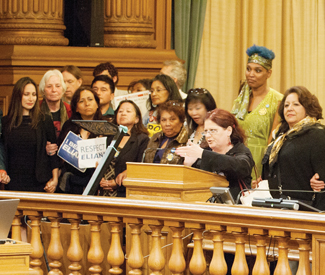
When Mayor Lee decided in March to suspend Sheriff Mirkarimi without pay and without any investigation — and by the way, showing no interest in hearing from the alleged victim, Eliana Lopez — progressives had good reason to be outraged. Domestic violence advocates and the Chronicle’s editorial writers may not see it this way, but I understand why it seemed politically motivated.

I also understand why people wanted Mirkarimi gone, believing that someone who admitted to domestic violence couldn’t possibly remain San Francisco’s chief elected law-enforcement officer. This was a black-and-white issue for them, and they saw progressive opposition to his removal as condoning his actions, despite our arguments that his criminal punishment was separate from the question of what the standard should be for removing an elected official from office.

Both sides fervently believed in their respective positions and were largely talking past one another, unable to really communicate. Positions hardened and were charged with emotion until they boiled over during the Oct. 9 hearing on Mirkarimi’s removal.

But there’s never any excuse for booing or making derogatory comments to domestic violence advocates who braved a hostile crowd to offer their opinions on the issue. Tolerance and respect for differing opinion are core progressive tenets, and our faith in those values must override our emotional impulses, which only feeds a fight that we lose just by fighting.

It was against this backdrop — and partially as a result of this polarized climate — that revelations of Davis’ bad behavior toward women were made public. Davis is a friend of mine, and I was aware that he could act like an over-entitled jerk toward women, particularly during his worst period several years ago, although I had no idea how bad it really was.

As with many political scandals, the issue here wasn’t just the original incidents, but how someone responds to them. That’s the mark of someone’s character and integrity. Most people do the wrong thing sometimes, but if we learn from our mistakes and truly make amends — which isn’t something we claim, but something offered to us if our intentions seem true — then we become better people.

As we said in our editorial withdrawing our endorsement from Davis a few weeks ago, being a progressive has to be more about the movement than the person, and it’s time that we remember that. So as a movement, the moment has arrived to come clean, admit our flaws, start anew, and try to lead by our example rather than our rhetoric or our stands on the issues.

***

They say confession is good for soul, so let me give it a shot. Shortly after Sup. Jane Kim took office in 2010, we had a series of confrontational conflicts over some votes she made and her failure to come clean about what her relationship was with Willie Brown, which seemed to me related. She offered a misleading answer to my question and then said she wouldn’t answer any more questions from me, which infuriated me because I believe politicians have a duty to be accountable. And so I continued to be hard on her in print and in person.

Now, I realize that I was being something of a bully — as political reporters, particularly male reporters, have often been over the years. I want to offer a public apology for my behavior and hope for forgiveness and that our relationship — which was a friendly one since long before she took office — can be better in the future.

While I felt that I was treating Kim like I would any politician, and I probably was, the fact is that the style of combative political exchanges — embodied in the last decade by Mirkarimi, Chris Daly, Aaron Peskin, and many others, mostly men but some women like Carole Migden — is what has brought the progressive movement and San Francisco politics in general to the lowly point that we now find ourselves.

My old friend and ex-girlfriend Alix Rosenthal and other political women I know have long tried to impress upon me the value of having more females in office, regardless of their ideology, as long as they aren’t actual conservatives. I have always bristled at that idea, believing ideology and political values to be more important than identity politics, which has been used as a wedge to divide the progressive movement.

At first, I supported Davis because I saw in him a progressive warrior. But most progressives know in our hearts that nobody wins wars. We are all diminished just for fighting them, and their fallout can be felt in unexpected ways for years to come. Even though I agreed with the Board of Supervisors decision to reinstate Mirkarimi, I felt sad and sick watching the celebrations that followed, and I understood that winning that battle might do real damage to the progressive movement.

So I’m proposing that we just stop fighting. We need to stop demonizing those we don’t agree with. “We are not the enemy,” Domestic Violence Consortium head Beverly Upton told supervisors at the Mirkarimi hearing, and she’s right. We can still disagree with her position, and we can say so publicly and call for her to talk to Lopez or take other steps, but we shouldn’t make her an enemy.

***

Having written this essay before the Nov. 6 election, I don’t know the outcome, but I do know progressive power is waning just as we need it most. Landlords and Realtors are intent on rolling back renter protections, while technology titans and other corporate leaders will keep pushing the idea that city government must serve their interests, something the mayor and most supervisors already believe. And they’re all overtly hostile to progressives and our movement.

Against this onslaught, and with so much at stake, the temptation is to fight back with all our remaining strength and hope that’s enough to change the dynamics. But it won’t. Now is the time to organize and expand our movement, to reach out to communities of color and the younger generations. We need to grow our ability to counter those who see San Francisco as merely a place to make money, and who are increasingly hostile to those of us standing in their way.

It may sound trite, but we need to meet their hate with our love, we need to counter their greed with our generosity of spirit. In the year 2012, with all the signs we see in the world that the dominant economic and political systems are dying, we need to work on building our capacity to create new systems to replace them. If they want to build a condo for a billionaire, we should find a way to build two apartments for workers. If they want to bend the campaign rules and dump millions of dollars into one of their candidates, we should use free media and bodies on the street to stand up for someone with more integrity.

Our heroes are people like MLK and Gandhi, and — and most recently and perhaps more relevantly, Arundhati Roy, Amy Goodman, and Aung San Suu Kyi — and we should heed their examples now more than ever. I’m not going to presume to lay out a specific agenda or new tactics, leaving that leadership to those who embody the new approaches and visions that I’m willing to learn and lend my energies and experience to supporting.

But the one essential truth that I’ve come to embrace is that our current struggles and paradigms are as unsustainable as the system that we’re critiquing. It’s time to embrace a new way of doing things, and to join the vast majority of people around the world in creating a new era.

What’s happening tonight

8

According to the SF Department of Elections, the first results — including just the absentees received before Election Day — will be posted here at about 8:45. That will include a preliminary ranked-choice voting run, which won’t be conclusive but will give people a sense of where the races are headed.

We’ll be posting regular updates on this blog through the evening, trying to make sense of the numbers and reporting from the various Election Night events. Join us for the latest news and analysis.

I’d guess by the time the polls close in California it will be pretty clear what’s happening on the national level.


Miami First Amendment attorney: election suppression is “unbelievably awful”

0

Thomas R. Julin, one of the top First Amendment attorneys in the country, emailed me this afternoon about the election suppression situation in Miami. Julin, an attorney with the firm of Hunton & Williams in Miami, reported that “the election situation here has been just unbelievably awful.”

“I spent three-and-a-half hours on line on Saturday at an early voting office. One of my partners was in line five-and-a-half hours today for regular voting.  And I just got a message from my wife that she is still one-and-a-half hours from the voting booth now, having been there most of the day. The outrage at the GOP for orchestrating this vote suppression is everywhere. The three primary tools that have been effective were the reduction in early voting days, the elimination of early voting on the Sunday before the election, and flooding the ballot with extremely lengthy constitutional amendments, none of which had any merit, but that slowed every voting line to a crawl.”

Cartoonist Louis Dunn puts things in perspective.

Vote early and often

1

The most expensive, ugliest, longest and most money-dominated election in my memory is finally winding down, and unless something really weird happens, Obama’s going to win another term. It’s likely the Democrats will control the Senate and the GOP will retain a narrow edge in the house, meaning four more years of gridlock (and possibly the end of Rep. Nancy Pelosi’s career).

But the real message will be the role of big money — not just ordinary big money, but billionaire money — in California and San Francisco elections.

The state ballot has become a billionaire playground, with four of the ten initiatives created, written, put on the ballot and funded by stinking rich individuals who have their own personal and political agendas. In San Francisco, billionaires Ron Conway and Thomas Coates are trying to buy the District 5 election. An Arizona group linked to the Koch brothers is trying to shut down Prop. 30 (and leave the state in fiscal disaster).

And I’ve never seen as much real-estate money go into one supervisorial district.

We know both presidential campaigns are billion-dollar operations, and a lot of the same bad money is going into each of them. But on the local level, it’s a very different situation. There’s a concerted campaign here to drive progressives out of local office and install people more friendly to landlords and developers — at a time when the city’s going to be facing the greatest displacement pressure since the first dot-com boom. You don’t see the Association of Realtors putting hundreds of thousands of dollars into local races very often; there’s an opportunity here and they see it and they want to weaken tenant protections so they can make more money.

One of the best arguments in favor of district elections is that money doesn’t necessarily buy electoral success. In a district with roughly 30,000 voters, it’s possible to practice old-fashioned grassroots retail politics, to win by knocking on doors and going to house parties and meeting people. It’s not all about TV ads. And if that holds up with this election, Sup. Eric Mar — with a far superior field operation — will survive the blistering assault he’s under in District 1. If David Lee — who has taken the Mitt Romney approach and refused to speak to reporters (they might ask him a question or two about his inaccurate campaign dirt) — wins, it will be the greatest blow to democracy in San Francisco that we’ve seen in years.

On the other hand, if the D1 voters reject all that money and sleaze and Mar wins — and if the District 5 voters reject the billionaire money and someone other than London Breed wins — San Francisco will be sending a profound message: We don’t want your dirty money here, and our votes are not for sale.

Polls are open until 8. Vote early and often.

City Editor Steven T. Jones on where to get rowdy, dramatic, and/or historically significant for Election 2012

0

Sure you voted (you voted, right?), but do you know where your election night party is? After as many years as he’s been in the field, City Editor Steven T. Jones has some tips on where to see the most election-cycle hoo-hah. Don’t forget to check out our complete list of tonight’s parties, from the League of Pissed Off Voters always-raucus ruckus at El Rio to historic death penalty referendum Yes on Prop. 34’s get-together at Jillian’s. 

Extra! Extra! Gov. Rick Scott welcomes you to the State of Florida on election suppression day

1

And so, thanks to Republican Governor Rick Scott and his Republican allies, the lines of voters were once again impossibly long at Florida voting places and many voters started chanting dramatically on national television, “Let us vote, let us vote, let us vote.” It was a chant that rang throughout many battleground states where Republicans had the power to reduce early voting and implement other policies designed to keep the lines long and to make it as difficult as possible for prospective Democrats to exercise their constitutional right to vote. 

Guardian cartoonist Louis Dunn sizes up the situation. And I ask the Impertinent Question: Are Florida and other such places becoming third world countrIes? This kind of voter suppression and repression is an update of the old poll tax policy used in the South for generations to keep blacks from voting–and used eight years ago to put Bush into office over Gore, who won by more than 500,000 votes.  It has no place anywhere in the U.S. in 2012. The first thing Obama and the Democrats need to do is to move to investigate, prosecute, and criminalize this behavior.

Obama, let me predict, is going to win and he needs to aggressively assert himself and his presidency at the outset. This is a good place to start. b3

P.S. Thomas R.Julin, a noted Miami First Amendment attorney,  told me this afternoon that the election suppression in Miami  is “unbelievably awful.” http://www.sfbg.com/bruce/2012/11/06/miami-first-amendment-attorney-election-suppression-unbelievably-awful  B3


So-called DV group doing PG&E’s dirty work

34

Any pretense that the group called San Francisco Women for for Responsibility and an Accountable Supervisor is anything more than a downtown sham vanished with the arrival in District 5 mailboxes Nov. 3 of a mailer attacking Sup. Christina Olague for supporting public power.

The mailer uses pictures of Olague and Julian Davis — and that alone is a not-so-subtle attack on Olague. Davis has lost all credibility in the race, thanks to a string of allegations that he groped women.

It then goes after the two for “support [ing] a $20 million taxpayer giveaway to Big Oil.” The utterly misleading line is based on Olague’s vote to support Clean Power SF, a community choice aggregation program that has the support of public power advocates all over California.

Olague’s not supporting Shell Oil; she just realized, as did a supermajority of the board (including both left stalwarts David Campos and John Avalos and the far more conservative Scott Wiener) that the program makes sense for San Francisco and will lead in the long term to much greater energy self-reliance. The only ones putting out the Shell Oil line are PG&E and its house union, IBEW Local 1245.

Oh, and now a group that supposedly advocates for domestic violence victims.

This is a disgrace, an embarassment to the district and the city. Ron Conway and Thomas Coates are attacking Olague because they’re afraid she’ll vote against their development and landlord interests, not because they care about domestic violence.

This election matters, a lot. It’s clear where the big-money interests are; I hope D5 residents reject this attempt to buy the election.


True facts: there are at least 15 movies opening this week

0

Pack up the leftover Halloween candy and head to the movies this weekend — what better way to escape election-related craziness and/or rest your liver after all that LET’S GO GIANTS damage you just did?

Your options are pretty spectacular, as well: intriguing Israeli doc The Flat, in which a Jewish filmmaker learns his grandparents counted a Nazi couple among their social circle (my interview with director Arnon Goldfinger here); bonkers 1987 rock ‘n’ roll taekwondo spectacular Miami Connection (Dennis Harvey’s take on this newly discovered instant cult classic here)

Plus, RZA’s The Man With The Iron Fists, an homage to chopsocky classics (with, I’m assuming, a much better soundtrack); Denzel Washington playing an airline pilot whose secret drinking problem comes to light only after he prevents a plane from crash landing in Flight; and Deep Dark Canyon, a NorCal-set thriller by former locals Silver Tree and Abe Levy starring Ted Levine.

And that’s not even the end of it! Read on for video game characters run amok, two found-footage horror flicks, a musically-inclined Pacific Film Archive program, tributes to Tony Bennett (speaking of the Giants) and Monty Python’s Graham Chapman, and, I kid you not … even more.

Amber Alert An audition tape for The Amazing Race quickly turns into an epic chase in this low-budget “found footage” drama. Arizona BFFs Nate (Chris Hill) and Sam (Summer Bellessa, wife of director Kerry Bellessa) — and Sam’s teenage brother, shaky-cam operator Caleb (Caleb Thompson) — notice they’re driving behind the very Honda that’s being sought by an Amber Alert. “Following at a safe distance,” as advised when they call the cops, leads to high-decibel arguments about how to handle the situation — and for the next hour-plus, the viewer is trapped in a car with two people communicating only in nails-on-chalkboard tones. Amber Alert‘s nonstop bickerfest is so tiresome that it’s actually a relief when the child molester character starts taking an active role in the story. Not a good sign. (1:20) (Cheryl Eddy)

http://www.youtube.com/watch?v=ctkkn1qSYKw

The Bay Top-quality (i.e., realistically repulsive) special effects highlight this otherwise unremarkable disaster movie that’s yet another “found footage” concoction, albeit maybe the first one from an Oscar-winning director. But it’s been a long time since 1988’s Rain Man, and the Baltimore-adjacent setting is the only Barry Levinson signature you’ll find here. Instead, parasites-gnaw-apart-a-coastal-town drama The Bay — positioned as a collection of suppressed material coming to light on “Govleaks.org” — is a relentlessly familiar affair, further hampered by a narrator (Kether Donohue) with a supremely grating voice. Rising star Christopher Denham (Argo) has a small part as an oceanographer whose warnings about the impending waterborne catastrophe are brushed aside by a mayor who is (spoiler alert!) more concerned with tourist dollars than safety. (1:25) (Cheryl Eddy)

“Don’t Shoot the Player Piano: The Music of Conlon Nancarrow” The late Texarkana-born composer’s birth centenary is celebrated in this two-part (Fri/2 and Sun/4) program of films examining his unique contribution to 20th century music. Frustrated early on by the inability of standard musicians to play his incredibly complicated scores, he turned to composing for player pianos, with their greatly heightened capacity for producing density of notes and rhythms. A member of the American Communist Party, he returned from fighting fascists in the Spanish Civil War to discover the U.S. government had revoked the passports of many citizens with similar political convictions. As a result, in 1940 he moved to Mexico, where he remained until his death 57 years later — his reputation remaining an underground musicologists’ secret until the early 1980s, in large part due to his disinterest in fame and dislike of crowds (he’d always avoided any gathering of over five people). But in his last years he became much more widely known, thanks in large part to fans like fellow composer Gyorgy Ligeti, who in one documentary here calls him “the most important composer of our time,” comparing him to Beethoven and saying “his work is completely, totally different from [his contemporaries].” Among the movies screening are Uli Aumuller and Hanne Kaisik’s 1993 German Music for 1,000 Fingers, in which the reclusive, elderly subject allows us into his studio to explain his (still somewhat inexplicable) methodologies. The brand-new, hour-long Conlon Nancarrow: Virtuoso of the Player Piano offers a posthumous appreciation of his life, music and influence. It’s a first film from James Greeson, a professor of music at the University of Arkansas who knew the man himself. Also featured are several international shorts that provide interpretive visual complements to Nancarrow pieces. His widow and daughter, as well as kinetic sculptor Trimpin and composer-former KPFA music director Charles Amirkhanian will appear at both PFA programs. Pacific Film Archive. (Dennis Harvey)

http://www.youtube.com/watch?v=vXFOYmsYCTA

A Late Quartet Philip Seymour Hoffman is fed up playing second fiddle — literally. He stars in this grown-up soap opera about the internal dramas of a world-class string quartet. While the group is preparing for its 25th season, the eldest member (Christopher Walken) is diagnosed with early stage Parkinson’s. As he’s the base note in the quartet, his retirement challenges the group’s future, not just his own. Hoffman’s second violinist sees the transition as an opportunity to challenge the first violin (Mark Ivanir) for an occasional Alpha role. When his wife, the quartet’s viola player (Catherine Keener), disagrees, it’s a slight (“You think I’m not good enough?”) and a betrayal because prior to their marriage, viola and first violin would ”duet” if you get my meaning. This becomes a grody aside when Hoffman and Keener’s violin prodigy daughter (Imogen Poots) falls for her mother’s old beau and Hoffman challenges their marriage with a flamenco dancer. These quiet people finds ways to use some loud instruments (a flamenco dancer, really?) and the music as well as the views of Manhattan create a deeply settled feeling of comfort in the cold —insulation can be a dangerous thing. When we see (real world) cellist Nina Lee play, and her full body interacts with a drama as big as vaudeville, we see what tension was left out of the playing and forced into the incestuous “family” conflicts. In A Late Quartet, pleasures are great and atmosphere, heavy. You couldn’t find a better advertisement for this symphonic season; I wanted to buy tickets immediately. And also vowed to stay away from musicians. (1:45) (Sara Vizcarrondo)

A Liar’s Autobiography: The Untrue Story of Monty Python’s Graham Chapman Blessed with recordings made by Monty Python member Graham Chapman (King Arthur in 1975’s Monty Python and the Holy Grail; Brian in 1979’s Life of Brian) before his death in 1989 from cancer, filmmakers Bill Jones, Jeff Simpson, and Ben Timlett recruited 14 different animation studios to piece together Chapman’s darkly humorous (and often just plain dark) life story. He was gay, he was an alcoholic, he co-wrote (with John Cleese) the legendary “Dead Parrot Sketch.” A Liar’s Autobiography starts slowly — even with fellow Monty Python members Cleese, Terry Jones, Terry Gilliam, and Michael Palin lending their voices, much of the bone-dry humor falls disappointingly flat. “This is not a Monty Python film,” the filmmakers insist, and viewers hoping for such will be disappointed. Stick with it, though, and the film eventually finds its footing as an offbeat biopic, with the pick-a-mix animation gimmick at its most effective when illustrating Chapman’s booze-fueled hallucinations. In addition to opening theatrically, the film also debuts Fri/2 on premium cable channel Epix. (1:22) (Cheryl Eddy)

http://www.youtube.com/watch?v=SIIMFHcC1Fc

The Loneliest Planet Travel broadens, they say — and has a way of foregrounding anxiety and desire. So the little tells take on a larger, much more loaded significance in The Loneliest Planet when contextualized by the devastatingly beautiful Caucasus Mountains in Georgia. In this film by Russian American director and video artist Julia Loktev, adventuring, engaged Westerners Nica (an ethereal Hani Furstenberg) and Alex (Gael García Bernal) hire a local guide and war veteran (Bidzina Gujabidze) to lead them on a camping trip through the wilderness. They’re globe-trotting blithe spirits, throwing themselves into new languages and new experiences, though the harsh, hazardous, and glorious Georgian peaks and crevasses have a way of making them seem even smaller while magnifying their weaknesses and naiveté. One small, critical stumble on their journey is all it takes for the pair to question their relationship, their roles, and the solid ground of their love. Working with minimal dialogue (and no handlebar subtitles) from a Tom Bissell short story, Loktev shows a deliberate hand and thoughtful eye in her use of the space, as well as her way of allowing the silences to speak louder than dialogue: she turns the outdoor expanses into a quietly awe-inspiring, albeit frightening mirror for the distances between, and emptiness within, her wanderers, uncertain about how to quite find their way home. (1:53) (Kimberly Chun)

The Other Son The plot of ABC Family’s Switched at Birth gets a politically-minded makeover in Lorraine Lévy’s The Other Son, in which the mixed-up teens represent both sides of the Israel-Palestine conflict. When mop-topped wannabe rocker Joseph (Jules Sitruk) dutifully signs up for Israeli military duty, the required blood test reveals he’s not the biological son of his parents. Understandably freaked out, his French-Israeli mother (Emmanuelle Devos) finds out that a hospital error during a Gulf War-era evacuation meant she and husband Alon (Pascal Elbé) went home with the wrong infant — and their child, aspiring doctor Yacine (Medhi Dehbi), was raised instead by a Palestinian couple (Areen Omari, Khalifia Natour). It’s a highly-charged situation on many levels (“Am I still Jewish?”, a tearful Joseph asks; “Have fun with the occupying forces?”, Yacine’s bitter brother inquires after his family visits Joseph in Tel Aviv), and potential for melodrama is sky-high. Fortunately, director and co-writer Levy handles the subject with admirable sensitivity, and the film is further buoyed by strong performances. (1:53) (Cheryl Eddy)

http://www.youtube.com/watch?v=OCD00LLZmys

A Simple Life When elderly Ah Tao (Deanie Ip), the housekeeper who’s served his family for decades, has a stroke, producer Roger (Andy Lau) pays for her to enter a nursing home. No longer tasked with caring for Roger, Ah Tao faces life in the cramped, often depressing facility with resigned calm, making friends with other residents (some of whom are played by nonprofessional actors) and enjoying Roger’s frequent visits. Based on Roger Lee’s story (inspired by his own life), Ann Hui’s film is well-served by its performances; Ip picked up multiple Best Actress awards for her role, Lau is reliably solid, and Anthony Wong pops up as the nursing home’s eye patch-wearing owner. Wong’s over-the-top cameo doesn’t quite fit in with the movie’s otherwise low-key vibe, but he’s a welcome distraction in a film that can be too quiet at times — a situation not helped by its washed-out palette of gray, beige, and more gray. (1:58) (Cheryl Eddy)

http://www.youtube.com/watch?v=87E6N7ToCxs

Wreck-It Ralph Wreck-It Ralph cribs directly from the Toy Story series: when the lights go off in the arcade, video game characters gather to eat, drink, and endure existential crises. John C. Reilly is likable and idiosyncratic as Ralph, the hulking, ham-fisted villain of a game called Fix-It-Felix. Fed up with being the bad guy, Ralph sneaks into gritty combat sim Hero’s Duty under the nose of Sergeant Calhoun (Jane Lynch), a blond space marine who mixes Mass Effect‘s Commander Shepard with a PG-rated R. Lee Ermey. Things go quickly awry, and soon Ralph is marooned in cart-racing candyland Sugar Rush, helping Vanellope Von Schweetz (a manic Sarah Silverman), with Calhoun and opposite number Felix (Jack McBrayer) hot on his heels. Though often aggressively childish, the humor will amuse kids, parents, and occasionally gamers, and the Disney-approved message about acceptance is moving without being maudlin. The animation, limber enough to portray 30 years of changing video game graphics, deserves special praise. (1:34) (Ben Richardson)

http://www.youtube.com/watch?v=bLxP8snjdGc

The Zen of Bennett Landing somewhere between a glorified album making-of and a more depthed exploration, this documentary about famed crooner Tony of “I Left My Heart in San Francisco” fame shows him recording last year’s all-standards Duets II disc. His vocal collaborators are an eclectic — to say the least — mix of mostly much younger artists including Norah Jones, John Mayer, Carrie Underwood, Willie Nelson, and Andrea Bocelli. Some pairings are clearly a matter of commerce over chemistry, while others surprise — Lady Gaga is better than you might expect, while Aretha Franklin is certainly worse. Most touching as well as disturbing is his session with the late Amy Winehouse, whose nervous, possibly hopped-up appearance occasions his most gentlemanly behavior, as well as genuine admiration for her talent. (Others on the record, including Mariah Carey and k.d. lang, do not appear here.) Unjoo Moon’s rather mannered direction includes little displays of temperament from the octogenarian star, and glimpses of his family life (which extends well into his work life, since they all seem to be on the payroll), but just enough to tease — not enough to provide actual insight. Still, fans will find this less than-definitive portrait quite satisfying enough on its own limited terms. (1:24) (Dennis Harvey)

The billionaire attack on D5

155

The attack on Sup. Christina Olague, funded by a couple of right-wing billionaires, is in full swing in District 5, with mailers, robocalls, a social-media buy and even TV ads. It’s a disgraceful effort to buy an election in the final week, a flood of sleaze that’s outrageous even by modern political standards.

On the surface, the PAC called San Francisco Women for Responsibility and an Accountable Supervisor is talking about domestic violence. One mailer features a woman whose daughter was killed by an abuser saying she is “appaled” that Sheriff Ross Mirkarimi still has his job — and that Olague voted not to throw him out. A 60-second TV ad features Ivory Madison, the Mirkarimi neighbor whose video was the centerpiece of the campaign to oust the sheriff.

But the PAC is entirely funded by Ron Conway, his wife Gayle, and Thomas Coates. Conway hasn’t been a leading voice on domestic violence issues, and neither has Coates — they are business people who are primarily interested in making money. In the case of Conway, he’s someone who has publicly announced that he wants to “take San Francisco back” from progressives and install more big-business-friendly politicians at City Hall. Coates is a real-estate investor who has spent a lot of time and money fighting to limit tenant-protection laws.

Why are these two so interested in the D5 race? Well, in an email, Conway told me that “the Committee that my wife Gayle and other women, including longtime anti-domestic violence advocates, have formed and that I and others support exists solely to oppose Christina Olague because she put her own politics ahead of women and the victims and survivors of domestic abuse.”

But it’s eminently clear that there’s a larger agenda here, that the wealthy donors are using the domestic violence issue to get rid of a supervisor who they see as not sufficiently friendly to their economic interests. And there’s probably a bit of payback involved: Olague defied the mayor with her Mirkarimi vote — and while a lot of observers still say this was all a setup to demonstrate her independence in time for the election, Conway, one of the mayor’s closest allies and advisors, clearly didn’t get that message.

Coates lives in Los Angeles. Conway lives in Pacific Heights. Neither of them has any connection the D5 — except for their desire to get rid of Olague. They’ve taken a real, serious issue — domestic violence — and used it to their own political advantage.

We haven’t endorsed Olague, but we know a shady scam when we see one, and that’s exactly what this is. The voters of District 5 should reject this kind of outside-influence politics and not let a couple of billionaires decide the future of their the city.

Record-breaking spending floods District 1 with political propaganda

19

District 1 supervisorial candidate David Lee and independent expenditure campaigns supporting him have spent nearly $800,000 – shattering previous spending records for a district election – bombarding Richmond District voters with a barrage of mailers and other media pushing a variety of claims and criticisms about incumbent Sup. Eric Mar that sometimes stretch credulity and relevance.

But is it working? Or is the avalanche of arguments – much of it funded by “big money from Realtors, Landlords, and Downtown Special Interests,” as a recent Mar mailer correctly notes – feeding speculation that Lee would do the bidding of these powerful players on the Board of Supervisors?

Mar campaign manager Nicole Derse thinks that’s the case, arguing the Lee campaign would have leaked internal polls to the media if they were favorable, and it wouldn’t be escalating its attacks on so many fronts hoping for traction, such as yesterday’s press conference hitting Mar on the issue of neighborhood schools.

“They’re pretty desperate at this point and throwing anything out there that they can,” Derse told us, later adding, “I feel good, but we really have to keep the fire up.”

Mar and the independent groups supporting him, mostly supported by the San Francisco Labor Council, have together spent about $400,000. Most of the mailers have been positive, but many have highlighted Lee’s political inexperience and his connections to big-money interests, raising questions about his claims to support tenants and rent control.

Lee campaign manager Thomas Li, who has been unwilling to answer our questions throughout the campaign, did take down some Guardian questions this time and said he’d get us answers, but we haven’t heard back. On the issue of why the Realtors and other groups who seek to weaken tenant protections were supporting Lee, Li simply said, “Our position has been steadfast on protecting rent control and strengthening tenant protections.”

The Lee campaign has repeated that on several mailers – possibly indicating it is worried about that issue and the perception that Lee’s election would give landlords another vote on the board, as tenant and other progressive groups have argued – but most of its mailers recently have attacked Mar on a few issues where they must believe he is vulnerable, even when they distort his record.

Several mailers have noted Mar’s support for a city budget that included funding for a third board aide for each of the 11 supervisors – a budget the board unanimously approved – as well as his support for public campaign financing, despite the fact that Lee’s campaign has taken more than $150,000 in public financing in this election, 30 percent more than Mar’s. They have also criticized Mar for supporting the 8 Washington high-end condo project, even though Lee also voted for the project as a member of the Recreation and Parks Commission.

As this Ethics Commission graphic shows, Lee has been by far the biggest recipient of independent expenditures in this election cycle, with hundreds of thousands of dollars coming from the downtown-funded Alliance for Jobs and Sustainable Growth and the Realtor-created Citizens for Responsible Growth.

Mar and his allies have hit back with mailers noting that most of the funding for the Chinese American Voter Education Project, Lee’s main political and communications vehicle in recent years, has simply gone to pay his $90,000-plus annual salary, which he didn’t fully report on financial disclosure forms required of city commissioners. They have also hit Lee for his support for the Recreation and Parks Department’s closure of recreation centers and other cuts while he “consistently supported privatization of our parks.”

At this point, it’s hard to know how this flood of information and back-and-forth attacks will influence District 1 voters, but we’re now days away from finding out.

Romney has lost. Unless ….

41

Polls aren’t perfect, but a lot of polls that come to the same conclusion are rarely wrong, at least not by much, and all the polling data suggests that in the critical swing states, Mitt Romney is SOL. Sure, the GOP camp is keeping up hope, but everyone knows that the odds are heavily in favor of the re-election of Barack Obama. In the spring of 2010, I bet on the Giants winning the World Series at 20-1 (nice payoff, that one), but I wouldn’t even take those odds on Romney today.

And since Hurricane Sandy has left Ohio and Pennsylvania relatively intact (no massive poll closures for lack of electrict power), and the voter-suppression laws have been put on hold by the courts, there’s really nothing game-changing available to Romney’s gang of crooks — except this.

I’m with the Wonkette folks — I don’t typically buy into the voting-machines-are-rigged-by-secret-Bain-operatives kinds of theories. But we all know the 2000 election was stolen, and I’m pretty sure that Willie Brown and his appointed elections chief, Tammy Haygood, did something fishy (maybe very fishy, judging by ballot boxes floating in the Bay) to prevent a public-power measure from passing in 2001. And we know that the voter ID laws were carefully designed to keep African Americans, Latinos, seniors and students away from the polls this fall. And we know that Romney’s backers are among the most powerful and secretive people in the world; if there really were groups like the Bilderbergs and the Masons running the world, Romney wouldn’t be allowed in the back rooms (too dumb) but his big-money allies would be there.

Could it be possible that somebody in Romneyland is going to try to pull a modern-day version of the hanging-chad caper?

We’d be fools not to think it’s on the agenda. Doesn’t mean they can pull it off (and seriously, if the president of the United States doesn’t have people who can monitor and put a check on this shit, then he doesn’t deserve the title). But if some of those swing states suddenly go all Florida, 2000 on us and start showing up red on the electoral map, it won’t be because of Obama’s college transcripts.

So go ahead, trolls, tell me how nuts I am. You’re probably right; everything’s going to be Just Fine.

Olague attacks led by billionaires and a consultant/commissioner with undisclosed income

72

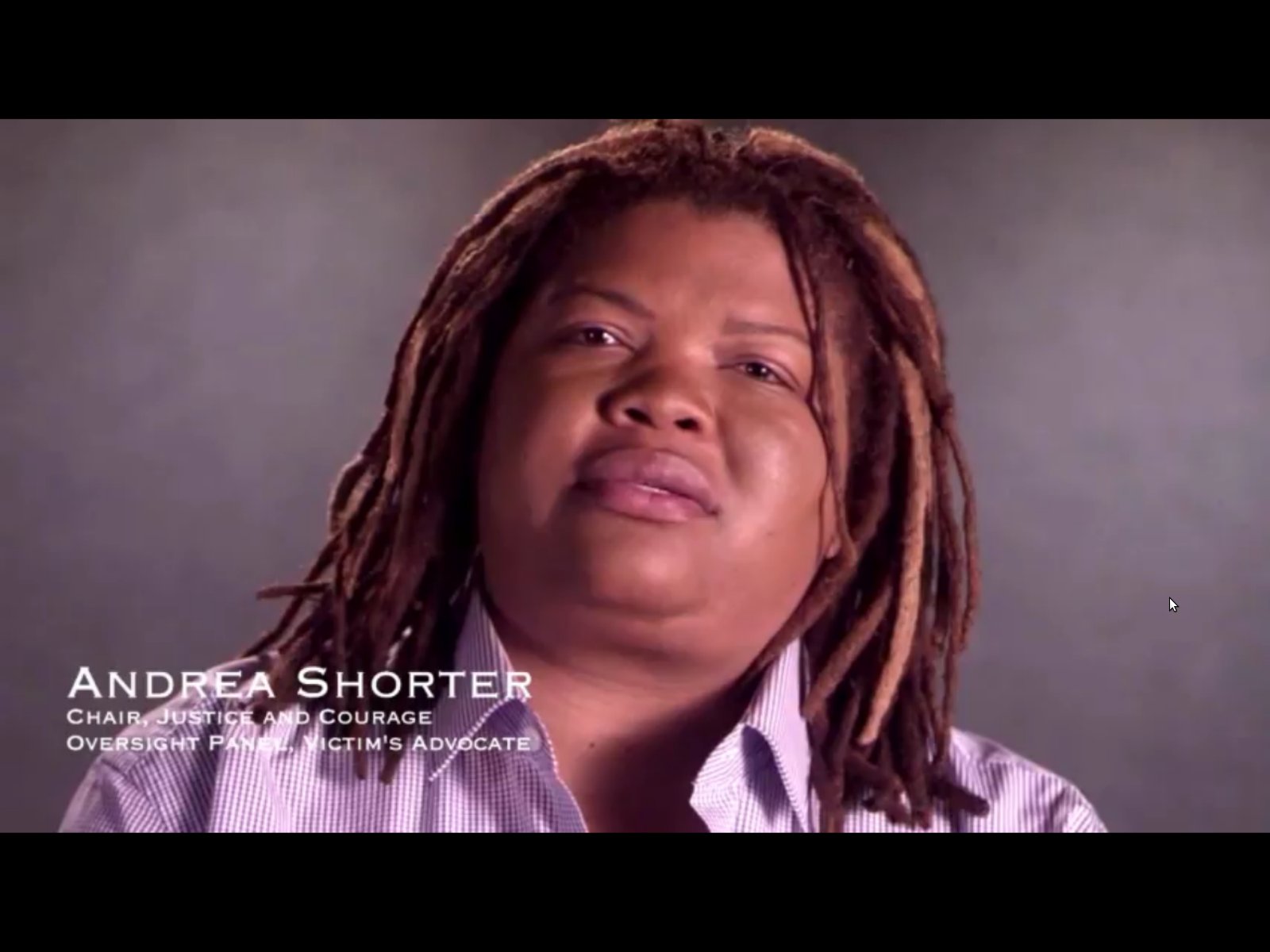
Understanding how political activists are being paid is important to understanding what their motivations are. For example, is Andrea Shorter – a mayor-appointed former president of the Commission on the Status of Women – leading the campaigns against Sup. Christina Olague and Sheriff Ross Mirkarimi out of concern for domestic violence, or is it because of their progressive political stands, such as supporting rent control and opposing corporate tax breaks?

As a city commissioner who is required under state law to report her income on annual financial disclosure forms to the city, the public should be able to know who is paying this self-identified “political consultant.” But we can’t, because for each of the last five years, Shorter has claimed under penalty of perjury on Form 700 to have no reportable income, which means less than $500 from any source – an unlikely claim that was the source of complaints filed today with the Ethics Commission and Fair Political Practices Commission.

Shorter led efforts to have her commission support Mayor Ed Lee’s failed effort to remove Mirkarimi from office for official misconduct, and now she’s become one of the main public faces leading an independent expenditure campaign called San Francisco Women for Accountability and a Responsible Supervisor Opposing Christina Olague 2012, funded with more than $100,000 by Lee’s right-wing financial supporters: venture capitalist Ron Conway and Thomas Coates (and his wife), who has also funded statewide efforts to make rent control illegal.

Neither Shorter nor Conway responded to our requests for comment, but tenant advocates and Olague supporters are pushing back with an 11:30am rally at City Hall tomorrow (Thurs/1). Organizers are calling on activists “to beat back the attacks on rent control and workers by billionaires Ron Conway and the Coates family. The 1 Percent Club, Coates and Conway want San Francisco to be a playground for the rich. Take a stand to say that these opportunists CANNOT buy elections!”

The Ethics Commission complaint against Shorter was filed this morning by sunshine activist Bob Planthold, who also filed a similar complaint a couple weeks ago against District 1 supervisorial candidate David Lee, who also appears to have grossly understated his income of the same financial disclosure form during his service on the Recreation and Parks Commission.

“There’s been too little attention by mayor after mayor after mayor in that the people they appoint are allowed to be sloppy, negligent, unresponsive, and under-responsive to these financial disclosure requirements,” Planthold told us.

Although the Ethics Commission doesn’t confirm or deny receiving complaints or launching investigations, Planthold said Ethics investigators have already notified him that they were investigating the Lee complaint, and he expects similar action against Shorter. “Ethics is pursuing my complaint against David Lee. It’s not one of the many that they decided to ignore,” Planthold said.

The FPPC complaint against Shorter is being filed by former Board of Supervisors President Aaron Peskin, who told us, “The complaint speaks for itself.”

Although Shorter claims no income on public forms, the political consulting firm Atlas Leadership Strategies lists Shorter as the CEO of Political Leadership Coaching, which works with political candidates and causes. Atlas also represents PJ Johnston, who was press secretary for then-Mayor Willie Brown and now represents a host of powerful corporate clients.

“Her brand of discreet, highly confidential, political coaching works to equip leaders with tools to exercise more effective, impactful, innovative and – where possible – transformative leadership,” was one way Atlas describes Shorter.

Is she working in a discreet and confidential way to elect moderate London Breed to one of the city’s most progressive districts? Is she being paid for that work by Conway or anyone else? Is she doing the bidding of Mayor Lee and his allies in hopes of greater rewards?

Or should voters just take at face value her claim to really be standing up for “accountability” from public officials? Is this really about the statement Shorter makes in the video prominently displayed on the sfwomenforaccountability.com website: “Christina Olague has lost the trust of victims’ advocates. She has set our cause back. I’m profoundly disappointed in her and I can’t support her anymore.”?

With less than a week until the election, voters can only speculate.

West Memphis free

0

arts@sfbg.com

LIT When Damien Echols stepped out of the Craighead County courtroom on August 19, 2011 a free man, he’d spent more than half of his life on death row, for a crime he insists he didn’t commit — the gruesome murders of three young boys. His trial and quest for exoneration, along with co-defendant Jason Baldwin and a third accused, Jesse Misskelley Jr., are well documented in the Paradise Lost documentaries directed by Joe Berlinger and Bruce Sinofsky, and the subject of a fourth documentary, West of Memphis, due out in December. But for a more microscopically focused, day-to-day accounting of growing up behind prison walls, Echols’ book Life After Death (Blue Rider Press, 392 pp., $26.95) delivers a highly personal account of living under a sentence of death.

The timing of the book’s release could not be better for Californians, who are facing the opportunity to overturn the death penalty in the upcoming November election by voting yes on Proposition 34. For the undecided, reading about death row from the perspective of one who lived on it may offer one of the most compelling arguments against maintaining it. Echols’ book offers a vision of life on death row as bleak as it is banal: the glacial grind of the appeals process, the dehumanizing effects of institutionalization on both the incarcerated and the incarcerating, and the unsettling reality that there have been numerous factually innocent people sent to death row for sentences that have little to do with deterrence, and much with revenge. (More information on wrongful convictions can be found via organizations such as the Innocence Project, the Death Penalty Information Center, and Amnesty International.)

Even when you strip away Echols’ penchant for overwrought hyperbole (“I cannot explain it, the way everything in my soul gibbers and shrieks for some sort of closure”), he effectively paints a portrait of an isolated sovereign state characterized by rote adherence to pointless, administrative ritual. The primary focus of Echols and his fellow inmates seems to be staving off boredom and breakdown, chronic death row maladies on which Echols provides plenty of detail. Echols learns to sit zazen, increasing his ability to silently mediate from 15 minutes to five-hour stretches. He watches television — looking forward every year to each Charlie Brown holiday special and baseball season — and offers tips on cooking chili over a light bulb plus novel uses for magazine cologne samples. In fact, at certain points his discourse (written mostly while Echols was still in jail) reads a bit like a “Hello Muddah” letter from summer camp rather than a hardcore exposé of the prison system.

Since he was sent to death row while still a teenager, Echols’ essays and letters are frequently tinged with lingering shades of adolescent angst, and confined as he was to an effectively solitary existence, he can’t help but to come off sounding somewhat self-absorbed (“I look at the people who have done horrible things to me … and I know they would never have been able to rise above the things that I have”). When not writing about prison life, he writes about his poverty-stricken childhood and his side of the criminal case that catapulted him to an uncomfortable celebrity, vacillating between emotional extremes. In one paragraph he fondly describes the way his father could make him laugh, in another he describes being “disgusted” by his “childishness.” His mother, sister, and step-father are all singled out for similar treatment, and he even takes a swipe at onetime best friend Jason Baldwin, for hesitating over the deal that allowed the West Memphis Three to walk out of prison in 2011 with time served — but not with exoneration.

But Echols the person is more than just Echols the condemned, and Echols the writer is more than a one-note diva. Strewn throughout his narrative are wryly humorous observations, such as his glowing description of a sumptuous breakfast at the mental institution where he was temporarily confined as a youth (“The insane do not count carbs”), and his tongue-in-cheek recounting of his teenage attempts to find a summer job (“I was growing desperate because potential employers didn’t seem to value the exceptional intellectual giant who was presenting himself to them”). His glowing tributes to his wife and defending angel Lorri Davis are touching and truthful, and his penchant for poetic phrasing is transcendent when it hits its mark.

“I’ve seen ghosts in the lines of a woman’s face and heard them in the jangling of keys,” Echols writes urgently. “Sometimes I even mistake myself for one.” Fortunately for his audience his writing, at least, tethers him unequivocally to the corporeal world — a man after all, not a shade. *