Economy

The Keynes vs. Hayek rematch

42

By Robert Skidelsky

Robert Skidelsky, a member of the British House of Lords, is Professor Emeritus of Political Economy at Warwick University.

LONDON – The Austrian economist Friedrich von Hayek, who died in 1992 at the age of 93, once remarked that to have the last word requires only outliving your opponents. His great good fortune was to outlive Keynes by almost 50 years, and thus to claim a posthumous victory over a rival who had savaged him intellectually while he was alive.

Hayek’s apotheosis came in the 1980’s, when British Prime Minister Margaret Thatcher took to quoting from The Road to Serfdom (1944), his classic attack on central planning. But in economics there are never any final verdicts. While Hayek’s defense of the market system against the gross inefficiency of central planning won increasing assent, Keynes’s view that market systems require continuous stabilization lingered on in finance ministries and central banks.

Both traditions, though, were eclipsed by the Chicago school of “rational expectations,” which has dominated mainstream economics for the last twenty-five years. With economic agents supposedly possessing perfect information about all possible contingencies, systemic crises could never happen except as a result of accidents and surprises beyond the reach of economic theory.

The global economic collapse of 2007-2008 discredited “rational expectations” economics (though its high priests have yet to recognize this) and brought both Keynes and Hayek back into posthumous contention. The issues have not changed much since their argument began in the Great Depression of the 1930’s. What causes market economies to collapse? What is the right response to a collapse? What is the best way to prevent future collapses?

For Hayek in the early 1930’s, and for Hayek’s followers today, the “crisis” results from over-investment relative to the supply of savings, made possible by excessive credit expansion. Banks lend at lower interest rates than genuine savers would have demanded, making all kinds of investment projects temporarily profitable.

But, because these investments do not reflect the real preferences of agents for future over current consumption, the savings necessary to complete them are not available. They can be kept going for a time by monetary injections from the central bank. But market participants eventually realize that there are not enough savings to complete all the investment projects. At that point, boom turns to bust.

Every artificial boom thus carries the seeds of its own destruction. Recovery consists of liquidating the misallocations, reducing consumption, and increasing saving.

Keynes (and Keynesians today) would think of the crisis as resulting from the opposite cause:  under-investment relative to the supply of saving – that is, too little consumption or aggregate demand to maintain a full-employment level of investment – which is bound to lead to a collapse of profit expectations.

Again, the situation can be kept going for a time by resorting to consumer-debt finance, but eventually consumers become over-leveraged and curtail their purchases. Indeed, the Keynesian and Hayekian explanations of the origins of the crisis are actually not very different, with over-indebtedness playing the key role in both accounts. But the conclusions to which the two theories point are very different.

Whereas for Hayek recovery requires the liquidation of excessive investments and an increase in consumer saving, for Keynes it consists in reducing the propensity to save and increasing consumption in order to sustain companies’ profit expectations. Hayek demands more austerity, Keynes more spending.

We have here a clue as to why Hayek lost his great battle with Keynes in the 1930’s. It was not just that the policy of liquidating excesses was politically catastrophic: in Germany, it brought Hitler to power. As Keynes pointed out, if everyone – households, firms, and governments – all started trying to increase their saving simultaneously, there would be no way to stop the economy from running down until people became too poor to save.

It was this flaw in Hayek’s reasoning that caused most economists to desert the Hayekian camp and embrace Keynesian “stimulus” policies. As the economist Lionel Robbins recalled:  “Confronted with the freezing deflation of those days, the idea that the prime essential was the writing down of mistaken investments and…fostering the disposition to save was…as unsuitable as denying blankets and stimulus to a drunk who has fallen into an icy pond, on the ground that his original trouble was overheating.”

Except to Hayekian fanatics, it seems obvious that the coordinated global stimulus of 2009 stopped the slide into another Great Depression. To be sure, the cost to many governments of rescuing their banks and keeping their economies afloat in the face of business collapse damaged or destroyed their creditworthiness. But it is increasingly recognized that public-sector austerity at a time of weak private-sector spending guarantees years of stagnation, if not further collapse.

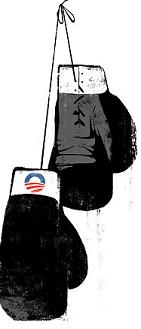
So policy will have to change. Little can be hoped for in Europe; the real question is whether President Barack Obama has it in him to don the mantle of President Franklin Roosevelt.

To prevent further crises of equal severity in the future, Keynesians would argue for strengthening the tools of macroeconomic management. Hayekians have nothing sensible to contribute. It is far too late for one of their favorite remedies – abolition of central banks, supposedly the source of excessive credit creation. Even an economy without central banks will be subject to errors of optimism and pessimism. And an attitude of indifference to the fallout of these mistakes is bad politics and bad morals.

So, for all his distinction as a philosopher of freedom, Hayek deserved to lose his battle with Keynes in the 1930’s. He deserves to lose today’s rematch as well.

Robert Skidelsky, a member of the British House of Lords, is Professor Emeritus of Political Economy at Warwick University.

Copyright: Project Syndicate, 2011.

www.project-syndicate.org

Our Weekly Picks: August 17-23

0

WEDNESDAY 17

FILM

Better than Something

Before his death in 2008 at the age of 29, Jimmy Lee Lindsey Jr., a.k.a. Jay Reatard, released more material in ten years than most musicians dream of in a lifetime. He was at the peak of his career, and documentarians Alex Hammond and Ian Markiewicz were able to spend a week filming with Reatard just before he passed. The result is Better than Something, a feature length film about the life and death of Jay Reatard with footage culled from live performances, interviews, and the personal time the crew spent with him. Catch a glimpse into the mind of a man who rocked hard, lived fast, and, unfortunately, died young — the essential rock and roll fable. (Cooper Berkmoyer)

7:30 and 9:30 p.m., $10

Roxie Theater

3117 16th St., SF

(415) 863-1087

www.roxie.com


MUSIC

Diamond Head

Formed in 1976, U.K rockers Diamond Head would go on to become one of the leaders of a musical movement known as the “new wave of British heavy metal.” Diamond Head heavily influenced bands like Metallica, which covered Diamond Head tunes such as “Am I Evil” in its early days, and continue to do so today. Lead by founding member and guitarist Brian Tatler — who has been cited as a major influence by metal titans including Megadeth’s Dave Mustaine — the band’s current lineup is hitting the states for the very first time. In Europe, Diamond Head plays huge festivals; don’t miss this rare headbanger’s dream show. (Sean McCourt)

9 p.m., $15–$20

Elbo Room

647 Valencia, SF

(415) 552-7788

www.elbo.com


THURSDAY 18

COMEDY

SF Improv Festival

Making shit up. It’s become a serious job skill in the new non-economy, where bullshitting, winging it, and blind leaps have taken the place of an industrial base and steady employment. What I’m saying, I guess, is that you can totally rationalize going to the SF Improv Festival on economic grounds. But you don’t have to treat it like career day, even if it is a local and nationwide convention of expert improvisers where anything can happen. It’s must-see, or might-see, as is the case with New York’s famed Improv Everywhere, popping up in Union Square earlier this week. Founder Charlie Todd appears in conversation tonight as part of the festival. Improv festival highlights include group performances and workshops for careerists. Check the website for the complete program. (Robert Avila)

Through Aug. 27, most events $10–$25

Eureka Theater

215 Jackson, SF

www.sfimprovfestival.com


PERFORMANCE

Henson Alternative: Stuffed and Unstrung

Brian Henson started working with his dad Jim Henson when he was just a child. As fans know, he has gone on to be an incredibly talented artist in his own right, and has worked on a wide variety of well-known projects. His latest creation is the hilarious stage show Henson Alternative: Stuffed and Unstrung, which features a cast of 80 puppets and six puppeteers, and combines the imaginative world of puppetry with the mapcap world of improv comedy. In the adult-oriented show, audience members will offer story suggestions while the skilled puppeteers will bring the zany action to life on stage — with the amount of guaranteed laughs in store, even Statler and Waldorf would be impressed. (McCourt)

Thurs/18 and Aug. 25, 8 p.m.; Fri/19-Sat/20 and Aug. 26-27, 7 and 10:30 p.m., $30–$65

Curran Theatre

445 Geary, SF

1-888-746-1799

www.shnsf.com


MUSIC

EDAN

In Edan’s perfect world, hip-hop probably never would have evolved past the old-school beats and playful lyricism of late 1980s rappers like Big Daddy Kane and Slick Rick. A shaggy-haired, Berklee College of Music-trained white kid from the suburbs of Baltimore, Md. might seem like an odd choice to carry the retro torch in a world of auto-tune and over-polished production, but he pulls it off with impressive conviction, showcasing his quirky delivery and clever wordplay along the way. Beauty and the Beat, Edan’s 2005 LP, is an underground classic overflowing with 1960s rock and psychedelia-inspired beats, dusty funk grooves, eclectic samples, and the lighthearted sense of humor that has made him one of the more interesting personalities in alternative, vintage-minded hip-hop. (Landon Moblad)

With Cut Chemist and Mr. Lif

9 p.m., $20

Mezzanine

444 Jessie, SF

(415) 625-8880

www.mezzaninesf.com


MUSIC

James Pants

Skipping out on prom to go record shopping with Peanut Butter Wolf in his hometown of Austin, Tex. led James Pants to an internship at the idiosyncratic Stones Throw record label. Apparently, he learned a lot over there. Since his debut album Welcome (2008) — supposedly culled from 100 demos — initially pegged him as a DIY weirdo with a serious fetish for cheap 70s soul and cheaper 80s hip-hop, subsequent releases have been surprising in the best way. (2010’s New Tropical EP is a summer dance party essential.) His latest, a self-titled album, focuses on a creepy, 50s-style Twin Peaks pop rock sound, with anachronistic synths and krautrock beats thrown in according to Pants’ unpredictable logic. (Ryan Prendiville)\

9 p.m., free with RSVP

Clift Hotel

495 Geary, SF

www.morganshotelgroup.com/rsvp/clift-sessions.html


MUSIC

U.S. Bombs

U.S. Bombs have cultivated an incendiary reputation thanks to singer, legendary skateboarder, and all around “Master of Disaster,” Duane Peters. Combining sounds culled from old school influences like the Clash and mixing them with the raw adrenaline pumping attitude needed to attack a half pipe, the band’s lineup has gone through several variations, but no matter which members of punk rock royalty he has behind him, Peters is guaranteed to steal the spotlight and make for a show you won’t likely soon forget. (McCourt)

With Meat Sluts and Johnny Mapcap and the Distractions.

9 p.m., $10

Thee Parkside

1600 17th St., SF

(415) 252-1330

www.theeparkside.com


FRIDAY 19

MUSIC

RUN DMT

Things I learned this week: English muffins are better cooked on the stovetop, kites are fun, there are two acts with the name RUN DMT. One is from Baltimore, Md. plays psych rock, and is sometimes covered in maple syrup. The other is from Austin, Tex., DJs electronic, and has a good hand for dubstep or just plain bass heavy remixes across genres (having reworked Busta Rhymes, Butthole Surfers, and Cutty Ranks). It’s the second, producers Lemiwinks and Parson, that will be making their SF debut after a tour including sets at NY’s Camp Bisco and Portland, Ore.’s Fire in the Canyon festivals, so leave your waffles at home. (Prendiville)

With DJs BOGL vs DIALS

9 p.m., $10

Rickshaw Stop

155 Fell, SF

(415) 861-2011

www.rickshawstop.com


SATURDAY 20

FILM

Labyrinth

For those of us that grew up in the 1980s, it may be hard to believe, but it has now been 25 years since the beloved film Labyrinth was released. Although the movie’s human actors — including David Bowie and Jennifer Connelly — were great in their roles, to us kids back then, the real stars were the amazing puppets that were brought to life by the geniuses at the Jim Henson Company. At tonight’s screening and celebration, puppeteers Brian Henson, David Goelz, and Karen Prell will appear in conversation with Adam Savage of Mythbusters for a look behind the scenes at how they created creatures and characters such as “Hoggle,” “Didymus,” and “The Worm.”(McCourt)

5 p.m., $15

Castro Theatre

429 Castro, SF

www.sfsketchfest.com


MUSIC

Ray Manzarek and Robby Krieger

Last month may have marked the 40th anniversary of the death of Jim Morrison, but his band’s powerful music has lived on for both original fans and the multiple generations that have come since his passing. Celebrating that mythical force, Ray Manzarek and Robby Krieger of the Doors are on tour performing the group’s classic songs, giving audiences a taste of what it was like back at the Whisky A Go Go circa 1966. No one will ever be able to really fill the shoes (or leather pants) of the Lizard King, but guest vocalist Dave Brock does a great job singing alongside the original guitarist and keyboard player, keeping the Doors’ music and spirit alive and well in 2011. (McCourt)

9 p.m., $45

Regency Ballroom

1290 Sutter, SF

www.theregencyballroom.com


SUNDAY 21

MUSIC

“Daytime Realness”

“It’ll be the perfect way to spend a lazy gay Sunday,” says Hard French gadabout DJ Carnita of his and Heklina’s shiny new drag patio dance party. Daytime Realness’ second installation wants to sun-soak your soul in 30 years of backyard jams — yacht rock, early ’90s Top 40 hip-hop, disco, funk — brought to you by Vienetta Discotheque’s Stanley Frank, DJ BootieKlap, and DJ Rapid Fire. Did I mention drag? Hourly performances to keep your ass stationed in the El Rio backyard, served with a side of chicken ‘n’ waffles. “It’s really amazing seeing all these queens in full face in the middle afternoon. I mean, it’s a little jarring,” chirps Temprano. Step into the light, y’all. (Caitlin Donohue)

3-8 p.m., $6-8

El Rio

3158 Mission, SF

(415) 282-3325

www.elriosf.com


MUSIC

Apache “What can you say about a band with songs like “Fingerbanger” and “Faster Louder” that doesn’t speak for itself? Apache, from Oakland, likes rock ‘n’ roll. And fingerbanging, apparently. (Also, really, MS Word? Fingerbanging isn’t in your spell check repertoire?) Apache plays long hair-sporting, flared jean-wearing, sunglasses at night rock music that’s heavy enough to satisfy garage purists and snotty enough to keep it fun. Stripped down and straight-forward, Apache is a no-duh addition to Burger Record’s ever expanding empire and a credit to the East Bay’s reputation as one of the last frontiers for the “fuck you” punk attitude we’ve all come to know and love, even when it means getting kicked in the shins every now and then. (Berkmoyer)

With Daddy Long Legs and the Fever Machine

9 p.m., $6

Knockout

3223 Mission, SF

(415) 550-6994

www.theknockoutsf.com


TUESDAY 23

MUSIC

Steve Lake When word got round that Steve Lake, founding member of seminal anarcho-punk band Zounds, was still touring, the news left many a little surprised. I think we’ve gotten so accustomed to the idea of “growing old and settling down,” of the people we admire packing it in at 27 or fading away, that we’ve forgotten how vital a musician can be even as his youth dwindles. Zounds was one of the more inspired and intelligent bands of the early British punk scene, and Steve Lake was at its heart. Although his solo material sounds more like Billy Bragg than Crass or Omega Tribe, the man that wrote “Subvert” and “Dirty Squatters” is still going strong. (Berkmoyer)

With Tommy Strange

9 p.m., $7

Hemlock Tavern

1131 Polk, SF

(415) 923-0923

www.hemlocktavern.com


The Guardian listings deadline is two weeks prior to our Wednesday publication date. To submit an item for consideration, please include the title of the event, a brief description of the event, date and time, venue name, street address (listing cross streets only isn’t sufficient), city, telephone number readers can call for more information, telephone number for media, and admission costs. Send information to Listings, the Guardian Building, 135 Mississippi St., SF, CA 94107; fax to (415) 487-2506; or e-mail (paste press release into e-mail body — no text attachments, please) to listings@sfbg.com. Digital photos may be submitted in jpeg format; the image must be at least 240 dpi and four inches by six inches in size. We regret we cannot accept listings over the phone.

Film Listings

0

OPENING

Amigo John Sayles’ career is a fascinating one too varied to fully examine here; suffice it to say, the man’s first big gig was writing 1978’s Piranha before he became the indie auteur behind such notables as 1984’s The Brother from Another Planet, 1987’s Matewan, 1988’s Eight Men Out, and 1996’s Lone Star. He favors large ensemble casts, socially-conscious themes, and an unhurried pace that allows the exploration of various plot threads. Amigo is possibly most similar to 1997’s Men With Guns, in that it’s largely subtitled, is set in a foreign country (here, the Philippines), and plays out against a backdrop of political and military unrest. The film takes place during the Philippine-American War, circa 1900, as U.S. troops (led by Sayles favorite Chris Cooper) roam the just-freed-from-Spain jungles searching for rebels who threaten America’s claim to the land. Also in the mix are town leader Rafael (Filipino superstar Joel Torre), his guerilla brother (Ronnie Lazaro), and a crooked priest (Yul Vázquez) fond of incorrectly translating between sides. Amigo‘s an important film simply because it educates about a little-known conflict — frankly, America’s conduct as occupiers is so cruel that it’s no surprise the history books gloss over it — but it’s slow-moving and heavy-handed, with a tone that pitches uneasily between humor and tragedy. (2:08) Stonestown. (Eddy)

*The Arbor An audaciously conceived and genuinely haunting chronicle of a family, The Arbor reinvents two of the most debased forms of nonfiction film: the venerating portrait of an artist who died young and the voyeuristic confession of abuse. The locus here is the short, bottle-strewn life of Andrea Dunbar, a brilliant playwright whose work distilled the manners and speech of the West Yorkshire housing projects. The Arbor effectively stages some of this work in a park near the same apartments, but the project’s focus is Dunbar’s shambling private life and its devastating effect on friends, lovers, and daughters. Our emotions are strained by their collective fury and grief, but never cheated. Curiously, Clio Barnard accomplishes this by being up front in her manipulations. After collecting interviews with the key players, she cast actors to lip sync the answers — that is, the voices are documentary while the images are staged, an uncanny effect that becomes even more so when Barnard stitches together responses to narrate a single event. The technique is eerie and literally disembodying. In the same way that one affected by trauma may experience a separation from his or her self, so the image of the actor speaking comes unglued from the “real” voice — and so too is there a crucial hesitation in our assigning authenticity to a single, undivided subject. There are shades of Greek tragedy in The Arbor‘s patient, distanced unfolding of its characters’ fates. The speakers are imagined as a chorus, and though the drama is offscreen, long since buried, the pain still lives. (1:34) Roxie. (Goldberg)

*Bellflower Picture Two Lane Blacktop (1971) drifters armed with “dude”-centric vocabulary and an obsession with The Road Warrior (1981) and its apocalypse-wow survivalist chic. There are so many pleasures in this janky, so-very-DIY, heavy-on-the-sunblasted-atmosphere indie that you’re almost willing to overlook the clichés, the dead zones, and the annoying characters. Seeming every-dudes Woodrow (director-writer-producer Evan Glodell) and Aiden (Tyler Dawson) are far too obsessed with tricking out their cars and building a flamethrower for their own good — the misfits must force themselves out of the metal shop of the mind to meet women. So when Woodrow goes up against Milly (Jessie Wiseman) in a cricket-eating contest at a bar, it’s love at first bite. Their meet-gross morphs into a road trip and eventually a relationship, while the flamethrower nags, unexplained, in the background, like an unfired gun — or an unconsummated, not-funny bromance. These manifestations of male fantasy — muscle cars, weapons, and tough chicks — are cast in a dreamy, saturated, and burnt-at-the-edges light, as Glodell and company weave together barely articulated reveries and bad-new-west imagery with a kind of fuck-all intelligence, culminating in a finale that will either haunt you with its scattershot machismo-romanticism or leave you scratching your noggin wondering what just happened. (1:46) (Chun)

Conan the Barbarian Jason Momoa (Game of Thrones), Rose McGowan, and Ron Perlman star (in 3D) in this latest take on the Robert E. Howard hero. (1:42)

*The Future See “Fear and Longing.” (1:31)

Fright Night Don’t let the spooky trailer fool you: the Fright Night remake is almost as silly as the original. In fact, it follows the 1985 film closely, as young Charley Brewster (Anton Yelchin) comes to realize that his neighbor Jerry (Colin Farrell) is a vampire. The biggest change is a smart one — this Fright Night transforms late-night TV host Peter Vincent into Criss Angel-type illusionist Peter Vincent (David Tennant). The casting is spot on all-around, and frankly, Farrell is a lot more believable than Chris Sarandon as the seductive bad boy. The only real problem with the new Fright Night — other than the unnecessary 3D — is that it never fully commits to camp the way the original did. There’s a bit too much back-and-forth between serious scares and goofy blood splatters. Luckily, it’s still an entertaining remake that doesn’t crap all over a classic. It’s also a great reminder that vampires don’t have to be moody — remember, they used to be fun. (2:00) (Peitzman)

Griff the Invisible See “Fortress of Meh.” (1:33) Shattuck.

Gun Hill Road See “Once Upon a Time in the Bronx.” (1:28) Sundance Kabuki.

*One Day See “Deep in the Heart.” (1:48) Balboa.

*Senna When Ayrton Senna died in 1994 at the age of 34, he had already secured his legacy as one of the greatest and most beloved Formula One racers of all time. The three-time world champion was a hero in his native Brazil and a respected and feared opponent on the track. This eponymous documentary by director Asif Kapadia is nearly as dynamic as the man himself, with more than enough revving engines and last minute passes to satisfy your lust for speed and a decent helping Ayrton’s famous personality as well. Senna was a champion, driven to win even as the sometimes-backhanded politics of the racing world stood in his way. A tragic figure, maybe, but a legend nonetheless. You don’t have to be an F1 fan to appreciate this film, but you may wind up one by the time the credits roll. (1:44) Embarcadero, Smith Rafael. (Cooper Berkmoyer)

Sholem Aleichem: Laughing in the Darkness This documentary cuts to the chase right at the beginning: yeah, Sholem Aleichem was the guy who wrote the Tevye stories that inspired Fiddler on the Roof. But filmmaker Joseph Dorman isn’t trying to make Fiddler: Behind the Musical. Instead, he takes an in-depth look at the life, writing career, and cultural significance of “one of the great modern Jewish writers — and our greatest Yiddish writer,” per the film’s press notes. Fans of Jewish lit will be particularly engaged by Sholem Aleichem’s tale; raised in a shtetl in what’s now the Ukraine, he moved around Europe and to the United States pursuing various careers, but always writing the popular stories that addressed not just Jewish life, but broader issues facing turn-of-the-last-century Jews, including the cross-generational conflicts that make up much of Fiddler‘s plot and humor. That said, this film does rely an awful lot on PBS-style slow pans over black-and-white photos and intellectual talking heads; one suspects the subject himself (so devoted was he to entertaining the regular folk who gobbled up his tales) would’ve preferred his life story to unfold in a livelier fashion. (1:33) Opera Plaza. (Eddy)

Spy Kids: All the Time in the World Robert Rodriguez just can’t stop making these. (1:29)

ONGOING

Another Earth After serving a prison sentence for a youthful drunk-driving incident that killed two passengers in another car, Rhoda (Brit Marling) emerges no longer a blithe party girl but a haunted loner who prefers working as a high school janitor. Obsessed by her crime, she starts spying on the man it had left widowed and childless, a onetime composer (William Mapother) who like her has retreated into a solitary shell of depression. She finds a way to integrate herself (without revealing her identity) into his threadbare current existence, the two of them bonding over fascination with a newly discovered planet that appears the exact duplicate of Earth — complete with the possibility of our doubles living a parallel existence there. You can take Mike Cahill’s modestly scaled U.S. indie feature (cowritten with actor Marling) as a familiar drama about grief and repentance with a novel gloss of sci-fi, or as a sci-fi story with unusual attention to character emotions and almost no need of fantasy FX. Either way, it’s earnest, well-acted and interesting if not quite memorable; as has been noted elsewhere, the material could have fit just as effectively into a half-hour Twilight Zone episode. (1:32) Opera Plaza, Shattuck. (Harvey)

*Attack the Block The Goonies go to a South London projects, with more gore, guts, and gumption? With good reason, writer, director, and Edgar Wright/Simon Pegg cohort Joe Cornish’s own project, Attack the Block, has been getting raves at fests for its effortless, energetic originality, discernible through its thick, glottal stop-chomping, Jafaican-draped local brogue. The question posed, ever so entertainingly: what happens when you pit the toughest kids on the block against a ferocious pack of outer-space critters — not quite out to serve man but rather sever him limb from limb? We start out seeing this gang of at-risk, risk-taking youth through the peepers of a vulnerable female mugging victim and neighbor, Sam (Jodie Whittaker) — they seem as scary as any alien invader and she wants to bring down the full force of the law on them. But the pack, led by Moses (John Boyega, who charismatically scowls like a young 50 Cent), has more pressing matters at hand: a mysterious creature has come crashing down from out of the sky, and naturally, being nasty terrors, they kill it, bringing down a intergalactic shit storm of trouble. Their favorite refuge: the top-floor weed room overseen by Ron (Pegg sidekick Nick Frost), where they attempt to suss out why they’ve become the prime prey for wolfish aliens out for blood. Throw in chills, bike chases, a resourceful use of elevators and dumpsters, and an epic, eerie dubstep theme by Basement Jaxx, and you have a very fun horror-thriller that declines to preach but manages to bring home a message reminiscent of Night of the Living Dead (1968). Consider this a whole-hearted, double-fisted antidote to the fearful vigilantism of films like 2009’s Harry Brown. (1:28) Metreon. (Chun)

Beats, Rhymes & Life Actor Michael Rapaport probably didn’t set out to make a hip-hop Metallica: Some Kind of Monster (2004), but that’s pretty much where his portrait of A Tribe Called Quest ends up. The first half of Beats, Rhymes & Life: The Travels of A Tribe Called Quest is predictably worshipful, slathering on low angles and slow motion to cover mediocre live shows. More effectively, Rapaport traces the Queens group’s brief incubation period and subsequent breakthroughs in what would later be called alternative or, more obnoxiously, conscious hip-hop. A slew of notable followers and contemporaries toast Tribe’s first three albums, but by the time Rapaport catches up to the group’s 2008 reunion even their longtime friends De La Soul are wishing they’d call the whole thing off. The documentary slides into the Monster zone of hurt feelings and passive aggressive behavior in accounting for the group’s split after their inappropriately named 1998 album, The Love Movement. Phife Dawg and Q-Tip are the warring egos, though perennially slighted Phife is really no match for the imperially cool Tip. DJ Ali Shaheed Muhammad is the Kirk Hammett of the outfit, looking on helplessly as the two bigger personalities make a mess of things. There’s still novelty in a story about aging in hip-hop, but Rapaport’s portrait is utterly conventional. He also doesn’t pursue more interesting questions of race and politics that naturally follow the band’s crossover appeal. (1:38) Shattuck. (Goldberg)

*Beginners There is nothing conventional about Beginners, a film that starts off with the funeral arrangements for one of its central characters. That man is Hal (Christopher Plummer), who came out to his son Oliver (Ewan McGregor) at the ripe age of 75. Through flashbacks, we see the relationship play out — Oliver’s inability to commit tempered by his father’s tremendous late-stage passion for life. Hal himself is a rare character: an elderly gay man, secure in his sexuality and, by his own admission, horny. He even has a much younger boyfriend, played by the handsome Goran Visnjic. While the father-son bond is the heart of Beginners, we also see the charming development of a relationship between Oliver and French actor Anna (Mélanie Laurent). It all comes together beautifully in a film that is bittersweet but ultimately satisfying. Beginners deserves praise not only for telling a story too often left untold, but for doing so with grace and a refreshing sense of whimsy. (1:44) Lumiere. (Peitzman)

Bride Flight Who doesn’t love a sweeping Dutch period piece? Ben Sombogaart’s Bride Flight is pure melodrama soup, enough to give even the most devout arthouse-goer the bloats. Emigrating from post-World War II Holland to New Zealand with two gal pals, the sweetly staid Ada (Karina Smulders) falls for smarm-ball Frank (Waldemar Torenstra, the Dutchman’s James Franco) and kind of joins the mile high club to the behest of her conscience. The women arrive with emotional baggage and carry-ons of the uterine kind. As the harem adjusts to the country mores of the Highlands, Frank tries a poke at all of them in a series of sex scenes more moldy than smoldery. This Flight, set to a plodding score and stuffy mise-en-scene, never quite leaves the runway. Not to mention the whole picture, pale as a corpse, resembles one of those old-timey photographs of your great grandma’s wedding. These kinds of pastoral romances ought to be put out to, well, pasture. (2:10) Opera Plaza. (Ryan Lattanzio)

*Bridesmaids For anyone burned out on bad romantic comedies, Bridesmaids can teach you how to love again. This film is an answer to those who have lamented the lack of strong female roles in comedy, of good vehicles for Saturday Night Live cast members, of an appropriate showcase for Melissa McCarthy. The hilarious but grounded Kristen Wiig stars as Annie, whose best friend Lillian (Maya Rudolph) is getting hitched. Financially and romantically unstable, Annie tries to throw herself into her maid of honor duties — all while competing with the far more refined Helen (Rose Byrne). Bridesmaids is one of the best comedies in recent memory, treating its relatable female characters with sympathy. It’s also damn funny from start to finish, which is more than can be said for most of the comedies Hollywood continues to churn out. Here’s your choice: let Bridesmaids work its charm on you, or never allow yourself to complain about an Adam Sandler flick again. (2:04) Shattuck. (Peitzman)

Buck This documentary paints a portrait of horse trainer Buck Brannaman as a sort of modern-day sage, a sentimental cowboy who helps “horses with people problems.” Brannaman has transcended a background of hardship and abuse to become a happy family man who makes a difference for horses and their owners all over the country with his unconventional, humane colt-starting clinics. Though he doesn’t actually whisper to horses, he served as an advisor and inspiration for Robert Redford’s The Horse Whisperer (1998). Director Cindy Meehl focuses generously on her saintly subject’s bits of wisdom in and out of a horse-training setting — e.g. “Everything you do with a horse is a dance” — as well as heartfelt commentary from friends and colleagues. In the harrowing final act of the film, Brannaman deals with a particularly unruly horse and his troubled owner, highlighting the dire and disturbing consequences of improper horse rearing. (1:28) Opera Plaza, Shattuck. (Sam Stander)

Captain America: The First Avenger OK, Marvel. I could get behind 2008’s Iron Man (last year’s Iron Man 2, not so much), but after Thor and now Captain America, I’m starting to get cynical about this multi-year build-up to the full-on Avengers movie, due in May 2012. Can even a superhero-stuffed movie directed by Joss Whedon live up to all this hype? There’s plenty of time to ponder, and maybe worry a little, with Captain America’s backstory-explaining picture now in theaters. Chris Evans stars as the 90-pound weakling who morphs into a supersoldier, thanks to the World War II-era tinkerings of a scientist (Stanley Tucci) and an inventor (Dominic Cooper as Howard Stark, a.k.a. Iron Man’s dad). The original plan for the musclebound shield-bearer (fighting Nazis, natch) gets waylaid a bit when the newly famous Captain America becomes a PR prop for the U.S. government; it’s abandoned entirely when a worse-than-Hitler foe, in the guise of power-obsessed Red Skull (Hugo Weaving), threatens the world. Directed by Spielberg cohort Joe Johnston, Captain America is gee-whiz enjoyable enough, but it’s very nearly the same movie as Thor, which no amount of Tommy Lee Jones (as a sarcastic army colonel) wisecracks can conceal. And here’s an anti-spoiler: there’s no post-credits surprise in this one, so you can bolt as soon as they start to roll. (2:09) SF Center, Shattuck, Sundance Kabuki. (Eddy)

The Change-Up This brom-com just might go down as the one where Ryan Reynolds proves his acting chops by playing a creepy Peter Pan and an upstanding family man with Jason Bateman’s physical tics. And it’s almost good enough to wipe out those terrible memories of Reynolds’ dances with CGI in Green Lantern. Yet 2011 summer movies’ MVP Bateman still manages to steal all the best scenes as both the straight man and the kidult-in-a-grown-up’s-body: namely those R-pushing moments he’s changing diapers and taking a face full of baby poo, coming on like a pink-Polo’d jackass at a big-money meeting, and watching the woman of his dreams saunter into the can to cope with backfiring Thai grub. It’s the stuff of fantasy — as well as some clever writing and considerable buddy-buddy chemistry — when career-climbing, do-right lawyer Dave (Bateman) and perpetual playa Mitch (Reynolds) voice envy for each other’s lives while pissing into a magical fountain. The old switcheroo inexplicably occurs the next morning when each chum find himself in the other’s body. Fortunately the Freaky Friday (1976) kookiness that ensues rises a bit above the safe norm by plunging headlong into all the cringey discomfort that comes with watching babies toy with cleavers and electrical outlets. The Change-Up is completely ludicrous, fo’ sho’, and never really strays from the reassuring confines of its story arc, but the laughs accompanying its morning-afters will satisfy more than any new Hangover. (1:52) Four Star, Marina, 1000 Van Ness, Shattuck. (Chun)

Cowboys and Aliens Here ’tis in a nutshell: the movie’s called Cowboys and Aliens — and that’s exactly, entirely what you’ll get. Director Jon Favreau may never best 2008’s Iron Man (actor Jon Favreau will prob never top 1996’s Swingers, but that’s a debate for another time), but that doesn’t mean he won’t have a good time trying. Cowboys is a genre mash-up in the most literal sense; as the title suggests, it pits Wild West gunslingers (Harrison Ford as a crabby cattleman, Daniel Craig as an amnesiac outlaw) against gold-seeking space invaders who also delight in kidnapping and torturing humans. As stupidly entertaining as it is, this is a textbook example of a pretty OK movie that could have been so much better … if only. If only the alien characters had a little bit more District 9-style personality. If only the story had a shred of suspense — look ye not here for “spooky” and “mysterious;” this shit is 100 percent full-on explosions. If only Craig’s comically fine-tooled physique didn’t outshine his wooden acting. And so forth. (1:58) 1000 Van Ness, Presidio, SF Center. (Eddy)

Crazy, Stupid, Love Keep the poster’s allusion to 1967’s The Graduate to one side: there aren’t many revelations about midlife crises in this cleverly penned yet strangely flat ensemble rom-com, awkwardly pitched at almost every demographic at the cineplex. There’s the middle-aged romance that’s withered at the vine: nice but boring family man Cal (Steve Carell) finds himself at a hopeless loss when wife and onetime teenage sweetheart Emily (Julianne Moore) tells him she wants a divorce and she’s slept with a coworker (Kevin Bacon). He ends up waxing pathetic at a slick nightclub where he catches the eye of the well-dressed, spray-tanned smoothie Jacob (Ryan Gosling), who appears to have taken his ladies man stance from the Clooney playbook. It’s manly makeover time: GQ meets Pretty Woman (1990)! Cut to Cal and Emily’s babysitter Jessica (Analeigh Tipton), who is crushing out on Cal, while the separated couple’s tween Robbie (Jonah Bobo) hankers for Jessica. Somehow Josh Groban worms his way into the mix as the dullard suitor of Hannah (Emma Stone) in a hanging chad of a storyline that must somehow be resolved in this mad, mad, mad, mad — actually, the problem with Crazy, Stupid, Love is that it isn’t really that crazy. It tries far too hard to please everybody in the theater to its detriment, reminding the viewer of a tidy, episodic TV series (albeit a quality effort) like Modern Family more than an actual film. Likewise I yearned for a way to fast-forward through the too-cute Jessica-Robbie scenes in order to get back to the sleazy-smart, punchy complexity of Gosling, playing adeptly off both Carrell and Stone. (1:58) Marina, 1000 Van Ness, SF Center, Shattuck, Sundance Kabuki. (Chun)

*Crime After Crime In 1983, Deborah Peagler was sentenced to 25 years to life for first-degree murder in the death of her former boyfriend Oliver Wilson, whom two local L.A. gang members had strangled — supposedly at her behest. Encouraged to plead guilty to avoid the death penalty, Peagler had a juryless trial and was quickly shunted off to prison. There she was repeatedly turned down for parole despite spending the years of her incarceration as a church leader, mentor, and tutor to other inmates; a highly skilled electronics-assembly supervisor; earning two degrees; and sustaining good long-distance relationships with her two daughters. Even most of the victim’s surviving relatives had come to believe she should have been released years earlier. For her part, Peagler always claimed she intended Wilson to be beaten, but had not asked for or condoned his murder. What was missing (or suppressed) from the original trial were the myriad reasons she’d wanted to frighten him away from herself and her family, including the fact that he’d frequently beaten her. Walnut Creek attorneys Nadia Costa and Joshua Safran agreed to take on Peagler’s case pro bono, and they launched what turned into years of effort during which her cause becomes a public cause célèbre, and indications emerge of some very ugly misconduct by the District Attorney’s office. This battle is chronicled in Bay Area filmmaker Yoav Potash’s documentary Crime After Crime. It’s a story with plenty of lurid and tragic revelations, ranging from child sexual abuse to terminal illness to hidden evidence of perjury. The film won’t exactly stoke your faith in the justice system, but this thoroughly engrossing document does affirm that there is hope good people can and will fight the system. (1:33) Smith Rafael. (Harvey)

The Devil’s Double Say hello to my little friend, again— and rest assured, it’s not a dream and you’re seeing double. New Zealand filmmaker Lee Tamahori gets back to his potboiler roots with this campy, claustrophobic look back at the House of Saddam Hussein, based on a true story and designed to win over fans of Scarface (1983) with its portrait of mad excess and deca-dancey ’80s-ish soundtrack. The craziest poseur of all is Hussein’s son Uday (Dominic Cooper), a petty dictator-in-the-making — and, according to this film, a full-fledged murderous pedophile — who chomps cigars and wraps his jaws around schoolgirls while Cooper happily chews scenery. Uday needs a double to sidestep all those troublesome assassination attempts, so he enlists look-alike childhood friend Latif (also Cooper) to get the surgery, pop in the overbite, bray like a madman, make appearances in his stead, and function as a kind of pet human. Never mind Ludivine Sagnier, glassy-eyed and absurd in the role of Uday’s favorite sex kitten Sarrab — Double is completely Cooper’s, who seizes the moment, investing the morally upstanding Latif with a serious sincerity with just his eyes and body language and infusing evil odd job Uday with a dangerous, comic-book unpredictability. To his credit, Cooper imbues such cult-ready, blow-the-doors-off lines as “I love cunt! I love cunt more than god!” with, erm, believability, even as the denouement rings somewhat false. (1:48) California, SF Center, Sundance Kabuki. (Chun)

*Final Destination 5 The thing about my undying love for the Final Destination series is that it’s completely legitimate and 100 percent sincere. You know exactly what you’re getting with each new movie, and these films never try to tell you otherwise. Yes, everyone will die. Yes, the deaths will be creative and disgusting. Yes, the quality of acting will be sacrificed for some of the more expensive splatter effects. For those of us who understand what the series is all about, Final Destination 5 is a triumph. It’s gory, wickedly funny, and a notable improvement on previous sequels. Not to mention the fact that Tony “Candyman” Todd gets a beefed-up role. For once, the 3D is actually a big help, with some of the best in-your-face effects I’ve seen. As for non-fans, I can’t say Final Destination 5 has much to offer. You have to embrace the absurdity and the mission statement before you can fully appreciate death by laser eye surgery. (1:32) 1000 Van Ness. (Peitzman)

*Friends With Benefits If you see only one romantic comedy this summer about a sex-sans-pair-bonding pact between a girl and a guy saddled with intimacy issues — well, chances are, if you tend to see movies with premises like this, you probably already saw No Strings Attached. In which case, poor unlucky Friends with Benefits may be filed away in your brain as that other movie about fuckbuddies, the one in which Ashton Kutcher is played by Justin Timberlake and Natalie Portman (in a slightly eerie cosmic echo of last year’s Black Swan) is played by Mila Kunis. But if you see two such movies this summer, and admit it, you probably might, you’ll likely agree that FWB kicks NSA‘s booty call, particularly in the areas of scriptwriting ingenuity, pacing, and the casting subcategory of basic chemistry between romantic leads, with points possibly taken off for shark-jumping use of flash mobs and the fact that the maddeningly sticky song “Closing Time” will now be with you from closing credits ’til doomsday. This is not a searing, psychologically nuanced portrayal of two young people’s struggles to grapple with modern-day sexual mores and their own crippling pathologies — rather, the pair’s emotional baggage mostly seems to be stuffed with packing peanuts, and scenes in which they catalog their sexual proclivities in a humorously businesslike, gently raunchy fashion reveal them to be hearteningly adept at the art of communication. But such moments keep us entertained as the film, salted with light jabs at the genre’s worn-down touchstones yet utterly complicit, depicts the inevitable stages of a non-relationship relationship. (1:44) Sundance Kabuki. (Rapoport)

*The Future Dreams and drawings, cats and fantasies, ambition and aimlessness, and the mild-mannered yet mortifying games people play, all wind their way into Miranda July’s The Future. The future’s a scary place, as many of us fully realize, even if you hide from it well into your 30s, losing yourself in the everyday. But you can’t duck July’s collection of moments, objects, and small gestures transformed into something strangely slanted and enchanted, both weird and terrifying, when viewed through July’s looking glass. Care and commitment — to oneself and others — are two vivid threads running through The Future. Cute couple Sophie (July) and Jason (Hamish Linklater) — unsettling look-alikes with their curly crops — appear at first to be sailing contently, aimlessly toward an undemanding unknown: Jason works from home as a customer-service operator, and Sophie attempts to herd kiddies as a children’s dance instructor. But enormous, frightening demands beckon — namely the oncoming adoption of a special-needs feline named Paw-Paw (voiced by July as if it’s a traumatized, innocent child). Lickety-splitsville, they must be all they can be before Paw-Paw’s arrival. The weirdness of the familiar, and the kindness of strangers, become ways into fantasy and escape when the couple bumps up against the limits of their imagination. This ultra-low-key horror movie of the banal is obviously remote territory for July (2005’s Me and You and Everyone We Know). The Future is her best film to date and finds her tumbling into a kind of magical realism or plastic fantastic, embodied by a talking cat that becomes the conscience of the movie. (1:31) Shattuck. (Chun)

Glee: The 3D Concert Movie (1:30) 1000 Van Ness.

The Guard Irish police sergeant Gerry Boyle (Brendan Gleeson) is used to running his small town on his own terms — not in a completely Bad Lieutenant (1992) kind of way, though he’s not afraid to sample drugs and hang with hookers. More like, he’s been running the show for years, and would prefer that big-city cops stay the hell out of his village. Alas, a gang of drug smugglers is doing business in the area, so an officious group of investigators from Dublin (horrors!) and America (in the form of an FBI agent played by Don Cheadle) soon descend. His mother’s dying, his brand-new partner’s missing, and between all the interlopers on both sides of the law, Boyle’s having a hard time having a pint in peace. Good thing he’s not as simple-minded as all who surround him think he is. Writer-director John Michael McDonagh (brother of playwright Martin, who directed 2008’s In Bruges — also starring Gleeson) puts an affable Irish spin on what’s essentially a pretty typical indie comedy, with some pretty typical crime-drama elements layered atop. Boyle’s character is memorably clever, but the film that contains him never quite elevates to his level. (1:36) Embarcadero, Shattuck, Sundance Kabuki. (Eddy)

*Harry Potter and the Deathly Hallows Part 2 Chances are you aren’t going to jump into the Harry Potter series with Harry Potter and the Deathly Hallows Part 2. So while the movie is probably the best Harry Potter film yet, it’s more a fitting conclusion than a standalone film. For fans of the books, there are no real surprises — this is a close adaptation. And for those Harry Potter movie fans who haven’t read the books, shame on you, and kudos if you managed to not get spoiled. It’s hard for me to offer a serious critical analysis of Part 2, because it represents the end of a long and very emotional journey. (Everyone in that audience was crying. Everyone.) I will say that, as was the case in the book, there are a few overdone, schmaltzy moments that aren’t really necessary. But in the context of the series, they’re forgivable — this may not be the great cinematic event of our generation, but Harry Potter as a whole is sure to be one of our most enduring cultural icons. (2:10) Empire, 1000 Van Ness, Sundance Kabuki. (Peitzman)

The Help It’s tough to stitch ‘n’ bitch ‘n’ moan in the face of such heart-felt female bonding, even after you brush away the tears away and wonder why the so-called help’s stories needed to be cobbled with those of the creamy-skinned daughters of privilege that employed them. The Help purports to be the tale of the 1960s African American maids hired by a bourgie segment of Southern womanhood — resourceful hard-workers like Aibileen (Viola Davis) and Minny (Octavia Spencer) raise their employers’ daughters, filling them with pride and strength if they do their job well, while missing out on their own kids’ childhood. Then those daughters turn around and hurt their caretakers, often treating them little better than the slaves their families once owned. Hinging on a self-hatred that devalues the nurturing, housekeeping skills that were considered women’s birthright, this unending ugly, heartbreaking story of the everyday injustices spells separate-and-unequal bathrooms for the family and their help when it comes to certain sniping queen bees like Hilly (Bryce Dallas Howard). But the times they are a-changing, and the help get an assist from ugly duckling of a writer Skeeter (Emma Stone, playing against type, sort of, with fizzy hair), who risks social ostracism to get the housekeepers’ experiences down on paper, amid the Junior League gossip girls and the seismic shifts coming in the civil rights-era South. Based on the best-seller by Kathryn Stockett, The Help hitches the fortunes of two forces together — the African American women who are trying to survive and find respect, and the white women who have to define themselves as more than dependent breeders — under the banner of a feel-good weepie, though not without its guilty shadings, from the way the pale-faced ladies already have a jump, in so many ways, on their African American sisters to the Keane-eyed meekness of Davis’ Aibileen to The Help‘s most memorable performances, which are also tellingly throwback (Howard’s stinging hornet of a Southern belle and Jessica Chastain’s white-trash bimbo-with-a-heart of-gold). (2:17) Balboa, California, Empire, 1000 Van Ness, Presidio, SF Center, Sundance Kabuki. (Chun)

Horrible Bosses Lead by a clearly talented ensemble of comic actors, Horrible Bosses is yet another example of a big-budget summer comedy with a promising conceit (see Bad Teacher) that fails to deliver anything but crude alms to the lowest common denominator. Seth Gordon directs Jason Bateman, Jason Sudeikis, and Charlie Day as three pals fed up with their evil employers (Kevin Spacey, Colin Farrell and Jennifer Aniston, respectively) so they hatch a plan to have them killed. Because the answer to their problem obviously lies in a dive bar in the “bad part of town,” Jamie Foxx plays Motherfucker Jones, their murder consultant and the film’s most likable character-stereotype. In the tradition of The Hangover (2009) and its ilk of beer-guzzling, frat-boy cousins, Horrible Bosses is a disastrous pile-up of idiocy that’s more vapid than vulgar despite a few amusing performances. See it for no other reason than Michael Bluth and Charlie Kelly on coke. (1:33) 1000 Van Ness. (Lattanzio)

*Magic Trip How to bottle the lysergic thrills and chills of a monumental road trip that marked the close of the Beat Generation era and the dawn of the hippie years? Remarkably, Ken Kesey and his Merry Pranksters did just that — and with the help of directors-writers Alison Ellwood and Alex Gibney, their efforts have been retrieved from the swamps of yesterday. You don’t have to be a Summer of Love easy rider, Kesey reader, Deadhead, or acid gobbler to appreciate the freewheeling energy and epoch-making antics of Magic Trip, which arrives well-outfitted in much invaluable, real-deal-y footage and audio of Kesey, driver Neal Cassady, and the proto-Merry Pranksters, shot during their 1964 trip from La Honda to the World’s Fair in NYC, off, on, and hovering 10 miles above the paint-strewn school bus named Further. Already viewed through the lens of Tom Wolfe’s The Electric Kool-Aid Acid Test, the trip unfolds in all its truly weird, silly, LSD-laden, improvised, awkward, flailing, freeing glory, as the filmmakers gracefully sidestep the audio sync problems that drove Kesey to give up on assembling the film himself. Instead Ellwood and Gibney contextualize the hijinks with voice-over interviews from Pranksters prepped to look back on the journey’s consciousness-expanding trips, both good and bad, and imaginatively animate memorable asides, including a tape recording of Kesey’s first LSD experiments as a Stanford student. “What long, strange trip,” indeed — and this affectionate document viscerally, wonderfully conveys why it changed lives as well. (1:47) Lumiere. (Chun)

Midnight in Paris Owen Wilson plays Gil, a self-confessed “Hollywood hack” visiting the City of Light with his conservative future in-laws and crassly materialistic fiancée Inez (Rachel McAdams). A romantic obviously at odds with their selfish pragmatism (somehow he hasn’t realized that yet), he’s in love with Paris and particularly its fabled artistic past. Walking back to his hotel alone one night, he’s beckoned into an antique vehicle and finds himself transported to the 1920s, at every turn meeting the Fitzgeralds, Gertrude Stein (Kathy Bates), Dali (Adrien Brody), etc. He also meets Adriana (Marion Cotillard), a woman alluring enough to be fought over by Hemingway (Corey Stoll) and Picasso (Marcial di Fonzo Bo) — though she fancies aspiring literary novelist Gil. Woody Allen’s latest is a pleasant trifle, no more, no less. Its toying with a form of magical escapism from the dreary present recalls The Purple Rose of Cairo (1985), albeit without that film’s greater structural ingeniousness and considerable heart. None of the actors are at their best, though Cotillard is indeed beguiling and Wilson dithers charmingly as usual. Still — it’s pleasant. (1:34) Albany, Embarcadero, 1000 Van Ness, Piedmont, Sundance Kabuki. (Harvey)

*My Perestroika Robin Hessman’s very engaging documentary takes one very relatable look at how changes since glasnost have affected some average Russians. The subjects here are five thirtysomethings who, growing up in Moscow in the 70s and 80s, were the last generation to experience full-on Communist Party indoctrination. But just as they reached adulthood, the whole system dissolved, confusing long-held beliefs and variably impacting their futures. Andrei has ridden the capitalist choo-choo to considerable enrichment as the proprietor of luxury Western menswear shops. But single mother Olga, unlucky in love, just scrapes by, while married schoolteachers Lyuba and Boris are lucky to have inherited an apartment (cramped as it is) they could otherwise ill afford. Meanwhile Ruslan, once member of a famous punk band (which he abandoned on principal because it was getting “too commercial”), both disdains and resents the new order just as he did the old one. Home movies and old footage of pageantry celebrating Soviet socialist glory make a whole ‘nother era come to life in this intimate, unexpectedly charming portrait of its long-term aftermath. (1:27) Balboa. (Harvey)

*The Names of Love Arthur (Jacques Gamblin) is a 40-ish scientist being interviewed about the threat of a bird flu epidemic when his radio broadcast is interrupted by 20-something Baya (Sara Forestier), who denounces him on-air as a “fascist” for frightening the public. But then, Baya tends to use that label rather indiscriminately, applying it to anyone who might conceivably have views to the right of the dial — and Arthur is in fact a solid liberal, which means she can bed him for love. As opposed to the many, many other men she beds as a self-described “political whore,” seeking out conservative types in order to seduce them and hopefully induce an idealogical shift by whispering sweet nothings (“Not all Arabs are thieves,” etc.) as they orgasm. Raised by parents whose emotions are so tightly wound his mother won’t acknowledge her parents were Jews killed at Auschwitz, Arthur has a hard time adjusting to a relationship with a lover who is faithful emotionally but sees promiscuity as her propagandic gift to the world. Meanwhile Baya’s largely Algerian family treats garrulous political argument as the very air they breathe. This odd-couple story written by Baya Kasmi and director Michel Leclerc deals with serious issues in both humorous and respectful fashion, making for one of the more novel, delightful and depthed French romantic comedies in a long time. Added plus: lots of antic gratuitous nudity. (1:42) Clay, Piedmont, Shattuck, Smith Rafael. (Harvey)

*Point Blank Not for nothing did Hollywood remake French filmmaker Fred Cavaye’s last film, Anything for Her (2008) as The Next Three Days (2010) — Cavaye’s latest, tauter-than-taut thriller almost screams out for a similar rework, with its Bourne-like handheld camera work, high-impact immediacy, and noirish narrative economy. Point Blank — not to be confused with the 1967 Lee Marvin vehicle —kicks off with a literal slam: a mystery man (Roschdy Zem) crashing into a metal barrier, on the run from two menacing figures until he is cornered and then taken out of the action by fate. His mind mainly on the welfare of his very pregnant wife Nadia (Elena Anaya), nursing assistant Samuel (Gilles Lellouche) has the bad luck to stumble on a faux doctor attempting to make sure that the injured man never rises from his hospital bed. As police wrangle over whose case this exactly is — the murder of an industrialist seems to have expanded the powers of the stony-faced, monolithic Commandant Werner (Gerard Lanvin) — Samuel gets sucked into the mystery man’s lot, a conspiracy that allows them to trust no one, and seemingly impossibly odds against getting out of the mess alive. Cavaye never quite stops applying the pressure in this clever, unrelenting cat-and-mouse and mouse-and-his-spouse game, topping it with a nerve-jangling search through a messily chaotic police station. (1:24) Embarcadero. (Chun)

*Rise of the Planet of the Apes “You gotta love a movie where the animals beat up on the humans,” declared my Rise of the Planet of the Apes companion. Indeed, ape must not kill ape, and this Planet of the Apes prequel-cum-remake of Conquest of the Planet of the Apes (1972) takes the long view, back to the days when ape-human relations were still high-minded enough to forbid smart apes from killing those well-armed, not-so-bright humanoids. I was a fan of the original series, but honestly, I approached Rise with trepidation: I dreaded the inevitable scenes of human cruelty meted out to exploited primates — the current wave of chimp-driven films seems focused on holding a scary, shaming mirror up to the two-legged mammalian violence toward their closest living genetic relatives. It’s a contrast to the original series, which provided prisms with which to peer at race relations and generational conflict. But I needn’t have feared this PG-13 “reboot.” There’s little CGI-driven gore, apart from the visceral opening and the showdown, though the heartbreak remains. Scientist Will (James Franco, brow perpetually furrowed with worry) is working to find a medicine designed to supercharge the brain in the wake of Alzheimer’s — a disease that has struck down his father (John Lithgow). When the experimental chimp that responds to his serum becomes violently aggressive, the project is shut down, although the primate leaves behind a surprise: a baby chimp that Will and his father name Caesar and raise like a beloved child in their idyllic Bay Area Victorian. Growing in intelligence as he matures, Caesar finds himself torn by an existential dilemma: is he a pet or a mammal with rights that must be respected? Rise becomes Caesar’s story, rendered in heart-wrenching, exhilarating ways — to director Rupert Wyatt and his team’s credit you don’t miss the performance finesse of Roddy McDowell and Kim Hunter in groundbreaking prosthetic ape face in the original movies — while resolving at least one question about why humans gave up the globe to the primates. One can only imagine the next edition will take care of the lingering question about how even the cleverest of apes will feed themselves in Muir Woods. (1:50) Empire, 1000 Van Ness, Presidio, SF Center, Sundance Kabuki. (Chun)

*Salvation Boulevard The ridiculous and ill-reputed worlds of ex-Deadheads and evangelical mega-churches collide in director George Ratliff’s Salvation Boulevard, based on Larry Beinhart’s novel of the same name. When proselytizing pastor Dan Day (Pierce Brosnan) accidentally murders an atheist professor (Ed Harris), churchgoer Carl (Greg Kinnear) tries to forget what he saw. He soon finds himself embroiled in plots involving a kidnapping in Mexico and the fundamentalist takeover of his town. Carl’s god-fearin’, brainwashed wife (Jennifer Connelly) isn’t the least bit understanding, and instead takes to painting demons to exorcise her grief. Though the film often struggles to find a consistent tone, its lampoon of spiritual hogwash (i.e. purity balls) and the sheer inanity of the situational comedy makes for pleasantly amusing satire. The real saint of the film — and no surprise here — is Marisa Tomei as a pothead security guard named Honey. (1:35) Opera Plaza, Shattuck. (Lattanzio)

Sarah’s Key (1:42) Albany, Embarcadero, Piedmont.

Sex and Zen: Extreme Ecstasy (2:09) Four Star.

30 Minutes or Less In some ways, 30 Minutes or Less is reminiscent of 2008’s Pineapple Express: both are stoner action comedies about normal people shoved into high-stakes criminal activity. But while Pineapple Express was an exciting addition to the genre, 30 Minutes or Less is a flimsy 80-minute diversion that still feels like a waste of time. Jesse Eisenberg plays Nick, a pizza delivery boy who is forced to rob a bank after two would-be criminals strap a bomb to his chest. Strangely, Eisenberg was more charming as Mark Zuckerberg in The Social Network (2010) — and his buddy Chet (Aziz Ansari) doesn’t exactly up the likability factor. There’s actually the potential for an interesting story here: something darker seems appropriate, given that 30 Minutes or Less was inspired by a true story with a very unhappy ending. But the film completely fumbles, delivering an action comedy that’s neither tense nor funny. That means the pizza’s free, right? (1:29) 1000 Van Ness, Presidio, SF Center, Shattuck. (Peitzman)

The Tree of Life Mainstream American films are so rarely adventuresome that overreactive gratitude frequently greets those rare, self-conscious, usually Oscar-baiting stabs at profundity. Terrence Malick has made those gestures so sparingly over four decades that his scarcity is widely taken for genius. Now there’s The Tree of Life, at once astonishingly ambitious — insofar as general addressing the origin/meaning of life goes — and a small domestic narrative artificially inflated to a maximally pretentious pressure-point. The thesis here is a conflict between “nature” (the way of striving, dissatisfied, angry humanity) and “grace” (the way of love, femininity, and God). After a while Tree settles into a fairly conventional narrative groove, dissecting — albeit in meandering fashion — the travails of a middle-class Texas household whose patriarch (a solid Brad Pitt) is sternly demanding of his three young sons. As a modern-day survivor of that household, Malick’s career-reviving ally Sean Penn has little to do but look angst-ridden while wandering about various alien landscapes. Set in Waco but also shot in Rome, at Versailles, and in Saturn’s orbit (trust me), The Tree of Life is so astonishingly self-important while so undernourished on some basic levels that it would be easy to dismiss as lofty bullshit. Its Cannes premiere audience booed and cheered — both factions right, to an extent. (2:18) California, Lumiere. (Harvey)

*The Trip Eclectic British director Michael Winterbottom rebounds from sexually humiliating Jessica Alba in last year’s flop The Killer Inside Me to humiliating Steve Coogan in all number of ways (this time to positive effect) in this largely improvised comic romp through England’s Lake District. Well, romp might be the wrong descriptive — dubbed a “foodie Sideways” but more plaintive and less formulaic than that sun-dappled California affair, this TV-to-film adaptation displays a characteristic English glumness to surprisingly keen emotional effect. Playing himself, Coogan displays all the carefree joie de vivre of a colonoscopy patient with hemorrhoids as he sloshes through the gray northern landscape trying to get cell reception when not dining on haute cuisine or being wracked with self-doubt over his stalled movie career and love life. Throw in a happily married, happy-go-lucky frenemy (comic actor Rob Brydon) and Coogan (TV’s I’m Alan Partridge), can’t help but seem like a pathetic middle-aged prick in a puffy coat. Somehow, though, his confused narcissism is a perverse panacea. Come for the dueling Michael Caine impressions and snot martinis, stay for the scallops and Brydon’s “small man in a box” routine. (1:52) Bridge, Shattuck. (Devereaux)

*Vigilante Vigilante Eschewing any pretense of objectivity and adopting a civic-journalism approach, Bay Area director Max Good and producer Nathan Wollman exhaustively explore the issues at stake in the current graffiti and street art scene by focusing on some unexpected, once-hidden antagonists: the so-called buffers, graffiti abatement advocates, and self-styled vigilantes who obsessively paint over graffiti in cities like Los Angeles (Joe Connolly) and New Orleans (Fred Radtke). Good wraps his interviews with well-known street artists like Shepard Fairey, cultural critics such as Stefano Bloch, and graf advocates a la SF author Steve Rotman around his central pursuit: he’s trying to uncover the identity of the Silver Buff, the mysterious figure who has splashed silver over artwork and tags in Berkeley for more than a decade. After capturing the Buff on camera in the wee hours of the morn, the documentarian get his story — it’s Jim Sharp, a stubborn preservationist intent on “beautifying” the blight, tearing down street posters, picking up trash, and covering over what he sees as vandalism, even if he has to damage the property he claims to be cleaning up. In a witty twist on if-you-can’t-beat-’em-join-’em, Good and Wollman ratchet their tale up a notch when they follow Sharp with colorful paint of their own, brilliantly driving home an appeal for freedom of expression and a reclamation of public space. (1:26) Roxie. (Chun)

The Whistleblower (1:58) Embarcadero, Shattuck, Smith Rafael.


Film listings are edited by Cheryl Eddy. Reviewers are Kimberly Chun, Michelle Devereaux, Max Goldberg, Dennis Harvey, Louis Peitzman, Lynn Rapoport, Ben Richardson, and Matt Sussman. For rep house showtimes, see Rep Clock.


Warren Buffet’s money

10

Just about everyone I know has been emailing and posting and talking about the Warren Buffett New York Times oped piece on the mega-rich (and I’m not alone — it’s the single most emailed piece on nytimes.com today). I appreciate what Buffett has to say; I’m glad he’s willing to point out that the “shared sacrifice” we’re hearing about from Washington doesn’t include any sacrifices at all from the people who can most afford to give up a little. But that’s not my favorite line; here’s the real crucial argument:


Back in the 1980s and 1990s, tax rates for the rich were far higher, and my percentage rate was in the middle of the pack. According to a theory I sometimes hear, I should have thrown a fit and refused to invest because of the elevated tax rates on capital gains and dividends.


I didn’t refuse, nor did others. I have worked with investors for 60 years and I have yet to see anyone — not even when capital gains rates were 39.9 percent in 1976-77 — shy away from a sensible investment because of the tax rate on the potential gain. People invest to make money, and potential taxes have never scared them off. And to those who argue that higher rates hurt job creation, I would note that a net of nearly 40 million jobs were added between 1980 and 2000. You know what’s happened since then: lower tax rates and far lower job creation.


Get it? Raising tax rates on investments and on the income of the very rich doesn’t impede job creation. RIch people don’t stop working or investing when they have to pay higher taxes. (And local business taxes don’t have a measurable impact on job creation or preservation in San Francisco.)


Here’s where Buffett’s argument bothers me: The guy’s got more money than he can ever spend. He’s going to give most of it away. If he really believes in what he wrote, why doesn’t he use some of that vast wealth to fund a campaign to educate American voters about the truth about taxes and jobs? Imagine what a billion dollars — a modest fraction of his wealth — could do to change the political dynamic in this country. Imagine a concerted advertising and PR campaign, similar to what the right wing has used over the years to promote its pro-corporate agenda, making the case that higher taxes on the rich are good for the economy, that government spending on job creation is a positive thing and that the central dynamic that dominates discussion in both parties is entirely wrong?


Warren: You can do it. I know there are plenty of great charities out there that can use your money, but that won’t change the world. This might.

Film Listings

0

OPENING

Final Destination 5 Because Death never dies, or stops making sequels. (1:32)

Glee: The 3D Concert Movie The TV show goes cinematically 3D. (1:30)

The Help Three women (played by Emma Stone, Viola Davis, and Octavia Spencer) form an unlikely alliance in 1960s Mississippi. (2:17) Balboa, California, Presidio.

*Point Blank Not for nothing did Hollywood remake French filmmaker Fred Cavaye’s last film, Anything for Her (2008) as The Next Three Days (2010) — Cavaye’s latest, tauter-than-taut thriller almost screams out for a similar rework, with its Bourne-like handheld camera work, high-impact immediacy, and noirish narrative economy. Point Blank — not to be confused with the 1967 Lee Marvin vehicle —kicks off with a literal slam: a mystery man (Roschdy Zem) crashing into a metal barrier, on the run from two menacing figures until he is cornered and then taken out of the action by fate. His mind mainly on the welfare of his very pregnant wife Nadia (Elena Anaya), nursing assistant Samuel (Gilles Lellouche) has the bad luck to stumble on a faux doctor attempting to make sure that the injured man never rises from his hospital bed. As police wrangle over whose case this exactly is — the murder of an industrialist seems to have expanded the powers of the stony-faced, monolithic Commandant Werner (Gerard Lanvin) — Samuel gets sucked into the mystery man’s lot, a conspiracy that allows them to trust no one, and seemingly impossibly odds against getting out of the mess alive. Cavaye never quite stops applying the pressure in this clever, unrelenting cat-and-mouse and mouse-and-his-spouse game, topping it with a nerve-jangling search through a messily chaotic police station. (1:24) Embarcadero. (Chun)

*Salvation Boulevard The ridiculous and ill-reputed worlds of ex-Deadheads and evangelical mega-churches collide in director George Ratliff’s Salvation Boulevard, based on Larry Beinhart’s novel of the same name. When proselytizing pastor Dan Day (Pierce Brosnan) accidentally murders an atheist professor (Ed Harris), churchgoer Carl (Greg Kinnear) tries to forget what he saw. He soon finds himself embroiled in plots involving a kidnapping in Mexico and the fundamentalist takeover of his town. Carl’s god-fearin’, brainwashed wife (Jennifer Connelly) isn’t the least bit understanding, and instead takes to painting demons to exorcise her grief. Though the film often struggles to find a consistent tone, its lampoon of spiritual hogwash (i.e. purity balls) and the sheer inanity of the situational comedy makes for pleasantly amusing satire. The real saint of the film — and no surprise here — is Marisa Tomei as a pothead security guard named Honey. (1:35) )Opera Plaza, Shattuck. (Ryan Lattanzio)

Sex and Zen: Extreme Ecstasy Ming Dynasty-set porn on the big screen. (2:09) Four Star.

30 Minutes or Less Jesse Eisenberg and Danny McBride star in this comedy caper about a pizza delivery guy forced to rob a bank. (1:29) Presidio, Shattuck.

*Vigilante Vigilante Eschewing any pretense of objectivity and adopting a civic-journalism approach, Bay Area director Max Good and producer Nathan Wollman exhaustively explore the issues at stake in the current graffiti and street art scene by focusing on some unexpected, once-hidden antagonists: the so-called buffers, graffiti abatement advocates, and self-styled vigilantes who obsessively paint over graffiti in cities like Los Angeles (Joe Connolly) and New Orleans (Fred Radtke). Good wraps his interviews with well-known street artists like Shepard Fairey, cultural critics such as Stefano Bloch, and graf advocates a la SF author Steve Rotman around his central pursuit: he’s trying to uncover the identity of the Silver Buff, the mysterious figure who has splashed silver over artwork and tags in Berkeley for more than a decade. After capturing the Buff on camera in the wee hours of the morn, the documentarian get his story — it’s Jim Sharp, a stubborn preservationist intent on “beautifying” the blight, tearing down street posters, picking up trash, and covering over what he sees as vandalism, even if he has to damage the property he claims to be cleaning up. In a witty twist on if-you-can’t-beat-’em-join-’em, Good and Wollman ratchet their tale up a notch when they follow Sharp with colorful paint of their own, brilliantly driving home an appeal for freedom of expression and a reclamation of public space. (1:26) Roxie. (Chun)

The Whistleblower Rachel Weisz stars as a scandal-unearthing American working on a U.N. peacekeeping mission in post-war Bosnia. (1:58) Embarcadero.

ONGOING

Another Earth After serving a prison sentence for a youthful drunk-driving incident that killed two passengers in another car, Rhoda (Brit Marling) emerges no longer a blithe party girl but a haunted loner who prefers working as a high school janitor. Obsessed by her crime, she starts spying on the man it had left widowed and childless, a onetime composer (William Mapother) who like her has retreated into a solitary shell of depression. She finds a way to integrate herself (without revealing her identity) into his threadbare current existence, the two of them bonding over fascination with a newly discovered planet that appears the exact duplicate of Earth — complete with the possibility of our doubles living a parallel existence there. You can take Mike Cahill’s modestly scaled U.S. indie feature (cowritten with actor Marling) as a familiar drama about grief and repentance with a novel gloss of sci-fi, or as a sci-fi story with unusual attention to character emotions and almost no need of fantasy FX. Either way, it’s earnest, well-acted and interesting if not quite memorable; as has been noted elsewhere, the material could have fit just as effectively into a half-hour Twilight Zone episode. (1:32) Opera Plaza, Shattuck. (Harvey)

*Attack the Block The Goonies go to a South London projects, with more gore, guts, and gumption? With good reason, writer, director, and Edgar Wright/Simon Pegg cohort Joe Cornish’s own project, Attack the Block, has been getting raves at fests for its effortless, energetic originality, discernible through its thick, glottal stop-chomping, Jafaican-draped local brogue. The question posed, ever so entertainingly: what happens when you pit the toughest kids on the block against a ferocious pack of outer-space critters — not quite out to serve man but rather sever him limb from limb? We start out seeing this gang of at-risk, risk-taking youth through the peepers of a vulnerable female mugging victim and neighbor, Sam (Jodie Whittaker) — they seem as scary as any alien invader and she wants to bring down the full force of the law on them. But the pack, led by Moses (John Boyega, who charismatically scowls like a young 50 Cent), has more pressing matters at hand: a mysterious creature has come crashing down from out of the sky, and naturally, being nasty terrors, they kill it, bringing down a intergalactic shit storm of trouble. Their favorite refuge: the top-floor weed room overseen by Ron (Pegg sidekick Nick Frost), where they attempt to suss out why they’ve become the prime prey for wolfish aliens out for blood. Throw in chills, bike chases, a resourceful use of elevators and dumpsters, and an epic, eerie dubstep theme by Basement Jaxx, and you have a very fun horror-thriller that declines to preach but manages to bring home a message reminiscent of Night of the Living Dead (1968). Consider this a whole-hearted, double-fisted antidote to the fearful vigilantism of films like 2009’s Harry Brown. (1:28) Metreon. (Chun)

Beats, Rhymes & Life Actor Michael Rapaport probably didn’t set out to make a hip-hop Metallica: Some Kind of Monster (2004), but that’s pretty much where his portrait of A Tribe Called Quest ends up. The first half of Beats, Rhymes & Life: The Travels of A Tribe Called Quest is predictably worshipful, slathering on low angles and slow motion to cover mediocre live shows. More effectively, Rapaport traces the Queens group’s brief incubation period and subsequent breakthroughs in what would later be called alternative or, more obnoxiously, conscious hip-hop. A slew of notable followers and contemporaries toast Tribe’s first three albums, but by the time Rapaport catches up to the group’s 2008 reunion even their longtime friends De La Soul are wishing they’d call the whole thing off. The documentary slides into the Monster zone of hurt feelings and passive aggressive behavior in accounting for the group’s split after their inappropriately named 1998 album, The Love Movement. Phife Dawg and Q-Tip are the warring egos, though perennially slighted Phife is really no match for the imperially cool Tip. DJ Ali Shaheed Muhammad is the Kirk Hammett of the outfit, looking on helplessly as the two bigger personalities make a mess of things. There’s still novelty in a story about aging in hip-hop, but Rapaport’s portrait is utterly conventional. He also doesn’t pursue more interesting questions of race and politics that naturally follow the band’s crossover appeal. (1:38) Shattuck. (Goldberg)

*Beginners There is nothing conventional about Beginners, a film that starts off with the funeral arrangements for one of its central characters. That man is Hal (Christopher Plummer), who came out to his son Oliver (Ewan McGregor) at the ripe age of 75. Through flashbacks, we see the relationship play out — Oliver’s inability to commit tempered by his father’s tremendous late-stage passion for life. Hal himself is a rare character: an elderly gay man, secure in his sexuality and, by his own admission, horny. He even has a much younger boyfriend, played by the handsome Goran Visnjic. While the father-son bond is the heart of Beginners, we also see the charming development of a relationship between Oliver and French actor Anna (Mélanie Laurent). It all comes together beautifully in a film that is bittersweet but ultimately satisfying. Beginners deserves praise not only for telling a story too often left untold, but for doing so with grace and a refreshing sense of whimsy. (1:44) Lumiere. (Peitzman)

*Between Two Worlds In 1981 Deborah Kaufman founded the nation’s first Jewish Film Festival in San Francisco. Thirteen years later, with similar festivals burgeoning in the wake of SFJFF’s success — there are now over a hundred around the globe — she left the festival to make documentaries of her own with life partner and veteran local TV producer Alan Snitow. Their latest, Between Two Worlds, could hardly be a more personal project for the duo. Both longtime activists in various Jewish, political, and media spheres, Snitow and Kaufman were struck — as were plenty of others — by the rancor that erupted over the SFJFF’s 2009 screening of Simone Bitton’s Rachel. That doc was about Rachel Corrie, a young American International Solidarity Movement member killed in 2003 by an Israeli Defense Forces bulldozer while standing between it and a Palestinian home on the Gaza Strip. As different sides argued whether Corrie’s death was accidental or deliberate, she became a lightning rod for ever-escalating tensions between positions within and without the U.S. Jewish populace on Israeli policy, settlements, Palestinian rights, and more. Seeing the festival being used by extremists on both sides became a natural starting point for Between Two Worlds, which takes a many-sided, questioning, sometimes humorous look at culture wars in today’s American Jewish population. The fundamental question here, as Kaufman puts it, is “Who is entitled to speak for the tribe?” For the first time, the filmmakers have made themselves part of the subject matter, exploring their own very different personal and familial experiences to illustrate the diversity of the U.S. Jewish experience. (1:10) Roxie. (Harvey)

Bride Flight Who doesn’t love a sweeping Dutch period piece? Ben Sombogaart’s Bride Flight is pure melodrama soup, enough to give even the most devout arthouse-goer the bloats. Emigrating from post-World War II Holland to New Zealand with two gal pals, the sweetly staid Ada (Karina Smulders) falls for smarm-ball Frank (Waldemar Torenstra, the Dutchman’s James Franco) and kind of joins the mile high club to the behest of her conscience. The women arrive with emotional baggage and carry-ons of the uterine kind. As the harem adjusts to the country mores of the Highlands, Frank tries a poke at all of them in a series of sex scenes more moldy than smoldery. This Flight, set to a plodding score and stuffy mise-en-scene, never quite leaves the runway. Not to mention the whole picture, pale as a corpse, resembles one of those old-timey photographs of your great grandma’s wedding. These kinds of pastoral romances ought to be put out to, well, pasture. (2:10) Opera Plaza. (Lattanzio)

*Bridesmaids For anyone burned out on bad romantic comedies, Bridesmaids can teach you how to love again. This film is an answer to those who have lamented the lack of strong female roles in comedy, of good vehicles for Saturday Night Live cast members, of an appropriate showcase for Melissa McCarthy. The hilarious but grounded Kristen Wiig stars as Annie, whose best friend Lillian (Maya Rudolph) is getting hitched. Financially and romantically unstable, Annie tries to throw herself into her maid of honor duties — all while competing with the far more refined Helen (Rose Byrne). Bridesmaids is one of the best comedies in recent memory, treating its relatable female characters with sympathy. It’s also damn funny from start to finish, which is more than can be said for most of the comedies Hollywood continues to churn out. Here’s your choice: let Bridesmaids work its charm on you, or never allow yourself to complain about an Adam Sandler flick again. (2:04) Shattuck. (Peitzman)

Buck This documentary paints a portrait of horse trainer Buck Brannaman as a sort of modern-day sage, a sentimental cowboy who helps “horses with people problems.” Brannaman has transcended a background of hardship and abuse to become a happy family man who makes a difference for horses and their owners all over the country with his unconventional, humane colt-starting clinics. Though he doesn’t actually whisper to horses, he served as an advisor and inspiration for Robert Redford’s The Horse Whisperer (1998). Director Cindy Meehl focuses generously on her saintly subject’s bits of wisdom in and out of a horse-training setting — e.g. “Everything you do with a horse is a dance” — as well as heartfelt commentary from friends and colleagues. In the harrowing final act of the film, Brannaman deals with a particularly unruly horse and his troubled owner, highlighting the dire and disturbing consequences of improper horse rearing. (1:28) Opera Plaza, Shattuck. (Sam Stander)

Captain America: The First Avenger OK, Marvel. I could get behind 2008’s Iron Man (last year’s Iron Man 2, not so much), but after Thor and now Captain America, I’m starting to get cynical about this multi-year build-up to the full-on Avengers movie, due in May 2012. Can even a superhero-stuffed movie directed by Joss Whedon live up to all this hype? There’s plenty of time to ponder, and maybe worry a little, with Captain America’s backstory-explaining picture now in theaters. Chris Evans stars as the 90-pound weakling who morphs into a supersoldier, thanks to the World War II-era tinkerings of a scientist (Stanley Tucci) and an inventor (Dominic Cooper as Howard Stark, a.k.a. Iron Man’s dad). The original plan for the musclebound shield-bearer (fighting Nazis, natch) gets waylaid a bit when the newly famous Captain America becomes a PR prop for the U.S. government; it’s abandoned entirely when a worse-than-Hitler foe, in the guise of power-obsessed Red Skull (Hugo Weaving), threatens the world. Directed by Spielberg cohort Joe Johnston, Captain America is gee-whiz enjoyable enough, but it’s very nearly the same movie as Thor, which no amount of Tommy Lee Jones (as a sarcastic army colonel) wisecracks can conceal. And here’s an anti-spoiler: there’s no post-credits surprise in this one, so you can bolt as soon as they start to roll. (2:09) Empire, 1000 Van Ness, SF Center, Shattuck, Sundance Kabuki. (Eddy)

The Change-Up This brom-com just might go down as the one where Ryan Reynolds proves his acting chops by playing a creepy Peter Pan and an upstanding family man with Jason Bateman’s physical tics. And it’s almost good enough to wipe out those terrible memories of Reynolds’ dances with CGI in Green Lantern. Yet 2011 summer movies’ MVP Bateman still manages to steal all the best scenes as both the straight man and the kidult-in-a-grown-up’s-body: namely those R-pushing moments he’s changing diapers and taking a face full of baby poo, coming on like a pink-Polo’d jackass at a big-money meeting, and watching the woman of his dreams saunter into the can to cope with backfiring Thai grub. It’s the stuff of fantasy — as well as some clever writing and considerable buddy-buddy chemistry — when career-climbing, do-right lawyer Dave (Bateman) and perpetual playa Mitch (Reynolds) voice envy for each other’s lives while pissing into a magical fountain. The old switcheroo inexplicably occurs the next morning when each chum find himself in the other’s body. Fortunately the Freaky Friday (1976) kookiness that ensues rises a bit above the safe norm by plunging headlong into all the cringey discomfort that comes with watching babies toy with cleavers and electrical outlets. The Change-Up is completely ludicrous, fo’ sho’, and never really strays from the reassuring confines of its story arc, but the laughs accompanying its morning-afters will satisfy more than any new Hangover. (1:52) Four Star, Marina, 1000 Van Ness, Shattuck. (Chun)

Cowboys and Aliens Here ’tis in a nutshell: the movie’s called Cowboys and Aliens — and that’s exactly, entirely what you’ll get. Director Jon Favreau may never best 2008’s Iron Man (actor Jon Favreau will prob never top 1996’s Swingers, but that’s a debate for another time), but that doesn’t mean he won’t have a good time trying. Cowboys is a genre mash-up in the most literal sense; as the title suggests, it pits Wild West gunslingers (Harrison Ford as a crabby cattleman, Daniel Craig as an amnesiac outlaw) against gold-seeking space invaders who also delight in kidnapping and torturing humans. As stupidly entertaining as it is, this is a textbook example of a pretty OK movie that could have been so much better … if only. If only the alien characters had a little bit more District 9-style personality. If only the story had a shred of suspense — look ye not here for “spooky” and “mysterious;” this shit is 100 percent full-on explosions. If only Craig’s comically fine-tooled physique didn’t outshine his wooden acting. And so forth. (1:58) Balboa, 1000 Van Ness, Presidio, SF Center. (Eddy)

Crazy, Stupid, Love Keep the poster’s allusion to 1967’s The Graduate to one side: there aren’t many revelations about midlife crises in this cleverly penned yet strangely flat ensemble rom-com, awkwardly pitched at almost every demographic at the cineplex. There’s the middle-aged romance that’s withered at the vine: nice but boring family man Cal (Steve Carell) finds himself at a hopeless loss when wife and onetime teenage sweetheart Emily (Julianne Moore) tells him she wants a divorce and she’s slept with a coworker (Kevin Bacon). He ends up waxing pathetic at a slick nightclub where he catches the eye of the well-dressed, spray-tanned smoothie Jacob (Ryan Gosling), who appears to have taken his ladies man stance from the Clooney playbook. It’s manly makeover time: GQ meets Pretty Woman (1990)! Cut to Cal and Emily’s babysitter Jessica (Analeigh Tipton), who is crushing out on Cal, while the separated couple’s tween Robbie (Jonah Bobo) hankers for Jessica. Somehow Josh Groban worms his way into the mix as the dullard suitor of Hannah (Emma Stone) in a hanging chad of a storyline that must somehow be resolved in this mad, mad, mad, mad — actually, the problem with Crazy, Stupid, Love is that it isn’t really that crazy. It tries far too hard to please everybody in the theater to its detriment, reminding the viewer of a tidy, episodic TV series (albeit a quality effort) like Modern Family more than an actual film. Likewise I yearned for a way to fast-forward through the too-cute Jessica-Robbie scenes in order to get back to the sleazy-smart, punchy complexity of Gosling, playing adeptly off both Carrell and Stone. (1:58) Marina, 1000 Van Ness, SF Center, Shattuck, Sundance Kabuki. (Chun)

*Crime After Crime In 1983, Deborah Peagler was sentenced to 25 years to life for first-degree murder in the death of her former boyfriend Oliver Wilson, whom two local L.A. gang members had strangled — supposedly at her behest. Encouraged to plead guilty to avoid the death penalty, Peagler had a juryless trial and was quickly shunted off to prison. There she was repeatedly turned down for parole despite spending the years of her incarceration as a church leader, mentor, and tutor to other inmates; a highly skilled electronics-assembly supervisor; earning two degrees; and sustaining good long-distance relationships with her two daughters. Even most of the victim’s surviving relatives had come to believe she should have been released years earlier. For her part, Peagler always claimed she intended Wilson to be beaten, but had not asked for or condoned his murder. What was missing (or suppressed) from the original trial were the myriad reasons she’d wanted to frighten him away from herself and her family, including the fact that he’d frequently beaten her. Walnut Creek attorneys Nadia Costa and Joshua Safran agreed to take on Peagler’s case pro bono, and they launched what turned into years of effort during which her cause becomes a public cause célèbre, and indications emerge of some very ugly misconduct by the District Attorney’s office. This battle is chronicled in Bay Area filmmaker Yoav Potash’s documentary Crime After Crime. It’s a story with plenty of lurid and tragic revelations, ranging from child sexual abuse to terminal illness to hidden evidence of perjury. The film won’t exactly stoke your faith in the justice system, but this thoroughly engrossing document does affirm that there is hope good people can and will fight the system. (1:33) Roxie, Smith Rafael. (Harvey)

The Devil’s Double Say hello to my little friend, again— and rest assured, it’s not a dream and you’re seeing double. New Zealand filmmaker Lee Tamahori gets back to his potboiler roots with this campy, claustrophobic look back at the House of Saddam Hussein, based on a true story and designed to win over fans of Scarface (1983) with its portrait of mad excess and deca-dancey ’80s-ish soundtrack. The craziest poseur of all is Hussein’s son Uday (Dominic Cooper), a petty dictator-in-the-making — and, according to this film, a full-fledged murderous pedophile — who chomps cigars and wraps his jaws around schoolgirls while Cooper happily chews scenery. Uday needs a double to sidestep all those troublesome assassination attempts, so he enlists look-alike childhood friend Latif (also Cooper) to get the surgery, pop in the overbite, bray like a madman, make appearances in his stead, and function as a kind of pet human. Never mind Ludivine Sagnier, glassy-eyed and absurd in the role of Uday’s favorite sex kitten Sarrab — Double is completely Cooper’s, who seizes the moment, investing the morally upstanding Latif with a serious sincerity with just his eyes and body language and infusing evil odd job Uday with a dangerous, comic-book unpredictability. To his credit, Cooper imbues such cult-ready, blow-the-doors-off lines as “I love cunt! I love cunt more than god!” with, erm, believability, even as the denouement rings somewhat false. (1:48) California, SF Center, Sundance Kabuki. (Chun)

*Friends With Benefits If you see only one romantic comedy this summer about a sex-sans-pair-bonding pact between a girl and a guy saddled with intimacy issues — well, chances are, if you tend to see movies with premises like this, you probably already saw No Strings Attached. In which case, poor unlucky Friends with Benefits may be filed away in your brain as that other movie about fuckbuddies, the one in which Ashton Kutcher is played by Justin Timberlake and Natalie Portman (in a slightly eerie cosmic echo of last year’s Black Swan) is played by Mila Kunis. But if you see two such movies this summer, and admit it, you probably might, you’ll likely agree that FWB kicks NSA‘s booty call, particularly in the areas of scriptwriting ingenuity, pacing, and the casting subcategory of basic chemistry between romantic leads, with points possibly taken off for shark-jumping use of flash mobs and the fact that the maddeningly sticky song “Closing Time” will now be with you from closing credits ’til doomsday. This is not a searing, psychologically nuanced portrayal of two young people’s struggles to grapple with modern-day sexual mores and their own crippling pathologies — rather, the pair’s emotional baggage mostly seems to be stuffed with packing peanuts, and scenes in which they catalog their sexual proclivities in a humorously businesslike, gently raunchy fashion reveal them to be hearteningly adept at the art of communication. But such moments keep us entertained as the film, salted with light jabs at the genre’s worn-down touchstones yet utterly complicit, depicts the inevitable stages of a non-relationship relationship. (1:44) 1000 Van Ness, Sundance Kabuki. (Rapoport)

The Guard Irish police sergeant Gerry Boyle (Brendan Gleeson) is used to running his small town on his own terms — not in a completely Bad Lieutenant (1992) kind of way, though he’s not afraid to sample drugs and hang with hookers. More like, he’s been running the show for years, and would prefer that big-city cops stay the hell out of his village. Alas, a gang of drug smugglers is doing business in the area, so an officious group of investigators from Dublin (horrors!) and America (in the form of an FBI agent played by Don Cheadle) soon descend. His mother’s dying, his brand-new partner’s missing, and between all the interlopers on both sides of the law, Boyle’s having a hard time having a pint in peace. Good thing he’s not as simple-minded as all who surround him think he is. Writer-director John Michael McDonagh (brother of playwright Martin, who directed 2008’s In Bruges — also starring Gleeson) puts an affable Irish spin on what’s essentially a pretty typical indie comedy, with some pretty typical crime-drama elements layered atop. Boyle’s character is memorably clever, but the film that contains him never quite elevates to his level. (1:36) Embarcadero, Shattuck, Sundance Kabuki. (Eddy)

*Harry Potter and the Deathly Hallows Part 2 Chances are you aren’t going to jump into the Harry Potter series with Harry Potter and the Deathly Hallows Part 2. So while the movie is probably the best Harry Potter film yet, it’s more a fitting conclusion than a standalone film. For fans of the books, there are no real surprises — this is a close adaptation. And for those Harry Potter movie fans who haven’t read the books, shame on you, and kudos if you managed to not get spoiled. It’s hard for me to offer a serious critical analysis of Part 2, because it represents the end of a long and very emotional journey. (Everyone in that audience was crying. Everyone.) I will say that, as was the case in the book, there are a few overdone, schmaltzy moments that aren’t really necessary. But in the context of the series, they’re forgivable — this may not be the great cinematic event of our generation, but Harry Potter as a whole is sure to be one of our most enduring cultural icons. (2:10) Empire, Sundance Kabuki. (Peitzman)

Horrible Bosses Lead by a clearly talented ensemble of comic actors, Horrible Bosses is yet another example of a big-budget summer comedy with a promising conceit (see Bad Teacher) that fails to deliver anything but crude alms to the lowest common denominator. Seth Gordon directs Jason Bateman, Jason Sudeikis, and Charlie Day as three pals fed up with their evil employers (Kevin Spacey, Colin Farrell and Jennifer Aniston, respectively) so they hatch a plan to have them killed. Because the answer to their problem obviously lies in a dive bar in the “bad part of town,” Jamie Foxx plays Motherfucker Jones, their murder consultant and the film’s most likable character-stereotype. In the tradition of The Hangover (2009) and its ilk of beer-guzzling, frat-boy cousins, Horrible Bosses is a disastrous pile-up of idiocy that’s more vapid than vulgar despite a few amusing performances. See it for no other reason than Michael Bluth and Charlie Kelly on coke. (1:33) 1000 Van Ness. (Lattanzio)

Life in a Day (1:30) Balboa.

*Magic Trip How to bottle the lysergic thrills and chills of a monumental road trip that marked the close of the Beat Generation era and the dawn of the hippie years? Remarkably, Ken Kesey and his Merry Pranksters did just that — and with the help of directors-writers Alison Ellwood and Alex Gibney, their efforts have been retrieved from the swamps of yesterday. You don’t have to be a Summer of Love easy rider, Kesey reader, Deadhead, or acid gobbler to appreciate the freewheeling energy and epoch-making antics of Magic Trip, which arrives well-outfitted in much invaluable, real-deal-y footage and audio of Kesey, driver Neal Cassady, and the proto-Merry Pranksters, shot during their 1964 trip from La Honda to the World’s Fair in NYC, off, on, and hovering 10 miles above the paint-strewn school bus named Further. Already viewed through the lens of Tom Wolfe’s The Electric Kool-Aid Acid Test, the trip unfolds in all its truly weird, silly, LSD-laden, improvised, awkward, flailing, freeing glory, as the filmmakers gracefully sidestep the audio sync problems that drove Kesey to give up on assembling the film himself. Instead Ellwood and Gibney contextualize the hijinks with voice-over interviews from Pranksters prepped to look back on the journey’s consciousness-expanding trips, both good and bad, and imaginatively animate memorable asides, including a tape recording of Kesey’s first LSD experiments as a Stanford student. “What long, strange trip,” indeed — and this affectionate document viscerally, wonderfully conveys why it changed lives as well. (1:47) Lumiere. (Chun)

Midnight in Paris Owen Wilson plays Gil, a self-confessed “Hollywood hack” visiting the City of Light with his conservative future in-laws and crassly materialistic fiancée Inez (Rachel McAdams). A romantic obviously at odds with their selfish pragmatism (somehow he hasn’t realized that yet), he’s in love with Paris and particularly its fabled artistic past. Walking back to his hotel alone one night, he’s beckoned into an antique vehicle and finds himself transported to the 1920s, at every turn meeting the Fitzgeralds, Gertrude Stein (Kathy Bates), Dali (Adrien Brody), etc. He also meets Adriana (Marion Cotillard), a woman alluring enough to be fought over by Hemingway (Corey Stoll) and Picasso (Marcial di Fonzo Bo) — though she fancies aspiring literary novelist Gil. Woody Allen’s latest is a pleasant trifle, no more, no less. Its toying with a form of magical escapism from the dreary present recalls The Purple Rose of Cairo (1985), albeit without that film’s greater structural ingeniousness and considerable heart. None of the actors are at their best, though Cotillard is indeed beguiling and Wilson dithers charmingly as usual. Still — it’s pleasant. (1:34) Albany, Embarcadero, 1000 Van Ness, Piedmont, Sundance Kabuki. (Harvey)

*My Perestroika Robin Hessman’s very engaging documentary takes one very relatable look at how changes since glasnost have affected some average Russians. The subjects here are five thirtysomethings who, growing up in Moscow in the 70s and 80s, were the last generation to experience full-on Communist Party indoctrination. But just as they reached adulthood, the whole system dissolved, confusing long-held beliefs and variably impacting their futures. Andrei has ridden the capitalist choo-choo to considerable enrichment as the proprietor of luxury Western menswear shops. But single mother Olga, unlucky in love, just scrapes by, while married schoolteachers Lyuba and Boris are lucky to have inherited an apartment (cramped as it is) they could otherwise ill afford. Meanwhile Ruslan, once member of a famous punk band (which he abandoned on principal because it was getting “too commercial”), both disdains and resents the new order just as he did the old one. Home movies and old footage of pageantry celebrating Soviet socialist glory make a whole ‘nother era come to life in this intimate, unexpectedly charming portrait of its long-term aftermath. (1:27) Balboa. (Harvey)

*The Names of Love Arthur (Jacques Gamblin) is a 40-ish scientist being interviewed about the threat of a bird flu epidemic when his radio broadcast is interrupted by 20-something Baya (Sara Forestier), who denounces him on-air as a “fascist” for frightening the public. But then, Baya tends to use that label rather indiscriminately, applying it to anyone who might conceivably have views to the right of the dial — and Arthur is in fact a solid liberal, which means she can bed him for love. As opposed to the many, many other men she beds as a self-described “political whore,” seeking out conservative types in order to seduce them and hopefully induce an idealogical shift by whispering sweet nothings (“Not all Arabs are thieves,” etc.) as they orgasm. Raised by parents whose emotions are so tightly wound his mother won’t acknowledge her parents were Jews killed at Auschwitz, Arthur has a hard time adjusting to a relationship with a lover who is faithful emotionally but sees promiscuity as her propagandic gift to the world. Meanwhile Baya’s largely Algerian family treats garrulous political argument as the very air they breathe. This odd-couple story written by Baya Kasmi and director Michel Leclerc deals with serious issues in both humorous and respectful fashion, making for one of the more novel, delightful and depthed French romantic comedies in a long time. Added plus: lots of antic gratuitous nudity. (1:42) Clay, Piedmont, Shattuck, Smith Rafael. (Harvey)

*Rise of the Planet of the Apes “You gotta love a movie where the animals beat up on the humans,” declared my Rise of the Planet of the Apes companion. Indeed, ape must not kill ape, and this Planet of the Apes prequel-cum-remake of Conquest of the Planet of the Apes (1972) takes the long view, back to the days when ape-human relations were still high-minded enough to forbid smart apes from killing those well-armed, not-so-bright humanoids. I was a fan of the original series, but honestly, I approached Rise with trepidation: I dreaded the inevitable scenes of human cruelty meted out to exploited primates — the current wave of chimp-driven films seems focused on holding a scary, shaming mirror up to the two-legged mammalian violence toward their closest living genetic relatives. It’s a contrast to the original series, which provided prisms with which to peer at race relations and generational conflict. But I needn’t have feared this PG-13 “reboot.” There’s little CGI-driven gore, apart from the visceral opening and the showdown, though the heartbreak remains. Scientist Will (James Franco, brow perpetually furrowed with worry) is working to find a medicine designed to supercharge the brain in the wake of Alzheimer’s — a disease that has struck down his father (John Lithgow). When the experimental chimp that responds to his serum becomes violently aggressive, the project is shut down, although the primate leaves behind a surprise: a baby chimp that Will and his father name Caesar and raise like a beloved child in their idyllic Bay Area Victorian. Growing in intelligence as he matures, Caesar finds himself torn by an existential dilemma: is he a pet or a mammal with rights that must be respected? Rise becomes Caesar’s story, rendered in heart-wrenching, exhilarating ways — to director Rupert Wyatt and his team’s credit you don’t miss the performance finesse of Roddy McDowell and Kim Hunter in groundbreaking prosthetic ape face in the original movies — while resolving at least one question about why humans gave up the globe to the primates. One can only imagine the next edition will take care of the lingering question about how even the cleverest of apes will feed themselves in Muir Woods. (1:50) Empire, 1000 Van Ness, Presidio, SF Center, Sundance Kabuki. (Chun)

Sarah’s Key (1:42) Albany, Embarcadero, Piedmont.

The Smurfs in 3D (1:43) 1000 Van Ness.

The Tree of Life Mainstream American films are so rarely adventuresome that overreactive gratitude frequently greets those rare, self-conscious, usually Oscar-baiting stabs at profundity. Terrence Malick has made those gestures so sparingly over four decades that his scarcity is widely taken for genius. Now there’s The Tree of Life, at once astonishingly ambitious — insofar as general addressing the origin/meaning of life goes — and a small domestic narrative artificially inflated to a maximally pretentious pressure-point. The thesis here is a conflict between “nature” (the way of striving, dissatisfied, angry humanity) and “grace” (the way of love, femininity, and God). After a while Tree settles into a fairly conventional narrative groove, dissecting — albeit in meandering fashion — the travails of a middle-class Texas household whose patriarch (a solid Brad Pitt) is sternly demanding of his three young sons. As a modern-day survivor of that household, Malick’s career-reviving ally Sean Penn has little to do but look angst-ridden while wandering about various alien landscapes. Set in Waco but also shot in Rome, at Versailles, and in Saturn’s orbit (trust me), The Tree of Life is so astonishingly self-important while so undernourished on some basic levels that it would be easy to dismiss as lofty bullshit. Its Cannes premiere audience booed and cheered — both factions right, to an extent. (2:18) California, Lumiere. (Harvey)

*The Trip Eclectic British director Michael Winterbottom rebounds from sexually humiliating Jessica Alba in last year’s flop The Killer Inside Me to humiliating Steve Coogan in all number of ways (this time to positive effect) in this largely improvised comic romp through England’s Lake District. Well, romp might be the wrong descriptive — dubbed a “foodie Sideways” but more plaintive and less formulaic than that sun-dappled California affair, this TV-to-film adaptation displays a characteristic English glumness to surprisingly keen emotional effect. Playing himself, Coogan displays all the carefree joie de vivre of a colonoscopy patient with hemorrhoids as he sloshes through the gray northern landscape trying to get cell reception when not dining on haute cuisine or being wracked with self-doubt over his stalled movie career and love life. Throw in a happily married, happy-go-lucky frenemy (comic actor Rob Brydon) and Coogan (TV’s I’m Alan Partridge), can’t help but seem like a pathetic middle-aged prick in a puffy coat. Somehow, though, his confused narcissism is a perverse panacea. Come for the dueling Michael Caine impressions and snot martinis, stay for the scallops and Brydon’s “small man in a box” routine. (1:52) Bridge, Shattuck. (Devereaux)


Film listings are edited by Cheryl Eddy. Reviewers are Kimberly Chun, Michelle Devereaux, Max Goldberg, Dennis Harvey, Louis Peitzman, Lynn Rapoport, Ben Richardson, and Matt Sussman. For rep house showtimes, see Rep Clock.

Editor’s notes

0

marke@sfbg.com

“We live in turbulent times,” my uncle observed last Saturday. He’s right: the world is roiling.

This past week alone: 100,000 students marched in Santiago, Chile to protest education cuts. (The protest turned violent on Friday when police used excessive force and tear-gassed the crowd.) On Saturday, 300,000 people from across the political spectrum marched in Israel, mainly to protest rising housing costs. (A million-person march is planned for next week.)

Syria saw probably its bloodiest weekend of protests yet, as the government sent in more forces to crush anti-authoritarian uprisings. In Spain, a resurgent M-15 — the huge yet ambiguous protest organization that occupied Madrid’s main square this summer — was blocked by anti-riot police from re-occupying Puerto del Sol. And, in Tottenham, London, a peaceful vigil for a man slain by police was stoked into a weekend of riots that is spreading throughout the city as of this writing.

The swelling protests are all unique in their ways, but we certainly seem to be in the midst of a global “protest movement movement.” Many of the demonstrations — at least the nonviolent ones — have been presented in the media as a continuation of the Arab Spring, due to the important role of online social media and the peaceful, game-changing aspirations of participants. And in most of the recent protests, there is evidence of a frightened and over-reactive government (the Chinese government, quaking over growing unrest due to its cover-up of a train crash last month, is flailing at online censorship) or a woefully unprepared police force (the Tottenham police were severely late in addressing public questions about the shooting, and failed to heed community leader warnings about potential violence).

But all have to do with economic inequality, an overwhelming feeling of powerlessness in the face of ineffectual governance, and an onslaught of austerity cuts imposed from above. Last week’s odious debt ceiling charade by American “leaders” has just ensured massive national austerity cuts, and made the economy a lot more anxious (and unequal). Hands up if you feel powerless.

I think of two recent large examples of Bay Area economic unrest: the 2009 student demonstrations against University of California tuition hikes and the reaction to the Mehserle verdict last year. Are we prepared to channel the coming frustration into an expansive, nonviolent popular movement that builds on positive momentum, includes everyone, and brings a whiff of the Arab Spring to our shores?

Obama, Lee, Avalos, and the arc of history

84

People need to hear compelling stories, particularly from those who aspire to lead them, a point that author and psychologist Drew Westen nailed in his incisive think-piece in Sunday’s New York Times, “What Happened to Obama?” His conclusions also apply in San Francisco, where progressives have lost control of the narrative to the tax-cutting centrists, who are telling stories that serve mainly to enfeeble the people and prop up powerful interests.

“The stories our leaders tell us matter, probably almost as much as the stories our parents tell us as children, because they orient us to what is, what could be, and what should be; to the worldviews they hold and to the values they hold sacred. Our brains evolved to ‘expect’ stories with a particular structure, with protagonists and villains, a hill to be climbed or a battle to be fought,” Westen writes.

Contrast that with the guiding narrative in San Francisco politics right now, put forth by Mayor Ed Lee, his supporters, and the crew of mostly bland centrists who aspire to replace him, all of whom cast conflict itself as the villain. Much like Obama, they all style themselves as the administrators-in-chief, conflict-averse protagonists content to compromise away what little wealth and power the average citizen still possesses. Not only does that narrative guarantee that Lee will be elected, but it’s a false and short-sighted narrative that does a profound disservice to this city.

The one candidate in the mayor’s race who understands that class matters, that conflict is a necessary part of politics, and that we’re all getting screwed over by the rich and powerful is John Avalos. But despite some flashes of progressive populism on the stump, he hasn’t really been consistently and boldly telling San Francisco the story of itself that it really needs to hear right now, which is the same story that Obama should be telling the American people.

“I know you’re scared and angry. Many of you have lost your jobs, your homes, your hope. This was a disaster, but it was not a natural disaster. It was made by Wall Street gamblers who speculated with your lives and futures. It was made by conservative extremists who told us that if we just eliminated regulations and rewarded greed and recklessness, it would all work out. But it didn’t work out,” begins the story that Westen said Obama should have told during his inaugural address.

And that’s the story that Avalos should be telling right now, combating the myths that have been put out there by Lee, David Chiu, Bevan Dufty, Dennis Herrera, and the other centrists in the race, that if we just give Twitter, Zynga, Oracle, Sutter Health, Willie Brown’s clients, and every other corporation and developer who promises to create jobs everything they want, then we’ll all be okay.

But on some level, we all know that just isn’t true, and it hasn’t been true for a long time. Only a fool would trust them to take care of us at this point. The greed and self-interest of rich individuals and corporations – which has gone unchecked for far too long, at least partly because of the political corruption they’ve sponsored – is reaching epidemic proportions. It is the villain that needs to be fought, it is the hill that needs to be climbed.

“When faced with the greatest economic crisis, the greatest levels of economic inequality, and the greatest levels of corporate influence on politics since the Depression, Barack Obama stared into the eyes of history and chose to avert his gaze. Instead of indicting the people whose recklessness wrecked the economy, he put them in charge of it. He never explained that decision to the public — a failure in storytelling as extraordinary as the failure in judgment behind it. Had the president chosen to bend the arc of history, he would have told the public the story of the destruction wrought by the dismantling of the New Deal regulations that had protected them for more than half a century. He would have offered them a counternarrative of how to fix the problem other than the politics of appeasement, one that emphasized creating economic demand and consumer confidence by putting consumers back to work. He would have had to stare down those who had wrecked the economy, and he would have had to tolerate their hatred if not welcome it. But the arc of his temperament just didn’t bend that far,” Westen wrote.

He was riffing off Obama’s penchant for quoting the MLK line, “The arc of the moral universe is long, but it bends toward justice,” which he returned to again with his devastating conclusion: “But the arc of history does not bend toward justice through capitulation cast as compromise. It does not bend when 400 people control more of the wealth than 150 million of their fellow Americans. It does not bend when the average middle-class family has seen its income stagnate over the last 30 years while the richest 1 percent has seen its income rise astronomically. It does not bend when we cut the fixed incomes of our parents and grandparents so hedge fund managers can keep their 15 percent tax rates. It does not bend when only one side in negotiations between workers and their bosses is allowed representation. And it does not bend when, as political scientists have shown, it is not public opinion but the opinions of the wealthy that predict the votes of the Senate. The arc of history can bend only so far before it breaks.”

That is the moment we find ourselves in, both as a country and as a city. And it is a story that we’re still waiting for a future leader to tell us with enough power and passion that we all begin to believe it.

Film Listings

0

OPENING

Final Destination 5 Because Death never dies, or stops making sequels. (1:32)

*The Future See “Fear and Longing.” (1:31)

Glee: The 3D Concert Movie The TV show goes cinematically 3D. (1:30)

The Help Three women (played by Emma Stone, Viola Davis, and Octavia Spencer) form an unlikely alliance in 1960s Mississippi. (2:17) Balboa, California, Presidio.

*Point Blank Not for nothing did Hollywood remake French filmmaker Fred Cavaye’s last film, Anything for Her (2008) as The Next Three Days (2010) — Cavaye’s latest, tauter-than-taut thriller almost screams out for a similar rework, with its Bourne-like handheld camera work, high-impact immediacy, and noirish narrative economy. Point Blank — not to be confused with the 1967 Lee Marvin vehicle —kicks off with a literal slam: a mystery man (Roschdy Zem) crashing into a metal barrier, on the run from two menacing figures until he is cornered and then taken out of the action by fate. His mind mainly on the welfare of his very pregnant wife Nadia (Elena Anaya), nursing assistant Samuel (Gilles Lellouche) has the bad luck to stumble on a faux doctor attempting to make sure that the injured man never rises from his hospital bed. As police wrangle over whose case this exactly is — the murder of an industrialist seems to have expanded the powers of the stony-faced, monolithic Commandant Werner (Gerard Lanvin) — Samuel gets sucked into the mystery man’s lot, a conspiracy that allows them to trust no one, and seemingly impossibly odds against getting out of the mess alive. Cavaye never quite stops applying the pressure in this clever, unrelenting cat-and-mouse and mouse-and-his-spouse game, topping it with a nerve-jangling search through a messily chaotic police station. (1:24) Embarcadero. (Chun)

*Salvation Boulevard The ridiculous and ill-reputed worlds of ex-Deadheads and evangelical mega-churches collide in director George Ratliff’s Salvation Boulevard, based on Larry Beinhart’s novel of the same name. When proselytizing pastor Dan Day (Pierce Brosnan) accidentally murders an atheist professor (Ed Harris), churchgoer Carl (Greg Kinnear) tries to forget what he saw. He soon finds himself embroiled in plots involving a kidnapping in Mexico and the fundamentalist takeover of his town. Carl’s god-fearin’, brainwashed wife (Jennifer Connelly) isn’t the least bit understanding, and instead takes to painting demons to exorcise her grief. Though the film often struggles to find a consistent tone, its lampoon of spiritual hogwash (i.e. purity balls) and the sheer inanity of the situational comedy makes for pleasantly amusing satire. The real saint of the film — and no surprise here — is Marisa Tomei as a pothead security guard named Honey. (1:35) )Opera Plaza, Shattuck. (Ryan Lattanzio)

Sex and Zen: Extreme Ecstasy Ming Dynasty-set porn on the big screen. (2:09) Four Star.

30 Minutes or Less Jesse Eisenberg and Danny McBride star in this comedy caper about a pizza delivery guy forced to rob a bank. (1:29) Presidio, Shattuck.

*Vigilante Vigilante Eschewing any pretense of objectivity and adopting a civic-journalism approach, Bay Area director Max Good and producer Nathan Wollman exhaustively explore the issues at stake in the current graffiti and street art scene by focusing on some unexpected, once-hidden antagonists: the so-called buffers, graffiti abatement advocates, and self-styled vigilantes who obsessively paint over graffiti in cities like Los Angeles (Joe Connolly) and New Orleans (Fred Radtke). Good wraps his interviews with well-known street artists like Shepard Fairey, cultural critics such as Stefano Bloch, and graf advocates a la SF author Steve Rotman around his central pursuit: he’s trying to uncover the identity of the Silver Buff, the mysterious figure who has splashed silver over artwork and tags in Berkeley for more than a decade. After capturing the Buff on camera in the wee hours of the morn, the documentarian get his story — it’s Jim Sharp, a stubborn preservationist intent on “beautifying” the blight, tearing down street posters, picking up trash, and covering over what he sees as vandalism, even if he has to damage the property he claims to be cleaning up. In a witty twist on if-you-can’t-beat-’em-join-’em, Good and Wollman ratchet their tale up a notch when they follow Sharp with colorful paint of their own, brilliantly driving home an appeal for freedom of expression and a reclamation of public space. (1:26) Roxie. (Chun)

The Whistleblower Rachel Weisz stars as a scandal-unearthing American working on a U.N. peacekeeping mission in post-war Bosnia. (1:58) Embarcadero.


ONGOING

Another Earth (1:32) Opera Plaza, Shattuck.

*Attack the Block (1:28) Metreon.

Beats, Rhymes & Life (1:38) Shattuck.

*Beginners (1:44) Lumiere.

*Between Two Worlds (1:10) (Harvey)

Bride Flight (2:10) Opera Plaza.

*Bridesmaids (2:04) Shattuck.

Buck (1:28) Opera Plaza, Shattuck.

Captain America: The First Avenger (2:09) Empire, 1000 Van Ness, SF Center, Shattuck, Sundance Kabuki.

The Change-Up (1:52) Four Star, Marina, 1000 Van Ness, Shattuck.

Cowboys and Aliens (1:58) Balboa, 1000 Van Ness, Presidio, SF Center.

Crazy, Stupid, Love (1:58) Marina, 1000 Van Ness, SF Center, Shattuck, Sundance Kabuki.

*Crime After Crime (1:33) Roxie, Smith Rafael.

The Devil’s Double Say hello to my little friend, again— and rest assured, it’s not a dream and you’re seeing double. New Zealand filmmaker Lee Tamahori gets back to his potboiler roots with this campy, claustrophobic look back at the House of Saddam Hussein, based on a true story and designed to win over fans of Scarface (1983) with its portrait of mad excess and deca-dancey ’80s-ish soundtrack. The craziest poseur of all is Hussein’s son Uday (Dominic Cooper), a petty dictator-in-the-making — and, according to this film, a full-fledged murderous pedophile — who chomps cigars and wraps his jaws around schoolgirls while Cooper happily chews scenery. Uday needs a double to sidestep all those troublesome assassination attempts, so he enlists look-alike childhood friend Latif (also Cooper) to get the surgery, pop in the overbite, bray like a madman, make appearances in his stead, and function as a kind of pet human. Never mind Ludivine Sagnier, glassy-eyed and absurd in the role of Uday’s favorite sex kitten Sarrab — Double is completely Cooper’s, who seizes the moment, investing the morally upstanding Latif with a serious sincerity with just his eyes and body language and infusing evil odd job Uday with a dangerous, comic-book unpredictability. To his credit, Cooper imbues such cult-ready, blow-the-doors-off lines as “I love cunt! I love cunt more than god!” with, erm, believability, even as the denouement rings somewhat false. (1:48) California, SF Center, Sundance Kabuki. (Chun)

*Friends With Benefits (1:44) 1000 Van Ness, Sundance Kabuki.

The Guard (1:36) Embarcadero, Shattuck, Sundance Kabuki.

*Harry Potter and the Deathly Hallows Part 2 (2:10) Empire, Sundance Kabuki.

Horrible Bosses (1:33) 1000 Van Ness.

Life in a Day (1:30) Balboa.

*Magic Trip (1:47) Lumiere.

Midnight in Paris (1:34) Albany, Embarcadero, 1000 Van Ness, Piedmont, Sundance Kabuki.

*My Perestroika (1:27) Balboa.

*The Names of Love (1:42) Clay, Piedmont, Shattuck, Smith Rafael.

*Rise of the Planet of the Apes “You gotta love a movie where the animals beat up on the humans,” declared my Rise of the Planet of the Apes companion. Indeed, ape must not kill ape, and this Planet of the Apes prequel-cum-remake of Conquest of the Planet of the Apes (1972) takes the long view, back to the days when ape-human relations were still high-minded enough to forbid smart apes from killing those well-armed, not-so-bright humanoids. I was a fan of the original series, but honestly, I approached Rise with trepidation: I dreaded the inevitable scenes of human cruelty meted out to exploited primates — the current wave of chimp-driven films seems focused on holding a scary, shaming mirror up to the two-legged mammalian violence toward their closest living genetic relatives. It’s a contrast to the original series, which provided prisms with which to peer at race relations and generational conflict. But I needn’t have feared this PG-13 “reboot.” There’s little CGI-driven gore, apart from the visceral opening and the showdown, though the heartbreak remains. Scientist Will (James Franco, brow perpetually furrowed with worry) is working to find a medicine designed to supercharge the brain in the wake of Alzheimer’s — a disease that has struck down his father (John Lithgow). When the experimental chimp that responds to his serum becomes violently aggressive, the project is shut down, although the primate leaves behind a surprise: a baby chimp that Will and his father name Caesar and raise like a beloved child in their idyllic Bay Area Victorian. Growing in intelligence as he matures, Caesar finds himself torn by an existential dilemma: is he a pet or a mammal with rights that must be respected? Rise becomes Caesar’s story, rendered in heart-wrenching, exhilarating ways — to director Rupert Wyatt and his team’s credit you don’t miss the performance finesse of Roddy McDowell and Kim Hunter in groundbreaking prosthetic ape face in the original movies — while resolving at least one question about why humans gave up the globe to the primates. One can only imagine the next edition will take care of the lingering question about how even the cleverest of apes will feed themselves in Muir Woods. (1:50) Empire, 1000 Van Ness, Presidio, SF Center, Sundance Kabuki. (Chun)

Sarah’s Key (1:42) Albany, Embarcadero, Piedmont.

The Smurfs in 3D (1:43) 1000 Van Ness.

The Tree of Life (2:18) California, Lumiere.

*The Trip (1:52) Bridge, Shattuck.


Film listings are edited by Cheryl Eddy. Reviewers are Kimberly Chun, Michelle Devereaux, Max Goldberg, Dennis Harvey, Louis Peitzman, Lynn Rapoport, Ben Richardson, and Matt Sussman. For rep house showtimes, see Rep Clock. For complete film listings, seewww.sfbg.com.
Stop the right-wing revolutionaries

59

The revolution has begun, but we aren’t the revolutionaries. That was the disturbing thought that occurred to me this morning as I listened to Fresh Air on KALW and its interview with Robert Draper, the New York Times Magazine journalist who is writing a book about the House of Representatives, where Tea Party backed members almost just succeeded in bringing down government as we know it.

That wasn’t how Draper cast the situation, although he did paint a vivid picture of the right-wing true believers who manufactured this debt ceiling “crisis” and their monomaniacal goals of slashing government to the bone, no matter what the consequences to the U.S. economy and way of life. Instead, the discussion triggered a memory of the powerful and prescient premise from economist Paul Krugman’s 2003 book The Great Unraveling.

In its opening pages, under the heading of “A Revolutionary Power,” Krugman cites an unlikely source for how to identify and oppose those bent on destroying a country’s institutions: Henry Kissinger. In 1957, as he was completing his doctorate at Harvard University, Kissinger wrote his dissertation, “A World Restored,” on Napoleon and the French reconstruction period after Waterloo, with some obvious parallels to the rise of fascism in Europe in the 1930s.

Kissinger argued for the importance of understanding the nature of a revolutionary force, and Krugman saw the inflexible right-wing movement in the U.S. as another example of that. “That is, it is a movement whose leaders do not accept the legitimacy of our current political system,” Krugman wrote, citing the oft-stated belief of modern Republicans that “long-established American political and social institutions should not, in principle, exist – and [they] do not accept the rules that the rest of us have taken for granted.”

At the time, Krugman cited the efforts of right-wing politicians and institutions to undo such New Deal era programs as Social Security, unemployment insurance, and Medicare, as well as their rejection of international treaties and cooperation in favor of empire and unilateralism. But since then, the right-wing has gone even further, willing to force the government into default in order to accomplish its ideological goal of destroying the federal government’s ability to ask anything of capital.

Kissinger made clear that such forces can’t be reasoned or compromised with, all you can do it try to defeat them before they destroy the country. The longer everyone delays arriving at that conclusion, the more difficult that task becomes, and that’s an important lesson for President Obama and the Democrats to learn right now.

“Lulled by a period of stability, which had seemed permanent, they find it nearly impossible to take at face value the assertion of the revolutionary power that it means to smash the existing framework. The defenders of the status quo therefore tend to begin by treating the revolutionary power as if protestation were merely tactical; as if it really accepted the existing legitimacy but overstated the case for bargaining purposes; as if it were motivated by specific grievances to be assuaged by limited concession. Those who warn against the danger in time are considered alarmists; those who counsel adaptation to circumstances are considered balanced and sane…But it is the essence of a revolutionary power that it possesses the courage of its convictions, that it is willing, indeed eager, to push its principles to their ultimate conclusion,” Kissinger wrote.

The Tea Party may have a fundamental misunderstanding of the principles and events surrounding the American Revolution, but make no mistakes that they do see themselves as revolutionaries, people who want to turn back the clock on the gains made in workers’ rights, environmental protection, tax equity, the creation of social safety net, and all the other hallmarks of civil society.

They’ve already taken over one of our two political parties, and succeeding in forcing the other one to do their bidding. Call me an “alarmist,” but if we don’t challenge the notion that Obama is “balanced and sane” and convince them that the American way of life is at stake, then we just might end up with another revolutionary war on our soil.

Replacing the Concourse

4

news@sfbg.com

In one of the few remaining San Francisco neighborhoods untouched by gentrification, there is a proposal to demolish the Concourse Exhibition Center and replace the quintessential Showplace Square building with a market-rate residential project, which the developer says will be rental apartments.

This is the first major project in the new Eastern Neighborhoods Plan that will change the light industrial neighborhood where brick and mortar meet interior design, raising questions about whether the development would be sustainable, transit-oriented, and family-friendly.

Home to annual events like the Green Festival and the KPFA Craft Fair, the Concourse is where mom and pop vendors share their wares in an affordable venue — one of the few remaining in the city.

“Since ’96,” recounted Alan Van De Kamp, director of sales for the Green Festival, “they’ve been trying to sell it, to tear it down. You never know from year to year … You imagine at some point, somebody’s gonna say it’s time.”

Though nothing has been approved, the current proposal by developer and Concourse owner Bay West Development, first introduced in 2000, has come the farthest yet. The project will be considered for approval by the Planning Commission once the environmental review process is complete, which could take up to six months. Public comments on the project will be accepted until August 8.

The proposed project contains two sites, one at 801 Brannan Street and one at 1 Henry Adams Street, which would result in a total development of up to 674 residential units, 43,037 square feet of retail space, and 673 parking spaces. Under the city’s inclusionary housing laws, 221 of those units would be affordable (71 to be built on site and 150 dedicated to the city for development). Of the total parking spaces, 166 spaces would replace existing parking spots at the site.

Bay West, developer of the San Francisco Design Center, has owned the Concourse building for 30 years and wants to demolish and rebuild as part of the Eastern Neighborhoods Rezoning and Area Plans, the blueprint for development in a part of the city dominated by working class residents.

That controversial plan was in development for years, during which there was a moratorium on approval of large projects, and it was finally adopted in 2008. It was created to redevelop The Mission, Showplace Square/Potrero Hill, East SoMa, and the Central Waterfront — 7 percent of the city’s 47 square miles — over 20 years.

“It’s our feeling that the building itself is beyond its use as an exhibit hall and we’re replacing it with housing units,” said Sean Murphy, a partner at Bay West.

The Planning Commission heard the draft Environmental Impact Report for the proposal on July 28. At the hearing, the commissioners expressed interest in seeing the progression of the development, but not all were convinced.

“There is a certain amount of vagueness,” said Commissioner Kathrin Moore. “This EIR is ultimately tempered by the strong policy issues that underlie building in the Eastern Neighborhoods and at this moment I don’t quite see that.”

The proposal has left some questions unanswered, such as, where will the small vendors go to sell their wares? Bay West has suggested exhibition halls like the Cow Palace or Moscone Center, but Green Festival organizers say that isn’t realistic for everyone. “We would lose some of our vendors if we went to Moscone,” said Van De Kamp. “There’s some people that can’t come. A lot of the green economy is about mom and pops. They can’t afford it.”

Sue Hestor, a land-use attorney who opposes the development, asked vendors who use the Concourse how important leaving the center would be. “For a lot of people,” she said, “it meant the difference for them being viable or not.”

It would be a major challenge to move, said Robbie Kowal, the co-director of Sea of Dreams, a huge party and concert that will hold its seventh annual celebration this New Years Eve at the Concourse. “There’s the Cow Palace, and the Design Center, but it’s not that big, not a place where you can put a proper concert on one side and a multitude of different kinds of spaces [on the other]. The Sea of Dreams’ success is attributable to the proper use of the Concourse.”

With 125,000 square feet of space that can be split into its west and east halls and a mezzanine, the Concourse building has catered to annual festivals and events for more than 20 years, holding as many as 6,800 people at once.

“There’s room for so many different communities in there. We love our home,” said Kowal. “It’s a really unique and wonderful space.”

The redwood frame of the Concourse, accented by glass fronts that allow for natural lighting, used to be a furniture mart and then a fashion and jewelry mart before it was an event center. The project proposal’s architect, David Baker and Partners, has already designed many of the new buildings in Showplace Square.

Bay West isn’t worried about where the Concourse shows will go. “Most of our shows use less than 20,000 square feet,” said Murphy. “The larger shows would go to the 100,000 square foot San Mateo County Event Center.”

Tony Kelly of the Potrero Boosters Neighborhood Association says the intention of the plan is to reduce the light industrial area by zoning more of it for residential uses, protecting only about half of it and converting the remainder.

“This is an area where we don’t have enough parks, or transit. The project would double the population, and we don’t have enough new infrastructure to handle it,” he said. “It’s essentially a ticking time bomb that the city’s going to have to get a handle on at some point, or these residents are going to be miserable.”

Though the project would create at least an acre of publicly accessible open space, some residents wonder if it’s enough, and the concern about insufficient transit remains.

“It seems to me that once again there is too much parking near a freeway entrance, inadequate transit that is not likely to improve significantly once the Transit Effectiveness Project [a city plan for improving Muni service] is implemented,” said activist Sue Vaughan, who rides her bike at least part way during her commute from the Richmond District to REI at 840 Brannan Street for work.

“This is exactly the kind of place that attracts (commuters),” said Hestor. “There’s too much parking. There’s crappy transit. It totally undermines any idea of sustainable development.”

But at the commission hearing, Commissioner Hisashi Sugaya didn’t think Hestor’s argument had merit. “Parking is not an environmental impact as far as the city is concerned,” he said.

Vaughan says that Muni managers have been absent from several development meetings in the Eastern Neighborhoods area. “No one from Muni was represented on this panel discussion about the Sustainable Communities Strategy,” she said, referring to a July 6 meeting convened by the Planning Department to discuss the importance of building housing next to accessible transit.

The Concourse is scarcely accessible by bus lines 10 and 19, but with a growing population in Showplace Square, it wouldn’t be enough, says Vaughan. “We’re moving forward with all these projects with lots of parking near freeway entrances, which makes it seems like SF is becoming a bedroom community for Silicon Valley. You have an impact on Muni when that happens. With more cars, there’s more congestion for buses.”

Bay West argues that the apartments it plans to build at the Concourse site would be “workforce housing” with less than 1:1 parking (actual parking would work out to .79:1 at the 801 Brannan site and .64:1 at the One Henry Adams site). More than 40 percent of the units would be larger two-bedroom units intended for families.

Yet Kelly says that that by offering the apartments at market rates, none are appropriate for new families. “For all the talk about keeping families here, then how come we’re not building family housing?”

It’s a max-out project, says San Francisco architect Dick Millet, of the Potrero Boosters Neighborhood Association. “In the end, under their breath, they’re all going to say, I wouldn’t live there myself.”

Editor’s Notes

0

steve@sfbg.com

When a crowd of less than two dozen people watched an eight-foot wooden man burn on Baker Beach during the Summer Solstice of 1986, could any of them have possibly imagined that the ritual would repeat itself 25 years later in Nevada’s Black Rock Desert before a sold-out crowd of more than 50,000 people?

Even if man-builder Larry Harvey could have dreamed that big and strangely — and, most assuredly, he did not — it’s even harder to imagine the dimensions, staying power, and creativity of the massive temporal city that has formed up around the Man, Black Rock City, or the impact that it’s had on the hundreds of thousands of people who have cycled through it.

I first attended Burning Man in 2001, when the event was half its current size and when the country’s sociopolitical landscape was about to undergo a profound and lasting change, with 9/11 and the launching of a war in Afghanistan that continues to his day. It is against that backdrop that this culture — with its core values of self-expression, communal effort, and rejection of commodification — has flourished.

I’ve had the privilege of closely covering Burning Man and its many leaders and luminaries continuously since 2004, when I launched a long series of Guardian articles that later evolved into my book, The Tribes of Burning Man: How an Experimental City in the Desert is Shaping the New American Counterculture (2011, CCC Publishing), so I’ve had plenty of time to ponder what has always seemed to me the central question: Why?

Why do so many people devote so much of their time, energy, and resources to preparing for the pilgrimage to the playa? And we’re talking months worth of work, in drab workspaces around the Bay Area, sacrificing other social and economic opportunities and sometimes even their sanity. Why do they do it, and why do so many burners find that experience so transformative?

There are, of course, the obvious answers. There’s the mind-blowing art pieces, which seem to get more ambitious and innovative each year. It’s also the greatest party on the planet, a truly 24-7 city with engaged citizens exploring endless options, all offered for free. Then there’s the surreal setting, the DIY spirit, the gift economy, the experiments in urbanism and community, its smoldering sensuality, and an endless list of other appeals.

And that’s all great, but I’ve come to believe that there’s something else at the core of the question: Why do we do this? We do it because we have to, because we can’t think of any sane way to respond to the insanity of modern American life. So we pursue our mad visions, and organize our lives and social circles around that pursuit, collectively building a fake, doomed city in the desert that seems to us so much more real and authentic and purposeful than anything the default world is providing.

We do it because it’s become our home, a place that is now an important part of who we are. And we at the Guardian hope the burners among you find some useful tidbits in our first-ever playa prep guide.


The foodie crackdown

3

news@sfbg.com

Yet another blow was dealt to the San Francisco’s free-thinking food scene on June 11 when the final Underground Market was staged by ForageSF, at least for the time being. The market was shut down by the San Francisco Department of Public Health (SFDPH) in a clash between small-time food businesses and city officials over permitting and regulatory issues.

“I was ready for this for a while,” ForageSF founder Iso Rabins told us. “I thought someone would show up eventually to say something about this, and now they have.”

Rabins began the Underground Market in 2009 as a monthly venue for food entrepreneurs to share their goods without financial and bureaucratic red tape. It’s basically a farmers market without the permits, fees, and commercial kitchen requirements that add thousands of dollars to the cost of staging an event. Throw in live music, drinks, a little subversive thrill, and you’ve got a gathering that has proven enormously popular.

Until now, the market has operated as a private event. It is held in a private space and attendees are required to sign a membership form and pay a $5 entrance fee. It’s become a huge draw for foodies, with 1,500 to 3,200 patrons per event, according to Rabins, so the state government got wind of its largely unregulated operations.

Alicia Saam, the temporary events coordinator with SFDPH, says her department was asked by state officials to observe the market. It’s now too big to be considered private, she says, so it must adhere to health code and public safety regulations just like any other public event.

“One of the things that differentiate private versus public events is how much advertisement goes out there,” Saam said. “Something that is advertised and has grown big enough to have a following, that becomes a concern for us as a public event.”

Without official oversight, rules are bound to be broken. As with any novice venture, mistakes are made. When officials came to the Underground Market, they saw some vendors acting more like friends at a house party than professional food vendors, which is the complicated line that the market tries to toe.

“We observed operators and vendors eating and then handling the food, and that’s a huge contamination hazard for us,” Saam said. “They weren’t washing their hands before continuing food service, nor did they have a hand-washing set-up right there at their booth. There looked to be temperature issues as far as some of the food that was being stored, such as protein foods, sausages, and dairy. Some foods were not protected but were displayed on the table uncovered. People come up and they’re excited and curious, there’s a lot of creativity there, so they’re hovering over the food and possibly contaminating it with all sorts of things. The source of food, such as the kitchen where the food is coming from, needs to be an approved space where there are no animals, or cats like in some homes. It needs to be a commercial space that is properly cleaned and sanitized.”

According to the U.S. Center for Disease Control, one in six Americans get sick each year from eating contaminated food. Salmonella infection is of particular concern because food can be contaminated anywhere from the fields to kitchen surfaces.

The SFDPH has already allowed the Underground Market to operate unregulated for more than a year without any reported food illnesses, but Rabins is quick to agree that these health concerns are real.

“I do believe that these issues of health are important, and although I feel that all the vendors at the market are very careful about what they make, we do want to institute some Serve-Safe classes, basic food safety,” Rabins says.

He says that on the whole, people cooking small batches pay much more attention to their ingredients and processes than industrial food companies do. Rabin said that while the country’s food safety system works pretty well, it doesn’t allow for much locally based innovation in new models for making and sharing food.

“The Health Department’s position makes sense because this is the system that has existed, this is the system that they know and that their jobs support, and it’s a system that works in a lot of ways. But it’s also a system that was really created for industrial processes,” Rabins says. “Unfortunately the way regulations work, top-down is one-size-fits-all, but that’s just not the way it is.”

That gets to the meat of the issue: whether and how much the city should get involved in people’s food habits. Where is the line between public restaurants and private homes — and are there ways of creating hybrids of the two? It’s an ongoing battle in San Francisco between regulating restaurants (and netting taxes) while still promoting an innovative food industry that attracts locals and tourists alike.

In the past few years, the mobile food truck craze has hit San Francisco with little bits of foodie culture from all over the world. Entrepreneurs say it’s too difficult and expensive to start a successful restaurant in SF, so they’re trying small-time pop-ups instead.

At first they went unregulated, but now laws define what they can sell, the permits they need, and limit their mobility. Permits are expensive too, starting at $1660 for initial basic coverage, which is why Rabins says the Underground Market provides an additional support for motivated locals. As city officials have closed big budget deficits year after year without any substantial increases in general tax revenue, fees and permit costs have risen substantially in recent years.

According to Rabins, getting the Underground Market up to code means, “getting all the vendors commercial kitchen space, making them get catering licenses, which is around $600, making them pay for vendor event permits, which is $140 per event, and then I would have to buy a sponsor permit which is another $1200 per event plus event insurance plus, plus, plus all these things that would essentially destroy the spirit of the event. It would make the bar way too high.”

Tightening the membership rules is another option, such as making people sign up weeks in advance or requiring member cards. Richard Lee, the director of environmental health regulatory programs at SFPHD, says that regardless of the vendor’s complaints, the regulations must be met.

“We think that these are reasonable options,” Lee said. “Anyone who is going to sell to the public needs to meet certain requirements, and unfortunately some of those requirements are going to be costly. They have to pay for permits and whatever those permits cost they’re going to have to pay.”

Until some agreement can be reached, the Underground Market won’t be operating, and San Franciscans will have to find their fix at the numerous above ground markets and restaurants. Lee says that he hopes that the market meets city demands, and soon, as this kind of entrepreneurial innovation is essential to a thriving food economy.

“We do encourage the micro-enterprises, and there are possible ways to have that started in San Francisco,” Lee said. “It is possible that there may be legislation in the future that might be supported by the Board [of Supervisors] to make it easier for them to get permitted, so there are things that can be done. For us, though, it is food safety and public health that are the most important things.”

But Rabins is already looking far beyond just the small market model.

“They just want to make it another farmers market,” Rabins said. “I’m not interested in running another farmers market. There are plenty of farmers markets around and people who have been doing them for years and know how to do them.”

He also isn’t interested in conforming to the pre-set expectations and sees the motivation behind the market taking it to new heights. In addition to reopening, he says that ForageSF has secured a kitchen space for helping entrepreneurs launch their small businesses and host public classes.

“We are going to hopefully have a rooftop garden with a movie screen, a retail space in front that sells products being made in the kitchen by vendors, and possibly a small-scale brewery in back,” Rabins said.

He is also reaching out to other similar market organizers, such as some in Los Angeles, to brainstorm ways to make this business model more acceptable across the country. He says they are in the initial phases of creating a model that is reproducible for others who want to start their own markets.

Once again, in the place where the organic food movement first bloomed, people are coming together to create new interactions between producers, consumers, and their food.

Our Weekly Picks: July 27-August 2, 2011

0

THURSDAY 28

FILM

“Marker XC: Three Times Thirty”

Chris Marker is a little older than his nouvelle vague contemporaries, though you wouldn’t know it from his fugitive art. His work is not a career but a universe, one that continues to expand like our own cosmos; at 90, the cat is still grinning. A few minutes of homework on the Internet turns up some of his latest illuminations, but this special birthday tribute focuses on three short films made in years sandwiching 1968, a revolutionary epoch Marker has spent a lifetime observing in quicksilver pasts and futures. Following Marker’s lead, the screening is free. (Max Goldberg)

7:30 p.m., free

McBean Theatre

Exploratorium

3601 Lyon, SF

415-561-0360

www.exploratorium.edu


MUSIC

Fresh Greens

They don’t play Equipto and Mike Marshall’s new booze banger “I Drink Fernet” in SF bars enough. C’mon city — the hook’s stuck in our gray matter all day and when we’re ready to order a beer and a shot of the herbal stuff, we wanna hear our jam. This is not going to be a problem at this week’s installation of Fresh Greens, Showdown’s hip-hop and bass night with DJs Mr. Lucky and Doc Fu. The duo has invited DJ Pause, progenitor of said Fernet anthem, to spin that night — and they’ve coordinated with Fernet Branca to the end that there will be drink giveaways galore. (Caitlin Donohue)

10 p.m.–2 a.m., free

Showdown

10 Sixth St., SF

(415) 503-0684

www.showdownsf.com


FRIDAY 29

MUSIC

Steve Arrington

In one of those head-scratching retro confluences that have been popping up on dance floors lately, two quite different soul-stomping records featuring Steve Arrington — his Wonder-full 1985 “Dancing in the Key of Life” solo release and the 1979 “Just a Touch of Love,” recorded with his classic disco-funk outfit Slave — have become local club hits again. Arrington’s in the air: the smooth-voiced Ohioan is working on a new album with steamy L.A. squelch-funk revivalist Dâm-Funk. And now here he comes live, helping to celebrate the third anniversary of retro-fun and “contemporary boogie” party Sweaterfunk. Sweat or funk? You’ll do both. (Marke B.)

9 p.m.–3 a.m., $15

Som.

2925 16th St., SF

www.stevearringtonsf.eventbrite.com


MUSIC

“Playback: AudioBus”

Every few years, the Soundwave festival inundates the Bay Area with adventurous sonic experiences, like watching tiny solar-powered speakers bloom like flowers on Civic Center trees, or hearing a concrete bunker in Marin reverberate with waves of bass. Missed last year’s Soundwave? The Playback series is giving your experiment-hungry ears another chance. This week, hop aboard the double-decker AudioBus (equipped with state-of-the-art Sennheiser headphones) and explore live music scores “routed to the scenery around you.” Music plus motion equals magic. Bay Area scratch guitarist the Genie guides you audibly through the Mission on Friday; Christopher Willets, who creates “patterns of vibrations with sound and light” takes over Saturday with a trip through Golden Gate Park. (Marke B.)

Fri/29–Sat/30, 7 p.m., $20–$200

Various locations, SF

www.me-di-ate.net


MUSIC

Mean Jeans

“This song is about the economy. It’s called: what the fuck is a 401(k)?!?!” The members of Mean Jeans wax philosophical about lots of things, but mostly they stick to partying and its many and varied intricacies. If you think punk has gotten too cerebral over the years and/or are able to argue with authority and aplomb the ups and downs of the different beers you can buy with pocket change, then Mean Jeans is the band for you. They’re the Ramones on speed, a raging house party manifest as a three piece from Portland, Ore. Pogo to your hearts content, just don’t tell them or the crowd to chill out and take it easy. It’s a punk show, you wimp — have some fun. (Cooper Berkmoyer)

With Black Jaspers, Guantanamo Baywatch, and Teutonics

9 p.m., $10

Thee Parkside

1600 17th St., SF

(415) 252-1330

www.theeparkside.com


PERFORMANCE

“Work MORE!”

Eleven drag queens, 165 costume changes, 60 minutes: put it all together and what do you get? One hell of a rendition of “Bohemian Rhapsody.” Kidding! (Kinda.) You get one of the most ambitious hours of deconstructed gender illusionism you’re likely to see in a while. “Work MORE!,” the brainchild of local firebrand VivvyAnne ForeverMORE!, has been a thrilling series of performances that dramatizes the art of drag by blending performance, storytelling, set design, music, and various challenges reminiscent of It’s a Mad, Mad, Mad, Drag World. This installment, running for two nights, calls on 11 performers to direct each other in interchangeable performance numbers — a kaleidoscope of queens engendering an evening-long mosaic of mimicry. And it might go on tour! (Marke B.)

Fri/29–Sat/30, 8 p.m., $20

CounterPULSE

1319 Mission, SF

(415) 626-2060

www.counterpulse.org


SATURDAY 30

MUSIC

MK at Icee Hot

One of the most astonishing production runs in dance music — or any music, really — occurred when young Detroit producer Marc Kinchen discovered he had a flair for combining cyber-melancholic Detroit techno beats with a soulful New York City garage house vibe. On the strength of his early, driving records, MK soon became one of techno’s first big-time remixers: his genius for chopping up a song’s vocals into completely different, in most cases more appealing, melodies filled floors from 1991-95. Since then, he’s moved on to producing Pitbull and Willow Smith, but he’s back to reap underground propers in the retro-1990’s house craze, DJing with equally famous brother Scott and fellow virtuoso vocal-hacker Todd Edwards at the monthly Icee Hot party. (Marke B.)

With Scottie Deep and Todd Edwards

10 p.m., $10

Public Works

161 Erie, SF

www.publicsf.com


EVENT

“Livin’ La Vida Lambada”

When I first started writing about Burning Man for the Guardian in 2004 — a process that this year culminated in the release of my book The Tribes of Burning Man — the two crews that I most deeply embedded myself with were Opulent Temple and the Flaming Lotus Girls. They each work out of the Box Shop on Hunters Point and were just beginning their meteoric rises to become the event’s premier fire arts collective (FLG) and more enduring large sound camp (OT). Now, as the FLGs work toward completion of its latest ridiculously ambitious project — Tympani Lambada, a representation of the inner ear translated into a massive sculpture of sound, fire, and light — the OT DJs, the burner artists of NIMBY, and others are pitching in to help their hermanas del fuego reach their goal. So come shake your asses and help bring an amazing artwork to life on the playa next month. (Steven T. Jones)

8 p.m.–2 a.m., $20

NIMBY Warehouse

8410 Amelia, Oakl.

www.flaminglotus.com/brownpapertickets


EVENT

Treasure Island Flea Market

Hey, you in the horn-rimmed glasses. You can’t really consider yourself a Bay Area vintage freak without making pilgrimages to all the area’s flea markets — Candlestick, Alameda, Alemany all rev up our barter skills — and as of Memorial Day this year there’s a new kid on the clothing rack-covered asphalt block: the Treasure Island Flea Market, where somewhere among the grassy aisle and hundreds of vendor booths, you are virtually assured of finding something with history and pizzazz. Gadabout spectator shoes, barely-used vintage road bicycles, rusty old bird cages for making garden lanterns — just make sure you can schlep it on the 108 Treasure Island Muni going home. (Donohue)

Through Sun/31

9 a.m.–4 p.m., free

(415) 898-0245

www.treasureislandflea.com


SUNDAY 30

MUSIC

Mattachine Dance Party

Around 2004, when celebrating gay history became all the rage in dance clubs, DJs naturally turned to previously buried disco sounds to accompany the onrush of post-AIDS-era curiosity. But of course gays existed before the 1970s — as recently discovered fossilized size-14 stripper heels and catty hieroglyphics about Top Chef judge selection have proved. Young, queer parties have noticed: our own Hard French reaches back to the 1950s for soul inspiration, while New York City’s Mattachine Dance Party adds 1960s rock and other queer-eared genres to the mix. Now filmmaker and sexual provocateur John Cameron Mitchell is bringing his buoyant Mattachine affair, named for the U.S.’s first gay rights organization, to El Rio for a special daytime installment that will resurrect the hot-pink spirits of yesteryear. (Marke B.)

3–8 p.m., $5

El Rio

3158 Mission, SF

(415) 282-3325

www.elriosf.com


MONDAY 1

COMEDY

Maria Bamford

One-quarter of the dream team Comedians of Comedy tour in 2004 (alongside Patton Oswalt, Zach Galifianakis, and Brian Posehn), Maria Bamford is about as unique a comedic personality as they come. She subscribes to the darker, more surrealist side of stand-up, forgoing traditional punch lines to put all her anxieties and neuroses on full-display through self-deprecation, twisted inner monologues, and a ton of barbed vocal impressions that send up her Minnesota-based family and friends. Yet for all her eccentricities, Bamford never delves into novelty or shtick. Her material is always smart, perfectly nuanced, and balanced with enough of her natural Midwest charm to make even the strangest moments relatable. (Landon Moblad)

With Robert Mac and Nato Green

Through Aug. 3

8 p.m., $22.50

Punch Line Comedy Club

444 Battery, SF

(415) 397-7573

www.punchlinecomedyclub.com


TUESDAY 2

MUSIC

Real Estate

The un-Google-able band name. Is it creative combativeness or audacity in the face of technology’s encroaching hand that led four like-minded musicians from New Jersey to name themselves Real Estate? Search engines aside, Real Estate isn’t an easy band to pin down. Reverb-heavy surf guitar with some folk mixed in begin to paint the picture, but it isn’t simply the sum of its parts. It sounds the way a drive to the beach looks: the stucco strip malls race past in a beige blur and soon recede as the scenery grows increasingly lush. Everyone else in the car is talking, but you’re too busy staring out the open window to notice. Real Estate is surf rock for city folks. (Berkmoyer)

With Dominant Legs and Melted Toys

8 p.m., $15

Independent

628 Divisadero, SF (415) 771-1421 www.theindependentsf.com 


The Guardian listings deadline is two weeks prior to our Wednesday publication date. To submit an item for consideration, please include the title of the event, a brief description of the event, date and time, venue name, street address (listing cross streets only isn’t sufficient), city, telephone number readers can call for more information, telephone number for media, and admission costs. Send information to Listings, the Guardian Building, 135 Mississippi St., SF, CA 94107; fax to (415) 487-2506; or e-mail (paste press release into e-mail body — no text attachments, please) to listings@sfbg.com. Digital photos may be submitted in jpeg format; the image must be at least 240 dpi and four inches by six inches in size. We regret we cannot accept listings over the phone.

Best of the Bay 2011: BEST RIGHTEOUS VEGAN SASS

0

If we could even fake the exuberance that Vegansaurus editor-founder Laura Beck trips out willy-nilly in her sparklingly sassy blog posts sans animal products … we’d be running to the store a lot more for economy-sized boxes of capital letters and exclamation points. But the site’s zazz is by no means irritating — indeed, we consider its daily updates on the hottest new vegan grub dens, footwear, and activist news required reading for leading a sexy, cutting-edge vegan lifestyle in the Bay (and with the addition of new writers, the country). Plus, the site dares to say everything non-meaties tend to suppress for politeness’ sake. Sample quote on animal-abusive lab workers: “I hope they get totally fucked by justice!”

www.vegansaurus.com

SFBG Radio: GOP tries to bankrupt the country

12

Today, Johnny talks to economist Johhny Venom about the debt limit, how the GOP is holding the country hostage and how it could cause severe, lasting damage to the American economy. Listen after the jump.


DebtDisaster by endorsements2010

“Contrary to common sense”

16

It’s been my observation over 20 years in journalism that the politicians who most often refer to “common sense” tend not to possess it. And that was reinforced this morning when I got an email for Republican presidential candidate Michelle Bachman plugging a new television commercial opposing raising the nation debt ceiling.

“Dear Fellow Conservative,” it began, misreading her audience by a big way in my case, “I will not vote to increase the debt limit. Period.” And in the commercial, she follows this opening line with, “It goes completely contrary to common sense.”

With six words, she tortures not just grammar, but also the very notion of common sense. Because it make not one iota of sense to let the U.S. default on its debts, lower its credit rating and artificially jack up interest rates, simply because these ignorant Tea Party fools don’t like the size and scope of the federal government.

If the people really agreed with the right-wingers’ plans to gut government, Bachman would have the votes in Congress and the White House to make deep cuts during the normal budget process, which common sense should indicate is the proper time to make budget cuts. But instead, she and other conservatives are pandering to ignorant yahoos who think greatly reducing government will somehow help the economy, when actually it would kill economic growth.

“When times are tight for your family or mine, we know that’s not the time to call the credit card company and ask for a higher credit limit. But that’s what many elected officials in Washington are suggesting we do for our nation, right in the midst of an economic crisis!” Bachman argues.

Clearly, Bachman has never actually been in the position of having to make the tough decisions between buying groceries for your kids and refusing to take on more debt, because many families often do choose the former. And no matter what cash-strapped families decide, they also usually look at ways to increase their revenue, something Bachman and the conservative refuse to do, for ideological reasons that make no sense.

But that’s really beside the point, because there is no equivalency between family and federal budgets. While it is certainly true that Congress and President Obama should take steps to reduce the budget deficit – hopefully addressing the ridiculously high and growing wage and wealth gaps in the process, problems directly connected to the ballooning federal debt – no reputable economist would support the deep cuts Bachman advocates while the unemployment rates are as high as they are.

And when the time comes to start making deep cuts in government spending, we should start with the military budget, because it’s the lion’s share of the budget and ultimately an investment that harms our species. It’s just common sense.

Appetite: Three appetizing new books

0

Mission Street Food: Recipes and Ideas from an Improbable Restaurant

By Anthony Myint & Karen Leibowitz

Leave it to McSweeney’s to publish a book that is ode to a series of brilliant SF dining concepts, a recent history of cutting-edge food, and a vividly illustrated cookbook. Mission Street Food, the book, makes me nostalgic for those not-so-long-ago early days of Mission Street Food, the experience. Through the book, I reminisced about favorite dishes served in that ultimate pop-up restaurant out of dingy Lung Shan, found my mouth watering for that incomparable Mission Burger out of Duc Loi Supermarket, and appreciated the current day incarnation of Mission Chinese. This book encapsulates it all, sharing many of the best recipes (with step-by-step photo instructions). We are lucky to have Myint and the Mission Street crew’s visions among us… and such a book to capture the experience.


Food Trucks: Dispatches & Recipes from the Best Kitchens on Wheels

By Heather Shouse

Though Food Trucks (released this spring) paints broad strokes of the rise in the phenomenon that is food trucks, it is a worthy snapshot of how this movement has risen nationally as the economy has suffered. It highlights ingenuity and fresh-thinking from chefs across the country who wanted to make food as affordable as it is exciting. It goes region-by-region through the US, listing a handful of trucks in various cities. Only five Bay Area trucks are listed (including Spencer on the Go! and RoliRoti), which is barely scratching the surface. Nonetheless, it’s a peek into a handful of individual stories and recipes of food trucks launched from New Orleans to Hawaii (including some of my favorite Oahu trucks).

America Walks into a Bar

By Christine Sismondo

Though Sismondo is Canadian, she offers a detailed account of US history from the front row seat of its bars, taverns, saloons, speakeasies and grog shops in her new book, America Walks Into A Bar. She posits that the States’ most important movements, from Revolution to Prohibition, were birthed out of the communal gathering places that are our bars. Factual and historical, Sismondo keeps it seamless, though I found some chapters more interesting than others. Stories of tipsy judges ruling court cases out of taverns and women-bar owners indicted during Salem Witch Trials are engaging and worth a look for those curious about just how much drink has factored into our country’s foundation.

— Subscribe to Virgina’s twice monthly newsletter, The Perfect Spot

Big solar, little solar

4

rebeccab@sfbg.com

At a business conference this past May hosted by Wired Magazine, Bill Gates, the billionaire chair of Microsoft and an influential philanthropist, offered his two cents on solar energy. “If you’re going for cuteness,” he told Wired, “the stuff in the home is the place to go. It’s really kind of cool to have solar panels on your roof. But if you’re really interested in the energy problem, it’s those big things in the desert.”

Those big things in the desert are solar farms, designed to concentrate energy from the sun using arrays of mirrors or parabolic troughs spanning vast swaths of land. They’re green versions of the types of power plants big energy companies have always relied on — centralized, dependent on transmission lines, and requiring billions of dollars in investment. Some rely on water from desert aquifers for cooling, cleaning, and steam generation. Yet the plants can replace electricity that traditionally has been derived from burning coal, representing a significant advancement away from fossil fuels.

It’s too early to say whether California’s energy future will follow Gates’ maxim that rooftop solar is “cute” while desert solar represents the serious stuff. Others have argued just the opposite, and momentum is building on both fronts. Gov. Jerry Brown has endorsed the idea of installing 12,000 megawatts of rooftop solar, and was expected to bring stakeholders together in late July to discuss how to accomplish that goal.

At the same time, large-scale desert solar is attracting billions in investment, and big-name companies such as Bechtel, Chevron, AECOM, and Pacific Gas & Electric Co. are engaged in its development. The California Energy Commission approved nine desert solar-thermal projects last year, capable of producing 4,100 megawatts.

As California moves toward fulfilling a mandate of generating 33 percent of electricity from renewable power sources by 2020, there’s bound to be a political edge to solar development too. Giant utility companies profit by sending power along their transmission lines from desert solar farms to the grid. On the other hand, if energy-conscious customers generate more power than they use with rooftop solar panels, the utility company has to cut them a check. So there’s little incentive for utilities to encourage customer-owned, distributed generation of renewable power.

Jeanine Cotter, CEO of San Francisco-based Luminalt, a small solar installer, says it takes her work crew about a day and a half to mount new panels onto a rooftop. “That will produce power for that home for the next several decades,” Cotter notes. “It’s a rapidly deployable technology that is durable and will last a long time.”

Cotter practices what she preaches. “At my house, if you turn on all the appliances, you can look at the meter and see that we’re still relying on PG&E to bring us power,” she says. Cutting down results in the meter showing that the panels are producing electricity for the grid.

Self-empowerment is a major draw for proponents of rooftop solar. “The choice is pretty clear: pay for the ongoing cost of remote central-station renewable power or pocket the savings of locally-generated renewable power,” Al Weinrub of the Sierra Club writes in a pitch for decentralized solar generation in a January 2011 report. “Businesses with large rooftops or parking lots can become small power companies that feed electricity into the grid. Community cooperatives can pool the rooftop area of their neighborhoods to form, for example, an East Oakland Power Company.” The revenue could be rolled into job creation and more green-energy development.

Rooftop solar has gained traction in California over the past five years with a $3 billion program to subsidize installations. The California Public Utilities Commission recently touted the California Solar Initiative (CSI) program’s success — a 47 percent growth in installations since 2009. All told, the Golden State boasts 924 megawatts of solar generation capability, installed at 94,891 locations. Consultants for the California Public Utilities Commission found that 11,543 megawatts of solar could be generated on large urban rooftops statewide, while another 27,000 megawatts could be generated on empty lots near rural substations.

The potential is huge, but a cost barrier remains. Even with incentives, residential solar remains largely inaccessible to people who aren’t rich enough to own property or finance the upfront cost. In San Francisco — recently declared the greenest city in North America by Siemens — roughly 70 percent of residents are renters who almost never have the option of going solar. Proponents of desert solar farms claim that the large-scale, centralized technology offers something that rooftop panels can’t — the potential to bring renewable energy to the masses.

The largest desert solar plant under construction worldwide is BrightSource’s Ivanpah plant, which Bechtel is building in the Mojave Desert. Spearheaded by an Oakland company, the plant uses sunlight and mirrors to generate steam to power a turbine. The energy will flow onto the grid to serve PG&E and Southern California Edison customers. It’s a dramatic improvement compared with burning coal, but there are other issues. On a yearly basis, it will use enough groundwater in the arid desert to cover 100 acres, one-foot deep. And it riled environmentalists who worried that it would affect the habitat of an endangered tortoise.

No one disputes that on a per-watt basis, it’s cheaper to install desert solar than rooftop solar. According to estimates from Go Solar California, it costs more than $8 per watt to install small-scale rooftop solar systems, while recent costs for desert solar farms have been calculated at around $4 per watt. “Because they have the economy of scale, they can be built at less cost,” notes John White, executive director of the Sacramento-based Center for Energy Efficiency and Renewable Technologies.

Yet a renewable energy expert who formerly worked for the California Energy Commission (CEC) says comparing costs of desert and rooftop solar from the point of view of the customer tells a different story. In April, Sanford Miller delivered a presentation at UC Davis that could have been considered subversive. His analysis essentially found that ratepayers shell out less to subsidize rooftop solar installations than they do to finance the purchase of energy from desert solar farms once the full cost of transmission and environmental mitigation are factored in.

“From a ratepayers’ perspective, rooftop solar would be significantly cheaper than the desert solar,” Miller says. When he sent his findings around to his colleagues at the CEC, “no one disputed it,” he said. “But the view was that desert solar was inevitable.”

But that still leaves the question of who can afford solar — and this is where Tom Price, former executive director of Black Rock Solar and now part of a solar investment firm called CleanPath, believes he’s found a middle way. As things stand, every utility customer chips in to subsidize the cost of individualized solar panels for the lucky few who are installing them, he points out, and those same customers are footing the bill for energy companies to buy power from giant solar farms. He’s pushing the Community Solar Gardens bill as an alternative.

Introduced as Senate Bill 843 by Sen. Lois Wolk (D-Davis), the bill would allow any customer to purchase a subscription to a centralized renewable energy facility, and receive credit on their utility bill in exchange for the monthly fee.

White takes the view that all the different solar technologies are needed — rooftop, desert, and “intermediary” — the kind of small-scale, centralized facility that is located closer to the customers who will use it, like the solar array at the Sunset Reservoir in San Francisco. “After Fukushima [Daiichi Nuclear Power Plant in Japan], we need to begin talking seriously about reducing our dependence on nuclear power,” White says. “When you look at what we’re trying to replace and what we’re trying to avoid, it’s like we’re trying to assemble a new portfolio.”