Economy

Here’s tax reform, Jerry

14

Everyone knows I’m a fan of taxing the rich and that I think most of the economic problems in our country have their roots in the growing inequality of the past few decades, so it should come as no surprise that I enjoyed the Cruickshank piece on Calitics. He’s got exactly the right idea: Tax reform that benefits the wealthy (or, in fact, tax reform that doesn’t force the wealthy to pay more) isn’t tax reform at all.


I was on a houseboat at Lake Shasta over the 4th of July, arguing with some very smart people about why the economy is so fucked up (yeah, for relaxation I go someplace beautiful — then sit around and talk about economic policy), and we covered a lot of ground. My friend the investment banker and corporate executive said that out-of-control CEO pay — and bonus payments for failure, and lack of corporate accountability — were a bit part of the problem. “If corporations succeed, then everyone — all the people who work there, at every level — ought to benefit,” he pointed out. True: In the early post-War era, labor union clout in major industries (automotive, for example) forced corporations to pay a decent middle-class wage — that is, to share the fruits of success with the workers. That’s all gone now. “Corporations don’t pay enough taxes,” my friend the corporate salesman said — and he’s right, too.


And all of us agreed that higher taxes won’t drive corporations out of the country or out of states or even out of cities; the actual numbers of businesses that pick and and move because of taxes (as opposed to labor-force issues, rents, land availablity, access to transportation etc.) is so minor it’s not even worth talking about.


But those are just pieces of the puzzle. Here’s what I always come back to: Over the past couple of decades, the size of the U.S. economy has doubled — and real wages have been essentially flat. All that new money has gone to the very, very top. Robert Reich explain this brilliantly in exactly two minutes — and I don’t care how busy you are, you have two minutes to watch this video.


That, really, is the root of everything, the reason we’re still in a recession, that people are losing their homes, that government debt is soaring … it’s all because this country, as a matter of public policy, has allowed the very, very rich to take almost all of our wealth. We have become a banana republic, a corporate kleptocracy, a place so badly managed that it we weren’t the United States, the news media would be reporting on our utter lack of economic democracy. And they’d be saying that the system is so unsustainable that one way or the other, it’s going to collapse.


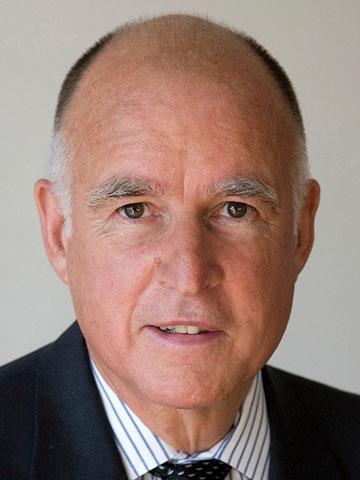
Jerry Brown must know this. He’s not going to run for another term. There’s no excuse at all for not at least proposing a modest tax increase on the highest earners and the most profitable big businesses. Come on, guv: What are you waiting for?


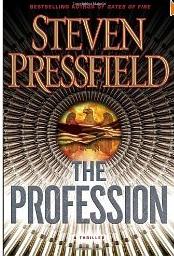
(Summer!) Trash Lit: The Profession

0

By Steven Pressfield. Crown, 320 pages, $25


Wow, they still drink Rolling Rock in 2032. And they still use military laptops and handhelds and complain about bad TV reception. The web doesn’t seem to have advanced much, and people still rely on the Al Jazeera video feed to see what’s going on in the Middle East.


There’s a lot that’s jarring in The Profession, a military thriller set in the Middle East 20 years in the future. For one thing, the future looks a lot like today, except that there’s been a dirty bomb attack on Long Beach and the Chinese are starting to cash in their U.S. debt, putting the world economy into turmoil. (It takes China 20 years to figure that out? Damn.)
So it’s pretty bad sci-fi. But it’s not a bad adaptation of the Heart of Darkness/Apaocalypse Now myth of the powerful general who goes rogue with his loyal troops and tries to take over part of the world.


In this case, it’s the Middle East, where (again, bad sci-fi) they’ve just found some more really rich oil fields. And much of the military work of the major nations is done by mercenaries.


One of them is General James Salter, who got cashiered out of the Marine Corps for defying the president’s orders, but who has a MacArthur-like following in both the military and the civilian worlds. He’s a private soldier now, and he’s got this plan to take control of much of the world’s oil, and then return in triumph to Washington, where he can become president (oh, and marry the widow of the prez who cashiered him, who is also involved in this plot.


Our hero, Gilbert Gentilhomme (and what kind of name is that for an action hero?) is one of Salter’s best friends and loyalists, one of the few who can get close to the great man. And he knows he can’t let the general get away with his plan.


Lots of desert battles. Random brutality. International intrigue, of sorts. A bleak and dusty vision of the future — but one where there’s no climate change or peak oil. No sex (and how come none of this summer’s thrillers have any sex?). But not bad for a quick beach read.
 

Fake-out

0

arts@sfbg.com

HAIRY EYEBALL It’s not just the title of Stephanie Syjuco’s solo show “RAIDERS” — her first at Catharine Clark Gallery — that brings to mind Indiana Jones. Something of the latter-day swashbuckler comes across in Syjuco’s art, which, like Indy, initially seems to be playing to all sides for the sake of plunder — when in fact this cleverness is the outward expression of a deeper skepticism toward the very institutions it’s engaged with.

But Indiana Jones is also a pop cultural commodity and a franchise that has netted millions for creators George Lucas and Steven Spielberg. This too, I imagine, is not lost on Syjuco, whose work frequently strips Pop Art bare of its smart, slick exterior (as well as Conceptual Art of its pretensions) to access the larger and far less glamorous network of market forces, production processes, and questions of ownership that shape it as a commodity.

Whereas Takashi Murakami installed an actual Louis Vuitton boutique inside Los Angeles’ Museum of Contemporary Art, Syjuco’s project “Counterfeit Crochet” called on hobbyists the world over to knit fake designer bags, complete with logos, and even provided the patterns and instructions. She has also, on more than one occasion, set up detourned versions of shops and marketplaces inside museum walls.

“RAIDERS” opens with an installation of what at first glance appears to be a collection of handsome Asian antiquities — mainly vases and small, decorative vessels — arranged on the very shipping crates they were transported in. It quickly becomes obvious that what we’re looking at is truly a set-piece, and that the “priceless” cache before us is actually an arrangement of life-size photographic reproductions adhered to laser-cut wooden backings.

Raiders: International Booty, Bountiful Harvest (Selections from the A____ A__ M______) — to give the installation its full title — becomes more interesting when you consider that Syjuco used images downloaded from the Asian Art Museum’s online database of its holdings as her source material. Love and theft (if I may poach the title of Eric Lott’s remarkable study of American minstrelsy) are certainly forces that have shaped many a museum’s prized holdings, and it is this history — one so often bound to colonialism and its aftermath — that is also embedded in Syjuco’s fakes.

And Syjuco decidedly, politically, traffics in fakes, not forgeries. Practically every piece in “RAIDERS” has rematerialized online, open source materials — be they digital images or readily accessible canonical texts — into art objects that are themselves parodies of object-ness. Conceptually whip-smart and materially banal (wood, tape, paper, and glue are common ingredients), Syjuco’s pieces continually taunt us with the question, “Why buy the cow when you can get the milk for free?”

In the gallery’s back room, jewel-case-size blocks of wood covered in pixilated digital prints of CD cover art representing Syjuco’s entire collection of “music illegally downloaded or pirated from others” are, as the bright orange stickers adhered to their shrink-wrapped exteriors proclaim, really available for the “blowout price” of $9.99 a piece.” Across from this pile that looks as if it had been airlifted straight from a Tijuana bootlegger, is Phantoms (h__rt _f d__kn_ss) an installation organized around Joseph Conrad’s Heart of Darkness, replete with a table, sawhorses, houseplants, TV monitors, and 10 bound copies of different online, public domain versions of Conrad’s text that are strictly “price upon request.”

Syjuco is certainly not the first artist to take on the art world’s biggest white elephant: value. But she wields her scalpel with a thoughtful precision and economy of gesture that will forever be beyond the abilities of a gaseous giant such as Damien Hirst. And that, to borrow another clichéd bit of market-speak, is truly priceless.


INKSTAINS

If you missed the San Francisco Museum of Modern Art’s excellent Eadweard Muybridge retrospective that closed earlier this month, Matt Bryans has created something of an homage to the early master’s photographic panoramas and doctored views of a not-quite-virginal Yosemite at SF Camerawork.

“Untitled” unfurls along one of the gallery’s walls for nearly 30 feet, a fantastical expanse of ever-shifting landscape seemingly captured from a middle distance. Glaciers give way to snow-capped peaks, which then dip into valleys that ease into rolling plains and finally abut more misty crags. In the piece’s upper half, clouds swirl and dissolve across the arc of the sky as in a Chinese ink painting.

Although the piece has the weathered patina of an old daguerreotype and recalls Muybridge in its staged epicness, Bryans is a collage artist who works solely with a medium whose livelihood has been called into question about as often as film photography’s: newsprint. “Untitled” — which like the other large collage commissioned by SF Camerawork is all explosions and stars wrapped around a support column — was created using only India erasers and inky photographs clipped from newspapers.

Scanning the sky of Bryans’ panorama, you can make out the smudged traces of what was once type. And the closer you look, you start seeing the fissures between the thousands of carefully glued pieces that Bryans has transformed into a seemingly organic whole, which nonetheless appears on the point of disintegration.

The panorama piece is large enough that it sags a little and billows whenever a current of air hits it. It seems to hang heavy with the losses it embodies — photography’s ghosts, newspapers as a disappearing medium, the unknowable contexts of the images themselves — a load that’s almost too much to bear. 

STEPHANIE SYJUCO: RAIDERS

Through July 16

Catharine Clark Gallery

150 Minna, SF

(415) 399-1439

www.cclarkgallery.com

MATT BRYANS: BREAKING THE LAND

Through Aug. 20

SF Camerawork

657 Mission, SF

(415) 512-2020

www.sfcamerawork.org


Jerry’s bad budget

19

The Democrats in the Legislature did what they had to do, and passed the only budget that the governor would agree to. But Jerry’s Budget — and this will always be Jerry’s budget, since he’s the one who insisted on the terms — is pretty bad news.


I could have told the governor six months ago that he’d never, ever get Republican support for tax extensions. I could have told him that things are very different from the 1970s, when he was last governor. Back then, Republicans were actually interested in governing and would work with Democrats. Now they’re only interested in obstructing — and in sticking to a “no taxes” pledge that has severely damaged the state.


But no: Jerry had to be Jerry, and veto the budget the Democrats passed the first time, because he still thought he’d get his way.


Now he has a budget that (a) won’t work unless the economy continues to pick up and (b) protects prisons at the expense of education.


Imagine: The Democratic governor of California saying that he is willing to cut a week out of the school year — but isn’t willing to make comparable cuts in the state prison system.


Oh, and guess what? It gives Republicans the ability to crow about how California didn’t need those tax extensions in the first place.


Way to go, Guv.

Dick Meister: Can a woman beat Hoffa?

0


A woman as president of the macho Teamsters Union that was once headed by supermacho Jimmy Hoffa? It could happen. 

Sandy Pope thinks so, and she’s going to try as hard as she can to make it happen – going to try as hard as she can to succeed Hoffa’s lawyer son, Jimmy junior, as head of one of the country’s largest and most powerful unions.

If a majority of delegates at the Teamster convention that opened today in Las Vegas vote for Pope to unseat Hoffa, who was first elected a dozen years ago, she’ll be only the third woman to ever head an international union.

Randi Weingarten, the highly regarded president of the American Federation of Teachers, who took office in 2008, is one of the others. The third is Mary Kay Henry, who just recently succeeded the controversial Andy Stern as president of the country’s largest union, the 1.3 million-member Service Employees International Union, the SEIU.

The Teamsters comes in at number two, with 1.2 million members. Hoffa’s supporters argue that Sandy Pope is not up to handling such a huge and diverse union. Her record, however, seems to indicate otherwise.

For 33 years, the 54-year-old Pope has held her own in the union’s macho culture, as a driver of big long haul freight trucks and as a warehouse worker.  For seven years she’s been president of a New York Teamster local of drivers and warehouse workers, one of only 16 of the Teamster’s 407 locals nationwide to be headed by a woman.

Before that, Pope was an international union representative in the Teamster’s warehouse division. She’s been a longtime leader of the Teamsters for a Democratic Union (TDU), which has exposed much of the corruption that’s been common in the union since the days of Hoffa senior as president.

The TDU’s work has led to some important corrections in union operations, but much remains to be done, and it’s unlikely that Hoffa junior would do much about it.  As the incumbent, he’s running a status quo campaign. Some local level Teamster officials fear retaliation from Hoffa and his allies if they campaign for Pope.

But Pope certainly isn’t backing off one bit. She’s promising to halt or at least slow the concessions that Teamster negotiators have granted employers in recent years.  Under her, she says, the union” will close the concessions stand.”

It also would push the union’s officers off the gravy train. In one Minnesota Teamsters local closely allied with Hoffa, for instance, the principal officer is paid $200,000 a year. Hoffa himself is paid $363,000.  And that’s going on at the same time that many rank-and-file Teamsters are taking pay and benefit cuts and otherwise feeling the effects of a declining economy.

It’s what the pro-labor magazine “Labor Notes” quite accurately calls “the union leadership’s back-scratching, pocket-lining culture.”

Generally speaking, Pope’s promising to return to the basics of union operations – to build public support, mobilize the union’s current members and wage a major organizing drive to recruit new members. Pope also promises that some 20,000 of the union’s members whose jobs have been downgraded to part-time can expect a drive to make those jobs full-time.

It’s clear that, like many dissident Teamsters, Sandy Pope is “sick of having a lawyer with a big name hijack our union.”


Dick Meister, former labor editor of the SF Chronicle and KQED-TV Newsroom, has covered labor and politics for more than a half-century. Contact him through his website, www.dickmeister.com, which includes more than 300 of his columns.


DREAM Act would reduce deficit, strengthen military…and perhaps save the world

23

Last December, when the DREAM (Development, Relief, and Education for Alien Minors) Act came up five votes short in the Senate, advocates began to worry that this seemingly modest piece of immigration reform, which offers a pathway to citizenship for undocumented youth who do well in college and/or serve in the military would not be able to get the necessary votes, even with Barack Obama as President. Rahm Emanuel, who served as Obama’s Chief of Staff up until last October, was reportedly criticized by some for allegedly not doing enough to support immigration reform. And frustration was high, as the community was forced to petition U.S. Immigration and Customs Enforcement (ICE) each and every time they heard that a well-performing student, with no criminal record, like Steve Li or Mandeep was about to be sent to a country that they barely knew–taking their education and knowledge of the United States with them.

But six months later, the DREAMers (undocumented students who want to serve their adopted country) are refusing to take “no” for an answer. (In December, Steve Li won a reprieve, and last week ICE decided not to deport Mandeep, who was voted in high school as “most likely to save the world.” ) And now Emanuel, who was sworn in as Chicago’s mayor in May, is raising his voice in support of the DREAM Act, which Sen. Dick Durbin (D-IL), who has been fighting for immigration reform for more than a decade, is sponsoring. And they are hoping to turn the tide and get Republicans to vote for legislation they say will reduce the deficit, build up the military and perhaps, by not deporting young U.S. trained geniuses, even save the world.

“The DREAM Act is consistent and reinforces the values of citizenship,” Emanuel said during a June 27 telephone call with reporters on the eve of the U.S. Senate’s first-ever hearing on the DREAM, which Durbin will chair June 28. “Having a DREAM Act pass at the national level will help us reinforce the right type of values,” Emanuel continued, noting that Colin Powell, a retired four-star general who was Secretary of State under President G.W. Bush, and Obama’s retiring Sec. of Defense Robert Gates, both support Durbin’s bill

Rahm was joined by Obama’s Education Secretary Arne Duncan and Margaret Stock, a former professor at the U.S. Military Academy at West Point, in arguing that the DREAM Act will stimulate the economy and benefit themilitary, by allowing thousands of top-performing U.S.-educated youth to give back to their adopted country rather than face deportation to countries they barely remember, where they could fall victim of forces that don’t have America’s interests at heart.

As former head of Chicago Public Schools, Duncan said he met plenty of students who “happened not to be born in America” but had excelled in public schools, only to find the door slammed shut, when it was time to go to college. “We need to summon the courage and political will to do the right thing for our country,” he said.

Duncan pointed to Pulitzer Prize-winning journalist Jose Vargas, whose story about his life as an undocumented immigrant was turned down by the Washington Post, before the New York Times magazine published it this weekend. “How many other Pulitzer Prize winners are there out there?” he asked.

And former West Point professor Margaret Stock explained that many of the DREAMers have great potential as military recruits, but are barred from enlisting, even though some of them try to anyway, under the current system.  “They are patriotic, honorable and want to serve the country,” Stock said.

Some of these potential recruits won’t qualify, because they have asthma or physical impairments, Stock noted. But she predicted that those that do, will do very well, based on a Pentagon study that showed that legal immigrants who enlist outperform U.S. citizens. And that, Stock added, could help fill the recruitment gap that is coming, as the economy recovers, and the U.S.-born population continues to age.

Records show that the military hasn’t had any difficulty meeting its goals since the economy tanked, a few years ago. But Stock predicted that the U.S. Armed Forces will face a difficult recruitment climate, as the recession ends. Unless the DREAM Act, which would dramatically enlarge the number of potential military recruits, passes.  “It would allow us to tap into a pool of homegrown talent that is highly motivated to join,” she said.

Asked what the point of the June 28 hearing is, given that the Republican votes for the DREAM Act still don’t seem to be there, Secretary Duncan, who will testify June 28 on behalf of the DREAM Act with Homeland Security Secretary Janet Napolitano, and Clifford Stanley, the Pentagon Undersecretary for Personnel and Readiness, replied,” to continue to raise awareness and build a groundswell of support.”

“I don’t think anyone has given up hope that we can do the right thing,” Stock added. “What may have changed is the serious talk about reducing the debt. “
.
According to a December 2010 Congressional Budget Office report, enacting the DREAM Act would save an estimated $1.3 billion over the next ten years. Supporters say that in addition to helping the military, the legislation would help fill 3 million job vacancies in the fields of stem cell, science and mathematics.
And as Stock pointed out, it makes no sense to deport large numbers of U.S. educated youth to foreign countries, where they risk being recruited to work for foreign governments against the U.S.’s best interests.

Asked whether new military recruits are really needed, now that Obama has announced a troop draw down in Afghanistan, Stock said that taking troops out of Afghanistan and Iraq doesn’t really reduce the global situation. “We constantly face crises in which we need the intervention of the U.S. military,” Stock said.

“We’re not turning into an era of full peace, and we expect to see a ten percent decline in pool of eligible recruits,” she said, noting that 35 percent of the U.S. citizens who sign up for the military fail medical fitness tests, another 18 percent fail because of drug and alcohol abuse, and 5 percent have criminal conduct problems.

“So, a crisis is coming, even with the draw down,” Stock continued, noting that the population of legal green card holders remains “relatively flat” even as the numbers of those who are legally here but can’t get a green card, and the numbers of those without documents but willing to serve, grows.

Stock noted that when you deport young people to countries they barely know and where they have no social safety net, they are in danger of being recruited by folks who might be at cross purposes with the United States. “The rise of MS-13 is directly related to our deportations to Central America,” Stock said. “The gang became their social network.”

Stock acknowledged that DREAM Act eligible students are “highly educated, high quality Americanized people,” and aren’t likely to become members of a gang. But they could be of interest to foreign militaries and intelligence organizations, she warned.

Asked how many non-citizens who are in the U.S. legally enlist in the military each year, Stock said about 9,000 non-citizens. But she noted that while documented non-citizens can join the military, they are however barred from becoming officers or attending West Point. “Most jobs are not open to them,” she said.  In other words, the DREAM Act doesn’t change the military’s requirements. But it would allow a much bigger number of non-citizens to join the military and eventually become citizens, which, in turn, would open more doors to them in the military, too.

And so ended the press conference ahead of Tuesday’s first-ever Senate hearing on the DREAM Act, which reportedly is being held in a large hearing room to accommodate at least 200 student supporters, including the daughter of a family of Albanian immigrants who was valedictorian of her Michigan high school class and is currently fighting deportation.

“These are young people who have that kind of exciting look in their eyes that they want to be part of the world,” Durbin, whose mother was a Lithuanian immigrant, recently said. “But they can’t make that first move toward the life that they want to live because they are undocumented.”

Predictably, the DREAM Act is being used as a recruiting tool for conservative groups, who argue that the DREAM is tantamount to amnesty for folks whose parents broke the law. These groups are already battling state-level Dream Act legislation in Maryland, which does not provide a pathway to citizenship but provides in-state tuition for qualified undocumented students. But a poll from Opinion Research Corporation in June 2010 found that 70 percent of likely voters support the DREAM, including 60 percent of Republican likely voters.

With the next election already looming, DREAMers aren’t likely to let up the pressure any time soon…so this could be an interesting political ride. Let’s hope it ends well for all the young people who are currently stuck in the middle of this Catch 22-like situation.
 

Cleaning up UC’s mess

5

news@sfbg.com

By 7 a.m., when engineering students begin to trickle into Cory Hall at UC Berkeley, Arnold Meza has already scrubbed the floors, wiped clean the chalkboards, and emptied the trash of 30 offices and many of the classrooms and hallways of the six-floor building.

His early shift as a custodian is a gift, he says, because it is steady compared to his former swing-shift schedule, but Meza is still barely making rent. And he is a single father of four. Like many service workers in the University of California system, Meza wonders how the university can refuse to give him a 3 percent wage increase while top UC executives receive six-figure bonuses every year.

“It falls on broken promises,” Meza said while tying up a bag of trash, one of hundreds he would take out that week. Meza was referring to an agreement in 2009 between the university and its service workers unions, including Meza’s union, AFSCME (American Federation of State, County and Municipal Employees). At that time, the administration established a minimum wage (currently $13 per hour) for the more than 7,000 service workers and agreed, if funding was available, to increase wages annually to bring their low-wage workers out of poverty.

But the university is going back on its promise, refusing to increase wages with the funding dedicated for that very purpose, the East Bay Alliance for a Sustainable Economy and the Partnership for Working Families (EBASE) notes in its recent report titled “Bad Budgeting, Broken Promises.”

As the UC Office of the President sees it, the 2009 discussion was not an agreement at all, but a “conditional memorandum of understanding” that would only be effective if state funding was available, said UCOP spokeswoman Dianne Klein.

“We’ve already taken $500 million in cuts. We’ll have to take another $500 million in cuts. Because there is no new money, the memorandum of understanding is moot,” Klein told us.

The state budget vetoed by Governor Jerry Brown last week would have set the UC system back $150 million in cuts on top of the $500 million in cuts approved by Brown in January. How much more will actually be cut from UC funding remains to be seen, but the forecast is not promising.

Despite the cuts, the proposed budget bill states that $3 million in distributed state funds should go toward the salaries and benefit of service workers in the UC system. In a March 24 letter to the governor, UC President Mark Yudof requested that the governor veto that restriction so the university could use the dedicated $3 million “to preserve our flexibility in dealing with the $500 million reduction.”

Compared to the total UC budget of $21.8 billion, that $3 million makes up only 0.014 percent — nickels and dimes to give employees a living wage.

Meanwhile, Meza and his fellow coworkers struggle to put food on the table, making ends meet by working two jobs. After his 4 a.m. to noon Monday through Friday shift, Meza works eight-hour shifts as a car mechanic on weekends. Similarly, many UC service workers collect cans to get a few dollars from the recycling center.

“When I started here 20 years ago, I was making close to $9 an hour. That wasn’t enough,” recalled Meza, who put his four children through public high school on that salary. Today, Meza brings home about $2,400 a month, barely enough to cover rent and a few bills at his El Cerrito home.

“I want my kids to go to college. But financially, I can’t afford it,” he said. “For me, it’s a sad reality.”

Meza’s union, AFSCME, is working with UC to lower the workers’ contribution to retirement pensions to 1.5 percent. The university proposes a 3.5 percent pension plan to go into effect this July and 5 percent in July 2012—the same amount requested from top UC executives. At their low wage, that would cost the service workers the equivalent of one biweekly paycheck a year.

Some UC executives, such as UC Berkeley Chancellor Robert Birgeneau, receive additional retirement perks. Roughly 200 highly paid UC executives receive a supplemental retirement benefit of 5 percent of their annual pay, said Nikki Fortunato Bas, the executive director of EBASE. That’s a total annual cost to UC of $4 million.

“If UC gets its way in 2011, instead of getting to climb that next rung on the ladder out of poverty, [the low wage workers] will take a step backward through a combination of increased contributions to retirement and healthcare and UC withholding a 3 percent raise,” Bas said. “All the while, UC is showering already highly-paid executives with six-figure bonuses.”

In an infamous budget battle that has required the UC system to restructure its quickly diminishing funding from the state, more than 100,000 employees’ paychecks have been reduced while top execs like UCLA Ronald Reagan Medical Center CEO David Feinberg receive thousands of dollars in bonuses. In September 2010, Feinberg’s base pay was increased by 22 percent and he received a $250,000 “retention bonus,” for a total compensation of $1.33 million.

These astounding numbers, as part of a $3.1 million package in bonuses for 37 UC executives last September, were quoted in the EBASE report, using data from the UC Regents website (www.universityofcalifornia.edu/regents).

UCOP says the retention bonuses are necessary “because we pay below market as it is [for top executives’ salaries],” said Klein, and the UC needs to offer huge bonuses to keep the executives from moving to higher paying universities. “You have two options: sayonara or we’ll match it,” Klein said. “You can’t recruit in the classifieds for these people … and you’ll have to replace them for the same money, anyway.”

The bonuses are not state-funded, said Klein, but are taken from research grants, patient care, and even federal funding. But Bas said the problem is with UC’s priorities: “Time and again, they have shown that they can find money to give bonuses or backfill sports programs,” she said. “UC may look at this as a matter of technicalities, but we cannot ignore the stories of employees and their families who are struggling to get by.”

As it stands, UC is short-staffed when it comes to service workers. “We’ve been short-staffed for the last 10 years,” said Meza, who estimates that UC Berkeley employs about 140 custodians, less than one-third of the 460 or so custodians the university employed in the 1980s. The result is that the students suffer, said Meza. “The students are getting the short end of the stick because we can only clean once a week in some classrooms because we’re short staff. We see the students pay a lot with tuition, and they’re getting less.”

Already, student fees have increased by more than 32 percent, and another 8 percent fee increase is pending, reported EBASE. As the state continues to make cuts, students and low wage service workers suffer the consequences.

According to the California Budget Project, a single-parent family needs to make $68,375 a year just to make ends meet in Alameda County. “UC workers have reduced-cost healthcare, so this number could be adjusted downward to $58,544,” said Bas. “For a custodian at UC Berkeley or UC San Francisco making $30,000 or even $40,000 a year, this means working two jobs and collecting cans just to scrape by.”

When his oldest was nine years old, Meza remembers, he used to drive his family to the recycling center to get cash for cans he had taken out of the garbage. “The kids were happy in the car because I was going to get money for food when I recycled cans,” which meant there would be dinner on the table that night, Meza said, apologizing for getting teary-eyed at the memory.

“I just don’t want people who work here to go through what I went through to raise a family,” he said.

No matter how many cars Meza fixes on the weekend, he never seems to have a break from the stress of trying to cover fuel, rent, heating bills, doctors’ bills, and other necessities. He’s only 43, but he feels much older after 20 years of working two jobs, seven days a week, providing for four children on his own.

UC workers, unions like AFSCME and other stakeholders have proposed $600 million in budget alternatives such as reducing the excessive 7-to-1 employee-to-management ratio (at UC Berkeley, the average is four employees to one manager). Yet UC does not appear to be seriously considering these alternatives; its current goal is to take back the $3 million dedicated to its low-wage service workers.

“We think this is a matter of finding the will within the UC administration to do what’s right by honoring their word to protect working families’ a path out of poverty,” Bas said.

Two months ago, Meza and his fellow union members marched into UC Berkeley’s Chancellor Robert Birgeneau’s office and asked him to spend one day in the life of a service worker on campus. He still hasn’t answered their request.

“People are really struggling here. We are committed to working and we give 110 percent — that should be accounted for,” said Meza. “Give us our 3 percent. We earned it.”

Some families don’t flee San Francisco

19

I hate to admit, I take this a little bit personally, all this stuff about how families are fleeing San Francisco and how it might be better to live in Omaha or Louisville. Cuz I have a family and we aren’t leaving. And neither are my friends and neighbors. There are plenty of us who think that San Francisco is a great place to raise kids.


Some of the stories in the recent Chron article are laughably unrepresentative:


For Kearsley Higgins, raising a baby in San Francisco was idyllic. She and her husband owned a small two-bedroom house in the Castro, she found plenty of activities for her daughter, Maya, and made friends through an 11-member mothers’ group.


Now as the mother of an almost 4-year-old, with a baby boy due in September, Higgins has left. A year ago, she and her husband, a digital artist, bought a four-bedroom home with a large backyard in San Rafael. Maya easily got into a popular preschool and will be enrolled in a good public elementary school when the time comes.


Nice: One-income family buys a four-bedroom home in Marin. I’m afraid that’s not the market most of us are in.


The statistics are real:


New census figures show that despite an intense focus by city and public school officials to curb family flight, San Francisco last year had 5,278 fewer kids than it did in 2000.


The city actually has 3,000 more children under 5 than it did 10 years ago, but has lost more than 8,000 kids older than 5.


But the reasons have a lot more to do with the cost of housing than with anything else. The lack of affordable housing for families — and frankly, none of the new market-rate condos the city is allowing offer much of anything to people with kids — drives people to the cheaper suburbs. And in this economy, it’s not as if they just quit their jobs. No: They commute, long distances — and when you have kids, it’s hard to rely on marginal public transportation. What happens if you’re at work in SF and your kid gets really sick at school in Brentwood? Are you going to spend all afternoon trying to get there on BART and buses? No — you’re hopping in the car, by yourself, and driving 80 miles an hour to the school site.


Which means that building dense, expensive, small condos in San Francisco is the opposite of sustainable planning or green building. Sustainable planning means preserving existing affordable family housing and building housing for the San Francisco workforce. San Francisco is doing none of that. Density isn’t smart growth if the housing doesn’t work for people who work in the city. It’s dumb growth.


End of rant.


What I started off to say was that some of us are very happy living in the city. I’m more than happy with our public schools (McKinley and Aptos so far). I really like the idea that my son can get home from school by himself, on Muni — and can go to his martial arts class on Muni, and can walk to music lessons and bike to the park, and when he’s 16 we won’t even have to talk about a car. I love the fact that my kids are growing up with people who are very different from them — and that ethnicity, socioeconomic status, religion, sexual orientation and all the other things that were such a big deal when we were growing up are utterly irrelevant in their circles. They have friends who come from two-dad families, two-mom families, single-parent families, single grandparent families, rich families, poor families, black familes, Asian families, Latino families, families where the parents speak no English … it’s all a big Whatever. It’s San Francisco.


The city is full of cool, fun stuff to do. It’s full of fascinating people and neighborhoods. My kids experience stuff every day that the suburban folks with their big back yards won’t see in a lifetime. It’s not all positive — we see homeless people on the streets, and we give them money and talk about why people are homeless. But it’s real and it’s life and I’m not taking my family and running away.


So there.      


SFBG Radio: Does Washington matter any more?

1

As the California state government remains paralyzed by Republicans, and the U.S. government seems unable to get anything of substance done to help the economy, Johnny and Tim talk about the power and poilcy shift to local agencies and ask: Is the era of national and even state government as an effective force for progressive change coming to an end? Listen after the jump.

NoMoreDCSacto by endorsements2010

The Guardian Forum: Issues for the next mayor

0

A series of panel discussions and participatory debates framing the progressive issues for the mayor’s race and beyond

Forum Two: Budget, Healthcare and Social Services
• Gabriel Haaland, SEIU 1021
• Brenda Barros, Health Care Worker, SF General Hospital
• Debbi Lerman, Human Services Network
• Jenny Friedenbach, Budget Justice Coalition
And others to be confirmed!

June 21 • 6 pm – 8 pm
UNITE HERE Local 2, 209 Golden Gate

Outline of Programs:
June 9: Economy, Jobs and the Progressive Agenda
June 21: Budget, Healthcare and Social Services
July 14: Tenants, Housing and Land Use
July 28: Immigration, Education and Youth
Aug. 25: Environment, Energy and Climate Change

Cosponsors:
• Harvey Milk LGBT Democratic Club
• San Francisco Tenants Union
• SEIU Local 1021
• San Francisco Rising
• San Francisco Human Services Network
• Council of community housing organizations
• Community congress 2010
• Center for Political Education

All events are free. Sessions will include substantial time for audience participation and discussion.
Please join us!

Guardian forum 6/8 (Thursday) — join us

1

The Guardian, with the support of numerous progressive political groups, is holding a series of forums this summer on issues in the SF mayor’s race. The idea is to get a discussion going on what a progressive agenda looks like, what issues the candidates ought to be talking about and how that could be implemented. The first session — focusing on economy and jobs — takes place Thursday June 9, from 6-8 pm, at the USF Lone Mountain campus, room LM 100. That’s at Turk and Parker, the Balboa bus stops right in front and we’ll have vans to help people with mobility issues get up the hill. Check out the details after the jump.

Behind the all-smiles budget

2

news@sfbg.com

When Mayor Ed Lee released his 2011-12 budget proposal June 1, all was sweetness and light at City Hall.

The mayor delivered the document in person, to the supervisors, in the board chambers. Sup. Carmen Chu, chair of the Budget Committee, was standing to the mayor’s right. Board President David Chiu was to his left. There was none of the imperious attitude we’d come to expect in the Gavin Newsom era — and little of the typical hostility from the board.

As Sup. David Campos, who was elected in November 2008, remarked afterward: “It’s the first time since I’ve been elected that the mayor has taken the time to come to chambers. It’s reflective of how this has been a lot more of an inclusionary process.”

Lee went even further. “This is a pretty happy time,” he said. “There are no layoffs, and instead of closing libraries we’ll be opening them.” That earned him an ovation from assembled city leaders, including mayoral candidates City Attorney Dennis Herrera and Assessor-Recorder Phil Ting along with District Attorney George Gascón. “I think this budget represents a lot of hope.”

It’s true that this year’s cuts won’t be as bad as the cuts over the past five years. It’s also true that the pain is spread a bit more — the police and fire departments, which Newsom, always the ambitious politician, wouldn’t touch, are taking their share of cuts.

But before everybody stands up and holds hands and sings “Kumbaya,” there’s some important perspective that’s missing here.

Over the past half-decade, San Francisco has cut roughly $1 billion out of General Fund spending. The Department of Public Health has eliminated three- quarters of the acute mental health beds. Six homeless resource centers have closed. The waiting list for a homeless family seeking shelter is between six and nine months. Muni service has been reduced and fares have been raised. Recreation centers have been closed. Library hours have been reduced.

In other words, services for the poor and middle class have been slashed below acceptable levels, year after year — and Mayor Lee’s budget doesn’t even begin to restore any of those cuts.

“We’re not ready yet to restore old cuts,” Lee told the Guardian in a June 2 interview. “It was enough for us to accomplish a pretty steady course and keep as much. Particularly with the critical nonprofits that provide services to seniors and youth and homeless shelters, we kept them as close as we could to what last year’s funding was.”

But the current level of funding is woefully inadequate. As Debbi Lerman, administrator of the Human Services Network, noted, the people who work in the nonprofits Lee was talking about haven’t had a pay raise in four years — even though the cost of living continues to rise. “Our costs have gone up with cost of inflation,” she noted.

She said the cuts over the past few years have deeply eroded services for children, homeless people, substance abuse programs, and others. “There have been significant cuts to every area of health and human services.”

And in a city with 14 billionaires and thousands more very wealthy people, Lee’s budget is distinctly lacking in significant new ways to find revenue.


THE GOOD NEWS

Just about everyone agrees that the budget process this year has been far better than anything anyone experienced under Newsom. “He [Mayor Lee] listened to everybody,” Lerman said. “That doesn’t mean they fixed everything. Mayor Lee fixed as much as he could.”

At his press conference announcing the release of the budget, Lee thanked Police Chief Greg Suhr for having already made significant cuts through management restructuring and for considering an additional proposed cut of $20 million.

“We want to thank you for that great sacrifice,” Lee said, addressing Suhr, who sat in front row of public benches, dressed in uniform. Lee next acknowledged that adequate funding for social services also helps public safety. “Without those services, officers on the street would have a harder job,” he said.

Lee also praised the departments of Public Health and Human Services for helping to identify $39 million in federal dollars and $16 million in state dollars, to help keep services open and the city safer.

Lee noted that San Francisco no longer has a one-year budget process and has just released its first five-year financial plan as part of its decision to go in five-year planning cycles.

“To address this, I’ve asked for shared sacrifice, ” Lee continued, adding that he recently released his long-awaited pension reform charter amendment, emphasizing that it was built through a consensus and collaborative-based approach.

Lee also said he would consider asking voters to approve what he called “a recovery sales tax” in November if Gov. Jerry Brown is unable to extend the state’s sales tax. That would bring in $60 million — but it is only on the table as a way to backfill further state budget cuts.

Lee observed that San Francisco is growing, the economy is looking brighter, and unemployment is down from more than 10 percent last January to 8.5 percent today. He plugged the America’s Cup, the city’s local hire legislation, the Department of Public Works’ apprenticeship programs, and tourism, both in terms of earmarking funding in the budget for these programs and their potential to boost city revenues.

He said his budget proposed $308 million in infrastructure investments that include enhanced disability access, rebuilding jails, and energy efficiency, and is proposing a $248 million General Obligation bond for the November ballot to reduce the street repair backlog.

“We will get these streets repaired,” he promised.

“This submission of a budget is not an end at all, it’s the beginning of the process,” he continued, going on to recognize Chu for her work getting the process rolling and thanking Budget Analyst Harvey Rose in advance. “I do know his cooperation is critical.”

And he concluded by thanking each of the supervisors. “I will continue enjoying working with you — we need to keep the city family tight and together.”

The sentiment was welcomed by supervisors. “As he said, this is the beginning of the process, and it’s an important and symbolic step” Campos said. “The budget shows that a lot of good programs have been saved. But there is still work to do.

“There are still gaps in the safety network,” he added, singling out cuts to violence-prevention programs. “It’s my hope they will be restored.”


THE BAD NEWS

But even if the cuts for this year are restored, the city budget is nowhere near where it ought to be. “We still had to make cuts,” Lee acknowledged.

“We did consider very seriously a whole host of revenue ideas that we had,” he said. “They were not off the agenda at all.” At the same time, he noted that state law requires a two-thirds vote for new taxes (although that threshold drops to 50 percent in presidential election years). “We decided that it’s not that they were bad ideas, but that we wouldn’t be able to sell them at this time.”

Lee praised some of the revenue ideas that have been suggested in the past year, including the alcoholic beverage fee proposal by Sup. John Avalos, which Lee called “a pretty good idea.” He said that “a year or two from now” an additional sales tax and a parcel tax (for the police or for schools and open space) might be on the agenda.

The city now has a multiyear budget process and projections are supposed to go beyond a single year. But what’s missing — and what nobody is talking about — is a long-term plan to restore critical city services to a sustainable level. That means talking — now — about tax proposals for 2012 and beyond and including those revenue streams in long-term budget planning.

Because the city parks, the public health system, the libraries, the schools, affordable housing programs, and the social safety net are in terrible condition today, the result of year after year of all-cuts budgets. And while the supervisors and the mayor wrangle over the final details, and advocates try to win back a few dollars here and a few dollars there, it’s important to recognize that this budget does nothing to fix the damage.

“We’re about $10 million short of what we need right now to keep service providers at current levels,” noted Jennifer Freidenbach, who runs the Coalition on Homelessness. “But we also need to restore the health and human services system that was slaughtered under Gavin Newsom.”

Stopping foreclosure secrecy

4

OPINION Thanks to a shadowy corporate mortgage recording system, millions of Californians have no idea who owns their home loans.

As we suffer through this recession triggered by reckless subprime lending and Wall Street speculation, our recovery is being held back in part because people are struggling with foreclosures and underwater home values — exacerbated by a lack of mortgage transparency.

The mess created by Wall Street is causing wrongful foreclosures and wreaking havoc. Real people — often lower-income families and communities of color — are enduring the devastation of foreclosure processes because of the excesses of bankers and investment firms.

In San Francisco, we’ve seen the highest number of foreclosures in the Ingleside-Excelsior, Bayview, Tenderloin, and Mission neighborhoods — many of the places where home values have fallen most. Whether or not you face foreclosure, we all pay for this crisis by losing vital tax revenue that could go to support our schools, protect our neighborhoods, or build our economy.

When Wall Street realized it could make billions by bundling mortgages and selling them to investors, banks and financial institutions needed a way around recording the ownership and assignment of home loans. What the banks and Wall Street came up with is a shadowy, industry-backed reporting system called MERS — mortgage electronic reporting system.

Simply stated, subprime and predatory lending allowed banks to create millions of questionable mortgages, Wall Street bundled these risky mortgages together to sell to investors, and MERS made it quicker and easier to conduct these risky transactions with impunity.

As San Francisco’s assessor-recorder and a financial advocate for low-income communities, we have seen harmful industry practices wreak havoc on families trying to stay in their homes — whether by use of MERS that clouds property titles, wrongful foreclosures, or denied loan modifications.

The state Legislature considered several good foreclosure bills this year. One proposal placed a $20,000 fee on financial institutions attempting a foreclosure. This would have discouraged foreclosure and helped defray costs to communities if the process went ahead.

State Sen. Mark Leno( D-SF) and Senate President pro tem Darrell Steinberg (D-Sacramento) offered legislation stopping banks from proceeding with foreclosures when a homeowner is attempting to modify his or her mortgage.

Assessor-Recorder Ting is sponsoring a bill requiring that all mortgage assignments and transfers be recorded with counties, thus taking this process out of the murky MERS system.

Unfortunately, the banks and their armies of lawyers and lobbyists have been able to stymie these reforms.

We must continue to fight these wealthy, powerful lobbies so that the long road to recovery in our housing markets and communities can begin. We cannot let Sacramento forget it was financial institutions that fueled the housing bubble, crashed the stock market, and sent shockwaves throughout the economy with their reckless practices.

Few states have been ravaged by subprime lending and the meltdown of mortgage-backed securities the way California has, so we must continue reforming the practices of banks and Wall Street that have thrown our economy and communities into turmoil.

Phil Ting is San Francisco assessor-recorder. Kevin Stein works with the California Reinvestment Coalition.

Alerts

0

ALERTS

By Jackie Andrews


THURSDAY, JUNE 9

Reporting back from Cuba

Gloria la Riva, recent winner of the Friendship Medal by the Cuban Council of State, will update the public on the new Cuban economic policies, their impact on the country’s economy, and the Latin American struggle for liberation — often called the Bolivarian Revolution. Afterward, check out a special screening of South of the Border, Oliver Stone’s investigative documentary that exposes the mainstream media’s misrepresentation of Latin America in its demonization of the Venezuelan President Hugo Chavez.

7–9 p.m., free

ANSWER Coalition

2969 Mission, SF

www.answersf.org


FRIDAY, JUNE 10

Protest nuclear power

It’s been almost three months since the earthquake in Japan and resulting Fukushima nuclear disaster, and many fear that California’s coast is similarly vulnerable. Rally against the corporations that influence the U.S. government in favor of nuclear industry despite its dangers to people and the environment. Demand that all U.S. power plants — funded by tax dollars — be shut down and help promote a cleaner public power.

3:30–5:30 p.m., free

The Consulate General of Japan

50 Fremont, SF

Facebook: No Nukes Action SF-Solidarity with 6.11 Action in Japan


SATURDAY, JUNE 11

World Naked Bike Ride

Ride your bike in the buff to express the public’s vulnerability to the social, economic, and environmental dangers caused by a global dependence on oil. A kind of naked Critical Mass, this fun, provocative bike ride will tour the city’s hot spots including Fisherman’s Wharf, the Marina, and Civic Center. All are welcome, so ride as you dare — bare or square — but don’t forget the sunscreen.

11 a.m., free

Justin Herman Plaza

Market and Embarcadero , SF

Facebook: World Naked Bike Ride-San Francisco


International Day of Solidarity

Enjoy an evening of solidarity and support for Marie Mason and Eric McDavid, two political prisoners sentenced for Earth Liberation Front-endorsed actions — what the feds call ecoterrorism. This event features a screening of If a Tree Falls: A Story Of the Earth Liberation Front, as well as information about the so-called “green scare,” or the recent wave of government repression meant to disrupt and discredit environmental activism.

7–9:30 p.m., $15

Women’s Building

3543 18th St., SF

www.june11.org 


Mail items for Alerts to the Guardian Building, 135 Mississippi St., SF, CA 94107; fax to (415) 437-3658; or e-mail alert@sfbg.com. Please include a contact telephone number. Items must be received at least one week prior to the publication date.

Protesters target Apple as a tax cheat

32

By Oona Robertson

Tomorrow (Sat/4), the economic justice organization US Uncut is protesting Apple Computers for trying to avoid paying $4 billion in federal taxes and for joining a corporate tax cheat lobbying group. Ironically, it is Apple’s good corporate reputation that has made it a target, as protesters hope the attention might shame the company into doing the right thing.

Apple has kept billions of dollars in profits in offshore tax havens and low-tax countries such as Ireland and the Netherlands. Through an organization called WIN America that Apple belongs to along with Google, Microsoft, and other large corporations, it is lobbying Congress for a tax holiday to bring $1.2 trillion in profits back to the U.S. to supposedly invest in the economy. Apple’s share of this tax break, $4 billion, would equal salaries for 90,000 teachers.

US Uncut is aware that the technology giant is an unlikely target for protest, due to its popularity and positive public image. Protesters are hoping that because Apple seems to care about its image in the eyes of consumers, it is more likely to respond to a protest.

“Most of the other companies aren’t really gonna give a damn if we go after them. They’re not concerned for their reputation. [With Apple] there’s a little more leverage,” US Uncut spokesperson Joanne Gifford told us. Apple did not return requests for comment.

Protesters hope to creatively drive their message home using flash mobs to get people’s attention. They are demanding Apple, “Leave the Tax Cheat Lobbying Group and Stop Lobbing Congress for More Tax Loopholes,” according to its website.

This Saturday’s action coincides with similar protests in 15 other U.S. cities, all organized by US Uncut as part of what it calls a national day of action. In San Francisco, protesters are meeting at Union Square to “discuss action ideas,” before heading over to the Apple flagship store on Market Street. Chanting, handing out leaflets and holding signs will be recommended, boasting slogans such as “Love the iPhone, hate the tax cheat,” and, “It only takes one bad apple.”

US Uncut’s website lists creative action ideas for protesters to employ, such as impersonating Apple employees by wearing turquoise blue shirts and nametags, or approaching the Genius Bar to ask questions such as, “Why can’t I sync my iPhone with my values?”

Teachers are being told to bring their pink slips and ask the “geniuses” how to save their jobs. The protesters’ last major flash mob, a music and dance number targeting Bank of America, made headlines and the hope is to replicate that level of publicity this Saturday.

The secret life of Michael Peevey

11

rebeccab@sfbg.com

Inside a legislative hearing room at the state capitol, things were beginning to get uncomfortable. Roughly five weeks had passed since a Pacific Gas & Electric Co. pipeline explosion killed eight and leveled an entire San Bruno neighborhood, and this California Senate committee hearing was an early attempt to get answers.

San Bruno residents who lost loved ones in the deadly explosion huddled in the front row, their eyes fixed on company representatives and agency bureaucrats as they spoke. At the back of the room, a band of immaculately dressed PG&E executives and utility lawyers sat clustered together.

Richard Clark, director of the consumer protection and safety division of the California Public Utilities Commission (CPUC), fielded questions from visibly frustrated state legislators. Sen. Dean Florez (D-Shafter) wanted know why the CPUC hadn’t done anything when PG&E ignored an impaired section of the ruptured pipeline even after it was granted $5 million to fix it.

“Did the PUC do any accounting when you gave them $5 million?” Florez demanded. “Do we just give them money and cross our fingers and hope they fix it? Is that what we do? Until some terrible tragedy occurs?”

Sen. Mark Leno (D-San Francisco) said the CPUC needed to step it up and start practicing serious hands-on oversight. He recalled a tragedy that occurred in 2008 when a gas leak in Rancho Cordova triggered a pipeline explosion, killing one person and injuring several others. Although an investigation determined that PG&E was at fault, the CPUC hadn’t yet gotten around to fining the company.

“We’ve got a pattern here,” Leno said. “And we’re not doing anything differently.”

Less than three weeks after CPUC staff members were grilled in Sacramento, Michael Peevey — president of the CPUC and the top energy official in the state — boarded an airplane for Madrid. He was embarking on a 12-day travel-study excursion, with stops in Sevilla and Barcelona, sponsored by the California Foundation on the Environment and the Economy (CFEE).

Peevey’s wife, California Sen. Carol Liu (D-Glendale), was along for the trip. So were two other state senators, several members of the state Assembly, CPUC commissioner Nancy Ryan, and a host of representatives from the energy industry. The group included executives from Chevron, Mirant (now GenOn, the owner of the Potrero power plant), Covanta Energy Corporation, Shell Energy North America, and engineering giant AECOM. High-ranking executives of the state’s investor-owned utilities also participated, including Fong Wan, the senior vice president of energy procurement for PG&E.

Although strict rules normally govern commissioners’ interactions with parties that have a financial stake in the outcomes of commission rulings, there wasn’t anything especially unusual about Peevey traveling internationally with a group that included representatives from the same companies his regulatory commission oversees. CFEE trips happen every year. The nonprofit has footed the bill to fly groups of regulators, legislators, and utility executives to prime vacation destinations like Italy, Brazil, and South Africa in recent years, excursions organizers say are critical for educating top-level stakeholders about worldwide best practices for sustainable systems. However, groups such as The Utility Reform Network (TURN) have decried CFEE trips as “lobbying junkets.”

As PG&E and the CPUC both work to win back the public’s confidence after their latest deadly failure, it’s worth analyzing whether their relationship — shaped by vacations together at exotic locales — has grown too cozy.


THE BUDDY SYSTEM

CFEE isn’t the only nonprofit that regularly flies Peevey overseas for green travel tours with high-ranking utility executives, and the 12 days he spent in Spain wasn’t the only time he spent away from official duties and in the company of the corporations his commission regulates.

These controversial getaways are just a small part of Peevey’s involvement with private-sector interests. He also chairs the board of a nonprofit investment fund created as part of a $30 million settlement agreement with PG&E. Called the California Clean Energy Fund, it funnels money into private venture-capital funds that invest in green start-ups, plus a few companies in the fossil-fuel sector.

While legislators have voiced frustration that lax CPUC oversight of PG&E on pipeline-safety issues opened the door to disaster in San Bruno, inside observers are critical of the outright favors Peevey has granted utilities, such as guaranteeing an unprecedented, higher-than-ever profit margin for PG&E as part of the company’s 2004 bankruptcy settlement.

The CPUC is set up to perform as a watchdog agency, yet social and professional ties running deep within California’s insular energy community mean regulators sometimes run in the same circles as the executives who answer to them, making for cozier relationships than the general public might anticipate. It’s an old-fashioned insider game that one longtime observer wryly characterizes as “the buddy system.” But the buddy system can bring consequences.

As the public face of the CPUC, Peevey repeatedly has been thrust into the spotlight. He has absorbed advocates’ concerns about pipeline safety, rising electricity rates, SmartMeters, missed targets for energy efficiency, and municipalities’ David-vs.-Goliath battles with PG&E to implement community choice aggregation (CCA), to name a few. He’s a magnet for public scrutiny while occupying the center seat at commission meetings, but Peevey’s behind-the-scenes engagements with private-sector organizations bent on shaping statewide energy policy demonstrate how power is wielded in California’s energy world, a system in which regulators seem to be partnering with utilities rather than policing them.

Based at Pier 35 in San Francisco, CFEE’s board of directors is composed of a small group of officers, plus a long list of members who hail from some of the most prominent businesses nationwide. Shell, Chevron, J.P. Morgan, Goldman Sachs, AT&T, and PG&E all hold positions on CFEE’s membership board, and each entity chips in to fund the foundation’s activities and travel excursions.

The group also includes representatives from labor organizations like the International Brotherhood of Electrical Workers and mainstream environmental groups such as the Natural Resources Defense Council. Among the emeritus members of CFEE’s governing board are some high-ranking figures, such as CIA director-turned-Pentagon boss Leon Panetta. CFEE received $45,000 in donations from PG&E in 2009 (the most recent year available) and was granted similar amounts in prior years.

CFEE spokesperson P.J. Johnston, the son of former state senator and CFEE officer Patrick Johnston and the press secretary under former Mayor Willie Brown, described the trips as valuable opportunities for top-level stakeholders to gain insight on best practices and engage in noncombative dialogue on key issues.

“The idea for us was that it made sense to have someplace where it was nonconfrontational to engage in policy, work-type discussions,” Johnston explained. He added that the trips are “all about policy, on the 30,000-foot level,” and emphasized that discussions aren’t about specific decisions pending before the CPUC.

Loretta Lynch, a former president of the CPUC who brought a reformist spirit to the agency and was never shy about rebuking utilities, is skeptical of CFEE’s stated program goals. When she was first appointed to the commission, Lynch said, CFEE contacted her to ask where she wanted to travel. If the trips are arranged to fly regulators to destinations they’ve been itching to visit, she reasoned, must-see green innovations probably aren’t dictating the itineraries. “To me,” Lynch said, “they don’t have anything to study in mind.”


“PARTYING WITH THE JUDGE”

The CFEE trip to Spain included a briefing on developing wind energy from AES, a company working on wind and solar development in California that also operates polluting, gas-fired power plants in Huntington Beach, Long Beach, and Redondo Beach. There was a round table on solar energy featuring a presentation from the Independent Energy Producers Association, a trade group that regularly files petitions and comments on CPUC proceedings. The trip included a tour of a desalination plant, a talk from the president of the Madrid Chamber of Commerce, and discussions about California’s energy market. Scheduled activities ended by midafternoon on some days, and the itinerary left a Friday afternoon, Saturday, and Sunday in Sevilla wide open.

Asked to comment on concerns about inappropriate lobbying, Johnston said: “We’re not guarding against anyone’s potential behavior any more than we would be on the streets of Sacramento. We’re not setting ourselves up as the guardians. We’re not facilitating that, per se, either.” He added, “I realize there are critics of any kind of travel and any kind of commingling. But it is wise for us not to close our eyes to the rest of the world, and there’s not a great appetite for spending taxpayer money on these trips.”

Yet Lynch countered that there is an important distinction between the roles of Sacramento legislators and that of utility commissioners. “Regulators are not legislators,” Lynch said. “They’re more like judges. Their decisions have the power of a judge’s decision.” By inviting commissioners along on these lavish getaways, she said, “it’s as if you’re partying with the judge.”

Mindy Spatt, a spokesperson for TURN, echoed Lynch’s concerns. “These ostensibly educational trips are essentially lobbying junkets, where utilities … wine and dine legislators,” Spatt said. TURN raised the issue several years ago, she said, when Peevey joined a CFEE trip attended by a representative of Southern California Edison “just coincidentally at the exact same time that he was penning an alternate decision in Edison’s rate case.” She added: “In TURN’s perspective, the commissioners need to be more in touch with what actual utility customers are experiencing, rather than in touch with the top restaurants in Brazil.”

While Peevey is only one of a host of officials who attend CFEE trips, he has more than just a casual tie to the nonprofit. From 1973 to 1983, he served as president of the California Coalition for Environment and Economic Balance (CCEEB), an organization CFEE grew out of and whose membership shares some overlap with CFEE.

Based in San Francisco, CCEEB was founded by Edmund G. “Pat” Brown (Gov. Jerry Brown’s father) in 1973. CCEEB backed a late-1970s proposal to construct a series of nuclear power plants along the California coastline. More recently, the group honored BP with a 2009 award for environmental education — shortly before the company and lax federal regulators were responsible for the worst oil spill in U.S. history.


A YEAR IN THE LIFE

Spain wasn’t the only country Peevey jetted off to with complimentary airfare in 2010. According to a Form 700 filing with the Fair Political Practices Commission, he also traveled to Germany from Aug. 1–5 for a sustainable energy study tour organized by the Energy Coalition. Joining that trip were representatives from investor-owned utilities PG&E, Southern California Edison, and Sempra, plus various city officials and energy experts from the Swedish Energy Agency.

The group stayed at the Radisson Blu Berlin Hotel, which is famous for its AquaDom. “Standing at 25 meters high, it is the world’s largest cylindrical aquarium containing 1 million liters of saltwater,” according to the hotel website. All Radisson Blu Berlin guests have free access to “the hotel’s well-being area,” called Splash, which features a pool, sauna, steam bath, and fitness room.

Based in Irvine, the Energy Coalition’s Board of Directors is chaired by Warren Mitchell, a retired chair of the Southern California Gas Co. and San Diego Gas & Electric Co.. Another director is a utility lawyer who also sits on the board of directors of the Northeast Gas Association, a consortium of natural gas companies in the northeastern U.S.

Founded in the late 1970s by John Phillips to get large businesses to reduce energy consumption in partnership with utilities, the Energy Coalition has arranged excursions for years to bring energy regulators, city officials, and utility executives to Sweden (where Phillips’ wife was born) to exchange ideas on energy issues. The nonprofit organizes an annual summit called the Aspen Accord, “an energy policy forum where cities, utilities, regulators, and end-users collaborate to identify problems and propose solutions to our most pressing energy issues,” according to a 2009 tax filing. While it used to be held in Aspen, Colo., the most recent Aspen Accord was held at San Francisco’s Westin St. Francis. Peevey gave introductory remarks, and the conference featured talks from PG&E, among others.

Craig Perkins, executive director, told the Guardian that the Aspen Accord and study trips are designed to create a venue for major stakeholders to arrive at outside-the-box solutions. “What we try to do is get everybody out of their comfort zone, if you will — that’s the best way to support more creative thinking,” he said. Official regulatory proceedings are “so rigidly legalistic and bureaucratic that it almost prevents any creative thought from happening,” he added. “We’re not in San Francisco, we’re not in Sacramento, we’re not in corporate offices — let’s just talk about these really big issues, and really big challenges.”

The Germany tour included meetings with the Berlin Energy Agency, talks about climate policy, and a tour of an eco-community in Freiburg. Perkins said utility companies must to pay their own way on the trips, but costs are covered for governmental officials.

An Energy Coalition tax filing reveals that board members receive a monthly retainer of $1,000, quarterly meeting fees of $1,000, plus $500 for each board committee meeting. Teleconferences also result in $500 meeting fees.

Several years ago, the Energy Coalition partnered with PG&E to create the Business Energy Coalition, which paid businesses including Bank of America and the Westin St. Francis $50 per KW of energy savings for banding together to reduce energy during peak load hours. According to a tax filing, total annual Energy Coalition revenue dropped from $10.7 million in 2008 to $3.75 million in 2009 “due to large revenue receipts for participant incentives” for the Business Energy Coalition program, as “revenues were used for direct pass-through payments to program participants and contractors.” In 2006, according to a CPUC filing, PG&E paid the Energy Coalition $227,373 for unspecified consulting services.

In addition to the $8,880 trip to Spain (comped), and the $6,583 trip to Germany last year (comped), Peevey’s 2010 disclosure form shows that he also went to Australia May 14-19 to participate in a conference hosted by the Sydney-based Total Environment Center called “Smart Metering to Empower the Smart Grid” ($12,577, comped). And while it doesn’t show up on his FPPC filing, an agenda for CFEE’s Energy Roundtable Summit from Dec. 9-10 at the Carneros Inn in Napa lists Peevey as a participant. A glance through past filings suggests that 2010 was no anomaly; it’s a typical year in the life of a jet-setting utilities regulator.


GREEN CAPITALISM

Peevey once served as president of the Southern California Edison, an investor-owned utility, and was president of NewEnergy, Inc., an electricity company that later was sold to Williams Energy. Yet his professional image is that of a forward-thinker on climate change. According to a bio on the CPUC website, he’s received awards for achievements on green and sustainable energy from various organizations throughout California.

In 2005, speaking in Berkeley at an annual conference for the California Climate Action Registry, Peevey touted a list of his accomplishments on sustainable energy. My final example of PUC actions on climate change is related to PG&Es bankruptcy, he said. When they emerged from bankruptcy last year, one of many conditions of our support for their reorganization plan was that they create a $30 million Clean Energy Fund, devoted to investing in California businesses developing and producing clean technologies.

What Peevey didnt mention is that he chairs the board of directors of that fund. As a nonprofit venture capital fund, the obscure, San Francisco-based CalCEF sounds like an oxymoron. Based on the terms of the PG&E bankruptcy settlement, its governed by a nine-member board consisting of three CPUC appointees, three PG&E appointees, and the rest selected jointly by the CPUC and PG&E appointees. Other board members include past PG&E executives, a former member of the California Energy Commission, and a former chair of the board of governors of the California Independent System Operator (Cal-ISO), the body that ensures statewide grid reliability and blocked the closure of the Mirant Potrero Power Plant for years.

The nonprofit’s stated mission is to catalyze clean energy investment to aid in the state’s transition away from fossil fuels. CalCEF president Dan Adler described it as a sort of seasoned guide for fledgling green companies that might otherwise fail to navigate the murky, complicated clean-energy sector. CalCEF is in a position to usher start-ups toward success with a combination of funding, networking, and insider wisdom on state energy policy.

Among the challenges that the clean-energy sector faces, Adler said, are the utilities themselves. “They are effectively monopoly, or oligopoly, controllers of the energy industry,” he said. “And they don’t like outside innovation coming and disrupting their work process or their relationship with their customers.”

CalCEF aims to guide the finance community “to be partners with what public policy is doing around clean tech and clean energy,” Adler went on. “There’s a tremendous amount of money to be made, but there’s also a lot of opportunity for money to be wasted. If you don’t have a private-sector investment community that understands these rules and can put their money alongside these rules in a collaborative framework, we’re very unlikely to achieve the really aggressive energy targets that California has set.”

Yet as one skeptical energy insider noted, “there are 15 to 20 other funds, with 10 times as much money, an hour south in the same field,” referring to the burgeoning clean-tech hub in Silicon Valley. It’s questionable whether the CPUC is actually fulfilling some dire need with CalCEF, this person said.

Lynch, not surprisingly, takes a dim view of CalCEF. The former CPUC president questions what business the CPUC has creating a private foundation to guide venture capital investment. “It is a fundamental distortion of the PUC’s authority,” she charged, “all in service of Peevey’s ambitions.”

Peevey’s economic disclosure showed that he holds more than $1 million in a private family trust, without disclosing whether private investments contributed to that fund.

Adler stressed that there is arms-length relationship between CalCEF board members and the companies that benefit from the fund’s investments. “Because we are a nonprofit, and because we have on our board members of the regulatory community, we recognized quickly that we can’t be making direct investments into companies,” said Adler, a former CPUC staff member who was highly regarded even by the critics of CalCEF. “So … we’ve picked the venture-capital funds that we wanted to partner with.”

CalCEF funnels its capital into three different for-profit investment firms, which in turn select the companies that will be included in CalCEF’s investment portfolio. Several directors of the partnering investment firms also sit on the boards of directors of the companies they invest in. The startups run the gamut, from carbon-offset outfits, to energy-efficient lighting manufacturers to solar and wind companies, to biofuels startups to various kinds of technology firms related to the smart grid.

But CalCEF has also poured money into companies that bolster the fossil-fuel industry. One of its first investments was CoalTek, a company developing technology for so-called “clean coal.” Asked to explain why, Adler told the Guardian, “We don’t have veto power on every deal that goes down.”

Adler said he personally believes that “there’s no such thing as clean coal,” but tempered this by adding, “there are some very smart people in our community who will tell you that there’s no future … without coal.”

Another CalCEF investment, DynaPump, is developing technology to make it more energy efficient to pump oil and gas. Asked about this decision, Adler responded: “I will say that when we were approached with this investment by the venture partner that ultimately undertook it, we had our misgivings. If you can save energy in the production of oil and gas, then you’re definitely making a contribution to overall energy efficiency.”


TAX-EXEMPT TESLA

There appear to be some closer-than-arms-length links between CalCEF board members and the investment fund’s beneficiaries. A bio for CalCEF director Nancy Pfund, for example, notes that in her capacity as manager of an outside investment fund, she had “worked closely” with Tesla Motors, a CalCEF investment. Tesla provided CalCEF’s first investment return earlier this year after Tesla went public. A principal of one of the investment firms that works with CalCEF, Stephen Jurvetson of Draper Fisher Jurvetson, holds Tesla shares in a personal trust, according to a filing with the U.S. Securities and Exchange Commission.

Tesla manufactures sleek, electric, zero-emission sports cars with prices in the six-figures, and it’s gearing up to roll out a model that will cost somewhere closer to $50,000. The company’s success was helped by a sales-and-use-tax exclusion granted by the state of California last year. Peevey had a hand in that, too. Few Californians may have heard of the California Alternative Energy and Advanced Transportation Financing Authority (CAEATFA), a state body within the Office of the Treasurer, which has the power to authorize sales-tax exclusions for companies that are developing alternative energy technologies. Peevey has a seat on it.

In October 2009, according to a CAEATFA document, Tesla was granted a sales tax exclusion from that financing authority. The sports car manufacturer had received a tax break of $3.3 million as of December 2010, and stands to gain a tax break as large as $29.1 million, depending on its property purchases. As a CAEATFA member, Peevey approved the deal by proxy.

A central question is whether the CalCEF dollars that benefited Tesla and other CalCEF portfolio investments were originally derived from PG&E shareholder profits or ratepayer funds. Adler was careful to note that the initial $30 million came from company shareholders, not PG&E customers. But Lynch pointed out that every dime in PG&E coffers originates with the millions of customers who pay utility bills.

Lynch noted another provision of the bankruptcy settlement agreement, which guarantees PG&E a minimum annual profit of 11.2 percent, catapulting it forever into a higher rate of return than the 8 percent to 11 percent profit traditionally granted by the CPUC in prior decades. “They’re manipulating how big this bucket is to siphon off funds into programs like CalCEF,” Lynch said. “It’s all to give Peevey and his friends access — and to greenwash what was a very stinky deal for the ratepayer.”


ELUSIVE CLEAN ENERGY FUTURE

In California, a national leader in addressing climate change, the stakes are high in the energy sector. The CPUC is tasked not only with shoring up transmission-pipeline safety to prevent another San Bruno disaster, but helping to chart a course away from reliance on fossil fuel-powered energy sources.

CFEE, the Energy Coalition, and CalCEF share a common thread — their missions relate to advancing the cause of a clean energy future in California. And while utility funding and partnership is evident in all three operations, the overarching goal is understood to be green.

But as Adler observed, the utilities themselves present one of the greatest obstacles to progress on a clean-energy transition. While California has increased renewable energy sources, it’s done a poor job at supplanting fossil fuel generation with green alternatives, in part because the CPUC has allowed for increasing fossil fuel power generation even as renewable energy expands. According to a listing on the California Energy Commission website, nine natural gas power plants have won approval statewide and are moving toward construction, while six new ones are under review.

The CalCEF approach to addressing climate change, rather than aggressively targeting polluting industries, is to encourage the fledgling green industry in hopes of facilitating success in partnership with the financial sector. In many cases, the backers of the clean-tech companies are the same players behind the big energy giants.

Environmental advocates are critical. “If anyone thinks the CPUC is set up to serve public interests, forget that,” says Al Weinrub, executive director of the Local Clean Energy Alliance, a group that organized against PG&E’s ill-fated Proposition 16 last year. “They never have and they never will.”

Weinrub said he viewed proponents of green energy as falling into two camps: Moneyed interests motivated by a growing new market sector, and activists motivated by environmental and social justice causes. Major green investment firms “want to de-carbonize capitalism,” he observed. “But everything else stays the same.”

Peevey is considered a major driver behind the state’s climate change legislation, and he’s highly regarded for his dedication to green energy. Yet as long as the interlocking dynamic between energy regulators and California’s largest utilities goes unchallenged, change will only come in a way that’s as comfortable, profitable, and manageable for the state’s top polluters as they wish. And in a state with an aging energy infrastructure that’s vulnerable to the impacts of climate change, that pace isn’t nearly quick enough. 


The problem with the yellow pages

5


Editors note: We ran an opinion piece this week opposing Sup. David Chiu’s proposal to limit delivery of yellow pages phone books. It’s gotten a lot of comments. Chiu asked if his supporters could respond.


By Michelle Myers and Janet Pomeroy
 
Tired of getting stacks of yellow pages books delivered to your front steps every year when you didn’t ask for them? Most people are.
 
Phone companies distribute 1.6 million phone book directories in San Francisco every year, which is two for every man, woman and child – producing 3,600 tons of waste annually, and costing residents as much as $1 million dollars a year. There are approximately 350,000 residential units in San Francisco and 80,000 businesses. If we had a single phone book in every home and office we would only need a third of what is currently being produced. That doesn’t even take into account the fact that many individuals no longer use the yellow pages to get information, and non-English language speakers don’t use the English print directory.
 
Does anyone in San Francisco need two five-pound yellow pages phone books delivered every year? No. So why does the industry do this? According to the Green Chamber of Commerce and independent research, the companies do it to pump up ad sales, which are based on inflated circulation numbers.
 
San Francisco’s attempt to restrict the mass over distribution of yellow pages, and to force an honest look at the industry, marks some of the most important environmental legislation of the last several years.
 
Supervisor David Chiu’s Yellow Pages legislation is supported by the Sierra Club, Rain Forest Action Network, The Green Chamber of Commerce, the Product Stewardship
Institute, Californians Against Waste, Senior Action Network, numerous small businesses, the San Francisco Small Business Commission, homeowners, tenants, and landlords.
 
The San Francisco city economist did an independent economic impact analysis of the legislation and found that this pilot program was good for business, good for the environment and would create 111 jobs while pumping $12 million dollars back into the local economy. The legislation is considered a no-brainer by serious economists, climate change experts and environmentalists who have examined it.
 
If you oppose this simple legislation, you are inviting a major corporation to come in, dump garbage on our front steps, and then volunteer to pay for the clean up. The financial loss of cleaning up over produced yellow pages is passed down to the residents and businesses of the city. And since the yellow pages are not produced locally the majority of the economic benefit of this industry accrues elsewhere.
 
The legislation will create a three year pilot program to reduce the waste of unwanted yellow page phone books. Under this legislation, anyone who wants a yellow page book can get one — but those who don’t want one won’t be responsible for the disposal of the books. Because this innovative and historic legislation is being set up as a test pilot for the nation, if San Franciscans see any negative impact we can adjust the program or end it altogether.
 
The paper industry is a massive polluter. It is the single largest consumer of water, has a toxic by-product, destroys trees we need to absorb carbon, and is the fourth largest manufacturing source of carbon dioxide in the United States. If we only distributed half as many yellow pages in San Francisco – to the people who actually need and want them — we would save 6,180 metric tons of carbon dioxide emissions each year.
 
Rather than being a good steward of the environment, the yellow page industry is producing far beyond the demand for their product. The companies do this as a way of inflating the amount they charge to the businesses that advertise with them. Today, this business model is wasteful and unnecessary. It is time to demand that these paper directories are only distributed to the people that want and need them.


Michelle Myers is with the Sierra Club and Janet Pomeroy is with the Green Chamber of Commerce.

City’s local power program will be greener, but not so local, at first

The San Francisco Public Utilities Commission (SFPUC) is in negotiations with Shell Energy North America to purchase power for a new version the city’s community-choice aggregation (CCA) program that will be smaller — but greener — than what city officials had originally envisioned.

While the forward momentum and the prospect of offering 100 percent renewable energy seems to have ushered in a rare moment of harmony among the players in City Hall who are crafting the program, not all the grassroots advocates were fully sold on the idea, saying they were still waiting to see how committed the city was to moving ahead with a plan to build municipal green energy facilities which could ultimately bolster the local economy and create jobs.

The new plan for CleanPower SF was unveiled by the SFPUC at a May 6 meeting of the Local Agency Formation Commission (LAFCo), which has been working with the city’s utility commission for half a decade to implement CleanPower SF. Emerging after a false start last year, the new plan would target 75,000 electricity customers at the outset – far less than under the original idea of enrolling all of San Francisco’s Pacific Gas & Electric Co. customers while providing the chance to opt out.

The CCA would offer 100 percent renewable power right off the bat, instead of the 51 percent renewable target that was previously envisioned. That fully green product offering is possible because the city would hire a contractor, most likely Shell, to purchase the green energy on the open market. The energy mix could be derived from sources within California or out of state.

“We’re having productive discussions,” noted Mike Campbell, who directs the CCA program for the SFPUC, but noted that it would be awhile yet before all the terms of the deal were cemented. Shell also contracts with the Marin Energy Authority for its CCA program, which San Francisco is looking to as a model.

The new scheme abandons a prior goal of meeting or beating PG&E electricity rates, but the SFPUC justified this switch by pointing to market research suggesting that the higher price would not necessarily subvert the program’s success.

Campbell said the new model came to fruition after poll results identified a core segment of San Franciscans who would be willing to stick with the green power program even if the price was slightly higher. “There’s such a strong segment of folks who are eager to do something about global climate change,” he said.

Campbell added that estimated generation fees could climb from around 7 cents to 13.5 cents per kilowatt-hour, amounting to a roughly $10 monthly utility bill increase on average. Since PG&E is expected to increase rates for customers who use less energy, “it’s going to help make it more attractive,” Campbell noted.

The new plan seemed to sit well with Ross Mirkarimi, a longtime advocate for community choice who chairs the Local Agency Formation Commission, which is tasked with overseeing the SFPUC’s implementation of the program. “The new program has great potential and goes where PG&E can’t or won’t,” Mirkarimi told the Guardian. “Carving out a customer niche that delivers a true green load is strategically more beneficial to the longevity of CCA in San Francisco. Once we establish an economic foundation for CCA, we then are positioned to build a renewable energy infrastructure as originally envisioned.”

Mirkarimi noted that the forward momentum had changed the dynamic in a historically fractious process, since, after years of being at loggerheads, the SFPUC and LAFCo finally seemed to be on the same page.

Both Campbell and Mirkarimi acknowledged that they expected PG&E to put up a fight, as it did when Marin County rolled out its CCA using a similar model to the one San Fransico now plans to adopt. Since PG&E will still be in charge of customer billing, it could employ tactics such as artificial spikes as it did in Marin to try and scare off CCA customers. “We do expect PG&E to do everything it can think of to try and encourage customers not to participate,” Campbell said.

Meanwhile, organizers from the San Francisco Green Party and the Local Clean Energy Alliance, who have closely tracked the process and held meetings with the SFPUC, say they’re supportive of the general concept but are still waiting to see whether the city is fully dedicated to laying the groundwork for building city-owned energy generating facilities.

Over time, this aspect of the program — which has been part of the plan all along — could supply green energy locally, gradually replacing the energy supply that Shell would be purchasing from elsewhere. San Francisco Green Party organizer Eric Brooks also pointed out that over time, city-owned generating facilities and local energy-efficiency upgrades could enable the SFPUC to bring down the cost of the green power to make it competitive with PG&E.

Campbell noted that the city would move ahead with the build-out, but “it certainly won’t be in the first year.”

Unless the build-out aspect of CCA moves ahead with a strong level of commitment, said Al Weinrub of the Local Clean Energy Alliance, the social-justice goals of creating new jobs and bringing generation costs down to make green power accessible to everyone may not be realized.

“We have a commitment from staff that they will pursue studies” to move ahead with the build-out, noted Weinrub. “The problem … is that they’re really dragging their feet.” He added, “We’ll have a lot of trouble supporting CleanPower SF is there’s no local build-out.”

Organizers also voiced concerns that without moving forward with this second element, the CCA could end up catering exclusively to an upper-middle class, predominately white customer base.

At the LAFCo meeting, the SFPUC delivered a presentation explaining the results of the poll that had been conducted to determine who would purchase green electricity from CleanPower SF. A longer version of that presentation, delivered to grassroots advocates in a separate meeting and provided to the Guardian by Brooks, showed that on average, CleanPower SF customers were expected to have higher levels of education and higher income levels — individuals making more than $100,000 per year had the greatest enthusiasm for the program. Those results also showed that 67 percent of survey respondents representing African American, Asian / Pacific Islander, or other communities of color indicated that they would not be interested in enrolling in CCA when they were given information about the program and the estimated rates.

Weinrub said this demographic profile of the initial CCA customer base would be problematic if it represented the only customers who would ever subscribe, because the whole notion of CCA from the start had been to create an accessible, community-owned power source that benefited San Franciscans across the board and offered an alternative to PG&E. But he said he believed the program could have more widespread appeal and grow its customer base if there was a sound strategy to bring down rates over time by employing local energy generation and energy-efficiency projects. “Our whole pitch is, what about everybody else?” he said. “We feel pretty strongly that with a well designed build-out program, you can offer very competitive services.”

SFBG Radio: The economy gets a C+

1

Today Johnny and Johnny talk about the new jobs figures — and why the economic growth really only merits a C+. Check it out after the jump.

AllMattersEconomic by endorsements2010

Hundreds Protest Wells Fargo Shareholder Meeting in SF

6

The New Bottom Line, a national campaign to hold banks accountable for foreclosures, kicked off in San Francisco this week, as hundredsmarched through the Financial District to demand that Wells Fargo change corporate policies that bankrupt families, dismantle neighborhoods, and empty public coffers.
During the bank’s annual May 3 shareholder meeting, a group of homeowners and clergy addressed Wells Fargo CEO John Stumpf to demand a foreclosure moratorium.
According to protest organizers, which include Contra Costa Interfaith, ACCE (Alliance of Californians for Community Empowerment) and other members of the New Bottom Line Campaign, unlike other national banks, Wells Fargo has not changed its foreclosure procedures despite reports of “robo-signing” and other foreclosure irregulalities.
“Since 2005, I have been fighting Wells for wrongful foreclosure,” San Leandro resident Donna Vieira said in a press statement. “But through this process, I have learned that I am not alone. A quarter of foreclosures in this country happen right here in California and 700,000 families are in foreclosure right now. We need these banks to have a new bottom line that includes investing in our communities.”
The New Bottom Line Campaign notes that, according to the U.S. Departments of Treasury and Housing and Urban Development, 350,169 Wells Fargo homeowners were eligible for the Home Affordable Modification Program (HAMP) by the end of 2009. But as of Feb 2011, only 77,402 homeowners have received permanent modifications.
Protestors note this only amounts to a 22 percent modification rate, more than two years after the HAMP program began. They also charge that Wells Fargo has canceled 118,697 trial modifications and denied 175,336 homeowners from accessing HAMP.But during this same two-year period, Wells Fargo received nearly $43.7 billion in federal bailout funds, according to a study by the nonpartisan think tank, Nomi Prins of Demos.And in 2010, Wells Fargo reported to the Securities and Exchange Commission that it paid its CEO John Stumpf more than $17 million, including a $14 million bonus.
Protestors also claimed that, over the last ten years, Wells Fargo has paid the lowest worldwide tax rate of the top five biggest banks and did not pay federal taxes in 2009.
Protestors said the May 3 action was supported by a coalition of community organizations, congregations, labor unions, and individuals working to challenge established big bank interests on behalf of struggling and middle-class communities.
“Together, we work to restructure Wall Street to help American families build wealth, close the country’s growing income inequality gap and advance a vision for how our economy can better serve the many rather than the few,” campaign organizers stated.
The New Bottom Line campaign, whic includes National People’s Action, PICO National Network, Alliance for a Just Society, ACCE, and Industrial Areas Foundation of the Southeast (IAF-SE), is making five main demands of Wells Fargo.


1.KEEP FAMILIES IN THEIR HOMES:
“We are demanding that Wells Fargo establish a moratorium on all foreclosures until it negotiates with our coalition to establish comprehensive reforms to their loan modification practices, including offering principal reduction; affordable, fixed interest rates; and provide proof of ownership of the loan,” NBL said in a press release. “We are also calling on Wells Fargo to cease all illegal evictions of tenants in foreclosed properties and commit to working with real estate companies and servicers who follow local and state tenant protection laws.”


2. STOP PREDATORY LENDING:
“We are demanding that Wells Fargo stop financing predatory payday lending companies and stop providing predatory payday loans to their own customers,” NBL stated.


3. REBUILD OUR NEIGHBORHOODS:
“Cities and counties estimate that it costs approximately $34,000 per each foreclosed home that becomes vacant and a potential blight on our communities,” NBL continued. “We are demanding you maintain and PAY the fines on your blighted properties and help share in the cost to our cities and counties starting with Cities and Counties throughout California with Foreclosure Blight and Building Registration Ordinances.”


4. PAY YOUR FAIR SHARE:
“Wells Fargo needs to stop exploiting loop‐holes in property tax laws and federal tax shelters to avoid paying its fair share of local, state and federal taxes,” NBL stated.


5. RESPECT HUMAN RIGHTS:
“We are calling on Wells Fargo to stop investing in the GEO Group and other corporations that are profiting off of immigrant detention centers and private prisons that detain immigrants and separate families,” NBL concluded.


During the May 3 action, eight protestors were reportedly arrested for civil disobedience.