Economy

TV eye

0

arts@sfbg.com

HAIRY EYEBALL In 1976 artist Clive Robertson reflected on a performance he gave that same year, in which he dressed up as and restaged pieces by the famous postwar German performance artist Joseph Beuys. “We have to adapt legends so that they become portable and can fit into our pockets,” he wrote. “Unfortunately for the artist, that is the fight we label history.”

Robertson was addressing his own anxiety of influence in the face of Beuys’ then-ascendant status within the art world, but his comments also provide a gloss on the struggle that curators and art historians face in their own practice. In the case of “God Only Knows Who the Audience Is,” a parting gift from the graduating students of California College of the Arts’ Graduate Program in Curatorial Practice, currently on view in the galleries of the school’s Wattis Institute, it is a struggle undertaken with great intelligence and economy.

Smartly conceived and staged, “God Only Knows” is a dialogic tale of two histories. One is a survey of the nonprofit artist-run organization and gallery space La Mamelle (which became ART COM in the 1980s) that existed in various incarnations from 1975 through 1995 and forms an important, if under-recognized, chapter of Bay Area art history. The other traces a concurrent shift in performance art, largely made possible by the advent of video technology, away from the artist’s body and toward the disembodied artist.

La Mamelle was, appropriate to its name, a nurturing organ for the local art scene. In addition to hosting events and organizing exhibits, the organization released videos, audio-zines, and microfiches, and published anthologies as well as the regular magazine in which pieces such as Robertson’s “The Sculptured Politics of Joseph Beuys,” quoted above, first appeared.

The constant proliferation of publications and media put local artists such as Chip Lord, the video collective Ant Farm, Lynn Hershman, and Bonnie Sherk — who all have pieces or documentation of early performances on display here — in touch with other artists around the world and vice versa. The aforementioned artists had wandered to the end of the conceptual inroads that had been laid down by the likes of Andy Warhol and Beuys, and were now operating in a new media wilderness, with only their VHS cameras to guide them.

“God Only Knows” successfully locates these artists and their work within a continuum of practices that stretches into the present. Others have followed Robertson in treating Beuys and his practice as source material (“identity transfer” in his words), as evinced by nearby pieces in the first floor’s survey of performance art that de-centers the artist’s body as both a performance’s agent and its living trace, such as Whitney Lynn’s 2010 re-do of another Beuys performance, or Luis Felipe Ortega and Daniel Guzmán’s 1994 video Remake, in which the duo stages “improved upon” versions of canonical performance art pieces.

The exhibit’s second floor takes us into the ’80s and ’90s, where the message is clear: television opened up the potential for art to reach new audiences. Greeted by the ponderous, mustachioed visage of Douglas Davis in his The Last Nine Minutes, a live-to-video performance realized in 1977 for Documenta 6, we immediately see how video dissolved the time lag between action and its documentation. Bill Viola’s 44 portraits of television viewers (1983-84) staring silently into their TV sets, made for WGBH in Boston, screens on the other side of the entrance.

In the middle of the gallery, playing across what the accompanying brochure calls an “archipelago” of viewing stations, are various video pieces by La Mamelle and ART COM artists, as well as those by artists such as the Borat-like Olaf Breuning, whose work plays off of the spectacle of TV shows. Meanwhile, at the back of the room, Mario Garcia Torres’ jarring 2008 nine-channel compilation of artists’ TV cameos from the past four decades (Dali doing a car commercial; Warhol appearing as himself on The Love Boat) tabulates the increasing banality of art’s intersection with television.

Yet despite the histories laid out in “God Only Knows Who the Audience Is,” Bravo’s Work of Art, YouTube, and the continual meddling presence of James Franco, video has yet to kill the performance art star — or at least the demand for the star’s body, as demonstrated by Marina Abramovic’s recent MOMA retrospective, in which the real attraction was not the controversial restagings of her greatest hits, but her daily physical presence.

The irony, of course, is that exhibit’s online half-life, which continues today. The Flickr and Tumblr are still there. The artist is still present to those who navigate to those pages, even though Abramovic left the building long ago. God only knows who’s still watching.


DISAPPEARING ACTS

The title of German painter Christoph Roßner’s current solo show at Romer Young, “The Hat, That Never Existed,” is a tip-off. Roßner’s smudged, over-painted, and half-erased depictions of things and people — trees, candles, top hats, houses, old men — scan as disappearing acts rather than fixed portraits (the way the canvases have been hung even suggests that a few have gone missing from the gallery). “Ghoulish” is the operative word here. Not much separates the faceless specter of Ghost from the skeletal visage in Grinser; and Roßner can make even a rock look like an Expressionist coffin. That’s not lazy journalistic shorthand, either: Roßner’s rough-hewn bleakness is of a piece with the Old World aesthetics of, say, George Grosz. The séance lasts only one more week, though, so act fast.

GOD ONLY KNOWS WHO THE AUDIENCE IS

Through July 2

CCA Wattis Institute for Contemporary Art

1111 Eighth St.

(415) 551-9210

www.wattis.org

THE HAT, THAT NEVER EXISTED

Through May 14

Romer Young Gallery

1240 22nd St., SF

(415) 550-7483

www.romeryounggallery.com


Power and shared wealth

0

rebeccab@sfbg.com

In the 1930s, political cartoonists often portrayed California’s monolithic Pacific Gas & Electric Co. as a giant octopus, its tentacles extending into every sphere of civic life. If money buys influence, the cephalopod analogy may still be apt today when considering the company’s tally of corporate giving, part of a detailed filing with the California Public Utilities Commission.

PG&E’s largesse, measured in thousands of dollars in donations, spills into a broad array of nonprofit organizations, educational institutions, chambers of commerce, and volunteer-led efforts throughout the state. PG&E’s corporate giving is so broad that it even extends to several organizations affiliated with appointees to the Independent Review Panel convened by the California Public Utilities Commission (CPUC) to investigate PG&E’s deadly San Bruno pipeline explosion.

While the utility undoubtedly advances worthy causes with its myriad donations to youth groups, cultural centers, organizations fighting AIDS and cancer, arts councils, environmental groups, and other charitable entities, corporate contributions always reflect a calculated decision, notes Bob Stern of the Center for Governmental Studies.

“They’re a big company, and they’re trying to, shall we say, ingratiate themselves with a wide swath of community interests, including nonprofit groups,” Stern told us. “The cigarette companies did that all the time, and it was very effective … because nonprofits then laid off on ballot measures, for example, or they would oppose ballot measures that would increase cigarette taxes. My bottom line is, businesses don’t just spend money gratuitously. There is a business reason a business spends money — campaign contributions or donations. And they have to justify that to their shareholders.”

In mid-October 2010, CPUC president Michael Peevey announced his selection of five expert panelists for the newly created advisory body on the San Bruno explosion. In an official filing, Peevey ordered PG&E to fund the panel, which would be tasked with gathering facts and making recommendations to the CPUC “as to whether there is a need for the general improvement of the safety of PG&E’s natural gas transmission lines, and if so, how these improvements should be made.” A report on the panel’s initial findings is expected in the coming weeks. The effort is on a parallel track with the federal investigation now underway at the National Transportation Safety Board.

The appointees bring a wealth of knowledge and expertise to the table. Panelist Karl Pister, for example, chairs the board of the California Council on Science and Technology, served as chancellor at UC Santa Cruz, and has taught civil engineering. Jan Schori has an insider’s understanding of how an energy company is run thanks to her past experience as CEO of the Sacramento Municipal Utility District (SMUD).

Yet some of Peevey’s appointees to the Independent Review Panel have ties to PG&E. Panelist Paula Rosput Reynolds formerly held positions at the investor-owned utility, according to her bio, including serving as an executive of the PG&E’s interstate natural gas pipeline subsidiary. An understanding of the company’s inner workings could be considered an asset, but it also raises questions about her independence.

Panelist Patrick Lavin serves as an executive council member of the International Brotherhood of Electrical Workers, which represents PG&E employees. He’s also on the board of directors of the California Foundation on the Environment and the Economy (CFEE), a nonprofit that counts PG&E among its membership. CFEE sponsored a two-week trip to Spain last November for government officials, energy industry representatives, and others to study “renewable energy, infrastructure, public private partnerships, desalination, and rail,” according to its website, picking up the $8,880 tab for Peevey to join the trip. The nonprofit received donations from PG&E totaling $45,000 in 2009, $45,000 in 2008, and $40,000 in 2006 — the three most recent years available.

Schori, meanwhile, has clearly held roles in the past that have placed her in an adversarial relationship with the utility considering that SMUD — a public power utility — has engaged in territorial battles against PG&E. Yet Schori also serves on the board of the Climate Action Reserve, a nonprofit that also counts former PG&E vice president of operations Nancy McFadden — the architect behind PG&E’s ill-fated ballot initiative Proposition 16 — on its board of directors.

Climate Action Reserve received $45,000 from PG&E in 2009, according to a CPUC filing. Schori also previously served on the board of directors of a nonprofit called the Alliance to Save Energy, which was co-chaired by former PG&E CEO Peter Darbee, who was expected to step down April 30 with a retirement package totaling nearly $35 million. The Alliance to Save Energy received $45,000, $35,000, and $35,000 in PG&E donations in 2009, 2008, and 2006, respectively. Schori did not respond to a request for comment.

The chair of the San Bruno Independent Review Panel is Larry Vanderhoef, former chancellor of UC Davis and a highly respected academic. As an ex-officio trustee of the UC Davis Foundation, Vanderhoef is engaged in soliciting private-sector contributions for the university. UC Davis has received an average of around $200,000 in philanthropic contributions from PG&E each year since 2005. In an e-mail to the Guardian, spokesperson Claudia Morain noted that Vanderhoef “has never been involved in PG&E solicitations.”

PG&E’s contributions to the two nonprofits and the university represent very small portions of the total budgets of these three entities, particularly in the case of UC Davis. At the same time, they are relatively large sums compared to the contributions the company generally makes. The city of Berkeley, for example, received just $2,500 from PG&E in 2009. Most organizations receive less than $10,000, but certain groups are given much more. The UC Regents, for example, received a $406,400 donation from PG&E in 2009.

“The panel members are all eminently qualified to perform the important job that has been entrusted to them.” CPUC spokesperson Terrie Prosper told us. “It is not surprising, or inappropriate, that the panel members also are involved in philanthropic activities of various kinds in California. Nor is it surprising that PG&E, California’s largest public utility company, in its own donations to various public and nonprofit institutions and its other philanthropic activities, supports some of these same worthy causes. These philanthropic activities in no way impair the independence, good judgment, or valued public service the members of the Independent Review Panel are giving to California.”

Stern, of the Center for Governmental Studies, said PG&E contributions to organizations affiliated with members of the Independent Review Panel did not necessarily raise a red flag. “Sure it has some impact, but not in terms of disqualification. That’s off the table as far as I’m concerned,” he said. “I have 15 members on my board of directors. I would never say that because we got a grant worth $200,000 from PG&E that that would affect my board member ruling on a PG&E matter,” he added, speaking hypothetically.

As members of an advisory group rather than public officials, he noted, the panelists would not be in violation of any conflict-of-interest rules. “Certainly there’s always a question of bias and appearance of impropriety. And the question is, how extensive is it? It’s a whole bunch of different factors. It’s all gradations. There is no rule on this, obviously, but it’s an appearance question, and whether or not the appearance looks like they’re going to be biased.” At the end of the day, he added, the question would be settled by “looking at the final results and seeing what the final results say.”

Editor’s notes

0

tredmond@sfbg.com

I heard a retired Army officer, a veteran of Iraq and Afghanistan, on the radio May 2 talking about the death of Osama bin Laden. Great news, he said, with all sincerity; now we can end the wars in Iraq and Afghanistan, stop wasting all this money, and bring the troops home.

That would nice, wouldn’t it?

But don’t start counting on an end to the wars, an end to the deaths of U.S. troops, or an end to an $881 billion defense budget (up from $300 billion in 1980 and $311 billion in 2000) or a significant change in our national priorities.

The truth is, Osama bin Laden wasn’t a factor in the invasion of Iraq. He wasn’t there; Saddam Hussein didn’t like him anyway. He was probably in Afghanistan for a while, but by the time we got mired in that quagmire, he’d moved on to Pakistan, which is supposedly our ally in the war on terror. That’s where he was running his operations, and that’s where he died.

The invasion of Iraq had nothing to do with terrorism. The war in Afghanistan might at some point have been related, but it’s not any more. The U.S. did the exact worst thing you can do in a military adventure: sent in troops with no way out.

Maybe Obama will now find the courage to say what he should have said the day he took office: we no longer have any strategic or national security interest in occupying Iraq and Afghanistan. Time to cut our losses, bring the troops home, put some of that money into the civilian economy, and deal with the real threat to American democracy — the horribly uneven distribution of wealth and power in this country.

Maybe the Democrats in Washington will show some backbone and start cutting the defense budget. Let the Republicans justify a continued war that their guy, Bush the Younger, insisted was about al Qaeda. Let them explain why we have to keep troops on the ground now that the head of al Qaeda’s gone. Let them explain why that’s more important than Medicare and Social Security.

But I’m not placing any bets.

I was a strong supporter of Obama. But when I saw hundreds of people partying and dancing in the middle of Valencia Street on election night, I had a bad feeling that this was going to end with an ugly hangover.

So I’m not dancing in the streets about the death of Osama bin Laden. I’ll save that for the day when the last American soldiers leave Iraq and Afghanistan and the military budget comes back to earth.

Homeowner defense groups to target Wells Fargo shareholders

8

“Foreclosures are the new F-Word.” So said Regina Davis, executive director of the San Francisco Housing Development Corporation, at an April 29 seminar at SFHDC’s office on Third Street that explored ways to prevent more foreclosures in San Francisco, California and beyond.

Since the economic meltdown in 2008, there have been 2,000 foreclosures in San Francisco. And the majority have impacted low-income folks and communities of color, who were sold more predatory loans than other groups, Davis and a panel of foreclosure experts warned
And as the recession drags on, another 2,000 foreclosures could be in the works, further destabilizing communities and draining more resources from the city, in terms of lost property values and related tax revenues.

And while deep-pocketed lobbyists have been making it hard to pass laws that would offer at-risk homeowners more protections, homeowner defender groups have decided to target, and now protest against, the group they believe stand directly in the way of equitable reforms: the banks.
 “Wells-Fargo CEO John Stumpf took home $21 million in 2009 while his bank received $25 billion in TARP funds,” stated a flier that ACCE (formerly ACORN) and the Home Defenders League are distributing to urge folks to meet at Justin Herman Plaza at 11: 30 a.m., May 3 and march to the Wells Fargo shareholder meeting where protesters plan to personally deliver a list of their demands to WF CEO Stumpf.

“He and his cronies fought tooth and nail to kill consumer protection bills in California and around the country and are currently trying to gut a 50-state Attorneys General settlement with homeowners that have been defrauded,” the flier concluded.
It noted that ACCE and the Home Defenders League sponsored this event, in partnership with the California State Labor Federation, the California Nurses Association, Contra Costa Interfaith Supporting Community Organizing, Causa Justa: Just Cause, ENLACE, Jobs for Justice, National Education Association, Oakland Education Association PICO California, PICO National Network, SEIU United Service Workers West and Local 1021 and Tenants Together.

“We are also part of The New Bottom Line, a national campaign focused on creating an economy that works for the many, and not the few,” the flier stated.

5 Things: April 28, 2011

0

>>POP-UP-TASTIC Oh pop-up phenomenon…why are you so enticing? Is it because our hype-heavy culture is so ADHD that the newest and coolest bar, gallery, restaurant, or what have you is “out” even before it’s torn down and replaced by the next “it” concept? The once failing Corner restaurant on 18th and Mission is now bustling thanks to the eatery’s new format of hosting a different recession-plagued talent with a menu to die for every night of the week. So, too, are venues supporting a great idea, but not necessarily one with enough gas to keep it going long-term, like the coffee shop-record store-music venue-rehearsal space-anarcho bookbindery of our adolescent dreams. Enter the People’s Gallery, host to the Big Things pop-up shop this Sat/30, which will feature everything from a bookbinding workshop to sidewalk sale-type treasures, handmade goodies, photo exhibitions, and food. Get there early, for it might poof into the ether before you even get a chance to check out the buzz.

>>ANOTHER WEDDING OF THE CENTURY! As the media breaks out its best British accents, the complete mayhem engulfing the royal wedding reaches its fevered pitch tomorrow with the event itself. For the truly die-hard, there is but one place to take in the beauty of clan-building: the British consulate, where the official viewing party kicks off at 9 a.m. with remarks by UK Counsel General Julian Evans. Call Renee at (415) 407-7424 to RSVP.

>>BEATS AMBASSADOR When the publicity ploy involves bad-ass Ghanian American hip-hop, count us as happily-enlisted marketing allies. Blitz the Ambassador plays La Peña Cultural Center tonight, and is offering up a free stream of his new album Native Sun so that you can learn the words before you shake ass. The album is a powerful barrage of traditional percussion, guitar licks, and fly verses – worth banging in your headphones even if you can’t make Berkeley tonight.

Blitz the Ambassador, Native Sun:

>>TRUCKING COMPANY Do you dream of owning a food truck but aren’t quite sure how to fund it? Stop squirreling away your Tooth Fairy money and learn how to apply for a loan — and get approved — from a panel of finance experts, fellow foodies, and food truck owners. Tonight, our friends at Renaissance Entrepeneurship Center are sponsoring this workshop for only 10 bucks, but the free publicity that comes with Chicken John threatening to vomit all over your new local economy-boosting venture is absolutely priceless.

>>BACK TO THE BEACH The last eighteen months have brought a bunch of repeat-listen recordings from bands that invoke the oceanside, including Beach House, Dirty Beaches, and Beach Fossils, who return to San Francisco a week from today, taking the stage at Slim’s to play songs from their 2010 debut album and the more recent EP What a Pleasure.


And the next chief is…yes, Suhr!

3

Mayor Ed Lee appointed a deeply emotional Captain Greg Suhr as Chief of the San Francisco Police Department during a swearing-in ceremony where the majority of folks were either elected officials, running for election, running each other’s electoral campaigns—or wearing SFPD uniforms.

And in the end it seemed that the choice may have been influenced by pressure from the powerful San Francisco Police Officers Association, judging from the comment Lee jokingly directed at SFPOA leader Gary Delagnes, saying, “Gary, it’s time to get quiet and go to work.”

Lee told a standing-room only crowd that when he returned from Hong Kong to San Francisco four months ago finding a new police chief was his top priority. And that initially it was suggested (Lee did not say by whom) that he leave the SFPD situation alone and allow an elected mayor to appoint the next Chief.

‘While I am an interim mayor, this is not an interim decision,” Lee told the crowd, signaling that while he may be out of office in January, Suhr may be here to stay as the city’s top cop.

“Today, I’ve chosen the best candidate,” Lee continued, thanking Acting Chief Jeff Godown for his work leading the SFPD since former Mayor Gavin Newsom made the shocking decision to appoint former Chief George Gascón as District Attorney.

But while Newsom’s move may have upset the apple cart in the D.A.’s race, it sure seems to be working out well for Suhr.

Describing Suhr as “a police and people’s Chief: and “a reformer from the inside out,” Lee ran through a long list of the new Chief’s contributions to the SFPD. These included Suhr’s 30 years of service, his climb through the ranks to become Captain of the Mission station, his gig as Captain of the San Francisco Public Utilities Commission in a Homeland Security capacity, and, since 2009, as Captain of the Bayview station.

Suhr began by saying he was “speechless.” Donning glasses to read a speech that he had prepared the night before, Suhr choked up when he talked of being “fourth-generation, born and raised in San Francisco.” Recovering his composure, Suhr smoothly changed gears, as he joked how his appointment therefore makes him “a local hire,”—an insider reference to Sup. John Avalos’ recently approved local hire legislation that Mayor Lee is helping enact citywide.

Suhr recalled how he started out as a rookie on the midnight shift in the Tenderloin in 1981. He thanked his family, his friends and his girlfriend Wendy. And then he asked for a moment of silence “ to honor the memory of all the brave officers who have given their lives in the line of duty.”

Lee reclaimed the podium long enough to jokingly ask Suhr  “to investigate the whereabouts of my birth certificate” as his first assignment as the new chief.

Then it was Board President David Chiu’s turn. Chiu described Suhr as someone, ”who knows our streets, walked the walk, and knows the beats, someone who we all feel confident will be able to bring the SFPD the reform that former Chief Godown, Chief Gascón and Chief Heather Fong initiated. “

San Francisco Superior Court Judge Katherine Feinstein, who is the daughter of Sen. Dianne Feinstein and the presiding judge of the Superior Court, recalled how she has known Suhr since the mid 1980s. “I have watched him as each of our careers have moved forward,” Feinstein said, noting how there were some “steps forward and some steps backward” and how, “there were those who thought this day would never come.” (Feinstein’s words were the only reference to some of the less sunny moments in Suhr’s long and distinguished career. These included his 2003 indictment as part of Fajitagate, an incident that involved off-duty officers, a bag of take-out food, a beer bottle and injuries sustained by two local residents. Suhr was cleared of wrongdoing the next year, but was reassigned by then Chief Heather Fong to the PUC position after an incident in 2005, in which a police officer was seriously injured at an anarchist protest, and videographer Josh Wolf was held in federal prison for 226 days after he refused to release unedited footage of the protest.)

Next up was D.A Gascón and his rooster-like shock of silver hair. Gascón noted that when he first came to San Francisco, in the summer of 2009, he had no allegiances to, and no prior knowledge of, people inside the SFPD.

“I looked at Greg Suhr and one of the things that impressed me is how he worked with and related to people,” Gascón said, explaining why he appointed Suhr as Bayview Captain “Not only has he exceeded all expectations he did an incredible job,” he said.

 Police Commission President Thomas Mazzucco said that in the 100 days since the Commission announced it was looking for a new chief, it became clear that Suhr has the support of SFPD’s rank-and-file.

Mazzuco noted that he met Suhr in high school. “I knew he could hold a ball,” Mazzuco added, noting that he subsequently became Suhr’s football coach, even though he is younger than Suhr. “What the Police Commission has brought to us is not only a native son but also a cop’s cop. It’s an honor to have him as his chief.”

And after the swearing-in, the sentiment among officers in blue appeared to be strongly in Suhr’s favor. Lt. Ken Lee of Central Station recalled how he and Suhr went through the police academy together about 30 years ago.

“We went to different assignments but we’ve maintained a friendship,” Lee said. “The moment I met him I liked him. He was a very stand-up person, and as a native San Franciscan like myself, you could tell he had strong ties to the city. He’s a hard worker, he’s very dedicated to what he does.”

Lt. Mario Delgadillo, also of Central Station, said Suhr hasn’t lost his connection to the street. “That also means a lot, when you have a boss who’s walking with you,” Delgadillo said.

Suhr takes over the SFPD as it’s grappling with the fallout from a recent spate of scandals, including videos that Public Defender Jeff Adachi released that appear to show police misconduct at residential hotels and that forced DA Gascón to hand over his investigation of this alleged police misconduct to the FBI. Asked during a media roundtable what his appointment means for Acting Chief Godown, Suhr said Godown has returned to being Assistant Chief of Operations, which was the post he held before Gascón, who recruited Godown from LAPD, was appointed DA.

In response to a question about his top priorities as police chief, Suhr noted, “When I sit down with the mayor this afternoon, the mayor’s going to tell me what his priorities are. My first priority will be blocking the door open on the 5th floor so that if you wanna come see me you can, like it used to be. Then I have to meet with the command staff and captains and get their take on where they think we are, where they think we’re moving forward best, and match that up against how I’ve seen from a position of Bayview, how that matches up. And then see if I can’t meet with different community groups, the different police employee groups and the command staff.”

He didn’t mince words when it came to indicating that SFPD officers are going to be asked to give back during upcoming budget negotiations
“I’m sure that there’s going to have to be adjustments and I look forward to working with a collaborative effort with the mayor and the board and the unions and the rank and file,” Suhr said. “When the economy’s been good we’ve benefited by it, and now that the economy has … gone the other way, to some extent I think that the officers are willing to give back to do whatever needs to be done to keep the city safe.”

So, how does Suhr think he differs from former Chief Gascón? 

”He has a gorgeous head of hair,” Suhr joked. “To put it in a sports analogy, he’s a quarterback shortstop guy, and I’m more of a catcher, lineman, linebacker kind of guy. But I admire him, I think he moved a lot of issues forward for the police department, and I look forward to continuing those initiatives and giving a few of them a shot in the arm that I think were beginning to wane a bit.”

Suhr also talked about how he has always wanted to become a police officer (a comment that suggests he’s not planning to use the Chief’s post as a stepping stone to the District Attorney’s Office).

”When I went into the police department. on Silver Avenue which is now Willie Brown Academy — that was the police academy back in 1991 when I came in — man, we looked at just the regular uniformed police officers with just stars in our eyes, because they were just the sharpest, classiest folks that we were aspiring to be,” Suhr said.

And he indicated that as Chief, he won’t tolerate dishonesty in the face of ongoing investigations into alleged police misconduct. ”The character of a police officer must be above reproach,” Suhr said. “And I think that the investigation will show what it ends up showing, but I don’t think that there’s a police officer in San Francisco that would want to have a dishonest cop and I’d be at the top of that list. So I want all my officers to be of character that is above reproach.

Asked if he welcome clarification around the duties of SFPD officers assigned to the FBI’s Joint Terrorism Taskforce, Suhr said he believed an examination of the wording of the FBI’s most recent memorandum of understanding (MOU) with the department was already under way.

“I believe that the MOU is being revisited,” Suhr said. “I have not been a part of that, but again I think we have a real good policy with regard to our intelligence gathering and that does supercede any ask of any other agency. The officers are bound by policies and procedures. And that policy was well thought out with tremendous community and group input years and years ago, from situations that have not since repeated themselves. I think a lot of people back then couldn’t believe they happened in the first place, but I think measures were well thought out and put in place to make sure we don’t have a problem again.”

And at the end of the day, Suhr expressed the hope that his tenure as Chief would endure long after the interim mayor is replaced by an elected mayor.

”I’m a native San Franciscan, and this is a dream come true,” he said. “It’s my first day. However this story ends, with a little bit of luck (raps on the wood tabletop) it’s not going to end today.”

Dick Meister: 11 Million a Year Bandits

5

Dick Meister, formerly labor editor of the SF Chronicle and KQED-TV Newsroom, has covered labor, politics and other matters for a half-century.

AFL-CIO President Richard Trumka has an important question for you.

“How much,” he asks, “did your pay go up last year? How about your friends and family?”

Before you answer, Trumka asks that you consider this: In 2010, the CEOs of major companies averaged $11.4 million for their year’s work. That was an increase of  an increase of 23 percent over their pay in 2009.

All told, the CEOs were paid $2 trillion last year.  That, of course. was during a recessionary time like now when working people were lucky to have jobs at all, whatever the pay. And the pay of those who did have jobs stayed pretty much the same, or actually went down.

The CEOs of major companies faced no such problems, obviously, with their pay increasing hugely to more than $11 million a year.  Which leads the AFL-CIO to wonder “how many firefighters, nurses, teachers or construction workers does it take to equal the pay of one CEO today?”

I’d also like to know how many CEOs do work as important as that of rank-and-file firefighters, nurses, teachers and construction workers?

The AFL-CIO’s Trumka notes that despite the collapse of financial markets three years ago at the hands of many of those same astronomically paid CEOs, the “disparity between CEO and workers’ pay has continued to grow to levels that are simply stunning.”

Think of it. Those CEOs collecting enormous pay were in charge when we sunk into the worst financial crisis since the Great Depression. When we lost 8 million jobs and millions of small businesses. When housing prices plummeted and millions of dollars in personal savings were wiped out.  Yet at the same time those in charge of the economy, notes Trumka, “still found a way to make out like bandits.”

Rich Trumka is a pretty outspoken guy, not known for understatement. But in this case, he probably is understating the situation.  The difference between CEO pay at major companies and workers’ pay is beyond stunning, beyond outrageous.

I’d say it’s virtually beyond human understanding. How could we let that happen? Is this not a democracy in which the great wealth generated here is spread more or less equally?

Hah!

OK, I’m asking foolish questions. But if ours was a true economic democracy, the spread between CEO and workers’ pay would be far less than it is. How many workers got pay raises of more than 20 percent last year? How many were paid more than $11 million?

How many needed that much money to live comfortably?

Trumka, notes that corporate CEOs “are hoarding $2 trillion in cash.” Indeed, the money-grubbing CEOs chose to take their $2 trillion in raises rather than use the money, or at least part of it, to create decent -paying jobs for their fellow citizens who are so much less fortunate than they.

To describe the CEOs as greedy would be a gross understatement.

I know I’m laying it on thick, but I’m mad – damn mad – and think you should be, too. The CEOs and their companies are stealing us blind and getting way with it.

The AFL-CIO’s Trumka does offer the possibility of better times, however. He says that “although pay is more out of balance than it has been during most of our lifetimes, for the first time there is hope that things are changing.”

That, says Trumka, is because of a new law, the Wall Street Reform and Consumer Protection Act. The act, as President Obama said when signing it into law last year, is “a sweeping overhaul of the United States financial regulatory system on a scale not seen since the reforms that followed the Great Depression.”

The lack of sufficient financial regulations sufficiently enforced was, or course, the main factor in the continuing Great recession, just as it was during the Great Depression of the 1930s.

The new law is already under attack by Congressional Republicans who have announced their intention to try to repeal it. They particularly object to provisions that would give shareholders a vote on CEO pay and require companies to publicly disclose the ratio between the pay of their CEOs and their workers.

Trumka says it truly shocks him that companies and their GOP allies “have the nerve to argue against those provisions in public, and lobby against them – after the companies drove our country off an economic cliff.”

Trumka says the AFL-CIO “is ready to have this debate. We will take on Wall Street and we will win.”

Strong words, but the AFL-CIO has the powerful political allies, the funding and the troops to carry out Trumka’s bold promise. Let’s hope fervently that labor and its supporters can indeed win the debate, If not, we could be in line for more serious Wall Street-based troubles  – an extended recession for sure, maybe worse.

Dick Meister, former labor editor of the SF Chronicle and KQED Newsroom, has covered labor and politics for a half-century. Contact him through his website, www.dickmeister.com, which includes more than 300 of his columns.

Let cities raise taxes

44

There’s a move in the California legislature to allow local government much broader authority to raise taxes — and the GOP types have their panties in a major bunch.


Dan Morain at the Sacramento Bee says it’s all a tactical move: The Republicans won’t allow any tax hikes at the state level, but the Democrats, by simple majority vote, can authorize cities and counties to do all kinds of things that the no-tax crowd hates. Maybe, Morain suggests, this is just a way to bring the recalcitrant Reps back to the budget table. But I don’t know about that: Senate President Darrel Steinberg may be playing games, but his legislative partner, Budget Chair Mark Leno, has been pushing for years to allow cities to raise their own vehicle license fees.


Leno’s brought that bill back this year, and it’s going to commitee next week. And I have to say, tactical or not, the Steinberg bill (PDF) is one of the best things I’ve seen out of Sacramento in years. It would allow local government agencies to impose an income tax, a car tax, an oil severance tax, and a series of excise taxes. It could make the budget deficit in San Francisco vanish.


I agree with Brian at Calitics: There are problems here.


What we’ll end up with is Bay Area counties with more stable revenue streams, while the Central Valley faces ever deepening cuts.  The inequality would be both troubling, and possibly violate some laws.   


And if the state Legislature weren’t paralyzed by a ridiculous two-thrids rule and a handful of die-hard no-tax Republicans, we might not need to go in this direction. But even so, it’s fair to ask: Why can’t the San Francisco voters decide they’d rather pay higher taxes than see the schools collapse?


It’s the same reason I’ve argued in favor of splitting California into three states. Those of us who live in the Bay Area have a very different vision of government than those who live in the no-tax districts. Why should they be able to hold us hostage?


Yes, there will be inequities. But there are only a few parts of the state that so utterly lack economic activity and wealth that there simply is nothing to tax (and the state would have to help them out). Much of Ag Land (and much of no-tax burbland) has plenty of wealthy people and businesses. The poverty is as much a result of inequality as it is a bum economy. In other words: those places can raise taxes, too.


And maybe over time the people in those crumbling tax-free towns will look over at San Francisco, with good schools, healthy, well-educated kids, clean, well-maintained streets, professional fire and police services and the like and say: Why can’t we have that?


And the answer will be: You can.

Unions didn’t cause the financial crisis

35

It’s been said before and will be said again, but still worth noting: The bipartisan U.S. Senate report on the financial meltdown concludes that, as Calitics notes:


Our financial crisis and resulting recession occurred as a result of risky, unethical and likely criminal behavior by reckless Wall Street institutions and the regulators that failed to stop them.  


In other words, the worst of the recession — and the plummeting economy, and sharp loss of revenue to states, cities and counties, which precipitated several rounds of bloody budget cuts — wasn’t caused by labor contracts, or pensions, or local government waste and bloat.


I’m not saying that pension reform shouldn’t be part of the solution, but let’s all keep this in mind. I don’t see anywhere near the same push for financial-sector reform and givebacks as there is for union givebacks. And they ought to be at least in the same discussion.

The failed experiment

27

news@sfbg.com

For three decades we have conducted a massive economic experiment, testing a theory known as supply-side economics. The theory goes like this: Lower tax rates will encourage more investment, which in turn will mean more jobs and greater prosperity — so much so that tax revenues will go up, despite lower rates.

The late Milton Friedman, the libertarian economist who wanted to shut down public parks because he considered them socialism, promoted this strategy. Ronald Reagan embraced Friedman’s ideas and made them into policy when he was elected president in 1980.

For the past decade, we have doubled down on this theory of supply-side economics with the tax cuts sponsored by President George W. Bush in 2001 and 2003, which President Barack Obama has agreed to continue for two years.

You would think that whether this grand experiment worked would be settled after three decades. You would think the practitioners of the dismal science of economics would look at their demand curves and the data on incomes and taxes and pronounce a verdict, the way Galileo and Copernicus did when they showed that geocentrism was a fantasy because the Earth revolves around the sun (known as heliocentrism). But economics is not like that. It is not like physics with its laws and arithmetic with its absolute values.

Tax policy is something the framers of the Constitution left to politics. And in politics, the facts often matter less then who has the biggest bullhorn.

The Mad Men who once ran campaigns featuring doctors extolling the health benefits of smoking are now busy marketing the dogma that tax cuts mean broad prosperity, no matter what the facts show.

As millions of Americans prepare to file their annual taxes, they do so in an environment of media-perpetuated tax myths. Here are a few points about taxes and the economy that you may not know, to consider as you prepare to file your taxes. (All figures are inflation adjusted.)

1. Poor Americans do pay taxes.

Gretchen Carlson, the Fox News host, said last year “47 percent of Americans don’t pay any taxes.” John McCain and Sarah Palin both said similar things during the 2008 campaign about the bottom half of Americans.

Ari Fleischer, the former Bush White House spokesman, once said “50 percent of the country gets benefits without paying for them.”

Actually, they pay lots of taxes — just not lots of federal income taxes.

Data from the Tax Foundation shows that in 2008, the average income for the bottom half of taxpayers was $15,300.

This year the first $9,350 of income is exempt from taxes for singles and $18,700 for married couples, just slightly more than in 2008. That means millions of the poor do not make enough to owe income taxes.

But they still pay plenty of other taxes, including federal payroll taxes. Between gas taxes, sales taxes, utility taxes and other taxes, no one lives tax free in America.

When it comes to state and local taxes, the poor bear a heavier burden than the rich in every state except Vermont, the Institute on Taxation and Economic Policy calculated from official data. In Alabama, for example, the burden on the poor is more than twice that of the top 1 percent. The one-fifth of Alabama families making less than $13,000 pay almost 11 percent of their income in state and local taxes, compared with less than 4 percent for those who make $229,000 or more.

2. The wealthiest Americans don’t carry the burden.

This is one of those oft-used canards. Senator Rand Paul, the tea party favorite from Kentucky, told David Letterman recently that “the wealthy do pay most of the taxes in this country.”

The Internet is awash with statements that the top 1 percent pays, depending on the year, 38 percent or more than 40 percent of taxes.

It’s true that the top 1 percent of wage earners paid 38 percent of the federal income taxes in 2008 (the most recent year for which data is available). But people forget that the income tax is less than half of federal taxes and only one-fifth of taxes at all levels of government.

Social Security, Medicare, and unemployment insurance taxes (known as payroll taxes) are paid mostly by the bottom 90 percent of wage earners. That’s because, once you reach $106,800 of income, you pay no more for Social Security, though the much smaller Medicare tax applies to all wages. Warren Buffett pays the exact same amount of Social Security taxes as someone who earns $106,800.

3. In fact, the wealthy are paying less taxes.

The Internal Revenue Service issues an annual report on the 400 highest income-tax payers. In 1961, there were 398 taxpayers who made $1 million or more, so I compared their income tax burdens from that year to 2007.

Despite skyrocketing incomes, the federal tax burden on the richest 400 has been slashed, thanks for a variety of loopholes, allowable deductions and other tools. The actual share of their income paid in taxes, according to the IRS, is 16.6 percent. Adding payroll taxes barely nudges that number.

Compare that to the vast majority of Americans, whose share of their income going to federal taxes increased from 13.1 percent in 1961 to 22.5 percent in 2007.

(By the way, during seven of the eight Bush years, the IRS report on the top 400 taxpayers was labeled a state secret, a policy that the Obama overturned almost instantly after his inauguration.)

4. Many of the very richest pay no current income taxes at all.

John Paulson, the most successful hedge fund manager of all, bet against the mortgage market one year and then bet with Glenn Beck in the gold market the next. Paulson made himself $9 billion in fees in just two years. His current tax bill on that $9 billion? Zero.

Congress lets hedge fund managers earn all they can now and pay their taxes years from now.

In 2007, Congress debated whether hedge fund managers should pay the top tax rate that applies to wages, bonuses and other compensation for their labors, which is 35 percent. That tax rate starts at about $300,000 of taxable income; not even pocket change to Paulson, but almost 12 years of gross pay to the median-wage worker.

The Republicans and a key Democrat, Sen. Charles Schumer of New York, fought to keep the tax rate on hedge fund managers at 15 percent, arguing that the profits from hedge funds should be considered capital gains, not ordinary income, which got a lot of attention in the news.

What the news media missed is that hedge fund managers don’t even pay 15 percent. At least, not currently. So long as they leave their money, known as “carried interest,” in the hedge fund, their taxes are deferred. They only pay taxes when they cash out, which could be decades from now for younger managers. How do these hedge fund managers get money in the meantime? By borrowing against the carried interest, often at absurdly low rates — currently about 2 percent.

Lots of other people live tax-free, too. I have Donald Trump’s tax records for four years early in his career. He paid no taxes for two of those years. Big real-estate investors enjoy tax-free living under a 1993 law President Clinton signed. It lets “professional” real-estate investors use paper losses like depreciation on their buildings against any cash income, even if they end up with negative incomes like Trump.

Frank and Jamie McCourt, who own the Los Angeles Dodgers, have not paid any income taxes since at least 2004, their divorce case revealed. Yet they spent $45 million one year alone. How? They just borrowed against Dodger ticket revenue and other assets. To the IRS, they look like paupers.

In Wisconsin, Terrence Wall, who unsuccessfully sought the Republican nomination for U.S. Senate in 2010, paid no income taxes on as much as $14 million of recent income, his disclosure forms showed. Asked about his living tax-free while working people pay taxes, he had a simple response: everyone should pay less.

5. And (surprise!) since Reagan , only the wealthy have gained significant income.

The Heritage Foundation, the Cato Institute, and similar conservative marketing organizations tell us relentlessly that lower tax rates will make us all better off.

“When tax rates are reduced, the economy’s growth rate improves and living standards increase,” according to Daniel J. Mitchell, an economist at Heritage until he joined Cato. He says that supply-side economics is “the simple notion that lower tax rates will boost work, saving, investment, and entrepreneurship.”

When Reagan was elected president, the marginal tax rate for income was 70 percent. He cut it to 50 percent and then 28 percent starting in 1987. It was raised by George H.W. Bush and Clinton and then cut by George W. Bush. The top rate is now 35 percent.

Since 1980, when President Reagan won election promising prosperity through tax cuts, the average income of the vast majority — the bottom 90 percent of Americans — has increased a meager $303, or 1 percent. Put another way, for each dollar people in the vast majority made in 1980, in 2008 their income was up to $1.01.

Those at the top did better. The top 1 percent’s average income more than doubled to $1.1 million, according to an analysis of tax data by economists Thomas Piketty and Emmanuel Saez. The really rich, the top 10th of 1 percent, each enjoyed almost $4 in 2008 for each dollar in 1980.

The top 300,000 Americans now enjoy almost as much income as the bottom 150 million, the data show.

6. When it comes to corporations, the story is much the same — less taxes.

Corporate profits in 2008, the latest year for which data is available, were $1.8 billion, up almost 12 percent from $1.6 billion in 2000. Yet even though corporate tax rates have not been cut, corporate income-tax revenues fell to $230 billion from $249 billion — an 8 percent decline, thanks to a number of loopholes. The official 2010 profit numbers are not added up and released by the government, but the amount paid in corporate taxes is: in 2010 they fell further, to $191 billion — a decline of more than 23 percent compared with 2000.

7. Some corporate tax breaks destroy jobs.

Despite all the noise that America has the world’s second highest corporate tax rate, the actual taxes paid by corporations are falling because of the growing number of loopholes and companies shifting profits to tax havens like the Cayman Islands.

And right now America’s corporations are sitting on close to $2 trillion in cash that is not being used to build factories, create jobs or anything else, but act as an insurance policy for managers unwilling to take the risk of actually building the businesses they are paid so well to run. That cash hoard, by the way, works out to nearly $13,000 per taxpaying household.

A corporate tax rate that is too low actually destroys jobs. That’s because a higher tax rate encourages businesses (who don’t want to pay taxes) to keep the profits in the business and reinvest, rather than pull them out as profits and have to pay high taxes.

The 2004 American Jobs Creation Act, which passed with bipartisan support, allowed more than 800 companies to bring profits that were untaxed but overseas back to the United States. Instead of paying the usual 35 percent tax, the companies paid just 5.25 percent.

The companies said bringing the money home — “repatriating” it, they called it — would mean lots of jobs. Sen. John Ensign, the Nevada Republican, put the figure at 660,000 new jobs.

Pfizer, the drug company, was the biggest beneficiary. It brought home $37 billion, saving $11 billion in taxes. Almost immediately it started firing people. Since the law took effect, it has let 40,000 workers go. In all, it appears that at least 100,000 jobs were destroyed.

Now Congressional Republicans and some Democrats are gearing up again to pass another tax holiday, promoting a new Jobs Creation Act. It would affect 10 times as much money as the 2004 law.

8. Republicans like taxes too.

President Reagan signed into law 11 tax increases, targeted at people down the income ladder. His administration and the Washington press corps called the increases “revenue enhancers.” Among other things, Reagan hiked Social Security taxes so high that by the end of 2008, the government had collected more than $2 trillion in surplus tax.

George W. Bush signed a tax increase, too, in 2006, despite his written ironclad pledge to never raise taxes on anyone. It raised taxes on teenagers by requiring kids up to age 17, who earned money, to pay taxes at their parents’ tax rate, which would almost always be higher than the rate they would otherwise pay. It was a story that ran buried inside The New York Times one Sunday, but nowhere else.

In fact, thanks to Republicans, one in three Americans will pay higher taxes this year than they did last year.

First, some history. In 2009, President Obama pushed his own tax cut—for the working class. He persuaded Congress to enact the Making Work Pay Tax Credit. Over the two years 2009 and 2010, it saved single workers up to $800 and married heterosexual couples up to $1,600, even if only one spouse worked. The top 5 percent or so of taxpayers were denied this tax break.

The Obama administration called it “the biggest middle-class tax cut” ever. Yet last December the Republicans, poised to regain control of the House of Representatives, killed Obama’s Making Work Pay Credit while extending the Bush tax cuts for two more years — a policy Obama agreed to.

By doing so, Congressional Republican leaders increased taxes on a third of Americans, virtually all of them the working poor, this year.

As a result, of the 155 million households in the tax system, 51 million will pay an average of $129 more this year. That is $6.6 billion in higher taxes for the working poor, the nonpartisan Tax Policy Center estimated.

In addition, the Republicans changed the rate of workers’ FICA contributions, which finances half of Social Security. The result:

If you are single and make less than $20,000, or married and less than $40,000, you lose under this plan.

But the top 5 percent, people who make more than $106,800, will save $2,136 ($4,272 for two-career couples).

9. Other countries do it better.

We measure our economic progress, and our elected leaders debate tax policy, in terms of a crude measure known as gross domestic product. The way the official statistics are put together, each dollar spent buying solar energy equipment counts the same as each dollar spent investigating murders.

We do not give any measure of value to time spent rearing children or growing our own vegetables or to time off for leisure and community service.

And we do not measure the economic damage done by shocks, such as losing a job, which means not only loss of income and depletion of savings, but loss of health insurance, which a Harvard Medical School study found results in 45,000 unnecessary deaths each year

Compare this to Germany, one of many countries with a smarter tax system and smarter spending policies.

Germans work less, make more per hour and get much better parental leave than Americans, many of whom get no fringe benefits such as health care, pensions or even a retirement savings plan. By many measures the vast majority live better in Germany than in America.

To achieve this, single German workers on average pay 52 percent of their income in taxes. Americans average 30 percent, according to the Organizations for Economic Cooperation and Development.

At first blush, the German tax burden seems horrendous. But in Germany (as well as Britain, France, Scandinavia, Canada, Australia, and Japan), tax-supported institutions provide many of the things Americans pay for with after-tax dollars. Buying wholesale rather than retail saves money.

A proper comparison would take the 30 percent average tax on American workers and add their out-of-pocket spending on health care, college tuition, and fees for services and compare that with taxes that the average German pays. Add it all up and the combination of tax and personal spending is roughly equal in both countries, but with a large risk of catastrophic loss in America, and a tiny risk in Germany.

Americans take on $85 billion of debt each year for higher education, while college is financed by taxes in Germany and tuition is cheap to free in other modern countries. While soaring medical costs are a key reason that since 1980 bankruptcy in America has increased 15 times faster than population growth, no one in Germany or the rest of the modern world goes broke because of accident or illness. And child poverty in America is the highest among modern countries — almost twice the rate in Germany, which is close to the average of modern countries.

On the corporate tax side, the Germans encourage reinvestment at home and the outsourcing of low-value work, like auto assembly, and German rules tightly control accounting so that profits earned at home cannot be made to appear as profits earned in tax havens.

Adopting the German system is not the answer for America. But crafting a tax system that benefits the vast majority, reduces risks, provides universal health care and focuses on diplomacy rather than militarism abroad (and at home) would be a lot smarter than what we have now.

Here is a question to ask yourself: We started down this road with Reagan’s election in 1980 and upped the ante in this century with George W. Bush.

How long does it take to conclude that a policy has failed to fulfill its promises? And as you think of that, keep in mind George Washington. When he fell ill his doctors followed the common wisdom of the era. They cut him and bled him to remove bad blood. As Washington’s condition grew worse, they bled him more. And like the mantra of tax cuts for the rich, they kept applying the same treatment until they killed him.

Luckily we don’t bleed the sick anymore, but we are bleeding our government to death.


ABOUT THE AUTHOR:

David Cay Johnston is a columnist for tax.com and teaches the tax, property, and regulatory law of the ancient world at Syracuse University College of Law and Whitman School of Management. He has also been called the “de facto chief tax enforcement officer of the United States” because his reporting in The New York Times shut down many tax dodges and schemes, just two of them valued by Congress at $260 billion.

Johnston received a 2001 Pulitzer Prize for exposing tax loopholes and inequities. He wrote two bestsellers on taxes, Perfectly Legal and Free Lunch. Later this year David Cay Johnston will be out with a new book, The Fine Print, revealing how big business, with help from politicians, abuses plain English to rob you blind.


 

No cuts-only pension deal

5

EDITORIAL Mayor Ed Lee has released a draft set of proposals for pension reform, and union leaders continue to meet with financier Warren Hellman to try to craft an alternative. Meanwhile, Public Defender Jeff Adachi is narrowing his options and appears ready to move forward to put his own plan on the ballot.

Everyone involved claims to be interested in a compromise, in some proposal that would reduce the city’s burden of paying $350 million this year (and potentially as much as $790 million in five years) into the employee pension fund. We support that idea, too — there are plenty of necessary, progressive moves to fix the city’s pension system and free up more cash for local programs.

But so far, none of the proposals on the table include any new revenue sources — which means, in effect, that the mayor, Hellman, and Adachi all want city workers to bear the entire brunt of the impact of a Wall Street-driven recession. The message: only city employees should share the pain; the wealthiest San Franciscans and biggest, richest businesses don’t have to contribute at all.

It’s a dangerous part of the tax mythology that Pulitzer Prize-winning reporter David Cay Johnston discusses in his article in the Guardian this week. He notes that the argument in favor of tax cuts for the rich — that lower taxes will lead to more investment and thus more jobs — has been tested in this country for 30 years. And it hasn’t worked.

Most San Franciscans probably realize that. Most city officials vote for Democrats, opposed the Bush-era tax cuts on the rich, and argue for more federal aid to cities. This is a progressive town.

But when it comes to something as fundamental as local economic policy — who pays for city services and who gets the benefits — the story becomes completely different.

The mayor and eight of the 11 supervisors are celebrating a broad-based tax cut as a way to create jobs in the Tenderloin and mid-Market (although the evidence that tax cuts don’t create jobs is overwhelming). The mayor is looking at the equivalent of a cuts-only budget (although everyone at City Hall opposes the notion of a cuts-only budget in Sacramento). And while it’s almost certain that some sort of pension reform will be on the November ballot, none of the players involved in the negotiations have openly taken what seems to us to be the only logical position:

Pension reform has to be linked to tax reform — a commercial rent tax, a progressive gross receipts tax, a city income tax, an increase in the Pacific Gas and Electric Co. franchise fee or something else that hits those who can afford to pay. Otherwise, we can’t support it.

Even the city employee unions are being awfully quiet about the need for a deal that includes new taxes. They ought to be leading the charge here, telling everyone that a cuts-only pension deal isn’t going to be acceptable. (The tax measures could hold until the November 2012 budget, when they’ll be easier to pass — if there’s a firm assurance that the mayor, Hellman, Adachi, the supervisors, and all the other players will support them.)

City employees are being asked to take what amount to pay cuts — which will reduce their purchasing power and have a depressing impact on the local economy. Taxing the wealthy (who spend a much smaller percentage of their income) has no such depressing impact. Those are hard, cold facts. They need to be part of the discussion.

Robert Reich, the former labor secretary who now teaches at the University of California, Berkeley, has an interesting essay on his blog April 9 that discusses Obama’s budget capitulations. The president, he notes, “is losing the war of ideas because he won’t tell the American public the truth: that we need more government spending now — not less — in order to get out of the gravitational pull of the Great Recession. That we got into the Great Recession because Wall Street went bonkers and government failed to do its job at regulating financial markets … That the only ways to deal with the long-term budget problem is to demand that the rich pay their fair share of taxes.

“And that, at a deeper level, the increasingly lopsided distribution of income and wealth has robbed the vast working middle class of the purchasing power they need to keep the economy going at full capacity.”

That’s as true here as it is in Washington. And if city officials want progressive support for pension reform, they need to acknowledge it.


Editor’s notes

1

tredmond@sfbg.com

Does anybody else feel as if the whole country is collapsing around us?

I mean, I’m not an apocalypse fan. I remember when Ronald Reagan was elected and we had a big meeting at the Connecticut Citizen Action Group, where I worked, and a lot of people were on the edge of a serious panic, and Miles Rapoport, the staff director, told us all to calm down: the organization, and our work, would survive. So would the nation. I spent a lot of time with serious anarchist types in the 1980s, and I never really bought the notion that the revolution was at hand (alas, it was not) or that the United States of America and the corporate world order were on the brink of collapse (alas, again).

I think I slept through the great Harmonic Convergence on Aug. 17, 1987 (“the point at which the counterspin of history finally comes to a momentary halt”) and I’m not terribly concerned about the Mayan calendar.

But I’m getting so I wake up every morning these days asking myself exactly what the fuck is going on.

I called my old friend Calvin Welch the other day to talk about the San Francisco mayor’s race, and when I asked him how he was doing, he told me: “Well, other than the fact that America is falling apart everywhere I look, I’m doing fine.” And he’s not any crazier than me.

It’s funny. I never felt as nervous about the state of the nation under Reagan or Bush as I’m feeling right now under President Obama. And I wasn’t as scared about California when Arnold Schwarzenegger was governor as I am now, with Jerry Brown in charge.

Not that Reagan and Bush weren’t far, far worse, or that Brown isn’t doing a decent job, all thing considered. But when our folks are in charge — decent, smart folks who, for all their flaws, have essentially decent ideas about politics and humanity — and they can’t seem to make anything better … I guess that’s when I start to wonder if anyone can.

I’m not one to make sweeping generalizations (well, not usually), but in 2011, the country, and the state, are being run by a handful of bullies. They’re wrecking the economy, wrecking the schools, wrecking the future — and nobody seems to be able to stand up to them. And even this diehard optimist is starting to wonder when it will ever end.

Editorial: Link pension reform to tax reform (Second in a series on pension reform)

14

Mayor Ed Lee has released a draft set of proposals for pension reform, and union leaders continue to meet with financier Warren Hellman to try to craft an alternative. Meanwhile, Public Defender Jeff Adachi is narrowing his options and appears ready to move forward to put his own plan on the ballot.

Everyone involved claims to be interested in a compromise, in some proposal that would reduce the city’s burden of paying $350 million this year (and potentially as much as $790 million in five years) into the employee pension fund. We support that idea, too — there are plenty of necessary, progressive moves to fix the city’s pension system and free up more cash for local programs.

But so far, none of the proposals on the table include any new revenue sources — which means, in effect, that the mayor, Hellman, and Adachi all want city workers to bear the entire brunt of the impact of a Wall Street-driven recession. The message: only city employees should share the pain; the wealthiest San Franciscans and biggest, richest businesses don’t have to contribute at all.

It’s a dangerous part of the tax mythology that Pulitzer Prize-winning reporter David Cay Johnston discusses on page 10. He notes that the argument in favor of tax cuts for the rich — that lower taxes will lead to more investment and thus more jobs — has been tested in this country for 30 years. And it hasn’t worked.

Most San Franciscans probably realize that. Most city officials vote for Democrats, opposed the Bush-era tax cuts on the rich, and argue for more federal aid to cities. This is a progressive town.

But when it comes to something as fundamental as local economic policy — who pays for city services and who gets the benefits — the story becomes completely different.

The mayor and eight of the 11 supervisors are celebrating a broad-based tax cut as a way to create jobs in the Tenderloin and mid-Market (although the evidence that tax cuts don’t create jobs is overwhelming). The mayor is looking at the equivalent of a cuts-only budget (although everyone at City Hall opposes the notion of a cuts-only budget in Sacramento). And while it’s almost certain that some sort of pension reform will be on the November ballot, none of the players involved in the negotiations have openly taken what seems to us to be the only logical position:

Pension reform has to be linked to tax reform — a commercial rent tax, a progressive gross receipts tax, a city income tax, an increase in the Pacific Gas and Electric Co. franchise fee or something else that hits those who can afford to pay. Otherwise, we can’t support it.

Even the city employee unions are being awfully quiet about the need for a deal that includes new taxes. They ought to be leading the charge here, telling everyone that a cuts-only pension deal isn’t going to be acceptable. (The tax measures could hold until the November 2012 budget, when they’ll be easier to pass — if there’s a firm assurance that the mayor, Hellman, Adachi, the supervisors, and all the other players will support them.)

City employees are being asked to take what amount to pay cuts — which will reduce their purchasing power and have a depressing impact on the local economy. Taxing the wealthy (who spend a much smaller percentage of their income) has no such depressing impact. Those are hard, cold facts. They need to be part of the discussion.

Robert Reich, the former labor secretary who now teaches at the University of California, Berkeley, has an interesting essay on his blog April 9 that discusses Obama’s budget capitulations. The president, he notes, “is losing the war of ideas because he won’t tell the American public the truth: that we need more government spending now — not less — in order to get out of the gravitational pull of the Great Recession. That we got into the Great Recession because Wall Street went bonkers and government failed to do its job at regulating financial markets … That the only ways to deal with the long-term budget problem is to demand that the rich pay their fair share of taxes.

“And that, at a deeper level, the increasingly lopsided distribution of income and wealth has robbed the vast working middle class of the purchasing power they need to keep the economy going at full capacity.”

That’s as true here as it is in Washington. And if city officials want progressive support for pension reform, they need to acknowledge it.

Barry Bonds trial: Why?

14

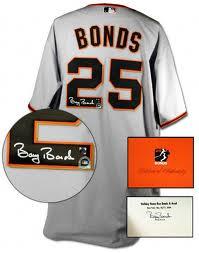
Can somebody pleae explain why the United States government is spending all this money trying to put someone in jail who is clearly no threat to society, already has had his career ruined (unlike the Wall Street guys who actually damaged the economy and got away not only without criminal charges but with increased riches) and at worst, lied about something that he knew would leak out?


Remember: Bonds was worried from the start that his grand jury testimony would not remain confidential. And it didn’t.


I don’t know. The case is weak, the prosecution is weak, I don’t care about the size of his testicles and this is all costing the taxpayers millions of dollars. Why can’t the U.S. attorney prosecute some real bad guys? How about investigating municipal corruption?


Okay, I’m done now.

Tome time

0

arts@sfbg.com

LIT This week brings the 30th installment of the National California Book Awards. Some of the books up for awards have been written about in the Guardian during the past year, including Rebecca Solnit’s Infinite City: A San Francisco Atlas, Richard O. Moore’s Writing the Silences, and Destiny Disrupted: A History of the World Through Islamic Eyes, by the 2011 Fred Cody Award for Lifetime Achievement winner Tamim Ansary. Local authors, editors, and translators among this year’s nominees include Solnit, Moore, Aife Murray, Brian Teare, Damion Searls, Michael Alenyikov, John Sakkis (who has contributed to the Guardian), Kate Moses, Matthew Zapruder, Lewis Buzbee, Neelanjana Bannerjee, and Pireeni Sundaralingam.

The 2011 edition of NCBA arrives at a time when the value and resolve of independent booksellers is clear. For many years, Borders and other chain stores seemed poised to kill small businesses devoted to selling books, and in fact, chain marketing undoubtedly has had a negative impact on individual shops. But Borders recently filed for bankruptcy, while a number of unique booksellers in the Bay Area and beyond continue to survive and thrive. Thanks to the Berkeley-based Small Press Distribution and San Francisco shops such as Needles & Pens, small publishing is also alive and within real-life reach. Here is the list of this year’s NCBA nominees, for the next time you venture into the neighborhood bookshop or library.


FICTION

 Ivan and Misha, stories, Michael Alenyikov (TriQuarterly Books, 212 pages, $18.95)

 Heidegger’s Glasses, Thaisa Frank (Counterpoint, 320 pages, $25)

 Gold Boy, Emerald Girl, stories, Yiyun Li (Random House, 240 pages, $25)

 Death is Not an Option, stories, Suzanne Rivecca (W.W. Norton, 22 pages, $23.95)

 The More I Owe You, Michael Sledge (Counterpoint, 320 pages, $15.95)

GENERAL NONFICTION

 Winner-Take-All Politics: How Washington Made the Rich Richer—And Turned Its Back on the Middle Class, Jacob S. Hacker and Paul Pierson (Simon & Schuster, 368 pages, $27)

 The Big Short: Inside the Doomsday Machine, Michael Lewis (W. W. Norton, 320 pages, $15.95)

Maid as Muse: How Servants Changed Emily Dickinson’s Life and Language, Aífe Murray (University Press of New England, 324 pages, $35)

 Aftershock: The Next Economy and America’s Future, Robert B. Reich (Alfred A. Knopf, 273 pages, $27.95)

 The Twilight of the Bombs: Recent Challenges, New Dangers, and the Prospects for a World Without Nuclear Weapons, Richard Rhodes (Alfred A. Knopf, 400 pages, $29.95)


CREATIVE NONFICTION

 Not by Chance Alone: My Life as a Social Psychologist, Elliot Aronson (Basic Books, 304 pages, $27.50)

• A State of Change: Forgotten Landscapes of California, Laura Cunningham (Heyday, 352 pages, $50)

• Cakewalk, a memoir, Kate Moses (The Dial Press, 368 pages, $26)

 Infinite City: A San Francisco Atlas, Rebecca Solnit (University of California Press, 167 pages, $24.95)

 Deep Blue Home: An Intimate Ecology of Our Wild Ocean, Julia Whitty (Houghton Mifflin Harcourt, 256 pages, $24)


POETRY

 Suck on the Marrow, Camille T. Dungy (Red Hen Press, 88 pages, $18.95)

Trance Archive: New and Selected Poems, Andrew Joron (City Lights Publishers, 120 pages, $14.95)

 Writing the Silences, Richard O. Moore (University of California Press, 136 pages, $19.95)

• Rough Honey, Melissa Stein (The American Poetry Review, 96 pages, $14)

 Pleasure, Brian Teare (Ahsahta Press, 88 pages, $17.95)

 Come on All You Ghosts, Matthew Zapruder (Copper Canyon Press, 96 pages, $16.95)


TRANSLATION, FICTION

 Translation by Anne Milano Appel, Blindly, by Claudio Magris, from Italian (Penguin Group Canada)

Translation by David Frick, A Thousand Peaceful Cities, by Jerzy Pilch, from Polish (Open Letter Books, 143 pages, $14.95)

 Translation by Damion Searls, Comedy in a Minor Key, by Hans Keilson, from German (Farrar, Straus and Giroux, 144 pages, $22)


POETRY

• Translation by Kurt Beals, engulf—enkindle, by Anja Utler, from German (Burning Deck, 96 pages, $14)

• Translation by Joshua Edwards, Ficticia, by María Baranda, from Spanish (Shearsman Books)

• Translation by John Sakkis and Angelos Sakkis, Maribor, by Demosthenes Agrafiotis, from Greek (Post-Apollo Press, 86 pages, $15)


CHILDREN’S LITERATURE

• Arroz con leche/Rice Pudding: Un poema para cocinar/A Cooking Poem, Jorge Argueta, illustrator Fernando Vilela (Groundwood Books/Libros Tigrillo, 32 pages, $18.95)

• The Haunting of Charles Dickens, Lewis Buzbee (Feiwel and Friends, 368 pages, $17.95)

• The Vinyl Princess, Yvonne Prinz (HarperTeen/HarperCollins Publishers, 320 pages, $16.99)

• Other Goose: Re-Nurseried!! and Re-Rhymed!! Children’s Classics, J. Otto Seibold (Chronicle Books, 80 pages, $19.99)

• Shooting Kabul, N.H. Senzai (Simon & Schuster Books for Young Readers/Paula Wiseman Books, 272 pages, $16.99)


SPECIAL RECOGNITION AWARD

Indivisible: An Anthology of Contemporary South Asian American Poetry, edited by Neelanjana Banerjee, Summi Kaipa, and Pireeni Sundaralingam (University of Arkansas Press, 220 pages, $24.95)


FRED CODY AWARD FOR LIFETIME ACHIEVEMENT

Tamim Ansary 

NORTHERN CALIFORNIA BOOK AWARDS

Sun/10, 1 p.m.–2:30 p.m.

Koret Auditorium

San Francisco Main Library

100 Larkin, SF

(510) 525-5476

www.poetryflash.org


Threads of change

3

rebeccab@sfbg.com ; caitlin@sfbg.com

GREEN ISSUE Planting indigo seedlings in a leaky greenhouse in the mist of a cold Marin County afternoon, Rebecca Burgess thinks about what she’s going to wear. She’s not a fashion model, or a clotheshorse, but she is on a yearlong quest to attire herself only in garments that were sourced and produced bio-regionally — or within a 150-mile radius of home — an area she calls her local fibershed.

Why take on such a challenge? “If we don’t want BP oil spills, it’s about more than just not fueling our cars with it,” Burgess says. While many activists seeking to unplug from oil dependency have worked to encourage bicycles, local agriculture, and reusable shopping bags, her approach takes on the materials we use to clothe our bodies.

Half of all jeans sold annually in the United States — around 200 million pairs — are produced in the Xintang township in China’s Pearl River Delta, where a Greenpeace study found hazardous organic chemicals and acidic runoff in the watershed, both of which may contribute to profound health risks for factory workers and their communities.

Of course, oil is consumed in the transport of factory-made garments halfway across the globe. But as Burgess notes, that’s only part of the reason for her project, which so far has yielded a book on the making of natural dyes and a plan for a community cotton mill in Point Reyes.

She’s also concerned about the synthetic fibers mass-manufactured clothes are made of. “We’re wearing a lot of plastic,” she notes. Not just plastic: petrochemicals, formaldehyde, and carcinogenic polycrylonitriles can all be used to produce your outfit— materials that seep into your pores when you’re active and can hardly be considered ideal to wear against your skin.

To limit support of the oil-reliant garment industry, Burgess envisions a collaboratively created source of clothing made from materials and processes that are — unlike the heavy-metal laden industrial effluent from denim dyes flowing into China’s Pearl River — completely nontoxic. To that end, she’s linking natural fiber artisans and raw material providers throughout the region with the fibershed project, which aims to bolster local clothing production.

Today, she’s the poster child for her effort. Burgess sports striped alpaca kneesocks, an organic cotton skirt sewn by a friend, and a wool sweater her mom knitted with handmade yarn, sourced from a sheep farmer they know. The clothes look well-loved, which makes sense: relying on one’s fibershed for a wardrobe is not easy. When Burgess first embarked on her yearlong bioregional clothing challenge, there wasn’t much in her dresser. “I lived out of three garments for weeks,” she laughs. “People were like, ‘You’re wearing the same thing over and over and over again.'<0x2009>”

But she found that she wasn’t the only one who believed that a change was possible in our closets. Friends, family, and a wider community of shepherds, cotton growers, knitters, seamstresses, and artisans all pitched in to help her along with the project. Burgess says this growing network underlies what it will take for communities to transition to a more sustainable lifestyle. “All this is about encouraging more relationships.”

There’s Sally Fox, whose non-genetically modified colored cotton operation in the Capay Valley is the culmination of years of seed-selecting for natural color tones. There’s the 96-year old sheep farmer in Ukiah. Not to mention the hip fiber artisans based in Oakland and the young fashion students in San Francisco who were inspired by her project.

“It’s not just of value to an old spinster community, it’s of value to a young, hip generation of people who want to live in a carbon-free economy,” Burgess notes. “A bunch of urban young people are really into fibers.” Most, she adds, are women.

Burgess makes her own clothing, too, and to research her book (Harvesting Color, Artisan, 180 p., $22.95) traversed the country learning from female “wisdom-keepers,” women whose craft practices were based on passed-down traditions encouraging the health of their ecosystems.

Today is part of her latest endeavor: growing her own indigo dye so that locally made garments can be dyed blue sustainably. Her day’s work entails planting 400 indigo seeds in flats filled with soil from a ranch down the road. This spring and summer, she plans to raise 1,000 indigo plants in three garden plots just outside the greenhouse. The day the Guardian came to visit, sheep lounged in the pasture beyond her garden plots, as if to illustrate the point that this process won’t require any long-distance transport.

She realizes that few people have a greenhouse to plant indigo in, much less the time necessary to produce their own clothing — or the money needed to dress in handcrafted pieces. But by proving that it’s possible to wear clothes that were created by your own community, she hopes that people will at least “settle for second best, which in this case is wearing organic, American-made materials.”

Even that would be something — right now clothes just aren’t on most of our sustainability compasses. As an example, Burgess recalls a panel discussion she attended at which sustainable food champions Michael Pollan and Joel Salatin were speakers. Someone (“And it wasn’t even me!” she insists) asked them what role garments played in a sustainable lifestyle. “And they were speechless. They didn’t have a thing to say.”

It was a PR challenge Burgess was happy to assume — she has since struck up an e-mail correspondence with Pollan, which she hopes will spread her message further. “Clearly we need some education.”

Join Burgess and other yarn producers for a locally made fashion show and to see plans for their community mill May 1 at Toby’s Feed Barn in Point Reyes. For more information call (415) 259-5849 or visit www.rebeccarburgess.com


Drawing a line in the toxic triangle

5

rebeccab@sfbg.com

GREEN ISSUE California is often viewed as being among the brightest shades of green. The Golden State’s landmark climate-change legislation has proven magnetic for green-tech startups, while Northern California is defined in part by its longstanding love affair with natural foods and solar power. San Francisco boasts a well-used network of bike routes, a ban on plastic bags, mandated composting of kitchen scraps, and a host of urban agriculture projects.

While much of the Bay Area’s environmental reputation is well-deserved, things look different from poor neighborhoods where homes are clustered beside hulking industrial facilities and public health suffers. For years, grassroots organizations working in Richmond, Oakland, and Bayview-Hunters Point have sought to improve air quality and promote environmental justice in neighborhoods plagued by higher-than-average rates of respiratory disease, cancer, and other preventable illnesses.

The Rev. Daniel Buford of Oakland’s Allen Temple Baptist Church told the Guardian that he began talking about the polluted areas of Richmond, Oakland, and San Francisco as a “toxic triangle” two decades ago. It was an analogy, he explained, that plays off the mysterious deaths that the Bermuda Triangle is famous for. Yet the label also served a purpose — to unite three communities of color that were fighting separate yet similar battles against health hazards associated with their surroundings.

“There were a lot of things that weren’t in place with public consciousness that are in place now,” Buford said.

Today, he isn’t the only one uttering the catch phrase. A host of community organizations banded together as the Toxic Triangle Coalition last year to organize three forums on environmental justice in the three cities. Advocates cast the neighborhood-specific problems as three parts of a regionwide phenomenon, highlighting how pollution from shipping, crude oil processing, freeway transportation, abandoned manufacturing sites, hazardous waste handlers, and other industrial facilities disproportionately affect communities of color, where poverty and unemployment rates are already high.

Buford views the Toxic Triangle Coalition as a strategy to mount pressure for stronger enforcement of environmental laws in disproportionately affected areas. “We live in the whole Bay Area — we don’t live in one little part of the Bay Area,” he noted. “Our coalition strongly urges our state representatives in each of the counties to call for a hearing at the state level.”


OIL WARS

In Richmond, California’s top greenhouse-gas emitter looms as an expansive backdrop of the city, a tangled network of smokestacks and machinery near a hillside cluster of large, cylindrical oil storage containers. Chevron Corporation’s Richmond Refinery was built more than a century ago. A few years ago, the oil company began making noise about how it was in need of an upgrade.

Weaving through a blue-collar residential area of Richmond in her sedan, Jessica Guadalupe Tovar recounted how Communities for a Better Environment (CBE), the nonprofit she works for, revealed that Chevron hadn’t told the whole story when it was petitioning for a permit to expand the refinery. The oil company’s long-term goals, CBE learned from a financial report, included gaining capability to process thicker crude that tends to be sourced from places like Canada’s Alberta tar sands.

“We call it dirty crude,” she said. “But it’s really dirtier crude.”

Converting thicker crude to fuel requires higher temperatures and pressures — and that translates to higher greenhouse-gas emissions and a heightened risk of flaring and fires.

The refinery expansion could have meant an air-quality situation going from bad to worse. Public health problems such as asthma and cancer have spurred campaigns led by the West County Toxics Coalition, CBE, and other environmental justice groups. Tovar explained how CBE orchestrated an air-monitoring program in 2006, collecting samples from 40 homes in Richmond and 10 in Bolinas as a point of comparison.

While trace amounts of chemicals from household cleaners were present in both, samples from the Richmond residences also contained the same toxic compounds that spew from Chevron’s refinery. “We found pollution known to come from the oil refinery settling inside people’s homes,” Tovar explained. “Once it’s trapped in your home, it starts to accumulate.”

Chevron won its expansion permit by a slim margin in 2008 with a city council dominated by officials who had reputations for being friendly to the oil giant. Yet environmental organizations filed suit, saying the environmental impact report (EIR) approval was based on was illegal because it failed to analyze the company’s likely plans for heavier crude processing. A Contra Costa County judge ruled in favor of the environmentalists, halting the expansion project in 2009. Chevron appealed, but the decision was upheld in 2010.

Stopping the expansion was a substantial victory, but environmental justice advocates remain wary of Chevron — particularly after the company attempted to blame job losses on the green coalition that filed suit. “Chevron pit workers against us,” Tovar noted. “And also started saying, ‘This is why environmental laws are bad for the economy.'”


GLOBAL TRADE, LOCAL FUMES

Each day, the Port of Oakland fills with trucks waiting to load up on goods shipped in from around the globe on massive cargo vessels. It’s a local symbol of a globalized economy. But for the West Oakland neighborhoods surrounding the port, the daily gathering of diesel rigs means an unhealthy infusion of particulate matter into the air.

A report issued by the East Bay Alliance for a Sustainable Economy (EBASE), the Pacific Institute, and the Coalition for Clean and Safe Ports found that West Oakland residents are exposed to particulate matter concentrations nearly three times higher than the regional average. Health studies have shown that asthma rates in West Oakland are five times higher than that of people living in the Oakland hills, and cancer risks are threefold compared to other Bay Area cities. For the truck drivers, the risk of cancer is significantly higher than average.

A state air-quality law that went into effect in early 2010 banned pre-1994, heavily polluting diesel trucks from the port, thanks in part to years of environmental campaigning that has publicized public-health impacts associated with the diesel pollution. Yet the new regulation brought an unintended consequence: for truck drivers who must purchase their own gas and pay for their own upgrades, the new rule was ruinous. A survey by the Public Welfare Foundation found that since the new environmental regulation went into effect, 25 percent of Oakland truck drivers had declared bankruptcy, been evicted, or faced foreclosure.

Retrofitting the trucks with new air filters is a five-figure prospect, while the cost of a new truck can clear $100,000. “At the end of the day … a lot of them will only take home about $25,000 a year,” explained EBASE spokesperson Nikki Bas. “It’s an immigrant workforce who are living in poverty.”

So the Coalition for Clean and Safe Ports, which pushed for tougher air-quality regulations, is now pressuring for a reform of the trucking industry to place the cost of clean upgrades onto powerful trucking companies instead of low-wage drivers. The coalition’s campaign has sought to link the needs of the drivers and the surrounding community, organizing rallies with blue-green signs bearing the motto “Good Jobs & Clean Air” to call for a change to the truckers’ employment classification from independent contractors to employees, which would shift the cost of compliance onto employers instead of drivers.

West Oakland isn’t the only East Bay area inflicted by excessive levels of diesel particulate matter from trucks entering the Port of Oakland. The fumes also affect East Oakland neighborhoods bisected by the big rigs’ primary thoroughfares. In addition to truck traffic and freeways, East Oakland is also the site of numerous hazardous-waste handlers and abandoned industrial sites.

Nehanda Imara, an organizer with CBE who also helped put together the Toxic Triangle Coalition forums, described how her organization recruited volunteers to count the number of trucks passing through a heavily traveled East Oakland strip as a way to quantify the source of particulate matter pollution. They reached a tally of around 11,700 over the course of 10 days.

Some progress has been made to limit the exposure of diesel pollution for East Oakland residents. The city is working on a comprehensive plan to assess trucking routes, and a campaign to limit truck idling is helping to limit unnecessary tailpipe emissions.

Yet youth hospitalizations for asthma in East Oakland are 150 percent to 200 percent higher than Alameda County taken as a whole, and an air-monitoring project in that area revealed high levels of particulate matter exceeding state and federal standards.

“That’s also an environmental injustice,” Imara said. “When the laws are there, but not being enforced.”


TOXIC SOUP

In San Francisco’s Bayview-Hunters Point neighborhood, environmental justice groups have spotlighted the toxic stew associated with the naval shipyard and other pollution sources for years. A 2004 report produced jointly by Greenaction for Health and Environmental Justice, the Bayview-Hunters Point Mothers Environmental Justice Committee, and the Huntersview Tenants Association outlined a “toxic inventory” of the area. The inventory depicts a more complicated web of toxic sources than the asbestos dust and naval shipyard cleanup that have been focal points of news coverage surrounding Lennar Corp.’s massive redevelopment plans for that neighborhood.

“Over half of the land in San Francisco that is zoned for industrial use is in Bayview-Hunters Point,” this report noted. “The neighborhood is home to one federal Superfund site, the Hunters Point Naval Shipyard … a sewage treatment plant that handles 80 percent of the city’s solid wastes, 100 brownfield sites [a brownfield is an abandoned, idled, or underused commercial facility where expansion or redevelopment is limited because of environmental contamination], 187 leaking underground fuel tanks, and more than 124 hazardous waste handlers regulated by the U.S. Environmental Protection Agency.”

The shipyard, meanwhile, has been the central focus of controversy surrounding plans to clean up and redevelop the area. People Organized to Win Employment Rights (POWER) and Greenaction are currently challenging the EIR for Lennar’s massive redevelopment plan for the neighborhood, charging that the study is inadequate because a cleanup effort on the part of the U.S. Navy has yet to determine the level of toxicity that will need to be addressed, so the assessment is based on incomplete information. Asthma is commonplace in the Bayview, and health surveys have shown that the rates of cervical and breast cancer are twice as high as other places in the Bay Area.

“Our environmental issues are massive still, and it’s not just Bayview- Hunters Point,” notes Marie Harrison, a long-time organizer for Greenaction and a Bayview resident.

Harrison recalled the many times she’d gotten out of bed in the middle of the night to drive a friend’s or neighbor’s asthmatic child to the hospital. “That story has repeated itself tenfold in Richmond and in Oakland,” she added. Nor is the problem simply limited to those Bay Area cities, she said, noting that communities of color throughout the Environmental Protection Agency’s Region 9 face similar issues.

As awareness about the scope of the problem has increased over the years, she said, “We start to say, my God, this triangle has to become a circle.”


Green days

0

news@sfbg.com

1892: The Sierra Club is established by John Muir and a group of professors from UC Berkeley and Stanford in San Francisco. In its first conservation campaign, the club leads efforts to defeat a proposed reduction in the boundaries of Yosemite National Park.

1902: After two years of intense lobbying and fundraising, the Sempervirens Club, the first land conservation organization on the west coast, is successful in establishing Big Basin Redwoods State Park — the first park established in California under the new state park system.

1910: The first municipally owned and operated street car service commences in San Francisco.

1918: Save the Redwoods League is established in San Francisco. A leader in proactive land conservation, SRL would go on to assist in the purchase of nearly 190,000 acres to protect redwoods and help develop more than 60 redwood parks and reserves that old these ancient trees in California.

1934: The East Bay Regional Park is established as the first regional park district in the nation. This radical Depression-era idea would much set the tone as the Bay Area land conservation vision expanded.

1934: The Marin Conservation League is founded by wealthy Republican women. Three years later, at the league’s behest, the Marin County Board of Supervisors adopts the first county zoning ordinance in the state in 1937. Over the next 10 years, the league helps create State Parks at Stinson Beach, Tomales Bay, Samuel P. Taylor, Angel Island, and expand Mt Tamalpais State Park.

1956: San Francisco activists, led in party by Sue Bierman, launch a campaign to stop a freeway that would have run through Golden Gate Park. It marks the first time city residents successfully block a freeway project and launches the urban environmental movement in America.

1958: Citizens for Regional Recreation and Parks is founded. It becomes People for Open Space in 1969 and morphs in 1987 into the Greenbelt Alliance. Their efforts lead to the creation of the Mid-Peninsula Open Space District in 1972 and Suisun Marsh in 1974.

1960: Sierra Club Executive Director David Brower launches a brand new organizing and educational concept, the exhibit format “coffee table” book series, with This Is the American Earth, featuring photos by Ansel Adams and Nancy Newhalland. These elegant coffee-table books introduced the Sierra Club to a wide audience. Fifty thousand copies are sold in the first four years, and by 1960 sales exceed $10 million. The environmental coffee table book emerged as part of a campaign to persuade Congress to enact the Wilderness Bill, legislation that would guarantee the permanence of the nation’s wild places.

1961: Save San Francisco Bay Association is founded by Sylvia McLaughlin, Kay Kerr and Ester Gulick to end unregulated filling of San Francisco Bay and to open up the Bay shoreline to public access.

1961: Pacific Gas and Electric Co. announces plans to build a nuclear power plant at Bodega Bay. Rancher Rose Gaffney, UC Berkeley professor Joe Neilands and others mount what will become the first citizen movement in the country to stop a nuclear plant. The Bodega Bay campaign marks the birth of the antinuclear movement.

1965: Responding to Bay Area citizens’ demands for protection of the bay’s natural environment, the California state legislature passes the McAteer-Petris Act, which establishes the San Francisco Bay Conservation and Development Commission (BCDC) and charges it with preparing a plan for the long-term use and protection of the Bay and with regulating development in and around it.

1965: Fred Rohe opens New Age Natural Foods on Stanyan Street in San Francisco. He goes on to open the first natural foods restaurant in 1967, Good Karma Cafe on Valencia Street. Rohe would go on to open the first natural foods distribution company in Northern California, New Age Distributing in San Jose in 1970 and found Organic Merchants (OM), the first natural foods retailer trade group.

1967: The Human Be-in is held Jan. 14 in Golden Gate Park (as a prelude to the Summer of Love) with as a major theme higher consciousness, ecological awareness, personal empowerment, cultural and political decentralization.

1967: Alan Chadwick comes to UC Santa Cruz and establishes the Student Garden Project and training program, which would train hundreds of today’s organic farmers.

1968: The Whole Earth Catalogue, published by the Point Foundation and edited by Stewart Brand out of Gate 5 Road in Sausalito is introduced, providing tools, philosophy, and reviews to the growing back-to-the-land movement, helping promote ecological living and culture alternative sustainable culture decades before those words became mainstream.

1969: Brower, after losing his job at the Sierra Club in part because of his opposition to the Diablo Canyon nuclear power plant, founds Friends of the Earth, the cutting edge activist group that would eventually have affiliates in 77 nations around the globe and become the world’s largest grassroots environmental network.

1970: Peninsula resident Neil Young writes and sings the lyrics “Look at Mother Nature on the Run in the 1970s.”

1970: Berkeley Ecology Center opens.

1971: Sierra Club Legal Defense Fund is established, marking the beginning of an explosion in environmental law.

1971: Alice Waters opens Chez Panisse, serving up California Cuisine and altering the Bay Area diet helping to create a market for local fresh organic fruits and vegetables. 1971: Berkeley resident Francis Moore Lappé publishes her best-selling book Diet for a Small Planet. Two million copies are sold and as the first book to expose the enormous waste built into U.S. grain-fed meat production, for her a symbol of a global food system creating hunger out of plenty; her effort alters millions of diets.

1971: San Francisco dressmaker Alvin Duskin launches a campaign to limit high-rise office development in San Francisco, creating new allies and a new coalition for urban environmentalism.

1972: The Trust for Public Land, a national, nonprofit land conservation organization that conserves land for people to enjoy as parks, gardens, historic sites, and rural lands, is founded by Huey Johnson, Doug Ferguson and Marty Rosen in San Francisco. TPL would go on to protect 2.8 million acres of land and is key in getting land trusts started in Napa, Sonoma, Marin, Big Sur, and around the state.

1972: The Don Edwards San Francisco Bay National Wildlife Refuge, first urban wildlife refuge in the United States, is established, encompassing 30,000 acres of open bay, salt pond, salt marsh, mudflat, upland and vernal pool habitats located in South Bay.

1972: The Save Our Shores campaign, developed in part by Bay Area residents, results in a state initiative, the Coastal Act of 1972, which is passed by the voters and establishes the first comprehensive coastal watershed policy in the nation.

1974: Berkeley Ecology Center starts the first curbside recycling approach in California, one of first such programs in the nation.

1974: The Farallones Institute in Berkeley begins building the first urban demonstration of an ecological living center with the Integral Urban House, a converted Victorian using solar and wind technologies, a composting toilet, extensive gardens, and energy and resource conservation features. It serves as an early model for the emerging Appropriate Technology Movement.

1975: Berkeley resident Ernest Callenbach self publishes Ecotopia after a round of rejections from New York publishers; it ultimately sells more than a million copies and becomes an environmental classic.

1975: San Francisco’s first community gardens are established at Fort Mason and elsewhere.

1975: The Marine Mammal Center, a nonprofit veterinary research hospital and educational center dedicated to the rescue and rehabilitation of ill and injured marine mammals, primarily elephant seals, harbor seals, and California sea lions, is established in the Marin Headlands.

1978: Raymond Dasmann and Peter Berg coin the term Bioregionalism in the publication of Reinhabiting a Separate Country, published by Berg’s Planet Drum Foundation in San Francisco. It represents a fresh, comprehensive way of defining and understanding the places where we live, and of living there sustainably and respectfully through ecological design.

1979 Greens Restaurant opens at Fort Mason in San Francisco and quickly establishes itself as a pioneer in promoting vegetarian cuisine in the United States.

1980: The Marin Agricultural Land Trust is established by Wetland Biologist Phyllis Faber and diary farmer Ellen Straus.

1980: Berkeley resident Richard Register coins the term “depave” — to undo the act of paving, to remove pavement so as to restore land to a more natural state. Depaving begins to spread to create many inner city urban gardening projects.

1981-82: Register and other activists, bring about the first urban day lighting of a creek in Berkeley’s Strawberry Creek Park where a 200-foot section of the creek is removed from a culvert beneath an empty lot and transformed into the centerpiece of a park.

1982: Earth First, a radical environmental group founded by Dave Foreman and Mike Roselle, sponsors the first demonstration against Burger King in San Francisco for using beef grown on land hacked out of rain forests. The demonstrations spread, turn in to a boycott, and after sales drop 12 percent, Burger King cancels $35 million worth of beef contracts in Central America and announces it will stop importing rainforest beef.

1983: Local residents Randy Hayes and Toby Mcleod release the documentary film The Four Corners, A National Sacrifice Area? , which conveys the cultural and ecological impacts of coal strip-mining, uranium mining, and oil shale development in Utah, Colorado, New Mexico, and Arizona — homeland of the Hopi and Navajo. The film wins an Academy Award and illustrates serious environmental justice issues 10 years before that term is coined.

1985: The Rainforest Action Network, established in San Francisco, emerges from the Burger King action.

1986: Fifteen years after Duskin’s first anti-high-rise initiative efforts, San Francisco finally passes Prop. M, the nation’s most important sustainable growth law.

1988: Register invents a stencil to be used next to street storm drains that says “don’t dump — drains to bay.” The wastewater pollution mitigation education concept spreads around the region and nation and then becomes an international volunteer effort to lessen pollution in urban runoff, which generally flows untreated into creeks and saltwater.

1989: Carl Anthony, Karl Linn, and Brower establish the Urban Habitat Program in San Francisco, one of the first environmental justice organizations in the country.

1989: Laurie Mott of the National Resource Defense Council’s SF office rattles the apple industry by engineering a suspension of the use of the pesticide Alar by the Environmental Protection Agency. A national debate ensues.

1992: Berkeley writer Theodore Roszak coins both the term and field of ecopsychology in his book The Voice of the Earth. The movement he helps found asks if the planetary and the personal are pointing the way forward to some new basis for a sustainable economic and emotional life.

1992: The first Critical Mass bike ride (initially called a “Commute Clot”) is held in San Francisco. Similar rides, typically held on the last Friday of every month, began to take place in more than in over 300 cities around the world.

1993: The U.S. Green Building Council is founded by David Gottfriend in Oakland. The council becomes the most important environmental trade organization in the world. In 1998, the council develops the LEED (Leadership in Energy and Environmental Design) Green Building Rating System, which provides a suite of standards for environmentally sustainable construction and design.

1995: The Edible Schoolyard is established by Chez Panisse Foundation at Martin Luther King Jr. Middle School in Berkeley. It serves as a model for similar programs in New Orleans and Brooklyn, and inspires garden programs at other schools across the country.

1999: The Green Resource Center starts as a joint project of the City of Berkeley, the Northern California Chapter of Architects, Designers and Planners for Social Responsibility (ADPSR), and the Sustainable Business Alliance.

2000: Wendy Kallins, working with the Marin Bicycle Coalition, begins a Safe Route to Schools program in Marin to encourage students to walk or bicycle to school. The program is so successful that Congress allocates more than $600 million for similar efforts across the country.

2001: The first Green Festival is held in San Francisco.

2001: Berkeley becomes first city in nation with curbside recycling trucks powered by recycled vegetable oil, thanks to a campaign by the Berkeley Ecology Center.

2002: San Francisco adopts a greenhouse gas reduction initiative that aims to reduce the city’s greenhouse gas emissions to 20 percent below 1990 levels by 2012.

2003: Bay Area Build It Green is formed by a number of local and regionally focused public agencies, building industry professionals, manufactures, and suppliers. Its activities are focused on increasing the supply of green homes, raising consumer awareness about the benefits of building green, and providing Bay Area consumers and residential building industry professionals a trusted source of information.

2005: San Francisco passes the Precautionary Principle Purchasing Ordinance, which requires the city to weigh the environmental and health costs of its $600 million in annual purchases — for everything from cleaning

supplies to computers.

2006: Bay Localize is launched in the East Bay with the aim to work to build a cooperative, inclusive movement toward regional self-reliance and increase community livability and local resilience for all while decreasing fossil fuel use.

2007: In an effort to meet the challenges of global warming, carbon pollution and job creation, East Bay activist Van Jones declares that the nation is going to have to weatherize millions of homes and install millions of solar panels. His best-selling book, The Green Collar Economy, stimulates a national movement and a new organization, Green For All.

2007: San Francisco begins collecting fats, oils and grease from residential and commercial kitchens, for free, to recycle into biofuel for the city’s municipal vehicles, the largest biofuel-powered municipal fleet in the United States.

2008: San Francisco becomes the first U.S. city to establish green building standards.

2010: The Green Building Opportunity Index names San Francisco and Oakland the top two cities in the nation for green buildings.

2010: San Francisco becomes home to the Sunset Reservoir Solar Project, the largest solar-powered municipal installation in California.


Editor’s Notes

7

Tredmond@sfbg.com

The San Francisco City Planning Department is revising its housing plan, and there’s a lot of indignation on the west side of town. See, the Housing Element of the city’s General Plan calls for a little bit of increased density in some of the neighborhoods that have fought density for years.

The unwritten law of San Francisco housing politics is that you don’t even talk about density west of 19th Avenue, and it’s pretty hard to talk about it anywhere beyond the western borders of Districts 3, 5, 8 and 11. So all the new housing gets pushed into the eastern neighborhoods — and all the rational planning people agree that the other side of town should absorb at least some of it. Density doesn’t always mean big, tall buildings, by the way — legalizing in-law units would create more housing, and more density, in single-family-home areas. But you run into the problem of everyone wanting a car — and turning garages into apartments means more cars fighting for that almighty parking space. Housing cars in this town sometimes seems more important than housing people.

So we’re going to hear some squawking — and a lot of it’s going to be misplaced. Because the real issue in the Housing Element isn’t density — it’s affordability.

The city acknowledges, in its own documents, that based on local needs, more than 60 percent of the new housing in the city has to be available at below-market-rate prices. The planners also admit they have no idea how to make that happen:

“The city will not likely see the development 31,000 new units, particularly its affordability goals of creating over 12,000 units affordable to low and very low income levels projected by the [city’s needs assessment] … [But] realizing the city’s housing targets requires tremendous public and private financing, [which] given the state and local economy and private finance conditions, is not likely to be available during the period of this Housing Element.”

Translation: we can’t afford to do what everyone agrees we have to do.

San Francisco city planning has been driven for decades by the needs of the private sector. It’s made good money for the developers (building housing in SF is still highly lucrative). But as public policy, the model has failed.

Until we set clear policies saying that the needs of local residents come first — and that high-end housing isn’t meeting those needs — we’re going to keep living with a serious disconnect.

Progressive pension reform

5

EDITORIAL It’s entirely possible that San Francisco voters will see three different pension proposals on the November ballot. Public Defender Jeff Adachi, who failed to pass a harsh pension-reform plan last year, is determined to try again. A working group headed by investment banker Warren Hellman is working on a plan, and Sup. Sean Elsbernd expects some version of that to move forward. And organized labor may do its own initiative.

But before any of those efforts are finalized, it’s worth understanding where this so-called crisis originated — and how to fashion a progressive approach to the issue.

The idea behind San Francisco’s fixed-benefit system is simple. Every year, the city and it’s employees contribute to a pension fund, which is invested under strict rules, and when an employee retires, he or she gets paid a predetermined amount out of that fund. Until the financial system imploded and the stock market crashed in 2008, San Francisco’s pension fund was solid. The reserves more than covered expected payouts. In fact, the fund was so healthy, and growing so fast, that some years the city didn’t have to contribute anything at all.

Under Mayors Willie Brown and Gavin Newsom, the city used its flush pension fund as a way to avoid tough decisions on employee pay. Instead of giving raises, for example, the city offered to pick up the contributions some workers were making to the fund (which would cost the city nothing as long as the stock market kept booming).

Now things aren’t so rosy, and the city’s having to put hundreds of millions a year into the fund to keep it solvent. For the record, that’s not the fault of the city employees who negotiated their contracts in good faith — and who weren’t players in the Wall Street greed and corruption that wrecked the economy. In fact, if the city had continued paying into the fund in good times, the costs would be far lower now.

The various pension proposals look at a wide range of approaches, but in essence, both Adachi and Hellman’s group are going to ask city employees to put more of their paychecks into the pension fund. That’s the equivalent of a pay cut — they’ll be taking home less money for the same benefits they currently receive.

It’s true that city employees now get better pensions than most private-sector workers (a result in part of the fact that corporate American, aided by Congress, shifted most retirement plans to the 401(k) model, which puts all the risk on the employees and leaves employers largely off the hook). And there’s some horrendous abuse, particularly by senior police and fire staffers (former Police Chief Heather Fong is getting $229,000 a year for life, which is ridiculous).

It’s also true that the average midlevel city worker gets a pension between $20,000 and $24,000 a year.

Labor has already given back some $500 million in concessions over the past four years (and most of that money has come from lower and midlevel workers) City programs and services have been cut, by most estimates, by close to $1 billion.

The city has raised only $90 million in new taxes.

The bottom line is that over the past four years, the rich and big corporations, which are radically undertaxed in our society, have given back almost nothing to the city, have felt almost no pain. Unless pension reform takes that into account, it won’t be fair or acceptable.

The first element of any new pension plan should be progressive in scale: capping pensions at, say, $100,000 (or lower); eliminating pension spiking; and requiring high-paid employees to contribute a higher percentage to the fund than low-paid workers would make sense. Policy makers should treat this as what it is, a pay cut — and any cuts should fall disproportionately on those who are more able to afford it. Requiring the city to put its share into the fund every year, even if the market is booming, would help ease the pain in bad years.

But there should be no pension reform without tax reform. If San Francisco is going to ask its employees to do more to balance the local budget — and that probably has to happen — then city officials should be willing to ask the richest residents and businesses to share the pain too.

A third space to call their own

4

culture@sfbg.com

EAT HANG LOVE Every neighborhood has its ups and downs, but when it comes to Sixth and Market streets, many shop owners and residents will tell you all about the downs — street crime, homelessness, and substance abuse, to name a few. But despite warnings of stormy weather, one café and community art space has dropped anchor to serve this neighborhood. With affordable food, superior coffee, and accessible seating areas for creativity and connection, Rancho Parnassus provides a living room for neighborhood characters stuffed into cramped apartments and dirty streetscapes. But it hasn’t been easy — the good guys behind the endeavor worry that it may come down to sink or swim.

Weary of the nautical analogies yet? It’s hard not to make them after setting foot in the cafe, whose interior resembles the inside of a ship at sea. With big wooden furniture sets, photographs from group art shows hanging from ropes — not to mention the sailing equipment, bright blue walls, wooden barrels, plastic fish, and ship wheel décor — even the tiny kitchen is modeled after the galley of a ship.

Owner Andy Harris says the nautical motif is no coincidence. From behind the kitchen counter on a slow weekday morning he tells us that “the idea is that when you come in here, you’re going somewhere. You are on a ship, you’re on a journey. I don’t like static spaces — I’m trying to give people that come in here a feeling of motion.”

A lot of the lingo that Harris uses when he talks about the ideology behind Rancho Parnassus comes from the new urbanism movement. “It’s about revitalizing America’s cities rather than encouraging people to flee to the suburbs. The café and corner store are really important — they’re examples of third space, a space that is neither home nor work. That’s what this community was missing: a casual, affordably priced all-day, all-ages hangout.”

Harris refers to Rancho Parnassus mostly as a “creative hub,” and emphasizes that the food and coffee come second. But it’s hard to ignore the high quality and low prices of the coffee and food. Harris makes every cup of joe fresh using an aeropress, which is similar to a French press but with an even smaller microfilter, resulting in a brew that’s strong and tasty.

And when it comes to the menu, Harris depends on Tony Thomas, his chef and right-hand man. Thomas, a musician and performer who says he grew up cooking in his family’s now-defunct SF restaurant, was a regular at Rancho Parnassus before he got his current gig. He says he came in to play the piano one day when he spied Harris, frazzled to get through a morning rush. “He was sweatin’,” Thomas recalls. Eager to help, the cook jumped behind the counter and started frying eggs and toasting bread. He never looked back.

As Thomas tells us his story, a regular comes in to order a brioche bun stuffed with sausage, gorgonzola, spinach, and bacon, which shows up on Rancho’s menu as “The Bird in the Hand.” In keeping with the rest of the sustenance on offer, the sandwich is affordably priced — $2.50.

Although Harris and Thomas say that food costs are low, Sixth Street isn’t a big money-making location. They worry that this free art and performance space — the dining room is regularly rented out to creative types from around the city — and café might not be open much longer. It’s a frustrating reality for Harris, who knows he will “never get rich off of this space” and is more interested in his cafe’s social mission.

A typical Rancho afternoon is enough proof that the cafe means a lot to its regulars. Most days you’ll find the street artist who goes by the name of Big Face using the space as his personal studio, constructing collages at the café tables or on an easel. Around him other patrons work on their laptops or use the café’s public Apple computer, talking, eating, or just sitting quietly. “I don’t make a big fuss about anyone buying anything,” Harris says. “I want people to hang out, and we are certainly never going to push anyone out as long as they are polite and not disturbing the creative environment.”

The community members familiar with Rancho Parnassus vouch that the space makes them feel welcome. “I kind of wandered in by accident,” says Adrien, a 20-year resident of the neighborhood who lives two blocks away. Adrien comes in every day for breakfast and to do work in the morning. “There’s really no other place around here like this. There is a more relaxed vibe here between the décor, the music, and the people who work here. Other places are similar but they get too crowded and it’s more ‘get in, get out.’ “

Harris says it will be up to the community and the economy to keep Rancho Parnassus open. Although the café has a community agenda, it’s still a business, which means it won’t be receiving grants or funding from outside organizations. “There’s no grant for ‘really wonderful café — let’s get them to stay open,’ ” Harris says. When he talks about the struggle to stay afloat, you can tell he thinks the stakes are high. “It’s such a great thing for this neighborhood. So many depend on us to be here.” 

RANCHO PARNASSUS Mon.–Sat. 6 a.m.–7 p.m. 505 Minna, SF (415) 503-0700 www.ranchoparnassus.com