Economy

When bankers lie

3

By Darwin BondGraham

news@sfbg.com

Although few have ever heard of it, there’s probably no number more important to the global financial system than the London Interbank Offered Rate, or LIBOR. Defined precisely, LIBOR is a set of different interest rates that the world’s largest banks charge one another for cash loans denominated in US dollars.

Because of its centrality to the economic system, and the trust placed in it, LIBOR is used to calculate everything from consumer loans and home mortgages to exotic financial derivatives and investments. LIBOR makes the financial world go round, influencing the price of everything. Fortune 500 companies decide whether or not to invest billions in new factories and product lines based on LIBOR’s direction. Governments rethink their debt levels and spending when LIBOR ticks up and down.

It turns out, however, that LIBOR has been a lie, and that the world’s biggest banks rigged the rate to skim off billions of dollars in value from other corporations and the general public. In a devastating set of revelations that began to surface two years ago, the panel of the largest global banks that set the LIBOR rate conspired to manipulate it, to increase or decrease LIBOR, solely because a higher or lower quote on particular days would allow them to reap millions in instant profits.

US authorities working with regulators in the UK, Japan, Switzerland, and Singapore are currently investigating upwards of two dozen banks in what is probably the single biggest financial crime ever perpetrated. So far, employees of Barclay’s, UBS, and Credit Suisse have been fired, arrested, and charged. Many more criminal prosecutions are surely coming, but the real battle will be in the civil courts and the court of public opinion.

To date only a handful of civil lawsuits have been filed, the first shot fired by the city of Baltimore early last year. Last month, the County of San Mateo, city of Richmond, and the East Bay Municipal Utility District filed their own cases which were quickly consolidated into a growing class action to be heard in New York’s Southern District Federal Court.

Now San Francisco is set to enter the ring. On January 29, Supervisor John Avalos called for public hearings to review the impact of LIBOR manipulation on San Francisco’s finances, starting next week. While other cities and public agencies might be ahead in the federal courts, Avalos’s recommendation takes the investigation further, and in a different direction.

“We’re trying to assess how the LIBOR scandal affects San Francisco, and that’s what the hearing is about,” Avalos told the Guardian. “These banks rigged the financial markets for their own benefit and the global economy suffered as a result.”

While early indications are that San Francisco is better protected than many jurisdictions, Avalos said, “I think it’s important to stand with other cities and counties that are suffering.” Or as his legislative aide Jeremy Pollock told us, “When a major city like San Francisco calls for hearings, it’ll get a lot more attention. The hearing will be an educational process for everyone to understand how this complicated financial world really works.”

Former Supervisor Chris Daly, now the political director for Service Employees International Union Local 1021, which represents most city employees, said there’s a need to hold the banks publicly accountable. “These other jurisdictions that have filed suit haven’t had a big public process. We don’t want to see settlements for less in courtrooms. We want to see the full public exposure of the issue, and in terms of the cause of bank accountability, it is the better approach.”

Avalos has already met with the heads of different city departments and agencies in an effort to determine what kinds of losses the public might have sustained as a result of LIBOR rigging. Pollock said the city’s finance staff and attorneys are currently working closely with the city’s airport, retirement system, and Office of the Treasurer to gauge the size of the problem.

“LIBOR rigging may have impacted the payments under the airport’s swaps,” said Kevin Kone, who oversees capital finance for the San Francisco International Airport. The swaps Kone is referring to include seven interest rate swaps that the airport used to convert variable rate debts into fixed rates for half a billion of SFO’s bonds (see “The losing bets,” 2/28/12).

The swaps require SFO to pay a fixed rate of between 3.4 and 3.9 percent on its half-billion dollars in debt, while the banks pay about 60 percent of LIBOR. When SFO signed these swap contracts years ago, 60 percent of LIBOR was roughly equal to 3.4 percent, meaning the net payments between SFO and the banks basically canceled one another out. However, if LIBOR was later rigged downward by the banks, then the net interest rate payments would shift in favor of the banks, draining hundreds of thousands or even millions from SFO’s capital budget.

“As an example of the order of magnitude, if LIBOR were set artificially low by 0.25 percent for a full two years, the Airport would receive $900,000 less each year (for a total of $1.8 million) than it should from its swap counterparties,” explained Kone in an email.

The airport’s counterparties on its swaps included JP Morgan Chase, Merrill Lynch, and Goldman Sachs. JPMorgan Chase sits on the committee of banks that sets various LIBOR rates, as does Bank of America, which bought Merrill Lynch in 2008. Both JPMorgan Chase and Bank of America are named as conspirators in the LIBOR lawsuits pending in federal court. JPMorgan Chase and Bank of America are also the subject of federal criminal investigations concerning LIBOR rigging.

Other losses may have been suffered by the San Francisco Employees’ Retirement System which makes investments in derivative instruments that are linked to LIBOR. “The retirement board has been looking at this,” said Nadia Sesay, director of the Controller’s Office of Public Finance. “We know Retirement has exposure and they’re assessing their portfolios.”

According to the most recent audit of the Retirement System’s portfolio, SFERs holds two interest rate swaps on its books with a notional value of $15 million. In prior years, SFERs held other swaps. In 2010, the Retirement System’s audit showed three interest rate swaps with a total value of $41 million. Over the last two years these swaps drained $5.3 million from the pension system, and some of these losses might have been due to the downward manipulation of LIBOR. Also on the Retirement System’s books are other investments in bank loans, options, and other securities that might have been impacted by the LIBOR fraud.

Still more losses due to LIBOR-linked instruments on the city’s books will be investments held by the city treasury in pooled funds. Banks offer various investment products to local governments that need a temporary place to park millions or billions in cash; the returns on these investment are often pegged to LIBOR. Just as with the airport’s swaps with JPMorgan and Merrill Lynch subsidiary, often times these so-called “municipal derivatives” investments are sold to cities by the same global banks that sit on the British Banker’s Association panels that determine the various LIBOR rates.

That’s one of the most alarming things about the LIBOR scandal: how absurdly easy it was for just 16 banks to rig the entire world financial system in their favor for several years on end. LIBOR isn’t actually a market rate that is determined by the loans banks make to one another. Rather, it’s a rate the banks claim they would able to secure loans from their peers, and the final LIBOR numbers for any given day are determined not by some independent authority, but instead by the British Bankers Association’s panel members — the banks themselves.

“The problem is that there’s a clear conflict of interest,” explained Rosa Abrantes-Metz, an economist at the NYU Stern School of Business who has closely studied LIBOR and is an expert in financial markets and cartels. “Banks make proprietary trades on instruments related to LIBOR, so they do have an interest in moving LIBOR in their own favor.”

Abrantes-Metz is currently working as an expert in several LIBOR lawsuits. Among her recent research findings in studies that tracked LIBOR alongside other economic indicators is that all the conditions of a potential conspiracy are present, and empirical evidence points toward coordinated fraud. “The banks had, as we say, the means, motive, and opportunity,” concluded Abrantes-Metz.

Regardless of what San Francisco’s public hearings on LIBOR uncover, the road ahead will be long and complicated. When asked about the the expected flood of LIBOR litigation, Abrantes-Metz said it’s just getting started. “We’ve only had the settlements of three banks with the authorities [Barclays, UBS, and Credit Suisse]. I’ve read there are investigations of 14 of the 16 banks that were on the LIBOR panel. That’s just US Dollar LIBOR.”

“Then there’s Euroibor, and there’s 40 banks on that panel. Then there’s Tibor which some overlapping banks with Yen Libor banks,” said Abrantes-Metz, referring to other key global interest rates denominated in Euros and Yen. Like LIBOR, these lesser rates are used to calculate the values and obligations of trillions in securities and payments.

“Those are just the governmental investigations,” said Abrantes-Metz. “I’m sure as more evidence comes out of these settlements it will probably generate more private litigation. I think this is to go on for very many years.”

Meanwhile, a proposal that Avalos made in the fall of 2011 to have the city start a municipal bank is nearing completion of its legal analysis by the City Attorney’s Office. While it’s legally complicated and wouldn’t eliminate the local need for big banks, he said the LIBOR scandal reinforces the need for alternative lending institutions with great public accountability. “My goal is this year to have something on paper that will lead to a municipal bank,” Avalos told us. “These institutions are willing to rig the system, and we could protect ourselves more locally if we had a banking institution.”

Out of place

414

news@sfbg.com 

In his State of the City address last week, Mayor Ed Lee cheerfully characterized San Francisco as “the new gravitational center of Silicon Valley.” He touted tech-sector job creation. “We have truly become the innovation capital of the world,” Lee said, “home to 1,800 tech companies with more than 42,000 employees — and growing every day.”

From a purely economic standpoint, San Francisco is on a steady climb. But not all residents share the mayor’s rosy outlook. Shortly after Lee’s speech, renowned local author Rebecca Solnit published her own view of San Francisco’s condition in the London Review of Books. Zeroing in on the Google Bus as a symbol of the city’s housing affordability crisis, she linked the influx of high-salaried tech workers to soaring housing costs. With rents trending skyward, she pointed out, the dearth of affordable housing is escalating a shift in the city’s cultural fabric.

“All this is changing the character of what was once a great city of refuge for dissidents, queers, pacifists and experimentalists,” Solnit wrote. “It has become increasingly unaffordable over the past quarter-century, but still has a host of writers, artists, activists, environmentalists, eccentrics and others who don’t work sixty-hour weeks for corporations — though we may be a relic population.”

LIMITED OPTIONS

The issue of housing in San Francisco is highly emotional, and there is perhaps no greater flashpoint in the charged debate than Ellis Act evictions.

When the housing market bounces upward, Ellis Act evictions tend to hit long-term tenants whose monthly payments, protected by rent control, are a comparative bargain. Even if they’ve submitted every payment on time and upheld every lease obligation for 20 years, these renters can find themselves in the bind of being forced out.

And they don’t just lose their homes; often they lose their community. San Francisco has become so expensive that many Ellis Act victims are tossed out of this city for good.

Enacted in 1986, the state law allows a landlord to stop renting units, evict all tenants, and sell the building for another purpose. Originally construed as a way for landlords to “go out of business” and move into their properties, the Ellis Act instead gained notoriety as a driving force behind a wave of evictions that slammed San Francisco during the tech boom of the late 90s. Between 1986 and 1995, just 29 Ellis evictions were filed with the San Francisco Rent Board; in the 1999-2000 fiscal year alone, that number ballooned to a staggering 440.

Under the current tech heyday, there are indications that Ellis Act evictions are gaining fresh momentum. The San Francisco Rent Board recorded 81 this past fiscal year, more than double that of the previous year, and there appears to be an upward trend.

TIC CONTROVERSY

Buildings cleared via the Ellis Act are typically repackaged as tenancies-in-common (TIC), where several buyers jointly purchase a multi-unit residence and each occupy one unit. Realtors often market TICs as a path to homeownership for moderate-income individuals, creating an incentive for buyers to enter into risky, high-interest shared mortgages in hopes of later converting to condos with more attractive financing.

The divide between TIC owners and renters came into sharp focus at a contentious Jan. 28 hearing, when a Board of Supervisors committee met to consider legislation that would allow some 2,000 TIC units to immediately convert to condos without having to wait their turn in a requisite lottery system.

One TIC owner said he was financially burdened, but had only entered into the arrangement because “I wanted to stay here and raise my family, but we couldn’t afford a single family home.” Yet tenants brought their own set of concerns to the table, saying the temptation to create TICs was putting a major dent in the city’s finite stock of rent-controlled units — the single greatest source of affordable housing in San Francisco.

“My feeling is, let’s stop doing TICs,” Tommi Avicolli Mecca, a tenants right activist with the Housing Rights Committee, told the Guardian following the hearing. “The city has to just start making sure that the condos that are built are the kind of thing [TIC buyers] can afford. Instead, we cannibalize our rental stock? That’s a reasonable way? You evict one group of people to house another: How does that make sense?”

The grueling five-hour hearing illustrated the sad fact that San Franciscans in a slightly better economic position were being pitted against economically disadvantaged renters. The two groups were bitterly divided, and all seemed weary, furious, and frustrated by their housing situations.

The condo-conversion legislation, co-sponsored by Sups. Scott Wiener and Mark Farrell, did not move forward that day. Instead, Board President David Chiu made a motion to table the discussion until Feb. 25, to provide time for “an intensive negotiation process.” Chiu, who rents his home, added: “While I myself would like to become a homeowner someday … I do not support the legislation in its current form.”

Sup. Jane Kim sought to appeal to the tenants as well as the TIC owners. “It’s very tragic that we have set up a situation where [TICs and renters] are pitted against one another,” she said. She hinted at what a possible alternative to might look like. “We should be looking at a ban of scale,” she said. “If we allow 1,800 potential units to go thru this year, are we willing to do a freeze for the next 8 to 10 years?”

It’s unclear what will happen in the next few weeks, but if this legislation makes it back to the full board in some form, the swing votes are expected to be Sups. London Breed, Malia Cohen and Norman Yee.

CASH OR EVICTION?

New protections were enacted following the late-90s frenzy to discourage real-estate speculators from using the Ellis Act to turn a profit on the backs of vulnerable seniors or disabled tenants. Yet a new wave of investors has discovered they can persuade tenants to leave voluntarily, simply by offering buyouts while simultaneously wielding the threat of an Ellis Act eviction. “The process got more sophisticated,” explains San Francisco Rent Board Deputy Director Robert Collins.

Once a tenant has accepted a check in lieu of eviction, rent-controlled units can be converted to market rate, or refurbished and sold as pricey condos, without the legal hindrances of an eviction blemish. Buyouts aren’t recorded with the Rent Board, and the agency has no real guidance for residents faced with this particular dilemma. “We don’t have the true number on buyouts,” says Mecca. “We don’t know how many people have left due to intimidation.”

Identity-wise, renters impacted by the Ellis Act defy categorization. A contingent of monolingual Chinese residents rallied outside City Hall recently to oppose legislation they believed would give rise to evictions; in the Mission, many targeted tenants are Latinos who primarily speak Spanish. From working immigrants, to aging queer activists, to disabled seniors, to idealists banding together in collective houses, the affected tenants do have one thing in common. When landlords or real-estate speculators perceive that their homes are more valuable unoccupied, their lives are susceptible to being upended by forces beyond their control.

The upshot of San Francisco’s affordability crisis is a cultural blow for a city traditionally regarded as tolerant, forward thinking, and progressive. In the words of Rose Eger, a musician who faces an Ellis Act eviction from her apartment of 19 years, “it changes the face of who San Francisco is.

Out of the Castro

By Tim Redmond

You can’t get much more Castro than Jeremy Mykaels. The 62-year old moved to the neighborhood in the early 1970s, fleeing raids at gay bars in Denver. He played in a rock band, worked at the old Jaguar Books, watched the rise of Harvey Milk, saw the neighborhood transform and made it his home.

He’s lived in a modest apartment on Noe Street for 17 years, and for the past 11 has been living with AIDS. Rent control has made it possible for Mykaels, who survives on disability payments, to remain in this city, in his community, close to the doctors at Davis Hospital who, he believes, have saved his life.

And now he’s going to have to leave.

In the spring of 2011, his longtime landlords sold the building to a real-estate investment group based in Union City — and the new owners immediately sought to get rid of all the tenants. Two renters fled, knowing what was coming; Mykaels stuck around. In September of 2012, he was served with an eviction notice, filed under the state’s Ellis Act.

He’s a senior, he’s disabled, his friends are mostly dead and his life is in his community — but none of that matters. The Ellis Act has no exceptions.

Mykaels spent a fair amount of his life savings fixing up his place. The walls are beige, decorated with nice art. Dickens the cat, who is chocolate brown but looks black, wanders in and out of the small bedroom. Mykaels has been happy there and never wanted to leave; “this,” he told me, “is where I thought I would live the rest of my life.”

There’s no place in the Castro, or even the rest of the city, where he can afford to move. Small studios start at $2,500 a month, which would eat up all of his income. There is, quite literally, nowhere left for him to go.

“A lot of my friends have died, or moved to Palm Springs,” he said. “But this is where my doctors are and where I’m comfortable. I’m not going to find a support system like this anywhere else in the world.”

Mykaels is the face of San Francisco, 2013, a resident who is not part of the mayor’s grand vision for bringing development and high-paying jobs into the city. As far as City Hall is concerned, he’s collateral damage, someone whose life will have to be upended in the name of progress.

But Mykaels isn’t going easily. The former web designer has created a site — ellishurtsseniors.org — that lists not only his address (460 Noe) and the names of the new owners (Cuong Mai, William H. Young and John H. Du) but the addresses of dozens of other properties that are facing Ellis Act evictions. His message to potential buyers: Boycott.

“Do not buy properties where seniors or the disabled have been evicted for profit by real estate speculators using the Ellis Act,” the website states.

Mykaels is a demon researcher — his site is a guide to 31 properties with 94 units where seniors or disabled people are being evicted under the Ellis Act. In some cases, individuals or couples are filing the eviction papers, but at least 14 properties are owned by corporations or trusts.

Mai told me that he knew a disabled senior was living in the building when he and his two partners bought it, but he said his plan all along was to evict all the tenants and turn the three-unit place into a single-family house. He said he hasn’t decided yet whether to sell building; “I might decide to live there myself.” (Of course, if he wanted to live there himself, he wouldn’t need the Ellis Act.)

Mai said he “felt bad about the whole situation,” and he had offered to buy Mykaels out. The offer, however, wouldn’t have covered more than a few months of market rent anyplace else in the Castro.

By law, Mykaels can stay in his apartment until September. If he can’t stave off the eviction by then, San Francisco will lose another longtime member of the city community.


Dark days in the Inner Sunset

By Rebecca Bowe

The living room in Rose and Willie Eger’s Inner Sunset apartment is where Rose composes her songs and Willie unwinds after playing baseball in Golden Gate Park. Faded Beatles memorabilia and 45 records adorn the walls, and a prominently displayed poster of Jimi Hendrix looms above a row of guitar cases and an expansive record collection.

It’s a little worn and drafty, but the couple has called this 10th Ave. apartment home for 19 years. Now their lives are about to change. On Jan. 5, all the tenants in their eight-unit building received notice that an Ellis Act eviction proceeding had been filed against them.

“The music that I do is about social and political things,” explains Rose, dressed from head-to-toe in hot pink with a gray braid swinging down her back. Determined to derive inspiration from this whole eviction nightmare, she’s composing a song that plays with the phrase “tenants-in-common.”

Cindy Huff, the Egers’ upstairs neighbor, says she began worrying about the prospect of eviction when the property changed hands last summer. Realtor Elba Borgen, described as a “serial evictor” in online news stories because she’s used the Ellis Act to clear several other properties, purchased the apartment building last August, through a limited liability corporation. The notice of eviction landed in the mailbox less than six months later. (Borgen did not return Guardian calls seeking comment.)

“With the [average] rent being three times what most of us pay, there’s no way we can stay in the city,” Huff says. “The only option we would have is to move out of San Francisco.” She retired last year following a 33-year stint with UCSF’s human resources department. Now, facing the prospect of moving when she and her partner are on fixed incomes, she’s scouring job listings for part-time work.

The initial notice stated that every tenant had to vacate within 120 days, but several residents are working with advocates from the Housing Rights Committee in hopes of qualifying for extensions. Huff and the Egers are all in their fifties, but some tenants are seniors—including a 90-year-old Cuban woman who lives with her daughter, and has Alzheimer’s disease.

Willie works two days a week, and Rose is doing her best to get by with earnings from musical gigs. Both originally from New York City, they’ve lived in the city 35 years. When they first moved to the Sunset, it resembled something more like a working-class neighborhood, where families could raise kids. The recent tech boom has ushered in a transformation, one that Rose believes “changes the face of who San Francisco is.” Willie doesn’t mince words about the mess this eviction has landed them in. “I call it ‘Scam-Francisco,'” he says.

The trio recently joined tenant advocates in visiting Sup. Norman Yee, their district supervisor, to tell their stories. Yee, who is expected to be one of the swing votes on an upcoming debate about condo-conversion legislation vehemently opposed by tenant activists, reportedly listened politely but didn’t say much.

As for what the next few months have in store for the Egers? “I can’t really visualize the outcome,” Rose says. “I can only visualize the day-to-day fight. And that’s scary.”


Fighting for a home in the Mission

By Tim Redmond

Eleven years ago, Olga Pizarro fell in love with Ocean Beach. A native of Peru who was living in Canada, she visited the Bay Area, saw the water and decided she would never leave.

Fast forward to today and she’s built a home in the Mission, renting a small room in a basement flat on Folsom Street. The 55-year-old has lived in the building for eight years; polio has left her wearing a leg brace and she can’t climb stairs very well, but she still rides her bike to work at the Golden Gate Regional Center. She’s a sociologist by training; the walls in her room are lined with bookshelves, with hundreds of books in Spanish and English.

The place isn’t fancy, and it needs work, but it’s hard to find a ground-floor apartment in the Mission that’s affordable on a nonprofit worker’s salary. Since 2011, when she moved in, she and her three housemates have been protected by rent control. And Pizarro’s been happy; “I love the neighborhood,” she told me.

The letter warning of a pending eviction arrived Jan. 16. A new owner of the building wants to turn the place into tenancies in common and is prepared to throw everyone out under the Ellis Act. There’s no place else in town for Pizarro to go.

“I’ve looked and looked,” she said. “The cheapest places are $2,500 a month or more. Maybe I’ll have to move out of the city.”

Pizarro’s building is owned by Wai Ahead, LLC, a San Francisco partnership registered to Carol Wai and Sean Lundy. I couldn’t reach Wai or Lundy, but their attorney, Robert Sheppard, had plenty to say. “San Francisco is going the way of New York,” he told me. “Manhattan is full of co-ops that used to be rentals, and lower-income people are moving to Brooklyn and Queens. That’s happening here with Oakland and further out.” He argued that TICs, like co-ops, provide home-ownership opportunities for former renters.

Sheppard, who for years represented tenants in eviction cases, said the Ellis Act is law, and America is a capitalist country, and “as long as there is a private housing market, there will be shifts of people as the housing market shifts.” He agreed that it’s not good for lower-income people to lose their homes, but “the poor will always be hurt by a changing economy. It’s called evolution.”

Pizarro told me she’s shocked at how expensive housing has become in the Mission. “It’s gotten so gentrified,” she said. “People show up in their BMWs. It’s starting to feel very isolated.”

She’s fighting the eviction. “I didn’t intend it to be this way,” she explained. “I just want to live here.” Lacking any family in the area, the Mission has become her community — “and I’m frustrated by the violence of how expensive it is.”


Affordability goes out of style

By Rebecca Bowe

Hester Michael is a fashion designer, and her home doubles as a project space for creating patterns, sewing custom clothing, weaving cloth, and painting. She’s lived in her Outer Sunset two-bedroom unit for almost two decades, but now she faces an Ellis Act eviction. Michael says she initially received notice last June. The timing was awful -– that same month, her husband passed away after a long battle with terminal illness.

“I’ve been here 25 years. My friends are here, and my business. I don’t know where else to go, or what else to do,” she says. “I just couldn’t picture myself anywhere else.”

Michael rents the upstairs unit of a split single-family home, a kind of residence that normally isn’t protected by rent control. Yet she leased the property in 1994, getting in under the wire before that exemption took effect. Since she pays below-market-rate rent in a home that could be sold vacant for top dollar, a target was essentially inscribed on her back when the property changed hands in 2004. That’s about when her long battle with the landlords began, she says.

From the get-go, her landlords indicated that she should look for a new place, Michael says, yet she chose to remain. The years that followed brought things falling into disrepair, she says, and a string of events that caused her feel intimidated and to fear eviction. Finally, she consulted with tenant advocates and hired an attorney. A complaint filed in superior court alleges that the property owners “harassed and retaliated [Michael] when she complained about the defective and dangerous conditions …telling [her] to move out of the property if she did not like the dangerous conditions thereat … repeatedly making improper entries into [the] property, and wrongfully accusing [her] of causing problems.”

Records show that Angela Ng serves as attorney in fact for the property owner, Ringo Chung Wai Lee. Steven Adair MacDonald, an attorney who represents both landlords and tenants in San Francisco housing disputes, represents the owners. “An owner of a single family home where the rent is controlled and a fraction of market has virtually no other choice but to terminate the tenancy,” MacDonald said when the Guardian reached him by phone. “They’ve got to empty it, and the only way to empty it is the Ellis Act.”

While Michael received an extension that allows her to remain until June 5, she fears her custom sewing business, Hester’s Designs, will suffer if she has to move. There’s the issue of space. “I have so much stuff in this house,” she says. And most of her clients are currently located close by, so she doesn’t know where her business would come from if she had to relocate. “A lot of my clients don’t have cars,” she says, “so if I live in some suburb in the East Bay, forget it. I’ll lose my business.”

The prospect of eviction has created a major dilemma for Michael, who first moved to San Francisco in 1987. While moving to the East Bay seems untenable, she says renting in San Francisco feels out of reach. “People are renting out small, tiny bedrooms for the same price as I pay here,” she says. With a wry laugh, she adds: “I don’t think there’s any vacant apartments in San Francisco -– unless you’re a tech dude and make seven grand a month.”

America’s new Progressive Era?

13

By Jeffrey D. Sachs
Jeffrey D. Sachs is Professor of Sustainable Development, Professor of Health Policy and Management, and Director of the Earth Institute at Columbia University. He is also Special Adviser to the United Nations Secretary-General on the Millennium Development Goals.

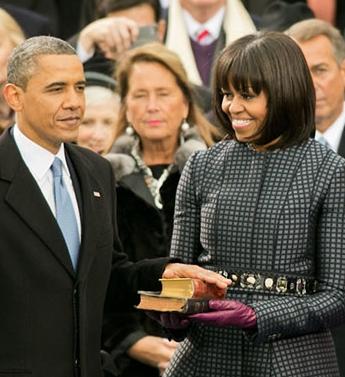
NEW YORK – In 1981, US President Ronald Reagan came to office famously declaring that, “Government is not the solution to our problem. Government is the problem.” Thirty-two years and four presidents later, Barack Obama’s recent inaugural address, with its ringing endorsement of a larger role for government in addressing America’s – and the world’s – most urgent challenges, looks like it may bring down the curtain on that era.

Reagan’s statement in 1981 was extraordinary. It signaled that America’s new president was less interested in using government to solve society’s problems than he was in cutting taxes, mainly for the benefit of the wealthy. More important, his presidency began a “revolution” from the political right – against the poor, the environment, and science and technology – that lasted for three decades, its tenets upheld, more or less, by all who followed him: George H. W. Bush, Bill Clinton, George W. Bush, and, in some respects, by Obama in his first term.

The “Reagan Revolution” had four main components: tax cuts for the rich; spending cuts on education, infrastructure, energy, climate change, and job training; massive growth in the defense budget; and economic deregulation, including privatization of core government functions, like operating military bases and prisons. Billed as a “free-market” revolution, because it promised to reduce the role of government, in practice it was the beginning of an assault on the middle class and the poor by wealthy special interests.

These special interests included Wall Street, Big Oil, the big health insurers, and arms manufacturers. They demanded tax cuts, and got them; they demanded a rollback of environmental protection, and got it; they demanded, and received, the right to attack unions; and they demanded lucrative government contracts, even for paramilitary operations, and got those, too.

For more than three decades, no one really challenged the consequences of turning political power over to the highest bidders. In the meantime, America went from being a middle-class society to one increasingly divided between rich and poor. CEOs who were once paid around 30 times what their average workers earned now make around 230 times that amount. Once a world leader in the fight against environmental degradation, America was the last major economy to acknowledge the reality of climate change. Financial deregulation enriched Wall Street, but ended up creating a global economic crisis through fraud, excessive risk-taking, incompetence, and insider dealing.

Maybe, just maybe, Obama’s recent address marks not only the end of this destructive agenda, but also the start of a new era. Indeed, he devoted almost the entire speech to the positive role of government in providing education, fighting climate change, rebuilding infrastructure, taking care of the poor and disabled, and generally investing in the future. It was the first inaugural address of its kind since Reagan turned America away from government in 1981.

If Obama’s speech turns out to mark the start of a new era of progressive politics in America, it would fit a pattern explored by one of America’s great historians, Arthur Schlesinger, Jr., who documented roughly 30-year intervals between periods of what he called “private interest” and “public purpose.”

In the late 1800’s, America had its Gilded Age, with the creation of large new industries by the era’s “robber barons” accompanied by massive inequality and corruption. The subsequent Progressive Era was followed by a temporary return to plutocracy in the 1920’s.

Then came the Great Depression, Franklin Roosevelt’s New Deal, and another 30 years of progressive politics, from the 1930’s to the 1960’s. The 1970’s were a transition period to the Age of Reagan – 30 years of conservative politics led by powerful corporate interests.

It is certainly time for a rebirth of public purpose and government leadership in the US to fight climate change, help the poor, promote sustainable technologies, and modernize America’s infrastructure. If America realizes these bold steps through purposeful public policies, as Obama outlined, the innovative science, new technology, and powerful demonstration effects that result will benefit countries around the world.

It is certainly too early to declare a new Progressive Era in America. Vested interests remain powerful, certainly in Congress – and even within the White House. These wealthy groups and individuals gave billions of dollars to the candidates in the recent election campaign, and they expect their contributions to yield benefits. Moreover, 30 years of tax cutting has left the US government without the financial resources needed to carry out effective programs in key areas such as the transition to low-carbon energy.

Still, Obama has wisely thrown down the gauntlet, calling for a new era of government activism. He is right to do so, because many of today’s crucial challenges – saving the planet from our own excesses; ensuring that technological advances benefit all members of society; and building the new infrastructure that we need nationally and globally for a sustainable future – demand collective solutions.

Implementation of public policy is just as important to good governance as the vision that underlies it. So the next task is to design wise, innovative, and cost-effective programs to address these challenges. Unfortunately, when it comes to bold and innovative programs to meet critical human needs, America is out of practice. It is time to begin anew, and Obama’s full-throated defense of a progressive vision points the US in the right direction.


Jeffrey D. Sachs is Professor of Sustainable Development, Professor of Health Policy and Management, and Director of the Earth Institute at Columbia University. He is also Special Adviser to the United Nations Secretary-General on the Millennium Development Goals.

Copyright: Project Syndicate, 2013.
www.project-syndicate.org

Can Obama really unravel Reagan?

36

I like Robert Reich; he’s one of the smartest economic thinkers in the country and can explain everything that’s wrong with the economy in two minutes. And I really want to believe that he’s correct in his latest essay, and that President Obama really is poised to under the Reagan Revolution (or at least, the Reagan Republican Coalition).

I get it: The GOP is a fractured collection of groups that often have little in common (although the Democratic Party has some of the same problems). And the Reich message is hopeful:

Obama’s focus in his second inaugural — and, by inference, in his second term — on equal opportunity is hardly a radical agenda. But it aggravates all the tensions inside the GOP. And it leaves the GOP without an overriding target to maintain its fragile coalition. In hammering home the need for the rich to contribute a fair share in order to ensure equal opportunity, and for anyone in America — be they poor, black, gay, immigrant, women, or average working person — to be able to make the most of themselves, Obama advances the founding ideals of America in such way that the Republican Party is incapable of opposing yet also incapable of uniting behind.

All of that may be true — but it’s hard to understate the damage that Reagan did to America — and the amount of work and leadership it’s going to take to get us back to where we were as a nation before he and his ilk declared war on social programs, cities, and non-military government spending.

Before the Reagan Era, even Republicans accepted the concept that the very rich should be taxed at high rates; the marginal rates under Richard Nixon were at 70 percent. In the 1960s and 1970s, the federal government spent huge sums of money on cities. Before Reagan, economic equality was a value in this country. Now it’s not even on the agenda.

Obama’s second inaugural touched all the right notes. But he needs to do more than tinker around the edges of policy if he wants to have a Reagan-style impact on the country. And I don’t know if he’s up for it.

Norman Solomon: Dear progressives

21

A Letter I Wish Progressive Groups Would Send to Their Members

By Norman Solomon

Norman Solomon is co-founder of RootsAction.org and founding director of the Institute for Public Accuracy. He co-chairs the Healthcare Not Warfare campaign organized by Progressive Democrats of America. His books include “War Made Easy: How Presidents and Pundits Keep Spinning Us to Death.” He writes the Political Culture 2013 column. b3

Dear Progressives,

With President Obama’s second term underway and huge decisions looming on Capitol Hill, consider this statement from Howard Zinn: “When a social movement adopts the compromises of legislators, it has forgotten its role, which is to push and challenge the politicians, not to fall in meekly behind them.”

With so much at stake, we can’t afford to forget our role. For starters, it must include public clarity.

Let’s face it: despite often nice-sounding rhetoric from the president, this administration has continued with a wide range of policies antithetical to progressive values.

Corporate power, climate change and perpetual war are running amok while civil liberties and economic fairness take a beating. President Obama has even put Social Security and Medicare on the table for cuts.

Last fall, the vast majority of progressives voted for Obama to prevent the presidency from going to a Republican Party replete with racism, misogyny, anti-gay bigotry and xenophobia. Defeating the right wing was cause for celebration. And now is the time to fight for genuine progressive policies.

But let’s be real about our current situation. Obama has led the Democratic Party — including, at the end of the legislative day, almost every Democrat on Capitol Hill — deeper into an abyss of corporate-driven austerity, huge military outlays, normalization of civil-liberties abuses and absence of significant action on climate change. Leverage from the Oval Office is acting as a brake on many — in Congress and in progressive constituency groups — who would prefer to be moving legislation in a progressive direction.

Hopefully we’ve learned by now that progressive oratory is no substitute for progressive policies. The soaring rhetoric in Obama’s inaugural address this week offered inspiring words about a compassionate society where everyone is respected and we look out for each other. Unfortunately and routinely, the president’s lofty words have allowed him to slide by many progressives despite policies that often amount to a modern version of “social liberalism, fiscal conservatism.”

The New York Times headline over its front-page coverage, “Obama Offers a Liberal Vision in Inaugural Address,” served up the current presidential recipe: a spoonful of rhetorical sugar to help the worsening austerity go down. But no amount of verbal sweetness can make up for assorted policies aligned with Wall Street and the wealthy at the expense of the rest of us.

“At their inaugurals,” independent journalist I.F. Stone noted long ago, our presidents “make us the dupes of our hopes.”

Unlike four years ago, Obama has a presidential record — and its contrasts with Monday’s oratorical performance are stark. A president seeking minimally fair economic policies, for instance, would not compound the disaster of four years of Timothy Geithner as Secretary of the Treasury by replacing him with Jack Lew — arguably even more of a corporate flack.

On foreign policy, it was notably disingenuous for Obama to proclaim in his second inaugural speech that “enduring security and lasting peace do not require perpetual war” — minutes after completing a first term when his administration launched more than 20,000 air strikes, sharply escalated the use of weaponized drones and did so much else to make war perpetual.

Meanwhile, the media hype on the inaugural speech’s passage about climate change has lacked any indication that the White House is ready to push for steps commensurate with the magnitude of the real climate crisis.

The founder of the Sustainable Energy and Economy Network, Daphne Wysham, points out that the inaugural words “will be meaningless unless a) the Obama administration rejects the Keystone XL tar sands pipeline; b) Obama selects a new EPA administrator who is willing to take action under the Clean Air Act to rein in CO2 emissions from all sources; c) he stops pushing for dangerous energy development deep offshore in the Gulf, in the Arctic and via continued fracking for oil and gas; d) he pursues a renewable energy standard for the entire country; and e) he directs our publicly financed development banks and export credit agencies to get out of fossil fuels entirely.”

The leadership we need is certainly not coming from the White House or Congress. “A genuine leader is not a searcher for consensus but a molder of consensus,” Martin Luther King Jr. observed. The leadership we need has to come, first and foremost, from us.

Some members of Congress — maybe dozens — have shown commitment to a progressive agenda, and a larger number claim a progressive mantle. In any event, their role is not our role. They adhere to dotted lines that we should cross. They engage in Hill-speak euphemisms that we should bypass. Routinely, they decline to directly confront wrong-headed Obama administration policies. And we must confront those policies.

If certain members of Congress resent being pushed by progressives to challenge the White House, they lack an appreciation for the crucial potential of grassroots social movements. On the other hand, those in Congress who “get” progressive social change will appreciate our efforts to push them and their colleagues to stand progressive ground.

When we’re mere supplicants to members of Congress, the doors that open on Capitol Hill won’t lead very much of anywhere. Superficial “access” has scant impact. The kind of empowered access we need will come from mobilizing grassroots power.

We need to show that we’ll back up members of Congress who are intrepid for our values — and we can defeat others, including self-described “progressives,” who aren’t. Building electoral muscle should be part of building a progressive movement.

We’re in this for the long haul, but we’re not willing to mimic the verbiage or echo the silences from members of Congress who fail to challenge egregious realities of this administration’s policies. As Howard Zinn said, our role is to challenge, not fall in line.

Norman Solomon is co-founder of RootsAction.org and founding director of the Institute for Public Accuracy.  He co-chairs the Healthcare Not Warfare campaign organized by Progressive Democrats of America. His books include “War Made Easy: How Presidents and Pundits Keep Spinning Us to Death.” He writes the Political Culture 2013 column. b3


________________________________________


The inauguration and the economic divide

112

Second inaugration speeches are hard; you have to be political without sounding partisan, inspiring without being divisive — and promise change and progress even if you haven’t accomplished what you wanted in the first term. The Obama address surprised me: He went left, making clear that he wants economic and social equality to be his final legacy. It’s getting rave reviews in the lib-blogosphere, where it’s been described as the speech liberals have been begging him to give for years. You can’t argue with the content — he mentions gay rights, global climate change, equal pay, protecting social security, economic inequality, the need for collective effort … he even talks about reforming the tax code.

So now comes the hard part: The struggle for economic justice has to go beyond a compromise plan that limits higher tax rates to people earning more than $400,000 a year.

In fact, the best thing I read this weekend was a NY Times piece by Nobel-Prize-winning economist Joseph Stiglitz, who argues forcefully that continued economic inequality is prolonging the recession. It’s also destroying the nation’s future:

Our skyrocketing inequality — so contrary to our meritocratic ideal of America as a place where anyone with hard work and talent can “make it” — means that those who are born to parents of limited means are likely never to live up to their potential. Children in other rich countries like Canada, France, Germany and Sweden have a better chance of doing better than their parents did than American kids have. More than a fifth of our children live in poverty — the second worst of all the advanced economies, putting us behind countries like Bulgaria, Latvia and Greece. Our society is squandering its most valuable resource: our young.

Stiglitz says what few in Washington want to admit: We can’t get the economy going again without rebuilding the middle class, and we can’t do that without higher taxes on the rich and a lot more public investment in education. Oh, and all this talk of how it’s out of our control is bullshit:

There are all kinds of excuses for inequality. Some say it’s beyond our control, pointing to market forces like globalization, trade liberalization, the technological revolution, the “rise of the rest.” Others assert that doing anything about it would make us all worse off, by stifling our already sputtering economic engine. These are self-serving, ignorant falsehoods. Market forces don’t exist in a vacuum — we shape them. Other countries, like fast-growing Brazil, have shaped them in ways that have lowered inequality while creating more opportunity and higher growth. Countries far poorer than ours have decided that all young people should have access to food, education and health care so they can fulfill their aspirations.

Makes me think about some of what I hear out of San Francisco City Hall. Oh, we can’t do anything about economic inequality; that’s a national issue. Or maybe it’s a state issue. I bet there’s not an elected official in town today who woudn’t proclaim complete agreement with everything Obama just said — and there are very few of them who are trying to bring that message back home.

In San Francisco, we give tax breaks for businesses that create high-end jobs that drive poor people out of town. We happily seek development without considering the impact it will have on existing vulnerable populations. We even struggle over free Muni for low-income youth. We do nothing — nothing — to reclaim wealth from the 1 percent and put it into local housing, public education, and job-training that could make a dent in our local economic inequality.

Mr. Mayor: Are you even paying attention?


Texas and tax cuts suck; CA leads job growth

41

How many times have we heard that jobs are leaving California for Texas? How many times have big-business groups and the polticians who play to their needs said that lower taxes and corporate welfare make states more “competitive” and are good for the economy?

So look, for a moment, at California and Texas. Who has the lower taxes and the governor who will do whatever employers want? And who has the more robust job growth?

Just goes to show: Tax breaks do not a health economy make. What companies look for when the make location decisions is much more complicated. An educated labor force (which, by the way, means spending tax money on schools and colleges), access to transportation (again, a public-sector concern) and yes, a decent place where the executives want to live are bigger factors than things like the payroll tax.

That’s what studies have shown repeatedly over the years — and it’s playing out now in CA.

Film Listings

0

Film listings are edited by Cheryl Eddy. Reviewers are Kimberly Chun, Dennis Harvey, Lynn Rapoport, and Sara Maria Vizcarrondo. For rep house showtimes, see Rep Clock.

OPENING

Broken City It’s a tough guy-off when an ex-cop (Mark Wahlberg) dares to take on New York’s corrupt mayor (Russell Crowe). (1:49)

Hellbound? See "Damnation Investigation." (1:25) Yerba Buena Center for the Arts.

The Last Stand In Arnold Schwarzenegger’s first leading role since that whole Governator business, he plays a small-town sheriff doing battle with an escaped drug kingpin. (1:47) Shattuck.

The Law in These Parts Ra’anan Alexandrowicz’s documentary is a rather extraordinary historical record: he interviews numerous retired Israeli judges and lawyers who shaped and enforced the country’s legal positions as occupiers of Palestinian land and "temporary guardians" of a Palestinian populace living under foreign occupation. The key word there is "temporary" — in using here a different (military rather than civil) justice from the one Israeli citizens experience, Israel has been able to exert the extraordinary powers of an invading force in wartime. But what is "temporary" about an occupation that’s now lasted nearly 45 years? How can the state justify (under Geneva Convention rules, for one thing) building permanent Jewish settlements that now house about half a million Israelis on land that is as yet not legally Israel’s? By constantly changing the terms and laws of occupation, they do just that. If many policies have been perhaps necessary to control terrorist attacks, one can argue that they and other policies have created the climate in which oppositional fervor and terroristic acts were bound to flourish. That, of course, is a political-ethical judgement far beyond the public purview of the judges and others here, whose dry legalese admits no personal culpability — and indeed sometimes seems almost absurdly divorced from real-world ethics and consequence, which of course serves an increasingly rigid governmental stance just fine. Without preaching, The Law in These Parts raises a number of discomfiting questions about bending law to suit an agenda that in any other context would seem frankly unlawful. (1:40) Roxie. (Harvey)

Let Fury Have the Hour Though its message — that creative expression is a powerful, meaningful way to fight oppression — is a valuable one, Antonino D’Ambrosio’s Let Fury Have the Hour covers turf well-trod for anyone who has ever seen a documentary about punk rock and social justice. (Especially when it contains usual suspects like Ian MacKaye, Shepard Fairey, and Billy Bragg waxing nostalgic about how nonconformist they were in the 1980s.) In truth, Fury is more collage than doc, pasting together talking-head interviews (also here: Chuck D, John Sayles, Van Jones, Tom Morello, Boots Riley, and Wayne Kramer, plus a few token women, chiefly Eve Ensler) with a mish-mash of sepia-toned stock footage that more or less thematically compliments what’s being discussed at the time. A more focused examination of D’Ambrosio’s thesis might have resulted in a more effective film — like, say, an in-depth look at how Sayles’ politically-themed films (here, he reads from the script for 1987’s Matewan in a frustratingly brief segment) are echoed in works by contemporary artists and citizen journalists, particularly now that the internet has opened up a global platform for protest films. Listen: I admire what the film is trying to do. I am OK with watching yet another doc that contains the phrase "Punk rock politicized me." But with too much lip service and precious little depth, Fury‘s fury ends up feeling a bit diluted. (1:40) Balboa. (Eddy)

LUV Baltimore native Sheldon Candis drew from his own childhood for this coming-of-age tale, which takes place in a single day as 11-year-old "little man" Woody (Michael Rainey Jr.) tags along with his uncle, Vincent (Common), recently out of jail and rapidly heading back down the criminal path. With both parents out of the picture, Woody’s been raised by his grandmother (Lonette McKee), so he idolizes Vincent even though it’s soon clear the short-tempered man is no hero. Of course, things go horribly awry, bloody lessons are learned, tears are shed, etc. Despite the story’s autobiographical origins, the passable LUV suffers greatly by inviting comparisons to The Wire — the definitive docudrama examining drug crime in Baltimore. Most blatantly, sprinkled into an all-star cast (Dennis Haysbert, Danny Glover, Charles S. Dutton) are supporting characters played by Wire icons Michael K. "Omar" Williams (as a cop) and Anwan "Slim Charles" Glover (as a meaner Slim Charles, basically). Perhaps if you’ve never seen the show this wouldn’t be distracting — but if that’s the case, you should really be watching The Wire instead of LUV anyway. (1:34) (Eddy)
Mama Two long-lost children bring something supernatural home with them in this horror flick starring Jessica Chastain and Nikolaj "Jaime Lannister" Coster-Waldau. (1:40) California.

The Rabbi’s Cat A rabbi, a Muslim musician, two Russians (a Jew and a boozy Christian), and two talking animals hop into an antique Citroën for a road trip across Africa. No, it’s not the set-up for a joke; it’s the premise for this charming animated film, adapted from Joann Sfar’s graphic novel (the author co-directs with Antoine Delesvaux). In 1930s Algiers, a rabbi’s pet cat suddenly develops the ability to talk — and read and write, by the way — and wastes no time in sharing opinions, particularly when it comes to religion ("God is just a comforting invention!") When a crate full of Russian prayer books — and one handsome artist — arrives at the rabbi’s house, man and cat are drawn into the refugee’s search for an Ethiopian city populated by African Jews. Though it’s not suitable for younger kids (there’s kitty mating, and a few bursts of surprising violence) or diehard Tintin fans (thanks to a randomly cranky spoof of the character), The Rabbi’s Cat is a lushly illustrated, witty tale of cross-cultural clashes and connections. Rockin’ soundtrack, too. (1:29) Smith Rafael. (Eddy)

ONGOING

Amour Arriving in local theaters atop a tidal wave of critical hosannas, Amour now seeks to tempt popular acclaim — though actually liking this perfectly crafted, intensely depressing film (from Austrian director Michael Haneke) may be nigh impossible for most audience members. Eightysomething former music teachers Georges and Anne (the flawless Jean-Louis Trintignant and Emmanuelle Riva) are living out their days in their spacious Paris apartment, going to classical concerts and enjoying the comfort of their relationship. Early in the film, someone tries to break into their flat — and the rest of Amour unfolds with a series of invasions, with Anne’s declining health the most distressing, though there are also unwanted visits from the couple’s only daughter (an appropriately self-involved Isabelle Huppert), an inept nurse who disrespects Anne and curses out Georges, and even a rogue pigeon that wanders in more than once. As Anne fades into a hollow, twisted, babbling version of her former self, Georges also becomes hollow and twisted, taking care of her while grimly awaiting the inevitable. Of course, the movie’s called Amour, so there’s some tenderness involved. But if you seek heartwarming hope and last-act uplift, look anywhere but here. (2:07) Albany, Clay, Smith Rafael. (Eddy)

Anna Karenina Joe Wright broke out of British TV with the 9,000th filmed Pride and Prejudice (2005), unnecessary but quite good. Too bad it immediately went to his head. His increasing showiness as director enlivened the silly teenage-superspy avenger fantasy Hanna (2011), but it started to get in the way of Atonement (2007), a fine book didn’t need camera gymnastics to make a great movie. Now it’s completely sunk a certified literary masterpiece still waiting for a worthy film adaptation. Keira Knightley plays the titular 19th century St. Petersburg aristocrat whose staid, happy-enough existence as a doting mother and dutiful wife (to deglammed Jude Law’s honorable but neglectful Karenin) is upended when she enters a mutually passionate affair with dashing military officer Count Vronsky (Aaron Taylor-Johnson, miscast). Scandal and tragedy ensue. There’s nothing wrong with the screenplay, by Tom Stoppard no less. What’s wrong is Wright’s bright idea of staging the whole shebang as if it were indeed staged — a theatrical production in which nearly everything (even a crucial horse race) takes place on a proscenium stage, in the auditorium, or "backstage" among riggings. Whenever we move into a "real" location, the director makes sure that transition draws attention to its own cleverness as possible. What, you might ask, is the point? That the public social mores and society Anna lives in are a sort of "acting"? Like wow. Add to that another brittle, mannered performance by Wright’s muse Knightley, and there’s no hope of involvement here, let alone empathy — in love with its empty (but very prettily designed) layers of artifice, this movie ends up suffocating all emotion in gilded horseshit. The reversed-fortune romance between Levin (Domhall Gleeson) and Kitty (Alicia Vikander) does work quite well — though since Tolstoy called his novel Anna Karenina, it’s a pretty bad sign when the subsidiary storyline ends up vastly more engaging than hers. (2:10) Embarcadero, Opera Plaza, Shattuck. (Harvey)

Argo If you didn’t know the particulars of the 1979 Iranian Revolution, you won’t be an expert after Argo, but the film does a good job of capturing America’s fearful reaction to the events that followed it — particularly the hostage crisis at the US embassy in Tehran. Argo zeroes in on the fate of six embassy staffers who managed to escape the building and flee to the home of the sympathetic Canadian ambassador (Victor Garber). Back in Washington, short-tempered CIA agents (including a top-notch Bryan Cranston) cast about for ways to rescue them. Enter Tony Mendez (Ben Affleck, who also directs), exfil specialist and father to a youngster wrapped up in the era’s sci-fi craze. While watching 1973’s Battle for the Planet of the Apes, Tony comes up with what Cranston’s character calls "the best bad idea we have:" the CIA will fund a phony Canadian movie production (corny, intergalactic, and titled Argo) and pretend the six are part of the crew, visiting Iran for a few days on a location shoot. Tony will sneak in, deliver the necessary fake-ID documents, and escort them out. Neither his superiors, nor the six in hiding, have much faith in the idea. ("Is this the part where we say, ‘It’s so crazy it just might work?’" someone asks, beating the cliché to the punch.) Argo never lets you forget that lives are at stake; every painstakingly forged form, every bluff past a checkpoint official increases the anxiety (to the point of being laid on a bit thick by the end). But though Affleck builds the needed suspense with gusto, Argo comes alive in its Hollywood scenes. As the show-biz veterans who mull over Tony’s plan with a mix of Tinseltown cynicism and patiotic duty, John Goodman and Alan Arkin practically burst with in-joke brio. I could have watched an entire movie just about those two. (2:00) Embarcadero, Castro, 1000 Van Ness, Piedmont, Sundance Kabuki. (Eddy)

Cirque du Soleil: Worlds Away (1:31) Metreon, Shattuck.

Cloud Atlas Cramming the six busy storylines of David Mitchell’s wildly ambitious novel into just three hours — the average reader might have thought at least 12 would be required — this impressive adaptation directed (in separate parts) by Tom Twyker (1998’s Run Lola Run) and Matrix siblings Lana and Andy Wachowski has a whole lot of narrative to get through, stretching around the globe and over centuries. In the mid 19th century, Jim Sturgess’ sickly American notory endures a long sea voyage as reluctant protector of a runaway-slave stowaway from the Chatham Islands (David Gyasi). In 1931 Belgium, a talented but criminally minded British musician (Ben Whishaw) wheedles his way into the household of a famous but long-inactive composer (Jim Broadbent). A chance encounter sets 1970s San Francisco journalist Luisa (Halle Berry) on the path of a massive cover-up conspiracy, swiftly putting her life in danger. Circa now, a reprobate London publisher’s (Broadbent) huge windfall turns into bad luck that gets even worse when he seeks help from his brother (Hugh Grant). In the not-so-distant future, a disposable "fabricant" server to the "consumer" classes (Doona Bae) finds herself plucked from her cog-like life for a rebellious higher purpose. Finally, in an indeterminately distant future after "the Fall," an island tribesman (Tom Hanks) forms a highly ambivalent relationship toward a visitor (Berry) from a more advanced but dying civilization. Mitchell’s book was divided into huge novella-sized blocks, with each thread split in two; the film wastes very little time establishing its individual stories before beginning to rapidly intercut between them. That may result in a sense of information (and eventually action) overload, particularly for non-readers, even as it clarifies the connective tissues running throughout. Compression robs some episodes of the cumulative impact they had on the page; the starry multicasting (which in addition to the above mentioned finds many uses for Hugo Weaving, Keith David, James D’Arcy, and Susan Sarandon) can be a distraction; and there’s too much uplift forced on the six tales’ summation. Simply put, not everything here works; like the very different Watchmen, this is a rather brilliant "impossible adaptation" screenplay (by the directors) than nonetheless can’t help but be a bit too much. But so much does work — in alternating currents of satire, melodrama, pulp thriller, dystopian sci-fi, adventure, and so on — that Cloud Atlas must be forgiven for being imperfect. If it were perfect, it couldn’t possibly sprawl as imaginatively and challengingly as it does, and as mainstream movies very seldom do. (2:52) Castro. (Harvey)

Django Unchained Quentin Tarantino’s spaghetti western homage features a cameo by the original Django (Franco Nero, star of the 1966 film), and solid performances by a meticulously assembled cast, including Jamie Foxx as the titular former slave who becomes a badass bounty hunter under the tutelage of Dr. Schultz (Christoph Waltz). Waltz, who won an Oscar for playing the evil yet befuddlingly delightful Nazi Hans Landa in Tarantino’s 2009 Inglourious Basterds, is just as memorable (and here, you can feel good about liking him) as a quick-witted, quick-drawing wayward German dentist. There are no Nazis in Django, of course, but Tarantino’s taboo du jour (slavery) more than supplies motivation for the filmmaker’s favorite theme (revenge). Once Django joins forces with Schultz, the natural-born partners hatch a scheme to rescue Django’s still-enslaved wife, Broomhilda (Kerry Washington), whose German-language skills are as unlikely as they are convenient. Along the way (and it’s a long way; the movie runs 165 minutes), they encounter a cruel plantation owner (Leonardo DiCaprio), whose main passion is the offensive, shocking "sport" of "Mandingo fighting," and his right-hand man, played by Tarantino muse Samuel L. Jackson in a transcendently scandalous performance. And amid all the violence and racist language and Foxx vengeance-making, there are many moments of screaming hilarity, as when a character with the Old South 101 name of Big Daddy (Don Johnson) argues with the posse he’s rounded up over the proper construction of vigilante hoods. It’s a classic Tarantino moment: pausing the action so characters can blather on about something trivial before an epic scene of violence. Mr. Pink would approve. (2:45) Four Star, Metreon, 1000 Van Ness, Presidio, Sundance Kabuki. (Eddy)

Gangster Squad It’s 1949, and somewhere in the Hollywood hills, a man has been tied hand and foot to a pair of automobiles with the engines running. Coyotes pace in the background like patrons queuing up for a table at Flour + Water, and when dinner is served, the presentation isn’t very pretty. We’re barely five minutes into Ruben Fleischer’s Gangster Squad, and fair warning has been given of the bloodletting to come. None of it’s quite as visceral as the opening scene, but Fleischer (2009’s Zombieland) packs his tale of urban warfare with plenty of stylized slaughter to go along with the glamour shots of mob-run nightclubs, leggy pin-curled dames, and Ryan Gosling lounging at the bar cracking wise. At the center of all the gunplay and firebombing is what’s framed as a battle for the soul of Los Angeles, waged between transplanted Chicago mobster Mickey Cohen (Sean Penn) — who wields terms like "progress" and "manifest destiny" as a rationale for a continental turf war — and a police sergeant named John O’Mara (Josh Brolin), tasked with bringing down Cohen’s empire. The assignment requires working under cover so deep that only the police chief (Nick Nolte) and the handpicked members of O’Mara’s "gangster squad" — ncluding Gosling, a half-jaded charmer who poaches Cohen’s arm candy (Emma Stone) — know of its existence. This leaves plenty of room for improvisation, and the film pauses now and again to wonder about what happens when you pit brutal amorality against brutal morality, but it’s a rhetorical question, and no one shows much interest in it. Dragged down by talking points that someone clearly wanted wedged in (as well as by O’Mara’s ponderous voice-overs), the film does better when it abandons gravitas and refocuses on spinning its mythic tale of wilder times in the Golden State. (1:53) Metreon, 1000 Van Ness. (Rapoport)

The Guilt Trip (1:35) Metreon.

A Haunted House (1:25) Metreon, 1000 Van Ness.

Hitchcock On the heels of last year’s My Week With Marilyn comes another biopic about an instantly recognizable celebrity viewed through the lens of a specific film shoot. Here, we have Anthony Hopkins (padded and prosthetic’d) playing the Master of Suspense, mulling over which project to pursue after the success of 1959’s North by Northwest. Even if you’re not a Hitch buff, it’s clear from the first scene that Psycho, based on Robert Bloch’s true crime-inspired pulpy thriller, is looming. We open on "Ed Gein’s Farmhouse, 1944;" Gein (Michael Wincott) is seen in his yard, his various heinous crimes — murder, grave-robbing, body-part hoarding, human-skin-mask crafting, etc. — as yet undiscovered. Hitchcock, portrayed by the guy who also played the Gein-inspired Hannibal Lecter, steps into the frame with that familiar droll greeting: "Guhhd eevvveeeening." And we’re off, following the veteran director as he muses "What if somebody really good made a horror picture?" Though his wife and collaborator, Alma (Helen Mirren), cautions him against doing something simply because everyone tells him not to, he plows ahead; the filmmaking scenes are peppered with behind-the-scenes moments detailed in Stephen Rebello’s Alfred Hitchcock and the Making of Psycho, the source material for John J. McLaughlin’s script. But as the film’s tagline — "Behind every Psycho is a great woman" — suggests, the relationship between Alma and Hitch is, stubbornly, Hitchcock‘s main focus. While Mirren is effective (and I’m all for seeing a lady who works hard behind the scenes get recognition), the Hitch-at-home subplot exists only to shoehorn more conflict into a tale that’s got plenty already. Elsewhere, however, Hitchcock director Sacha Gervasi — making his narrative debut after hit 2008 doc Anvil: The Story of Anvil — shows stylistic flair, working Hitchcock references into the mise-en-scène. (1:32) Embarcadero, New Parkway. (Eddy)

The Hobbit: An Unexpected Journey Make no mistake: the Lord of the Rings trilogy represented an incredible filmmaking achievement, with well-deserved Oscars handed down after the third installment in 2003. If director Peter Jackson wanted to go one more round with J.R.R. Tolkien’s beloved characters for a Hobbit movie, who was gonna stop him? Not so fast. This return to Middle-earth (in 3D this time) represents not one but three films — which would be self-indulgent enough even if part one didn’t unspool at just under three hours, and even if Jackson hadn’t decided to shoot at 48 frames per second. (I can’t even begin to explain what that means from a technical standpoint, but suffice to say there’s a certain amount of cinematic lushness lost when everything is rendered in insanely crystal-clear hi-def.) Journey begins as Bilbo Baggins (a game, funny Martin Freeman) reluctantly joins Gandalf (a weary-seeming Ian McKellan) and a gang of dwarves on their quest to reclaim their stolen homeland and treasure, batting Orcs, goblins, Gollum (Andy Serkis), and other beasties along the way. Fan-pandering happens (with characters like Cate Blanchett’s icy Galadriel popping in to remind you how much you loved LOTR), and the story moves at a brisk enough pace, but Journey never transcends what came before — or in the chronology of the story, what comes after. I’m not quite ready to declare this Jackson’s Phantom Menace (1999), but it’s not an unfair comparison to make, either. (2:50) California, Metreon, 1000 Van Ness, Sundance Kabuki. (Eddy)

Hyde Park on Hudson Weeks after the release of Lincoln, Hyde Park on Hudson arrives with a lighthearted (-ish) take on Franklin D. Roosevelt’s 1939 meeting with King George VI (of stuttering fame) and Queen Elizabeth at FDR’s rural New York estate. Casting Bill Murray as FDR is Hyde Park‘s main attraction, though Olivia Williams makes for a surprisingly effective Eleanor. But the thrust of the film concerns FDR’s relationship with his cousin, Daisy — played by Laura Linney, who’s relegated to a series of dowdy outfits, pouting reaction shots, and far too many voice-overs. The affair has zero heat, and the film is disappointingly shallow — how many times can one be urged to giggle at someone saying "Hot dogs!" in an English accent? — not to mention a waste of a perfectly fine Bill Murray performance. As that sideburned Democrat bellows in Lincoln, "Howwww dare you!" (1:35) Albany, Embarcadero. (Eddy)

The Impossible Spanish director Juan Antonio Bayona (2007’s The Orphanage) directs The Impossible, a relatively modestly-budgeted take on the 2004 Indian Ocean tsunami, based on the real story of a Spanish family who experienced the disaster. Here, the family (Naomi Watts, Ewan McGregor, three young sons) is British, on a Christmas vacation from dad’s high-stress job in Japan. Beachy bliss is soon ruined by that terrible series of waves; they hit early in the film, and Bayona offers a devastatingly realistic depiction of what being caught in a tsunami must feel like: roaring, debris-filled water threatening death by drowning, impalement, or skull-crushing. And then, the anguish of surfacing, alive but injured, stranded, and miles from the nearest doctor, not knowing if your family members have perished. Without giving anything away (no more than the film’s suggestive title, anyway), once the survivors are established (and the film’s strongest performer, Watts, is relegated to hospital-bed scenes) The Impossible finds its way inevitably to melodrama, and triumph-of-the-human-spirit theatrics. As the family’s oldest son, 16-year-old Tom Holland is effective as a kid who reacts exactly right to crisis, morphing from sulky teen to thoughtful hero — but the film is too narrowly focused on its tourist characters, with native Thais mostly relegated to background action. It’s a disconnect that’s not quite offensive, but is still off-putting. (1:54) California, Piedmont, SF Center, Sundance Kabuki. (Eddy)

Jack Reacher (2:10) Metreon, 1000 Van Ness.

Life of Pi Several filmmakers including Alfonso Cuarón, Jean-Pierre Jeunet, and M. Night Shyamalan had a crack at Yann Martel’s "unfilmable" novel over the last decade, without success. That turns out to have been a very good thing, since Ang Lee and scenarist David Magee have made probably the best movie possible from the material — arguably even an improvement on it. Framed as the adult protagonist’s (Irrfan Khan) lengthy reminiscence to an interested writer (Rafe Spall) it chronicles his youthful experience accompanying his family and animals from their just shuttered zoo on a cargo ship voyage from India to Canada. But a storm capsizes the vessel, stranding teenaged Pi (Suraj Sharma) on a lifeboat with a mini menagerie — albeit one swiftly reduced by the food chain in action to one Richard Parker, a whimsically named Bengal tiger. This uneasy forced cohabitation between Hindu vegetarian and instinctual carnivore is an object lesson in survival as well as a fable about the existence of God, among other things. Shot in 3D, the movie has plenty of enchanted, original imagery, though its outstanding technical accomplishment may lie more in the application of CGI (rather than stereoscopic photography) to something reasonably intelligent for a change. First-time actor Sharma is a natural, while his costar gives the most remarkable performance by a wild animal this side of Joaquin Phoenix in The Master. It’s not a perfect film, but it’s a charmed, lovely experience. (2:00) New Parkway, 1000 Van Ness, Presidio, SF Center. (Harvey)

Lincoln Distinguished subject matter and an A+ production team (Steven Spielberg directing, Daniel Day-Lewis starring, Tony Kushner adapting Doris Kearns Goodwin, John Williams scoring every emotion juuust so) mean Lincoln delivers about what you’d expect: a compelling (if verbose), emotionally resonant (and somehow suspenseful) dramatization of President Lincoln’s push to get the 13th amendment passed before the start of his second term. America’s neck-deep in the Civil War, and Congress, though now without Southern representation, is profoundly divided on the issue of abolition. Spielberg recreates 1865 Washington as a vibrant, exciting place, albeit one filled with so many recognizable stars it’s almost distracting wondering who’ll pop up in the next scene: Jared Harris as Ulysses S. Grant! Joseph Gordon-Levitt as Robert Lincoln! Lena Dunham’s shirtless boyfriend on Girls (Adam Driver) as a soldier! Most notable among the huge cast are John Hawkes, Tim Blake Nelson, and a daffy James Spader as a trio of lobbyists; Sally Field as the troubled First Lady; and likely Oscar contenders Tommy Lee Jones (as winningly cranky Rep. Thaddeus Stevens) and Day-Lewis, who does a reliably great job of disappearing into his iconic role. (2:30) 1000 Van Ness, Presidio, SF Center, Shattuck, Sundance Kabuki. (Eddy)

Les Misérables There is a not-insignificant portion of the population who already knows all the words to all the songs of this musical-theater warhorse, around since the 1980s and honored here with a lavish production by Tom Hooper (2010’s The King’s Speech). As other reviews have pointed out, this version only tangentially concerns Victor Hugo’s French Revolution tale; its true raison d’être is swooning over the sight of its big-name cast crooning those famous tunes. Vocals were recorded live on-set, with microphones digitally removed in post-production — but despite this technical achievement, there’s a certain inorganic quality to the proceedings. Like The King’s Speech, the whole affair feels spliced together in the Oscar-creation lab. The hardworking Hugh Jackman deserves the nomination he’ll inevitably get; jury’s still out on Anne Hathaway’s blubbery, "I cut my hair for real, I am so brave!" performance. (2:37) Marina, 1000 Van Ness, SF Center, Shattuck, Sundance Kabuki. (Eddy)

Monsters, Inc. 3D (1:35) Metreon.

My Worst Nightmare First seen locally in the San Francisco Film Society’s 2012 "French Cinema Now" series, My Worst Nightmare follows icy art curator Agathe (Isabelle Huppert) as her airless, tightly-controlled world begins to crumble — thanks in no small part to an exuberantly uncouth, down-on-his-luck Belgian contractor named Patrick (Benoît Poelvoorde). (His obnoxious, freewheeling presence in Agathe’s precision-mapped orbit gives rise to the film’s title.) Director and co-writer Anne Fontaine (2009’s Coco Before Chanel) injects plenty of offbeat, occasionally raunchy humor into what could’ve been a predictable personal-liberation tale — the sight of classy dame Huppert driving through a bikini car wash, for instance. (1:43) Smith Rafael. (Eddy)

Not Fade Away How to explain why the Beatles have been tossed so many cinematic bon mots and not the Stones? The group’s relatively short lifespan — and even the tragic, unexpectedly dramatic passing of John Lennon — seem to have all played into the band’s nostalgia-marinated legend, while the Stones’ profitable tour rotation and shocking physical resilience have lessened their romantic charge. So it reads as a counterintuitive, and a bit random, that Sopranos creator David Chase would open his first feature film with a black and white re-creation of the Mick Jagger and Keith Richards meet-up, before switching to the ’60s coming-of-age of New Jersey teen geek Douglas (John Magaro), trapped in an oppressively whiny nuclear family headed up by his Pep Boy grouch of a dad (James Gandolfini) — at least until rock ‘n’ roll saves his soul and he starts beating the skins. Graduating to better-than-average singer after his band’s frontman Eugene (Boardwalk Empire‘s Jack Huston) inhales a joint, Douglas not only finds his voice, but also wins over dream girl Grace (Bella Heathcote). Sure, Not Fade Away is about sex, drugs, and rock ‘n’ roll — and much attention is dutifully squandered on basement shows, band practice, and politics, and posturing with wacky new haircuts and funny cigarettes, thanks to Chase’s own background in garage bands and executive producer, music supervisor, and true believer Steve Van Zandt’s considerable passion. Yet despite the amount screen time devoted to rock’s rites, those familiar gestures never rise above the clichéd, and Not Fade Away only finds its authentic emotional footing when Gandolfini’s imposing yet trapped patriarch and the rest of Douglas’s beaten-down yet still kicking family enters the picture — they’re the force that refuses to fade away, even after they disappear in the rear view. (1:52) Shattuck. (Chun)

Only the Young First seen locally at the 2012 San Francisco International Film Festival, this documentary from Elizabeth Mims and Jason Tippet is styled like a narrative and often shot like a fine art photograph (or at least a particularly bitchin’ Instagram), with an unexpectedly groovy soundtrack. It follows a pair of high schoolers with ever-changing hairstyles in dried-up Santa Clarita, Calif. — a burg of abandoned mini-golf courses and squatter’s houses, and a place where the owner of the local skate shop seems equally obsessed with tacos and Jesus. It’s never clear where Garrison and Kevin fall on the religious spectrum — though "the church" has a looming importance, influencing relationships if not wardrobe choices — but one gets the feeling all they really care about is skateboarding, with their own friendship a close second. Less certain are Garrison’s feelings about punky, tough-yet-sweet gal pal Skye — especially when they begin spending time with new flames. Only the Young‘s seemingly random choice of subjects works to its advantage, capturing the kids’ unaffected, surprisingly honest point of view on subjects as varied as cars, dating, college, the economy, and Gandalf Halloween costumes. (1:10) Roxie. (Eddy)

Parental Guidance (1:36) Metreon.

The Perks of Being a Wallflower Move over, Diary of a Wimpy Kid series — there’s a new shrinking-violet social outcast in town. These days, life might not suck quite so hard for 90-pound weaklings in every age category, what with so many films and TV shows exposing, and sometimes even celebrating, the many miseries of childhood and adolescence for all to see. In this case, Perks author Stephen Chbosky takes on the directorial duties — both a good and bad thing, much like the teen years. Smart, shy Charlie is starting high school with a host of issues: he’s painfully awkward and very alone in the brutal throng, his only friend just committed suicide, and his only simpatico family member was killed in a car accident. Charlie’s English teacher Mr. Andersen (Paul Rudd) appears to be his only connection, until the freshman strikes up a conversation with feline, charismatic, shop-class jester Patrick (Ezra Miller) and his magnetic, music- and fun-loving stepsister Sam (Emma Watson). Who needs the popular kids? The witty duo head up their gang of coolly uncool outcasts their own, the Wallflowers (not to be confused with the deeply uncool Jakob Dylan combo), and with them, Charlie appears to have found his tribe. Only a few small secrets put a damper on matters: Patrick happens to be gay and involved with football player Brad (Johnny Simmons), who’s saddled with a violently conservative father, and Charlie is in love with the already-hooked-up Sam and is frightened that his fragile equilibrium will be destroyed when his new besties graduate and slip out of his life. Displaying empathy and a devotion to emotional truth, Chbosky takes good care of his characters, preserving the complexity and ungainly quirks of their not-so-cartoonish suburbia, though his limitations as a director come to the fore in the murkiness and choppily handled climax that reveals how damaged Charlie truly is. (1:43) Opera Plaza.. (Chun)

Promised Land Gus Van Sant’s fracking fable — co-written by stars Matt Damon and John Krasinski, from a story by Dave Eggers — offers a didactic lesson in environmental politics, capped off by the earth-shattering revelation that billion-dollar corporations are sleazy and evil. You don’t say! Formulated like a Capra movie, Promised Land follows company man Steve Butler (Matt Damon) as he and sales partner Sue (Frances McDormand) travel to a small Pennsylvania town to convince its (they hope) gullible residents to allow drilling on their land. But things don’t go as smoothly as hoped, when the pair faces opposition from a science teacher with a brainiac past (Hal Holbrook), and an irritatingly upbeat green activist (Krasinski) breezes into town to further monkey-wrench their scheme. That Damon is such a likeable actor actually works against him here; his character arc from soulless salesman to emotional-creature-with-a-conscience couldn’t be more predictable or obvious. McDormand’s wonderfully biting supporting performance is the best (and only) reason to see this ponderous, faux-folksy tale, which targets an audience that likely already shares its point of view. (1:46) 1000 Van Ness, SF Center. (Eddy)

Rise of the Guardians There’s nothing so camp as "Heat Miser" from The Year Without a Santa Claus (1974) in Rise of the Guardians,, but there’s plenty here to charm all ages. The mystery at its center: we open on Jack Frost (voiced by Chris Pine) being born, pulled from the depths of a frozen pond by the Man on the Moon and destined to spread ice and cold everywhere he goes, invisible to all living creatures. It’s an individualistic yet lonely lot for Jack, who’s styled as an impish snowboarder in a hoodie and armed with an icy scepter, until the Guardians — spirits like North/Santa Claus (Alec Baldwin), the Tooth Fairy (Isla Fisher), and the Easter Bunny (Hugh Jackman) — call on him to join them. Pitch the Boogeyman (Jude Law) is threatening to snuff out all children’s hopes and dreams with fears and nightmares, and it’s up to the Guardians must keep belief in magic alive. But what’s in it for Jack, except the most important thing: namely who is he and what is his origin story? Director Peter Ramsey keeps those fragile dreams aloft with scenes awash with motion and animation that evokes the chubby figures and cozy warm tones of ’70s European storybooks. And though Pine verges on blandness with his vocal performance, Baldwin, Jackman, and Fisher winningly deliver the jokes. (1:38) Metreon. (Chun)

Rust and Bone Unlike her Dark Knight Rises co-star Anne Hathaway, Rust and Bone star Marion Cotillard never seems like she’s trying too hard to be sexy, or edgy, or whatever (plus, she already has an Oscar, so the pressure’s off). Here, she’s a whale trainer at a SeaWorld-type park who loses her legs in an accident, which complicates (but ultimately strengthens) her relationship with Ali (Belgian actor Matthias Schoenaerts, so tremendous in 2011’s Bullhead), a single dad trying to make a name for himself as a boxer. Jacques Audiard’s follow-up to 2009’s A Prophet gets a bit overwrought by its last act, but there’s an emotional authenticity in the performances that makes even a ridiculous twist (like, the kind that’ll make you exclaim "Are you fucking kidding me?") feel almost well-earned. (2:00) Embarcadero, Shattuck. (Eddy)

Searching for Sugar Man The tale of the lost, and increasingly found, artist known as Rodriguez seems to have it all: the mystery and drama of myth, beginning with the singer-songwriter’s stunning 1970 debut, Cold Fact, a neglected folk rock-psychedelic masterwork. (The record never sold in the states, but somehow became a beloved, canonical LP in South Africa.) The story goes on to parse the cold, hard facts of vanished hopes and unpaid royalties, all too familiar in pop tragedies. In Searching for Sugar Man, Swedish documentarian Malik Bendjelloul lays out the ballad of Rodriguez as a rock’n’roll detective story, with two South African music lovers in hot pursuit of the elusive musician — long-rumored to have died onstage by either self-immolation or gunshot, and whose music spoke to a generation of white activists struggling to overturn apartheid. By the time Rodriguez himself enters the narrative, the film has taken on a fairy-tale trajectory; the end result speaks volumes about the power and longevity of great songwriting. (1:25) Opera Plaza. (Chun)

The Sessions Polio has long since paralyzed the body of Berkeley poet Mark O’Brien (John Hawkes) from the neck down. Of course his mind is free to roam — but it often roams south of the personal equator, where he hasn’t had the same opportunities as able-bodied people. Thus he enlists the services of Cheryl (Helen Hunt), a professional sex surrogate, to lose his virginity at last. Based on the real-life figures’ experiences, this drama by Australian polio survivor Ben Lewin was a big hit at Sundance this year (then titled The Surrogate), and it’s not hard to see why: this is one of those rare inspirational feel-good stories that doesn’t pander and earns its tears with honest emotional toil. Hawkes is always arresting, but Hunt hasn’t been this good in a long time, and William H. Macy is pure pleasure as a sympathetic priest put in numerous awkward positions with the Lord by Mark’s very down-to-earth questions and confessions. (1:35) New Parkway, Opera Plaza. (Harvey)

Silver Linings Playbook After guiding two actors to Best Supporting Oscars in 2010’s The Fighter, director David O. Russell returns (adapting his script from Matthew Quick’s novel) with another darkly comedic film about a complicated family that will probably earn some gold of its own. Though he’s obviously not ready to face the outside world, Pat (Bradley Cooper) checks out of the state institution he’s been court-ordered to spend eight months in after displaying some serious anger-management issues. He moves home with his football-obsessed father (Robert De Niro) and worrywart mother (Jacki Weaver of 2010’s Animal Kingdom), where he plunges into a plan to win back his estranged wife. Cooper plays Pat as a man vibrating with troubled energy — always in danger of flying into a rage, even as he pursues his forced-upbeat "silver linings" philosophy. But the movie belongs to Jennifer Lawrence, who proves the chops she showcased (pre-Hunger Games megafame) in 2010’s Winter’s Bone were no fluke. As the damaged-but-determined Tiffany, she’s the left-field element that jolts Pat out of his crazytown funk; she’s also the only reason Playbook‘s dance-competition subplot doesn’t feel eye-rollingly clichéd. The film’s not perfect, but Lawrence’s layered performance — emotional, demanding, bitchy, tough-yet-secretly-tender — damn near is. (2:01) Four Star, Piedmont, Presidio, SF Center, Shattuck. (Eddy)

Skyfall Top marks to Adele, who delivers a magnificent title song to cap off Skyfall‘s thrilling pre-credits chase scene. Unfortunate, then, that the film that follows squanders its initial promise. After a bomb attack on MI6, the clock is running out for Bond (Daniel Craig) and M (Judi Dench), accused of Cold War irrelevancy in a 21st century full of malevolent, stateless computer hackers. The audience, too, will yearn for a return to simpler times; dialogue about "firewalls" and "obfuscated code" never fails to sound faintly ridiculous, despite the efforts Ben Whishaw as the youthful new head of Q branch. Javier Bardem is creative and creepy as keyboard-tapping villain Raoul Silva, but would have done better with a megalomaniac scheme to take over the world. Instead, a small-potatoes revenge plot limps to a dull conclusion in the middle of nowhere. Skyfall never decides whether it prefers action, bon mots, and in-jokes to ponderous mythologizing and ripped-from-the-headlines speechifying — the result is a unsatisfying, uneven mixture. (2:23) Metreon, Shattuck, Sundance Kabuki. (Ben Richardson)

Texas Chainsaw 3D (1:32) Metreon, 1000 Van Ness.

This is 40 A spin-off of sorts from 2007’s Knocked Up, Judd Apatow’s This is 40 continues the story of two characters nobody cared about from that earlier film: Debbie (Leslie Mann, Apatow’s wife) and Pete (Paul Rudd), plus their two kids (played by Mann and Apatow’s kids). Pete and Debbie have accumulated all the trappings of comfortable Los Angeles livin’: luxury cars, a huge house, a private personal trainer, the means to throw catered parties and take weekend trips to fancy hotels (and to whimsically decide to go gluten-free), and more Apple products than have ever before been shoehorned into a single film. But! This was crap they got used to having before Pete’s record label went into the shitter, and Debbie’s dress-shop employee (Charlene Yi, another Knocked Up returnee who is one of two people of color in the film; the other is an Indian doctor who exists so Pete can mock his accent) started stealing thousands from the register. How will this couple and their whiny offspring deal with their financial reality? By arguing! About bullshit! In every scene! For nearly two and a half hours! By the time Melissa McCarthy, as a fellow parent, shows up to command the film’s only satisfying scene — ripping Pete and Debbie a new one, which they sorely deserve — you’re torn between cheering for her and wishing she’d never appeared. Seeing McCarthy go at it is a reminder that most comedies don’t make you feel like stabbing yourself in the face. I’m honestly perplexed as to who this movie’s audience is supposed to be. Self-loathing yuppies? Masochists? Apatow’s immediate family, most of whom are already in the film? (2:14) Metreon, 1000 Van Ness, Shattuck, Vogue. (Eddy)

Wreck-It Ralph Wreck-It Ralph cribs directly from the Toy Story series: when the lights go off in the arcade, video game characters gather to eat, drink, and endure existential crises. John C. Reilly is likable and idiosyncratic as Ralph, the hulking, ham-fisted villain of a game called Fix-It-Felix. Fed up with being the bad guy, Ralph sneaks into gritty combat sim Hero’s Duty under the nose of Sergeant Calhoun (Jane Lynch), a blond space marine who mixes Mass Effect‘s Commander Shepard with a PG-rated R. Lee Ermey. Things go quickly awry, and soon Ralph is marooned in cart-racing candyland Sugar Rush, helping Vanellope Von Schweetz (a manic Sarah Silverman), with Calhoun and opposite number Felix (Jack McBrayer) hot on his heels. Though often aggressively childish, the humor will amuse kids, parents, and occasionally gamers, and the Disney-approved message about acceptance is moving without being maudlin. The animation, limber enough to portray 30 years of changing video game graphics, deserves special praise. (1:34) Metreon, Shattuck. (Ben Richardson)

Zero Dark Thirty The extent to which torture was actually used in the hunt for Osama Bin Ladin may never be known, though popular opinion will surely be shaped by this film, as it’s produced with the same kind of "realness" that made Kathryn Bigelow’s previous film, the Oscar-winning The Hurt Locker (2008), so potent. Zero Dark Thirty incorporates torture early in its chronology — which begins in 2003, after a brief opening that captures the terror of September 11, 2001 using only 911 phone calls — but the practice is discarded after 2008, a sea-change year marked by the sight of Obama on TV insisting that "America does not torture." (The "any more" goes unspoken.) Most of Zero Dark Thirty is set in Pakistan and/or "CIA black sites" in undisclosed locations; it’s a suspenseful procedural that manages to make well-documented events (the July 2005 London bombings; the September 2008 Islamabad Marriott Hotel bombing) seem shocking and unexpected. Even the raid on Bin Ladin’s HQ is nail-bitingly intense. The film immerses the viewer in the clandestine world, tossing out abbreviations ("KSM" for al-Qaeda bigwig Khalid Sheikh Mohammed) and jargon ("tradecraft") without pausing for a breath. It is thrilling, emotional, engrossing — the smartest, most tightly-constructed action film of the year. At the center of it all: a character allegedly based on a real person whose actual identity is kept top-secret by necessity. She’s interpreted here in the form of a steely CIA operative named Maya, played to likely Oscar-winning perfection by Jessica Chastain. No matter the film’s divisive subject matter, there’s no denying that this is a powerful performance. "Washington says she’s a killer," a character remarks after meeting this seemingly delicate creature, and he’s proven right long before Bin Ladin goes down. Some critics have argued that character is underdeveloped, but anyone who says that isn’t watching closely enough. Maya may not be given a traditional backstory, but there’s plenty of interior life there, and it comes through in quick, vulnerable flashes — leading up to the payoff of the film’s devastating final shot. (2:39) Balboa, Marina, 1000 Van Ness, SF Center, Sundance Kabuki. (Eddy)


Sacred space

5

emilysavage@sfbg.com

MUSIC There will be no bad seats at the new SFJazz Center in Hayes Valley; or at least, that’s the goal.

The brand new jazz venue in the heart of town, a three-story, glass-encased structure with a circular concrete stadium bowl of an auditorium, educational components, rehearsal spaces, a cafe run by the Slanted Door’s Charles Phan, and multiple bars opens Mon/21. It’s a $63 million, 35,000-square-foot addition to Performing Arts Row, near Van Ness-adjacent locations such as the Davies Symphony Hall, and the War Memorial Opera House. It’s the birth of a nonprofit jazz institution.

In the auditorium, 700 seats encircle and hover above a central stage — chairs behind the stage, up in the balcony, and practically up in the artists’ faces on the ground level. Because the room so surrounds the stage, there’s a direct sight line for every instrument being played, every hand grasping a horn, tickling keys, or plucking strings. There are platforms that can accordion and retract, making that enviable space near the stage open up into a temporary dance floor.

And all the seats have cup-holders. We’re a long way from the smoke-filled, underground jazz clubs of the past.


EXCITING AS ALL HELL

And from those seats in the Robert N. Miner auditorium, patrons will see an impressive first season of SF Jazz at its new home. Fans already have high expectations, given SF Jazz’s 30 years of hosting concerts and festivals at other venues like the Paramount in Oakland, and smaller clubs like Amnesia. Now with its own multi-use facility, the nonprofit has taken eclectic routes with its programming and contributions.

“This first season, when you look at some of the things we’re doing here, it’s just exciting as all hell,” says founder and executive artistic director Randall Kline, barely able to contain that excitement, clad in a hardhat and reflective vest on the first level of the still-under-construction building. “[These events] fully take advantage of what we can do with the theater — something we couldn’t do when we didn’t have our own place.”

For starters, there’s a sold-out opening night celebration Jan. 23, hosted by Bill Cosby, along with a grand opening week of shows spotlighting McCoy Tyner, the SFJazz Collective, and more, followed by a week of big band with the Realistic Orchestra (Jan. 31), and swing with Lavay Smith and Her Red Hot Skillet Lickets (Feb. 3).

In March, virtuoso Indian percussionist Zakir Hussain will perform four nights, and in April there will be a Weimar Germany themed weekend with Ute Lemper, Max Raabe and the Palast Orchester, and a screening of the classic Metropolis (1927), with live music by the Clubfoot Orchestra.

But even more to Kline’s point: there will be five resident artistic directors for the 2013 through ’14 season (along with Kline’s overall vision). The five — Jason Moran, Regina Carter, Bill Frisell, John Santos, and Miguel Zenon — are musicians with distinctive backgrounds and viewpoints, programming four days of thematic events.


ENCOMPASSING GEOGRAPHIES

For his days, Santos hand-picked colleagues and artists working and performing in the Caribbean style. He chose De Akokan, a duo made up of Cuban singer-songwriter-composer Pavel Urkiza and Puerto Rican saxophonist-composer Ricardo Pons, because “they’re phenomenal artists…and they rarely come here.” He also invited cutting edge trombonist-composer Papo Vazquez, who lives in New York but is steeped in the Afro-Puerto Rican tradition.

During a phone call a few hours before my hard-hatted venue walk-through with Kline, architect Mark Cavagnero, and Marshall Lamm, who does public relations for the center, Santos discusses his anticipation and interest in the upcoming schedule.

The Bay Area bred percussionist will also be premiering his own Filosofia Caribena II, which refers to Caribbean philosophies and traditions — those that have informed his entire body of work. “[It] blends all the experiences of Black American music with Caribbean traditions, and it goes into the whole socio-political aspect of how the music really represents resistance and the identity of a whole group of people that identify culturally, even though we don’t live in Cuba or Puerto Rico, but we certainly grew up in and maintained those traditions.”

Adding, “Jazz was born in that environment, in New Orleans, in the Caribbean community. We’re making those connections between jazz and the Caribbean roots.”

Frisell’s batch of shows, beginning April 18, will include multimedia pieces with projections and orchestras, readings of Allen Ginsber’s Kaddish, and Hunter S. Thompson’s The Kentucky Derby is Decadent and Depraved (the latter of which is rumored to be narrated by Tim Robbins).

Moran’s residency likely represents the scope of the auditorium’s versatility best: he’ll open with a solo acoustic piano night (May 2), followed by a “Fats Waller Dance Party” with Meshell Ndegeocello that utilizes the dance-floor, then break out the inspired, possibly nutty, concept of a skateboarding jazz piece. There will be an actual half-pipe on the lower level of the room — seats pushed back — with professional skateboarders riding back and forth in the curved structure to Moran’s musical accompaniment.


FOCAL POINT

It’ll be one of many configurations for that striking room. The specifics of the auditorium were big challenges for architect Cavagnero — the acoustics, the balance of sound (such as making sure solo piano and thundering skateboarding dips both fill the space equally), isolating street noise, creating those excellent sight lines from every angle.

“The idea of the building was to make the big concrete room the sacred space for music, the focus space,” says Cavagnero, walking up the stairs in the building’s glass-encased entryway. “That was going to be the closed, sacred space, [and] everything else would wrap around it and be as open and public as we could make it.”

To that end, the rest of the building has floor-to-ceiling glass, and the staircase has no columns supporting it, just thin titanium rods that double as the guardrail. The second floor has bars on either ends and terraces with glass doors that fully open, along with tiled murals representing the history of jazz in the city, with long-gone clubs painted throughout.

It’s clear that this building is meant to be more than a standard music venue, the goal is to be an institution.

“So, if the paradigm is: clubs are harder to run and have live music, well, if we could have the same kind of vibrant music in an institution that supported that kind of thing, to build up a community of people that cared about that kind of thing — which is the gamble I guess we’re making here in this building — we can build it for the jazz community,” says Kline. “[The goal is to have] a great place to hang out and hear live music, where new artists can grow and premiere, and be nurtured.”

And it is hard to run live jazz venues in the city. Nearing the end of 2012, the owners of Oakland’s Yoshi’s filed for involuntary bankruptcy to put its San Francisco location in Chapter 11 if it couldn’t meet an agreement with its partners, the Rrazz Room switched venues under a cloud of controversy stemming from an allegedly racist former manager of its then-location, and Savanna Jazz had to fight off foreclosure.

“We have not seen an increased interest for the art form [recently] primarily because the economy is down significantly and the arts are usually the first to suffer,” says Savanna Jazz co-owner Pascal Bokar.

Because of this, I ask Bokar if other jazz club owners in the city see the center as a contentious new rival. He categorically denies that assertion.

“Jazz is an art form and it has no competition, every club and club owner adds to the fabric of our community and SFJazz is the big brother. I know how hard it is to promote jazz and [Kline] has been working at it for several decades,” he says. “He deserves tremendous credit for bringing this to San Francisco. SFJazz is a very powerful organization and I think that there is an opportunity for [it] to partner with the smaller venues like Savanna Jazz. The smaller venues are the incubators of local talent and I think that they would benefit from a closer relationship, which in turn would solidify community commitment.”

It may be the older sibling to smaller clubs, but given the economy, and the tough climate for all music venues in San Francisco really, the SF Jazz Center does also feel like a gamble itself. But to extend and belabor the metaphor, Kline’s got a good hand.

Santos describes the center to me as a “bold experiment.”

“The amount of money that it has taken to build that place and keep the doors open is phenomenal, and in a lot of ways, it’s a step out into the darkness,” he says. “But I see the potential of it as just limitless. It can be such an incredible thing, if the community supports it. That’s what I’m hoping will happen.”


NATIONAL ART FORM

Santos points out that the jazz center is unique in its fans and patrons differing from the typical performing arts donor, and will have specific obstacles because of that.

“In a way, it’s abstract, when you think of it like, OK, there it is, next door to the symphony hall, to the ballet, to the opera, within one block of those institutions. It’s wonderful to have jazz there, and standing toe-to-toe with those institutions, and getting the respect it deserves. Getting public support from the city and the country and the state, as it should be, because jazz is our national art form. The symphony and the ballet and the opera are not.”

“The difficult part is that the opera and the symphony and the ballet have traditional well-heeled audiences of supporters. Jazz does not. Jazz is grassroots; it’s working class. The audience for jazz and the community from where jazz comes out of is not a deep-pocket kind of community. And that’s where the challenge lies.”

If anyone can face that, it’s Kline. It’s part of his whole bootstrapping essence, how he’s kept SFJazz up, running, and prominent for the better part of three decades. From its humble beginnings as the three-day Jazz in the City festival, promoted solely by Kline, to the Summerfest, the SFJazz High School All-Stars group, the monthly Hotplate series, and finally, the SFJazz Center.

Leaning against the guardrail on the second floor of the building, gazing out through the wall of glass to the greater Hayes Valley neighborhood, Kline smiles as he talks of the city’s history with jazz, his own life mirroring it for quite some time. “I’ve been here since 1976, and I’ve seen a lot of patterns in the scene; it ebbs and flows, the economy changes. This building is a reflection of the sociology; we’re trying to be relevant, so we’ve chosen a different model, we’ve chosen institution.”

It’s one of a few times that will come up in my conversations with those involved with the center.

“Could we apply that older model for culture to a younger, vibrant art form that’s relevant to the city?” he asks, rhetorically. “That’s the aim here, to try something that’s of our time.”

Jazz hands: Some SFJazz season highlights


MCCOY TYNER

A rare old school jazz legend in the center’s inaugural season — stunning and dapper pianist Tyner will “consecrate” the space by performing with the SFJazz house band.

Jan. 24, 7:30pm, $50–$150


MONTCLAIR WOMEN’S BIG BAND

Swing is still huge in SF, and this celebration of the classic big band sound pairs the 17-member Montclair Women with the 20-member Realistic Orchestra (who’ve big-banded Bjork) for a wall of swingin’ sound. The SFJazz High School All-Stars Orchestra opens.

Jan. 31, 7:30pm, $25


AFRO-CUBAN ALL STARS

Oh heck yes.

Feb. 22-24, 7:30pm, $25–$65


MARIZA

The gorgeous longing of Portuguese fado washes over the Bay in the form of the wonderfully voiced Mariza, a spellbinding star whose repertoire spotlights acoustic melancholy melodies from Brazil, Cape Verde, North Africa, and beyond.

Mar. 14-17, 7:30pm, $25–$65


“JOHN SANTOS: FILOSOFÍA CARIBEÑA II”

Beloved Bay Area bandleader and jazz evangelist digs deep in his knowledge of Cuban, Latin, and indigenous Caribbean styles to deliver a heady trip through ancient Iberian influences and contemporary island expressions.

Mar. 23, 7:30pm, $25–$65


METROPOLIS

San Francisco’s Club Foot Orchestra performs its renowned futuristic soundtrack to Fritz Lang’s silent sci-fi masterpiece.

Apr. 14, 7:30pm, $20–$40


“ALLEN GINSBERG’S KADDISH” AND “HUNTER S. THOMPSON’S THE KENTUCKY DERBY

Überhip guitarist Bill Frissell, an SFJazz resident artistic director, applies his downtown cool pedigree to two überhip literary iconoclasts. He’ll be conducting an ace team of musicians for multimedia presentations of Ginsberg’s epic poem of mourning and Thompson’s notorious, uproarious 1970 article about the grand horse race. With visual design by Ralph Steadman for both programs, classic counterculture will be out in force.

Ginsberg: Apr. 18, 7pm and 9:30pm, $35–$80

Thompson: Apr. 20, 7:30pm and Apr. 21, 4pm and 7pm, $35–$80


BANDWAGON AND LIVE SKATEBOARDING

“Jazz wild card” and MacArthur Genius pianist Jason Moran gets contemporary with new trio Bandwagon, performing a rolicking set as a who’s-who of SF skateboarders shows off the flexibility of the new center.

May 4, 7:30pm, $20–$40


Gangsters, death, and spaghetti westerns: must be another week of movies!

0

Well, they announced the Oscar nominations yesterday, and much-lauded import Amour is opening today (review below the jump), so if you’re curious about the hype and don’t mind having a downer of a Friday night … you’re set. Other films opening this week include the Robert Carlyle drama California Solo (Dennis Harvey’s review here), Marlon Wayans horror spoof A Haunted House, Ryan Gosling-in-a-fedora cop flick Gangster Squad, and (at the Roxie), teen-skater doc Only the Young.

Also! The Pacific Film Archive’s “The Hills Run Red: Italian Westerns, Leone, and Beyond” series starts this week. Plenty of good spaghetti western action to be had; check out my round-up here. Read on for more short takes on this week’s releases.

Amour Arriving in local theaters atop a tidal wave of critical hosannas, Amour now seeks to tempt popular acclaim — though actually liking this perfectly crafted, intensely depressing film (from Austrian director Michael Haneke) may be nigh impossible for most audience members. Eightysomething former music teachers Georges and Anne (the flawless Jean-Louis Trintignant and Emmanuelle Riva) are living out their days in their spacious Paris apartment, going to classical concerts and enjoying the comfort of their relationship. Early in the film, someone tries to break into their flat — and the rest of Amour unfolds with a series of invasions, with Anne’s declining health the most distressing, though there are also unwanted visits from the couple’s only daughter (an appropriately self-involved Isabelle Huppert), an inept nurse who disrespects Anne and curses out Georges, and even a rogue pigeon that wanders in more than once. As Anne fades into a hollow, twisted, babbling version of her former self, Georges also becomes hollow and twisted, taking care of her while grimly awaiting the inevitable. Of course, the movie’s called Amour, so there’s some tenderness involved. But if you seek heartwarming hope and last-act uplift, look anywhere but here. (2:07) (Cheryl Eddy)

Gangster Squad It’s 1949, and somewhere in the Hollywood hills, a man has been tied hand and foot to a pair of automobiles with the engines running. Coyotes pace in the background like patrons queuing up for a table at Flour + Water, and when dinner is served, the presentation isn’t very pretty. We’re barely five minutes into Ruben Fleischer’s Gangster Squad, and fair warning has been given of the bloodletting to come. None of it’s quite as visceral as the opening scene, but Fleischer (2009’s Zombieland) packs his tale of urban warfare with plenty of stylized slaughter to go along with the glamour shots of mob-run nightclubs, leggy pin-curled dames, and Ryan Gosling lounging at the bar cracking wise. At the center of all the gunplay and firebombing is what’s framed as a battle for the soul of Los Angeles, waged between transplanted Chicago mobster Mickey Cohen (Sean Penn) — who wields terms like “progress” and “manifest destiny” as a rationale for a continental turf war — and a police sergeant named John O’Mara (Josh Brolin), tasked with bringing down Cohen’s empire. The assignment requires working under cover so deep that only the police chief (Nick Nolte) and the handpicked members of O’Mara’s “gangster squad” — ncluding Gosling, a half-jaded charmer who poaches Cohen’s arm candy (Emma Stone) — know of its existence. This leaves plenty of room for improvisation, and the film pauses now and again to wonder about what happens when you pit brutal amorality against brutal morality, but it’s a rhetorical question, and no one shows much interest in it. Dragged down by talking points that someone clearly wanted wedged in (as well as by O’Mara’s ponderous voice-overs), the film does better when it abandons gravitas and refocuses on spinning its mythic tale of wilder times in the Golden State. (1:53) (Lynn Rapoport)

http://www.youtube.com/watch?v=AKooIgzaQMg

Only the Young First seen locally at the 2012 San Francisco International Film Festival, this documentary from Elizabeth Mims and Jason Tippet is styled like a narrative and often shot like a fine art photograph (or at least a particularly bitchin’ Instagram), with an unexpectedly groovy soundtrack. It follows a pair of high schoolers with ever-changing hairstyles in dried-up Santa Clarita, Calif. — a burg of abandoned mini-golf courses and squatter’s houses, and a place where the owner of the local skate shop seems equally obsessed with tacos and Jesus. It’s never clear where Garrison and Kevin fall on the religious spectrum — though “the church” has a looming importance, influencing relationships if not wardrobe choices — but one gets the feeling all they really care about is skateboarding, with their own friendship a close second. Less certain are Garrison’s feelings about punky, tough-yet-sweet gal pal Skye — especially when they begin spending time with new flames. Only the Young‘s seemingly random choice of subjects works to its advantage, capturing the kids’ unaffected, surprisingly honest point of view on subjects as varied as cars, dating, college, the economy, and Gandalf Halloween costumes. (1:10) Roxie. (Cheryl Eddy)

Film Listings

0

Film listings are edited by Cheryl Eddy. Reviewers are Kimberly Chun, Dennis Harvey, Lynn Rapoport, and Sara Maria Vizcarrondo. For rep house showtimes, see Rep Clock.

OPENING

Amour Arriving in local theaters atop a tidal wave of critical hosannas, Amour now seeks to tempt popular acclaim — though actually liking this perfectly crafted, intensely depressing film (from Austrian director Michael Haneke) may be nigh impossible for most audience members. Eightysomething former music teachers Georges and Anne (the flawless Jean-Louis Trintignant and Emmanuelle Riva) are living out their days in their spacious Paris apartment, going to classical concerts and enjoying the comfort of their relationship. Early in the film, someone tries to break into their flat — and the rest of Amour unfolds with a series of invasions, with Anne’s declining health the most distressing, though there are also unwanted visits from the couple’s only daughter (an appropriately self-involved Isabelle Huppert), an inept nurse who disrespects Anne and curses out Georges, and even a rogue pigeon that wanders in more than once. As Anne fades into a hollow, twisted, babbling version of her former self, Georges also becomes hollow and twisted, taking care of her while grimly awaiting the inevitable. Of course, the movie’s called Amour, so there’s some tenderness involved. But if you seek heartwarming hope and last-act uplift, look anywhere but here. (2:07) Clay. (Eddy)

California Solo Whatever happened to &ldots;? In a sense, Robert Carlyle — lost too long to US movie audiences while marooned on SGU Stargate Universe — might have found the ideal role in this soulful indie turn as a Scottish rock star on the decline. Lachlan (Carlyle) was once the guitarist in a Britpop-band-on-the-verge called the Cranks —now he’s grounding himself by working at a farm outside LA and doing his humble part in the music world with a podcast on spectacular rock ‘n’ roll deaths. But Lachlan’s attempts to hold steady are dashed when he’s slapped with a DUI and his immigration status is threatened. With few bucks saved and a life that has gone strictly solo for far too long, the free spirit is forced to reckon with his past — an old manager (Michael Des Barres), the ex-wife (Kathleen Wilhoite) and daughter (Savannah Lathem) he never sees — in an attempt to avoid getting deported. Echoes of both Dennis Wilson’s and Noel Gallagher’s rock histories reverberate through California Solo, as do 1983’s Tender Mercies, 2009’s Crazy Heart, and other music films about charismatic old reprobates coming to terms with their misdeeds. The intense, sexy Carlyle, however, makes it clear through the specifics of his performance that this story, and these sins, is his extremely flawed, charmingly self-absorbed character’s own. Will he or won’t he fabulously flame out rather than fade away, asks writer-director Marshall Lewy (2007s Blue State)? The more heroic path, according to California Solo, might be waking up to face yet another day. For a longer review of this film, see "The Damage Done." (1:34) Opera Plaza. (Chun)

Gangster Squad Ryan Gosling leads a fedora-wearing cast in this cops ‘n’ mobsters tale set in 1949 Los Angeles. (1:53)

A Haunted House Marlon Wayans stars in this spoof of the Paranormal Activity series and other "found footage" films. Mocking the trend means it’s on its way out, right? (1:25)

Only the Young First seen locally at the 2012 San Francisco International Film Festival, this documentary from Elizabeth Mims and Jason Tippet is styled like a narrative and often shot like a fine art photograph (or at least a particularly bitchin’ Instagram), with an unexpectedly groovy soundtrack. It follows a pair of high schoolers with ever-changing hairstyles in dried-up Santa Clarita, Calif. — a burg of abandoned mini-golf courses and squatter’s houses, and a place where the owner of the local skate shop seems equally obsessed with tacos and Jesus. It’s never clear where Garrison and Kevin fall on the religious spectrum — though "the church" has a looming importance, influencing relationships if not wardrobe choices — but one gets the feeling all they really care about is skateboarding, with their own friendship a close second. Less certain are Garrison’s feelings about punky, tough-yet-sweet gal pal Skye — especially when they begin spending time with new flames. Only the Young‘s seemingly random choice of subjects works to its advantage, capturing the kids’ unaffected, surprisingly honest point of view on subjects as varied as cars, dating, college, the economy, and Gandalf Halloween costumes. (1:10) Roxie. (Eddy)

ONGOING

Anna Karenina Joe Wright broke out of British TV with the 9,000th filmed Pride and Prejudice (2005), unnecessary but quite good. Too bad it immediately went to his head. His increasing showiness as director enlivened the silly teenage-superspy avenger fantasy Hanna (2011), but it started to get in the way of Atonement (2007), a fine book didn’t need camera gymnastics to make a great movie. Now it’s completely sunk a certified literary masterpiece still waiting for a worthy film adaptation. Keira Knightley plays the titular 19th century St. Petersburg aristocrat whose staid, happy-enough existence as a doting mother and dutiful wife (to deglammed Jude Law’s honorable but neglectful Karenin) is upended when she enters a mutually passionate affair with dashing military officer Count Vronsky (Aaron Taylor-Johnson, miscast). Scandal and tragedy ensue. There’s nothing wrong with the screenplay, by Tom Stoppard no less. What’s wrong is Wright’s bright idea of staging the whole shebang as if it were indeed staged — a theatrical production in which nearly everything (even a crucial horse race) takes place on a proscenium stage, in the auditorium, or "backstage" among riggings. Whenever we move into a "real" location, the director makes sure that transition draws attention to its own cleverness as possible. What, you might ask, is the point? That the public social mores and society Anna lives in are a sort of "acting"? Like wow. Add to that another brittle, mannered performance by Wright’s muse Knightley, and there’s no hope of involvement here, let alone empathy — in love with its empty (but very prettily designed) layers of artifice, this movie ends up suffocating all emotion in gilded horseshit. The reversed-fortune romance between Levin (Domhall Gleeson) and Kitty (Alicia Vikander) does work quite well — though since Tolstoy called his novel Anna Karenina, it’s a pretty bad sign when the subsidiary storyline ends up vastly more engaging than hers. (2:10) Albany, Embarcadero. (Harvey)

Argo If you didn’t know the particulars of the 1979 Iranian Revolution, you won’t be an expert after Argo, but the film does a good job of capturing America’s fearful reaction to the events that followed it — particularly the hostage crisis at the US embassy in Tehran. Argo zeroes in on the fate of six embassy staffers who managed to escape the building and flee to the home of the sympathetic Canadian ambassador (Victor Garber). Back in Washington, short-tempered CIA agents (including a top-notch Bryan Cranston) cast about for ways to rescue them. Enter Tony Mendez (Ben Affleck, who also directs), exfil specialist and father to a youngster wrapped up in the era’s sci-fi craze. While watching 1973’s Battle for the Planet of the Apes, Tony comes up with what Cranston’s character calls "the best bad idea we have:" the CIA will fund a phony Canadian movie production (corny, intergalactic, and titled Argo) and pretend the six are part of the crew, visiting Iran for a few days on a location shoot. Tony will sneak in, deliver the necessary fake-ID documents, and escort them out. Neither his superiors, nor the six in hiding, have much faith in the idea. ("Is this the part where we say, ‘It’s so crazy it just might work?’" someone asks, beating the cliché to the punch.) Argo never lets you forget that lives are at stake; every painstakingly forged form, every bluff past a checkpoint official increases the anxiety (to the point of being laid on a bit thick by the end). But though Affleck builds the needed suspense with gusto, Argo comes alive in its Hollywood scenes. As the show-biz veterans who mull over Tony’s plan with a mix of Tinseltown cynicism and patiotic duty, John Goodman and Alan Arkin practically burst with in-joke brio. I could have watched an entire movie just about those two. (2:00) Embarcadero, Castro, Piedmont, Sundance Kabuki. (Eddy)

The Central Park Five Acclaimed documentarian Ken Burns takes on the 1989 rape case that shocked and divided a New York City already overwhelmed by racially-charged violence. The initial crime was horrible enough — a female jogger was brutally assaulted in Central Park — but what happened after was also awful: cops and prosecutors, none of whom agreed to appear in the film, swooped in on a group of African American and Latino teenagers who had been making mischief in the vicinity (NYC’s hysterical media dubbed the acts "wilding," a term that became forever associated with the event). Just 14 to 16 years old, the boys were questioned for hours and intimidated into giving false, damning confessions. Already guilty in the court of public opinion, the accused were convicted in trials — only to see their convictions vacated years after they’d served their time, when the real assailant was finally identified. Using archival news footage (in one clip, Gov. Mario Cuomo calls the crime "the ultimate shriek of alarm that says none of us are safe") and contemporary, emotional interviews with the Five, Burns crafts a fascinating study of a crime that ran away with itself, in an environment that encouraged it, leaving lives beyond just the jogger’s devastated in the process. (1:59) Roxie. (Eddy)

Cirque du Soleil: Worlds Away (1:31) Metreon, 1000 Van Ness, Shattuck.

Cloud Atlas Cramming the six busy storylines of David Mitchell’s wildly ambitious novel into just three hours — the average reader might have thought at least 12 would be required — this impressive adaptation directed (in separate parts) by Tom Twyker (1998’s Run Lola Run) and Matrix siblings Lana and Andy Wachowski has a whole lot of narrative to get through, stretching around the globe and over centuries. In the mid 19th century, Jim Sturgess’ sickly American notory endures a long sea voyage as reluctant protector of a runaway-slave stowaway from the Chatham Islands (David Gyasi). In 1931 Belgium, a talented but criminally minded British musician (Ben Whishaw) wheedles his way into the household of a famous but long-inactive composer (Jim Broadbent). A chance encounter sets 1970s San Francisco journalist Luisa (Halle Berry) on the path of a massive cover-up conspiracy, swiftly putting her life in danger. Circa now, a reprobate London publisher’s (Broadbent) huge windfall turns into bad luck that gets even worse when he seeks help from his brother (Hugh Grant). In the not-so-distant future, a disposable "fabricant" server to the "consumer" classes (Doona Bae) finds herself plucked from her cog-like life for a rebellious higher purpose. Finally, in an indeterminately distant future after "the Fall," an island tribesman (Tom Hanks) forms a highly ambivalent relationship toward a visitor (Berry) from a more advanced but dying civilization. Mitchell’s book was divided into huge novella-sized blocks, with each thread split in two; the film wastes very little time establishing its individual stories before beginning to rapidly intercut between them. That may result in a sense of information (and eventually action) overload, particularly for non-readers, even as it clarifies the connective tissues running throughout. Compression robs some episodes of the cumulative impact they had on the page; the starry multicasting (which in addition to the above mentioned finds many uses for Hugo Weaving, Keith David, James D’Arcy, and Susan Sarandon) can be a distraction; and there’s too much uplift forced on the six tales’ summation. Simply put, not everything here works; like the very different Watchmen, this is a rather brilliant "impossible adaptation" screenplay (by the directors) than nonetheless can’t help but be a bit too much. But so much does work — in alternating currents of satire, melodrama, pulp thriller, dystopian sci-fi, adventure, and so on — that Cloud Atlas must be forgiven for being imperfect. If it were perfect, it couldn’t possibly sprawl as imaginatively and challengingly as it does, and as mainstream movies very seldom do. (2:52) Castro. (Harvey)

Django Unchained Quentin Tarantino’s spaghetti western homage features a cameo by the original Django (Franco Nero, star of the 1966 film), and solid performances by a meticulously assembled cast, including Jamie Foxx as the titular former slave who becomes a badass bounty hunter under the tutelage of Dr. Schultz (Christoph Waltz). Waltz, who won an Oscar for playing the evil yet befuddlingly delightful Nazi Hans Landa in Tarantino’s 2009 Inglourious Basterds, is just as memorable (and here, you can feel good about liking him) as a quick-witted, quick-drawing wayward German dentist. There are no Nazis in Django, of course, but Tarantino’s taboo du jour (slavery) more than supplies motivation for the filmmaker’s favorite theme (revenge). Once Django joins forces with Schultz, the natural-born partners hatch a scheme to rescue Django’s still-enslaved wife, Broomhilda (Kerry Washington), whose German-language skills are as unlikely as they are convenient. Along the way (and it’s a long way; the movie runs 165 minutes), they encounter a cruel plantation owner (Leonardo DiCaprio), whose main passion is the offensive, shocking "sport" of "Mandingo fighting," and his right-hand man, played by Tarantino muse Samuel L. Jackson in a transcendently scandalous performance. And amid all the violence and racist language and Foxx vengeance-making, there are many moments of screaming hilarity, as when a character with the Old South 101 name of Big Daddy (Don Johnson) argues with the posse he’s rounded up over the proper construction of vigilante hoods. It’s a classic Tarantino moment: pausing the action so characters can blather on about something trivial before an epic scene of violence. Mr. Pink would approve. (2:45) Four Star, Metreon, 1000 Van Ness, Presidio, Sundance Kabuki. (Eddy)

The Guilt Trip (1:35) Metreon, 1000 Van Ness, Shattuck.

Hitchcock On the heels of last year’s My Week With Marilyn comes another biopic about an instantly recognizable celebrity viewed through the lens of a specific film shoot. Here, we have Anthony Hopkins (padded and prosthetic’d) playing the Master of Suspense, mulling over which project to pursue after the success of 1959’s North by Northwest. Even if you’re not a Hitch buff, it’s clear from the first scene that Psycho, based on Robert Bloch’s true crime-inspired pulpy thriller, is looming. We open on "Ed Gein’s Farmhouse, 1944;" Gein (Michael Wincott) is seen in his yard, his various heinous crimes — murder, grave-robbing, body-part hoarding, human-skin-mask crafting, etc. — as yet undiscovered. Hitchcock, portrayed by the guy who also played the Gein-inspired Hannibal Lecter, steps into the frame with that familiar droll greeting: "Guhhd eevvveeeening." And we’re off, following the veteran director as he muses "What if somebody really good made a horror picture?" Though his wife and collaborator, Alma (Helen Mirren), cautions him against doing something simply because everyone tells him not to, he plows ahead; the filmmaking scenes are peppered with behind-the-scenes moments detailed in Stephen Rebello’s Alfred Hitchcock and the Making of Psycho, the source material for John J. McLaughlin’s script. But as the film’s tagline — "Behind every Psycho is a great woman" — suggests, the relationship between Alma and Hitch is, stubbornly, Hitchcock‘s main focus. While Mirren is effective (and I’m all for seeing a lady who works hard behind the scenes get recognition), the Hitch-at-home subplot exists only to shoehorn more conflict into a tale that’s got plenty already. Elsewhere, however, Hitchcock director Sacha Gervasi — making his narrative debut after hit 2008 doc Anvil: The Story of Anvil — shows stylistic flair, working Hitchcock references into the mise-en-scène. (1:32) Embarcadero, Four Star. (Eddy)

The Hobbit: An Unexpected Journey Make no mistake: the Lord of the Rings trilogy represented an incredible filmmaking achievement, with well-deserved Oscars handed down after the third installment in 2003. If director Peter Jackson wanted to go one more round with J.R.R. Tolkien’s beloved characters for a Hobbit movie, who was gonna stop him? Not so fast. This return to Middle-earth (in 3D this time) represents not one but three films — which would be self-indulgent enough even if part one didn’t unspool at just under three hours, and even if Jackson hadn’t decided to shoot at 48 frames per second. (I can’t even begin to explain what that means from a technical standpoint, but suffice to say there’s a certain amount of cinematic lushness lost when everything is rendered in insanely crystal-clear hi-def.) Journey begins as Bilbo Baggins (a game, funny Martin Freeman) reluctantly joins Gandalf (a weary-seeming Ian McKellan) and a gang of dwarves on their quest to reclaim their stolen homeland and treasure, batting Orcs, goblins, Gollum (Andy Serkis), and other beasties along the way. Fan-pandering happens (with characters like Cate Blanchett’s icy Galadriel popping in to remind you how much you loved LOTR), and the story moves at a brisk enough pace, but Journey never transcends what came before — or in the chronology of the story, what comes after. I’m not quite ready to declare this Jackson’s Phantom Menace (1999), but it’s not an unfair comparison to make, either. (2:50) California, Metreon, 1000 Van Ness, Sundance Kabuki. (Eddy)

Holy Motors Holy moly. Offbeat auteur Leos Carax (1999’s Pola X) and frequent star Denis Lavant (1991’s Lovers on the Bridge) collaborate on one of the most bizarrely wonderful films of the year, or any year. Oscar (Lavant) spends every day riding around Paris in a white limo driven by Céline (Edith Scob, whose eerie role in 1960’s Eyes Without a Face is freely referenced here). After making use of the car’s full complement of wigs, theatrical make-up, and costumes, he emerges for "appointments" with unseen "clients," who apparently observe each vignette as it happens. And don’t even try to predict what’s coming next, or decipher what it all means, beyond an investigation of identity so original you won’t believe your eyes. This wickedly humorous trip through motion-capture suits, graveyard photo shoots, teen angst, back-alley gangsters, old age, and more (yep, that’s the theme from 1954’s Godzilla you hear; oh, and yep, that’s pop star Kylie Minogue) is equal parts disturbing and delightful. Movies don’t get more original or memorable than this. (1:56) Roxie. (Eddy)

Hyde Park on Hudson Weeks after the release of Lincoln, Hyde Park on Hudson arrives with a lighthearted (-ish) take on Franklin D. Roosevelt’s 1939 meeting with King George VI (of stuttering fame) and Queen Elizabeth at FDR’s rural New York estate. Casting Bill Murray as FDR is Hyde Park‘s main attraction, though Olivia Williams makes for a surprisingly effective Eleanor. But the thrust of the film concerns FDR’s relationship with his cousin, Daisy — played by Laura Linney, who’s relegated to a series of dowdy outfits, pouting reaction shots, and far too many voice-overs. The affair has zero heat, and the film is disappointingly shallow — how many times can one be urged to giggle at someone saying "Hot dogs!" in an English accent? — not to mention a waste of a perfectly fine Bill Murray performance. As that sideburned Democrat bellows in Lincoln, "Howwww dare you!" (1:35) Albany, Embarcadero. (Eddy)

The Impossible Spanish director Juan Antonio Bayona (2007’s The Orphanage) directs The Impossible, a relatively modestly-budgeted take on the 2004 Indian Ocean tsunami, based on the real story of a Spanish family who experienced the disaster. Here, the family (Naomi Watts, Ewan McGregor, three young sons) is British, on a Christmas vacation from dad’s high-stress job in Japan. Beachy bliss is soon ruined by that terrible series of waves; they hit early in the film, and Bayona offers a devastatingly realistic depiction of what being caught in a tsunami must feel like: roaring, debris-filled water threatening death by drowning, impalement, or skull-crushing. And then, the anguish of surfacing, alive but injured, stranded, and miles from the nearest doctor, not knowing if your family members have perished. Without giving anything away (no more than the film’s suggestive title, anyway), once the survivors are established (and the film’s strongest performer, Watts, is relegated to hospital-bed scenes) The Impossible finds its way inevitably to melodrama, and triumph-of-the-human-spirit theatrics. As the family’s oldest son, 16-year-old Tom Holland is effective as a kid who reacts exactly right to crisis, morphing from sulky teen to thoughtful hero — but the film is too narrowly focused on its tourist characters, with native Thais mostly relegated to background action. It’s a disconnect that’s not quite offensive, but is still off-putting. (1:54) California, Piedmont, SF Center, Sundance Kabuki. (Eddy)
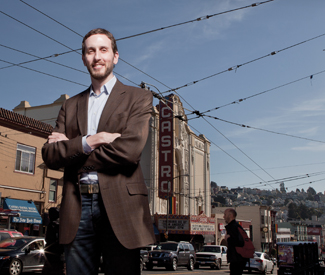
Jack Reacher (2:10) Metreon, 1000 Van Ness.

Killing Them Softly Lowest-level criminal fuckwits Frankie (Scoot McNairy) and Russell (Ben Mendelsohn) are hired to rob a mob gambling den, a task which miraculously they fail to blow. Nevertheless, the repercussions are swift and harsh, as a middleman suit (Richard Jenkins) to the unseen bosses brings in one hitman (Brad Pitt), who brings in another (James Gandolfini) to figure out who the thieves are and administer extreme justice. Based on a 1970s novel by George V. Higgins, this latest collaboration by Pitt and director-scenarist Andrew Dominik would appear superficially to be a surer commercial bet after the box-office failure of their last, 2007’s The Assassination of Jesse James By the Coward Robert Ford — one of the great films of the last decade. But if you’re looking for action thrills or even Guy Ritchie-style swaggering mantalk (though there is some of that), you’ll be disappointed to find Killing more in the abstracted crime drama arena of Drive (2011) or The American (2010), landing somewhere between the riveting former and the arid latter. This meticulously crafted tale is never less than compelling in imaginative direction and expert performance, but it still carries a certain unshakable air of so-what. Some may be turned off by just how vividly unpleasant Mendelsohn’s junkie and Gandolfini’s alchie are. Others will shrug at the wisdom of re-setting this story in the fall of 2008, with financial-infrastructure collapse and the hollow promise of President-elect Obama’s "Change" providing ironical background noise. It’s all a little too little, too soon. (1:37) New Parkway. (Harvey)

Life of Pi Several filmmakers including Alfonso Cuarón, Jean-Pierre Jeunet, and M. Night Shyamalan had a crack at Yann Martel’s "unfilmable" novel over the last decade, without success. That turns out to have been a very good thing, since Ang Lee and scenarist David Magee have made probably the best movie possible from the material — arguably even an improvement on it. Framed as the adult protagonist’s (Irrfan Khan) lengthy reminiscence to an interested writer (Rafe Spall) it chronicles his youthful experience accompanying his family and animals from their just shuttered zoo on a cargo ship voyage from India to Canada. But a storm capsizes the vessel, stranding teenaged Pi (Suraj Sharma) on a lifeboat with a mini menagerie — albeit one swiftly reduced by the food chain in action to one Richard Parker, a whimsically named Bengal tiger. This uneasy forced cohabitation between Hindu vegetarian and instinctual carnivore is an object lesson in survival as well as a fable about the existence of God, among other things. Shot in 3D, the movie has plenty of enchanted, original imagery, though its outstanding technical accomplishment may lie more in the application of CGI (rather than stereoscopic photography) to something reasonably intelligent for a change. First-time actor Sharma is a natural, while his costar gives the most remarkable performance by a wild animal this side of Joaquin Phoenix in The Master. It’s not a perfect film, but it’s a charmed, lovely experience. (2:00) 1000 Van Ness, SF Center. (Harvey)

Lincoln Distinguished subject matter and an A+ production team (Steven Spielberg directing, Daniel Day-Lewis starring, Tony Kushner adapting Doris Kearns Goodwin, John Williams scoring every emotion juuust so) mean Lincoln delivers about what you’d expect: a compelling (if verbose), emotionally resonant (and somehow suspenseful) dramatization of President Lincoln’s push to get the 13th amendment passed before the start of his second term. America’s neck-deep in the Civil War, and Congress, though now without Southern representation, is profoundly divided on the issue of abolition. Spielberg recreates 1865 Washington as a vibrant, exciting place, albeit one filled with so many recognizable stars it’s almost distracting wondering who’ll pop up in the next scene: Jared Harris as Ulysses S. Grant! Joseph Gordon-Levitt as Robert Lincoln! Lena Dunham’s shirtless boyfriend on Girls (Adam Driver) as a soldier! Most notable among the huge cast are John Hawkes, Tim Blake Nelson, and a daffy James Spader as a trio of lobbyists; Sally Field as the troubled First Lady; and likely Oscar contenders Tommy Lee Jones (as winningly cranky Rep. Thaddeus Stevens) and Day-Lewis, who does a reliably great job of disappearing into his iconic role. (2:30) 1000 Van Ness, Presidio, SF Center, Shattuck, Sundance Kabuki. (Eddy)

Les Misérables There is a not-insignificant portion of the population who already knows all the words to all the songs of this musical-theater warhorse, around since the 1980s and honored here with a lavish production by Tom Hooper (2010’s The King’s Speech). As other reviews have pointed out, this version only tangentially concerns Victor Hugo’s French Revolution tale; its true raison d’être is swooning over the sight of its big-name cast crooning those famous tunes. Vocals were recorded live on-set, with microphones digitally removed in post-production — but despite this technical achievement, there’s a certain inorganic quality to the proceedings. Like The King’s Speech, the whole affair feels spliced together in the Oscar-creation lab. The hardworking Hugh Jackman deserves the nomination he’ll inevitably get; jury’s still out on Anne Hathaway’s blubbery, "I cut my hair for real, I am so brave!" performance. (2:37) Balboa, Marina, 1000 Van Ness, SF Center, Shattuck, Sundance Kabuki. (Eddy)

Monsters, Inc. 3D (1:35) Metreon.

My Worst Nightmare First seen locally in the San Francisco Film Society’s 2012 "French Cinema Now" series, My Worst Nightmare follows icy art curator Agathe (Isabelle Huppert) as her airless, tightly-controlled world begins to crumble — thanks in no small part to an exuberantly uncouth, down-on-his-luck Belgian contractor named Patrick (Benoît Poelvoorde). (His obnoxious, freewheeling presence in Agathe’s precision-mapped orbit gives rise to the film’s title.) Director and co-writer Anne Fontaine (2009’s Coco Before Chanel) injects plenty of offbeat, occasionally raunchy humor into what could’ve been a predictable personal-liberation tale — the sight of classy dame Huppert driving through a bikini car wash, for instance. (1:43) Smith Rafael. (Eddy)

Not Fade Away How to explain why the Beatles have been tossed so many cinematic bon mots and not the Stones? The group’s relatively short lifespan — and even the tragic, unexpectedly dramatic passing of John Lennon — seem to have all played into the band’s nostalgia-marinated legend, while the Stones’ profitable tour rotation and shocking physical resilience have lessened their romantic charge. So it reads as a counterintuitive, and a bit random, that Sopranos creator David Chase would open his first feature film with a black and white re-creation of the Mick Jagger and Keith Richards meet-up, before switching to the ’60s coming-of-age of New Jersey teen geek Douglas (John Magaro), trapped in an oppressively whiny nuclear family headed up by his Pep Boy grouch of a dad (James Gandolfini) — at least until rock ‘n’ roll saves his soul and he starts beating the skins. Graduating to better-than-average singer after his band’s frontman Eugene (Boardwalk Empire‘s Jack Huston) inhales a joint, Douglas not only finds his voice, but also wins over dream girl Grace (Bella Heathcote). Sure, Not Fade Away is about sex, drugs, and rock ‘n’ roll — and much attention is dutifully squandered on basement shows, band practice, and politics, and posturing with wacky new haircuts and funny cigarettes, thanks to Chase’s own background in garage bands and executive producer, music supervisor, and true believer Steve Van Zandt’s considerable passion. Yet despite the amount screen time devoted to rock’s rites, those familiar gestures never rise above the clichéd, and Not Fade Away only finds its authentic emotional footing when Gandolfini’s imposing yet trapped patriarch and the rest of Douglas’s beaten-down yet still kicking family enters the picture — they’re the force that refuses to fade away, even after they disappear in the rear view. (1:52) Metreon, 1000 Van Ness, Shattuck. (Chun)

Parental Guidance (1:36) Metreon, 1000 Van Ness.

The Perks of Being a Wallflower Move over, Diary of a Wimpy Kid series — there’s a new shrinking-violet social outcast in town. These days, life might not suck quite so hard for 90-pound weaklings in every age category, what with so many films and TV shows exposing, and sometimes even celebrating, the many miseries of childhood and adolescence for all to see. In this case, Perks author Stephen Chbosky takes on the directorial duties — both a good and bad thing, much like the teen years. Smart, shy Charlie is starting high school with a host of issues: he’s painfully awkward and very alone in the brutal throng, his only friend just committed suicide, and his only simpatico family member was killed in a car accident. Charlie’s English teacher Mr. Andersen (Paul Rudd) appears to be his only connection, until the freshman strikes up a conversation with feline, charismatic, shop-class jester Patrick (Ezra Miller) and his magnetic, music- and fun-loving stepsister Sam (Emma Watson). Who needs the popular kids? The witty duo head up their gang of coolly uncool outcasts their own, the Wallflowers (not to be confused with the deeply uncool Jakob Dylan combo), and with them, Charlie appears to have found his tribe. Only a few small secrets put a damper on matters: Patrick happens to be gay and involved with football player Brad (Johnny Simmons), who’s saddled with a violently conservative father, and Charlie is in love with the already-hooked-up Sam and is frightened that his fragile equilibrium will be destroyed when his new besties graduate and slip out of his life. Displaying empathy and a devotion to emotional truth, Chbosky takes good care of his characters, preserving the complexity and ungainly quirks of their not-so-cartoonish suburbia, though his limitations as a director come to the fore in the murkiness and choppily handled climax that reveals how damaged Charlie truly is. (1:43) New Parkway, Opera Plaza.. (Chun)

Promised Land Gus Van Sant’s fracking fable — co-written by stars Matt Damon and John Krasinski, from a story by Dave Eggers — offers a didactic lesson in environmental politics, capped off by the earth-shattering revelation that billion-dollar corporations are sleazy and evil. You don’t say! Formulated like a Capra movie, Promised Land follows company man Steve Butler (Matt Damon) as he and sales partner Sue (Frances McDormand) travel to a small Pennsylvania town to convince its (they hope) gullible residents to allow drilling on their land. But things don’t go as smoothly as hoped, when the pair faces opposition from a science teacher with a brainiac past (Hal Holbrook), and an irritatingly upbeat green activist (Krasinski) breezes into town to further monkey-wrench their scheme. That Damon is such a likeable actor actually works against him here; his character arc from soulless salesman to emotional-creature-with-a-conscience couldn’t be more predictable or obvious. McDormand’s wonderfully biting supporting performance is the best (and only) reason to see this ponderous, faux-folksy tale, which targets an audience that likely already shares its point of view. (1:46) 1000 Van Ness, Presidio, SF Center. (Eddy)

Rise of the Guardians There’s nothing so camp as "Heat Miser" from The Year Without a Santa Claus (1974) in Rise of the Guardians,, but there’s plenty here to charm all ages. The mystery at its center: we open on Jack Frost (voiced by Chris Pine) being born, pulled from the depths of a frozen pond by the Man on the Moon and destined to spread ice and cold everywhere he goes, invisible to all living creatures. It’s an individualistic yet lonely lot for Jack, who’s styled as an impish snowboarder in a hoodie and armed with an icy scepter, until the Guardians — spirits like North/Santa Claus (Alec Baldwin), the Tooth Fairy (Isla Fisher), and the Easter Bunny (Hugh Jackman) — call on him to join them. Pitch the Boogeyman (Jude Law) is threatening to snuff out all children’s hopes and dreams with fears and nightmares, and it’s up to the Guardians must keep belief in magic alive. But what’s in it for Jack, except the most important thing: namely who is he and what is his origin story? Director Peter Ramsey keeps those fragile dreams aloft with scenes awash with motion and animation that evokes the chubby figures and cozy warm tones of ’70s European storybooks. And though Pine verges on blandness with his vocal performance, Baldwin, Jackman, and Fisher winningly deliver the jokes. (1:38) Metreon. (Chun)

Rust and Bone Unlike her Dark Knight Rises co-star Anne Hathaway, Rust and Bone star Marion Cotillard never seems like she’s trying too hard to be sexy, or edgy, or whatever (plus, she already has an Oscar, so the pressure’s off). Here, she’s a whale trainer at a SeaWorld-type park who loses her legs in an accident, which complicates (but ultimately strengthens) her relationship with Ali (Belgian actor Matthias Schoenaerts, so tremendous in 2011’s Bullhead), a single dad trying to make a name for himself as a boxer. Jacques Audiard’s follow-up to 2009’s A Prophet gets a bit overwrought by its last act, but there’s an emotional authenticity in the performances that makes even a ridiculous twist (like, the kind that’ll make you exclaim "Are you fucking kidding me?") feel almost well-earned. (2:00) Embarcadero, Shattuck. (Eddy)

The Sessions Polio has long since paralyzed the body of Berkeley poet Mark O’Brien (John Hawkes) from the neck down. Of course his mind is free to roam — but it often roams south of the personal equator, where he hasn’t had the same opportunities as able-bodied people. Thus he enlists the services of Cheryl (Helen Hunt), a professional sex surrogate, to lose his virginity at last. Based on the real-life figures’ experiences, this drama by Australian polio survivor Ben Lewin was a big hit at Sundance this year (then titled The Surrogate), and it’s not hard to see why: this is one of those rare inspirational feel-good stories that doesn’t pander and earns its tears with honest emotional toil. Hawkes is always arresting, but Hunt hasn’t been this good in a long time, and William H. Macy is pure pleasure as a sympathetic priest put in numerous awkward positions with the Lord by Mark’s very down-to-earth questions and confessions. (1:35) Opera Plaza. (Harvey)

Silver Linings Playbook After guiding two actors to Best Supporting Oscars in 2010’s The Fighter, director David O. Russell returns (adapting his script from Matthew Quick’s novel) with another darkly comedic film about a complicated family that will probably earn some gold of its own. Though he’s obviously not ready to face the outside world, Pat (Bradley Cooper) checks out of the state institution he’s been court-ordered to spend eight months in after displaying some serious anger-management issues. He moves home with his football-obsessed father (Robert De Niro) and worrywart mother (Jacki Weaver of 2010’s Animal Kingdom), where he plunges into a plan to win back his estranged wife. Cooper plays Pat as a man vibrating with troubled energy — always in danger of flying into a rage, even as he pursues his forced-upbeat "silver linings" philosophy. But the movie belongs to Jennifer Lawrence, who proves the chops she showcased (pre-Hunger Games megafame) in 2010’s Winter’s Bone were no fluke. As the damaged-but-determined Tiffany, she’s the left-field element that jolts Pat out of his crazytown funk; she’s also the only reason Playbook‘s dance-competition subplot doesn’t feel eye-rollingly clichéd. The film’s not perfect, but Lawrence’s layered performance — emotional, demanding, bitchy, tough-yet-secretly-tender — damn near is. (2:01) Piedmont, Presidio, SF Center, Shattuck. (Eddy)

Skyfall Top marks to Adele, who delivers a magnificent title song to cap off Skyfall‘s thrilling pre-credits chase scene. Unfortunate, then, that the film that follows squanders its initial promise. After a bomb attack on MI6, the clock is running out for Bond (Daniel Craig) and M (Judi Dench), accused of Cold War irrelevancy in a 21st century full of malevolent, stateless computer hackers. The audience, too, will yearn for a return to simpler times; dialogue about "firewalls" and "obfuscated code" never fails to sound faintly ridiculous, despite the efforts Ben Whishaw as the youthful new head of Q branch. Javier Bardem is creative and creepy as keyboard-tapping villain Raoul Silva, but would have done better with a megalomaniac scheme to take over the world. Instead, a small-potatoes revenge plot limps to a dull conclusion in the middle of nowhere. Skyfall never decides whether it prefers action, bon mots, and in-jokes to ponderous mythologizing and ripped-from-the-headlines speechifying — the result is a unsatisfying, uneven mixture. (2:23) Metreon, 1000 Van Ness, Shattuck, Sundance Kabuki. (Ben Richardson)

Texas Chainsaw 3D (1:32) Metreon, 1000 Van Ness.

Tchopitoulas Three adolescent brothers enjoy a dusk-to-dawn night in the Big Easy — New Orleans, baby — in this impressionistic documentary that blurs the line between staged and sampled lyricism. Bill and Turner Ross’ film sets the trio loose in the French Quarter and beyond, where they sample the company of various drunks, buskers, oyster shuckers, painted ladies, and so forth. No laws are conspicuously broken, though a few get bent — it’s safe to say these kids probably won’t be visiting several environs again until they’re of legal drinking age. The long night is an inebriate dream of color and sound, strange but seldom menacing. Like the "city symphony" movies of the 1920s and 30s, this is less nonfiction cinema in a strict vérité vein than a poetically contrived ode to life — a life that’s sturdier than it looks, since Tchoupitoulas finds NO back to the business of partying like Katrina never happened. If you’re looking for a harder-edged portrait of the burg’s status quo, there are plenty of other documentaries to choose from; the Ross’ provide a woozy mash note rather than a sober pulse-taking. You’ll definitely want to go bar-hopping afterward. (1:20) Roxie. (Harvey)

This is 40 A spin-off of sorts from 2007’s Knocked Up, Judd Apatow’s This is 40 continues the story of two characters nobody cared about from that earlier film: Debbie (Leslie Mann, Apatow’s wife) and Pete (Paul Rudd), plus their two kids (played by Mann and Apatow’s kids). Pete and Debbie have accumulated all the trappings of comfortable Los Angeles livin’: luxury cars, a huge house, a private personal trainer, the means to throw catered parties and take weekend trips to fancy hotels (and to whimsically decide to go gluten-free), and more Apple products than have ever before been shoehorned into a single film. But! This was crap they got used to having before Pete’s record label went into the shitter, and Debbie’s dress-shop employee (Charlene Yi, another Knocked Up returnee who is one of two people of color in the film; the other is an Indian doctor who exists so Pete can mock his accent) started stealing thousands from the register. How will this couple and their whiny offspring deal with their financial reality? By arguing! About bullshit! In every scene! For nearly two and a half hours! By the time Melissa McCarthy, as a fellow parent, shows up to command the film’s only satisfying scene — ripping Pete and Debbie a new one, which they sorely deserve — you’re torn between cheering for her and wishing she’d never appeared. Seeing McCarthy go at it is a reminder that most comedies don’t make you feel like stabbing yourself in the face. I’m honestly perplexed as to who this movie’s audience is supposed to be. Self-loathing yuppies? Masochists? Apatow’s immediate family, most of whom are already in the film? (2:14) Metreon, 1000 Van Ness, Shattuck, Vogue. (Eddy)

Tristana The morality tale rarely gets as twisted as it does in Luis Buñuel’s 1970 late-in-the-day beauty Tristana. Working with Benito Perez Galdos’s novel, the filmmaker gleefully picked up a thread entwining erotic politics and S&M — explored to exquisite effect in 1967’s Belle de Jour and again offset by the immaculate bone structure of anti-heroine Catherine Deneuve — while bringing a corrosive intimacy to his black-humored disembowelment of a self-serving aristocracy, hypocritical church, and Franco-era fascism. Today it feels like one of Buñuel’s most personal and Spanish films, with the director-cowriter basing the impressionable Tristana on his sister Conchita. The starting point is an archetypal innocent "strange flower" clad in black, Tristana (Deneuve). She has been placed in the care of the aristocratic Don Lope (Buñuel regular Fernando Rey), a dissolute "senorito" (akin to Buñuel’s own father) who lives off his inheritance and espouses a kind of anti-clerical, antiauthoritarian, albeit elitist, libertine lifestyle. The patriarch can hardly deny himself anything, let alone his gorgeous ward, who is confined to the house like a prisoner and learns at Don Lope’s feet to despise the man who admits he’s her father or her husband, depending on when it suits him. Enter a dashing young artist Horacio (Franco Nero, the original Django) to spirit the increasingly embittered Tristana away from the battered, mazelike streets of Toledo, Spain. But that feat is far from easy when the "fallen" woman’s daydreams of teaching piano pale in comparison to a recurring nightmare of Don Lope’s head at the end of a rather phallic church bell clapper. What follows — photographed with disciplined, earthy beauty by cinematographer Jose Aguayo and now restored to its dusky, lustrous good looks—is a de-evolution of sorts, as both an innocent and corruptor are defiled, though Tristana‘s psychosexual reverberations, which would have given both Freud and the Marquis de Sade palpitations, echo out beyond the closing montage, its tolling bell, and the repeated heavy thud of a prosthetic slamming into the floor. (1:38) Opera Plaza. (Chun)

Wreck-It Ralph Wreck-It Ralph cribs directly from the Toy Story series: when the lights go off in the arcade, video game characters gather to eat, drink, and endure existential crises. John C. Reilly is likable and idiosyncratic as Ralph, the hulking, ham-fisted villain of a game called Fix-It-Felix. Fed up with being the bad guy, Ralph sneaks into gritty combat sim Hero’s Duty under the nose of Sergeant Calhoun (Jane Lynch), a blond space marine who mixes Mass Effect‘s Commander Shepard with a PG-rated R. Lee Ermey. Things go quickly awry, and soon Ralph is marooned in cart-racing candyland Sugar Rush, helping Vanellope Von Schweetz (a manic Sarah Silverman), with Calhoun and opposite number Felix (Jack McBrayer) hot on his heels. Though often aggressively childish, the humor will amuse kids, parents, and occasionally gamers, and the Disney-approved message about acceptance is moving without being maudlin. The animation, limber enough to portray 30 years of changing video game graphics, deserves special praise. (1:34) Metreon. (Ben Richardson)

Zero Dark Thirty The extent to which torture was actually used in the hunt for Osama Bin Ladin may never be known, though popular opinion will surely be shaped by this film, as it’s produced with the same kind of "realness" that made Kathryn Bigelow’s previous film, the Oscar-winning The Hurt Locker (2008), so potent. Zero Dark Thirty incorporates torture early in its chronology — which begins in 2003, after a brief opening that captures the terror of September 11, 2001 using only 911 phone calls — but the practice is discarded after 2008, a sea-change year marked by the sight of Obama on TV insisting that "America does not torture." (The "any more" goes unspoken.) Most of Zero Dark Thirty is set in Pakistan and/or "CIA black sites" in undisclosed locations; it’s a suspenseful procedural that manages to make well-documented events (the July 2005 London bombings; the September 2008 Islamabad Marriott Hotel bombing) seem shocking and unexpected. Even the raid on Bin Ladin’s HQ is nail-bitingly intense. The film immerses the viewer in the clandestine world, tossing out abbreviations ("KSM" for al-Qaeda bigwig Khalid Sheikh Mohammed) and jargon ("tradecraft") without pausing for a breath. It is thrilling, emotional, engrossing — the smartest, most tightly-constructed action film of the year. At the center of it all: a character allegedly based on a real person whose actual identity is kept top-secret by necessity. She’s interpreted here in the form of a steely CIA operative named Maya, played to likely Oscar-winning perfection by Jessica Chastain. No matter the film’s divisive subject matter, there’s no denying that this is a powerful performance. "Washington says she’s a killer," a character remarks after meeting this seemingly delicate creature, and he’s proven right long before Bin Ladin goes down. Some critics have argued that character is underdeveloped, but anyone who says that isn’t watching closely enough. Maya may not be given a traditional backstory, but there’s plenty of interior life there, and it comes through in quick, vulnerable flashes — leading up to the payoff of the film’s devastating final shot. (2:39) Balboa, Marina, SF Center, Sundance Kabuki. (Eddy)

Hacking the US debt

2

OPINION The so-called Fiscal Cliff has been averted. But the country actually has a much bigger issue — the debt ceiling.

For the uninitiated, the debt ceiling is exactly what it sounds like, an artificial limit imposed by Congress the keep the president from borrowing money. The ceiling was originally passed back in 1917 to prevent the government from excess spending during the First World War. Besides its constitutionality being questionable, it’s also useless and dangerous.

The far right goes bananas about the national debt, and points to the ceiling as a way to keep it from growing. But the debt growth in question is simply to pay back bills on products and services that Congress already used. So to impose a ceiling now is not to cut growth, but to default on US creditors.

The Republicans are refusing to raise the debt ceiling unless they get huge cuts in social programs — and if current spending hits the ceiling, the United States would be unable to pay its bills.

But there’s a solution, a way President Obama could get around the GOP and its threats altogether. It’s a unorthodox — but legal. Call it debt hacking.

Obama could simply direct the Treasury to print a series of platinum coins in denominations of at least $1 trillion. It’s not perfect, and it’s not without potential cost — but compared to defaulting on debt or cutting Social Security and Medicare, it’s not a bad option.

The president is legally barred from asking the US Mint to print more money — gold coins or paper bills — without the permission of Congress. But under an obscure 1996 law, there’s an exception for platinum.

So upon realizing that the GOP leaders in Congress will push the republic into default, President Obama could direct the Mint to produce, say, three coins — each with the face value of $1 trillion. The coins would be deposited into the general treasury account at the Federal Reserve. This would then be converted into credit to buy back and retire enough debt to give Obama, and the country, some breathing space.

In fact, Obama could do something even bolder and create more coins, to go beyond breathing space and pay off almost all the national debt except for that held by Social Security. But that sort of action — the government just printing new money — can, many economists warn, create hyperinflation.

Still, the Federal Reserve magically produced about $30 trillion to help bail out banks not long ago, and there was little discernible inflation. The government wouldn’t actually be creating new money — it would simply be replacing debt that the country pays interest on with paper (or digital accounting) that it doesn’t. And right now, inflation is the least of our national worries; a little inflation might even help homeowners and those with heavy credit-card debt pay off what they owe with cheaper money in the future.

Of course, no government can do this on a regular basis. The US Dollar could lose its reserve status if investors start to fear the potential of future platinum coins appearing. But what are the alternatives? US dollars and US debt are, and will remain, trusted investments. China may not purchase as many bonds in the future, but the money we save on interest payments could be well worth it.

It’s a crazy idea, but these are crazy times — and if the GOP continues to threaten to destroy the economy, Obama might want to consider something bold.

Johnny Venom is an economist and commodities trader.

Why the GOP gets away with obstructing Congress

91

There’s an interesting piece on Calitics talking about what California can teach the nation in terms of ending Republican obstructionism. Robert Cruickshank, as usual, is right on target — and he points to the real problem in Washington. Republicans in the House no longer worry about losing their seats to Democrats; the GOP has been so good about gerrymandering that only maybe 30 or 40 seats in the entire nation are still competitive. What these increasingly right-wing loonies worry about is a primary challenge from an even loonier, even right-wingier candidate — so they refuse to vote for any taxes and they’re willing to bring down the entire economy if that’s what it takes.

The problem is it’s not as easy to fix nationally as it was in California. We’re talking long-term efforts to change governors and state Legislatures so they can rewrite Congressional districts (or create California-style independent redistricting, which I initially opposed but hasn’t turned out so bad). The Constitution mandages redistricting every ten years, but I don’t think there’s any rule saying you can’t draw new districts more often, or that you can’t create a new way of drawing them and put that in place right away. But again, that’s not immediate.

Meanwhile, Obama’s going to have to force as much as he can through a reluctant Congress and do as much as he can with executive orders.

White men behaving (very) badly

69

Could it be — the worst year ever?

I keep asking. And every time the Offies come around, I find myself boggled yet again. Our awards for the very worst — the dumbest, the most tasteless, the most truly offensive acts of the year past — keep sinking lower and lower.

But what can we do? There are still Republicans, and this year a lot of them ran for high office, and every single one made a fool of himself. There are still politicians who think you can run for San Francisco supervisor even if you live in Walnut Creek, and elected leaders who find the courage deep in themselves to prevent a bunch of old men from walking around with their sagging asses and limp dicks out.

There are still entertainers who punch psychics, and gun nuts who blame mass murder on TV sex, and … well, a whole lot of people who have made this a banner year for the Offies.


SUPPORT OUR BRAVE, HEROIC TROOPS! (EXCEPT THE MEN WHO FUCK MEN)

The audience at a Republican presidential primary debate booed a gay solider who called in from Iraq with a question about don’t ask, don’t tell.


FROM A GUY WHO HAD TO BUY OXYCONTINS AND VIAGRA ON THE STREET, THIS SORT OF THING IS AN OBVIOUS CONCERN

Rush Limbaugh attacked law student Sandra Fluke, calling her a “slut” and a “prostitute” because she testified that health-care plans should cover contraceptives.


THERE ARE MEN SO BRILLIANT THAT WE STAND IN AWE OF THEIR INTELLECT

Mitt Romney said he really liked Michigan because the trees were all the right height.


GIVING NEW MEANING TO THE 1 PERCENT

Herman Cain proclaimed that for every woman who claimed he sexually harassed her, there were a thousand others who didn’t.


IF WE WANTED A DRESS CODE ON AIRLINES, WE’D START WITH THOSE DREARY PILOT UNIFORMS

An American Airlines pilot kicked a woman off a flight for wearing a shirt that said “if I wanted the government in my womb I’d fuck a senator.”


PROBLEM IS, BUSH MADE THAT ONE A CABINET-LEVEL POSITION

Rick Perry proclaimed in a debate that he was going to do away with three agencies of the federal government, but after listing Commerce and Education, he couldn’t remember what the third one was, identifying it only as “oops.”


FOR SOMEONE WHOSE NAME MEANS ASS-CUM JUICE, THAT’S A REALLY PRETTY PICTURE

Rick Santorum said that he’d listened to John F. Kennedy’s speech on the separation of church and state and it made him want to throw up.


LOOK! UP AT THE RAMPARTS! THE MAN WITH THE HAIR!

Donald Trump, mistakenly believing Romney won the popular vote but lost the election, called the election “a sham and travesty” and called for “revolution.”


BUT HE COULD HELP THEM OUT WITH A FEW BINDERS FULL OF WOMEN

Romney insulted the British by saying the nation didn’t appear ready to host the Olympics.


FINE, JUST TAKE RICK PERRY WITH YOU

More than 50 thousand people signed a White House petition asking for permission for Texas to secede.


GUNS DON’T KILL PEOPLE, ATHEISM AND OVERSTIMULATED GLANDS DO. HAPPY FRIDAY, SHOOTERS!

On the same day that a gunman opened fire at a showing of the Dark Knight movie in Colorado, the National Rifle Association’s magazine sent out a tweet that read: “Good morning, shooters! Happy Friday.”

A Congressman from Texas, Louie Gohmert, argued that the Dark Knight shootings happened because of “ongoing attacks on Judeo-Christian beliefs.”

Mike Huckabee blamed the massacre in Newtown, CT on atheism. “We ask why there is violence in our schools, but we have systematically removed God from our schools,” Huckabee said on Fox News. “Should we be so surprised that schools would become a place of carnage?”

Timothy Bordnow at Tea Party nation said the shooting was caused by too much sexual stimulation in the media . “There is a reason why young people commit these sorts of crimes, and sex plays no small part. Their passions are eternally inflamed, and they wander the Earth with no outlet for their overstimulated glands.”

Megan McArdle, the Daily Beast writer, urged the victims of mass shootings to gang-rush the shooter so he wouldn’t kill as many people.

The head of the National Rifle Association said the only way to stop mass murders of school children is to post armed guards in every school.


WOW — THE DISTRICT 8 SUPERVISOR HAS BEEN OVERWHELMED BY A COUPLE OF OLD MEN’S FLACCID DICKS

Sup. Scott Wiener promoted a ban on public nudity in San Francisco.


WHEN YOU’RE A MAJOR LOSER, EVEN MONEY CAN’T BUY YOU LOVE

Michael Breyer, who has never been elected to anything, spent roughly $1 million trying to win a state Assembly seat as the candidate of “traditional San Francisco values,” and lost badly.


AND THESE PEOPLE ARE COOPERATING WITH HOMELAND SECURITY?

Confetti thrown in the Giants parade turned out to be lightly shredded internal police documents that included home addresses and social security numbers of officers.


GUESS IT’S OKAY TO PERJURE YOURSELF IF YOU’RE THE MAYOR

Mayor Ed Lee testified under oath that he’d never discussed the Ross Mirkarimi case with members of the board of Supervisors, although friends of Sup. Christina Olague said she’d been open about her talks with the mayor on the topic.


NOW, WHICH ONES ARE THE IRON MONSTERS OF DEATH?

A San Francisco bicyclist who was allegedly trying to beat a speed record crashed into and killed a 71-year-old man in the Castro.


UNFORTUNATELY, THERE’S NO MALPRACTICE STATUTE GOVERNING THAT AUGUST PROFESSION

Political consultant Enrique Pearce oversaw perhaps the worst district election campaign in history, helping Olague become the first incumbent ever to lose in ranked-choice voting in SF.


SOMEHOW, REPRESENTING WALNUT CREEK AT CITY HALL DIDN’T SEEM LIKE SUCH A GOOD IDEA

Union official Leon Chow dropped his challenge to Sup. John Avalos when the SF Appeal revealed that he didn’t live in District 11, or even in San Francisco.


WHEN MEN ARE JUST TOTAL DICKS: THE GOP REDEFINES RAPE

1. Divine providence rape (Rick Santorum): “The right approach is to accept this horribly created .. gift of life, accept what God is giving to you.”

2. Honest Rape (Ron Paul): “If it was an honest rape, that individual should go immediately to the emergency room.”

3. Forcible Rape (Paul Ryan): Federal law should prevent abortion except in the case of “forcible rape.”

4. Emergency Rape (Linda McMahon): “It was really an issue about a Catholic Church being forced to issue those pills if a person came in with an emergency rape.”

5. Legitimate Rape: (Todd Akin): “If it was a legitimate rape, the female body has ways to try to shut that whole thing down.”


CALL IT BIEBER RAGE; IT’S DANGEROUS SHIT

After a Justin Bieber concert, Lindsay Lohan punched a psychic in the face at a New York nightclub, then threw her personal assistant out of the car.


YEP, AND IT DOESN’T LOOK ANY BETTER THE SECOND TIME

Romney’s campaign manager said that his candidate would change his right-wing positions for the fall campaign: “It’s almost like an Etch-A-Sketch. You can kind of shake it up and we start all over again.”


AND IF HE GOES WITH THEM, IT WILL ALL BE WORTH WHILE

Newt Gingrich proposed sending 13,000 Americans to the Moon and creating a new state there.


AND WE ALL WONDER WHY THE MEDIA IS DOING SO SMASHINGLY WELL THESE DAYS

After Gabby Douglas became the first black woman to win the Olympic gold medal in all-around gymnastics, the news media reported on problems with her hair.


AND YOUR VIEW OF THE WORLD IS OVER, OVER, OVER, OVER

Justice Antonin Scalia, in defending his argument that sodomy is legally equivalent to murder, told law students at Princeton that the Constitution is not a living document, it’s “dead, dead, dead, dead.”


MAKES YOU WONDER ABOUT THE POOR SOUL WHO CAME IN AT 99

Kim Kardashian fell 90 places, to 98, on AskMen Magazine’s list of the worlds 100 most desirable women.


SADLY, “GOTTA CATCH ‘EM ALL” DOESN’T MAKE SUCH A GREAT CAMPAIGN SLOGAN

Herman Cain said his life’s philosophy came from a Pokemon song.


WE’RE GLAD THAT HIS FAITH HAS GIVEN HIM SUCH AN UPLIFTING ATTITUDE

Romney said he’s “not concerned about the very poor.”


HE WAS PROBABLY SHITFACED, TOO, BUT SINCE HE DOESN’T DRINK HE CAN’T REMEMBER THAT EITHER

Romney said he didn’t remember beating up a gay student at his prep school and cutting off his long hair.


IT’S A GOOD THING MONDAY NIGHT FOOTBALL ISN’T LOOKING FOR ANOTHER JOHN MADDEN

A full 78 percent of Americans thought Ryan Seacrest was doing a good job broadcasting from the Olympics, although most of them couldn’t figure out what he was actually doing.


HE ALSO TOLD US THAT TAX CUTS AND DEREGULATION WOULD IMPROVE THE ECONOMY, SO HE’S GOT A WINNING RECORD HERE

Karl Rove on election night kept insisting the Romney still had a chance to win.


TALK ABOUT A BLOWN COVER

David Petraus resigned as CIA director after an affair with a woman who was threatening another woman who might have had a thing for him.


TOO BAD — HE MIGHT HAVE HAD TO SEEK ASYLUM IN THE NEW REPUBLIC OF TEXAS

A petition to allow every American to punch Grover Norquist in the dick was removed from the White House website.


WE’RE WITH THE GOVERNMENT OF BELIZE; THIS MAN IS “BONKERS”

One-time software mogul John McAfee fled Belize claiming the cops would persecute him after he was sought for questioning in the shooting death of his neighbor — using a body double, faking a heart attack, pretending he was crazy, and winding up in Miami.


IT SUCKS TO BE STINKING RICH AND OWN FOUR HOUSES AND HAVE TO LIVE WITH REJECTION

Ann Romney was deeply depressed that her husband didn’t win the election, telling friends she though it was their fate to move into the White House.


AND WHEN ASKED IF SOMEONE THAT MORONIC COULD ACTUALLY RUN FOR PRESIDENT, HE SAID “I’M A REPUBLICAN, MAN”

Marco Rubio, when asked about the age of the Earth, said “I’m not a scientist, man.”


EASY — THE ONES WHO ARE GETTING PAID ARE THE ONES PRETENDING TO BE INTERESTED IN NASTY OLD FRENCHMEN

After Dominique Strauss-Kahn was held overnight in Lille to be questioned about possible connections between a prostitution ring and orgies he attended in Paris and Washington, his lawyer said: “I challenge you to distinguish a naked prostitute from any other woman.”


DUDE — THAT’S THE TERRITORY OF SERIOUS LOSERS

Vice-presidential candidate Paul Ryan lied about his time in the marathon.


GO AHEAD, CLINT — MAKE OUR DAY

Surprise guest speaker Clint Eastwood addressed GOP convention delegates for 12 minutes, during which he carried on an imagined dialogue with an empty chair he identified as President Obama.


AND YES, HE DID GET A FAIR AMOUNT OF THE STUPIDITY VOTE

Santorum told a gathering of conservatives in Washington, “We will never have the elite, smart people on our side.”

Dick Meister: Good news for our neediest workers

13

By Dick Meister

Bay Guardian columnist Dick Meister, former labor editor of the SF Chronicle and KQED-TV Newsroom has covered labor and politics for more than a half-century. Contact him through his website, www.dickmeister.com, which includes more than 350 of his columns.

Here’s some good news for the new year: Ten states are set to raise their minimum wage rates on January first.

The National Employment Law Project (NELP) calculates that the increased rates will boost the pay of more than 850,000  low-income  workers in Arizona, Colorado, Florida, Missouri, Montana, Ohio, Oregon, Rhode Island, Vermont and Washington.

The rates, raised in accord with state laws requiring automatic adjustments to keep pace with the rising cost of living, will go up by 10 to 35 cents an hour depending on the state. NELP figures that will mean $190 to $510 more a year for the four million workers who are paid at the minimum in those states.

That may not seem like much in today’s economy, but most of the workers are living at or near the poverty level, and it will mean a lot to them and their families. Another 140,000 needy low-paid workers will get indirect raises as pay rates are adjusted upward to reflect the new minimum wage in their states.

Nineteen states, including California, plus the District of Columbia will now have rates higher than the federal minimum. But though the increases in state minimum wages are vital, what’s needed now is also to raise the federal minimum so that all minimum wage workers are paid at a higher and uniform rate.  The federal rate has remained at $7.25 an hour  – about $15,000 a year for the average minimum wage worker – since it was set in 2007, although inflation has continued to erode its purchasing power

A bill now pending in Congress would raise the federal rate to $9.80 an hour by 2014, set the rate for tipped workers at 70 percent of that, and provide for the rates to rise to match future increases in the cost of living.

Federal action is badly needed, notes NELP’s executive director, Christine Owens, to “make sure workers earn wages that will at the very least support their basic needs. But earning an income that meets basic needs shouldn’t depend on the state where a working family lives.”

OK, but won’t increasing the pay of minimum wage workers discourage employers from hiring more workers and thus weaken the economy and hurt jobless workers? That’s often claimed by fiscal conservatives, but it’s simply not so.

NELP cites a large body of research clearly showing that “raising the minimum wage is an effective way to boost the incomes of low-paid workers without reducing employment.” NELP notes in particular research showing that “even during times of high unemployment, minimum wage increases did not lead to job loss.”

On the contrary. NELP estimates that increased spending by workers paid at the new state minimums will pump an estimated $183 million into the economy, creating the equivalent of more than 100,000 full-time jobs. Other estimates indicate that every dollar increase in wages for workers at the minimum rate would trigger more than $3000 in new spending.

But can employers afford to pay a higher minimum? Wouldn’t it be a burden on small businesses, as those opposing a raise often claim? No. NELP found that more than two-thirds of minimum wage workers are employed by large companies, and that many of the companies could easily afford a raise, especially since they “have fully recovered from the recession and are enjoying strong profits.”

There’s no excuse for inaction.  Ten states have done the right thing for their neediest working citizens. It’s time for Congress and President Obama to do their part.

Bay Guardian columnist Dick Meister, former labor editor of the SF Chronicle and KQED-TV Newsroom has covered labor and politics for more than a half-century. Contact him through his website, www.dickmeister.com, which includes more than 350 of his columns.

Gentle mosh

0

TOFU AND WHISKEY Vetiver and Howlin Rain have both been haunting around the Bay for the better part of a decade. Sonically split, playing tender Americana folk and 1970s-tinged psychedelic rock, respectively, the bands share a common thread of superior musicanship and drive — each releasing a landmark album in the past year or so (Howlin Rain’s The Russian Wilds and Vetiver’s The Errant Charm). The other link? Mutual admiration.

The two bands will play a series of three concerts together this weekend (Fri/28, Sat/ 29, Mon/31, 9pm, $20–$35, Cafe Du Nord, 2170 Market, SF. www.cafedunord.com). In anticipation of those, we did a sort of round-robin of interviews. I asked the musicians — Vetiver band leader and chief songwriter Andy Cabic and Howlin Rain’s Ethan Miller — a few general questions, then they took their conversation adrift, discussing literary influences, favorite Bay Area bands, and “the softest mosh pit in history.” Here are some hearty pieces of the conversation. There’ll be more up on SFBG.com/Noise.

SFBG What compelled you to create music in San Francisco, initially? What keeps you here?

AC I was playing music before I moved here and just gradually found folks to play with here in SF. Bands like Thinking Fellers Union and Caroliner were an initial inspiration. I’ve been here a while and have an apartment with reasonable rent, so that along with the weather, food, community and landscape of the city keeps me here.

EM Initially I moved up from that haunted little paradise that is Santa Cruz to be with my band at the time, Comets On Fire. The rest of the guys had all started migrating to the city and I was finishing up school there, I knew I needed to be with the band and San Francisco had a real buzz of excitement and electricity in the air for us at that time, we were moving toward a dark magic both in the atmosphere of San Francisco and the creative work that was ahead of us.

I actually live in Oakland. I love it here. I stay for my bands, the culture, access to the art museums, the food, the music, the airports, the architecture, the weather, the outlying and incorporated nature, the people, my friends, the work opportunities — I could go on and on, I really don’t have any incentive to leave. After 10 years of living in the metropolitan Bay Area I think my romance with these cities and all they have to offer is stronger than ever and my engagement with their mythologies is increasing daily.

AC [Ethan,]I know you are a voracious reader, and someone who is a fan of epic and oftentimes challenging works of fiction, like Valis, Gravity’s Rainbow, and War and Peace. What is the attraction to committing to a lengthy or monumental work, and how does this impact your songwriting?

EM I started to get into some pretty dark head places when we were making the last record The Russian Wilds. As it dragged into year three, I realized I really needed some highly focused activities outside of music in my life to dismantle stress/anger/exasperation/despair etc. I began jogging religiously to beat these emotions out of my body on the pavement and I took on some heavy books to beat them out of my mind. Moby Dick and War and Peace were the two big ones that began to clear the mental air for me.

Even though we’d finished the album and life moved on to a different kind of pace and substance, I loved the challenge and grandiosity of those works and continued on with the epics. I read Gravity’s Rainbow this year while on the road near the end of our tour cycle and loved it. It is a work that has taunted, haunted, and eluded me for years and now I can say it’s one of my all time favorites; it just took some relatively hard work and time to begin to engage properly with it. It is a true and singular masterpiece but it plays by a different set of rules than most of us are used to dealing with in literature.

AC Can you talk a little bit about your relationship with Tim Green and his role in the recording process of ‘The Russian Wilds’?

EM Tim worked for months and months, perhaps dedicated half his year to The Russian Wilds. I can’t say enough about his focus and enthusiasm for the making of that album. Tim and I have been working together on records for 13 years now and we have a pretty telepathic level of communication at this point. I always learn from him, a true professional and an incredible mix of artist and scientist and a great friend. The songs that you hear on that album were chosen and shaped by Rick in their basic forms but the sounds and the “album” that you hear is Tim Green. That’s his blood, sweat, and tears along with ours.

EM Stylistically, perhaps the thing Vetiver is most famous for is your “hushed”/”understated” delivery. Your singing, phrasing, and various levels of serene projection really are the mechanism that delivers Vetiver’s artistic manifesto. When you first began to sing, was what we now know as your style already there by intention or default? Was there a conscious decision to build that style?

AC I think I’ve always sung in a soft way. I had a band in college where I tried yelling and shouting and in that context it worked alright, but never quite clicked for me. I was usually hoarse by the end of those songs. I have a predilection for jangly, poppy sounds and melodic singing, and having never been trained or really taught how to sing correctly, I don’t sing with a very strong voice.

Getting an acoustic guitar and learning to fingerpick allowed me to bring the volume of the performance in line with my voice, and helped me develop a songwriting style that felt easier and more natural.

EM I’m keen to know what kind of literary influences move your musical mind…favorite books or authors that you go back to for musical inspiration year after year? Do you often cross-pollinate influences for songwriting inspiration? Cinema, poetry, visual art?

AC I worked for some years as a buyer for a used bookstore (Aardvark Books on Church at Market…the best!), and though it was one of my favorite jobs, it kind of ruined my ability to stick to one book at a time, hence my reading taste is a bit divided. I read a lot of non-fiction, history, and biographies.

As far as fiction goes, I’m a fan of authors who imbue their writing with their own personal voice. Charles Portis, Robert Walser, Eric Ambler, Paul (and Jane) Bowles, Donald Barthelme and Gertrude Stein are a few of my favorite authors. I’m inspired by economy of language and simplicity, when a lot is communicated with just a few well-chosen words. Conviction of conception is important to me. Bold ideas executed with modesty. The artwork and lived life of Wallace Berman and Marcel Duchamp is a big inspiration for me as well.

EM When we were backstage at a show a while back you told me about a mosh pit that broke out at a Vetiver gig last year. You or someone in the conversation described it as one of the softest mosh pits in history…

AC This was earlier this year, at Pitzer College, during their Kohoutek Festival. It was a blow-out for the students at the end of their term, and we were asked to play last, which is unusual as Vetiver’s sound isn’t exactly of a climactic nature, let’s say. Kids were definitely tripping balls and the prior electronic pop acts had raised the bar to where everyone was ready to go.

A significant portion of the people up front were mesmerized by the dancer twirling her LED hula hoop. That kind of thing. And basically when we began, some folks started pushing around and trying to make it more than it probably was. Some loose student with large pupils got on stage and strained inanities into the microphone between songs, and we were told after a few tunes that the police had arrived and asked to turn ourselves down. We’re probably the only band that has no problem turning down.

EM There are great rolling layers of ambience beneath the more attention grabbing pop and rock elements of ‘The Errant Charm.’ It’s almost as if another dimension has slipped into the world we know and casts a dream state on the listener. A subtle overthrow of pop consciousness. What is that ambient world? Is it of a Machiavellian nature? And why or how is it there flowing effortlessly and breeze-like in and out of a more familiar pop world?

AC This ambient world is a reflective space for me. The Errant Charm may have more of this as the album began with myself and Thom Monahan building layers of keyboards and effects as a substrate for the tunes. I love catchy melodies as well as slow moving ambiences and tried to create opportunities for both to coexist.

AC What’s your favorite underrated Bay Area band of all time and why?

EM Man, this is a tough one between Icky Boyfriends and Monoshock. Probably Icky Boyfriends. Their reunion gig at the Hemlock this year was really something else. I’ve been super into the Public Nuisance record that just got reissued, but they are a lost group from Sacramento and that may be a little too far out from the Bay. Still worth checking out!


Putting transit first

268

By Stuart Cohen, Leah Shahum, Rob Boden, and Elizabeth Stampe

OPINION Every day, San Franciscans pay the price of an underfunded transportation system. We have all experienced painfully overcrowded bus rides … or, worse yet, the bus that never shows up. Now, Muni is reducing service during Christmas week, as it is faced with a $7 million deficit this fiscal year.

Today, we are finally facing up to the reality that our declining transportation system hurts us all. It hurts our economy and it hurts people all along the economic spectrum. San Francisco is a world-class city in many ways, but we have a long way to go to have a world-class transportation system.

San Franciscans want better transit options: reliable, fast, comfortable buses, and safe and pleasant streets for walking and biking. San Franciscans support the city’s official transit-first policy, but lacking political will, the city hasn’t delivered on it.

By failing to make the tough decisions to fund our transit system, our leaders have put the burden on those who depend on affordable transportation options most. Transportation is one of the top expenses for people living in the Bay Area, after housing, and an exponentially greater burden for those with lower incomes.

Who will be hurt most by Muni’s skeletal service this holiday week? Working families.

That is why our organizations are proud to have joined together recently to support a proposal to update the Transit-Impact Development Fee (TIDF), which would have ensured that major developments pay their fair share into the city’s transit system. This would have included large nonprofits like Kaiser and the Exploratorium, when they build major new developments that generate thousands of new trips. The fee, probably about 1 percent of costs, would have paralleled the existing development fees for water, sewer, parks, and even art, that nonprofits already pay. It would not have included small nonprofits, and of course most nonprofits never build developments at all.

It would have helped visitors to large institutions have more dependable transit to get there, and helped the whole transportation system work better for everyone.

But it didn’t pass, and last week’s opinion piece (“The Muni vs. housing clash,” 12/18/12) mischaracterized the issue, suggesting a trade-off between basic services and transportation. But good, reliable, safe transportation is a basic service. Just like housing and health care, it’s something everyone should have access to, and something our city has declared a priority with its transit-first policy.

Unsafe streets are inequitable streets; low-income people and people of color are more likely to be hit by cars while walking. Underfunded transit is inequitable; low-income people have fewer options aside from walking or taking the bus, and the stakes are higher when the bus is late or doesn’t arrive.

Funding transit is a core progressive value. Great public transit — and being able to get around the city under your own power, by walking and bicycling — are great equalizers in a city like ours.

We should be investing more and expecting more from our transit system. Our organizations are proud to be doing just that. It’s time to help San Francisco finally live up to its transit-first policy — because that means putting people first.

Stuart Cohen works with TransForm, Leah Shahum with the San Francisco Bicycle Coalition, Rob Boden with the San Francisco Transit Riders Union, and Elizabeth Stampe with Walk San Francisco.

The end of the world as we know it

7

steve@sfbg.com

It’s easy to dismiss all the hype surrounding the auspicious date of December 21, 2012. There’s the far-out talk of Mayan prophecy and the galactic alignment. There’s the pop-culture lens that envisions the apocalypse. There are the extraterrestrials, about to return.

But even the true believers in Mayan folklore and its New Age interpretations say there’s no end of the world in sight. Time doesn’t end when the Mayan cycle concludes; it’s actually a new beginning.

And even some of the most spiritually inclined on the 12/21 circuit agree that it’s highly unlikely that anything of great moment will happen during this particular 24-hour period in history. The sun will rise and set; the winter solstice will pass; we’ll all be around to see tomorrow.

In fact, instead of doomsday, the most optimistic see this as a signpost or trigger in the transformation of human consciousness and intentions. Their message — and it isn’t at all weird or spacey or mystical — is that the world badly needs to change. And if all the attention that gets paid to this 12/21 phenomenon reminds people of what we have to do to save the planet and each other, well — that’s worth getting excited about.

Check out the news, if you can bear it: Global warming, mass extinctions, fiscal cliffs, social unrest. Now stop and turn the channel, because we’re also writing another story — technological innovation, community empowerment, spiritual yearning, social exploration, and global communication.

Both ancient and modern traditions treat the days surrounding the solstice is a time for reflection and setting our intentions for the lengthening, brightening days to come. And if we take this moment to ponder the course we’re on, maybe the end of the world as we know it might not be such a bad thing.

THE LONG VIEW

The ancient Mayans — who created a remarkably advanced civilization — had an expansive view of time, represented by their Long Count Calendar, which ends this week after 5,125 years. Like many of our pre-colonial ancestors whose reality was formed by watching the slow procession of stars and planets, the Mayans took the long view, thinking in terms of ages and eons.

The Long Count calendar is broken down into 13 baktuns, each one 144,000 days, so the final baktun that is now ending began in the year 1618. That’s an unfathomable amount of time for most of us living in a country that isn’t even one baktun old yet. We live in an instantaneous world with hourly weather forecasts, daily horoscopes, and quarterly business cycles. Even the rising ocean levels that we’ll see in our lifetimes seem too far in the future to rouse most of us to serious action.

So it’s even more mind blowing to try to get our heads around the span of 26,000 years, which was the last time that Earth, the sun, and the dark center of the Milky Way came into alignment on the winter solstice — the so-called “galactic alignment” anticipated by astrologists who see this as a moment (one that lasts around 25-35 years, peaking right about now) of great energetic power and possibility. The Aztecs and Toltecs, who inherited the Mayan’s calendar and sky-watching tradition, also saw a new era dawning around now, which they called the Fifth Sun, or the fifth major stage of human development. For the Hindus, there are the four “yugas,” long eras after which life is destroyed and recreated. Ancient Greece and early Egyptians also understood long cycles of time clocked by the movement of the cosmos.

Fueled by insights derived from mushroom-fueled shamanic vision quests in Latin America, writer and ethnobotanist Terence McKenna developed his “timewave” theories about expanding human consciousness, using the I Ching to divine the date of Dec. 21, 2012 as the beginning of expanded human consciousness and connection. And for good measure, the Chinese zodiac’s transition from dragon to snake also supposedly portends big changes.

In countries with strong beliefs in myth and mystical thinking, there’s genuine anxiety about the Dec. 21 date. A Dec. 1 front page story in The New York Times reported that many Russians are so panicked about Armageddon that the government put out a statement claiming “methods of monitoring what is occurring on planet Earth” and stating the world won’t end in December.

Here in the US, the National Aeronautics and Space Administration was also concerned enough about mass hysteria surrounding the galactic alignment and Mayan calendar that it set up a “Beyond 2012: Why the World Won’t End” website and has issued press statements to address people’s eschatological concerns.

So what’s going to happen? There are authors, scholars, and researchers who have devoted big chunks of their lives to the topic. Two of the most prominent are Daniel Pinchbeck, author of 2012: The Return of Quetzacoatl and star of the documentary film 2012: A Time for Change and John Major Jenkins, who has written nearly a dozen books on 2012 and Mayan cosmology over the last 25 years.

“I never proposed anything specific was going to happen on that date. I think of it as a hinge-point on the shift,” Pinchbeck told me.

But there are those who hope and believe that the end of 2012 marks an auspicious moment in human evolution — or at least that it represents a significant step in the transformation process — and they seem fairly patient and open-minded in their perspectives on the subject.

“The debunking type isn’t some rational skeptic. They are true believers in the opposite,” Jenkins said. “We don’t know what’s going to happen. We’ve been filtering 2012 through some kind of Nostradomus filter.”

Jenkins and others like him have been clear in stating that they aren’t expecting the apocalypse. Instead, they emphasize the view by the Mayans and other ancient thinkers that this is a time for renewal and transformation, the dawning of a new era of cooperation.

“I think the Maya understood that there are cycles of time,” Jenkins said. “2012 was selected by the Maya to target this rare procession of the equinoxes.”

If the ancients had a message for modern people, it was to learn from our observations about what’s going on all around us. As Jenkins said, “They recognized their connection to the natural world and the connection of all things.

ACHIEVING SYNTHESIS

Many Bay Area residents are now headed down to Chichen Itza, Mexico, where the classic Mayans built the Pyramid Kukulkan with 365 faces to honor the passing of time — and where the Synthesis 2012 Festival will mark the end of the Mayan calendar with ceremonies and celebrations.

“It’s probably one of the most pointed to and significant times ever,” Synthesis Executive Producer Michael DiMartino told me, noting that his life’s work has been building to this moment. “As a producer, I’m very focused on the idea of spiritual unity and events with intention.”

DiMartino told me he believes in the significance of the galactic alignment and the ending of the Mayan calendar, but he sees the strength of the event as bringing together people with a wide variety of perspectives to connect with each other.

“We’re at a crossroads in human history, and the crossroads are self-preservation or self-destruction,” he said. “Synthesis 2012 is the forum to bring people together into a power place.”

Debra Giusti, who is co-producing Synthesis, started the Bay Area’s popular Harmony Festival in 1978, and co-wrote the book Transforming Through 2012. “Obviously, the planet has been getting out of balance and there is a need to go back to basics,” Giusti told me.

They are reaching out to people around the world who are doing similar gatherings on Dec. 21, urging them to register with their World Unity 2012 website and livestream their events for all to see. “We are launching this whole global social network to help develop solutions,” DiMartino said. (You can also follow my posts from Chichen Itza on the sfbg.com Politics blog).

Two of the keynote speakers at Synthesis 2012 are a little skeptical of the significance of the Mayan calendar and the galactic alignment, yet they are people with spiritual practices who have been working toward the shift in global consciousness they say we need.

“It’s more of a marker along the way,” Joe Marshalla, an author, psychologist, and researcher, told me. “We’ve been in this transition for almost 30 years.”

Marshalla said his speech at the festival will be about using certain memes to focus people’s energy on creating change, starting with letting go of the thoughts and structures that divide us from each other and the planet and replacing them with a new sense of connection.

“Everyone is waking up to the deeply held knowledge of the one-ness of all the planet, that we are in this together,” Marshalla said. “I think the world is waking up to the fact there are 7 billion of us and there are a couple hundred thousand that are running everything.”

Caroline Casey, host of KPFA’s “Visionary Activist Show” and a keynote speaker at the Synthesis Festival, takes a skeptical view of the Mayan prophecies and how New Age thinkers have latched onto them. “Everything should be satirized and there will be plenty of opportunities for that down there,” she said, embracing the trickster spirit as a tool for transformation.

But the goal of creating a new world is one she shares. “Yes, let’s have empire collapse and a big part of that is domination and ending the subjugation of nature,” she said. Rob Brezsny, the San Rafael resident whose down-to-earth Free Will Astrology column has been printed in alt-weeklies throughout the country for decades, agrees that this is an important moment in human evolution, but he doesn’t think it has much to do with the Mayans.

“My perspective on the Mayan stuff tends to be skeptical. It might do more harm than good,” Brezsny told me. “It goes against everything I know, that it’s slow and gradual and it takes a lot of willpower to do this work.”

READING THE STARS

The ancient Maya based their calendar and much of their science and spirituality on observations of the night sky. Over generations, they watched the constellations slowly but steadily drifting across the horizon, learning about a process we now know as precession, the slight wobble of the Earth as it spins on its axis.

Linea Van Horn, president of the San Francisco Astrological Society, said there is something simple and powerful about observing natural cycles to tap into our history and spirituality. “All myth is based in the sky, and one of the most powerful markers of myth is precession,” she said.

DiMartino said it wasn’t just the Maya, but ancient cultures around the world that saw a long era ending around now. “They each talk about the ending and beginning of new cycles,” he said. “Prophecies are only road signs to warn humanity about the impacts of certain behaviors.”

Casey’s a bit more down-to-Earth. “This has nothing to do with the galactic center,” Casey said, decrying the “faux-hucksterism” of such magical thinking, as opposed to the real work of building our relationships and circulating important ideas in order to raise our collective consciousness.

Van Horn has been focused on this galactic alignment and its significance for years, giving regular presentations on it since 2004. “The earth is being flooded with energies from the galactic center,” she said.

Issac Shivvers, an astrophysics graduate student and instructor at UC Berkeley, confirmed the basic facts of the alignment with the galactic center and its rarity, but he doesn’t believe it will have any effect on humans.

“The effect of the center region of the galaxy on us is negligible,” he said, doubting the view that cosmic energies play on people in unseen ways that science can’t measure. In fact, Shivvers said he is “completely dismissive” of astrology and its belief that alignments of stars and planets effect humans.

Yet many people do believe in astrology and unseen energies. A 2009 poll by the Pew Research Center’s Forum on Religion & Public Life found that 25 percent of Americans believe in astrology. A similar percentage also sees yoga as a spiritual practice and believes that spiritual energy is located in physical things, such as temples or mountains.

This moment is really about energy more than anything else. It’s about the perception of energies showering down from the cosmos and up through the earth and human history. It’s about the energy we have to do the hard work of transforming our world and the vibrational energy we put out into the world and feel from would-be partners in the process ahead.

“If you’re a liberal person without a spiritual grounding, it does look pretty bleak,” Pinchback said, noting the importance of doing the inner work as the necessary first step to our political transformation.

And both Casey and Brezsny believe in rituals. “Humans have been honoring the winter solstice for 26,000 years,” she said. “Every winter solstice is a chance to say what is our guiding story that we want to illuminate.”

GLOBAL TIPPING POINT

The world is probably not going to end on Dec. 21 — but it could end in the not-too-distant future for much of life as we know it if we don’t change our ways. Humans are on a collision course with the natural world, something we’ve known for decades.

In the last 20 years, the scientific community and most people have come to realize that industrialization and over-reliance on fossil fuels have irreversibly changed the planet’s climate and that right now we’re just trying to minimize sea level rise and other byproducts — and not even with any real commitment or sense of urgency.

The latest scientific research is even more alarming. Scientists have long understood that individual ecosystems reach tipping points, after which the life forms within them spiral downward into death and decay. But a report released in June by the Berkeley Initiative in Global Change Biology has found that Earth itself has a tipping point that we’re rapidly moving toward.

“Earth’s life-support system may change more in the next few decades than it has since humans became a species,” said the report’s lead author, Anthony Barnosky, a professor of integrative biology at UC Berkeley.

While the Earth has experienced five mass extinctions and other major global tipping points before, the last one 11,700 years ago at the end of the last ice age, Barnoksy said, “today is very different because humans are actually causing the changes that could lead to a planetary state shift.”

The main problem is that humans simply have too big a footprint on the planet, with each of us disturbing an average of 2.27 acres of the planet surface, affecting the natural world around us in numerous ways. The impact will intensify with population growth, triggering a loss of biodiversity and other problems.

“The big concern is that we could see famines, wars, and so on triggered by the biological instabilities that would occur as our life-support system crosses the critical threshold towards a planetary-state change,” Barnosky said. “The problem with critical transitions is that once you shift to a new state, you can’t simply shift into reverse and go back. What’s gone is gone for good, because you’ve moved into a ‘new normal.'”

Barnoksy said he’s not sure if the trend can be reversed, but to minimize its chances, humans must improve our balance with nature and avoid crossing the threshold of transforming 50 percent of the planet’s surface (he calculates that we’ll hit that level in 2025, and reach 55 percent by 2045). That would require reducing population growth and per-capita resource use, speeding the transition away from fossil fuels, increasing the efficiency of food production and distribution, better protection and stewardship of natural areas, and “global cooperation to solve a solve global problem.”

His conclusion: “Humanity is at a critical crossroads: we have to decide if we want to guide the planet in a sustainable way, or just let things happen.”

Perhaps it’s not merely a coincidence that our knowledge of the need for a new age is peaking in 2012. “It’s not surprising the world is in a crisis as we approach this date,” Jenkins said. “I don’t know how it works, but there is a strange parallel with what the ancient Maya foresaw.”

But the change that we need to make isn’t about just buying a Prius, composting our dinner scraps, and contributing to charities. It requires a rethinking of an economic system that requires steady growth and consumption, cheap labor, unlimited natural resources, and the free flow of capital.

“Basically, we are going to have to have a rapid shift in global consciousness,” Pinchbeck said. “You would not be able to create a sustainable economy with the current monetary system. It’s just not possible.”

Yet to even contemplate that fundamental flip first requires a change in our consciousness because, as Pinchbeck said, “We have created a stunted adult population that isn’t able to think in terms of collective responsibility.”

Brezsny said humanity shouldn’t need a galactic alignment or Mayan prophecy to feel the compelling need to take collective action: “I can’t think of any bigger wake-up call than to know that we’re in the middle of the biggest mass extinction since the dinosaur age.”

What comes next is really about how humans use and guide their energies, or as DiMartino said, “We, through our actions and intentions, create the world and take the path that we are creating.”

CATASTROPHISM HAS LIMITS

It may be the end of the world as we know it, but sounding that warning may not be the best way to motivate people to action, according to a new book, Catastrophism: The Apocalyptic Politics of Collapse and Rebirth.

Two of the book’s authors — Sasha Lilley, a writer and host of KPFA’s “Against the Grain,” and Eddie Yuen, an Urban Studies instructor at the San Francisco Art Institute — recently spoke about the limits of catastrophism as a catalyst for political change at Green Arcade bookstore.

Christian conservatives have long sounded the apocalyptic belief that Jesus will return any day now. Yet Lilley said those on the left have had a long and intensifying connection to catastrophism — “seen as a great cleansing from which a new society is born” — based mostly around the belief that capitalism is a doomed economic system and the view that global warming and other ecological problems are reaching tipping points.

As committed progressives, Lilley and Yuen share these basic beliefs. “Capitalism is an insane system,” Lilley said, while Yuen said climate change and loss of biodiversity really are catastrophes: “We are living in an absolutely catastrophic moment in the history of the planet.”

Yet they also think it’s a fallacy to assume capitalism will collapse under its own weight or that people will suddenly — on Dec. 21 or at any other single moment — decide to support drastic reductions in our carbon emissions. These changes require the long, difficult work of political organizing — which has been underway for a long time — whereas Lilley called catastrophism “the result of political despair and lack of faith in our ability to take mass radical action.”

It’s tempting to believe that capitalism is one crisis away from collapse, or that people will be ripe for revolution as economic conditions inevitably get worse, but Lilley said that history proves otherwise. “Capitalism renews itself through crisis,” she said, whether it was the collapse of the banking system in 2008 or weathering the anti-globalization and Occupy Wall Street protests.

Sounding the alarm that capitalism and climate change will devastate communities doesn’t motivate people to action.

“It focuses on fear as a motivating force, but I think it really backfires on the left,” Lilley said. “It’s really immobilizes people…It’s paralyzing and deeply problematic.”

In fact, she said, “It’s important that we don’t succumb to what’s been called the left’s Rapture.”

DEATH AND REBIRTH

So what if the sky doesn’t fall Dec. 21 — and solutions don’t fall from the sky either? Are we are just going to die?

Yes, we are, at least in old forms, a process that can be cause for celebration and empowerment.

“Really, what’s happening is a psychological death, an identity death of what it means to be human on the planet,” Marshalla said.

He compared it to the five stages of grief identified by author Elizabeth Kubler-Ross: denial, anger, bargaining, depression, and then finally acceptance. Marshalla thinks humans are in the depression stage, verging on accepting that our old way of life is dying.

Part of that acceptance involves embracing new self-conceptions. When humans developed the prefrontal lobe in our brains, it allowed us to not only climb to the top of the food chain, but to achieve unprecedented control over the natural world.

But at this point, we’ve become too smart for our good, rationalizing behavior that our heart knows is out of balance, causing us to forget essential truths that we once knew, such as our power to create our reality and the humility to live in harmony with the natural world.

We learn apathy and competitiveness the same way we can learn empowerment and cooperation. “The goal is to bring on that peaceful, loving state of mind where we see all of us as equal,” Marshalla said, noting that it doesn’t really matter whether that’s achieved through traditional religion, meditation, political organizing, or belief in ancient prophecies and energies showering down from the galactic center.

“It’s less about being right than finding any way to lift us up, so whatever thoughts take us there,” he said. “It’s whatever causes us to realize that shift is upon us.”

Whether the universe and mythology have anything to do with it, the hold they have on human imagination, belief, and intention is still a powerful force — and maybe it can create self-fulfilling prophecies that a new age of global consciousness and cooperation is dawning.

“That’s the best thing the Dec. 21 date can be, a ritual of acknowledging that we’re in the midst of a fundamental transformation,” Brezsny said. “The activists believe this may be a good moment, a good excuse to have a transformative ritual and to take advantage of that. We need transformative rituals.”

The ancient Mayans and the energies of the galactic center may not deliver the solutions we need, although I’m certainly willing to wait a few days — or even a few years — to receive this moment with an open heart and open mind. Why not? Let’s all bring our own visions and prophets, mix them into the cauldron, and watch what bubbles up.

Stage might

1

arts@sfbg.com

YEAR IN THEATER In addition to Christmas lights, the seasonal landscape would not be the same without a thick, shiny coating of awards. We reflect on some highs (and a few lows) from the year in theater with a nod of appreciation here, a nod of respect there, or just a nod, short and involuntary, before the house lights jolt us awake again.

Best theme, or, the year of living nervously Every year it seems like an unplanned, unintentional theme emerges from the collective theatrical hive mind, and this year it was definitely our ever-uneasy relationship with technology. From Mugwumpin’s Future Motive Power, an electric ode to the oft-overlooked genius of inventor Nikola Tesla; to Josh Costello’s dynamic adaptation of Cory Doctorow’s tech-age YA novel Little Brother at Custom Made Theatre Co.; to a stunning revival of Philip Glass’ 1976 opera Einstein on the Beach — technology’s omnipresence seeped onto the stage.

An incomplete list of other plays that variously explored this theme in 2012: Machine at the Crucible, FWD: Life Gone Viral at the Marsh, The Hundred Flowers Project at Crowded Fire, Status Update at Center REP, She Was a Computer by Cara Rose DeFabio, Zombie Vixens From Hell by Virago Theatre Company, and a quintet of newly-translated August Strindberg chamber plays at Cutting Ball Theater. (Nicole Gluckstern)

Best ensemble Choreographer-performer Keith Hennessy’s experimental project Turbulence (a dance about the economy) was the most unusual and fascinating piece to appear this year, hands down, and it featured a deceptively chaotic eruption of performances by a highly skilled ensemble of artist-generators whose sheer present-mindedness made me toss out my zafu in frustration. (Robert Avila)

Best “The Peasants are Revolting!” Just like a case of herpes, you just can’t keep a good revolution down, and who better to tackle the over-the-top outrageousness and poke-to-the-establishment’s-eye of Peter Weiss’ Marat/Sade than the wild and wily Thrillpeddlers? Set in a dilapidated insane asylum spray-painted with “Occupy” slogans and bathroom humor, starring the Marquis de Sade (Jeff Garrett) and a fully engaged complement of rabble and aristocracy, and stuffed with show tunes and moments of questionable taste, Marat/Sade played out like it was written expressly for the notoriously ribald and exhibitionistic Thrillpeddlers, right down to the “copulation pantomime.” (Gluckstern)

Pithiest acronym for a musical: Actor-musician-playwright DavEnd’s rowdy and saucy and smart new musical F.A.G.G.O.T.S. the Musical, directed by D’Arcy Drollinger, had a very long title (Fabulously Artistic Guys Get Overtly Traumatized Sometimes: The Musical!) but all too short a run when it premiered this year at CounterPULSE — so it was great to learn it’s coming back in February 2013. (Avila)

Best armchair cultural revolution The experience of watching The Hundred Flowers Project at Crowded Fire was like being trapped in a distilled version of Mao’s Great Proletarian Cultural Revolution, and all its ostentatious unpredictability. An unstable yet mesmerizing territory of shifting alliances and heightened paranoia, implicating even the colluding silent majority of the audience, Christopher Chen’s epic sprawl created a landscape of Big Brother totalitarianism with the deceptively innocuous building blocks of social media technology and theatricality. A recurring theme in the piece is that of zeitgeist, and Chen admirably captured the nervous implications of our own. (Gluckstern)

Best couple to give George and Martha a run for their money Megan Trout and Joe Estlack as Beth and Jake in Sam Shepard’s A Lie of the Mind at Boxcar Theatre. Trout and Estlack were powerhouses, terrifying and devastating by turns, but director Susannah Martin’s production was a winner all around, fitting nicely into Boxcar’s generally outstanding four-play Sam Shepard festival. (Avila)

Most glam-infused baker’s dozen Another from Boxcar: its summertime take on beloved rock musical Hedwig and the Angry Inch was certainly the most vibrant live production of it I’ve ever seen. Filling the stage with 12 Hedwigs and one very kickass Yitzhak (Anna Ishida), director Nick A. Olivero enhanced the rock club vibe with his unique line-up of “fractured” Hedwigs in skintight gear dripping with sweat and glitter, a guest DJ, and plenty of interaction with the rowdy Hed-heads who packed the house. (Gluckstern)

Best supporting cast Rami Margron in Precious Little at Shotgun. A fine three-member ensemble (also featuring Zehra Berkman and Nancy Carlin) was made to seem much larger thanks especially to Margron’s nimble work as, alternately, a streetwise graduate student, the nebbishy daughter of an aging research subject, a chirpy medical counselor, a relentlessly talkative little girl, and an entire crowd of visitors to the zoo. (Avila)

Most pleasurable peeks behind the mask Although the subject matter of each play were completely different, what The Elaborate Entrance of Chad Deity (at Aurora Theatre) and Truffaldino Says No (at Shotgun Players) had in common was their unmasking of traditionally disguised figures whose role in life is to entertain: professional wrestlers and commedia dell’arte stock characters. Masks off, a pair of truly memorable characters emerged — fall guy in the ring Macedonio “Mace” Guerra (Tony Sancho), and Truffaldino (William Thomas Hodgson), set to follow in the pratfalling footsteps of his father, the famous Arlecchino (Stephen Buescher). While neither play was entirely without flaw, these winsome protagonists bore their respective identity crises with wit, bravery, and heart. (Gluckstern)

Most prescient debut Mojo Theatre. It was in the immediate aftermath of Hurricane Sandy, many miles away from the storm’s path, in an obscure upstairs theater of the old Redstone Building on 16th Street, that Lost Love, a little jewel of an existentialist comedy from director-playwright Peter Papadopoulos, marked the San Francisco debut of impressive newcomers Mojo Theatre — and prefigured the day’s events with humane intelligence and uncanny meteorological instincts. (Avila)

Best example of “I might as well have slept in and just read the press release” The art of the interview is a delicate balance of research and serendipity, and just as important as knowing what questions to ask is knowing when to let the subject take the lead — which made interviewing the truly legendary playwright Eve Ensler on her newest piece, Emotional Creature (performed at Berkeley Rep), so frustrating. She never deviated from her well-worn script with any fresh insights, to the point where it didn’t seem to matter what my questions were. My only consolation is the fact that every other interview I’ve read with Ensler on the topic has unfolded almost word-for-word the same as my own — so at least I know I’m not alone. (Gluckstern)

Sexiest scene in which the actors don’t move (but the stage does) Alex Moggridge and Marilee Talkington at a slowly rotating pub table in Mark Jackson’s Salomania at Aurora. Eros and Thanatos seemed in a slow dance with each other in this striking flirtation between a jaded frontline soldier and a war widow recently liberated from stultifying domesticity. (Avila)

Most graceful bow Becoming Grace at the Jewish Theatre. Naomi Newman’s potent solo play, built from the words and writing of author Grace Paley, closed the 34th and final season of San Francisco’s esteemed Jewish Theatre (formerly Traveling Jewish Theatre). (Avila)

Best musical theater collaboration The Ratcatcher at the Imaginists. This Santa Rosa company is a must see for lovers of smart, intimate, community-based theater, and their latest, a re-telling of the Pied Piper of Hamelin legend, is a pitch-perfect dystopian fairytale featuring a memorable cast and an irresistible musical score by full-partners in the production, the Crux. It’s worth the drive, but here’s hoping they bring it down to SF sometime. (Avila)

Best death scene Michael Zavala in Phaedra’s Love at Bindlestiff Studio. Do It Live!’s worthy production of Sarah Kane’s reworking of the Hippolytus myth climaxes with Hippolytus (a hipster hedonist in Zavala’s capable rendering), castrated and disemboweled, but finally interested in life. (Avila) *


Short takes by Robert Avila:

Best impersonation of a pervy authority figure Sara Moore as Mr. Roper in Three’s Company at Finn’s Funhouse

Best argument for going color blind Red at Berkeley Rep

Best approximation of a teenager Ann Lawler as Theresa in 100 Saints You Should Know, at Theater Rhino

Worst approximation of teenagers Jesus in India, at the Magic Theatre

Best actual teenagers Director Nick A. Olivero’s excellent, age-appropriate cast in Dog Sees God at Boxcar

Most existentially satisfying use of a digital delay Sara Kraft’s TRUTH++ at the This Is What I Want festival at SOMArts

Best lounge act without a lounge Anne McGuire (and Anne McGuire) and Wobbly in Music Again at San Francisco Museum of Modern Art

Discovery channels

0

arts@sfbg.com

YEAR IN DANCE Looking back on 2012’s over 500 performances — as calculated by Dancers’ Group — the game of “best” and “worst” makes less sense than ever. What makes the Bay Area a place worth living in is the vitality of its arts, and dance in particular. We only have one superstar company, San Francisco Ballet, but we’ve got a number of excellent mid-size ensembles and just enough of a competitive environment to discourage rank amateurism.

Whether for financial reasons or a desire to forego the demands of conventional stage presentations, dancers have continued their exodus to galleries and museums, like the San Francisco Museum of Modern Art, the Asian Art Museum, the California Academy of Sciences, and the de Young Museum. But they have also presented work in public spaces: City Hall, Market Street, Union Square, and Golden Gate Park. These performances necessitate the rethinking of formal parameters, but also reach out to new audiences.

Here are ten companies and artists who challenged expectations or unveiled surprises (at least to me) in 2012. Surprises from young artists are the norm, but experienced choreographers have a far more difficult task when it comes to catching viewers off-guard.

In the middle of March (and after 40 years of rethinking time, space, and motion), Eiko and Koma presented their most radical performance yet. With the breathtaking Fragile, a four-hour meditation in which they moved perhaps two feet, they stretched every conceivable theatrical concept beyond where it could reasonably be expected to go. It was mesmerizing, though I kept wondering where Fragile would be without the wondrous collage of music that David Harrington had assembled for his Kronos Quartet.

Keith Hennessy’s Turbulence (a dance about the economy), a many-tentacled creature that sprawled and oozed its way through Yerba Buena Center for the Arts, was one of the year’s most controversial premieres. No easy viewing, it showed that, for all his passion to redesign the social order, Hennessy is still working on creating new vehicles into which to pour his content. Gratifyingly, Hennessy just received a USA Fellows Award, one of only five Bay Area choreographers to have been so honored.

Monique Jenkinson’s splendid solo Instrument just finished its run at CounterPULSE. It needs to come back. She’s known as Fauxnique in her drag alter ego, but there is nothing faux about this dancer-performance artist. In Instrument, perhaps Jenkinson’s finest work yet, she asks questions about the body as a tool and the nature of being on stage. The figure of Rudolf Nureyev gave her the entrance into a witty but also heartbreaking portrayal of what it means to be a performer.

Even if you watch dance a lot, once in a while it happens that somebody pops up that you have never seen — and yet what they show is already excellent. Such was the case with Nicole Klaymoon’s Embodiment and her joyously rocking House Matter. Working with very good modern and hip-hop dancers, plus jazz singer Valerie Troutt and her vocal ensemble, the women created an evening-long piece about how a house can become a home.

Jenny McAllister’s two-year old 13th Floor Dance Theater is the newest incarnation of McAllister’s dance making endeavors. She has been choreographing genuinely funny dance, often sending up popular culture, for a long time. Bloomsbury/It’s Not Real was her first evening-length work. Using reality TV as a format, she came up with a lovingly loony but smart portrait of the lives and loves of that motley crew known as the Bloomsbury Group.

At the end of September, Birju Maharaj, the 74-year-old Kathak virtuoso, packed the Palace of Fine Arts with a primarily Indian audience who sat through a four-plus hour performance of superb dance. Maharaj performs here every couple of years, often with a similar repertoire. And still you sit there and can’t believe your eyes and ear at this gentle, witty, and generous artist playing “games” with someone like Zakir Hussein.

During its 41st home season, ODC/Dance premiered KT Nelson’s Transit. Taking one look at Max Chen’s whimsical bike concoctions, I just knew that they would steal the show — but they didn’t. Nelson used these metamorphosing velocipedes to call to the stage an image of urban life as fast-paced, fluid, and unstable. Yet for all its fractured continuity, Nelson and ODC’s superb dancers seemed to say, it’s a wonderful life.

San Francisco Ballet’s Beau raised more eyebrows than any of its other commissions, as far as I can remember. Longtime guest artist Mark Morris has built up expectations, so people were furious, feeling let down by what they considered thin, slipshod, easy-way-out choreography. My opinion was in the minority — so I’m looking forward to the piece’s return to find out whether what I thought was there, really is.

In the fall, my first encounter with Einstein at the Beach opened my ears and eyes to what I had known as “an opera” by Robert Wilson and Philip Glass. Surprising to see was how its exquisite details and extraordinary stylization owed more to kabuki than opera, and how Lucinda Childs’ choreography fit into it like a jewel set into a frame. For once the hype surrounding a piece did not even approach the reality of the experience.

Dancers around the world know the Venezuelan-born David Zambrano as a superb, idiosyncratic teacher. So his Soul Project, set to a rich selection of blues and soul music, raised questions about his approach to choreography. Using the YBCA’s Forum as a unified space for dancers and audience, Soul’s meandering trajectory — you never knew who would perform what where — made this one of the year’s most intimate experiences. To be a couple of inches away from such different, yet such superb performers doing what they do best was a treat.


YEAR IN MUSIC 2012: Top 10s Galore

0

YEAR IN MUSIC Local musicians, rappers, producers, and music writers sound off on the year’s best songs, album releases, shows, personal triumphs, and local acts.


HANNAH LEW, GRASS WIDOW


TOP 10 OF 2012

1. Starting our own label HLR and releasing our own record (Internal Logic)

2. Total Control’s LP

3. Touring with the Raincoats and singing “Lola” with them every night

4. Getting obsessed with Silver Apples

5. Hollywood Nails

6. Wymond Miles LP

7. Scrapers (band)

8. Sacred Paws (band)

9. Making eight music videos and losing my mind

10. Wet Hair’s LP


ANTWON, RAPPER


TOP 10 2012 RAP JAMZ

1. DJ Nate, “Gucci Gogglez” 2. Chief Keef, “Ballin” 3. French Montana, “Shot Coller” 4. Chippy Nonstop, “Money Dance” DJ Two Stacks remix 5. Cash Out, “Cashin’ Out” 6. Future, “Turn on the Lights” 7. Gucci Mane, “Bussin Juggs” 8. Juicy J, “Drugged Out” 9. Lil Mouse, “Don’t Get Smoked” 10. Lil Reese, “Traffic” feat. Chief Keef


MICHAEL KRIMPER, GUARDIAN


THE ENDLESS DESIRE LIST


(IN NO PARTICULAR ORDER, OR, OUT OF ORDER)

1. Les Sins/”Fetch”/12″ (Jiaolong)

Run, fall, catch your desire.

2. The Soft Moon/”Want”/Zeros (Captured Tracks)

Infinite want, can’t have it. O, ye of bad faith.

3. Frank Ocean/”Pyramids”/channel ORANGE (Def Jam)

Pimping Cleopatra, whoring the pyramids.

4. Daphni aka Caribou/”Ye ye”/Jiaolong (Jiaolong)

Affirmation on repeat.

5. Grimes/”Genesis”/Visions (4AD)

Whatever, you know you like it.

6. Todd Terje/”Inspector Norse”/It’s the Arps (Olsen/Smalltown Supersound)

Inspecting never felt so good.

7. Burial/”Kindred”/Kindred (Hyperdub)

Kindred outcasts, jealously desiring their solitude.

8.John Talabot/”Estiu”/Fin (Permanent Vacation)

If a permanent vacation wasn’t hell, this might be its soundtrack.

9. Purity Ring/”Obedear”/Shrines (4AD)

Nothing pure in this abject need.

10. Kendrick Lamar/”A.D.H.D.”/good kid m.A.A.d city (Interscope)

Crack babies: she says, distracted, endless desire.


TYCHO, AKA SCOTT HANSEN


FAVORITE BAY AREA AND BAY AREA-AFFILIATED MUSIC ACTS

1. Toro Y Moi 2. Christopher Willits 3. Blackbird Blackbird 4. Jessica Pratt 5. Sam Flax 6. Ty Segall 7. Yalls 8. Doombird 9. Little Foxes 10. Dusty Brown


BEN RICHARDSON, GUARDIAN


BEST METAL ALBUMS OF 2012

1. Dawnbringer, Into the Lair of the Sun God (Profound Lore)

2. Asphyx, Deathhammer (Century Media)

3. Woods of Ypres, V: Grey Skies & Electric Light (Earache)

4. Uncle Acid and The Deadbeats, Blood Lust (Metal Blade)

5. Pallbearer, Sorrow And Extinction (Profound Lore)

6. Windhand, Windhand (Forcefield Records)

7. Omens EP

8. Hour of 13, 333 (Earache)

9. Gojira, L’enfant Sauvage (Roadrunner)

10. Lord Dying, Demo


CALEB NICHOLS, CHURCHES


TOP 10 VINYL PURCHASED IN 2012, AND WHERE I PURCHASED THEM

1. The Shins, Port Of Morrow (Amazon — forgive me, I had a gift card.)

2. The Walkmen, Heaven (Urban Outfitters clearance — yeah, I know, but you can’t beat brand-new vinyl for $10.)

3. Various Artists, Death Might Be Your Santa Claus (Boo Boo Records, San Luis Obispo. My hometown record store.)

4. Ella Fitzgerald, Live at Montreaux (Boo Boo Records, San Luis Obispo)

5. Mahalia Jackson, Christmas With Mahalia (Abbot’s Thrift, Felton, CA — Great thrift store in the Santa Cruz Mountains.)

6. Benjamin Britten/Copenhagen Boys Choir, A Ceremony Of Carols (Abbot’s Thrift, Felton, Calif.)

7. Thurston Moore, Demolished Thoughts (Urban Outfitters clearance)

8. The Hunches, Exit Dreams (1234Go! Records, Oakland)

9. Various Artists/Angelo Badalamenti, Wild At Heart OST (Streetlight Records, Santa Cruz)

10. Tijuana Panthers, “Crew Cut” seven-inch (Picked up at show — Brick and Mortar Music Hall, San Francisco)


KACEY JOHANSING, SINGER-SONGERWRITER


TOP 10 FAVORITE SONGWRITERS IN THE BAY AREA

1. Sleepy Todd

2. Tommy McDonald of The Range of Light Wilderness

3. Emily Ritz of Yesway and DRMS (biased opinion, I know)

4. Kyle Field of Little Wings

5. Alexi Glickman of Sandy’s

6. Michael Musika

7. Bart Davenport

8. Indianna Hale

9. Jeffrey Manson

10. Sonya Cotton


HALEY ZAREMBA, GUARDIAN


TOP TEN CONCERTS OF 2012

1. El Ten Eleven at the New Parish

2. Good Old War at Slim’s

3. Girls at Bimbo’s

4. St Vincent and Tune-Yards at The Fox

5. Bomb the Music Industry! at Bottom of the Hill

6. Fucked Up at Slim’s

7. Amanda Palmer and the Grand Theft Orchestra at the Fillmore

8. Ariel Pink at Bimbo’s

9. Conor Oberst at the Fillmore

10. Titus Andronicus at the Great American Music Hall


CARLETTA SUE KAY, SINGER-SONGWRITER


BEST OF 2012

1. “See All Knows All,” A Thing By Sonny Smith at The Lost Church.

2. “Silent Music” music ephemera show at Vacation (651 Larkin) curated by Lee Reymore, opening party set by the Fresh and Onlys, after -party pot cookie monsters invade the Gangway.

3. Dusty Stax & The Bold Italic Present: “Summer Soul Friday Night”.

4. Wax Idol’s Hether Fortune fronting the Birthday Party cover band at Vacation.

5. Jessica Pratt’s debut LP (Birth Records).

6. Bambi Lake at the Museum of Living Art.

7. Pruno Truman, aka Heidi Alexander from the Sandwitches “Sleeping with the TV on” b/w Carletta Sue Kay “No, no” (Weird World).

8. Opening for Baby Dee at Brick & Mortar Music Hall.

9. Kelley Stoltz’s cover of “Sunday Morning” on Velvet Underground and Nico by Castle Face & Friends (Castle Face).

10. Christopher Owens premiers Lysandre live at the Lodge.

11. Mark Eitzel’s Don’t Be A Stranger (Merge) and its accompanying promo video series. Featuring Grace Zabriskie, Neil Hamburger, Parker Gibbs et al.


EMILY JANE WHITE, MUSICIAN


TOP 10 SONGS OF 2012 BY FEMALE ARTISTS

1. “Spinning Centers” Chelsea Wolfe: Unknown Rooms

2. “Who Needs Who” Dark Dark Dark: Who Needs Who

3. “Oblivion,” Grimes: Visions

4. “Old Magic” Mariee Sioux: Gift for the End

5. “Apostle” Marissa Nadler: The Sister

6. “In Your Nature” Zola Jesus: seven-inch (w/ David Lynch Re-Mix)

7. “Silent Machine” Cat Power: Sun

8. “Moon in My Mind,” Frankie Rose: Interstellar

9. “Serpents,” Sharon Van Etten: Tramp

10. “Video Games,” Lana Del Rey: Born to Die


MORNIN’ OLD SPORT


FAVORITE ARTISTS/ALBUMS

1.Moons, Bloody Mouth

2.Patti Smith, Banga

3.Mykki Blanco, Cosmic Angel: The Illuminati Prince/ss Mixtape

4.ABADABAD, The Wild EP

5.Kendrick Lamar, Good Kid m.A.A.d city

6.Shady Hawkins, Dead to Me

7.Howth, Newkirk

8. Bikini Kill EP (reissue)

9. Sharky Coast, Pizza Dreamz demo

10. FIDLAR, No Waves/No Ass seven-inch


ROSS PEACOCK AND NATHAN TILTON, MWAHAHA


ALMOST TOP 10 ALBUMS (IN NO PARTICULAR ORDER)

1. Air, Le voyage dans la lune

2. Naytronix, Dirty Glow

3. I Come To Shanghai, Eternal Life Vol. 2

4. Beak, >>

5. Steve Moore and Majeure, Brainstorm

6. Clipd Beaks, Wake

7. Brian Eno, LUX

8. Neurosis, Honor Found in Decay

ALMOST TOP 10 SHOW (IN NO PARTICULAR ORDER)

1. Pulp at the Warfield: Think that was this year. Cocker sings sexy

2. Red Red Red: just saw this guy play at a warehouse in Oakland…live house music made with actual hardware!

3. Flying Lotus at the Fox was pretty epic….. insane visuals.

5. Lumerians at the Uptown

6. Neurosis at the Fox: Fuck!

7. Deerhoof at SXSW ….. maybe the best live band in the universe

8. Indian Jewelry at the Terminal …. strobe light universe


EMILY SAVAGE, GUARDIAN


LIVE SHOWS THAT CREATED THE MOST POSI MEMORIES IN 2012

1. Feb. 14: Black Cobra, Walken, Yob at New Parish

2. Feb. 23: Budos Band and Allah-Lahs at the Independent

3. March 30: Hot Snakes at Bottom of the Hill

4. April 10: Jeff Mangum at the Fox Theater,

5. July 21: Fresh and Onlys and La Sera at Phono Del Sol Music Fest

6. July 28: Total Trash BBQ Weekend at the Continental Club

7. Aug. 11: Metallica at Outside Lands

8. Aug. 31: Eyehategod at Oakland Metro

9. Oct. 9: Saint Vitus at the Independent

10. Oct. 27: Coachwhips and Traditional Fools at Verdi Club


NEW ALBUMS I LISTENED TO ENDLESSLY IN 2012

1. Grass Widow, Internal Logic (HLR)

2. Cloud Nothings, Attack on Memory (Carpark)

3. Ty Segall, Slaughterhouse (In the Red)

4. Dum Dum Girls, End of Daze EP (Sub Pop)

5. Frankie Rose, Interstellar (Slumberland)

6. Godspeed You! Black Emperor, Alleluja! Don’t Bend! Ascend! (Constellation)

7. The Fresh and Onlys, Long Slow Dance (Mexican Summer)

8. THEESatisfaction, awE naturalE (Sub Pop)

9. Terry Malts, Killing Time (Slumberland)

10. Guantanamo Baywatch, Chest Crawl (Dirtnap Records)


TAYLOR KAPLAN, GUARDIAN


TOP 10 ALBUMS OF 2012

1. Hiatus Kaiyote: Tawk Tomahawk (self-released) I could tell you that a bunch of white Australians somehow merged the sound-worlds of Erykah Badu, J Dilla, and Thundercat into a 30-minute, self-released debut LP that rivals the best work of any of those musicians, but you just might have to hear for yourself: hiatuskaiyote.bandcamp.com.

2. Lone: Galaxy Garden (R&S) This is the Lone album we’ve been waiting for. The British laptop producer’s past efforts, while exquisitely lush, were inhibited by a sense of hollow simplicity; Galaxy Garden, his danciest effort yet, shows improvement on nearly every front, from generously layered percussion, to a nuanced, bittersweet take on melody and harmony. A gorgeous fulfillment of Lone’s hedonistic vision.

3. Scott Walker: Bish Bosch (4AD) Difficult as it is to proclaim Bish Bosch 2012’s best album, (its hulking weight and unyielding grimness renders casual listening a difficult proposition) no LP this year has matched its gutsiness and sonic adventurousness, or consolidated so many ideas into a singular space. An array of musical possibilities as dense, thorny, and encyclopedic as a Pynchon novel, with Walker’s quivering, operatic baritone as its sole, anchoring force.

4. Zammuto: s/t (Temporary Residence) Former Books member Nick Zammuto’s solo debut impresses with its vitality and strength of purpose. Despite the heightened emphasis on conventional songwriting this time around, Zammuto strikes that divine balance between bewildering sound-collage and pop approachability that made the Books such an endearing project in the first place.

5. Tame Impala: Lonerism (Modular) Kevin Parker’s first LP as a lone, multitracking solo artist under the Tame Impala moniker, is a bubbly, golden pop album, despite its pervasive theme of existential dread. Its hooks achieve a weird form of transcendence, befitting the Beatles and Britney Spears in equal measure.

6. Laurel Halo: Quarantine (Hyperdub) Much like Oneohtrix Point Never’s Replica (2011), Quarantine is ideal soundtrack material for those late-night, marathon web-surfing sessions that seem to transcend time and space. Halo’s cold, glassy electronics are anchored by dry, straightforward vocals on an album that occupies a mysterious void between vocal pop and ambient electronica.

7. Field Music: Plumb (Memphis Industries) Less a song-cycle than a series of hooks, Field Music’s latest is the work of a band with a hundred wonderful ideas up its sleeve, and only 35 minutes to communicate them. Channeling the impulsive energy of Abbey Road‘s second half with proggy dexterity, Plumb cements this vastly underrated British outfit as one of the most visionary songwriting duos around.

8. THEESatisfaction: awE naturalE (Sub Pop) Splitting the difference between progressive hip-hop and neo-soul, this Seattle duo’s breakthrough record zips through its 30-minute run-time with remarkable tenacity and economy. Bearing the exhilarating energy of J Dilla’s rip-roaring beat-tapes, and shrewd lyricism that effortlessly balances the political, the personal, and the cosmic, awE naturalE feels urgently, confrontationally NOW.

9. Nik Bärtsch’s Ronin: Live (ECM) Not quite nu-jazz, math-rock, or classical minimalism, Swiss ensemble Nik Bärtsch’s Ronin is as compelling, and innovative, as any live band around, tackling Reichian time signatures with the borderline robotic technical ability of Juilliard grads, and the undeniable groove of an airtight funk band.

10. d’Eon: LP (Hippos In Tanks) Approaching the tongue-in-cheek meta-pop of James Ferraro’s Far Side Virtual with a twisted mythology of Christianity and Islam vs. iPhones and the Internet, and a bizarrely heavy dose of Phil Collins’ influence, d’Eon’s LP‘s totally dubious backstory is redeemed by solid songwriting, lush synths, killer keyboard solos, and a ’70s big-time art-rock sensibility. The most convoluted release to date from the prankish Hippos In Tanks imprint.

Honorable mention: Farrah Abraham: My Teenage Dream Ended (self-released) You can’t make this shit up: the year’s weirdest, most haunted and terrifying album wasn’t brought to us by Swans or Scott Walker, but the star of MTV’s Teen Mom. Trapped between the real world, and a web-based alter-reality, it’s the sound of an All American girl, brought up on The Notebook and Titanic, finding herself imprisoned in a Lynchian nightmare.


Lee ducks tough questions about Alvarez and diversifying SF’s economy

24

For a career bureaucrat who was appointed mayor supposedly as a sort of straight-shooting un-politician, Mayor Ed Lee today once again demonstrated a real talent for addressing tough questions with a whole lot of words that don’t seem to say much at all. First came his non-responsive answers during Question Time at the Board of Supervisors meeting, followed by the hollow filibuster with reporters asking about the Housing Authority scandal as he briskly walked back to his office.

Asked why he continued to stand by Housing Authority Director Henry Alvarez despite the scandals and accusations of mismanagement and unethical conduct on the job that have placed a cloud over the agency, Lee said he’s just waiting for the investigations and lawsuits to play out, dismissing “the so-called cloud that you referred to.”

Given the obvious problems that Alvarez is now having running an agency whose employees and clients have such a problem with his leadership, I asked whether Lee has considered suspending him, to which he responded that Alvarez hasn’t been convicted of any crimes. So, apparently professional misconduct is a personal matter, but personal misconduct unrelated to one’s job warrants suspension. This is all very confusing.

Even more bewildering was Lee’s answer to the question from Sup. John Avalos. He prefaced his question with one from constituent/comedian Nato Green asking what the city is doing to diversify its economy beyond “the highly paid finance or tech jobs and their low wage servants,” noting that City Economist Ted Egan also recently asked that question in a report calling for “a more balanced distribution of job opportunities.”

So Avalos asked, “What is your plan to create living wage jobs in local-serving industries to prevent the City’s working and middle classes from being displaced by people moving to the city for new upper income jobs in the creative (including high tech), financial, and professional services industries?”

It’s a great and important question that has been increasingly raised by those who understand the risks of placing all our eggs in one economic basket, particularly given this city’s experience with the last dot.com bubble bursting.

But even though Lee had plenty of time to think about the issue and develop an answer, he clearly didn’t have a good one, instead singing the praises of the booming tech industry and his Tech.SF program for training new tech workers, just like his main financier, tech mogul Ron Conway, wants.

Now, Lee did cite industry studies that every tech job sustains four other jobs in the city, mostly in restaurants and tourism-related sectors (ie the “low wage servants” Green mentioned). And Lee touted the construction jobs created by his developer buddies, praising Avalos for his local hire ordinance.

But even the much-praised local hire standard of 25 percent means that 75 percent of those workers are living outside the city. It’s a similar story for the restaurant, retail, and bar jobs that the influx of well-heeled new residents are creating demand for, none of which answers Avalos’ questions about how to diversify our economy and create good jobs for most San Franciscans.

“Trickle down economics can only get us so far and without a specific and far-reaching plan to create local living wage jobs for San Francisco’s working and middle classes, we’ll see us falling behind,” Avalos told the Guardian after hearing the mayor’s “answer.”

But instead of a plan or a direct answer, we got political platitudes from Lee such as, “We’ll be investing in the greatest asset of our city and that’s the residents, our people, and ensuring San Francisco stays a city for the 100 percent.”

To which Avalos responded, “His comment about the 100 percent really means that by favoring the 1 percent, the 99 percent benefit. Well, as a country, we’ve been doing that for years and wealth disparities have only widened.”