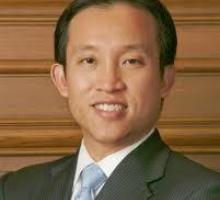
David Chiu

CEQA reform battle sparks welcome changes even before final compromise

32

UPDATED When Sup. Scott Wiener last year introduced legislation that would limit people’s ability to appeal development projects by reforming the California Environmental Quality Act’s local procedures, progressives and neighborhood activists rose up in strong opposition. But now, with that measure and a competing alternative up for approval by the Board of Supervisors tomorrow (Tues/16), there is a compromise in the offing that all sides may see as an improvement on the status quo, particularly given administrative changes that the Planning Department has made along the way.

“We made a series of amendments in April that addressed almost all the concerns raised by the neighborhood activists,” said Judson True, the top aide to Board President David Chiu, who has once again taken the lead role in crafting a compromise on controversial legislation

Final details of the deal are still being worked out, but sources on both sides say there is an agreement on the broad outlines of a true compromise. It would accomplish Wiener’s main goal of limiting the current ability of project opponents to file a CEQA appeal at any time while also improving the public notification process.

“It’s still pretty fluid now, but we’re working to get to a consensus measure, we hope,” True told us.

Wiener has always emphasized that his legislation applies only to relatively small projects, those that are “categorically exempt” under CEQA from having to do detailed environmental studies. And he said the compromises now being developed appear to meet his initial goals.

“I’m cautiously optimistic that it will be approved,” Wiener told us, adding that, “If this turns out to be a kumbaya moment, that will show the legislative process works.” [UPDATE: The compromise legislation was unanimously approved by the board.]

One byproduct of that process was recent changes on the Planning Department’s website that make it much easier for activists to track the status of projects — with a new map showing projects that have been granted CEQA exemptions that would move forward unless challenged — which activists requested during the Land Use Committee hearings on this legislation.

“We heard from members of the public that our existing posting process was cumbersome. It was also time-consuming for staff. We decided to revamp the system, using technology we’ve developed in recent years. By converting the checklist into electronic format and having it searchable by location, it’ll be easier for the public to search for a particular project and more efficient for staff to process,” Planning Department spokesperson Joanna Linsangan told us.

True said the hearings on the legislation have helped to illuminate problems that could be addressed administratively: “There’s been a real push from supervisors and the Planning Department itself to improve noticing.”

Eric Brooks, who has been working with the 42 groups that coalesced to oppose Wiener’s legislation — including environmentalists, neighborhood groups, labor, and historic preservationists — said ensuring proper noticing was half the battle. He gave credit to Sup. Jane Kim for resisting the Wiener legislation and working with activists to put forward a competing measure, sowing the seeds for the Chiu compromise.

“This was  a real community process and Jane Kim needs to be lauded for taking part in this,” Brooks said, although he later added, “Whatever happens with this, David Chiu owns it because he’s put himself in the middle of this.”

One key piece of the puzzle that might not be resolved tomorrow is with what has always been the biggest concern for activists, which is how the legislation limits appeals to a project’s initial approval. “We knew that it would be way too early and it cuts off our ability to negotiate with developers,” Brooks said.

For complicated legal reasons, it was difficult to build into this legislation a process for activists to challenge a project that changes after its initial approval, so Kim has introduced trailing legislation that would do so (which is set to be heard Wednesday by the Historic Preservation Commission and Thursday by the Planning Commission).

It would allow activists to appeal changes to a project that they find environmentally significant, even if city staff doesn’t (or, in planning parlance, to appeal the environmental review officer’s categorical exemption determination — to that same officer).

“If the environmental review officer has to suffer the hearing if she makes a bad call, she will make fewer bad calls,” Brooks said. “And if we don’t change the environmental review officers’ mind, we’ll be able to take it to court.”

A community-based coalition, a trio of supervisors and a very special mediator helped seal CPMC deal

The takeaway message from a July 11 press conference held in the Mayor’s office touting legislation authorizing California Pacific Medical Center’s construction of two new San Francisco hospitals was seemingly this: Everyone hearts Lou Giraudo.

A part owner of Boudin Bakery and former president of the San Francisco Police Commission, Giraudo was called in last year to help mediate a deal that seemed doomed when CPMC, city officials, and a coalition of labor and community organizations were unable to hash out an agreement that was acceptable to all sides.

Negotiations have been contentious over the past year due to early indications that CPMC would not guarantee that St. Luke’s, a health care facility relied upon by many low-income San Franciscans, would keep its doors open as a condition of moving forward with the new Cathedral Hill facility, a centerpiece of CPMC’s $2.5 billion project.

Enter Lou Giraudo, everybody’s favorite public servant who was, according to a not-so-subtle hint dropped by former Mayor Willie Brown in his San Francisco Chronicle column last year, “quietly brought in” by the mayor’s office to fix the half-baked mess that the CPMC deal had evidently devolved into.

“He’s often said he’s just a businessman. A baker, if you will,” Lee said during yesterday’s press conference. But Giraudo came to the table with the right “recipe” and the “main ingredients” for a successful deal, Lee added.

Sup. David Campos also sang Giraudo’s praises, saying, “I have yet to meet a finer public servant,” and calling Giraudo “a real hero of mine.” 

Giraudo himself told the Guardian that his strategy was “to de-politicize the process and get people to think about the community.”

Board President David Chiu, who worked closely with Sups. David Campos and Mark Farrell to negotiate with CPMC and other parties on behalf of the Board, went so far as to compare Giraudo to Batman. He even joked that he was going to shine a bat signal the next time a negotiator was needed, in hopes that Giraudo would save the day.

Presumably, when this happens, Giraudo will dust the flour off his apron after toiling away at some sourdough bread shaped like an alligator, duck into a Boudin Bakery bathroom to squeeze into a superhero costume, strap on his jet pack and take off for the gold-capped dome.

Giraudo may have provided the catalyst needed for a deal, but it was community advocates who ensured that the public at large benefitted from the CPMC plan more than they would have otherwise – since the mayor’s office seemed willing to go along with the health care giant’s original terms.

Long before Giraudo’s involvement, a coalition of labor and community organizations waged a campaign to rebuild CPMC “the right way,” holding strong on the issue of St. Lukes and refusing to agree to anything that would leave open the possibility that the hospital, a critically important facility for low-income patients, would be shuttered.

“That coalition has been working for quite some time … to save St. Lukes,” Campos said yesterday. The diverse coalition of community and labor leaders, who formed under the name San Franciscans for Healthcare, Housing, Jobs and Justice, commissioned studies on the need for health care services for low-income populations, studied housing and transportation impacts, and developed a broad base of support for a better deal than what was originally floated by the healthcare giant. “It kept working for many years,” Campos noted.

Under the terms of the agreement that was ultimately agreed upon, St. Luke’s will have a number of specified services to ensure it remains a full-service hospital, and CPMC will commit to providing services to 30,000 charity care patients and 5,400 Medi-Cal managed care patients per year. CPMC will also contribute $36.5 million to the city’s affordable housing fund, and it will pay $4.1 million to replace the homes it displaces on Cathedral Hill.

But wait, one last thing we’ve just learned about Giraudo: Did you know he also served as chairman at Pabst Brewing Company? The next time you get drunk off PBR while gorging yourself on sourdough baked into the shape of a teddy bear, or for that matter receive emergency medical care at St. Luke’s after an unsuccessful attempt at building a DIY jetpack, you’ll know who to thank.

Supreme Court same-sex marriage decisions: DOMA invalidated, Prop 8 case dismissed, SF reacts [UPDATED]

27

Watch this space throughout the day for breaking news on the decision and reactions. Tonight there will be a celebration of the Court’s decisions at Castro and Market Streets at 6:30pm. (Join  the Guardian beforehand, 6-9 at the Pilsner in the castro, at its annual pre-Pride event.) 

DOMA INVALIDATED

The Supreme Court released its ruling this morning that the Defense of Marriage Act, which denies federal recognition of same-sex marriage, “is unconstitutional as a deprivation of the equal liberty of persons that is protected by the Fifth Amendment.”

“DOMA singles out a class of persons deemed by a State entitled to recognition and protection to enhance their own liberty,” according to the majority opinion. “DOMA’s principal effect is to identify a subset of state sanctioned marriages and make them unequal.” The Court voted 5-4, with Justice Kennedy, who wrote the majority opinion, as the decisive vote along the usual liberal/conservative lines. You can read the full opinion here

This means that same-sex marriages performed in states that have legalized such marriages will be recognized by federal law.  

PROP 8 DISMISSED ON STANDING

As for Hollingsworth v. Perry, the Prop 8 case, it was dismissed on standing, due to the fact that the State of California refused to defend the case that would uphold Prop 8 (which denied same-sex marriage).That meant private citizens were left to defend a state statute, which was unprecedented, and the Court refused to rule on those grounds.

We have never before upheld the standing of a private party to defend the constitutionality of a state statute when state officials have chosen not to. We decline to do so for the first time here,” the majority Court statement (which broke along the typical 5-4 line) said. That means there is no specific decision from the Court regarding Prop 8, and the previous ruling, by Judge Vaughan Walker and upheld by the Ninth Circuit Court, that invalidated Prop 8 as discriminatory, stands.

This may mean that same-sex marriages in California can resume as early as July.

You can read the full Prop 8 ruling here.

Scene this morrning at SF City Hall, with Mayor Ed Lee and Lt. Gov. Newsom. Photo by Dan Bernal.

[UPDATE] REACTIONS AT CITY HALL

Steven T. Jones reports from SF City Hall:

City Hall was totally packed at 7am when the US Supreme Court convened — tons of journalists, lots of couples, many signs in the crowd. Two screens were set up, one with a live blog from court chamber, the other with the CNN live feed. Huge cheers erupted at 7:11 when the decision was announced striking down DOMA and forcing the federal government to recognize the rights of same-sex married couples.  Then at 7:38, when the Prop 8 statement came down, the room went nuts. 

A moment later, an array of current and former city officials appeared at the top of the City Hall main staircase. Mayor Ed Lee and Lt. Gov. Gavin Newsom escorted a fragile Phyllis Lyon down the stairs — she, along with the late Del Martin, were the first same-sex couple to get legally married in California in 2004 — flanked by the rest of the city family, all with big smiles.

“Welcome to the people’s house of San Francisco,” Mayor Lee said, thanking the crowd “for sharing in this historic moment.”

“It feels good to have love triumph over ignorance,” he said.

At 7:44, City Attorney Dennis Herrera and Chief Deputy City Attorney Terry Stewart, who had been on the City Hall steps addressed reporters’ question on the legal details of the ruling, joined the crew to sustained applause as Lee recognized them. He then introduced Newsom, who in 2004 as San Francisco mayor allowed same-sex marriages to be performed, as “one person who used the power of this office to make history and show his love for the city.”

“San Francisco is not a city of dreamers, but a city of doers,” Newsom said. “Here we don’t just tolerate diversity, we celebrate our diversity.” He thanked Herrera and everyone who contributed to this moment. “It’s people with a true commitment to equality that brought us here.”

Newsom introduced Kate Kendall with the National Center for Lesbian Rights, who has led the coalition of groups that have push for marriage equality. She looked around the crowd and said, “Fuck you, Prop 8!”

The crowd roared, and she said that she had scanned the room for children, and promised to “put a dollar in the swear jar” if necessary. But she said that, “We have lived for too many years under that stigmatizing piece of crap.”

Then Herrera took the podium, turned to Newsom, and said, Now you can say, ‘Whether you like it or not!'” — a joking reference to Newsom’s same-sex marriage rallying cry, which some blamed for boosting the anti-same-sex marriage cause.

“We wouldn’t be here today if it wasn’t for Gavin Newsom’s leadership,” Herrera continued. ““I remember in 2004 when people were saying it was too fast, too soon, too much.”

But today, that long effort has been vindicated, Now, he said, “It’s about changing the hearts and minds of people and educating them.” He also pledged to continue the fight that began here in City Hall more than nine years ago: “We will not rest until we have marriage equality throughout this country.”

Gavin Newsom being interviewed inside City Hall. Photo by Steve Jones

Finally Stewart, who has argued cases related to San Francisco’s stand before both the US and California Supreme Courts, praised both the Prop. 8 and DOMA rulings and the precedents they set. “In the DOMA case decision, the Supreme Court expressed a stong equal protection philosophy…that will help legalize same sex marriage in other states.”

Three members of the Board of Supervisors were also invited by Kendell to address the huge City Hall crowd: Board President David Chiu and Sups. David Campos and Scott Wiener, the only two current supervisors who are gay.

Chiu noted that the bust of slain Sup. Harvey Milk is prominently positioned outside the Board Chambers, a reminder of the long struggle for gay rights that San Franciscans have led. “That work lives on today,” he said.

He added the hope that the work done here will ripple out of across the country because, he said, “As goes San Francisco, so goes California, so goes the rest of the country.”

Campos, an attorney who has long been in a committed relationship, said, “It’s a very emotional moment for those of us who are part of the LGBT community.” He said this Supreme Court ruling is the first time it has really acknowledged “that we are people and we have dignity,” and that the rulings sends a clear message to Congress that legislation like DOMA is unconstitionally discriminatory.

Wiener praised the resilience of the LGBT community, from the early days of enduring the AIDS crisis and fighting for federal support through the current campaign for marriage equality. And he cheered the fact that, “Those marriages that we see under the rotunda [in City Hall] will get a little more diverse.”

11:30 AM UPDATE: Style and substance

While Newsom strutted around like a proud peacock in front of City Hall — clearly the leading man in this epic story with the happy ending, much in demand by the television crews — Herrera and Stewart briefed various reporters on the details of the case that they had just won.

Gavin Newsom outside City Hall. Photo by Steve Jones.

“I wanted a merits ruling, but a standing ruling is a victory too,” Herrera told us, making the distinction between the court ruling that banning same-sex marriage is unconstitutional on the grounds of equal protection under the law — which it did not do — and the 5-4 ruling it did issue: that those who appealed the Ninth Circuit Court ruling invalidating Prop. 8 lack proper legal standing to do so.

The standing ruling leaves same-sex marriage opponents more wiggle room to argue that the ruling might only apply to the couples named in the suit, or in just the counties that took part, which also included Alameda and Los Angeles, positions they were already signaling in press statements.

But Herrera said that he would vigorously contest that kind of challenge, which he considers to be without merit, telling us, “The injunction is not limited in its scope.”

UPDATE: SFPD isn’t worried

Police Chief Greg Suhr, who attended the City Hall event, said the timing on the ruling during Pride Week couldn’t be better. “It’s nice that it all lined up for us,” he told us. “This town is going to rock ‘til the wheels come off.”

Asked whether he has any heightened security concerns about the Pride Parade in the wake of a ruling that is controversial to some, Suhr said that he’s not worried. He said SFPD is now fully staffed and all available personnel working this weekend, although he will try allow many of his gay and lesbian officers to join the celebration if they want.

“We’re going to police what’s likely to be the biggest party this city has ever seen,” Suhr said, adding that his policing philosophy is, “We plan for the worst and hope for the best.”


Everyone but Mayor Lee sees SF’s worsening “housing affordability crisis”

43

There was a clear theme that ran through yesterday’s Board of Supervisors meeting from beginning to end, something understood equally by renters, homeowners, and politicians from across the political spectrum: San Francisco has a crisis of housing affordability that is forcing people from the city.

And the only person who doesn’t seem to understand or care about that is the person with the most power to deal with the situation, Mayor Ed Lee, who opened the meeting by essentially dismissing both short- and long-term gentrification forces and claiming “our city has some of the toughest anti-displacement laws in the country.”

It was a claim that Lee made twice, first in response to a question by Sup. Eric Mar about Plan Bay Area and the massive displacement of current San Franciscans that it would create by 2040. And it was also how he answered a question by Sup. John Avalos about rents that are now skyrocketing beyond what most San Franciscans can afford.

I followed Mayor Lee back to his office, asking him to explain his claim, and he cited the city’s “elaborate” rent control laws and the Rent Board recently hiring new personnel as he briskly retreated toward his office. But surely he’s aware that displacement is already happening and getting worse, I told him, citing Rent Board figures showing that evictions are now at a 12-year high.

Lee looked at me dubiously and said, “I’ll have to check the figures on that.” I followed up today with Press Secretary Christine Falvey to ask whether Lee did check those figures — which show 1,757 evictions in the last year, up from 1,395 the previous, both numbers representing returns to the mass displacement of the last dot-com boom — and I’ll update this post if/when I hear back.

“It shows he’s out of touch with what’s happening in San Francisco,” Avalos told me in response to the mayor’s remarks.

Lee seemed to bristle at the suggestion that his aggressive economic development policies might have a downside that he’s going to have to deal with at some point. He touts the 44,000 jobs the city has added during his mayoral tenure, even deflecting criticism that he’s too focused on the technology industry by citing estimates that every tech job creates at least four other jobs (seemingly oblivious to the fact that most of these are low-wage service sector jobs, the very people who are being forced from the city).

“I’m just hoping you’re not blaming the 44,000 jobs we helped created,” Lee told Avalos, saying that he understands the concern about the rising cost of living, “but those are 44,000 people drawing a paycheck and taking care of their families.”

Yes, Mr. Mayor, but those paychecks are having an increasingly tough time paying for housing in San Francisco. That concern animated the condo conversion debate that took place later in the meeting, voiced by those focused on the lack of affordable homeownership opportunities and those focused on reducing the city’s rental stock to create those opportunities.

“I don’t think saying ‘it’s good that we have a growing economy’ is enough to address the issue,” Sup. David Campos said during the condo debate, referring to Lee’s earlier remarks.

Speaking near the end that discussion, Campos summarized the concerns expressed by both sides and sought to put the legislation into perspective: while important, the condo deal is a drop in the anti-displacement bucket. “We are only dealing with the issue of affordability in San Francisco on the margins,” he said, later adding, “I don’t think we’re doing enough to deal with the fundamental issue of who gets to live in San Francisco.”

The debate on the condo conversion began with its original author — Sup. Mark Farrell, who represents District 2, the wealthiest and most conservative in the city — explaining his desire to help middle class people who want to own homes remain in the San Francisco.

“This is the most affordable form of home ownership in San Francisco today,” Farrell said of tenancies-in-common, the fiscally and legally precarious middle step between an apartment and condominium. Later, he said, “We need more affordable homeownership opportunities and not less.”

Farrell argued that “this didn’t need to be a zero sum game,” but that’s exactly what the stock of rent-controlled apartments is in San Francisco, where only housing built before 1979 is protected from the market forces that can drive rents up to whatever a landlord demands.

“We have a fixed rent control stock. Every apartment that converts to a a condo is one less unit,” said Board President David Chiu, who worked with Sups. Jane Kim and Norman Yee and tenant group to amend Farrell’s legislation to help both renters and homeowners.  

“These units were once the homes of tenants who were displaced,” Kim said, objecting to the notion that one person’s apartment should be another person’s affordable homeownership opportunity and arguing that the city should be building more condos for first-time homebuyers instead of cannabalizing the homes of the nearly two-thirds of city residents who rent.

Like Chiu and Kim, Yee said that he wanted to help the TIC owners of today without simply clearing out of the backlog and letting the condo lottery continue unabated, which would green-light even more conversion of apartments. “We want to curb the speculation,” Yee said.

That idea that the city should help people who live in the city, without simply feeding the speculative investors who profiteer off of housing in San Francisco, was a strong theme among critics of condo conversion.

A pro-tenant crowd packed the Board Chambers. Although barred by board rules from addressing the condo legislation directly (that occurred at the committee level), one commenter said, “Giving any more power to the real estate market in San Francisco should be considered a crime.”

To help ward off real estate speculators once the annual condo conversion lottery resumes in 2024, the legisation also limited future conversions to buildings of less than four units, instead of the current cap of six units, a change that Farrell resisted.

“This is not an academic exercise anymore,” Farrell said of the condo conversion restrictions that were added to the legislation. “This will negatively impact thousands of TIC owners in the city.”

Farrell’s original co-sponsor, Sup. Scott Wiener, had a more pro-tenant point-of-view, objecting to the changes that Chiu inserted on more narrow grounds. In his comments, he noted how close the two sides were and how they share the same basic goal: preventing displacement of current city residents.  

“The one thing we can all agree with is we have a housing affordability crisis,” Wiener said, praising the city’s rent control and tenant protection laws, but adding, “TIC owners are also part of this city.”

The price of dealing with the rapid growth in the city — whether it comes to infrastructure or housing affordability — was also a point that Wiener made earlier in the meeting as the board approved the term sheet for a massive office and residential development project proposed at Pier 70.

“We are not doing what we need to do to support the public transportation needed for those projects,” Wiener said, also referring to other projects along the waterfront (the Warrior Arena at Pier 30 and the Giants/Anchor Steam project at Pier 46) and in the southeastern part of the city. “We don’t have the transit infrastructure to support our current population, let alone new growth.”

It’s about striking a balance, as Chiu said he did with the condo legislation, and not just a balance between renters and TIC owners. It’s about striking a balance between how to protect the San Francisco of today while planning for the San Francisco of tomorrow.

Yes, that means working with market rate housing developers, and it also means diverting some of their would-be profits into the city’s affordable housing fund and its infrastructure needs. Yes, it means private-sector job creation, but it also means more public sector jobs and providing a safety net for people without jobs or who work as artists or social workers or other professions that are being driven from the city. And it means beefing up our public housing and turning around the exodus of African-Americans, concerns raised at the meeting by Sup. Malia Cohen.

We at the Guardian last year looked at how Oakland has become cooler than San Francisco, largely because of the displacement from here. And now, even many people within the tech community have begun to decry the gentrifiction that is being driven by Mayor Lee’s narrow economic development vision.

“Plan Bay Area is an opportunity to think regionally and strategically about planned growth,” Lee said when addressing Mar’s question, sidestepping the direct answer that Mar sought on a set of specific proposals for mitigating some of the displacement planned for San Francisco and maintaining this city’s diversity.

Yes, we do have an opportunity to think strategically about the city we’re becoming and who gets to live in it, but only if we don’t think “jobs” is the answer to every question.

David Chiu’s flextime

36

I’m not surprised that the folks at the Chamber of Commerce are all agitated about Sup. David Chiu’s proposal to expand family-friendly scheduling at local businesses. The Chamber’s Jim Lazarus is typically out of control:

“At some point, people are not going to want to create businesses in San Francisco when they have to go up to City Hall for a hearing every time an employee doesn’t like their reason for not agreeing to a shorter workweek,” Lazarus said. “Are we going to close for the month of August like France? Is that the next one?”

For the record, I’m all in favor of the French way of thinking about work. But you already know that.

Here’s the crazy thing, though: The Chiu legislation is actually remarkably mild. All it says is that a worker at a company with more than 10 employees has the right to request a different work schedule. The word here is “request.” The company can deny the request if would “create an undue hardship for the company or organization, including an increase in costs or a detrimental effect on the ability to meet customer or client demands.”

Folks: That’s a huge, broad exemption. If giving an employee the right to work at home sometimes (actually, a good idea for lots of reasons, including climate change) or the right to start or end a shift early or late, costs any money or causes any real disruption in the business, then management is exempt and can deny the request.

All the law would really do is elevate the idea of flextime to something that has to be considered if someone asks for it. And you can’t be fired for asking.

If the Chamber is going to go ballistic about this, it’s way out of step. A lot of businesses in the city already comply with at least the spirit of the Chiu law. I don’t see this as a huge issue for anyone.

Supervisors approve condo legislation with veto-proof majority

64

The San Francisco Board of Supervisors today voted to approve compromise legislation that will allow more than 2,000 tenancy-in-common homeowners to convert to condominiums in exchange for a 10-year moratorium on the city’s current condo conversion lottery that now allows 200 conversions annually.

Approved by a veto-proof 8-3 majority after some last amendments were shot down by the six supervisors who most steadfastly supported the version that Board President David Chiu took the lead on crafting, this was a big victory for tenant groups who strongly opposed the original legislation, which did not include the moratorium and other restrictions.

“It’s great. We’re going to see a significant drop in condo conversions in the future. All of us tenants are very happy,” San Francisco Tenants Union head Ted Gullicksen told us after the hearing, which was packed with tenant supporters.

Sup. Mark Farrell, who sponsored the original legislation, decried how divisive the issue had become, criticized the approved version as deviating from his original intent of helping TIC owners in exchange for a fee that would help fund new affordable housing, and said, “This doesn’t need to be a zero sum game.”

But Chiu and the five supervisors who supported his version – Jane Kim, Norman Yee, David Campos John Avalos, and Eric Mar – noted the finite number of rent-controlled apartments in the city and the need to protect them from being converted into condos.

“How do we balance the needs of tenants who fear being evicted with TIC owners looking for relief?” Chiu said of the balance he aimed to strike, which he continued to tweak with new amendments today, including allowing TICs with all owner-occupied units to move forward if the legislation is challenged in court, an event that would otherwise freeze all condo conversions until the lawsuit is resolved.

Sup. London Breed wanted even greater flexibility in that so-called “poison pill” aspect of the legislation, which tenant groups had insisted on to prevent the bypass from going through even if the moratorium was challenged. Breed proposed allowing condo conversion applications to proceed for a year after a lawsuit was filed, but Chiu said that would let TIC owners convert to condos while challenging other aspects of the legislation, such as the lifetime leases for tenants in converted buildings.

Breed and Sup. Malia Cohen, who privately and rather grimly conferred with one another and sometimes Chiu before the item began a little after 4pm, were clearly the two swing votes on the question of whether the legislation would reach the crucial eight-vote threshold needed to override a possible mayoral veto. Mayor Ed Lee has refused to take a position on the issue, leaving both sides in the dark.

But after the motion to insert Breed’s amendments failed on a 5-6 vote, the board voted 8-3 to approve Chiu’s version of the legislation, with Sups. Farrell, Scott Wiener, and Katy Tang opposed. A subsequent vote on a version of the legislation backed by Farrell and Wiener – which contained a weaker poison pill and more flexible owner-occupancy provisions – then failed on a 4-7 vote, with Breed joining the three dissenting supervisors.

Underscoring this legislation was what some supervisors called a “housing affordability crisis” in San Francisco, an issue that Mayor Lee was asked about at the start of the meeting, which he deflected by claiming “our city has some of the toughest anti-displacement laws in the nation.”

We’ll analyze that discussion and offer more details on the condo conversion debate and the politics behind it tomorrow in the space, so check back then.      

Supervisors pose tough but important questions to Mayor Lee

6

There’s a full agenda at the San Francisco Board of Supervisors meeting today, from the condo conversion lottery bypass legislation to approval of the term sheet from the massive development project at Pier 70, but some of the most interesting and potentially newsworthy items are at the very beginning of the agenda, when Mayor Ed Lee will answer questions posed by the supervisors.

Unfortunately, if past is prologue, Lee won’t give direct, substantive answers to the vitally important questions that he’s being asked, just as he dodged a question on the condo conversion debate in February and has kept everyone in the dark of which of the rival measures he supports and which he may veto. Mayoral leadership was desperately needed on that protracted debate, just as it’s needed today on some of the questions he’s being asked.

The first question, posed by Sup. Eric Mar, concerns Plan Bay Area and how it plans to pack 280,000 more people into San Francisco by 2040, which was the subject of a May 28 Bay Guardian cover story and panel dicussion that we’re sponsoring at the LGBT Center tomorrow night.

Mar lays out the massive displacement of existing residents and the traffic gridlock that the plan will create in San Francisco and how the approval process from much of this streamlined development may be given waivers from California Environmental Quality Act review.

Mar notes more than 40 regional groups have come together to try to improve the plan and mitigate its damage, and he plans to ask Lee:

“A consensus has formed around the following recommendations for making Plan Bay Area better:

– Provide $3 billion in additional operating revenue for local transit service and commit to a long-range ‘Regional Transit Operating Program’ to boost transit operating subsidies by another $9 billion over the coming years.

– Move 5 percent of the housing growth from low-income communities (mainly San Francisco, Oakland, and San Jose) to transit-connected suburban job centers.

– Incorporate strong anti-displacement policies for community stabilization measures, such as land banking and preservation of affordable housing in at-risk neighborhoods.

– Director the Planning Department to analyze the impacts of potential CEQA streamling as soon as possible and create strong mitigation measures.

Do you support these measure, and are you committed to a plan with lower displacement level than the current proposal? If you do not support these ideas, why not?”

Excellent  question, and definitely an appropriate one for our chief executive officer, who would have more clout to push for these changes than any of the supervisors.

The second question comes from Board President David Chiu, who makes news by noting that Mayor Lee has continued his predecessor’s underhanded practice of refusing to fill city positions to provide services that the supervisors have decided to fund in the budget, undermining the city’s balance of power and Lee’s rhetoric on collaboration.

“In recent months, Controller data indicates that positions allocated by the Board for librarians, recreation and park staff, building inspection, health and labor enforcement, urban agriculture and other Board priorities were either not filled or only recently hired. Will you commit to ensuring that when the FY 13-14 budget is approved, our Board of Supervisors’ priorities are treated equally to your Administration’s, with positions filled as soon as possible?”

Again, great question about an important current issue, the kind of thing that voters created this question time for, to ensure that there was communication and collaboration between these two branches of government.

The last two questions concern San Francisco’s housing crisis. Sup. David Campos cites the scatching report that he commissioned from the Budget and Legislative Analyst on the dysfunctional and mordibund Housing Authority, which Lee controls, asking “what is your long term vision to save public housing — a significant public asset to San Francisco?”

Sup. John Avalos cites data on the skyrocketing rents in San Francisco and asks, “Are you concerned that your administration’s policies to stimulate economic activity, especially supporting the tech industry, have created one-sided development and only job for high-income ‘appsters,’ and have exacerbated the already extremely limited housing market? Do you have any plans to address the increasing rents, and increasing rate of evictions and displacement of long-time San Francisco renters?”

These are tough questions, but they are central to what kind of city San Francisco is becoming. They were all submitted last week, so the mayor has had time to think about them and he should provide answers and show leadership on these difficult issues. That is his job.

Will he? Check back later and I’ll let you know. The meeting starts at 2pm.

Rival condo conversion measures finally up for board vote

58

Controversial condominium conversion lottery bypass legislation is finally headed for a vote by the full Board of Supervisors this Tuesday. Befitting legislation that has stirred strong emotions and traveled a twisting political path over the last six months, there are new dramas and uncertainties cropping up at the last minute, including the lingering unknown of where Mayor Ed Lee stands.

Originally co-sponsored by Sups. Mark Farrell and Scott Wiener, the legislation was intended to allow 2,000-plus tenancy-in-common owners to buy their way past the city’s lottery that allows 200 conversions to condominiums each year. But tenant groups and their progressive allies strenuously opposed the idea, and it was amended by Sups. David Chiu, Jane Kim, and Norman Yee working with tenants to couple the bypass with a 10-year moratorium on new conversions, thus clearing the backlog without opening the door to speculators taking more rent-controlled apartments off the market.

The Land Use Committee voted June 3 (2-1, with Chiu and Kim voting yes and Wiener opposed) to send the tenant-supported legislation to the full board and keep a Wiener-backed rival measure stuck in committee. But since then, Wiener invoked a board rule allowing four supervisors to pull the stalled legislation out of committee, getting Farrell and Sups. Katy Teng and London Breed to place that rival measure on Tuesday’s agenda as well.

Tenant groups decried the move and have put out the call for supporters to flood City Hall for the 2pm meeting, but Wiener told us that the differences in the two pieces of legislation are minor. One difference deals with whether transfers of ownership interest will affect an applicant’s spot in the queue and the other involves the so-called poison pill inserted by tenant groups, which would freeze the conversion process if anyone challenges the legislation in court, as real estate interests have threatened to do.

Wiener said the tenant-backed legislation’s changes to condo conversion eligibility, such as a 10-year wait period and banning future conversions of buildings with more than five units, that would remain in place after a successful legal challenge is an unfair overreach. But Chiu said tenant groups have already compromised as much as they can and they need this protection: “This is a carefully constructed compromise, and for the first time tenants groups are supporting thousands of condo conversions.”

Breed’s concerns about the poison pill provision — which was why she said she went along with Wiener’s play to bring up the rival measure — go even beyond Wiener’s. While most concerns involved a lawsuit from real estate interests, Breed worries about a pro-tenant litigant who wants to stop all condo conversions.

“If anyone chose to sue, it would help renters by shutting down everything completely. Where is the incentive not to sue?” Breed told us, noting that she still doesn’t have a solution to the problem, but she wanted the leverage of rival measures in order to address the issue. “I’m hoping it’s a win-win for renters and TIC owners,” she said. “Everyone else is not my concern right now.”

But the real estate interests will almost certainly try to preserve an ability for speculators to continue funneling more rent-controlled apartments into the real estate market, and just yesterday, the San Francisco Association of Realtors announced the hiring of an influential new point person on lobbying and housing issues: Mary Jung, a former spokesperson for then-Mayor Gavin Newsom before moving over to represent PG&E, and who was last year elected chair of the Democratic County Central Committee.

That could make a difference when it comes to Mayor Lee, who has resisted efforts by both sides to weigh in on the issue, saying only that he supports both tenants and TIC owners and that he understands the concerns about opening the door to a flood of new conversion requests.

“The one wild card here is no one know where the mayor is,” Wiener told us, noting that neither side is likely to get the eight votes that would be needed to override a veto. “The mayor, if he wanted to, could have significant leverage in crafting a compromise.”
Chiu said that he’s confident that his version of the legislation has the six votes needed to pass, but that it is still unclear what Mayor Lee will support, despite Chiu asking Lee to weigh in publicly in February and privately during a meeting yesterday. As Chiu told us, “We’ll see.”

No security

3

rebeccab@sfbg.com

To qualify for his job as a security officer, Jerry Longoria had to obtain a license, undergo a background check, and take a drug test. He’s required to wear a suit to work. He’s stationed at a downtown San Francisco high rise that houses Deloitte, a multinational consulting, finance, and real-estate firm that reported $31.3 billion in revenues last year. His employer is Universal Protection Services, a nationwide security contractor with a slick online marketing pitch emphasizing that all guards are “electronically supervised around the clock,” and “kept accountable on the job through our 24-hour command center.”

If an intruder showed up at his office building brandishing a firearm, it would be Longoria’s problem; that’s the job. Nevertheless, he says he doesn’t earn enough to cover rent for an apartment in San Francisco. Instead, he stays in a single room occupancy hotel near Sixth and Mission streets, an area known for a high rate of violent crime. Walking home still wearing the suit makes him stand out on the street.

He’s lived in the 150-unit building, which has shared bathrooms and a shared basement-level kitchen, for 11 years. “It’s affordable for me, and it allows me to be closer to work,” he explains. He can’t afford a car, and says a public transit delay could prove disastrous if he relocated outside the city. “If you’re late to your post, you get fired.”

At press time, about 7,000 security officers throughout the Bay Area and Los Angeles were gearing up for a strike that could begin any day. Members of United Service Workers West, affiliated with Service Employees International Union, authorized their bargaining committee to call for the work stoppage because officers have been without a contract since the end of 2012.

The starting wage for a security officer is $14 an hour in the city, which comes to slightly more than $29,000 a year before taxes. In some places that would be sufficient to meet basic needs. In San Francisco, where the median market rate on rental units recently peaked above $3,000 a month, it doesn’t go very far. “With the cost of living here in San Francisco, $14 an hour is simply not enough to make ends meet,” Kevin O’Donnell, a USWW spokesperson, told us.

The security officers’ threats to strike coincided with a second worker action in the Bay Area last week. Despite lacking any form of union representation, Walmart associates from stores in Richmond, Fremont, and San Leandro affiliated with the nationwide organization OUR Walmart joined 100 employees from across the country in walking off the job and caravanning to Bentonville, Arkansas to raise awareness about their poverty-level wages and insufficient benefits at Walmart’s annual shareholders’ meeting. But first, they paid a visit to the Four Seasons in downtown San Francisco, which houses the 38th floor penthouse apartment of Yahoo CEO Marissa Mayer, a Walmart director.

Despite seeking full-time working opportunities and staying with the company for years, a handful of associates we interviewed said they can’t earn enough at Walmart to cover basic needs, so they rely on government assistance or help from extended family to make ends meet. Some said they had witnessed their coworkers get fired after participating in OUR Walmart activities.

Walmart associates in the Bay Area are in a considerably more precarious situation than the security officers, earning lower hourly wages. But in the pricey Bay Area, security officers, Walmart employees, and scores of other low-wage private sector workers all share something in common. Despite reporting to work every day and working long hours in many cases, they’re forced into impoverished conditions due to economic circumstances, while a middle-class existence remains far out of reach.

FIGHTING FOR STABILITY

ABM Security and Universal Protection Services are the largest employers in the private security contractor industry; in the Bay Area, the majority of guards are stationed at office buildings in downtown San Francisco. On May 30, Supervisors John Avalos, David Campos, David Chiu, Jane Kim and Scott Wiener all voiced support for the guards at a rally outside City Hall. “Better working conditions for security officers mean more stable, family-supporting jobs, less turnover, and more ability to handle challenges at work,” Avalos said.

Matt Roberts has been working as a security officer for years, and originally moved into his unit in a San Francisco SRO in a financial pinch. “I figured, I’ll get out of this rut eventually. And here I am, seven years later, still paying $1,000 a month for a space that’s really not much bigger than a walk-in closet,” he told us. Roberts was terminated recently, and believes it’s because he spoke up to his site director about workplace issues his fellow guards felt needed to be addressed.

In Roberts’ view, the situation he’s found himself in is reflective of the broader erosion of the middle class, which is particularly acute in an area with a soaring cost of living. He was born and raised in San Francisco’s Crocker Amazon district, with a father who worked as a firefighter and a mother who worked as a clerk typist at the Cow Palace.

“They were able to achieve the American dream,” he said. “They had a house, they paid their mortgage off in 25 years, they were able to send me and all my three siblings to good schools. I realized when I was still in my 20s that I’m probably going to be a renter the rest of my life. The American dream is totally eclipsing my generation.”

Keven Adams, a security officer of 23 years who lives in Oakland, also attended the City Hall rally on May 30. “We’re fighting for wages, health care, and stability in the workplace,” Adams said. “We’re in a city we love so very much, but the community and the middle class is shrinking.” Adams said he was once held at gunpoint for four hours during a work shift. He’d love to live in San Francisco, he said, but can’t afford it.

According to a June 3 media advisory, unions throughout the Bay Area were preparing to demonstrate support for the security officers as they geared up to strike. “The support could come in the form of workers attending rallies, non-violent civil disobedience or perhaps even non-security workers refusing to cross picket lines,” according to USWW, “and walking off their own jobs in solidarity.”

‘STAND UP, LIVE BETTER’

Among the small group of protesters who had assembled on the sidewalk far below Mayer’s San Francisco penthouse on May 29 were associates who had taken the drastic and unusual step of going on strike from Walmart — the nation’s largest private employer. Clad in bright green shirts and waving signs, they chanted, “stand up, live better,” a play on Walmart’s slogan, and also, “What do we want? Respect.”

Dominic Ware, who works part-time at a Walmart in San Leandro, led chants and sounded off on a megaphone about the need for greater respect in the workplace. Ware, who’s been involved with OUR Walmart activities on a national level, said he earns $8.65 an hour and stays with his grandmother, since his paycheck isn’t enough to cover rent. He estimated that roughly half his earnings go directly back to Wal-Mart, where he purchases groceries and other basic items. Asked what motivated him to strike, Ware mentioned his daughter, who turned eight on June 1. “What if she has to work there some day?”

He added that some elderly colleagues were experiencing problems such as being unable to get a shift changed so as to catch a bus home at the end of the night. Another one of his coworkers was let go after it became clear to management that he was participating in OUR Walmart activities, Ware said.

While only a tiny fraction of Walmart’s 1.4 million workers took action to strike, their campaign appears to resonate in high places. A report recently released by the Democratic staff of the U.S. House Committee on Education and the Workforce seized on Walmart’s low wages, emphasizing that so many of its workers are forced to turn to government assistance that it is resulting in a collective drag on taxpayers.

“Rising income inequality and wage stagnation threaten the future of America’s middle class,” the report notes. “While corporate profits break records, the share of national income going to workers’ wages has reached record lows. Walmart plays a leading role in this story. Its business model has long relied upon strictly controlled labor costs: low wages, inconsiderable benefits and aggressive avoidance of collective bargaining with its employees. As the largest private-sector employer in the U.S., Wal-Mart’s business model exerts considerable downward pressure on wages throughout the retail sector and the broader economy.”

Democrats reject 8 Washington

51

The San Francisco Democratic Party has voted to oppose the 8 Washington project and to endorse the ballot measure that would halt it.

By a 15-4 margin, the Democratic County Central Commitee, which makes policy for the local party, endorsed a No vote on the fall referendum that would negate the height limit increase developer Simon Snellgrove says he needs to build the ultra-luxury condos. The units would be the most expensive in San Francisco history.

The supervisors approved the height limit last fall. The referendum puts the issue directly before the voters, and foes of the project need a “no” vote to reject it.

“This was a huge victory,” Jon Golinger, who is running the campaign against the condos, told me. “The Democratic Party is a huge endorsement in San Francisco.”

That’s particularly true in a low-turnout election — and since there aren’t any high-profile races on this November’s ballot, I would guess only the most serious voters will make it to the polls.

The Sierra Club — another group that carries a lot of clout — has already come out against the project.

Snellgrove’s forces first tried to delay the vote until late summer, arguing that the committee needed more time to get all the facts. But Sup. David Chiu, a DCCC member, noted that this project has been discussed and analyzed and fought over for so long already that there’s nothing new anyone could possibly learn by delaying.

The motion to delay failed. Only Bevan Dufty, Sup. Scott Wiener, Sup. Malia Cohen and Kat Anderson voted in favor of the project. Voting against were Bill Fazio, Trevor McNeil, Kelly Dwyer, Leah Pimentel, Hene Kelly, Alix Rosenthal, Carole Migden, Rafael Mandelman, Matt Dorsey, Petra DeJesus, Assemblymember Tom Ammiano, State Senator Leland Yee, Chiu, Sup. David Campos, and Sup. John Avalos.


Airbnb is still snubbing SF, even after a NY judge rules it illegal there

39

Now that a judge in New York has ruled that Airbnb is illegal there, a model that violates city tenant laws and state law, that should put pressure on the San Francisco-based company to finally stop snubbing cities and find a way to exist within local regulatory frameworks and finally start paying its taxes.   

It was good to hear KQED’s Forum discuss Airbnb this morning – it was getting lonely as the only local reporter highlighting the company’s open defiance of San Francisco’s ruling that it should be paying the city’s Transient Occupancy Tax, just like hotels – and to finally question an Airbnb executive on an issue the company has been refusing to address publicly (yes, they still aren’t returning my calls).

But the answer that David Hantman, Airbnb’s global head of public policy, gave this morning was pretty astounding in its hypocritical arrogance. He acknowledged the tax ruling by San Francisco and the company’s lack of compliance, and said the company was waiting for clarification on the various issues related to the questions of the legality of some of the short-term rentals it facilitates before paying its taxes.

In other words, this company is making tens of millions of dollars annually in San Francisco alone on a business model that it developed – one that often runs afoul of local land use and tenant laws, and in violation of people’s leases – and it’s up to city officials to find a solution to this company’s problems before it will pay taxes?!?

To his credit, Board of Supervisors President David Chiu has been trying to do just that for months, slogging through a number of complex and difficult issues that arise from this business model, and he has been clear throughout that Airbnb should be paying its taxes to the city, which it isn’t.

“It’s reasonable to ask people who benefit from the economic transactions we’re talking about to pay their fair share,” Chiu reiterated on Forum, citing the cost to the city of serving the 16 million tourists who visit the city each year.

Coincidentally, there’s a German television crew from ARD (Germany’s equivilent of the BBC) in San Francisco this week doing a story on Airbnb and the shareable economy, interviewing me about my coverage of the company, as well as others, including Airbnb co-founder Nathan Blecharczyk.

The ARD reporter told me this afternoon that Blecharczyk was animated and expansive when discussing how wonderful his company is and how it’s changing the world, but he became terse and unresponsive when she raised the issue of local taxes and regulations.

As I said on camera today, Airbnb and other shareable economy companies are cool, I’ve used them myself, and they’re certainly here to stay. But I just don’t understand their unwillingness to be good corporate citizens and to pay the taxes they owe to support the city services that their customers use.

Chiu has clearly said that Airbnb should pay the TOT — which my reporting has shown would bring $1.8 million annually into city coffers — and that paying its taxes will be a part of the regulatory package he’s working on. But sources have also told me that negotiations have been hard slog, largely because of Airbnb’s unwillingness to play by the rules and because of the unqualified support the company has from Mayor Ed Lee, whose main political fundraiser, Ron Conway, is also a major investor in Airbnb.

Hopefully the New York ruling and growing media scrutiny will prompt the young executives at Airbnb to finally become good faith partners in a city that has been so good to them — a city whose leaders seem anxious to return the favor and legalize Airbnb’s operations in San Francisco.


Supes worry about 8 Wash shit show

48

The Chronicle seems to have entirely missed the latest installation in the 8 Washington shit show, but the Ex has the story, and, even if it doesn’t mean the project is in the toilet, it’s given opponents another reason to flush it.

Could I possibly use any worse metaphors?

Sups. David Campos and David Chiu are unhappy that city agencies — possibly fast-tracking a project that the mayor’s pal Rose Pak really loves — may not have been fully forthcoming about the fact that there’s a chance the construction (or the shifting of ground after the project is complete) could crack a sewage line that serves about a quarter of the city.

Here’s what makes me nervous:

During construction, liability to pay for damage after a pipe rupture would be on the developer. Simon Snellgrove of the Pacific Waterfront Partners has long fought to build the 134-unit condo development, even hitting the streets himself to try to hamper the signature-gathering effort by the development’s opponents to place the referendum on the November ballot.
Once all the units are sold, damage liability would shift to the homeowners.

What does that mean? It means if there’s a catastrophic sewage rupture after construction is complete, there will be lawsuits aplenty over who is at fault and who pays — and in the meantime, the taxpayers will fork over the money to keep the effluvium out of the streets. Which could be (I’m sorry, can’t help it) a shitload of money.

That, and the fact that the city is willing to let some very serious concerns slide in the name of building condos for the richest of the rich who won’t even really live here most of the time.

More SF restaurants settle with the city over fraudulent employee health surcharges

12

City Attorney Dennis Herrera today announced another batch of settlements with restaurants that have been fraudulently using surcharges on customers’ bills to cover their city-required employee health coverage and using some of that money to simply pad their profits.

Seventeen San Francisco restaurants that took advantage of Herrera’s partial amnesty offer — settlements are half of what the violators should owe, based on voluntarily submitting records by last month’s deadline — will be paying tens of thousands of dollars each to the employees’ they ostensibly collected the money for, joining two other restaurants that had settled with the city earlier this year.

Among this latest batch of restaurants is Burgermeister, whose $134,088 settlement is the largest of this group; and Burma Superstar, whose $10,045 is the smallest. Other restaurants paying up as part of the settlement are 5A5 Steak Lounge, Amber India, B Star, Bix, Cafe Bellini, Calibri Mexican Bistro, Citizen’s Band, Cafe Flore, Fresca, MarketBar, Nob Hill Café, Press Club, Skool, Tony’s Pizza Napoletana, and Venticello Ristorante.

In total, Herrera’s office has recovered about $844,000 that will be split among about 1,500 employees.

Another dozen restaurants suspected of misusing the surcharges were given a clean bill of health: Bluestem Brasserie, Cafe Claude, Cupola Pizzeria, Firefly Restaurant, Gitane Restaurant and Bar, Lark Creek Management LLC, Lark Creek Steak, NOPA, One Market Restaurant, Plant Cafe, Ristobar, and Twenty Five Lusk.

There are still more than 30 restaurants that responded to the amnesty offer that remain in negotiates with Deputy City Attorney Sara Eisenberg, with more settlements expected in the coming weeks and the possibility of lawsuits being filed against restaurants that won’t settle.  

The full press release follows:


Restaurant workers net $844K restitution in 19 surcharge enforcement settlements so far

Herrera praises good faith efforts by restaurants ‘to do right by their employees’; announces ‘clean bills of health’ for 12 other establishments targeted in investigation

SAN FRANCISCO (May 8, 2014) — City Attorney Dennis Herrera today announced settlement agreements with 18 local restaurant businesses that voluntarily took part in his office’s surcharge enforcement and amnesty program, which seeks to remedy shortfalls between amounts collected from customers to cover the cost of complying with San Francisco’s universal healthcare law, and funds actually expended to provide health care benefits to employees.  Together with an earlier settlement announced in January, Herrera’s restaurant surcharge enforcement effort has now netted a total $844,644 to be distributed among approximately 1,500 eligible employees by 19 different companies.

The program announced in January included a one-time 50 percent amnesty offer for establishments with significant shortfalls — provided they fully cooperate with city investigators; agree to good faith compliance with the employer spending requirement of San Francisco’s Health Care Security Ordinance moving forward; and directly compensate their current and former employees who were the intended beneficiaries of the surcharges paid by customers.  All agreements announced today resolve potential disputes with the City over collected surcharges without admissions of liability.  

“I commend these businesses for working cooperatively with us so early in the process, and for understanding our duty to enforce the law even-handedly,” said Herrera.  “Today’s settlements reflect good faith efforts by restaurant owners and managers to do right by their employees, and to honor the intent of fees charged to their customers.  I recognize that complying with groundbreaking programs like Healthy San Francisco can sometimes present new and unique challenges.  So, I’m grateful to these businesses for their cooperation in reaching settlement agreements with us.  I’m glad to continue patronizing these establishments, and I hope other San Franciscans and visitors will join me in doing so, too.”

Some of the 19 establishments that reached settlements under the program include: 5A5 Steak Lounge, Amber India, B Star, Bix, Bugermeister, Burma Superstar, Cafe Bellini, Cafe Flore, MarketBar, Mina Group, Nob Hill Cafe, Patxi’s Chicago Pizza (announced in January), Press Club, Skool, and Tony’s Pizza Napoletana.

Twelve establishments receive ‘Clean Bills of Health’ following investigation
Herrera also announced that 12 businesses targeted for investigation on the basis of the health care expenditure shortfalls they reported to San Francisco’s Office of Labor Standards Enforcement had received “clean bills of health.”  Recipients of such letters were informed by Herrera’s office that after extensive review of additional evidence provided in the course of the City Attorney’s investigation, surcharge-related consumer fraud did not appear to have been committed during the relevant time periods.  In most instances, shortfalls reported to OLSE by businesses that received “clean bills of health” were attributable to their inadvertent reporting or accounting errors.

Establishments so far issued “clean bills of health” are: Bluestem Brasserie, Cafe Claude, Cupola Pizzeria, Firefly Restaurant, Gitane Restaurant and Bar, Lark Creek Management LLC, Lark Creek Steak, NOPA, One Market Restaurant, Plant Cafe, Ristobar, and Twenty Five Lusk.

Surcharge Fraud Enforcement Program background
Herrera announced the program at a City Hall news conference on Jan. 25 with Assemblymember Tom Ammiano, Supervisors David Campos and David Chiu, and representatives from San Francisco restaurants and the Office of Labor Standards Enforcement.  Ammiano first authored legislation in 2005 as a member of the Board of Supervisors that would ultimately lead to the City’s Health Care Security Ordinance, or HCSO, which passed in 2007 with policy input from then-Mayor Gavin Newsom.  Board President Chiu and Supervisor Campos have both been active in subsequent proposed amendments to strengthen and improve the law.  In launching the enforcement and amnesty program, Herrera lauded the Golden Gate Restaurant Association for working productively to share its helpful input, even after years of legal disputes over the law that ultimately ended in the U.S. Supreme Court.  

Status of enforcement efforts and investigation
In addition to the establishments involved with today’s announcement, more than 30 other businesses applied for Herrera’s amnesty program before the April 10, 2013 deadline.  The City Attorney’s Office expects a significant number of additional settlement agreements in the coming weeks, pending further analysis of surcharge funds that establishments collected and expended over the relevant time period.    

Herrera’s one-time offer of 50 percent amnesty has now expired, and the favorable settlement terms are no longer guaranteed to non-participating establishments with significant shortfalls between health care-related collections and expenditures.  Announcing his enforcement and amnesty program in January, Herrera said that restaurants and other businesses found to have committed HCSO-related surcharge fraud during the years 2009 to 2011 that failed to come forward before the deadline voluntarily would risk being sued for full restitution of the amount of surcharges collected during that period, together with potentially substantial penalties, costs and attorneys’ fees.  A small number of defiant, non-participating businesses remain under consideration by the City Attorney for further enforcement action or litigation.

“For restaurants that haven’t yet come forward, it’s still very much in their interest to do so voluntarily,” Herrera said.  “I can’t guarantee the same favorable terms reflected in today’s settlements, but cooperative engagement is better and more cost-effective than lawsuits.”  

Will SF’s new broadband infrastructure be controlled by the city or Google?

28

Board President David Chiu is calling for San Francisco to add to its broadband fiber network every time a contractor or utility tears up a street, joining other cities in expanding high-speed Internet capacity. But will this new network be a municipal utility or corporate-controlled? An upcoming hearing he has called for could begin to answer that question.

“In the 21st century, cities need access to affordable, high-quality broadband to compete economically, just as access to water, electricity, roads or railways was critical in the 20th century,” Chiu said in a public statement. “We see other cities like Austin, Kansas City and Santa Clara making enormous strides.  My proposal will ensure that San Francisco does better in this area.”

But Austin and Kansas City have opted to take the easy path and let Google install and control the system, which raises a variety of questions and problems that are highlighted “Kansas City Gives it up for Google,” in the current issue of Harper’s Magazine, which looked at how KC is letting corporate interests trump the public interest.

“According to its contract, Kansas City must give Google access to its underground conduits, fiber, poles, rack space, nodes, buildings, facilities, and available land. It cannot charge the company for ‘access to or use of any city facilities . . . nor will it impose any permit and inspection fees.’ And what does the city get in return? It has no say in the pricing of Google’s services, nor can it ensure that Google will deliver fiber-optic service to all of the city’s residents. Google’s offices, meeting spaces, and showroom are provided free of charge, and the city pays the company’s electric bill. The mayor, moreover, is barred from commenting on Google’s activities without the express permission of Google,” the magazine writes.

Chiu is building his proposal from a report that then-Sup. Tom Ammiano commissioned years ago, calling for the city to build a network of fiber as it opens up the streets. Now, Chiu is trying to implement that idea with legislation and an upcoming hearing on the issue, but right now he’s agnostic on whether that network is owned by San Francisco or a corporation that it might contract with.

“My legislation doesn’t dictate who lays the fiber, it just ensures that it happens,” Chiu told the Guardian, although he did add that he’s “more intrigued that it could be the public sector.”   

The Harpers article discusses how public utilities have succeeded in delivering reliable, cost-effective services to millions of Americans since the 1930s when FDR began to use government to deliver electricity to rural areas that lacked it, drawing parallels to the 100 million Americans now who lack access to high-speed Internet service. But the federal government seems to be encouraging corporations to do the work this time, and they’re more than happy to oblige.

“Why does Google feel so at home in Kansas City—rather than in, say, California, where the company is based? Why not build their first citywide fiber-optic network in a nearby community? According to Google vice president Milo Medin, the company has preferred to steer clear of such pesky statutes as the California Environmental Quality Act. ‘Many fine California city proposals . . . were ultimately passed over in part because of the regulatory complexity here,’ Medin told a congressional committee in 2011. ‘In fact, part of the reason we selected Kansas City for the Google Fiber project was [that] the city’s leadership and utility moved with efficiency and creativity in working with us to craft a real partnership,’” the article says.

Yet with Google in charge, the company is only guaranteeing access to neighborhoods where a minimum number of residents pre-register and pay for premium service, redlining out many African-American neighborhoods and forcing community members to go door-to-door essentially selling Google’s services.

And in the end, the corporation will make gains even if it loses money on the project, as the article concludes: “So why would an Internet-search company want to spend a fortune to install fiber-optic cable in Kansas City, Missouri, and neighboring Kansas City, Kansas? Freedom from regulatory headaches is one part of the equation: if such networks are the wave of the future, the time to jump in is now, before legislative oversight can ruin the party. But another explanation might be the treasure trove of user-behavior information that such a network represents. Data of this kind is so prized that a company like Google can afford to give away other services for free, as long as this beneficence opens up new markets. In Kansas City, low-income subscribers to the company’s slower, ‘free’ Internet option will be giving Google details about each URL they visit, even if their accounts remain anonymous. And customers who plunk down $120 a month for the ‘Full Google Experience’ will have their television-viewing habits individually tracked by Google’s data-mining elves. Is this a reasonable bargain? For Kansas City, it’s too late to ask. But history—and the success of municipally owned fiber-optic projects throughout the country—strongly suggest that we should look this gift horse in the mouth.”

Food for thought as San Francisco contemplates whether it wants to build public infrastructure or simply facilitate more corporate infrastructure.

Bike hot spots

16

steve@sfbg.com

When a four-year-long court injunction against new bicycling improvement projects in San Francisco was finally lifted in 2010, there was great hope in the cycling community that the city would rapidly move forward on completing its long-planned network of bike lanes.

Feeding that optimism, Mayor Ed Lee, Board President David Chiu, and other top officials set ambitious goals to increase cycling, even though they did little to provide funding that was up to the task or overcome political opposition that inevitably arises to projects that take space from cars (see “20 percent by 2020,” 5/8/12).

San Francisco is still a long way from emerging into even double-digits in terms of the percentage of vehicle trips taken by bike, and a big part of that is many people don’t feel safe or comfortable fighting with cars for space on the roads. They want bike lanes throughout the city, ideally more of the physically separated cycletracks that debuted a few years ago on Market Street.

So, on Bike to Work Week 2013, we’re taking a look some of the cycling hot spots in the city, places where the San Francisco Bicycle Coalition and other advocates have been pushing for pivotal bike safety improvements, the opposition they’ve encountered, and the status on those improvements.

Polk Street: This has become the hottest of hot spots in recent weeks, with an SFMTA plan for cycletracks shot down by local residents and businesses who complained about the loss of parking spaces on this narrow and increasingly congested corridor. SFBC is organizing to restore the bike lanes, starting with a May 14 event at its office.

Masonic Boulevard: Cars turning left from Fell onto Masonic, which bisects the bike-friendly Panhandle, used to be one of the most dangerous spots in the city, a problem that was largely solved with a special bike-signal light. Next, the SFMTA is proposing to take a lane from cars on that fast-moving thoroughfare and install bikes lanes all the way to Geary, with important funding decisions on that project coming up this summer.

Fell and Oak Streets: There’s finally been some recent progress to this short but important east-west connection after years of delays and broken promises. Cycletracks on each busy street to connect the Wiggle to the Panhandle were approved in October, with an appeal denied the next month as Fell got new striping. But it was only in the last week that Oak finally got two blocks of temporary bike lanes, with parking spaces still standing in the way of the final block.

Second Street: After years of political haggling and community meetings, the SFMTA is finally on the verge of approving bicycle and pedestrian improvements on this dangerous car-clogged artery. The latest plans call for one-way cycletracks running next to the sidewalks on both sides of the street separated by a raised median with street trees separating riders from rows of parked and moving cars. Look for community meetings on the project in June.

Caesar Chavez Boulevard: This busy street got some much needed improvements earlier this year, with good bike lanes on the eastern portion, clearer signage for automobiles approaching the confusing maze as Chavez crosses I-280, and pedestrian safety improvements. Now the city just needs to continue what it started and complete the bike-lane link all the way to Valencia.

Market Street: Cyclist demand is causing mini Critical Masses everyday during the morning and evening commutes on mid-Market Street. Yet despite the fact that the last two mayors long ago called for private cars to be removed from this showplace thoroughfare, Market is a traffic mess and will probably remain so for awhile without fresh political will. The Better Market Street project has delayed improvements to 2017, and its planners this year offered the daffy idea of banning bikes from Market and forcing them over to Mission.

Mansell Street: Improving people’s ability to safely ride bikes to and through McLaren Park, the SFMTA has designed and approved a road diet along Mansell that includes a two-way cycletrack and pedestrian path from Brazil to University, after a series of multilingual community meetings.

Embarcadero: To help improve access to and views of the waterfront during this year’s America’s Cup, the SFBC is aggressively pushing for a pilot project with a two-way cycletrack along the bay side of the roadway. Meanwhile, the SFMTA is now doing a long-term transportation study that will inform approval of the Warriors Arena and the Giants/Anchor Stream development at Pier 48, which will hopefully fund the Blue-Greenway bike path along the waterfront.

Condo bypass legislation now before the full board

196

Controversial condominium lottery bypass legislation — sponsored by Sups. Mark Farrell and Scott Wiener but substantially modified by tenant group that strongly opposed the original legislation, with the help of Sup. David Chiu, Jane Kim, and Norman Yee — is finally coming to the full Board of Supervisors today (Tues/7, starting at 2pm).

Those involved in the negotiations say the legislation will likely to be returned to the Land Use Committee because of amendments being introduced today that the City Attorney’s Office has deemed substantial enough to require another public hearing. [UPDATE: The board voted unanimously to send this back to committee, which will consider it on Monday the 13th].They include a provision pushed by tenant groups that would scuttle the lottery bypass if the 10-year lottery moratorium is challenged in court. 

That moratorium was pushed by tenants and their supporters as a tradeoff for letting a backlog of around 2,000 tenancy-in-common owners buy their way out of the city’s lottery for the annual allowed conversion of 200 TICs into condominiums, which are more valuable and easier to sell and finance than TICs.

Farrell told the Guardian late last week that he was still negotiating with both sides and hopeful that he might be able to support the legislation, despite the hostile amendments that Chiu made which were opposed by Farrell and Wiener in committee.

San Francisco Tenants Union head Ted Gullicksen told us that the tenants’ side was willing to accept a couple of the technical amendments that Farrell proposed during negotiations with them, including exempting from the bypass fee the 19 building that have awaited conversion the longest and allowing some owner-occupier changes as the bypass is phased in over six years.

He said Farrell also proposed that if less than 2,000 condos opt for the bypass, then the difference in numbers would be added to the allowable number of condos in the first year that the lottery is restored, which the tenants’ groups haven’t yet agreed to.

Farrell and Wiener are also expected to offer other amendments, but the tenant groups have said they’ve gone as far as they’re willing to in allowing any increase in condo conversions, and they seem to have six solid votes lined up on the board.

Yet it’s still an open question how new amendments might affect those political dynamics, how the real estate industry (which simply wants as many condo conversions as possible) will respond, whether Mayor Ed Lee (who has avoided taking a position on the legislation) will sign or veto whatever emerges, and whether whoever is left unsatisfied by this deal will try to go to the ballot.

In other words, there may be some tricky political maneuvering ahead, so stay tuned. 

A win for the tenants

44

EDITORIAL In a stunning victory, tenant advocates have managed to derail a terrible piece of condo-conversion legislation — and replace it with a compromise that actually improves the current situation and could help slow the wave of speculative evictions.

The supervisors need to support the revised version of the bill — and if Mayor Lee wants to have any credibility at all with tenants, he needs to sign it.

For some 30 years, San Francisco has had a strict policy limiting the conversion of rental apartments to condominiums. Only 200 units a year get permission, through a lottery.

But thanks to the popularity of tenancies in common (a backdoor way around the limit) and the state’s Ellis Act, which allows landlords to evict all their tenants and sell the units as TICs, there’s now a long waiting list.

TIC owners say it’s unfair that they have to accept (somewhat) higher mortgage payments and reduced value on their homes because the wait for a conversion permit has grown to ten years or more. Real-estate speculators see huge profits in clearing buildings of long-term tenants with rent-controlled apartments and selling the places as TICs.

When Supervisors Scott Wiener and Mark Farrell first proposed allowing more than 2,000 tenancy-in-common units to bypass the lottery, tenant advocates began organizing to defeat the bill. Nobody thought a compromise was possible — particularly when the landlord-backed Plan C refused to negotiate in good faith and look for a solution everyone could accept.

But with the help of Supervisors Norman Yee, Jane Kim, and David Chiu, the tenants were able to craft a deal that clears up the backlog — and then prevents any further conversions for at least a decade. That’s fair: If the limit is 200 a year, and TIC owners want to clear up a backlog of 2,000 all at once, a ten-year moratorium makes sense. The tenant package also bars conversion of any buildings with more the five units and includes more protections for existing tenants.

If this proposal is really about helping TIC owners who face a long and uncertain time on the conversion list, then the compromise ought to be fine — and indeed, many TIC owners support it. The real-estate speculators who want to see evictions continue at a rapid pace hate it — this would make TICs less appealing and less valuable. But that’s fine: Buying a TIC has never been, and should never be, based on a future promise of condo conversion. And if this slows down the horrifying epidemic of evictions and displacement, it will be a very positive change.

Wiener and Farrell didn’t accept the compromise, but it was amended into their legislation anyway. The new version will come before the supervisors May 7. The supervisors should see this for what it is — greedy speculators against everyone else — and vote yes.

Chiu and Herrera roll up their sleeves for spring cleaning in City Hall

For some time now, oft-labeled “power brokers” with undue influence in San Francisco city government have taken heat for failing to register as lobbyists. At the same time, politically connected insiders are often criticized for manipulating the permitting process for major real estate developments far outside the public gaze.

It’s said that sunshine is the best disinfectant. Yesterday, City Attorney Dennis Herrera and Board of Supervisors President David Chiu introduced a package of reforms designed to shed more light on lobbyists’ practices.

The new set of rules would tighten up lobbying regulations, create new disclosure rules for developers and their lobbyists, create more oversight around city contracting and grant-making, and require the publication of a guide for campaign donors spelling out Ethics laws regarding campaign contributions.

“We’re not demanding of anybody else anything different than we would demand of ourselves,” Herrera said, adding that he and Chiu had been working on drafting the proposal for months.

Chiu and Herrera both vied for the city’s highest office in competition with Mayor Ed Lee in 2011. Since beginning his term as mayor, Lee has drawn sharp criticism for his cozy relationships with former San Francisco Mayor Willie Brown, Chinatown consultant Rose Pak and a handful of others who are not registered as lobbyists.

Without mentioning anyone by name, Chiu noted, “I do think there are individuals who have not registered as lobbyists who probably should.”

The proposed rules would broaden the definition of “lobbyist” under the city’s Ethics regulations. The new definition would include “any individual who makes contact with” an elected official on behalf of an employer or anyone else paying them “for lobbyist services.” If someone makes $1,000 or more per month for lobbying, that person would be considered a lobbyist under the law.

The new legislation would also create new disclosure requirements for “permit expediters,” who work on behalf of developers to hasten the permitting process for major real estate construction. They would have to register with the city’s Ethics Commission and file regular reports about their contacts with city officials. Developers with major planning projects in the pipeline would also have to disclose donations of $5,000 or more to city-based nonprofits.

Chiu noted that he and Herrera had consulted with Friends of Ethics, a group of government accountability advocates that’s been pushing for Ethics reform, for help drafting the proposal.

Chiu and Herrera also acknowledged that better enforcement of existing laws was needed in addition to the proposed legislative reforms. “Our city could be more proactive in enforcing our Ethics laws to the fullest,” Chiu said. “Not just the letter of the law, but the spirit of the law.”

“Street Fight” examines the politics of mobility in San Francisco

16

Ideology plays a bigger role in shaping San Francisco than most people realize, as we’ve discussed in this space before. Nowhere is that more true than in the politics of land use and transportation, as my friend Jason Henderson, a San Francisco State University geography professor, discusses in his insightful new book, Street Fight: The Politics of Mobility in San Francisco.

He’ll be discussing his work this Friday, April 19, from 7-9pm during a book launch party hosted by Green Arcade Bookstore across the street at the upstairs loft space of McRoskey Mattress, 1687 Market. Or if you miss that but want to join the discussion, you can catch Henderson’s forum on May 15 at SFSU or what will surely be other local events on this pivotal topic.

Henderson chronicles the seminal events in San Francisco’s history with “automobility” and related transportation issues, from the freeway revolts of the late ’50s through 2000 to today’s continuing political struggles over parking, bicycles, livability, gentrification, and the form, function, and financing of Muni.

Yet the lens that Henderson brings to understanding all of these issues and struggles is ideology, which he breaks down into three major categories: progressive, neoliberal, and conservative. Whether we realize it or not, we can all be fairly easily placed in one of those three categories when it comes to how we think about automobility, or the primacy of cars in modern life.

“A progressive framework conceptualizes mobility as a systemic problem that requires deep social commitment and responsibility. How we get there matters. It posits that there can be too much mobility, as exemplified by high levels of [Vehicle Miles Traveled] in the United States, and that excessive mobility results in both environmental degradation and major social inequality at a local, state, and global scale. The main problem, obviously, is that automobility is part of a wider, systemic moral and social problem of over-consumption and disproportionate materialism,” Henderson writes, sounding themes that I echoed in this week’s cover story.

On the other end of the ideological spectrum are those with conservative views on mobility, who see driving as a basic right, which is the dominant mindset on the west side of supposedly liberal San Francisco. “Unlike progressives, conservatives do not think about responsibility as relating to broader systems such as the economic structure of society. Instead, they think in terms of direct causation and of each individual being responsible for the consequences of his or her actions. For example, poverty is a result of individual shortcomings caused by personal and moral characteristics, not of structural themes like socioeconomic forces beyond an individual’s control. Getting to work on time and providing one’s daily needs are not collective concerns but the responsibility of the individual,” he writes.

Of course, these conservatives still rely on government to build and maintain their transportation infrastructure, which they believe should be centered around cars. “Government should guarantee and accommodate automobility, not seek to discourage it or make it more expensive. Government-sponsored road building and other explicit policies that encourage motoring reflect an optimal use of government to stabilize conservative social relations centered on automobility,” Henderson write of the conservative mindset.

Between those two poles are the neoliberals, who have come to dominate City Hall, particularly in the last few years with the ascendancy of Mayor Ed Lee, Board President David Chiu, and Sup. Scott Wiener, who has taken the lead role on transportation issues. Neoliberals rely on market-based solutions to almost any problem, and they end up partnering with either conservatives or progressives in the politics of mobility depending on the issue.

“Neoliberals, consistent with the broader agenda of the privatization of space and market-based pricing of public access to space, envision a mobility system shaped by pricing and markets rather than by regulation and collective action. Unlike progressives, neoliberals feel the built environment must be allowed to develop with the efficacy of the market. Movement, paid for by the individual user, should be unrestrained. Yet such efficacy can include a commodification of nonmovement or slower movement or the package of quality-of-life goods surrounding the ‘walkability’ and ‘livability’ of the city, a package reserved for those who can afford to enter. To that end, neoliberal mobility includes the aggressive use of government to both enhance mobility and rein it in, but only inasmuch as government policy helps realize the goals of profit and facilitating economic growth and development,” Henderson writes.

It’s fascinating to explore how these three distinct mindsets have shaped San Francisco in recent decades, and how they interact today to create the city that we’ll be moving through in the future.

The Chron gets the condo deal wrong

23

It’s kind of a surprise that the Chron actually likes the (possible) condo conversion deal. That paper typically opposes anything that is good for tenants and supports anything that the landlords like. But it’s annoying that the editorial writers made it sound as if Sups. Scott Wiener and Mark Farrell engineered this whole thing. You need to get beyond the silly paywall to read the full editorial, so I’ll reproduce the key part here:

This week a deal may be struck to end the stalemate. A plan by Supervisors Mark Farrell and Scott Wiener will give owners of tenancies in common the chance to convert under a one-time deal. The yearly lottery will be suspended, the apartment owners will pay from $4,000 to $20,000 each into a subsidized housing fund, and those in the conversion pipeline can go forward. It’s essentially a one-time offer with the lottery system swinging back in place in 10 years.

Actually, Farrell and Wiener weren’t the ones who came up with the proposal that might make this legislation possible. That work was done by tenant and housing advocates — Sarah Shortt of the Housing Rights Committee, Ted Gullkicksen of the Tenants Union, Peter Cohen from the Council of Community Housing Organizations, Gen Fujioka of CCDC — and Sups. Norman Yee, Jane Kim, and David Chiu. The landlord group Plan C didn’t make any effort to negotiate anything in good faith, so the tenant and housing people went and put this together on their own.

It was never included in the Wiener/Farrell bill; if anything, it was prepared as a hostile amendment. Realizing that, with Yee on the side of the tenants, there wouldn’t be six votes for their original plan, Wiener and Farrell had no choice but to accept the tenant alternative.

A lot of hard work, and a lot of give-and-take was involved — but the credit for that goes first and foremost to the activists who fought the original Wiener-Farrell proposal. Let’s be fair here.

Proposal would halt condo conversions for ten years

San Francisco Supervisors Norman Yee, Jane Kim and Board President David Chiu gathered with a cluster of tenant advocates at City Hall April 15 to unveil a proposal billed as a more equitable alternative to a highly controversial condominium conversion legislation that’s fueled a months-long battle over affordable housing.

Crafted with the input of tenant advocates, the new plan seeks to amend controversial legislation proposed earlier this year by Sups. Scott Wiener and Mark Farrell to allow a backlog of approximately 2,000 housing units to convert immediately from jointly held tenancies-in-common (TICs) to condos.

The proposal would effectively shut down the city’s condo conversion lottery for a minimum of 10 years, a measure aimed toward ending the cycle of real estate speculation that tenant advocates say has given rise to a spike in evictions in San Francisco’s supercharged housing market.

The proposal would still allow a current backlog of TICs to convert to condos without having to wait in a lottery system created to limit the number of units lost from the city’s rental housing stock. The board’s Land Use and Economic Development Committee, which is currently in session, will take up the legislation and proposed amendments later this afternoon.

The 10-year suspension on condo conversions would allow time for permanently affordable units to be built in place of the rental units that would be lost in the one-time conversion, proponents of the alternative legislation said. “If more affordable housing isn’t produced, then units don’t get to convert,” Housing Rights Committee executive director Sara Shortt told the Guardian. 

Chiu stressed that the proposal was crafted to “ensure that as we expedite condo conversions … we protect tenants by suspending the lottery for at least 10 years.”

The 10-year minimum suspension is based on current regulations capping condo conversions at 200 per year. It would last a decade because an estimated 2,000 units would be converted, but could last longer than that.

“For example, if 2,200 units are converted,” Chiu explained, “the suspension would last for 11 years.”

Meanwhile, the proposal would require the conversions that would be intially allowed to be staggered over the course of three years.

The plan “puts the Board of Supervisors on record that we strongly believe in preserving our affordable housing stock,” said Sup. Yee, adding that the package of amendments seeks to “address the risk of speculation that will ensue with a large number of TICs being converted to condominiums.”

The Wiener-Farrell proposal spurred a months-long opposition campaign led by tenant advocates, who said it would permanently remove affordable rental units from the city’s housing stock and incentivize evictions of long-term tenants at a time when Ellis Act evictions are already on the rise. 

“Condo conversions are the number one reason why people are being evicted from the city,” San Francisco Tenants Union executive director Ted Gullicksen said at the April 15 rally and press conference.

Wiener and Farrell’s proposal was presented as a way to remedy TIC owners’ complaints that onerous shared mortgages had left them financially strapped.

But Sup. David Campos, who also appeared at the rally, commented that the real challenge “is for the renters who are finding it very hard to live in San Francisco.”

Campos seemed dubious that a one-time condo conversion should be allowed to move forward at all. “If anything, I think we should be doing more to protect tenants,” he said. “My hope is … if it’s something we cannot live with as a community, we will make sure it dies,” he added, referring to the original condo conversion proposal. 

In an earlier attempt to strike a compromise between TIC owners and tenant advocates, “negotiations broke down quickly,” Shortt said in an interview. At the rally, she said this alternative was “drafted in a way that’s not trying to meet any political agendas.”

For many elderly and low-income tenants who have few options if they are faced with eviction, “there is no price tag that you can put on their units,” said Matt McFarland, a staff attorney at the Tenderloin Housing Clinic, who spoke at the rally. “Their most valuable possession is the long-term rent control on their property. For these tenants, it’s basically a death sentence when you get these eviction notices.”

Checks from mayor’s mysterious breakfast companions mysteriously absent

In less than three months, custom made super yachts will zip around the San Francisco Bay in the ultimate competition for the prized America’s Cup. But San Francisco could wind up spending millions more than originally expected to host this prestigious sailing regatta.

At a March 13 committee hearing at the Board of Supervisors, America’s Cup Organizing Committee CEO Kyri McClellan reported that Mayor Ed Lee was investing an “incredible amount of energy” into helping ACOC with fundraising efforts to avert a city funding shortfall. He was even said to be hosting “breakfasts with CEOs” to solicit funding, McClellan said.

Who are the CEOs? Nobody will say.

How much has each of them pledged to give? Nobody will say.

When the Guardian submitted these questions to Lee, McClellan, and Stefanie Roumeliotes – whose SGR Consulting firm was wheeled in at the last minute to organize fundraising events – none answered directly.

McClellan responded on April 9 with a copy of a letter she sent to Mayor Lee and Board President David Chiu on the day of the hearing, which she indicated was “the most recent update on fundraising.” Roumeliotes, for her part, told the Guardian flat out to stop calling, because her firm was not going to answer any questions.

So far, it appears that none of the mayor’s fundraising meetings, which took place from January 25 to March 4, resulted in his unnamed breakfast companions writing out actual donation checks.

Had they contributed funding, the donation amounts would have been reflected in “behested payment” forms filed with the San Francisco Ethics Commission, required under state law to be submitted 30 days after a contribution is made.

Elected officials are “supposed to file behested payment [forms] for … legislative, governmental or charitable purposes,” Ethics Commission chief John St. Croix told the Guardian, so donations relating to the America’s Cup would fall squarely into this category. Those forms are supposed to filed internally by department, then sent onto Ethics. So far, none have been recorded.

“If there are such forms that the mayor filled out,” St. Croix told the Guardian, “they’re not getting forwarded.”

Meanwhile, McClellan’s March 13 letter suggests that recent fundraising efforts have yielded only $1.4 million – which won’t actually be in hand till next year. That’s a far cry from the estimated $15.6 million funding gap race organizers say is needed to cover San Francisco’s estimated $22.5 million billionaires’ boat race tab. As the fundraising arm of the race organizing committee, ACOC promised in an initial agreement that it would “endeavor to raise” the amount needed to defray city costs. Thus far, it’s paid $6.8 million.

In her letter to Lee and Chiu, McClellan suggested that roughly $13 million of that $15.6 million shortfall would be accounted for in “forecast General Fund revenues.” That translates to additional money harvested from visitors’ pockets via sales and hotel taxes, with some payroll taxes and parking fees sprinkled in, all associated with the America’s Cup events. Little-guy money.

And thanks to the little guys, ACOC’s new fundraising goal is much more attainable. “The SFACOC continues to endeavor to raise the funds,” McClellan wrote. “At a minimum that is $2,670,851 of which we already have $1,400,000 in existing pledges that are to be received by January 2014.”