Comedy

Ignore less

0

culture@sfbg.com

CAREERS AND ED Often called the first feminist, Sor Juana Ines de la Cruz could well be your guiding spirit heading into this bright new year. Born in 1651 in colonial Mexico, Sor Juana defied societal expectations about women at the time to study herself into becoming one of the smartest people in New Spain. She became a nun rather than marry, and eventually amassed one of the largest libraries in the Americas.

One of Sor Juana’s enduring catch phrases was “I don’t study to know more, but to ignore less,” a prettily humble bon mot from a woman who constantly had to defend her right to learn. Sadly, threats of censure by the church slowed her educational roll — but nonetheless, her unlikely influence on the fight for women’s rights is still honored today.

Will you ignore less in the new year? Surely there are fewer obstacles in your way than Sor Juana’s. Here are some excellent ways to engage with the world around you in 2014.


FEMINIST BOOK CLUB FOR MEN

So you say you’re a boor? For all the menfolk — or anyone, really — boggled by feminism, this monthly book club may be the ticket. Held at Noisebridge, the Mission’s tech learning center (check its calendar for amazing, mainly free classes and meetups), the club will start with bell hooks’ Feminism is for Everybody and feature conversations about how to be the best ally possible. All gender identities welcome.

Second Wednesdays starting Wed/8, 7pm, free. Noisebridge, 2169 Mission, SF. www.noisebridge.net


BEGINNING STAND-UP COMEDY

The stand-up school with the most working comedians on staff of any similar institution in the country wants to get you in front of an exposed brick wall talking about your boyfriend’s crazy roommate.

Wednesdays Jan. 8-Feb. 12, 6pm, $239-279. SF Comedy College, 442 Post, Fifth Fl., SF. www.sfcomedycollege.com


REGGAETON FUSION DANCE

Instructor Tika Morgan explores the hip-hop, dancehall, Cuban salsa, and other influences that create the pounding rhythms of reggaeton.

Wednesdays, 8-9:30pm, $13. Dance Mission Theater, 3316 24th St., SF. www.dancemission.com


LGBT COUNTRY-WESTERN DANCE

Two-step, skiffle, country swing, and waltz your way through these inclusive country-western lessons and dance parties run by community advocates Sundance Association.

Thursdays 5:30pm, Sundays 7pm, $5. Sundance Saloon, 550 Barneveld, SF. www.sundancesaloon.org


CHOW QIGONG BASICS

Learn about qigong, the Chinese chi-balancing practice that involves breathing, other physical movements, and mental exercises. This free class is taught by Effie Chow, a qigong grandmaster who founded her East West Academy of Healing Arts here in 1973, and has served on White House advisory boards concerning alternative medicine.

Fri/10, 7-9pm, free. Polish Club, 3040 22nd St., SF. tinyurl.com/qigongsf


MEDIA LITERACY

Support your local community college through its battle to retain its accreditation by enrolling in one of its class offerings — there’s no charge for non-credit courses (though you may have to buy books and materials). This class examines the hidden and explicit messages sent out through mass media, and helps students pinpoint how these cues affect the decisions that they and other members of society make.

Fridays Fri/10-May 23, 8am-12:50pm, free. City College of San Francisco, 1125 Valencia, SF. www.ccsf.edu


STAND-UP PADDLING

Start at the Aquatic Center next to Fisherman’s Wharf where you’ll learn safety and equipment basics, then head down with this SF Rec and Park class to Lake Merced’s scenic bird estuary to get down on some core-strengthening, stand-up paddle boarding action. Bring your own wetsuit, kiddies — it gets cold on those waters!

Sat/11, 1-4pm, free. Aquatic Park, Beach and Hyde, SF. www.sfrecpark.org


INTRODUCTION TO GRAPHIC AND WEB DESIGN

To do anything these days, you need a website. To have a website, you need a web designer. So basically, you may need to sign up for one of the Bay Area Video Coalition’s intro courses on dynamic layouts and client interfaces so that you can continue living your life as a functional citizen in 2014.

Sat/11-Sun/12, 10am-6pm, $595. Bay Area Video Coalition, 2727 Mariposa, SF. www.bavc.org


MAGNIFICENT MAGNOLIAS

With 51 species of this lovely, placid bloom sprinkling the premises, the San Francisco Botanical Garden is the perfect place to learn about the majesty of the magnolia. The garden offers daytime walks if you’re scared of the dark, but we think the nocturnal stroll sounds divine.

Jan. 16, 6-8pm, $20. Register in advance. SF Botanical Garden, Ninth Ave. and Lincoln, Golden Gate Park, SF. www.sfbotanicalgardensociety.org


INDOOR CANNABIS HORTICULTURE

Sure the price tag is steep for this class on raising buds in bright indoor light, but you’ll be supporting your green thumb and your local pot movement institution, which has surfed the tsunami of federal persecution and will live to blow clouds right through legalization (we reckon).

Thursdays Jan. 16-March 20, 10:30am-1pm, $1,195. Oaksterdam University, 1734 Telegraph, Oakl. www.oaksterdamuniversity.com


HYPNOTIC RESTORATIVE YOGA

Accessing the subconscious’s potential for healing is the name of the game in this extremely mellow yoga class, during which you’ll be put into a trance-like state through a hybrid method developed by a Reiki, yoga, and hypnotherapy professional. The dream state is said to be highly beneficial for psychic health -– and sounds hella fun.

Jan. 18, 2:30-5:45, $40-50. Yoga Tree Telegraph, 2807 Telegraph, Berk. www.yogatreesf.com


MEZCAL MASTER CLASS

Each month La Urbana, the chic new taqueria on Divisadero, hosts fancy mezcal tastings. But you’re not just getting your drink on: A different producer of the agave-based spirit comes in each time to present a signature mezcal alongside tales of its production. Educated boozery, this is it.

5-6pm, $10-15. La Urbana, 661 Divisadero, SF. mezcalmasterclasses.eventbrite.com


FAN DANCING

Valentine’s Day (sorry for any unwanted reminders) is on its effusive, heart-shaped way, giving you the perfect excuse for you to drop in on this class with Sin Sisters Burlesque co-founder Balla Fire to learn how to swish, conceal, and reveal with the best of them for your sweetheart.

Jan. 21, 7-9pm, $30. Center for Sex and Culture, 1349 Mission, SF. www.sexandculture.org


INEXPENSIVE AND INCREDIBLE: HOW TO SPOT GREAT VALUE WINE

Does paying $40 to learn how to parse affordable wines make sense? Depends on how many bottles of Cab Sauv you’re consuming — and one would think that after partaking in this one-off seminar with Bar Tartine’s old wine director Vinny Eng, that tally will increase.

Jan. 22, 7-9pm, $40. 18 Reasons, 3674 18th St. SF. www.18reasons.org


WORLD OF FISH

A full weekend of learning about ways to cook fish from around the globe will go on at this friendly North Beach cooking school (which tends to book up its workshops early, so book now). On the menu: black cod poached in five-spice broth, brodo di pesce, and much more.

Feb. 1-2, 10am-3pm, $385. Tante Marie’s Cooking School, 271 Francisco, SF. www.tantemaria.com


PORTRAITURE UNVEILED

Do you have a staring problem? Fix your gaze on this 10-session course including anatomy tips, representational tricks, and a focus on the art of portraiture.

Thursdays, Feb. 6-April 10, 6:30-9:30pm, $360. California College of the Arts, 1111 Eighth St., SF. www.cca.edu


THE BASICS OF BUDGETING AND SAVING

If the only thing you can depend on in this wacky 2014 is yourself, it’s time to hone those financial security skills. This free class is held once a month at the LGBT Community Center, and should give you a couple things to think about when it comes to money management.

Feb. 11, 6:30-8:30pm, free. LGBT Community Center, 1800 Market, SF. www.sfcenter.org


HERBS FOR FLUS AND COLDS

In addition to a more long-running courses and a by-donation, student-staffed herbal health clinic that is open to the public, Berkeley’s Ohlone Herbal Center offers practical classes in Western herbalism for regular folks. Your loved ones will thank you for brushing up with this one — it teaches preventative anti-cold and flu measures, and home remedies for when you inevitably catch something. Yes, tea is provided during classtime.

Feb. 12, 7-9:30pm, free. Register at ohlonecenter@gmail.com. Ohlone Herbal Center, 1250 Addison, Berk. www.ohlonecenter.org


AIN’T I A WOMAN? MY JOURNEY TO WOMANHOOD

If you are looking for educational opportunites as to changing the face of culture, look no further than this public lecture hosted by the California Institute of Integral Studies. For two hours, Orange is the New Black breakout star Laverne Cox will discuss her journey to becoming the most visible black transwoman on television (not to mention the first ever to produce and star in her own program with VH1’s “TRANSForm Me”). The talk won’t be lacking in looks-ahead to the important activism that still remains for Cox and her allies.

March 19, 7-9pm, $25-75. Nourse Theater, 275 Hayes, SF. www.ciis.edu


EVENT SPONSORSHIP

You will finally be able to get that organic farmstand delivery service to sponsor your yearly watermelon seed-spitting contest (or whatever) after you take this crash course on getting money to hold events. The secrets to obtaining event sponsorships are divulged during this one-day class: how to pitch potential partners, going market rates, and more, all in a group discussion-centric format.

April 26, 9am-5pm, $300. San Francisco State University Downtown Campus, 835 Market, SF. www.sfsu.edu


Alerts: January 8 – 14

0

WEDNESDAY 8

Mayor Art Agnos on Warriors development Upper Noe Recreation Center, 299 Day, SF. 7:30pm, free. Former San Francisco Mayor Art Agnos will discuss the Warriors proposal for Piers 30/32 (near the Bay Bridge) and the possible impacts it that it, as well as the associated condo development, would have on the City. The event is being sponsored by Upper Noe Neighbors and San Francisco Village.


THURSDAY 9

Immersive video exhibit: “Lives in Transit” Folsom Street Foundry, 1425 Folsom, SF. www.globallives.org/jan9event. 6-11pm, sliding scale. The Global Lives Project — a volunteer-based creative collaboration that curates an exponentially expanding collection of films documenting people from around the world, 24/7/365 — invites you to a celebration and a sneak preview of “Lives in Transit.” The film series followed 10 transit workers for 24 hours, faithfully documenting their experiences. In addition to the sneak peek, there will be music, appetizers and drinks. The Rent Is Too Damn High Park Branch Library Community Room, 1833 Page, SF. www.hanc-sf.org. 7-9pm, free. The Haight-Ashbury Neighborhood Council (HANC) hosts “The Rent Is Too Damn High,” a meeting on the affordable housing crisis. In light of the lack of affordable housing as well as San Francisco’s alarming distinction as one of the most expensive places to live, HANC invites you to join with tenant advocacy leaders in discussing ways to respond.

FRIDAY 10

Roy Zimmerman comedy concert Mount Tamalpais United Methodist Church, 410 Sycamore, Mill Valley. tinyurl.com/zimconcert. 7:30-9:30pm, $15–$18 (benefit for Health Care for All). “There’s a whole new political landscape,” Roy Zimmerman sang in 2012, “painted by Jackson Pollack.” The local satirical songwriter is playing a benefit show to benefit Health Care For All Marin, an organization dedicated to building support for publicly financed, single-payer health care. Head up north for an evening and watch Zimmerman rip on all things local and national, political and social, Socialism and Popeye. Tickets are $15 in advance, $18 at the door.

SATURDAY 11

Castro Tenants Convention LGBT Center, 1800 Market, SF. Noon-2pm, free. This gathering of tenants from the Castro area will brainstorm strategies for fighting the evictions in their neighborhood and defending those who are being evicted. Participants in the convention will also come up with suggestions for a ballot initiative next November, and these suggestions will be presented to a citywide tenants convention in February. Other neighborhoods, including the Mission, Chinatown, Haight/Richmond/Western Addition and Tenderloin-SOMA are also holding or have held conventions. Free and open to all tenants. Organizers of the convention include the Housing Rights Committee of San Francisco, AIDS Housing Alliance, Harvey Milk LGBT Democratic Club and District 8 Democrats.

Rep Clock: Jan. 1-6, 2014

0

Schedules are for Wed/8-Tue/14 except where noted. Director and year are given when available. Double and triple features marked with a •. All times pm unless otherwise specified.

BERKELEY FELLOWSHIP OF UNITARIAN UNIVERSALISTS 1924 Cedar, Berk; www.bfuu.org. $5-10. The Ghosts of Jeju (Tremblay, 2013), Thu, 7.

CASTRO 429 Castro, SF; (415) 621-6120, www.castrotheatre.com. $8.50-12. The Little Mermaid (Clements and Musker, 1989), presented sing-along style, Wed-Fri, 7. San Francisco Silent Film Festival: “The Little Tramp at 100: A Charlie Chaplin Centennial Celebration:” “Our Mutual Friend: Three Chaplin Shorts,” Sat, 1; The Kid (Chaplin, 1921), Sat, 4; The Gold Rush (Chaplin, 1925), Sat, 7:30. Tickets ($10-22) and more info at www.silentfilm.org. Gravity (Cuarón, 2013), Sun, 2:30, 4:45, 7, 9. All is Lost (Chandor, 2013), Mon, 3:45, 6, 8:15.

CHRISTOPHER B. SMITH RAFAEL FILM CENTER 1118 Fourth St, San Rafael; (415) 454-1222, www.cafilm.org. $6.50-$10.75. A Touch of Sin (Jia, 2013), call for times. “Sundance Film Festival Shorts,” eight selections (comedy, drama, animated) from the 2013 Sundance Film Festival, Wed-Thu, call for times. “Croatian Children’s Animation,” Wed, 6:30. “For Your Consideration: A Selection of Oscar Submissions from Around the World,” Jan 10-16. The Past (Farhadi, 2013), Jan 10-16, call for times.

EXPLORATORIUM Pier 15, SF; www.exploratorium.edu. Free with museum admission ($19-25). “Saturday Cinema: Geometry in Motion,” short films, Sat, 1, 2, 3.

MECHANICS’ INSTITUTE 57 Post, SF; milibrary.org/events. $10. “CinemaLit Film Series: Over the Top: Precode Hollywood:” Hell’s Angels (Hughes, 1930), Fri, 6.

METREON 101 Fourth St, SF; www.mcsmsscalifornia.org. $100-250. Trailblazers in Habits (Tong, 2013), Sat, 2:30. Benefit screening; additional info at www.trailblazersinhabits.com.

NEW PARKWAY 474 24th St, Oakl; www.thenewparkway.com. $8. “Thrillville Theater:” King Creole (Curtiz, 1958), Thu, 9:15.

ODDBALL FILM + VIDEO 275 Capp, SF; www.brownpapertickets.com. $10. Southeast Asian Film Society presents: Flooding in the Time of Drought (Kemarau, 2009), Tue, 7.

PACIFIC FILM ARCHIVE 2575 Bancroft, Berk; (510) 642-5249, bampfa.berkeley.edu. $5.50-9.50. PFA closed until Jan 16.

ROXIE 3117 and 3125 16th St, SF; (415) 863-1087, www.roxie.com. $6.50-11. I Am Divine (Schwarz, 2013), Wed, 7, 9:15. A Touch of Sin (Jia, 2013), Wed-Thu, 6:45, 9:30. “Frameline Encore:” •The Infamous T (Koch, 2012), and A Self-Made Man (Petchers, 2013), Thu, 7. Free screening. “I Was a Teenage Teenager,” docs, exploitation films, TV shows, and more, Fri-Tue. Visit website for complete schedule.

SF PUBLIC LIBRARY Main Branch, 100 Larkin, SF; www.merola.org. Free. “Merola Goes to the Movies:” A Night at the Opera (Wood and Goulding, 1935), Sat, 1.

TANNERY 708 Gilman, Berk; berkeleyundergroundfilms.blogspot.com. Donations accepted. “Berkeley Underground Film Society:” “LOOP Presents: Soundies!”, rare musical films, Sat, 7:30; The Jazz Singer (Crosland, 1927), Sun, 7:30.

TEMESCAL ART CENTER 511 48th St, Oakl; www.shapeshifterscinema.com. Free. “Shapeshifters Cinema,” films by Scott Stark and Allison Leigh Holt, Sun, 8. *


Film Listings: Jan. 1-6, 2014

0

Film listings are edited by Cheryl Eddy. Reviewers are Kimberly Chun, Dennis Harvey, Lynn Rapoport, Sam Stander, and Sara Maria Vizcarrondo. For rep house showtimes, see Rep Clock. Due to holiday deadlines, theater information was incomplete at presstime.

OPENING

August: Osage County See “Bad Company.” (2:10)

Caught in the Web See “Breaking Points.” (2:01)

Paranormal Activity: The Marked Ones For those keeping score at home, this is the 756th Paranormal Activity movie. (1:24)

A Touch of Sin See “Breaking Points.” (2:13) Roxie, Smith Rafael.

ONGOING

American Hustle David O. Russell’s American Hustle is like a lot of things you’ve seen before — put in a blender, so the results are too smooth to feel blatantly derivative, though here and there you taste a little Boogie Nights (1997), Goodfellas (1990), or whatever. Loosely based on the Abscam FBI sting-scandal of the late 1970s and early ’80s (an opening title snarks “Some of this actually happened”), Hustle is a screwball crime caper almost entirely populated by petty schemers with big ideas almost certain to blow up in their faces. It’s love, or something, at first sight for Irving Rosenfeld (Christian Bale) and Sydney Prosser (Amy Adams), who meet at a Long Island party circa 1977 and instantly fall for each other — or rather for the idealized selves they’ve both strained to concoct. He’s a none-too-classy but savvy operator who’s built up a mini-empire of variably legal businesses; she’s a nobody from nowhere who crawled upward and gave herself a bombshell makeover. The hiccup in this slightly tacky yet perfect match is Irving’s neglected, crazy wife Rosalyn (Jennifer Lawrence), who’s not about to let him go. She’s their main problem until they meet Richie DiMaso (Bradley Cooper), an ambitious FBI agent who entraps the two while posing as a client. Their only way out of a long prison haul, he says, is to cooperate in an elaborate Atlantic City redevelopment scheme he’s concocted to bring down a slew of mafioso and presumably corrupt politicians, hustling a beloved Jersey mayor (Jeremy Renner) in the process. Russell’s filmmaking is at a peak of populist confidence it would have been hard to imagine before 2010’s The Fighter, and the casting here is perfect down to the smallest roles. But beyond all clever plotting, amusing period trappings, and general high energy, the film’s ace is its four leads, who ingeniously juggle the caricatured surfaces and pathetic depths of self-identified “winners” primarily driven by profound insecurity. (2:17) (Harvey)

Anchorman 2: The Legend Continues Look, I fully understand that Anchorman 2: The Legend Continues — which follows the awkward lumberings of oafish anchor Ron Burgundy (Will Ferrell) and his equally uncouth team (Paul Rudd, Steve Carell, David Koechner) as they ditch San Diego in favor of New York’s first 24-hour news channel, circa 1980 — is not aimed at film critics. It’s silly, it’s tasteless, and it’s been crafted purely for Ferrell fans, a lowbrow army primed to gobble up this tale of Burgundy’s national TV rise and fall (and inevitable redemption), with a meandering storyline that includes chicken-fried bat, a pet shark, an ice-skating sequence, a musical number, epic amounts of polyester, lines (“by the bedpan of Gene Rayburn!”) that will become quoteable after multiple viewings, and the birth of infotainment as we know it. But what if a film critic happened to be a Ferrell fan, too? What if, days later, that film critic had a flashback to Anchorman 2‘s amplified news-crew gang war (no spoilers), and guffawed at the memory? I am fully aware that this ain’t a masterpiece. But I still laughed. A lot. (1:59) (Eddy)

Blue is the Warmest Color The stars (Adèle Exarchopoulos and Léa Seydoux) say the director was brutal. The director says he wishes the film had never been released (but he might make a sequel). The graphic novelist is uncomfortable with the explicit 10-minute sex scene. And most of the state of Idaho will have to wait to see the film on Netflix. The noise of recrimination, the lesser murmur of backpedaling, and a difficult-to-argue NC-17 rating could make it harder, as French director Abdellatif Kechiche has predicted, to find a calm, neutral zone in which to watch Blue is the Warmest Color, his Palme d’Or–winning adaptation (with co-writer Ghalya Lacroix) of Julie Maroh’s 2010 graphic novel Le Blue Est une Couleur Chaude. But once you’ve committed to the three-hour runtime, it’s not too difficult to tune out all the extra noise and focus on a film that trains its mesmerized gaze on a young woman’s transforming experience of first love. (2:59) (Rapoport)

Blue Jasmine The good news about Blue Jasmine isn’t that it’s set in San Francisco, but that it’s Woody Allen’s best movie in years. Although some familiar characteristics are duly present, it’s not quite like anything he’s done before, and carries its essentially dramatic weight more effectively than he’s managed in at least a couple decades. Not long ago Jasmine (a fearless Cate Blanchett) was the quintessential Manhattan hostess, but that glittering bubble has burst — exactly how revealed in flashbacks that spring surprises up to the script’s end. She crawls to the West Coast to “start over” in the sole place available where she won’t be mortified by the pity of erstwhile society friends. That would be the SF apartment of Ginger (Sally Hawkins), a fellow adoptive sister who was always looked down on by comparison to pretty, clever Jasmine. Theirs is an uneasy alliance — but Ginger’s too big-hearted to say no. It’s somewhat disappointing that Blue Jasmine doesn’t really do much with San Francisco. Really, the film could take place anywhere — although setting it in a non-picture-postcard SF does bolster the film’s unsettled, unpredictable air. Without being an outright villain, Jasmine is one of the least likable characters to carry a major US film since Noah Baumbach’s underrated Margot at the Wedding (2007); the general plot shell, moreover, is strongly redolent of A Streetcar Named Desire. But whatever inspiration Allen took from prior works, Blue Jasmine is still distinctively his own invention. It’s frequently funny in throwaway performance bits, yet disturbing, even devastating in cumulative impact. (1:38) (Harvey)

Dallas Buyers Club Dallas Buyers Club is the first all-US feature from Jean-Marc Vallée. He first made a splash in 2005 with C.R.A.Z.Y., which seemed an archetype of the flashy, coming-of-age themed debut feature. Vallée has evolved beyond flashiness, or maybe since C.R.A.Z.Y. he just hasn’t had a subject that seemed to call for it. Which is not to say Dallas is entirely sober — its characters partake from the gamut of altering substances, over-the-counter and otherwise. But this is a movie about AIDS, so the purely recreational good times must eventually crash to an end. Which they do pretty quickly. We first meet Ron Woodroof (Matthew McConaughey) in 1986, a Texas good ol’ boy endlessly chasing skirts and partying nonstop. Not feeling quite right, he visits a doctor, who informs him that he is HIV-positive. His response is “I ain’t no faggot, motherfucker” — and increased partying that he barely survives. Afterward, he pulls himself together enough to research his options, and bribes a hospital attendant into raiding its trial supply of AZT for him. But Ron also discovers the hard way what many first-generation AIDS patients did — that AZT is itself toxic. He ends up in a Mexican clinic run by a disgraced American physician (Griffin Dunne) who recommends a regime consisting mostly of vitamins and herbal treatments. Ron realizes a commercial opportunity, and finds a business partner in willowy cross-dresser Rayon (Jared Leto). When the authorities keep cracking down on their trade, savvy Ron takes a cue from gay activists in Manhattan and creates a law evading “buyers club” in which members pay monthly dues rather than paying directly for pharmaceutical goods. It’s a tale that the scenarists (Craig Borten and Melisa Wallack) and director steep in deep Texan atmospherics, and while it takes itself seriously when and where it ought, Dallas Buyers Club is a movie whose frequent, entertaining jauntiness is based in that most American value: get-rich-quick entrepreneurship. (1:58) (Harvey)

47 Ronin (2:00)

Frozen (1:48)

Gravity “Life in space is impossible,” begins Gravity, the latest from Alfonso Cuarón (2006’s Children of Men). Egghead Dr. Ryan Stone (Sandra Bullock) is well aware of her precarious situation after a mangled satellite slams into her ship, then proceeds to demolition-derby everything (including the International Space Station) in its path. It’s not long before she’s utterly, terrifyingly alone, and forced to unearth near-superhuman reserves of physical and mental strength to survive. Bullock’s performance would be enough to recommend Gravity, but there’s more to praise, like the film’s tense pacing, spare-yet-layered script (Cuarón co-wrote with his son, Jonás), and spectacular 3D photography — not to mention George Clooney’s warm supporting turn as a career astronaut who loves country music almost as much as he loves telling stories about his misadventures. (1:31) (Eddy)

The Great Beauty The latest from Paolo Sorrentino (2008’s Il Divo) arrives as a high-profile contender for the Best Foreign Language Film Oscar, already annointed a masterpiece in some quarters, and duly announcing itself as such in nearly every grandiose, aesthetically engorged moment. Yes, it seems to say, you are in the presence of this auteur’s masterpiece. But it’s somebody else’s, too. The problem isn’t just that Fellini got there first, but that there’s room for doubt whether Sorrentino’s homage actually builds on or simply imitates its model. La Dolce Vita (1960) and 8 1/2 (1963) are themselves swaying, jerry-built monuments, exhileratingly messy and debatably profound. But nothing quite like them had been seen before, and they did define a time of cultural upheaval — when traditional ways of life were being plowed under by a loud, moneyed, heedless modernity that for a while chose Rome as its global capital. Sorrentino announces his intention to out-Fellini Fellini in an opening sequence so strenuously flamboyant it’s like a never-ending pirouette performed by a prima dancer with a hernia. There’s statuary, a women’s choral ensemble, an on-screen audience applauding the director’s baffled muse Toni Servillo, standing in for Marcello Mastroianni — all this and more in manic tracking shots and frantic intercutting, as if sheer speed alone could supply contemporary relevancy. Eventually The Great Beauty calms down a bit, but still its reason for being remains vague behind the heavy curtain of “style.” (2:22) (Harvey)

Grudge Match If the prospect of watching Rocky go glove-to-glove with Jake LaMotta sounds either tired or exploitive, Grudge Match wants to change your mind. A comedy that delivers a decent bout inside the ring and a worthwhile message about fulfilling your potential at every age, Grudge Match is 100 percent feel-good movie, 100 percent of the time. Yes, the publicity campaign contrived by Kevin Hart’s promoter character is embarrassing. Yes, Alan Arkin plays yet another foul-mouthed curmudgeon. And yes, the boxers have a torn family this match could heal (though fighting threatens to kill them both). But the takeaway is an all-ages lesson our elders are most qualified to teach: having guts is pretty glorious. And at 68 and 70, Sylvester Stallone and Robert De Niro seem delighted to lampoon past greatness. “Kid” (DeNiro) does a puppet show that’s less pathos-filled than the poetry he spouted in 1980’s Raging Bull; the training montages “Razor” (Stallone) slogs through naturally recall 1976’s Rocky. But Grudge Match is about today — not yesterday. Alongside Gravity and The Wolf of Wall Street, Grudge Match is yet another populist lovefest throwaway, but who cares? Few have cornered the market on audience affection like Stallone, and he’s helped De Niro find that love too. (1:53) (Vizcarrondo)

Her Morose and lonely after a failed marriage, Theodore (Joaquin Phoenix) drifts through an appealingly futuristic Los Angeles (more skyscrapers, less smog) to his job at a place so hipster-twee it probably will exist someday: beautifulhandwrittenletters.com, where he dictates flowery missives to a computer program that scrawls them onto paper for paying customers. Theodore’s scripting of dialogue between happy couples, as most of his clients seem to be, only enhances his sadness, though he’s got friends who care about him (in particular, Amy Adams as Amy, a frumpy college chum) and he appears to have zero money woes, since his letter-writing gig funds a fancy apartment equipped with a sweet video-game system. Anyway, women are what gives Theodore trouble — and maybe by extension, writer-director Spike Jonze? — so he seeks out the ultimate gal pal: Samantha, an operating system voiced by Scarlett Johansson in the year’s best disembodied performance. Thus begins a most unusual relationship, but not so unusual; Theodore’s friends don’t take any issue with the fact that his new love is a machine. Hey, in Her‘s world, everyone’s deeply involved with their chatty, helpful, caring, always-available OS — why wouldn’t Theo take it to the next level? Inevitably, of course, complications arise. If Her‘s romantic arc feels rather predictable, the film acquits itself in other ways, including boundlessly clever production-design touches that imagine a world with technology that’s (mostly) believably evolved from what exists today. Also, the pants they wear in the future? Must be seen to be believed. (2:00) (Eddy)

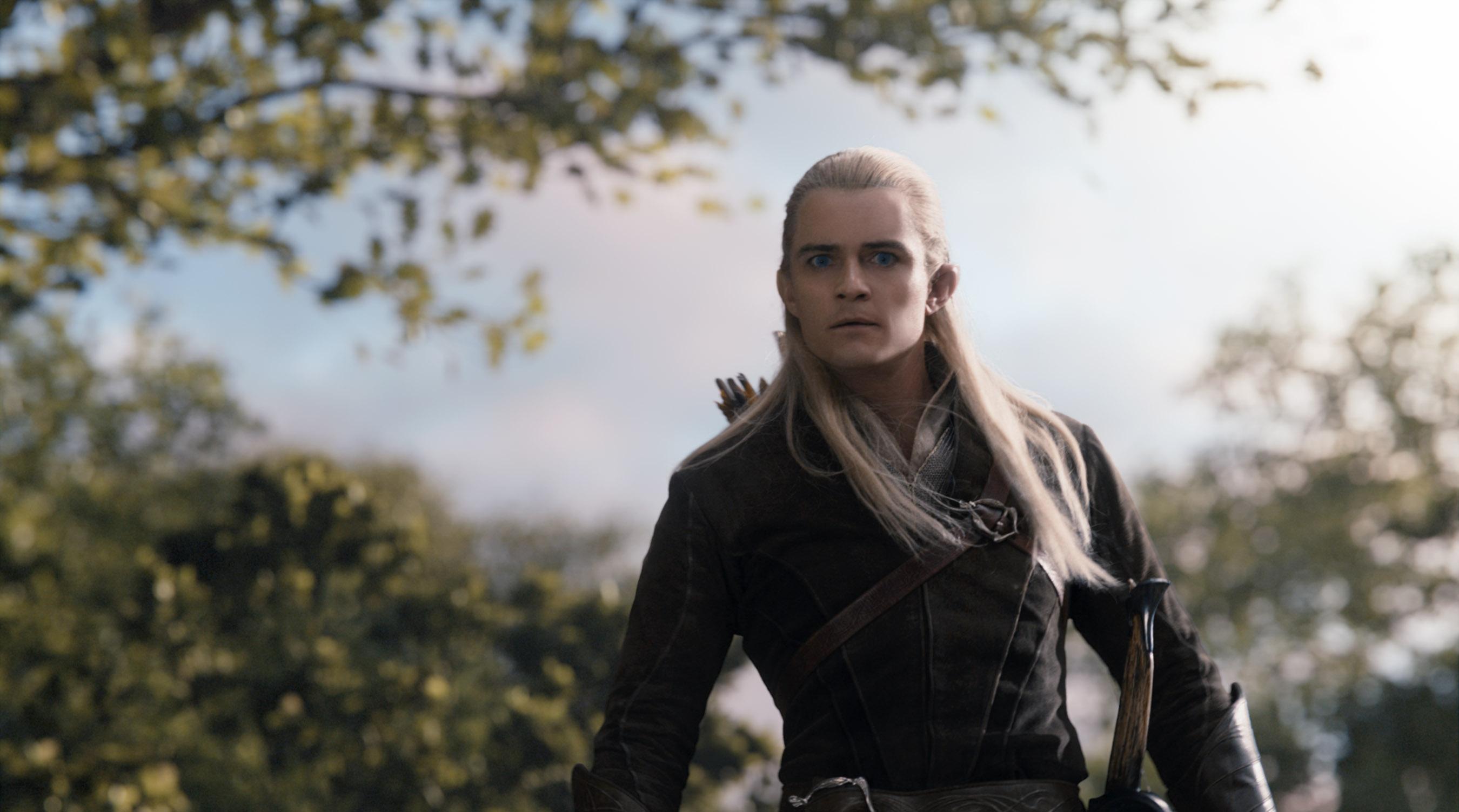
The Hobbit: The Desolation of Smaug Just when you’d managed to wipe 2012’s unwieldy The Hobbit: An Unexpected Journey from your mind, here comes its sequel — and it’s actually good! Yes, it’s too long (Peter Jackson wouldn’t have it any other way); arachnophobes (and maybe small children) will have trouble with the creepy, giant-spider battle; and Orlando Bloom, reprising his Lord of the Rings role as Legolas the elf, has been CG’d to the point of looking like he’s carved out of plastic. But there’s much more to enjoy this time around, with a quicker pace (no long, drawn-out dinner parties); winning performances by Martin Freeman (Bilbo), Ian McKellan (Gandalf); and Benedict Cumberbatch (as the petulent voice of Smaug the dragon); and more shape to the quest, as the crew of dwarves seeks to reclaim their homeland, and Gandalf pokes into a deeper evil that’s starting to overtake Middle-earth. (We all know how that ends.) In addition to Cumberbatch, the cast now includes Lost‘s Evangeline Lilly as elf Tauriel, who doesn’t appear in J.R.R. Tolkien’s original story, but whose lady-warrior presence is a welcome one; and Luke Evans as Bard, a human poised to play a key role in defeating Smaug in next year’s trilogy-ender, There and Back Again. (2:36) (Eddy)

The Hunger Games: Catching Fire Before succumbing to the hot and heavy action inside the arena (intensely directed by Francis Lawrence) The Hunger Games: Catching Fire force-feeds you a world of heinous concept fashions that’d make Lady Gaga laugh. But that’s ok, because the second film about one girl’s epic struggle to change the world of Panem may be even more exciting than the first. Suzanne Collins’ YA novel The Hunger Games was an over-literal metaphor for junior high social survival and the glory of Catching Fire is that it depicts what comes after you reach the cool kids’ table. Katniss (Jennifer Lawrence) inspired so much hope among the 12 districts she now faces pressures from President Snow (a portentous Donald Sutherland) and the fanatical press of Capital City (Stanley Tucci with big teeth and Toby Jones with big hair). After she’s forced to fake a romance with Peeta (Josh Hutcherson), the two watch with horror as they’re faced with a new Hunger Game: for returning victors, many of whom are too old to run. Amanda Plummer and Jeffrey Wright are fun as brainy wackjobs and Jena Malone is hilariously Amazonian as a serial axe grinder still screaming like an eighth grader. Inside the arena, alliances and rivalries shift but the winner’s circle could survive to see another revolution; to save this city, they may have to burn it down. (2:26) (Vizcarrondo)

I Am Divine Bringing joy to a lot of people during his too-brief life was Glenn Milstead, the subject of Jeffrey Schwarz’s I Am Divine. A picked-on sissy fat kid, he blossomed upon discovering Baltimore’s gay underground — and starring in neighbor John Waters’ underground movies, made by and for the local “freak” scene they hung out in. Yet even their early efforts found a following; when “Divine” appeared in SF to perform at one of the Cockettes’ midnight movie/theater happenings, he was greeted as a star. This was before his greatest roles for Waters, as the fearsome anti-heroines of Pink Flamingos (1972) and Female Trouble (1974), then the beleaguered hausfraus of Polyester (1981) and Hairspray (1988). Despite spending nearly his entire career in drag, he wanted to be thought of as a character actor, not a “transvestite” novelty. Sadly, he seemed on the verge of achieving that — having been signed to play an ongoing male role on Married … with Children — when he died of respiratory failure in 1988, at age 42. (1:25) Roxie. (Harvey)

Inside Llewyn Davis In the Coen Brothers’ latest, Oscar Isaac as the titular character is well on his way to becoming persona non grata in 1961 NYC — particularly in the Greenwich Village folk music scene he’s an ornery part of. He’s broke, running out of couches to crash on, has recorded a couple records that have gone nowhere, and now finds out he’s impregnated the wife (Carey Mulligan) and musical partner of one among the few friends (Justin Timberlake) he has left. She’s furious with herself over this predicament, but even more furious at him. This ambling, anecdotal tale finds Llewyn running into one exasperating hurdle after another as he burns his last remaining bridges, not just in Manhattan but on a road trip to Chicago undertaken with an overbearing jazz musician (John Goodman) and his enigmatic driver (Garrett Hedlund) to see a club impresario (F. Murray Abraham). This small, muted, droll Coens exercise is perfectly handled in terms of performance and atmosphere, with pleasures aplenty in its small plot surprises, myriad humorous idiosyncrasies, and T. Bone Burnett’s sweetened folk arrangements. But whether it actually has anything to say about its milieu (a hugely important Petri dish for later ’60s political and musical developments), or adds up to anything more profound than an beautifully executed shaggy-dog story, will be a matter of personal taste — or perhaps of multiple viewings. (1:45) (Harvey)

Mandela: Long Walk to Freedom As tough as it is to separate the man from the monument, Idris Elba, Naomie Harris, director Justin Chadwick manage it in this cinematic rendering of Nelson Mandela’s autobiography — perfectly if unintentionally timed, all us cynics recognize, to coincide with the sad passing of the father of the modern South Africa. Chadwick starts slow, and somewhat chaotically, by quickly sketching out Mandela’s relatively wild youth, with plenty of women and clubbing and few specifics on particulars like, say, the fact that he established the first black law firm in South Africa. So when Mandela finally joins forces with the ANC, you wonder at his sudden radicalization — the context is taken for granted. Not so when Mandela is sentenced to life in prison and he turns into an international symbol of anti-apartheid injustice, and the white authorities turn desperately to him for ways to quell a country erupting in violence. Meanwhile wife Winnie (a surprisingly fiery Harris) gets her just share of screen time as Chadwick concentrates on the couple’s romance and marriage. She’s also offered ample reason for her promotion of violence in the struggle when she’s harassed by the police and put in solitary confinement for more than a year, for no cause. Here the Mandelas come to conveniently embody polar opposite approaches in the movement, and it works, as Chadwick attempts to show how political the personal became. When Mandela’s amazing story takes over, it blows away reservations and inconvenient codas, and remembers the leader at his most triumphant. As the film’s iconic lead character, Elba at first seems physically miscast, but nevertheless effortlessly projects Mandela’s authority, gravitas, and charisma. (2:26) (Chun)

Nebraska Alexander Payne may be unique at this point in that he’s in a position of being able to make nothing but small, human, and humorous films with major-studio money on his own terms. It’s hazardous to make too much of a movie like Nebraska, because it is small — despite the wide Great Plains landscapes shot in a wide screen format — and shouldn’t be entered into with overinflated or otherwise wrong-headed expectations. Still, a certain gratitude is called for. Nebraska marks the first time Payne and his writing partner Jim Taylor weren’t involved in the script, and the first one since their 1996 Citizen Ruth that isn’t based on someone else’s novel. (Hitherto little-known Bob Nelson’s original screenplay apparently first came to Payne’s notice a decade ago, but getting put off in favor of other projects.) It could easily have been a novel, though, as the things it does very well (internal thought, sense of place, character nuance) and the things it doesn’t much bother with (plot, action, dialogue) are more in line with literary fiction than commercial cinema. Elderly Woody T. Grant (Bruce Dern) keeps being found grimly trudging through snow and whatnot on the outskirts of Billings, Mont., bound for Lincoln, Neb. Brain fuzzed by age and booze, he’s convinced he’s won a million dollars and needs to collect it him there, though eventually it’s clear that something bigger than reality — or senility, even — is compelling him to make this trek. Long-suffering younger son David (Will Forte) agrees to drive him in order to simply put the matter to rest. This fool’s mission acquires a whole extended family-full of other fools when father and son detour to the former’s podunk farming hometown. Nebraska has no moments so funny or dramatic they’d look outstanding in excerpt; low-key as they were, 2009’s Sideways and 2011’s The Descendants had bigger set pieces and narrative stakes. But like those movies, this one just ambles along until you realize you’re completely hooked, all positive emotional responses on full alert. (1:55) (Harvey)

Out of the Furnace Scott Cooper is best-known for directing Jeff Bridges to a long-overdue Oscar in 2009 country-music yarn Crazy Heart. Perhaps that’s why his follow-up contains so many stars: Christian Bale, Casey Affleck, Forest Whitaker, Willem Dafoe, Sam Shepard, Zoe Saldana, and Woody Harrelson. That cast is the main draw for Out of the Furnace, a glum fable of dying American dreams co-written by Cooper and Brad Inglesby. Furnace retains Crazy Heart‘s melodramatic tendencies and good ol’ boy milieu, though this time we’re deep in Pennsylvania’s Rust Belt, which manages to be even more depressing than Crazy Horse‘s honky-tonks. Cue gray skies, repeated shots of train tracks and smoke stacks, an emo banjo score, and dialogue that casually mentions that “the mill,” the only source of income for miles around, is about to close. Probably the nicest guy in town is Bale’s character, arrested early on for causing a fatal car accident thanks to his inability to turn down a drink offered by the town heavy (Dafoe). Post-prison, he discovers that his girlfriend (Saldana) has taken up with another man, and that his money-troubled Iraq-vet brother (Affleck) has been entering high-stakes pit fights. Really, this can’t end well for anyone. Adding to Out of the Furnace‘s bleak take on modern masculinity is Harrelson, stealing all his scenes with ease as a psychotically violent redneck. Mickey Knox lives! (1:56) (Eddy)

The Past Splits in country, culture, and a harder-to-pinpoint sense of morality mark The Past, the latest film by Asghar Farhadi, the first Iranian moviemaker to win an Oscar (for 2011’s A Separation.) At the center of The Past‘s onion layers is a seemingly simple divorce of a binational couple, but that act becomes more complicated — and startlingly compelling — in Farhadi’s capable, caring hands. Ahmad (Ali Mosaffa) has returned to Paris from Tehran, where he’s been living for the past four years, at the request of French wife Marie (Bérénice Bejo of 2011’s The Artist). She wants to legalize their estrangement so she can marry her current boyfriend, Samir (Tahar Rahim of 2009’s A Prophet), whose wife is in a coma. But she isn’t beyond giving out mixed messages by urging Ahmad to stay with her, and her daughters by various fathers, rather than at a hotel — and begging him to talk to teen Lucie (Pauline Burlet), who seems to despise Samir. The warm, nurturing Ahmad falls into his old routine in Marie’s far-from-picturesque neighborhood, visiting a café owned by fellow Iranian immigrants and easily taking over childcare duties for the overwhelmed Marie, as he tries to find out what’s happening with Lucie, who’s holding onto a secret that could threaten Marie’s efforts to move on. The players here are all wonderful, in particular the sad-faced, humane Mosaffa. We never really find out what severed his relationship with Marie, but in the end, it doesn’t really matter. We care about, and end up fearing for, all of Farhadi’s everyday characters, who are observed with a tender and unsentimental understanding that US filmmakers could learn from. The effect, when he finally racks focus on the forgotten member of this triangle (or quadrilateral?), is heartbreaking. (2:10) (Chun)

Philomena Judi Dench gives this twist on a real-life scandal heart, soul, and a nuanced, everyday heft. Her ideal, ironic foil is Steve Coogan, playing an upper-crusty irreverent snob of an investigative journalist. Judging by her tidy exterior, Dench’s title character is a perfectly ordinary Irish working-class senior, but she’s haunted by the past, which comes tumbling out one day to her daughter: As an unwed teenager, she gave birth to a son at a convent. She was forced to work there, unpaid; as supposed penance, the baby was essentially sold to a rich American couple against her consent. Her yarn reaches disgraced reporter Martin Sixsmith (Coogan), who initially turns his nose up at the tale’s piddling “human interest” angle, but slowly gets drawn in by the unexpected twists and turns of the story — and likely the possibility of taking down some evil nuns — as well as seemingly naive Philomena herself, with her delight in trash culture, frank talk about sex, and simple desire to see her son and know that he thought, once in a while, of her. It turns out Philomena’s own sad narrative has as many improbable turnarounds as one of the cheesy romance novels she favors, and though this unexpected twosome’s quest for the truth is strenuously reworked to conform to the contours of buddy movie-road trip arc that we’re all too familiar with, director Stephen Frears’ warm, light-handed take on the gentle class struggles going on between the writer and his subject about who’s in control of the story makes up for Philomena‘s determined quest for mass appeal. (1:35) (Chun)

Reaching for the Moon Brazilian director Bruno Barreto (1997’s Four Days in September) offers a moving account of the romantic relationship between the American poet Elizabeth Bishop (Miranda Otto) and the Brazilian architect Lota de Macedo Soares (Glória Pires), which spanned the 1950s and the better part of the ’60s. The pair meet under inauspicious circumstances: traveling to Brazil, Elizabeth visits her old Vassar friend Mary (Tracy Middendorf) at the gorgeous rural estate where she lives with Lota, a wealthy woman from one of Brazil’s prominent political families. Unfortunately for Mary, Lota’s regard for the timid, restrained Elizabeth moves along a precipitous arc from irritation to infatuation, her subsequent impetuous pursuit of her lover’s friend revealing a heartless egoism — as well as an attitude toward householding that blends a poly sensibility with a ruling-class sense of entitlement. The film tracks Elizabeth and Lota’s enduring affair during a period marked by professional triumphs, personal lows, and political turmoil, all of which take their toll on the relationship. (1:56) (Rapoport)

Saving Mr. Banks Having promised his daughters that he would make a movie of their beloved Mary Poppins books, Walt Disney (Tom Hanks) has laid polite siege to author P.L. Travers (Emma Thompson) for over 20 years. Now, in the early 1960s, she has finally consented to discuss the matter in Los Angeles — albeit with great reluctance, and only because royalty payments have dried up to the point where she might have to sell her London home. Bristling at being called “Pam” and everything else in this sunny SoCal and relentlessly cheery Mouse House environ, the acidic English spinster regards her creation as sacred. The least proposed changes earn her horrified dismissal, and the very notion of having Mary and company “prancing and chirping” out songs amid cartoon elements is taken as blasphemy. This clash of titans could have made for a barbed comedy with satirical elements, but god forbid this actual Disney production should get so cheeky. Instead, we get the formulaically dramatized tale of a shrew duly tamed by all-American enterprise, with flashbacks to the inevitable past traumas (involving Colin Farrell as a beloved but alcoholic ne’er-do-well father) that require healing of Travers’ wounded inner child by the magic of the Magic Kingdom. If you thought 2004’s Finding Neverland was contrived feel-good stuff, you’ll really choke on the spoons full of sugar force-fed here. (2:06) (Harvey)

The Secret Life of Walter Mitty Walter Mitty (Ben Stiller) works at the Life magazine archives, where the world’s greatest photojournalists send him images of their extraordinary adventures. Walter lives vicariously. When he imagines his office crush (Kristen Wiig) trapped in a burning building, his inner superhero arrests his faculties and sends him flying through windows, racing up stairs to liberate children from their flaming homes. It’s all a fantasy, of course: the man works in a basement with pictures and George Bailey-styled dreams of travel, what does he have but his imagination to keep him warm? Turns out his workplace is planning to kill off its print edition and become LifeOnline — so facing the end of Life, and imminent quiet desperation, this office-mouse is tasked with delivering the last cover the magazine will ever have. But frame 25 on the contact sheet — the one the magazine’s star photog (Sean Penn) calls “The Quintessence of Life” — is blank. Instead of crying defeat, Walter goes on a hunt for the photographer, his avatar of rugged outdoorsmanship, and the realization of his dreams of adventure. It’s liberating to watch him take risks — Stiller says years of watching Danny Kaye movies (Kaye starred in the 1947 adaptation of James Thurber’s short story) inspired the awkwardly balletic gestures of roving, frightened, ultimately exuberant Walter. The film, which Stiller also directed, is ultimately a dreamy parable about getting caught up in imagination — or just confusing images for real life — both of which feel timely in a world where libraries are cyberplaces and you can play “tennis” in front of your couch. The kind of guy who thought the biggest threat was making the first move, Walter learns differently when he takes actual risks: there is magic in this. (2:05) (Vizcarrondo)

12 Years a Slave Pop culture’s engagement with slavery has always been uneasy. Landmark 1977 miniseries Roots set ratings records, but the prestigious production capped off a decade that had seen some more questionable endeavors, including 1975 exploitation flick Mandingo — often cited by Quentin Tarantino as one of his favorite films; it was a clear influence on his 2012 revenge fantasy Django Unchained, which approached its subject matter in a manner that paid homage to the Westerns it riffed on: with guns blazing. By contrast, Steve McQueen’s 12 Years a Slave is nuanced and steeped in realism. Though it does contain scenes of violence (deliberately captured in long takes by regular McQueen collaborator Sean Bobbitt, whose cinematography is one of the film’s many stylistic achievements), the film emphasizes the horrors of “the peculiar institution” by repeatedly showing how accepted and ingrained it was. Slave is based on the true story of Solomon Northup, an African American man who was sold into slavery in 1841 and survived to pen a wrenching account of his experiences. He’s portrayed here by the powerful Chiwetel Ejiofor. Other standout performances come courtesy of McQueen favorite Michael Fassbender (as Epps, a plantation owner who exacerbates what’s clearly an unwell mind with copious amounts of booze) and newcomer Lupita Nyong’o, as a slave who attracts Epps’ cruel attentions. (2:14) (Eddy)

Tyler Perry’s A Madea Christmas (1:45)

Walking With Dinosaurs Like hungry, fast-moving Chirostenotes, movieland has a habit of poaching from all comers, be it a toy, video game, or here, a hugely successful 1999 BBC documentary miniseries of the same name. This 3D hamburger version of the award-winning six-parter plays to dinos’ most avid audience, traditionally — kids — by anthropomorphizing runt Pachyrhinosaurus, otherwise known as Patchi (voiced by Justin Long), as the scrappy young hero of this adventure and dramatizing life-and-death migrations his herd undertakes each year as rites of passage. Framing the adventure is a present-day dig with archaeologist Zack (Karl Urban), his skeptical nephew (Charlie Rowe), and gung-ho niece (Angourie Rice). With a broken 70 million-year-old tooth in hand — and with help from prehistoric Alexomis bird Alex (John Leguizamo, who provides most of the levity), we learn about Patchi, his brother Scowler (Skyler Stone), and their herd of horned, thick-noised lizards as they make their way south for winter and back, encountering multiple dangers and predators, as well as let’s-make-a-family delights in the form of young female Juniper (Tiya Sircar) along with way. Count on the CGI to be seamless, the 3D to come in handy when it comes to incoming Quetzalcoatlus, and the choice of not having the lizards’ lips move as they speak to seem tasteful and wise — especially when it comes dubbing for a global audience. (1:27) (Chun)

The Wolf of Wall Street Three hours long and breathless from start to finish, Martin Scorsese’s tale of greed, stock-market fraud, and epic drug consumption has a lot going on — and the whole thing hinges on a bravado, breakneck performance by latter-day Scorsese muse Leonardo DiCaprio. As real-life sleaze Jordan Belfort (upon whose memoir the film is based), he distills all of his golden DiCaprio-ness into a loathsome yet maddeningly likable character who figures out early in his career that being rich is way better than being poor, and that being fucked-up is, likewise, much preferable to being sober. The film also boasts keen supporting turns from Jonah Hill (as Belfort’s crass, corrupt second-in-command), Matthew McConaughey (who has what amounts to a cameo — albeit a supremely memorable one — as Belfort’s coke-worshiping mentor), Jean Dujardin (as a slick Swiss banker), and newcomer Margot Robbie (as Belfort’s cunning trophy wife). But this is primarily the Leo and Marty Show, and is easily their most entertaining episode to date. Still, don’t look for an Oscar sweep: Scorsese just hauled huge for 2011’s Hugo, and DiCaprio’s flashy turn will likely be passed over by voters more keen on honoring subtler work in a shorter film. (2:59) (Eddy) *


Stage Listings Jan. 1-6, 2014

0

Stage listings are compiled by Guardian staff. Performance times may change; call venues to confirm. Reviewers are Robert Avila, Rita Felciano, and Nicole Gluckstern. Submit items for the listings at listings@sfbg.com. For complete stage listings, see www.sfbg.com.

THEATER

OPENING

Major Barbara ACT’s Geary Theater, 415 Geary, SF; www.act-sf.org. $20-140. Previews Wed/8-Sat/11, 8pm; Sun/12, 7pm. Opens Jan 15, 8pm. Runs Tue-Sat, 8pm (Jan 21, show at 7pm; additional shows Jan 22 and 29, 2pm); Sun, 2pm. Through Feb 2. American Conservatory Theater performs a new production of George Bernard Shaw’s political comedy.

The Speakeasy Undisclosed location (ticket buyers receive a text with directions), SF; www.thespeakeasysf.com. $60-90 (add-ons: casino chips, $5; dance lessons, $10). Opens Fri/10, 7:40, 7:50, and 8pm admittance times. Runs Thu-Sat, 7:40, 7:50, and 8pm admittance times. Through March 15. Boxcar Theatre presents Nick A. Olivero’s recreation of a Prohibition-era saloon, resulting in an “immersive theatrical experience involving more than 35 actors, singers, and musicians.”

ONGOING

Amaluna Big Top at AT&T Park, Third Street at Terry A. Francois Blvd, SF; www.cirquedusoliel.com. $50-175. Wed/8-Sat/11, 8pm (also Thu/9-Sat/11, 4:30pm); Sun/12, 1, 4:30. Cirque de Soleil is back in town, this time bringing its Tempest-inspired Amaluna to the big top set up outside AT&T Park. Touted for being a celebration of “women [sic] power,” it seems initially odd that the design elements are so focused on the male peacock feather — all greens and blues and graceful, with curving “fronds” rising up from the stage. Jungle sounds chirp in the background as a bevy of Amazonian women in bejeweled headdresses and a mischievous lizard-man circulate the room until the show starts with the lovely abstraction of a floating red cloud of translucent fabric dancing in a single beam of light. The flimsy plotline is forgettable, a coming-of-age and courtship tale between the island’s young princess, Miranda (Iuliia Mykhailova) and a shipwrecked young Romeo (Evgeny Kurkin), though the parallel courtship between the two comic figures of Jeeves (Nathalie Claude) and Deeda (Shereen Hickman) provides a bit of levity and a novel use for footballs. The most realized character is probably Cali (Victor Kee), the half-lizard, whose prehensile tail and neon body paint give him an otherworldly allure, but it’s the aerialist goddesses and fierce embodiments of the storm that are most memorable from an acrobatic point-of-view, and Lara Jacobs’ unique balancing act from a meditative one. (Gluckstern)

Avenue Q New Conservatory Theatre Center, 25 Van Ness, SF; www.nctcsf.org. $25-45. Wed/8-Sat/11, 8pm; Sun/12, 2pm. New Conservatory Theatre Center performs the Tony-winning comedy.

The Book of Mormon Orpheum Theatre, 1192 Market, SF; www.shnsf.com. $60-120. Wed-Sat, 8pm (also Sat, 2pm); Sun, 1 and 6:30pm. Through Jan 19. When approaching the oeuvre of South Park creators Matt Stone and Trey Parker, it’s best to check your political correctness at the door. That’s certainly no less true of their 2011 Broadway musical The Book of Mormon, co-penned with Robert Lopez (of Avenue Q fame), despite the clean-scrubbed appearance of their fumbling albeit well-intentioned missionary protagonists. Sent to Uganda for two years, top mission pupil Elder Price (Nic Rouleau) and his clumsy but affable partner Elder Cunningham (A.J. Holmes) are faced with a village oppressed by a scenery-chewing warlord, a demoralized coterie of fellow missionaries who have yet to have a successful conversion, and their own fraught, odd-couple dynamic. Rouleau’s Price is an appropriate blend of smarm, charm, and secret self-doubt while Holmes excels in his portrayal of a perennial-loser-turned-prophet (his power ballad-esque solo in “Man Up” is one of the show’s best). Of their hosts, the wry Mafala (James Vincent Meredith) and his sweet but strong-willed daughter Nabulungi (Syesha Mercado) get the most stage time, but it’s the crude and caustic General (David Aron Damane) who grabs the most attention. The gleefully profane “Hasa Diga Eebowai,” a Forbidden Zone-style “Spooky Mormon Hell Dream”, and the deliriously blasphemous “Joseph Smith, American Moses,” round out the entertaining, and strangely informative, score. Though it’s (very) unlikely to convert you to the Church of Latter-Day Saints, there’s a good chance you’ll want to convert to the church of Parker and Stone, if you haven’t already. (Gluckstern)

Foodies! The Musical Shelton Theater, 533 Sutter, SF; www.foodiesthemusical.com. $32-34. Fri-Sat, 8pm. Open-ended. AWAT Productions presents Morris Bobrow’s musical comedy revue all about food.

The Oy of Sex Marsh San Francisco, 1062 Valencia, SF; www.themarsh.org. $20-100. Thu-Fri, 8pm; Sat, 8:30pm. Through Jan 18. Comedian Alicia Dattner performs her solo show, based on her stories from her own life and love addiction.

Road Show Eureka Theatre, 215 Jackson, SF; www.therhino.org. $15-30. Wed-Sat, 8pm; Sun, 3pm. Through Jan 19. Theatre Rhinoceros presents the Bay Area premiere of the Stephen Sondheim musical.

Storefront Church San Francisco Playhouse, 450 Post St, Second Flr, SF; www.sfplayhouse.org. $30-100. Wed/8-Thu/9, 7pm; Fri/10-Sat/11, 8pm (also Sat/11, 3pm). Weighty themes come leavened by sharp comedy and engaging characters in this 2012 play from New York’s John Patrick Shanley (Doubt), now enjoying a strong and lively Bay Area premiere at SF Playhouse in director Joy Carlin’s well cast production. Ethan, a gregarious retired accountant and professed secular Jew (a hilarious and endearing Ray Reinhardt) tries to get some relief for his Puerto Rican wife, Jessie (a bubbly Gloria Weinstock), who is perilously behind on her loan payments. But it’s like getting the proverbial blood from a stone during his meeting with her humorless and immobile — indeed, partly paralyzed — loan officer (a quietly shattered Rod Gnapp). Ethan appeals to morality; loan officer Reed sticks to the rules of the system. Enter Donaldo (an admirably sure yet understated Gabriel Marin), the Bronx’s upstanding borough president and the son of Jessie’s old friend. Donaldo has much bigger business with the bank underway (a proposed mall deal that will bring jobs, if at the expense of local character) and at first begs off — until he learns his mother has co-signed the loan. Soon, Donaldo is visiting the source of Jessie’s money problems: a somber Pentecostal preacher and Katrina-refugee named Chester (a gently solemn Carl Lumbly) who has installed a traffic-less church in the storefront below her apartment but remains himself paralyzed by depression and uncertainty. Donaldo, himself a preacher’s son, and Chester soon engage in a fiery and captivating debate that turns on the contradictions between moral conviction and worldly compromise. From there on, a fractured congregation of sorts begins to form around the preacher and Donaldo, including the unctuous yet aloof CEO of the bank (played with bounding confidence by a fine Derek Fischer). It all leads to a rousingly funny and tender scene that makes good on the season’s usual lip service to fraternal feeling and communal values. (Avila)

The Tempest Thick House, 1695 18th St, SF; www.doitliveproductions.com. $15. Thu and Sun, 7pm; Fri-Sat, 8pm. Through Jan 18. Do It Live! Productions performs the Shakespeare classic.

BAY AREA

Can You Dig It? Back Down East 14th — the 60s and Beyond Marsh Berkeley, 2120 Allston, Berk; www.themarsh.org. $20-35. Sat, 8:30pm; Sun, 7pm. Through Feb 2. Don Reed’s new show offers more stories from his colorful upbringing in East Oakland in the 1960s and ’70s. More hilarious and heartfelt depictions of his exceptional parents, independent siblings, and his mostly African American but ethnically mixed working-class community — punctuated with period pop, Motown, and funk classics, to which Reed shimmies and spins with effortless grace. And of course there’s more too of the expert physical comedy and charm that made long-running hits of Reed’s last two solo shows, East 14th and The Kipling Hotel (both launched, like this newest, at the Marsh). Can You Dig It? reaches, for the most part, into the “early” early years, Reed’s grammar-school days, before the events depicted in East 14th or Kipling Hotel came to pass. But in nearly two hours of material, not all of it of equal value or impact, there’s inevitably some overlap and indeed some recycling. Note: review from an earlier run of the show. (Avila)

Edward Gant’s Amazing Feats of Loneliness Ashby Stage, 1901 Ashby, Berk; www.shotgunplayers.org. $20-35. Wed/8-Thu/9, 7pm; Fri/10-Sat/11, 8pm. Shotgun Players performs Anthony Neilson’s comic romp set in “a sensual Edwardian world of top hats, fantastical puppets, and flash powder.”

Sherlock Holmes: The Broken Mirror Berkeley City Club, 2315 Durant, Berk; www.brownpapertickets.com. $20-28. Thu-Sat, 8pm; Sun, 3pm. Through Jan 26. Jeff Garrett portrays all the characters (Sherlock, Watson, Mrs. Hudson, Moriarty…) in this adaptation of William Gillette’s Holmes play.

Tristan & Yseult Berkeley Rep’s Roda Theatre, 2025 Addison, Berk; www.berkeleyrep.org. $17.50-81. Tue and Thu-Sat, 8pm (also Thu and Sat, 2pm; no matinee Jan 18); Wed and Sun, 7pm (also Sun, 2pm). Extended through Jan 18. Kneehigh presents an innovative take on the ancient love-triangle tale. *


The Performant: Epochalypse Now

6

Embracing the great unknown
 
While it could be argued that every day represents a new year, with each date falling exactly one year after the last, like unconscious clockwork, there’s something comforting in the ritual of observing the change in calendar year en masse. A time to take accounts, and make new goals. A time of psychic housekeeping: ridding oneself of the spiritual and mental detritus of the past, in order to make space for a future as yet undefined.

All of which is on my mind as I prepare to bang out my last Performant, at least for the time being. During the last three-and-a-half years I’ve witnessed hundreds of performances, featuring thousands of performers, in venues large and small, each one a brief, incandescent flame feeding into a bonfire of epic creativity. House concerts, punk shows, spoken word, street festivals, performance art meditations, live comedy, high drag camp, amateur wrestling competitions, robot soccer, battle rap, obscure cinema, alternative dance, home theater, and circus arts have all found a place in the Performant, proving, I hope, that just as borders geographical and psychological can be transcended, so too can artistic ones.

But, point proven, the Performant is going to take a bit of a break to focus on some other projects I’ve been neglecting. Avoiding, really. But I’ll still be out there, an ever-appreciative oddience of one, reveling in our infinity of scenes, influences, disciplines. As a parting gift, here’re a few recommendations I can make for our collective new beginning. It’s been an honor to Performant for you.
 
1) Godwaffle Noise Pancakes: Do you like Noise? Do you like vegan pancakes? Do you like The Lab? Duh, yes, of course you do. Usually Sundays, usually from noon-2pm, usually at The Lab, except when it’s not. By far the best-sounding brunch spot in the Mission, and no line!
 
2) Saturday Write Fever: It’s like a playwriting bootcamp for the broke-ass camp, this monthly event held in the café of the EXIT Theatre brings together budding monologists — writers and actors both — for an evening of spontaneous writing and seat-of-your-pants performance. Writers have 30 minutes to prepare a new piece, riffing off a common theme, and then each mini-script gets a quicky performance treatment by members of the oddience. It’s free, it’s fresh, it’s fearless, and frankly, it sounds like a hell of a lot of fun.
 
3) The Cynic Cave: Actually, it would hardly matter what “the Cynic Cave” was, I’d have to go for its name alone. But the fact that it’s a literally underground comedy club ensconced in the basement of my fave local video store, Lost Weekend, makes it a total win. Hosted by George Chen and Kevin O’Shea, the Cave has quietly hosted some of the Bay Area’s funniest humans for just $10 a pop since 2012.
 
4) Boxcar Theatre’s Speakeasy: Boxcar Theatre has always had a knack for thinking outside of the (black) box, and this totally immersive, three-and-a-half hour-long performance sounds like their most enterprising yet. Like Punchdrunk’s Sleep No More, the interactive show promises to be different for each individual participant, a self-directed foray into the seedy underbelly of a 1920’s Speakeasy, populated by showgirls, war veterans, blackjack dealers, and bootleggers, each of whom has a story arc which can be followed to its end, or abandoned halfway through in favor of another. In short, prepare to go a couple of times to get a real sense of what’s going on, and don’t be shy about eavesdropping. Or playing a round of roulette.
 
Honorable mentions: Katabatik, Ask Dr. Hal, Undercover Presents, DJ Purple Dance Karaoke, Playland Not-at-the-Beach, Shaping San Francisco Public Talks

Film Listings: December 25 – 31, 2013

0

Film listings are edited by Cheryl Eddy. Reviewers are Kimberly Chun, Dennis Harvey, Lynn Rapoport, Sam Stander, and Sara Maria Vizcarrondo. For rep house showtimes, see Rep Clock.

OPENING

47 Ronin Keanu Reeves, Tadanobu Asano, Rinko Kikuchi, and Cary-Hiroyuki Tagawa star in this action film about a posse of vengeful 18th-century Japanese samurai. (2:00) Shattuck.

Grudge Match If the prospect of watching Rocky go glove-to-glove with Jake LaMotta sounds either tired or exploitive, Grudge Match wants to change your mind. A comedy that delivers a decent bout inside the ring and a worthwhile message about fulfilling your potential at every age, Grudge Match is 100 percent feel-good movie, 100 percent of the time. Yes, the publicity campaign contrived by Kevin Hart’s promoter character is embarrassing. Yes, Alan Arkin plays yet another foul-mouthed curmudgeon. And yes, the boxers have a torn family this match could heal (though fighting threatens to kill them both). But the takeaway is an all-ages lesson our elders are most qualified to teach: having guts is pretty glorious. And at 68 and 70, Sylvester Stallone and Robert De Niro seem delighted to lampoon past greatness. “Kid” (DeNiro) does a puppet show that’s less pathos-filled than the poetry he spouted in 1980’s Raging Bull; the training montages “Razor” (Stallone) slogs through naturally recall 1976’s Rocky. But Grudge Match is about today — not yesterday. Alongside Gravity and The Wolf of Wall Street, Grudge Match is yet another populist lovefest throwaway, but who cares? Few have cornered the market on audience affection like Stallone, and he’s helped De Niro find that love too. (1:53) (Vizcarrondo)

Her Morose and lonely after a failed marriage, Theodore (Joaquin Phoenix) drifts through an appealingly futuristic Los Angeles (more skyscrapers, less smog) to his job at a place so hipster-twee it probably will exist someday: beautifulhandwrittenletters.com, where he dictates flowery missives to a computer program that scrawls them onto paper for paying customers. Theodore’s scripting of dialogue between happy couples, as most of his clients seem to be, only enhances his sadness, though he’s got friends who care about him (in particular, Amy Adams as Amy, a frumpy college chum) and he appears to have zero money woes, since his letter-writing gig funds a fancy apartment equipped with a sweet video-game system. Anyway, women are what gives Theodore trouble — and maybe by extension, writer-director Spike Jonze? — so he seeks out the ultimate gal pal: Samantha, an operating system voiced by Scarlett Johansson in the year’s best disembodied performance. Thus begins a most unusual relationship, but not so unusual; Theodore’s friends don’t take any issue with the fact that his new love is a machine. Hey, in Her’s world, everyone’s deeply involved with their chatty, helpful, caring, always-available OS — why wouldn’t Theo take it to the next level? Inevitably, of course, complications arise. If Her’s romantic arc feels rather predictable, the film acquits itself in other ways, including boundlessly clever production-design touches that imagine a world with technology that’s (mostly) believably evolved from what exists today. Also, the pants they wear in the future? Must be seen to be believed. (2:00) Shattuck. (Eddy)

I Am Divine Bringing joy to a lot of people during his too-brief life was Glenn Milstead, the subject of Jeffrey Schwarz’s I Am Divine. A picked-on sissy fat kid, he blossomed upon discovering Baltimore’s gay underground — and starring in neighbor John Waters’ underground movies, made by and for the local “freak” scene they hung out in. Yet even their early efforts found a following; when “Divine” appeared in SF to perform at one of the Cockettes’ midnight movie/theater happenings, he was greeted as a star. This was before his greatest roles for Waters, as the fearsome anti-heroines of Pink Flamingos (1972) and Female Trouble (1974), then the beleaguered hausfraus of Polyester (1981) and Hairspray (1988). Despite spending nearly his entire career in drag, he wanted to be thought of as a character actor, not a “transvestite” novelty. Sadly, he seemed on the verge of achieving that — having been signed to play an ongoing male role on Married … with Children — when he died of respiratory failure in 1988, at age 42. (1:25) Roxie. (Harvey)

Mandela: Long Walk to Freedom As tough as it is to separate the man from the monument, Idris Elba, Naomie Harris, director Justin Chadwick manage it in this cinematic rendering of Nelson Mandela’s autobiography — perfectly if unintentionally timed, all us cynics recognize, to coincide with the sad passing of the father of the modern South Africa. Chadwick starts slow, and somewhat chaotically, by quickly sketching out Mandela’s relatively wild youth, with plenty of women and clubbing and few specifics on particulars like, say, the fact that he established the first black law firm in South Africa. So when Mandela finally joins forces with the ANC, you wonder at his sudden radicalization — the context is taken for granted. Not so when Mandela is sentenced to life in prison and he turns into an international symbol of anti-apartheid injustice, and the white authorities turn desperately to him for ways to quell a country erupting in violence. Meanwhile wife Winnie (a surprisingly fiery Harris) gets her just share of screen time as Chadwick concentrates on the couple’s romance and marriage. She’s also offered ample reason for her promotion of violence in the struggle when she’s harassed by the police and put in solitary confinement for more than a year, for no cause. Here the Mandelas come to conveniently embody polar opposite approaches in the movement, and it works, as Chadwick attempts to show how political the personal became. When Mandela’s amazing story takes over, it blows away reservations and inconvenient codas, and remembers the leader at his most triumphant. As the film’s iconic lead character, Elba at first seems physically miscast, but nevertheless effortlessly projects Mandela’s authority, gravitas, and charisma. (2:26) Piedmont. (Chun)

The Past Splits in country, culture, and a harder-to-pinpoint sense of morality mark The Past, the latest film by Asghar Farhadi, the first Iranian moviemaker to win an Oscar (for 2011’s A Separation.) At the center of The Past’s onion layers is a seemingly simple divorce of a binational couple, but that act becomes more complicated — and startlingly compelling — in Farhadi’s capable, caring hands. Ahmad (Ali Mosaffa) has returned to Paris from Tehran, where he’s been living for the past four years, at the request of French wife Marie (Bérénice Bejo of 2011’s The Artist). She wants to legalize their estrangement so she can marry her current boyfriend, Samir (Tahar Rahim of 2009’s A Prophet), whose wife is in a coma. But she isn’t beyond giving out mixed messages by urging Ahmad to stay with her, and her daughters by various fathers, rather than at a hotel — and begging him to talk to teen Lucie (Pauline Burlet), who seems to despise Samir. The warm, nurturing Ahmad falls into his old routine in Marie’s far-from-picturesque neighborhood, visiting a café owned by fellow Iranian immigrants and easily taking over childcare duties for the overwhelmed Marie, as he tries to find out what’s happening with Lucie, who’s holding onto a secret that could threaten Marie’s efforts to move on. The players here are all wonderful, in particular the sad-faced, humane Mosaffa. We never really find out what severed his relationship with Marie, but in the end, it doesn’t really matter. We care about, and end up fearing for, all of Farhadi’s everyday characters, who are observed with a tender and unsentimental understanding that US filmmakers could learn from. The effect, when he finally racks focus on the forgotten member of this triangle (or quadrilateral?), is heartbreaking. (2:10) Clay. (Chun)

Reaching for the Moon Brazilian director Bruno Barreto (1997’s Four Days in September) offers a moving account of the romantic relationship between the American poet Elizabeth Bishop (Miranda Otto) and the Brazilian architect Lota de Macedo Soares (Glória Pires), which spanned the 1950s and the better part of the ’60s. The pair meet under inauspicious circumstances: traveling to Brazil, Elizabeth visits her old Vassar friend Mary (Tracy Middendorf) at the gorgeous rural estate where she lives with Lota, a wealthy woman from one of Brazil’s prominent political families. Unfortunately for Mary, Lota’s regard for the timid, restrained Elizabeth moves along a precipitous arc from irritation to infatuation, her subsequent impetuous pursuit of her lover’s friend revealing a heartless egoism — as well as an attitude toward householding that blends a poly sensibility with a ruling-class sense of entitlement. The film tracks Elizabeth and Lota’s enduring affair during a period marked by professional triumphs, personal lows, and political turmoil, all of which take their toll on the relationship. (1:56) Opera Plaza. (Rapoport)

The Secret Life of Walter Mitty Walter Mitty (Ben Stiller) works at the Life magazine archives, where the world’s greatest photojournalists send him images of their extraordinary adventures. Walter lives vicariously. When he imagines his office crush (Kristen Wiig) trapped in a burning building, his inner superhero arrests his faculties and sends him flying through windows, racing up stairs to liberate children from their flaming homes. It’s all a fantasy, of course: the man works in a basement with pictures and George Bailey-styled dreams of travel, what does he have but his imagination to keep him warm? Turns out his workplace is planning to kill off its print edition and become LifeOnline — so facing the end of Life, and imminent quiet desperation, this office-mouse is tasked with delivering the last cover the magazine will ever have. But frame 25 on the contact sheet — the one the magazine’s star photog (Sean Penn) calls “The Quintessence of Life” — is blank. Instead of crying defeat, Walter goes on a hunt for the photographer, his avatar of rugged outdoorsmanship, and the realization of his dreams of adventure. It’s liberating to watch him take risks — Stiller says years of watching Danny Kaye movies (Kaye starred in the 1947 adaptation of James Thurber’s short story) inspired the awkwardly balletic gestures of roving, frightened, ultimately exuberant Walter. The film, which Stiller also directed, is ultimately a dreamy parable about getting caught up in imagination — or just confusing images for real life — both of which feel timely in a world where libraries are cyberplaces and you can play “tennis” in front of your couch. The kind of guy who thought the biggest threat was making the first move, Walter learns differently when he takes actual risks: there is magic in this. (2:05) (Vizcarrondo)

The Wolf of Wall Street Three hours long and breathless from start to finish, Martin Scorsese’s tale of greed, stock-market fraud, and epic drug consumption has a lot going on — and the whole thing hinges on a bravado, breakneck performance by latter-day Scorsese muse Leonardo DiCaprio. As real-life sleaze Jordan Belfort (upon whose memoir the film is based), he distills all of his golden DiCaprio-ness into a loathsome yet maddeningly likable character who figures out early in his career that being rich is way better than being poor, and that being fucked-up is, likewise, much preferable to being sober. The film also boasts keen supporting turns from Jonah Hill (as Belfort’s crass, corrupt second-in-command), Matthew McConaughey (who has what amounts to a cameo — albeit a supremely memorable one — as Belfort’s coke-worshiping mentor), Jean Dujardin (as a slick Swiss banker), and newcomer Margot Robbie (as Belfort’s cunning trophy wife). But this is primarily the Leo and Marty Show, and is easily their most entertaining episode to date. Still, don’t look for an Oscar sweep: Scorsese just hauled huge for 2011’s Hugo, and DiCaprio’s flashy turn will likely be passed over by voters more keen on honoring subtler work in a shorter film. (2:59) California, Vogue. (Eddy)


ONGOING

About Time Richard Curtis, the man behind 2003’s Love Actually, must be enjoying his days in England, rolling in large piles of money. Coinciding with the 10-year anniversary of that twee cinematic love fest comes Curtis’ latest ode to joy, About Time. The film begins in Cornwall at an idyllic stone beach house, as Tim (Domhnall Gleeson) describes his family members (Bill Nighy is dad; Richard Cordery is the crazy uncle) and their pleasures (tea on the beach, ping pong). Despite beachside bliss, Tim is lovelorn and ready to begin a career as a barrister (which feels as out of the blue as the coming first act break). Oh! And as it happens, the men in Tim’s family can travel back in time. There are no clear rules, though births and deaths are like no-trespass signs on the imaginary timeline. When he meets Mary (Rachel McAdams), he falls in love, but if he paves over his own evening by bouncing back and spending that night elsewhere, he loses the path he’s worn into the map and has to fix it. Again and again. Despite potential repetition, About Time moves smoothly, sweetly, slowly along, giving its audience time enough to feel for the characters, and then feel for the characters again, and then keep crying just because the ball’s already in motion. It’s the most nest-like catharsis any British film ever built. (2:03) SF Center. (Vizcarrondo)

American Hustle David O. Russell’s American Hustle is like a lot of things you’ve seen before — put in a blender, so the results are too smooth to feel blatantly derivative, though here and there you taste a little Boogie Nights (1997), Goodfellas (1990), or whatever. Loosely based on the Abscam FBI sting-scandal of the late 1970s and early ’80s (an opening title snarks “Some of this actually happened”), Hustle is a screwball crime caper almost entirely populated by petty schemers with big ideas almost certain to blow up in their faces. It’s love, or something, at first sight for Irving Rosenfeld (Christian Bale) and Sydney Prosser (Amy Adams), who meet at a Long Island party circa 1977 and instantly fall for each other — or rather for the idealized selves they’ve both strained to concoct. He’s a none-too-classy but savvy operator who’s built up a mini-empire of variably legal businesses; she’s a nobody from nowhere who crawled upward and gave herself a bombshell makeover. The hiccup in this slightly tacky yet perfect match is Irving’s neglected, crazy wife Rosalyn (Jennifer Lawrence), who’s not about to let him go. She’s their main problem until they meet Richie DiMaso (Bradley Cooper), an ambitious FBI agent who entraps the two while posing as a client. Their only way out of a long prison haul, he says, is to cooperate in an elaborate Atlantic City redevelopment scheme he’s concocted to bring down a slew of mafioso and presumably corrupt politicians, hustling a beloved Jersey mayor (Jeremy Renner) in the process. Russell’s filmmaking is at a peak of populist confidence it would have been hard to imagine before 2010’s The Fighter, and the casting here is perfect down to the smallest roles. But beyond all clever plotting, amusing period trappings, and general high energy, the film’s ace is its four leads, who ingeniously juggle the caricatured surfaces and pathetic depths of self-identified “winners” primarily driven by profound insecurity. (2:17) Four Star, Metreon, 1000 Van Ness, Sundance Kabuki. (Harvey)

Anchorman 2: The Legend Continues Look, I fully understand that Anchorman 2: The Legend Continues — which follows the awkward lumberings of oafish anchor Ron Burgundy (Will Ferrell) and his equally uncouth team (Paul Rudd, Steve Carell, David Koechner) as they ditch San Diego in favor of New York’s first 24-hour news channel, circa 1980 — is not aimed at film critics. It’s silly, it’s tasteless, and it’s been crafted purely for Ferrell fans, a lowbrow army primed to gobble up this tale of Burgundy’s national TV rise and fall (and inevitable redemption), with a meandering storyline that includes chicken-fried bat, a pet shark, an ice-skating sequence, a musical number, epic amounts of polyester, lines (“by the bedpan of Gene Rayburn!”) that will become quoteable after multiple viewings, and the birth of infotainment as we know it. But what if a film critic happened to be a Ferrell fan, too? What if, days later, that film critic had a flashback to Anchorman 2’s amplified news-crew gang war (no spoilers), and guffawed at the memory? I am fully aware that this ain’t a masterpiece. But I still laughed. A lot. (1:59) Four Star, Marina, Metreon, 1000 Van Ness. (Eddy)

The Armstrong Lie “This is a story about power, not doping,” a talking head points out in Alex Gibney’s latest doc, The Armstrong Lie. Gibney, an Oscar winner for 2007’s Taxi to the Dark Side, set out to make something more along the lines of The Armstrong Return, shadowing Lance Armstrong as he prepped for his 2009 Tour de France comeback. He envisioned crafting a “feel-good movie,” especially when Armstrong notched an impressive third-place finish — a feat intended to silence those performance-enhancing drug rumors once and for all. In the end, it only amplified the skepticism that loomed over his accomplishments. And as the evidence against Armstrong mounted, Gibney scrapped his original concept and went in a decidedly darker direction. Armstrong’s critics, interviewed for Lie, admit they spotted the acclaimed documentarian among Armstrong’s Tour de France entourage and feared he was “buying into the bullshit.” Among these voices are Armstrong’s former US Postal Service teammate, Frankie Andreu, and his wife, Betsy, who’d been excoriated by their former good friend and his supporters for speaking out against him. A feel-good movie, this is not. And ultimately, Gibney’s film probes deeper than Armstrong’s flaws; it’s careful to point out that drug use is widespread among professional cyclists, who are surrounded by an insular, high-stakes culture that encourages it. The sports world lives and dies by the next world record or superhuman achievement. Is it any wonder that elite athletes seek out that extra competitive edge? And that Armstrong, in fully-inflated ego mode, would believe he had the power to rearrange reality to keep his victories intact? (2:03) Smith Rafael. (Eddy)

Bettie Page Reveals All Mark Mori’s affectionate Bettie Page Reveals All is narrated in the form of a rambling, chuckle-punctuated interview with the late pin-up icon herself. (We never actually see her except in archival film and images.) Even die-hards who already know the story behind the legend — a rough childhood, several unsuccessful marriages, mental-health issues — will likely learn some new tidbits. (A friend recalls watching 2005’s unauthorized biopic The Notorious Bettie Page with its subject, who hollered her opinion — “Lies! Lies!” — throughout.) Associates like Hugh Hefner and Dita Von Teese drop by to praise Page’s talents and legacy, but there’s no greater proof of lasting glamour than Page’s famous photographs, which she clearly loved posing for, and never regretted, even after embracing Christianity later in life. (1:41) Smith Rafael. (Eddy)

The Book Thief One of those novels that seems to have been categorized as “young adult” more for reasons of marketing than anything else, Markus Zusak’s international best seller gets an effective screen adaptation from director Brian Percival and scenarist Michael Petroni. Liesl (Sophie Nelisse) is an illiterate orphan — for all practical purposes, that is, given the likely fate of her left-leaning parents in a just-pre-World War II Nazi Germany — deposited by authorities on the doorstep of the middle-aged, childless Hubermanns in 1938. Rosa (Emily Watson) is a ceaseless nag and worrywart, even if her bark is worse than her bite; kindly housepainter Hans (Geoffrey Rush), who’s lost work by refusing to join “the Party,” makes a game of teacher Liesl how to read. Her subsequent fascination with books attracts the notice of the local Burgermeister’s wife (Barbara Auer), who under the nose of her stern husband lets the girl peruse tomes from her manse’s extensive library. But that secret is trivial compared to the Hubermanns’ hiding of Max Vandenburg (Ben Schnetzer), son of Jewish comrade who’d saved Hans’ life in the prior world war. When war breaks out anew, this harboring of a fugitive becomes even more dangerous, something Liesl can’t share even with her best friend Rudy (Nico Liersch). While some of the book’s subplots and secondary characters are sacrificed for the sake of expediency, the filmmakers have crafted a potent, intelligent drama whose judicious understatement extends to the subtlest (and first non-Spielberg) score John Williams has written in years. Rush, Watson, and newcomer Schnetzer are particularly good in the well-chosen cast. (2:11) SF Center. (Harvey)

Blue is the Warmest Color The stars (Adèle Exarchopoulos and Léa Seydoux) say the director was brutal. The director says he wishes the film had never been released (but he might make a sequel). The graphic novelist is uncomfortable with the explicit 10-minute sex scene. And most of the state of Idaho will have to wait to see the film on Netflix. The noise of recrimination, the lesser murmur of backpedaling, and a difficult-to-argue NC-17 rating could make it harder, as French director Abdellatif Kechiche has predicted, to find a calm, neutral zone in which to watch Blue is the Warmest Color, his Palme d’Or–winning adaptation (with co-writer Ghalya Lacroix) of Julie Maroh’s 2010 graphic novel Le Blue Est une Couleur Chaude. But once you’ve committed to the three-hour runtime, it’s not too difficult to tune out all the extra noise and focus on a film that trains its mesmerized gaze on a young woman’s transforming experience of first love. (2:59) Smith Rafael. (Rapoport)

Blue Jasmine The good news about Blue Jasmine isn’t that it’s set in San Francisco, but that it’s Woody Allen’s best movie in years. Although some familiar characteristics are duly present, it’s not quite like anything he’s done before, and carries its essentially dramatic weight more effectively than he’s managed in at least a couple decades. Not long ago Jasmine (a fearless Cate Blanchett) was the quintessential Manhattan hostess, but that glittering bubble has burst — exactly how revealed in flashbacks that spring surprises up to the script’s end. She crawls to the West Coast to “start over” in the sole place available where she won’t be mortified by the pity of erstwhile society friends. That would be the SF apartment of Ginger (Sally Hawkins), a fellow adoptive sister who was always looked down on by comparison to pretty, clever Jasmine. Theirs is an uneasy alliance — but Ginger’s too big-hearted to say no. It’s somewhat disappointing that Blue Jasmine doesn’t really do much with San Francisco. Really, the film could take place anywhere — although setting it in a non-picture-postcard SF does bolster the film’s unsettled, unpredictable air. Without being an outright villain, Jasmine is one of the least likable characters to carry a major US film since Noah Baumbach’s underrated Margot at the Wedding (2007); the general plot shell, moreover, is strongly redolent of A Streetcar Named Desire. But whatever inspiration Allen took from prior works, Blue Jasmine is still distinctively his own invention. It’s frequently funny in throwaway performance bits, yet disturbing, even devastating in cumulative impact. (1:38) Opera Plaza. (Harvey)

Dallas Buyers Club Dallas Buyers Club is the first all-US feature from Jean-Marc Vallée. He first made a splash in 2005 with C.R.A.Z.Y., which seemed an archetype of the flashy, coming-of-age themed debut feature. Vallée has evolved beyond flashiness, or maybe since C.R.A.Z.Y. he just hasn’t had a subject that seemed to call for it. Which is not to say Dallas is entirely sober — its characters partake from the gamut of altering substances, over-the-counter and otherwise. But this is a movie about AIDS, so the purely recreational good times must eventually crash to an end. Which they do pretty quickly. We first meet Ron Woodroof (Matthew McConaughey) in 1986, a Texas good ol’ boy endlessly chasing skirts and partying nonstop. Not feeling quite right, he visits a doctor, who informs him that he is HIV-positive. His response is “I ain’t no faggot, motherfucker” — and increased partying that he barely survives. Afterward, he pulls himself together enough to research his options, and bribes a hospital attendant into raiding its trial supply of AZT for him. But Ron also discovers the hard way what many first-generation AIDS patients did — that AZT is itself toxic. He ends up in a Mexican clinic run by a disgraced American physician (Griffin Dunne) who recommends a regime consisting mostly of vitamins and herbal treatments. Ron realizes a commercial opportunity, and finds a business partner in willowy cross-dresser Rayon (Jared Leto). When the authorities keep cracking down on their trade, savvy Ron takes a cue from gay activists in Manhattan and creates a law evading “buyers club” in which members pay monthly dues rather than paying directly for pharmaceutical goods. It’s a tale that the scenarists (Craig Borten and Melisa Wallack) and director steep in deep Texan atmospherics, and while it takes itself seriously when and where it ought, Dallas Buyers Club is a movie whose frequent, entertaining jauntiness is based in that most American value: get-rich-quick entrepreneurship. (1:58) Embarcadero, 1000 Van Ness, Sundance Kabuki. (Harvey)

Ender’s Game Those entering Ender’s Game in search of homophobic threads or politically unsavory themes will likely be frustrated. After all, Orson Scott Card — once a board member of the National Organization for Marriage, and here serving as a producer intent on preserving the 1985 novel that netted him acclaim — has revisited what was initially a short story multiple times over the years, tweaking it to reflect a new political climate, to ready it for new expedient uses. Who knows — the times are a-changin’ fast enough, with the outcry of LGBT activists and the growing acceptance of gay military members, to hope that a gay character might enter the mix someday. Of course, sexuality of all sorts is kept firmly in check in the Ender’s world. Earth has been invaded by an insect-like species called the Formics, and the planet unifies to serve up its best and brightest (and, it’s implied, most ruthless) young minds, sharpened on first-person-shooters and tactical games, to the cause of defeating the alien “other.” Andrew “Ender” Wiggin (Asa Butterfield) is the knowing hybrid of his sociopath brother Peter (Jimmy Pinchak) and compassionate sister Valentine (Abigail Breslin) — of the trinity, he’s “the One,” as Han Solo, I mean, Harrison Ford, cadet talent-spotter and trainer Colonel Graff, puts it. Ender impresses the leather off the hardened old war horse, though the Colonel’s psychologically more equipped cohort Major Anderson (Viola Davis) suspects there’s more going on within their chosen leader. Director-screenwriter Gavin Hood demonstrates his allegiance to Card’s vision, valorizing the discipline and teamwork instilled by military school with the grim purpose and dead serious pleasure one might take in studying a well-oiled machine, while Ender is sharpened and employed as a stunningly effective tool in a war he never truly conceived of. This game has a bit more in common with the recent Wii-meets-Rock ‘Em Sock ‘Em Godzillas of Pacific Rim than the winking, acidic satire of Starship Troopers (1997), echoing a drone-driven War on Terror that has a way of detaching even the most evolved fighter from the consequences of his or her actions. The question is how to undo, or rewrite, the damage done. (1:54) SF Center. (Chun)

Frozen (1:48) Metreon, 1000 Van Ness, Vogue.

Go For Sisters “Looks like trouble,” grumbles disgraced former LAPD detective Freddy Suárez when he spots Bernice (Lisa Gay Hamilton) and Fontayne (Yolonda Ross) on his front lawn. The women — childhood friends, recently reunited by the awkward circumstance of parole officer Bernice being assigned to recovering drug addict Fontayne’s case — are looking for Bernice’s estranged son, missing and probably in grave danger due to his entanglements with gangsters in Mexico. Suárez, nicknamed “the Terminator” despite his grizzled exterior, agrees to help (for a price), and the unlikely threesome travel to Tijuana on Rodney’s trail. Border tales are the specialty of writer-director John Sayles (1996’s Lone Star), and as usual, “border” doesn’t only refer to a line on a map. Go For Sisters‘ characters are mostly living between worlds, with morals that shift according to the situation. (The constant is the rekindled friendship between Bernice and Fontayne, once so close they could pass for sisters, or “go for sisters,” per the title.) If the resulting film is a little more rambling than Sayles’ best work, it still offers an experience that feels lived-in and authentic. (2:02) Opera Plaza. (Eddy)

Gravity “Life in space is impossible,” begins Gravity, the latest from Alfonso Cuarón (2006’s Children of Men). Egghead Dr. Ryan Stone (Sandra Bullock) is well aware of her precarious situation after a mangled satellite slams into her ship, then proceeds to demolition-derby everything (including the International Space Station) in its path. It’s not long before she’s utterly, terrifyingly alone, and forced to unearth near-superhuman reserves of physical and mental strength to survive. Bullock’s performance would be enough to recommend Gravity, but there’s more to praise, like the film’s tense pacing, spare-yet-layered script (Cuarón co-wrote with his son, Jonás), and spectacular 3D photography — not to mention George Clooney’s warm supporting turn as a career astronaut who loves country music almost as much as he loves telling stories about his misadventures. (1:31) Castro, Metreon, 1000 Van Ness. (Eddy)

The Great Beauty The latest from Paolo Sorrentino (2008’s Il Divo) arrives as a high-profile contender for the Best Foreign Language Film Oscar, already annointed a masterpiece in some quarters, and duly announcing itself as such in nearly every grandiose, aesthetically engorged moment. Yes, it seems to say, you are in the presence of this auteur’s masterpiece. But it’s somebody else’s, too. The problem isn’t just that Fellini got there first, but that there’s room for doubt whether Sorrentino’s homage actually builds on or simply imitates its model. La Dolce Vita (1960) and 8 1/2 (1963) are themselves swaying, jerry-built monuments, exhileratingly messy and debatably profound. But nothing quite like them had been seen before, and they did define a time of cultural upheaval — when traditional ways of life were being plowed under by a loud, moneyed, heedless modernity that for a while chose Rome as its global capital. Sorrentino announces his intention to out-Fellini Fellini in an opening sequence so strenuously flamboyant it’s like a never-ending pirouette performed by a prima dancer with a hernia. There’s statuary, a women’s choral ensemble, an on-screen audience applauding the director’s baffled muse Toni Servillo, standing in for Marcello Mastroianni — all this and more in manic tracking shots and frantic intercutting, as if sheer speed alone could supply contemporary relevancy. Eventually The Great Beauty calms down a bit, but still its reason for being remains vague behind the heavy curtain of “style.” (2:22) Opera Plaza, Smith Rafael. (Harvey)

The Hobbit: The Desolation of Smaug Just when you’d managed to wipe 2012’s unwieldy The Hobbit: An Unexpected Journey from your mind, here comes its sequel — and it’s actually good! Yes, it’s too long (Peter Jackson wouldn’t have it any other way); arachnophobes (and maybe small children) will have trouble with the creepy, giant-spider battle; and Orlando Bloom, reprising his Lord of the Rings role as Legolas the elf, has been CG’d to the point of looking like he’s carved out of plastic. But there’s much more to enjoy this time around, with a quicker pace (no long, drawn-out dinner parties); winning performances by Martin Freeman (Bilbo), Ian McKellan (Gandalf); and Benedict Cumberbatch (as the petulent voice of Smaug the dragon); and more shape to the quest, as the crew of dwarves seeks to reclaim their homeland, and Gandalf pokes into a deeper evil that’s starting to overtake Middle-earth. (We all know how that ends.) In addition to Cumberbatch, the cast now includes Lost‘s Evangeline Lilly as elf Tauriel, who doesn’t appear in J.R.R. Tolkien’s original story, but whose lady-warrior presence is a welcome one; and Luke Evans as Bard, a human poised to play a key role in defeating Smaug in next year’s trilogy-ender, There and Back Again. (2:36) Balboa, Cerrito, Metreon, 1000 Van Ness, Sundance Kabuki. (Eddy)

The Hunger Games: Catching Fire Before succumbing to the hot and heavy action inside the arena (intensely directed by Francis Lawrence) The Hunger Games: Catching Fire force-feeds you a world of heinous concept fashions that’d make Lady Gaga laugh. But that’s ok, because the second film about one girl’s epic struggle to change the world of Panem may be even more exciting than the first. Suzanne Collins’ YA novel The Hunger Games was an over-literal metaphor for junior high social survival and the glory of Catching Fire is that it depicts what comes after you reach the cool kids’ table. Katniss (Jennifer Lawrence) inspired so much hope among the 12 districts she now faces pressures from President Snow (a portentous Donald Sutherland) and the fanatical press of Capital City (Stanley Tucci with big teeth and Toby Jones with big hair). After she’s forced to fake a romance with Peeta (Josh Hutcherson), the two watch with horror as they’re faced with a new Hunger Game: for returning victors, many of whom are too old to run. Amanda Plummer and Jeffrey Wright are fun as brainy wackjobs and Jena Malone is hilariously Amazonian as a serial axe grinder still screaming like an eighth grader. Inside the arena, alliances and rivalries shift but the winner’s circle could survive to see another revolution; to save this city, they may have to burn it down. (2:26) Metreon, 1000 Van Ness, Sundance Kabuki. (Vizcarrondo)

Inside Llewyn Davis In the Coen Brothers’ latest, Oscar Isaac as the titular character is well on his way to becoming persona non grata in 1961 NYC — particularly in the Greenwich Village folk music scene he’s an ornery part of. He’s broke, running out of couches to crash on, has recorded a couple records that have gone nowhere, and now finds out he’s impregnated the wife (Carey Mulligan) and musical partner of one among the few friends (Justin Timberlake) he has left. She’s furious with herself over this predicament, but even more furious at him. This ambling, anecdotal tale finds Llewyn running into one exasperating hurdle after another as he burns his last remaining bridges, not just in Manhattan but on a road trip to Chicago undertaken with an overbearing jazz musician (John Goodman) and his enigmatic driver (Garrett Hedlund) to see a club impresario (F. Murray Abraham). This small, muted, droll Coens exercise is perfectly handled in terms of performance and atmosphere, with pleasures aplenty in its small plot surprises, myriad humorous idiosyncrasies, and T. Bone Burnett’s sweetened folk arrangements. But whether it actually has anything to say about its milieu (a hugely important Petri dish for later ’60s political and musical developments), or adds up to anything more profound than an beautifully executed shaggy-dog story, will be a matter of personal taste — or perhaps of multiple viewings. (1:45) Embarcadero, Sundance Kabuki. (Harvey)

Lenny Cooke In 2001, Brooklyn-raised Lenny Cooke was the number one high school basketball player in America — rated higher than future NBA megastars like Carmelo Anthony and LeBron James. This doc from brothers Joshua and Benny Safdie is largely a cautionary tale, starting with Cooke’s decision to forego college and enter the NBA draft after a much-hyped but unstable high school career. Footage shot by producer Adam Shopkorn — who followed Cooke during his late teenage years, hoping to track a star being born — captures Cooke excitedly watching the 2001 draft, when multiple “prep-to-pro” players were selected in the first round. It also shows him engaged in a fierce basketball camp match-up with the slightly younger James, who gets the better of him. An unlikely voice of reason comes early, when Kobe Bryant advises Cooke and other young players “Don’t rely on basketball for your happiness, because it’s not gonna happen.” Indeed, the 19-year-old Cooke goes undrafted in 2002, instead playing in various lesser leagues (including a stint in Quezon City, Philippines) before drifting away from his dreams. Inevitably, Lenny Cooke catches up with its subject in more recent years: nearing 30, noticeably overweight, and by turns reflective, regretful, angry, and humbled, cooking for his family as a New York Times sports reporter takes notes on what “not making it” looks like. (1:30) Roxie. (Eddy)

Nebraska Alexander Payne may be unique at this point in that he’s in a position of being able to make nothing but small, human, and humorous films with major-studio money on his own terms. It’s hazardous to make too much of a movie like Nebraska, because it is small — despite the wide Great Plains landscapes shot in a wide screen format — and shouldn’t be entered into with overinflated or otherwise wrong-headed expectations. Still, a certain gratitude is called for. Nebraska marks the first time Payne and his writing partner Jim Taylor weren’t involved in the script, and the first one since their 1996 Citizen Ruth that isn’t based on someone else’s novel. (Hitherto little-known Bob Nelson’s original screenplay apparently first came to Payne’s notice a decade ago, but getting put off in favor of other projects.) It could easily have been a novel, though, as the things it does very well (internal thought, sense of place, character nuance) and the things it doesn’t much bother with (plot, action, dialogue) are more in line with literary fiction than commercial cinema. Elderly Woody T. Grant (Bruce Dern) keeps being found grimly trudging through snow and whatnot on the outskirts of Billings, Mont., bound for Lincoln, Neb. Brain fuzzed by age and booze, he’s convinced he’s won a million dollars and needs to collect it him there, though eventually it’s clear that something bigger than reality — or senility, even — is compelling him to make this trek. Long-suffering younger son David (Will Forte) agrees to drive him in order to simply put the matter to rest. This fool’s mission acquires a whole extended family-full of other fools when father and son detour to the former’s podunk farming hometown. Nebraska has no moments so funny or dramatic they’d look outstanding in excerpt; low-key as they were, 2009’s Sideways and 2011’s The Descendants had bigger set pieces and narrative stakes. But like those movies, this one just ambles along until you realize you’re completely hooked, all positive emotional responses on full alert. (1:55) Embarcadero. (Harvey)

Out of the Furnace Scott Cooper is best-known for directing Jeff Bridges to a long-overdue Oscar in 2009 country-music yarn Crazy Heart. Perhaps that’s why his follow-up contains so many stars: Christian Bale, Casey Affleck, Forest Whitaker, Willem Dafoe, Sam Shepard, Zoe Saldana, and Woody Harrelson. That cast is the main draw for Out of the Furnace, a glum fable of dying American dreams co-written by Cooper and Brad Inglesby. Furnace retains Crazy Heart‘s melodramatic tendencies and good ol’ boy milieu, though this time we’re deep in Pennsylvania’s Rust Belt, which manages to be even more depressing than Crazy Horse‘s honky-tonks. Cue gray skies, repeated shots of train tracks and smoke stacks, an emo banjo score, and dialogue that casually mentions that “the mill,” the only source of income for miles around, is about to close. Probably the nicest guy in town is Bale’s character, arrested early on for causing a fatal car accident thanks to his inability to turn down a drink offered by the town heavy (Dafoe). Post-prison, he discovers that his girlfriend (Saldana) has taken up with another man, and that his money-troubled Iraq-vet brother (Affleck) has been entering high-stakes pit fights. Really, this can’t end well for anyone. Adding to Out of the Furnace‘s bleak take on modern masculinity is Harrelson, stealing all his scenes with ease as a psychotically violent redneck. Mickey Knox lives! (1:56) SF Center. (Eddy)

Philomena Judi Dench gives this twist on a real-life scandal heart, soul, and a nuanced, everyday heft. Her ideal, ironic foil is Steve Coogan, playing an upper-crusty irreverent snob of an investigative journalist. Judging by her tidy exterior, Dench’s title character is a perfectly ordinary Irish working-class senior, but she’s haunted by the past, which comes tumbling out one day to her daughter: As an unwed teenager, she gave birth to a son at a convent. She was forced to work there, unpaid; as supposed penance, the baby was essentially sold to a rich American couple against her consent. Her yarn reaches disgraced reporter Martin Sixsmith (Coogan), who initially turns his nose up at the tale’s piddling “human interest” angle, but slowly gets drawn in by the unexpected twists and turns of the story — and likely the possibility of taking down some evil nuns — as well as seemingly naive Philomena herself, with her delight in trash culture, frank talk about sex, and simple desire to see her son and know that he thought, once in a while, of her. It turns out Philomena’s own sad narrative has as many improbable turnarounds as one of the cheesy romance novels she favors, and though this unexpected twosome’s quest for the truth is strenuously reworked to conform to the contours of buddy movie-road trip arc that we’re all too familiar with, director Stephen Frears’ warm, light-handed take on the gentle class struggles going on between the writer and his subject about who’s in control of the story makes up for Philomena’s determined quest for mass appeal. (1:35) Embarcadero, Marina, Sundance Kabuki. (Chun)

The Punk Singer It was strange when Kathleen Hanna — riot grrrl activist, iconic Bikini Kill battle cry leader, electro-popping Le Tigre singer — went silent. Beat down by a mysterious illness, she seemingly tumbled into hardcore self-preservation mode, contributing her personal files of zines, show flyers, and lyrics to the “Riot Grrrl Collection” at New York University’s Fales Library. This archival material would prove key to Sini Anderson’s new documentary about Hanna, The Punk Singer. The film includes many lesser-seen clips from the early days of Bikini Kill, the band’s tours through Europe, and early moments with Hanna’s husband, Beastie Boy Adam Horovitz, and it uses archival footage and present-day interviews to color in Hanna’s childhood, the beginning of the riot grrrl movement, Le Tigre, and her post-Bikini Kill solo project, the Julie Ruin. The bulk of filming was done over the course of a year — and it was a momentous one: Halfway through, Hanna was diagnosed with late-stage neurological Lyme disease. The revelation spurred Anderson (who also has Lyme disease) to focus on the strength in Hanna’s vulnerability, and to depict how her subject chose to view her illness as motivation to return to music. Anderson’s interviews with Hanna are intimate and enlightening; the film also features commentary from Bikini Kill’s Tobi Vail, Billy Karren, and Kathi Wilcox (now of the Julie Ruin); Kim Gordon; Joan Jett; Carrie Brownstein and Corin Tucker; and teenage Rookie Magazine editor Tavi Gevinson. (1:56) Roxie. (Emily Savage)

Saving Mr. Banks Having promised his daughters that he would make a movie of their beloved Mary Poppins books, Walt Disney (Tom Hanks) has laid polite siege to author P.L. Travers (Emma Thompson) for over 20 years. Now, in the early 1960s, she has finally consented to discuss the matter in Los Angeles — albeit with great reluctance, and only because royalty payments have dried up to the point where she might have to sell her London home. Bristling at being called “Pam” and everything else in this sunny SoCal and relentlessly cheery Mouse House environ, the acidic English spinster regards her creation as sacred. The least proposed changes earn her horrified dismissal, and the very notion of having Mary and company “prancing and chirping” out songs amid cartoon elements is taken as blasphemy. This clash of titans could have made for a barbed comedy with satirical elements, but god forbid this actual Disney production should get so cheeky. Instead, we get the formulaically dramatized tale of a shrew duly tamed by all-American enterprise, with flashbacks to the inevitable past traumas (involving Colin Farrell as a beloved but alcoholic ne’er-do-well father) that require healing of Travers’ wounded inner child by the magic of the Magic Kingdom. If you thought 2004’s Finding Neverland was contrived feel-good stuff, you’ll really choke on the spoons full of sugar force-fed here. (2:06) Balboa, Cerrito, 1000 Van Ness, SF Center. (Harvey)

12 Years a Slave Pop culture’s engagement with slavery has always been uneasy. Landmark 1977 miniseries Roots set ratings records, but the prestigious production capped off a decade that had seen some more questionable endeavors, including 1975 exploitation flick Mandingo — often cited by Quentin Tarantino as one of his favorite films; it was a clear influence on his 2012 revenge fantasy Django Unchained, which approached its subject matter in a manner that paid homage to the Westerns it riffed on: with guns blazing. By contrast, Steve McQueen’s 12 Years a Slave is nuanced and steeped in realism. Though it does contain scenes of violence (deliberately captured in long takes by regular McQueen collaborator Sean Bobbitt, whose cinematography is one of the film’s many stylistic achievements), the film emphasizes the horrors of “the peculiar institution” by repeatedly showing how accepted and ingrained it was. Slave is based on the true story of Solomon Northup, an African American man who was sold into slavery in 1841 and survived to pen a wrenching account of his experiences. He’s portrayed here by the powerful Chiwetel Ejiofor. Other standout performances come courtesy of McQueen favorite Michael Fassbender (as Epps, a plantation owner who exacerbates what’s clearly an unwell mind with copious amounts of booze) and newcomer Lupita Nyong’o, as a slave who attracts Epps’ cruel attentions. (2:14) Embarcadero, 1000 Van Ness, Sundance Kabuki. (Eddy)

Tyler Perry’s A Madea Christmas (1:45) Metreon, 1000 Van Ness.

Walking With Dinosaurs Like hungry, fast-moving Chirostenotes, movieland has a habit of poaching from all comers, be it a toy, video game, or here, a hugely successful 1999 BBC documentary miniseries of the same name. This 3D hamburger version of the award-winning six-parter plays to dinos’ most avid audience, traditionally — kids — by anthropomorphizing runt Pachyrhinosaurus, otherwise known as Patchi (voiced by Justin Long), as the scrappy young hero of this adventure and dramatizing life-and-death migrations his herd undertakes each year as rites of passage. Framing the adventure is a present-day dig with archaeologist Zack (Karl Urban), his skeptical nephew (Charlie Rowe), and gung-ho niece (Angourie Rice). With a broken 70 million-year-old tooth in hand — and with help from prehistoric Alexomis bird Alex (John Leguizamo, who provides most of the levity), we learn about Patchi, his brother Scowler (Skyler Stone), and their herd of horned, thick-noised lizards as they make their way south for winter and back, encountering multiple dangers and predators, as well as let’s-make-a-family delights in the form of young female Juniper (Tiya Sircar) along with way. Count on the CGI to be seamless, the 3D to come in handy when it comes to incoming Quetzalcoatlus, and the choice of not having the lizards’ lips move as they speak to seem tasteful and wise — especially when it comes dubbing for a global audience. (1:27) Metreon, 1000 Van Ness. (Chun)

White Reindeer Washington, DC area realtor Suzanne (Anna Margaret Hollyman) is in full Yuletide spirit well before Jesus’ actual b-day, looking forward to moving in the new year to Hawaii with her TV weatherman husband. But holiday cheer goes down the toilet when she comes home one day to find he’s been shot to death during an attempted break-in. While attempting to be supportive, her parents offer further trauma by announcing that they’re about to break up after probably 40 years or so of marriage. And a mourner at the wake unnecessarily unburdens himself of a secret he might well have kept: Suzanne’s late husband was pretty heavily involved with a local stripper, Autumn, a.k.a. Fantasia (Laura Lemar-Goldsborough). Suzanne seeks her out, first to get some closure, then to “hang out” — part of a pretty crazed grieving process that eventually involves much clubbing, drinking, snorting, and some swinging (new neighbors who bought their home through her turn out to be sexually … adventurous). Zach Clark’s bittersweet semi-black comedy set during a very white Christmas delivers outré content in a low-key, attuned to the emotional realities of characters whose actions make a certain internal sense even when they make absolutely none externally. It’s a holiday movie about depression that is not, ultimately, depressing in itself. (1:22) Roxie. (Harvey) *

Spiking the box office

0

arts@sfbg.com 

YEAR IN FILM It’s tough to remember much of the ’90s — what with the air horns and kindercore, flannel and Flavor Flav — but I seem to recall Spike Lee giving the orders that seemed to finally, fully come to pass in 2013: “Make black film.”

Irony of ironies, when it seemed like so many black filmmakers were following through and doing just that — telling their communities’ stories, visualizing their own histories, and fearlessly unlocking troubling and painful key themes — Lee sidled away from Red Hook Summer, last year’s murky return to the fabled Brooklyn stomping grounds of 1989’s Do the Right Thing, and seemed to move toward a fallback position as actioner-for-hire with his redo of Park Chan-wook’s Oldboy, as if to prove that, testify, he can crush skulls just like his old Amerindie-boys-club rival Quentin Tarantino.

Yet isn’t Lee’s Oldboy a “black film” concerning unjust incarceration or bondage, as much as Steve McQueen’s 12 Years a Slave and Hunger are? Perhaps. The connections were in place, if you cared to look: the stasis of 12 Year‘s near-still opening shot, as Solomon Northup (Chiwetel Ejiofor) and other slaves facing the audience, waiting and listening to a white foreman’s directions, has its corollary in the multiple shots in Lee Daniels’ The Butler, of Forest Whitaker’s butler Cecil Gaines, face frozen. He’s the veritable “invisible man,” instructed to disappear into the background at White House dinners and forever listening for direction. And waiting — as if wondering when the moviemaking establishment will move on from its habit of bestowing statuettes for African American portraits in servitude, à la The Help (2011) and Driving Miss Daisy (1989).

It’s been a long time coming — much like a certain African American president that butler Gaines had waited a lifetime to meet. Five years into that presidency, the man who tried to “do the right thing” has, intentionally or not, changed the conversation on black representation on screens both big and small. The country’s ready to look at its past and break down the codes, whether they concern slavery, birthers’ loaded allegations about Obama’s “un-American-ness,” Paula Deen’s alleged workplace racism, or Julianne Hough’s wrongheaded Halloween costume — a blackface tribute to “Orange is the New Black” character Crazy Eyes.

This year’s contenders looked to not only historical role models like Jackie Robinson in 42 and Nelson Mandela in Mandela: A Long Walk to Freedom) — in movies made by white filmmakers — but also lighter, aspirational figures such as Tyler Perry (who laid siege on the box office with two efforts, A Madea Christmas and Peeples), as well as the glossy buppies populating popular comedy sequel The Best Man Holiday. Fans blew up the Interwebs with indignation when some misbegotten USA Today editor came up with the headline “Holiday Nearly Beats Thor as Race-Themed Films Soar.”

The Best Man Holiday is bourgie worlds away from Spike Lee favorite Fruitvale Station. (One wonders if the acclaimed indie will serve as a model for Lee’s own Kickstarter-fueled Trayvon Martin project.) Filling out the many shades of his protagonist’s story, and leading with cell phone footage of the fatal shooting, director Ryan Coogler never overplays the naturalistic narrative centered on Oscar Grant, so often writ larger than life all over Oakland in posters and street art. Though it was released at height of Martin-related outrage, the film keeps sensation and sentimentality at bay, apart from a foreboding scene of a stray dog’s sudden death. Like that hound on the run, Michael B. Jordan’s Grant is a driving, hustling, partying study in movement. Fully immersed in a multicultural Bay Area where racism operates in subtler and more complex ways than ever before, he, like any other restless rider, is just trying to get home.

Whitaker threw his weight behind Fruitvale Station as a producer — but his Gaines and The Butler seem wildly different on their stiff, sad surfaces. So much is simmering within Whitaker’s stocky form, his steadfast servant with access to power that he’s forbidden to use, and those blank looks. “We got two faces: ours and the ones that we got to show the white folks. Now to get up in the world, we have to make them feel non-threatened,” mentor Maynard (Clarence Williams III of The Mod Squad) offers. Surrounded by Daniels players like Mariah Carey and Lenny Kravitz, Gaines has one leg in a horrifying sharecropper past and another in upwardly mobile mid-century America, which filmmaker Daniels emphasizes by juxtaposing lynched black men with the stars and stripes at The Butler’s start.

The director goes on to unfurl his showiest stylistic flourishes in a series of jump cuts aimed at the spectacle of hypocrisy perpetually unfolding in the White House, as a table is carefully laid for a excruciating formal state dinner, and the Freedom Riders — Gaines’ son among them — are humiliated while staging a stoic sit-in at a Southern lunch counter. Passive resistance, in all its many forms, is the locus of both tragedy and heroism in The Butler.

Nature, with its dripping moss, strange sunsets, and even Biblical pestilence, provides brief snatches of beauty in 12 Years a Slave, as McQueen foregrounds the mechanistic business of slavery in the tools used for cutting cane, the wheels of a river boat. Free-born violinist Northup is beaten into a kind of tool after he’s kidnapped and sold into slavery. His body, nude and exposed to traffickers and buyers, is transformed into a commodity that doesn’t belong to him. His talents are also forced into new uses, as when he fiddles frantically while a mother is torn from her children in a horror-show of a salesroom floor — and later, during a torturous, late-night dance staged by Michael Fassbender’s damaged, sadistic slave owner. The effect of seeing familiar white actors (like Fassbender, and the stars who play The Butler’s various commanders in chief) reel by in a parade of status quo perpetrators, not saviors. In both 12 Years and The Butler, it’s disorienting — as if everyone in Hollywood is also aching to “make black film.”

12 years a slave

Lupita Nyong’o in 12 Years a Slave

Bridging McQueen’s explorations of physical and psychological abjection, Hans Zimmer’s slow-burning, string-laden score picks up where it left off in McQueen’s 2011 Shame, about Fassbender’s sex addict enchained to his confused desires. In terms of desire, it’s all too clear where Ejiofor’s Northup stands (“I don’t want to survive — I want to live!” he declares), and to his credit, McQueen makes his nightmarish 172-year-old descent all too relevant, especially at a time when the Obama administration addresses the persistent crime of human trafficking. It’s just a small leap of imagination to think of one’s story, name, and legal status blotted out and turned around by force and a gnawing “you’re nothing but a Georgia runaway” counter-narrative, reminding the viewer that no one is truly free when others are enslaved. *


KIMBERLY CHUN’S US-DOMINATED 10 FOR ’13 


 (in alphabetical order)

Best second time around: 12 Years a Slave (Steve McQueen, US/UK)

Luxe clucks: The Bling Ring (Sofia Coppola, US/UK/France/Germany/Japan)

Best off-base SF-by-way-of-Jersey: Blue Jasmine (Woody Allen, US)

Finest funny-sad threesome: Enough Said (Nicole Holofcener, US)

Bay pride: Fruitvale Station (Ryan Coogler, US)

Best flouting of the laws of physics: Gravity (Alfonso Cuarón, US)

Best use of entire songs: Inside Llewyn Davis (Ethan and Joel Coen, US/France)

Best tortured threesome: The Past (Asghar Farhadi, France/Italy)

Inspired grills and thrills: Spring Breakers (Harmony Korine, US) Rapturous apocalypse: This Is the End (Evan Goldberg and Seth Rogen, US)

Promo: BRAVA’s NYE Comedy Fiesta tickets are on sale now!

0

BRAVA’s Annual Comedy Fiesta will be the Mission District’s one stop destination to get your laugh and your dance on!

Join Marga Gomez (LOGO Network, GLAAD Award Winner) and special guests (2013 Best of the Bay winner) Dhaya Lakshminarayanan and Micia Mosely. Mario Montes (Comedy Bodega) will emcee as we laugh our way into 2014.  The Comedy Fiesta will be immediately followed by a Countdown Party with DJ Mark Mark and free champagne for all at midnight.

Buy your tickets NOW at brava.org!

Tuesday, December 31 at 9pm @ BRAVA Theatre Center, 2781 24th St., SF

Sage Listings: Dec. 18-24, 2013

0

Stage listings are compiled by Guardian staff. Performance times may change; call venues to confirm. Reviewers are Robert Avila, Rita Felciano, and Nicole Gluckstern. Submit items for the listings at listings@sfbg.com.

THEATER

OPENING

Disney’s Beauty and the Beast Curran Theatre, 445 Geary, SF; www.shnsf.com. $60-160. Sat/21, 2 and 7:30pm; Sun/22, Dec 29, and Jan 5, noon and 5:30pm; Dec 23-28 and Dec 30-Jan 4, 2pm (also Dec 28 and Jan 3-4, 7:30pm).Through Jan 5. Disney’s version of the classic tale comes to the stage. Bring it, Mrs. Potts!

ONGOING

Amaluna Big Top at AT&T Park, Third Street at Terry A. Francois Blvd, SF; www.cirquedusoliel.com. $50-175. Check website for schedule, including special holiday showtimes. Through Jan 12. Cirque de Soleil is back in town, this time bringing its Tempest-inspired Amaluna to the big top set up outside AT&T Park. Touted for being a celebration of “women [sic] power,” it seems initially odd that the design elements are so focused on the male peacock feather — all greens and blues and graceful, with curving “fronds” rising up from the stage. Jungle sounds chirp in the background as a bevy of Amazonian women in bejeweled headdresses and a mischievous lizard-man circulate the room until the show starts with the lovely abstraction of a floating red cloud of translucent fabric dancing in a single beam of light. The flimsy plotline is forgettable, a coming-of-age and courtship tale between the island’s young princess, Miranda (Iuliia Mykhailova) and a shipwrecked young Romeo (Evgeny Kurkin), though the parallel courtship between the two comic figures of Jeeves (Nathalie Claude) and Deeda (Shereen Hickman) provides a bit of levity and a novel use for footballs. The most realized character is probably Cali (Victor Kee), the half-lizard, whose prehensile tail and neon body paint give him an otherworldly allure, but it’s the aerialist goddesses and fierce embodiments of the storm that are most memorable from an acrobatic point-of-view, and Lara Jacobs’ unique balancing act from a meditative one. (Gluckstern)

Avenue Q New Conservatory Theatre Center, 25 Van Ness, SF; www.nctcsf.org. $25-45. Wed-Sat, 8pm; Sun, 2pm. Through Jan 12. New Conservatory Theatre Center performs the Tony-winning comedy.

The Barbary Coast Revue Stud Bar, 399 Ninth St, SF; eventbrite.com/org/4730361353. $10-40. Wed/18, 9pm. Blake Wiers’ new “live history musical experience” features Mark Twain as a tour guide through San Francisco’s wild past.

The Book of Mormon Orpheum Theatre, 1192 Market, SF; www.shnsf.com. $60-120. Wed-Sat, 8pm (also Sat, 2pm); Sun, 1 and 6:30pm. Through Jan 19. When approaching the oeuvre of South Parkcreators Matt Stone and Trey Parker, it’s best to check your political correctness at the door. That’s certainly no less true of their 2011 Broadway musical The Book of Mormon, co-penned with Robert Lopez (of Avenue Q fame), despite the clean-scrubbed appearance of their fumbling albeit well-intentioned missionary protagonists. Sent to Uganda for two years, top mission pupil Elder Price (Nic Rouleau) and his clumsy but affable partner Elder Cunningham (A.J. Holmes) are faced with a village oppressed by a scenery-chewing warlord, a demoralized coterie of fellow missionaries who have yet to have a successful conversion, and their own fraught, odd-couple dynamic. Rouleau’s Price is an appropriate blend of smarm, charm, and secret self-doubt while Holmes excels in his portrayal of a perennial-loser-turned-prophet (his power ballad-esque solo in “Man Up” is one of the show’s best). Of their hosts, the wry Mafala (James Vincent Meredith) and his sweet but strong-willed daughter Nabulungi (Syesha Mercado) get the most stage time, but it’s the crude and caustic General (David Aron Damane) who grabs the most attention. The gleefully profane “Hasa Diga Eebowai,” a Forbidden Zone-style “Spooky Mormon Hell Dream”, and the deliriously blasphemous “Joseph Smith, American Moses,” round out the entertaining, and strangely informative, score. Though it’s (very) unlikely to convert you to the Church of Latter-Day Saints, there’s a good chance you’ll want to convert to the church of Parker and Stone, if you haven’t already. (Gluckstern)

A Christmas Carol Geary Theater, 415 Geary, SF; www.act-sf.org. $20-95. Wed/18-Sat/21, 7pm (also Sat/21, 2pm); Sun/22, 1 and 5:30pm; Mon/23, 2 and 7pm; Tue/24 and Dec 26-27, 1pm (also Dec 27, 5:30pm); Dec 28, 1pm. Through Dec 28. American Conservatory Theater mounts its annual production of the Dickens classic, with James Carpenter as Scrooge and Ken Ruta as Jacob Marley’s ghost.

Cinderella Buriel Clay Theater, African American Art and Culture Complex, 762 Fulton, SF; www.african-americanshakes.org. $12.50-50. Sat/21-Sun/22, 3pm (also Sat/21, 8pm). African-American Shakespeare Company presents this fairy-tale production for the holidays.

Crones for the Holidays: The Sequel Exit Theatre, 156 Eddy, SF; www.crackpotcrones.com. $20. Sat-Sun, 3pm (also Sat, 8pm). Through Dec 29. Vignettes, improv, songs, and more, written by and starring Terry Baum and Carolyn Myers.

Foodies! The Musical Shelton Theater, 533 Sutter, SF; www.foodiesthemusical.com. $32-34. Fri-Sat, 8pm. Open-ended. AWAT Productions presents Morris Bobrow’s musical comedy revue all about food.

The Golden Girls: The XMAS Episodes Victoria Theatre, 2961 16th, SF; www.trannyshack.com. $30. Thu/19-Sat/21, 8pm; Sun/22, 7pm. Plastic Christmas tree, 80s TV jingles, men in muumuus — it’s beginning to look a lot like Christmas. Two new (old) episodes from the classic television sitcom enliven this year’s staging of the seasonal favorite, starring drag luminaries Heklina, as Dorothy; Cookie Dough, as Sophia; Matthew Martin (who also directs), as Blanche; and Pollo Del Mar, as Rose. Decked to the halls in frighteningly festive outfits courtesy of costumers Landa Lakes and Van Hedwall, the ladies bring out the geriatric within, while proving over and over again that nobody ever really grows up anyway. Laurie Bushman, Manuel Caneri, Peter Griggs, and Jordan Wheeler round out the cast, along with a rotating roster of special guests (including opening night’s appearance by Donna Sashet). Yule laugh, Yule cry, mostly Yule laugh. (Avila)

It’s Christmas, Carole! Creativity Theater, 221 Fourth St, SF; www.itschristmascarole.com. $10-20. Thu/19-Fri/20, 7pm; Sat/21-Sun/22, 2 and 5pm. Michael Phillis’s broadly comic, all-ages take on A Christmas Carol proves a sweet, amusing, and admiringly well-acted 60-minute Christmas pudding in the hands of director Andrew Nance and his charmingly offbeat cast, which includes physical comedienne Sara Moore as the eponymous Christmas grouch. Playwright Phillis, with equally sharp timing and rubbery features, plays Carole’s coworker Bob, a young gay urbanite longing to go back home for Christmas and reconnect with his estranged, disapproving mother. Carole drives a hard bargain but eventually agrees to take over his workload for the day —namely Christmas day, a workday by any other measure for their terrifyingly mean old boss, Mr. Scrooge (Dave Garrett). Also working that day is the cloying goody-goody of the office, played with a hilarious excess of syrup by Dawn Meredith Smith, who doubles as the sassy Ghost of Christmas Breaks in the fitful imagination of slumbering Carole. There the Ghost of Christmas Bonuses (Rory Davis) also makes an appearance, and Carole of course makes a discovery about family, friends, and loved ones that turns even her boss’s bitchiness right around. (Avila)

The Jewelry Box: A Genuine Christmas Story The Marsh San Francisco, 1062 Valencia, SF; www.themarsh.org. $15-40. Fri, 8pm; Sat, 5pm. Through Dec 28. Brian Copeland performs the world premiere of his new, holiday-themed work, an Oakland-set autobiographical tale that’s a prequel to his popular Not a Genuine Black Man.

My Beautiful Launderette New Conservatory Theatre Center, 25 Van Ness, SF; www.nctcsf.org. $25-45. Wed/18-Sat.21, 8pm; Sun/22, 2pm. In this stage adaptation of the 1985 Hanif Kureishi-Stephen Frears film, SF newcomer Javi Harnly takes on the role of Omar, a British-Pakistani youth with an eye for business opportunity, while Robert Rushin portrays his former schoolmate and eventual lover Johnny, a working-class tough and erstwhile fascist whose navigation of Thatcher-era London is fraught with poverty and violence. While the play sticks to much of the original’s plot, the cast is reduced to a chamber septet, with the perhaps unintended consequence of creating an extra layer of isolation for Johnny, whose former “mates” remain offstage, leaving him to be defined almost solely by his relationships to Omar and Omar’s family. Director Andrew Nance’s pacing errs on the side of sedate, subduing the more passionate responses of many of the supporting characters: Omar’s restless cousin Tania (Radhika Rao); his widowed, alcoholic father (Ravi Bhatnagar); his mercurial entrepreneur uncle Nasser (Keith Stevenson); and Nasser’s kittenish mistress (Cat Luedtke). Only Daniel Redmond as the unrepentantly shady Salim gets to fully embody his character’s extremist views and actions, while the sweetly awkward chemistry between the two protagonists does produce a nice bit of heat, their refreshingly matter-of-fact relationship encompassing a full spectrum of emotion and circumstance. (Gluckstern)

The Oy of Sex Marsh San Francisco, 1062 Valencia, SF; www.themarsh.org. $20-100. Thu-Fri, 8pm; Sat, 8:30pm. Through Jan 18. Comedian Alicia Dattner performs her solo show, based on her stories from her own life and love addiction.

Storefront Church San Francisco Playhouse, 450 Post St, Second Flr, SF; www.sfplayhouse.org. $30-100. Tue-Thu, 7pm (no shows Dec 24-25 or Jan 1); Fri-Sat, 8pm (also Sat, 3pm); Sun, 2pm (also Sun/22, 7pm). Through Jan 11. Weighty themes come leavened by sharp comedy and engaging characters in this 2012 play from New York’s John Patrick Shanley (Doubt), now enjoying a strong and lively Bay Area premiere at SF Playhouse in director Joy Carlin’s well cast production. Ethan, a gregarious retired accountant and professed secular Jew (a hilarious and endearing Ray Reinhardt) tries to get some relief for his Puerto Rican wife, Jessie (a bubbly Gloria Weinstock), who is perilously behind on her loan payments. But it’s like getting the proverbial blood from a stone during his meeting with her humorless and immobile — indeed, partly paralyzed — loan officer (a quietly shattered Rod Gnapp). Ethan appeals to morality; loan officer Reed sticks to the rules of the system. Enter Donaldo (an admirably sure yet understated Gabriel Marin), the Bronx’s upstanding borough president and the son of Jessie’s old friend. Donaldo has much bigger business with the bank underway (a proposed mall deal that will bring jobs, if at the expense of local character) and at first begs off — until he learns his mother has co-signed the loan. Soon, Donaldo is visiting the source of Jessie’s money problems: a somber Pentecostal preacher and Katrina-refugee named Chester (a gently solemn Carl Lumbly) who has installed a traffic-less church in the storefront below her apartment but remains himself paralyzed by depression and uncertainty. Donaldo, himself a preacher’s son, and Chester soon engage in a fiery and captivating debate that turns on the contradictions between moral conviction and worldly compromise. From there on, a fractured congregation of sorts begins to form around the preacher and Donaldo, including the unctuous yet aloof CEO of the bank (played with bounding confidence by a fine Derek Fischer). It all leads to a rousingly funny and tender scene that makes good on the season’s usual lip service to fraternal feeling and communal values. (Avila)

Too Many Tamales: A Holiday Story for the Whole Family Marsh San Francisco, 1062 Valencia, SF; www.themarsh.org. $8-35. Opens Sat/21, 2 and 8pm. Runs Sun/22-Mon/23, Dec 27-30, and Jan 2-4, 2pm. Through Jan 4. Marsh Youth Theater and author Gary Soto collaborate on this high-energy holiday show — complete with puppets and Mexican music — based on Soto’s picture book.

BAY AREA

Edward Gant’s Amazing Feats of Loneliness Ashby Stage, 1901 Ashby, Berk; www.shotgunplayers.org. $20-35. Wed-Thu, 7pm; Fri-Sat, 8pm; Sun, 5pm. Through Jan 11. Shotgun Players performs Anthony Neilson’s comic romp set in “a sensual Edwardian world of top hats, fantastical puppets, and flash powder.”

Little Women Lucie Stern Theatre, 1305 Middlefield, Palo Alto; www.theatreworks.org. $19-79. Tue-Wed and Dec 30, 7:30pm (no shows Dec 24-25; Dec 31, show at 2pm only; no show Jan 1); Thu-Sat, 8pm (also Sat and Dec 26 and Jan 4, 2pm); Sun, 2 and 7pm. Through Jan 4. TheatreWorks performs the musical adaptation of the Louisa May Alcott tale.

Mame Hillbarn Theatre, 1285 East Hillsdale, Foster City; www.hillbarntheatre.org. $19-40. Thu/19-Sat/21, 8pm (also Sat/21, 2pm); Sun/22, 2pm. Hillbarn Theatre performs Jerry Herman’s classic musical.

The Pianist of Willesden Lane Berkeley Repertory Theatre, Thrust Theatre, 2015 Addison, Berk; www.berkeleyrep.org. $29-89. Tue and Thu-Sat, 8pm (also Sat, 2pm; no shows Tue/24 or Dec 31); Wed and Sun, 7pm (also Sun, 2pm; matinees only Sun/22 and Jan 5; no show Dec 25). Extended through Jan 5. Mona Golabek stars in this solo performance inspired by her mother, a Jewish pianist whose dreams and life were threatened by the Nazi regime.

PERFORMANCE/DANCE

“Broadway Bingo” Feinstein’s at the Nikko, Hotel Nikko, 222 Mason, SF; www.feinsteinssf.com. Wed, 7-9pm. Ongoing. Free. Countess Katya Smirnoff-Skyy and Joe Wicht host this Broadway-flavored night of games and performance.

“A Chanticleer Christmas” St. Ignatius, 650 Parker, SF; www.chanticleer.org. Sun/22, 8pm. $30-65. The Grammy-winning vocal ensemble performs profound and joyous seasonal tunes.

“Comedy Bottle with Tom Smith” Purple Onion at Kells, 530 Jackson, SF; www.purpleonionatkells.com. Fri/20-Sat/21, 7pm. $10. Headliner Smith performs with Matthew Groom and Ira Summer.

“Exquisite Corpse Theatre: Sci-Fi: Defenders of Intergalactic Donuts” Stage Werx Theatre, 446 Valencia, SF; www.stagewerx.org. Fri/20-Sat/21, 7pm. $23. Mikl-em, Stage Werx, and Foul Play present this combination party, writing game, and performance. Dress in sci-fi togs and assist the artists in writing the show.

“Fiesta Navidena” Peña Pachamama, 1630 Powell, SF; www.carolinalugo.com. Sat/21-Sun/22 and Dec 27-28, 6:15pm. $15-21. Carolina Lugo and Carolé Acuña’s Ballet Flamenco performs a holiday show.

“From the Bay to Bahia” Brava Theater Center, 2781 24th St, SF; www.locobloco.org. Sat/21, 8pm. $5-20. An evening inspired by Loco Bloco’s summer cultural exchange in Bahia, Brazil, with dance, spoken word, and musical performances.

“G. Scott Lacy’s Holiday Cabaret” Society Cabaret at Hotel Rex, 562 Sutter, SF; www.societycabaret.com. Fri/20-Sat/21, 8pm; Sun/22, 2pm. $20-40. A seasonal blend of music and song.

“Happy Birthday Jesus: The Alaska Christmas Show” Rebel, 1760 Market, SF; www.brownpapertickets.com. Wed/18-Fri/20, 7:30 and 10pm. $22.50. RuPaul’s Drag Race fan fave Alaska Thunderfuck performs her off-Broadway show.

“Hark, the Herald Angels Swing!” Davies Symphony Hall, 201 Van Ness, SF; www.cityboxoffice.com. Sun/22, 8pm. $18-65. The SF Girls Chorus and School, plus Alumnae Chorus, perform jazzy holiday songs arranged by Marcus Shelby.

“Have Yourself a Merry Little Christmas: An Evening with Connie Champagne as Judy Garland” Feinstein’s at the Nikko, Hotel Nikko, 222 Mason, SF; www.feinsteinssf.com. Wed/18, 8pm. $25-35 ($20 minimum food and beverage purchase). The acclaimed performer presents her annual holiday show.

“Hysterical Historical San Francisco, Holiday Edition” Shelton Theater, 533 Sutter, SF; www.sheltontheater.org. Sun, 7pm. Through Dec 29. $30-40. Comic Kurt Weitzman performs.

“Jackie Beat’s O Holy Hell!” Rebel, 1760 Market, SF; www.brownpapertickets.com. Sun/22, 7 and 9pm. $26. “Everyone’s favorite Grinch” returns to SF for her annual anti-holiday tribute.

“Kung Pao Kosher Comedy” New Asia Restaurant, 772 Pacific, SF; www.koshercomedy.com. Dec 24-26, 6pm (dinner show); 9:30pm (cocktail show). $44-64. Stand-up with Gary Gulman, Adrianne Tolsch, Samson Koletkar, and Lisa Geduldig.

“Mark Foehringer’s Nutcracker Sweets” Southside Theater, Fort Mason Center, Marina at Laguna, SF; www.brownpapertickets.com. Fri/20-Tue/24, 11am and 2pm (also Sat/21-Sun22, 4pm). $18-28. Contemporary ballet company Mark Foehringer Dance Project SF performs its fifth annual production of this Nutcracker-inspired work aimed at families with young children.

“Mittens and Mistletoe: A Winter Circus Cabaret” Dance Mission Theater, 3316 24th St, SF; www.sweetcanproductions.com. Fri/20-Sat/21, 8pm; Sun/22-Tue/24, 2pm (also Sun/22 and Tue/24, 4pm). $15-60. Light-hearted, circus-themed holiday variety show, with juggling, clowning, trapeze acts, and more.

“Okeanos Intimate” Aquarium of the Bay, Pier 39, SF; www.capacitor.org. Sat, 8pm. $20-30 (free aquarium ticket with show ticket). Extended through Dec 28. Choreographer Jodi Lomask and her company, Capacitor, revive 2012’s Okeanos — a cirque-dance piece exploring the wonder and fragility of our innate connection to the world’s oceans — in a special “intimate” version designed for the mid-size theater at Pier 39’s Aquarium of the Bay. The show, developed in collaboration with scientists and engineers, comes preceded by a short talk by a guest expert — for a recent Saturday performance it was a down-to-earth and truly fascinating local ecological history lesson by the Bay Institute’s Marc Holmes. In addition to its Cirque du Soleil-like blend of quasi-representational modern dance and circus acrobatics — powered by a synth-heavy blend of atmospheric pop music — Okeanos makes use of some stunning underwater photography and an intermittent narrative that includes testimonials from the likes of marine biologist and filmmaker Dr. Tierney Thys. The performers, including contortionists, also interact with some original physical properties hanging from the flies — a swirling vortex and a spherical shell — as they wrap and warp their bodies in a kind of metamorphic homage to the capacity and resiliency of evolution, the varied ingenuity of all life forms. If the movement vocabulary can seem limited at times, and too derivative, the show also feels a little cramped on the Aquarium Theater stage, whose proscenium arrangement does the piece few favors aesthetically. Nevertheless, the family-oriented Okeanos Intimate spurs a conversation with the ocean that is nothing if not urgent. (Avila)

Paula Poundstone Palace of Fine Arts, 3301 Lyon, SF; www.palaceoffinearts.org. Fri/20, 8pm. $35. The comedian and NPR personality performs.

“Point Break Live!” DNA Lounge, 373 11th St, SF; www.dnalounge.com. Jan 3, Feb 7, March 7, and April 4, 7:30 and 11pm. $25-50. Dude, Point Break Live! is like dropping into a monster wave, or holding up a bank, like, just a pure adrenaline rush, man. Ahem. Sorry, but I really can’t help but channel Keanu Reeves and his Johnny Utah character when thinking about the awesomely bad 1991 movie Point Break or its equally yummily cheesy stage adaptation. And if you do an even better Keanu impression than me — the trick is in the vacant stare and stoner drawl — then you can play his starring role amid a cast of solid actors, reading from cue cards from a hilarious production assistant in order to more closely approximate Keanu’s acting ability. This play is just so much fun, even better now at DNA Lounge than it was a couple years ago at CELLspace. But definitely buy the poncho pack and wear it, because the blood, spit, and surf spray really do make this a fully immersive experience. (Steven T. Jones)

“San Francisco Magic Parlor” Chancellor Hotel Union Square, 433 Powell, SF; www.sfmagicparlor.com. Thu-Sat, 8pm. Ongoing. $40. Magic vignettes with conjurer and storyteller Walt Anthony.

“Santa Claus is Coming Out” Eureka Theatre, 215 Jackson, SF; www.combinedartform.com. Thu/19-Fri/20, 8pm; Sat/21, 9:30pm; Sun/22, 5pm; Mon/23, 6pm; Tue/24, 3pm. $20-35. Jeffrey Solomon performs his solo play exploring “the secret romantic life of the holiday icon.”

“The Santaland Diaries” Eureka Theatre, 215 Jackson, SF; www.combinedartform.com. Sat/21, 7pm; Sun/22-Mon/23 and Dec 26-29, 8pm (also Sun/22 and Dec 29, 2pm); Mon/23, 8pm; Tue/24, 1pm. David Sinaiko performs David Sedaris’ tale of working as an elf, adapted to the stage by Joe Mantello.

“Shotz: Orwellian Consumer-mas” Tides Theare, 533 Sutter, SF; www.amoisnyc.org. Wed/18, 8pm. $10. AmiosSF presents five short plays relating to the theme of “Orwellian Consumer-mas.” Each is required to include the line “It’s free. Freee!”

“Sing You A Merry Christmas” Grace Cathedral, 1100 California, SF; www.gracecathedral.org. Sat/21, 11am. $5-25. A sing-along for younger children and their families

“Speechless Faux Holiday Christmas Event” Public Works, 161 Erie, SF; www.speechlesslive.com. Thu/19, 7:30pm. $20. Entertainers, entrepreneurs, and audience members present spontaneous PowerPoint presentations. In keeping with the season, this edition is formatted as a faux holiday party, complete with an ugly sweater contest.

“A Verry Merry Murder Mystery” Bayfront Theater, B350 Fort Mason Center, SF; www.improv.org. Fri/20-Sat/21, 8pm. $20. This concession to the holiday season has more red in it than green. The return of the popular improv show by Bay Area Theatre Sports (BATS) technically has Christmas in it: Along with the 1930s English manor house, it’s part of the setting for murder, as well as the sleuthing and shenanigans that must invariably ensue. Nothing else is certain, however. The audience provides the necessary ingredients to get this full-length completely improvised who-knows-who’ll-have-dunit up and running, including the murder weapon (a dirty sock, the night I went, fiendishly enough). The fine cast (which changes slightly each night) includes the highly imaginative, lightening quick Tim Orr along with fellow BATS veterans like William Hall (who did exceptional work in a Scottish brogue and imaginary kilt), Kasey Klemm, Jenny Rosen, and Regina Saisi; as well as relative newcomers like Ben Johnson and company guest Ethan Karson, both of whom are outstanding. The masterful Joshua Raoul Brody improvises the musical score. (Avila)

“XXmas: The Christmas Ballet, 2013 Edition” Yerba Buena Center for the Arts, Lam Research Theater, 700 Howard, SF; www.smuinballet.org. Wed/18-Sat/21, 8pm (also Sat/21, 2pm); Sun/22, 2 and 7pm; Tue/24, 2pm; Dec 26-28, 8pm (also Dec 26, 2pm). $24-64, Smuin Ballet’s annual holiday show boasts festive ballet, tap, and swing-dance numbers.

BAY AREA

“The Biggest Gift” Lesher Center for the Arts, Margaret Lesher Theatre, 1601 Civic, Walnut Creek; www.leshercenter.org. Thu/19, 11:30am; Fri/20, 9:30am, 11am, and 6:30pm; Sat/21, 10am, 11:30am, 1pm, and 4pm; Sun/22, 11am and 1pm. $14. Fantasy Forum Actors Ensemble presents a Christmas-themed, family-friendly musical.

“The Nutcracker” Paramount Theatre, 2025 Broadway, SF; www.ticketmaster.com. Sat/21-Sun/22, 2pm; Tue/24, 11am. $20-59.50. Oakland Ballet performs Graham Lustig’s version of the classic ballet, with music by the Oakland East Bay Symphony.

“Scrooge: The Haunting of Ebenezer” Ashby Stage, 1901 Ashby, Berk; www.shotgunplayers.org. Mon/23-Tue/24, 8pm. $15. Jeff Garrett plays all the Christmas Carol parts in this solo version of the classic tale.

“A Swell Noël” Aurora Theatre Company, 2081 Addison, Berk; www.auroratheatre.org. Wed/18-Sat/21, 7:30pm; Sun/22, 5pm. $25-32. Cabaret star Craig Jessup performs songs by Noël Coward, Jacques Brel, Stephen Sondheim, and other composers. *

This Week’s Picks: December 18 – 24, 2013

0

Keep the season safe from Gary Busey.

WEDNESDAY 12/18


“Noir City Xmas”

Fans of sultry dames, smoking guns, and sinister characters — as well as anyone hankering for a break from fizzy, fuzzy holiday clatter — need only slink down a dark alley … er, Castro Street … to “Noir City Xmas,” hosted by Eddie “Czar of Noir” Muller and Audra “Ms. Noir City” Wolfmann. The 35mm double-bill kicks off with cult indie crime drama Blast of Silence (1961), with writer-director-star Allen Baron in person. Next up is 1947’s mega-rare Christmas Eve, which sounds like it might be sentimental until you hear its alternate title: Sinner’s Holiday. Now you’re talkin’! Attendees will also get first look at the program for Noir City 12, coming up next month. (Cheryl Eddy)

7pm, $10

Castro Theatre

420 Castro, SF

www.noircity.com


“Naked Girls Reading Presents: All I Want for Christmas”

Bookstores are closing, magazines are going out of print, and the classics go for pocket change on Amazon. To some, it would seem that the written word has gone out of fashion. The women of Naked Girls Reading disagree. Appearing in 18 cities worldwide, these ladies are proving that literature is as attractive as ever with their nude readings of everything from Homer’s The Odyssey to “Chicken Little.” San Francisco’s chapter includes a retired Harley mechanic and burlesque producer, an author-sexologist, a goldsmith-dominatrix, and an actor-dancer-clown. At their “All I Want for Christmas” event, the lovely ladies will read selections from their holiday favorites, including Charles Dickens to Lemony Snicket. (Janina Glasov)

8pm, $20

Center for Sex and Culture

1349 Mission, SF

www.sexandculture.org


Holograms

Some bands would like to think that listening to their music is a religious experience. Swedish post-punk band Holograms takes this cliché to the next level. Hot off its second release, Forever, the band seeks to capture the feeling of music being played in a church or temple. The vocals echo hauntingly — and just like an old-timey church organ, the synthesizers seem to come in at the right time to elevate Hologram’s musical sermons. Though the band’s been compared to Joy Division on many an occasion, Holograms’ sound is also derivative of ’80s goth at times. Can I get an “amen”? (Erin Dage) With TV Ghost, G. Green 9pm, $12 Bottom of the Hill

1233 17th St, SF www.bottomofthehill.com


“Holiday StrEat Flicks:” Home Alone

While 14 members of the McCallister family rush around their three-story Winnetka, Ill., home, packing for their holiday vacation in Paris, you’re biting into a steamed Coca-Cola braised pork bun. When Kevin, the baby of the Home Alone (1990) family, wakes up to an empty house and realizes he’s been left behind, he orders himself a pizza, just as you grab your own wood-fired slice from Del Popolo. As Harry and Marv, shady burglars also known as the Wet Bandits, sneak around the yard looking for a way in, you’re trying to figure out how to bite into your frozen mousse pop. By the time Kevin’s family returns on Christmas day, you’re sipping mulled wine at this month’s StrEat Flicks and enjoying (not being) Home Alone. (Kaylen Baker).

7pm, free

SoMa StrEat Food Park

428 11th St, SF

www.somastreetfoodpark.com

THURSDAY 12/19


Santa Claus Is Coming Out

This year, Father Christmas comes out of the closet instead of down the chimney in Jeffrey Solomon’s solo show, here for a limited run. The acclaimed off-Broadway play explores what happens when Santa admits that he has been living a lie: Mrs. Claus is just an actor, and Mr. Kringle’s true love is a man named Giovanni. Naturally, conservative parents freak out, and a “Santa-Gate” scandal follows Claus’ controversial confession. Solomon’s show probes the reasons why. “Would people be willing to cancel Christmas as we know it,” he wonders, “rather than let the red suited homosexual into their homes and hearts?” (Glasov)

Thu/19-Fri/20, 8pm; Sat/21, 9:30pm; Sun/22, 5pm; Mon/23, 6pm; Tues/24, 3pm, $25-$35

Eureka Theatre

215 Jackson, SF

www.combinedartform.com


Gremlins and Lethal Weapon

When it comes to films that are considered “holiday classics” by the majority of people, titles such as White Christmas (1954) and Miracle on 34th Street (1947) are likely tossed around. But two of the best Christmas movies — Gremlins (1984) and Lethal Weapon (1987) — are showing tonight at the Castro. What better way to celebrate the season than with Gizmo and pals fending off little green monsters that go caroling and scaring the hell out of mean old people? And Riggs and Murtaugh keeping the season safe from Gary Busey? It’s going to be an ’80s nostalgic blast — but remember, whatever you do, don’t feed any of your furry friends after midnight! (Sean McCourt)

Gremlins, 7pm; Lethal Weapon, 9pm, $8.50-$11

Castro Theatre

429 Castro, SF

www.castrotheatre.com

FRIDAY 12/20


Exodus

If you’re not into the plethora of holiday-related events this week, go to a metal show instead. Credited as being the band that brought thrash to the Bay Area — helping spawn a scene that’s still thriving today — Richmond’s Exodus has been going strong for over 30 years. Playing a brand of aggressive, fast-tempo music, the band has remained a head-banging force through numerous lineup changes and studio albums. Also joining in on the fun is Oxnard’s Nails. Combining elements of early grindcore and power violence, this SoCal band simply rips. So forget the various parties and mixers, and put some money down on what could be one of the heaviest shows of the season. (Dage)

With Hellfire

8pm, $25

Slim’s

333 11th St., SF

www.slimspresents.com


Growlers

I didn’t see the Growlers at Outside Lands last summer, or when the band played a VICE party in Mexico City while I traveled there that same month. Alas, I’ll be home for Christmas during its two nights at the Independent, so I’ll miss out again. Fortunately I can absorb the Costa Mesa band’s cult-like hippie vibes and appreciate its spooky, retro aesthetic through videos. You, however, should go. With a new EP, Gilded Pleasures, there’s a chance to hear some fresh material — and if the videos are any indication of the live experience, you’ll find the finger is on some filthy, reverb-rich pulse and you won’t be able to look away. (Andre Torrez)

With Abigails, Mystic Braves

Fri/20-Sat/21, 9pm, $20

Independent

628 Divisadero

www.theindependentsf.com

SATURDAY 12/21


Youth Brigade

Formed by brothers Adam, Mark, and Shawn Stern in 1980, Youth Brigade made its mark on the early California punk scene not only with empowering anthems like “Fight to Unite,” but also with the DIY attitude with which members went about making their music. The Los Angeles-born band started the Better Youth Organization to promote shows and put out records for themselves and for their friends’ bands, and after more than 30 years, the label continues to go strong, and the group still plays with a raw, rebellious energy and spirit. (McCourt)

With Civil War Rust, Rats in the Wall, Bum City Saints

9pm, $12

Thee Parkside

1600 17th St., SF

www.theeparkside.com


UpSwing Aerial Dance

Cherie Carson’s UpSwing Aerial Dance Company is a small, Berkeley-based group of people who love to spend their time on ropes and trapezes — and even, at times, on stilts and unicycles. Only three years old, the group grew out of a pickup ensemble that wanted to perform on a more regular basis. At home in the Eighth Street arts complex, where it also presents its shows, UpSwing honors the longest night of the year and the return of the sun with a Winter Solstice celebration. In addition to the UpSwing dancers, junior group Teens Who Fly will make an appearance. Alissa Kaplan Soto designed an interactive visual installation, and musicians Dave Worm, Midnight Ramblers, and Sahib Amar and Amar Singh will do their share to make this a welcoming, audience-participation-invited holiday event. (Rita Felciano)

5:30 and 8pm, $10-$25

Studio 12

2525 Eighth St, Berk

www.upswingaerialdance.org


Saturday Write Fever

Do you do some of your best writing under extreme duress? Can you act the hell out of a script that’s just been handed to you? Time to stretch your spontaneity muscles at Saturday Write Fever. Every third Saturday, EXIT Theatre and the San Francisco Theater Pub host writers and performers for a mixer that gives way to a 30-minute writing sprint on a topic chosen that night, during which participants turn out original monologues. Actors are then cast from the audience (no previous acting experience necessary!) for flash performances of these hot-off-the-press works. Hosted by local writers Stuart Bousel and Megan Cohen, this coming together of creative community may move at lightning speed, but it is certain to be unforgettable. (Kirstie Haruta)

8:30pm, free

EXIT Theatre

156 Eddy, SF

www.theexit.org

TUESDAY 12/24


Kung Pao Kosher Comedy

Years ago, comedian Lisa Geduldig put a new twist on the old unwritten law that says “Jews must go to a Chinese restaurant on Christmas” after finding herself telling Jewish jokes at the Peking Garden Club in South Hadley, Mass. Soon thereafter, Kung Pao Kosher Comedy was born. With two shows a night over three days, the 21st annual show offers six chances to escape the holiday madness and have a good laugh. This year’s headliner is Gary Gulman, a Boston native whose resume brims with late-night talk show appearances and Comedy Central spots; he was also a runner-up on Last Comic Standing. Joining him are stand-up and improv star Adrianne Tolsch; Asian American Theater Company Comedy Competition winner Samson Koletkar; and, of course, host Geduldig. Proceeds from the shows benefit San Francisco and Marin Food Banks’ Healthy Children Pantries and the San Francisco Jewish Home’s Esther Weintraub Comedy Clinic. (Haruta)

Dec 24-26, 6pm (dinner show); 9:30pm (cocktail show), $44-$64

New Asia Restaurant 772 Pacific, SF www.koshercomedy.com Oakland Interfaith Gospel Choir Rise up, clap your hands, and sway to the beat, because tonight the Oakland Interfaith Gospel Choir hollers holy at its 25th annual Holiday Concert. Rumor has it that temporary architectural reinforcements may be added to the walls at Slim’s, because the soulful bellowing of these gospel crooners could easily blow the roof off and bring down the house. Though the December holidays don’t immediately conjure up the deep timber and breathtaking vibrato of gospel and spiritual music, the OIGC’s mission — “to inspire joy and unity among all people” — coincides harmoniously with the holiday spirit. Joyful noise, indeed! (Baker) 7 and 9:30pm, $15 Slim’s 333 11th St, SF www.oigc.org

Film Listings: December 18 – 24, 2013

0

Film listings are edited by Cheryl Eddy. Reviewers are Kimberly Chun, Dennis Harvey, Lynn Rapoport, Sam Stander, and Sara Maria Vizcarrondo. For rep house showtimes, see Rep Clock. For complete film listings, see www.sfbg.com.

OPENING

American Hustle See “All That Glitters.” (2:17)

Anchorman 2: The Legend Continues See “Back in Burgundy.” (1:59) Metreon.

Go For Sisters “Looks like trouble,” grumbles disgraced former LAPD detective Freddy Suárez when he spots Bernice (Lisa Gay Hamilton) and Fontayne (Yolonda Ross) on his front lawn. The women — childhood friends, recently reunited by the awkward circumstance of parole officer Bernice being assigned to recovering drug addict Fontayne’s case — are looking for Bernice’s estranged son, missing and probably in grave danger due to his entanglements with gangsters in Mexico. Suárez, nicknamed “the Terminator” despite his grizzled exterior, agrees to help (for a price), and the unlikely threesome travel to Tijuana on Rodney’s trail. Border tales are the specialty of writer-director John Sayles (1996’s Lone Star), and as usual, “border” doesn’t only refer to a line on a map. Go For Sisters‘ characters are mostly living between worlds, with morals that shift according to the situation. (The constant is the rekindled friendship between Bernice and Fontayne, once so close they could pass for sisters, or “go for sisters,” per the title.) If the resulting film is a little more rambling than Sayles’ best work, it still offers an experience that feels lived-in and authentic. (2:02) Opera Plaza. (Eddy)

Inside Llewyn Davis In the Coen Brothers’ latest, Oscar Isaac as the titular character is well on his way to becoming persona non grata in 1961 NYC — particularly in the Greenwich Village folk music scene he’s an ornery part of. He’s broke, running out of couches to crash on, has recorded a couple records that have gone nowhere, and now finds out he’s impregnated the wife (Carey Mulligan) and musical partner of one among the few friends (Justin Timberlake) he has left. She’s furious with herself over this predicament, but even more furious at him. This ambling, anecdotal tale finds Llewyn running into one exasperating hurdle after another as he burns his last remaining bridges, not just in Manhattan but on a road trip to Chicago undertaken with an overbearing jazz musician (John Goodman) and his enigmatic driver (Garrett Hedlund) to see a club impresario (F. Murray Abraham). This small, muted, droll Coens exercise is perfectly handled in terms of performance and atmosphere, with pleasures aplenty in its small plot surprises, myriad humorous idiosyncrasies, and T. Bone Burnett’s sweetened folk arrangements. But whether it actually has anything to say about its milieu (a hugely important Petri dish for later ’60s political and musical developments), or adds up to anything more profound than an beautifully executed shaggy-dog story, will be a matter of personal taste — or perhaps of multiple viewings. (1:45) Embarcadero. (Harvey)

Lenny Cooke In 2001, Brooklyn-raised Lenny Cooke was the number one high school basketball player in America — rated higher than future NBA megastars like Carmelo Anthony and LeBron James. This doc from brothers Joshua and Benny Safdie is largely a cautionary tale, starting with Cooke’s decision to forego college and enter the NBA draft after a much-hyped but unstable high school career. Footage shot by producer Adam Shopkorn — who followed Cooke during his late teenage years, hoping to track a star being born — captures Cooke excitedly watching the 2001 draft, when multiple “prep-to-pro” players were selected in the first round. It also shows him engaged in a fierce basketball camp match-up with the slightly younger James, who gets the better of him. An unlikely voice of reason comes early, when Kobe Bryant advises Cooke and other young players “Don’t rely on basketball for your happiness, because it’s not gonna happen.” Indeed, the 19-year-old Cooke goes undrafted in 2002, instead playing in various lesser leagues (including a stint in Quezon City, Philippines) before drifting away from his dreams. Inevitably, Lenny Cooke catches up with its subject in more recent years: nearing 30, noticeably overweight, and by turns reflective, regretful, angry, and humbled, cooking for his family as a New York Times sports reporter takes notes on what “not making it” looks like. (1:30) Roxie. (Eddy)

Walking With Dinosaurs Like hungry, fast-moving Chirostenotes, movieland has a habit of poaching from all comers, be it a toy, video game, or here, a hugely successful 1999 BBC documentary miniseries of the same name. This 3D hamburger version of the award-winning six-parter plays to dinos’ most avid audience, traditionally — kids — by anthropomorphizing runt Pachyrhinosaurus, otherwise known as Patchi (voiced by Justin Long), as the scrappy young hero of this adventure and dramatizing life-and-death migrations his herd undertakes each year as rites of passage. Framing the adventure is a present-day dig with archaeologist Zack (Karl Urban), his skeptical nephew (Charlie Rowe), and gung-ho niece (Angourie Rice). With a broken 70 million-year-old tooth in hand — and with help from prehistoric Alexomis bird Alex (John Leguizamo, who provides most of the levity), we learn about Patchi, his brother Scowler (Skyler Stone), and their herd of horned, thick-noised lizards as they make their way south for winter and back, encountering multiple dangers and predators, as well as let’s-make-a-family delights in the form of young female Juniper (Tiya Sircar) along with way. Count on the CGI to be seamless, the 3D to come in handy when it comes to incoming Quetzalcoatlus, and the choice of not having the lizards’ lips move as they speak to seem tasteful and wise — especially when it comes dubbing for a global audience. (1:27) Elmwood. (Chun)

White Reindeer Washington, DC area realtor Suzanne (Anna Margaret Hollyman) is in full Yuletide spirit well before Jesus’ actual b-day, looking forward to moving in the new year to Hawaii with her TV weatherman husband. But holiday cheer goes down the toilet when she comes home one day to find he’s been shot to death during an attempted break-in. While attempting to be supportive, her parents offer further trauma by announcing that they’re about to break up after probably 40 years or so of marriage. And a mourner at the wake unnecessarily unburdens himself of a secret he might well have kept: Suzanne’s late husband was pretty heavily involved with a local stripper, Autumn, a.k.a. Fantasia (Laura Lemar-Goldsborough). Suzanne seeks her out, first to get some closure, then to “hang out” — part of a pretty crazed grieving process that eventually involves much clubbing, drinking, snorting, and some swinging (new neighbors who bought their home through her turn out to be sexually … adventurous). Zach Clark’s bittersweet semi-black comedy set during a very white Christmas delivers outré content in a low-key, attuned to the emotional realities of characters whose actions make a certain internal sense even when they make absolutely none externally. It’s a holiday movie about depression that is not, ultimately, depressing in itself. (1:22) Roxie. (Harvey)

ONGOING

About Time Richard Curtis, the man behind 2003’s Love Actually, must be enjoying his days in England, rolling in large piles of money. Coinciding with the 10-year anniversary of that twee cinematic love fest comes Curtis’ latest ode to joy, About Time. The film begins in Cornwall at an idyllic stone beach house, as Tim (Domhnall Gleeson) describes his family members (Bill Nighy is dad; Richard Cordery is the crazy uncle) and their pleasures (tea on the beach, ping pong). Despite beachside bliss, Tim is lovelorn and ready to begin a career as a barrister (which feels as out of the blue as the coming first act break). Oh! And as it happens, the men in Tim’s family can travel back in time. There are no clear rules, though births and deaths are like no-trespass signs on the imaginary timeline. When he meets Mary (Rachel McAdams), he falls in love, but if he paves over his own evening by bouncing back and spending that night elsewhere, he loses the path he’s worn into the map and has to fix it. Again and again. Despite potential repetition, About Time moves smoothly, sweetly, slowly along, giving its audience time enough to feel for the characters, and then feel for the characters again, and then keep crying just because the ball’s already in motion. It’s the most nest-like catharsis any British film ever built. (2:03) SF Center. (Vizcarrondo)

All Is Lost As other reviewers have pointed out, All Is Lost‘s nearly dialogue-free script (OK, there is one really, really well-placed “Fuuuuuck!”) is about as far from J.C. Chandor’s Oscar-nominated script for 2011’s Margin Call as possible. Props to the filmmaker, then, for crafting as much pulse-pounding magic out of austerity as he did with that multi-character gabfest. Here, Robert Redford plays “Our Man,” a solo sailor whose race to survive begins along with the film, as his boat collides with a hunk of Indian Ocean detritus. Before long, he’s completely adrift, yet determined to outwit the forces of nature that seem intent on bringing him down. The 77-year-old Redford turns in a surprisingly physical performance that’s sure to be remembered as a late-career highlight. (1:46) Elmwood, SF Center, Sundance Kabuki. (Eddy)

The Armstrong Lie “This is a story about power, not doping,” a talking head points out in Alex Gibney’s latest doc, The Armstrong Lie. Gibney, an Oscar winner for 2007’s Taxi to the Dark Side, set out to make something more along the lines of The Armstrong Return, shadowing Lance Armstrong as he prepped for his 2009 Tour de France comeback. He envisioned crafting a “feel-good movie,” especially when Armstrong notched an impressive third-place finish — a feat intended to silence those performance-enhancing drug rumors once and for all. In the end, it only amplified the skepticism that loomed over his accomplishments. And as the evidence against Armstrong mounted, Gibney scrapped his original concept and went in a decidedly darker direction. Armstrong’s critics, interviewed for Lie, admit they spotted the acclaimed documentarian among Armstrong’s Tour de France entourage and feared he was “buying into the bullshit.” Among these voices are Armstrong’s former US Postal Service teammate, Frankie Andreu, and his wife, Betsy, who’d been excoriated by their former good friend and his supporters for speaking out against him. A feel-good movie, this is not. And ultimately, Gibney’s film probes deeper than Armstrong’s flaws; it’s careful to point out that drug use is widespread among professional cyclists, who are surrounded by an insular, high-stakes culture that encourages it. The sports world lives and dies by the next world record or superhuman achievement. Is it any wonder that elite athletes seek out that extra competitive edge? And that Armstrong, in fully-inflated ego mode, would believe he had the power to rearrange reality to keep his victories intact? (2:03) Smith Rafael. (Eddy)

Bettie Page Reveals All Mark Mori’s affectionate Bettie Page Reveals All is narrated in the form of a rambling, chuckle-punctuated interview with the late pin-up icon herself. (We never actually see her except in archival film and images.) Even die-hards who already know the story behind the legend — a rough childhood, several unsuccessful marriages, mental-health issues — will likely learn some new tidbits. (A friend recalls watching 2005’s unauthorized biopic The Notorious Bettie Page with its subject, who hollered her opinion — “Lies! Lies!” — throughout.) Associates like Hugh Hefner and Dita Von Teese drop by to praise Page’s talents and legacy, but there’s no greater proof of lasting glamour than Page’s famous photographs, which she clearly loved posing for, and never regretted, even after embracing Christianity later in life. (1:41) Smith Rafael. (Eddy)

The Book Thief One of those novels that seems to have been categorized as “young adult” more for reasons of marketing than anything else, Markus Zusak’s international best seller gets an effective screen adaptation from director Brian Percival and scenarist Michael Petroni. Liesl (Sophie Nelisse) is an illiterate orphan — for all practical purposes, that is, given the likely fate of her left-leaning parents in a just-pre-World War II Nazi Germany — deposited by authorities on the doorstep of the middle-aged, childless Hubermanns in 1938. Rosa (Emily Watson) is a ceaseless nag and worrywart, even if her bark is worse than her bite; kindly housepainter Hans (Geoffrey Rush), who’s lost work by refusing to join “the Party,” makes a game of teacher Liesl how to read. Her subsequent fascination with books attracts the notice of the local Burgermeister’s wife (Barbara Auer), who under the nose of her stern husband lets the girl peruse tomes from her manse’s extensive library. But that secret is trivial compared to the Hubermanns’ hiding of Max Vandenburg (Ben Schnetzer), son of Jewish comrade who’d saved Hans’ life in the prior world war. When war breaks out anew, this harboring of a fugitive becomes even more dangerous, something Liesl can’t share even with her best friend Rudy (Nico Liersch). While some of the book’s subplots and secondary characters are sacrificed for the sake of expediency, the filmmakers have crafted a potent, intelligent drama whose judicious understatement extends to the subtlest (and first non-Spielberg) score John Williams has written in years. Rush, Watson, and newcomer Schnetzer are particularly good in the well-chosen cast. (2:11) Metreon. (Harvey)

Blue is the Warmest Color The stars (Adèle Exarchopoulos and Léa Seydoux) say the director was brutal. The director says he wishes the film had never been released (but he might make a sequel). The graphic novelist is uncomfortable with the explicit 10-minute sex scene. And most of the state of Idaho will have to wait to see the film on Netflix. The noise of recrimination, the lesser murmur of backpedaling, and a difficult-to-argue NC-17 rating could make it harder, as French director Abdellatif Kechiche has predicted, to find a calm, neutral zone in which to watch Blue is the Warmest Color, his Palme d’Or–winning adaptation (with co-writer Ghalya Lacroix) of Julie Maroh’s 2010 graphic novel Le Blue Est une Couleur Chaude. But once you’ve committed to the three-hour runtime, it’s not too difficult to tune out all the extra noise and focus on a film that trains its mesmerized gaze on a young woman’s transforming experience of first love. (2:59) Clay, Smith Rafael. (Rapoport)

Blue Jasmine The good news about Blue Jasmine isn’t that it’s set in San Francisco, but that it’s Woody Allen’s best movie in years. Although some familiar characteristics are duly present, it’s not quite like anything he’s done before, and carries its essentially dramatic weight more effectively than he’s managed in at least a couple decades. Not long ago Jasmine (a fearless Cate Blanchett) was the quintessential Manhattan hostess, but that glittering bubble has burst — exactly how revealed in flashbacks that spring surprises up to the script’s end. She crawls to the West Coast to “start over” in the sole place available where she won’t be mortified by the pity of erstwhile society friends. That would be the SF apartment of Ginger (Sally Hawkins), a fellow adoptive sister who was always looked down on by comparison to pretty, clever Jasmine. Theirs is an uneasy alliance — but Ginger’s too big-hearted to say no. It’s somewhat disappointing that Blue Jasmine doesn’t really do much with San Francisco. Really, the film could take place anywhere — although setting it in a non-picture-postcard SF does bolster the film’s unsettled, unpredictable air. Without being an outright villain, Jasmine is one of the least likable characters to carry a major US film since Noah Baumbach’s underrated Margot at the Wedding (2007); the general plot shell, moreover, is strongly redolent of A Streetcar Named Desire. But whatever inspiration Allen took from prior works, Blue Jasmine is still distinctively his own invention. It’s frequently funny in throwaway performance bits, yet disturbing, even devastating in cumulative impact. (1:38) Elmwood, Opera Plaza. (Harvey)

Captain Phillips In 2009, Captain Richard Phillips was taken hostage by Somali pirates who’d hijacked the Kenya-bound Maersk Alabama. His subsequent rescue by Navy SEALs came after a standoff that ended in the death of three pirates; a fourth, Abduwali Abdukhadir Muse, surrendered and is serving a hefty term in federal prison. A year later, Phillips penned a book about his ordeal, and Hollywood pounced. Tom Hanks is perfectly cast as Phillips, an everyman who runs a tight ship but displays an admirable ability to improvise under pressure — and, once rescued, finally allows that pressure to diffuse in a scene of memorably raw catharsis. Newcomer Barkhad Abdi, cast from an open call among Minneapolis’ large Somali community, plays Muse; his character development goes deep enough to emphasize that piracy is one of few grim career options for Somali youths. But the real star here is probably director Paul Greengrass, who adds this suspenseful high-seas tale to his slate of intelligent, doc-inspired thrillers (2006’s United 93, 2007’s The Bourne Ultimatum). Suffice to say fans of the reigning king of fast-paced, handheld-camera action will not be disappointed. (2:14) Elmwood, SF Center, Sundance Kabuki. (Eddy)

Dallas Buyers Club Dallas Buyers Club is the first all-US feature from Jean-Marc Vallée. He first made a splash in 2005 with C.R.A.Z.Y., which seemed an archetype of the flashy, coming-of-age themed debut feature. Vallée has evolved beyond flashiness, or maybe since C.R.A.Z.Y. he just hasn’t had a subject that seemed to call for it. Which is not to say Dallas is entirely sober — its characters partake from the gamut of altering substances, over-the-counter and otherwise. But this is a movie about AIDS, so the purely recreational good times must eventually crash to an end. Which they do pretty quickly. We first meet Ron Woodroof (Matthew McConaughey) in 1986, a Texas good ol’ boy endlessly chasing skirts and partying nonstop. Not feeling quite right, he visits a doctor, who informs him that he is HIV-positive. His response is “I ain’t no faggot, motherfucker” — and increased partying that he barely survives. Afterward, he pulls himself together enough to research his options, and bribes a hospital attendant into raiding its trial supply of AZT for him. But Ron also discovers the hard way what many first-generation AIDS patients did — that AZT is itself toxic. He ends up in a Mexican clinic run by a disgraced American physician (Griffin Dunne) who recommends a regime consisting mostly of vitamins and herbal treatments. Ron realizes a commercial opportunity, and finds a business partner in willowy cross-dresser Rayon (Jared Leto). When the authorities keep cracking down on their trade, savvy Ron takes a cue from gay activists in Manhattan and creates a law evading “buyers club” in which members pay monthly dues rather than paying directly for pharmaceutical goods. It’s a tale that the scenarists (Craig Borten and Melisa Wallack) and director steep in deep Texan atmospherics, and while it takes itself seriously when and where it ought, Dallas Buyers Club is a movie whose frequent, entertaining jauntiness is based in that most American value: get-rich-quick entrepreneurship. (1:58) Embarcadero, 1000 Van Ness, Sundance Kabuki. (Harvey)

Delivery Man Twenty years ago David Wozniak (Vince Vaughn) “put love in a cup” 600-plus times to finance a family trip to Italy. His mother was sick, his father couldn’t afford it, and with time running out, David embarked on a harebrained scheme to make (a lot of) “it” happen. The sperm bank that paid him $23K for his “seed” overused it, and 18 years later he has 533 kids, 143 of which are on a hunt to find their biological father, “Starbuck.” (This also the name of the 2011 Canadian comedy on which Delivery Man is based.) With a premise this quirky you’ll have a hard time finding something to hate, even if this is technically a film about runaway jizz. This heartwarming Thanksgiving release isn’t really appropriate for youngsters (unless you’re been trying to find a entrée to explain sperm banks) but the way Delivery Man deals with the seemingly limitless generosity contained in each of us is both touching and inspiring. Maybe David’s contribution to “Starbuck’s Kids” doesn’t obligate him to reveal his identity, but he’s desperately attached, and goes embarrassingly far outside his comfort zone to interact. The kids’ emotional stake in this is murky, but the way their search for identity finds a voice in tune with the current tech-confident yet socially-confused younger generation could make Delivery Man relevant to more generations than X or Y. (1:45) SF Center. (Vizcarrondo)

Ender’s Game Those entering Ender’s Game in search of homophobic threads or politically unsavory themes will likely be frustrated. After all, Orson Scott Card — once a board member of the National Organization for Marriage, and here serving as a producer intent on preserving the 1985 novel that netted him acclaim — has revisited what was initially a short story multiple times over the years, tweaking it to reflect a new political climate, to ready it for new expedient uses. Who knows — the times are a-changin’ fast enough, with the outcry of LGBT activists and the growing acceptance of gay military members, to hope that a gay character might enter the mix someday. Of course, sexuality of all sorts is kept firmly in check in the Ender‘s world. Earth has been invaded by an insect-like species called the Formics, and the planet unifies to serve up its best and brightest (and, it’s implied, most ruthless) young minds, sharpened on first-person-shooters and tactical games, to the cause of defeating the alien “other.” Andrew “Ender” Wiggin (Asa Butterfield) is the knowing hybrid of his sociopath brother Peter (Jimmy Pinchak) and compassionate sister Valentine (Abigail Breslin) — of the trinity, he’s “the One,” as Han Solo, I mean, Harrison Ford, cadet talent-spotter and trainer Colonel Graff, puts it. Ender impresses the leather off the hardened old war horse, though the Colonel’s psychologically more equipped cohort Major Anderson (Viola Davis) suspects there’s more going on within their chosen leader. Director-screenwriter Gavin Hood demonstrates his allegiance to Card’s vision, valorizing the discipline and teamwork instilled by military school with the grim purpose and dead serious pleasure one might take in studying a well-oiled machine, while Ender is sharpened and employed as a stunningly effective tool in a war he never truly conceived of. This game has a bit more in common with the recent Wii-meets-Rock ‘Em Sock ‘Em Godzillas of Pacific Rim than the winking, acidic satire of Starship Troopers (1997), echoing a drone-driven War on Terror that has a way of detaching even the most evolved fighter from the consequences of his or her actions. The question is how to undo, or rewrite, the damage done. (1:54) SF Center. (Chun)

Frozen (1:48) Metreon, 1000 Van Ness, Vogue.

Gravity “Life in space is impossible,” begins Gravity, the latest from Alfonso Cuarón (2006’s Children of Men). Egghead Dr. Ryan Stone (Sandra Bullock) is well aware of her precarious situation after a mangled satellite slams into her ship, then proceeds to demolition-derby everything (including the International Space Station) in its path. It’s not long before she’s utterly, terrifyingly alone, and forced to unearth near-superhuman reserves of physical and mental strength to survive. Bullock’s performance would be enough to recommend Gravity, but there’s more to praise, like the film’s tense pacing, spare-yet-layered script (Cuarón co-wrote with his son, Jonás), and spectacular 3D photography — not to mention George Clooney’s warm supporting turn as a career astronaut who loves country music almost as much as he loves telling stories about his misadventures. (1:31) Castro, Metreon, 1000 Van Ness. (Eddy)

The Great Beauty The latest from Paolo Sorrentino (2008’s Il Divo) arrives as a high-profile contender for the Best Foreign Language Film Oscar, already annointed a masterpiece in some quarters, and duly announcing itself as such in nearly every grandiose, aesthetically engorged moment. Yes, it seems to say, you are in the presence of this auteur’s masterpiece. But it’s somebody else’s, too. The problem isn’t just that Fellini got there first, but that there’s room for doubt whether Sorrentino’s homage actually builds on or simply imitates its model. La Dolce Vita (1960) and 8 1/2 (1963) are themselves swaying, jerry-built monuments, exhileratingly messy and debatably profound. But nothing quite like them had been seen before, and they did define a time of cultural upheaval — when traditional ways of life were being plowed under by a loud, moneyed, heedless modernity that for a while chose Rome as its global capital. Sorrentino announces his intention to out-Fellini Fellini in an opening sequence so strenuously flamboyant it’s like a never-ending pirouette performed by a prima dancer with a hernia. There’s statuary, a women’s choral ensemble, an on-screen audience applauding the director’s baffled muse Toni Servillo, standing in for Marcello Mastroianni — all this and more in manic tracking shots and frantic intercutting, as if sheer speed alone could supply contemporary relevancy. Eventually The Great Beauty calms down a bit, but still its reason for being remains vague behind the heavy curtain of “style.” (2:22) Opera Plaza, Smith Rafael. (Harvey)

The Hobbit: The Desolation of Smaug Just when you’d managed to wipe 2012’s unwieldy The Hobbit: An Unexpected Journey from your mind, here comes its sequel — and it’s actually good! Yes, it’s too long (Peter Jackson wouldn’t have it any other way); arachnophobes (and maybe small children) will have trouble with the creepy, giant-spider battle; and Orlando Bloom, reprising his Lord of the Rings role as Legolas the elf, has been CG’d to the point of looking like he’s carved out of plastic. But there’s much more to enjoy this time around, with a quicker pace (no long, drawn-out dinner parties); winning performances by Martin Freeman (Bilbo), Ian McKellan (Gandalf); and Benedict Cumberbatch (as the petulent voice of Smaug the dragon); and more shape to the quest, as the crew of dwarves seeks to reclaim their homeland, and Gandalf pokes into a deeper evil that’s starting to overtake Middle-earth. (We all know how that ends.) In addition to Cumberbatch, the cast now includes Lost‘s Evangeline Lilly as elf Tauriel, who doesn’t appear in J.R.R. Tolkien’s original story, but whose lady-warrior presence is a welcome one; and Luke Evans as Bard, a human poised to play a key role in defeating Smaug in next year’s trilogy-ender, There and Back Again. (2:36) Balboa, Cerrito, Metreon, 1000 Van Ness, Sundance Kabuki. (Eddy)

Homefront It’s not clear if Jason Statham’s undercover DEA agent is retired, but after a major meth bust he loses his scraggly mop of hair and put-on accent to enter seclusion in a town “not far from Appalachia.” He’s taught his daughter well, but when she defends herself against a school bully, the family incurs the wrath of the local tweaker-tiger mom (Kate Bosworth). Tiger Mom’s brother is the local meth lord, Gator (James Franco). He’s in cahoots with the Sheriff (Clancy Brown) and aspires to the heights of the biker badass Agent Statham put away, so he causes trouble for Statham’s family. Winona Ryder, looking more like Cher’s kid than she did in 1990’s Mermaids, is the “meth-whore” who starts a bustling lab with her business-savvy BF, and while she’s hardly out-performing any of the cast, she’s definitely the film’s best character. This mess of wonky editing and absurd send-ups totally delivers on gags and explosions, and when Franco sees his future he looks at it like a CEO applying at Starbucks. His face says “What the hell happened?” but his mouth yells, regrettably, “Are you retarded?” (1:40) SF Center. (Vizcarrondo)

The Hunger Games: Catching Fire Before succumbing to the hot and heavy action inside the arena (intensely directed by Francis Lawrence) The Hunger Games: Catching Fire force-feeds you a world of heinous concept fashions that’d make Lady Gaga laugh. But that’s ok, because the second film about one girl’s epic struggle to change the world of Panem may be even more exciting than the first. Suzanne Collins’ YA novel The Hunger Games was an over-literal metaphor for junior high social survival and the glory of Catching Fire is that it depicts what comes after you reach the cool kids’ table. Katniss (Jennifer Lawrence) inspired so much hope among the 12 districts she now faces pressures from President Snow (a portentous Donald Sutherland) and the fanatical press of Capital City (Stanley Tucci with big teeth and Toby Jones with big hair). After she’s forced to fake a romance with Peeta (Josh Hutcherson), the two watch with horror as they’re faced with a new Hunger Game: for returning victors, many of whom are too old to run. Amanda Plummer and Jeffrey Wright are fun as brainy wackjobs and Jena Malone is hilariously Amazonian as a serial axe grinder still screaming like an eighth grader. Inside the arena, alliances and rivalries shift but the winner’s circle could survive to see another revolution; to save this city, they may have to burn it down. (2:26) Balboa, Metreon, 1000 Van Ness, Sundance Kabuki. (Vizcarrondo)

Nebraska Alexander Payne may be unique at this point in that he’s in a position of being able to make nothing but small, human, and humorous films with major-studio money on his own terms. It’s hazardous to make too much of a movie like Nebraska, because it is small — despite the wide Great Plains landscapes shot in a wide screen format — and shouldn’t be entered into with overinflated or otherwise wrong-headed expectations. Still, a certain gratitude is called for. Nebraska marks the first time Payne and his writing partner Jim Taylor weren’t involved in the script, and the first one since their 1996 Citizen Ruth that isn’t based on someone else’s novel. (Hitherto little-known Bob Nelson’s original screenplay apparently first came to Payne’s notice a decade ago, but getting put off in favor of other projects.) It could easily have been a novel, though, as the things it does very well (internal thought, sense of place, character nuance) and the things it doesn’t much bother with (plot, action, dialogue) are more in line with literary fiction than commercial cinema. Elderly Woody T. Grant (Bruce Dern) keeps being found grimly trudging through snow and whatnot on the outskirts of Billings, Mont., bound for Lincoln, Neb. Brain fuzzed by age and booze, he’s convinced he’s won a million dollars and needs to collect it him there, though eventually it’s clear that something bigger than reality — or senility, even — is compelling him to make this trek. Long-suffering younger son David (Will Forte) agrees to drive him in order to simply put the matter to rest. This fool’s mission acquires a whole extended family-full of other fools when father and son detour to the former’s podunk farming hometown. Nebraska has no moments so funny or dramatic they’d look outstanding in excerpt; low-key as they were, 2009’s Sideways and 2011’s The Descendants had bigger set pieces and narrative stakes. But like those movies, this one just ambles along until you realize you’re completely hooked, all positive emotional responses on full alert. (1:55) Embarcadero. (Harvey)

Out of the Furnace Scott Cooper is best-known for directing Jeff Bridges to a long-overdue Oscar in 2009 country-music yarn Crazy Heart. Perhaps that’s why his follow-up contains so many stars: Christian Bale, Casey Affleck, Forest Whitaker, Willem Dafoe, Sam Shepard, Zoe Saldana, and Woody Harrelson. That cast is the main draw for Out of the Furnace, a glum fable of dying American dreams co-written by Cooper and Brad Inglesby. Furnace retains Crazy Heart‘s melodramatic tendencies and good ol’ boy milieu, though this time we’re deep in Pennsylvania’s Rust Belt, which manages to be even more depressing than Crazy Horse‘s honky-tonks. Cue gray skies, repeated shots of train tracks and smoke stacks, an emo banjo score, and dialogue that casually mentions that “the mill,” the only source of income for miles around, is about to close. Probably the nicest guy in town is Bale’s character, arrested early on for causing a fatal car accident thanks to his inability to turn down a drink offered by the town heavy (Dafoe). Post-prison, he discovers that his girlfriend (Saldana) has taken up with another man, and that his money-troubled Iraq-vet brother (Affleck) has been entering high-stakes pit fights. Really, this can’t end well for anyone. Adding to Out of the Furnace‘s bleak take on modern masculinity is Harrelson, stealing all his scenes with ease as a psychotically violent redneck. Mickey Knox lives! (1:56) 1000 Van Ness, SF Center, Sundance Kabuki. (Eddy)

Philomena Judi Dench gives this twist on a real-life scandal heart, soul, and a nuanced, everyday heft. Her ideal, ironic foil is Steve Coogan, playing an upper-crusty irreverent snob of an investigative journalist. Judging by her tidy exterior, Dench’s title character is a perfectly ordinary Irish working-class senior, but she’s haunted by the past, which comes tumbling out one day to her daughter: As an unwed teenager, she gave birth to a son at a convent. She was forced to work there, unpaid; as supposed penance, the baby was essentially sold to a rich American couple against her consent. Her yarn reaches disgraced reporter Martin Sixsmith (Coogan), who initially turns his nose up at the tale’s piddling “human interest” angle, but slowly gets drawn in by the unexpected twists and turns of the story — and likely the possibility of taking down some evil nuns — as well as seemingly naive Philomena herself, with her delight in trash culture, frank talk about sex, and simple desire to see her son and know that he thought, once in a while, of her. It turns out Philomena’s own sad narrative has as many improbable turnarounds as one of the cheesy romance novels she favors, and though this unexpected twosome’s quest for the truth is strenuously reworked to conform to the contours of buddy movie-road trip arc that we’re all too familiar with, director Stephen Frears’ warm, light-handed take on the gentle class struggles going on between the writer and his subject about who’s in control of the story makes up for Philomena‘s determined quest for mass appeal. (1:35) Embarcadero, 1000 Van Ness, Sundance Kabuki. (Chun)

The Punk Singer It was strange when Kathleen Hanna — riot grrrl activist, iconic Bikini Kill battle cry leader, electro-popping Le Tigre singer — went silent. Beat down by a mysterious illness, she seemingly tumbled into hardcore self-preservation mode, contributing her personal files of zines, show flyers, and lyrics to the “Riot Grrrl Collection” at New York University’s Fales Library. This archival material would prove key to Sini Anderson’s new documentary about Hanna, The Punk Singer. The film includes many lesser-seen clips from the early days of Bikini Kill, the band’s tours through Europe, and early moments with Hanna’s husband, Beastie Boy Adam Horovitz, and it uses archival footage and present-day interviews to color in Hanna’s childhood, the beginning of the riot grrrl movement, Le Tigre, and her post-Bikini Kill solo project, the Julie Ruin. The bulk of filming was done over the course of a year — and it was a momentous one: Halfway through, Hanna was diagnosed with late-stage neurological Lyme disease. The revelation spurred Anderson (who also has Lyme disease) to focus on the strength in Hanna’s vulnerability, and to depict how her subject chose to view her illness as motivation to return to music. Anderson’s interviews with Hanna are intimate and enlightening; the film also features commentary from Bikini Kill’s Tobi Vail, Billy Karren, and Kathi Wilcox (now of the Julie Ruin); Kim Gordon; Joan Jett; Carrie Brownstein and Corin Tucker; and teenage Rookie Magazine editor Tavi Gevinson. (1:56) Roxie. (Emily Savage)

Saving Mr. Banks Having promised his daughters that he would make a movie of their beloved Mary Poppins books, Walt Disney (Tom Hanks) has laid polite siege to author P.L. Travers (Emma Thompson) for over 20 years. Now, in the early 1960s, she has finally consented to discuss the matter in Los Angeles — albeit with great reluctance, and only because royalty payments have dried up to the point where she might have to sell her London home. Bristling at being called “Pam” and everything else in this sunny SoCal and relentlessly cheery Mouse House environ, the acidic English spinster regards her creation as sacred. The least proposed changes earn her horrified dismissal, and the very notion of having Mary and company “prancing and chirping” out songs amid cartoon elements is taken as blasphemy. This clash of titans could have made for a barbed comedy with satirical elements, but god forbid this actual Disney production should get so cheeky. Instead, we get the formulaically dramatized tale of a shrew duly tamed by all-American enterprise, with flashbacks to the inevitable past traumas (involving Colin Farrell as a beloved but alcoholic ne’er-do-well father) that require healing of Travers’ wounded inner child by the magic of the Magic Kingdom. If you thought 2004’s Finding Neverland was contrived feel-good stuff, you’ll really choke on the spoons full of sugar force-fed here. (2:06) Cerrito, SF Center. (Harvey)

Thor: The Dark World Since any tentacle of Marvel’s Avengers universe now comes equipped with its own money-printing factory, it’s likely we’ll keep seeing sequels and spin-offs for approximately the next 100 years. With its by-the-numbers plot and “Yeah, seen that before” 3D effects, Thor: The Dark World is forced to rely heavily on the charisma of its leads — Chris Hemsworth as the titular hammer-swinger; Tom Hiddleston as his brooding brother Loki — to hold audience interest. Fortunately, these two (along with Anthony Hopkins, Natalie Portman, Idris Elba, and the rest of the supporting cast, most of whom return from the first film) appear to be having a blast under the direction of Alan Taylor, a TV veteran whose credits include multiple Game of Thrones eps. Not that any Avengers flick carries much heft, but especially here, jokey asides far outweigh any moments of actual drama (the plot, about an alien race led by Christopher Eccleston in “dark elf” drag intent on capturing an ancient weapon with the power to destroy all the realms, etc. etc., matters very little). Fanboys and -girls, this one’s for you … and only you. (2:00) Metreon, 1000 Van Ness. (Eddy)

12 Years a Slave Pop culture’s engagement with slavery has always been uneasy. Landmark 1977 miniseries Roots set ratings records, but the prestigious production capped off a decade that had seen some more questionable endeavors, including 1975 exploitation flick Mandingo — often cited by Quentin Tarantino as one of his favorite films; it was a clear influence on his 2012 revenge fantasy Django Unchained, which approached its subject matter in a manner that paid homage to the Westerns it riffed on: with guns blazing. By contrast, Steve McQueen’s 12 Years a Slave is nuanced and steeped in realism. Though it does contain scenes of violence (deliberately captured in long takes by regular McQueen collaborator Sean Bobbitt, whose cinematography is one of the film’s many stylistic achievements), the film emphasizes the horrors of “the peculiar institution” by repeatedly showing how accepted and ingrained it was. Slave is based on the true story of Solomon Northup, an African American man who was sold into slavery in 1841 and survived to pen a wrenching account of his experiences. He’s portrayed here by the powerful Chiwetel Ejiofor. Other standout performances come courtesy of McQueen favorite Michael Fassbender (as Epps, a plantation owner who exacerbates what’s clearly an unwell mind with copious amounts of booze) and newcomer Lupita Nyong’o, as a slave who attracts Epps’ cruel attentions. (2:14) Embarcadero, 1000 Van Ness, Sundance Kabuki. (Eddy)

20 Feet From Stardom Singing the praises of those otherwise neglected backup vocalists who put the soul into that Wall of Sound, brought heft to “Young Americans,” and lent real fury to “Gimme Shelter,” 20 Feet From Stardom is doing the rock ‘n’ roll true believer’s good work. Director Morgan Neville follows a handful of mainly female, mostly African American backing vocal legends, charts their skewed career trajectories as they rake in major credits and keep working long after one-hit wonders are forgotten (the Waters family) but fail to make their name known to the public (Merry Clayton), grasp Grammy approval yet somehow fail to follow through (Lisa Fischer), and keep narrowly missing the prize (Judith Hill) as label recording budgets shrivel and the tastes, technology, and the industry shift. Neville gives these industry pros and soulful survivors in a rocked-out, sample-heavy, DIY world their due on many levels, covering the low-coverage minis, Concert for Bangladesh high points, gossipy rumors, and sheer love for the blend that those intertwined voices achieve. One wishes the director had done more than simply touch in the backup successes out there, like Luther Vandross, and dug deeper to break down the reasons Fischer succumbed to the sophomore slump. But one can’t deny the passion in the voices he’s chosen to follow — and the righteous belief the Neville clearly has in his subjects, especially when, like Hill, they are ready to pick themselves up and carry on after being told they’re not “the Voice.” (1:30) Metreon. (Chun)

Tyler Perry’s A Madea Christmas (1:45) Metreon, 1000 Van Ness. *


Back in Burgundy

0

cheryl@sfbg.com

FILM The return of Ron Burgundy — the boorish, quotable Will Ferrell character immortalized in 2004’s Anchorman: The Legend of Ron Burgundy — has been heralded for months, thanks to an extravagant marketing campaign that has included car commercials, a new Ben & Jerry’s flavor, and Burgundy-branded Scotch.

But before you claim Burgundy fatigue, there’s the actual sequel to consider. And Anchorman 2: The Legend Continues is quite hilarious, as it turns out. Director, co-writer, and longtime Ferrell collaborator Adam McKay — formerly of Saturday Night Life, he’s the co-founder of Funny or Die, and has directed such Ferrell hits as Anchorman and Talladega Nights: The Ballad of Ricky Bobby (2006) — came to town to discuss his new comedy.

SF Bay Guardian I know you’re here to talk about Anchorman 2, but first I have to express my deep love for Step Brothers (2008).

Adam McKay We were just talking about how that’s the one movie we have that’s super-polarizing. People either loved it or hated it. Roger Ebert wrote one of my favorite reviews that we’ve ever had, where he said that the movie was a symbol of the downfall of Western civilization. [Ed. note: the exact quote is “In its own tiny way, it lowers the civility of our civilization.”] Will Ferrell and I loved that. It read like the Richard Jenkins character in the movie wrote the review! But it might be my favorite movie we’ve done. I think it makes me laugh the hardest.

SFBG Will you ever make Step Brothers 2?

AM We were actually on our way to making Step Brothers 2. The problem was, everyone I told said, “Why? Cause you can’t do Anchorman 2?” I said to Will, “Are we gonna make this movie and the whole response is gonna be, ‘[They made this because] they couldn’t do Anchorman 2‘?” I just didn’t want to deal with that. Fortunately, we love Anchorman as well. But yeah, we had a whole idea. We’d outlined it. John C. Reilly was in. So it still may happen.

SFBG A lot of Anchorman 2‘s humor comes from its cameos. Were you flooded with calls from actors who wanted in?

AM We did have a little bit of that, actually, which is unusual. Fortunately, they were people we loved. I heard right away that Tina [Fey] was up for a cameo, and I’m like, “Yes!” I bumped into Sacha [Baron Cohen], and I was like, “Hey, would you wanna…” “Yeah, I’ll do it!” It was weird to get those kind of effusive responses. It was kind of crazy.

SFBG The first film was PG-13. I’m surprised the sequel is, too. While watching it, I assumed it would get an R for language.

AM We actually had a long battle with the MPAA over it, and we had to trim down quite a few things. It’s all, like, sexual innuendo, and if you say this word you can’t say that word. But meanwhile, if you kill 100 people they don’t care. We were kind of pulling our hair out. But at the end of the day, I think we did pretty well with it. It was always meant to be PG-13. It’s a silly, kind of living cartoon movie. It’s not a hard, dirty movie.

The crack scene was a big, big [sticking point]. Originally it was much longer. But you’ll get to see that on the DVD. There’s a whole other version of the movie where we replaced all of the jokes, since we did so much improv. So it’s the exact same physical movie, but almost every joke is different.

SFBG A lot of the jokes might be perceived as racist or sexist if they were taken out of context. How do you ensure that viewers don’t receive those the wrong way?

AM That was really tricky. We had to calibrate that through all the screenings that we did. The first screening had too much of that in it, and it felt a little uncomfortable, so we’d kind of pull it back. But the whole premise is, these guys are idiots. And they don’t understand anything about multiculturalism, women’s lib — they don’t get any of it. So as long as that premise is clear, you’re OK. They’re not mean guys — except for Champ Kind, who probably is a Tea Party right-winger. But the rest of them are just idiots.

So long as the racial jokes were more just ignorance, it was OK. But if it ever became like a pointed slam, that’s when it would cross the line. So we stayed away from all that kind of stuff, and just had them sort of live in ignorance.

SFBG Like the first Anchorman, the film layers its silliness over cultural commentary. Here, it’s how ridiculous 24 hour news has become.

AM That was always the inspiration. In the first movie, we had women breaking into the newsroom, and these avuncular anchormen just being shits, basically. And that’s hilarious and awful at the same time, and significant enough that you have stakes that you can tell the story.

So for this one, the central idea was 24-hour news, and when the news became what it is today. Really, we knew we had the movie when we were like, “Let’s have Burgundy be the guy who ruins it all.” [Laughs.] And we decided to pin it all on him: the birth of infotainment, the birth of ratings-driven, corporate-owned news, and the idea that Burgundy would be really good at it.


ANCHORMAN 2 opens Wed/18 in Bay Area theaters.

All that glitters

1

arts@sfbg.com

FILM If longer were better, this would be the platinum era of movies. Never before have so many mainstream releases staggered toward or beyond the two-and-a-half-hour mark once reserved for the truly epic — in storytelling breadth, not just in fight scenes, expensive CGI effects, or simple directorial inability to say “when.”

David O. Russell’s American Hustle is about that long, and it’s like a lot of things you’ve seen before — put in a blender, so the results are too smooth to feel blatantly derivative, though here and there you taste a little Boogie Nights (1997), Goodfellas (1990), or whatever. Normally that would not be a particularly promising combination, but in the current climate perhaps no praise could be higher than to say there isn’t a minute among Hustle‘s 138 when it’s safe to run to the bathroom. This isn’t necessarily the best film of the year, let alone the most original, but it’s quite possibly 2013’s most enjoyable major-studio release — at least if you’re over 15 and not over-enamored with superheroes or elves.

Loosely based on the Abscam FBI sting-scandal of the late 1970s and early ’80s (an opening title snarks, “Some of this actually happened”), Hustle is a screwball crime caper almost entirely populated by petty schemers with big ideas almost certain to blow up in their faces. It’s love, or something, at first sight for Irving Rosenfeld (Christian Bale) and Sydney Prosser (Amy Adams), who meet at a Long Island party circa 1977 and instantly fall for each other — or rather for the idealized selves they’ve both strained to concoct.

He’s a none-too-classy but savvy operator who’s built up a mini-empire of variably legal businesses while honing a ’70s swinger suavity à la Bob Guccione. She’s a nobody from nowhere who crawled upward, gave herself a bombshell makeover (Adams is almost exclusively costumed J. Lo-style, inner side boobs on full display), and like Barbara Stanwyck in 1941’s The Lady Eve specializes in posing as British aristocracy — the Lady Edith, to be precise. They’re upwardly mobile con artists who know their limits.

The hiccup in this slightly tacky yet perfect match is Irving’s neglected, crazy wife Rosalyn (Jennifer Lawrence), who’s not about to let him go — nor can he bring himself to leave their son, even if the kid isn’t his biologically. At least she’s their main problem until they meet Richie DiMaso (Bradley Cooper), an ambitious FBI agent who entraps the two while posing as a client in desperate need of loan-sharking services. Their only way out of a long prison haul, he says, is to cooperate in an elaborate Atlantic City redevelopment scheme he’s concocted to bring down a slew of mafioso and presumably corrupt politicians. Even if they have to fabricate crimes to hustle the not-yet-guilty into — notably a beloved Jersey mayor (Jeremy Renner) whose nose is as clean as can be given a constituency riddled with tough customers and backdoor deals.

A male even more aspirationally alpha than Irving, Richie is in over his head with this Machiavellian plan — which eventually ropes in terrifying, seldom-seen mob legend Victor Tellegio (Robert De Niro) — as his oft exasperated superiors are well aware. But as the sting rolls heedlessly forward, the conspirators’ Achilles’ heel turns out to be Rosalyn, who can’t be kept entirely out of the loop and certainly can’t be counted on not to blurt exactly the wrong thing at the worst possible time.

Scored to a K-Tel double-album-full of greatest hits from earlier in the Me Decade (these people aren’t on the cutting edge, musically or otherwise), American Hustle is a giddy tale of Horatio Alger-style all-American gumption headed toward a train wreck. Russell’s filmmaking is at a peak of populist confidence it would have been hard to imagine before 2010’s The Fighter, and the casting is perfect down to the smallest roles. But beyond all clever plotting, amusing period trappings, and general high energy, the film’s ace is its four leads, who ingeniously juggle the caricatured surfaces and pathetic depths of self-identified “winners” primarily driven by profound insecurity.

Our first view of Irving (or anything) is a camera spin around his ample middle-aged gut and up to the gaping bald spot he’s in the process of concealing. Bale retains his handsome features, but the physical transformation he’s undertaken here extends to a schlemiel-in-camouflage slouch whose roots you can feel in Irving’s very thought processes. More recognizable despite his curly locks and disco shirts is Cooper, who after this and Russell’s Silver Linings Playbook (2012) has clearly found his niche: playing control-freak rageaholism for manic comedy.

Lawrence’s Judy Holliday-meets-Valerie Perrine turn has justly been praised enough elsewhere. She’s spectacular, but the stealth heart of the movie belongs to Adams in a role that might easily have been played as merely “hot.” Sydney is brighter and more coolly rational than those around her; but life has taught her that a girl’s best bet is to look good and make the man think he’s doing the thinking for both of them.

Adams is a natural comedian, yet here she’s also the presence onscreen most alert to everything that’s going on, making Sydney the most thoughtful character and hers the most subtle performance. Without her, American Hustle would be great fun but a little hollow. With her, it almost seems genius, as if Preston Sturges had remade 1997’s Donnie Brascoe.

Big fantasy films have grown repetitious, yet they grow ever longer despite the fact that short-attention-span cinema really, really benefits from reining in the runtime. Prestige movies, too, seem to be under some sort of pressure to streeeeetch it out. Would Captain Phillips, The Butler, or even (sue me) Blue is the Warmest Color have been better with a tighter length and focus? Of course they would. But the sheer bulk seems to confer importance, like those literary magnum opuses each year that command attention not because they’re an author’s best, but because they weigh as if they ought to be. *


AMERICAN HUSTLE opens Fri/20 in Bay Area theaters.

SF Sketchfest posted its schedule today! (Spoiler: it’s awesome)

0

Dudes! Nerds! Pedro-voters! SF Sketchfest 2014 posted its complete schedule today, unveiling over 200 shows to be held in 20 venues from Jan. 23-Feb. 9. Over the past 13 years, the fest has exploded from humble local offering to one of the most popular comedy events in the country, luring the biggest names in the biz — as well as cult comedy heroes — to town.

Tickets go on sale Sun/15 at 10am, and since SF Sketchfest is P.O.P.U.L.A.R., you won’t want to delay if something in the line-up catches your eye. (Pro-tip: though the festival does contain sketch shows, it also has music, film screenings, live recordings of pod casts, panel discussions, lots of tributes, and more.) You want guidance? Highlights? Best bets and sleeper hits? Read on!

Opening night (Jan. 23), there’ll be a tribute to the tenth anniversary of Napoleon Dynamite, with Jon “Napoleon” Heder, Efren “Pedro” Ramirez, and Diedrich “Rex” Bader in person at the Castro Theatre. Later that night, also at the Castro, Jack Black and Kyle Gass attend a celebration of all things Tenacious D, which promises “an evening of conversation, clips, and songs.” Better get it on in the party zone, if you know what I’m sayin’.

Other highlights include:

* SF Sketchfest’s tribute to Key and Peele (Jan. 25), whose Comedy Central show is provocative, smart, and hilarious (exhibit A, below)

* a “Farewell, Futurama!” (also Jan. 25) chat sesh with cast and crew members of the beloved animated show

* a Feb. 2 spotlight on HBO’s Enlightened, with Laura Dern, Mike White, Luke Wilson, and others in conversation

* a tribute to THE ALAN ARKIN with a 35th anniversary screening of The In-Laws (Feb. 6)

* a 30th anniversary screening of Revenge of the Nerds, with cast and crew in person (Feb. 8)

Plus so much more: Tim Heidecker! Allison Brie! Maya Rudolph! Amy Schumer! Comedians I’m not cool enough to know about, but you probably are! Hustle over to SF Sketchfest’s website and feast your eyes.

Dragons and drag: new movies from Peter Jackson and Tyler Perry, plus more!

0

Breathe easy, halfling: the middle installment in Peter Jackson’s Hobbit trilogy is a huge improvement over the first film. Also new this week: Emma Thompson turns in a cranky-yet-lovable performance as the woman who wrote Mary Poppins in Saving Mr. Banks (with Tom Hanks playing Walt Disney); Liev Schreiber battles oddly familiar space monsters in The Last Days on Mars; and Tyler Perry celebrates the holidays as only he can, with A Madea Christmas. Read on for reviews and trailers.

The Hobbit: The Desolation of Smaug Just when you’d managed to wipe 2012’s unwieldy The Hobbit: An Unexpected Journey from your mind, here comes its sequel — and it’s actually good! Yes, it’s too long (Peter Jackson wouldn’t have it any other way); arachnophobes (and maybe small children) will have trouble with the creepy, giant-spider battle; and Orlando Bloom, reprising his Lord of the Rings role as Legolas the elf, has been CG’d to the point of looking like he’s carved out of plastic. But there’s much more to enjoy this time around, with a quicker pace (no long, drawn-out dinner parties); winning performances by Martin Freeman (Bilbo), Ian McKellan (Gandalf); and Benedict Cumberbatch (as the petulent voice of Smaug the dragon); and more shape to the quest, as the crew of dwarves seeks to reclaim their homeland, and Gandalf pokes into a deeper evil that’s starting to overtake Middle-earth. (We all know how that ends.) In addition to Cumberbatch, the cast now includes Lost‘s Evangeline Lilly as elf Tauriel, who doesn’t appear in J.R.R. Tolkien’s original story, but whose lady-warrior presence is a welcome one; and Luke Evans as Bard, a human poised to play a key role in defeating Smaug in next year’s trilogy-ender, There and Back Again. (2:36) (Cheryl Eddy)

http://www.youtube.com/watch?v=F6JiCJ5x3Qw

The Last Days on Mars An eight-member crew of a multinational expedition to Mars are just wrapping up their six-month mission when they discover sign of life — well, “bacterial cell division,” albeit of a virulent strain that seems hellbent on turning anyone who comes in contact with it into violent un-dead. Hence the visiting humans are soon battling for survival, including Liev Schreiber (hero), Romola Garai (sorta-love interest), Olivia Williams (mean girl), and Elias Koteas. Though well crafted, this first feature by Irish director Ruairi Robinson (adapted by Clive Dawson from Sydney J. Bounds’ 1975 short story) can’t help but be a letdown as its menace turns out to be nothing more than transformed humans in pasty “monster” makeup lurching around grabbing the panicked, still-living specimens. You’ve seen all this before, in forms both scarier and cheesier, but either way often more memorably handled than here. (1:38) (Dennis Harvey)

http://www.youtube.com/watch?v=16MdSZH6I4o

Saving Mr. Banks Having promised his daughters that he would make a movie of their beloved Mary Poppins books, Walt Disney (Tom Hanks) has laid polite siege to author P.L. Travers (Emma Thompson) for over 20 years. Now, in the early 1960s, she has finally consented to discuss the matter in Los Angeles — albeit with great reluctance, and only because royalty payments have dried up to the point where she might have to sell her London home. Bristling at being called “Pam” and everything else in this sunny SoCal and relentlessly cheery Mouse House environ, the acidic English spinster regards her creation as sacred. The least proposed changes earn her horrified dismissal, and the very notion of having Mary and company “prancing and chirping” out songs amid cartoon elements is taken as blasphemy. This clash of titans could have made for a barbed comedy with satirical elements, but god forbid this actual Disney production should get so cheeky. Instead, we get the formulaically dramatized tale of a shrew duly tamed by all-American enterprise, with flashbacks to the inevitable past traumas (involving Colin Farrell as a beloved but alcoholic ne’er-do-well father) that require healing of Travers’ wounded inner child by the magic of the Magic Kingdom. If you thought 2004’s Finding Neverland was contrived feel-good stuff, you’ll really choke on the spoons full of sugar force-fed here. (2:06) (Dennis Harvey)

Tyler Perry’s A Madea Christmas Writer-director-star Tyler Perry returns with his seventh Madea film. (1:45)

Film Listings: December 11 – 17, 2013

0

Film listings are edited by Cheryl Eddy. Reviewers are Kimberly Chun, Dennis Harvey, Lynn Rapoport, Sam Stander, and Sara Maria Vizcarrondo. For rep house showtimes, see Rep Clock.

OPENING

The Hobbit: The Desolation of Smaug Peter Jackson’s sequel to last year’s An Unexpected Journey continues J.R.R. Tolkien’s epic story of hobbit Bilbo Baggins’ adventures. (2:36) Presidio.

Last Days on Mars An eight-member crew of a multinational expedition to Mars are just wrapping up their six-month mission when they discover sign of life — well, “bacterial cell division,” albeit of a virulent strain that seems hellbent on turning anyone who comes in contact with it into violent un-dead. Hence the visiting humans are soon battling for survival, including Liev Schreiber (hero), Romola Garai (sorta-love interest), Olivia Williams (mean girl), and Elias Koteas. Though well crafted, this first feature by Irish director Ruairi Robinson (adapted by Clive Dawson from Sydney J. Bounds’ 1975 short story) can’t help but be a letdown as its menace turns out to be nothing more than transformed humans in pasty “monster” makeup lurching around grabbing the panicked, still-living specimens. You’ve seen all this before, in forms both scarier and cheesier, but either way often more memorably handled than here. (1:38) Opera Plaza, Shattuck. (Harvey)

Saving Mr. Banks Having promised his daughters that he would make a movie of their beloved Mary Poppins books, Walt Disney (Tom Hanks) has laid polite siege to author P.L. Travers (Emma Thompson) for over 20 years. Now, in the early 1960s, she has finally consented to discuss the matter in Los Angeles — albeit with great reluctance, and only because royalty payments have dried up to the point where she might have to sell her London home. Bristling at being called “Pam” and everything else in this sunny SoCal and relentlessly cheery Mouse House environ, the acidic English spinster regards her creation as sacred. The least proposed changes earn her horrified dismissal, and the very notion of having Mary and company “prancing and chirping” out songs amid cartoon elements is taken as blasphemy. This clash of titans could have made for a barbed comedy with satirical elements, but god forbid this actual Disney production should get so cheeky. Instead, we get the formulaically dramatized tale of a shrew duly tamed by all-American enterprise, with flashbacks to the inevitable past traumas (involving Colin Farrell as a beloved but alcoholic ne’er-do-well father) that require healing of Travers’ wounded inner child by the magic of the Magic Kingdom. If you thought 2004’s Finding Neverland was contrived feel-good stuff, you’ll really choke on the spoons full of sugar force-fed here. (2:06) (Harvey)

Tyler Perry’s A Madea Christmas Writer-director-star Tyler Perry returns with his seventh Madea film. (1:45)

ONGOING

About Time Richard Curtis, the man behind 2003’s Love Actually, must be enjoying his days in England, rolling in large piles of money. Coinciding with the 10-year anniversary of that twee cinematic love fest comes Curtis’ latest ode to joy, About Time. The film begins in Cornwall at an idyllic stone beach house, as Tim (Domhnall Gleeson) describes his family members (Bill Nighy is dad; Richard Cordery is the crazy uncle) and their pleasures (tea on the beach, ping pong). Despite beachside bliss, Tim is lovelorn and ready to begin a career as a barrister (which feels as out of the blue as the coming first act break). Oh! And as it happens, the men in Tim’s family can travel back in time. There are no clear rules, though births and deaths are like no-trespass signs on the imaginary timeline. When he meets Mary (Rachel McAdams), he falls in love, but if he paves over his own evening by bouncing back and spending that night elsewhere, he loses the path he’s worn into the map and has to fix it. Again and again. Despite potential repetition, About Time moves smoothly, sweetly, slowly along, giving its audience time enough to feel for the characters, and then feel for the characters again, and then keep crying just because the ball’s already in motion. It’s the most nest-like catharsis any British film ever built. (2:03) SF Center. (Vizcarrondo)

The Armstrong Lie “This is a story about power, not doping,” a talking head points out in Alex Gibney’s latest doc, The Armstrong Lie. Gibney, an Oscar winner for 2007’s Taxi to the Dark Side, set out to make something more along the lines of The Armstrong Return, shadowing Lance Armstrong as he prepped for his 2009 Tour de France comeback. He envisioned crafting a “feel-good movie,” especially when Armstrong notched an impressive third-place finish — a feat intended to silence those performance-enhancing drug rumors once and for all. In the end, it only amplified the skepticism that loomed over his accomplishments. And as the evidence against Armstrong mounted, Gibney scrapped his original concept and went in a decidedly darker direction. Armstrong’s critics, interviewed for Lie, admit they spotted the acclaimed documentarian among Armstrong’s Tour de France entourage and feared he was “buying into the bullshit.” Among these voices are Armstrong’s former US Postal Service teammate, Frankie Andreu, and his wife, Betsy, who’d been excoriated by their former good friend and his supporters for speaking out against him. A feel-good movie, this is not. And ultimately, Gibney’s film probes deeper than Armstrong’s flaws; it’s careful to point out that drug use is widespread among professional cyclists, who are surrounded by an insular, high-stakes culture that encourages it. The sports world lives and dies by the next world record or superhuman achievement. Is it any wonder that elite athletes seek out that extra competitive edge? And that Armstrong, in fully-inflated ego mode, would believe he had the power to rearrange reality to keep his victories intact? (2:03) Smith Rafael. (Eddy)

Art Gods: An Oral History of the Tower Records Art Department Bay Area filmmaker Strephon Taylor (2012’s The Complete Bob Wilkins Creature Features) turns his lens on Tower Records circa its 1980s heyday, when the hard-partying bros of the store’s in-house art department crafted displays for the hottest new album releases. Taylor, himself a veteran of the crew, gathers its founding members to reminisce, including original store artist Steve Pollutro, who made eye-catching magic using everyday supplies (posters, foam board, X-Acto knives, spray paint, etc.) and spawned an art style that invaded record stores worldwide. An odd length at just over an hour, Art Gods could have been trimmed of some of its superfluous anecdotes (a story about Pollutro’s failed attempts to enter the UK to help Tower set up its London branch drags on forever) and presented as a more fine-tuned shorter doc — or made more substantial by widening its interview pool beyond nostalgic former artists. (1:12) Balboa. (Eddy)

At Berkeley The latest documentary from the great Frederick Wiseman runs 244 minutes — a time commitment intimidating enough to deter any casual viewer. But viewers intrigued by Wiseman’s long tradition of filming institutions (1968’s High School; 2011’s Crazy Horse) with fly-on-the-wall curiosity will want to carve out an afternoon for At Berkeley, as will those interested in 21st century educational issues, California’s financial crisis, and the care and maintenance of UC Berkeley’s free-spirited image, among other topics. The film divides its interests between classroom scenes and meetings between administrators, none of whom are identified by name. At first, this feels disorienting; most docs strive to hook the viewer with first-act exposition, but At Berkeley simply plunges in with a woman (a teacher?) regaling (a class?) with a myth about Berkeley’s origins that leads into a broader rumination on what the school represents. “A sense of imagination, of diversity,” she says. “An ideal.” Before long, it’s obvious that we don’t need to know the back stories of everyone who appears in the film. This portrait of UC Berkeley — as a complex place, not without unrest, but also not without spontaneous a capella performances — emerges with all of its subjects sharing equal footing, their experiences and points of view presented with equal interest. Filmgoers grasping for a throughline will pick up on the financial stress that permeates every corner of the school, and indeed, the unrest percolating throughout the film culimates in coverage of a late-2011 Occupy Cal demonstration, in which the main campus library is overtaken by protestors. Tellingly, Wiseman’s camera seeks out the most interesting angle, focusing not on the students, but on the bigwigs scrambling to respond behind the scenes. (4:04) Roxie. (Eddy)

The Best Man Holiday (2:00) Metreon.

Bettie Page Reveals All Mark Mori’s affectionate Bettie Page Reveals All is narrated in the form of a rambling, chuckle-punctuated interview with the late pin-up icon herself. (We never actually see her except in archival film and images.) Even die-hards who already know the story behind the legend — a rough childhood, several unsuccessful marriages, mental-health issues — will likely learn some new tidbits. (A friend recalls watching 2005’s unauthorized biopic The Notorious Bettie Page with its subject, who hollered her opinion — “Lies! Lies!” — throughout.) Associates like Hugh Hefner and Dita Von Teese drop by to praise Page’s talents and legacy, but there’s no greater proof of lasting glamour than Page’s famous photographs, which she clearly loved posing for, and never regretted, even after embracing Christianity later in life. (1:41) Opera Plaza. (Eddy)

Black Nativity You have to hand it to director-writer Kasi Lemmons (2001’s The Caveman’s Valentine) for even attempting an adaptation of Langston Hughes’ Black Nativity. The idea of recasting the original play’s straightforward hybrid of the nativity tale, gospel, and African folk traditions in contemporary Harlem as a spiffed-up urban street opera feels inspired, especially when the otherwise-familiar narrative is supercharged with emotion, thanks to Oakland-native music producer and co-composer Raphael Saadiq. The songs and their delivery make those moments when the cast members burst into song seem like the most natural thing in the world. The child rhapsodized about here is — wink, nudge — Langston (Jacob Latimore), who’s getting evicted along with his single mom, Naima (Jennifer Hudson). In an act of self-disgust, or grudging respect, she sends her feisty tween to stay with his estranged grandparents in NYC. Reverend Cornell (Forest Whitaker) and Aretha Cobbs (Angela Bassett) turn out to be proud pillars of their community, with deep connections to the Civil Rights movement, which Langston discovers when the stern Rev shows the boy his most prized possession: an engraved pocket watch given to him by Martin Luther King Jr. Alas, if Lemmons simply stuck to her present-day rework — and refrained from the self-consciously stagy Christmas dream sequences, which actually seem to hew closer to the original Black Nativity, break the momentum, and cue this operetta’s complete break with reality — this version would have fared much better than it does. Still, Black Nativity isn’t without its moments. Whitaker, playing against type and tasked with the heaviest acting effort, and particularly Bassett, who channels a fiery spirit via her upstanding matron to provide much-needed warmth, are mesmerizing, and though Mary J. Blige and Nas are unfortunately given little to do, Hudson pulls her weight, if not with acting, then with her sheer skill at conveying heartbreak amid the melismas. (1:33) Metreon, 1000 Van Ness. (Chun)

The Book Thief One of those novels that seems to have been categorized as “young adult” more for reasons of marketing than anything else, Markus Zusak’s international best seller gets an effective screen adaptation from director Brian Percival and scenarist Michael Petroni. Liesl (Sophie Nelisse) is an illiterate orphan — for all practical purposes, that is, given the likely fate of her left-leaning parents in a just-pre-World War II Nazi Germany — deposited by authorities on the doorstep of the middle-aged, childless Hubermanns in 1938. Rosa (Emily Watson) is a ceaseless nag and worrywart, even if her bark is worse than her bite; kindly housepainter Hans (Geoffrey Rush), who’s lost work by refusing to join “the Party,” makes a game of teacher Liesl how to read. Her subsequent fascination with books attracts the notice of the local Burgermeister’s wife (Barbara Auer), who under the nose of her stern husband lets the girl peruse tomes from her manse’s extensive library. But that secret is trivial compared to the Hubermanns’ hiding of Max Vandenburg (Ben Schnetzer), son of Jewish comrade who’d saved Hans’ life in the prior world war. When war breaks out anew, this harboring of a fugitive becomes even more dangerous, something Liesl can’t share even with her best friend Rudy (Nico Liersch). While some of the book’s subplots and secondary characters are sacrificed for the sake of expediency, the filmmakers have crafted a potent, intelligent drama whose judicious understatement extends to the subtlest (and first non-Spielberg) score John Williams has written in years. Rush, Watson, and newcomer Schnetzer are particularly good in the well-chosen cast. (2:11) Metreon, Shattuck, Sundance Kabuki. (Harvey)

Blue is the Warmest Color The stars (Adèle Exarchopoulos and Léa Seydoux) say the director was brutal. The director says he wishes the film had never been released (but he might make a sequel). The graphic novelist is uncomfortable with the explicit 10-minute sex scene. And most of the state of Idaho will have to wait to see the film on Netflix. The noise of recrimination, the lesser murmur of backpedaling, and a difficult-to-argue NC-17 rating could make it harder, as French director Abdellatif Kechiche has predicted, to find a calm, neutral zone in which to watch Blue is the Warmest Color, his Palme d’Or–winning adaptation (with co-writer Ghalya Lacroix) of Julie Maroh’s 2010 graphic novel Le Blue Est une Couleur Chaude. But once you’ve committed to the three-hour runtime, it’s not too difficult to tune out all the extra noise and focus on a film that trains its mesmerized gaze on a young woman’s transforming experience of first love. (2:59) Clay, Shattuck, Smith Rafael. (Rapoport)

Blue Jasmine The good news about Blue Jasmine isn’t that it’s set in San Francisco, but that it’s Woody Allen’s best movie in years. Although some familiar characteristics are duly present, it’s not quite like anything he’s done before, and carries its essentially dramatic weight more effectively than he’s managed in at least a couple decades. Not long ago Jasmine (a fearless Cate Blanchett) was the quintessential Manhattan hostess, but that glittering bubble has burst — exactly how revealed in flashbacks that spring surprises up to the script’s end. She crawls to the West Coast to “start over” in the sole place available where she won’t be mortified by the pity of erstwhile society friends. That would be the SF apartment of Ginger (Sally Hawkins), a fellow adoptive sister who was always looked down on by comparison to pretty, clever Jasmine. Theirs is an uneasy alliance — but Ginger’s too big-hearted to say no. It’s somewhat disappointing that Blue Jasmine doesn’t really do much with San Francisco. Really, the film could take place anywhere — although setting it in a non-picture-postcard SF does bolster the film’s unsettled, unpredictable air. Without being an outright villain, Jasmine is one of the least likable characters to carry a major US film since Noah Baumbach’s underrated Margot at the Wedding (2007); the general plot shell, moreover, is strongly redolent of A Streetcar Named Desire. But whatever inspiration Allen took from prior works, Blue Jasmine is still distinctively his own invention. It’s frequently funny in throwaway performance bits, yet disturbing, even devastating in cumulative impact. (1:38) Opera Plaza. (Harvey)

Captain Phillips In 2009, Captain Richard Phillips was taken hostage by Somali pirates who’d hijacked the Kenya-bound Maersk Alabama. His subsequent rescue by Navy SEALs came after a standoff that ended in the death of three pirates; a fourth, Abduwali Abdukhadir Muse, surrendered and is serving a hefty term in federal prison. A year later, Phillips penned a book about his ordeal, and Hollywood pounced. Tom Hanks is perfectly cast as Phillips, an everyman who runs a tight ship but displays an admirable ability to improvise under pressure — and, once rescued, finally allows that pressure to diffuse in a scene of memorably raw catharsis. Newcomer Barkhad Abdi, cast from an open call among Minneapolis’ large Somali community, plays Muse; his character development goes deep enough to emphasize that piracy is one of few grim career options for Somali youths. But the real star here is probably director Paul Greengrass, who adds this suspenseful high-seas tale to his slate of intelligent, doc-inspired thrillers (2006’s United 93, 2007’s The Bourne Ultimatum). Suffice to say fans of the reigning king of fast-paced, handheld-camera action will not be disappointed. (2:14) SF Center, Sundance Kabuki. (Eddy)

Dallas Buyers Club Dallas Buyers Club is the first all-US feature from Jean-Marc Vallée. He first made a splash in 2005 with C.R.A.Z.Y., which seemed an archetype of the flashy, coming-of-age themed debut feature. Vallée has evolved beyond flashiness, or maybe since C.R.A.Z.Y. he just hasn’t had a subject that seemed to call for it. Which is not to say Dallas is entirely sober — its characters partake from the gamut of altering substances, over-the-counter and otherwise. But this is a movie about AIDS, so the purely recreational good times must eventually crash to an end. Which they do pretty quickly. We first meet Ron Woodroof (Matthew McConaughey) in 1986, a Texas good ol’ boy endlessly chasing skirts and partying nonstop. Not feeling quite right, he visits a doctor, who informs him that he is HIV-positive. His response is “I ain’t no faggot, motherfucker” — and increased partying that he barely survives. Afterward, he pulls himself together enough to research his options, and bribes a hospital attendant into raiding its trial supply of AZT for him. But Ron also discovers the hard way what many first-generation AIDS patients did — that AZT is itself toxic. He ends up in a Mexican clinic run by a disgraced American physician (Griffin Dunne) who recommends a regime consisting mostly of vitamins and herbal treatments. Ron realizes a commercial opportunity, and finds a business partner in willowy cross-dresser Rayon (Jared Leto). When the authorities keep cracking down on their trade, savvy Ron takes a cue from gay activists in Manhattan and creates a law evading “buyers club” in which members pay monthly dues rather than paying directly for pharmaceutical goods. It’s a tale that the scenarists (Craig Borten and Melisa Wallack) and director steep in deep Texan atmospherics, and while it takes itself seriously when and where it ought, Dallas Buyers Club is a movie whose frequent, entertaining jauntiness is based in that most American value: get-rich-quick entrepreneurship. (1:58) California, Embarcadero, 1000 Van Ness, Piedmont, Sundance Kabuki. (Harvey)

Delivery Man Twenty years ago David Wozniak (Vince Vaughn) “put love in a cup” 600-plus times to finance a family trip to Italy. His mother was sick, his father couldn’t afford it, and with time running out, David embarked on a harebrained scheme to make (a lot of) “it” happen. The sperm bank that paid him $23K for his “seed” overused it, and 18 years later he has 533 kids, 143 of which are on a hunt to find their biological father, “Starbuck.” (This also the name of the 2011 Canadian comedy on which Delivery Man is based.) With a premise this quirky you’ll have a hard time finding something to hate, even if this is technically a film about runaway jizz. This heartwarming Thanksgiving release isn’t really appropriate for youngsters (unless you’re been trying to find a entrée to explain sperm banks) but the way Delivery Man deals with the seemingly limitless generosity contained in each of us is both touching and inspiring. Maybe David’s contribution to “Starbuck’s Kids” doesn’t obligate him to reveal his identity, but he’s desperately attached, and goes embarrassingly far outside his comfort zone to interact. The kids’ emotional stake in this is murky, but the way their search for identity finds a voice in tune with the current tech-confident yet socially-confused younger generation could make Delivery Man relevant to more generations than X or Y. (1:45) 1000 Van Ness, SF Center. (Vizcarrondo)

Ender’s Game Those entering Ender’s Game in search of homophobic threads or politically unsavory themes will likely be frustrated. After all, Orson Scott Card — once a board member of the National Organization for Marriage, and here serving as a producer intent on preserving the 1985 novel that netted him acclaim — has revisited what was initially a short story multiple times over the years, tweaking it to reflect a new political climate, to ready it for new expedient uses. Who knows — the times are a-changin’ fast enough, with the outcry of LGBT activists and the growing acceptance of gay military members, to hope that a gay character might enter the mix someday. Of course, sexuality of all sorts is kept firmly in check in the Ender‘s world. Earth has been invaded by an insect-like species called the Formics, and the planet unifies to serve up its best and brightest (and, it’s implied, most ruthless) young minds, sharpened on first-person-shooters and tactical games, to the cause of defeating the alien “other.” Andrew “Ender” Wiggin (Asa Butterfield) is the knowing hybrid of his sociopath brother Peter (Jimmy Pinchak) and compassionate sister Valentine (Abigail Breslin) — of the trinity, he’s “the One,” as Han Solo, I mean, Harrison Ford, cadet talent-spotter and trainer Colonel Graff, puts it. Ender impresses the leather off the hardened old war horse, though the Colonel’s psychologically more equipped cohort Major Anderson (Viola Davis) suspects there’s more going on within their chosen leader. Director-screenwriter Gavin Hood demonstrates his allegiance to Card’s vision, valorizing the discipline and teamwork instilled by military school with the grim purpose and dead serious pleasure one might take in studying a well-oiled machine, while Ender is sharpened and employed as a stunningly effective tool in a war he never truly conceived of. This game has a bit more in common with the recent Wii-meets-Rock ‘Em Sock ‘Em Godzillas of Pacific Rim than the winking, acidic satire of Starship Troopers (1997), echoing a drone-driven War on Terror that has a way of detaching even the most evolved fighter from the consequences of his or her actions. The question is how to undo, or rewrite, the damage done. (1:54) 1000 Van Ness, SF Center. (Chun)

Frozen (1:48) Four Star, Metreon, 1000 Van Ness, Presidio, Shattuck, Vogue.

Gravity “Life in space is impossible,” begins Gravity, the latest from Alfonso Cuarón (2006’s Children of Men). Egghead Dr. Ryan Stone (Sandra Bullock) is well aware of her precarious situation after a mangled satellite slams into her ship, then proceeds to demolition-derby everything (including the International Space Station) in its path. It’s not long before she’s utterly, terrifyingly alone, and forced to unearth near-superhuman reserves of physical and mental strength to survive. Bullock’s performance would be enough to recommend Gravity, but there’s more to praise, like the film’s tense pacing, spare-yet-layered script (Cuarón co-wrote with his son, Jonás), and spectacular 3D photography — not to mention George Clooney’s warm supporting turn as a career astronaut who loves country music almost as much as he loves telling stories about his misadventures. (1:31) Castro, Metreon, 1000 Van Ness. (Eddy)

The Great Beauty The latest from Paolo Sorrentino (2008’s Il Divo) arrives as a high-profile contender for the Best Foreign Language Film Oscar, already annointed a masterpiece in some quarters, and duly announcing itself as such in nearly every grandiose, aesthetically engorged moment. Yes, it seems to say, you are in the presence of this auteur’s masterpiece. But it’s somebody else’s, too. The problem isn’t just that Fellini got there first, but that there’s room for doubt whether Sorrentino’s homage actually builds on or simply imitates its model. La Dolce Vita (1960) and 8 1/2 (1963) are themselves swaying, jerry-built monuments, exhileratingly messy and debatably profound. But nothing quite like them had been seen before, and they did define a time of cultural upheaval — when traditional ways of life were being plowed under by a loud, moneyed, heedless modernity that for a while chose Rome as its global capital. Sorrentino announces his intention to out-Fellini Fellini in an opening sequence so strenuously flamboyant it’s like a never-ending pirouette performed by a prima dancer with a hernia. There’s statuary, a women’s choral ensemble, an on-screen audience applauding the director’s baffled muse Toni Servillo, standing in for Marcello Mastroianni — all this and more in manic tracking shots and frantic intercutting, as if sheer speed alone could supply contemporary relevancy. Eventually The Great Beauty calms down a bit, but still its reason for being remains vague behind the heavy curtain of “style.” (2:22) Opera Plaza, Shattuck, Smith Rafael. (Harvey)

Homefront It’s not clear if Jason Statham’s undercover DEA agent is retired, but after a major meth bust he loses his scraggly mop of hair and put-on accent to enter seclusion in a town “not far from Appalachia.” He’s taught his daughter well, but when she defends herself against a school bully, the family incurs the wrath of the local tweaker-tiger mom (Kate Bosworth). Tiger Mom’s brother is the local meth lord, Gator (James Franco). He’s in cahoots with the Sheriff (Clancy Brown) and aspires to the heights of the biker badass Agent Statham put away, so he causes trouble for Statham’s family. Winona Ryder, looking more like Cher’s kid than she did in 1990’s Mermaids, is the “meth-whore” who starts a bustling lab with her business-savvy BF, and while she’s hardly out-performing any of the cast, she’s definitely the film’s best character. This mess of wonky editing and absurd send-ups totally delivers on gags and explosions, and when Franco sees his future he looks at it like a CEO applying at Starbucks. His face says “What the hell happened?” but his mouth yells, regrettably, “Are you retarded?” (1:40) 1000 Van Ness, SF Center. (Vizcarrondo)

The Hunger Games: Catching Fire Before succumbing to the hot and heavy action inside the arena (intensely directed by Francis Lawrence) The Hunger Games: Catching Fire force-feeds you a world of heinous concept fashions that’d make Lady Gaga laugh. But that’s ok, because the second film about one girl’s epic struggle to change the world of Panem may be even more exciting than the first. Suzanne Collins’ YA novel The Hunger Games was an over-literal metaphor for junior high social survival and the glory of Catching Fire is that it depicts what comes after you reach the cool kids’ table. Katniss (Jennifer Lawrence) inspired so much hope among the 12 districts she now faces pressures from President Snow (a portentous Donald Sutherland) and the fanatical press of Capital City (Stanley Tucci with big teeth and Toby Jones with big hair). After she’s forced to fake a romance with Peeta (Josh Hutcherson), the two watch with horror as they’re faced with a new Hunger Game: for returning victors, many of whom are too old to run. Amanda Plummer and Jeffrey Wright are fun as brainy wackjobs and Jena Malone is hilariously Amazonian as a serial axe grinder still screaming like an eighth grader. Inside the arena, alliances and rivalries shift but the winner’s circle could survive to see another revolution; to save this city, they may have to burn it down. (2:26) Balboa, California, Marina, Metreon, 1000 Van Ness, Shattuck, Sundance Kabuki. (Vizcarrondo)

Last Vegas This buddy film may look like a Bucket List-Hangover hybrid, but it’s got a lot more Spring Breakers in it than you expect — who beats Vegas for most bikinis per capita? Four old friends reunite for a wedding in Vegas, where they drink, gamble, and are confused for legendary men. Morgan Freeman sneaks out of his son’s house to go. Kevin Kline’s wife gave him a hall pass to regain his lost sense of fun. Kline and Freeman trick Robert De Niro into going — he’s got a grudge against Michael Douglas, so why celebrate that jerk’s nuptials to a 30-year-old? The conflicts are mostly safe and insubstantial, but the in-joke here is that all of these acting legends are confused for legends by their accidentally obtained VIP host (Romany Malco). These guys have earned their stature, so what gives? When De Niro flings fists you shudder inside remembering Jake LaMotta. Kline’s velvety comic delivery is just as swaggery as it was during his 80s era collaborations with Lawrence Kasdan. Douglas is “not as charming as he thinks he is,” yet again, and voice-of-God Freeman faces a conflict specific to paternal protective urges. Yes, Last Vegas jokes about the ravages of age and prescribes tenacity for all that ails us, but I want a cast this great celebrated at least as obviously as The Expendables films. Confuse these guys for better? Show me who. (1:44) Metreon. (Vizcarrondo)

Nebraska Alexander Payne may be unique at this point in that he’s in a position of being able to make nothing but small, human, and humorous films with major-studio money on his own terms. It’s hazardous to make too much of a movie like Nebraska, because it is small — despite the wide Great Plains landscapes shot in a wide screen format — and shouldn’t be entered into with overinflated or otherwise wrong-headed expectations. Still, a certain gratitude is called for. Nebraska marks the first time Payne and his writing partner Jim Taylor weren’t involved in the script, and the first one since their 1996 Citizen Ruth that isn’t based on someone else’s novel. (Hitherto little-known Bob Nelson’s original screenplay apparently first came to Payne’s notice a decade ago, but getting put off in favor of other projects.) It could easily have been a novel, though, as the things it does very well (internal thought, sense of place, character nuance) and the things it doesn’t much bother with (plot, action, dialogue) are more in line with literary fiction than commercial cinema. Elderly Woody T. Grant (Bruce Dern) keeps being found grimly trudging through snow and whatnot on the outskirts of Billings, Mont., bound for Lincoln, Neb. Brain fuzzed by age and booze, he’s convinced he’s won a million dollars and needs to collect it him there, though eventually it’s clear that something bigger than reality — or senility, even — is compelling him to make this trek. Long-suffering younger son David (Will Forte) agrees to drive him in order to simply put the matter to rest. This fool’s mission acquires a whole extended family-full of other fools when father and son detour to the former’s podunk farming hometown. Nebraska has no moments so funny or dramatic they’d look outstanding in excerpt; low-key as they were, 2009’s Sideways and 2011’s The Descendants had bigger set pieces and narrative stakes. But like those movies, this one just ambles along until you realize you’re completely hooked, all positive emotional responses on full alert. (1:55) Albany, Embarcadero, Piedmont, Presidio. (Harvey)

Oldboy In 2003, South Korean director Park Chan-wook released a modern masterpiece of harsh, misanthropic revenge cinema with Oldboy, a twisty and visually stylish adaptation of a Japanese manga. Ten years later, Spike Lee and screenwriter Mark Protosevich have delivered a recombinatory remake of the Korean film. It’s neither satisfying nor particularly infuriating — it plays with the elements of Park’s intensely memorable movie, alluding to scenes and images without always exactly reproducing them, and it makes a valiant effort to restore suspense to a story whose gut-wrenching twist has been slightly softened by a decade. But it’s much less visually engaging, replacing Park’s sinister playfulness with a blander, more direct action palette. Josh Brolin’s Joe Doucett is brooding and brutal, but not as sickly compelling as Choi Min-sik’s wild-eyed Oh Dae-su; Elizabeth Olsen is emotionally powerful as his helper and lover; and Sharlto Copley offers a bizarre, rather gross caricature as the scheming antagonist. (2:00) 1000 Van Ness, SF Center. (Stander)

Out of the Furnace Scott Cooper is best-known for directing Jeff Bridges to a long-overdue Oscar in 2009 country-music yarn Crazy Heart. Perhaps that’s why his follow-up contains so many stars: Christian Bale, Casey Affleck, Forest Whitaker, Willem Dafoe, Sam Shepard, Zoe Saldana, and Woody Harrelson. That cast is the main draw for Out of the Furnace, a glum fable of dying American dreams co-written by Cooper and Brad Inglesby. Furnace retains Crazy Heart‘s melodramatic tendencies and good ol’ boy milieu, though this time we’re deep in Pennsylvania’s Rust Belt, which manages to be even more depressing than Crazy Horse‘s honky-tonks. Cue gray skies, repeated shots of train tracks and smoke stacks, an emo banjo score, and dialogue that casually mentions that “the mill,” the only source of income for miles around, is about to close. Probably the nicest guy in town is Bale’s character, arrested early on for causing a fatal car accident thanks to his inability to turn down a drink offered by the town heavy (Dafoe). Post-prison, he discovers that his girlfriend (Saldana) has taken up with another man, and that his money-troubled Iraq-vet brother (Affleck) has been entering high-stakes pit fights. Really, this can’t end well for anyone. Adding to Out of the Furnace‘s bleak take on modern masculinity is Harrelson, stealing all his scenes with ease as a psychotically violent redneck. Mickey Knox lives! (1:56) 1000 Van Ness, Presidio, Shattuck, SF Center, Sundance Kabuki. (Eddy)

Philomena Judi Dench gives this twist on a real-life scandal heart, soul, and a nuanced, everyday heft. Her ideal, ironic foil is Steve Coogan, playing an upper-crusty irreverent snob of an investigative journalist. Judging by her tidy exterior, Dench’s title character is a perfectly ordinary Irish working-class senior, but she’s haunted by the past, which comes tumbling out one day to her daughter: As an unwed teenager, she gave birth to a son at a convent. She was forced to work there, unpaid; as supposed penance, the baby was essentially sold to a rich American couple against her consent. Her yarn reaches disgraced reporter Martin Sixsmith (Coogan), who initially turns his nose up at the tale’s piddling “human interest” angle, but slowly gets drawn in by the unexpected twists and turns of the story — and likely the possibility of taking down some evil nuns — as well as seemingly naive Philomena herself, with her delight in trash culture, frank talk about sex, and simple desire to see her son and know that he thought, once in a while, of her. It turns out Philomena’s own sad narrative has as many improbable turnarounds as one of the cheesy romance novels she favors, and though this unexpected twosome’s quest for the truth is strenuously reworked to conform to the contours of buddy movie-road trip arc that we’re all too familiar with, director Stephen Frears’ warm, light-handed take on the gentle class struggles going on between the writer and his subject about who’s in control of the story makes up for Philomena‘s determined quest for mass appeal. (1:35) Albany, Embarcadero, Marina, 1000 Van Ness, Sundance Kabuki. (Chun)

The Punk Singer It was strange when Kathleen Hanna — riot grrrl activist, iconic Bikini Kill battle cry leader, electro-popping Le Tigre singer — went silent. Beat down by a mysterious illness, she seemingly tumbled into hardcore self-preservation mode, contributing her personal files of zines, show flyers, and lyrics to the “Riot Grrrl Collection” at New York University’s Fales Library. This archival material would prove key to Sini Anderson’s new documentary about Hanna, The Punk Singer. The film includes many lesser-seen clips from the early days of Bikini Kill, the band’s tours through Europe, and early moments with Hanna’s husband, Beastie Boy Adam Horovitz, and it uses archival footage and present-day interviews to color in Hanna’s childhood, the beginning of the riot grrrl movement, Le Tigre, and her post-Bikini Kill solo project, the Julie Ruin. The bulk of filming was done over the course of a year — and it was a momentous one: Halfway through, Hanna was diagnosed with late-stage neurological Lyme disease. The revelation spurred Anderson (who also has Lyme disease) to focus on the strength in Hanna’s vulnerability, and to depict how her subject chose to view her illness as motivation to return to music. Anderson’s interviews with Hanna are intimate and enlightening; the film also features commentary from Bikini Kill’s Tobi Vail, Billy Karren, and Kathi Wilcox (now of the Julie Ruin); Kim Gordon; Joan Jett; Carrie Brownstein and Corin Tucker; and teenage Rookie Magazine editor Tavi Gevinson. (1:56) Roxie. (Emily Savage)

Sweet Dreams When the all-female drum troupe at the center of Sweet Dreams performs — and we hear some of the players’ stories about their battles to emerge from the enormity of the Rwandan genocide — we fully understand why Oscar-winning editor Lisa Fruchtman and her brother, documentary director Rob Fruchtman, gravitated toward this story. Ingoma Nshya is rooted in a tradition that was once reserved for men, and is composed of the orphans, widows, wives, and offspring of both the victims and perpetrators of the genocide. Music seems to be one of the sole sources of creative expression and healing for them, until founder and theater director Kiki Katese convinces the hipster owners of Brooklyn’s Blue Marble Ice Cream to start a collective with the women to open the country’s first ice cream shop. The Fruchtmans touch on the horrors of the past but devote most of the drama to the quietly emotional as well as physically tangible issues of opening the store and actually going about making its soft-serve treats. With that focus, Sweet Dreams sometimes seems to overlook the obvious — the ever-lingering specter of violence and trauma, the unanswered questions of justice, and the women’s daily struggle to coexist — and those with a journalistic, or even musically ethnographic, mindset, will be frustrated by some of the absences, like the lack of information about the performances and music itself. That’s not to say Sweet Dreams‘ story isn’t worth telling — or relishing. (1:23) Opera Plaza, Shattuck. (Chun)

Thor: The Dark World Since any tentacle of Marvel’s Avengers universe now comes equipped with its own money-printing factory, it’s likely we’ll keep seeing sequels and spin-offs for approximately the next 100 years. With its by-the-numbers plot and “Yeah, seen that before” 3D effects, Thor: The Dark World is forced to rely heavily on the charisma of its leads — Chris Hemsworth as the titular hammer-swinger; Tom Hiddleston as his brooding brother Loki — to hold audience interest. Fortunately, these two (along with Anthony Hopkins, Natalie Portman, Idris Elba, and the rest of the supporting cast, most of whom return from the first film) appear to be having a blast under the direction of Alan Taylor, a TV veteran whose credits include multiple Game of Thrones eps. Not that any Avengers flick carries much heft, but especially here, jokey asides far outweigh any moments of actual drama (the plot, about an alien race led by Christopher Eccleston in “dark elf” drag intent on capturing an ancient weapon with the power to destroy all the realms, etc. etc., matters very little). Fanboys and -girls, this one’s for you … and only you. (2:00) Metreon. (Eddy)

12 Years a Slave Pop culture’s engagement with slavery has always been uneasy. Landmark 1977 miniseries Roots set ratings records, but the prestigious production capped off a decade that had seen some more questionable endeavors, including 1975 exploitation flick Mandingo — often cited by Quentin Tarantino as one of his favorite films; it was a clear influence on his 2012 revenge fantasy Django Unchained, which approached its subject matter in a manner that paid homage to the Westerns it riffed on: with guns blazing. By contrast, Steve McQueen’s 12 Years a Slave is nuanced and steeped in realism. Though it does contain scenes of violence (deliberately captured in long takes by regular McQueen collaborator Sean Bobbitt, whose cinematography is one of the film’s many stylistic achievements), the film emphasizes the horrors of “the peculiar institution” by repeatedly showing how accepted and ingrained it was. Slave is based on the true story of Solomon Northup, an African American man who was sold into slavery in 1841 and survived to pen a wrenching account of his experiences. He’s portrayed here by the powerful Chiwetel Ejiofor. Other standout performances come courtesy of McQueen favorite Michael Fassbender (as Epps, a plantation owner who exacerbates what’s clearly an unwell mind with copious amounts of booze) and newcomer Lupita Nyong’o, as a slave who attracts Epps’ cruel attentions. (2:14) California, Embarcadero, Four Star, 1000 Van Ness, Piedmont, Sundance Kabuki. (Eddy)

Walking the Camino: Six Ways to Santiago How dramatic can a walk be? Very, according to this documentary by Lydia B. Smith, which explores the centuries-old Camino de Santiago and follows a handful of travelers as they embark on the 500-mile journey on foot. Blisters and tendonitis, sparkling sun and heavy rain, weighty packs and roaring snorers, easy friendship and out-of-the-blue romance all occur on this well-traveled pilgrim’s path from Saint-Jean-Pied-de-Port to Santiago’s Santiago de Compostela, where St. James is said to be entombed. But the final destination plays only a small part in these travelers’ expedition, as they traverse astonishingly beautiful countryside and medieval villages, as well as the camino within, as one monk puts it. Director-producer Smith, who walked the life-changing route herself, follows, among others, American Annie, whose physical issues threaten to halt her pilgrimage; Portuguese Tomas, who initially picked the camino over kite surfing as a purely secular endurance activity; French Tatiana, who is devoutly Catholic and journeying with a young son and childlike, agnostic brother; and Brazilian Sam, who is trying to make her way toward healing after her job and relationship went south. At times, Smith seems too reverent when it comes to pushing her pilgrims — she’s clearly a booster of the process and the path — and though the dark nights of the soul are captured, she never attempts to penetrate the core of doubt or learn about those who strayed and gave up. Nature has a way of overcoming those reservations. But against the beauty of Northern Spain, the stories of those she follows are so inspiring, even skeptics will find it hard not to be drawn in. (1:24) Balboa, Smith Rafael. (Chun) *


This Week’s Picks: December 4 – 10, 2013

0

THURSDAY 12/5


Gaby Moreno

This year, when Guatemalan-born Los Angeles transplant Gaby Moreno won Best New Artist at the Latin Grammys, she had already earned nods from the same voting body, in the form of nominations in 2012 for Song and Record of the Year. The tune was “Fuiste Tú,” the video for which is in the hundred million view club on YouTube. Her voice is a close cousin to that of Norah Jones, and her bilingual blend of jazz, soul, and blues has won effusive praise from NPR and the New York Times. And she’s got pop-culture cred, too: Fans of TV’s Parks and Recreation will note that she earned an Emmy nom in 2010 for co-writing its theme song. (Nathan Baker)

With David Garza, Cazadero, Irene Diaz

8pm, $15

Slim’s

333 11th St, SF

www.slimspresents.com


Scott Wells and Dancers

Fatherhood as a topic for dance? Never heard of it. But here come Scott Wells and Sheldon B. Smith, two very smart, highly experienced choreographers, with a dance about dads. With one exception, all the performers in Father On actually are fathers. We all know that today’s fathers are neither like our own, nor like the comic versions that still percolate through TV shows. But what are they? I look forward to witnessing what these men have to say. (Rita Felciano)

Thu/5-Sat/7, 8pm; Sun/8, 7pm, $25

ODC Theater

3153 17th St, SF

www.odcdance.org


A Chorus Line

In classic musical A Chorus Line, based on the book by James Kirkwood Jr. and Nicholas Dante, 17 Broadway dancers audition for a spot in the chorus line — the gig of a lifetime for any of them. It’s a story that resonated with audiences and awards-givers (it won Tonys and a Pulitzer), and continues to be popular today nearly 40 years after its debut. San Francisco State associate professor Barbara Damashek (a Tony nominee herself, for her musical Quilters) directs San Francisco State University’s Creative State’s take on the backstage tale, featuring toe-tapping music and lyrics by Marvin Hamlisch and Edward Kleban. (Kirstie Haruta)

Through Dec 15, $5-$15

Thu-Sat, 8pm; Sun, 2pm

Little Theatre

San Francisco State University

1600 Holloway, SF

creativestate.sfsu.edu


“Paisley Underground Redux”

Amid the synth pop, power ballads, and schlock metal dominating airwaves in 1983, a small nucleus of Los Angeles musicians looked backward to revive the purer pleasures of 1960s jangly power pop, garage rock, and psychedelia. Dubbed the “Paisley Underground,” this beloved if short-lived scene inspired other bands around the globe. The four “founding father” (and mother) outfits are back in this one-night only reunion bill: mysterioso tripsters the Rain Parade, rootsy rockers the Dream Syndicate, twee yet punchy pure-poppers the Three O’Clock, and all-female the Bangles — who started out as early Beatles idolaters before (alone among this lot) scoring mainstream hits with a more commercial sound. (Dennis Harvey)

8pm, $36.50

Fillmore

1805 Geary, SF

www.thefillmore.com


The Golden Girls: The Christmas Episodes

One thing you can always count on with San Francisco traditions is that they’ll be anything but traditional. One example: the drag legends of Trannyshack (Heklina, Cookie Dough, Matthew Martin, and Pollo Del Mar) starring as Miami’s famously sassy seniors in The Golden Girls: The Christmas Episodes. For 2013’s version of the sitcom send-up — these shows sell out, so pounce on tickets ASAP — audiences can watch as Rose gets scared of going all the way, Blanche goes cougar for a day, and she, Dorothy, and Rose are mistaken for prostitutes and taken to jail. Thank you for being a holiday tradition, ladies. (Janina Glasov)

Through Dec 22, $30

Thu-Sat, 8pm; Sun, 7pm

Victoria Theatre

2961 16th St, SF

www.trannyshack.com


“Open Mic Glam Drive”

What’s better than a night of music for a good cause? A night of music for two good causes! Local boutique 31 RAX and nightlife crew SheWolves present an open mic and glam drive that benefits not only the Asian Women’s Shelter, but also Typhoon Haiyan relief efforts. All proceeds from the event’s $5 cover will go to NAFCON to aid those affected by the devastating storm. And while you’re getting gussied up for the night, round up some extra toiletries, makeup, hairbrushes, bras, and other beauty staples to bring and donate to the Asian Women’s Shelter — an organization that since 1988 has worked to serve the needs of women, transpeople, and children who are survivors of domestic violence and human trafficking. Aspiring performers can email openmic@31rax.com to reserve a spot. (Kirstie Haruta)

7pm, $5

Pa’ina Lounge & Restaurant

1865 Post, SF

facebook.com/31RAX

FRIDAY 12/6


“Hand to Mouth Comedy: Fantasy”

There is a place, as far away as the outer reaches of this galaxy, yet as close as the molecules of air between your cotton pillowcase and the cartilage of your ear. It resembles the grounds of Hogwarts under constantly overcast purple-veined skies, and it holds the fortress of Isengard, which you reach by traveling along a chocolate river in a tollbooth. To avoid the dungeons and dragons of this land — a land accessed through a wardrobe only once every wrinkle in time, you may be asked to sling a gun or wield a wand. Upon their return, survivors Kellen Erskine, Kelly Anneken, Jules Posner, Kevin O’Shea, Gary Anderson, and Jaime Fernandez make light of this dark realm at this month’s Hand To Mouth comedy show, piquing your fantasy and questioning your sanity. (Kaylen Baker)

10pm, $8

Dark Room

2263 Mission, SF

www.handtomouthcomedy.com

SATURDAY 12/7


Swiftumz

Whoever said too much fuzz was a bad thing? Tonight, Swiftumz and Tony Molina will set out to prove that statement wrong. Headliner Swiftumz sounds like Sour Patch Kids taste: saccharine sweet with an unexpected bite. The project’s vocalist and mastermind, Christopher McVicker — who has written songs for Hunx and his Punx — blends power pop and punk with a little ’60s flair. Also on the bill is Tony Molina, who will be taking the stage solo, then playing lead guitar in post-punk band Violent Change. As a solo artist, Molina takes cues from lo-fi standard Guided By Voices, adding a fuzzy coating to the Metallica cover that appears on his recent Six Tracks EP. (Erin Dage)

10pm, $5

Bender’s Bar and Grill

806 S. Van Ness, SF

www.bendersbar.com


32nd Annual Encuentro del Canto Popular

The loss of three prodigious artists this year has prompted Acción Latina to dedicate this year’s Encuentro del Canto Popular — a San Francisco tradition highlighting the status of the nueva canción movement locally and internationally — to their memories and their work. Jon Fromer (Jan. 2), Rafael Manriquez (June 25), and Jose Montoya (Sept. 25) were superlative cultural workers, musicians, originators, and opinion leaders with a bulk of work that transcends California. Without a doubt, their presence in this world will be sorely missed. The show kicks off with the winners of “Encuentritos,” a series of musical contests for emerging local artists. (Fernando Andres)

7pm, $19

Brava Theater Center

2781 24th St., SF

accionlatina.org/Encuentro2013


2manydjs

Once, at a packed Soulwax show, I witnessed a woman’s reverent excitement achieve levels usually reserved for Michael Jackson concert videos. Then she fainted. On their end of things, Belgium’s Dewaele brothers remain thoroughly irreverent, particularly in DJ form as 2manydjs. Recent projects include building 50,000-watt vinyl-only sound systems with James Murphy, recording tributes to David Bowie as part of their 24-hour online A/V site Radio Soulwax (not to be confused with Soulwax FM in Grand Theft Auto V), and slowing down old gabber tracks for kicks. Part of Mighty’s 10-year anniversary celebration, this will be a spatial turn from 2manydj’s hit-mashing festival ragers. Take care of the people up front. (Ryan Prendiville)

With EUG, Ron (Cosmic Kids), Derek Opperman, J. Montag

9pm, $25

Mighty

119 Utah, SF

www.mighty119.com

TUESDAY 12/10


Modern Art Desserts

Typically, the labyrinthine galleries and glut of provocative visuals in modern art museums have visitors turning towards sugar and fat in a nearby café to refuel. Yet Caitlin Freeman, pastry chef of Blue Bottle Coffee in the San Francisco Museum of Modern Art (currently closed for construction), has reversed this pattern. The mimicry of modern art in her masterful pastries gives visitors a hunger to trail back through the exhibits for second look — the honey pistachio frozen mousse encased in a white chocolate cube and dotted with honeybees echoes Richard Avedon’s photograph of a bee-swarmed man; the salted chocolate and cream layered cake mirrors Rineke Dijkstra’s striped beach bather. Tonight, check out the photos and the recipes in Freeman’s new Modern Art Desserts, and taste the Mondrian Cake, a multi-blocked cake resembling Piet’s primary grid. (Baker)

7pm, free (RSVP to aberry@art.com)

Art.com Pop-Up in Union Square

117 Post, SF

(415) 956-2571

www.modernartdesserts.com “Food-For-All” ‘Tis the season for techies to spread the wealth at the Tech Gives Back charity drive. The multi-week campaign concludes with “Food-for-All,” a party hosted by ZeroCater, where guests are invited to eat as much as they want for free from the variety of foods provided by the corporate catering company’s top vendors. If they choose to put down their plates, they can hit the dance floor, the bar, or the free photo booth. But this party isn’t just fun, games, and Instagram fodder; there’ll also be barrels for food donations, and all proceeds from ticket sales will go to the San Francisco and Marin food banks. (Glasov) 6-9pm, $15 Public Works 161 Erie, SF blog.zerocater.com

Theater Listings: December 4 – 10, 2013

0

Stage listings are compiled by Guardian staff. Performance times may change; call venues to confirm. Reviewers are Robert Avila, Rita Felciano, and Nicole Gluckstern. Submit items for the listings at listings@sfbg.com.

THEATER

OPENING

Avenue Q New Conservatory Theatre Center, 25 Van Ness, SF; www.nctcsf.org. $25-45. Previews Fri/6-Sat/7 and Dec 13, 8pm; Sun/8, 2pm. Opens Dec 14, 8pm. Runs Wed-Sat, 8pm; Sun, 2pm. Through Jan 12. New Conservatory Theatre Center performs the Tony-winning comedy.

A Christmas Carol Geary Theater, 415 Geary, SF; www.act-sf.org. $20-95. Opens Fri/6, 7pm. Runs Wed-Sat, 7pm (no evening shows Dec 24, 26, or 28; also Sat/7, Dec 11, 14, 21, 23, 2pm; Dec 24 and 26-28, 1pm; Dec 27 evening show at 5:30pm); Sun, 5:30pm (also Sun/8, Dec 15, and 22, 1pm). Through Dec 28. American Conservatory Theater mounts its annual production of the Dickens classic, with James Carpenter as Scrooge and Ken Ruta as Jacob Marley’s ghost.

Cinderella Buriel Clay Theater, African American Art and Culture Complex, 762 Fulton, SF; www.african-americanskaes.org. $12.50-50. Opens Sat/7, 3pm. Runs Sat, 8pm (also Dec 21, 3pm); Sun, 3pm. Through Dec 22. African-American Shakespeare Company presents this fairy-tale production for the holidays.

The Golden Girls: The XMAS Episodes Victoria Theatre, 2961 16th, SF; www.trannyshack.com. $30. Opens Thu/5, 8pm. Runs Thu-Sat, 8pm; Sun, 7pm. Through Dec 22. Inspired by the classic sitcom, Miami’s feisty seniors (portrayed by Heklina, Cookie Dough, Matthew Martin, and Pollo Del Mar) return to spread holiday cheer and cheesecake.

BAY AREA

Edward Gant’s Amazing Feats of Loneliness Ashby Stage, 1901 Ashby, Berk; www.shotgunplayers.org. $20-35. Previews Thu/5 and Dec 11-12, 7pm; Fri/6-Sat/7, 8pm; Sun/8, 5pm. Opens Dec 13, 8pm. Runs Wed-Thu, 7pm; Fri-Sat, 8pm; Sun, 5pm. Through Jan 11. Shotgun Players performs Anthony Neilson’s comic romp set in “a sensual Edwardian world of top hats, fantastical puppets, and flash powder.”

Little Women Lucie Stern Theatre, 1305 Middlefield, Palo Alto; www.theatreworks.org. $19-79. Previews Wed/4-Fri/6, 8pm. Opens Sat/7, 2 and 8pm. Runs Tue-Wed and Dec 30, 7:30pm (no shows Dec 24-25; Dec 31, show at 2pm only; no show Jan 1); Thu-Sat, 8pm (also Sat and Dec 26 and Jan 4, 2pm); Sun, 2 and 7pm. Through Jan 4. TheatreWorks performs the musical adaptation of the Louisa May Alcott tale.

Mame Hillbarn Theatre, 1285 East Hillsdale, Foster City; www.hillbarntheatre.org. $19-40. Previews Thu/5, 8pm. Opens Fri/6, 8pm. Runs Thu-Sat, 8pm (also Dec 14 and 21, 2pm); Sun, 2pm. Through Dec 22. Hillbarn Theatre performs Jerry Herman’s classic musical.

ONGOING

Amaluna Big Top at AT&T Park, Third Street at Terry A. Francois Blvd, SF; www.cirquedusoliel.com. $50-175. Check website for schedule, including special holiday showtimes. Through Jan 12. Cirque de Soleil is back in town, this time bringing its Tempest-inspired Amaluna to the big top set up outside AT&T Park. Touted for being a celebration of “women [sic] power,” it seems initially odd that the design elements are so focused on the male peacock feather — all greens and blues and graceful, with curving “fronds” rising up from the stage. Jungle sounds chirp in the background as a bevy of Amazonian women in bejeweled headdresses and a mischievous lizard-man circulate the room until the show starts with the lovely abstraction of a floating red cloud of translucent fabric dancing in a single beam of light. The flimsy plotline is forgettable, a coming-of-age and courtship tale between the island’s young princess, Miranda (Iuliia Mykhailova) and a shipwrecked young Romeo (Evgeny Kurkin), though the parallel courtship between the two comic figures of Jeeves (Nathalie Claude) and Deeda (Shereen Hickman) provides a bit of levity and a novel use for footballs. The most realized character is probably Cali (Victor Kee), the half-lizard, whose prehensile tail and neon body paint give him an otherworldly allure, but it’s the aerialist goddesses and fierce embodiments of the storm that are most memorable from an acrobatic point-of-view, and Lara Jacobs’ unique balancing act from a meditative one. (Gluckstern)

Arlington Magic Theatre, Fort Mason Center, 2 Marina, Bldg D, Third Flr, SF; www.magictheatre.org. $20-60. Wed/4-Sat/7, 8pm (also Wed/4, 2:30pm); Sun/8, 2:30pm. Magic Theatre performs Victor Lodato and Polly Pen’s world-premiere musical.

The Barbary Coast Revue Stud Bar, 399 Ninth St, SF; eventbrite.com/org/4730361353. $10-40. Wed, 9pm. Through Dec 18. Blake Wiers’ new “live history musical experience” features Mark Twain as a tour guide through San Francisco’s wild past.

The Book of Mormon Orpheum Theatre, 1192 Market, SF; www.shnsf.com. $60-120. Wed-Sat, 8pm (also Sat, 2pm); Sun, 1 and 6:30pm. Through Jan 19. When approaching the oeuvre of South Park creators Matt Stone and Trey Parker, it’s best to check your political correctness at the door. That’s certainly no less true of their 2011 Broadway musical The Book of Mormon, co-penned with Robert Lopez (of Avenue Q fame), despite the clean-scrubbed appearance of their fumbling albeit well-intentioned missionary protagonists. Sent to Uganda for two years, top mission pupil Elder Price (Nic Rouleau) and his clumsy but affable partner Elder Cunningham (A.J. Holmes) are faced with a village oppressed by a scenery-chewing warlord, a demoralized coterie of fellow missionaries who have yet to have a successful conversion, and their own fraught, odd-couple dynamic. Rouleau’s Price is an appropriate blend of smarm, charm, and secret self-doubt while Holmes excels in his portrayal of a perennial-loser-turned-prophet (his power ballad-esque solo in “Man Up” is one of the show’s best). Of their hosts, the wry Mafala (James Vincent Meredith) and his sweet but strong-willed daughter Nabulungi (Syesha Mercado) get the most stage time, but it’s the crude and caustic General (David Aron Damane) who grabs the most attention. The gleefully profane “Hasa Diga Eebowai,” a Forbidden Zone-style “Spooky Mormon Hell Dream”, and the deliriously blasphemous “Joseph Smith, American Moses,” round out the entertaining, and strangely informative, score. Though it’s (very) unlikely to convert you to the Church of Latter-Day Saints, there’s a good chance you’ll want to convert to the church of Parker and Stone, if you haven’t already. (Gluckstern)

BoomerAging: From LSD to OMG Marsh San Francisco, 1062 Valencia, SF; www.themarsh.org. $15-50. Tue, 8pm. Extended through Dec 17. Will Durst’s hit solo show looks at baby boomers grappling with life in the 21st century.

Foodies! The Musical Shelton Theater, 533 Sutter, SF; www.foodiesthemusical.com. $32-34. Fri-Sat, 8pm. Open-ended. AWAT Productions presents Morris Bobrow’s musical comedy revue all about food.

The Gershwins’ Porgy and Bess Golden Gate Theatre, One Taylor, SF; www.shnsf.com. $60-210. Wed/4-Sat/7, 8pm (also Sat/7, 2pm); Sun/8, 2pm. The Tony-winning Broadway revival launches its national tour in San Francisco.

Hedwig and the Angry Inch Boxcar Theatre, 505 Natoma, SF; www.boxcartheatre.org. $27-43. Thu-Sat, 8pm. Open-ended. John Cameron Mitchell’s cult musical comes to life with director Nick A. Olivero’s ever-rotating cast.

Ideation Tides Theater, 533 Sutter, SF; www.sfplayhouse.org. $10-20. Fri/6-Sat/7, 8pm (also Sat/7, 3pm). Next up in the San Francisco Playhouse “Sandbox Series” is this dark comedy from Aaron Loeb.

The Jewelry Box: A Genuine Christmas Story The Marsh San Francisco, 1062 Valencia, SF; www.themarsh.org. $15-40. Fri, 8pm; Sat, 5pm. Through Dec 28. Brian Copeland performs the world premiere of his new, holiday-themed work, an Oakland-set autobiographical tale that’s a prequel to his popular Not a Genuine Black Man.

My Beautiful Launderette New Conservatory Theatre Center, 25 Van Ness, SF; www.nctcsf.org. $25-45. Wed-Sat, 8pm; Sun, 2pm. Through Dec 22. New Conservatory Theatre Center performs Andy Gram and Roger Parsley’s adaptation of Hanif Kureishi’s award-winning screenplay.

The Oy of Sex Marsh San Francisco, 1062 Valencia, SF; www.themarsh.org. $20-100. Thu-Fri, 8pm; Sat, 8:30pm. Through Jan 18. Comedian Alicia Dattner performs her solo show, based on her stories from her own life and love addiction.

Peter/Wendy Gough Street Playhouse, 1620 Gough, SF; www.custommade.org. $15-33. Thu-Sat, 8pm; Sun, 7pm. Through Dec 15. J.M. Barrie’s familiar and much-revisited children’s story, about a boy who refuses to grow up, has always had its darker aspects, including the violent streak in its hero, forever-child Peter (Sam Bertken). Unfortunately, any underlying social or psychological complexity in the story — originally published in 1902 in The Little White Bird — is of no consequence in adapter-director Jeremy Bloom’s relentlessly cheerful and quickly monotonous retelling. The production, which narrates and acts out the story in somewhat condensed form, says it’s designed for adults of all ages and children over 12, but it seems pitched to an audience much younger still. Custom Made Theater’s lackluster staging does little to make the time go faster. There’s a mischievous energy in Bertken’s Peter and a bright intelligence in Anya Kazimierski’s Tinker Bell that together produce the play’s only emotional heat, but it’s fleeting. As Wendy, Elissa Beth Stebbins is generally solid but too mild to elicit much sympathy for her unrequited affections for Peter. Clad exclusively in striped jammies, the uneven ensemble (which also includes Terry Bamberger, Jessica Rudholm, Kim Saunders, and Jeunee Simon in multiple roles) rarely encourages focus on the finer points of character and plot, which anyway come with a soporific dose of trifling detail amid generally awkward physical choreography. Indeed, any “happy thoughts” one walks in with would risk vanishing entirely, were it not that the cast harvests them immediately and writes them down for future reference on the stage floor. (Avila)

Snoopy!!! Eureka Theatre, 215 Jackson, SF; www.42ndstmoon.org. $25-75. Wed-Thu, 7pm; Fri, 8pm; Sat, 6pm (family/student matinee Sat/7, 1pm); Sun, 3pm. Through Dec 15. 42nd Street Moon performs the sequel to You’re a Good Man, Charlie Brown.

Urge For Going Z Below, 470 Florida, SF; www.goldenthread.org. $10-45. Thu/5-Sat/7, 8pm; Sun/8, 3pm. Jamila (Camila Betancourt Ascencio) is a bright student desperate to pass her college entrance examination — an unexceptional proposition in many places, but Jamila is a Palestinian raised in a Lebanese refugee camp. For her, even the right to take such an exam is in no way guaranteed and must be fought for. That Jamila’s struggles don’t end at the front door of her crowded home provides the basis for the drama in Mona Mansour’s 2011 play, Urge for Going, now receiving an uneven but sometimes moving West Coast premiere from Golden Thread (which last year produced The Letter, a short play co-written by Mansour, as part of its ReOrient Festival). Amid the makeshift walls, mismatched furniture, and exposed wiring of Kate Boyd’s evocative scenic design, Jamila lives with her austere father (Terry Lamb), a onetime literature scholar with a passion for Wordsworth; her supportive mother (Tara Blau); her father’s effusive loose-canon of a brother (Julian Lopez-Morillas); her mother’s brother (Munaf Alsafi); and her own big-hearted but haunted older brother (Wiley Naman Strasser), a once brilliant math student who suffered brain damage at the hands of a Lebanese soldier. But front and center is her father, whose barely cloaked disappointment and despair turn to recalcitrance and outright antagonism in the face of Jamila’s too-pointed desire to flee this hobbled world of exile for a wider world of possibilities. Directed by Evren Odcikin, the play’s sentimental naturalism (broken through at times by didactic direct address to the audience by the entire cast) makes what follows both too predictable and somewhat artificial. At the same time, Mansour carefully and revealingly couches her story in the political and existential limbo of multiple generations of Palestinian refugees in Lebanon, deprived for over half a century of basic rights amid cramped poverty and deprivation. (Avila)

BAY AREA

A Bright New Boise Aurora Theatre, 2081 Addison, Berk; www.auroratheatre.org. $32-50. Wed/4-Sat/7, 8pm; Sun/8, 2 and 7pm. Faith can be a touchy subject among true believers and skeptics alike, and as long as the topic of religion is avoided (as it often is) you might not even know that your bus driver is Buddhist, or your checkout clerk born again. In Samuel D. Hunter’s A Bright New Boise, now playing at Berkeley’s Aurora Theatre, the line blurs between public face and private faith, as mysterious stranger Will (Robert Parsons) rolls into Boise and takes up employment at the Hobby Lobby, ostensibly to reconnect to his long-lost, given-up-for-adoption son, Alex (Daniel Petzhold). But when Will is revealed to be a former member of a disgraced Evangelical sect from “up North,” his sudden reappearance in Alex’ life appears to be motivated not by a long-standing remorse, but by a recent unmooring. Under Tom Ross’ direction, the other characters — a foul-mouthed store manager (Gwen Loeb), a painfully shy stock clerk (Megan Trout), and a confrontational sales associate (Patrick Russell) — appear similarly unmoored, careening into each other like jittery, neurotic pinballs, with about as much consideration. Only Parsons’ Will appears calm and deliberate in his actions, until he startlingly demonstrates otherwise. It’s an abrupt end to both the play and Will’s charade of normalcy, and neither Hunter nor Ross seem to know how to build up to his eventual fall naturally, ultimately allowing him to be defined only by his fanaticism rather than his humanity. (Gluckstern)

Can You Dig It? Back Down East 14th — the 60s and Beyond Marsh Berkeley, 2120 Allston, Berk; www.themarsh.org. $15-50. Sat, 8:30pm; Sun, 7pm. Extended through Dec 15. Don Reed’s new show offers more stories from his colorful upbringing in East Oakland in the 1960s and ’70s. More hilarious and heartfelt depictions of his exceptional parents, independent siblings, and his mostly African American but ethnically mixed working-class community — punctuated with period pop, Motown, and funk classics, to which Reed shimmies and spins with effortless grace. And of course there’s more too of the expert physical comedy and charm that made long-running hits of Reed’s last two solo shows, East 14th and The Kipling Hotel (both launched, like this newest, at the Marsh). Can You Dig It? reaches, for the most part, into the “early” early years, Reed’s grammar-school days, before the events depicted in East 14th or Kipling Hotel came to pass. But in nearly two hours of material, not all of it of equal value or impact, there’s inevitably some overlap and indeed some recycling. Reed, who also directs the show, may start whittling it down as the run continues. But, as is, there are at least 20 unnecessary minutes diluting the overall impact of the piece, which is thin on plot already — much more a series of often very enjoyable vignettes and some painful but largely unexplored observations, wrapped up at the end in a sentimental moral that, while sincere, feels rushed and inadequate. (Avila)

Harvey Barn Theatre, 30 Sir Francis Drake, Ross; www.rossvalleyplayers.com. $10-22. Thu, 7:30pm; Fri-Sat, 8pm; Sun, 2pm. Through Dec 15. Ross Valley Players perform the Pulitzer-winning play by Mary Chase.

A Little Princess Julia Morgan Theater, 2640 College, Berk; www.berkeleyplayhouse.org. $17-60. Thu/5-Fri/6, 7pm; Sat/7, 1 and 6pm; Sun/8, noon and 5pm. Berkeley Playhouse opens its sixth season with Brian Crawley and Andrew Lippa’s musical adaptation of the Frances Hodgson Burnett story.

110 in the Shade Douglas Morrison Theatre, 22311 N. Third St, Hayward; www.dmtonline.org. $10-29. Thu/5-Sat/7, 8pm (also Sat/7, 2pm); Sun/8, 2pm. Douglas Morrison Theatre performs N. Richard Nash’s romantic musical, adapted from his classic play The Rainmaker.

The Pianist of Willesden Lane Berkeley Repertory Theatre, Thrust Theatre, 2015 Addison, Berk; www.berkeleyrep.org. $29-89. Tue and Thu-Sat, 8pm (also Thu/5 and Sat, 2pm; no shows Dec 24 or 31); Wed and Sun, 7pm (also Sun, 2pm; matinees only Dec 15, 22, and Jan 5; no show Dec 25). Extended through Jan 5. Mona Golabek stars in this solo performance inspired by her mother, a Jewish pianist whose dreams and life were threatened by the Nazi regime.

Troilus and Cressida La Val’s Subterranean, 1834 Euclid, Berk; www.impacttheatre.com. $10-25. Thu-Sat, 8pm; Sun, 7pm. Through Dec 15. One of Shakespeare’s more difficult and under-produced plays, Troilus and Cressida does wax in popularity during protracted times of war, so it’s about the right time for Impact Theatre to tackle it. Set during the seventh year of the Trojan War, the players are all either soldiers or spoils of war, and both morale and morals are at a low ebb. So-called heroes hide in their tents, the fair Helen (Julie Kuwabara) is a callow bawd, and everyone just wants the war to be over. Troilus (Eric Kerr), a Trojan, and Cressida (Sarah Coykendall), a Greek, meet-cute thanks to the machinations of the flamboyant Pandarus (Shawn J. West), only to be quickly separated by circumstances beyond their control, and thrust abruptly to the sidelines of their own tragedy, their eventual betrayal of each other lost within the greater treacheries of the battlefield. It’s a problematic script, not least of all because the only truly moral character is the very innocent, very mad Cassandra (Akemi Okamura), whose prophecies are written off as mere ravings, subtly mirrored by the nihilistic fool, Thersites (Miyaka Cochrane), who delivers his frontline ravings as prophecies. Director Melissa Hillman makes some bold choices, however, including casting Lauren Spencer as the level-headed Ulysses, and father-son team Jon Nagel and Jonah McClellan as Aeneas and Antenor, turning the walk-on role of a pawn into a tragic symbol of war’s all too-human cost. (Gluckstern)

PERFORMANCE/DANCE

“Broadway Bingo” Feinstein’s at the Nikko, Hotel Nikko, 222 Mason, SF; www.feinsteinssf.com. Wed, 7-9pm. Ongoing. Free. Countess Katya Smirnoff-Skyy and Joe Wicht host this Broadway-flavored night of games and performance.

“Buddy Club Children’s Shows” Randall Museum Theater, 199 Museum Wy, SF; www.thebuddyclub.com. Sun, 11am-noon. $8. “The Bubble Lady!” performs.

“Comedy Bottle with Kurtis Matthews” Purple Onion at Kells, 530 Jackson, SF; www.purpleonionatkells.com. Fri/6-Sat/7, 7pm. $15. Stand-up comedy.

“Comedy Returns to El Rio!” 3158 Mission, SF; www.brownpapertickets.com. Mon/9, 8pm. $7-20. Stand-up with Marga Gomez, Sammy Obeid, Bob McIntyre, Kevin Young, and Lisa Geduldig.

CounterPULSE 1310 Mission, SF; www.counterpulse.org. Wed/4, 8pm: Risa Jaroslow’s NYC and the Bay: Dancers and Dances from Then and There and Here and Now, free. Fri/6-Sat/7, 8pm: Keith Hennessy, Hana Lee Erdman, and Jassem Hindi’s ALMOST, Enemy in the Figure, and These children singing in stones, $15-20. Dec 12-15, 8pm: Mica Sigourney, John Foster Cartwright, and Maryam Rostami’s Nicole Kidman is Fucking Gorgeous, $20.

“Dolores: The Temporary Life of a 220-Year-Old Bionic Woman” Stage Werx Theater, 446 Valencia, SF; www.stagewerx.org. Dec 10-11, 7:30pm. $15-20. On a bare floor, physical theater maker Carolina Duncan, as her Colombian grandmother, pops opens her cranium like a steamer trunk and retrieves the scrapbook of a boundless life. Here memory and imagination exist in equal measures, as Duncan traces key moments and fleeting images from an arc of days defined by family, romance, and at least one titanic battle between an Amazonian dinosaur and a new secret-agent boyfriend. Combining mime, scattered dialogue, physical comedy, and a live soundscape, this loving and whimsical homage comes gracefully delivered and almost always vividly expressed. All the while, Duncan (a graduate of SF’s Clown Conservatory and James Donlon and Leonard Pitt’s Flying Actor Studio) exudes an infectious enthusiasm for her subject, who proves as alive in a passing but concrete image of first childhood steps as she does in her final outing, a prolonged spacewalk into the familiar and unknown. Note: review from an earlier run of this show. (Avila)

“Encuentro de Canto Popular” Brava Theater Center, 2781 24th St, SF; accionlatina.org/Encuentro2013. Sat/7, 7pm. $19. Music festival dedicated to the nuevo canción movement; this year’s theme, “Pasado y Futuro,” pays tribute to artists who have passed away, as well as artists on the rise.

“Fiesta Navidena” Peña Pachamama, 1630 Powell, SF; www.carolinalugo.com. Sat/7, Dec 15, 21-22, and 27-28, 6:15pm. $15-21. Carolina Lugo and Carolé Acuña’s Ballet Flamenco performs a holiday show.

“Get Your Life Unity Mini Ball” Dance Mission Theater, 3316 24th St, SF; www.dancemission.com. Sat/7, 7pm. $10. Dancing, vogueing, and other aspects of ballroom culture take the stage.

“Glide Annual Holiday Festival: Celebrate50” War Memorial Opera House, 301 Van Ness, SF; www.glide.org. Wed/4, 7pm. $65-250. Maya Angelou, Judith Hill, Tom Johnston, and other luminaries lead this evening honoring Janice Mirikitani and Rev. Cecil Williams’ 50 years at Tenderloin community beacon Glide.

“Hand to Mouth Comedy” Dark Room, 2263 Mission, SF; www.handtomouthcomedy.com. Fri/6, 10pm. $8. Comedians Kellan Erksine, Kelly Anneken, Jules Posner, and others join host Trevor Hill in presenting all-new material on one specific topic: “fantasy.”

“Hysterical Historical San Francisco, Holiday Edition” Shelton Theater, 533 Sutter, SF; www.sheltontheater.org. Sun, 7pm. Through Dec 29. $30-40. Comic Kurt Weitzman performs.

“I Eat People Like YOU For Breakfast!” Marsh, 1062 Valencia, SF; www.themarsh.org. Wed/4, 7:30pm. $10-15. Comedian Steven Alan Green performs his solo show inspired by Jerry Lewis.

“The Jewish Nutcracker” Theater at Children’s Creativity Museum, 221 Fourth St, SF; www.jewishnutcracker.com. Fri/6-Sun/8, 2pm (also Fri/6-Sat/7, 6:30pm). $18-32. The Hanukkah story is interpreted via authentic cultural dance from Spain, India, China, Russia, and more.

“Mark Foehringer’s Nutcracker Sweets” Southside Theater, Fort Mason Center, Marina at Laguna, SF; www.brownpapertickets.com. Sat/7-Sun/8, Dec 14-15, Dec 20-24, 11am and 2pm (also Dec 14-15 and Dec 21-22, 4pm). $18-28. Contemporary ballet company Mark Foehringer Dance Project SF performs its fifth annual production of this Nutcracker-inspired work aimed at families with young children.

“The Metrics of Intimacy” Garage, 715 Bryant, SF; www.brownpapertickets.com. Wed/4-Thu/5, 8pm. $10-20. Contemporary dance performers Hope Mohr and Christian Burns collaborate with visual designer David Szlasa.

“Mine” Joe Goode Annex, 401 Alabama, SF; www.rawdance.org. Fri/6-Sun/8 and Dec 11-15, 8pm. $21-25. RAWdance performs a world premiere by company founders Ryan T. Smith and Wendy Rein.

“Okeanos Intimate” Aquarium of the Bay, Pier 39, SF; www.capacitor.org. Sat, 8pm. $20-30 (free aquarium ticket with show ticket). Extended through Dec 28. Choreographer Jodi Lomask and her company, Capacitor, revive 2012’s Okeanos — a cirque-dance piece exploring the wonder and fragility of our innate connection to the world’s oceans — in a special “intimate” version designed for the mid-size theater at Pier 39’s Aquarium of the Bay. The show, developed in collaboration with scientists and engineers, comes preceded by a short talk by a guest expert — for a recent Saturday performance it was a down-to-earth and truly fascinating local ecological history lesson by the Bay Institute’s Marc Holmes. In addition to its Cirque du Soleil-like blend of quasi-representational modern dance and circus acrobatics — powered by a synth-heavy blend of atmospheric pop music — Okeanos makes use of some stunning underwater photography and an intermittent narrative that includes testimonials from the likes of marine biologist and filmmaker Dr. Tierney Thys. The performers, including contortionists, also interact with some original physical properties hanging from the flies — a swirling vortex and a spherical shell — as they wrap and warp their bodies in a kind of metamorphic homage to the capacity and resiliency of evolution, the varied ingenuity of all life forms. If the movement vocabulary can seem limited at times, and too derivative, the show also feels a little cramped on the Aquarium Theater stage, whose proscenium arrangement does the piece few favors aesthetically. Nevertheless, the family-oriented Okeanos Intimate spurs a conversation with the ocean that is nothing if not urgent. (Avila)

“One Man Band Extravaganza” Great Star Theater, 636 Jackson, SF; www.jordanbwilson.com. Sat/7, 8pm. $5. One-man bands, including Jordan B. Wilson, One Man Banjo, Shovelman, Slow Poisoner, and Cello Joe, perform.

“La Posarela” Brava Theater Center, 2781 24th St, SF; www.sfcmc.org. Sun/8, 1 and 5pm. $7. Community Music Center presents a Mexican Christmas musical tailored to the Mission.

“Point Break Live!” DNA Lounge, 373 11th St, SF; www.dnalounge.com. Fri/6 and Jan 3, Feb 7, March 7, and April 4, 7:30 and 11pm. $25-50. Dude, Point Break Live! is like dropping into a monster wave, or holding up a bank, like, just a pure adrenaline rush, man. Ahem. Sorry, but I really can’t help but channel Keanu Reeves and his Johnny Utah character when thinking about the awesomely bad 1991 movie Point Break or its equally yummily cheesy stage adaptation. And if you do an even better Keanu impression than me — the trick is in the vacant stare and stoner drawl — then you can play his starring role amid a cast of solid actors, reading from cue cards from a hilarious production assistant in order to more closely approximate Keanu’s acting ability. This play is just so much fun, even better now at DNA Lounge than it was a couple years ago at CELLspace. But definitely buy the poncho pack and wear it, because the blood, spit, and surf spray really do make this a fully immersive experience. (Steven T. Jones)

“A Renaissance Christmas” St. Gregory of Nyssa Episcopal, 500 De Haro, SF; www.baychoralguild.org. Sat/7, 8pm. $5-25. Bay Choral Guild performs “familiar and unusual” Advent, Christmas, and Epiphany music.

“San Francisco Magic Parlor” Chancellor Hotel Union Square, 433 Powell, SF; www.sfmagicparlor.com. Thu-Sat, 8pm. Ongoing. $40. Magic vignettes with conjurer and storyteller Walt Anthony.

“she’s near she’s now she’s nowhere” Margaret Jenkins’ Dance Lab, 301 Eighth St, Studio 200, SF; www.funschdance.org. Thu/5, 7pm. Free. Also Fri/6, 8pm and Sat/7, 2pm, free, Studio LP, ODC Theater, 3153 17th St, SF; and Sun/8, 3pm, Feintech Studio, ODC Dance Commons, 351 Shotwell, SF. Christy Funsch’s trio/quintet “reveals the impact of a mover on spaces by playing with her presence and absence from them.”

“Shine! Our Brightest Holiday Show Ever!” War Memorial Opera House, 301 Van Ness, SF; www.sfgmc.org. Fri/6, 8pm. $25-75. The San Francisco Gay Men’s Chorus performs season favorites and “outrageous surprises.”

“Soul+Mates” Z Space, 450 Florida, SF; www.zspace.org. Wed/4-Sat/7, 8pm (also Sat/7, 2pm). $22-25. Printz Dance Project presents the world premiere of an immersive dance performance, photography exhibit, and short film exploring the concept of soul mates.

“The Velveteen Rabbit” Yerba Buena Center for the Arts, Lam Research Theater, 700 Howard, SF; www.odcdance.org. Thu/5-Fri/6 and Dec 12-13, 11am; Sat/7 and Dec 15, 1 and 4pm; Sun/8 and Dec 15, 2pm. $20-75. ODC/Dance performs its popular holiday show, directed with fresh perspective this year by ODC founder Brenda Way.

“Zambomba Gitana!” Brava Theater Center, 2781 24th St, SF; www.bayareaflamenco.org. Fri/6, 8pm. $25-65. Also Sat/7, 8pm, $25-45, La Peña Cultural Center, 3105 Shattuck, Berk; and Sun/8, 6pm, $25-45, Kuumbwa Jazz Center, 320 Cedar, Santa Cruz. Traditional flamenco holiday celebration, with artists from Jerez de la Frontera, Spain.

BAY AREA

“Buddy Club Children’s Shows” JCC of the East Bay Theater, 1414 Walnut, Berk; www.thebuddyclub.com. Sun/8, 11am-noon. $8. Comedy improv with Kenn Adams Adventure Theater. Also Sun/8, 11am-12:30pm, $8, Kanbar Center for the Performing Arts Theater, 200 North San Pedro, San Rafael; www.thebuddyclub.com. The Juggling Genius, Daniel DaVinci, performs.

“Following the Wrong God Home” Osher Studio in the Arts Passage of Berkeley Central, 2055 Center, Berk; www.brownpapertickets.com. Sat/7 and Dec 16, 8pm; Sun/8, 5pm. $15-25. Company 212 presents a physical theater piece choreographed and directed by MaryBeth Cavanaugh that imagines six Shakespeare characters on alternate journeys beyond the plays they appear in.

“Noel, Noel” First Congregational Church, 2345 Channing, Berk; www.cityboxoffice.com. Fri/6, 8pm. $18-65. The San Francisco Girls Chorus performs “Carol of the Bells” and other holiday favorites.

“Oakland Interfaith Gospel Choir 28th Annual Holiday Concert” Paramount Theatre, 2025 Broadway, Oakl; www.oigc.com. Sat/7, 7:30pm. $12-42. The choir performs its popular annual concert, led by director Terrance Kelly and featuring guests Tuck and Patti, and Imani Ya Watume Liturgical Dance Company.

“Once Upon a Christmas” Lesher Center for the Arts, Hoffman Theatre, 1601 Civic, Walnut Creek; www.leshercenter.org. Fri/6-Sat/7, 7:30pm (Sat/7, 2pm). $20-25. Lareen Fender’s Ballet Joyeux performs.

“The Shout: Life’s True Stories” Grand Lake Coffee House, 440 Grand, Oakl; www.theshoutstorytelling.com. Mon/9, 7:30pm. $5-20. Live storytelling event featuring 10-minute true tales.

“XXmas: The Christmas Ballet, 2013 Edition” Mountain View Center for the Performing Arts, 500 Castro, Mtn View; www.smuinballet.org. Dec 11-14, 8pm (also Dec 14, 2pm); Dec 15, 2pm, $49-65. Also Dec 18-28, $24-64, Yerba Buena Center for the Arts, Lam Research Theater, 700 Howard, SF. Smuin Ballet’s annual holiday show boasts festive ballet, tap, and swing-dance numbers. *