California

Out of the fog

0

cheryl@sfbg.com

FILM In movies, maybe more than in life, trouble awaits outsiders who poke into cults that don’t take kindly to outsiders. Sound of My Voice (2011) is a recent example, but The Wicker Man (1973) remains probably the gold standard of “Pardon me, but I’ll be infiltrating your society, passing judgment, and suffering the inevitable consequences” cinema. For every recruitment-happy group (step right up, young ladies, and throw your lot in with 2011’s Martha Marcy May Marlene), there are plenty more that would just as soon be left alone.

A new entry into this genre, Holy Ghost People, comes courtesy of Mitchell Altieri, half of the directing duo known as the Butcher Brothers (the other “brother,” Phil Flores, co-wrote and co-produced). You may remember the BBs from their 2006 breakout, The Hamiltons — about a family with a bloody secret. It’d make a perfectly nightmarish double-feature with another recent indie horror, Jim Mickle’s We Are What We Are. Holy Ghost People, which borrows its title and some archival footage from the 1967 documentary about Pentecostal churchgoers in West Virginia (now in the public domain, it’s viewable on YouTube), aims more for dread than gore, and represents an artistic step forward for the San Francisco-bred pair.

If certain choices don’t entirely work (a bookending voice-over feels unnecessary, given the film’s vivid visuals; the score can feel intrusive at times), Holy Ghost People is bolstered by some blistering performances, chiefly from co-writer Joe Egender as Brother Billy, the boyish leader of a church compound tucked into the Southern wilderness. (The film was shot at a summer camp — a setting not used so creepily since the first few Friday the 13th flicks.) Stumbling not-so-innocently into Billy’s lair are unlikely friends Wayne (Brendan McCarthy) and Charlotte (Emma Greenwell), who pretend to be spiritual wanderers when really they’re searching for Charlotte’s long-lost sister, last seen spiraling into junkie oblivion.

Anyone — but particularly Billy, whose tidy pompadour and welcoming words can’t hide the fact that he’s as sinister as the serpents he handles during sermons — can see that Wayne, a haunted alcoholic, and Charlotte, who’s battling her own demons, aren’t who they claim to be. Still, they’re cautiously accepted by lower-ranking members, including Sister Sheila (Cameron Richardson), a soft-spoken blonde whose beauty is marred by prominent facial scars.

As events get freakier in God’s country (or is it?), Holy Ghost People doesn’t quite offer a grand payoff to all that suspense — though it does establish a new clause to that old cinematic rule about guns: If you see a poisonous snake in the first act, damn certain it’ll bite someone by the end.

Holy Ghost People kicks off the San Francisco Film Society’s fifth annual Cinema By the Bay Festival, which showcases movies made “in or about the Bay Area,” as well as works made by artists with Bay Area connections. This agreeably loose thematic structure allows the Tennessee-shot Holy Ghost People to share marquee space with SF-centric doc American Vagabond, by Finnish director Susanna Helke.

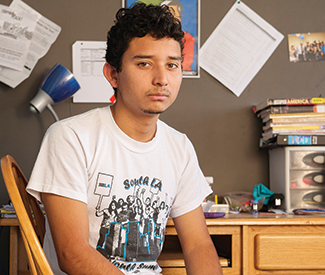
American Vagabond, about homeless LGBT youth, is particularly timely in light of the SF Board of Supervisors’ recent vote to close parks overnight. Golden Gate Park is home for James and Tyler, a young couple who’ve fled their close-minded families, dreaming of a better life in the rainbow capital of California. Guided by James’ poetic, confessional narration — as well as other voices that chime in to share their experiences — American Vagabond is a specific, deeply personal story that also offers a broader comment on how gay youths and the homeless are treated, even in a city as progressive as SF. And it does take some unexpected turns, as when James reunites with the family that rejected him — though the reasons for the reconciliation are not happy ones.

Elsewhere in the fest, take note of Berry Minott’s The Illness and the Odyssey, a medical whodunit of sorts that explores the history and controversy surrounding Lytico-Bodig, a neurological disease found almost exclusively in Guam. For years, scientists have believed that finding its cause would be like “a Rosetta stone,” according to Dr. Oliver Sacks, resulting in cures for Alzheimer’s, Parkinson’s, and related illnesses. But since nobody can settle on a hypothesis — is it infectious? Caused by plants? The result of a curse? — and nobody really wants to share research (what, and let that Nobel Prize slip away?), there’s been little progress other than clashing speculation, to the great annoyance of those in Guam whose families are affected by the disease. Ultimately, The Illness and the Odyssey is more about the scientific process than anything else, with plenty of prickly personalities (in both current and vintage footage) stepping up to share their views.

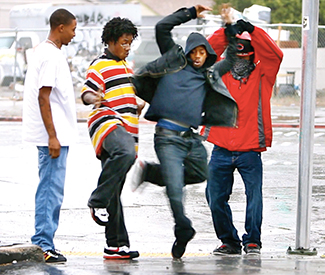
Also worth a mention: In Hak Jang’s The Other Side of the Mountain, a Korean War-era romance (with musical numbers) that happens to be the first-ever North Korea/US cinematic co-production. And don’t miss “Street Smarts: YAK Films’ Dance Then and Now,” an Oakland-born phenomenon that has spawned a international array of films showcasing so-called urban dance — staged on subway cars, in intersections, and other unexpected places — of the most limber, slinky, sassy, acrobatic, and awe-inspiring varieties. *

CINEMA BY THE BAY FESTIVAL

Fri/22-Sun/24, $10-$25

Roxie Theater

3117 16th St, SF

www.sffs.org


Albany Bulb squatters lose in court and turn to direct action to resist evictions

4

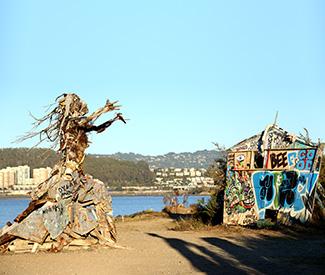
Yesterday marked a big day for Albany Bulb residents. The Bulb, a closed landfill turned homeless encampment, has been under the threat of eviction by the Albany City Council for the last month. 

After an afternoon in a San Francisco courtroom, Judge Charles Breyer of the US District Court for the Northern District of California denied a stay away order filed by the residents’ attorneys seeking to prevent an imminent eviction by the City of Albany. Later that day, after an Alban City Council meeting, residents and activists marched to the Bulb and set up a permanent occupation in protest of the impending eviction.

The stay away order was filed last week in order to prevent eviction during the winter. Osha Neumann, one of the residents’ attorneys and a longtime artist whose work is represented at the Bulb, said that it was unusually cruel to make the residents, some with severe disabilities and mental health issues, move off the Bulb without any homeless shelters or temporary housing available in Albany.

“They haven’t said what is the urgency or need to do it in the middle of winter,” Neumann said of the city, “It’s nonsense.”

Albany Housing Advocates was also a plaintiff, along with 10 of the Bulb residents in the lawsuit.  Julie Winklestein, the president of the AHA was in the court audience, said she hoped that the stay away order would be given: “We decided for a temporary restraining order to keep the conversation going.”

And while that conversation was put to a halt, another has started.

According to a press release issued by area activists and Bulb residents sent early this morning, “activists say they will be participating in trainings, hosting workshops, and planning more actions targeting the City of Albany, as well as the Sierra Club and Citizens for East Shore Parks, recreationalist organizations that are sponsoring the eviction.”

Based on information obtained in court documents, $570,000 was allocated to remove the Bulb residents, based on an Albany City Council decision made on October 21, with $171,000 spent on the cleanup of the campsites and the remainder spent on two portable trailers with bunk beds to serve as transitional housing for six months.

 Many of the campers, such as six-year resident Amber Lynn Whitson, believe that the transitional housing isn’t responsive enough for disabled people, as they believe it would not be open during the day.

“It’s ridiculous that they say they don’t know of any specific disabilities,” said Whitson about the city’s attempt provide transitional housing.

“If I’m not back there, I’m on the streets,” Kris Sullivan, an 18-month Bulb resident said about the encampment. “We’re safe back there.” 

After Prop 30, What’s Next? Reform Prop 13.

23


By Matt Haney

Proposition 30 was a big deal: It raised over $6 billion a year by increasing taxes on the wealthy, balanced the state budget, and allowed our K-12 and higher education systems to put an end to mass layoffs, exploding class sizes, and ballooning tuition.

But one year later, it’s about time we ask ourselves: What’s next?

Even after Prop 30, the under funding of education and essential services remains, with California still near the bottom nationally in K-12 per pupil funding. Prop 30 was a step forward, but we all knew that we ultimately would have to take on the “Godzilla” of California tax policy: Proposition 13.

Since its passage in 1978, Prop 13 has decimated public education and essential services in our state. Per pupil support in California plummeted from top 10 in the nation to bottom 10, and the tax burden shifted away from businesses and onto individuals. As state investments in services and education went down, poverty went up.

California voters originally passed Prop 13 mainly to protect homeowners. But due to loopholes in the law that prevent regular reassessment of commercial property, large commercial property owners are getting a multi-billion dollar public subsidy. Many commercial property owners are paying taxes at rates that are nearly unchanged from decades ago. Chevron alone is under-taxed by a billion dollars!

Reforming the commercial property tax loophole in Prop 13 could bring in over $7 billion dollars annually, most of which would go directly to education. Despite new funding from Prop 30, our schools desperately need greater investments if we are going to provide a 21st century education for all of our children.

Prop 13 has long been viewed as the “third rail” of California politics. Talk about reforming it, and risk your political career. Yet recent polls show an openness from Californians to reform Prop 13 to ensure more regular value reassessment of commercial property. Demographic change, voter education and registration, and the victory of Prop 30, have shifted the political landscape.

The San Francisco School Board recently joined dozens of School Boards, City Councils, and Board of Supervisors across the state in calling for the reform of Prop 13 through a statewide ballot initiative in 2016 or sooner. The strategy, led by organizations like Evolve California and California Calls, is to ramp up the pressure from the ground up. Cities, schools, and communities are the canaries in the mine. We have experienced Prop 13’s carnage firsthand, and we cannot be silent.

Just as we did with Prop 30, Californians deserve a choice: fully fund education and essential services, or maintain a broken and inequitable tax system. We can’t have both. Next time the stakes will be even higher, so it’s critical that we start preparing for this fight now. Let’s get to work.


Overstimulated

2

Environmentalists who oppose fracking in California are concerned about more than possible groundwater contamination or other hazards that could directly result from the fossil fuel drilling practice. They also want to save the planet.

The Monterey Shale, a massive underground geological formation spanning a large swath of California, contains approximately 15 billion barrels of hard-to-get oil that could technically be extracted in massive fracking operations, Kassie Siegel of the Center for Biological Diversity said during a Nov. 15 call with reporters.

All told, burning that quantity would eventually release six billion metric tons of carbon dioxide into the air. “That is a carbon bomb,” Siegel stated bluntly. Combined with methane that is released from the wells during the drilling operations, “a fracking boom in California could undo all the progress our state has made on greenhouse reductions,” she warned.

But for now, the debate on fracking in California is focused on newly drafted state regulations that would place controls on the practice for the first time. The proposed rules pertain to permitting and disclosure in the areas surrounding individual wells — yet they don’t contemplate the cumulative impact of fossil fuel combustion over time.

Fracking, formally known as hydraulic fracturing, is a technique used for extracting oil or natural gas. It involves injecting high-pressure fluids underground, often containing toxic chemicals, to break up bedrock in order to access the fossil fuel sources trapped within. The California Division of Oil, Gas, and Geothermal Resources (DOGGR) released a set of draft regulations Nov. 15 proposing new rules around what’s known as “well stimulation,” industry-speak for a type of drilling that includes fracking.

The new rules are slated to go into effect on Jan. 1, 2015. They’ll continue to be hashed out throughout next year, and DOGGR will accept public comment on the initial proposal until Jan. 14, 2014.

The regulations came about in response to Senate Bill 4, legislation enacted Sept. 30 after a statewide coalition of environmentalists launched a campaign to put a stop to fracking, which is already happening in some parts of California. Many groups within that coalition viewed the legislation as flawed, because it didn’t prohibit the practice outright.

“The only safe way forward for California is a halt to fracking in our state,” Siegel said.

Still, the draft regulations do seek to place new requirements on the oil and gas industry in an effort to protect public health where fracking occurs. According to DOGGR records, fracking is most common in Kern County.

“There are some good provisions in the regulations,” Bill Allayaud of the Environmental Working Group said in the briefing. “For the first time, all forms of well stimulation will require a permit from DOGGR. That’s a good thing.”

The rules will also require companies to conduct an analysis of groundwater and other wells nearby before proceeding with fracking operations, unlike before. The new regulations also establish a notification process to make nearby residents aware of new drilling operations.

Meanwhile, SB 4 calls for an environmental impact report and a study on the overall health and safety effects of fracking — but it’s unlikely that this study would result in a prohibition on the drilling practice, as environmentalists had initially called for.

“The Natural Resources Agency is currently developing the scope of the study and will begin the analysis in December 2013,” according to a fact sheet published by DOGGR.

“We don’t think we’ll be getting deep answers as to whether fracking and acidization and all forms of well stimulation are safe or not, for both protecting public health and the environment,” Allayaud said.

Meanwhile, he expressed concern that the public comment period for the initial set of proposed rules did not provide enough time for concerned Californians to respond, because people are being asked to weigh in over the course of the holiday season. The Environmental Working Group has requested an extension of that deadline, but it seems unlikely that DOGGR will grant one.

“The comment period was extended from the mandatory 45 days to 60 days for that reason,” California Department of Conservation Chief Deputy Director Jason Marshall said when asked whether the deadline extension would be granted in light of the holidays. “Additionally, we are anticipating an additional 45-day public comment period after the initial draft regulations are adjusted based on that initial public comment.”

Environmentalists also voiced the concern that while DOGGR plans to hold a series of public hearings on the proposed fracking regulations, none will be held in the Bay Area, despite its concentration of advocates who helped get the statewide opposition campaign off the ground.

“The law requires one public meeting, if requested. We are doing five, primarily in areas of the state where oil production is most common,” Marshall responded when asked why there weren’t any Bay Area meetings scheduled.

Asked whether any of the pending studies would take into account the six billion metric tons of CO2 that could potentially be released if the Monterey Shale were to be developed, Marshall seemed to suggest that the state was willing to go along with a regulated form of fracking even as it continues pursuing initiatives to curb greenhouse gas emissions.

“We still derive over 90 percent of our transportation fuels from hydrocarbons,” he wrote in an email. “With SB 4 and these regulations, California is acting now to ensure that extraction of those hydrocarbons happens in the safest way possible, even as we work to reduce our energy dependence on those hydrocarbons.”

Richmond resident saved from deportation at the last moment

7

Felipe Valdes has lived and worked in the United States for 23 years. Two weeks ago, he received a letter ordering his deportation. Valdes reported to the Immigration and Customs Enforcement (ICE) office in downtown San Francisco yesterday (Mon/18) morning as he instructed and prepared to say his final goodbyes to his family before boarding one of ICE’s deportation buses at noon. Instead, he was released after five hours and allowed to return to his home in Richmond.

“It’s one in a million,” stated Marie Vincent, Valdes’ attorney. She had filed a stay of removal on her client’s behalf to delay his deportation, but such claims rarely get reviewed quickly. Vincent believes Valdes was awarded additional time in the US at the last moment because of media attention he received in recent weeks.

“His case was very compelling,” she explained. “He’s been here so long, and he has contributed greatly to the United States. He’s worked the whole time, he’s active at his church, his children are here. This is his country.”

While Valdes met with ICE officers inside, more than 50 local faith leaders, community members and reporters assembled on the street outside the office, with supporters there to protest the deportation. According to Vincent, this pressure was critical in influencing ICE’s decision to approve Valdes for a one-year work permit, temporarily halting his deportation.

That year may prove to be enough time for the currently pending residency visa application that Valdes recently submitted to be reviewed. His application is the latest in a long history of attempts to become a legal resident of the U.S. stretching back to 1997, seven years after he immigrated here from Mexico with his wife, their baby son, and their unborn daughter. Now, Vincent thinks he finally has a strong case that will earn him legal status in the US.

If Valdes is forced to return to Mexico, it could result in major consequences for his family. His wife, their three children, and their granddaughter all depend upon his wages as a plumber to survive.

“We would have really struggled just to buy food or make rent,” his daughter, Mayra Valdes, reflected after the family received the news that Valdes would not be deported that day.

Mayra’s younger brother suffers from severe scoliosis. The family does not have medical insurance and without Valdes’ earnings, they would be unable to afford the specialized chiropractic and medical care that he needs. With his father gone and no one to pay for his costly weekly treatments, there would be weeks when the boy would not even have been able to walk.

The family depends on Valdes for more than his income too.

“He really pushes me and my siblings to keep going to school,” says Mayra, a Contra Costa Community College student. Her older brother is at the University of California at Davis, and her younger brother is a senior at Richmond High School. With a four-year-old daughter and a second child on the way, Mayra relies on her father to babysit after he gets off work so that she can attend classes.

Valdes’ victory on Monday was a bright note in the sad story of deportation in this country. His single case may not mean much in the broader fight for immigration reform, but for his family, it has meant the world.

“I wanted today to disappear from the calendar,” Mayra recalls, “but now I feel like it was the happiest day of my life. My father was able to come home today—it’s the best present I’ve ever received.”

SF General will lose much of its federal subsidy under Obamacare

137

As President Obama’s Affordable Care Act is phased in over the next couple years, San Francisco General Hospital will lose at least 25 percent of the $123 million it receives from the federal government to offset costs of caring for the uninsured, but hopefully that will be offset by its expansion of those who will have health insurance.

General Hospital receives those funds for being a so-called “safety-net hospital,” a place where those without insurance can still get quality healthcare. Even though the need for such safety nets is supposed to diminish under Obamacare, SF General will remain a critically important safety-net hospital.

Many San Franciscans – including non-U.S. citizens who won’t qualify for coverage under the Affordable Care Act, as well as homeless individuals – will continue to rely on the hospital when in need of medical care.

Yet here and nationwide, concern is brewing about whether funding for safety-net hospitals could be impacted if enrollment in the new state health exchanges doesn’t reach anticipated levels.

“The financial question every state is asking is: What are the newly eligible patients going to do? What plan will they enroll in? Will they enroll?” Greg Wagner, CFO of the San Francisco Department of Public Health, told the Guardian, referring to the health insurance marketplaces created under the Affordable Care Act.

Most safety-net hospitals in the country are bolstered with federal subsidies, and are especially reliant on funds known as disproportionate share hospital payments, or DSH. However, those subsidies are about to be slashed with machete-like strokes.

All told, as much as $18 billion nationwide could be siphoned away from safety-net hospitals by 2020. Compounding that is another $22 billion that could be cut from Medicare subsidies, depending on the number of insured.

There’s an expectation that the looming safety-net budget cut will be offset by the burgeoning population of insured residents who would flock to state health exchanges. It makes sense: Instead of absorbing the entire cost of an uninsured patient, hospitals would be getting money from newly active insurance policies, and no money would be lost.

The New York Times recently ran a story detailing how low-income patients in Georgia may be put in a precarious position under federal healthcare reform because safety-net hospitals in Georgia might not be able to make up for lost funding once DSH payments evaporate.

California isn’t likely to experience this problem to the same degree, Wagner said, because the state chose to expand Medi-Cal, the state version of Medicaid, to include all low-income residents and not just those who previously qualified under a narrow set of criteria. Georgia had the same option to expand, but chose to keep its Medicaid qualifications in place, like many states led by Republicans looking to tweak President Obama.

As things stand, enrollment in Covered California – the state’s health insurance marketplace under the Affordable Care Act – remains low. Until enrollment closes at the end of March, it’s an open question whether it will reach the necessary levels to make up for pending cutbacks.

So far, 59,000 Californians had completed applications and enrolled in health insurance plans within the new marketplace as of Nov. 13. That’s a drop in the bucket, considering that 2.3 million are eventually expected to enroll. According to state data, 203,904 applications had been started online (reflecting an estimated 370,000 individuals). In addition to those applying for Covered California plans, another 72,000 people were determined eligible for Medi-Cal. 

“SF General operates on a huge amount of federal money,” Wagner explained. “Some comes directly from the federal government, and some comes from DSH.” He said the hospital received $123 million in DSH funds last year, “and not all of that will go away” once cuts go into effect.

“Healthy SF will still be around after March 31,” said Wagner. “We’re still retaining the program for anybody not eligible for Medi-Cal, and through Healthy SF those people can still access primary healthcare.”
He even said that under extreme circumstances, like the delivery of a child, for instance, some undocumented immigrants will have the opportunity to enroll in Medi-Cal. 
And it’s not all gloom-and-doom on the subsidy front, either. There is a safety-valve for the safety-net hospitals: If everyone who is expected to enroll in Covered California actually does so, the funding will be available without the need to rely on federal aid. 
But in order to achieve that idyllic plateau, a serious push is needed on the enrollment level. Granted, those enrollment figures should rise. But what if they don’t? 
“If people don’t enroll in the new programs, it will be a big problem,” said Wagner. “If we have a significantly lower enrollment number than we initially predicted, we will have some major financial issues. There’s still some uncertainty.”

He added, “We’ll still provide care for the uninsured at SF General. The money will decrease, but it won’t disappear. By no means will all of the money go away. The hope is that the newly enrolled will offset the decreasing number of uninsured, then the federal government could take the DSH payment and redirect it to the providers.” 

That being said, “we still have lots of optimism moving forward,” Wagner said. “We think people will enroll.”

[Correction: We corrected the amount of the reduction from 50 percent down to 25 percent].


O+ Festival trades health care for music and art performances

0

Artists struggle for their art, but they shouldn’t also have to also sacrifice their health. That’s the basic premise behind this weekend’s three-day O+ Festival in San Francisco, where musicians and other artists will perform in exchange for medical, dental, and wellness services at a pop-up clinic at The Center SF art space on Fillmore Street and other offices around town.

“Bartering the art of medicine for the medicine of art,” is the tagline for a festival that is making its debut outside of New York, where it began. The lineup includes local folk rockers Papa Bear & Friends, soulful singer Quinn DeVeaux, mashup DJ Zack Darling, and many more, performing in venues that include Inner Mission and the Make-Out Room.

The festival began in 2010 in Kingston, NY, when painter Joe Concra had a dentist friend who had the idea of bringing a band he liked up from Brooklyn and paying them in free dental services. The idea resonated with Concra, who knew well how much New York’s artists struggled to make ends meet.

“Artists are not only being pushed out, but they’re not able to get the healing they deserve,” Concra told the Guardian, saying the first festival was such a hit that it took on a life of its own. “Once we do it, once people go, then they really get it. And it goes back to the age-old idea of trade.”

Long before modern health insurance debacles, doctors and dentists were members of their communities, and people would pay them with whatever they had to offer. But today, larger and larger companies providing care in collaboration with insurance companies, even the basic community clinic is becoming a thing of the past.

“We’re breaking down that access to care barrier, because some many people don’t know where to start,” Concra said, saying he was surprised at the flood gates opened by his simple idea. “Now, we’re at the point where we have 220 bands applies for 40 spots…We were not prepared for the amount of need in the artist community.”

Concra had started thinking about where to expand the festival when he was contacted by Deborah Gatiss, San Francisco-based artist and event coordinator, who had heard about the concept from a friend in the Burning Man Project.  

“It goes back to May of last year, and I was lamenting the fact that I have no health care, because I had a really bad toothache. I was talking with a friend of mine and we were discussing things people could do for health care when they have no dental insurance and this was one of the things that came up,” she told us.

Concra was already talking about a Bay Area event with Aimee Gardner, who he knew from an art gallery in Kingston before she moved to California, and Gardner and Gatiss ended up spearheading the creation of O+ Festival-San Francisco.

“Coming from New York, I feel like San Francisco is going a similar direction,” Gardner said of artists who can’t afford to live here. “I think it’s a really revolutionary idea. It’s activism in a very thoughtful way.”

The pair managed to line up sponsors and a list of volunteer health practioners from a variety of disciplines, people that Concra called “the real rock stars of this event.” So while the performers get free health care, those who buy the $25 tickets get three days of free music and art, discounted drinks at various venues, and even free yoga classes at Yoga Tree’s new Potrero Hill studio.

The festival opens tomorrow (Fri/15) at 6:15 at The Center SF, 548 Fillmore, with a health care panel discussion featuring Concra, Artist Xavi Panneton, Dan Kitowski of the Actors Fund, and me, Guardian Editor Steven T. Jones.

Gatiss said it’s been a challenge to pull together such an ambtious festival and she hopes that Bay Area residents — who love art and music and are accustomed to gift and barter economies through things like Burning Man — will turn out to show their support.

“I thought that people were used to that mindset, so they’d be up for the idea of bartering their musical talents for health care and vice versa,” Gatiss told us. “It’s been harder than I thought. But it’s been fulfilling and magical and I’m glad that I did it, and I think Aimee would say the same thing.”


Music Listings: Nov. 13-19

0

WEDNESDAY 13
ROCK
Brick & Mortar Music Hall: 1710 Mission, San Francisco. Hot Toddies, Kill Moi, Odd Owl, Blaus, 9 p.m., $6-$9.
Cafe Du Nord: 2170 Market, San Francisco. “Thanks But No Thanksgiving,” Benefit for KUSF in Exile and One Mama featuring The Sam Chase, Jesús & The Rabbis, M.O.M. DJs, 9 p.m., $10-$15.
The Chapel: 777 Valencia St., San Francisco. Those Darlins, Diane Coffee, Jesus Sons, 9 p.m., $12-$15.
Elbo Room: 647 Valencia, San Francisco. Buffalo Tooth, Commissure, Growwler, Popgang DJs, 9 p.m., free.
Hemlock Tavern: 1131 Polk, San Francisco. White Mystery, Dead Meat, 8:30 p.m., $10.
Hotel Utah: 500 Fourth St., San Francisco. Grex, Cash Pony, Inner Ear Brigade, Mark Clifford Quartet, 8 p.m., $8-$10.
Monarch: 101 6th St., San Francisco. Tall Fires, Mosaics, Unruly Things, Stomping Grounds, 8 p.m., $8.
Thee Parkside: 1600 17th St., San Francisco. The Deer Tracks, Low Leaf, Survival Guide, 8 p.m., $10.
DANCE
The Cafe: 2369 Market, San Francisco. “Sticky Wednesdays,” w/ DJ Mark Andrus, 8 p.m., free.
Cat Club: 1190 Folsom, San Francisco. “Bondage A Go Go,” w/ DJs Damon, Tomas Diablo, & guests, 9:30 p.m., $5-$10.
Clift Hotel, Redwood Room: 495 Geary, San Francisco. “Enigma: Sessions 003,” w/ Reckless in Vegas, Dean Samaras, Richard Habib, Marija Dunn, 6 p.m., free.
Club X: 715 Harrison, San Francisco. “Electro Pop Rocks,” 18+ dance party with Gummy & Dosvec, 9 p.m.
Edinburgh Castle: 950 Geary, San Francisco. “1964,” w/ DJ Matt B & guests, Second and Fourth Wednesday of every month, 10 p.m., $2.
The EndUp: 401 Sixth St., San Francisco. “Tainted Techno Trance,” 10 p.m.
F8: 1192 Folsom St., San Francisco. “Housepitality,” w/ Francesca Lombardo, Michael Tello, Paul Carey, Mike Bee, Joel Conway, 9 p.m., $5-$10.
Harlot: 46 Minna, San Francisco. “Qoöl,” 5 p.m.
The Independent: 628 Divisadero, San Francisco. Thundercat, Real Magic, The Seshen, 8 p.m., $15-$17.
Infusion Lounge: 124 Ellis, San Francisco. “Indulgence,” 10 p.m.
The Knockout: 3223 Mission, San Francisco. “Disorder,” w/ Detachments, Replicanti, DJ Nickie, 10 p.m., $5.
Lookout: 3600 16th St., San Francisco. “What?,” w/ resident DJ Tisdale and guests, 7 p.m., free.
Madrone Art Bar: 500 Divisadero, San Francisco. “Rock the Spot,” 9 p.m., free.
MatrixFillmore: 3138 Fillmore, San Francisco. “Reload,” w/ DJ Big Bad Bruce, 10 p.m., free.
Q Bar: 456 Castro, San Francisco. “Booty Call,” w/ Juanita More, Joshua J, guests, 9 p.m., $3.
HIP-HOP
Double Dutch: 3192 16th St., San Francisco. “Cash IV Gold,” w/ DJs Kool Karlo, Roost Uno, and Sean G, 10 p.m., free.
Skylark Bar: 3089 16th St., San Francisco. “Mixtape Wednesday,” w/ resident DJs Strategy, Junot, Herb Digs, & guests, 9 p.m., $5.
ACOUSTIC
Cafe Divine: 1600 Stockton, San Francisco. Craig Ventresco & Meredith Axelrod, 7 p.m., free.
Club Deluxe: 1511 Haight, San Francisco. Happy Hour Bluegrass, 6:30 p.m., free.
Dolores Park Cafe: 501 Dolores, San Francisco. Joe Marson & Roem Baur, 6:30 p.m.
Johnny Foley’s Irish House: 243 O’Farrell St., San Francisco. Terry Savastano, Every other Wednesday, 9 p.m., free.
The Lost Church: 65 Capp St., San Francisco. Tall Heights, Jeff Conley, 8 p.m., $10.
Plough & Stars: 116 Clement, San Francisco. Daniel Seidel, 9 p.m.
Rickshaw Stop: 155 Fell, San Francisco. Farallons, Michael Musika, From a Fountain, 8 p.m., $10.
Swedish American Hall: 2174 Market, San Francisco. Vanessa Carlton, Birdcloud, 7:30 p.m., $25.
JAZZ
Amnesia: 853 Valencia, San Francisco. Gaucho, Eric Garland’s Jazz Session, The Amnesiacs, 7 p.m., free.
Burritt Room: 417 Stockton St., San Francisco. Terry Disley’s Rocking Jazz Trio, 6 p.m., free.
Center for New Music: 55 Taylor St., San Francisco. Peter Brötzmann & Paal Nilssen-Love, 7:30 p.m., $18-$28.
Jazz Bistro At Les Joulins: 44 Ellis, San Francisco. Charles Unger Experience, 7:30 p.m., free.
Le Colonial: 20 Cosmo, San Francisco. The Cosmo Alleycats featuring Ms. Emily Wade Adams, 7 p.m., free.
Savanna Jazz Club: 2937 Mission, San Francisco. “Cat’s Corner,” 9 p.m., $10.
Sheba Piano Lounge: 1419 Fillmore, San Francisco. Jesse Foster, 8 p.m.
Top of the Mark: One Nob Hill, 999 California, San Francisco. Ricardo Scales, Wednesdays, 6:30-11:30 p.m., $5.
Tupelo: 1337 Green St., San Francisco. Kit Ruscoe, 9:30 p.m.
Zingari: 501 Post, San Francisco. Sherri Roberts, 7:30 p.m., free.
INTERNATIONAL
Bissap Baobab: 3372 19th St., San Francisco. Timba Dance Party, w/ DJ WaltDigz, 10 p.m., $5.
Cafe Cocomo: 650 Indiana, San Francisco. “Bachatalicious,” w/ DJs Good Sho & Rodney, 7 p.m., $5-$10.
First Unitarian Universalist Society of San Francisco: 1187 Franklin, San Francisco. Kaoru Kakizakai with Shirley Kazuyo Muramoto, 7 p.m., $20.
Pachamama Restaurant: 1630 Powell, San Francisco. “Cafe LatinoAmericano,” 8 p.m., $5.
BLUES
Biscuits and Blues: 401 Mason, San Francisco. Alvon Johnson, 7:30 & 9:30 p.m., $15.
The Saloon: 1232 Grant, San Francisco. Leah Tysse, 9:30 p.m.
FUNK
Vertigo: 1160 Polk, San Francisco. “Full Tilt Boogie,” w/ KUSF-in-Exile DJs, Second Wednesday of every month, 8 p.m.-1:30 a.m., free.
SOUL
The Royal Cuckoo: 3202 Mission, San Francisco. Freddie Hughes & Chris Burns, 7:30 p.m., free.
THURSDAY 14
ROCK
Bottom of the Hill: 1233 17th St., San Francisco. 65daysofstatic, Caspian, The World Is a Beautiful Place & I Am No Longer Afraid to Die, 9 p.m., $15-$17.
Brick & Mortar Music Hall: 1710 Mission, San Francisco. The Besnard Lakes, Elephant Stone, 9 p.m., $13-$15.
S.F. Eagle: 398 12th St., San Francisco. Thursday Nite Live: Titan Ups, Bell Tower, The Hampton Wicks, 9 p.m., $8.
Hemlock Tavern: 1131 Polk, San Francisco. Slough Feg, Skeletor, Vulturegeist, 8:30 p.m., $10.
The Independent: 628 Divisadero, San Francisco. KMFDM, Chant, 8 p.m., $28-$30.
The Knockout: 3223 Mission, San Francisco. Vaz, Burmese, Donkee, 10 p.m., $8.
Thee Parkside: 1600 17th St., San Francisco. Alestorm, Trollfest, Gypsyhawk, Valensorow, 9 p.m., $20.
DANCE
1015 Folsom: 1015 Folsom St., San Francisco. “A Light in the Attic,” w/ Phutureprimitive, Unlimited Gravity, Soulular, Bedrockk, Evolutionista, Smash & Grab, 10 p.m., $5-$10 advance.
Abbey Tavern: 4100 Geary, San Francisco. DJ Schrobi-Girl, 10 p.m., free.
Audio Discotech: 316 11th St., San Francisco. “Phonic,” w/ Felix Cartal, Ron Reeser, more, 9:30 p.m., $10 advance.
Aunt Charlie’s Lounge: 133 Turk, San Francisco. “Tubesteak Connection,” w/ DJ Bus Station John, 9 p.m., $5-$7.
The Cafe: 2369 Market, San Francisco. “¡Pan Dulce!,” 9 p.m., $5.
Cat Club: 1190 Folsom, San Francisco. “Throwback Thursdays,” ‘80s night with DJs Damon, Steve Washington, Dangerous Dan, and guests, 9 p.m., $6 (free before 9:30 p.m.).
The Cellar: 685 Sutter, San Francisco. “XO,” w/ DJs Astro & Rose, 10 p.m., $5.
Club X: 715 Harrison, San Francisco. “The Crib,” 9:30 p.m., $10, 18+.
Danzhaus: 1275 Connecticut, San Francisco. “Alt.Dance,” Second Thursday of every month, 7 p.m., $7, 18+.
DNA Lounge: 375 11th St., San Francisco. “8bitSF,” w/ Crashfaster, Bit Shifter, Trash80, Unwoman, DJ Doctor Popular, 9 p.m., $10-$15.
Elbo Room: 647 Valencia, San Francisco. “Afrolicious,” w/ DJs Pleasuremaker, Señor Oz, and live guests, 9:30 p.m., $5-$8.
Harlot: 46 Minna, San Francisco. “Modular,” w/ Uner, JOill, Pedro Arbulu, MFYRS, 9 p.m., $7-$10.
Infusion Lounge: 124 Ellis, San Francisco. “I Love Thursdays,” 10 p.m., $10.
Madrone Art Bar: 500 Divisadero, San Francisco. “Night Fever,” 9 p.m., $5 after 10 p.m.
Public Works: 161 Erie, San Francisco. “Enigma,” w/ Butane, Stephanie, Marija Dunn, Amber Reyn, Richard Habib (in the OddJob Loft), 10 p.m., $10-$20 advance.
Q Bar: 456 Castro, San Francisco. “Throwback Thursday,” w/ DJ Jay-R, 9 p.m., free.
Raven: 1151 Folsom St., San Francisco. “1999,” w/ VJ Mark Andrus, 8 p.m., free.
Ruby Skye: 420 Mason, San Francisco. “Awakening,” w/ Danny Avila, Matisse Sadko, 9 p.m., $20-$25 advance.
The Tunnel Top: 601 Bush, San Francisco. “Tunneltop,” DJs Avalon and Derek ease you into the weekend with a cool and relaxed selection of tunes spun on vinyl, 10 p.m., free.
Underground SF: 424 Haight, San Francisco. “Bubble,” 10 p.m., free.
HIP-HOP
Eastside West: 3154 Fillmore, San Francisco. “Throwback Thursdays,” w/ DJ Madison, 9 p.m., free.
The EndUp: 401 Sixth St., San Francisco. “Cypher,” w/ resident DJ Big Von, 10 p.m., $5-$10.
John Colins: 138 Minna, San Francisco. “Party with Friends,” w/ resident DJs IllEfect, GeektotheBeat, Merrick, and Delrokz, Second Thursday of every month, 9 p.m., free.
Mezzanine: 444 Jessie, San Francisco. A$AP Ferg, A$AP Mob, Joey Fatts, Aston Matthews, 100s, DJ Sean G, 9 p.m., $20.
Milk Bar: 1840 Haight, San Francisco. Rime Force Most Illin’, Fatees, Al Lover, Height with Friends, DJ Brycon, 9 p.m., $5.
Park 77 Sports Bar: 77 Cambon, San Francisco. “Slap N Tite,” w/ resident Cali King Crab DJs Sabotage Beats & Jason Awesome, free.
Skylark Bar: 3089 16th St., San Francisco. “Peaches,” w/lady DJs DeeAndroid, Lady Fingaz, That Girl, Umami, Inkfat, and Andre, 10 p.m., free.
ACOUSTIC
Amnesia: 853 Valencia, San Francisco. Ghost & Gale, Lea Pruett, The Shants, 9 p.m., $7-$10.
Atlas Cafe: 3049 20th St., San Francisco. Gayle Lynn & The Hired Hands, 8 p.m., free.
Bazaar Cafe: 5927 California, San Francisco. Acoustic Open Mic, 7 p.m.
Boom Boom Room: 1601 Fillmore, San Francisco. Whitewater Ramble, Free Peoples, 9:30 p.m., $10.
Cafe Du Nord: 2170 Market, San Francisco. The Melodic, Steve Taylor Band, Sophia Knapp, 8:30 p.m., $12.
The Lost Church: 65 Capp St., San Francisco. Aireene & The Hobos, Deborah Crooks, 8 p.m., $10-$12.
Pa’ina: 1865 Post St., San Francisco. Ashley Lilinoe, 7 p.m., free.
Plough & Stars: 116 Clement, San Francisco. Emperor Norton Céilí Band, 9 p.m.
Yoshi’s San Francisco: 1330 Fillmore, San Francisco. An Evening with Graham Nash, 8 p.m., $89.
JAZZ
Blush! Wine Bar: 476 Castro, San Francisco. Doug Martin’s Avatar Ensemble, 7:30 p.m., free.
Bottle Cap: 1707 Powell, San Francisco. The North Beach Sound with Ned Boynton, Jordan Samuels, and Tom Vickers, 7 p.m., free.
Cafe Claude: 7 Claude, San Francisco. Mad & Eddie Duran Trio, 7:30 p.m., free.
Le Colonial: 20 Cosmo, San Francisco. Steve Lucky & The Rhumba Bums, 7:30 p.m.
The Royal Cuckoo: 3202 Mission, San Francisco. Charlie Siebert & Chris Burns, 7:30 p.m., free.
Savanna Jazz Club: 2937 Mission, San Francisco. Savanna Jazz Jam with Eddy Ramirez, 7:30 p.m., $5.
SFJAZZ Center: 205 Franklin St., San Francisco. “Hotplate,” w/ Tiffany Austin (playing Hoagy Carmichael), 8 & 9:30 p.m.
Top of the Mark: One Nob Hill, 999 California, San Francisco. Stompy Jones, 7:30 p.m., $10.
Zingari: 501 Post, San Francisco. Barbara Ochoa, 7:30 p.m., free.
INTERNATIONAL
Bissap Baobab: 3372 19th St., San Francisco. “Pa’Lante!,” w/ Juan G, El Kool Kyle, Mr. Lucky, 10 p.m., $5.
Cafe Cocomo: 650 Indiana, San Francisco. Danilo y Universal, DJ Good Sho, 8 p.m., $12.
Fort Mason, Southside Theater: Marina, San Francisco. Theatre Flamenco: Con Nombre y Apellido, The country’s oldest flamenco dance company celebrates its 47th home season., Nov. 14-16, 8 p.m.; Sun., Nov. 17, 2 p.m., $35-$75.
H Cafe: 3801 17th St., San Francisco. An Evening to Benefit the Duniya Center for Arts & Education, w/ Duniya Dance & Drum Company, Wontanara Revolution, Charlotte Nehm, Vanessa Sanchez, Naila, more, 6 p.m., $35-$80.
Pachamama Restaurant: 1630 Powell, San Francisco. “Jueves Flamencos,” 8 p.m., free.
Pier 23 Cafe: Pier 23, San Francisco. Armando Compean, 7 p.m., free.
Sheba Piano Lounge: 1419 Fillmore, San Francisco. Gary Flores & Descarga Caliente, 8 p.m.
Verdi Club: 2424 Mariposa, San Francisco. The Verdi Club Milonga, w/ Christy Coté, DJ Emilio Flores, guests, 9 p.m., $10-$15.
REGGAE
Make-Out Room: 3225 22nd St., San Francisco. “Festival ‘68,” w/ Revival Sound System, Second Thursday of every month, 10 p.m., free.
Pissed Off Pete’s: 4528 Mission St., San Francisco. Reggae Thursdays, w/ resident DJ Jah Yzer, 9 p.m., free.
BLUES
50 Mason Social House: 50 Mason, San Francisco. Bill Phillippe, 5:30 p.m., free.
Biscuits and Blues: 401 Mason, San Francisco. Nick Moss, 7:30 & 9:30 p.m., $20.
Jazz Bistro At Les Joulins: 44 Ellis, San Francisco. Bohemian Knuckleboogie, 7:30 p.m., free.
The Saloon: 1232 Grant, San Francisco. Tom Bowers, 4 p.m.; Steve Freund, 9:30 p.m.
COUNTRY
The Parlor: 2801 Leavenworth, San Francisco. “Twang Honky Tonk & Country Jamboree,” w/ DJ Little Red Rodeo, 7 p.m., free.
EXPERIMENTAL
The Luggage Store: 1007 Market, San Francisco. Capricious Forms Vol. 1, 8 p.m., $6-$10.
Yerba Buena Center for the Arts: 701 Mission, San Francisco. San Francisco Contemporary Music Players, 8 p.m., $12-$30.
FRIDAY 15
ROCK
Bottom of the Hill: 1233 17th St., San Francisco. Meat Puppets, The World Takes, 10 p.m., $17.
Brick & Mortar Music Hall: 1710 Mission, San Francisco. Golden Void, Hot Lunch, Harsh Toke, 9 p.m., $7-$10.
DNA Lounge: 375 11th St., San Francisco. Happy Fangs, Night Club, Everyone Is Dirty, Kat Haus, 8 p.m., $10.
El Rio: 3158 Mission, San Francisco. Friday Live: Down in Front, DJ Emotions, 10 p.m., free.
Hotel Utah: 500 Fourth St., San Francisco. The Bananas, Audacity, Hunters, Caldecott, 9 p.m., $10-$12.
Milk Bar: 1840 Haight, San Francisco. Part Time, Exray’s, Andy Human, Epicsauce DJs, 9 p.m., $10.
Rickshaw Stop: 155 Fell, San Francisco. Heroes and the Homo Superior: The Parables of Fancy Nancy, A “David Bowie superhero burlesque rock odyssey” featuring music by First Church of the Sacred Silversexual, burlesque routines by Hubba Hubba Revue, drag performances, and more., 9 p.m., $13.
Slim’s: 333 11th St., San Francisco. Alternative Tentacles 33 1/3 Anniversary Party, w/ Jello Biafra & The Guantanamo School of Medicine, Mojo Nixon, Death Hymn Number 9, Pins of Light., 8 p.m., $18.
Thee Parkside: 1600 17th St., San Francisco. That Ghost, FayRoy, Sons of Hippies, WAG, 9 p.m., $8.
DANCE
1015 Folsom: 1015 Folsom St., San Francisco. Rusko, Roni Size, Tonn Piper, Dynamite MC, Havoc, Ivry, Nebakaneza, Mr. Kitt, Johnny5, Danny Weird, Miss Haze, DJ Dials, Jays One, Audio-Troma, White Mike, Ryury., 10 p.m., $25 advance.
Audio Discotech: 316 11th St., San Francisco. Alex Sibley, Eelrack, Festiva, 9:30 p.m., $10 advance.
Cafe Flore: 2298 Market, San Francisco. “Kinky Beats,” w/ DJ Sergio, 10 p.m., free.
The Cafe: 2369 Market, San Francisco. “Boy Bar,” w/ DJ Matt Consola, 9 p.m., $5.
Cat Club: 1190 Folsom, San Francisco. “The Witching Hour,” w/ DJs Sage, Daniel Skellington, Joe Radio, and Nickie, 9:30 p.m., $7 ($3 before 10 p.m.).
The Cellar: 685 Sutter, San Francisco. “F.T.S.: For the Story,” 10 p.m.
The Chapel: 777 Valencia St., San Francisco. DJ Assault, Double Duchess, BadboE, Rapid Fire, 10 p.m., $10-$15.
DNA Lounge: 375 11th St., San Francisco. “So Stoked 13,” w/ Daniel Kandi, Ravine, Jimini Cricket, more, 7 p.m., $15-$25.
The EndUp: 401 Sixth St., San Francisco. “Fever,” 10 p.m., free before midnight.
The Grand Nightclub: 520 4th St., San Francisco. “We Rock Fridays,” 9:30 p.m.
Infusion Lounge: 124 Ellis, San Francisco. “Escape Fridays,” 10 p.m., $20.
Lookout: 3600 16th St., San Francisco. “HYSL,” 9 p.m., $3.
Madrone Art Bar: 500 Divisadero, San Francisco. “That ‘80s Show,” w/ DJs Dave Paul & Jeff Harris, Third Friday of every month, 9 p.m., $5.
Manor West: 750 Harrison, San Francisco. “Fortune Fridays,” 10 p.m., free before 11 p.m. with RSVP.
MatrixFillmore: 3138 Fillmore, San Francisco. “F-Style Fridays,” w/ DJ Jared-F, 9 p.m.
Mezzanine: 444 Jessie, San Francisco. “Fools in the Night,” w/ Ladyhawke (DJ set), American Royalty, Blackbird Blackbird, Aaron Axelsen, 9 p.m., $15.
Mighty: 119 Utah, San Francisco. “Masters at Work,” w/ Kenny Dope & Louie Vega, 9 p.m., $20-$50.
OMG: 43 6th St., San Francisco. “Release,” 9 p.m., free before 11 p.m.
Public Works: 161 Erie, San Francisco. “Odyssey,” w/ Rick Preston, Robin Simmons, Trevor Sigler (in the OddJob Loft), 9:30 p.m., $10.
Q Bar: 456 Castro, San Francisco. “Pump: Worq It Out Fridays,” w/ resident DJ Christopher B, 9 p.m., $3.
Ruby Skye: 420 Mason, San Francisco. Arnej, Bobina, Dirtyhertz, 9 p.m., $20 advance.
Slate Bar: 2925 16th St., San Francisco. “Darling Nikki,” w/ resident DJs Dr. Sleep, Justin Credible, and Durt, Third Friday of every month, 8 p.m., $5.
Sub-Mission Art Space (Balazo 18 Gallery): 2183 Mission, San Francisco. “Deathrock Night Terrors,” w/ The Frozen Autumn, V.E.X., Red Light, plus DJs Le Perv, Necromos, and Burning Skies, 8:30 p.m., $12-$15.
Temple: 540 Howard, San Francisco. “Refresh,” w/ Pedro Arbulu, Chemical Ali, David Gregory, DJ Tone, DJ Von, 10 p.m., $15.
Underground SF: 424 Haight, San Francisco. “Bionic,” 10 p.m., $5.
Vessel: 85 Campton, San Francisco. Dirty South, 10 p.m.
Wish: 1539 Folsom, San Francisco. “Bridge the Gap,” w/ resident DJ Don Kainoa, Fridays, 6-10 p.m., free; “Depth,” w/ resident DJs Sharon Buck & Greg Yuen, Third Friday of every month, 10 p.m., free.
HIP-HOP
EZ5: 682 Commercial, San Francisco. “Decompression,” Fridays, 5-9 p.m.
The Independent: 628 Divisadero, San Francisco. Big Freedia, 9 p.m., $20.
John Colins: 138 Minna, San Francisco. “Juicy,” w/ DJ Ry Toast, Third Friday of every month, 10 p.m., $5 (free before 11 p.m.).
Showdown: 10 Sixth St., San Francisco. BPos, Mo Classics, Monk McNizzle, 9 p.m., free.
Yoshi’s San Francisco: 1330 Fillmore, San Francisco. Sir Mix-A-Lot, 10:30 p.m., $18-$22.
ACOUSTIC
Amnesia: 853 Valencia, San Francisco. SnowApple, 7 p.m.
Bazaar Cafe: 5927 California, San Francisco. The Canon Band, 7 p.m.
Cafe Du Nord: 2170 Market, San Francisco. Megan Slankard, Tom Freund, Wafflebarrel, 9 p.m., $15.
Mercury Cafe: 201 Octavia, San Francisco. Toshio Hirano, Third Friday of every month, 7:30 p.m., free, all ages.
Plough & Stars: 116 Clement, San Francisco. “Bluegrass Bonanza,” w/ Travers Chandler & Avery County, Belle Monroe & Her Brewglass Boys, 9 p.m., $6-$10.
Red Poppy Art House: 2698 Folsom, San Francisco. Amy LaCour with Ross Hammond, 7:30 p.m., $10-$15.
The Sports Basement: 610 Old Mason, San Francisco. “Breakfast with Enzo,” w/ Enzo Garcia, 10 a.m., $5.
Yoshi’s San Francisco: 1330 Fillmore, San Francisco. An Evening with Mason Jennings, 8 p.m., $29.
JAZZ
Beach Chalet Brewery & Restaurant: 1000 Great Highway, San Francisco. Johnny Smith, 8 p.m., free.
Bird & Beckett: 653 Chenery, San Francisco. The Third Quartet, Third Friday of every month, 5:30 p.m., free.
Cafe Claude: 7 Claude, San Francisco. Nick Rossi Trio, 9:30 p.m., free.
City College: 50 Phelan, San Francisco. The Cartoon Jazz Band, 7:30 p.m., free.
Jazz Bistro At Les Joulins: 44 Ellis, San Francisco. Charles Unger Experience, 7:30 p.m., free.
The Palace Hotel: 2 New Montgomery, San Francisco. The Klipptones, 8 p.m., free.
Revolution Cafe: 3248 22nd St., San Francisco. Emily Anne’s Delights, Third Friday of every month, 8:45 p.m., free/donation.
Savanna Jazz Club: 2937 Mission, San Francisco. Jim Butler Group, 7:30 p.m., $8.
SFJAZZ Center: 205 Franklin St., San Francisco. Pamela Rose & Wayne De La Cruz, 7 & 8:30 p.m., $25.
Sheba Piano Lounge: 1419 Fillmore, San Francisco. Sam Caddy Quintet, 9 p.m.
Top of the Mark: One Nob Hill, 999 California, San Francisco. Black Market Jazz Orchestra, 9 p.m., $10.
Zingari: 501 Post, San Francisco. Joyce Grant, 8 p.m., free.
INTERNATIONAL
Bissap Baobab: 3372 19th St., San Francisco. Qumbia Qrew, Third Friday of every month, 8 p.m.; “Paris-Dakar African Mix Coupe Decale,” 10 p.m., $5.
Cafe Cocomo: 650 Indiana, San Francisco. Taste Fridays, featuring local cuisine tastings, salsa bands, dance lessons, and more, 7:30 p.m., $15 (free entry to patio).
Cigar Bar & Grill: 850 Montgomery, San Francisco. Orquesta La Clave, 8 p.m.
Fort Mason, Southside Theater: Marina, San Francisco. Theatre Flamenco: Con Nombre y Apellido, The country’s oldest flamenco dance company celebrates its 47th home season., Nov. 14-16, 8 p.m.; Sun., Nov. 17, 2 p.m., $35-$75.
Pachamama Restaurant: 1630 Powell, San Francisco. Cuban Night with Fito Reinoso, 7:30 & 9:15 p.m., $15-$18.
Pier 23 Cafe: Pier 23, San Francisco. Armando Compean, 8 p.m., free.
Public Works: 161 Erie, San Francisco. Afrolicious Band, J-Boogie, 10 p.m., $10.
REGGAE
Elbo Room: 647 Valencia, San Francisco. “The Social,” w/ Native Elements, Jah Yzer, 10 p.m., $10.
Gestalt Haus: 3159 16th St., San Francisco. “Music Like Dirt,” 7:30 p.m., free.
BLUES
Biscuits and Blues: 401 Mason, San Francisco. Kevin Selfe & The Tornadoes, 7:30 & 10 p.m., $20.
The Saloon: 1232 Grant, San Francisco. West Coast Blues Revue, 4 p.m.; Cathy Lemons, 9:30 p.m.
FUNK
Amnesia: 853 Valencia, San Francisco. “Hella Tight,” w/ resident DJs Vinnie Esparza, Jonny Deeper, & Asti Spumanti, Third Friday of every month, 10 p.m., $5.
Dolores Park Cafe: 501 Dolores, San Francisco. Shake It! Booty Band, 7:30 p.m.
Make-Out Room: 3225 22nd St., San Francisco. “Loose Joints,” w/ DJs Centipede, Damon Bell, & Tom Thump, 10 p.m., $5.
SOUL
Edinburgh Castle: 950 Geary, San Francisco. “Soul Crush,” w/ DJ Serious Leisure, 10 p.m., free.
The Knockout: 3223 Mission, San Francisco. “Oldies Night,” W/ DJs Primo, Daniel, Lost Cat, and friends, Third Friday of every month, 10 p.m., $5.
SATURDAY 16
ROCK
Bender’s: 806 S. Van Ness, San Francisco. Moses, Hornss, 10 p.m., $5.
Bottom of the Hill: 1233 17th St., San Francisco. Quasi, Blues Control, Street Eaters, 9:30 p.m., $15.
Brick & Mortar Music Hall: 1710 Mission, San Francisco. Someone Still Loves You Boris Yeltsin, Army Navy, 9 p.m., $12-$15.
Cafe Du Nord: 2170 Market, San Francisco. San Francisco Food Bank Benefit with Tommy Guerrero & Friends, El Diablitos, DJ Romanowski, 9:30 p.m., $10-$15.
The Chapel: 777 Valencia St., San Francisco. Cellar Doors, 9 p.m., $12.
El Rio: 3158 Mission, San Francisco. Benefit for Family Dog Rescue with The Shams, The Next, The Unfortunate Bastard, Psychokitty, 9 p.m.
Hemlock Tavern: 1131 Polk, San Francisco. Guantanamo Baywatch, Death Hymn Number 9, Buffalo Tooth, Pookie & The Poodlez, 8:30 p.m., $7.
Hotel Utah: 500 Fourth St., San Francisco. “Rocket Ship!,” w/ Starr Saunders, The Coffis Brothers, Exhausted Pipes, Katie Ekin, 9 p.m., $8-$12.
Rickshaw Stop: 155 Fell, San Francisco. Tera Melos, Zorch, Sister Crayon, Creepers, 9 p.m., $15.
Slim’s: 333 11th St., San Francisco. Born Ruffians, Grmln, 9 p.m., $17.
Thee Parkside: 1600 17th St., San Francisco. Fog of War, Nekrofilth, Burning Monk, Tomes, 9:30 p.m., $8.
DANCE
Amnesia: 853 Valencia, San Francisco. “Pance Darty,” w/ Jjaaxxnn & Duke, Third Saturday of every month, 9 p.m., $7.
Audio Discotech: 316 11th St., San Francisco. Miguel Migs, Andrew Phelan, 9:30 p.m., $10 advance.
Balancoire: 2565 Mission St., San Francisco. “Play It Cool,” w/ Boogie Nite, Avalon Emerson, Derek Opperman, Guillaume Galuz, Matthew Favorites, 9 p.m., $5.
BeatBox: 314 11th St., San Francisco. “I Just Wanna F*ckin Dance,” w/ DJs Hector Fonseca & Chi Chi LaRue, 10 p.m., $15-$25.
Cafe Flore: 2298 Market, San Francisco. “Bistrotheque,” w/ DJ Ken Vulsion, 8 p.m., free.
Cat Club: 1190 Folsom, San Francisco. “New Wave City: Duran Duran Video Night,” w/ DJs Shindog, Andy T, B.A.D. Reputation, and Girl Panic, 9 p.m., $7-$12.
DNA Lounge: 375 11th St., San Francisco. “Bootie S.F.,” w/ DJ Tripp, Entyme, Meikee Magnetic, Mixtress Shizaam, Dcnstrct, MyKill, Hubba Hubba Revue, more, 9 p.m., $10-$15.
The EndUp: 401 Sixth St., San Francisco. “The Show,” w/ Ben Seagren, Dean Samaras, and guests (starts 2 a.m. Sunday morning), Third Saturday of every month, $10-$20 (free before 11 p.m.).
F8: 1192 Folsom St., San Francisco. “Hegemoney,” w/ Mr. Carmack, Insightful, Mikos Da Gawd, Bobby Peru, Starter Kit, 9 p.m., $10-$15.
Infusion Lounge: 124 Ellis, San Francisco. “Social Addiction,” Third Saturday of every month, 10 p.m., $20.
Lookout: 3600 16th St., San Francisco. “Bounce!,” 9 p.m., $3.
Madrone Art Bar: 500 Divisadero, San Francisco. “Fringe,” w/ DJs Blondie K & subOctave, Third Saturday of every month, 9 p.m., $5 (free before 10 p.m.).
Mighty: 119 Utah, San Francisco. “Mighty Real,” w/ Tiga, Bells & Whistles, David Harness, 10 p.m., $15 advance.
Milk Bar: 1840 Haight, San Francisco. “The Queen Is Dead: A Tribute to the Music of Morrissey & The Smiths,” w/ DJ Mario Muse & guests, Third Saturday of every month, 9 p.m.
Monarch: 101 6th St., San Francisco. “Lights Down Low,” w/ MK, Richie Panic, Sleazemore, MPHD, 10 p.m., $15-$20.
Powerhouse: 1347 Folsom, San Francisco. “Beatpig,” Third Saturday of every month, 9 p.m.
Project One: 251 Rhode Island, San Francisco. “Familia vs. Friends and Family,” w/ Lee Coombs, Ethan Miller, Ding Dong, Tamo, Nugz, 9 p.m., $10-$15 advance.
Public Works: 161 Erie, San Francisco. “Isis,” w/ PBR Streetgang, Mountaincount (in the OddJob Loft), 9:30 p.m., $10-$15.
Ruby Skye: 420 Mason, San Francisco. “World Town,” w/ Deorro, Trevor Simpson, 9 p.m., $20 advance.
Slate Bar: 2925 16th St., San Francisco. “Smiths Night S.F.,” w/ The Certain People Crew, Third Saturday of every month, 10 p.m., $5.
Slide: 430 Mason, San Francisco. “Luminous,” w/ DJ Zhaldee, Third Saturday of every month, 9 p.m.
Supperclub San Francisco: 657 Harrison, San Francisco. “Scorpio’s Ball,” w/ El Papa Chango, Smasheltooth, Jocelyn, Portal, 9 p.m., $10-$20.
Vessel: 85 Campton, San Francisco. Tall Sasha, 10 p.m., $10-$30.
HIP-HOP
111 Minna Gallery: 111 Minna St., San Francisco. “Shine,” Third Saturday of every month, 10 p.m.
John Colins: 138 Minna, San Francisco. “The Bump,” w/ The Whooligan, Third Saturday of every month, 10 p.m., free.
The Knockout: 3223 Mission, San Francisco. “The Booty Bassment,” w/ DJs Dimitri Dickinson & Ryan Poulsen, Third Saturday of every month, 10 p.m., $5.
Mezzanine: 444 Jessie, San Francisco. Spawnbreezie, BigBody Cisco, Drew Deezy, 9 p.m., $20.
Showdown: 10 Sixth St., San Francisco. “Purple,” w/ resident DJs ChaunceyCC & Party Pablo, Third Saturday of every month, 10 p.m.
ACOUSTIC
Amoeba Music: 1855 Haight, San Francisco. Mason Jennings, 3 p.m., free.
Atlas Cafe: 3049 20th St., San Francisco. Craig Ventresco & Meredith Axelrod, Saturdays, 4-6 p.m., free.
Bazaar Cafe: 5927 California, San Francisco. Paul Griffiths, 7 p.m.
The Independent: 628 Divisadero, San Francisco. Vienna Teng, 6 & 9 p.m., $25.
The Lost Church: 65 Capp St., San Francisco. North Home, Jean Marie, 8 p.m., $10.
Plough & Stars: 116 Clement, San Francisco. John Haesemeyer, Jeff Hayward, RonDre., 8 p.m., $6.
The Riptide: 3639 Taraval, San Francisco. Chris James & The Showdowns, 9:30 p.m., free.
St. Cyprian’s Episcopal Church: 2097 Turk, San Francisco. A Musical Tribute & Celebration of the Life & Songs of Phil Ochs, featuring Sonny Ochs, Kim & Reggie Harris, Carolyn Hester, James Lee Stanley, and Aileen Vance, 8 p.m., $17-$20.
Tupelo: 1337 Green St., San Francisco. Shantytown, 9 p.m.
Yoshi’s San Francisco: 1330 Fillmore, San Francisco. An Evening with Mason Jennings, 8 & 10 p.m., $24-$29.
JAZZ
Cafe Claude: 7 Claude, San Francisco. The Monroe Trio, 7:30 p.m., free.
Jazz Bistro At Les Joulins: 44 Ellis, San Francisco. Bill “Doc” Webster & Jazz Nostalgia, 7:30 p.m., free.
The Royal Cuckoo: 3202 Mission, San Francisco. Jules Broussard, Danny Armstrong, and Chris Siebert, 7:30 p.m., free.
Savanna Jazz Club: 2937 Mission, San Francisco. Lily Alunan, 7:30 p.m., $10.
SFJAZZ Center: 205 Franklin St., San Francisco. Wesla Whitfield, 7 & 8:30 p.m., $30.
Sheba Piano Lounge: 1419 Fillmore, San Francisco. The Robert Stewart Experience, 9 p.m.
Zingari: 501 Post, San Francisco. Brenda Reed, 8 p.m., free.
INTERNATIONAL
1015 Folsom: 1015 Folsom St., San Francisco. “Pura,” 9 p.m., $20.
Bissap Baobab: 3372 19th St., San Francisco. “Paris-Dakar African Mix Coupe Decale,” 10 p.m., $5.
Cafe Cocomo: 650 Indiana, San Francisco. Peruvian Salsa Showdown, w/ Pepe y Su Orquesta vs. Julio Bravo y Su Orquesta Salsabor, 8 p.m., $15.
Cigar Bar & Grill: 850 Montgomery, San Francisco. Conjunto Picante, 8 p.m.
Fort Mason, Southside Theater: Marina, San Francisco. Theatre Flamenco: Con Nombre y Apellido, The country’s oldest flamenco dance company celebrates its 47th home season., Nov. 14-16, 8 p.m.; Sun., Nov. 17, 2 p.m., $35-$75.
Make-Out Room: 3225 22nd St., San Francisco. “El SuperRitmo,” w/ DJs Roger Mas & El Kool Kyle, 10 p.m., $5.
OMG: 43 6th St., San Francisco. “Bollywood Blast,” Third Saturday of every month, 9 p.m., $5 (free before 10:30 p.m.).
Pachamama Restaurant: 1630 Powell, San Francisco. Peña Eddy Navia & Pachamama Band, 8 p.m., free.
Public Works: 161 Erie, San Francisco. “Non Stop Bhangra,” w/ Jimmy Love, Rav-E, Pavit, Mehul, Dholrhythms dance troupe, more (in the main room), 9 p.m., $10-$15.
Red Poppy Art House: 2698 Folsom, San Francisco. Makrú, 7:30 p.m., $10-$15.
Revolution Cafe: 3248 22nd St., San Francisco. Go Van Gogh, Third Saturday of every month, 9 p.m., free/donation.
Roccapulco Supper Club: 3140 Mission, San Francisco. Farruko, 8 p.m., $40 advance.
BLUES
Biscuits and Blues: 401 Mason, San Francisco. Paula Harris, 7:30 & 10 p.m., $20.
Pier 23 Cafe: Pier 23, San Francisco. Bobbie Webb, 8 p.m., free.
The Saloon: 1232 Grant, San Francisco. Tony Perez & Second Hand Smoke, Third Saturday of every month, 4 p.m.; Nick Gravenites, 9:30 p.m.
EXPERIMENTAL
Columbarium: One Loraine Court, San Francisco. Luciano Chessa: Lightest, 6 p.m., free.
FUNK
Boom Boom Room: 1601 Fillmore, San Francisco. Polyrhythmics, Ideateam, 9:30 p.m., $10-$15.
SOUL
Elbo Room: 647 Valencia, San Francisco. “Saturday Night Soul Party,” w/ DJs Lucky, Phengren Oswald, and Paul Paul, Third Saturday of every month, 10 p.m., $10 ($5 in formal attire).
SUNDAY 17
ROCK
Bottom of the Hill: 1233 17th St., San Francisco. The Grannies, Winter Teeth, Bar Fight, 7 p.m., $10.
Cafe Du Nord: 2170 Market, San Francisco. Grant Farm, Emily Yates, Misisipi Mike Wolf, 8 p.m., $12.
Hemlock Tavern: 1131 Polk, San Francisco. Pop. 1280, 8:30 p.m., $7.
The Independent: 628 Divisadero, San Francisco. Anna Calvi, Sandy’s, 8 p.m., $20.
Milk Bar: 1840 Haight, San Francisco. Corners, Froth, Adult Books, Bicycle Day, 8 p.m., $5.
Neck of the Woods: 406 Clement St., San Francisco. Cadaver Dogs, MoonFox, A Happy Death, 8 p.m., $5-$8.
Rickshaw Stop: 155 Fell, San Francisco. White Lung, Antwon, Tony Molina, 7 p.m., $10-$12.
Slim’s: 333 11th St., San Francisco. Tonight Alive, The Downtown Fiction, For the Foxes, Echosmith, 7 p.m., $14.
DANCE
BeatBox: 314 11th St., San Francisco. “Tea-Rex,” w/ DJ Corey Craig, 4-8 p.m., $5-$10.
The Cellar: 685 Sutter, San Francisco. “Replay Sundays,” 9 p.m., free.
The Edge: 4149 18th St., San Francisco. “’80s at 8,” w/ DJ MC2, 8 p.m.
Elbo Room: 647 Valencia, San Francisco. “Dub Mission,” w/ Roger Mas, DJ Sep, Vinnie Esparza, 9 p.m., $6 (free before 9:30 p.m.).
The EndUp: 401 Sixth St., San Francisco. “T.Dance,” 6 a.m.-6 p.m.; “Soul Affair,” Third Sunday of every month, 8 p.m.; “Sunday Sessions,” 8 p.m.
F8: 1192 Folsom St., San Francisco. “Stamina Sundays,” w/ DLR & Adept, 10 p.m., free.
The Knockout: 3223 Mission, San Francisco. “Sweater Funk,” 10 p.m., free.
Lookout: 3600 16th St., San Francisco. “Jock,” Sundays, 3-8 p.m., $2.
MatrixFillmore: 3138 Fillmore, San Francisco. “Bounce,” w/ DJ Just, 10 p.m.
Monarch: 101 6th St., San Francisco. “Reload,” 9:30 p.m., $5; “Reload,” 9:30 p.m., $5.
Otis: 25 Maiden, San Francisco. “What’s the Werd?,” w/ resident DJs Nick Williams, Kevin Knapp, Maxwell Dub, and guests, 9 p.m., $5 (free before 11 p.m.).
The Parlor: 2801 Leavenworth, San Francisco. DJ Marc deVasconcelos, 10 p.m., free.
Q Bar: 456 Castro, San Francisco. “Gigante,” 8 p.m., free.
Showdown: 10 Sixth St., San Francisco. “The Dark Wave Rises,” w/ DJ Xtine Noir & DJ From Full House, Third Sunday of every month, 10 p.m.
Slate Bar: 2925 16th St., San Francisco. “She Said…: A Queer Affair,” Third Sunday of every month, 4 p.m., $3-$5.
HIP-HOP
Boom Boom Room: 1601 Fillmore, San Francisco. “Return of the Cypher,” 9:30 p.m., free.
Brick & Mortar Music Hall: 1710 Mission, San Francisco. Chuck Inglish, Kings Dead, Sayknowledge, Young Gully, Nick Jame$, Symba, 9 p.m., $12-$15.
ACOUSTIC
Hotel Utah: 500 Fourth St., San Francisco. Donovan Plant Band, Ian Franklin & Infinite Frequency, Jeff Desira, Ray Vaughn, Benjamin Brown, 8 p.m., $8-$10.
The Lucky Horseshoe: 453 Cortland, San Francisco. Sunday Bluegrass Jam, 4 p.m., free.
Madrone Art Bar: 500 Divisadero, San Francisco. “Spike’s Mic Night,” Sundays, 4-8 p.m., free.
Neck of the Woods: 406 Clement St., San Francisco. “iPlay,” open mic with featured weekly artists, 6:30 p.m., free.
Plough & Stars: 116 Clement, San Francisco. Seisiún with Darcy Noonan, Richard Mandel, and Jack Gilder, 9 p.m.
St. Luke’s Episcopal Church: 1755 Clay, San Francisco. “Sunday Night Mic,” w/ Roem Baur, 5 p.m., free.
Tupelo: 1337 Green St., San Francisco. The West Nile Ramblers, 9 p.m.
JAZZ
Biscuits and Blues: 401 Mason, San Francisco. Macy Blackman, 7:30 & 9:30 p.m., $15.
Chez Hanny: 1300 Silver, San Francisco. Scott Amendola Quartet, 4 p.m., $20 suggested donation.
Jazz Bistro At Les Joulins: 44 Ellis, San Francisco. Bill “Doc” Webster & Jazz Nostalgia, 7:30 p.m., free.
Madrone Art Bar: 500 Divisadero, San Francisco. “Sunday Sessions,” 10 p.m., free.
Revolution Cafe: 3248 22nd St., San Francisco. Jazz Revolution, 4 p.m., free/donation.
The Riptide: 3639 Taraval, San Francisco. The Cottontails, Third Sunday of every month, 7:30 p.m., free.
The Royal Cuckoo: 3202 Mission, San Francisco. Lavay Smith & Chris Siebert, 7:30 p.m., free.
SFJAZZ Center: 205 Franklin St., San Francisco. Jackie Ryan, 5:30 & 7 p.m., $20.
Zingari: 501 Post, San Francisco. Amanda Addleman, 7:30 p.m., free.
INTERNATIONAL
Atmosphere: 447 Broadway, San Francisco. “Hot Bachata Nights,” w/ DJ El Guapo, 5:30 p.m., $10 ($18-$25 with dance lessons).
Bissap Baobab: 3372 19th St., San Francisco. “Brazil & Beyond,” 6:30 p.m., free.
Fort Mason, Southside Theater: Marina, San Francisco. Theatre Flamenco: Con Nombre y Apellido, The country’s oldest flamenco dance company celebrates its 47th home season., Nov. 14-16, 8 p.m.; Sun., Nov. 17, 2 p.m., $35-$75.
Old First Presbyterian Church: 1751 Sacramento, San Francisco. Shoko Hikage with Thomas Schultz & Narae Kwon, 4 p.m., $14-$17.
Thirsty Bear Brewing Company: 661 Howard, San Francisco. “The Flamenco Room,” 7:30 & 8:30 p.m.
REGGAE
Mezzanine: 444 Jessie, San Francisco. Shaggy, Rayvon, Thrive, DJ Green B, 9 p.m., $25.
Pa’ina: 1865 Post St., San Francisco. Siaosi, Kiwini Vaitai, Jasmine Lee, 7 p.m., $10.
BLUES
Amnesia: 853 Valencia, San Francisco. HowellDevine, Third Sunday of every month, 8:30 p.m., $7-$10.
Lou’s Fish Shack: 300 Jefferson St., San Francisco. Nat Bolden, 4 p.m.
Revolution Cafe: 3248 22nd St., San Francisco. HowellDevine, 8:30 p.m., free/donation.
The Saloon: 1232 Grant, San Francisco. Blues Power, 4 p.m.; Silvia C, 9:30 p.m.
Sheba Piano Lounge: 1419 Fillmore, San Francisco. Bohemian Knuckleboogie, 8 p.m., free.
Swig: 571 Geary, San Francisco. Sunday Blues Jam with Ed Ivey, 9 p.m.
EXPERIMENTAL
El Rio: 3158 Mission, San Francisco. Marielle Jakobsons, Tecumseh, Names, 8 p.m., $7.
The Lab: 2948 16th St., San Francisco. “Godwaffle Noise Pancakes,” w/ Medicine Cabinet, Dictionary of Ghosts, Beast Nest, Rent Romus, Moo Kau, noon, $5-$10.
Musicians Union Local 6: 116 Ninth St., San Francisco. The Reckoning Quartet, Skullkrusher, 7:30 p.m., $8-$10.
SOUL
Delirium Cocktails: 3139 16th St., San Francisco. “Heart & Soul,” w/ DJ Lovely Lesage, 10 p.m., free.
MONDAY 18
ROCK
Brick & Mortar Music Hall: 1710 Mission, San Francisco. Social Studies, Foli, The Tropics, 9 p.m., $6.
The Chapel: 777 Valencia St., San Francisco. Nightlands, 8 p.m., $12.
Slim’s: 333 11th St., San Francisco. Wire, Chastity Belt, 8 p.m., $25.
DANCE
DNA Lounge: 375 11th St., San Francisco. “Death Guild,” 18+ dance party with DJs Decay, Joe Radio, Melting Girl, & guests, 9:30 p.m., $3-$5.
Q Bar: 456 Castro, San Francisco. “Wanted,” w/ DJs Key&Kite and Richie Panic, 9 p.m., free.
Underground SF: 424 Haight, San Francisco. “Vienetta Discotheque,” w/ DJs Stanley Frank and Robert Jeffrey, 10 p.m., free.
HIP-HOP
Elbo Room: 647 Valencia, San Francisco. Travaille, Ickymack, Cozmost, 9 p.m.
ACOUSTIC
Amnesia: 853 Valencia, San Francisco. Windy Hill, Third Monday of every month, 9 p.m., free.
Bazaar Cafe: 5927 California, San Francisco. West Coast Songwriters Competition, 7 p.m.
Cafe Du Nord: 2170 Market, San Francisco. Lindi Ortega, Brett Detar, 8:30 p.m., $12.
The Chieftain: 198 Fifth St., San Francisco. The Wrenboys, 7 p.m., free.
Fiddler’s Green: 1333 Columbus, San Francisco. Terry Savastano, 9:30 p.m., free/donation.
Hotel Utah: 500 Fourth St., San Francisco. Open mic with Brendan Getzell, 8 p.m., free.
Make-Out Room: 3225 22nd St., San Francisco. “Sad Bastard Club,” Third Monday of every month, 7:30 p.m., free.
Osteria: 3277 Sacramento, San Francisco. “Acoustic Bistro,” 7 p.m., free.
The Saloon: 1232 Grant, San Francisco. Peter Lindman, 4 p.m.
JAZZ
Cafe Divine: 1600 Stockton, San Francisco. Rob Reich, First and Third Monday of every month, 7 p.m.
Le Colonial: 20 Cosmo, San Francisco. Le Jazz Hot, 7 p.m., free.
Sheba Piano Lounge: 1419 Fillmore, San Francisco. City Jazz Instrumental Jam Session, 8 p.m.
The Union Room at Biscuits and Blues: 401 Mason, San Francisco. The Session: A Monday Night Jazz Series, pro jazz jam with Mike Olmos, 7:30 p.m., $12.
Zingari: 501 Post, San Francisco. Nora Maki, 7:30 p.m., free.
REGGAE
Skylark Bar: 3089 16th St., San Francisco. “Skylarking,” w/ I&I Vibration, 10 p.m., free.
BLUES
Biscuits and Blues: 401 Mason, San Francisco. Craig Horton, 7:30 & 9:30 p.m., $15.
Jazz Bistro At Les Joulins: 44 Ellis, San Francisco. Bohemian Knuckleboogie, 7:30 p.m., free.
The Saloon: 1232 Grant, San Francisco. The Bachelors, 9:30 p.m.
SOUL
Madrone Art Bar: 500 Divisadero, San Francisco. “M.O.M. (Motown on Mondays),” w/ DJ Gordo Cabeza & Timoteo Gigante, 8 p.m., free.
TUESDAY 19
ROCK
Amnesia: 853 Valencia, San Francisco. French Cassettes, Black Cobra Vipers, Eagle, 9:15 p.m., $7.
Boom Boom Room: 1601 Fillmore, San Francisco. The Bennys, Big Sticky Mess, Glimpse Trio, 9:30 p.m., $5.
Bottom of the Hill: 1233 17th St., San Francisco. Obits, Rob Crow’s Gloomy Place, Pins of Light, 9 p.m., $12.
Cafe Du Nord: 2170 Market, San Francisco. Ezra Furman, Tristen, Fronds, 8:30 p.m., $10.
The Chapel: 777 Valencia St., San Francisco. The Reverend Horton Heat, Larry & His Flask, Deke Dickerson, 9 p.m., $25.
Hotel Utah: 500 Fourth St., San Francisco. The Melismatics, Goldenboy featuring The New Familiar, Laura Leighe, South Hero, 8 p.m., $8-$10.
The Knockout: 3223 Mission, San Francisco. Payoff, Great Apes, Jabber, DJ Jesse Luscious, 9:30 p.m., $7.
DANCE
Aunt Charlie’s Lounge: 133 Turk, San Francisco. “High Fantasy,” w/ DJ Viv, Myles Cooper, & guests, 10 p.m., $2.
Monarch: 101 6th St., San Francisco. “Soundpieces,” 10 p.m., free-$10.
Otis: 25 Maiden, San Francisco. “Vibe,” w/ Binkadink, Third Tuesday of every month, 6 p.m., free.
Q Bar: 456 Castro, San Francisco. “Switch,” w/ DJs Jenna Riot & Andre, 9 p.m., $3.
Underground SF: 424 Haight, San Francisco. “Shelter,” 10 p.m., free.
Wish: 1539 Folsom, San Francisco. “Tight,” w/ resident DJs Michael May & Lito, 8 p.m., free.
HIP-HOP
Skylark Bar: 3089 16th St., San Francisco. “True Skool Tuesdays,” w/ DJ Ren the Vinyl Archaeologist, 10 p.m., free.
ACOUSTIC
Bazaar Cafe: 5927 California, San Francisco. Andy Padlo, 7 p.m. continues through Nov. 26.
Plough & Stars: 116 Clement, San Francisco. Seisiún with Autumn Rhodes, 9 p.m.
Swedish American Hall: 2174 Market, San Francisco. Moonface, 8 p.m., $14-$16.
JAZZ
Beach Chalet Brewery & Restaurant: 1000 Great Highway, San Francisco. Gerry Grosz Jazz Jam, 7 p.m.
Blush! Wine Bar: 476 Castro, San Francisco. Kally Price & Rob Reich, 7 p.m., free.
Burritt Room: 417 Stockton St., San Francisco. Terry Disley’s Rocking Jazz Trio, 6 p.m., free.
Cafe Divine: 1600 Stockton, San Francisco. Chris Amberger, 7 p.m.
Jazz Bistro At Les Joulins: 44 Ellis, San Francisco. M.B. Hanif & The Sound Voyagers, 7:30 p.m., free.
Le Colonial: 20 Cosmo, San Francisco. Lavay Smith & Her Red Hot Skillet Lickers, 7 p.m.
Revolution Cafe: 3248 22nd St., San Francisco. West Side Jazz Club, 5 p.m., free; Panique, Third Tuesday of every month, 8:30 p.m., free/donation.
Sheba Piano Lounge: 1419 Fillmore, San Francisco. Michael Parsons, 8 p.m.
Tupelo: 1337 Green St., San Francisco. Mal Sharpe’s Big Money in Jazz Band, 6 p.m.
Verdi Club: 2424 Mariposa, San Francisco. “Tuesday Night Jump,” w/ Stompy Jones, Carl Sonny Leyland, 9 p.m., $15; “Tuesday Night Jump,” w/ Stompy Jones, 9 p.m., $10-$12.
Yoshi’s San Francisco: 1330 Fillmore, San Francisco. Tommy Igoe Big Band, 8 p.m., $22.
Zingari: 501 Post, San Francisco. Linda Kosut, 7:30 p.m., free.
INTERNATIONAL
Cafe Cocomo: 650 Indiana, San Francisco. “Descarga S.F.,” w/ DJs Hong & Good Sho, 8 p.m., $12.
The Cosmo Bar & Lounge: 440 Broadway, San Francisco. “Conga Tuesdays,” 8 p.m., $7-$10.
Elbo Room: 647 Valencia, San Francisco. “Porreta!,” all night forro party with DJs Carioca & Lucio K, Third Tuesday of every month, 9 p.m., $7.
F8: 1192 Folsom St., San Francisco. “Underground Nomads,” w/ rotating resident DJs Amar, Sep, and Dulce Vita, plus guests, 9 p.m., $5 (free before 9:30 p.m.).
Yoshi’s San Francisco: 1330 Fillmore, San Francisco. Jorge Ben Jor, 8 & 10 p.m., $35-$55.
REGGAE
Milk Bar: 1840 Haight, San Francisco. “Bless Up,” w/ Jah Warrior Shelter Hi-Fi, 10 p.m.
BLUES
Biscuits and Blues: 401 Mason, San Francisco. The Pulsators, 7:30 & 9:30 p.m., $18.
The Saloon: 1232 Grant, San Francisco. Lisa Kindred, Third Tuesday of every month, 9:30 p.m.
EXPERIMENTAL
Center for New Music: 55 Taylor St., San Francisco. sfSoundSalonSeries, 7:49 p.m., $7-$10.
FUNK
Madrone Art Bar: 500 Divisadero, San Francisco. “Boogaloo Tuesday,” w/ Oscar Myers & Steppin’, 9:30 p.m., free.
SOUL
Make-Out Room: 3225 22nd St., San Francisco. “Lost & Found,” w/ DJs Primo, Lucky, and guests, 9:30 p.m., free. 

Small number enroll in health insurance exchange

Covered California, the state-run health insurance exchange established under the Affordable Care Act, released its first set of enrollment data today (Wed/13), providing an initial glimpse of how the program commonly known as Obamacare is working in practice in California.

From Oct. 1 until yesterday (Tue/12), a total of 59,000 enrollees completed applications and enrolled in health insurance plans under Covered California.

As a report in the Sacramento Bee pointed out, that number pales in comparison with the estimated 2.3 million Californians who are expected to enroll for coverage by 2017.

Still, a larger number have begun the process, which entails submitting an application and clearing eligibility criteria before selecting a plan and enrolling. Californians initiated a total of 203,904 applications online, according to state data, reflecting an estimated 370,000 individuals.

Of those, 85,960 individuals were determined to be eligible for Covered California, the state-run marketplace that offers coverage at more affordable rates than conventional insurance plans. Another 72,000 were determined to be eligible for Medi-Cal, a program for low-income residents that was expanded under the Affordable Care Act.  

Despite the low initial enrollment, representatives from the Greenlining Institute and the California Pan-Ethnic Health Network welcomed the initial figures as a positive development.

“It’s a great start – and that’s what it is, it’s a start,” said Ellen Wu, executive director of the California Pan-Ethnic Health Network. “There was this pent-up demand,” she added. “The majority of people who enrolled are people who don’t qualify for government subsidies but are seeking health insurance because they’ve been turned away or charged an arm and a leg” when seeking coverage elsewhere. “What you’re going to see, come November and December, is people for whom it might not be top-of-mind priority.”

Covered California began accepting applicants on Oct. 1, but the program will not take effect until Jan. 1, 2014. Californians who are eligible for coverage will have until the end of March to enroll.

Carla Saporta, Health Policy Director for the Greenlining Institute, emphasized the challenge of reaching out to diverse communities in multiple languages to inform people of their options under the new program. 

“I’m disappointed that they have yet to release enrollment data by demographic,” she noted. “I am particularly interested in knowing the breakdown by region, race and primary language because knowing this information will help with targeting outreach efforts.”

According to a report released by the Department of Health and Human Services, California has spent $94 million on outreach to help community groups, local health clinics, and labor unions to make residents aware of their options and sign them up for coverage. 

Cul de sac

0

arts@sfbg.com

Two mothers are coping with grief — and becoming friends — in a room at a Bakersfield community center. Ruth (Nora El Samahy) is still not at the point of speaking the depth of her burden, and instead chirps on about the horror visited on her murdered child with a kind of fierce, enforced casualness, fueled by too much coffee. Mary (Catherine Castellanos), meanwhile, her emotional turmoil welling just beneath the surface, has a stronger bearing — and a peculiar lilt indicative of someone who has only recently heard the sound of her own voice.

“My son is alive,” avers Mary. “I don’t mean to be rude, but it’s true,” she tells a skeptical Ruth. “But he’s spinning inside a very big tornado,” she explains, before catching herself. “Oh. That’s very dramatic…”

It is dramatic. But then her son, Isaac (Sean San José), a onetime child faith healer turned junkie drifter, is an extraordinary person, named with equally telling Biblical import. Sacrificed without his consent to the extravagant will of his parents — including a wily Pentecostal preacher of the Central Valley (Donald E. Lacy Jr.) who sports a red tail under his Western gear — the once gifted Isaac has an ambivalent relationship with the open road that set him free but left him rootless, lost, dogged by his past. Spurning pleas by his drug-addled girlfriend (Maria Candelaria) to be healed by him, he is now headed backward down that road, haunted by her death from a subsequent overdose, in search of his estranged brother (Brian Rivera) and some kind of redemption. It’s a road that leads him to the Golden Gate, as far west as you can get, and maybe a step too far.

Mary’s deflating note of modesty at the top of the play, amid the outsized proportions of her character’s almost classical stature, not only produces a gentle laugh. It marks something wise and alluring in the work of Luis Alfaro, which resurfaces with varied success throughout Campo Santo’s production of Alleluia, the Road, a world-premiere collaboration with the playwright now up at Intersection for the Arts. That amounts to a built-in, meta-theatrical commentary on the epic proportions of the vernacular, and the normally unsung lives that speak it. (Part of the Triangle Lab’s Califas project and festival, summoning and celebrating voices of the Central Valley, the play takes place amid the faces and recorded stories of an accompanying gallery exhibition.)

It’s a knowing style, mixing pop references and inflated prose, that lends itself naturally to fourth-wall breaks, asides, or magical realism; and it reflects throughout a certain ethnic “double consciousness” (to borrow W.E.B. DuBois’s famous term) alive and present in the “real” world. For the characters seem aware at times of the vastly different cultural terrain they occupy simultaneously and straddle almost surreally — including the narrative tropes of the dominant culture, as well as a set of more familial narratives rooted in some mélange of Latino, African American, and indigenous traditions.

This double consciousness in the writing is redolent of a similar tragi-comical tension in the plays of Octavio Solis, for example, a Campo Santo stalwart. Or those of Richard Montoya — whose American Night premiered in the summer at California Shakespeare Theater as part of the same Califas project of Intersection’s Triangle Lab (a community-expanding initiative of Intersection and Cal Shakes). But it does not necessarily make for a strong play, and neither American Night or Alleluia, the Road is very persuasive as reflections of real life, or even magical-real ones. (Montoya’s The River, which premiered last April, while uneven, was a more inspired outing penned specifically for Campo Santo, also as part of the Califas project.)

Among other problems, the narrative twists and turns in Road feel too well trod already, and too bumpy in terms of characterization or backstory. (These are characters who speak their complexes and motivations with too much ready articulation, leaving little for the audience to interpret or intuit.) At the same time, the use of a choir of voices, bursting now and then into some classic spirituals, tends to feel thematically heavy-handed rather than rousing and meaningful. Aesthetically, instead of genuinely forward leaning, the play ends up seeming derivative of stronger Campo Santo productions of the past.

Directed (like Night) by Cal Shakes’ Jonathan Moscone, the action unfurls along a runway playing area, two small stages on either end, and around the audience, but for all its structured intimacy is only sporadically effective. Castellanos and San José deliver the strongest, most intricately crafted performances — and indeed their characters are the more detailed ones. San José also offers a volcanic monologue that’s a highlight of the evening. There is a listless and forced feeling to the performances overall, however, which reinforces the sense that this road does not lead anywhere very new.

Who speaks, who is heard, and the power of the word — a major theme connecting not only the stories in Alleluia, the Road but those of the larger Califas project of which it is a part — is a perennially important, and potent, subject for drama. But our ability to connect with it in Road, at least, may require that it be pitched in a new key. *

ALLELUIA, THE ROAD

Extended through Nov 23

Thu-Sun, 8pm, $30

Intersection for the Arts

925 Mission, SF

www.theintersection.org


Theater Listings: November 13 – 19, 2013

0

Stage listings are compiled by Guardian staff. Performance times may change; call venues to confirm. Reviewers are Robert Avila, Rita Felciano, and Nicole Gluckstern. Submit items for the listings at listings@sfbg.com.

THEATER

OPENING

Amaluna Big Top at AT&T Park, Third Street at Terry A. Francois Blvd, SF; www.cirquedusoliel.com. $50-175. Opens Wed/13, 8pm. Check website for schedule, including special holiday showtimes. Through Jan 12. Cirque du Soliel returns with a show set on “a mysterious island governed by Goddesses and guided by the cycles of the moon.”

Arlington Magic Theatre, Fort Mason Center, 2 Marina, Bldg D, Third Flr, SF; www.magictheatre.org. $20-60. Previews Wed/13-Sat/16, 8pm; Sun/17, 2:30pm; Tue/19, 7pm. Opens Nov 20, 8pm. Runs Wed-Sat, 8pm (no show Nov 28; also Dec 4, 2:30pm); Sun and Tue, 7pm (also Sun, 2:30pm; no 7pm show Dec 8); Through Dec 8. Magic Theatre performs Victor Lodato and Polly Pen’s world-premiere musical.

Urge For Going Z Below, 470 Florida, SF; www.goldenthread.org. $10-45. Previews Thu/14-Fri/15, 8pm. Opens Sat/16, 8pm. Runs Thu-Sat, 8pm (no show Nov 28); Sun, 3pm. Through Dec 8. Golden Thread Productions presents Mona Mansour’s play about a Palestinian teen who hopes academics will be her ticket out of the Lebanese refugee camp she calls home.

BAY AREA

Harvey Barn Theatre, 30 Sir Francis Drake, Ross; www.rossvalleyplayers.com. $10-22. Previews Thu/14, 7:30pm. Opens Fri/15, 8pm. Runs Thu, 7:30pm; Fri-Sat, 8pm; Sun, 2pm (no show Sun/17). Through Dec 15. Ross Valley Players perform the Pulitzer-winning play by Mary Chase.

110 in the Shade Douglas Morrison Theatre, 22311 N. Third St, Hayward; www.dmtonline.org. $10-29. Previews Thu/14, 8pm. Runs Fri-Sat and Dec 5, 8pm (also Sat, 2pm); Sun, 2pm. Through Dec 8. Douglas Morrison Theatre performs N. Richard Nash’s romantic musical, adapted from his classic play The Rainmaker.

ONGOING

The Barbary Coast Revue Stud Bar, 399 Ninth St, SF; eventbrite.com/org/4730361353. $10-40. Wed, 9pm (no show Nov 27). Through Dec 18. Blake Wiers’ new “live history musical experience” features Mark Twain as a tour guide through San Francisco’s wild past.

Bengal Tiger at the Bagdad Zoo SF Playhouse, 450 Post, SF; www.sfplayhouse.org. $30-100. Wed/13-Thu/14, 7pm; Fri/15-Sat/16, 8pm (also Sat/16, 3pm). In Rajiv Joseph’s Pulitzer-nominated Bengal Tiger at the Bagdad Zoo, the dead quickly outnumber the living, and soon the stage is littered with monologist ghosts lost in transition. In Joseph’s world, at least, death is but another phase of consciousness, a plane of existence where a man-eating tiger might experience a crisis of conscience, and a brash young soldier with a learning disability might suddenly find himself contemplating algebraic equations and speaking Arabic — knowledge that had eluded his comprehension in life. Will Marchetti’s portrayal of the titular tiger is on the static side, though his wry intelligence and philosophical awakening comes as a welcome contrast to the willfully obtuse world view of the American soldiers (Gabriel Marin and Craig Marker) guarding him. But it’s Musa (Kuros Charney), a translator for the Americans and a former gardener and topiary “artist,” who eventually emerges as the play’s most fully realized character and also the most tragic, becoming that which he dreads the most, a beast in a lawless land, egged on by the ghost of his former employer, the notoriously sadistic Uday Hussein (Pomme Koch). At times, director Bill English’s staging feels too understated and contained for a play that’s so muscular and expansive (an understatement not carried over into Steven Klems’ appropriately jarring sound design) focused less on its metaphysical implications than on its mundane surface, but however imperfect the production and daunting the script, it remains a fascinating response to an unwinnable war — the war against our own animal natures. (Gluckstern)

BoomerAging: From LSD to OMG Marsh San Francisco, 1062 Valencia, SF; www.themarsh.org. $15-50. Tue, 8pm. Extended through Dec 17. Will Durst’s hit solo show looks at baby boomers grappling with life in the 21st century.

Driving Miss Daisy Buriel Clay Theater at the African American Art and Culture Complex, 762 Fulton, SF; www.african-americanshakes.org. $12.50-37.50. Fri/15-Sat/16, 8pm; Sun/17, 3pm. It’s 1948 in Atlanta, Ga., the same year that Martin Luther King Jr. joined the ministry at Ebenezer Baptist Church, and Daisy Werthan (Ann Kendrick) has just crashed her new Packard. Grudgingly forced into accepting a driver hired by her son Boolie (Timothy Beagley), she enters what will become a 25-year association with Hoke Coleburn (L. Peter Callender). Although she is a wealthy Jewish widow and he is a working-class African American man, they share a similar stubborn attitude, and although initially constrained by the manners of the time, the two gradually warm up to each other, their relationship evolving simultaneously with the mores of the South. In African-American Shakespeare Company’s production, Kendrick in the title role cuts a formidable figure yet ably reveals her character’s weaknesses and insecurities, while Callender as Hoke maintains an aura of quiet dignity and self-sufficiency; a hired man, but never a servant. Rounding out the excellent cast, Beagley as Boolie is the perfect foil for both his mother’s tendency towards imperiousness and her chauffeur’s sanguine sense of self. Charming, humorous, and subtly profound, Daisy ushers in the holiday season with a non-saccharine sweetness. (Gluckstern)

Emmett Till: A River NOH Space in Project Artaud, 2840 Mariposa, SF; www. theatreofyugen.org. $20-30. Thu/14-Sat/16, 8pm; Sun/17, 2pm. Taken from his bed in the dead of night and brutally killed for allegedly making a pass at a white woman, 14-year-old Emmett Till’s tragic demise helped to fuel the growing fires of the Civil Rights movement. But although his story has become deeply embedded within the fabric of American consciousness, it is usually recalled as a symbol for an oppressive system rather than representative of an actual human being. In an intriguing exploration of Till’s internal landscape, Kevin Simmonds and Judy Halebsky’s Emmett Till: A River at Theatre of Yugen takes Till’s story and fits it into a mugen (or phantasm) noh framework in which the restless spirit of Till encounters the woman in whose defense he was killed over 50 years earlier. As the performers remain seated, moving only to turn the pages of their score in unison, or to play their instruments, the experience is ritualistic in nature, a commingling of chant, poetry, and ghost story, expressed primarily via the sonorous vocals and heavy silences of Lluis Valls (as both Mamie and Emmett Till) and Sheila Berotti (as Carolyn Bryant). A gospel-style chorus of three African American voices (Derek Lassiter, Khalil Sullivan, and Dario Slavazza), the mournful flutes of Polly Moller, and the traditional percussion instruments and kakegoe vocals employed by David Crandall add tonal and atmospheric texture. (Gluckstern)

Foodies! The Musical Shelton Theater, 533 Sutter, SF; www.foodiesthemusical.com. $32-34. Fri-Sat, 8pm. Open-ended. AWAT Productions presents Morris Bobrow’s musical comedy revue all about food.

The Gershwins’ Porgy and Bess Golden Gate Theatre, One Taylor, SF; www.shnsf.com. $60-210. Tue-Sat, 8pm (no show Nov 28; check website for matinee schedule); Sun, 2pm. Through Dec 8. The Tony-winning Broadway revival launches its national tour in San Francisco.

Hedwig and the Angry Inch Boxcar Theatre, 505 Natoma, SF; www.boxcartheatre.org. $27-43. Thu-Sat, 8pm. Open-ended. John Cameron Mitchell’s cult musical comes to life with director Nick A. Olivero’s ever-rotating cast.

I Married an Angel Eureka Theatre, 215 Jackson, SF; www.42ndstmoon.org. $25-75. Wed/13-Thu/14, 7pm; Fri/15, 8pm; Sat/16, 6pm; Sun/17, 3pm. 42nd Street Moon performs the Rodgers and Hart classic.

The Jewelry Box: A Genuine Christmas Story The Marsh San Francisco, 1062 Valencia, SF; www.themarsh.org. $15-40. Fri, 8pm; Sat, 5pm. Through Dec 28. Brian Copeland performs the world premiere of his new, holiday-themed work, an Oakland-set autobiographical tale that’s a prequel to his popular Not a Genuine Black Man.

My Beautiful Launderette New Conservatory Theatre Center, 25 Van Ness, SF; www.nctcsf.org. $25-45. Wed-Sat, 8pm; Sun, 2pm. Through Dec 22. New Conservatory Theatre Center performs Andy Gram and Roger Parsley’s adaptation of Hanif Kureishi’s award-winning screenplay.

Peter and the Starcatcher Curran Theatre, 445 Geary, SF; www.shnsf.com. $40-160. Tue-Sat, 8pm (also Wed and Sat, 2pm; no show Nov 28); Sun, 2pm. Through Dec 1. Fanciful, Tony-winning prequel to Peter Pan.

The Rita Hayworth of This Generation Garage, 715 Bryant, SF; www.715bryant.org. $10-15. Wed-Thu, 8pm. Through Nov 21. Writer-performer Tina D’Elia’s 2010 solo comedy spins a queer and ethnically rich world that straddles the living and the dead in a Las Vegas that, let’s face it, lies somewhere between those two poles already. Drawing on her own professional obsession with Rita Hayworth (née Margarita Carmen Cansino), the ethnically neutered Hispanic star of 1940s Hollywood, D’Elia plays Carmelita, an ambitious Rita Hayworth impersonator who gets entangled with a Latino/a transgender blackjack champion with a drinking problem and too many deals with the devil — in the person of deceased Columbia Pictures mogul Harry Cohn’s daughter, a powerful Vegas TV host and Star-maker. Meanwhile, Carmelita’s smitten production manager Angel tries her best to look out for her, while would-be angel Rita Hayworth herself takes on the role of Carmelita’s consultant on all things Hayworth in a bid to earn her wings from a God moving in typically mysterious ways. While the piece requires patience with the usual formal pitfalls of the solo form (including some awkward back-and-forth between multiple characters) and the hefty plot could also use some editing, D’Elia (under director Mary Guzmán), in a production with few frills, proves a sharp and engaging performer, her characters tending to be both endearing and amusingly full-bodied. (Avila)

Scamoramaland Bindlestiff Studio, 185 Sixth St, SF; www.performersunderstress.com. $15-30. Thu/14-Sat/16, 8pm; Sun/17, 2pm. We’ve probably all received at least one “419” letter from a Nigerian prince-businessman-widow with a fortune abroad that must be reclaimed, for reasons not completely clear, by you and you alone. Eve Edelson’s play Scamoramaland (inspired loosely by her book of the same name) takes a closer look at these scams and attempts to flesh out what we never see online, namely, the faces behind the fraud. As such, however, it’s an incomplete look at best. We’re first introduced to Freddy (James Udom) a charming youth with a fast, flirty patter and a hunger for words, which has driven him to his strange profession, a writer of advance fee fraud scenarios for his boss or “oga” (Duane Lawrence), who holds his school fees hostage for more lucrative letters. As scam artists go, Udom’s Freddy is relatively likable, and it’s hard not to feel for him when a belligerent, wheelchair-bound “scambaiter” Tom (Scott Baker) begins to string him along. But as Freddy becomes more entangled in his unsavory trade, we never get a strong sense of what he is giving up by descending irrevocably deeper into the criminal underworld, his character remaining almost as two-dimensional as his loquacious online alter ego. As for the global socio-economic inequalities that drive such endeavors, they too are barely touched upon, and we’re left with a play that is more troubling than the comedy it’s billed as, but not unflinching enough to be truly transformative. (Gluckstern)

Shakespeare Night at the Blackfriars (London Idol 1610) Phoenix Arts Association Annex Theatre, 414 Mason, SF; www.subshakes.com. $20-25. Fri/15-Sat/16, 8pm; Sun/17, 7pm. Subterranean Shakespeare performs George Crowe’s comedy about a playwriting contest between Ben Jonson, Thomas Middleton, Francis Beaumont, and the ghost of Christopher Marlowe.

“Shocktoberfest 14: Jack the Ripper” Hypnodrome, 575 10th St, SF; www.thrillpeddlers.com. $25-35. Thu-Sat, 8pm. Through Nov 23. It’s lucky 14 for the Thrillpeddlers’ annual Halloween-tide Shocktoberfest, and while there are few surprises in this year’s lineup, there’s plenty of reliable material to chew on. Opening with A Visit to Mrs. Birch and the Young Ladies of the Academy, a ribald Victorian-era “spanking drama,” the fare soon turns towards darker appetites with a joint Andre De Lorde-Pierre Chaine work, Jack the Ripper. Works by De Lorde — sometimes referred to as the “Prince of Fear” — have graced the Hypnodrome stage over the years, and this tense Victorian drama, though penned in the 30s, is suitably atmospheric. Although it becomes pretty evident early on who dunnit, it’s the why that lies at the heart of this grim drama, and in the course of that discovery, the play’s beleaguered lawmen reveal themselves to be no less ruthless than the titular Ripper (John Flaw) in pursuit of their quarry. Norman Macleod as Inspector Smithson particularly embodies this unwholesome dichotomy, and Bruna Palmeiro excels as his spirited yet doomed bait. Inspired by Oscar Wilde’s Salome, the Thrillpeddlers’ piece by the same name is perhaps the weak link in the program, despite being penned by the ever-clever Scrumbly Koldewyn, and danced with wanton abandon by Noah Haydon. Longtime Thrillpeddlers’ collaborator Rob Keefe ties together the evening’s disparate threads under one sprawling big top media circus of murder, sex, ghosts, and sensationalism with his somewhat tongue-in-cheek, San Francisco-centric The Wrong Ripper. (Gluckstern)

Sidewinders Exit on Taylor, 277 Taylor, SF; www.cuttingball.com. $10-50. Thu/14, 7:30pm; Fri/15-Sat/16, 8pm (also Sat/16, 2pm); Sun/17, 5pm. Cutting Ball opens its 15th season with the world premiere of Basil Kreimendahl’s absurdist romp through gender queerness. In a cartoonish, desolate wasteland (designed by Michael Locher), Dakota (Sara Moore), a bleached-blonde gunslinger in buckskin fringes, and Bailey (DavEnd), a possibly AWOL soldier rocking high-heeled boots and a single drop earring, wrestle with the conundrum of what to call their respective genitals. And more to the point, what to do with them after they figure it out. Or as Bailey bluntly puts it, “Who am I supposed to fuck?” But there’s more to being stranded in the uncharted wilderness at stake than “organ confusion,” and soon they must channel their uncommon alliance into finding a way back out. What they find instead include a regal figure of indeterminate gender possessed of extra limbs (Donald Currie), a suicidal servant with surgical skills (Norman Muñoz), and a growing realization that wilderness, like identity, is relative. Moore and DavEnd make a good comedic team, their endless banter, circular logic and exaggerated facial gymnastics giving them the philosophical gravitas of a Looney Tunes episode, while Currie’s turn as mutated muse is unexpectedly moving. Recent winner of the prestigious Rella Lossy award, this intriguing world premiere marks playwright Basil Kreimendahl’s first professional production, though it seems safe to say that it won’t be the last. (Gluckstern)

Underneath the Lintel Geary Theater, 415 Geary, SF; www.act-sf.org. $20-150. Tue-Sat, 8pm (check website for matinees). Extended through Nov 23. A lone librarian (David Strathairn) takes the stage with a suitcase of “scraps” he will use to “prove one life and justify another.” To illustrate the first, he pulls a battered travel guide — 113 years overdue — from the case, and then, as the play continues, displays further “lovely evidence” to bolster his admittedly vague hypothesis. The life he is attempting to prove is that of the so-called “Wandering Jew,” but it’s the life he attempts to justify, namely his own, that becomes the more compelling, and his broadening horizons drive his narrative far more efficiently than his curious obsession with a man in a funny hat (who owes the library quite a fine for his century-delayed return of the guidebook). As a man who has rarely left the comfortable confines of his home town, Hoofddorp, traveling to London, China, New York City, and even Australia is nothing short of epic in the best sense of the word — a hero’s journey during which the benignly dotty librarian emerges transformed. Given the expanse of ACT’s Geary Theater mainstage, the production does suffer somewhat from a lack of intimacy, but moments of inventive staging take advantage of Nina Ball’s fantastically-cluttered set and the librarian’s innate sense of curiosity, as he unearths a wealth of evidence and fraught memories from the depths of the cavernous space. (Gluckstern)

BAY AREA

A Bright New Boise Aurora Theatre, 2081 Addison, Berk; www.auroratheatre.org. $32-50. Previews Wed/13, 8pm. Opens Thu/14, 8pm. Runs Tue, 7pm; Wed-Sat, 8pm; Sun, 2 and 7pm. Through Dec 8. Aurora Theatre presents Samuel D. Hunter’s tale of an ex-evangelical cult member attempting to bond with his estranged son before the end of the world.

Can You Dig It? Back Down East 14th — the 60s and Beyond Marsh Berkeley, 2120 Allston, Berk; www.themarsh.org. $15-50. Sat, 8:30pm; Sun, 7pm. Extended through Dec 15. Don Reed’s new show offers more stories from his colorful upbringing in East Oakland in the 1960s and ’70s. More hilarious and heartfelt depictions of his exceptional parents, independent siblings, and his mostly African American but ethnically mixed working-class community — punctuated with period pop, Motown, and funk classics, to which Reed shimmies and spins with effortless grace. And of course there’s more too of the expert physical comedy and charm that made long-running hits of Reed’s last two solo shows, East 14th and The Kipling Hotel (both launched, like this newest, at the Marsh). Can You Dig It? reaches, for the most part, into the “early” early years, Reed’s grammar-school days, before the events depicted in East 14th or Kipling Hotel came to pass. But in nearly two hours of material, not all of it of equal value or impact, there’s inevitably some overlap and indeed some recycling. Reed, who also directs the show, may start whittling it down as the run continues. But, as is, there are at least 20 unnecessary minutes diluting the overall impact of the piece, which is thin on plot already — much more a series of often very enjoyable vignettes and some painful but largely unexplored observations, wrapped up at the end in a sentimental moral that, while sincere, feels rushed and inadequate. (Avila)

Don’t Dress For Dinner Center REPertory Company, 1601 Civic, Walnut Creek; www.centerrep.org. $33-52. Wed, 7:30pm; Thu-Sat, 8pm (also Nov 23, 2:30pm); Sun, 2:30pm. Through Nov 23. Center REP performs Marc Camoletti’s sequel to his classic farce Boeing-Boeing.

A King’s Legacy Pear Avenue Theatre, 1220 Pear, Mtn View; www.thepear.org. $10-35. Thu-Sat, 8pm; Sun, 2pm. Through Nov 24. Pear Avenue Theatre performs Elyce Melmon’s world premiere, a drama about King James VI of Scotland.

A Little Princess Julia Morgan Theater, 2640 College, Berk; www.berkeleyplayhouse.org. $17-60. Thu-Fri, 7pm (Nov 28, shows at 1 and 6pm); Sat, 1 and 6pm; Sun, noon and 5pm (no 5pm show Dec 1). Through Dec 8. Berkeley Playhouse opens its sixth season with Brian Crawley and Andrew Lippa’s musical adaptation of the Frances Hodgson Burnett story.

Metamorphoses South Berkeley Community Church, 1802 Fairview, Berk; www.infernotheatre.org. $10-25. Thu and Sat-Sun, 8pm; Fri, 9pm. Through Nov 23. Inferno Theatre performs a multimedia, contemporary adaptation of Ovid’s classic.

The Pianist of Willesden Lane Berkeley Repertory Theatre, Thrust Theatre, 2015 Addison, Berk; www.berkeleyrep.org. $29-89. Tue and Thu-Sat, 8pm (also Dec 5 and Sat, 2pm; no show Nov 28); Wed and Sun, 7pm (also Sun, 2pm). Through Dec 8. Mona Golabek stars in this solo performance inspired by her mother, a Jewish pianist whose dreams and life were threatened by the Nazi regime.

Red Virgin, Louise Michel and the Paris Commune of 1871 Berkeley City Club, 2315 Durant, Berk; www.centralworks.org. $15-28. Thu-Sat, 8pm; Sun, 5pm. Through Nov 24. Central Works presents a new play (with live music) by Gary Graves about the Paris Commune uprising.

Social Security Muriel Watkin Gallery, 1050 Crespi Drive, Pacifica; (650) 359-8002. $10-25. Fri-Sat, 8pm; Sun, 2pm. Through Nov 24. Pacifica Spindrift Players performs Andrew Bergman’s classic comedy.

strangers, babies Ashby Stage, 1901 Ashby, Berk; www.shotgunplayers.org. $20-35. Wed/13-Thu/14, 7pm; Fri/15-Sat/16, 8pm; Sun/17, 5pm. Shotgun Players present Linda McLean’s drama about a woman confronting her past.

PERFORMANCE/DANCE

BATS Improv Bayfront Theater, B350 Fort Mason Center, SF; www.improv.org. $20. This week: “DuoProv Championship,” Fri, 8pm, through Nov 29; “Family Drama,” Sat, 8pm, through Nov 30.

“Be Bop Baby: A Musical Memoir: Z Space, 450 Florida, SF; www.zspace.org. Nov 19-21, 7pm; Nov 22-23, 8pm. $25-75. World premiere by Margo Hall and the Marcus Shelby Jazz Orchestra.

“Best of the 2013 San Francisco Fringe Festival” Exit Studio, 156 Eddy, SF; www.theexit.org. Fri/15-Sat/16, 8pm. $15-25. This week: Sarah Mackey’s Memphis On My Mind (“Best of” series continues through Nov. 23).

“Bitch and Tell: A Real Funny Variety Show” Garage, 715 Bryant, SF; www.ftloose.org. Fri/15-Sat/16, 8pm. $8-10. With Paco Romane, Rosemary Hannon, David Miller, Lindsay Wood, Bruce Yelaska, and others.

“Broadway Bingo” Feinstein’s at the Nikko, Hotel Nikko, 222 Mason, SF; www.feinsteinssf.com. Wed, 7-9pm. Ongoing. Free. Countess Katya Smirnoff-Skyy and Joe Wicht host this Broadway-flavored night of games and performance.

“The Buddy Club Children’s Shows” Randal Museum Theater, 199 Museum Wy, SF; www.thebuddyclub.com. Sun/17, 11am-noon. $8 (under 2, free). Dan Chan Magic Man performs dog tricks, illusions, and juggling.

“Con Nombre y Apellido” Fort Mason Center, Southside Theater, Marina at Laguna, SF; www.brownpapertickets.com. Thu/15-Sat/16, 8pm; Sun/17, 2pm. $35-40. Also Nov 23, 8pm, $45, Mtn View Center for the Performing Arts, 500 Castro, Mtn View. Theatre Flamenco of San Francisco presents renowned flamenco dancer Carola Zertuche.

CounterPULSE 1310 Mission, SF; www.counterpulse.org. This week: Year of the Snake with Jason Hoopes, Peiling Kao, and Karl Jensen, Fri/15-Sat/16, 8pm; Sun/17, 7pm, $10-15. “Beware the Band of Lions (They’re Dandy Lions),” with Bandelion, Sun/17, 3pm, free (reservations required as space is extremely limited; to request an invitation, email info@dandeliondancetheater.org).

“Fashioning Women” SOMArts Cultural Center, 934 Brannan, SF; www.brownpapertickets.com. Sat/16, 8pm. $25. Bay Area artist Kate Mitchell presents a dance/theater performance, book launch, and gallery show incorporating her faux costume designs.

Flyaway Productions Joe Goode Annex, 401 Alabama, SF; www.flyawayproductions.com. Wed/13-Sat/16, 7:30 and 9pm. $25. Director-choreographer Jo Kreiter and Flyaway Productions’ latest aerial composition banks off various aspects of female transcendence over the obstacles and confines of the modern world. That informs the deep structure of Give a Woman a Lift anyway — subtitled “a self-propelled, upward dash” — which is currently inhabiting the floor, walls, widows, and the very air within the high-ceilinged Joe Goode Annex. The piece has no narrative per se, but nevertheless evokes a sense of countless stories in both the sweeping grace and the spasmodic or reflexive contortions of its six performers (a lithe and forceful ensemble comprised of Christine Cali, Jennifer Chien, Becca Dean, Lisa Fagan, MaryStarr Hope, and Patricia Jiron). Further augmenting these proto-narrative tropes is an enveloping score by Jewlia Eisenberg and Laura Inserra, whose richly woven melodies are laced with images of women in flight and a repeated call to “rise up, fly girl.” Well-wrought and sympathetic as this fabric is, it can get in the way of some of the more immediately compelling parts of the dance, which makes fine use of the contact between the performers’ bodies and various (industrial) surfaces. These include discrete sections of rust-covered steel I-beams manipulated throughout as objects, supports, or as the central swinging platform suspended from the ceiling, which rises and falls throughout with dancers on and around it. There is something in that contact and negotiation which speaks to, but also reaches intriguingly beyond, the familiar tropes flagged by the “uplifting” aspects of the score and choreography. The latter is full of sweeping arcs and upended bodies, but also gestures that are unnecessarily histrionic. One ends up wondering what more silence and less affectation might have allowed to arise with this wonderfully kinetic and almost trans-human situation. (Avila)

“The Grawlix” Hemlock Tavern, 1131 Polk, SF; www.hemlocktavern.com. Fri/15, 9pm. $15. Club Chuckles hosts the Denver stand-up comedy troupe.

“Hysterical Historical San Francisco, Holiday Edition” Shelton Theater, 533 Sutter, SF; www.sheltontheater.org. Sun, 7pm. Through Dec 29. $30-40. Comic Kurt Weitzman performs.

“Mission Position Live” Cinecave, 1034 Valencia, SF; www.missionpositionlive.com. Thu, 8pm. Ongoing. $10. Stand-up comedy with rotating performers.

Megan Mullally and Stephanie Hunt Feinstein’s at the Nikko, Hotel Nikko, 222 Mason, SF; www.feinsteinssf.com. Thu/14-Fri/15, 8pm; Sat/16, 7pm. $45-65 ($20 food and beverage minimum). The performers present their band Nancy and Beth.

“Okeanos Intimate” Aquarium of the Bay, Pier 39, SF; www.capacitor.org. Sat, 4:30 and 7pm. $20-30 (free aquarium ticket with show ticket). Extended through Dec 28. Choreographer Jodi Lomask and her company, Capacitor, revive 2012’s Okeanos — a cirque-dance piece exploring the wonder and fragility of our innate connection to the world’s oceans — in a special “intimate” version designed for the mid-size theater at Pier 39’s Aquarium of the Bay. The show, developed in collaboration with scientists and engineers, comes preceded by a short talk by a guest expert — for a recent Saturday performance it was a down-to-earth and truly fascinating local ecological history lesson by the Bay Institute’s Marc Holmes. In addition to its Cirque du Soleil-like blend of quasi-representational modern dance and circus acrobatics — powered by a synth-heavy blend of atmospheric pop music — Okeanos makes use of some stunning underwater photography and an intermittent narrative that includes testimonials from the likes of marine biologist and filmmaker Dr. Tierney Thys. The performers, including contortionists, also interact with some original physical properties hanging from the flies — a swirling vortex and a spherical shell — as they wrap and warp their bodies in a kind of metamorphic homage to the capacity and resiliency of evolution, the varied ingenuity of all life forms. If the movement vocabulary can seem limited at times, and too derivative, the show also feels a little cramped on the Aquarium Theater stage, whose proscenium arrangement does the piece few favors aesthetically. Nevertheless, the family-oriented Okeanos Intimate spurs a conversation with the ocean that is nothing if not urgent. (Avila)

Point Break Live!” DNA Lounge, 373 11th St, SF; www.dnalounge.com. Dec 6 and Jan 3, 7:30 and 11pm. $25-50. Interactive interpretation of Kathryn Bigelow’s 1991 classic. (Some tickets include meatball sandwiches!)

San Francisco International Hip Hop DanceFest Palace of Fine Arts Theatre, 3301 Lyon, SF; www.sfhiphopdancefest.com. Fri/15-Sat/16, 8pm; Sun/17, 2 and 7pm. $39.99-$75. The fest celebrates its 15th anniversary with performances by 13 hip-hop dance companies.

“San Francisco Magic Parlor” Chancellor Hotel Union Square, 433 Powell, SF; www.sfmagicparlor.com. Thu-Sat, 8pm. Ongoing. $40. Magic vignettes with conjurer and storyteller Walt Anthony.

“Seijin no Hi/Coming of Age” Japanese Cultural and Community Center of Northern California, 1840 Sutter, SF; www.brownpapertickets.com. Sun/17, 1pm. $17-25. Taiko drumming and dance company GenRyu Arts performs its 18th anniversary concert.

BAY AREA

Adventures of a Black Girl: Traveling While Black EastSide Cultural Center, 2277 International, Oakl; www.brownpapertickets.com. Fri-Sat, 8pm. Through Nov 23. $5-15. Edris Cooper-Anifowoshe performs her solo show.

Diablo Ballet Lesher Center for the Arts, 1601 Civic, Walnut Creek; www.lesherartscenter.org. Fri/15-Sat/16, 8pm (also Sat/16, 2pm). $20-52. The company’s 20th season kicks off with Our Waltzes Trilogy and A Swingin’ Holiday.

“The Intergalactic Nemesis: Book One: Target Earth” Zellerbach Hall, UC Berkeley, Bancroft at Dana, Berk; www.calperformances.org. Thu/14, 8pm. $18-42. A “live-action graphic novel” for ages seven and up.

“Rednecks, God, and Angelenos: The Worst of Randy Newman” Subterranean Art House, 2179 Bancroft, Berk; www.shotgunplayers.org. Sun/17, 8pm. $10-15. First Person Singular performs.

Savage Jazz Dance Company Laney College Theater, 900 Fallon, Oakl; www.savagejazz.org. Thu/14-Sat/16, 8pm. $10-20. The company performs its 2013 fall season, with repertory classics set to Wynton Marsalis and Philip Glass, plus a world premiere.

Unión Tanguera Zellerbach Hall, UC Berkeley, Bancroft at Dana, Berk; www.calperformances.org. Sun/17, 7pm. $18-48. The contemporary tango ensemble performs Nuit Blanche (2010). *


Break on through

1

arts@sfbg.com

 I drive up into the East Oakland hills, past 19th century “Poet of the Sierras” Joaquin Miller’s odd little cabin, to visit Michael McClure. Based on his youthful good looks, you’d never guess he was a few days shy of 81, but the trail McClure has blazed through literary history testifies by length, stretching back to 1955 when — alongside Philip Lamantia, Philip Whalen, and Gary Snyder — he was the youngest participant in the famous Six Gallery reading at which Allen Ginsberg debuted “Howl.” It was a seminal moment in postwar American poetry. “We all put our toes to the line that night and broke out,” he says. “And we all went our own directions.”

Beginning with his first book of poems, Passage (1956), McClure would find himself going in many directions, writing novels, essays, journalism, and even Obie-award-winning plays like The Beard (1965). As a countercultural figure, he could roll with the times, reading at the Human Be-In in 1967 in Golden Gate Park; associating with high-profile rock acts like Bob Dylan, the Doors, and Janis Joplin (for whom he co-wrote the 1970 classic “Mercedes Benz”); and appearing in movies like Peter Fonda’s The Hired Hand (1971) and Martin Scorsese’s The Last Waltz (1975). In the mid-’80s, he even began performing with the Doors’ Ray Manzarek on piano, releasing such CDs as last year’s The Piano Poems (Oglio Records). And though I’ve come to discuss Ghost Tantras, his 1964 self-published book of “beast language” reissued this month by City Lights, we inevitably touch on the recently deceased keyboardist with whom McClure played over 200 gigs.

“Ray died at a very wonderful time,” McClure says. “He’s 74 and at the height of his powers. People say, ‘You must feel broken up about Ray,’ but I’m actually happy to know someone who stepped out in his own glory. The last time I saw him was [last] November. We had just done a performance at the Sweetwater in Mill Valley. That night Bobby Weir sat in. It was like the Doors and the Grateful Dead embraced.”


THE LANGUAGE OF THE BEAST

But Ghost Tantras predates most of these famous exploits. The origins of what McClure calls its “beast language” can be traced back to his early play The Feast, performed in 1960 at SF’s Batman Gallery.

“The walls had Jay DeFeos and Bruce Conners on them,” he recalls. “The actors were dressed in Indian blankets and torn white tissue paper beards, seated before a long table that carried black plums and white bread, black wine. Thirteen of them performed a Last Supper-like rite and spoke in beast language and English of the melding of opposites and the proportion of all beings, from the incredibly tiny to the cosmic.”

“Beast language” might be described as a roaring deformation of language into something less oriented toward signification and more toward the physicality of the body, poetry as “a muscular principle,” as he writes in the original introduction, rather than as a mimetic text conveying images and ideas. Take, for example, these lines from tantra 46: “NOWTH / DROON DOOOOOOOOR AGH ! / Nardroor yeyb now thowtak drahrr ooh me thet noh / large faint rain dreeps oopon the frale tha toor / glooing gaharr ayaiieooo.” Signification isn’t the prime motivation here, nor is it entirely absent, as snippets of sense emerge and dissolve amid a sea of syllables. Such moments almost suggest reading Chaucer or Finnegans Wake, texts in some distant version of our own tongue, but they just as quickly vanish into phrases that resist intelligibility (“gaharr ayaiieooo”).

Yet despite this resistance, the writing of Ghost Tantras was also bound up in visionary experience. McClure began Ghost Tantras in 1962 while working for the Institute for Personality Assessment and Research, for the University of California.

“My role with IPAR was to give psilocybin to artists and to film them in that timeless state of the high,” he says. “I was probably an ideal person because I had given up the use of psychedelic drugs myself. Already, after a lot of experimentation in psychedelics and several essays that had been published by City Lights in Meat Science Essays (1963), I wanted to write a deep exploration of these highs after reading Henri Michaux’s gorgeous Miserable Miracle (1956), which was his — I felt personally — inaccurate description of the mescaline high. That inspired me to want to write clearly about this experience. Meanwhile, I had begun practicing Kundalini yoga, which is a chakra-centric yoga, and I was beginning to have powerful experiences.”


“ART WITH NO EDGES”

This desire to convey visionary experience might seem at odds with Ghost Tantras‘s frequent resistance to signification, yet the apparent paradox might be resolved through Abstract Expressionism, which McClure insists was “one of my most profound sources, the art with no edges, the art with no limits.” Viewed thusly, Ghost Tantras aspires to the degree of autonomy accorded to nonrepresentational art by not referring to experience but rather offering it.

“Allen Ginsberg had introduced me to Mark Rothko, and I got Rothko’s phone number,” McClure recalls. “I had Ghost Tantras and I wanted to show them to him but in the meantime I lost his number, as you did in those days. I always thought Rothko would be the right person to see the fields of letters in Ghost Tantras, as you see in one of his field paintings. If you look at Ghost Tantras in a different way, you see that each one is a field, a work of visual substance. Or nonsubstance.”

“I knew I was tangoing with my own personal ridiculousness when I wrote these. I don’t mind that, because in my writing when it’s at its most intensely serious it’s also at its most comic. And I call to mind what I think are some of the most important poems of the 20th century, Federico García Lorca’s ‘Gacela of Unforeseen Love,’ which is among the most intense love poetry I’ve ever experienced. It’s also kinda comic. My own poetry, when I believe in it the most, also has an edge to it that is not serious, or it’s serious, all right, but real seriousness has an edge that breaks on through to the other side.”

“It was part of the massive and inspired creativity that was rushing around me,” he concludes. “That’s probably the best clue I can give to anyone who wants to understand the sources behind Ghost Tantras, as part of the huge energy that was amassing itself and pouring through California at the time.” *

MICHAEL MCCLURE

Nov 20, 7pm, free

City Lights Bookstore

261 Columbus Ave, SF

www.citylights.com


BART’s safety culture slammed at Assembly hearing

1

BART was slammed by legislators and its workers on Nov. 7 for refusing to make a key worker safety improvement demanded by state regulators since a 2008 fatality, instead choosing to aggressively defend the “simple approval” process that contributed to two more fatalities on Oct. 19, after which the district finally made the change.

The Assembly Committee on Labor and Employment had already planned the San Francisco hearing into why BART spent years appealing rulings by the California Occupational Safety and Health Administration before the recent tragedy, but that incident sharpened criticism of the district for valuing efficiency over safety.

“The culture of safety at BART must change,” said BART train operator Jesse Hunt, who gave dramatic testimony about the callous culture at BART that led to the Oct. 19 tragedy. “It’s not a single incident, it’s a pattern of disregard for safety.”

The hearing also delved into why BART had an uncertified trainee at the helm of the train that killed Christopher Sheppard and Laurence Daniels on Oct. 19, despite warnings by its unions that district preparations to run limited service during the strike would be unsafe (see “Tragedy follows strike,” Oct. 23).

“Simple approval” made employees doing work on the tracks responsible to avoid being hit by trains moving silently at up to 80mph. When BART exhausted its administrative appeals of Cal-OSHA’s rulings in June, it filed a lawsuit in Alameda County Superior Court and continued to defend the practice, which its unions had long sought to end.

“BART challenged that citation and continues to do so to this day,” Chair Roger Hernandez (D-West Covina) said in his opening remarks, noting that it took two recent fatalities for BART to drop its stance. “I’m deeply troubled this decision wasn’t made much earlier.”

For BART, the hearing only went downhill from there as state regulators testified to the district’s litigious refusal to adopt important safety precautions, employees painted a picture of a district hostile to them and their safety concerns, and legislators chastised BART managers for not having reasonable answers to their questions.

In response, BART Assistant General Manager of Operations Paul Oversier denied the district undervalues safety and said that it defended the simple approval process because it had been used tens of thousand of times and, “We had a track record in mind of a procedure that was working well.”

Asked whether he continues to defend it after the Oct. 19 incident, Oversier said, “Irrespective of what our opinion might be, we suspended the simple approval process,” a decision that he said could disrupt service, increase costs, and “that may cause us to look at what our hours of operation are.”

The hearing was called by Assemblymember Phil Ting, D-SF, who said in his opening remarks, “I was very concerned to read many of the OSHA findings, that it found BART was in violation of California state law,” which prohibits employers from making workers responsible for their own safety in dangerous situations.

Later, Ting questioned BART Chief Safety Officer Jeff Lau about how many of OSHA’s safety violations it had taken steps to correct versus how many it continues to resist, a question Lau said that he couldn’t answer. “I’m extraordinarily disappointed in your response,” Ting told Lau, demanding that he prepare a detailed written response to the questions and submit it to the committee, which plans to revisit the issue once more details emerge from the NTSA investigation of the Oct. 19 incident.

Reduce California’s prison population

67

EDITORIAL California must reduce its prison population — as federal judges have been ordering for years to address severe overcrowding and substandard health care — and it should use this opportunity to completely reform its approach to criminal justice.

Instead, Gov. Jerry Brown has chosen to fight this reasonable directive, exporting thousands more of our inmates to other states and propping up the unseemly private prison industry in the process by signing a $28.5 million contract with Nashville-based Corrections Corporation of America.

Last month, the federal judges overseeing California’s prison downsizing once again extended their Dec. 31 deadline for the state to cut its 134,000-person prison population by another 9,600 inmates, pushing it back to Feb. 24 while the state and lawyers for the prisoners try to negotiate a deal. An update on the status of negotiations is due Nov. 18.

We urge Gov. Brown to follow the lead of his fellow Bay Area Democrats in choosing a more enlightened path forward. Assemblymember Tom Ammiano (D-SF), who chairs the Assembly Public Safety Committee, has convened several recent hearings looking at alternatives to incarceration, including one on Nov. 13 focused on diversion and sentencing.

“I’m hoping to come up with a sentencing reform bill out of this hearing,” Ammiano told the Guardian, expressing hopes that Californians are ready to move past the fear-based escalation of sentences that pandering politicians pushed throughout the ’90s, continuing the progress the state has already made on reforming Three Strikes and some drug laws. Sen. Mark Leno has also provided important leadership on these issues.

There’s no justification for California to have among the highest incarceration rates in the world, four times the European average, and we should embrace the mandate to reduce our prison population with everything from sentencing reform to addressing poverty, police and prosecutorial bias, early childhood education, and other social and economic justice issues.

Closely related to reducing our prison population, at least in term of dropping the “get tough” attitudes that undermine our compassionate and humanity, is treating those we do incarcerate more humanely.

Ammiano and Sen. Loni Hancock (D-Oakland) helped end this summer’s prisoner hunger strike by holding a hearing on improving conditions in the prisons, including the possibility of abolishing cruel solitary confinement practices, as the United Nations recommends and even Mississippi has managed to do. And we think abolition of capital punishment should remain an important near-term goal.

Brown isn’t the most progressive on criminal justice issues, following in an unfortunate tradition of Democratic governors who fear being called soft on crime. But Ammiano sees hopeful signs of potential progress, and he has our support. Now is the time to move California’s criminal justice system into the 21st century.

Schooled

10

joe@sfbg.com

Federal politicians are blasting the commission that would close City College of San Francisco, calling the entire accreditation process a debacle.

At a forum US Rep. Jackie Speier (D-SF) and Rep. Anna Eshoo (D-Palo Alto) convened at City College on Nov. 7, Speier trumpeted what local advocates have said all along: The evaluation of CCSF was bungled, lacked transparency, and violated federal education regulations, all pointing to a desperate need for reform of its accreditors.

Accreditation has been the means to check the quality of education in colleges, but now a growing chorus of critics says the process can be used to carry out an ideological agenda and usurp local control (“Whose college?” Aug. 13).

Yet upending the accreditation process could also have unintended consequences, perhaps letting corporate and conservative interests seize the chance to implement their long-simmering agendas.

Either way, it is beginning to look like the fight to save City College could end up being about more than just City College.


ACCJC UNDER FIRE

The Accrediting Commission of Community and Junior Colleges keeps a watchful eye on the community colleges of California, Guam, and Hawaii. After a six-year review, the ACCJC this summer rocked City College by terminating its accreditation, pending appeals before the sentence is carried out in July 2014.

At the forum, Speier said the debacle with the ACCJC signaled a need to reform accreditation on a national level, citing a lack of public accountability.

“I think the ACCJC has run amok, they have lost their vision — if they ever had one,” Speier said in an interview after the forum. “They are riddled with conflicts of interest and arbitrariness.”

Teachers, faculty, and education advocates packed City College’s Diego Rivera Theater, all cheering at every jibe toward the ACCJC. Pressure on the group is mounting. A third lawsuit against the body was announced the day of the forum, this one filed by the activist group Save CCSF.

But Speier sees the problems as stemming from the US Department of Education, which she said needs the tools to correct problems at the ACCJC, something she plans to meet with Education Secretary Arne Duncan to discuss.

“The Department of Education only has one hammer, and that is to deny the ACCJC certification,” she said.

The group is slated to undergo this evaluation in December, which could spell its end. But if the fight for City College sparks a change in accreditation nationally, what would take its place?

There are wolves at the door of the US education system, for-profit colleges with a history of taking vulnerable students to the bank with nothing to show for it. And they want accreditation reform too.


THE DEVIL YOU KNOW

The ideological argument between the ACCJC and City College is taking place nationally.

President Obama called for a change to college accreditation in his last State of the Union speech, calling for higher graduation and transfer rates for community colleges (see “Who killed City College?” July 9).

One of the biggest cheerleaders of the president’s reform is the American Enterprise Institute, a conservative think tank. At a conference it held on accreditation last month, AEI and its partners lampooned accreditation as it stands now.

“This is a system that is flawed, unable to deal with the rapidly changing higher education landscape,” Anne D. Neal, a partner of the American Council of Trustees and Alumni, a national education reform group, said at the conference. “If meat inspections were as loose as college accreditation… most of us would have mad cow disease.”

On the surface, the critique seems reasonable. More people should transfer, and more people should graduate. But how colleges get those numbers is the challenge. The ACCJC asking City College to jettison students not aiming for a higher degree was just the start, one higher education watchdog told us.

“There are people on both sides saying that accreditation is broken. The White House is pushing this, as are Republicans. You almost never hear that,” Paul Fain, a reporter for Inside Higher Ed, told the Guardian.

But the reform may lead to the transformation of accreditation, allowing tech companies and long distance online learning universities to bypass the process entirely.

Accreditation is seen as “holding back innovators who are trying to transform the Internet,” Fain said.

These “innovators” are largely for-profit colleges that want to offer single courses or shortened courses online, like the Minerva Project or Straighterline, both online universities lobbying Congress to loosen accreditation requirements.

But for-profit colleges have been attacked nationally for their abysmal job placement rates, and their graduation rates aren’t much better. A widely circulated 2010 report by the think tank Education Trust found that for-profits in the U.S. had a graduation rate of 22 percent.

And with many of those for-profits fighting for accreditation reform by Congress, it’s unclear how a push to reform accreditation from Speier would aid or stall them.


FEAR FACTOR

ACCJC President Barbara Beno said that City College is having problems facing reality. Beno would only speak with the Guardian by email through a representative. She defended the accountability of the ACCJC, saying that her doors were always open.

“Colleges don’t need a forum like that held on Nov. 7; they can write to the commission at any time, or ask to address the decision-making commissioners at one of their two meetings each year, or can call up the commission chair or president,” Beno wrote.

“Instead of joining forces to help improve City College, many purported supporters of the college are bent on disrupting the ACCJC operations. It is simple to blame the messenger of bad news,” she wrote. “People unhappy with the commissioners’ decisions are targeting [me] for doing [my] job.”

But Rafael Mandelman, a newly elected member of CCSF Board of Trustees, told those assembled at the forum that ACCJC was unprofessional and unduly punitive: “I went from ACCJC agnostic, to skeptic, to foe”

Dr. Sarah Perkins, vice president of instruction of Skyline College, told the forum that ACCJC is hard to work with.

“I came here to California after spending 25 years in the middle part of the country under the Higher Learning Commission,” she said, contrasting that accrediting agency with the bullying done by ACCJC. “That I even feel like I’m putting my college at risk by speaking at this forum speaks volumes.”

Indeed, the ACCJC even makes criticism of the agency or its methods grounds for a revocation of accreditation, making “collegiality” part of its “policy on institutional integrity and ethics.” CCSF Special Trustee Bob Agrella in September cited that as one reason not to criticize the agency.

Sen. Jim Beall and Assemblymember Tom Ammiano were also in attendance at the forum, and promised to continue the fight at the state level to preserve City College. The Joint Legislative Audit Committee is evaluating ACCJC at the request of those legislators and Sen. Jim Nielsen (R-Gerber).

“We will kick a lot of butt, with class, of course,” Ammiano said.

And would City College close down? “It’s not going to happen,” Speier said to the cheering crowd.

Undocumented and unafraid

45

rebecca@sfbg.com

Business as usual means buses depart from the Immigration and Customs Enforcement building in downtown San Francisco every weekday, ferrying deportees from throughout the region to federal detention centers or the airport. Even in San Francisco, a Sanctuary City where local law enforcement agencies have limited cooperation with ICE authorities, life can be filled with uncertainty for those who lack legal citizenship status.

In recent years, many immigrant activists have taken the step of publicly revealing themselves to be “undocumented,” to sound a call for immigration reform and to push back against the fearful existence that the looming threat of deportation can create.

But the young people who are profiled here have taken things a step further, going so far as to risk arrest by protesting deportations and pushing for immigration reform, all while identifying themselves loud and clear as undocumented.

In the same vein as protesters who marched for civil rights, gay rights, free speech, or in anti-war movements before them, the undocumented youth are putting themselves on the line. Their mantra, chanted at top volume, is “undocumented and unafraid,” highlighting the ever-present possibility that they could face stiff penalties for their actions.

Nationwide, an estimated 11 million undocumented immigrants remain in limbo as a push for federal immigration reform, which would create a pathway to citizenship for people in the country illegally, remains stalled in Congress. While community-led campaigns have yielded legislation that creates safeguards against deportation for young people who arrived with their parents as children, bureaucratic nightmares and forced deportations continue unabated.

Nearly everyone we interviewed for this article mentioned their grandparents while sharing their personal stories with the Guardian. While the politics and policy surrounding immigration reform are tremendously complex, the impact the current system has on people’s lives often boils down to problems like not being able to take a flight to visit an ailing grandparent because it would be impossible to return.

“It’s intense,” says Nicole Salgado, an American citizen who lives with her foreign-born husband in Mexico. “Because you know, it’s essentially an issue of trespassing, and so it seems to me like it’s a really harsh penalty for a civil infraction. No harm was done to a person, and that’s the case for the vast majority of people who are in this situation.”

ALEX ALDANA

Alex Aldana is nervous.

He’s stopped making eye contact, which is strange, because Aldana doesn’t normally break eye contact, and isn’t the nervous type. Since 2012, he’s been arrested seven times.

All seven arrests stemmed from acts of civil disobedience, each carried out to protest the same issue: immigration laws that he views as unjust, because they lead to forced deportation.

Aldana, 26, is an undocumented immigrant. He entered the US legally from Guadalajara, Mexico, in February 2003 on a work visa, but when the time on his visa ran out, he was left undocumented. It coincided with the departure of his father, a man Aldanda says deceived his family.

Like many other undocumented immigrants, he has been trying to give a largely misunderstood population a face. Unlike many others, he’s doing so in a way that carries a great deal of risk.

He’s part of the growing contingent of undocumented immigrants who are, as they say, “undocumented and unafraid.” And when they say it, they shout it.

Aldana participated in a sit-in inside Gov. Jerry Brown’s office. He’s faced the Ku Klux Klan at pro-immigration reform rallies in San Bernardino. He’s been a key link in a human roadblock created to halt a deportation bus in San Francisco. He’s been detained by ICE and local police departments. He normally comes across as fearless, but not on this day.

“This is probably the last crazy thing I’ll do,” Aldana says. “I have thought about it, I have planned it.”

Sometime in late November, he and an intrepid band of humanitarian crusaders plan on taking their fight to the southern US border for the first action of its kind.

The details — which they’re keeping intentionally vague — involve a group of activists crossing the San Diego-Tijuana border legally (many are still Mexican citizens, after all), before ferrying previously deported people back over the border into the United States.

Their hope is to create a spectacle to raise awareness, and even mentioning the planned action makes Aldana squirm a bit. He’s hesitant to disclose specific information; the wrong statement could end his journey before it begins, he explains.

And the timing isn’t perfect for community support, he adds. The last act of civil disobedience he engaged in — a human blockade that halted an ICE bus (see “On the line,” Oct. 23) — didn’t garner universal backing within the immigrant activist community.

“[Some] people are really backlashing the immigrant youth movement right now,” says Aldana. “They consider us harmful.”

But on the flip side, Aldana considers that community’s apathy toward deportation harmful. He doesn’t think that any approved immigration reform should even include deportation as an option.

“In the immigrant community, if you mention ‘immigration reform’ — not ‘conscious,’ not ‘comprehensive,’ just ‘immigration reform’ — then you hear, ‘Yeah, I support it,'” he says. “But what kind of immigration reform are we supporting? Are we supporting militarization? Are we supporting massive deportation? Because word by word, that’s what it says right now.”

The immigration reform package now being pushed by President Obama includes beefed up border security, a crackdown on the hiring of undocumented immigrants, and streamlined deportation procedures, along with a path to citizenship.

Aldana’s confidence in his activism belies a background drenched in fear.

“I never learned how to drive because of that fear [of being deported]. I never traveled because of that fear,” he says. “One of the reasons I never went to college was because ICE was in every bus stop, at least where I come from. When you lose fear, you do incredible things. I’ve been to like 30 states now.”

He started on the activism trail when he was still in high school in Coachella, advocating for women’s rights after watching his mother suffer through domestic abuse, but he didn’t start advocating for immigration reform until years later.

“I was very open about my sexuality and my gender identity very early on,” says Aldana, who identifies as queer. Yet he felt more self-conscious about sharing his immigration status. “Ten years after that, even when I was working for a nonprofit [in Southern California], I was really afraid saying I was undocumented, because my family depended on that job.”

More recently, Aldana has struck a balance between activism and bread winning, a lifestyle that will be put to the test in the coming month. He says he isn’t planning on coming back to the US for a little while after the protest at the border, but not for legal reasons. He just wants to have peace of mind for a moment, to be treated like any other American.

“My grandmother is dying, and I’m not gonna wait for any policy to deny what I couldn’t do with my mom’s mom,” says Aldana. “I think that when what makes us human is that vulnerability, that we really need to have those rights.”

He adds, “I really dislike when people say, ‘I’m gonna visit so-and-so because they’re really sick and they’re on the other side of the world.’ To me it’s like, why can’t I do that?” (Reed Nelson)


MAY LIANG

May Liang, a 23-year-old campaign organizer who accompanied her parents to the United States from China as a child, remembers the moment she realized there were other undocumented Asian families in her midst.

She was at a conference on issues surrounding the Asian Pacific Islander community at the University of California Berkeley campus, where she was a student. “Outside of each workshop, there’s this poster. This one said ‘undocumented Asian students.'” It struck a chord as she realized she wasn’t the only one.

It was one of the first meetings of ASPIRE (Asian Students Promoting Immigrant Rights through Education), a small but growing organization where Liang is now the first paid staff member. Her first undertaking was to plan out last month’s ICE bus blockade.

Now, she’s in the middle of preparing for a Thanksgiving Day vigil to be staged with others outside the West County Detention Center in Richmond, where undocumented immigrants are held in federal custody. Many in her community won’t get the chance to enjoy Thanksgiving dinner with loved ones, she says, “because their families have been ripped apart by deportation.”

Liang wasn’t always an activist. She didn’t become aware of the barriers her immigration status presented until she became a teenager and started pursuing part-time jobs and a driver’s license, only to discover she lacked a Social Security number.

Not having an ID posed problems, but she’s quick to note that she had it easier than some of her fellow activists. “I walk around, and nobody suspects me because I’m Asian. In the media we see a lot of Latino people,” she explains. Nevertheless, “It was just like hiding a secret. I was trying to pass as something I knew that I wasn’t.”

One day, just as she was gearing up to go to college, her father called a family meeting. Their immigration status had been “pending” ever since they’d arrived on tourist visas and applied for green cards. But he’d just been notified that their applications had been denied.

“As soon as you get denied, you can’t be here,” Liang notes. “And so we were also ordered deported.”

They decided to fight it out in court, and the case dragged on until after she’d entered college.

“My family’s first court date was on the same day as a midterm,” she recalls. “It was really early in the morning, at the immigration court on Montgomery. I was in the waiting room, reading and studying. And then right afterward, I got on the BART and took my anatomy midterm. It felt really surreal.”

In the end, they were able to avert deportation, yet remained undocumented. As a full-time activist, Liang is thinking big. “For me, it’s like we need to change the system of immigration. One of the most important things we need is sort of a cultural shift as to how we treat people.”

Her first priority is to call for an end to deportations as long as federal immigration reform remains pending in Congress.

Liang is big on being inclusive. Laws such as the California DREAM Act, which aids undocumented students, and the federal Deferred Action for Childhood Arrivals can help youth like herself. Yet she doesn’t understand that piecemeal approach.

“Why is there a distinction being made, just because we’re younger?” she says. “These narratives were given to us. We did not create them. And it becomes divisive, because it really puts our parents under the bus.”

She’s also critical of the notion that immigration laws should treat people differently based on their nations of origin. “We like to say immigration is a Latino issue,” she says. “But it is also an Asian issue. It’s an American issue, because we are immigrants of America.”

Along those lines, Liang regards the work that she and other undocumented youth are engaged in as being a kind of patriotism, for a country that hasn’t yet accepted them as citizens.

“We actually love this country,” she says, “because it does have this sort of mentality of fighting for your rights, social justice, freedom of speech, and that stuff. In all that has happened in the history of this country, there are so many examples of things having been changed because of the people.” (Rebecca Bowe)


DAVID LEMUS

On July 21, 2008, David Lemus arrived in the United States at the age of 16.

He’d spent the previous two days marooned in the pick-your-poison expanse of desert spanning the southern border of the US.

All told, his El Salvador-to-California journey lasted a month, and he did the final two-day leg of the passage solo, carrying nothing more than a water bottle, tortillas, and beans.

He had no identification, he said, and no other personal items; nothing that could tie him to an existence he was supposed to be leaving behind. The goal was to be invisible, both to Border Patrol and any computers storing records.

He made the trip with his father and two younger brothers, but he’d last seen them in Mexico; the coyote guiding them across the border had informed Lemus and his family that they stood a better chance of making it if they split up. Lemus got in one car, next to a Honduran teenager who was roughly the same age, and his father and brothers got into another one.

He didn’t see his father and brothers again until October 2008. They were detained at the US-Mexico border and were deported back to El Salvador; their second trip took over four months, but they finally made it.

Lemus, his father, and his brothers were trying to reunite with his mother and sister, who had successfully completed the journey earlier that year. But as things went, Lemus was ferried across the border, let out in the desert, and traveled across a desert known for its potentially fatal landscape, all without his family.

It was a remarkable journey — hot, rugged, impossibly arid — made even more remarkable by the fact that Lemus, along with the rest of his family, is among the millions to complete it. Yes, millions.

But now, as a UC Berkeley student and member of the East Bay Immigrant Youth Coalition, Lemus is a key player in the “undocumented and unafraid” wave of activism that is under way in California, and he’s a long way from donning the invisible mask he felt he had to wear while crossing the desert.

“Undocumented and unafraid is probably the only thing owned by the undocumented community, where we can say, ‘This is our thing,'” Lemus said.

Lemus and his peers have been making waves in California since 2011, when an anti-ICE action in San Bernardino made national headlines. He was arrested alongside six other students in the demonstration, which he refers to as “coming out of the shadows.”

It was his first action of civil disobedience, and the rush of activism overwhelmed him. The second time he was arrested for civil disobedience was this past summer, while protesting President Obama and the slow pace of immigration reform.

“The first time was scary, because we didn’t know what was going to happen,” Lemus said. “But I also feel that that is the moment when you really wake up, because you see it for the first time.”

Lemus is a born agitator, someone who can’t sit idly by while an injustice is being committed. His face, almost eternally placid, contorts when he mentions things like the public perception of undocumented immigrants.

“People say that we are not only the shit stirrers, but that we created the shit,” said Lemus. “And that’s not fair. The way I see it is that most immigrants are here because of a lot of actions the US has taken in Latin America; military interventions in Nicaragua, Guatemala, El Salvador, Columbia, Venezuela. You know we don’t even have a currency in El Salvador anymore? We have dollars.”

Lemus doesn’t consider himself a DREAMer, a word used to describe students brought here as children who would receive protection from deportation under the federal DREAM Act, were it signed into law. He was born in El Salvador and remembers it well, in stark contrast to the DREAMers — and doesn’t know if he would even want to become a US citizen should the opportunity present itself, since he says he’s witnessed too much injustice at the institutional level.

What he won’t stop fighting for is what he calls, “not civil rights, but human rights. It would be unfair for us to want civil rights right now, because we need to get human rights first.”

For Lemus, that distinction is about valuing our basic humanity more than our citizenship.

“I don’t think a lot of people realize the amount of risk it takes to come here,” he said. “We leave everything behind in the process, and a lot of times we don’t get it back. We just want a better life.” (RN)


SITI “PUTRI” RAHMAPUTRI

Siti Rahmaputri, who goes by Putri, was 19 when she risked arrest by joining a handful of classmates in disrupting a meeting of the University of California Board of Regents.

A petite, soft-spoken UC Berkeley student, she hardly comes across as an agitator. Yet she joined the July protest to voice anger about the selection of Janet Napolitano, former secretary of the Department of Homeland Security, as head of the UC system. For undocumented students like Rahmaputri, Napolitano is synonymous with deportations due to her former post as head of the agency that oversees ICE.

When they got word of Napolitano’s appointment, Rahmaputri and fellow activist Ju Hong joined with some students from UC Irvine and UC San Diego to call attention to the secretary’s role in deportations.

“We started chanting, ‘undocumented unafraid,’ ‘education not deportation,’ ‘no to Napolitano.’ Unfortunately, two of my friends got hurt — they were tackled down by the UC police. And at the end, the four of us stood there and really linked arms. We were screaming and screaming,” she recalls. In a matter of minutes, “everyone left except for us, the media, and the UC police. The UC Regents were just outside the door.”

She was charged with two misdemeanors, placed in handcuffs for several hours, and then released. But the whole time, Rahmaputri said she felt encouraged by supporters from ASPIRE and others.

“I heard people chanting from the outside: Let them go. Let them go. I didn’t want to seem scared, I wanted to seem confident, like here I am, getting arrested, so what?” she says. “I’m just standing for the things that I feel is right.”

Originally from Indonesia, Rahmaputri attended middle school and high school in San Francisco after coming to the United States with her parents at age 11. Not long ago, she and her parents narrowly averted deportation.

“They never really told me exactly that I was undocumented, but they gave me hints,” she says of her upbringing.

A couple years ago, not long after she’d enrolled in Diablo Valley College, her parents were notified — six months late, due to an incorrect address — that their green card applications had been denied.

“I lost a lot of hope. I didn’t really know what to do,” she remembers. “I talked to my counselor and asked, ‘should I keep going in school or should I start working instead to save money to go back to Indonesia?'”

In the end, they were able to defer deportation through letters of support and legal assistance from the Asian Law Caucus, but their immigration status continues to hang in the balance, and the possibility of eventual deportation still looms.

In early October, Napolitano agreed to sit down with Rahmaputri and nine other UC students to discuss policies affecting undocumented university students. The activists urged her to shore up sanctuary protections, by providing campus resources and incorporating better sensitivity training for UC police.

But it was a little awkward, Rahmaputri thought, because Napolitano’s office had made it a lunch meeting.

“She was just there eating her lunch, listening to our stories and our struggles and why we think she should not be here. And here she is, enjoying her meal. It was a weird conversation. She said okay, ‘I will look at it thoroughly. Give me time to look at it.’ So, she’s basically not giving us any answers.”

She and others plan to keep the pressure on by staging rallies whenever Napolitano makes public appearances, and they were planning an action for the Nov. 8 inauguration of the new Berkeley chancellor, Nicholas Dirks.

When her family was fighting deportation, Rahmaputri caught a glimpse of detainees in the ICE facility in downtown San Francisco when she was there to be fingerprinted. She was impacted by the sight of them being led around in shackles.

“It was time for me to reflect, that I have this privilege to be free, to be out here where I can speak my mind, and I am able to go to school and get educated,” she says of that experience. “At the same time, I want to represent others who cannot.” (RB)


Agitating in exile

An American citizen who was born and raised in the United States, Nicole Salgado holds a master’s degree, is a published author, and previously held jobs in the Bay Area as a high school science teacher and urban gardener. While she might seem like an unlikely person to be directly impacted by immigration laws, she’s essentially been living in exile in Queretaro, Mexico, for the past seven years.

She’s there because Margo, Salgado’s husband and the father of their daughter, is prevented from returning to the US from Mexico due to immigration laws.

“It really boils down to some pretty strict technicalities,” Salgado explained in a Skype interview. “There’s really not any way around it. My husband has a permanent bar that lasts 10 years, and we’re in year seven of that. And if there was no reform in the next three years, we would not be able to apply — just apply — for his return until 2016.”

They met in 2001, when she was 23.

“I worked for the San Francisco League of Urban Gardeners. I was working on a project down the peninsula, in La Honda, and I met Margo through friends. We got really close really fast, and got engaged within a few months,” she said.

Salgado knew he was undocumented, “but I didn’t know what it entailed.” Simply getting married, it turned out, wasn’t going to put them in the clear.

As long as they remained in the US, Margo’s status was a source of anxiety. He didn’t have a driver’s license, but nevertheless had to drive in order to work.

“I was always really petrified when he would be working more than half an hour away from the house,” Salgado said. “Because I always knew that if there was just one little bit of racial profiling, or something wrong with the taillight or something, then he could get pulled over.”

They closely monitored the progress of proposed laws that could offer protection for undocumented immigrants, and went to immigration rallies. But in the end, they opted for joining his family in Mexico, because they did not want to live in fear.

Salgado co-authored a book with Nathaniel Hoffman, Amor and Exile: True Stories of Love Across America’s Borders, which explores the role that American citizens who are married to undocumented immigrants might play in the larger immigration reform efforts in Congress.

She’s also been organizing online. “We got together and we formed a sort of loosely organized forum of women, like myself who were in exile, or were separated from their spouses in the US,” she said. “We called ourselves Action for Family Unity.”

She acknowledges that adults who knowingly crossed the border illegally might have a harder time winning over the public at large than youth who were brought to the US as children. Yet she still believes the laws that have placed her in this situation are in need of reform.

“My basic premise is, you know, the US is a nation of immigrants, and we depend on immigrants every year as part of our economy and part of our society,” Salgado says. “And as an American citizen, I believe that it’s my right to be able to determine where I want to live, regardless of who my choice of spouse is.” (RB)

BART’s safety culture slammed at Assembly hearing

7

BART was slammed by legislators and its workers today for refusing to make a key worker safety improvement demanded by state regulators since a 2008 fatality, instead choosing to aggressively defend the “simple approval” process that contributed to two more fatalities on Oct. 19, after which the district finally made the change.

The Assembly Committee on Labor and Employment had already planned today’s San Francisco hearing into why BART spent years appealing rulings by the California Occupational Safety and Health Administrations before the recent tragedy, but that incident sharpened criticism of the district for valuing efficiency over safety.

“The culture of safety at BART must change,” said BART train operator Jesse Hunt, who gave dramatic testimony about the callous culture at BART that led to the Oct. 19 tragedy. “It’s not a single incident, it’s a pattern of disregard for safety.”

The hearing also delved into why BART had an uncertified trainee at the helm of the train that killed Christopher Sheppard and Laurence Daniels on Oct. 19, despite warnings by its unions that district preparations to run limited service during the strike would be unsafe.

“Simple approval” made employees doing work on the tracks responsible to avoid being hit by trains moving silently at up to 80mph. When BART exhausted its administrative appeals of Cal-OSHA’s rulings in June, it filed a lawsuit in Alameda County Superior Court and continued to defend the practice, which its unions had long sought to end. 

“BART challenged that citation and continues to do so to this day,” Chair Roger Hernandez (D-West Covina) said in his opening remarks, noting that it took two recent fatalities for BART to drop its stance. “I’m deeply troubled this decision wasn’t made much earlier.”

For BART, the hearing only went downhill from there as state regulators testified to the district’s litigious refusal to adopt important safety precautions, employees painted a picture of a district hostile to them and their safety concerns, and legislators chastised BART managers for not having reasonable answers to their questions.

In response, BART Assistant General Manager of Operations Paul Oversier denied the district undervalues safety and said that it defended the simple approval process because it had been used tens of thousand of times and, “We had a track record in mind of a procedure that was working well.”

Asked whether he continues to defend it after the Oct. 19 incident, Oversier said, “Irrespective of what our opinion might be, we suspended the simple approval process,” a decision that he said could disrupt service, increase costs, and “that may cause us to look at what our hours of operation are.”

That suggestion drew murmurs of outrage from the union members that packed the hearing, including those who had just testified about how the district refuses to work collaboratively with its workers, who even had to learn of the district’s decision to end simple approval from evening news reports rather than directly.

“Shifting the burden from people in the field to the control center is not a long term solution,” testified Sal Cruz, a BART train controller of 15 years who was on the contract bargaining team. “Time and time again, we’re never really involved in these decision-making processes.”

Christine Baker, director of the Department of Industrial Relations, and Juliann Sum, acting director of its Division of Occupational Safety and Health (better known as Cal-OSHA), testified as to their agency’s long, trying history of getting BART to comply with its rulings, with Baker calling the resistance to reform “clearly an issue of grave concern.”

Legislators probed why that might be the case, asking whether abating the problems might be seen as an admission of liability to either the agency and a victim and whether it was the norm for those cited. Baker said no to both questions: “It is not an admission of guilt if they abate…Many employers abate as soon as there is a citation.”

So why is it standard practice at BART to avoid correcting the 40 violations it received from Cal-OSHA in the last 12 years?

“In most cases, the district has acted in good faith to try to abate the citations,” Oversier testified, but he said that BART often disagreed with Cal-OSHA’s findings and that “the investigation doesn’t really start until you appeal.” He said BART has paid just 22 percent of what it has intially been fined by OSHA, casting that as smart stewardship of ratepayer money and saying, “It’s the appeal process that brings closure to the process.”

Meanwhile, Baker, Sum, and Cal-OSHA attorney Amy Martin said they are currently investigating the Oct. 19 incident for both civil violations and penalties and the possibility of criminal prosecution of BART officials if “they intentionally took the action that led to the fatality,” Martin said.

The hearing was called by Assemblymember Phil Ting, D-SF, who said in his opening remarks, “I was very concerned to read many of the OSHA findings, that it found BART was in violation of California state law,” which prohibits employers from making workers responsible for their own safety in dangerous situations. 

Later, Ting questioned BART Chief Safety Officer Jeff Lau — whose testimony came almost entirely from prepared statements he read, in a way that didn’t inspire much confidence in the material — about how many of OSHA’s safety violations it had taken steps to correct versus how many it continues to resist. Lau said that he couldn’t answer the question, even though Ting noted that he first called this hearing back in June and Lau should have been prepared to answer that central question.

“I’m extraordinarily disappointed in your response,” Ting told Lau, demanding that he prepare a detailed written response to the questions and submit it to the committee, which plans to revisit the issue once more details emerge from the NTSA investigation of the Oct. 19 incident.

Most of the panel criticized BART’s foot dragging and called for reforms.

“This latest accident, a terrible tragedy, could have been avoided,” said Assemblymember Bob Wieckowski (D-Fremont), decrying Gov. Jerry Brown’s recent veto of Assembly Bill 1165 by Assemblymember Nancy Skinner (D-Oakland), which would have expedited Cal-OSHA appeals and perhaps required BART to fix the problems pending its appeal.

Assemblymember Tom Ammiano (S-SF) recounted his own history of difficult dealings with intransigent BART officials, from trying to improve station safety when he was a supervisor starting in the mid-‘90s to his work as a legislator trying to provide some oversight of the BART Police after the Oscar Grant shooting.

“I feel like it still has a long way to go. Transparency and accountability will be very important around this issue,” Ammiano said.

Later, Ammiano asked Cruz whether the ill-fated Oct. 19 train should have been traveling slower than 60-70mph, and Cruz responded, “With knowledge of people being wayside [a term that means on the tracks], you would think that.”

The most scathing and dramatic testimony came from the nine workers called to testify at the hearing, three from each of BART’s three unions, all of which had made safety reforms a big part of their recent contract negotiations, with varying degrees of success.

“We are dealing with a culture at BART that doesn’t take workers seriously or the safety of workers seriously,” began AFSCME District Council 57 Executive Director George Popyack. “Our objective today is to make BART a better and safer place to work.”

Several workers said the district’s main imperatives are to cut costs and keep the trains on time, which causes safety compromises on an almost daily basis. “We’re so pushed to keep that schedule sometimes we push on the edge,” said train controller Ken Perez. 

While BART officials refused to discuss details of the Oct. 19 incident, as per a gag order from the NTSB, union members that testified said it’s clear that the district’s disregard for safety and its desire to break the strike are what led to the tragedy.

“BART was planning to run a limited service with people not trained to run those trains and that was connected to this accident,” ATU Local 1555 President Antonette Bryant testified.

“The train that hit the workers was a manager being trained to run the train in the event of an extended strike,” Poyyack said, noting how irresponsible it was to be running a train at what the NTSB said was 60-70mph on the one line where there were workers on the track. He and others said there was no good reason for the district to do so, calling it an example of the district’s flagrant disregard for safety.

“The culture of BART is a significant contributor to the incident,” said BART train operator Jesse Hunt. “The culture is one of gambling with worker and rider safety.”

Hunt said BART’s safety culture directly caused the Oct. 19 tragedy: “There was no reason for a trainee train to be operated or for employees to be on the ground.”

John Arantes, president of the BART Professional Chapter of SEIU Local 1021, said the district took an extremely aggressive posture in labor negotiations — “a scorched earth strategy encouraged by directors like Zachary Mallet,” the newest elected member and one critical of unions in the press — forcing the strike and the unnecessary Oct. 19 tragedy.

And he posed a question that remains unanswered, despite the hearing and the Guardian’s attempts to get an answer: “Who authorized the training exercise and to what extent were the BART directors involved?”

Hearing to probe safety at BART and issues related to recent tragedy

10

The Assembly Committee on Labor and Employment will hold a hearing in San Francisco tomorrow (Thu/7 at 10am) looking at workplace safety issues in the BART system, one initially prompted by the district’s record of unaddressed safety violations, but which took on special resonance when two BART workers were killed on the tracks on Oct. 19.

Assemblymember Phil Ting called for the hearing back in June, but he postponed it until the district resolved a protracted contract impasse with its three unions that resulted in two four-day strikes this year, with an agreement finally reached two days after the tragedy — and at least partially prompted by it.

Ting told the Guardian that he was motivated by dozens of violations from the California Occupational Safety and Health Administration that the district has received since its last fatality in 2008 — which were highlighted by the unions and reported by us — and the fact that “BART ended up appealing them instead of going to fix them.”

“It’s so unfortunate that we have this tragedy, which will create a greater sense of urgency on this issue,” Ting said, noting that he wants to focus on, “How do we move forward and fix these problems?”

Beyond those safety issues lurk another important issue that we at the Guardian have been raising, but which most journalists have ignored and the district has tried to avoided addressing: Was the district ignoring safety concerns by its unions to train replacement drivers on that ill-fated train, and did its preparations to run limited service during a strike harden its negotiating stance and force the strikes and ultimately the tragedy?

It may be many months before the National Transportation Safety Board investigation arrives at conclusions about what caused the fatalities, but it has already said that a trainee was at the helm at the time. Although the NTSB has told the district not to publicly discuss the accident, that doesn’t cover the labor negotiations that led up to it, and the Guardian has finally been able to get some responses from the district to our questions (below, you can find an extended exchange between me and BART spokesperson Alicia Trost), but key questions remain unanswered.

Will tomorrow’s hearing illuminate the connection between the labor impasse and the tragedy? “We’ll have to touch on some of it,” Ting told us. “But I’m not sure what they’ll say.”

BART Board President Tom Radulovich discussed the issues with the Guardian, and he cautioned about any rush to judgement about the cause of the Oct. 19 accident and whether it was connected to preparations that the district was making to possibly offer replacement service, which the board would have had to approve.

Although he said the board was briefed by district officials about the possibility of offering service, Radulovich said he didn’t consider the idea feasible and that “a lot of directors had misgivings about even the possibility of running replacement service.”

Radulovich also defended the eventual deal as resulting from compromises on both sides and not simply the district sweetening its offer and dropping some of its work rule demands — which the unions had blamed for the Oct. 17 breakdown in negotiations — and “I don’t think [limited replacement service] would have broken a strike.”

But SEIU Local 1021 Political Director Chris Daly, who was part of the union’s negotiating team, said the district was “bargaining toward a strike” all year and that the threat of running replacement service was taken seriously by the unions, all of whom warned the district it would be unsafe.

“We would have lost this fight if they had put limited service on,” Daly told us, noting how that would have allowed the district to weather a strike long enough to break the will of union members.

Daly also disputes the district’s characterization that relaxed work rules demands by the unions settled the impasse, telling us, “In the end, the deal was a little more compromise on substance, but not as much as that would have occurred in the binding arbitration that we proposed before the strikes.”

The district rejected that offer, setting the stage for the latest strike, and Daly said the only reason why BART softened its stance was because the tragedy made BART realize its plan to run replacement service was not longer a viable option: “There is not question in anyone’s mind that was the breakthrough.”

Both Radulovich and district officials insist there were no active plans to run replacement service, although BART spokesperson Alicia Trost made clear that the district had publicly raised that possibility and that training to that end was already underway at the time the tragedy.

Radulovich insists that the district wasn’t bargained toward a strike and that “we just wanted a balanced package.” But he also wasn’t at the bargaining table, and he says that he’s not aware of how much driver training had been done and whether it was being done on the ill-fated train in preparation for replacement service.

“I still have a lot of questions and I do want to see the facts,” Radulovich told us.    

We at the Guardian also still have a lot of questions, which Trost was dodging until just a few days ago, when my last blog post on the topic finally prompted a substantial response. So here’s our most recent email exchange:


SFBG: Who at the district proposed training replacement drivers and did the board approve that training?
Did the district discuss warnings from the unions that such training would be unsafe? Why was the decision made to go ahead with the training anyway?
Why did it take days for BART to admit a trainee was driving the train that killed those men? And wasn’t casting that train as solely on a maintenance run deceptive?
Does the district regret the decision to train replacement drivers?
What role did the tragedy play in BART’s decision to sweeten its final offer and end the strike?
Did anyone at the district discuss with Tom Hocke how running replacement service could help break a strike? Do you deny that running limited service would help to break a strike?
Did the possibility of running replacement service allow the district to take a tougher stance at the bargaining table? And did this tragedy help the district conclude that running such service wasn’t a viable option?
Can you characterize what you meant by an “extended strike” and explain why training took place immediately at the onset if the strike?


BART: The District wanted a plan in place to run limited train service in the event of a prolonged strike.  The intent was never to replace workers, as our workers would be welcomed back once a strike ended, but to provide some limited congestion relief if the Bay Area was faced with a long, crippling and economically devastating strike. 

If the district was going to provide this limited service for the public it would need more certified managers which is why we were training. At the same time we were negotiating in good faith and trying to prevent a strike from happening in the first place. Our priority was always to get to a deal and avoid an unnecessary strike.  Once the unions went on strike for the second time we continued to negotiate and leave the door open for a deal. Which is exactly what happened. A deal came together and BART never needed to go to the board with a limited train service plan. Safety is always our top priority and is always the first, second and third consideration in everything we do. 

The NTSB immediately put a gag order on BART officials just hours after the tragic deaths, which remains in place today. Only the NTSB can provide information surrounding the incident. The NTSB announced the train was being used for both maintenance and training purposes. Under the gag order, BART is allowed to site what the NTSB has reported to date. 

The tragedy certainly redoubled everyone’s efforts to get to a deal.   The breakthrough came when the unions presented language on Beneficial Past Practice on Sunday night. This opened the door to continue to work off the progress that had been made on the economic components with the mediators just days before and resolve the remaining issues. 


SFBG: Thanks for finally getting back to me, but I don’t think you directly answered any of the questions that I posed.


BART: Did BART management consider the warnings (include one in the form of a

lawsuit) that running that service was unsafe?  Safety is always our top priority and is always the first, second and third consideration in everything we do.

And did the tragedy reinforce that safety question and signal to the district that running trains during a strike was probably unwise and that the district should sweeten its contract offer?

We have to run trains during a strike to exercise the system (details sent in a earlier email.) If you are talking about running passenger service, we never needed to move forward with such a plan as we were not faced with a prolonged strike.  The tragedy certainly redoubled everyone’s efforts to get to a deal.   The breakthrough came when the unions presented language on Beneficial Past Practice on Sunday night. This opened the door to continue to work off the progress that had been made on the economic components with the mediators just days before and resolve the remaining issues.

Who at the district proposed training replacement drivers and did the board approve that training?

The Operations Department was conducting the training as publically discussed by Paul Oversier to the MTC and to the media.  The board does not need to approve training.  (on background: I do not know if or who officially “proposed it.”  The first I learned of the concept was the MTC meeting.)

Did the district discuss warnings from the unions that such training would be unsafe? Why was the decision made to go ahead with the training anyway?

Safety is always our top priority and is always the first, second and third consideration in everything we do. The District wanted a plan in place to run limited train service in the event of a prolonged strike.

Why did it take days for BART to admit a trainee was driving the train that killed those men? And wasn’t casting that train as solely on a maintenance run deceptive?   

During the press conference immediately following the accident, a reporter asked where the train was going.  Mr. Oversier explained the train had just dropped off the graffiti train and was headed back to Concord.  He said he didn’t know who was driving the train as he had just arrived to the scene. The NTSB immediately put a gag order on BART

officials just hours after the tragic deaths, which remains in place today. Only the NTSB can provide information surrounding the incident. The NTSB announced the train was being used for both maintenance and training purposes. Under the gag order, BART is allowed to site what the NTSB has reported to date, which is why we can now point out the fact the train was both a training train and a maintenance/inspection trains we routinely run during strikes to exercise the system and deploy staff to assignments.
Does the district regret the decision to train replacement drivers?

This is a difficult question to answer without a summary of findings from the NTSB.
What role did the tragedy play in BART’s decision to sweeten its final

offer and end the strike?

The tragedy certainly redoubled everyone’s efforts to get to a deal.   The breakthrough came when the unions presented language on Beneficial Past Practice on Sunday night. This opened the door to continue to work off the progress that had been made on the economic components with the mediators just days before and resolve the remaining
issues.

Did anyone at the district discuss with Tom Hocke how running replacement

service could help break a strike?

No, the intent was to provide some contingencies for the travelling public being adversely impacted by the unions decision to strike.  

Do you deny that running limited service would help to break a strike?

The intent was never to replace workers, as our workers would be welcomed back once a strike ended, but to provide some limited congestion relief if the Bay Area was faced with a long, crippling and economically devastating strike.  Skeletal service would never be able to replace BART’s normal operation but it could provide a tiny bit of
congestion relief to the public.  BART’s bargaining team was always focused
on getting a deal with union leadership- one that would be approved by the
workers as well.

Did the possibility of running replacement service allow the district to take a tougher stance at the bargaining table? And did this tragedy help the district conclude that running such service wasn’t a viable option?

Our priority was always to get to a deal and avoid an unnecessary strike. Once the unions went on strike for the second time we continued to negotiate in good faith and leave the door open for a deal. Which is exactly what happened. A deal came together and BART never needed to go to the board with a limited train service plan.

Can you characterize what you meant by an “extended strike” and explain why training took place immediately at the onset if the strike?

There was never an exact time period placed on what an “extended strike” would be, but
union leadership indicated publically they were prepared for a month long strike which would be the “longest and bloodiest strike” we’ve ever seen. We began initial training weeks before the strike- as widely covered by the media.  If the district was going to provide limited service for the public it would need more certified managers than we had.