Budget

Public teacher in a public hospital

7

By Sasha Cuttler

OPINION San Francisco Unified School District teachers and Department of Public Health nurses are going through difficult times. Despite years of service reductions, layoffs, and ceaseless budget pressures, teachers continue to educate San Francisco’s young people while nurses care for the sick and injured.

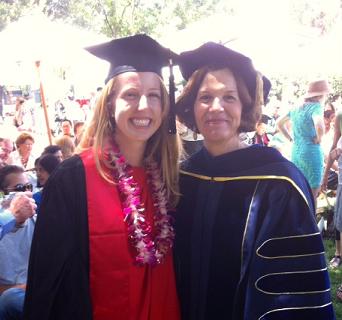
One week before the end of this school year, Balboa High School math teacher Ruth Radetsky was found unconscious after flying over the handlebars of her bicycle. She was brought to San Francisco General Hospital and Trauma Center, where she was treated for broken ribs, scapula, and cracked vertebrae. Although she suffered a concussion, she avoided a more severe head injury because she wore her bicycle helmet.

After being stabilized in intensive care unit and transferred to the step-down unit, Ruth was instructed by nurses to call for help before trying to get up. She was afraid of the pain but understood the importance of regaining mobility. Her injuries and the side effects of the pain medication put her at high risk for falling. Noting how busy the nurses were, however, Ruth felt badly about having to “bother” the staff.

Ruth and the nurses at SFGH who cared for her have a lot in common. Both education and health care rely upon appropriate ratios: teachers to students and nurses to patients. Students and patients alike benefit from these ratios. Despite the need for enough human resources, adequate staffing depends on other factors as well.

Ruth explained how a reduced class size is not enough. In one of her classes, nearly half of the students had learning needs that required preferential seating. Not everyone can sit in the front seat. Nurses with a floor full of patients who need close observation because they are experiencing delirium tremens, traumatic brain injury, or even a mass casualty event have to do similar triage. In both cases, maintaining the minimum staffing may be inadequate — which is why nurses and teachers need support to achieve quality education and healthcare. And UCLA researchers have demonstrated that lower nursing staffing in hospital wards is associated with increased patient mortality.

While researchers argue about the effect of increased class size and nurse-patient ratios, teachers and nurses in the public sector struggle to maintain professional standards of education and care. Ruth is worried about the effects of teacher layoffs on her students. At the same time, the nurses who cared for her at San Francisco General Hospital are being told that layoffs could result if wages and benefits and staffing aren’t reduced. In both professions, staff is concerned about maintaining adequate services with fewer resources.

Teachers and nurses in the public sector continue to be predominately female. Perhaps because of traditional gender roles, teachers and nurses tend to be apologetic about taking a stand for their own working conditions. Unlike an assembly line worker, a teacher or nurse’s profession is all about people, not things. It is only logical that too many students make it difficult for each to receive the amount of support needed. It’s dangerous for nurses to not have enough time for patient assessment and care.

Teachers such as Ruth Radetsky and the nurses who cared for her embody the very best of public education and health. San Francisco Unified teachers and Department of Public Health nurses should not have to apologize for upholding high standards and demanding a professional environment to teach the young and care for all of San Francisco.

Sasha Cuttler, RN Ph.D, is a nurse and activist in the SEIU Local 1021 RN chapter. He has been friends with Ruth Radetsky for more than 25 years.

Conservative attitudes cost California, but the kids are on the case

57

I hope you’ll all indulge me a proud papa moment, because it’s one that also has important public policy implications for California as state officials and voters wrestle with serious budget problems and a severely overcrowded prison system against the backdrop of conservative interests wielding more political and fiscal power than their numbers should indicate.

My oldest daughter, Breanna Jones, last week graduated with honors from Stanford University with a degree in public policy. At the ceremony, she received an award for her honors thesis – “California’s Tragedy of the Commons: How a Few Voters Disproportionately Influence County Use of State Prisons” – which I’m attaching as a PDF.

“California’s prison system has overrun maximum capacity, causing a public health conundrum, constitutional violations, and hemorrhaging finances. Even the public – which overwhelmingly endorsed past ‘tough-on-crime’ policies – has expressed its outrage about this waste of tax dollars. Recently, new research revealed that some California counties incarcerate more prisoners than the crime rate should dictate. That ‘surplus incarceration’ disproportionately contributes to the prison problem and thereby poses a significant tax burden on the state,” her report’s abstract begins.

Her research isolated a multitude of variables to show how it is the decisions that district attorneys in conservative counties make in how they charge crimes – with those prosecutors becoming especially aggressive after closely contested district attorneys races – that has the biggest impact on these high incarceration rates.

In other words, conservative attitudes toward crime and criminals are causing these usually small counties to have big impacts on the state’s prison budget – not to mention being unfair to those being sent to prison – something that ought to concern all of us.

Couple this with other studies showing that conservative counties also tend to use a disproportionate share of other state resources – and with the requirement of a two-thirds vote in the Legislature to raise taxes, which Democrats fall just a couple votes short of – and it becomes clear that these right-wing political attitudes aren’t benign. Indeed, we’re all suffering from the outsized influence of a vocal minority of state residents.

Luckily, voters will have some opportunities to correct this imbalance in November when there will be revenue measures that need only a simply minority to be approved, as well as measures that would repeal the death penalty and reform the Three Strikes You’re Out law, approval of which would begin to undo some of the damage done by these tight-fisted hypocrites.

California has lost its way and its balance. Luckily, the younger generation understands the situation and is willing to help us clean up the messes we’ve created for ourselves. It is the only thing that gives me hope for the future.

The cost of shorter school days

13

Everyone agrees that Jerry Brown is taking a huge gamble, putting big automatic education cuts in his budget in the hope that he’ll convince voters to approve his tax hikes in November. It may be a wise political move: Most voters in California seem to support education spending, even if they still (wrongly) think the state wastes too much money on other services. And they seem to like teachers, even if they think (wrongly) that most other public employees are overpaid and get overly generous pensions. In other words, if you ask voters whether the state needs more money in general, you might get a No — but if you ask whether schools should be cut even further, you might get a better answer.

Still: If this thing goes down, California’s got a disaster on its hands. Already, local school districts are making deep cuts in budgets that were already way too small. And since everything else is already gone, the main thing on the block is the length of the school year.

It used to be 180 days. Now it’s down to 176. And it could go as low as 160. That’s terrible for students — you really can’t eliminate class time and not harm education. It’s also really bad for working parents who have kids too young to be left alone (and some of us have good reason to believe that even high school students shouldn’t be left alone at home all day with nothing to do except get in trouble).

What do parents do when there’s an unexpected furlough day that isn’t a work holiday? How about if there are suddenly 20 (twenty) furlough days, four full weeks of additional time that the kids aren’t in school?

Well, if it’s a day or two they take time off from work if they can — costing both worker and employer money — or they pay someone to watch the kids, costing the worker money. This isn’t trivial for any of us, and it certainly isn’t trivial for low-income families. It means some kids will be home alone, which is fine for the Model Middle Schooler, but really, how many of them do we know?

And Jesus — nobody gets four weeks of paid vacation time. It’s already costing parents a fortune to put kids in summer camp for eight or ten weeks; add four more and I don’t know what people will do.

So basically, furlough days are a tax on working parents (and their employers). Which means it’s a regressive tax that his hardest on those least able to pay. And that’s assuming the tax plan actually passes — if it goes down, expect the furlough days to go up — and the hidden tax burden on working parents to get worse.

Then there’s class size, which is going up now, and could go up a lot more. I’ve volunteered in the SF public schools and I’ve seen the difference between a classroom of 20 kids and a classroom of 30, and it’s huge. At the K-3 level, more than 20 students in the classroom seriously hinders learning. Even in 5th grade, 30 kids is too many for one teacher.

I realize there’s not a lot left to cut in the state budget (although I think I could shift enough money from the prison system to fully fund the schools, but that’s not even on the table). K-12 education is a huge ticket and is going to have to take big hits.

And again: As a political move, threatening to hack the legs out from under the state’s education system will probably bring in some votes in November. But I agree with Calitics — it’s a really scary bet.

Avalos emerges as the board’s main progressive champion

23

Sup. John Avalos seems to be the only consistent champion of progressive values at the Board of Supervisors these days, as he demonstrated once again yesterday as he tried to present some alternatives to the neoliberal corporatism that has seized City Hall over the last couple years.

Last week, Avalos was the only vote against a pandering proposal by Sup. Mark Farrell to exempt more small businesses from the city’s payroll tax, which is projected to cost the city $1.5 million next fiscal year and $2.5 million the following one, blowing a $4 million hole in the two-year budget that supervisors are now finalizing for approval in two weeks.

Yesterday, as the measure was about to receive final approval on its second reading, Avalos made a motion to delay it until after the fall election when voters may consider a pair of measures to transition from a payroll to gross receipts tax as the means of assessing local businesses. Mayor Ed Lee and Board President David Chiu introduced one measure that is revenue neutral, while an alternative by Avalos would bring in about $40 million per year.

Avalos didn’t have the votes for the long delay, so he got behind a compromise motion by Sup. Jane Kim to delay the measure until July 10 so the Budget Committee can at least factor it into its deliberations. Farrell opposed the move, insisting that “this is about creating jobs now,” despite the fact that businesses couldn’t apply for the exemption until next February.

A spirited debate followed, in which Avalos criticized City Hall’s current penchant for business tax cuts and questioned whether it really creates the jobs its boosters claim. He also noted that it is the multitude fee increases that local politicians have approved in recent years to balance the budget without raising taxes that have become most onerous for small businesses.

“When we were raising fees over the last five years, we were raising taxes on small businesses,” Avalos said, suggesting that rolling back those fees and taxing larger corporations that can afford it is a better strategy for helping small businesses and encouraging them to create jobs.

Eventually, Avalos won the short delay on a 7-4 vote, with Sups. Farrell, Carmen Chu, Sean Elsbernd, and Scott Wiener opposed.

Meanwhile, Avalos managed to place on the fall ballot an increase in the real estate transfer taxes paid on properties worth $2.5 million or more, convincing Sups. Kim, David Campos, and Eric Mar to support the proposal as the 5 pm deadline for at least four supervisors to place measures on the ballot neared. It would raise $16 million and compete with a similar measure by Lee that would raise $13 million through a smaller increase on properties worth more than $1 million.

Avalos also joined Campos and Chiu in opposing final approval for the 8 Washington housing project for the uber-wealthy. On the same 8-3 vote, the board also rejected Chiu’s efforts to allow opponents of the project to circulate referendum petitions without having to lug around a thick stack of all the studies referenced in the project approval.

Chiu appealed to his colleagues to support “citizens of San Francisco exercising the constitutional right to referendum,” but he won few sympathies on a board that these days seems most concerned with the interests of this city’s wealthiest individuals and corporations.

Two for the road

0

arts@sfbg.com

THEATER On a warm evening last week in Williamsburg, Brooklyn, Jason Craig and Jessica Jelliffe were milling around the sidewalk outside the Collapsable Hole, a small warehouse performance venue one subway stop from Manhattan, dressed in dark blue one-piece suits, skull caps, heavy-rimmed glasses, and long beards.

“You wanna see a show?” asks Jelliffe, looking a little like a Hassid at the public pool. It’s a physical fact that passersby can’t always pass by fast enough to escape the sideshow gravity of a woman in a beard, and sure enough one or two wanderers fall in with the rest of the crowd arriving already determined to see Space//Space, the much anticipated new show from the bicoastal company that most recently brought Bay Area audiences (with co-producers the Shotgun Players) Beardo and Beowulf: A Thousand Years of Baggage.

The audience comes through the front door and slips passed a silvery space ship set snuggly inside the painted brick garage, a combination that carries the vague threat of an aluminum container shoved in the microwave, only you’re inside with it. Some airy, oxygenated house music thrumming the room like a zither adds nicely to this anticipatory pre-show mood. Soon the lights go down leaving only a clip lamp on a sidewall illuminating the figure of some rambling madman-scientist-grease monkey (Peter Blomquist) who introduces a half-comprehensible “experiment.”

And with that, the stunning space pod — a self-contained octagon with milky translucent glass walls, an old-school turntable for a control console, and a series of small bare speakers clinging magnetically to its aluminum framework — comes to life, rumbling and flickering like a miniature nightclub, a plush DJ booth, or an industrial-sized hi-fi egg chair. Its passengers, wearing furry suits with ear hoodies, are the bearded pair of brothers seen outside a few minutes earlier. Penryn (Jelliffee) is waking up confused from a deep sleep. Lumus (Craig) cautiously explains to his addled brother that he’s been asleep for the better part of three years. In that time their mission has been going forward: they’re still bound for some unknown destination as representatives of earth civilization, a madcap message in a half-corked bottle recording their words and deeds for some future audience.

But like a latter-day Gregor Samsa, Penryn has awakened to find himself metamorphosed, still hairy as a Harry but sporting the “girl bits” of a Henrietta. This change will propel the mission in an unanticipated direction. Penryn reborn is full of questions and challenges for his/her brother and their gender blender of a mission inside this increasingly stuffy intergalactic studio apartment.

Meanwhile, it seems Lumus, when not studying his brother’s transmogrifying bod, has spent the last few years working out a comedy routine, bits of which wend their way through the narrative as an alternately hilarious and eerie metanarrative of sorts, inviting a Henny Youngman–grade hermeneutics of the patriarchal social construct left back on earth. “I’m dying up here,” Lumus likes to say in an increasingly ominous showbiz metaphor, hitting a button for canned laughter as his inept struggle with off-color bar jokes and Rat Pack–era machismo gives way to a darker prophesy of his own demise.

Too much more plot will spoil the surprises in store for venturers to Brooklyn or those awaiting the production’s hoped-for (but not yet scheduled) future landing in the Bay Area. But let’s just say this oeuvre Lumus is making — a summation of a life, the echo of a civilization now reduced to two — is up for grabs, and Penryn may be the person to grab it. The outcome of their space//space odyssey contains the seed of a new world and an old one, both slouching toward Alpha Centauri to be born.

Composer and BB&B regular Dave Malloy’s wonderfully vital music-sound scape brings a deep, dark, low creep under this or that moment, as the exquisitely Dada-esque space program and its thornier implications come to light in playwright Craig’s inimitably arch dialogue, and Craig and Jelliffe’s masterfully subtle performances. Directed with cool precision by Mallory Catlett, Space//Space features another incredible BB&B low-or-no–budget set (conceived by Craig and Jelliffe with choice video, lighting, and sound designs by Zbigniew Bzymek, Miranda k Hardy, and Brandon Wolcott, respectively). While less epic than recent shows past, this cosmic two-hander is also more romantic, thematically complex and moodily resonant in its half-haunted, half-blissful reflection on the intimate universe between one human being and another.

bananabagandbodice.org


Film Listings

0

Frameline36, the San Francisco International LGBT Film Festival, runs through Sun/24 at Castro Theatre, 429 Castro, SF; Roxie Theater, 3117 16th St., SF; Victoria Theatre, 2961 16th St., SF; and Rialto Cinemas Elmwood, 2966 College, Berk. For tickets (most shows $9-$11) and schedule, visit www.frameline.org.

OPENING

Abraham Lincoln: Vampire Hunter America’s 16th president jumps aboard the bloodsucker bandwagon. (1:45) Presidio.

Brave Kelly Macdonald, Emma Thompson, and Billy Connolly star in Pixar’s fantasy about a strong-willed girl who brings turmoil upon her Scottish kingdom when she defies a long-held tradition. (1:33) Balboa, Presidio, Shattuck.

5 Broken Cameras Palestinian Emad Burnat bought his first camcorder in 2005 with the intention of bottling family memories, but when Israeli forces began the construction of settlements in Bil’in (his home village in the West Bank) Burnat stumbled into activist-filmmaker territory. In documenting his community’s nonviolent resistance to the Israeli occupation, Burnat’s friends and family (much like his cameras) are shot at, injured, and even killed. His son Gabreel’s first words are “wall” and “cartridge,” epitomizing the psychological toll of the struggle. Israeli forces are depicted as an eerily faceless entity, with colonialist aspirations run amok. Burnat isn’t interested in highlighting the political delicacy of the situation, and frankly, he’s given us something far more powerful than your average piece of fair-and-balanced journalism on the Israel-Palestine conflict. Splitting the difference between home-video montage and war-zone nightmare, 5 Broken Cameras skillfully merges the political and the personal, profoundly humanizing the Palestinian movement for independence. (1:30) Embarcadero, Shattuck. (Taylor Kaplan)

Found Memories The literal Portuguese-to-English translation of this film’s title — “stories that exist only when remembered” — is clunky, but more poignantly accurate than Found Memories. At first, it’s not entirely clear if Brazilian Júlia Murat is making a narrative or a documentary. In an tiny, isolated community populated by elderly people, Madalena (Sonia Guedes) follows a schedule she’s kept for years, probably decades: making bread, attending church, doing chores, tending the cemetery gates, writing love letters to a long-absent partner (“Isn’t it strange that after all these years, I still find your things around the house?”), and grousing at the “annoying old man” who grinds the town’s coffee beans. One day, young photographer Rita (Lisa Fávero) drifts into the village, an exotic import from the outside, modern world. Slowly, despite their differences, the women become friends. That’s about it for plot, but as this deliberately-paced film reflects on aging, dying, and memories (particularly in the form of photographs), it offers atmospheric food for thought, and a few moments of droll humor. Note, however, that viewer patience is a requirement to reap its rewards. (1:38) SF Film Society Cinema. (Eddy)

The Invisible War Kirby Dick’s searing documentary takes a look at the prevalence of rape within U.S. military ranks, a problem whose unbelievably high levels of occurrence would long ago have caused huge public outcry and imposed reform in any other institutional context. Yet because it’s the military — where certain codes of loyalty, machismo, and insularity dominate from the grunt level to the highest ranks — the issue has not only been effectively kept secret, but perpetrators almost never suffer any disciplinary measures, let alone jail time or dishonorable discharges. Meanwhile the women — some studies estimate 20% of all female personnel (and 1% of the men) suffer sexual assault from colleagues — are further traumatized by an atmosphere that creates ideal conditions for stalking, rape, and “blame the victim” aftermaths from superiors. (Indeed, for many the superior to whom they would have reported an attack was the one who attacked them.) Most end up quitting promising service careers (often pursued because of generations of family enlistment), dealing with the serious mental health consequences on their own. The subjects who’ve come forward on the issue here are inspiring in their bravery, and dedication to a patriotic cause and vocation that ultimately, bitterly betrayed them. Their stories are so engrossing that The Invisible War is as compulsively watchable as its topic and statistics are inherently appalling. (1:39) Metreon. (Harvey) 

Oslo, August 31st Heroin movies are rarely much fun, and Oslo is no exception, though here the stress lies not in grisly realism but visceral emotional honesty. Following an abortive, Virginia Woolf-esque suicide attempt during evening leave from his rehab center, recovering addict Anders visits Oslo for a job interview. He reconnects bittersweetly with an old friend, tries and fails to meet up with his sister, and eventually submerges himself in the nightlife that once fueled his self-destruction. Expressionistic editing conveys Anders’ sense of detachment and urge for release, with scenes and sounds intercut achronologically and striking sound design which homes in on stray conversations. A late intellectual milieu is signified throughout, quite humorously, by serious discussions of popular television dramas, presumably an update of similar concerns addressed in Pierre Drieu La Rochelle’s 1931 novel Le Feu follet, on which the film is based. (1:35) Elmwood, Embarcadero, Smith Rafael. (Sam Stander)

Seeking a Friend for the End of the World See “Apocalypse Meh.” (1:41) Marina, Piedmont, Shattuck.

Ultrasonic Is it madness to imagine a stylish new twist on the claustrophobic conspiracy thriller? Multi-hyphenate director, co-writer, and cinematographer (and musician and software engineer) Rohit Colin Rao manages just that with this head-turning indie feature film debut, while managing to translate a stark indie aesthetic encapsulated by Dischord and Touch and Go bands, lovers of Rust Belt warehouses and waffle houses, culture vultures who revere both Don DeLillo and Wisconsin Death Trip, and critics who lean too hard on the descriptor “angular.” Musician Simon York (Silas Gordon Brigham) is one denizen firmly placed in that cultural landscape, but the pressures of funding his combo’s album, coping with the diminishing returns of his music teacher livelihood, and anticipating the arrival of a baby with his wife, Ruth (Cate Buscher), seem to be piling on his murky brow. Simon begins to hear a hard-to-pin-down sound that no one else can detect, though Ruth’s eccentric and possibly certified conspiracy-theorist brother Jonas (Sam Repshas) is quick to affirm — and build on — his fears. Painting his handsome, stylized mise-en-scène in noiry blacks and wintry whites, Rohit positively revels in this post-punk jewel of a world he’s assembled, and it’s a compelling one even if it’s far from perfect and ultimately shies away from the deepest shadows. (1:30) Roxie. (Chun)

Ongoing 

Bel Ami Judging from recent attempts to shake off the gloomy atmosphere and undead company of the Twilight franchise, Robert Pattinson enjoys a good period piece, but hasn’t quite worked out how to help make one. Last year’s Depression-era Water for Elephants was a tepid romance, and Declan Donnellan and Nick Ormerod’s belle epoque–set Bel Ami is an ungainly, oddly paced adaptation of the Guy de Maupassant novel of the same name. A down-and-out former soldier of peasant stock, Georges Duroy (Pattinson) — or “Bel Ami,” as his female admirers call him — gains a brief entrée into the upper echelons of France’s fourth estate and parlays it into a more permanent set of social footholds, campaigning for the affections of a triumvirate of Parisian power wives (Christina Ricci, Uma Thurman, and Kristin Scott Thomas) as he makes his ascent. His route is confusing, though; the film pitches forward at an alarming pace, its scenes clumsily stacked together with little character development or context to smooth the way, and Pattinson’s performance doesn’t clarify much. Duroy shifts perplexingly between rapacious and soulful modes, eyeing the ladies with a vaguely carnivorous expression as he enters drawing rooms, dining rooms, and bedrooms, but leaving us with little sense of his true appetites or other motivations. (1:42) Lumiere, Smith Rafael. (Rapoport) 

Bernie Jack Black plays the titular new assistant funeral director liked by everybody in small-town Carthage, Tex. He works especially hard to ingratiate himself with shrewish local widow Marjorie (Shirley MacLaine), but there are benefits — estranged from her own family, she not only accepts him as a friend (then companion, then servant, then as virtual “property”), but makes him her sole heir. Richard Linklater’s latest is based on a true-crime story, although in execution it’s as much a cheerful social satire as I Love You Philip Morris and The Informant! (both 2009), two other recent fact-based movies about likable felons. Black gets to sing (his character being a musical theater queen, among other things), while Linklater gets to affectionately mock a very different stratum of Lone Star State culture from the one he started out with in 1991’s Slacker. There’s a rich gallery of supporting characters, most played by little-known local actors or actual townspeople, with Matthew McConaughey’s vainglorious county prosecutor one delectable exception. Bernie is its director’s best in some time, not to mention a whole lot of fun. (1:39) Embarcadero, Four Star, Presidio, Shattuck, Smith Rafael. (Harvey)

The Best Exotic Marigold Hotel (1:42) Albany, Four Star, Piedmont, SF Center, Sundance Kabuki.

A Cat in Paris This year’s Best Animated Film nominees: big-budget entries Kung Fu Panda 2, Puss in Boots, and eventual winner Rango, plus Chico and Rita, which opened just before Oscar night, and French mega-dark-horse A Cat in Paris. Sure, Jean-Loup Felicioli and Alain Gagnol’s film failed to cash in on 2011’s Paris craze, but it’s still a charming if featherweight noir caper, being released stateside in an English version that features the voices of Marcia Gay Harden and Anjelica Huston. A streetwise kitty named Dino spends his days hanging with Zoey, a little girl who’s gone mute since the death of her father — a cop killed in the line of duty. Zoey’s mother (Harden), also a cop, is hellbent on catching the murderer, a notorious crook named Costa who runs his criminal empire with Reservoir Dogs-style imprecision. At night, Dino sneaks out and accompanies an affable burglar on his prowlings. When Zoey falls into Costa’s clutches, her mom, the thief, and (natch) the feisty feline join forces to rescue her, in a series of rooftop chase scenes that climax atop Notre Dame. At just over an hour, A Cat in Paris is sweetly old-fashioned and suitable for audiences of all ages, though staunch dog lovers may raise an objection or two. (1:07) Opera Plaza. (Eddy) 

Dark Shadows Conceptually, there’s nothing wrong with attempting to turn a now semi-obscure supernaturally themed soap opera with a five-year run in the late 1960s and early ’70s into a feature film. Particularly if the film brings together the sweetly creepy triumvirate of Tim Burton, Johnny Depp, and Helena Bonham Carter and emerges during an ongoing moment for vampires, werewolves, and other things that go hump in the night. Depp plays long-enduring vampire Barnabas Collins, the undead scion of a once-powerful 18th-century New England family that by the 1970s — the groovy decade in which the bulk of the story is set — has suffered a shabby deterioration. Barnabas forms a pact with present-day Collins matriarch Elizabeth (Michelle Pfeiffer) to raise the household — currently comprising her disaffected daughter, Carolyn (Chloë Grace Moretz), her derelict brother, Roger (Jonny Lee Miller), his mournful young son, David (Gulliver McGrath), David’s live-in lush of a psychiatrist, Dr. Hoffman (Carter), and the family’s overtaxed manservant, Willie (Jackie Earle Haley) — to its former stature, while taking down a lunatic, love-struck, and rather vindictive witch named Angelique (Eva Green). The latter, a victim of unrequited love, is the cause of all Barnabas’s woes and, by extension, the entire clan’s, but Angelique can only be blamed for so much. Beyond her hocus-pocus jurisdiction is the film’s manic pileup of plot twists, tonal shifts, and campy scenery-chewing by Depp, a startling onslaught that no lava lamp joke, no pallid reaction shot, no room-demolishing act of paranormal carnality set to Barry White, and no cameo by Alice Cooper can temper. (2:00) SF Center. (Rapoport)

The Dictator As expected, The Dictator is, yet again, Sacha Baron Cohen doing his bumbling-foreigner shtick. Said character (here, a ruthless, spoiled North African dictator) travels to America and learns a heaping teaspoon of valuable lessons, which are then flung upon the audience — an audience which, by film’s end, has spent 80 minutes squealing at a no-holds-barred mix of disgusting gags, tasteless jokes, and schadenfreude. If you can’t forgive Cohen for carbon-copying his Borat (2006) formula, at least you can muster admiration for his ability to be an equal-opportunity offender (dinged: Arabs, Jews, African Americans, white Americans, women of all ethnicities, and green activists) — and for that last-act zinger of a speech. If The Dictator doesn’t quite reach Borat‘s hilarious heights, it’s still proudly repulsive, smart in spite of itself, and guaranteed to get a rise out of anyone who watches it. (1:23) 1000 Van Ness, SF Center, Shattuck. (Eddy)

Double Trouble When crooks nab a priceless painting from a Taipei museum, two security guards — wannabe hero Jay (Jaycee “Son of Jackie” Chan) and Chinese-tourist-on-vacation Ocean (Xia Yu) — reluctantly team up to recover the piece. A road trip of sorts ensues, laden with petty bickering, wacky melees, bonding moments, mistaken identity, gangsters both comical and sinister, and other buddy-comedy trappings. As expected, there are a few high-flying fight scenes; in the film’s production notes, director David Hsun-Wei Chang reveals he was inspired by the Rush Hour movies. Alas, Chan is neither as charismatic nor as breathtakingly nimble as his father (and, obvi, Xia is no Chris Tucker). It should be noted, however, that one of the slithery art thieves is played by underwear model Jessica C., famed in Hong Kong for her “police siren boobs.” So there’s that. (1:29) Metreon. (Eddy)

Elena The opening, almost still image of breaking dawn amid bare trees — the twigs in the foreground almost imperceptibly developing definition and the sky gradually growing ever lighter and pinker in the corners of the frame — beautifully exemplifies the crux of this well-wrought, refined noir, which spins slowly on the streams of dog-eat-dog survival that rush beneath even the most moneyed echelons of Moscow. Sixtyish former nurse Elena (Nadezhda Markina) is still little more than a live-in caretaker for Vladimir (Andrey Smirnov), her affluent husband of almost 10 years. She sleeps in a separate bed in their modernist-chic condo and dutifully funnels money to her beloved layabout son and his family. Vladimir has less of a relationship with his rebellious bad-seed daughter (Yelena Lyadova), who may be too smart and hedonistic for her own good. When a certain unlikely reunion threatens Elena’s survival — and what she perceives as the survival of her own spawn — a kind of deadly dawn breaks over the seemingly obedient hausfrau, and she’s driven to desperate ends. Bathing his scenes in chilled blue light and velvety dark shadows, filmmaker Andrey Zvyagintsev (2003’s The Return) keeps a detached but close eye on the proceedings while displaying an uncanny talent for plucking the telling detail out of the wash of daily routine and coaxing magnetic performances from his cast. (1:49) Lumiere. (Chun)

Headhunters Despite being the most sought-after corporate headhunter in Oslo, Roger (Aksel Hennie) still doesn’t make enough money to placate his gorgeous wife; his raging Napoleon complex certainly doesn’t help matters. Crime is, as always, the only solution, so Roger’s been supplementing his income by stealthily relieving his rich, status-conscious clients of their most expensive artworks (with help from his slightly unhinged partner, who works for a home-security company). When Roger meets the dashing Clas Greve (Nikolaj Coster-Waldau of Game of Thrones) — a Danish exec with a sinister, mysterious military past, now looking to take over a top job in Norway — he’s more interested in a near-priceless painting rumored to be stashed in Greve’s apartment. The heist is on, but faster than you can say “MacGuffin,” all hell breaks loose (in startlingly gory fashion), and the very charming Roger is using his considerable wits to stay alive. Based on a best-selling “Scandi-noir” novel, Headhunters is just as clever as it is suspenseful. See this version before Hollywood swoops in for the inevitable (rumored) remake. (1:40) Lumiere. (Eddy)

The Hunger Games Katniss Everdeen (Jennifer Lawrence) is a teenager living in a totalitarian state whose 12 impoverished districts, as retribution for an earlier uprising, must pay tribute to the so-called Capitol every year, sacrificing one boy and one girl each to the Hunger Games. A battle royal set in a perilous arena and broadcast live to the Capitol as gripping diversion and to the districts as sadistic propaganda, the Hunger Games are, depending on your viewpoint, a “pageant of honor, courage, and sacrifice” or a brutal, pointless bloodbath involving children as young as 12. When her little sister’s name comes up in the ann­ual lottery, Katniss volunteers to take her place and is joined by a boy named Peeta Mellark (Josh Hutcherson), with whom she shares an old, unspoken bond. Tasked with translating to the screen the first installment of Suzanne Collins’s rabidly admired trilogy, writer-director Gary Ross (2003’s Seabiscuit, 1998’s Pleasantville) telescopes the book’s drawn-out, dread-filled tale into a manageable two-plus-hour entertainment, making great (and horrifying) use of the original work’s action, but losing a good deal of the narrative detail and emotional force. Elizabeth Banks is comic and unrecognizable as Effie Trinket, the two tributes’ chaperone; Lenny Kravitz gives a blank, flattened reading as their stylist, Cinna; and Donald Sutherland is sufficiently creepy and bloodless as the country’s leader, President Snow. More exceptionally cast are Woody Harrelson as Katniss and Peeta’s surly, alcoholic mentor, Haymitch Abernathy, and Stanley Tucci as games emcee Caesar Flickerman, flashing a bank of gleaming teeth at each contestant as he probes their dire circumstances with the oily superficiality of a talk show host. (2:22) 1000 Van Ness. (Rapoport)

Hysteria Tanya Wexler’s period romantic comedy gleefully depicts the genesis of the world’s most popular sex toy out of the inchoate murk of Victorian quackishness. In this dulcet version of events, real-life vibrator inventor Mortimer Granville (Hugh Dancy) is a handsome young London doctor with such progressive convictions as a belief in the existence of germs. He is, however, a man of his times and thus swallows unblinking the umbrella diagnosis of women with symptoms like anxiety, frustration, and restlessness as victims of a plague-like uterine disorder known as hysteria. Landing a job in the high-end practice of Dr. Robert Dalrymple (Jonathan Pryce), whose clientele consists entirely of dissatisfied housewives seeking treatments of “medicinal massage” and subsequent “parosysm,” Granville becomes acquainted with Dalrymple’s two daughters, the decorous Emily (Felicity Jones) and the first-wave feminist Charlotte (Maggie Gyllenhaal). A subsequent bout of RSI offers empirical evidence for the adage about necessity being the mother of invention, with the ever-underused Rupert Everett playing Edmund St. John-Smythe, Granville’s aristocratic friend and partner in electrical engineering. (1:35) Opera Plaza. (Rapoport)

The Intouchables Cries of “racism” seem a bit out of hand when it comes to this likable albeit far-from-challenging French comedy loosely based on a real-life relationship between a wealthy white quadriplegic and his caretaker of color. The term “cliché” is more accurate. And where were these critics when 1989’s Driving Miss Daisy and 2011’s The Help — movies that seem designed to make nostalgic honkies feel good about those fraught relationships skewed to their advantage—were coming down the pike? (It also might be more interesting to look at how these films about race always hinge on economies in which whites must pay blacks to interact with/educate/enlighten them.) In any case, Omar Sy, portraying Senegalese immigrant Driss, threatens to upset all those pundits’ apple carts with his sheer life force, even when he’s shaking solo on the dance floor to sounds as effortlessly unprovocative, and old-school, as Earth, Wind, and Fire. In fact, everything about The Intouchables is as old school as 1982’s 48 Hrs., spinning off the still laugh-grabbing humor that comes with juxtaposing a hipper, more streetwise black guy with a hapless, moneyed chalky. The wheelchair-bound Philippe (Francois Cluzet) is more vulnerable than most, and he has a hard time getting along with any of his nurses, until he meets Driss, who only wants his signature for his social services papers. It’s not long before the cultured, classical music-loving Philippe’s defenses are broken down by Driss’ flip, somewhat honest take on the follies and pretensions of high culture — a bigger deal in France than in the new world, no doubt. Director-writer Olivier Nakache and Eric Toledano aren’t trying to innovate —they seem more set on crafting an effervescent blockbuster that out-blockbusters Hollywood — and the biggest compliment might be that the stateside remake is already rumored to be in the works. (1:52) Embarcadero. (Chun)

Jiro Dreams of Sushi Celebrity-chef culture has surely reached some kind of zeitgeist, what with the omnipresence of Top Chef and other cooking-themed shows, and the headlines-making power of people like Paula Deen (diabetes) and Mario Batali (sued for ripping off his wait staff). Unconcerned with the trappings of fame — you’ll never see him driving a Guy Fieri-style garish sports car — is Jiro Ono, 85-year-old proprietor of Sukiyabashi Jiro, a tiny, world-renowned sushi restaurant tucked into Tokyo’s Ginza station. Jiro, a highly-disciplined perfectionist who believes in simple, yet flavorful food, has devoted his entire life to the pursuit of “deliciousness” — to the point of sushi invading his dreams, as the title of David Gelb’s reverential documentary suggests. But Jiro Dreams of Sushi goes deeper than food-prep porn (though, indeed, there’s plenty of that); it also examines the existential conflicts faced by Jiro’s two middle-aged sons. Both were strongly encouraged to enter the family business — and in the intervening years, have had to accept the soul-crushing fact that no matter how good their sushi is, it’ll never be seen as exceeding the creations of their legendary father. (1:21) Bridge. (Eddy)

Lola Versus Greta Gerwig’s embattled late-twentysomething, the titular Lola, apologetically invokes the Saturn return to explain the chaos that enters her life when her emotionally underdeveloped boyfriend proposes, panics, and dumps her. Workaday elements of the industry-standard romantic comedy surface, lightly revised: a crass, loopy BFF (co-writer Zoe Lister Jones) who can’t find true love and says things like “I have to go wash my vagina”; a vaguely soulful male friend (Hamish Linklater, 2011’s The Future) who’s secretly harboring nonplatonic feelings (or maybe just an opportunistic streak); wacky yet vaguely successful Age of Aquarius parents (a somewhat toneless Debra Winger and a nicely gone-to-seed Bill Pullman). One can see why it would be tempting to blame a planet’s galactic travels for the solipsistic meandering that Lola engages in, bemusedly lurching, often under chemical influences, from one bout of poor decision-making to the next. She claims to be searching for a path out of the chaos into some calmer place (fittingly, she’s a comp lit Ph.D. candidate who’s writing her dissertation on silence), but as the movie transports us mercilessly from one scene of turmoil to the next, we have little reason to believe her. The script has funny moments, and Gerwig sometimes succeeds in making Lola feel like a charming disaster, but her personal discoveries, while certainly valuable, feel false and forced. (1:26) Metreon. (Rapoport)

Madagascar 3: Europe’s Most Wanted (1:33) Balboa, Metreon, 1000 Van Ness, Presidio.

Marvel’s The Avengers The conflict — a mystical blue cube containing earth-shattering (literally) powers is stolen, with evil intent — isn’t the reason to see this long-hyped culmination of numerous prequels spotlighting its heroic characters. Nay, the joy here is the whole “getting’ the band back together!” vibe; director and co-writer Joss Whedon knows you’re just dying to see Captain America (Chris Evans) bicker with Iron Man (a scene-stealing Robert Downey Jr.); Thor (Chris Hemsworth) clash with bad-boy brother Loki (Tom Hiddleston); and the Hulk (Mark Ruffalo) get angry as often as possible. (Also part of the crew, but kinda mostly just there to look good in their tight outfits: Jeremy Renner’s Hawkeye and Scarlett Johansson’s Black Widow.) Then, of course, there’s Nick Fury (Samuel L. Jackson) running the whole Marvel-ous show, with one good eye and almost as many wry quips as Downey’s Tony Stark. Basically, The Avengers gives you everything you want (characters delivering trademark lines and traits), everything you expect (shit blowing up, humanity being saved, etc.), and even makes room for a few surprises. It doesn’t transcend the comic-book genre (like 2008’s The Dark Knight did), but honestly, it ain’t trying to. The Avengers wants only to entertain, and entertain it does. (2:23) Metreon, 1000 Van Ness, Sundance Kabuki. (Eddy)

Men in Black III Why not? It’s been ten years since Men in Black II (the one where Lara Flynn Boyle and Johnny Knoxville — remember them? — played the villains), Will Smith has barely aged, and he hasn’t made a full-on comedy since, what, 2005’s Hitch? Here, he does a variation on his always-agreeable exasperated-guy routine, clashing with his grim, gimlet-eyed partner Agent K (Tommy Lee Jones, and in a younger incarnation, a spot-on Josh Brolin) in a plot that involves a vicious alien named Boris (Flight of the Conchords’ Jermaine Clement), time travel, Andy Warhol, the moon (as both space-exploration destination and modern-day space-jail location), and lines that only Smith’s delivery can make funny (“This looks like it comes from planet damn.“) It’s cheerful (save a bit of melodrama at the end), crisply paced, and is neither a must-see masterpiece nor something you should mindfully sleep through if it pops up among your in-flight selections. Oh, and it’s in 3D. Well, why not? (1:42) 1000 Van Ness, SF Center, Shattuck. (Eddy)

Moonrise Kingdom Does Wes Anderson’s new film mark a live-action return to form after 2007’s disappointingly wan Darjeeling Limited? More or less. Does it tick all the Andersonian style and content boxes? Indubitably. In the most obvious deviation Anderson has taken with Moonrise, he gives us his first period piece, a romance set in 1965 on a fictional island off the New England coast. After a chance encounter at a church play, pre-teen Khaki Scout Sam (newcomer Jared Gilman) instantly falls for the raven-suited, sable-haired Suzy Bishop (Kara Hayward, ditto). The two become pen pals, and quickly bond over the shared misery of being misunderstood by both authority figures and fellow kids. The bespectacled Sam is an orphan, ostracized by his foster parents and scout troop (much to the dismay of its straight-arrow leader Edward Norton). Suzy despises her clueless attorney parents, played with gusto by Bill Murray and Frances McDormand in some of the film’s funniest and best scenes. When the two kids run off together, the whole thing begins to resemble a kind of tween version of Godard’s 1965 lovers-on the-lam fantasia Pierrot le Fou. But like most of Anderson’s stuff, it has a gauzy sentimentality more akin to Truffaut than Godard. Imagine if the sequence in 2001’s The Royal Tenenbaums where Margot and Richie run away to the Museum of Natural History had been given the feature treatment: it’s a simple yet inspired idea, and it becomes a charming little tale of the perils of growing up and selling out the fantasy. But it doesn’t feel remotely risky. It’s simply too damn tame. (1:37) California, Metreon, Piedmont, Sundance Kabuki. (Michelle Devereaux)

Music From the Big House See review at sfbg.com/pixel_vision. (1:27) Sundance Kabuki.

Peace, Love and Misunderstanding How is that even as a bona fide senior, Jane Fonda continues to embody this country’s ambivalence toward women? I suspect it’s a testament to her actorly prowess and sheer charisma that she’s played such a part in defining several eras’ archetypes — from sex kitten to counterculture-heavy Hanoi Jane to dressed-for-success feminist icon to aerobics queen to trophy wife. Here, among the talents in Bruce Beresford’s intergenerational chick-flick-gone-indie as a loud, proud, and larger-than-life hippie earth mama, she threatens to eclipse her paler, less colorful offspring, women like Catherine Keener and Elizabeth Olsen, who ordinarily shine brighter than those that surround them. It’s ostensibly the tale of high-powered lawyer Diane (Keener): her husband (Kyle MacLachlan) has asked for a divorce, so in a not-quite-explicable tailspin, she packs her kids, Zoe (Olsen) and Jake (Nat Wolff), into the car and heads to Woodstock to see her artist mom Grace (Fonda) for the first time in two decades. Grace is beyond overjoyed — dying to introduce the grandchildren to her protests, outdoor concerts, and own personal growhouse — while urbanite Diane and her kids find attractive, natch, diversions in the country, in the form of Jude (Jeffrey Dean Morgan), Cole (Chace Crawford), and Tara (Marissa O’Donnell). Yet there’s a lot of troubled water for the mother and daughter to cross, in order to truly come together. Despite some strong characterization and dialogue, Peace doesn’t quite fly — or make much sense at its close — due to the some patchy storytelling: the schematic rom-com arch fails to provide adequate scaffolding to support the required leaps of faith. But that’s not to deny the charm of the highly identifiable, generous-spirited Grace, a familiar Bay Area archetype if there ever was one, who Fonda charges with the joy and sadness of fallible parent who was making up the rules as she went along. (1:36) Opera Plaza, Shattuck, Smith Rafael. (Chun)

Prometheus Ridley Scott’s return to outer space — after an extended stay in Russell Crowe-landia — is most welcome. Some may complain Prometheus too closely resembles Scott’s Alien (1979), for which it serves as a prequel of sorts. Prometheus also resembles, among others, The Thing (1982), 2001: A Space Odyssey (1968), and Event Horizon (1997). But I love those movies (yes, even Event Horizon), and I am totally fine with the guy who made Alien borrowing from all of them and making the classiest, most gorgeous sci-fi B-movie in years. Sure, some of the science is wonky, and the themes of faith and creation can get a bit woo-woo, but Prometheus is deep-space discombobulation at its finest, with only a miscast Logan Marshall-Green (apparently, cocky dude-bros are still in effect at the turn of the next millennium) marring an otherwise killer cast: Noomi Rapace as a dreamy (yet awesomely tough) scientist; Idris Elba as Prometheus‘ wisecracking captain; Charlize Theron as the Weyland Corportation’s icy overseer; and Michael Fassbender, giving his finest performance to date as the ship’s Lawrence of Arabia-obsessed android. (2:03) Metreon, 1000 Van Ness, Sundance Kabuki. (Eddy)

Rock of Ages (2:03) California, Four Star, Marina, 1000 Van Ness, SF Center, Sundance Kabuki.

Safety Not Guaranteed San Francisco-born director Colin Trevorrow’s narrative debut feature Safety Not Guaranteed, written by Derek Connolly, has an improbable setup: not that rural loner Kenneth (Mark Duplass) would place a personal ad for a time travel partner (“Must bring own weapons”), but that a Seattle alt-weekly magazine would pay expenses for a vainglorious staff reporter (Jake Johnson, hilarious) and two interns (Aubrey Plaza, Karan Soni) to stalk him for a fluff feature over the course of several days. The publishing budget allowing that today is true science-fiction. But never mind. Inserting herself “undercover” when a direct approach fails, Plaza’s slightly goth college grad finds she actually likes obsessive, paranoid weirdo Kenneth, and is intrigued by his seemingly insane but dead serious mission. For most of its length Safety falls safely into the category of off-center indie comedics, delivering various loopy and crass behavior with a practiced deadpan, providing just enough character depth to achieve eventual poignancy. Then it takes a major leap — one it would be criminal to spoil, but which turns an admirable little movie into something conceptually surprising, reckless, and rather exhilarating. (1:34) Metreon, Shattuck. (Harvey)

Snow White and the Huntsman It’s unclear why the zeitgeist has blessed us this year with two warring iterations of the Snow White fairy tale, one broadly comedic (April’s Mirror Mirror), one starkly emo. But it was only natural that Kristen Stewart would land in the latter rendering, breaking open the hearts of swamp beasts and swordsmen alike with the chaste glory of her mien. As Snow White flees the henchmen and hired killers dispatched by her seriously evil stepmother, Queen Ravenna (Charlize Theron), and traverses a blasted, virulent forest populated with hallucinogenic vapors and other life-threatening obstacles, Stewart need not act so much as radiate a dazzling benignity, weeping the tears of a martyr rather than a frightened young girl. (Unfortunately, when required to deliver a rallying declaration of war, she sounds as if she’s speaking in tongues after a heavy hit on the crack pipe.) It’s slightly uncomfortable to be asked, alongside a grieving, drunken huntsman (The Avengers’ Chris Hemsworth), a handful of dwarfs (including Ian McShane and Toby Jones), and the kingdom’s other suffering citizenry, to fall worshipfully in line behind such a creature. But first-time director Rupert Sanders’s film keeps pace with its lovely heroine visually, constructing a gorgeous world in which armies of black glass shatter on battlefields, white stags dissolve into hosts of butterflies, and a fairy sanctuary within the blighted kingdom is an eye-popping fantasia verging on the hysterical. Theron’s Ravenna, equipped in modernist fashion with a backstory for her sociopathic tendencies, is credible and captivating as an unhinged slayer of men, thief of youth, destroyer of kingdoms, and consumer of the hearts of tiny birds. (2:07) Metreon, 1000 Van Ness, Shattuck. (Rapoport)

That’s My Boy (1:55) Metreon, SF Center.

Turn Me On, Dammit! The 15-year-old heroine of writer-director Jannicke Systad Jacobsen’s Turn Me On, Dammit! is first heard in voice-over, flatly cataloging the over familiar elements of the small town in rural Norway where she lives — and first seen lying on the kitchen floor of her house sharing an intimate moment with a phone sex operator named Stig (Per Kjerstad). Largely ruled by her hormones and longing to get it on with someone other than herself and the disembodied Stig, Alma (Helene Bergsholm) spends large segments of her life unspooling sexual fantasies starring Artur (Matias Myren), the boy she has a crush on, and Sebjorn (Jon Bleiklie Devik), who runs the grocery store where she works and is the father of her two closest friends: burgeoning political activist Sara (Malin Bjorhovde) and full-fledged mean girl Ingrid (Beate Stofring). Back in real life, a strange and awkward physical interaction with Artur leads Alma, excited and confused, to describe the experience to her friends, a mistake that precipitously leads to total social ostracism among her peers. With the possible exception of some unnecessary dog reaction shots during the aforementioned opening scene, documentary maker Jacobsen’s first narrative feature film is an engaging and impressive debut, presenting a sympathetic and uncoy depiction of a young girl’s sexuality and exploiting the rich contrast between Alma’s gauzier fantasies and the realities of her waking world to poignantly comic effect. (1:16) Opera Plaza. (Rapoport)

The Woman in the Fifth A rumpled American writer with a hinted-at dark past (Ethan Hawke) shows up in Paris, to the horror of his French ex-wife and confused delight of his six-year-old daughter. An ill-advised nap on public transportation results in all of his bags being stolen; broke and out of sorts, he takes a grimy room above a café and a gig monitoring the surveillance-cam feed at what’s obviously some kind of illegal enterprise. During the day he stalks his daughter and romances both sophisticated Margit (Kristen Scott Thomas) and nubile Ania (Joanna Kulig); he also dodges his hostile neighbor (Mamadou Minte) and shady boss (Samir Guesmi). Based on Douglas Kennedy’s novel, the latest from Pawel Pawlikowski (2004’s My Summer of Love), offers some third-act twists (gory, distressing ones) that suggest Hawke’s character (and, by extension, the viewer) may not be perceiving reality with 100 percent accuracy. Moody, melancholy, not-entirely-satisfying stuff. (1:23) SF Film Society Cinema. (Eddy)

Your Sister’s Sister The new movie from Lynn Shelton — who directed star and (fellow mumblecore director) Mark Duplass in her shaggily amusing Humpday (2009) — opens somberly, at a Seattle wake where his Jack makes his deceased brother’s friends uncomfortable by pointing out that the do-gooder guy they’d loved just the last couple years was a bully and jerk for many years before his reformation. This outburst prompts an offer from friend-slash-mutual-crush Iris (Emily Blunt) that he get his head together for a few days at her family’s empty vacation house on a nearby island. Arriving via ferry and bike, he is disconcerted to find someone already in residence — Iris’ sister Hannah (Rosemarie DeWitt), who’s grieving a loss of her own (she’s split with her girlfriend). Several tequila shots later, two Kinsey-scale opposites meet, which creates complications when Iris turns up the next day. A bit slight in immediate retrospect and contrived in its wrap-up, Shelton’s film is nonetheless insinuating, likable, and a little touching while you’re watching it. That’s largely thanks to the actors’ appeal — especially Duplass, who fills in a blunderingly lucky (and unlucky) character’s many blanks with lived-in understatement. (1:30) Albany, Embarcadero, Sundance Kabuki. (Harvey)


They call it gunpowder

13

news@sfbg.com

At needle exchange sites around San Francisco, fliers are handed out to intravenous drug users warning them about a new and very potent form of heroin thought to be responsible for a dramatic increase in recent overdoses.

“Gunpowder heroin,” as it’s often called on the street, began infiltrating the city’s illegal drug market back around February, according to widespread reports from various needle exchange participants. Yet public officials appear to be in the dark about the epidemic, partly because budget cuts have created long backlogs for toxicology tests and partly due to indifference about the safety of drug users.

The reports were gathered by the Drug Overdose Prevention and Education Project from their network of needle exchange programs and analyzed by Project Manager Eliza Wheeler. She noticed the trend in April, and a flood of reports followed through May. It soon became clear that she was witnessing a potentially deadly spike in heroin-related overdoses.

“The whole city is reporting strong stuff,” Wheeler told us. “People are overdosing left and right.”

From January through May, 99 heroin-related overdoses were reported. The largest number of overdoses occurred in May with a staggering 40 reports. Wheeler says that an average month has 12 overdoses.

While those directly involved with San Francisco’s drug-using population seem to know all about the increase in overdoses, city and hospital officials seem to know nothing about it.

After checking with local police precincts in drug zones such as the Mission and Tenderloin, SFPD spokesman Sgt. Michael Andraychak told us officers haven’t come in contact with a strong batch of heroin and they are unfamiliar with the term “gunpowder heroin.”

According to Tenderloin Police Captain John Garrity, undercover and street officers only test controlled substances for positive or negative results. They do not test the drugs’ potency or chemical make-up. Garrity told us that the cops haven’t dealt much with opiate-related overdoses since the widespread availability of naxolone, an opiate overdose antidote commonly known by its brand name Narcan.

“We don’t see the overdoses anymore,” Garrity told us, “not for the last 20 years, not since Narcan came out.”

SF General, St. Mary’s, and St. Francis hospitals all say their emergency rooms haven’t seen an increase in heroin overdoses either and are also unfamiliar with the term “gunpowder heroin.”

It seems the city is content with letting nonprofit needle exchanges and programs like the DOPE Project deal with its opiate-using population. Although the DPH does fund and collaborate with many service providers, it rests the bulk of the responsibility on the drug users themselves.

While needle exchange programs combat blood borne diseases like hepatitis C and HIV, which can be contracted through sharing needles and other paraphernalia, DOPE attempts to educate users and prevent fatal opiate overdoses. The DOPE Project, funded through DPH, works with needle exchange programs to provide opiate users with a take home prescription of naloxone, which can be administered from a nasal spray or injected from a vial. At the exchange, if a returning drug user is re-supplying naxolone, he or she is asked “Did you lose it or use it?” If it was used, a report is made.

All the reports gathered by the DOPE Project are of overdose reversals, none of the reports are fatal, thanks to widespread availability of naxolone and the drug using population who use it. That doesn’t mean people haven’t died. In fact, a rash of fatal overdoses is rumored to have occurred. The suspected culprit: gunpowder heroin.

“There’s a new batch of heroin in town—people are dying,” says Johnny Lorenz, community activist and member of San Francisco Drug Users Union, a members-based organization advocating drug-friendly policies and giving a voice to drug users, who say they are often marginalized and seen as not caring about their community.

Lorenz, a former heroin addict, says a friend recently died from heroin-related causes. Whether it was gunpowder heroin that actually caused his death is unknown.

Wheeler and Lorenz say many people have died from the extra-strength heroin, yet no official records have turned up. The Medical Examiner’s Office hasn’t noticed an increase in heroin-related deaths, but Administrator Bill Ahern admits it was 90 days backlogged on toxicology reports.

The police and medical examiner’s lack of knowledge doesn’t surprise Mary Howe, executive director at Homeless Youth Alliance. She says heroin-related overdoses are indeed a real problem, and she personally knows heroin users who have recently died from overdose, but “unless you actually care about helping drug users you wouldn’t know.” And to receive a toxicology report from the medical examiner’s office takes a couple months, adds Howe.

Wheeler and others are currently waiting on toxicology reports to find out what exactly is in the heroin making it so strong. Without a toxicology report there is no way to be certain about the cause of death or the makeup of the drug.

According to SF Medical Examiner’s 2009-2010 annual report, nine out of the 141 people that died from narcotic analgesics related deaths were found with traces of heroin, down from previous years. However, finding out if heroin is the cause of death can be tricky. According to the report, the unique metabolite that identifies heroin, 6-monoacetamorphine, is very short lived and can metabolize in the body while the person is dying—leaving only traces of morphine or codeine.

Worse, a drug user buying heroin off the street will never know what exactly he or she is shooting.

“No one ever knows what’s in the heroin,” says Lorenz, adding that the label “gunpowder” has become a loose term for a stronger heroin. Lorenz, who spent the majority of his 20s doing heroin, remembers that gunpowder heroin at one time used to be a specific reference to a higher grade heroin from Columbia, off-white or grayish in color and crystal-like—resembling gunpowder.

Others say gunpowder heroin is black tar heroin mixed with fentanyl, a synthetic opiate that can be up to 100 times stronger than morphine. Some disagree entirely and say the overdoses aren’t specific to any one type of heroin.

“Whatever people are calling it—it is strong,” says Wheeler adding that people rarely overdose from of a bad batch of heroin; they overdose from a good, strong batch. “In a world where the drug supplies are unregulated, this is what happens.”

If it is black tar heroin mixed with fentanyl, that could explain why hospitals aren’t reporting an increase in overdoses, says Jan Gurely, doctor at a local homeless clinic. She suggests that the people aren’t making it to the ER’s—they are only making it to the morgues.

“‘Gunpowder is very dangerous,” says Dr. Gurely. “It takes a phenomenal amount of antidote vials to reverse the overdose.”

Naxolone unbinds every molecule of heroin from receptors in the brain, reversing an overdose. The problem with naxolone is when too much is administered the overdose victim goes into withdrawal and comes to sick and vomiting. With a normal heroin overdose only half a vial is needed, but multiple vials are needed when dealing with gunpowder, she adds.

“A person could die on you with a vial in your hand,” Dr. Gurely said. “Most people don’t walk around with six or seven vials of Narcan.”

Pauli Gray believes the type of heroin causing a rash of overdoses and deaths is indeed heroin mixed with fentanyl. However, he doesn’t think it is a pure form of the prescription narcotic, but a homebrewed batch. Gray works for the Syringe Access Services program at the San Francisco AIDS Foundation and also works directly with Eliza Wheeler and the DOPE Program.

“It’s called gunpowder and it’s all over the place,” Gray said, adding that heroin users are now actively seeking the extra-strength street drug. “When they hear dealers yelling ‘gunpowder’ they run and buy it,” he said. The street value has skyrocketed. Normally, a gram of heroin sells for $30, gunpowder is selling for $80 a bag, says Gray, and the bag can weigh as little as a quarter of a gram.

Gray says users have learned to shoot up very small amounts of the drug, although rumors of fatal overdoses are rampant. The other day he saw the drug for the first time. It smelled like vitamins and when cooked up it has small black flecks floating around, he says.

“People are selling it everywhere,” Gray said. “It’s really scary. We’re in overdrive.”

Make it better now

1

yael@sfbg.com

Noted queer writer and speaker Dan Savage sent a hopeful message to LGBT youth with his 2010 YouTube video, “It Gets Better.” But many queer youth in the Bay Area say they aren’t willing to wait.

“If my adult self could talk to my 14 year old self and tell him anything, I would tell him to really believe the lyrics from “Somewhere,” from West Side Story. There really is a place for us. There really is a place for you. And that one day you will have friends that love and support you, you will find love, you will find a community. And that life gets better,” Savage said.

Savage and his partner Terry Miller’s message went viral. It inspired hundreds of similar videos and eventually led to the creation of the It Gets Better Project, headquartered in Los Angeles. The videos were a response to a tragic cluster of suicides by children bullied for seeming gay, a trend that was only unusual in that the media picked up on it. And for many teens across the country, the “It Gets Better” videos provided crucial hope and support.

But last week, I was talking to Stephanie, Lolo, Ose, and Mia Tu Mutch, four Bay Area teens, about what its like to be a queer youth today. We were talking at the Lavender Youth Recreation and Information Center (LYRIC), a center for queer youth in the heart of the Castro.

When I asked about the “It Gets Better” videos, they all had the same reaction: “Ugh. I don’t like those videos. I don’t like those at all.”

“Those videos are depressing,” Lolo said.

“Yeah. ‘Just wait ’til you’re an adult?'” Stephanie asked.

“Just wait ’til you’re an adult, and your problems will go away,” Mia said, shaking her head.

“And it’s celebrities, too,” Ose noted. “‘I got thousands of dollars, and it gets better!'”

The four of them are facilitators at LYRIC, leading weekly community-building workshops that deal with issues queer kids face. Between 17 and 21 years old, these youth are not waiting for it to get better. They’re doing it for themselves.


LYRIC’S OUTREACH

LYRIC definitely promotes pride and empowerment. Founded in 1988, LYRIC organizers worked to secure funding for a physical space a few years later. Since then, this purple house on Collingwood has functioned as a crucial center for Bay Area queer youth. It offers counseling, food, clothing, community building workshops that kids teach, and a safe place to hang out.

But LYRIC, like many nonprofits, has felt the impact of the severe government cuts to health and human services. As a result, its budget has suffered steady declines from approximately $1.2 million in 2008 to $954,000 this, year primarily due to shrinking government funding.

But LYRIC refuses to give up offering paid internships, a rarity in the nonprofit world.

“The City has made it clear that they no longer intend to invest significant funding into subsidized employment model programs — they want to serve greater numbers of youth at a much lower unit cost — even if we all understand that some of the most marginalized youth will no longer be getting the intensive level of support they need to make it to a successful adulthood” LYRIC’s Executive Director Jodi Schwartz told me, explaining that the organization is now growing support by more grassroots funding networks.

“We used to hire 60-70 young people per year, now it’s more like 20,” Schwartz says.

The organization still serves about 400 young people per year.

“I would guess we have 6,000 queer youth living in the city,” Schwartz said. “So we’re not reaching everyone. Not to say that all those 6,000 queer youth need a LYRIC, but they need community. We all need community.”

Youth from across the country come to San Francisco seeking that community. Often they have escaped intolerant, abusive, or dangerous situations in their families or hometowns. But when they arrive in this storied city, these youth are often disappointed.

“I was that kid who left a small town in Texas and who got to San Francisco as fast as I could,” Mia told me. “And I was like, you know, I’ll figure it out, I’ll find a job, and I’ll do this and that. And it was really hard.”

” I think that the difference is that there are more LGBT specific languages and policies, and organizations that are affirming. All of that is the best in the US, probably,” Mia said. “And there are all these cultural groups and all of that. But queerphobia and transphobia exist here just like it exists everywhere else.”

“So my big thing is how we have all these systems in place that make us a little more queer friendly,” she said. “But how do we actually get the public to stop hating people, to stop doing hate crimes, to stop bullying?”

Ose, who now lives in the Bayview, grew up closer to the city. But coming from a religious family in Modesto, he says, “I had heard things about the Castro itself. I always thought the Castro was the devil…I was a church boy.”

He remembers fear that someone he knew would recognize him in the forbidden neighborhood, that “my mom would find out and be like, what are you doing in the Castro? So I was scared to death my parents would find out I was coming to the Castro.”

That was two years ago. Now, Ose works in the Castro, and he was dressed in cut-off shorts and a slicked back Mohawk, long painted nails clicking on the table. “I’m hella gayed out,” he happily reports.

When Mia made it to San Francisco, she initially settled into the Tenderloin, rather than the gentrifying Castro.

“As a trans person, a lot of trans history is in the Tenderloin and there’s a lot of trans women who live in the Tenderloin and who work in the Tenderloin,” she explained. “So I feel more at home there. Even though it isn’t technically the gay neighborhood, it’s always been the queer ghetto and that’s where the low income and queer people of color live a lot.”

The Tenderloin is also the site of many of the services that queer youth use. Mia made some of her first local connections at Trans: Thrive, a program of the Asian Pacific Islander Center. And many of the kids at LYRIC, as well as the city’s other queer teens, benefit from Larkin Street Youth Services.

The homeless shelter oversees the only beds reserved for queer youth in the city, all 22 of them, a number Schwartz believes in inadequate. A report from Larkin Street in 2010 found that 30 percent of the homeless youth they serve identify as LGBTQQ (lesbian, gay, bisexual, transgender, queer, or questioning).

LYRIC is part of the Community Partnership for LGBTQQ Youth and the Dimensions Clinic Collaborative, which includes service organizations like the queer-specific health clinic Dimensions, the nearby LGBT Center, the Bay Area Young Positives HIV health and support nonprofit, and the city’s Department of Public Health. But LYRIC is one of only a few organizations that focuses on fun, informative community-building workshops.


ACCEPTANCE NOW

Savage promised queer kids that, in the distant future, they would “have friends that love and support you, you will find love, you will find a community.” But LYRIC’s workshops, largely envisioned and run by the youth themselves, show kids that they don’t need to wait: they can create those supportive networks for themselves, in the here and now.

Another such community-building effort was on display at the LGBT Center on June 15: Youth Speaks’ queer poetry slam Queeriosity. The show, which was preceded by five weeks of free poetry workshops for and by queer youth, brought together young queer people from across the Bay Area, and one could feel the love and support in the air.

“Queeriosity is important because, in the poetry scene, we have so many people with so many different backgrounds,” Milani Pelley, one of the show’s hosts and a poet who works with youth in the workshops, told me. “A lot of times people who get identified in the LGBT category, they don’t have that space where they’re front and center and it’s a space for them. It’s very important that we celebrate everyone.”

Pelley, 24, has been working with Youth Speaks since she was 16. She said the message of the It Gets Better videos might be too simple.

“Thinking about being an adult versus a teenager, adults go through the same things,” she said. “The only difference is it’s not encouraged to speak out about it, you’re supposed to act like you have it together and it’s okay.”

Mia said youthful teasing and bullying are precursors to hate crimes: “Bullying and hate crimes are related because it’s all about people not accepting you, and then violently reacting to who are. So either throwing insults or beating you up.”

On April 29, Brandy Martell, an African American trans woman, was murdered in Oakland in a likely hate crime. CeCe McDonald’s recent case has also exhibited the dangers and injustice trans women of color face. The young Chicago woman defended herself against a bigoted attacker who she ended up killing, only to spend time in solitary confinement while awaiting trial, get convicted on manslaughter, and, last week, be placed in a men’s prison to serve her sentence.

I asked the four LYRIC teachers about the campaigns of national organizations like the Human Rights Committee — such as marriage equity or LGBT soldiers — and they all shook their heads.

“There’s a huge disconnect between the national platforms of the major gay organizations and the actual realities of queer youth,” Mia said. “Like they don’t even have queer youth in the majority of their meetings, but then they act like they’re the ones fighting for our rights, you know.”

For example, she said “marriage equality wouldn’t affect me at all. Yeah, it would be okay, it would be better if it was equal across the board. But when you have people dying because of hate crimes, and dying because of bullying, and dying because they don’t have a place to stay and they’re on the streets, it’s like, I just feel like those are a lot more pressing than getting a piece of paper from the government.”


SETTING THE AGENDA

Mia serves on the city’s Youth Commission, where she’s designing training programs for service providers to work with LGBT youth. Ose is working with Schwartz to create programming for LGBTQ youth who don’t want to take the common path of rejecting religion and spirituality as they come to terms with other parts of their identity.

“I go to church a lot,” Ose explained. “I grew up as a Christian. And I wanted to touch base on that because a lot of times, the youth that I come across, the majority of them are being silenced…I’m still going through some issues with my own church, especially with my pastor because just recently I’ve heard that he dislikes me over the fact of the way I dress, the way I act, my feminine gestures.”

Stephanie sighed and said, “I wish there were more LYRICS around the city. One in Bayview, one in every district. And Oakland too.”

“People who provide counseling, food, clothes, water if you need it,” Lola added. “A safe space to go to, a place where you can make friends, and make connections. There need to be more places like that specifically for queer youth.”

Even in San Francisco, harassment is a reality in youth programs and schools. In 2009, the SFUSD studied Youth Risk Behavior in San Francisco’s elementary through high school public schools, and found that more than 80 percent of students reported hearing anti-gay remarks at school, and more than 40 percent said they had never heard school staff stop others from making those remarks. The survey also found that students who identified as LGBT were significantly more likely than their peers to report skipping school out of concern for their safety.

Queer youth will never stop finding informal networks of support. But structured settings like LYRIC can be vital. At places like LYRIC, youth find the community, the love, and the friends that Savage promised would appear with time — before they turn 18.

“It’s easier to build relationships and to build community when its structured, when it has a little bit of structure like, hey, this is a queer specified setting, we’re going to talk to each other, we’re going to hang out, we’re gonna do this, and then you kind of build community off of that. And because it’s based on identity, you feel more comfortable to talk about that,” Mia explained. “You have to change your reality. And you have to be the one to change it for yourself. Because ain’t nobody gonna make it better for you.”

Landlords and government, or WTF Chuck Part Two

7

If you didn’t get enough from my latest WTF, Chuck, Calitics has a nice addition. In a discussion about the governor’s tax proposal and the likely opposition, Brian Leubitz notes that the Howard Jarvis Taxpayers Association is going to run its usual playbook: Government is fat, government is bad — oh, and here’s a few examples of wasteful spending. Notes Leubitz:

Of course, take any large organization and you can find some dumb stuff going on. And, the California government is such and organization. But, just because there is a small stupid thing going on, doesn’t mean that we should just toss the big, smart things that go on every day. Like, you know, educating our children, maintaining our streets, and so on. California government is simply too big to fail.

Yet, that is where we are headed. With the continued pessimism and me-first attitudes of the anti-tax organizations, we are stuck on a 20th century budget in a 21st century reality.

Yes: In San Francisco city government, there are small stupid things going on. There are overtime issues and (some) pension issues, and somewhere, somebody’s probably getting an extra welfare check. You simply cannot have a $6 billion budget and not have some types of waste. Anyone who has ever run anything larger than a lemonade stand knows that.

And if that’s what the press focuses on, then we’re going to fail as a country, a state and a society.

The 8 Washington embarrassment

16

I wasn’t shocked by the vote on 8 Washington. I knew it was happening; I knew we’d lost when the EIR went through. I knew we couldn’t count on a solid progressive bloc any more. I knew that the lobbying was intense.

But I have to say, at the end of the day I was embarrassed. Because the supervisors sold the city cheap.

In the earlier board discussions, Sup. Christina Olague and Sup. Eric Mar mentioned their concerns about the heigh and bulk of the project and said they would work with the developer, Simon Snellgrove, on changes. But the final project was exactly the same size.

Olague and Sup. Jane Kim were concerned about the amount of parking; the developer agreed to cut 50 spaces. But the actual size of the garage won’t be reduced at all; the only promise: There won’t be valet parking, so maybe not so many cars will fit.

Yes, Snellgrove agreed to set aside some scholarships for low-income kids to swim in the pool, which is a great thing and I fully support it. For a project that, according to available figures, will net the developer $200 million in profit — according to Sup. David Chiu’s analysis, a 72 percent rate of return — the scholarship money is peanuts.

There’s an additional 50 cent parking levy to pay for surface improvements in the area.

But as Chiu asked at the June 12 meeting, “Is the city getting an appropriate level of benefits based on Snellgrove’s profits?” Project foe Brad Paul — a veteran of more than 30 years of the city’s development wars — doesn’t think so. “They got nothing,” he told me.

Here’s how it went down:

Chiu started off by introducing the board’s budget analyis, Harvey Rose. Rose said he’d reviewed the finances of the project, and concluded that the city would get $50 million less out of the project than the developer or the Port of San Francisco, which owns some of the land and is a primary proponent, had originally claimed. Chiu also noted that not all the documents were in the file, but nobody else seemed to care.

In fact, through most of the discussion — limited discussion — and final votes, it was pretty clear that nobody was swayed by any of the facts that Chiu put forward. This deal was done long before the board members took their seats.

Chiu offered a series of amendments, none of them terribly radical. He pointed out that the deal requires the city to pay the developer $5 million for open-space improvements. “That’s an anomaly,” Chiu said, and moved that it be removed.

Kim, who throughout the meeting was the strongest supporter of the project, argued that the city often reimburses developers for open space. More, she said, compared to what the city has asked other major residential developers to give, this project is just dandy. “I would not say this is not a fair deal for the city,” she told her colleagues.

The vote on the $5 million giveaway? Developer 6, SF 5. Siding with Snellgrove: Christina Olague, Scott Wiener, Carmen Chu, Sean Elsbernd, Mark Farrell, and Jane Kim. Siding with Chiu and project opponents: John Avalos, David Campos, Malia Cohen, and Eric Mar. It’s an odd lineup — Cohen doesn’t always vote with the progressives, and I have to say it’s strange to see Kim and Olague siding with the four most conservative supervisors.

Chius’s second proposal: Since the city’s benefits were $50 million less than advertised, why not add $14 million to the affordable housing fee?
Developer: 7. Affordable housing: 4. Voting for the developer: Olague, Wiener, Chu, Elsbernd, Farrell, Kim and Mar.

Okay, one last try. Chiu suggested maybe just $2 million more for affordable housing. Wiener, as is he way, went off on his usual complaint that too much of the affordable housing money is for poor people and not enough for the middle class. The final vote:

Developer: 6. Affordable housing: 5. Voting for the developer: Olague, Wiener, Chu, Elsbernd, Farrell, Kim.

Kim, again, took the lead in promoting the deal on the final vote, saying that a parking lot and a private club were not a good use for the space and that “we are achieving here is a higher and better use for the land.” That’s what every developer talks about, by the way — higher and better use.

She also talked about One Rincon, that hideous tower next to the Bay Bridge that was approved after then-Sup. Chris Daly cut a deal with the developer that the San Francisco Chronicle denounced as a “shakedown.

Kim said that, considering the much-smaller size of the Snellgrove project, the benefits were richer than the Rincon deal.

I never liked the Rincon deal — that tower’s a disaster, an ugly scar on the skyline, and there was nowhere near enough affordable housing money. That’s because I think that the city should be building six affordable units for every four market-rate units, that there’s no need for more housing for the very rich and that our current housing policy is a disaster. (The Guardian wrote an editorial at the time that said it was good that Daly had gotten that much money, but was dubious about the whole project. In retrospect, we were too kind.)

I think all my readers at this point know that. So does Daly.

But I asked the former supervisor anyway to comment on the difference between 8 Washington and One Rincon. His thoughts:

1. The Rincon Hill agreement was negotiated by the district Supervisor working together with the communities most impacted by the development. 8 Washington was opposed by the district Supervisor and many nearby residents.
2. Most people in the South of Market were not diametrically opposed to highrise development in that location. The Planning Department had been working on a Rincon Hill neighborhood plan and was recommending upzoning for the area.
3. Rincon Hill had no waterfront trust issues.
4. The Rincon HIll development impact fee was $25 per square foot (over and above the required inclusionary affordable housing fee even though the Mayor’s Office contended that over $20 per square foot would kill the deal.) According to Kim’s release, her 8 Washington deal netted an additional $2 million for affordable housing and a $.50 parking surcharge. This even though development in Rincon Hill is not as valuable as the northern waterfront.

Folks: I think the city got taken to the cleaners here. I’ll stipulate that I’m against this project for much broader reasons. And maybe I’m just an old commie who thinks that the richer you are, the more you should give back, that the affordable housing fees on the most expensive condos in San Francisco should be higher than normal, that if Snellgrove nets $200 million, then the city by definition left too much on the table.

But I don’t think I’m alone in believing that if you’re going to approve something that will make a developer this rich, and let him use public land to do it, on the waterfront, you ought to get your fair share. And that didn’t happen.

Embarrassing.

Most likely to succeed

0

arts@sfbg.com

FILM Actors writing and directing movies in order to get work as actors can be a dicey business. It worked for the likes of Ed Burns and Vin Diesel, at least in terms of their becoming (however precariously) Hollywood stars. But anyone who’s seen a sizable share of independent features at B-list film festivals knows that more often than not, actor-originated projects can lead to excessive displays of vanity, indulgence, and shameless if frequently unconscious imitation of other movies. (Cassavetes, Scorsese, and Tarantino being the most deathlessly recycled models.)

It’s not that actors aren’t smart; it’s that as in so many things, a collectivist venture like moviemaking benefits from the checks and balances of each collaborator’s clear-eyed perspective on one another’s input. Mark Duplass is now getting roles in mainstream movies and TV — he’s in Kathryn Bigelow’s upcoming Navy SEALs movie, for one — but you can’t say that that was necessarily the plan, or point. You certainly can’t say the so-called “mumblecore” genre he helped invent with sibling Jay (his co-writer and director on five features to date starting with 2005’s The Puffy Chair) is about actorly indulgence, either, much as its specimens might sometimes meander short of structure or meaning. They’ve been outward-looking — out to communities beyond acting school or potential William Morris representation, at least.

And Mark Duplass has been good in them, sometimes almost invisibly so. He stole the show in Lawrence Kasdan’s recent misfire Darling Companion by simply acting sanely amidst a starrier ensemble hell-bent on quirky hysteria. His slightly-shlumpy yet subtler (than Seth Rogen/Jason Segal/Jack Black) appeal is more prominent in two movies that happen to be opening this week, neither written or directed by a Duplass. He’s very good in both of them, albeit in unshowy, average-yoink ways no awards body might ever recognize.

Your Sister’s Sister is the new movie from Lynn Shelton, who sort of came late to the mumblecore table — her first feature, We Go Way Back (2006), was nothing like it — and who directed Duplass in her shaggily amusing, throwaway Humpday (2009). This latest opens more somberly, at a Seattle wake where his Jack makes his deceased brother’s friends uncomfortable by pointing out that the do-gooder guy they’d loved just the last couple years was a bully and jerk for many years before his reformation. This outburst prompts an offer from friend-slash-mutual-crush Iris (Emily Blunt) that he get his head together for a few days at her family’s empty vacation house on a nearby island.

Arriving via ferry and bike, he is disconcerted to find someone already in residence — Iris’ sister Hannah (Rosemarie DeWitt), who’s grieving a loss of her own (she’s split with her girlfriend). Several tequila shots later, two Kinsey-scale opposites meet, which creates complications when Iris turns up the next day. A bit slight in immediate retrospect and contrived in its wrap-up, Shelton’s film is nonetheless insinuating, likable, and a little touching while you’re watching it. That’s largely thanks to the actors’ appeal — especially Duplass, who fills in a blunderingly lucky (and unlucky) character’s many blanks with lived-in understatement.

San Francisco-born director Colin Trevorrow’s narrative debut feature Safety Not Guaranteed, written by Derek Connolly, is more striking both overall and in performance. It’s got an improbable setup: not that rural loner Kenneth (Duplass) would place a personal ad for a time travel partner (“Must bring own weapons”), but that a Seattle alt-weekly magazine would pay expenses for a vainglorious staff reporter (Jake Johnson, hilarious) and two interns (Aubrey Plaza, Karan Soni) to stalk him for a fluff feature over the course of several days. The publishing budget allowing that today is true science-fiction.

But never mind. Inserting herself “undercover” when a direct approach fails, Plaza’s slightly goth college grad finds she actually likes obsessive, paranoid weirdo Kenneth, and is intrigued by his seemingly insane but dead serious mission. For most of its length Safety falls safely into the category of off-center indie comedics, delivering various loopy and crass behavior with a practiced deadpan, providing just enough character depth to achieve eventual poignancy. Then it takes a major leap — one it would be criminal to spoil, but which turns an admirable little movie into something conceptually surprising, reckless, and rather exhilarating.


YOUR SISTER’S SISTER and SAFETY NOT GUARANTEED open Fri/15 in Bay Area theaters.

No deal yet on business tax reform as competing measure are introduced

21

Mayor Ed Lee and his business community allies failed to reach an agreement with labor and progressives by today’s deadline for submitting fall ballot measures to the Board of Supervisors, leading progressive Sup. John Avalos to introduce a business tax reform measure that would compete with Lee’s proposal.

The Avalos measure would raise $40 million in new General Fund revenue to restore recent cuts to city services while Lee’s would essentially be revenue-neutral, although Lee did tweak the formulas to raise about $13 million in new revenue that would be dedicated to a new Affordable Housing Trust Fund, which would be created by another ballot measure that Lee was having a hard time funding in the face of business community opposition.

“I don’t believe trickle down economics works, except for the 1 percent,” Avalos told the Guardian, arguing the importance of recovering revenue that the city lost when the biggest downtown corporations sued the city in 2001 to invalidate a gross receipts tax. Both the Lee and Avalos measures would gradually convert the current payroll tax into a new version of the gross receipts tax, which is preferred by most of the business community.

So, will voters in the fall be faced with competing ballot measures? Probably not, according to the same sources from the business and progressive sides of the negotiations who told us last week that it appeared a deal was in the offing, something they still believe.

“This is the beginning of the negotiations,” said the business community source, noting that both measures won’t be approved until next month, with discussions about merging them ongoing. “I’m sure this is part of the process and they will agree on a number.”

Our labor source agreed, predicting the two sides will come to an agreement because neither side wants competing ballot measure, but noting that Lee appears to be trying to create divisions between the progressive revenue coalition and the affordable housing advocates. “That’s just positioning on their part, but it doesn’t feel like good faith bargaining,” the source said.

Mayoral Press Secretary Christine Falvey seemed to leave the door open for compromise, telling the Guardian, “The Mayor believes that to be successful, we should continue building consensus around business tax reform and that it’s important that the business community continue to be key partners in that effort.”

Lee is trying to placate an emboldened business community, which has taken a hard line position on opposing new taxes even while seeking ever more tax breaks and public subsidies. In fact, Sup. Mark Farrell had another business tax cut on today’s board agenda, cutting the payroll tax for small businesses at a cost of more than $2 million to city finances.

“I believe we need to do all we can to incentivize job growth in our small business community,” Farrell said.

Avalos said he agrees with helping small businesses – which is why both his and Lee’s business tax reform measure shifts more of the tax burden to the large corporations that have been so profitable in recent years – but that “we should not be putting a hole in the city’s budget to do so.”

In a sign of just how strong the business community has become at City Hall compared to the progressive movement that had a board majority just two years ago, the tax cuts were approved on a 10-1 vote, with only Avalos opposed.

8 Washington isn’t getting much better

30

When the Board of Supervisors approved the environmental impact report for the most expensive condos in San Francisco history, several members of the board said they weren’t entirely happy with the project. Supervisors Christina Olague and Eric Mar both complained about the height and bulk and Olague said she wanted a parking fee.

So now the project is back, and just won approval at the Budget and Finance Commitee — with only a few minor changes. There’s no adjustment to the height and bulk, although the parking has been cut from 255 spaces to 200 and a 50-cent parking surcharge has been added. Sup. Jane Kim wants to be sure that the pool built in the new facility will be open to low-income youth.

But the city’s not getting a dime more than the $11 million in affordable housing money that developer Simon Snellgrove has already offered — despite the fact that the available financial evidence suggests Snellgrove and his partners will make more than $250 million on the deal. Sup John Avalos made clear that the city’s not getting enough out of this project.

So now it goes to the full board June 12 — and if things go according to the normal San Francisco pattern, the developer will get what he wants and the city will get screwed.

See, when you give developers the opening, they take advantage of it. When you let them over the first hurdle with and 8-3 vote, they get pretty confident that they’re going to win. So why would they compromise on more than few details? Why cut the height and bulk when you know you have the votes?

I respect what Eric Mar, Jane Kim and Christina Olague said about their votes on the EIR — but imagine if it had been a 6-5 vote? Snellgrove might have gotten the message that this wouldn’t be easy. He might be calling Olague and Mar and saying: How much less height? How much less bulk? How much more affordable housing? We might have wound up with a much better deal.

Every time — every single time — a developer presents what is supposed to be the last, best deal it’s a scam. Every time the city has said No, the developer has come back and sweetened the pot. That would have happened here, too.

But no. I predict no height and bulk adjustments, no additional affordable housing money — nothing more than what Budget and Finance already got. Which isn’t enough.

Oh, and by the way: Everyone here already knows that I oppose this project because it’s too much housing for rich people, which we don’t need in this city, and puts the city’s housing balance further out of whack. But if we’re going to sell off the waterfront for all the wrong reasons, we should at least get the best deal we can.

A range of rage at Obama visit

0

Hundreds gathered in the financial district today as President Obama came through San Francisco for a brief visit, consisting of a high-priced fundraising lunch and no public events. A mostly silent crowd waited patiently to watch the president’s motorcade drive by this afternoon, first at 1 Market St and then at 456 California, before he went off to SFO. On the crowd’s sidelines, handfuls of dissenters from various groups held signs and spoke up with a diverse range of reasons for protesting the president.

On Market, the motorcade went past the Occupy SF campsite at 101 Market St, where a dozen protesters had gathered. Their signs and chants focused on the National Defense Authorization Act. Sections 1021 and 1022 of the act, which the president signed Dec. 31 2011, have been interpreted as allowing for indefinite detention of terrorism suspects in the United States without charge or trial.

National groups Code Pink and World Can’t Wait brought attention to what they called Obama’s war crimes. 

“Code Pink is asking Obama to kill the kill list,” said Nancy Mancias, an organizer with the womens’ peace organization, referring to a list of terror suspects targeted for US attacks that Obama personally oversees. “We want more transparency in the CIA drone program, and victim compensation to the families of those who have been killed in drone strikes.”

World Can’t Wait demonstrators emphasized that Guantanamo Bay detention facility is still open and housing almost 200 prisoners, despite President Obama signing an executive order to close it days after taking office.

For demonstrators from the Center for Biological Diversity and Greenpeace, it’s imperative that the president stop oil drilling in the Arctic.

“There are a couple small permits they still need to get, but Shell is ready to drill in the Arctic in July,” said Miyoko Sakashita, an attorney at the Center for Biological Diversity. 

Sakashita said that drilling there could be dangerous for residents of the region, as well as polar bears, walruses and seals. 

“The conditions are terrible for drilling,” said Sakashita, citing low visibility and icy terrain. “If they can’t stop an oil spill in the gulf of Mexico, how will they stop it in the Arctic?” 

If these conditons do indeed lead to a disastrous oil spill, Greenpeace volunteers will be there first hand to witness it, as the group plans to send vessels of their own to monitor the operations.

Tea party protesters and Ron Paul supporters also came out to see the president. 

“It’s an issue of competence,” said Charles Cagnon, a protester who held a sign calling President Obama a “bad hire.”

“A president is our employee, not a king.”

But Cognan wasn’t too pleased with the competition either. 

“I was a Ron Paul kind of guy,” he said, “but I’ll take Romney. He’s level-headed and competent, and he likes arithmetic.”

“Obama doesn’t like arithmetic,” he continued, as evidenced, according to Cagnon, by the senate rejection of Obama’s budget May 16.

“Bush was terrible,” Cagnon added. “Romney is uninspiring.”

Cagnon and his group sported “Nobama” gear, Code Pink protesters came with signature pink clothing and signs, and a Greenpeace volunteer was dressed as “Frostpaw the polar bear.” Focused for the day on a common enemy of sorts, no conflicts arose between the divergent protest groups. For his part, Cagnon added that despite his right leanings, he loves KPFA radio, and that he believes the tea party has a distrust of government in common with Occupy.

“I’m just glad there’s people out there dissenting,” he said. “We need people like that.”

Mayor Lee’s priorities are wrong

0

By Margaret Brodkin

OPINION There was much back slapping at City Hall last week as officials congratulated themselves on what was described as a welcome “philosophical shift” in San Francisco politics.

The beneficiary of the acclaim and virtual political consensus was Mayor Ed Lee’s proposed budget, the largest in history — including an unexpected windfall of new revenue. The budget’s signature element, described in glowing terms by the San Francisco Chronicle’s C.W. Nevius and warranting its own special mayoral press conference, is the expansion of the police and fire budgets — an $82 million increase over two years.

Amid last week’s ovations was an unsettling silence from voices normally willing to cut through obscure numbers and rhetoric. Not one official commented that the best way to ensure public safety is to build strong children, families, and communities.

The cumulative impact of the devastating state budget and years of inadequate funding on families and children should not permit celebration. In light of millions in unanticipated revenue, politicians should not be satisfied with addressing urgent needs simply by sparing a few city departments from cuts, as appeared to be the case. Here’s what they should be thinking about:

• Our schools face the worst budget cuts ever, with SFUSD preparing to lay off 400 employees, reduce the already-too-short school year, increase class size, eliminate most school bus lines and all high school after-school programs, and under-fund everything from food to special education.

• Our childcare system is being gutted by the state, with $20 million in losses this year on top of $9 million from last year. This will impact thousands of families and result in the closure of centers and family childcare homes. Many fewer parents will be eligible for childcare subsidies (no one with two kids earning more than $37,500 a year will qualify) — pushing parents out of work and onto “welfare,” and children out of quality care and into unsafe settings.

• Support systems for children with disabilities are being eliminated and reduced through simultaneous cuts in multiple agencies.

• Young people entering community colleges or state universities face years of uncertainty — including whether their campuses will even exist. Already, the majority of SF students who enter City College are unable to graduate — stymied by costs, lack of educational support, or the inability to get classes they need.

It appears that little of the new millions will address these problems. The mayor’s budget does not even fully fund the voter-approved Public Education Enrichment Fund, passed in 2004 to provide essential services to public schools and preschools. Funding falls short by more than $10 million. Providing schools the funds to which they are legally entitled is the least we can do when the city lands millions in new resources.

Let’s be clear: crime is at historic lows — and has gotten that way with 200 fewer officers than the mayor is now advancing. There is little rationale to suddenly swell the ranks, at a cost of $140,000 per officer. The Fire Department’s inefficiencies have been well documented by city budget experts, and many cost-saving recommendations have yet to be implemented.

Before signing off on a budget they have not yet discussed in public (as it appeared to last week), the Board of Supervisors must evaluate fiscal options in full view. Private meetings with the mayor are no substitute for a robust debate now that the revenue facts are known. This is the city’s first two-year budget, and its policy direction will impact us all for years to come.

What looks to Nevius like a positive “drama-free, signature moment” for San Francisco, looks to many advocates for children and families like an abdication of responsibility.

Margaret Brodkin is a former executive director of Coleman Advocates for Children, director of the Department of Children, Youth and their Families and New Day for Learning, and a veteran of numerous budget processes

The circus begins

199

steve@sfbg.com

Mayor Ed Lee and his attorneys are presenting a voluminous yet largely speculative case against suspended Sheriff Ross Mirkarimi in their effort to remove him for official misconduct, broadening the case far beyond their most damning core accusation -– that Mirkarimi dissuaded witnesses from telling police that he bruised his wife’s arm during an argument on Dec. 31. And so far, there’s no evidence to support that key allegation.

In fact, Mirkarimi and his attorneys insist there was no effort to dissuade witnesses, one of many unsupported aspects to a case they say should never have been filed without stronger evidence. And they say the mayor’s team is now compensating for the weakness of its case by piling on irrelevant accusations and witnesses in an effort that amounts to character assassination.

There are even signs that the city is nervous about its case. Knowledgeable sources told the Guardian that the City Attorney’s Office last week offered to settle the case with Mirkarimi, offering a substantial financial settlement if he would agree to resign, an offer that Mirkarimi rejected.

It was one of a series of rapidly unfolding developments that also included a raucous Ethics Commission hearing, the disclosure of phone records by Mirkarimi’s side, a new list of charges, and the city’s release of the video Mirkarimi’s wife, Eliana Lopez, made with neighbor Ivory Madison, documenting the bruise in case of a child custody battle over their son.

Lopez has maintained that Mirkarimi never abused her and that she’s been hurt most by the efforts to prosecute him and remove him from office.

“I hope they realize after reflection that what they have done is irreparable and perpetually damaging to me and my family,” Lopez said in a statement condemning the city’s release of a video that she fears will remain online for her children and grandchildren to see.

Yet all indications are this spectacle is only going to grow more sordid, divisive, and sensational as it moves forward — belying the statement Lee made last week as he introduced his annual budget: “As many of you know, I’m a person who does not like a whole lot of drama.”

SIMPLE OR COMPLEX?

The May 29 Ethics Commission hearing to begin setting standards and procedures for the official misconduct proceedings against Mirkarimi illustrated two sharply divergent views on when elected officials should be removed from office. It also displayed the increasingly bitter acrimony and resentments on each side, emotions only likely to grow more pronounced as the hearings drag on for months against the backdrop of election season.

Both sides would like to see the decision as a simple one. Lee and his team of attorneys and investigators say Mirkarimi’s bruising of his wife’s arm and his unwillingness to cooperate with their investigation of what followed make him unfit for office. Mirkarimi and his lawyers admit his crime, but they say that’s unrelated to his official duties and that the rest of Lee’s charges against him are speculative and untrue.

Yet there’s nothing simple about this official misconduct case — or with the implications of how each side is trying to counter the others’ central claims. So despite the stated desires of some Ethics commissioners to narrow the scope of their inquiry and limit the number of witnesses, San Franciscans appear to be in for a long, dramatic, and divisive spectacle, with Mirkarimi’s fate decided by the Board of Supervisors just a month or so before the five supervisors who have been his closest ideological allies face reelection. Nine of 11 votes are required to remove an official.

The Mayor’s Office wants to call the most witnesses and present an elaborate (and expensive) case that includes a number of outside experts on law enforcement and domestic violence, painting a portrait of Mirkarimi as a serious wife-batterer whose past and future actions can be divined from that malevolent distinction, making him obviously unable to continue as San Francisco’s chief law enforcement officer.

“The extent of the abuse was far greater than what Mr. Mirkarimi has testified to,” claimed Deputy City Attorney Peter Keith, going on to say “there were attempts to control what she ate,” an apparent reference to Mirkarimi’s decision not to take Lopez to a restaurant for lunch on Dec. 31 because they were having a heated argument. He also repeatedly referred to Mirkarimi as a batterer and said “batterers behave in a certain way.”

Mirkarimi attorney Shepard Kopp calls that portrayal exaggerated and unfair, ridiculing the Mayor’s Office claims that its domestic violence expert, attorney Nancy Lemon, can predict Mirkarimi’s behavior based on grabbing his wife’s arm once: “Apparently she’s some kind of clairvoyant in addition to being an expert,” Kopp told the commission as he unsuccessfully sought Lemon’s removal from the witness list.

Ethics Commission Chair Benedict Hur took the lead role in trying to limit the witness list, focusing on stripping it of the various law enforcement experts who plan to describe how different agencies might react to dealing with Mirkarimi. “What I don’t understand is how his ability to do his job relates to whether he committed official misconduct,” Hur said.

Mirkarimi’s team says its case could be very simple, with only Lee and Mirkarimi called as live witnesses — but the attorneys reserved the right to offer testimony to counter false or damaging claims made by the Mayor’s Office.

Hur tried to limit the case to just witnesses and arguments that relate to Mirkarimi’s actions, but he was outvoted by those who wanted to let the city argue how those actions would affect perceptions of Mirkarimi by the many people that a sheriff must interact with.

In the end, the commissioners agreed to trim the eight expert witnesses sought by the mayor down to three and to cut its 17 proposed fact witnesses down to 12, calling 15 total witnesses. Mirkarimi’s team will call 10 witnesses, down from an initial 17. All witnesses will submit written declarations and then be subjected to live cross-examination if any of their testimony is disputed.

EVIDENCE AND SPECULATION

The speculative and prejudicial nature of some of the city’s case was attacked at the hearing by Mirkarimi’s attorneys and the large crowd that came to support him.

Commissioner Paul Renne asked the Mayor’s Office attorneys why they hadn’t summarized the expected testimony of their expert witnesses and “How are any of those opinions relevant to the issues in this case?”

“I have not had time to work with the witnesses to see what their opinions are,” replied Deputy City Attorney Sherry Kaiser, prompting Kopp to incredulously note, “The mayor is preparing the expert witnesses without knowing what their testimony will be. How can I respond to that?”

The issues of bias and conflicts of interest also came up surrounding what sources should be called as witnesses. Mirkarimi’s team wanted longtime Sheriff Michael Hennessey, Mirkarimi’s predecessor, while the Mayor’s Office pushed for Acting Sheriff Vicki Hennessy to convey how the Sheriff’s Department should function.

“Vicki Hennessy was a political appoint of Mayor Lee,” Waggoner objected, although the commission decided to use that appointee.

On several critical procedural questions, the commission sided with the Mayor’s Office, ruling that the commission decision needn’t be unanimous, that guilt could be established based on a preponderance of the evidence rather than beyond a reasonable doubt, and that normal rules of evidence won’t apply, with some hearsay evidence allowed on a case-by-case basis.

The pro-mayor decisions angered the roughly 200 Mirkarimi supporters who packed the commission hearing and an overflow room, many bearing blue “We stand with Ross” stickers and flyers, which had “Respect Eliana” on the flip side. There were only a couple of Mirkarimi critics at the hearing wearing white “I support Casa de las Madres” stickers, referring to the domestic violence group that has been calling for Mirkarimi’s removal since shortly after the incident went public.

Mirkarimi got a rousing welcome from the crowd when he arrived at the hearing, his voice choking up and eyes welling with tears as he said, “I cannot tell you, on behalf of me and my family, how grateful we are.”

The crowd was boisterous during the proceedings, loudly reacting to some claims by the deputy city attorneys and offering comments such as “Ed Lee is the one you should put on trial,” with Hur finally recessing the hearing after an hour and having deputies warn audience members that they would be removed for speaking out.

Renne, a career litigator and the District Attorney’s Office appointee to the commission, raised the most doubts about both the standard of guilt and rules of evidence being lower than in criminal proceedings, telling his colleagues, “I have some reservations.”

PHONE LOGS

Mirkarimi’s team also released to the Chronicle and the Guardian redacted phone records from Mirkarimi, Lopez, and Linnette Peralta Haynes — a family friend and social worker who served as Mirkarimi’s last campaign manager. The city has sought to portray Haynes, who has not been cooperating with the investigation, as a conduit to Mirkarimi’s efforts to dissuade Lopez and Madison from going to the police on Jan. 4.

Mirkarimi previously told the Guardian that he was unaware that Lopez had told Madison about the abuse incident or that they had made a video of her injury until several hours after Madison had called the police and they had come to the house to talk to Lopez, during which time Mirkarimi was in a series of meetings at City Hall.

The phone records seem to support that claim. They show that Lopez and Haynes — who is close to Lopez and recently went to Venezuela to visit her — exchanged a series of telephone calls on Jan. 4 starting at 11am. Their longest conversation, nearly 40 minutes, occurred at 11:18am.

Neither woman could be reached to describe the substance of that call. At 12:24pm, Lopez sent Madison — with whom she had been communicating by phone and text over the previous couple days — a text message indicating that she didn’t want Madison to report the incident to police, but that she would instead go to her doctor to document the injury.

A minute later, Madison called the police to report that Lopez had been abused by Mirkarimi.

Starting an hour later, the records show, Haynes and Lopez called each other but didn’t connect until 3:31, when they had a nearly 14-minute phone conversation, presumably discussing the fact that police had visited the house, with Lopez reportedly giving the phone to Madison at one point so Haynes could talk to her.

Yet the phone records indicate that neither Lopez nor Haynes tried to reach Mirkarimi until after that conversation, despite the city’s claims that Mirkarimi “or his agents” used his power to dissuade witnesses, most notably Lopez and Madison. The first attempt to reach Mirkarimi was at 3:46pm when Haynes called him twice but didn’t connect. Lopez then sent Mirkarimi a text message at 3:53pm asking “Where are you and where is the car,” but she got not reply. She texted him again at 4:18pm to say “Call me. It’s an emergency.”

Lopez made one last appeal to Madison in a 4:18pm phone conservation that lasted four minutes and 27 seconds and then she finally reached Mirkarimi by phone at 4:23pm. Mirkarimi and attorney David Waggoner say this is the first time that he became aware that Lopez had talked to neighbors and that the police had been called. Their conversation lasted a little more than five minutes.

Mirkarimi called Haynes at 5:12pm and they spoke for seven minutes. At 5:51pm, an increasingly panicked Lopez sent a text to Mirkarimi saying, “You have to call [Sheriff Michael] Hennessey and stop this before something happen. Ivory is giving the investigators everything. Use your power.” To which Mirkarimi responded 10 minutes later, “I cannot. And neither can he. You have to reject Madison’s actions. We both do. I cannot involve new people.”

NEW CHARGES

On June 1, the city released an amended list of charges against Mirkarimi that was intended to be a more specific list of accusations, as Waggoner requested during the May 29 Ethics Commission hearing. In it, the city asserts that the charter language essentially gives the city two avenues by which to remove officials, defining distinct “wrongful behavior” and “required conduct” clauses. Violation of either, they contend, is enough to remove an official.

“Official misconduct means any wrongful behavior by a public officer in relation to the duties of his or her office, willful in its character, including any failure, refusal or neglect of an officer to perform any duty enjoined on him or her by law…,” begins the charter language. This “wrongful behavior” section has long been in the charter, referring to specific actions by public officials to neglect their duties.

The second “required conduct” clause of this sentence — which was created in 1996, never vetted by the courts, and which Mirkarimi’s attorneys say is unconstitutionally vague — continues, “…or conduct that falls below the standard of decency, good faith and right action impliedly required of all public officers and including any violation of a specific conflict of interest or governmental ethics law.”

In trying to indict Mirkarimi for actions before he was sworn in as sheriff, the city attempts to argue that his official duties really began with his election, claiming that in this interim period he “had the duty and the power in his official capacity as Sheriff-Elect to work with the Sheriff’s Department and its officials to prepare himself to assume the full duties of Sheriff.” And if that’s not enough, the city argues that he was chair of the Board of Supervisors Public Safety Committee during that same Nov. 8-Jan. 8 time period, further subjecting his actions to official misconduct scrutiny.

The “wrongful actions” charges against Mirkarimi were listed in the document as domestic violence, abuse of office, impeding a police investigation, and “crime, conviction, and sentence,” while the “breach of required conduct” charges were listed simply as his sheriff and supervisorial roles.

The document then attempts to paint an expansive portrait of the Sheriff’s official duties, going beyond the narrow construction of the charter to include the general law enforcement duties listed in state law, interactions with various government and nonprofit groups, administrative responsibilities as a city department head, and passing mentions in the California Family Code that police officers “must enforce emergency protective orders in domestic violence cases.”

Yet the promise that the rest of the document would detail Mirkarimi’s wrongful actions with greater specificity than the previous list of official charges doesn’t seem to be met by this document, which repeats the same narrative of actions that Waggoner had criticized for vagueness.

For example, on the pivotal charge that he dissuaded witnesses and impeded the police investigation, the new charges say that during the period from Dec. 31-Jan. 4, “Sheriff Mirkarimi participated in and condoned efforts to dissuade witnesses from reporting this incident to police and/or cooperating with police investigators,” without describing any specific witnesses or actions that he took.

And by the mayor’s team’s own admissions, the prosecutors don’t know what Mirkarimi did to dissuade witnesses, which they hope to learn through future testimony.

The closest the new document comes to directly tying Mirkarimi’s actions to the official misconduct language is with Mirkarimi’s plea to a misdemeanor false imprisonment charge: “False imprisonment of a spouse is a crime of domestic violence. The California Penal Code considers spousal abuse to be a ‘crime against public decency and good morals.'”

Mirkarimi disagrees with that interpretation, noting that he and his attorneys specifically considered whether pleading to false imprisonment -– a general charge with many possible meanings -– would violate the city’s official misconduct provisions, and he told the Guardian that he was assured by his attorneys it didn’t. Mirkarimi told us he would not have entered the plea and would have instead fought the charges in court if he thought it would disqualify him from serving as sheriff.

Waggoner told us that “The Mayor’s Amended Charges are further evidence that this entire ordeal is a political hatchet job reminiscent of a Soviet show trial. Far from being a careful analysis of any actual evidence, the new charges are vague, redundant, and conflate the offices of Sheriff and Supervisor.”

But ultimately, the case against Mirkarimi is a political one, not a legal case subjected to the normal standards of evidence and procedure. And whether Mirkarimi keeps his job will be a decision made by politicians based on a variety of factors, some of which have little relation to whatever happened on Dec. 31 and Jan. 4.

What’s next: the Ethics Commission will meet on June 19 to rule on more of the outstanding issues in the case and begin hearing testimony. To review the long list of documents from the case, visit www.sfethics.org.

Turnout light in SF; eyes on Wisconsin

0

My usual limited polling sample — my precinct in Bernal Heights — suggests what everyone pretty much knew: Turnout in San Francisco will be very low. Control of the local Democratic Party, and its endorsements, will be determined by a small fraction of the eligible voters.

On the national front, since the presidential primaries are long over and California has long been irrelevant, everyone’s looking at Wisconsin, where the battle to recall Gov. Scott Walker will have national implications. Walker’s trying to survive by blaming public employees for the state’s economic woes; since he ended collective bargaining, he said today, the state budget is running a surplus and property taxes are down.

If by some chance he’s thrown out of office — and it doesn’t look good right now — labor will have one of its greatest victories in years. If he becomes the first governor in US history to survive a recall, he’ll portray it as a confirmation that the public supports his attack on unions. The right-wing types have poured millions into this race — and if they get their way, a lot of labor folks are going to be asking why President Obama (who will be in San Francisco to raise money at Clint Reilly’s office building June 6) didn’t make an appearance in Wisconsin.

Labor came in big for the president in 2008, and this one is hugely important — and the White House has been entirely missing in action. And he may have to answer for it if Walker survives and GOP governors across the country take up the call and attack public-sector unions as the start of a larger attack on organized labor.

In California, I don’t care how much money the tobacco companies spent — Prop. 29, the cigarette tax, is going to win. And I think the term-limits measure squeaks through, too. Locally, we all know that Prop. A will lose under a barrage of Recology money; I hope Prop. B survives the strange last-minute money blitz.

We may not know for days how the Democratic County Central Committee races are shaking out. If it’s close, and control of the panel hangs on a couple of tight races, the absentee votes that get counted over the next few days will make the difference.

We’ll be posting updates all evening.

Film Listings

0

Film listings are edited by Cheryl Eddy. Reviewers are Kimberly Chun, Max Goldberg, Dennis Harvey, and Lynn Rapoport. For rep house showtimes, see Rep Clock. For complete film listings, see www.sfbg.com.

OPENING

Bel Ami Judging from recent attempts to shake off the gloomy atmosphere and undead company of the Twilight franchise, Robert Pattinson enjoys a good period piece, but hasn’t quite worked out how to help make one. Last year’s Depression-era Water for Elephants was a tepid romance, and Declan Donnellan and Nick Ormerod’s belle epoque–set Bel Ami is an ungainly, oddly paced adaptation of the Guy de Maupassant novel of the same name. A down-and-out former soldier of peasant stock, Georges Duroy (Pattinson) — or “Bel Ami,” as his female admirers call him — gains a brief entrée into the upper echelons of France’s fourth estate and parlays it into a more permanent set of social footholds, campaigning for the affections of a triumvirate of Parisian power wives (Christina Ricci, Uma Thurman, and Kristin Scott Thomas) as he makes his ascent. His route is confusing, though; the film pitches forward at an alarming pace, its scenes clumsily stacked together with little character development or context to smooth the way, and Pattinson’s performance doesn’t clarify much. Duroy shifts perplexingly between rapacious and soulful modes, eyeing the ladies with a vaguely carnivorous expression as he enters drawing rooms, dining rooms, and bedrooms, but leaving us with little sense of his true appetites or other motivations. (1:42) Clay, Smith Rafael. (Rapoport)

Double Trouble When crooks nab a priceless painting from a Taipei museum, two security guards — wannabe hero Jay (Jaycee “Son of Jackie” Chan) and Chinese-tourist-on-vacation Ocean (Xia Yu) — reluctantly team up to recover the piece. A road trip of sorts ensues, laden with petty bickering, wacky melees, bonding moments, mistaken identity, gangsters both comical and sinister, and other buddy-comedy trappings. As expected, there are a few high-flying fight scenes; in the film’s production notes, director David Hsun-Wei Chang reveals he was inspired by the Rush Hour movies. Alas, Chan is neither as charismatic nor as breathtakingly nimble as his father (and, obvi, Xia is no Chris Tucker). It should be noted, however, that one of the slithery art thieves is played by underwear model Jessica C., famed in Hong Kong for her “police siren boobs.” So there’s that. (1:29) Metreon. (Eddy)

Elena The opening, almost still image of breaking dawn amid bare trees — the twigs in the foreground almost imperceptibly developing definition and the sky gradually growing ever lighter and pinker in the corners of the frame — beautifully exemplifies the crux of this well-wrought, refined noir, which spins slowly on the streams of dog-eat-dog survival that rush beneath even the most moneyed echelons of Moscow. Sixtyish former nurse Elena (Nadezhda Markina) is still little more than a live-in caretaker for Vladimir (Andrey Smirnov), her affluent husband of almost 10 years. She sleeps in a separate bed in their modernist-chic condo and dutifully funnels money to her beloved layabout son and his family. Vladimir has less of a relationship with his rebellious bad-seed daughter (Yelena Lyadova), who may be too smart and hedonistic for her own good. When a certain unlikely reunion threatens Elena’s survival — and what she perceives as the survival of her own spawn — a kind of deadly dawn breaks over the seemingly obedient hausfrau, and she’s driven to desperate ends. Bathing his scenes in chilled blue light and velvety dark shadows, filmmaker Andrey Zvyagintsev (2003’s The Return) keeps a detached but close eye on the proceedings while displaying an uncanny talent for plucking the telling detail out of the wash of daily routine and coaxing magnetic performances from his performers. (1:49) Lumiere. (Chun)

Madagascar 3: Europe’s Most Wanted The animated zoo animals (voiced by Ben Stiller, Chris Rock, David Schwimmer, and Jada Pinkett Smith) join a circus. Hence the clown wigs. (1:33)

Peace, Love and Misunderstanding How is that even as a bona fide senior, Jane Fonda continues to embody this country’s ambivalence toward women? I suspect it’s a testament to her actorly prowess and sheer charisma that she’s played such a part in defining several eras’ archetypes — from sex kitten to counterculture-heavy Hanoi Jane to dressed-for-success feminist icon to aerobics queen to trophy wife. Here, among the talents in Bruce Beresford’s intergenerational chick-flick-gone-indie as a loud, proud, and larger-than-life hippie earth mama, she threatens to eclipse her paler, less colorful offspring, women like Catherine Keener and Elizabeth Olsen, who ordinarily shine brighter than those that surround them. It’s ostensibly the tale of high-powered lawyer Diane (Keener): her husband (Kyle MacLachlan) has asked for a divorce, so in a not-quite-explicable tailspin, she packs her kids, Zoe (Olsen) and Jake (Nat Wolff), into the car and heads to Woodstock to see her artist mom Grace (Fonda) for the first time in two decades. Grace is beyond overjoyed — dying to introduce the grandchildren to her protests, outdoor concerts, and own personal growhouse — while urbanite Diane and her kids find attractive, natch, diversions in the country, in the form of Jude (Jeffrey Dean Morgan), Cole (Chace Crawford), and Tara (Marissa O’Donnell). Yet there’s a lot of troubled water for the mother and daughter to cross, in order to truly come together. Despite some strong characterization and dialogue, Peace doesn’t quite fly — or make much sense at its close — due to the some patchy storytelling: the schematic rom-com arch fails to provide adequate scaffolding to support the required leaps of faith. But that’s not to deny the charm of the highly identifiable, generous-spirited Grace, a familiar Bay Area archetype if there ever was one, who Fonda charges with the joy and sadness of fallible parent who was making up the rules as she went along. (1:36) Embarcadero, Smith Rafael. (Chun)

Prometheus Ridley Scott returns to Alien (1979) turf with this sci-fi thriller starring Charlize Theron, Michael Fassbender, Idris Elba, Noomi Rapace, and Guy Pearce. (2:03)

ONGOING

Bernie Jack Black plays the titular new assistant funeral director liked by everybody in small-town Carthage, Tex. He works especially hard to ingratiate himself with shrewish local widow Marjorie (Shirley MacLaine), but there are benefits — estranged from her own family, she not only accepts him as a friend (then companion, then servant, then as virtual “property”), but makes him her sole heir. Richard Linklater’s latest is based on a true-crime story, although in execution it’s as much a cheerful social satire as I Love You Philip Morris and The Informant! (both 2009), two other recent fact-based movies about likable felons. Black gets to sing (his character being a musical theater queen, among other things), while Linklater gets to affectionately mock a very different stratum of Lone Star State culture from the one he started out with in 1991’s Slacker. There’s a rich gallery of supporting characters, most played by little-known local actors or actual townspeople, with Matthew McConaughey’s vainglorious county prosecutor one delectable exception. Bernie is its director’s best in some time, not to mention a whole lot of fun. (1:39) Embarcadero, Smith Rafael. (Harvey)

A Cat in Paris This year’s Best Animated Film nominees: big-budget entries Kung Fu Panda 2, Puss in Boots, and eventual winner Rango, plus Chico and Rita, which opened just before Oscar night, and French mega-dark-horse A Cat in Paris. Sure, Jean-Loup Felicioli and Alain Gagnol’s film failed to cash in on 2011’s Paris craze, but it’s still a charming if featherweight noir caper, being released stateside in an English version that features the voices of Marcia Gay Harden and Anjelica Huston. A streetwise kitty named Dino spends his days hanging with Zoey, a little girl who’s gone mute since the death of her father — a cop killed in the line of duty. Zoey’s mother (Harden), also a cop, is hellbent on catching the murderer, a notorious crook named Costa who runs his criminal empire with Reservoir Dogs-style imprecision. At night, Dino sneaks out and accompanies an affable burglar on his prowlings. When Zoey falls into Costa’s clutches, her mom, the thief, and (natch) the feisty feline join forces to rescue her, in a series of rooftop chase scenes that climax atop Notre Dame. At just over an hour, A Cat in Paris is sweetly old-fashioned and suitable for audiences of all ages, though staunch dog lovers may raise an objection or two. (1:07) Opera Plaza. (Eddy)

The Color Wheel Carlen Altman, a nervous comedian who moonlights as a Jewish rosary maker, was doing stand-up in Brooklyn when filmmaker Alex Ross Perry approached her about collaborating on a project. The idea for a brother-sister movie came to be: The Color Wheel, a droll and perverse take on vexed lives in transition, tinged with 16mm. Perry directed, produced, and edited the film while co-writing with Altman. When the film begins, a dopey JR (Altman) shows up at the apartment of her misanthropic brother Colin (Perry). JR convinces him to help move her stuff out of her professor ex-boyfriend’s place. Inevitably, their Northeastern road trip follows other tangents, taking the pair on a hilarious and sad journey that raises more questions than answers about their fraught relationship. They meet a lot of jerks, but no one more so than themselves; their characters, filterless with no desire to grow up or shut up, are far behind everyone they encounter. With all its zeitgeisty humor and lovably awful people, The Color Wheel takes some dark turns — it begins as a charming, dour comedy, but ends up viscerally queasy and pitiful, with its two leads as mixed-up as ever. (1:23) Roxie. (Ryan Lattanzio)

I Wish It’s tempting to hold Hirokazu Kore-eda’s I Wish up to that other kids adventure story in the theaters, Wes Anderson’s Moonrise Kingdom, but that’s a disservice to Anderson: his arch look back at an age of innocence comes off as loftily contrived in contrast to this gently empathetic, ground-level view of children’s dreams and desires, one that falls well short of preciousness, thanks to Kore-eda’s acute eye for a changing Japan. Brothers Koichi and Ryunosuke (real-life sibs Koki and Ohshiro Maeda) are living apart like their two parents: the former bunks with his mother (Nene Otsuka) and grandparents in Kagoshima, where he plots to get his parents together again and frets over the ash-spewing still-active volcano; the latter is busy enabling his laid-back guitar-playing father (Jo Odagiri of 2003’s Bright Future) on the other side of the island, where he grows fava beans, eats takeout, and hangs out with pals like budding actress Megumi (Kara Uchida). These offspring of Peter Pan-like parents, who have had a tough time growing up and fulfilling their own dreams, have been forced to grow up fast — but Koichi is pinning his hopes on something faster: the new bullet train line that will link his town with his brother’s. He gets it in his mind that if a wish is made when the first trains pass each other, a miracle, like his bickering parents’ reunion, will occur. The kids conspire to grab to that magical moment, by hook or crook, and a little help from an elderly couple that might have stepped out of an older, more gracious Japan, as rhapsodized by Yasujiro Ozu. And as with his devastating portrait of abandoned kids eking out a living on their own, Nobody Knows (2004), Kore-eda effortlessly coaxes great performances out of his child actors. Like Nobody Knows‘s Akira, Koichi and Ryunosuke are determined to persevere, post-familial meltdown, through all personal Armageddons, be they triggered by volcano, tsunami, or heartbreak. (2:08) Opera Plaza, Smith Rafael. (Chun)

Moonrise Kingdom Does Wes Anderson’s new film mark a live-action return to form after 2007’s disappointingly wan Darjeeling Limited? More or less. Does it tick all the Andersonian style and content boxes? Indubitably. In the most obvious deviation Anderson has taken with Moonrise, he gives us his first period piece, a romance set in 1965 on a fictional island off the New England coast. After a chance encounter at a church play, pre-teen Khaki Scout Sam (newcomer Jared Gilman) instantly falls for the raven-suited, sable-haired Suzy Bishop (Kara Hayward, ditto). The two become pen pals, and quickly bond over the shared misery of being misunderstood by both authority figures and fellow kids. The bespectacled Sam is an orphan, ostracized by his foster parents and scout troop (much to the dismay of its straight-arrow leader Edward Norton). Suzy despises her clueless attorney parents, played with gusto by Bill Murray and Frances McDormand in some of the film’s funniest and best scenes. When the two kids run off together, the whole thing begins to resemble a kind of tween version of Godard’s 1965 lovers-on the-lam fantasia Pierrot le Fou. But like most of Anderson’s stuff, it has a gauzy sentimentality more akin to Truffaut than Godard. Imagine if the sequence in 2001’s The Royal Tenenbaums where Margot and Richie run away to the Museum of Natural History had been given the feature treatment: it’s a simple yet inspired idea, and it becomes a charming little tale of the perils of growing up and selling out the fantasy. But it doesn’t feel remotely risky. It’s simply too damn tame. (1:37) Metreon, Sundance Kabuki. (Michelle Devereaux)

Snow White and the Huntsman It’s unclear why the zeitgeist has blessed us this year with two warring iterations of the Snow White fairy tale, one broadly comedic (April’s Mirror Mirror), one starkly emo. But it was only natural that Kristen Stewart would land in the latter rendering, breaking open the hearts of swamp beasts and swordsmen alike with the chaste glory of her mien. As Snow White flees the henchmen and hired killers dispatched by her seriously evil stepmother, Queen Ravenna (Charlize Theron), and traverses a blasted, virulent forest populated with hallucinogenic vapors and other life-threatening obstacles, Stewart need not act so much as radiate a dazzling benignity, weeping the tears of a martyr rather than a frightened young girl. (Unfortunately, when required to deliver a rallying declaration of war, she sounds as if she’s speaking in tongues after a heavy hit on the crack pipe.) It’s slightly uncomfortable to be asked, alongside a grieving, drunken huntsman (The Avengers’ Chris Hemsworth), a handful of dwarfs (including Ian McShane and Toby Jones), and the kingdom’s other suffering citizenry, to fall worshipfully in line behind such a creature. But first-time director Rupert Sanders’s film keeps pace with its lovely heroine visually, constructing a gorgeous world in which armies of black glass shatter on battlefields, white stags dissolve into hosts of butterflies, and a fairy sanctuary within the blighted kingdom is an eye-popping fantasia verging on the hysterical. Theron’s Ravenna, equipped in modernist fashion with a backstory for her sociopathic tendencies, is credible and captivating as an unhinged slayer of men, thief of youth, destroyer of kingdoms, and consumer of the hearts of tiny birds. (2:07) Metreon, 1000 Van Ness. (Rapoport) *

Vote yes on Prop A for competitive bidding for garbage and against Recology monopoly

12

As a reporter for the old Redwood City Tribune in 1965 or so, I got a call one day from the late  Luman Drake, then an indefatigable environmental activist in Brisbane.  “Bruce,” he said, “you are good at exposing scandals on the Peninsula, but you have missed the biggest scandal of them all. Garbage, garbage in the Bay off Brisbane, garbage alongside the Bay Shore going into San Francisco.”

He then outlined for me, his voice rising in anger, how the scavengers of an early era had muscled through a longtime contract to dump San Francisco’s garbage into the bay alongside the Bay Shore freeway.  And, he said, they are still doing it. Why can’t you fight it? I asked naively.

“Fight it, fight it,” he replied. “The scavengers are the most powerful political force in San Francisco and there’s not a goddamn thing we can do about it.” I checked out his story, then and through the years, and he was right.  Everyone driving in and out of San Francisco could watch with horror  for years as the scavengers kept dumping San Francisco garbage into a big chunk of the bay.  (Note the oral history from Drake and then Mayor Paul Goercke and others who fought the losing fight for years to kick out the scavengers from Brisbane.) http://legendarymarketingenius.com/oralhistorySBMW.html)

Five decades later, the scavengers are still a preeminent political power in San Francisco. The scavengers (now Recology) have operated since 1932 without competitive bidding, without regulation of its high residential and commercial rates, without a franchise fee, and without any real oversight. Finally, after all these years as king of the hill, Recology’s monopoly is being challenged by Proposition A, an initiative aimed at forcing Recology for the first time to undergo competitive bidding and thereby save city residents and businesses millions of dollars  in rates and service.

Let me say up front that I salute former State Senator and retired Judge Quentin Kopp and Tony Kelly, president of the Potrero Hill Boosters and the Guardian’s candidate for District l0 election (Potrero Hill/BayView/Hunters Point). They have taken this measure on when nobody else would, without much money or resources, and up against  a $l.5 million campaign by Recology and enormous, nasty political pressure.  I also salute those who publicly signed on to their brochure: Coalition for San Francisco Neighborhoods, San Francisco Tomorrow, SF Human Services Network, David Bisho,Walter Farrell, George Wooding, Irene Creps, Alexa Vuksich, the San Francisco Examiner, SF Appeal.com, and the Guardian. 

I was delighted to get a Yes on A brochure at my house in West Portal and find that Kopp and Kelly et al had money enough to make a strong statement in a strong  campaign mailer.  Kopp and Kelly persuasively summarized the key points for A and against more galloping  Recology monopoly in the brochure.  Meanwhile, the  Recology forces have been  using  gobs of money, a massive mail campaign, robot calls, and deploying the kind of political muscle their predecessors used to keep dumping garbage in the bay off Brisbane for decades. Since the Yes on A camp has trouble cutting through the cannonading and the flak, let me lay out the A  arguments verbatim from its brochure.

Question in the brochure:  “Why is Recology spending millions to buy this election? Recology has contributed $l,580,292.70 against Prop A. (Form 460 SF Ethics Commission.” Answer in the brochure;  “So they can raise your garbage rates after the election! ‘San Francisco Prepares For Recology to Raise Garbage Rates’ (Contract is Proof Recology Plans to Hike Garbage Rates Following Election’”) Then they laid out l0 reasons to vote Yes on A.

1. “71 Bay Area cities have competitive bidding or franchise agreements for garbage services. Because San Francisco doesn’t, residential trash collection rates have increased 136% in the last 11 years, with another massive increase coming after the election! We pay more than twice as much for garbage and recycling as San Jose, a city with twice the land and about 400,000 more people.

2. “The garbage collection/recycling monopoly now grosses about $220 million per year from the city’s residents and businesses, without any regulation of commercial rates.

3. “How did we end up paying so much? In 2001 the monopoly requested a 52% rate increase, Department of Public Works staff recommended 20% and the then DPW director (now Mayor) Ed Lee granted a 44 %rate increase. That’s why the Examiner said: ‘no-bid contracts generally make for dirty public policy, and this includes…The City’s garbage collection monopoly…’

4. “Don’t believe the monopoly’s 78% recycling rate claim backed only by its puppet city department. A former Recology recycling manager has testified under oath that fraudulent reporting, excessive state reimbursements and even kickbacks to and from Recology employees are behind this bogus claim.  Another ‘whistleblower’ has revealed that even sand removal from the Great Highway was included in this 78%.

5. “With a far smaller population, Oakland receives $24 million each year as a franchise fee, which supports city services and prevents other tax and fee increases.  San Francisco receives zilch from the monopoly holder in franchise fees for our General Fund.

6. “Proposition A is on the ballot through citizen/ratepayer time and effort, in the face of intimidation and harassment by the monopoly’s agents and its multi-million dollar campaign against it.

7. “Proposition A is simple: it authorizes the Director of Public Works and the Board of Supervisors’ Budget Analyst to prepare competitive bidding regulations for residential and commercial collection, recycling, and disposal, by modifying an outdated 1932 ordinance.

8. “Like all other competitive-bid city contracts, the winning garbage service bid will be ratified by the Board of Supervisors without any political tinkering.  The winning bid will contain the best deal for city ratepayers.

9. “If the monopoly is truly the corporation portrayed in its expensive campaign to defeat Prop A, it would easily win every bid.  As the Examiner stated last year, ‘…contracts won by competitive bidding are always better for the public in the long run.’

10. And then the list of endorsers ‘and tens of thousands of other ratepayers.’”

Kopp and Kelly et al are providing a major public service by challenging an arrogant monopoly of an essential public service and keeping alive the concept of competitive bidding on city contracts in San Francisco.   I drink to them from a pitcher of Potrero Hill martinis. Vote early and often for Prop A.  B3

Dick Meister: Two big tests for labor

1

By Dick Meister

 Dick Meister, former labor editor of the SF Chronicle and KQED-TV Newsroom, has covered labor and politics for more than a half-century. Contact him through his website, www.dickmeister.com, which includes more than 350 of his columns.

Helping get President Obama re-elected tops organized labor’s political agenda. But for now, unions are rightly focusing on special elections this month in Wisconsin and Arizona, where other labor-friendly Democrats are being challenged by labor foes.

Coming up first, on June 5, is the Wisconsin election to recall Republican Gov. Scott Walker, who’s been labor’s public enemy No. 1 for his blatant anti-union policies. He’s been acclaimed by anti-labor forces nationwide and as widely attacked by labor.

Both sides see the election as highly symbolic, a possible guide for those seeking to limit the union rights of public employees and other workers or, conversely, for those attempting to halt the spread of Walker-like attacks on collective bargaining in private and public employment alike.

There are many reasons for replacing Walker with his recall election opponent, Democratic Mayor Thomas Barrett of Milwaukee. The AFL-CIO has come up with about a dozen reasons, headed by Walker’s severe limiting of the bargaining  rights of Wisconsin’s 380,000 public employees – a key action that helped trigger what Obama has described as a national “assault on unions.”

The AFL-CIO also complains that Walker has:

*”Led Wisconsin to last place in the nation in job creation.”

*”Disenfranchised tens of thousands of young voters, senior citizens and minority voters with voter suppression and voter ID laws.”

*”Put the health care coverage of 17,000 people at risk with unfair budget cuts.”

*”Allowed the extremist, corporate-backed American Legislative Council to exercise extraordinary influence.”

*”Made wage discrimination easier by repealing Wisconsin’s Equal Pay enforcement law.”

*”Attacked public workers’ retirement security.”

*”Blocked the path of young workers to middle class jobs by repealing rules on state apprenticeship programs.”

*”Killed the creation of more than 15,000 jobs when he rejected $810 million in federal  funds to construct a passenger rail system between Milwaukee and Madison.”

*”Sponsored new tax breaks for the wealthy and corporations that will cost the state $2.4 billion over the next 10 years.”

*”Proposed cuts to the state’s earned income tax credit that will raise taxes on 145,000 low-income families with children.”

Despite all that – and more – polls show the recall vote could go either way, with lots of campaign funding for Walker flooding in from  corporations and other union opponents across the country.

Unions have lots of tough campaigning ahead, as they do in Arizona. There, on June 12, a special election will determine who will serve in the Congressional seat held for three terms by Democrat Gabrielle Giffords. She resigned in mid-term this year while still recovering from the serious wounds she suffered during a 2011 shooting in Tucson in which six people were killed.

Ron Barber, a Giffords’ staffer who was wounded in the Tucson attack, will challenge Republican Jesse Kelly in the race to elect a representative to serve the rest of Giffords’ term. Kelly, who ran a close losing race against Giffords in 2010 , opposes  much of what the AFL-CIO supports.

The labor federation is especially unhappy with Kelly’s support for GOP proposals in Congress “which would turn Medicare into a voucher system,” and for getting $68 million in federal stimulus funds for his family’s construction firm while at the same time attacking Obama for creating the stimulus program.

Apparently, says the AFL-CIO, “Kelly lining his own pockets with stimulus dollars is proper. Everything else is socialism.” The AFL-CIO is likewise unhappy with Kelly’s endorsement by organizations considered “extremist and racist” by civil rights groups.

Like labor, Barber is a strong supporter of Social Security and Medicare. But Kelly says that Social Security is a “giant Ponzi scheme” and that Medicare recipients are “on the public dole.”

He’s said health care is a “privilege” and so presumably should not be a government-guaranteed right, and claimed that “the highest quality and lowest cost can only be delivered without the government.”

Kelly wants to reduce the Federal Drug Administration “as much as humanly possible.” He’s also advocated an end to government food safety inspections, leaving individuals to do their own inspections rather than rely on “the nanny state” to do it for them.

No wonder labor is mounting major campaigns against Kelly in Arizona and Walker in Wisconsin. Labor victories are needed there to help protect unions, their members and many others from attempts to weaken the rights, protections and other essential aid provided through government.

Dick Meister, former labor editor of the SF Chronicle and KQED-TV Newsroom, has covered labor and politics for more than a half-century. Contact him through his website, www.dickmeister.com, which includes more than 350 of his columns.