Books

Missing the point on Hetch Hetchy

35

So now we have to have a vote on tearing down Hetch Hetchy. That’s fine, let’s have the discussion. But let’s be honest about it: This isn’t just, or even primarily, a water issue. It’s really about electric power.

If you want to read the piece I wrote on this for Earth Island Journal, it’s here. I’ve written loads more over the years, enough to fill a couple of good-sized books. But let me try to make the point as simply as I can.

The dam would never have been approved by Congress if it were just a reservoir for San Francisco’s water. The reason the Raker Act, which authorized the destruction of Hetch Hetchy Valley, was approved was that the conservationists, who opposed the dam, were trumped by the public-power advocates, who argued that preventing private companies from controlling the electric power grid was so important that it justified environmental sacrilege. The dam was supposed to provide the centerpiece for a local public-power system that would prevent Pacific Gas and Electric Company from controlling the city’s energy system.

The history of Hetchy Hetchy isn’t about water — it’s about how that power never made it to San Francisco. You can read it in great detail here. I have spent weeks in the National Archives in DC researching this, and have thousands of pages of documents on it. You may or may not support the idea of the city running a public-power system, but it’s hard for anyone to argue that Congress intended anything else.

The city accepted the deal, built the dam, and has for almost a century ducked, bobbed, weaved, and tried everything possible to avoid kicking out PG&E.

So why keep the dam in place? I don’t believe the Restore Hetch Hetchy people when they say that the city can find other storage for its water needs. Tear down the dam and we’ll be sucking water out of the Delta soon enough. But forget that — let’s assume we could conserve enough water that we didn’t need that reservoir.

We’d still have to replace a buttload of electric power. The city’s hydropower system generates 1.7 billion kilowatt hours a year, enough to power more than 400,000 homes — and does so without producing an ounce of CO2. Although there are other powerhouses in the system, we’d lose almost half of its capacity if we tore down the dam.

It seem to me that existing large hydro, while imperfect, is a more environmentally sound form of electricity generation than coal, oil, natural gas, or nuclear — and right now, those are the alternatives.

Soon enough the city will have enough small-scale distributed generation, mostly rooftop solar, to get rid of both PG&E and the dam. Count me as a supporter. But we’re not there yet.

In the meantime, if we’re going to have this discussion, let’s talk about electricity, and PG&E, and the Raker Act, not just water and the once-pristine valley.


Are these the 10 best albums of the year so far?

3

What vibrant musical times we’re living in! The year is halfway done, and we’re already up to our neck in more great albums than we know what to do with. Naturally, a list of 10 required a few sacrifices (apologies, in particular, to Fiona Apple, Burial, and Spiritualized), but here you have it: a handful of the most interesting, most forward-thinking, most compulsively listenable records of 2012 so far.

10. Mount Eerie: Clear Moon (P.W. Elverum & Sun)

Few musicians evoke the dank, misty Pacific Northwest as vividly as indie-rock auteur Phil Elverum. Consolidating his naturalistic folk, quasi-metal, and Twin Peaks-ambient impulses, Clear Moon is Elverum’s most succinct, eloquent statement since his days as the Microphones.

9. Daughn Gibson: All Hell (White Denim)
http://www.youtube.com/watch?v=Og1e97QKg0M

Just when you thought nobody was interested in kicking country music’s ass into the 21st century, along comes Daughn Gibson. Filtering lovelorn trucker ballads through James Blake’s glitch machine, with Gibson’s hearty baritone along for the ride, All Hell is one of the most quietly subversive albums in recent memory.

8. Julia Holter: Ekstasis (RVNG)

There’s a rhyme and reason to Julia Holter’s musical language, but it’s not linear. Her songs flow leisurely from one idea to the next, unraveling like a cloud of smoke instead of progressing like a staircase. Folding elements of indie-pop, classical minimalism, free jazz, and Indian raga into her postmodernist stew, Ekstasis is an impressive balancing act that never buckles under its own conceptual weight.

7. Actress: RIP (Honest Jons)

Fragmented, yet weirdly cohesive, RIP is British producer Actress’ most developed statement yet. Recalling Flying Lotus’ freewheeling space crusades, Autechre’s twitchy electronics, and Hype Williams’ anarchic fuzz, each of RIP’s 15 pocket symphonies create their own little world: some of them floaty and meandering, others driven and intent, all of them captivating in their balance between the familiar and the esoteric.

6. Laurel Halo: Quarantine (Hyperdub)
http://www.youtube.com/watch?v=6UVeKLsFIeY

Much like Oneohtrix Point Never’s Replica (2011), Quarantine is ideal soundtrack material for those late-night, marathon web-surfing sessions that seem to transcend time and space. Halo’s cold, glassy electronics are anchored by dry, straightforward vocals on an album that occupies a mysterious void between vocal pop and ambient electronica.

5. Lone: Galaxy Garden (R&S)

This is the Lone album we’ve been waiting for. The British laptop producer’s past efforts, while exquisitely lush, were inhibited by a sense of hollow simplicity; Galaxy Garden, his danciest effort yet, shows improvement on nearly every front, from generously layered percussion, to a nuanced, bittersweet take on melody and harmony. A gorgeous fulfillment of Lone’s hedonistic vision.

4. Chassol: X-Pianos (Tricatel)
http://www.youtube.com/watch?v=2IJO804iNZA

Well, this is unusual: a sprawling, two-hour debut album from a French orchestra conductor who’s worked privately on his own compositions for decades. Harmonizing field recordings and spoken-word samples through a wide range of musical languages, from old-school classical to indie-pop-via-MIDI, X-Pianos isn’t a cohesive statement so much as a brilliant portfolio, waiting to be discovered, piece by piece.

3. THEESatisfaction: awE naturalE (Sub Pop)

Splitting the difference between progressive hip-hop and neo-soul, this Seattle duo’s breakthrough record zips through its 30-minute run-time with remarkable tenacity and economy. Bearing the exhilarating energy of J Dilla’s Donuts or Erykah Badu’s New Amerykah Pt. 2, and shrewd lyricism that effortlessly balances the political, the personal, and the cosmic, awE naturalE feels urgently, confrontationally NOW.

2. Zammuto: Zammuto (Temporary Residence)
http://www.youtube.com/watch?v=T7FljgW6lPI

Former Books member Nick Zammuto’s solo debut impresses with its vitality and strength of purpose. Despite the heightened emphasis on conventional songwriting this time around, Zammuto strikes that divine balance between bewildering sound-collage and pop approachability that made the Books such an endearing project in the first place.

1. Field Music: Plumb (Memphis Industries)
http://www.youtube.com/watch?v=7NnH3FFKSJI

Sometimes, a really solid pop album wins out. Less a song-cycle than a series of hooks, Field Music’s latest is the work of a band with a hundred wonderful ideas up its sleeve, and only 35 minutes to communicate them. Channeling the impulsive energy of Abbey Road’s second half with proggy dexterity, Plumb cements this vastly underrated British outfit as one of the most visionary songwriting duos around.

Faces of feminism

7

Is San Francisco still on the cutting edge of women’s issues? I recently spent a sunny Saturday morning buried in the radical archives of Bolerium Books (www.bolerium.com) — which is by the way, an amazing resource for anyone researching labor, African American, First Peoples, and queer history, among other things. Me, I was looking into our city’s rich history of feminist activism, inspiration for our upcoming Guardian “Bay Area Feminism Today” panel discussion. The event will unite amazing females from across the city who have but one thing in common: they’re pushing the envelope when it comes to the definition of what a “women’s issue” is, in a time when very few people claim feminism as their primary crusade. We’ll be talking more about their exciting projects –- but also touching on more universal issues. What is San Francisco’s role in fighting the nationwide attack on reproductive rights? How is our progressive community doing in terms of supporting women and maintaining a feminist perspective on issues?

Women’s work: it’s alive and kicking, and it deserves its moment in the spotlight. Meet our panelists here, in preparation for the real deal. 

THE GUARDIAN PRESENTS: “BAY AREA FEMINISM TODAY”

Wed/11 6-8pm, free

City College of San Francisco Mission campus

1125 Valencia, SF

www.sfbg.com/bayareafeminismtoday


STEPHANY ASHLEY

St. James Infirmary programs director, ex-president of Harvey Milk LGBT Democratic Club


For me, sex worker rights are a feminist issue because they are about body autonomy. As much as reproductive choice is a feminist issue, so too is the right to determine the ways in which we use our bodies, change our bodies, and take care of our bodies. When people are criminalized for their HIV status, denied access to hormones and safe gender transitions, or are afraid to carry condoms because it might lead to police harassment or arrest — these are all feminist issues. At St. James Infirmary (www.stjamesinfirmary.org), we provide healthcare and social services from a peer-based model, so community is really the central aspect of the project. I was excited to chair the Harvey Milk LGBT Democratic Club (www.milkclub.org) last year, because I wanted to keep raising sex workers rights issues as part of the LGBT agenda. At St. James, nearly 70 percent of our community members are LGBTQ, so it’s really critical that sex workers rights are treated as a queer issue, a feminist issue, and a labor issue.

CELESTE CHAN

Artist and founder of Queer Rebels

My partner KB Boyce and I started our production company Queer Rebels (www.queerrebels.com) to honor the feminist and queer of color artists and elders who paved the way. Our main project is “Queer Rebels of the Harlem Renaissance,” a performance extravaganza which took place June 28-30. Such an exciting time! The Harlem Renaissance legacy remains with us to this day. It was an explosion of art, intellect, and sexual liberation led by queer Black artists. I’m also a board member at Community United Against Violence (www.cuav.org). CUAV was formed in the wake of Harvey Milk’s assassination and the White Night riots, and does incredible work to address violence within and against the LGBTQ community. Another way I’m involved with women’s issues is through Femme Conference (www.femme2012.com). In a culture where femininity is both de-valued and the expected norm, Femme Con creates a vital feminist space — this year it takes place in Baltimore, Maryland.

EDAJ

DJ and promoter of queer nightlife

I work in nightlife to provide space for communities that often don’t have spaces to come together. For 15 years, I have been providing music for women as the resident DJ at Mango (every fourth Sunday at El Rio, www.elriosf.com). I also work to support my fellow LGBT veterans by promoting their visibility through my nightlife projects. Ex-Filipino Marine and two-spirit drag king Morningstar Vancil’s story has inspired me to work on creating a space that raises awareness about LGBT veterans, especially women living with disabilities. I also think it’s important to do outreach in the Black LGBT community to help strengthen support for organizations such as the Bayard Rustin LGBT Coalition (www.bayardrustincoalition.com), a group that is not only fighting for Black LGBT equality, but is focused on social change for all oppressed people. After 10 years of executive producing the Women’s Stage at SF Pride, I was honored as a grand marshal this year at an event hosted by the BRC and Soul of Pride. It was beautiful to see so many Black LGBT people dedicated to moving global equality forward. Although there is a need to reach out to everyone in the Black LGBT community, naturally my goal is to first focus on connecting more women, a group that has always been less visible.

JUANA FLORES

Co-director of Mujeres Unidas y Activas

My organization Mujeres Unidas y Activas (www.mujeresunidas.net) is based on a double mission: personal transformation and community power for social justice. MUA is a place where women arrive through different challenges in their lives. We try to provide emotional support and references so that they don’t feel like they’re alone, so that they have strength to begin the process of healing and making changes. Those can include issues of domestic violence, problems with teenage children, labor or housing issues — when they arrive at MUA they begin the process of developing their self esteem and becoming stronger. They also begin to participate in trainings and making changes in their community and to the system through civic and political participation. At MUA, women find a home. They feel comfortable because they’re always welcome. We’re developing strong leadership, leadership that is at the table when it comes to making decisions about our campaigns, like our letter of labor rights and the help we give to victims of domestic violence through our crisis line. Every day our members are developing their ability to be involved in the organization and community, and making changes in their personal and familial lives.

ALIX ROSENTHAL

Attorney and elected member of the SF Democratic County Central Committee

As an elected member of the SF DCCC (www.sfdemocrats.org), the governing body of the SF Democratic Party, I am working to involve the party in recruiting more women to run for political office locally. In the June 2012 election, I assembled a slate of the female candidates for DCCC — we called ourselves “Elect Women 2012.” It was a controversial effort, because it included both progressives and moderates. In the wake of a highly contentious and factional term on the DCCC, we hoped to prove that moderates and progressives can work together to re-energize Democrats in this important presidential election cycle. Running for office in San Francisco is a high stakes game; it is costly and requires an extensive political network. And so the DCCC is where many future candidates get their start — it is where they build the connections necessary to run for higher office, and where they hone their fundraising abilities. By recruiting and supporting women candidates for the DCCC, I am hoping to build a “farm team” of female candidates within the party. This year, I am proud that the seven women incumbents on the DCCC retained our seats in the June election, and that we achieved parity by electing four new women to the party’s governing board. I look forward to seeing what these women can accomplish together.

LAURA THOMAS

Deputy state director of Drug Policy Alliance

Ending the failed war on drugs is a women’s issue because women are far too often bearing the brunt of that failure, losing their freedom, children, economic independence, safety, health, and sometimes their lives as victims of the war on drugs. Women in prison in California can be shackled during childbirth, lose custody of their children because they use legal medical marijuana. They’re vulnerable to HIV and hepatitis C because they or their partners don’t have access to sterile syringes for injecting drugs. My major project for the Drug Policy Alliance (www.drugpolicy.org) is mobilizing San Francisco to show the rest of the world how effective progressive drug policy can be. I want to see San Francisco open the first supervised injection facility in the United States, to end new HIV and hepatitis C infections among people who use drugs. I want us to truly have effective, culturally appropriate substance use treatment for everyone who requests it. I want San Francisco to end the cycle of undercover drug buys-incarceration-recidivism. I want us to address the appalling racial disparities in who gets arrested, convicted, and incarcerated for drug offenses here. I want us to aggressively defend our ground-breaking, well-regulated medical cannabis dispensary system against all federal intervention. San Francisco is leading the way in the United States in addressing the harms of drug use and drug prohibition but we have a lot more we can do.

MIA TU MUTCH

Transgender activist and SF Youth Commission officer

I’ve worked for a plethora of LGBTQ organizations and have been on several national speaking tours. I currently serve as media and public relations officer of the San Francisco Youth Commission, and use my position to promote LGBTQ safety and overall health. I’ve partnered with several city departments in order to create a cultural competency video that will train all service providers on best practices for working with LGBTQ youth. As a vocal advocate against hate crimes and sexual assaults, I’m working with local groups to create a community patrol in the Mission to prevent violence against women and transgender people. I’m also the founder of Fundraising Everywhere for All Transitions: a Health Empowerment Revolution! (FEATHER), a collective aimed at making gender-affirming transitions more affordable for low income transgender people. I work to create avenues of equality for those who benefit the least from patriarchy by creating a culture of safety and support for people of all genders.

Art breakthroughs and country music with Sonny Smith

0

Sonny Smith’s dedicated yet freewhelin’ attitude towards life and art have brought him to his ninth record release this week, Longtime Companion (Polyvinyl Records), with his band the Sonny & the Sunsets. Yes, amid traveling to Central America, undertaking the sprawling “100 Records” art project, writing and performing monologues, and providing scripts for theater and film, Smith found the time to record yet another album.

A longtime San Francisco music scene fixture, Smith is now giving the North Bay a try, specifically San Rafael, with his 8-year-old son. That said, Smith is nowhere near slowing down on his prolific cycle of creativity. His new record has a diverse, country edge. The title track from Longtime Companion features enough flute-work to feel reminiscent of Nick Drake, while the track “Year of the Cock” has a straight-up Johnny Cash vibe.

I spoke to Smith over the phone about his album release, songs as comics, and how having a family has changed his outlook as an artist. Sonny & the Sunsets play Amoeba Music San Francisco tonight:

SFBG How did your time in Central America affect your songwriting and creative influences?

Sonny Smith It was the first time I had my own breakthrough. I wrote a screenplay. I was sitting around playing guitar, trying out songs, and the screenplays became songs. I began writing songs that were linear stories with characters and plots and that stuck with me for years – it started there.

http://www.youtube.com/watch?v=WV70ZV0bX1w

SFBG I read in an interview that after your “100 Records” project ended, you were interested in undertaking another huge project called “Record Plant” – are you still planning to get back to that?

SS Yes I have been thinking about that but it’s morphed into a project called “Protest Factory.” People would come make protest signs, like posters, and musicians would make songs to go with the signs. I would like the poster-making to be open to the public, not just artist friends such as musicians.

SFBG Do you visualize your songs in images, like the record covers musicians made for your project? Or is storytelling your main focus?

SS They go together: sometimes I draw comic panels first for a song idea, like a storyboard. It is like making a little mini movie, I draw it out and fit it all together. Sometimes in the end I discover it’s actually not a song, it’s a visual thing. It is a strange, weird process.

SFBG Did the recording process of the new album feel like a breeze compared to the “100 Records” project?

SS It was very casual, with a couple of friends, when we had time. Actually the “100 Records” project was pretty spread out, so it was fairly casual as well. This time around it was definitely beer cans and afternoons, no uptight studios and all that shit.

SFBG Do you make a point of creating theme albums or does a vibe just strike you as you write?

SS It’s organic. I don’t set out to make a themed record, but songs do come in groupings. It’s natural that you write a few songs and they all share a kind of theme. After around five or six songs, you start to see what it is, and that can inform the rest of the record a little bit.

I didn’t set out to make a country record, but since three or four country songs came out, once I had enough, I said ‘Oh yeah, this is definitely a country record.’ Then I decided to work on more country songs because then I knew I had a record. It was not preconceived – it’s midway through that you start to notice a theme.

SFBG How do you decide what will become a script, and what will become a song?

SS You embark on something, and at some point it reveals itself as what it really is and should be – a lot of things change midstream. For example, recently I started out trying to make a novel, and then I realized it just wasn’t meant to be a book; at some point I couldn’t force it, I could see that is what it is.

I did a play-monologue type thing this year. At first it began as comic books, but at some point I realized it was more of a monologue. I try not to deny it too much, and instead let it be what wants to be. My work does change a lot – if a song does not work for whatever reason, for example, then often I realize it is meant to be a poem. On the other hand, if a poem does not translate into a song, then I let it be what it is.

SFBG How did you end up working with Miranda July?

SS I met her when she was making her first movie [Me, You and Everyone We Know] and she read this cool story over music for a project I was working on. We only worked together for an afternoon and sent a few emails back and forth. You can’t really say you know someone or that it was much of an experience from that amount of interaction – well except we did go to Africa together for a brief love affair. [laughs]

SFBG Any other artists you’d love to work with?

SS One person I was thinking of recently is basically an intangible goal: when I was watching Moonrise Kingdom I was thinking that if I met Wes Anderson, I would see if he wanted to make a sci-fi movie with me. It’s unlikely, but you never know!

SFBG What is one really memorable moment of inspiration or just something that really stands out over your career so far?

SS There are great moments where you feel like you have broken through something – a personal breakthrough, where you did something you had in mind. If I happen to be with other people when that happens, it is exciting. When I was in Central America it was a pivotal moment where I said ‘What is being made here? This is really cool!’

The “100 Records” project came about because the visual artists – that ended up making the record covers –  were making covers that were going to be sketches inside a book. Then the art eclipsed the book idea. It was scary, I thought ‘Oh man, I have to do this?!’ Exciting too. I think it’s good to get in over your head, so you have to hike out, as long as it’s not too hard.

http://www.youtube.com/watch?v=gTxChvAp47U

SFBG Do you have a particular place where you’ve enjoyed performing most out of all your travels thus far?

SS
The Make-Out Room feels like home. [Also,] we have played at a grocery store in Portland, right next to the broccoli. There was no sound system or stage, I just know the manager and we enjoyed playing there.

SFBG What made you choose San Francisco as your home base, and what’s your take on the current Bay Area music scene?

SS I was born here and left for a while – but when I came back, it was more like coming home. I don’t know if I would be staying for as long if it wasn’t for my 8-year-old girl. I try not to think about it too much. It’s an exciting music scene – but I think it has always been exciting and always will be, some years it just gets more attention than others.

SFBG
How has having a family changed your approach to making art?

SS In the earlier years before they go to school, you have to exploit the little bit of time you have to yourself. It can help in a way, because once you have obstacles it actually makes your brain synapses work – you create solutions. If I was rich and lived in some pad and could sleep in until noon every day and lounge around a pool, that would not be conducive to being creative. Maybe that’s why often when people make that much money, they’re not as creative anymore. You need a balance. Kids are creative and much more free, so if you let that rub off on you at all then you’ll be effective.

Sonny & the Sunsets
Fri/29, 6pm, free
Amoeba Music SF
1855 Haight St.
(415) 831-1200
www.amoeba.com

Pipe dreams and nightmares

3

LIT In the early pages of his new memoir, Steven Martin admits he’s obsessive. This is not uncommon, he explains, for collectors — not to be confused with the dilettantes he calls “gatherers.” Serious hobbyists hunt down highly specific items, fervently scrutinize them, and then evangelize to whoever’ll listen about their findings.

This kind of behavior can manifest around just about anything that people collect: Civil War artifacts, Depression glass, Beanie Babies. San Diego-born Martin became fascinated with Asian culture at a young age; after a stint in the military, he ended up living in Bangkok. A few decades later, he’s chronicled his adventures thereabouts in Opium Fiend: A 21st Century Slave to a 19th Century Addiction (Ballantine, 396 pp., $26).

Yep: as unlikely as it sounds, he became hooked on opium. If you thought what Martin calls the cause of “the world’s first real drug epidemic” vanished along with the Model T — well, you’d mostly be right. Opium Fiend, which is crammed with plenty of historical information as well as Martin’s first-hand experiences with the drug, explores how an obsessive interest in antique opium-smoking paraphernalia — a formerly obscure thing to collect, at least until Martin’s own photo book, The Art of Opium Antiques, came out in 2007 — led to, perhaps inevitably, a full-blown dependence on opium itself.

He’s clean now; in the first chapter, he discusses the gruesome agony of detoxing. Later, one of his close friends, a fellow addict, doesn’t survive the experience. It’s a sobering moment in a book that, though clearly a cautionary tale, propels forward with the particular energy of someone who’s really, really stoked to share his story.

“Some people watch movies or sports, but my favorite past time is seeking out and studying whatever I happen to be collecting at the moment,” Martin says. “When I got serious about collecting opium-smoking paraphernalia, around 2001, I realized there was just nothing really out there about it. I took it as a challenge to collect as much as I could, and learn as much as I could about it.

“It had this outlaw chic about it that was interesting. But it also seemed to have this really odd juxtaposition — you have these beautiful, finely-crafted pieces of art, made from the best materials a century or so ago: jade, silver, or ivory. Really, really strikingly beautiful. But in actuality these things were instruments of self-destruction. It’s a bit dark, but I found that appealing.”

Though he’d dabbled in smoking even before he began building his trove of implements, he did not expect to become a raging addict — mostly because he didn’t think becoming an opium addict was even physically possible.

“Most of the research that I did was coming from Victorian-era accounts of what opium smoking was like. I was very skeptical of what these books said. The tone was often very shrill, almost like a Reefer Madness kind of thing, so I didn’t take it as seriously as I should,” he says. “But opium’s not like these modern drugs we hear about, a one-hit-and-you’re-hooked-for-life sort of thing. It can take months — or in my case, years — to develop a serious addiction.”

And “opium tends to rebuff the amateur,” Martin says. “People often try it once and never try it again. But I happened to be in a place where it was possible to get opium that was processed specifically for smoking, which is actually a misnomer. The paraphernalia that’s used is designed to vaporize the drug, not burn it.”

For the curious, Opium Fiend describes the actual experience of smoking, including the specific feelings associated with the high (tranquil, but “it turns you inward,” says Martin; he took detailed notes daily, even at the height of his addiction) and the preparation required to achieve the highest-quality result. It’s a delicate, time-consuming process, but for Martin that was part of the thrill.

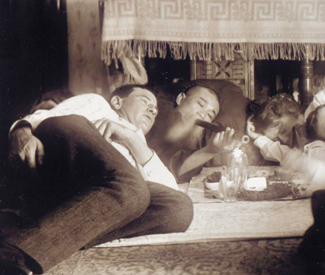
“For me, that was the best part. I was really hooked on the ritual. Once I’d actually learned to prepare the pipes myself, that became my favorite source of entertainment: lying there next to the opium layout, within the glow of the opium lamp, watching myself prepare pipe after pipe. It was just mesmerizing,” he says.

“I’d be lying if I didn’t say I miss it very much. Sometimes I’ll have these very vivid dreams about smoking, and I’ll wake up in the morning, lying on my left side, in the same position I used to smoke in. It’s crazy — even though I’ve quit, it won’t leave me alone. I think about it all the time.”

Poverty Scholars Unite

2

This post has been updated. RYME orientation is July 3, not June 27.

July 3 will begin another session of Poor Magazine’s revolutionary youth media education program, or RYME.

Poor Magazine was founded in 1996 as a way to bring together poor people to produce media, teach and learn, and create community. From their space in the Mission, they have launched the printed Poor Magazine, Poor News Network TV and Poor Radio, published dozens of books at Poor Press, and hold programming throughout the year.

One such program is People Skool, sessions for and by the people. Poor rejects status indicators like degrees and job titles in favor of expertise based on experience. People are esteemed as Indigenous Scholars, Poverty Scholars, Youth Scholars, and Mama Scholars share their knowledge at People Skool.

The RYME session is “a multi-generational , mutli-lingual skool,” according to Tiny Gray-Garcia, Poor Magazine’s co-founder.

The program will “teach our children and families back their stolen indigenous languages through art and project based learning– this summer we will be teaching media, radio, music, art and journalism with a focus on eldership, indigenous herstories and histories ” Gray-Garcia said in an email.

Tuition for the program is based on ability to pay, and can range from $90 – 500. There are full scholarships and stipends provided for youth in poverty.

At tomorrow’s orientation, youth can learn about the program, which runs through July 31, and a “healthy homemade lunch” with “vegan and meat options provided” will be served, Gray-Garcia said.

Revolutionary Youth Media Education orientation/registration

July 3, 4pm, free

Poor Magazine

2940 16th St., #301, SF

www.racepovertymediajustice.org

Youth scholars from last summer’s RYME program conduct interviews outside City Hall

7 spots for mental regeneration this week

0

Pride is over, and we’re willing to wager your depleted brain cells could stand for some stimulus. Whether you’re into sitting in dimly-lit rooms in North Beach listening to fiction read in a thick Hungarian accent, or dressing to the nines and perusing some edgy new performance art, here are seven cultural hot spots in the city this week.

László Krasznahorka

A Hungarian author emerges from his reclusivity in the hills of Szentlászló in order to present the San Francisco literati with a reading from his novel of scheming, sex, failure, hope, communism, freaky farm collectives, tango, and the devil. Sounds like a can’t-miss situation. City Lights will host celebrated author László Krasznahorka to read Satantango (yes, that’s satan-tango), the book that inspired the seven-and-a-half hour film by remodernist filmmaker, Béla Tarr. 25 years after its original publication date, the novel has finally been translated by George Szirtes, so now we plebeian Californians can get our Hungarian apocalyptic fix. 

Thu/28 7:30pm, free

City Lights Bookstore

261 Columbus, SF

(415) 362-8193

www.citylights.com

Kala Art Institute artist talks 

The busy thoroughfare of Berkeley’s San Pablo Avenue makes an appropriately unsettling backdrop for the Kala Art Institute’s first night of artist talks. From large-scale industrial sculpture, to dystopian watercolor, to engineered photographs of imaginary landscapes, artists Randy Colosky, Vanessa Marsh, and Alison Frost’s work treads an uncanny path between real and surreal. It defamiliarizes the familiar in a fashion of which even Freud would be proud. This series of talks features discussions from Kala fellows during their residencies at the gallery, so look forward to more free inspiration (and free refreshments, which are, um, always a welcome addition for any easel-toting San Francisco artist) in July, August, and September.

Wed/27, 7pm, free 

Kala Gallery 

2990 San Pablo, Berk 

(510) 841-7000

www.kala.org

Raw SF Solstice 

Despite its strictly fashionable cocktail attire mandate and swanky SOMA venue, June’s Raw SF installation offers something for even the freakiest. With a mission to showcase and support emerging, underground artists during the first 10 years of their careers, RAW displays innovative visual art, film, fashion, music, hair and makeup artistry, photography, modeling, and performance art. San Francisco’s installation attendees can also expect henna, organic refreshments, food trucks, a DJ, and a ceremonial tea service.

Thu/28, 7pm-12am, $10 pre-sale tickets, $15 door, $5 after-party (after 9pm)

1015 Folsom, SF

(888) 729-7545

www.rawartists.org

Readers Café and Bookstore poetry series

In support of the San Francisco Public Library, the dusty shelves of Readers Café and Bookstore will be available after hours for the last installment of the shop’s Thursday night poetry readings. Palestinian American poet and historical children’s fiction writer Lorene Zarou-Zouzounis and San Francisco beatnik Martin Hickle will read from their respective collections, and special prices on food and drink will be on offer as you contemplate questions of life and poetry while you gaze out at the Bay from this Fort Mason storefront. 

Thu/28, 6:30pm, free

Readers Bookstore

Building C, Room 165, Fort Mason Center, SF

(415) 771-1076

www.friendssfpl.org

“Evolve: A Woman’s Journey”

Turn what was intended to be a sangria-fueled and nail-painting girls’ night into a celebration of femininity with some real punch. The Fort Mason center showcases Patrick Stull’s work in a diverse series of art from almost all mediums – digital, oil, graphite, sculpture, casting, mixed media, and even original music that chronicles the emotional and physical experience of pregnancy. Much of the art is built to a life-size scale to deal with a subject matter that is as life-large as it gets. 

Fri/29, 9pm, $25

Fort Mason Center

2145 3rd St., SF

www.patrickstull.com

“Only Birds Sing the Music of Heaven in This World”

A million thanks to whoever decided to make food trendy. Combining some of the things NorCal natives hold dear (that’d be food, art, and agriculture) the Museum of Craft and Folk Art hosts a show with curator Harrell Fletcher that displays past and contemporary representations of agriculture, farming, and labor. With a certain focus on alternative farming project imagery, the show links agriculture art with social activism and community building through engaging with various genres, including folk art, outsider art, and craft. 

Sat/30, 11am-6pm, GA $5

Museum of Craft and Folk Art

51 Yerba Buena, SF

(415) 227-4888 

www.mocfa.org

Librotraficante Bay Area Banned Book Reading

As school board officials threaten to ban ethnic studies books and authors — not to mention the subject entirely — in Arizona, Libotraficante is hosting this afternoon of readings from banned books. With more than a dozen performers set to read from controversial tomes, the event is sure to be anything but boring. 

Sun/1 noon-4:30pm, free

Koret Auditorium, San Francisco Public Library

100 Larkin, SF

www.sfpl.org

Alerts

0

Wednesday 20

Pack the court for Kali
, Hayward Hall of Justice, 24405 Amador #108, Hayward; www.occupyoakland.org. 8-11am, free. Of all the outrageous and unjust arrests that have gone down at Occupy Oakland, Kali’s may be the worst. Kali was turning his life around at the Occupy Oakland camp when he was arrested in December for his “unpermitted” blanket. He was denied medication for a mental health issue for days in jail before getting in a conflict with a guard- which got him charged with assaulting a police officer. It was his third strike, and he may face life in prison. From organizers: “Wear red in support of Kali’s favorite color! Since he was an active member of the Kitchen Committee, there will be Coffee not Cops as well as a potluck afterwards.”

“Notes from a revolution
,” Booksmith, 1644 Haight, SF; www.booksmith.com. 6:30pm, free. In the Haight’s heyday, the Diggers were a cultural and political force to be reckoned with. The “community anarchist” collective served food in the Panhandle, ran free medical clinics, and generally cared for the large amount of people who flocked to the neighborhood in the 60s. They set up free stores and crash pads, and were known for absurd theater that makes you think. Now their broadsides have become a new book, Notes from a Revolution. Some of those involved in this recent San Francisco history will speak at the Booksmith for the books release, and there might even be some Diggers-style people-feeding afoot.

Thursday 21


Emiliano Donis
benefit concert, Brava Theater, 2781 24th St., SF; www.brava.org. 7:30pm, $15-20. Emiliano Donis had only been 18 for a few weeks when he was arrested for dating his underage partner. According to his mother, Denhi Donis, they had been together at ages 15 and 17 before his birthday last fall. He was arrested in November, and has been locked up since. His moher organized this benefit concert, featuring a pretty great lineup of local bands, to help raise money for his legal fees.

Friday 22


The Black Power Mixtape
room 304, Redstone building, 2940 16th St., SF; www.norcalsocialism.org. 7pm, $5-10 suggested donation. The Black Power Mixtape, 1967-1975, contains rare and powerful footage. There are scenes of Angela Davis being interviewed in prison, Stokely Carmicheal with his mother, and too many unnamed leaders spreading the revolution. The footage, shot by Swedish filmmakers who lacked a certain tendency to demonize those in the black liberation movement, is unique in its honesty. This screening is a fundraiser for local folks to get to the Socialism 2012 conference in Chicago next week.

Sunday 24

Queer prisoner letter-writing Station 40, 3030B 16th St., SF; www.tinyurl.com/station40. 4-6pm, free. It’s the monthly prisoner letter-writing campaign- the “post-pride (or hide from pride)” edition. From hate crime victims who fight back to sex workers to people who just don’t “look right,” LGBTQ people make up a disproportionate number of people in the criminal justice system. Come write letters to show them they’re not forgotten.

Monday 25

“The sky did not fall” Commonwealth Club, 595 Market, SF; www.commonwealthclub.org. 5:30pm, $7-20.  Don’t Ask, Don’t Tell was finally repealed last July. That hasn’t stopped people to argue for its reinstatement for reasons like“they’re in close quarters, they live with people, they obviously shower with people” (Rick Santorum in October.) Get the real story at this Commonwealth Club event, where soldiers will speak on the historic repeal’s effect on their lives. At least for these soldiers, the changes weren’t shower-related, but instead related to not fearing dishonorable discharge and hiding who they love while risking their lives in the military.

Guardian voices: Outside the Bay Area Bubble

7

This week I’m back in the midwest, where my roots are strong and my mother is approaching her retirement years. I’m thinking about the vast geographic and cultural distance –both real and imagined — between the San Francisco, California where I now live, and the great state of Iowa, which made me so much of who I am.

Here I am, sweating through a ridiculously muggy midwest summer heatwave, thinking about how it is that I am black, a lifelong social justice activist and organizer, and a married, dyke mama who hails from a small, working-class Iowa town where sweet corn and tomatoes once grew in my own backyard.

When I tell people that I’m from Cedar Rapids, Iowa, there is a kind of shocked silence I’ve become accustomed to. I’m used to people’s confusion about how I – given my politics and identities — could possibly be from such a place. And, while I find it extremely problematic, I’ve also gotten used to a dismissive arrogance about Iowa, a comfortable ignorance about the heartland, and a total failure to comprehend why I long for my Nana’s lilac-lined house at 1339 10th Street and why I have so much hope for middle America.

I work, organize and am raising a family in the “Bay Area bubble” but being from Iowa has developed in me core values that are decidedly anti-bubble, and deeply pro-working America. My ancestors built the wealth of this nation, and I consider the whole place mine – to love and rage over, to listen to and understand, to organize and to challenge. I have not committed my life to social change just for a privileged few on the East and West Coasts. This is, fundamentally about all of us, the 99 percent in San Francisco, through the heartland, down South and all the way to upper tip of Maine.

My four-year-old son was born in San Francisco, and he is a proud Frisco kid through and through. We have a multi-racial community that dances and organizes for justice together, he considers Salvadoran pupusas a special treat, and he loves remembering the day the Giants won the World Series and it seemed like everyone in the city was a member of the same big family.

But today, I’m writing from a cramped apartment in a seven-story public housing building in Michigan where my mother now lives with her scores of books, photography equipment and cute dresses from QVC. She and I are from a clan of Gibsons, black folks from working-class Iowa where my great grandparents worked on the railroads, and where my grandfather slaughtered pigs and went on strike with his white coworkers to defend the gains of their union.

We’re from the Iowa, where my mother attended black churches as a child and found Islam as an adult, and where she, as a struggling single mother, read black feminist poetry and first fought battles with Ronald Reagan’s backwards welfare policies.

We’re from the Iowa that is a center of agribusiness and everything that’s bad about corporate food production in this country. We’re from the Iowa that rallied for Jesse Jackson’s run for president, voted for same-sex marriage, and where Obama won the caucuses back in 2008.

But Iowa has also gone from unionized, inter-racial meatpacking plants to non-union poultry factories that exploit undocumented Latino workers from as far away as El Salvador and Guatemela. We’re from the Iowa that is indeed mostly white, where my first best friend grew up – a sweet white working class red head – and our mothers shared survival stories of single, working-poor motherhood. And I’m from the Cedar Rapids, Iowa that, unlike San Francisco, is actually growing its black population and is home to a thriving center of African American community history.

For most of my adult life, as I’ve been marching against war and racism, I’ve also been defending this Iowa, fighting against the tendency toward self-righteous superiority I’ve found among too many activists in the Bay and on the East Coast. It’s the same arrogance that the Right exploits in its scandalous but effective pseudo-populist campaigns against so-called liberal elitism.

It’s my experience that people on the left think they know what it means to be Iowan. Iowans are used as stand-in for a stereotypical idea of backwards, irrationally racist white America that ‘doesn’t vote its class interests’; Iowa is a convenient marker for everything less cool, hip, cosmopolitan and liberal than, well, San Francisco.

This kind of dismissive arrogance leads to a refusal to develop, in any meaningful, long-term way, an organizing agenda for the majority of the country, and has been one of the errors of progressive politics for a long time.

We can change this. When we are thinking about the politics of immigration policy, Occupy Wall Street, gay marriage, the movement against corporate food policy, or the politics of race, poverty and labor unions, we have to think about Iowa. Think about the white working class Republicans. Think about my mom’s friend in Iowa, raised on an old fashioned farm and now leading an organic farming collective there. Think about the proud struggle for small farms, union work, and participatory democracy there.

And think about what it will really take to make the Bay, Iowa and the whole nation a place where we can all develop our full human potential, have true mutual respect for one another, and are able to struggle through our deep divisions without exclusionary moral superiority, top-down “we know what’s best for you” politics and where all of us who want to live out our old age on a quiet lilac-lined porch in Iowa, can do so in peace and dignity.
As we make our plan to build a new progressive majority, let’s stay open-minded and take our organizing to a whole new level.

Alerts

0

yael@sfbg.com

THURSDAY 14

Solitary confinement at Pelican Bay, Audre Lourde Room, Women’s Building, 3548 18th St., SF; www.womensbuilding.org. 6:30pm, free. This panel discussion on the use of solitary confinement in the criminal justice system comes soon after a class action lawsuit challenging solitary confinement in California prisons. The Center for Constitutional Rights filed the lawsuit, Ruiz v. Brown, May 31 on behalf of prisoners at Pelican Bay State Prison. The plaintiffs have spent between 10 and 28 years in solitary confinement, generally spending at least 22 hours per day alone in windowless cells, and often denied letters, visits, any sunlight, or time spent outdoors. Many of the plaintiffs also participated in last year’s hunger strikes against inhumane conditions in prison, including solitary confinement. This lawsuit may be the crucial next step in their fight.

FRIDAY 15

India to Ireland, Sports Basement, 1590 Bryant, SF; www.indiatoireland.org. A brother and sister who rode bicylces12,000 km from India to Ireland are back with photos and stories. See what they saw and hear the tales at this fundraiser for Room to Read. The international nonprofit works “to promote literacy and gender equality in education by establishing libraries, constructing classrooms, publishing local-language children’s books, training educators and supporting girls’ education.”

SATURDAY 16

Art, culture and resistance, Redstone building, 2940 16th St., SF; www.norcalsocialism.org. 6pm, $5-10 suggested donation. What’s the music of today’s social justice movement? If it’s anyone, it’s The Coup, and frontman Boots Riley. Riley has written and performed powerful and revolutionary music for decades, from hip hop edutainment concerts that promoted efforts like the Women’s Economic Project Agenda and Copwatch to traveling guerilla hip hop concerts in protest of Prop 21 in 2000. Recently, he’s been organizing with Occupy Oakland. In July, he’ll be teaching a workshop at the Socialism 2012 conference in Chicago; the next month his book, Lyrics in Context, will be released. On Saturday he’ll discuss a tradition he helps to keep alive in Oakland: how art and resistance work together. Refreshments and mingling to follow.

Juneteenth festival, parade starts at African American Arts & Culture Complex, 762 Fulton St., SF; www.sfjuneteenth.org. Parade at 11am, festival runs through June 17. Start summer off right with the biggest Juneteenth festival on the West Coast. Juneteenth commemorates the announcement of the abolition of slavery and celebrates African American heritage, and this year will mark the 62nd annual Juneteenth in the Fillmore District. The two-day festival kicks off with a parade, followed by a family-friendly weekend complete with a classic car and motorcycle show, basketball games, fashion show, petting zoo, pony rides, live entertainment, community info booths and health fair, and more.

SUNDAY 17

African American veterans and the Civil Rights Movement, Niebyl-Proctor Marxist Library, 6501 Telegraph, Oakl; www.marxistlibr.org. 10:30am-12:30pm, free. Despite growing up in a United States that still had Jim Crow laws, African Americans fought in wars throughout the 20th century. When many of them returned and joined in civil rights and black liberation movements, however, they risked their lives once again. Perhaps best known is Medgar Evers, civil rights leader and World War II soldier who was assassinated by a Ku Klux Klan member in 1963. This event will explore the many veterans who joined civil rights struggles, their reasons for doing so, and how, in many cases, experiences in military service prompted involvement in the struggle back home. It will also feature a screening of the documentary Negroes With Guns, which follows the life of Army and Marine Corps veteran Robert F. Williams, who later took up arms against violent racist groups like the KKK as part of his work with the Black Armed Guard.

Dream not deferred

0

yael@sfbg.com

On Monday, June 4, students at the Meadows-Livingstone School rehearsed for their annual end-of-the-year performance. It was bleak and rainy out, but the small, essentially one-room schoolhouse that houses the private elementary school was bursting with energy.

Twenty kids, first through sixth graders, were practicing: they sang Wade in the Water and a welcoming song in Swahili. During The Greatest Love of All, a seven-year old crooned her solo: “People need someone to look up to, I never found anyone who fulfilled my needs.” But then the kids broke out into the Neville Brothers’ Sister Rosa, (“Thank you Miss Rosa, you are the spark! You started our freedom movement!”) and then a rap about Malcolm X.

At this school, located at Potrero and 25th streets, those needs are fulfilled.

This end-of-the-year performance will showcase what the children have learned all year in an elementary school education built around lessons on African and African American history and culture. As Gail Meadows, the school’s founder and principal, puts it: “We have an Afro-centric school. We have a classical African Civilization class, and have books, videos, games, focused on African Americans. The kids learn African songs, they learn African American field songs.”

Meadows says is offers more than the cursory black history that is usually taught: “At most schools, you’ll learn about Rosa Parks and Martin Luther King, and that’s it.”

All of the children at Meadows-Livingstone are of African descent. “We’re not nationalists,” Meadows says. “The kids understand the world is of many colors, and you can’t live in this world by yourself.”

But spending some crucial elementary school time specifically for African Americans, Meadows believes, does wonders for her students’ abilities to navigate that world.

As Meadows tells it, she’s motivated partly because she didn’t get the same experience as a child. “I lived in a small campus town and went to an all-white school. My mother used to say that she had to undo everything that was done.”

Her education included books shaped by her parents to include black children (“They would search tirelessly for children’s books representing people of color, or they would just change the stories”) and distrust of television (“My father would say, why watch something that doesn’t validate you as a child?”). At her school, she recalls being in “a play that included a line, ‘Don’t drink coffee. It will make you black, and that’s bad.'”

For children in San Francisco today, Meadows says this feeling of belonging is as important as ever. “There’s an exodus of people of color out of San Francisco,” she says. “That means children of color are in classrooms with people who are not educated about African American culture. And they’re educated by a media that gives them a skewed view of who they are.”

This lack of education can often lead to racist bullying. a large reason why many students transfer to Meadows’ school.

“There are students that transfer into my school after having bad experiences, and they don’t know how to confront the person who said something offensive to them,” says Meadows. “In my school they learn to confront. An angry confrontation isn’t productive. It should be direct, they should be able to explain, here’s the real story about that stereotype.”

This education helps when kids leave the Meadows-Livingstone school for middle schools across the city.

“People ask them questions like, are you in a gang? Do you have a house? All these stereotypes they’ve read about, all of a sudden they’re right there,” Meadows says. “If you know who you are, you can live through that. Its easier.”

At a recent visit to the school, some students described their own experiences.

“Sometimes, when I was at my old school, they talked about blacks badly,” said one student. “They said they were stupid and dumb. And I still didn’t believe it, but now I learned about my heritage and I learned that we’re stronger and we have more spirit.”

Or, as he said, “Black power makes me feel strong.”

A 12-year-old who would be leaving the school soon told me a story of how the school influenced. “One of the kids in my neighborhood, he said, ‘We’re all niggers,'” he explained. “I said, ‘No we’re not. We’re regular black kids.'”

As another child put it, “Black power means that you have strength and nobody can push you around, like, like you’re just a little duck and everyone else is a coyote.”

From a long line of teachers, Meadows’ life work has been dedicated to educating and empowering young people. She taught her first class at age 10, before studying education at Kansas State University. She was teaching at Montessori schools when she decided to start her own.

Meadows-Livingstone school came out of a wave of alternative education informed by 1960s liberation movements. The Black Panther party, a part of the history that the children Meadows-Livingstone learn, had a 10-point platform laying out the ways that racism intersects with inequality in education, along with housing, treatment by the justice system, and other facets of society.

Point five says, “We believe in an educational system that will give to our people a knowledge of the self. If you do not have knowledge of yourself and your position in the society and in the world, then you will have little chance to know anything else.”

Meadows-Livingstone continues this part of the Panther legacy, and not just ideologically.

“At one point in our school we had maybe 15 kids whose relatives had been Panthers,” says Meadows.

“We have a grandfather who brings fruit every week,” she says, continuing the spirit of the Free Breakfast Program. “And he was a Panther.”

The children also learn about prominent Panthers. “They play a Panther tag game, and they would cry if they couldn’t be Angela Davis or Huey P. Newton,” she said.

On Fridays, the children read poetry. “They really like to recite poems written by African Americans, it gives them hope. They’re stuck on Langston Hughes, they like Gwendolyn Brooks too.”

The school costs $700 a month, but many of the students are subsidized by The Basic Fund, a private foundation.

Meadows also uses partnerships with city institutions to enhance the curriculum. The children spend time every week swimming at Garfield public pool on Treat Street, and playing tennis, and partnering with Acrosports for tumbling lessons. The swimming lessons hold a particularly strong symbolism, as generations of African Americans in Jim Crow states were denied opportunities to swim.

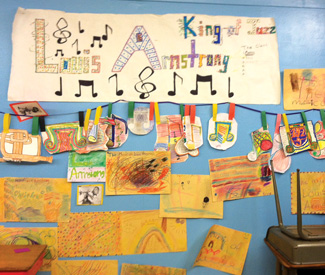
Tributes to Black historical figures decorate the school’s walls. Children’s art on “Black Inventors” and “Louis Armstrong, the king of jazz” are displayed, along with a large version of the iconic photograph of John Carlos and Tommie Smith doing the Black Power salute at the 1968 Olympics.

When asked about Malcolm X, 20 hands shot up to talk about a figure important to their studies.

As one child explained it: “Malcolm X, he said if somebody’s hits you or hurts your family, he’s not going to turn the other cheek. He’s going to fight back. He’s like, you hurt my family, I’ll hurt yours. Martin Luther King, he said if a white person hits you, don’t fight back, make peace.”

“That’s nonviolence” another chimed in.

When listing their personal heroes, many kids included King and Malcolm. “Muhammad Ali, Yele, and you, Gail!” one exclaimed, the middle hero referring to the school’s drumming and African Civilization teacher, Akinyele Sadiq.

In the summer, most of the students go off to Camp Winnarainbow, the hippie-circus camp that Meadows calls “almost like an extension of our school.” Many of the children have parents who attended the school, and when I ask if they’re excited to graduate, all the kids frown and one says, “I don’t want to leave!” Others are more calm at the question. The school provides a safe haven for bullied kids and a source of ethnic pride. One 12-year-old tells me that when he goes to middle school next year, he’ll make new friends but, “I won’t follow them if they do something bad.” He sighs when I ask if he will be sad to leave. “Yeah,” he says, “But we all have to move on.”

Save Adobe Books?

2

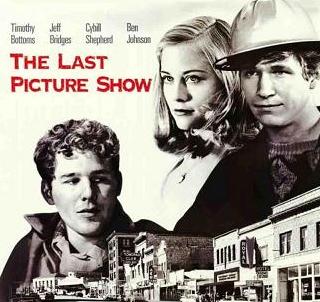
Adobe Books owner Andrew McKinley didn’t have to think long when I asked him the corniest question of our interview, occasioned by the announcement that his store was in serious danger of having to close. Question: if you had to choose one book to describe your situation, what would it be? “It reminds me of The Last Picture Show by Larry McMurty,” McKinley gamely responded. “It’s about a movie theater in a small Texas town that’s dying out.”

But! ask Mission District bibliophiles. Can Adobe Books be saved? The answer, according to McKinley, lies in whether you have a buddy with $60,000 to save the future of SF books — or better yet, $3 million.

McKinley has owned the store for the past 24 years, originally with a business partner. “I always dreamed of having a store filled with artists, poets, and writers,” he told me. “Meeting people who want to be artists has been the best part.” For decades, that’s what he did — he even opened a gallery space in the back that hosted near-monthly art openings. But times, they are a’changin’ — and rising real estate costs in the area have made it impossible for the bookstore to continue to exist in its prime location astride Valencia and 16th Streets. Granted, this isn’t the first time the alarm has been sounded, but McKinley forsees having to close his doors for good at some point over the next few months. 

Unless… and on this point he’s almost reluctant to give us hope. Unless some “angel” descends from heaven (or the hills south of Dolores Park perhaps) to pluck Adobe from its doom. With $60,000, McKinley reckons he could keep the shop open for three more years — that amount is approximately a year’s rent on the space. With $3 million, said “golden angel” could buy the building and ensure that the inner Mission continues to have a place to buy dog-eared paperbacks and browse well-curated banks of sweet, sweet literature. 

But. “I don’t want to be a charity,” says McKinley. “I feel that closure might be the best solution if no one can step into save it.” The bookshopkeep allows that he hasn’t exactly bent over backwards to adjust our times of Amazon.com and 140-character attention spans. He could have added a cafe to augment the business, he posits. Maybe started selling new and remaindered volumes. 

But. There it is, he didn’t, and now we’re faced with losing yet another Mission bookstore to the march of time. (Granted, it’s not all bad news for bookworms — Modern Times Bookstore Collective was able to relocate to a gorgeous new location on 24th Street and the Dog-Eared Books family recently had a new baby not too far away in the form of Phoenix Books.) 

Unless. McKinley says the notion of re-starting Adobe as a member-based collective has been thrown around by some of the shop’s super fans. But that could be just the well-wishing of the community members he’s held so dear over the years. 

Just remember. “The knowledge in books is not as important to get by in this modern world,” says McKinley. “People don’t put together large collections of books as much. It is funny, more books have been created in the last few decades and more people can read than ever before.” We read you, sir.

P.S., massive sale going on right now at Adobe Books. 

Adobe Books

3166 16th St., SF

(415) 864-3936

adobebooksbackroomgallery.blogspot.com

Housing and highrise offices

0

EDITORIAL It's something of a civic shame that the only way San Francisco can build a new transit terminal is to sell a private developer the rights to stick a 1,070-foot highrise office tower on public land. In fact, it's a sad statement on the city, state, and local government: Once upon a time — and it wasn't the long ago — tax dollars collected through a progressive system paid for major infrastructure projects.

But there's no easy way to raise $4 billion in tax money for the Transbay Terminal — even though it ought to be seen as part of the high-speed rail project, and the federal and state government ought to be picking up the tab. So San Francisco ambles forward, selling land and lease rights to the highest bidder.

In this case, Gerald Hines of Houston won the right to build the largest highrise west of the Mississippi on property owned by the Transbay Joint Powers Authority. There are all sorts of drawbacks to the deal — among other things, it will cast shadows on a number of city parks, all the way to Portsmouth Square in Chinatown. Like any massive office complex, it will put pressure on Muni, on city streets, on police and fire and other city services — and no commercial office building ever pays its fair share of that burden. And since in this case the major recipient of the money from the project will be the TJPA, the city's General Fund will suffer.

Oh, and the building is ugly.

Meanwhile, city planners want to increase height limits all around the Transbay Terminal and allow hundreds of units of new (luxury) housing and more commercial office space. It's going to be a new highrise neighborhood, complete with a rooftop park and a few little patches of ground-level open space, which won't get a whole lot of sun, particularly in the morning and evening.

And at this point, there's been very little focus on what ought to be the defining issue of this and the other major developments on the city's planning horizon, and that's affordable housing.

This city has a terrible jobs-housing mix. The vast majority of the people who currently work in San Francisco can't afford to buy a house here, and many of them can only rent if they pay for more than the federal standard of one-third of their income for housing. So people who work in hotels and restaurants and city, state and federal offices and hospitals and even financial district companies wind up living far from the city and commuting. Nobody thinks that's a sound environmental policy.

And this kind of full-scale rezoning and development will only make it worse. According to the City Planning Department, the Hines project will pay about $27 million into the city's affordable housing fund, enough to pay for maybe 60 or 70 housing units. That won't even begin to cover the need created by the thousands of employees who will fill that tower. The market-rate housing on the site will almost certainly be beyond the reach of most San Franciscans, and probably many of the office workers who fill the Hines building. And only 35 percent of the new housing — at maximum — will be affordable.

San Francisco has to get a grip. The city can't keep allowing more high-end housing and highrise office space without a plan to meet its housing needs. We're glad to see the mayor talking about a $50 million a year fund, but that will barely meet existing needs; it can't possible keep pace with new development.

So before the supervisors rush ahead to approve this ambitious new downtown district, they need to ask Hines, and the TJPA, and any other developer who comes along, how it intends to meet the demonstrated need for affordable housing that these projects will create — and demand a much higher level of payment that what's currently on the city's books.

Danzig on Doyle, his fans, Verotik, and that Metallica anniversary

0

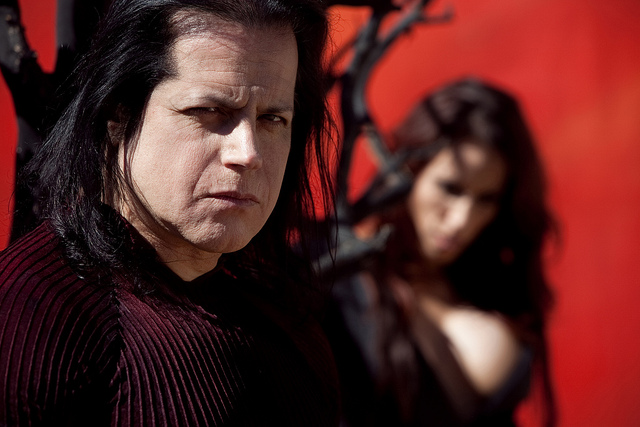
Glenn Danzig has spawned a cult following with his dark and brooding voice, and the sinisterly seductive imagery of his lyrics. From the early days – some 35 years back – as front person for horror punk icons the Misfits, to metal-infused Samhain, and finally to the eponymous Danzig, where he achieved a degree of mainstream success, he has taken macabre themes, blasted them with an obsessive sheen, and come up with some of the most hauntingly memorable songs this side of hell.

Danzig comes to the Warfield on Sunday night on the second stop of a brief two-week tour that finds the 56-year-old icon reuniting with Misfits guitarist Doyle Wolfgang Von Frankenstein. Doyle comes as a special guest for a handful of concerts that promise to feature a set of classic tunes with his old band mate.

Speaking over the phone from Los Angeles, the man who has made a living bellowing songs like “All Hell Breaks Loose,” “Skulls,” “Twist of Cain,” “Mother” and countless others is for the most part fairly soft-spoken, and keeps his responses short and to the point.

When first asked about the upcoming show with Doyle, he simply said, “We do a Danzig set, and then about two-thirds of the way in we bring out Doyle and do a bunch of old stuff.”

Later on though, Danzig did agree that the music he’s made has had a lasting impact on those who grew up listening to it, along with kids today just now discovering the Misfits and Samhain, or even newer solo releases such as 2010’s Deth Red Sabaoth.

“That’s the great part, because no one sees all the bullshit you have to go through, so when people come up and tell you what your stuff means to them, it’s pretty cool.”

Danzig was in San Francisco most recently last December, when he was a special guest at Metallica’s 30th anniversary run at the Fillmore, singing “Die Die, My Darling” and “Last Caress,” two Misfits tunes that Metallica covered in their early days as a band.

“I hadn’t seen those guys in a while, and James called me up, and was telling me that the kids were getting to see it for $19.81 total — they were doing it for all the right reasons. I think they just wanted to let fans have a great time, and it was a lot of fun, I got to see a lot of old friends.”

Speaking of covers, Danzig himself is currently finishing up work on an as-yet-untitled album of cover songs, the first of which, “Devils Angels,” is available to listen to on his website. The record, which is due out in the late summer or early fall, is one of many projects that the singer has on his plate at the moment, or hopes to in the near future.

Once the covers album is completed and released, Danzig plans to record Black Aria III, the latest in a series of classical solo projects, and then set about working on the next Danzig record.

In addition to making music, Danzig has been writing several different horror and fantasy-themed comic books over the years, published by his own company, Verotik. One of his titles, Ge Rouge, has been in the development stages of being made into a film for several years, but has run into differing problems.

“We had it going with one production company, but we had to yank it because it just wasn’t going anywhere with them — eventually you get tired of doing all these re-writes on it, and you just say, ‘Look man, either you’re doing this or you’re not doing it!’” says Danzig.

“We had a bunch of other people that wanted to see it, but we couldn’t show it to them because we had a contract – once we’re out of the contract we can start showing it to other people. And I’m always writing scripts, so…we’ll see,” he laughs.

Danzig
Sun/27, 8pm, $35-$38
Warfield
982 Market St, SF
www.thewarfieldtheatre.com

Stage Listings May 23-29, 2012

0

Stage listings are compiled by Guardian staff. Performance times may change; call venues to confirm. Reviewers are Robert Avila, Rita Felciano, and Nicole Gluckstern. Submit items for the listings at listings@sfbg.com. For further information on how to submit items for the listings, see Picks.

THEATER

OPENING

Othello Phoenix Theatre, 414 Mason, SF; www.brownpapertickets.com. $15-18. Opens Thu/26, 8pm. Runs Thu-Sat, 8pm. Through June 9. Ninjaz of Drama performs Shakespeare’s classic in a contemporary setting.

Slipping New Conservatory Theatre Center, 25 Van Ness, SF; www.nctcsf.org. $25-45. Previews Wed/23-Fri/25, 8pm. Opens Sat/26, 8pm. Runs Wed-Sat, 8pm; Sun, 2pm. Through July 1. New Conservatory Theatre Center performs Daniel Talbott’s drama about a gay teen who finds new hope after a traumatic breakup.

BAY AREA

God of Carnage Marin Theatre Company, 397 Miller, Mill Valley; www.marintheatre.org. $34-55. Previews Thu/24-Sat/26, 8pm; Sun/27, 7pm. Opens Tue/29, 8pm. Runs Tue and Thu-Sat, 8pm (also June 2 and 16, 2pm; June 7, 1pm); Wed, 7:30pm; Sun, 2 and 7pm. Through June 17. Marin Theatre Company performs Yasmina Reza’s Tony-winning comedy about two sets of parents who meet after their children get into a schoolyard fight.

ONGOING

“Best of PlayGround 16: A Festival of New Writers and New Plays” Thick House, 1695 18th St, SF; www.playground-sf.org. $10-40. Thu/24-Sat/26, 8pm; Sun/27, 7pm. Seven short plays and musicals by Bay Area authors, plus a staged-readings series.

“DIVAfest” Exit Theatreplex, 156 Eddy, SF; (415) 673-3847, www.theexit.org. $15-25. Through Sun/27. Entering its second decade, the estrogen-centric DIVAfest at the Exit is so jam-packed with activities — workshops, burlesque, symposiums, readings, singer-songwriter nights — you’d be forgiven for not realizing that plays are also on the menu. But in fact, they are the main course. This year’s smorgasbord features three very different solo shows, each encapsulating a wholly unique female voice. Genevieve Jessee’s Girl in, but not of, the ‘Hood, which won a “Best of the Fringe Festival” award in 2011, has since been reworked with a new director, Exit Theatre stalwart Michelle Talgarow, rendering it sharper and more comic without minimizing the inner turmoil experienced by the main character, Jessee herself. Catherine Debon’s Alma Colarada, which also won a “Best of the Fringe” in 2011, is an emotionally-charged, experimental roller-coaster ride that appropriately begins and ends on a train. Detailing a family history fraught with World War II resistance fighting, concentration camps, communist sympathies, and endless trains, Debon nimbly vacillates between the neuroses of the present day and the deep despair of the past, while still finding a way to end to piece on a triumphal note. Last but by no means least, the laugh-out-loud romantic farce Pussy, by Maura Halloran, details the tricky intricacies of a lesbian-feline-nosy neighbor ménage à “cat-re”. Yes, it’s about a cat … hmmm, or is it? You should really take the opportunity to find out. (Gluckstern)

Down to This Exit Stage Left, 156 Eddy, SF; www.sleepwalkerstheatre.com. $12-20. Thu/24-Sat/26, 8pm. Thirty-something Charlie (Derek Fischer) plays this little game with himself where he tosses a rotten egg at the kitchen trash as if he were making a free-throw in sudden-death overtime. This little moment, innocent and ordinary on the surface, puzzles one-night stand Donna (Tonya Narvaez) after she happens on the scene. That she would be baffled, even momentarily disturbed by so common a flight of sports-dude imagination is our first taste of the strained mechanics of Adam Chanzit’s slight pulp revenge tale: sure enough, this game of chance turns out to be a (pretty ridiculous) psychopathology ruling Charlie’s world. When a moment later his equally imbalanced and estranged wife (Kendra Lee Oberhauser), fresh from prison and packing heat, bursts in on the two lovebirds, Charlie’s fate-game will become the tortured trope in a table-turning showdown between all three — plus Charlie’s hapless roommate (Jomar Tagatac) and his crew-cut–sporting sidekick (Shane Rhoades). Chanzit offers some mild surprises and amusing banter along the way in Sleepwalkers’ world premiere — helmed by artistic director Tore Ingersoll-Thorp — but the plot and characters are stretched thin, and the tension often grows slack despite the able and likable cast. By the time the story climaxes in a coin-toss of an ending (designed to work out one of two ways, depending), it’s too big a muddle to generate more than a momentary quiver of anticipation over anybody’s fate. (Avila)

Endgame and Play American Conservatory Theater, 415 Geary, SF; (415) 749-2228, www.act-sf.org. $10-95. Tue-Sat, 8pm (also Wed, Sat-Sun, 2pm; no matinee Wed/23). Through June 3. ACT presents two absurd dark comedies by Samuel Beckett.

Fwd: Life Gone Viral Marsh San Francisco, 1062 Valencia, SF; (415) 282-3055, www.themarsh.org. $20-50. Thu, 8pm; Sat, 8:30pm; Sun, 7pm. Through June 10. The internet becomes comic fodder for creator-performers Charlie Varon and Jeri Lynn Cohen, and creator-director David Ford.

It’s All the Rage Studio Theater, Marsh San Francisco, 1062 Valencia, SF; (415) 282-3055, www.themarsh.org. $15-50. Thu/24, 8pm; Sat/26, 8:30pm, Sun/27, 7pm. Longtime comedian and radio host Marilyn Pittman’s solo play wrestles with the legacy of her parents’ violent deaths in a 1997 murder-suicide initiated by her father. It’s disturbing material that Pittman, a stout middle-aged woman with a gregarious and bounding personality, approaches indirectly via a good deal of humor — including recounting the first time she did her growing-up-lesbian bit before her mother in a DC comedy club. But the pain and confusion trailing her for 13 years is never far behind, whether in accounts of her own battle with anger (and the broken relationships it has left in its wake) or in ominous memories of her too complacent mother or her charming but domineering father, whose controlling behavior extended to casually announcing murderous dreams while policing the boundaries of his marriage against family interference. A fine mimic, Pittman deploys a Southern lilt in playing each parent, on a stage decorated with a hint of their Southwestern furnishings and a framed set of parental photographs. In not exactly knowing where to lay blame for, or find meaning in, such a horrifying act, the play itself mimics in subtler form the emotional tumult left behind. There’s a too brief but eerie scene in which her veteran father makes reference to a murder among fellow soldiers en route to war, but while PTSD is mentioned (including as an unwanted patrimony), the 60-minute narrative crafted by Pittman and director David Ford wisely eschews any pat explanation. If transitions are occasionally awkward and the pace a bit loose, the play leaves one with an uncomfortable sense of the darker aspects of love, mingled with vague concentric histories of trauma and dislocation in a weird, sad tale of destruction and staying power. Note: review from the show’s 2009 run at the Marsh San Francisco. (Avila)

My Tia Loca’s Life of Crime Bindlestiff Studio, 185 Sixth St, SF; www.brownpapertickets.com. $20. Thu-Sat, 8pm. Through June 2. Guerrilla Rep performs a new play by Roy Conboy, chair of SF State’s Playwriting Department.

A Raisin in the Sun Buriel Clay Theater, African American Art and Culture Complex, 762 Fulton, SF; 1-800-838-2006, www.african-americanshakes.org. $10-35. Sat/26, 8pm; Sun/27, 3pm. African-American Shakespeare Company performs Lorraine Hansberry’s classic drama.

Tenderloin Exit on Taylor, 277 Taylor, SF; (415) 525-1205, www.cuttingball.com. $10-50. Thu/24, 7:30pm; Fri/25-Sat/26, 8pm (also Sat/26, 2pm); Sun/27, 5pm. Annie Elias and Cutting Ball Theater artists present a world premiere “documentary theater” piece looking at the people and places in the Cutting Ball Theater’s own ‘hood.

To Be Young, Gifted and Black: Honoring Lorraine Hansberry In Her Own Words Gough Street Playhouse, Trinity Episcopal Church, 1620 Gough, SF; www.custommade.org. $22-28. Thu/24-Sat/26, 8pm; Sun/27, 7pm. Custom Made Theater and Multi Ethnic Theater collaborate on this tribute to the groundbreaking playwright.

The Waiting Period MainStage, Marsh San Francisco, 1062 Valencia, SF; (415) 282-3055, www.themarsh.org. $15-50. Fri, 8pm; Sat, 5pm. Extended through July 7. Brian Copeland (comedian, TV and radio personality, and creator-performer of the long-running solo play Not a Genuine Black Man) returns to the Marsh with a new solo, this one based on more recent and messier events in Copeland’s life. The play concerns an episode of severe depression in which he considered suicide, going so far as to purchase a handgun — the title coming from the legally mandatory 10-day period between purchasing and picking up the weapon, which leaves time for reflections and circumstances that ultimately prevent Copeland from pulling the trigger. A grim subject, but Copeland (with co-developer and director David Ford) ensures there’s plenty of humor as well as frank sentiment along the way. The actor peoples the opening scene in the gun store with a comically if somewhat stereotypically rugged representative of the Second Amendment, for instance, as well as an equally familiar “doood” dude at the service counter. Afterward, we follow Copeland, a just barely coping dad, home to the house recently abandoned by his wife, and through the ordinary routines that become unbearable to the clinically depressed. Copeland also recreates interviews he’s made with other survivors of suicidal depression. Telling someone about such things is vital to preventing their worst outcomes, says Copeland, and telling his own story is meant to encourage others. It’s a worthy aim but only a fitfully engaging piece, since as drama it remains thin, standing at perhaps too respectful a distance from the convoluted torment and alienation at its center. (Avila)

The Wrong Dick Dark Room Theater, 2263 Mission, SF; www.darkroomsf.com. $20. Thu/24-Sat/26, 8pm. Ham Pants Productions presents a noir-inspired comedy set in San Francisco.

BAY AREA

Crevice La Val’s Subterranean, 1834 Euclid, Berk; www.impacttheatre.com. $10-20. Thu-Sat, 8pm. Through June 9. Just in case you were feeling panicked about the persistently recessed state of the economy and what might be your own less than ideal place in it, the Impact Theatre and Playground co-presentation of Lauren Yee’s Crevice might help to put your woes into perspective. That’s because slacker sibs Liz (Marissa Keltie) and Rob (Timothy Redmond) are only slightly exaggerated representatives of Generation Next whose penchant for making lackluster life choices has sentenced them to an indefinite prison term of couch-surfing and Teen Mom marathons in their childhood home. Naturally, they desire change, but it’s not until their mother (Laura Jane Bailey) starts having a hot fling with a younger man that things do. In an egregious breach of the TMI line, it appears that Mom’s orgasms open a “crevice” into an alternate reality that Rob and Liz subsequently fall into. Thus removed from the entropy of their former reality they begin testing the parameters of their new one, quickly coming to the realization that sometimes the alternatives to what you already have are even worse. Getting home again is a convoluted, not fully mapped-out process, but in the interim, their navigation of their erstwhile wonderland offers most of the play’s best lines as well as the uncomfortably effective transformation of Reggie D. White from Liz’s nerdish best buddy to multi-lingual Mafia killer and casual sadist. (Gluckstern)

The Great Divide Ashby Stage, 1901 Ashby, Berk; www.shotgunplayers.org. $20-30. Previews Wed/23-Thu/24, 7pm. Opens Fri/25, 8pm. Runs Wed-Thu, 7pm; Fri-Sat, 8pm; Sun, 5pm. Through June 24. Shotgun Players performs Adamn Chanzit’s drama about the hot topic of fracking, inspired by Ibsen’s An Enemy of the People.

*The Kipling Hotel: True Misadventures of the Electric Pink ’80s New venue: Marsh Berkeley, 2120 Allston, Berk; (415) 282-3055, www.themarsh.org. $20-50. Sat, 8:30pm; Sun, 7pm. Extended through June 10. This new autobiographical solo show by Don Reed, writer-performer of the fine and long-running East 14th, is another slice of the artist’s journey from 1970s Oakland ghetto to comedy-circuit respectability — here via a partial debate-scholarship to UCLA. The titular Los Angeles residency hotel was where Reed lived and worked for a time in the 1980s while attending university. It’s also a rich mine of memory and material for this physically protean and charismatic comic actor, who sails through two acts of often hilarious, sometimes touching vignettes loosely structured around his time on the hotel’s young wait staff, which catered to the needs of elderly patrons who might need conversation as much as breakfast. On opening night, the episodic narrative seemed to pass through several endings before settling on one whose tidy moral was delivered with too heavy a hand, but if the piece runs a little long, it’s only the last 20 minutes that noticeably meanders. And even with some awkward bumps along the way, it’s never a dull thing watching Reed work. (Avila)

Not Getting Any Younger Marsh Berkeley, 2120 Allston, Berk; (415) 282-3055, www.themarsh.org. $15-50. Fri, 8pm; Sat, 5pm. Extended through June 30. Marga Gomez is back at the Marsh, a couple of too-brief decades after inaugurating the theater’s new stage with her first solo show — an apt setting, in other words, for the writer-performer’s latest monologue, a reflection on the inevitable process of aging for a Latina lesbian comedian and artist who still hangs at Starbucks and can’t be trusted with the details of her own Wikipedia entry. If the thought of someone as perennially irreverent, insouciant, and appealingly immature as Gomez makes you depressed, the show is, strangely enough, the best antidote. Note: review from the show’s 2011 run at the Marsh San Francisco. (Avila)

The Odyssey Angel Island; (415) 547-0189, www.weplayers.org. $40-76 (some tickets include ferry passage). Sat-Sun, Fri/25, and June 1, 10:30am-4pm (does not include travel time to island). Through July 1. We Players present Ava Roy’s adaptation of Homer’s epic poem: an all-day adventure set throughout the nature and buildings of Angel Island State Park.

The World’s Funniest Bubble Show Marsh Berkeley, TheaterStage, 2120 Allston, Berk; (415) 826-5750, www.themarsh.org. $8-50. Sun/27, June 3, 10, 16, 24, and 30, 11am. Louis “The Amazing Bubble Man” Pearl returns with this kid-friendly, bubble-tastic comedy.

PERFORMANCE/DANCE

BATS Improv Bayfront Theater, Fort Mason Center, Marina at Laguna, SF; www.improv.org. Fri/25, 8pm: “Director’s Cut!,” $20. Sat/26, 8pm: “Improvised Murder Mystery,” $20.

“Bitter Melon” Dewey Monument, Union Square, Stockton at Geary, SF; www.pushdance.org. Fri/27-Mon/28, 8pm (or sundown). Free. Push Dance Company and Union Square Live present a world premiere by Raissa Simpson.

“Des Voix … Found in Translation” Z Space, 450 Florida, SF; www.desvoixfestival.com. Fri/25-Sun/27, times vary. $20-75. Playwrights Foundation and Cultural Services of the Consulate General of France/SF present this first-ever festival of newly translated plays by vanguard French authors.

“Dionysian Festival” Mary Sano Studio of Duncan Dancing, 245 Fifth St, Ste 314, SF; (415) 357-1817, www.duncandance.org. Sat/26, 8pm; Sun/27, 6pm. $18. Mary Sano and her Duncan Dancers present the 15th annual festival honoring the birthday of modern dance pioneer Isadora Duncan. Program includes Duncan repertoire as well as new works by Sano.

“Elect to Laugh” Studio Theater, Marsh San Francisco, 1062 Valencia, SF; (415) 282-3055, www.themarsh.org. Tue, 8pm. Ongoing through Nov 6. $15-50. Will Durst and friends perform in this weekly political humor show that focuses on the upcoming presidential election.

“Litquake’s Epicenter: A Night of Edith Piaf” Tosca Café, 242 Columbus, SF; www.litquake.org. Tue/29, 7pm. Free. Litquake and City Lights Books celebrate the French chanteuse with author Carolyn Burke (No Regrets: The Life of Edith Piaf) and singer Betty Roi.

“Parkour Deux” CounterPULSE, 1310 Mission, SF; www.counterpulse.org. Fri/25-Sun/27 and June 1-3, 8pm (also June 3, 2pm). $15-22. Scott Wells and Dancers perform new work. *


Bullet blender

0

Max Payne 3

(Rockstar Games/Take-Two Interactive)

Xbox 360, PS3, PC

GAMER There will be fans who complain that Rockstar Games doesn’t “get” Max Payne. Remedy Entertainment, a Finnish developer that has since moved on to the Alan Wake franchise, developed the action-noir series’ first two titles, and Rockstar picked up the ball in much the same way they revived Red Dead a few years back. The truth is there may be no company better suited to reimagining Max Payne; Rockstar and Remedy share a fascination and fetishization with the old cop movies, comic books, and cinematic style that inspired the series.

After the deaths of his wife and child in the first game, Max has given up. Holed up in a dingy bar in Jersey, he’s drinking himself to death when an old police academy buddy suggests private security work in São Paulo, Brazil. The suntanned change of scenery is pleasant, and the authentic music, un-subtitled Portuguese and po-faced grime of the dangerous favelas is typical Rockstar distillation of what makes Brazil “cool” to outsiders.

The wife of a wealthy aristocrat is kidnapped, and Max sets out to retrieve her from the corrupt cops and drug lords of Sao Paolo’s streets and slums. It’s got a Man on Fire (2004) vibe, one the developers encourage by incorporating Tony Scott-esque editing tricks like double exposures and scrolling key words of dialogue across the screen as characters speak them.

If one element will divide old fans from new, it’s a certain self-seriousness, something scoffed at by the original Max Payne. There’s a joke about gaming in the aughts and how every developer seemed to turn their protagonist into alcoholic, bearded scumbags, but at least Max embodies these traits thematically. The game’s grizzled noir clichés aren’t overtly tongue-in-cheek and aside from some superficial commentary about the divide between rich and poor in a predominately poor city, this is a game about slow-motion bullets and it’s hard to take too seriously.

Max Payne invented “bullet time” gaming, where the game world slows down as you dive through the air, picking off multiple enemies in slow-motion, and the mechanics haven’t changed. Basically, (1) keep moving, (2) keep shooting, and (3) kill thousands of people. Level design is inspired — though flashbacks to New York feel like a consolation to fans unhappy with the change of setting — and rock band HEALTH delivers a moody score that’s equal parts Jan Hammer and Japanese taiko drums.

There’s something quietly retro about a game that isn’t anything more than shooting a ton of bad guys. It’s a simple pleasure, and Max Payne 3 feeds that monster. But Rockstar Games aren’t known for “simple”; when they took over Red Dead Redemption they transformed a game about gunslinger showdowns into an epic open-world western. Part of me hoped for something revolutionary to happen here, and the final product looks quaint compared with the caliber of Rockstar’s past releases, but there’s no denying Max Payne 3 is a uniquely stylish take on Latin American crime.

Whorls away

1

le.chicken.farmer@gmail.com

CHEAP EATS Way out in the water.

A severed head, a small treasure in gold, or drugs, my own death, fish, a baby in a basket, the murder weapon, the meaning of life, peace and quiet, a clue .. . A long time ago, when I was fearless, I swam toward something. That’s how curious I was. It could have been anything, but I had to know.

Now, I can float. I like to think I can float.

Then, I was a pretty good swimmer. I could swim, see me swimming?

My people on the shore, Moonpie, Baby Rae, and Moonpie’s now resting-in-peace sister, Sweetpee … they didn’t know where I was going, because the fearless don’t always say.

They watched. They worried. And they must have seen what I was seeing — this bobbing thing, way out on the horizon.

As the ocean floor sloped and sloped and sloped away from my kicking feet, they watched, helpless and wondering, and I suppose I got a rise out of this.

Good. Risings was what I needed then, maybe even more than treasure. What it was, though, that I risked my ass for all those years ago, was an Igloo cooler with a half a loaf of sliced white bread in it, an open package of lunch meat, and mustard. Or in other words: sandwiches.

I risked my life for sandwiches!

And I don’t even particularly like sandwiches, I thought, watching a matzoh ball bob in my bowl of matzoh ball soup. That is so David Copperfield.

And these were some hard-earned matzoh balls. Not only because Soup Freaks is off my beaten path (unless I happen to be BARTing to a ballgame), but also because the matzoh gods were not looking out for me, on this particular day.

“Matzoh ball soup!” I said.

And the serverwomanperson digged and dug and couldn’t find hardly no matzoh balls in that there silver thingie of soup. Just one, and some broken off pieces of a couple others.

“Hold on a second,” she said, stepping away from the counter and returning, many months later, with a bag of frozen ones. At least they looked like they were frozen.

At least it seemed like many months.

Anyway, she was fixing to pour them into the vat when, apparently, a thought occurred to her: Did I want to wait for them to warm up, or…

“I’ll just take it as is,” I said, and that was how I wound up with a bowl of matzoh ball soup without hardly any matzoh balls in it. My fault, let the record show.

Theirs: to compensate, probably, they gave me three big pieces of bread — which seemed pretty generous, but I would have rather had a bigger bowl of soup with more things in it. I mean, classically, matzoh ball soup is not the most populated bowl of soup in the world, but, really? No carrots? No celery?

What little chicken there was was really not very good. It was peppered, and dry. Very dry. And there’s nothing worse than dry chicken in soup. Well, except maybe dry chicken outside of soup.

So I’m afraid I’m going to have to break with tradition here and declare Soup Freaks “just another restaurant.”

Not my new favorite.

David Copperfield, on the other hand. On the other hand, the Pixies. I haven’t read or listened to it or them in quite a while, respectively; but at times like these, when everything starts going wrong and doesn’t seem to want to right itself, we will grab at books and songs, if not straws.

If not drinks.

If not lunch itself.

See me swimming? Between waves, a mile from shore … the skinny girl, kicking frantically, breathing hard, and holding on for dear buoyancy to flotsam, jetsam, to little coolers full of someone else’s sandwiches. That’s me.

SOUP FREAKS

Mon.-Fri. 7am-8pm; Sat.-Sun. 10am-6pm

667 Mission St., SF

(415) 543-7687

AE,D,MC,V

No alcohol


Lindsey Buckingham’s live show comes down to one

0

With an arsenal of a dozen guitars and several amplifiers lined up behind him, Lindsey Buckingham wasted no time delving into his extensive catalog of songs Monday night at the Fillmore.

Striding up to a lone microphone stand wearing his signature blue jeans, v-neck t-shirt, and black leather jacket, the singer and guitarist launched into an hour and 15 minute set that spanned a broad spectrum of his career, covering a wide swath of solo material in addition to some of the mega hits he created as a member of Fleetwood Mac.

After running through the first couple of tunes and warming up his formidable finger picking skills, the 62-year old Buckingham took a short break to talk about his current tour across the country, contrasting the differences between performing with what he called the “big machine” — Fleetwood Mac — and “the small machine” — his solo outings.

Remarking that when he started out on his own, he would often take a sizable backing band with him, but over the years he has decreased the number of players, with his last major tour featuring a trio, and that this trek finds him venturing out by himself.

Aside from a few songs that he played along with to a pre-recorded backing track, such as “Go Your Own Way,” it was just Buckingham, his stellar guitar playing, and his still-powerful voice providing the sonic soundscape that filled the historic auditorium, proving beyond a doubt that he was capable of carrying the show all on his own, with a highly vocal and appreciative audience to encourage him.

At times, it felt strange to look at the stage and see only one person performing with the amount of energy and excitement being generated. During songs such as “Big Love” and “Go Insane,” Buckingham made a variety of impassioned facial expressions while playing, and yelled and clapped at the crowd when he finished.

When the Palo Alto native came back out for an encore, he walked along the front of the stage, high-fiving and shaking hands with his fans, before telling the audience that it “you guys really do make it feel like home here.”

Then adding, “There’s so much history in this place, and with all the music that has come out of this city, I’m just proud to be a small part of it.”

With Monday’s show in the books, Buckingham can be assured that he is still very much a vivacious and viable contributor to that ongoing legacy.

Alerts

0

WEDNESDAY 16

Occupy the Auction, City Hall steps, 1 Dr Carlton B Goodlett Pl, SF; www.occupytheauctions.org. 1:45pm, free. This event may not be a once-in-a-lifetime opportunity — organizers at Occupy the Auction have been showing up the City Hall every single weekday since April 27 — but its definitely worth checking out. Occupy the Auction works with people facing unjust evictions from their property, including homeowners that have been fraudulently foreclosed on and renters facing eviction because of their landlords mortgage issues. Talk about focused and effective: this campaign stops the majority of home auctions it targets.

THURSDAY 17

Beautiful Trouble & Organizing Cools, Planet Sub-mission, 2183 Mission, SF; www.tinyurl.com/pmpress. 7pm, free. This is a book launch for two books at once. Beautiful Trouble is part history and part manual for activism, art, and creative protest. Organizing Cools the Planet is a pamphlet on environmental organizing that has won praise with the likes of Vandana Shiva and Noam Chomsky. Celebrate the books and rock out to the Brass Liberation Orchestra at this event. There will also apparently be super special surprise happenings.

FRIDAY 18

Decolonized Yoga, 16th and Mission BART Station Plaza, SF. 5-7pm, free. The Occupy movement in San Francisco is tumultuous and ever-changing, but the yogis and radicals who host decolonized yoga have maintained a calm and consistent outdoor free yoga practice for months now. If you’ve ever wanted to do yoga for free with talented teachers and guides, and you don’t mind doing so on colorful rugs laid out next to the BART steps, decolonized yoga could be the best way for you to decompress Friday evening.

SATURDAY 19

Malcolm X Jazz Arts Festival, San Antonio Park, 1701 East 19th St, Oak; www.eastsideartsalliance.com. Free. Fun for the whole family at a truly grassroots festival by and for East Oakland. The annual festival honors Malcolm X on his birthday and features an impressive lineup of local musicians, dancers and performers and community activists, along with a childrens section and food stands.

SUNDAY 21

Straight Outta Hunters Point 2, Bayview Opera House, 4705 Third St, SF; www.tinyurl.com/kevinepps. 2-5pm, free. The film, a sequel to 2003’s Straight Outta Hunters Point, once again showcases filmmaker Kevin Epps’ ability to capture the mood and story of the neighborhood he grew up in. The film screened in theaters in February, but now Epps partners with the SF Arts Commission for a screening at the Opera House. As Epps said in a press release: “As a filmmaker and activist, this is the most important screening of all, premiering the film in the neighborhood where it all started.” The event will also showcase local organizations such as the San Francisco Black Film Festival and will be catered by Old Skool Café.

Eco-sexual hike, Redwood Park, 7867 Redwood Rd, Oak; www.tinyurl.com/sprinklemarks. 1pm, $25. Annie Sprinkle has helped shape San Francisco’s sex activist and cultural world for years. Now an advocate of eco-sexuality, Sprinkle will host Kim Marks, owner of a new all-green sex shop in Portland for an eco-sexual hike right here in SF. Explore the redwoods and your sexuality with this eco-sexy hike.

Long Haul oral history project: The Rodney King riots, Long Haul infoshop, 3124 Shattuck, Berk; www.thelonghaul.org. 7:30-9pm, free. The Long Haul provides a center for anarchist and radical media and organizing in the Bay Area, and produces the famous Slingshot newsletter. They also have an oral history series on the third Sunday of every month, discussing Bay Area events “with people who were there recalling what happened and how lessons we might have learned then could apply to the struggle now. This Sunday, the focus is on the Rodney King riots in the Bay Area, where 1400 were arrested and a 9pm citywide curfew declared all the way back in 1992.

Teese and thank you

1

STAGE With a seductive and sexy nod to the past, modern pin-up and burlesque queen Dita Von Teese has been at the forefront of reviving a once nearly lost art form for two decades.

Bringing back the sense of classic style and glamour of the golden days of Hollywood and meshing it with the tantalizing teasing of the old-time burlesque circuit, Von Teese comes to the city this week with her new “Strip Strip Hooray!” show, a 90-minute revue featuring not only her own titillating talents, but a host of other performers as well, including Dirty Martini, Catherine D’Lish, Selene Luna, Lada, Monsieur Romeo, and Perle Noire.

Von Teese — born Heather Sweet, a naturally blond Midwestern girl — first developed an interest in vintage clothing, pin-up art, and classic burlesque after moving to Southern California, where she started working at a lingerie store as a teenager.

“I fell in love with the imagery of women in the 1940s and ’50s, and that [style of] lingerie, and started looking at the history of women’s underpinnings, and that kind of interested me in pin-up art. By the time I was 17 or 18, I started developing and refining my look, and dressing in vintage clothes,” Von Teese says over the phone from Orange County, where she’s preparing for the tour.

After getting involved in the LA’s underground dance music scene in the early ’90s, Von Teese was taken to a local strip club by a friend, where she was exposed to a slightly different style of performing.

“It actually wasn’t a real strip club — it was like a bikini club — so I went there, and thought, wow these girls are doing kind of the same thing I do, but they get paid a lot more money,” Von Teese laughs.

“So as an experiment I started working there with a fake ID, and I became really interested in the history of strip clubs. I started learning more about the art of striptease, and that led me to burlesque. Most of the pin-up models from the 1930s and ’40s were burlesque dancers; if you opened up a men’s magazine from that time, there were a lot of the famous burlesque dancers in them. I kind of just started putting all of these parallels together, and thinking about what I could do to bring this idea back.”

When she first started out, she received some criticisms from people she met that worked in the industry, most notably for her dyed hair and retro look.

“I knew a lot of people that were shooting for Playboy and Penthouse at the time, and they were like, ‘You can’t have white skin and black hair and wear all these clothes. Playboy and all these people want to see a beautiful California blond!’ But I believed there was a niche waiting to be filled, so that’s how I got my start.”

Fast forward past 20 years of hard work and determination, and Von Teese is the top artist at what she does — which is an incredibly diverse array of work, including not only her live burlesque shows, but also a huge portfolio of pin-up and fashion photo spreads, several books on beauty and the art of striptease, and multiple lines of lingerie and make-up.

Although Von Teese has performed all over the world, and is extremely well known in Europe, “Strip Strip Hooray!” is her first headlining tour of the United States — and something she has been wanting to do for some time.

“Sometimes in America I can feel the whisperings of ‘What does she do, anyways?’ Some people think I just dress up in vintage clothes and drive around vintage cars and watch old movies. Or they’ll say ‘Oh, she’s just a stripper.’ With these shows that I make, I’m the producer, director, financer, choreographer — everything.”

Von Teese wanted to make these shows accessible to most any fan that wants to come see her live — promises nothing short of an amazing show.

“I’ve re-invented it for this tour, with a whole new costume, new music, and a new martini glass prop that’s covered entirely in Swarovksi crystals,” says Von Teese. “I’m just doing what I think is the very best.”

“BURLESQUE: STRIP STRIP HOORAY!”

Mon/21-Tue/22, 7pm, $35

Fillmore

1805 Geary, SF

(415) 371-5500

www.thefillmore.com