Books

Remembering Remy Charlip

3

Remy Charlip was born on January 10, 1929 in Brooklyn, NY. He died on August 14, 2012 in San Francisco. The following windy Sunday afternoon, he was lowered into the bone-dry ground on one of the ridges of Marin’s Mount Tamalpais.  His woven wicker casket had been blanketed with earth, flowers, and farewells. A solitary hawk circled overhead as soft chanting wafted across the valley. He would have loved it.

Remy took with him over 60 years of making poetry in dance, writing, drawing, painting, and theater. When he moved to San Francisco in 1989, he had a major part of his life behind him with untold accolades and honors. He had helped shape the Merce Cunningham Dance Company, the Living Theater, the Paper Bag Players, and the National Theater of the Deaf. For decades he had choreographed, designed, performed, and directed for theater and dance, and he had become a much beloved author of some extraordinarily inventive books for children that respected their individuality and enlarged their imaginations.

He also had created over 100 of what he has become best known for in dance: Air Mail Dances, in which a performer follows a sequence of images but individually realizes the transitions between them. When choreographers die, often their works die with them. Remy’s Air Mail Dances won’t. Perfectionist in everything that he was, he set them up strongly and then he set them free. He gave them a life of their own.

In the Bay Area — though he would have smiled at this label — he quickly became an older statesman for a generation of dancers, much younger, very different from him and each other, such as Krissy Keefer, Anne Bluethenthal, Jules Beckman, and Keith Hennessy. For Oakland Ballet he choreographed a charmer, Ludwig and Lou, an homage to composer and former partner Lou Harrison. He watched over and delighted in the performance of some of his Air Mail Dances by, among others, Joanna Haigood, June Watanabe, and AXIS Dance Company.

As a performer he thrilled us in Meditation — a simple dance of walks, turns, and stretches — to what must be the gooiest of concert pieces from Massenet’s opera, Thais. But perhaps he reached the pinnacle of his performance career in 2001 when in A Moveable Feast, on a commission from the Lesbian and Gay Dance Festival, he was carried, swooped, and sailed across Z Space in the arms of a bevy of nude male dancers. It was his idea of heaven. And to boot, as music he had chosen the “Liebestod” from Wagner’s Tristan und Isolde.

Perhaps most remarkable about Remy was his gentle spirit and sense of wonder. He was deeply living in this world and yet he wasn’t. How was it, we kept wondering, that an artist and a man, of yes, extraordinary accomplishments, but also much pain, rejection and losses, could keep his spirit so buoyant, generous, and uncontaminated? When he received the Guardian’s Lifetime Achievement Goldie in 2001, he said (as he often did), “I feel that my work includes all the elements I practice.” At the core of his being Remy knew exactly who he was. It kept him in the world and out of it.

Rita Felciano is th Bay Guardian’s dance critic.

The end of work as we know it

21

I read Player Piano in high school, when all of us were suburban kids were discovering Vonnegut. (We were also discovering Herman Hesse, for reasons I will never understand, and we talked about Slaughterhouse Five and The Glass Bead Game as if we were some sort of intellectuals. I read a couple of the Hesse books and found them dry and pointless. I loved Vonnegut, particularly God Bless You Mr. Rosewater.)

At any rate, even in the 1970s, Player Piano didn’t seem that far away, and it was one of the formative books of my crazy political consciouness of the time, and it got me thinking, years later, about unemployment. When I was first out in San Francisco, all of my friends were busy — and not many of them were working for pay at a traditional job. And I thought, as the nation went into a deep recession and everyone talked about creating jobs, that what people really needed was money, not jobs. For almost everyone I knew — people involved in politics and art and theater and writing and troublemaking — a job was just a way to pay the rent. And if we didn’t have to work to make ends meet, so much the better. We all had a lot to do, much of which would never earn us any money; get rid of the damn jobs and we could do it all a lot better.

Yes, as Vonnegut made very clear, people got, and get, a lot of their self-worth from what they do for a living, particularly if it’s skilled work. But maybe that’s not the way it always ought to be — particularly if the day when robots take over almost all manufacturing is rapidly approaching.

John Markoff of the New York Times has a mind-bending piece about robots taking over jobs that even a few years ago were too complicated to be done by machines:

 The falling costs and growing sophistication of robots have touched off a renewed debate among economists and technologists over how quickly jobs will be lost. This year, Erik Brynjolfsson and Andrew McAfee, economists at the Massachusetts Institute of Technology, made the case for a rapid transformation. “The pace and scale of this encroachment into human skills is relatively recent and has profound economic implications,” they wrote in their book, “Race Against the Machine.” In their minds, the advent of low-cost automation foretells changes on the scale of the revolution in agricultural technology over the last century, when farming employment in the United States fell from 40 percent of the work force to about 2 percent today. The analogy is not only to the industrialization of agriculture but also to the electrification of manufacturing in the past century, Mr. McAfee argues.

The “debate” can go on as long as you want, but the reality is that a lot of what we now call “work” will soon be done by machines — sooner than a lot of us think — and that will mean, if nothing else changes, a nightmarish society where the gap between the rich and poor is even worse and the middle class is in a free-fall collapse. Consider:

In one example, a robotic manufacturing system initially cost $250,000 and replaced two machine operators, each earning $50,000 a year. Over the 15-year life of the system, the machines yielded $3.5 million in labor and productivity savings.

So who gets that $3.5 million? Not to be all Marxist or anything, (heaven forbid), but right now, under modern industrial capitalism, none of it goes to the displaced workers. In theory, the robots could allow them to do something else with their lives — teach, or mentor kids, or paint, or learn to speak a couple new languages, or build a new house to retire in, or whatever. The robots don’t need to be paid, and that “productivity savings” could go directly to the wealth of society as a whole, making life better for all of us. But it won’t — the whole $3.5 million is kept by the factory owner, and the displaced worker gets nothing — except depression, a lower standard of living, and the opportunity to scramble for a job that takes less skill and pays less.

If we’re going to survive as a stable society, two things are going to have to happen. We’re going to have to accept that “work” in the traditional sense is not going to be the only, or even main, source of people’s income — and that’s okay. And the only way that’s going to work is if we mandate that the saving from more efficient technology go to everyone, not just the elite.

Pretty radical shit, huh? I must be out of my mind. Kind of like that ol’ Commie Kurt was in 1952, when he saw this coming.


A week after police crack down, People’s Library still operating in East Oakland

13

The building where activists, some from Occupy Oakland, created a free library and garden August 13 was raided by police that night. But that was Monday, this is Friday– and the Biblioteca Popular Victor Martinez, or People’s Library, is still in full form.

The books and garden have moved from the building, which was built in 1918 in the Spanish Colonial Revival style, to the sidewalk. But it’s still a lively scene. Books are shelved the block in front of the old library’s entrace, and around the corner participants have built gadren beds. In the sidewalk library and garden, children browse books, play chess, dig holes for seeds, water plants, ride bikes and scooters, and casually work on the fence around the building with pliers. 

The building at 1449 Miller was donated to the city of Oakland as part of a grant from Andrew Carnegie, and functioned as a library until 1979. It was one of eight libraries closed by the City Librarian following the passage of Prop 13, according to Harry Hamilton, City of Oakland public information officer. It was subsequently used for the Emiliano Zapata Street Academy, an alternative high school that now operates on 29th street. It was owned by the Oakland Redevelopment Agency, whose members allocated money to it in their 2005 five-year plan, but no redevelopment of the building had begun when redevelopment agencies across California were dissolved last fall. It is now owned by the the Redevelopment Successor Agency housed within the City of Oakland’s Office of Neighborhood Investment, and, for all official purposes, remains vacant.

On Monday morning, activists entered the building, intent to revitalize it themselves. Empty wooden bookshelves covered the walls, and the floor was strewn with trash. A few mattresses indicated that the officially vacant building certainly hasn’t been.

Those building the People’s Library brought in brooms, sponges and trashbags. A few hours later, the place was cleaned up and hundreds of donated books lined the long-empty shelves. Neighbors came in through the open doors, helping to clean, checking out books, and reading to their kids. In the backyard, kids and adults built raised beds and started planting in them.

At 6:30, there was a potluck and a poetry reading. Most families had wandered off by 10pm. At 11:30, about a dozen people remained. That’s when 80 police arrived, blocked off the street for two blocks in all directions, and told them that they had 15 minutes to gather their books and exit the building, or risk arrest.

The creators of the Victor Martinez People’s Library did as they were told. But they didn’t go far. The next morning, they set up the library again, this time on the sidewalk outside the now-boarded up building. The kids and families came back. Police did, too, but they stayed in cars on corners around the building, watching.

Now, it’s been a week, and what organizer Jaime Yassin calls “the only 24-hour library in the US” is still here.

“That was on their agenda, at some point, to do this. What the people are doing now,” said Emji Spero, a poet who heard about the action from people invovled in Monday’s poetry reading. “But instead, they’re spending money on police to come shut it down. Someone said to me, I can see the dollar signs floating off the police cars as they run their engines.”

“This is the social reform that the city is supposed to be doing,” said Khalid Shakur, another Oakland resident who was involved in setting up the library.

On Wednesday Yassin, who had been researching the building’s history, sat down with me on a couch by the library. He explained that the clean sidewalk where the couch now sits was an unofficial garbage dump days earlier, covered in old clothes, drug paraphenalia, and other trash.

Yassin showed me a 2005 report from the Urban Ecology 23rd Avenue Working Group. the plan, a result of focus groups and surveys of people in the neighborhood of the People’s Library, includes a plan to “rehabilitate Miller Library” as a top priority for beneficial development in the neighborhood.

“Renovation, however, will be expensive and require the city’s help,” the report reads. “the city-owned library needs seismic reinforcement, repair to flood damage, asbestos removal and handicap accesibility improvements.”

As I spoke with Yassin, a 10-year-old who had been gardening and playing on the sidewalk scooted up. He handed some scissors, just retrieved from his home a block away, to one of the people making signs to organize the library.

“I never saw nobody use it using it since I got here,” he said when I asked him about the building.

“I liked it when you guys came,” he added to Yassin, smiling, before racing off on his scooter.

Juan Delgadillo, who owns Plaza Automotive, a business across the street from the library, said he plans to borrow some books from the People’s Library. “It’s a very good idea,” said Delgadillo. “I support it.”

The group has been holding nightly potlucks, and is planning to host a community barbecue tomorrow (August 18) at 2pm.

Appetite: Delicious new cuisine and cocktail reads

0

Fermentation and distillation, hot plats and sugar cones, sweet creams and brokeasses … These eight books were released this spring, and are among the best of what has landed on my desk this year:

TRADITIONAL DISTILLATION: ART AND PASSION
by Huber Germain-Robin

Anyone who knows US craft distilling knows Hubert Germain-Robin, one of the pioneers in the American craft distilling movement. He was making world class, French-style brandies (he is French, after all) since the early ’80s right here in Northern California at Germain-Robin, which he co-founded, an example to generations after him of what true, elegant brandies should be. As he states in the introduction, “When I came to California in 1981, I realized the unbelievable potential of the New World, with such diversity in grape varietals, microclimates, and less demanding restrictions than there are in France.”

He just released his first book, Traditional Distillation, and, as the inside cover states, it’s an ode to the “passion, art and poetry” behind distillation. I’ve seen a few (there’s really not many) technical distillation books that get into still types or cutting the “heads and tails” of a distillation batch. Germain-Robin’s book (the first in a series of books on brandy production) is a thoughtful essay, covering the technical but doing so in an artistic, poetic way. The book boasts an Old World, classic look, delving into the philosophy behind distillation as much as process. A romantic sensibility pervades this book and passion speaks from the pages – there is even poetry and classic art included, doing justice to the reason people like myself (one who rarely had a drink in younger years), fell in love with the artisan craft and history behind distillation. It’s a short, succinct book, but a unique one. Hubert captures the beauty of the craft, giving concrete advice for would-be distillers everywhere, ensuring that his incredible knowledge and legacy is shared with many more.

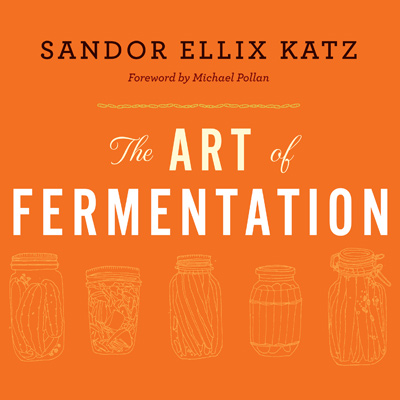
THE ART OF FERMENTATION by Sandor Ellix Katz

Just released June 12, The Art of Fermentation (with forward by none other than Michael Pollan) is sure to be the gold standard on fermentation. Katz published Wild Fermentation in 2003, at the time dubbed the “fermenting bible” by Newsweek. As the press release states for his new, elegantly understated book, he now has an additional decade of experimentation behind this one. The first book of its kind, it contains recipes, yes, but ultimately is a 400+ page textbook on all things fermentation, its history and processes, and DIY steps in a range of categories from meads, wines and ciders to meat, fish and eggs. There’s plenty of study material for food and drink folk alike, whether an extensive section on sour tonic beverages (from kombucha to kvass) or details on fermenting beans, seeds and nuts. Katz’ book makes me want to start fermenting my own potato beer immediately.

TAKE AWAY by Jean-Francois Mallet

Take Away is a lovely photo book. Released in the US in April (first released in France in 2009), this beauty of a book is a virtual escape around the world, immersing the reader in street foodscapes and dishes from Shanghai to the Ukraine. Be warned: perusing this book is difficult on an empty stomach. And for those of us who thrive on travel and exploring every nook and cranny of a city or region, Mallet’s approachable, street savvy photography also induces travel lust.

CINDY’S SUPPER CLUB: Meals from Around the World to Share with Family and Friends by Cindy Pawlcyn

Cindy Pawlcyn is one of California’s trailblazing chefs, aiding Napa in becoming a dining destination when opening Mustard’s Grill nearly 30 years ago along with subsequent restaurants, like Cindy’s Backstreet Kitchen. She’s written a few cookbooks, but I particularly enjoy her newest, out this May: Cindy’s Supper Club. A book based on favorite international recipes prepared in her supper clubs with friends, the recipes span the globe from Russia and Hungary to Lebanon, Peru, Korea. Cindy’s intros to each selected country and recipe feel comfortable, like a chef chatting about their travels and technique as you sit with them in their kitchen. Though recipes tend toward the heartwarming, soulful kind, many list more than ten ingredients and aren’t exactly simple. But for cooks ready to try something new yet not fussy, adventure lies within these pages, whether Flemish meatloaf in spicy tomato gravy or white gazpacho (made of white bread, milk, almonds, garlic, olive oil, sherry vinegar) with peeled white grapes.

PLATS DU JOUR: the girl and the fig’s Journey Through the Seasons in Wine Country by Sondra Bernstein

Just see if you don’t long to move to Sonoma after spending time with Plats du Jour, a large, photographic book capturing Sonoma’s vibrancy. With a range of recipes from Sondra Bernstein’s beloved girl and the fig duo and Italian restaurant, Estate, the book journeys well beyond recipes. Sectioned by seasons, there’s highlights on wine, cheese, and produce, pairing possibilities, origins of foods, cocktail hour menus, and seasonal menus to recreate at home. Interspersed throughout are drink recipes, such as the perennially popular lavender mojito from girl and the fig http://www.platsdujour.net/#!home/mainPage. Photos and stories of trailblazing Sonoma farmers keep the reader rooted to a sense of place. Though the variety of info might initially seem disparate, it weaves into an inspiring whole urging one to seek out ingredients from their own farmers markets and entertain or cook inspired by the invigorating spirit behind Bernstein’s book and the artisans of Sonoma.

SWEET CREAM AND SUGAR CONES
by Kris Hoogerhyde, Anne Walker, and Dabney Gough

Bi-Rite’s ice cream essentially needs no introduction. For those in San Francisco, it’s already an institution. For foodies nationally, the beloved market’s ice cream has been written up in most national food magazines, among the best ice creameries in the country. Thankfully this spring, founders Anne Walker and Kris Hoogerhyde, along with writer Dabney Gough, have released a book, Sweet Cream and Sugar Cones, sharing many of Bi-Rite’s lauded recipes (yes, their legendary salted caramel ice cream, which spawned dozens of imitations around the nation, is included), and many more besides, including sweets far beyond ice cream, from cookies to pie. The book is grouped in ingredient-themed sections like chocolate, coffee, vanilla, citrus or nuts. I take to the herbs and spices section with recipes like basil or peach leaf ice cream, picante galia melon pops, and my favorite Bi-Rite flavor of recent years, Ricanelas (cinnamon and Snickerdoodles). Having already tried a couple of the recipes, they are easy to follow, and, of course, delicious.

SUNSET EDIBLE GARDEN COOKBOOK

Sunset has cornered DIY gardening and cooking for decades in their magazine and cookbooks, with recipes and step-by-step gardening instructions. Their latest book, Edible Garden Cookbook, just out this spring, is another winner with accessible recipes, growing-harvesting-storage-cooking tips and varietal lists on a wealth of vegetables (from peas to cucumbers), herbs (mint to thyme), and fruits (melons to stone fruit). Creative recipe twists enliven everyday dishes like an icebox salad layered in a casserole dish or kabocha squash filled with Arabic lamb stew.

THE BROKEASS GOURMET COOKBOOK by Gabi Moskowitz
(Review by Andi Berlin)

Chasing the elusive paycheck is a tiresome routine, but at least it’ll taste good with the new BrokeAss Gourmet cookbook from San Franciscan Gabi Moskowitz (not to be confused with Broke-Ass Stuart.) The former kindergarten teacher-turned-caterer-turned-Internet-celebrity founded the website BrokeAss Gourmet after seeing friends laid off from tech jobs and eating junk. Taking a conversational, gal-pal tone, Gabi guides us through the essentials of running an eclectic kitchen – from stocking a full pantry to boosting cheap proteins with flavorful sauces. Recipes like vegetable lasagna with wonton wrappers demonstrate her craftiness. The book is high on kitsch: rather than photographs, illustrations of animals stand beside cheeky anecdotes (“Because bacon really does make everything better.”) Moskowitz paints a vivid Bay Area landscape, adapting several recipes from ethnic joints and buzzy spots like Bakesale Betty. And if she relies too heavily on sriracha sauce, forgive her. When you’ve got to shove off to work early morning after morning, it’s often the call of the rooster that gets you going.

Subscribe to Virgina’s twice-monthly newsletter, The Perfect Spot, www.theperfectspotsf.com

Fangs, but no fangs

0

arts@sfbg.com

FILM The whole “lesbian vampire” thing may seem a very 20th-century, pop entertainment trope, as it blends sex and violence in one neatly exploitative package offering voyeuristic maximum appeal to straight men, long perceived as the primary audience for both horror and erotica. (In recent years, however, that assumption has begun to seem outdated.) But in fact Irish writer Joseph Sheridan Le Fanu’s Gothic novella Carmilla was published in 1872, a quarter-century before Bram Stoker’s Dracula, thus placing lesbian vampires well ahead of heterosexual ones in literary history. If that order was reversed in movie history, well — you can’t expect much girl-on-girl action to have surfaced before censorship standards began crumbling in the 1960s.

That decade began and ended with two major Carmilla adaptations: French horndog Roger Vadim’s 1960 Blood and Roses (originally titled And To Die of Pleasure) and the English Hammer studio’s 1970 heaving-bodice marathon The Vampire Lovers. Since then, lesbian vampires on screen have become ubiquitous.

They’ve usually been distinctly designed with the “male gaze” in mind, however, appealing to that guy-spot which (to quote the inimitable Axl Rose) would “rather see two women together than just about anything else.” Inevitably, though, someone was going to reclaim the concept for the younger female audience that has made the Twilight books and movies huge.

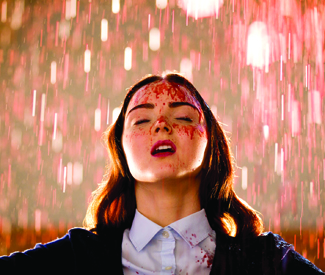
Ergo we now have The Moth Diaries, Rachel Klein’s 2002 novel turned into Mary Harron’s film. Why it’s an Irish-Canadian production that’s landed on our local SF Film Society Cinema screen for a week rather than a Hollywood extravaganza playing a bazillion multiplexes is a matter for further study. It’s certainly the director’s most mainstream-friendly effort, being less edgy and grown-up than American Psycho (2000), I Shot Andy Warhol (1996), or even The Notorious Bettie Page (2005).

It’s the start of a new academic year at an upscale girls’ boarding school. Despite the strictness of their overseers, the girls manage to be ordinary, fun-loving teens. Becca (Sarah Bolger from The Tudors) is particularly happy to be reunited with best friend and roommate Lucie (Sarah Gadon), as the former is still psychologically fragile in the wake of her well-known poet father’s suicide. But a wedge is driven between them by the arrival of Ernessa (Lily Cole), a tall, English-accented student with a face like a creepy porcelain doll. She “colonizes” Lucie, who at first guiltily hides her infatuation from Becca, then (along with everyone else) accuses her of simple jealousy.

But Becca notices things others don’t, or dismiss: how Ernessa never seems to eat, how she can’t abide water, the sickly sweet smell emanating from her room and her odd disappearances into the luxury-hotel-turned-school’s off limits basement. One ally gets expelled; another, after witnessing Ernessa doing something logically inexplicable, meets a more brutal fate. Meanwhile, Lucie (the same name as Dracula’s preliminary victim in Bram Stoker’s novel) grows seriously ill. Turning to a sympathetic (as well as hot) new literature teacher for help, Becca instead gets inappropriate overtures from Mr. Davies (Scott Speedman).

Klein’s book, which had our heroine looking back on this episode from middle age, insisted on ambiguity: we’re never sure whether Ernessa really is a supernatural predator, or if all this is just a hysterical fantasy Becca devises to process (or evade) her profound grief over losing a parent. Adapted by Harron as scenarist, the movie eliminates that frame and leaves little room for doubt that there be vampires here.

But the film’s weakness is that it still tries to play it both ways, as troubled coming-of-age portrait and Gothic horror, with the result that the two elements end up seeming equally half-realized. Despite an inevitably somewhat glamorized surface, a certain attention is paid to real-world adolescent detail, like the presence of casual recreational drug use or the disappointment voiced by one student whose eagerly awaited deflowering turns out neither good or bad, but just an indifferent experience. There’s also a knowing wink at the usual adult dismissal of teenage ideas when Mr. Davies condescendingly shrugs off Becca’s fears: “Cooped up here you girls can get so close, all that emotion can turn toxic.” The movie is handsome enough, with a color palette that aptly grows darker and more untrustworthy as things progress.

Cole is well-cast for her eeriness, while Bolger gives an intelligent performance even if the film ought to be channeling her character’s growing instability more vividly — as Harron managed very well for Valerie Solanis and Patrick Bateman.

There’s little suspense here, however, and the fantastical elements are seldom staged with any inspiration. You get the feeling that this highly talented director ultimately couldn’t find anything all that interesting in her young-adult-fiction material, but still hoped for a Twilight-style hit that might make more personal future projects easier to fund. (Even after Kathryn Bigelow’s 2010 Hurt Locker Oscar, it still seems like the road is always uphill for women directors.) Instead she wound up with a polished but forgettable genre piece that’s probably the mildest entry in the annals of lesbian (or at least Sapphically-tinged) vampire cinema yet.


THE MOTH DIARIES opens Fri/10 at SF Film Society Cinema.

Let it learn

1

culture@sfbg.com

CAREERS AND ED Be not dazzled by the big show across the pond into forgetting your studies! Regardless of how assured and gosh-darn perfect the Olympians may seem, few of us will ever find our dream job by cutting another tenth of a second off our 100-meter dash, or adding another five pounds onto our barbell (egads! Didn’t you people check that Korean weightlifter’s horrific elbow dislocation last week? Low weight, high reps out there, please.) But there are ample ways to improve your lot in life, by attending a class or two or enrolling at one of our fine educational institutions. We’ve compiled some amazing options within your grasp here. Grasp… poor, poor Sa Jae-hyouk.

EXTRACURRICULARS

INTRODUCTION TO ACCORDION

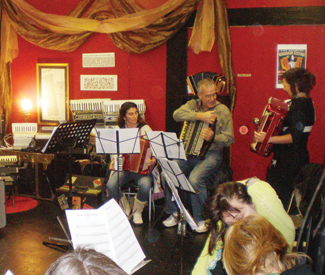
Saturdays at the Accordion Apocalypse repair shop offer a shot in SoMa at learning to tickle the ivories on sweet, sweet squeezebox. For only $20, staff teach accordion-playing hopefuls about the inner workings of the instrument. It’s said you’ll even emerge from your day of instruction knowing how to wheeze an entire song. Lessons happen once a week and hey, how convenient! If you really take to the accordion, fine specimens are available for purchase mere feet from your classroom.

Saturdays, 4pm. $20. Accordion Apocalypse, 255 10th St, SF. www.accordianapocalypse.com

CAMP WAKEUPOBAMA

You don’t have to be a stoner to be upset about the way the federal government has been shutting down our cannabis dispensaries and raiding marijuana trade schools here in the Bay Area. And you don’t have to be a stoner to not know, like, what the hell to do about it. Enter patient advocacy group Americans For Safe Access, who is teaching you how to stand up for medical marijuana with its free Camp WakeUpObama program. Earn online merit badges for calling your elected officials, making protest art projects — even coordinating pot-themed street theater with the help of ASA’s exhaustive website’s educational resources.

www.americansforsafeaccess.org/campwakeupobama

STUDIO SCULPTURE

Maybe you don’t want to go back to college, but you are down to take a college class. It happens, and San Francisco State’s extended learning department gets it. Register for an Open University course for this kind of real class, real life confluence. For example, its Studio Sculpture course. It’s a rare opportunity to get a in-depth studio sculpting experience without all the boring prerequisites. That doesn’t mean you won’t get ample lessons in theoretical background. You didn’t think your trip back to college will be all clay and play, did you?

Tuesdays and Thursdays Aug. 27-Dec. 17, 9:10-11:55am. $960. SFSU Fine Arts Building, 1600 Holloway, SF. www.sfsu.edu

WE BE SUSHI WORKSHOP

Sharpen your hamachi-making skills at this City College of San Francisco two-session course on the best in raw fish prep. We Be Sushi owner Andy Tonozuka opened his first sushi shop in 1987, so he should be able to impart all you need to know, from rolls to sashimi. Best of all: the lessons take place in Tonozuka’s classic Mission District eatery. You can’t get more San Francisco sushi-authentic than that — and we’ll bet you your class fee covers at least a free sample or two.

Sundays, Sept. 26-Oct. 6, 10am-1pm. $65-80. We Be Sushi, 538 Valencia, SF. www.ccsf.edu

SURVIVAL TOOL MAKING

From camp-happy urbanites to professional explorers, Bay Area citizens can take their wilderness savvy to the next level with Adventure Out, one of NorCal’s ultimate resources on all things wild. With the organization’s flintknapping and stone tools course, students will be introduced and trained in stone technology, which sound like an oxymoron, but actually entails exacting processes like spalling, percussion, and pressure flaking. Apocalypse now!

Sep. 29-30, 10am, $250. Adventure Out, Santa Cruz. www.adventureout.com

DEGREE PROGRAMS

DRAMA THERAPY

A concentration within the school’s counseling psychology degree, this is one of the nation’s only master’s in drama therapy. The program is intended for those who’d like to make their living implementing Erik Erikson’s psychological prescription to “play it out.” Courses focus on broadening self-understanding and activating dormant aspects of the human psyche.

California Institute of Integral Studies, 1453 Mission, SF. (415) 575-1600, www.ciis.edu

BROADCAST JOURNALISM

If you can’t beat ’em, join ’em. After all, if our media sources aren’t covering the news to your liking, it may be high time you became a newscaster. This program teaches students the appropriate research, writing, and reporting skills for careers in media forms including radio, television, cable, syndicated, Internet, and satellite news organizations.

Community College of San Francisco, 50 Phelan, SF. (415) 239-3285, www.ccsf.edu

PRODUCT DESIGN AND DEVELOPMENT

For every consumer consuming, there must be an industry creating. San Francisco State keeps this basic fact of capitalism on the books by offering a degree that is as much kooky inventor as it is savvy economist. Process, people, and product provide the basis for this bachelor’s degree in industrial design with a concentration in product design and development. Students will learn product design through researching technology, material, aesthetics, and the nuances of that ever-present invisible hand.

San Francisco State University, 1600 Holloway, SF. (415) 338-1111, www.sfsu.edu

DIETETICS

Body-conscious, food-obsessed Californians can thank their stars that some of the state’s brightest students are equally as nutrition-oriented, and driven to make moves in the world of healthy eating. UC Berkeley’s College of Natural Resource undergraduate degree in dietetics focuses on disease prevention through understanding metabolic regulation, genetics, and the biological and chemical sciences of nutritional studies. Graduates from the program are generally expected to gun for a future in food production, clinical settings, or community and governmental leadership.

UC Berkeley, 318 Sproul Hall No. 5900, Berk. (510) 642-7405, www.berkeley.edu

Creating activist scholars

13

yael@sfbg.com

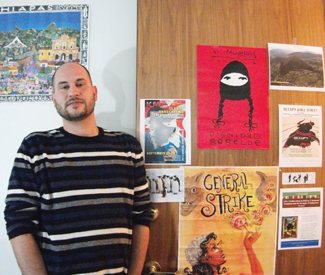
This semester, the California Institute for Integral Studies (CIIS) will start a new Anthropology Department featuring teachers who are grassroots organizers with decades of experience, including Boots Riley, Roxane Dunbar-Ortiz, Sasha Lilley, and Chris Carlsson.

The program’s goal is to create “activist scholars,” to get students into communities outside the institution, and to use their research and intellectual opportunities at the school to move social justice projects forward. And the man who organized it all is an unrepentant anarchist.

“The most distinguishing character of anarchism for me is prefigurative politics — creating the new within the shell of the old,” Adrej Grubacic, the new department head, told us.

His classes come at a time when anarchism is being more widely discussed in the US than it has been for generations. Non-hierarchical general assemblies and consensus-based “direct democracy,” long practiced in anarchist and other leftist circles, swept across the country along with the Occupy movement last year.

Anarchists have been associated in the public eye with everything from spirit-fingered affirmations to the masked, black-clad protesters smashing bank windows and scrawling anti-corporate messages on walls. But Grubacic says it’s more than that.

As anarchism exploded into practice in Occupy’s tent cities, it was also experiencing a renaissance in the ivory tower. The North American Anarchist Studies Network was founded in November 2009, and since has brought together a growing number of professors who want to explore and teach anarchism through annual conferences.

Big names such as Yale Anthropology Professor James Scott have declared themselves anarchists. In a country where the study of economics is usually code for the study of capitalism, professors longing to talk alternatives are coming forward in droves.

It’s more than a little ironic that, within an ideology focused on a lack of hierarchy, it can be hard for those on the street to connect with those in the lecture halls. So how can the academic-types truly support The People?

From Zapatista schools in Mexico to universities run by the Landless Worker’s Movement in Brazil to popular universities throughout Canada and Europe, people all over the world have developed institutions based on anarchist and Marxist principles.

Now, in San Francisco, Grubacic is hoping to do the same.

A historian who was an anarchist by age 13, Grubacic grew up in socialist Yugoslavia, a country engulfed in brutal civil war by the time he reached his 20s.

“I was raised a Yugoslav,” Grubacic says. “So I was raised to be a citizen of a country that doesn’t exist anymore.”

He was teaching history at the University of Belgrade, but his political beliefs became a problem.

“The political cultures and political groups in power were either Serbian nationalists or these hyper-capitalists,” Grubacic told me. “And going after them, because I was publishing and I was doing a lot of things, was—let’s say, not a smart career choice.”

It was with input from his mentor, famed leftist writer and academic Noam Chomsky, that Grubacic left the crumbling Balkan state for his own safety. After a frustrating stint at University of San Francisco, he found CIIS.

“This is the first place where I think that I was hired because I was an anarchist, or I am an anarchist. It’s kind of funny,” Grubacic says.

Founded in 1968, CIIS grew out of the California Institute of Asian Studies, and has quietly taught holistic approaches to psychology and integrative approaches to psychology, spirituality and the humanities since then . Today 60 percent of CIIS students are studying clinical or counseling psychology. The Anthropology and Social Change program is part of the School of Consciousness and Transformation.

“It’s the only department like it in the United States,” Grubacic says. “This is going to be one of the few places where anarchism is going to be studied.”

“So anarchist social theory, anarchist education, anarchist ideas in general. We are going to study them, seriously, because they need to be recognized seriously. It’s a beautiful history, it’s a beautiful tradition,” he says. “How important it is, I think, is revealed, by the recent rediscovery or reinvention of anarchism at Occupy. So I think that it’s more relevant than ever to create a space where anarchism will be studied.”

A CIIS education doesn’t come cheap. Two years in the masters program costs at least $35,000, and to earn a PhD will cost more than $60,000. Scholarships and financial aid are available, but Grubacic called the question of access to this program “a huge question.”

“It’s troubled me from the very beginning,” he says. “We are creating an experiment. It’s a social justice, community-based program in a private school.”

He hopes, however, that students will learn applicable skills in the program. Classes on radio, film, and writing, Grubacic says, will give students practical skills. “They will be able to continue, either as academics and go to get their PhDs, or to join the non-governmental sector, to work with NGOs, to work with community groups, to work with labor groups.”

Not the most lucrative professions, perhaps, but likely the chosen fields for many Anthropology and Social Change students.

Grubacic calls creating a program based on teaching grassroots and subversive knowledge in an elite institution “a paradox,” and one he’s not alone in. Grubacic got advice on the issue, he said, from Anibal Quihano, a Peruvian scholar known for his theories on colonial power who now teaches sociology at the Binghamton University in New York.

In fact, Grubacic practically convened a conference of post-colonial and anarchist scholars to help develop Anthropology and Social Change. Grubacic sent the program’s description around to everyone from his buddy Chomsky to Immanuel Wallerstein to World Social Forum organizer Boaventura de Sousa Santos. He got advice, too, from organizers at the Popular University of Quebec and the Popular University of Social Movements, a school in São Paulo, Brazil run by the landless workers’ movement there.

“The deciding thing about our own methodology was that we would like to listen, both to the voices coming from the past, so people who are doing similar things before us, and to people who are doing similar things right now,” Grubacic said. “We also went — and this is the third form, let’s say, of listening — to the people in the community.”

He reached out to contacts and friends of professors in the university, as well as hanging out in gathering places and striking up conversations with those who showed up. He told one story of doing this covert outreach in the Tenderloin National Forest, the botanical garden and neighborhood spot just 10 blocks from CIIS’s building on Mission and 11th streets.

“Some people were completely uninterested and thought, what’s the purpose? Who are you, with this weird accent? Go home,” Grubacic laughed. Some, though, were more receptive, including a woman who said the program could help with those fighting against San Francisco’s problem of environmental racism.

“This person told me that she thinks activists can come to a particular community, do an ethnography, do research, and then present that research to people in the city, and show the people who have power in the city to make decisions why such behavior is unjust,” Grubacic said.

In the end, that is essentially how the program will work. Students will partner with local organizations, neighborhood groups, or other affiliated people working on social justice goals, doing research to help further their goals.

“The document they’re going to produce after two years of activist research is going to be written for that community,” Grubacic said. “We are the second readers. We are less important in the process. What they do has to be useful to the community. They have to be passionate about working with that community group. And they have to produce something that’s going to be useful to what that community group does.”

In addition to classes and research projects, students will participate in “convivias,” one of the most unique aspects of the program. People from the public, scholars, and others with special knowledge will hammer out ideas with students in week-long “political laboratories.” Revolutionary art will be practiced in a convivia called “Atelier of Insurrectionary Imagination.” And Grubacic and his students will turn a certain vacant part of the CIIS building into an “Emergency Library,” a place for books as well as what the program description calls “scholars on call, responding to the emergent needs of the communities in struggle, who might be in need of legal advice, activist companionship, scholarly input, or a media suggestion.” The convivias have corresponding student work-study positions — yes, there will be a paid Emergency Librarian.

CIIS spokesperson James Martin said Grubacic brings a lot to the school: “The thing I’m really excited about is that we’re engaging the local community. We live in San Francisco for a reason. This is one of the places in the world where all these intellectuals come together who have the passion to try and change things.”

Despite the paradoxes and problems that come when the elite meets the grassroots, Grubacic has high hopes. “We need to redefine what it means to be an intellectual who works within academia,” he said. “And the only way to do this is to become a part of a larger social movement’s formation, that is aimed at changing society. We cannot offer much. But we can offer something.”

Don’t say mommy blogger, but mommies should be blogging

0

There is good and bad about the rise of the “mommy blog,” says mother and author Kate Hopper. Good: women should write! Writing spreads one’s voice, motherhood can be an intense time. Bad: why must we qualify them as something apart from any other blogger, memoirist, etc. Hopper promises to discuss these topics — and more saliently, how you can get started on a chapter of your own — at her upcoming appearance at Good Vibrations‘ mothers-specific hang-out, which also features Carol Queen speaking about post-natal nookie, on Wed/1. We caught up with her before she hit SF to get a sneak peek at her relationship with the written word.

SFBG: What’s with the current mommy blogger vogue? Haven’t women always been writing about parenthood? Why is it so popular right now, and why use that particular label?

KH: Women have been writing about parenthood for a long time, but not in [these] numbers and not so publicly. The Internet and blogging have given women a forum to write about their lives in a way that hasn’t happened before. Countless mother bloggers have really found a sense of community in the blogosphere. Motherhood can be so isolating, and blogging can help combat that isolation. And they can make money. I have never advertised on my blog, but I know it can be lucrative.

About the label: I really dislike the term “mommy blogger,” just as I dislike the term “momoir” to describe memoirs that have anything to do with motherhood. The names people use to describe literature or movies — or anything — have an impact on how those things are perceived. And when you categorize books as “chick lit,” “mommy lit,” “momoir,” and blogs as “mommy blogs” you make it easier for people to discard these books and blogs. They are viewed as less serious, less important. Once something is labeled “momoir” or a “mommy blog” people don’t take it seriously as literary venture. And there are some really amazing books and blogs being written by mothers right now.

The motherhood literature I read and review (and the motherhood blogs I read) deal with more than the minutiae of daily life with children. They are dealing with issues of identity, with loss and longing, neurosis and fear, ambivalence and joy. They are about transformation and how we see ourselves in relation to the world in which we live.

SFBG: At what point did you realize motherhood would become the primary thing you write about?

KH: I began writing about motherhood in 2004, a few months after my older daughter was born prematurely. Stella was born two months early and spent a month in the hospital, and the long winter months that followed home with me. At the time I was in the third year of the MFA program at the University of Minnesota, and I had to withdraw from school in order to stay home and care for my fragile and extremely fussy daughter. Up until that point, writing had been the way I processed what was happening in my life. But I couldn’t think much less write in those early months.

It was only when Stella was five months old that I finally realized I needed to find my way back into words. So I went to the coffee shop near our house and pulled out paper and a pen. And the images of my daughter — a miniature thing on an open warming bed, her legs splayed like a frog’s, a white ventilator tube taped over her mouth, purple veins tracking across her skull like spider webs — came spilling out. After an hour, words covered the page. And for the first time since Stella was born, I felt grounded and the world felt a little bigger. I felt less alone. I’ve been writing about motherhood ever since, though in recent years, I’ve spent more time helping other women get their motherhood stories down on paper.

SFBG: You teach women how to write. Is there a particular challenge that you see as being particularly difficult for your students?

KH: One thing that always comes up when you’re teaching creative non-fiction is the ethics of writing about the people in your life. This ethical dilemma is heightened for women writing about their children, because it’s our job as parents to protect these small people. I always tell my students not to worry about this as they are beginning to write. If they do, they will self-censor and might not get to the heart of the stories they need to write. But before they decide to send a piece of writing about their children out into the world, it’s important to acknowledge how their children might react to reading it. It’s a very personal decision and there is no right or wrong way to it, but it’s important to know what you feel comfortable with — what’s the line you won’t cross? — and then trust your gut.

SFBG: Who, in your opinion, are the best mommy bloggers in the game today?

KH: I’m not sure I can say who the “best” motherhood bloggers are, but I know whose writing resonates with me. A few of my favorites are Rachel Turiel, Kristen Spina, Jenn Mattern, Heather King, and Elizabeth Aquino. They are all very talented writers, and their posts are reflective and well thought out. They also all write from the heart and aren’t afraid to be honest. I really respect that.

Kate Hopper at Mommy’s Playdate

Wed/1 7-9pm, free

Good Vibrations

1609 Polk, SF

www.goodvibes.com

8 cultural happenings this week in the big, best, beautiful Bay

0

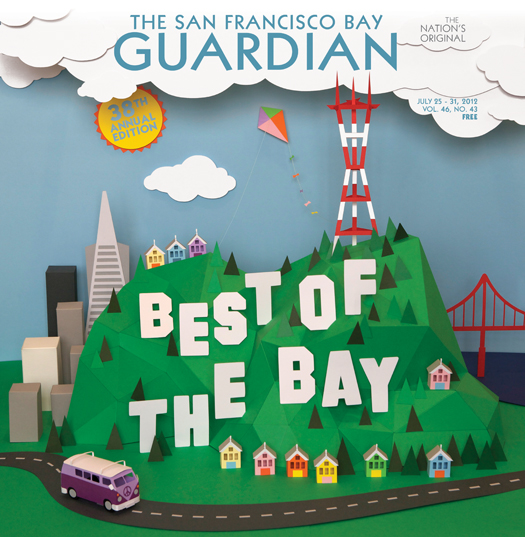
It is inevitable after reading today’s Best of the Bay 2012 issue that your heart will be swole with pride for our beautiful Bay Area By the Bay. Seize the moment! There are a plethora of arts and culture happenings this week that are perfect examples of — as our managing editor Marke B. put it in his intro to BOB — “the sheer gorgeousness, thriving alternative culture, and promise of freedom and acceptance that are unique to our shores.” Cheers!

CELLspace open critical studio

Turns out, artists aren’t always their best critic. That’s why CELLspace’s open critical studio is such a great opportunity for creatives. Come discuss your art, discover the work of others, and — hopefully — take away a dose of constructive criticism that every creator needs from time to time. 

Wed/25, 7-10pm, free

CELLspace

2050 Bryant, SF 

www.cellspace.org

Cobb’s Comedy Club Showcase

Though it’s one of the city’s premier comedy clubs, Cobb’s isn’t stupid enough to forget the little guys. This Wednesday, check out the club’s up-and-comer showcase, where you can see some of the Bay’s funniest fledglings before they hit it big and really start taking your money. 

Wed/25, 8pm, $12.50

Cobb’s Comedy Club

915 Columbus, SF

www.cobbscomedyclub.com 

SF International Poetry Festival

The San Francisco International Poetry Festival brings you tons of excuses to brood in a vaguely-Italian coffee house while penning lines into your journal. The series of readings from poets of international acclaim — from Iraq to Italy, Sweden to Malta — kicks off this Thursday. Set ever-so aptly in Jack Kerouac Alley, hosts Jack Hirschman, Lawrence Ferlinghetti, and city librarian Luis Herrera will introduce the festival’s lineup of poets with the accompaniment of a modern concert from Neeli Cherkovski, Matt Gonzales, and Jonathan Richman. 

Thu/26, 7-9:00pm, free.

Kerouac Alley, SF

www.sfipf.com

The Wizard of Oz movie night with the San Francisco Symphony

Join the San Francisco Symphony for a unique screening of America’s favorite kids-movie-that’s-not-actually-a-kids-movie. Beyond the fantastical plot line of The Wizard of Oz, the film’s striking visual elements and majestic music and score are part of what has made it the timeless classic it is today. Bridge the gap between silly and sophistication this Thursday by dressing up in your favorite Oz costume, watching the movie, and listening to the SF Symphony perform the score live.

Fri/27, 7:30pm, $12.50-$70

Davies Symphony Hall

201 Van Ness, SF

www.sfsymphony.org

“Re: Told” closing night 

If you missed this month’s run of Root Division’s modern story-telling art exhibit, you still have a chance to catch this glamorous culmination, closing reception, and publication release. Taking a page from Ernest Hemingway, “Re: Told” reframes cultural narratives in order to create a contemporary storytelling experience, yielding an accessible look into some very intimate realities.

Fri/27, 6-9pm, $1-$20

Root Division

3175 17th St., SF

www.rootdivision.com 

Naoya Hatakeyama: Nature Stories 

Prominent Japanese nature photographer Naoya Hatakeyama shows us the dualistic relationship between man and nature in this large-scale photography exhibit illustrating man’s attempt to control nature and, in the wake of the Tohuku earthquake and tsunami. The austere power of nature over humans’ best attempts to rein it in figures prominently in “Natural Stories,” which possesses an ironically calm visual approach to such a powerful concept. 

Through Nov. 4

Opening reception: Sat/29, 10am-5:45pm, $18 (adult general) 

SFMoMA

151 Third St., SF

www.sfmoma.org 

Ohlone basket welcoming ceremony 

The native Californian basket collection at the Oakland Museum of Art would, from a novice’s eye, seem to be complete. Yet due to the Ohlone tribe’s tradition of burning their possessions after death, the tribe’s baskets are scarcely represented among the collection’s 2,500 pieces. To remedy this dearth, the museum commissioned Ohlone artist and scholar Linda Yamane to create a basket. After a two-year documented process, we have an opportunity to welcome the 20,000-stitch, several thousand feathers, and 1,200-bead that make up the Ohlone basket into the museum’s collection with a day of festivity, including story-telling, dance, and song. 

Sat/28, 1-3pm, $12 general. 

Oakland Museum of California

1000 Oak, Oakl. 

www.museumca.org

The Coming Century of War Against Your Computer

Hey you, the one with the oversized headphones and approximately windows to burn open on your laptop, listen up. As part of its specialization in the speculative — that is, fantasy, horror, and science fiction — Borderlands Books presents Corey Doctorow and his book The Coming Century of War Against Your Computer. Copyright laws, net neutrality, and SOPA may be much more serious indicators of the technology takeover than we thought, so let this be your opportunity to decide whether you’re going to let technology-driven measures govern your life.  

Tue/31, 7:30pm, $10

Borderlands Cafe

870 Valencia, SF

www.borderlands-books.com 


Best of the Bay 2012: BEST CAN-ARCHY

1

BEST CAN-ARCHY

When it comes to the latest trends in pickling, canning, jarring, putting up, putting by, or just plain preserving, we’ve got a dirty little secret: everything we know about Mason jar-ology comes from the amazing Punk Domestics. Food and travel blogger Sean Timberlake, with support from his husband Paul Brown and terrier Reese, took inspiration from canning expert and former Guardian writer Karen Solomon — particularly a review of one of her books that mentioned the “punk domesticity of the hipster DIY movement” — to launch a content aggregation site for can-atics of everything dried, cured, or otherwise preserved. It’s jam-packed with links to community-posted articles with helpful hints and innovative techniques from around the Web, plus heads-ups on events, giveaways, recipes, and book releases. Ever wonder about micro-farming, curing meats, making cheese, or pickling duck eggs? No need to keep a lid on it when the Punk Domestics are in the house.

www.punkdomestics.com

Best of the Bay 2012: BEST COOKBOOK CHEFTIVIST

0

BEST COOKBOOK CHEFTIVIST

In this era of Paula Deen-Anthony Bourdain warfare and endless glossy spreads of chefs-cum-rockstars-without-the-rock, you are to be excused for not caring about yet-another celebrity chef writeup. But stay your cleaver. Oakland’s own Bryant Terry considers himself an activist who uses comestibles as a medium for social change, not TV dinner promotion. Terry’s beautiful, seasonally sensitive vegan cookbooks — his latest is The Inspired Vegan (Da Capo Lifelong Books, $19, 240pp) — contextualize recipes so that the connection between eating healthy and having healthy communities is clear. He also tours the country educating audiences about vegan lifestyle and cooking, with a focus on minority communities, and makes no bones about the fact that he thinks families could stand to spend more time in the kitchen together.

www.bryant-terry.com

Best of the Bay 2012: BEST LITERARY VALHALLA

0

For lovers of esoteric literature, 2141 Mission is a dream come true. The unassuming storefront (the building’s ground floor is occupied by the standard hodgepodge of Mission District discount stores) belies a cluster of alternative bookstores on its upper levels. Valhalla Books is flush with titles in their debut printing; Libros Latinos holds exactly that; lovers of law history will find their joy in the aisles of Meyer Boswell; and the building’s largest shop, Bolerium Books, holds records of radical history — volumes and magazines that together form a fascinating look at the gay rights, civil rights, labor, and feminist movements (and more!). Most visitors make the pilgrimage with something specific in mind, but walk-ins are welcome as long as they have a love of the printed page.

Bolerium Books, No. 300. (415) 863-6353, www.bolerium.com; Libros Latinos, No. 301. (415) 793-8423, www.libroslatinos.com; Meyer Boswell, No. 302. (415) 255-6400, www.meyerbos.com; Valhalla Books, No. 202. (415) 863-9250

Best of the Bay 2012: BEST TOME TRADE

0

Interested in perpetuating a bibliophilic mythos among your houseguests? Turned on by the image of sitting quietly by a roaring fireplace, sipping a brandy, and reading Kafka amid towers of dusty tomes? Well, the Bay Area Free Book Exchange has those tomes for you to own. Since its opening in 2009, the Exchange has given away more than 245,000 free books for the sole joy of making knowledge accessible in book form. The nonprofit is run by a collection of book-lovers in El Cerrito who sell some of the donated volumes on eBay in order to pay rent, electricity, and other expenses. The rest of the stories, however, make their way to the Exchange’s storefront, where every weekend customers are invited to take up to 200 titles at once. Stock your bathroom with freaky medical guides? Actually read the books you snap up? We’ll let you work out the ethics on your own.

10520 San Pablo, El Cerrito. (510) 705-1200, www.bayareafreebookexchange.com

Best of the Bay 2012 Editors Picks: Shopping

0

Best of the Bay 2011 Editors Picks: Shopping

BEST CHARGE AHEAD

Though electric bikes far outnumber cars in communities from Chinas crowded cities to mountainous towns in the Swiss Alps, they have yet to catch on here in the States. Regardless of the reason, and despite SF’s hilly terrain — quite possibly the perfect venue for the bikes’ charms — the owners of New Wheel make this list for sheer entrepreneurial derring-do. Karen and Brett Thurber went ahead and opened the city’s first e-bike-focused store, where they also do repair, hawk sleek Euro-designed accessories, and host the neighborhood’s first e-bike charging station. The station, designed as a gas pump from that not-so-distant era when we needed to drive cars to work (we are writing you from the future), also charges cell phones, digital cameras, and more — quite the charge for the Bernal Heights community.

420 Cortland, SF. (415) 524-7362, www.newwheel.net


BEST FRESH PREP

Guardian photo by Brittany M. Powell

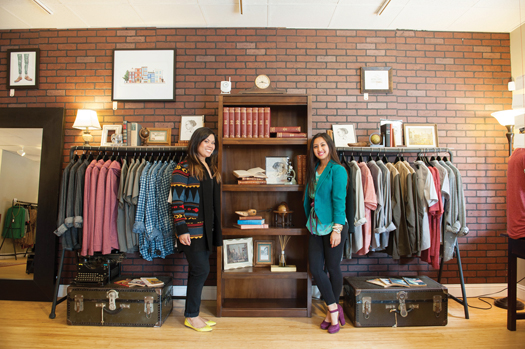
Holy Vampire Weekend, Kanye — no need to waste your time drooling over the archives of Street Etiquette, the sharpest neo-preppy style blog of our time. Fulfill your up-to-the-minute Ivy League-ish yearnings (with a dash of street-level snazz) at Asmbly Hall, the Fillmore men’s and women’s clothing shop for the sophisticated prepster. The natty clothes aren’t priced too outrageously (button-down shirts are around $80), and familiar classics are tweaked with unique elements like scalloped collars and stripy inseams. Husband-wife owners Ron and Tricia Benitez have reworked an old mattress store into an absolutely lovely space with brick walls and blond wood floors. Here’s where you’ll score that funky two-tone cardigan, irreplaceable Macarthur shirt, or dreamy summer beach dress. You’ll have to supply your own air of undergrad gravitas.

1850 Fillmore, SF. (415) 567-5953, www.asmblyhall.com


BEST SHUTTERBUG SECRET

Hidden in a corner of the beloved Rooky Ricardo’s Records store is the domain of Glass Key Photo owner and photography enthusiast Matt Osborne. From a funky wedge of floor space, Osborne offers a top-notch, well-edited, and cheap selection of cameras, film, and darkroom gear. Much of his treasure is stored in an old-school refrigerator case, making for an appealingly bizarre shopping experience. Customers thirsty for hard-to-find photographic gear should check out Glass Key before the bigger-name stores — even if the refrigerator doesn’t hold the key to your photographic fantasies, Osborne is happy to special order what he doesn’t have. He also earns rave reviews for his camera repair skills, and sells root beer to thirsty shutterbugs.

448 Haight, SF. (415) 829-9946, www.glasskeyphoto.com


BEST VINTAGE MEGAVAULT

It is no secret that San Francisco has thrifting issues. Due to the admirable commitment to cheaply bought fashion (and high incidence of broke, under-employed drag queens), most of our used clothing stores are heavily picked over — or well-curated, with ghastly price tags to match. Those sick of fighting could do worse than steer their Zipcars north. In Sebastopol sits Aubergine, a high-ceilinged mega-vault stuffed with vintage slips, half-bustiers — clearly geared toward the Burning Man strumpet — menswear, and the occasional accessibly priced Insane Clown Posse T-shirt. Racks on racks on racks on racks — and if you need a break from bargain browsing, you’re in luck. The shop has its own cafe and full bar, where many nights you’ll find live music from gypsy dance to jazz drumming.

755 Petaluma, Sebastopol. (707) 827-3460, www.aubergineafterdark.com


BEST BLEMISH-VANISHING BOTANICS

The charming, chatty cashiers at the Benedetta Skin Care kiosk in the Ferry Building have clear, shiny skin, but it’s not due to the local produce from the farmers market outside. Based in the Petaluma, Benedetta offers organic, botanics-based, sustainably packaged products that actually work. Take a tip from your freshly scrubbed lotion sellers: rather than loofah-ing your skin to a pulp with packaged peroxides that — let’s face it — sound kind of scary when you actually read the fine print, refresh with the line’s perfectly moist Crème Cleanser that leaves skin smelling like a mixture of rosemary and geranium. From anti-aging creams to deodorants and moisturizing mist sprays, this small company offers treats for all skin types — perfect for popping in next to your small-producer cheese wheels and grass-fed charcuterie.

1 Ferry Building, SF. (415) 263-8910, www.benedetta.com


BEST TOME TRADE

Interested in perpetuating a bibliophilic mythos among your houseguests? Turned on by the image of sitting quietly by a roaring fireplace, sipping a brandy, and reading Kafka amid towers of dusty tomes? Well, the Bay Area Free Book Exchange has those tomes for you to own. Since its opening in 2009, the Exchange has given away more than 245,000 free books for the sole joy of making knowledge accessible in book form. The nonprofit is run by a collection of book-lovers in El Cerrito who sell some of the donated volumes on eBay in order to pay rent, electricity, and other expenses. The rest of the stories, however, make their way to the Exchange’s storefront, where every weekend customers are invited to take up to 200 titles at once. Stock your bathroom with freaky medical guides? Actually read the books you snap up? We’ll let you work out the ethics on your own.

10520 San Pablo, El Cerrito. (510) 705-1200, www.bayareafreebookexchange.com


BEST INDIE KITCHEN MENAGERIE

Guardian photo by Godofredo Vasquez/SF Newspaper Co.

It can be hard to beat the sheer variety offered by your Ikeas and Bed Bath & Beyonds when it comes to fresh new flatware or an upgrade on your trusty college-era rice cooker. Lucky for local business fans (which we assume you are if you’re this deep into our Best of the Bay issue), there’s a little-guy alternative: Clement Street’s Kamei Restaurant Supply. Kamei has dishes for every occasion: light blue earthenware plates with fetching designs of cherry blossom trees, coffee mugs shaped like barn owls and kitty cats, tea sets, sake sets, and every cooking utensil a chef could desire — plus paper umbrellas with koi fish prints and flip-flops. Maybe ‘cuz with all the savings you’ll spot in Kamei, you’ll be able to afford more beach trips.

525 Clement, SF. (415) 666-3699


BEST CUMMUNITY CENTER

Guardian photo by Amber Schadewald

Nenna Joiner’s done a number on us. In a Bay Area full of superlative sex shops, her Feelmore510 — which opened a year and a half ago — has run away with our sex-positive souls. What makes her business stand out? It could be her rainbow of pornos (Joiner herself makes skin flicks that have an emphasis on racial, sexual, and body-type diversity) or, it could be the pretty store design, with erotic art displayed in the shop’s plate-glass windows. You’ll often find Joiner at her store as late as 1:30am: besides outfitting her customers with stimulating gear, she hosts in-store sex ed lectures and movie screenings. “Sex is a basic need for survival,” she told the Guardian in an interview earlier this year. We agree, and that’s why Feelmore510’s a new East Bay necessity.

1703 Telegraph, Oakl. (510) 891-0199, www.feelmore510.com


BEST AU NATUREL FOR OENOPHILES

Much of the wine we drink is stuffed full of chemical preservatives. Purists like wine critic Alice Feiring have raised a hue and cry over the industry’s reluctance to force producers to label these ingredients. We have to give it up to a little shop off of Polk Street for supporting the so-called “natural wine” movement which encourages additive-free imbibement. Biondivino is charming enough in its own right: library-style shelves full of luscious Italian pours, among which proprietor Ceri Smith has made sure to include many natural wines. And because these bottles tend to be produced by small scale vineyards, Biodivino helps support the little guys, too. Sure, sometimes all you can spring for is a bottle of three-buck Chuck (natural wines can be pricey) — but props to Smith for giving consumers the choice.

1415 Green, SF. (415) 673-2320, www.biondivino.com


BEST DIY PANDA BAIT

“If just owning a bamboo bike was the end goal, we’d just build them for you,” said Justin Aguinaldo in a Guardian interview back in February. “For us, it’s about empowering more people and providing them with the value of creating your own thing.” Aguinaldo’s Tenderloin DIY cycling hub Bamboo Bike Studio doesn’t just produce two-wheeled steeds whose frames are made of easily-regenerated natural materials — it teaches you useful bike-making skills so that you can be the master of your own self-powered transportation destiny. Buy your bike parts (kits start at $459), and then get yourself to tinkering. After a weekend-long session with Bamboo Bike Studio’s expert bike makers, you’ll have a ride that’s ready for the hurly-burly city streets.

982 Post, SF. www.bamboobikestudio.com


BEST LITERARY VALHALLA

For lovers of esoteric literature, 2141 Mission is a dream come true. The unassuming storefront (the building’s ground floor is occupied by the standard hodgepodge of Mission District discount stores) belies a cluster of alternative bookstores on its upper levels. Valhalla Books is flush with titles in their debut printing; Libros Latinos holds exactly that; lovers of law history will find their joy in the aisles of Meyer Boswell; and the building’s largest shop, Bolerium Books, holds records of radical history — volumes and magazines that together form a fascinating look at the gay rights, civil rights, labor, and feminist movements (and more!). Most visitors make the pilgrimage with something specific in mind, but walk-ins are welcome as long as they have a love of the printed page.

Bolerium Books, No. 300. (415) 863-6353, www.bolerium.com; Libros Latinos, No. 301. (415) 793-8423, www.libroslatinos.com; Meyer Boswell, No. 302. (415) 255-6400, www.meyerbos.com; Valhalla Books, No. 202. (415) 863-9250


BEST EXQUISITE ADZES

Some chefs drool over the copper pots at posh cooking stores. Artists lovingly caress the sable brushes in painting shops. But what aspirational retail options exist for the you, the craftsman? Home Despot? Perish the thought! Luckily, your days of retail resentment are over. At the Japan Woodworker, you can fondle high-end power tools to deplete your paycheck, plus tools hand-made in traditional Japanese style — like pull saws, chisels, and adzes — which are not only beautiful, but quite affordable. If you’re the type of person who savors doing things the slow way, the tools found here will do much to imbue your projects with love and care. And if you’re not, perhaps it’s time you paid a little more attention to detail — a very Japanese value, indeed.

1731 Clement, Alameda. (510) 521-1810, www.japanwoodworker.com


BEST BUSHELS OF BUDS

Ever rolled your eyes at the endless articles on flower arranging found in home magazines — as if you had the money or the time? Then you might be due for a visit to the San Francisco Flower Mart. The SoMa gem sells cut flowers of every description at wholesale prices, making it the perfect playground for those looking to get plenty of practice, per-penny, poking stems into vases. And if your Martha Stewart moment doesn’t seem imminent, there are plenty of other fixin’s — giant glass balls, decorative podiums, fish tanks, driftwood, grosgrain ribbons, flamingo-themed party supplies — to rifle through. It’s the perfect place to while away your lunch break: it smells great, and it even has a perky little cafe to caffeinate your midday visit.

640 Brannan, SF. (415) 392-7944, www.sfflmart.com


BEST NEIGHBORHOOD FIXTURES

Photo by Godofredo Vasquez/SF Newspaper Co.

Hey, you with the dreams of a better bathroom! There’s no need to put up any longer with that cracked toilet bowl, that faulty faucet, that perma-grody bathtub, or that shower head that suddenly switches into “destroy” mode at the worst possible moment (i.e. right in the middle of herbal-rinsing your long, lustrous hair). Head down — or direct your responsible landlord down — to the cluster of independent home supply stores at the intersection of Bayshore Avenue and Industrial Street in Bayview-Hunter’s Point. There you’ll find K H Plumbing Supplies, a huge family-owned and operated bathroom and kitchen store with everything you need to fulfill your new fixture fantasies. The staff is extra-friendly and can gently guide you toward affordable options in better-known name brands. Even if you have only a vague idea as to which of the thousand bath spouts will reflect your unique personality, they’ll find something for you to gush over.

2272 Shafter, SF. (415) 970-9718


BEST GET LIT

Back in college, you probably had that friend who dressed up as a Christmas tree on Halloween and had to dance near a wall outlet all night so he could stay plugged in. Or … maybe you didn’t. Either way, costumes that light up are no longer just for burner freaks and shortsighted frat bays. With a little help from Cool Neon, anyone can get lit in an affordable el-wire wrapped masterpiece of their own creation. Wanna cover your car with LEDs? This place can do it. Creative signage for your business? No problem for these neon gods. And even if you’re just missing the sparkly, lit-up streets of the holiday season, Cool Neon can oblige: its Mandela Parkway façade is a light show in itself.

1433 Mandela, Oakl. (510) 547-5878, www.coolneon.com


BEST ART SQUAWK

Sure, on any given Sunday the Rare Bird is flush with vintage duds for guys and gals, antique cameras, birdhouses, jewelry, and trinkets. But for all you birds looking to truly find your flock, fly in to this fresh store on third Thursdays during the Piedmont Avenue Art Walk. Rare Bird proprietress Erica Skone-Reese hatched the event a year ago, and has chaired the art walk committee ever since, giving all those art-walk lovers who Murmur, Stroll, and Hop (all names of Bay Area art walks, for the uninitiated) a place to home in between first Fridays. Can’t make it when the Ave.’s abuzz? No worries. Rare Bird curates an always-changing list of featured artisans — like Featherluxe, who’ll fulfill your vegan feather-extension needs should you have them — and recently began offering classes in all art forms trendy and hipster, from terrarium making to silhouette portraiture.

3883 Piedmont, Oakl. (510) 653-2473, www.therarebird.com


BEST PLACE TO STASH YOUR NERDS

Got nerdy friends you just can’t understand? Feel bad asking them to explain, for the tenth time, the difference between RPG, GMT, MMP, and D&D? WOW them with a trip to Endgame. Not only will they find others who speak their language, but — because they can spend hours browsing board games, card games, toys, and trinkets — you’ll have them out of your hair … at least until you can look up what the heck they’re talking about on Urban Dictionary. Add an always-open game room, plus swapmeets, mini-cons, and an online forum, to equal more nerd-free hours than you can shake a pack of Magic Cards at. Just be careful you don’t find yourself lonely, having lost your dweeby mates to Endgame’s undeniable charms. Or worse: venture in to drag them out and risk being won over, yourself.

921 Washington, Oakl. (510) 465-3637, www.endgameoakland.com


BEST KNOBS OF GLAMOUR

In addition to being part of a string of friendly neighborhood hardware stores, Belmont Hardware‘s Potrero Hill showroom brims unexpectedly with rooms of fancy doorknobs, created by the companies who design modern-day fittings for the likes of the White House and the Smithsonian. A gold-plated door handle with an engraving of the Sun King? A faucet set featuring two crystal birds with out-stretched wings, vigilantly regulating your hot and cold streams of water? It’s all at Belmont Hardware. With a broad range of prices (you can still go to them for $10 quick-fix drawer knobs and locks, don’t worry) and an even broader scope of products, Belmont represents a world where hardware can inspire — check out the local chain’s four other locations for more ways to bring the glory home.

Various Bay Area locations. www.belmonthardware.com


BEST ONE-UP ON INSTAGRAM

The square aspect ratio and grainy filters of everyone’s favorite $1 billion photography app turn perfectly good shots crappy-cool with the swipe of a finger, allowing smart phone users everywhere to take photos way back. But to take photos way, way back, you have to be in the Mission for a tintype portrait at Photobooth. These old-timey sheet-steel images were once popular at carnivals and fairs; even after wet plate photography became obsolete, tintypes were deemed charmingly nostalgic — a sort of prescient irony that pre-dated hipsterism yet neatly anticipated it. Perhaps that same appreciative irony applied to the tintype’s tendency — due to long exposure time — to make subjects look vaguely, yet somehow quaintly, sociopathic. Or, as the Photobooth website delicately puts it, “Traditionally, tintypes recorded the intensity of the individual personality.”

1193 Valencia, SF. (415) 824-1248, www.photoboothsf.com


BEST REALITY TV-STYLE SCORES

Gold Rush Alaska? Deadliest Roads? Swamp Life? Though you love ’em, it’s hard to apply what you’ve learned during those late-night trashy-television-and-junk-food binges. But fans of Storage Wars and American Pickers, rejoice! At the Santa Cruz Flea Market, you’ll meet folks who locker for a living and travel hours to sell their scores — everything from fur coats to antique fuel tanks. Pick through yourself to see what invaluable treasures turn up: belt-driven two-seater motorcycle? Check. Handmade blown glass, Civil War memorabilia, bootlegger’s copper still? Check, check, check. Come for the farm-fresh produce, aisles of leather boots, plastic whosee-whatsits and electronics of dubious provenance, or, if Man Versus Food is more your style, challenge a massive stuffed baked potato or shrimp ceviche tostada.

Fridays, 7am; Saturdays, 6am; Sundays, 5:30am; $1-$2.50. 2260 Soquel, Santa Cruz. (831) 462-4442, www.scgoodwill.org


BEST HOGWARTS GREENHOUSE FOR MUGGLES

They may not scream when you uproot them or ensnare you with insidious vineage, but the exceptional succulents, epiphytes, and bromeliads at Crimson Horticultural Rarities will certainly tickle your fancy — in a perfectly harmless way. Find everything necessary to cook up an enchanted garden or adorn your dorm room (four-poster bed not included) in singular style. Proprietresses Leigh Oakies and Allison Futeral indulge your desires with oddities ranging from the elegant to the spectacular to the slightly creepy, and will even apply their botanical wherewithal to help you create a whimsical wedding. Or, if your potions kit needs restocking, Crimson can supply sufficient dried butterflies and taxidermied bird wings to oblige you. (Collected, cruelty-free, from California Academy of Sciences.)

470 49th St., Oakl. (510) 992-3519, www.crimsonhort.com


BEST POLKA PURVEYOR

Though Skylar Fell fell in love with the squeezebox via a happy exposure to the punks of the East Bay’s Accordion Plague back in the 1990s, she knows to pay homage to the masters. Fell apprenticed with master repairman Vincent J. Cirelli at his workshop in Brisbane (in business since 1946!) and at Berkeley’s now-defunct Boaz Accordions before opening Accordion Apocalypse in SoMa. The shop, which both sells and repairs, also stocks new and antique instruments in well-known brands (to accordionists, that is) Scandalli, Horner, Roland, and Gabanelli. Fell will fix you up if you bust a button on your beloved accordion, and she has made her store into a hub for lovers of the bellows — check out the website for accordion events coming up in or out of the city.

255 10th St., SF. (415) 596-5952, www.accordianapocalypse.com


BEST ILLUMINATI

Situation: You’ve just moved into a new place, only to look up and discover that the previous owner somehow Frankensteined three different desk lamps from the more aesthetically challenged end of the 1990s into a living room light fixture. It must die. Worse: Your aunt just gifted you the most generic Walmart wall sconces ever for your housewarming present, and she is coming to stay next month. Perhaps worst of all: You’ve just discovered a gorgeous 1930s pendant lamp in the basement, but it’s banged up terribly and who the heck knows if it works? Solution to everything: the wizards at Dogfork Lamp Arts, headed by owner Michael Donnelly. Services include restoring and rewiring antique lamps and light fixtures, and even reinventing ugly ones — making glowing swans of your awkward mass-market ducklings. (We discovered Dogfork’s magic at the new Local’s Corner restaurant in the Mission, where a pair of Pottery Barn lamps were transformed into wonderfully intriguing, post-steampunk sconces.) Rip out that gross track lighting and put up something unique.

199 Potrero, SF. (415) 431-6727, www.dogfork.com


BEST STYLE FOR APOCALYPSE SURVIVAL

Triple Aught Designs fills a post-North Face niche almost too-perfectly: the outdoor apparel company is locally based (it’s headquartered in the Dogpatch) and personable (the recently opened outlet in Hayes Valley offers a friendly, intimate shopping experience). It is also light-years ahead in terms of tech and design: hyper-strong micro-thin jackets and hoodies in futuristic battleground colors so styley we’d seriously consider sporting them on the dance floor, plus elbow armor and space pens that zip right past wilderness campouts and into Prometheus territory. We’re particularly enamored of the Triple Aught backpacks — these strappy beauts could have been nabbed from a boutique on Tatooine, a perfect look for riding out the coming apocalypse.

660 22nd St.; 551 Hayes, SF (415) 318-8252, www.tripleaughtdesign.com


BEST SPLASH OF GREEN

Guardian photo by Godofredo Vasquez/SF Newspaper Co. 

Need a bit of gentle encouragement before you open your home to an exquisite orchid? Will it take a little nudge before carnivorous pitcher plants share space with your beloved ironic porcelain figurines? Maybe a delicate hand is called for when it comes to developing a chic terrarium habit. Michelle Reed, the owner of indoor plant paradise Roots, has no problem with all that — her gorgeous little boutique is there to help green up your apartment and let the sunshine in. Besides delectable, mood-brightening plants for your inner sanctum, the store also stocks a healthy selection of local art to elevate your interior design aesthetic, as well as a neat array of planters and supplies (we’re in love with the heart-shaped wall planters that look like little light sconces). Let your tight, high-rent space breathe a little easier with help from Roots’ little friends.

425 S. Van Ness, SF. (415) 817-1592

BEST OF THE BAY 2012

15

FLYING HIGH

By Marke B.

marke@sfbg.com

Welcome to the Guardian’s Best of the Bay 2012!

This is our 38th annual celebration of the people, places, and things that make living here such a great experience. Inside, you’ll find a feast of winners in categories like Best Burrito, Best Band, Best Strip Club, Best Shoe Store, Best Place to Watch the Sunset, Best Drag Queen, and beyond.

More than 15,000 of our readers voted in our Best of the Bay Readers Poll for their local, independent favorites in more than 200 of these categories, including several new ones we added this year, like Best Yoga Teacher, Best Comedy Show, Best Food Festival, and Best Lunch.

You’ll find the results inside — as well as 150 Best of the Bay Editors Picks that highlight some Guardian favorites, old and new, that we think deserve some special recognition for lighting up our lives this year.

We’ve also included many enthusiastic quotes from our readers who responded to the question, “Best of the Best: What’s your favorite thing about living here?” We got tons of great answers! We wish we could run all of them. But rest assured, there’s a whole lot to love in the Bay.

This year, there was no question that the state of the economy had a profound effect. The Occupy movement continues to resonate here, even while many of the world’s biggest tech companies draw well-to-do people from all over the world. As the population of the Bay Area shifts and grows, debates about authenticity and integration have raged, and sometimes it seems like everyone’s at sixes and sevens.

And yet. The sheer gorgeousness, thriving alternative culture, and promise of freedom and acceptance that are unique to our shores continue to attract amazing characters, visionary dreamers, and explorers of both inner-cosmic and rugged outdoor terrain. We at the Guardian like to think of the Best of the Bay issue as a special document — a map charted through our crazy little corner of the universe, drawn up by people coming together to talk about the things we love.

In 1974, Esquire magazine asked us for ideas for its Best of the USA issue, which led us to publish the original Best of the Bay. Made by the people of the Bay Area for the people of the Bay Area, it’s our opportunity to celebrate the people and places that make this city great. We were the first weekly paper to publish a regular “best of” issue. Thirty-eight years later — and 45 years after we opened our doors — we’re still going strong.

Editing this year’s issue with Caitlin Donohue was a hoot. I shower grateful smooches on all our fabulous collaborators, especially creative aces Brooke Robertson and Mirissa Neff, diligent copy editor Emily Appelbaum, the Guardian staff, and the ever-supportive Hunky Beau, my own personal Best of the Bay.

But most of all we thank you, dear reader, for your generous participation, for making the Bay Area such an astounding place to live, and for turning us on to great new things this year. Peace.


ABOUT THE ILLUSTRATOR

Chloe Fleury is a French illustrator who fell in love with international travel on a trip to California when she was 10 years old. She now lives in the inspirational Mission District, where she likes to transform flat sheets of paper into three-dimensional objects, sometimes even bringing them to life through stop-motion animation. Unfortunately, we were unable to animate Best of the Bay this year, but if you like the illustrations in this issue you can check out work that Fleury has done for the likes of Cosmopolitan, Warner Bros Records, Condé Nast Traveler, Chronicle Books, Target, and Anthology Magazine at www.chloefleury.com


BEST OF THE BAY STAFF

BEST OF THE BAY EDITORS

Caitlin Donohue, Marke B.

CREATIVE DIRECTORS

Brooke Robertson, Mirissa Neff

ASSISTANT

Graham Misenheimer

ILLUSTRATOR

Chloé Fleury

CONTRIBUTING WRITERS

Emily Appelbaum, Robert Avila, Soojin Chang, Yael Chanoff, Kimberly Chun, Cheryl Eddy, Nicole Gluckstern, Emily Hunt, Sean Hurd, Steven T. Jones, Ali Lane, Kelly Lovemonster, Phil McGrew, Virginia Miller, Tim Redmond, Cat Renz, Emily Savage, April M. Short, Ariel Soto-Suver, Ruth Tam

BEST OF THE BAY PHOTOGRAPHY

Rafi Aji, Gabriel Hurley, Gene X. Hwang, Virginia Miller, Brittany M. Powell, Anastacia Powers, Amber Schadewald, Ariel Soto-Suver, Trevor Traynor, Godofredo Vasquez

COPY EDITOR

Emily Appelbaum

Best of the Bay 2012 Readers Poll: Shopping

0

Best of the Bay 2012 Readers Poll: Shopping


BEST OVERALL BOOKSTORE

GREEN APPLE

506 Clement, SF

(415) 387-2272

www.greenapplebooks.com


BEST USED BOOK STORE

GREEN APPLE

506 Clement, SF

(415) 387-2272

www.greenapplebooks.com


BEST COMIC BOOK STORE

ISOTOPE

326 Fell, SF

(415) 621-6543

www.isotopecomics.com


BEST MAGAZINE SELECTION

FOG CITY NEWS

455 Market, SF

(415) 543-7400

www.fogcitynews.com


BEST RECORD STORE

AMOEBA MUSIC

1855 Haight, SF

(415) 831-1200;

2455 Telegraph, Berk.

(510) 549-1125

www.amoeba.com


BEST VIDEO STORE

LE VIDEO

1231 Ninth Ave., SF

(415) 566-3606

www.levideo.com


BEST GROCERY STORE

RAINBOW GROCERY

1745 Folsom, SF

(415) 863-0620

www.rainbow.coop


BEST FRESH PRODUCE

RAINBOW GROCERY

1745 Folsom, SF

(415) 863-0620

www.rainbowgrocery.org


BEST CLOTHING STORE (WOMEN)

AMBIANCE

Various locations, SF

www.ambiancesf.com


BEST CLOTHING STORE (MEN)

HANGR 16

3128 16th St., SF

(415) 626-5522

www.hangr16.com


BEST CLOTHING STORE (KIDS)

CHLOE’S CLOSET

451 Cortland, SF

(415) 642-3300;

616 Irving, SF

(415) 664-4611

www.chloescloset.com


BEST SHOP FOR PARENTS-TO-BE

CHLOE’S CLOSET

451 Cortland, SF

(415) 642-3300;

616 Irving, SF

(415) 664-4611

www.chloescloset.com


BEST VINTAGE CLOTHING STORE

RELIC VINTAGE

1605 Haight, SF

(415) 255-7460


BEST LOCAL DESIGNER

COLLEEN MAUER

(415) 637-7762

www.colleenmauerdesigns.com


BEST FLEA MARKET

ALAMEDA POINT ANTIQUES AND COLLECTIBLES FAIR

2900 Navy, Alameda

(510) 522-7500

www.alamedapointantiquesfair.com


BEST THRIFT STORE

THRIFT TOWN

2101 Mission, SF

(415) 861-1132

www.thrifttown.com


BEST SHOE STORE

SHOE BIZ

Various locations, SF

www.shoebizsf.com


BEST FURNITURE STORE

COMMUNITY THRIFT

623 Valencia, SF

(415) 861-4910

www.communitythriftsf.org


BEST HARDWARE STORE

COLE HARDWARE

Various locations, SF

www.colehardware.com


BEST TOY STORE (TIE)

AMBASSADOR TOYS

186 West Portal, SF

(415) 759-8697;

2 Embarcadero Center, SF

(415) 345-8697

www.ambassadortoys.com


JEFFREY’S TOYS

685 Market, SF

(415) 243-8697

www.jeffreys-toys.com


BEST BIKE SHOP

VALENCIA CYCLERY

1077 Valencia, SF

(415) 550-6600

www.valenciacyclery.com


BEST PET SHOP

JEFFREY’S NATURAL PET FOOD

3809 18th St., SF

(415) 864-1414;

1841 Powell, SF

(415) 402-0342

www.jeffreysnaturalpetfood.com


BEST GIFT SHOP

HEARTFELT

436 Cortland, SF

(415) 648-1380

www.heartfeltsf.com


BEST PLACE TO BUY EYEWEAR

VEO OPTICS

Various Locations, SF

www.veooptics.com


BEST CANNABIS DISPENSARY

SAN FRANCISCO PATIENT AND RESOURCE CENTER (SPARC)

1256 Mission, SF

(415) 252-7727

www.sparcsf.org


BEST STORE STAFF

BORDERLANDS BOOKS

866 Valencia, SF

(415) 824-8203

www.borderlands-books.com


BEST QUIRKY SPECIALTY STORE

PAXTON GATE

824 Valencia, SF

(415) 824-1872

www.paxtongate.com


BEST SPORTING GOODS STORE

SPORTS BASEMENT

Various Bay Area locations

www.sportsbasement.com


BEST FLOWER SHOP

CHURCH STREET FLOWERS

212 Church, SF

(415) 553-7762

www.churchstreetflowers.com


BEST PLACE TO BUY LINGERIE

PINK BUNNY

1772 Union, SF

(415) 441-7399

www.pinkbunny.biz


BEST PLACE TO BUY SEX TOYS

GOOD VIBRATIONS

Various Bay Area locations

www.goodvibes.com


BEST PLACE TO BUY FETISH GEAR

MR. S LEATHER

385 Eighth St., SF

(415) 863-7764

www.mr-s-leather.com


Trash Lit.: Endless summer reading edition

0

So much summer trash lit. So little of note.

I’ve been reading as fast as I can, catching up on all of the beach books I can find, looking for the Great Work of Summer, 2012. I still haven’t found it. There’s plenty worth reading, some decent drivel and distractions. But overall, I can’t say anything had my head spinning.

So here’s the first installment of my rundown, the good, the fair and the total waste cases.

Against All Enemies, Tom Clancy, Berkeley Books, 799 (gasp) pages, paperback $9.99.
Tom Clancy doesn’t need to write anymore. He’s 65, firmly ensconsed in the top slice of the 1 Percent, owns part of the Baltimore Orioles, makes a killing off franchising his name for cheap and worthless spin-off books … he can chill. And maybe he should.

Against All Enemies has his name on the top, although there’s a tiny “with Peter Telep” down below. That should have been a warning. The first 100 pages should have been another one. But I soldiered on to the very end, and trust me: It was a struggle.

Say what you want about Clancy’s politics; the guy can tell a story. His characters are interesting, the action crisp, the plots intricate and engrossing … and this one’s a piece of shit. It’s actually boring, deadly dull. And that’s a thriller no-no.

Nice idea: The Taliban and the Mexican drug gangs have formed an alliance and are using tunnels to sneak terrorists into the US. Could be full of fascinating people. But it’s not. The hero is a loser, the drug lords and terrorists are weak parodies of themselves — and it goes on and on and nothing happens. Don’t bother.

Robert Ludlum’s The Borune Imperative by Eric Van Lustbader, Hatchette, 435 pages, $27.99.

Another cheap attempt to profit off a talented (in this case, dead) author, but Van Lustbader’s no slouch himself, and some of his earlier efforts at this have been at least entertaining, so I thought I’d see what he could do with his laterst effort at reviving one of the great thriller characters in history. Shouldn’t have bothered.

There’s an assassin with amnesia (sound familiar?), a Russian spy gone rogue, a terrorist mastermind, a global conspiracy and … what? People going in and out of freezing water while they get shot. This series is getting seriously slow.

The Affair, Lee Child, 405 pages, Delacourte Press $28.

This one’s just coming out in paper, and it’s worth the wait. It’s a bargain at $9.99, a bit of a stretch at full price.

Jack Reacher is one of the best action characters of our time, up there with Spenser and Travis McGee, (and that’s serious). Child came up with a spectacular mix, a former military cop who wanders the world like Kwai Chang Caine, doing good work, sometimes relucatantly, with superior fighting skills that make him a true badass.

The Affair is sort of a prequel, and takes us back to Reacher’s army days. It’s absolutely formulaic, completely predictable, just like all the other Reacher books. There’s a murder that puts Reacher in danger, a gang of thugs who get their butts kicked, a beautiful woman in law enforcement with whom Reacher has what we all know will be a short-lived affair … and plenty of sharp dialogue the keeps the pages turning.

With all the pablum out there, it was a pleasure to sit down and read the work of a master who is still in his prime. At a certain point, like Ian Fleming in the glory days of Bond, Reacher can get away with formula — because it’s such a good formula. It still works, still delivers. He’s just a great writer, and if we sort of know what’s going to happen when half a dozen of the local losers try to attack Reacher in the streets, it’s still fun to see it unfolding.

Don’t expect anything new or dramatic here (except what Reacher fans will realize is the absolutely critical tale of where he got his portable toothbrush), but The Affair won’t let you down.

Stolen Prey, John Sandford, G.P. Putnam’s Sons, 402 pages, $27.95.

Put this one up there with The Affair. If you love Lucas Davenport and his world of twisted murder shit in and around the Twin Cities, then Stolen Prey works fine. Again, Mexican drug gangs, which seem to be the Most Evil Fuckers In The World this summer, and in Stolen Prey, they’re particularly horrible, doing a stomach-turning murder that takes place in a nice upper-middle class town. The dead family appears to have no ties to any type of criminal activity — but ah, there is much more here. Again, nothing radically new (except a suprising ending involving Davenport’s adopted daughter, Letty, who apparently has some of the step-old-man in her). But Sandford, like Child, is a master, and you can enjoy this with the guilt of a lazy afternoon of Bud Light and bourbon. Nothing wrong with that.  

A surprisingly sentimental evening with Chuck Palahniuk

0

“I write so that I don’t forget the fascinating and heartwarming things people tell me,” explained Chuck Palahniuk. He was at the Castro Theatre Mon/16 to chat about his newest book, Invisible Monsters Remix. Some audience members were disappointed that the event didn’t include a book signing — but no one could deny Palahniuk’s earnest nature and his deep connection to his fans.

To those who only know Palahniuk as the author of the cult hit Fight Club, one might think the man behind this contemporary classic of anarchy and disgust at our capitalist society could be a shady character. But the mind that concocted that (and other) twisted fables anchors his outlandish tales with an incredibly human element to his characters. If you look beyond Fight Club‘s bloody mayhem (vividly depicted in its popular film version), you’ll find a story of how a white-collar businessman combats loneliness and isolation, and finds fulfillment in embracing chaos. Palahniuk is certainly not afraid of being politically incorrect in his books, but he is a much more relatable guy than you might think.

He did not disappoint in entertaining the audience with his eccentric ways, but he also told many touching stories, and a few that incited guilty laughter. Palahniuk has been one of my favorite authors since I was 16, and listening to him read his short story “Romance” to the crowd was a complete dream come true. It was like Palahniuk was the coolest dad you’ve ever met, reading the kind of story you were never allowed to get your hands on. His pacing was impeccable, and he sat with his legs crossed and a giant stuffed tiger perched on his lap. (Anyone who asked a question received a tiger of his or her own, sometimes tossed into the audience by the author himself.)

Palahniuk has certainly had ample personal experiences that have shaped his explorations of the dark side of the human psyche — his grandfather murdered his grandmother before killing himself, and his father was killed by a vengeful ex of a woman he met through a personal ad in the newspaper. While completing an endless cycle of interviews and red carpet events with Fight Club stars Brad Pitt, Helena Bonham Carter, and Ed Norton, Palahniuk learned that his father had been killed and had to identify his body and deal with the proceedings.

He explained what a chaotic time it was — he loved the movie version of his novel, but his personal life was just too much to handle. He told us that while driving back home during the press onslaught of Fight Club, he decided he needed to pull over and get out of the car to lie down in the road. The audience at the Castro became incredibly silent as we all hoped this was not Palahniuk’s description of considering suicide.

Instead, he explained that all he wanted was for someone to notice him and call the police. When the policeman would arrive, Palahniuk imagined this figure of authority would carefully hold him and tell him everything was going to be all right.

“That’s all I wanted, for someone with authority to tell me everything was going to be OK, and then I could get up and move on. And so that’s what I did, I laid on the ground in my fancy suit … and I waited. And I waited … and no one came for a very long time. So I started to think, what would be an acceptable way that someone could be given a bit of affection in public, from a stranger. And that’s how I thought of choke: someone who would pretend to choke in public places to have that essential few moments of human connection. So I got up, dusted myself off and went home to begin writing Choke.” (Choke was made into a feature film in 2008.)

Fans were excited to learn that Fight Club was partially inspired by a group Palahniuk himself participated in called the “Cacophony Club,” made up of young professionals who needed a bit of organized chaos that could fit into a planned amount of time each week. (Their various pranks and shenanigans were, of course, to a much less violent degree than those enacted by Tyler Durden and his crew.) Another highlight of the night was the waves of laughter that greeted Palahniuk’s recounting of his struggle to get the book published, especially since it remains his biggest hit and became a ’90s classic.

During the question and answer period, Palahniuk gave this fantastic advice to a young man about becoming a writer: “Take the best part of a story idea you have and bring it to party. Tell all your friends and see what variations they have on it. That’s how most of my best work has grown. Friends can offer really interesting additions to the story, and you can make sure your idea has potential.”

At the end of the Q&A, tigers were distributed to those who could make baby shapes out of balloons. Popping balloons and pandemonium ensued as fans eagerly presented Palahniuk with their balloon children, or tried to snag a signature. Books were sold pre-signed, but Palahniuk graciously tried to sign a few books and agreed to a few photos with fans before being ushered off. He told us that the baby balloons will make sense next year — and with over 15 books so far in his highly successful career, I cannot wait to see what he has in store for us next.

Noir to nerds: 8 artsy-cultural happenings you could check out this week

0

Remember the time you lived in one of the most exciting, cultured places in the world? Hold up, that’s right now. Check our picks for 8 amazing — and oftentimes free — ways to spend your nights and days this week.

Jim Nisbet: Old and Cold

Jim Nisbet’s protagonist is old, cold, and totally cool. A confusing infusion of mystery, Dexter-style serial murder, and flat-out noir creepiness, Nisbet’s Old and Cold follows the wrongdoings of a man who lives under a bridge and will do anything for a martini. All the action is enveloped within our dear city’s seven miles of dive bars, beaches, and grey sidewalk.

Wed/16, 7pm, free

City Lights Bookstore 

261 Columbus, SF

www.citylights.com 

Nerd Nite! 

What’s better than a gregarious gaggle of boozed-up nerds? Robin Marks, Nick Bouskill, and Justin Benttinen will each give three snarky-smart 30-minute lectures at the Rickshaw as a part of the monthly lecture series Nerd Nite. Covering a broad span of topics — peer-reviewed journal satire, to the nasty nuances of nitrogen, to a history of bizarre invention and innovation in San Francisco — the lecture series even offers a brief break for DJs. Drink, dance, and dig the dork.

Wed/18, 7:30-11pm, $9

Rickshaw Stop

155 Fell, SF

www.rickshawstop.com 

Pint Sized Plays 

Usually stationed in the Tenderloin’s Cafe Royale, San Francisco Theater Pub’s Pint Sized Plays is making a special performance at the Plough and the Stars. With more than 10 directors crammed into 90 minute show, variety is guaranteed: there’ll be images of love and loss from Megan Cohen’s Beeeeeeaar, Stuart Bousel and Megan Cohen’s Llama let us follow the travails and triumphs of a llama at a crossroads, and William Bivin’s Celia Sh**s makes an appearance reminding us that, well, everybody sh**s. 

Wed/18, 8pm, free

The Plough and the Stars

116 Clement, SF

sftheaterpub.wordpress.com

Renegade Craft Fair 

Your dreams of glass-blown bug figurines, artisan jewelry, and paper-mache wall hangings have been answered. The fifth annual Renegade Craft Fair makes its appearance at the Fort Mason Festival Pavilion for a day of showcasing unique, artisan products from over 250 emerging crafters. Enjoy a day of (hopefully) sunshine, food, drink, and, most importantly, art that you can actually use. 

Sat/21-Sun/22, 11am-7pm, free

Fort Mason, SF

www.renegadecraft.com

Brave New Voices International Youth Poetry Grand Slam 

America’s youth has something to say and you’re going to listen, dammit. The creativity and eloquence of these performers aged 13 to 19 are not to be taken lightly at the 15th annual BNV grand slam finals. BNV was created by Youth Speaks in 1998 to represent a forum of dialogue for a new, socially-aware, mutually respecting, and artistically-active generation of young individuals who are anything but shy. The competition and festival runs from July 17-21, with the the culminating grand slam competition offering an inspiring and hopeful alternative to your regular Saturday night. 

Sat/21 7pm, $20

Fox Theater

1807 Telegraph, Oakl.

www.youthspeaks.org

LaborFest book fair and poetry reading 

The annual LaborFest kicks off the arts portion with an all-day reading series at the Mission Cultural Center for Latino Arts. Speakers, poets, and authors like award-winning Sean Burns with his biography, Archie Green, The Making of a Working Class Hero will be present as testament to the longstanding collaboration between labor, community, and art. 

Sun/22, 10am-9pm, free

Mission Cultural Center for Latino Arts

2868 Mission, SF

www.laborfest.net

Dana Johnson and Paula Priamos

Dana Johnson and Paula Priamos paint an ironically dark picture of sunny Southern California as they read from their two books Elsewhere, CA and The Shyster’s Daughter. Johnson’s novel follows the search for self-discovery of Avery, a black girl growing up in Los Angeles who doesn’t seem to fit in to her community’s vision of ideal femininity and ideal blackness. Priamos’ book takes a memoir-turned-noir tone, remembering her own family’s actions and anxieties after the conviction of murderer Kevin Cooper for murdering an innocent family in a neighborhood not far from their very own. 

Mon/23, 7pm, free

Books, Inc.

601 Van Ness, SF

www.booksinc.net

Sketch Tuesdays

The ultimate place to see and be seen. Sketch Tuesdays brings a night of live art making and artist-to-buyer exchange to 111 Minna. This Tuesday’s artsy attendees can look forward to an all-female lineup of live artists and International Museum of Women, a full bar, music from DJ Pre-K, and current exhibition, “Shinkasen Conspiracy” by Last Gasp Publishing. 

Tue/24, 6-10pm, free

111 Minna, SF

www.sketchtuesdays.com

Black and white and red all over

3

cheryl@sfbg.com

LIT “Death at SeaWorld.” The phrase implies a gruesome demise, combining the man vs. beast connotations of Siegfried and Roy’s last show with the amusement-park horrors of Wikipedia’s “incidents at Disneyland” page. Death isn’t supposed to pop up in environments carefully choreographed for family fun. But as David Kirby’s eye-opening Death at SeaWorld: Shamu and the Dark Side of Killer Whales in Captivity (St. Martin’s Press, 469 pp., $26.99) discovers, the marine-themed attraction has hosted its share of tragedies, and not just of the human variety.

Its most high-profile loss was Orlando employee Dawn Brancheau, killed in 2010 by a 12,000-pound orca named Tilikum. Though SeaWorld has long been a target of animal-rights groups, Brancheau’s death set in motion a rigorous Occupational Safety and Health Administration (OSHA) investigation into whether or not trainers should be allowed to keep performing the spectacular aquatic stunts that SeaWorld has long been famous for. (As of this writing, the case is still in legal-wrangling mode.)

Kirby, a journalist whose previous books include Evidence of Harm and Animal Factory, found the OSHA inquiry — and the fact that it had been met with strong SeaWorld resistance — instantly compelling. He soon understood there was much more to the story.

“I started out to write a book about corporate malfeasance and obstructing a federal investigation,” he remembers. “[Killer whale] captivity had not ever struck me as an issue. But I realized that even though a lot of people were screaming about how safe it was to be in the water during performances, the much larger question was: do these animals belong in captivity at all?”

As a kid in SoCal, Kirby says, he visited SeaWorld and went on whale-watching trips. But until he started writing Death at SeaWorld, “I didn’t know that killer whales are dolphins, that they don’t kill people in the wild, how highly intelligent they are, or that they are so attached to their families,” he says. “When Dawn Brancheau died, I remember feeling very bad for her and her family, but I don’t remember feeling bad for the whale.”

His research made him rethink his ambivalence toward not just Tilikum, but all killer whales in captivity. Very few “display industry representatives” were willing to speak on the record, but Kirby connected with several “anti-cap” figures — including the Humane Society’s Dr. Naomi Rose, a whale expert who was involved in the campaign to return Keiko, star of 1993’s Free Willy, to his native Iceland.

“When you write narrative nonfiction, you really do need one character who is going to carry the reader through the whole story,” Kirby says. “[Rose] was the best person to do that because she started studying these animals in 1985. She spent years doing field research, and [later became] involved in organizing against the industry, starting anti-captivity campaigns, and trying to protect these whales through federal law. She was also involved with the OSHA investigation and the media.”

In addition, “I was so lucky to have ex-trainers who came forward after Dawn died. [They had] come to the same conclusion through different channels [than Rose]: captivity is bad for the whales. I felt super-fortunate to have first-person accounts of whales in nature and whales in captivity,” Kirby says. “I really wanted to bring readers to two different worlds that most people have never been to: the far Northern reaches of Vancouver Island, where these whales live — and then, backstage in Orlando. I felt that juxtaposing them would really show why captivity is inappropriate. I wanted the readers to get to know the whales in the wild, and to appreciate their life in the wild, in order to understand why captivity for this particular species is so wrong.”

Though Brancheau’s death was the impetus for Death at SeaWorld, it is not the book’s sole focus. The “death” referred to in the title has multiple meanings.

“Two people [Brancheau, plus an after-hours trespasser in 1999] have died in SeaWorld pools,” Kirby says. “Two other people have died because of SeaWorld whales: in British Columbia before Tilikum was bought by SeaWorld, and in the Canary Islands by a whale owned by SeaWorld.”

But while human deaths grab headlines, whale deaths are far more common. According to Rose and other experts, orcas live far fewer years in captivity than they would in the wild.

Death at SeaWorld also absolutely refers to all of the orcas who have died at SeaWorld, and continue to die at SeaWorld,” Kirby says. “To me, the whales are as important as any of the people in the book — Tilikum becomes a main character that you get to know. I used to tell people when I was writing the book, it’s like Jaws, only it’s non-fiction, more people die, and you actually care about the whale.”

DAVID KIRBY PRESENTATION AND BOOK SIGNING

July 25, 7pm, free

The Hub

901 Mission, Ste 105, SF

www.deathatseaworld.com