SFBG Blogs

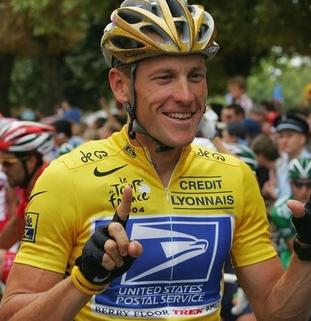
LAnce Armstrong and the SF financier

1

According to the Chron, the owner of the bicycle team that employed Lance Armstrong has been subpoenaed as part of the federal investigation into Lance Armstrong’s alleged doping. (Why is this a federal issue? Um, because some US Attorney wants to make headlines. And because the US Postal Service, which sponsored the team, was involved.)

Thomas Weisel, a legend of Silicon Valley, hasn’t said much publicly about the whole situation, although the Center for Investigative Reporting cites a lawsuit suggesting that he knew at least something nasty:

According to the Center for Investigative Reporting, testimony in an earlier arbitration case involving a dispute over Armstrong’s bonuses suggest Weisel was made aware by team members and doctors of doping concerns on three occasions, beginning in 1996 (before Armstrong joined the USPS team), all to no avail. After publicly expressing concerns about Armstrong in 2001, former team member Greg LeMond said he was told by Weisel, according to the arbitration documents, “What you’re saying about Lance isn’t good for you. You be careful.”

But Weisel was happy to talk to the San Francisco Business Times, which just posted a summary or an earlier interview. You have to be a subscriber to read the whole thing (and you know what? I pay for a subscription every year because there’s stuff in the BT that you never see anywhere else, particularly if you’re watching development issues). Here the gist:

Wiesel denies everything.

“I never had one discussion with one coach or one rider about doping,” he said. “And to my knowledge, the guys that were running my program – Mark Gorski (Postal general manager) and (operations director) Dan Osipow – they did not either. People say ‘Jesus, you had to know this was going on because everyone was doing it,’” Weisel said. “That’s not true. I never thought it was. I don’t think many cycling teams were deploying that practice. And we certainly had part of our rider contract where if a person tested positive, they were off the team. We were very explicit there.”

Okay then.

Bicycling is a lot more harsh than baseball — Barry Bonds might not get into the Hall of Fame (although if he does, so should Pete Rose), but he hasn’t been stripped of any of his batting titles and nobody’s talking about changing his stats. It all reminds me of a friend who played for the University of Miami back in the 1980s, when Suntan U won national football titles. “Everyone juiced,” he told me. “Everyone. You want to play, you juice. You want to get the the NFL, you juice.”

Cheating — except that everyone was doing it. Horribly unhealthy, but so is playing football at that level. When the rewards are so high, and the competition so intense, and winning is all that matters, people cheat. (See: Wall Street, where Weisel plays. See: Corporate America.)

Lance Armstrong is reportedly worth about $100 million. Bonds, about the same. Would they do it the same way again — or retire in a more relative obscurity with a lot less money?

And why are those the choices?


Appetite: New year sips

0

Ringing in the new year is all about celebratory imbibing, but the sometimes dreary days of January likewise call for a cheering pour. It’s a month of planning towards a new year, reaching out for fresh horizons… good reasons to have something quality in the glass, whatever the category. Here are a few worthy bottles, from sake, wine, whisky, even cocktail bitters.

BITTERS

Medicinal and mixable, the glut of bitters released the last few years has all but assured oversaturation. But Brooklyn Hemispherical Bitters ($21 per bottle) stands out. Made in Brooklyn, the focus is on seasonal flavors like popular Meyer lemon, rhubarb or Sriracha. Heat radiates from their savory-sweet blackberry mole or spicy charred pineapple bitters, or a brisk, bitter chill from Icelandic bitters. These are some of the more inventive, elegant bitters on the market. 

A couple additional stand-out bitter flavors: The Bitter End’s vibrant curry bitters ($24) made in Sante Fe and put to perfect use by  Mike Ryan at Sable Kitchen and Bar in Chicago in his Short Circuit cocktail with cachaca, manzanilla sherry and Kalani coconut liqueur. From Canada, Bittered Sling’s plum root beer evokes a sweet sarsaparilla.

WHISKEY

Nikka Whiskey is blessedly and finally distributed in the US through San Francisco’s Anchor Distilling, just releasing two new Nikka imports – hopefully many more to come. My favorite of the two, Yoichi Single Malt ($129), is a splurge-worthy, 15 year old whisky distilled on the island of Hokkaido from pot stills heated with finely powdered natural coal, a rare traditional method. Though more akin to a Highland-style Scotch, it nods to Islay with a hint of peat alongside a balanced brightness. On the more affordable side is Taketsuru Pure Malt ($69.99): a 12 year pure malt whisky blended in vats from Yoichi and Miyagikyo distilleries. The mountain air and river water humidity of the northern Honshu region where Miyagikyo is produced adds silky, ripe pear dimensions.

This November’s Single Malt and Scotch Whisky Extravaganza in San Francisco (held in 13 major markets), offered tastings of expected Scotches. A few special drams were the fabulous Scotch Malt Whisky Society‘s 8 year Ardbeg Cask No. 33.113, a salty, smoky Scotch young with exotic fruit. The Single Malts’ Auchriosk 20 year Scotch exhibits tropical vividness, though a classic beauty. It was a joy to taste The Balvenie Tun 1401/Batch #6, the youngest whisky in its blend being over 20 yrs old. This rarity expresses layers of fruit, vanilla and spice, lively despite age.

SAKE

Sake produced in a town outside Portland? SakeOne is a range of affordable sakes (those mentioned below $13-15)  made from rice grown nearby in Sacramento, CA. There’s Momokawa organic sakes, like a clean Junmai Ginjo or creamy Pearl Sake redolent of banana and coconut, or the smooth, balanced G Joy Sake.

SANGRIA

Despite low quality bottled sangria you may have tried before, Eppa (found at Bay Area Whole Foods and numerous shops across the country, $12 a bottle) is a refreshing mix of pomegranate, acai, blueberry and blood orange juices with Mendocino Cabernet and Syrah. Trying it chilled over fresh cut fruit this holiday season with family, it tastes homemade,  lush and dark, not too sweet, but just right.

INDY SPIRITS

It was the best year yet at the San Francisco Indy Spirits Expo http://www.indyspiritsexpo.com/ this November. A number of newcomers merely await West Coast distribution but are available online. With a slew of “craft” tonics released lately, each using real cinchona bark (quinine) without the natural color removed, Tomr’s Tonic is one of the better I’ve tasted. 100% organic and made in New Jersey, Tom Richter’s lively tonic combines citrus, herbs, cane sugar, with cinchona. The tonic mixes beautifully with a number of gins I sampled it with at home.

Fabrizia Limoncello is produced in New Hampshire with California and South American citrus by two Italian-American brothers. Balanced, fresh, tart (unlike their sweet Blood Orange liqueur), this limoncello is a step up from most. SW4 London Dry Gin, produced in the Clapham neighborhood of London and imported through Luxe Vintages in Florida, is a smooth, solid gin made from 12 botanicals, including lemon peel and cassia.

WINE

Craving the sparkling especially at this time of year? Two great value bottles ($15 each) are Nino Franco’s Rustico Prosecco, dry yet lively, clean and tight, and Coppo’s Moscato d’Asti  from Piedmont, Italy, its vivd effervescence cutting through intense sweetness, vibrant with brunch or spicy food. For after-dinner dessert wine, Donnafugata’s “Ben Rye” ($45 for half bottle) from Sicily, gives off a rich, raisin-like hue in the glass, made of Zibibbo grapes from the island of Pantelleria. To taste it’s lushly elegant, with a balanced sweetness and nuttiness.

At an industry tasting this fall with Sommelier David Lynch at his restaurant St. Vincent, we explored wines of the fascinating, warm-weather Consorzio Tutela Morellino Di Scansano region of southernmost Tuscany (established as a D.O.C.G. in 2007). I learned the region requires its wines be made with a minimum of 85% Sangiovese grapes. A 2010 Tenuta Pietramora di Collefagiano stood out, unusual at 100% Sangiovese. Its pleasantly funky nose gave way to cherry, even chocolate/earthy notes, balanced by soft acidity.
 
Subscribe to Virgina’s twice-monthly newsletter, The Perfect Spot, www.theperfectspotsf.com


Texas and tax cuts suck; CA leads job growth

41

How many times have we heard that jobs are leaving California for Texas? How many times have big-business groups and the polticians who play to their needs said that lower taxes and corporate welfare make states more “competitive” and are good for the economy?

So look, for a moment, at California and Texas. Who has the lower taxes and the governor who will do whatever employers want? And who has the more robust job growth?

Just goes to show: Tax breaks do not a health economy make. What companies look for when the make location decisions is much more complicated. An educated labor force (which, by the way, means spending tax money on schools and colleges), access to transportation (again, a public-sector concern) and yes, a decent place where the executives want to live are bigger factors than things like the payroll tax.

That’s what studies have shown repeatedly over the years — and it’s playing out now in CA.

Localized Appreesh: Adios Amigo

3

Localized Appreesh is our thank-you column to the musicians that make the Bay. To be considered, contact emilysavage@sfbg.com.

What began life as a side-project for Il Gato drummer Johnny Major has grown into a hyper melodic, can’t-miss, feel-good group to know. Or as I breathlessly wrote after catching an early show at the Hemlock: Adios Amigo is pure indie-pop bliss, in the vein of Broken Social Scene and the Shins. 

In this one, Major leads as singer-songwriter-guitarist, backed by guitarist Rahi Kumar, bassist Alex Coehn, drummer Stephen Wills, Claire Grinton on keys and fiddle, and percussionist Catalina Atria – along with warm multi-part harmonies put forth by all those involved.

The band released Dos last year, and starts 2013 off right with a headlining gig at Cafe Du Nord. Learn more about Adios Amigo below, but first check out the video for plucky “Chicken” and see how long you can hold out without cracking a grin.

http://www.youtube.com/watch?v=G4X7QxfE2jw
Video Credit: Caitlyn Adkins

Year and location of origin: 2011, San Francisco

Band name origin: Sitting in a cubicle in SOMA, dreaming of escaping to South America, I came up with the name.  It means ‘Goodbye Friend’.

Band motto: “¡Hasta la victoria siempre!” – “Until victory, always!”

Description of sound in 10 words or less: Grandiose, jangly, guitar-driven, harmonic psych-pop

Instrumentation: Two Guitars, one bass, one keyboard, one drum set.

Most recent release: Dos EP – June, 2012.

Best part about life as a Bay Area band: Living in one of the most beautiful cities in the world, being a part of one of the best music scenes in the world, playing awesome venues, great food, liberals.  

Worst part about life as a Bay Area band: The rent.  Too high.

First album ever purchased: Green Day’s Dookie, or the Forrest Gump soundtrack.

Most recent album purchased/downloaded:
 Tame Impala, Lonerism.

Favorite local eatery and dish: The Little Chihuahua — Garlic Shrimp Burrito. Everyday.

Adios Amigo
With City Tribe, Ghost Tiger
Thu/17, 9pm, $10
Cafe Du Nord
2170 Market, SF
www.cafedunord.com

Chiu’s committee assignments keep the moderates in charge

42

A week after engineering his unanimous re-election to an unprecedented third consecutive term as president of the Board of Supervisors, David Chiu today announced his assignments to board committees, placing fiscal conservatives into two of the most powerful posts and making himself a key swing vote on the Land Use Committee.

“I believe these committee assignments reflect a balanced approach and the diverse interests and talent of the supervisors,” Chiu said just after 4pm during the Roll Call portion of today’s meeting.

But some progressive activists were immediately grousing about some of the selections, which seem to reflect Chiu’s neoliberal approach to governance, preventing progressives from doing much to challenge development interests or the appointment of Establishment insiders to city commissions.

The Land Use Committee is perhaps the most powerful and impactful, particularly as the Warriors arena and other controversial waterfront developments and the CPMC hospital deal come to the board. Scott Wiener – a moderate who is already perhaps the most prolific supervisor – gains far more power as he is named to chair that committee. It is balanced out by Chiu and Sup. Jane Kim, both of whom have some progressive impulses on land use issues but also personal ambitions and a penchant for cutting deals. Developers have to be happy about this lineup.

Sup. Mark Farrell was named chair of the Budget Committee, succeeding Sup. Carmen Chu – a pair that are indisputably the most conservative supervisors on the board. While progressive Sups. Eric Mar and John Avalos will help balance out the permanent committee, their influence will be offset by the temporary members added during budget season: Sups. London Breed and Wiener.

That roster essentially puts Breed in the swing vote role, which should immediately give her some clout. Chiu’s defenders note that Budget’s balance of power is essentially status quo (with Breed now in the same swing vote role that Sup. Malia Cohen played) – and that the committee’s work last year was supported by labor and business interests alike.

Chiu is proposing to combine the Public Safety and City Operations & Neighborhood Services committees, naming Sup. David Campos as chair, Mar as vice-chair, and new Sup. Norman Yee as its third member. Yee, who nominated Chiu for president last week, was also rewarded with a chair on the Rules Committee – controlling appointments, it arguably the board’s third most influential committee after Land Use and Budget – with that committee filled out by Breed and Sup. Malia Cohen.

Speculation that Cohen and Kim would be rewarded for withdrawing their nominations as president before the vote last week don’t seem to have materialized in these appointments. Cohen was also named to the Government Operations Committee, along with Campos, which Sup. Carmen Chu will chair. That doesn’t give Cohen, who told us that she wanted to be on Land Use, much power.

Similarly, Kim was named chair of the City & School District Committee – nice, but not exactly a political launching pad – and Kim’s only real power on Land Use will come when Chiu is opposing some project, as he did with the controversial 8 Washington project that Kim and seven of her colleagues supported.

Aaron Peskin, Chiu’s predecessor as board president, said that he vaguely saw some semblance of Chiu’s claimed strategy of having conservative committee chairs balanced out by liberal majorities (although even that depends on how you define your terms). Yet Peskin questions that approach, and sees committees unlikely to really gel around good decisions or policies.

“It’s a recipe for dysfunction,” Peskin told us. “But it certainly will be fun to watch.”

Welcome to San Francisco’s ‘Internet of Things’

In this week’s issue of the Guardian, we spotlight a pair of pilot projects that introduce a new technology to San Francisco.

Using converted streetlights that can do a lot more than just illuminate city blocks, the San Francisco Public Utilities Commission (SFPUC) ultimately hopes to link a variety of city operations and infrastructure into a centralized, digitally integrated network. Proponents have pronounced the initiative to be an exciting venture into an “Internet of Things” paradigm, in which services are organized around real-time data sharing.

With the pilot projects that are described in greater depth in this week’s issue, the SFPUC is testing clusters of energy-efficient LED streetlights that are linked via a wireless network. These “smart” streetlights will initially be used to remotely read city-owned electric meters, and to transmit data from previously installed Municipal Transportation Agency-owned traffic cameras.

The pilots will test how well the “smart” streetlights can manage tasks such as electric vehicle charging monitoring, MTA traffic signal data transmission, “adaptive lighting” that can respond to conditions, and other functions.

But according to a request for proposals (RFP) issued last June by the SFPUC to seek applications for one of these pilots, the list of uses could grow. “Future needs for the secure wireless transmission of data throughout the city,” the RFP states, may include “gunshot monitoring,” “street surveillance,” or “public information broadcasts.”

Marketing pitches from the companies that develop these systems and ancillary services provide an idea of the broader visions that are being presented to city governments. Here’s a promotional video by IntelliStreets, a firm that applied to test out its product with the SFPUC pilot program, showcasing internal cameras and speakers that a city could opt to add in as part of the package. The SFPUC rejected IntelliStreets’ application.

Phillips, a lighting company that is working with Paradox Engineering on a pilot that’s currently up and running in San Francisco, has some bright ideas for municipal use of “intelligent outdoor lighting systems.” And even Oracle has a plan for cash-strapped city governments that could use its tailored data-management platform in combination with “intelligent” infrastructure, according to the marketing brochure.

The use of “intelligent” digital systems for urban infrastructure still remains largely in the realm of big ideas. And so far, the city’s process of introducing this whole concept to the public has barely gotten underway. The SFPUC has initiated some outreach efforts  – via newsletters issued by local police captains  – in neighborhoods where dimmable “adaptive lighting” would be tested in the forthcoming pilot program.

Depending on whether the SFPUC decides to pursue a broader implementation of the integrated streetlights based on the results of the pilots, the potential exists for these digitally connected systems to be used for monitoring everything from street parking, to traffic flows, to activity on the street. This means a great deal of information could be gathered from public space in real time – and that raises a host of questions.

“Technology can be used for good and for ill,” points out American Civil Liberties Union (ACLU) Staff Attorney Linda Lye. It’s important to ask questions from the outset, she added, to avoid a scenario where “you have a government deploying new technology for one purpose, and using it for other purposes.”

Bizarro mainstream SF sweeps Grindr’s “Best of 2012” — pukes us in the mouth a little

14

Dear gay hookup app Grindr,

Maybe it’s just an indication of the type of homosexual who uses your service, and who deigns to participate in surveys like your new “Best of 2012” attempt to broaden your reach into hyperlocalism (soooo 2k9, btw). Or maybe its merely very telling of how you’ve lost any edginess to rivals like Scruff — which, judging from a Scruff glance, is very sad indeed.

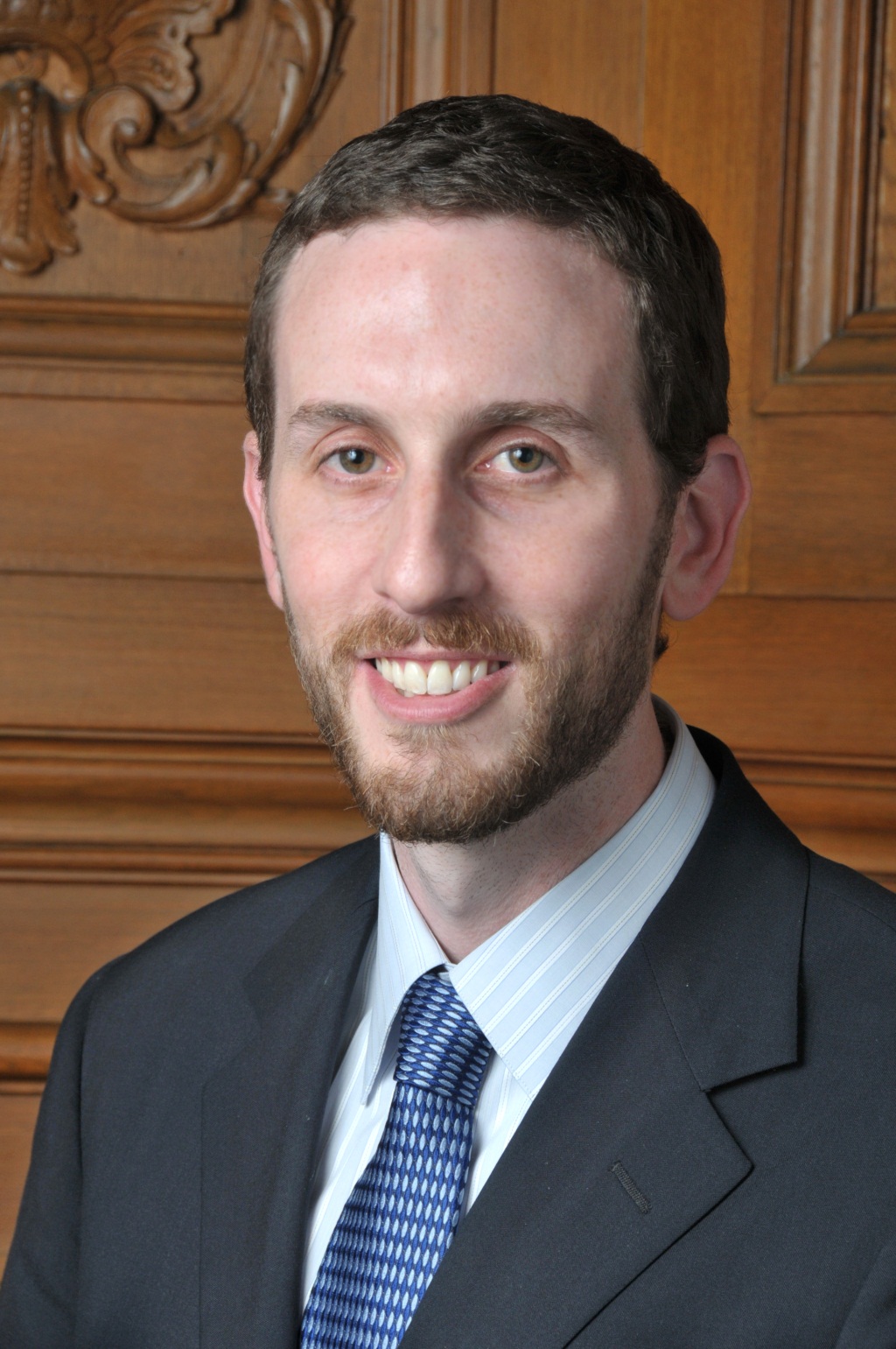
But thanks for the violent retch and terrified giggle yesterday when you unveiled the reader-selected wieners  winners of your besties awards. You somehow managed to record every crap gay mainstream stereotype of San Francisco you could, sorry. Also, craaaazy. Scott Wiener as “best community advocate”? Is Pottery Barn a community? 

Anyway, San Francisco itself won every local category of the national survey. Also telling! What uncruisable gym queen with expensive hair is sitting in Badlands right now, possibly Scott Wiener’s best friend, refreshing Grindr and voting wildly? Can someone call their alcoholic Rihanna fan roommate in embroidered jeans and wraparound Gucci shades and find out?

Below is the list of top vote-getters, with commentary

National winners   

    Gay icon of the year: Anderson Cooper
    Straight ally of the year: Barack Obama
     Best TV show: “Modern Family”
    Best TV host: Ellen DeGeneres
    Best source for gossip: TMZ
    TIE for best comedian: Kathy Griffin and Margaret Cho
    Best athlete: Orlando Cruz
    Movie of the year: “Magic Mike”
    Song of the year: “Call Me Maybe” by Carly Rae Jepsen
    Gadget of the year: iPhone 5

Every one of these things is the exact color of water, but somehow boringer.


Grindr users picked these local landmarks to come out on top:

Gym with the hottest guys:

    Fitness SF (San Francisco)

It’s not the winner per se that horrifies — FitnessSF came into being when it cast off the shackles of its homophobic Gold’s Gym franchise early last year. It’s the category itself. Claim that shallowness!

Best place to get a haircut:

    Salon Baobao (San Francisco)

Waxing available!

Best place to take a first date:

    Castro (San Francisco)

… to steal their wallet and leave them there.

Best Sunday funday:

    Jock Sundays at the Lookout (San Francisco)

Cute but meh.

Favorite gay bar/club:

    Badlands (San Francisco)

Fuck noooooo.

Favorite bartender:

     Mike at Lookout (San Francisco)

If they mean our cute and dear friend Michael — we wholeheartedly agree with Grindr on this point. He’s a great argument for why you should just stick to bars for your pickups, maybe.  

Best gay night/party:

    Beatbox (San Francisco)

This is neither a night nor a party.

Best DJ:

    Haute Toddy (San Francisco)

OK they could have done a lot worse than this completely inoffensive fingerful of vanilla frosting.

Fiercest drag queen/nightlife personality:

    Pollo Del Mar (San Francisco)

If anyone deserves the incredibly contemporary gay slang term “fiercest,” it is Pollo for sure.

Local hero/community advocate of the year:

    Scott Wiener (San Francisco)

According to our new sister paper SF Weekly, Wiener said this win finally “put to rest the issue of whether the nudity ban was a gay thing.” That was never the issue. But Scott is the mayor of Grindr!

Best local gay news outlet:

    The Bay Area Reporter (San Francisco)

I am so surprised that GLOSS Magazine did not win this!!!


Eh, maybe we’re not so surprised by this list after all

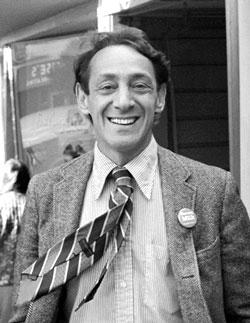
Harvey Milk airport!

83

First of all, it’s a great idea.

Major airports get named after people who have had a major impact on society (LaGuardia, Kennedy) or heros (Lt. Commander Edward O’Hare) and Harvey Milk was both. SFO is the gateway to the United States for millions of travelers, much as Kennedy is on the East Coast, and the idea that all of them would be potentially exposed to Milk’s life and legacy is wonderful.

Sup. Scott Wiener supports the idea, but says it will “spark a robust debate” about other people who have contributed to San Francisco, and I’ve heard the names Dianne Feinstein and Willie Brown mentioned. Both were bad mayors, both sold out the city to developers, both would be an embarassment — but that’s not the point. There are plenty of politicians like Feinstein and Brown in the world; there was only one Harvey Milk.

Thanks to Sup. Campos for the idea. I suspect it will get about 70 percent of the vote.

Herrera takes on restaurants that use bogus healthcare surcharges

66

City Attorney Dennis Herrera fired a warning shot across the bow of San Francisco restaurants that use a customer surcharge ostensibly to pay for employee health care – while in reality, many restaurateurs simply pocket the money and offer substandard health care options to employees – over the weekend when his office announced a settlement with Patxi’s Chicago Pizza.

The tone of the press release announcing the $320,000 settlement was generally positive, with Patxi’s claiming it was an innocent error and Herrera praising the owner’s cooperation in an agreement that improves the health care coverage of Patxi’s employees, compensates employees for the error, and ensures all surcharges tacked onto customers’ bills go to employee health care. Yet Herrera also included a warning to other restaurants.

“But today’s settlement should send a strong message that San Francisco is serious about making sure that restaurants keep their promises to their customers about health care surcharges. I look forward to announcing a larger, more global effort in the coming days to address this issue, to make sure health care surcharge money goes to the workers rather than being pocketed by business owners,” Herrera said in the release, signaling an effort to resolve with civil enforcement something that the political system has failed to do.

This became a hugely contentious issue in 2011 when the Golden Gate Restaurant Association (GGRA) and San Francisco Chamber of Commerce aggressively opposed reform legislation by Sup. David Campos that would have required that all surcharges be spent on health care and prevented employers from raiding health savings accounts at the end of each year. Mayor Ed Lee vetoed that measure but signed a watered down version by Sup. David Chiu – moves that Herrera criticized while running for mayor.

GGRA (whose Executive Director Rob Black didn’t return our call) aggressively fought the city’s Health Care Security Ordinance requirement that employers provide minimal health coverage to their workers, taking it all the way to the US Supreme Court. After losing that battle, many restaurants began adding a 3-5 percent surcharge of customers’ bills, even while offering employees what experts say is the worst form of health coverage, healthcare savings accounts, and often blocking their employees efforts to use them.

An investigative report in the Wall Street Journal showed how many San Francisco restaurants were essentially committing consumer fraud by pocketing the surcharges, elevating the issue, but the District Attorney’s Office has consistently refused to treat this as a criminal matter, despite calls for action by the Civil Grand Jury. So Herrera’s willingness to use civil sanctions, and his warning of more to come, was enthusiastically welcomed by Campos and other advocates.

“I’m very happy with what the City Attorney’s Office is doing,” Campos said. “It’s time for this kind of legal action.”

Campos had already pledged to reevaluate the issue later this year as data comes in about how the compromise regulations by Chiu and Lee are working, threatening to take it to the ballot if necessary and calling it an important issue for all San Franciscans.

“It’s not just about protecting workers and consumers, but also protecting businesses that play by the rules and comply with the law,” said Campos, noting that many restaurants have admirably refused to use the surcharge, shortchange their employees, or support GGRA’s litigation against the city. “It’s about fairness.”

Jerrry Brown and UC

34

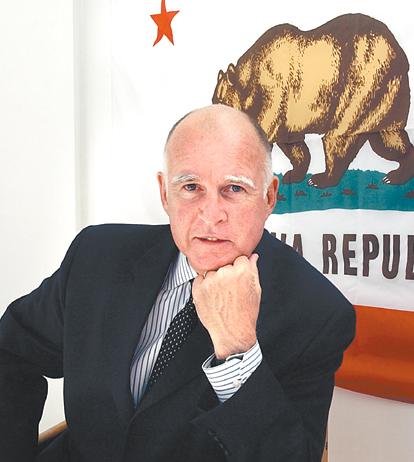
So the guv is going to start showing up at UC and CSU board meetings, where he will be able to sit next to his pal Gavin Newsom. And he’s going to tell the administrators that they have to start getting serious about cost-cutting — as if they haven’t whacked billions out of their budgets in the past few years.

I’m with Jerry on one thing: The Number One, absolute, top priority of the institutions of higher education in this state has to be avoiding hikes in tuition and fees. In fact, I’d put a five-year moratorium on anything that would increase costs for students. It’s already too expensive to go to a state school, middle-class parents are getting priced out, and kids are graduating with so much debt that they’re financially paralyzed for years.

The promise of an affordable, quality college education that Jerry’s dad created in this state is gone, and it’s not coming back until the price of a four-year degree comes back into synch with what Californians can pay. (Yes: UC is still a huge bargain compared to private schools. But you can go to college in Canada for half the price of UC, even if you’re an American. If you’re a Canadian citizen, you can go to really great colleges for almost nothing. That’s the way California used to be.

And no question: There’s bloat at UC. Administrators make too much money. I refuse to believe that you have to pay such giant salaries to attract people who can run the schools.

But that’s a small part of the overall UC and CSU budget. And Brown has to understand that higher education isn’t like most businesses. The productivity increases that corporate America (and that many other parts of state government) have seen in the digital era don’t translate directly to colleges. A company can lay off lots of staff that did things like answer phones and replace them with (annoying) voice-mail robots, and accountants can work faster and machines can make cars better than (expensive) labor forces did. But it still takes one full human being to teach English Lit, and he or she can still only teach a certain number of students, and grade a certain number of papers. And if all the smartest physicists and electrical engineers want to go to work for Oracle or Google, you have to pay more to get them to get a few to pursue careers in academia.

Brown’s proposal seems to be online classes, which would allow one prof to reach thousands of students, without anyone showing up in a classroom. Nice idea, but teaching isn’t just giving a lecture. Sure, some classes work fine on the web, but a lot don’t and never will.

Seriously, guv: Would you rather have this bloody fight that could damage your dad’s enduring legacy, or go along with an oil severance tax?


The Chamber of Commerce becomes even more irrelevant

19

It’s been years since anyone really took the San Francisco Chamber of Commerce seriously as a political force. The verdict from the techies came in long ago; they do their own thing with their own money. Small business never got much out of the Chamber, and most of those folks have their own organizations. Even the big-business agenda was taken over for a while by the Commitee on JOBS. Then there’s SFSOS, Plan C and a bunch of other pro-business and anti-regulation groups. Rose Pak and her allies have their own Chamber of Commerce. You rarely hear anyone at City Hall worried about what the Old Chamber says or is doing.

Steve Falk, the current director, has softened the Chamber’s image a bit and tried to be somewhat diplomatic. But now this organization is about to go backwards.

If what Matier and Ross report is accurate, a former City Hall aide, former failed candidate for supervisor, and current director of the Golden Gate Restaurant Association may be the new chamber director. Rob Black seems to have a line at the top job after Wade Rose, an executive with Catholic Healthcare West, dropped out of the running:

We’re told some of the chamber’s big dogs – like the brokerage house Charles Schwab and Pacific Gas and Electric Co. – weren’t all that enamored of the soft-glove approach that Rose was promising to bring to his dealings with the San Francisco Board of Supervisors.

That jobes with what I’ve been hearing from local politicos, who’ve been saying that there were two candidates for the job — one very good and one very bad. Looks like the very good candidate (good by Chamber standards, anyway) is gone.

I don’t know Rose, but I do know that even this more moderate board of supes isn’t likely to take direction from what many see as an antidiluvean organization, a moribund old white men’s club with a ridiculous out-of-date agenda. Putting a person in charge who actually sought to build bridges (and who, by the way, might not have gone all-out for the new CPMC hospital) might have edged the Chamber back toward some sort of relevance.

But no: If Black gets the job, prepare for the Chamber to stick to its old ways, whine about everything the board does that’s even remotely progressive, issue report cards that nobody cares about — and waste its members dues. Great move.


Discord at City College as accreditation cliff nears

48

More than 300 City College of San Francisco (CCSF) faculty and supporters protested their chancellor’s “state of the school” address at CCSF’s Diego Rivera Theater on Friday (Jan.11) morning as the clock continues to tick down to March 15 — when the community college accrediting commission will decide the future of City College.

Teachers and administrators are now battling over the right way to meet the challenge of staying accredited. The administrators are trying desperately to “cut the fat,” and the teachers contend the baby is being thrown out with the bathwater.

As we’ve reported previously, CCSF’s new divide is over the use of the $14 million a year generated by the parcel tax voters created through Proposition A in November. The school’s administration still wants faculty to take an 8.8 percent pay cut, and already has over 70 faculty and staff “not being rehired” next semester. The school plans to use the money to shore up their fiscal reserves, one of the many sticking points the accrediting commission wanted them to adhere to in order to stay accredited and open.

The teachers see it differently. They volunteered and worked long hours, rallying and passing out flyers about Prop. A for months leading up to the election, with little to no financial support from administrators and the college’s Board of Trustees. They contend that Prop A’s language, which you can read online, specifically outlines that the money should be used to prevent layoffs — which the school has decided to do anyway.

The teachers, understandably, are upset.

“A lot of our teachers work really hard, and this is a slap in the face, frankly,” Greg Keech, the English as Second Language Department chair, said to faculty the day of the rally, outside the college’s Diego Rivera Theater.

The theater houses a giant, elaborate fresco, Diego Rivera’s World War II era mural “Pan-American Unity,” which depicts the 1940s working class laboring toward a common goal, a stark contrast to the college’s divisions. As the cries of the marchers echoed from just outside the door, CCSF’s chancellor Thelma Scott-Skillman stood at the theater’s main stage defending City College’s faculty pay cuts and recent layoffs.

“Over the years, CCSF has managed to serve far more students than they had resources available, a very laudable goal,” Scott-Skillman said to her audience of mostly faculty and staff. “However, harsher austerity measures unfortunately are being implemented to address this imbalance.”

The San Francisco Chronicle seems to think Scott-Skillman has a point, writing an editorial siding with the administration. If the Chronicle and the college’s leadership had their way, the teachers would just shut-up and take their medicine.

“I think the protest today was an unproductive response to a house that’s burning down,” Steve Ngo, the newly re-elected college trustee, told us. “We’re trying to put out the fire, and [faculty] are arguing about the drapes.”

But teachers have good reason to be worried. When a commission with the power to close your school holds a gun to your head and essentially says, “You have one year to implement drastic reforms at your college that will last years, or we’ll close you down,” yeah, of course teachers are going to be worried about the lasting affects on their careers and their students.

Some of those changes are happening already, teachers told us.

“People without academic expertise, who don’t know the field, will lead the departments,” said Kristina Whalen, the director of the speech department at CCSF. “Academic reorganization will have automotive and child development under the same dean — those fields aren’t related.”

The previous model had teachers elected from within their own departments who represented those departments, leading to at least 60 department chairs at CCSF. The college has since consolidated those positions, and is moving to hire a smaller number of deans to handle the same jobs. Faculty who have worked under deans at other colleges didn’t have many kind things to say about the experience.

“I’ve worked at other schools where you reported to a dean,” art teacher Andrew Leone told us as rally-goers marched and yelled behind around him. He’s worked at San Francisco State University, and USF, among other schools, he said.  “The dean has so many responsibilities, there’s no way they can deal with them all.”

The chairpersons at City College were more efficient at taking care of teachers’ needs, he said. Now, “they’re giving us a top down corporate model. They’re turning us into Wal-mart.”

Meanwhile, the tally of concessions made to keep the college open keeps piling up. More than 160 teachers have left the school due to retirement and attrition without being replaced, and more than 50 faculty members and 30 staff have been reported as being let go so far, according to data from the teacher’s union, AFT 2121. The union won’t know the full number of faculty not rehired until early March, and the total amount of “not rehired teachers,” can be hard to track. Additionally, three school sites, Castro, Presidio and Fort Mason, will close soon.

Despite the drastic measures being taken, Interim-Chancellor Scott-Skillman made the case that arguing about them is a moot point.

“This college represents a promise to the surrounding communities that this is a place of quality and opportunity to acquire higher education, “Scott-Skillman said. “Reality check:  unfortunately, we can no longer keep that promise for everyone.”

Trustee Ngo took it a step further, saying that the protest could hurt the school’s chances at keeping its accreditation, especially in light of CCSF asking the state for an extension to the March 15 deadline for accreditation.

“These protests are hurting our chance for an extension,” Ngo said. “If [the accrediting commission] sees protests of our interim chancellor, they’ll think that, chances are, these people aren’t ready for change.”

Ngo could be right. Notably, the accreditation commission’s evaluation report of the college, which is the guiding document of what the college has to fix, called out the school’s divisions: “Despite the unified commitment to the college mission, there exists a veil of distrust among the governance groups that manifests itself as an indirect resistance to board and administrative decision-making authority.”

Beyond just the teachers, at least one person was happy to see the protest. CCSF student Kitty Lui , 26, is a a few units shy of transferring to San Francisco State, and sees the cuts at City College as a threat to her education, she said.

“We need good jobs, especially here in SF, so we’re not living paycheck to paycheck,” Lui said. “It’s inspiring to see so many teachers here — it gives me hope.”


Estamos atentos: Photos and lessons from Friday’s anti-violence march in the Mission

36

It’s hard to say if the march of neighbors from the 16th Street BART station, to Valencia Street, to 24th Street, and back down Mission Street will stop attacks like the January 6th assault on 23rd and Guerrero Streets that inspired last Friday’s anti-violence demonstration and walk. But for a community that feels nervous about walking one’s own sidewalks at times due to an ongoing spate of sexual assaults, that wasn’t really the point. 

“No violence, no police! From the bathroom, to the streets!” went the crowd’s chant, led by an ambulatory drum circle past the 1,000 new restaurant seats on Valencia and the tourists snapping photos of the massive, swaying protest puppets above our heads. Making the violence visible? Check. A disempowering situation turned into a show of strength? Check.

Bilingual handmade signs, bodies made out of roses on the sidewalk at the 16th Street BART plaza, musical instruments, famous writers — that was how the Mission spoke its mind at the march. Information was passed around about the International Women’s Day protest in UN Plaza, and a bright orange “Manifesto for Safe Streets” called for the right to be on the street safely at any hour (head to Mission Mission to read the full manifesto.)

Events were kicked off by a rally at the BART station, where announcements about Impact Bay Area self-defense courses and safe cab services shared time with a poetry reading, a first-person testimonial from a local sexual assault survivor, and remarks by writer Rebecca Solnit, who recently moved to the neighborhood after living in Western Addition for decades. Solnit is working on a new book which examines the various permutations of violence against women today — the recent attack in India, football players and rape in Stuebenville, the Republican Party. 

Impact Bay Area passed out a flier with the following tips on how to stay safe in the streets. (Though we think these “10 Ways to Prevent Rape” would be way more effective):

Be alert: Using awareness and intuition are two of the best ways to keep yourself safe. Pay attention to where you are, and what is happening when you are out in public. Texting, looking at a smart phone, or even talking on the phone divides your attention and may prevent you from noticing important information. If your intuition tells you something is wrong, listen to it and take steps to get to a safe place (even if you can’t articulate why you feel like something is wrong.)

Use strong, confident body language: If someone sets off your internal alarms or gives you a bad feeling, don’t look away and don’t be afraid to make eye contact. Often we have the instinct to avoid eye contact for fear of provoking someone. A person with no bad intentions will not harm you because you look at him. On the other hand, someone who is looking for a victim will read you body language and by facing that person you send the message that you will not be an easy target. 

Use your voice: Your voice is one of your strongest self defense weapons. Not only did the neighbors hear her and open a window, scaring the man off, but yelling is a good way to start harnessing your adrenaline by breakign the common “freeze response.” If you don’t know what to say, you can just yell “NO!” as loud as you can. 

Fight back: Every situation is different and you must use your best judgement about whether to fight back. But don’t assume that you can’t fight if you don’t think of yourself as particularily strong. Adrenaline dramatically increases strength and speed. The element of surprise is also very important. Most assailants don’t expect their victims to fight back. The moment you start fighting back, you force that person to reassess their plan, and if they were looking for an easy victim you have shown that that’s not going to be you. 


The Haight Street Banksy rat is looking for a good home

1

Kerfuffle attended the publication of my Street Seen column on the reappropriated Banksy street art that popped up at Context art fair during Art Basel week in Miami last month.

Hamptons gallerist Stephen Keszler wrote to tell me that my account of him taking two of the pieces from Palestine and affixing $400,000 price tags to the them was so boring that it made him fall asleep in the bathtub (probably just part of growing old, darling.)

But I also received an interesting communique from a man who claimed responsibility for getting the Banksy rat originally painted on Haight Street’s Red Victorian hotel and cafe to Miami. He says it needs a home.

Brian Greif wanted to clarify that the San Francisco rat was not under control of Keszler or Robin Barton of London’s Bankrobber gallery, Keszler’s partner in the Banksy scheme (Keszler and his staff had neglected to mention this fact in our back-and-forths.) Greif actually wants to donate the rat to a museum, but the process is proving a little complicated.

“I hate to see something important, beautfiul, something I think should be preserved painted over a day later, a month later, a year later,” Greif told me in a phone interview. Greif, who is general manager at KRON and self-described artist active in the SF creative community, had been considering making a documentary on street art when Banksy came to town in April 2010 for his spree of SF stencil art. (Now largely removed by thieving art merchants or painted over, the trip’s sole remaining piece is the bird and tree design on Public Works. The nightclub’s integrated the design into a multi-artist collage mural.)

Greif decided that the process of saving a Banksy piece from obliteration would make for the perfect documentary plot. But it took months to get clearance to remove the rat from the Red Vic. Owner Sami Sunchild was incensed when Banksy “vandalised” her building, as she described it to me when I contacted her to find out how the rat wound up in Miami. (She declined to comment about the rat’s fate.) Greif says the rat was scheduled to be painted over when he finally got permission to remove it intact in December 2010.

But then he couldn’t figure out what to do with the thing. Museums, you see, require authentication from the artist or estate to display a work, and Banksy won’t authenticate street pieces past sporadically putting them on his website for as long as they exist IRL.

A deal with SFMOMA fell through, Greif says. Enter Keszler, who Greif and his documentary team originally interviewed in the role of “bad guy” after the gallerist relocated pieces that the artist had completed on his trip to the West Bank. When Keszler found out about Greif’s rat, he asked to show it alongside his own Banksys at Context. 

“At first I wasn’t sure about that,” says Greif. Banksy’s representative agency Pest Control has condemned Keszler for his reappropriation of the Bethlehem murals. “My partner in the documentary and I discussed. We thought it could be a good part for the documentary.” He consulted street artist friends about the morality of the situation and they told him to go for it as long as he intended the piece to wind up in a museum and not a private collection. Last month, the rat was reassembled for the first time since being removed from its original wall in Miami. Conde Nast named the rat one of the hottest draws of the Art Basel season.

Though he hoped to find a museum interested in displaying the piece through the Miami exposure, Greif was instead deluged with private buyers untroubled by the lack of authentication. The highest offer he received, he says, was $500,000.

But financial gain from once-public art wasn’t the goal when he fought to safely remove the rat. “I think street art is one of the most important movements ever,” Greif told me. He wants the piece to be seen. And now he’s saddled with an incredibly valuable piece of wall. 

Anyone know of a worthy venue for the rodent? Contact Greif at bjgreif@gmail.com. 

Much weirdness at the City College Board

44

And you thought the election of the new old Board of Supervisors president was odd. Check out what happened with the Community College Board: After weeks of telling everyone in sight how horrible it would be if any of the three old-timers who helped screw up the school (Natalie Berg, Lawrence Wong and Anita Grier) got elected board prez, current board president John Rizzo won another term — with the support of Berg, Wong, and Grier. And left some of his progressive allies either scratching their heads or fuming.

The backstory: A couple of weeks ago, Rizzo got word that prog colleague Chris Jackson was considering supporting Grier for the top post. That would have given Grier the four votes she needed, since Berg, Wong and her all vote together most of the time. And it would have screwed the progressives, who managed with considerable effort to hold onto a one-vote majority at a critical time in the board’s history, while the college is trying to win reaccreditation. Why bother to win at the polls if you’re just going to turn control over to the other side? I mean, the GOP doesn’t vote for Nancy Pelosi for speaker.

So Rizzo asked former sup. Aaron Peskin, who remains one of the town’s most savvy political operators, to help out. Peskin put an immense amount of time into working out the details and cutting through the various interest-group problems. (Example: By tradition, the top vote-getter becomes board president. That would be Steve Ngo. But the teacher’s union is mad at Ngo because he wants to put more money into the school’s reserves even if it means laying off teachers. So Jackson, a longtime labor guy, couldn’t vote for him. Jackson had already told Grier he’d vote for her, so he’d have to be convinced to withdraw that promise. And on and on.) In the end, after a lot of wrangling (while trying to avoid the fact that the Brown Act prohibits the four progressives from talking to each other outside of a public meeting) Peskin managed to find a solution: Four people were willing to vote for newcomer Rafael Mandelman. Okay, that works.

The vote was Jan. 10. The night before, Berg called Rizzo to say that she didn’t want Mandelman, but would agreed to support … Rizzo. Presumably (she won’t take my phone calls so I don’t know for sure) she had already talked to, or was about to talk to, Grier and Wong to seal the deal. That, of course, would be a direct Brown Act problem, but nobody seems to care about the state’s landmark open-government law anyway (witness the BOS leadership fight, where everyone was talking to everyone else behind the scenes).

So Rizzo agrees that would be dandy, never tells his colleagues on the left — and when the vote goes down, he gets nominated by and re-elected with the support of the people he’s been bad-mouthing all over town for the past couple of weeks. In the end, the progs saw the handwriting on the wall and went along and made it unanimous.

I called Rizzo after the vote and he told me that he hadn’t expected Berg’s offer, but that “it avoided a fight at the meeting, and that’s a good thing for the state accreditors. It shows the board isn’t divided.” Actually, the board IS divided, and Rizzo has been part of that divide, and if the special trustee hasn’t figured that out yet, he’s not terribly observant.

He told me he should have given his allies a heads-up, but “that would have violated the Brown Act.” (Clue phone: The whole deal that re-elected him was a blatant violation of the Brown Act.)

Mandelman just joined the board, and wasn’t pushing for the top job, although he’d agreed to do it. So he’s not that upset. But he was a bit bemused when I talked to him. “To have the two-week shitstorm stirred up by John, who then forms a partnership with the people he’s despising, and not to tell any of us, is wierd,” Mandelman said.

Peskin’s more direct. “Politics is all about keeping your word,” he told me. “This is exactly not how you do politics.”


Gangsters, death, and spaghetti westerns: must be another week of movies!

0

Well, they announced the Oscar nominations yesterday, and much-lauded import Amour is opening today (review below the jump), so if you’re curious about the hype and don’t mind having a downer of a Friday night … you’re set. Other films opening this week include the Robert Carlyle drama California Solo (Dennis Harvey’s review here), Marlon Wayans horror spoof A Haunted House, Ryan Gosling-in-a-fedora cop flick Gangster Squad, and (at the Roxie), teen-skater doc Only the Young.

Also! The Pacific Film Archive’s “The Hills Run Red: Italian Westerns, Leone, and Beyond” series starts this week. Plenty of good spaghetti western action to be had; check out my round-up here. Read on for more short takes on this week’s releases.

Amour Arriving in local theaters atop a tidal wave of critical hosannas, Amour now seeks to tempt popular acclaim — though actually liking this perfectly crafted, intensely depressing film (from Austrian director Michael Haneke) may be nigh impossible for most audience members. Eightysomething former music teachers Georges and Anne (the flawless Jean-Louis Trintignant and Emmanuelle Riva) are living out their days in their spacious Paris apartment, going to classical concerts and enjoying the comfort of their relationship. Early in the film, someone tries to break into their flat — and the rest of Amour unfolds with a series of invasions, with Anne’s declining health the most distressing, though there are also unwanted visits from the couple’s only daughter (an appropriately self-involved Isabelle Huppert), an inept nurse who disrespects Anne and curses out Georges, and even a rogue pigeon that wanders in more than once. As Anne fades into a hollow, twisted, babbling version of her former self, Georges also becomes hollow and twisted, taking care of her while grimly awaiting the inevitable. Of course, the movie’s called Amour, so there’s some tenderness involved. But if you seek heartwarming hope and last-act uplift, look anywhere but here. (2:07) (Cheryl Eddy)

Gangster Squad It’s 1949, and somewhere in the Hollywood hills, a man has been tied hand and foot to a pair of automobiles with the engines running. Coyotes pace in the background like patrons queuing up for a table at Flour + Water, and when dinner is served, the presentation isn’t very pretty. We’re barely five minutes into Ruben Fleischer’s Gangster Squad, and fair warning has been given of the bloodletting to come. None of it’s quite as visceral as the opening scene, but Fleischer (2009’s Zombieland) packs his tale of urban warfare with plenty of stylized slaughter to go along with the glamour shots of mob-run nightclubs, leggy pin-curled dames, and Ryan Gosling lounging at the bar cracking wise. At the center of all the gunplay and firebombing is what’s framed as a battle for the soul of Los Angeles, waged between transplanted Chicago mobster Mickey Cohen (Sean Penn) — who wields terms like “progress” and “manifest destiny” as a rationale for a continental turf war — and a police sergeant named John O’Mara (Josh Brolin), tasked with bringing down Cohen’s empire. The assignment requires working under cover so deep that only the police chief (Nick Nolte) and the handpicked members of O’Mara’s “gangster squad” — ncluding Gosling, a half-jaded charmer who poaches Cohen’s arm candy (Emma Stone) — know of its existence. This leaves plenty of room for improvisation, and the film pauses now and again to wonder about what happens when you pit brutal amorality against brutal morality, but it’s a rhetorical question, and no one shows much interest in it. Dragged down by talking points that someone clearly wanted wedged in (as well as by O’Mara’s ponderous voice-overs), the film does better when it abandons gravitas and refocuses on spinning its mythic tale of wilder times in the Golden State. (1:53) (Lynn Rapoport)

http://www.youtube.com/watch?v=AKooIgzaQMg

Only the Young First seen locally at the 2012 San Francisco International Film Festival, this documentary from Elizabeth Mims and Jason Tippet is styled like a narrative and often shot like a fine art photograph (or at least a particularly bitchin’ Instagram), with an unexpectedly groovy soundtrack. It follows a pair of high schoolers with ever-changing hairstyles in dried-up Santa Clarita, Calif. — a burg of abandoned mini-golf courses and squatter’s houses, and a place where the owner of the local skate shop seems equally obsessed with tacos and Jesus. It’s never clear where Garrison and Kevin fall on the religious spectrum — though “the church” has a looming importance, influencing relationships if not wardrobe choices — but one gets the feeling all they really care about is skateboarding, with their own friendship a close second. Less certain are Garrison’s feelings about punky, tough-yet-sweet gal pal Skye — especially when they begin spending time with new flames. Only the Young‘s seemingly random choice of subjects works to its advantage, capturing the kids’ unaffected, surprisingly honest point of view on subjects as varied as cars, dating, college, the economy, and Gandalf Halloween costumes. (1:10) Roxie. (Cheryl Eddy)

SFBOS grab bag: Diva Breed, Yee’s jig, delayed Chiu, and more

10

Now that the dust has settled from this week’s San Francisco Board of Supervisors inauguration and presidential vote, I thought I’d return to a few random gems that were still stuck in my notebook, waiting to see the light of day.

Under the heading of There’s a New Diva under the Dome, new D5 Sup. London Breed didn’t wait for the official noon inauguration prescribed by the City Charter to take her oath of office, instead holding a packed event at 10am in the North Light Court, where her oath was administered by a key supporter, Attorney General Kamala Harris.

“I held a swearing in earlier to be able to have a large crowd of supporters,” was how Breed explained it to her colleagues later, and it’s certainly true that attendance at the official event was limited by the size of the room. But it’s equally true that gathering a who’s who list of local power brokers to applaud Breed’s ascendance as a key swing vote sends the signal that she expects to be at the table when the big deals get cut.

President David Chiu, who is also no stranger to political power plays, sounded a tone of humble leadership after maneuvering himself with closed-door negotiations into an unprecedented third consecutive term as president, noting that there is still much more work to do.

In fact, Chiu said he was almost late for Breed’s event because, “my bike light got stolen, the Muni bus was late, and then I had a hard time catching a cab.”

Sup. Eric Mar revisited his reelection race last year with a huge understatement – “In my campaign, I had to do a little more work than my colleagues did.” – noting that he and his supporters overcame an unprecedented $1 million in spending against them: “We sent a strong message that the Richmond District is not for sale and never will be.”

Sup. John Avalos gave credit for his surprisingly easy reelection campaign to a unlikely but deserving source: journalist Chris Roberts, who uncovered evidence that Avalos challenger Leon Chow didn’t really live in the district, which he reported in SF Appeal, forcing Chow to withdraw from the race. Avalos called Roberts “an honorary member of our campaign.”

Meetings like this are often just dripping in sanctimony, and this one was no exception, so it was nice to see a moment of genuine child-like exuberance from new D7 Sup. Norman Yee, who at 63 is about twice as old as most of his colleagues. As he thanked supporters and laid out his goals, Yee suddenly seemed overcome by this opportunity, smiling broadly, doing a little jig, and declaring, “Darn, I’m excited!”

I was less impressed by the rambling mini-lecture that Cohen gave on the topic of leadership before she withdrew her nomination as president. “That’s what leadership is about, stepping forward, outside your comfort zone, and doing things,” said the supervisor with a scant legislative record as she quit the race for president before her colleagues were even given the chance to vote on what she said was the importance of having a women of color in charge. “Every person here has that leadership quality within them.”

From both supervisors and the general public, there were also a number of statements made about the history of the board presidency that were not quite right, particularly as it pertained to Cohen and Jane Kim nominating one another for president and the issue women of color being nominated for that slot.

So, for the record, the last time a woman of color (former D10 Sup. Sophie Maxwell) was nominated for board president was 10 years ago. The last time a woman served as president was Barbara Kaufman (1997-99). And the last time there was a woman of color serving as president was Doris Ward, who served from 1991 to mid-1992 when she left to become Assessor. Also, the last three-term president was John Molinari, who served from 1979-83 and ’85-’87.

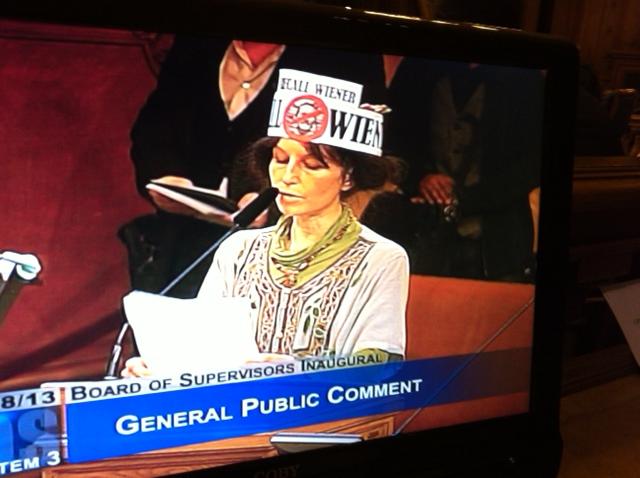
The most colorful moment in public comment was when nudism activist Gypsy Taub came clad in homemade hat that urged people to oppose and recall Sup. Scott Wiener. But because Wiener had already said he wouldn’t accept a nomination as president, she turned her criticism on Chiu, who was also slammed by another leftist speaker who told supervisors, “If you can’t prevent David Chiu from being president, we deserve to be slaves.”

Finally, the meeting included an unremarkable speech by Mayor Ed Lee, who pledged to work with each supervisor and offered this unsupported claim, “We continue to make sure this city is successful for everyone.”

Nite Trax: Roasting SF club legend Timmy Spence

0

If you think you’re cool (or merely interesting) — please drop everything and watch this clubkid-packed 1981 video masterpiece by scene terror Timmy Spence. He’s being shamelessly and publicly roasted on the occasion of his 60th(!) birthday this Saturday, courtesy of some might big drag queens. After the jump, Trannyshack’s Heklina dishes the dirt and gives the deets.

Well, there’s a few things I thought would never happen!

First of all, I never thought we would be celebrating Timmy Spence’s 60th Birthday…if there was ever someone with nine (or more lives), it’s The Tammers. We’ve been through a lot together; thrown in jail together in Mexico, a cross country road trip where I got so mad at him we didn’t speak all the way through Texas, a near death experience while hiking in Nevada, cruising the Christopher St. Piers in drag in NYC together back when that was fun, the list goes on and on. And she’s still kicking. Even after countless trips to the hospital, she’s still here, shocking and offending everyone and really serving as an inspiration to countless young queens. Like an Auntie Mame from hell, every fiber in her body screams, live….LIVE!

Won’t you join me in honoring this queen of queens this Saturday?

Timmy Spence’s 60th Birthday Bash!


Saturday January 12- Join us as we pay tribute to this legendary drag fossil! Who would have thought she would live this long?

With your hosts Peaches Christ & Heklina, and appearances by Arturo Galster, Ethel Merman, Matthew Martin, Miss X, Laurie Bushman, Darlin’, Pippi Lovestocking, D’Arcy Drollinger, Deena Davenport, Sexitude, and more! With DJ’s Chicken and Dank. 

Rebel, 1760 Market St. @ Octavia. 8pm. No cover, RSVP here

Clergy summons sexy undead (local Episcopalian priest pens racy vamp novel)

0

It is perhaps indicative of my professional scope that I was nervous to talk to Amber Belldene, Bay Area author of a “racy romance” vampire novel (her words.) But be advised, my anxiety was due less to her literary pursuits and more with the fact that she is an ordained Episcopalian priest. Religion, it would seem, is a harder passion to penetrate for me than undead sex scenes. 

On her end, Belldene sees no conflict between the two. “Romance novels are really about love, and so is being Christian,” the neatly-attired writer, who “fell down a slippery vampire slope” when she was a young thing told me during her visit to my office. The tagline on her website reads “Mystically Sexy Paranormal Romance…because Desire is Divine.” [sic]

Blood Vine, Belldene’s debut novel, does present a few conflicts with the Christian faith, however. For one, the protagonist is undead. What would Jesus do? 

Though she came to her calling via a mystical experience in her early teens, the priest is far from one of those religious types who seek ban Harry Potter as a tool of the devil. “For me, fiction is just fiction,” she explains. And when she was bedbound pregnant with her twins, she felt the renewal of the connection to vampire novels she had as a child — so much so that she began to devour blood-based books at rates of one to two a day. (For the record, she started with Discovery of Witches and has never read the Twilight series, although she is fond of True Blood.) 

“It was a gut interest,” she says of this affinity for fanged folk. Vampire lit, she felt, “turns our hunger and longing for things into something visceral. [Vampires are] our exaggeration of our human traits.”

And longevity makes for some interesting plot lines. Belldene (her pen name — to protect those she works with, she also won’t reveal the place where she serves as priest) says she banged out Blood Vine rather quickly, and was able to get women-owned, indie publishing house Omnific to print the book on a per-order basis. The day of our interview she still didn’t have a copy of the thing, a fact that she shrugged off in a rather confusing, if charming manner.

She was inspired by some grapevines at a winery she visited in Sonoma County upon discovering that the vines had come from Croatia. The vines, as is obvious from the title, play a starring role in the book. “I think it sounds sillier than it reads,” the author half-apologies as she explains the plot. It is: hunky Andre Maras the vampire lives on a Sonoma vineyard. Far from his homeland, he is wasting away — a common vampire trait when separated from one’s birthplace, Belldene tells me. He hits upon grafting vines from his native country onto plants in California in the hopes of deriving ancestral pep from the wine made from the berries. 

Since Andre wants the best for all his fellow vamps, he starts producing the wine on a mass scale. And since that of course entails a cohesive publicity campaign, he hires a PR firm — a PR firm who assigns a rep, Zoey Porter, to his account that he finds quite comely. The rest is neck bites. (Figure of speech, I haven’t read it and you know how these undead novels go, surely it’s not that simple.)

>>ANDRE THE VAMPIRE INTERVIEWS BELLDENE ABOUT BEING A SEXY STORY-WRITING MINISTER? IT’S TRUE!

The plot is far from X-rated, Belldene tells me, but “this is solidly romance. But on the spicy level, not sweet and sensual.” 

What’s been the reaction from those who know her as a holy woman? Mainly positive, the priest of seven years says, and she counts among her supporters prominent members of the Bay Area Episcopalian scene, although many “appreciate the fact I have a pen name.” And for those who have been a bit more confused by the unholy Andre and crew, Belldene has practiced tolerance as any good Christian would. “I have been supportive of their questions,” she says. 

Belldene has two sequels to the novel in the works, 

The Performant: Music men

0

Mark Growden’s solo show and variations on a theme with Hand to Mouth 

There’s something so charmingly unassuming about the Red Poppy Art House — a by-now venerable institution on the Mission District’s quirk-centric music scene — it makes you want to invite it home for a Hangtown Fry and mimosas. From the mismatched chairs to the frayed curtains, the whitewashed walls to the cramped toilet, the Red Poppy’s overall ambiance is that of a sort of ramshackle country parlor, right down to the upright piano.

Though you’d never mistake him for a church lady, Bay Area bard Mark Growden does exude a touch of the rustic — a down-home demeanor rooted in his rural Northern California upbringing. From the moment he opened his set on Friday night at the Red Poppy with a haunting, desert lament played ingeniously on his signature set of bicycle handlebars, it was as if he were unfolding a map of the hidden pockets of America and inviting us on an introspective journey through them.

Assisted ably by trumpeter Chris Grady, who employed a number of mutes throughout the show, probably to keep him from blowing the heads off the front row seated literally at his feet, Growden worked his way through a repertoire of old songs and new which hearkened to the barroom backrooms of the South, the windswept plains of the American West, and the lonesome riverbanks of the Truckee, and the Mississippi.

Though much of Growden’s music is tinged with a fragile darkness, the mood of the evening was light, jovial, the banter flying thick and fast between stage and oddience, and slyly humorous counterpoint provided by Grady. By the time it came around to the group sing-a-long, we were all good friends, a chummy crew, no doubt assisted in part by the closeness of our quarters, the conviviality of claustrophilia.

Music was also the theme at monthly comedy event Hand to Mouth at the Dark Room Theatre. Since 2011, Hand to Mouth has been hosting eclectic lineups of funny-persons who are encouraged to perform sets that relate to a pre-announced topic, and much of the fun comes from discovering how each comic will interpret the theme.

Sure, there were a few comics who merely riffed on the topic by dissing bands they didn’t like or making fun of raves, easy targets all, but co-host James Fluty broke the trend by coming out onstage with a guitar and playing a lewd ballad about Mormons (take that Trey Parker and Matt Stone) and Jesse Elias shattered what was left of it by giving a totally hilarious power-point presentation he called “A Lecture of Music History.” Ostensibly a comparison of the evolution of classical to contemporary music, Elias spent time comparing music from “Der Gloeckner von Notre Dame” and “Wicked,” introducing us to the “orchestra hit” sample, and comparing the “two distinct sounds referred to as ‘electric piano’” which involved a straight-faced comparison of various video games soundtracks versus Disney credits music.

Keeping it weird, DJ Real (a.k.a. Nick Stargu) contributed a retiree version of a NIN tune (“I Want to Play Some Canasta”), the Unwatchables sold their souls to the devil in order to be able to play the blues for Bruce Willis, and Drennon Davis ended the show on a literal high note by turning himself into a radio with the help of a loop station and station-appropriate DJ patter that ranged from the growling bro-down of hard rock station “Radio K-O-C-K” to the passive-aggressive mellow of “Free Jazz Radio” (“just want to clarify something about our name, we are not ‘free’. We are listener-supported.”)

It would appear allowing comedians to stretch their creativity to encompass yet redefine a specific theme is as good for them as it was for us—and makes it easy to look forward to their February installment at Lost Weekend Video, when the theme will be “Jobs”. Hell, I’ve got a few jokes about that myself….

Cheap rent: A thing of the past

Surfed Craigslist for an apartment lately? Then you don’t need us to tell you that rent in San Francisco is too damn high. But what are the broader implications of this becoming a city where median asking rent is above $3,000?

Here’s an example. Today, District 11 Sup. John Avalos shared a story with the Guardian about his arrival to San Francisco in 1989. He had $1,000 to his name, enough to cover rent and a security deposit. He landed a job that paid just $8 an hour, but that was no big deal, since he split the rent for his $675-per-month, two-bedroom apartment in the Haight with a friend.

Translate those 1989 figures to 2013 dollars, and the dramatic rent increases the city has experienced really come into focus. With inflation factored in, that same two-bedroom apartment would cost $1,253 per month today. Noticed any Craigslist ads for two-bedroom apartments in the Haight going for $1,253 lately? (If so, be careful. It’s probably a scam.) Rents for such units hover closer to $4,000 these days.

Avalos joined his colleagues on the Board of Supervisors in highlighting issues of affordability at Tuesday’s meeting. “San Francisco needs to do something specifically to measure how people, particularly those on the bottom rung, are getting by in San Francisco,” he commented just prior to the vote for board presidency.

District 9 Sup. David Campos echoed this sentiment. “I want a city that works, but I want a city that works for everyone,” Campos said. “We have to work collectively to make sure that happens … We have great wealth in the city, but many people are being pushed out.”

The downside of Jerry Brown’s budget

9

The guv is quite proud of his new budget: He’s eliminated the chronic deficits, he’s giving some more money to the schools, and he’s vowing that the state will live “within its means.” Which sounds like no more taxes. And gee, just about everyone in Sacramento is singing Kumbaya; the praise is coming not just from Democrats but from Republicans.

But there’s a downside to the Brown budget: He has, to his credit, stopped the red ink, and he’s presenting things in a brilliant way that makes him look like the grownup the state has needed for many years — but he’s doing very little to replace the the money that services for the poor have lost in the past five years.

“At first blush, it has some good things,” Assemblymember Tom Ammiano told me. “But I don’t see restoration of the cuts for the disenfranchised.”

Ammiano is calling for closing Prop. 13 loopholes and passing an oil severance tax as part of the budget process. And with Democrats holding a two-thirds majority in both houses, those kinds of changes are possible. At the very least, it seems, the progressives ought to demand from Brown a plan to backfill what social service providers have lost. If it can’t all happen this year, it ought to be part of the future budget process.

State Sen. Mark Leno, who chairs the Senate Budget Commitee, was a bit more politic than Ammiano, but he also is concerned that the budget move the state forward:

“With the improvement of our fiscal outlook comes the opportunity to continue our work to restore California. While our recent efforts have focused largely on making cuts in the least harmful manner possible, we will now have more capacity to refine our work to improve essential programs and analyze the role of government and its effectiveness. I look forward to working with Governor Brown and my colleagues in the Legislature to evaluate this year’s budget to help ensure it is the best possible plan for a state on the mend.”

On the mend is right — because the state of California is in way worse shape than it was when Arnold Schwarzenegger took over and screwed things up, and the goal shoudn’t be to keep at a steady state that’s unacceptable. It ought to be returning California to its role as a leader in progressive policy. Sorry, Jerry: A balanced budget alone isn’t good enough.

Oh, and Californians United for a Reponsible Budget, which seeks to cut prison spending, points out that this budget is hardly tough on the bloated corrections budget:

The administration has deserted plans to shrink California’s over-sized prison population, ignoring clear messages from voters. The proposed budget increases prison spending $250 million including a $52 million General Fund increase, bringing the total Corrections budget over $11 billion. Despite the passage of Prop. 36 and continuing realignment,  It also projects an increase in the prison population by 2,262 people over the 2012 Budget Act projections. ”If the Governor believes that ‘we can’t pour more and more dollars down the rat hole of incarceration’ then why is he increasing spending on Corrections, planning for more prisoners rather than fewer and defying the demands of the Federal Court and the voters to further shrink the prison system?” asked Diana Zuñiga, Field Organizer for Californians United for a Responsible Budget.

It’s no surprise that the prison guards’ union is happy.

UPDATE: An analysis by Ammiano’s office shows a few other lowlights of the budget: It reduced AIDS Drug Assistance Program money by $16.9 million. It doesn’t restore any of the deep cuts to the state’s Welfare to Work Program. It cuts community college funding by tying state money to student completion, not student enrollment. It offers no additional funding for child care programs. It caps the number of courses students are allowed to take if they want to receive Cal Grants.

The Leg needs to take a hard look at this before it signs off on all these cuts.