Print sections as they appeared in the early 2010s

To find articles by keyword or author, you may want to use our Search function.

Print Sections

Rare talent

0

arts@sfbg.com

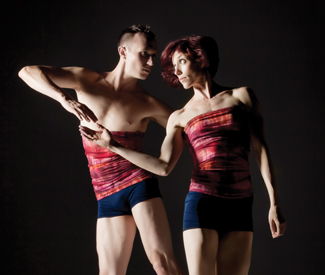
DANCE Wendy Rein and Ryan T. Smith may be best known for their hit biannual show, the CONCEPT series — where you munch free popcorn while watching informal presentations of local choreography. Their own company, RAWdance, performs only occasionally. So to see them in a full-evening program, "re: framed" (Nov. 2-4 at ODC Theater), was to realize just how special their work is. Raw it ain’t, conceptual it is.

Of the four pieces, only one of them, Burn In, Part I, consisted of what this duo does best, choreographing on their own sinewy and fiercely interacting bodies. Described in the program as the beginning of a larger piece to be shown next year, Burn seemed to emanate from an intense searching for connection between two people. An underlying tension colored every move, as they invaded each other’s spaces and Rein, incubus-like, hung on Smith’s back and plopped on his lap. Despite the intensity of these dramatic and detailed encounters, emotions were held in check by the analytical processes that seemed to have generated the movements.

Breton Tyner-Bryan, first seen through some slats of light, intruded into the relationship. Her presence became a perhaps corrosive element that heated up an already fiery intensity. It was as if some kind of apocalyptic terror was descending on these slithering and shivering creatures. In the last image Smith was hanging onto Rein’s legs as a beam of red light contracted onto her back, a mountain of quivering muscles. It looked like a piece of raw meat.

For Double Exposure, the two dancers asked for original two-minute duets from good and stylistically different choreographers. They got a pleasant divertissement. Ann Carlson gave them an amusing Beauty and Beast encounter based on rhythmic panting. Joe Goode, punning on the company name, created a sly roll in the hay, followed by a verbal ping-pong match. KT Nelson’s frolicking duet was short, musical, and witty. The most intriguing contribution came from Shinichi and Dana Iova-Koga. In skull-hugging caps and long, simple gowns, the couple’s slow progression and reversal of direction looked like Edward Gorey might have been designed it.

The current version of The Beauty Project is the result of rethinking for the stage of a 2009 work originally performed in an empty store at the Westfield San Francisco Centre. I wish I had seen it there, in the context of all those shop windows with their empty-faced mannequins.

The thematic material of the doll that comes alive, of course, is a trope already used by 19th century ballet choreographers — but Ryan and Smith’s take, for five women in tiny dresses and black bob wigs, was fully contemporary. Four silver-painted chairs become tools to architecturally redesign the stage. Designed on an invisible grid, the dancing followed clear patterns of oppositions, canons, and unisons that break up and reconfigure themselves. Though highly formal — that’s the essence of who these choreographers are — the work’s fast-paced rhythms constantly shifted moods as the dancers vacillated between vacuous stares and come-hither sexual invitations. They collaborated and competed, borrowing the assertive strides, half-turns, and hip thrusts from the runway. Every once in awhile, the "models" stepped out of their roles, showing glimpses of the anxiety, aggression, and boredom that makes them human. One of the dancers stared into the audience from downstage left, a look of forlornness about her. However, wrapping her up in cellophane and carrying her off looked too easy, as if the choreographers couldn’t figure out how to end this slight but well-crafted work.

The evening’s closer, 66 Measures, was a throwaway study of fairly standard patternings for a sextet of dancers, each inside a circle of light. They were dressed in a variety of black and white stripes that looked good. But clothes, of course, don’t make the emperor.

Stage Listings

0

Stage listings are compiled by Guardian staff. Performance times may change; call venues to confirm. Reviewers are Robert Avila, Rita Felciano, and Nicole Gluckstern. Submit items for the listings at listings@sfbg.com. For further information on how to submit items for the listings, see Picks.

THEATER

OPENING

The Foreigner Mission Dolores Academy Auditorium, 3371 16th St, SF; (650) 952-3021. Free (donations requested). Opens Fri/9, 7:30pm. Runs Fri, 7:30pm; Sat-Sun, 3pm. Through Nov 18. 16th Street Players perform Larry Shue’s comedy about an Englishman in the American South.

The Submission New Conservatory Theatre Center, 25 Van Ness, SF; www.nctcsf.org. $25-45. Previews Wed/7-Fri/9, 8pm. Opens Sat/10, 8pm. Runs Wed-Sat, 8pm (no shows Nov 21-22); Sun, 2pm. Through Dec 16. New Conservatory Theatre Center performs Jeff Talbott’s drama about a playwright who falsifies his identity when he enters his latest work into a prestigious theater festival.

Superior Donuts Gough Street Playhouse, 1622 Gough, SF; www.custommade.org. $25-30. Opens Thu/8, 8pm. Runs Thu-Sat, 8pm; Sun, 7pm. Through Dec 2. Custom Made Theatre performs Tracy Letts’ poignant, Chicago-set comedy.

BAY AREA

The White Snake Berkeley Repertory Theatre, Roda Theatre, 2025 Addison, Berk; www.berkeleyrep.org. $29-99. Previews Fri/9-Sat/10 and Tue/13, 8pm; Sun/11, 2pm. Opens Nov 14, 8pm. Runs Tue and Thu-Sat, 8pm (also Nov 29, Dec 13, and Sat, 2pm; no matinee Dec 1; no show Nov 22); Sun, 2 and 7pm. Through Dec 23. Mary Zimmerman (Metamorphoses) returns to Berkeley Rep with this classic romance adapted from a Chinese legend.

ONGOING

Carmelina Eureka Theatre, 215 Geary, SF; www.42ndstmoon.org. $25-75. Wed, 7pm; Thu-Fri, 8pm; Sat, 6pm (family matinee Sat/10, 1pm); Sun, 3pm. Through Nov 18. 42nd Street Moon performs the “forgotten musical” that inspired the Broadway hit Mamma Mia!

Elektra Geary Theater, 415 Geary, SF; www.act-sf.org. $20-110. Opens Wed/31, 8pm. Runs Wed-Sat and Nov 13, 8pm (also Wed/7, Sat/10, and Nov 17, 2pm); Sun, 2pm. Through Nov 18. Academy Award winner Olympia Dukakis stars in Sophocles’ Greek tragedy.

Fat Pig Boxcar Theatre Studio, 125A Hyde, SF; www.brownpapertickets.com. $20. Thu/8-Sat/10, 8pm. Theater Toda presents Neil LaBute’s dark comedy about a man who faces scrutiny from his friends when he falls for a plus-sized woman.

Foodies! The Musical Shelton Theater, 533 Sutter, SF; www.foodiesthemusical.com. $30-34. Fri-Sat, 8pm (no show Nov 17). Open-ended. AWAT Productions presents Morris Bobrow’s musical comedy revue all about food.

Geezer Marsh San Francisco, 1062 Valencia, SF; www.themarsh.org. $30-100. Sat, 8pm; Sun, 7pm. Through Nov 18. Geoff Hoyle’s popular solo show about aging returns.

The Hundred Flowers Project Thick House, 1695 18th St, SF; www.crowdedfire.org. $10-35. Wed-Sat, 8pm. Through Nov 17. Reinvention is as American as apple pie — allowing every individual to shed the limitations of the past and move constantly forward. Of course it’s not an exclusively American concept, a point Christopher Chen makes early on in his latest play, The Hundred Flowers Project. A group of Asian American actors gather to collaborate on a play about the Maoist Cultural Revolution, focusing first on the idea of China as a “country of only beginnings … built on the idea of no past,” while wrestling with the implications of creating and recreating history as you go along, including, eventually, their own. Ultimately the ideal overtakes their earnest intentions and hijacks the play to serve its own dictatorial end, each actor reduced to an insubstantial shadow of their former “selves,” from the over-eager Sam (Ogie Zulueta) to the penitent philanderer Mike (Wiley Naman Strasser) to his somewhat wary ex, Lily (Anna Ishida). Their identities gobbled up by the restless juggernaut the play has morphed into after a triumphal five-year world-tour they hover constantly just on the edges of a dangerous discovery, their once lively sense of purpose replaced by an almost willful inability to question their roles or their fate. Chen’s sprawling, Orwellian tour de force is further bolstered by an army of adroit designers and the competent hand of director Desdemona Chiang, who one hopes is a slightly more benign force than the director of the play-within-the-play, Mel (Charisse Loriaux) (Gluckstern)

Lost Love Mojo Theatre, 2940 16th St, Ste 217, SF; www.mojotheatre.com. $28. Wed-Sat, 8pm. Through Nov 17. Modern love and modern life: it’s all a wash in this very funny and smart play from playwright-director Peter Papadopoulos about two pairs of lost souls thrown together in the shoals of a soggy apocalypse. Mitzy (a sure Elena Spittler) is a stunned bride whose just lost her wedding party and everyone she knew — except the valet, Tito (a perfectly deadpan Carlos Flores, Jr.), a loose canon if ultimately goodhearted, who finds himself clinging to the same rock after some unmentioned catastrophe. Meanwhile, Jan (a brilliantly, manically articulate Kimberly Lester) has gone from just sexy crazy to all-out nuts for her girlfriend Barb (a sharp, sympathetic Jessica Risco), whose recent infidelity has apparently triggered Jan’s meltdown, key symptoms of which include an obsession with a certain downbeat French existentialist on the Discovery Channel (a spritely Roy Eikleberry in an outrageous French accent so mal it’s bon), and shedding all material possessions in their mutually decorated apartment. What happens when they all end up together? The possibilities, if not endless, spell end times for the old world. The welcome inaugural production by newcomers Mojo Theatre turns out to have preempted Hurricane Sandy with its own storm of the century, proving rather timely as well as dramatically very worthwhile. Director Papadopoulos makes excellent use of modest resources in staging the action with dynamic contrasts and choice detailing, across a set of finely tuned ensemble performances, as the eccentricities and common sense at war within and between his characters begin slowly and surely to unravel a life out of balance, merrily and mercifully making way for who knows what. (Avila)

Phaedra’s Love Bindlestiff Studios, 185 Sixth St, SF; www.doitliveproductions.com. $15. Wed-Sat, 8pm. Through Nov 17. Although she didn’t make it into the 21st century herself, British playwright Sarah Kane (1971-1999) left behind a small group of plays that continue to test the complacency of an age lulled into thinking itself ultimately rational and civilized. In Kane’s cutting, brutally funny reworking of Seneca’s play (itself an adaptation of Euripides’ Hippolytus), the titular lovelorn queen (an amiably tormented Whitney Thomas) throws herself shamelessly at her stepson, royal slob Hippolytus (a sharp yet low-key Michael Zavala, channeling mumblecore nihilism) despite, or because of, his pungent contempt for everyone around him. The play’s main action, however, takes place after Phaedra has killed herself, leaving a note accusing Hippolytus of rape and setting in motion a downfall that is his own perverse salvation. Despite occasionally flagging momentum, director Ben Landmesser and newcomers Do It Live! (in their second outing since last season’s debut, an agile staging of Sam Shepard’s Suicide in B Flat) deliver a worthy production of this clever gem. While a sporadic, low-murmuring sound design (by Hannah Birch Carl) infuses the atmosphere with a muffled libidinal menace, the thrust stage brings us close to the action, rubbing our noses in the fetid whisperings and fumblings of royal parasites and their dialectical kin, the infantilized, desensitized masses. Kane’s Hippolytus, meanwhile, turns from a sort of repellent Hamlet without motive to a Genet-like criminal-saint whose martyrdom is a solitary ecstasy of stark perception. (Avila)

The Rainmaker Shelton Theater, 533 Sutter, SF; www.sheltontheater.org. $38. Fri-Sat, 8pm. Through Dec 22. Shelton Theatre preforms N. Richard Nash’s classic drama.

“ReOrient 2012 Festival and Forum” Z Space, 450 Florida, SF; www.goldenthread.org. $20. Series A runs Thu-Sat, 8pm; Sun, 7pm. Through Nov 18. Series B runs Nov 16-17, 8pm. After a three-year hiatus, Golden Thread Productions’ ReOrient Festival of short plays from and about the Middle East is back (coupled with an impressive two-day forum of talks, panels, workshops, and performance around art and politics in the wake of the Arab Spring and other momentous developments across the region). The first of two series of plays, Series A, includes War & Peace, a short symbolical comedy by 20th-century Egyptian literary giant Tawfiq Al-Hakim (handily translated by May Jayyusi and David Wright) that distills imposing social forces into a three-way ménage between a smart, free-spirited woman (a vibrant Lena Hart), her secret suitor in a showman’s coattails and cane (a comically fervent Jesse Horne), and her jealous husband, a violent-tempered military officer (a suave yet stentorian Garth Petal). Sharply directed by Hafiz Karmali, it’s an effervescent little farce that in its power dynamics, and the elusive happiness of the characters, neatly limns bigger themes never timelier in Egypt (or here). It’s followed by Farzam Farrokhi’s 2012, directed by Sara Razavi, a low-key second-coming cum coffee klatch among three laid-back, cell phone-obsessed messiahs (Cory Censoprano, Horne, Roneet Aliza Rahamim) from the three Abrahamic religions that sets an unexpected tone but never really amounts to much. Far more dramatic is Birds Flew In by Yussef El Guindi (of Golden Thread hit Language Rooms, among others), a monologue by a single Arab American mother mourning her deceased soldier-son and wondering where she might have gone wrong. Delivered with unsentimental grit by Nora El Samahy, it’s a strongly voiced if familiar story that registers ambivalence with facile patriotism and violent nationalism, yet unconvincingly retreats at the last moment into a familiar red-white-and-blue corner. Silva Semericiyan’s Stalemate, directed by Desdemona Chiang, is a triptych of scenes between changing pairs of men (played by Censoprano and Horne) that aims at a transnational snapshot of ingrained patterns of male aggression (from Fleet Street to Red Light Amsterdam to war-torn Baghdad) but comes across too weakly and a little confusingly. Durected by Christine Young, Jen Silverman’s In the Days That Follow — set in Boston amid clichés of American openness, innocence and possibility (albeit charmingly personified by Censoprano) — is the longest piece and the most dramatically interesting, if also somewhat strained, positing a 22-year-old Jewish Israeli translator and IDF veteran (Rahamim) as the instigator of peaceful dialogue and mutual affection with an older and politically hardened Palestinian Lebanese poet (El Samahy). Finally, in Mona Mansour and Tala Manassah’s sweet but drifting meta-theatrical, The Letter, directed by Razavi, a Palestinian American physicist (Petal) and his philosopher daughter (Hart) mount an amateur theater piece to respond to the 2011 controversy over CUNY’s blocking of an honorary degree to Tony Kushner based on an attack by a CUNY board member on Kushner’s opposition to Israel’s occupation of Palestine. (Avila)

Roseanne: Live! Rebel, 1760 Market, SF; www.brownpapertickets.com. $25. Wed, 7 and 9pm. Through Nov 14. Lady Bear, Heklina, D’Arcy Drollinger, and more star in this tribute to the long-running sitcom.

Shocktoberfest 13: The Bride of Death Hypnodrome, 575 10th St, SF; www.thrillpeddlers.com. $25-35. Thu-Sat, 8pm. Through Nov 17. Thrillpeddlers’ seasonal assortment of yeasty Grand Guignol playlets is a mixed bag of treats, but it all goes so nicely with the autumnal slink into early nights and dark cravings. Fredrick Whitney’s Coals of Fire is lightly amusing, if far from smoking, as a two-hander about a blind older matron (Leigh Crow) who discovers her young companion (Zelda Koznofski, alternating nights with Nancy French) has been secretly schtupping her husband. I’m a Mummy is a short, not very effective musical interlude by Douglas Byng, featuring the bright pair of Jim Jeske and Annie Larson as Mr. and Mrs., respectively. The titular feature, The Bride of Death, written by Michael Phillis and directed by Russell Blackwood, proves a worthy centerpiece, unfolding an intriguing, well-acted tale about a reporter (Phillis) and his photographer (Flynn DeMarco) arriving at a stormy castle to interview a strangely youthful Grand Guignol stage star (Bonni Suval) making her film debut. After another, this time more rousing musical number, Those Beautiful Ghouls (with music and lyrics by Scrumbly Koldewyn; directed and choreographed by D’Arcy Drollinger), comes the evening’s real high point, The Twisted Pair by Rob Keefe, acted to the bloody hilt by leads Blackwood and DeMarco as the titular duo of scientists driven mad by an experimental batch of ‘crazy’ glue. All of it comes capped, of course, by the company’s signature lights-out spook show. (Avila)

“Strindberg Cycle: The Chamber Plays in Rep” Exit on Taylor, 277 Taylor, SF; www.cuttingball.com. $10-50 (festival pass, $75). Thu, 7:30pm; Fri-Sat, 8pm (also Sat, 2pm); Sun, 5pm. Through Nov 18. Cutting Ball performs a festival of August Strindberg in three parts: The Ghost Sonata, The Pelican and The Black Glove, and Storm and Burned House.

The Waiting Period Marsh San Francisco, 1062 Valencia, SF; www.themarsh.org. $15-50. Thu-Fri, 8pm; Sat, 5pm. Extended through Dec 8. Brian Copeland (comedian, TV and radio personality, and creator-performer of the long-running solo play Not a Genuine Black Man) returns to the Marsh with a new solo, this one based on more recent and messier events` in Copeland’s life. The play concerns an episode of severe depression in which he considered suicide, going so far as to purchase a handgun — the title coming from the legally mandatory 10-day period between purchasing and picking up the weapon, which leaves time for reflections and circumstances that ultimately prevent Copeland from pulling the trigger. A grim subject, but Copeland (with co-developer and director David Ford) ensures there’s plenty of humor as well as frank sentiment along the way. The actor peoples the opening scene in the gun store with a comically if somewhat stereotypically rugged representative of the Second Amendment, for instance, as well as an equally familiar “doood” dude at the service counter. Afterward, we follow Copeland, a just barely coping dad, home to the house recently abandoned by his wife, and through the ordinary routines that become unbearable to the clinically depressed. Copeland also recreates interviews he’s made with other survivors of suicidal depression. Telling someone about such things is vital to preventing their worst outcomes, says Copeland, and telling his own story is meant to encourage others. It’s a worthy aim but only a fitfully engaging piece, since as drama it remains thin, standing at perhaps too respectful a distance from the convoluted torment and alienation at its center. (Avila)

BAY AREA

Acid Test: The Many Incarnations of Ram Dass Marsh Berkeley, 2120 Allston, Berk; www.themarsh.org. $15-50. Thu-Fri, 8pm; Sat, 5pm. Through Nov 24. Lynne Kaufman’s new play stars Warren David Keith as the noted spiritual figure.

An Iliad Berkeley Repertory Theatre, Roda Theatre, 2015 Addison, Berk; www.berkeleyrep.org. $14.50-77. Wed/7 and Sun/11, 7pm (also Sun/11, 2pm); Thu/8-Sat/10, 8pm (also Sat/10, 2pm). Director Lisa Peterson and actor Denis O’Hare’s adaptation of the Homeric epic poem (in Robert Fagles’ translation) puts the narrative of the Trojan War in the hands of a Homeric storyteller (played by an indefatigable but somewhat histrionic Henry Woronicz) who, finding himself backstage before an audience, reluctantly warms to yet another retelling of the ninth year of the ten-year battle. The narrative comes underscored by bassist Brian Ellingsen (as a shy hipster Muse, arriving late to the theater on his bicycle), and comes peppered with contemporary analogies to drive home, in a rather stock and limited way, the “timeliness” of such a timeless story. This can be heavy-handed (as in a long chronological listing of foreign wars from ancient to modern delivered with a strained intensity) or even jarringly banal (as when entry into battle is described with reference to everyday road rage). Indeed, the whole production is likely to bring to mind one of those special-assembly days in grade school, where a traveling actor delivers an accessible amount of good-for-you classics to a half-bored auditorium of children. Meanwhile, the story’s over-the-top patriarchal and class biases and general authoritarianism mostly get a pass. The complacency of it all simply belies the war-is-hell message. (Avila)

The Kipling Hotel: True Misadventures of the Electric Pink ’80s Marsh Berkeley, 2120 Allston, Berk; www.themarsh.org. $20-50. Sat, 8:30pm; Sun, 7pm. Extended through Dec 16. This new autobiographical solo show by Don Reed, writer-performer of the fine and long-running East 14th, is another slice of the artist’s journey from 1970s Oakland ghetto to comedy-circuit respectability — here via a partial debate-scholarship to UCLA. The titular Los Angeles residency hotel was where Reed lived and worked for a time in the 1980s while attending university. It’s also a rich mine of memory and material for this physically protean and charismatic comic actor, who sails through two acts of often hilarious, sometimes touching vignettes loosely structured around his time on the hotel’s young wait staff, which catered to the needs of elderly patrons who might need conversation as much as breakfast. On opening night, the episodic narrative seemed to pass through several endings before settling on one whose tidy moral was delivered with too heavy a hand, but if the piece runs a little long, it’s only the last 20 minutes that noticeably meanders. And even with some awkward bumps along the way, it’s never a dull thing watching Reed work. (Avila)

Richard the First: Part One, Part Two, Part Three Berkeley City Club, 2315 Durant, Berk; www.centralworks.org. $14-25. Thu-Sat, 8pm; Sun, 5pm (three-part marathon Sun/11 and Nov 18, 2, 5, 8pm). Through Nov 18. This Central Works Method Trilogy presents a rotating schedule of three plays by Gary Graves about the king known as “the Lionheart.”

Richard III Live Oak Theatre, 1301 Shattuck, Berk; www.aeofberkeley.org. $12-15. Fri-Sat, 8pm. Through Nov 17. Actors Ensemble of Berkeley performs the Shakespeare classic.

Sex, Slugs and Accordion Marsh Berkeley, 2120 Allston, Berk; www.themarsh.org. $10. Wed, 8pm. Through Nov 14. Jetty Swart, a.k.a. Jet Black Pearl, stars in this “wild and exotic evening of song.”

The Sound of Music Julia Morgan Theatre, 2640 College, Berk; www.berkeleyplayhouse.org. $15-35. Thu-Sat, 7pm (also Sat, 2pm); Sun, noon and 5pm. Through Dec 2. Berkeley Playhouse opens its fifth season with the Rodgers and Hammerstein musical.

Toil and Trouble La Val’s Subterranean, 1834 Euclid, Berk; www.impacttheatre.com. $10-20. Thu-Sat, 8pm (no show Nov 22). Through Dec 8. Impact Theatre presents Lauren Gunderson’s world premiere comedy inspired by Macbeth.

Wilder Times Aurora Theatre, 2081 Addison, Berk; www.auroratheatre.org. $32-60. Previews Wed/7, 8pm. Opens Thu/8, 8pm. Runs Tue, 7pm; Wed-Sat, 8pm; Sun, 2 and 7pm. Through Dec 9. Aurora Theatre performs a collection of one-acts by Thornton Wilder.

The World’s Funniest Bubble Show Marsh Berkeley, 2120 Allston, Berk; www.themarsh.org. $8-50. Sun, 11am; Nov 23-25, 11am. Through Nov 25. Louis “The Amazing Bubble Man” Pearl brings his lighter-than-air show back to the Marsh.

PERFORMANCE/DANCE

BATS Improv Bayfront Theater, B350 Fort Mason Center, SF; www.improv.org. $20. “Theatresports,” Fri, 8pm, through Dec 21. “Family Drama,” Sat, 8pm, through Nov 24.

“Comedy Bodega” Esta Noche Nightclub, 3079 16th St, SF; www.comedybodega.com. Thu, 8pm. Ongoing. No cover (one drink minumum). This week: Pippi Lovestocking.

“Comedy Returns to El Rio” El Rio, 3158 Mission, SF; www.brownpapertickets.com. Mon/12, 8pm. $7-20. Stand-up with David Hawkins, Samson Koletkar, Stefani Silverman, Kate Willett, and host Lisa Geduldig.

“Dr. Zebrovski’s Hour of Power” Garage, 715 Bryant, SF; zebrovski.brownpapertickets.com. Fri/9-Sat/10, 8pm. $9.99-19.99. Commercial and infomercial parodies.

“Literary Death Match: All Jew Review” Contemporary Jewish Museum, 736 Mission, SF; www.thecjm.org. Thu/8, 7pm. $10. A read-off with celebrity judges Nato Green, Ayelet Waldman, and Josh Kornbluth.

“Numb” Z Space, 450 Florida, SF; www.simonamstell.com. Fri/9-Sat/10, 8pm. $20. British comedian Simon Amstell performs his new show.

“Passion and Soul: Direct from Spain” Brava Theater Center, 2781 24th St, SF; www.brava.org. Sun/11, 7pm. $30-40. Flamenco de Raiz performs.

“Round One Cabaret” Alcove Theater, 414 Mason, Ste 502, SF; roundonecabaret.brownpapertickets.com. Fri-Sat, 8pm. Through Nov 17. $30. Not Quite Opera presents this showcase of new songs by Bay Area composers.

“San Francisco Magic Parlor” Chancellor Hotel Union Square, 433 Powell, SF; www.sfmagicparlor.com. Thu-Sat, 8pm. Ongoing. $40. Magic vignettes with conjurer and storyteller Walt Anthony.

“Show/Off” Box Factory, 865 Florida, SF; www.underthegoldengate.com. Thu/8, 9pm. $5 suggested donation. Live taping of Under the Golden Gate’s new internet program, a drag and variety show starring Pristine Condition and DJ Dank.

“SF International Festival Lounge Cabaret” Joe Goode Annex, 401 Alabama, SF; www.sfiaf.org. Sat/10, 8pm. $25-50. Performance cabaret with Rhodessa Jones, Paul Flores, inkBoat, and more.

“Take 5” and “Unplugged” ODC Dance Commons Studio B, 351 Shotwell, SF; www.odctheater.org. Fri/9, 5pm (“Take 5”); Fri/9, 7pm (“Unplugged.”) $5-20. A showcase of five minutes’ worth of three new works, followed by discussion, precedes ODC/Dance’s popular in-progress series.

Film Listings

0

Film listings are edited by Cheryl Eddy. Reviewers are Kimberly Chun, Dennis Harvey, Lynn Rapoport, and Sara Vizcarrondo. For rep house showtimes, see Rep Clock.

DOCFEST

The 11th San Francisco Documentary Film Festival runs Nov 8-21 at the Brava Theater, 2781 24th St, SF; Roxie, 3117 16th St, SF; and Shattuck Cinema, 2230 Shattuck, SF. Tickets (most films $10-12) and complete schedule at www.sfindie.com.

OPENING

Dangerous Liaisons John Malkovich and Sarah Michelle Gellar may have already starred in pop culture’s favorite adaptations of this classic French novel, but since pretty people scheming never gets old, here’s a Chinese take on Les Liaisons dangereuses, complete with big-name cast and all the visual allure of 1930s Shanghai. "You are such a cad!" a woman shrieks at Xie Yifan (Jang Dong-gun) in the first scene, and indeed he is — though his heart belongs to "Miss Mo" (Cecilia Cheung). The malicious wager (if you seduce her and then horribly dump her, I’ll let you sleep with me … plus: incidental affairs along the way) is struck and things proceed on schedule, until Yifan finds himself actually falling for virtuous widow Fenyu (Zhang Ziyi). You know how it ends. Gorgeous costumes and mise-en-scène add visual interest to the familiar story, which also adds a little political flair in the form of Chinese students protesting the early days of Japanese occupation. (1:45) Metreon. (Eddy)

The Details One of the hardest hurdles to clear in watching Jacob Aaron Estes’s The Details might be the sight of Tobey Maguire, erstwhile boy-man and Spider-Man, inelegantly proposing to Elizabeth Banks (playing his character’s wife) that they put their small child to bed and F-U-C-K. On paper, or perhaps under the right mood lighting, that could work, but it’s not a sexy sight here, and it’s almost a relief when she turns him down. Far less appetizing intimacies lie ahead, though, as Maguire’s gynecologist and family man Jeffrey Lang triggers a sticky, unsalutary domino effect involving marauding raccoons, marital infidelity, enabling friends (Kerry Washington), unstable neighbors (Laura Linney), planning codes, pesticides, and kidney disease. Like Estes’s 2004 film Mean Creek, which he also wrote and directed, The Details shows us what can happen when baser human impulses meet unforeseen circumstances. There, it was children making painfully bad decisions. Here, we squeamishly watch Lang get caught, but the drama has a glossy, dark-comedy finish to it that prevents us from suffering too much as we witness his domestic life imploding. Dennis Haysbert plays a pickup basketball buddy/better human being drawn inexorably into the mess our protagonist has made; Ray Liotta, a husband made irate by Lang’s misjudgments. (1:31) (Rapoport)

Lincoln No vampires in this one. (2:30)

Sister Twelve-year-old Simon (Kacey Mottet Klein) looks like any other kid vacationing with a family on the slopes of a Swiss ski resort. That’s a big plus, because he’s not one of them — he’s a local living "downhill" in an anonymous high-rise apartment block, sustaining himself and his pretty but irresponsible older sister Louise (Léa Seydoux) by stealing expensive sports equipment and clothes from the oblivious guests. He has no guilt about what he does, but then why should he? Those people are rich, he’s not, and sis’ short attention span toward jobs and boyfriends isn’t going to pay the rent. Ursula Meier’s French-language second feature isn’t heavily plot-driven, though it doesn’t feel like a second is wasted. The casual, somewhat furtive relationships that develop between Simon and stray adults who glean enough to worry about him — a seasonal restaurant worker (Martin Compston), a maternal resort guest (Gillian Anderson), Louise’s better-than-usual new beau (Yann Tregouet) — come and go but are toeholds on stability for him. It’s the contrast between Simon’s aggressively take-charge premature adulthood and his unaddressed needs as a child that ultimately make Sister rather devastating. It’s been aptly compared to the Dardenne Brothers’ similar dramas, but Meier lets her film’s heart beat a little more in open empathy with its protagonist while aping those Belgians’ brisk surface objectivity. (1:37) Clay, Smith Rafael. (Harvey)

Skyfall Bond is back! (2:23) California, Four Star, Marina, Shattuck.

This Must Be the Place See "Goth-hmm City." (1:58) Bridge, Shattuck.

ONGOING

Argo If you didn’t know the particulars of the 1979 Iranian Revolution, you won’t be an expert after Argo, but the film does a good job of capturing America’s fearful reaction to the events that followed it — particularly the hostage crisis at the US embassy in Tehran. Argo zeroes in on the fate of six embassy staffers who managed to escape the building and flee to the home of the sympathetic Canadian ambassador (Victor Garber). Back in Washington, short-tempered CIA agents (including a top-notch Bryan Cranston) cast about for ways to rescue them. Enter Tony Mendez (Ben Affleck, who also directs), exfil specialist and father to a youngster wrapped up in the era’s sci-fi craze. While watching 1973’s Battle for the Planet of the Apes, Tony comes up with what Cranston’s character calls "the best bad idea we have:" the CIA will fund a phony Canadian movie production (corny, intergalactic, and titled Argo) and pretend the six are part of the crew, visiting Iran for a few days on a location shoot. Tony will sneak in, deliver the necessary fake-ID documents, and escort them out. Neither his superiors, nor the six in hiding, have much faith in the idea. ("Is this the part where we say, ‘It’s so crazy it just might work?’" someone asks, beating the cliché to the punch.) Argo never lets you forget that lives are at stake; every painstakingly forged form, every bluff past a checkpoint official increases the anxiety (to the point of being laid on a bit thick by the end). But though Affleck builds the needed suspense with gusto, Argo comes alive in its Hollywood scenes. As the show-biz veterans who mull over Tony’s plan with a mix of Tinseltown cynicism and patiotic duty, John Goodman and Alan Arkin practically burst with in-joke brio. I could have watched an entire movie just about those two. (2:00) Four Star, Marina, 1000 Van Ness, Presidio, SF Center, Sundance Kabuki. (Eddy)

The Bay Top-quality (i.e., realistically repulsive) special effects highlight this otherwise unremarkable disaster movie that’s yet another "found footage" concoction, albeit maybe the first one from an Oscar-winning director. But it’s been a long time since 1988’s Rain Man, and the Baltimore-adjacent setting is the only Barry Levinson signature you’ll find here. Instead, parasites-gnaw-apart-a-coastal-town drama The Bay — positioned as a collection of suppressed material coming to light on "Govleaks.org" — is a relentlessly familiar affair, further hampered by a narrator (Kether Donohue) with a supremely grating voice. Rising star Christopher Denham (Argo) has a small part as an oceanographer whose warnings about the impending waterborne catastrophe are brushed aside by a mayor who is (spoiler alert!) more concerned with tourist dollars than safety. (1:25) Sundance Kabuki. (Eddy)

Chasing Mavericks Sidestepping the potential surf-porn impact of influential docs like The Endless Summer (1966) and Step Into Liquid (2003), Chasing Mavericks directors Curtis Hanson and Michael Apted instead focus on the coming-of-age back story of Santa Cruz surf legend Jay Moriarity, who landed on the cover of Surfer magazine at the very unripe age of 16 while attempting the way-challenging waves at Half Moon Bay’s Mavericks. How did the teenager manage to tackle the mythically massive, highly dangerous 25- to 80-plus-foot waves that have killed far more seasoned surfers? It all started at an early age, a starting point that’s perhaps a nod to Apted’s lifetime-spanning Up documentaries, as Moriarity (Jonny Weston) learned to gauge the size of the waves on his own and grew up idolizing neighbor and surfing kahuna Frosty Hesson (Gerard Butler). After tailing Hesson on a Mavericks surfing jaunt, Moriarity becomes enthralled with the idea of tackling those killer waves — an obsession that could kill the kid, Hesson realizes with the help of his wife Brenda (Abigail Spencer). So the elder puts him through a makeshift big-wave rider academy, developing him physically by having the teen, say, paddle from SC to Monterey and mentally by putting him through a series of discipline-building challenges. The result is a riptide of inspiration that even Moriarity’s damaged mom (Elisabeth Shue) can appreciate, that is if the directors hadn’t succumbed to an all-too-predictable story arc, complete with random bullying and an on-again-off-again love interest (Leven Rambin), plus the depthless performance of a too-cute, cherubic Weston. Too bad Butler, who tasted the ocean’s wrath when he got injured during the production, aged out of the Moriarity role: he brings the fire — and the fury that fuels a drive to do the physically unthinkable — that would have given Moriarity’s story new life. (1:45) Metreon, 1000 Van Ness. (Chun)

Cloud Atlas Cramming the six busy storylines of David Mitchell’s wildly ambitious novel into just three hours — the average reader might have thought at least 12 would be required — this impressive adaptation directed (in separate parts) by Tom Twyker (1998’s Run Lola Run) and Matrix siblings Lana and Andy Wachowski has a whole lot of narrative to get through, stretching around the globe and over centuries. In the mid 19th century, Jim Sturgess’ sickly American notory endures a long sea voyage as reluctant protector of a runaway-slave stowaway from the Chatham Islands (David Gyasi). In 1931 Belgium, a talented but criminally minded British musician (Ben Whishaw) wheedles his way into the household of a famous but long-inactive composer (Jim Broadbent). A chance encounter sets 1970s San Francisco journalist Luisa (Halle Berry) on the path of a massive cover-up conspiracy, swiftly putting her life in danger. Circa now, a reprobate London publisher’s (Broadbent) huge windfall turns into bad luck that gets even worse when he seeks help from his brother (Hugh Grant). In the not-so-distant future, a disposable "fabricant" server to the "consumer" classes (Doona Bae) finds herself plucked from her cog-like life for a rebellious higher purpose. Finally, in an indeterminately distant future after "the Fall," an island tribesman (Tom Hanks) forms a highly ambivalent relationship toward a visitor (Berry) from a more advanced but dying civilization. Mitchell’s book was divided into huge novella-sized blocks, with each thread split in two; the film wastes very little time establishing its individual stories before beginning to rapidly intercut between them. That may result in a sense of information (and eventually action) overload, particularly for non-readers, even as it clarifies the connective tissues running throughout. Compression robs some episodes of the cumulative impact they had on the page; the starry multicasting (which in addition to the above mentioned finds many uses for Hugo Weaving, Keith David, James D’Arcy, and Susan Sarandon) can be a distraction; and there’s too much uplift forced on the six tales’ summation. Simply put, not everything here works; like the very different Watchmen, this is a rather brilliant "impossible adaptation" screenplay (by the directors) than nonetheless can’t help but be a bit too much. But so much does work — in alternating currents of satire, melodrama, pulp thriller, dystopian sci-fi, adventure, and so on — that Cloud Atlas must be forgiven for being imperfect. If it were perfect, it couldn’t possibly sprawl as imaginatively and challengingly as it does, and as mainstream movies very seldom do. (2:52) California, 1000 Van Ness, Presidio, SF Center, Sundance Kabuki. (Harvey)

The Dark Knight Rises Early reviews that called out The Dark Knight Rises‘ flaws were greeted with the kind of vicious rage that only anonymous internet commentators can dish out. And maybe this is yet another critic-proof movie, albeit not one based on a best-selling YA book series. Of course, it is based on a comic book, though Christopher Nolan’s sophisticated filmmaking and Christian Bale’s tortured lead performance tend to make that easy to forget. In this third and "final" installment in Nolan’s trilogy, Bruce Wayne has gone into seclusion, skulking around his mansion and bemoaning his broken body and shattered reputation. He’s lured back into the Batcave after a series of unfortunate events, during which The Dark Knight Rises takes some jabs at contemporary class warfare (with problematic mixed results), introduces a villain with pecs of steel and an at-times distractingly muffled voice (Tom Hardy), and unveils a potentially dangerous device that produces sustainable energy (paging Tony Stark). Make no mistake: this is an exciting, appropriately moody conclusion to a superior superhero series, with some nice turns by supporting players Gary Oldman and Joseph Gordon-Levitt. But in trying to cram in so many characters and plot threads and themes (so many prisons in this thing, literal and figural), The Dark Knight Rises is ultimately done in by its sprawl. Without a focal point — like Heath Ledger’s menacing, iconic Joker in 2008’s The Dark Knight — the stakes aren’t as high, and the end result feels more like a superior summer blockbuster than one for the ages. (2:44) Metreon. (Eddy)

Diana Vreeland: The Eye Has to Travel The life of legendary fashion editor Diana Vreeland is colorfully recounted in Diana Vreeland: The Eye Has to Travel, a doc directed by her granddaughter-in-law, Lisa Immordino Vreeland. The family connection meant seemingly unlimited access to material featuring the unconventionally glamorous (and highly quotable) Vreeland herself, plus the striking images that remain from her work at Harper’s Bazaar, Vogue, and the Costume Institute of the Metropolitan Museum of Art. "Narrated" from interview transcripts by an actor approximating the late Vreeland’s husky, posh tones, the film allows for some criticism (her employees often trembled at the sight of her; her sons felt neglected; her grasp of historical accuracy while working at the museum was sometimes lacking) among the praise, which is lavish and delivered by A-listers like Anjelica Huston, who remembers "She had a taste for the extraordinary and the extreme," and Manolo Blahnik, who squeals, "She had the vision!" (1:26) Opera Plaza. (Eddy)

The Flat Arnon Goldfinger’s The Flat begins as the filmmaker’s family descends upon the Tel Aviv apartment of his recently-deceased grandmother, "a bit of a hoarder" who lived to 95 and seemingly never got rid of anything. This includes, as Goldfinger discovers, copies of the Joseph Goebbels-founded newspaper Der Angriff, containing articles about "the Nazi who visited Palestine." The Nazi was Leopold von Mildenstein, an SS officer with an interest in Zionism. Turns out he made the journey in 1933 with his wife and a Jewish couple named Kurt and Gerda Tuchler — Goldfinger’s grandparents. Understandably intrigued and more than a little baffled, Goldfinger investigates, finding letters and diary entries that reveal the unlikely traveling companions were close friends, even after World War II. His mother, the Tuchler’s daughter, prefers to "keep the past out," but curiosity (and the pursuit of a good documentary) presses Goldfinger forward; he visits von Mildenstein’s elderly daughter in Germany, digs through German archives, and unearths even more suprises about his family tree. Broader themes about guilt and denial emerge — post-traumatic coping mechanisms that echo through generations.

(1:37) Albany, Embarcadero. (Eddy)

Flight To twist the words of one troubled balladeer, he believes he can fly, he believes he can touch the sky. Unfortunately for Denzel Washington’s Whip Whitaker, another less savory connotation applies: his semi-sketchy airline captain is sailing on the overconfidence that comes with billowing clouds of blow. Beware the quickie TV spot — and Washington’s heroic stance in the poster — that plays this as a quasi-action flick: Flight is really about a man’s efforts to escape responsibility and his flight from facing his own addiction. It also sees Washington once again doing what he does so well: wrestling with the demons of a charismatic yet deeply flawed protagonist. We come upon Whip as he’s rousing himself from yet another bender, balancing himself out with a couple lines with a gorgeous, enabling flight attendant by his side. It’s a checks-and-balances routine we’re led to believe is business as usual, as he slides confidently into the cockpit, gives the passengers a good scare by charging through turbulence, and proceeds to doze off. The plane, however, goes into fail mode and forces the pilot to improvise brilliantly and kick into hero mode, though he can’t fly from his cover, which is slowly blown despite the ministrations of kindred addict Nicole (Kelly Reilly) and dealer Harling (John Goodman at his most ebullient) and the defensive moves of his pilots union cohort (Bruce Greenwood) and the airline’s lawyer (Don Cheadle). How can Whip fly out of the particular jam called his life? Working with what he’s given, Washington summons reserves of humanity, though he’s ultimately failed by John Gatins’ sanctimonious, recovery-by-the-numbers script and the tendency of seasoned director Robert Zemeckis to blithely skip over the personal history and background details that would have more completely filled out our picture of Whip. We’re left grasping for the highs, waiting for the instances that Harling sails into view and Whip tumbles off the wagon. (2:18) 1000 Van Ness, Presidio, SF Center, Sundance Kabuki. (Chun)

Frankenweenie Tim Burton’s feature-length Frankenweenie expands his 1984 short of the same name (canned by Disney back in the day for being too scary), and is the first black and white film to receive the 3D IMAX treatment. A stop-motion homage to every monster movie Burton ever loved, Frankenweenie is also a revival of the Frankenstein story cute-ified for kids; it takes the showy elements of Mary Shelley’s novel and morphs them to fit Burton’s hyperbolic aesthetic. Elementary-school science wiz Victor takes his disinterred dog from bull terrier to gentle abomination (when the thirsty Sparky drinks, he shoots water out of the seams holding his body parts together). Victor’s competitor in the school science fair, Edgar E. Gore, finds out about Sparky and ropes in classmates to scrape up their dead pets from the town’s eerily utilized pet cemetery and harness the town’s lightning surplus. The film’s answer to Boris Karloff (lisp intact) resurrects a mummified hamster, while a surrogate for Japanese Godzilla maker Ishiro Honda, revives his pet turtle Shelley (get it?) into Gamera. As these experiments aren’t borne of love, they don’t go as well at Victor’s. If you love Burton, Frankenweenie feels like the at-last presentation of a story he’s been dying to tell for years. If you don’t love him, you might wonder why it took him so long to get it out. When Victor’s science teacher leaves the school, he tells Victor an experiment conducted without love is different from one conducted with it: love, he implies, is a variable. If that’s the variable that separates 2003’s Big Fish (heartbreaking) from 2010’s Alice In Wonderland (atrocious), it’s a large one indeed. The love was there for 29 minutes in 1984, but I can’t say it endures when stretched to 87 minutes 22 years later. (1:27) Metreon. (Vizcarrondo)

Fun Size (1:45) Metreon, 1000 Van Ness.

Here Comes the Boom The makers of September’s Won’t Back Down might quibble with this statement, but the rest of us can probably agree that nothing (with the possible exception of Trapper Keepers) says "back to school" like competitive steel-cage mixed martial arts — particularly if the proceeds from the matches go toward saving extracurriculars at a down-at-the-heels public high school. Kevin James plays Scott Voss, a 42-year-old biology teacher at the aforementioned school, whose lack of vocational enthusiasm is manifested by poor attendance and classroom observations about how none of what the students are learning matters. He’s jolted from this criminally subpar performance of his academic duties, however, when budget cuts threaten the school’s arts programs, including the job of an earnest and enthusiastic music teacher (Henry Winkler) whose dedication Scott lazily admires. It seems less than inevitable that this state of affairs would lead to Scott’s donning his college wrestling singlet and trundling into the ring to get pummeled and mauled for cash, but it seems to work better than a bake sale. Less effective and equally unconvincing are Scott’s whiplash arc from bad apple to teacher-of-the-year; a percolating romance between him and the school nurse, played by Salma Hayek; and the script’s tortuous parade of rousing statements celebrating the power of the human spirit, seemingly cribbed from a page-a-day calendar of inspirational quotes. (1:45) SF Center. (Rapoport)

Hotel Transylvania (1:32) Metreon.

A Late Quartet Philip Seymour Hoffman is fed up playing second fiddle — literally. He stars in this grown-up soap opera about the internal dramas of a world-class string quartet. While the group is preparing for its 25th season, the eldest member (Christopher Walken) is diagnosed with early stage Parkinson’s. As he’s the base note in the quartet, his retirement challenges the group’s future, not just his own. Hoffman’s second violinist sees the transition as an opportunity to challenge the first violin (Mark Ivanir) for an occasional Alpha role. When his wife, the quartet’s viola player (Catherine Keener), disagrees, it’s a slight ("You think I’m not good enough?") and a betrayal because prior to their marriage, viola and first violin would "duet" if you get my meaning. This becomes a grody aside when Hoffman and Keener’s violin prodigy daughter (Imogen Poots) falls for her mother’s old beau and Hoffman challenges their marriage with a flamenco dancer. These quiet people finds ways to use some loud instruments (a flamenco dancer, really?) and the music as well as the views of Manhattan create a deeply settled feeling of comfort in the cold —insulation can be a dangerous thing. When we see (real world) cellist Nina Lee play, and her full body interacts with a drama as big as vaudeville, we see what tension was left out of the playing and forced into the incestuous "family" conflicts. In A Late Quartet, pleasures are great and atmosphere, heavy. You couldn’t find a better advertisement for this symphonic season; I wanted to buy tickets immediately. And also vowed to stay away from musicians. (1:45) Albany, Embarcadero, Smith Rafael. (Vizcarrondo)

A Liar’s Autobiography: The Untrue Story of Monty Python’s Graham Chapman Blessed with recordings made by Monty Python member Graham Chapman (King Arthur in 1975’s Monty Python and the Holy Grail; Brian in 1979’s Life of Brian) before his death in 1989 from cancer, filmmakers Bill Jones, Jeff Simpson, and Ben Timlett recruited 14 different animation studios to piece together Chapman’s darkly humorous (and often just plain dark) life story. He was gay, he was an alcoholic, he co-wrote (with John Cleese) the legendary "Dead Parrot Sketch." A Liar’s Autobiography starts slowly — even with fellow Monty Python members Cleese, Terry Jones, Terry Gilliam, and Michael Palin lending their voices, much of the bone-dry humor falls disappointingly flat. "This is not a Monty Python film," the filmmakers insist, and viewers hoping for such will be disappointed. Stick with it, though, and the film eventually finds its footing as an offbeat biopic, with the pick-a-mix animation gimmick at its most effective when illustrating Chapman’s booze-fueled hallucinations. (1:22) Smith Rafael. (Eddy)

The Loneliest Planet Travel broadens, they say — and has a way of foregrounding anxiety and desire. So the little tells take on a larger, much more loaded significance in The Loneliest Planet when contextualized by the devastatingly beautiful Caucasus Mountains in Georgia. In this film by Russian American director and video artist Julia Loktev, adventuring, engaged Westerners Nica (an ethereal Hani Furstenberg) and Alex (Gael García Bernal) hire a local guide and war veteran (Bidzina Gujabidze) to lead them on a camping trip through the wilderness. They’re globe-trotting blithe spirits, throwing themselves into new languages and new experiences, though the harsh, hazardous, and glorious Georgian peaks and crevasses have a way of making them seem even smaller while magnifying their weaknesses and naiveté. One small, critical stumble on their journey is all it takes for the pair to question their relationship, their roles, and the solid ground of their love. Working with minimal dialogue (and no handlebar subtitles) from a Tom Bissell short story, Loktev shows a deliberate hand and thoughtful eye in her use of the space, as well as her way of allowing the silences to speak louder than dialogue: she turns the outdoor expanses into a quietly awe-inspiring, albeit frightening mirror for the distances between, and emptiness within, her wanderers, uncertain about how to quite find their way home. (1:53) Opera Plaza. (Chun)

Looper It’s 2044 and, thanks to a lengthy bout of exposition by our protagonist, Joe (Joseph Gordon-Levitt), here’s what we know: Time travel, an invention 30 years away, will be used by criminals to transport their soon-to-be homicide victims backward, where a class of gunmen called loopers, Joe among them, are employed to "do the necessaries." More deftly revealed in Brick writer-director Rian Johnson’s new film is the joylessness of the world in which Joe amorally makes his way, where gangsters from the future control the present (under the supervision of Jeff Daniels), their hit men live large but badly (Joe is addicted to some eyeball-administered narcotic), and the remainder of the urban populace suffers below-subsistence-level poverty. The latest downside for guys like Joe is that a new crime boss has begun sending back a steady stream of aging loopers for termination, or "closing the loop"; soon enough, Joe is staring down a gun barrel at himself plus 30 years. Being played by Bruce Willis, old Joe is not one to peaceably abide by a death warrant, and young Joe must set off in search of himself so that—with the help of a woman named Sara (Emily Blunt) and her creepy-cute son Cid (Pierce Gagnon)—he can blow his own (future) head off. Having seen the evocatively horrific fate of another escaped looper, we can’t totally blame him. Parsing the daft mechanics of time travel as envisioned here is rough going, but the film’s brisk pacing and talented cast distract, and as one Joe tersely explains to another, if they start talking about it, "we’re gonna be here all day making diagrams with straws" —in other words, some loops just weren’t meant to be closed. (1:58) 1000 Van Ness, Piedmont, SF Center, Sundance Kabuki. (Rapoport)

The Man With The Iron Fists (1:36) 1000 Van Ness, SF Center.

Masquerade (2:11) Metreon.

The Master Paul Thomas Anderson’s much-hyped likely Best Picture contender lives up: it’s easily the best film of 2012 so far. Philip Seymour Hoffman stars as Lancaster Dodd, the L. Ron Hubbard-ish head of a Scientology-esque movement. "The Cause" attracts Freddie Quell (Joaquin Phoenix, in a welcome return from the faux-deep end), less for its pseudo-religious psychobabble and bizarre personal-growth exercises, and more because it supplies the aimless, alcoholic veteran — a drifter in every sense of the word — with a sense of community he yearns for, yet resists submitting to. As with There Will Be Blood (2007), Anderson focuses on the tension between the two main characters: an older, established figure and his upstart challenger. But there’s less cut-and-dried antagonism here; while their relationship is complex, and it does lead to dark, troubled places, there are also moments of levity and weird hilarity — which might have something to do with Freddie’s paint-thinner moonshine. (2:17) Shattuck. (Eddy)

The Other Son The plot of ABC Family’s Switched at Birth gets a politically-minded makeover in Lorraine Lévy’s The Other Son, in which the mixed-up teens represent both sides of the Israel-Palestine conflict. When mop-topped wannabe rocker Joseph (Jules Sitruk) dutifully signs up for Israeli military duty, the required blood test reveals he’s not the biological son of his parents. Understandably freaked out, his French-Israeli mother (Emmanuelle Devos) finds out that a hospital error during a Gulf War-era evacuation meant she and husband Alon (Pascal Elbé) went home with the wrong infant — and their child, aspiring doctor Yacine (Medhi Dehbi), was raised instead by a Palestinian couple (Areen Omari, Khalifia Natour). It’s a highly-charged situation on many levels ("Am I still Jewish?", a tearful Joseph asks; "Have fun with the occupying forces?", Yacine’s bitter brother inquires after his family visits Joseph in Tel Aviv), and potential for melodrama is sky-high. Fortunately, director and co-writer Levy handles the subject with admirable sensitivity, and the film is further buoyed by strong performances. (1:53) Opera Plaza, Smith Rafael. (Eddy)

Paranormal Activity 4 (1:21) Metreon.

The Perks of Being a Wallflower Move over, Diary of a Wimpy Kid series — there’s a new shrinking-violet social outcast in town. These days, life might not suck quite so hard for 90-pound weaklings in every age category, what with so many films and TV shows exposing, and sometimes even celebrating, the many miseries of childhood and adolescence for all to see. In this case, Perks author Stephen Chbosky takes on the directorial duties — both a good and bad thing, much like the teen years. Smart, shy Charlie is starting high school with a host of issues: he’s painfully awkward and very alone in the brutal throng, his only friend just committed suicide, and his only simpatico family member was killed in a car accident. Charlie’s English teacher Mr. Andersen (Paul Rudd) appears to be his only connection, until the freshman strikes up a conversation with feline, charismatic, shop-class jester Patrick (Ezra Miller) and his magnetic, music- and fun-loving stepsister Sam (Emma Watson). Who needs the popular kids? The witty duo head up their gang of coolly uncool outcasts their own, the Wallflowers (not to be confused with the deeply uncool Jakob Dylan combo), and with them, Charlie appears to have found his tribe. Only a few small secrets put a damper on matters: Patrick happens to be gay and involved with football player Brad (Johnny Simmons), who’s saddled with a violently conservative father, and Charlie is in love with the already-hooked-up Sam and is frightened that his fragile equilibrium will be destroyed when his new besties graduate and slip out of his life. Displaying empathy and a devotion to emotional truth, Chbosky takes good care of his characters, preserving the complexity and ungainly quirks of their not-so-cartoonish suburbia, though his limitations as a director come to the fore in the murkiness and choppily handled climax that reveals how damaged Charlie truly is. (1:43) Embarcadero, Piedmont, Shattuck, Sundance Kabuki. (Chun)

Pitch Perfect As an all-female college a cappella group known as the Barden Bellas launches into Ace of Base’s "The Sign" during the prologue of Pitch Perfect, you can hear the Glee-meets-Bring It On elevator pitch. Which is fine, since Bring It On-meets-anything is clearly worth a shot. In this attempt, Anna Kendrick stars as withdrawn and disaffected college freshman Beca, who dreams of producing music in L.A. but is begrudgingly getting a free ride at Barden University via her comp lit professor father. Clearly his goal is not making sure she receives a liberal arts education, as Barden’s academic jungle extends to the edges of the campus’s competitive a cappella scene, and the closest thing to an intellectual challenge occurs during a "riff-off" between a cappella gangs at the bottom of a mysteriously drained swimming pool. When Beca reluctantly joins the Bellas, she finds herself caring enough about the group’s fate to push for an Ace of Base moratorium and radical steps like performing mashups. Much as 2000’s Bring It On coined terms like "cheerocracy" and "having cheer-sex," Pitch Perfect gives us the infinitely applicable prefix "a ca-" and descriptives like "getting Treble-boned," a reference to forbidden sexual relations with the Bellas’ cocky rivals, the Treblemakers. The gags get funnier, dirtier, and weirder, arguably reaching their climax in projectile-vomit snow angels, with Elizabeth Banks and John Michael Higgins as grin-panning competition commentators offering a string of loopily inappropriate observations. (1:52) Metreon. (Rapoport)

Searching for Sugar Man The tale of the lost, and increasingly found, artist known as Rodriguez seems to have it all: the mystery and drama of myth, beginning with the singer-songwriter’s stunning 1970 debut, Cold Fact, a neglected folk rock-psychedelic masterwork. (The record never sold in the states, but somehow became a beloved, canonical LP in South Africa.) The story goes on to parse the cold, hard facts of vanished hopes and unpaid royalties, all too familiar in pop tragedies. In Searching for Sugar Man, Swedish documentarian Malik Bendjelloul lays out the ballad of Rodriguez as a rock’n’roll detective story, with two South African music lovers in hot pursuit of the elusive musician — long-rumored to have died onstage by either self-immolation or gunshot, and whose music spoke to a generation of white activists struggling to overturn apartheid. By the time Rodriguez himself enters the narrative, the film has taken on a fairy-tale trajectory; the end result speaks volumes about the power and longevity of great songwriting. (1:25) Opera Plaza, Shattuck. (Chun)

The Sessions Polio has long since paralyzed the body of Berkeley poet Mark O’Brien (John Hawkes) from the neck down. Of course his mind is free to roam — but it often roams south of the personal equator, where he hasn’t had the same opportunities as able-bodied people. Thus he enlists the services of Cheryl (Helen Hunt), a professional sex surrogate, to lose his virginity at last. Based on the real-life figures’ experiences, this drama by Australian polio survivor Ben Lewin was a big hit at Sundance this year (then titled The Surrogate), and it’s not hard to see why: this is one of those rare inspirational feel-good stories that doesn’t pander and earns its tears with honest emotional toil. Hawkes is always arresting, but Hunt hasn’t been this good in a long time, and William H. Macy is pure pleasure as a sympathetic priest put in numerous awkward positions with the Lord by Mark’s very down-to-earth questions and confessions. (1:35) Embarcadero, Piedmont, Shattuck, Sundance Kabuki. (Harvey)

Seven Psychopaths Those nostalgic for 1990s-style chatty assassins will find much to love in the broadly sketched Seven Psychopaths. Director-writer Martin McDonough already dipped a pen into Tarantino’s blood-splattered ink well with his 2008 debut feature, In Bruges, and Seven Psychopaths reads as larkier and more off-the-cuff, as the award-winning Irish playwright continues to try to find his own discomfiting, teasing balance between goofy Grand Guignol yuks and meta-minded storytelling. Structured, sort of, with the certified lucidity of a thrill killer, Seven Psychopaths opens on Boardwalk Empire heavies Michael Pitt and Michael Stuhlbarg bantering about the terrors of getting shot in the eyeball, while waiting to "kill a chick." The talky twosome don’t seem capable of harming a fat hen, in the face of the Jack of Spades serial killer, who happens to be Psychopath No. One and a serial destroyer of hired guns. The key to the rest of the psychopathic gang is locked in the noggin of screenwriter Marty (Colin Farrell), who’s grappling with a major block and attempting the seeming impossible task of creating a peace-loving, Buddhist killer. Looking on are his girlfriend Kaya (Abbie Cornish) and actor best friend Billy (Sam Rockwell), who has a lucrative side gig as a dog kidnapper — and reward snatcher — with the dapper Hans (Christopher Walken). A teensy bit too enthusiastic about Marty’s screenplay, Billy displays a talent for stumbling over psychos, reeling in Zachariah (Tom Waits) and, on his doggie-grabbing adventures, Shih Tzu-loving gangster Charlie (Woody Harrelson). Unrest assured, leitmotifs from McDonough plays — like a preoccupation with fiction-making (The Pillowman) and the coupling of pet-loving sentimentality and primal violence (The Lieutenant of Inishmore) — crop up in Seven Psychopaths, though in rougher, less refined form, and sprinkled with a nervous, bromantic anxiety that barely skirts homophobia. Best to bask in the cute, dumb pleasures of a saucer-eyed lap dog and the considerably more mental joys of this cast, headed up by dear dog hunter Walken, who can still stir terror with just a withering gaze and a voice that can peel the finish off a watch. (1:45) Metreon, 1000 Van Ness, Sundance Kabuki. (Chun)

Silent Hill: Revelation 3D The husband and adopted daughter of Rosa (Radha Mitchell, star of the 2006 first film and seen briefly here), Harry (Sean Bean) and Heather (Adelaide Clemens) have been on the run from both police and ghouls since mom vanished into the titular nether land some years ago. When dad is abducted, Heather must follow him to you-know-where, accompanied by cute-boy-with-a-secret Vincent (Kit Harington). There she runs screaming from the usual faceless knife-wielding nuns and other nightmare nemeses while attempting to rescue Pa and puzzle out her place in resolving the curse placed on the ghost town. The original 2006 film adaptation of the video game was a mixed bag but, like the game, had splendid visuals; this cut rate sequel lacks even that, despite the addition of 3D (if you’re willing to pay for a premium ticket). It’s pure cheese with no real scares, much-diminished atmosphere, and laughable stretches of mythological mumbo-jumbo recited by embarrassed good actors (Martin Donovan, Deborah Kara Unger, Carrie-Anne Moss, a punishingly hammy Malcolm McDowell). There is one cool monster — a many-faced "tarantula" assembled from mannequin parts — but its couple minutes aren’t worth ponying up for the rest of a movie that severely disappoints already low expectations. (1:34) Metreon, 1000 Van Ness. (Harvey)

Sinister True-crime author Ellison Oswalt (Ethan Hawke) hasn’t had a successful book in a decade. So he uproots wife (Juliet Rylance) and kids (Michael Hall D’Addario, Clare Foley) for yet another research project, not telling them that they’re actually moving into the recent scene of a ghastly unsolved murder in which an entire family — save one still-missing child — was hanged from a backyard tree. He finds a box in the attic that somehow escaped police attention, its contents being several reels of Super 8 home movies stretching back decades — all of families similarly wiped out in one cruel act. Smelling best-sellerdom, Ellison keeps this evidence of a serial slayer to himself. It’s disturbing when his son re-commences sleepwalking night terrors. It’s really disturbing when dad begins to spy a demonic looking figure lurking in the background of the films. It’s really, really disturbing when the projector starts turning itself on, in the middle of the night, in his locked office. A considerable bounce-back from his bloated 2008 Day the Earth Stood Still remake, Scott Derrickson’s film takes the opposite tact — it’s very small in both physical scope and narrative focus, almost never leaving the Oswalt’s modest house in fact. He takes the time to let pure creepiness build rather than feeling the need to goose our nads with a false scare or goresplat every five minutes. As a result, Sinister is definitely one of the year’s better horrors, even if (perhaps inevitably) the denouement can’t fully meet the expectations raised by that very long, unsettling buildup. (1:50) Metreon, 1000 Van Ness. (Harvey)

Taken 2 Surprise hit Taken (2008) was a soap opera produced by French action master Luc Besson and designed for export. The divorced-dad-saves-daughter-from-sex-slavery plot may have nagged at some universal parenting anxieties, but it was a Movie of the Week melodrama made on a major movie budget. Taken 2 begins immediately after the last, with sweet teen Kim (Maggie Grace) talking about normalizing after she was drugged and bought for booty. Papa Neeson sees Kim’s mom (Famke Janssen) losing her grip on husband number two and invites them both to holiday in Istanbul following one of his high-stakes security gigs. When the assistant with the money slinks him a fat envelope, Neeson chuckles at his haul. This is the point when women in the audience choose which Neeson they’re watching: the understated super-provider or the warrior-dad whose sense of duty can meet no match. For family men, this is the breeziest bit of vicarious living available; Neeson’s character is a tireless daddy duelist, a man as diligent as he is organized. (This is guy who screams "Victory loves preparation!") As head-splitting, disorienting, and generally exhausting as the action direction is, Neeson saves his ex-wife and the show in a stream of unclear shootouts. Taken 2 is best suited for the small screen, but whatever the size, no one can stop an international slave trade (or wolves, or Batman) like 21st century Liam. Swoon. (1:31) Metreon, 1000 Van Ness. (Vizcarrondo)

The Waiting Room Twenty-four hours in the uneasy limbo of an ER waiting room sounds like a grueling, maddening experience, and that’s certainly a theme in this day-in-the-life film. But local documentarian Peter Nicks has crafted an absorbing portrait of emergency public health care, as experienced by patients and their families at Oakland’s Highland Hospital and as practiced by the staff there. Other themes: no insurance, no primary care physician, and an emergency room being used as a medical facility of first, last, and only resort. Nicks has found a rich array of subjects to tell this complicated story: An anxious, unemployed father sits at his little girl’s bedside. Staffers stare at a computer screen, tracking a flood of admissions and the scarce commodity of available beds. A doctor contemplates the ethics of discharging a homeless addict for the sake of freeing up one of them. And a humorous, ultra-competent triage nurse fields an endless queue of arrivals with humanity and steady nerves. (1:21) Roxie, Shattuck. (Rapoport)

Wreck-It Ralph Wreck-It Ralph cribs directly from the Toy Story series: when the lights go off in the arcade, video game characters gather to eat, drink, and endure existential crises. John C. Reilly is likable and idiosyncratic as Ralph, the hulking, ham-fisted villain of a game called Fix-It-Felix. Fed up with being the bad guy, Ralph sneaks into gritty combat sim Hero’s Duty under the nose of Sergeant Calhoun (Jane Lynch), a blond space marine who mixes Mass Effect‘s Commander Shepard with a PG-rated R. Lee Ermey. Things go quickly awry, and soon Ralph is marooned in cart-racing candyland Sugar Rush, helping Vanellope Von Schweetz (a manic Sarah Silverman), with Calhoun and opposite number Felix (Jack McBrayer) hot on his heels. Though often aggressively childish, the humor will amuse kids, parents, and occasionally gamers, and the Disney-approved message about acceptance is moving without being maudlin. The animation, limber enough to portray 30 years of changing video game graphics, deserves special praise. (1:34) Metreon, 1000 Van Ness, Presidio, Shattuck, Sundance Kabuki. (Ben Richardson)

The practice of politics

119

steve@sfbg.com

ESSAY San Francisco’s progressive movement needs restoration and renewal. Our focus on immediate fights and indignities has blurred our perspective on the larger, longer struggle for a more just, sustainable, and inclusive society. It’s time to regain that vision by taking a new path and practicing a different kind of politics.

Back-to-back local scandals involving progressive male politicians treating women badly have spawned waves of ugly reactions and recriminations on all sides. Those frustrations have bubbled up against an overwhelming tidal wave of money from wealthy individuals and corporations used to deceive and divide the voting public on the local and national levels.

Real concerns about domestic violence have been reduced to an election-year weapon, cheapening an important issue. Stubborn injustices like lack of gender equity in pay and promotions and access to contraception have been countered with mythical “binders full of women,” a new take on the old dodge of personal responsibility. Unacceptable groping or grabbing is alternatively denied, dismissed, or blamed on the women. Little has changed except the modern polish on our dated pronouncements.

The turbulence of this political year has tested our tolerance and we’ve lost our balance, if not our minds from time to time. But we can learn from our mistakes. San Franciscans should be leading the way forward, not just with our gadgets and technological innovations, but with the example we set in how we practice our politics.

Perhaps I’m not the best one to call out my comrades and propose our next steps. I’m a single, straight man, and I’ve fought as fiercely as anyone on behalf of the Guardian’s progressive values and worldview, sometimes resorting to the same nastiness that we’ve seen bubbling over this year.

But as I’ve covered this year’s high-profile political scandals involving Ross Mirkarimi and Julian Davis for the Guardian — and read the vitriolic comments reacting to my stories and expressed in public forums — it has caused me to rethink my own approach and that of the progressive movement. So I want to offer my insights, make amends, and contribute to the dialogue that our community desperately needs to have.

***

Let me start by saying that I understand why people perceive political conspiracies against Mirkarimi, Davis, and other progressive politicians in San Francisco. Wealthy interests really do have a disproportionate influence over the decisions that are shaping this city’s future, to the detriment of the working and creative classes.

A small group of powerful people installed Ed Lee as mayor using calculated deceptions, and he has largely been carrying out their agenda ever since, practicing dirty politics that have fractured and debilitated the progressive movement. In this election cycle, we saw the willingness of Lee’s deep-pocketed benefactors, such as right-wing billionaire Ron Conway, to shatter previous spending records to achieve their unapologetically stated goal of destroying San Francisco’s progressive movement.

But if we want to replace economic values with human values — emphasizing people’s needs over property and profits, which is the heart of progressivism — we can’t forget our humanity in that struggle. Choosing conflict and the politics of division plays into the hands of those who seek to divide and conquer us. We need to embody the change we want to see and build new systems to replace our ailing political and economic models.

When Mayor Lee decided in March to suspend Sheriff Mirkarimi without pay and without any investigation — and by the way, showing no interest in hearing from the alleged victim, Eliana Lopez — progressives had good reason to be outraged. Domestic violence advocates and the Chronicle’s editorial writers may not see it this way, but I understand why it seemed politically motivated.

I also understand why people wanted Mirkarimi gone, believing that someone who admitted to domestic violence couldn’t possibly remain San Francisco’s chief elected law-enforcement officer. This was a black-and-white issue for them, and they saw progressive opposition to his removal as condoning his actions, despite our arguments that his criminal punishment was separate from the question of what the standard should be for removing an elected official from office.

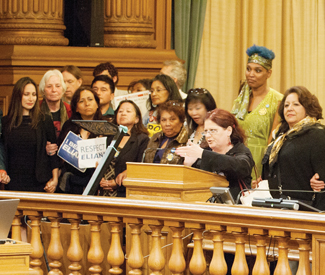
Both sides fervently believed in their respective positions and were largely talking past one another, unable to really communicate. Positions hardened and were charged with emotion until they boiled over during the Oct. 9 hearing on Mirkarimi’s removal.

But there’s never any excuse for booing or making derogatory comments to domestic violence advocates who braved a hostile crowd to offer their opinions on the issue. Tolerance and respect for differing opinion are core progressive tenets, and our faith in those values must override our emotional impulses, which only feeds a fight that we lose just by fighting.

It was against this backdrop — and partially as a result of this polarized climate — that revelations of Davis’ bad behavior toward women were made public. Davis is a friend of mine, and I was aware that he could act like an over-entitled jerk toward women, particularly during his worst period several years ago, although I had no idea how bad it really was.

As with many political scandals, the issue here wasn’t just the original incidents, but how someone responds to them. That’s the mark of someone’s character and integrity. Most people do the wrong thing sometimes, but if we learn from our mistakes and truly make amends — which isn’t something we claim, but something offered to us if our intentions seem true — then we become better people.

As we said in our editorial withdrawing our endorsement from Davis a few weeks ago, being a progressive has to be more about the movement than the person, and it’s time that we remember that. So as a movement, the moment has arrived to come clean, admit our flaws, start anew, and try to lead by our example rather than our rhetoric or our stands on the issues.

***

They say confession is good for soul, so let me give it a shot. Shortly after Sup. Jane Kim took office in 2010, we had a series of confrontational conflicts over some votes she made and her failure to come clean about what her relationship was with Willie Brown, which seemed to me related. She offered a misleading answer to my question and then said she wouldn’t answer any more questions from me, which infuriated me because I believe politicians have a duty to be accountable. And so I continued to be hard on her in print and in person.

Now, I realize that I was being something of a bully — as political reporters, particularly male reporters, have often been over the years. I want to offer a public apology for my behavior and hope for forgiveness and that our relationship — which was a friendly one since long before she took office — can be better in the future.

While I felt that I was treating Kim like I would any politician, and I probably was, the fact is that the style of combative political exchanges — embodied in the last decade by Mirkarimi, Chris Daly, Aaron Peskin, and many others, mostly men but some women like Carole Migden — is what has brought the progressive movement and San Francisco politics in general to the lowly point that we now find ourselves.

My old friend and ex-girlfriend Alix Rosenthal and other political women I know have long tried to impress upon me the value of having more females in office, regardless of their ideology, as long as they aren’t actual conservatives. I have always bristled at that idea, believing ideology and political values to be more important than identity politics, which has been used as a wedge to divide the progressive movement.

At first, I supported Davis because I saw in him a progressive warrior. But most progressives know in our hearts that nobody wins wars. We are all diminished just for fighting them, and their fallout can be felt in unexpected ways for years to come. Even though I agreed with the Board of Supervisors decision to reinstate Mirkarimi, I felt sad and sick watching the celebrations that followed, and I understood that winning that battle might do real damage to the progressive movement.

So I’m proposing that we just stop fighting. We need to stop demonizing those we don’t agree with. “We are not the enemy,” Domestic Violence Consortium head Beverly Upton told supervisors at the Mirkarimi hearing, and she’s right. We can still disagree with her position, and we can say so publicly and call for her to talk to Lopez or take other steps, but we shouldn’t make her an enemy.

***

Having written this essay before the Nov. 6 election, I don’t know the outcome, but I do know progressive power is waning just as we need it most. Landlords and Realtors are intent on rolling back renter protections, while technology titans and other corporate leaders will keep pushing the idea that city government must serve their interests, something the mayor and most supervisors already believe. And they’re all overtly hostile to progressives and our movement.

Against this onslaught, and with so much at stake, the temptation is to fight back with all our remaining strength and hope that’s enough to change the dynamics. But it won’t. Now is the time to organize and expand our movement, to reach out to communities of color and the younger generations. We need to grow our ability to counter those who see San Francisco as merely a place to make money, and who are increasingly hostile to those of us standing in their way.

It may sound trite, but we need to meet their hate with our love, we need to counter their greed with our generosity of spirit. In the year 2012, with all the signs we see in the world that the dominant economic and political systems are dying, we need to work on building our capacity to create new systems to replace them. If they want to build a condo for a billionaire, we should find a way to build two apartments for workers. If they want to bend the campaign rules and dump millions of dollars into one of their candidates, we should use free media and bodies on the street to stand up for someone with more integrity.

Our heroes are people like MLK and Gandhi, and — and most recently and perhaps more relevantly, Arundhati Roy, Amy Goodman, and Aung San Suu Kyi — and we should heed their examples now more than ever. I’m not going to presume to lay out a specific agenda or new tactics, leaving that leadership to those who embody the new approaches and visions that I’m willing to learn and lend my energies and experience to supporting.

But the one essential truth that I’ve come to embrace is that our current struggles and paradigms are as unsustainable as the system that we’re critiquing. It’s time to embrace a new way of doing things, and to join the vast majority of people around the world in creating a new era.

KCSM and the future of community TV

0

OPINION On October 24th, the San Mateo Community College District Board of Trustees voted unanimously to reject the final two bidders (of an original six) for the broadcast license for KCSM television, bringing to an end an 18-month process by the district to try to sell the television broadcast license housed at the College of San Mateo since 1964. KCSM television reaches 10 Bay Area counties and is broadcast on 60 municipal cable systems in Northern California.

The 48-year old TV station was originally established as a broadcast training facility. From 1964 to 1980, the College of San Mateo ran one of the most comprehensive broadcast journalism programs in the country. In 2004, the station converted to a digital-only signal and in 2009, dropped PBS affiliation and became one of the largest independent public televisions stations in the country.

The district, which operates the College of San Mateo, Skyline College and Canada College, has experienced the severe financial pressures affecting California higher education generally and community colleges in particular. Throughout the US, colleges and universities have been shedding non-commercial broadcast licenses at a rapid rate, causing a crisis in independent media that has long had a home at educational facilities. KCSM-TV is the largest Bay Area media asset to go on the chopping block so far.

KCSM currently broadcasts a block of distance learning opportunities and on-line courses that provide a lifeline to many Bay Area residents who for reasons of disability or family obligations can’t participate in campus-based education. It also features a variety of cultural-exchange, craft/hobby, theatrical and informational programs including Ideas in Action, the Miller Center forums and Moyers and Company. The station is also one of the few sources for children’s programs free of commercials and provides 16 hours of week of kids TV.

Educational broadcasters are a bulwark against the commercially-driven broadcast media, whose need to deliver eyes and ears to advertisers compels them to avoid potentially controversial content and pander to the audiences that are most likely to buy large amounts of consumer goods. The freedom to present content that appeals to smaller niche audiences or presents ideas that may be challenging to some aspects of the status quo largely belongs to the independent media. So when a big chunk of it goes up for sale, it affects everyone who values the free exchange of ideas without a corporate blockade.

My organization, democratic communication advocates Media Alliance, filed a public records request with the District to obtain the details of the bids for the broadcast license and the documents are available for review at media-alliance.org.

Unsuccessful bidders for the station included Christian broadcaster Daystar Television Networks, low-power San Jose station KAXT, the Minority Television Project, which operates KMPT, Channel 32, and Belmont’s Locus Point Networks, a startup run by two former telecom executives The final two runners-up were Public Media Company, a division of the Colorado LLC Public Radio Capital, the radio brokers who have been active in scooping up college radio stations, and San Mateo Community Television, a newly established nonprofit connected with Independent Public Media of Colorado.

At the October 24th board meeting, district trustees stated repeatedly that despite the collapse of the process, they were unwavering their determination to sell the television license. This follows previous board meetings at which some trustees referred to the $5 million public asset as the equivalent of a junked car.

A new bid cycle is likely to ensue, which will provide an opportunity for an open and transparent process to find a responsible local operator to serve Bay Area residents and their informational and educational needs. It’s more than time for colleges and universities to stop speculating on broadcast infrastructure like Maui condos and strive to fulfill the public interest obligations inherent in the free gift of a non-commercial license to broadcast.

Tracy Rosenberg is the executive director of Media Alliance, an Oakland-based advocate for community media. They can be found at www.media-alliance.org.

Life’s a gas

0

marke@sfbg.com

SUPER EGO OK, first of all, there is now the first all-night whipped cream supply delivery service in the world right here in SF — the evocatively named Hippie Gap. “We do NOT condone ANY MISS use [sic] of our products!!!” says the About. “Whip-it! Original N2O” it then goes on, before linking to the Wikipedia entry for nitrous oxide. 10pm-10am, y’all. The best parts of rave may have been the stroboscopic aneurysms (and the bisexual Smart Drinks vendors): when the nitrous tank arrived the carnival truly began. But I’ll really sit up if someone bikes a gasmask greased with Vick’s VapoRub to my stoop. Screw your Backstreet Boys crap, that’s when the ’90s really will be back.

Also, right now there is a gang of kick-ass, stiletto-heeled Estonian girls in Miami getting vulnerable rich businessmen drunk at “Russian-style” bars and tricking them into buy extravagantly tacky things like Dom Perignon and boatloads of caviar. They are known as the B-Girls and they grifted one poor slob out of $48,000. They are kind of my girl-gang heroes? Well, right after Pussy Riot, Foxfire, Steel Magnolias, the Mi Vida Loca cholas, and the Sisterhood of the Transgender Pants.


MAYA JANE COLES

http://www.youtube.com/watch?v=ShMAgi_d77w

Young Brit phenom has been on an unstoppable tear the past few years, and while the hype has cooled somewhat, the skills have stayed white hot. Jazz-eared, soulful tech-house and killer bass augmentation swing wonderfully wide across a variety of moods, and always hit the spot. With local favorites Moniker and Brian Bejarano.

Thu/8, 9pm, $20. Monarch, 101 Sixth St., SF. www.monarchsf.com


STARKEY

Ethereal Philly street bass hero bangs the floor out with his futuristic swoops and sticky-starlight arpeggios — get a preview of new album Orbits, dropping in December, at new beats ‘n bass party Sway. Soulful fellow bass-face Kastle, of San Francisco and awfully good looking, dubs it up to open.

Thu/8, 9pm, $10–$15. 330 Ritch, SF. starkeyandkastle.eventbrite.com


ASC

A sweet night of thoughtful techno that doesn’t shy away from rippling drum and bass ecstasy from this grown-up veteran of the UK hardcore scene. Local smarties Ghosts on Tape, Bells and Whistles, and Mossmoss jumpstart the sophisticated, super-danceable aural vibes at the monthly As You Like It party.

Fri/9, 10pm-late, $10–$20. Beatbox, 314 11th St., SF. www.ayli-sf.com


MOUNT KIMBIE

A lineup to make cerebral bassheads’ hearts go boom. Transcendent UK duo Mount Kimbie aren’t afraid to take you off the rails and down a winding trail with their live sets. Gorgeous Floridian tech-dubber XXYYXX also appears, with SF electronic dreamer Giraffage (“Feels” is one of my fave 2012 tracks), D33J, Dials, and the Lights Down Low nutters.

Fri/9, 10pm-3am, $17–$20. 103 Harriet, SF. www.1015.com


RAREBITS

One of the cutest little secrets of nightlife music nerds has been this wildly eclectic night of, well, rare bits of sonic loveliness and genius off-kilter projections, put on by three cute bearish guys and tucked away in gay bar Truck. For this anniversary free-for-all, they’ve invited 16 DJs (including residents Chicken, Bearno Kardashian, and Bobby Please) to spin 20-minute sets of yummy, weird stuff. Plus there’ll be pop-up food from Two Tarts and a Stove. Delish.

Fri/9, 6pm-2am, free. Truck, 1900 Folsom, SF. rarebits.tumblr.com


ALL NIGHT LONG

If you’ve just moved here from another planet, or know a friend who really needs to catch up, witnessing classic DJ Garth take the decks for a fabuloso marathon five-and-a-half hour set in the Public Works loft — well, that’s the perfect crash course in 20 years of San Francisco dance music.

His titillatingly wicked blend of psychedelic rock, cosmic disco, acid house, and pagan grooves will have you howling at the moon right quickly, friend.

Sat/10, 10pm-3:30am, $7. Public Works, 161 Erie, SF. www.publicsf.com


NON-STOP BHANGRA DIWALI CELEBRATION

Meanwhile, downstairs at Public Works, one of my favorite monthly parties celebrates the Indian festival of lights, Diwali, with a bhangra-riffic blowout, with the dholrythms dancers, live dhol drummers, and DJs Jimmy Love, rav-E, Santero, and Harvi Bhachu. It all kicks off with a seriously great bhangra flashmob and procession at 16th Street and Valencia at 9pm. Bring a light and let it shine!

Sat/10, 9pm-3am, $10–$15. Public Works, 161 Erie, SF. www.publicsf.com


An icon’s icons

0

arts@sfbg.com

VISUAL ART The new Jasper Johns retrospective currently on view at the San Francisco Museum of Modern Art opens not with his seminal 1955 painting Flag, but with one much less well known from 1956, a painted object titled Canvas. That work is made from a wood stretcher frame and canvas panel turned around to face the wall, the entire back of the thing covered in gray encaustic. Above it on the wall is a quotation from Johns, “I’ve always considered myself a very literal artist.”

This greeting at the show’s entrance is meant to tell you two things: that you may not be seeing all the most iconic works by one of the world’s most famous living artists, and that you’ll want to take this one slowly, since you’re going to be presented with a methodical review of Johns’ handling of artworks as objects. The central narrative of this excellent show — comprising some 90-plus works, some new and never before exhibited — is Johns’ continuing inquiry into the relationship between what an artwork is as an object and what it depicts.

The first two galleries are dedicated to Johns’ Numbers works, which bookend his nearly 60-year career. The numbers stand in for the other early works, the flag and target paintings that made him an immediate star in the late 1950s and announced the arrival of the post-Abstract Expressionist era. The room is framed by a high key oil painting titled 0 through 9 (pun probably intended), in which a stack of superimposed numerals competes with loud bursts of brushed color. Also in the same room is 1959’s White Numbers, a large relief grid of ordered numerals painted in very thick white encaustic. That impasto grid, texture and all, recurs in a cast bronze wall work from 2005, and a silver sculpture from 2008. Likewise, 0 through 9 is shown also as a charcoal drawing, a lithograph, and a lead relief.

The thing about numbers, of course, is the same about targets or flags. Namely, a painting of a flag is in fact a flag (distinct from how, say, a painting of a tree is not actually a tree). Letting this sink in and acknowledging that Johns is interested in the literal facts (pun intended here, too) of painting and sculpture helps frame how you encounter the rest of the works on display. From start to finish of the show, Johns’ works slowly build in visual and textual intricacy, but tend to circle around this same main refrain.

Johns wants you to understand the complex objects he’s creating, but that doesn’t mean he’ll make it easy. Proceeding by a kind of diffracted metonymy, the various components in Johns’ artworks are both meant to be exactly whatever they are, and also to stand in for a set of other things that also might have been included. This is made explicit in the way Johns mulls over compositions, and transmutes them across media, recasting — sometimes literally — a work in different iterations. Compounding this self-reflexivity, you’ll find statements once proposed as standalone artworks recur later as motifs or referents.

In other hands, this activity might be inexcusably hermetic or academic, but in Johns’ best works the effect is to establish at once both a harmonic resonance between concepts and a continual scrutiny of his own conclusions. For example, in the 1970s-80s Crosshatch paintings, you notice that same numerical grid from 20 years prior, this time reintroduced as the underlying compositional structure of works like Usuyuki (1979-81) or Scent (1973-74). Or, beginning with his 80s Seasons series and continuing to his new Shrinky Dink and Bushbaby images, entire compositions from past works are miniaturized and sampled in new ones, in a highly complex virtualization that juxtaposes metonymy with metaphor. When it works it is astonishing.

It’s axiomatic that an artist will return to established precepts over the course or her career, but few have done so with the explicitness of Johns, who uses his own process as fodder for new deconstructions and assemblages. That the show contains several new works and two new series suggests that Johns, now 82, is not done yet. *

JASPER JOHNS: SEEING WITH THE MIND’S EYE

Through Feb. 3

SFMOMA

151 Third St., SF

www.sfmoma.org


ALSO RECOMMENDED:

MARIE BOURGET, KENNETH LO, AND DANIEL SMALL

Marie Bourget’s arabesque paintings take from tile work and ceramics and combine them with translations of Walt Whitman to lovely effect. Through Nov. 22, Johansson Projects, 2300 Telegraph, Oakl; www.johanssonprojects.com

JAMES STERLING PITT

Pitt’s painted wooden sculptures recall both Jonathan Lasker and Richard Tuttle. And that ain’t a bad thing. Through Dec. 8, Eli Ridgway Gallery, 172 Minna, SF; www.eliridgway.com

ROBERT SAGERMAN

Sagerman’s paintings reimagine Georges Seurat’s pointillism as luminous color field paintings. Through Dec. 22, Brian Gross Fine Art, 49 Geary, Fifth Flr., SF; www.briangrossfineart.com

Next!

0

arts@sfbg.com

THEATER/DANCE A bobcat sat in the grass beside the main building at Headlands Center for the Arts one quiet morning last week. He (I say he because he’s “bob”) took no notice of me but instead nonchalantly lifted a hind leg over his shoulder and took a short tongue-bath. I was told he’d been seen hanging around a lot over the last few days, closer than usual, clearly trying to pass himself off as an ordinary housecat. Or looking for field mice. Whatever he was up to, he seemed relaxed and in no hurry.

Inside the building — one of the repurposed military barracks comprising the Headlands’ bucolic campus — the mood felt very much the same. Melinda Ring assured me this was an illusion, at least as far as she was concerned. As a small group of fellow resident artists drank coffee and chatted in an opposite corner of the otherwise deserted dining hall, the New York–based and Los Angeles–bred experimental choreographer explained, in a calm and good-natured tone, the amount of work still before her in further developing and preparing two back-to-back sessions of her Mouse Auditions.

This intriguing and thought-provoking meta-dance — in which local performers try out for a work based on Franz Kafka’s Metamorphosis that will never actually be realized — makes its West Coast debut this weekend as part of Headlands’ annual Open House, featuring new works and works-in-progress from this season’s multidisciplinary array of artists-in-residence.

Ring’s Mouse Auditions had its premiere at the 2010 Whitney Biennial as a site-specific live performance built on artist (and Ring’s good friend) Martin Kersels’ 5 Songs sculpture. While she already had had the idea of a performance built out of an endless audition, the opportunity to choreograph around the five-piece sculpture inspired some specifics, including her title.

“It was my most immediate response to Martin Kersels’ sculpture,” she explains, “a rather cartoonish monstrous Playmobil thing. I thought, ‘I see this populated by disaffected mice.’ Then, I’m an experimental choreographer, so mice make sense in that they are often experimented on. Plus, the creature that [Kafka’s character Gregor Samsa] becomes is most directly translated as vermin, not beetle. So I thought that gives me a pass. The word is crossed-out in the title because I’m not certain that finally, in the never-to-be performed work, the performers will be cast as mice.”

Packed inside that set of associations are Mouse Auditions‘ questions and concerns about art and commerce, working bodies, and the pliable nature of social identities and relations. Ring’s project focuses her would-be (but also actual) performers on the moments just before and just after the novella’s opening line, as Gregor awakens “from unsettling dreams” to find himself transmogrified. The exploration undertaken in the room, among strangers, uses a script (posted on Ring’s website) that draws directly from her own longstanding reflections on the economic realities of art making — and specifically those confronting dancers as laboring bodies.

“The two things that I’ve been focusing on with Metamorphosis are this idea of Gregor as a worker, the stress of his being a worker, the relationship with his boss, the obligation he has to his family — somehow mixing that up with the relationship that I’m trying to make with these people who would supposedly be my workers. And the other thing is this confusion and chaos that he experiences; that his body isn’t recognizable to him. It connects very directly to the way I’m working in [my] other highly choreographed dances. That really interests me, that experience he’s having.”

The Headlands residency is part of Ring’s ongoing development of a piece whose potential she feels is still unfolding. Indeed, though it originated in a museum gallery, Ring sees Mouse Auditions as applicable to a wider set of spaces and social settings, since its themes and structure are rooted in a provocative examination of some basic material and social realities.

The Marin setting, with its distinct environment (and competing wildlife), will no doubt set up its own reverberations, not least because the participants (unlike in New York) will be almost entirely strangers to Ring. But wherever it lands next, there’s something in the piercing comedy, subtle negotiation and absurd, Sisyphean optimism of a potentially endless audition — in which every applicant is already a performer in a piece about a piece that will never be made — that sure sounds close to home. *

MOUSE AUDITIONS

Sun/4, noon-5pm, free

Headlands Center for the Arts

Building 961

944 Simmonds, Sausalito

headlands.org/event/mouse-auditions

Cosmetic changes

0

caitlin@sfbg.com

STREET SEEN “Oh, now there’s someone taking a picture of us,” says Swagger Cosmetics founder Blake Karamazov, gesturing at a paparazzi who is snapping away through the cafe’s plate glass window. No shade, shutterbug — drag visions being interviewed while eating vegan Asian pear pie at 2:30pm deserve a capture or 10. (But c’mon, next time ask first.)

Glossy crimson lips, exaggerated lined cat eyes, black bow, LBD, wig. Today, Karamazov’s is a nice, daytime teal, her signature color. You can buy it in sparkly eyeshadow form on her line’s website. The hue’s called Swagger, natch.

Karamazov’s experiments in makeup began as a way to facilitate her own total disregard for normative wardrobe choices. Not surprisingly, given her own penchant of out-of-this-world looks, her line celebrates others with non-fuckwithable attitude.

A Swagger shoot this summer starred Sailorhank, a nine-year old boy from Seattle who crosses gender lines like a champ and, providentially, was a cinch for the diminutive Karamazov to style — they share a shoe size. She tells me that her colors are made for “any club kid, anyone interested in genderbending, androgyny.”

We get back to her line of drag-ready shadows and glosses, which are spread out on the counter in front of us in the brand’s bow-and-diamond-bedecked containers. The woman outside the window keeps snapping.

Karamazov’s makeup is made by her own darling little hands right here in (well, South) San Francisco. Every little box of glitter and glow is completely animal product-free. Vegan. Like the pie. Karamazov steers clear of animal products in her diet and elsewhere.

“The main problem [with conventional makeup lines] is the animal testing,” she tells me. Little-known, undeniably icky substances like carmine (extracted from beetles) and lanolin (charmingly, from the grease in sheep’s wool) are present in trace amounts in makeup products.

But it is the mainly the practice of testing substance on defenseless furry friends — incredibly difficult to suss out, given flaccid labeling requirements — that led Karamazov to the first bulk purchase of the ingredients she needed for her club looks.

Besides, she tells me, “when I was in college there was no brands that had weird colors. If you wanted green lipstick, you had to get clown makeup.” She’s not knocking theatrical brands, but since she wears vivid shades on her face all the time, Karamazov needed something that smelled better, lasted longer, was less greasy than costume products. Glamour is a lifestyle, after all.

After mastering her own mixes, she’d make special blends for birthday presents, whip up a peachy blush for a friend who couldn’t find just the right hue in stores. One thing led to another, and now she’s a business owner, selling colors named after Amanda Lepore and Kanye West songs (“one day all these people will sue me and I’ll know I’ve made it,”) through her site to places as far away as Portugal, Canada, even.

So quickly now, before the camera points in another direction: what kind of looks is Karamazov favoring for these shorter days and longer nights? Darker, vampy hues, she tells me, especially when worn all around the eye. She’s feeling smoky and metallic shades, and only the occasional pop of color. “Mostly really neutral” for fall. And a hint of dewiness, easily attained with a pot of her Champagne in the Bubble Bath highlighter. But only to supplement to your pre-existing glow.

Rep Clock

0

Schedules are for Wed/31-Tue/6 except where noted. Director and year are given when available. Double and triple features marked with a •. All times pm unless otherwise specified.

ARTISTS’ TELEVISION ACCESS 992 Valencia, SF; www.atasite.org. $5-10. "Openscreening," Thu, 8. Struggle (Hill, 2012), Fri, 8. "Small Press Traffic: A Reading and Conversation with Dana Ward, Julian Brolanski, and Cynthia Sailers," Sun, 5. "Other Cinema:" Informant (Meltzer, 2012), Sat, 8:30.

BALBOA 3630 Balboa, SF; www.cinemasf.com. $10. Halloween (Carpenter, 1978), Wed, 10pm. New HD transfer; screens with a short doc about the film’s impact.

CASTRO 429 Castro, SF; (415) 621-6120, www.castrotheatre.com. $8.50-11. •Broken Flowers (Jarmusch, 2005), Wed, 3, 7, and The Swimmer (Perry, 1968), Thu, 5, 9. "Midnites for Maniacs: Celebrate the End of Days:" •Terminator 2: Judgment Day (Cameron, 1991), Fri, 7; Inception (Nolan, 2010), Fri, 9:30; and Halloween 3: Season of the Witch (Wallace, 1982), Fri, 11:59. One or all three films, $13. "Scary Cow Short Film Festival," Sat, 3. This event, $10-25; advance tickets at www.scarycow.com. Escape to Witch Mountain (Hough, 1975), Sun, call for times. •Hollywood to Dollywood (Lavin, 2011), Sun, call for times, and Gayby (Lisecki, 2012), Sun, call for times.

CHRISTOPHER B. SMITH RAFAEL FILM CENTER 1118 Fourth St, San Rafael; (415) 454-1222, www.cafilm.org. $6.75-$10.25. All Together (Robelin, 2011), Wed-Thu, call for times. "World Ballet on the Big Screen:" Swan Lake, from the Royal Ballet, London, Sun, 10am and Tue, 6:30pm. This event, $15. A Liar’s Autobiography: The Untrue Story of Monty Python’s Graham Chapman (Jones, Simpson, and Timlett, 2012), Nov 2-8, call for times. The Other Son (Lévy, 2012), Nov 2-8, call for times.

COWELL THEATER Fort Mason Center, SF; www.absinthe-films.com. $10. Resonance (Hostynek, 2012), Fri, 8:30. Backcountry snowboarding documentary.

PACIFIC FILM ARCHIVE 2575 Bancroft, Berk; (510) 642-5249, bampfa.berkeley.edu. $5.50-9.50. "Alternative Visions:" "Avant-Garde Masters: A Decade of Preservation," Wed, 7. "Behind the Scenes: The Art and Craft of Cinema with Editor Sam Pollard:" Mo’ Better Blues (Lee, 1990), Thu, 7; Style Wars (Silver, 1984), Sat, 8:15. "Don’t Shoot the Player Piano: The Music of Conlon Nancarrow:" Conlon Nancarrow: Virtuoso of the Player Piano (Greeson, 2012), Fri, 7. "At Jetty’s End: A Tribute to Chris Marker, 1921-2012:" Sans soleil (1982), Fri, 9:20; Music for 1,000 Fingers: Conlon Nancarrow (Uli Aumüller and Hanne Kaisik, 1993), Sun, 4. "Grand Illusions: French Cinema Classics, 1928-1960:" L’étrange Monsieur Victor (Grémillion, 1938), Sat, 6; La bête humaine (Renoir, 1938), Sun, 2.

ROXIE 3117 and 3125 16th St, SF; (415) 863-1087, www.roxie.com. $6.50-11. "Not Necessarily Noir III:" Near Dark (Bigelow, 1987), Wed, 6, 10; From Dusk Till Dawn (Rodriguez, 1996), Wed, 8. Sleepwalk With Me (Birbiglia), Wed-Thu, 7, 9. Rare, Thu, 6. More info at www.rarefilm.org. "TGIF vs. SNICK," clips from classic TV shows, Fri-Sat, 8. Miami Connection (Kim, 1996), Fri-Sat, 10:45. Ornette: Made in America (1984/2012), Sat-Tue, 6:45 (also Sat-Sun, 3, 5).

YERBA BUENA CENTER FOR THE ARTS 701 Mission, SF; www.ybca.org. $10. El Velador (Almada, 2011), Thu, 7:30; Sun, 2.

Psychic Dream Astrology: October 31-November 6

0

Strap yourselves in, ’cause Mercury is gonna take us for a ride! It goes retrograde on Tue/6, so communicate with care.

ARIES

March 21-April 19

This week you should invest in supporting yourself through anxiety and dread. There are no decisions to make or paths to traverse that will be improved by you acting out of fear. Take care of yourself so that you can calm your mind and improve your attitude. This will allow you to improve your circumstances, not just change them.

TAURUS

April 20-May 20

It would be wise to avoid participating needlessly in power struggles. In the face of discord, let others reveal themselves to you this week. Don’t go in with guns blazing, ready to make your point, Taurus. Be patient as you develop a strategy that allows you to get what you want with as little drama as possible.

GEMINI

May 21-June 21

Whatever you focus your energy on, you are investing in. Kind of a scary idea, when you consider how much worrying and second guessing you’ve been doing, eh, Gemini? Take responsibility for the flow of your focus so that your thoughts, and eventually your actions, will be consistent with your hopes.

CANCER

June 22-July 22

You are the only person who has to live with you, Cancer. It’s essential that you invest in yourself and bolster your relationship to how your life feels to your insides. If you don’t like what you’re doing, adjust it. If you have toxic attitudes, change your mind. Action speaks louder than suffering this week.

LEO

July 23-Aug. 22

Its not enough to know what you want, you’ve gotta be willing to invest in the nitty-gritty of how you’ll get her done. Put your energy towards creating a reasonable plan to executing your dreams this week, Leo. If you are willing to make some compromises and use some elbow grease, you’re almost there.

VIRGO

Aug. 23-Sept. 22

You are growing and that means change, Virgo. There’s no way to stop it. Be patient, as you’ll get farther, and with more ease, if you travel your path with care and kindness. Compassion is your greatest tool for understanding and providing for your needs this week. Trust is the key.

LIBRA

Sept. 23-Oct. 22

Whether you’re in a relationship or not, this week is the right time to contemplate how you exchange intimacy with others. Don’t do anything yet! Just sit with the insights that can come from looking at how you both give and receive closeness. By understanding your role, you can make needed adjustments to improve your heart connections.

SCORPIO

Oct. 23-Nov. 21

This week you should connect with your friends, Scorpio. Fortify your emotional landscape by bonding or reuniting with the people you can be absolutely yourself around. It’ll help you remember some parts of your self that you need to get back in touch with. Experience the power of unity, pal.

SAGITTARIUS

Nov. 22-Dec. 21

Even if you feel restless and compelled to shake things up, this week it’s best to get yourself grounded so you can better assess your situation, Sagittarius. That eager feeling gnawing at you may inspire you to bite off more than you can chew, so temper any internal call to action with patience and common sense.

CAPRICORN

Dec. 22-Jan. 19

Don’t confuse pragmatic thinking with pessimism, Capricorn. This week it will pay to be thoughtful about your actions, but you should still put yourself out there in deference to your highest hopes. Assert yourself this week, even if it’s risky. You are capable and the time is right to put your abilities to the test.

AQUARIUS

Jan. 20-Feb. 18

If you find yourself distracted by “what if’s?” and the potential of the much- dreaded “maybes”, don’t despair, Aquarius! This week you are meant to explore your inner landscape, to make sure your conscious goals are properly aligned with your more subconscious needs. Changing your mind is not weakness.

PISCES

Feb. 19-March 20

There’s no sense in crying over spilt milk, or worse, driving yourself crazy thinking about the pains the cow or soybean took to bring you that milk, just so that you’d waste it. Flow with change as it occurs, and vow to learn what you can along the way. Making yourself feel bad doesn’t make things better for anyone.

Jessica Lanyadoo has been a Psychic Dreamer for 18 years. Check out her website at www.lovelanyadoo.com to contact her for an astrology or intuitive reading.


Lightning strikes twice

0

emilysavage@sfbg.com

TOFU AND WHISKEY If experimental artist Nick Zammuto was pulling from a storied sample library after all those years with beloved former band the Books, he’s now building from scratch with his new band, Zammuto. The first Zammuto record sprang from a more angsty place, a fear of the unknown after the breakup of the Books. Skyping from a McDonald’s in Springfield, Mass., a humble Zammuto admits to fears about “lightning striking twice,” regarding his musical evolution.

His fears are unwarranted; the Zammuto self-titled debut (Temporary Residence, 2012) is as invigorating as it is multifaceted; mixing classic pop sensibilities with digital burps, buzzy electronics, sampled found objects, and still a more traditional band set-up than the Books, the artist has again found his own creative niche: the mad scientist family man, digging through crates of toys and creating emotional connections with the sounds he squeezes out of them. And he’s kept his humor in tact, with tracks titled “Zebra Butt,” “Groan Man, Don’t Cry,” and “FU C-3PO.”

Zammuto, the band, travels to the Independent this week (Sat/3, 9pm, $15. 628 Divisadero, SF. www.theindependentsf.com) but it’s been to SF once before. It came out west this spring to open for Explosions in the Sky at the Palace of Fine Arts. And after that show, Zammuto met some young Australian rockers. I’ll let him tell the story:

Nick Zammuto I was at the merch table, and this group of Australians comes up and buys everything on the table. I’m like, ‘you guys look like you’re in a band or something.’ And they’re like, ‘oh yeah, we’re Gotye.’ And I’m like, ‘cool, I’ve never heard of you, I’ll check it out.’ Literally, in that moment, they had the number one single in like, eight countries. I felt like a moron. Two weeks later I got a call from Wally [De Backer] to come tour with them, so we ended up playing seven shows with them. I live under a rock, I don’t have time for anything except working in my studio, and playing with my kids.

San Francisco Bay Guardian Has having children has affected your music?

NZ I have all boys, three sons, who are six, three, and one, you can’t help but live vicariously through them, because they experience life in such directness. I think it’s tuned me in to a simpler way of looking at things, and to be around that kind of innocence is inspiring. Just the sense of wonder they have is infectious.

SFBG How has your approach to songwriting shifted with Zammuto, as compared to the Books?

NZ I’ve never really been part of a band, I sort of came to that realization when we started rehearsing the [Zammuto] material. The Books was really a meta-band in a lot of ways, and at the end I was starting to think of it as a sort of glorified karaoke; we’d get up on stage and have all these electronic rhythms going on and we would just kind of play along with it. With the new project I really wanted to make something that was meant to be played live.

Key to that was finding a great drummer, and I think I found just an amazing drummer [in Sean Dixon]. Having a live time keeper on stage has been the biggest difference between the new project and the Books. And for me it’s been the most fun, to play with him, and see what he does. We really connected over this idea of polyrhythms. He helps me find these grooves that are really unusual. And I think the reason why I shied away from drums for so long is that it’s a very kind of genre-fying instrument. It’s hard to do anything out of the ordinary because it all sounds too ubiquitous. But Sean’s the kind of guy who sounds like nobody else. It’s a real balance with Sean between precision and heart.

I have [Dixon, Gene Back, and brother Mike Zammuto] up for sessions and we record things in a very loose way and then I go through those recordings later and pull out the parts that can go beyond expectation and build from those elements, rather than the sample library that the Books were drawing from.

SFBG But you’re still creating your own instruments out of found objects.

NZ It’s such a weird habit, and it’s something I’ve been doing a long time. My interest in music came out of recording these sculptures back in college…I started to make these sculptures that had this sound component, and I needed a way to record those sculptures. So it’s kind of been in the backdrop of everything I’ve done for a long time.

One of the first things I started doing was cutting into vinyl, cutting patterns into the circle at the end of each side of a record, and using that as a percussion. That sound sounds like clicks and pops, but if you take those impulses and put them through various environments you get amazing sounds, so playing them through PVC pipes or through filing cabinets with subwoofers installed in them you get these really strange but kind of naturalistic sounds at the same time, where you can’t put your finger immediately on what they are, and I think that’s why I’m interested in them. They have this mysterious quality.

SFBG What about the thematic elements, lyrically, on the record, it seems like it’s coming from a lot of new beginnings, new experiences, “The Shape of Things to Come” and so forth?

NZ The end of the Books was a harrowing experience, it took a very long time for it to go through its death throes. Lots of frustrations, then finally giving up and being like, ‘OK, what the hell do I do now?’ I’m asking lightning to strike twice, starting another band at this point in my life, so the lyrics are coming out of a very angsty place on this record. And I think I’m getting out of it, finally. Now that the band has come together in such an amazing way. I’m not in such a dark mood anymore [laughs].

I think I was writing about my own experiences, but in the frame of something more universal, for somebody who is frustrated out of their minds and in need of a new beginning. Just a general expression of having this need to move forward, but also going into unexplored territory.

ENDLESS SUMMER

San Francisco’s own Future Twin (soundcloud.com/futuretwin) released the second of its Summer Single series tracks last week. Angular “Sara” is tethered by a driving guitar line, and singer Jean Yaste’s caramel-coated vocals. Lyrically, it’s a testament to Yaste’s personal female heroes, and a call to action to all women to question the status quo and explore alternative experiences.

WOODKID (CANCELLED DUE TO TRAVEL CONDITIONS AFTER THE STORM)

French composer-artist Woodkid (a.k.a Yoann Lemoine) creates sounds that bloom like live-action role-playing background music. Or, video game music using entirely classical orchestration, strings, and Lemoine’s low octave, accented pipes. (You could easily picture Link chasing after Zelda during “Iron.”) Each track builds like a sassy, page-turning epic, which make his two EPs feel like brief odysseys. That’s right, he’s yet to release a full-length, but that record — The Golden Age — is coming. Though you might have seen his stylish videos for Agyness Deyn-featuring “Iron” or “Run Boy Run.” Or hell, you may know him from his other life as a music video director: Katy Perry’s “Teenage Dream,” anyone? With Pacific Air.

Fri/2, 9pm, $20

Bimbo’s

1025 Columbus, SF

www.bimbos365club.com

The new old school

0

arts@sfbg.com

MUSIC “When I was growing up, bootsy wasn’t in,” Deev Da Greed says. “I wish I was rappin’ when Seagram [1969-1996] was alive, when Rappin’ Ron and the Dangerous Crew were shining. There were a handful of real rappers back then and if you tried to fake it you were blown out the water.”

I feel him. Being a Bay Area rap critic is heartbreaking. I have nothing for or against Kreayshawn, but it kills me she’s the only Oakland rapper on a major label. Lil B gets the cover of Fader and Wire, but I can’t pretend to give a shit about Lil B when dudes like Husalah are around. Yet just when I’m ready to hang it up, something authentic emerges from the streets to renew my faith in hip-hop, and I find myself rolling with Deev through East Oakland’s notorious Murder Dubs (the 20s off International).

Deev himself hails from the equally infamous “Avenal” hood some forty blocks east, but we’re meeting his production crew—To-Da-T, a.k.a Sir Rich and Quinteis — to hear tracks from his new discs: Dem$Boyz (4TheStreets/RapBay), an eponymous group project with Jacka protégé Bo Strangles and Curcinado from Hittaz on tha Payroll that dropped in September, and GREED, his first solo album, slated for December.

The younger cousin of G-Stack, one-half of Oakland’s legendary Delinquents, Deev first entered the rap game to help Stack run his new label, 4TheStreets, after that pioneering group split in 2007. What began as a little trash talking on intros and outros soon turned into writing verses, as Deev formed a group called the HEEM Team with young label recruits Tay Peezy and Qoolceo, debuting, along with To-Da-T, on Stack’s Welcome to Purple City (4TheStreets, 2007).

“I didn’t really come to be an artist,” Deev says, “but once I tested the waters, the waters felt good.”

By the label’s second comp, Tha Color Purple (2007), Deev was clearly G-Stack’s breakout protégé, able to hold his own alongside old school vets like Askari X and new stars like Beeda Weeda on the Town anthem “Geast Oakland” with his elastic flow, switching effortlessly from rambling and conversational to rapid-fire gassing in mid-verse. By the fourth comp, Abraham Reekin (2008), Deev was sharing top billing with Stack, but was also in legal trouble.

“I caught a [parole] violation for sippin’ on some syrup,” Deev recalls. “They raided my house and found some guns. To get money in Oakland, you got to be a real dude because you can get shot for anything now. I don’t carry no gun thinking I’m gonna do nothing, I’m doing that shit because that’s what time it is.”

Rather than face the charge, Deev went on the run, moving to Atlanta with the HEEM Team and trying to establish an East Coast branch of 4TheStreets. Feeling homesick, the rest of the group soon returned to Oakland, leaving Deev on his own in the city that’s become known as Black Hollywood.

“Hip-hop out there is alive; the heartbeat is flowin’,” Deev says. “Like, going to get a burger, you see somebody famous. I bumped shoulders or shook hands with everybody. It was hella hard because all I had was group songs, and to do shows I couldn’t be doing one verse. I called To-Da-T and was like, ‘I’m gonna fly you guys out here so we can knock out some songs.’ I did like nine songs and we mixed and mastered them in five days. But then three or four months after that, I got knocked.”

Nabbed by the cops in Atlanta, Deev was extradited back to California for a 13-month stay in Pelican Bay.

“By the time I was free in May 2010, I had to adapt to how much shit had changed in Oakland,” Deev admits. “A lot happens in three or four years. So I had to dumb down my swag to act like these youngsters so I could get right and make them respect my mind.”

“I’ve been running these streets now for two years and I got my movement back active,” he concludes. “The streets are feeling me. They know what I’m about. I got no paperwork. I’m gonna do it right this time.”

The case for Prop F

89

By Mike Marshall

OPINION Progressives have a rare opportunity to improve San Francisco’s water and power policies by passing Proposition F, the Water Conservation and Yosemite Restoration Initiative, this November. Prop F would require the city to do something it’s been reluctant to do: develop a plan for making our outdated, wasteful water system more sustainable and environmentally friendly.

Despite San Francisco’s “green” reputation, we don’t yet recycle water, we treat rainwater as sewage, we wash our streets and flush our toilets with drinking water, and we use Yosemite National Park as a water storage tank (Hetch Hetchy Valley, where we built a dam almost 100 years ago, was one of Yosemite’s grandest valleys and contained an extraordinary ecosystem).

Meanwhile, other California cities and counties have developed much more eco-friendly water systems. Orange County, not known for progressivism, recycles 92 million gallons of water a day.

Opponents of Prop F claim that reform of our water system would be too expensive, but they cite unreliable and inflated cost estimates. One of Prop F’s purposes is to replace such speculation with realistic numbers.

Opponents say it’s “insane” to take away San Francisco’s water source, but that’s misleading; Hetch Hetchy Reservoir is a storage site (one of nine reservoirs in our water system), not a water source. The Tuolumne River is our primary water source, and will remain so regardless of whether we return Hetch Hetchy Valley to the National Park Service for restoration.

Opponents claim we’d lose the hydropower generated by the current system, but our hydropower facilities are downstream from Yosemite, and would continue to power all the same city services they currently do. It’s true that if we relinquish the Hetch Hetchy Reservoir, we’ll have less power to sell to other energy markets, but we can make up the difference by increasing our investment in renewable power such as wind and solar, which we should be doing anyway.

In fact, San Francisco owns 42 miles of above-ground right-of-way between Yosemite and the city, where we can place enough solar panels to generate at least 40 megawatts per year—an idea that the San Francisco Public Utilities Commission has never even considered. This, too, can be part of the plan that will result from passage of Prop F.

Remember, Prop F changes nothing about our current system. It simply requires the formation of a task force with a lean budget of $8 million to develop a specific plan for reform, which will be completed in 2015 and made available for public review, discussion and debate. San Francisco voters would then approve or reject the plan in 2016. Only if voters approve the plan will actual reform begin. This approach is appropriately cautious, thorough and transparent. If the costs of reform are too high, or if our commitment to a sustainable future is too low, voters will reject the plan and our current water system will continue unchanged.

Prop F opponents aren’t waiting to see what the costs of reform might be, or even whether the reform plan makes sense. They want to prevent the plan from happening. How does that serve the interests of San Francisco residents, when the plan would give them essential information about how and whether their water system can become more sustainable?

So please join me in voting for Proposition F. Let’s at least get a water reform plan on the table.

Mike Marshall lives in Hayes Valley is the Executive Director of Restore Hetch Hetchy.

Film Listings

0

Film listings are edited by Cheryl Eddy. Reviewers are Kimberly Chun, Dennis Harvey, Lynn Rapoport, and Sara Vizcarrondo. For rep house showtimes, see Rep Clock.

OPENING

Amber Alert An audition tape for The Amazing Race quickly turns into an epic chase in this low-budget "found footage" drama. Arizona BFFs Nate (Chris Hill) and Sam (Summer Bellessa, wife of director Kerry Bellessa) — and Sam’s teenage brother, shaky-cam operator Caleb (Caleb Thompson) — notice they’re driving behind the very Honda that’s being sought by an Amber Alert. "Following at a safe distance," as advised when they call the cops, leads to high-decibel arguments about how to handle the situation — and for the next hour-plus, the viewer is trapped in a car with two people communicating only in nails-on-chalkboard tones. Amber Alert‘s nonstop bickerfest is so tiresome that it’s actually a relief when the child molester character starts taking an active role in the story. Not a good sign. (1:20) Rohnert Park 16. (Eddy)

The Bay Top-quality (i.e., realistically repulsive) special effects highlight this otherwise unremarkable disaster movie that’s yet another "found footage" concoction, albeit maybe the first one from an Oscar-winning director. But it’s been a long time since 1988’s Rain Man, and the Baltimore-adjacent setting is the only Barry Levinson signature you’ll find here. Instead, parasites-gnaw-apart-a-coastal-town drama The Bay — positioned as a collection of suppressed material coming to light on "Govleaks.org" — is a relentlessly familiar affair, further hampered by a narrator (Kether Donohue) with a supremely grating voice. Rising star Christopher Denham (Argo) has a small part as an oceanographer whose warnings about the impending waterborne catastrophe are brushed aside by a mayor who is (spoiler alert!) more concerned with tourist dollars than safety. (1:25) (Eddy)

"Don’t Shoot the Player Piano: The Music of Conlon Nancarrow" The late Texarkana-born composer’s birth centenary is celebrated in this two-part (Fri/2 and Sun/4) program of films examining his unique contribution to 20th century music. Frustrated early on by the inability of standard musicians to play his incredibly complicated scores, he turned to composing for player pianos, with their greatly heightened capacity for producing density of notes and rhythms. A member of the American Communist Party, he returned from fighting fascists in the Spanish Civil War to discover the U.S. government had revoked the passports of many citizens with similar political convictions. As a result, in 1940 he moved to Mexico, where he remained until his death 57 years later — his reputation remaining an underground musicologists’ secret until the early 1980s, in large part due to his disinterest in fame and dislike of crowds (he’d always avoided any gathering of over five people). But in his last years he became much more widely known, thanks in large part to fans like fellow composer Gyorgy Ligeti, who in one documentary here calls him "the most important composer of our time," comparing him to Beethoven and saying "his work is completely, totally different from [his contemporaries]." Among the movies screening are Uli Aumuller and Hanne Kaisik’s 1993 German Music for 1,000 Fingers, in which the reclusive, elderly subject allows us into his studio to explain his (still somewhat inexplicable) methodologies. The brand-new, hour-long Conlon Nancarrow: Virtuoso of the Player Piano offers a posthumous appreciation of his life, music and influence. It’s a first film from James Greeson, a professor of music at the University of Arkansas who knew the man himself. Also featured are several international shorts that provide interpretive visual complements to Nancarrow pieces. His widow and daughter, as well as kinetic sculptor Trimpin and composer-former KPFA music director Charles Amirkhanian will appear at both PFA programs. Pacific Film Archive. (Harvey)

The Flat See "Past Lives." (1:37) Albany, Embarcadero.

Flight Robert Zemeckis directs Denzel Washington as an airline pilot whose act of heroism brings to light his secret drinking problem. (2:18) Presidio.

A Late Quartet Philip Seymour Hoffman and Christopher Walken head up a star-spangled cast in this drama about a famous string quartet. (1:45) Embarcadero.

A Liar’s Autobiography: The Untrue Story of Monty Python’s Graham Chapman Blessed with recordings made by Monty Python member Graham Chapman (King Arthur in 1975’s Monty Python and the Holy Grail; Brian in 1979’s Life of Brian) before his death in 1989 from cancer, filmmakers Bill Jones, Jeff Simpson, and Ben Timlett recruited 14 different animation studios to piece together Chapman’s darkly humorous (and often just plain dark) life story. He was gay, he was an alcoholic, he co-wrote (with John Cleese) the legendary "Dead Parrot Sketch." A Liar’s Autobiography starts slowly — even with fellow Monty Python members Cleese, Terry Jones, Terry Gilliam, and Michael Palin lending their voices, much of the bone-dry humor falls disappointingly flat. "This is not a Monty Python film," the filmmakers insist, and viewers hoping for such will be disappointed. Stick with it, though, and the film eventually finds its footing as an offbeat biopic, with the pick-a-mix animation gimmick at its most effective when illustrating Chapman’s booze-fueled hallucinations. In addition to opening theatrically, the film also debuts Fri/2 on premium cable channel Epix. (1:22) Smith Rafael, Sundance Kabuki. (Eddy)

The Loneliest Planet Travel broadens, they say — and has a way of foregrounding anxiety and desire. So the little tells take on a larger, much more loaded significance in The Loneliest Planet when contextualized by the devastatingly beautiful Caucasus Mountains in Georgia. In this film by Russian American director and video artist Julia Loktev, adventuring, engaged Westerners Nica (an ethereal Hani Furstenberg) and Alex (Gael García Bernal) hire a local guide and war veteran (Bidzina Gujabidze) to lead them on a camping trip through the wilderness. They’re globe-trotting blithe spirits, throwing themselves into new languages and new experiences, though the harsh, hazardous, and glorious Georgian peaks and crevasses have a way of making them seem even smaller while magnifying their weaknesses and naiveté. One small, critical stumble on their journey is all it takes for the pair to question their relationship, their roles, and the solid ground of their love. Working with minimal dialogue (and no handlebar subtitles) from a Tom Bissell short story, Loktev shows a deliberate hand and thoughtful eye in her use of the space, as well as her way of allowing the silences to speak louder than dialogue: she turns the outdoor expanses into a quietly awe-inspiring, albeit frightening mirror for the distances between, and emptiness within, her wanderers, uncertain about how to quite find their way home. (1:53) Clay, Shattuck. (Chun)

The Man With The Iron Fists Erstwhile Wu Tang-er RZA directs (and co-wrote, with Eli Roth) this over-the-top homage to classic martial arts films. (1:36)

Miami Connection See "Black-Belt Sabbath." (1:23) Roxie.

The Other Son The plot of ABC Family’s Switched at Birth gets a politically-minded makeover in Lorraine Lévy’s The Other Son, in which the mixed-up teens represent both sides of the Israel-Palestine conflict. When mop-topped wannabe rocker Joseph (Jules Sitruk) dutifully signs up for Israeli military duty, the required blood test reveals he’s not the biological son of his parents. Understandably freaked out, his French-Israeli mother (Emmanuelle Devos) finds out that a hospital error during a Gulf War-era evacuation meant she and husband Alon (Pascal Elbé) went home with the wrong infant — and their child, aspiring doctor Yacine (Medhi Dehbi), was raised instead by a Palestinian couple (Areen Omari, Khalifia Natour). It’s a highly-charged situation on many levels ("Am I still Jewish?", a tearful Joseph asks; "Have fun with the occupying forces?", Yacine’s bitter brother inquires after his family visits Joseph in Tel Aviv), and potential for melodrama is sky-high. Fortunately, director and co-writer Levy handles the subject with admirable sensitivity, and the film is further buoyed by strong performances. (1:53) Opera Plaza, Shattuck, Smith Rafael. (Eddy)

A Simple Life When elderly Ah Tao (Deanie Ip), the housekeeper who’s served his family for decades, has a stroke, producer Roger (Andy Lau) pays for her to enter a nursing home. No longer tasked with caring for Roger, Ah Tao faces life in the cramped, often depressing facility with resigned calm, making friends with other residents (some of whom are played by nonprofessional actors) and enjoying Roger’s frequent visits. Based on Roger Lee’s story (inspired by his own life), Ann Hui’s film is well-served by its performances; Ip picked up multiple Best Actress awards for her role, Lau is reliably solid, and Anthony Wong pops up as the nursing home’s eye patch-wearing owner. Wong’s over-the-top cameo doesn’t quite fit in with the movie’s otherwise low-key vibe, but he’s a welcome distraction in a film that can be too quiet at times — a situation not helped by its washed-out palette of gray, beige, and more gray. (1:58) Four Star. (Eddy)

Wreck-It Ralph Wreck-It Ralph cribs directly from the Toy Story series: when the lights go off in the arcade, video game characters gather to eat, drink, and endure existential crises. John C. Reilly is likable and idiosyncratic as Ralph, the hulking, ham-fisted villain of a game called Fix-It-Felix. Fed up with being the bad guy, Ralph sneaks into gritty combat sim Hero’s Duty under the nose of Sergeant Calhoun (Jane Lynch), a blond space marine who mixes Mass Effect‘s Commander Shepard with a PG-rated R. Lee Ermey. Things go quickly awry, and soon Ralph is marooned in cart-racing candyland Sugar Rush, helping Vanellope Von Schweetz (a manic Sarah Silverman), with Calhoun and opposite number Felix (Jack McBrayer) hot on his heels. Though often aggressively childish, the humor will amuse kids, parents, and occasionally gamers, and the Disney-approved message about acceptance is moving without being maudlin. The animation, limber enough to portray 30 years of changing video game graphics, deserves special praise. (1:34) Balboa, Presidio, Shattuck. (Ben Richardson)

The Zen of Bennett Landing somewhere between a glorified album making-of and a more depthed exploration, this documentary about famed crooner Tony of "I Left My Heart in San Francisco" fame shows him recording last year’s all-standards Duets II disc. His vocal collaborators are an eclectic — to say the least — mix of mostly much younger artists including Norah Jones, John Mayer, Carrie Underwood, Willie Nelson, and Andrea Bocelli. Some pairings are clearly a matter of commerce over chemistry, while others surprise — Lady Gaga is better than you might expect, while Aretha Franklin is certainly worse. Most touching as well as disturbing is his session with the late Amy Winehouse, whose nervous, possibly hopped-up appearance occasions his most gentlemanly behavior, as well as genuine admiration for her talent. (Others on the record, including Mariah Carey and k.d. lang, do not appear here.) Unjoo Moon’s rather mannered direction includes little displays of temperament from the octogenarian star, and glimpses of his family life (which extends well into his work life, since they all seem to be on the payroll), but just enough to tease — not enough to provide actual insight. Still, fans will find this less than-definitive portrait quite satisfying enough on its own limited terms. (1:24) Vogue. (Harvey)

ONGOING

Alex Cross (1:41) 1000 Van Ness, SF Center.

Argo If you didn’t know the particulars of the 1979 Iranian Revolution, you won’t be an expert after Argo, but the film does a good job of capturing America’s fearful reaction to the events that followed it — particularly the hostage crisis at the US embassy in Tehran. Argo zeroes in on the fate of six embassy staffers who managed to escape the building and flee to the home of the sympathetic Canadian ambassador (Victor Garber). Back in Washington, short-tempered CIA agents (including a top-notch Bryan Cranston) cast about for ways to rescue them. Enter Tony Mendez (Ben Affleck, who also directs), exfil specialist and father to a youngster wrapped up in the era’s sci-fi craze. While watching 1973’s Battle for the Planet of the Apes, Tony comes up with what Cranston’s character calls "the best bad idea we have:" the CIA will fund a phony Canadian movie production (corny, intergalactic, and titled Argo) and pretend the six are part of the crew, visiting Iran for a few days on a location shoot. Tony will sneak in, deliver the necessary fake-ID documents, and escort them out. Neither his superiors, nor the six in hiding, have much faith in the idea. ("Is this the part where we say, ‘It’s so crazy it just might work?’" someone asks, beating the cliché to the punch.) Argo never lets you forget that lives are at stake; every painstakingly forged form, every bluff past a checkpoint official increases the anxiety (to the point of being laid on a bit thick by the end). But though Affleck builds the needed suspense with gusto, Argo comes alive in its Hollywood scenes. As the show-biz veterans who mull over Tony’s plan with a mix of Tinseltown cynicism and patiotic duty, John Goodman and Alan Arkin practically burst with in-joke brio. I could have watched an entire movie just about those two. (2:00) Four Star, Marina, 1000 Van Ness, SF Center, Sundance Kabuki. (Eddy)

Beasts of the Southern Wild Six months after winning the Grand Jury Prize at Sundance (and a Cannes Camera d’Or), Beasts of the Southern Wild proves capable of enduring a second or third viewing with its originality and strangeness fully intact. Magical realism is a primarily literary device that isn’t attempted very often in U.S. cinema, and succeeds very rarely. But this intersection between Faulkner and fairy tale, a fable about — improbably — Hurricane Katrina, is mysterious and unruly and enchanting. Benh Zeitlin’s film is wildly cinematic from the outset, as voiceover narration from six-year-old Hushpuppy (Quvenzhané Wallis) offers simple commentary on her rather fantastical life. She abides in the Bathtub, an imaginary chunk of bayou country south of New Orleans whose residents live closer to nature, amid the detritus of civilization. Seemingly everything is some alchemical combination of scrap heap, flesh, and soil. But not all is well: when "the storm" floods the land, the holdouts are forced at federal gunpoint to evacuate. With its elements of magic, mythological exodus, and evolutionary biology, Beasts goes way out on a conceptual limb; you could argue it achieves many (if not more) of the same goals Terrence Malick’s 2011 The Tree of Life did at a fraction of that film’s cost and length. (1:31) Shattuck. (Harvey)

Chasing Mavericks Sidestepping the potential surf-porn impact of influential docs like The Endless Summer (1966) and Step Into Liquid (2003), Chasing Mavericks directors Curtis Hanson and Michael Apted instead focus on the coming-of-age back story of Santa Cruz surf legend Jay Moriarity, who landed on the cover of Surfer magazine at the very unripe age of 16 while attempting the way-challenging waves at Half Moon Bay’s Mavericks. How did the teenager manage to tackle the mythically massive, highly dangerous 25- to 80-plus-foot waves that have killed far more seasoned surfers? It all started at an early age, a starting point that’s perhaps a nod to Apted’s lifetime-spanning Up documentaries, as Moriarity (Jonny Weston) learned to gauge the size of the waves on his own and grew up idolizing neighbor and surfing kahuna Frosty Hesson (Gerard Butler). After tailing Hesson on a Mavericks surfing jaunt, Moriarity becomes enthralled with the idea of tackling those killer waves — an obsession that could kill the kid, Hesson realizes with the help of his wife Brenda (Abigail Spencer). So the elder puts him through a makeshift big-wave rider academy, developing him physically by having the teen, say, paddle from SC to Monterey and mentally by putting him through a series of discipline-building challenges. The result is a riptide of inspiration that even Moriarity’s damaged mom (Elisabeth Shue) can appreciate, that is if the directors hadn’t succumbed to an all-too-predictable story arc, complete with random bullying and an on-again-off-again love interest (Leven Rambin), plus the depthless performance of a too-cute, cherubic Weston. Too bad Butler, who tasted the ocean’s wrath when he got injured during the production, aged out of the Moriarity role: he brings the fire — and the fury that fuels a drive to do the physically unthinkable — that would have given Moriarity’s story new life. (1:45) Metreon, 1000 Van Ness. (Chun)

Cloud Atlas Cramming the six busy storylines of David Mitchell’s wildly ambitious novel into just three hours — the average reader might have thought at least 12 would be required — this impressive adaptation directed (in separate parts) by Tom Twyker (1998’s Run Lola Run) and Matrix siblings Lana and Andy Wachowski has a whole lot of narrative to get through, stretching around the globe and over centuries. In the mid 19th century, Jim Sturgess’ sickly American notory endures a long sea voyage as reluctant protector of a runaway-slave stowaway from the Chatham Islands (David Gyasi). In 1931 Belgium, a talented but criminally minded British musician (Ben Whishaw) wheedles his way into the household of a famous but long-inactive composer (Jim Broadbent). A chance encounter sets 1970s San Francisco journalist Luisa (Halle Berry) on the path of a massive cover-up conspiracy, swiftly putting her life in danger. Circa now, a reprobate London publisher’s (Broadbent) huge windfall turns into bad luck that gets even worse when he seeks help from his brother (Hugh Grant). In the not-so-distant future, a disposable "fabricant" server to the "consumer" classes (Doona Bae) finds herself plucked from her cog-like life for a rebellious higher purpose. Finally, in an indeterminately distant future after "the Fall," an island tribesman (Tom Hanks) forms a highly ambivalent relationship toward a visitor (Berry) from a more advanced but dying civilization. Mitchell’s book was divided into huge novella-sized blocks, with each thread split in two; the film wastes very little time establishing its individual stories before beginning to rapidly intercut between them. That may result in a sense of information (and eventually action) overload, particularly for non-readers, even as it clarifies the connective tissues running throughout. Compression robs some episodes of the cumulative impact they had on the page; the starry multicasting (which in addition to the above mentioned finds many uses for Hugo Weaving, Keith David, James D’Arcy, and Susan Sarandon) can be a distraction; and there’s too much uplift forced on the six tales’ summation. Simply put, not everything here works; like the very different Watchmen, this is a rather brilliant "impossible adaptation" screenplay (by the directors) than nonetheless can’t help but be a bit too much. But so much does work — in alternating currents of satire, melodrama, pulp thriller, dystopian sci-fi, adventure, and so on — that Cloud Atlas must be forgiven for being imperfect. If it were perfect, it couldn’t possibly sprawl as imaginatively and challengingly as it does, and as mainstream movies very seldom do. (2:52) Balboa, California, 1000 Van Ness, Presidio, SF Center, Sundance Kabuki. (Harvey)

The Dark Knight Rises Early reviews that called out The Dark Knight Rises‘ flaws were greeted with the kind of vicious rage that only anonymous internet commentators can dish out. And maybe this is yet another critic-proof movie, albeit not one based on a best-selling YA book series. Of course, it is based on a comic book, though Christopher Nolan’s sophisticated filmmaking and Christian Bale’s tortured lead performance tend to make that easy to forget. In this third and "final" installment in Nolan’s trilogy, Bruce Wayne has gone into seclusion, skulking around his mansion and bemoaning his broken body and shattered reputation. He’s lured back into the Batcave after a series of unfortunate events, during which The Dark Knight Rises takes some jabs at contemporary class warfare (with problematic mixed results), introduces a villain with pecs of steel and an at-times distractingly muffled voice (Tom Hardy), and unveils a potentially dangerous device that produces sustainable energy (paging Tony Stark). Make no mistake: this is an exciting, appropriately moody conclusion to a superior superhero series, with some nice turns by supporting players Gary Oldman and Joseph Gordon-Levitt. But in trying to cram in so many characters and plot threads and themes (so many prisons in this thing, literal and figural), The Dark Knight Rises is ultimately done in by its sprawl. Without a focal point — like Heath Ledger’s menacing, iconic Joker in 2008’s The Dark Knight — the stakes aren’t as high, and the end result feels more like a superior summer blockbuster than one for the ages. (2:44) Metreon. (Eddy)

Diana Vreeland: The Eye Has to Travel The life of legendary fashion editor Diana Vreeland is colorfully recounted in Diana Vreeland: The Eye Has to Travel, a doc directed by her granddaughter-in-law, Lisa Immordino Vreeland. The family connection meant seemingly unlimited access to material featuring the unconventionally glamorous (and highly quotable) Vreeland herself, plus the striking images that remain from her work at Harper’s Bazaar, Vogue, and the Costume Institute of the Metropolitan Museum of Art. "Narrated" from interview transcripts by an actor approximating the late Vreeland’s husky, posh tones, the film allows for some criticism (her employees often trembled at the sight of her; her sons felt neglected; her grasp of historical accuracy while working at the museum was sometimes lacking) among the praise, which is lavish and delivered by A-listers like Anjelica Huston, who remembers "She had a taste for the extraordinary and the extreme," and Manolo Blahnik, who squeals, "She had the vision!" (1:26) Opera Plaza. (Eddy)

Frankenweenie Tim Burton’s feature-length Frankenweenie expands his 1984 short of the same name (canned by Disney back in the day for being too scary), and is the first black and white film to receive the 3D IMAX treatment. A stop-motion homage to every monster movie Burton ever loved, Frankenweenie is also a revival of the Frankenstein story cute-ified for kids; it takes the showy elements of Mary Shelley’s novel and morphs them to fit Burton’s hyperbolic aesthetic. Elementary-school science wiz Victor takes his disinterred dog from bull terrier to gentle abomination (when the thirsty Sparky drinks, he shoots water out of the seams holding his body parts together). Victor’s competitor in the school science fair, Edgar E. Gore, finds out about Sparky and ropes in classmates to scrape up their dead pets from the town’s eerily utilized pet cemetery and harness the town’s lightning surplus. The film’s answer to Boris Karloff (lisp intact) resurrects a mummified hamster, while a surrogate for Japanese Godzilla maker Ishiro Honda, revives his pet turtle Shelley (get it?) into Gamera. As these experiments aren’t borne of love, they don’t go as well at Victor’s. If you love Burton, Frankenweenie feels like the at-last presentation of a story he’s been dying to tell for years. If you don’t love him, you might wonder why it took him so long to get it out. When Victor’s science teacher leaves the school, he tells Victor an experiment conducted without love is different from one conducted with it: love, he implies, is a variable. If that’s the variable that separates 2003’s Big Fish (heartbreaking) from 2010’s Alice In Wonderland (atrocious), it’s a large one indeed. The love was there for 29 minutes in 1984, but I can’t say it endures when stretched to 87 minutes 22 years later. (1:27) Metreon, 1000 Van Ness. (Vizcarrondo)

Fun Size (1:45) Metreon, 1000 Van Ness, Shattuck.

Here Comes the Boom The makers of September’s Won’t Back Down might quibble with this statement, but the rest of us can probably agree that nothing (with the possible exception of Trapper Keepers) says "back to school" like competitive steel-cage mixed martial arts — particularly if the proceeds from the matches go toward saving extracurriculars at a down-at-the-heels public high school. Kevin James plays Scott Voss, a 42-year-old biology teacher at the aforementioned school, whose lack of vocational enthusiasm is manifested by poor attendance and classroom observations about how none of what the students are learning matters. He’s jolted from this criminally subpar performance of his academic duties, however, when budget cuts threaten the school’s arts programs, including the job of an earnest and enthusiastic music teacher (Henry Winkler) whose dedication Scott lazily admires. It seems less than inevitable that this state of affairs would lead to Scott’s donning his college wrestling singlet and trundling into the ring to get pummeled and mauled for cash, but it seems to work better than a bake sale. Less effective and equally unconvincing are Scott’s whiplash arc from bad apple to teacher-of-the-year; a percolating romance between him and the school nurse, played by Salma Hayek; and the script’s tortuous parade of rousing statements celebrating the power of the human spirit, seemingly cribbed from a page-a-day calendar of inspirational quotes. (1:45) SF Center. (Rapoport)

Hotel Transylvania (1:32) Metreon, 1000 Van Ness, Shattuck.

The House I Live In Much like he did in 2005’s Why We Fight, filmmaker Eugene Jarecki identifies a Big Issue (in that film, the Iraq War) and strips it down, tracing all of the history leading up to the current crisis point. Here, he takes on America’s "war on drugs," which I put quotes around not just because it was a phrase spoken by Nixon and Reagan, but also because — as The House I Live In ruthlessly exposes — it’s been a failure, a sham, since its origins in the late 1960s. Framing his investigation with the personal story of his family’s housekeeper — whose dedication to the Jarecki family meant that she was absent when her own son turned to drugs — and enfolding a diverse array of interviews (a sympathetic prison guard, addicts and their families, The Wire‘s David Simon) and locations (New York City, Sioux City), Jarecki has created an eye-opening film. Particularly well-explained are segments on how drug laws correlate directly to race and class, and how the prison-industrial complex has played a part in making sure those laws remain as strict as possible. (1:48) Sundance Kabuki. (Eddy)

Looper It’s 2044 and, thanks to a lengthy bout of exposition by our protagonist, Joe (Joseph Gordon-Levitt), here’s what we know: Time travel, an invention 30 years away, will be used by criminals to transport their soon-to-be homicide victims backward, where a class of gunmen called loopers, Joe among them, are employed to "do the necessaries." More deftly revealed in Brick writer-director Rian Johnson’s new film is the joylessness of the world in which Joe amorally makes his way, where gangsters from the future control the present (under the supervision of Jeff Daniels), their hit men live large but badly (Joe is addicted to some eyeball-administered narcotic), and the remainder of the urban populace suffers below-subsistence-level poverty. The latest downside for guys like Joe is that a new crime boss has begun sending back a steady stream of aging loopers for termination, or "closing the loop"; soon enough, Joe is staring down a gun barrel at himself plus 30 years. Being played by Bruce Willis, old Joe is not one to peaceably abide by a death warrant, and young Joe must set off in search of himself so that—with the help of a woman named Sara (Emily Blunt) and her creepy-cute son Cid (Pierce Gagnon)—he can blow his own (future) head off. Having seen the evocatively horrific fate of another escaped looper, we can’t totally blame him. Parsing the daft mechanics of time travel as envisioned here is rough going, but the film’s brisk pacing and talented cast distract, and as one Joe tersely explains to another, if they start talking about it, "we’re gonna be here all day making diagrams with straws" —in other words, some loops just weren’t meant to be closed. (1:58) 1000 Van Ness, Piedmont, SF Center, Sundance Kabuki. (Rapoport)

Masquerade (2:11) Metreon.

The Master Paul Thomas Anderson’s much-hyped likely Best Picture contender lives up: it’s easily the best film of 2012 so far. Philip Seymour Hoffman stars as Lancaster Dodd, the L. Ron Hubbard-ish head of a Scientology-esque movement. "The Cause" attracts Freddie Quell (Joaquin Phoenix, in a welcome return from the faux-deep end), less for its pseudo-religious psychobabble and bizarre personal-growth exercises, and more because it supplies the aimless, alcoholic veteran — a drifter in every sense of the word — with a sense of community he yearns for, yet resists submitting to. As with There Will Be Blood (2007), Anderson focuses on the tension between the two main characters: an older, established figure and his upstart challenger. But there’s less cut-and-dried antagonism here; while their relationship is complex, and it does lead to dark, troubled places, there are also moments of levity and weird hilarity — which might have something to do with Freddie’s paint-thinner moonshine. (2:17) Albany, Sundance Kabuki. (Eddy)

Middle of Nowhere All the reasons why movie publicist turned filmmaker Ava DuVernay scored the best director award at the Sundance Film Festival are up here on the screen. Taking on the emotionally charged yet rarely attempted challenge of picturing the life of the loved one left behind by the incarcerated, DuVernay furthers the cause of telling African American stories — she founded AaFFRM (African-American Film Festival Releasing Movement) and made her directorial debut with 2008 LA hip-hop doc This Is The Life — with Middle of Nowhere. Medical student Ruby (the compelling Emayatzy Corinealdi) appears to have a bright future ahead of her, when her husband Derek (Omari Hardwick) makes some bad choices and is tossed into maximum security prison for eight long years. She swears she’ll wait for him, putting her dreams aside, making the long bus ride out to visit him regularly, and settling for any nursing shift she can. How will she scrape the money together to pay the lawyer for Derek’s parole hearing, cope with the grinding disapproval of her mother (Lorraine Toussaint), support the increasingly hardened and altered Derek, and most importantly, discover a new path for herself? All are handled with rare empathy and compassion by DuVernay, who is rewarded for her care by her cast’s powerful performances. Our reward might be found amid the everyday poetry of Ruby’s life, while she wraps her hair for bed, watches Ali: Fear Eats the Soul (1974), and fantasizes about love in a life interrupted. (1:41) Stonestown. (Chun)

Paranormal Activity 4 (1:21) Metreon, 1000 Van Ness.

The Perks of Being a Wallflower Move over, Diary of a Wimpy Kid series — there’s a new shrinking-violet social outcast in town. These days, life might not suck quite so hard for 90-pound weaklings in every age category, what with so many films and TV shows exposing, and sometimes even celebrating, the many miseries of childhood and adolescence for all to see. In this case, Perks author Stephen Chbosky takes on the directorial duties — both a good and bad thing, much like the teen years. Smart, shy Charlie is starting high school with a host of issues: he’s painfully awkward and very alone in the brutal throng, his only friend just committed suicide, and his only simpatico family member was killed in a car accident. Charlie’s English teacher Mr. Andersen (Paul Rudd) appears to be his only connection, until the freshman strikes up a conversation with feline, charismatic, shop-class jester Patrick (Ezra Miller) and his magnetic, music- and fun-loving stepsister Sam (Emma Watson). Who needs the popular kids? The witty duo head up their gang of coolly uncool outcasts their own, the Wallflowers (not to be confused with the deeply uncool Jakob Dylan combo), and with them, Charlie appears to have found his tribe. Only a few small secrets put a damper on matters: Patrick happens to be gay and involved with football player Brad (Johnny Simmons), who’s saddled with a violently conservative father, and Charlie is in love with the already-hooked-up Sam and is frightened that his fragile equilibrium will be destroyed when his new besties graduate and slip out of his life. Displaying empathy and a devotion to emotional truth, Chbosky takes good care of his characters, preserving the complexity and ungainly quirks of their not-so-cartoonish suburbia, though his limitations as a director come to the fore in the murkiness and choppily handled climax that reveals how damaged Charlie truly is. (1:43) Embarcadero, Piedmont, Presidio, Shattuck, Sundance Kabuki. (Chun)

Pitch Perfect As an all-female college a cappella group known as the Barden Bellas launches into Ace of Base’s "The Sign" during the prologue of Pitch Perfect, you can hear the Glee-meets-Bring It On elevator pitch. Which is fine, since Bring It On-meets-anything is clearly worth a shot. In this attempt, Anna Kendrick stars as withdrawn and disaffected college freshman Beca, who dreams of producing music in L.A. but is begrudgingly getting a free ride at Barden University via her comp lit professor father. Clearly his goal is not making sure she receives a liberal arts education, as Barden’s academic jungle extends to the edges of the campus’s competitive a cappella scene, and the closest thing to an intellectual challenge occurs during a "riff-off" between a cappella gangs at the bottom of a mysteriously drained swimming pool. When Beca reluctantly joins the Bellas, she finds herself caring enough about the group’s fate to push for an Ace of Base moratorium and radical steps like performing mashups. Much as 2000’s Bring It On coined terms like "cheerocracy" and "having cheer-sex," Pitch Perfect gives us the infinitely applicable prefix "a ca-" and descriptives like "getting Treble-boned," a reference to forbidden sexual relations with the Bellas’ cocky rivals, the Treblemakers. The gags get funnier, dirtier, and weirder, arguably reaching their climax in projectile-vomit snow angels, with Elizabeth Banks and John Michael Higgins as grin-panning competition commentators offering a string of loopily inappropriate observations. (1:52) Metreon, 1000 Van Ness. (Rapoport)

Samsara Samsara is the latest sumptuous, wordless offering from director Ron Fricke, who helped develop this style of dialogue- and context-free travelogue with Koyaanisqatsi (1982) and Baraka (1992). Spanning five years and shooting on 70mm film to capture glimmers of life in 25 countries on five continents, Samsara, which spins off the Sanskrit word for the "ever-turning wheel of life," is nothing if not good-looking, aspiring to be a kind of visual symphony boosted by music by the Dead Can Dance’s Lisa Gerrard and composers Michael Stearns and Marcello De Francisci. Images of natural beauty, baptisms, and an African woman and her babe give way to the madness of modern civilization — from jam-packed subways to the horrors of mechanized factory farming to a bizarre montage of go-go dancers, sex dolls, trash, toxic discarded technology, guns, and at least one gun-shaped coffin. After such dread, the opening and closing scenes of Buddhist spirituality seem almost like afterthoughts. The unmistakable overriding message is: humanity, you dazzle in all your glorious and inglorious dimensions — even at your most inhumane. Sullying this hand wringing, selective meditation is Fricke’s reliance on easy stereotypes: the predictable connections the filmmaker makes between Africa and an innocent, earthy naturalism, and Asia and a vaguely threatening, mechanistic efficiency, come off as facile and naive, while his sonic overlay of robot sounds over, for instance, an Asian woman blinking her eyes comes off as simply offensive. At such points, Fricke’s global leap-frogging begins to eclipse the beauty of his images and foregrounds his own biases. (1:39) Opera Plaza, Shattuck. (Chun)

Searching for Sugar Man The tale of the lost, and increasingly found, artist known as Rodriguez seems to have it all: the mystery and drama of myth, beginning with the singer-songwriter’s stunning 1970 debut, Cold Fact, a neglected folk rock-psychedelic masterwork. (The record never sold in the states, but somehow became a beloved, canonical LP in South Africa.) The story goes on to parse the cold, hard facts of vanished hopes and unpaid royalties, all too familiar in pop tragedies. In Searching for Sugar Man, Swedish documentarian Malik Bendjelloul lays out the ballad of Rodriguez as a rock’n’roll detective story, with two South African music lovers in hot pursuit of the elusive musician — long-rumored to have died onstage by either self-immolation or gunshot, and whose music spoke to a generation of white activists struggling to overturn apartheid. By the time Rodriguez himself enters the narrative, the film has taken on a fairy-tale trajectory; the end result speaks volumes about the power and longevity of great songwriting. (1:25) Opera Plaza, Shattuck. (Chun)

The Sessions Polio has long since paralyzed the body of Berkeley poet Mark O’Brien (John Hawkes) from the neck down. Of course his mind is free to roam — but it often roams south of the personal equator, where he hasn’t had the same opportunities as able-bodied people. Thus he enlists the services of Cheryl (Helen Hunt), a professional sex surrogate, to lose his virginity at last. Based on the real-life figures’ experiences, this drama by Australian polio survivor Ben Lewin was a big hit at Sundance this year (then titled The Surrogate), and it’s not hard to see why: this is one of those rare inspirational feel-good stories that doesn’t pander and earns its tears with honest emotional toil. Hawkes is always arresting, but Hunt hasn’t been this good in a long time, and William H. Macy is pure pleasure as a sympathetic priest put in numerous awkward positions with the Lord by Mark’s very down-to-earth questions and confessions. (1:35) California, Embarcadero, Sundance Kabuki. (Harvey)

Seven Psychopaths Those nostalgic for 1990s-style chatty assassins will find much to love in the broadly sketched Seven Psychopaths. Director-writer Martin McDonough already dipped a pen into Tarantino’s blood-splattered ink well with his 2008 debut feature, In Bruges, and Seven Psychopaths reads as larkier and more off-the-cuff, as the award-winning Irish playwright continues to try to find his own discomfiting, teasing balance between goofy Grand Guignol yuks and meta-minded storytelling. Structured, sort of, with the certified lucidity of a thrill killer, Seven Psychopaths opens on Boardwalk Empire heavies Michael Pitt and Michael Stuhlbarg bantering about the terrors of getting shot in the eyeball, while waiting to "kill a chick." The talky twosome don’t seem capable of harming a fat hen, in the face of the Jack of Spades serial killer, who happens to be Psychopath No. One and a serial destroyer of hired guns. The key to the rest of the psychopathic gang is locked in the noggin of screenwriter Marty (Colin Farrell), who’s grappling with a major block and attempting the seeming impossible task of creating a peace-loving, Buddhist killer. Looking on are his girlfriend Kaya (Abbie Cornish) and actor best friend Billy (Sam Rockwell), who has a lucrative side gig as a dog kidnapper — and reward snatcher — with the dapper Hans (Christopher Walken). A teensy bit too enthusiastic about Marty’s screenplay, Billy displays a talent for stumbling over psychos, reeling in Zachariah (Tom Waits) and, on his doggie-grabbing adventures, Shih Tzu-loving gangster Charlie (Woody Harrelson). Unrest assured, leitmotifs from McDonough plays — like a preoccupation with fiction-making (The Pillowman) and the coupling of pet-loving sentimentality and primal violence (The Lieutenant of Inishmore) — crop up in Seven Psychopaths, though in rougher, less refined form, and sprinkled with a nervous, bromantic anxiety that barely skirts homophobia. Best to bask in the cute, dumb pleasures of a saucer-eyed lap dog and the considerably more mental joys of this cast, headed up by dear dog hunter Walken, who can still stir terror with just a withering gaze and a voice that can peel the finish off a watch. (1:45) Marina, Metreon, 1000 Van Ness, Piedmont, Sundance Kabuki. (Chun)

Silent Hill: Revelation 3D The husband and adopted daughter of Rosa (Radha Mitchell, star of the 2006 first film and seen briefly here), Harry (Sean Bean) and Heather (Adelaide Clemens) have been on the run from both police and ghouls since mom vanished into the titular nether land some years ago. When dad is abducted, Heather must follow him to you-know-where, accompanied by cute-boy-with-a-secret Vincent (Kit Harington). There she runs screaming from the usual faceless knife-wielding nuns and other nightmare nemeses while attempting to rescue Pa and puzzle out her place in resolving the curse placed on the ghost town. The original 2006 film adaptation of the video game was a mixed bag but, like the game, had splendid visuals; this cut rate sequel lacks even that, despite the addition of 3D (if you’re willing to pay for a premium ticket). It’s pure cheese with no real scares, much-diminished atmosphere, and laughable stretches of mythological mumbo-jumbo recited by embarrassed good actors (Martin Donovan, Deborah Kara Unger, Carrie-Anne Moss, a punishingly hammy Malcolm McDowell). There is one cool monster — a many-faced "tarantula" assembled from mannequin parts — but its couple minutes aren’t worth ponying up for the rest of a movie that severely disappoints already low expectations. (1:34) Metreon, 1000 Van Ness. (Harvey)

Sinister True-crime author Ellison Oswalt (Ethan Hawke) hasn’t had a successful book in a decade. So he uproots wife (Juliet Rylance) and kids (Michael Hall D’Addario, Clare Foley) for yet another research project, not telling them that they’re actually moving into the recent scene of a ghastly unsolved murder in which an entire family — save one still-missing child — was hanged from a backyard tree. He finds a box in the attic that somehow escaped police attention, its contents being several reels of Super 8 home movies stretching back decades — all of families similarly wiped out in one cruel act. Smelling best-sellerdom, Ellison keeps this evidence of a serial slayer to himself. It’s disturbing when his son re-commences sleepwalking night terrors. It’s really disturbing when dad begins to spy a demonic looking figure lurking in the background of the films. It’s really, really disturbing when the projector starts turning itself on, in the middle of the night, in his locked office. A considerable bounce-back from his bloated 2008 Day the Earth Stood Still remake, Scott Derrickson’s film takes the opposite tact — it’s very small in both physical scope and narrative focus, almost never leaving the Oswalt’s modest house in fact. He takes the time to let pure creepiness build rather than feeling the need to goose our nads with a false scare or goresplat every five minutes. As a result, Sinister is definitely one of the year’s better horrors, even if (perhaps inevitably) the denouement can’t fully meet the expectations raised by that very long, unsettling buildup. (1:50) Metreon, 1000 Van Ness. (Harvey)

Tai Chi Zero A little boy dubbed "the Freak" for the curious, horn-like growth on his forehead grows up to be Lu Chan (Jaydan Yuan), who becomes a near-supernatural martial arts machine when the horn is punched, panic-button style. But activating the "Three Blossoms of the Crown," as it’s called, takes a toll on the boy’s health, so he’s sent to the isolated Chen Village to learn their signature moves, though he’s repeatedly told "Chen-style kung fu is not taught to outsiders!" Stephen Fung’s lighthearted direction (characters are introduced with bios about the actors who play them, even the split-second cameos: "Andrew Lau, director of the Infernal Affairs trilogy"), affinity for steampunk and whimsy, engagement of Sammo Hung as action director, and embracing of the absurd (the film’s most-repeated line: "What the hell?") all bring interest to this otherwise pretty predictable kung-fu tale, with its old-ways-versus-Western-ways conflict and misfit hero. Still, there’s something to be said for batshit insanity. (Be warned, though: Tai Chi Zero is the first in a series, which means one thing: it ends on a cliffhanger. Argh.) (1:34) Metreon. (Eddy)

Taken 2 Surprise hit Taken (2008) was a soap opera produced by French action master Luc Besson and designed for export. The divorced-dad-saves-daughter-from-sex-slavery plot may have nagged at some universal parenting anxieties, but it was a Movie of the Week melodrama made on a major movie budget. Taken 2 begins immediately after the last, with sweet teen Kim (Maggie Grace) talking about normalizing after she was drugged and bought for booty. Papa Neeson sees Kim’s mom (Famke Janssen) losing her grip on husband number two and invites them both to holiday in Istanbul following one of his high-stakes security gigs. When the assistant with the money slinks him a fat envelope, Neeson chuckles at his haul. This is the point when women in the audience choose which Neeson they’re watching: the understated super-provider or the warrior-dad whose sense of duty can meet no match. For family men, this is the breeziest bit of vicarious living available; Neeson’s character is a tireless daddy duelist, a man as diligent as he is organized. (This is guy who screams "Victory loves preparation!") As head-splitting, disorienting, and generally exhausting as the action direction is, Neeson saves his ex-wife and the show in a stream of unclear shootouts. Taken 2 is best suited for the small screen, but whatever the size, no one can stop an international slave trade (or wolves, or Batman) like 21st century Liam. Swoon. (1:31) Metreon, 1000 Van Ness. (Vizcarrondo)

The Waiting Room Twenty-four hours in the uneasy limbo of an ER waiting room sounds like a grueling, maddening experience, and that’s certainly a theme in this day-in-the-life film. But local documentarian Peter Nicks has crafted an absorbing portrait of emergency public health care, as experienced by patients and their families at Oakland’s Highland Hospital and as practiced by the staff there. Other themes: no insurance, no primary care physician, and an emergency room being used as a medical facility of first, last, and only resort. Nicks has found a rich array of subjects to tell this complicated story: An anxious, unemployed father sits at his little girl’s bedside. Staffers stare at a computer screen, tracking a flood of admissions and the scarce commodity of available beds. A doctor contemplates the ethics of discharging a homeless addict for the sake of freeing up one of them. And a humorous, ultra-competent triage nurse fields an endless queue of arrivals with humanity and steady nerves. (1:21) Shattuck, Sundance Kabuki. (Rapoport)

Music Listings

0

Since club life is unpredictable, it’s a good idea to call ahead or check the venue’s website to confirm bookings and hours. Prices are listed when provided to us. Visit www.sfbg.com/venue-guide for venue information. Submit items for the listings at listings@sfbg.com. For further information on how to submit items for the listings, see Picks.

WEDNESDAY 31

ROCK/BLUES/HIP-HOP

Astrozombies Hemlock Tavern. 8:30pm, $5.

Bob Saggeth Amnesia. 10pm, $7-$10.

Boys Like Girls, All American Rejects, Parachute Regency Ballroom. 7:30pm, $27.

Tia Carroll Biscuits and Blues. 8 and 10pm, $15.

First Church of the Sacred Silversexual Boxcar Theatre, 125A Hyde, SF; www.sacredsilversexual.com. 9pm, $7.

Glitter Wizard, Twin Steps, Meat Market, Parmesans Thee Parkside. 8pm, $8.

Greensky Bluegrass, Arann Harris and the Farm Band Independent. 9pm, $17.

Liz O Halloween Show 50 Mason Social House, SF; www.50masonsocialhouse.com 8pm.

"Monster Mash Halloween Party" Rite Spot Cafe. 9pm, free. With the Barneys.

Joel Nelson vs Jason Marion Johnny Foley’s Dueling Pianos. 9:30pm.

Nobunny, Shannon and the Clams, POW!, Eeries Brick and Mortar Music Hall. 9pm, $7-$10.

Planet Booty, Double Duchess Cafe Du Nord. 9pm, $15.

Terry Savastano Johnny Foley’s. 9pm, free.

Skeleton Television, Hate Crime El Rio. 9pm, $8.

Tartufi, Battlehooch Knockout. 10pm, $5.

Trainwreck Riders, Tiny Television, Rare Animals Bottom of the Hill. 9pm, $10.

JAZZ/NEW MUSIC

Cat’s Corner with Nathan Dias Savanna Jazz. 9pm, $10.

Dink Dink Dink, Gaucho, Eric Garland’s Jazz Session Amnesia. 7pm, free.

Nguyen Le feat. Charged Particles, Vanessa Vo Yoshi’s SF. 8pm, $18.

Ricardo Scales Top of the Mark, 999 California, SF; www.topofthemark.com. 6:30pm, $5.

DANCE CLUBS

All Hallows Eve DNA Lounge. 9pm, $13, 18+. Pop, new wave, dark electronica, gothic, and industrial.

Booty Call Q-Bar, 456 Castro, SF; www.bootycallwednesdays.com. 9pm. Juanita MORE! and Joshua J host this dance party.

Coo-Yah! Slate Bar, 2925 16th St, SF; www.slate-sf.com. 10pm, free. With Vinyl Ambassador, DJ Silverback, DJs Green B and Daneekah.

Dead Celebrities Wish, 1539 Folsom, SF; www.wishsf.com. 9pm, free. With DJ Shorkut, Carey Kopp, and Fran Boogie.

Full-Step! Tunnel Top. 10pm, free. Hip-hop, reggae, soul, and funk with DJs Kung Fu Chris and Bizzi Wonda.

Icee Hot Elbo Room. 10pm, $5-$10. Halloween edition with Jackmaster, Ghosts on Tape, Shawn Reynaldo, and Rollie Fingers.

Mad Hatters Ball 103 Harriet, SF; www.1015.com. 10pm. With Flosstradamus, Pantha Du Prince, Ana Sia, and more.

Obey the Kitty vs Base: Halloween Special Vessel, 85 Campton Place, SF; www.vesselsf.com. 10pm, $7-$15. With Heidi, Justin Milla.

THURSDAY 1

ROCK/BLUES/HIP-HOP.

Bowerbirds, Strand of Oaks Great American Music Hall. 8pm, $17-$19.

Groundation, Trevor Hall Independent. 9pm, $25.

John Lawton Trio Johnny Foley’s. 9pm, free.

Mochipet Mezzanine. 9pm, $25.

Mr. Kind, River Shiver, Marqiss Bottom of the Hill. 9pm, $10.

New Cassettes, Apollo Run, Amusia Amnesia. 8pm, $10.

Nova Albion, Hyena, Trims, popscene DJs Rickshaw Stop. 9pm, $7-$9.

Prize, Bring the Tiger, Collective W, Comet Empire Rockit Room. 8pm, $7.

Rare Monk, Horrorscopes, Coast Jumper, Roosevelt Radio Brick and Mortar Music Hall. 9pm, $5-$8.

Titan Ups, JL Stiles, Prairie Dog, Nightgown Cafe Du Nord. 7:30pm, $10-$12.

Rags Tuttle vs Jason Marion Johnny Foley’s Dueling Pianos. 9:30pm.

Violent Change, Pandiscordian Necrogenesis, Love Devotion Hemlock Tavern. 8:30pm, $6.

Wacka Flocka Flame, Wooh Da Kid Fillmore. 8pm, $29.50.

Matt Werz Swedish American Hall. 7:30pm, $18-$20.

JAZZ/NEW MUSIC

"A Soulful Night of Keys" Yoshi’s SF. 8pm, $28. With Lonnie Liston Smith, Mark Adams, and Brian Jackson.

Stompy Jones Top of the Mark, 999 California, SF; www.topofthemark.com. 7:30pm, $10.

FOLK/WORLD/COUNTRY

Shareef Ali and the Radical Folksonomy Red Poppy Art House. 6:30pm, $10.

Twang! Honky Tonk Fiddler’s Green, 1330 Columbus, SF; www.twanghonkytonk.com. 5pm. Live country music.

DANCE CLUBS

Afrolicious Elbo Room. 9:30pm, $5-$7. With DJ-host Pleasuremaker, and DJ Hannick.

All 80s Thursday Cat Club. 9pm, $6 (free before 9:30pm). The best of ’80s mainstream and underground.

Supersonic Lookout, 3600 16th St., SF; www.lookoutsf.com. 9pm. Global beats paired with food from around the world by Tasty. Resident DJs Jaybee, B-Haul, amd Diagnosis.

Tropicana Madrone Art Bar. 9pm, free. Salsa, cumbia, reggaeton, and more with DJs Don Bustamante, Apocolypto, Sr. Saen, Santero, and Mr. E.

FRIDAY 2

ROCK/BLUES/HIP-HOP

Rome Balestrieri, Randy, Jason Marion Johnny Foley’s Dueling Pianos. 9pm.

Big Mittens, Command Control, When the Broken Bow, Rural Hemlock Tavern. 9pm, $7.

Mark Eitzel, Paula Frazer, Goldring and Thomson Bottom of the Hill. 9:30pm, $15.

Chilly Gonzales Swedish American Hall. 8pm, $17-$20.

Good Gravy, Dead Winter Carpenters Amnesia. 6pm.

Heartsounds, Anchors, Jason Cruz and Howl, Backmaster Thee Parkside. 9pm, $7.

Human Animation Lab, Thieves of Malta, Scarlet Stonic, Hollowell Rockit Room. 8pm, $6.

Kinto Sol Elbo Room.10pm, $25. With Reporte Ilega, DJ Juan Data.

Nneka, Raw-G, Earth Amplified Brick and Mortar Music Hall. 9pm, $12-$15.

Prok and Fitch Vessel, 85 Campton Place, SF; www.vesselsf.com. 10pm, $20-$30.

Saint Etienne Fillmore. 9pm, $29.50.

Soft White Sixties, Strange Vine, Taxes Slim’s. 9pm, $13-$15.

Stone Foxes, Silent Comedy, Mahgeetah Great American Music Hall. 8pm, $15.

White Fence, Twerps, Mallard Rickshaw Stop. 9pm, $10.

Woodkid, Pacific Air Bimbo’s. 9pm, $20.

X-Static Johnny Foley’s. 9pm, free.

JAZZ/NEW MUSIC

"A Soulful Night of Keys" Yoshi’s SF. 8pm, $28; 10pm, $22. With Lonnie Liston Smith, Mark Adams, and Brian Jackson.

Audium 1616 Bush, SF; www.audium.org. 8:30pm, $20. Theater of sound-sculptured space.

Black Jazz Orchestra Top of the Mark, 999 California, SF; www.topofthemark.com. 9pm, $10.

FOLK/WORLD/COUNTRY

Canyon Johnson Plough and Stars. 9pm, free.

Mike James St. Cyperian’s Episcopal Church, 2097 Turk, SF; www.cyperianscenter.org. 7pm, $6.

La Quilombera, Manicato, DJ Stepwise Rockit Room. 9pm, $12.

Eddy Navia, Chuchito Valdes Pena Pachamama, 1630 Powell, SF; www.penapachamama.com. 7:30 and 9pm, $20.

DANCE CLUBS

Anti-Halloween DNA Lounge. 9pm, $15. Masquerade ball with Russian Solution, DJ Wizard, Henry Pollux, and more.

DJ Harvey Public Works. 10pm, $10-$15.

Joe Lookout, 3600 16th St.,SF; www.lookoutsf.com. 9pm. Eight rotating DJs.

Nickie’s Flashback featuring Cheb i Sabbah Bissap Baobab Village, 3372 19th St, SF; (415) 826-9287. 10pm, $10-$20.

Old School JAMZ El Rio. 9pm. Fruit Stand DJs spinning old school funk, hip-hop, and R&B.

Paris to Dakar Little Baobab, 3388 19th St, SF; (415) 643-3558. 10pm, $5. Afro and world music with rotating DJs including Stepwise, Steve, Claude, Santero, and Elembe.

SATURDAY 3

ROCK/BLUES/HIP-HOP

Big Blu Soul Revue Giordano Bros, 303 Columbus, SF; (415) 397-2767. 9pm, free.

Big Eyes, Switftumz, Bad Liar, Courtney and the Crushers Knockout. 8pm, $7.

Dance Gavin Dance, A Lot Like Birds, I, the Mighty, Orphan, Poet Fillmore. 6:30pm, $20.

Dark Dark Dark, Emily Wells, Little Teeth Bottom of the Hill. 9:30pm, $15.

Donna the Buffalo, David Gans Slim’s. 9pm, $18.

Evolution: Tribute to Journey Regency Ballroom. 9pm, $27.

Guverment, Run Amok, Rocha Thee Parkside. 3pm, free.

Jason Marion, Rome Balestrieri, Guido Johnny Foley’s Dueling Pianos. pm.

Maus Haus, Sister Crayon, Radiation City Rickshaw Stop. 8pm, $10-$12.

Sex with No Hands 50 Mason Social House, SF; www.50masonsocialhouse.com. 8pm, $10.

Sila, Boca Do Rio Brick and Mortar Music Hall. 9:30pm, $7-$10.

Thee Merry Widows Riptide Tavern. 9:30pm, free.

Ticket to Ride Johnny Foley’s. 9pm, free.

Walken, Asada Messiah, Fear the Fiasco Hemlock Tavern. 9:30pm, $7.

Fred Wesley and the New JBs, Lyrics Born Mezzanine. 9pm.

Zammuto, AU Independent. 9pm, $15.

JAZZ/NEW MUSIC

Audium 1616 Bush, SF; www.audium.org. 8:30pm, $20. Theater of sound-sculptured space.

Kindred the Family Soul Yoshi’s SF. 8pm, $32; 10pm, $24.

FOLK/WORLD/COUNTRY

Beth Custer Ensemble Red Poppy Art House. 8pm, $12-$20.

DANCE CLUBS

Bootie SF DNA Lounge. 9pm, $15. Masquerade ball with Russian Solution, DJ Wizard, Henry Pollux, and more.

Cockfight Underground SF, 424 Haight, SF; (415) 864-7386. 9pm, $7. Rowdy dance night for gay boys .

Foundation Som., 2925 16th St, SF; (415) 558-8521. 10pm, $5-$10. DJs Shortkut, Apollo, Mr. E, Fran Boogie spin Hip-Hop, Dancehall, Funk, Salsa.

Go Bang Stud. 9pm, $7; free before 10pm. Atomic dancefloor disco action with Lester Temple, Glenn Rivera, Steve Fabus, and Sergio Fedasz.

Haceteria Deco Lounge, 510 Larkin, SF; www.decosf.com. 9pm, free before 11pm, $3 after.

Mighty Real Mighty. 10pm. With Timmy Regisford and David Harness.

Paris to Dakar Little Baobab, 3388 19th St, SF; (415) 643-3558. 10pm, $5. Afro and world music with rotating DJs.

Saturday Night Soul Party Elbo Room. 10pm, $5-$10. With DJs Lucky, Paul Paul, and Phengren Oswald.

Session Victim (live) Public Works Loft. 10pm, $13-$15.

Swank Vessel, 85 Campton Place, SF; www.vesselsf.com. 10pm, $20-$30. With Pheeko Dubfunk, Kada, Lorentzo, and David Paul.

West City Three-Year Anniversary Qi Ultralounge, 917 Folsom, SF; westcity3.eventbrite.com. 9pm, $15-$20. With J Paul Ghetto.

SUNDAY 4

ROCK/BLUES/HIP-HOP

Butlers and Cyril Jordan, Overwhelming Colorfast, Field Trip Bottom of the Hill. 3pm, $10.

Con Bro Chill Cafe Du Nord. 8:30pm, $10.

Deiphago, Ritual Combat, Black Fucking Cancer, Old Coven, Rotten Funeral DNA Lounge. 8pm, $13, all ages.

Devil Makes Three Fillmore. 8pm, $22.50.

Fake Your Own Death, Trims, Spanish Cannons Hemlock Tavern. 6pm, 6.

Justice Warfield. 8pm, $40-$50.

Kid Koala 12 Bit Blues Vinyl Vaudeville, Adira Amram and the Experience Independent. 9pm, $20.

Lecrae, Trip Lee, Tedashii, KB, Pro, Andy Mineo Regency Ballroom. 7:30pm, $23.

Terry Savastano Johnny Foley’s. 9pm, free.

Themes, Not To Reason Why, Survival Guide, Sim Castro Thee Parkside. 8pm, $7.

JAZZ/NEW MUSIC

Ken Berman and Kai Eckhardt Bliss Bar, 4026 24th St, SF; www.blissbarsf.com. 4:30pm, $10.

Kally Price Old Blues and Jazz Band Amnesia. 8pm, $5.

Dwight Trible Yoshi’s SF. 7pm, $18.

FOLK/WORLD/COUNTRY

David Broza Kanbar Hall, JCCSF, 3200 California, SF; www.jccsf.org. 4pm, $30-$50.

"Twang Sunday" Thee Parkside. 3pm, free. With Country Casanovas.

DANCE CLUBS

Dub Mission Elbo Room. 9pm, $6. With DJ Sep, Ludichris, J. Boogie.

Jock Lookout, 3600 16th St, SF; www.lookoutsf.com. 3pm, $2.

MONDAY 5

ROCK/BLUES/HIP-HOP

Damir Johnny Foley’s. 9pm, free.

Dunwells Cafe Du Nord. 7:30pm, $10.

Jens Lekman, Taken By Trees Fillmore. 8pm, $25.

Metz, Tiger High, One Hundred Percent Bottom of the Hill. 9pm, $12.

MV and EE, Vestals Hemlock Tavern. 7pm, $6.

Sea Wolf, Hey Marseilles, Amys Independent. 8pm, $15.

Luke Sweeney and Wet Dreams, Dry Magic, Sea Dramas, Betsy and Beau Brick and Mortar Music Hall. 9pm, $7-$10.

JAZZ/NEW MUSIC

"Hope Uncorked: Lorca Hart Trio and Group Falso Baiano" Yoshi’s SF. 7pm, $55-$65.

FOLK/WORLD/COUNTRY

Belle Monroe and Her Brewglass Boys Amnesia. 9pm.

DANCE CLUBS

Crazy Mondays Beauty Bar, 2299 Mission, SF; www.thebeautybar.com. 10pm, free. Hip-hop and other stuff.

Dub Face Elbo Room. 9pm, $12. With Sleazemore, Ryury.

Death Guild DNA Lounge. 9:30pm, $3-$5. Gothic, industrial, and synthpop.

M.O.M. Madrone Art Bar. 6pm, free. DJs Timoteo Gigante, Gordo Cabeza, and Chris Phlek playing all Motown every Monday.

Soul Cafe John Colins Lounge, 138 Minna, SF; www.johncolins.com. 9pm. R&B, Hip-Hop, Neosoul, reggae, dancehall, and more with DJ Jerry Ross.

Vibes’N’Stuff El Amigo Bar, 3355 Mission, SF; (415) 852-0092. 10pm, free. Conscious jazz and hip-hop with DJs Luce Lucy, Vinnie Esparza, and more.

TUESDAY 6

ROCK/BLUES/HIP-HOP

Belgrado, Bellicose Minds, Ruleta Rusa, Die Hard Knockout. 9:30pm, $8.

Brother Pacific, Wilser Maker, BIrdseye Hemlock Tavern. 8:30pm, $6.

Coles Whalen, Mental 99, Bang Bang El Rio. 7pm.

Mr. Gnome, Eighteen Individual Eyes, Bruises Thee Parkside. 8pm, $8.

Murzik, James Apollo and His Sweet Unknown Hotel Utah. 9pm, $8.

Reverend Peyton’s Big Damn Band, Gypsy Moonlight Band, Anju’s Pale Blue Eyes Bottom of the Hill. 9pm, $10.

Stan Erhart Band Johnny Foley’s. 9pm, free.

Kelley Stoltz Amnesia. 9pm, $7-$10.

West Memphis free

0

arts@sfbg.com

LIT When Damien Echols stepped out of the Craighead County courtroom on August 19, 2011 a free man, he’d spent more than half of his life on death row, for a crime he insists he didn’t commit — the gruesome murders of three young boys. His trial and quest for exoneration, along with co-defendant Jason Baldwin and a third accused, Jesse Misskelley Jr., are well documented in the Paradise Lost documentaries directed by Joe Berlinger and Bruce Sinofsky, and the subject of a fourth documentary, West of Memphis, due out in December. But for a more microscopically focused, day-to-day accounting of growing up behind prison walls, Echols’ book Life After Death (Blue Rider Press, 392 pp., $26.95) delivers a highly personal account of living under a sentence of death.

The timing of the book’s release could not be better for Californians, who are facing the opportunity to overturn the death penalty in the upcoming November election by voting yes on Proposition 34. For the undecided, reading about death row from the perspective of one who lived on it may offer one of the most compelling arguments against maintaining it. Echols’ book offers a vision of life on death row as bleak as it is banal: the glacial grind of the appeals process, the dehumanizing effects of institutionalization on both the incarcerated and the incarcerating, and the unsettling reality that there have been numerous factually innocent people sent to death row for sentences that have little to do with deterrence, and much with revenge. (More information on wrongful convictions can be found via organizations such as the Innocence Project, the Death Penalty Information Center, and Amnesty International.)

Even when you strip away Echols’ penchant for overwrought hyperbole (“I cannot explain it, the way everything in my soul gibbers and shrieks for some sort of closure”), he effectively paints a portrait of an isolated sovereign state characterized by rote adherence to pointless, administrative ritual. The primary focus of Echols and his fellow inmates seems to be staving off boredom and breakdown, chronic death row maladies on which Echols provides plenty of detail. Echols learns to sit zazen, increasing his ability to silently mediate from 15 minutes to five-hour stretches. He watches television — looking forward every year to each Charlie Brown holiday special and baseball season — and offers tips on cooking chili over a light bulb plus novel uses for magazine cologne samples. In fact, at certain points his discourse (written mostly while Echols was still in jail) reads a bit like a “Hello Muddah” letter from summer camp rather than a hardcore exposé of the prison system.

Since he was sent to death row while still a teenager, Echols’ essays and letters are frequently tinged with lingering shades of adolescent angst, and confined as he was to an effectively solitary existence, he can’t help but to come off sounding somewhat self-absorbed (“I look at the people who have done horrible things to me … and I know they would never have been able to rise above the things that I have”). When not writing about prison life, he writes about his poverty-stricken childhood and his side of the criminal case that catapulted him to an uncomfortable celebrity, vacillating between emotional extremes. In one paragraph he fondly describes the way his father could make him laugh, in another he describes being “disgusted” by his “childishness.” His mother, sister, and step-father are all singled out for similar treatment, and he even takes a swipe at onetime best friend Jason Baldwin, for hesitating over the deal that allowed the West Memphis Three to walk out of prison in 2011 with time served — but not with exoneration.

But Echols the person is more than just Echols the condemned, and Echols the writer is more than a one-note diva. Strewn throughout his narrative are wryly humorous observations, such as his glowing description of a sumptuous breakfast at the mental institution where he was temporarily confined as a youth (“The insane do not count carbs”), and his tongue-in-cheek recounting of his teenage attempts to find a summer job (“I was growing desperate because potential employers didn’t seem to value the exceptional intellectual giant who was presenting himself to them”). His glowing tributes to his wife and defending angel Lorri Davis are touching and truthful, and his penchant for poetic phrasing is transcendent when it hits its mark.

“I’ve seen ghosts in the lines of a woman’s face and heard them in the jangling of keys,” Echols writes urgently. “Sometimes I even mistake myself for one.” Fortunately for his audience his writing, at least, tethers him unequivocally to the corporeal world — a man after all, not a shade. *


On the Cheap Listings

0

Submit items for the listings at listings@sfbg.com. For further information on how to submit items for the listings, see Picks.

WEDNESDAY 31

Hacienda Halloween Peralta House Museum of History and Community, 2465 34th Ave., Oakl. (510) 532-9142, www.peraltahacienda.org. 5:30-7:30pm, free. Halloween events can be educational too! The Peralta House Museum would like to invite you to come brush up on your California history and learn how the early settlers of the Golden State celebrated Halloween. There will be snacks (from the on-site garden, no less!)

THURSDAY 1

“When We Were Young and Dumb” Make-Out Room, 3225 22nd St., SF. (415) 863-8688, www.booksmith.com. 6-9pm, free. Watch writers from the Believer and Seattle’s alt-weekly The Stranger get embroiled in a no-holds-barred reading ranging from religion to LSD to virginity. Buy Bethany Jean Clement, Christopher Frizzelle, and Lindy West’s latest book How to be a Person, and you’ll get a free drink. 

“Conversations With Artists” Contemporary Jewish Museum, 736 Mission, SF. (415) 655-7800, www.thecjm.org. 6:30-8:30pm, free–$5. The quest for social justice via documentation of the marginalized are at the heart of artist Rachel Schreiber’s and UCSC professor Martin Berger’s work. Both will be on hand to discuss their progressive-themed photo exhibits that document the crossroads of people and place in the Bay Area.

“Fluorescent Virgins: Contemporary Alters and Offerings for the Dead” The Art Gallery at the Cesar Chavez Student Center, SFSU, 1650 Holloway, SF. (415) 338-2580, www.sfsustudentcenter.com/artgallery. Through Nov/8. Reception: 5-8pm, free. Witness the rich cultural tradition steeped in Latino folklore that is this exhibit, which shows a broad display of vibrant and artful altars associated with Dia de los Muertos.

FRIDAY 2

“Entrippy” D-Structure, 520 Haight, SF. (718) 938-0678, www.drewmorrison.com. Through Dec/5. Opening reception: 6-10pm, free. Brooklyn artist Drew Morrison wants you to come get all metaphysical with him at his first West Coast exhibit. The paintings in this new exhibit delve in the perceptions of mass and tangible matter and shifting identity of elemental beings

Hendrix on Hendrix Diesel, A Bookstore, 5433 College, Oakl. (510) 653-9965, www.dieselbookstore.com. 7pm, free. If you fancy yourself a Jimi Hendrix enthusiast, then you should cancel whatever you have going on this Friday night and rush over to Diesel, A Bookstore where local author and all-around Hendrix maven Steven Roby will be promoting his new book Hendrix on Hendrix: Interviews and Encounters with Jimi Hendrix. Falling on what would have been Hendrix’s 70th birthday, at this event Roby will playing clips from interviews with the guitar great. Some are calling his book the closest thing we’ll get to a Hendrix autobiography, come see why.

Dia de los Muertos North Berkeley procession and altars Shattuck and Rose, Berk. Community altars: 5-7:30pm; candle-lit procession 7:45-9pm, free. Bay Area Day of the Dead: not just for the Mission anymore. This year, you can play La Catrina in the burgeoning restaurant district of North Berkeley — or, if you’re not just looking for an excuse to wear facepaint, view altars and mourn those who have recently passed with a candle and your community in the somber night-time processional.

SATURDAY 3

Potrero Hill History Night International Studies Academy, 655 De Haro, SF. (415) 863-0784. 5:30pm, free. A can’t-miss for a proud Potrero Hill dweller, or anyone who enjoys a good barbecue and live music. The Potrero Hill Archives project is producing this 13th installment of its annual Potrero Hill History night. In addition to eats and beats, take in stories from readers like Chronicle columnist Carl Nolte about growing up in this neighborhood.

“Birding for Everyone” Meet at SF Botanical Garden bookstore, Golden Gate Park, SF. (415) 387-9160, www.sfnature.org. 10am-noon, free–$10. In the mood for some flights of fancy? Join naturalists Nancy DeStefanis and Bill Milestone as they take you on a hike through the SF botanical garden, while educating you on the richly-colored avian flocks present in the garden.

“Slow it! Spread it! Sink it!” SFPUC Headquarters, 525 Golden Gate, SF. (415) 554-3289, www.sfwater.org. 1-4pm, free with RSVP to jwalsh@sfwater.org. For dwellers in a city that stays dry most of the year, it might come as a shock to hear that SF’s annual rainfall equals 9.5 billion gallons. For more interesting facts about the city’s infrastructure, join the San Francisco Public Utilities Commission for a tour of the city’s latest green infrastructure installations.

SUNDAY 4

Winter Art Festival San Francisco Art Institute, 800 Chestnut, SF. (415) 749-4508, www.sfai.edu/SFAIwinterartfest. 11am-4pm, free. A month and a half before the actual start of winter, the SFAI will preview the season with an exhibit and art sale of pieces from over 200 alumni and students. Rounding out this extravagant affair will be live music, interactive installations, and the omnipresent food trucks — this time, you’ll dine on Happa Ramen and Le Truc.

Déjà vu all over again

0

‘Medal of Honor: Warfighter’ (Danger Close/Electronic Arts)

Xbox 360, PS3, PC

GAMER I hate to start off a review by highlighting the competition, but — Call of Duty. The biggest name in gaming casts a long shadow, and a good number of publishers are happy to step aside and let Call of Duty have the holiday months.

Publisher Electronic Arts has more aggressive plans. Last year they pitted their Battlefield franchise against Call of Duty, and made a pretty good go at taking the crown. But that was last year. The Call of Duty franchise has at least three different developers working at getting a game out every year; can EA compete on an annual level when they have just one developer working on Battlefield?

Enter Medal of Honor: Warfighter. The sequel to a reboot of another World War II franchise, Warfighter sports the same engine as Battlefield 3 and to EA probably seemed just the thing for the off-year between Battlefield entries. But competition isn’t always healthy. If last week’s hefty day-one patch — which introduced a litany of simple fixes and features that should have been in the game to begin with — is an indication, Warfighter‘s release date became more important than the quality of its content.

Warfighter‘s single-player campaign isn’t as egregiously inconsistent as the 2010 Medal of Honor reboot, but it’s hardly memorable. Dropping its predecessor’s gritty, controversial setting of Afghanistan for a hammy international terrorist plot, Warfighter delivers nothing gamers aren’t familiar with. You get cinematic set-pieces, characters delivering a mish-mash of military jargon and acronyms, and plenty of shooting at bad guys; there’s no real context and no real stakes.

Battlefield 3’s Frostbite 2 engine provides nice lighting and animation, but most of the pretty environments are window dressing on cheap thrills and glorified shooting galleries. Car chases through Pakistan and Dubai are nice diversions with solid mechanics, considering we’re talking about an FPS, but you’re probably better off jumping directly into multiplayer.

Fewer frustrations inhabit the game’s multiplayer, and it’s a good bet more time and care went into this part of the Warfighter package. Gamers looking for something that’s not Call of Duty will find Warfighter multiplayer serves up military excitement that’s similarly addicting, if safe.

Military shooters can mine real emotional territory and there are amazing stories to be told, but Warfighter isn’t really interested in telling them. With more time spent on development we might have gotten an interesting game, but its fall arrival is intended to fill a hole in this year’s release calendar, and its creative successes are an afterthought. Warfighter passes the time amiably and it’s hard to chastise it for giving people what they want, but it’s also a lesson in why the annual franchise model doesn’t always work. (Peter Galvin)