Print sections as they appeared in the early 2010s

To find articles by keyword or author, you may want to use our Search function.

Print Sections

Food fight

0

le.chicken.farmer@yahoo.com

SPORTS Did you see what Jed Lowrie (swoon) did last Wednesday, on the very day my column about him hit the streets? He propelled the A’s to their first win of the regular season, going 3-3 with a walk, the game-winning 2-run double, and a home run. In fact he hit two doubles that game, then two more the next — also a win.

This means he loves me too. Although . . . it’s hard to imagine he got a very good look from way down there on the field.

Well, I stand by everything I said about the new A’s shortstop. In fact, taking his lead, I double it.

Almost everything else about last week’s column, however, I have to retract.

Or correct. As in: of course the A’s record-breaking 20-game win streak was in 2002, not 2001. Last year was the 10-year anniversary, and last year was 2012. And math is math.

More importantly, and even more wrongly, I said that AT&T has better concessions than O.co.

What I meant by that careless assertion was that AT&T has a greater variety of fancier (and generally bad) things to eat for even more money than O.co. I know because Hedgehog and I got ourselves to two of those Bay Bridge Series warm-up games, one on each side of the bay, by way of our own li’l Spring Training.

Surprise surprise. I can’t believe a) how many people go to those games, b) how many innings they are willing to miss while standing in line for garlic fries, and c) that Oakland’s garlic fries are better than San Francisco’s.

What the — ?

I thought I remembered AT&T’s garlic fries being awesome, not to mention edible. True, their fryers, like Marco Scutaro, might not be in mid-season form, but you would think at least some of the fries would have at least some amount of crunch to them.

Nope. Greasy soggy seagull food, every single one.

O.co’s garlic fries had a little more crunch to them for a couple dollars less, but then they don’t have the gluten-free hot dog option over there, or gluten-free beer. I asked around, for my boo, who — believe it or not — is more into the game of the game than I am. Plus she was test-running a new score-keeping app she’d paid $10 for and couldn’t leave her seat.

At AT&T, I’ll tell you: the gluten-free stuff is at section 112 in the Promenade Level. Otherwise, you don’t have to walk far in any direction to find all kinds of tempting yummies. To name a few: carving board sandwiches, bacon-wrapped hot dogs, Chicago dogs, and, for the tourists, clam chowder bread bowls and Dungeness crab on sourdough.

After about four-and-a-half innings of prowling, I pulled the trigger on a Cha Cha Bowl from Orlando’s Caribbean Barbecue in the center field food court, and I paraded it back to our seats like a hunter bringing home her kill: Look, Boo! It’s gluten free too!

Yeah, but not very good. Dry jerk chicken, white rice and black beans, with shredded carrots and zucchini. Best thing about it was the pineapple salsa on top.

Whereas . . . and this is a big whereas: O.co’s gluten-free kill turned out to be barbecue barbecue. As in sloppy, sopping spareribs and sliced pork, or Ameri-cue. And it also turned out to be awesome. Not just for stadium food, either. It was legitimately good ‘cue. And to think, last season I couldn’t even find barbecue at Oakland games. Now this: Ribs n’ Things.

Ribs n’ Things, it turns out, is an actual restaurant in Hayward, and — at the risk of reviewing a restaurant in my sports column — let me tell you that I would go there, if I ever went to Hayward. That’s how good it was. The best of both stadiums.

Okay. I conclude my two-part baseball season preview with sauce on my pants, yes, and the smell of barbecue under my fingernails. But as much as I love these things, and Jed Lowrie, the closing shot comes from the first night of the Bay Bridge Series, in San Francisco.

Not too cold, but not exactly warm either. It’s been a beautiful Spring, rain and all. Hedgehog and I are huddled together in the upper deck, facing the bay, and there is that classic late-inning blizzard of seagulls going on around us. Really, it looks like it’s snowing big white bird-shaped flakes, aglow in the stadium lights. The game and the greasy garlic fries have long since lost our interest, but this is something. It feels like we are on a first date. There’s a big orange moon rising up over the water, attended by wisps of clouds. A plane flies in front of it. Its lights go: blink.

Why CEQA matters

3

By Arthur Feinstein and Alysabeth Alexander

OPINION Is now the time to significantly weaken San Francisco’s most important environmental law? When our world is facing the greatest environmental threats ever experienced, why is there a rush to diminish our hard won environmental protections?

That’s the question we should all ask Supervisor Scott Wiener, who has proposed legislation that would significantly weaken the city’s regulations that enforce the California Environmental Quality Act.

Global climate change and extreme weather events are sending a clear message that the world is in trouble. Unprecedented droughts threaten our food supply and drinking water, while floods and sea level rise threaten our homes (the Embarcadero now floods where it never has before). The ozone hole still exists, threatening us with skin cancer, and the critters with whom we share this world are experiencing an unprecedented extinction rate.

Recent region-wide planning efforts, such as One Bay Area, expect San Francisco to provide housing for more than 150,000 new residents, bringing even more impacts to our city.

The best tool available to city commissioners, supervisors, and the public to understand and effectively reduce negative environmental effects of new projects is CEQA, which requires analysis and mitigation of unavoidable environmental project impacts. CEQA mandates that the public be informed of such impacts, and requires decision-makers to listen to the public’s opinions about what should be done to address them. It allows the people to go to court if decision-makers ignore their concerns.

Without an effective CEQA process, the public is helpless in the face of poor planning, and planning based only on the highest corporate-developer-entrepreneur return on the dollar with no regard for environmental consequences, including noise, night-lighting, aesthetics, and transportation — all issues of concern to urban residents. And with current tight real-estate economics, worker safety is at risk if developers cut corners on environmental review, especially with projects built on toxic and radioactive waste sites like Treasure Island, which potentially endanger construction workers and service employees who will work in these areas after projects are completed.

Wiener’s legislation, introduced at the Land Use Committee April 8, makes it much harder for the public to appeal potentially damaging permit decisions, by shortening timelines and establishing more onerous requirements for such appeals. In many instances it would also steer appeals away from being heard by the entire Board of Supervisors, instead allowing small committees to rule on these crucial issues.

A broad coalition of environmental, social justice, neighborhood, parks protection and historic preservation groups, allied with labor unions, is challenging Wiener’s attack on our environmental protections.

Supervisor Jane Kim recently stepped forward to champion these efforts, and work with these groups to draft a community alternative to make the CEQA process more fair and efficient while carefully protecting our rights to challenge harmful projects.

The supervisors need to reject Wiener’s damaging legislation and consider Kim’s community-based alternative in seeking to truly improve our local California Environmental Quality Act process.

Arthur Feinstein is chair of the Sierra Club Bay Chapter. Alysabeth Alexander is vice-president of politics for SEIU Local 1021.


What cabs really do

0

tredmond@sfbg.com

EDITORS NOTES There are two ways to look at the taxicab industry in San Francisco: Either it’s purely a business, out to serve customers with the products that are most profitable — or it’s part of the city’s public transportation infrastructure, and thus subject to regulations that ensure all parts of the city are properly served.

If you take the first approach, then you’re like the entrepreneurs who founded Lyft, Uber, Sidecar, and Tickengo. They offer a product that the market clearly wants — rides that can be summoned with a smart phone and tracked by geolocation (no more “when the hell is that cab going to get here?”), with both drivers and passengers rated on a Yelp-like system.

The newcomers have no interest in the city’s old-fashioned regulations, which really do, in some ways, date back to the days when cabs were buggies pulled by horses. They’ve got a business model, and they’re going to follow it.

The problem here is that cabs are not just a business. (Housing isn’t just a business, either; that’s why we have, for example, rent control, eviction protections, and code enforcement.) Taxis are an essential part of the transit system in San Francisco. They backfill where buses and trains can’t or don’t go. They provide a lifeline for disabled people and seniors who need a ride, for example, to and from health-care appointments or supermarkets.

They are absolutely essential to the tourist economy, which is the city’s biggest and most lucrative industry (tech is still far behind).

There are problems with this part of the transportation system, as there are problems with Muni and BART and airport shuttles. There need to be more cabs on the streets, particularly at busier times. The existing drivers and operators need better technology and a better dispatch system.

But taxi drivers — the old, traditional type — are required to pick up anyone and drive anywhere; they can’t cherry pick the most attractive rides. They have to go through screening and training that ensures the public is safe.

They are, like many other utilities, almost a part of the public sector. There’s a good reason for that. And it’s what the city and the state regulators should be looking at.

Where the wild dogs are

1

San Francisco has more dogs than children, which might be a comment on the price of housing — even the largest canine companion doesn’t need a bedroom. But with all of those furry beasts seeking exercise in a dense urban area, the city’s made a point of finding places for dogs to run, romp, and play — with some success, and some … well, not such great success.

We’ve taken on the task of finding some of the best dog parks, and offer this opinionated guide. Remember, not all dog parks are created equal. Some are great if you just want open space to toss a ball; others are better for the dog that likes to wander around and explore. Some are perfect for the social animal that loves lots of canine company; some serve the more solitary types.

Our ratings reflect the level of cleanliness (will I be constantly stepping over, or in, poo?), friendliness (are the park-goers, human and canine, nice to be around and welcoming, or is there a cliquishness or conflicts between different types of users?) and dog-fun terrain (Just dirt? Lots of trees and bushes? Gophers to chase? Water to drink — and play in?)

Results below.

BERNAL HILL 

Legal status: City park, off-leash allowed

Cleanliness: 2 paws

Friendliness: 4 paws

Terrain: 3 paws

Lots of room on this often-windy hilltop. Hiking trails offer spectacular city views; paved roads are nice for jogging. Amazing rock formations surround a couple of open flat areas for romping and ball-chasing. Dog and human water fountains. Very friendly; everyone who uses the place is used to off-leash dogs. Sadly, some take the vegetation and rocky hillsides as an excuse not to clean up; if you’re off trail, watch where you step. Entrances at the top of Bernal Heights Boulevard and at Folsom and Ripley.

GLEN CANYON PARK

Legal status: City park, on-leash rules are not tightly enforced

Cleanliness: 3 paws

Friendliness: 3 paws

Terrain: 4 paws

You can walk a few hundred yards into Glen Canyon and feel miles away from the city. The canyon floor, with a creek (mud! exciting!) running through it, is cool and shady with trees, thickets, and blackberries. The hillsides are grassy, steep, and sometimes attract rock climbers. Most days, there are off-leash dogs walking and playing — but there are also picnic areas, ball fields, and a (fenced) kids’ playground where it’s best not to allow dogs to roam freely, and sensitive habitat restoration areas where off-leash dogs can wreak havoc. Sometimes users complain about off-leash dogs; if you keep poochie on leash, it’s still a great hiking area. Absolutely do not let your dog wander off in the deeper parts of the canyon, where coyotes have made a home; it’s best for all parties if they are undisturbed.

The south side of the park is undergoing renovations right now, but you can enter at Diamond Heights and Sussex (watch the traffic, there’s no crosswalk) or at the end of Bosworth.

McLAREN PARK

Legal status: City park, off-leash areas

Cleanliness: 3 paws

Friendliness: 3 paws

Terrain: 3 paws

The second-largest park in the city is often overlooked, but it’s got some nice wooded trails — and the only pond in the city where dogs are actually allowed to go swimming. It’s not a nasty, slimy-covered puddle, either; the water’s clear and there’s a (concrete) doggie beach where your canine can ease into a dip. It’s shallow enough near shore for those with short legs and deep enough and long enough for the big dogs to have a nice refreshing swim or practice their water-retrieval skills. There’s some misinformation on the web about how to find the dog-swim area. You don’t want McNabb Lake, on the east side of the park; that’s a playground and picnic area with a nice duck pond where dogs are not terribly welcome. The parking lot for the dog area is off the westernmost part of the John F. Shelley loop, near the big blue water tower. You can see the pond from the road, and it’s a very short walk down. Bring a towel and be prepared to get wet; humans can’t swim there, but the beach is small and wet doggies love to shake.

John F. Shelley Drive.

DUBOCE PARK

Legal status: City park, off-leash area

cleanliness: 2 paws

Friendliness: 2 paws

Terrain: 2 paws

This popular spot used to be called “dog shit park.” It’s the place where Harvey Milk famously announced his legislation mandating that people pick up their canine companions’ stinky piles. It’s a lot better now — in fact, this is a rare place where the interaction between dogs and children is well-managed and everyone seems happy. The kids are fenced off in the upper area, the dogs run free in the lower area, and people just out for some sun sit in between. Still: watch where you walk. The ghost of Harvey’s soiled shoe remains.

The dogs here tend to be a bit rambunctious, perhaps because of the limited space, so don’t be surprised if a few more aggressive ones bound up to you as you enter, which can intimidate the more skittish of both species. The (human) regulars tend to know each other. McKinley School’s Dog Fest turns the place into a grand celebration of the canine spirit every spring.

Duboce Avenue and Noe.

FORT FUNSTON

Legal status: National park, off-leash areas (for now)

Cleanliness: 3 paws

Friendliness: 3 paws

Terrain: 4 paws

The walkable trails — surrounded by lush trees, non-native plants, and flora — that lead down to sandy dunes, cliffs, and Ocean Beach itself make up Fort Funston, a former military base, and current highly traveled dog park. In fact, it’s one of the Bay Area’s most popular mixed-use canine-friendly sites, usually sweeping the Bay Woof’s Beast of the Bay awards, this year winning “Best Hiking Trail” and a runner-up for best overall dog park. There are multiple pathways to explore, great views, and a few doggie amenities along the way. On the rare warm weekend (always with a breeze), there might be dozens of pups lapping up the cooling dribble of water from one of the small water fountains. It gets crowded (some dog owners say it’s too crowded) on the weekends, but is less congested during the week. The off-leash factor is also currently up for review, so those in charge caution owners to pick up after and keep a close eye on their pets. It’s part of the Golden Gate National Recreation Area and is operated under the authority of the National Park Service.

Park in the lot off Skyline Boulevard.

ALAMO SQUARE DOG PARK

Legal status: City park, west half is off-leash.

Cleanliness: 4 paws

Friendliness: 3 paws

Terrain: 2 paws

The dogs atop the sloping west side of Alamo Square Park like to play — and they do so in the rather small dirt-and-grass area allotted for off-leash fun. It’s typically a hyper bunch of small pups, chasing, fetching, leaping after frisbees, and entwining regulars in the old twisted leash dance on the vertical pull up the hill. Thankfully, the typically business and/or tech-veering dog owners in Alamo Square are usually quite friendly, pick up after their pets, and won’t give you side-eye if your darling drools on another’s chew toy. There’s also a water fountain for thirsty pups and a give one/take one plastic doo-doo bag stand at the base of the hill. But be forewarned, the other side of that hill is the one with the classic SF view of the Painted Ladies, so it’s where tour buses dump the masses for photos ops. Fido is less than welcome there without a leash, and it can get scary for less sociable pups. Plus, just below, the park dips directly into the busy intersection.

Hayes and Scott.

CRISSY FIELD

Legal status: National park, off-leash areas (excluding the Crissy Field Tidal Marsh and Lagoon)

Cleanliness: 3 paws

Friendliness: 4 paws

Terrain: 4 paws

With boardwalk walkways, grassy play areas, a bombshell view of the Golden Gate Bridge, and long stretches of California coast, Crissy Field, part of the Golden Gate National Recreation Area, is a frisky pup’s beachy playland. There are even small outdoor showers, specifically for washing the sand off paws, not human feet. The regulars know where to avoid walking without a leash, and will kindly tell you so on arrival. And there’s plenty of room for running, fetching, and playing (canine) or catching up (human). Plus, check out interesting wave formations due to sand bars, and the marshy areas of the former Army airfield, first opened to the public in 2001. There’s also enough sanded open space to keep a distance from other pets, if you’re dog’s the less-than-cordial type.

Beach and Mason, in the Presidio.

UPPER NOE RECREATION CENTER DOG PARK

Legal status: City park, off-leash

Cleanliness: 2 paws

Friendliness: 2 paws

Terrain: 1 paws

This relatively diminutive fenced enclosure is more typical of suburban neighborhoods — a very pre-planned park feel. Connected to the Noe Valley Recreation Center, it’s helpful that this dog run is in the heart of the city, fully gated, and easy for humans to access, for a quick game of fetch or poop jaunt. The entirely fenced in park is great for new dog owners and those with easily spooked puppies. Weirdly, this kind of enclosure seems a rarity in the city. But other than convenience and safety (both considerably important in the pup playtime world) it offers little amenities to the average pup or companion. Also, there is sometimes a slight urine odor, likely due to the closed in nature, and while friendly, the crowd often seems more focused on getting in and out, quickly.

299 Day.

Sneaky surveillance

19

steve@sfbg.com

After public outrage stopped the San Francisco Police Department from instituting controversial — and unconstitutional, say civil libertarians — new video surveillance requirements in bars and clubs more than two years ago, the department quietly began inserting that same requirement into new liquor licenses, a move met with concern at City Hall last week.

In late 2010, the SFPD proposed a draconian set of new security requirements for drinking establishments in the city, including requirements that they do video surveillance and take an image of all patrons’ identification cards and make them available to police upon request, without a warrant or any other controls (see “Going to a club — or boarding an airplane?,” 12/7/10).

That proposal ran into a wall of opposition from the American Civil Liberties Union, California Music and Culture Association, progressives on the Board of Supervisors, and others, who said such a blanket policy violates privacy protections in the California Constitution. The Entertainment Commission held a hearing on the proposal in April of 2011 and voted unanimously to reject the proposals.

At that point, they seemed to just disappear, but they didn’t. Instead, SFPD internally decided at that time to begin asking the California Department of Alcoholic Beverage Control to insert a video surveillance requirement in most new liquor licenses in San Francisco, which escaped public notice until Sup. Scott Wiener raised the issue at the April 2 Board of Supervisors meeting.

“If you have an establishment that perhaps has a track record of bad things happening, that’s one thing. But absent that, I don’t believe that this is justified,” Wiener said as he voted against the requirement in a pair of new liquor licenses. Although Wiener was alone in opposing those applications, Sup. David Campos said he shared Wiener’s concern and the pair called an upcoming hearing on the new policy.

Two days later, at the board’s Neighborhood Services and Safety Committee meeting, Wiener again raised the issue and sought to have the new requirement removed from a pair of proposed liquor licenses: Cesar’s Ballroom on 26th and 3rd streets, the latest project of veteran local club owner Cesar Ascarrunz, and Nosa Ria, a market in Hayes Valley that will import gourmet food and wine from Spain.

“It’s the exact opposite of some kind of rowdy bar or nightclub where people are going in and getting drunk and really bad things are happening,” Wiener said of Nosa Ria, for which he persuaded fellow Sups. Eric Mar and Norman Yee to vote to remove the video surveillance condition before approving the application.

That condition stated: “The petitioner shall utilize electronic surveillance and recording equipment that is able to view the outside of the premises, including all entrances and exits, and that is actively monitored and recorded. The electronic surveillance shall be utilized during operating hours. Said electronic recording shall be kept at least 30 days and shall be made available to the Department or Police Department upon demand.”

Mar said he agreed with Wiener that “a broad discussion of electronic surveillance requirements would be important for this committee,” but Mar then voted against removing that condition from the Cesar’s Ballroom application, saying, “I think we need surveillance in certain spots on a case-by-case basis, and I think this is an area that needs surveillance.”

SFPD IS WATCHING

When SFPD first sought new video surveillance tools — back in 2005, when the department asked for 71 video cameras at high-crime intersections around the city — it was rigorously debated in public hearings for months. And when they were finally approved by the Board of Supervisors, they included an extensive set of controls on when SFPD could request footage — the department wasn’t even allowed to control the cameras directly — how it could be used and when it must be erased.

The legislation also required a follow-up study of their effectiveness in deterring and prosecuting crimes. Conducted by the University of California’s Center for Information Technology Research in the Interest of Society (CITRIS) in 2008, the report found the cameras had no impact on violent crime rates but a small deterrent impact on property crimes in the filmed areas.

As a tool for prosecuting crimes after the fact, “There has been limited success with the cameras acting as a ‘silent witness,’ with footage standing in for witness testimony; some anecdotal evidence suggests that the existence of CSC program footage can actually deter witnesses from cooperating under the assumption that the cameras have caught all necessary evidence,” the report said, also noting that twice in the 120 police requests made by 2008, footage resulted in charges being dropped or downgraded.

But today, SFPD apparently believes that times have changed, and that the rigorous oversight and evaluation of video surveillance tactics and their implications on people’s privacy rights — or even the need to notify the public that SFPD is seeking new ways to watch citizens — are no longer necessary.

“Over the last few years, we’ve increased the number of recommendations for video surveillance, for a few reasons,” SFPD spokesperson Gordon Shyy told the Guardian, citing how cheap and ubiquitous the technology has become and the role that video footage can play in solving crimes.

Yet attorney Michael Rischer with the ACLU of Northern California, who actively opposed the SFPD’s proposal in 2011 and was dismayed to hear the department secretly and unilaterally expanded its video surveillance reach after its proposal was rejected, said that reasoning is exactly why there are legal controls on the expanding police state.

“Both of those justifications are exceedingly troubling and they demonstrate why the San Francisco Police Department should not be doing this in some room sealed off from the public,” Rischer said. “The police have this totally backward. The ease and cost of doing this is a reason why these protections are in place.”

PRIVACY PROTECTIONS

Unlike under federal law, Californians have an explicit constitutional privacy guarantee and a body of case law defining that right in great detail. But the SFPD doesn’t seem to be aware of the nuances of that case law, such as the distinction it makes between people’s expectation of privacy on public streets versus in private businesses.

“When you enter a bar or restaurant, you don’t have an expectation of privacy,” Shyy told us.

But Rischer said that just isn’t true under the law. He noted that people do indeed have a reasonable expectation that they can enter a gay bar without being outed, for example, or that police won’t be able to demand video from a gathering in a bar where subversive political ideas are being discussed. And those concerns are exacerbated by SFPD’s policy that bar owners must simply turn over footage “upon demand.”

“The notion that the government is requiring a business to conduct surveillance of its patrons and to turn it over to the Police Department without any judicial oversight or even rules is deeply troubling and probably unconstitutional,” Rischer said.

Shyy said SFPD will “only request them when a crime has been committed,” but he also admitted that the conditions it is requesting on liquor licenses don’t set that limit and the policy hasn’t been reviewed by the Police Commission or other local oversight bodies.

ABC spokesperson John Carr told us his department doesn’t have a position on video surveillance and hasn’t tracked whether other jurisdictions are seeking the condition. As for whether it routinely includes SFPD’s recommended conditions, he said, “ABC reviews each application on a case by case basis.”

There are indications that SFPD sometimes resorts to bullying bar owners into turning over video surveillance without legal authority to do so. Jamie Zawinski with DNA Lounge last month blogged about Officer Simon Chan telling the club that it was required to keep video footage and turn it over upon request, which club operators informed the SFPD wasn’t true. “It’s just another sneaky, backdoor regulation that ABC and SFPD have been foisting on everyone without any kind of judicial oversight, in flagrant violation of the Fourth Amendment,” Zawinski wrote.

Regarding that incident, Shyy would only confirm that most bars aren’t yet required to keep and turn over video footage. And he said SFPD will cooperate with the hearing Campos and Wiener have called. “At this point, we don’t believe we’re violating people’s constitutional rights, but we’re willing to have that discussion,” Shyy said.

Wiener said that on April 3, he discussed the issue with Police Chief Greg Suhr, who indicated a willingness to cooperate with public hearings on the policy. But Wiener said he’s bothered by the fact that SFPD seems to have put this new policy in place right after being unsuccessful in doing this through a public process in 2011.

“I and others expressed opposition to this and I and others thought the Police Department had backed away from it,” Wiener said at the April 4 hearing, noting that “I’m not philosophically opposed to surveillance,” only with how SFPD instituted it. “I have an issue with the Police Department deciding to insert this on its own without a broader policy discussion.”

Alerts

0

WEDNESDAY 10

Artwork and tales from Zapatistas and Black Panthers In the Works and Rincon, 3265 17th St, SF. www.chiapas-support.org, cezmat@igc.org. 7pm, $5–$20. Last year, artist and former Black Panther Party Minister of Culture Emory Douglas traveled to Chiapas, Mexico to collaborate with Zapatista artists. Join Douglas and Portuguese San Francisco muralist Rigo 23 for a presentation of art, photography, and storytelling about the Zapantera Negra project. All proceeds support Zapatista communities.

March for immigration reform 1 Post, SF. caasf.org. 3pm, free. This rally outside Sen. Dianne Feinstein’s office will be followed by a march along Market Street to finish at Civic Center for a 5pm rally, led by the San Francisco Bay Coalition for Immigrant Justice. Activists are calling for a road to citizenship for all to keep families united, protect workers’ rights and end deportations. Participants will carry hundreds of paper flowers to symbolize hundreds of daily deportations. The events will coincide with a mass rally for immigration reform in Washington, D.C.

THURSDAY 11

Peace activist Jeff Halper on “Globalizing Palestine” 315 Wheeler Hall, Bancroft Way, UC Berkeley, Berk. 5pm, free. Dr. Jeff Halper is cofounder of the Israeli Committee Against House Demolitions, a professor of anthropology and a lifelong peace and justice activist. In this talk, Halper will discuss the core security policies of Israel as it relates to the Israeli-Palestinian conflict. Followed by a reception in 330 Wheeler Hall.

MONDAY 15

San Francisco living wage karaoke fundraiser El Rio, 3158 Mission, SF. livingwage-sf.org, sflivingwage@riseup.net. 8pm, $5–$10. This benefit will feature KJ Eileen Murphy, one of San Francisco’s first female KJs. All proceeds will benefit the San Francisco Living Wage Coalition, a grassroots movement of low-wage workers and their allies in the fight for economic justice.

Stop making sense

0

cheryl@sfbg.com

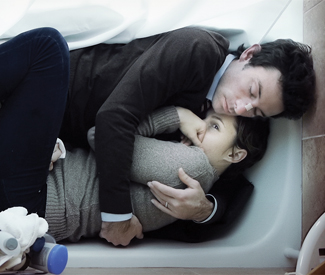
FILM A woman, a man, a pig, a worm, Walden — what? If you enter into Shane Carruth’s Upstream Color expecting things like a linear plot, exposition, and character development, you will exit baffled and distressed. Best to understand in advance that these elements are not part of Carruth’s master plan. In fact, based on my own experiences watching the film twice, I’m fairly certain that not really understanding what’s going on in Upstream Color is part of its loopy allure.

Remember Carruth’s 2004 Primer, the DIY filmmaker’s $7,000 sci-fi tale about time travel? Did you try to puzzle out that film’s array of overlapping and jigsawed timelines, only to give up and concede that the mystery (and sheer bravado) of that film was part of its, uh, loopy allure? Yeah. Same idea, except writ a few dimensions larger, with more locations, zero tech-speak dialogue, and — yes! — a compelling female lead, played by Amy Seimetz, an indie producer and director in her own right.

There are YouTube videos of Carruth’s post-screening Q&A at the 2013 Sundance Film Festival (where Upstream Color debuted and won a prize for its innovative sound design), where he answers “What did that mean?”-type questions with fast-paced references to “the architecture of a story,” “speaking with emotional language,” and his interest in how people who’ve been shattered by trauma fumble their way toward creating new narratives for themselves. Or something.

At any rate, “trauma” is a somewhat mild description of what happens to Kris (Seimetz) at the start of the film. Upstream Color‘s first quarter is its most coherent, appropriate since it takes place before Kris’ health and sanity are compromised by an unnamed character (dubbed the Thief in the credits, and portrayed by Thiago Martins). At first, he appears to be some kind of hipster mad scientist, fiddling with plants and worms in his home lab; there’s no apparent connection between the Thief and Kris — a well-adjusted yuppie type, with a fast-paced job and tasteful wardrobe. This makes it all the more shocking when he stun-guns her in a restaurant and forces her to swallow a worm that turns her into a docile zombie. Before long, she’s emptied all of her bank accounts and signed her house over to him. She snaps out of her fugue state remembering nothing, but the aftereffects are grim: she’s fired, her ATM card doesn’t work, and there are weird things wriggling under her skin.

From there, things go from creepy to confusing, and it takes a few beats to get into Upstream Color‘s new rhythm of randomness. A pig farmer who is also fond of making field recordings and exudes zero menace helps, maybe, Kris by hooking her up to a machine that links her to a piglet and … is that a tapeworm? Then the story moves forward an unknown amount of months or years; the formerly put-together and content Kris is now sporting a chopped-short haircut and a skittish expression. On the train, going to her unglamorous job in a sign shop, she meets the haggard, similarly on-edge Jeff (Carruth) and there’s an instant connection.

Were Upstream Color a rom-com, or even a more conventional sci-fi flick, this pair of lost souls would use their new romance as a springboard for healing. But since “there isn’t a molecule of Hollywood” in Upstream Color — per Carruth, in an insightful post-Sundance interview with Wired magazine — there’s way more abstract weirdness to come, with occasional happy fragments sprinkled in to suggest there’s still hope for Kris and Jeff despite all of their multiple layers of damage.

If it hasn’t already been made clear, enjoying (or even making it all the way through) Upstream Color requires patience and a willingness to forgive some of Carruth’s more pretentious noodlings. (You also have to be OK with having a lot of questions left unequivocally unanswered: why is the pig farmer obsessed with making recordings? Why Walden? Aaarrrgghh!) In the tradition of experimental filmmaking, it’s a work that’s more concerned with evoking emotions than hitting some kind of three-act structure.

Upstream Color has been compared elsewhere to 2011’s Tree of Life, in that it uses avant-garde techniques and focuses on one small story to explore Big Themes. A key difference between Carruth and Terrence Malick — whose poised-to-polarize To the Wonder also opens this week; see Dennis Harvey’s review in this issue — is that Carruth is operating, as mentioned above, completely outside of Hollywood. No Ben Affleck or studio bucks here; Upstream Color was made fast and on the cheap, stars virtual unknowns, and is being self-distributed by Carruth (who, in addition to starring and directing, is also credited as writer, co-producer, cinematographer, composer, and co-editor).

There was word some years back that Carruth’s follow-up to Primer would be an ambitious, medium-budgeted sci-fi epic; it was endorsed by A-listers like Steven Soderbergh. When that fell apart, the story goes, he turned to Upstream Color as his on-my-own-terms rebound project. If that back story influenced his uncompromising (for better and worse) vision for Upstream Color, it’s a subtext that makes the end result even more profound; Hollywood would never take a chance on something so risky as this bold effort, which somehow manages to be both maddening and moving at the same time.


UPSTREAM COLOR opens Fri/12 at the Roxie.

Food fight

3

le.chicken.farmer@yahoo.com

IN THE GAME Did you see what Jed Lowrie (swoon) did last Wednesday, on the very day my column about him hit the streets? He propelled the A’s to their first win of the regular season, going 3-3 with a walk, the game-winning 2-run double, and a home run. In fact he hit two doubles that game, then two more the next — also a win.

This means he loves me too. Although . . . it’s hard to imagine he got a very good look from way down there on the field.

Well, I stand by everything I said about the new A’s shortstop. In fact, taking his lead, I double it.

Almost everything else about last week’s column, however, I have to retract.

Or correct. As in: of course the A’s record-breaking 20-game win streak was in 2002, not 2001. Last year was the ten-year anniversary, and last year was 2012. And math is math.

More importantly, and even more wrongly, I said that AT&T has better concessions than O.co.

What I meant by that careless assertion was that AT&T has a greater variety of fancier (and generally bad) things to eat for even more money than O.co. I know because Hedgehog and I got ourselves to two of those Bay Bridge Series warm-up games, one on each side of the bay, by way of our own li’l Spring Training.

Surprise surprise. I can’t believe a) how many people go to those games, b) how many innings they are willing to miss while standing in line for garlic fries, and c) that Oakland’s garlic fries are better than San Francisco’s.

What the-?

I thought I remembered AT&T’s garlic fries being awesome, not to mention edible. True, their fryers, like Marco Scutaro, might not be in mid-season form, but you would think at least some of the fries would have at least some amount of crunch to them.

Nope. Greasy soggy seagull food, every single one.

O.co’s garlic fries had a little more crunch to them for a couple dollars less, but then they don’t have the gluten-free hot dog option over there, or gluten-free beer. I asked around, for my boo, who — believe it or not — is more into the game of the game than I am. Plus she was test-running a new score-keeping app she’d paid $10 for and couldn’t leave her seat.

At AT&T, I’ll tell you: the gluten-free stuff is at section 112 in the Promenade Level. Otherwise, you don’t have to walk far in any direction to find all kinds of tempting yummies. To name a few: carving board sandwiches, bacon-wrapped hot dogs, Chicago dogs, and, for the tourists, clam chowder bread bowls and Dungeness crab on sourdough.

After about four-and-a-half innings of prowling, I pulled the trigger on a Cha Cha Bowl from Orlando’s Caribbean Barbecue in the center field food court, and I paraded it back to our seats like a hunter bringing home her kill: Look, Boo! It’s gluten free too!

Yeah, but not very good. Dry jerk chicken, white rice and black beans, with shredded carrots and zucchini. Best thing about it was the pineapple salsa on top.

Whereas . . . and this is a big whereas: O.co’s gluten-free kill turned out to be barbecue barbecue. As in sloppy, sopping spareribs and sliced pork, or Ameri-cue. And it also turned out to be awesome. Not just for stadium food, either. It was legitimately good ‘cue. And to think, last season I couldn’t even find barbecue at Oakland games. Now this: Ribs n’ Things.

Ribs n’ Things, it turns out, is an actual restaurant in Hayward, and — at the risk of reviewing a restaurant in my sports column — let me tell you that I would go there, if I ever went to Hayward. That’s how good it was. The best of both stadiums.

Okay. I conclude my two-part baseball season preview with sauce on my pants, yes, and the smell of barbecue under my fingernails. But as much as I love these things, and Jed Lowrie, the closing shot comes from the first night of the Bay Bridge Series, in San Francisco.

Not too cold, but not exactly warm either. It’s been a beautiful Spring, rain and all. Hedgehog and I are huddled together in the upper deck, facing the bay, and there is that classic late-inning blizzard of seagulls going on around us. Really, it looks like it’s snowing big white bird-shaped flakes, aglow in the stadium lights. The game and the greasy garlic fries have long since lost our interest, but this is something. It feels like we are on a first date. There’s a big orange moon rising up over the water, attended by wisps of clouds. A plane flies in front of it. Its lights go: blink.


Rambling man

1

arts@sfbg.com

FILM Terrence Malick has had an extraordinary career for a Hollywood hermit making art-house films in an industry that finds him commercially irrelevant and artistically erratic at best. Even his consensus-agreed best movies are the kind that alienate many potential Oscar voters — too abstract, too ambiguous, too poetical, too “European” — so the potential prestige involved is of a marginal critical- and cineaste-appealing stripe no sane US producer would hitch his or her wagon to at this point. Yet Malick’s movies cost money — a lot of money — and it doesn’t all come from international companies willing to take a loss if they can take home some modest returns and major cred toward their next artistic investments.

In a way, it should be a source of joy that Malick keeps getting to make large, personal, indulgent, un-commercial movies when almost no one else does. Other mainstream US filmmakers have had their intellectually or artistically ambitious follies (see: 2006’s Southland Tales and The Fountain, or 1980’s Heaven’s Gate), but they’re generally allowed just one. No one else has had the long ride Malick has. He is indeed a poet, a visionary — but has he ever had more than passages of brilliance? Are the actors and producers who treat him with awe as some exotic shaman actually enabling art, or mostly high-flown pretensions toward the same?

To the Wonder does provide some answers to those thorny questions. But they’re not the answers you’ll probably want to hear if you thought 2011’s The Tree of Life was a masterpiece. If, on the other hand, you found it a largely exasperating movie with great sequences, you may be happy to be warned that Wonder is an entirely excruciating movie with pretty photography. For all but the diehards, it could be a deal-breaker — the experience that makes you think you might very possibly never want to see another by this filmmaker again.

The one movie in which Malick’s variably over-the-top compassion, philosophy, idolatry of nature, and generally spellbound-by-beauty instincts were best supported was 1998’s The Thin Red Line, an abrupt return to activity after two decades’ complete absence. No matter that the reeling narrative bore limited resemblance to James Jones’ novel, or that Adrien Brody’s leading role got almost entirely cut out — he wouldn’t be first or last to cry foul at a Malick edit drastically altered from the original screenplay. To the Wonder apparently employed the talents of Jessica Chastain, Michael Sheen, and Rachel Weisz — all of whom ended up on the cutting room floor. To make room for … what? A movie that could have been wholly shot by the second unit, for all its interest in actual character, narrative, insight, and acting.

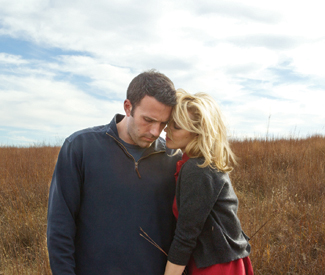
Instead, we get handsome shots of Ben Affleck and Olga Kurylenko (or sometimes Affleck and Rachel McAdams) wandering around picturesque settings either beaming beatifically at each other or looking “troubled” because “something is missing,” as one character puts it in a rare moment of actual dialogue. (Generally we get the usual Malick wall-to-wall whispered voiceover musings like “What is this love that loves us?” delivered by all lead actors in different languages for maximum annoyance.)

Just what is missing? Who the hell knows. Apparently it is too vulgar to spell out or even hint at what’s actually going on in these figures’ heads, not when you can instead show them endlessly mooning about as the camera follows them in a lyrical daze. The “plot” goes like this: Neil (Affleck) meets Parisienne Marina (Kurylenko) and her 10-year-old daughter from a failed marriage. They swan about Europe making goo-goo eyes at each other, then mother and child accompany him back to Oklahoma, but it doesn’t work out. Which allows him an interlude to get involved with old flame Jane (McAdams), but that doesn’t work out. Then Olga returns and … just guess. Meanwhile, Javier Bardem turns up as a Catholic priest, playing the Sean Penn Tree of Life role of a peripheral figure that does absolutely nothing but walk around looking bummed.

These people aren’t enigmas, they’re just blanks the actors can’t fill in because the writer-director won’t let them. He wants to express pure emotion, but emotions have contexts, too, much as Malick might like to think that women are all organic instinct. When Sissy Spacek spoke vacant “poetry” and ignored her (murderous) man Martin Sheen’s faults in 1973’s Badlands, it seemed her youthful inexperience was meant to be humorous. But since his career restarted, Malick has suggested dumb ‘n’ ethereal is his feminine ideal. Kurylenko is the apotheosis of that image: she’s part naked sex puppet; part indulged toddler who knows the adults think everything she does is adorable; part twirly-dancing girl at a Dead show; part family dog that only wants to be loved and played with.

Apparently, Malick thinks he’s celebrating femininity, but his appreciation omits the possibility of intelligence. He thinks women are marvelous, instinctual animals, while men bear the burden of emotional and intellectual complexity, even if they can’t articulate it. Could anything be more condescending? (To the Wonder was autobiographically inspired by his own failed marriage to a Frenchwoman; I’d rather see the movie she’d have made about it.)

No doubt some will find all this profound, because they’re primed to and the film certainly acts as though it is. But at some point you have to ask: if the artist can’t express his deep thoughts, just indicate that he’s having them, how do we know he’s a deep thinker at all? 


TO THE WONDER opens Fri/12 in Bay Area theaters.

Spring breakers

0

culture@sfbg.com

DRINK San Francisco: the best bars, mixologists, and produce — not to mention drinkers — in the country. And once the weather warms up (fingers crossed), can a bloom of excellent fruity cocktails be far behind? In honor of the lengthening sunlight, here’s a full day’s selection of spring drinks picks.


DAYTIME JAM: RICKHOUSE

This bustling bar nestled in the FiDi — and brought to us by the contemporary speakeasy minds behind Bourbon and Branch and Tradition (see below) — gets a lot of attention. In fact, I couldn’t stop hearing about its cocktails (most $10–$12) made with fresh fruit and local produce. And when I stepped inside early one sunny afternoon, I wasn’t disappointed. The bar was stocked with vibrantly colored jars of berries, citrus, and mint leaves. Joined by a friend, I quickly dived in.

Our first round of drinks consisted of the Kentucky Buck and the Paloma, a Mexican classic. The Buck, served with soda, is a combination of Bourbon infused with organic strawberries, fresh lemon juice, ginger beer, and bitters. It’s a smooth drink that still packs a punch, so don’t be deceived. The Paloma, a fizzy mix of tequila and grapefruit soda (in Mexico, usually Jarritos or Fresca; here housemade, of course), could be considered a more refreshing version of a margarita. True to the meaning of its name (“dove”), it’s light and floaty.

(Perhaps inspired by our fruit journey, our friendly bartender next treated us to his own invention, consisting of strawberries, cinnamon, and whiskey. It wasn’t named or even perfected yet — but when it’s on the house, I’ll gladly take it.)

Next round: the Pleasant Evening and my personal favorite, the Berry Bramble. With sparkling wine, crème de cassis, peach bitters, and grapefruit juice, plus a beautiful lemon twist garnish, The Pleasant Evening is also perfect for a warm and boozy afternoon. But the Berry Bramble topped my spring-quest list. Crushed berries and gin with crushed ice yields an invigorating but not overly sweet cocktail, uncloyingly fun, tropical without all the cheesiness.

246 Kearny, SF. (415) 398-2827, www.rickhousebar.com


HAPPY AND HALF-OFF: NIHON WHISKEY LOUNGE

I’d been dying to go to lovely Mission outpost Nihon for its expansive, Japanese-leaning whiskey collection — and its selection of half-off happy hour drinks (many of them $6) provided the perfect opportunity. When I looked at the impressive cocktail menu, I knew I wasn’t ordering anything neat.

I asked our waitress for her recommendation for a nice springtime cocktail and she came back with the California Love, a pretty bourbon cocktail with orange juice, yellow chartreuse liquor, and orange oil. The citrus snaps the bourbon to life, but the drink is a bit too strong for early afternoons: you’ll want to sip this one after work while watching the sun set through Nihon’s windows. (Warning: it does get a bit crowded). If you want my advice, though, grab the Luxury Mojito instead. Topping off silver rum, nigori sake, mint, lime, and sugar with a dash of champagne turns this summer favorite into a bubbly springtime joy.

1779 Folsom, SF. (415) 552-4400


FLY BY NIGHT: TRADITION

With its emphasis on presenting a global selection of cocktail favorites, there isn’t really a season you shouldn’t drink at Tenderloin hotspot Tradition. But I have a great cocktail for you to try during a cool spring night: the Paper Plane ($10). Made with bourbon, Aperol, bittersweet Amaro Nonino, and fresh lemon juice, its zing will launch you skyward. (The drink isn’t on the regular walk-in menu, but appears on the extended menu offered with table reservations, so call ahead.) A variation with honey, adding a level of smoothness, is also amazing. Before you know it, you’ve downed several of this babies, and left any lingering winter blues far behind.

441 Jones, SF. (415) 474-2284, www.tradbar.com


Loud, with clouds

2

arts@sfbg.com

GAMER BioShock Infinite (Irrational Games/2K Games; Xbox 360, PS3, PC) presents an experience that video games are best suited for: plopping players in a captivating fantasy world and saying, “Check it out!” The sequel to BioShock, a first person shooter set in a city beneath the sea, Infinite takes us instead to the clouds, in an alternate version of 1912 America that includes a floating city called Columbia.

Columbia is perhaps not as interesting an environment as Rapture, that underwater metropolis from the original BioShock, but few locations in gaming can match the claustrophobia and terror that decaying city evoked, and Columbia has charms all its own. With its barber shop quartet that sings an a capella version of the Beach Boys’ “God Only Knows,” and its well-populated artificial beach complete with turn-of-the-century boardwalk pavilion, the desolation felt within Rapture’s ruins is replaced by liveliness. If you ever wished you could have wandered the underwater city before its fall, Columbia is the next best thing.

Infinite‘s narrative twists American history into something sinister, and it is almost startling to stumble upon locations and characters that remark on intensely political subjects like classism and race relations — this, in a game where the principal mechanic is to shoot people’s faces. As the game begins, former Pinkerton agent Booker DeWitt is hired to retrieve a young woman who is held captive within the city. Haunted by his collusion in the slaughter of Native Americans in the famous Wounded Knee Massacre of 1890, DeWitt appears to be a prototypically gruff, emotionally damaged male protagonist … but there are hints that not all is as it seems.

Infinite‘s idiosyncrasy could result only from having handed the creative reins over to an auteur game designer, and Infinite‘s singular vision springs from the mind of Ken Levine, chief architect of the BioShock franchise. It was Levine’s union of narrative and mechanics that elevated the original game from shooter to thesis subject and Infinite does not disappoint as the follow-up entry to his abstract game theory. To say more would spoil the fun, but any game attempting to challenge players intellectually is a curiosity in an industry that designs its games largely by committee and consensus.

On the down side, Infinite‘s shooting mechanics remain among the least of its triumphs. Even with a gallery of magical abilities called vigors that allow you to perform such feats as hurling fire or actual crows at your enemies, firefights tend to feel like mere barriers to more content. Perhaps Infinite‘s ambitions to be an experience took precedence over the game play, but to walk the city streets of Columbia is alone worth the price of admission. Liberty, justice, nightmare-churros, and animatronic George Washingtons for all!

Don’t hold your breath

1

arts@sfbg.com

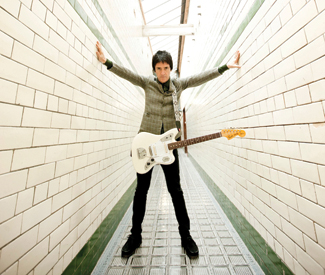
MUSIC Every passing year, the clamor gets louder; the rumors get more outlandish. An all-vegetarian Coachella. Fifty million dollars for five shows. Sixty-seven copies of the movie version of Moby Dick and a football helmet full of cottage cheese. While the rest of the world waits with baited breath for his old band to reunite, the perpetually unfussed Johnny Marr simply gets on with it, focusing on what’s ahead instead of what’s behind.

Since the Smiths called it quits in 1987, their ever-reliable guitarist has stayed more than busy. He’s been a full-time member of myriad different groups, such as Modest Mouse, the Cribs, and The The, while finding time to start a few bands of his own, notably his criminally underrated collaboration with New Order/Joy Division’s Bernard Summer, Electronic. He’s also an accomplished producer and has made countless guest appearances.

Surprisingly, it took the serial band-jumper 25 solid years to make the decision to strike out on his own. “The record really only happened because I had all these ideas that I wanted to turn into songs,” Marr says during our phone call. “I had been touring for such a long time, and I decided that I had to go into the studio and turn these ideas into songs. I didn’t have the plan of doing a solo album, rather I just had this need to get all of these songs recorded. It all happened totally organically.”

The result is The Messenger, an impressive return to form that shows the 49 year old still has a hell of a lot left to say. Over the album’s 12 tracks, Marr sounds refreshed, focused, and teeming with inspiration. From the direct battle cry of an opener, “The Right Thing Right,” to the punchy, double-stop stomp of “Generate! Generate” to the moody, lush “New Town Velocity,” Marr shows off his underrated songwriting chops and warm vocals. Though there is plenty of sonic variation, he manages to stay out of Dad Rock zone by mostly staying in his lane and letting his signature top-notch guitar work do much of the heavy lifting.

As with any Marr release, the guitars come first, second, and third, and the master is up to his old tricks again. Deliciously intricate arpeggiated riffs? Check. Triumphant, cascading melodies? Check. That signature, impeccable jangle? Stop me if you think you’ve heard this one before (sorry, had to). Though he has fairly limited vocal range, his impeccable playing more than makes up for it, and most of the real memorable melodies (i.e. the soaring “European Me”) come courtesy of his legendary Fender Jaguar.

While Marr’s guitar heroics are worth the price of admission, it’s not the only fascinating thing about the fertile LP. As the consummate sideman to some of the biggest personalities (read: egos) in music — Morrissey, Isaac Brock, Chrissie Hynde — he hasn’t ever really needed to divulge much about the man behind the music. While you’re never going to get cathartic confessionals from the private, low-key Marr, he offers listeners plenty of enlightenment into his perspective.

“Really, it’s just a lot of my own personal observations, about my environment. It’s about the world as I see it,” Marr says. “I wanted it to be about the speed of life that I live.”

After drawing rave reviews on a run of shows across the pond, Marr rolls into town to play the first solo SF shows of his storied career. Sporting a nice mix of Smiths classics, hidden gems, and new material, Marr’s ardent spirit has spilled over into his live performances.

“We’ve been playing 11 new songs every night, and it’s really all gone down well,” Marr says. “Every night feels like a celebration, and people are really digging it…This group has a sound that really suits us, and we only play old songs that fit that sound, which really makes the old ones feel like new songs.”

One of the things that always stood out most about Marr was his incredible ability to make it all look so damn easy. No matter how complicated the guitar line, you’d never see a pained look on the perpetually dapper guitarist’s face. He famously wrote three all-time great songs — “William, It Was Really Nothing,” “How Soon Is Now?,” and “Please, Please, Please Let Me Get What I Want” — in one weekend. For that reason, we shouldn’t be surprised that he has taken all the break-ups, rumors, and changes with a nonchalant grace, constantly focused on moving forward rather than looking back….no matter how much everyone seems to want him to.

“Definitely what I’m doing now is a new chapter,” Marr concludes. “I’ve always believed in moving forward with everything I do, and I’m excited for this next step.”

Translation: If you are waiting for that dream Smiths reunion, you might want to stop holding your breath and give The Messenger a spin.

JOHNNY MARR

Sat/13, 9pm, $29.50 Fillmore 1805 Geary, SF www.thefillmore.com


Good grief

1

arts@sfbg.com

THEATER “Oh, this stupid war. I don’t know who to blame anymore, do you?”

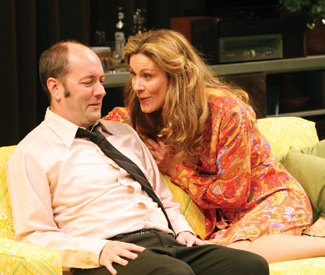
So asks aging American divorcée Mary-Ellen (Marcia Pizzo), in 1975 Southern California, of Vietnamese war refugee Bao (Jomar Tagatac), who has lost his entire family back home. It’s a fraught question that, maybe fittingly, receives no answer. But it’s made all the more complicated and troubling in the Magic Theatre production of Julie Marie Myatt’s 2009 comedy-drama, The Happy Ones.

That’s because Bao and Mary-Ellen’s precarious perches, at the edges of the so-called American Dream, do not get pride of place. The narrative center goes to Walter Wells (a sure Liam Craig), cheerful business owner and middle-class patriarch who suffers an irreparable loss after his adored wife and two children die in a head-on collision with a car — driven by Bao.

Of course, the causes of suffering, and the consequences of violence, are very different when comparing a road accident with a war of genocidal proportions. But in The Happy Ones the emphasis on grief as universal, the overweening urge to see everybody just get along, obscures reality, substituting easy humor and sentimentality for a serious look at either systemic violence or, for that matter, the nature of happiness. No wonder Mary-Ellen doesn’t know who to blame.

Helmed by California Shakespeare Theater’s Jonathan Moscone, the production stresses the play’s emotional comedy about sorrow, forgiveness, shared pain, and the power of friendship, offering able performances and well-shaped scenes that smoothly unfold a palatable nostalgia trip whose sentiments are rooted in a claim to a certain class-based suburban memory.

Erik Flatmo’s set is a shabby period living room in a white Orange County suburb, complete with a blown-up studio portrait-photo of the happy family hanging over the fireplace with its untouched Duraflame logs. Martinis, audible splashing from a backyard pool, Sundays at the Unitarian Church, hickeys, tuna casseroles with crumpled potato chips on top — it’s the Kodachrome image of the American 1970s as advertising agencies would have us remember it.

Myatt has worked the terrain of war, home front trauma, uneasy solidarity, and vague spiritualism before to more profound effect. Her earlier play, Welcome Home, Jenny Sutter (produced locally by TheatreFIRST in 2011) dealt head-on with the Iraq War and the plight of its American veterans with its titular character, a black female soldier deeply traumatized by her experience on the front lines who finds some respite among a community of misfits on the desert-edge outside Los Angeles. It’s a perhaps looser but also more acute investigation that wrestles with class, gender, and race in a more vigorous way. The distance offered by the nostalgic period setting in The Happy Ones, by contrast, seems to have made it too easy to hold all of that at arm’s length.

“Things change,” the grief-stricken Walter propounds to his concerned friend Gary (Gabriel Marin), a hapless and commitment-phobic Unitarian minister now dating Mary-Ellen who seems to have been in love with pal Walter’s wife and life. Yes and no, the play suggests — somewhat unwittingly — as we’re left at the launch of a buddy movie instead of on the brink of the world we’ve in fact inherited.

Bao turns out to be the only one who can help Walter navigate his grief. As Gary and Mary-Ellen make awkward attempts to cheer up their friend, it’s Bao who actually helps — taking the place of Walter’s late wife as the person who cleans, cooks, buys groceries, keeps house. Having tried to kill himself just after the accident, Bao now literally begs to serve Walter, in terms that imply a kind of living erasure that has a very gendered dimension to it in the patriarchal culture of the ’70s.

“I’m invisible! I promise!” shouts Bao. “Please! I have to help you.”

“You can’t repay me for killing my family,” objects Walter. “It doesn’t work like that.” Reparations, of whatever kind, seem to be running in the wrong direction here. Would this relationship remain as conceivable as it supposedly is here if Bao were an Iraqi refugee in 2013? If the playwright means for the lines to appall us, as they should, the production seems indifferent to this subtext.

So Mary-Ellen’s rhetorical question about the responsibility for the war lingers between two relative outsiders who, with a combination of pity and desire, orbit around a central character whose social position is the normative one — with real-world power and privilege that neither Bao nor Mary-Ellen can match, and the one most directly associated by reason of class, gender, and race with the interests promulgating war abroad.

This should be the basis of a painful awakening in the audience, a scathing critique of the solipsism of power. But it ends up seeming more like the re-inscribing of the same order. The racism, imperialism, and sexism shaping the lives of Bao and Mary-Ellen are gently broached at best, trivialized at worst. Walter’s grief and personal transformation remain paramount. And if Bao and Mary-Ellen seem to have gained some hopeful ground by the end too, it is only because each has, desperately but also willingly, hitched his or her future to a white man. *

THE HAPPY ONES

Through April 21, $22-$62

Magic Theatre

Fort Mason Center, Bldg. D, Third Flr., SF

www.magictheatre.org


The truth conquers all

33

I was standing in front of what looked like a semi-vacant office building. I re-checked my maps app — it looked like I had the correct address for the Planned Parenthood clinic. If only this woman would stop shouting about killing babies, maybe I could think.

“Don’t kill your baby! If it could talk it would say ‘Mommy, don’t judge me,'” I turned back to look at career abortion clinic protester Erika Hathaway, and was embarrassed to realize that her wheelchair was parked right in front of the clinic’s door. I had missed it entirely in my zeal to document her interaction with a typical visitor, and had walked right past the door in the chaos.

And I wasn’t even there for a reproductive health appointment. I shivered at the thought of dealing with her while concerned about the results of an HIV test or a weird bump on my labia, much less a tortured decision to end a pregnancy.

I brushed past Hathaway’s exhortations to “ask for the ultrasound!”, a command that echoed around the clinic’s small, otherwise calm waiting room as I closed the door. A young patient looked up with me with tired eyes, shaking her head at the activist’s audacity.

Up for a lecture on respecting life from a guy who has multiple restraining orders from medical clinics?

“I compare it to the offensive foul rule in basketball,” Adrienne Verrilli, director of Planned Parenthood communications, tells me moments later. “You have to have your feet already set to avoid getting the call.” Verrilli’s clinic has been dealing with these protesters for years.

The activists tout bloody posters of aborted babies and bump Christmas music year-round “to remind people that Christ was a baby once,” as Hathaway tells me. They’ve made patients cry, make staff who love their jobs at the clinic want to leave by the back entrance every day.

Recently, a protester actually entered the clinic and woke up a napping patient to tell her why abortion is murder. Only two percent of the visitors to Planned Parenthood come for an abortion.

Hathaway’s setup

Supervisor David Campos, who represents the Mission, has proposed an extension of the current eight-foot “bubble zone,” which Hathaway and her ilk circumvent by pre-stationing themselves in a wheelchair. With their “feet set,” they have no need to approach patients. Verrilli says her staff regularly see Hathaway leave the chair to walk up to Burger King for refreshments. Rumors fly that she has a “day job” as a dogwalker in Belmont, Calif.

Campos wants to extend the no-fly zone to 25 feet from the door and bar protesters from entering, period. I looked at the van that Hathaway’s uncle — a 20-year vet of abortion protesting who has had multiple restraining orders placed against him by the Bay Area abortion clinics he splits his time between — has plastered with violent imagery. It’s parked in the middle of the specially-designated loading zone in front of the clinic, shielded by the handicapped tags that Verrilli says all pro-life protesters seem to have. Given the obvious determination of the anti-choice activists, I hope that the proposed change will be enough to ameliorate their aggression towards vulnerable patients.

Verrilli showed me a letter dropped off at the clinic by a Bernal Heights neighborhood mom of a seven-year-old who was “visibly disturbed” by the protesters’ signs. Unwilling to let me leave on an entirely negative note, she told me about AB 154, a proposed state bill that would allow advanced nurse practitioners to perform first trimester abortions, making family planning services even more available. The fight for reproductive justice continues, despite dedicated opponents.

Her hope lingering in my ears, I braced myself to go back outside and hang with the protesters.

I asked Hathaway why she spends her days in front of reproductive health clinics. “The truth conquers all, as Shakespeare’s Hamlet said,” she said, conquering any adherence to literary fidelity. “Eventually, we will win.”

She told me that Steve Jobs was adopted. “What would the world have been like without him?”

So many babies are being aborted in the United States, she said, that there won’t be enough workers to fund Social Security when it comes time for she and I to retire. This underpopulation theory is a new one for me.

The truth will set you free, right? “Do you need that wheelchair to get around?” I asked her.

“I have arthritis,” she told me. “It’s not a wheelchair, it’s a transport chair.”

A young man wearing a baseball hat exited the clinic and Hathaway shouts, “the Virgin does not want you to abort that baby!” I think about the two percent chance that he’s there to support someone getting an abortion, and the million other reasons why he could have paid the clinic a visit that day.

“It’s her choice,” he replied, and continued on his way.

Planned Parenthood 1650 Valencia, SF. (415) 821-1282, www.plannedparenthood.org

Ennui and I

0

FILM Thai filmmaker Pen-ek Ratanaruang’s international breakthrough, Last Life in the Universe, came out 10 years ago, but its themes of isolation and loneliness still feel very much of the moment. Eternally cool Japanese star Tadanobu Asano plays librarian Kenji, whose Better Off Dead-style existential turmoil leads him to attempt suicide, or at least think long and hard about it, multiple times. His morbid fantasies are varied: hanging (with a note, “This is bliss,” later repurposed by his crass brother as scratch paper: “Gone jogging”); gunshot; bridge-jumping.

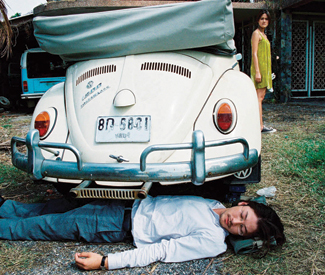
The latter brings him into contact with a pair of sisters, Nid and Noi (real-life siblings Laila and Sinitta Boonyasak); when Nid is suddenly killed in a car accident, Kenji and Noi form a cross-cultural attachment against the backdrop of the girls’ ramshackle Bangkok house — a riot of dirty dishes and slobbery that contrasts sharply with Kenji’s obsessively tidy apartment, though that space has been lately littered by two dead bodies, courtesy of some inconvenient yakuza-on-yakuza violence.

Working from a script by Thai writer Prabda Yoon, and benefiting from Christopher Doyle’s meticulous cinematography, Ratanaruang structures his film along a non-linear timeline, suggesting, as Doyle points out in Last Life‘s DVD commentary, the way the human mind jumps back and forth, mixing flashes of memories into perceptions of the present. It’s a film that will most benefit a viewer willing to pay close attention to its “implications, rather than explications, of ideas” (Doyle again), and certainly holds up under repeat viewings. Another added benefit of watching it again: appreciating the humor that Ratanaruang sneaks in on occasion, as when director Takashi Miike (whose Asano-starring 2001 Ichi the Killer is referenced early on), in a cameo as a gangster, tells a woman she has seaweed stuck in her teeth. (It’s all in the delivery.)

Director, writer, cinematographer, and star reunited in 2006 for the noirish Invisible Waves, which has its own moments of dark comedy, as Kyoji (Asano), a chef with underworld ties, murders his lover at the behest of her husband — his boss — before sailing on the world’s grimmest cruise ship from Macau to Phuket. Aboard, he meets a wistful single mother with the familiar name of Noi (Kang Hye-jung from 2003’s Oldboy); her baby’s named Nid. (Another connection to Last Life: a shady, karaoke-loving character who goes by Lizard, echoing a reptilian motif from that earlier film.)

Kyoji’s journey is complicated by his malfunctioning room, with its haywire shower head and temperamental front door. “I’m inside the room and I cannot get out,” the frustrated man explains over the phone to an unhelpful concierge. It’s clear long before he gets off the ship and begins fumbling around an unwelcoming Phuket, however, that the biggest trap Kyoji is caught in was set by his own dubious life choices. Not for nothing does someone dub him “the stupidest smart guy I ever met.”

Ratanaruang’s most recent film, 2011’s Headshot, makes its local debut as part of the Yerba Buena Center for the Arts’ “Thai Dreams: The Films of Pen-ek Ratanaruang.” Dubbed a “Buddhist neo-noir,” Headshot features a flashy poster and an even flashier tag line: “Bangkok’s most dangerous cop is about to have his world turned upside down.” This is meant literally; the film concerns cop-turned-assassin Tul (Nopporn Chaiyanam) who suffers an injury that inverts his eyesight. Thankfully, the film is shot right side up, for the most part — and in Ratanaruang’s hands, what could’ve been a cheap gimmick becomes an entry point into a surprisingly layered tale.

Ratanaruang will be at the YBCA in person — his first-ever visit to San Francisco — for screenings of Headshot (Thu/4) and 2009 ghost story Nymph (Sun/7), which both star Chaiyanam. The YBCA’s retrospective also includes Last Life and Invisible Waves, plus 2007’s Ploy, about an endangered marriage, and 1999’s loopy thriller 6ixtynin9. 

“THAI DREAMS: THE FILMS OF PEN-EK RATANARUANG”

April 4-21, $8–$10

Yerba Buena Center for the Arts

701 Mission, SF

ybca.org/thai-dreams-films-pen-ek-ratanaruang


Psychic Dream Astrology: April 3-9, 2013

0

ARIES

March 21-April 19

Things can’t always go your way, and when they don’t you may feel overwhelmed and like you need to fight. What you really need is a time-out, Aries. Take a step back from your entanglements and calm yourself down so you can assess what and how much you are willing to change.

TAURUS

April 20-May 20

If you listen to your instincts things will go well for you, Taurus. You’re capable of affecting both short and long-term consequences, so work towards your best interests by being extra mindful this week. Your relationships and big picture goals are pointed in the right direction; trust your self.

GEMINI

May 21-June 21

You can handle whatever is put in front of you, Gemini, but at what cost? This week you are trying to sift through too many things at once and you risk overwhelming yourself and screwing things up in an act of subconscious self-sabotage. Don’t do it! Slow down, cut things up into bite sized pieces to deal wisely with your life.

CANCER

June 22-July 22

Life is so weird; you work hard and figure some things out and then just as you get comfortable with yourself things have to go and change on you. It’s the right time to sit back and reacquaint yourself with your most current incarnation of self, Moonchild. Leave the past behind you and be here now.

LEO

July 23-Aug. 22

This week, be careful to not rock the boat too much because you may create a ripple of consequences that you don’t want to deal with. Cultivate patience while you work on getting your vision for your future clarified and develop the courage to carry it out. What you do matters, Leo, so do it right.

VIRGO

Aug. 23-Sept. 22

If all you think about is what can go wrong you’ll never see the good stuff even if it’s staring you straight in the face. Ask for help if you feel down this week, Virgo. Write a list of six things that you are grateful for every day this week; it won’t do anything about your fears, but it will at least help you have a bit more balance.

LIBRA

Sept. 23-Oct. 22

Don’t get caught up in drama this week, Libra. You are being challenged to stay true to yourself and the people that you are invested in. You may be around a lot of other peoples emotional whirlwinds, but don’t take them on. Protect your relationships by setting healthy limits and staying on track.

SCORPIO

Oct. 23-Nov. 21

Emotions suck. They’re also awesome, and this week they are your teacher. Watch out for doing too much too quickly and loosing track of what matters, Scorpio. You need to get in touch with the integrity of your emotions and not get lost in reactionary cycles. Only by reconnecting with yourself will you get much needed peace.

SAGITTARIUS

Nov. 22-Dec. 21

Instead of forging impulsively ahead, try sitting back and enjoying the riches of what you’ve collected. You do not need to add anything new, just deal with what you’ve got this week. Reflect on what you’ve done to get where you are and don’t engage in any unnecessary dramas, Sag. Focus your energies inward.

CAPRICORN

Dec. 22-Jan. 19

Stop worrying so much about what others do or don’t think of you, Capricorn. Anxiety is likely to come when you are uncertain not only of what’s happening, but of how to gauge what you think or feel about it. The best you can do for yourself this week is to slow things down and treat yourself to some serious TLC.

AQUARIUS

Jan. 20-Feb. 18

You can let things be okay and there’ll be no problems, but also there’ll be no fireworks! Take some risks, Aquarius. It’s a great time to start something new or to reach out to someone or thing that you’ve been intimidated to deal with. There’s plenty of time to conserve your energy, but now’s the time to run it around the block.

PISCES

Feb. 19-March 20

Peace and acceptance are active states that require balance and flexibility. Keep your center, and stay present as you find your way through life’s mazes. By accepting the truth of where you’re at and who the people around you are, you will be able to make choices that support your reality this week.

Jessica Lanyadoo has been a Psychic Dreamer for 18 years. Check out her website at www.lovelanyadoo.com to contact her for an astrology or intuitive reading.

Stage listings

0

Stage listings are compiled by Guardian staff. Performance times may change; call venues to confirm. Reviewers are Robert Avila, Rita Felciano, and Nicole Gluckstern. Submit items for the listings at listings@sfbg.com.

THEATER

OPENING

The Bereaved Thick House, 1695 18th St, SF; www.crowdedfire.org. $10-35. Previews Thu/4-Sat/6, 8pm. Opens Mon/8, 8pm. Runs Wed-Sat, 8pm. Through April 27. Crowded Fire Theater launches its Mainstage season with Thomas Bradshaw’s wicked comedy about “sex, drugs, and the American dream.”

Carnival! Eureka Theatre, 215 Jackson, SF; www.42ndstreetmoon.org. $25-75. Previews Wed/3, 7pm; Thu/4-Fri/5, 8pm. Opens Sat/6, 6pm. Runs Wed, 7pm; Thu-Fri, 8pm; Sat, 6pm (also April 13, 1pm); Sun, 3pm. Through April 21. 42nd Street Moon performs the Tony Award-winning musical.

Show Me Yours: Songs of Innocence and Experience Alcove Theater, 414 Mason, Ste 502, SF; www.thealcovetheater.com. $27. Opens Thu/5, 8pm. Runs Thu-Sat, 8pm; Sun, 5pm. Through April 27. New Musical Theater of San Francisco performs a new musical revue written by Pen and Piano, the company’s resident group of writers and composers.

BAY AREA

The Arsonists Aurora Theatre, 2081 Addison, Berk; www.auroratheatre.org. $35-60. Previews Fri/5-Sat/6 and April 10, 8pm; Sun/7, 2pm; Tue/9, 7pm. Opens April 11, 8pm. Runs Tue and Sun, 7pm (also Sun, 2pm); Wed-Sat, 8pm. Through May 12. Aurora Theatre Company performs Max Frisch’s classic comic parable, translated by Alistair Beaton.

Being Earnest Mountain View Center for the Performing Arts, 500 Castro, Mtn View; www.theatreworks.org. $23-73. Previews Wed/3-Fri/5, 8pm. Opens Sat/6. Runs Tue-Wed, 7:30pm; Thu-Sat, 8pm (also Sat, 2pm); Sun, 2 and 7pm. Through April 28. TheatreWorks performs the world premiere of Paul Gordon’s musical take on Oscar Wilde’s comedy.

Love Letters Various Marin County venues; www.porchlight.net. $15-30. April 5-28. Porch Light Theater performs A.R. Gurney’s romantic play at four different Marin venues; check website for addresses and showtimes.

“Pear Slices” Pear Avenue Theatre, 1220 Pear, Mtn View; www.thepear.org. $10-30. Previews Thu/4, 8pm. Opens Fri/5, 8pm. Runs Thu-Sat, 8pm; Sun, 2pm. Through April 28. Nine original short plays by members of the Pear Playwrights Guild.

ONGOING

The Bus New Conservatory Theatre Center, 25 Van Ness, SF; www.nctcsf.org. $32-45. Wed-Sat, 8pm; Sun, 2pm. Through April 28. NCTC performs James Lantz’s tale of two young men whose meeting place for their secret relationship is a church bus.

The Chairs Exit on Taylor, 277 Taylor, SF; www.cuttingball.com. $20-45. Thu/4, 7:30pm; Fri/5-Sat/6, 8pm (also Sat/6, 2pm); Sun/7, 5pm. In Rob Melrose’s new translation of Eugene Ionesco’s The Chairs, an elderly couple sit in the austere parlor of their lonely lighthouse, chortling over a spate of private wordplay and reminiscing of sprightlier times, until their initially frantic and disjointed dialogue settles into a smooth flow, well-polished by decades of endearments and gentle bickering. Possibly the last two survivors of a not entirely explained apocalypse, the isolated nonagenarians (magnificently played by David Sinaiko and Tamar Cohn) nevertheless make it known that important guests are expected to arrive at any moment in order to hear a hired orator (Derek Fischer) deliver the Old Man’s “message,” which he has spent a lifetime honing. As the doorbell begins to ring, a jarring squall, and invisible guests and dozens of mismatched chairs begin to crowd their peaceable empire in claustrophobia-inducing numbers, their companionable seclusion is shattered for good. Director Annie Elias manages to coax both gravitas and decorum out of this little-produced, yet influential absurdist relic, imbuing her protagonists with a depth of character that belies their farcical circumstances, while Theodore J.H. Hulsker’s murmuring sound design of crashing waves, angry winds, and the strident doorbell could almost be another character in the play, so thoroughly does it set the tone in ways that Ionesco might not have approved of, but is all the better for. (Gluckstern)

The Couch Tides Theatre, 533 Sutter, Second Flr, SF; www.3girlstheatre.org. $30. Thu/4-Sat/6, 8pm; Sun/7, 2pm. As the centerpiece of its second annual festival of plays in honor of Women’s History Month, 3Girls Theatre, devoted to Bay Area women playwrights, revives Lynne Kaufman’s fitful but enjoyable 1985 dramatic comedy about the inception of the famous sexual and psychiatric triangle between Carl Jung (Peter Ruocco), wife Emma Jung (Courtney Walsh), and his mistress and analysand Toni Wolff (Maggie Mason). In this, her first play, Kaufman (whose most recent play, Acid Test, explores the life of Ram Dass) folds in Carl’s critical 1912 break with mentor Sigmund Freud (Louis Parnell) for an action-packed day Chez Jung. (Also on the scene is the Jung’s precocious daughter Katherine, played by a sure and animated Hattie Rose Allen Bellino). Amy Glazer directs a solid cast who convincingly blends the farcical aspects of the dialogue with its meatier and more dramatic ones, as new ties and power dynamics are sometimes roughly, other times genteelly negotiated. The former is usually the stuff of high comedy, as when Freud goes apoplectic upon learning Jung is not necessarily the disciple and “son” he had thought him to be. And Jung’s (proto-) New Agey leanings only add fuel to the fire: When Carl turns to the I Ching to decide on the best course of action for his career going forward, Freud erupts, “You idiot! You’re playing tiddlywinks with the human race!” But it is ultimately the politics of love and the household that take center stage, with Walsh’s vulnerable yet ever dignified Emma emerging as, if not the greatest psychiatrist, perhaps the greatest strategist of them all. (Avila)

Eurydice Gough Street Playhouse, 1622 Gough, SF; www.custommade.org. $25-30. Thu-Sat, 8pm; Sun, 7pm. Through April 14. Custom Made Theatre Co. performs Sarah Ruhl’s inventive take on the Orpheus and Eurydice myth, exploring the story through the heroine’s eyes.

Foodies! The Musical Shelton Theater, 533 Sutter, SF; www.foodiesthemusical.com. $30-34. Fri-Sat, 8pm. Open-ended. AWAT Productions presents Morris Bobrow’s musical comedy revue all about food.

The Happy Ones Magic Theatre, Fort Mason Center, Bldg D, Third Flr, SF; www.magictheatre.org. $22-62. Opens Wed/3, 8pm. Runs Wed-Sat, 8pm (also Sat, 2:30pm; no matinee April 20); Sun, 2:30pm; Tue, 7pm. Through April 21. An Orange County appliance store owner finds his life turned upside down in Julie Marie Myatt’s drama at Magic Theatre.

reasons to be pretty San Francisco Playhouse, 450 Post, Second Flr, SF; www.sfplayhouse.org. $30-100. Tue-Thu, 7pm; Fri-Sat, 8pm (also Sat, 3pm). Through May 11. San Francisco Playhouse’s tenth season continues with Neil LaBute’s romantic drama.

The Resurrection of SHE Brava Theater Center, 2781 24th St, SF; www.brava.org. $20-30. Thu/4-Sat/6, 8pm; Sun/7, 3pm. San Francisco’s inimitable Rhodessa Jones is the beguiling heart of this musically transcendent and visually evocative performance-memoir, co-produced by Brava Theater and Cultural Odyssey. It’s a surefooted meander through a great swath of personal and historical experience led by an African American woman whose decades-long theater career has been the expression and instigation of many female “resurrections.” Backed by a multimedia collage designed by Stephanie Johnson and Pam Peniston, and accompanied onstage by excellent multi-instrumentalists and composers Idris Ackamoor (who also directed the show) and David Molina, Jones begins with a fraught poetical invocation of an African girl child roaming free on the deck of a slave ship. From there she delves into a by turns humorous, harrowing, and inspiring narrative rooted in her own Southern family history and the origins of what she calls her life-saving encounter with theater — one manifestation of which has been her powerful work with incarcerated women in the Medea Project. A recent iteration of the Project, in South Africa’s Naturena prison, forms the narrative anchor of the second act. A formidable performer and expert storyteller, Jones commands attention whether channeling specific characters, speaking impromptu to her audience, or erupting into song (in one a several canny musical numbers). In the process, she makes trivial the show’s few hiccups or loose ends with a sense of communion as impressive as her remarkable life. (Avila)

Sex and the City: LIVE! Rebel, 1760 Market, SF; trannyshack.com/sexandthecity. $25. Wed, 7 and 9pm. Open-ended. It seems a no-brainer. Not just the HBO series itself — that’s definitely missing some gray matter — but putting it onstage as a drag show. Mais naturellement! Why was Sex and the City not conceived of as a drag show in the first place? Making the sordid not exactly palatable but somehow, I don’t know, friendlier (and the canned a little cannier), Velvet Rage Productions mounts two verbatim episodes from the widely adored cable show, with Trannyshack’s Heklina in a smashing portrayal of SJP’s Carrie; D’Arcy Drollinger stealing much of the show as ever-randy Samantha (already more or less a gay man trapped in a woman’s body); Lady Bear as an endearingly out-to-lunch Miranda; and ever assured, quick-witted Trixxie Carr as pent-up Charlotte. There’s also a solid and enjoyable supporting cast courtesy of Cookie Dough, Jordan Wheeler, and Leigh Crow (as Mr. Big). That’s some heavyweight talent trodding the straining boards of bar Rebel’s tiny stage. The show’s still two-dimensional, even in 3D, but noticeably bigger than your 50″ plasma flat panel. (Avila)

Steve Seabrook: Better Than You Marsh San Francisco, 1062 Valencia, SF; www.themarsh.org. $15-50. Thu, 8pm; Sat, 8:30pm. Extended through May 18. Self-awareness, self-actualization, self-aggrandizement — for these things we turn to the professionals: the self-empowerment coaches, the self-help authors and motivational speakers. What’s the good of having a “self” unless someone shows you how to use it? Writer-performer Kurt Bodden’s Steve Seabrook wants to sell you on a better you, but his “Better Than You” weekend seminar (and tie-in book series, assorted CDs, and other paraphernalia) belies a certain divided loyalty in its own self-flattering title. The bitter fruit of the personal growth industry may sound overly ripe for the picking, but Bodden’s deftly executed “seminar” and its behind-the-scenes reveals, directed by Mark Kenward, explore the terrain with panache, cool wit, and shrewd characterization. As both writer and performer, Bodden keeps his Steve Seabrook just this side of overly sensational or maudlin, a believable figure, finally, whose all-too-ordinary life ends up something of a modest model of its own. (Avila)

Tinsel Tarts in a Hot Coma: The Next Cockettes Musical Hypnodrome, 575 10th St, SF; www.thrillpeddlers.com. $30-35. Opens Thu/4, 8pm. Runs Thu-Sat, 8pm. Through June 1. Thrillpeddlers’ sixth annual Theatre of the Ridiculous Revival presents a restored version of the Cockettes’ 1971 Art Deco-inspired musical extravaganza.

The Voice: One Man’s Journey Into Sex Addition and Recovery Stage Werx Theater, 446 Valencia, SF; thevoice.brownpapertickets.com. $10-18. Fri/5-Sat/6, 8pm. Ticket sales for David Kleinberg’s autobiographical solo show benefit 12-step sex addiction recovery programs and other non-profits.

BAY AREA

The Coast of Utopia: Voyage & Shipwreck Ashby Stage, 1901 Ashby, Berk; www.shotgunplayers.org. $20-35. Shipwreck runs Wed-Thu, 7pm; Fri-Sat, 8pm; Sun, 5pm. Through May 5. Voyage opens Wed/3, 3pm. Runs April 13, 20, 27, and May 4, 3pm. Last year in the Shotgun Players’ production of Voyage, the first part of Tom Stoppard’s The Coast of Utopia trilogy (also playing in repertory through May 4), we were introduced to a tight circle of Russian thinkers and dreamers, chafing against the oppressive regime of Nicholas I. In the second part, Shipwrecked, we find them older, perhaps wiser, struggling to keep their revolutionary ideals alive while also juggling familial concerns and personal passions. Focused mainly on Alexander Herzen (Patrick Kelley Jones) and family, Shipwrecked travels from Russia to Germany, France, Italy, and the English Channel, buffeted from all directions by the forces of the uprisings and burgeoning political consciousness of the European proletariat. It’s an unwieldy, sprawling world that Stoppard, and history, have built (made somewhat more so by the Shotgun production’s strangely languid pace during even the most dramatic sequences) but it’s worth making the effort to spend time absorbing the singular world views of Russian émigré Herzen, his impulsively passionate wife Natalie (Caitlyn Louchard), the cantankerous, influential critic Vissarion Belinsky (Nick Medina), professional rabble-rouser Michael Bakunin (Joseph Salazar) and up-and-coming writer Ivan Turgenev (Richard Reinholdt) as they desperately seek to carve out both their personal identities and a greater, cohesive Russian one from the imperfect turmoil of Western philosophy. (Gluckstern)

Fallaci Berkeley Repertory Theatre, 2015 Addison, Berk; www.berkeleyrep.org. $29-89. Tue, Thu-Sat, 8pm (also Sat, 2pm); Wed and Sun, 7pm (also Sun, 2pm). Through April 21. Berkeley Rep performs Pulitzer-winning journalist Lawrence Wright’s new play about Italian journalist Oriana Fallaci.

The Mountaintop Lucie Stern Theatre, 1305 Middlefield, Palo Alto; www.theatreworks.org. $23-75. Wed/3-Thu/4, 11am (also Thu/4, 8pm); Sat/6, 8pm; Sun/7, 2pm. TheatreWorks performs Katori Hall’s play that re-imagines the events on the night before Dr. Martin Luther King, Jr.’s assassination.

The Real Americans Marsh Berkeley, 2120 Allston, Berk; www.themarsh.org. $25-50. Fri/5, 8pm; Sat/6, 5pm. Dan Hoyle shifts his popular show about small-town America to the Marsh’s Berkeley outpost.

The Whipping Man Marin Theatre Center, 397 Miller, Mill Valley; www.marintheatre.org. $36-57. Tue-Sat, 8pm (also April 20, 2pm; April 11, 1pm); Wed, 7:30pm; Sun, 2 and 7pm. Through April 21. Marin Theatre Company performs the Bay Area premiere of Matthew Lopez’s Civil War drama.

PERFORMANCE/DANCE

“The Buddy Club Children’s Shows” Randall Museum, 199 Museum Wy, SF; www.thebuddyclub.com. Sun/7, 11am. $8. The Bubble Lady performs.

“Cabaret Showcase Showdown: Best Pop Cabaret Singer” Martuni’s, 4 Valencia, SF; (415) 241-0205. Sun/7, 7pm. $7. With guest judge Dylan Germick and musical arranger Lynden Bair.

Caroline Lugo and Carolé Acuña’s Ballet Flamenco Peña Pachamama, 1630 Powell, SF; www.carolinalugo.com. Sun/7 and April 13, 6:15pm. $15-19. Flamenco performance by the mother-daughter dance company, featuring live musicians.

“Fifth Annual Flow Show/San Francisco” Dance Mission Theater, 3316 24th St, SF; www.dancemission.com. Fri/5-Sat/6, 8pm; Sun/7, 7pm. $20 (no one turned away for lack of funds). Contemporary dance and flow arts showcase, incorporating props like hoops and yo-yos.

“A Kind of Sad Love Song” Bindlestiff Studio, 185 Sixth St, SF; www.bindlestiffstudio.org. Thu-Sat, 8pm (also Sat, 3:30pm); Sun/7, 3:30pm. Through April 14. $10-20. Bindlestiff Studio presents the world premiere of Jeffrey Lo’s relationship drama, performed in repertory by two separate casts of Pilipino American actors.

“The Madness of the Elephant” Jewish Community Center of San Francisco, Kanbar Hall, 3200 California, SF; www.jccsf.org/arts. Fri/5-Sat/6, 8pm. $15-30. West African dance, music, and theater group Duniya Dance and Drum Company perform an exploration of the reign of Guinea’s first president, Sekou Touré.

“Miss Coco Peru: She’s Got Balls!” Castro Theatre, 429 Castro, SF; www.ticketfly.com. Sat/6, 8pm. $28-45. Miss Coco Peru (a.k.a. Clinton Leupp) reminisces about her life in this solo musical comedy.

“Mission Position Live” Cinecave, 1034 Valencia, SF; www.missionpositionlive.com. Thu, 8pm. Ongoing. $10. Stand-up comedy with rotating performers.

“The Moth StorySLAM” Rickshaw Stop, 155 Fell, SF; www.rickshawstop.com. Mon/8, 7pm. $8-16. Open mic storytelling competition affiliated with KQED’s “The Moth Radio Hour.”

“OCB: Obsessive Compulsive Broadway” Martuni’s, 4 Valencia, SF; www.brownpapertickets.com. Wed/3, 7pm. $7. Steven Slatten performs a comedy about the highs and lows of working on Broadway, with songs from Rent, Hair, and other shows.

Ophelia Fort Mason Center (starting at the Firehouse), Marina at Laguna, SF; www.carteblanche-sf.com. Thu and Sat-Sun, 8:30pm. Through April 14. $22. Carte Blanche performs a walk-through performance featuring dance, theater, and interactive video.

“Pamtastic’s Comedy Clubhouse Presents: The Mutiny Radio Comedy Showcase” Mutiny Radio, 2781 21st St, SF; www.mutinyradio.org. Fri/5, 8:30pm. $5-20. With Jamie Bell, Vince Mancini, Dustin Hempstead, and more.

Red Hots Burlesque El Rio, 3158 Mission, SF; www.redhotsburlesque.com. Wed, 7:30-9pm. Ongoing. $5-10. Come for the burlesque show, stay for OMG! Karaoke starting at 8pm (no cover for karaoke).

“Rotunda Dance Series: San Francisco Ballet School Trainee Program” San Francisco City Hall, Van Ness and Grove, SF; www.dancersgroup.org. Fri/5, noon. Free. The most advanced students at SF Ballet’s school present a free, public performance under City Hall’s rotunda.

“San Francisco Magic Parlor” Chancellor Hotel Union Square, 433 Powell, SF; www.sfmagicparlor.com. Thu-Sat, 8pm. Ongoing. $40. Magic vignettes with conjurer and storyteller Walt Anthony.

“Up in the Air” Garage, 715 Bryant, SF; www.milissapayne.com. Wed/3-Thu/4, 8pm. New dance work inspired by hot air ballooning by the Milissa Payne Project.

BAY AREA

“The Divine Game” Ashby Stage, 1901 Ashby, Berk; www.shotgunplayers.org. April 15 and 29, 8pm. $20. First Person Singular and Shotgun Cabaret present this dramatic re-enactment of Nabokov teaching at Cornell in the 1950s.

“I Look Like An Egg, But I Identify as a Cookie” Ashby Stage, 1901 Ashby, Berk; www.shotgunplayers.org. Mon/8-Tue/9, 8pm. $20. Heather Gold brings her hit solo comedy (with cookies!) to the East Bay.

Film listings

0

Film listings are edited by Cheryl Eddy. Reviewers are Kimberly Chun, Dennis Harvey, Lynn Rapoport, and Sara Maria Vizcarrondo. For rep house showtimes, see Rep Clock.

OPENING

Evil Dead Yep, they remade it. But before you grab your chainsaw in anger, know this: early buzz is actually pretty positive. (1:31)

Gimme the Loot Biggie Smalls’ track is just a smart starting point for this streetwise, hilarious debut feature by Adam Leon. Young graf artists Malcolm (Ty Hickson) and Sofia (Tashiana Washington) are hustling hard to get paid and fund a valiant effort to tag the Mets’ Home Run Apple to show up rival gang-bangers. The problem lies in raising the exorbitant fee their source demands, either by hook (selling pot to seductive, rich white girls) or crook (offloading cell phone contraband). The absurdity of the pair’s situation isn’t lost on anyone, especially Leon. But their passion to rise above (sorta) and yearning for expression gives the tale an emotional heft, and Gimme the Loot stays with you long after the taggers have moved onto fresh walls. (1:21) (Chun)

Jurassic Park 3D Because Velociraptors and Jeff Goldblum are even more awesome in 3D. (2:07)

The Place Beyond the Pines Powerful indie drama Blue Valentine (2010) marked director Derek Cianfrance as one worthy of attention, so it’s with no small amount of fanfare that this follow-up arrives. The Place Beyond the Pines‘ high profile is further enhanced by the presence of Bradley Cooper (currently enjoying a career ascension from Sexiest Man Alive to Oscar-nominated Serious Actor), cast opposite Valentine star Ryan Gosling, though they share just one scene. An overlong, occasionally contrived tale of three generations of fathers, father figures, and sons, Pines‘ initial focus is Gosling’s stunt-motorcycle rider, a character that would feel more exciting if it wasn’t so reminiscent of Gosling’s turn in Drive (2011), albeit with a blonde dye job and tattoos that look like they were applied by the same guy who inked James Franco in Spring Breakers. Robbing banks seems a reasonable way to raise cash for his infant son, as well as a way for Pines to draw in another whole set of characters, in the form of a cop (Cooper) who’s also a new father, and who — as the story shifts ahead 15 years — builds a political career off the case. Of course, fate and the convenience of movie scripts dictate that the mens’ sons will meet, the past will haunt the present and fuck up the future, etc. etc. Ultimately, Pines is an ambitious film that suffers from both its sprawl and some predictable choices (did Ray Liotta really need to play yet another dirty cop?) Halfway through the movie I couldn’t help thinking what might’ve happened if Cianfrance had dared to swap the casting of the main roles; Gosling could’ve been a great ambitious cop-turned-powerful prick, and Cooper could’ve done interesting things with the Evel Knievel-goes-Point Break part. Just sayin’. (2:20) (Eddy)

Reality Director Matteo Garrone’s Cannes Grand Prix winner couldn’t be more different from his 2008 Gomorrah, save one similarity: that film was about organized crime, and dark comedy Reality stars Aniello Arena, a former gangster who was allowed out of prison to shoot his scenes. All things considered, he’s rather winning as Neapolitan everyman Luciano, whose daily life slinging fish can’t compete with his big dreams of appearing on the Italian version of Big Brother. He makes it through the second round of auditions — and soon starts believing he’s being watched by casting agents considering whether to put him on the show. His level-headed wife (Loredane Simioli) suspects he’s being paranoid (as does the audience, before long), though he’s told "never give up!" by cheesy-sleazy Big Brother vet Enzo (Raffaele Ferrante), a character clearly designed to comment on reality TV’s own peculiar brand of insta-fame. Nobody who’s ever watched reality TV will be surprised at the film’s ultimate messages about the hollow rewards of that fame, but Arena’s powerful performance makes the journey worthwhile. (1:55) (Eddy)

Renoir The gorgeous, sun-dappled French Riviera setting is the high point of this otherwise low-key drama about the temperamental women (Christa Theret) who was the final muse to elderly painter Auguste Renoir (Michel Bouquet), and who encouraged the filmmaking urges in his son, future cinema great Jean (Vincent Rottiers). Cinematographer Mark Ping Bin Lee (who’s worked with Hou Hsiao-hsein and Wong Kar Wai) lenses Renoir’s leafy, ramshackle estate to maximize its resemblance to the paintings it helped inspire; though her character, Dédée, could kindly be described as "conniving," Theret could not have been better physically cast, with tumbling red curls and pale skin she’s none too shy about showing off. Though the specter of World War I looms in the background, the biggest conflicts in Gilles Bourdos’ film are contained within the household, as Jean frets about his future, Dédée faces the reality of her precarious position in the household (which is staffed by aging models-turned-maids), and Auguste battles ill health by continuing to paint, though he’s in a wheelchair and must have his brushes taped to his hands. Though not much really happens, Renoir is a pleasant, easy-on-the-eyes experience. (1:51) Clay. (Eddy)

The Revolutionary Optimists If the children, as someone once sang, are our future, the inspiring work done by youth activists living in the slums of Kolkata, India hints that there might be brighter days ahead for some of the poorest communities in the world. Under the guidance of Amlan Ganguly and his non-profit, Prayasam, kids whose daily struggles include lacking easy access to drinking water, having to work backbreaking long hours at the local brick field, and worrying that their parents will marry them off as soon as they turn 13, find hope via education and artistic expression. Sensitively directed over the span of several years by Nicole Newnham (who made the excellent 2006 doc The Rape of Europa) and Maren Grainger-Monsen, The Revolutionary Optimists shows stories of both success (12-year-old sparkplug Salim speaks before Parliament about bringing water to his neighborhood) and failure (16-year-old Priyanka is forced into an abusive marriage, ending her dreams of becoming a dance teacher). With harsh reality keeping its stories firmly grounded, the film — which is, of course, ultimately optimistic — offers a look at how the youngest members of a community can help effect real change. (1:23) (Eddy)

ONGOING

Admission Tina Fey exposes the irritating underbelly of the Ivy League application process as Princeton admissions officer Portia Nathan. When her school falls to number two in U.S. News and World Report‘s annual ranking, Portia and her colleagues are tasked by their boss (Wallace Shawn) with boosting application numbers to bring the university back into the lead. Alterna-school headmaster John Pressman (Paul Rudd) has one more applicant to add to the pile: a charmingly gawky autodidact named Jeremiah (Nat Wolff), who John is convinced is the child Portia gave up for adoption back when they were both students at Dartmouth. Stuck in a dreary 10-year relationship with an English professor (Michael Sheen) whose bedtime endearments consist of absentmindedly patting her on the head while reading aloud from The Canterbury Tales, and seeming less than thrilled with the prospect of another season of sifting through the files of legacies and overachievers, Portia is clearly ripe for some sort of purgative crisis. When it arrives, the results are fairly innocuous, if ethically questionable. Directed by Paul Weitz, the man responsible for bringing Little Fockers (2010) into the world, but About a Boy (2002) as well, Admission is sweet and sometimes funny but unmemorable, even with Lily Tomlin playing Portia’s surly, iconoclast mother. (1:50) 1000 Van Ness, SF Center, Sundance Kabuki. (Rapoport)

Amour Arriving in local theaters atop a tidal wave of critical hosannas, Amour now seeks to tempt popular acclaim — though actually liking this perfectly crafted, intensely depressing film (from Austrian director Michael Haneke) may be nigh impossible for most audience members. Eightysomething former music teachers Georges and Anne (the flawless Jean-Louis Trintignant and Emmanuelle Riva) are living out their days in their spacious Paris apartment, going to classical concerts and enjoying the comfort of their relationship. Early in the film, someone tries to break into their flat — and the rest of Amour unfolds with a series of invasions, with Anne’s declining health the most distressing, though there are also unwanted visits from the couple’s only daughter (an appropriately self-involved Isabelle Huppert), an inept nurse who disrespects Anne and curses out Georges, and even a rogue pigeon that wanders in more than once. As Anne fades into a hollow, twisted, babbling version of her former self, Georges also becomes hollow and twisted, taking care of her while grimly awaiting the inevitable. Of course, the movie’s called Amour, so there’s some tenderness involved. But if you seek heartwarming hope and last-act uplift, look anywhere but here. (2:07) New Parkway. (Eddy)

The Call (1:34) 1000 Van Ness, Shattuck, SF Center.

The Croods (1:38) Balboa, Metreon, 1000 Van Ness.

Emperor This ponderously old-fashioned historical drama focuses on the negotiations around Japan’s surrender after the bombings of Hiroshima and Nagasaki. While many on the Allied side want the nation’s "Supreme Commander" Emperor Hirohito to pay for war crimes with his life, experts like bilingual Gen. Bonners Fellers (Matthew Fox) argue that the transition to peace can be achieved not by punishing but using this "living god" to wean the population off its ideological fanaticism. Fellers must ultimately sway gruff General MacArthur (Tommy Lee Jones) to the wisdom of this approach, while personally preoccupied with finding the onetime exchange-student love (Kaori Momoi) denied him by cultural divisions and escalating war rhetoric. Covering (albeit from the U.S. side) more or less the same events as Aleksandr Sokurov’s 2005 The Sun, Peter Webber’s movie is very different from that flawed effort, but also a lot worse. The corny Romeo and Juliet romance, the simplistic approach to explaining Japan’s "ancient warrior tradition" and anything else (via dialogue routinely as flat as "Things in Japan are not black and white!"), plus Alex Heffes’ bombastic old-school orchestral score, are all as banal as can be. Even the reliable Jones offers little more than conventional crustiness — as opposed to the inspired kind he does in Lincoln. (1:46) Vogue. (Harvey)

From Up on Poppy Hill Hayao (dad, who co-wrote) and Goro (son, who directed) Miyazaki collaborate on this tale of two high-school kids — Umi, who does all the cooking at her grandmother’s boarding house, and Shun, a rabble-rouser who runs the school newspaper — in idyllic seaside Yokohama. Plans for the 1964 Olympics earmark a beloved historic clubhouse for demolition, and the budding couple unites behind the cause. The building offers a symbolic nod to Japanese history, while rehabbing it speaks to hopes for a brighter post-war future. But the past keeps interfering: conflict arises when Shun’s memories are triggered by a photo of Umi’s father, presumed lost at sea in the Korean War. There are no whimsical talking animals in this Studio Ghibli release, which investigates some darker-than-usual themes, though the animation is vivid and sparkling per usual. Hollywood types lending their voices to the English-language version include Jamie Lee Curtis, Christina Hendricks, Ron Howard, and Gilllian Anderson. (1:31) Sundance Kabuki. (Eddy)

GI Joe: Retaliation The plot exists to justify the action, but any fan of badass-ness will forgive the skimpy storyline for the outlandish badassery in GI Joe: Retaliation. Inspired by action figures and tying loosely to the first flick, Retaliation starts with a game of "secure the defector," followed by "raise the flag," but as soon as the stakes aren’t real, the Joes outright suck. They don’t have "neutral," which is maybe why a mission to rescue and revive the Joes as a force is the most ferocious fight that ever pit metal against plastic. The set pieces are stunning: a mostly silent sequence with Snake Eyes (Ray Park) and Jinx (Elodie Yung) on a mountainside will leave the audience gaping in its high speed wake, and a prison break featuring covert explosives is nonstop amazing. You’ll notice an emphasis on chain link fences and puddles (terra nostra for action figures) and set pieces conceived as if by kids who don’t have a concept of basic irrefutable truths like gravity. It’s just that kind of imagination and ardor and limitlessness that makes this Joe incredible, memorable, and a reason to crack out your toys again. (1:50) Metreon, 1000 Van Ness. (Vizcarrondo)

Ginger and Rosa It’s the 1960s, nuclear war is a real possibility, and nuclear-family war is an absolute certainty, at least in the London house occupied by Ginger (Elle Fanning), her emotionally wounded mother (Mad Men‘s Christina Hendricks), and her narcissistic-intellectual father (Alessandro Nivola). In this downbeat coming-of-age tale from Sally Potter (1992’s Orlando), Ginger’s teenage rebellion quickly morphs into angst when her BFF Rosa (Beautiful Creatures‘ Alice Englert) wedges her sexed-up neediness between Ginger’s parents. Hendricks (playing the accordion — just like Joan!) and Annette Bening (as an American activist who encourages Ginger’s political-protest leanings) are strong, but Fanning’s powerhouse performance is the main focus — though even she’s occasionally overshadowed by her artificially scarlet hair. For an interview with writer-director Potter, visit www.sfbg.com/pixel_vision. (1:30) Smith Rafael. (Eddy)

The Host (2:01) Metreon, 1000 Van Ness.

Identity Thief America is made up of asshole winners and nice guy losers — or at least that’s the thesis of Identity Thief, a comedy about a crying-clown credit card bandit (Melissa McCarthy) and the sweet sucker (Jason Bateman) she lures into her web of chaos. Bateman plays Sandy, a typical middle-class dude with a wife, two kids, and a third on the way. He’s always struggling to break even and just when it seems like his ship’s come in, Diana (McCarthy) jacks his identity — a crime that requires just five minutes in a dark room with Sandy’s social security number. Suddenly, his good name is contaminated with her prior arrests, drug-dealer entanglements, and mounting debt; it’s like the capitalist version of VD. But as the "kind of person who has no friends," Diana is as tragic as she is comic, providing McCarthy an acting opportunity no one saw coming when she was dispensing romantic advice on The Gilmore Girls. Director Seth Gordon (2011’s Horrible Bosses) treats this comedy like an action movie — as breakneck as slapstick gets — and he relies so heavily on discomfort humor that the film doesn’t just prompt laughs, it pokes you in the ribs until you laugh, man, LAUGH! While Identity Thief has a few complex moments about how defeating "sticking it to the man" can be (mostly because only middle men get hurt), it’s mostly as subtle as a pratfall and just as (un-)rewarding. (1:25) Metreon. (Vizcarrondo)

The Incredible Burt Wonderstone Steve Carell dips into the men-at-work comic genre so associated with Will Ferrell: he’s Burt Wonderstone, who starts out as a picked-on kid discovering his powers via a kit by Las Vegas magician Rance Holloway (Alan Arkin). The ensuing years have not been kind to Burt, a relatively decent guy struggling to shed the douchey buildup of ego, corn, and dated moves à la David Copperfield (ta-da, who magically appears), while working for benevolently threatening casino boss Doug Munny (James Gandolfini) with his childhood best friend Anton (Steve Buscemi, reviving the naifitude of The Big Lebowski‘s Donny) and side fox Jane (Olivia Wilde). The shot of adrenalin to the moribund heart of Burt and Anton’s act: Jim Carrey’s "Brain Rapist," who aims to ream his colleagues by cutting playing cards from his flesh and going to bed on fiery coals. How can the old-schoolers remain relevant? Hard work is key for Carell, who rolls out the straight-man sweetness that seem to make him a fit for romantic comedies — though his earnestness and need to be liked, as usual, err on the side of convention, while taking for granted the not-quite-there chemistry with, in this instance, Wilde. Fortunately whatever edge is lacking materializes whenever Carrey’s ridiculously ombré-tressed daredevil is on screen. Using his now-battered, still-malleable features to full effect, he’s a whole different ball of cheese, lampooning those who will go to any lengths — gouging, searing, and maiming — to entertain. (1:40) Metreon, Vogue. (Chun)

Jack the Giant Slayer (1:55) Metreon.

Mental Toni Collette is a batshit Mary Poppins in this side-splitting comedy about one family and Australia’s identity as the world’s Island of Misfit Toys. According to Shaz (Collette), she and her pit bull Ripper (pronounced "Reippah") came to the town of Dolphin Head to fulfill their destiny. It’s there philandering Mayor Moochmore (a brilliant Anthony LaPaglia) employs her informally as a "babysitter" (the film’s biggest plot hole). Moochmore’s a pathetic excuse for a dad but he needs someone to take care of his five daughters, since he’s finally pushed his wife into nervous-breakdown mode. Everything in Dolphin Head exists on a fulcrum: when Shaz takes the girls to climb a mountain one asks, "What’s the point of climbing to the top?", and Shaz answers, "Not being at the bottom." Mental is not a far cry from the director’s last big import, Muriel’s Wedding, the 1994 film that made Collette a star. Everyone’s nuts here, the message goes, but if we’re confident enough in ourselves, we can sway the rest into seeing how our insanity is better than theirs — or at least strong enough to withstand sharks, knife fights, and pit bulls. Good times, mate, good times. (1:56) Sundance Kabuki. (Vizcarrondo)

Olympus Has Fallen Overstuffed with slo-mo shots of the flag rippling (in breezes likely caused by all the hot air puffing up from the script), this gleefully ham-fisted tribute to America Fuck Yeah estimates the intelligence of its target audience thusly: an establishing shot clearly depicting both the Washington Monument and the US Capitol is tagged "Washington, DC." Wait, how can you tell? This wannabe Die Hard: The White House follows the one-man-army crusade of secret service agent Mike Banning (Gerard Butler), the last friendly left standing when the President (Aaron Eckhart) and assorted cabinet members are taken hostage by North Korean terrorists. The plot is to ridiculous to recap beyond that, though I will note that Morgan Freeman (as the Speaker of the House) gets to deliver the line "They’ve just opened the gates of hell!" — the high point in a performance that otherwise requires him to sit at a table and look concerned for two hours. With a few more over-the-top scenes or slightly more adventurous casting, Olympus Has Fallen could’ve ascended to action-camp heights. Alas, it’s mostly just mildly amusing, though all that caked-on patriotism is good for a smattering of heartier guffaws. (2:00) 1000 Van Ness, SF Center, Sundance Kabuki. (Eddy)

On the Road Walter Salles (2004’s The Motorcycle Diaries) engages Diaries screenwriter Jose Rivera to adapt Jack Kerouac’s Beat classic; it’s translated to the screen in a streamlined version, albeit one rife with parties, drugs, jazz, danger, reckless driving, sex, philosophical conversations, soul-searching, and "kicks" galore. Brit Sam Riley (2007’s Control) plays Kerouac stand-in Sal Paradise, observing (and scribbling down) his gritty adventures as they unfold. Most of those adventures come courtesy of charismatic, freewheeling Dean Moriarty (Garrett Hedlund of 2010’s Tron: Legacy), who blows in and out of Sal’s life (and a lot of other people’s lives, too, including wives played by Kristen Stewart and Kirsten Dunst). Beautifully shot, with careful attention to period detail and reverential treatment of the Beat ethos, the film is an admirable effort but a little too shapeless, maybe simply due to the peripatetic nature of its iconic source material, to be completely satisfying. Among the performances, erstwhile teen dream Stewart is an uninhibited standout. (2:03) Smith Rafael, Sundance Kabuki. (Eddy)

Oz: The Great and Powerful Providing a backstory for the man behind the curtain, director Sam Raimi gives us a prequel of sorts to 1939’s The Wizard of Oz. Herein we follow the adventures of a Depression-era Kansas circus magician named Oscar (James Franco) — Oz to his friends — as he cons, philanders, bickers with his behind-the-scenes assistant Frank (Zach Braff), and eventually sails away in a twister, bound for a Technicolor land of massively proportioned flora, talking fauna, and witches ranging from dazzlingly good to treacherously wicked. From one of them, Theodora (Mila Kunis), he learns that his arrival — in Oz, just to clarify — has set in motion the fulfillment of a prophecy: that a great wizard, also named Oz, will bring about the downfall of a malevolent witch (Rachel Weisz), saving the kingdom and its cheery, goodhearted inhabitants. Unfortunately for this deserving populace, Oz spent his last pre-twister moments with the Baum Bros. Circus (the name a tribute to L. Frank Baum, writer of the Oz children’s books) demonstrating a banged-up moral compass and an undependable streak and proclaiming that he would rather be a great man than a good man. Unfortunately for the rest of us, this theme is revisited ad nauseam as Oz and the oppressively beneficent witch Glinda (Michelle Williams) — whose magic appears to consist mainly of nice soft things like bubbles and fog — stand around debating whether he’s the right man for the task. When the fog clears, though, the view is undeniably pretty. While en route to and from the Emerald City, Oz and his companions — among them a non-evil flying monkey (voiced by Braff) and a rather adorable china doll (Joey King) — wander through a deliriously arresting, Fantasia-esque landscape whose intricate, inventive construction helps distract from the plodding, saccharine rhetoric and unappealing story line. (2:07) Balboa, 1000 Van Ness, SF Center, Sundance Kabuki. (Rapoport)

Quartet Every year there’s at least one: the adorable-old-cootfest, usually British, that proves harmless and reassuring and lightly tear/laughter producing enough to convince a certain demographic that it’s safe to go to the movies again. The last months have seen two, both starring Maggie Smith (who’s also queen of that audience’s home viewing via Downton Abbey). Last year’s The Best Exotic Marigold Hotel, in which Smith played a bitchy old spinster appalled to find herself in India, has already filled the slot. It was formulaic, cute, and sentimental, yes, but it also practiced more restraint than one expected. Now here’s Quartet, which is basically the same flower arrangement with quite a bit more dust on it. Smith plays a bitchy old spinster appalled to find herself forced into spending her twilight years at a home for the elderly. It’s not just any such home, however, but Beecham House, whose residents are retired professional musicians. Gingerly peeking out from her room after a few days’ retreat from public gaze, Smith’s Jean Horton — a famed English soprano — spies a roomful of codgers rolling their hips to Afropop in a dance class. "This is not a retirement home — this is a madhouse!" she pronounces. Oh, the shitty lines that lazy writers have long depended on Smith to make sparkle. Quartet is full of such bunk, adapted with loving fidelity, no doubt, from his own 1999 play by Ronald Harwood, who as a scenarist has done some good adaptations of other people’s work (2002’s The Pianist). But as a generator of original material for about a half-century, he’s mostly proven that it is possible to prosper that long while being in entirely the wrong half-century. Making his directorial debut: 75-year-old Dustin Hoffman, which ought to have yielded a more interesting final product. But with its workmanlike gloss and head-on take on the script’s very predictable beats, Quartet could as well have been directed by any BBC veteran of no particular distinction. (1:38) Smith Rafael. (Harvey)

The Sapphires The civil rights injustices suffered by these dream girls may be unique to Aboriginal Australians, but they’ll strike a chord with viewers throughout the world — at right about the same spot stoked by the sweet soul music of Motown. Co-written by Tony Briggs, the son of a singer in a real-life Aboriginal girl group, this unrepentant feel-gooder aims to make the lessons of history go down with the good humor and up-from-the-underdog triumph of films like The Full Monty (1997) — the crucial difference in this fun if flawed comedy-romance is that it tells the story of women of color, finding their voices and discovering, yes, their groove. It’s all in the family for these would-be soul sisters, or rather country cousins, bred on Merle Haggard and folk tunes: there’s the charmless and tough Gail (Deborah Mailman), the soulful single mom Julie (Jessica Mauboy, an Australian Idol runner-up), the flirty Cynthia (Miranda Tapsell), and the pale-skinned Kay (Shari Sebbens), the latter passing as white after being forcibly "assimilated" by the government. Their dream is to get off the farm, even if that means entertaining the troops in Vietnam, and the person to help them realize that checkered goal is dissolute piano player Dave (Chris O’Dowd). And O’Dowd is the breakout star to watch here — he adds an loose, erratic energy to an otherwise heavily worked story arc. So when romance sparks for all Sapphires — and the racial tension simmering beneath the sequins rumbles to the surface — the easy pleasures generated by O’Dowd and the music (despite head-scratching inclusions like 1970’s "Run Through the Jungle" in this 1968-set yarn), along with the gently handled lessons in identity politics learned, obliterate any lingering questions left sucking Saigon dust as the narrative plunges forward. They keep you hanging on. (1:38) SF Center. (Chun)

Side Effects Though on the surface Channing Tatum appears to be his current muse, Steven Soderbergh seems to have gotten his smart, topical groove back, the one that spurred him to kick off his feature filmmaking career with the on-point Sex, Lies, and Videotape (1989) and went missing with the fun, featherweight Ocean’s franchise. (Alas, he’s been making claims that Side Effects will be his last feature film.) Here, trendy designer antidepressants are the draw — mixed with the heady intoxicants of a murder mystery with a nice hard twist that would have intrigued either Hitchcock or Chabrol. As Side Effects opens, the waifish Emily Taylor (Rooney Mara), whose inside-trading hubby (Tatum) has just been released from prison, looks like a big-eyed little basket of nerves ready to combust — internally, it seems, when she drives her car into a wall. Therapist Jonathan Banks (Jude Law), who begins to treat her after her hospital stay, seems to care about her, but nevertheless reflexively prescribes the latest anti-anxiety med of the day, on the advice of her former doctor (Catherine Zeta-Jones). Where does his responsibility for Emily’s subsequent actions begin and end? Soderbergh and his very able cast fill out the issues admirably, with the urgency that was missing from the more clinical Contagion (2011) and the, ahem, meaty intelligence that was lacking in all but the more ingenious strip scenes of last year’s Magic Mike. (1:30) New Parkway, 1000 Van Ness, Shattuck. (Chun)

The Silence Maybe "fun" is a tasteless way to describe The Silence, which hinges on pederasty and child murder — though in the end this is more an intelligent pulp thriller than serious address of those issues, uneasily as it straddles both at times. In 1986 two men abduct an 11-year-old girl — one the initially excited, then horrified observer to the second’s murderous sexual assault. Twenty-three years later, another young girl disappears in the same place under disturbingly identical circumstances. This event gradually pulls together a large cast of characters, many initial strangers — including the original victim’s mother (Katrin Sass) and the just-retired detective (Burghart Klaubner) who failed to solve that crime; parents (Karoline Eichhorn, Roeland Wiesnekker) of the newly disappeared teen, who experience full-on mental meltdown; a solidly bourgeoise husband and father of two girls (Wotan Wilke Möhring), inordinately distressed by this repeat of history; and the erstwhile friend he hasn’t contacted in decades, an apartment-complex handyman with a secret life (Ulrich Thomsen). Part procedural, part psychological thriller, part small-town-community portrait, director-scenarist (from Jan Costin Wagner’s novel) Baran bo Odar’s The Silence is just juicy and artful enough to get away with occasional stylistic hyperbole. It’s a conflicted movie, albeit handled with such engrossing confidence that you might not notice the credibility gaps. At least until thinking it over later. Which, don’t. (1:59) (Harvey)

Silver Linings Playbook After guiding two actors to Best Supporting Oscars in 2010’s The Fighter, director David O. Russell returns (adapting his script from Matthew Quick’s novel) with another darkly comedic film about a complicated family that will probably earn some gold of its own. Though he’s obviously not ready to face the outside world, Pat (Bradley Cooper) checks out of the state institution he’s been court-ordered to spend eight months in after displaying some serious anger-management issues. He moves home with his football-obsessed father (Robert De Niro) and worrywart mother (Jacki Weaver of 2010’s Animal Kingdom), where he plunges into a plan to win back his estranged wife. Cooper plays Pat as a man vibrating with troubled energy — always in danger of flying into a rage, even as he pursues his forced-upbeat "silver linings" philosophy. But the movie belongs to Jennifer Lawrence, who proves the chops she showcased (pre-Hunger Games megafame) in 2010’s Winter’s Bone were no fluke. As the damaged-but-determined Tiffany, she’s the left-field element that jolts Pat out of his crazytown funk; she’s also the only reason Playbook‘s dance-competition subplot doesn’t feel eye-rollingly clichéd. The film’s not perfect, but Lawrence’s layered performance — emotional, demanding, bitchy, tough-yet-secretly-tender — damn near is. (2:01) Metreon, Sundance Kabuki. (Eddy)

Somebody Up There Likes Me A textbook illustration of what’s so frequently right and wrong with Amerindie comedies today, Bob Byington’s feature starts out near-brilliantly in a familiar, heightened Napoleon Dynamite-type milieu of ostensibly normal people as self-absorbed, socially hapless satellites revolving around an existential hole at the center in the universe. The three main ones meet working at a suburban steakhouse: Emotionally nerve-deadened youth Max (Keith Poulson), the even more crassly insensitive Sal (Nick Offerman), and contrastly nice but still weird Lyla (Teeth‘s estimable Jess Weixler). All is well until the film starts skipping ahead five years at a time, growing more smugly misanthropic and pointless as time and some drastic shifts in fortune do nothing to change (or deepen) the characters. Still, the performers are intermittently hilarious throughout. (1:24) Roxie. (Harvey)

Spring Breakers The idea of enfant terrible emeritus Harmony Korine — 1997’s Gummo, 2007’s Mister Lonely, 2009’s Trash Humpers — directing something so utterly common as a spring break movie is head-scratching enough, even moreso compounded by the casting of teen dreams Vanessa Hudgens, Selena Gomez, and Ashley Benson as bikini-clad girls gone wild. James Franco co-stars as drug dealer Alien, all platinum teeth and cornrows and shitty tattoos, who befriends the lasses after they’re busted by the fun police. "Are you being serious?" Gomez’s character asks Alien, soon after meeting him. "What do you think?" he grins back. Unschooled filmgoers who stumble into the theater to see their favorite starlets might be shocked by Breakers‘ hard-R hijinks. But Korine fans will understand that this neon-lit, Skrillex-scored tale of debauchery and dirty menace is not to be taken at face value. The subject matter, the cast, the Britney Spears songs, the deliberately lurid camerawork — all carefully-constructed elements in a film that takes not-taking-itself-seriously, very seriously indeed. Korine has said he prefers his films to make "perfect nonsense" instead of perfect sense. The sublime Spring Breakers makes perfect nonsense, and it also makes nonsense perfect. (1:34) 1000 Van Ness, SF Center, Sundance Kabuki. (Eddy)

Starbuck Starbuck has a great (if not entirely original) comedic concept it chooses to play seriocomedically — i.e., less for the laughs it seldom earns than for the heart-tugging it eventually pretty much does. An ingratiatingly rumpled Patrick Huard (a major Quebec star best known for the mega-hit Les Boys series and 2006’s Good Cop, Bad Cop) plays David, erstwhile stellar contributor to a Montreal sperm bank in his salad days. Now older but no wiser, he finds himself confronted by the reality of 533 biologically fathered, now-grown offspring who’ve filed a class action lawsuit to discover his identity even as he deals with mob debt and an exasperated, pregnant semi-ex-girlfriend (Julie LeBreton). This is one of those "loser manboy must semi-grow up fast amid crisis, finding family values en route" scenarios tailor-fit for Adam Sandler. That said, the overlong, stubbornly endearing Starbuck is so much less insufferable than anything Sandler has made since … um, ever? Halfway through, this agreeable movie gets clever — as David stumbles into a meeting of his prodigious anonymous progeny — and remains reasonably so to the satisfyingly hard-won happy ending. It’s still got moments of contrivance, editorial fat (too many montages, for one thing), and more climactic hugs than any self-respecting dramedy needs to get the redemptive point across. Yet it’s also got something few comedies of any national origin have today: a lovely, distinctive, bright yet non-cartoonish widescreen look. (1:48) Embarcadero. (Harvey)

Tyler Perry’s Temptation: Confessions of a Marriage Counselor (2:06) Metreon, 1000 Van Ness, Shattuck.

Warm Bodies A decade and a half of torrid, tormented vampire-human entanglements has left us accustomed to rooting for romances involving the undead and the still-alive. Some might argue, however, that no amount of pop-cultural prepping could be sufficient to get us behind a human-zombie love story for the ages. Is guzzling human blood really measurably less gross than making a meal of someone’s brains and other body parts? Somehow, yes. Recognizing this perceptual hurdle, writer-director Jonathan Levine (2011’s 50/50, 2008’s The Wackness) secures our sympathies at the outset of Warm Bodies by situating us inside the surprisingly active brain of the film’s zombie protagonist. Zombies, it turns out, have internal monologues. R (Nicholas Hoult) can only remember the first letter of his former name, but as he shambles and shuffles and slumps his way through the terminals of a postapocalyptic airport overrun by his fellow corpses (as they’re called by the film’s human population), he fills us in as best he can on the global catastrophe that’s occurred and his own ensuing existential crisis. By the time he meets not-so-cute with Julie (Teresa Palmer), a young woman whose father (John Malkovich) is commander-in-chief of the human survivors living in a walled-off city center, we’ve learned that he collects vinyl, that he has a zombie best friend, and that he doesn’t want to be like this. We may still be flinching at the thought of his and Julie’s first kiss, but we’re also kind of rooting for him. The plot gapes in places, where a tenuous logic gets trampled and gives way, but Levine’s script, adapted from a novel by Isaac Marion, is full of funny riffs on the zombie condition, which Hoult invests with a comic sweetness as his character staggers toward the land of the living. (1:37) Metreon. (Rapoport)

Wrong Poor Dolph Springer. His life’s already oozing downhill — he’s been unemployed for months and yet continues to show up at his old job, to the white-hot annoyance of his former co-workers — when his beloved dog, Paul, goes missing. His favorite backyard palm tree is suddenly a pine tree. His alarm clock flips from 7:59 to 7:60 every morning. Pretty much everyone he meets, from a pretty pizza-restaurant cashier to a traffic cop to the "top-level detective" who gets drawn into the search for Paul, behaves precisely the opposite of whatever normal would seem to be. What’s a lonely man living in a permanent state of mindfuck to do? Wrong is the latest surreal-absurdist-subversive comedy from writer-director-cinematographer-editor Quentin Dupieux, who rightly earned a cult following for 2010’s wickedly funny Rubber (about a tire that goes rogue after summoning Carrie-like powers of destruction). The French filmmaker — also known by his musical pseudonym, Mr. Oizo — attempts a slightly more conventional tale with Wrong; Rubber‘s Jack Plotnick stars as the hapless Dolph. Unfortunately, for all its deadpan weirdness, Wrong contains nothing so genius as that diabolical tire. (1:34) Roxie. (Eddy)

Music listings

0

Since club life is unpredictable, it’s a good idea to call ahead or check the venue’s website to confirm bookings and hours. Prices are listed when provided to us. Visit www.sfbg.com/venue-guide for venue information. Submit items for the listings at listings@sfbg.com. For further information on how to submit items for the listings, see Picks.

WEDNESDAY 3

ROCK/BLUES/HIP-HOP

"Blue Bear School of Music Band Showcases" Cafe Du Nord. 7:30pm, $12-$20.

Creepers, Meat Market, DJs Primo, Popgang, Tenderlions Elbo Room. 9pm, free.

Fu Manchu, Bloodnstuff, Floating Goat, DJ Rob Metal Bottom of the Hill. 9pm, $12.

Kopecky Family Band, Eastern Sea, Evan P. Donohue Brick and Mortar Music Hall. 9pm, $7-$10.

Lectric Was House, Halcyonaire, Duckyousucker Hemlock Tavern. 8:30pm, $6.

"Paganfest" DNA Lounge. 6pm, $30. With Ensiferum, Tyr, Heidevolk, Trollfest, Helsott.

Terry Savastano Johnny Foley’s. 9pm, free.

Lindsey Stirling, Vibrant Sound Warfield. 8pm, $27.

Nathan Temby vs JC Rockit Johnny Foley’s Dueling Pianos. 9pm, free.

JAZZ/NEW MUSIC

Dink Dink Dink, Gaucho, Eric Garland’s Jazz Session Amnesia. 7pm, free.

Terry Disley’s Mini-Experience Burritt Room, 417 Stockton, SF; www.mystichotel.com. 6-9pm, free.

Freddie Hughes Royal Cuckoo, 3203 Mission, SF; www.royalcuckoo.com. 7:30-10:30pm, free.

Portland Cello Project Yoshi’s SF. 8pm, $25.

Ricardo Scales Top of the Mark, 999 California, SF; www.topofthemark.com. 6:30pm, $5.

Craig Ventresco and Meredith Axelrod Cafe Divine, 1600 Stockton, SF; www.cafedivinesf.com.7-9pm, free.

FOLK/WORLD/COUNTRY

Bluegrass Country Jam Plough and Stars. 9pm.

DANCE CLUBS

Booty Call Q-Bar, 456 Castro, SF; www.bootycallwednesdays.com. 9pm. Juanita MORE! and Joshua J host this dance party.

Cash IV Gold Double Dutch, 3192 16th St, SF; www.thedoubledutch.com. 9pm, free.

Coo-Yah! Slate Bar, 2925 16th St, SF; www.slate-sf.com. 10pm, free. With Vinyl Ambassador, DJ Silverback, DJs Green B and Daneekah.

Hardcore Humpday Happy Hour RKRL, 52 Sixth St, SF; (415) 658-5506. 6pm, $3.

Martini Lounge John Colins, 138 Minna, SF; www.johncolins.com. 7pm. With DJ Mark Divita.

THURSDAY 4

ROCK/BLUES/HIP-HOP

Blue Soul Revue Grant and Green. 9pm, free.

Esben and the Witch, Heliotropes Brick and Mortar Music Hall. 9pm, $10-$13.

Dirtyphonics, Liquid Stranger, Nerd Rage Fillmore. 8pm, $25.

Ghostface Killah, Adrian Younge’s Venice Dawn 1015 Folsom, SF; www.1015.com. 10pm, $20.

Guido vs Nathan Temby Johnny Foley’s Dueling Pianos. 9pm, free.

Misisipi Mike and the Midnight Gamblers Amnesia. 9pm, $7.

Dave Moreno and Friends Johnny Foley’s. 9pm, free.

San Cisco, Chaos Chaos, popscene DJs Rickshaw Stop. 9:30pm, $12-$14.

Station and the Monster Hemlock Tavern. 8:30pm, $6.

Swingrowers, Delachaux and the Klown, JsinJ Cafe Du Nord. 8pm, $15.

Weeks, Human Condition Bottom of the Hill. 9pm, $10.

JAZZ/NEW MUSIC

Hiromi: The Trio Project SFJazz, 201 Franklin, SF; www.sfjazz.org. 7:30pm, $20-$40.

Stompy Jones Top of the Mark, 999 California, SF; www.topofthemark.com. 7:30pm, $10.

Pharoah Sanders Yoshi’s SF. 8pm, $25; 10pm, $21.

Chris Siebert Royal Cuckoo, 3203 Mission, SF; www.royalcuckoo.com. 7:30-10:30pm, free.

FOLK/WORLD/COUNTRY

Shannon Ceili Band Plough and Stars. 9pm.

Craig Ventresco Cafe Divine, 1600 Stockton, SF; www.cafedivinesf.com. 7pm, free.

DANCE CLUBS

Afrolicious Elbo Room. 9:30pm, $8. Pleasuremaker spins Afrobeat, Tropicália, electro, samba, and funk.

All 80s Thursday Cat Club. 9pm, $6 (free before 9:30pm). The best of ’80s mainstream and underground.

Ritual Temple. 10pm-3am, $5. Two rooms of dubstep, glitch, and trap music.

Supersonic Lookout, 3600 16th St., SF; www.lookoutsf.com. 9pm. Global beats paired with food from around the world by Tasty. Resident DJs Jaybee, B-Haul, amd Diagnosis.

Tropicana Madrone Art Bar. 9pm, free. Salsa, cumbia, reggaeton, and more with DJs Don Bustamante, Apocolypto, Sr. Saen, Santero, and Mr. E.

FRIDAY 5

ROCK/BLUES/HIP-HOP

Bayonics, My Peoples, Sean Tabor, Shawn Megofna or TSMB Great American Music Hall. 8pm, $15.

Billy Cramer and Share the Land, Boars, TV Mike and the Scarecrows Hemlock Tavern. 9:30pm, $7.

Double Duchess, Micahtron, Hussyclub Elbo Room. 9:30pm, $8.

Ian Franklin and Infinite Frequency Simple Pleasures, 3434 Balboa, SF; www.simplepleasurescoffe.com. 7:30pm, free.

Let’s Spend the Night Together! First Church of the Sacred Silversexual, Hubba Hubba Revue Rickshaw Stop. 9pm, $13.

Mustache Harbor, Radar Love Bimbo’s. 9pm, $22.

Ivan Neville’s Dumpstaphunk Independent. 9pm, $25.

Papa Grows Funk, Dredgetown, Fillmore Wax Brick and Mortar Music Hall. 9pm, $15-$25.

Parlotones, Dinner and a Suit, Dangermaker Cafe Du Nord. 9pm, $12-$14.

Rue 66, Satin Chaps, Paradise Neck of the Woods, 401 Clement, SF; www.neckofthewoodssf.com. 8pm, $10.

Skin Divers Johnny Foley’s. 9pm, free.

Soilwork, Jeff Loomis, Blackguard, Hatchet Slim’s. 8pm, $21-$24.

Nathan Temby, Jason Marion, Chris A. Johnny Foley’s Dueling Pianos. 9pm, free.

Tontons, Cash for Gold, Bell Tower Thee Parkside. 9pm, $8.

Whiskerman, Decker, Kelly McFarling Bottom of the Hill. 9pm, $10.

JAZZ/NEW MUSIC

Audium 1616 Bush, SF; www.audium.org. 8:30pm, $20. Theater of sound-sculptured space.

Black Market Jazz Orchestra Top of the Mark, 999 California, SF; www.topofthemark.com. 9pm, $10.

George Washington High School Choir GWHS Auditorium, 30th Ave. and Anza, SF; gofundme.com/1su7dk. 7pm, $20. Benefit concert for Washington DC performance trip.

Hammond Organ Soul Jazz, Blues Party Royal Cuckoo, 3203 Mission, SF; www.royalcuckoo.com. 7:30-10:30pm, free.

Hiromi: The Trio Project SFJazz, 201 Franklin, SF; www.sfjazz.org. 7:30pm, $25-$55.

Moonshine Cabaret Chapel, 777 Valencia, SF; www.thechapelsf.com. 9pm, $15-$18.

Pharoah Sanders Yoshi’s SF. 8pm, $32; 10pm, $25.

FOLK/WORLD/COUNTRY

Outbound Plough and Stars. 9pm.

Chucho Valdes and Eddy Navia’s Pena Pachamama Band Pena Pachamama, 1630 Powell, SF; www.pachamamacenter.org. 7 and 9pm.

DANCE CLUBS

Haceteria Slate Bar, 2925 16 St., SF; www.slate-sf.com. 10pm, $5. With Kit Clayton and Earthman.

Joe Lookout, 3600 16th St.,SF; www.lookoutsf.com. 9pm. Eight rotating DJs, shirt-off drink specials.

Mochipet Inner Mission, 2050 Bryant, SF; www.mochipet.com. 8pm, $15.

Old School JAMZ El Rio. 9pm. Fruit Stand DJs spinning old school funk, hip-hop, and R&B.

Paris to Dakar Little Baobab, 3388 19th St, SF; (415) 643-3558. 10pm, $5. Afro and world music with rotating DJs including Stepwise, Steve, Claude, Santero, and Elembe.

Shlohmo 1015 Folsom, SF; www.1015.com. 10pm, $17.

Strangelove Cat Club. 9:30pm, $3-$7.

Twitch: Nightmare Fortress DNA Lounge. 10pm, $8-$9. With Nightmare Fortress, Pressures, DJs Justin, Omar, and Rachel Aiello.

SATURDAY 6

ROCK/BLUES/HIP-HOP

Cum Stain, Pile, Fat History Month, Michael Beach Hemlock Tavern. 9:30pm, $7.

Cut Loose Band Johnny Foley’s. 9pm, free.

"Farewell Transmission: A Tribute to the Songs of Jason Molina" Amnesia. 8pm, $12-$25. With Tyson Vogel, Joanna Lioce, Alex Robins, and more.

Grayceon, Owl, Winter Teeth Thee Parkside. 9pm, $10.

Idiot, Blank Spots, Hewhocannotbenamed El Rio. 9pm, $7.

Netsky, Amtrac Regency Ballroom. 9pm, $35.

Angel Olsen, Villages, Kacey Johansing Rickshaw Stop. 8pm, $10-$12.

Papa Grows Funk, JeConte Band Brick and Mortar Music Hall. 9pm, $18-$25.

Petty Theft, Pretending Cafe Du Nord. 9pm, $15.

Phosphorescent Independent. 9pm, $15.

Polkacide, Fuxedos, Borts Minorts Bottom of the Hill. 9:30pm, $12.

Yes-Go’s, Connies Thee Parkside. 4pm, free.

Greg Zema, Jason Marion, Nathan Temby Johnny Foley’s Dueling Pianos. 9pm, free.

JAZZ/NEW MUSIC

Audium 1616 Bush, SF; www.audium.org. 8:30pm, $20. Theater of sound-sculptured space.

Black Market Jazz Orchestra Top of the Mark, 999 California, SF; www.topofthemark.com. 9pm, $10.

Hiromi: The Trio Project SFJazz, 201 Franklin, SF; www.sfjazz.org. 7:30pm, $25-$65.

Pharoah Sanders Yoshi’s SF. 8pm, $32; 10pm, $25.

FOLK/WORLD/COUNTRY

Chucho Valdes and Eddy Navia’s Pena Pachamama Band Pena Pachamama, 1630 Powell, SF; www.pachamamacenter.org. 7 and 9pm.

Whiskey and Women Plough and Stars. 9pm.

DANCE CLUBS

Bootie SF: DJ Tripp’s Birthday Bootie DNA Lounge. 9pm, $10-$15. With DJ Tripp, David X, and Airsun.

Cockfight Underground SF, 424 Haight, SF; (415) 864-7386. 9pm, $7. Rowdy dance night for gay boys.

DJ Audio1 Public Works. 1am, $20.

Foundation Som., 2925 16th St, SF; (415) 558-8521. 10pm, $5-$10. DJs Shortkut, Apollo, Mr. E, Fran Boogie spin Hip-Hop, Dancehall, Funk, Salsa.

Paris to Dakar Little Baobab, 3388 19th St, SF; (415) 643-3558. 10pm, $5. Afro and world music with rotating DJs.

Saturday Night Soul Party Elbo Room. 10pm, $5-$10. With DJs Lucky, Paul Paul, and Phengren Oswald.

SUNDAY 7

ROCK/BLUES/HIP-HOP

William Beckett, Jillette Johnson, Brandon Zahursky Cafe Du Nord. 8pm, $15.

Jonny Craig, Kurt Travis, Hail the Sun, Seeking Thee Parkside. 8pm, $12.

Hurry Up Shotgun, Bismarck Hemlock Tavern. 6pm, $6.

Necrosin, Infex, Iron Assault, Reckless Flesh, Dizastor, Frailed Sanity DNA Lounge. 5:30pm, $7.

Terry Savastano Johnny Foley’s. 9pm, free.

Sunbeam Rd., Matthew and the Arrogant Sea, Halsted Bottom of the Hill. 9pm, $9.

JAZZ/NEW MUSIC

Hiromi: The Trio Project SFJazz, 201 Franklin, SF; www.sfjazz.org. 7:30pm, $25-$55.

Noertker’s Moxie/Holly Martins Musicians’ Union Hall, 116 Ninth St., SF; www.noertker.com. 7:30pm, $10.

Kally Price Old Blues and Jazz Band Amnesia. 8-11pm, $5.

Reza Rohani and Sara Naini Yoshi’s SF. 7pm, $35-$65.

Lavay Smith Top of the Mark, 999 California, SF; www.topofthemark.com. 9pm, $10.

FOLK/WORLD/COUNTRY

Carolina Lugo and Carole Acuna Pena Pachamama, 1630 Powell, SF; www.pachamamacenter.org. 6:15pm.

Cieran Marsden and Friends Plough and Stars. 9pm.

Rich Mcculley, Golddiggers Thee Parkside. 4pm, free.

DANCE CLUBS

Dub Mission Elbo Room. 9pm, $6. With DJ Sep, Ludichris, and DJ Tomas.

Jock Lookout, 3600 16th St, SF; www.lookoutsf.com. 3pm, $2.

MONDAY 8

ROCK/BLUES/HIP-HOP

Damir Johnny Foley’s. 9pm, free.

E and M, Julia Weldon, Kitten Grenade Bottom of the Hill. 9pm, $8.

Taddy Porter, Virgin Marys DNA Lounge. 8pm, $12.

FOLK/WORLD/COUNTRY

Toshio Hirano, Renegade String Band Amnesia. 9pm.

DANCE CLUBS

Crazy Mondays Beauty Bar, 2299 Mission, SF; www.thebeautybar.com. 10pm, free. Hip-hop and other stuff.

Death Guild DNA Lounge. 9:30pm, $3-$5. With Decay, Joe Radio, Melting Girl.

M.O.M. Madrone Art Bar. 6pm, free. DJs Timoteo Gigante, Gordo Cabeza, and Chris Phlek playing all Motown every Monday.

Soul Cafe John Colins Lounge, 138 Minna, SF; www.johncolins.com. 9pm. R&B, Hip-Hop, Neosoul, reggae, dancehall, and more with DJ Jerry Ross.

Vibes’N’Stuff El Amigo Bar, 3355 Mission, SF; (415) 852-0092. 10pm, free. Conscious jazz and hip-hop with DJs Luce Lucy, Vinnie Esparza, and more.

TUESDAY 9

ROCK/BLUES/HIP-HOP

Nick Cave and the Bad Seeds, Sharon Van Etten Bill Graham Civic Auditorium, 99 Grove, SF; www.apeconcerts.com. 8pm, $59.50.

Cock ESP, Thee Bringdownzz, Rubber O Cement, KROB Hemlock Tavern. 8:30pm, $8.

Trevor Garrod, Lech Wierzynski, Jillian Secor, Kiyosha Foster Brick and Mortar Music Hall. 9pm, free.

James McCartney (Band), Alyssa Graham Cafe Du Nord. 9pm, $15.

Sparks Chapel, 777 Valencia, SF; www.thechapelsf.com. 9pm, $35-$40.

Stan Erhart Band Johnny Foley’s. 9pm, free.

Titan Ups Amnesia. 9pm.

JAZZ/NEW MUSIC

Bombshell Betty and Her Burlesqueteers Elbo Room. 9pm, $10.

Terry Disley’s Mini-Experience Burritt Room, 417 Stockton, SF; www.mystichotel.com. 6-9pm, free.

FOLK/WORLD/COUNTRY

Barry O’Connell Plough and Stars. 9pm.

DANCE CLUBS

Stylus John Colins Lounge, 138 Minna, SF; www.johncolins.com. 9pm. Hip-hop, dancehall, and Bay slaps with DJ Left Lane.

Takin’ Back Tuesdays Double Dutch, 3192 16th St,SF; www.thedoubledutch.com. 10pm. Hip-hop from the 1990s.