Print sections as they appeared in the early 2010s

To find articles by keyword or author, you may want to use our Search function.

Print Sections

Boozy shakes

1

virginia@sfbg.com

APPETITE A wave of old fashioned soda fountains serving alcoholic and non-alcoholic treats alongside quality food is hitting various parts of the country, with two notables in San Francisco.

I’ve already written about the incredible, one-of-a-kind Ice Cream Bar (815 Cole, SF. 415-742-4932, www.theicecreambarsf.com). Reviving the lactart, phosphate, and traditional sassafras root beer, it reaches past the 1950s all the way back to the 1890s. Recent changes at the family friendly shop include the launch of a food menu of comfortable diner fare and the gain of a beer and wine license.

An egg salad sandwich — made with slices of thick, house-baked brioche and served with a pickle and roasted vegetable salad or house-made sweet potato chips, as with all sandwiches here — is soft and lively, with chives, arugula, and the clincher: pimento cheese. My favorite, the tuna melt, evokes childhood, elevated by Gruyere cheese, organic tomatoes, and arugula.

There’s one “must” on the new alcoholic section of the soda fountain menu: a classic Angostura phosphate. Fizzy with acid phosphate, gum foam and soda, a heavy pour of Angostura Bitters makes for a spiced beauty, conjuring fall and winter simultaneously. Can’t Stop is a notable dessert of butterscotch syrup, whole egg and cream, effervescent with Drakes Bay Hefeweizen (adding notes of grain and hay), topped with a musky Carpano Antica vermouth float.

Joining Ice Cream Bar in the fountain revival is the new Corner Store (5 Masonic Ave., 415-359-1800, www.thecornerstore-sf.com), in the old Hukilau space, from 330 Ritch business partners Miles Palliser and Ezra Berman. Old-fashioned in ethos, contemporary in style, this all-day restaurant and fountain serves sodas, candy, beer, wine, and gourmet food. The airy space and outdoor sidewalk patio nod to an era gone by. The menu seems straightforward, but dishes become more intriguing at second glance.

Chef Nick Adams (Salt House, Town Hall) elevates the umpteenth roasted beets plate ($8) with Greek yogurt, candied almonds, purslane, and radicchio in honey vinaigrette: it’s sweet, nutty, earthy, and creamy. Likewise, house smoked salmon ($10) goes well beyond the usual piece of salmon with potato pancake. An herb-laden egg salad flanks a crisp potato pancake, multiple slices of silky, fresh salmon, and mound of lettuce.

Whether a burger ($12) laden with aged cheddar, pickled red onions, pickles and bacon jam, or a fried green tomato sandwich ($9) with burrata and avocado at lunch, items between bread are done right here. Thoughtful $16 entrees are a steal compared to similar dishes at greater cost elsewhere in town, like Snake River pork loin ($16), co-mingling with fennel, marble potatoes, and pancetta, invigorated with shishito peppers and a zippy nectarine mostarda. A side of house brioche dinner rolls ($3) with honey butter and sea salt makes it homey.

Hans Hinrichs (25 Lusk, Foreign Cinema) helms a soda fountain menu of cocktails ($10), boozy shakes ($10), and sodas ($8), using local or American craft spirits whenever possible. Though not the journey through soda fountain history you’ll find at Ice Cream Bar, Hinrichs creates drinks that make you feel like a kid again… with booze.

The Muir Trail is a tribute to local nature, both in name and the use of St. George Terroir Gin, the Bay Area’s native gin. Hinrichs allows the gin to shine alongside tart huckleberry puree (huckleberry juice is infused with a sachet of spices, thinning it out with port wine reduction), dry vermouth, lemon, and bitters. Sans alcohol, Lone Mountain Egg Cream is dulce de leche and sea salt, creamy with milk, perky with seltzer, plus a number of bottled classic sodas like Cheerwine and Dang! Butterscotch Beer ($4).

Spirits-laden shakes induce cravings. 50/50 — spiced rum, orange marmalade, vanilla ice cream — is textured and rich with rum and marmalade, accented by strips of candied orange peel. My youthful favorite, a Grasshopper, is a minty dream with Tempus Fugit’s unparalleled Creme de Menthe and Creme de Cacao, vanilla ice cream, and a hint La Sorciere absinthe to perk up the mint.

Probably my favorite of all three boozy shakes is the Manhattan. Tasting like a real Manhattan, punchy with bourbon, sweet vermouth, cherry syrup, creamy with vanilla ice cream, bourbon shines though Hinrichs uses no more than one ounce of base spirit plus half-to-one ounce of any other liqueur in any given shake. It’s a perfect combination.


Stage Listings

0

Stage listings are compiled by Guardian staff. Performance times may change; call venues to confirm. Reviewers are Robert Avila, Rita Felciano, and Nicole Gluckstern. Submit items for the listings at listings@sfbg.com. For further information on how to submit items for the listings, see Picks.

THEATER

OPENING

And That’s What Little Girls Are Made Of Tides Theatre, 533 Sutter, SF; www.whatgirlsaremadeof.com. $20-30. Opens Thu/19, 8pm. Runs Thu-Sat, 8pm; Sun, 2pm. Through Nov 4. Jennifer Wilson’s multimedia play chronicles her attempts to break into the male-dominated world of venture capital funds.

Fat Pig Boxcar Theatre Studio, 125A Hyde, SF; www.brownpapertickets.com. $20. Opens Thu/18, 8pm. Runs Thu-Sat, 8pm. Through Nov 10. Theater Toda presents Neil LaBute’s dark comedy about a man who faces scrutiny from his friends when he falls for a plus-sized woman.

Fierce Love: Stories From Black Gay Life New Conservatory Theatre Center, 25 Van Ness, SF; www.nctcsf.org. $25-37. Previews Wed/17-Thu/18, 8pm. Opens Fri/19, 8pm. Runs Wed-Sat, 8pm; Sun, 2pm. Through Oct 28. Pomo Afro Homos performs a revival of of its 1991 hit about the struggles of African American gay men in America.

BAY AREA

Richard III Live Oak Theatre, 1301 Shattuck, Berk; www.aeofberkeley.org. $12-15. Opens Fri/19, 8pm. Runs Fri-Sat, 8pm. Through Nov 17. Actors Ensemble of Berkeley performs the Shakespeare classic.

Within the Wheel Live Oak Park, 1301 Shattuck, Berk; www.raggedwing.org. Free. Previews Wed/17, 6pm. Opens Thu/18, 6pm. Runs Thu-Sat, 6pm (last entry 7:30pm; special Halloween show Oct 31). Through Nov 3. Ragged Wing Ensemble presents an immersive performance experience inspired by the Tibetan Book of the Dead.

ONGOING

Bound By Blood Boxcar Theatre Playhouse, 505 Natoma, SF; www.ianiroproductions.com. $20. Thu-Sat, 8pm. Through Oct 27. Opening on the heels of ACT’s production of The Normal Heart, local theater-maker Eric Inman’s Bound By Blood also explores the devastating human fallout of the AIDS crisis as experienced by the two families — one of blood relations and one of chosen friends — of a young gay man, whose death affects them all. Appearing onstage both as a ghost and in a series of flashbacks, Justin Walker (played by Inman) deals with his fear of dying by ditching his meds in favor of drink, and his fear of coming out to his conservative family by postponing the inevitable until it’s too late, leaving his friends holding the burden of his inconvenient truth in their unwilling hands. Awkward moments abound as Justin’s buddies ponder the ethics of outing him posthumously, as his mother (Sally Hogarty) and sister (CC Sheldon) bicker incessantly and his erstwhile "beard" Alice (Abigail Edber) pluckily spearheads the funeral planning. This is Inman’s first full-length play, which helps to explain the often-clunky dialogue and under-developed characters that unfortunately obscure the play’s dramatic potential, but the ideals he champions within — tolerance, self-acceptance, integrity, loyalty, love — are ones well worth exploring, even imperfectly. (Gluckstern)

Elect to Laugh Marsh San Francisco, 1062 Valencia, SF; www.themarsh.org. Tue, 8pm. Through Nov 6. $15-50. Veteran political comedian Will Durst emphasizes he’s watching the news and keeping track of the presidential race "so you don’t have to." No kidding, it sounds like brutal work for anyone other than a professional comedian — for whom alone it must be Willy Wonka’s edible Eden of delicious material. Durst deserves thanks for ingesting this material and converting it into funny, but between the ingesting and out-jesting there’s the risk of turning too palatable what amounts to a deeply offensive excuse for a democratic process, as we once again hurtle and are herded toward another election-year November, with its attendant massive anticlimax and hangover already so close you can touch them. Durst knows his politics and comedy backwards and forwards, and the evolving show, which pops up at the Marsh every Tuesday in the run-up to election night, offers consistent laughs born on his breezy, infectious delivery. One just wishes there were some alternative political universe that also made itself known alongside the deft two-party sportscasting. (Avila)

The Fifth Element: Live! Dark Room Theater, 2263 Mission, SF; www.darkroomsf.com. Fri-Sat, 8pm. Through Oct 27. Comedic adaptation of the 1997 Luc Besson sci-fi epic.

Foodies! The Musical Shelton Theater, 533 Sutter, SF; www.foodiesthemusical.com. $30-34. Fri-Sat, 8pm (no show Nov 17). Open-ended. AWAT Productions presents Morris Bobrow’s musical comedy revue all about food.

Geezer Marsh San Francisco, 1062 Valencia, SF; www.themarsh.org. $30-100. Sat, 8pm; Sun, 7pm. Through Nov 18. Geoff Hoyle’s popular solo show about aging returns.

Love in the Time of Zombies Café Royale, 800 Post, SF; sftheaterpub.wordpress.com. Free ($5 donation suggested). Mon-Tue, 8pm. Through Oct 30. San Francisco Theater Pub performs Kirk Shimano’s "rom-zom-com."

Of Thee I Sing Eureka Theatre, 215 Jackson, SF; www.42ndstmoon.org. $25-75. Wed, 7pm; Thu-Fri, 8pm; Sat, 6pm; Sun, 3pm. Through Oct 21. 42nd Street Moon performs George and Ira Gershwin’s classic political satire.

The Real Americans Marsh San Francisco, 1062 Valencia, SF; www.themarsh.org. $25-50. Fri, 8pm; Sat, 8:30pm. Extended through Oct 27. Dan Hoyle’s hit show, inspired by the people and places he encountered during his 100-day road trip across America in 2009, continues.

Roseanne: Live! Rebel, 1760 Market, SF; www.brownpapertickets.com. $25. Wed, 7 and 9pm (no shows Oct 31). Through Nov 14. Lady Bear, Heklina, D’Arcy Drollinger, and more star in this tribute to the long-running sitcom.

The Scotland Company Exit Theatre, 156 Eddy, SF; www.thunderbirdtheatre.com. $15-25. Thu-Sat, 8pm; Sun, 3pm. Through Oct 27. Thunderbird Theatre Company performs Jake Rosenberg’s new comedy.

Shocktoberfest 13: The Bride of Death Hypnodrome, 575 10th St, SF; www.thrillpeddlers.com. $25-35. Thu-Sat, 8pm. Through Nov 17. Thrillpeddlers’ seasonal assortment of yeasty Grand Guignol playlets is a mixed bag of treats, but it all goes so nicely with the autumnal slink into early nights and dark cravings. Fredrick Whitney’s Coals of Fire is lightly amusing, if far from smoking, as a two-hander about a blind older matron (Leigh Crow) who discovers her young companion (Zelda Koznofski, alternating nights with Nancy French) has been secretly schtupping her husband. I’m a Mummy is a short, not very effective musical interlude by Douglas Byng, featuring the bright pair of Jim Jeske and Annie Larson as Mr. and Mrs., respectively. The titular feature, The Bride of Death, written by Michael Phillis and directed by Russell Blackwood, proves a worthy centerpiece, unfolding an intriguing, well-acted tale about a reporter (Phillis) and his photographer (Flynn DeMarco) arriving at a stormy castle to interview a strangely youthful Grand Guignol stage star (Bonni Suval) making her film debut. After another, this time more rousing musical number, Those Beautiful Ghouls (with music and lyrics by Scrumbly Koldewyn; directed and choreographed by D’Arcy Drollinger), comes the evening’s real high point, The Twisted Pair by Rob Keefe, acted to the bloody hilt by leads Blackwood and DeMarco as the titular duo of scientists driven mad by an experimental batch of ‘crazy’ glue. All of it comes capped, of course, by the company’s signature lights-out spook show. (Avila)

"Strindberg Cycle: The Chamber Plays in Rep" Exit on Taylor, 277 Taylor, SF; www.cuttingball.com. $10-50 (festival pass, $75). Previews Oct 25, 7:30pm and Oct 26, 8pm (part two); Nov 1, 7:30pm and Nov 2, 8pm (part three). Opens Thu/18, 7:30pm (part one); Oct 27, 8pm (part two); and Nov 3, 8pm (part three). Runs Thu, 7:30pm; Fri-Sat, 8pm (also Sat, 2pm); Sun, 5pm. Through Nov 18. Cutting Ball performs a festival of August Strindberg in three parts: The Ghost Sonata, The Pelican and The Black Glove, and Storm and Burned House.

The Waiting Period Marsh San Francisco, 1062 Valencia, SF; www.themarsh.org. $15-50. Thu-Fri, 8pm; Sat, 5pm. Extended through Oct 27. Brian Copeland (comedian, TV and radio personality, and creator-performer of the long-running solo play Not a Genuine Black Man) returns to the Marsh with a new solo, this one based on more recent and messier events` in Copeland’s life. The play concerns an episode of severe depression in which he considered suicide, going so far as to purchase a handgun — the title coming from the legally mandatory 10-day period between purchasing and picking up the weapon, which leaves time for reflections and circumstances that ultimately prevent Copeland from pulling the trigger. A grim subject, but Copeland (with co-developer and director David Ford) ensures there’s plenty of humor as well as frank sentiment along the way. The actor peoples the opening scene in the gun store with a comically if somewhat stereotypically rugged representative of the Second Amendment, for instance, as well as an equally familiar "doood" dude at the service counter. Afterward, we follow Copeland, a just barely coping dad, home to the house recently abandoned by his wife, and through the ordinary routines that become unbearable to the clinically depressed. Copeland also recreates interviews he’s made with other survivors of suicidal depression. Telling someone about such things is vital to preventing their worst outcomes, says Copeland, and telling his own story is meant to encourage others. It’s a worthy aim but only a fitfully engaging piece, since as drama it remains thin, standing at perhaps too respectful a distance from the convoluted torment and alienation at its center. (Avila)

BAY AREA

Acid Test: The Many Incarnations of Ram Dass Marsh Berkeley, 2120 Allston, Berk; www.themarsh.org. $15-50. Thu-Fri, 8pm; Sat, 5pm. Through Nov 24. Lynne Kaufman’s new play stars Warren David Keith as the noted spiritual figure.

Assassins Ashby Stage, 1901 Ashby, Berk; www.shotgunplayers.org. $20-30. Wed-Thu, 7pm; Fri-Sat, 8pm; Sun, 5pm. Through Nov 4. Shotgun Players interrupts this season of dreary electoral debates with an important announcement about the country you live in, as the sure and provocative 1990 musical by Stephen Sondheim (music and lyrics) and John Weidman (book) stitches together American history’s odd assortment of successful and failed presidential assassins to explore the darker recesses of the national mythos. Through an eclectic score of deft period-specific songs and the narrative framework of a feverish carnival shooting gallery — overseen by a nefarious proprietor (Jeff Garrett) — a pageant of kooks and rebels parades, beginning with pioneer assassin John Wilkes Booth (an aptly imposing Galen Murphy-Hoffman). He, in turn, acts as a sort of patron saint to those that follow in his footsteps — including Charles Guiteau (Steven Hess), Leon Czolgosz (Dan Saski), Giuseppe Zangara (Aleph Ayin), John Hinckley (Danny Cozart), Sam Byck (Ryan Drummond), Sara Jane Moore (Rebecca Castelli), Squeaky Fromme (Cody Metzger), and of course Lee Harvey Oswald (Kevin Singer, in a part that doubles with that of the Balladeer). Throughout, director Susannah Martin’s strong cast and musical director David Möschler’s lively eight-piece band insure a raucous, thoughtful, and intimate American fever dream. (Avila)

An Iliad Berkeley Repertory Theatre, Roda Theatre, 2015 Addison, Berk; www.berkeleyrep.org. $14.50-77. Opens Wed/17, 8pm. Runs Tue and Thu-Sat, 8pm (also Sat, 2pm); Wed and Sun, 7pm (also Sun, 2pm). Through Nov 11. Berkeley Rep performs Lisa Peterson and Denis O’Hare’s Homer-inspired tale.

The Kipling Hotel: True Misadventures of the Electric Pink ’80s Marsh Berkeley, 2120 Allston, Berk; www.themarsh.org. $20-50. Sat, 8:30pm; Sun, 7pm. Extended through Dec 16. This new autobiographical solo show by Don Reed, writer-performer of the fine and long-running East 14th, is another slice of the artist’s journey from 1970s Oakland ghetto to comedy-circuit respectability — here via a partial debate-scholarship to UCLA. The titular Los Angeles residency hotel was where Reed lived and worked for a time in the 1980s while attending university. It’s also a rich mine of memory and material for this physically protean and charismatic comic actor, who sails through two acts of often hilarious, sometimes touching vignettes loosely structured around his time on the hotel’s young wait staff, which catered to the needs of elderly patrons who might need conversation as much as breakfast. On opening night, the episodic narrative seemed to pass through several endings before settling on one whose tidy moral was delivered with too heavy a hand, but if the piece runs a little long, it’s only the last 20 minutes that noticeably meanders. And even with some awkward bumps along the way, it’s never a dull thing watching Reed work. (Avila)

Richard the First: Part One, Part Two, Part Three Berkeley City Club, 2315 Durant, Berk; www.centralworks.org. $14-25. Opens Thu/18, 8pm (part one); Fri/19, 8pm (part two); and Sat/20, 8pm (part three). Runs Thu-Sat, 8pm; Sun, 5pm (three-part marathon Sundays, Nov 11 and 18, 2, 5, 8pm). Through Nov 18. This Central Works Method Trilogy presents a rotating schedule of three plays by Gary Graves about the king known as "the Lionheart."

Sex, Slugs and Accordion Marsh Berkeley, 2120 Allston, Berk; www.themarsh.org. $10. Wed, 8pm. Through Nov 14. Jetty Swart, a.k.a. Jet Black Pearl, stars in this "wild and exotic evening of song."

33 Variations TheatreWorks at the Mountain View Center for the Performing Arts, 500 Castro, Mtn View; www.theatreworks.org. $23-73. Tue-Wed, 7:30pm; Thu-Sat, 8pm (also Sat, 2pm); Sun, 2 and 7pm. Through Oct 28. TheatreWorks performs Moisés Kaufman’s drama about a contemporary musicologist struggling to solve one of Beethoven’s greatest mysteries, and a connecting story about the composer himself.

Topdog/Underdog Marin Theatre Company, 397 Miller, Mill Valley; www.marintheatre.org. $36-57. Wed/17, 7:30pm; Thu/18-Sat/20, 8pm (also Sat/20, 2pm); Sun/21, 2 and 7pm. Marin Theatre Company performs Suzan-Lori Parks’ Pulitzer Prize winner about a contentious pair of brothers.

The World’s Funniest Bubble Show Marsh Berkeley, 2120 Allston, Berk; www.themarsh.org. $8-50. Sun, 11am; Nov 23-25, 11am. Through Nov 25. Louis "The Amazing Bubble Man" Pearl brings his lighter-than-air show back to the Marsh.

PERFORMANCE/DANCE

Alonzo King LINES Ballet Yerba Buena Center for the Arts Theater, 700 Howard, SF; www.ybca.org. Fri/19-Sat/20 and Oct 24-27, 8pm; Sun, 5pm. Through Oct 28. The company celebrates 30 years with its fall home season.

BATS Improv Bayfront Theater, B350 Fort Mason Center, SF; www.improv.org. Fri, 8pm, through Oct 26: "This Just In!," $20. Sat, 8pm, through Oct 27: "Improvised Horror Musical," $20.

"Comedy Bodega" Esta Noche Nightclub, 3079 16th St, SF; www.comedybodega.com. Thu, 8pm. Ongoing. No cover (one drink minumum). This week: Amy Miller, Kurt Weitzmann, Martini Paratore, and Jessica Sele.

"Comikaze Lounge" Café Royale, 800 Post, SF; www.comikazelounge.com. Wed/17, 8pm. Free. Stand-up with Casey Ley and more.

"Crooked Little Hearts" Dance Mission Theater, 3316 24th St, SF; www.brownpapertickets.com. Fri/19-Sat/20, 8pm. $20. The Ananta Project’s home season includes a world premiere that uses dance to explore the nuances of human intimacy.

"Gravity (and other large things)" NOHspace, 2840 Mariposa, SF; www.performancelab.org. Fri/19-Sat/20, 8pm; Sun/21, 4pm. $12-25. Right Brain Performancelab present this evening-length dance-theater piece.

"Halloween! The Ballad of Michele Myers" CounterPULSE, 1310 Mission, SF; michelemyers2012.eventbrite.com. Fri-Sun and Oct 31, 8pm. Through Oct 31. $25. Drag superstar Raya Light returns in the seasonally-appropriate horror musical.

"The Hula Show 2012" Palace of Fine Arts, 3301 Lyon, SF; www.naheihulu.org. Sat/20 and Oct 26-27, 8pm; Sun/21 and Oct 28, 8pm (children’s matinee Oct 28, noon). $35-90. Na Lei Hulu I Ka Wekiu performs its annual show, featuring a hula satirizing President Obama’s birth certificate controversy.

"Let Us Find the Words" Contemporary Jewish Museum, 736 Mission, SF; www.thecjm.org. Thu/18, 6:30pm; Fri.19, 1pm. Free with museum admission ($5-12). Actors Dominique Frot and Alexander Muheum present a dramatic reading of letters between poets Ingeborg Bachmann and Paul Celan.

"Perverts Put Out: The Election Erection Edition" Center for Sex and Culture, 1369 Mission, SF; www.sexandculture.org. Sat/20, 7:30. $10-20. Dr. Carol Queen and Simon Sheppard host performances by Jen Cross, Greta Cristina, Gina de Vries, and more.

"San Francisco Magic Parlor" Chancellor Hotel Union Square, 433 Powell, SF; www.sfmagicparlor.com. $40. Thu-Sat, 8pm. Ongoing. Magic vignettes with conjurer and storyteller Walt Anthony.

"San Francisco Trolley Dances 2012" 925 Mission, SF; www.epiphanydance.org. Sat/20-Sun/21, tours leave at 11am, 11:45am, 12:30pm, 1:15pm, 2pm, and 2:45pm. Free with Muni fare ($2). Climb aboard Muni for a unique performance experience at this annual event presented by Kim Epifano’s Epiphany Productions.

ShadowLight Theatre St. Cyprian’s Church, 2097 Turk, SF; www.noevalleymusicseries.com. Sat/20, 8pm. $15. Balinese shadow puppet theater with live gamelan accompaniment.

"Smack Dab" Magnet, 4122 18th St, SF; www.magnetsf.org. Wed/17, 8pm. Free. Open mic featuring local authors Belo Cipriani and Jim Provenzano.

"Times Bones" Kanbar Hall, Jewish Community Center of San Francisco, 3200 California, SF; www.mjdc.org. Thu/18-Sat/20, 8pm; Sun/21, 7pm. $18-31. Margaret Jenkins Dance Company previews a new work that will premiere in 2013.

Music Listings

0

Since club life is unpredictable, it’s a good idea to call ahead or check the venue’s website to confirm bookings and hours. Prices are listed when provided to us. Visit www.sfbg.com/venue-guide for venue information. Submit items for the listings at listings@sfbg.com. For further information on how to submit items for the listings, see Picks.

WEDNESDAY 17

ROCK/BLUES/HIP-HOP

Bob Dylan Bill Graham Civic Auditorium, 99 Grove, SF; www.apeconconcerts.com. 7:30pm, $59.50-$125.50.

First Aid Kit, Dylan LeBlance Fillmore. 8pm, $22.50.

Scott Holt Biscuits and Blues. 8 and 10pm, $15.

Lee Huff vs JC Rockit Johnny Foley’s. 9:30pm.

Imperative Reaction, Everything goes Cold, Ludovico Technique, Witch Was Right DNA Lounge. 9pm, $18.

Sonny Landreth, Danny Click Great American Music Hall. 8pm, $22.

Sarah McQuaid Biscuits and Blues. 8:30pm, $10.

Minus Gravity, Headlines, James Cavern Brick and Mortar Music Hall. 9:30pm, $10-$12.

Moral Crux, Deadones, Antizocial Hemlock Tavern. 8:30pm, $8.

Rocket Queens, Beer Drinkers and Hell Raisers Elbo Room. 9pm, $8.

Terry Savastano Johnny Foley’s. 9pm, free.

Seatraffic, Real Numbers, American Professionals Bottom of the Hill. 9pm, $8.

Soul Train Revival Boom Boom Room. 8pm, $5.

JAZZ/NEW MUSIC

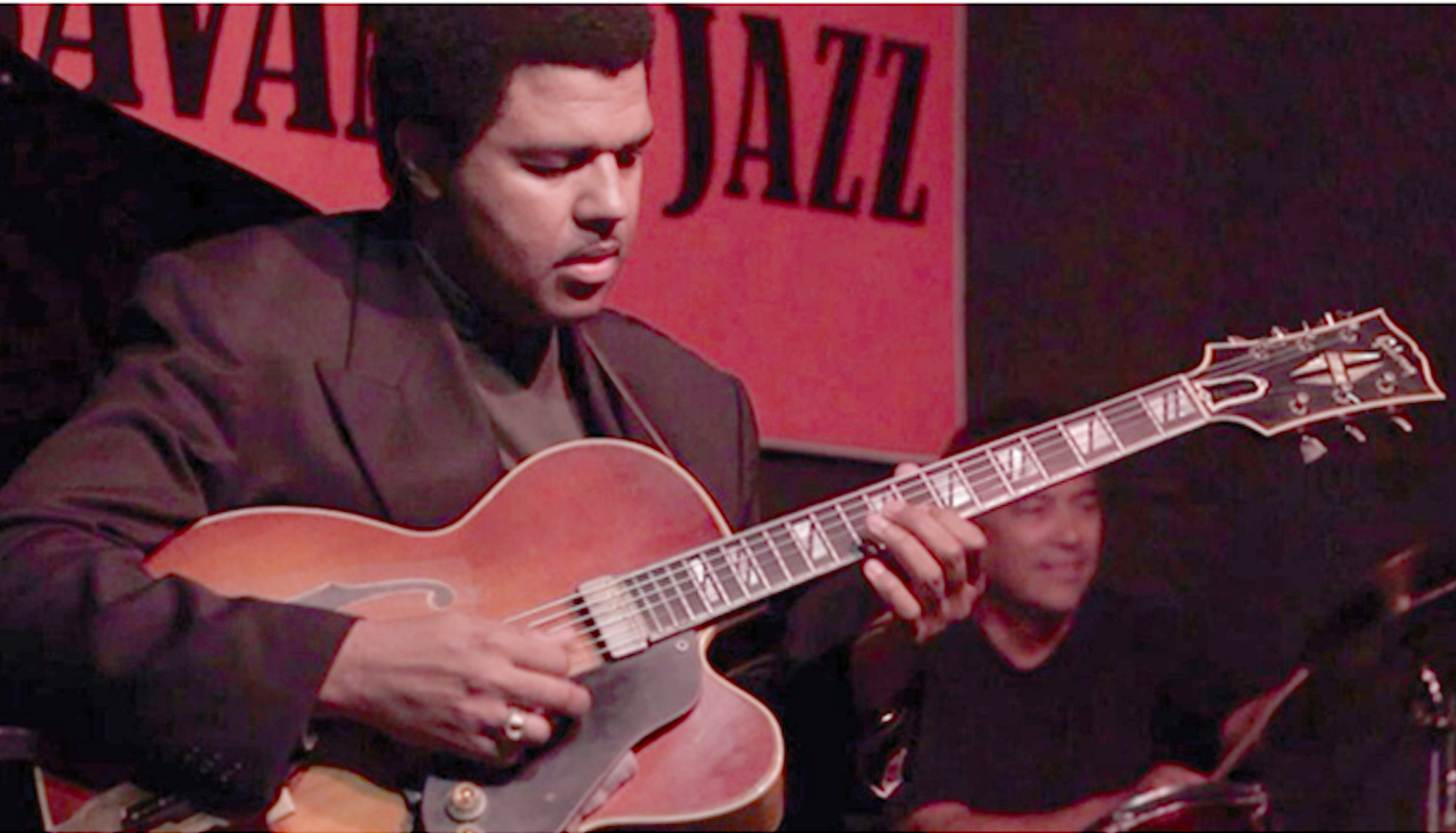
Cat’s Corner with Nathan Dias Savanna Jazz. 9pm, $10.

Orlando Cela Frankenart Mall, 515 Balboa, SF; www.orlandocela.com. 8pm, $10.

Dink Dink Dink, Gaucho, Eric Garland’s Jazz Session Amnesia. 7pm, free.

Frisky Frolics Rite Spote Cafe. 9pm, free.

Ricardo Scales Top of the Mark, 999 California, SF; www.topofthemark.com. 6:30pm, $5.

FOLK/WORLD/COUNTRY

Radney Foster, Misisipi Mike Cafe Du Nord. 8pm, $15.

DANCE CLUBS

Booty Call Q-Bar, 456 Castro, SF; www.bootycallwednesdays.com. 9pm. Juanita MORE! and Joshua J host this dance party.

Coo-Yah! Slate Bar, 2925 16th St, SF; www.slate-sf.com. 10pm, free. With Vinyl Ambassador, DJ Silverback, DJs Green B and Daneekah.

Hardcore Humpday Happy Hour RKRL, 52 Sixth St, SF; (415) 658-5506. 6pm, $3.

Mercedez Munro, and Ginger Snap.

Obey the Kitty: Justin Milla Vessel, 85 Campton Place, SF; www.vesselsanfrancisco.com. 10pm, $5.

THURSDAY 18

ROCK/BLUES/HIP-HOP.

Adam Ant, Brothers of Brazil Regency Ballroom. 8pm, $32.

Emily Bonn and the Vivants, Howell Devine, Stephanie Nilles Amnesia. 9pm, $7-$10.

Chris Cohen, Ashley Eriksson, Coconut Hemlock Tavern. 8:30pm, $10.

Bob Dylan Bill Graham Civic Auditorium, 99 Grove, SF; www.apeconconcerts.com. 7:30pm, $59.50-$125.50.

Freelance Whales, Geographer Mezzanine. 9pm, $20.

Generators, Sore Thumbs, Shell Corporation, Bastards of Young Thee Parkside. 9pm, $8.

Jon Gonzalez 50 Mason Social House, SF; www.50masonsocialhouse.com. 7pm.

Iron Lung, Process, Effluxus, Hunting Party Knockout. 10pm, $8.

Jane’s Addiction, Thenewno2 Warfield. 8pm, $52.50-$62.50.

John Lawton Trio Johnny Foley’s. 9pm, free.

Mansfield Aviator, Butterfly Knives, Capkins El Rio. 8pm, $5.

Meters Experience, Dredgetown Brick and Mortar Music Hall. 9pm, $15-$20.

Minibosses, Crashfast, Gnarboots Bottom of the Hill. 9pm, $10.

Poi Dog Pondering Great American Music Hall. 8pm, $21.

Rudy Columbini Band Biscuits and Blues. 8 and 10pm, $15.

Soft Pack, Crocodiles, Heavy Hawaii Slim’s. 9pm, $16.

Tift Merrit, Amy Cook Cafe Du Nord. 8pm, $16-$18.

Rags Tuttle vs Lee Huff Johnny Foley’s. 9:30pm.

Van She, popscene DJs Rickshaw Stop. 10pm, $13-$15.

JAZZ/NEW MUSIC

Cheryl Bentyne Rrazz Room. 8pm, $35.

Science Fiction Jazz 50 Mason Social House, SF; www.50masonsocialhouse.com. 10pm.

Stompy Jones Top of the Mark, 999 California, SF; www.topofthemark.com. 7:30pm, $10.

FOLK/WORLD/COUNTRY

Emily Anne Rite Spot Cafe. 9pm, free.

Twang! Honky Tonk Fiddler’s Green, 1330 Columbus, SF; www.twanghonkytonk.com. 5pm. Live country music.

DANCE CLUBS

Afrolicious Elbo Room. 9:30pm, $5-$7. With DJ-host Pleasuremaker.

All 80s Thursday Cat Club. 9pm, $6 (free before 9:30pm). The best of 80s mainstream and underground.

Base: Sasha Vessel, 85 Campton Place, SF; www.vesselsanfrancisco.com. 10pm, $5-$10.

Hubba Hubba Revue: Asylum DNA Lounge. 9pm, $12-$15.

Tropicana Madrone Art Bar. 9pm, free. Salsa, cumbia, reggaeton, and more with DJs Don Bustamante, Apocolypto, Sr. Saen, Santero, and Mr. E.

FRIDAY 19

ROCK/BLUES/HIP-HOP

Bleached Palms, Radishes Bender’s, 806 S. Van Ness, SF; www.bendersbar.com. 9pm, $5.

Bombay Bicycle Club, Vacationer Fillmore. 9pm, $22.50.

Coo Coo Birds, Electric Shepherd, Electric Magpie Thee Parkside. 9pm, $7.

Aaron Freeman Independent. 9pm, $25.

Lee Huff, Rome Balestrieri, Nathan Temby Johnny Foley’s. 9pm.

John Brown’s Body, Kyle Hollingsworth Band Great American Music Hall. 9pm, $20.

Kids on a Crime Spree, GRMLN, Manatee Hemlock Tavern. 9:30pm, $8.

Jason Lytle, Sea of Bees Swedish American Hall. 8pm, $18-$20.

Meters Experience, Tracorum, Swoop Unit Brick and Mortar Music Hall. 9pm, $15-$20.

Mixers Johnny Foley’s. 9pm, free.

Mustache Harbor, Sean Tabor Bimbo’s. 9pm, $22.

Night Hikes, Correspondence School, Houses of Light Amnesia. 7pm.

Bill Ortiz Biscuits and Blues. 8 and 10pm, $22.

Beth Orton, Sam Amidon Regency Ballroom. 8pm, $30.

Stolen Babies, Fuxedos, Darling Freakhead Bottom of the Hill. 9pm, $12.

Tiger Army, Goddamn Gallows, Death March Slim’s. 8:30pm, $23.

Whigs, Record Company, Fake Your Own Death Rickshaw Stop. 9pm, $12-$15.

JAZZ/NEW MUSIC

Audium 1616 Bush, SF; www.audium.org. 8:30pm, $20. Theater of sound-sculptured space.

Black Jazz Orchestra Top of the Mark, 999 California, SF; www.topofthemark.com. 9Pm, $10.

Harold Melvin’s Blue Notes Rrazz Room. 8pm, $30-$37.50.

FOLK/WORLD/COUNTRY

Bluegrass Bonanza Plough and Stars. 9:30pm, $6-$10. With Roseman Creek.

Kaweh Monroe, 473 Broadway, SF; www.kaweh.com. 9:30pm, $15. Flamenco rumba salsa.

Lee Vilensky Trio Rite Spot Cafe. 9pm, free.

DANCE CLUBS

Albino! Fela Kuti Birthday Celebration Show Elbo Room. 9pm, $10.

DJ What’s His Fuck Riptide Tavern. 9pm.

Fedorable Queer Dance Party El Rio. 9pm, free.

Joe Lookout, 3600 16th St.,SF; www.lookoutsf.com. 9pm. Eight rotating DJs.

Odyssey with Neon Leon Public Works. 10pm, $10.

Old School JAMZ El Rio. 9pm. Fruit Stand DJs spinning old school funk, hip-hop, and R&B.

Paris to Dakar Little Baobab, 3388 19th St, SF; (415) 643-3558. 10pm, $5. Afro and world music with rotating DJs.

Peaches (DJ set) 103 Harriet, SF; www.1015.com. 9pm.

Rage By the Pound DNA Lounge. 9pm, $25. With Funtcase, High Rankin, Schoolboy, Nerd Rage.

Toolroom Knights: Paul Thomas, David Gregory Vessel, 85 Campton Place, SF; www.vesselsanfrancisco.com. 10Pm, $20-$30.

SATURDAY 20

ROCK/BLUES/HIP-HOP

Bassnectar, Ghostland Observatory, Gramatik, Gladkill Bill Graham Civic Auditorium, 99 Grove, SF; www.apeconconcerts.com. 8pm, $40.

Rome Balestrieri, Nathan Temby, Lee Huff Johnny Foley’s. 9pm.

Yasiin Bey (formerly known as Mos Def) Regency Ballroom. 9pm, $38.

Bottle Kids, Loose Cuts 50 Mason Social House, SF; www.50masonsocialhouse.com. 7pm.

Cheap Time, Unnatural Helpers, Warm Soda, Krells Hemlock Tavern. 9pm, $10.

Zach Deputy Boom Boom Room. 8pm, $15.

Willis Earl Beal, Terese Taylor, Sean Smith Bottom of the Hill. 9pm, $10.

Foreign Exchange Mezzanine. 9pm.

GoKart Mozart Biscuits and Blues. 8:30 and 10:15pm, $10.

Jorma Kaukonen Swedish American Hall. 7 and 10pm, $32-$35.

Love Songs, Bar Feeders, Cyclops Bender’s, 800 S. Van Ness, SF; www.bendersbar.com. 10pm, $5.

Oak Creek Band Hotel Utah. 9pm, $8.

Pre Legendary, Chingadero Thee Parkside. 3pm, free.

Skin Divers Johnny Foley’s. 9pm, free.

Lavay Smith Biscuits and Blues. 8 and 10pm, $20.

Stars, Diamond Rings, California Wives Fillmore. 8pm, $29.50.

Rodger Stella, Bren’t Lewiis Ensemble, Jencks Hemlock Tavern. 5pm, $6.

Tea Leaf Green, Mahgeetah Independent. 9pm, $20.

Tiger Army, Suedehead, God Module Slim’s. 8:30pm, $23.

Nick Waterhouse, Allah-Las Bimbo’s. 9pm, $18.

Michael Ward with Dogs and Fishes Riptide Tavern. 9:30pm, free.

Wax Idols, Wymond Miles, Evil Eyes Brick and Mortar Music Hall. 8pm, $7-$10.

JAZZ/NEW MUSIC

Audium 1616 Bush, SF; www.audium.org. 8:30pm, $20. Theater of sound-sculptured space.

Harold Melvin’s Blue Notes Rrazz Room. 7 and 9:30pm, $30-$37.50.

"UP: San Francisco Street Festival and Exposition" 5M, Fifth and Mission, SF; sf.urbanprototyping.org. With Mark Fell, Aaron David Ross, Afrikan Sciences, Brian Hock, Loric, and more.

FOLK/WORLD/COUNTRY

Go Van Gogh Revolution Cafe, 3248 22nd St, SF; (415) 642-0474. 9pm, free.

Tony Ybarra Red Poppy Art House. 7:30pm.

DANCE CLUBS

Bootie SF: More Cowbell DNA Lounge. 9pm, $15.

Dancing Ghosts Hot Spot, 1414 Market St., SF; www.dancingghosts.com, 9:30 pm, $5, free before 10. DJs Xander and Le Perv host this darkwave dance party.

"DSF Clothing Co. and Art Gallery Anniversary" Public Works. 9pm, free with RSVP. With Motown on Monday DJs, Nickodemus, Afrolicious.

Fringe Madrone Art Bar. 9pm, $5. Indie music video dance party with DJ Blondie K and subOctave.

Masquerotica Concourse Exhibition Center, 636 Eighth St, SF; masquerotica2012.eventbrite. 8:30pm. With Stanton Warriors, Ron Kat’s Katdelic, Action Jackson, Hubba Hubba Revue, and more.

Nickodemus and Afrolicious Public Works Loft. 10pm, $5.

OK Hole Amnesia. 9pm.

Paris to Dakar Little Baobab, 3388 19th St, SF; (415) 643-3558. 10pm, $5. Afro and world music with rotating DJs.

Radio Franco Bissap, 3372 19th St, SF; (415) 826 9287. 6 pm. Rock, Chanson Francaise, Blues. Senegalese food and live music.

Saturday Night Soul Party Elbo Room. 10pm, $5-$10. With DJs Lucky, Paul Paul, Phengren Oswald.

Smiths Party Slate Bar, 2925 16th St, SF; www.slate-sf.com. 10pm, $5. Sounds of the Smiths, Morrissey, the Cure, and New Order.

Wild Nights Kok BarSF, 1225 Folsom, SF; www.kokbarsf.com. 9pm, $3. With DJ Frank Wild.

SUNDAY 21

ROCK/BLUES/HIP-HOP

Babmu Station, Inna Vision Independent. 9pm, $18.

Craig Horton Biscuits and Blues. 7 and 9pm, $15.

Tony Lucca, Justin Hopkins Cafe Du Nord. 8:30pm, $15.

Macklemore and Ryan Lewis, Dee-1 Fillmore. 8pm, $25.

Mako Sica, Brandon Nickel, Jeff Zittrain Band Hemlock Tavern. 6pm, $6.

Terry Savastano Johnny Foley’s. 9pm, free.

Socionic Rockit Room. 8pm, $8.

Allen Stone, Yuna, Tingsek Great American Music Hall. 8pm, $17.50.

Mike Stud Slim’s. 8:30pm, $13-$16.

Taking Back Sunday, Man Overboard Regency Ballroom. 7:30pm, $27.

JAZZ/NEW MUSIC

Kaki King Yoshi’s SF. 7pm, $20; 9pm, $15.

Harold Melvin’s Blue Notes Rrazz Room. 7pm, $30-$37.50.

Rob Reich Trio Bliss Bar, 4026 24 St, SF; .www.blissbarsf.com. 4:30pm, $10.

FOLK/WORLD/COUNTRY

Hillbilly Swing, B Stars Amnesia. 9pm, $7.

Sofia Talvik Hotel Utah. 8pm, $8.

DANCE CLUBS

Daytime Realness El Rio. 3pm, $8-$10. With Heklina, Stanley Frank, and DJ Carnita.

Dub Mission Elbo Room. 9pm, $6 after 9:30pm. With DJs Sep, Ludichris, Silver Back.

Jock Lookout, 3600 16th St, SF; www.lookoutsf.com. 3pm, $2.

MONDAY 22

ROCK/BLUES/HIP-HOP

Damir Johnny Foley’s. 9pm, free.

Shiny Toy Guns, MNDR, Of Verona Rickshaw Stop. 8pm, $17.

Allen Stone, Yuna, Tingsek Great American Music Hall. 8pm, $17.50.

Ultraista, Astronauts, etc. Independent. 8pm, $18.

JAZZ/NEW MUSIC

Bossa Nova Tunnel Top, 601 Bush, SF; (415) 722-6620. 8-11:30pm, free. Live acoustic Bossa Nova.

Gregg Marx Rrazz Room. 8pm.

Philippe Petit, Xambuca Cafe Du Nord. 8pm, $16.

Reuben Rye Rite Spot Cafe. 8:30pm, free.

DANCE CLUBS

Death Guild DNA Lounge. 9:30pm, $3-5. Gothic, industrial, and synthpop with Joe Radio, Decay, and Melting Girl.

Crazy Mondays Beauty Bar, 2299 Mission, SF; www.thebeautybar.com. 10pm, free. Hip-hop and other stuff.

M.O.M. Madrone Art Bar. 6pm, free. DJs Timoteo Gigante, Gordo Cabeza, and Chris Phlek playing all Motown every Monday.

Soul Cafe John Colins Lounge, 138 Minna, SF; www.johncolins.com. 9pm. R&B, Hip-Hop, Neosoul, reggae, dancehall, and more with DJ Jerry Ross.

Vibes’N’Stuff El Amigo Bar, 3355 Mission, SF; (415) 852-0092. 10pm, free. Conscious jazz and hip-hop with DJs Luce Lucy, Vinnie Esparza, and more.

TUESDAY 23

ROCK/BLUES/HIP-HOP

Bitch Magnet, Life Coach, Gold Medalists, Imperils Rickshaw Stop. 7:30pm, $15.

Calexico, Dodos Fillmore. 8pm, $25.

Tim Cohen, Jessica Pratt, Dylan Shearer Amnesia. 9:15pm.

Dan Deacon, Height with Friends, Chester Endersby Gwazda, Alan Resnick Great American Music Hall. 8pm, $16.

Nick Halstead Cafe Du Nord. 8pm, $16.

Moonbell, Golden Awesome, Indian Summer Knockout. 9:30pm.

Mt Hammer, Ash Thursday, Manzanita Falls El Rio. 7pm, $5.

Room of Voices, Broun Fellinis Elbo Room. 9pm, $10.

Rusted Root Independent. 8pm, $25.

Stan Erhart Band Johnny Foley’s. 9pm, free.

Qumran Orphics, Bill Orcutt, Marissa Anderson Hemlock Tavern. 8:30pm, $6.

On the Cheap Listings

0

WEDNESDAY 17

“Lube: Deciding Which is Best for You” Feelmore510, 1703 Telegraph, Oakl. (510) 891-0199, www.feelmore510.com. 7:30pm, free. Oakland adult shop Feelmore510 wants you to educate yourself before you lube yourself. The adult store is hosting an informative workshop that will school you on the lube market, the best kinds of lube for various sensitive skin types, and the ingredients in lube. People of all genders and sexualities are welcome.

THURSDAY 18

“Woman Warrior” Poetry Reading Poetry Center, Humanities Building, SFSU, 1600 Holloway, SF. (415) 338-2227, creativestate.sfsu.edu. 4:30pm, free. Gulf War veteran Sean McClain Brown, who suffers from PTSD, credits renowned writer, activist, and professor emerita at UC Berkeley Maxine Hong Kingston for saving his life when she became his writing teacher. Their friendship will be on full display as they join together for a reading of Hong Kingston’s beloved work, hosted by SFSU’s Poetry Center.

FRIDAY 19

Release party for Gratta Wines’ new “Garage Blend” El Rio, 3158 Mission, SF. (415) 282-3325, www.mugsywinebar.tumblr.com. 5:30-8:30pm, free. Mugsy’s Wine Bar will be occupying El Rio’s scenic back patio to debut the Bayview’s Gratta Wines new release entitled “Garage Blend.” The new wine is an amalgamation of Sonoma Cabernet, Zinfandel, and Petit Sirah. Complementing the wine at this event will be oysters from El Rio and Italian flatbread from Piadina. Yum!

2 Blocks of Art Sixth St. between Market and Howard, SF. (415) 553-4433, www.urbansolutionssf.org. 4-8pm, free. In conjunction with the 24 Days of Central Market Arts Festival, Urban Solutions will be painting two blocks in the mid-market area with a variety of local art. The festival’s main aim is to showcase the intriguing collection of galleries, theaters, shops and bars that make up the mid-market neighborhood. Think Sunday Streets but hella condensed.

SATURDAY 20

Native Plant Sale Miraloma Park Improvement Club, 350 O’Shaughnessy, SF. (415) 531-2140, www.cnps-yerbabuena.org. 1-5pm, free. Is your garden sorely lacking “native” plants? Then skip on over to the Yerba Buena Native Plant sale, where vendors will be selling a diverse array of flora and fauna native to Northern California.

Lit-Night at Rolling-Out: Lina Shustarovich and the Immigrant Experience Rolling-Out, 1722 Taraval, SF. jstevensonstories.blogspot.com. 7pm, free. Memoirist and former editor at Switchback magazine Lina Shustarovich will be reading excerpts from her upcoming work, detailing her childhood as part of the Russian-Jewish diaspora. Post-reading, there will be an open mic for others to expound upon their immigrant experiences.

Leap’s Sandcastle Contest Ocean Beach, Great American and Fulton, SF. (415) 512-1899, www.leaparts.org. 10am-4pm, free. We all know Ocean Beach is way too cold to swim in without an inch-thick wetsuit — but one thing it’s good for is hosting sandcastle building competitions. Local arts education nonprofit Leap will be a hosting Leap Year version of the contest that will feature architects and engineers teaming up with elementary school students. Participants have just four hours to create the best and most imaginative sand sculptures. The artistically challenged need not sigh, because there’ll be a “Community Castle” area where they’ll be able to frolic in.

23rd Annual Potrero Hill Festival Potrero Hill Neighborhood House, 953 De Haro, SF. (415) 826-8025, www.potrerofestival.com. 9am-4pm, $12. Attention foodies with a special affinity for New Orleans-style treats: the Potrero Hill Neighborhood House will be kicking off its 23rd annual Potrero Hill Festival with a special New Orleans brunch prepared by the California Culinary Academy. Post brunch the festival will spill over onto 20th St. between Missouri and Wisconsin and will continue the party with the expected block party pageantry, like food trucks, live kids entertainment, and pop-up arts and crafts shops.

SUNDAY 21

SF Architectural Heritage Free Community Day Haas-Lilienthal House, 2007 Franklin, SF. www.sfheritage.org. 11am-4pm, free. Pacific Heights sure has some swanky residences, but prepare yourself to witness one of the swankiest houses in Pac Heights. The house in question is the 1886 Victorian masterpiece Haas-Lilienthal house. The SF Architectural Heritage organization will serve as your guide as it hosts a guided tour of the recently designated “National Treasure.” Late 19th century monocles not included.

TUESDAY 23

Chris Ware and Charles Burns JCCSF, 3200 California, SF. www.jccsf.org/arts. 7pm, free reservations requested. Genre-busting graphic novelists Chris Ware (Jimmy Corrigan: The Smartest Kid on Earth) and Charles Burns (Black Hole, X’ed Out) will be holding a conversation on their new works and the nature of graphic novels hosted by the local JCCSF.

SF Stories: Alejandro Murguia

0


46TH ANNIVERSARY SPECIAL I saw Jack Micheline reciting Skinny Dynamite

on the corner of 16th & Valencia

and he was angry

and the next day he was dead on the last BART train to Concord

and maybe that’s why he was angry

I met Harold Norse shuffling around in a beaten world

his pockets stuffed with poems only hipsters read

It’s a cesspool out here he sighed

before retreating to his room in the Albion Hotel

where angels honeycomb the walls with dreams

and the rent is paid with angry poems

I heard Oscar Zeta Acosta’s brown buffalo footsteps

pounding the Valencia Corridor

and he was shouting poetry at the sick junkies

nodding with their wasted whores

in the lobby of the Hotel Royan “The Mission’s finest”

and even the furniture was angry

I joined the waiters at the bus stop

the waitresses the norteños trios the flowers sellers

the blind guitarist wailing boleros at a purple sky

the shirtless vagrant vagabond ranting at a parking meter

the spray paint visionary setting fire to the word

and I knew this was the last call

We were tired of living from the scraps of others

We were tired of dying for our own chunk of nothing

And I saw this barrio as a freight train

a crazy Mexican bus careening out of control

a mutiny aboard a battleship 

and every porthole filled with anger

And we were going to stay angry

And we were not leaving

Not ever leaving

El corazón del corazón de La Misión

El Camino Real ends here


Gimme Moors

0

cheryl@sfbg.com

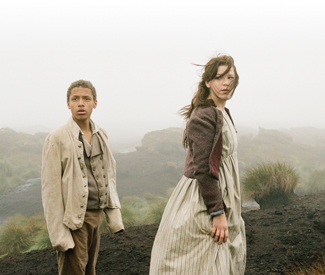
FILM Emily Brontë’s Wuthering Heights has inspired multiple films, as varied in quality as the 1939 Best Picture nominee starring Sir Laurence Olivier — and the 2003 made-for-MTV adaptation, in which “Heath” is a pouty, motorcycle-riding himbo. The source material may seem an odd choice for acclaimed British director Andrea Arnold, best-known for 2006’s Red Road and 2009’s Fish Tank, both gritty films about working-class people, unfussily shot using hand-held cameras.

Resisting the urge to contemporize a classic, or shoot it as a traditional costume drama, Arnold takes her version in a near-experimental direction; her Heights makes Cary Fukunaga’s edgy 2011 interpretation of Jane Eyre (starring Fish Tank‘s Michael Fassbender) look tame by comparison. I spoke with Arnold about her daring spin on the Gothic classic.

San Francisco Bay Guardian You’re known as such a contemporary director, in both subject and shooting style. What made you want to take on Wuthering Heights?

Andrea Arnold It’s an interesting question, because I don’t really know. I knew at the time that it was a sort of stupid idea, but I couldn’t help it. I just had to do it. I don’t know why I became so possessed, and I still don’t really know why. It was a book that I had a fascination with — I think a lot of people do. It’s a very troubling book, a very unsettling book, a book that I don’t think is easily understood.

But I seem to like trouble. I sort of realized this about myself, that I’m always pushing myself in ways, like, I’ve got no idea how it’s going to work out, but I’m going to learn. I do think I’m not afraid of going on a journey that I don’t know where it’s going to go. With this film and this whole project, that definitely was a very unnerving and strange decision.

SFBG How did you approach adapting a classic literary work that’s been made into so many films before?

AA I didn’t think like that, or worry about that. I mean, I knew that it had been remade an awful lot of times. I think I didn’t realize how many times. But I just thought about when I went to film school we were all given the same scripts, and 20 people all made something completely different. With such rich material, you can find your own way. And I think when you get attached to something and you have to do it, you’re not sensible anyway.

I’ve always said that once I’ve got an image and an idea about making something, that it chooses you. You don’t choose it. And this was exactly the same. I just got obsessed with the idea of doing it. It wasn’t like I thought very sensibly about what had gone before. I didn’t think about it being a career move in any way.

SFBG Watching the film, it was clear that you — like Emily Brontë — had been inspired by the setting. The landscape is practically a character in the film, and the imagery includes lots of close-ups of insects and plants.

AA I think the difficulty of the location really [influenced] the film, in terms of the way everyone was feeling — it was hard to get around, and [we were] genuinely cold and fed up with the mud. First of all, I tried to find somewhere near where Emily had written it, which was the moors near Haworth, where she lived. The moors near Haworth are a bit like being in the middle of the ocean. They’ve got this undulating, endless feel to them. It’s really beautiful in that way: you feel the moors are everything and there’s nothing else in the world when you’re in the middle of it.

But it’s not so isolated around that particular area anymore. We couldn’t find anywhere that you couldn’t see things on the horizon. So we had to go further. We went to the North York Moors. And there were very few buildings, real places — I always wanted a real location — that were truly isolated. It wasn’t like I had lots of choice.

But I really like that place [where we filmed]. It was a very difficult place to work, though, no doubt. Everyone who worked on it said it’s one of the hardest things they’ve ever done, just physically. We couldn’t get vehicles there so we had to carry all of the cameras up the hills.

SFBG The film has gotten some attention for your casting choices — black actors play Heathcliff at various ages, and race is a recurring theme in the film. What motivated those decisions?

AA When I looked at the book, and all the descriptions of Heathcliff, I really felt that he wasn’t white. I was really surprised, after looking closely at how he was described, why nobody has actually done that before. I think if you’re being really faithful and truthful to the descriptions, that he’s more Asian than he is African. The fact that he’s called a gypsy, the Romany gypsies of that time would have originally come from Asia, and they’re very dark-skinned.

But after sort of investigating a bit more, I thought what really matters is that he’s different. I began to realize that Heathcliff is really Emily Brontë, and that she felt different for being female. There’s something about the book that makes me think that’s a large part of what it’s about.

SFBG The material may be a change for you, but the film is still shot like your other films, using a hand-held camera. Why do you prefer this method?

AA I didn’t think about making it in any different way than I normally do. I like hand-held cameras because if I’m working with non-actors, and there were lots of non-actors in this one, I don’t like them to feel restricted. If you put cameras on tripods then it sort of harnesses things. You have to start telling people where to stand, and hit marks. That’s something that I don’t enjoy.

Also, I didn’t see any reason why a period film shouldn’t have hand-held camera. I thought, just because we’ve seen lots of period films where they’re all very respectful, that doesn’t mean that’s how I have to be. I didn’t feel that I had to follow any sort of traditions. I just felt like I was trying to see it in my own way, and I didn’t let myself be inhibited by what had gone before. *


WUTHERING HEIGHTS opens Fri/19 in Bay Area theaters.

Close encounters

0

arts@sfbg.com

DANCE The six dancers of Kunst-Stoff’s the moment you stood still…#7 moNOs (Oct. 13-14 at the Old Mint Museum) managed to do something that had previously seemed impossible: they created a playground out of the building’s crumbling courtyard, surely the city’s most oppressive, garrison-like structure. At 50 minutes this romp of stealing, sharing, and varying movement phrases ranged from athletic to balletic, virtuosic to pedestrian. It would have worn out its ability to snare you into its universe, had it not ended with artistic director Yannis Adoniou’s free-spirited and loose-limbed solo, sweetly underscored by Bruno Augusto on keyboard. It’s easy to forget that this entrepreneurial artist is also a fine dancer.

Kunst-Stoff is not so much a company as a place where artists come together to explore affinities and differences. moment, one of a series of such encounters, is the result of this sextet having bounced back and forth ideas of the most disparate nature. Together they came up with scenes which varied between silly and somber, camp and charming. There was as much room for a passing-a-ball game — including, of course, the ubiquitous audience volunteers — as crawls and rolls on the floor and leaps across space. Letting down your hair, as Katie Gaydos did in her initial diagonal, seemed to be the order of the afternoon.

Initially unrelated ideas began to coalesce into something like a patchwork of movement, with rather surprising resilience. A dancer morphed from lying down with beating legs into somersaults and yoga poses. Later, frisky pile-ups did not really look so harmless.

For all the frantic activity in which dancers did not only pick up and vary phrases from each other, but also exchanged clothes, moment did not lack the stillness alluded to by its title. Lindsey Renee Derry, who can scream with the best of them, stood in a relevé in which her toes surely were glued to the floor. Gaydos looked abandoned on top of a “monument” while Calvin Hilpert, holding a weight aloft as if it was about to drop on his head, was hilarious with a screechy Frank Sinatra imitation. moment‘s recurring refrain had the dancers sitting on a bench. We looked at them; sometimes they looked back at us.

Elsewhere on stage this past weekend: British choreographer Russell Maliphant introduced himself at Cal Performances with the theatrically spectacular Eonnagata in 2010. Now, courtesy of San Francisco Performances, he returned with AfterLight (Oct. 13-14, Yerba Buena Center for the Arts), inspired by Russian dancer and Ballets Russes choreographer Vaslav Nijinsky. A great dancer and even greater choreographer, Nijinsky was also schizophrenic and spent the second half of his life in mental institutions. His best-known surviving work Afternoon of a Faun thoroughly shocked audiences at its premiere in 1912.

On the basis of his concept Maliphant intermittently draws you into a murky atmosphere of, perhaps, madness. But as a dance you only want to watch AfterLight once; further exposure is unlikely to reveal hidden treasures.

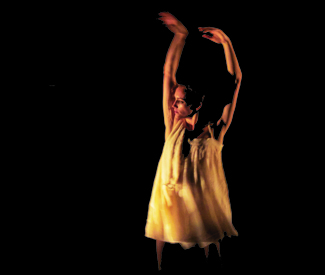
In Michael Hull’s lighting design, AfterLight is literally dark; at times you can hardly make out the dancers in a couple of shifting spotlights or through a thick carpet of inchoate shapes. As a single-minded expression of a restless mind this worked; in terms of a time-based art, it lacked sustaining power.

AfterLight opened with a solo for Thomasin Gülgeç, spinning as if on a turntable while his arms reached into the darkness around him. At the end we returned to that solitary figure that, instead of opening his body to an enlarging consciousness, shuts down into solitary whirls. In part two, the white-clad Silvina Cortés and Gemma Nixon’s gentle liquidity could have come from Isadora Duncan dancers.

Maliphant’s choreography has no hard edges; its performers spiraled, curled, and spun from one evanescent moment to the next. Sometimes this felt like watching smoke, except that these dancers were anchored in a deep-grounded muscularity that allowed them to connect into an endless stream of rounded shapes. In the first pas de deux, Gülgeç and Nixon’s weighty folding over each other wonderfully recalled Leon Bakst’s illustrations of Scheherazade. Though conceptually intriguing, AfterLight turned out to be a one-shot deal; whether there is more meat to this choreographer remains to be seen.

SF Stories: Zahir Janmohamed

2

46TH ANNIVERSARY SPECIAL Of the many things I adore about San Francisco, one of them is that the word “Palestine” is not treated like Voldermort’s name, the one that dare not be uttered. You can say you are Palestinian here and no one will freak out. San Franciscans, most of them at least, will not tell you — as Newt Gringrich did — that your culture is invented, or that your identity (or your struggle) is not a valued part of the tapestry of this city.

I am not used to this. I spent the past nine years living in Washington DC, where I became accustomed to meeting Arab shop owners who dodged questions about their country of origin. Some feared a backlash from customers. Others worried about government harassment and eavesdropping. One Yemeni shopkeeper near the Pentagon even went as far as creating to-go boxes with Americans flags imprinted on them, the words “we are proud of you” under each flag. Unfortunately, it’s like this now in many cities in the US, where to be Arab, Iranian or South Asian is to abdicate your ethnic identity, to pretend it’s just not there.

That’s not exactly true in San Francisco. This city isn’t perfect and it has its own ugly past and current struggles with racial integration — but San Francisco at least tries to inculcate its motto on all who are lucky enough to live here: just be who you are. You can fly a Palestinian flag outside your business and chances are you may even attract more customers because of it. And if you show up to work wearing a red, white and blue covered hijab or turban in the city, people may very well laugh at you.

Last week I walked through the Mission district interviewing Palestinian American business owners. On Mission Street, I saw my friend Ashraf sitting on a bar stool at the café he opened two years ago. The San Francisco born Palestinian-American, whose parents were born outside of Jerusalem, wore an SF Giants baseball cap and adjusted it often during our meeting, revealing a full head of hair already graying at the age of 34.

Ashraf remembers car trips with his parents to the Samiramis Grocery just down Mission Street. Samir Khoury, a Palestinian Christian from Ramallah who came to San Francisco in 1953, opened the iconic grocery store in 1972. For the longest time it was the only place where Ashraf’s family could buy zaatar or rent Egyptian movies. It always had everything we had back home, Ashraf says.

Ashraf points out that within a small radius of his cafe, there are a now number of Palestinian owned businesses, including Philz Coffee and Bi-Rite Creamery.

“But no one really knows these are Palestinian owned businesses,” Ashraf says. “And even if they found out, no one would really care.”

I tell Ashraf about a sandwich shop I used to visit in Washington DC where the owner insisted on telling everyone that he was Jordanian. One day the owner pulled me aside and confessed he was really Palestinian from Bethlehem but told people he was Jordanian because he thought it “sounded better.”

When Ashraf hears this he laughs. “It’s not like that here,” he says. “In San Francisco you don’t have to play that act.”

Zahir Janmohamed is a San Francisco writer and former Congressional aide.

SF Stories: Michelle Tea

0

46TH ANNIVERSARY SPECIAL When I was about 21, living with my parents outside Boston, I started making zines. I sent my first one, Bitch Queen, to Maximum Rock ‘n’ Roll, and it wound up getting reviewed in MRR‘s Queer Zine Explosion issue. I hadn’t even known there was a queer zine explosion happening, but my little P.O. box was soon stuffed with zines from zinesters wanting to trade issues, and with enough dollar bills that I could cross the street to the mall and get lunch. It was the first experience I had of being given something for my writing, and, more importantly, finding community with other writers.

Later that year my relationship fizzled and I found myself unexpectedly moving to San Francisco. It felt like I had stepped right into the zines I’d been devouring — not only because the punk-queer scene really embodied the content and aesthetics I’d become obsessed with — torn, cut ‘n’ paste, glue-sticked and Sharpied, riffing on radical feminism, dirty queer sex, anti-racist, anti-sizest and more — but because the people from the actual zines were slamming up against me at the queer clubs I was dancing at!

There was Lynn Breedlove, whose daredevil fucking-shit-up bike messenger adventure story I’d read in Chainsaw. There was Youme, the sweetly, long-haired girl who inked the pervy, graphic novel-zine Get What You Want. There’s Larry Bob from Holy Titclamps, and Matt Wobensmith from Outpunk! I think that woman with the spiral-shaved head in the front row of the poetry reading at the Bearded Lady is Kathy Acker, from the Angry Woman book. Yeah — it is. And I swear I saw those heavily tattooed, psychotically pierced girls over there in a DIY photo spread in some grainy, Xeroxed number.

An obsessive fan my whole life, it took me an awe-filled moment to understand that I had become obsessed with a scene I could actually participate in. Showing up to dance at Junk at The Stud and getting taken home by the girl on the cover of the latest modern-primitive zine was just something that happened when you were living in the center of everything interesting, San Francisco in the 1990s. No more longing for Warhol’s Factory, the heyday of the Mud Club, front row at CBGBs, a room at the Chelsea, London in the 70s, the East Village in the 80s or whatever cultural moment I was upset at time itself for causing me to miss. I had the tremendous feeling of being part of something larger than myself, righteous with activism and wild with sex and art.

I pierced one nipple at Fakir Musafar (wait, the guy from the ReSearch Book???)’s piercing school, where you only had to pay for the jewelry, the piercing, done by a student, was free. Even so, I could only afford a single ring, so I only pierced one nipple, and the ring fell out anyway, while having sex with someone I don’t remember anymore. The San Francisco queer-punk scene in the 90s was adamant in its invitation that anyone could participate. It didn’t matter what you looked like, you were invited to fuck yourself up a little and whammo, you are getting massively laid. Broke? Write about it, steal copies from Kinko’s –look, you’re a publishing magnate! Got a bad attitude? Awesome, you are now mayor of dyketown, go punch someone. Every bit of antisocial behavior punished elsewhere was here politicized and celebrated in the ongoing experiment of how far could everything be pushed. And at it’s heart, the culture was a literary one, with zines its many bibles, its textbooks, its canon.

Michelle Tea is the author of many books, including the 90s classic Valencia and the forthcoming A Mermaid in Chelsea Creek (McSweeney’s). She is the editor of Sister Spit Books, an imprint of City Lights, and the Executive Director of RADAR Productions, which hosts a Polka Dot Cocktail Party with queer studies scholar and curator Jonathan Katz, at a private home, on October 28th. The link: http://www.brownpapertickets.com/event/282115


SF Stories: Annalee Newitz

0

46TH ANNIVERSARY SPECIAL Right now, at UC Berkeley, somebody is inventing a new organism. Across the Bay, at the San Francisco hacker space Noisebridge, somebody is programming a giant array of LEDs they bought from a cheerfully piratical Chinese website that sells the lights on long ribbons rolled tightly into bundles. On Mount Tam, long after the park closes on Saturday night, a group of amateur astronomers has set up telescopes and is surveying Messier objects. In Golden Gate Park, historians are leading walking tours; in the Presidio, the Park Service has just painstakingly recreated a dune ecosystem that had been destroyed by development decades ago. And over at Tech Shop, in SoMa, somebody is inventing a high-tech prosthetic that will turn disabilities into superpowers.

The San Francisco Bay Area is globally famous for its subversive subcultures, from the hippies and punks to the hipsters and steampunks. But what we usually forget is that scientists and engineers are part of the city’s phylogeny of subversives too. The Bay Area was home to the nation’s first conservationist movement in the early twentieth century, as well as the first urban “sidewalk astronomy” club in the 1960s. The Homebrew Computer Club, whose members included a bunch of weirdos who invented the first home PCs, started in Silicon Valley in the 1970s. The people who participated in these groups, like John Muir and Steve Wozniak, were activists. Their goal was to teach everyone about science, so that we could use science to transform our cities and the world.

We did it, too. In the 1960s, conservationists prevented developers from choking the Bay with landfill so they could build more condos. In the 1980s, computer scientists at Stanford and Berkeley organized to educate the public about the incredible dangers of Reagan’s “Star Wars” project, a computerized missile defense system. And today, Bay Area scientists are still trying to save the world. Earthquake engineers at an enormous lab in Richmond are figuring out ways to construct buildings that won’t collapse when the Big One hits. Biologists at Walnut Creek’s Joint Genome Institute are using a fleet of genome sequencers save the environment by figuring out which plants make the best biofuels — and which microorganisms are the best carbon sinks.

It’s no accident that San Francisco is home to two of the country’s most radical experiments in politicized science: the Electronic Frontier Foundation (EFF), which fights legal battles to protect people’s privacy and free speech in the realms of technology; and the Public Library of Science (PLoS), which makes scientific journal articles freely available online under open copyright licenses. Both organizations challenge the conventional wisdom that technology and science should be controlled by an elite few.

Here in the Bay Area, we use education to disturb the peace. We do science in the streets. When it comes to rational inquiry, we do not fuck around. And that is why San Francisco will always be a city with one glowing tentacle wrapped tightly around the future. Of course, our version of tomorrow isn’t ruled by brain-eating zombie authoritarians and mind-controlled mutants. Instead, it’s full of green energy, freely-shared information, robotic exoskeletons for people who are paralyzed, carefully maintained ecosystems, and Utopian experiments with Internet democracy. I know you’ve seen that future, too. It lurks in labs and libraries. Of course there are always reasons to be pessimistic. But sometimes, when you climb a hill and look out at the open Bay, you cannot suppress the feeling that we are inventing a better tomorrow.

Annalee Newitz is a surly media nerd who is editor and time distortion field operator for i09.com.


Pre-lloween

0

marke@sfbg.com

SUPER EGO “We wanted to put together something that truly reflects San Francisco on its most popular holiday,” DJ Syd Gris of Opulent temple tells me over the phone. “A titillating, intoxicating kaleidoscope of San Francisco flavor with soulful, sexy music. And zombie strippers.”

He’s talking about the massive Masquerotica (Sat/20, 8:30pm-3am $55–$125, creative costume expected. San Francisco Concourse Exhibition Center, 635 8th St., SF. www.maquerotica.com ), a perfect kick-off to the insane Halloween season, which pretty much does include frisky input from most of the more risquee club scenes SF’s got going — Kink.com, Anon Salon, Mission Control, Vau de Vire, Hubba Hubba Revue, Bondage-A-Go-Go, Asian Diva Girls, Club Exotica … and then for kicks, Trannyshack. Hey, different strokes! Please have sex with Trannyshack if you want.

There also promises to be some intriguing tunes, from electro-house headliners Stanton Warriors and 15-piece funk band Action Jackson right on through to the early R&B Hard French DJs and hard-driving Mr. Gris himself. (We’ll also probably be hearing from a lot from gay rapper Cazwell’s alabaster abs as well. Squee squee!) http://www.youtube.com/watch?v=hyO9D3t0jVM

“The demise of the Exotic Erotic Ball here a few years ago provided an opportunity to put the focus back on local talent while still keeping the sexy vibe. We’d like to think that we’re sanding off some of the rougher edges of what the Erotic Exotic and the Castro became, so that people feel more comfortable being themselves. Or getting out of themselves. Whatever the case may be.”

Although there’s no hardcore sex allowed at Masquerotica (no fear, there’ll be plenty of makeout areas), why do San Franciscans weave so much hanky-panky into our pagan revels? Or did I just answer my own question?

“Halloween is partly about being able to express yourself in ways that don’t involve judgement, and so a lot of subcultural communities found acceptance during the holiday,” Gris said. “We want to honor that. We’re a big tent, and we want to fill it with all the people and things that turn us on in the Bay Area.”


MOVE D

I have a scary-powerful crush on this wizard of wide-ranging techno, whose epic sets with live bells and whistles are painterly in their soundscape effects and irresistible in their atmospheres. You can dance to them, too. With DJs Conor, Jonah Sharp, and Mike B.

Thu/18, 9pm-3am, $12–$15. Public Works, 161 Erie, SF. www.publicsf.com


REAGENZ

Oh hey, did I mention that the amazing Move D was in town from Berlin? Why not take advantage of that, and his fruitful collaboration with local hero Jonah Sharp, and present them both in their ambitious ambient live-entity form, Reagenz. Tech heads like me are already wetting their drawers for this installment of the Realtime live techno party, also featuring Moniker, Polk & Hyde, and Its Own Infinite Flower.

Fri/19, 9pm, $12–$15. 222 Hyde, SF. www.222hyde.com


ODYSSEY

One of the city’s most beloved underground parties emerges to celebrate its anniversary, with SF legend DJ Neon Leon at the helm. Expect tons of warm house tunes and love up the wazoo (plus some nifty projections, too!) With DJs Steve Fabus, Robin Simmons, Jason Kendig, Robert Jeffrey, and Viv Baron.

Fri/19, 10pm-4am, $10. Public Works, 161 Erie, SF. www.public.com


HALLOWEEN! THE BALLAD OF MICHELE MYERS

What do you get when you mashup all your favorite teenage slasher flicks with The Facts of Life? Grindr! Kidding. You get this horrifically hilarious musical brought to us by one of SF’s most twisted drag queens, Raya Light. As glamour-ghoul Michele Myers, she’s gonna tear you apart to a disco beat. And you’ll be singing right along.

Fri/19-Wed/31, 8pm and 10pm, $20. CounterPulse, 1310 Mission, SF. michelemyers2012.eventbrite.com


DEATH BECOMES HER

You know you live for that campfest movie — wherein Goldie Hawn eats Meryl Streep while Bruce Willis drives away with Freeway the Dog? Something like that, but also the Fountain of Youth and Isabella Rossellini in something really strappy. Anyway, Peaches Christ is giving the 1992 flick, which introduced many of us toddlers to the wonders of CGI, the inimitable uproarious Castro Theatre treatment. Heklina of Trannyshack joins her for a wild live pre-show, with Lady Bear, L. Ron Hubby, and the city’s drag-erati.

Sat/20, 8pm, $20–$25. Castro Theatre, 429 Castro, SF. www.peacheschrist.com

SF Stories: Jessica C.Kraft

0

46TH ANNIVERSARY SPECIAL Everyone sees the neon signs on street posts over the weekend, but only a few types of people actually stop at estate sales. Early on Friday come the re-sellers—professionals intent on securing cheap, high quality goods that can be resold at pricey consignment shops and on eBay. On Saturdays come the casual shoppers, drawn by the novelty of IKEA prices on antique store treasures. And on Sundays, the hard-core hagglers and bargain hunters arrive, ready to seize upon whatever’s left for a few small bills.

My husband and I have gone “estate saling” all over the city for the past five years. While we’ve found plenty of cheap treasures, our real attraction to these final close-outs is their view into a hidden and historic San Francisco.

Walking into these properties, we marvel at the lush backyard gardens never visible from the street, and the secret views never seen from hilltop public parks. As in any scenic city, San Francisco builders smartly sited properties to maximize views, adding up to tens of thousands of private vistas that each offer a unique glimpse of the lambent sunsets, the columns of fog, or the itinerant Telegraph Hill parrots on parade.

We note how interior design styles have changed through the decades, and wonder how the elderly residents of these homes were able to put up with railroad hallways, stairways both too steep and too narrow, and the classic Doelger home’s miniature bathrooms.

There are always hordes of tchotchkes, outdated kitchenware, and piles of VHS tapes. But curious, bizarre objects also abound, mostly in mildewed basements where World War II veterans kept elaborate workbenches and harbored unconventional passions. An orthopedist in Forest Hill spent his free time jerry-rigging prosthetic devices in his basement, which, by the time of his sale, resembled a museum for medical patents. One dusty workbench was covered with scale models of world-famous buildings; the architect-collector had traveled to each of the sites and brought home a replica. Now his Hagia Sophia and Taj Mahal perch above our bathroom sink. My favorite find from one of these sub-floor collections was a drink stirrer with a pink, cheeky plastic butt affixed to the top. “Bottom’s Up!” the caption read.

Frequenting these sales allows visitors to paint a cultural map of the city that’s more nuanced than what you might learn on a City Guides walking tour. Headed out to the Sunset? You’ll likely find lacquered furniture, multiple tea sets and jade buddhas — but these might be surrounded by Guatemalan embroidery, Irish beer towels or French literature.

Who knew that Cow Hollow’s Union Street used to be a bohemian enclave? Amidst the posh wine bars and jewelry stores, we visited the apartment of a Life photographer and his oil painter wife who collected esoteric religious books, set their table with African textiles and, we imagined, spent evenings seated on the floor listening to sitar ragas. (We now use their Japanese gong to call our family to dinner.)

Stopping in at a sale in Noe Valley with other baby-clad parents, we’re delighted to discover a closet full of Carmen Miranda costumes, sequined carnival masks, fishnet tights and feather boas. A gay couple had lived there together since the ’50s, each year outdoing one another at Halloween. Thanks to them, our New Year’s party last year was extra sparkly.

At a sale just down the street from our house, at the foot of Grandview Heights in the inner Sunset, we inquired about an upright piano. We learned that its owner — a surgeon and well-known jazz photographer — had shot Duke Ellington and other jazz greats playing that very instrument. We never would have imagined that in our quiet hood of dog walkers and weekend gardeners, music history was made.

When we see these homes and prized collections being dismantled and dispersed, we become the last witnesses to episodes in San Francisco history. We get an intimate glimpse of the personalities that used to fill pockets of San Francisco real estate, before many of these neighborhoods became too costly for more than one privileged demographic.

Ultimately, though, we reckon with loss. Someone has died. Their family heirlooms are deracinated; a resale company makes some dough. A family grieves, and is compensated. The perpetual question that these sales seem to ask is: can we, should we, know a life by the objects left behind? When we bring an item home, we feel enriched, as if some facet of our inner world has been represented in solid substance. Yet we can’t help seeing these objects as memento mori. As my husband wistfully observed: when we’re gone, and after our kids have rifled through our dusty, obsolete books and tchotchkes, we’ll likely have one hell of an estate sale ourselves.

Jessica C. Kraft is a San Francisco writer.

SF Stories: Kevin Killian

0

46TH ANNIVERSARY SPECIAL Today it’s mostly about the rents. People come to my tiny apartment, a shoebox I share with three cats and a genius, and they wonder two things at the same time—what the mad Romantic poet Holderlin called the condition of “pallaksch,” an occurrence that presses your yes and no buttons simultaneously. I can see my visitors wondering, you’re only an avant-garde writer at the bottom of the heap, how can you afford to live in San Francisco? And another part of them is answering their own questions by guessing, it must be rent control.

We moved into our place in 1990. Minna Street was then the foulest street I’d ever lived on, but because of the recent earthquake of 1989 the rents were dirt cheap and you just couldn’t say no. From what I understand, the building shook so much during the quake that if you didn’t live on the ground floor, you got the hell out. And the bottom feeders, like ourselves, moved in. I said, “Lightning’s not gonna strike twice,” and so far the building hasn’t crumbled. We came to love our little alley, the neighbors, the quiet, even the drug dealers. It was the bohemian quandary: if a neighborhood improves, does gentrification automatically follow?

I write this in the mourning attendant to the September 29th death, in New York, of radical geographer Neil Smith, the Scots-born teacher and theorist whose work on uneven development has helped us identify these patterns more clearly. Walking down the streets of a big city, or even passing through my shoebox (for he taught us that the same patterns that shape a city are shaping our interiors too), it’s impossible not to think of the man. “Capital,” he wrote, “is continually invested in the built environment in order to produce surplus value and expand the basis of capital itself. But equally, capital is continually withdrawn from the built environment so that it can move elsewhere and take advantage of higher profit rates.” That’s the uneven part of the theory of uneven development. We always wondered why there was so much crack and prostitution on Minna Street, a stones throw from City Hall, from the Opera House, from the other landmarks of capital. But Smith knew. How does rent control even survive in a totalizing city like San Francisco? It has to for capital to flourish, to breed, to flex its muscles.

The legends of the uneven are rampant. When I interviewed the poets and artists who flocked to San Francisco after WWII for my book on the life of Jack Spicer, men and women 85 today if still they live, they would invariably mention moving into a room in North Beach that was 19 dollars a month, a four-bedroom flat in the Fillmore for sixty a month. When the evidence of inflation is pressed up to one’s face like a rag dowsed in chloroform, we younger people inhale sharply. And we’re the same way, we who moved here later on, in the 60s, 70s, even the 80s, when rents were 200, 300, 500 dollars. It wasn’t like we could afford our apartments even then. But at least there would be another worse one we could repair to when “times got tough.” And now, instead, there are fields further away, from which capital has been temporarily withdrawn. Oakland we hear. Last month we counted and realized that only three poets under the age of forty remain in San Francisco. And in each case it’s an exception—a quirk in the system—perhaps the wrinkle that determines the system’s face? The face that says yes to us and no to us with the same grinning wet mouth.

Kevin Killian’s new novel is called Spreadeagle (from Publication Studio). His next book is Tagged, a collection of his intimate color photos of poets, artists, filmmakers, musicians naked, or the next thing to it, edited by Darin Klein. (A show of this work opens at White Columns in New York on October 27th). On November 8, SFMOMA and San Francisco Poets Theater present a revival of Killian’s 1995 play WET PAINT, in conjunction with the Jay DeFeo retrospective (Nov 3 — February 3, 2013) organized jointly by SFMOMA and New York’s Whitney Museum.


SF Stories: Laura Fraser

3

46TH ANNIVERSARY SPECIAL

People marvel that I manage to live in San Francisco on what I make as a freelance writer. They wonder if I have a trust fund, secretly write speeches for CEOs, or run a phone-sex business on the side. They figure I must somehow make over six figures to live in a three-bedroom flat in the Haight with high ceilings, hardwood floors, a big kitchen, and a garden as big as a park.

No: I’m able to be a writer in San Francisco because of rent control.

If it weren’t for rent control, I would not live in the city I love, which has been my home since 1984, when I scored an apartment on Waller Street with one woman I’d met in a magazine collective called Processed World and another who’d just gotten off the Green Tortoise bus.

At first I wasn’t sure I wanted the apartment. It was filthy; the living room had been subdivided into four sections with hanging sheets, and only cockroaches dared to enter the kitchen. It was $750 a month, which seemed astronomical to us at the time. But it was so rundown that no one had ever bothered to rip away the original wainscoting, Victorian cabinets, hardwood floors, or clawfoot tub, so it had a lot of charm under its grime. The landlord — an entrepreneurial hippie who bought about ten buildings when the Haight was at its most depressed — insisted we do community service as part of our rent. We pooled our money, took the place, and began scrubbing and painting.

Over the years, by sheer luck, I never moved. Instead, people moved in with me. I lived with a constant parade of roommates, most of them artists or people who worked for nonprofits. There was a drummer, a guitarist, and a composer. Maria was a young journalist from Mexico City who came here to write about migrant farm workers. Stevious was a political refugee from South Africa who worked at Mother Jones. Gail was a chef who left to join the circus. Natalie taught English to new immigrants. Julia was an avant-garde theatre director. Danielle was a filmmaker who wanted to make a documentary about Ghana, where she’d lived in the Peace Corps. Vince worked for the alternative press. All these people had moved to San Francisco because they wanted to do something creative or humanitarian, and to Waller Street, because our rent made that possible.

During the dot-com boom, my flat became a refuge. Two friends, a photographer and a musician, had been effectively evicted by a landlord who made life so hellish they’d leave, so he could raise the rent at a time when Mission rents went up 40 percent in a year. They had nowhere to go, so they moved in with me. It was a very San Francisco story: the guy was my great-grand-ex, who used to live in the flat above me when we dated, and now he was living in my house with his girlfriend. We cooked and played music and got along fine, until they moved into a flat they could afford — in Oakland.

Until the dot-com years, thanks to rent control, you could make a living as an artist or activist and manage to live in San Francisco, even if it meant eating a lot of burritos. Today, that’s not possible, unless you’re as old as I am and somehow had the luck to hang on to the second apartment you moved into after college. I may envy people who had the foresight to buy real estate in the 1980s or 1990s, but the fact is, I didn’t have the money then, either, for what now seems like a laughably low down payment. Rent control is my equity. The neighbors who live in the mirror-image apartment in my building are not artists or activists; they are tech people, whose rent is double mine, and who do make six figures.

Recently, a talented young novelist visited my flat and was amazed at how spacious it is. He’s struggling to keep on living in San Francisco, and I don’t know how he and his wife manage writing and running an international creative nonprofit while paying our city’s rents, especially with a child. I do know that unless San Francisco makes room for people like him, as it made room for me, with rent control, we will lose the distinctive character of our city—or what remains of it. Rent control made it possible for me to be a writer, but 25 years later, it’s a lot harder for him.

Rent control is essential to keeping San Francisco’s creative character. But it isn’t sufficient if the city wants to help young people who are trying to embark on creative careers outside of the tech sector in San Francisco today. We need affordable housing; we need rent controls to extend to vacant apartments; mainly, we need to want to keep San Francisco weird.

Laura Fraser is the author of the New York Times bestseller An Italian Affair, among other books.

SF Stories: Veronica Christina

3

46TH ANNIVERSARY SPECIAL Living in San Francisco means accepting the constant love/hate battle between beauty and the beast, privilege and poverty, art/music/literature and, “Ew, what the hell did I just step in?” It’s balancing the sweeping bayside views against the looming threat that at any minute we could crumble into the sea. Living here means accepting a certain level of hypocrisy, from ourselves, our government, and each other. It’s understanding that you can’t please everyone all of the time so you’d better figure out how to please yourself.

We’re a city that believes the good things in life should cost money, but heaven forbid we raise property taxes or are asked to pay cover at a club when we think we’re “on the list.” We’re sex-positive, frequently hedonistic, and culinarily spoiled. We float easily between roommate potlucks, Napa Valley wine tastings and pop-up restaurants (where bringing your own 6-pack is not only encouraged but another urban validation of just how in-the-know we actually are).

We dedicate our weekends in drunken tribute to America’s Cup/Folsom Street Fair/Bay to Breakers, then shock our livers back to life on Monday with an all-juice cleanse, delivered right to our shared workspaces. We’ll wax poetic about the exhibits at the MOMA and the DeYoung when secretly the Academy of Sciences is the only museum most of us like.

We vehemently fight for the rights of all our residents to know the joy, solace and comfort of family life, but hate waiting behind the poor lady struggling with her stroller on the bus (eyeroll) and why doesn’t she just get a Baby Bjorn already? We hate drivers while we’re bicycling, hate bicyclists while we’re driving, and collectively despise anyone on a motorcycle.

We’re a city that is constantly forgetting which days street sweeping are on and remain almost adorably hopeful that maaaaybe this time our bumper can hang six inches into the red without being noticed by DPT (it can’t). We’re a city that spends too much precious time getting our cars towed/ ticketed/ broken into.

But then there’s the love. We are a city who falls in love all the time; with ourselves, with our chosen urban families, with that girl on the BART, the view from the bridge, Dolores Park movie nights, hikes in the Presidio, with yoga, politics, new ideas, farmer’s markets, the Giants. We’re a city of, “hey, let’s give it a shot,” a destination for people of alternative mindsets to finally belong.

We love this city with a passion akin to a lover you just can’t leave. San Francisco is in our veins and we keep coming back for more. Sure, we flirt with the notion of trading up to some sexy Oakland loft (free parking!) or a peaceful, tree-canopied Marin cottage (we could get a dog!) but the allure never quite goes away. We may fight like crazy, but no matter how mean we get, she always welcomes us home.

Veronica Christina is the editor of Sex + Design magazine, www.sexanddesign.com


Darker than dark

0

arts@sfbg.com

FILM It is one of those hard truths one must learn to live with: Quentin Tarantino will always have seen more obscure exploitation movies than you. His new Django Unchained will arrive just in time for Christmas like a gift wrapped severed limb, leaving dedicated fanboy/fangirl types just weeks yet to immerse themselves in the world of spaghetti westerns to which it pays homage.

That makes two features in a row he’s made inspired by 1960s and 70s Euro trash cinema, following 2009’s Inglourious Basterds, which tipped hat to the era’s myriad international-coproduction war flicks. If you saw the obscure 1978 Italian film that was based on (and named after), you also probably already know who and what a Django is, how to pronounce him, and maybe even the factoid that countless (seriously, no one knows how many) ersatz Django “sequels” were made to cash in on the 1966 original’s success.

If not, join the more innocent multitudes at the multiplex come December, many of whom will no doubt be asking for one ticket to “Duh-jango,” please. There’s no shame in knowing nothing about such cultural marginalia. But what even faintly hipster-identifying person would admit to not knowing everything there is to know — even being bored with that knowledge — behind Reservoir Dogs (1992), the now 20-year-old Citizen Kane of indie meta guy flicks? How many people can not only quote its every line, but quote the every line of at least a few amongst its own umpteen mostly lousy imitations (yep, that includes you, 1999’s Boondock Saints)?

http://www.youtube.com/watch?v=QvoKT481EmU

In the gradual groundswell of attention that greeted Dogs back then, viewers confidently cited Tarantino’s inspirations (as did he himself), noting the imprint of everything from classic noir titles to Kurosawa. Yet one movie that had a very direct influence was almost completely absent from those discussions, failing to rise from its prior two decades of complete obscurity even in the two decades post-Dogs.

Together at last in one canine-throwdown double bill is Day of the Wolves, that forgotten 1971 thriller — thanks of course to the Roxie Cinema and Elliot Lavine, themselves reunited for the latest installment in “Not Necessarily Noir,” that catch-all occasional series encompassing all things cool and (mostly) celluloid which don’t fit the loose strictures of their long-running actual noir retrospectives. Wolves and Dogs tussle to kick off the two-week schedule this weekend.

Day of the Wolves‘ low profile is somewhat explicable: it was never released theatrically in the US, and for years withheld from legal exhibition due to copyright issues. Still, one marvels how such a flamboyant relic of pure Seventies-ness could have remained under the radar for so long. TV and Vegas comedian Jan Murray is improbably cast as the mastermind who orchestrates the assembly of six career criminals in a secret desert location. All strangers, they’re instructed to call one another only by assigned number, wear identical outfits, and sport full facial hair (some obviously glued-on). Their mission is to “hit a whole town and peel it like an orange” — sealing off a “model community” in the Southwest, emptying every till, then scramming via private plane.

It’s an ingenious plan that counts on the complacent vulnerability of such burgs. In fact, Wellerton’s city council has just demonstrated ideal small-mindedness by firing its police chief (late, SF-born Richard Egan, a second tier 1950s star gone to flab) for the crime of actually enforcing laws on some of its more irresponsible A-list citizens. Thus the population of 7,000 or so is woefully under prepared when they find the power cut off, exit routes blocked, and seven armed desperados in charge.

The early going bears closest resemblance to Reservoir Dogs, and is the most inspired. (Later when the film gets to its prolonged actual climax, it devolves into a more ordinary Western-style shoot-’em-up between the raiders and Egan’s cop-turned vigilante, though there’s a doozy of a final twist.) Writer-director Ferde Grofe Jr., whose career in features sprawled sparsely from the early 60s to the late 80s, demonstrates a real flair for memorable idiosyncrasy, if less so for action. In style and content, Wolves is a perfect time capsule: groovy rock score (with “acid” guitar, bongos, and flute), very wide lapels, and a dune buggy chase. This near-classic B movie will be shown in one mightily color-faded, “pinked-out” 35mm print, an ostensible flaw that plays more like a finishing touch.

“Not Necessarily Noir III” mixes more such rediscoveries with fairly well known cult faves of the last decades, from neo-noirs to Hong Kong action to 70s New Hollywood questing (exceptional 1978 drama Who’ll Stop the Rain with Nick Nolte and Tuesday Weld; the seldom-seen ’71 Cisco Pike with Kris Kristofferson, Gene Hackman, and Warhol superstar Viva). Among its more rarefied titles are two Me Decade Franco-noirs with Jean-Paul Belmondo (who performs some amazing stunts himself in 1971’s The Burglars); 1968’s very disturbing crime thriller Night of the Following Day (wherein white-blond Marlon Brando is the good guy), and a supernatural blaxploitation double bill of very odd, arty 1973 vampire tale Ganja and Hess and the next year’s wacky, tacky voodoo revenge saga Sugar Hill.

Particularly worth checking out is Darker Than Amber, an attempt to launch a James Bond-style series featuring John D. MacDonald’s best-selling Florida sleuth Travis McGee. Unfortunately this 1970 maiden effort flopped, and the film has seldom been seen — especially without cuts — since. Admittedly it has pedestrian TV-style direction from Robert Clouse (who’d hit his sole career peak later with Bruce Lee’s 1973 Enter the Dragon), and the production values are just B-plus. But it’s an ideal vehicle for Rod Taylor, the brawny, wry, relaxed Aussie who should have been a huge star in the 60s and 70s, but despite a couple memorable films (1963’s The Birds, 1960’s The Time Machine) never got the right break. He’s surrounded by a memorable gallery of MacDonald characters, with two body-builder villains (William Smith, Robert Philips) in addition to the frequently shirtless star making this an notably homoerotic entry for the era in a macho action genre.

“NOT NECESSARILY NOIR III”

Oct. 19-31, $6.50-$10

Roxie Theater

3117 16th St., SF

www.roxie.com


SF Stories: Benjamin Bac Sierra

5

46TH ANNIVERSARY SPECIAL 

Puro San Fran: These words have inspired me to somewhere beyond my city and to someone beyond myself. Puro San Fran, I have howled into our smashed streets, into the lush jungles of Okinawa, death deserts of Saudi Arabia, the overly intellectual classrooms at U.C. Berkeley — into barrios worldwide.

Puro San Fran can be literally translated into Pure San Francisco, but what exactly is so pure about this Golden Gated city is the subject for this musing.

As an adolescent homeboy from our Mission district, I shouted Puro San Fran with anger, as a demand to combat. In different evolutions, though, St. Francis blessed me with different powers that forced me to confront profound paradoxes, within myself and my home.

Puro San Fran is more than a battle-cry; it is a meditation, a mantra that has soothed me and granted me an identity that has fueled my consciousness. I like to pride myself as a Missionero and Cortlandero before gentrification of those gritty hoods, but it is idealistic impurity to tell the tale that the Mission district is all I knew. I liked to claim those territories as if I, we, owned those streets, but those streets were only half my story.

A veteran Muni bus rider by age 11, I would graffiti tag my name and the name of our break dance crew all over every neighborhood — the Haight, Noe Valley, Soma (back when all that existed there were dull warehouses), the Sunset, Excelsior, etc. At 14 years old, we, brown skinned, would blow white angel-dust smoke halos into San Francisco’s spitting seashore at Ocean Beach. During the crack-era 1980s, we would drink and fight at rat-infested Union Square, a home for black-bearded bums who we would share our Mad-Dog 20/20 wine with. Parading our poverty on 30th street after our many 49ers Superbowl victories, we proclaimed the streets as ours, not knowing or understanding that the actual tar and cement would be “rehabilitated” (gentrified) before we would be, so that now almost all of my former San Franeros have vanished outside its borders.

Except for very brief stints in backyard cities, I did not truly explore outside of San Francisco until I was seventeen and joined the Marine Corps. Before then, I had never even heard of other major Bay Area cities called Santa Rosa, Richmond, Berkeley, or Menlo Park. My world, my life was Puro San Fran, but it was that spirit that also charged me forward, so that now I have trumpeted our unique city everywhere I have traveled. With San Fran spirit, I thrust myself into becoming a student, a writer, a professor, a father, a sinner, and a fuller human being.

San Francisco is changing, as it has always been changing, but we are at our roots Native American hippie Missionary 49er Giant locos. Thanks to our counterculture tradition, we believe in peace and diversity as an essence, yet we contradict ourselves by also being hedonistic kings and queens who wear the golden crown of capitalism on the West Coast. What goes on in Vegas may stay in Vegas, but what goes on here in San Fran becomes a permanent tattoo on our souls, and we like to believe we have them, that stuff of souls. We live in the moment trusting it is forever. Go to AT&T Park during the Giants playoffs; you will feel the forever, and you will fall in love with it. Puro San Fran, therefore, is a hopeless romantic nostalgia for something that never really existed but that always is possible. With that purity, that hopeless possibility, that profound paradox, I write and represent us all. Con Safos.

Benjamin Bac Siera is a San Francisco City College English composition and literature professor and author of Barrio Bushido, an ode to Mission District vato locos.

SF Stories: John Ross

0

46TH ANNIVERSARY SPECIAL Coming out of the underground

On the BART escalator,

The Mission sky

Is washed by Autumn,

The old men and their garbage bags

Are clustered in the battered plaza

We once named for Cesar Augusto Sandino.

Behind me down below

In the throat of the Earth

A rough bracero sings

Of his comings and goings

In a voice as ronco y dulce

As the mountains of Michoacan and Jalisco

For the white zombies

Careening downtown

To the dot coms.

They are trying to kick us

Out of here

Again

They are trying to drain

This neighborhood of color

Of color

Again.

This time we are not moving on.

We are going to stick to this barrio

Like the posters so fiercely pasted

To the walls of La Mision With iron glue

That they will have to take them down

Brick by brick

To make us go away

And even then our ghosts

Will come home

And turn those bricks

Into weapons

And take back our streets

Brick by brick

And song by song

Ronco y dulce

As Jalisco and Michaocan

Managua, Manila, Ramallah Pine Ridge, Vietnam, and Africa.

As my compa QR say

We’re here now motherfuckers

Tell the Klan and the Nazis

And the Real Estate vampires

To catch the next BART out of here

For Hell.

John Ross (1938-2011) was a street poet, shit disturber, author, and for some 20 years, the Bay Guardian’s Mexico City correspondent

SF Stories: Tiny

3

46TH ANNIVERSARY SPECIAL I have a Vision..(Too!)

of poor people-led revolutions and clan mothers wit solutions including the many colored, many spirited, humble people who still remain in San Francisco even though we are systematically incarcerated, profiled, shot or just hated Used by akkkademic institutions, Nonprofiteering, complex over-funded government collusions — From gang ijunctions to sit-lie laws —

Arresting poor folks of color for no just cause

From Ambassador security guards to Stop ‘ n’ Frisk-

using code words like”cleaning up streets”

so frisko is only for the white ‘ n’ Rich The Afrikan population Out-migration caused by Negro Removal, Redlining, Re-Devil-opment and Lennar displacement La Raza en la mission replaced, displaced by condominiums and Eastern Neighborhood Plans, making room for wheatgrass juice and gourmet coffe stands-

And then let’s go back to the Original removal — !st Peoples of the Ohlone Nation — rarely remembered, considered, spoken about or even named..

Caring for Pachamama, mother Earth in a good way, by the teachings of our ancestors every day

So where does this leave us folx who refuse to be cleaned out, incarcerated, profiled or Wheat-grasserated…

We still here, aqui estamos y no nos vamos —

You can’t Frisk, me, Injunct me or incarcerate me cuz let me be clear.

I am staying in my hood, on my corner

and gonna stay seated in my newly gentrifuked park

.. and to Google buses, condominium, devil-opers and un-conscous new-comers,

we will be a thorn in your side for life and up-end your corporate, money-driven hustle

with our feet, our love, our actions …and our ancestors at our side…

“Where we supposed to go, us po’ folks born here, raised here?” said Vietnam vet, disabled, poverty skola and panhandler reporter at POOR magazine, Papa Bear, arrested three times in one day under Sit-lie. “Going to Hell,” thats my vision (of the city) — when they killed the black community — the soul of this city was gone,” said Tony Robles, PNN co-editor, poet, author and organizer and revolutionary son of San Francisco natives of Manilatown. “I don’t care if I’m the last Mexican in the Mission,” said Sandra Sez, indigenous warrior mama and organizer born and raised in the Mission District.

I was born in the back seat of a car, dealt with houselessness and criminalization since I was 11. Ended up in the Bay Area when I was 14. Can’t say San Francisco is my town. But I have had the blessing of meeting and being in family with some of the most powerful revolutionaries from both sides of this beautiful bay. From the I-Hotel resistance to Mission Anti-displacement Coalition to HOMIES to PODER, from The Bay View Newspaper, Idriss Stelley Foundation to the Coalition on Homelessness. Me and my houseless mama along with other landless revolutionaries launched revolutionary projects, POOR Magazine/Prensa POBRE, PeopleSkool, the Po Poets/Poetas POBRE’s , the welfareQUEENs and Theatre of the POOR, to name a few.

I have also been houseless, incarcerated, evicted, profiled, poverty-pimped, gentriFUKed and welfare deformed in the Bay. I have seen beauty and felt resistance in this place in ways I don’t believe would have been possible anywhere else. And yet now it seems like the struggle is just to remain.

Should one fight to stay in a party that no longer includes most of your friends? Neighborhoods filled with people you don’t know and don’t want to know. Schools stripped of their color and cultures. Corporate streets filled with shiney white buses for people who can’t put their deliecate feet on a public bus. Bike lanes filled with $3,000 bicycles and coffee shops that only sell $4 cups of coffee and $3 vegan donuts.

My humble vision for SF includes reparations for black peoples in the Bay View, giving back stolen vacant land to Original Peoples, makng the more than 30,000 empty units in San Francisco available for poor, houseless, and foreclosed on peoples to live in. For landlords to rent at least one apartment per building to families in poverty at reduced or no rent, for doctors and dentists to see at least three patients per practice for a sliding scale starting at $0 — and for people to not question “where their money is going” when they give 50 cents to a panhandler/street newspaper vendor while never questioning where their tax dollars go to politricksters and CEOs of corporations. For the SFPD to arrest, profile, and harass drunken white people who spill out of Bay to Breakers and Golden Gate Park concerts with the same voracity that they do poor youth of color — cause then maybe it would actually have to stop.

And finally for all racist, classist laws that target us poor folks, like sit-lie, gang injunctions and stop and frisk be repealed for their flagrant and disgusting unconstitutionality so that public space will remain truly public and people might truly be free.

Tiny, aka Lisa Gray-Garcia, is a founder of POOR Magazine.

The return of the ugly laws

0

OPINION In the late 19th and early 20th centuries, municipalities across the country passed what have become known as “ugly laws,” often modeling their ordinances word for word on San Francisco’s. According to The Ugly Laws: Disability in Public, Susan Schweik’s comprehensive study of these laws, they were intended to target those who “exposed disease, maiming, deformity, or mutilation for the purpose of begging.” In city after city a pattern emerged of “enactment, reenactment, crackdown, malaise.” As Schweik writes, “what most aligned” the cities “were not the law’s successes, but its failures, the impossibility of removing the unsightly in the form of persons.”

Fast-forward 150 years and “sit lie,” replaces “ugly,” as the name for a category of laws whose intention is to remove the unsightly from our public spaces. Different in form, but nearly identical in intent and justification, these laws are now sweeping through the country, disfiguring the municipal codes of one city after another. San Francisco is not patient zero of this epidemic. But it now threatens to pass that contagion on directly to Berkeley.

Berkeley’s Measure S would prohibit sitting on any commercial sidewalk or on any object placed on the sidewalk without express permission of the city between 7 am and 10 pm. (Since 1998 Berkeley has had an ordinance prohibiting lying on the sidewalk.)

As with the “ugly laws,” the fact that sit lie-laws have been ineffective, has proven no impediment to their spread. Months before the Berkeley City Council voted to place Measure S on the ballot, an independent analysis of San Francisco’s sit-lie ordinance conducted one year after its implementation concluded that it had “on the whole, been unsuccessful at meeting its multi-faceted intentions to improve merchant corridors, serve as a useful tool for SFPD, connect services to those who violate the law, and positively contribute to public safety for the residents and tourists of San Francisco.” Undeterred by the failures of sit-lie in San Francisco, proponents of Measure S, most prominently business improvement districts representing commercial landlords, promise it will rid the city of what they describe as unsightly “encampments” of nomadic street youth.

The fact that Measure S is targeted at homeless youth is an open secret. Ugly laws are a thing of the past. It is not constitutionally permissible to pass laws that target people for who they are as opposed to what they do. The Supreme Court has declared laws against loitering and vagrancy unconstitutionally void for vagueness. The workaround these constitutional obstacles is to pass laws against specific behaviors associated with people whom we don’t want in our public space. Like laws prohibiting sitting on the sidewalk.

Over a hundred years ago, Anatole France famously praised “the majestic equality of the law that forbids the rich and the poor alike to sleep under bridges, to beg in the streets, and to steal bread.” He would no doubt smile at a law that forbids everybody from sitting on the sidewalk. Measure S is supported by people who hide behind its “majestic equality,” but count on a “majestic inequality,” in its enforcement. They believe, without reservation, that it will always be enforced against others.

I don’t like using disease metaphors in politics. Susan Schweik describes the spread of ugly laws as a “contagion,” and it’s hard to resist a similar metaphor for the spread of sit-lie laws. But what is really at stake here is an ugly tendency in national politics, spread not by an anonymous bug, but by people in positions of power and influence, to shift the blame for our sour economy from those who run the system to those who are run over by it: labor unions, public employees, teachers, immigrants, and now, in Berkeley and too many other cities, people who are homeless. If Berkeley passes Measure S, sit-lie laws could be greenlighted across the nation, for who could object that such laws are unfair and mean spirited if oh-so-radical Berkeley passed one. On the other hand, if we defeat measure S Berkeley has a chance to model how a community can come together to find real solutions to real problems in hard economic times.

Osha Neumann is an attorney with the East Bay Community Law Center, and Chair of Berkeley Standing Up for the Right to Sit Down/No on Measure S. For more on the measure, visit www.noonsberkeley.com.

Davis should drop out

49

EDITORIAL Kay Vasilyeva, a member of the San Francisco Women’s Political Caucus, has come forward with the allegation that District Five candidate Julian Davis grabbed her and put his hand down her pants at a political bar crawl in 2006. That was six years ago, but it’s still important — and more than the incident itself, the response we’ve seen from Davis is highly disturbing. He’s utterly denying that it ever happened, and retained a lawyer to send Vasilyeva a letter threatening her with legal action if she continues to talk.

While we endorsed Davis for supervisor, we take these charges very, very seriously — particularly coming at a time when relations between men and women in the progressive movement are badly strained.

Since the SF Weekly, which broke the story, suggested that we knew something about Davis’s behavior, we need to state, for the record: When we endorsed Davis, we had heard nothing even remotely close to this type of allegation. Yes, we knew that in his 20s he was a bit of an arrogant ass. We knew that at one point, he actually got into a tugging match with another person over the ridiculous question of who got to hold a campaign sign. We’d heard that, in the past, at somewhat debauched parties, he’d made advances toward women who weren’t interested in his affections.

Those could be the acts of an immature man who has since grown up. And since, on a level of policy, knowledge, and positions, he was by far the best and strongest progressive in the race in District 5, we — along with much of the local progressive leadership — thought he was demonstrating enough maturity that he was worthy of our support.

But this new information, and his response to it, is alarming.

We don’t take last-minute allegations about a front-running candidate lightly; people have been known to dump all sorts of charges into heated races. When we learned about Vasilyeva’s allegations on Oct. 13, we did our own research. We spent two hours with Davis and his supporter and advisor, former D5 Supervisor Matt Gonzalez. We realized that allegations without corroboration are just charges, so we tracked down everyone we could find who might know anything about this incident — and, as we discovered, other similar events. And we have to say: Vasilyeva’s account rings true. Davis’s categorical denial does not.

More than that, we were offended that he in effect threatened with a lawsuit a woman who, at some peril to herself, came forward to tell the public information about someone who is running for elected office. What was the point of that, if not to intimidate her? It’s highly unlikely he’s going to sue (and drag this whole mess into court). He says he was just trying to send a message that he has a legal right to respond to defamation, but this is a political campaign; if he didn’t want to deal publicly with what he must have known were these sorts of potential allegations, he shouldn’t have run for office.

This is a bad time for progressives in San Francisco. The Mirkarimi case has brought to the fore some deep and painful rifts; a lot of women feel that (mostly male) progressive leaders have pushed their issues to the side. For the future of the movement and the city, the left has to come together and try to heal. This situation isn’t helping a bit.

Davis needs to face facts: Supervisors John Avalos and David Campos have withdrawn their endorsements. Assembly member Tom Ammiano is almost certain to do the same. With his inability to handle the very credible charge that he not only groped a woman but lied about it, Davis no longer has a viable campaign in the most progressive district in the city, and we can’t continue to support him.

We have said it many times before: People on the left need to be able to put their own ambitions aside sometimes and do what’s right for the cause. Davis can’t win. He’s embarrassing his former allies. He needs to focus on coming to terms with his past and rebuilding his life. And for the good of the progressive movement, he needs to announce that he’s ending his campaign, withdrawing from the race, and urging his supporters to vote for another candidate.