• No categories

Politics Blog

Bratton controversy divides Oakland community as council approves contract 7-1

Following a highly attended and closely watched meeting on Tuesday, Oakland City Council voted 7-1 to approve a $250,000 contract to hire a team of police consultants which includes controversial stop-and-frisk advocate Bill Bratton. During an eight-hour meeting that went until 2 a.m., hundreds of residents crammed into the council chambers to weigh in, some voicing concerns about what Bratton would mean for Oakland and others offering support for bringing him on to advise the Oakland Police Department (OPD) on combating crime.

While several council members voiced reservations about Bratton’s association with the controversial stop-and-frisk policy, only District 6 Councilmember Desley Brooks voted against the contract. Brooks stressed that any effort to fight crime in Oakland would require more than aggressive policing, and must address the root causes of criminal activity.

“A vote against this contract tonight is not about not being serious about crime,” she said. “It’s about [how] we need to do the real work. The real work to address crime in this community.”

Speaking to the SF Bay Guardian after the meeting, District 3 Councilmember Lynette Gibson McElhaney echoed many of Brook’s concerns. “Of course we have deal with poverty and access to education,” she said. “But that isn’t going to stop the bleeding now.” But in the end, McElhaney deferred to Jordan. “It’s about supporting the police chief who says he needs new resources to get the job done,” she said.

African American clergymen Bishop Bob Jackson, Bishop Frank Pincard and Reverend Gregory Payton voiced support for the contract. Jackson, who leads the 7,500-member Acts Full of Gospel Church in East Oakland, lamented a wave of violent crime that claimed more than 130 lives in 2012. “It’s gotten way out of control,” he said. “If Bratton can help stop the bloodshed, then I am for Bratton.”

Yet opponents of the contract expressed concern that Bratton’s support for stop-and-frisk policing would further exacerbate tensions between OPD and the community. “Stop-and-frisk will blow up in our face,” said Adam Blueford, whose teenage son Alan Blueford was fatally shot by Oakland police last May.

This clip was originally posted to Vimeo by Daniel Arauz.

George Holland, president of the Oakland branch of the NAACP, echoed these concerns, saying the NAACP opposes stop-and-frisk because “it invariably leads to racial profiling.”

In a presentation outlining the details of the $250,000 contract, Jordan stated that despite Bratton’s support for stop-and-frisk, there were no plans to implement the controversial tactic in Oakland.  “I do not support stop-and-frisk, I will not condone it, and we will practice constitutional policing,” the police chief assured the crowd.

But the practice, which was deemed unconstitutional earlier this month by a federal court ruling on its use in the Bronx in New York, is central to Bratton’s philosophy on policing. In a recent interview, Bratton told CBS San Francisco, “For any city to say they don’t do ‘stop-and-frisk’…I’m sorry, they don’t know what the hell they’re talking about … Any police department in America that tries to function without some form of ‘stop-and-frisk,’ or whatever terminology they use, is doomed to failure. It’s that simple.”
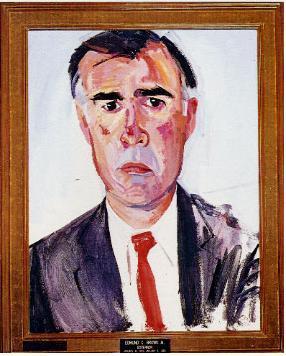
Our freak of a governor

17

We all know this, but I have to say it again: Jerry Brown is one strange agent.

His State of the State address was blessedly short: Jer doesn’t waste a lot of time. In fact, a few minutes in, the crowd in the state Assembly chambers was applauding for the second or third time, and he told them to stop; “this is my longest speech and we’re not going to get out of here.” I clocked it, applause and all, at about 16 minutes.

But lordy, lordy, what a crazy amalgam of stuff he packed in. From Montaigne to the Little Engine that Could, the Ten Commandments to Pharoh’s dream about the seven cows, Franklin Roosevelt to Gaspar Portola … all over the map would be a gentle way of describing it.

And that was the political message, too: We can do great things, spend billions on a massive underground peripheral canal and high-speed rail — but we can’t backfill the cuts that are leaving tens of thousands in poverty because we have to live within our means. The mandate for renewable energy is great, but we shouldn’t just keep on passing laws:

Constantly expanding the coercive power of government by adding each year so many minute prescriptions to our already detailed and turgid legal system overshadows other aspects of public service. Individual creativity and direct leadership must also play a part. We do this, not by commanding thou shalt or thou shalt not through a new law but by tapping into the persuasive power that can inspire and organize people. Lay the Ten Commandments next to the California Education code and you will see how far we have diverged in approach and in content from that which forms the basis of our legal system.

Serious, Guv? “Constantly expanding the coervice power of government?” That’s channelling your inner Ronald Reagan, no? Oh, and weren’t you the mayor of Oakland who let the cops do pretty much anything they wanted in the name of public safety — and who is the darling and best pal of the prison guards union? Talk about the coercive power of government. And one of the bills you’ve never supported is Assemblymember Tom Ammiano’s effort to legalize marijuana — eliminating a particularly troubling “coercive power of government” — because you’re worried that we can’t compete with China if everybody’s stoned.

I like high-speed rail, and investing in education, and I agree that there’s too much emphasis on one-size-fits-all standardized tests and measurement tools in the public school system. The school funding formula is, generally, a good idea. And I am utterly on the side of our tightwad leader in the battle to keep tuition from rising at CSU and UC.

So on some of the substance, Brown’s speech made sense. But I’ve been a Jerry watcher for many, many years, and he never ceases to baffle me. I supose that’s part of his point.

Let’s remember: Brown grew up in a wealthy patrician family, and he’s never had to worry about working for a living or finding an affordable place to live. He’s way out of touch with what millions of Californians face every day — and that’s why it’s easy for him to sit up in Sacramento and talk about “living within our means.”

Why Mission Bay isn’t a train wreck

55

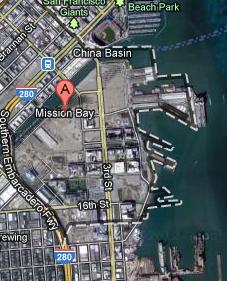
Now that the city planning director is comparing neighborhood activists to war mongers and meanies, it’s worth a moment to look back at how the city wound up with what the Chron is now calling a vibrant success of a medical-tech development at Mission Bay.

That site used to be a Southern Pacific railroad yard, but in the early 1980s, the old robber barons realized that a lot of their property had more value as real estate than as railroads. So SP decided to develop Mission Bay, eventually spinning off Catellus Corp. as the developer. The first plan was a disaster, a mix of highrise office buildings, hotels and a little bit of housing. Then-Mayor Art Agnos got it toned down a little, but the proposal he and Catellus put forward in the late 1980s was still a mess — more office space than housing, nowhere near enough in the way of community amenities, something an old-school builder with no concern for public process might have gotten away with in another city, but it wasn’t going to fly here. Of course, Catellus and the mayor both argued that this was the best deal the city could possibly get; more housing or different uses just wouldn’t pencil out.

Those same darn crazy activists that the planning director hates forced a public vote on the plan — and it was overwhelmingly rejected.The next day, Catellus came back to the table — and offered dramatic improvements in housing and amenities. In the end, UC decided to move into the site, building what I consider a hideously ugly campus with not a single decent piece of architecture — but without giant highrises and with at least some open space and community facilities. There’s actually a chance that this could become a viable neighborhood — thanks not to the developer, the mayor, or city planning, but to meddlesome neighborhood people.

Funny how that works.


Proposal to raze I-280 linked to train and real estate deals

61

It’s a bold idea, discussed for years behind closed doors and recently announced in a strangely understated and pro-growth way: Tear down the last mile of Interstate 280 and replace it with an wide boulevard – reminiscent of the removal of the Central and Embarcadero freeways – in order to facilitate the extension of electrified Caltrain and high-speed rail tracks into the Transbay Terminal.

For almost three years, city planners have been discussing the idea and drawing up closely guarded plans to tear down the freeway, discussions sparked by the state’s Environmental Impact Reports on electrifying the Caltrain tracks and bringing high-speed trains into town. With an increasing number of trains traveling those tracks, access to the rapidly growing Mission Bay area from the west on 16th Street would turn into a traffic nightmare, either with long waits for an at-grade train crossing or the creation of ugly and uninviting underpasses for cars and bikes.

Mayor Ed Lee and other top politicians have long sought to bring those trains downtown in Transbay Terminal through a still-unfunded tunnel, rather than having them stop at the existing Caltrain station at 4th and King streets. But the existence of the I-280 pilings made it structurally impossible to send the train underground before it got to 16th street.

So the idea was raised to raze the elevated 280 freeway and better integrate Mission Bay and the Potrero Hill/Showplace Square area, where Kaiser plans to build a huge new medical facility, creating a bike- and pedestrian-friendly corridor without the shadow of an antiquated freeway overhead.

“If you get the freeway out of the way, it’s a ton of space,” said Greg Riessen, the city planner who developed and studied the idea. “The whole corridor of the freeway is blocking the ability to do anything else.”

But it wasn’t until the political class and their capitalist partners also realized the enormous development potential of the idea – raising money that could be used to fund the train tunnel – that it was finally floated as a public trial balloon for the first time this week. The Chron’s Matier & Ross led their Sunday column with a short item on the idea, apparently tipped off to its quiet debut a couple weeks earlier.

The city’s Transportation Policy Director Gillian Gillett unveiled the idea in a Jan. 7 letter to the Municipal Transportation Commission, repeating it Jan. 10 at a forum on high-speed rail held at the San Francisco Planning and Urban Research Association. The letter was a response to the MTC’s request for information on “San Francisco’s policy goals and objectives regarding the much-needed electrification of Caltrain.”

Yet rather than deal directly with that issue, the letter said the answer “must be broadened to address the need for growth in the downtown and South of Market areas,” which it said requires funding to bring the trains into Transbay Terminal and to then let developers have at the 21 acres of land surrounding the existing Caltrain station, where transportation officials planned to store the trains.

“We need to create a faster and cheaper DTX [Downtown Extension project] alignment, realize the full value of the 4th & King Streets Railyard site, and eliminate the intrusiveness of I-280 in Mission Bay by terminating it at 16th Street and replacing it with a boulevard, based on the lessons learned from the removal of the Embarcadero Freeway to create a new Rincon Hill neighborhood, and the Central Freeway to create the new Market-Octavia neighborhood. Reenvisioning Caltrain electrification and the DTX could increase ridership, reduce costs considerably and create additional real estate value that would, in turn, provide for both more jobs to create revenue for both Caltrain and DTX and attract investment,” Gillett wrote.

She calls current plans to electrify Caltrain “shortsighted because it reduces the City’s ability to meet its regional job growth allocations, because more than 20 acres are covered with trains, and it eliminates an important opportunity to create real estate value which can be used to fund transit and Caltrain investments,” she wrote.

The letter doesn’t address where the increasing number of trains coming into San Francisco would be stored if the railyard is turned into luxury condos and commercial spaces, which has long been a goal of SPUR and other pro-development cheerleaders. High-speed rail officials have suggested Brisbane, but sources say city officials there have balked at the idea. Although Gillett hasn’t returned our calls with follow-up questions, the Mayor’s Office seems to see such logistical questions as secondary to this cash-cow idea.

So a staff-level proposal to solve a transportation challenge with an elegant multi-modal solution that follows in the city’s tradition of tearing down freeways has morphed into a real estate deal. Quentin Kopp, the father of high-speed rail in California, has already derided the Transbay Terminal project (which is funded by the sale of state land surrounding the site to office tower developers) as little more than a real estate deal, and now the city is apparently seeking to extend that deal further into Mission Bay.

Former Mayor Art Agnos, who worked on both the Embarcadero and Central freeway tear-downs, told us, “In general, I really support the concept of demolishing freeways that bisect the city.”

Yet he said there are many key details and questions that need to be addressed, particularly given the Mayor’s Office support for the new Warriors arena on the Central Waterfront, a project whose unaddressed traffic impacts would be exacerbated by an intensification of development at the Caltrain station, into Mission Bay, and further south.

“It could drown the city, this tsunami of cars, particularly with all the development planned all the way down to Hunters Point,” Agnos said. “I like the idea, but we need a serious discussion of the details, particularly with all these development proposals.”


Planning director insults neighborhood activists

153

John Rahaim, the director of city planning, is the featured speaker at a SPUR forum Jan. 29, and he’s got a very special title for his talk. It’s called “The Meanies and the War Mongers: Recent planning lessons from SF.” Here’s the description:

Land use planning in San Francisco is sometimes called a blood sport. John Rahaim, planning director, will discuss the last five years of planning in San Francisco during his tenure, and why that phrase is too weak. Rahaim will look at the accomplishments of planning in the city, the impacts from the last decade of neighborhood plans and the lessons from the war that will guide the Planning Department into the next decade.

Holy shit: Sounds to me like this guy, who gets very well compensated off the taxpayers’ dime, has just directly insulted generations of activists who have fought some really dumb development ideas and made this a more livable city. “War mongers?” “Meanies?”Is that the term he uses for people who try to get involved in the planning process? Here’s what he told me:

The purpose of the title was to be provocative.  I find it curious that you would make that assumption.  For now I will say that in my experience in SF, there are people on all sides of the development debates who would fit these descriptions.  Other than that, I invite you to the talk.

Okay, provocative is good, but seriously: He’s sounding as if these aren’t real issues that affect people’s lives, that land-use planning isn’t central to what we are as a city, and that people who don’t just shut up and go along with what he wants are troublemakers. Or as former Sup. Aaron Peskin, who has spent years as a neighborhood activists, notes: “He doesn’t want to admit that the best planning in this city is done by those neighborhood organizations and those activists who
challenge and shape literally every piece of planning that comes out of his office.”

Rahaim is supposed to be the guy who balances the various interest groups and tries to create acceptable solutions. “Whoever he’s referring to, it’s demeaning and unprofessional,” Peskin notes.

You can show up and ask Mr. Rahaim what he was talking about Tuesday, Jan. 29 at 6pm at the SPUR Center, 654 Mission. It’s free for SPUR members and costs $10 for everyone else. Worth every penny of it.


The roots of crime

31

The Chron has figured out how to solve Oakland’s crime problem, in one sentence.

Here it is:

Critics said police don’t address the roots of crime, which can be solved with greater social services and educational opportunities.

That is a thing of beauty, right there.

Reminds me of an old college friend who went and got himself a Ph.D in criminology, and when he was passing through town, we had drinks, and I asked him: What does a doctor of criminology do? His response: We study the causes of crime.

So I requested that he enlighten me with his academic wisdom; what, I said, are the causes of crime? He paused for a moment to gather his thoughts, then said:

“Poverty.”

That’s a lot of book-learning there. And now “critics” say that crime can be addressed by social services and educational opportunities. Remarkable.

An overwhelming majority of the Oakland City Council approved the deal to hire a consulting firm that will bring on William Bratton to help the cops get a handle on the horrible violent crime problem in the city. It’s worth noting, for the record, that Bratton got his fame (and, given his price tag, his apparent fortune) with programs like Stop and Frisk, which is still going on in New York even thought a judge agrees it’s unconstitutional. Oakland isn’t implementing Stop and Frisk, at least not now. but this sort of aggressive policing is Bratton’s M.O., so I don’t think the debate over the proper role of cops in the community is over.

And if you think Stop and Frisk is a dandy way to fight crime, check out this stunning video of what it’s done in New York:

Roe v. Wade anniversary inspires flash mob, pro-choice rally, and pro-life march in SF

Remember when a dance revolution broke out in Justin Herman Plaza during Occupy San Francisco? This coming Saturday, the same choreographers behind that flash mob for economic justice plan to reignite the public square, this time with a flash mob organized in collaboration with the Silver Ribbon Campaign to commemorate the 40th Anniversary of Roe v. Wade.

“Roe v. Wade is an invitation to really celebrate women, women’s rights and women’s reproductive rights,” says Magalie Bonneau-Marcil, director of Oakland nonprofit Dancing without Borders, who will direct the Jan. 26 flash mob. She expects between 400 and 500 dancers to descend upon the plaza.

The performance is part of a larger event, Women Life & Liberty, organized to commemorate the landmark Supreme Court decision that made abortion legal in the United States. The Trust Women Silver Ribbon Campaign is organizing the free celebration in tandem with the National Organization for Women and a coalition of more than 20 local partners.

“Our sense was, it’s an opportunity to claim and reclaim, and revive our activism around the issues that this event is about,” Silver Ribbon Campaign Director Ellen Shaffer told the Guardian. The rally is part of a national effort that has also launched an “online march” for reproductive rights.

Birth control champion Sandra Fluke, who became the center of a firestorm after being lambasted by Rush Limbaugh for testifying before Congress on the need for access to birth control, will speak at the rally.  Other speakers will include filmmaker and Webby Awards Founder Tiffany Shlain, and San Francisco Supes Malia Cohen, David Campos, David Chiu and Eric Mar, who joined the board in adopting a December resolution commemorating the 40th anniversary of Roe v. Wade.

Meanwhile, an international campaign to end violence against women will also play a role in this weekend’s events. Upon returning to the Bay Area after a dance festival in Europe, Bonneau-Marcil says she saw Eve Ensler’s music video promoting VDay’s 1 Billion Rising Campaign, created to spark a global movement to end violence against women. “I was so moved,” she says.

Inspired, she began making preparations for the Jan. 26 performance and an upcoming Feb. 14 flash mob, to be staged in front of San Francisco City Hall in league with VDay’s global movement.

With recent outrage fueled by the rape and fatal attack in India, the public performances are timely. Bonneau-Marcil describes the public dance gatherings as a way for participants to “share a prayer to create a world free of violence and sexual oppression.” 

But there’s likely to be drama, as the Women Life & Liberty celebration is one of two dueling events. Walk for Life West, essentially the polar opposite of the Trust Women Silver Ribbon Campaign, is being spearheaded by San Francisco pro-lifers Dolores Meehan and Eva Muntean. Now in its ninth year, the annual event will bring hordes of anti-abortion activists to San Francisco, wielding dead fetus photos. They’ll travel from as far away as Nevada, Canada and “all over the Midwest,” according to Muntean. “We have 200 buses coming from all over the West Coast,” she said.

The anti-abortion rally will feature speakers such as Rev. Clenard Childress, who has built a career out of telling right wing Christians that the pro-choice movement is racist. (Seems Childress also spends his spare time penning inflammatory columns suggesting that acceptance of LGBT rights is “a sign of the end times.”)

The pro-life rally will converge at Civic Center Plaza and progress to – where else? – Justin Herman Plaza. There, according to the event page, revelers from the transformative flash mob may still be celebrating. Expect an awkward buzz kill.

This being San Francisco, plans are already being hatched to counter-protest the anti-abortion event. (Muntean emphasized that Walk for Life West should not be interpreted as counter-protest to the Women Life & Liberty event, by the way.)

Stop Patriarchy, made of up activists who are pro-choice, anti-Democratic party, and even anti-pornography since they deem it to be part of the war on women, plans to stage “boisterous and confrontational political protests throughout the week, taking on the Pro-Lifers who will be in San Francisco,” according to a press release. They’ll be there counter-protesting the Walk for Life with banners and signs declaring, “Abortion On Demand and Without Apology!”

Bonneau-Marcil, the flash mob director, says she’s trying to stay out of any back-and-forth that may come from warring factions. “We’re not pointing fingers,” she says. Instead, she’s on a mission to help dancers move in harmony to “access a place where, it’s not about opinions. It’s just about remembering who we are as human beings.”

The Women, Life & Liberty rally will be held at Justin Herman Plaza from 10 a.m. to noon. The Dancing Without Borders flash mob performance will take place at 11:30. Anyone can join the flash mob after attending two rehearsals: more info here. The Walk for Life West rally will converge at 12:30 at Civic Center Plaza and begin the procession to Justin Herman at 1:30. More info here, here and here.

The battle of Brotherhood Way

24

Brotherhood Way is a creature of another era. Tucked between the San Francisco Golf Club and ParkMerced, it was long known as Stanley Way. But in 1958, under Mayor George Christopher, the city, which owned all of the land on the south side of the street, turned that property over to a long list of religious institutions and renamed the street to reflect its role as a place for houses of worship. It’s now home to six churches or synagogues and nine religious schools. It has its own (religious) neighborhood association.

And this quiet little corner of the city has been the scene of a pitched battle over a plan to build 182 housing units on an empty patch of land on the north side of the street.

Opponents of the project say the area was set aside for educational and religious uses, not housing — and they argue that the expansion of ParkMerced will add too much congestion to the area. Supporters say the west side of town needs to acept more housing and more density.

It’s gotten ugly: At one point, the Archbishop himself ordered the pastor of St. Thomas More Catholic Church to quit agitating against the development. Sean Elsbernd, who represented the district for eight years, infuriated neighbors when he supported the project, and later apologized for his insensitivity to their concerns.

And seven years after the Planning Commission and the supervisors gave the project a green light, it still hasn’t broken ground.
Now the developers are ready to go — and the churches, aided by retired Judge Quentin Kopp, are trying once again to shut it down.

Kopp’s been arguing for some time now that the project needs to go back for a new permit because too much time has passed and nothing has happened. But he’s got another argument, too, and he brought it to the Board of Appeals Jan. 9. See, the original deal had a problem with transit access, since there isn’t enough Muni capacity along Brotherhood to handle 300 or so new residents. So the developer agreed to build two pedestrian walkways from the project up to Font Blvd. in Park Merced. But according to Kopp’s appeal, ParkMerced management never agreed to the easements that would be necessary to build a path through its property.

Instead, in 2008, Zoning Administrator Larry Badiner unilaterally changed the requirement, allowing for one footpath to the edge of Park Merced — with some vague agreement that later there might be an extension to the Muni stop. That, Kopp argues, should have triggered a new Conditional Use application and a new hearing. Oh, and in the meantime, ParkMerced has just moved to greatly expand the size of its complex, so maybe that should be considered, too.

The Board of Appeals rejected Kopp’s arguments, but he’s petitioning for a rehearing, in part because the board chair wasn’t present for meeting. Kopp argues that this is a quasi-judicial board — “and you don’t go before the Supreme Court with only eight of the nine members present.” Under city rules, though, four out of five is a quorum and able to hear the matter.

Kopp has another argument, too — one that’s unusual, perhaps unique: He claims none of the board members actually read his original appeal brief.

Kopp, see, asked during the hearing if all of the members had read the papers he submitted, and none of them responded affirmatively. “It is appearent and inferable that no members of the short-handed Board of Appeals had read Appelants’ brief before the hearing, or at all,” the motion for rehearing states. “The manifest failure of the four members present to real Appellants’ carefully-prepared brief constitute extraordinary circumstances and injustice.”

I’ve been able to reach two of the board members, Frank Fung and Darryl Honda, and both insist they read the brief. “I read every case in its entirely,” Fung said, “and so does everyone on this panel.” Honda, who is new to the board, also said he read the documents. “I bust out the highlighter pen and go through all of the briefs in every case,” he said.

So why didn’t they answer Kopp’s question? Well, Fung says, it took them all by surprise: “I don’t think any one has every asked that before.”

I’ll let you know if the petition for rehearing is accepted.

Sea-level rise and development in SF

25

It’s good the Chronicle is taking on climate chance and sea-level rise. It’s good that Carolyn Lochhead is writing about the reality that storms like Hurricane Sandy are part of our future and that all types of coastal development are now at risk. It’s scary:

Naval bases, power plants, ports, highways – trillions of dollars of investment – sit on U.S. coasts because it once made sense to put them there. As people flocked to the shores, tiny beach towns became cities. Congress is hardly maintaining roads and bridges; its appetite for giant new sea walls around New York Harbor has yet to be tested. “You may be able to have the government rebuild New Orleans, and maybe you could have the government rebuild from Sandy,” said John Englander, author of “High Tide on Main Street,” a book on how rising seas will affect the coasts. “But as sea level rises and reclaims shoreline all around the United States and all over the world, governments can’t afford to reimburse that. It’s not just Miami, it’s Charleston, it’s downtown Seattle, it’s Sacramento, it’s every coastal city and city on rivers.”

 Oh yes — and it’s San Francisco, where sea-level rise doesn’t seem to be an issue in the city’s plan for massive real-estate development on the waterfront.

 The Chron has a map of what the Bay Area might look like after a two-foot increase in sea levels and a six-foot increase. It looks like this.

Of course, it might be okay because we can build super-tech levee that will create artificial waterfalls and protect us all from living on islands.

(You could argue that climate change isn’t about new technology, but that would be no fun — and would require actual political leadership.)

Anyway, here’s the problem with the Chron’s map: It makes San Francisco look just fine. The entire city is in white, safe from that pesky inundation that will ruin lesser parts of the bay.

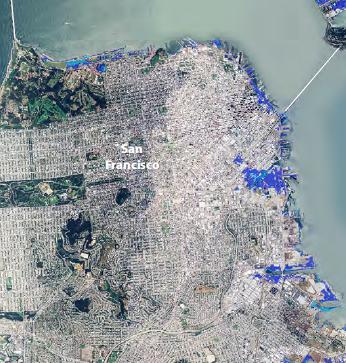
Thing is, the Bay Conservation and Development Commission has spent a ton of time on sea-level rise, and has its own map, that’s a bit more accurate, or at least more detailed — and that shows some major-league problems for this city.

Check out the areas in blue: It’s most of the northen and eastern waterfront. That includes not only Mission Bay, where the city is pinning its hopes for a biotech boom, but also the site of the Warriors Arena, 8 Washington, and 75 Howard. In other words, the plan to make the waterfront into a heavily developed entertainment and residential neighborhood isn’t going to work for very long — unless everyone gives up his or her car and buys a boat. Or unless we, the taxpayers of San Francisco, spend billions protecting all this development that doesn’t make sense in the first place.

Oh, Treasure Island’s going to be a much smaller island, too.

It’s entirely possible — and likely — that state, federal, and local tax money will go to protect some essential, vulnerable coastal areas. It makes no sense to try to move both the San Francisco and Oakland airports; we’re going to build barriers to protect them. But how are we going to protect an arena that’s built out over the water when the water starts to lap up to the doors? Who’s paying for that?

The Chron has done a good job asking the questions at the national level — but, just as we so often see with economic inequality and tax policy, nobody wants to bring the message home.

The Brit royals send their kids to war

24

I’m not a big supporter of our wars in Iraq and Afghanistan, and I’ve learned not to glorify military service, which often ends very badly, but I have to say: It’s always interested me that when Britain is at war, the kids of the royal family are sent to fight, too. It’s an ancient tradition, I guess, but it still goes on — and it’s very different from the United States. Here, people with names like Bush don’t go to Vietnam; they get a cush job with the National Guard. Or if their name is Cheney they’re just too busy. Any chance at all the the daughters of the president who sent thousands of others to die in the desert would be called to active duty? Nah; they’re out partying.

You think maybe presidents and members of Congress would feel a little differently about these pointless military engagements if their own kids were flying the planes?

Oakland to decide on controversial stop-and-frisk advocate Bill Bratton

On Tuesday, Oakland City Council will consider approving a $250,000 contract for an outside security consulting team, which could include controversial roving police chief and private security contractor William Bratton. With Oakland’s understaffed police department facing a 23 percent rise in violent crime over the past year, the Council’s Public Safety Committee unanimously recommended last week that the full Council approve a new round of funding for Boston-based police consultant Strategic Policy Partnership LLC. The firm intends to bring on Bratton as part of a new team of private policing experts to advise OPD.

At the five-hour Public Safety Committee meeting on Jan. 15, Oakland activists crowded into the chamber to voice concerns that Bratton—a nationally known proponent of “zero tolerance” policing and New York City’s extremely controversial stop-and-frisk policy—would be tapped as a member of the consulting team. Pressure from the community prompted committee members to tack on a provision suggesting that an alternative to Bratton be considered in the final contract.

Oakland Mayor Jean Quan and Police Chief Howard Jordan both voiced enthusiastic support for Bratton’s appointment.  In a letter sent last Wednesday urging the Council to approve the contract, Quan wrote: “Bratton is uniquely suited to helping us perfect how that system works here.” She went on to promise that racial profiling would not be tolerated in Oakland.

Oakland attorney Dan Siegel, a former legal advisor to Quan, expressed dismay over Bratton’s possible consultancy to a lively group of protesters outside last Tuesday’s meeting. “Stop-and-frisk does not work,” he said. “Bratton is exactly what we do not need in the city of Oakland.”

Although Bratton did not attend last Tuesday’s meeting, he has publicly expressed interest in working in Oakland, despite the vocal opposition.  “I’m still very desirous of working in Oakland … I think the assistance that I can provide will be of value to the city,” Bratton told the Oakland Tribune following Wednesday’s protests.

From Boston, to Los Angeles, to New York, Bratton has implemented and championed a controversial mix of anti-crime measures, making him one of the nation’s most divisive and visible law enforcement officials. 

Lauded by supporters as America’s “Top Cop,” he has twice served as president of the influential Police Executive Research Forum (PERF), which was responsible for coordinating a police response to the Occupy Wall Street Movement. He also serves as vice chair of the Homeland Security Advisory Council.

Serving as police chief in New York from 1994 to 1996 and Los Angeles from 2002 to 2009, Bratton built a national reputation as an outspoken proponent of stop-and-frisk, a tactic often linked with racial profiling. According to data compiled by the New York ACLU, the procedure disproportionally targets black and Latino residents. Earlier this month, a U.S. District Court Judge in New York deemed stop-and-frisk to be unconstitutional and issued an injunction limiting the policy in the Bronx. In July, when San Francisco Mayor Ed Lee suggested exploring stop-and-frisk in San Francisco, local civil liberties advocates balked.

Bratton is also an unabashed supporter of zero-tolerance policing, a method that stems from the “broken-windows theory” and encourages police to make arrests for minor infractions such as graffiti, litter, panhandling, prostitution or other petty offenses which are presumed to create an environment that breeds serious crime.

Bratton’s controversial tactics have been credited with reducing crime rates during his tenure in New York and Los Angeles. His work to diversify the LAPD and build closer ties between police and the community also drew praise from the Los Angeles chapter of the ACLU.

But in Oakland, local police reform advocates question the long-term efficacy of Bratton’s methods.

Rachel Herzing, co-director of Oakland-based Critical Resistance, an advocacy group that is part of a coalition of local organizations mobilizing against Bratton, charges that he deals in “quick fixes.” In the long run, she argues, his methods do not reduce crime but rather relocate it.

Bratton’s “all cops, no services approach does not work anywhere, and will not work in Oakland,” Herzing told the Guardian. “The aggressive sweeps Bratton is known for in New York ultimately just displace people, and drive them away from essential services. [These tactics] aren’t appropriate policing responses.”

The public outcry at last Tuesday’s Public Safety Committee meeting drew responses from new Council members Lynette Gibson McElhaney and Dan Kalb. McElhaney, whose District 3 includes some of the city’s lower-income neighborhoods plagued with high crime rates, told colleagues that Bratton may come with “too much baggage.” Ultimately, McElhaney said, his presence in Oakland might prove to be counterproductive.

Speaking to the Guardian on Jan. 21, McElhaney said she was not yet sure if she would vote to approve the contract. “We are wrestling with some very big issues here,” she said.  “I am clearly concerned about some of Bratton’s tactics but I am also interested in his results in some of the cities he has worked in. I do know he has lowered homicide rates.”

She added that the overarching goal of addressing crime in Oakland should not be lost in the debate surrounding Bratton. “There’s the totality of the contract I’m considering… in the end, I’m more interested in the outcome as opposed to the individuals.”

In an effort to diffuse controversy at the Jan. 15 meeting, McElhaney and Kalb successfully amended the committee recommendation to urge Strategic Policy Partnership to consider potential alternatives to Bratton.

But given Bratton’s national profile and controversial approach to policing, his inclusion in the consulting contract will likely take center stage at the full Council Meeting on Tuesday. Both Bratton’s opponents and supporters plan to arrive in force at Tuesday’s Council meeting, and as of yet it’s uncertain which side will prevail.

King’s ideals echoed in SF and DC events

2

Labor leaders and a plethora of elected officials from San Francisco – including almost the entire Board of Supervisors – began today at the San Francisco Labor Council’s annual Martin Luther King Jr. Breakfast. They heard inspiring words from speakers on hand, but not from President Barack Obama, whose inaugural address wasn’t broadcast at the event as planned due to technical difficulties.

Yet the ideals voiced here at the West Bay Conference Center on Fillmore Street echoed those sounded on Capitol Mall in Washington DC, channeling the spirit of Dr. King in calling for us to take bold collective action to better care for all people and the planet.

“My fellow Americans, we were made for this moment, and we will seize it as long as we seize it together,” Obama said in his speech. “For we, the people, understand that our country cannot succeed when a shrinking few do very well and a growing many barely make it.”

At his invocation here in San Francisco, Rev. Floyd Trammel, called for a “clarity of thought and unity of purpose” and cast Obama as the inheritor of King’s legacy. “In many ways, you sent one, Dr. Martin Luther King Jr., to pave the way for another, President Barack Hussein Obama,” Trammel said in his prayer.

Sen. Mark Leno – speaking in the place of Mayor Ed Lee, who is in DC for the inauguration – quoted the late Supreme Court Justice Louis Brandeis, who said, “We can have democracy in this country, or we can have great wealth concentrated in the hands of a few, but we can’t have both.” And while Leno praised those present for helping pass Prop. 30 to begin turning around California’s fiscal state with higher taxes on the rich, Leno also said, “The work is just beginning.”

It was a theme echoed by the most dynamic speaker on the program, Thurgood Marshall High School teacher Van Cedric Williams, who said the theme of both MLK Day and Obama’s inaugural address was that there is still much work to do to realize King’s dreams of social and economic justice.

“I believe community and labor are working on the unfinished business that Martin Luther King started,” Williams said, calling it a moral imperative to help create a better world for all. He called on those present to really “embrace your fellow community member,” those of all races and backgrounds, to pursue the solutions the world needs.

“They have to see the passion,” Williams said of young people today, “they have to know we got their backs.”

Obama also appealed to the obligation that we have to future generations. “We will respond to the threat of climate change, knowing the failure to do so would betray our children and future generations.”

It was a call for Americans to move beyond our narrow self-interest. As King once said, in a quote included at the MLK memorial in SF’s Yerba Buena Center, “An individual has not started living until he can rise above the narrow confines of his individualistic concerns to the broader concerns of all humanity.”

The inauguration and the economic divide

112

Second inaugration speeches are hard; you have to be political without sounding partisan, inspiring without being divisive — and promise change and progress even if you haven’t accomplished what you wanted in the first term. The Obama address surprised me: He went left, making clear that he wants economic and social equality to be his final legacy. It’s getting rave reviews in the lib-blogosphere, where it’s been described as the speech liberals have been begging him to give for years. You can’t argue with the content — he mentions gay rights, global climate change, equal pay, protecting social security, economic inequality, the need for collective effort … he even talks about reforming the tax code.

So now comes the hard part: The struggle for economic justice has to go beyond a compromise plan that limits higher tax rates to people earning more than $400,000 a year.

In fact, the best thing I read this weekend was a NY Times piece by Nobel-Prize-winning economist Joseph Stiglitz, who argues forcefully that continued economic inequality is prolonging the recession. It’s also destroying the nation’s future:

Our skyrocketing inequality — so contrary to our meritocratic ideal of America as a place where anyone with hard work and talent can “make it” — means that those who are born to parents of limited means are likely never to live up to their potential. Children in other rich countries like Canada, France, Germany and Sweden have a better chance of doing better than their parents did than American kids have. More than a fifth of our children live in poverty — the second worst of all the advanced economies, putting us behind countries like Bulgaria, Latvia and Greece. Our society is squandering its most valuable resource: our young.

Stiglitz says what few in Washington want to admit: We can’t get the economy going again without rebuilding the middle class, and we can’t do that without higher taxes on the rich and a lot more public investment in education. Oh, and all this talk of how it’s out of our control is bullshit:

There are all kinds of excuses for inequality. Some say it’s beyond our control, pointing to market forces like globalization, trade liberalization, the technological revolution, the “rise of the rest.” Others assert that doing anything about it would make us all worse off, by stifling our already sputtering economic engine. These are self-serving, ignorant falsehoods. Market forces don’t exist in a vacuum — we shape them. Other countries, like fast-growing Brazil, have shaped them in ways that have lowered inequality while creating more opportunity and higher growth. Countries far poorer than ours have decided that all young people should have access to food, education and health care so they can fulfill their aspirations.

Makes me think about some of what I hear out of San Francisco City Hall. Oh, we can’t do anything about economic inequality; that’s a national issue. Or maybe it’s a state issue. I bet there’s not an elected official in town today who woudn’t proclaim complete agreement with everything Obama just said — and there are very few of them who are trying to bring that message back home.

In San Francisco, we give tax breaks for businesses that create high-end jobs that drive poor people out of town. We happily seek development without considering the impact it will have on existing vulnerable populations. We even struggle over free Muni for low-income youth. We do nothing — nothing — to reclaim wealth from the 1 percent and put it into local housing, public education, and job-training that could make a dent in our local economic inequality.

Mr. Mayor: Are you even paying attention?


The Chron’s bizarre attack on Milk Airport

78

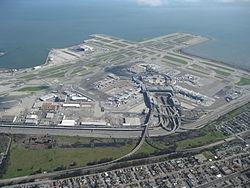
It must have been hard for John Diaz, the Chron’s editorial page editor, to just come out and oppose the idea of renaming San Francisco International Airport for Harvey Milk. So instead he put out a tortured argument that goes like this:

It’s too easy to put things on the ballot in San Francisco. To wit:

San Francisco has a system that is ripe for abuse by politicians who want to call attention to themselves or want to try to acquire at the ballot box what they could not otherwise attain by working with their colleagues.

He actually quotes Lite Guv Gavin Newsom who says, apparently without blushing, that he went to “excrutiating lenghts” to avoid putting things on the ballot that he couldn’t get passed through the Board of Supervisors. Excuse me? Care Not Cash? WiFi?

More Diaz:

The renaming of SFO is an example of an issue that demands a thorough public airing: about its cost, about the implication for the airport’s global brand and about whether other San Franciscans should be considered. The regrettable upshot of the Harvey Milk San Francisco International Airport proposal is that it could devolve into a referendum on the late supervisor’s worthiness for such an honor.

Wait: You don’t think the supervisors will discuss this, that there won’t be public comment, that this proposed city charter amendment won’t go to committee for discussion? You don’t think that’s already happenning, or that a ballot campaign won’t involve all of those issues? That’s just silly.

Yeah, there have been things put on the ballot in the past without adequate hearings, but that’s certainly not the case here. This thing will be discussed and dissected and cost-analyzed and debated at great length. And in the end, it ought to go on the ballot. The Diaz argument is just an excuse to oppose something that’s hard to fight on the merits; if the supes had just gone ahead and done it on their own, we’d be hearing the opposite, that the voters need to weigh in.

And this?

There may be a time when an airport naming makes perfect sense, perhaps because of a San Franciscan’s contribution to the airport itself or aviation generally. Harvey Milk simply does not offer such a natural connection.

Please. John F. Kennedy may have sent a man to the moon, but had nothing substantive to do with New York City aviation. Ronald Reagan didn’t even fly into National Airport; Air Force One lands at Andrews Air Force Base. And his major contribution to civilian aviation was firing all the air traffic controllers and breaking their union.

Naming SFO after Milk would be a political statement on a grand scale. The City and County of San Francisco would be saying that a gay person deserves a monument of international scale, that Milk’s contributions to changing the world are something this city should treat as so special that we should tell the whole world, loudly and forever.

I’m all for it. But if you’re not, let’s at least debate it on the merits

Democratic Party tries to block non-Democrats

66

Once again, the San Francisco Democratic Party is considering ousting local Democratic clubs that endorse non-Democrats in nonpartisan races. It’s crazy, and it goes back to the Matt Gonzalez era, and I don’t understand why somebody keeps bringing it up. But there it is.

The local party operation, run by the Democratic County Central Committee, has to rewrite parts of its bylaws this year anyway, thanks to changes in state election law. (For one thing, terms on the DCCC will now run four years, not two, and elections will coincide only with presidential primaries.)

And among the proposed changes is an item to ban chartered Democratic clubs from endorsing, say, a candidate for San Francisco supervisor or school board who isn’t a registered Democrat.

Now: It’s always been pretty clear that if you’re a part of the Democratic Party, and your club has official party sanction, you shouldn’t be endorsing Republicans (or even Greens) over Democrats. So Dem clubs have to support Dems for president, Congress, etc. (Of course, with our top-two primaries it’s possible, if highly unlikely, that a race for state Assembly could now feature a pair of candidates neither of whom is a Democrat, which would make things sticky. And under the proposed bylaws, a Democratic Club could still chose one of them.)

But never mind that — the real issue is local government. Local races, by state law, are nonpartisan, and there ahve been plenty of progressive candidates who weren’t registered Dems. In fact, this all goes back to the anger the establishment ginned up after Matt Gonzalez, a Green, very nearly toppled Gavin Newsom for mayor — with the support of a lot of progressive Democrats. The Harvey Milk Club went with Gonzalez and some Newsomite tried to make an issue of the Club’s charter.

Jane Kim was a Green when she was first elected to the School Board. Ross Mirkarimi was elected supervisor as a Green. And while the Green Party is in something of a state of disarray right now, it could make a comeback. And perhaps more important, the fastest-growing group of voters is decline-to-state — and it’s pretty likely that we’ll see someone who isn’t a member of any party run for office in the next few years.

There’s a reason the state Constitution made local races nonpartisan — and there’s no reason Democrats can’t endorse the candidates they think are the best in those races, without regard to party affiliation. The Milk Club, not surprisingly, is strongly against this, and so am I. It comes up Dec. 23; let’s shoot it back down.


State regulators respond to Hyatt on repetitive motion injuries

The Guardian received a phone call from Amy Martin, chief counsel of the California Occupational Safety & Health Administration (Cal/OSHA) this morning in response to our article spotlighting Cal/OSHA’s recent settlement with Hyatt Fisherman’s Wharf. The settlement marked the final resolution of a set of housekeeper complaints filed in 2010 regarding repetitive motion injuries.  

Martin commented in response to statements made on behalf of Hyatt by spokesperson Pete Hillan, who told the Guardian that “what was found at Fisherman’s Wharf was the equivalent of lagging paperwork,” and stressed that the charges filed against Hyatt were found to be without merit.

“Cal/OSHA believes it found plenty of evidence both of injuries sustained by housekeepers, as well as violations of Cal/OSHA regulations,” Martin said. “It is technically true that [citations] were withdrawn,” she added, but that was the outcome of an in-depth settlement negotiation in which Hyatt agreed that the findings would be construed as a violation under the Injury Illness and Prevention Standard, a separate area of workplace safety regulations.

“To say that it’s lagging paperwork is simplifying it,” added Erika Monterroza, a Cal/OSHA spokesperson who joined the call.

In other Hyatt-related news, don’t miss Caitlin Donohue’s post about why some members of the yoga community are calling on attendees of the Yoga Journal conference to decide which side of the picket line they’re on. (All of which seems strangely ironic when you consider how yoga is often viewed as a remedy for repetitive motion injuries.)

The (bad) Warriors deal, by the numbers

36

Rudy Nothenberg, who ran Muni and the city’s water system, was chief administrative officer, negotiated the deal for the Giants ballpark, and served under six San Francisco mayors, stopped by the office last week to talk to us about the Warriors Arena. We’ve had our fights with Nothenberg (as we would with anyone who was that close to Willie Brown and Dianne Feinstein) but the guy knows more about City Hall, public works, private development, and infrastructure finance than almost anyone alive. So we were happy to hear what he had to say.

Let’s be clear, here: Nothenberg lives near where the arena is slated to be built, and, as he was quick to tell us, he doesn’t want it in his backyard. But he also presented a compelling case that San Francisco is getting ripped off. And he had a few pointed things to say about the lack of negotiating skills among the members of Mayor Ed Lee’s administration.

Back when Nothenberg was talking to the Giants about a stadium at Third and King — at that point a district of dilapidated and underused warehouses — always kept a card in his back pocket. “I always knew that if things didn’t work out and we didn’t build the stadium, that would be okay too,” he said. In other words: You can’t get a good deal if you’re not prepared to walk away. And when it comes to the Warriors proposal, the mayor has made it so clear that this is his legacy that the team knows the city will never walk away. So one side of the talks can demand pretty much anything, and the other side has no leverage.

Oh, and it doesn’t hurt that just about every development lawyer, political consultant, and lobbyist in town is already working on the project. “They have co-opted everyone,” Nothenberg — no stranger to the dark side of politics — told us.

The exact terms of the deal are still not public, which is a bit odd since the city has already started its environmental review. (Can you really do an environmental impact report on a project when you don’t know what the project actually is? Two difference state courts have come to opposite conclusions, so for now the answer is: maybe.)

But there’s enough information out there for Nothenberg to give us a basic rundown on the financing — and it doesn’t look good. “The Port is really not getting anything out of the deal,” he said. The city will get some increased sales and business taxes, and the Warriors will have to pay housing and transit fees. But there won’t be a lot of new property tax revenue, since that will all go to pay for the arena.

Here’s how Nothenberg laid out his analysis:

The Warriors have to spend $120 million to replace Piers 30-32. (Costs a lot to build such a huge structure over the water.) To make the team whole, the city will sell the Warriors a seawall lot on the other side of the Embarcadero for $30 million, then give the $30 million right back to the team. Then the city will set up an Infrastructure Finance District — the 2013 equivalent of a redevelopment agency — use the future tax increments to fund a $50 million bond. The Warriors get the bond money; the city pays it back. Oh, and then the city gives the team $30 million worth of rent credits, meaning the Warriors will probably never pay any rent at all for the use of that public property. And to make it sweeter, San Francisco will pay the Warriors 13 percent interest on the rent-credit money.

Meanwhile, the local taxpayers will have to come up with a huge amount of money to increase Muni capacity, since the existing transit can’t possibly handle the load of the new arena. Yes, the Warriors, like any developer, will have to pay a modest transit impact fee — “but it’s laughable to thing that this will ever cover the capital and operating costs,” Nothenberg said.

To summarize: The wealthy owners of a professional sports team will get free waterfront land to build an immensely valuable new arena. The city will pay to bring the fans there and get them home, deal with the traffic impacts — and get almost nothing in return.

Good one, Mr. Mayor.

Overturning Citizens United

25

Sen. Al Franken, who is wonderful, has moved beyond seeking more disclosure (which the Republicans won’t accept) and is now moving toward a Constitutional amendment to overturn Citizens United. He’s moving his petition everywhere, and it will get a lot of traction.

But as I’ve mentioned, overturning Citizens United isn’t that easy. It’s fine to say we want to do it, and an entirely different task to write the legislation and deal with all of the First Amendment ramifications. And it still won’t stop rich people from spending their own money in unlimited ways.

I don’t know; maybe we have to figure out some more creative solutions. Mandate that all candidates for president and US Senate accept only public financing and match all independent expenditure spending with more public money. And then go back to the “original intent” of the US Constitution: In 1800, each member of Congress represented about 12,000 people. That would work fine today — expand the size of the House of Representatives to guarantee that at no point does any member have to seek election from a district with more than, say, 50,000 people. That’s a number you can reach without big money (see: SF district elections). Do the same for every state Legislature. Yes, more money on government — but less money in politics. I’ll take the tradeoff.

PG&E: Profits over safety

6

You have to love the way the lawyer from TURN (The Utility Reform Network) put PG&E’s Vice President Jane Yura on the spot during hearings on the San Bruno pipeline disaster. There was lots of back and forth about the company’s ad campaign and whether PG&E had “lost its way,” which is what the Chron played up, but here’s the bigger issue, buried deep in the story:

 Long also asked Yura about PG&E’s reaction to the findings of a blue-ribbon panel that the utilities commission created to look into the disaster. The panel concluded that PG&E had been more concerned about profits than safety. “I would say I personally don’t know that we disagree or agree,” Yura said. “We have accepted it.”

I could go futher: PG&E was more concerned about executive compensation that safety, being as money that we earmarked for gas-line upgrades instead went to bonuses for the top people.

You wonder how long it’s going to take for people to realize that the needs of consumers, alternative energy, and safety are never going to be the priority for a private utility. Remember what happened when the state Legislature gave PG&E its way and deregulated electricity in CA? I do. I lived through the rolling blackouts, when Enron stole about $40 billion from California and the electricity grid almost collapsed.

That’s what happens when you worry more about profits (and pay) than public service.

Hyatt agrees to job hazard analysis in settlement

Nenita Ibe, who will turn 71 in February, says she still hasn’t fully recovered from a shoulder injury she sustained in March of 2009 during her housekeeping shift at the Hyatt Santa Clara. As she was lifting up a hefty padded mattress to tuck the sheets underneath, a task she’d completed hundreds of times before and continued to perform hundreds of times after, “I heard a crack in my shoulder,” she recalls.

Ibe says the pain worsened over time as she continued performing her housekeeping duties – tucking sheet corners, pushing heavy carts, standing on the sides of bathtubs or on top of toilet lids to clean overhead bathroom tiles, crouching down to pick up discarded towels or disinfect floors. In June of 2012, she underwent surgery to alleviate the chronic shoulder pain. “It feels better,” she told the Guardian, “but I feel pain when I have to use it too much.” She’s now following doctor’s orders to refrain from working, and relies on disability coverage to help make ends meet. Ibe says her workers’ compensation claim has yet to be resolved.

Repetitive motion injuries have been a flashpoint for UNITE HERE Local 2, a hotel workers’ union that helped kick off a campaign calling for a global boycott against the Hyatt hotel chain last summer. Several weeks ago, the Hyatt Fisherman’s Wharf reached a settlement with California’s Occupational Safety and Health Administration (Cal/OSHA) resolving a set of citations, two of which pertained to repetitive motion injuries.

Local 2 trumpeted the deal as a “landmark” agreement because it will establish an eight-member Housekeeping Committee tasked with identifying best practices to prevent exposure to such injuries. Hyatt Fisherman’s Wharf isn’t unionized, but Local 2 has been trying to facilitate union formation at that facility.

“It’s not an exaggeration to say that this is unprecedented,” Local 2 spokesperson Julia Wong told the Guardian. Half the committee will be made up of non-management housekeepers selected by their coworkers, she added. “It’s an incredible opportunity because it’s a requirement that housekeepers themselves have a voice in how these best practices are developed.”

“I’m happy about the news,” Ibe said. “They should listen to the experienced room cleaners.”

The settlement stemmed from a set of citations issued by Cal/OSHA in November of 2011, following a regulatory investigation launched in response to worker complaints filed one year earlier. Regulators initially pinned Hyatt with two “serious” violations relating to ergonomic issues: A failure to minimize exposure to housekeeper repetitive motion injuries, and a failure to conduct mandatory training to warn workers about ergonomic health problems. Hyatt immediately appealed the citations.

The appeal process ended in December, when Hyatt Fisherman’s Wharf agreed to the settlement with Cal/OSHA, pledging to convene the Housekeepers Committee and perform a job hazard analysis with the guidance of a certified health professional, among other things. The Hyatt Fisherman’s Wharf will pay a $6,460 fine, and Cal/OSHA withdrew the serious ergonomic citations as part of the agreement.

Hyatt spokesperson Pete Hillan emphasized that “there was no evidence found” backing up initial ergonomic charges filed against Hyatt Fisherman’s Wharf, and criticized the hotel workers’ union for wasting taxpayer dollars by calling on state regulators to investigate. “What was found at Fisherman’s Wharf was the equivalent of lagging paperwork,” Hillan said. He insisted, “Hyatt is a very safe place to work.”

Local 2 represents hotel workers at the Grand Hyatt and Hyatt Regency in San Francisco. Both of those remain under boycott, Wong said, “because the workers have been without a contract for three-and-a-half years now.”

LAnce Armstrong and the SF financier

1

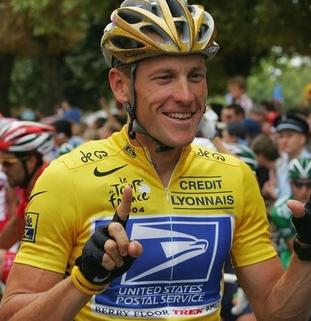
According to the Chron, the owner of the bicycle team that employed Lance Armstrong has been subpoenaed as part of the federal investigation into Lance Armstrong’s alleged doping. (Why is this a federal issue? Um, because some US Attorney wants to make headlines. And because the US Postal Service, which sponsored the team, was involved.)

Thomas Weisel, a legend of Silicon Valley, hasn’t said much publicly about the whole situation, although the Center for Investigative Reporting cites a lawsuit suggesting that he knew at least something nasty:

According to the Center for Investigative Reporting, testimony in an earlier arbitration case involving a dispute over Armstrong’s bonuses suggest Weisel was made aware by team members and doctors of doping concerns on three occasions, beginning in 1996 (before Armstrong joined the USPS team), all to no avail. After publicly expressing concerns about Armstrong in 2001, former team member Greg LeMond said he was told by Weisel, according to the arbitration documents, “What you’re saying about Lance isn’t good for you. You be careful.”

But Weisel was happy to talk to the San Francisco Business Times, which just posted a summary or an earlier interview. You have to be a subscriber to read the whole thing (and you know what? I pay for a subscription every year because there’s stuff in the BT that you never see anywhere else, particularly if you’re watching development issues). Here the gist:

Wiesel denies everything.

“I never had one discussion with one coach or one rider about doping,” he said. “And to my knowledge, the guys that were running my program – Mark Gorski (Postal general manager) and (operations director) Dan Osipow – they did not either. People say ‘Jesus, you had to know this was going on because everyone was doing it,’” Weisel said. “That’s not true. I never thought it was. I don’t think many cycling teams were deploying that practice. And we certainly had part of our rider contract where if a person tested positive, they were off the team. We were very explicit there.”

Okay then.

Bicycling is a lot more harsh than baseball — Barry Bonds might not get into the Hall of Fame (although if he does, so should Pete Rose), but he hasn’t been stripped of any of his batting titles and nobody’s talking about changing his stats. It all reminds me of a friend who played for the University of Miami back in the 1980s, when Suntan U won national football titles. “Everyone juiced,” he told me. “Everyone. You want to play, you juice. You want to get the the NFL, you juice.”

Cheating — except that everyone was doing it. Horribly unhealthy, but so is playing football at that level. When the rewards are so high, and the competition so intense, and winning is all that matters, people cheat. (See: Wall Street, where Weisel plays. See: Corporate America.)

Lance Armstrong is reportedly worth about $100 million. Bonds, about the same. Would they do it the same way again — or retire in a more relative obscurity with a lot less money?

And why are those the choices?


Texas and tax cuts suck; CA leads job growth

41

How many times have we heard that jobs are leaving California for Texas? How many times have big-business groups and the polticians who play to their needs said that lower taxes and corporate welfare make states more “competitive” and are good for the economy?

So look, for a moment, at California and Texas. Who has the lower taxes and the governor who will do whatever employers want? And who has the more robust job growth?

Just goes to show: Tax breaks do not a health economy make. What companies look for when the make location decisions is much more complicated. An educated labor force (which, by the way, means spending tax money on schools and colleges), access to transportation (again, a public-sector concern) and yes, a decent place where the executives want to live are bigger factors than things like the payroll tax.

That’s what studies have shown repeatedly over the years — and it’s playing out now in CA.