Bay Guardian Archives

Couples and docs galore, plus Will Smith and magicians: new movies!

0

This week there are two very different movies about two VERY different couples (Before Midnight and Sightseers). Pick your poison by checking out Lynn Rapoport’s Midnight review and my Sightseers review. Also! A doc about WikiLeaks, a doc about the Williams sisters, a doc about conservation, a sci-fi movie in which father and son Will and Jaden Smith play father and son, and a doc about magicians who rob banks. (I wish, anyway.) Read on for more.

http://www.youtube.com/watch?v=vhh31xYtop0

After Earth In around a century, we’ll board penitentiary-style ships and evacuate Earth for a sexier planet. Let’s call it a middle-aged migration — we all saw this coming. It’ll be dour, and we’ll feel temporary guilt for all the trees we leveled, bombs we dropped, and oil refineries we taped for 1960s industrial films. Like any body post-divorce, our planet will develop defenses against its ex — us humans — so when Will Smith and son Jaden crash land on the crater it’s toxic to them, full of glorious beasts and free as the Amazon (because it was partly filmed there). Critically wounded General Raige (Will) has to direct physically incredible Kitai (Jaden) through the future’s most dangerous Ironman triathalon. It’s more than a Hollywood king guiding his prince through a life-or-death career obstacle course, it’s a too-aggressive metaphor for adolescence — something real-world Jaden may forfeit to work with dad. Call that the tragedy beneath After Earth: it makes you wonder why the family didn’t make a movie more like 1994’s The Lion King — they had to know that was an option. Director M. Night Shyamalan again courts the Last Airbender (2010) crowd with crazy CG fights and affecting father-son dynamics, but for once, Shyamalan is basically a hired gun here. The story comes straight from Papa Smith, and one gets the feeling the movie exists primarily to elevate Jaden’s rising star. (1:40) (Sara Maria Vizcarrondo)

http://www.youtube.com/watch?v=8MHDYZJWLXA

Now You See Me Magicians rob banks in this ensemble caper starring Jesse Eisenberg, Mark Ruffalo, Morgan Freeman, and Woody Harrelson. (1:56)

Rebels with a Cause The huge string of parklands that have made Marin County a jewel of preserved California coastline might easily have become wall-to-wall development — just like the Peninsula — if not for the stubborn conservationists whose efforts are profiled in Nancy Kelly’s documentary. From Congressman Clem Miller — who died in a plane crash just after his Point Reyes National Seashore bill became a reality — to housewife Amy Meyer, who began championing the Golden Gate National Recreation Area because she “needed a project” to keep busy once her kids entered school, they’re testaments to the ability of citizen activism to arrest the seemingly unstoppable forces of money, power and political influence. Theirs is a hidden history of the Bay Area, and of what didn’t come to pass — numerous marinas, subdivisions, and other developments that would have made San Francisco and its surrounds into another Los Angeles. (1:12) Roxie. (Dennis Harvey)

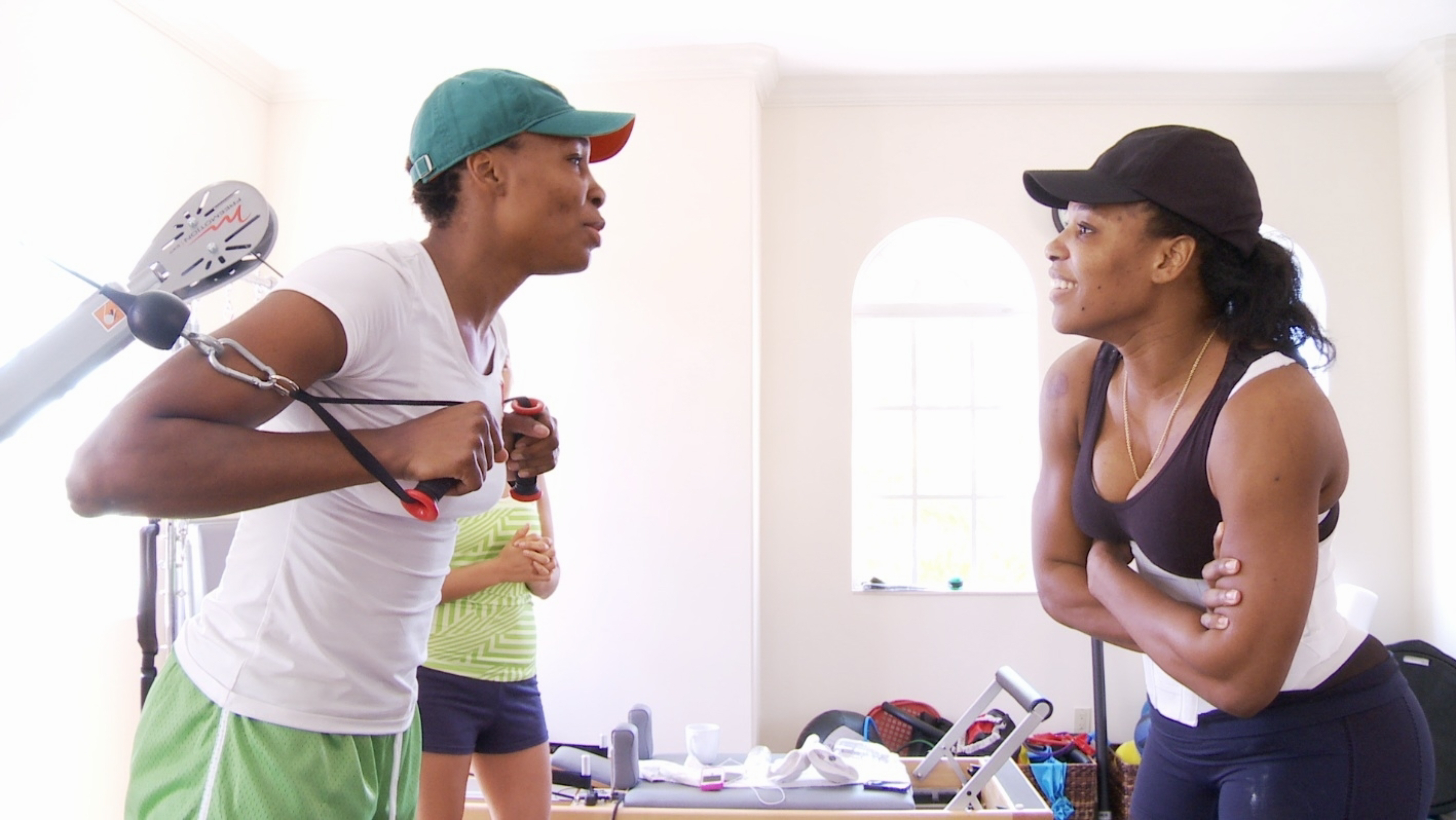
Venus and Serena How do you compress the remarkable life and stunning career of one Williams sister into a doc that’s a shade over 90 minutes, much less fit both of their stories in there? Venus and Serena can’t do much more than offer an overview of the sports phenoms, shadowing both during what proved to be an unfortunately injury-plagued 2011 season. It also flashes back to chart the sisters’ rise from Compton-raised prodigies to Grand Slam-dominating forces of nature, and features glamorously-lit interviews with the women, a handful of their relatives, and famous admirers (with Anna Wintour stopping by to purr that they are “fashion gladiators and tennis gladiators”). Though directors Maiken Baird and Michelle Major don’t leave out the more controversial bits — the sisters’ feelings about their domineering father (their former coach); their on-court tantrums; their frank talk about religion, race, dealing with stress, etc. — the straightforward Venus and Serena lacks any stylistic flair, a shame considering how important style is to the sisters. It does offer a few unexpected off-the-cuff moments, however, as when a karaoke-obsessed Serena launches into “Hole Hearted,” by 1990s hair rockers Extreme, after a disappointing day at Wimbledon. (1:39) (Cheryl Eddy)

http://www.youtube.com/watch?v=SdezJrNaL70

We Steal Secrets: The Story of WikiLeaks Call it the unenviable yet altogether fascinating task of the smartest moviemaker in the room: capturing the evasive, mercurial and fallible free-speech crusader Julian Assange and his younger church-going, trans-curious cohort Bradley Manning, all sans interviews with the paranoid former who’s in hiding and the guileless latter who was incarcerated without charges for a year by the military. Enron: The Smartest Guys in the Room (2005) documentary maker Alex Gibney seems to be just the guy to take on this project, pulling back the curtain on the transparency-first site, navigating the labyrinthine contradictions of a classic Internet-age antihero, and telling the previously untold story of the young man who tied himself to WikiLeaks’s, and Assange’s, fortunes. It starts out innocently (or not) enough, with Assange and his minuscule band of volunteers uploading and unleashing the still-shocking video footage of a Reuters news crew and their rescuers, mistaken for insurgents, being mowed down in a hailstorm of friendly fire by US forces in Iraq.

Assange’s notoriety and undoing comes with the arrival of a mass of easily shared government intelligence uploaded then passed along to him by computer wiz Private Manning in the biggest leak of state secrets in US history; the lonely analyst’s unexpected friendship with Sacramento hacker Adrian Lamo, who ultimately turns him in; and the rape charges that finally ensnare Assange in a web of lies, ironically, of his own making. Seemingly on the side of Assange, Net anarchists, and the free flow of information at the start of the saga, Gibney uses extensive interviews with (Bush-era) intelligence experts, Lamo, an Assange sexual-assault accuser, WikiLeaks supporters, and reporters; animation; and footage culled from journalists and likely anyone with a cellphone camera in shooting distance of Assange to tell this riveting story of good intentions and ego run amok, sidestepping the WikiLeaks poobah’s approval in a comprehensive, impassioned warts-and-all way that he even might appreciate. (2:10) (Kimberly Chun)

Week Two

63

Week two of blogging here in the books.

To paraphrase your most famous musical export, what a short strange trip its been so far.

I have to admit that it’s taken me aback, the bizarre level of rancor aimed at a website by the same people that can’t seem to live without it. And the even more incredible fixation on the inner workings of a modest media institution that doesn’t pay your bills. It reminds me of the ladies at the local lavanderia completely absorbed in the telenovelas Mexicanas. They seem blissfully content to insert themselves into the lives of their onscreen heroes–here, it isn’t bliss but irate irrationality.

And over what and whom? Tim Redmond? I’ve known Tim 19 years (and he isn’t gonna like this, but fuck it): He isn’t that interesting–in fact, he’s kind of drab. A soccer dad that can’t sing that once tried to convince me of the athletic prowess and brilliance of Alex Smith–you get worked up over THAT? 

The fixation over me, who cares? 

The source of the fury strikes me as plain and simple—people love having sunshine blown up their asses and neither of us care to fill that role. Let’s face it–America, having no royalty or aristocracy invented one, our landed gentry. They play the part of kings and queens and when taken to task for arranging bailouts of their failures or creating sweetheart deals for themselves or having a symbiotic relationship with the people’s stewards, the government, their admirers scream bloody murder. “Class warfare“. Redmond thinks it’s the nonsensical paradigm of “one day I too will be rich and I want to be able to keep all my money”, I don’t. I think it’s more like people don’t want to be reminded of who they really are and can’t blame their paragons for their plight, so it’s either people below them or the messengers (HELLO!) that remind them of their actual and not imagined place.

This is a nation where the top 1% made 121% of the gains in the anemic recovery. And you didn’t and still identify with them. And don’t seem to grasp that Atlas Shrugged was fiction.

I love this gig.

See ya tomorrow!


Emulating Switzerland

9

Today’s “human nature is revolting” story comes from the state of Utah. Apparently, one the state’s leading gun-rights activists was busted for threatening his ex-wife’s family with a 2.5 tom Army surplus vehicle, as he intended to run over all of their cars with his. His lawyer says it’s no big deal and he was just “having fun in his big boy toy.”. 

I guess that crushing other people’s property could be construed as boys will be boys, assuming the boy in question is another porcine asshole with privilege issues, but it got to thinking about the mess that is the gun debate in America. Around and around it goes and as it accelerates, it gets crazier and meaner. Gun control advocate Michael Bloomberg, mayor of New York City, is getting ricin laced hate mail from people that are apparently terrified that he’s gonna do to the Bushmaster as he did to the Big Gulp. Bloomberg’s PAC is sinking a ton of cash into gun control friendly candidates, making him the embodiment of the anti-NRA. The latter group has kept their lawmakers in check for years by threatening to run well funded opponents against anyone not toeing their line–if Bloomberg can match them dollar for dollar, this is a new ball-game.

And a new one would be coming anyway, Bloomberg or not. While sales of firearms are up, gun ownership is down. The same people are simply buying more weapons, wound up to the gills with the irrational fear that “Obama’s gonna take your guns”. The market is getting smaller, though and the NRA–no longer a gun safety or hunter’s rights group but really a trade association dedicated to expanding gun makers revenues–is getting cranky.

The center can’t hold. It is inconceivable that the US government would ever seize the millions of weapons in private hands, even if there was overwhelming public demand for same, it’s physically impossible. It’s also inconceivable that the public’s patience for inaction will remain much longer. A simple vote on innocuous background checks–which are supported by about 90% of the country--was unable to pass cloture in the Senate. The senators that voted against it watched their approval ratings plummet. So what now?

How about a new idea that works wonders elsewhere. In Switzerland, where there is no standing military, able bodied males over 18 are issued a rifle and bullets and fulfill the role of militia. As the Second Amendment attaches the right to bear arms to a “well regulated militia”, why not implement the same idea of a sort in the US? Every home in the US becomes required by law to have one firearm per adult, registered to same and with a reasonable amount of ammunition for same. Training and safety courses must be passed every few years like a trip to the DMV is. 

Surplus weapons can be sold back to the government. And locked up in armories.

I can see where both sides would hate this idea. Gun control advocates would be furious at the idea that the hated and lethal firearm would be mandatory–but who says they have to be loaded? The firearm fetishist upon whom the gun industry depends would be furious as well as their collections would be depleted–but once again, an idea–“remove and prove”. You collect weapons, remove firing mechanism and prove same.

Yes, it’s a pain in the ass in a lot of ways, but America can’t continue down this path. If every home has a couple of guns in it, according to the logic of the pro-gun cadre, no one will rob it (I know this isn’t true, but bear with me). Everyone will be presumably safer (that is to say, less scared)–isn’t that what they want?

Most people, yes. The NRA, of course not. As an adjunct to business, they have to show higher revenues each quarter and this idea more or less ends them. But that’s coming anyway–fairly soon, the gunmaker could be anyone with a 3-D printer. Sorry, Mr. LaPierre.

It is but a simple suggestion, but I think it’s a workable compromise. Because the all or nothing gambit is getting us nowhere. 

The Performant: Cracks in the pavement

2

Gentrification-proof poetry

Although the ongoing eviction saga (and upcomng relocation!) of Adobe Books, “the living room” of the Mission, from its 16th Street digs dredges up memories of all the neighborhood bookstores that have closed/moved in recent years, it’s worth being reminded that the book trade has only ever had a limited impact on the persistence of the written (and spoken) word, particularly where poetry is concerned.

In fact, the more tenuous the economic climate, the more tenacious poetry becomes, pushing itself like a hungry weed through the unavoidable cracks left in the superficially smooth pavement of gentrification. That poets are themselves accustomed to staying hungry yet artistically fruitful is a condition immortalized in the famous Robert Graves quip that “there’s no money in poetry, but there’s no poetry in money, either.”


There’s not much money, but plenty of poetry outside the 16th Street BART Station every Thursday night, rainy or not, when a constantly rotating crew shows up to the unnamed, (un)official poetry jam, armed with the essential tools of urban poets everywhere—tall boys in brown paper bags, open ears under fleece hoods, and a cache of words waiting to be unleashed.

As nightlifers in expensive shoes stroll out of the station en route to the increasingly upscaled Valencia Street, they pass by the chalk circle ringed by a throng of scrappy street poets, belting out their offerings with the hoarse-throated projection of people without a microphone to hide behind. Instigated in 2004 by a passel of performance poets from the now-defunct New College up the road, Thursday nights have continued to attract a wealth of wordsmiths for almost ten years: some published some not, some regulars some newbs, some lifers some dilettantes. There’s may be some good-natured vying for stage time, but the bottom line is anyone with something to share is welcome to jump into the circle, and there’s almost always at least one participant who electrifies beyond anticipation, making even the otherwise mostly oblivious passerby stop in their tracks and pay attention.

Meanwhile, in the Lower Haight, a more carefully curated reading series takes place at The Squat, attracting its own adherents with its appealing blend of irreverence and celebration. Conceptualized and commanded by one “Janey Smith,” The Squat is less of an actual squat (no-one actually lives in it) than a liminal territory for an underground intelligentsia to congregate without the burden of pretension.

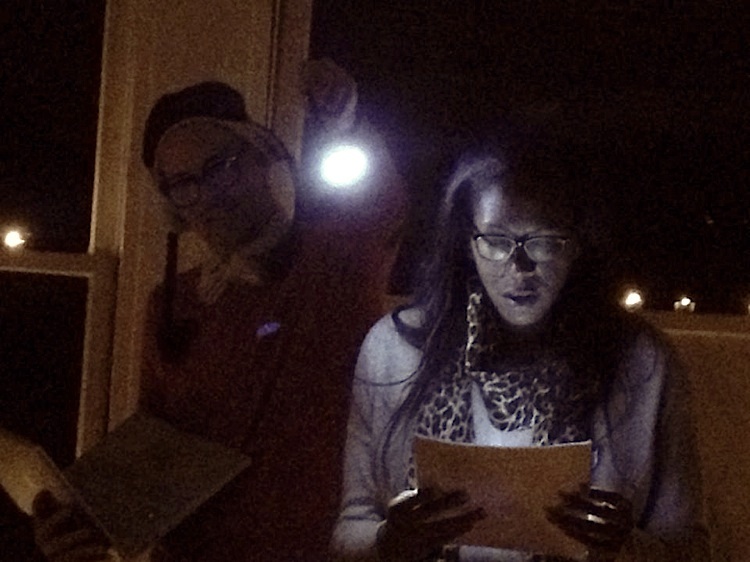
Beware the published starting time—the real determiner is the setting of the sun, since readings at The Squat are conducted, perhaps by necessity, in the dark. After night falls sufficiently, the group is led in abrupt silence from Smith’s iconic San Francisco apartment to the “venue,” a completely empty apartment upstairs, barely illuminated by rows of flickering tealights (“if you have hair, try not to catch on fire” Smith cracks). We squeeze into the “living room” together, encircling a pile of sawdust, the “stage.” 

Of the four readers, three locals (Ben Mirov, Erica Lewis, and Cedar Sigo) and a special “guest star” from the East Coast (Alex Dimitrov), the one whose poems most stick in my mind are Mirov’s, whose chilly distillations of word and image and deliberately affectless tone perfectly suit a body of poetry written in and for a digital age. Lewis reads from her latest project, a linked series called darryl hall is my boyfriend for which she provides mixed tapes of Darryl Hall’s music for emphasis, Sigo, most recently published by City Lights, presents a series of short poems rife with lush imagery, and Dimitrov works the increasingly vocal crowd with his confessional anecdotes, both written and spontaneous. The police don’t show and no-one catches on fire, so the event is deemed a success. Housing scarcity being what it is in this town, surely this apartment can’t stay empty forever, so get down there while you still have a chance, or head down to 16th Street on any Thursday around 10 p.m. Either way you’ll quickly discover that though our bookstores might be under siege, our poets refuse to surrender the fight.

Live Shots: Chvrches at Mezzanine

2

The night started with shrieks. Well, back up. It actually started sedate. Opener Still Corners had cancelled at the last minute, due to visa issues*,” so we knew it would be a bit of a wait before headliner Chvrches came to the stage at Mezzanine. In the meantime, we stood around commenting how nice it was that there was no one under 21.

The show had originally been scheduled at the Rickshaw Stop, but when it sold out quickly, it was moved to Mezzanine, and anyone under drinking age was issued a refund. This meant there wasn’t the early crush of teenagers permanently camped out at the front of the stage.** I know, I know, it’s not nice to gloat over someone else’s exclusion. Maybe I forget about being that age and not understanding how I wouldn’t get to see my newest musical obsession live, just because the venue was 21+. I remember now, though, because twenty minutes before start time the other side of the spectrum arrived: the banshees.***

You know them. The kind of people who slip through the crowd, pretending their friend is just…over…there, until suddenly they stop in the gap you’ve made for them to pass, and you realize that their friends are actually behind them, daisy-chained along (and now standing on your feet). The kind that love, love, love each other (and are so glad they’re all here!) but don’t give a damn about anyone else. The kind that re-count how many free shots they’ve been given (not recount as in a great story, but re-count as in they can’t keep track of the actual number at this point).

The kind that seem a few penis straws short of a bachelorette party. The kind that — when you supportively catch them mid-stumble and extricate them from the remaining inch between your date — turn to their friends and act like you manhandled their pudenda. The kind that are (of course) joined by their moist, B.O. laden friend Owen****, who is the kind of guy that just happens to be surrounded by assholes all the time, since his breed of loud, shrieking belligerents has the perfect mix of self-awareness and obliviousness to make it seem like assholes surround them wherever they go. The kind of people who have to say, “Let’s not fight tonight.” *****

Obviously, it wasn’t really that bad, but whenever you wait extra long without an opener, the crowd starts to feel a bit hellish. In which case, Chvrches coming to the stage with a slow downed version of Prince’s reverent intro to “Let’s Go Crazy” was the perfect segue into the musical reward for our suffering: 

Dearly beloved
We are gathered here today
To get through this thing called life

Electric word life
It means forever and that’s a mighty long time
But I’m here to tell you
There’s something else
The after world

A world of never ending happiness
You can always see the sun, day or night

Once on stage, the Scottish electronic pop trio started out with “Lies,” and the bright sharpness of singer Lauren Mayberry’s voice quickly pushed the shrillness of banshees out of mind. It has an instantaneous accessible quality to it that immediately hooks in and grabs attention, validating the lyrics “I can sell you lies, you can’t get enough. Make a true believer of, anyone, anyone, anyone.” It goes a long way to explaining how, after posting just a few songs online, the group of Glaswegians has captured such attention.****** On “Recover,” played later in the evening to the crowd’s largest response, Mayberry sings with a monosyllabic attention, giving such clarity to the words that they hardly even matter. It could be the alphabet.

Refreshingly, this focus comes without grandstanding.******* Mayberry is rather stationary on stage, but the clarity of her iconically pop voice is by itself without pop-cliche affectations, dances or costumes.******** The band functions best as a unit. Iain Cook and Martin Doherty are the musical foundation, combining elements of post-punk and synthpop, updated with some trap elements (see: the intro to “The Mother We Share”).

Both act as multi-instrumentalists and backing vocalists on stage, with Doherty most notably giving a little oomph to chunky drum samples on the MPC, and Cook bringing his bass to the forefront on songs like “Lungs.” When Doherty took lead vocals for a song, his singing was a little more raw, a little more tender — like early Bernard Sumner — with a pleading stage presence and a more obvious Scottish accent.

After playing as much already released and new material as a band that hasn’t actually released an album could have — with Doherty thanking the crowd for the largest headlining show they’ve ever done — Chvrches returned to the stage (and the Purple One) for a cover of “I Would Die 4 U.”

*It always seems to be visa issues when a band cancels. Is that just the all-purpose excuse?
**The luxury of an empty bladder.
***The only reference to Scottish culture I’ll make, since sadly it’s all I know.
****He is always named Owen.
*****With emphasis on “tonight” because it happens frequently enough to be a normal occurrence.
******To the point that their first live show was reportedly already filled with label types and music journalists.
*******Choice quote: “As my mom says, we’re all the same, nobody’s special, we’re all shit.”
********So, pre-Madonna stage with a Madonna-esque voice, but not prima donna.

Prostitution and Mitt Romney

26

Four and a half years ago, San Francisco had the chance to make history as well as eliminate a major social problem. Measure K would have eliminated the prosecution of sex workers in the city. Sensible, sane and prudent, this ballot initiative would have finally given some legal recourse to one of the city’s biggest underground businesses. Because it is sex-based, however, hysteria ruled the day and the measure was defeated.

The arguments against it are the same arguments one hears when one discusses recreational drug legalization. That if legal, street walkers would spring up like so many weeds on heels in every neighborhood and that pimps and hookers would flock to San Francisco en masse. Never mind that the exact opposite would have been the result–no longer in the shadows and with their business legitimate, sex workers could part ways with the parasitical pimps without recourse and also if legal, a “red light district” could exist anywhere (I opt for City Hall myself, as it has been home to courtesans for centuries now). Lost tax revenues reclaimed, better public health for the workers and clients and a win for all.

One would think in the supposed progressive and free-thinking capital of America, this would have been a slam dunk. It lost resoundingly. Which proves that for all of San Francisco’s bluster, at heart it is a provincial city filled with a lot of sexually uneasy residents. That our next door neighbor, the generally “red” Nevada has had legalized prostitution for years speaks volumes about what “liberals” really believe. “Not in my backyard” times ten. Prostitution is called “the world’s oldest profession” and yet it is rarely legal anywhere–why?

As human beings are one of only a few species to have sex for pleasure, you’d think we’d clearly admit same. And that sex between consenting adults is already legal anyway, why does it become illegal when money is involved (unless filmed and sold)? These are incontrovertible facts. I suspect that the real reason prostitution is illegal and has been for eons is that it empowers women at the expense of men (the male escort being about 1/10th as popular as the female, sexual ratios being what they are). A woman that can negotiate the price for her “favors” directly now has some say in her destiny. Yes, it would probably be better for her physical and mental health if she chose another line of work, but in a capitalist system where money talks, a 300 dollar an hour escort is higher up on the ladder than a nine dollar an hour barrista. A couple of grand a day and a person whose educational and class background placed them at the lowest rung on the ladder now has say–it’s the same reason that gambling and drug dealing are decried by moralists. Folks with no options are now equal to the privileged at birth and that upsets the so called “natural order of things”. So, they have to be denigrated.

I got to thinking about that paradigm and realized that in reality, a hooker is part of a much more honest profession than someone that runs or ran an equity capital group. Namely Willard “Mitt” Romney. When a john makes contact with an escort or sexworker, they negotiate a fixed price for a certain act or acts. Upon consumation (or at some time during or before), payment. Both sides happy. Compare that to Mr. Romney’s manner of acquiring businesses. Putting 10% down, leveraging the other 90% as tax free debt larded onto the acquired entity and then tacking on enormous fees paid to backers. Usually what happens with these companies is massive layoffs and often bankruptcies. One side very unhappy. Yet this perfectly legal version of a Mafia bustout is applauded by Wall Street–the same Wall Street that poo-poos sex workers as a moral scourge (while utilizing their services).

Taking advantage of the human tic of discomfort when it comes to acknowledging the sex drive has kept the church alive for centuries and jackasses like William Donahue and L Brent Bozell in cash. Simply recognizing biological normalcy would end a lot of misery. Next time this comes up, be sane San Francisco, be sane.

SF’s first raw milk coffeeshop opens (raw milk pending)

5

After a successful Kickstarter campaign, Drip’d Coffee is pouring gibraltars and cappucinos on Ninth Avenue and Irving. But one piece of the puzzle remains. The small shop intends to be San Francisco’s first raw milk coffee bar — but is still pouring pasteurized moo for the moment. “We’re essentially on a waiting list for spots to open up,” co-owner Chris Morell writes in an email to the Bay Guardian.

“I’ve been a drinker of raw milk for years,” Morell continues. “After a while, the merge of my coffee craft and raw milk logically came together.” He and co-owner Tae Kim — the two met years ago in the videogame industry — have set up shop alongside enviro-friendly cleaning supply shop Green11 with their refurbished vintage La Marzocco GS/2 espresso machine, use Sightglass beans, and are now open Friday through Sunday (Fri. and Sat., 8am-2pm; Sun. 9am-3pm).

Drip’d hopes to eventually source its milk from Claravale Farm in Paicines, Calif. Once the raw milk comes through, certain tweaks to the formula will include steaming the dairy at a lower temperature, making for drinks that are smoother than your average cup. 

“We’re lucky that in California, raw milk is allowed for sale at retail,” says Morell. “In other states, it’s impossible. We’ve already had people come in and ask us when we’ll offer raw, so the demand is out there. Rainbow Grocery and other small raw milk retailers consistently sell out, so that’s a great sign.”

Milk matters have recently been drawn into the spotlight by the trial of Vernon Hershberger, an ex-member of Wisconsin’s Amish community who was acquited of most charges he copped for producing raw milk for his 200-person buyer’s club, or cow-share co-op without a license. Raw milk is legal in California as long as it holds to certain standards, like being cooled to 50 degrees Farenheit after being drawn from the goat or cow. 

Proponents of raw milk say pasteurization can decrease Vitamin C, iron, copper, and maganese. One study suggested that people who suffer digestive problems while drinking pasteurized milk felt better after making the switch to raw. Certainly, raw milk has more terroir than our now-standard variety, and can range in color and texture. 

But raw’s not the only reason that Kim and Morell wanted to open up Drip’d. “It’s more about giving people choice,” Morell writes. “We’re not the type to force anything on anyone. But we believe having the choice of various high-quality ingredients can only be a benefit to both coffeephiles and casual drinkers.” Morell and Smith are also using their new storefront to teach espresso 101 classes. They must be popular teachers — the Sat/1 class has already sold out.

Drip’d Coffee 1352A Ninth Ave., SF. www.dripdcoffee.com

The impending death of American conservatism

55

Gallup released a poll May 24th with some remarkable new data. American liberalism–long thought to be dead and gone and receeding into New Deal memory–is ascendant. 

According to Gallup, 30% of Americans consider themselves social liberals, an all time high. And only 41% of Americans consider themselves economically conservative, an all time low.

Think about the implications of these amazing numbers for a moment. The term “liberal” has been spat out with nothing but contempt by not just right-leaning pundits, but by Republican party apparatchiks for 30 some years at least. Democrats, the “liberal” party, have run away from the tag like it was contaminated with MRSA. Which means that self-proclaimed “moderates” are very likely to be liberal as well, especially on economic issues.

What the poll doesn’t say is why this is. The reasons for the underlying shift. Some are obvious ones–the economy is improving under what is presumed to be a “liberal” presidency, which makes “liberal” synonymous with success. The other likely cause is that as the nation becomes less white, it becomes more liberal. For all the presumed conservatism of Latinos, polls have shown them to be far less conservative on economic and social issues than whites.

But I think those are ephemeral at best. The two real reasons are that in the last 35 years, virtually every Neo-con/neo-liberal/Ayn Rand-esque/Heritage Foundation idea has been tried out and all of them have failed spectacularly. Supply side economics, tried in 1981 and 2001 respectively, turned out to be an unmitigated disaster. “Pre-emptive war” was waged in Iraq with a nightmarish result. ” A two front war” was waged in the last decade, how did that work out? And the deregulation of the banks via Gramm/Leach/Bliley is the proximate cause of 2008’s worldwide meltdown. Odd thing is, the same economic ideas were ruinous in the 1920’s and if Erwin Rommel or Alfred Jodl were alive today, they could tell you how well a two front war works out. That’s reason #1  

Reason #2 has been discussed here already.

With every demographic and logical trend working against them, the American “conservative” will get shriller, louder and like petulant children, dig in their heels that much more. To our detriment as a people, of course, but since when has the well being of the nation ever mattered to them anyway?

Dianne Feinstein and 8 Washington: The letters

8

Here’s a fascinating little bit of history that relates to the 8 Washington project.

In 1984, the owners of Golden Gateway proposed to build a nine-story condo tower on the site, pretty close to where Simon Snellgove wants to build his ultra-luxury condos today. Dianne Feinstein was the mayor of San Francisco, and she didn’t like the idea at all. In fact, she sent a letter to the Redevelopment Agency Commission, which at that time controlled the land, to say that condo development was inappropriate.

(Feinstein was remarkably open about the whole thing; Willie Brown would have made one phone call, gotten his way, and left no paper trail.)

The point she made in the letter (pdf here) was that the existing Golden Gateway project was approved in the first place largely because of the promise of open space and recreation facilities. Those facilities, contrary to what Snellgrove’s team is saying, are in fact open to anyone who pays dues. “To tear up the present tennis courts to crowd a condominium tower on the site would be regrettable,” she said.

Then in 2003, another plan reared its head — developers wanted to build a $39 million condo and health-club facility on the Golden Gateway site. Again, Feinstein — by that point a US senator — weighed in with a letter of opposition. “Development of more residential units would create traffic noise and pollution and disregard the original understanding between City officials and area residents that open space and recreational amenities would be preserved.”

Feinstein’s opposition was notable: She rarely opposed any development of any sort, anywhere in the city. She allowed massive new waves of office construction and — like Ed Lee today — argued that cranes on the skyline were a sign of progress.

But this idea — condos at the 8 Washington site — was so beyond the pale that even the most pro-growth mayor in the city’s history had to oppose it.

Feinstein hasn’t said anything about the latest project. But she clearly doesn’t actively support it; when the measure came up the the Democratic County Central Committee, her representative didn’t vote.


Clock ticks, ground breaks: SFMOMA kicks off its two years of renovations with 24-hour party, glitter bomb

0

The students from SoMa’s Bessie Carmichael Elementary, against my better judgement, were to ones to push down the level detonating… whatever was going to mark the groundbreak of SFMOMA’s planned two-and-a-half years of closure for massive renovations expansions this morning.

When glitter cannons took the place of the further obliteration of the building behind Supervisor Jane Kim and the museum trustees with their hard hats and decorative shovels, I breathed a sigh of relief. I should have known any cultural institution with the foresight to build a DIY graffiti wall made of cookies wouldn’t allow minors to be injured. 

You’ll probably want to say hasta luego to the Bay Area’s premier contemporary art museum by attending the Countdown Days celebration, which’ll bring ecosexual performance artists Annie Sprinkle and Beth Stephens, dancer-force Marc Bamuthi Joseph, Homobiles, TCHO Chocolate, Guillermo Gómez-Peña, one-canvas docent explorations, and much more, culminating in a 24-hour extravaganza, to the soon-to-be-shuttered atriums and galleries Thu/30-Sun/2.

Dry your eyes though kitty-cat, when the museum returns, it’ll be free to visitors under 18 and larger by 225,000 square feet at an estimated cost of $610 million. 41,000 square feet of free-access public space has been promised, in addition to a new seventh floor outdoor terrace and massive vertical gardens.

While we wait for 2016 to arrive, art fans are invited to enjoy special roaming installations, like the Mark di Suvero sculptures already gracing Crissy Field.

The Contemporary Jewish Museum, Yerba Buena Center for the Arts, and Asian Art Museum, and other venues will be hosting special SFMOMA collaborations. 

Here’s what we have to look forward to with the new design, courtesy its creators, Norway’s Snøhetta architecture firm.

Turn around girl… 

… There it is.

Today’s groundbreaking included aforementioned cookie wall, accompanied by some sadly impotent spray cans of edible spray paint. Groundbreakers were encouraged to spray, then walk off with a souvenir “brick” baker by Blue Bottle Coffee pastry chef Caitlin Freeman. I ate mine when it feel apart in my hands: a delicious impermanence, sonly slightly troubling in that the cookie wall was meant to mimick Snøhetta’s architectural style. 

Delicious cookie wall

I’m sure it will be fine. Here are the little ones charged with ushering the SF arts scene into the future. 

And Supervisor Kim, in a chain metal scarf-necklace that topped off the single best outfit I’ve seen a city politician sport. 

Museum trustees and officials praised the city’s “universal support” towards getting the renovations funded, which was also supported by private donors, including $5 million from anonymous sources. An estimated 1,400 construction jobs wil be created by the project, say museum PR materials. 

Swing through for one last look at the current facilities, and check out the future if you’re so inclined. Download this app by Brooklyn’s Will Pappenheimer and John Craig Freeman and pull out your phone at 10 points throughout the SFMOMA to view: 

Artist-created motifs that riff on features of the museum—such as plants from the new vertical garden and fragments from the current building—merge with iconic images from the Bay Area’s natural and tech environments to create a circling vortex of animation through and around the building, as well as floating off into space. 

SFMOMA Countdown Celebration

Thu/30-Fri/31, 10am-9:45pm; open continuously Sat/1, 10am-Sun/2, 5:45pm

SFMOMA

151 Third St., SF

www.sfmoma.org

Because facts mean nothing

19

This hasn’t been a good time to be Joe Arpaio, the self-proclaimed “toughest sheriff in America” lately. Federal courts have slapped down his “saturation sweeps” through Latino neighborhoods as unconstitutional. The Maricopa Cty lawman’s casting a wide net of picking up anyone that “fit the profile of an illegal immigrant” was said to violate citizen’s rights.

He is appealling the decision, as you’d expect he would, for two reasons. Firstly, the sweeps are easy (and lazy) policing. Secondly, it puts him back in the news, which is his natural home. Sheriff Arpaio loves the limelight as it gives him a chance to indulge in his favorite fantasy, the living embodiment of the the thin blue line between lawless chaos and civilization as he sees it.

In reality, he is as far from his self-generated hype as the most desperate out of work actor in Hollywood is. Crime in Arizona has dropped everywhere BUT Maricopa County. Sheriff Hardass claims to be the mega-tough guy, making his prisoners wear pink uniforms by way of degradation and then has them collapse from dehydration in the sun or denying medical care (and costing taxpayers a fortune). In fact, his negligence led to the county dropping the ball on over 400 cases of sexual abuse. He is not what he seems.

Which doesn’t mean shit to a tree, as Grace Slick used to say. When it comes to demagoging politicians, effectiveness is irrelevant. That he has been sued and lost over and over on the county’s dime is irrelevant. Or that Arizona’s chesters are free to operate in Phoenix–irrelevant. Or wastes resources targeting citizens going about their daily business–irrelevant.

What matters is, his followers hate brown skinned people and they perceive that he does as well. Arizona is a very strange place. Its population swollen by Illinois and Michigan “snowbirds” are generally of the retired stripe and generally not used to being among Spanish-speaking people. That said Spanish speaking people tend their lawns, clean their pools, groom their golf courses–also irrelevant. They are “a threat to our way of life” (ie not white). Arpaio, albeit in typical code, is their ally and protector–because he’s an old white dude from up north like them.   

You see, facts don’t matter. Arpaio is an ineffective buffoonish attention hog that has run up an enormous tab at the expense of the same people that love him. (And whose campaings are paid for by out of state cash) But because they sense or believe that he hates what they hate, he can do no wrong. And won’t leave office until he either dies or AZ’s demographics force him out. 

It murders the souls of thinking men and women that reality is trumped by fantasy, myth beats truth, perception and prejudice slaughter justice. That people can’t be moved because, once again, facts don’t fucking matter.

Ed Lee’s “no social service cuts” budget

6

So Mayor Ed Lee is going to spare social services, and apparently at least part of the Department of Public Heath, from any further budget cuts. That’s good. Lives will be saved.

Lee — like Willie Brown before him — has the luck of serving as mayor during a period of growth, not recession. We don’t know how long the boom is going to last, or what will happen when it ends (as these things always do), but right now, in Sacramento and San Francisco City Hall, there is joy over the fact that revenues are up.

(Lee’s supporters on this blog and elsewhere will say it’s because of the mayor’s “pro-jobs” policies that we have all this new revenue. But remember, he promised tax breaks for Twitter and other tech firms that are moving into mid-Market, so we’re not getting much extra payroll tax revenue there. SF is a disgustingly hot real-estate market right now and more people with more money are moving in, so that’s absolutely a factor. So is the general California recovery.)

Either way, I’m always happy to hear about “no-cuts” budgets. But I have to keep raising the question:

If you’ve already cut about a billion dollars worth of services — which is about what most people on all sides of the political spectrum agree has happened in SF in the past decade — and now you’ve agreed not to cut any more, are you really making progress?

At what point do we need to start planning to restore all the services that are gone?


Short cuts

2

Lots of stuff in news worth looking at today.

We bag on Texas and their generally idiotic governor a lot but recently, he and they did the right thing–under pressure from Texas’ parents, the state is going to slash the number of “No Child Left Behind” tests imposed on school children. NCLB is one of the worst educational ideas ever implemented. Teaching to the test teaches nothing and when its been shown in considerably poorer and smaller nations that drilling and rote are worthless, America should take stock. Good for Rick. That he sort of reversed Bush’s policy (whose actual aim was to enrich a family member, of course) showed some stones.

John McCain snuck over Syria’s border recently to meet with anti-Assad rebels. As the embargo on sending said rebels military aid is ending anyway, it’s hard to say what the purpose of the trip was. As usual, the military’s “worst pilot in history” was advocating more arms, more involvement and naturally, more bloodshed. One would think that after the particularly disasterous embrace of arming an enemy’s opposition in the 80’s and 90’s, the US would have learned, but as Senator McCain has never met a conflict he didn’t like (or that didn’t enrich his friends). no surprise.

Newsweek is for sale again. Its purchase in the first place, says money heavyweight Barry Diller “was a mistake”. It is operating at a loss, even online. Fact is, online content in a “general news” format is very hard to monetize. It’s even hard to monetize in specialty and local forms, but easier. This magazine’s day is over. C’est la vie.

More later!


Guardian event on Plan Bay Area

65

There’s going to be profound change in San Francisco over the next 25 years. If regional planners have their way, we’re talking 280,000 more people — and massive displacement of existing populations. Is that ok? What should we do about it? Is there any alternative, a better way to plan for growth?

I have no problem with increased density and population in San Francisco — but only if we can first protect vulnerable communities. How does that happen? What tools does the city have, and how can they be used?

These aren’t easy questions. Come help us talk about them and look for answers. The Guardian, along with the Council of Community Housing Organizations and Urban IDEA are holding a forum on Plan Bay Area June 12 at 6pm at the LGBT Center. It’s free and open to all.

Among the panelists:

·        Tim Redmond, San Francisco Bay Guardian

·        Mike Casey, Unite HERE Local 2

·        Cindy Wu, San Francisco Planning Commissioner

·        Maria Zamudio, Causa Justa: Just Cause

·        Antonio Diaz, People Organizing to Defend our Economic Rights (PODER)

·        Bob Allen, Urban Habitat

·        Gen Fujioka, Chinatown Community Development Center

·        Peter Cohen, Council of Community Housing Organizations

·        Rachel Brahinsky, University of San Francisco

More information here.

See you there.

I agree with a three-star General

15

I don’t find myself in agreement with military leaders that often, but Lt. General Karl Eikenberry and historian David M. Kennedy have a fascinating piece in the New York Times that I have to say makes a lot of sense.

I was in college when Jimmy Carter brought back draft registration, and we all went batshit: We were just a half-step behind the Vietnam Generation, and I had friends and relatives who faced geting drafted (and the very high likelihood of being sent to die in the jungles in an utterly pointless war) and the notion of “the draft” was repugnant. We protested; we formed collectives; we met late into the night and organized. Nobody outside of the college campuses paid much attention.

That’s because it was pretty clear to political leaders that, registration or no, there wasn’t going to be a return to the draft anytime soon. Congress is happy with the all-volunteer Army: It guarantees that most recruits will be poor people, that very few sons and daughters of the wealthy and powerful (or the members of Congress) will ever have to go to war, and that the upper-middle classes will feel no pain whatsoever when other people’s children become cannon fodder.

If every young American risked getting drafted to go to Iraq, that war might never have happened — and certainly wouldn’t have lasted as long. The general notes:

The Congressional Research Service has documented 144 military deployments in the 40 years since adoption of the all-voluntary force in 1973, compared with 19 in the 27-year period of the Selective Service draft following World War II — an increase in reliance on military force traceable in no small part to the distance that has come to separate the civil and military sectors. The modern force presents presidents with a moral hazard, making it easier for them to resort to arms with little concern for the economic consequences or political accountability. Meanwhile, Americans are happy to thank the volunteer soldiers who make it possible for them not to serve, and deem it is somehow unpatriotic to call their armed forces to task when things go awry.

The officer corps is made up, to a significant extent, of sons and daughters of military officers, making war a “family business.” The rest of the nation is insulated — both from the experience of military service and the impacts of deployments.

I’m not (exactly) in favor of mandatory military service for all (although it would have a huge impact on Washington’s desire to use force every time there’s a foreign policy issue), but I like what Eikenberry says, not only about the draft but about the cost of war:

Congress should also insist that wars be paid for in real time. Levying special taxes, rather than borrowing, to finance “special appropriations” would compel the body politic to bear the fiscal burden — and encourage citizens to consider war-making a political choice they were involved in, not a fait accompli they must accept.

A military that operates outside of the civilian world isn’t good for the country. A civilian population that sees war as an abstract problem happening somewhere else in the world involving someone else’s family isn’t good, either.

So yeah, here I am agreeing with a three-star. Enjoy it; that doesn’t happen often.


For your information

104

ATTENTION


I have been getting too many emails and IMs from readers that tell me that they’d like to weigh in on my blog posts but can’t because the thread had degenerated into a shit-flinging contest. So let me remind you of sfbg.com’s policy on comments.


Comments that have nothing to do with the topic, that are nothing but ad hominem attacks, or that include offensive language or hate speech, are subject to being deleted. We want this to be an open forum, but we also want to keep it (relatively) civil (and relevant).


Unless the topic of my blog post is “does Johnny Angel Wendell (or Tim Redmond/Bruce Brugmann/The SFBG/Another poster) suck or do they rule?” your irrelevant comments are going to go.


We wouldn’t converse with each other in person this way. That is the rule of thumb.


Tear the premise of the blog post to pits, praise it to the skies, be indifferent, fine. I’m personally fair game as well (good or bad), as long as the topic is the subject. This isn’t that hard. I don’t wanna be an Internet cop. But because a few allegedly adult readers are driving off an awful lot of would-be participants, I’m going to have to use the “delete” key. 

Hasta La Vista, Michele Bachmann

5

Michele Bachmann, unsuccessful 2012 presidential candidate, subject of FBI inquiry, Congressman and wife of “Pray The Gay Away (Except For Mine)” Marcus Bachmann, has decided to call it a day.Not seeking re-election in 2014. She says losing her seat isn’t the cause. Sure.

An undistinguished rep from a safely gerrymandered district, she was the soul of the Evangelical Right for a short spell, which is likely her future occupation. Now martyred out of Congress, she can parlay her exile into every Fundamentalist yapper’s dream, not working and getting paid for it. 

This one’s for you, Chellie:http://johnnyangelwendell.bandcamp.com/track/crazy-eyes


Craft empire

1

caitlin@sfbg.com

STREET SEEN Located on a strip of Valencia that lacks not for the twee and handcrafted, the opening of Little Paper Planes might strike city dwellers as a bit of anti-news. Of course there’s a new place to shop for necklaces in the Mission. Obviously, the shop floor emphasizes artists who use locally-sourced materials. Oh, its gorgeous inside and former Design*Sponge senior editor Kate Pruitt designed the sweetly geometric shelves and displays? DUH. Next gift shop please.

But wait! What if I told you that Kelly Lynn Jones, who founded LPP back in 2004 (predating Etsy by a year) as an online marketplace for crafters, that she’s totally cognizant of the privilege of her new address’ attendant walk-in traffic, and is sharing her space with a bookstore curator and a rotating cast of creative community members?

Kayla Mattes

“In a city where art spaces are disappearing, I thought it was important to use this shop as a project space,” Jones tells me, in between the million tasks of a new business owner. True to her word, we barely talk about all the things happening in LPP in the half-hour I’ve snagged Jones’ attention.

Customers may first alight upon the window seat near Viniita “Neet” Moran’s carefully-curated mini-library Owl Cave Books (www.owlcavebooks.com). Moran started the collection and attendant series of events while living in London with a “mission to explore printed matter as a material for artists, a vehicle for expanding critical discourse, and as a mobile, versatile exhibition space for contemporary art,” she writes in an email. Here, Owl Cave can mean a Foucault treatise or out-of-print art history book.

Ilana Kohn

Colpa Press

Next, the LPP stock. On the day of my visit, Jones is particularly proud of black-and-white prints by SF’s Colpa Press, whose newsstand on Market and Sixth Streets carries titles from LPP’s own imprint like the Brian Nuda Rosch exhibition book that lies stacked on a low marble table nearby. Other stand-outs: Ilana Kohn’s printed tunics, leather pouch-chain necklaces by Nikki Katz, knit-and-plastic jewelry from Kayla Mattes’ “Summer Camp” collection.

A flatscreen that plays video art by a rotating cast of artists (at the moment, Jones’ fiancé Collin McKelvey, whose pink-green gradient she reappropriated for LPP’s current unofficial logo motif). Notably, the back of the store is gallery space.

Chinatown’s newly opened Et al. Gallery has taken over this space as LPP’s first artist-in-residence. To date, its offerings have included Aaliyah lyric-analyzing sessions, an analogue Instagram feed from curators Jackie Im and Aaron Harbour’s trip to Nada Art Fair, and DJ sets. On Fri/31, the duo host a panel discussion to share mid-realization art projects. Says Im, “We’re interested in making these small experiments more visible and sort of demystify and play on the role of ‘curator.'”

Nikki Katz

Ah, and design duo CCOOLL (www.ccooll.us) is teaming with 826 Valencia to teach teens how to make zines in the back gallery in between high-minded creative flights of fancy.

Jones insists that the only thing uniting the shop’s cast of characters is a shared trait that “they come to their work through a set of ideas. I know it when I see it,” she smiles.

Floss Gloss

Et al. artistic discussion Little Paper Planes 855 Valencia, SF. (415) 643-4616, www.littlepaperplanes.com. Fri/31, 6pm, free


Riding out

1

caitlin@sfbg.com

SEX Perhaps, if you are reading this column, you are already aware of the Bike Smut Film Festival (www.bikesmut.com). If so, please note that an adult production starring the DIY fest’s founders Poppy Cox and Rev “Gasper Johnson” Phil is being screened at the Center for Sex and Culture Sat/1. It is made by local queer pornographer Courtney Trouble, will also be available in DVD form at the screening, and it is unlikely, if you enjoy genuine expressions of human carnality, that you will not enjoy it.

“Porn for someone who likes cinema is hard to come by,” Cox told me candidly at a dark table in the back of bar last week, and I tend to agree with the pink-haired bombshell. Not everyone demands Trouble-level cinematography flourishes of their pornography, but Come Find Me, with its darling-dark plotline and focus on female orgasm (not to mention use of tire tubes as BDSM tool) will certainly fan the flames for lovers of hot feminist porno. Cox giggles a lot through the sex scenes, I’m just saying.

Poppy Cox’s calves make shapely plot points in Come Find Me

Though “bikesexualism” continues to be a rather niche orientation in the porn world, no one would accuse Cox and Phil of not getting around with their dirty movies. Since debuting the Bike Smut Festival in the mid-2000s at Portland’s Pedalpalooza, the duo have taken the show on the road to 21 countries, by Cox’s count. Content is crowdsourced and ranges from silly shorts to heavy-breathing features with pro-level stars. There’s no press screeners or DVD sales — the only way to check out the smut is to sit in a room with a bunch of other riders and get bikesexual about it. Trouble and Bianca Stone have starred in front of the cam for their own Bike Smut submission, and though much of Bike Smut is straight-focused, the last full festival program “Turning TriXXX” was mainly comprised of Sapphic scenes.

Look to Cox and Trouble to continue testing the juncture between body-positive, ethical, queer, and “non-heteronormative straight porn,” as Cox puts it, half-drank pint glass of beer in front of her. “We’re getting away from that one type of person that fucks in one kind of way — that looks like they don’t even want to touch each other. What doesn’t come across in mainstream porn is that all of your skin can be a sexual organ and that you should touch all of it.”

Especially calves. Bikers and their calves… 

Come Find Me release party and screening Center for Sex and Culture, 1349 Mission, SF. www.sexandculture.org. Sat/1, 8pm, $6-26

THIS WEEK’S SEX EVENTS

Sex Geek Speakeasy Mission Control, SF. www.missioncontrolsf.org.Thu/30, 8pm, free if you do free membership registration, $20 non-members. “Burlesque, bondage, and cupcakes,” at this sensual birthday party. No sex play, but pleasure activism panel discussions and hot demos.

“Corporate Dominatrix Training” Center for Sex and Culture, 1349 Mission, SF. www.sexandculture.org. Sun/1, 2-4pm, $5 for Society of Janus members, $20 non-members. Climb the career ladder of your choosing with Beatrice Stonebanks’ domme communication skills seminar.

Planning for displacement: Short takes

14

Regional planning hits Chinatown

When regional planners at the Metropolitan Transportation Commission funded a study to create a bus-rapid transit system on Van News Avenue, they decided, in the interest of speeding the buses along, to allow only one left turn — onto Broadway.

That would turn Broadway into a much-busier thoroughfare — and have a huge impact on Chinatown, where there’s heavy pedestrian traffic. That, Cindy Wu says, is one of the problems with regional planning — it doesn’t always consider the impacts on existing, fully developed neighborhoods.

Wu is a planner with the Chinatown Community Development Center and a member of San Francisco’s Planning Commission. She’s concerned that Plan Bay Area, with its macro focus, ignores the micro — the people who already live in communities that will feel the pressure.

“Chinatown is performing amazingly,” she told me recently. There’s low car use, high density … all the things ABAG seems to want. And yet, it’s in the Priority Development Area, where new construction could lead to displacement. “It doesn’t get to the neighborhood scale, where people will be forced to control the impacts of growth.”

Gen Fujioka, policy director at CCDC, noted that the plans says people displaced from a San Francisco community like Chinatown can be accommodated elsewhere in the region. “Like that’s an acceptable alternative,” he said.

A (somewhat) better approach

The Draft Environmental Impact Report on Plan Bay Area looked at several alternatives, including doing nothing at all, which everyone pretty much agrees is a bad idea. But interestingly, a proposal put together by community groups, including Public Advocates, Urban Habitat, and TransForm, turned out to do a better job of reaching ABAG’s environmental goals.

In the DEIR models, “Alternative Five,” as it’s described, leads to slightly lower levels of displacement and less car travel. It does that in large part through the imposition of a Vehicle Miles Travelled Tax — a one-cent levy on every mile driven by a private car or light truck in the region.

That, it turns out, does indeed discourage car use. It would also raise more than $600 million a year, most of which would go to public transit and affordable housing. Over 25 years, that’s a lot of cash.

But ABAG planners rejected that proposal, preferring their own alternative.

ABAG and the UN plan for world domination

One of the biggest problems with opposing, or even questioning, ABAG’s Plan Bay Area is that some of the loudest voices against it are, in a word, loony.

Around the Bay Area suburbs, people packing hearings on the plan are talking about the secret United Nations plan to confiscate all private property, burn down suburban homes, and force everyone into tiny cells in teeming cities where our personal freedoms will be systematically destroyed.

You haven’t heard of that? It’s called Agenda 21, and the John Birch Society is convinced that it’s a global plot to destroy America.

Actually, Agenda 21 is a weak, unenforceable document that came out of the UN’s environmental conference in 1992. It suggests — as does SB375, as does just about every sane thinker in civilization — that the world’s growth ought to be planned, sustainable, and energy efficient.

But it’s getting dragged up as grounds to scuttle Plan Bay Area. The black helicopter folks, the Obama Wants To Take My House folks, and a few NIMBYs who just don’t want density in the suburbs, have been wailing about this massive conspiracy in the past few months.

It’s unlikely that the Tea Party types will make common cause with San Francisco progressives on this issue. But there’s a real danger here: If the nut cases get the attention, serious questions about the feasibility of this plan could get lumped in with the ravings of conspiracy kooks.

And as far as the UN taking over California? Hey, at least we’ll get universal health care.