Unions

Dick Meister: Searching for Joe

2


By Dick Meister

Dick Meister, former labor editor of the SF Chronicle and KQED-TV Newsroom, has covered labor and politics for more than a half-century. Contact him through his website, www.dickmeister,com, which includes more than 300 of his columns.

San Francisco’s unions have been looking for another Joe Alioto ever since he left the mayor’s office in 1976 after eight years of being one of the best political friends organized labor ever had – anywhere.

Unions certainly have no chance of finding such a staunch supporter among the candidates for mayor in Tuesday’s election – not even in former Supervisor Michela Alioto-Pier, Alioto’s granddaughter. She reflects the conservative views of her former supervisorial district, which encompasses the upscale Pacific Heights and Marina neighborhoods.

Some of the other candidates claim to be labor-friendly, and some actually are. But none have gained anything approaching the all-out, almost unprecedented support that unions gave Alioto. Not surprisingly, unions have in turn been promised only relatively little post-election support by Tuesday’s candidates.

Alioto’s rewards to labor were based in part on the fact that, as he declared, “the controlling and decisive factor in my election was the support of organized labor.”

His administrations, he said, were “first of all sympathetic to labor.”

Alioto appointed union representatives to all of the city’s boards and commissions, some of which previously had little or no union representation, and helped unions in major strikes against recalcitrant employers, often stepping in to convince the employers to settle.

Probably the greatest benefits to union members came from the downtown building boom that Alioto launched, creating thousands of construction jobs.

So, with no Alioto-like union supporter in this year’s mayoral race, who are unions supporting? And how is labor likely to influence the outcome as well as the votes for ballot propositions, particularly Props C and D that involve the pensions and health care of public employees that have come to preoccupy municipal and state governments everywhere?

It seems clear that labor’s influence on the election outcome will turn out to be relatively slight, certainly considerably less than in Alioto’s time – less, in fact than in just about any other city election since the 1930s, when San Francisco was celebrated as one of the country’s premier “union towns.”

But no more. It’s sometimes hard to believe that San Francisco was ever a union town in the same league as New York, Chicago and Detroit.

The general public hardly hears from the city’s once vibrant and highly influential Labor Council and its leaders these days. Individual unions such as the Service Employees, Longshore and Warehouse Union, Nurses Association and Unite-Here, the hotel workers union, still have considerable clout, as do a few others. But that’s about it.

It’s partly the fault of the news media, but their scant coverage of organized labor reflects the failure of unions to take the leading position in politics as in economics that they once had, and must have if they are to prosper.

Unions are staging something of a comeback with the growth of public employee unions, which now dominate organized labor in numbers and influence – though locally unions probably do not yet have enough influence to play the role that once put them in a position to help elect politicians who considered them indispensable.

Public Defender and mayoral candidate Jeff Adachi and his conservative backers are trying hard to seriously weaken the growing strength of San Francisco’s public employee unions and their members, mainly through Proposition D. The apparent frontrunner in the mayor’s race, acting Mayor Ed Lee, is no particular friend of labor, either. Neither was Lee’s predecessor, Gavin Newsom.

Labor wasn’t helped by last year’s elections that gave the Board of Supervisors a strong minority of members on the political right who are at best indifferent to unions. Only five of the 11 supervisors can be legitimately considered pro-labor progressives.

It would help labor greatly to have a strong pro-union mayor, but none of the major candidates would play that role. The Labor Council endorsed Dennis Herrera and Leland Yee. The Building and Construction Trades Council went with Alioto-Pier and Yee.

But what about me? Glad you asked. I say it should be Herrera, who’s an excellent city attorney, has a broad base of supporters and, as a Hispanic, would give that underrepresented minority an important voice in City Hall. All the major candidates for sheriff and district attorney have solid credentials, and I’m sure any of them would do a good job.

Can’t see any reason not to vote for Prop A, a much needed school bond measure, and Prop B that would authorize bonds to pay for needed road and street repair. A big no on the foolish Prop E that would allow the Board of Supervisors to undo measures previously approved by voters.

No on F, another foolish and unnecessary measure. But Prop. G’s a good one. It raises the sales tax by half a percent to finance public safety programs and services to children and seniors.

Prop H is bad news. It would take away parental choice of schools and force students to attend only their neighborhood schools. Since many neighborhoods are still segregated by race or along socio-economic lines, it also would re-segregate schools citywide.

The main event includes, of course, Props C and D, and we should reject both measures. Don’t be confused by those who say, “I can’t vote no on C, because if D gets more votes, Adachi will win.” That ain’t necessarily so, for if neither measure gets at least 50 percent+one of the votes, then both would be defeated.

Make no mistake: Both propositions would be extremely harmful, because both would needlessly increase the financial burden of city employees by limiting the pensions of many new employees, while at the same time requiring them to make higher contributions to city pension funds. Both measures would also require some current employees to contribute more, although Prop D’s rates are somewhat higher, especially for higher income employees. Both C and D would also limit cost-of-living raises for current retirees.

Ever since voters in 2004 approved a badly needed reform of the City Health Service System that oversees the health care of employees and retirees, their elected representatives have had a genuine voice, with four members on the service’s seven-member governing board. The other three have been City Hall appointees.

Prop C would reverse the numbers, substituting another City Hall appointee for one of the elected members and otherwise limiting the voice of the elected members. Sponsors of Prop C would have you believe that the proposition is a “consensus” measure agreed to by all parties. But don’t you believe it.

Retirees, who make up a large part of those in the Health Service System, were not allowed to be part of the consensus negotiations, presided over by acting Mayor Lee.

It’s certain Joe Alioto would never have allowed that to happen.

Dick Meister, former labor editor of the SF Chronicle and KQED-TV Newsroom, has covered labor and politics for more than a half-century. Contact him through his website, www.dickmeister,com, which includes more than 300 of his columns.

On Guard!

4

news@sfbg.com


VICTORY’S MUDSLINGING

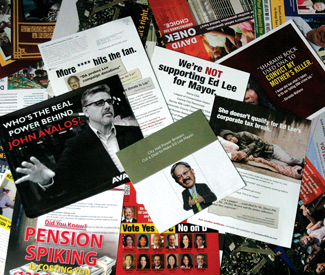
Hit pieces are common in San Francisco politics. So, sadly, are negative mailers funded by outside independent expenditure committees that can raise unlimited money.

But it’s highly unusual for an organization devoted to electing queer candidates to fund an attack on a candidate who is endorsed by both leading LGBT organizations and is, by all accounts, an ally of the community.

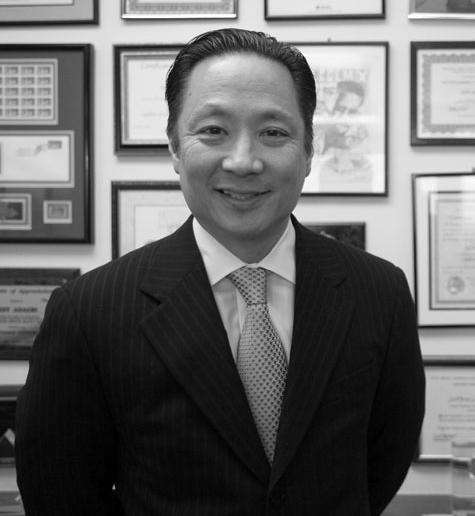
That’s what happened last week when the Washington-based Victory Fund — the leading national organization for LGBT political candidates — sent out a bizarre mailer blasting City Attorney Dennis Herrera for taking money from law firms that do business with the city.

The Victory Fund has endorsed former Sup. Bevan Dufty, who is the most prominent LGBT candidate in the mayor’s race. That’s to be expected; it’s what the Victory Fund does.

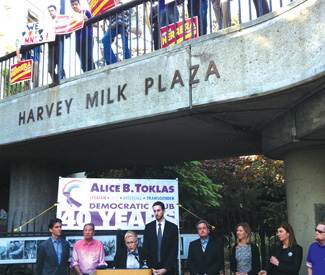
But why, in a race with 16 candidates, would the fund go after Herrera, who has spent much of the past seven years fighting in court for marriage equality? Why try to knock down a candidate who has the support of both the Harvey Milk Club and the Alice B. Toklas Club?

It’s baffled — and infuriated — longtime queer activist Cleve Jones, who is a Herrera supporter. “I have long respected the Victory Fund,” Jones told us. “But I’ve never seen them do what they did here. And it’s going to undermine the fund’s credibility.”

Jones dashed off an angry letter to the fund’s president, Chuck Wolfe, saying he was “appalled that this scurrilous attack, in the waning days of a mayoral campaign, would go out to the San Francisco electorate under the name of the Victory Fund.

“You really screwed up, Chuck, and I am not alone in my anger.”

We couldn’t get Wolfe on the phone, but the fund’s vice president for communications, Denis Dison, told us that the mailer “is all about fighting for our endorsed candidates.”

So how does it help Dufty, in a ranked-choice election, to attack Herrera? (In fact, given the dynamics of this election, the person it helps most is probably Mayor Ed Lee). Dison couldn’t explain. Nor would he say who at the fund decided to do the attack mailer.

But there are a couple of interesting connections that might help explain what’s going on. For starters, Joyce Newstat, a political consultant who is working for the Dufty campaign, is active in the Victory Fund, sits on the board of the fund’s Leadership Institute, and, according to a March 24 article in the Bay Area Reporter, was among those active in helping Dufty win the Victory Fund endorsement.

But again: Supporting Dufty is one thing. Attacking Herrera is another. Who would want to do that?

Well, if there’s one single constituency in the city that would like to sink Herrera, it’s Pacific Gas and Electric Co. And guess what? PG&E Governmental Affairs Manager Brandon Hernandez chairs the Victory Fund’s Leadership Institute. PG&E’s corporate logo appears on the front page of the fund’s website, and the company gave the Victory Fund more than $50,000 in 2010, according to the fund’s annual report.

Dison insisted that neither Hernadez nor anyone else from PG&E was involved in making the decision to hit Herrera and said the money went to the Leadership Institute, which trains LGBT candidates, not directly to the campaign fund.

Maybe so –- but the folks at the private utility, who are among the top three corporate donors to the Victory Fund, have to be happy. (Tim Redmond)


HERRERA HIT BACKFIRES

Herrera was also the target of another attack on his LGBT credentials last week, this one by the San Francisco Chronicle, which ran a front page story on Oct. 26 in which anonymous sources said he raised doubts in private City Hall meetings about San Francisco’s decision to issue same-sex marriage licenses in 2004. It was entitled, “Fight turns ugly to win gay votes in mayor’s race.”

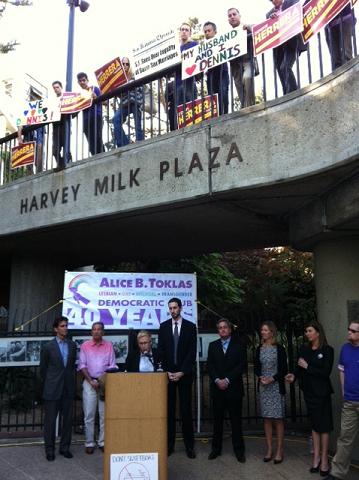
Despite trying to couch the hit in passive language, writing that ” a surprise issue has emerged” based on accusations “leveled by several members of former Mayor Gavin Newsom’s administration,” it was clear that it was the Chron that made it an issue, for which the newspaper was denounced by leaders of the LGBT community from across the political spectrum at a rally the next day.

“Those who are saying this now anonymously are as cowardly as Dennis and Gavin were courageous back then,” said Deputy City Attorney Theresa Stewart, the lead attorney who defended San Francisco’s decision in 2004 to unilaterally issue marriage licenses to same-sax couples, in defiance of state and federal law, which eventually led to the legalizing of such unions. “We can’t have our community turn on us for petty political gain.”

“WTF, Chronicle?” was how Assemblymember Tom Ammiano began his speech, going on to lay blame for the attack on surrogates for Mayor Ed Lee. Ammiano also called out the mayor for campaign finance violations by his supporters, for undermining the Healthy San Francisco program that was created by Ammiano’s legislation, and for repeatedly ordering police raids on the OccupySF encampment.

“How about some fucking leadership?!” Ammiano said.

Cleve Jones, an early gay rights leader who marched with Harvey Milk, also denounced Lee and his supporters for cronyism, vote tampering, money laundering, and the “fake grassroots” efforts of the various well-funded independent expenditure campaigns, which he said have fooled the Chronicle.

“To the Chronicle and that reporter — really? — this is what you do two weeks before the election? You should be ashamed of yourself,” Jones said. “How stupid do you think we are?”

Yet Chronicle City Editor Audrey Cooper defended the article. “Clearly, I disagree [with the criticisms],” she told the Guardian. “I personally vetted every one of the sources and I’m confident everything we printed is true.” She also tried to cast the article as something other than a political attack, saying it was about an issue of interest to the LGBT community, but no LGBT leaders have stepped up to defend the paper.

Beyond criticizing the obvious political motivations behind the attack, speakers at the rally called the article bad journalism and said it was simply untrue to suggest that Herrera didn’t strongly support the effort to legalize same-sex marriage from the beginning.

“I can tell you that Dennis never once shrank from this fight. I was there, I know,” Stewart said, calling Herrera “a straight ally who’s devoted his heart and soul to this community.”

Sen. Mark Leno, who introduced the first bill legalizing same-sex marriage to clear the Legislature, emphasized that he isn’t endorsing any candidates for mayor and that he didn’t want to comment on the details of the article’s allegations. But he noted that even within the LGBT community, there were differences of opinion over the right timing and tactics for pushing the issue, and that Herrera has been a leader of the fight for marriage equality since the beginning.

“I am here to speak in defense of the character and integrity of our city attorney, Dennis Herrera,” Leno said, later adding, “I do not appreciate when the battle for our civil rights is used as a political football in the waning days of an election.”

Molly McKay, one of the original plaintiffs in the civil lawsuit that followed San Francisco’s actions, teared up as she described the ups and downs that the case took, working closely with Herrera throughout. “But this is one of the strangest twists I can imagine,” she said of the attack by the Chronicle and its anonymous sources. “It’s ridiculous and despicable.”

Representatives for both the progressive Harvey Milk LGBT Democratic Club and fiscally conservative Alice B. Toklas LGBT Democratic Club also took to the microphone together, both saying they often disagree on issues, but they were each denouncing the attack and have both endorsed Herrera, largely because of his strong advocacy for the LGBT community.

Sup. Scott Wiener called Herrera, “One of the greatest straight allies we’ve every had as a community.”

When Herrera finally took the microphone, he thanked mayoral opponents Joanne Rees and Jeff Adachi for showing up at the event to help denounce the attack and said, “This is bigger than the mayor’s race. It’s bigger than me.”

He criticized those who would trivialize this issue for petty political gain and said, “It was my pleasure and honor to have been a part of this battle from the beginning — from the beginning — and I’ll be there in the end.” (Steven T. Jones)


BUYING REFORM

UPDATE: THIS ITEM HAS BEEN CHANGED FROM THE PRINT VERSION TO CORRECT INACCURATE INFORMATION DEALING WITH WHETHER PAST INIATIVES CAN BE CHANGED

October yielded tremendous financial contributions from real estate investors and interest groups for Yes on E, feeding fears that the measure will be used to target rent control and development standards in San Francisco.

Sup. Scott Wiener has been the biggest proponent for Prop E since May 2011. He argues that the Board of Supervisors should be able to change or repeal voter-approved ballot measures years after they become law, saying that voters are hampered with too many issues on the ballot. Leaving the complex issues to city officials rather than the voters, makes the most sense of this “common sense measure”, Wiener calls it.

But how democratic is a board that can change laws approved by voters? Calvin Welch, a longtime progressive and housing activist, has his own theory: Wiener is targeting certain landlord and tenant issues that build on the body of laws that began in 1978, when San Francisco voters first started adopting rent control and tenants protection measures. Yet the measure will only allow the board to change initiatives approved after January 2012.

“That is what the agenda is all about — roughly 30 measures that deal with rent control and growth control,” he said. Critics say  the measure will leave progressive reforms vulnerable to a board heavily influence by big-money interests. Although Wiener denies Prop E is an attack on tenants, who make up about two-thirds of San Franciscans, the late financial support for the measure is coming from the same downtown villains that tenant and progressive groups fight just about every election cycle. High-roller donations are coming straight from the housing sector, which would love a second chance after losing at the ballot box.

Contributions to Yes on E include $15,000 from Committee on Jobs Government Reform Fund, $10,000 from Building Owners and Managers Association of SF PAC, another $10,000 from high-tech billionaire Ron Conway, and $2,500 from Shorenstein Realty Services LP. Then — on Oct. 28, after the deadline for final pre-election campaign reporting — the San Francisco Association of Realtors made a late contribution of another $18,772, given through the front group Coalition for Sensible Government.

Prop. E is organized so that the first three years, an initiative cannot be subject to review. However after four years, a two-thirds majority vote by the board could make changes, and after sevens years, a simple majority could do so.

 (Christine Deakers)

Adachi video attacks public financing

180

This is odd: An eight-minute video narrated by Matt Gonzalez in support of Jeff Adachi devotes a considerable amount of time to attacking public campaign financing — something Gonzalez always supported as a supervisor.

The video claims that the $4 million that “politicians” are taking to pay for their mayoral campaigns could have helped the city avoid cancelling summer school and cutting school bus routes.

Actually, the city doesn’t pay for summer school or for school buses; the school district does. But I suppose the city could have scrapped public financing and given the money to SFUSD. Unlikely, but possible. (The city actually does share some money with SFUDS, under a measure that Gonzalez opposed.)

The thing about public financing, of course, is that it allows candidates like John Avalos, who won’t get big business support, to run a competitive campaign. If it prevents special interests from buying elections, it saves the city far more than it costs. Public financing has always been a central part of the progressive agenda, nationally and locally.

The rest of the message is about what you’d expect — pension reform, Recology’s franchise fee, giveaways to the police and fire unions. All stuff that Adachi has made part of his campaign. It’s nicely (if inexpensively) produced, and, as always, Gonzalez is a great presenter.

But what’s up with the attack on public finance?

(UPDATE: Gonzalez emailed me to say that Adachi doesn’t oppose public financing but thinks this is a bad year to accept it. He also said when he chaired the Budget Commitee the city sent a lot of money to the schools. But he did oppose the measure that guarantees some city funding to SFUSD.)

Superviors and labor leaders challenge Lee’s OccupySF stance

41

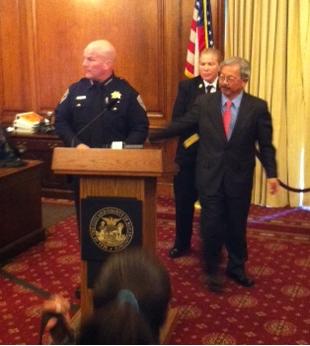
Mayor Ed Lee has put the city and its police force on a collision course with not only OccupySF, but also several members of the Board of Supervisors and top labor leaders who support the movement and want the city to allow its encampment to continue.

They spoke at a special hearing of the City Operations and Neighborhood Services Committee that was convened by Chair John Avalos this morning, supporting a resolution that Avalos created to allow OccupySF to have tents and other infrastructure that Lee opposes. The resolution – which is co-sponsored by Sups. Eric Mar, David Campos, and Jane Kim – was approved by the committee and is set to be considered by the full Board of Supervisors tomorrow (Tues/1).

“It is something I am wholeheartedly supporting because it is an expression of great frustration and concern about the economic system,” Avalos said. “We need to speak with a greater voice about changing our economic system so it works for the many and not just the few,” Avalos said, explaining why he is “wholeheartedly supporting” the OccupySF movement.

But Avalos said he’s been frustrated that Lee and the police have raided the camp twice and are threatening more, something that Avalos has been trying to mediate since the first raid on Oct. 5. He also said the city should learn from Oakland that using the police force to stop the movement only makes it stronger.

“If we were to try to stop it from happening, it would just encourage more people to take part in it,” he said, noting that more midnight raids are dangerous for both police and protesters. “We have to figure out as a city how we’re going to facilitate, encourage, and accommodate this movement.”

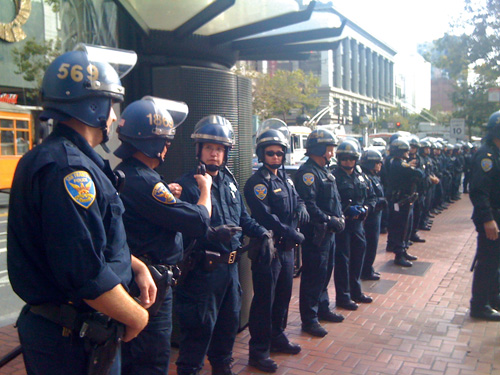
But instead, Avalos said Lee’s stand against allowing tents or an kind of encampment, while claiming to support the message OccupySF, has created a tense standoff. “I’ve seen very mixed messages come out of this administration,” Avalos said, adding that nobody believes police statements that the massing of SFPD cops in riot gear on Oct. 26 was only a training exercise.

Mar said OccupySF deserves tremendous credit for holding the space and being responsive to the health and safety concerns raised by city officials. “I’ve seen a transformation in the movement in the last three weeks that is truly impressive,” Mar said. “I’ve also seen, during the General Assemblies, an incredible exercise in democracy.”

He also disputed accusations that the camps are dirty and that the movement is unfocused. “Don’t believe the hype from the mainstream media but look at the messages coming out of this movement,” said Mar, who was wearing a “We are the 99 percent” sticker.

“We should allow OccupySF to do what they’re doing,” Campos said. “It’s good for San Francisco.”

Campos also called out Lee and Oakland Mayor Jean Quan for ordering violent raids on the peaceful encampment, disputing the idea that “somehow it’s okay for us to spend the limited resources we have on these kinds of police actions…I hope we don’t have Mayors Quan and Lee wasting resources that could be better spent elsewhere.”

During the public comment portion of the hearing, each of the more than two dozen speakers supported the resolution.

“What this resolution does is it calls on the other supervisors and the mayor to decide how they want to deal with OccupySF,” said Gus Feldman of SEIU Local 1021.

Representatives of several labor unions and the San Francisco Labor Council that have voted to endorse OccupySF spoke at the hearing, include Ken Tray with United Educators of San Francisco, who gave a rousing speech in support of the movement.

“The times have changed and the political landscape has shifted,” Tray said, ticking off a long list of reasons for supporting the movement, from San Francisco’s long tradition of advocating for progressive change to the fact that “the schoolchildren of San Francisco are being denied resources because the 1 percent refuse to pay their fair share.”

Frank Martin del Campo of the SF Labor Council displayed the bruises on his arm inflicted by police during the raid on the Occupy Oakland, saying “this was an attempt to criminalize dissent…It represents the politicization of the police.”

Labor Council Executive Director Tim Paulson said, “I just want to be clear that we are the 99 percent….We want Occupy San Francisco to be there 24/7.” He and others say the Occupy movement is highlighting deep economic inequities that the labor movement has long been raising as well. “OccupySF has called the question on really important issues we’ve been struggling with for years,” said Gabriel Haaland of SEIU Local 1021

“Here is a peaceful protest being answered with violence,” said Pilar Schiavo of California Nurses Association, which has been supporting the occupations. This is an important political struggle, she said, and “It’s time for the mayor to decide what side he’s on.”

Many speakers focused their criticism on Lee, such as Brad Newsham, who said, “Any official who would send in the riot police to deal with this camp does not deserve to be mayor of San Francisco.” He said the city should set an example for the country by formally allowing the encampment to continue, and he turned to the young protesters in the room and said, “Hold your ground and we’ll try to get your back.”

Sean Semans, an active member of OccupySF since the beginning, thanked Avalos and the other progressive supervisors for “saving us when nobody would,” and he expressed frustration with the Mayor’s Office.

“The mayor still doesn’t recognize us, he won’t come down and see the work we’re doing,” Semans said. “We can do all kinds of work when we’re not fighting to protect our First Amendment rights.”

He was part of an OccupySF delegation that met with Lee last week, and Semans said the mayor offered to help get the protesters rooms in SRO hotels or meals from local soup kitchens, showing that he has a fundamental misunderstanding about what this occupation is about.

As Semans said, “It shows what we’re dealing with here.”

LGBT leaders denounce attack on Herrera by the Chronicle

20

Leaders of the LGBT community from across the political spectrum yesterday denounced the San Francisco Chronicle and the anonymous sources it relied on to question City Attorney Dennis Herrera’s early support for legalizing same-sex marriage, calling the paper’s front page article a thinly veiled political hit piece designed to hurt Herrera’s mayoral campaign.

That strong showing of support in the LGBT community and the view offered by many that the attack came from supporters of Mayor Ed Lee – including top former Newsom Administration officials, some of whom now work for Lee – could not only mitigate damage from the article but further sully a Lee election effort that is already marred by allegations of vote tampering, money laundering, and deceptive campaign tactics.

“Those who are saying this now anonymously are as cowardly as Dennis and Gavin were courageous back then,” said Deputy City Attorney Theresa Stewart, the lead attorney who defended San Francisco’s decision in 2004 to unilaterally issue marriage licenses to same-sax couples, in defiance of state and federal law, which eventually led to the legalizing of such unions. “We can’t have our community turn on us for petty political gain.”

“WTF, Chronicle?” was how Assemblymember Tom Ammiano began his speech, going on to lay blame for the attack on surrogates for Lee. Ammiano also called out the mayor for campaign finance violations by his supporters, for undermining the Healthy San Francisco program that was created by Ammiano’s legislation, and for repeatedly ordering police raids on the OccupySF encampment.

“How about some fucking leadership?!” Ammiano said.

Cleve Jones, an early gay rights leader who marched with Harvey Milk, also denounced Lee and his supporters for cronyism, vote tampering, money laundering, and the “fake grassroots” efforts of the various well-funded independent expenditure campaigns, which he said have fooled the Chronicle.

“To the Chronicle and that reporters – really? – this is what you do two weeks before the election? You should be ashamed of yourself,” Jones said. “How stupid do you think we are?”

Yet Chronicle City Editor Audrey Cooper defended the article and disputed the political motivations of its sources. “Clearly, I disagree [with the criticisms],” she told the Guardian. “I personally vetted every one of the sources and I’m confident everything we printed is true.”

Beyond criticizing the obvious political motivations behind the attack, speakers at the rally called the article bad journalism and said it was simply untrue to suggest that Herrera didn’t strongly support the effort to legalize same-sex marriage from the beginning.

“I can tell you that Dennis never once shrank from this fight. I was there, I know,” Stewart said, calling Herrera “a straight ally who’s devoted his heart and soul to this community.”

Sen. Mark Leno, who introduced the first bill legalizing same-sex marriage to clear the Legislature, emphasized that he isn’t endorsing any candidates for mayor and that he didn’t want to comment on the details of the article’s allegations. But he noted that even within the LGBT community, there were differences of opinion over the right timing and tactics for pushing the issue, and that Herrera has been a leader of the fight for marriage equality since the beginning.

“I am here to speak in defense of the character and integrity of our city attorney, Dennis Herrera,” Leno said, later adding, “I do not appreciate when the battle for our civil rights is used as a political football in the waning days of an election.”

Ammiano also noted that even if Herrera raised doubts in early meetings, that was entirely appropriate given his role as city attorney. “Even if there are some questions, they’re about helping, not hurting,” he said, expressing disgust at the Newsom Administration officials for turning on someone who was instrumental to defending the decision: “In my day, you valued your friendships.”

Molly McKay, one of the original plaintiffs in the civil lawsuit that followed San Francisco’s actions, teared up as she described the ups and downs that the case took, working closely with Herrera throughout. “But this is one of the strangest twists I can imagine,” she said of the attack by the Chronicle and its anonymous sources. “It’s ridiculous and despicable.”

Representatives for both the progressive Harvey Milk LGBT Democratic Club and fiscally conservative Alice B. Toklas LGBT Democratic Club also took to the microphone together, both saying they often disagree on issues, but they were each denouncing the attack and have both endorsed Herrera, largely because of his strong advocacy for the LGBT community.

Sup. Scott Wiener called Herrera, “One of the greatest straight allies we’ve every had as a community.”

When Herrera finally took the microphone, he thanked mayoral opponents Joanne Rees and Jeff Adachi for showing up at the event to help denounce the attack and said, “This is bigger than the mayor’s race. It’s bigger than me.”

He criticized those who would trivialize this issue for petty political gain and said, “It was my pleasure and honor to have been a part of this battle from the beginning – from the beginning – and I’ll be there in the end.”

24 hours of occupation

1

rebeccab@sfbg.com

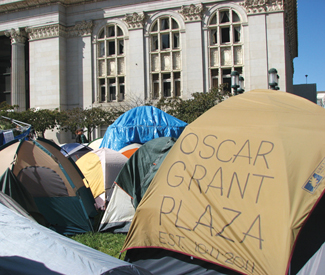
No sooner had I arrived at downtown Oakland’s Frank H. Ogawa Plaza — christened Oscar Grant Plaza by the activists who have established the Occupy Oakland encampment there –than the police showed up.

It was Oct. 18, and the ever-evolving occupation had been going strong for eight days. Oakland City Hall served as a backdrop for the bustling tent village, and the plaza steps were adorned with banners. “Welcome to Oscar Grant Plaza,” one proclaimed. “This is an occupation. We have not asked for permission. We do not allow the police. You are entering a LIBERATED SPACE.”

By press time, a standoff between Oakland police and the 300 to 400 occupiers hadn’t yet occurred, though a clash seemed imminent. City government had declared the autonomous village illegal and issued several eviction notices, citing health and safety concerns, while occupiers had made clear their intentions to stay put.

Around 5 p.m. on Oct. 18, two cops appeared at the camp. They weren’t in uniform, but black polo shirts emblazoned with the words “Tactical Negotiator.” Protesters immediately surrounded them, a customary response to police presence since the encampment was raised. The police said they’d come to “facilitate” a march scheduled to depart from the camp — but the protesters demurred. Occupy Oakland’s General Assembly had not consented to this, they replied.

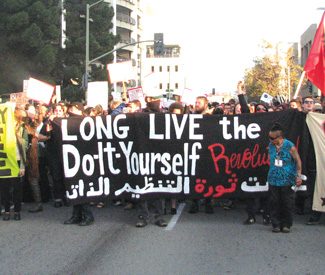
The impasse didn’t last long, because a group of about 50 tore into the intersection and headed up Broadway. The radical queer march had commenced. “We’re here! We’re queer!” They chanted. “Tax the banks and eat the rich!” Many donned fabulous costumes, and one skinny person clad in form-fitting leopard print carried a sign showing a unicorn bursting from a cage, with the words, “It’s time to break free.”

As the march passed Wells Fargo and Chase, a dozen police vehicles trailed slowly behind, occasionally sounding sirens. Apparently, this was what they’d meant by “facilitating.”

Despite the cat-and-mouse with the cops, the nonviolent demonstration concluded without incident. Protesters returned, flushed and energized, to home base — Occupy Oakland, a vortex of radical defiance against the ills of capitalism that had materialized Oct. 10 and showed no signs of fading. Intrigued, I decided to spend 24 hours there documenting it.


ORGANIZED OPPOSITION

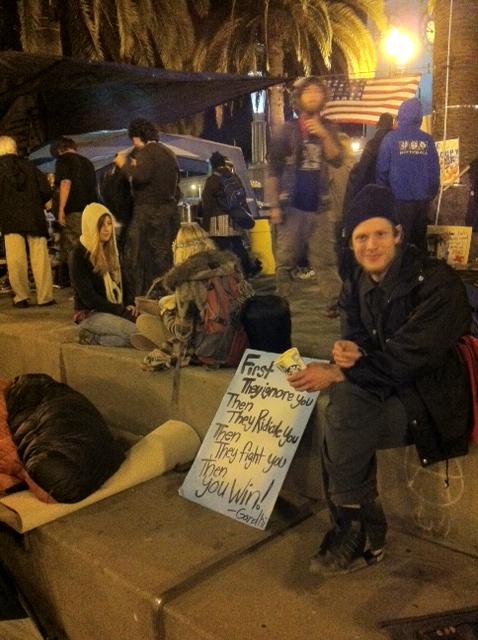
The camp encompassed a lively blend of projects that seemed to have materialized organically. There was a kitchen serving free food, a first aid tent, a media tent where one could power a laptop by bicycle, a free school named for police shooting victim Raheim Brown, an informational booth with stacks of radical literature, a container garden, portable toilets, an arts and crafts space, and a kids’ area. Committees had been set up to tackle safety, sanitation, finances, events, and other duties, replete with color-coded armbands. Regular workshops, political discussions, teach-ins, lectures from notable speakers, and live music performances had all been arranged. Taking it all in, a woman with long gray hair exclaimed, “The ’60s were never this organized!”

Occupy Oakland’s experimental community mushroomed up as part of the wave of encampments established in solidarity with Occupy Wall Street, part of a nationwide movement that has captured the public’s imagination and reinvigorated the left.

“We are reclaiming public space to use as a forum for the people to come together, meet one another, listen to each other, and build power for ourselves,” read a statement on the Occupy Oakland website. “[It] is more than just a speak-out or a camp out. The purpose of our gathering here is to plan actions, to mobilize real resistance, to defend ourselves from the economic and physical war that is being waged against our communities.”

The camp supported a wild and unlikely mix of people united in their disenchantment with the status quo — young and old, black and white, housed and homeless, queer and straight, credentialed and uneducated, vegan and omnivorous — and within this developing space, societal barriers seemed to be falling away.

“It’s an occupation that transcends what it was initially about,” reflected a protester named Miguel. “It’s feeding homeless people, and it’s giving people a place to sleep.”

Protesters didn’t rally around demands. “From my understanding, this is a movement of autonomy, and liberation from … the politics of representation, and the economics of capitalism,” said Bryan R., an organizer who helped plan the occupation. “To engage in dialogue with the power by means of demand is to acknowledge their power over us.”

All decisions were made by consensus in a General Assembly. The occupation had passed resolutions stating that it didn’t back any political parties, supported the Pelican Bay prisoners’ hunger strike, and was in solidarity with striking students and workers.

Rodrick Long, a 21-year-old Oakland native who’d been camped at the occupation for two days when I met him, said he felt he was participating in a piece of Oakland’s history.

“As far as Oakland goes, I just think we need more unity,” he said. “There’s a lot of gang violence, and a lot of poverty. A lot of people don’t show enough that they care about Oakland. But it’s a lot of people here. I didn’t expect this many people to come.”


MANAGING CONFLICT

Occupy Oakland seemed both serious and playful as it journeyed each day toward fomenting the revolution, or maybe just keeping the camp together, depending on who you asked. A tense General Assembly meeting was reportedly held after the city issued the first eviction notice on Oct. 20, and occupiers vowed to hold their ground. But the somber moment broke up when someone kept randomly shouting “Michael Jackson!” — prompting someone to blast the song “Smooth Criminal” over a loudspeaker, sparking an impromptu dance party before everyone got down to business again.

The occupiers were sculpting a self-governed, non-hierarchical mini society in the heart of Oakland as an affront to Wall Street bankers and capitalism itself — a complicated endeavor, to be sure. This was, after all, a mix of perfect strangers, some with mental-health issues (who’d been failed by the very system the occupation was opposing, several people pointed out to me), striving to coexist in a densely populated public park. Illegally.

There were ups and downs. Mainstream newspapers were running headlines about the occupation’s rat problems, television reporters had gotten into tiffs with protesters, and in the hours before I arrived, a man who went by Kali was forced out for starting arguments that eventually came to blows.

The outside world seemed separate from the occupation, though its presence was acutely felt. News vans were parked along the perimeter at all hours of the day, and a live stream sent raw footage directly to the Internet, making the surreal scene feel a bit like a fishbowl.

As night fell, around 150 people congregated in the plaza’s amphitheater for the evening’s General Assembly, which opened with general announcements. Ellen spoke about organizing actions against foreclosures. Jonathan urged a transition from mega-banks to credit unions. Someone proposed expanding the first aid tent into a free clinic that would operate out of an onsite RV. But just as a woman began describing the struggle of revolutionary youth in Uganda, shouts rang out from somewhere in the thicket of tents. Kali was back. Members of the “safer spaces” committee made a beeline toward him to try and deescalate the conflict, while others milled about in alarm and confusion.

Despite mediators’ efforts, Kali went on a rampage, triggering an emergency meeting to determine how best to handle this kind of aggression. Once he departed, however, the encampment’s emotional rollercoaster seemed to wind down.

“It’s up to us to figure out creatively how to maintain the health of this camp,” organizer Louise Michel told me later. “It’s really important for people here to figure out how to problem solve … Everyone has the commitment.”


LOOKING FOR REASONS

Dialogues had been started to address safety issues — but the city of Oakland was highlighting reports of assaults and sexual harassment as reasons the encampment would not be allowed to stay.

Security volunteers were regularly stationed around the plaza perimeter. Tim Simons began his shift around midnight, pacing the sidewalk and gazing out at the deserted downtown Oakland street while maintaining constant communication with his security crew via walkie-talkie.

“It’s been the most intense mixture of people coming together that I’ve ever seen,” reflected Simons, who’d watched the occupation grow since the beginning. “They’re camping here because they want this to become a revolutionary political force. The significant question is: How do we project outward from here? Is this going to become more than just a camp?”

He stressed its significance as a takeover of public space, saying it integrated all manner of people whose lives had been impacted by failed economic policies. Simons also acknowledged the anti-police attitude shared by many occupiers. “In Oakland, it’s really hard to play this game that the police are on our side,” he said. “There’s no real illusion here about what role the cops play.”

That sentiment wasn’t shared by everyone, though. “We’re trying to practice a nonviolent response toward police,” Mindy Stone, who was staying in a tent at the Occupy Oakland overflow camp at Snow Park, told me. “We want to try to make them feel like they are the 99 percent.”

It had been an eventful night. I drifted off to sleep in a borrowed tent, as the banter of people sitting and smoking on park benches floated in.

The next morning was sunny and warm, and the mood of the camp was buoyant. Kitchen volunteers busily prepared food, joking together as they listened to music. Donations flowed in daily from Arizmendi bakery, farmers’ markets, and other generous supporters.

In the arts and crafts area, people were painting a banner to urge people to withdraw their money from major banks by Nov. 5, Guy Fawkes Day. A redhead in a flowing silken outfit wound his way through camp with a garbage bag, asking people if they had pocket trash. A self-defense workshop was in swing, its participants partnered up, giggling, as they practiced holds and blocks.


INCUBATING IDEAS

Dallas Holland was tending wheatgrass, bok choy, herbs, and other edibles in a container garden. “I’ve been overwhelmed with the way the community has come together … It’s amazing to watch this transform into a Mecca of ideas,” she said. “People are having meetings and thinking of ways to perpetuate the movement.” An Alabama native, Holland graduated from college in 2006 and had been unemployed for a year.

Allen Adams, a 37-year-old Oakland native, told me he’d been sleeping outside regularly since before the occupation. “I quadruple up on the shirts. It gets to you,” he said.

He’d had little luck finding work, though he was constantly searching online. With him was Brandy, his well-loved, four-month old pit bull.

“I’ve been struggling all my life,” Adams said. “My dad did, my mom did, my grandmother did. And for what? To have no money.” But he said he was amazed and inspired by the occupation. “I like the fact that people can get together and discuss issues. How can we implement programs to do what California has failed to do? It’s a big task. We’re just working toward betterment. Lasting changes, not just temporary shit.”

Michel echoed these goals. “It’s really bold, and it’s really complex, but no one’s ever lived what we’re trying to do,” she said. “People feel a lot of ownership over what we have here. There’s a sense here of people having each other’s back. Politically, it’s huge.”

During my last hour at Occupy Oakland, David Hilliard, a founding member of the Black Panthers, delivered a speech, driving home the point that the occupation should be organized and focused.

“You’re here, which is a wonderful thing,” Hilliard told the occupiers. “Now we need to have some very basic programs dealing with desires and needs here in Oakland. It can’t be abstract. I can assure you, in a very short time, they’re going to run you out of here. Put something on paper that can help you address the basic desires — otherwise, you’re not going to last long. Get some concrete demands.” *

Avalos offers resolution supporting OccupySF and its camp

57

In the wake of last night’s violent police raid on the Occupy Oakland encampment (a still-tense situation that we’re now on the scene covering) and two similar late-night police crackdowns on OccupySF in recent weeks, Sup. John Avalos and co-sponsors Eric Mar and David Campos are introducing a resolution at today’s San Francisco Board of Supervisors meeting that calls for the city to explicitly allow the OccupySF encampment and its related infrastructure to remain.

That resolution (the full text follows below), which Avalos legislative aide Raquel Redondiez says will be the subject of a special hearing on Monday before being considered by the full board on Tuesday, Nov. 1, grew out of testimony from OccupySF participants that Avalos solicited at last week’s board meeting following a late night police raid on Oct. 16 that resulted in five arrests and many injuries.

As we report in this week’s paper (see “Mixed messages,” to be posted this evening, Tues/25), at that Oct. 18 board meeting, Mayor Ed Lee took the position that no tents, kitchens, or other infrastructure would be permitted, a stance that Police Chief Greg Suhr seemed to soften slightly at a raucous Police Commission hearing the next day. In the face of those mixed messages, OccupySF grew into a full-blown tent city in Justin Herman Plaza and there have been no real conflicts with police since.

Both the San Francisco Police Department and the Mayor’s Office were slow to respond to messages we left all week seeking to clarify the city’s policy toward OccupySF, but both finally got back to us last night after the article had gone to press.

SFPD spokesperson Daryl Fong told us, “We’re still currently doing daily safety inspections at Justin Herman Plaza and continuing to provide leafletting…We’re educating the campers about violations and concerns for public safety,” such as unsanitary conditions or unsafe camping structures.

But he said OccupySF hasn’t been given any deadlines for removing structures and there are no current plans for another raid. “Our goal is to get compliance from the campers voluntarily,” he said. “This situation is being continually monitored as it progresses.”

When we asked the Mayor’s Office about the contradiction being Lee’s stance and the city’s reaction to the growing tent city, Press Secretary Christine Falvey wrote, “The mayor’s position on Occupy SF has not changed. He has directed his departments to facilitate peaceful protest, but not allow structures, tents, or a permanent campsite. He wants to ensure the area is safe for demonstrators and the general public. If you have been to the site, you may have seen the Fire and Public Health Departments conducting inspections for public health and safety concerns and you may have seen Recreation and Park and Police staff informing people of the parks and public safety codes that prohibit camping equipment. Individuals are being informed daily of this and the city’s Homeless Outreach Team is offering services to anyone in the area who may need it. The policy stands and departments are educating the group about what is and is not allowed and the mayor expects those who want to use the space to protest, to follow the rules.”

But OccupySF protesters say they have no intention of leaving the space, believing it’s their right to be there as part of a national movement spotlighting the greed and corruption of the wealthiest 1 percent of Americans. And when I told Falvey that the encampment seems to defy the mayor’s stated position, she wrote, “The mayor has asked several departments to enforce the existing codes, and I understand a number of informational contacts have gone out daily to educate those using the plaza about what is allowable in addition to Fire and Public Health inspections to make sure open flames or dangerous materials are not being used or stored at the site.”

I told her that didn’t address my question, and I asked for a reaction to the Avalos legislation that would explicitly allow “tents, tarps, First Aid supplies, environmentally clean and fire-safe energy sources, and the ability to store, prepare, and serve hot food,” which is the reality now on the ground. I’ll update this post when I get a response.

In the meantime, here’s the full text of the resolution:

[Expressing Support for Occupy Wall Street Protest Movement and the People’s Right to Peaceful Assembly in San Francisco]

Resolution Supporting the Occupy Wall Street Protest Movement and Urging Mayor Lee to Uphold People’s Right to Peaceful Assembly and Collaborate with Occupy SF to Ensure Safety of the Protestors, their Supporters, and the Greater Public.

WHEREAS, “Occupy Wall Street” was formed by a broad spectrum of people coming together to protest the corporate-serving economic and political system controlled by the 1 percent, profiting at the expense of 99 percent of the people; and

WHEREAS, Three years after the current financial crisis caused by Wall Street speculators and profiteers, the unemployment rate in the United States is still at the highest level since the Great Depression with the unemployment rate in San Francisco currently at 8.3 percent; and,

WHEREAS, The United States’ major banking institutions, which have been bailed-out by the government and United States taxpayers, have done little to prevent massive foreclosure of residential properties or support the revitalization of local economies by sustaining small businesses; and,

WHEREAS, Since 2008, there have been 1.2 million foreclosures in California, with 12,410 homes in San Francisco alone; and,

WHEREAS, The “Occupy Wall Street” protest movement has struck a chord with the people of the United States and around the world, inspiring over 900 similar protests and solidarity actions across the country, where tens of thousands of people have come out to express their deep indignation against Wall Street greed and systemic socio-economic injustices; and,

WHEREAS, The “Occupy” demonstrations are a rapidly growing movement of people from all walks of life with the goal of occupying public space in order to create a shared dialogue and assert demands for economic justice; and,

WHEREAS, The “Occupy” demonstrations have been supported by the California Nurses Association/ National Nurses Association, American Federation of Labor -Congress of Industrial Organizations, Change to Win, International Longshore and Warehouse Union-International, Teamsters Joint Council 7, Services Employees International Union, Laborers International Union of North America, and many others; and,

WHEREAS, The OccupySF demonstrations began in September with small gatherings of people and have since grown and gained supported from thousands of individuals, community and faith-based organizations, and unions; and,

WHEREAS, On October 12, a 500-person march and civil disobedience organized by local community groups received national media attention, exposing the struggles of San Francisco residents against foreclosure, corporate control, and spiraling unemployment; and,

WHEREAS, The October march and protest action culminated in civil disobedience and, despite the arrest of 11 people, lacked any antagonistic conflict between the police and protestors; and,

WHEREAS, Similar to demonstrations in hundreds of cities across the United States, OccupySF demonstrators are asserting their rights to free speech and peaceful assembly 24 hours a day, seven days a week, in order to create public dialogue around corporate control of the political process and public space; and,

WHEREAS, Numerous and various groups continue to join the protesters at OccupySF, including an interfaith clergy contingent and the California Nurses Association, which has set up a First Aid tent to support the protestors and help ensure public safety; and,

WHEREAS, The City of San Francisco has a right and duty to ensure the safety and security of the general public including the protestors and their supporters; and,

WHEREAS, Since the beginning of the protest, City actions have resulted in the confiscation of food, tents, sleeping bags, and other belongings from the OccupySF demonstrators as well as causing preventable injuries and arrests; and,

WHEREAS, The City has a lengthy and proud history of political protest and has upheld the rights of people to free speech, freedom of assembly, and peaceful protest; and,

WHEREAS, With clear leadership from the Mayor, City departments can set a tone of cooperation and collaboration with OccupySF protestors and supporters, help mitigate harm, and address any public safety, health and sanitation concerns, all while avoiding unnecessary conflict; now, therefore, be it

RESOLVED, That the Board of Supervisors supports the Occupy Wall Street protest movement and the rights of all who protest to assemble peacefully and enjoy free speech in the City and County of San Francisco; and, be it

FURTHER RESOLVED, That the Board of Supervisors recognizes that Free Speech and Freedom of Assembly should not be limited to daytime nor short-term activities and we deem the need of protesters to have tents, tarps, First Aid supplies, environmentally clean and fire-safe energy sources, and the ability to store, prepare, and serve hot food reasonable; and, be it

FURTHER RESOLVED, That the Board of Supervisors urges the Mayor, the Police Department, and other City agencies to uphold the rights of protestors to political speech and public assembly, and to recognize that the full exercise of such rights requires that participants are able to attend to the needs of everyday life, and have a space free from harassment; and, be it

FURTHER RESOLVED, That the Board of Supervisors urges Mayor Ed Lee to direct the Recreation and Park Department, the Department of Public Works, the Police Department, and other City agencies, as relevant, to be flexible and to collaborate with protestors for the safe sharing of public spaces, in which demonstrators can exercise their political rights and the City can address legitimate safety concerns while avoiding unnecessary antagonism; and, be it

FURTHER RESOLVED, That the Board of Supervisors urges Mayor Ed Lee, in order to prevent further harm and conflict to any members of the public, including protestors of OccupySF, to direct the Police Department to ensure that there will be no use of force to dislodge the OccupySF demonstrators and confiscate their belongings.

Dick Meister: Unions can help bridge the income gap

2

By Dick Meister

Dick Meister, former labor editor of the SF Chronicle and KQED-TV Newsroom, has covered labor and politics for more than a half-century. Contact him through his website, www.dickmeister.com, which includes more than 350 of his columns.

There’s obviously no easy way to bridge the income gap between the rich and the rest of us or to combat the other serious economic problems raised by the Occupy Wall Street movement. But keep in mind the crucial – if not decisive – role that labor unions can play in righting our economic wrongs.

Union members earn a lot more than non-union workers overall and within particular occupations, and in age, gender and racial groups, and so spend more. They have more and greater fringe benefits, a greater voice in community and political affairs and otherwise are in a good position to span the income gap as well as contribute to the growth of the economy that’s so badly needed.


Unionized workers are paid nearly 30 percent more than non-union workers generally, a median of about $900 a week to about $700 a week. That’s an advantage of $4.95 an hour, or more than $10,000 a year, that can be spent to help boost the sagging economy.

The unionized workers’ much greater access to employer-financed health care helps, too, as does their invariably longer paid vacations, their sick pay and, among other key benefits, the pensions that go to more than three-fourths of unionized workers but to only about 20 percent of other workers.

Unions clearly provide the purchasing power needed to drive the economy and narrow the income gap between hugely paid corporate executives and the people who do the actual work of the country. Unions could very well do that, in part by helping improve working conditions that would attract more workers to particular employers and help the employers retain workers and compensate them well.

Although unions have been declining in numbers to the point that only about 13 percent of today’s workers are in unions, indications are that their numbers will be growing, thanks in part as a reaction to the current economic troubles.

The past practices of unions, in any case, indicate they’ll undoubtedly provide lots of help to ease the current crisis. They played a major role, for instance, in passage of the laws that set a minimum wage and a standard workweek, regulate on-the-job safety and provide workers’ compensation for on-the-job injuries.

What’s more, union members usually have more training and thus greater productivity. Their unions commonly work on local economic development in partnership with employers, community groups and local governments and commonly invest union pension funds to help rebuild declining communities and, among other local projects, help finance moderate–income housing.

Don’t forget, either, that non-union employers sometimes offer pay and benefits equal to union pay and benefits in their areas, in hopes of avoiding unionization.

Unions, which had much to do with pulling the nation out of the Great Depression and helping establish a true middle class, are in position to provide help that’s as necessary in 2011 as it was in the 1930s.

Dick Meister, former labor editor of the SF Chronicle and KQED-TV Newsroom, has covered labor and politics for more than a half-century. Contact him through his website, www.dickmeister.com, which includes more than 350 of his columns.

On Guard!

1

news@sfbg.com

ORACLE’S DIRTY SECRET

If wealth trickled down from Oracle’s OpenWorld conference in San Francisco last week, very little of it reached a small group of low-wage laborers hired from out of state to set up for a concert hosted as an event highlight on Treasure Island.

Oracle is a prominent Bay Area tech company helmed by Larry Ellison, the billionaire CEO who worked closely with top city officials to bring the America’s Cup sailing regatta to San Francisco.

The Oct. 5 Oracle OpenWorld concert on Treasure Island featured Sting and Tom Petty as headliners. Registration packages for the weeklong tech conference, which drew some 45,000 attendees to San Francisco, ranged from $1,395 to $2,595.

A member of the carpenters union contacted the San Francisco Office of Labor Standards & Enforcement (OLSE) Sept. 16 to formally complain that a construction crew assembling a large seating structure for the event was being paid less than the city-mandated minimum wage of $9.92 per hour, city documents show.

Josh Pastreich, an OLSE official, went to the worksite to interview crew members. Their names were redacted from public records, but Pastreich described them as monolingual Spanish speakers who travel from city to city building seating arrangements for major events.

“Everyone is being paid $8 an hour (except for the supervisors),” he reported in a city document. “Workers generally started at 6:30 am but there was a little confusion about quitting times.” At least one work day lasted 11 and a half hours, according to a timesheet. The workers were hired by subcontractors brought in by Hartmann Studios, an events management outfit working directly for Oracle.

“We made a phone call, and sent them some emails,” OLSE director Donna Levitt explained. “Nobody said, ‘we intended to pay them the [legal] rate,'” but the subcontractors increased workers’ hourly wages to comply with San Francisco minimum wage ordinance requirements, Levitt said. Since the company adjusted the rate immediately, no fines were issued. There were fewer than 20 workers on the project.

OLSE did not correspond with Oracle directly, but spoke to the subcontractors. One was T & B Equipment, a Virginia-based company. “We were not aware of the minimum wage there, but we fixed it before the payroll was done,” a T & B representative identified only as Mr. Waller told the Guardian. Lewmar, a Florida-based subcontractor, assisted with staffing for the job. Oracle, Hartmann Studios, and Lewmar did not respond to Guardian requests for comment.

Since the enforcement agency intervened, the laborers earned $9.92 per hour instead of $8 — still well below the average Bay Area payscale for similar work. Building bleachers is comparable to raising scaffolding for major construction projects, and the prevailing wage for unionized scaffolding erectors in California is $37.65 per hour, or $62.63 when benefits are factored in.

None of the workers were from San Francisco, which likely spurred the carpenters union complaint — Carpenters Local 22 has faced significant losses in membership since the economic downturn due to high levels of unemployment disproportionately impacting the construction sector. Represenatives from Local 22 did not return calls seeking comment.

Boosters of the America’s Cup have hailed the upcoming sailing event as an engine for local job creation, but Oracle’s use of low-wage, out-of-state laborers at its pricey, high-profile OpenWorld event raises questions. While the tech company is a separate outfit from the America’s Cup organizing team, Ellison holds leadership positions at both.

Ellison was named the world’s sixth wealthiest individual in a Forbes profile in 2010, with a net worth of $28 billion. His total compensation last year was listed as $70,143,075. That’s 3,399 times the amount a person earning $9.92 an hour would make in a year working 40 hours every week — before taxes, of course. (Rebecca Bowe)


LEE’S TELLING VETO

The Board of Supervisors approved legislation to close a gaping loophole in the city’s landmark Health Security Ordinance on Oct. 4, in the process forcing Mayor Ed Lee to promise his first veto and reveal his allegiance to business interests over labor and consumer groups.

Sup. David Campos sponsored legislation that would prevent SF businesses from pocketing money they are required to set aside for employee health care, seizures that totaled about $50 million last year. These health savings accounts are often used by restaurants who charge their customers a 3-5 percent surcharge, ostensibly for employee health care, instead simply keeping most of the money.

Despite aggressive lobbying against the measure by the San Francisco Chamber of Commerce — which went so far as to threaten to withdraw support for Prop. C, the pension reform measure it helped craft with Lee and labor unions — the Board of Supervisors approved the measure on a 6-5 vote on first reading (final approval was expected Oct. 11 after press time).

But then Lee announced that he would veto the measure, claiming it was about “protecting jobs,” a stand that was criticized in an Oct. 5 rally on the steps of City Hall featuring labor unions, consumer advocates, and mayoral candidates John Avalos, Leland Yee, Dennis Herrera, and Phil Ting.

Lee and Board President David Chiu — who voted against the Campos legislation, along with Sups. Sean Elsbernd, Mark Farrell, Carmen Chu, and Scott Wiener — have each offered alternative legislation that lets businesses keep the money but make some minor reforms, such as requiring businesses to notify employees that these funds exist.

Both Lee and Chiu talk about seeking “compromise” and “consensus” on the issue, but Campos and his allies say it’s simply wrong for businesses to take money that belongs to the employees, to gain a competitive advantage over rivals who actually offer health insurance or pay into the city’s Healthy San Francisco program, and to essentially commit fraud against restaurant customers.

“This money belongs to the workers and it’s something that consumers are paying for,” Campos said. “We have a fundamental disagreement.” (Steven T. Jones)


ET TU, DAVID CHIU?

In a press release on Oct. 6, mayoral candidate David Chiu stated his concerns over Mayor Ed Lee’s potentially illegal campaign contributions from employees of the GO Lorrie airport shuttle service. That company benefited from a decision by airport officials in September and then offered to reimburse employees for making $500 contributions to Lee, according to a Bay Citizen report.

“These revelations raise deeply troubling questions that merit a full investigation by state authorities. City Hall cannot be for sale. Pay-to-play politics has no place in San Francisco, and will have no place in a Chiu administration — you can count on that,” he said in the release.

But has Chiu — one of the top fundraisers in the mayoral field — been engaging in a little pay-to-play of his own? That was the question we had after we saw that he had received lots of donations from restaurant owners, whose side he took last week in opposing Sup. David Campos’ legislation to keep them from raiding their employee health care funds.

The Golden Gate Restaurant Association (GGRA) waged unsuccessful legal battles against the Health Care Security Ordinance and lobbied against Campos’ recent reforms of its loophole. And in the latest donation cycle, the GGRA donated the maximum $500 to the Chiu campaign. Other Bay Area food services contributed up to $5,950.

So the question remains, despite Chiu’s posturing against “pay-to play politics”— are these food service companies contributing to Chiu’s campaign because he’s doing their bidding in opposing the Campos measure and sponsoring an alternative that lets them keep most of the money?

When Liane Quan, co-owner of SF’s Lee’s Deli, was asked if the health care legislation was a reason she donated, she said, “Yes, that’s one reason.” She then hesitated to elaborate why. Members of the Quan family associated with Lee’s Deli contributed a total of $1,000 to the campaign.

Maurizio Florese, an Italian-speaking co-owner of Mona Lisa’s Restaurant who contributed $100, didn’t want to talk about his contribution or employee health care. Neither did his wife and co-owner, Filomena Florese, who is also President of Mona Lisa Inc., which manufactures chocolate and pastry products.

In fact, despite leaving messages at seven local restaurants who donated to Chiu, none wanted to talk. But we did finally get ahold of Chiu campaign manager Nicole Derse, who said Chiu has a broad array of supporters and his donations from restaurants had nothing to do with his stance on the Campos legislation.

“There definitely is no correlation at all,” she told us. “Any suggestion to the contrary is ludicrous.” (Christine Deakers)

The Occupy Wall Street platform

6

EDITORIAL In New York City, the protesters who started the Occupy Wall Street movement remain camped out in Zuccotti Park. In Washington, DC, President Obama said at an Oct. 6 press conference that he understands the sentiment driving the activists. Yet in San Francisco, Mayor Ed Lee has approved a police crackdown and the confiscation of camping supplies in an effort to debilitate the occupation in front of the Federal Reserve Bank.

The move comes at a time when Lee is doing nothing to crack down on foreclosures that cost the city money, nothing to force the big banks that have the city’s deposits to lend more in the community, and nothing to promote local taxes on the wealthy.

While Lee says he supports the First Amendment rights of the protesters, he sent the cops in at 10:30 at night to confiscate their belongings — using, in part, the sit-lie law (which is only in effect until 11 p.m.)

His approach is just wrong. This city ought to be embracing and supporting the demonstrations. San Francisco makes room for all kinds of public events; this one should be no different. The people at City Hall should be working with the people in the streets to make San Francisco a central part of this growing national movement.

Make no mistake about it: What started as a small-scale, leaderless, somewhat ragtag group in lower Manhattan now has the potential to become a potent political force in this country. Occupy Wall Street has tapped into a deep feeling of frustration that’s shared by people in blue states and red states, in cities and towns and rural communities. The feeble economy impacts almost everyone — and this movement has managed to point the finger at the people who caused the problem, who are preventing solutions and who are making big money off the suffering of others.

We realize that at this point, there’s no specific focus for Occupy Wall Street. The civil rights movement and the anti-war movements of the 1960s and the antinuclear movement of the 1970s, the demonstrations against free trade agreements in the 1990s and the marches against the Iraq War in the past decade included people with hundreds of ideological agendas, but they had a pretty clear message — and, generally speaking, specific actions that government officials could take to address the issues.

Occupy Wall Street hasn’t called for any bills, regulations or policies. It’s still a group that is simply calling attention to a basic truth — the very wealthy in general, and the financial sector in particular, are enjoying economic gains at the expense of the rest of us. But that alone is a profound and potent message — if the demonstrators don’t have all the solutions, at least they’ve identified the problem. And that’s more than Obama, Congress, or the mainstream news media have done.

There’s been plenty of talk of a formal platform — one Occupy Wall Street activist posted a proposed list of 13 demands on the group’s website. It’s not a bad list (a guaranteed living wage, single-payer health care, free college education, debt forgiveness, a racial and gender equal rights amendment) with a few somewhat random elements (outlaw all credit agencies). Fox News has picked up the list, although the organization, such as it is, has made it clear that there is no consensus on any platform and agenda. And the labor unions that are joining the protests — with the proper respect for the folks who started things — have legislation in mind (a financial transaction tax, for example).

There’s a danger that the message becomes so diffuse, and imbued with every possible issue that anyone on the left cares about, that it loses the potential to have an impact on the 2012 elections. Occupy Wall Street could go a long way to providing a populist progressive message to counter the Tea Party (which is funded by and largely organized by billionaires but tries to claim grassroots legitimacy).

And there’s no need for a laundry list of agenda items. The focus is right where it ought to be: The richest Americans — and the big financial institutions — have been sucking all the money and energy out of the economy. The remaining 99 percent are suffering. Tax the top 1 percent and create a robust jobs program to put the rest of the country back to work; that’s a winning platform for 2012

Editorial: The Occupy Wall Street platform

6

In New York City, the protesters who started the Occupy Wall Street movement remain camped out in Zuccotti Park. In Washington, DC, President Obama said at an Oct. 6 press conference that he understands the sentiment driving the activists. Yet in San Francisco, Mayor Ed Lee has approved a police crackdown and the confiscation of camping supplies in an effort to debilitate the occupation in front of the Federal Reserve Bank.

The move comes at a time when Lee is doing nothing to crack down on foreclosures that cost the city money, nothing to force the big banks that have the city’s deposits to lend more in the community, and nothing to promote local taxes on the wealthy.

While Lee says he supports the First Amendment rights of the protesters, he sent the cops in at 10:30 at night to confiscate their belongings — using, in part, the sit-lie law (which is only in effect until 11 p.m.)

His approach is just wrong. This city ought to be embracing and supporting the demonstrations. San Francisco makes room for all kinds of public events; this one should be no different. The people at City Hall should be working with the people in the streets to make San Francisco a central part of this growing national movement.

Make no mistake about it: What started as a small-scale, leaderless, somewhat ragtag group in lower Manhattan now has the potential to become a potent political force in this country. Occupy Wall Street has tapped into a deep feeling of frustration that’s shared by people in blue states and red states, in cities and towns and rural communities. The feeble economy impacts almost everyone — and this movement has managed to point the finger at the people who caused the problem, who are preventing solutions and who are making big money off the suffering of others.

We realize that at this point, there’s no specific focus for Occupy Wall Street. The civil rights movement and the anti-war movements of the 1960s and the antinuclear movement of the 1970s, the demonstrations against free trade agreements in the 1990s and the marches against the Iraq War in the past decade included people with hundreds of ideological agendas, but they had a pretty clear message — and, generally speaking, specific actions that government officials could take to address the issues.

Occupy Wall Street hasn’t called for any bills, regulations or policies. It’s still a group that is simply calling attention to a basic truth — the very wealthy in general, and the financial sector in particular, are enjoying economic gains at the expense of the rest of us. But that alone is a profound and potent message — if the demonstrators don’t have all the solutions, at least they’ve identified the problem. And that’s more than Obama, Congress, or the mainstream news media have done.

There’s been plenty of talk of a formal platform — one Occupy Wall Street activist posted a proposed list of 13 demands on the group’s website. It’s not a bad list (a guaranteed living wage, single-payer health care, free college education, debt forgiveness, a racial and gender equal rights amendment) with a few somewhat random elements (outlaw all credit agencies). Fox news has picked up the list, although the organization, such as it is, has made it clear that there is no consensus on any platform and agenda. And the labor unions that are joining the protests — with the proper respect for the folks who started things — have legislation in mind (a financial transaction tax, for example).

There’s a danger that the message becomes so diffuse, and imbued with every possible issue that anyone on the left cares about, that it loses the potential to have an impact on the 2012 elections. Occupy Wall Street could go a long way to providing a populist progressive message to counter the Tea Party (which is funded by and largely organized by billionaires but tries to claim grassroots legitimacy).

And there’s no need for a laundry list of agenda items. The focus is right where it ought to be: The richest Americans — and the big financial institutions — have been sucking all the money and energy out of the economy. The remaining 99 percent are suffering. Tax the top 1 percent and create a robust jobs program to put the rest of the country back to work; that’s a winning platform for 2012.

Alerts

0

steve@sfbg.com

WEDNESDAY 5

Occupy San Francisco

Inspired by the activism and events of the Occupy Wall Street movement that began Sept. 17 in New York, protesters with Occupy San Francisco have camped outside the Federal Reserve building in SF for weeks (see our Politics blog for coverage of the movement and its Sept. 29 march through the Financial District). Supporters from labor and other progressive organizations will join the occupiers for another march in support of what protesters call “the 99 percent,” those of us suffering from the greed and corruption of the wealthiest 1 percent, including the financial institutions that got taxpayer bailouts after crashing the economy.

Noon, free

Federal Reserve

101 Market, SF

occupysanfrancisco@gmail.com

occupysf.com


THURSDAY 6

Solidarity action

As the burgeoning Occupy Wall Street movement spreads to Washingon D.C. — for a “Stop the machine! Create a new world!” action that organizers intend to be a month-long occupation of Freedom Plaza — Bay Area activists will be holding a solidarity event at the Federal Building in San Francisco. Speakers include Global Exchange co-founder Kevin Danaher and Michael Eisenscher, national coordinator of US Labor Against the War. After the event, activists interested in planning further actions can join a general assembly nearby in the main library’s Koret Auditorium from 6-7 p.m.

3-6 p.m., free

Federal Building

Mission and Seventh St., SF

october2011.org

sfoctober2011solidarity@gmail.com

650-228-4188


FRIDAY 7

Protest the long war

Mark the 10th anniversary of the U.S. military campaign against Afghanistan — a still-deadly conflict that was escalated by President Barack Obama — by taking part in this rally, die-in, and march starting at the Federal Building. The event was organized by the ANSWER Coalition’s San Francisco chapter — which says “It’s time to connect the crimes of Wall Street to the crimes of the Pentagon” — and is supported by groups ranging from Code Pink to a variety of labor unions to World Can’t Wait. The march will culminate at the Grand Hyatt on Sutter and Stockton to show solidarity with hotel workers from Unite-Here Local 2, which has called for a boycott of the hotel chain.

4:30 p.m., free

Federal Building

Mission and Seventh St., SF

415-821-6545

www.answersf.org

answer@answersf.org

On Guard!

0

news@sfbg.com

BART’S CRACKDOWN

For weeks now, protesters have descended on Bay Area Rapid Transit (BART) stations to denounce the fatal July 3 shooting of homeless passenger Charles Hill by a BART Police officer, and to call for the agency’s long-controversial police force to be disbanded. Commuters have had to contend with service disruptions and delays, and costs to the transit agency have exceeded $300,000. Yet it isn’t just bullhorn-wielding protesters who’ve been thrust into the spotlight — BART’s police force is also facing scrutiny for its conduct under pressure.

BART drew the ire of numerous media outlets after a Sept. 8 protest when transit cops detained members of the press along with protesters on suspected violation of California Penal Code Section 369i, which prohibits interfering with the operations of a railroad. Most journalists were eventually released, but the protest resulted in 24 arrests.

Although BART police later contended that they issued dispersal orders prior to closing in, many who were encircled and detained (including me) insisted they’d heard no such announcement. BART police also instructed San Francisco Police Department (SFPD) officers who were on hand to assist to seize reporters’ SFPD-issued press passes — a move that SFPD spokesperson Troy Dangerfield later told the Guardian was an error that went against normal SFPD protocol.

In a Sept. 10 editorial, the San Francisco Chronicle blasted BART police for placing Chronicle reporter Vivian Ho in handcuffs despite being informed that she was there as a journalist. Ho’s experience was mild compared with that of Indybay reporter David Morse (aka Dave Id), who told the Guardian he was singled out for arrest by BART Deputy Police Chief Daniel Hartwig and isolated from the scene — even though Hartwig is familiar with Morse and knows he’s been covering protests and BART board meetings for the free online publication. Asked why Morse was arrested when other journalists detained for the same violation were released, BART spokesperson Jim Allison told us, “The courts will answer that, won’t they?”

No Justice, No BART — a group that was instrumental in organizing the Sept. 8 protest — telegraphed to media and police at the outset that they intended to test BART’s assertions that people’s constitutionally guaranteed rights to free speech would be upheld as long as they remained outside the paid areas of the station, in what was dubbed a “free speech zone.” (Rebecca Bowe)


CHRON VS. WIENER(S)

Scott Wiener tried to do something eminently reasonable, and ask the naked guys in the Castro to put down a towel before they sit on public benches. Although the Department of Public Health hasn’t made any statements about the issue (and people put their naked butts on public toilet seats without creating major social problems), it’s pretty much an ick factor thing — and using a towel is an unwritten (sometimes written) rule at almost every nudist resort in the country.

The whole thing is a bit ironic, since it’s already illegal for fully clothed poor people to sit on the street — but so far, it’s not illegal for naked people to sit on benches. So far.

Wiener’s move set off an anti-nudity campaign at the San Francisco Chronicle, starting with columnist C.W. Nevius suggesting that the nudies are all perverts: “If these guys were opening a trench coat and exposing themselves to bystanders in a supermarket parking lot we’d call them creeps.” A Chron editorial called for a new law banning nudity in the city (an excellent use of time for a police department that already says it can’t afford community policing). The national (right-wing) press is having a field day. The commenters on sfbg.com are arguing about whether the pantsless men are shedding scrotal hair, or whether they’re mostly shaved. For the record, we haven’t checked.

And for the record, in a couple of months it’s going to get way too cold and rainy for this sort of thing anyway. (Tim Redmond)


HERRERA’S SMACKDOWNS

City Attorney Dennis Herrera has always been limited by his office’s neutral role in criticizing city policies and officials. But as a mayoral candidate, he seems to have really discovered his political voice, offering more full-throated criticisms of Mayor Ed Lee and his policies than any of the other top-tier candidates.

“I think it’s kind of liberating for him that he can talk policy instead of just about legal issues,” Herrera’s longtime spokesperson Matt Dorsey, who recently took a leave from his city job to work on the campaign full-time, told the Guardian.

Perhaps not surprisingly, Herrera’s shift began a little more than a month ago when Lee bowed to pressure from Willie Brown, Rose Pak, and other top power brokers to get into mayor’s race, prompting Herrera’s biting analysis that, “Ed Lee’s biggest problem isn’t that he’s a dishonest man — it’s that he’s not his own man. The fact is, if Ed Lee is elected mayor, powerful people will continue to insist on things. And I don’t think San Franciscans can be blamed for having serious doubts about whether Ed Lee would have the courage to say no.”

Herrera followed up last week by providing an example of something Lee and most other mayoral candidates don’t have the courage to say no to: the Central Subway project, with its runaway price tag and growing number of critics that say it’s a wasteful and inefficient boondoggle that will worsen Muni’s operating budget deficit.

“Fiascos aren’t born that way. They typically grow from the seeds of worthy idea, and their laudable promise is betrayed in subtle increments over time,” was how Herrera began a paper he released Sept. 8 called “It’s time to rethink the Central Subway,” in which he calls for a reevaluation of a project that he and the entire Board of Supervisors once supported.

He notes that the project’s costs have tripled and its design flaws have been criticized by the Civil Grand Jury and numerous transit experts. “Let’s look at this thing and see if it still makes sense,” Herrera told us, a stand that was greeted as blasphemy from the project’s supporters in Chinatown, who called at least two press conferences to decry that they called a “cheap political stunt.”

While the stand does indeed help distinguish Herrera from a crowded mayoral field, he insists that it was the grand jury report and other critiques that prompted him to raise the issue. “Good policy is good politics, so let’s have a debate on it and let the validity of the project stand or fall on its merits,” he said.

Herrera and fellow candidate John Avalos were also the ones who called out Lee on Sept. 2 for praising Pacific Gas & Electric Co. as “a great company that get it” for contributing $250,000 to a literacy program, despite PG&E’s deadly negligence in the San Bruno pipeline explosion and its spending of tens of millions of dollars to sabotage public power efforts and otherwise corrupt the political process.

“It shows insensitivity to victims’ families, and poor judgment for allowing his office to be used as a corporate PR tool. No less troubling, it ignores the serious work my office and others have done to protect San Franciscans from PG&E’s negligence,” Herrera said in a prepared statement.

Now, his rhetoric isn’t quite up to that of Green Party mayoral candidate Terry Baum, who last week called for PG&E executives to be jailed for their negligence, but it’s not bad for a lawyerly type. Herrera insists that he’s always wielded a big stick, expressed through filing public interest lawsuits rather than campaign missives, “but the motivation in how I do either is not really different.” (Steven T. Jones)


JACK IS BACK

The mayor’s race just got a new player, someone who is guaranteed to liven things up. His name is Jack Davis — and he’s already gone on the attack.

Davis, the infamous bad boy of political consulting who is so feared that Gavin Newsom paid him handsomely just to stay out of the 2003 mayor’s race, has been keeping a low profile of late. But he’s come out of semi-retirement to work for Jeff Adachi, the public defender who is both running for mayor and promoting Prop. D, his pension-reform plan.

Davis and Adachi first bonded when Adachi ran against appointed incumbent Kim Burton in 2002. Now, Davis has begun firing away at Mayor Ed Lee, with a new mailer that calls the competing Lee pension plan a “backroom deal.” The piece features a shadowy figure (who looks nothing like Ed Lee) slipping through a closing door, a fancy ashtray full of cigars and an allegation that Lee gave the cops a sweet pension deal in exchange for the police union endorsement.

Trust us, that’s just the start. (tr)


PENSION PALS

Meanwhile, Adachi sent Lee a letter on Sept. 8 challenging him to debate the merits of their rival pension measures — Lee spearheaded the creation of Prop. C, with input from labor unions and other stakeholders — sometime in the next month.

“I believe there is a vital need — if not an obligation — for us to ensure that the voters of San Francisco understand both the severity of our pension crisis as well as the significant differences between our two proposals,” Adachi wrote, later adding, “As the two principals behind the competing ballot measures, I hope that we can work together to increase awareness of this important issue and work toward a better future for our city.”

Lee’s campaign didn’t respond directly to Adachi, but Lee’s ever-caustic campaign spokesperson Tony Winnicker told the Guardian that the request was “the oldest political trick in book” and one they were rejecting, going on to say, “Voters deserve to hear from all the candidates on pension reform, not just two of them.”

Perhaps, but given the mind-numbing minutiae that differentiates the two measures, some kind of public airing of their differences might be good for all of us. Or I suppose we can just trust all those dueling mailers headed our way, right? (stj)

For more, visit our Politics blog at www.sfbg.com.

A new progressive agenda

56

Over the past three months, the Guardian has been hosting a series of forums on progressive issues for the mayor’s race. We’ve brought together a broad base of people from different communities and issue-based organizations all over town in an effort to draft a platform that would include a comprehensive progressive agenda for the next mayor. All told, more than 100 people participated.

It was, as far as we know, the first time anyone tried to do this — to come up with a mayoral platform not with a few people in a room but with a series of open forums designed for community participation.

The platform we’ve drafted isn’t perfect, and there are no doubt things that are left out. But our goal was to create a document that the voters could use to determine which candidates really deserve the progressive vote.

That’s a critical question, since nearly all of the top contenders are using the word “progressive” on a regular basis. They’re fighting for votes from the neighborhoods, the activists, the independent-minded people who share a vision for San Francisco that isn’t driven by big-business interests.

But those of us on what is broadly defined as the city’s left are looking for more than lip service and catchy phrases. We want to hear specifics; we want to know that the next mayor is serious about changing the direction of city policy.

The groups who endorsed this effort and helped plan the forums that led to this platform were the Harvey Milk LGBT Club, SEIU Local 1021, the San Francisco Tenants Union, the Human Services Network, the Community Congress 2010, the Council of Community Housing Organizations, San Francisco Rising, Jobs with Justice, and the Center for Political Education.

The panelists who led the discussions were: Shaw-san Liu, Calvin Welch, Fernando Marti, Gabriel Haaland, Brenda Barros, Debbi Lerman, Jenny Friedenbach, Sarah Shortt, Ted Gullicksen, Nick Pagoulatos, Sue Hestor, Sherilyn Adams, Angela Chan, David Campos, Mario Yedidia, Pecolio Mangio, Antonio Diaz, Alicia Garza, Aaron Peskin, Saul Bloom, and Tim Redmond.

We held five events looking at five broad policy areas — economy and jobs; land use, housing and tenants; budget and social services; immigration, education and youth; and environment, energy and climate change. Panelists and audience participants offered great ideas and the debates were lively.

The results are below — an outline of what the progressives in San Francisco want to see from their next mayor.


ECONOMY AND JOBS

Background: In the first decade of this century, San Francisco lost some 51,000 jobs, overwhelmingly in the private sector. When Gavin Newsom was sworn in as mayor in January 2004, unemployment was at 6.4 percent; when he left, in January 2011, it was at 9.5 percent — a 63 percent increase.

Clearly, part of the problem was the collapse of the national economy. But the failed Newsom Model only made things worse. His approach was based on the mistaken notion that if the city provided direct subsidies to private developers, new workers would flock to San Francisco. In fact, the fastest-growing sector of the local economy is the public sector, especially education and health care. Five of the 10 largest employers in San Francisco are public agencies.

Local economic development policy, which has been characterized by the destruction of the blue-collar sector in light industry and maritime uses (ironically, overwhelmingly privately owned) to free up land for new industries in business services and high tech sectors that have never actually appeared — or have been devastated by quickly repeating boom and bust cycle.

Instead of concentrating on our existing workforce and its incredible human capital, recent San Francisco mayors have sought to attract a new workforce.

The Mayor’s Office has, as a matter of policy, been destroying blue-collar jobs to promote residential development for people who work outside of the city.

There’s a huge disconnect between what many people earn and what they need. The minimum wage in San Francisco is $9.92, when the actual cost of living is closer to $20. Wage theft is far too common.

There is a lack of leadership, oversight and accountability in a number of city departments. For example, there is no officiating body or commission overseeing the work of the Office of Economic and Workforce Development. Similarly the Arts Commission, the chartered entity for overseeing cultural affairs, is responsible for less than 25 percent of the budget reserved for this purpose

There’s no accountability in the city to protect the most vulnerable people.

The city’s main business tax is highly regressive — it’s a flat tax on payroll but has so many exceptions and loopholes that only 8,500 businesses actually pay it, and many of the largest and richest outfits pay no city tax at all.


Agenda items:

1. Reform the Mayor’s Office of Economic and Workforce Development to create a department with workforce development as a primary objective. Work with the San Francisco Unified School District, City College and San Francisco State to create sustainable paths to training and employment.

2. Create a municipal bank that offers credit for locally developed small businesses instead of relying on tax breaks. As a first step, mandate that all city short-term funds and payroll accounts go only to banks or credit unions that will agree to devote a reasonable percentage of their local loan portfolios for small business loans.

3. Reform procurement to prioritize local ownership.

4. Link economic development of healthcare facilities to the economic development of surrounding communities.

5. Link overall approval of projects to a larger economic development policy that takes as its centerpiece the employment of current San Francisco residents.

6. Enforce city labor laws and fund the agency that enforces the laws.

7. Establish the Board of Supervisors as the policy board of a re-organized Redevelopment Agency and create community-based project area oversight committees.

8. Dramatically expand Muni in the southeast portion of the city and reconfigure routes to link neighborhoods without having to go through downtown. Put special emphasis on direct Muni routes to City College and San Francisco State.

9. Reform the payroll tax so all businesses share the burden and the largest pay their fair share.

10. Consolidate the city’s various arts entities into a single Department of Arts & Culture that includes as part of its mandate a clear directive to achieve maximum economic development through leveraging the city’s existing cultural assets and creative strengths and re-imagining San Francisco’s competitive position as a regional, national and international hub of creative thinking. Sponsor and promote signature arts programs and opportunities to attract and retain visitors who will generate maximum economic activity in the local economy; restore San Francisco’s community-based cultural economy by re-enacting the successful Neighborhood Arts Program; and leverage the current 1-2 percent for art fees on various on-site building projects to be directed towards non-construction-site arts activity.


LAND USE, HOUSING AND TENANTS

Background: Since the office market tanked, the big land-use issue has become market-rate housing. San Francisco is building housing for people who don’t live here — in significant part, for either very wealthy people who want a short-term pied a terre in the city or for commuters who work in Silicon Valley. The city’s own General Plan calls for 60 percent of all new housing to be below-market-rate — but the vast majority of the new housing that’s been constructed or is in the planning pipeline is high-end condos.

There’s no connection between the housing needs of city residents and the local workforce and the type of housing that’s being constructed. Family housing is in short supply and rental housing is being destroyed faster than it’s being built — a total of 21,000 rental units have been lost to condos and tenancies in common.

Public housing is getting demolished and rebuilt with 2500 fewer units. “Hotelization” is growing as housing units become transitory housing.

Planning has become an appendage of the Mayor’s Office of Economic Development, which has no commission, no public hearings and no community oversight.

Projects are getting approved with no connection to schools, transit or affordable housing.

There’s no monitoring of Ellis Act evictions.

Transit-oriented development is a big scam that doesn’t include equity or the needs of people who live in the areas slated for more development. Cities have incentives to create dense housing with no affordability. Communities of concern are right in the path of this “smart growth” — and there are no protections for the people who live there now.

Agenda items:

1. Re emphasize that the Planning Department is the lead land-use approval agency and that the Mayor’s Office of Economic and Workforce Development should not be used to short-circuit public participation in the process.

2. Enact a freeze on condo conversions and a freeze on the demolition of existing affordable rental housing.

3. Ban evictions if the use or occupation of the property will be for less than 30 days.

4. Index market-rate to affordable housing; slow down one when the other is too far ahead.

5. Disclose what level of permanent affordability is offered at each project.

6. Stabilize existing communities with community benefits agreements before new development is approved.


BUDGET AND SOCIAL SERVICES

Background: There have been profound cuts in the social safety net in San Francisco over the past decade. One third of the city’s shelter beds have been lost; six homeless centers have closed. Homeless mental health and substance abuse services have lost $32 million, and the health system has lost $33 million.

None of the budget proposals coming from the Mayor’s Office have even begun to address restoring the past cuts.

There’s not enough access to primary care for people in Healthy San Francisco.

Nonprofit contracts with the city are flat-funded, so there’s no room for increases in the cost of doing business.

The mayor has all the staff and the supervisors don’t have enough. The supervisors have the ability to add back budget items — but the mayor can then make unilateral cuts.

The wealthy in San Francisco have done very well under the Bush tax cuts and more than 14 billionaires live in this city. The gap between the rich and the poor, which is destroying the national economy, exists in San Francisco, too. But while city officials are taking a national lead on issues like the environment and civil rights, there is virtually no discussion at the policy level of using city policy to bring in revenue from those who can afford it and to equalize the wealth disparities right here in town.

Agenda items:

1. Establish as policy that San Francisco will step in where the state and federal government have left people behind — and that local taxation policy should reflect progressive values.

2. Make budget set-asides a budget floor rather than a percentage of the budget.

3. Examine what top city executives are paid.

4. Promote public power, public broadband and public cable as a way to bring the city millions of dollars.

5. Support progressive taxes that will bring in at least $250 million a year in permanent new revenue.

6. Change the City Charter to eliminate unilateral mid-year cuts by the mayor.

8. Pass a Charter amendment that: (a) Requires the development of a comprehensive long-term plan that sets the policies and strategies to guide the implementation of health and human services for San Francisco’s vulnerable residents over the next 10 years, and (b) creates a planning body with the responsibility and authority to develop the plan, monitor and evaluate its implementation, coordinate between policy makers and departments, and ensure that annual budgets are consistent with the plan.

9. Collect existing money better.

10. Enact a foreclosure transfer tax.


YOUTH, IMMIGRATION, AND EDUCATION

Background: In the past 10 years, San Francisco has lost 24,000 people ages 12-24. Among current youth, 5,800 live in poverty; 6,000 have no high school degree; 7,000 are not working or attending school; 1,200 are on adult probation.

A full 50 percent of public school students are not qualified for college studies. Too often, the outcome is dictated by race; school-to-prison is far too common.

Trust between immigrants and the police is a low point, particularly since former Mayor Gavin Newsom gutted the sanctuary ordinance in 2008 after anti-immigrant stories in the San Francisco Chronicle.

Some 70 percent of students depend on Muni, but the price of a youth pass just went from $10 to $21.

Agenda items:

1. Recognize that there’s a separate role for probation and immigration, and keep local law enforcement from joining or working with immigration enforcement.

2. Improve public transportation for education and prioritize free Muni for youth.

3. Create family-friendly affordable housing.

4. Restore the recreation direction for the Recreation and Parks Department.

5. Implement police training to treat youth with respect.

6. Don’t cut off benefits for youth who commit crimes.

7. Shift state re-alignment money from jails to education.


ENERGY, ENVIRONMENT AND CLIMATE CHANGE

Background: When it comes to land use, the laws on the books are pretty good. The General Plan is a good document. But those laws aren’t enforced. Big projects get changed by the project sponsor after they’re approved.

Land use is really about who will live here and who will vote. But on a policy level, it’s clear that the city doesn’t value the people who currently live here.

Climate change is going to affect San Francisco — people who live near toxic materials are at risk in floods and earthquakes.

San Francisco has a separate but unequal transportation system. Muni is designed to get people downtown, not around town — despite the fact that job growth isn’t happening downtown.

San Francisco has a deepwater port and could be the Silicon Valley of green shipping.

San Francisco has a remarkable opportunity to promote renewable energy, but that will never happen unless the city owns the distribution system.


Agenda items:

1. Promote the rebirth of heavy industry by turning the port into a center for green-shipping retrofits.

2. Public land should be for public benefit, and agencies that own or control that land should work with community-based planning efforts.

3. Planning should be for the community, not developers.

4. Energy efficiency programs should be targeted to disadvantaged communities.

5. Pay attention to the urban food revolution, encourage resident owned farmers markets. Use unused public land for local food and community gardens.

6. Provide complete information on what parts of the city are fill, and stop allowing development in areas that are going to be inundated with sea level rise.

7. Prioritize local distributed generation of electricity and public ownership of the power grid.

8. Change Clean Energy San Francisco from a purchasing pool system to a generating system.

SF Labor Council makes surprising dual endorsements

5

The San Francisco Labor Council made a pair of dual endorsements last night that reflect the wide ideological range of local unions — stretching from the progressive SEIU Local 1021 that represents city workers to the more conservative members of the trade unions — as well as the power of behind-the-scenes politicking.

For mayor, the council made a dual endorsement of Leland Yee — who secured an early endorsement from the trade unions and has significant progressive support as well — and Dennis Herrera, whose supporters deftly worked to secure the long-shot endorsement for his ascendant campaign.

Similarly, the council gave a dual endorsement in the sheriff race to Ross Mirkarimi, the progressive candidate who has a long list of labor union endorsements, and Chris Cunnie, whose base of support is the police unions and other more conservative groups and individuals. There was no endorsement in the DA’s race.

So how did Herrera and Cunnie manage to land such influential support despite having secured only a few endorsements from individual labor unions? Several of those in attendance wondered the same thing, but several sources say both dual endorsements were engineered by Labor Council President Mike Casey, who heads UNITE-HERE Local 2, whose hotel worker members have been locked in a bitter labor dispute with the big hotel corporations. Casey did not immediately return a call for comment, but I’ll update this post if and when I hear back.   

Heroes who did their jobs on 9/11

1

By Dick Meister

You know those public employees who are under seemingly constant attack? Who are being blamed for all sorts of governmental problems, financial and otherwise? Well, the 10th anniversary of the terrorist attacks on the World Trade Center is a good time to make clear how very important to the nation those unfairly maligned public employees have been for a long, long time.

I should think it would be very hard to argue against the pay and pensions negotiated by firefighters and police, for instance, given their often heroic and usually helpful acts in behalf of the people they serve.

Yes, they make demands for pay and benefit increases and better working conditions– and they should.  Just as they should be able to bargain collectively through their unions to try to realize their demands. That’s called workplace democracy, and it should be their absolute right.

But anti-labor political leaders are looking for someone else to blame for the poor state of the economy that’s at least in part due to their own ineptness. And who do they blame? Public employees, who are characterized as greedy, overpaid and underworked members of much too economically and politically powerful unions.   The employees are the cause of it all.  Certainly it’s not the failed leadership and poor bargaining skills of the political leaders that’s at fault. Or their refusal to adequately tax the wealthy. Of course not.

We should know better. And the anniversary of the 911 attacks should remind us of the essential and sometimes courageous work done by the public employees who are so frequently used as political scapegoats.  Don’t blame us, say too many politicians. Blame the firefighters, police, teachers and others who do so much of the actual work of government.

Consider what public employees did after that horrific day of September 11, 2001 in New York City when a hijacked plane crashed into the Twin Towers at the World Trade Center.  More than 135,000 of the truly heroic firefighters, police and others who rushed to the crash scene were injured, some quite seriously. They rescued as many victims as they could find and cleared as much of the debris as they could at Ground Zero. Some had rushed to the scene from as far away as California and Oregon.

They were exposed to an extremely toxic mix of chemicals, jet fuel, asbestos, lead, glass fragments and other debris that caused a wide range of respiratory, intestinal and mental health problems, including lung diseases, rare cancers and other ailments.

An AFL-CIO report at the time focused on Vito Friscia, a Brooklyn homicide detective who was only a block away when the second of the Twin Towers fell. He rushed to the site through a dense cloud of toxins to seek – and to rescue – survivors.  Friscia spent a week helping with the rescue and cleanup efforts, coming away with chronic sinus problems, shortness of breath and other lasting ailments.

“But I’m no hero,” Friscia insisted. “I was just doing my job.” Many others said pretty much the same thing – that they were just doing their jobs as police officers, firefighters or as other public service employees. Thousands of them are still suffering from their exposure at Ground Zero.  Some are permanently disabled.

As one of those treating them noted, “Our patients are sick, and they will need ongoing care for the rest of their lives.”

More than 10,000 of those injured won settlements from New York and its contractors after filing lawsuits against the city.  But most of the settlements were far short of providing adequate compensation to the injured, and came long after their injuries.

Sufficient federal aid has been a long time coming, in large part because of Republican opposition to the cost.  It took nine years for Congress to finally pass an aid bill over the strong opposition of GOP House members. The measure, signed by President Obama just last January, will provide $7.4 billion in aid over the next 10 years. In a compromise that satisfied the GOP, it will be financed by a fee on foreign companies awarded procurement contracts from the federal government.

What we need now is a bill designating September 11, not only as a day to recall the horrors of 9/11 and its great impact on our lives, but also as a day to express our gratitude to the public employees who risked their lives to help victims of the terrorist attack and whose day-to-day work benefits us all in so many important ways.

Dick Meister, former labor editor of the SF Chronicle and KQED-TV Newsroom, has covered labor and politics for a half-century. Contact him through his website, www.dickmeister.com, which includes more than 350 of his columns.

Team Avalos

63

When Supervisor John Avalos chaired the Budget & Finance Committee in 2009 and 2010, his office became a bustling place in the thick of the budget process. To gain insight on the real-life effects of the mayor’s proposed spending cuts, Avalos and his City Hall staff played host to neighborhood service providers, youth workers, homeless advocates, labor leaders, and other San Franciscans who stood to be directly impacted by the axe that would fall when the final budget was approved. They camped out in City Hall together for hours, puzzling over which items they could live without, and which required a steadfast demand for funding restoration.

“One year, we even brought them into the mayor’s office,” for an eleventh-hour negotiating session held in the wee morning hours, recounted Avalos’ legislative aide, Raquel Redondiez. That move came much to the dismay of Steve Kawa, mayoral chief of staff.

Avalos, the 47-year-old District 11 supervisor, exudes a down-to-earth vibe that’s rare in politicians, and tends to display a balanced temperament even in the heat of high-stakes political clashes. He travels to and from mayoral debates by bicycle. He quotes classic song lyrics during full board meetings, keeps a record player and vinyl collection in his office, and recently showed up at the Mission dive bar El Rio to judge a dance competition for the wildly popular Hard French dance party.

Yet casual observers may not be as familiar with the style Avalos brings to conducting day-to-day business at City Hall, an approach exemplified that summer night in 2010 when he showed up to the mayor’s office flanked by grassroots advocates bent on preserving key programs.

“My role is, I’m an insider, … but it’s really been about bringing in the outside to have a voice on the inside,” Avalos said in a recent interview. “People have always been camped out in my office. These are people who represent constituencies — seniors, recipients of mental health care, unions, people concerned about violence. It’s how we change things in City Hall. It’s making government more effective at promoting opportunities, justice, and greater livelihood.” Part of the thrust behind his candidacy, he added, is this: “We want to be able to have a campaign that’s about a movement.”

That makes Avalos different from the other candidates — but it also raises a crucial question. Some of the most important advances in progressive politics in San Francisco have come not just from electoral victories, but from losing campaigns that galvanized the left. Tom Ammiano in 1999 and Matt Gonzalez in 2003 played that role. Can Avalos mount both a winning campaign — and one that, win or lose, will have a lasting impact on the city?

Workers and families

No budget with such deep spending cuts could have left all stakeholders happy once the dust settled, but Avalos and other progressive supervisors did manage to siphon some funding away from the city’s robust police and fire departments in order to restore key programs in a highly controversial move.

“There’s a Johnny Cash song I really like, written by Tom Petty, called ‘I Won’t Back Down.’ I sang it during that time, because I didn’t back down,” Avalos said at an Aug. 30 mayoral forum hosted by the Potrero Hill Democratic Club. “We made … a symbolic cut, showing that there was a real inequity about how we were doing our budgets. Without impacting public safety services, we were able to get $6 million from the Fire Department. A lot of that went into Rec & Park, and health care programs, and to education programs, and we were able to … find more fat in the Police Department budget than anybody had ever found before, about $3 million.”

Last November, Avalos placed a successful measure on the ballot to increase the city’s real-estate transfer tax, which so far has amassed around $45 million in new revenue for city coffers, softening the blow to critical programs in the latest round of budget negotiations. “Without these measures that community groups, residents, and labor organizations worked for, Mayor Ed Lee would not have been able to balance the budget,” Avalos said.

More recently, he emerged as a champion of the city’s Local Hire Ordinance, designed as a tool for job creation that requires employers at new construction projects to select San Francisco residents for half their work crews, to be phased in over the next several years. That landmark legislation was a year in the making, Redondiez said, describing how union representatives, workers, contractors, unemployed residents of Chinatown and the Bayview, and others cycled through Avalos’ City Hall office to provide input.

His collaborative style stems in part from his background. Avalos formerly worked for Service Employees International Union Local 1877, where he organized janitors, and served as political director for Coleman Advocates for Children & Youth. He was also a legislative aide to former District 6 Sup. Chris Daly, who remains a lightning rod in the San Francisco political landscape.

Before wading into the fray of San Francisco politics, Avalos earned a masters degree in social work from San Francisco State University. But when he first arrived in the city in 1989, with few connections and barely any money to his name, he took a gig at a coffee cart. He was a Latino kid originally from Wilmington, Calif. whose dad was a longshoreman and whose mom was an office worker, and he’d endured a climate of discrimination throughout his teenage years at Andover High in Andover, Mass.

Roughly a decade ago, Avalos and a group of youth advocates were arrested in Oakland following a protest against Proposition 21, which increased criminal penalties for crimes committed by youth. Booked into custody along with him was his wife, Karen Zapata, whom he married around the same time. She is now a public school teacher in San Francisco and the mother of their two children, ages 6 and 9, both enrolled in public schools.

“John has consistently been a voice for disenfranchised populations in this city,” said Sharen Hewitt, who’s known Avalos for more than a decade and serves as executive director of The Community Leadership Academy & Emergency Response Project (CLAER), an organization formed to respond to a rash of homicides and alleviate violence. “He understands that San Francisco is at a major turning point in terms of its ability to keep families and low-income communities housed. With the local hiring ordinance, most of us who have been working around violence prevention agree — at the core of this horrible set of symptoms are root causes, stemming from economic disparity.”

Asked about his top priorities, Avalos will invariably express his desire to keep working families rooted in San Francisco. District 11, which spans the Excelsior, Ingleside, and other southeastern neighborhoods, encompasses multiracial neighborhoods made up of single-family homes — and many have been blunted with foreclosure since the onset of the economic crisis.

“Our motto for building housing in San Francisco is we build all this luxury housing — it’s a form of voodoo economics,” Avalos told a small group of supporters at a recent campaign stop in Bernal Heights. “I want to have a new model for how we build housing in San Francisco. How can we help [working-class homeowners] modify their loans to make if more flexible, so they can stay here?” He’s floated the idea of creating an affordable housing bond to aid in the construction of new affordable housing units as well as loan modifications to prevent foreclosures.

“That’s what is the biggest threat to San Francisco, is losing the working-class,” said community activist Giuliana Milanese, who previously worked with Avalos at Coleman Advocates for Youth and has volunteered for his campaign. “And he’s the best fighter. Basically, economic justice is his bottom line.”

Tenants Union director Ted Gullicksen gave Avalos his seal of approval when contacted by the Guardian, saying he has “a 100 percent voting record for tenants,” despite having fewer tenants in his district than some of his colleagues. “David Chiu, had he not voted for Parkmerced, could have been competitive with John,” Gullicksen said. “But the Parkmerced thing was huge, so now it’s very difficult to even have David in same ballpark. Dennis [Herrera] has always taken the right positions — but he’s never had to vote on anything,” he said. “After that, nobody comes close.”

Cash poor, community rich

There’s no question: The Avalos for Mayor campaign faces an uphill climb. Recent poll figures offering an early snapshot of the crowded field peg him at roughly 4 percent, trailing behind candidates with stronger citywide name recognition like City Attorney Dennis Herrera or the incumbent, Mayor Ed Lee, who hasn’t accepted public financing and stands to benefit from deep-pocketed backers with ties to big business.

Yet as Assembly Member Tom Ammiano phrased it, “he’s actually given progressives a place to roost. He doesn’t pussy-foot around on the issues that are important,” making him a natural choice for San Francisco voters who care more about stemming the tides of privatization and gentrification than, say, rolling out the red carpet for hi-tech companies.

One of Avalos’ greatest challenges is that he lacks a pile of campaign cash, having received less than $90,000 in contributions as of June 30, according to an Ethics Commission filing. “He can’t call in the big checks,” said Julian Davis, board president of Booker T. Washington Community Service Center, “because he hasn’t been doing the bidding of big business interests.” A roster of financial contributions filed with the Ethics Commission shows that his donor base is comprised mainly of teachers, nonprofit employees, health-care workers, tenant advocates, and other similar groups, with almost no representatives of real-estate development interests or major corporations.

Despite being strapped for cash, he’s collected endorsements ranging from the Democratic County Central Committee, to the Harvey Milk Democratic Club, to the city’s largest labor union, SEIU 1021; he’s also won the backing of quintessential San Francisco characters such as renowned author Rebecca Solnit; San Francisco’s radical bohemian poet laureate, Diane di Prima; and countercultural icon Diamond Dave.

While some of Avalos’ core supporters describe his campaign as “historic,” other longtime political observers have voiced a sort of disenchantment with his candidacy, saying it doesn’t measure up to the sweeping mobilizations that galvanized around Gonzalez or Ammiano. Ammiano has strongly endorsed Avalos, but Gonzalez — who now works for Public Defender (and mayoral candidate) Jeff Adachi — has remained tepid about his candidacy, stating publicly in an interview on Fog City Journal, “I like [Green Party candidate Terrie Baum] and John fine. I just don’t believe in them.”

Ironically, Sup. Sean Elsbernd, often Avalos’ political opposite on board votes, had kinder words for him. “John is intelligent, John is honest, and John has integrity,” Elsbernd told the Guardian. “I don’t think he knows the city well enough to serve as chief executive … but I’ve seen the good work he’s done in his district.”

Meanwhile, Avalos is still grappling with the fallout from the spending cut he initiated against the police and fire departments in 2009. Whereas those unions sent sound trucks rolling through his neighborhood clamoring for his recall from office during that budget fight, the San Francisco Police Officers Association (SFPOA), the San Francisco Fire Fighters union, and the plumbers’ union, Local 38, have teamed up now that Avalos is running for mayor to form an independent expenditure committee targeting him and Public Defender Jeff Adachi, a latecomer to the race.

“We’ll make sure we do everything we can to make sure he never sees Room 200,” SFPOA President Gary Delagnes told the Guardian. “I would spend as much money as I could possibly summon to make sure neither ever takes office.” Delagnes added that he believes the political makeup of San Francisco is shifting in a more moderate direction, to Avalos’ disadvantage. “People spend a lot of money to live here,” he said, “and they don’t want to be walking over 15 homeless people, or having people ask them for money.”

If it’s true that the flanks of the left in San Francisco have already been supplanted with wealthy residents whose primary concern is that they are annoyed by the sight of destitute people, then more has already been lost for the progressive movement than it stands to lose under the scenario of an Avalos defeat.

The great progressive hope?

Despite these looming challenges, the Avalos campaign has amassed a volunteer base that’s more than 1,000 strong, in many cases drawing from grassroots networks already engaged in efforts to defend tenant rights, advance workplace protections for non-union employees, create youth programs that aim to prevent violence in low-income communities, and advance opportunities for immigrants. According to some volunteers, linking these myriad grassroots efforts is part of the point. Aside from the obvious goal of electing Avalos for mayor, his supporters say they hope his campaign will be a force to re-energize and redefine progressive politics in San Francisco.

“All the candidates that are running are trying to appeal to the progressive base,” Avalos said. But what does it really mean? To him, being progressive “is a commitment to a cause that’s greater,” he offered. “It’s about how to alter the relationship of power in San Francisco. My vision of progressivism is more inclusive, and more accountable to real concerns.”

N’Tanya Lee, former executive director of Coleman Advocates, was among the people Avalos consulted when he was considering a run for mayor. “The real progressives in San Francisco are the folks on the ground every day, like the moms working for public schools … everyday families, individual people, often people of color, who are doing the work without fanfare. They are the unsung heroes … and the rising progressive leaders of our city,” she said. “John represents the best of what’s to come. It’s not just about race or class. It’s about people standing for solutions.”

When deciding whether to run, Avalos also turned to his wife, Zapata, who has held leadership positions in the San Francisco teacher’s union in the past. She suggested rounding up community leaders and talking it through. “The campaign needed to be a movement campaign,” Zapata told the Guardian. “John Avalos was not running because he thought John Avalos was the most important person in the world to do this job. Our question was, if John were to do this, how would it help people most affected by economic injustice?”

Hewitt, the executive director of CLAER, also weighed in. “My concern is that he has been painted as a leftist, rooted in some outdated ideology,” she said. “I think [that characterization] is one-dimensional, and I think he’s broader than that. My perception of John is that he’s a pragmatist — rooted in listening, and attempting to respond.”

Others echoed this characterization. “He doesn’t need to be the great progressive hope,” said Rafael Mandelman, an attorney who ran as a progressive in District 8 last year. “If people are looking for the next Matt Gonzalez, I’m not sure that’s what John is about. He’s about the communities he’s representing.”

As to whether or not he has a shot at victory, Mandelman said, “It’s a very wide field, and I think John is going to have a very strong base. I think he will get enough first-choice votes to be one of the top contenders. And with ranked choice voting, anything can happen.”


Dick Meister: Labor Day began in San Francisco

16

By Dick Meister

By some reckoning, this is the 117th Labor Day, since it was first observed as a national holiday in 1894. But the observation actually began a quarter-century earlier in San Francisco.

It was on Feb. 21, 1868. Brass bands blared, flags, banners and torch lights waved high as more than 3000 union members marched proudly through the city’s downtown streets, led by shipyard workers and carpenters and men from dozens of other construction trades.

“A jollification,” the marchers called their parade – the climax of a three-year campaign of strikes and other pressures that had culminated in the establishment of the eight-hour workday as a legal right in California.

New York unionists staged a similar parade in 1882 that is often erroneously cited as the first Labor Day parade, even though it occurred 14 years after the march in San Francisco.

Honors for holding the first official Labor Day are usually granted the state of Oregon, which proclaimed a Labor Day holiday in 1887 – seven years before the Federal Government got around to proclaiming the holiday that is now observed nationwide.

But Oregon’s move came nearly a year after Gov. George Stoneman of California issued a proclamation setting aside May 11, 1886, as a legal holiday to honor a new organization of California unions – the year-old Iron Trades Council.

That, said renowned labor historian Ira. B. Cross of the University of California, was “the first legalized Labor Day in the United States.,

San Francisco also played a major role in that celebration of 1886. The city was the scene of the chief event – a march down Market Street by more than 10,000 men and women from some 40 unions, led by the uniformed rank-and-file of the Coast Seamen’s Union. Gov. Stoneman and is entire staff marched right along with them.

The process was seven miles long, took more than two hours to pass any given point and generated enthusiasm that the San Francisco Examiner said was “entirely unprecedented – even in political campaigns.”

Dick Meister, former labor editor of the SF Chronicle and KQED-TV Newsroom, has covered labor and politics for more than a half-century. Contact him through his website, www.dickmeister.com, which includes more than 350 of his columns.