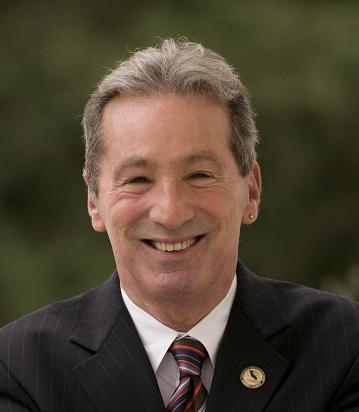
Tom Ammiano

Our freak of a governor

17

We all know this, but I have to say it again: Jerry Brown is one strange agent.

His State of the State address was blessedly short: Jer doesn’t waste a lot of time. In fact, a few minutes in, the crowd in the state Assembly chambers was applauding for the second or third time, and he told them to stop; “this is my longest speech and we’re not going to get out of here.” I clocked it, applause and all, at about 16 minutes.

But lordy, lordy, what a crazy amalgam of stuff he packed in. From Montaigne to the Little Engine that Could, the Ten Commandments to Pharoh’s dream about the seven cows, Franklin Roosevelt to Gaspar Portola … all over the map would be a gentle way of describing it.

And that was the political message, too: We can do great things, spend billions on a massive underground peripheral canal and high-speed rail — but we can’t backfill the cuts that are leaving tens of thousands in poverty because we have to live within our means. The mandate for renewable energy is great, but we shouldn’t just keep on passing laws:

Constantly expanding the coercive power of government by adding each year so many minute prescriptions to our already detailed and turgid legal system overshadows other aspects of public service. Individual creativity and direct leadership must also play a part. We do this, not by commanding thou shalt or thou shalt not through a new law but by tapping into the persuasive power that can inspire and organize people. Lay the Ten Commandments next to the California Education code and you will see how far we have diverged in approach and in content from that which forms the basis of our legal system.

Serious, Guv? “Constantly expanding the coervice power of government?” That’s channelling your inner Ronald Reagan, no? Oh, and weren’t you the mayor of Oakland who let the cops do pretty much anything they wanted in the name of public safety — and who is the darling and best pal of the prison guards union? Talk about the coercive power of government. And one of the bills you’ve never supported is Assemblymember Tom Ammiano’s effort to legalize marijuana — eliminating a particularly troubling “coercive power of government” — because you’re worried that we can’t compete with China if everybody’s stoned.

I like high-speed rail, and investing in education, and I agree that there’s too much emphasis on one-size-fits-all standardized tests and measurement tools in the public school system. The school funding formula is, generally, a good idea. And I am utterly on the side of our tightwad leader in the battle to keep tuition from rising at CSU and UC.

So on some of the substance, Brown’s speech made sense. But I’ve been a Jerry watcher for many, many years, and he never ceases to baffle me. I supose that’s part of his point.

Let’s remember: Brown grew up in a wealthy patrician family, and he’s never had to worry about working for a living or finding an affordable place to live. He’s way out of touch with what millions of Californians face every day — and that’s why it’s easy for him to sit up in Sacramento and talk about “living within our means.”

No Oscar for the guv’s budget

4

OPINION Given that Gov. Jerry Brown put out his proposed budget the same day that Oscar nominations came out, it’s tempting to make some comparisons.

Brown’s budget, like the nominated musical “Les Misérables,” has plenty of numbers, and will make some people cry.

But I take the new budget seriously, the same as every budget I’ve seen since I got to Sacramento. Unlike most of the recent budgets, this one doesn’t feature a big deficit. Give the Governor some credit for that, but let’s look at how he’s done it. Not all of it is pretty.

To start with, education gets a boost. That’s clearly what California’s voters wanted when they passed Proposition 30 in November. The budget will give more generous increases to the school districts that have more education challenges, and it boosts funding for higher education. We can cheer that.

It also funds the next steps for implementing federal health care reform. That bodes well for efforts to make sure all Americans and all Californians are insured. Under ideal circumstances, of course, we’d be talking about single payer.

There are other, less cheerful things in our future.

There’s an across-the board 20 percent cut to In-home Health Supportive Services beginning in November. This comes from an odd “optimistic” assumption from the governor that the courts that kept him from making those cuts earlier will let him do it now.

Child care funding is flat, which would be tolerable if it weren’t for past cuts. It’s hard to find a better investment in our state than child care. Kids in good child-care programs do better when they get to school. Child care allows more people to work and attend job training. Restoring child-care funding is critical for the state.

Keeping CalWORKS benefits at half of what they used to be is similarly shortsighted, as are cuts to the AIDS Drug Assistance Program, reductions in Medi-Cal provider rates and funding changes for students in higher education.

While preaching austerity, Brown keeps pouring money into a prison system that needs more reform. Sentencing and release programs could be altered to reduce the need for overstuffing prisons without risk to Californians. Overcrowding continues, with one women’s prison in the Central Valley at 180 percent of capacity. This is not stewardship that inspires confidence.

Prison programs to help people beat drug addictions and find jobs when they come out are gone. We are missing a chance for long-term reductions based on rehabilitation. Instead we continue to shuffle bodies around.

Spending choices are not the only problem. The governor skipped some ways of boosting revenue. What about the rules surrounding Proposition 13? Local jurisdictions would benefit from closing loopholes that allow corporations to avoid reassessment when property changes ownership.

I also want discussion of an oil severance tax. Here in the Bay Area — in Richmond and San Bruno — we’ve seen and lived with major downsides of the energy industry. I think it’s time that the oil producers who continue to make big profits pay a tax for the oil that’s taken out of California.

You can see that the Governor’s “director’s cut” budget doesn’t deserve a little gold statue — even if it is the best picture (fiscally) we’ve seen in a few years. We’ll look for silver linings when the Legislature starts working on our playbook.

Assemblymember Tom Ammiano represents the 13th District.

The downside of Jerry Brown’s budget

9

The guv is quite proud of his new budget: He’s eliminated the chronic deficits, he’s giving some more money to the schools, and he’s vowing that the state will live “within its means.” Which sounds like no more taxes. And gee, just about everyone in Sacramento is singing Kumbaya; the praise is coming not just from Democrats but from Republicans.

But there’s a downside to the Brown budget: He has, to his credit, stopped the red ink, and he’s presenting things in a brilliant way that makes him look like the grownup the state has needed for many years — but he’s doing very little to replace the the money that services for the poor have lost in the past five years.

“At first blush, it has some good things,” Assemblymember Tom Ammiano told me. “But I don’t see restoration of the cuts for the disenfranchised.”

Ammiano is calling for closing Prop. 13 loopholes and passing an oil severance tax as part of the budget process. And with Democrats holding a two-thirds majority in both houses, those kinds of changes are possible. At the very least, it seems, the progressives ought to demand from Brown a plan to backfill what social service providers have lost. If it can’t all happen this year, it ought to be part of the future budget process.

State Sen. Mark Leno, who chairs the Senate Budget Commitee, was a bit more politic than Ammiano, but he also is concerned that the budget move the state forward:

“With the improvement of our fiscal outlook comes the opportunity to continue our work to restore California. While our recent efforts have focused largely on making cuts in the least harmful manner possible, we will now have more capacity to refine our work to improve essential programs and analyze the role of government and its effectiveness. I look forward to working with Governor Brown and my colleagues in the Legislature to evaluate this year’s budget to help ensure it is the best possible plan for a state on the mend.”

On the mend is right — because the state of California is in way worse shape than it was when Arnold Schwarzenegger took over and screwed things up, and the goal shoudn’t be to keep at a steady state that’s unacceptable. It ought to be returning California to its role as a leader in progressive policy. Sorry, Jerry: A balanced budget alone isn’t good enough.

Oh, and Californians United for a Reponsible Budget, which seeks to cut prison spending, points out that this budget is hardly tough on the bloated corrections budget:

The administration has deserted plans to shrink California’s over-sized prison population, ignoring clear messages from voters. The proposed budget increases prison spending $250 million including a $52 million General Fund increase, bringing the total Corrections budget over $11 billion. Despite the passage of Prop. 36 and continuing realignment,  It also projects an increase in the prison population by 2,262 people over the 2012 Budget Act projections. ”If the Governor believes that ‘we can’t pour more and more dollars down the rat hole of incarceration’ then why is he increasing spending on Corrections, planning for more prisoners rather than fewer and defying the demands of the Federal Court and the voters to further shrink the prison system?” asked Diana Zuñiga, Field Organizer for Californians United for a Responsible Budget.

It’s no surprise that the prison guards’ union is happy.

UPDATE: An analysis by Ammiano’s office shows a few other lowlights of the budget: It reduced AIDS Drug Assistance Program money by $16.9 million. It doesn’t restore any of the deep cuts to the state’s Welfare to Work Program. It cuts community college funding by tying state money to student completion, not student enrollment. It offers no additional funding for child care programs. It caps the number of courses students are allowed to take if they want to receive Cal Grants.

The Leg needs to take a hard look at this before it signs off on all these cuts.

Behind today’s unanimous vote for Chiu

37

For all the high-minded talk about diversity and working together on behalf of the public – and the relentless praising of their political colleagues and supporters – today’s unanimous re-election of David Chiu as president of the Board of Supervisors once again demonstrated that much of the people’s business is done behind closed doors.

As most of the supervisors acknowledged publicly or in comments to the Guardian, in recent days there was a flurry of meetings about the president vote among the supervisors, despite the prohibition in the state’s Brown Act against “seriatim meetings,” in which elected officials have serial meetings with each other until an quorum of supervisors has illegally discussed some topic.

How else could Malia Cohen, Jane Kim, and Scott Wiener – all hopefuls for the president’s seat who withdrew themselves from consideration before a vote was cast – have all known that Chiu had the votes he needed to win an unprecedented third consecutive term? But they did know, as they all told the Guardian.

“The reality was the support wasn’t there,” Cohen told reporters after the vote when asked why she withdrew her nomination just before the supervisors were about to vote, just after Kim had done the same thing, leaving Chiu as the sole nominee.

I asked whether she was promised anything in return for withdrawing from consideration, and Cohen said, “There’s always negotiations involved in everything, from committee assignments to appointment to regional bodies…The full story will come out later.”

Cohen even obliquely suggested that Chiu – who is known to have his sights set on Tom Ammiano’s Assembly seat, which comes open in two years – may not serve his full two years as president and that was part of the backroom discussions. In the more immediate future, Cohen said she wants to serve on the Land Use Committee, so don’t be surprised if Chiu appoints her as chair of that powerful body.

“It may seem like a small setback today, but it sets the stage for greater conversations going forward,” Cohen said of her decision to voluntarily step down.

Kim also told reporters that she knew Chiu had the votes – saying “we know there was broad support for David for another term” – and that the decision that she and Cohen made to nominate one another was mostly symbolic, intended to make a point about the need for women of color to be in leadership positions: “I thought it was important that we put the dialogue out there.”

Kim said she really appreciated the opportunity to speak with more fellow supervisors privately in the last few days than she had before. “All of this was last minute. There were really only discussions in the last three days,” Kim told me. “I got a good sense of people’s policies and priorities.” As for Kim’s priorities, she said she wants to serve on the Budget Committee, so don’t be surprised when Chiu names her as chair.

Wiener also told me that he realized a couple days ago that he didn’t have the votes but that Chiu did. “It would have been an honor to serve as board president, but it wasn’t in the cards,” Wiener said.

Some of what the cards showed was made clear as the nominations for president opened today and new Dist. 7 Sup. Norman Yee spoke first and nominated Chiu, thus making it clear that Kim probably didn’t have the six votes she needed. As former Sup. Chris Daly, a veteran vote counter, told me, “Norman Yee and Eric Mar could have made Jane Kim board president. They were the deciding bloc, but it would taken both of them.”

Yet Mar told us that he was caught off guard by how the voting unfolded today. “I was surprised that people dropped out before the vote,” he told me.

Yet he acknowledged that it was perhaps a smart move by the progressive supervisors, who voted against Chiu two years ago and were punished with bad committee assignments, to instead get behind Chiu now and hand him a unanimous victory.

“I think that was the hope when people dropped out. It would have been hard if they didn’t, but these negotiations [with Chiu over committee assignments] will go on over the next few days,” Mar said, noting that he will push for strong representation by supporters of labor and other progressive constituencies on key committees.

Asked about his negotiations with fellow supervisors, Chiu would only say, “My conversation with everyone was very consistent.” As for his pending decision on committee assignments, he told me, “We have a board that is very diverse and we’ll have committees that reflect that.”

During his speech in Board Chambers, Chiu talked about running the board in a way that would let each supervisor have her/his moments in the spotlight to provide leadership on issues they care about, comparing it to the San Francisco Giants and the contributions that so many players made to their World Series sweep.

“They took turns making the big plays,” Chiu said, going on to tick off the list of how he’ll help his colleagues shine. “Whether it’s Sup. Mar advocating for a healthy environment, Sup. Farrell addressing out looming health care costs, whether it’s Sup. Chu disciplining our budget, Sup. Breed getting the jobs that young people need, Sup. Kim making sure that all our kids graduate, Sup. Yee making sure that small businesses succeed, Sup. Wiener fighting for better transportation options, Sup. Campos fighting against wage theft, or Sup. Cohen curbing gun violence, and Sup. Avalos delivering on local hire, by the end of our season, if we’re going to help each other succeed in getting these things done, we are all going to win.”

The new board president

204

The last time the San Francisco supervisors elected a new board president, the progressives got a swift kick in the ass. David Chiu, who had been elected to the top slot two years earlier with the unanimous support of progressives, disappointed some of his allies and wasn’t going to get their votes. But he wanted to keep his job, so he turned to the conservatives — and with the support of the folks on the right, he won another term. The he turned around and put the center-right folks in charge of some key committees. Price of the deal.

Now he’s looking for a third two-year term — but this time there aren’t any easy alliances. Several of his colleagues are also in the running, from across the political spectrum. And nobody right now has the magical six votes.

Scott Wiener on one side, David Campos on the other, Jane Kim closer to Chiu … somebody’s going to have to back down or cut a deal. And that’s where these things tend to get squirrly.

Me, I think Campos would be perfect for the job, not only because I agree with him most of the time but because he’s reliable, fair, and cares about public empowerment and input. That wouldn’t be to Chiu’s advantage — the two are likely to be facing off in a tough state Assembly contest when Tom Ammiano is termed out in two years, and the last thing Chiu would want is to have his rival in such a high-profile spot. So it’s not likely either of those two will be voting for the other.

I haven’t always agreed with Kim, but she’s more on the progressive side than not, and she’s really smart. You could see that as she took apart the city attorney’s arguments during the Ross Mirkarimi debate. Wiener has one of the most ambitious legislative agendas of any current board member and has proven to be an effective (sometimes dangerously effective) politician.

Wiener can probably get votes from the most conservative side, Mark Farrell and Carmen Chu, and might be able to line up, say, Malia Cohen and possibly even newcomer London Breed. But that’s not six — and that assumes that Chiu doesn’t make a play for those votes the way he did last time. Campos will get the progressives (John Avalos and likely Eric Mar), but that’s not six either. And with Kim and Chiu going after some of the same people, nobody’s going to come close in the first round.

That is, unless somebody cuts a series of backroom deals.

So my suggestion is this: Let’s demand that all of them tell us up front who they would put on which committees. Sure, it looks like pandering if Wiener promises Budget and Finance Chair to Cohen, who then votes for him — but that stuff is going to happen anyway, and I’d rather have it out in the open.


Willie Brown is so full of shit on Prop. 13

43

The Chron’s conflict-laden columnist made an interesting admission Dec. 9: The multibillion-dollar tax loophole that allows corporations to avoid reassessments under Prop. 13 was all his fault:

 After voters approved Prop. 13 in 1978, capping property taxes for landowners, we had to sit down in the Legislature and figure out how to implement it. One of the biggest questions was how and when properties could be reassessed. We decided that should happen whenever a property was “transferred.” When you sold your home, it was transferred to someone else. The home was reassessed, and the taxes for the buyer were increased accordingly. What we did not realize was that corporations don’t actually transfer property – they transfer the stock in the company that owns the property. And Prop. 13 didn’t apply to stock.

Wait: In 1978, Brown (a lawyer) and the office of the Legislative Counsel and the rest of the lawyer-heavy Legislature didn’t know how corporations transfer property? It was all a big mistake? There were no corporate lobbyists in Sacramento trying to make sure that the loophole was created? Just the poor undereducated elected officials who got snookered by their own lack of information?

And remember: That was 1978. Brown was elected Speaker of the Assembly in 1980, and served for 14 years. Somewhere during that era, someone must have noticed what was going on (every county assessor in California did). There was ample opportunity to close that loophole, if the immensely powerful Speaker Brown had any desire to do so.

But somehow, it never happened. Funny thing, that.

So now Brown agrees that this problem should be fixed — but he says the person carrying the bill, Assemblymember Tom Ammiano, shouldn’t be doing the work because he’s too liberal and pro-tax. Which is either stupidity (and Brown’s many things, but normally stupid isn’t one of them) or he’s still bitter that Ammiano forced him into a mayoral runoff in 1999 and lead the rebellion that ousted all of the mayor’s loyal supervisors a year later. Vindictive? Yeah, we’ve heard that about Willie Brown.

“He doesn’t even understand the history of the bill,” Ammiano told me. “I introduced it last year and got it out of committee and to the floor, which was a miracle.” And now, with a two-thirds majority in both houses, the Democrats can approve it without the Republican minority veto.

“I have cosponsors and I’m going to get more,” Ammiano said. “We may be able to make it part of the budget process.”

And since local governments all over the state, and anyone who believes in tax fairness, is going to support this, I think it’s got a pretty good chance of getting to the desk of the governor.

Willie Brown, as is his practice, didn’t return my call seeking comment.


Same-sex marriage: What they’re saying

4

Lots of statements getting issued on the Supreme Court’s decision, reflecting both the desire of many elected officials to weigh in on this momentus event and some interesting differences in tone.

Assembly Member Tom Ammiano:


“This doesn’t decide anything on its own, but it opens the door for the U.S. Supreme Court to acknowledge that people in every state of this union should be able to form marriage unions with the partner of their choosing and not be limited by outdated customs and laws.”

“It’s a bit disappointing that the Supreme Court isn’t already kicking Prop. 8 to the curb, but I’m hopeful that they will do that after hearing arguments. We can also hope that this court decides that it’s time to say, once and for all, that denying this right to same-sex couples is just as unconstitutional as denying marriage to mixed-race couples – a decision made decades ago.”

State Sen. Mark Leno:

“I am hopeful and encouraged about today’s decision from the U.S. Supreme Court to review the Proposition 8 case, which is one of the most significant equal rights issues to come before the court in many decades,” said Senator Leno. “For the past four years we have argued that Proposition 8 is not only unconstitutional, but that it also violates the basic principles of respect, dignity and validation that every American deserves. I am confident that the Supreme Court will reaffirm these fundamental freedoms and uphold that a person’s right to be treated equally does not vanish simply because of who they are or whom they love.


“The momentum for marriage equality has never been stronger in our country. We have support from President Obama, recent victories at the ballot box, and polls that show a majority of Americans are with us. In addition, federal courts continue to strike down laws that discriminate against lesbian, gay, bisexual and transgender people. I am convinced our triumphs will continue.”


Mayor Ed Lee:


“I am optimistic that the Supreme Court will reaffirm, as the Ninth Circuit Court did, that California’s Proposition 8 is unconstitutional.

“We remain as deeply committed today as we were nearly eight years ago when then Mayor Gavin Newsom jumpstarted one of the most important civil rights movements of our generation. I would like to thank City Attorney Dennis Herrera for his work on this important issue and bringing us to this point. I thank the legal team of Ted Olson and David Boies and the American Foundation for Equal Rights for defending equality in this legal pursuit. 

Same-sex marriage is legal, or will soon be, in nine states — Connecticut, Iowa, Maine, Maryland, Massachusetts, New Hampshire, New York, Vermont, Washington — and the District of Columbia. I look forward to the day when California joins this well-respected list.”


Lt. Gov. Gavin Newsom:


Today marks the beginning of the end for a California journey that started eight years ago when San Francisco issued same-sex marriage licenses. By agreeing to hear the Proposition 8  case the U.S. Supreme Court could end, once and for all, marriage inequity in California.

Forty-five years after the Supreme Court ruled that marriages between interracial couples were constitutional in Loving vs. Virginia, Justices can once again reaffirm the basic American principal of equality for all.

The singling out a class of Californians for discrimination violates the basic principles of who we are as a nation. It is important at this moment in time to recognize that individuals can be mightier together than apart, that there is strength in our diversity, power when we unite around our shared values and success when we advance together.

 Today’s announcement starts the clock towards the final decision for California. History will one day be divided into the time before marriage equality and the period that follows. And thankfully, we will be on the side of history worthy of being proud of.


Assembly Speaker John Perez:

“Today’s announcement that the Supreme Court will take up Hollingsworth v. Perry and the challenges to the Defense of Marriage Act is a reminder that the pathway to justice is long and difficult. The plaintiffs in the initial challenge to Proposition 8, Perry v. Schwarzenegger, presented a powerful and compelling argument that Proposition 8 is unconstitutional, which was eloquently recognized in Judge Vaughn Walker’s ruling in that case. I am very confident that the Supreme Court will rule in favor of our community in Hollingsworth v. Perry, as it is now known, and affirm that Proposition 8 is unconstitutional. But until that outcome is secured, our community must continue to fight for justice on every front, from working to secure the Employment Non-Discrimination Act to addressing the issues of homelessness among LGBT Youth.”

Rep. Nancy Pelosi:


With the Supreme Court’s decision, marriage equality will finally have its day in the highest court in the land. Americans will hear whether inequality and discrimination are consistent with the high standards and deepest values of our Constitution. We remain confident that the justices’ ruling will fall on the side of civil rights and discard DOMA and Prop 8 in the dustbin of history.

“From the start, Republicans have known that DOMA is unconstitutional, and that’s why Republicans have tried to pass legislation to prohibit judicial review of this disgraceful law. Speaker Boehner’s legal team repeatedly failed to convince the courts to keep denying basic rights to American families, all while wasting nearly $1.5 million in taxpayer funds. Now, the Supreme Court will decide whether Edie Windsor deserved to face a penalty of hundreds of thousands of dollars after her partner of four decades passed away. We believe Ms. Windsor and couples like hers will see justice done in this case.

“By taking up the Prop 8 case, the Supreme Court will have the opportunity to make a strong statement that laws, in California and nationwide, must not target the LGBT community unfairly and that families across our state and our country deserve fair and equal treatment under the law.

“We have now reached a landmark moment in the history of civil rights in our nation. Let’s end discrimination and ensure equality for all of America’s families. Let’s get this over with and on to the future!”

UPDATE:

Bay Guardian Controller Sandy Lange:

“Well, at least I don’t have to get married this weekend.”


Could we really fix Prop. 13?

17

Is it really possible? Could California be on the path to repair the damage of Prop. 13? Would Jerry go along?

You wouldn’t think so — it’s been talked about for so long and so little has happened. But it’s an all new year in Sacramento, and the era of Republican dominancy-by-minority is over (in fact, the era when Republicans will have any role at all in state government is pretty much over), and already, some changes are in the works.

Assemblymember Tom Ammiano notes:

 “Prop. 13 is not the untouchable third-rail anymore. It’s more like the bad guy with the mustache who has tied California to the rails with the fiscal train wreck coming.”

Ammiano is introducing legislation to change the way Prop. 13 is interpreted — to stop corporations for using loopholes to get around paying higher taxes after commercial property changes hands. But the polls now suggest the voters might be willing to do more — the Public Policy Institute suggests that a sizable majority of Californians would like to see a split-role measure approved. That alone would provide billions of dollars in revenue for public schools.

By a 57-36% margin, voters responded positively when asked this question: Under Proposition 13, residential and commercial property taxes are both strictly limited. What do you think about having commercial properties taxed according to their current market value? Do you favor or oppose this proposal? Democrats favor the idea 66-26% and independents like the prospect 58-36%. Even Republicans are evenly divided 47-48%. Voters aged 18-34, who represent the future, favor the idea 65-28% but the idea is also popular among the most reliable voters, those 55 and older, by 56-39%. Splitting the tax roll is a popular idea in every region of the state, among men and women equally and especially among Asians (65-26%) and Latinos (58-36%) but also among whites (56-38%).

Now: That’s before the commercial property industry and every major landowning corporation in the state pours about $50 million into a campaign to defeat any whisper of a split-roll. But we all know that big-money campaigns don’t always win in California — and right now, the guv is a pretty popular guy. So if he got behind a split-roll measure, and every progressive and labor group in the state (and most local elected officials) did, too, it would be at the very least a level playing field.

That, alone, would change California more than anything else the Legislature or the governor could do. It’s out there; it’s possible. I wouldn’t try in 2013, but 2014 is looking pretty good.


No surprise: The Chron hates Ammiano’s homeless bill

67

Why should I be surprised? Assemblymember Tom Ammiano tried to introduce a bill providing some basic human rights for homeless people, and the Chron lashes out with a nasty editorial that misses the entire point.

Ammiano’s AB 5 was crafted with the help of homeless advocacy groups, and it’s really not that radical a proposal. It would simply guarantee some basic human rights to people who don’t have a permanent place to live. It would, for example, forbid employment discrimination against homeless people in employment, public services and voting. It would enshrine in law the right of all people to use public space, including as a place to rest, and would establish that 24-hour access to bathrooms and showers is a basic human right.It would protect the rights of homeless children to attend school. It would guarantee homeless people cited under laws that could lead to criminal sanctions the right to a lawyer.

It would also bar local authorities from forcing people into shelters or other programs without their consent and would guarantee equal treatment from law-enforcement.

Oh, and it would prevent local laws that bar homeless people from occupying vehicles that are legally parked, and precent authorities from taking away the personal property of homeless people.

But to read the Chron’s editorial, you’d think the world was coming to an end:

A bill that asserts an individual’s right to urinate, sleep and panhandle wherever he wants is neither compassionate nor wise. To pass it would be to surrender our streets and parks to misery, chaos and squalor.

Misery, chaos and squalor? Whoa. As if the lives of homeless people are not already, in many cases, marked by those characteristics.

And really, the bill doesn’t talk about the right to “urinate wherever he wants;” it mandates that cities provide accessible bathroom facilities so people don’t have to urinate on the streets. “It’s not a good idea or even healthy to have a law that says you can piss or shit wherever you want,” Pauld Boden, director of the Western Regional Advocacy Project, told me. “So having 24-hour access to hygiene centers is a way better alternative.”

But of course, Boden said, opponents of the law “are going to try to make it all about urination and defecation. It’s a way to dehumanize people.”

I don’t understand what’s wrong with asserting that homeless people have the same human rights as the rest of us. If this undermines bad laws like sit-lie and care not cash, so be it; in a rich state, we can and should do better. (But even the Chron’s own reporter says the bill won’t undermine SF’s sit-lie law).

Ammiano’s moving forward with the bill, expecting amendments and open to discussion. But as far as the Chron’s editorial goes, he told me” “It reminds me of Robin Williams’ comment about a bad review he got ” ‘I was going to have a chicken shit on it, but that would be redundant.;”

UPDATE: If you want to see a comparison of the current anti-homeless laws to the “ugly laws,” the Jim Crow laws and a lot of other stuff we all now agree was wrong, check it out here (pdf)

Funding SFUSD’s graduation rescue

45

The San Francisco school district’s achievement gap exploded into the news when district officials learned that as many as 1,900 High School juniors — the vast majority of them students of color — aren’t on track to meet the new graduation standards.

It’s a crisis: The district several years ago mandated that every high school graduate complete the A to G classes required by the California State University system — essentially a requirement that every graduate be prepared for college. It was going to be a tough standard to meet — and that was before the state whacked $77 million out of the SFUSD budget.

Now, with the new standards on the books, the class of 2014 is nowhere near ready. The city’s laudatory 82 percent graduation rate is at risk — and more important, there’s a real possibility that hundreds of kids won’t get a high school diploma, which will severely damage their employment opportunities.

To make things worse, the district’s funding for after-school classes to help students who are behind catch up — known as “credit recovery” — is ending in December.

The statistics are alarming: More than 80 percent of African American kids and 70 percent of Latinos aren’t on track to graduate. And while Prop. 30 passed, preventing any more cuts, it doesn’t add to the district’s funding.

So Sup. Jane Kim is asking the city to pick up the $2.7 million tab for the credit recovery program, which makes perfect sense: If 1,900 kids don’t graduate from high school, the impacts on the city, from crime, unemployment, and social-service needs to homelessness, will vastly exceed that number. 

“It’s part of violence and crime prvention,” School Board member Sandra Fewer explained.

It’s also an issue of civic responsibility — we, as San Franciscans, can’t just let those kids fail. “Remember, these are the ones who stuck it out, who are really trying,” Kim told me. “They aren’t the drop-outs.”

There is, of course, the question of whether this is going to be an ongoing problem — what about the class of 2015? Fewer thinks the numbers will be a lot lower then: “”We’ve learned a lot,” she said. “We’ve had early warning indicators and I don’t think we’ll see these numbers again.”

Kim said that at first she thought the appropriation request would be noncontroversial — it is, after all, a fairly modest amount of money, and the city’s budget picture is improving. “We’re doing fairly well,” Kim said. “One of the promises of all this tech growth was that we’d get some more revenue, and I think we need to spread that wealth.”

But the Mayor’s Office and some of her colleagues weren’t ready to go along. So, as often happens in these situations, somebody found some fiscal magic — the Mayor’s Office folks “discovered” that the city had put an additional $1.5 million into the school district’s allocation from the Rainy Day Fund. Gee, maybe that could cover part of the cost.

Now it gets tricky.

The Rainy Day Fund, which Assemblymember Tom Ammiano created when he was supervisor, requires the city to set aside cash in flush years to use when times are tigher — and part of it goes to the school district. That money has been used in the past few years to prevent teacher layoffs. (Another whole crazy issue — the district has to issue layoff notices in the spring, and then rescind them, which sucks for everyone, but at least the Rainy Day Fund money has made most of the recissions possible).

So the teachers union isn’t thrilled with the idea of taking money that would prevent layoffs and using it for another worthy program. “We’re in support of the $2.7 million allocation,” union staffer Ken Tray told me. “We can’t fail these kids. But we’re afraid that the money that would go for this very good thing would lead to teacher layoffs.”

Sup. David Campos has concerns, too: “I think the Rainy Day Fund should stand on its own terms,” he said. “If any time something comes up we say let’s take it from the Rainy Day Fund, it can become a problem.”

He supports spending city money to help the students: “If it’s a crisis, we should handle it as a crisis.”

Which makes perfect sense to me. This IS a crisis, and Kim has properly identified a small amount of money for a one-time effort to address it, and in the end, her allocation would save the city way more than it costs. I can’t see why the mayor and the supervisors have to play games here; this is serious, serious stuff, and if the district thinks it can address it in a serious way for a modest amount of money at a time when the economy is picking up and the city budget is improving, why not just do it?

Howard Wallace, LGBT icon, dies at 76

6

Howard Wallace, a longtime organizer who played a key role in bringing the LGBT movement and labor together in San Francisco, died Nov. 14. He was 76 and had been struggling with Alzhiemer’s disease.

Wallace grew up in Denver, and according to a biography by Andrej Koymasky, was forced to drop out of college when his father saw some United World Federalist literatature he’d brought home and told him to drop of of “commie” politics:

“He put a couple of checks on the dining-room table – the checks for next year’s tuition – and said, ‘Get out [of activism] and you can have those checks.’ I tore them up in his face, and that was the end of my college education.” 

Instead, he began a series of blue-collar jobs that brought him into labor organizing.

By the early 1970s he was in San Francisco, part of a generation of activists that included the late Hank Wilson and Assemblymember Tom Ammiano, who together helped form a group called Bay Area Gay Liberation.

“He made bridges,” Ammiano told me. “He came to BAGL and told us we had to support Cesar Chavez, and some of us were reluctant — you know, it was the Catholic Church, homophobia, all of that. But he convinced us to go on that march, and we were all glad we did.”

Wallace was a founder of the Lesbian-Gay Labor Alliance and later Pride at Work, and he was instrumental in bringing LGBT workers into the labor movement — and also bringing labor support to LGBT causes.

In 1974, Wallace worked with members of the Teamsters Union — not a group always known in those days known for enlightened attitudes towards gay people — on a boycott of Coors beer.  The teamsters were fighting bad labor practices at Coors, including a mandate that all employees take a lie-detector test that incuded the question “are you a homosexual?”

Working with both sides, Wallace got the LGBT community to sign on to the boycott, got Coors out of many of the bars in the Castro — and made lasting connections between local labor leaders and the LGBT community.

“He’s the one who brought Harvey Milk into the Coors boycott,” Ammiano recalled. “And he was never afraid to call out labor leaders when they were being homophobic.”

Like all great organizers, he could be persistent to the point where he was sometimes infuriating — but always, always pure of heart. “He was a character,” Ammiano said. “I never knew what color his hair would be, but I always knew what color his politics would be.”

Tommi Avicolli Mecca, a longtime activist and writer on LGBT history, said Wallace was “a giant among us. He was always there, for the rights of union members, the poor and working class, antiwar activists … you could always count on Howard to be there.”

Mecca noted that Wallace “saw the connections between the LBGT movement and disenfranchised people everywhere. He saw the queer struggle as part of a larger struggle for social and economic justice.”

He will be sorely missed, but as Mecca said, “we will always have his legacy; future generations can look back and understand what our movement was about.”

Said Ammiano: “I hope he and Hank Wilson are up there tipping a few back and talking about Lenin vs. Trotsky.”
 
A memorial is pending, and I’ll keep you posted as updates are available.

UPDATE NUMBER 1: State Sen. Mark Leno told me that Wallace “was not only a dear friend but a teacher. His values were strongly intact.” Leno recalled chairing the fundraising drive for the LGBT Center, a huge undertaking, and accepting a check from Coors for $5,000. “I though I had done due diligence, I knew the boycott was over, but Howard came to our board meeting and convinced us that the LGBT Center had to be above reproach.” 

(I’m sure Howard Wallace didn’t use those exact words).

“It was after that that we became good friends,” Leno said.

UPDATE NUMBER 2: From Gabriel Haaland, Pride at Work co-vice-president (SEIU< SF): I don’t know if most progressives know how much Howard gave to us all. I know there are so many who considered him a mentor and an inspiration. For those of you who don’t know him, Howard had a way of connecting the dots across so many issues. A legend and a hero for sure. A fearless warrior for justice, Howard was both passionate and gentle in his own way… He gave so much of himself and taught me so much in the rashness of my younger years. Even in death, he continues to inspire me to be better than I was before, more in integrity. I honor those who took such good care of him in the last year, like Kathy Lipscomb, Carl Finamore, Tab Buckner, Eileen Hansen, and Susan
Englander. I will miss him.

Oh well, Pelosi’s going to stick around

32

For a while there some of us thought that Rep. Nancy Pelosi, who failed to win back a house majority for the Democrats, might decide her time was up and step down as minority leader (which would probably have meant retiring from Congress). That would have set off one of the hottest political battles in town; just about everyone knows that Pelosi’s daughter is interested in the seat, but there’s no way she was going to get it without a fight. There are lots of ambitious people in this town who would jump at a once-in-a-lifetime chance at a Congressional seat, starting with possibly all of our current state Legislators and a few supervisors.

Would progressives and independents sick of the notion of a Pelosi family dynasty get behind one candidate (say, Mark Leno)? Would Scott Wiener, who Leno has supported and mentored all these years, run anyway, arguing for a younger candidate who could be around for long enough to get seniority? Would Leland Yee, who will be termed out and didn’t get elected mayor, jump in the race? Would Tom Ammiano, who doesn’t seem at all ready to retire?

Lots of crazy speculation — and now it appears we’ll have to wait two more years to go through it again. Because, barring a huge upset in the Democratic Caucus, Pelosi’s sticking around.

I’m not so thrilled about that — and I swear it has nothing (well, almost nothing) to do with the amazing story that a contested race would create for political reporters. It’s just that Pelosi’s been a big disappointment to San Francisco; she cares more about her national constituency that about her district, and her legacy achievement is the privatization of a national park.

It would be nice to get someone representing San Francisco who represented San Francisco values.

Oh well.

Sorting out a strange election

120

steve@sfbg.com, tredmond@sfbg.com

The way the San Francisco Chronicle pundits put it, Mayor Ed Lee was the clear winner in a grand San Francisco election. “All his measures on the ballot won hands down,” noted Willie Brown, the high-paid lawyer and political operative who also functions as a Chron columnist. “It was a great day for Ed Lee,” proclaimed columnist C.W. Nevius.

Well, not really.

There are a lot of ways to explain and analyze the inconsistent results of one of the most heavily propagandized elections in recent San Francisco history. But no matter how you look at it, the election was at best a wash for the mayor. Indeed, we’d argue that voters rejected the basic premise of the mayor’s political agenda – that tax cuts and favors for big business are the best economic policy – despite record-breaking outside spending selling that agenda and targeting those who stood in its way.

Let’s take a look at the real facts:

• Every single initiative backed by the mayor, the ones he’s getting credit for – from the City College parcel tax to the housing fund to the business tax – was either a compromise with progressives or a measure that originated on the left. There was nothing the mayor pushed that had any significant progressive opposition; his wins were equally, if not more dramatically, wins for the left.

• Both people the mayor appointed to office were soundly rejected by the voters. Rodrigo Santos, his high-profile appointee to the troubled City College Board of Trustees, spent almost $200,000 and finished a distant sixth. Sup. Christina Olague lost to the candidate Lee had rejected for appointment, London Breed, in a complicated race where the mayor’s actual role was unclear (he never withdrew his endorsement of Olague even as his allies trashed her in nasty ways).

• A million-dollar effort funded by some of the mayor’s allies to oust Sup. Eric Mar was a spectacular failure, suggested some serious problems in the mayor’s political operation, and undermined his emphasis on “civility.”

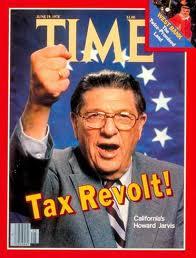
• The voters made clear on every level that they believe higher taxes on the wealthy and closing tax loopholes on big business are the right approach to the economy and to funding government. From Prop. 30 to Prop. 39 to Prop. A to Prop. E, the message was pretty clear: The tax revolt that started in California in 1978 may be winding down, and the notion of making property owners and the wealthy pay for education and public services is no longer a radical idea.

Robert Cruikshank, who writes for the Calitics blog, argues that the November election signals a major sea change in California. “[The] vote to pass Prop 30 — by a larger margin than most observers expected — does more than just provide $6 billion of badly needed funding to the state’s public school,” he wrote. “It brings to a close a 34-year long tax revolt that came very close to destroying California’s middle class, locking its low income families into permanent poverty, and left the state on the edge of financial ruin.”

That sounds like a progressive message. The agenda put forward by the mayor’s closest allies, including right-wing billionaire Ron Conway, who played a heavy-handed role in this election, not only failed to carry the day; the big-money types may have overplayed their hand in a way that will shape the political narratives going forward.

A LOT OF CONSENSUS

Let’s start with the ballot measures (before we get to the huge and confusing mess that was D5).

Proposition A, the parcel tax for City College, didn’t come out of the Mayor’s Office at all; it came from a City College board whose direction the mayor tried to undermine with the appointment of Santos, a pro-development engineer so conservative that he actually endorsed the Republican opponent of Assembly member Tom Ammiano.

Lee didn’t even endorse Prop. A until a few weeks before the election, and played almost no role in raising money or campaigning for its passage (see “Words and deeds,” 9/11/12). Yet it got a higher percentage of the vote than any of the three measures that Lee actively campaigned for: Props. B, C, and E.

Then there’s Prop. C, the Housing Trust Fund. Lee’s office played a central role in drafting and promoting the measure -– but it wasn’t exactly a Lee initiative. Prop. C came out of the affordable housing community, and Lee, who has strong ties to that community, went along. There were tough negotiations -– the mayor wanted more guarantees and protections for private developers -– and the final product was much more what the progressives who have spent decades on the housing front wanted than what the mayor would have done on his own.

The way the mayor envisioned business-tax reform, the city would have eliminated the payroll tax, which tech firms hate, and replaced it with a gross-receipts tax -– and the result would have been revenue-neutral. It was only after Sup. John Avalos and the progressives demanded that the tax actually bring in more money that the outlines of Prop. E were drafted and it received strong support from groups across the ideological spectrum.

“You had a lot of consensus in the city about these ballot measures,” political consultant David Latterman, who usually works with downtown-backed campaigns, said at SPUR’s post-election round-up.

The supervisorial races were a different story, with unprecedented spending and nasty messaging aimed at tipping the balance in favor of real estate and development interests. Mayor Lee didn’t get directly involved in the District 1 race, but he was clearly not a supporter of incumbent Sup. Eric Mar.

The real-estate and tech folks who are allied with Lee spent more than $800,000 trying to oust Mar — and they failed miserably, with Mar winning by 15 points. While Mar did have the backing of Chinatown powerbroker Rose Pak, who raised money and helped organize ground troops to help, Mar’s victory was primarily the result of a massive outpouring of support from labor and progressive activists, many reacting to the over-the-top effort to oust him.

Mar, who voted to put Lee in office, won’t feel a bit indebted to the mayor for his survival against a huge money onslaught. But in District 5, the story was a whole lot more complicated, and impact more difficult to discern.

THE D5 MESS

Before we get into what happened in D5, let’s dispel some of the simplistic and self-serving stories that circulated in the wake of this election, the most prominent being that Olague’s loss -– the first time an incumbent was defeated in a ranked-choice election –- was payback for crossing Mayor Lee and voting to reinstatement Sheriff Ross Mirkarimi.

It’s certainly true that Lee’s allies went after Olague and supported London Breed, and that they tried to make an issue of domestic violence, but there was much, much more to this district election. Breed is an SF native with a compelling personal story who ran a strong campaign –- and that three strongest progressive candidates in the race each had major flaws that hurt their electability. By most accounts, the Olague campaign was a disaster until the very end. Equally important, the progressive community was divided over D5, leaving room for Breed to slip in.

“It’s hard to unravel what happened here,” Latterman said.

San Francisco Women for Responsibility and an Accountable Supervisor was an independent expenditure group fronted by domestic violence advocates and funded by more than $100,000 from the families of Conway and fellow right-wing billionaire Thomas Coates. It attacked Olague’s Mirkarimi vote as being soft on domestic violence — but it also did a last minute mailer criticizing Olague’s vote for CleanPowerSF, muddling its message of moral outrage.

On election night, Olague told us she believed her split with the Mayor’s Office really had more to do with CleanPowerSF –- which the board approved with a veto-proof majority over the objections of Lee and the business community –- and with her insisting on new revenue from Prop. E than it did with Mirkarimi, whose ouster she dismissed as “a power play” aimed at weakening progressives.

“They don’t want to say it, but it was the whole thing around CleanPowerSF. Do you think PG&E wanted to lose its monopoly?” she said.

Yet Olague said the blame from her loss was also shared by progressives, who were hard on her for supporting Lee, courting his appointment to the D5 seat, and for voting with him on 8 Washington luxury condo project and other high-profile issues. “The left and the right both came at me,” she told us. “From the beginning, people were hypercritical of me in ways that might not be completely fair.”

Fair or not, Olague’s divided loyalties hurt her campaign for the D5 seat, with most prominent progressives only getting behind her at the end of the race after concluding that John Rizzo’s lackluster campaign wasn’t going anywhere, and that Julian Davis, marred as he was by his mishandling of sexual impropriety accusations, couldn’t and shouldn’t win.

Olague told us she “can’t think of anything I would have done differently.” But she later mentioned that she should have raised the threats to renters earlier, worked more closely with other progressive candidates, and relied on grassroots activists more than political consultants connected to the Mayor’s Office.

“The left shouldn’t deal with consultants, we should use steering committees to drive the agenda,” Olague said, noting that her campaign finally found its footing in just the last couple weeks of the race.

Inside sources say Olague’s relations with Lee-connected campaign consultant Enrique Pearce soured months before the campaign finally sidelined him in the final weeks, the result of his wasteful spending on ineffective strategies and divided loyalties once a wedge began to develop between Olague and the Mayor’s Office.

Progressive endorsements were all over the map in the district: The Harvey Milk Club endorsed Davis then declined to withdraw that endorsement. The Tenants Union wasn’t with Olague. The Guardian endorsed Rizzo number one. And none of the leading progressive candidates had a credible ranked-choice voting strategy — Breed got nearly as many second-place votes from Davis and Rizzo supporters as Olague did.

Meanwhile, Breed had a high-profile falling out with Brown, her one-time political ally, after her profanity-laden criticism of Brown appeared in Fog City Journal and then the San Francisco Chronicle, causing US Sen. Dianne Feinstein to withdraw her endorsement of Breed. That incident and Olague’s ties to Lee, Brown, and Pak may have solidified perceptions of Breed’s independence among even progressive voters, which the late attacks on her support from landlords weren’t ever able to overcome.

Ironically, while Breed and some of her prominent supporters, including African American ministers in the district, weren’t happy when Lee bypassed her to appoint Olague, that may have been her key to victory. Latterman noted that while Olague was plagued by having to divide loyalties between Lee and her progressive district and make votes on tough issues like reinstating Mirkarimi –- a vote that could hurt the D5 supervisor in either direction -– Breed was free to run her race and reinforce her independence: “I think Supervisor Breed doesn’t win this race; challenger Breed did.”

But even if Breed lives up to progressive fears, the balance of power on the Board of Supervisors could be up in the air. District 7 soundly rejected Mike Garcia, the hand-picked successor of the conservative outgoing Sup. Sean Elsbernd.

At press time, progressive favorite Norman Yee seemed headed for victory, although FX Crowley was within about 30 votes, making this too close to call. But either way, the once-solid conservative seat will now be a swing vote on many issues, just as Breed will be in the once-solid progressive D5.

“The Board of Supervisors as a whole is becoming a helluva lot more interesting,” was how political consultant Alex Clemens put it at SPUR election wrap-up. “Determining what’s going to happen before it happens just got more difficult.”

GOBS OF MONEY

The other big story of this election was money, gobs of it, and how it can be spent effectively — or used to raise suspicions about hidden agendas.

Third-party spending on D1 loser David Lee’s behalf was $454,921, with another $219,039 to oppose Mar, pushing total spending to defeat Mar up over the $1 million mark, roughly doubling the previous record. Labor groups, meanwhile, spent $72,739 attacking Lee and $91,690 backing Mar. But many political analysts felt that lop-sided spending only served to turn off voters and reinforce the idea that powerful interests were trying to buy the seat.

In District 5, the landlords, Realtors, and tech moguls spent $177,556 in support of Breed, while labor spent $15,067 attacking her as a shill for the landlord lobby. The only other D5 candidate to attract significant spending by outside groups was Olague, who had $104,016 spent against her, mostly by the families of Conway and Coates, and $45,708 spent in support of her by SEIU 1021. Yet ultimately, none of these groups bought very much with their money. Conway, Salesforce CEO Marc Benioff, and San Francisco Association of Realtors each spent hundreds of thousands of dollars of their money, and the most obvious result was to convince San Franciscans that they’re working together to move an agenda in San Francisco. They may have the mayor on their side, but in a politically sophisticated city like San Francisco –- with its cost of living being driven up by the schemes of Lee, Conway, and the Realtors -– they seem to have a long way to go before they achieve they’re stated desire of destroying the progressive movement, particularly with its rising new leaders on the left, including Matt Haney and Sandra Fewer on the school board and Steven Ngo and Rafael Mandelman on the City College board. As Haney said on Election Night, “It was a good night for progressive San Francisco,” which stands for important egalitarian values. “We are the ones about equity and compassion. That’s what this city is about.”

Man for the moment?

25

steve@sfbg.com

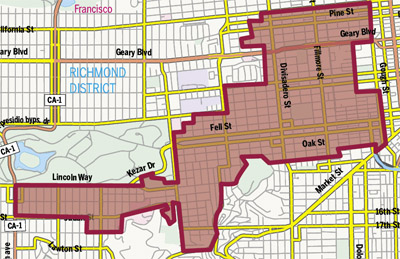
This year’s supervisorial race in District 5 — representing the Haight, Panhandle, and Western Addition, some of the most reliably progressive precincts in the city — has been frustrating for local leftists. But as the long and turbulent campaign enters its final week, some are speculating that John Rizzo, whose politics are solid and campaign lackluster, could be well-positioned to capitalize on this strange political moment.

Appointed incumbent Sup. Christina Olague has been a disappointment to some of her longtime progressive allies, although she’s now enjoying a resurgence of support on the left in the wake of her vote to reinstate Sheriff Ross Mirkarimi. Now two allies of the mayor — tech titan Ron Conway and landlord Thomas Coates — are funding a $120,000 last-minute attack on Olague.

The campaign of one-time left favorite Julian Davis lost most of its progressive supporters following his recent mishandling of accusations of bad behavior toward women (see “Julian Davis should drop out,” 10/16).

The biggest fear among progressive leaders is that London Breed, a well-funded moderate candidate being strongly supported by real estate and other powerful interests, will win the race and tip the Board of Supervisors to the right. The final leg of the campaign could be nasty battle between Breed and Olague and their supporters, who tend to see it as a two-person race at this point.

But in a divisive political climate fed by the Mirkarimi and Davis scandals and the unprecedented flood of hundreds of thousands of dollars in real estate and tech money, it’s hard to say what D5 voters will do, particularly given the unpredictably of how they will use ranked-choice voting to sort through this mess.

Running just behind these three tarnished and targeted candidates in terms of money and endorsements are Rizzo and small business person Thea Selby, who described their candidacies as “the grown-ups in the room, so there’s an opportunity there and I’m hopeful.”

Selby hasn’t held elective office and doesn’t have same name-recognition and progressive history as Rizzo, although she has one of the Guardian’s endorsements. It probably didn’t help win progressive confidence when the downtown-backed Alliance for Jobs and Sustainable Growth recently did an independent expenditure on behalf of both Selby and Breed.

And then there’s Rizzo, who has been like the tortoise in this race, quietly spending his days on the streets meeting voters. Between fundraising and public financing, Rizzo collected about $65,000 as of Oct. 20 (compared to Breed’s nearly $250,000), but he’s been smart and frugal with it and has almost $20,000 in the bank for the final stretch, more than either Olague or Davis.

But perhaps more important than money or retail politics, if indeed D5 voters continue their strongly progressive voting trends, are two key facts: Rizzo is the most clear and consistent longtime progressive activist in the race — and he’s a nice, dependable guy who lacks the oversized ego of many of this city’s leaders.

“I see consistency there and a lack of drama,” Assembly member Tom Ammiano, an early Rizzo endorser, told us. “He’s looking not like a flip-flopper, not like he owes anyone, and he doesn’t have a storied past.”


PROGRESSIVE HISTORY

Rizzo, who was born in New York City 54 years ago, is downright boring by San Francisco standards, particularly given his long history in a local progressive movement known for producing fiery warriors like Chris Daly, shrewd strategists like Aaron Peskin, colorful commenters like Ammiano, bohemian thinkers like Matt Gonzalez, and flawed idealists like Ross Mirkarimi.

Rizzo is a soft-spoken family man who has lived in the same building on Waller Street in the Haight-Ashbury for the last 27 years. Originally, he and Christine, his wife of 25 years, rented their apartment in a tenancy-in-common building before they bought it in the early 1990s, although he’s quick to add, “In all the years we’ve owned it, we never applied for condoship.”

He supports the city’s limits on condo conversions as important to protecting working-class housing, although he said, “The focus should be on building new affordable housing.” That’s an issue Rizzo has worked on since joining the Sierra Club’s San Francisco Bay Chapter more than 20 years ago, an early advocate for broadening the chapter’s view of environmentalism.

He’s a Muni rider who hasn’t owned a car since 1987.

Michelle Myers, director of the Sierra Club’s San Francisco Bay Chapter, said Rizzo brings a wealth of experience, established relationships, and shrewd judgment to his role as the group’s political chair. “We really rely on John’s ability to weigh what is politically feasible, not just what’s ideal in our minds,” she told us.

Yet that political realism shouldn’t be confused for a lack of willingness to fight for big, important goals. Rizzo has been an advocate for public power in San Francisco for many years, strategizing with then-Sup. Ammiano in 2001 to implement a community choice aggregation program, efforts that led to this year’s historic passage of the CleanPowerSF program (with a key vote of support by Olague) over the objections of Mayor Lee and some business leaders.

“CleanPowerSF was carried by John Rizzo, who has been working on that issue for 10 years,” Myers said.

Rizzo is a technology writer, working for prospering computer magazines in the 1990s “until they all went away with the dot.com bubble,” as well as books (his 14th book, Mountain Lion Server for Dummies, comes out soon).

He sees the “positives and the negatives” of the last tech boom and this one, focusing on solving problems like the Google and Genetech buses blocking traffic or Muni bus stops. “On the one hand, these people aren’t driving, but on the other hand, they’re unregulated and using our bus stops,” he said. “We need to find some solution to accommodate them. Charge them for it, but accommodate them.”

That’s typical of how Rizzo approaches issues, wanting to work with people to find solutions. As president of the City College of San Francisco Board of Trustees, Rizzo suffered the bad timing of the district having its accreditation threatened just as his supervisorial race was getting underway, but he’s steadily worked through the administrative problems that predated his tenure, starting with the criminal antics of former Chancellor Phil Day and continuing with “a management structure still in place, and it had calcified.”

Despite being on the campaign trail, Rizzo called the trustees together six times in August to deal with the accreditation problems. “We now have a plan that shows all the things the district needs to do to keep it afloat. City College is back on track.”


WEAKNESS BECOMES STRENGTH

Eileen Hansen — a longtime progressive activist, former D8 supervisorial candidate, and former Ethics Commissioner — gave her early endorsement to Rizzo, who never really seemed to catch fire. “There hasn’t been a lot of flash and I would love for there to be more energy,” she admitted.

So, like many progressive leaders, she later offered her endorsement to Davis, believing he had the energy needed to win the race. But after Davis’ problems, Hansen withdrew that endorsement and sees Rizzo as the antidote to its problems.

“We are in such a mess in D5, and I’m hoping they will say, ‘enough already, let’s find someone who’s just good on the issues, and that’s John,” Hansen said. “As a progressive, if you look at his stands over many years, I’d be hard-pressed to find an issue I don’t agree with him on. He’s a consistent, strong progressive voice, someone you can count on who’s not aligned with some power base.”

Other prominent progressive leaders agree.

“What some people may have viewed as his weak point may end up being his strength,” said former Board President Aaron Peskin, who endorsed Rizzo after the problems surfaced with Davis. “A calm, steady, cool, collected, dispassionate progressive may actually be the right thing for this moment.”

Sup. Malia Cohen, a likable candidate who rose from fourth place on election night to win a heated District 10 supervisorial race two years ago, is a testament to how ranked-choice voting opens up lots of new possibilities.

“Ranked choice voting defies conventional wisdom,” Peskin said. “There may be Julian Davis supporters and Christina Olague supporters and London Breed supporters who all place John Rizzo as their second.”

In fact, during our endorsement interviews and in a number of debates and campaign events, nearly every candidate in the race mentioned Rizzo as a good second choice.

Yet Rizzo doesn’t mince words when he talks about the need for reconstitute the progressive movement after the deceptions and big-money interests that brought Mayor Lee and “his fake age of civility” to power. Lee promised not to seek a full term “and he broke the deal,” Rizzo said. “And it was a public deal he broke, not some backroom deal.” 

That betrayal and the money-driven politics that Lee ushered in, combined with the divisive political climate that Lee’s long effort to remove Mirkarimi from office created, has deeply damaged the city’s political system. “I think the climate is very bad It’s bad for progressives, and just bad for politics because it’s turning voters off,” Rizzo said.

He wants to find ways to empower average San Franciscans and get them engaged with helping shape the city’s future.

“We need a new strategy. We need to regroup and think about things long and hard. I think it’s not working here. We’re doing the same things and it’s not working out. The money is winning.” He doesn’t think the answers lie in continued conflict, or with any individual politicians “because people are flawed, everyone is,” Rizzo said.

Yet Rizzo’s main flaw in the rough-and-tumble world of political campaigns may be that he’s too nice, too reluctant to toot his horn or beat his chest. “That kind of style is not me. That aggressive person is not who I am,” Rizzo said. “But I think voters like that. Voters do want someone who is going to focus on policy and not themselves.”

D5 shakeups flip the dynamics of that wild race

110

[UPDATED AND CORRECTED] Wild and unsettling political dynamics have rocked the District 5 supervisorial race, with three major candidates having prominent endorsements withdrawn, the most significant being this week’s mass exodus of support from the campaign of Julian Davis following his bad handling of allegations that he has mistreated women.

Those withdrawing their endorsements of Davis since Saturday include Sups. John Avalos, David Campos, and Jane Kim, Assembly member Tom Ammiano, the Bay Guardian, the Examiner, and the League of Pissed-Off Voters. The Harvey Milk LGBT Democratic Club has scheduled a vote for Monday on whether to withdraw its sole endorsement of Davis.

Avalos gave his endorsement to Sup. Christina Olague over the weekend, and she seems to be getting more progressive support in the wake of Davis’ flame-out and her Oct. 9 vote in favor of reinstating Sheriff Ross Mirkarimi. That vote triggered a strong backlash against Olague from Mayor Ed Lee and his allies, with San Francisco Police Officers Association withdrawing its endorsement.

But former Mayor Art Agnos reached out to Olague – who he didn’t know previously – after the Mirkarimi vote and is rumored to be considering offering her his endorsement and support. Agnos didn’t confirm or deny the rumor, but he did tell us, “I was very impressed by her commitment to the progressive issues we share.”

Olague has a long history of progressive activism and was a consistently good vote during her tenure on the Planning Commission, but many progressives were concerned by her early support for Lee, who then appointed her to the District 5 seat vacated by Mirkarimi’s election as sheriff, and by some of her votes and behaviors since then.

But now that she’s been viciously attacked by Lee’s staffers and allies over the Mirkarimi vote – and iced out by Lee himself, who she says won’t return her calls and who bailed out on a planned campaign appearance – Olague seems to have a newfound independence. “At the end of the day, we serve constituents and the city, and that’s who we should answer to,” Olague told us, agreeing that she feels freed up by recent developments, as difficult as they’ve been. “You don’t become an indentured servant.”

She told us that her decision last year to co-chair the “Run, Ed, Run” campaign to convince Lee to break his promise and run for a full term to the office he’d been appointed to was based on her belief that “we’d see an infusion of new energy and some more diversity” of both ideology and demographics in the Mayor’s Office.

“Sadly, I’m not seeing those changes happening really. I didn’t sign up for another four years of Gavin Newsom and those thugs, and I’ve seen a lot of that same behavior,” she said. “People who played prominent roles in the Newsom administration continue to play prominent roles in this administration.”

Olague said the schism with the administration began this summer when she supported Avalos in trying to bring in new revenue as part of the business tax reform measure that became Prop. E, which Lee had insisted be revenue neutral before compromising with progressives. That was when Olague said she got her first nasty message from Tony Winnicker, the former Newsom press secretary who now works for Lee and wrote Olague a text during the Mirkarimi hearing telling her “you disgust me and I will work night and day to defeat you.”

Some prominent progressives privately worried that schism was an election ploy designed to help Olague win the race for this progressive district given that Davis had captured most of the influential progressive endorsements. But with Lee and his allies continuing to be openly livid over the Mirkarimi vote – and with solid progressive John Rizzo running a lackluster campaign that has less than $5,000 in the bank – there is growing progressive support for Olague.

The big fear among many progressives is that London Breed will win the race, a concern that has been exacerbated by the support that Breed has been receiving from real estate and development interests, both directly and in independent expenditures by the Association of Realtors, which has spent more than $225,000 in this election cycle hoping to knock out progressives in Districts 1 and 5 and tip the balance of power on the board.

Breed told us that she doesn’t know the Realtors or why they’re offering such strong support, pledging to be an independent vote. “I’ve never made any promises to anyone that I would help anyone or that I would be this way or that,” she told us. “I’m not here to do anyone’s bidding, whether it’s Aaron Peskin or Willie Brown or anyone else.”

Brown helped launch Breed’s political career by [CORRECTED recommending then-Mayor Gavin Newsom] appoint her to the Redevelopment Commission, where Breed supported Lennar and other big developers, but she had a falling out with him earlier this year and made impolitic comments about him to the Fog City Journal, causing US Sen. Dianne Feinstein to withdraw her endorsement of Breed.

Brown, Lee, and Chinatown power broker Rose Pak helped raise money for Olague, who has received the maximum $500 donation from such powerful inside players as venture capitalist Ron Conway (and his wife, Gayle), Michael Cohen, Victor Makras, Lawrence Nibbi, Mark Mosher, and John Whitehurst.

But that was before the Mirkarimi vote, which Lee’s allies seem to see as a litmus test on Olague’s loyalty to them. As Tenderloin Housing Clinic director Randy Shaw, who helped engineer the progressive split that brought Lee to power, put it on his Beyond Chron blog, “Olague’s vote was an act of profound disloyalty not only to the mayor who appointed her, but also to those who pushed the mayor to do so.”

Olague says she’s disturbed by that viewpoint, and by those so blinded by their efforts to demonize Mirkarimi “and exploit and politicize issues around domestic violence” that they have failed to consider the price he has already paid for his actions or the legal standards for removing an elected official. “On something like this, it’s not a question of loyalty. It’s about principles,” she said.

Breed says that she has seen an increase in support since the Mirkarimi vote and the Davis meltdown, but she said that she doesn’t want to talk about those cases or exploit them politically. “I don’t take pleasure in the misery of someone else,” she said, adding her hope that the furor about Mirkarimi will die down. “The decision has been made and it’s time for the city to come together.”

Progressive leaders have made similar calls, but Mirkarimi’s critics are showing no signs of letting the issue go. San Francisco Democratic County Central Committee members Zoe Dunning and Matt Dorsey have put forward a resolution condemning the reinstatement vote and calling for Mirkarimi’s ouster, which the DCCC will consider on Wednesday evening, Oct. 24.

[CORRECTED At that meeting, the DCCC will also consider a motion] to reopen the D5 endorsement process, hoping to change the DCCC’s previous “no endorsement” vote, and sources tell us there is currently a strong backroom effort to give the endorsement to Breed. That vote will be a big test for progressives, which lost their majority control over the DCCC in the June elections.

Meanwhile, D5 candidate Thea Selby – who snagged one of the three endorsements by both the Guardian and the Examiner – continues to run a strong and well-funded campaign that has avoided the carnage taking place in the other campaigns. “I feel like I’m in the middle watching out for flying beams,” she told us, adding that both she and Rizzo have been “the grown-ups in the room, so there’s an opportunity there and I’m hopeful.”

But unlike Rizzo, who has seems strangely absent and didn’t return Guardian phone calls [see UPDATE below], Selby has plenty of money in the bank – nearly $60,000 as of the last official report two weeks ago – and could benefit from voter disgust with the ugly politics at play. “It’s my experience that is driving this,” says this small-businessperson, “and not my lifelong desire to be a politician, and that may ring some bells.”

How the ranked-choice voting system will play out in this mess is anyone’s guess, and even Davis seems to be hoping that he still has a shot, resisting calls by the Guardian and others to withdraw from the race. Poorly funded candidates Andrew Resignato and Hope Johnson this week announced they were joining forces for the “People’s Ticket” after being excluded from a University of San Francisco candidates forum.

But most political observers seem to think this race will come down to a two-person contest between Breed and Olague – who each have more than $45,000 in the bank with which to make a strong final push – and the distinctions between them are becoming clearer as more progressives get behind Olague and the moderates and monied interests get behind Breed.

Olague said she’s still “willing to work with anybody,” but that, “I’m worried that moderate forces will seize this moment to try to destroy us.”

UPDATE 4:45: Rizzo just got back to us and said he’s been actively campaigning and feeling good about his chances. “We have a great team and we’ll have enough resources to reach voters,” Rizzo said. He said that he’s had a stong fundraising push in the last couple weeks since the last campaign financing statement was released, and he noted his endorsements and active support by influential progressives including Ammiano, Campos, and Carole Migden. “We’re doing a lot of retail campaigning, meeting voters and getting the message out.”

Davis should drop out

49

EDITORIAL Kay Vasilyeva, a member of the San Francisco Women’s Political Caucus, has come forward with the allegation that District Five candidate Julian Davis grabbed her and put his hand down her pants at a political bar crawl in 2006. That was six years ago, but it’s still important — and more than the incident itself, the response we’ve seen from Davis is highly disturbing. He’s utterly denying that it ever happened, and retained a lawyer to send Vasilyeva a letter threatening her with legal action if she continues to talk.

While we endorsed Davis for supervisor, we take these charges very, very seriously — particularly coming at a time when relations between men and women in the progressive movement are badly strained.

Since the SF Weekly, which broke the story, suggested that we knew something about Davis’s behavior, we need to state, for the record: When we endorsed Davis, we had heard nothing even remotely close to this type of allegation. Yes, we knew that in his 20s he was a bit of an arrogant ass. We knew that at one point, he actually got into a tugging match with another person over the ridiculous question of who got to hold a campaign sign. We’d heard that, in the past, at somewhat debauched parties, he’d made advances toward women who weren’t interested in his affections.

Those could be the acts of an immature man who has since grown up. And since, on a level of policy, knowledge, and positions, he was by far the best and strongest progressive in the race in District 5, we — along with much of the local progressive leadership — thought he was demonstrating enough maturity that he was worthy of our support.

But this new information, and his response to it, is alarming.

We don’t take last-minute allegations about a front-running candidate lightly; people have been known to dump all sorts of charges into heated races. When we learned about Vasilyeva’s allegations on Oct. 13, we did our own research. We spent two hours with Davis and his supporter and advisor, former D5 Supervisor Matt Gonzalez. We realized that allegations without corroboration are just charges, so we tracked down everyone we could find who might know anything about this incident — and, as we discovered, other similar events. And we have to say: Vasilyeva’s account rings true. Davis’s categorical denial does not.

More than that, we were offended that he in effect threatened with a lawsuit a woman who, at some peril to herself, came forward to tell the public information about someone who is running for elected office. What was the point of that, if not to intimidate her? It’s highly unlikely he’s going to sue (and drag this whole mess into court). He says he was just trying to send a message that he has a legal right to respond to defamation, but this is a political campaign; if he didn’t want to deal publicly with what he must have known were these sorts of potential allegations, he shouldn’t have run for office.

This is a bad time for progressives in San Francisco. The Mirkarimi case has brought to the fore some deep and painful rifts; a lot of women feel that (mostly male) progressive leaders have pushed their issues to the side. For the future of the movement and the city, the left has to come together and try to heal. This situation isn’t helping a bit.

Davis needs to face facts: Supervisors John Avalos and David Campos have withdrawn their endorsements. Assembly member Tom Ammiano is almost certain to do the same. With his inability to handle the very credible charge that he not only groped a woman but lied about it, Davis no longer has a viable campaign in the most progressive district in the city, and we can’t continue to support him.

We have said it many times before: People on the left need to be able to put their own ambitions aside sometimes and do what’s right for the cause. Davis can’t win. He’s embarrassing his former allies. He needs to focus on coming to terms with his past and rebuilding his life. And for the good of the progressive movement, he needs to announce that he’s ending his campaign, withdrawing from the race, and urging his supporters to vote for another candidate.

Davis needs to drop out

246

EDITORIAL Kay Vasilyeva, a member of the San Francisco Women’s Political Caucus, has come forward with the allegation that District Five candidate Julian Davis grabbed her and put his hand down her pants at a political bar crawl in 2006. That was six years ago, but it’s still important — and more than the incident itself, the response we’ve seen from Davis is highly disturbing. He’s utterly denying that it ever happened, and retained a lawyer to send Vasilyeva a letter threatening her with legal action if she continues to talk.

While we endorsed Davis for supervisor, we take these charges very, very seriously — particularly coming at a time when relations between men and women in the progressive movement are badly strained.

Since the SF Weekly, which broke the story, suggested that we knew something about Davis’s behavior, we need to state, for the record: When we endorsed Davis, we had heard nothing even remotely close to this type of allegation. Yes, we knew that in his 20s he was a bit of an arrogant ass. We knew that at one point, he actually got into a tugging match with another person over the ridiculous question of who got to hold a campaign sign. We’d heard that, in the past, at somewhat debauched parties, he’d made advances toward women who weren’t interested in his affections.

Those could be the acts of an immature man who has since grown up. And since, on a level of policy, knowledge, and positions, he was by far the best and strongest progressive in the race in District 5, we — along with much of the local progressive leadership — thought he was demonstrating enough maturity that he was worthy of our support.

But this new information, and his response to it, is alarming.

We don’t take last-minute allegations about a front-running candidate lightly; people have been known to dump all sorts of charges into heated races. When we learned about Vasilyeva’s allegations on Oct. 13, we did our own research. We spent two hours with Davis and his supporter and advisor, former D5 Supervisor Matt Gonzalez. We realized that allegations without corroboration are just charges, so we tracked down everyone we could find who might know anything about this incident — and, as we discovered, other similar events. And we have to say: Vasilyeva’s account rings true. Davis’s categorical denial does not.

More than that, we were offended that he in effect threatened with a lawsuit a woman who, at some peril to herself, came forward to tell the public information about someone who is running for elected office. What was the point of that, if not to intimidate her? It’s highly unlikely he’s going to sue (and drag this whole mess into court). He says he was just trying to send a message that he has a legal right to respond to defamation, but this is a political campaign; if he didn’t want to deal publicly with what he must have known were these sorts of potential allegations, he shouldn’t have run for office.

This is a bad time for progressives in San Francisco. The Mirkarimi case has brought to the fore some deep and painful rifts; a lot of women feel that (mostly male) progressive leaders have pushed their issues to the side. For the future of the movement and the city, the left has to come together and try to heal. This situation isn’t helping a bit.

Davis needs to face facts: Supervisors John Avalos and David Campos have withdrawn their endorsements. Assembly member Tom Ammiano is almost certain to do the same. With his inability to handle the very credible charge that he not only groped a woman but lied about it, Davis no longer has a viable campaign in the most progressive district in the city, and we can’t continue to support him.

We have said it many times before: People on the left need to be able to put their own ambitions aside sometimes and do what’s right for the cause. Davis can’t win. He’s embarrassing his former allies. He needs to focus on coming to terms with his past and rebuilding his life. And for the good of the progressive movement, he needs to announce that he’s ending his campaign, withdrawing from the race, and urging his supporters to vote for another candidate.

Endorsements 2012: State and national races

25

National races

PRESIDENT

BARACK OBAMA

You couldn’t drive down Valencia Street on the evening of Nov. 4, 2008. You couldn’t get through the intersection of 18th and Castro, either. All over the east side of the city, people celebrating the election of Barack Obama and the end of the Bush era launched improptu parties, dancing and singing in the streets, while the cops stood by, smiling. It was the only presidential election in modern history that create such an upwelling of joy on the American left — and while we were a bit more jaded and cautious about celebrating, it was hard not to feel a sense of hope.

That all started to change about a month after the inauguration, when word got out that the big insurance companies were invited to be at the table, discussing health-care reform — and the progressive consumer advocates were not. From that point on, it was clear that the “change” he promised wasn’t going to be a fundamental shift in how power works in Washington.

Obama didn’t even consider a single-payer option. He hasn’t shut down Guantanamo Bay. He hasn’t cut the Pentagon budget. He hasn’t pulled the US out of the unwinnable mess in Afghanistan. He’s been a huge disappointment on progressive tax and economic issues. It wasn’t until late this summer, when he realized he was facing a major enthusiasm gap, that he even agreed to endorse same-sex marriage.

But it’s easy to trash an incumbent president, particularly one who foolishly thought he could get bipartisan support for reforms and instead wound up with a hostile Republican Congress. The truth is, Obama has accomplished a fair amount, given the obstacles he faced. He got a health-care reform bill, weak and imperfect as it was, passed into law, something Democrats have tried and failed at since the era of FDR. The stimulus, weak and limited as it was, clearly prevented the recession from becoming another great depression. His two Supreme Court appointments have been excellent.

And the guy he’s running against is a disaster on the scale of G.W. Bush.

Mitt Romney can’t even tell the truth about himself. He’s proven to be such a creature of the far-right wing of the Republican Party that it’s an embarrassment. A moderate Republican former governor of Massachusetts could have made a credible run for the White House — but Romney has essentially disavowed everything decent that he did in his last elective office, has said one dumb thing after another, and would be on track to be one of the worse presidents in history.

We get it: Obama let us down. But there’s a real choice here, and it’s an easy one. We’ll happily give a shout out to Jill Stein, the candidate of the Green Party, who is talking the way the Democrats ought to be talking, about a Green New Deal that recognizes that the richest nation in the history of the world can and should be doing radically better on employment, health care, the environment, and economic justice. And since Obama’s going to win California by a sizable majority anyway, a protest vote for Stein probably won’t do any harm.

But the next four years will be a critical time for the nation, and Obama is at least pushing in the direction of reality, sanity and hope. We endorsed him with enthusiasm four year ago; we’re endorsing him with clear-eyed reality in 2012.

UNITED STATES SENATE

DIANNE FEINSTEIN

Ugh. Not a pleasant choice here. Elizabeth Emken is pretty much your standard right-wing-nut Republican out of Danville, a fan of reducing government, cutting regulations, and repealing Obamacare. Feinstein, who’s already served four terms, is a conservative Democrat who loves developers, big business, and the death penalty, is hawkish on defense, and has used her clout locally to push for all the wrong candidates and all the wrong things. She can’t even keep her word: After Willie Brown complained that London Breed was saying mean things about him, Feinstein pulled her endorsement of Breed for District 5 supervisor.

It’s astonishing that, in a year when the state Democratic Party is aligned behind Proposition 34, which would replace the death penalty with life without parole, Feinstein can’t find it in herself to back away from her decades-long support of capital punishment. She’s not much better on medical marijuana. And she famously complained when then-mayor Gavin Newsom pushed same-sex marriage to the forefront, saying America wasn’t ready to give LGBT couples the same rights as straight people.

But as chair of the Senate Intelligence Committee, Feinstein was pretty good about investigating CIA torture and continues to call for the closure of Guantanamo Bay. She’s always been rock solid on abortion rights and at least decent, if not strong, on environmental issues.

It’s important for the Democrats to retain the Senate, and Feinstein might as well be unopposed. She turns 80 next year, so it’s likely this will be her last term.

HOUSE OF REPRESENTATIVES, DISTRICT 8

NANCY PELOSI

The real question on the minds of everyone in local politics is what will happen if the Democrats don’t retake the House and Pelosi has to face two more years in the minority. Will she serve out her term? Will her Democratic colleagues decide they want new leadership? The inside scuttle is that Pelosi has no intention of stepping down, but a long list of local politicians is looking at the once-in-a-lifetime chance to run for a Congressional seat, and it’s going to happen relatively soon; Pelosi is 72.

We’ve never been happy with Rep. Pelosi, who used the money and clout of the old Burton machine to come out of nowhere to beat progressive gay supervisor Harry Britt for the seat in 1986. Her signature local achievement is the bill that created the first privatized national park in the nation’s history (the Presidio), which now is home to a giant office complex built by filmmaker George Lucas with the benefit of a $60 million tax break. She long ago stopped representing San Francisco, making her move toward Congressional leadership by moving firmly to the center.

But as speaker of the House, she was a strong ally for President Obama and helped move the health-care bill forward. It’s critical to the success of the Obama administration that the Democrats retake the house and Pelosi resumes the role of speaker.

HOUSE OF REPRESENTATIVES, DISTRICT 9

BARBARA LEE

Barbara Lee represents Berkeley and Oakland in a way Nancy Pelosi doesn’t represent San Francisco. She’s been a strong, sometimes lonely voice against the wars in Iraq and Afghanistan and a leader in the House Progressive Caucus. While Democrats up to and including the president talk about tax cuts for businesses, Lee has been pushing a fair minimum wage, higher taxes on the wealthy, and an end to subsidies for the oil industry. While Oakland Mayor Jean Quan was struggling with Occupy, and San Francisco Mayor Ed Lee was moving to evict the protesters, Barbara Lee was strongly voicing her support for the movement, standing with the activists, and talking about wealth inequality. We’re proud to endorse her for another term.

HOUSE OF REPRESENTATIVES, DISTRICT 12

JACKIE SPEIER

Speier’s an improvement on her predecessor, Tom Lantos, who was a hawk and terrible on Middle East policy. Speier’s a moderate, as you’d expect in this Peninsula seat, but she’s taken the lead on consumer privacy issues (as she did in the state Legislature) and will get re-elected easily. She’s an effective member of a Bay Area delegation that helps keep the House sane, so we’ll endorse her for another term.

State candidates

ASSEMBLY DISTRICT 13

TOM AMMIANO

Tom Ammiano’s the perfect person to represent San Francisco values in Sacramento. He helped sparked and define this city’s progressive movement back in the 1970s as a gay teacher marching alongside with Harvey Milk. In 1999, his unprecedented write-in mayoral campaign woke progressives up from some bad years and ushered in a decade with a progressive majority on the Board of Supervisors that approved landmark legislation such as the universal healthcare program Ammiano created. In the Assembly, he worked to create a regulatory system for medical marijuana and chairs the powerful Public Safety Committee, where he has stopped the flow of mindless tough-on-crime measures that have overflowed our prisons and overburdened our budgets. This is Ammiano’s final term in the Legislature, but we hope it’s not the end of his role in local politics.

STATE ASSEMBLY, DISTRICT 19

PHIL TING

Phil Ting could be assessor of San Francisco, with a nice salary, for the rest of his life if that’s what he wanted to do. He’s done a good job in an office typically populated with make-no-waves political hacks — he went after the Catholic Church when that large institution tried to avoid paying taxes on property transfers. He’s been outspoken on foreclosures and commissioned, on his own initiative, a study showing that a large percentage of local foreclosures involved at least some degree of fraud or improper paperwork.

But Ting is prepared to take a big cut in pay and accept a term-limited future for the challenge of moving into a higher-profile political position. And he’s the right person to represent this westside district.

Ting’s not a radical leftist, but he is willing to talk about tax reform, particularly about the inequities of Prop. 13. He’s carrying the message to homeowners that they’re shouldering a larger part of the burden while commercial properties pay less. He wants to change some of the loopholes in how Prop. 13 is interpreted to help local government collect more money.

It would be nice to have a progressive-minded tax expert in the Legislature, and we’re glad Ting is the front-runner. He’s facing a serious, well-funded onslaught from Michael Breyer, the son of Supreme Court Justice Breyer, who has no political experience or credentials for office and is running a right-wing campaign emphasizing “old-style San Francisco values.”

Not pretty. Vote for Ting.

SENATE DISTRICT 11

MARK LENO

Mark Leno wasn’t always in the Guardian’s camp, and we don’t always agree with his election season endorsements, but he’s been a rock-solid representative in Sacramento and he has earned our respect and our endorsement.

It isn’t just how he votes, which we consistently agree with. Leno has been willing to take on the tough fights, the ones that need to be fought, and shown the tenacity to come out on top in the Legislature, even if he’s ahead of his time. Leno twice got the Legislature to legalize same-sex marriage, he has repeatedly gotten that body to legalize industrial hemp production, and he’s twice passed legislation that would give San Francisco voters the right to set a local vehicle license fees higher than the state’s and use that money for local programs (which the governor finally signed). He’s also been laying an important foundation for creating a single-payer healthcare system and he played an important role in the CleanPowerSF program that San Francisco will implement next year. Leno will easily be re-elected to another term in the Senate and we look forward to his next move (Leno for mayor, 2015?)


BART BOARD DISTRICT 9


TOM RADULOVICH

San Francisco has been well represented on the BART Board by Radulovich, a smart and forward-thinking urbanist who understands the important role transit plays in the Bay Area. Radulovich has played leadership roles in developing a plan that aims to double the percentage of cyclists using the system, improving the accessibility of many stations to those with limited mobility, pushing through an admittedly imperfect civilian oversight agency for the BART Police, hiring a new head administrator who is more responsive to community concerns, and maintaining the efficiency of an aging system with the highest ridership levels in its history. With a day job serving as executive director of the nonprofit Livable City, Radulovich helped create Sunday Streets and other initiatives that improve our public spaces and make San Francisco a more inviting place to be. And by continuing to provide a guiding vision for a BART system that continues to improve its connections to every corner of the Bay Area, his vision of urbanism is helping to permeate communities throughout the region

BART BOARD, DISTRICT 7

ZACHARY MALLETT

This sprawling district includes part of southeast San Francisco and extends all the way up the I-80 corridor to the Carquinez Bridge. The incumbent, San Franciscan Lynette Sweet, has been a major disappointment. She’s inaccessible, offers few new ideas, and was slow to recognize (much less deal with) the trigger-happy BART Police who until recently had no civilian oversight. Time for a change.

Three candidates are challenging Sweet, all of them from the East Bay (which makes a certain amount of sense — only 17 percent of the district’s population is in San Francisco). Our choice is Zachary Mallett, whose training in urban planning and understanding of the transit system makes up for his lack of political experience.

Mallett’s a graduate of Stanford and UC Berkelely (masters in urban planning with a transportation emphasis) who has taken the time to study what’s working and what isn’t working at BART. Some of his ideas sound a bit off at first — he wants, for example, to raise the cost of subsidized BART rides offered to Muni pass holders — but when you look a the numbers, and who is subsidizing who, it actually makes some sense. He talks intelligently about the roles that the various regional transit systems play and while he’s a bit more moderate than us, particularly on fiscal issues, he’s the best alternative to Sweet.

Bad and good news from the Guv

14

First, the bad news: Jerry Brown has vetoed a couple of important bills by Assemblymember Tom Ammiano, showing that he’s still a strange and unpredictable guy. He rejected a measure that would have provided some basic labor protections to domestic workers and another that would have opened up state prisons to a modicum of media access. His message on domestic workers was confusing (gee, maybe it would cost more to make sure people get meal breaks); on the media access, it was just bizarre:

“Giving criminals celebrity status through repeated appearances on television will glorify their crimes and hurt victims and their families,” Brown wrote in his veto message for Assembly Bill 1270.

What? The notion that the press might be able to interview prisoners about conditions behind bars in an agency that consumes more than $10 billion a year in state funds will “glorify crimes?” Sorry, but Jerry is out of his mind.

From Ammiano’s press release:

“Press access isn’t just to sell newspapers. It’s a way for the public to know that the prisons it pays for are well-run,” Ammiano said. “The CDCR’s unwillingness to be transparent is part of what has led to court orders on prison health care and overcrowding. We should know when the California prisons aren’t being well run before it goes to court. I invite the Governor to visit the SHU [special housing unit/solitary confinement] to see for himself why media access is so important.”

Same goes for the TRUST Act, which had the support of a lot of local police chiefs, the mayor of Los Angeles and Assembly Minority Leader Nancy Pelosi.

On the other hand, Brown did sign a bill by Sen. Mark Leno that could turn out to be the best budget news San Francisco’s had in years. SB 1492 would allow the Board of Supervisors and the voters to reinstate, just in this city, the vehicle license fee that former Governor Arnold Schwarzenegger cut, to such disastrous effect, when he first took office. If the supervisors put it on the ballot and the voters approve, a two percent hike in the car tax could raise $70 million a year for the city — more than triple the amount that the mayor has agreed to raise in his weak gross receipts tax proposal.

That law goes on the books Jan. 1 — and the supes should immediately take up the challenge and approve the VLF hike for the next even-year ballot, November 2014.

Then the Guv vetoed Leno bills protecting cell phone users from warrantless searches and alloing the state to recognize more than two people as parents of a child.

Sen. Leland Yee’s bill allowing juveniles who were sentenced to life without parole to get a second chance made it passed Brown’s desk.

So what do we make of the governor? About the usual — he’s random.

The gloves are coming off in competitive D5

52

Candidates in the District 5 supervisorial race – where one recent poll showed almost half of voters undecided about a field of imperfect candidates seeking to represent the city’s most progressive district – have been sharpening their attacks on one another, learning lessons about hardball politics, and fighting over key endorsements.

Christina Olague, the incumbent appointed by Mayor Ed Lee earlier this year, has been taking flak in recent debates from competitors who are highlighting the schism between her progressive history and her more conservative recent votes and alliances. That gulf was what caused Matt Gonzalez to pull his endorsement of Olague this summer and give it to Julian Davis.

London Breed has now suffered a similar setback when US Sen. Dianne Feinstein revoked her endorsement following colorful comments Breed made to the Fog City Journal, which were repeated in the San Francisco Chronicle, blasting her one-time political patron Willie Brown. Breed, whose politics have been to the right of the district, seemed to be trying to assert her independence and win over progressive voters who have different worldviews than her more conservative endorsers.

But she may have gone a bit too far when she told Fog City Journal’s Luke Thomas: “You think I give a fuck about a Willie Brown at the end of the day when it comes to my community and the shit that people like Rose Pak and Willie Brown continue to do and try to control things. They don’t fucking control me – you go ask them why wouldn’t you support London because she don’t do what the hell I tell her to do. I don’t do what no motherfucking body tells me to do.”

Shortly thereafter, Breed said she got a call from Feinstein’s people withdrawing the endorsement. “There were just some concerns about the kind of language I used in the article,” Breed told us.

Sources say Brown has been in payback mode ever since, urging Feinstein and others to stop supporting Breed and switch to Olague. Neither Brown nor Feinstein returned our calls. On the record, Breed was contrite when we spoke with her and reluctant to say anything bad about Brown or Feinstein, except to offer us the vague, “There are a lot of people who respect and like me, and they don’t like what they see happening.”

Breed went after Olague hard during a Sept. 18 debate sponsored by the Haight-Ashbury Neighborhood Council and other groups, blasting Olague for her ties to Brown, Lee, and Chinatown power broker Rose Pak, claiming Olague is too beholden to that crew and D5 needs a more independent supervisor.

Asked to respond to the attack during the debate, Olague said, “I won’t dignify that with a response.” But it seems clear to anyone watching the race that Olague has been getting lots of support from Lee, Pak, and Brown and the political consultants who do their bidding, David Ho and Enrique Pearce, which is one reason many progressives have been withholding their support.

The Breed campaign this week trumpeted its endorsement by three prominent progressive activists: Debra Walker, Roma Guy, and Alix Rosenthal. But it has been Davis that has captured the endorsements of the most progressive individuals and organizations, including a big one this week: the Harvey Milk LGBT Democratic Club, which gave Davis is sole endorsement even though he’s straight and Olague is from the LGBT community.

Davis also snagged the number one endorsement of the San Francisco Tenants Union, a big one for D5, as well as the sole endorsements of Gonzalez, former Democratic Party Chair Aaron Peskin, and Sup. John Avalos. Assembly member Tom Ammiano also endorsed the Davis campaign, adding that to Ammiano’s earlier endorsement of John Rizzo, the other solid progressive in the race. Rizzo also got the Sierra Club and the number one ranking by San Francisco Tomorrow.

But Olague is enjoying quite a bit of union support, including snagging the sole endorsement of the San Francisco Labor Council, whose members in the trades like her controversial vote on the 8 Washington project more than progressives or her competitors, who all opposed the deal. Olague was also endorsed by the United Educators of San Francisco and California Nurses Association.

The biggest union of city workers, SEIU Local 1021, gave its unranked endorsements to Davis, Olague, and Rizzo, as did Sup. David Campos. Sup. Jane Kim – who has also occasionally parted ways with progressives after Ho and Pearce ran her campaign against Walker – gave Olague an early endorsement, but late this week also extended an endorsement to Davis.

“As someone who has championed rank-choice voting, it is important for me that progressives are thoughtful about how we strategize for victory.  I have known Julian Davis a long time, and I believe that he would be a strong leader that fights for progressive values that District 5 cares about, including sustainable streets and livable neighborhoods,” Kim said in a statement given to the Davis campaign.

Another important endorsement in D5 is that of the San Francisco Bicycle Coalition, which carried a faint whiff of controversy this year. The group gave Olague its number one endorsement and Davis its number two, but some SFBC members have secretly complained to us that the fix was in and that Davis actually got more votes from SFBC members, which most people thought was how its endorsements are decided.

SFBC Executive Director Leah Shahum told us she wouldn’t reveal who got the most member votes, but she did say that the SFBC Board of Directors actually decides the endorsements based on several factors. “The member vote is one of the factors the board took into consideration,” she said, listing a candidate’s record, relationship with SFBC, personal history, and other factors. “Nothing special was done in that vote, by any means.”

SFBC has been playing nice with Mayor Lee in the last couple years, despite his broken promise of getting the critical yet controversial Fell/Oak separated bike lanes approved by the SFMTA, which he first said would be done by the end of 2011, then by the end of 2012, but which lately seemed to be dragging into 2013.

At SFBC’s urging, Olague recently wrote a pair of letters to the SFMTA urging quicker action on the project, and it seems to have worked: Shahum said a vote on that project has now been scheduled for Oct. 16, and she’s hopeful that it might now be underway by the end of the year after all. As she said, “We’re thrilled.”

BTW, in case you’re curious, the Guardian’s endorsements come out on Oct. 3.

Historic, veto-proof vote launches CleanPowerSF

24

The San Francisco Board of Supervisors today cast an historic vote that was more than a decade in the making, approving the CleanPowerSF program – which challenges PG&E’s monopoly by offering 100 percent renewable energy directly to city residents – on an 8-3 vote that would be enough to override an implied veto threat by Mayor Ed Lee.

The outcome was far from certain throughout the two-hour hearing as conservative Sups. Mark Farrell and Carmen Chu led efforts to undermine the program, which was the final work product of retiring San Francisco Public Utilities Commission Executive Director Ed Harrington, who previously served as the city’s controller for 17 years.

The pair of supervisors offered a series of amendments challenging the state requirement that city residents must proactively opt-out of such community choice aggregation (CCA) programs if they want to remain with PG&E, offering convoluted language that would have required people to opt-in to the program before its launch, and requiring that the $13 million in reserve funds from the SFPUC be covered entirely by CleanPowerSF customers, which could increase its rates.

“It looks like the amendments would be harmful to the success of the program,” Sup. Eric Mar observed, prompting Farrell and Chu to flash broad conspiratorial smiles at one another.

Sup. Scott Wiener, who was undecided and considered a key swing vote in reaching a veto-proof majority, said he also had concerns about the opt-out requirement and wanted to better understand how the amendments would work and whether they were legal. “For me, I’m not interested in putting any poison pills in here,” he said.

Wiener posed questions about the amendments to Farrell and to Harrington, who said it was possible for the SFPUC to have CleanPowerSF customers repay the initial allocation of reserve funds over time but that he wasn’t sure how the opt-in change would work without sabotaging the program.

“It harms the ability to have an intelligent conversation with people,” Harrington said, noting that rates are based on the number of customers in the program, so it would be nearly impossible to survey everyone’s potential interest without being able to tell them how their bills would be affected.

As it is, the SFPUC has already done extensive surveys of which neighborhoods and demographics are likely to be interested in taking part in CleanPowerSF, initially paying about $10 more per month for 100 percent renewable energy (PG&E’s portfolio includes less than 30 percent renewable). “We’ve done extensive surveys already,” Harrington said. Based on that research, the city is initially rolling out the program to less than a third of city residents, who will be repeatedly notified about how to opt-out, anticipating about 90,000 customers remain in the initial program. 

The program has been repeatedly tweaked over the last eight years that it’s been in development, during which time Marin County launched a successful version of the CCA concept that was developed in San Francisco by legislators Tom Ammiano, Carole Migden, and Mark Leno.

“I feel pretty comfortable trusting Ed Harrington on whether the numbers add up,” said the measure’s chief sponsor, Sup. David Campos, arguing against the Farrell/Chu amendments, later adding, “With Ed Harrington leading this charge, this is as good as it gets. If you don’t like CCA under Ed Harrington, you’re not going to like CCA.”

Farrell claimed to support CCA in concept, but he strenuously objected to the opt-out requirements that Migden included in the enabling state legislation, which she had argued was the only way to make CCAs viable against PG&E’s proven willingness to spend tens of millions of dollars to sabotage would-be competitors.

“It’s the wrong way to legislate, the opt-out. It smells of coercion,” Farrell said. Campos countered that, “The best thing we can give the consumers in San Francisco is a choice, a meaningful choice.”

Wiener ultimately made a motion to delay the item by a week, something Mayor Lee yesterday told the Chronicle he wanted, in order to further study the opt-out issue, telling Farrell that his amendment “feels a little seat of the pants to me.”

Campos and other progressive supervisors who were supporting CleanPowerSF argued against the continuance, noting that it has been years in development and sitting in board committees since January, while the Farrell/Chu amendments weren’t offered until this meeting had already begun.    

“This is not going to change because we wait a week to make a decision,” Campos said. “The terms of this deal are not going to change.”

The motion for a continuance failed on a 4-7 vote, with Wiener joined by Farrell, Chu, and Sup. Sean Elsbernd (who offered no comments throughout the hearing).

Then, as the vote on the Farrell/Chu opt-in amendment came up for vote, Wiener said, “I don’t feel comfortable voting for amendments that I don’t know what they’ll do,” and it failed on a 3-8 vote.

Sup. Malia Cohen had earlier indicated a willingness to support the other Farrell/Chu amendment: saddling CleanPowerSF customers with paying the SFPUC back for reserve fund costs – which Harrington indicated could be dragged out over many years to minimize the impact on rates, and which might not be necessary at all if the initial program exceeds expectations.

That amendment was then approved on an 8-3 vote, with Sups. Jane Kim, Christina Olague, and John Avalos opposed. Another set of amendments that would keep low-income city residents out of the initial rollout and take other steps to reduce their rates if they opted in – which was developed by Kim, Cohen, and Sup. Eric Mar – was unanimously approved by the board.

Then it was time for the big vote on creating the CleanPowerSF program, approving the contract with Shell Energy Northern California to administer it, and authorizing the initial $19.5 million expenditure. Would there be eight votes to override a veto by Mayor Lee, who has been under pressure by PG&E and their downtown allies to kill the program?

“To be perfectly candid, I struggled mightily with this contract,” Wiener said, reiterating his concern about its opt-in requirement, noting that the measure wasn’t perfect, even though it was significantly improved from earlier versions. It sounded as if he were about to vote against it.

“What we have the opportunity to do is move forward with clean power,” Wiener said, noting that even Marin County supervisors who initially opposed its CCA have come around to supporting it. “This is something I believe we should try.”

And with that, the board voted 8-3 to launch the program in mid-2013, with Chu, Farrell, and Elsbernd opposed.

Campos said he was “pleasantly surprised” by the vote, while key supporters say they are cautiously hopeful it will stand up during next week’s final supervisorial approval on second reading and in a veto override vote, if that becomes necessary. Campos said he was thankful for the work of Harrington, who got a standing ovation after the vote as the board recognized him for his long service to the city.

Earlier in the meeting, Harrington told supervisors that while the program isn’t perfect, and it contains some risks that he considers reasonable, there is no other way the city has identified to meet ambitious greenhouse gas reduction goals it has set for itself over the last decade. It is city policy to reduce emissions by 25 percent below 1990 levels by 2017 and 80 percent below those levels by 2050.

“This program before you has the only chance of reaching those goals. There’s nothing else,” Harrington said. He also said “it’s an incredibly efficient way to spend money,” noting that the city has spent $90 million on solar and other renewable energy projects that power fewer than 7,000 homes, whereas this $19.5 million will power 90,000 households, possibly without ever tapping into that $13 million reserve fund set aside to cover any losses by Shell, which will buy renewable energy, a role the city hopes to eliminate as it develops its own projects.

Harrington said the ultimate goal of CleanPowerSF is to develop a large enough customer base that the city could use revenue bonds to finance a wide variety of renewable energy projects – many using solar arrays along city-owned property connected to its water system stretching all the way to Hetch Hetchy Valley – that would pay for themselves.

“The real issue is can you build a facility that will have this rate structure support it?” Harrington said.

That’s the real power and potential of CleanPowerSF – finally taking action to address global warming, which will have a huge impact on San Francisco and future generations – as supporters noted in a rally outside City Hall before the meeting. Sen. Mark Leno said that he doesn’t usually weigh in on proposals before the board, but that, “This is an exceptional time and this is an exceptional vote. This is the time that we need to address our inconvenient truth.”

Locking down reforms

0

steve@sfbg.com

Realignment, California’s year-old program of diverting more inmates and parolees from state prison to county jails and probation offices, was borne of necessity: The state faced a severe budget crisis and had been ordered by the federal courts to reduce the population in its overcrowded prisons. But Realignment is proving to be a real opportunity to address inmates’ needs and reduce recidivism, particularly in San Francisco, where progressive notions of rehabilitation and redemption have deep roots.

“Realignment is the most significant criminal justice reform in decades,” says Assembly member Tom Ammiano, the San Francisco Democrat who chairs the Assembly Public Safety Committee and has helped oversee the process. “The motivation of many of us came from things that were thwarted, like sentencing and parole reform, in Sacramento for many years.”

San Francisco was uniquely positioned to thrive under the new system and to be a model for other counties that seek to improve on the 70 percent recidivism rate among state prison inmates, and the myriad problems and costs that spawns. Former Sheriff Michael Hennessey brought a variety of innovative educational and support services into the jail during his 32-year reign that ended last year (see “The unlikely sheriff,” 12/20/11).

“It’s more than an opportunity. It’s in line with the Michael Hennessey doctrine of enhancing public safety while elevating the idea of redemption, and I subscribe to that,” said suspended Sheriff Ross Mirkarimi, who successfully ran as Hennessey’s endorsed heir before Mayor Ed Lee ousted him over domestic violence allegations. “Michael Hennessey made famous the rehabilitation programs inside the jail and outside the jail.”

San Francisco was also in a good position as both a manageably sized city and county, and one that had room for the influx of inmates. It was ordered by the courts in the 1980s to reduce its crowded jail population – the peak jail population of 2,300 is now down to about 1,550 – and gained even more capacity last year when the SFPD’s crime lab scandal resulted in hundreds of drug cases being thrown out by the courts.

“It’s something that makes sense for San Francisco,” Acting Sheriff Vicky Hennessy told us. “We’re doing better than most other counties because we had the bed space and we had community programs. Michael Hennessey is a visionary…and he got these community programs out there.”

Undersheriff Ellen Brin, who oversees the jail, said the main difference among inmates that San Francisco is dealing with under Realignment – a total of 2,258 in the jail over the last year, staying an average of 60 days each, and another 306 convicts under post-release supervision – is that they’re in local custody longer than before.

“It’s sort of the same population we’ve always dealt with, but maybe we’re dealing with them on a longer term,” she said.

That creates some challenges – Brin said there are more inmates who are a little more hardened and “more sophisticated” – but it also gives local programs more of a chance to help the inmates. That was one of the arguments for Assembly Bill 109, the main legislation that created Realignment, along with five other related bills.

“That was the whole plan about AB 109 is the counties do it better,” Brin said. “For us, we’ve been doing these programs for so long, with reentry and other community programs, so it’s easy for us to manage this population because they’re here longer.”

Realignment has also prompted more collaboration among the affected local agencies – particularly the Sheriff’s Department, Adult Probation Services, and the District Attorney’s Office – and their counterparts on the state level.

“We haven’t had an overarching initiative that we’ve all been required to sit around a table and work on. This has kind of brought us together, and we’ve discovered other areas where we need to work together as well,” Hennessy said.

That has sparked new programs. For example, San Francisco just started to bring those about to be paroled from state prison into the local jail before their release in order to integrate them into the San Francisco rehabilitation system. “We’re creating a reentry cycle for them so they aren’t just getting off the bus and landing here and going directly to Probation for an interview,” Hennessy said. “Now, we’re going to try to bring them here 60 days early and provide them with wrap-around services, so that we can get them established, get them housing, give them the best opportunity we can for a successful reentry.”

With counties now responsible for the people local judges send to jail, there’s more interest in reforming sentencing laws and exploring more progressive and community-based alternatives to incarceration, which is the focus of the new San Francisco Sentencing Commission that held its first meeting last month.

“District Attorney [George] Gascon is very supportive of Realignment, DA’s Office spokesperson Stephanie Ong Stillman told us. “He has said it could have the greatest impact on justice reform in decades. San Francisco is on its way to being a model for the state.”

But the flip-side of San Francisco’s advantages has been a growing backlash against Realignment in conservative counties with disproportionately high incarceration rates and a lack of capacity in their jails – which is often a byproduct of combining tough-on-crimes policies with anti-tax attitudes, something Ammiano is now dealing with in Sacramento.

“There is a lot of push-back from the Republican Party and alarmism over Realignment,” Ammiano said, noting that he’s just waiting to be hit with anecdotal stories about a transferred inmate committing some horrific crime, even though Realignment only involves low-level convicts who committed non-violent and non-sexual crimes.

Ammiano will work with a newly constituted Board of State and Community Corrections that will distribute funds to counties that need to beef up each their jail capacities or their treatment programs. That mix hasn’t been set yet, but Ammiano said he won’t support counties that simply seek more state resources to maintain high incarceration rates.

“In one way, it’s perturbing and the other way, it’s exciting,” Ammiano said. “For me, the more the county has programs, the more sympathetic I’ll be.”

Yet in this era of chronically underfunded government entities, even San Francisco is strained. Hennessy and Brin say Realignment has brought more inmates with serious mental health issues into the jails for longer periods of time — and that has stretched their resources.

“That’s where we lack, even before AB 109, and I’d like to get more people in there who are experts in the mental health field,” Brin said.

Hennessy agreed, but added, “The mental health program we have is extremely good, it’s just overtaxed because we’re seeing many more people, and this is across the state.” Mental health isn’t the only issue. “The other thing that is a concern is housing for people,” Hennessy said, explaining that the city needs both supervised housing and regular low-income housing for former inmates returning to the community. Maintaining the Sheriff’s Department progressive legacy in the face of new challenges is one reason why Mirkarimi sees danger in Lee’s decision to overturn that election and consolidate more power in the Mayor’s Office. “It’s important that the independence of the Sheriff’s Department be preserved,” Mirkarimi said. “Programs can easily be changed by successive mayoral administration if there isn’t that check on power.” But for now, Brin said San Francisco’s various law enforcement officials have been working well to realize the potential of Realignment: “The collaboration between the criminal justice partners has just been really, really great. Everybody is working together to try to accomplish the same thing.”