SF

OccuPride remembers

6

yael@sfbg.com

QUEER ISSUE “First of all, the parade wouldn’t have barricades, because that immediately creates an us versus them divide, and then you see the parade as just the groups and companies that can afford the fee, which is like $450. Anyone who wanted to march could march, regardless of what the sheriff or Fire Department says. There would be tents for connections to services that people desperately need. I’m not opposed to having companies there, but they shouldn’t be the be-all, end-all of Pride. And there should be more about the history, because people don’t know it. In the Holocaust, anywhere from 10,000 to 100,000 gays were worked to death in Dachau and other work camps. That’s where the pink triangle comes from. But people think Harvey Milk pulled it out of his ass or something.”

That’s what Scott Rossi, one of the organizers of San Francisco’s OccuPride march, told me when I asked him what his ideal SF Pride Parade would look like. The protest’s rallying cry is Community Not Commodity, and the group hopes to bring some rebellious spirit to the parade, which they say has become too watered down with corporate sponsors and assimiliation-lovin’ politics.

Some of the action’s organizers are from Occupy San Francisco and Occupy Oakland, but the majority are a coalition of radical queer groups like HAVOQ, Pride at Work, Act Up, and QUIT (Queers Undermining Israeli Terrorism).

Honestly, it would be weird if there wasn’t a group with an anti-capitalist critique of the parade disrupting Pride this year. It’s been a tradition since 1992 when Act Up members joined the parade and staged intermittent Die-Ins, collapsing every seven minutes, the frequency that people were dying from AIDS that year.

Act Up and related groups staged similar demonstrations practically every year. A decade later, two Gay Shame protesters were arrested when they attempted to enter the parade. That year’s parade was sponsored by Budweiser, and Gay Shame had created a seven-foot-tall cardboard Budweiser can that read “Vomit Out Budweiser Pride and the Selling of Queer Identities,” and other props to confront “the consumerism, blind patriotism and assimilationist agenda of the Pride Parade.”

And radical queers show no sign of stopping. Veteran gay rights warrior Tommi Mecca was at basically all of these disruptions, and he won’t be missing out on this year’s events. Mecca was 21 when he helped organize the first Pride March in Philadelphia in 1972.

“Pride used to be a protest,” Mecca recalls. “It was very free. There were no barricades on the street, there were very few rules. We didn’t have contingents, people just gathered, and at some point there were speeches, usually by activists…I don’t know when it started getting corporate sponsors.”

But the glitz! The glamour! The music enhanced by electricity! Today, Pride is a giant, televised affair — this year, sponsored by Wells Fargo.

“Don’t people in Pride realize how much we’re being used by Wells Fargo?” Mecca said. “It just reeks.”

So if you go to the parade, smell the sweet smell of protesters promoting “pride not profit, a movement not a market, and community not commodity.” After all, if it wasn’t for queer radicals in the ’70s, there wouldn’t be a Pride at all.

A poly push?

0

culture@sfbg.com

QUEER ISSUE Is San Francisco’s polyamorous community experiencing a renaissance? Pepper Mint, organizer of the recent sex education conference Open SF (www.open-sf.org), suspects the non-monogamous in the Bay Area have finally reached a critical mass. His proof? Over the weekend of June 8, OpenSF was attended by over 500 of the poly-curious and practicing.

It might be, however, that they’ve finally found something to relate to. Sonya Brewer, a somatic psychotherapist, OpenSF lecture facilitator, and queer woman of color, has been a practicing polyamorist for 15 years. Brewer pegged the high attendance numbers on Mint’s efforts to diversify the conference and include sexual minorities and other oppressed groups on its planning committee.

Those values were reflected in the conference’s keynote address, delivered by trans-identified sex educator Ignacio Rivera and transgender health educator and social justice activist Yoseñio V. Lewis. The two hosted a lecture entitled “Kink, Race, and Class,” which sought to inspire dialogue about how social forces play into the world of kink. It was one of the many unique talks over the weekend that both celebrated and critiqued the diversity and spread of the polyamorous community.

Looking over the list of lectures for the weekend — “Sex Work and Non-Monogamy,” “Fat Sluts, Hungry Virgins,” and “Trans Queering Your Sex,” to name a few — it was hard to decide which talks to attend.

I settled on two: Kathy Labriola’s “Unmasking the Green-Eyed Monster: Managing Jealousy in Open Relationships” and the Maggie Mayhem-led “Second Generation Poly.” Labriola’s hour-long talk examined jealousy from an anthropological perspective, highlighting it as a universal experience that manifests itself depending on one’s cultural upbringing. The bad news? Jealousy is unavoidable. The good news? It’s a learned behavior, and you can learn to manage it. Labriola provided us with a handy checklist to use in determining whether insecurities are based in fact or freak-out.

“Identify a situation that makes you jealous and ask the questions,” Labriola advised. “One, [do] I have a resource I value very much and I’m fearful of losing? Two, [does] another person wants that resource.? Three, [do] you believe you are in direct competition for something you want? Four, [do] you believe if push comes to shove you will lose out?” Unless you answered yes to all four, she counseled, your jealousy can be worked through.

Mayhem, dressed in a fluorescent orange space suit (a representation of her “out-of-this-world” situation, she said) sat on a panel with her partner in life and in porn Ned (www.meetthemayhems.com) and his polyamorous family: his father, and his father’s second partner — a non-hierarchical term, Maggie was quick to clarify. Maggie and her family discussed negotiating boundaries at sex parties, raising children with more than two parents, and the stigma parents of sex-positive offspring can encounter.

Given the general focus of Open SF, Maggie’s key advice had resonance: “Be the author to your own happily ever after,” she told us.

They call it gunpowder

13

news@sfbg.com

At needle exchange sites around San Francisco, fliers are handed out to intravenous drug users warning them about a new and very potent form of heroin thought to be responsible for a dramatic increase in recent overdoses.

“Gunpowder heroin,” as it’s often called on the street, began infiltrating the city’s illegal drug market back around February, according to widespread reports from various needle exchange participants. Yet public officials appear to be in the dark about the epidemic, partly because budget cuts have created long backlogs for toxicology tests and partly due to indifference about the safety of drug users.

The reports were gathered by the Drug Overdose Prevention and Education Project from their network of needle exchange programs and analyzed by Project Manager Eliza Wheeler. She noticed the trend in April, and a flood of reports followed through May. It soon became clear that she was witnessing a potentially deadly spike in heroin-related overdoses.

“The whole city is reporting strong stuff,” Wheeler told us. “People are overdosing left and right.”

From January through May, 99 heroin-related overdoses were reported. The largest number of overdoses occurred in May with a staggering 40 reports. Wheeler says that an average month has 12 overdoses.

While those directly involved with San Francisco’s drug-using population seem to know all about the increase in overdoses, city and hospital officials seem to know nothing about it.

After checking with local police precincts in drug zones such as the Mission and Tenderloin, SFPD spokesman Sgt. Michael Andraychak told us officers haven’t come in contact with a strong batch of heroin and they are unfamiliar with the term “gunpowder heroin.”

According to Tenderloin Police Captain John Garrity, undercover and street officers only test controlled substances for positive or negative results. They do not test the drugs’ potency or chemical make-up. Garrity told us that the cops haven’t dealt much with opiate-related overdoses since the widespread availability of naxolone, an opiate overdose antidote commonly known by its brand name Narcan.

“We don’t see the overdoses anymore,” Garrity told us, “not for the last 20 years, not since Narcan came out.”

SF General, St. Mary’s, and St. Francis hospitals all say their emergency rooms haven’t seen an increase in heroin overdoses either and are also unfamiliar with the term “gunpowder heroin.”

It seems the city is content with letting nonprofit needle exchanges and programs like the DOPE Project deal with its opiate-using population. Although the DPH does fund and collaborate with many service providers, it rests the bulk of the responsibility on the drug users themselves.

While needle exchange programs combat blood borne diseases like hepatitis C and HIV, which can be contracted through sharing needles and other paraphernalia, DOPE attempts to educate users and prevent fatal opiate overdoses. The DOPE Project, funded through DPH, works with needle exchange programs to provide opiate users with a take home prescription of naloxone, which can be administered from a nasal spray or injected from a vial. At the exchange, if a returning drug user is re-supplying naxolone, he or she is asked “Did you lose it or use it?” If it was used, a report is made.

All the reports gathered by the DOPE Project are of overdose reversals, none of the reports are fatal, thanks to widespread availability of naxolone and the drug using population who use it. That doesn’t mean people haven’t died. In fact, a rash of fatal overdoses is rumored to have occurred. The suspected culprit: gunpowder heroin.

“There’s a new batch of heroin in town—people are dying,” says Johnny Lorenz, community activist and member of San Francisco Drug Users Union, a members-based organization advocating drug-friendly policies and giving a voice to drug users, who say they are often marginalized and seen as not caring about their community.

Lorenz, a former heroin addict, says a friend recently died from heroin-related causes. Whether it was gunpowder heroin that actually caused his death is unknown.

Wheeler and Lorenz say many people have died from the extra-strength heroin, yet no official records have turned up. The Medical Examiner’s Office hasn’t noticed an increase in heroin-related deaths, but Administrator Bill Ahern admits it was 90 days backlogged on toxicology reports.

The police and medical examiner’s lack of knowledge doesn’t surprise Mary Howe, executive director at Homeless Youth Alliance. She says heroin-related overdoses are indeed a real problem, and she personally knows heroin users who have recently died from overdose, but “unless you actually care about helping drug users you wouldn’t know.” And to receive a toxicology report from the medical examiner’s office takes a couple months, adds Howe.

Wheeler and others are currently waiting on toxicology reports to find out what exactly is in the heroin making it so strong. Without a toxicology report there is no way to be certain about the cause of death or the makeup of the drug.

According to SF Medical Examiner’s 2009-2010 annual report, nine out of the 141 people that died from narcotic analgesics related deaths were found with traces of heroin, down from previous years. However, finding out if heroin is the cause of death can be tricky. According to the report, the unique metabolite that identifies heroin, 6-monoacetamorphine, is very short lived and can metabolize in the body while the person is dying—leaving only traces of morphine or codeine.

Worse, a drug user buying heroin off the street will never know what exactly he or she is shooting.

“No one ever knows what’s in the heroin,” says Lorenz, adding that the label “gunpowder” has become a loose term for a stronger heroin. Lorenz, who spent the majority of his 20s doing heroin, remembers that gunpowder heroin at one time used to be a specific reference to a higher grade heroin from Columbia, off-white or grayish in color and crystal-like—resembling gunpowder.

Others say gunpowder heroin is black tar heroin mixed with fentanyl, a synthetic opiate that can be up to 100 times stronger than morphine. Some disagree entirely and say the overdoses aren’t specific to any one type of heroin.

“Whatever people are calling it—it is strong,” says Wheeler adding that people rarely overdose from of a bad batch of heroin; they overdose from a good, strong batch. “In a world where the drug supplies are unregulated, this is what happens.”

If it is black tar heroin mixed with fentanyl, that could explain why hospitals aren’t reporting an increase in overdoses, says Jan Gurely, doctor at a local homeless clinic. She suggests that the people aren’t making it to the ER’s—they are only making it to the morgues.

“‘Gunpowder is very dangerous,” says Dr. Gurely. “It takes a phenomenal amount of antidote vials to reverse the overdose.”

Naxolone unbinds every molecule of heroin from receptors in the brain, reversing an overdose. The problem with naxolone is when too much is administered the overdose victim goes into withdrawal and comes to sick and vomiting. With a normal heroin overdose only half a vial is needed, but multiple vials are needed when dealing with gunpowder, she adds.

“A person could die on you with a vial in your hand,” Dr. Gurely said. “Most people don’t walk around with six or seven vials of Narcan.”

Pauli Gray believes the type of heroin causing a rash of overdoses and deaths is indeed heroin mixed with fentanyl. However, he doesn’t think it is a pure form of the prescription narcotic, but a homebrewed batch. Gray works for the Syringe Access Services program at the San Francisco AIDS Foundation and also works directly with Eliza Wheeler and the DOPE Program.

“It’s called gunpowder and it’s all over the place,” Gray said, adding that heroin users are now actively seeking the extra-strength street drug. “When they hear dealers yelling ‘gunpowder’ they run and buy it,” he said. The street value has skyrocketed. Normally, a gram of heroin sells for $30, gunpowder is selling for $80 a bag, says Gray, and the bag can weigh as little as a quarter of a gram.

Gray says users have learned to shoot up very small amounts of the drug, although rumors of fatal overdoses are rampant. The other day he saw the drug for the first time. It smelled like vitamins and when cooked up it has small black flecks floating around, he says.

“People are selling it everywhere,” Gray said. “It’s really scary. We’re in overdrive.”

Fixing SF’s sunshine problems

8

EDITORIAL Open-government advocates are circulating a series of amendments to the city’s landmark Sunshine Ordinance, and a lot of them make perfect sense. In general, the changes bring the law up to date — and deal with the ongoing and increasing frustration over the lack of enforcement that has rendered toothless one of the most progressive open-government laws in the nation.

The advocates are trying to find four supervisors to place the measure on the November ballot. It won’t be easy: Already, the City Attorney’s Office has circulated a memo arguing that some of the amendments conflict with state law or the City Charter.

And in the background, Sup. Scott Wiener is looking to take another approach to open-government, asking city departments to examine the costs of complying with the existing law — which could easily become an argument for loosening the rules.

The new disclosure rules are relatively modest. A policy body would have to release all documents relevant to a decision 48 hours in advance of a meeting. Documents that include metadata — tracked changes and other digital information — would have to be released in full. Regulations on closed meetings around pending legal issues would be tightened.

But the bulk of the changes have to do with enforcing the law — and that’s where the battle lines are going to be drawn. The measure would create a powerful supervisor of public records, appointed by the city attorney, who would be directed to review all denials of public records — and who, by law, would be ordered to “not consider as authority any position taken by the city attorney.” That seeks to address a key shortfall in existing law — the City Attorney’s Office, which (like most law firms) is often driven by privacy and confidentiality, advises city agencies on what records can be withheld, and city officials who refuse to release documents simply say they were following the advice of their attorney.

The proposal would turn the Sunshine Task Force into an independent commission, some of whose appointments wouldn’t be subject to any official review. The commission would have extensive new authority to levy fines on city employees who it finds in violation of the sunshine law and to force the Ethics Commission — which routinely ignores sunshine violations — to take action against offenders.

The idea, of course, is to mandate consequences for violating the Sunshine Ordinance, which is flouted on a regular basis by public officials who pay no penalty and thus have no real reason to comply. But increasing the scope and certainty of punishment is one side of the coin — and if there were better ways to ensure compliance, none of that would be necessary.

In Connecticut, a state Freedom of Information Commission has the statutory authority to require any government agency to release a document or open a meeting. The panel doesn’t punish people; it obviates that whole process. And it would be much, much easier to get beyond the penalties and simply create a legal process that allowed the Sunshine Commission full authority to order public agencies to comply with its rulings. The commission rules that a meeting was illegally closed? Tapes of that meeting must be released, at once. Documents improperly withheld? Cough them up, now. The only appeal city officials would have: go to court and seek a secrecy order. If the supervisors and other city officials think the proposed rules go too far, they can refuse to put this measure on the ballot, but that be ducking the clear and obvious problems. And there’s an easy solution: Give the Sunshine Commission the same power as the FOI panel in Connecticut, which has operated just fine for more than 30 years.

Localized Appreesh: Pins of Light

0

Localized Appreesh is our weekly thank-you column to the musicians that make the Bay. To be considered, contact emilysavage@sfbg.com.

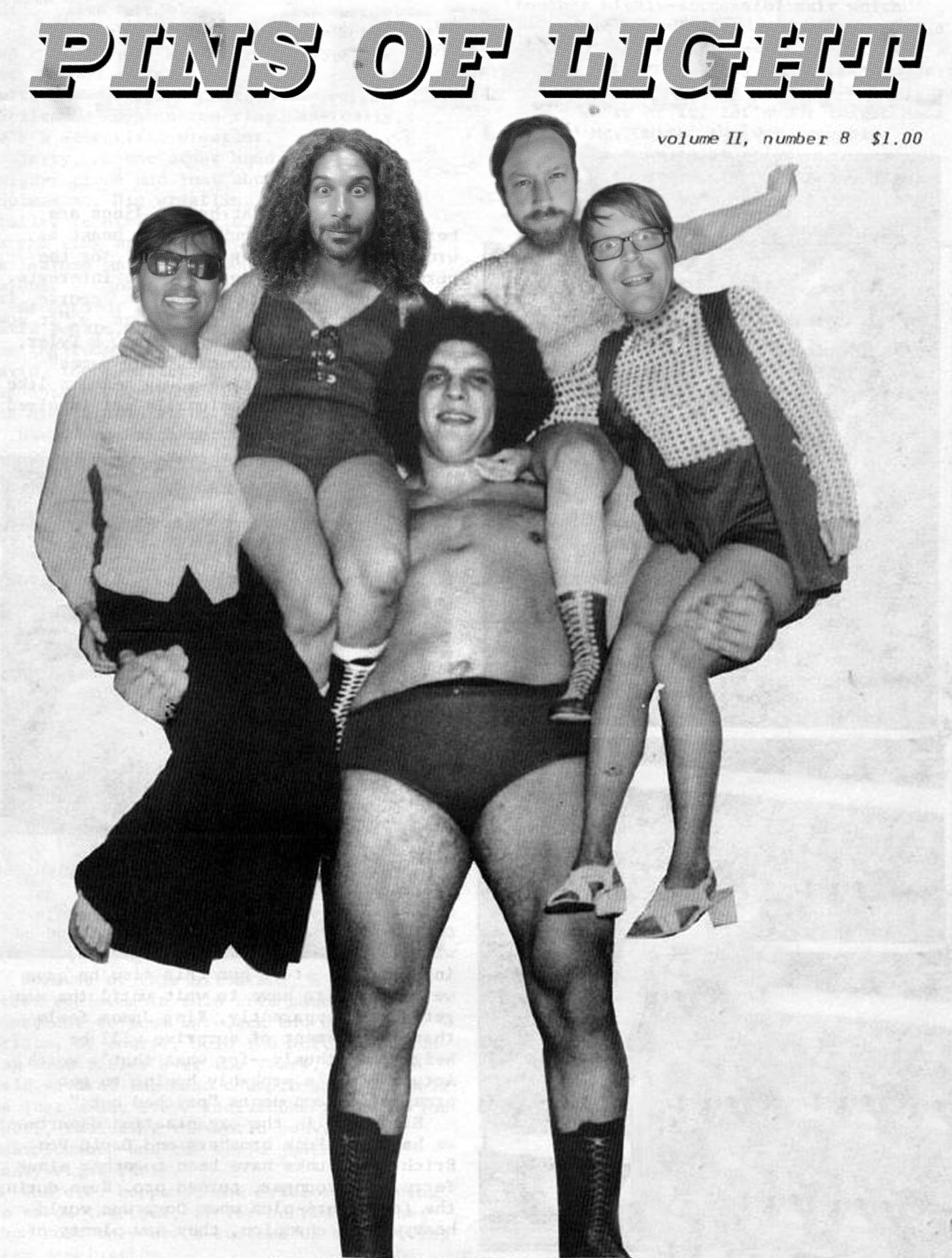
Drop Lemmy Kilmister in a whirling vat of hallucinogenic acid, and you may start to hear San Francisco’s Pins of Light emerge. The Alternative Tentacles band is made up of hard rocking, black metal-dipped cogs: scratchy-throated singer-bassist Shane Baker, brutal guitarists Jake Palladino and Ravi Durbeej, and pummeling drummer Phil Becker, who are also current and former members of Dead and Gone, Hightower, and Triclops.

The band’s hellfire debut album II – recorded at Lucky Cay Recordings in Potrero Hill – draws from elements of metal, punk, and ’70s rock’n’roll. Songs like album opener “4112” and punkish “No Way Home” lend easily to the brutal mosh, or at least some furious headbanging. The record came out earlier this year – pick it up now – and the band headlines Hemlock Tavern this week:

http://www.youtube.com/watch?v=mhn9Yd8sgVs

Year and location of origin: Fall 2008

Band name origin: Yvan Kawecki [Ed. note: Fleshies guitarist]

Band motto: I love you.

Description of sound in 10 words or less: Vibrations that travel through the air that can be heard.

Instrumentation: 2 gits, bass, vox, drums!

Most recent release: Debut LP on Alternative Tentacles, II.

Best part about life as a Bay Area band:
The view.

Worst part about life as a Bay Area band:
The other side of the world is so far away.

First album ever purchased:
45 of In the Air Tonight by Phil Collins.

Most recent album purchased/downloaded: new Toys that Kill, Fambly – ripping!!!

Favorite Bay Area eatery and dish: Cathead’s BBQ. Cornmeal Crusted Tofu. And I’m not even a vegetarian!

Pins of Light
With Hot Victory, Lozen
Wed/20, 9pm, $7
Hemlock Tavern
1131 Polk, SF
(415) 923-0923
www.hemlocktavern.com

Pride leather marshalls hail a “kinky renaissance”

2

It was almost Pride Week, I’ve had two leather luminaries hanging out at kink coffeeshop Wicked Grounds – it just seemed like an opportune time to start waxing philosophical about the possibility of a kink renaissance in San Francisco. 

“There just seems to be this general coming-out,” said Leland Carina, who as a member of the SF girls of Leather has done her part to increase the inclusiveness and malleability of her kink community. She likened this expansion to the capital-R Renaissance, which happened after the threat of bubonic plague had been mitigated. Likewise, she said, the kink community in San Francisco is finally hitting a point where the fear of AIDS no longer rules people’s sexual encounters. 

Race Bannon, Carina’s co-leather marshall in this Sunday’s Pride parade, hadn’t thought of it that way – but Carina’s theory resonated with him. “We’ve figured out how to deal with [AIDS], and we’ve moved past it. I call what’s happening a kinky renaissance.”

The two of them should know. Bannon and Carina are connectors in the leather community. In our chat at Wicked Grounds, the two surmise that they were chosen to be Pride’s leather marshalls based on their approachability and connection with their playmates and community members. They are both very good at creating community on the Internet through social media — but are both rather accomplished perverts off the web as well. 

Brief descriptions, for those of us that thrive on bullet points:

Leland Carina

  • Founding member of SF girls of Leather
  • Now retired from SF girls, but works to promote and brand the movement in other cities. To date, there are girls chapters in Arizona (the original group, SF was the second), Seattle, Dallas, Houston, Austin, Tulsa, New York, among other regional chapters
  • Until recently, Carina was a graphic designer at Kink
  • Correspondent for leather news blog Leatherati
  • Leader in the SF Bay Leather Alliance

Race Bannon

They are the Miss Universes of the leather community, if that’s not too distasteful to say. “It’s mainly a wave and smile sort of thing,” says Carina – who will be wearing a red latex dress for her pageant moment made by an ex “roller derby sister” who runs Lust Designs. But be that as it may, Bannon and Carina are determined to make what they can of it. The two have pledged to do what they can to raise attendance numbers in their contingent so that the Pride hoards can see for themselves the growing scope of the leather community. They’ll be towed in the parade by human ponies, expertly trained by human pony mistress Liliane Hunt. 

In the spirit of a true pageant host (I was channeling Sinbad in 2000, which I chose because Montell Jordan was the musical guest that year. My second pick would have been Jerry Springer in 2008 because Lady Gaga was his musical guest. You really need to read this list), I end our meeting with a truly corny question. What is the biggest challenge facing the leather community today?

“Right now we have a very kumbaya status,” Bannon smiles, as Carina grimaces a little from across the table (surely, a girl of Leather has a bit different view on schisms in the community than an established older gentleman). Bannon also said that finding space for playtime is always a challenge in a city as dense and expensive as San Francisco. 

For Carina, the challenges have more to do with the forces outside the community. In an era when Rihanna boldly displays her kink proclivities in her music videos on MTV and 50 Shades of Grey is thrilling the harnesses onto Middle America, she says, “I’m interested in how that’s going to affect the community. After queerness becomes accepted, BDSM and polyamory becomes the next big thing.”

Pride parade 

Sun/24 10:30am, free

Begins at Market and Beale, ends at Market and 8th St., SF

www.sfpride.org

Why do Lee, Chiu, and others want to stifle economic growth?

16

Why do Mayor Ed Lee, Board of Supervisors President David Chiu, and San Francisco’s two major daily newspapers want to punish success? Because that’s exactly what their proposal to create a new gross receipts tax for businesses – in which corporations would be taxed more as they grow, thus encouraging economic stagnation – would do.

Right now, the city taxes businesses through a payroll tax, levying taxes based on the number of employees the company has. But under a gross receipts tax that would replace the payroll tax, employees have a disincentive to be productive and efficient and increase their companies’ profits because that would expose those companies to more of the city’s onerous tax burden.

Why would investors and employees want to grow a business in San Francisco when that would only submit them to higher taxes. Clearly, this is anti-business measure that is likely to plunge our local economy back into the depths of the recession. Don’t our leaders understand the need to help this fragile economic recovery?

Okay, okay, in case you haven’t guessed it yet, the previous three paragraphs are satire of the ridiculously overblown and misleading political rhetoric used by Lee and other critics of the city’s payroll tax, which they deride as as “job killer” that makes companies not want to hire new employees.

“Mayor Lee and Board President David Chiu proposed a gross receipts tax as an alternative to the City’s current payroll tax, which punishes companies for growing and creating new jobs in San Francisco,” Lee’s office wrote in a press release it distributed last week.

Yet my argument that a gross receipts taxes “punishes companies for growing” is just as logically sound as Lee’s argument that the payroll tax discourages companies from “creating new jobs” – and both arguments are also complete hyperbolic bullshit. But it’s seductively simple and widely parroted bullshit.

“To attract more companies to San Francisco and encourage existing employers to hire more employees, it is past time to do away with this tax,” our new neighbors down the hall, the editors of the Examiner, wrote in their editorial today, a oft-repeatedly refrain from the Chronicle and SF Chamber of Commerce as well. It later added that switching tax methods “wouldn’t penalize companies for employing people or paying them well. And city policy wouldn’t give employers any incentive to shed employees during a downturn.”

But the reality is that the 1.5 percent payroll tax is too small to really be a factor in the decision by corporations to add new employees, something they are already loath to do unless forced to by rising demand. It is simply one imperfect gauge of the size of a company and its ability to pay local taxes, just as the gross receipts tax is.

Health insurance costs, which Lee’s CPMC deal doesn’t adequate contain, is a far bigger factor in a company’s hiring decisions. So is commercial rent, which Lee’s corporate welfare policies are causing to go up downtown and throughout the city.

For decades, conservatives have tried to sell the general public on bogus trickle down economic theories that we all benefit from corporate tax cuts and that people will simply stop working if you tax them, ideas that should have been discarded as they were discredited. But they’re back with a vengeance, in supposedly liberal San Francisco of all places, actively peddled by key Lee supporters like billionaire venture capitalist Ron Conway, who only recently dropped his Republican party affiliation in favor of declined to state.

But it’s time to call out this voodoo economics for what it is: self-serving bullshit that ought to be rejected by citizens of a city that prides itself as being more educated and enlightened than the rubes in the flyover states that have been so thoroughly manipulated by the Republican Party and Blue Dog Democrats, to the detriment of our entire country.

Now, the Examiner’s argument that the business tax reform proposal would broaden and stabilize the tax base is a sound and meaningful argument, which is why the concept enjoys widespread support from across the ideological spectrum and is worth doing (although progressives rightful argue that if the tax base is being broadened then the city should reap some benefits from that, logic that Lee inexplicably resists).

Yet as the City Hall debates that will shape the details of business tax reform begin in a couple of weeks, it’s time to drop this misleading “job killer” label that has been promulgated by Republicans and other fiscal conservatives over the last decade and have an honest debate over what’s best for San Francisco’s private and public sectors.

Heads Up: 7 must-see concerts this week

0

There are some thrilling Pride events heading your way this weekend, and trust me, that thorough events list is a-coming.

But before all that, a friendly reminder about the other glitzy-grimy concerts and shows this week and weekend that’ll get your motor running: cosmic hip-hop extraterrestrial wordsmiths, Grass Widow for charity, your DAD, hardcore-with-horns, supersexy beatmakers, and more.

It just so happens that most of the essential concerts this time around are located in the Mission District; you might want to hunker down in the hood for a week, surviving on Pimm’s cups, spicy burritos, and a smug sense of self-satisfaction. Here are your must-see Bay Area concerts this week/end:

Hélène Renaut
Hélène Renaut premieres a dreamy-creamy new video for her song “The Deer Convention,” made by local filmmaker Zach Von Joo, at this Lost Church appearance. Renaut, who has a sweet French ’60s folk-pop singer thing going on, Françoise Hardy and the like, is Brittany-born and San Francisco-based. Is Zou Bisou Bisou passé now, or can we still reference it? How about that slow-twisty tween beach dance scene in Moonrise Kingdom? Ooh-la-la.
Wed/20, 7:30pm, $10
Lost Church
65 Capp, SF
www.thelostchurch.com
This is not the video (that premieres at the show, of course, and at midnight on the Web)
http://www.youtube.com/watch?v=2kMwNsBIV9c

La Plebe
Described by openers the Fucking Buckaroos as “phenomenal hardcore-with-horns,” La Plebe lives up to its reputation. The decade-old act is very much worth checking out, like Rancid in Spanish with the added depth of brass. This show kicks off the band’s summer tour, so send ’em out in raging SF style.
With Fucking Buckaroos, Dazu
Wed/20, 8:30pm, $8
Sub-Mission
2183 Mission, SF
(415) 255-7227
www.sf-submission.com
http://www.youtube.com/watch?v=SoSYwe77_to

Baby and the Macks, Dresses, DAD
This show introduces Baby and the Macks (Anna Ashe’s new soul band), welcomes back SF’s Dresses, and celebrates avant-pop Oakland phenom, DAD. And you know how we all love celebrating DAD in June.
Thu/21, 9pm, $7-$10
Amnesia
853 Valencia, SF
(415) 970-0012
www.amnesiathebar.com
https://www.youtube.com/watch?v=AD6OMLcf46U

Grass Widow
Premiered last week, Grass Widow’s “Goldilocks Zone” video is creepy, retro sci-fi fun, a perfect sensation for the melodic local post-punk band with those eerily enveloping vocal harmonies. The track is a cut off newly released record Internal Logic, for which there’ll be a proper album release show July 20 at Rickshaw Stop. But before that, catch the trio just prior to its summer tour with a show at Verdi Club – a benefit for The Haley Butcher Organization, which helps terminally ill children.
With Carletta Sue Kay, Hindu Pirates, Nicole Kidman (Jon Barba), Shannon and the Clams
Fri/22, 8pm, $12
Verdi Club
2424 Mariposa, SF
(415) 861-9199
www.verdiclub.net
https://www.youtube.com/watch?v=sFJazD46uvA

Sister Crayon
Sacramento quartet Sister Crayon mixes uber-sexy textured electro music bursting with hypnotic beats (on traditional kit and drum machine) and the delicately swelling, airy vocals — à la Blonde Redhead — of Terra Lopez. The band, which opened for Built to Spill on its last tour, is coming off two sold-out hometown shows in SacTown, a free covers EP, and a video for their smooth if silly cover of Biggie’s “Going Back to Cali.”
With Sea of Bees, Jhameel 
Fri/22, 9:30pm, $12   
Bottom of the Hill
1233 17th St., SF
(415) 621-4455
www.bottomofthehill.com
http://www.youtube.com/watch?v=BklxcL7li_o

THEESatisfaction
Seattle-based duo THEESatisfaction likely created the cosmic sound of the future, showcased in debut full-length (though many DIY CDs and records came before it) awE naturalE. That shiny long-player is packed tight with anthemic, wordy, sisters-with-attitude extraterrestrial wordsmithery. Whatever you do, don’t funk with that groove.
With Le Vice
Fri/22, 9pm, $14
Independent
628 Divisadero, SF
www.independentsf.com
http://www.youtube.com/watch?v=qGWFBt_IPOg

The Men
Not to be confused with JD Samson’s electro-poppy Men, the Men is scuzzy, smash-your-instruments, hollering rock’n’roll hardcore. Yet it’s outta step with conventionally noisey acts of that genre; just check out the melodies and Buzzcocksian chords in latest release Open Your Heart (March 2012, Sacred Bones). It’s aggressive sonic assault for music nerds.
With Wax Idols, Burnt Ones
Sun/24, 9pm, $12
Bottom of the Hill
1233 17th St., SF
(415) 621-4455
www.bottomofthehill.com
http://www.youtube.com/watch?v=8NEjJJYp9fo

Free Muni for kids: Tough slog at the MTC

15

There are plenty of reasons I like the David Campos free Muni for youth plan. Anything that gets the next generation used to seeing Muni as the primary form of transportation in town is a good idea. It’s a great benefit for low-income kids (and around SF these days, the only ones who we’re giving any benefits to are businesses that get tax breaks, and those breaks are worth far more than the modest cost of the Campos plan). But it’s particularly important this year, because the school district is in serious financial straights and is probably going to eliminate most school-bus transportation next year. So poor kids and kids whose parents don’t have cars will have a harder time getting to school.

The supervisors approved this, and the mayor signed off on it — but some of the money is supposed to come from the Metropolitan Transportation Commission, made up of regional representatives, and Campos is having a tough battle.

The MTC staff recommended that SF get $4 million in regional transit money for the idea, but not all, or even most, of the 16 members of the panel want to see one city get money for something all of them would love to do.

But: Someone has to try this as a pilot project, and SF, with the highest per-capita transit ridership, is a good place to start.

Sup. Scott Wiener is also on the MTC, representing San Francisco, and he’s totally against the free Muni for youth plan. And when it come up at an MTC committee, he was willing to vote for it — “I realize I lost that battle, and at the MTC I’m representing San Francisco,” he said — but only if MTC stipulated that no additional city money would go to the program.

And that kind of screws the whole thing up, since it will be hard to do with just the $4 million.

Ugh. Such a great idea, for a fraction of the money we’re handing out like hot dogs to everyone who asks for a tax break. Why don’t the poor kids get a break for once?

Acquerello

0

virginia@sfbg.com

APPETITE There are but few whispers about Acquerello in dining circles these days. This is an oversight. Not readily visible from the street, the Nob Hill restaurant’s lobby opens onto a glowing dining room that at first glance appears to be an elegant oasis for an older clientele — a classic that has been loyal to the city since 1989. After a recent return to Acquerello, I’ll venture that it is this, but much more as well. For me, this is San Francisco’s great underrated fine dining destination, despite the fac that it has won a coveted Michelin star for six years and counting.

Even with the promise of Acquerello’s forward-thinking food and heartwarming classics in the air, it’s the service that initially stands out. Upon arrival, one is ushered to a table thoughtfully spaced apart from its neighbors, intimate yet still engaged with the Italian decor. In soft peach and beige, the dining room is subtly dated in a way that speaks of the old country, inviting and quiet enough under striking wood rafters but not so hushed as to be museum-like.

A team of waiters, three sommeliers and co-owner Giancarlo Paterlini, alternately attend to each table, the head waiter having been at the restaurant since the 1980s, along with Paterlini’s son, Gianpaolo, who is also the wine director, and chef and co-owner Suzette Gresham-Tognetti. The latter came out to greet those of us that lingered into the evening, clearly still passionate about what she does. Gresham-Tognetti works closely with young chef de cuisine Mark Pensa on all menus. (The classic tasting menu runs for $95 plus $75 for wine pairing; the seasonal tasting menu is $135 plus $95 for wine pairing; you can also choose three courses a la carte for $70, four for $82, five for $95.)

I recommend trying both the classic and seasonal menus, even if the a la carte menu gives you a chance to pick and choose among favorites. Ideally, a dining couple could order both for a glimpse of Acquerello’s entire timeline, past and present.

Maybe the dishes on the classic menu have been around for awhile, but they are far from stale. In fact, the “greatest hits” lineup still offers some of the restaurant’s best dishes. It will be a gourmand’s loss when one of Acquerello’s most popular plates, the ridged pasta in foie gras and Marsala wine sauce scented with black truffles, goes away in a few weeks. The most ecstasy-inducing dish on any menu is this dreamy take on foie gras, served as a sauce over al dente pasta. Another classic is juicy chicken breast decadently stuffed with black truffles over a leek custard and an artful mini-potato gratin, topped with shaved cremini mushrooms.

In contrast, the “chef’s surprises” menu is filled with delicate hints of things to come, like a warm arancini of asparagus and parmesan cream and some profiteroles filled with lush herbed cream. The regular menu holds treasures like pear and foie gras “ravioli” — the chefs slice dry-farmed, organic comice pears into a thin, pasta-like skin, filling it with truffled foie torchon. Saikou, a New Zealand farm-raised salmon, is bright and clean from high, cold elevations. It is poached for a few seconds in a layer of horseradish, and crusted it with chevril, pine nuts, and parsley; an herb pesto of sorts. Each dish explodes with flavor yet corners refinement, maintaining a Cal-Italian ethos that won’t play safe.

On the seasonal menu, the chefs work together closely on inventive takes that rival the better fine dining meals I’ve had. An amuse of raw yellowtail is alive with seabeans and arugula blossoms, while red abalone pairs with cabbage “seaweed” in porcini broth. Snake River Kobe beef is tender and pink, cooked sous vide under shaved hazelnuts. The cheese course is a warm, oozing round of gorgonzola D.O.P. (denominazione di origine protella, or protected designation of origin) beautifully co-mingled with potato, onion, mustard seeds, and nasturtium. Probably the most delightful, unique dish is “baked potato” gnocchi, a playful take on a baked potato made with a base of doughy gnocchi topped with chive crème fraiche, pancetta, and paper thin, fried slivers of potato skin.

Palate cleansers include a shot of carrot-apple-ginger juice with vanilla foam and a refreshing starter of orange juice, vermouth, and bitters. On the seasonal menu, a vivid dessert from pastry chef Theron Marrs marries cucumber sorbet with tart lime curd, sweet strawberry consommé, and herbaceous mint granita. As at Gary Danko, the cheese cart is one of Acquerello’s shining glories. The cart traverses the restaurant covered to contain the smell of its stinkiest offerings. Diners have their work cut out of them to select from among its unusual, largely Italian cheeses. An impression was made with earthy Blu di Valchiusella from Piemonte wrapped in walnut leaves and an impeccable Beppino Occelli in Barolo wine leaves.

Boasting input from no less than three sommeliers, Acquerello’s extensive wine list is novel-thick, dense with Italian wines. There’s an impressive range of varietals and vintages stored in its wine cellars. Suggested pairings meld seamlessly with each dish, whether it be a classic, lovely Nebbiolo d’Alba (2008 La Val Dei Preti), an unusual Langhe Rosso Burgundian-style Italian Pinot, or D’antiche Terre Taurasi Riserva, which transforms when sipped with fabulously rich veal and truffled mortadella tortellini Bolognesi.

For a special occasion, I’d place Acquerello among the best fine dining experiences in San Francisco — even up against hot newcomers and pricey minimalist restaurants. This is a place with a sense of history and a vision for the future.

ACQUERELLO

1722 Sacramento, SF

(415) 567-5432

www.acquerello.com

Subscribe to Virgina’s twice-monthly newsletter, The Perfect Spot, www.theperfectspotsf.com


The Magician w/ Goldroom and Jeffrey Paradise

0

The Magician
With Goldroom and Jeffrey Paradise

His background is shrouded in mystery, his powers are supernatural and his reputation is whispered about among men. He goes by different names, but folks just call him The Magician.

One night not so long ago, he appeared from a place between space and time. The Magician stepped into this world, materializing in a cloud of crystal stars and soft pink smoke. Some say he is the guardian angel of all resident DJ’s, others claim he’s a former airline pilot who crashed an after party – some say it’s just an illusion, a well-performed hoax. But is it really?

Everywhere The Magician goes, there’s music in the air. People come under his spell and dance like there’s no tomorrow. Lost in a purple haze, transfixed in a flurry of white doves. He makes clubbers float through disco heaven and takes them around the house on a magic carpet ride. Behind his green translucent eyes, there’s an unlimited knowledge of the musical past, present and future.

Friday, June 15 at 9pm @ Mezzanine, 444 Jessie, SF

In case you have time between Frameline screenings: new movies!

1

This week: Frameline, Frameline, Frameline! Our coverage here. Ticket and schedule info here.

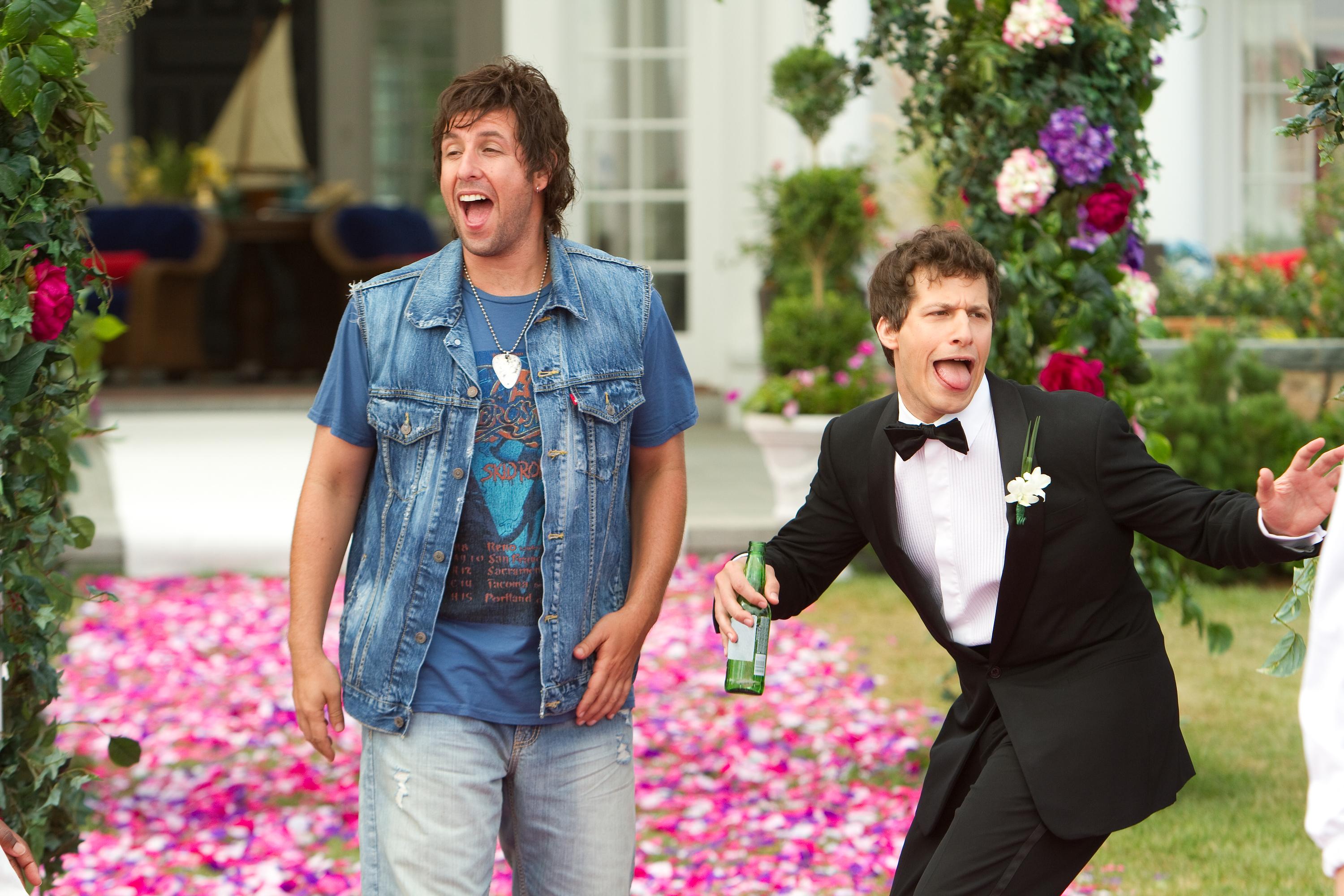
Hollywood’s two big releases are the Adam Sandler-Andy Samberg arrested-development yukfest That’s My Boy, and the Tom Cruise hair metal musical Rock of Ages. If you’re excited about either, you probably aren’t the type of person who gives two shits what movie critics say. Just a guess. So, enjoy. As you were.

Also of note for movie fans: the San Francisco Museum and Historical Society opens “The Stuff That Dreams Are Made Of: San Francisco and the Movies” this weekend. It features work by Madeleine Ellster herself, Kim Novak, plus:

“The exhibition paints a picture of the amazing breadth of the Bay Area’s film history and filmmaking community, using educational text panels, photographs, posters, vintage cameras, movie props and other objects. Slide shows, lectures, book signings, oral history recordings, screenings, and multimedia will also be part of the exhibition.”

(I can’t confirm there will be a Harry Callahan street shootin’ simulator, but that would be pretty awesome, no?)

But back to the movie theater:

This weekend, it’s a Duplass-a-thon, as Dennis Harvey reviews mumblecore’s first sex symbol in Safety Not Guaranteed and Your Sister’s Sister. Below, you’ll find our takes on another mumblecore overachiever, Greta Gerwig, who less success with the wee-bit-twee Lola Versus; handcuffed-together-at-a-music-festival (don’t ya hate when that happens?) rom-rom Tonight You’re Mine, featuring Natalie Tena (Osha for all my fellow Game of Thrones devotees also going through withdrawals); delightful coming-of-age Norwegian import Turn Me On, Dammit!; and The Woman in the Fifth, the latest movie to remind us that yes, Kristin Scott Thomas can totally speak French! And maybe the first to let us know that Ethan Hawke can, too.

http://www.youtube.com/watch?v=b5hYBMZft9w

Lola Versus Greta Gerwig’s embattled late-twentysomething, the titular Lola, apologetically invokes the Saturn return to explain the chaos that enters her life when her emotionally underdeveloped boyfriend proposes, panics, and dumps her. Workaday elements of the industry-standard romantic comedy surface, lightly revised: a crass, loopy BFF (co-writer Zoe Lister Jones) who can’t find true love and says things like “I have to go wash my vagina”; a vaguely soulful male friend (Hamish Linklater, 2011’s The Future) who’s secretly harboring nonplatonic feelings (or maybe just an opportunistic streak); wacky yet vaguely successful Age of Aquarius parents (a somewhat toneless Debra Winger and a nicely gone-to-seed Bill Pullman). One can see why it would be tempting to blame a planet’s galactic travels for the solipsistic meandering that Lola engages in, bemusedly lurching, often under chemical influences, from one bout of poor decision-making to the next. She claims to be searching for a path out of the chaos into some calmer place (fittingly, she’s a comp lit Ph.D. candidate who’s writing her dissertation on silence), but as the movie transports us mercilessly from one scene of turmoil to the next, we have little reason to believe her. The script has funny moments, and Gerwig sometimes succeeds in making Lola feel like a charming disaster, but her personal discoveries, while certainly valuable, feel false and forced. (1:26) (Lynn Rapoport)

Tonight You’re Mine Ah, the old chained-together gimmick, so effective in creating conflict in movies like 1973 women-in-prison classic Black Mama, White Mama. Alas, Tonight You’re Mine contains zero escaped cons, and is instead a pretty contrived love story about two rockers who’re inexplicably handcuffed together, mid-argument, by a mysterious man prowling the grounds at Scotland’s massive T in the Park music festival. Whether or not Adam (Luke Treadaway, last seen getting very stoned mid-alien invasion in 2011’s Attack the Block) and Morello (Game of Thrones‘ Natalie Tena) will ditch their clearly-wrong-for-them partners and fall for each other is hardly up for debate. What saves Tonight You’re Mine is its authentic rock-festival atmosphere; director David Mackenzie filmed amid the actual chaos of the 2010 T in the Park fest, so there’s plenty of mud, inebriated extras, and background music swirling around the budding romance. Also, though her character is underdeveloped here, Tena has a punky appeal that suggests a star on the rise. (1:20) (Cheryl Eddy)

http://www.youtube.com/watch?v=eySFZRVcHYM

Turn Me On, Dammit! The 15-year-old heroine of writer-director Jannicke Systad Jacobsen’s Turn Me On, Dammit! is first heard in voice-over, flatly cataloging the over familiar elements of the small town in rural Norway where she lives — and first seen lying on the kitchen floor of her house sharing an intimate moment with a phone sex operator named Stig (Per Kjerstad). Largely ruled by her hormones and longing to get it on with someone other than herself and the disembodied Stig, Alma (Helene Bergsholm) spends large segments of her life unspooling sexual fantasies starring Artur (Matias Myren), the boy she has a crush on, and Sebjorn (Jon Bleiklie Devik), who runs the grocery store where she works and is the father of her two closest friends: burgeoning political activist Sara (Malin Bjorhovde) and full-fledged mean girl Ingrid (Beate Stofring). Back in real life, a strange and awkward physical interaction with Artur leads Alma, excited and confused, to describe the experience to her friends, a mistake that precipitously leads to total social ostracism among her peers. With the possible exception of some unnecessary dog reaction shots during the aforementioned opening scene, documentary maker Jacobsen’s first narrative feature film is an engaging and impressive debut, presenting a sympathetic and uncoy depiction of a young girl’s sexuality and exploiting the rich contrast between Alma’s gauzier fantasies and the realities of her waking world to poignantly comic effect. (1:16) (Rapoport)

The Woman in the Fifth A rumpled American writer with a hinted-at dark past (Ethan Hawke) shows up in Paris, to the horror of his French ex-wife and confused delight of his six-year-old daughter. An ill-advised nap on public transportation results in all of his bags being stolen; broke and out of sorts, he takes a grimy room above a café and a gig monitoring the surveillance-cam feed at what’s obviously some kind of illegal enterprise. During the day he stalks his daughter and romances both sophisticated Margit (Kristen Scott Thomas) and nubile Ania (Joanna Kulig); he also dodges his hostile neighbor (Mamadou Minte) and shady boss (Samir Guesmi). Based on Douglas Kennedy’s novel, the latest from Pawel Pawlikowski (2004’s My Summer of Love), offers some third-act twists (gory, distressing ones) that suggest Hawke’s character (and, by extension, the viewer) may not be perceiving reality with 100 percent accuracy. Moody, melancholy, not-entirely-satisfying stuff. (1:23) SF Film Society Cinema. (Eddy)

Too dope to be free

0

But it is! No ticket price required, but you might want to show up early for the wildly popular Queeriosity. 

It’s Youth Speaks’ annual queer poetry slam. The mostly high school age poets who will lay their stunningly well-worded wisdom upon you will be having fun tomorrow night, but they are not messing around. 

Neither is Youth Speaks. The national San Francisco-based organization works with 30,000 Bay Area youth per year, from school assembly performances to free after school poetry workshops to slams. Veteran Youth Speaks poet Milani Pelley will be co-hosting this year’s Queeriostiy show. Although a raging fire prevented me from meeting up with Pelley in Berkeley today, she told me over the phone about life, art, politics, and the aweomeness that Queeriosity attendees can expect. 

Pelley wrote her first poem at age 12.

“Actually a young lady who also was with Youth Speaks, she got me into writing,” Pelley told me. “In the 7th grade we were kind of tom boys, we were hanging out on the basketball courts and she said hey, want to hear a poem?  And she was little, like five feet,” Pelley laughed. 

“And everyone stopped what they were doing and listened. And after that, I went home and wrote a poem.  Because I said, this is how you get people to listen to you? I want to try it!”

She never stopped. Pelley went to Youth Speaks workshops at age 15, and later served on their Youth Board. She now makes it as an artist, working for Youth Speaks as a Poet Mentor and making jewelry on the side.

Pelley said that poetry sustained her through difficult times. “Once I was able to write down everything that I was going through and work out my pain and sadness I was able to see the bigger picture and really find a solution of how I was going to heal” she told me.

“It was basically me being my own therapist. Because you know how they take notes on you? I was taking notes on myself.”

I asked if Pelley sees her poetry as political.

“I talk about race, or I talk about sexuality, I talk about police brutality. These are regular things in my life,” said Pelley. “But people think it’s political or controversial. And some people think I should be considered pro-woman. People think it’s political because it’s a feminist perspective but I think Its just women being powerful as they should be.”

For one example of the personal-is-political-is-ridiculously-awesome Queeriosity experience, here’s a take on SF Pride from Yosimar Reyes at the 2010 Queeriosity slam. http://www.youtube.com/watch?v=XdZpRiOsdS8

If that doesn’t convince you, let Pelley: “I definitely think this is going to be an amazing show. It’s free, its way too dope to be free. Personally I think, they should be paying these youths because they’re very courageous, they’re very talented and what is going to be shown tomorrow shouldn’t be missed.”

15th Annual Queeriosity

Fri/15, 7pm

LGBT Center

1800 Market, SF

www.youthspeaks.org

Dick Meister: Dolores Huerta merits our highest honor

0

By Dick Meister

Dick Meister, former labor editor of the SF Chronicle and KQED-TV Newsroom, is co-author of “A Long Time Coming: The Struggle To Unionize America’s Farm Workers” (Macmillan). Contact him through his website, www.dickmeiste.com, which includes more than 350 of his columns.

How fitting it is that Dolores Huerta has been awarded the Presidential Medal of Freedom.  Her many years of hard and invaluable work for union rights and civil rights generally deserve no less than the country’s highest civilian honor, bestowed on her May 30 by President Obama.

Huerta, now a vibrant 80 years old, has had a remarkable career spanning more than a half-century. She’s probably best known for her work with Cesar Chavez in the founding and operations of the United Farm Workers union. But that’s been just part of her lifelong and extraordinarily successful and courageous fight for economic and social justice.

Huerta, five-foot-two, 110 pounds, hardly looks the part. What’s more, she’s had 11 children to raise along the way, much of the time as a single mother. She’s traveled the country, speaking out and joining demonstrations in behalf of a wide variety of causes.

She’s lobbied legislators to win important gains for Latino immigrants and others.  She was a leader in the worldwide grape boycott that forced growers to agree in 1970 to the country’s first farm union contracts. Which she negotiated despite her utter lack of experience in negotiating. She remains a leading Latina, feminist, labor and anti-war activist, and a key role model for women everywhere.

Huerta started out as an elementary school teacher in Stockton, California, in 1955. But she quickly tired of “seeing little children come to school hungry and without shoes.”

That, and her anger at “the injustices that happened to farm workers” in the area, led Huerta to quit teaching to join the Community Services Organization, the CSO, which helped local Chicanos wage voter registration drives and take other actions to win a political and economic voice.

Cesar Chavez, who was general director of the 22-chapter CSO, stressed above all what he called “grass roots organizing with a vengeance.” Huerta agreed, and generally agreed with Chavez on tactics as well. That included an unwavering commitment to non-violence.

But where Chavez was shy, she was bold and outspoken. She had to be if she was to assume the leadership to which her commitment had drawn her. Mexican-American men did not easily grant leadership to women, most certainly not to small, attractive women like Huerta.

She was assigned to the State Capitol in Sacramento as the CSO’s full-time lobbyist. It was an unfamiliar task, but during two years at the capitol, Huerta pushed through an impressive array of legislation, including bills that extended social insurance coverage to farm workers and immigrants and liberalized welfare benefits.

Huerta soon realized, however, that legislation could not solve the real problems of the poor she represented. What they needed was not government aid passed down from above to try to ease their poverty, but some way to escape the poverty.  The way out, Huerta concluded, was farm labor organizing.

Chavez agreed. And in 1962, when the other CSO leaders and members rejected his plans for organizing farm workers, he quit the CSO to start organizing on his own. Huerta soon followed, helping create the organizations that evolved into the United Farm Workers, the United Farm Workers with Chavez as president and Huerta as vice president and chief negotiator, later as secretary-treasurer. She, like Chavez, was paid but five dollars a week plus essential expenses.

Chavez quarreled frequently with Huerta. That was inevitable, given Huerta’s excitable temperament and the harsh discipline Chavez imposed on himself and his close associates. But they were always headed in the same direction. And though Chavez was not entirely immune to the Mexican ideal of male supremacy, he was not the traditional macho leader by any means, He marveled at Huerta for being “physically, spiritually and psychologically fearless – absolutely.”

Like Chavez, she believed fervently in getting people to organize themselves, to get them to set their own goals and decide for themselves how to reach them. Huerta directed the message particularly to the many women among the farm workers.

She joined their picket lines outside struck fields, defying growers, sheriff’s deputies and other sometimes violent opponents.  As one picket said, “Dolores was our example of something different. We could see one of our leaders was a woman, and she was always out in front, and she would talk back.”

Huerta paid a heavy physical price for her militancy. She nearly died in 1988 after being clubbed by a policeman while demonstrating with about 1,000 others outside a fundraiser for the presidential campaign of then Vice President George H.W. Bush, who had ridiculed the UFW and the grape boycott. Huerta’s spleen was ruptured and had to be removed, leading to a near fatal loss of blood.

She was operated on for other serious problems in 2000.  Huerta stepped down as a UAW officer that year to join Democrat Al Gore’s presidential campaign, and has remained active in UFW and Democratic Party affairs, notably by lobbying for immigrant rights, helping train a new generation of organizers and joining campaigns to improve the lot of janitors, nursing home employees and other highly exploited workers.

Dolores Huerta has shown us, beyond doubt, that injustice can be overcome if we confront it forcefully, if we heed the demand she has been known to shout in urging passers-by to join picket lines and other demonstrations: “Don’t be a marshmallow! Stop being vegetables! Work for justice!”

Dick Meister, former labor editor of the SF Chronicle and KQED-TV Newsroom, is co-author of “A Long Time Coming: The Struggle To Unionize America’s Farm Workers” (Macmillan). Contact him through his website, www.dickmeiste.com, which includes more than 350 of his columns.


Beach daze with buzzing brother act Wildlife Control

0

What would it be like if a day of your life was filmed then released into the wilds of the web? Better yet, what if you and your brother were musicians, and you produced, directed, and released your first big, innovative music video – shot over a full day at Ocean Beach in San Francisco – and it ended up going viral on Youtube, before the release of a full-length album?

Well, your band Wildlife Control would be a rather buzzed about act. And it would leave the people wanting even more (debut EP Spin was released this March). Brothers Neil and Sumul Shah, hailing from a rural Pennsylvania town – now based in Brooklyn and San Francisco respectively – spent a day in early February filming said music video for their new single “Analog or Digital” on a windswept beach, using a unique combination of time-lapse and stop-motion techniques.

In the video, it appears that the background is moving faster than real time, while the band’s movements are stagnant, choppy, like a slow-moving slideshow; it creates an effect that looks their feet are closely hovering over the sand.

This effect was created by a series of more than 3,000 individual photographs. The process was tiring for the brothers, holding the poses for such a long stretch of time, “We got really stiff” laughed Sumul during a conversation at Cafe Mediterranean in Berkeley.

Wildlife Control’s sound is far from rigid, it’s based in breezy pop – poppy enough to appeal to mainstream audiences – and layered with rock’n’roll riffs, and some jazz influences. There are layers to peel back with each listen, more depth than initially meets the ear.

http://www.youtube.com/watch?v=boGyFAYomBo

“We grew up in a whole family of musicians, Sumul reflected. “Our parents both imparted the importance of music from an early age. They wanted us to dive deep into it. Our dad is a trained classical Indian musician.” In fact, he plays Tabla on their future full-length release. “Music was all around, all the time; from an early age we always heard good music.”

Sumul added that – along with that family of musicians – he was also inspired by teachers, other artists, and inspirational folk with a clarity of vision, ticking off a list that included Steve Jobs, the Beatles, and Johann Sebastian Bach.

“When we would go with our friends in their parents’ minivan, I didn’t get what they listened to. The cheesy kids’ music was just not what we were exposed to in our family,” he laughed. “There is a necessity to some extent to have music appropriate for kids, but I don’t believe they should need their own weird kids’ music. A child can appreciate music like the Beatles.”

While the brothers grew up surrounded by music and have been playing together for some time, they’ve just barely dipped their toes in the modern world of viral music videos. With the “Analog or Digital” video, they made a concerted effort to capture their personalities.

“We thought, what better way to do it then to film an entire day to ourselves, and then compress that down into the three minutes of the song,” Sumul said. “Certain aspects of it were very planned out, but otherwise we just wanted to have fun and be ourselves.”

The song is anchored by a steady drum line, and the story-telling of the lyrics instantly create a potential for nostalgia; the musical bridge adds a dramatic flair that makes the song all the more memorable.

“It’s interesting that it went viral; all we really want is to make music for anyone who wants to hear it and be exposed to it.”  Sumul said. “To live in an age where we can get so much fan response amazes us,” adding, “we totally live in the future and we love that.”

Wildlife Control
With Coast Jumper
Mon/18, 8pm, $13
Brick and Mortar Music Hall
1710 Mission, SF
(415) 800-8782
www.brickandmortarmusic.com

The 8 Washington embarrassment

16

I wasn’t shocked by the vote on 8 Washington. I knew it was happening; I knew we’d lost when the EIR went through. I knew we couldn’t count on a solid progressive bloc any more. I knew that the lobbying was intense.

But I have to say, at the end of the day I was embarrassed. Because the supervisors sold the city cheap.

In the earlier board discussions, Sup. Christina Olague and Sup. Eric Mar mentioned their concerns about the heigh and bulk of the project and said they would work with the developer, Simon Snellgrove, on changes. But the final project was exactly the same size.

Olague and Sup. Jane Kim were concerned about the amount of parking; the developer agreed to cut 50 spaces. But the actual size of the garage won’t be reduced at all; the only promise: There won’t be valet parking, so maybe not so many cars will fit.

Yes, Snellgrove agreed to set aside some scholarships for low-income kids to swim in the pool, which is a great thing and I fully support it. For a project that, according to available figures, will net the developer $200 million in profit — according to Sup. David Chiu’s analysis, a 72 percent rate of return — the scholarship money is peanuts.

There’s an additional 50 cent parking levy to pay for surface improvements in the area.

But as Chiu asked at the June 12 meeting, “Is the city getting an appropriate level of benefits based on Snellgrove’s profits?” Project foe Brad Paul — a veteran of more than 30 years of the city’s development wars — doesn’t think so. “They got nothing,” he told me.

Here’s how it went down:

Chiu started off by introducing the board’s budget analyis, Harvey Rose. Rose said he’d reviewed the finances of the project, and concluded that the city would get $50 million less out of the project than the developer or the Port of San Francisco, which owns some of the land and is a primary proponent, had originally claimed. Chiu also noted that not all the documents were in the file, but nobody else seemed to care.

In fact, through most of the discussion — limited discussion — and final votes, it was pretty clear that nobody was swayed by any of the facts that Chiu put forward. This deal was done long before the board members took their seats.

Chiu offered a series of amendments, none of them terribly radical. He pointed out that the deal requires the city to pay the developer $5 million for open-space improvements. “That’s an anomaly,” Chiu said, and moved that it be removed.

Kim, who throughout the meeting was the strongest supporter of the project, argued that the city often reimburses developers for open space. More, she said, compared to what the city has asked other major residential developers to give, this project is just dandy. “I would not say this is not a fair deal for the city,” she told her colleagues.

The vote on the $5 million giveaway? Developer 6, SF 5. Siding with Snellgrove: Christina Olague, Scott Wiener, Carmen Chu, Sean Elsbernd, Mark Farrell, and Jane Kim. Siding with Chiu and project opponents: John Avalos, David Campos, Malia Cohen, and Eric Mar. It’s an odd lineup — Cohen doesn’t always vote with the progressives, and I have to say it’s strange to see Kim and Olague siding with the four most conservative supervisors.

Chius’s second proposal: Since the city’s benefits were $50 million less than advertised, why not add $14 million to the affordable housing fee?
Developer: 7. Affordable housing: 4. Voting for the developer: Olague, Wiener, Chu, Elsbernd, Farrell, Kim and Mar.

Okay, one last try. Chiu suggested maybe just $2 million more for affordable housing. Wiener, as is he way, went off on his usual complaint that too much of the affordable housing money is for poor people and not enough for the middle class. The final vote:

Developer: 6. Affordable housing: 5. Voting for the developer: Olague, Wiener, Chu, Elsbernd, Farrell, Kim.

Kim, again, took the lead in promoting the deal on the final vote, saying that a parking lot and a private club were not a good use for the space and that “we are achieving here is a higher and better use for the land.” That’s what every developer talks about, by the way — higher and better use.

She also talked about One Rincon, that hideous tower next to the Bay Bridge that was approved after then-Sup. Chris Daly cut a deal with the developer that the San Francisco Chronicle denounced as a “shakedown.

Kim said that, considering the much-smaller size of the Snellgrove project, the benefits were richer than the Rincon deal.

I never liked the Rincon deal — that tower’s a disaster, an ugly scar on the skyline, and there was nowhere near enough affordable housing money. That’s because I think that the city should be building six affordable units for every four market-rate units, that there’s no need for more housing for the very rich and that our current housing policy is a disaster. (The Guardian wrote an editorial at the time that said it was good that Daly had gotten that much money, but was dubious about the whole project. In retrospect, we were too kind.)

I think all my readers at this point know that. So does Daly.

But I asked the former supervisor anyway to comment on the difference between 8 Washington and One Rincon. His thoughts:

1. The Rincon Hill agreement was negotiated by the district Supervisor working together with the communities most impacted by the development. 8 Washington was opposed by the district Supervisor and many nearby residents.
2. Most people in the South of Market were not diametrically opposed to highrise development in that location. The Planning Department had been working on a Rincon Hill neighborhood plan and was recommending upzoning for the area.
3. Rincon Hill had no waterfront trust issues.
4. The Rincon HIll development impact fee was $25 per square foot (over and above the required inclusionary affordable housing fee even though the Mayor’s Office contended that over $20 per square foot would kill the deal.) According to Kim’s release, her 8 Washington deal netted an additional $2 million for affordable housing and a $.50 parking surcharge. This even though development in Rincon Hill is not as valuable as the northern waterfront.

Folks: I think the city got taken to the cleaners here. I’ll stipulate that I’m against this project for much broader reasons. And maybe I’m just an old commie who thinks that the richer you are, the more you should give back, that the affordable housing fees on the most expensive condos in San Francisco should be higher than normal, that if Snellgrove nets $200 million, then the city by definition left too much on the table.

But I don’t think I’m alone in believing that if you’re going to approve something that will make a developer this rich, and let him use public land to do it, on the waterfront, you ought to get your fair share. And that didn’t happen.

Embarrassing.

Your love: Open SF conference teaches, showcases polyamorous community

14

“I have a partner that I live with, two girlfriends, and a number of lovers” 

In my San Francisco, it’s not uncommon to know someone who identifies as polyamorous, or who participates in multiple loving and intimate relationships. 

In fact when I talked to Pepper Mint, conference organizer for OpenSF, he told me that the non-monagamous community in the Bay Area has finally reached a critical mass. His reasoning? Over the weekend of June 8, Open SF was attended by over 500 of the poly-curious and practicing. 

As his community expands, Mint thinks it is necessary to recognize the multitude of voices that compose polyamorous San Francisco. “I feel it is important to highlight our similarities while acknowledging our differences,” he told me as we sat on the floor outside of one of the many conference rooms at the Holiday Inn where OpenSF was in full swing around us. 

The weekend started with the Pink play party at Mission Control. There was a keynote address from trans-identified sex educator Ignacio Rivera and trans-gendered health educator and social justice activist Yoseñio V. Lewis. The two also hosted a lecture entitled “Kink, Race, and Class.”

The lecture sought to inspire dialogue about how race, racism, and class appear in the world of kink. It was one of many unique talks over the weekend that both celebrated and critiqued the diversity and spread of the polyamorous community.  Other offerings available to OpenSF attendees included “Sex Work and Non-Monagamy,”  “Fat Sluts, Hungry Virgins,” and “Trans-Queering Your Sex.” 

In another hallway that weekend, Sonya Brewer — who facilitated the “Cultivating Healthy Boundaries” lecture on Sunday — suggested the conference was well attended due to Mint’s effort to include a diversity of individuals, including sexual minorities and other oppressed groups on the planning committee. Brewer, a somatic psychotherapist and queer woman of color, has been a practicing polyamorist for 15 years. 

“It’s about finding out where your yes’ and no’s are to really connect with other people,” said Brewer. “In our culture we get taught not to listen to our bodies. It’s about teaching people their forgotten skills of connecting to themselves.”

Mint described himself to be a straight-leaning bisexual with some gender variance. I watched him push back his shoulder-length purple hair to kiss one of his female lovers hello as he confidently navigated our interview and managed the conference. 

When I asked him to describe his poly structure Mint said, “I have a partner that I live with, two girlfriends, and a number of lovers.” He was raised in a polyamorous home, and talked openly about how his childhood environment help him grow into a healthy, sex-positive community leader. “When creating a sex-positive polyamorous space there is an importance to two things; skills — communication and transparency — and building community connections. People who participate in community usually succeed in polyamory.”

For my own itinerary, I settled on two lectures: Kathy Labriola’s “Unmasking the Green-Eyed Monster: Managing Jealousy in Open Relationships” and “Second Generation Poly,” a panel featuring porn couple Maggie and Ned Mayhem and members of their family. 

Labriola’s hour-long talk examined jealousy from an anthropological perspective, highlighting it as a universal experience that manifests itself depending on one’s cultural upbringing. Her bad news? Jealousy is unavoidable. Her good news? It’s a learned behavior, and you can learn to manage it. During the lecture, she provided us with a handy checklist to use in determining whether insecurities are based in fact or freak-out. 

“Identify a situation that makes you jealous and ask the questions,” Labriola said, breaking down the checklist. “Number one, [do] I have a resource I value very much and I’m fearful of losing? Number two, [does] another person want that resource? Number three, [do] you believe you are in direct competition for something you want? Number four, [do] you believe if push comes to shove you will lose out?”

This list was one of the practical tools Labriola gave the auienced to manage their jealousy. She also discussed guided imagery, treating jealousy as a phobia, and boundary setting. The audience had several questions for Labriola once the lecture was over. My personal favorite was when an audience member asked how to deal with a jealous partner. Labriola simply replied, “Just  shut up and listen.” 

Maggie Mayhem — dressed in a fluorescent orange space suit, a representation of her “out-of-this-world situation” — sat on a panel with partner Ned, his father, and his father’s “second partner” (a non-hierarchical term, Maggie clarified for me later.) They discussed negotiating boundaries at sex parties, raising children with more than two parents, and the stigma many parents of sex-positive children can encounter. Mayhem encouraged the audience to, “Be the author to your own happily ever after.”

I left OpenSF feeling newly inspired, and informed about the diverse landscape of the Bay Area’s poly community. The conference encouraged its participants to create doctrines of love while keeping a critical and open perspective. And it provided a place for the polyamorous to come together. “People who try to create their own non-monogamy usually fail,” said Mint. “People who participate in community usually succeed. Being a part of non-monogamous community greatly increases the chance of being successful with non-monogamy, because the skills required are simply not provided by mainstream culture.” 

‘Block Reportin’ 101′ and more at the San Francisco Black Film Festival

0

Frameline is hitting screens tomorrow (our coverage here, here, and here), but this weekend also unspools another local festival worth your filmgoing time: the San Francisco Black Film Festival, which kicks off Fri/15 with Robert Townsend’s latest, based-on-a-true-story drama In the Hive. It’s about a group of at-risk teens struggling to continue their educations (with the help of tough-love administrators played by Loretta Devine and Michael Clarke Duncan).

http://www.youtube.com/watch?v=sFARWl3Q92A

The rest of the fest includes a “Focus on Fathers Family Day” featuring a new short doc by Kevin Epps; a games and animation-focused program topped off by a panel with Leo Sullivan (Fat Albert) and Morrie Turner (Wee Pals); and, of course, a huge slate of features and shorts, on a wide-cast net of subjects: pick-up basketball, hip-hop in Ghana, “good hair,” and more. Don’t miss mockumentary Thugs, The Musical — SF comedian Kevin Avery’s show biz satire in the vein of Townsend’s 1987 Hollywood Shuffle.

Of particular local interest is the Sat/16 screening of Block Reportin’ 101, S. “C-ya” Samura’s documentary about community activist and journalist J.R. Valray, “People’s Minister of Information,” and his work at the Bay Area’s own Block Report Radio. Check out the trailer below, and Valray’s own radio report on the SFBFF here.

Fri/15-Sun/17, $5-$50
Various venues, SF
www.sfbff.org

Localized Appreesh: Hooray for Everything

0

Localized Appreesh is our weekly thank-you column to the musicians that make the Bay. To be considered, contact emilysavage@sfbg.com.

What if the glory days of 1990s MTV beyond-video programming never faded into preggers teens and a never-ending onslaught of reality blech?  Those days, the dial – and we still had dials then kids –  remained fixed on the televised revolution when Liquid Television, Beavis and Butthead, and even Daria ruled space between vids.

While those animated programs may have appeared to be about something else entirely (moody teens, raunchy twits, oddball freaks) they were surreptitiously still steeped in the music we loved: lots of reverb, wild guitar riffs, noise, pain, Gen X angst.

Oakland trio Hooray for Everything, a band name as misleading as it is accurate (also taken from ’90s animation, remember Bart vs Thanksgiving?), has some of that awesomely weird post-punk spark.

Blue-hawked bassist Matt Peterson and singer-guitarist Faith Gardner, with flaming pink hair and punk-driven Kill Rock Stars-ish vocals, could easily have been friends with Daria and Jane, while drummer Jamie Sanitate, a long-hair with heavy hits, wouldn’t be out of place couch-surfing alongside metalheads of the Beavis and Butthead variety, though the DIY sound veers closer to angular Submission Hold than Metallica. So yes, Hooray for Everything  – hooray for loud parties and best friends and beer cups full of cigarette butts. And may this feeling never fade away.

http://www.youtube.com/watch?v=2c1f8TfrSL0

Year and location of origin: 2007, East Bay

Band name origin: The Simpsons

Band motto: Hooray.

Description of sound in 10 words or less: Loud, high energy, female-fronted punk rock’n’roll.

Instrumentation: Faith: guitar/vox, Matt: bass, Jamie: drums

Most recent release: 2012 For Pete’s Sake! Demo

Best part about life as a Bay Area band: Playing with other great Bay Area bands

Worst part about life as a Bay Area band: There are too many Bay Area bands!

First album ever purchased: Jamie: Kriss Kross, Totally Krossed Out, Faith: Paula Abdul, Forever Your Girl, Matt: Cypress Hill, S/T.

Most recent album purchased/downloaded: Jamie: Frumpy-2, Faith: SHARKPACT, Ditches, Matt: Boogie Nazis, No Coast.

Favorite local eatery and dish: 
Jamie: Taco Trucks/Tacos de carne asada, Faith: Troy Greek Cuisine in Berkeley, Falafel , Matt: Arinell, PIZZA!!!

Hooray for Everything
Sat/16, 9:30pm, $6
Hemlock Tavern
1131 Polk, SF
(415) 923-0923
www.hemlocktavern.com