Scene

Riot acts

0

arts@sfbg.com

FILM It was strange when Kathleen Hanna — riot grrrl activist, iconic Bikini Kill battle cry leader, electro-popping Le Tigre singer — went silent.

Though she was not entirely absent from the public eye, she did not make any new music or tour for nearly a decade. Beat down by a mysterious illness, she seemingly tumbled into hardcore self-preservation mode, contributing her personal files of zines, show flyers, and lyrics to the “Riot Grrrl Collection” at New York University’s Fales Library.

This archival material would prove key to Sini Anderson’s new documentary about Hanna, The Punk Singer. The film includes many lesser-seen clips from the early days of Bikini Kill, the band’s tours through Europe, and rare early moments with Hanna’s husband, Beastie Boy Adam Horovitz.

“There’s some unfortunate and there’s some fortunate in this,” says Anderson, speaking to me in a hotel in San Francisco ahead of the film’s Bay Area premiere at the Oakland Underground Film Festival in September. “The unfortunate is that Kathleen started getting incredibly sick, and she was getting worse and worse. [But then] she decided to pull all her materials together and start archiving them. So she had a few interns and for a couple of years they just pulled all this stuff from all over the place, so by the time we started the film project, a lot of this was in one place.”

Anderson is a Portland, Ore.-based feminist artist who co-founded Sister Spit while living in SF and has worked in film for a decade, though this is her first documentary. She suggested the idea to Hanna while Le Tigre was making 2011 doc Who Took The Bomp? Le Tigre on Tour. While Hanna became the reluctant face of the riot grrrl movement in the ’90s, she’d never granted the media access to her whole story, at least partially because she didn’t want to be misunderstood.

“She had been out of music for six years at that point, and in [the realms of feminism and politics], there just didn’t seem to be any kind of action going on. Things seemed complacent,” Anderson says. “I said, ‘Kathleen, people need to hear your story, and they need to hear it now.'”

Using archival footage and present-day interviews, the doc covers Hanna’s childhood, the beginning of the riot grrrl movement, Le Tigre, and the resurrection of her post-Bikini Kill solo project, the Julie Ruin. Anderson interviewed Hanna in a series of intimate, enlightening sit-downs at her lake house, which are delicately spliced throughout the film between older clips and interviews with Hanna’s contemporaries: Bikini Kill’s Tobi Vail, Billy Karren, and Kathi Wilcox (now of the Julie Ruin); Kim Gordon; Joan Jett; Carrie Brownstein and Corin Tucker; and teenage Rookie Magazine editor Tavi Gevinson, who wears the colorful “Feminist” sweater gifted to her by Hanna.

The main bulk of filming was done over the course of a year — and it was a momentous one. Countless doctors had misdiagnosed Hanna by the time Anderson began filming, without an end in sight. Halfway through filming, she finally had a name for her illness: late-stage neurological Lyme disease. When she began treatments, filmmaker and subject decided not to shy away from the vulnerability of moments like Hanna taking her meds and experiencing their uncomfortable after-effects.

“Once she started treatment, it was a roller coaster — she got worse, and then she got better, then she got worse. We had to plan the interviews around when she was up for it,” — explains Anderson, who, incredibly, was also diagnosed with Lyme disease during filming, from an unrelated incident. “I really believe there’s so much power and strength in that vulnerability. It really is important for other women to see that we can tell our truth, we can let people see what’s going on — that doesn’t make us weak, that makes us stronger.” Anderson is now working on another documentary specifically about Lyme disease.

During filming for The Punk Singer, Hanna decided to put together the Julie Ruin, her first new musical act since the end of Le Tigre. This year, the band released its full-length, Run Fast, on Dischord Records.

“She says it really eloquently in the film: when she realized that she may never again be able to do this thing she loves, she realized she wanted it more than ever,” Anderson says.

For the director, one of the biggest moments during filming came from this realization. Hanna sits by her fireplace, surprising herself as she talks about why she quit music — why it was easier to just say she’d already said everything she’d needed to sing. She didn’t want to admit to anyone, including herself, that she was quitting because she was sick. In the doc, Hanna seems taken aback and tears up a bit, but gives the go-ahead to keep filming.

The Punk Singer‘s other epiphany comes at the very end, on the last day of filming, in what became the last scene of the film. Hanna asks, “What is my story? I have no idea,” and begins mentioning moments from her life. “I thought, who is going to believe me? Other women will believe me.”

Says Anderson, “It was about being believed, and being heard, and having her truth be validated. That’s [her] story.” *


THE PUNK SINGER opens Fri/6 in San Francisco.

This Week’s Picks: November 27 – December 3, 2013

0

WEDNESDAY 11/27


Snoopy!!!

Charlie Brown and friends come to life in 42nd Street Moon’s holiday show, Snoopy!!!, based on the classic Peanuts comic strip by Charles M. Schulz. Sing along with “Chuck,” Peppermint Patty, Lucy, Linus, and Sally, Woodstock, and — primarily — Snoopy, the focus of this sequel to the evergreen You’re a Good Man, Charlie Brown. From the songwriters who brought you the Marx Brothers musical Minnie’s Boys come sweet little numbers like “Where Did That Little Dog Go?” (hint: check the roof of his dog house). (Kirstie Haruta)

Through Dec. 15, $25-$75

Previews tonight, 7pm and Fri/29, 2 and 8pm

Opens Sat/30, 6pm; runs Wed-Thu, 7pm; Fri, 8pm; Sat, 6pm (family/student matinee Dec 7, 1pm); Sun, 3pm

Eureka Theatre

215 Jackson, SF

www.42ndstmoon.org


4 All Tour with Nadastrom, Salva, and Sinden

Where’s that bag of Thanksgiving-related metaphors? Food? Let me try again. Still food? Every. Fucking. Year. Well, don’t get confused whether this show constitutes a three (one of the acts is a duo) or four-course meal. It’s a pre-holiday smorgasbord of &ldots; ugh, I can’t do this. Listen, you know these guys: SF’s Frite Nite labelhead Salva, UK cross-pollinating producer Sinden, and DC’s “progenitors of moombahton” Nadastrom, all who have seemingly begun collaborating after transplanting to the LA beat scene, releasing an “All Posse Cut” in preparation for this tour. Go eat it up with your ear holes. (Ryan Prendiville)

9pm-3am, $15

Public Works

161 Erie, SF

www.publicsf.com

THURSDAY 11/28


Life Time Turkey Day 5K

Yes, yes, you’ve long designated this day as “Slothfest 2013,” and are planning to stuff yourself with stuffing — and everything else on the table, for that matter. But take a moment (probably about 30 of them, if you’re an average jogger) to rev up your metabolism and help less-fortunate locals by participating in the Life Time Turkey Day 5K, a point-to-point fun run that starts in SOMA and winds down Embarcadero and up Howard, eventually ending at City Hall. Proceeds benefit the SF and Marin food banks, and participants are asked to bring nonperishable items to donate at the starting line. (Cheryl Eddy)

8am, $20-$49

Starts at Terry Francois at Third St (behind AT&T park), SF

www.turkeyday-5k.com

FRIDAY 11/29


The Velveteen Rabbit

I propose we rename Black Friday “Bunny Friday” in honor of ODC/Dance, which for the last 26 years, on the day after Thanksgiving, has welcomed audiences both young and not so young to The Velveteen Rabbit — the company’s delightful, non-sentimental show about love and affection, growing up, and growing old. The 90-minute piece still works because of its quality ingredients. KT Nelson’s smart and clean choreography is demanding but keeps a child’s perspective in mind. Benjamin Britten’s recorded score could have been composed for Velveteen, while Geoff Hoyle’s masterful narration, in fact, was. And if you ever loved Brian Wildsmith’s color-saturated children’s book illustrations, you’ll adore his designs for the stage. (Rita Felciano)

Fri/29-Sun/1 and Dec 8 and 15, 2pm; Dec 5-6 and 12-13, 11am; Dec 7 and 15, 1 and 4pm, $20-$75

Yerba Buena Center for the Arts

Lam Research Theater

700 Howard, SF

odcdance.org/velveteenrabbit


Sing-along Sound of Music

At age five I saw The Sound of Music (1965) for the first time, pressing pause during intermission to go to sleep and dream of Maria’s wedding, while Nazis searched for the Von Trapp family over my bowl of Cheerios the next morning. By age seven I had added the word “confidence” to my vocabulary list. That same year I learned all the words to the soundtrack — which my family owned on vinyl — yodeling in harmony with my sisters. In college I visited the Trapp Family Lodge in Stowe, Vt. Six months ago I went on a Sound of Music bicycle tour in Salzburg, Austria. Do I even have to add that this week you’ll find do-re-mi at the Castro Theatre, in costume, for the annual Sound of Music sing-along? (Kaylen Baker)

Nov 28-Dec 8, 7pm (also Sat-Sun, 1pm; no evening show Sun/1; no shows Mon/2-Tue/3 or Dec 6), $10-$15

Castro Theatre

429 Castro, SF

www.castrotheatre.com


Pretty Lights

Among an increasingly fragmented (and crowded) landscape of popular electronic music, the sound of Colorado’s Pretty Lights has stood out by being assuredly familiar, tied into the fabric of Southern hip-hop, R&B, and blues. So it would make some sense that among his peers Derek Vincent Smith would risk the potentially retrogressive move of bringing a live band into what has now become an arena-sized EDM light show. But for Smith — whose recent A Color Map of the Sun was pressed on vinyl — analog isn’t so much the future but the present. (Prendiville)

Tonight with Tycho, the Grouch and Eligh, Odesza

Sat/30 with Tipper, Ana Sia, Paul Basic

7pm, $45-$70

Bill Graham Civic Auditorium

99 Grove, SF

www.apeconcerts.com

SATURDAY 11/30


Red Fang

Portland, Ore., quartet Red Fang made its name on riff-heavy bangers, clever videos, and constant touring. On Whales and Leeches, the band’s second album for Relapse Records, the hard-charging fuzz is back, and there’s a video featuring “beer zombies” already in the works. Thanks to that hectic touring schedule, though, Red Fang had only two months to write the record, which resulted in a welcome embrace of some of its more idiosyncratic sonic tendencies, glimpsed only briefly in the past. This approach also extends to song titles — listen for hard-charging single “Blood Like Cream” when the band returns to SF, site of some of its earliest successes. (Ben Richardson)

With Shrine, Indian Handicrafts

8:30pm, $18

Slim’s

333 11th St, SF

www.slimspresents.com


Seth Troxler

For the last few years this clown prince of Detroit has reigned like a king. Well, at least concerning Resident Advisor’s annual poll, going from no. 3 to no. 2 to no. 1, consecutively. Depending on what you think of RA’s readership (and popularity contests), this could roughly translate to “Best DJ in the World.” Either way, in the same amount of time Troxler’s releases have reduced to a trickle, likely a result of co-managing a label (Visionquest), starting a restaurant, and, uh yeah, keeping up a busy touring schedule. So catch the charismatically irreverent DJ firsthand, or hold your comments until the next poll comes out. (Ryan Prendiville)

With Felix Dickinson, Galen, Solar, Anthony Mansfield, Rich Korach, Jason Kendig, Dax Lee, Josh Vincent

9pm, $18

Public Works

161 Erie, SF

www.publicsf.com

SUNDAY 12/1


Family Hanukkah Celebration

There’s one more thing to be grateful about this Thanksgiving: Hanukkah’s already begun! This year the Jewish Community Center of San Francisco is throwing a party, with wine and deliciously hot, oil-fried nosh catered by La Mediterranee. Get Bubbie bopping on the dance floor to live music performed by Octopretzel, the five-member kid-friendly genre-hopping Jewish group, and clap your hands to Isaac Zones on the guitar. All are welcome, even the goyim out there, and all are encouraged to bring your hanukkiyah lit with candles to add to the light of the grand menorah, as well as an old favorite book as a donation to JCCSF’s fundraiser for Project Homeless Connect. (Baker)

4pm, $20

Jewish Community Center of San Francisco

Fisher Family Hall

3200 California, SF

www.jccsf.org

MONDAY 12/2


Iconic Hair Movie Night presents Edward Scissorhands

That old shampoo can’t be doing much to flatten your do, especially in this humid weather. Why not play it up then, and roll on down to Morphic Salon for this month’s Iconic Hair Movie Night, where you can curl up for a showing of Tim Burton’s Edward Scissorhands (1990). Starring then-couple Johnny Depp and Winona Ryder, this dark and tender cinematic tale of star-crossed and finger-bladed romance in an unjustly square world might be just the thing to inspire dripping dreads, a bit of ginger fringe, or a frizzy beehive bonnet. The only damage done will be to your heart, which this film will pierce, through the deadly combination of compassion and extremely pointy scissors. (Kaylen Baker)

7pm, free (RSVP requested to info@morphicbeauty.com)

Morphic Salon

660 Market, Suite 210, SF

www.houseofmorphic.com

TUESDAY 12/3


Dodie Bellamy reads Cunt Norton

Patriarchal voices of classic literature getting you down? San Francisco author Dodie Bellamy felt the same way, so she did something about it. In the same vein as her book Cunt-Ups, Bellamy has taken the 1975 Norton Anthology of Poetry and “cunted” it in her own new collection of poetry, Cunt Norton, published by Les Figues. In 33 unabashedly erotic love poems, Bellamy reimagines the history of English poetry, transforming the words of Chaucer, Shakespeare, Emerson, and other celebrated writers into works that throb with fresh vitality. (Haruta)

7pm, free

City Lights Books

261 Columbus, SF

www.citylights.com


The News: Fresh Queer Performance

Head over to the SOMArts Cultural Center the first Tuesday of every month to celebrate new, experimental, and in-progress works culled from the considerable talent lurking among the Bay Area’s queer artists. This month, it’s a showcase of contemporary dance and movement art curated by performer Jesse Hewit: the inimitable Mica Sigourney; drag duo Bellows; “anti-dance” maker Abby Crain; Detour Dance duo Kat Cole and Eric Garcia; Kathleen Hermesdorf, director of La Alternativa/Alternative Conservatory; dancer and explorer of social issues Phoebe Osborne; SALTA members Mara Poliak and Maryanna Lachman; body/age/sex-positive dance troupe Sexitude; and community-building women’s dance group Viv. (Haruta) 7:30pm, $5 SOMArts Cultural Center 934 Brannan, SF www.somarts.org

Film Listings: November 27 – December 3, 2013

0

Tough snowman Marshmallow is among the cast of characters in Disney’s new animated musical, Frozen, out Wed/27.

PHOTO COURTESY OF DISNEY

Film listings are edited by Cheryl Eddy. Reviewers are Kimberly Chun, Dennis Harvey, Lynn Rapoport, Sam Stander, and Sara Maria Vizcarrondo. For rep house showtimes, see Rep Clock.

OPENING

Black Nativity You have to hand it to director-writer Kasi Lemmons (2001’s The Caveman’s Valentine) for even attempting an adaptation of Langston Hughes’ Black Nativity. The idea of recasting the original play’s straightforward hybrid of the nativity tale, gospel, and African folk traditions in contemporary Harlem as a spiffed-up urban street opera feels inspired, especially when the otherwise-familiar narrative is supercharged with emotion, thanks to Oakland-native music producer and co-composer Raphael Saadiq. The songs and their delivery make those moments when the cast members burst into song seem like the most natural thing in the world. The child rhapsodized about here is — wink, nudge — Langston (Jacob Latimore), who’s getting evicted along with his single mom, Naima (Jennifer Hudson). In an act of self-disgust, or grudging respect, she sends her feisty tween to stay with his estranged grandparents in NYC. Reverend Cornell (Forest Whitaker) and Aretha Cobbs (Angela Bassett) turn out to be proud pillars of their community, with deep connections to the Civil Rights movement, which Langston discovers when the stern Rev shows the boy his most prized possession: an engraved pocket watch given to him by Martin Luther King Jr. Alas, if Lemmons simply stuck to her present-day rework — and refrained from the self-consciously stagy Christmas dream sequences, which actually seem to hew closer to the original Black Nativity, break the momentum, and cue this operetta’s complete break with reality — this version would have fared much better than it does. Still, Black Nativity isn’t without its moments. Whitaker, playing against type and tasked with the heaviest acting effort, and particularly Bassett, who channels a fiery spirit via her upstanding matron to provide much-needed warmth, are mesmerizing, and though Mary J. Blige and Nas are unfortunately given little to do, Hudson pulls her weight, if not with acting, then with her sheer skill at conveying heartbreak amid the melismas. (1:33) (Chun)

Frozen The voices of Kristen Bell, Idina Menzel, and Jonathan Groff star in Disney’s animated musical inspired by Hans Christian Andersen’s The Snow Queen. (1:48) Cerrito, Four Star, Presidio, Shattuck, Vogue.

The Great Beauty See “La Ho-Hum Vita.” (2:22) Opera Plaza, Shattuck, Smith Rafael.

Homefront It’s not clear if Jason Statham’s undercover DEA agent is retired, but after a major meth bust he loses his scraggly mop of hair and put-on accent to enter seclusion in a town “not far from Appalachia.” He’s taught his daughter well, but when she defends herself against a school bully, the family incurs the wrath of the local tweaker-tiger mom (Kate Bosworth). Tiger Mom’s brother is the local meth lord, Gator (James Franco). He’s in cahoots with the Sheriff (Clancy Brown) and aspires to the heights of the biker badass Agent Statham put away, so he causes trouble for Statham’s family. Winona Ryder, looking more like Cher’s kid than she did in 1990’s Mermaids, is the “meth-whore” who starts a bustling lab with her business-savvy BF, and while she’s hardly out-performing any of the cast, she’s definitely the film’s best character. This mess of wonky editing and absurd send-ups totally delivers on gags and explosions, and when Franco sees his future he looks at it like a CEO applying at Starbucks. His face says “What the hell happened?” but his mouth yells, regrettably, “Are you retarded?” (1:40) (Vizcarrondo)

Is the Man Who is Tall Happy? “I’m a leetle nervous,” French-accented Michel Gondry admits as he begins interviewing linguist and activist Noam Chomsky. Their chats make up this doc, aptly dubbed “an animated conversation” as it’s brought to life by the director’s whimsical animated drawings. The rambling convo (sometimes a lively back-and-forth, sometimes just Chomsky’s gravely voice pondering a topic at length) winds from autobiographical material — Chomsky’s earliest memory (a stubborn-baby moment in which he absolutely refused to eat oatmeal); his childhood ambitions of being a taxidermist (“Don’t ask me why! I guess I liked the word?”) — to more philosophical and intellectual topics. Is the Man Who is Tall Happy? might seem an offbeat choice for Gondry, but does he ever make any other kind of choice? This is, after all, the filmmaker who has maintained an edgy reputation throughout his varied career, from highlights (Björk’s “Human Behavior” video; 2005’s Eternal Sunshine of the Spotless Mind) to head-scratchers (2011 Seth Rogen superhero comedy The Green Hornet). (1:28) Roxie.

Oldboy In 2003, South Korean director Park Chan-wook released a modern masterpiece of harsh, misanthropic revenge cinema with Oldboy, a twisty and visually stylish adaptation of a Japanese manga. Ten years later, Spike Lee and screenwriter Mark Protosevich have delivered a recombinatory remake of the Korean film. It’s neither satisfying nor particularly infuriating — it plays with the elements of Park’s intensely memorable movie, alluding to scenes and images without always exactly reproducing them, and it makes a valiant effort to restore suspense to a story whose gut-wrenching twist has been slightly softened by a decade. But it’s much less visually engaging, replacing Park’s sinister playfulness with a blander, more direct action palette. Josh Brolin’s Joe Doucett is brooding and brutal, but not as sickly compelling as Choi Min-sik’s wild-eyed Oh Dae-su; Elizabeth Olsen is emotionally powerful as his helper and lover; and Sharlto Copley offers a bizarre, rather gross caricature as the scheming antagonist. (2:00) (Stander)

Philomena Stephen Frears directs Steve Coogan (who co-wrote the script) and Judi Dench in this drama about a journalist who helps an elderly woman find the son she was forced to give up for adoption 50 years earlier. (1:35) Albany, Embarcadero.

ONGOING

About Time Richard Curtis, the man behind 2003’s Love Actually, must be enjoying his days in England, rolling in large piles of money. Coinciding with the 10-year anniversary of that twee cinematic love fest comes Curtis’ latest ode to joy, About Time. The film begins in Cornwall at an idyllic stone beach house, as Tim (Domhnall Gleeson) describes his family members (Bill Nighy is dad; Richard Cordery is the crazy uncle) and their pleasures (tea on the beach, ping pong). Despite beachside bliss, Tim is lovelorn and ready to begin a career as a barrister (which feels as out of the blue as the coming first act break). Oh! And as it happens, the men in Tim’s family can travel back in time. There are no clear rules, though births and deaths are like no-trespass signs on the imaginary timeline. When he meets Mary (Rachel McAdams), he falls in love, but if he paves over his own evening by bouncing back and spending that night elsewhere, he loses the path he’s worn into the map and has to fix it. Again and again. Despite potential repetition, About Time moves smoothly, sweetly, slowly along, giving its audience time enough to feel for the characters, and then feel for the characters again, and then keep crying just because the ball’s already in motion. It’s the most nest-like catharsis any British film ever built. (2:03) Marina, 1000 Van Ness, Shattuck. (Vizcarrondo)

All Is Lost As other reviewers have pointed out, All Is Lost‘s nearly dialogue-free script (OK, there is one really, really well-placed “Fuuuuuck!”) is about as far from J.C. Chandor’s Oscar-nominated script for 2011’s Margin Call as possible. Props to the filmmaker, then, for crafting as much pulse-pounding magic out of austerity as he did with that multi-character gabfest. Here, Robert Redford plays “Our Man,” a solo sailor whose race to survive begins along with the film, as his boat collides with a hunk of Indian Ocean detritus. Before long, he’s completely adrift, yet determined to outwit the forces of nature that seem intent on bringing him down. The 77-year-old Redford turns in a surprisingly physical performance that’s sure to be remembered as a late-career highlight. (1:46) Elmwood, Opera Plaza, SF Center. (Eddy)

The Armstrong Lie “This is a story about power, not doping,” a talking head points out in Alex Gibney’s latest doc, The Armstrong Lie. Gibney, an Oscar winner for 2007’s Taxi to the Dark Side, set out to make something more along the lines of The Armstrong Return, shadowing Lance Armstrong as he prepped for his 2009 Tour de France comeback. He envisioned crafting a “feel-good movie,” especially when Armstrong notched an impressive third-place finish — a feat intended to silence those performance-enhancing drug rumors once and for all. In the end, it only amplified the skepticism that loomed over his accomplishments. And as the evidence against Armstrong mounted, Gibney scrapped his original concept and went in a decidedly darker direction. Armstrong’s critics, interviewed for Lie, admit they spotted the acclaimed documentarian among Armstrong’s Tour de France entourage and feared he was “buying into the bullshit.” Among these voices are Armstrong’s former US Postal Service teammate, Frankie Andreu, and his wife, Betsy, who’d been excoriated by their former good friend and his supporters for speaking out against him. A feel-good movie, this is not. And ultimately, Gibney’s film probes deeper than Armstrong’s flaws; it’s careful to point out that drug use is widespread among professional cyclists, who are surrounded by an insular, high-stakes culture that encourages it. The sports world lives and dies by the next world record or superhuman achievement. Is it any wonder that elite athletes seek out that extra competitive edge? And that Armstrong, in fully-inflated ego mode, would believe he had the power to rearrange reality to keep his victories intact? (2:03) Smith Rafael. (Eddy)

The Best Man Holiday (2:00) Metreon, 1000 Van Ness.

The Book Thief One of those novels that seems to have been categorized as “young adult” more for reasons of marketing than anything else, Markus Zusak’s international best seller gets an effective screen adaptation from director Brian Percival and scenarist Michael Petroni. Liesl (Sophie Nelisse) is an illiterate orphan — for all practical purposes, that is, given the likely fate of her left-leaning parents in a just-pre-World War II Nazi Germany — deposited by authorities on the doorstep of the middle-aged, childless Hubermanns in 1938. Rosa (Emily Watson) is a ceaseless nag and worrywart, even if her bark is worse than her bite; kindly housepainter Hans (Geoffrey Rush), who’s lost work by refusing to join “the Party,” makes a game of teacher Liesl how to read. Her subsequent fascination with books attracts the notice of the local Burgermeister’s wife (Barbara Auer), who under the nose of her stern husband lets the girl peruse tomes from her manse’s extensive library. But that secret is trivial compared to the Hubermanns’ hiding of Max Vandenburg (Ben Schnetzer), son of Jewish comrade who’d saved Hans’ life in the prior world war. When war breaks out anew, this harboring of a fugitive becomes even more dangerous, something Liesl can’t share even with her best friend Rudy (Nico Liersch). While some of the book’s subplots and secondary characters are sacrificed for the sake of expediency, the filmmakers have crafted a potent, intelligent drama whose judicious understatement extends to the subtlest (and first non-Spielberg) score John Williams has written in years. Rush, Watson, and newcomer Schnetzer are particularly good in the well-chosen cast. (2:11) Metreon, Shattuck, Sundance Kabuki. (Harvey)

Blue is the Warmest Color The stars (Adèle Exarchopoulos and Léa Seydoux) say the director was brutal. The director says he wishes the film had never been released (but he might make a sequel). The graphic novelist is uncomfortable with the explicit 10-minute sex scene. And most of the state of Idaho will have to wait to see the film on Netflix. The noise of recrimination, the lesser murmur of backpedaling, and a difficult-to-argue NC-17 rating could make it harder, as French director Abdellatif Kechiche has predicted, to find a calm, neutral zone in which to watch Blue is the Warmest Color, his Palme d’Or–winning adaptation (with co-writer Ghalya Lacroix) of Julie Maroh’s 2010 graphic novel Le Blue Est une Couleur Chaude. But once you’ve committed to the three-hour runtime, it’s not too difficult to tune out all the extra noise and focus on a film that trains its mesmerized gaze on a young woman’s transforming experience of first love. (2:59) Clay, Shattuck, Smith Rafael. (Rapoport)

Blue Jasmine The good news about Blue Jasmine isn’t that it’s set in San Francisco, but that it’s Woody Allen’s best movie in years. Although some familiar characteristics are duly present, it’s not quite like anything he’s done before, and carries its essentially dramatic weight more effectively than he’s managed in at least a couple decades. Not long ago Jasmine (a fearless Cate Blanchett) was the quintessential Manhattan hostess, but that glittering bubble has burst — exactly how revealed in flashbacks that spring surprises up to the script’s end. She crawls to the West Coast to “start over” in the sole place available where she won’t be mortified by the pity of erstwhile society friends. That would be the SF apartment of Ginger (Sally Hawkins), a fellow adoptive sister who was always looked down on by comparison to pretty, clever Jasmine. Theirs is an uneasy alliance — but Ginger’s too big-hearted to say no. It’s somewhat disappointing that Blue Jasmine doesn’t really do much with San Francisco. Really, the film could take place anywhere — although setting it in a non-picture-postcard SF does bolster the film’s unsettled, unpredictable air. Without being an outright villain, Jasmine is one of the least likable characters to carry a major US film since Noah Baumbach’s underrated Margot at the Wedding (2007); the general plot shell, moreover, is strongly redolent of A Streetcar Named Desire. But whatever inspiration Allen took from prior works, Blue Jasmine is still distinctively his own invention. It’s frequently funny in throwaway performance bits, yet disturbing, even devastating in cumulative impact. (1:38) Opera Plaza, Vogue. (Harvey)

Captain Phillips In 2009, Captain Richard Phillips was taken hostage by Somali pirates who’d hijacked the Kenya-bound Maersk Alabama. His subsequent rescue by Navy SEALs came after a standoff that ended in the death of three pirates; a fourth, Abduwali Abdukhadir Muse, surrendered and is serving a hefty term in federal prison. A year later, Phillips penned a book about his ordeal, and Hollywood pounced. Tom Hanks is perfectly cast as Phillips, an everyman who runs a tight ship but displays an admirable ability to improvise under pressure — and, once rescued, finally allows that pressure to diffuse in a scene of memorably raw catharsis. Newcomer Barkhad Abdi, cast from an open call among Minneapolis’ large Somali community, plays Muse; his character development goes deep enough to emphasize that piracy is one of few grim career options for Somali youths. But the real star here is probably director Paul Greengrass, who adds this suspenseful high-seas tale to his slate of intelligent, doc-inspired thrillers (2006’s United 93, 2007’s The Bourne Ultimatum). Suffice to say fans of the reigning king of fast-paced, handheld-camera action will not be disappointed. (2:14) Elmwood, 1000 Van Ness, SF Center, Sundance Kabuki. (Eddy)

Cloudy With a Chance of Meatballs 2 (1:35) SF Center.

The Counselor The reviews are in, and it’s clear Ridley Scott has made the most polarizing film of the season. Most of The Counselor‘s detractors blame Cormac McCarthy’s screenplay, the acclaimed author’s first that isn’t drawn from a prexisting novel. To date, the best film made from a McCarthy tale is 2007’s No Country for Old Men, and The Counselor trawls in similar border-noir genre trappings in its tale of a sleek, greedy lawyer (Michael Fassbender) who gets in way over his head after a drug deal (entered into with slippery compadres played by Brad Pitt and Javier Bardem) goes wrong. Yes, there are some problems here, with very few unexpected twists in a downbeat story that’s laden with overlong monologues, most of them delivered by random characters that appear, talk, and are never seen again. But some of those speeches are doozies — and haters are overlooking The Counselor‘s sleazy pleasures (many of which are supplied by Cameron Diaz’s fierce, feline femme fatale) and attention to grimy detail. One suspects cult appreciation awaits. (1:57) Metreon. (Eddy)

Dallas Buyers Club Dallas Buyers Club is the first all-US feature from Jean-Marc Vallée. He first made a splash in 2005 with C.R.A.Z.Y., which seemed an archetype of the flashy, coming-of-age themed debut feature. Vallée has evolved beyond flashiness, or maybe since C.R.A.Z.Y. he just hasn’t had a subject that seemed to call for it. Which is not to say Dallas is entirely sober — its characters partake from the gamut of altering substances, over-the-counter and otherwise. But this is a movie about AIDS, so the purely recreational good times must eventually crash to an end. Which they do pretty quickly. We first meet Ron Woodroof (Matthew McConaughey) in 1986, a Texas good ol’ boy endlessly chasing skirts and partying nonstop. Not feeling quite right, he visits a doctor, who informs him that he is HIV-positive. His response is “I ain’t no faggot, motherfucker” — and increased partying that he barely survives. Afterward, he pulls himself together enough to research his options, and bribes a hospital attendant into raiding its trial supply of AZT for him. But Ron also discovers the hard way what many first-generation AIDS patients did — that AZT is itself toxic. He ends up in a Mexican clinic run by a disgraced American physician (Griffin Dunne) who recommends a regime consisting mostly of vitamins and herbal treatments. Ron realizes a commercial opportunity, and finds a business partner in willowy cross-dresser Rayon (Jared Leto). When the authorities keep cracking down on their trade, savvy Ron takes a cue from gay activists in Manhattan and creates a law evading “buyers club” in which members pay monthly dues rather than paying directly for pharmaceutical goods. It’s a tale that the scenarists (Craig Borten and Melisa Wallack) and director steep in deep Texan atmospherics, and while it takes itself seriously when and where it ought, Dallas Buyers Club is a movie whose frequent, entertaining jauntiness is based in that most American value: get-rich-quick entrepreneurship. (1:58) California, Embarcadero, 1000 Van Ness, Piedmont, Sundance Kabuki. (Harvey)

Delivery Man Twenty years ago David Wozniak (Vince Vaughn) “put love in a cup” 600-plus times to finance a family trip to Italy. His mother was sick, his father couldn’t afford it, and with time running out, David embarked on a harebrained scheme to make (a lot of) “it” happen. The sperm bank that paid him $23K for his “seed” overused it, and 18 years later he has 533 kids, 143 of which are on a hunt to find their biological father, “Starbuck.” (This also the name of the 2011 Canadian comedy on which Delivery Man is based.) With a premise this quirky you’ll have a hard time finding something to hate, even if this is technically a film about runaway jizz. This heartwarming Thanksgiving release isn’t really appropriate for youngsters (unless you’re been trying to find a entrée to explain sperm banks) but the way Delivery Man deals with the seemingly limitless generosity contained in each of us is both touching and inspiring. Maybe David’s contribution to “Starbuck’s Kids” doesn’t obligate him to reveal his identity, but he’s desperately attached, and goes embarrassingly far outside his comfort zone to interact. The kids’ emotional stake in this is murky, but the way their search for identity finds a voice in tune with the current tech-confident yet socially-confused younger generation could make Delivery Man relevant to more generations than X or Y. (1:45) Elmwood, Four Star, 1000 Van Ness, Presidio, SF Center. (Vizcarrondo)

Ender’s Game Those entering Ender’s Game in search of homophobic threads or politically unsavory themes will likely be frustrated. After all, Orson Scott Card — once a board member of the National Organization for Marriage, and here serving as a producer intent on preserving the 1985 novel that netted him acclaim — has revisited what was initially a short story multiple times over the years, tweaking it to reflect a new political climate, to ready it for new expedient uses. Who knows — the times are a-changin’ fast enough, with the outcry of LGBT activists and the growing acceptance of gay military members, to hope that a gay character might enter the mix someday. Of course, sexuality of all sorts is kept firmly in check in the Ender‘s world. Earth has been invaded by an insect-like species called the Formics, and the planet unifies to serve up its best and brightest (and, it’s implied, most ruthless) young minds, sharpened on first-person-shooters and tactical games, to the cause of defeating the alien “other.” Andrew “Ender” Wiggin (Asa Butterfield) is the knowing hybrid of his sociopath brother Peter (Jimmy Pinchak) and compassionate sister Valentine (Abigail Breslin) — of the trinity, he’s “the One,” as Han Solo, I mean, Harrison Ford, cadet talent-spotter and trainer Colonel Graff, puts it. Ender impresses the leather off the hardened old war horse, though the Colonel’s psychologically more equipped cohort Major Anderson (Viola Davis) suspects there’s more going on within their chosen leader. Director-screenwriter Gavin Hood demonstrates his allegiance to Card’s vision, valorizing the discipline and teamwork instilled by military school with the grim purpose and dead serious pleasure one might take in studying a well-oiled machine, while Ender is sharpened and employed as a stunningly effective tool in a war he never truly conceived of. This game has a bit more in common with the recent Wii-meets-Rock ‘Em Sock ‘Em Godzillas of Pacific Rim than the winking, acidic satire of Starship Troopers (1997), echoing a drone-driven War on Terror that has a way of detaching even the most evolved fighter from the consequences of his or her actions. The question is how to undo, or rewrite, the damage done. (1:54) 1000 Van Ness, SF Center. (Chun)

Free Birds (1:31) Metreon.

Gravity “Life in space is impossible,” begins Gravity, the latest from Alfonso Cuarón (2006’s Children of Men). Egghead Dr. Ryan Stone (Sandra Bullock) is well aware of her precarious situation after a mangled satellite slams into her ship, then proceeds to demolition-derby everything (including the International Space Station) in its path. It’s not long before she’s utterly, terrifyingly alone, and forced to unearth near-superhuman reserves of physical and mental strength to survive. Bullock’s performance would be enough to recommend Gravity, but there’s more to praise, like the film’s tense pacing, spare-yet-layered script (Cuarón co-wrote with his son, Jonás), and spectacular 3D photography — not to mention George Clooney’s warm supporting turn as a career astronaut who loves country music almost as much as he loves telling stories about his misadventures. (1:31) Metreon, 1000 Van Ness, Sundance Kabuki. (Eddy)

The Hunger Games: Catching Fire Before succumbing to the hot and heavy action inside the arena (intensely directed by Francis Lawrence) The Hunger Games: Catching Fire force-feeds you a world of heinous concept fashions that’d make Lady Gaga laugh. But that’s ok, because the second film about one girl’s epic struggle to change the world of Panem may be even more exciting than the first. Suzanne Collins’ YA novel The Hunger Games was an over-literal metaphor for junior high social survival and the glory of Catching Fire is that it depicts what comes after you reach the cool kids’ table. Katniss (Jennifer Lawrence) inspired so much hope among the 12 districts she now faces pressures from President Snow (a portentous Donald Sutherland) and the fanatical press of Capital City (Stanley Tucci with big teeth and Toby Jones with big hair). After she’s forced to fake a romance with Peeta (Josh Hutcherson), the two watch with horror as they’re faced with a new Hunger Game: for returning victors, many of whom are too old to run. Amanda Plummer and Jeffrey Wright are fun as brainy wackjobs and Jena Malone is hilariously Amazonian as a serial axe grinder still screaming like an eighth grader. Inside the arena, alliances and rivalries shift but the winner’s circle could survive to see another revolution; to save this city, they may have to burn it down. (2:26) Balboa, California, Cerrito, Marina, Metreon, 1000 Van Ness, Presidio, Shattuck, Sundance Kabuki. (Vizcarrondo)

Jackass Presents: Bad Grandpa (1:32) Metreon.

Kill Your Darlings Relieved to escape his Jersey home, dominated by the miseries of an oft-institutionalized mother (Jennifer Jason Leigh) and long-suffering father (David Cross), Allen Ginsberg (Daniel Radcliffe) enters Columbia University in 1944 as a freshman already interested in the new and avant-garde. He’s thus immediately enchanted by bad-boy fellow student Lucien Carr (Dane DeHaan), a veteran of numerous prestigious schools and well on the road to getting kicked out of this one. Charismatic and reckless, Carr has a circle of fellow eccentrics buzzing around him, including dyspeptic William S. Burroughs (Ben Foster) and merchant marine wild child Jack Kerouac (Jack Huston). Variably included in or ostracized from this training ground for future Beat luminaries is the older David Kammerer (Michael C. Hall), a disgraced former academic who’d known Carr since the latter was 14, and followed him around with pathetic, enamored devotion. It’s this last figure’s apparent murder by Carr that provides the bookending crux of John Krokidas’ impressive first feature, a tragedy whose motivations and means remain disputed. Partly blessed by being about a (comparatively) lesser-known chapter in an overexposed, much-mythologized history, Kill Your Darlings is easily one of the best dramatizations yet of Beat lore, with excellent performances all around. (Yes, Harry Potter actually does pass quite well as a somewhat cuter junior Ginsberg.) It’s sad if somewhat inevitable that the most intriguing figure here — Hall’s hapless, lovelorn stalker-slash-victim — is the one that remains least knowable to both the film and to the ages. (1:40) SF Center. (Harvey)

Last Vegas This buddy film may look like a Bucket List-Hangover hybrid, but it’s got a lot more Spring Breakers in it than you expect — who beats Vegas for most bikinis per capita? Four old friends reunite for a wedding in Vegas, where they drink, gamble, and are confused for legendary men. Morgan Freeman sneaks out of his son’s house to go. Kevin Kline’s wife gave him a hall pass to regain his lost sense of fun. Kline and Freeman trick Robert De Niro into going — he’s got a grudge against Michael Douglas, so why celebrate that jerk’s nuptials to a 30-year-old? The conflicts are mostly safe and insubstantial, but the in-joke here is that all of these acting legends are confused for legends by their accidentally obtained VIP host (Romany Malco). These guys have earned their stature, so what gives? When De Niro flings fists you shudder inside remembering Jake LaMotta. Kline’s velvety comic delivery is just as swaggery as it was during his 80s era collaborations with Lawrence Kasdan. Douglas is “not as charming as he thinks he is,” yet again, and voice-of-God Freeman faces a conflict specific to paternal protective urges. Yes, Last Vegas jokes about the ravages of age and prescribes tenacity for all that ails us, but I want a cast this great celebrated at least as obviously as The Expendables films. Confuse these guys for better? Show me who. (1:44) Elmwood, Marina, Metreon, 1000 Van Ness. (Vizcarrondo)

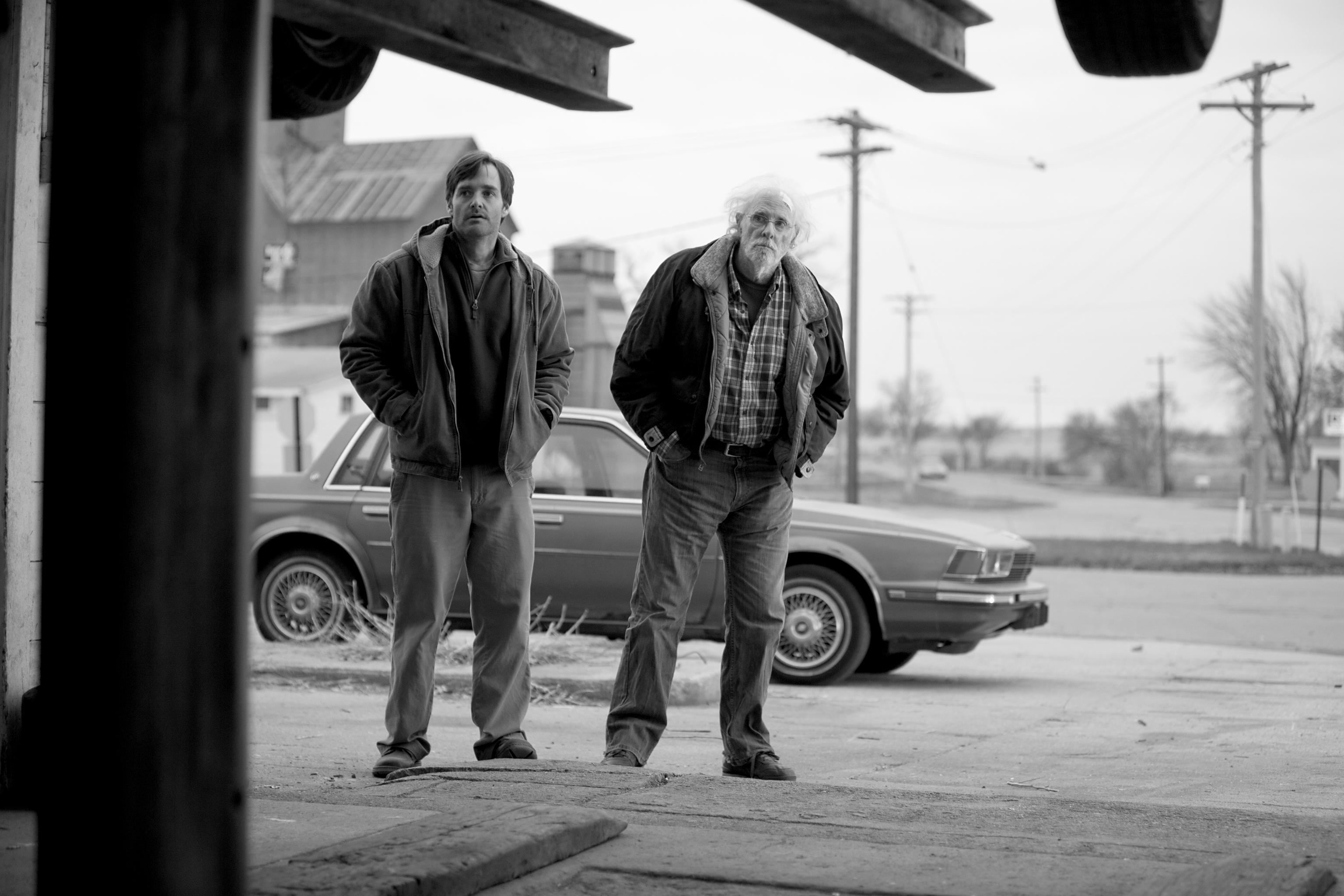
Nebraska Alexander Payne may be unique at this point in that he’s in a position of being able to make nothing but small, human, and humorous films with major-studio money on his own terms. It’s hazardous to make too much of a movie like Nebraska, because it is small — despite the wide Great Plains landscapes shot in a wide screen format — and shouldn’t be entered into with overinflated or otherwise wrong-headed expectations. Still, a certain gratitude is called for. Nebraska marks the first time Payne and his writing partner Jim Taylor weren’t involved in the script, and the first one since their 1996 Citizen Ruth that isn’t based on someone else’s novel. (Hitherto little-known Bob Nelson’s original screenplay apparently first came to Payne’s notice a decade ago, but getting put off in favor of other projects.) It could easily have been a novel, though, as the things it does very well (internal thought, sense of place, character nuance) and the things it doesn’t much bother with (plot, action, dialogue) are more in line with literary fiction than commercial cinema. Elderly Woody T. Grant (Bruce Dern) keeps being found grimly trudging through snow and whatnot on the outskirts of Billings, Mont., bound for Lincoln, Neb. Brain fuzzed by age and booze, he’s convinced he’s won a million dollars and needs to collect it him there, though eventually it’s clear that something bigger than reality — or senility, even — is compelling him to make this trek. Long-suffering younger son David (Will Forte) agrees to drive him in order to simply put the matter to rest. This fool’s mission acquires a whole extended family-full of other fools when father and son detour to the former’s podunk farming hometown. Nebraska has no moments so funny or dramatic they’d look outstanding in excerpt; low-key as they were, 2009’s Sideways and 2011’s The Descendants had bigger set pieces and narrative stakes. But like those movies, this one just ambles along until you realize you’re completely hooked, all positive emotional responses on full alert. (1:55) Albany, Embarcadero, Piedmont. (Harvey)

Running From Crazy Can one ever escape one’s toxic genetic legacy, especially when one’s makeup, and even one’s genius, is so entangled with mental illness, the shadow of substance abuse, and a kind of burden of history? Actor, author, healthy-living proponent, and now suicide prevention activist Mariel Hemingway seems cut out to try, as, eh, earnestly as she can, to offer up hope. Part of that involves opening the door to documentarian Barbara Kopple, in this look at the 20th century’s most infamous literary suicide, Mariel’s grandfather Ernest Hemingway, and just one of his familial threads, one full of lives cut deliberately short. For Running From Crazy, Kopple generally keeps the focus on Mariel, who displays all the disarming groundedness and humility of the youngest care-taking, “good” child. Her father, Ernest’s eldest son, Jack, regularly indulged in “wine time” with his ailing wife and, according to Mariel, had a pitch-black side of his own. But we don’t look to closely at him as the filmmaker favors the present, preferring to watch Mariel mountain climb and bicker with her stuntman boyfriend, meet up with her eldest sister Muffet, and ‘fess up about the depression that runs through the Hemingway line to her own daughters. Little is made of Mariel’s own artistic contributions in acting, though Kopple’s work is aided immeasurably by the footage Mariel’s rival middle sister Margaux shot for a documentary she planned to do on Ernest. Once the highest paid model in the world, Margaux leaves the viewer with a vivid impression of her brash, raw, eccentric, and endearingly goofy spirit — she’s courageous in her own way as she sips vino with her parents and older sister and tears up during a Spanish bull fight. Are these just first world problems for scions who never hesitated to trade on their name? Kopple is more interested in the humans behind the gloss of fame, spectacle and sensation — the women left in the wake of a literary patriarch’s monumental brand of masculinity and misogyny. And you feel like you get that here, plainly and honestly, in a way that even Papa might appreciate. (1:40) Smith Rafael. (Chun)

Thor: The Dark World Since any tentacle of Marvel’s Avengers universe now comes equipped with its own money-printing factory, it’s likely we’ll keep seeing sequels and spin-offs for approximately the next 100 years. With its by-the-numbers plot and “Yeah, seen that before” 3D effects, Thor: The Dark World is forced to rely heavily on the charisma of its leads — Chris Hemsworth as the titular hammer-swinger; Tom Hiddleston as his brooding brother Loki — to hold audience interest. Fortunately, these two (along with Anthony Hopkins, Natalie Portman, Idris Elba, and the rest of the supporting cast, most of whom return from the first film) appear to be having a blast under the direction of Alan Taylor, a TV veteran whose credits include multiple Game of Thrones eps. Not that any Avengers flick carries much heft, but especially here, jokey asides far outweigh any moments of actual drama (the plot, about an alien race led by Christopher Eccleston in “dark elf” drag intent on capturing an ancient weapon with the power to destroy all the realms, etc. etc., matters very little). Fanboys and -girls, this one’s for you … and only you. (2:00) Balboa, Metreon, 1000 Van Ness, Sundance Kabuki. (Eddy)

12 Years a Slave Pop culture’s engagement with slavery has always been uneasy. Landmark 1977 miniseries Roots set ratings records, but the prestigious production capped off a decade that had seen some more questionable endeavors, including 1975 exploitation flick Mandingo — often cited by Quentin Tarantino as one of his favorite films; it was a clear influence on his 2012 revenge fantasy Django Unchained, which approached its subject matter in a manner that paid homage to the Westerns it riffed on: with guns blazing. By contrast, Steve McQueen’s 12 Years a Slave is nuanced and steeped in realism. Though it does contain scenes of violence (deliberately captured in long takes by regular McQueen collaborator Sean Bobbitt, whose cinematography is one of the film’s many stylistic achievements), the film emphasizes the horrors of “the peculiar institution” by repeatedly showing how accepted and ingrained it was. Slave is based on the true story of Solomon Northup, an African American man who was sold into slavery in 1841 and survived to pen a wrenching account of his experiences. He’s portrayed here by the powerful Chiwetel Ejiofor. Other standout performances come courtesy of McQueen favorite Michael Fassbender (as Epps, a plantation owner who exacerbates what’s clearly an unwell mind with copious amounts of booze) and newcomer Lupita Nyong’o, as a slave who attracts Epps’ cruel attentions. (2:14) California, Embarcadero, 1000 Van Ness, Piedmont, Presidio, Sundance Kabuki. (Eddy) *


 

On the veg

1

arts@sfbg.com

LIT The first thing you need to know about Isa Chandra Moskowitz is that she’s a punky legend in the global vegan community. She started the DIY Post Punk Kitchen public access show in Brooklyn and (perhaps more importantly) created the vegan hub website of the same name exactly 10 years ago. While maintaining PPK she has authored or co-authored eight popular cookbooks, right up to this fall’s unfussy workday vegan cookbook, Isa Does It: Amazingly Easy, Wildly Delicious Vegan Recipes for Every Day of the Week (Little Brown, 320 pp., $30).

The second thing you need to know is that many people mispronounce her name (it’s “EE-sah” not “EYE -sah”), though it doesn’t seem to bother her much. I find myself profusely apologizing for flubbing her name when she picks up the phone — especially since I’ve been following her work, and making her delicious dishes, for the better part of a decade. I should know better.

From a hotel room in Minneapolis while on her book tour, the soft-spoken Omaha-based chef shrugs off the faux pas and we quickly get to work pinpointing her favorite recipes from Isa Does It: anything that’s creamy cashew cheese-based like the alfredo and the mac’n’cheese, along with a kale-lentil-quinoa stew, which she describes as the “classic vegan recipe” that she makes herself more than once a week, mixing up the spices as she goes.

She spouts an important note about preparation, something which is thoroughly dissected in the early sections of Isa Does It, with tofu butchery, and handy pantry tips for making cooking after work more streamlined: “I always have kale in the fridge; I always have lentils and quinoa in the pantry.”

There are also the recipes from Isa Does It that are featured in her newest video series, Make It Vegan, which has Moskowitz whipping up the Meaty Bean Chili and Cornbread, and the Nirvana Enchilada Casserole (“I like a lot of onions in this, and a lot of jalapeno; a lot of everything, really”) to the tune of “Salt” by Kelley Deal. The casserole is part of the “Sunday Night Supper” section of the book — a few more ambitious recipes, like many from her previous cookbooks such as Veganomicon (a must-have for any vegan), Appetite for Reduction, or Vegan Brunch.

That enchilada casserole is next on my list of Isa Does It dishes to tackle. I’ve so far tried the flavorful Tempeh Giardino, Kale Salad with Butternut Squash and Lentils, and the Cast Iron Stir-Fry With Avocado, Basil & Peanuts, which is a light yet super filling weekday stir fry. The avocado really gives it a fresh kick. I’m also now officially obsessed with cashew cheese, and have cashews soaking at all times, just like the author.

Moskowitz has been working on this particular cookbook for the past two years, concocting recipes in her Omaha home — the Brooklyn native moved there three years ago, mainly because she wanted a garden but also thanks to the local music scene. Her inspirations come from her pantry — “I have Brussels sprouts and sweet potatoes, what can I make with that? — and sometimes she’s inspired to veganize something she saw on the Food Network. “Like, there might be some secret Guy Fieri recipes in there that I veganized.”

Like her previous cookbooks, each of the recipes went through rigorous testing. “I have like, 30 testers. One of the biggest things for people was ‘would you make this on a week night?'” Moskowitz explains. She asks each tester to make the meal and answers a series of questions. For this particular book, she wanted everything to be accessible as possible, so another important question was: Were any of the ingredients hard to find?

“I live in Omaha now — I’m in the middle of the country — and that really changed my views on what people have access to. So I just wanted it to be really accessible ingredients,” she says. “Another reason I wanted to write this book is because I was cooking more than ever because there were not that many places to go out to eat.”

It’s another world away from Brooklyn, where meat-free restaurants and offerings dot the streets, and markets have aisles full of items clearly marked “vegan.”

While there are meat-and-dairy free offerings at local sushi spots and coffee shops (and Whole Foods Markets) there’s no dedicated vegan restaurant in Omaha — yet.

When we spoke, Moskowitz had recently been handed the keys to her first restaurant, which will open in spring 2014. Attached to a bar owned by the members of Saddle Creek band Cursive, Moskowitz’s spot will serve a revolving menu of vegan comfort foods, all made from scratch. “All the mayo is from scratch, I’m going to make my own cheese, [there will] even be house-made sodas, and kombucha on tap.”

Although there have been some rumblings about Moskowitz’s restaurant for some time, she gives the Guardian an exclusive: The name of her new restaurant will be Modern Love. 

www.theppk.com


Meat is murder

1

arts@sfbg.com

TOFU AND WHISKEY Of course Morrissey would name his long-awaited memoir Autobiography (Putnam Adult, 464 pp., $30). The legendarily morose British pop singer and former Smiths leader has always seemed a bit larger than life.

The book already came out in the UK (and France) in October and was a huge sensation, topping best-seller lists, but US audiences have been forced to wait for the precious tome, twiddling their thumbs for its arrival, much like the infrequent uncancelled Morrissey live performance. The hardcover finally arrives stateside Dec. 3.

That said, the book on the life of the “Meat is Murder” singer-activist is worth the twiddling, if only for morbid curiosity. It’s lengthy, uncanny, and packed with daggering insults toward other musicians (Johnny Marr), ex-presidents and royals (George W., Sarah Ferguson), and himself, along with drawn-out sections on his favorite poets, court cases, and desire to die. It covers his life from birth to present day.

People go crazy over Morrissey — there’s even a Mozipedia book, published in 2010, so clearly the desire to hear it all in his own voice is there. I’ll claim to be a Morrissey novice, comparatively. At least, I’ve never worn a bedazzled jean jacket to a fever-pitched Moz convention, so some revelations in the book were still eye-opening, though needing to be extracted from verbose prose.

The long-time vegetarian, proudly outspoken against the meat industry, writes instead mostly about his suicidal depressive past and his dreary youth — and he finally speaks to those rumors of his sexuality. Yup, he loved a man named Jake Owen Walters. Though he later released this statement about those sections of the book: “Unfortunately, I am not homosexual. In technical fact, I am humansexual. I am attracted to humans. But, of course … not many.”

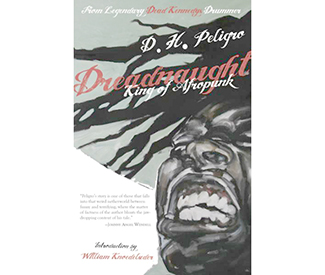
So Steven Patrick Morrissey, as he was known at birth, recounts a dark and uncomfortable childhood in Manchester, much of which was spun into early Smiths songs. But if we’re comparing horrific childhoods, another recent memoir might outweigh every aspect of Morrissey’s sad complaints: that of D.H. Peligro, whose own bio, Dreadnaught: King of Afropunk (Rare Bird Books, 280 pp., $13) came out in October.

Peligro — the complex, wild-man drummer of SF’s Dead Kennedys, as well as (briefly) Red Hot Chili Peppers, and guitarist in his own band, Peligro — grew up “dirt poor” in St. Louis, Mo., where he was born in 1959. (He literally eats dirt as a punishment in one section.) Like Moz, he now eats a veg-heavy diet. “All that food we had growing up in the ghetto was poison, drained of any nutritional value. Being forced to eat that food was one of the reasons that later in life, even when I was strung out on heroin, I remained a fanatic vegan,” he writes.

While the book opens with an extremely upsetting and grotesque strung-out hospital stay in a room with “puke green walls,” one of many incidents for the drug-addicted musician, it quickly falls backward in time to his beginnings as a “Satan’s Child,” the name by which he was known as around town. He never met his father, was mercilessly beat by his oft-drunk stepfather, and lived in a hotbed of violence and racial segregation in his early years.

And yet, despite all this, growing up in St. Louis also greatly influenced Peligro’s interest in music, and fostered a space in which to learn rhythm and blues. His beloved Uncle Sam Carr, who introduced him to musical instruments, was the son of blues guitarist Robert Nighthawk (who supposedly was the first to play slide guitar). Peligro recalls playing Carr some Dead Kennedys music years later and Carr “really listening” and nodding his head along to the noisy, Jello Biafra-led punk band.

Written in a poetic and reflective yet conversational style, Peligro’s tale stands out above most fast-living memoirs. The stories are vivid and disturbing, and the experiences run the gamut from the epicenters of Southern blues, to the influential early SF punk scene, to the costumed LA rock ‘n’ roll lifestyle. And yet, Dreadnaught still follows much of the standard course for the musician’s book tale: grew up poor, found shining beacon influencer, rose above, partied too hard, came down, and reflected.

And while there have been countless rocker memoirs in the past, only a small handful are worth your time — and there’s no time like now: It’s Thanksgiving week, and you’re likely itching for some quiet downtime, away from TVs filled with screeching sportscasters and your aunt asking you (if you’re in line with Moz and Peligro’s dietary habits) one more time: “Just how do you get protein?”

The top of any list should be Patti Smith‘s 2010 Just Kids. It’s eloquent and nonetheless gritty, with sinuous stories tumbling from her recollections and minute details beautifully recounted. The end made me ugly-cry crocodile tears while on Muni.

Like Smith, some musicians take the more introspective approach to their writing, revealing inner strength through the written word. For more of that nature, see Ronnie Spector‘s 1990 memoir, Be My Baby: How I Survived Mascara, Miniskirts, and Madness; or Bob Dylan‘s 2004 Bob Dylan: Chronicles, Volume One.

And then there’s Pamela Des Barres‘ groupie classic I’m With the Band. Oh, the torrid, gushy love tales within that book, of Ms. Pamela’s exploits with famous rock ‘n’ rollers from the 1960s right on up through the decades. Many years ago, over breakfast at a diner in Haight-Ashbury, Des Barres told me: “As far as wanting to meet the guys, I just couldn’t sit in my room and get all horny over Mick Jagger … it was just inside me to see where all that amazing stuff was coming from, that music.” If you’re in the mood for more scandalous tales of sex, drugs, and rock ‘n’ roll, these memoirs come highly recommended as well: Slash‘s Slash or Keith RichardsLife.

If you’re looking for an ironic, jokey, or food-based story, there’s Ian SvenoniusSupernatural Strategies for Making a Rock ‘N’ Roll Group, which I reviewed in an earlier column — noting that the book holds séances with dead rock stars to glean important information for the reader — and Cookin’ with Coolio: 5 Star Meals at a 1 Star Price, which includes a section called “How Coolio Became the King of Kitchen Pimps.” (Hint: his mom.)

Or there’s this year’s insta-classic “cookbook” — which really came as a download with the B.O.A.T.S 2 #Metime albumCooking With Two Chainz. It includes cooking tips like, “Put on your Versace apron.”


LIFE STINKS

Here’s all I know about Life Stinks: The band has a great name, was described as “brutal and mysterious” after SXSW last year; and makes throwback snotty punk songs. It also just released a self-titled debut LP on S.S. records. Listen to “Cemeteries” off said album for more reasons to see the live show. That’s all you need to know. This album release gig is the Friday after Thanksgiving; you’ll be stuffed, sick of family, and most definitely ready to shake along. Plus, one of the openers is messy and awesome high-pitched SF band Quaaludes — they sound like ’77 punk on helium meets ’92 riot grrrl, which is perfect. With Dancer. Fri/29, 9:30pm, $5. Hemlock Tavern, 1131 Polk, SF; www.hemlocktavern.com.


BREAD & ROSES BENEFIT

I was discussing the upcoming Kathleen Hanna doc The Punk Singer with a musician pal, and we got on the topic of the very real healing power of music. While Hanna is certainly not playing this event (sorry), that power translates broadly. Bread & Roses is a Northern California-based organization that knows this well, producing hundreds of free shows a year at hospitals, nursing homes, shelters, and treatment centers. This benefit is full-circle, benefiting the org so it can put on more shows, and offering up live local talent for you: sparkly piano rocker Marco Benevento (of Tea Leaf Green), acoustic folk singer-songwriter Megan Slankard, along with her band, the Novelists, and (((folkYEAH!))) Presents DJ Britt Govea. Sun/1, 8pm, $20–<\d>$50, Chapel, 777 Valencia, SF. www.breadandroses.org. *

Brawl fallout

4

D’Paris “DJ” Williams spent his day the same way many San Franciscans did Nov. 15, watching young Miles Scott, aka Batkid, rescue a damsel in distress to the cheers of thousands.

Williams, 20, then biked from downtown to visit relatives in the Valencia Gardens housing project in the Mission District. It was there, as the nation continued cooing over the caped crusader, that two plainclothes police officers pulled Williams onto the ground. Police said they initially pursued Williams into the housing complex because he was coasting his bike on the sidewalk, a traffic violation.

That’s when all hell broke loose.

Neighbors quickly came to Williams’ defense, fists at the ready. The ensuing brawl was recorded on video and quickly went viral nationally. Fast forward two weeks and two protests later, and Williams’ family has joined with prominent attorney John Burris to sue the SFPD, for allegedly using excessive force and violating Williams’ civil rights.

“The violence is the grave matter of the entire thing, and the illegal detention and subsequent arrests,” Burris told the Guardian. He has not yet filed suit.

As the video went viral, allegations of improper police conduct abounded. Police are now crying foul, too. SFPD Chief Greg Suhr called for wearable cameras for police officers, saying he’s confident that it would clear police of wrongdoing.

The question that haunts the community around Valencia Gardens, though, is not only about the use of force. Residents wonder if the police profiled Williams because he’s black.

Was he really stopped because of a traffic violation? Or was that just legal justification for the police to search him on suspicion that he was carrying a firearm or controlled substance, which would amount to profiling?


TWO SIDES OF THE STORY


D’Paris’ stepfather, Frank Williams, told the Guardian that his son was in disbelief immediately following the ordeal.

The elder Williams related the story DJ told him.

While walking to his grandma’s house in Valencia Gardens, DJ walked with his bike for a bit, then sat on it and scooted it with his feet. Some people he didn’t recognize got out of a car nearby, calling “hey come here, come here.” As Williams stood in the doorway, “They grabbed him by his jeans and pulled him out,” the elder Williams said. “They kept pulling on him, and he’s saying ‘What did I do? What did I do?’ as they started punching him on the side of the face, and dragged him out.”

The police shared a different version of the story with reporters.

The plainclothes officers, who remain unnamed, identified themselves as police and displayed their badges, according to the SFPD account. When Williams “failed to comply” with their orders to stop, they caught up to him and attempted to detain him.

“He became combative, resisted arrest, and multiple subjects came out of that residence and formed a hostile crowd around the officers,” said Officer Gordon Shyy, a SFPD spokesperson.

When the Guardian asked him to explain the officers’ actions in more detail, Shyy said he didn’t have that information. The SFPD did not make the incident report public, but Shyy had a copy.

The reason the brawl broke out remains under dispute, but what happened next was captured on video and posted to the Internet.

As the plainclothes officers tried to subdue Williams, a neighbor took a swing with a cane that nearly hit an officer. A policeman threw haymaker punches at a neighbor as bystanders shouted them down. In the end, Williams and three of his cousin’s neighbors were taken into custody.

Williams’ sister was there, too, watching them fight as she held her newborn.

Video shows the four men who were detained scraped and bloodied, and Williams was bleeding and bruised as the officers took him in. All were taken to San Francisco General Hospital.

Williams was charged with felony assault with a deadly weapon, which Shyy said was for biting an officer. He was then discharged pending further investigation, the District Attorney’s Office told the Guardian. Public Defender Jeff Adachi said the city doesn’t usually pursue such cases.

“The reason you discharge cases is, you can’t prove them,” Adachi explained.

While Shyy maintained that the officers pulled him aside because he was riding his bicycle on a sidewalk, those officers were outside Valencia Gardens for a particular reason. Part of a SFPD squad called the Violence Reduction Team, their unit is tasked with pulling guns off the streets.

“What were these guys doing stopping DJ for a traffic violation?” wondered Travis Jensen, a friend of Williams who publicized the incident on Instagram. It’s a fair question: The Violence Reduction Team isn’t exactly known for pulling over bicyclists.


GUN HUNTERS

AK47s, .45 handguns, semi-automatics, guns hidden in waistbands. That’s what the Violence Reduction Team seeks to do away with when they hit the streets.

SFPD spokesperson Gordon Shyy credits the team with a drop in citywide homicides. It has certainly been busy.

The Violence Reduction Team arrested 20 suspects during last year’s Fleet Week, a press release from the SFPD announced, touting the unit’s success. That Halloween, they nabbed six more guns. Just last month they made 10 arrests, pulling even more firearms off the street, Shyy said.

“The VRT officers were on their regular patrol for their shift, it had nothing to do with the Batkid event,” Shyy told the Guardian. “VRT is tasked to patrol high crime areas and conduct pro-active policing to prevent violent crimes from occurring.”

When asked directly if the officers stopped Williams because they suspected he had a gun, Shyy repeated that they lawfully detained him because he illegally rode his bicycle on the sidewalk. “If officers lawfully detain a person, and can articulate a cursory pat search of that person, they may do so,” he said.

When officers took Williams to the ground they did search him for weapons.

The Guardian contacted former Tiburon Police Chief Peter Herley, who previously served as president of the California Police Chief’s Association, to ask if plainclothes officers responsible for seizing guns would take the time to cite a bicyclist for a traffic violation.

“Generally they don’t do it, because it may blow their cover,” he said. “If the violation was grievous enough, maybe. Usually a plain clothes unit wouldn’t do it.”

Adachi put it another way. When a person is stopped for an infraction, “the expectation is there’s a ticket drawn up and a person is sent on their way.”

Based on what Shyy read to us from the police report, the officers at the scene seemed to enter the situation believing Williams could be armed. “Williams continued to resist by pushing his upper body against the sidewalk and tried to get to his feet. Williams was unhandcuffed and unsearched at this point. From my knowledge and experience I know this is a high crime area and people in this area often carry weapons. I believed if Williams were able to free himself from us, he may attempt to access a weapon.”

Ultimately the officers only found two things on D’Paris Williams: juice and a cupcake.


SHAKEN, BUT NOT DETERRED

Williams’ cousin Dave lives in Valencia Gardens. Dave, who refused to provide his last name because he feared retaliation, says Williams rode his bike to a Goodwill store that day to apply for a job. Dave, 36, invites some of his younger distant cousins, including Williams, over for what he calls a “positive hype.”

“They’re over here like every day. We have a big family, we’re very lovable,” he said.

Williams’ sixth grade science teacher, Norm Mattox, told the Guardian DJ was in school at City College, known as a young man with prospects.

“He’s someone we think can get out of the neighborhood, get out of the projects,” he said.

That’s why D’Paris was in disbelief too, his stepfather told us. “I did question my son about it. Why would they follow you? Explain this to me,” the elder Williams told the Guardian. He fears his son was targeted for being the wrong color, in the wrong place, at the wrong time.

That’s why Burris took the case. “The young people need to know there is a place to go, that you don’t have to accept this level of brutality by an officer,” he said. “The legal issues themselves, are an illegal detention, illegal arrest, and use of excessive force. [These are] federal civil rights violations.”

D’Paris took that to heart. The younger Williams told his father something had to change, that he was determined that something good had to come from this.

“He kept repeating it. ‘This has got to stop. Got to stop. Got to stop,'” the elder Williams said.

“It makes a dad proud to hear that.”

We give thanks

0

EDITORIAL We offer a lot of criticism here on the Guardian’s editorial page, which is probably inescapable given the obvious failures of our political and economic systems to address the needs of the people and the planet and to uphold the progressive values that the Guardian and much of the Bay Area supports. We have so much potential, and it’s sometimes maddening when we fall short of realizing it.

So, this week, in the spirit of Thanksgiving, we’re going to put a positive spin on the civic scene and talk about some of the things that we’re thankful for.

We’re thankful to live in such a beautiful, vibrant place. San Francisco is one of the greatest cities in the world, both physically and culturally. And we’re thrice blessed to have Marin County and the East Bay — particularly the progressive and diverse cities of Oakland and Berkeley — just a short bridge ride away. Layer on top of that the nearby Sierras, Sonoma County, and the coastline from Point Reyes down to Santa Cruz and this is perhaps the best region on the planet.

We’re thankful to have a functional, modern transportation system that offers plenty of good alternatives to the automobile. While there’s certainly room for improvement, BART is an amazing transit system that closes the gap among the Bay Area’s many diverse communities, while Muni does a good job at ferrying huge numbers of people around this bustling city. Caltrain is a great link down the peninsula and we’re super excited to see it electrified and that transportation officials are working hard to connect downtown San Francisco to downtown Los Angeles with a long overdue high speed rail line. And we love how San Franciscans have embraced bicycles as an important everyday transportation option.

We’re thankful that so many smart, interesting, creative people have been drawn to San Francisco and its environs. This is home to recognized global leaders in pursuits ranging from technological innovation to progressive and environmental organizing and advocacy. We’re proud of the political initiatives hatched here in the Bay Area, from marriage equality to criminal justice reform. We have a cornucopia of artists and musicians tucked into every little nook of the city, from the stage of Slim’s to the studios of surreal Hunters Point Shipyard. And the locals here cook up some of the world’s best culinary offerings, from a plethora of fancy restaurants to quickie taquerias to surprisingly bountiful food trucks.

And we’re really thankful for you, the person reading these words. The Guardian has been around since 1966 because of the support of our readers, our advertisers, and our community, and we’re grateful that you’ve all given us the opportunity to offer the news, views, and reviews that are helping to shape this wonderful place. Happy Thanksgiving.


Who dares challenge Katniss for box-office supremacy? New movies!

2

This week, The Hunger Games: Catching Fire stands poised to crush all who dare step to it, but there are some alternatives out there. There’s the San Francsico Film Society’s weekend-long Cinema By the Bay festival (my overview here), as well as the latest from acclaimed director Alexander Payne, the small-scale but still very moving Nebraska (Dennis Harvey’s review here.)

Plus: a festival favorite from Belgium, and Vince Vaughn’s sperm-bank comedy. Reviews for both (plus guaranteed big kahuna Catching Fire) below.

http://www.youtube.com/watch?v=3a50DJkCxqw

Broken Circle Breakdown This Belgian movie by director Felix Van Groeningen arrives bearing major awards (from the Berlin and Tribeca festivals) and promising to nab plenty more of them. Why, you ask? I haven’t the faintest idea. Didier (Johan Heldenbergh) is leader of a bluegrass group; Elise (Veerle Baetens) is a tattoo artist until she meets him, they get together, and it’s discovered that when she opens her mouth Alison Krauss falls out. They have a child, Maybelle (Nell Cattrysse), who develops cancer at age six or so, and whose prospects are grim. So far, so ordinary — Once (2007) meets Lorenzo’s Oil (1992), a tearjerker in which people sing high lonesome American roots music (in English, too) well enough, but not so well that you ever stop wondering “Why are these Belgians doing this?” The expected tragedy hits halfway through, and that’s when the movie really gets into trouble. Its protagonists fall apart, understandably, but in irksome ways — mostly picking on each other — with particularly annoying sequences occurring in both past and present tense. It’s hard to tell which one is worse, the arch flashback wedding scene, her deciding to rename herself “Alabama,” his endless onstage outburst about Yahweh, the climactic psychedelic flashback crisis montage, or the wholly gratuitous final … well, never mind. This was originally a stage play, and in the usual way that seeing musicians act and actors play instruments live is exciting, it probably worked well in that medium. But on film it seems like a contrived pileup of ill-matched ideas and plot devices. Don’t take my word for it, though: From Seattle to Osaka, apparently there’s been nary a dry eye in the house. So knock yerself out. (1:50) (Dennis Harvey)

http://www.youtube.com/watch?v=ocMnYUSzniU

Delivery Man Twenty years ago David Wozniak (Vince Vaughn) “put love in a cup” 600-plus times to finance a family trip to Italy. His mother was sick, his father couldn’t afford it, and with time running out, David embarked on a harebrained scheme to make (a lot of) “it” happen. The sperm bank that paid him $23K for his “seed” overused it, and 18 years later he has 533 kids, 143 of which are on a hunt to find their biological father, “Starbuck.” (This also the name of the 2011 Canadian comedy on which Delivery Man is based.) With a premise this quirky you’ll have a hard time finding something to hate, even if this is technically a film about runaway jizz. This heartwarming Thanksgiving release isn’t really appropriate for youngsters (unless you’re been trying to find a entrée to explain sperm banks) but the way Delivery Man deals with the seemingly limitless generosity contained in each of us is both touching and inspiring. Maybe David’s contribution to “Starbuck’s Kids” doesn’t obligate him to reveal his identity, but he’s desperately attached, and goes embarrassingly far outside his comfort zone to interact. The kids’ emotional stake in this is murky, but the way their search for identity finds a voice in tune with the current tech-confident yet socially-confused younger generation could make Delivery Man relevant to more generations than X or Y. (1:45) (Sara Maria Vizcarrondo)

The Hunger Games: Catching Fire Before succumbing to the hot and heavy action inside the arena (intensely directed by Francis Lawrence), The Hunger Games: Catching Fire force-feeds you a world of heinous concept fashions that’d make Lady Gaga laugh. But that’s ok, because the second film about one girl’s epic struggle to change the world of Panem may be even more exciting than the first. Suzanne Collins’ YA novel The Hunger Games was an over-literal metaphor for junior high social survival and the glory of Catching Fire is that it depicts what comes after you reach the cool kids’ table. Katniss (Jennifer Lawrence) inspired so much hope among the 12 districts she now faces pressures from President Snow (a portentous Donald Sutherland) and the fanatical press of Capital City (Stanley Tucci with big teeth and Toby Jones with big hair). After she’s forced to fake a romance with Peeta (Josh Hutcherson), the two watch with horror as they’re faced with a new Hunger Game: for returning victors, many of whom are too old to run. Amanda Plummer and Jeffrey Wright are fun as brainy wackjobs and Jena Malone is hilariously Amazonian as a serial axe grinder still screaming like an eighth grader. Inside the arena, alliances and rivalries shift but the winner’s circle could survive to see another revolution; to save this city, they may have to burn it down. (2:26) (Sara Maria Vizcarrondo)

Family album

0

arts@sfbg.com

THEATER Forgetting can be a key to understanding, and to freedom. This is something any jazz musician knows. Learning theory, practicing scales, getting to know your instrument and your craft — it’s all prelude to forgetting, to letting go. What comes back to you in the moment, ideally, is deeper than any superficial knowledge. It’s everything behind the music — a life.

A memory play can function similarly, at least it seems to for Margo Hall. The well-known Bay Area actor and director found herself improvising over her own carefully crafted words in the creation of Be Bop Baby — a musical memoir of her remarkable Detroit upbringing under the guiding influence of her musician stepfather Teddy Harris Jr., that Hall says really marks her debut as a playwright (Hall was also one of several actor/co-writers for the 2005 verbatim treatment of the Jonestown tragedy, The People’s Temple).

A world premiere capping Z Space’s 20th anniversary season, Be Bop Baby is set in the busy basement of Hall’s childhood home, which doubled as a rehearsal space for her stepfather — a musical director, composer, arranger, and performer known and respected in both jazz and Motown circles (the latter as, most famously, musical director of the Supremes). There, as well as throughout Detroit’s exceptional musical scene, Hall and her two sisters grew up amid a panoply of musicians, artists, celebrities, and eccentrics.

The basement thus becomes the site of an excavation, filled with colorful characters and anecdotes and brimming with music. Indeed, helping to bring it all to life onstage is a 15-piece jazz orchestra under Marcus Shelby. The acclaimed Bay Area musician-composer — along with dramaturg Nakissa Etemad — collaborated closely on this return to 1960s-70s Detroit, developing arrangements around Hall’s own lyrics and the melody lines she imagined for them.

“Marcus reminds me a lot of my dad,” says Hall, speaking just before a rehearsal last week. “He has a big band; he knows what that means. He understands the discipline of the musicians. Marcus is a guy of tradition. He likes real instruments — I mean all of these things that my stepfather would promote. And he’s just a cool cat, just like my dad, just into the music fulltime; a real, honest, true musician. Growing up with that kind of person really taught me about authenticity and not faking it. I hate to say, ‘You don’t find those people anymore,’ but they sometimes can be a rare breed.”

But even memory, to remain true, can’t always stay fixed. Since the death of her mother in 2000, and Teddy several years later, Hall’s childhood home and its once-vibrant basement have come under a new tenant: Hall’s own, formerly estranged, biological father.

“It’s this crazy thing that happened that I never expected. My real father and my mom divorced 45 years ago. [My biological father is] a free spirit; he’s a totally different character than Teddy. And I found out he moved into Mom and Teddy’s house. Mom and Teddy, that was their house, that was their basement, my mom’s estate, you know, our little two-unit duplex.”

That development found its way into the emotional landscape of the play itself, giving it a more complex dramatic makeup, but also leaving Hall at a loss as to how to channel it all. Staging this kind of dynamic seemed to defy the manicured sentences she had set down on paper. Hall found herself unable to even recall them — something unusual for the experienced actor in her — as if Hall the playwright were someone she had yet to figure out.

“I had written all this text, and I couldn’t remember it. It was very strange. So I said, ‘Can I just improv a little it on top of this text so that it really feels authentic?’ I became the actor, and I felt, ‘I don’t like what that playwright wrote!'” she laughs. “Was I censoring myself? Was I trying to be perfect in the writing? I had to figure out how to take that text and make it my own — even though I wrote it. Now, the more we do it, I do say a lot from the text. But it’s a freedom that I have now, where I can be more authentic in the moment.”

As for her ongoing relationship with her biological father, Hall credits Be Bop Baby with strengthening her resolve to pursue an understanding there.

“It’s definitely made me realize that I do need to pursue my relationship with my real father more than I have,” concludes Hall. “And he’s a wonderful, fascinating man. I could write a whole play about him too,” she says with conviction, before an afterthought makes its way quietly to the surface. “Maybe I will?” *

BE BOP BABY: A MUSICAL MEMOIR

Wed/20-Thu/21, 7pm; Fri/22-Sat/23, 8pm, $25-75

Z Space

450 Florida, SF

www.zspace.org


Film Listings: November 20 – 26, 2013

0

Film listings are edited by Cheryl Eddy. Reviewers are Kimberly Chun, Dennis Harvey, Lynn Rapoport, Sam Stander, and Sara Maria Vizcarrondo. For rep house showtimes, see Rep Clock.

OPENING

Broken Circle Breakdown This Belgian movie by director Felix Van Groeningen arrives bearing major awards (from the Berlin and Tribeca festivals) and promising to nab plenty more of them. Why, you ask? I haven’t the faintest idea. Didier (Johan Heldenbergh) is leader of a bluegrass group; Elise (Veerle Baetens) is a tattoo artist until she meets him, they get together, and it’s discovered that when she opens her mouth Alison Krauss falls out. They have a child, Maybelle (Nell Cattrysse), who develops cancer at age six or so, and whose prospects are grim. So far, so ordinary — Once (2007) meets Lorenzo’s Oil (1992), a tearjerker in which people sing high lonesome American roots music (in English, too) well enough, but not so well that you ever stop wondering “Why are these Belgians doing this?” The expected tragedy hits halfway through, and that’s when the movie really gets into trouble. Its protagonists fall apart, understandably, but in irksome ways — mostly picking on each other — with particularly annoying sequences occurring in both past and present tense. It’s hard to tell which one is worse, the arch flashback wedding scene, her deciding to rename herself “Alabama,” his endless onstage outburst about Yahweh, the climactic psychedelic flashback crisis montage, or the wholly gratuitous final … well, never mind. This was originally a stage play, and in the usual way that seeing musicians act and actors play instruments live is exciting, it probably worked well in that medium. But on film it seems like a contrived pileup of ill-matched ideas and plot devices. Don’t take my word for it, though: From Seattle to Osaka, apparently there’s been nary a dry eye in the house. So knock yourself out. (1:50) Opera Plaza, Shattuck. (Harvey)

Delivery Man Twenty years ago David Wozniak (Vince Vaughn) “put love in a cup” 600-plus times to finance a family trip to Italy. His mother was sick, his father couldn’t afford it, and with time running out, David embarked on a harebrained scheme to make (a lot of) “it” happen. The sperm bank that paid him $23K for his “seed” overused it, and 18 years later he has 533 kids, 143 of which are on a hunt to find their biological father, “Starbuck.” (This also the name of the 2011 Canadian comedy on which The Delivery Man is based.) With a premise this quirky you’ll have a hard time finding something to hate, even if this is technically a film about runaway jizz. This heartwarming Thanksgiving release isn’t really appropriate for youngsters (unless you’re been trying to find a entrée to explain sperm banks) but the way Delivery Man deals with the seemingly limitless generosity contained in each of us is both touching and inspiring. Maybe David’s contribution to “Starbuck’s Kids” doesn’t obligate him to reveal his identity, but he’s desperately attached, and goes embarrassingly far outside his comfort zone to interact. The kids’ emotional stake in this is murky, but the way their search for identity finds a voice in tune with the current tech-confident yet socially-confused younger generation could make Delivery Man relevant to more generations than X or Y. (1:45) Four Star, Presidio. (Vizcarrondo)

The Hunger Games: Catching Fire Jennifer “Your BFF Who Happens to Have An Oscar” Lawrence returns as fierce fighter Katniss in this blockbuster-to-be. (2:26) Balboa, California, Marina, Presidio, Shattuck.

Nebraska See “Born to Lose.” (1:55) Embarcadero.

Persistence of Vision The Holy Grail of cartoon features is The Thief and the Cobbler, which can never really be “found” — after nearly 30 years of work the unfinished film was taken from its creators’ hands and released in crudely patched together form. (You can find online Garrett Gilchrist’s Recobbled Cut, a fan edit utilizing storyboards and other materials that give a much better idea of its potential than these bastardized versions.) Would it have been the greatest full-length animation ever, as mastermind Richard Williams intended? Maybe: The sequences he did manage to finish are extraordinary, with dazzling background designs and amazing sight gags. But this Arabian Nights-inspired comedy adventure was perhaps always doomed by his ambition, perfectionism, and inability to find a grounding narrative spine. The film was ultimately torpedoed by financing woes (a completion bond company seized it when Williams failed to deliver a finished film by deadline), but all the money in the world might simply have allowed its writer-director to never stop tinkering with it. A Canadian who moved to London in the mid 1950s, he started his own animation studio there, achieving considerable success via shorts, TV specials, umpteen commercials, movie credits sequences (notably for the Pink Panther films), and as the Oscar-winning animation director on 1988’s Who Framed Roger Rabbit. All the while (as of 1964) he was working on Thief, driving his talented staff to exhaustion, but also exhilarating them with its tortuously frame by-frame-produced quality. It all dragged on so long that several collaborators and voice actors (including Vincent Price) died en route; so many animators passed through that when Disney’s Aladdin came out in 1992, the current team was horrified yet not entirely surprised to see that it had clearly ripped off several design concepts from their own still-unfinished film. Kevin Schreck’s documentary about this fascinating saga is missing (archival interviews aside) one voice — Williams’ own, since understandably the outcome was so embittering he now refuses to discuss it. Schreck will be present (via Skype) to answer questions after this first Northern California screening at Rafael Film Center. (1:23) Smith Rafael. (Harvey)

ONGOING

About Time Richard Curtis, the man behind 2003’s Love Actually, must be enjoying his days in England, rolling in large piles of money. Coinciding with the 10-year anniversary of that twee cinematic love fest comes Curtis’ latest ode to joy, About Time. The film begins in Cornwall at an idyllic stone beach house, as Tim (Domhnall Gleeson) describes his family members (Bill Nighy is dad; Richard Cordery is the crazy uncle) and their pleasures (rituals (tea on the beach, ping pong). Despite beachside bliss, Tim is lovelorn and ready to begin a career as a barrister (which feels as out of the blue as the coming first act break). Oh! And as it happens, the men in Tim’s family can travel back in time. There are no clear rules, though births and deaths are like no-trespass signs on the imaginary timeline. When he meets Mary (Rachel McAdams), he falls in love, but if he paves over his own evening by bouncing back and spending that night elsewhere, he loses the path he’s worn into the map and has to fix it. Again and again. Despite potential repetition, About Time moves smoothly, sweetly, slowly along, giving its audience time enough to feel for the characters, and then feel for the characters again, and then keep crying just because the ball’s already in motion. It’s the most nest-like catharsis any British film ever built. (2:03) Four Star, 1000 Van Ness, SF Center, Shattuck, Sundance Kabuki. (Vizcarrondo)

All Is Lost As other reviewers have pointed out, All Is Lost‘s nearly dialogue-free script (OK, there is one really, really well-placed “Fuuuuuck!”) is about as far from J.C. Chandor’s Oscar-nominated script for 2011’s Margin Call as possible. Props to the filmmaker, then, for crafting as much pulse-pounding magic out of austerity as he did with that multi-character gabfest. Here, Robert Redford plays “Our Man,” a solo sailor whose race to survive begins along with the film, as his boat collides with a hunk of Indian Ocean detritus. Before long, he’s completely adrift, yet determined to outwit the forces of nature that seem intent on bringing him down. The 77-year-old Redford turns in a surprisingly physical performance that’s sure to be remembered as a late-career highlight. (1:46) Albany, Opera Plaza, SF Center. (Eddy)

American Promise This remarkable look at race, education, parenting, and coming-of-age in contemporary America is the result of 13 years spent following African American youths Seun and Idris (the latter the son of filmmakers Joe Brewster and Michèle Stephenson). At the beginning, the Brooklyn pals are both starting at the exclusive Dalton School, where most of their classmates are rich white kids. This translates into culture-clash experiences both comical (a 13-year-old Idris estimates he’s been to 20 bar mitzvahs) and distressing, as both boys struggle socially and academically for reasons that seem to have a lot to do with their minority status at the school. Culled from hundreds of hours of footage — a mix of interviews and cinéma vérité — Brewster and Stephenson’s film captures honest moments both mundane and monumental, sometimes simultaneously, as when Seun’s mother, driving the kids to school, discusses her battle with cancer as his younger siblings trill a Journey song in the back seat. (And even this seemingly light-hearted aside takes on heft later in the film.) Extra props to Brewster and Stephenson, who clearly made a conscious choice not to edit out any of their own foibles — for the most part, they’re caring, involved parents, but be warned: strident homework nagging is a recurrent theme. (2:20) Roxie. (Eddy)

The Armstrong Lie “This is a story about power, not doping,” a talking head points out in Alex Gibney’s latest doc, The Armstrong Lie. Gibney, an Oscar winner for 2007’s Taxi to the Dark Side, set out to make something more along the lines of The Armstrong Return, shadowing Lance Armstrong as he prepped for his 2009 Tour de France comeback. He envisioned crafting a “feel-good movie,” especially when Armstrong notched an impressive third-place finish — a feat intended to silence those performance-enhancing drug rumors once and for all. In the end, it only amplified the skepticism that loomed over his accomplishments. And as the evidence against Armstrong mounted, Gibney scrapped his original concept and went in a decidedly darker direction. Armstrong’s critics, interviewed for Lie, admit they spotted the acclaimed documentarian among Armstrong’s Tour de France entourage and feared he was “buying into the bullshit.” Among these voices are Armstrong’s former US Postal Service teammate, Frankie Andreu, and his wife, Betsy, who’d been excoriated by their former good friend and his supporters for speaking out against him. A feel-good movie, this is not. And ultimately, Gibney’s film probes deeper than Armstrong’s flaws; it’s careful to point out that drug use is widespread among professional cyclists, who are surrounded by an insular, high-stakes culture that encourages it. The sports world lives and dies by the next world record or superhuman achievement. Is it any wonder that elite athletes seek out that extra competitive edge? And that Armstrong, in fully-inflated ego mode, would believe he had the power to rearrange reality to keep his victories intact? (2:03) Opera Plaza, Smith Rafael. (Eddy)

The Best Man Holiday (2:00) Metreon, 1000 Van Ness.

The Book Thief One of those novels that seems to have been categorized as “young adult” more for reasons of marketing than anything else, Markus Zusak’s international best seller gets an effective screen adaptation from director Brian Percival and scenarist Michael Petroni. Liesl (Sophie Nelisse) is an illiterate orphan — for all practical purposes, that is, given the likely fate of her left-leaning parents in a just-pre-World War II Nazi Germany — deposited by authorities on the doorstep of the middle-aged, childless Hubermanns in 1938. Rosa (Emily Watson) is a ceaseless nag and worrywart, even if her bark is worse than her bite; kindly housepainter Hans (Geoffrey Rush), who’s lost work by refusing to join “the Party,” makes a game of teacher Liesl how to read. Her subsequent fascination with books attracts the notice of the local Burgermeister’s wife (Barbara Auer), who under the nose of her stern husband lets the girl peruse tomes from her manse’s extensive library. But that secret is trivial compared to the Hubermanns’ hiding of Max Vandenburg (Ben Schnetzer), son of Jewish comrade who’d saved Hans’ life in the prior world war. When war breaks out anew, this harboring of a fugitive becomes even more dangerous, something Liesl can’t share even with her best friend Rudy (Nico Liersch). While some of the book’s subplots and secondary characters are sacrificed for the sake of expediency, the filmmakers have crafted a potent, intelligent drama whose judicious understatement extends to the subtlest (and first non-Spielberg) score John Williams has written in years. Rush, Watson, and newcomer Schnetzer are particularly good in the well-chosen cast. (2:11) Metreon, Shattuck, Sundance Kabuki. (Harvey)

Blue is the Warmest Color The stars (Adèle Exarchopoulos and Léa Seydoux) say the director was brutal. The director says he wishes the film had never been released (but he might make a sequel). The graphic novelist is uncomfortable with the explicit 10-minute sex scene. And most of the state of Idaho will have to wait to see the film on Netflix. The noise of recrimination, the lesser murmur of backpedaling, and a difficult-to-argue NC-17 rating could make it harder, as French director Abdellatif Kechiche has predicted, to find a calm, neutral zone in which to watch Blue is the Warmest Color, his Palme d’Or–winning adaptation (with co-writer Ghalya Lacroix) of Julie Maroh’s 2010 graphic novel Le Blue Est une Couleur Chaude. But once you’ve committed to the three-hour runtime, it’s not too difficult to tune out all the extra noise and focus on a film that trains its mesmerized gaze on a young woman’s transforming experience of first love. (2:59) Clay, Shattuck, Smith Rafael, Sundance Kabuki. (Rapoport)

Blue Jasmine The good news about Blue Jasmine isn’t that it’s set in San Francisco, but that it’s Woody Allen’s best movie in years. Although some familiar characteristics are duly present, it’s not quite like anything he’s done before, and carries its essentially dramatic weight more effectively than he’s managed in at least a couple decades. Not long ago Jasmine (a fearless Cate Blanchett) was the quintessential Manhattan hostess, but that glittering bubble has burst — exactly how revealed in flashbacks that spring surprises up to the script’s end. She crawls to the West Coast to “start over” in the sole place available where she won’t be mortified by the pity of erstwhile society friends. That would be the SF apartment of Ginger (Sally Hawkins), a fellow adoptive sister who was always looked down on by comparison to pretty, clever Jasmine. Theirs is an uneasy alliance — but Ginger’s too big-hearted to say no. It’s somewhat disappointing that Blue Jasmine doesn’t really do much with San Francisco. Really, the film could take place anywhere — although setting it in a non-picture-postcard SF does bolster the film’s unsettled, unpredictable air. Without being an outright villain, Jasmine is one of the least likable characters to carry a major US film since Noah Baumbach’s underrated Margot at the Wedding (2007); the general plot shell, moreover, is strongly redolent of A Streetcar Named Desire. But whatever inspiration Allen took from prior works, Blue Jasmine is still distinctively his own invention. It’s frequently funny in throwaway performance bits, yet disturbing, even devastating in cumulative impact. (1:38) Opera Plaza, Shattuck, Vogue. (Harvey)

Captain Phillips In 2009, Captain Richard Phillips was taken hostage by Somali pirates who’d hijacked the Kenya-bound Maersk Alabama. His subsequent rescue by Navy SEALs came after a standoff that ended in the death of three pirates; a fourth, Abduwali Abdukhadir Muse, surrendered and is serving a hefty term in federal prison. A year later, Phillips penned a book about his ordeal, and Hollywood pounced. Tom Hanks is perfectly cast as Phillips, an everyman who runs a tight ship but displays an admirable ability to improvise under pressure — and, once rescued, finally allows that pressure to diffuse in a scene of memorably raw catharsis. Newcomer Barkhad Abdi, cast from an open call among Minneapolis’ large Somali community, plays Muse; his character development goes deep enough to emphasize that piracy is one of few grim career options for Somali youths. But the real star here is probably director Paul Greengrass, who adds this suspenseful high-seas tale to his slate of intelligent, doc-inspired thrillers (2006’s United 93, 2007’s The Bourne Ultimatum). Suffice to say fans of the reigning king of fast-paced, handheld-camera action will not be disappointed. (2:14) 1000 Van Ness, Piedmont, SF Center, Sundance Kabuki. (Eddy)

Carrie Is the world ready for a candy-covered Carrie? It’s a sad state of affairs when the best thing about a movie, particularly a wholly superfluous remake like this, is its creepy poster. That’s the closest thing this Carrie has to offer next to that retina-scorching, iconic 1976 image of blood-saturated Sissy Spacek that continues to lend inspiration to baby Billiths everywhere. Nonetheless, like a shy violet cowering in the gym showers, this Carrie comes loaded with potential, with Boys Don’t Cry (1999) director Kimberly Peirce at the helm, the casting of Julianne Moore and Chloe Grace Moretz in the critical mother-daughter roles, and the unfortunately topical bullying theme. Peirce makes a half-hearted attempt to update the, um, franchise when the tormented Carrie (a miscast Moretz) is virally videoed by spoiled rival Chris (Portia Doubleday), but the filmmaker’s heart — and guts — aren’t in this pointless exercise. We speed through the buildup — which unconvincingly sets up Carrie’s torments at home, instigated by obviously mentally ill, Christian fundamentalist mom Margaret (Moore), and at school, where the PE teacher (Judy Greer) pep-talks Carrie and Sue Snell (Gabriella White) is mysteriously hellbent on paying penance for her bullying misdeeds — to the far-from-scary denouement. Let’s say mean-spirited reflexive revenge-taking is no real substitute for true horror and shock. Supposedly drawn to Carrie for its female-empowerment message, Peirce nevertheless isn’t cut out to wade into horror’s crimson waters — especially when one compares this weak rendition with Brian De Palma’s double-screen brio and high-camp Freudian passion play. (1:32) Metreon. (Chun)

Cloudy With a Chance of Meatballs 2 (1:35) Metreon.

The Counselor The reviews are in, and it’s clear Ridley Scott has made the most polarizing film of the season. Most of The Counselor‘s detractors blame Cormac McCarthy’s screenplay, the acclaimed author’s first that isn’t drawn from a prexisting novel. To date, the best film made from a McCarthy tale is 2007’s No Country for Old Men, and The Counselor trawls in similar border-noir genre trappings in its tale of a sleek, greedy lawyer (Michael Fassbender) who gets in way over his head after a drug deal (entered into with slippery compadres played by Brad Pitt and Javier Bardem) goes wrong. Yes, there are some problems here, with very few unexpected twists in a downbeat story that’s laden with overlong monologues, most of them delivered by random characters that appear, talk, and are never seen again. But some of those speeches are doozies — and haters are overlooking The Counselor‘s sleazy pleasures (many of which are supplied by Cameron Diaz’s fierce, feline femme fatale) and attention to grimy detail. One suspects cult appreciation awaits. (1:57) Metreon, Roxie. (Eddy)

Dallas Buyers Club Dallas Buyers Club is the first all-US feature from Jean-Marc Vallée. He first made a splash in 2005 with C.R.A.Z.Y., which seemed an archetype of the flashy, coming-of-age themed debut feature. Vallée has evolved beyond flashiness, or maybe since C.R.A.Z.Y. he just hasn’t had a subject that seemed to call for it. Which is not to say Dallas is entirely sober — its characters partake from the gamut of altering substances, over-the-counter and otherwise. But this is a movie about AIDS, so the purely recreational good times must eventually crash to an end. Which they do pretty quickly. We first meet Ron Woodroof (Matthew McConaughey) in 1986, a Texas good ol’ boy endlessly chasing skirts and partying nonstop. Not feeling quite right, he visits a doctor, who informs him that he is HIV-positive. His response is “I ain’t no faggot, motherfucker” — and increased partying that he barely survives. Afterward, he pulls himself together enough to research his options, and bribes a hospital attendant into raiding its trial supply of AZT for him. But Ron also discovers the hard way what many first-generation AIDS patients did — that AZT is itself toxic. He ends up in a Mexican clinic run by a disgraced American physician (Griffin Dunne) who recommends a regime consisting mostly of vitamins and herbal treatments. Ron realizes a commercial opportunity, and finds a business partner in willowy cross-dresser Rayon (Jared Leto). When the authorities keep cracking down on their trade, savvy Ron takes a cue from gay activists in Manhattan and creates a law evading “buyers club” in which members pay monthly dues rather than paying directly for pharmaceutical goods. It’s a tale that the scenarists (Craig Borten and Melisa Wallack) and director steep in deep Texan atmospherics, and while it takes itself seriously when and where it ought, Dallas Buyers Club is a movie whose frequent, entertaining jauntiness is based in that most American value: get-rich-quick entrepreneurship. (1:58) California, Embarcadero, Piedmont, Sundance Kabuki. (Harvey)

Ender’s Game Those entering Ender’s Game in search of homophobic threads or politically unsavory themes will likely be frustrated. After all, Orson Scott Card — once a board member of the National Organization for Marriage, and here serving as a producer intent on preserving the 1985 novel that netted him acclaim — has revisited what was initially a short story multiple times over the years, tweaking it to reflect a new political climate, to ready it for new expedient uses. Who knows — the times are a-changin’ fast enough, with the outcry of LGBT activists and the growing acceptance of gay military members, to hope that a gay character might enter the mix someday. Of course, sexuality of all sorts is kept firmly in check in the Ender‘s world. Earth has been invaded by an insect-like species called the Formics, and the planet unifies to serve up its best and brightest (and, it’s implied, most ruthless) young minds, sharpened on first-person-shooters and tactical games, to the cause of defeating the alien “other.” Andrew “Ender” Wiggin (Asa Butterfield) is the knowing hybrid of his sociopath brother Peter (Jimmy Pinchak) and compassionate sister Valentine (Abigail Breslin) — of the trinity, he’s “the One,” as Han Solo, I mean, Harrison Ford, cadet talent-spotter and trainer Colonel Graff, puts it. Ender impresses the leather off the hardened old war horse, though the Colonel’s psychologically more equipped cohort Major Anderson (Viola Davis) suspects there’s more going on within their chosen leader. Director-screenwriter Gavin Hood demonstrates his allegiance to Card’s vision, valorizing the discipline and teamwork instilled by military school with the grim purpose and dead serious pleasure one might take in studying a well-oiled machine, while Ender is sharpened and employed as a stunningly effective tool in a war he never truly conceived of. This game has a bit more in common with the recent Wii-meets-Rock ‘Em Sock ‘Em Godzillas of Pacific Rim than the winking, acidic satire of Starship Troopers (1997), echoing a drone-driven War on Terror that has a way of detaching even the most evolved fighter from the consequences of his or her actions. The question is how to undo, or rewrite, the damage done. (1:54) 1000 Van Ness, SF Center. (Chun)

Free Birds (1:31) Metreon, 1000 Van Ness.

Gravity “Life in space is impossible,” begins Gravity, the latest from Alfonso Cuarón (2006’s Children of Men). Egghead Dr. Ryan Stone (Sandra Bullock) is well aware of her precarious situation after a mangled satellite slams into her ship, then proceeds to demolition-derby everything (including the International Space Station) in its path. It’s not long before she’s utterly, terrifyingly alone, and forced to unearth near-superhuman reserves of physical and mental strength to survive. Bullock’s performance would be enough to recommend Gravity, but there’s more to praise, like the film’s tense pacing, spare-yet-layered script (Cuarón co-wrote with his son, Jonás), and spectacular 3D photography — not to mention George Clooney’s warm supporting turn as a career astronaut who loves country music almost as much as he loves telling stories about his misadventures. (1:31) Metreon, 1000 Van Ness, Sundance Kabuki. (Eddy)

Jackass Presents: Bad Grandpa (1:32) Four Star, Metreon, 1000 Van Ness.

Kill Your Darlings Relieved to escape his Jersey home, dominated by the miseries of an oft-institutionalized mother (Jennifer Jason Leigh) and long-suffering father (David Cross), Allen Ginsberg (Daniel Radcliffe) enters Columbia University in 1944 as a freshman already interested in the new and avant-garde. He’s thus immediately enchanted by bad-boy fellow student Lucien Carr (Dane DeHaan), a veteran of numerous prestigious schools and well on the road to getting kicked out of this one. Charismatic and reckless, Carr has a circle of fellow eccentrics buzzing around him, including dyspeptic William S. Burroughs (Ben Foster) and merchant marine wild child Jack Kerouac (Jack Huston). Variably included in or ostracized from this training ground for future Beat luminaries is the older David Kammerer (Michael C. Hall), a disgraced former academic who’d known Carr since the latter was 14, and followed him around with pathetic, enamored devotion. It’s this last figure’s apparent murder by Carr that provides the bookending crux of John Krokidas’ impressive first feature, a tragedy whose motivations and means remain disputed. Partly blessed by being about a (comparatively) lesser-known chapter in an overexposed, much-mythologized history, Kill Your Darlings is easily one of the best dramatizations yet of Beat lore, with excellent performances all around. (Yes, Harry Potter actually does pass quite well as a somewhat cuter junior Ginsberg.) It’s sad if somewhat inevitable that the most intriguing figure here — Hall’s hapless, lovelorn stalker-slash-victim — is the one that remains least knowable to both the film and to the ages. (1:40) SF Center. (Harvey)

Last Vegas This buddy film may look like a Bucket List-Hangover hybrid, but it’s got a lot more Spring Breakers in it than you expect — who beats Vegas for most bikinis per capita? Four old friends reunite for a wedding in Vegas, where they drink, gamble, and are confused for legendary men. Morgan Freeman sneaks out of his son’s house to go. Kevin Kline’s wife gave him a hall pass to regain his lost sense of fun. Kline and Freeman trick Robert De Niro into going — he’s got a grudge against Michael Douglas, so why celebrate that jerk’s nuptials to a 30-year-old? The conflicts are mostly safe and insubstantial, but the in-joke here is that all of these acting legends are confused for legends by their accidentally obtained VIP host (Romany Malco). These guys have earned their stature, so what gives? When De Niro flings fists you shudder inside remembering Jake LaMotta. Kline’s velvety comic delivery is just as swaggery as it was during his 80s era collaborations with Lawrence Kasdan. Douglas is “not as charming as he thinks he is,” yet again, and voice-of-God Freeman faces a conflict specific to paternal protective urges. Yes, Last Vegas jokes about the ravages of age and prescribes tenacity for all that ails us, but I want a cast this great celebrated at least as obviously as The Expendables films. Confuse these guys for better? Show me who. (1:44) Metreon, 1000 Van Ness, Presidio. (Vizcarrondo)

Running From Crazy Can one ever escape one’s toxic genetic legacy, especially when one’s makeup, and even one’s genius, is so entangled with mental illness, the shadow of substance abuse, and a kind of burden of history? Actor, author, healthy-living proponent, and now suicide prevention activist Mariel Hemingway seems cut out to try, as, eh, earnestly as she can, to offer up hope. Part of that involves opening the door to documentarian Barbara Kopple, in this look at the 20th century’s most infamous literary suicide, Mariel’s grandfather Ernest Hemingway, and just one of his familial threads, one full of lives cut deliberately short. For Running From Crazy, Kopple generally keeps the focus on Mariel, who displays all the disarming groundedness and humility of the youngest care-taking, “good” child. Her father, Ernest’s eldest son, Jack, regularly indulged in “wine time” with his ailing wife and, according to Mariel, had a pitch-black side of his own. But we don’t look to closely at him as the filmmaker favors the present, preferring to watch Mariel mountain climb and bicker with her stuntman boyfriend, meet up with her eldest sister Muffet, and ‘fess up about the depression that runs through the Hemingway line to her own daughters. Little is made of Mariel’s own artistic contributions in acting, though Kopple’s work is aided immeasurably by the footage Mariel’s rival middle sister Margaux shot for a documentary she planned to do on Ernest. Once the highest paid model in the world, Margaux leaves the viewer with a vivid impression of her brash, raw, eccentric, and endearingly goofy spirit — she’s courageous in her own way as she sips vino with her parents and older sister and tears up during a Spanish bull fight. Are these just first world problems for scions who never hesitated to trade on their name? Kopple is more interested in the humans behind the gloss of fame, spectacle and sensation — the women left in the wake of a literary patriarch’s monumental brand of masculinity and misogyny. And you feel like you get that here, plainly and honestly, in a way that even Papa might appreciate. (1:40) Smith Rafael. (Chun)

Thor: The Dark World Since any tentacle of Marvel’s Avengers universe now comes equipped with its own money-printing factory, it’s likely we’ll keep seeing sequels and spin-offs for approximately the next 100 years. With its by-the-numbers plot and “Yeah, seen that before” 3D effects, Thor: The Dark World is forced to rely heavily on the charisma of its leads — Chris Hemsworth as the titular hammer-swinger; Tom Hiddleston as his brooding brother Loki — to hold audience interest. Fortunately, these two (along with Anthony Hopkins, Natalie Portman, Idris Elba, and the rest of the supporting cast, most of whom return from the first film) appear to be having a blast under the direction of Alan Taylor, a TV veteran whose credits include multiple Game of Thrones eps. Not that any Avengers flick carries much heft, but especially here, jokey asides far outweigh any moments of actual drama (the plot, about an alien race led by Christopher Eccleston in “dark elf” drag intent on capturing an ancient weapon with the power to destroy all the realms, etc. etc., matters very little). Fanboys and -girls, this one’s for you … and only you. (2:00) Balboa, Metreon, 1000 Van Ness, Sundance Kabuki. (Eddy)

12 Years a Slave Pop culture’s engagement with slavery has always been uneasy. Landmark 1977 miniseries Roots set ratings records, but the prestigious production capped off a decade that had seen some more questionable endeavors, including 1975 exploitation flick Mandingo — often cited by Quentin Tarantino as one of his favorite films; it was a clear influence on his 2012 revenge fantasy Django Unchained, which approached its subject matter in a manner that paid homage to the Westerns it riffed on: with guns blazing. By contrast, Steve McQueen’s 12 Years a Slave is nuanced and steeped in realism. Though it does contain scenes of violence (deliberately captured in long takes by regular McQueen collaborator Sean Bobbitt, whose cinematography is one of the film’s many stylistic achievements), the film emphasizes the horrors of “the peculiar institution” by repeatedly showing how accepted and ingrained it was. Slave is based on the true story of Solomon Northup, an African American man who was sold into slavery in 1841 and survived to pen a wrenching account of his experiences. He’s portrayed here by the powerful Chiwetel Ejiofor. Other standout performances come courtesy of McQueen favorite Michael Fassbender (as Epps, a plantation owner who exacerbates what’s clearly an unwell mind with copious amounts of booze) and newcomer Lupita Nyong’o, as a slave who attracts Epps’ cruel attentions. (2:14) California, Embarcadero, 1000 Van Ness, Piedmont, Presidio, Sundance Kabuki. (Eddy) *

 

The Performant: Louder, faster, more!

4

When a friend of a friend held his 33 1/3rd birthday party, he filled the rooms of his apartment with turntables and stacks of LPs for his guests to play themselves. It was basically the best party ever, and a good argument for propagating the tradition of celebrating that particular milestone. And of course what better milestone to celebrate if you’re in the music business, like long-time independent label Alternative Tentacles? Particularly in a business climate unkind to independent anything, to be able to celebrate three-plus decades of sticking it to the establishment at all is some cause for jubilee.

Of course there are pitfalls to growing older, which I only discovered when I got to the Alternative Tentacles blowout anniversary show at Slims at the perfectly respectable club-going hour of 11pm, to discover that I had missed most of the show. Well, I never! Not only had a missed out the rare opportunity to see one of my personal musical heroes, Mojo Nixon, tear it up in his indomitable, breakneck way, but I didn’t really get a chance to soak in the atmosphere building up to the main event: headliners Jello Biafra and the Guantanamo School of Medicine.

Fortunately even if my flow was off, the band’s was not, and the fast and furious set punctuated by politicized bon-mots and observations was classic JB. Jello Biafra, of course, is the founder and overlord of Alternative Tentacles, former frontman of the Dead Kennedys, spoken-word raconteur extraordinaire, and occasional political candidate, and while he was sporting the unlikely trimmed beard and mustache combo of “The Most Interesting Man in the World,” his voice was still the strident, yodel of days of yore, and his stage persona full of ham.

Humor and politics have always been the hallmarks of Jello’s work, which songs like “Burgers of Wrath,” “Pets Eat Their Master,” and “Kill the Poor,” perfectly encapsulate, and except for an awkward stagedive that didn’t quite go anywhere, Biafra’s stage performance was as energetic as ever, thankfully proving that aging doesn’t have to be about being graceful, and a punk show that ends at midnight can still rock.

Meanwhile on the other side of the city, an unexpected Alternative Tentacles connection represented at the Emerald Tablet, where Philadelphian Joseph Gervasi held a screening of his Philly punk-scene archive project, Loud! Fast! Philly!, and his co-host/co-organizer turned out to be Jesse “Luscious” Townley, formerly of the Philly scene, and general manager of Alternative Tentacles, who DJ’d an eclectic set before the show.

Originally compiled in the earlier part of the year, Loud! Fast! Philly! was originally shown at the Cinedelphia Film Festival as an “interactive” audio-visual presentation combining old home movie-style footage of various Philly punk bands with live commentary from members in attendance. But in compiling the project, Gervasi realized it was the stories behind the videos he really wanted people to have access to. Thus began the second arm of the project: an audio archive of interviews with a variety of old school Philly punks, which lives in perpetuity online.

Truthfully the archive is probably the most fascinating part of the project. The video clips, while offering a fascinating peek at a particular time and place (and substandard quality of recording devices), don’t offer nearly the same breadth and depth of history as do the interviews. That said, rare footage of bands like More Fiends, Flag of Democracy, Dead Milkmen, and R.A.M.B.O. were unique and frankly humorous enough to transcend their shaky amateur quality and insider appeal, and provided a weirdly cohesive portrait of an ever-morphing scene, from the 80s to the present.

Film Listings: November 13 – 19, 2013

0

Film listings are edited by Cheryl Eddy. Reviewers are Kimberly Chun, Dennis Harvey, Lynn Rapoport, Sam Stander, and Sara Maria Vizcarrondo. For rep house showtimes, see Rep Clock.

OPENING

American Promise This remarkable look at race, education, parenting, and coming-of-age in contemporary America is the result of 13 years spent following African American youths Seun and Idris (the latter the son of filmmakers Joe Brewster and Michèle Stephenson). At the beginning, the Brooklyn pals are both starting at the exclusive Dalton School, where most of their classmates are rich white kids. This translates into culture-clash experiences both comical (a 13-year-old Idris estimates he’s been to 20 bar mitzvahs) and distressing, as both boys struggle socially and academically for reasons that seem to have a lot to do with their minority status at the school. Culled from hundreds of hours of footage — a mix of interviews and cinéma vérité — Brewster and Stephenson’s film captures honest moments both mundane and monumental, sometimes simultaneously, as when Seun’s mother, driving the kids to school, discusses her battle with cancer as his younger siblings trill a Journey song in the back seat. (And even this seemingly light-hearted aside takes on heft later in the film.) Extra props to Brewster and Stephenson, who clearly made a conscious choice not to edit out any of their own foibles — for the most part, they’re caring, involved parents, but be warned: strident homework nagging is a recurrent theme. (2:20) Roxie. (Eddy)

The Armstrong Lie See “The Great Pretender.” (2:03) Embarcadero, Shattuck, Smith Rafael.

The Best Man Holiday Taye Diggs and Sanaa Lathan lead an ensemble cast in this seasonal sequel to 1999 hit The Best Man. (2:00)

The Book Thief One of those novels that seems to have been categorized as “young adult” more for reasons of marketing than anything else, Markus Zusak’s international best seller gets an effective screen adaptation from director Brian Percival and scenarist Michael Petroni. Liesl (Sophie Nelisse) is an illiterate orphan — for all practical purposes, that is, given the likely fate of her left-leaning parents in a just-pre-World War II Nazi Germany — deposited by authorities on the doorstep of the middle-aged, childless Hubermanns in 1938. Rosa (Emily Watson) is a ceaseless nag and worrywart, even if her bark is worse than her bite; kindly housepainter Hans (Geoffrey Rush), who’s lost work by refusing to join “the Party,” makes a game of teacher Liesl how to read. Her subsequent fascination with books attracts the notice of the local Burgermeister’s wife (Barbara Auer), who under the nose of her stern husband lets the girl peruse tomes from her manse’s extensive library. But that secret is trivial compared to the Hubermanns’ hiding of Max Vandenburg (Ben Schnetzer), son of Jewish comrade who’d saved Hans’ life in the prior world war. When war breaks out anew, this harboring of a fugitive becomes even more dangerous, something Liesl can’t share even with her best friend Rudy (Nico Liersch). While some of the book’s subplots and secondary characters are sacrificed for the sake of expediency, the filmmakers have crafted a potent, intelligent drama whose judicious understatement extends to the subtlest (and first non-Spielberg) score John Williams has written in years. Rush, Watson, and newcomer Schnetzer are particularly good in the well-chosen cast. (2:11) (Harvey)

How I Live Now As 16-year-old Daisy (Saoirse Ronan) arrives to spend the summer with cousins she’s never met, England is on the brink of war with an unnamed adversary. Daisy wants nothing to do with her new family and their idyllic countryside home — she’s too caught up in self-loathing image and diet obsessions, which manifest in the movie as overwhelming voiceover chatter. Her eldest cousin, Eddie (George MacKay), begins to draw her out of her shell, but everything changes when a nuclear explosion hits the country. At first, the cousins’ post-apocalyptic life is a charming bucolic, soundtracked by British folk-rock. But the horrors of war soon find them, and the movie’s latter half takes on a quite different tone. Adapted from Meg Rosoff’s YA novel, How I Live Now is almost eager to tackle the ugliest aspects of wartime existence — mass graves, prisoner abuse, work camps — and this unflinching approach is compelling, despite some flaws in the acting and character development. (1:41) Opera Plaza, Shattuck. (Stander)

Le Joli Mai See “Eternal Spring.” (2:25) Opera Plaza, Shattuck.

Your Day Is My Night Multidisciplinary artist Lynne Sachs returns to SF with this feature set in the world of NYC’s Chinatown “shift bed” apartments — ones whose crowded tenants take turns using sleeping space, a phenomenon that exists in many US cities and immigrant communities. An experimental mix of documentary and staged narrative, Day’s cohabiting protagonists are primarily older émigrés from China with diverse current jobs and divergent memories of life back home — from fond family reminiscences to the horrors of the Cultural Revolution. The individual stories told here are related not just in verbiage (both scripted and improvised), but song, dance, theater, poetical imagery, and composer-sound designer Stephen Vitiello’s collage soundtrack. At Other Cinema, Sachs will also present several of her short film works, including 2006’s Three Cheers for the Whale, a collaboration with the late Chris Marker that revised his 1972 Viva la Baleine, which was co-directed with Mario Ruspoli. In addition to its ATA screening Fri/16, Your Day Is My Night also plays the Pacific Film Archive Nov 20. (1:03) Artists’ Television Access. (Harvey)

ONGOING

About Time Richard Curtis, the man behind 2003’s Love Actually, must be enjoying his days in England, rolling in large piles of money. Coinciding with the 10-year anniversary of that twee cinematic love fest comes Curtis’ latest ode to joy, About Time. The film begins in Cornwall at an idyllic stone beach house, as Tim (Domhnall Gleeson) describes his family members (Bill Nighy is dad; Richard Cordery is the crazy uncle) and their pleasures (rituals (tea on the beach, ping pong). Despite beachside bliss, Tim is lovelorn and ready to begin a career as a barrister (which feels as out of the blue as the coming first act break). Oh! And as it happens, the men in Tim’s family can travel back in time. There are no clear rules, though births and deaths are like no-trespass signs on the imaginary timeline. When he meets Mary (Rachel McAdams), he falls in love, but if he paves over his own evening by bouncing back and spending that night elsewhere, he loses the path he’s worn into the map and has to fix it. Again and again. Despite potential repetition, About Time moves smoothly, sweetly, slowly along, giving its audience time enough to feel for the characters, and then feel for the characters again, and then keep crying just because the ball’s already in motion. It’s the most nest-like catharsis any British film ever built. (2:03) 1000 Van Ness, SF Center, Sundance Kabuki. (Vizcarrondo)

All Is Lost As other reviewers have pointed out, All Is Lost‘s nearly dialogue-free script (OK, there is one really, really well-placed “Fuuuuuck!”) is about as far from J.C. Chandor’s Oscar-nominated script for 2011’s Margin Call as possible. Props to the filmmaker, then, for crafting as much pulse-pounding magic out of austerity as he did with that multi-character gabfest. Here, Robert Redford plays “Our Man,” a solo sailor whose race to survive begins along with the film, as his boat collides with a hunk of Indian Ocean detritus. Before long, he’s completely adrift, yet determined to outwit the forces of nature that seem intent on bringing him down. The 77-year-old Redford turns in a surprisingly physical performance that’s sure to be remembered as a late-career highlight. (1:46) SF Center. (Eddy)

Blue is the Warmest Color The stars (Adèle Exarchopoulos and Léa Seydoux) say the director was brutal. The director says he wishes the film had never been released (but he might make a sequel). The graphic novelist is uncomfortable with the explicit 10-minute sex scene. And most of the state of Idaho will have to wait to see the film on Netflix. The noise of recrimination, the lesser murmur of backpedaling, and a difficult-to-argue NC-17 rating could make it harder, as French director Abdellatif Kechiche has predicted, to find a calm, neutral zone in which to watch Blue is the Warmest Color, his Palme d’Or–winning adaptation (with co-writer Ghalya Lacroix) of Julie Maroh’s 2010 graphic novel Le Blue Est une Couleur Chaude. But once you’ve committed to the three-hour runtime, it’s not too difficult to tune out all the extra noise and focus on a film that trains its mesmerized gaze on a young woman’s transforming experience of first love. (2:59) Smith Rafael, Sundance Kabuki. (Rapoport)

Blue Jasmine The good news about Blue Jasmine isn’t that it’s set in San Francisco, but that it’s Woody Allen’s best movie in years. Although some familiar characteristics are duly present, it’s not quite like anything he’s done before, and carries its essentially dramatic weight more effectively than he’s managed in at least a couple decades. Not long ago Jasmine (a fearless Cate Blanchett) was the quintessential Manhattan hostess, but that glittering bubble has burst — exactly how revealed in flashbacks that spring surprises up to the script’s end. She crawls to the West Coast to “start over” in the sole place available where she won’t be mortified by the pity of erstwhile society friends. That would be the SF apartment of Ginger (Sally Hawkins), a fellow adoptive sister who was always looked down on by comparison to pretty, clever Jasmine. Theirs is an uneasy alliance — but Ginger’s too big-hearted to say no. It’s somewhat disappointing that Blue Jasmine doesn’t really do much with San Francisco. Really, the film could take place anywhere — although setting it in a non-picture-postcard SF does bolster the film’s unsettled, unpredictable air. Without being an outright villain, Jasmine is one of the least likable characters to carry a major US film since Noah Baumbach’s underrated Margot at the Wedding (2007); the general plot shell, moreover, is strongly redolent of A Streetcar Named Desire. But whatever inspiration Allen took from prior works, Blue Jasmine is still distinctively his own invention. It’s frequently funny in throwaway performance bits, yet disturbing, even devastating in cumulative impact. (1:38) Metreon, Vogue. (Harvey)

Captain Phillips In 2009, Captain Richard Phillips was taken hostage by Somali pirates who’d hijacked the Kenya-bound Maersk Alabama. His subsequent rescue by Navy SEALs came after a standoff that ended in the death of three pirates; a fourth, Abduwali Abdukhadir Muse, surrendered and is serving a hefty term in federal prison. A year later, Phillips penned a book about his ordeal, and Hollywood pounced. Tom Hanks is perfectly cast as Phillips, an everyman who runs a tight ship but displays an admirable ability to improvise under pressure — and, once rescued, finally allows that pressure to diffuse in a scene of memorably raw catharsis. Newcomer Barkhad Abdi, cast from an open call among Minneapolis’ large Somali community, plays Muse; his character development goes deep enough to emphasize that piracy is one of few grim career options for Somali youths. But the real star here is probably director Paul Greengrass, who adds this suspenseful high-seas tale to his slate of intelligent, doc-inspired thrillers (2006’s United 93, 2007’s The Bourne Ultimatum). Suffice to say fans of the reigning king of fast-paced, handheld-camera action will not be disappointed. (2:14) 1000 Van Ness, SF Center, Sundance Kabuki. (Eddy)

Carrie Is the world ready for a candy-covered Carrie? It’s a sad state of affairs when the best thing about a movie, particularly a wholly superfluous remake like this, is its creepy poster. That’s the closest thing this Carrie has to offer next to that retina-scorching, iconic 1976 image of blood-saturated Sissy Spacek that continues to lend inspiration to baby Billiths everywhere. Nonetheless, like a shy violet cowering in the gym showers, this Carrie comes loaded with potential, with Boys Don’t Cry (1999) director Kimberly Peirce at the helm, the casting of Julianne Moore and Chloe Grace Moretz in the critical mother-daughter roles, and the unfortunately topical bullying theme. Peirce makes a half-hearted attempt to update the, um, franchise when the tormented Carrie (a miscast Moretz) is virally videoed by spoiled rival Chris (Portia Doubleday), but the filmmaker’s heart — and guts — aren’t in this pointless exercise. We speed through the buildup — which unconvincingly sets up Carrie’s torments at home, instigated by obviously mentally ill, Christian fundamentalist mom Margaret (Moore), and at school, where the PE teacher (Judy Greer) pep-talks Carrie and Sue Snell (Gabriella White) is mysteriously hellbent on paying penance for her bullying misdeeds — to the far-from-scary denouement. Let’s say mean-spirited reflexive revenge-taking is no real substitute for true horror and shock. Supposedly drawn to Carrie for its female-empowerment message, Peirce nevertheless isn’t cut out to wade into horror’s crimson waters — especially when one compares this weak rendition with Brian De Palma’s double-screen brio and high-camp Freudian passion play. (1:32) Metreon. (Chun)

Cloudy With a Chance of Meatballs 2 (1:35) Metreon.

The Counselor The reviews are in, and it’s clear Ridley Scott has made the most polarizing film of the season. Most of The Counselor‘s detractors blame Cormac McCarthy’s screenplay, the acclaimed author’s first that isn’t drawn from a prexisting novel. To date, the best film made from a McCarthy tale is 2007’s No Country for Old Men, and The Counselor trawls in similar border-noir genre trappings in its tale of a sleek, greedy lawyer (Michael Fassbender) who gets in way over his head after a drug deal (entered into with slippery compadres played by Brad Pitt and Javier Bardem) goes wrong. Yes, there are some problems here, with very few unexpected twists in a downbeat story that’s laden with overlong monologues, most of them delivered by random characters that appear, talk, and are never seen again. But some of those speeches are doozies — and haters are overlooking The Counselor‘s sleazy pleasures (many of which are supplied by Cameron Diaz’s fierce, feline femme fatale) and attention to grimy detail. One suspects cult appreciation awaits. (1:57) Metreon, 1000 Van Ness. (Eddy)

Dallas Buyers Club Dallas Buyers Club is the first all-US feature from Jean-Marc Vallée. He first made a splash in 2005 with C.R.A.Z.Y., which seemed an archetype of the flashy, coming-of-age themed debut feature. Vallée has evolved beyond flashiness, or maybe since C.R.A.Z.Y. he just hasn’t had a subject that seemed to call for it. Which is not to say Dallas is entirely sober — its characters partake from the gamut of altering substances, over-the-counter and otherwise. But this is a movie about AIDS, so the purely recreational good times must eventually crash to an end. Which they do pretty quickly. We first meet Ron Woodroof (Matthew McConaughey) in 1986, a Texas good ol’ boy endlessly chasing skirts and partying nonstop. Not feeling quite right, he visits a doctor, who informs him that he is HIV-positive. His response is “I ain’t no faggot, motherfucker” — and increased partying that he barely survives. Afterward, he pulls himself together enough to research his options, and bribes a hospital attendant into raiding its trial supply of AZT for him. But Ron also discovers the hard way what many first-generation AIDS patients did — that AZT is itself toxic. He ends up in a Mexican clinic run by a disgraced American physician (Griffin Dunne) who recommends a regime consisting mostly of vitamins and herbal treatments. Ron realizes a commercial opportunity, and finds a business partner in willowy cross-dresser Rayon (Jared Leto). When the authorities keep cracking down on their trade, savvy Ron takes a cue from gay activists in Manhattan and creates a law evading “buyers club” in which members pay monthly dues rather than paying directly for pharmaceutical goods. It’s a tale that the scenarists (Craig Borten and Melisa Wallack) and director steep in deep Texan atmospherics, and while it takes itself seriously when and where it ought, Dallas Buyers Club is a movie whose frequent, entertaining jauntiness is based in that most American value: get-rich-quick entrepreneurship. (1:58) Sundance Kabuki. (Harvey)

Diana The final years of Diana, Princess of Wales are explored in what’s essentially a classed-up Lifetime drama, delving into the on-off romance between “the most famous woman in the world” (Naomi Watts) and heart surgeon Hasnat Khan (Naveen Andrews). Relationship roadblocks (his Muslim family, back home in Pakistan, is hesistant to accept a divorced, Christian Brit as their son’s partner) are further complicated by extraordinary circumstances (Diana’s fame, which leads to paparazzi intrusions on the very private doctor’s life), but there’s real love between the two, which keeps them returning to each other again and again. By the third or fourth tearful breakup — followed by a passionate reunion — Diana‘s story becomes repetitive as it marches toward its inevitable tragic end. Still, director Oliver Hirschbiegel (2004’s Downfall, another last-days-in-the-life biopic, albeit of a slightly different nature) includes some light-hearted moments, as when a giggling Diana smuggles Hasnat through the palace gates (past guards who know exactly what she’s up to). As you’d expect, Watts is the best thing here, bringing warmth and complexity to a performance that strives to reach beyond imitation. (1:52) SF Center. (Eddy)

Don Jon Shouldering the duties of writer, director, and star for the comedy Don Jon, Joseph Gordon-Levitt has also picked up a broad Jersey accent, the physique of a gym rat, and a grammar of meathead posturing — verbal, physical, and at times metaphysical. His character, Jon, is the reigning kingpin in a triad of nightclubbing douchebags who pass their evenings assessing their cocktail-sipping opposite numbers via a well-worn one-to-10 rating system. Sadly for pretty much everyone involved, Jon’s rote attempts to bed the high-scorers are spectacularly successful — the title refers to his prowess in the art of the random hookup — that is, until he meets an alluring “dime” named Barbara (Scarlett Johansson), who institutes a waiting period so foreign to Jon that it comes to feel a bit like that thing called love. Amid the well-earned laughs, there are several repulsive-looking flies in the ointment, but the most conspicuous is Jon’s stealthy addiction to Internet porn, which he watches at all hours of the day, but with a particularly ritualistic regularity after each night’s IRL conquest has fallen asleep. These circumstances entail a fair amount of screen time with Jon’s O face and, eventually, after a season of growth — during which he befriends an older woman named Esther (Julianne Moore) and learns about the existence of arty retro Swedish porn — his “Ohhh&ldots;” face. Driven by deft, tight editing, Don Jon comically and capably sketches a web of bad habits, and Gordon-Levitt steers us through a transformation without straining our capacity to recognize the character we met at the outset — which makes the clumsy over-enunciations that mar the ending all the more jarring. (1:30) Metreon, 1000 Van Ness. (Rapoport)

Ender’s Game Those entering Ender’s Game in search of homophobic threads or politically unsavory themes will likely be frustrated. After all, Orson Scott Card — once a board member of the National Organization for Marriage, and here serving as a producer intent on preserving the 1985 novel that netted him acclaim — has revisited what was initially a short story multiple times over the years, tweaking it to reflect a new political climate, to ready it for new expedient uses. Who knows — the times are a-changin’ fast enough, with the outcry of LGBT activists and the growing acceptance of gay military members, to hope that a gay character might enter the mix someday. Of course, sexuality of all sorts is kept firmly in check in the Ender‘s world. Earth has been invaded by an insect-like species called the Formics, and the planet unifies to serve up its best and brightest (and, it’s implied, most ruthless) young minds, sharpened on first-person-shooters and tactical games, to the cause of defeating the alien “other.” Andrew “Ender” Wiggin (Asa Butterfield) is the knowing hybrid of his sociopath brother Peter (Jimmy Pinchak) and compassionate sister Valentine (Abigail Breslin) — of the trinity, he’s “the One,” as Han Solo, I mean, Harrison Ford, cadet talent-spotter and trainer Colonel Graff, puts it. Ender impresses the leather off the hardened old war horse, though the Colonel’s psychologically more equipped cohort Major Anderson (Viola Davis) suspects there’s more going on within their chosen leader. Director-screenwriter Gavin Hood demonstrates his allegiance to Card’s vision, valorizing the discipline and teamwork instilled by military school with the grim purpose and dead serious pleasure one might take in studying a well-oiled machine, while Ender is sharpened and employed as a stunningly effective tool in a war he never truly conceived of. This game has a bit more in common with the recent Wii-meets-Rock ‘Em Sock ‘Em Godzillas of Pacific Rim than the winking, acidic satire of Starship Troopers (1997), echoing a drone-driven War on Terror that has a way of detaching even the most evolved fighter from the consequences of his or her actions. The question is how to undo, or rewrite, the damage done. (1:54) 1000 Van Ness, SF Center, Sundance Kabuki. (Chun)

Free Birds (1:31) Metreon, 1000 Van Ness.

God Loves Uganda Most contemporary Americans don’t know much about Uganda — that is, beyond Forest Whitaker’s Oscar-winning performance as Idi Amin in 2006’s The Last King of Scotland. Though that film took some liberties with the truth, it did effectively convey the grotesque terrors of the dictator’s 1970s reign. But even decades post-Amin, the East African nation has somehow retained its horrific human-rights record. For example: what extremist force was behind the country’s Anti-Homosexuality Bill, which proposed the death penalty as punishment for gayness? The answer might surprise you, or not. As the gripping, fury-fomenting doc God Loves Uganda reveals, America’s own Christian Right has been exporting hate under the guise of missionary work for some time. Taking advantage of Uganda’s social fragility — by building schools and medical clinics, passing out food, etc. — evangelical mega churches, particularly the Kansas City, Mo.-based, breakfast-invoking International House of Prayer, have converted large swaths of the population to their ultra-conservative beliefs. Filmmaker Roger Ross Williams, an Oscar winner for 2010 short Music by Prudence, follows naive “prayer warriors” as they journey to Uganda for the first time; his apparent all-access relationship with the group shows that they aren’t outwardly evil people — but neither do they comprehend the very real consequences of their actions. His other sources, including two Ugandan clergymen who’ve seen their country change for the worse and an LGBT activist who lives every day in peril, offer a more harrowing perspective. Evocative and disturbing, God Loves Uganda seems likely to earn Williams more Oscar attention. (1:23) Roxie. (Eddy)

Gravity “Life in space is impossible,” begins Gravity, the latest from Alfonso Cuarón (2006’s Children of Men). Egghead Dr. Ryan Stone (Sandra Bullock) is well aware of her precarious situation after a mangled satellite slams into her ship, then proceeds to demolition-derby everything (including the International Space Station) in its path. It’s not long before she’s utterly, terrifyingly alone, and forced to unearth near-superhuman reserves of physical and mental strength to survive. Bullock’s performance would be enough to recommend Gravity, but there’s more to praise, like the film’s tense pacing, spare-yet-layered script (Cuarón co-wrote with his son, Jonás), and spectacular 3D photography — not to mention George Clooney’s warm supporting turn as a career astronaut who loves country music almost as much as he loves telling stories about his misadventures. (1:31) Metreon, 1000 Van Ness, Sundance Kabuki. (Eddy)

Inequality for All Jacob Kornbluth’s Inequality for All is the latest and certainly not the last documentary to explore why the American Dream is increasingly out of touch with everyday reality, and how the definition of “middle class” somehow morphed from “comfortable” to “struggling, endangered, and hanging by a thread.” This lively overview has an ace up its sleeve in the form of the director’s friend, collaborator, and principal interviewee Robert Reich — the former Clinton-era Secretary of Labor, prolific author, political pundit, and UC Berkeley Professor of Public Policy. Whether he’s holding forth on TV, going one-on-one with Kornbluth’s camera, talking to disgruntled working class laborers, or engaging students in his Wealth and Poverty class, Inequality is basically a resourcefully illustrated Reich lecture — as the press notes put it, “an Inconvenient Truth for the economy.” Fortunately, the diminutive Reich is a natural comedian as well as a superbly cogent communicator, turning yet another summary of how the system has fucked almost everybody (excluding the one percent) into the one you might most want to recommend to the bewildered folks back home. He’s sugar on the pill, making it easier to swallow so much horrible news. (1:25) Balboa. (Harvey)

Jackass Presents: Bad Grandpa (1:32) Metreon, 1000 Van Ness.

Kill Your Darlings Relieved to escape his Jersey home, dominated by the miseries of an oft-institutionalized mother (Jennifer Jason Leigh) and long-suffering father (David Cross), Allen Ginsberg (Daniel Radcliffe) enters Columbia University in 1944 as a freshman already interested in the new and avant-garde. He’s thus immediately enchanted by bad-boy fellow student Lucien Carr (Dane DeHaan), a veteran of numerous prestigious schools and well on the road to getting kicked out of this one. Charismatic and reckless, Carr has a circle of fellow eccentrics buzzing around him, including dyspeptic William S. Burroughs (Ben Foster) and merchant marine wild child Jack Kerouac (Jack Huston). Variably included in or ostracized from this training ground for future Beat luminaries is the older David Kammerer (Michael C. Hall), a disgraced former academic who’d known Carr since the latter was 14, and followed him around with pathetic, enamored devotion. It’s this last figure’s apparent murder by Carr that provides the bookending crux of John Krokidas’ impressive first feature, a tragedy whose motivations and means remain disputed. Partly blessed by being about a (comparatively) lesser-known chapter in an overexposed, much-mythologized history, Kill Your Darlings is easily one of the best dramatizations yet of Beat lore, with excellent performances all around. (Yes, Harry Potter actually does pass quite well as a somewhat cuter junior Ginsberg.) It’s sad if somewhat inevitable that the most intriguing figure here — Hall’s hapless, lovelorn stalker-slash-victim — is the one that remains least knowable to both the film and to the ages. (1:40) SF Center. (Harvey)

Last Vegas This buddy film may look like a Bucket List-Hangover hybrid, but it’s got a lot more Spring Breakers in it than you expect — who beats Vegas for most bikinis per capita? Four old friends reunite for a wedding in Vegas, where they drink, gamble, and are confused for legendary men. Morgan Freeman sneaks out of his son’s house to go. Kevin Kline’s wife gave him a hall pass to regain his lost sense of fun. Kline and Freeman trick Robert De Niro into going — he’s got a grudge against Michael Douglas, so why celebrate that jerk’s nuptials to a 30-year-old? The conflicts are mostly safe and insubstantial, but the in-joke here is that all of these acting legends are confused for legends by their accidentally obtained VIP host (Romany Malco). These guys have earned their stature, so what gives? When De Niro flings fists you shudder inside remembering Jake LaMotta. Kline’s velvety comic delivery is just as swaggery as it was during his 80s era collaborations with Lawrence Kasdan. Douglas is “not as charming as he thinks he is,” yet again, and voice-of-God Freeman faces a conflict specific to paternal protective urges. Yes, Last Vegas jokes about the ravages of age and prescribes tenacity for all that ails us, but I want a cast this great celebrated at least as obviously as The Expendables films. Confuse these guys for better? Show me who. (1:44) Metreon, 1000 Van Ness. (Vizcarrondo)

The Motel Life (1:25) Roxie.

Running From Crazy Can one ever escape one’s toxic genetic legacy, especially when one’s makeup, and even one’s genius, is so entangled with mental illness, the shadow of substance abuse, and a kind of burden of history? Actor, author, healthy-living proponent, and now suicide prevention activist Mariel Hemingway seems cut out to try, as, eh, earnestly as she can, to offer up hope. Part of that involves opening the door to documentarian Barbara Kopple, in this look at the 20th century’s most infamous literary suicide, Mariel’s grandfather Ernest Hemingway, and just one of his familial threads, one full of lives cut deliberately short. For Running From Crazy, Kopple generally keeps the focus on Mariel, who displays all the disarming groundedness and humility of the youngest care-taking, “good” child. Her father, Ernest’s eldest son, Jack, regularly indulged in “wine time” with his ailing wife and, according to Mariel, had a pitch-black side of his own. But we don’t look to closely at him as the filmmaker favors the present, preferring to watch Mariel mountain climb and bicker with her stuntman boyfriend, meet up with her eldest sister Muffet, and ‘fess up about the depression that runs through the Hemingway line to her own daughters. Little is made of Mariel’s own artistic contributions in acting, though Kopple’s work is aided immeasurably by the footage Mariel’s rival middle sister Margaux shot for a documentary she planned to do on Ernest. Once the highest paid model in the world, Margaux leaves the viewer with a vivid impression of her brash, raw, eccentric, and endearingly goofy spirit — she’s courageous in her own way as she sips vino with her parents and older sister and tears up during a Spanish bull fight. Are these just first world problems for scions who never hesitated to trade on their name? Kopple is more interested in the humans behind the gloss of fame, spectacle and sensation — the women left in the wake of a literary patriarch’s monumental brand of masculinity and misogyny. And you feel like you get that here, plainly and honestly, in a way that even Papa might appreciate. (1:40) Smith Rafael. (Chun)

Thor: The Dark World Since any tentacle of Marvel’s Avengers universe now comes equipped with its own money-printing factory, it’s likely we’ll keep seeing sequels and spin-offs for approximately the next 100 years. With its by-the-numbers plot and “Yeah, seen that before” 3D effects, Thor: The Dark World is forced to rely heavily on the charisma of its leads — Chris Hemsworth as the titular hammer-swinger; Tom Hiddleston as his brooding brother Loki — to hold audience interest. Fortunately, these two (along with Anthony Hopkins, Natalie Portman, Idris Elba, and the rest of the supporting cast, most of whom return from the first film) appear to be having a blast under the direction of Alan Taylor, a TV veteran whose credits include multiple Game of Thrones eps. Not that any Avengers flick carries much heft, but especially here, jokey asides far outweigh any moments of actual drama (the plot, about an alien race led by Christopher Eccleston in “dark elf” drag intent on capturing an ancient weapon with the power to destroy all the realms, etc. etc., matters very little). Fanboys and -girls, this one’s for you … and only you. (2:00) Balboa, Metreon, 1000 Van Ness, Sundance Kabuki. (Eddy)

12 Years a Slave Pop culture’s engagement with slavery has always been uneasy. Landmark 1977 miniseries Roots set ratings records, but the prestigious production capped off a decade that had seen some more questionable endeavors, including 1975 exploitation flick Mandingo — often cited by Quentin Tarantino as one of his favorite films; it was a clear influence on his 2012 revenge fantasy Django Unchained, which approached its subject matter in a manner that paid homage to the Westerns it riffed on: with guns blazing. By contrast, Steve McQueen’s 12 Years a Slave is nuanced and steeped in realism. Though it does contain scenes of violence (deliberately captured in long takes by regular McQueen collaborator Sean Bobbitt, whose cinematography is one of the film’s many stylistic achievements), the film emphasizes the horrors of “the peculiar institution” by repeatedly showing how accepted and ingrained it was. Slave is based on the true story of Solomon Northup, an African American man who was sold into slavery in 1841 and survived to pen a wrenching account of his experiences. He’s portrayed here by the powerful Chiwetel Ejiofor. Other standout performances come courtesy of McQueen favorite Michael Fassbender (as Epps, a plantation owner who exacerbates what’s clearly an unwell mind with copious amounts of booze) and newcomer Lupita Nyong’o, as a slave who attracts Epps’ cruel attentions. (2:14) 1000 Van Ness, Sundance Kabuki. (Eddy) *

 

War of the roses

32

emilysavage@sfbg.com

TOFU AND WHISKEY Rock ‘n’ roll guitarists do not typically have the opportunity to play with full, live orchestras. Though legendary avant-punk composer Rhys Chatham has long challenged that notion.

“I thought it would be nice to write a piece for a literal orchestra of guitars, both for its unique sonority, as well as for the social element of massing so many guitarists together, to give them the experience of playing in an orchestra, the way classical musicians do,” the 61-year-old writes from his home in France.

His first piece for multiple electric guitars was back in ’77 — Guitar Trio — and by ’84 he upped the number to six. But this is where the electric guitar orchestras of Chatham took a huge leap: 100 guitars, wailing, riffing, battling, rising in unison and twisting on their own windy paths.

Since then, Chatham has launched multiple pieces based on 100 to 400 electric guitarists, including An Angel Moves Too Fast to See (1989), and A Crimson Grail (2005). His newest piece, A Secret Rose, is back to 100 and will have its Bay Area premiere Sun/17 (7pm, $10–$75. Craneway Pavilion, 1414 Harbour, Richmond. otherminds.org).

The difference? A Secret Rose was a piece intended to be learned quickly, without placing “unreasonable demands” on the participating musicians’ time.

“An added plus as far as ease of mounting the piece is concerned is that I wrote the piece for guitars in a standard tuning, so the musicians can simply arrive with the strings they normally use, cutting down on the time it takes to restring the guitars, not to mention the purchasing of special strings for 100 guitarists!”

Like much of his other work, A Secret Rose is informed by Chatham’s strong connection to the roots of the ’77 punk scene, a world the minimalist composer cracked open in his early 20s. He says at the time he was trying to find his voice as a composer.

He grew up in New York City playing his father’s harpsichord, which he first picked up at age six. By age eight he was playing clarinet, and at 12, he switched to flute. “Luckily, my flute teacher was a contemporary music specialist, so she taught me Density 21.5 by Varèse, Sonatine for flute and piano by Boulez, and many others.”

In his early 20s, he first became entranced with the burgeoning loft jazz scene in NYC.

“I switched to tenor saxophone because the fingering is almost the same as flute, also because it was louder.”

There, he studied alongside the greats, including La Monte Young — he even sang in his group, the Theater of Eternal Music — along with Terry Riley. He was an early member of Tony Conrad’s the Dream Syndicate, and played alongside Charlemagne Palestine.

Around this time though, there was the punk awakening. Everything changed with an electrifying Ramones concert in 1976 at CBGB.

“I had never seen anything like it in my life. Wow! I felt that I had something in common with their music. I mean, as a hardcore minimalist composer, I was only using one chord in the music I was doing at the time — the Ramones were using three — but I loved the repetition, and that’s when I decided to embrace this music into my own.”

He dropped the sax and picked up a Fender Telecaster guitar, and he was soon playing minimal music in a rock context at Max’s Kansas City and CBGB.

The classic Fender is still integral to his performances more than three decades later. For A Secret Rose, each guitarist will bring her or his own electric guitar. Says Chatham, “The piece was written for a Fender kind of sound…so we ask the guitarists to bring guitars that have a Fender type of sound.”

As for finding those 100 talented guitarists to join the orchestra? It was a collaboration with the Other Minds new music community nonprofit, which is presenting the West Coast premiere of A Secret Rose, and Chatham’s manager Regina Greene. The application process was wide open, so the end result is a batch of musicians from all over the world, including the UK, Argentina, and Canada. The Richmond performance in the dramatic waterfront Craneway Pavilion includes musicians from Guided by Voices, Akron/Family, Tristeza, Hrsta, Sutekh Hexen, and Girls Against Boys.

Many of the guitarists are also local: Other Minds received a grant from the James Irvine Foundation that focuses on “nonprofessional and professional musicians from low-income and ethnically diverse communities in Contra Costa and Alameda counties” to help put the event on. After the applications came in, Other Minds and Chatham went to work mixing in musicians with backgrounds in jazz, folk, noise, psych, metal, experimental, classical, and punk.

The final blend includes Oakland’s Carolyn Kennedy, Alameda’s Kurt Brown, Berkeley’s Becky White, and more, plus Chatham alumni (who’ve played in different electric guitar orchestras with him) including John Banister of San Francisco and Brian Good of Walnut Creek.

All those guitarists will be backed by electric bassist Lisa Mezzacappa, and drummer Jordan Glenn, both from the Bay Area. In a much smaller scale preview of A Secret Rose earlier this year, Mezzacappa and Glenn did Guitar Trio (version for eight musicians) with Chatham at the Lab in the Mission. “They are excellent musicians. Well, they’d have to be to accompany 100 electric guitars,” Chatham says. “They are the rhythm section, the wind, indeed the hurricane that lights the fire of the playing of the guitarists!”

The performance itself is structured similar to a symphony, starting with an introduction and slow prelude, followed by an allegro movement

“[And] then I break with sonata form and have a structured aleatory movement, followed by an adagio section, ending with a brisk allegro, although having a vastly different character than the first one,” explains Chatham.

“All the music is notated, even the aleatory section has specific prose instructions. When we mount the piece it will probably be one of the few times the guitarists make use of a music stand!”

HOT TODDIES

For this third annual Friends of Tricycle Records comp release show, the favored local indie label brings out Oakland lady trio Hot Toddies. The Toddies make sunny though rough-edged beach pop with sugary multipart harmonies, and released their Bottoms Up EP on Tricycle earlier this year. The Tricycle Records comp, produced by Julie Schuchard, includes the slow-burning Hot Toddies’ track “Summertime Blues,” along with songs by James & Evander, Happy Fangs, Swiftumz, WOOF, and more. With Tambo Rays, Kill Moi, Odd Owl, Blaus (DJ set).

Wed/13, 8pm, $6–$9. Brick and Mortar Music Hall, 1710 Mission, SF. www.brickandmortarmusic.com.

MELT-BANANA

Melt-Banana has always been a curious subject: rapid, triumphant grindcore matched to yelpy staccato vocals tinted with Japanese accents, like Spazz meets Deerfhoof. And with each album, the group — formed in 1993 — has proved itself still endlessly fascinating, complex, even fun. Its latest, Fetch (A-Zap), is its first in six long years, and it comes speeding back to the present, not a moment of chaos lost. Check “The Hive” — it’s like riding a terrifying roller coaster on acid with a screeching sprite on your shoulder. With Retox. 

Sat/16, 8pm, $15. Oakland Metro, 630 Third St, Oakl. www.oaklandmetro.org.


Tale of two parties: Voters reject 8 Washington project

21

From the Election Night victory party for opponents of the 8 Washington waterfront luxury condo project, the overwhelming defeat of developer-backed Propositions B and C seemed to go beyond just this project. It sounded and felt like a blow against Mayor Ed Lee’s economic policies, the gentrification of the city, and the dominion that developers and power brokers have at City Hall.

“What started as a referendum on height limits on the waterfront has become a referendum on the mayor and City Hall,” former Board of Supervisors President Aaron Peskin told the large and buoyant crowd, a message repeated again and again at the Nov. 5 gathering.

Former Mayor Art Agnos also cast the victory over 8 Washington as the people standing up against narrow economic and political interests that want to dictate what gets built on public land on the waterfront, driven by larger concerns about who controls San Francisco and who gets to live here.

“This is not the end, this is the beginning and it feels like a movement,” Agnos told the crowd. “We’ll have to tell the mayor that his legacy,” a term Lee has used to describe the Warriors Arena he wants to build on Piers 30-32,” is not going to be on our waterfront.”

Campaign Manager Jon Golinger also described the victory in terms of a political awakening and turning point: “We are San Francisco and you just heard us roar!”

Campaign consultant Jim Stearns told the Guardian that he thought the measures would be defeated, but everyone was surprised by the wide margin — the initiative B lost by 25 percentage points, the referendum C was 33 points down — which he attributed to the “perfect storm” of opposition.

Stearns cited three factors that triggered the overwhelming defeat: recent populist outrage over the city’s affordability crisis, concerns about waterfront height crossing ideological lines, and “a tone deaf City Hall that didn’t want to hear there were any problems with the project.”

Among the key project opponents who have sometimes stood in opposition to the city’s progressives was former City Attorney Louise Renne, who blasted City Hall and called the Planning Department “utterly disgraceful,” telling the crowd, “Get your rest, more to come, San Francisco.”

Both progressive and political moderates often share a distrust of the close connections between powerful developers and the Mayor’s Office, and that seemed to play out in this campaign and at the polls.

“San Francisco, this victory is for you,” Renne said. “And to all those developers out there: Do not mess with our waterfront. We’re not going to stand for it.”

Meanwhile, it was a very different scene over at the Yes on B and C party.

Developer Simon Snellgrove, whose 8 Washington project was soundly rejected despite his spending almost $2 million on the campaign, was in no mood to comment. “I’m having a little private party tonight,” he told us, “and I don’t want to talk to the press.”

Rose Pak, a consultant for the San Francisco Chinese Chamber of Commerce who is well-known for her ties to powerful interests in the city, had a small circle of guests around her throughout the night and spent some time catching up with Snellgrove. Asked to comment, Pak said, “I don’t know the Bay Guardian,” and stopped making eye contact. At previous events, Pak has lectured Guardian reporters about what she sees as the paper’s shortcomings.

“I think this project got caught up in a lot of other things,” Jim Lazarus, the vice president for public policy at the San Francisco Chamber of Commerce, told us. “There was a lot of I think mistaken concern about the impact.”

He criticized the focus on building heights and the idea that it was about something more than just a waterfront development project. But this was the outcome, he said, because “an unholy alliance of people got together to oppose the project.”

Perhaps “unholy alliance” is in the eyes of the beholder, but the voters of San Francisco seemed to prefer the alliance that opposed 8 Washington and all that it has come to represent in San Francisco. 


Vegan idol Isa Chandra Moskowitz brings ‘Isa Does It’ to SF, reveals restaurant name

3

The first thing you need to know about Isa Chandra Moskowitz is that she’s a punky legend in the global vegan community. She started the DIY Post Punk Kitchen public access show in Brooklyn and (perhaps more importantly) created the vegan hub website of the same name exactly 10 years ago.

While maintaining PPK she has authored or co-authored eight popular cookbooks, right up to this fall’s unfussy workday vegan cookbook, Isa Does It: Amazingly Easy, Wildly Delicious Vegan Recipes for Every Day of the Week (320 pps, Little Brown, $30). (She’s on a book tour that brings her to SF this Wed/13 at Book Passage in the Ferry Building, and there will be rosemary chocolate chip cookies there to share.)

The second thing you need to know is that many people mispronounce her name (it’s “EE-sah” not “EYE -sah”), though it doesn’t seem to bother her much. I find myself profusely apologizing for flubbing her name when she picks up the phone — especially since I’ve been following her work, and making her delicious dishes, for the better part of a decade. I should know better.

http://www.youtube.com/watch?v=L4DOf4btp34

From a hotel room in Minneapolis while on her book tour, the soft-spoken Omaha-based chef shrugs off the faux pas and we quickly get to work pinpointing her favorite recipes from Isa Does It: anything that’s creamy cashew cheese-based like the alfredo and the mac‘n’cheese, along with the lentil-quinoa stew with kale, which she describes as the “classic vegan recipe” that she makes herself more than once a week, mixing up the spices as she goes.

She spouts an important note about preparation, something which is thoroughly dissected in the early sections of Isa Does It, with tofu butchery, and handy pantry tips for making cooking after work more streamlined: “I always have kale in the fridge; I always have lentils and quinoa in the pantry.”

There’s also the recipes from Isa Does It that are featured in her newest video series with production company Zero Point Zero, Make It Vegan, which has Moskowitz whipping up the Meaty Bean Chili and Cornbread, and the Nirvana Enchilada Casserole (“I like a lot of onions in this, and a lot of jalapeno; a lot of everything, really”) to the tune of “Salt” by Kelley Deal. The casserole is part of the “Sunday Night Supper” section of the book — a few more ambitious recipes, like many from her previous cookbooks such as Veganomicon (a must-have for any vegan), Appetite for Reduction, or Vegan Brunch.

That enchilada casserole is next on my list of Isa Does It dishes to tackle. I’ve so far tried the flavorful Tempeh Giardino, Kale Salad with Butternut Squash and Lentils, and the Cast Iron Stir-Fry With Avocado, Basil & Peanuts, which is a light yet super filling weekday stir fry. The avocado really gives it a fresh kick. I’m also now officially obsessed with cashew cheese, and have cashews soaking at all times, just like the author.

Moskowitz has been working on this particular cookbook for the past two years, concocting recipes in her Omaha home — the Brooklyn native moved there three years ago, mainly because she wanted a garden but also thanks to the local music scene. Her inspirations come from her pantry — “I have Brussels sprouts and sweet potatoes, what can I make with that?” — and sometimes she’s inspired to veganize something she saw on the Food Network. “Like, there might be some secret Guy Fieri recipes in there that I veganized.”

Like her previous cookbooks, each of the recipes went through a rigorous testing process. “I have like, 30 testers. One of the biggest things for people was ‘would you make this on a week night?’” Moskowitz explains. She asks each tester to make the meal and answers a series of questions. For this particular book, she wanted everything to be accessible as possible, so another important question was: were any of the ingredients hard to find?

“I live in Omaha now — I’m in the middle of the country — and that really changed my views on what people have access to. So I just wanted it to be really accessible ingredients,” she says. “Another reason I wanted to write this book is because I was cooking more than ever because there were not that many places to go out to eat.”

It’s another world away from Brooklyn, where meat-free restaurants and offerings dot the streets, and markets have aisles full of items clearly marked “vegan.”

While there are meat-and-dairy free offerings at local sushi spots and coffee shops (and Whole Foods markets) there’s no dedicated vegan restaurant in Omaha — yet.

When we spoke, Moskowitz had recently been handed the keys to her first ever restaurant, which will open in spring 2014. Attached to a bar owned by the members of Saddle Creek band Cursive, Moskowitz’s spot will serve a revolving menu of vegan comfort foods, all made from scratch. “All the mayo is from scratch, I’m going to make my own cheese, [there will] even be house-made sodas, and kombucha on tap.”

Although there have been some rumblings about Moskowitz’s restaurant for some time, she gives the Bay Guardian an exclusive: the name of that new restaurant will be Modern Love.

Isa Chandra Moskowitz
Wed/13, 6pm, free
Book Passage
1 Ferry Building, SF
www.bookpassage.com

NYT asks, “Is it okay to kill cyclists?”

157

It was great to read the provocative opinion piece about cycling in San Francisco in yesterday’s The New York Times’ Sunday Review (“Is It O.K. to Kill Cyclists?”), which amplified recent reporting and editorial messages from the Bay Guardian.

Kudos especially to the writer of that headline, which crystallizes the issue beautifully. San Francisco and other cities have essentially sanctioned violence against cyclists by refusing to issue citations against negligent motorists who kill and seriously injure cyclists. (It’s a sadly similar story with pedestrians, as a Bay Citizen investigation found last year).

“There is something undeniably screwy about a justice system that makes it de facto legal to kill people, even when it is clearly your fault, as long you’re driving a car and the victim is on a bike and you’re not obviously drunk and don’t flee the scene,” wrote Daniel Duane, a San Franciscan who now says he’s too scared to ride local roadways.

San Francisco will never get anywhere close to its official goal of having 20 percent of all vehicle trips being by bicycle by 2020 if the San Francisco Police Department focuses more on harassing cyclists running stop signs than it does on citing motorists that are actually responsible for most car versus cyclist collisions (according to a study cited in the article).

The reasoning for going easy on drivers who kill cyclists and pedestrians has been the assumption that juries won’t convict because “accidents happen” and we all need to keep driving, right? But that societal attitude causes problems ranging for needless death to global warming, and it only begins to change with good think-pieces like the New York Times piece.    

Hearing to probe safety at BART and issues related to recent tragedy

10

The Assembly Committee on Labor and Employment will hold a hearing in San Francisco tomorrow (Thu/7 at 10am) looking at workplace safety issues in the BART system, one initially prompted by the district’s record of unaddressed safety violations, but which took on special resonance when two BART workers were killed on the tracks on Oct. 19.

Assemblymember Phil Ting called for the hearing back in June, but he postponed it until the district resolved a protracted contract impasse with its three unions that resulted in two four-day strikes this year, with an agreement finally reached two days after the tragedy — and at least partially prompted by it.

Ting told the Guardian that he was motivated by dozens of violations from the California Occupational Safety and Health Administration that the district has received since its last fatality in 2008 — which were highlighted by the unions and reported by us — and the fact that “BART ended up appealing them instead of going to fix them.”

“It’s so unfortunate that we have this tragedy, which will create a greater sense of urgency on this issue,” Ting said, noting that he wants to focus on, “How do we move forward and fix these problems?”

Beyond those safety issues lurk another important issue that we at the Guardian have been raising, but which most journalists have ignored and the district has tried to avoided addressing: Was the district ignoring safety concerns by its unions to train replacement drivers on that ill-fated train, and did its preparations to run limited service during a strike harden its negotiating stance and force the strikes and ultimately the tragedy?

It may be many months before the National Transportation Safety Board investigation arrives at conclusions about what caused the fatalities, but it has already said that a trainee was at the helm at the time. Although the NTSB has told the district not to publicly discuss the accident, that doesn’t cover the labor negotiations that led up to it, and the Guardian has finally been able to get some responses from the district to our questions (below, you can find an extended exchange between me and BART spokesperson Alicia Trost), but key questions remain unanswered.

Will tomorrow’s hearing illuminate the connection between the labor impasse and the tragedy? “We’ll have to touch on some of it,” Ting told us. “But I’m not sure what they’ll say.”

BART Board President Tom Radulovich discussed the issues with the Guardian, and he cautioned about any rush to judgement about the cause of the Oct. 19 accident and whether it was connected to preparations that the district was making to possibly offer replacement service, which the board would have had to approve.

Although he said the board was briefed by district officials about the possibility of offering service, Radulovich said he didn’t consider the idea feasible and that “a lot of directors had misgivings about even the possibility of running replacement service.”

Radulovich also defended the eventual deal as resulting from compromises on both sides and not simply the district sweetening its offer and dropping some of its work rule demands — which the unions had blamed for the Oct. 17 breakdown in negotiations — and “I don’t think [limited replacement service] would have broken a strike.”

But SEIU Local 1021 Political Director Chris Daly, who was part of the union’s negotiating team, said the district was “bargaining toward a strike” all year and that the threat of running replacement service was taken seriously by the unions, all of whom warned the district it would be unsafe.

“We would have lost this fight if they had put limited service on,” Daly told us, noting how that would have allowed the district to weather a strike long enough to break the will of union members.

Daly also disputes the district’s characterization that relaxed work rules demands by the unions settled the impasse, telling us, “In the end, the deal was a little more compromise on substance, but not as much as that would have occurred in the binding arbitration that we proposed before the strikes.”

The district rejected that offer, setting the stage for the latest strike, and Daly said the only reason why BART softened its stance was because the tragedy made BART realize its plan to run replacement service was not longer a viable option: “There is not question in anyone’s mind that was the breakthrough.”

Both Radulovich and district officials insist there were no active plans to run replacement service, although BART spokesperson Alicia Trost made clear that the district had publicly raised that possibility and that training to that end was already underway at the time the tragedy.

Radulovich insists that the district wasn’t bargained toward a strike and that “we just wanted a balanced package.” But he also wasn’t at the bargaining table, and he says that he’s not aware of how much driver training had been done and whether it was being done on the ill-fated train in preparation for replacement service.

“I still have a lot of questions and I do want to see the facts,” Radulovich told us.    

We at the Guardian also still have a lot of questions, which Trost was dodging until just a few days ago, when my last blog post on the topic finally prompted a substantial response. So here’s our most recent email exchange:


SFBG: Who at the district proposed training replacement drivers and did the board approve that training?
Did the district discuss warnings from the unions that such training would be unsafe? Why was the decision made to go ahead with the training anyway?
Why did it take days for BART to admit a trainee was driving the train that killed those men? And wasn’t casting that train as solely on a maintenance run deceptive?
Does the district regret the decision to train replacement drivers?
What role did the tragedy play in BART’s decision to sweeten its final offer and end the strike?
Did anyone at the district discuss with Tom Hocke how running replacement service could help break a strike? Do you deny that running limited service would help to break a strike?
Did the possibility of running replacement service allow the district to take a tougher stance at the bargaining table? And did this tragedy help the district conclude that running such service wasn’t a viable option?
Can you characterize what you meant by an “extended strike” and explain why training took place immediately at the onset if the strike?


BART: The District wanted a plan in place to run limited train service in the event of a prolonged strike.  The intent was never to replace workers, as our workers would be welcomed back once a strike ended, but to provide some limited congestion relief if the Bay Area was faced with a long, crippling and economically devastating strike. 

If the district was going to provide this limited service for the public it would need more certified managers which is why we were training. At the same time we were negotiating in good faith and trying to prevent a strike from happening in the first place. Our priority was always to get to a deal and avoid an unnecessary strike.  Once the unions went on strike for the second time we continued to negotiate and leave the door open for a deal. Which is exactly what happened. A deal came together and BART never needed to go to the board with a limited train service plan. Safety is always our top priority and is always the first, second and third consideration in everything we do. 

The NTSB immediately put a gag order on BART officials just hours after the tragic deaths, which remains in place today. Only the NTSB can provide information surrounding the incident. The NTSB announced the train was being used for both maintenance and training purposes. Under the gag order, BART is allowed to site what the NTSB has reported to date. 

The tragedy certainly redoubled everyone’s efforts to get to a deal.   The breakthrough came when the unions presented language on Beneficial Past Practice on Sunday night. This opened the door to continue to work off the progress that had been made on the economic components with the mediators just days before and resolve the remaining issues. 


SFBG: Thanks for finally getting back to me, but I don’t think you directly answered any of the questions that I posed.


BART: Did BART management consider the warnings (include one in the form of a

lawsuit) that running that service was unsafe?  Safety is always our top priority and is always the first, second and third consideration in everything we do.

And did the tragedy reinforce that safety question and signal to the district that running trains during a strike was probably unwise and that the district should sweeten its contract offer?

We have to run trains during a strike to exercise the system (details sent in a earlier email.) If you are talking about running passenger service, we never needed to move forward with such a plan as we were not faced with a prolonged strike.  The tragedy certainly redoubled everyone’s efforts to get to a deal.   The breakthrough came when the unions presented language on Beneficial Past Practice on Sunday night. This opened the door to continue to work off the progress that had been made on the economic components with the mediators just days before and resolve the remaining issues.

Who at the district proposed training replacement drivers and did the board approve that training?

The Operations Department was conducting the training as publically discussed by Paul Oversier to the MTC and to the media.  The board does not need to approve training.  (on background: I do not know if or who officially “proposed it.”  The first I learned of the concept was the MTC meeting.)

Did the district discuss warnings from the unions that such training would be unsafe? Why was the decision made to go ahead with the training anyway?

Safety is always our top priority and is always the first, second and third consideration in everything we do. The District wanted a plan in place to run limited train service in the event of a prolonged strike.

Why did it take days for BART to admit a trainee was driving the train that killed those men? And wasn’t casting that train as solely on a maintenance run deceptive?   

During the press conference immediately following the accident, a reporter asked where the train was going.  Mr. Oversier explained the train had just dropped off the graffiti train and was headed back to Concord.  He said he didn’t know who was driving the train as he had just arrived to the scene. The NTSB immediately put a gag order on BART

officials just hours after the tragic deaths, which remains in place today. Only the NTSB can provide information surrounding the incident. The NTSB announced the train was being used for both maintenance and training purposes. Under the gag order, BART is allowed to site what the NTSB has reported to date, which is why we can now point out the fact the train was both a training train and a maintenance/inspection trains we routinely run during strikes to exercise the system and deploy staff to assignments.
Does the district regret the decision to train replacement drivers?

This is a difficult question to answer without a summary of findings from the NTSB.
What role did the tragedy play in BART’s decision to sweeten its final

offer and end the strike?

The tragedy certainly redoubled everyone’s efforts to get to a deal.   The breakthrough came when the unions presented language on Beneficial Past Practice on Sunday night. This opened the door to continue to work off the progress that had been made on the economic components with the mediators just days before and resolve the remaining
issues.

Did anyone at the district discuss with Tom Hocke how running replacement

service could help break a strike?

No, the intent was to provide some contingencies for the travelling public being adversely impacted by the unions decision to strike.  

Do you deny that running limited service would help to break a strike?

The intent was never to replace workers, as our workers would be welcomed back once a strike ended, but to provide some limited congestion relief if the Bay Area was faced with a long, crippling and economically devastating strike.  Skeletal service would never be able to replace BART’s normal operation but it could provide a tiny bit of
congestion relief to the public.  BART’s bargaining team was always focused
on getting a deal with union leadership- one that would be approved by the
workers as well.

Did the possibility of running replacement service allow the district to take a tougher stance at the bargaining table? And did this tragedy help the district conclude that running such service wasn’t a viable option?

Our priority was always to get to a deal and avoid an unnecessary strike. Once the unions went on strike for the second time we continued to negotiate in good faith and leave the door open for a deal. Which is exactly what happened. A deal came together and BART never needed to go to the board with a limited train service plan.

Can you characterize what you meant by an “extended strike” and explain why training took place immediately at the onset if the strike?

There was never an exact time period placed on what an “extended strike” would be, but
union leadership indicated publically they were prepared for a month long strike which would be the “longest and bloodiest strike” we’ve ever seen. We began initial training weeks before the strike- as widely covered by the media.  If the district was going to provide limited service for the public it would need more certified managers than we had.


Film Listings: November 6 – 12, 2013

0

Film listings are edited by Cheryl Eddy. Reviewers are Kimberly Chun, Dennis Harvey, Lynn Rapoport, Sam Stander, and Sara Maria Vizcarrondo. For rep house showtimes, see Rep Clock.

OPENING

Dallas Buyers Club See “Life’s Work.” (1:58) Embarcadero.

The Motel Life Brothers (Stephen Dorff, Emile Hirsch) go on the run after a tragic accident. Kris Kristofferson and Dakota Fanning co-star. (1:25) Roxie.

Running From Crazy Can one ever escape one’s toxic genetic legacy, especially when one’s makeup, and even one’s genius, is so entangled with mental illness, the shadow of substance abuse, and a kind of burden of history? Actor, author, healthy-living proponent, and now suicide prevention activist Mariel Hemingway seems cut out to try, as, eh, earnestly as she can, to offer up hope. Part of that involves opening the door to documentarian Barbara Kopple, in this look at the 20th century’s most infamous literary suicide, Mariel’s grandfather Ernest Hemingway, and just one of his familial threads, one full of lives cut deliberately short. For Running From Crazy, Kopple generally keeps the focus on Mariel, who displays all the disarming groundedness and humility of the youngest care-taking, “good” child. Her father, Ernest’s eldest son, Jack, regularly indulged in “wine time” with his ailing wife and, according to Mariel, had a pitch-black side of his own. But we don’t look to closely at him as the filmmaker favors the present, preferring to watch Mariel mountain climb and bicker with her stuntman boyfriend, meet up with her eldest sister Muffet, and ‘fess up about the depression that runs through the Hemingway line to her own daughters. Little is made of Mariel’s own artistic contributions in acting, though Kopple’s work is aided immeasurably by the footage Mariel’s rival middle sister Margaux shot for a documentary she planned to do on Ernest. Once the highest paid model in the world, Margaux leaves the viewer with a vivid impression of her brash, raw, eccentric, and endearingly goofy spirit — she’s courageous in her own way as she sips vino with her parents and older sister and tears up during a Spanish bull fight. Are these just first world problems for scions who never hesitated to trade on their name? Kopple is more interested in the humans behind the gloss of fame, spectacle and sensation — the women left in the wake of a literary patriarch’s monumental brand of masculinity and misogyny. And you feel like you get that here, plainly and honestly, in a way that even Papa might appreciate. (1:40) Opera Plaza, Smith Rafael. (Chun)

Spinning Plates Joseph Levy’s enjoyable documentary contrasts life at three widely disparate U.S. restaurants: the Martinez family’s modest enterprise La Cocina de Gabby, a Tucson showcase for a wife and mother’s Mexican cooking; Breitbach’s Country Dining in rural Iowa, a 151-year-old purveyor of all-American comfort food; and superstar chef Grant Achatz’s Chicago Alinea, where a 24-course meal of culinary art/science experiments can set you back $800 (yes, that’s for one diner). The latter is a global destination for serious foodies, acclaimed by the industry’s most prestigious observers. (Its nearly 24/7 supply deliveries are also a noisy nightmare for someone I know whose apartment is next door.) The teensy town that’s grown up around Breitbach’s has a population of 70; on a busy weekend, the business attracts up to 2,000, many driving long distances to get there. Yet the people we get to know the best here, the émigré Martinezes, illustrate another side of restaurant life — the side in which a majority of new eateries fail within three years, despite (as seemingly is the case at Gabby’s) all palate-pleasing, reasonable pricing and tireless labor. Tying together these three stories is … well, nothing, really, beyond some vague notion that good food is something that breeds “community.” (Yet high-ticket Alinea can hardly be said to reflect that, while Levy doesn’t actually bother interviewing any patrons to let us know whether the other two establishments’ food is anything special.) Still, and despite some rather bogus dramatic chronology-manipulation of events that happened several years ago, Spinning Plates is an entertaining sampler plate of a movie. And the Martinez family’s story lends it a bit of real gravitas. (1:32) Opera Plaza, Shattuck. (Harvey)

Thor: The Dark World The Avengers juggernaut rolls on as Thor (Chris Hemsworth) grabs his hammer for a stand-alone sequel. See review at www.sfbg.com. (2:00) Balboa, Presidio.

ONGOING

About Time Richard Curtis, the man behind 2003’s Love Actually, must be enjoying his days in England, rolling in large piles of money. Coinciding with the 10-year anniversary of that twee cinematic love fest comes Curtis’ latest ode to joy, About Time. The film begins in Cornwall at an idyllic stone beach house, as Tim (Domhnall Gleeson) describes his family members (Bill Nighy is dad; Richard Cordery is the crazy uncle) and their pleasures (rituals (tea on the beach, ping pong). Despite beachside bliss, Tim is lovelorn and ready to begin a career as a barrister (which feels as out of the blue as the coming first act break). Oh! And as it happens, the men in Tim’s family can travel back in time. There are no clear rules, though births and deaths are like no-trespass signs on the imaginary timeline. When he meets Mary (Rachel McAdams), he falls in love, but if he paves over his own evening by bouncing back and spending that night elsewhere, he loses the path he’s worn into the map and has to fix it. Again and again. Despite potential repetition, About Time moves smoothly, sweetly, slowly along, giving its audience time enough to feel for the characters, and then feel for the characters again, and then keep crying just because the ball’s already in motion. It’s the most nest-like catharsis any British film ever built. (2:03) Marina, SF Center, Shattuck, Sundance Kabuki. (Vizcarrondo)

All Is Lost As other reviewers have pointed out, All Is Lost‘s nearly dialogue-free script (OK, there is one really, really well-placed “Fuuuuuck!”) is about as far from J.C. Chandor’s Oscar-nominated script for 2011’s Margin Call as possible. Props to the filmmaker, then, for crafting as much pulse-pounding magic out of austerity as he did with that multi-character gabfest. Here, Robert Redford plays “Our Man,” a solo sailor whose race to survive begins along with the film, as his boat collides with a hunk of Indian Ocean detritus. Before long, he’s completely adrift, yet determined to outwit the forces of nature that seem intent on bringing him down. The 77-year-old Redford turns in a surprisingly physical performance that’s sure to be remembered as a late-career highlight. (1:46) Albany, SF Center, Sundance Kabuki. (Eddy)

Big Sur (1:21) 1000 Van Ness, Smith Rafael.

Blue is the Warmest Color The stars (Adèle Exarchopoulos and Léa Seydoux) say the director was brutal. The director says he wishes the film had never been released (but he might make a sequel). The graphic novelist is uncomfortable with the explicit 10-minute sex scene. And most of the state of Idaho will have to wait to see the film on Netflix. The noise of recrimination, the lesser murmur of backpedaling, and a difficult-to-argue NC-17 rating could make it harder, as French director Abdellatif Kechiche has predicted, to find a calm, neutral zone in which to watch Blue is the Warmest Color, his Palme d’Or–winning adaptation (with co-writer Ghalya Lacroix) of Julie Maroh’s 2010 graphic novel Le Blue Est une Couleur Chaude. But once you’ve committed to the three-hour runtime, it’s not too difficult to tune out all the extra noise and focus on a film that trains its mesmerized gaze on a young woman’s transforming experience of first love. (2:59) Embarcadero, Shattuck, Smith Rafael, Sundance Kabuki. (Rapoport)

Blue Jasmine The good news about Blue Jasmine isn’t that it’s set in San Francisco, but that it’s Woody Allen’s best movie in years. Although some familiar characteristics are duly present, it’s not quite like anything he’s done before, and carries its essentially dramatic weight more effectively than he’s managed in at least a couple decades. Not long ago Jasmine (a fearless Cate Blanchett) was the quintessential Manhattan hostess, but that glittering bubble has burst — exactly how revealed in flashbacks that spring surprises up to the script’s end. She crawls to the West Coast to “start over” in the sole place available where she won’t be mortified by the pity of erstwhile society friends. That would be the SF apartment of Ginger (Sally Hawkins), a fellow adoptive sister who was always looked down on by comparison to pretty, clever Jasmine. Theirs is an uneasy alliance — but Ginger’s too big-hearted to say no. It’s somewhat disappointing that Blue Jasmine doesn’t really do much with San Francisco. Really, the film could take place anywhere — although setting it in a non-picture-postcard SF does bolster the film’s unsettled, unpredictable air. Without being an outright villain, Jasmine is one of the least likable characters to carry a major US film since Noah Baumbach’s underrated Margot at the Wedding (2007); the general plot shell, moreover, is strongly redolent of A Streetcar Named Desire. But whatever inspiration Allen took from prior works, Blue Jasmine is still distinctively his own invention. It’s frequently funny in throwaway performance bits, yet disturbing, even devastating in cumulative impact. (1:38) Metreon, Opera Plaza, Shattuck, Vogue. (Harvey)

Captain Phillips In 2009, Captain Richard Phillips was taken hostage by Somali pirates who’d hijacked the Kenya-bound Maersk Alabama. His subsequent rescue by Navy SEALs came after a standoff that ended in the death of three pirates; a fourth, Abduwali Abdukhadir Muse, surrendered and is serving a hefty term in federal prison. A year later, Phillips penned a book about his ordeal, and Hollywood pounced. Tom Hanks is perfectly cast as Phillips, an everyman who runs a tight ship but displays an admirable ability to improvise under pressure — and, once rescued, finally allows that pressure to diffuse in a scene of memorably raw catharsis. Newcomer Barkhad Abdi, cast from an open call among Minneapolis’ large Somali community, plays Muse; his character development goes deep enough to emphasize that piracy is one of few grim career options for Somali youths. But the real star here is probably director Paul Greengrass, who adds this suspenseful high-seas tale to his slate of intelligent, doc-inspired thrillers (2006’s United 93, 2007’s The Bourne Ultimatum). Suffice to say fans of the reigning king of fast-paced, handheld-camera action will not be disappointed. (2:14) Four Star, 1000 Van Ness, Piedmont, SF Center, Sundance Kabuki. (Eddy)

Carrie Is the world ready for a candy-covered Carrie? It’s a sad state of affairs when the best thing about a movie, particularly a wholly superfluous remake like this, is its creepy poster. That’s the closest thing this Carrie has to offer next to that retina-scorching, iconic 1976 image of blood-saturated Sissy Spacek that continues to lend inspiration to baby Billiths everywhere. Nonetheless, like a shy violet cowering in the gym showers, this Carrie comes loaded with potential, with Boys Don’t Cry (1999) director Kimberly Peirce at the helm, the casting of Julianne Moore and Chloe Grace Moretz in the critical mother-daughter roles, and the unfortunately topical bullying theme. Peirce makes a half-hearted attempt to update the, um, franchise when the tormented Carrie (a miscast Moretz) is virally videoed by spoiled rival Chris (Portia Doubleday), but the filmmaker’s heart — and guts — aren’t in this pointless exercise. We speed through the buildup — which unconvincingly sets up Carrie’s torments at home, instigated by obviously mentally ill, Christian fundamentalist mom Margaret (Moore), and at school, where the PE teacher (Judy Greer) pep-talks Carrie and Sue Snell (Gabriella White) is mysteriously hellbent on paying penance for her bullying misdeeds — to the far-from-scary denouement. Let’s say mean-spirited reflexive revenge-taking is no real substitute for true horror and shock. Supposedly drawn to Carrie for its female-empowerment message, Peirce nevertheless isn’t cut out to wade into horror’s crimson waters — especially when one compares this weak rendition with Brian De Palma’s double-screen brio and high-camp Freudian passion play. (1:32) Metreon, 1000 Van Ness, Shattuck. (Chun)

Cloudy With a Chance of Meatballs 2 (1:35) Metreon.

The Counselor The reviews are in, and it’s clear Ridley Scott has made the most polarizing film of the season. Most of The Counselor‘s detractors blame Cormac McCarthy’s screenplay, the acclaimed author’s first that isn’t drawn from a prexisting novel. To date, the best film made from a McCarthy tale is 2007’s No Country for Old Men, and The Counselor trawls in similar border-noir genre trappings in its tale of a sleek, greedy lawyer (Michael Fassbender) who gets in way over his head after a drug deal (entered into with slippery compadres played by Brad Pitt and Javier Bardem) goes wrong. Yes, there are some problems here, with very few unexpected twists in a downbeat story that’s laden with overlong monologues, most of them delivered by random characters that appear, talk, and are never seen again. But some of those speeches are doozies — and haters are overlooking The Counselor‘s sleazy pleasures (many of which are supplied by Cameron Diaz’s fierce, feline femme fatale) and attention to grimy detail. One suspects cult appreciation awaits. (1:57) Metreon, 1000 Van Ness, Sundance Kabuki. (Eddy)

Diana The final years of Diana, Princess of Wales are explored in what’s essentially a classed-up Lifetime drama, delving into the on-off romance between “the most famous woman in the world” (Naomi Watts) and heart surgeon Hasnat Khan (Naveen Andrews). Relationship roadblocks (his Muslim family, back home in Pakistan, is hesistant to accept a divorced, Christian Brit as their son’s partner) are further complicated by extraordinary circumstances (Diana’s fame, which leads to paparazzi intrusions on the very private doctor’s life), but there’s real love between the two, which keeps them returning to each other again and again. By the third or fourth tearful breakup — followed by a passionate reunion — Diana‘s story becomes repetitive as it marches toward its inevitable tragic end. Still, director Oliver Hirschbiegel (2004’s Downfall, another last-days-in-the-life biopic, albeit of a slightly different nature) includes some light-hearted moments, as when a giggling Diana smuggles Hasnat through the palace gates (past guards who know exactly what she’s up to). As you’d expect, Watts is the best thing here, bringing warmth and complexity to a performance that strives to reach beyond imitation. (1:52) SF Center. (Eddy)

Don Jon Shouldering the duties of writer, director, and star for the comedy Don Jon, Joseph Gordon-Levitt has also picked up a broad Jersey accent, the physique of a gym rat, and a grammar of meathead posturing — verbal, physical, and at times metaphysical. His character, Jon, is the reigning kingpin in a triad of nightclubbing douchebags who pass their evenings assessing their cocktail-sipping opposite numbers via a well-worn one-to-10 rating system. Sadly for pretty much everyone involved, Jon’s rote attempts to bed the high-scorers are spectacularly successful — the title refers to his prowess in the art of the random hookup — that is, until he meets an alluring “dime” named Barbara (Scarlett Johansson), who institutes a waiting period so foreign to Jon that it comes to feel a bit like that thing called love. Amid the well-earned laughs, there are several repulsive-looking flies in the ointment, but the most conspicuous is Jon’s stealthy addiction to Internet porn, which he watches at all hours of the day, but with a particularly ritualistic regularity after each night’s IRL conquest has fallen asleep. These circumstances entail a fair amount of screen time with Jon’s O face and, eventually, after a season of growth — during which he befriends an older woman named Esther (Julianne Moore) and learns about the existence of arty retro Swedish porn — his “Ohhh&ldots;” face. Driven by deft, tight editing, Don Jon comically and capably sketches a web of bad habits, and Gordon-Levitt steers us through a transformation without straining our capacity to recognize the character we met at the outset — which makes the clumsy over-enunciations that mar the ending all the more jarring. (1:30) Elmwood, Metreon, 1000 Van Ness. (Rapoport)

Ender’s Game Those entering Ender’s Game in search of homophobic threads or politically unsavory themes will likely be frustrated. After all, Orson Scott Card — once a board member of the National Organization for Marriage, and here serving as a producer intent on preserving the 1985 novel that netted him acclaim — has revisited what was initially a short story multiple times over the years, tweaking it to reflect a new political climate, to ready it for new expedient uses. Who knows — the times are a-changin’ fast enough, with the outcry of LGBT activists and the growing acceptance of gay military members, to hope that a gay character might enter the mix someday. Of course, sexuality of all sorts is kept firmly in check in the Ender‘s world. Earth has been invaded by an insect-like species called the Formics, and the planet unifies to serve up its best and brightest (and, it’s implied, most ruthless) young minds, sharpened on first-person-shooters and tactical games, to the cause of defeating the alien “other.” Andrew “Ender” Wiggin (Asa Butterfield) is the knowing hybrid of his sociopath brother Peter (Jimmy Pinchak) and compassionate sister Valentine (Abigail Breslin) — of the trinity, he’s “the One,” as Han Solo, I mean, Harrison Ford, cadet talent-spotter and trainer Colonel Graff, puts it. Ender impresses the leather off the hardened old war horse, though the Colonel’s psychologically more equipped cohort Major Anderson (Viola Davis) suspects there’s more going on within their chosen leader. Director-screenwriter Gavin Hood demonstrates his allegiance to Card’s vision, valorizing the discipline and teamwork instilled by military school with the grim purpose and dead serious pleasure one might take in studying a well-oiled machine, while Ender is sharpened and employed as a stunningly effective tool in a war he never truly conceived of. This game has a bit more in common with the recent Wii-meets-Rock ‘Em Sock ‘Em Godzillas of Pacific Rim than the winking, acidic satire of Starship Troopers (1997), echoing a drone-driven War on Terror that has a way of detaching even the most evolved fighter from the consequences of his or her actions. The question is how to undo, or rewrite, the damage done. (1:54) 1000 Van Ness, Presidio, SF Center, Sundance Kabuki. (Chun)

Enough Said Eva (Julia Louis-Dreyfus) is a divorced LA masseuse who sees naked bodies all day but has become pretty wary of wanting any in her bed at night. She reluctantly changes her mind upon meeting the also-divorced Albert (James Gandolfini), a television archivist who, also like her, is about to see his only child off to college. He’s no Adonis, but their relationship develops rapidly — the only speed bumps being provided by the many nit-picking advisors Eva has in her orbit, which exacerbate her natural tendency toward glass-half-empty neurosis. This latest and least feature from writer-director Nicole Holofcener is a sitcom-y thing of the type that expects us to find characters all the more adorable the more abrasive and self-centered they are. That goes for Louis-Dreyfus’ annoying heroine as well as such wasted talents as Toni Colette as her kvetching best friend and Catherine Keener as a new client turned new pal so bitchy it makes no sense Eva would desire her company. The only nice person here is Albert, whom the late Gandolfini makes a charming, low-key teddy bear in an atypical turn. The revelation of an unexpected past tie between his figure and Keener’s puts Eva in an ethically disastrous position she handles dismally. In fact, while it’s certainly not Holofcener’s intention, Eva’s behavior becomes so indefensible that Enough Said commits rom-com suicide: The longer it goes on, the more fervently you hope its leads will not end up together. (1:33) Albany, Piedmont. (Harvey)

Escape Plan It’s fascinating how ruined faces and silvered goatees can lend an air of, uh, gravitas to even the most muscle-bound action-movie veterans. The logic: Sylvester Stallone and Arnold Schwarzenegger have been around so long that they must possess more than a few brain cells to rub together. And rub they do — to surprisingly pleasing effect in this cut-above-the-next-Expendables-sequel meeting of blockbuster behemoths. Stallone’s Ray Breslin is a prison security specialist so nerdily devoted to his work that he gets himself locked up to test his clients’ jails. He gets in over his head when he’s thrown into the most secure private prison in the world, which happens to be run by former Blackwater mercenaries. It’s essentially the next, rather permanent-looking step after your not-so-friendly rendition flight. Breslin befriends security man Rottmayer (Schwarzenegger), who’s in the clink on behalf of his “digital Robin Hood” boss. Menaced by warden Hobbs (Jim Caviezel) and brawny Drake (Vinnie Jones), the two prisoners kick off a changeable game, Muslim prisoner Javed (Faran Tahir) in tow. Director Mikael Håfström lays out the plans with geeky enthusiasm by way of zippy point-of-view shots that are supposed to let you into Breslin’s noggin. Shockingly, after Stallone’s recent brain-dead exercises (2012’s Bullet to the Head), it’s not an unhappy experience in this smarter-than-it-looks post-9/11 prison-break drama that wears its complicated feelings about War on Terror-era crime and punishment — and torture — on its sleeve. Still, matters never get too bleeding-heart liberal here, at the risk of alienating the stars’ audiences. Sly obviously embraces this opportunity to play smarter than usual, while the ex-Governator sinks his choppers into his role with glee, trotting out a Commando-style slo-mo gun-swinging move that will have his geek brigade cheering. (1:56) SF Center. (Chun)

Free Birds (1:31) Elmwood, Metreon, 1000 Van Ness.

God Loves Uganda Most contemporary Americans don’t know much about Uganda — that is, beyond Forest Whitaker’s Oscar-winning performance as Idi Amin in 2006’s The Last King of Scotland. Though that film took some liberties with the truth, it did effectively convey the grotesque terrors of the dictator’s 1970s reign. But even decades post-Amin, the East African nation has somehow retained its horrific human-rights record. For example: what extremist force was behind the country’s Anti-Homosexuality Bill, which proposed the death penalty as punishment for gayness? The answer might surprise you, or not. As the gripping, fury-fomenting doc God Loves Uganda reveals, America’s own Christian Right has been exporting hate under the guise of missionary work for some time. Taking advantage of Uganda’s social fragility — by building schools and medical clinics, passing out food, etc. — evangelical mega churches, particularly the Kansas City, Mo.-based, breakfast-invoking International House of Prayer, have converted large swaths of the population to their ultra-conservative beliefs. Filmmaker Roger Ross Williams, an Oscar winner for 2010 short Music by Prudence, follows naive “prayer warriors” as they journey to Uganda for the first time; his apparent all-access relationship with the group shows that they aren’t outwardly evil people — but neither do they comprehend the very real consequences of their actions. His other sources, including two Ugandan clergymen who’ve seen their country change for the worse and an LGBT activist who lives every day in peril, offer a more harrowing perspective. Evocative and disturbing, God Loves Uganda seems likely to earn Williams more Oscar attention. (1:23) Roxie. (Eddy)

Gravity “Life in space is impossible,” begins Gravity, the latest from Alfonso Cuarón (2006’s Children of Men). Egghead Dr. Ryan Stone (Sandra Bullock) is well aware of her precarious situation after a mangled satellite slams into her ship, then proceeds to demolition-derby everything (including the International Space Station) in its path. It’s not long before she’s utterly, terrifyingly alone, and forced to unearth near-superhuman reserves of physical and mental strength to survive. Bullock’s performance would be enough to recommend Gravity, but there’s more to praise, like the film’s tense pacing, spare-yet-layered script (Cuarón co-wrote with his son, Jonás), and spectacular 3D photography — not to mention George Clooney’s warm supporting turn as a career astronaut who loves country music almost as much as he loves telling stories about his misadventures. (1:31) Metreon, 1000 Van Ness, Presidio, Sundance Kabuki. (Eddy)

Inequality for All Jacob Kornbluth’s Inequality for All is the latest and certainly not the last documentary to explore why the American Dream is increasingly out of touch with everyday reality, and how the definition of “middle class” somehow morphed from “comfortable” to “struggling, endangered, and hanging by a thread.” This lively overview has an ace up its sleeve in the form of the director’s friend, collaborator, and principal interviewee Robert Reich — the former Clinton-era Secretary of Labor, prolific author, political pundit, and UC Berkeley Professor of Public Policy. Whether he’s holding forth on TV, going one-on-one with Kornbluth’s camera, talking to disgruntled working class laborers, or engaging students in his Wealth and Poverty class, Inequality is basically a resourcefully illustrated Reich lecture — as the press notes put it, “an Inconvenient Truth for the economy.” Fortunately, the diminutive Reich is a natural comedian as well as a superbly cogent communicator, turning yet another summary of how the system has fucked almost everybody (excluding the one percent) into the one you might most want to recommend to the bewildered folks back home. He’s sugar on the pill, making it easier to swallow so much horrible news. (1:25) California. (Harvey)

Jackass Presents: Bad Grandpa (1:32) Metreon, 1000 Van Ness.

Kill Your Darlings Relieved to escape his Jersey home, dominated by the miseries of an oft-institutionalized mother (Jennifer Jason Leigh) and long-suffering father (David Cross), Allen Ginsberg (Daniel Radcliffe) enters Columbia University in 1944 as a freshman already interested in the new and avant-garde. He’s thus immediately enchanted by bad-boy fellow student Lucien Carr (Dane DeHaan), a veteran of numerous prestigious schools and well on the road to getting kicked out of this one. Charismatic and reckless, Carr has a circle of fellow eccentrics buzzing around him, including dyspeptic William S. Burroughs (Ben Foster) and merchant marine wild child Jack Kerouac (Jack Huston). Variably included in or ostracized from this training ground for future Beat luminaries is the older David Kammerer (Michael C. Hall), a disgraced former academic who’d known Carr since the latter was 14, and followed him around with pathetic, enamored devotion. It’s this last figure’s apparent murder by Carr that provides the bookending crux of John Krokidas’ impressive first feature, a tragedy whose motivations and means remain disputed. Partly blessed by being about a (comparatively) lesser-known chapter in an overexposed, much-mythologized history, Kill Your Darlings is easily one of the best dramatizations yet of Beat lore, with excellent performances all around. (Yes, Harry Potter actually does pass quite well as a somewhat cuter junior Ginsberg.) It’s sad if somewhat inevitable that the most intriguing figure here — Hall’s hapless, lovelorn stalker-slash-victim — is the one that remains least knowable to both the film and to the ages. (1:40) SF Center, Shattuck. (Harvey)

Last Vegas This buddy film may look like a Bucket List-Hangover hybrid, but it’s got a lot more Spring Breakers in it than you expect — who beats Vegas for most bikinis per capita? Four old friends reunite for a wedding in Vegas, where they drink, gamble, and are confused for legendary men. Morgan Freeman sneaks out of his son’s house to go. Kevin Kline’s wife gave him a hall pass to regain his lost sense of fun. Kline and Freeman trick Robert De Niro into going — he’s got a grudge against Michael Douglas, so why celebrate that jerk’s nuptials to a 30-year-old? The conflicts are mostly safe and insubstantial, but the in-joke here is that all of these acting legends are confused for legends by their accidentally obtained VIP host (Romany Malco). These guys have earned their stature, so what gives? When De Niro flings fists you shudder inside remembering Jake LaMotta. Kline’s velvety comic delivery is just as swaggery as it was during his 80s era collaborations with Lawrence Kasdan. Douglas is “not as charming as he thinks he is,” yet again, and voice-of-God Freeman faces a conflict specific to paternal protective urges. Yes, Last Vegas jokes about the ravages of age and prescribes tenacity for all that ails us, but I want a cast this great celebrated at least as obviously as The Expendables films. Confuse these guys for better? Show me who. (1:44) Four Star, Metreon, 1000 Van Ness, Presidio. (Vizcarrondo)

Man of Tai Chi (1:45) Metreon.

Muscle Shoals Hard on the heels of Dave Grohl’s Sound City comes another documentary about a legendary American recording studio. Located in the titular podunk Northern Alabama burg, Fame Studio drew an extraordinary lineup of musicians and producers to make fabled hits from the early 1960s through the early ’80s. Among them: Percy Sledge’s “When a Man Loves a Woman,” a slew of peak era Aretha Franklin smashes, the Rolling Stones’ “Brown Sugar,” and those cornerstones of Southern rock, Lynyrd Skynyrd’s “Freebird” and “Sweet Home Alabama.” Tales of how particular tracks came about are entertaining, especially when related by the still-lively likes of Etta James, Wilson Pickett, and Keith Richards. (Richards is a hoot, while surprisingly Mick Jagger doesn’t have much to say.) Director Greg Camalier’s feature can be too worshipful and digressive at times, and he’s skittish about probing fallouts between Fame’s founder Rick Hall and some long-term collaborators (notably the local in-house session musicians known as the Swampers who were themselves a big lure for many artists, and who left Fame to start their own successful studio). Still, there’s enough fascinating material here — also including a lot of archival footage — that any music fan whose memory or interest stretches back a few decades will find much to enjoy. (1:51) Opera Plaza, Shattuck. (Harvey)

12 Years a Slave Pop culture’s engagement with slavery has always been uneasy. Landmark 1977 miniseries Roots set ratings records, but the prestigious production capped off a decade that had seen some more questionable endeavors, including 1975 exploitation flick Mandingo — often cited by Quentin Tarantino as one of his favorite films; it was a clear influence on his 2012 revenge fantasy Django Unchained, which approached its subject matter in a manner that paid homage to the Westerns it riffed on: with guns blazing. By contrast, Steve McQueen’s 12 Years a Slave is nuanced and steeped in realism. Though it does contain scenes of violence (deliberately captured in long takes by regular McQueen collaborator Sean Bobbitt, whose cinematography is one of the film’s many stylistic achievements), the film emphasizes the horrors of “the peculiar institution” by repeatedly showing how accepted and ingrained it was. Slave is based on the true story of Solomon Northup, an African American man who was sold into slavery in 1841 and survived to pen a wrenching account of his experiences. He’s portrayed here by the powerful Chiwetel Ejiofor. Other standout performances come courtesy of McQueen favorite Michael Fassbender (as Epps, a plantation owner who exacerbates what’s clearly an unwell mind with copious amounts of booze) and newcomer Lupita Nyong’o, as a slave who attracts Epps’ cruel attentions. (2:14) California, Embarcadero, Marina, Piedmont, Sundance Kabuki. (Eddy)

Wadjda Hijabs, headmistresses, and errant fathers fall away before the will and wherewithal of the 11-year-old title character of Wadjda, the first feature by a female Saudi Arabian filmmaker. Director Haifaa al-Mansour’s own story — which included filming on the streets of Riyadh from the isolation of a van because she couldn’t work publicly with the men in the crew — is the stuff of drama, and it follows that her movie lays out, in the neorealist style of 1948’s The Bicycle Thief, the obstacles to freedom set in the path of women and girls in Saudi Arabia, in terms that cross cultural, geographic, and religious boundaries. The fresh star setting the course is Wadjda (first-time actor Waad Mohammed), a smart, irrepressibly feisty girl practically bursting out of her purple high-tops and intent on racing her young neighborhood friend Abudullah (Abdullrahman Algohani) on a bike. So many things stand in her way: the high price of bicycles and the belief that girls will jeopardize their virginity if they ride them; her distracted mother (Reem Abdullah) who’s worried that Wadjda’s father will take a new wife who can bear him a son; and a harsh, elegant headmistress (Ahd) intent on knuckling down on girlish rebellion. So Wadjda embarks on studying for a Qu’ran recital competition to win money for her bike and in the process learns a matter or two about discipline — and the bigger picture. Director al-Mansour teaches us a few things about her world as well — and reminds us of the indomitable spirit of girls — with this inspiring peek behind an ordinarily veiled world. (1:37) Opera Plaza, Shattuck. (Chun)

Zaytoun It’s 1982 in war-torn Beirut, and on the semi-rare occasion that streetwise 12-year-old Palestinian refugee Fahed (Abdallah El Akal) attends school, he’s faced with an increasing number of empty desks, marked by photos of the dead classmates who used to sit there. His own father is killed in an air strike as Zaytoun begins. When an Israeli pilot (Stephen Dorff — a surprising casting choice, but not a bad one) is shot down and becomes a PLO prisoner, Fahed’s feelings of hatred give way to curiosity, and he agrees to help the man escape back to Israel, so long as he brings Fahed, who’s intent on planting his father’s olive sapling in his family’s former village, along. It’s not an easy journey, and a bond inevitably forms — just as problems inevitably ensue when they reach the border. Israeli director Eran Riklis (2008’s Lemon Tree) avoids sentimentality in this tale that nonetheless travels a pretty predictable path. (1:50) Smith Rafael. (Eddy) *


Alive, not well

0

[Update: La Luz was in a car accident during its tour and will no longer be playing these shows. The accident totaled the van, destroyed the gear, and band members suffered injuries. To donate, click here]

TOFU AND WHISKEY Sometimes the unexpected can rip you apart. It can gnaw at your insides, leave your stomach in knots, and twist your thoughts into a confused, messy blur. And sometimes, those rare unanticipated moments can inspire you anew. All the hurt and bewilderment and dark emotions reconfigure and morph into a project, such as an album.

La Luz guitarist-vocalist Shana Cleveland felt this molten wave firsthand and the end result is a striking, blackened surf rock album with four-way doo-wop melodies and churling riffs smacking against the seawall. It’s the full-length debut from the Seattle all-lady quartet: It’s Alive (Hardly Art). The group tours to SF this week, opening up for of Montreal (Fri/8-Sat/9, 9pm, $21. Great American Music Hall, 859 O’Farrell, SF. www.slimspresents.com).

It’s Alive was built from death. “When something that dramatic happens, it could either crush you or give you a crazy energy,” Cleveland says. “For me it was like, after I came out of just being really depressed for awhile I was really inspired to….I don’t know exactly how to phrase it. It’s kind of a weird thing to talk about, I guess. It’s so heavy.”

That heavy moment took place May 30, 2012, when a deranged shooter burst into a Seattle café — Café Racer, where Cleveland and her friends routinely hung out — and killed five people. Around the corner from her house, it’s where she first met La Luz bassist Abby Blackwell. On that spring day last year, it’s where her friend Drew Keriakedes (otherwise known as “Shmootzi the Clod”), a vaudeville-style singing circus clown, died, slain in the rampage.

She describes him as always giving open, honest performances that made everyone fall in love with him — that performance style informed her own artistry. And the months after the shooting informed her songwriting. Though she also notes an intuition affected the record.

“It’s weird because a lot of the lyrics I wrote before the shooting happened and then a lot of them I wrote after. But then when I looked back…I kept seeing these weird premonitions. It just seems like the air was really heavy with this insane event and I was sort of channeling this crazy shit that was about to happen. This sounds kind of New Age-y. But when I looked back over the lyrics I was just like, ‘holy shit!’ I think I just felt something in the air.”

That gloom bled into It’s Alive, a record equally inspired by legendary surf guitarist Link Wray, who also lent a darker edge to the style.

“So it’s sort of a haunted album. It’s kind of cool that it’s coming out around Halloween, it seems fitting.”

It’s the band’s first real record, though before it played a single show, it recorded a demo tape called Damp Face. Both were recorded with the group’s friend Johnny Goss, who was living in a trailer park on the outskirts of town at the time. Goss, who “accumulated all this really cool old recording gear,” took a leisurely approach to It’s Alive, hanging out with La Luz and working together to add new vocal overdubs or extra fuzz.

Cleveland describes it as a highly collaborative process between Goss and the rest of La Luz — bassist Blackwell, drummer Marian Li Pino, and keyboardist Alice Sandahl — though she wrote the bulk of the lyrics before they started playing together. Once La Luz came together, the group altered the music and included everyone’s input.

But Cleveland is also comfortable making art on her own. In addition to La Luz, she’s also a poet (she actually majored in poetry at Columbia College in Chicago) and a visual artist, known for drawings and paintings of other bands and singers, often with big retro hairstyles or matching vintage suits.

“I found this record in a thrift store once and someone had done like, a ballpoint pen drawing of Buffalo Springfield. It was tucked inside of the record and I was really fascinated by it..and I kind of became obsessed with it. I’ve [always] been kind of obsessed with bands I guess, because my parents were both in bands too so it’s my whole life.”

Her dad plays in country and blues bands, her mom sings and plays blues harmonica. They met on tour, in fact — her dad was traveling with a band and stopped in her mom’s Colorado town, then she joined him on the road.

Cleveland grew up playing the instruments her parents — since divorced — had strewn around the house in Kalamazoo, Mich. She picked up guitar around 15 and began playing Veruca Salt songs.

After college, Cleveland headed west to LA but says she hated living in the San Fernando Valley. One day her mom brought her a copy of Seattle alt-weekly, The Stranger, and on a whim, she decided to move there.

“I packed up my Oldsmobile and moved. I don’t know if [The Stranger] knows that yet! I kind of want to tell them.”

Seattle became home and she has since ingrained herself in the local music scene, ticking off favorite Seattle acts like Rose Windows — “They’re doing this like, ’60s psych Jefferson Airplane kind of thing, they’re all really amazing players” — blues combo Lonesome Shack, and Pony Time.

For now, La Luz is touring on It’s Alive, and revving up for a first ever European jaunt in early 2014. While the songwriting began on a darker note, Cleveland is now seeing brightness in the future, at least when I pry out her band goals: “I really want to tour with Ty Segall. That’s just a dream of mine because I would like to see him play every night. I hope that happens. I really want to play with Shannon and the Clams too, because we’re all huge fans of theirs. And the Growwlers. We just played with them but I think it’d be fun to play more shows with them in the future too. They’re one of our favorite bands.”


SIX WEEKS RECORDS 20TH ANNIVERSARY

Two decades is a long lifeline for a DIY record label — especially one known for such short songs. Six Weeks Records, founded in ’92 by Athena Kautsch and Jeff Robinson, has distributed dozens of grimy grindcore, breakneck punk, and loud-as-hell hardcore albums from bands around the world. Clearly dedicated to the art of deafening music, the label also publishes the Short, Fast & Loud fanzine. This two-night anniversary fest features acts of the Six Weeks Records family including LA powerviolence legends Despise You, Tokyo’s Slight Slappers, NY’s Magrudergrind, Capitalist Casualties, Backslider, Coke Bust, P.L.F, and more.

Fri/8-Sat/9, 7pm, $17 each ($30 two-day pass). Oakland Metro, 630 Third St, Oakl. www.oaklandmetro.org.


MINOR ALPS

With Matthew Caws of Nada Surf and Juliana Hatfield of guest-starring-angel-on-My So-Called Life fame forming an intricate new pop band together — Minor Alps — it’s clear the ’90s resurgence beats on. The guitar-swelling, melodious new act, which just released debut LP Get There (Barsuk), plays the Independent Mon/11. And with it comes openers Churches, whom we previewed here at the Guardian before. The Nirvana-loving Bay Area band just released two new tracks: “Pretty in Black” and “Goths on the Boardwalk.” Says frontperson Caleb Nichols, “‘Goths on the Boardwalk’ is the culmination of my two years of living in Santa Cruz. It’s been weird — goths everywhere. [It’s] an ode to my love-hate with this place.” The angst continues.

Mon/11, 8pm, $20. Independent, 628 Divisadero, SF. www.theindependentsf.com.


CRASHFASTER

Local Nintendo-blasting electro rock group crashfaster released the track “Beacon,” the first single of its forthcoming sophomore LP, Further, this week. Like its earlier work, “Beacon” is a bouncy, nostalgic, digi-ride through ’80s video game culture, backed by motorcycle revving guitarwork and sound effects, in rock’n’roll chiptune style, which looks good for the rest of Further. Recorded at Different Fur Studios, that new full-length sees release Nov. 19 — but before that there’s a show at DNA Lounge. With Bit Shifter, Trash80, Unwoman.

Nov. 14, 9pm, $15. DNA Lounge, 375 11th St, SF. www.dnalounge.com.


Mathematical!

0

arts@sfbg.com

MUSIC To locals, Andee Connors is perhaps best known as the longtime co-owner of Aquarius Records, an independent record shop in the Mission. Aquarius, which specializes in obscure underground releases, is a landmark vinyl provider in SF that first opened its doors in 1970 to a group of stoners in the Castro, as the story goes.

Connors began working at aQ in 1994 (the shop by then long settled in the Mission), and became co-owner a decade ago. These days, he can still be seen behind the counter.

And yet, for math rock enthusiasts, Connors is recognized for a different music-related profession: He was the drummer and vocalist behind 1990s San Francisco rock band, A Minor Forest.

“Some people come in to the store and recognize me from A Minor Forest,” Connors says from his post in aQ. “It’s amazing when people in their early 20s tell me that they like the band. I’m like: ‘Holy crap, you were probably two years old when we were touring!'”

With noisy and jam-packed intricate time signatures and musical arrangements, A Minor Forest (AMF) stuck out in the Bay Area music scene years ago, taking on a post-rock sound in a community with a simplistic punk tradition. And on Sat/9, the band is reuniting to play its first show in 15 years — at Bottom of the Hill with Barn Owl, fellow labelmate of Chicago’s much-loved Thrill Jockey Records.

It all began in the early ’90s, when Connors left his home and school in San Diego to play music in the Bay Area. Shortly thereafter (’92), he teamed up with bassist John Trevor Benson and guitarist and fellow vocalist Erik Hoversten to “make the most difficult music possible.”

According to Connors, A Minor Forest took on a higher calling early on: making weird art and fucking with audiences as much as possible.

“A lot of our early shows were 45 minutes of nonstop repetition,” Connors says. “Over time, we drifted away from that and became less overtly annoying.”

Along the way, some people caught on to A Minor Forest’s “weird art project.” One such person: Legendary Nirvana producer Steve Albini, of Big Black and Shellac fame, who recorded AMF’s album Flemish Altruism (Constituent Parts 1993-1996) on Thrill Jockey in 1996.

With that, the band toured relentlessly and built a fanbase across the country, picking up friendly connections along the way.

“A lot of people I know now go back to my time in A Minor Forest,” says Connors. “When I look back on my life, it’s one of the coolest things I did.”

Though AMF hasn’t been active for the past 15 years, members Benson, Hoversten, and Connors have hosted their own musical projects. Currently, Connors lends his talents to four different bands: pop group Imperils, Ticwar, and Crappy Islands (respectively) with Benson from AMF and Common Eider, King Eider with Rob Fisk of early Deerhoof. Hoversten, meanwhile, was a touring guitarist for Pinback.

No matter what band he plays in, whether it be pop-punk or post-rock, Connors keeps it within a similarly complex, often calculated drumming style, whether he intends to or not.

“I think probably because of the bands I grew up listening to, and the era AMF was active, a lot of my drumming ended up being pretty mathy,” Connors says. “[It] became sort of permanently ingrained — and thus it seems like most bands I play with, I end up making them sound more mathy, whether I mean to or not.”

Weird time signatures, intricate arrangements, and long songs are a few of his favored sonic techniques. And Connors embraces math rock bands of yore like Polvo or Slint and newer bands that take on that same tradition.

“I loved math rock back in the day, and I still do,” Connors says. “I tend to dig bands that do whatever they do, pop, metal, whatever, in a way that’s…complex and weird. I also still dig that old ’90s style…and love the new bands that channel that sound.”

Although no longer active, AMF has long been embraced by enthusiasts of the fallen genre. So the question of the reunion remains: Why now? It goes back to A Minor Forest’s early supporters, Thrill Jockey, also known for releasing albums by bands such as Tortoise, the Sea and Cake, Wooden Shjips, and Barn Owl.

“We live in an era where many bands are reuniting, and though it’s great to hear that your favorite act is getting back together, I’ve been reluctant with the trend,” Connors says. “When Thrill Jockey expressed interest in reissuing our albums as a Record Store Day release recently, we thought that it would be weird and fun to play together again.”

Adding, “I’m psyched.”

And according to Connors, AMF will only be playing the finest and intriguingly named tunes like “…But the Pants Stay On” and “So Jesus Was at the Last Supper…”

“I know the frustration when an old band plays and is like ‘Hey we’re only going to play stuff from our new album!” Connors says. “We’re just sticking to the songs that people like and want to hear.”

A MINOR FOREST

With Barn Owl Sat/9, 9:30pm, $15

Bottom of the Hill

1233 17th St, SF

(415) 626-4455

www.bottomofthehill.com


Keep it reel

2

cheryl@sfbg.com

FILM Central India’s Gulabi Gang, composed of rural women fighting violence and oppression, has become a popular media subject, and it’s not hard to see why: Not only does it offer an inspiring story, it’s visually compelling, since its members dress in matching, hot-pink saris. Pink Saris, in fact, was the title of documentarian Kim Longinotto’s portrait of the group; it played in the 2011 San Francisco International Film Festival. Now, there’s Gulabi Gang, Nishtha Jain’s doc, which screens as part of the San Francisco International South Asian Film Festival, presented by 3rd i. (A Bollywood narrative, Gulaab Gang, is reportedly in production as well.)

Front and center in Jain’s film is formidable leader Sampat Pal, who speaks loudly and carries a big stick she’s perfectly willing to use. Though the Gulabi Gang’s trademark acts of physical retaliation are only discussed anecdotally, we do get to see the activists sharply criticize corrupt village leaders and dismissive cops. We also tag along as the women circulate among communities recruiting new members. The main plot thread follows Pal as she investigates a woman’s suspicious death — likely a murder, and one that’s being shoddily covered up by her husband and his family. (Later, it’s revealed that the wife was just 15 or 16, having been married off at age 11.)

Pal, who founded the group in 2006, is a skilled agitator, speaking for the voiceless and cannily grabbing whatever platform is available. “The video camera is recording it all,” she declares after visiting a crime scene that’s clearly been tampered with. “Your artistry will be shoved up your asses.”

But though Pal is backed up by fellow activists (Gulabi Gang notes that the group has some 150,000 members), Jain is careful to show that a happy ending is impossible amid an epidemic of violence against women. “Only God knows what happened,” the teen bride’s own father remarks with case-closed dismissiveness. Still, the women press on, and there’s hope to be found in their determination, and in the fact that there’s a trend of women’s rights docs coming out of India lately. Another, Invoking Justice — about women in southern India who’ve formed their own “Jamaat” to handle disputes traditionally settled by men according to Islamic Sharia law — screened at the Center for Asian American Media’s 2013 CAAMfest.

There’s a bit of feminist subtext to be found in Beyond All Boundaries, about India’s obsession with the sport of cricket. Er, ‘scuse me: “It’s not a sport — it’s a religion!” according to a first-act interviewee, hyperbole that starts to feel like fact once Boundaries gets rolling. Sushrut Jain’s doc, shot during the lead-up to the 2011 World Cup, follows three young people who’ve found their identities via cricket: homeless megafan Sudhir, who bicycles (sometimes for weeks) to every India match and coats himself with paint to become a living embodiment of team spirit; 12-year-old cricket prodigy Prithvi, whose skills are his golden ticket out of poverty, and (one hopes) a means to escape his sports-Svengali father; and Akshaya, an 18-year-old with a horrific home life who’s dropped out of school to pursue her dreams of playing professionally.

Reaching cricket’s elite level is no easy pursuit, even for a very talented boy — but for a girl, it’s nearly impossible. (Think of it this way: even in big-budget America, pro teams for women are pretty damn scarce.) And even if Akshaya makes it, whatever pay she earns will be laughably low; a coach interviewed in Boundaries is embarrassed to name the salary range on camera. But she has to try, since cricket is the only bright spot in what’s been a trying life. She seems so deserving that it’s hard to blame the filmmakers for stepping in and paying for medical care when an injury threatens an important try-out session.

Though Prithvi’s story contains some worrisome figures — the rich benefactor who’s funding the boy’s early career ominously notes, “If he doesn’t make it as a cricketer, that would be like a curse to me”; the youngster’s father, who jovially admits he “has to” hit his son from time to time — his future prospects seem brighter than Akshaya’s. Most uplifting is the tale of Sudhir, whose devotion to cricket makes him a misfit in his estranged family, but a hero to fellow supporters who admire his dedication.

Boundaries is more character piece than Cricket 101, but even if you don’t know its rules (seriously, why so many runs?), the language of sports fandom is universal. And in this case, it’s political: “Cricket was one way of showing the colonial rulers that we were your equal,” a sports journalist points out, and indeed the race to the World Cup finals, against long-standing rivals like Pakistan, makes for some highly charged matchups.

Elsewhere in the fest — which celebrates “100 Years of Indian Cinema” as well as offering a “Spotlight on Pakistan” — is a must-see for film history buffs: Celluloid Man, a nearly three-hour portrait of 80-year-old P.K. Nair, “the Henri Langolis of India” who founded the country’s National Film Archive. His is described as an “obsessive passion” (hey, for some it’s cricket, for some it’s film), and Shivendra Singh Dungarpur’s doc is an appropriately thorough, affectionate tribute, jammed with clips from movies Nair helped rescue and preserve. *

SF INTERNATIONAL SOUTH ASIAN FILM FESTIVAL: BOLLYWOOD AND BEYOND

Nov 6-16, $10-$125

Various venues, SF and Palo Alto

www.thirdi.org