San Francisco

City and teachers seek injunction against City College closure

16

The plan to save City College of San Francisco took a proactive turn yesterday (Mon/25) as two separate-but-similar preliminary injunctions were being sought against the Accrediting Commission for Community and Junior Colleges (ACCJC). 

The injunctions, filed for yesterday by City Attorney Dennis Herrera and the California Federation of Teachers (CFT), would seek to keep the embattled school open for at least the duration of the impending litigation. A judge will consider the requests next month. 

The two sought-after injunctions come in the context of the civil lawsuits filed by both groups back in August, and would prevent the ACCJC from stripping CCSF’s accreditation on July 31, 2014, in addition to keeping the school both accredited and open while the civil lawsuits are heard and legislative challenges play out. ACCJC representatives didn’t return our calls for comment. 

Both the City Attorney’s Office and the CFT lawsuits hinge on the August findings of the US Department of Education. The determination made then said that the ACCJC violated two separate provisions of federal law: Failing to maintain effective controls against conflicts of interest and failing to have reasonable academic representation amongst the evaluation teams tasked to evaluate the school. 

If those two violations are upheld in federal court, then the City Attorney’s Office will simply need to prove that the “balance of harm” is negatively swinging toward the students of CCSF. And that unjust balance isn’t an under-the-rug number: 80,000 students go to CCSF, while 19 board members work at the ACCJC, something they do whether or not CCSF is open. Conversely, it’s not like those 80,000 students have 80,000 places to go. 

Both the CFT and the City Attorney’s Office are confident that the injunction will be granted by a San Francisco Superior Court judge, an arena of equitable governing both groups say hasn’t been seen from the ACCJC.

“We were trying to figure out our options. How do we defend the college?” said Alisa Messer, AFT Local 2121 president and English teacher at CCSF. “So how do you get a fair hearing? How do you get due process? Unfortunately the courts are the only way to do that under this scenario.”

If either interim injunction is granted by the courts, the school wouldn’t be stripped of its accreditation on July 31 — the ACCJC-appointed Doomsday for an educational institution that contributes nearly $300 million a year to the local economy, among other things — pending conclusions of the underlying court cases, which could take years. That would allow CCSF to offer at least a fall course-load. The injunction would also put the recently-maligned accrediting agency’s authority on hold.

And while an injunction simply delays the final determination and extends the school’s accredited status, both the city’s and the CFT’s plan to hold up the final determination elegantly mirrors the strategy most assume the ACCJC is employing.  

“What we’ve seen is the ACCJC essentially engaging in delay tactics,” said Therese Stewart, chief deputy of the City Attorney’s Office. “This [injunction] isn’t to resolve the whole thing, but rather to freeze the situation so it doesn’t get worse.”

According to a press release from Herrera’s office, the injunction would also, “prevent the Novato, Calif.-based ACCJC from taking similarly adverse actions against other California colleges until its policies and practices fully comply with state and federal law.”

But even if they can implore the ACCJC to reinstate CCSF’s accreditation, Messer says that the injunction the CFT filed on Monday is about much more than “stop gap measures.”

“Actually, I see it as much more than that. It’s not just about getting an injunction for what happens on [July 31, 2014],” said Messer. “This about getting an injunction now, to stop the actions toward closing the college and toward taking our accreditation. Now. Not for July, for right now. Because what we’re seeing is harm being done to the college even as we speak.”

The harm Messer is referring to isn’t just accreditation-related. She says that the reputation of a school is as important as anything, and right now students are unsure of the status of CCSF.

“It’s not about sitting on our hands and waiting and hoping that some of these things will right themselves,” said Messer. “It’s about saying that right now, because of the harm being done to the college, that we need San Francisco to know, and we need everybody to know that this college will not be closing.”


Serial evictors named in mapping project

The San Francisco Anti-Eviction Mapping Project – the same tenant advocates who produced this time-lapse of Ellis Act evictions – have published a new interactive data visualization, displaying locations of properties where seniors and disabled tenants were ousted by no fault of their own.

Showing data over the last three years, the map plots locations of where tenants were evicted under the Ellis Act, and displays the identities of the responsible landlords for each affected unit.

“Waiting lists for public senior housing take years. Often senior and/or disabled tenants are forced to leave San Francisco altogether, or end up on the street homeless,” Anti-Eviction Mapping Project organizers wrote in a statement accompanying the interactive map. “If dispossessed from the city, they often lose access to vital city-subsidized healthcare and community support that they had been reliant upon.”

At today’s (Tue/26) Board of Supervisor’s Meeting, legislation seeking to assist seniors affected by Ellis Act evictions won preliminary approval by the full board. Called the Ellis Act Displaced Emergency Assistance Ordinance, it prioritizes evicted seniors when they seek to access affordable housing programs administered by the city.

“We need this measure to keep residents who have no other means of permanent housing from becoming homeless,” said Board President David Chiu, who cosponsored the legislation along with Sups. David Campos, Jane Kim, Eric Mar and London Breed.

The Anti-Eviction Mapping Project also released a time-lapse plotting the total number of no-fault evictions from 1997 to 2013. A counter that starts when you hit the play button breaks down the number of units where evictions were carried out under the Ellis Act, via owner move-in evictions, and through demolition.

The grand total for that timeframe is 11,766 no-fault evictions. That’s counting units, not individual tenants. Owner move-in evictions made up the lion’s share, with 6,952 units affected. Watch the visualization here.

Meanwhile, tenant advocates who are developing these data-driven presentations are also conducting a survey to gather information for another mapping project in the works.

More than a memorial

16

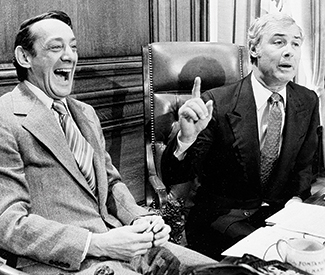
When Mayor George Moscone and Sup. Harvey Milk were assassinated in their City Hall offices on Nov. 27, 1978, San Francisco changed in innumerable ways. Among those ways is the city lost two of the leading progressive advocates for renters and affordable housing ever elected here.

Today, as San Franciscans mark this tragedy with their annual memorial march, organizers and activists have broadened and elevated the event by enlisting the support of 20 community organizations now doing work to combat the eviction, gentrification, and affordable housing crises that are gripping the city.

“We wanted to make this even more than just a candlelight vigil,” David Waggoner, one of the organizers of the event, told the Guardian. “We want to use this time to remember Harvey and George’s legacy in really fighting for the underdog.”

He noted that attendance at the march has waxed and waned from year to year, but the coalition putting this one together promises to have a strong turnout this year because of the surging progressive activism around housing issues and the need to organize the community to save the soul of the city.

“There is very little to stop what’s happening with the rapid gentrification,” Waggoner said, but he also noted, “By building coalitions, the same way Harvey and George did, we can fight.”

“We’re not only honoring the history of Harvey Milk and George Moscone, but we’re honoring their legacy by making them relevant today,” Brian Basinger, head of the AIDS Housing Alliance/SF, told us. “The Milk March is going to be very exciting. We have over 20 community groups invited and helping us put it together.”

Basinger said the progressive activism will continue through the 25th annual World AIDS Day on Dec. 1, and that participants in both events will be asked to present their demands to the city for dealing with the AIDS and housing crises. That list will be presented at City Hall during a noon rally on Dec. 2.

He said that affordable housing issues are LGBT issues given that nearly 30 percent of the city’s homeless population identifies as LGBT, while that identification makes up just 15 percent of the overall city population.

“Those of us who are lucky enough to talk to the folks who knew Harvey remind us that it’s about coalition-building,” Basinger said, noting that many of Milk’s contemporaries are now being forced to leave the city by evictions or economic displacement.

One voice from that era who is still around and active is gay activist Cleve Jones, who was an intern in Milk’s office at the time of the assassination and wrote a poignant guest editorial in the Nov. 21 issue of the Bay Area Reporter about what Milk and Moscone advocated.

“They fought for renters, honored labor, and built coalitions to connect, not divide, us from each other,” Jones wrote. “They would, I’m sure, be pleased by the progress that has been achieved on some of the issues they cared about. But they would be alarmed by the growing chasm between rich and poor, they would be angered by the evictions of the elderly, disabled, and people with AIDS. They would be fighting to keep City College open and they would be outraged by the violence and despair experienced by so many in our city’s neighborhoods.”

Organizers of the event say they think this is just the kind of memorial that Milk and Moscone would have wanted.

“We want the housing crisis to be front and center,” Waggoner said. “We want this to be a time for people to connect with the legacy of Milk and Moscone in a very direct way.”

The march begins at 7pm in Milk Plaza, Castro and Market streets, and continues with a rally outside City Hall.


The Performant: Dead man’s party

1

Despite the supposed onset of winter, it’s another sunny day as I pedal up to the San Francisco Columbarium, a stately domed edifice perched at the end of a discreet cul de sac off Geary and Arguello. Currently operated by the secular Neptune Society, the Columbarium is one of the last remaining repositories for the dead within San Francisco city limits, the majority of San Francisco’s deceased having been relocated to Colma from the turn of the 20th century on. A group of about 30 curiosity seekers have gathered at the gates. We’ve all come for an Obscura Society “field trip,” in this instance a tour of the iconic structure, led by the man who has been credited with almost single-handedly presiding over the Columbarium’s resurrection from decades of neglect, Emmitt Watson.

The Obscura Society is an offshoot of four year-old online encyclopedia of wonder, Atlas Obscura, and other local excursions have included ones to Suisun Bay, the Albany Bulb, the San Francisco Motorcycle Club clubhouse, an abandoned train station in Oakland, the Zymoglyphic Museum of San Mateo, and an after-dark tour of the Woodlawn cemetery in Colma. Like a darker, more relentless version of Nerd Nite with stronger drinks and more historians, its Tuesday night salons at the DNA Lounge are equally expansive, covering a whole gamut of hidden histories on topics such as vigilantes, rum-runners, the Donner Party, rail transportation, and absinthe.

Atlas Obscura senior editor Annetta Black eagerly explains the society’s zeal for local exploration. “Originally we [Atlas Obscura] were focused on the idea of far away exotic places, but then we realized that we were falling prey to the idea that the world is only interesting if it’s far away. Once I discovered that I could travel in my hometown with the same sense of curiosity I would apply to Angkor or Paris, it opened up a world of infinite possibilities.”
 
But back to the Columbarium. Once part of the Odd Fellows cemetery that was relocated in 1929, the Columbarium spent the next few decades rotting from neglect — preserved on paper as a historic landmark, but lacking a caretaker. The loquacious Watson lists its former defects including “cobwebs, fungus, slime, pigeons, and raccoons,” in such quantities that it took him awhile to realize the building wasn’t an empty shell, but a mausoleum for hundreds of cremains, each interred in the walls in a honeycomb series of niches, which he playfully refers to as “apartments.”

Now the Columbarium gleams in the late morning sun, the glass-paneled niches catching the mellow light streaming in the intricate stained glass windows. The baroque trim has been painstakingly hand-painted rose and sky-blue by Watson, who calls them colors of life. Small mementos decorate the later niches, like a series of found-object still lifes: martini shakers, whiskey bottles, baseballs, teddy bears, glass slippers, lottery tickets, love letters, mardi gras beads, hundreds of photographs. 

It’s impossible at times to not get separated from the main group, so if Watson mentions one of what I consider to be the most striking characteristic of the Columbarium’s more recent dead I don’t hear him. But as a secular sanctuary, the Columbarium is perhaps the only place I’ve visited where gay couples are buried together in the manner of heterosexual husbands and wives in conventional cemeteries. That there are so many casualties of the AIDS crisis or, as with a memorial built for Harvey Milk (whose ashes were scattered elsewhere), by acts of violence, is an unhappy reality, but at least they have been laid to rest in a place where their equality is never questioned, and the full sum of their lives and loves cause for celebration. Better yet, with a new wing, the Columbarium is open to newcomers and, in death at least, all are welcome.

Win tickets to the Great Dickens Christmas Fair!

0

A Bay Area tradition since 1970, the Great Dickens Christmas Fair returns to the San Francisco Cow Palace Exhibition Halls for five weekends in 2013 including the Friday after Thanksgiving.

Come wander the lanes of Victorian London, as the glow of twilight settles upon the city, with the scent of pine boughs & freshly baked scones floating in the air and the sound of carolers and holiday merrymakers accompanying your stroll.

Get more info at dickensfair.com. For a free pair of passes, email sfbgpromos [at] sfbg [dot] com. Be sure to put “Dickens Fair” in the subject. We will contact  you with instructions on how to pick up your tickets (while supplies last)!

Saturdays and Sundays, November 23-December 22 from 10am-7pm @ the Cow Palace, 2600 Geneva, Daly City

Activists organize, and some journalists chronicle, a progressive resurgence in SF

131

While Mayor Ed Lee jets around the world, still too focused on fueling the economic fire that is gentrifying San Francisco and displacing its diverse population — and as the San Francisco Chronicle and other downtown boosters niggle on the margins of the city’s biggest issue — local activists and some media outlets are paying attention and pushing back.

The New York Times ran an excellent Sunday piece about the growing populist backlash here against Mayor Lee’s economic policies and his friends and benefactors in the tech industry, a story that the Santa Rosa Press Democrat also put on its front page, but which the Chronicle only briefly mentioned today on its business page in a short story wrapping all the high-end housing now coming online. Instead, on Sunday the Chron ran this pro-landlord garbage

Meanwhile, as we report in tomorrow’s edition of the Guardian, more than 20 local organizations have combined forces this year to organize and promote tomorrow’s (Wed/27) annual memorial march marking the 1978 assassinations of Mayor George Moscone and Sup. Harvey Milk in City Hall, which will this year focus on their legacy of advocating for renters and keeping this city affordable by and welcoming of the working class and outsiders of all types.

We’ve said it before and we’ll say it again: this is a struggle for the very soul of San Francisco, and it’s a struggle that we at the Guardian renew our commitment to with every issue we print. See you all on the streets tomorrow night starting at 7pm in Milk Plaza and Castro and Market.    

Obama speech interrupted by Bay Area immigration activists

21

Ju Hong just wants to see his family for Thanksgiving, and that may be why he shouted down the president of the United States.  

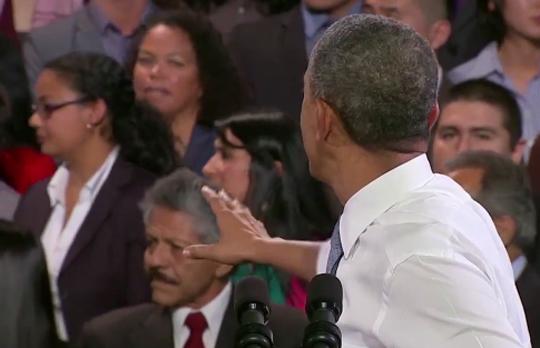
Hong interrupted President Barack Obama’s nationally televised speech in Chinatown today, shouting for justice at the tail end of the president’s call for immigration reform. 

San Franciscans and politicos gathered in the Betty Ong Recreation Center to hear the president call on congress to pass new laws regulating immigration, something sorely needed, as Obama is widely known for deporting record numbers of immigrants. The Pew Research Center shows he’s deported more per year than George Bush ever did, with over 392,000 deported in 2011 alone, 80,000 more than Bush’s highest year. 

Obama called for a greater focus on the plight of Asian immigrants, as most of the country’s discussion around deportations focuses on the southern border. 

“It’s fitting we’re here in Chinatown just a few miles away from Angel Island,” Obama said. “In the early `1900’s about 300,000 people, maybe some of your ancestors, passed through on their way to a new life in America. For many it represented the end of a long and arduous journey.”

“Maybe I started out washing dishes, but my son can become mayor of San Francisco,” Obama said, to laughter. “If we stay true to this history, if we can cross that finish line, and go ahead and do what needs to be done, were going to grow that economy,” Obama said, and then was interrupted by Hong, shouting across the room. 

“My family is separated for Thanksgiving. Our families are separated,” Hong shouted. “I need your help. There are thousands of deported immigrants. Mr. President please use your executive order to halt deportations for all 11.5 undocumented immigrants in this country right now. When you have the power to stop deportations for all.”  

Obama turned around and replied, “Actually I don’t.”

“Stop deportations!” Hong and his friends started to chant. 

Likely to the Secret Service, Obama said “No no, don’t worry about it guys. These guys don’t need to go.” Then he spoke to Hong. “Let me finish. You can stay there. It won’t be as easy as just shouting, it requires lobbying and getting it done,” he said.

Outside the rec center, Hong said he felt that Obama’s speech had lots of flash but no substance. 

juhong

Ju Hong interviewed by reporters outside of the Betty Ong Recreation Center.

“Families are still being torn apart,” he said. “I’m not satisfied at all. He said he didn’t want to violate the law, but he has the power to stop deportations.” 

Hong, 24, is an Alameda resident from Korea who came to the United States when he was 11 years old. When his grandfather died back home, he was unable to pay his final respects. Now he wants to fly back to South Korea to see his family, but can’t risk not being able to return.

The fear of deportation has touched him in many ways. In 2010 his home was burglarized, he said, but his mother said not to call the police. She feared they would discover they were undocumented.

“I was a strong support of Obama in 2008,” he said. But now, he’s lost hope. 

Hong was one of the students protesting Janet Napolitano’s appointment to head the University of California system, which we covered a few weeks ago (Undocumented and Unafraid, 11/12). 

Dick Meister: The jobless need help. Now!!

58

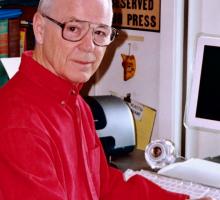
By Dick Meister

Guardian columnist Dick Meister, former labor editor of the San Francisco
Chronicle and KQED-TV Newsroom, has covered labor and politics for more than
a half-century. Contact him through his website, www.dickmeister.com, which includes several hundred of his
columns.

It’s time for Congress to help the many jobless Americans ­an estimated
450,000 in the next three months alone ­ who are about to be denied
federally- funded Unemployment Insurance benefits.

What Congress must do ­ and must do quickly ­ is once again expand the
emergency program that was established during the Great Recession in 2008 to
provide benefits averaging $300 a week to the steadily growing number of
jobless.  Congress has until only January 1 to block the first cutbacks of
extra benefit weeks that could continue until at least 2015 unless Congress
Acts.

President Obama and congressional Democrats are pushing measures that would
lengthen the benefit payout period through 2014 at a cost of about $25
billion on top of the $225 billion spent so far on the program. But given
the congressional haggling over economic measures, the chance of agreement
before Congress adjourns December 31 is slight.

Meanwhile , the number of Americans unable to find  jobs they need for
survival remains in the millions. Already, there are four million who have
been seeking jobs for more than six months and many others who have stopped
looking.

 Particularly hard hit are aging as well as younger workers, and women and
minorities. Their number ­ and need for unemployment benefits ­ is certain
to grow, most likely at a rapid pace.

All this is happening, of course, at the same time that banks, corporate
interests and other wealthy Republican friends continue raking in huge
profits. Money gained from relaxing the tax breaks given such political
friends, for instance, could very well go into funding further Unemployment
Insurance payments and other steps to help U.S. workers.

Ironically, cutting the federal benefit program could actually lead to more
unemployment. That’s because workers denied benefits naturally have less to
spend and that could in turn cause those who rely on the laid-off workers’
business to cut back operations.

 The need for extending the federal benefit program should be obvious to
anyone outside the powerful circle of GOP & friends. Listen to what Gene
Sperling, Obama’s chief economic adviser, told the New York Times’ Annie
Lowrey:

“There has not been a time where the unemployment rate has been this high
where you have not extended it. Why would you not expand now, when you’re
dealing with the nearly unprecedented levels of long-tern unemployment
coming off such a historic recession? “

Why not, indeed?

Guardian columnist Dick Meister, former labor editor of the San Francisco
Chronicle and KQED-TV Newsroom, has covered labor and politics for more than
a half-century. Contact him through his website, www.dickmeister.com, which includes several hundred of his
columns.

Copyright 2013 Dick Meister

Where I was on the day President Kennedy was shot

5

By Bruce B. Brugmann

On Nov. 22, 1963, I was a reporter for the Milwaukee Journal, a famous MIlwaukee daily newspaper always rated among the top ten U.S. newspapers.

I was packing with my wife Jean and two kids, Katrina and Dan, to go to San Francisco with the idea of starting a newspaper, which three years later became the San Francico Bay Guardian.  But I was still on duty in the Journal newsroom on the  Friday morning of the assassination. 

Early in the morning I got a call from the publicist of the Moscow Circus, which was finishing up its highly successful run in town. I had covered the circus as part of my show business beat and had rated it highly as the splendid show it was. The publicist, a good guy and competent at his job, wanted me and the Journal’s music critic, Walter Monfried, to go with him to lunch at a nearby German restaurant called Mader’s.

“I will buy the lunch,” he said, ‘”and you won’t have to write a thing.  You will be doing me a big favor.  I have lots of money left over on my expense account and I need to get it spent.  I want to spend it on the two of you.” And he repeated the point  for emphasis, “You will be doing me a big favor.”

And so Walter and I, after our noon deadlines on the afternoon paper, headed out for Mader’s,  planning for a big meal and lots of drinks.

We had a couple of drinks and ordered some German specialties of the house and settled in for a long lunch. Word of Kennedy’s death came to Milwaukee at 12:49 p.m. on Nov. 22, but Walter and I got the news by special messenger. Suddenly, Gus Mader, the proprietor, broke the lunch decorum by running around the room carrying a little sign.  “Kennedy’s been shot, Kennedy’s been shot,” he said in an excited voice.”Kennedy’s been shot.” Ane he kept running around the restaurant with the message.

I looked at Walter and said, “Walter, you know Gus. Can he be believed?”   Walter replied, “Yes, he can.  Kennedy’s been shot.”

We quickly finished our meals and did what newspeople do in the news business when disaster and a big story breaks.  We immediately went  back to the Journal newsroom.

It was pandemonium but functional pandemonium. The staff had only minutes to make the final deadline on the afternoon edition. Someone called downstairs to the press room,  nobody knows who, to yell “stop the presses” All the wires were pumping out copy relentessly,  AP, UPI, sports, regional wires, all of them. Our ace reporters had already been dispatched to the scenes, Bob Wells to Dallas and Harry Pease to Washington. Editors were conferring with reporters. Reporters were on the phones or typing furiously on their typewriters. Ruth Wilson was handling the mountains of material streaming in from the wires. The city desk was organzing local coverage and reaction followups and coverage from our Washington bureau. Things were tense and the air crackled but I was amazed at how efficiently and professionally the paper moved along.

The assassination was of particular moment for the Journal and its talented staff. They liked Kennedy and his politics and had a special personal and political affection for him. J. Donald Ferguson, the Journal editor sitting on the Pulitzer Prize board  in 1957, was responsible for the choice of Kenendy’s book, “Profiles in Courage,” to be given a Pulitzer for the best biography.  “The book had not been considered by the other judges until Ferguson won them over, telling the board he had read it aloud to a 12-year-old relative, “‘and the boy was absolutely fascinated,'” according to a Journal history.

Kennedy had visited the Journal newsroom during the crucial 1960 Wisconsin primary and was friendly with many of its reporters and editors and his administration hired some Journal staffers, including Ed Bayley, former star political reporter  and later founding Dean of the UC-Berkeley Graduate School of Journalism  The  Journal warmly endorsed him during the primary and general elections. Kennedy was a welcome change after the Journal’s famous battles during the 1950s with its native son Joe McCarthy and the national scourge of  McCarthyism.

The story made the final edition and then there were other extras, with huge “EXTRA ! EXTRA !” at the top of the front page. When the first of l00,000 copies of an extra rolled off the presses with more details, the Journal lobby was jammed with people waiting to buy papers.

The  Journal rose to the occasion magnificently, put out a special edition on deadline, and produced some of the nation’s best coverage of the assassination and funeral of any paper in the country.  We were all sad about Kennedy but very proud of our newspaper. . b3


SF General reduces psychiatric care

A 22-bed psychiatric unit at San Francisco General Hospital will be taken out of service, and re-opened only if the facility experiences a high caseload of patients exhibiting the worst signs of psychiatric crisis, the Bay Guardian has learned.

As of Nov. 19, five patients were receiving care in that unit, 7B, according to spokesperson Rachael Kagan. None had symptoms that rose to the level of requiring acute care. Instead, they were classified as sub-acute patients, a distinction that essentially means they didn’t present an immediate threat to themselves or others.

But under a new policy that will take effect after they have been released, all 22 beds in 7B will be closed – unless they are needed for acute patients who do reach that critical threshold. The unit will be staffed only if patients can’t be accommodated in the hospital’s other acute psych unit, which has 21 beds.

The decision was made in response to a changing financial picture under federal health care reform, Kagan explained.

“There is a big push … to ensure hospitals are only providing acute care,” Kagan said, and this trend is driving efforts to reduce sub-acute patients. “It fiscally makes more sense,” she added, because insurers pay higher rates for acute care than for lower levels of treatment.

Yet some hospital staff members are nervous about the implications of this shift, because it means fewer patients will be able to access psychiatric care at SF General until they represent a danger to themselves and/or the general public – at a time when demand for these services is on the rise.

“To us, it’s a matter of priority for the city,” said Brenda Barros, an employee at SF General who is active with hospital union SEIU 1021. “Do you want to take care of these people, or don’t you?” 

Some staff members are doubtful that 7B will reopen. An internal SF General memo issued Nov. 18 informed 7B staff: “Our census will be gradually reduced until we won’t have any more patients. Then 7B will be closed.” The memo added, “this came from [SF General CEO] Sue Currin due to budgetary constraints.”

However, a second internal memo went out the following day, to “clarify” the first one. In that message, Nursing Director Kathy Ballou wrote: “We are not closing psych beds or any beds.” Instead, beds in 7B would be closed unless “we get acute patients needing that level of care,” she wrote. “As in other hospitals, we are accountable to our operating budget.”

Further complicating matters, said Barros, is that patients can fluctuate rapidly between needing acute care and a lower level of attention. “They absolutely can swing back and forth.” She added that patients initially requiring a lower level of care could experience worsening conditions if they’re unable to secure an appointment in time to get help, and delays are very common.

Kagan emphasized that the unit wasn’t being closed down, but did confirm that sub-acute patients would no longer be able to receive treatment in 7B. Instead, those patients will be placed with various service providers throughout the city, she said. “The goal is to move the patients to their appropriate placement.”

Meanwhile, this shift coincides with an overall rise in citywide demand for psychiatric services. According to a report delivered to the Police Commission earlier this year, SF General had 6,293 patient admissions for psychiatric holds in 2012, a sharp increase from 5,837 in 2009.

While there were deep cuts to the city’s Department of Public Health during the economic downturn, Mayor Ed Lee has recently trumpeted a boost to city coffers thanks to growing economic activity. But if the city’s financial health has improved, it seems odd that its flagship safety-net hospital would be put into the position of reducing psych care due to budgetary pressures when that kind of care is sorely needed.

For Barros, it’s a matter of whether or not city officials will decide to allocate more funding for mental health services. “If they don’t have enough money in Public Health,” she said, “then they need to put more into Public Health.”

BART board approves labor contract, minus the district’s “mistake” UPDATED

36

The BART Board of Directors has voted 8-1, with conservative young Director Zakhary Mallett in dissent, to approve a hard-won contract with its unions, after removing Section 4.8, the paid family leave section that the district says was inserted by mistake. The motion also directed management to negotiate a settlement over that issue with its unions, which have already approved the contracts and now must decide whether they are willing to do so again without that provision or whether the possibility of another BART strikes is once again looming.

Shortly after the meeting, SEIU Local 1021 Executive Director Pete Castelli issued the statement saying, “We’re disappointed that the BART Board of Directors had decided not to fulfill their commitment to the workers and the riders by approving contracts without the provision on family medical leave. The unions have voted on and ratified these contracts in their entirety.”

He accused the district of over-inflating the cost estimates of the family leave provision and said the unions were willing to discuss it, but the district instead chose “to prolong the process and hold the fate of the riders, the workers, and the Bay Area in the balance.”

“Right now we are considering all options, meeting with workers who have ratified this contract, and working to find a way to reach a resolution to BART management’s alleged mistake in the agreement it made with its workers,” he said.

After meeting in closed session for about two hours this morning, the BART board opened the meeting up around 11:45am to discuss and vote on the contract. Vice President Joel Keller opened with a motion to remove Section 4.8 from the contract, approve the rest, and direct management to negotiate with the unions.

Mallett, the 25-year-old newbie who lives in unincorporated West Contra Costa County but whose Dist. 7 includes part of San Francisco, spoke first: “Even before this hiccup, I was not in the position to support this contract. I find it too costly.”

But he was the only one to take that stance, with the rest of the directors calling the underlying contract a fair compromise, even if all said they couldn’t support the paid family leave provision that would add anywhere between $4 million and $44 million to a contract that was already going to cost the district an additional $67 million.

Director Gail Murray even chided Mallett’s certitude given his age and inexperience, noting that the union had given up raises for years when BART had budget deficits, and now that the district is running surpluses, it’s reasonable to give workers raises that amount to about 2 percent per year for four years, particularly given the union also gave on their benefit packages.

“Our employees kept the system going…They’re the reason why we keep 40-year-old cars still running,” Murray said, later adding, “To say this contract is not a good contract is wrong.”

The rest of the board agreed, even why acknowledging it is more than they hoped to pay given the district capital needs and aggressive expansion plans.

“We’re probably paying more for this than we anticipated we would pay, and labor is probably going up more than they want to, but that’s the nature of collective bargaining,” Keller said, who also began what turned into a chorus of criticism for how district negotiators signed off on a provision the board never agreed to.

“We ended on a sloppy note and that’s regretable,” Keller said, pledging that if he’s elected president next month — an ascension that is customary for the vice president — he plans to lauch a full investigation into what happened.

“I’m pained that we put ourselves in such adversarial positions with each other and that we lost the lives of two employees,” Director John McPartland said of the protracted labor negotiations and the fatalities that occurred while the unions were on strike Oct. 19. He called the contract “more than fair and equitible.”

Director James Fang, who represents western San Francisco, sounded the strongest criticisms of BART management and negotiators. “Yes, it was a mistake, but nobody has come forward and said ‘there was a mistake and I’m responsible,” Fang said, later adding, “The ones who signed this must be held to account.”

Fang then went further, albeit without specifics, when he said, “Every bit of management advice we’ve received has not worked out to the district’s best interests.” Given the looming investigations by the California Legislature and National Transportation Safety Board of BART culpability in the Oct. 19 deaths — the result of management preparing to break the strike by training replacement drivers and contesting longstanding demands by state regulators to make safety improvements that likely would have prevented the tragedy — Fang’s comment could ultimately prove to be a huge understatement.

Director Robert Raburn echoed Fang’s calls for accountability: “I’m still not clear on how that [contract provision] arrived and it hasn’t been accounted for by anyone at the district who said ‘I am responsible.’”

But he also said that the provision was clearly an error and not something arrived at through the negotiations: “Both parties agreed on a $67 million package and we should keep that intact because it’s fair.”

Reached by the Guardian this afternoon while union leadership was conferring to plan next steps, SEIU Local 1021 Political Director Chris Daly told us, “We are about as up in the air as we’ll ever been.”

As a first step, he said the unions are consulting with their attorneys on the legality of today’s vote. “We think the action might be an unfair labor practice and illegal under labor law,” Daly said.

He also called it “unlikely” that union leadership would simply submit the board-revised contract to an up-or-down vote by union membership, saying that he doesn’t think it would be approved.

And Daly echoed the concerns expressed by several BART directors about how this mistake happened and why nobody has taken responsibility or been held accountable: “If I were on that board, I’d have the general manager’s head, there’s no two ways about it.”  

UPDATE 11/22: Today BART’s largest unions, SEIU 1021 and ATU 1555, issued the following joint statement on the BART Board’s recent vote regarding whether to ratify the labor contracts:

“We consider the Board’s actions to be unprecedented and illegitimate, and we’re considering our next steps, including possible legal action.

“The BART Board of Directors has disregarded the vote of more than two thousand BART workers and has chosen to subvert the collective bargaining process, and we take their actions seriously.”

We will survive! Annalee Newitz’s ‘Scatter, Adapt, and Remember’

3

Spoiler alert: Humans survive at the end of the world.

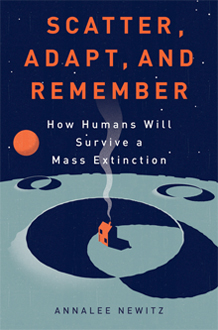
It’s a bit more complicated than that, of course, but it’s good to start on a note of hope. It’s a hope we can afford to have, as Annalee Newitz (editor of science and culture site io9.com, and a former Guardian contributor) discovered in the research that yielded her book Scatter, Adapt, and Remember: How Humans Will Survive a Mass Extinction (Doubleday, 320 pp., $26.95). She’s among the participants in tonight’s “Last Things”-themed InsideStoryTime at North Beach’s Glass Door Gallery.

Fascinated with the possibility of future disasters, Newitz set out to learn all there is to learn about the history of mass extinctions on Earth. From megavolcanoes to meteor strikes, the common thread of disaster on this planet is that something has always survived. An impressive amount of work is being done to make it possible for us to continue this streak of survival, and we all possess some tools of survival already.

Given my vague and largely unexplored interest in science and my undying obsession with Pacific Rim and the idea that humans could come together and build giant robots to fight giant monsters, Scatter was the book I didn’t know I needed until it was already in my hands. That’s not to say Newitz proposes that we focus our resources to build Jaegers in preparation of a kaiju apocalypse. But the message of world unity in the face of the threat of extinction that shines through in films like these shouldn’t be taken for granted. As Newitz writes, “We can only meet the challenges of surviving whatever the natural world throws at us by working together as a species in small and large ways.”

Perhaps you’re skeptical of humanity’s ability to get along on that great of a scale. I know I am. But in the face of something as dire as mass extinction, our instincts should kick in. As the title suggests, some of the strategies that may save us are to scatter – diaspora has resulted in the survival of groups of people over generations – adapt – to change our ways for a more sustainable future – and remember – passing on the knowledge that will advance us through the years. The latter is particularly important, because while we’re not all scientists, we’re all capable of telling our stories and doing our part.

But that’s not all we can do. Newitz proposes reshaping cities as we know them, and guess what city is said to be a great template for the “mutated metropolis”? That’s right, our very own City by the Bay. Historically considered a “wide-open city,” meaning that it’s a city “prepared to tolerate,” San Francisco is an ideal site for the types of change that could ultimately save us. So maybe we should be building a Jaeger, since San Francisco is the first city to be destroyed by a kaiju attack. Sorry, did I mention I really loved Pacific Rim?

But in all seriousness, the things we should be thinking about combating are climate change and pandemics. Newitz discusses the work we need to do to regulate the space around us and cool down the planet. And if you haven’t already dismissed anti-vaccination discussions, consider this: biomedical model expert Brian Coburn and his colleagues have found that “vaccinating 80% of children (less than 19 years old) would be almost as effective as vaccinating 80% of the entire population.” Meaning we should really consider how we can vaccinate globally.

But though we should be thinking about terraforming Earth to make it more sustainable, in the long run, we should be looking to the stars and considering terraforming other planets. Did anyone else first learn the word “terraforming” from Firefly? Because I sure did, and to think that Captain Malcolm Reynolds’ opening commentary on the show about the Earth getting used up and having to terraform other planets might actually be nonfiction one day is fascinating. And the space elevators that could make day trips off Earth possible are in the works!

Scatter, Adapt, and Remember is part cautionary tale, part how-to guide, and part super cool and nerdy science. Taken to heart, it’ll leave you more knowledgeable and hopeful for our continued existence, and possibly inspire more great minds to take action to ensure our survival.

InsideStoryTime: Last Things

With Annalee Newitz, Lucy Corin, Ransom Stephens, Guy Benjamin Brookshire, and Angelica Oung, with MC James Warner

Thu/21, 7-9pm, free

Glass Door Gallery

245 Columbus, SF

www.insidestorytime.com

Promo: Another Hole in the Head Film Festival

0

Returning for its tenth year, SF IndieFest presents Another Hole In The Head Film Festival. Celebrating three weeks of Independent Horror, Sci-Fi and Fantasy films, the festival will celebrate its tenth year with 57 feature films, 30 short films, new venues, extended dates, and a theatrical play to fill all your genre film needs.  The festival kicked off on last Wednesday with a production of Top Guys at Stage Werx in San Francisco which will continue to run until December 14. The official kick off for the film festival is November 29 (BLACK FRIDAY) at the Balboa Theater. The festival will continue at the Balboa until December 5, then it will move to the New People Cinema until December 19. For more information and tickets, please visit sfindie.com.


Chef Michael Anthony talks ‘The Gramercy Tavern Cookbook’

2

The Gramercy Tavern Cookbook (Clarkson Potter, 352 pp., $50) takes you on a restaurant tour, beginning with Danny Meyer’s initial conception of opening this New York establishment, continuing past the chief steward and his wheelbarrow of fresh spring produce from the Greenmarket, around the harvest table where the floral designer pairs yellow sprays of sunflowers with splayed summer squash, into the kitchen during the staff’s family meal, past the pastry station where Nancy Olson creates her autumn peanut butter semifreddo, and ending at the dining table with a winter dish of guinea hen prepared by James Beard Award-winning chef Michael Anthony.

By the time you’ve read through this serious and seriously exquisite cookbook, ogled the colorful photos, and closed the enormous, masculine-elegant back cover, you’ve spent a whole year eating inside the Tavern. Your appreciation for the minute mechanics that run a restaurant will have widened, and your list of must-try recipes? Exploded. (I’ve already checked off the curious “Cauliflower with Quinoa, Prunes, and Peanuts” with happy results). Chef Anthony, making his first trip to San Francisco in December, spoke to me about his vision behind the book.

SF Bay Guardian Who did you write this cookbook for?

Michael Anthony For the fans of Gramercy Tavern who’ve eaten at the restaurant and have fallen in love with it over the years. Or, eventually, people who have not yet discovered it, who have heard of the name and want to become insiders. We wrote this book to translate the rich history of the last seven years — the time that I’ve been in the restaurant — to share those recipes with home cooks.

SFBG What do you mean by “translate”?

MA A professional cook uses jargon, a technical language that’s not familiar to most people who have never worked in a professional kitchen. So, we reevaluated the kinds of tools that one would use at home, the way in which I described how to execute a dish, and took into consideration the careful way I cook at home. I have three daughters, so I cook a lot at home.

SFBG Do your girls have a favorite recipe that you make at home?

MA My three daughters are 14, 11, and three and a half. The mushroom lasagna is a particular favorite of the eldest. The zucchini soup is a favorite of Colette, the 11-year-old. And Adeline eats everything [laughs].

In the book I mention this one silly scenario where I’ll wear my Japanese chef outfit and set up an open kitchen, write out the menu, and I serve [my girls] à la carte vegetable sushi at our open window.

SFBG What’s your trick to having a restaurant and a family at the same time?

MA We make an enormous amount of sacrifices to be a part of this business. The great news is there’s an amazing team at Gramercy Tavern, which allows us all to take days off, including me. And during that time at home I enjoy being home, cooking, and shopping at the Greenmarket. It’s a regular part of our lives.

SFBG You pay a lot of attention to vegetables. Where does this influence come from?

MA We have a fascination with vegetables. They’re a way for us to literally stay connected to the changing seasons and the growers. And for our guests, who, in a big city like this, can feel insulated from the changing seasons.

We’d all be a little better off if we allow ourselves to be seduced by the role that vegetables play in our dishes. It’s not about self-deprivation, not veganism, not vegetarianism — I’m not promoting that particular alternative. I’m just saying that when the vegetable component of the dish preoccupies the creative process, and the protein plays a slightly different role in the story, we eat a healthier variety.

SFBG Do you have a favorite vegetable?

MA It’s always changing. We’re just coming out of our first week of very cool, cold weather, so it’s shifted our salads to include things like roasted winter squash. Our soups are made from potatoes and parsnips and turnips. We’re serving things like sunchokes and salsify.

SFBG Tell me about the “harmonious scatter.”

MA It describes the way in which we plate food with intent. It’s not as simple as, say, Alice Waters saying that food is simply beautiful so just put it on the plate, but it’s not as forced as trying to over-manipulate the food. It’s somewhere in between. Sometimes the imperfections of seeing the cook’s hand in the dish lets you know that it’s handmade.

SFBG How does seasonality affect Gramercy Tavern?

MA When it gets warm in the spring it’s the perfect place to go for a carefully seasoned salad. Summertime when it’s sticky and hot, it’s a great place to come for a lightly grilled fish dish with a chilled cucumber garnish. In the wintertime, it’s an impressive use of the Greenmarket. It doesn’t mean the food is boring or dull, through the winter months, it just means that we have to be more creative with it.

SFBG I was drawn to the book’s Winter chapter the most, actually.

MA It’s a time when we can really draw a distinction between the way you guys [in the Bay Area] would be eating. People are always saying, “If only we had a growing season like in California.” But we don’t. So ultimately those are the times when we can really say that our food is the most distinctively different.

SFBG It’s like that moment where you think you think your fridge is empty, but you end up making something even tastier than you imagined for dinner.

MA I’m with you. Have you read Tamar Adler’s book, An Everlasting Meal?

SFBG I love that book.

MA Tamar’s a good friend, and she’s translated the notion that a meal is a continuation of a story, not the sum of a bunch of recipes. It’s how one meal forms the next. One season forms the next.

SFBG Can you interpret your term “American cooking”?

MA So, I think French food is all about harmony; there’s a very gentle feel, like looking at a wave. No sharp turns. Japanese food is actually more a state of mind. Like their language, there’s no intonation. It’s all about nature, the natural flavor with a very hidden hand of the chef.

American food is all about a lot of highs and lows. We use acidity, we use heat, as ways to make it exciting. In the same vein, we’re not bound by a lot of the traditions and rules that we learn, though we take great interest in them. We have a sense of freedom and openness to cooking … especially in a restaurant like Gramercy Tavern, anything and everything is permissible, in terms of sources of inspiration.

SFBG And American cooking at home?

MA I’ve demonstrated in the book how folks can take pleasure in cooking at home, without feeling trapped. “Oh, I can’t find that particular variety,” or “I don’t shop at the Greenmarket so I can’t do these recipes” — that’s not the case. The overriding message is cooking shouldn’t be a spectator sport. If you visit Gramercy Tavern and you like the dishes that we’re cooking, you can certainly easily find those ingredients at home.

SFBG What is the restaurant doing for Thanksgiving?

MA Well, Gramercy Tavern is closed for Thanksgiving, and that’s what we’re doing [laughs]. Everybody gets to go home and enjoy one of the few culinary holidays that we have in our culture. 

SFBG What are you doing?

MA I’m in charge of the turkey. I’m going to do one traditional slow-roasted bird, and I’ll serve that with a Swiss chard and mushroom stuffing. The other one is a spice-wrapped and apple-wood smoked turkey. With that one there’s never any leftovers. Just demolished. This year, since my in-laws are Jewish, it becomes Thanksgivingukkah. We’re including latkes, and the butternut squash soup with Brussels sprouts from The Gramercy Tavern Cookbook.

Chef Michael Anthony signs The Gramercy Tavern Cookbook Dec. 1, 11am-1pm, Blue Bottle Café, 300 Webster, Oakl; Dec. 2, he collaborates with Quince chef Michael Tusk on a special six-course dinner. For reservations call (415) 775-8500 or visit www.quincerestaurant.com/events.

Music Listings: November 20-26, 2013

0

WEDNESDAY 20
ROCK
Bottom of the Hill: 1233 17th St., San Francisco. Screaming Females, Upset, Peace Creep, 9 p.m., $10.
Brick & Mortar Music Hall: 1710 Mission, San Francisco. U.S. Girls, Chasms, Ether Island, 9 p.m., $7-$10.
The Chapel: 777 Valencia St., San Francisco. The Reverend Horton Heat, Larry & His Flask, Deke Dickerson, 9 p.m., $25.
El Rio: 3158 Mission, San Francisco. Apt H, Neon Satori, Pharaohs, 8 p.m., $5.
Elbo Room: 647 Valencia, San Francisco. Rocket Queens, BROFX, 9 p.m., $7.
Hemlock Tavern: 1131 Polk, San Francisco. Qui, Roland, Big Long Now, 8:30 p.m., $7.
Hotel Utah: 500 Fourth St., San Francisco. Josh Berwanger Band, Mammoth Life, The Silhouette Era, 8 p.m., $10.
The Knockout: 3223 Mission, San Francisco. Self-Inflicted Wounds, Balms, Demimonde, DJ Ryan Smith, 9:30 p.m., $6.
Milk Bar: 1840 Haight, San Francisco. City Tribe, We Arsons, The Wooden Suns, 8:30 p.m., $5.
DANCE
The Cafe: 2369 Market, San Francisco. “Sticky Wednesdays,” w/ DJ Mark Andrus, 8 p.m., free.
Cat Club: 1190 Folsom, San Francisco. “Bondage A Go Go,” w/ DJs Damon, Tomas Diablo, & guests, 9:30 p.m., $5-$10.
Club X: 715 Harrison, San Francisco. “Electro Pop Rocks,” 18+ dance night with DJ Dan, SwitchBlade, Frank Nitty, more, 9 p.m.
The EndUp: 401 Sixth St., San Francisco. “Tainted Techno Trance,” 10 p.m.
F8: 1192 Folsom St., San Francisco. “Housepitality,” w/ Marcel Vogel, James What, Tyrel Williams, Ben Bean, 9 p.m., $5-$10.
Harlot: 46 Minna, San Francisco. “Qoöl,” 5 p.m.
Infusion Lounge: 124 Ellis, San Francisco. “Indulgence,” 10 p.m.
Lexington Club: 3464 19th St., San Francisco. “Friends of Dorothy,” w/ DJ Sissyslap, 9 p.m., free.
Lookout: 3600 16th St., San Francisco. “What?,” w/ resident DJ Tisdale and guests, 7 p.m., free.
Madrone Art Bar: 500 Divisadero, San Francisco. “Rock the Spot,” 9 p.m., free.
Make-Out Room: 3225 22nd St., San Francisco. “Burn Down the Disco,” w/ DJs 2shy-shy & Melt w/U, Third Wednesday of every month, 9 p.m., free.
MatrixFillmore: 3138 Fillmore, San Francisco. “Reload,” w/ DJ Big Bad Bruce, 10 p.m., free.
Monarch: 101 6th St., San Francisco. “We Are Monsters,” w/ Sammy D, Mozhgan, Jason Greer, 10 p.m., $5-$10.
Q Bar: 456 Castro, San Francisco. “Booty Call,” w/ Juanita More, Joshua J, guests, 9 p.m., $3.
Showdown: 10 Sixth St., San Francisco. “Nokturnal,” w/ DJs Coyle & Gonya, Third Wednesday of every month, 9 p.m., free.
HIP-HOP
DNA Lounge: 375 11th St., San Francisco. Lunice, Rockie Fresh, B. Bravo, 8 p.m., $10-$15.
Double Dutch: 3192 16th St., San Francisco. “Cash IV Gold,” w/ DJs Kool Karlo, Roost Uno, and Sean G, 10 p.m., free.
The Independent: 628 Divisadero, San Francisco. Latyrx featuring Skins & Needles, Forrest Day, DJ Aaron Axelsen, hosted by Blackalicious, 9 p.m., $25.
Skylark Bar: 3089 16th St., San Francisco. “Mixtape Wednesday,” w/ resident DJs Strategy, Junot, Herb Digs, & guests, 9 p.m., $5.
ACOUSTIC
Cafe Divine: 1600 Stockton, San Francisco. Craig Ventresco & Meredith Axelrod, 7 p.m., free.
Club Deluxe: 1511 Haight, San Francisco. Happy Hour Bluegrass, 6:30 p.m., free.
Fiddler’s Green: 1333 Columbus, San Francisco. Terry Savastano, Every other Wednesday, 9:30 p.m., free/donation.
The Lost Church: 65 Capp St., San Francisco. Drea Muldavin, 8 p.m., $10.
JAZZ
Amnesia: 853 Valencia, San Francisco. Gaucho, Eric Garland’s Jazz Session, The Amnesiacs, 7 p.m., free.
Burritt Room: 417 Stockton St., San Francisco. Terry Disley’s Rocking Jazz Trio, 6 p.m., free.
Jazz Bistro At Les Joulins: 44 Ellis, San Francisco. Charles Unger Experience, 7:30 p.m., free.
Le Colonial: 20 Cosmo, San Francisco. The Cosmo Alleycats featuring Ms. Emily Wade Adams, 7 p.m., free.
Pier 23 Cafe: Pier 23, San Francisco. Ned Boynton & Friends, 6 p.m., free.
Red Poppy Art House: 2698 Folsom, San Francisco. The Suppression of Sound: An Evening of Poetry and Music, with Thomas Sayers Ellis, James Brandon Lewis, and Raina J. León, 7:30 p.m., $10-$15.
Revolution Cafe: 3248 22nd St., San Francisco. Michael Parsons Trio, Every other Wednesday, 8:30 p.m., free/donation.
Savanna Jazz Club: 2937 Mission, San Francisco. “Cat’s Corner,” 9 p.m., $10.
Sheba Piano Lounge: 1419 Fillmore, San Francisco. Fran Sholly, 8 p.m.
Top of the Mark: One Nob Hill, 999 California, San Francisco. Ricardo Scales, Wednesdays, 6:30-11:30 p.m., $5.
Zingari: 501 Post, San Francisco. Anya Malkiel, 7:30 p.m., free.
INTERNATIONAL
Bissap Baobab: 3372 19th St., San Francisco. Timba Dance Party, w/ DJ WaltDigz, 10 p.m., $5.
Cafe Cocomo: 650 Indiana, San Francisco. “Bachatalicious,” w/ DJs Good Sho & Rodney, 7 p.m., $5-$10.
Pachamama Restaurant: 1630 Powell, San Francisco. “Cafe LatinoAmericano,” 8 p.m., $5.
Yoshi’s San Francisco: 1330 Fillmore, San Francisco. Jorge Ben Jor, 8 & 10 p.m., $35-$55.
BLUES
Biscuits and Blues: 401 Mason, San Francisco. Mitch Woods & His Rocket 88s, 7:30 & 9:30 p.m., $15.
The Royal Cuckoo: 3202 Mission, San Francisco. Big Bones & Chris Siebert, 7:30 p.m., free.
The Saloon: 1232 Grant, San Francisco. Takezo, 9:30 p.m.
SOUL
Boom Boom Room: 1601 Fillmore, San Francisco. “Soul Train Revival,” w/ Ziek McCarter, Third Wednesday of every month, 9:30 p.m., $5.
Cafe Du Nord: 2170 Market, San Francisco. Daley, 7:30 p.m., sold out.

THURSDAY 21
ROCK
Amnesia: 853 Valencia, San Francisco. Nova Albion, The Foreign Resort, 9 p.m., $7-$10.
Brick & Mortar Music Hall: 1710 Mission, San Francisco. The Rock Collection, featuring Stu Allen, Greg Anton, Mark Karan, Melvin Seals, and Robin Sylvester, 9 p.m., $10-$13.
The Chapel: 777 Valencia St., San Francisco. Howe Gelb, 9 p.m., $18-$20.
DNA Lounge: 375 11th St., San Francisco. Norma Jean, Vanna, KEN Mode, Exotic Animal Petting Zoo, Name, 7 p.m., $13-$18.
Hemlock Tavern: 1131 Polk, San Francisco. Lemme Adams, Hungry Skinny, Fox & The Law, Electric Shepherd, 8 p.m., $7.
The Independent: 628 Divisadero, San Francisco. Dengue Fever, Seventeen Evergreen, 8 p.m., $16-$18.
Milk Bar: 1840 Haight, San Francisco. Build Them to Break, The Trash Pop Icons, Protected Left, 8:30 p.m., free.
Monarch: 101 6th St., San Francisco. The Kimberly Trip, Poeina Suddarth, Claire on a Dare, Drivers, 8 p.m., $8.
Slim’s: 333 11th St., San Francisco. Albert Hammond Jr., Rathborne, 9 p.m., $21.
Thee Parkside: 1600 17th St., San Francisco. White Barons, Hornss, Winter Teeth, Rock Bottom, 9:30 p.m., $7.
DANCE
Abbey Tavern: 4100 Geary, San Francisco. DJ Schrobi-Girl, 10 p.m., free.
Aunt Charlie’s Lounge: 133 Turk, San Francisco. “Tubesteak Connection,” w/ DJ Bus Station John, 9 p.m., $5-$7.
The Cafe: 2369 Market, San Francisco. “¡Pan Dulce!,” 9 p.m., $5.
Cat Club: 1190 Folsom, San Francisco. “Throwback Thursdays,” ‘80s night with DJs Damon, Steve Washington, Dangerous Dan, and guests, 9 p.m., $6 (free before 9:30 p.m.).
The Cellar: 685 Sutter, San Francisco. “XO,” w/ DJs Astro & Rose, 10 p.m., $5.
Club X: 715 Harrison, San Francisco. “The Crib,” 9:30 p.m., $10, 18+.
DNA Lounge: 375 11th St., San Francisco. “Turbo Drive,” w/ Anoraak, Marrow, plus DJs Devon, MyKill, and Mr. Smith, 9:30 p.m., $15.
Elbo Room: 647 Valencia, San Francisco. “Afrolicious,” w/ DJs Pleasuremaker, Señor Oz, and live guests, 9:30 p.m., $5-$8.
F8: 1192 Folsom St., San Francisco. “Beat Church,” w/ Mint, Humpfree Lowgart, residents, 9 p.m., $5-$10.
Infusion Lounge: 124 Ellis, San Francisco. “I Love Thursdays,” 10 p.m., $10.
John Colins: 138 Minna, San Francisco. “SoLuna,” w/ resident DJ Miquel Penn, Third Thursday of every month, 9 p.m., free.
The Knockout: 3223 Mission, San Francisco. Never Knows, Exotic Club, Bézier, DJs Nihar & Mashi Mashi, 9:30 p.m., $6.
Laszlo: 2532 Mission, San Francisco. “Werk It,” w/ DJ Kool Karlo, Third Thursday of every month, 9 p.m., free.
Madrone Art Bar: 500 Divisadero, San Francisco. “Night Fever,” 9 p.m., $5 after 10 p.m.
Mighty: 119 Utah, San Francisco. Alland Byallo, 10 p.m., $10 before 11 p.m.
Q Bar: 456 Castro, San Francisco. “Throwback Thursday,” w/ DJ Jay-R, 9 p.m., free.
Raven: 1151 Folsom St., San Francisco. “1999,” w/ VJ Mark Andrus, 8 p.m., free.
Rickshaw Stop: 155 Fell, San Francisco. “Popscene,” w/ Deptford Goth, Sohn, 9:30 p.m., $13-$15.
Ruby Skye: 420 Mason, San Francisco. “Awakening,” Coldharbour Recordings Night with Khomha, Beat Service, Grube & Hovsepian, 9 p.m., $20 advance.
SPARC: 1256 Mission, San Francisco. “Surya Dub Mission,” w/ Kush Arora, J-Boogie, DJ Sep, Maneesh the Twister, 7-10 p.m., free with RSVP (must be 18+).
The Tunnel Top: 601 Bush, San Francisco. “Tunneltop,” DJs Avalon and Derek ease you into the weekend with a cool and relaxed selection of tunes spun on vinyl, 10 p.m., free.
Underground SF: 424 Haight, San Francisco. “Bubble,” 10 p.m., free.
Vessel: 85 Campton, San Francisco. “Base,” w/ Nathan Barato, 10 p.m., $5-$10.
HIP-HOP
Eastside West: 3154 Fillmore, San Francisco. “Throwback Thursdays,” w/ DJ Madison, 9 p.m., free.
The EndUp: 401 Sixth St., San Francisco. “Cypher,” w/ resident DJ Big Von, 10 p.m., $5-$10.
Park 77 Sports Bar: 77 Cambon, San Francisco. “Slap N Tite,” w/ resident Cali King Crab DJs Sabotage Beats & Jason Awesome, free.
Showdown: 10 Sixth St., San Francisco. “Tougher Than Ice,” w/ DJs Vin Sol, Ruby Red I, and Jeremy Castillo, Third Thursday of every month, 10 p.m.
Skylark Bar: 3089 16th St., San Francisco. “Peaches,” w/lady DJs DeeAndroid, Lady Fingaz, That Girl, Umami, Inkfat, and Andre, 10 p.m., free.
ACOUSTIC
Bazaar Cafe: 5927 California, San Francisco. Acoustic Open Mic, 7 p.m.
Bottom of the Hill: 1233 17th St., San Francisco. Yesway, TaughtMe, Magic Magic Roses, 8:30 p.m., $8.
Cigar Bar & Grill: 850 Montgomery, San Francisco. The Neckbeard Boys, 8 p.m.
The Lost Church: 65 Capp St., San Francisco. The New Thoreaus, Ghost Lore, 8 p.m., $10.
Plough & Stars: 116 Clement, San Francisco. Tipsy House, Third Thursday of every month, 9 p.m., free.
JAZZ
Blush! Wine Bar: 476 Castro, San Francisco. Doug Martin’s Avatar Ensemble, 7:30 p.m., free.
Bottle Cap: 1707 Powell, San Francisco. The North Beach Sound with Ned Boynton, Jordan Samuels, and Tom Vickers, 7 p.m., free.
Cafe Claude: 7 Claude, San Francisco. Dick Fregulia’s Good Vibes Trio, 7:30 p.m., free.
The Lucky Horseshoe: 453 Cortland, San Francisco. Ralph Carney’s Serious Jass Project, 9 p.m.
Pier 23 Cafe: Pier 23, San Francisco. Art Lewis Trio, 7 p.m., free.
The Rite Spot Cafe: 2099 Folsom, San Francisco. Shannon Wolfe & Grant Levin, 8:30 p.m., free.
The Royal Cuckoo: 3202 Mission, San Francisco. Charlie Siebert & David Udolf, 7:30 p.m., free.
Savanna Jazz Club: 2937 Mission, San Francisco. Savanna Jazz Jam with Eddy Ramirez, 7:30 p.m., $5.
Zingari: 501 Post, San Francisco. Barbara Ochoa, 7:30 p.m., free.
INTERNATIONAL
1015 Folsom: 1015 Folsom St., San Francisco. “1002 Nights: A Celebration of the Life & Music of Cheb i Sabbah,” w/ Jai Uttal, Sukhawat Ali Khan & Party, Jef Stott, Momo Loudiyi, Opium Sabbah, Eva El Beze, Karsh Kale & The Midival Punditz, DJ Rekha, Dub Gabriel, Janaka Selekta, Shabi Farooq, Radiohiro, Fabian Alsultany, Little John, DJ Sep, Tarun Nayer, DJ Dragonfly, Jimmy Love, Bob Duskis, Maneesh the Twister, DJ Amar, many more, 7 p.m., $10-$20 suggested donation.
Bissap Baobab: 3372 19th St., San Francisco. “Pa’Lante!,” w/ Juan G, El Kool Kyle, Mr. Lucky, 10 p.m., $5.
Cafe Cocomo: 650 Indiana, San Francisco. Julio Bravo y Su Orquesta Salsabor, 8 p.m., $12.
Pachamama Restaurant: 1630 Powell, San Francisco. “Jueves Flamencos,” 8 p.m., free.
Sheba Piano Lounge: 1419 Fillmore, San Francisco. Gary Flores & Descarga Caliente, 8 p.m.
Verdi Club: 2424 Mariposa, San Francisco. The Verdi Club Milonga, w/ Christy Coté, DJ Emilio Flores, guests, 9 p.m., $10-$15.
Yoshi’s San Francisco: 1330 Fillmore, San Francisco. Septeto Nacional de Cuba, 8 & 10 p.m., $23-$28.
REGGAE
Pissed Off Pete’s: 4528 Mission St., San Francisco. Reggae Thursdays, w/ resident DJ Jah Yzer, 9 p.m., free.
BLUES
50 Mason Social House: 50 Mason, San Francisco. Bill Phillippe, 5:30 p.m., free.
Biscuits and Blues: 401 Mason, San Francisco. Jarekus Singleton, 7:30 & 9:30 p.m., $18.
Jazz Bistro At Les Joulins: 44 Ellis, San Francisco. Bohemian Knuckleboogie, 7:30 p.m., free.
The Saloon: 1232 Grant, San Francisco. Chris Ford, Third Thursday of every month, 4 p.m.; Wendy DeWitt, 9:30 p.m.
COUNTRY
The Parlor: 2801 Leavenworth, San Francisco. “Twang Honky Tonk & Country Jamboree,” w/ DJ Little Red Rodeo, 7 p.m., free.
EXPERIMENTAL
The Luggage Store: 1007 Market, San Francisco. Erors, Mountain vs. Building, 8 p.m., $6-$10.
Swedish American Hall: 2174 Market, San Francisco. Thomas Dolby: The Invisible Lighthouse Live, The synth-pop pioneer turns his attention to film for this transmedia event that combines documentary movie footage, live narration, and — naturally — electronic music and sound design., 8 p.m., $25-$60.
SOUL
Make-Out Room: 3225 22nd St., San Francisco. “Soul: It’s the Real Thing,” w/ The Selecter DJ Kirk & Jon Blunck, 10 p.m., free.

FRIDAY 22
ROCK
50 Mason Social House: 50 Mason, San Francisco. The Rabbles, The Wearies, Red Elk, Feed Me Jack, Modern Kicks, 8 p.m.
Bottom of the Hill: 1233 17th St., San Francisco. Papa, Panic Is Perfect, Bent Shapes, 9:30 p.m., $12.
The Chapel: 777 Valencia St., San Francisco. Lumerians, Factrix, Li Xi, 9 p.m., $12-$15.
Connecticut Yankee: 100 Connecticut, San Francisco. Pony Fight, 1906, The Quart of Blood Technique, 10 p.m.
El Rio: 3158 Mission, San Francisco. Friday Live: The Whoa Nellies, DJ Emotions, 10 p.m., free.
Hemlock Tavern: 1131 Polk, San Francisco. Moonbeams, Slowness, Venus Beltran, 9:30 p.m., $7.
Milk Bar: 1840 Haight, San Francisco. Wax Idols, Metal Mother, Opulence, DJ Omar, 9 p.m., $10.
Rickshaw Stop: 155 Fell, San Francisco. John Vanderslice, Doe Eye, 8:30 p.m., $15.
Slim’s: 333 11th St., San Francisco. Protest the Hero, Architects, The Kindred, Affiance, 7:30 p.m., $20.
Sub-Mission Art Space (Balazo 18 Gallery): 2183 Mission, San Francisco. Brave Ulysses, Downfall, Waterfly Spigot, Black Bones, Rundown Radio, 8 p.m.
Thee Parkside: 1600 17th St., San Francisco. Brocas Helm, Hatchet, Exmortus, Midnight Chaser, 9 p.m., $10.
DANCE
1015 Folsom: 1015 Folsom St., San Francisco. SnowGlobe Pre-Party with Amon Tobin (DJ set), Machinedrum, Just Blaze, G Jones, Mr. Rogers, Vin Sol, Stylust Beats, Digital Rust, Bogl vs. Dials, plus many more, 10 p.m., $20-$30 advance.
Audio Discotech: 316 11th St., San Francisco. Poolside, Pacific Disco, Papa Lu, 9:30 p.m., $10 advance.
BeatBox: 314 11th St., San Francisco. “U-Haul,” w/ DJs Jenna Riot & China G, 10 p.m., $5-$10.
Cafe Flore: 2298 Market, San Francisco. “Kinky Beats,” w/ DJ Sergio, 10 p.m., free.
The Cafe: 2369 Market, San Francisco. “Boy Bar,” w/ DJ Matt Consola, 9 p.m., $5.
Cat Club: 1190 Folsom, San Francisco. “Dark Shadows,” w/ DJs Daniel Skellington, Melting Girl, Owen, and Mz. Samantha, 9:30 p.m., $7 ($3 before 10 p.m.).
The Cellar: 685 Sutter, San Francisco. “F.T.S.: For the Story,” 10 p.m.
Elbo Room: 647 Valencia, San Francisco. “120 Minutes,” w/ House of LaDosha, Santa Muerte, Chauncey CC, 10 p.m., $10-$15.
The EndUp: 401 Sixth St., San Francisco. “Fever,” 10 p.m., free before midnight.
The Grand Nightclub: 520 4th St., San Francisco. “We Rock Fridays,” 9:30 p.m.
Harlot: 46 Minna, San Francisco. Sharam Jey, J. Remy, Laura Lisbona, Jeff Hinchman, 9 p.m., $10.
Infusion Lounge: 124 Ellis, San Francisco. “Escape Fridays,” 10 p.m., $20.
Lookout: 3600 16th St., San Francisco. “HYSL,” 9 p.m., $3.
Madrone Art Bar: 500 Divisadero, San Francisco. “I ♥ the ‘90s,” w/ DJs Samala, Teo, Mr. Grant, & Sonny Phono, Fourth Friday of every month, 9 p.m., $5.
Manor West: 750 Harrison, San Francisco. “Fortune Fridays,” 10 p.m., free before 11 p.m. with RSVP.
MatrixFillmore: 3138 Fillmore, San Francisco. “F-Style Fridays,” w/ DJ Jared-F, 9 p.m.
Mezzanine: 444 Jessie, San Francisco. “Dirtybird Players,” w/ Catz ‘N Dogz, Cause & Affect, J.Phlip, Leroy Peppers, Worthy, 9 p.m., $10-$20.
Mighty: 119 Utah, San Francisco. Aphrodite, Jamal & Audio Angel, Kimba, Chris the Junglist, Audio 1, Micah J, Kirin Rider, Sychosis, 10 p.m., $13 advance.
Monarch: 101 6th St., San Francisco. “Acid Test,” w/ D’Marc Cantu, Tyrel Williams, Bai-ee, Miguel Solari, Fil Latorre, 9:30 p.m., $12-$15.
Neck of the Woods: 406 Clement St., San Francisco. 100% Silk Label Tour, w/ Octo Octa, Magic Touch, Coyote Clean Up (on the upstairs stage), 9 p.m., $13-$15.
OMG: 43 6th St., San Francisco. “Release,” 9 p.m., free before 11 p.m.
Public Works: 161 Erie, San Francisco. Dubfire, DJ Rooz, Mossmoss, Bob Campbell, Bardia F, Keith Kraft, 9:30 p.m., $13-$20.
Q Bar: 456 Castro, San Francisco. “Pump: Worq It Out Fridays,” w/ resident DJ Christopher B, 9 p.m., $3.
Ruby Skye: 420 Mason, San Francisco. Super8 & Tab, 9 p.m., $20 advance.
Temple: 540 Howard, San Francisco. Blaus, Lenny Kiser, King James, Twin Spin, 10 p.m., $15.
Underground SF: 424 Haight, San Francisco. “Bionic,” 10 p.m., $5.
Vessel: 85 Campton, San Francisco. “Project X,” w/ Matth, Kepik, Beau Kelly, Rose, 10 p.m., $10-$30.
Wish: 1539 Folsom, San Francisco. “Bridge the Gap,” w/ resident DJ Don Kainoa, Fridays, 6-10 p.m., free.
HIP-HOP
DNA Lounge: 375 11th St., San Francisco. “Hella Fresh Fest,” w/ Zion I, Tribal Seeds, CunninLynguists, Pacific Dub, Richie Cunning, Rey Resurreccion, Rglnd & Duckwrth, MK Smth, more, 8 p.m., $25-$50.
EZ5: 682 Commercial, San Francisco. “Decompression,” Fridays, 5-9 p.m.
John Colins: 138 Minna, San Francisco. “#Flow,” w/ The Whooligan & Mikos Da Gawd, Fourth Friday of every month, 10 p.m., free befoe 11 p.m.
ACOUSTIC
Bazaar Cafe: 5927 California, San Francisco. Homesick Elephant, 7 p.m.
Cafe Du Nord: 2170 Market, San Francisco. Supermule, Cahalen Morrison & Eli West, The Barbary Ghosts, 9:30 p.m., $9-$12.
Dolores Park Cafe: 501 Dolores, San Francisco. Keeva, Beryl Baker, 7:30 p.m.
Hotel Utah: 500 Fourth St., San Francisco. Jason Powers, Karmina, XY Unlimited, 9 p.m., $10.
The Lost Church: 65 Capp St., San Francisco. “Once Silent Hollows,” w/ Jean Marc, Vessna Scheff, and David Colon, 8 p.m., $10.
Plough & Stars: 116 Clement, San Francisco. Get Offa My Lawn, 9 p.m.
The Sports Basement: 610 Old Mason, San Francisco. “Breakfast with Enzo,” w/ Enzo Garcia, 10 a.m., $5.
Swedish American Hall: 2174 Market, San Francisco. William Fitzsimmons, Denison Witmer, 8 p.m., $20.
JAZZ
Beach Chalet Brewery & Restaurant: 1000 Great Highway, San Francisco. Johnny Smith, 8 p.m., free.
Bird & Beckett: 653 Chenery, San Francisco. Chuck Peterson Quintet, Fourth Friday of every month, 5:30 p.m.
Cafe Claude: 7 Claude, San Francisco. Jerry Oakley Trio, 7:30 p.m., free.
Jazz Bistro At Les Joulins: 44 Ellis, San Francisco. Charles Unger Experience, 7:30 p.m., free.
The Palace Hotel: 2 New Montgomery, San Francisco. The Klipptones, 8 p.m., free.
Red Poppy Art House: 2698 Folsom, San Francisco. Voices for the Poppy: A Special Benefit Concert, Meklit Hadero hosts music and poetry by Tiffany Austin, Tom Sway, Prasant Radhakrishnan, Todd Thomas Brown, Schuyler Karr, and Michael Warr., 7:30 p.m., $15-$50.
The Royal Cuckoo: 3202 Mission, San Francisco. Steve Lucky & Carmen Getit, 7:30 p.m., free.
Savanna Jazz Club: 2937 Mission, San Francisco. Carol Luckenbach, 7:30 p.m., $8.
Sheba Piano Lounge: 1419 Fillmore, San Francisco. Sebastian Parker Quartet, 9 p.m.
Top of the Mark: One Nob Hill, 999 California, San Francisco. Black Market Jazz Orchestra, 9 p.m., $10.
Zingari: 501 Post, San Francisco. Joyce Grant, 8 p.m., free.
INTERNATIONAL
Amnesia: 853 Valencia, San Francisco. Baxtalo Drom, International shimmying for lovers of Balkan music, bellydancers, and burlesque., Fourth Friday of every month, 9 p.m., $5-$10.
Bissap Baobab: 3372 19th St., San Francisco. “Paris-Dakar African Mix Coupe Decale,” 10 p.m., $5.
Cafe Cocomo: 650 Indiana, San Francisco. Taste Fridays, featuring local cuisine tastings, salsa bands, dance lessons, and more, 7:30 p.m., $15 (free entry to patio).
Cigar Bar & Grill: 850 Montgomery, San Francisco. Orquesta Borinquen, 8 p.m.
Pachamama Restaurant: 1630 Powell, San Francisco. Cuban Night with Fito Reinoso, 7:30 & 9:15 p.m., $15-$18.
Yoshi’s San Francisco: 1330 Fillmore, San Francisco. Septeto Nacional de Cuba, 8 & 10 p.m., $26-$30.
REGGAE
Gestalt Haus: 3159 16th St., San Francisco. “Music Like Dirt,” 7:30 p.m., free.
The Independent: 628 Divisadero, San Francisco. The Green, Kimie, Extra Classic, 9:30 p.m., sold out.
BLUES
Biscuits and Blues: 401 Mason, San Francisco. Jarekus Singleton, 7:30 & 10 p.m., $20.
Lou’s Fish Shack: 300 Jefferson St., San Francisco. Eldon Brown, 8:30 p.m.
The Saloon: 1232 Grant, San Francisco. David M’ore, 4 p.m.; Eugene Huggins, 9:30 p.m.
Tupelo: 1337 Green St., San Francisco. Marshall Law Band, 9 p.m.
FREE
Pier 23 Cafe: Pier 23, San Francisco. Danilo y Universal, 8 p.m., free.
FUNK
Make-Out Room: 3225 22nd St., San Francisco. “Loose Joints,” w/ DJs Centipede, Damon Bell, & Tom Thump, 10 p.m., $5.
SOUL
Brick & Mortar Music Hall: 1710 Mission, San Francisco. Marcus Cohen & The Congress, Kev Choice Ensemble, 9 p.m., $12-$15.
Edinburgh Castle: 950 Geary, San Francisco. “Soul Crush,” w/ DJ Serious Leisure, 10 p.m., free.
Underground SF: 424 Haight, San Francisco. “Sissy Strut,” w/ The Handsome Young Men (DJs Ponyboy, Lil MC, Katie Duck, & Durt), Fourth Friday of every month, 10 p.m., $3-$5.

SATURDAY 23
ROCK
Amoeba Music: 1855 Haight, San Francisco. Nik Turner’s Hawkwind, 2 p.m., free.
Bender’s: 806 S. Van Ness, San Francisco. Wild Eyes, Buffalo Tooth, 10 p.m., $5.
Bottom of the Hill: 1233 17th St., San Francisco. That’s Not Her, Scissors for Lefty, Vela Eyes, 9:30 p.m., $10-$12.
Brick & Mortar Music Hall: 1710 Mission, San Francisco. Nobunny, Nubs, Primitive Hearts, G. Green, DJ Kevin Spaghetti, 9 p.m., $12.
Cafe Du Nord: 2170 Market, San Francisco. Lee Gallagher & The Hallelujah, Coo Coo Birds, Be Calm Honcho, 9:30 p.m., $10-$12.
The Chapel: 777 Valencia St., San Francisco. The Entrance Band, Raw Geronimo, 9 p.m., $12-$15.
Elbo Room: 647 Valencia, San Francisco. “The Hop,” w/ The Royal Deuces, Cole Walker & His Rhythm Section, Kountry Kittens Burlesque, DJ Tom G, more, 9 p.m., $13.
Hemlock Tavern: 1131 Polk, San Francisco. Brother JT, Carlton Melton, Life Coach, Suzuki Junzo, 9:30 p.m., $8.
The Knockout: 3223 Mission, San Francisco. “Shine On,” w/ Electro Group, Cruel Summer, Corey, Tepid Joy, 9 p.m., $6.
Make-Out Room: 3225 22nd St., San Francisco. The Impersonations, Mane, 7:30 p.m., $8.
Neck of the Woods: 406 Clement St., San Francisco. The Parmesans, Cash for Gold, Mary Jones’ Lights, Staring@Stars, 9 p.m., $8-$10.
Slim’s: 333 11th St., San Francisco. Finntroll, Blackguard, Metsatöll, 9 p.m., $25.
Sub-Mission Art Space (Balazo 18 Gallery): 2183 Mission, San Francisco. Garrett Miranda, The Resistance Panel, Skitzofrenik, The Residuals, 8 p.m., $5.
Thee Parkside: 1600 17th St., San Francisco. Attik Door, Moxie Kids, Field of Stones, Rage Against Florence & The Machine, 9 p.m., $8.
DANCE
BeatBox: 314 11th St., San Francisco. “Evolution,” w/ Marco Da Silva, Christopher B, 10 p.m., $10-$15 advance.
Cafe Flore: 2298 Market, San Francisco. “Bistrotheque,” w/ DJ Ken Vulsion, 8 p.m., free.
Cat Club: 1190 Folsom, San Francisco. “Villainy: The Dance Club with a Dark Side – Celebrating 50 Years of Doctor Who,” w/ DJs Tomas Diablo, Donimo, Chris Zachos, Daniel Skellington, and Prince Charming, 9:30 p.m., $5-$8.
DNA Lounge: 375 11th St., San Francisco. “Bootie S.F.,” w/ A+D, DJ Dada, Smash-Up Derby, DJ Tripp, DJ Lex, Barney Iller, Teknacolor Ninja, more, 9 p.m., $10-$15.
S.F. Eagle: 398 12th St., San Francisco. “Sadistic Saturdays,” Fourth Saturday of every month, 10 p.m., free.
The EndUp: 401 Sixth St., San Francisco. Shangri-La, Asian queer dance party., Fourth Saturday of every month, 10 p.m., $15-$20 (free before 11 p.m.).
F8: 1192 Folsom St., San Francisco. “Trap City,” w/ DJ Sliink, UltraViolet, Napsty, Audio 1, Lé Swndle, Astro, WolfBitch, Thizz Markie, 10 p.m., $15 advance.
Harlot: 46 Minna, San Francisco. Helena, Spektor, D-Bryk, 9 p.m., $10.
Infusion Lounge: 124 Ellis, San Francisco. “Set,” Fourth Saturday of every month, 10 p.m., $20.
Lookout: 3600 16th St., San Francisco. “Bounce!,” 9 p.m., $3.
Madrone Art Bar: 500 Divisadero, San Francisco. “Blunted Funk,” w/ resident DJs Sneak-E Pete & Chilipino, Fourth Saturday of every other month, 9 p.m., $5 (free before 10 p.m.).
Mighty: 119 Utah, San Francisco. “Bass Cabaret: A Titanic Experience,” w/ Stephan Jacobs, Gydyr, Jake Lamante, Nebakaneza, plus burlesque & circus performers, 10 p.m., $22-$60 advance.
Monarch: 101 6th St., San Francisco. Monarch 2-Year Anniversary, w/ Danny Daze, DJ M3, Shiny Objects, Dust Red Skies, Queen Majesty & Saboteur, Columbo Ahmed, Mozhgan, Jacob Fury, 9 p.m., $10-$20.
Public Works: 161 Erie, San Francisco. “Thanksgifting,” w/ Deekline, DJ Icon, Brad Robinson, Barney Iller, Ejagz, Nugz, Clarkie, Mystr Hatchet, DJMK, Alvaro Bravo, DJ Dane, 9 p.m., $15-$20.
Rickshaw Stop: 155 Fell, San Francisco. “Gameboi S.F.: Annual Thanksgiving Dinner & Canned Food Drive,” w/ VJ LaRock, 9:30 p.m., $8-$15.
Ruby Skye: 420 Mason, San Francisco. “World Town,” w/ Chocolate Puma, Trevor Simpson, 9 p.m., $25 advance.
The Stud: 399 Ninth St., San Francisco. “Porno,” w/ DJs James Torres & Trixxx, 9 p.m., $5.
Sub-Mission Art Space (Balazo 18 Gallery): 2183 Mission, San Francisco. “Requiem,” w/ DJs Xiola, Owen, and Calexica (in the back room), 9:30 p.m., $5.
Temple: 540 Howard, San Francisco. “Life,” w/ David Garcia, David Paul, The Whooligan, Tim Brown, Frankie Jr., J-Trip, 10 p.m., $20.
Vessel: 85 Campton, San Francisco. Chris Garcia, 10 p.m., $10-$30.
HIP-HOP
John Colins: 138 Minna, San Francisco. “Nice,” w/ DJ Apollo, Fourth Saturday of every month, 10 p.m., $5.
Milk Bar: 1840 Haight, San Francisco. Alexander Spit, 9 p.m., $8.
ACOUSTIC
Atlas Cafe: 3049 20th St., San Francisco. Craig Ventresco & Meredith Axelrod, Saturdays, 4-6 p.m., free.
Bazaar Cafe: 5927 California, San Francisco. Wave the Sea, 7 p.m.
The Lost Church: 65 Capp St., San Francisco. Erin Brazill & The Brazillionaires, Rusty Stringfield, 8 p.m., $10.
Plough & Stars: 116 Clement, San Francisco. Br’er Rabbit, 9 p.m.
St. Cyprian’s Episcopal Church: 2097 Turk, San Francisco. Anne & Pete Sibley, The T Sisters, 8 p.m., $12-$15.
JAZZ
Cafe Claude: 7 Claude, San Francisco. Lori Carsillo, 7:30 p.m., free.
Jazz Bistro At Les Joulins: 44 Ellis, San Francisco. Bill “Doc” Webster & Jazz Nostalgia, 7:30 p.m., free.
The Rite Spot Cafe: 2099 Folsom, San Francisco. Panique, 9 p.m., free.
The Royal Cuckoo: 3202 Mission, San Francisco. Steve Lucky & Carmen Getit, 7:30 p.m., free.
Savanna Jazz Club: 2937 Mission, San Francisco. Octobop, 7:30 p.m., $10.
Sheba Piano Lounge: 1419 Fillmore, San Francisco. The Robert Stewart Experience, 9 p.m.
Zingari: 501 Post, San Francisco. Lisa Lindsley, 8 p.m., free.
INTERNATIONAL
1015 Folsom: 1015 Folsom St., San Francisco. “Pura,” 9 p.m., $20.
Bissap Baobab: 3372 19th St., San Francisco. “Paris-Dakar African Mix Coupe Decale,” 10 p.m., $5.
Boom Boom Room: 1601 Fillmore, San Francisco. La Gente, La Chamba, DJ Kush Arora, 9:30 p.m., $10-$15.
Cafe Cocomo: 650 Indiana, San Francisco. Somos el Son, DJ Good Sho, 8 p.m., $15.
Cigar Bar & Grill: 850 Montgomery, San Francisco. Saboriche, 8 p.m.
El Rio: 3158 Mission, San Francisco. “Mango,” Fourth Saturday of every month, 3 p.m., $8-$10.
Make-Out Room: 3225 22nd St., San Francisco. “El SuperRitmo,” w/ DJs Roger Mas & El Kool Kyle, 10 p.m., $5.
Pachamama Restaurant: 1630 Powell, San Francisco. Peña Eddy Navia & Pachamama Band, 8 p.m., free.
REGGAE
The Independent: 628 Divisadero, San Francisco. The Green, Kimie, Skins & Needles, 9:30 p.m., sold out.
Mezzanine: 444 Jessie, San Francisco. Barrington Levy, Mango Kingz, DJ Smoky, Rozone, 9 p.m., $25-$45.
BLUES
Biscuits and Blues: 401 Mason, San Francisco. Rick Estrin & The Nightcats, 7:30 & 10 p.m., $22.
Lou’s Fish Shack: 300 Jefferson St., San Francisco. Robert “Hollywood” Jenkins, 7:30 p.m.
The Saloon: 1232 Grant, San Francisco. Dave Workman, Fourth Saturday of every month, 4 p.m.; Curtis Lawson, 9:30 p.m.
SOUL
Edinburgh Castle: 950 Geary, San Francisco. “Nightbeat,” w/ DJs Primo, Lucky, and Dr. Scott, Fourth Saturday of every month, 9 p.m., $3.

SUNDAY 24
ROCK
Brick & Mortar Music Hall: 1710 Mission, San Francisco. The Shivering Lilies featuring Lily Holbrook, Matt Jaffe & The Distractions, 7 p.m., $10.
DNA Lounge: 375 11th St., San Francisco. Thy Art Is Murder, I Declare War, Fit for an Autopsy, The Last Ten Seconds of Life, Kublai Khan, 6:30 p.m., $10-$12.
El Rio: 3158 Mission, San Francisco. Mercury in Retrograde, Bitter Fruit, DJ Adee Roberson, 8 p.m., $5-$10.
DANCE
440 Castro: 440 Castro, San Francisco. “Sunday Furry Sunday,” Last Sunday of every month, 4-10 p.m., $1.
The Cellar: 685 Sutter, San Francisco. “Replay Sundays,” 9 p.m., free.
The Edge: 4149 18th St., San Francisco. “’80s at 8,” w/ DJ MC2, 8 p.m.
Elbo Room: 647 Valencia, San Francisco. “Dub Mission,” w/ Mr. E, DJ Sep, Maneesh the Twister, 9 p.m., $6 (free before 9:30 p.m.).
The EndUp: 401 Sixth St., San Francisco. “T.Dance,” 6 a.m.-6 p.m.; “Sunday Sessions,” 8 p.m.; “Local Love,” Fourth Sunday of every month, 8 p.m.
F8: 1192 Folsom St., San Francisco. “Stamina Sundays,” w/ DBridge, Method One, Lukeino, Jamal, 10 p.m., free.
The Knockout: 3223 Mission, San Francisco. “Sweater Funk,” 10 p.m., free.
Lookout: 3600 16th St., San Francisco. “Jock,” Sundays, 3-8 p.m., $2.
MatrixFillmore: 3138 Fillmore, San Francisco. “Bounce,” w/ DJ Just, 10 p.m.
Monarch: 101 6th St., San Francisco. “Direct to Earth,” w/ Marc Houle, Solar, Bob Campbell, Max Gardner, Patrick Gil, 9 p.m., $15.
Otis: 25 Maiden, San Francisco. “What’s the Werd?,” w/ resident DJs Nick Williams, Kevin Knapp, Maxwell Dub, and guests, 9 p.m., $5 (free before 11 p.m.).
The Parlor: 2801 Leavenworth, San Francisco. DJ Marc deVasconcelos, 10 p.m., free.
Q Bar: 456 Castro, San Francisco. “Gigante,” 8 p.m., free.
The Stud: 399 Ninth St., San Francisco. “Cognitive Dissonance,” Fourth Sunday of every month, 6 p.m.; “No Parking on the Dancefloor,” w/ resident DJs Dutchboy & Gehno Aviance, 11 p.m., $5.
HIP-HOP
Boom Boom Room: 1601 Fillmore, San Francisco. “Return of the Cypher,” 9:30 p.m., free.
ACOUSTIC
Bazaar Cafe: 5927 California, San Francisco. Br’er Rabbit, The Family Crest, 6 p.m.
Hotel Utah: 500 Fourth St., San Francisco. Don DiLego, Misisipi Mike, The California Sons, 8 p.m., $8-$10.
Lou’s Fish Shack: 300 Jefferson St., San Francisco. Sam Johnson, 4 p.m.
The Lucky Horseshoe: 453 Cortland, San Francisco. Sunday Bluegrass Jam, 4 p.m., free; The Ring of Truth Trio, 8 p.m.
Madrone Art Bar: 500 Divisadero, San Francisco. “Spike’s Mic Night,” Sundays, 4-8 p.m., free.
Neck of the Woods: 406 Clement St., San Francisco. “iPlay,” open mic with featured weekly artists, 6:30 p.m., free.
Pier 23 Cafe: Pier 23, San Francisco. The Barren Vines, 6 p.m., free.
Plough & Stars: 116 Clement, San Francisco. Seisiún with Marla Fibish, 9 p.m.
The Rite Spot Cafe: 2099 Folsom, San Francisco. Happy Family Singers, Yard Sale, 5 p.m., free.
St. Luke’s Episcopal Church: 1755 Clay, San Francisco. “Sunday Night Mic,” w/ Roem Baur, 5 p.m., free.
JAZZ
Jazz Bistro At Les Joulins: 44 Ellis, San Francisco. Bill “Doc” Webster & Jazz Nostalgia, 7:30 p.m., free.
Madrone Art Bar: 500 Divisadero, San Francisco. “Sunday Sessions,” 10 p.m., free.
Revolution Cafe: 3248 22nd St., San Francisco. Jazz Revolution, 4 p.m., free/donation.
The Royal Cuckoo: 3202 Mission, San Francisco. Lavay Smith & Chris Siebert, 7:30 p.m., free.
Zingari: 501 Post, San Francisco. Barbara Ochoa, 7:30 p.m., free.
INTERNATIONAL
Atmosphere: 447 Broadway, San Francisco. “Hot Bachata Nights,” w/ DJ El Guapo, 5:30 p.m., $10 ($18-$25 with dance lessons).
Balancoire: 2565 Mission St., San Francisco. “Tardeadas Tropicales,” 3 p.m.
Bissap Baobab: 3372 19th St., San Francisco. “Brazil & Beyond,” 6:30 p.m., free.
El Rio: 3158 Mission, San Francisco. “Salsa Sundays,” Second and Fourth Sunday of every month, 3 p.m., $8-$10.
Old First Presbyterian Church: 1751 Sacramento, San Francisco. Melody of China: 20th Anniversary Concert, 4 p.m., $14-$17.
Thirsty Bear Brewing Company: 661 Howard, San Francisco. “The Flamenco Room,” 7:30 & 8:30 p.m.
REGGAE
Il Pirata: 2007 16th St., San Francisco. “Ragga Ragga,” w/ DJs Vinny Ras, Kure All, & Theory, Last Sunday of every month, 7 p.m., free.
BLUES
Biscuits and Blues: 401 Mason, San Francisco. Sean Chambers, 7:30 & 9:30 p.m., $18.
Revolution Cafe: 3248 22nd St., San Francisco. HowellDevine, 8:30 p.m., free/donation.
The Saloon: 1232 Grant, San Francisco. Blues Power, 4 p.m.; The Door Slammers, 9:30 p.m.
Sheba Piano Lounge: 1419 Fillmore, San Francisco. Bohemian Knuckleboogie, 8 p.m., free.
Swig: 571 Geary, San Francisco. Sunday Blues Jam with Ed Ivey, 9 p.m.
EXPERIMENTAL
Center for New Music: 55 Taylor St., San Francisco. Into the Thicket, w/ Anne Rainwater, 7:30 p.m., $10-$15.
SOUL
Delirium Cocktails: 3139 16th St., San Francisco. “Heart & Soul,” w/ DJ Lovely Lesage, 10 p.m., free.

MONDAY 25
ROCK
Brick & Mortar Music Hall: 1710 Mission, San Francisco. Social Studies, Ash Reiter, The She’s, 9 p.m., $6.
Cafe Du Nord: 2170 Market, San Francisco. Paws, Surf Club, Tiaras, Pro Fan DJs, 9 p.m., $10.
The Knockout: 3223 Mission, San Francisco. Will Sprott, Devotionals, DJ Neil Martinson, 9 p.m., $10.
DANCE
DNA Lounge: 375 11th St., San Francisco. “Death Guild,” 18+ dance party with DJs Decay, Joe Radio, Melting Girl, & guests, 9:30 p.m., $3-$5.
Q Bar: 456 Castro, San Francisco. “Wanted,” w/ DJs Key&Kite and Richie Panic, 9 p.m., free.
Underground SF: 424 Haight, San Francisco. “Vienetta Discotheque,” w/ DJs Stanley Frank and Robert Jeffrey, 10 p.m., free.
HIP-HOP
Elbo Room: 647 Valencia, San Francisco. Jel & Serengeti, 9 p.m., $10.
ACOUSTIC
Amnesia: 853 Valencia, San Francisco. The Pick Bluegrass Jam, Fourth Monday of every month, 6 p.m., free; The Earl Brothers, Fourth Monday of every month, 9 p.m., free.
Bazaar Cafe: 5927 California, San Francisco. West Coast Songwriters Competition, 7 p.m.
The Chieftain: 198 Fifth St., San Francisco. The Wrenboys, 7 p.m., free.
Fiddler’s Green: 1333 Columbus, San Francisco. Terry Savastano, 9:30 p.m., free/donation.
Hotel Utah: 500 Fourth St., San Francisco. Open mic with Brendan Getzell, 8 p.m., free.
Osteria: 3277 Sacramento, San Francisco. “Acoustic Bistro,” 7 p.m., free.
The Saloon: 1232 Grant, San Francisco. Peter Lindman, 4 p.m.
JAZZ
Le Colonial: 20 Cosmo, San Francisco. Le Jazz Hot, 7 p.m., free.
Sheba Piano Lounge: 1419 Fillmore, San Francisco. City Jazz Instrumental Jam Session, 8 p.m.
The Union Room at Biscuits and Blues: 401 Mason, San Francisco. The Session: A Monday Night Jazz Series, pro jazz jam with Mike Olmos, 7:30 p.m., $12.
Zingari: 501 Post, San Francisco. Gayle Wilhelm, 7:30 p.m., free.
REGGAE
Skylark Bar: 3089 16th St., San Francisco. “Skylarking,” w/ I&I Vibration, 10 p.m., free.
BLUES
Jazz Bistro At Les Joulins: 44 Ellis, San Francisco. Bohemian Knuckleboogie, 7:30 p.m., free.
The Saloon: 1232 Grant, San Francisco. The Bachelors, 9:30 p.m.
Tupelo: 1337 Green St., San Francisco. Chris Ford, 9 p.m.
SOUL
Madrone Art Bar: 500 Divisadero, San Francisco. “M.O.M. (Motown on Mondays),” w/ DJ Gordo Cabeza & Timoteo Gigante, 8 p.m., free.

TUESDAY 26
ROCK
Amnesia: 853 Valencia, San Francisco. French Cassettes, Black Cobra Vipers, Waterstrider, 9:15 p.m., $7.
Bottom of the Hill: 1233 17th St., San Francisco. Rode Down, Spooky Flowers, FayRoy, 9 p.m., $8.
Cafe Du Nord: 2170 Market, San Francisco. Rare Monk, Vinyl Spectrum, 7:30 p.m., $8.
Elbo Room: 647 Valencia, San Francisco. Ego Likeness, Servitor, The RaZor Skyline, DJ Unit 77, 9 p.m., $10.
Hemlock Tavern: 1131 Polk, San Francisco. Future Twin, Week of Wonders, Twin Steps, Randumbly Chillaxin, 8:30 p.m., $6.
The Independent: 628 Divisadero, San Francisco. Monster Magnet, Royal Thunder, Anti-Mortem, 8 p.m., $25.
The Knockout: 3223 Mission, San Francisco. The Nerv, Go Time, Nihilist Cunt, DJ Mashi Mashi, 9:30 p.m., $6.
DANCE
Aunt Charlie’s Lounge: 133 Turk, San Francisco. “High Fantasy,” w/ DJ Viv, Myles Cooper, & guests, 10 p.m., $2.
Monarch: 101 6th St., San Francisco. “Soundpieces,” 10 p.m., free-$10.
Q Bar: 456 Castro, San Francisco. “Switch,” w/ DJs Jenna Riot & Andre, 9 p.m., $3.
Underground SF: 424 Haight, San Francisco. “Shelter,” 10 p.m., free.
Wish: 1539 Folsom, San Francisco. “Tight,” w/ resident DJs Michael May & Lito, 8 p.m., free.
HIP-HOP
Double Dutch: 3192 16th St., San Francisco. “Takin’ It Back Tuesdays,” w/ DJs Mr. Murdock and Roman Nunez, Fourth Tuesday of every month, 10 p.m., free.
Skylark Bar: 3089 16th St., San Francisco. “True Skool Tuesdays,” w/ DJ Ren the Vinyl Archaeologist, 10 p.m., free.
ACOUSTIC
Bazaar Cafe: 5927 California, San Francisco. Andy Padlo, 7 p.m. continues through.
The Chapel: 777 Valencia St., San Francisco. Julianna Barwick, Mark McGuire, 8 p.m., $12.
Hotel Utah: 500 Fourth St., San Francisco. Claes Cem, Kingsborough, Austin James Hicks, 8 p.m., $7.
Plough & Stars: 116 Clement, San Francisco. Song session with Cormac Gannon, Last Tuesday of every month, 9 p.m.
The Rite Spot Cafe: 2099 Folsom, San Francisco. Toshio Hirano, 8:30 p.m., free.
JAZZ
Beach Chalet Brewery & Restaurant: 1000 Great Highway, San Francisco. Gerry Grosz Jazz Jam, 7 p.m.
Blush! Wine Bar: 476 Castro, San Francisco. Kally Price & Rob Reich, 7 p.m., free.
Burritt Room: 417 Stockton St., San Francisco. Terry Disley’s Rocking Jazz Trio, 6 p.m., free.
Cafe Divine: 1600 Stockton, San Francisco. Chris Amberger, 7 p.m.
Jazz Bistro At Les Joulins: 44 Ellis, San Francisco. M.B. Hanif & The Sound Voyagers, 7:30 p.m., free.
Le Colonial: 20 Cosmo, San Francisco. Lavay Smith & Her Red Hot Skillet Lickers, 7 p.m.
Revolution Cafe: 3248 22nd St., San Francisco. West Side Jazz Club, 5 p.m., free.
Sheba Piano Lounge: 1419 Fillmore, San Francisco. Eric Wiley, 8 p.m.
Tupelo: 1337 Green St., San Francisco. Mal Sharpe’s Big Money in Jazz Band, 6 p.m.
Verdi Club: 2424 Mariposa, San Francisco. “Tuesday Night Jump,” w/ Stompy Jones, 9 p.m., $10-$12.
Yoshi’s San Francisco: 1330 Fillmore, San Francisco. Tommy Igoe Big Band, 8 p.m., $22.
INTERNATIONAL
Cafe Cocomo: 650 Indiana, San Francisco. “Descarga S.F.,” w/ DJs Hong & Good Sho, 8 p.m., $12.
The Cosmo Bar & Lounge: 440 Broadway, San Francisco. “Conga Tuesdays,” 8 p.m., $7-$10.
F8: 1192 Folsom St., San Francisco. “Underground Nomads,” w/ rotating resident DJs Amar, Sep, and Dulce Vita, plus guests, 9 p.m., $5 (free before 9:30 p.m.).
REGGAE
Milk Bar: 1840 Haight, San Francisco. “Bless Up,” w/ Jah Warrior Shelter Hi-Fi, 10 p.m.
BLUES
Biscuits and Blues: 401 Mason, San Francisco. Ron Thompson & The Resistors, 7:30 & 9:30 p.m., $15.
Boom Boom Room: 1601 Fillmore, San Francisco. Dr. Mojo, 9:30 p.m., free.
The Saloon: 1232 Grant, San Francisco. Powell Street Blues Band, 9:30 p.m.
FUNK
Madrone Art Bar: 500 Divisadero, San Francisco. “Boogaloo Tuesday,” w/ Oscar Myers & Steppin’, 9:30 p.m., free.
SOUL
Make-Out Room: 3225 22nd St., San Francisco. “Lost & Found,” w/ DJs Primo, Lucky, and guests, 9:30 p.m., free.


On the Cheap: November 20 – 26, 2013

0

Listings are compiled by Guardian staff. Submit items for the listings at listings@sfbg.com. For further information on how to submit items for the listings, see Selector.

WEDNESDAY 20

“The Diversity of Habitable Zones and Their Planets” Randall Museum, 199 Museum Wy, SF; www.randallmuseum.org. 7:30pm, free. San Francisco State astrophysicist Dr. Stephen R. Kane discusses, among other things, advancements in knowledge about “planets in highly eccentric orbits” and “super-Earths.” Geared for adults but all ages are welcome.

“Lyrics and Dirges” Pegasus Books Downtown, 2349 Shattuck, Berk; (510) 649-1320. 7:30pm, free. Reading with a mix of prominent, emerging, and beginning writers, including Charles Kruger, Monica Wesolowska, Airial Clark, and others.

Michael McClure City Lights, 261 Columbus, SF; www.citylights.com. 7pm, free. The legendary Beat author reads from his recently reissued Ghost Tantras.

THURSDAY 21

Bay Street Tree Lighting Bay Street Emeryville, 5616 Bay, Emeryville; www.baystreetemeryville.com. 6-8pm, free. The shopping center ushers in the winter-holiday season with the lighting of its 34-foot tree, plus a light and sound show, photos with Santa, hot chocolate, and more.

Holiday Craft Fair Simple Family Health, One Rio Vista, Oakl; www.simplefamilyhealth.com. 6-9pm, free. Nine different craft artists — fleece hats, cute polka-dot items, fascinators and headbands, and more! — share their wares.

Paul Koudounaris Bone Room Presents, 1573 Solano, Berk; www.boneroompresents.com. 7pm, free. The author discusses and signs copies of his macabre, beautifully-photographed books The Empire of Death and Heavenly Bodies: Cult Treasures and Spectacular Saints from the Catacombs.

Karen Luk Cartoon Art Museum, 655 Mission, SF; thirdthursdaysf.wordpress.com. 5-8pm, free. The author and illustrator discusses her new release, Steampunk ABCs, at an appropriately steampunk-y event (hint: costumes encouraged!)

“Survival Not Extinction: A Fundraiser for Tribal Rights” Dr. Teeth and the Electric Mayhem, 2323 Mission, SF; (415) 503-1254. 6pm, free. A gallery, short film, raffle, photo booth, and other activities highlight this happy-hour fundraiser for Survival International, an international rights organization working to assist the Awá tribe of Brazil. The bar will donate 10 percent of its proceeds from the evening, so show up thirsty.

FRIDAY 22

“Pancakes and Booze Art Show” Minna Gallery, 111 Minna, SF; www.pancakesandbooze.com. 8pm, $5. Through Sat/23. Over 75 underground and emerging artists display their works — plus a performance by Xpander Xperience, a photo booth, body painting, and an all-you-can-eat pancake bar.

“Rude, Glued, and Screwed” Red Door Studios, 50-A Bannam Place, SF; www.collagemuseumsf.com. 7-10pm, free. Opening exhibition celebrating the launch of the Collage Museum of San Francisco, curated by Winston Smith.

SATURDAY 23

“Art and Ideas Day Festival” Yerba Buena Center for the Arts, 701 Mission, SF; www.ybca.org. Noon-9pm, free. In conjunction with its current “Dissident Futures” exhibit, YBCA hosts a festival aiming to inspire explorations of “possible futures,” with workshops, lectures, performances, interactive media and more presented by robotic experts, food activist, designers, environmentalists, and other experts.

“Magic Makers: The Bay Area’s Queer Art and Craft Fair” Temescal Arts Center, 511 48th Ave, Oakl; themagicmakers.wordpress.com. 1-8pm, free. A marketplace and showplace for Bay Area queer artists. Hey, the gift-giving season is approaching — and what better presents than jewelry, prints, body-care products, candles, and other items created by local makers?

“Operation: Fork 4!” Stork Club, 2330 Telegraph, Oakl; (510) 444-6174. 6pm-midnight, five cans of food or $10. Cobra 1st Legion hosts this costume party-dance party-food drive (with help from the Bay Area Ghostbusters). The Alameda County Community Food Bank benefits from donations, and Disastroid, Victoria and the Vaudevillians, MHA, and Maritime Wilderness provide the tunes. Costumes are encouraged.

“Ukranian Holodomer: Genocidal Famine of 1932-33 (80th Anniversary)” Koret Auditorium, San Francisco Main Library, 100 Larkin, SF; (650) 281-6927. 2pm, free. Speakers, including survivors and witness accounts; music; and a documentary screening highlight this historical commemoration of the Ukraine’s tragic famine.

SUNDAY 24

“Patchwork Indie Art and Craft Festival” Jack London Market Building, 55 Harrison, Oakl; www.jacklondonsquare.com. 11am-5pm. Over 140 local artists gather to sell handmade goods, including art, housewares, paper crafts, and clothing. Plus: food trucks, free DIY craft stations, a DIY gift-wrap booth, and more.

“Thangs Taken: Rethinking Thanksgiving” La Peña Cultural Center, 3105 Shattuck, Berk; www.lapena.org. 7pm, $10-25 sliding scale. Artists and activists come together to explore Thanksgiving’s complex history through music, dance, spoken word, and other avenues. Produced by the Free Land Project and curated and hosted by Ariel Luckey. *


Rep Clock: November 20 – 26, 2013

0

Schedules are for Wed/20-Tue/26 except where noted. Director and year are given when available. Double and triple features marked with a •. All times pm unless otherwise specified.

ATA GALLERY 992 Valencia, SF; www.atasite.org. $4-10. “Periwinkle Cinema: Smoke and Ruin,” short films, Wed, 8. “Double Feature,” two short films by Lawrence Rickford, Thu, 8. “GAZE #6: Luminous Impulse,” all-animation show, Fri, 8. “Other Cinema,” works about the “(no-zones) of the American West” by Jeanne Finley, Katherin McInnis, and others, Sat, 8:30.

BALBOA THEATRE 3630 Balboa, SF; cinemasf.com/balboa. $10. “Popcorn Palace:” The Iron Giant (Bird, 1999), Sat, 10am. Matinee for kids.

BERKELEY FELLOWSHIP OF UNITARIAN UNIVERSALISTS’ HALL 1924 Cedar, Berk; www.bfuu.org. $5-10 suggested donation. JFK: The Case for Conspiracy (Groden, 2003), Thu, 7.

CASTRO 429 Castro, SF; (415) 621-6120, www.castrotheatre.com. $8.50-12. Contempt (Godard, 1963), Wed, 4:45, 7, 9:15. •Rebel Without a Cause (Ray, 1955), Thu, 7, and Rumble Fish (Coppola, 1983), Thu, 9:05. “Happy 100th Birthday to Benjamin Britten,” Fri, 7:30. This event ($20) presented by the Asawa SOTA Instrumental Music Department; more info at sfsota.org/britten. “Peaches Christ Productions presents:” 9 to 5 (Higgins, 1980), with stage show premiere of Work!, starring Pandora Boxx, Heklina, and Peaches Christ, Sat, 8. More info for this event ($25-55) at www.peacheschrist.com. The Wizard of Oz (Fleming, 1939), presented in 3D, Sun, 1, 3:30, 5:45, 8.

CHRISTOPHER B. SMITH RAFAEL FILM CENTER 1118 Fourth St, San Rafael; (415) 454-1222, www.cafilm.org. $6.50-$10.75. The Armstrong Lie (Gibney, 2013), call for dates and times. Blue is the Warmest Color (Kechiche, 2013), call for dates and times. Running from Crazy (Kopple, 2013), call for dates and times. Persistence of Vision (Schreck, 2012), Thu, 7. The Singularity (Wolens, 2013), Sun, 7. Filmmaker Doug Wolens in person.

CLAY 2261 Fillmore, SF; www.landmarktheatres.com. $10. “Midnight Movies:” Oldboy (Park, 2003), Fri-Sat, midnight.

COPPOLA THEATER Fine Arts Building, SF State University, 1600 Holloway, SF; creativestate.sfsu.edu. Free. “Hungarian Film Festival,” documentary and narrative films, Fri, 4-10; Sat, 9am-10pm; Sun, 5-10.

MECHANICS’ INSTITUTE 57 Post, SF; milibrary.org/events. $10. “CinemaLit Film Series: Dark Star: The Films of Barbara Stanwyck:” Forty Guns (Fuller, 1957), Fri, 6.

PACIFIC FILM ARCHIVE 2575 Bancroft, Berk; (510) 642-5249, bampfa.berkeley.edu. $5.50-9.50. “Alternative Visions:” Your Day Is My Night (Sachs, 2013), Wed, 7. “Behind the Scenes: The Art and Craft of Cinema with Randy Thom, Sound Designer:” Wild at Heart (Lynch, 1990), Thu, 7; Colors (Hopper, 1988), Sat, 6; The Incredibles (Bird, 2004), Sun, 3. “Fassbinder’s Favorites:” Vivre sa vie (Godard, 1962), Fri, 7. “Afterimage: Agnès Varda on Filmmaking:” Cléo From 5 to 7 (1961), Fri, 8:45. “Love Is Colder Than Death: The Cinema of Rainer Werner Fassbinder:” Lola (1981), Sat, 8:45; Veronika Voss (1982), Sun, 6.

ROXIE 3117 and 3125 16th St, SF; (415) 863-1087, www.roxie.com. $6.50-11. American Promise (Brewster and Stephenson, 2013), Wed-Thu, 6:15, 9. The Counselor (Scott, 2013), Wed, 7, 9:15. City College of San Francisco’s Festival of the Moving Image, two different showcases of student films, Thu, 7, 8:45. “SF Film Society’s Cinema By the Bay Festival:” Holy Ghost People (Altieri, 2013), Fri, 7 and 9:30; The Genius of Marian (Fitch, 2013), Sat, noon; Redemption Trail (Sjogren, 2013), Sat, 2:15; American Vagabond (Helke, 2013), Sat, 4:30; Along the Roadside (Lisinac, 2013), Sat, 6:45; “Street Smarts: YAK Films’ Dance Then and Now,” Sat, 9:30; “The SF State of Cinema: Shorts from SFSU Alumni,” Sun, noon; The Other Side of the Mountain (Jang, 2012), Sun, 2:15; “Essential SF,” honoring the Bay Area film community, Sun, 5; The Illness and the Odyssey (Minott, 2013), Sun, 7; Dear Sidewalk (Oelman, 2013), Sun, 9:15.

SWEDISH AMERICAN HALL 2174 Market, SF; www.cafedunord.com. $30-60. “The Invisible Lighthouse,” live music and film with Thomas Dolby, Thu, 8.

TANNERY 708 Gilman, Berk; berkeleyundergroundfilms.blogspot.com. Donations accepted. “Berkeley Underground Film Society:” Holy Ghost People (Adair, 1967), Sun, 7:30.

VICTORIA 2961 16th, SF; www.savethewaves.org. $5-50. “Save the Waves Film Festival,” docs about ocean conservation and surfing, plus live music and speakers, Fri, 6.

YERBA BUENA CENTER FOR THE ARTS 701 Mission, SF; www.ybca.org. $8-10. “Films by Fassbinder:” Why Does Herr R. Run Amok? (1970), Thu, 7:30. *


Film Listings: November 20 – 26, 2013

0

Film listings are edited by Cheryl Eddy. Reviewers are Kimberly Chun, Dennis Harvey, Lynn Rapoport, Sam Stander, and Sara Maria Vizcarrondo. For rep house showtimes, see Rep Clock.

OPENING

Broken Circle Breakdown This Belgian movie by director Felix Van Groeningen arrives bearing major awards (from the Berlin and Tribeca festivals) and promising to nab plenty more of them. Why, you ask? I haven’t the faintest idea. Didier (Johan Heldenbergh) is leader of a bluegrass group; Elise (Veerle Baetens) is a tattoo artist until she meets him, they get together, and it’s discovered that when she opens her mouth Alison Krauss falls out. They have a child, Maybelle (Nell Cattrysse), who develops cancer at age six or so, and whose prospects are grim. So far, so ordinary — Once (2007) meets Lorenzo’s Oil (1992), a tearjerker in which people sing high lonesome American roots music (in English, too) well enough, but not so well that you ever stop wondering “Why are these Belgians doing this?” The expected tragedy hits halfway through, and that’s when the movie really gets into trouble. Its protagonists fall apart, understandably, but in irksome ways — mostly picking on each other — with particularly annoying sequences occurring in both past and present tense. It’s hard to tell which one is worse, the arch flashback wedding scene, her deciding to rename herself “Alabama,” his endless onstage outburst about Yahweh, the climactic psychedelic flashback crisis montage, or the wholly gratuitous final … well, never mind. This was originally a stage play, and in the usual way that seeing musicians act and actors play instruments live is exciting, it probably worked well in that medium. But on film it seems like a contrived pileup of ill-matched ideas and plot devices. Don’t take my word for it, though: From Seattle to Osaka, apparently there’s been nary a dry eye in the house. So knock yourself out. (1:50) Opera Plaza, Shattuck. (Harvey)

Delivery Man Twenty years ago David Wozniak (Vince Vaughn) “put love in a cup” 600-plus times to finance a family trip to Italy. His mother was sick, his father couldn’t afford it, and with time running out, David embarked on a harebrained scheme to make (a lot of) “it” happen. The sperm bank that paid him $23K for his “seed” overused it, and 18 years later he has 533 kids, 143 of which are on a hunt to find their biological father, “Starbuck.” (This also the name of the 2011 Canadian comedy on which The Delivery Man is based.) With a premise this quirky you’ll have a hard time finding something to hate, even if this is technically a film about runaway jizz. This heartwarming Thanksgiving release isn’t really appropriate for youngsters (unless you’re been trying to find a entrée to explain sperm banks) but the way Delivery Man deals with the seemingly limitless generosity contained in each of us is both touching and inspiring. Maybe David’s contribution to “Starbuck’s Kids” doesn’t obligate him to reveal his identity, but he’s desperately attached, and goes embarrassingly far outside his comfort zone to interact. The kids’ emotional stake in this is murky, but the way their search for identity finds a voice in tune with the current tech-confident yet socially-confused younger generation could make Delivery Man relevant to more generations than X or Y. (1:45) Four Star, Presidio. (Vizcarrondo)

The Hunger Games: Catching Fire Jennifer “Your BFF Who Happens to Have An Oscar” Lawrence returns as fierce fighter Katniss in this blockbuster-to-be. (2:26) Balboa, California, Marina, Presidio, Shattuck.

Nebraska See “Born to Lose.” (1:55) Embarcadero.

Persistence of Vision The Holy Grail of cartoon features is The Thief and the Cobbler, which can never really be “found” — after nearly 30 years of work the unfinished film was taken from its creators’ hands and released in crudely patched together form. (You can find online Garrett Gilchrist’s Recobbled Cut, a fan edit utilizing storyboards and other materials that give a much better idea of its potential than these bastardized versions.) Would it have been the greatest full-length animation ever, as mastermind Richard Williams intended? Maybe: The sequences he did manage to finish are extraordinary, with dazzling background designs and amazing sight gags. But this Arabian Nights-inspired comedy adventure was perhaps always doomed by his ambition, perfectionism, and inability to find a grounding narrative spine. The film was ultimately torpedoed by financing woes (a completion bond company seized it when Williams failed to deliver a finished film by deadline), but all the money in the world might simply have allowed its writer-director to never stop tinkering with it. A Canadian who moved to London in the mid 1950s, he started his own animation studio there, achieving considerable success via shorts, TV specials, umpteen commercials, movie credits sequences (notably for the Pink Panther films), and as the Oscar-winning animation director on 1988’s Who Framed Roger Rabbit. All the while (as of 1964) he was working on Thief, driving his talented staff to exhaustion, but also exhilarating them with its tortuously frame by-frame-produced quality. It all dragged on so long that several collaborators and voice actors (including Vincent Price) died en route; so many animators passed through that when Disney’s Aladdin came out in 1992, the current team was horrified yet not entirely surprised to see that it had clearly ripped off several design concepts from their own still-unfinished film. Kevin Schreck’s documentary about this fascinating saga is missing (archival interviews aside) one voice — Williams’ own, since understandably the outcome was so embittering he now refuses to discuss it. Schreck will be present (via Skype) to answer questions after this first Northern California screening at Rafael Film Center. (1:23) Smith Rafael. (Harvey)

ONGOING

About Time Richard Curtis, the man behind 2003’s Love Actually, must be enjoying his days in England, rolling in large piles of money. Coinciding with the 10-year anniversary of that twee cinematic love fest comes Curtis’ latest ode to joy, About Time. The film begins in Cornwall at an idyllic stone beach house, as Tim (Domhnall Gleeson) describes his family members (Bill Nighy is dad; Richard Cordery is the crazy uncle) and their pleasures (rituals (tea on the beach, ping pong). Despite beachside bliss, Tim is lovelorn and ready to begin a career as a barrister (which feels as out of the blue as the coming first act break). Oh! And as it happens, the men in Tim’s family can travel back in time. There are no clear rules, though births and deaths are like no-trespass signs on the imaginary timeline. When he meets Mary (Rachel McAdams), he falls in love, but if he paves over his own evening by bouncing back and spending that night elsewhere, he loses the path he’s worn into the map and has to fix it. Again and again. Despite potential repetition, About Time moves smoothly, sweetly, slowly along, giving its audience time enough to feel for the characters, and then feel for the characters again, and then keep crying just because the ball’s already in motion. It’s the most nest-like catharsis any British film ever built. (2:03) Four Star, 1000 Van Ness, SF Center, Shattuck, Sundance Kabuki. (Vizcarrondo)

All Is Lost As other reviewers have pointed out, All Is Lost‘s nearly dialogue-free script (OK, there is one really, really well-placed “Fuuuuuck!”) is about as far from J.C. Chandor’s Oscar-nominated script for 2011’s Margin Call as possible. Props to the filmmaker, then, for crafting as much pulse-pounding magic out of austerity as he did with that multi-character gabfest. Here, Robert Redford plays “Our Man,” a solo sailor whose race to survive begins along with the film, as his boat collides with a hunk of Indian Ocean detritus. Before long, he’s completely adrift, yet determined to outwit the forces of nature that seem intent on bringing him down. The 77-year-old Redford turns in a surprisingly physical performance that’s sure to be remembered as a late-career highlight. (1:46) Albany, Opera Plaza, SF Center. (Eddy)

American Promise This remarkable look at race, education, parenting, and coming-of-age in contemporary America is the result of 13 years spent following African American youths Seun and Idris (the latter the son of filmmakers Joe Brewster and Michèle Stephenson). At the beginning, the Brooklyn pals are both starting at the exclusive Dalton School, where most of their classmates are rich white kids. This translates into culture-clash experiences both comical (a 13-year-old Idris estimates he’s been to 20 bar mitzvahs) and distressing, as both boys struggle socially and academically for reasons that seem to have a lot to do with their minority status at the school. Culled from hundreds of hours of footage — a mix of interviews and cinéma vérité — Brewster and Stephenson’s film captures honest moments both mundane and monumental, sometimes simultaneously, as when Seun’s mother, driving the kids to school, discusses her battle with cancer as his younger siblings trill a Journey song in the back seat. (And even this seemingly light-hearted aside takes on heft later in the film.) Extra props to Brewster and Stephenson, who clearly made a conscious choice not to edit out any of their own foibles — for the most part, they’re caring, involved parents, but be warned: strident homework nagging is a recurrent theme. (2:20) Roxie. (Eddy)

The Armstrong Lie “This is a story about power, not doping,” a talking head points out in Alex Gibney’s latest doc, The Armstrong Lie. Gibney, an Oscar winner for 2007’s Taxi to the Dark Side, set out to make something more along the lines of The Armstrong Return, shadowing Lance Armstrong as he prepped for his 2009 Tour de France comeback. He envisioned crafting a “feel-good movie,” especially when Armstrong notched an impressive third-place finish — a feat intended to silence those performance-enhancing drug rumors once and for all. In the end, it only amplified the skepticism that loomed over his accomplishments. And as the evidence against Armstrong mounted, Gibney scrapped his original concept and went in a decidedly darker direction. Armstrong’s critics, interviewed for Lie, admit they spotted the acclaimed documentarian among Armstrong’s Tour de France entourage and feared he was “buying into the bullshit.” Among these voices are Armstrong’s former US Postal Service teammate, Frankie Andreu, and his wife, Betsy, who’d been excoriated by their former good friend and his supporters for speaking out against him. A feel-good movie, this is not. And ultimately, Gibney’s film probes deeper than Armstrong’s flaws; it’s careful to point out that drug use is widespread among professional cyclists, who are surrounded by an insular, high-stakes culture that encourages it. The sports world lives and dies by the next world record or superhuman achievement. Is it any wonder that elite athletes seek out that extra competitive edge? And that Armstrong, in fully-inflated ego mode, would believe he had the power to rearrange reality to keep his victories intact? (2:03) Opera Plaza, Smith Rafael. (Eddy)

The Best Man Holiday (2:00) Metreon, 1000 Van Ness.

The Book Thief One of those novels that seems to have been categorized as “young adult” more for reasons of marketing than anything else, Markus Zusak’s international best seller gets an effective screen adaptation from director Brian Percival and scenarist Michael Petroni. Liesl (Sophie Nelisse) is an illiterate orphan — for all practical purposes, that is, given the likely fate of her left-leaning parents in a just-pre-World War II Nazi Germany — deposited by authorities on the doorstep of the middle-aged, childless Hubermanns in 1938. Rosa (Emily Watson) is a ceaseless nag and worrywart, even if her bark is worse than her bite; kindly housepainter Hans (Geoffrey Rush), who’s lost work by refusing to join “the Party,” makes a game of teacher Liesl how to read. Her subsequent fascination with books attracts the notice of the local Burgermeister’s wife (Barbara Auer), who under the nose of her stern husband lets the girl peruse tomes from her manse’s extensive library. But that secret is trivial compared to the Hubermanns’ hiding of Max Vandenburg (Ben Schnetzer), son of Jewish comrade who’d saved Hans’ life in the prior world war. When war breaks out anew, this harboring of a fugitive becomes even more dangerous, something Liesl can’t share even with her best friend Rudy (Nico Liersch). While some of the book’s subplots and secondary characters are sacrificed for the sake of expediency, the filmmakers have crafted a potent, intelligent drama whose judicious understatement extends to the subtlest (and first non-Spielberg) score John Williams has written in years. Rush, Watson, and newcomer Schnetzer are particularly good in the well-chosen cast. (2:11) Metreon, Shattuck, Sundance Kabuki. (Harvey)

Blue is the Warmest Color The stars (Adèle Exarchopoulos and Léa Seydoux) say the director was brutal. The director says he wishes the film had never been released (but he might make a sequel). The graphic novelist is uncomfortable with the explicit 10-minute sex scene. And most of the state of Idaho will have to wait to see the film on Netflix. The noise of recrimination, the lesser murmur of backpedaling, and a difficult-to-argue NC-17 rating could make it harder, as French director Abdellatif Kechiche has predicted, to find a calm, neutral zone in which to watch Blue is the Warmest Color, his Palme d’Or–winning adaptation (with co-writer Ghalya Lacroix) of Julie Maroh’s 2010 graphic novel Le Blue Est une Couleur Chaude. But once you’ve committed to the three-hour runtime, it’s not too difficult to tune out all the extra noise and focus on a film that trains its mesmerized gaze on a young woman’s transforming experience of first love. (2:59) Clay, Shattuck, Smith Rafael, Sundance Kabuki. (Rapoport)

Blue Jasmine The good news about Blue Jasmine isn’t that it’s set in San Francisco, but that it’s Woody Allen’s best movie in years. Although some familiar characteristics are duly present, it’s not quite like anything he’s done before, and carries its essentially dramatic weight more effectively than he’s managed in at least a couple decades. Not long ago Jasmine (a fearless Cate Blanchett) was the quintessential Manhattan hostess, but that glittering bubble has burst — exactly how revealed in flashbacks that spring surprises up to the script’s end. She crawls to the West Coast to “start over” in the sole place available where she won’t be mortified by the pity of erstwhile society friends. That would be the SF apartment of Ginger (Sally Hawkins), a fellow adoptive sister who was always looked down on by comparison to pretty, clever Jasmine. Theirs is an uneasy alliance — but Ginger’s too big-hearted to say no. It’s somewhat disappointing that Blue Jasmine doesn’t really do much with San Francisco. Really, the film could take place anywhere — although setting it in a non-picture-postcard SF does bolster the film’s unsettled, unpredictable air. Without being an outright villain, Jasmine is one of the least likable characters to carry a major US film since Noah Baumbach’s underrated Margot at the Wedding (2007); the general plot shell, moreover, is strongly redolent of A Streetcar Named Desire. But whatever inspiration Allen took from prior works, Blue Jasmine is still distinctively his own invention. It’s frequently funny in throwaway performance bits, yet disturbing, even devastating in cumulative impact. (1:38) Opera Plaza, Shattuck, Vogue. (Harvey)

Captain Phillips In 2009, Captain Richard Phillips was taken hostage by Somali pirates who’d hijacked the Kenya-bound Maersk Alabama. His subsequent rescue by Navy SEALs came after a standoff that ended in the death of three pirates; a fourth, Abduwali Abdukhadir Muse, surrendered and is serving a hefty term in federal prison. A year later, Phillips penned a book about his ordeal, and Hollywood pounced. Tom Hanks is perfectly cast as Phillips, an everyman who runs a tight ship but displays an admirable ability to improvise under pressure — and, once rescued, finally allows that pressure to diffuse in a scene of memorably raw catharsis. Newcomer Barkhad Abdi, cast from an open call among Minneapolis’ large Somali community, plays Muse; his character development goes deep enough to emphasize that piracy is one of few grim career options for Somali youths. But the real star here is probably director Paul Greengrass, who adds this suspenseful high-seas tale to his slate of intelligent, doc-inspired thrillers (2006’s United 93, 2007’s The Bourne Ultimatum). Suffice to say fans of the reigning king of fast-paced, handheld-camera action will not be disappointed. (2:14) 1000 Van Ness, Piedmont, SF Center, Sundance Kabuki. (Eddy)

Carrie Is the world ready for a candy-covered Carrie? It’s a sad state of affairs when the best thing about a movie, particularly a wholly superfluous remake like this, is its creepy poster. That’s the closest thing this Carrie has to offer next to that retina-scorching, iconic 1976 image of blood-saturated Sissy Spacek that continues to lend inspiration to baby Billiths everywhere. Nonetheless, like a shy violet cowering in the gym showers, this Carrie comes loaded with potential, with Boys Don’t Cry (1999) director Kimberly Peirce at the helm, the casting of Julianne Moore and Chloe Grace Moretz in the critical mother-daughter roles, and the unfortunately topical bullying theme. Peirce makes a half-hearted attempt to update the, um, franchise when the tormented Carrie (a miscast Moretz) is virally videoed by spoiled rival Chris (Portia Doubleday), but the filmmaker’s heart — and guts — aren’t in this pointless exercise. We speed through the buildup — which unconvincingly sets up Carrie’s torments at home, instigated by obviously mentally ill, Christian fundamentalist mom Margaret (Moore), and at school, where the PE teacher (Judy Greer) pep-talks Carrie and Sue Snell (Gabriella White) is mysteriously hellbent on paying penance for her bullying misdeeds — to the far-from-scary denouement. Let’s say mean-spirited reflexive revenge-taking is no real substitute for true horror and shock. Supposedly drawn to Carrie for its female-empowerment message, Peirce nevertheless isn’t cut out to wade into horror’s crimson waters — especially when one compares this weak rendition with Brian De Palma’s double-screen brio and high-camp Freudian passion play. (1:32) Metreon. (Chun)

Cloudy With a Chance of Meatballs 2 (1:35) Metreon.

The Counselor The reviews are in, and it’s clear Ridley Scott has made the most polarizing film of the season. Most of The Counselor‘s detractors blame Cormac McCarthy’s screenplay, the acclaimed author’s first that isn’t drawn from a prexisting novel. To date, the best film made from a McCarthy tale is 2007’s No Country for Old Men, and The Counselor trawls in similar border-noir genre trappings in its tale of a sleek, greedy lawyer (Michael Fassbender) who gets in way over his head after a drug deal (entered into with slippery compadres played by Brad Pitt and Javier Bardem) goes wrong. Yes, there are some problems here, with very few unexpected twists in a downbeat story that’s laden with overlong monologues, most of them delivered by random characters that appear, talk, and are never seen again. But some of those speeches are doozies — and haters are overlooking The Counselor‘s sleazy pleasures (many of which are supplied by Cameron Diaz’s fierce, feline femme fatale) and attention to grimy detail. One suspects cult appreciation awaits. (1:57) Metreon, Roxie. (Eddy)

Dallas Buyers Club Dallas Buyers Club is the first all-US feature from Jean-Marc Vallée. He first made a splash in 2005 with C.R.A.Z.Y., which seemed an archetype of the flashy, coming-of-age themed debut feature. Vallée has evolved beyond flashiness, or maybe since C.R.A.Z.Y. he just hasn’t had a subject that seemed to call for it. Which is not to say Dallas is entirely sober — its characters partake from the gamut of altering substances, over-the-counter and otherwise. But this is a movie about AIDS, so the purely recreational good times must eventually crash to an end. Which they do pretty quickly. We first meet Ron Woodroof (Matthew McConaughey) in 1986, a Texas good ol’ boy endlessly chasing skirts and partying nonstop. Not feeling quite right, he visits a doctor, who informs him that he is HIV-positive. His response is “I ain’t no faggot, motherfucker” — and increased partying that he barely survives. Afterward, he pulls himself together enough to research his options, and bribes a hospital attendant into raiding its trial supply of AZT for him. But Ron also discovers the hard way what many first-generation AIDS patients did — that AZT is itself toxic. He ends up in a Mexican clinic run by a disgraced American physician (Griffin Dunne) who recommends a regime consisting mostly of vitamins and herbal treatments. Ron realizes a commercial opportunity, and finds a business partner in willowy cross-dresser Rayon (Jared Leto). When the authorities keep cracking down on their trade, savvy Ron takes a cue from gay activists in Manhattan and creates a law evading “buyers club” in which members pay monthly dues rather than paying directly for pharmaceutical goods. It’s a tale that the scenarists (Craig Borten and Melisa Wallack) and director steep in deep Texan atmospherics, and while it takes itself seriously when and where it ought, Dallas Buyers Club is a movie whose frequent, entertaining jauntiness is based in that most American value: get-rich-quick entrepreneurship. (1:58) California, Embarcadero, Piedmont, Sundance Kabuki. (Harvey)

Ender’s Game Those entering Ender’s Game in search of homophobic threads or politically unsavory themes will likely be frustrated. After all, Orson Scott Card — once a board member of the National Organization for Marriage, and here serving as a producer intent on preserving the 1985 novel that netted him acclaim — has revisited what was initially a short story multiple times over the years, tweaking it to reflect a new political climate, to ready it for new expedient uses. Who knows — the times are a-changin’ fast enough, with the outcry of LGBT activists and the growing acceptance of gay military members, to hope that a gay character might enter the mix someday. Of course, sexuality of all sorts is kept firmly in check in the Ender‘s world. Earth has been invaded by an insect-like species called the Formics, and the planet unifies to serve up its best and brightest (and, it’s implied, most ruthless) young minds, sharpened on first-person-shooters and tactical games, to the cause of defeating the alien “other.” Andrew “Ender” Wiggin (Asa Butterfield) is the knowing hybrid of his sociopath brother Peter (Jimmy Pinchak) and compassionate sister Valentine (Abigail Breslin) — of the trinity, he’s “the One,” as Han Solo, I mean, Harrison Ford, cadet talent-spotter and trainer Colonel Graff, puts it. Ender impresses the leather off the hardened old war horse, though the Colonel’s psychologically more equipped cohort Major Anderson (Viola Davis) suspects there’s more going on within their chosen leader. Director-screenwriter Gavin Hood demonstrates his allegiance to Card’s vision, valorizing the discipline and teamwork instilled by military school with the grim purpose and dead serious pleasure one might take in studying a well-oiled machine, while Ender is sharpened and employed as a stunningly effective tool in a war he never truly conceived of. This game has a bit more in common with the recent Wii-meets-Rock ‘Em Sock ‘Em Godzillas of Pacific Rim than the winking, acidic satire of Starship Troopers (1997), echoing a drone-driven War on Terror that has a way of detaching even the most evolved fighter from the consequences of his or her actions. The question is how to undo, or rewrite, the damage done. (1:54) 1000 Van Ness, SF Center. (Chun)

Free Birds (1:31) Metreon, 1000 Van Ness.

Gravity “Life in space is impossible,” begins Gravity, the latest from Alfonso Cuarón (2006’s Children of Men). Egghead Dr. Ryan Stone (Sandra Bullock) is well aware of her precarious situation after a mangled satellite slams into her ship, then proceeds to demolition-derby everything (including the International Space Station) in its path. It’s not long before she’s utterly, terrifyingly alone, and forced to unearth near-superhuman reserves of physical and mental strength to survive. Bullock’s performance would be enough to recommend Gravity, but there’s more to praise, like the film’s tense pacing, spare-yet-layered script (Cuarón co-wrote with his son, Jonás), and spectacular 3D photography — not to mention George Clooney’s warm supporting turn as a career astronaut who loves country music almost as much as he loves telling stories about his misadventures. (1:31) Metreon, 1000 Van Ness, Sundance Kabuki. (Eddy)

Jackass Presents: Bad Grandpa (1:32) Four Star, Metreon, 1000 Van Ness.

Kill Your Darlings Relieved to escape his Jersey home, dominated by the miseries of an oft-institutionalized mother (Jennifer Jason Leigh) and long-suffering father (David Cross), Allen Ginsberg (Daniel Radcliffe) enters Columbia University in 1944 as a freshman already interested in the new and avant-garde. He’s thus immediately enchanted by bad-boy fellow student Lucien Carr (Dane DeHaan), a veteran of numerous prestigious schools and well on the road to getting kicked out of this one. Charismatic and reckless, Carr has a circle of fellow eccentrics buzzing around him, including dyspeptic William S. Burroughs (Ben Foster) and merchant marine wild child Jack Kerouac (Jack Huston). Variably included in or ostracized from this training ground for future Beat luminaries is the older David Kammerer (Michael C. Hall), a disgraced former academic who’d known Carr since the latter was 14, and followed him around with pathetic, enamored devotion. It’s this last figure’s apparent murder by Carr that provides the bookending crux of John Krokidas’ impressive first feature, a tragedy whose motivations and means remain disputed. Partly blessed by being about a (comparatively) lesser-known chapter in an overexposed, much-mythologized history, Kill Your Darlings is easily one of the best dramatizations yet of Beat lore, with excellent performances all around. (Yes, Harry Potter actually does pass quite well as a somewhat cuter junior Ginsberg.) It’s sad if somewhat inevitable that the most intriguing figure here — Hall’s hapless, lovelorn stalker-slash-victim — is the one that remains least knowable to both the film and to the ages. (1:40) SF Center. (Harvey)

Last Vegas This buddy film may look like a Bucket List-Hangover hybrid, but it’s got a lot more Spring Breakers in it than you expect — who beats Vegas for most bikinis per capita? Four old friends reunite for a wedding in Vegas, where they drink, gamble, and are confused for legendary men. Morgan Freeman sneaks out of his son’s house to go. Kevin Kline’s wife gave him a hall pass to regain his lost sense of fun. Kline and Freeman trick Robert De Niro into going — he’s got a grudge against Michael Douglas, so why celebrate that jerk’s nuptials to a 30-year-old? The conflicts are mostly safe and insubstantial, but the in-joke here is that all of these acting legends are confused for legends by their accidentally obtained VIP host (Romany Malco). These guys have earned their stature, so what gives? When De Niro flings fists you shudder inside remembering Jake LaMotta. Kline’s velvety comic delivery is just as swaggery as it was during his 80s era collaborations with Lawrence Kasdan. Douglas is “not as charming as he thinks he is,” yet again, and voice-of-God Freeman faces a conflict specific to paternal protective urges. Yes, Last Vegas jokes about the ravages of age and prescribes tenacity for all that ails us, but I want a cast this great celebrated at least as obviously as The Expendables films. Confuse these guys for better? Show me who. (1:44) Metreon, 1000 Van Ness, Presidio. (Vizcarrondo)

Running From Crazy Can one ever escape one’s toxic genetic legacy, especially when one’s makeup, and even one’s genius, is so entangled with mental illness, the shadow of substance abuse, and a kind of burden of history? Actor, author, healthy-living proponent, and now suicide prevention activist Mariel Hemingway seems cut out to try, as, eh, earnestly as she can, to offer up hope. Part of that involves opening the door to documentarian Barbara Kopple, in this look at the 20th century’s most infamous literary suicide, Mariel’s grandfather Ernest Hemingway, and just one of his familial threads, one full of lives cut deliberately short. For Running From Crazy, Kopple generally keeps the focus on Mariel, who displays all the disarming groundedness and humility of the youngest care-taking, “good” child. Her father, Ernest’s eldest son, Jack, regularly indulged in “wine time” with his ailing wife and, according to Mariel, had a pitch-black side of his own. But we don’t look to closely at him as the filmmaker favors the present, preferring to watch Mariel mountain climb and bicker with her stuntman boyfriend, meet up with her eldest sister Muffet, and ‘fess up about the depression that runs through the Hemingway line to her own daughters. Little is made of Mariel’s own artistic contributions in acting, though Kopple’s work is aided immeasurably by the footage Mariel’s rival middle sister Margaux shot for a documentary she planned to do on Ernest. Once the highest paid model in the world, Margaux leaves the viewer with a vivid impression of her brash, raw, eccentric, and endearingly goofy spirit — she’s courageous in her own way as she sips vino with her parents and older sister and tears up during a Spanish bull fight. Are these just first world problems for scions who never hesitated to trade on their name? Kopple is more interested in the humans behind the gloss of fame, spectacle and sensation — the women left in the wake of a literary patriarch’s monumental brand of masculinity and misogyny. And you feel like you get that here, plainly and honestly, in a way that even Papa might appreciate. (1:40) Smith Rafael. (Chun)

Thor: The Dark World Since any tentacle of Marvel’s Avengers universe now comes equipped with its own money-printing factory, it’s likely we’ll keep seeing sequels and spin-offs for approximately the next 100 years. With its by-the-numbers plot and “Yeah, seen that before” 3D effects, Thor: The Dark World is forced to rely heavily on the charisma of its leads — Chris Hemsworth as the titular hammer-swinger; Tom Hiddleston as his brooding brother Loki — to hold audience interest. Fortunately, these two (along with Anthony Hopkins, Natalie Portman, Idris Elba, and the rest of the supporting cast, most of whom return from the first film) appear to be having a blast under the direction of Alan Taylor, a TV veteran whose credits include multiple Game of Thrones eps. Not that any Avengers flick carries much heft, but especially here, jokey asides far outweigh any moments of actual drama (the plot, about an alien race led by Christopher Eccleston in “dark elf” drag intent on capturing an ancient weapon with the power to destroy all the realms, etc. etc., matters very little). Fanboys and -girls, this one’s for you … and only you. (2:00) Balboa, Metreon, 1000 Van Ness, Sundance Kabuki. (Eddy)

12 Years a Slave Pop culture’s engagement with slavery has always been uneasy. Landmark 1977 miniseries Roots set ratings records, but the prestigious production capped off a decade that had seen some more questionable endeavors, including 1975 exploitation flick Mandingo — often cited by Quentin Tarantino as one of his favorite films; it was a clear influence on his 2012 revenge fantasy Django Unchained, which approached its subject matter in a manner that paid homage to the Westerns it riffed on: with guns blazing. By contrast, Steve McQueen’s 12 Years a Slave is nuanced and steeped in realism. Though it does contain scenes of violence (deliberately captured in long takes by regular McQueen collaborator Sean Bobbitt, whose cinematography is one of the film’s many stylistic achievements), the film emphasizes the horrors of “the peculiar institution” by repeatedly showing how accepted and ingrained it was. Slave is based on the true story of Solomon Northup, an African American man who was sold into slavery in 1841 and survived to pen a wrenching account of his experiences. He’s portrayed here by the powerful Chiwetel Ejiofor. Other standout performances come courtesy of McQueen favorite Michael Fassbender (as Epps, a plantation owner who exacerbates what’s clearly an unwell mind with copious amounts of booze) and newcomer Lupita Nyong’o, as a slave who attracts Epps’ cruel attentions. (2:14) California, Embarcadero, 1000 Van Ness, Piedmont, Presidio, Sundance Kabuki. (Eddy) *


Gray days

3

arts@sfbg.com

TOFU AND WHISKEY New DIY record labels? Minimalist two-person ukulele bands? These are not the signs of fast-paced, modern, glossy hi-tech lifestyles. While San Francisco is at a crossroads, on the verge of an identity crisis splintered throughout many a start-up, at least a few of SF’s musicians (and likely plenty more) have made an artist’s leap farther north to even grayer Portland, Ore.

Magic Fight’s Alex Haager is one of those expatriates. He started a new indie label — Breakup Records — and moved to Portland with his partner, Sierra Frost, another musician, from the bands clintongore and Downer Party. “It’s a great place for music and a great place to live if you make less than 200k a year. And we like the rain.”

They started the label last month with an indeterminate interest in dreamy, brainy pop acts. There are already plans to release records by Frozen Folk, Magic Fight, Jesus Dude Mom, and a few more in the next six months or so. Right now, the roster of acts soon to be rolled out is all from the Bay Area.

“We each have tight relationships with some great independent bands whom we have worked with in different capacities over the years,” says Haager, from his newish home in Portland. “Our goal is to help grow the bands that inspire us — especially musicians with approaches and aesthetics that we find interesting within the realms of what can be considered pop.”

“Frankly, we’re both underwhelmed by garage rock. We plan to release records that offer an alternative to the overly nostalgic, blasted out stuff that has become so prevalent in California in the last 10 to 15 years. We want to showcase what the West Coast sounds like to us.”

One of the label’s first releases will be the debut EP of Kitten Grenade, a deceptively named duo made up of old-timey vocalist-ukulele player Katelyn Sullivan and drummer Ben Manning. Breakup previewed it with a single release a few weeks back, for a song titled “Gray.”

The minimalist pop track is arresting — occupying a space between bright and dark, it’s both melancholy and lightly fluttering over heavier vibes, with much of those emotions pinned to Sullivan’s jazz-inflected vocals. “That was very intentional,” says San Francisco’s Sullivan, who lives in the Mission. “‘Gray’ started out being about my inability to make decisions, and is another play on opposites; it felt like a great song to pick as our first single.”

The video for the track, shot in black and white, similarly plays with light and dark shadows. It features crisp repetitive images cropped in closely around Sullivan’s face and bare shoulders, and dancing orchids and roses twirling around her. Like Georgia O’Keeffe’s storied paintings, the close-ups of the flowers can resemble female sexual organs, in particular the still from the video that was chosen for the cover of the single.

“In a way, the orchid in the image — with its vaginal undertones — could represent purity, which then fades into the muddled gray of the real world in the background. Using it as the cover wasn’t so much planned as it was a happy accident. It’s an image that happened to be in our video that really resonated with me,” Sullivan says.

The full four-track debut EP, Nice Day, on Breakup is coming in January 2014. Sullivan — who calls Philz Coffee, the Phone Booth, El Rio, and Hog and Rocks her favorite local spots — says the album title references her experience with drummer Manning when they were recording during the “beautiful San Francisco summer we had this year.”

So why go with a label full of SF ex-pats? Turns out Sullivan played music with Frost before, in her previous ukulele band, Hate Factory. “[I] have always admired her smarts and knowledge when it comes to music,” says Sullivan of Frost. “Both Alex and Sierra are working musicians, but they’re also excellent at playing a supportive creative role. In terms of building my band, they’ve really helped me realize what’s in my head when on stage, in the studio, and representing myself out in the world, which can be hard and weird. It’s wonderful to be a part of something during its beginning stages.”

Sullivan, whose long-running influences are Fiona Apple and Joli Holland, got her own start doing musical theater on the East Coast. She came to California to study visual arts and later began writing music. She met Frost around then and they formed Hate Factory, another charming act with a defiant name: “Although most people who hear the name Kitten Grenade imagine shredding guitars and screaming metal ballads, it really does fit the theme of our little indie folk band. The name has actually been with me for a long time, and was the name of my thesis project in art school. Kitten Grenade in itself is all about juxtapositions and opposites. I really like names that trick you.” she explains. “I mean, when you hear the name Hate Factory, you don’t think of two cute girls playing ukuleles.”

While Sullivan and Manning await the release of their EP on Breakup, they’ll play a few local shows including opening the BFF.FM launch party for the new local radio station Best Frequencies Forever, with the Happy Hollows next week (Nov. 27, 9pm, $10. Bottom of the Hill, 1233 17th St., SF. www.bottomofthehill.com.)

“If you haven’t seen Kitten Grenade yet, you definitely should,” says Haager. “She’s basically an angel.”

As for Haager’s concert schedule, he’ll flee the life of Portland comfort momentarily for the Bay Bridged’s annual Bay Brewed festival Dec. 7 at Public Works. Also, he too is looking forward to a new release through Breakup: a split cassette EP with Oakland-based Frozen Folk. And of course, he’s excited about Kitten Grenade’s debut.

“It’s simple and elegant and will encourage you to fall in love.”


WORLD MUSIC MAYHEM

Longstanding global music-mashers Dengue Fever (of LA) and New York City’s Balkan Beat Box (originally from Tel Aviv) both arrive in SF on extended tours this week. Led by Cambodian singer-songwriter Chhom Nimol and guitarist Zac Holtzman, Dengue Fever will release its Girl from the North EP Dec. 3 — its first release in more than two years, on its own label, Tuk Tuk Records. It plays the Independent this Thu/21 with locals Seventeen Evergreen (8pm, $18. 628 Divisadero, SF. www.theindependentsf.com). BBB is releasing new videos, including one for “Suki Muki,” a single off 2012’s Give (Nat Geo Records), and a remix of “Suki Muki” by Ori Kaplan’s alter ego DJ Shotnez. It plays with Canadian Bhangra-Celtic fusion act (really) Delhi 2 Dublin at the Regency Fri/22 (8:30pm, $27. Regency Ballroom, 1300 Van Ness, SF. www.theregencyballroom.com).


Out of the fog

0

cheryl@sfbg.com

FILM In movies, maybe more than in life, trouble awaits outsiders who poke into cults that don’t take kindly to outsiders. Sound of My Voice (2011) is a recent example, but The Wicker Man (1973) remains probably the gold standard of “Pardon me, but I’ll be infiltrating your society, passing judgment, and suffering the inevitable consequences” cinema. For every recruitment-happy group (step right up, young ladies, and throw your lot in with 2011’s Martha Marcy May Marlene), there are plenty more that would just as soon be left alone.

A new entry into this genre, Holy Ghost People, comes courtesy of Mitchell Altieri, half of the directing duo known as the Butcher Brothers (the other “brother,” Phil Flores, co-wrote and co-produced). You may remember the BBs from their 2006 breakout, The Hamiltons — about a family with a bloody secret. It’d make a perfectly nightmarish double-feature with another recent indie horror, Jim Mickle’s We Are What We Are. Holy Ghost People, which borrows its title and some archival footage from the 1967 documentary about Pentecostal churchgoers in West Virginia (now in the public domain, it’s viewable on YouTube), aims more for dread than gore, and represents an artistic step forward for the San Francisco-bred pair.

If certain choices don’t entirely work (a bookending voice-over feels unnecessary, given the film’s vivid visuals; the score can feel intrusive at times), Holy Ghost People is bolstered by some blistering performances, chiefly from co-writer Joe Egender as Brother Billy, the boyish leader of a church compound tucked into the Southern wilderness. (The film was shot at a summer camp — a setting not used so creepily since the first few Friday the 13th flicks.) Stumbling not-so-innocently into Billy’s lair are unlikely friends Wayne (Brendan McCarthy) and Charlotte (Emma Greenwell), who pretend to be spiritual wanderers when really they’re searching for Charlotte’s long-lost sister, last seen spiraling into junkie oblivion.

Anyone — but particularly Billy, whose tidy pompadour and welcoming words can’t hide the fact that he’s as sinister as the serpents he handles during sermons — can see that Wayne, a haunted alcoholic, and Charlotte, who’s battling her own demons, aren’t who they claim to be. Still, they’re cautiously accepted by lower-ranking members, including Sister Sheila (Cameron Richardson), a soft-spoken blonde whose beauty is marred by prominent facial scars.

As events get freakier in God’s country (or is it?), Holy Ghost People doesn’t quite offer a grand payoff to all that suspense — though it does establish a new clause to that old cinematic rule about guns: If you see a poisonous snake in the first act, damn certain it’ll bite someone by the end.

Holy Ghost People kicks off the San Francisco Film Society’s fifth annual Cinema By the Bay Festival, which showcases movies made “in or about the Bay Area,” as well as works made by artists with Bay Area connections. This agreeably loose thematic structure allows the Tennessee-shot Holy Ghost People to share marquee space with SF-centric doc American Vagabond, by Finnish director Susanna Helke.

American Vagabond, about homeless LGBT youth, is particularly timely in light of the SF Board of Supervisors’ recent vote to close parks overnight. Golden Gate Park is home for James and Tyler, a young couple who’ve fled their close-minded families, dreaming of a better life in the rainbow capital of California. Guided by James’ poetic, confessional narration — as well as other voices that chime in to share their experiences — American Vagabond is a specific, deeply personal story that also offers a broader comment on how gay youths and the homeless are treated, even in a city as progressive as SF. And it does take some unexpected turns, as when James reunites with the family that rejected him — though the reasons for the reconciliation are not happy ones.

Elsewhere in the fest, take note of Berry Minott’s The Illness and the Odyssey, a medical whodunit of sorts that explores the history and controversy surrounding Lytico-Bodig, a neurological disease found almost exclusively in Guam. For years, scientists have believed that finding its cause would be like “a Rosetta stone,” according to Dr. Oliver Sacks, resulting in cures for Alzheimer’s, Parkinson’s, and related illnesses. But since nobody can settle on a hypothesis — is it infectious? Caused by plants? The result of a curse? — and nobody really wants to share research (what, and let that Nobel Prize slip away?), there’s been little progress other than clashing speculation, to the great annoyance of those in Guam whose families are affected by the disease. Ultimately, The Illness and the Odyssey is more about the scientific process than anything else, with plenty of prickly personalities (in both current and vintage footage) stepping up to share their views.

Also worth a mention: In Hak Jang’s The Other Side of the Mountain, a Korean War-era romance (with musical numbers) that happens to be the first-ever North Korea/US cinematic co-production. And don’t miss “Street Smarts: YAK Films’ Dance Then and Now,” an Oakland-born phenomenon that has spawned a international array of films showcasing so-called urban dance — staged on subway cars, in intersections, and other unexpected places — of the most limber, slinky, sassy, acrobatic, and awe-inspiring varieties. *

CINEMA BY THE BAY FESTIVAL

Fri/22-Sun/24, $10-$25

Roxie Theater

3117 16th St, SF

www.sffs.org


Pop shop

0

arts@sfbg.com

DANCE For an event with a reputation for wall-shaking energy, the first program of the 15th Annual San Francisco International Hip Hop DanceFest turned out to be an oddly muted experience. The mix of acts — which in the past has always opened new perspectives on an art that has moved from the street onto the stage (and even reality TV) — simply wasn’t potent enough. Also, with only one company from abroad, the evening just barely warranted its claim of being “international.”

But even though the program disappointed as a totality, it did include individual acts of quality. In an aesthetic that so often emphasizes virtuosic use of the torso and the legs, Struggle for Pleasure — from a sextet of dancers of the London-based Far From the Norm Company — captivated because of its gentle and controlled employment of the arms. They snaked, embraced, and coiled into tendrils, perhaps embodying the human spirit, maybe with a sense of longing. Performed to violins, the choreography, much of it presented as a group endeavor, dipped the dancers into a hypnotic state in which they froze or tried to break open. One of them readied himself for a sprint that never happened. Another exploded into a whirlwind. Struggle felt subdued, dreamlike, and yet true.

In their first appearance at this festival, New York’s Bones the Machine and DJ Aaron sent gasps through the audience with the decidedly uncommon Bonebreakkings. It was a truly astounding contortionist act in which they pretzled their arms into joint-crunching positions — accompanied by appropriate sound effects. Even though the act has been widely circulated thanks to America’s Got Talent, to see these two dancers live was a pleasure, though a somewhat chilly one.

Another excellent first-timer was the Embodiment Project, one of the Bay Area’s most fascinating hip-hop troupes, in part because of the way it collaborates with MoonCandy LiveHouse’s fine musicians who, once again, performed on stage. In the sinister Dare To Love, choreographer Nicole Klaymoon and Michelle “Mystique” Lukmani slithered in and out of d. Sabella Grimes’ slippery embrace, paying what looked like a heavy price. Grimes, a former member of Rennie Harris Puremovement, and an extraordinarily sinewy and seductive popper, finally snared himself vocalist Shamont Hussey. This was hot theater, over so fast you hardly knew what hit you.

Also fun to watch was the return of four members from FootworKINGz. These speed demons developed a virtuosic style of footwork, based on one that originated in Chicago as a response to house and juke music. In addition to delivering razor-sharp attacks at dizzying tempos, the quartet performed with wit and charm.

It is understandable that the fest wants to honor the Bay Area’s diverse hip-hop community, which offers training in dozens of local studios and schools. These are also places where many youngsters find a welcoming environment to develop skills and in which to express themselves, so there has always been place for them at the annual Hip Hop Fest. But this year’s selection short-changed the audience. Whatever the curating process, it needs to be improved. Openers Funk Beyond Control is one of the largest and most well-established Bay Area schools, but the group did not look as good as they had at previous festivals. The choreography looked tired and lacked care.

The premise for After Hours was intriguing enough. It took a popular dance trope — the doll that acquires life — and translated it into mannequins that take over a department store once it closes its doors. After opened with a sextet of women fighting over some hats on sale before being kicked out. Then the black-clad ensemble descended from its pedestal for elastic group dancing, some modestly intriguing solos, including the compulsory tot — here cast as the janitor. But the whole thing felt dutiful and uninspired. Also, not waiting for the traditional community bow at the end of the evening was disrespectful to fellow artists and the festival’s producer, Micaya.

Another first appearance, by the Great House of Dance, showcased a huge company from Sacramento. It was big but not great. Its group sequences seemed strung together willy-nilly, and went on for much too long. There was nothing that held this presentation together besides the good will by the performers — some who had real talent.

Illstyle & Peace Productions Ain’t No Party Like a Illstyle Party, sent individual performers into competent, sometimes athletically-impressive solos, but this was a thrown-together, clumsy, applause-milking endeavor, unworthy of a group that has done much better work. Why?

Also part of the festival were San Francisco’s well known and solidly performing SoulForce Dance Company, and Oakland’s spunky, in your face, all-women Mix’d Ingrdnts. *