San Francisco

Editorial: The case against the 8 Washington tower

27

Editorial note: In 1971, at the height of the Alvin Duskin anti-highrise battle, the Guardian did a special first ever cost benefit study for high rise office development.

We found that highrises cost the city  more in services than they produce in revenue.  This meant that the commercial high rise boom could be fought on economic grounds, not just aesthietic and environmental grrounds, and the Chamber of Commerce/Big development gang could never adequately refute our findings.  In fact, they are now taken for  granted. So, as the 8 Washington battle is poised to open the floodgates even further for a forest of market rate residential  buildings, it’s time for the city to do its own study to determine the economics of high end  residential buildings.  Does the cost of servicing luxury residential buildings exceed the taxes they pay? We and many others in the neighborhoods are certain that market rate housing doesn’t pay for itself. But the facts are needed and so we urge the supervisors to direct the budget analyst or the city economist to do a similar analysis  for luxury condos.  Below is Executive Editor Tim Redmond’s powerful argument against 8 Washington.

By Tim Redmond

tredmond@sfbg.com

In city planning terms, it’s a fairly modest project: 134 condos, no buildings more than 12 stories tall, on a 27,000-square-foot site. It’s projected to meet the highest environmental building standards and offers new open space and pedestrian walkways. It’s near Muni, BART, and ferry lines. And the city will collect millions of dollars in new taxes from it.

But the 8 Washington project, which will come before the Planning Commission March 8, has become a flashpoint in city politics, one of the defining battles of Mayor Ed Lee’s administration — and a symbol of how the city’s housing policy has failed to keep pace with the needs of the local workforce.

Put simply, it will create the most expensive condos in city history, housing for the richest of the 1 percent on the edge of the waterfront — and will further push San Francisco toward becoming a city that caters almost entirely to the very wealthy.

So in a city where the growing divide between the 1 percent and the rest of us has become a central issue and where the lack of affordable housing is one of the top civic concerns, 8 Washington is an important test. By any rational standard, this sort of development is the last thing San Francisco needs.

But some of the best-connected lobbyists in the city are pushing it. One of the mayor’s closest allies, Chinatown powerbroker Rose Pak, is a leading advocate — and the final outcome will say a lot about city politics in the Lee administration.

There are all sorts of half-truths and misleading statements by supporters of 8 Washington. Here are the five main reasons the project shouldn’t be approved.

1. It fills no housing need. San Francisco has no shortage of housing for the very rich; the dramatic need, outlined in both regional planning documents and the city’s own General Plan, is for low- and moderate-income housing for the people who actually work in this city (see “Dollars or sense?” 9/28/10). While San Francisco is getting richer by the day, the core workforce — public employees, workers in the hotel and restaurant industry, service workers, construction and trade workers, and a majority of the people in the lower levels of the finance and tech sector — are being priced out of the city. That means more people working here and living far out of town, often commuting by car, in what everyone agrees is an unsustainable situation. Meanwhile, more and more high-paid workers from Silicon Valley are living in San Francisco — again, commuting to distant jobs, either by car or by corporate bus.

The city’s General Plan states that some 60 percent of all new housing built in the city should be below market rate. San Francisco desperately needs housing for its workforce. This type of project simply puts the city deeper in the hole and further from its housing goals.

2. It’s a reward for bad actors. The main developer of this project is Simon Snellgrove, but one of his partners is, by necessity, Golden Gateway, which owns a significant part of the land — and which has been flouting at least the spirit if not the letter of city and state law and costing San Francisco tens of millions of dollars.

As project opponent Brad Paul has noted in written testimony, when Timothy Foo, the current owner, bought the complex from Perini Corp. about 20 years ago, he used a loophole in state law that allowed him to avoid a formal transfer of ownership. That means the property wasn’t re-assessed, costing the city about $1.5 million a year. According to the Assessor’s Office, the deal wasn’t illegal (and these tricks to avoid reassessment are relatively common) but still: He’s costing the city millions by using a loophole not available to most people.

Golden Gateway, which was built in a redevelopment area as middle-class housing, is now renting out apartments as short-term tourist or corporate rentals. There are dozens of examples right now on Craigslist. City law bars the owners of rental housing from converting it to hotel rooms, but a loophole in that law makes what Foo’s outfit is doing technically legal. But he’s clearly violating the spirit of the city ordinance that seeks to protect rental housing from hotel conversions.

One of the main aesthetic complaints about the area — something Snellgrove’s lobbyists have tried to use to support the project — is the ugly fence that now surrounds the Golden Gateway Tennis and Swim Club. But who do you suppose put that fence there?

Do we as a city want to be giving special zoning benefits to companies that try to circumvent tax and housing laws?

3. It’s an environmental disaster. Snellgrove and his architects, Skidmore Owning and Merrill, are seeking LEED platinum certification for the project, saying that its energy-efficiency, water use, and green building materials will make it one of the most sustainable structures in San Francisco. It is, the project website notes, close to all types of public transit.

But LEED doesn’t take into account what the building is used for (see “Is LEED really green,” 7/5/11) — and in this case, the use makes a huge amount of difference.

People who buy multi-million-dollar condos don’t tend to take Muni or BART when they go places. That’s not conjecture, it’s a proven fact. A 2008 study by the American Public Transportation Association notes, bluntly, that wealthier people are more likely to drive cars. When you move into the stratospheric regions of the ultra-rich, that’s even more true. A 2011 report on the Charting Transport website notes: “The very rich tend to shun public transport.”

The current zoning in the area allows for one parking space for every four residential units. Snellgrove is asking for one space per unit — in other words, he figures every single buyer will have a car.

Many of the people who buy these condos won’t be working or even living most of the time in San Francisco. These are condos for world travelers, second and third homes for people who want to spend a few weeks a year in San Francisco. “They aren’t going to be living here all year,” Christina Olague, a former Planning Commission member who is now the District 5 supervisor, told us last July.

If five of the 165 residents of 8 Washington fly in a private or corporate jet from, say, New York to their SF pad once a month, the project will cause the use of jet fuel equivalent to what a normal family would use driving a car for 330 years, Paul noted.

“How many solar panels are needed compensate for burning 396,000 gallons of jet fuel a year?” he asked.

Then there’s the construction issue. If the developer’s projections are correct, as many as 20,000 dump truck runs will be trundling along the Embarcadero for several months, one every two minutes — and it could be happening right as the traffic nightmare called the America’s Cup is hitting the waterfront.

It also goes against some 40 years of waterfront planning policy, all of which as focused on downzoning and creating open space. This would be the first upzoning of San Francisco waterfront property in decades.

4. It will wipe out what is mostly a middle-class recreation facility. The Golden Gateway Tennis and Swim Club will be closed for three years, then (possibly) reopened later as a smaller facility. The club — with two outdoor pools and six tennis courts — sounds like something for the elite, and it’s managed by the upscale Bay Club, but a lot of the users are longtime Golden Gateway residents and seniors. “I would say 30 or 35 percent of the users are seniors,” Lee Radner, chair of Friends of Golden Gateway, told me. Most, he said, are middle-class people, and the expense isn’t that high. “My wife and I pay $3 a day to use the pool,” he said. “I swim every day, and it would cost more than that to use the public pools in the city.” He added: “There are some wealthier people, of course, but many of us are retired and on fixed incomes.”

We’re talking about 90,000 total square feet of outdoor recreation space — which dwarfs the 20,000 square feet of open space the developer promised to provide.

5. The city doesn’t get much out of the deal. In exchange for upzoning the waterfront, creating a big all of buildings and screwing up the city’s housing balance, what does the San Francisco general fund get? Not a lot. The estimates for new tax revenue run about $1.5 million a year of the next 60 years — and when you translate that to what economist call “net present value,” the cash equivalent today of that revenue stream, it’s about $30 million. The Port of San Francisco is talking about creating a special infrastructure financing district — sort of the equivalent of a redevelopment area — to pull that money out in advance, which may not even be legal (since part of the land is a former redevelopment area, the state law that allows these special finance districts may not apply). But even so, a Jan. 14 Port memo suggests that the agency has plans to spend all that money on its own infrastructure — setting up a potential battle between the supervisors and the Port Commission over where the money, if it actually can be collected up front, will go.

Like any developer, Snellgrove will pay into the city’s affordable housing fund — in this case, about $9 million to pay for the equivalent of 27 units. No affordable units will be on site, of course; that would detract from the uber-wealthy ambience of the place. And it’s not clear when those units would be built. “Nobody builds 27-unit buildings any more,” Paul, a former deputy mayor for housing, said. “We’ll have to wait until there’s enough money for a bigger project, somewhere, sometime down the road. That’s what we’re getting here.”

Either way, it’s not a huge benefit for allowing this disaster of a project — and it’s a terrible statement for San Francisco to make. At a time when the mayor has cleared the Occupy protesters — who are talking about how little the rich pay in taxes — off the waterfront, the city is preparing to move in the exceptionally rich, who aren’t paying anywhere near their fair share in tax revenue to local government.

(Nobody knows for sure whether the costs of servicing high-end residential exceed the revenue the city gets from property taxes. In 1971, the Guardian put together the first-ever cost-benefit study for highrise office development, which showed that commercial buildings cost the city more than they paid; that’s been confirmed and demonstrated over the years to the point where it’s hardly even an argument any more. The supervisors ought to ask the city economist or the budget analyst to do the same sort of analysis for luxury condos.)

There’s another element here: Mayor Lee made a point during his campaign to say over and over again that he was an independent thinker, that powerful and influential allies like Rose Pak would not be calling the shots at City Hall. This will be his first major test: Pak and lobbyist Marcia Smolens are working hard to promote 8 Washington. And we’re already getting some disturbing signals out of the mayor’s office.

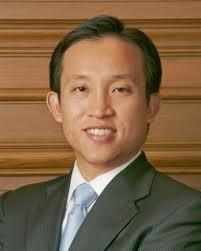
Lee told us that he has “no thoughts” about the project and hasn’t been paying any attention to it. That’s an odd stance, considering that his own Port Commission is pushing it and staffers in his office are working with the developer. This is a big priority for Pak, and the notion that she has never mentioned it to the mayor defies reason. Board President David Chiu, who talks to the mayor regularly, opposes the project, which is in Chiu’s district.

It’s hard to imagine that anyone who pays attention to local politics could be missing what will be one of the landmark votes this spring on the Planning Commission — which will take up the project March 8 — and the Board of Supervisors.

The mayor, may, indeed, be ignoring everything that supporters and opponents of 8 Washington have said and may be waiting until the Planning Commission vote to take a position. But if he’s just ducking questions because he’s planning to support it, he’s making a big mistake.

This is a chance for San Francisco to go beyond the platitudes about building housing, go beyond the hype about “green” buildings, see through the fraud about community benefits and consider what this really is: A special favor for a developer who wants to cater to the top 1 percent of the 1 percent and move San Francisco even closer to being a city of, by, and for the elite. The only reasonable vote on 8 Washington is No.
Food-truck battle at the board of supes

14

The supervisors are weighing in on a state bill that would ban food truck from parking within 1500 feet of schools — and it’s really tricky.

Let’s start with a bit of reality: My kids go to public schools, my son’s in middle school, he rides Muni home — and there’s ample opportunity for him to buy some really nasty stuff. There’s a 7-Eleven a couple of blocks from his school, and kids walk over there all the time and buy those disgusting 32-ounce sugar bombs. If a truck selling chips and soda and greasy tacos showed up at 3:30 p.m., the kids would be lined up to spend the money their parents though was going for a nice healthy lunch.

And the trucks would go there, if they could, the same way the ice cream trucks used to cruise through my suburban neighborhood in the 1960s (yeah, I’m old, old, old) in the late afternoon, when they could guarantee America’s children would be hungry and ready to spoil their supper.

But they can’t, see, because San Francisco already bans food trucks from within 1,500 feet of a public middle school or high school — which is a pretty broad zone.

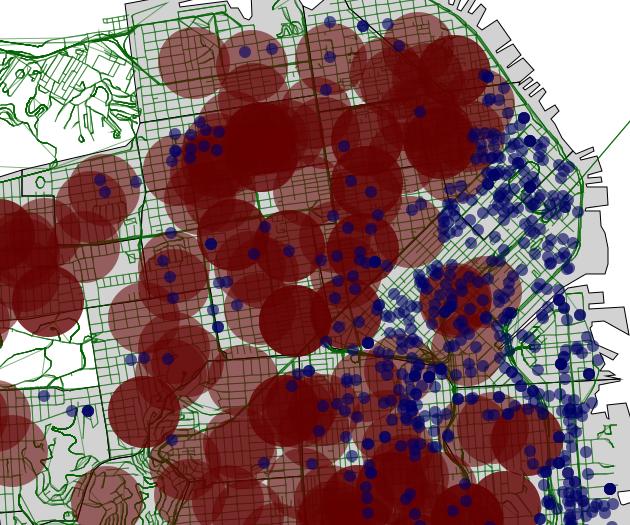
Now Assemblymember Bill Monning has introduced a bill that would make that ban statewide — and would include middle schools and private schools. Sounds good, and some healthy-food advocates love it. But San Francisco’s a little different than, say, Hayward or Fresno — this is such a dense city that there are schools almost everywhere. If you ban food trucks from within 1,500 feet of all schools, then you ban them from about 80 percent of the city. Burrito Justice has a great set of maps that give you the picture (burritohibition!)

The maps also suggest the problems with banning anything from within 1,500 feet of a school in San Francisco. Pot clubs, liquor stores, sex clubs … there are all sorts of places where you really don’t want your kids hanging out, but if you make those broad exclusions, you force them all into a very few small areas (including northern Soma, the waterfront and Bayview) and that’s not exactly fair, either. Should all the food trucks in the city be congregated in those crowded places that fit the 1,500 foot rule?

My 10-year-old daughter walks through the heart of the Castro, which is probably within 1,500 feet of her school, and there’s some stuff in the storefronts that isn’t exactly age appropriate, and we deal. She asked me once why people were walking around naked, and I said “because they like to,” and she shrugged and that was that.My 12-year-old son knows that people smoke pot and that it’s legal for adults to use as medicine; I don’t think the notion of him walking past a well-regulated dispensary is going to make him any more (or less, god help me) likely to try some for himself some day.

So I’m kind of with Sup. Scott Wiener, who wants the city to oppose the Monning bill — not because I want trucks selling Doritos out in front of Aptos in the afternoon, but because I think San Francisco already prevents that, and 1,500 feet is way too much for a city this size. Maybe amend the bill to allow cities to make their own rules, but have the state rules apply if they don’t. Maybe allow cities beyond a certain density to change the distance to 500 feet.

Maybe think a little more about what it really means to ban things because they’re close to schools. It doesn’t always make sense.

PS: Actually, I’m thinking maybe we should ban all multimillion-dollar condos from anywhere within 5,000 feet of a school. Exposing the impressionable minds of small children to such graphic, disgusting, ostentatious displays of wealth has to be bad for them. Worse than seeing a sex club, anyway.


The failure of Lee’s business tax plan

16

The Mayor’s Office and city finance officials are circulating drafts of a new business tax plan that would largely abolish the payroll tax and replace it with a levy on gross receipts.

Ben Rosenfield, the city controller, and Ted Egan, the chief economist, have been meeting with business groups and presenting what’s described in the documents they’re circulating as “one possible idea.” And there’s some very positive news about the proposal: It would greatly broaden the tax base (only about 10 percent of the city’s businesses are hit by the payroll tax) and it’s designed to be somewhat progressive: Businesses with higher gross receipts would pay a higher percentage tax.

The plan is complicated — since some types of industries (retailers, for example) have high gross receipts compared to payroll, and some (financial services) have high payrolls compared to gross receipts, the levies are broken down into four schedules. At the lowest end, companies with comparatively large gross reciepts would pay between 0.05 percent and 0.125 percent. At the highest end, the tax would go from 0.220 to 0.535.
But there’s one central — and simple — element of the proposal: At this point, it’s entirely revenue neutral. In fact, finance officials say, over time the total tax burden paid by local businesses would go down, since payroll tends to rise slightly faster than gross receipts.

That, sources say, is something the mayor has made clear he doesn’t want to budge on. He’s not willing to accept a plan that raises the total amount of money the city gets from business taxes.

Which puts him in synch with what some business groups want: “The business community thinks this should be revenue-neutral,” Scott Hauge, who runs Small Business California, told me.

But in a city that faces a large structural budget deficit, some supervisors have other ideas. “I want to look at new revenue possibilities,” Sup. John Avalos said.

And even the current proposals would let banks, which are exempt from local business taxes, escape without paying anything.
In reality, the proposals are less then revenue-neutral. Rosenfield and Egan project that the new tax system would lead to the creation of 2,500 jobs a year — mostly because businesses over time would be paying lower taxes.

Hague told me that he’s not sure exactly how business leaders feel about this. “We don’t know yet how it will affect people,” he noted. But some political leaders have been clamoring for years for the elimination of the payroll tax, which, by taxing employment, appears to be a damper on job growth.

That’s actually a myth. The payroll tax is so minor that it can’t possibly influence any individual hiring decision. It’s true that if city business taxes in general are reduced, companies will have more money — and some might spend that on new hiring. But San Francisco, like most major cities, has to have some kind of business tax — and I can already hear some downtown types complaining that a gross receipts tax “punishes growth and success.”

This proposal is a long way from what Sup. David Chiu suggested a year ago. His plan would have included a commercial rent tax — ensuring that financial institutions that get away with paying nothing would have to contribute like other businesses. Like most local taxes, it wasn’t perfect — state law bars cities from imposing corporate income taxes and limits what else municipalities can do — but together with a reworked gross receipts tax, it was projected to bring $28 million more dollars into the city treasury — without any job loss.

But the Chamber of Commerce and crew fought bitterly against that idea, and Chiu withdrew it.

At this point, Chiu said, he’s working with the mayor and trying to get the business community to accept the idea of a change in the tax structure. But this is a rare opportunity to do two things — to make the local tax system more fair, and to raise taxes on the biggest companies to bring additional revenue into the city.

The plan will probably have to go to the ballot anyway, so why not do it right?

Green Film Fest shorts: Just Do It

0

Activist ire need a jump start? The Green Film Festival takes over Japantown’s San Francisco Film Society Cinema now through Wed/7. Go for tidings on the fight for our planet around the world — documentaries, expert panel presentations, and short films will be taking place. Check out Ali Lane’s previous reviews from the festival here.

Just Do It

In this intimate peek inside the world of “Environmental Direct Action,” viewers will marvel at the organization and cooperation displayed by the film’s English subjects. Occupy Oakland could really learn a thing or two from these self-proclaimed “domestic extremists,” champions against climate change, who the filmmakers followed for a year. The film starts off in the lead-up to “Climate Camp,” a literal camp-out of protesters in a secret location on a hill above London. From here, the protesters plan an “action.” Their actions seem pretty harmless and whimsical: gluing their hands together and invading the trade floor of RBS to sing songs; putting up posters at the entrance of a bank that says “Undergoing Ethical Renovation”; handcuffing themselves to the front gate of an MP’s home in order to publicly berate his policies. But these protests work. They get the news media to cover topics that were previously ignored.

The subjects of this film are mainly photogenic young people, with a few seasoned veterans as well, like . Some are Cambridge educated. All are uniformly anti-capitalist, as they believe capitalism inevitably leads to exploitation of the environment. They designate spokespeople, meticulously map out their “actions,” and memorize the legal consequences and potential charges faced, making sure to minimize any criminal property damage along the way. Before going out on an action, they write the phone number of their organization’s legal counsel on their forearms. What they’re doing is certainly risky, disobedient, and outside the margins of normal behavior, but the viewer gets the sense that these people have their act together and aren’t much of a threat to civil society.

This is a very sympathetic portrait of a movement, and it’s clear where director Emily James’s heart is. Her subjects’ enthusiasm for the cause, and for activism in general, is infectious. By the end it’s hard not to feel like a lazy bum as one subject intones, “Anyone out there thinking, ‘I wanna do more,’ just do it!” Indeed, this film doesn’t just give an impetus, but also a blueprint for how such things can be done.

The lingering question I had while watching the film, however, remained unanswered: where did these people get their money, for camp tents, and massive amounts of food, and buses, and superglue, and d-locks, and ladders: everything that it takes to protest, and live full-time as a protestor. Where do those funds come from? Perhaps this is a question to ask the filmmakers at the closing night party.

Green Film Festival closing night film and party

Wed/7 7:30 p.m., $12 for film, $15 for film and party

SF Film Society Cinema

1746 Post, SF

(415) 742-1394

www.sfgreenfilmfest.org


SF Chamber poll distorts the facts…again

61

The San Francisco Chamber of Commerce this week released its annual City Beat poll – promoting its results at the top of its website and feeding it to media outlets such as the San Francisco Examiner, which faithfully reported its finding, apparently without seeking underlying data – and once again the poll was marred by distortions and hidden agendas.

For example, the Chamber claims that 58 percent of the poll’s 500 respondents prefer runoff elections (up from 52 percent in 2011) and 31 percent prefer ranked-choice voting (down from 42 percent last year), with the balance refusing to answer or saying they don’t know. But what the Chamber doesn’t say is that voters were read a series of arguments for each system first, and the anti-RCV statement contained a flat-out inaccuracy.

“Critics of ranked choice voting say that it is a confusing system that results in lower voter turnout – as the last Mayoral election had the lowest overall voter turnout in more than 35 years. They say candidates are getting elected with extremely low number of votes which doesn’t represent the true will of the voters. Instead of ranked choice voting, they propose having run-off elections so that voters have a clear choice on something as important as Mayor,” the statement read.

Yet it’s simply not true that November’s 42.47 percent turnout was the lowest in 35 years (as you can see here). Off-year elections have far lower turnouts, as did the last mayoral election in 2007, which had a turnout of 35.6 percent. Even the hotly contested, pre-RCV November mayoral election of 2003 had a turnout of 45.67 percent, just a few percentage points higher that the low turnout that the question implies that RCV causes.

But Jim Lazarus, the Chamber’s vice president of public policy, won’t concede the error, telling the Guardian that respondents understand the statement to apply to only closely contested mayoral elections. “We believe the average voter realizes a competitive race is what we’re talking about,” Lazarus said, dismissing the 2007 mayor’s race as uncompetitive.

Yet Rob Richie, executive director of FairVote, which supports RCV, said the poll was deceptive and seems designed to achieve results that are consistent with public policy stands that the Chamber has taken. “I think they do a better job of making their arguments than the RCV arguments,” he said.

“Supporters of ranked choice voting say it gives voters more choices and does not force voters to vote twice in just five weeks on the same contest. They say it has resulted in more diverse representatives for the city. They also say that it encourages campaigns to find common ground and ways to work together because they must win supporters of other candidates,” reads the polling statement.

Richie concedes that supporters of RCV have made these statements, but he said they aren’t the strongest arguments or the ones they generally tend to lead with, such as how big spending by well-funded independent expenditure groups tend to dominate the low-turnout runoff elections, which more conservative candidates win every time in San Francisco.

But Lazarus claims the Chamber was trying to honestly gauge public opinion, not influence it in favor of Chamber positions. “We didn’t skew it, we’re trying to get honest answers,” he told us. “It doesn’t do us any good to fake the outcomes. We aren’t doing this for PR reasons or press releases.”

Yet many of the issues the poll dealt with are active campaigns in which the Chamber is trying to influence the decisions made at City Hall, such as its longstanding crusade to repeal the city’s payroll tax. In the poll results, 57 percent of respondents said the supported a “payroll tax decrease from 1.5 percent to 1 percent, making up the difference with other revenues.” In the Examiner story, the paper even deleted that last crucial clause.

Yet what neither the Chamber nor the Examiner told readers was that the question was set up with this statement: “It has also been suggested that reforming the city’s payroll tax system could spur job growth. I would like to read you some potential tax reforms that have been suggested to help spur job growth.”

But even with that repetition of “spur job growth” as a prompt, only 25 percent of respondents agree with the crusade of the Chamber and its allies in City Hall to “Eliminate the payroll tax all together, replacing lost revenue with higher license fees and taxes on businesses.”

On the half-dozen tax measures the poll asked about, none of which received majority support, the questions were set up with this statement, “Some members of the Board of Supervisors have suggested a vote on new taxes may be necessary to help solve this budget deficit,” referring to the oft-demonized legislative body that enjoyed 45 percent in this poll, rather than Mayor Ed Lee, who has made similar suggestions and enjoys 68 percent support.

The poll was conducted by David Binder Research, and Binder was out-of-town and unavailable to answer questions. Lazarus said the language in the questions was jointly developed by Binder and the Chamber.

Green Film Fest shorts: The Global Catch

0

Chins up, enviros — this week there’s a slew of movies showing that prove that you’re not alone in fighting the good fight. The Green Film Festival takes over Japantown’s San Francisco Film Society Cinema now through Wed/7, and includes looks at exciting new forms of activism, as well as the film work from intrepid whistleblowers the earth over. Drop through for tidings on the fight for our planet around the world — documentaries, expert panel presentations, and short films. And be sure to check out the rest of Ali Lane’s reviews of Green Fest flicks.

Sushi: The Global Catch

The opening of this film shows Tokyo chef Mamoru Sugiyama carefully placing gorgeous transparent and artistically sliced pieces of nigiri atop perfectly formed mounds of vinegar rice, in his Michelin-starred restaurant kitchen. If you’re the kind of person who loves sushi, this scene makes your mouth water. It’s such a cruel tease. The film proceeds to tell you all the reasons why your San Franciscan appetite for sushi, so geographically remote from the land of its creation, is actually a very destructive thing.

The construction of sushi, in classical Japanese style, is a precise and elegant process, that this film does a beautiful job of exploring. It takes aspiring chefs two years of apprenticeship just to learn how to properly prepare the rice. But sushi is now being mass-produced all over the world, to feed a growing international taste for this once esoteric Japanese delicacy. Elegance and precision have fallen by the wayside, in favor of quantity and expediency. As with most such trade-offs, the environment is suffering for it. Of course the story revolves around money – as the demand has exploded, Bluefin Tuna has become a piscine gold for fisherman.   At legendary Tsukiji fish market in Tokyo, tuna can be auctioned for as much as $1200 per pound. Tuna has been so overfished that at this point, some propose to put it on the endangered species list.

This is a story of global food trends, an intimate cultural portrait of a revered Japanese tradition, and a conservationist’s field guide to seafood. The message is clear: don’t eat more than the earth can comfortably provide. But if, after watching, you still can’t help but crave a bite of sushi, head over to Tataki, San Francisco’s first sustainable sushi bar, profiled in the film and located in Pacific Heights.

Screening followed by panel: “Sushi, Sustainability, and the Fate of Fish”

Sat/3 1:00 p.m., $12

SF Film Society Cinema

1746 Post, SF.

(415) 742-1394

www.sfgreenfilmfest.org


Green Film Fest shorts: You’ve Been Trumped

0

Activist ire need a jump start? The Green Film Festival takes over Japantown’s San Francisco Film Society Cinema now through Wed/7. Go for tidings on the fight for our planet around the world — documentaries, expert panel presentations, and short films will be taking place for the next six days. Check out Ali Lane’s review of Blood in the Mobile (screening Sun/4), and stay tuned for more Green Film Fest reviews next week. 

You’ve Been Trumped

If you needed another reason to hate Donald Trump, besides the crazy hair and enormous ego, this is the film to watch. Turns out he’s destroying Scotland! The documentary follows the land preservation efforts of the town of Aberdeen in Scotland, in the face of the development of Trump’s new multi-million dollar golf resort. The entire project is based on international tourism, bound to generate huge carbon costs associated with jetting people to what Trump claims will be the “world’s greatest golf course.”

This is the story of a big, rich bully and a small, plucky town determined to stare him down. Of course, since it’s nonfiction, it’s actually more complicated than that. It’s also the story of sheep farmers and sand dunes, of neighbors and fences, and a country divided by a single issue. Trump’s initial plan to develop the land in Aberdeen was rejected due to sustainability concerns, but later the Scottish National government overturned these objections, lured by the smell of Trump’s money. The film is a vivid portrait of American greed, and how it warps the local culture of Aberdeenshire, turning its police against its people and stirring up a lot of anger. People are arrested on their own property for “trespassing,” reporters are thrown in jail for covering the story, and the townspeople are forced to suffer thousands of small indignities in order to appease the land appetite of this prototypical tycoon. Even though we live very far away from Aberdeen, the righteous ire that this film generates feels very close to home. We’re all part of that 99 percent Trump so gleefully tramples over.

Double bill with Local Hero

Fri/2 7:45 p.m., $12

SF Film Society Cinema

1746 Post, SF.

(415) 742-1394

www.sfgreenfilmfest.org


Teachers, students demand funding for education

9

People across the Bay Area joined in the National Day of Action to Defend Public Education March 1, with rallies at Berkeley City Hall, UC Berkeley, Oakland City Hall, SF State, and at the State Building on Golden Gate Ave.  Demonstrators at UC Santa Cruz shut down the campus for the day demanding well-funded and quality public education.

At the State building, about 100 engaged in civil disobedience, entering the building’s large lobby for a teach-in on the importance of public education. Speakers included teachers and students from several local schools, including City College of San Francisco, San Francisco State University, and Mission High School.

Around 4 p.m, most left the building to go two blocks down the street to Civic Center Plaza, where about 400 converged to share stories of hardship in affording education and voice demands.

Students from local elementary schools express their concerns at the Civic Center rally to defend public education. Video by Carol Harvey

The day of action was supported and shaped in part by Occupy groups throughout the country, including, here in the city, Occupy SF, Occupy SF State and Occupy CCSF. But unlike most occupy-affiliated demonstrations, speakers March. 1 urged the crowd to support specific policies; initiatives that may go to the ballot in November.

Specifically, the group expressed support for the Millionaire’s Tax measure. If the measure passes, California residents earning $1 million per year would pay an additional three percent in income taxes; those making $2 million or make per year would add five percent. 60 percent of funds raised would go towards education.

There are several competing ballot initiatives to fund education, including one proposed by Governor Jerry Brown. According to a recent Field Poll, the Millionaire’s Tax polls the highest, with 63 percent support.

Some protesters also expressed support for the Tax Oil to Fund Education Initiative.

Support for both measures was one of the demands on a demand letter distributed throughout the events. Activists began the protest with lobbying at the offices of state legislators, and convinced four aides to fax the demand letter to their representatives, including Leland Yee, Mark Leno, Fiona Ma, and Tom Ammiano.

However, some protesters at the State Building teach-in emphasized that legislation would not solve the whole problem.

“This issue is bigger than just taxes. The same power structure that is causing the destruction of our educational system is also destroying the face of the planet that we live on. It’s destroying our personal relationships with one another and all of our brothers and sisters around the world,” said Ivy Anderson, a 2011 SF State graduate and organizer with the environmental group Deep Green Resistance.

The event was peaceful and lasted only a few hours. When the state building closed at 6 p.m., 14 remained inside, continuing to “occupy.” Police issued a dispersal order shortly after six o’ clock, and by 6:40, 13 had been cited on-site and released, according to SF occupier Joshua.

At that point, several raced to board buses down the block, joining about 100 others who began a march to Sacramento. Known as the “99 Mile March for Education,” protesters plan to walk about 20 miles a day until arriving in Sacramento March 5 to take their demands for accessible education to the governor.

According to Joshua, the conflict-free day was a success.

“We had a great rally, and I thought it was an excellent lead-up to Sacramento,” said Joshua.

“But the capitol is obviously going to be a bigger fish.”

The unidentifiable dance grooves of ESG

1

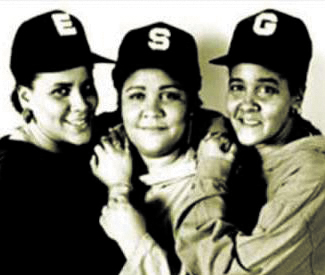
MUSIC Even the strangest sounds tend to lose their unfamiliar aura after a few listens. But no matter how many times I spin ESG’s “UFO,” I find myself utterly incapable of identifying that synthetic warbling that meanders through the minimal groove. Is it water gurgling in old gas pipes, a whirling police siren, the ferocious grumbling of a subway train? Or something more disturbing: Clanging echoes of gunfire, successive bursts of city noise filtered through apartment hallways?

It’s as if the song prompts a flux of associations that never find a place to rest. But as much as the song prompts a heavy dose of uneasiness, it works a curative spell on the body. That mysterious noise, whose relentless growth heightens the pulse of the rhythm, ultimately triggers an urge to break out in rhythm, and to put it quite simply: dance.

“Coming up in the South Bronx, in the 1970s, we watched Star Wars and Close Encounters of the Third Kind,” says lead vocalist and writer, Renee Scroggins, who together with her sisters — Valerie on drums, Deborah on bass guitar, and Marie on congas — originally composed ESG with a couple friends. “At the end of Close Encounters, they have that do do do do in the background when they communicate with the aliens,” she continues. “So I was sitting at home one day, and I thought: What would it be like if a UFO just landed in the middle of the projects? And that’s how I wrote the song. It begins with chaos and craziness, because I know what would happen,” she laughs.

http://www.youtube.com/watch?v=1o5vuMYQyhE

Over 30 years have passed since ESG (Emerald, Sapphire and Gold) pressed “UFO” to wax on its debut seven-inch for Factory Records in 1981. Today, the unlikely story of the vinyl’s origins seems to be the stuff of lore. While still teenagers, the Scroggins sisters had been performing in New York’s downtown scene for a couple of years. “We were opening for A Certain Ratio at a club called Hurrah in New York when Tony Wilson [of Factory Records] heard us,” Renee recalls, “and he said, ‘how would you like to make a record? I was like, yeah sure, because I didn’t think he was serious. But this was on a Wednesday night, and by Saturday, we were in the studio recording with Martin Hannett.”

Hannett, Factory’s eccentric in-house producer who is likely best known for his work on Joy Division, lent his uncanny touch to ESG’s sound. Bookmarked by the diss song “You’re No Good” and the other end of the love spectrum, “Moody,” with its emotional highs and lows, the EP consists in a stripped down polypercussive funk that would mark ESG’s style for the rest of its output: loosely structured drum patterns weave around pockets of emptiness and stark bass lines, letting Renee’s vocals flutter and hypnotize. It caught the attention of Ed Bahlman at NY’s 99 Records, who was already unofficially managing the outfit but hadn’t realized its full potential in the studio. The Scroggins followed with another EP and recorded their debut full-length for 99, Come Away with ESG, at Radio City Music Hall in ’83.

Come Away solidified its magnetic role during a fertile period of New York’s musical history, in which at least three strands of musical forms encountered each other to unexpected effect. The angular edge of post-punk deconstructed the blues guitar, no wave bands challenged rock purism by stressing the danceable groove, and block parties exploded in the South Bronx, establishing the conditions for what would eventually come to be known as hip-hop. ESG — which shared the stage with the Clash, Gang of Four, and Grandmaster Flash, and performed at Paradise Garage, Danceteria and the Mudd Club — was at the threshold of all this momentum.

What might single ESG out from its peers, though, is its rooted lineage in soul. “James Brown is definitely one of the biggest influences on my writing style,” says Renee. “He would always take it to the bridge, and cut loose, and I’d be like — ‘I didn’t want that part to ever end!’ But, I thought, if I could write a song, and just keep that bridge part going, then people could dance all night.” It’s not all that surprising that ESG’s talent for elaborating, intensifying, and prolonging the aesthetics of the bridge, in frenetic jams off its debut like “Dance,” “The Beat,” and “Christelle,” would correspond with the birth of the DJ, who would attempt a similar effect by looping breaks found in dusty bins of soul, funk, and rock. Soon enough, “UFO” became one of those sampled records.

Listening to “UFO” is all the more disorienting because of the overwhelming dispersion of offspring it calls to mind. That synthetic siren has been sped up, modulated, faded behind layers of reverb, or even spliced in its pure form onto a new backbeat. There are too many to name: Big Daddy Kane’s “Ain’t No Half Steppin’,” Notorious B.I.G.’s “Party and Bullshit,” and countless more from J Dilla, Beastie Boys, Q-Bert, among hundreds, if not thousands of others. You’d think that such an influential legacy would neutralize “UFO,” finally render it to that sterile status of the familiar, but the effect is much the opposite, as if its staggered mutations have only increased the alien, yet maddeningly ecstatic element, within the song.

ESG returned to the recording studio in the 2000s, introducing both Renee’s daughter as well as Valerie’s to the family venture. It dropped two albums of solid new material for Soul Jazz, which also released compilations of its classic singles and rarities. But after more than 30 years of performing and making raw grooves as well as some pop oriented songs in the mix, ESG plans to self-release its final record, Closure, this month (esgclosure.com), to coincide with a farewell world tour. So this might just be the last time its unidentified funk touches down live in San Francisco. 


ESG

Presented by No Way Back, With DJ sets from Solar, Conor, and Junior

Sat/March 3, 9 p.m., $20

Mezzanine

444 Jessie St., SF

www.mezzaninesf.com

Back in sight

2

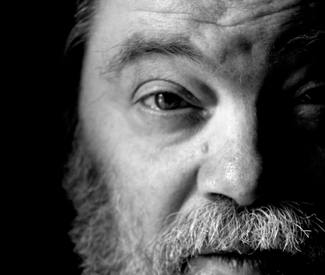
MUSIC Roky Erickson spent much of the past few decades as the subject of endlessly rehearsed cautionary tales about the dangers of mind-altering drugs and mental illness, and romantic anecdotes framing him as a quasi-oracle, gifted and cursed with a second hearing into the weirder vistas of rock ‘n’ roll.

Following the release of Keven McAlester’s You’re Gonna Miss Me in 2005, Erickson reemerged as a subject of a different kind, as McAlester’s documentary dispelled some of the more profound biographical shadows, shedding light on the catalogue of ghosts and demons that haunt Erickson’s expansive body of recorded work.

Now 64, Roky Erickson has had such an indelible influence on psychedelic music, many would call him an architect. In the 1970s he reappeared, Rip Van Winkle-like, to a changed pop music landscape, where he would take a nascent approximation of punk and run it through his own esoteric sensibilities (“horror rock,” he called it), stumbling upon a lo-fi home recording aesthetic in the interstices of this period, though largely out of necessity, mind.

Most recently, Erickson carved out a provisional home in windswept and country-inflected indie. Never permanent, these dwellings serve as temporary shelters — motel rooms — for a restless and untethered voice, part Hank Williams, part Howlin’ Wolf, but even this doesn’t do it justice, and the veritable grimoire of demonic (lately divine) lyrical figures through which it moves.

His most recent record, True Love Cast Out All Evil (2010, ANTI-) — his first new material in more than a decade — saw collaborating band Okkervil River orchestrate a ghostly kind of folk rock capable of tracing the unpredictable contours of Erickson’s musical ideas. But the most memorable moments occur when the smooth continuity of the record is punctuated by intimate and acoustically frayed sounds emphasizing the fragile nuances of Roky’s performance.

The music dissociates into a field of droning harmonies, interspersed with snatches of studio banter, of singing birds and rapidly cycling TV channels. It’s hard not to hear these fragmentary moments as consciously referencing the intrusive sounds and voices that partially characterized his mental illness, yet here they have the feel of an exorcism, casting out, as it were an insistent static.

If there’s an underlying consistency to his immense and scattered catalogue, it’s that Erickson is a consummate blues singer, keenly attuned to the expressive potentials of rock n’ roll, and moreover, preternaturally skilled in reaching his listeners. Roky built up a rich lyrical world of vampire bats and B-movie extraterrestrials, and intangible vibrations that, in the minds and ears of listeners, came to stand in for a wealth of emotional timbres.

We feel, however faint or garbled, a connection through the cadences and inflections of Erickson’s voice. Like reading a novel written in a language you only half understand, you experience his music through these shifts in tone, through his alternating waves of anger and frustration and sadness, and the rare moment of contentment where Erickson retires into a sonic labyrinth of his own design.

When Elvis Presley died, Lester Bangs made the observation that we were all, effectively, saying goodbye to one another, having lost a figure whose music we could all come to a tentative agreement. Bangs’ fantasy of a capacity for a radical and far-reaching empathy encoded rock ‘n’ roll is one that we’ll most likely never stop repeating to ourselves.

Presently, it’s an invitation to patiently listen as the haunting and singular voice of the 13th Floor Elevators, of Roky Erickson & the Aliens, and a vast catalogue of hotel tapes and live recordings and rarities drifts from Austin to San Francisco. 


ROKY ERICKSON

With the Night Beats

Sat/3, 9 p.m., $25

Great American Music Hall

859 O’Farrell, SF

(415) 885-0750

Awesome explosion

0

FILM It’s almost impossible to describe Adult Swim hit Tim and Eric Awesome Show, Great Job!, but “cable access on acid” comes pretty close. It’s awkward, gross, repetitive, and quotable; it features unsettling characters portrayed by famous comedians and unknowns who may not actually be actors. Tim Heidecker and Eric Wareheim, who are much more low-key than the amplified versions of themselves they play on the show and in the new Tim and Eric’s Billion Dollar Movie, discussed the spoils of cult fame the morning after a recent screening in San Francisco.

“Seeing the last ten minutes with our hardcore fans — that was the best, because they’re laughing at everything,” Wareheim says. “Versus, we just came from the Sundance Film Festival, and there were good crowds, but there were a lot of people who didn’t know us. It takes awhile to adjust to what we do, like a learning curve.”

Though it opens theatrically this week, Billion Dollar Movie has been available On Demand since the end of January.

“The idea is to get it out to as many people as possible, especially people who won’t be able to see it in theaters, since it’s a limited theatrical release,” Wareheim explains. “But I also think that by getting it out there [early], our fans are talking about it, and they’ll go again in the theater.”

So, how do you transform something comprised of bite-sized insanity into a feature-length film? “Early on, we made a choice not to do a sketch movie, or just make a long episode of the show,” Heidecker says. “We felt that the pacing would never sustain itself. We tried to pace it in a way that the craziness would be there, but it just wouldn’t be coming at you so rapidly. But still, some people are saying that it’s completely exhausting. For us, we feel like we scaled down, but that might not be the reaction of the man on the street.”

http://www.youtube.com/watch?v=88pv0cbw8yQ

“For someone who’s unfamiliar with us, it’s at least an interesting take on comedy,” Wareheim says. “Some people are really going to enjoy it, some people are not going to get it, and some people are going to hate it.”

And though Billion Dollar Movie contains its share of boundary-pushing gags (literally, you will gag), Heidecker and Wareheim’s humor also springs from their deliberately crappy production values, inspired by commercials, TV outtakes, and promo videos — and necessitated by their own low budget (title notwithstanding). Still, Heidecker sees the movie as a turning point for the pair.

“We’ve been playing with that aesthetic for awhile now, and it is getting a little redundant,” he says. “As in any kind of aesthetic trend, you’re gonna run out of ammunition. I think in a lot of ways, the movie moves past the aesthetic [of the TV show]. We use it in certain places where it’s appropriate, but it wasn’t like, this is all we do. You gotta have other tools in the toolbox.”

TIM AND ERIC’S BILLION DOLLAR MOVIE opens Fri/2 in Bay Area theaters.

Mayor Lee praises the importance of nightlife to SF

3

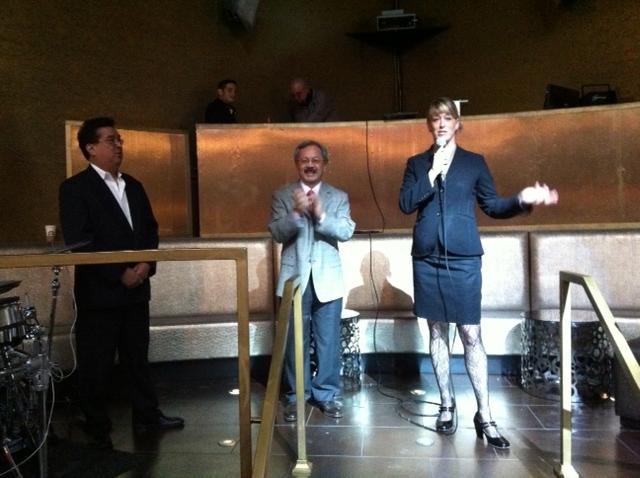
Addressing a gathering of nightlife advocates at a California Music and Culture Association event last night, Mayor Ed Lee praised the economic and cultural role that the entertainment industry plays in San Francisco, announced plans to add a “nightlife unit” in the Mayor’s Office of Economic and Workforce Development, and even hinted that Halloween in the Castro might be returning after being shut down during the city’s so-called “war on fun.”

“If I’m going to be about jobs,” he said, referring to his near-constant emphasis on economic development, “it should be both for the day and for the night…I do recognize this as a business, as a serious contributor to the economic engine of city.”

Lee referenced the new Controller’s Office report that was requested by Sup. Scott Wiener, which concludes that the nightlife industry generates about $4.2 billion in annual economic activity in the city (that report will be the subject of a rally and hearing on Monday at City Hall starting on the steps at noon). And he said that the benefits of a vibrant nightlife scene also help make San Francisco an appealing city for other businesses, an indirect economic benefit.

“You’re all part of a great part of the city that keeps everyone refreshed,” Lee said, later adding, “I think we can do more at night. The young people who work gobs of hours need to have an entertaining evening.”

As he announced plans to add a nightlife unit to OEWD, the office that works with private companies looking to locate or expand here, he said, “We, as government, need to fast-track things that are successful.” Yet he also said that public safety is still a challenge and called for the industry to work closely with police to keep everyone safe.

Yet Lee spoke positively about Halloween in the Castro, a once-popular event that was canceled because Mayor Gavin Newsom and then-Sup. Bevan Dufty (who Lee recently hired as his new homeless czar) feared the city couldn’t control it, and Lee alluded to plans being developed to revive it in some form. “I hate to see any event that brought so many people to the city gone,” he said.

The event was held at The Grand, a club owned by CMAC board member and new Entertainment Commissioner Steven Lee. CMAC was formed two years ago in response to crackdowns on SF nightlife by city and state officials.

The Performant: The Secret to Life, the Universe, and Nothing in Particular

0

“Celestial Observatories for Cyanobacteria” illuminate the knowledge gap at the San Francisco Arts Commission

“The purpose of our lives is to celebrate the grandeur of the cosmos” — William Kotzwinkle, Dr. Rat

At the age of eight, possibly inspired by my first encounter with Madeleine L’Engle’s A Wind in the Door, the notion occurred to me that just as individual cells were undetectable (to the naked eye) in the human body, so were individual human beings virtually undetectable on the great organism that is the world, and just as the planet earth was virtually undetectable in the vastness of a single galaxy, that single galaxy was virtually undetectable within the infinite scope of the universe.

As I imagined that individual cells were equally incapable of fully comprehending the individual body or organism that they inhabited, so I became aware that mere specks such as human beings could never hope to comprehend the universe entire. Not really a ground-breaking theory, you understand, but heady conjecture for an eight year-old.

It’s precisely that gap of comprehension between the very large and very small that conceptual artist Jonathon Keats addresses with his “Celestial Observatories for Cyanobacteria,” aka the Microbial Academy of Sciences.

At first glance you might mistake it for the leftovers from a classroom science experiment, a tabletop of uniform petri dishes each filled with clear liquid (“brackish water” the description clarifies). But when you bend over the otherwise unremarkable display, a projection of Hubble telescope imagery shimmers into view, a colorful array of swirling galaxies and sparkling stars, spread out across the patient petri plates, an exotic tapestry.

What you can’t really tell about the contents of the petri dishes just by looking is that each one contains cyanobacteria, oft-referred to as blue-green algae, a photosynthetic bacterium with an ability to withstand almost any environmental extreme. But whisked from the relative comfort of their “homes”, these particular bacteria are being exposed to the grandeur of the cosmos for a reason—so that they might tackle the knotty conundrum that has plagued human scientists for generations—that of a unified theory of everything. “Might it be,” wonders Keats in his artist statement, ”that organisms simpler than us are better able to grasp the simplicity underlying the universe?” If so, the cyanobacteria aren’t telling—not in a language we can comprehend anyhow. But after their higher education is over (presumably when the show closes), the plan is to introduce them back to where they originated, so that they might further educate their bacterial peers in whatever grand hypotheses they might have hit upon. 

Just one exhibit of several at the San Francisco Art Commission’s “Vast and Undetectable” show, a collection of artworks exploring the stated theme in a variety of mediums, Keats’ piece comes closest to identifying the unknowable on both sides of the undetectability spectrum—from the unfathomable expanses of the cosmos, to the infinitesimal recesses of the micro-universe. And though we may never know how their exposure to astronomy will affect the microscopic “students” of Keats’ academy, we can follow their example, however briefly, by pondering the implications of a space race between beings so fundamentally disparate they might never even know that they are in competition.


Death penalty could go before California voters in November

12

It appears that California voters will get a chance to abolish the death penalty this November, and that supporters of the proposed ballot measure will use mostly fiscal and public safety arguments to pick away at the majority of state residents that polls have shown still support capital punishment.

The group SAFE (which stands for Savings, Accountability, Full Enforcement) California this morning held press conferences in San Francisco and three other cities to announce that it is turning in more than 800,000 voter signatures (504,764 are needed) to qualify a measure that would make life in prison without the possibility of parole the maxiumum sentence in California. It would also spare the 720 inmates now on death row in San Quentin Prison, converting their sentences to life in prison.

“We make history today. This is the first time that voters in California will have the opportunity to replace the death penalty with life in prison without the possibility of parole,” LaDoris Cordell, a retired Santa Clara County Superior Court judge, said at San Francisco City Hall.

She was flanked by Sups. Scott Wiener and Christina Olague and other supporters of the measure, as well to two visuals showing a county-by-county breakdown of the unsolved homicides and rapes in California. San Francisco ranks near the top in both categories, with 58 percent of murders (450) and 70 percent of reported rapes (1,236) going unsolved between 2000 and 2009.

“The money to catch these murderers and rapists is not there because it is on death row,” Cordell said, noting that the state wastes an estimated $184 million per year on capital punishment, a figure that represents the roughly $100,000 more per year it costs to house someone on death row versus in the normal prison population and the cost of lifetime legal representation and appeals to which condemned prisoners are entitled.

They argue that in a cash-strapped state, that money could be put to better use solving crimes and supplementing police budgets, with Wiener calling for state residents “to be rational in our approach to public safety and end the death penalty in California.”

Most studies on capital punishment have shown that it does not act as a crime deterrent and that it does not save money, so most arguments supporting it have been emotional ones offered by grieving families or law enforcement officials describing the heinous details of crimes. 

SAFE California seemed to be trying to preempt those appeals with speeches in San Francisco by three other supporters of the measure: Jeanne Woodford, the former San Quentin warden who now runs Death Penalty Focus; Obie Anthony, who was wrongfully accused of murder and exonerated last year after serving 17 years in prison; and Deldelp Medina, whose aunt was murdered by her cousin during a psychotic breakdown and faced capital punishment.

Woodford oversaw four executions at San Quentin and said she and other corrections workers were plagued by the questions of whether the person they were executing was innocent and whether state-sanctioned killing was really making the world safer: “No public employee should ever carry that burden, because I can tell you the system is flawed.”

Many studies have shown the criminal justice system is often biased against African Americans like Anthony. “At the age of 19, I was charged and faced with a murder I did not commit,” said Anthony, who was convicted based on eyewitness testimony of a pimp who later admitted that he was lying to get leniency in his own criminal charges, a deal with police that jurors never learned about.

“I’m living proof that terrible mistakes can happen and there is no perfect system,” Anthony said.

Medina told another story common to California’s flawed justice system, that of overzealous prosecutors seeking to appear tough, often for political reasons, being matched against overburdened public defenders who often lack the resources to properly defend poor people accused of serious crimes.

She noted how the death penalty gets “trotted out as a show pony in every election cycle” by politicians using the families of crime victims. But the reality is that vengeance isn’t a healthy emotion, and she said that capital punishment does little to heal a family’s pain: “The death penalty is an empty promise to the families of victims.”

Cordell said that capital punishment, which often takes 25 years to occur once all the appeals are exhausted, simply prolongs the survivors’ pain. “A quarter of a century is not justice for these families,” she said. And with the high cost of capital punishment exacerbating government funding shortfalls and inherent flaws in the court system, she said, “Justice in our criminal justice system is in grave peril.”   

Green Film Fest shorts: Blood in the Mobile

0

San Francisco is, famously, home to film festivals that wanna make a difference. The Transgender Film Festival, the Anti-Corporate Film Festival, the Bicycle Film Festival — the list and cameras roll on. There’s a reason for all these cinematic communes. The power of a film festival to make people sit down and hang out with open eyes and enough snacks to keep them in one place is formidable. It’s prime time to absorb information — or just catch that activist flame that the whipping winds of a presidential election year can threaten to extinguish. 

This week, the second annual Green Film Festival hits the big screen starting today, from Thu/1-Wed/7, taking over the must-see-if-you-haven’t-yet SF Film Society Cinema in the basement of Japantown’s New People mall. So thrilled were we by its enviro-conscious, better world-making fervor (and its capable, enjoyable program of films) that we will be running brief reviews of its offerings for the next four — business, c’mon now — days. Here’s the first of these, a Sun/4 screening that explains the connection between conflict and Africa and your cell phone. Blood in the Mobile‘s screening will be followed by a panel discussion on how consumer products can be made more sustainably, and built to last. 

Blood in the Mobile

Social consciousness rises to a whole new level in Danish director Frank Poulsen’s film about the minerals used in mobile phones. Poulsen goes deep into the mines of the Democratic Republic of the Congo in a first-person investigation that implicates the viewer along its dark and frightening course. The film manages to be both extremely informative, as well as thrilling in a way that is usually curtailed to the domain of Hollywood action films. Gorgeous camera work accentuates the intimacy of Poulson’s revealing interviews. One example: the Congo colonel who shows off his collection of combat uniforms with a childlike pride. Poulsen and his camera get to know his subjects in a three-dimensional way, capturing many real spontaneous moments of connection. The viewer comes away shocked by both how cell phones are made, and by how other people must live in order for such things to continue to be made. A beautiful, intense, and emotionally draining film, Blood in the Mobile literally takes you to hell and back. The inside of those mines are pitch-dark, and crammed with sweating bodies; children as young as 12 hammer away so that we can all text our friends.

Sun/4 3 p.m., $12. SF Film Society Cinema, 1746 Post, SF. www.sfgreenfilmfest.org

Nite Trax: Red Bull Music Academy schools the Bay

0

We’re not usually ones for product placement, but Red Bull has been making some serious roads into quality nightlife. Tonight (Thu/1) the always impressive annual Red Bull Thre3style DJ competition comes to Ruby Skye, pitting several local DJs — and two from farther up the Coast — of various styles against each other for regional championships that could lead them to glory in Vegas later this year. (The “thre3style” refers to the requirement that DJs mix at least three different genres of music into their 15 minute sets.) 

Red Bull Music Academy Radio is a go-to for dance music lovers who want to get clued in to what some of the best techno, house, hip-hop, and global bass DJs and producers are doing. And last month, the Red Bull Music Academy itself came to San Francisco to kick off the open-to-all Academy application period, participating in an excellent series of talks and performances by some music greats. What is the Red Bull Music Academy, you ask? (Don’t worry, there’s no quidditch involved.) You can actually be a part of it!

The Academy is a “world-traveling symposium” consisting of DJs, vocalists, producers, musicmakers, and super-fans who’ve been selected based on their applications to attend workshops, training sessions, and parties that are, well, rad. The Academy season culminates in a huge weeklong nightlife and music extravaganza in New York City. From what we saw, Academy members are a really diverse international crowd that benefits from all this networking and exposure (and energy drink?). In any case — apply already, applications are due April 2. Find out more details here.

Meanwhile, here are recordings of the interviews with the musicians who blitzkrieged SF for the application kick-off.   

>>Saxophone deity (and Black Panthers soundtracker) Gary Bartz, who later appeared for a stylish, jazzy, super-diverse and nattily dressed evening at Yoshi’s with Bilal and Aloe Blacc as “The Gary Bartz Project featuring Bilal and Special Guest Aloe Blacc produced by Jill Newman Productions” (branding!)

>>Stretch and Bobbito, groundbreaking hip-hop hosts on Columbia University’s WKCR radio in the early ’90s — our friend texted us from their talk: “Their spilling all their secrets about cutting up vinyl and shit!” — who later rocked Mighty.

>>Absolutely spot-on house legends Masters at Work, aka Kenny Dope and Lil Louie Vega, spilled a few secrets of their own in their lively discussion, and then went on to play a bonkers-packed 1015 Folsom for an adoring crowd that stuck with them til 4 a.m., through Latin jazz, some R&B twists, and plenty of classics. 

We’re excited to see what happens at the big Academy summit in NYC — sign up and tell us how it goes. 

The 8 Washington disaster goes to Planning

100

The urban planning disaster that is 8 Washington goes before the San Francisco City Planning Commission March 8 amid a long list of questions — including Mayor Lee’s position on the project and how it could screw up the America’s Cup.

Developer Simon Snellgrove wants to build the most expensive condos in San Francisco history on the waterfront, 145 units that will be far out of reach to anyone who makes less than half a million dollars a year. And many of the units will require income far higher than that. It’s not just housing for the 1 percent; it’s housing for the top half of the 1 percent.

There’s no need for this kind of housing in SF; the very rich have no problem finding places to live. And the spot zoning violates every standard of good waterfront planning practice.

The project will benefit the Port of San Francisco, which stands to take a cut of the money since some of the project is on Port land. But more than half of the land is owned by Golden Gateway and is a former redevelopment area, so the supervisors and the Port are going to have to fight over who gets the property tax increments and how that’s all financed.

More interesting, 8 Washington will be a boon to Golden Gateway, which as the landowner is a partner in the deal. And Golden Gateway is one of those big properties that are paying far too little in city taxes. When the complex changed hands several years ago, the owners used a stock-swap deal to transfer it, avoiding the Prop. 13 reassessment that could have substantially raised its taxes. So the city’s losing millions of dollars — and now Timothy Foo, who is the principal owner of Golden Gateway, will be getting a nice favor from the city he’s been screwing.

Oh, and by the way — a lot of Golden Gateway units are being advertised as short-term (that is, hotel) rentals — something that violates at least the spirit of city law. This is an outfit that deserves special zoning treatement from San Francisco?

Then there’s the fact that this could be a serious problem for the big America’s Cup party. Project critic Brad Paul has been analyzing the impacts of the development, and noticed some new language in the comments and responses to the Environmental Impact Report suggesting that excavation could lead to something like 200 dump-truck trips a day along the Embarcadero — roughly one trip every two minutes. In an email to Paul, Paul Matltzer in the Planning Department confirmed that the likely construction process could, indeed, involve that many dump trucks, rumbling along the Embarcadero during the peak construction period, which will also be the peak period for America’s Cup tourism.

Dump trucks, Paul (who used to drive one) notes, start slowly and brake slowly. The Embarcadero is already crowded — and will be far more crowded during the Cup races, so much so that city officials are thinking of closing traffic lanes to all but bicyles and transit. How, exactly, will that work out with 200 trucks a day fighting for room?

I’ve called and emailed the America’s Cup people, but they haven’t gotten back to me. I’ll keep you posted.

Lee’s office hasn’t gotten back to me, either, but I’m hearing that the mayor is telling people he hasn’t made up his mind — on a project that’s a week away from the Planning Commission and that one of his close allies, Rose Pak, is strongly promoting.


Maximum Consumption: Overlap at Public Works pairs the audio with the edible

0

So at Public Works this Thursday you can: watch veteran SF DJ Mophono and beat-driven gothsters Water Borders* live, learn about innovative advancements in music-making, peep some short films and new local art, and nibble tasty vegan treats. All in one event, from the safety of your own neighborhood club.

We all know there are overlapping circles between the arts – even the edible arts – and this is the belief that drives Overlap.org, a hyphen organization (music-arts-technology) that also has been hosting parties since 2006. In prep for the next installment of Overlap – which goes down Thursday – I spoke with Ghostly International’s Christopher Willits (Overlap.org’s founder, experimental SF-based musician) about music, food, and fostering local creativity:

SFBG: What will you be doing during the designing process workshop?

Christopher Willits: I’ll be covering a popular music-making and production tool called Ableton Live. I’ll be talking about the basics of this software system and how you can make expressive creative art with this digital tool.

SFBG: What are some other activities that will take place during this installment of Overlap?

CW: We have some great live music and a diverse lineup with Mophono, Water Borders, and Danny Paul Grody. Local films will be shown, we’ll have local vegan food from Freedom Kitchen, food by Rocky’s Fry Bread, and more local vendors announced the day of. We’ll have an info booth for our friends at Mission Creek Festival, and this time we also have very cool art vendors – Dave Marcoullier, The Heated, and more.

SFBG:
Can you describe the vibe? What has been most surprising about previous Overlaps?

CW: I connected with Public Works after a SF Forage event I performed at, and we found that we shared a common vision of where the Overlap event could go. Our first event with [them] was last October, it proved the concept and set the tone – a relaxed evening of diverse art and some really awesome people hanging out and meeting. It’s cool to see people coming out of their usual scene and connecting with this idea of greater creative community overlapping, a community made from unique but interrelated groups.

SFBG: Why incorporate local food into a music event?

CW: We support the localization of food. Our last events have featured permaculture discussions about decentralizing our food sources. We can do this in SF.  Plus we just want people to be comfortable with some delicious clean food and feature these hard-working culinary artists. They are so much a part of the creativity of this city.

SFBG: Do you see any connections in the art of cuisine and the art of music? If so, what?

CW: Absolutely, the process, texture, flavor, color, history. Music, just like food, is woven in the very fabric of our culture. I don’t know of two other things that bring people together better than food and music.

SFBG: What are your personal favorite local places to eat?

CW: I’m really into Gracias Madre right now. Ask for the hot sauce, it’s this paste-like mixure of a couple different chiles. Yum. I think you need to ask for it.

SFBG: Future goals for Overlap.org and Overlap parties?

CW: Our goal is simple – to grow creative community in San Francisco. The rest will fall into place. We want to provide that place and time for people to come together and strengthen new bonds.

I have this feeling that we’re within a new creative wave in SF. We’re living in an amazing place and time, we’re all redefining how art and community interact and grow together. We have so much imagination and creativity. Together we are redesigning how our local communities can connect, come together and ultimately incite creative change.

Overlap
With Christopher Willits, Danny Grody, Mophono, Water Borders

Thurs/1, 7 p.m., $5-$10
Public Works
161 Eerie, SF
(415) 932-0955

www.publicsf.com


*An absolute aside: Water Borders’ Amitai Heller once casually told me he’d want to do a TED talk on the intersection of goth and baseball, and I think about this often, joke or not.

Nathaniel Blumberg: Open to change

0

By Wilbur Wood

 (Wilbur Wood was a student of Nathaniel Blumberg in the early 1960s at the University of Montana in Missoula. And he was the leader  of a contingent of Blumberg students that turned up in San Francisco, many dispatched by the  Dean to work on the Guardian during the highly active and newsworthy 1960s.   Wilbur was a poet and a reporter,  with a master’s degree in creative wiriting at San Francisco State, so he fit in well at the Guardian. He had edited his campus paper,  so I made him city editor. He covered the 1967 mayor’s race and operated as if he were directed by Blumberg himself.  Wilbur followed Joe Alioto around, from place to place, and found that Alioto was changing his story depending on the audience.  Wilbur, as a Blumberg mentee, was not shocked. He nailed Alioto and  wrote one of the most amusing and  illuminating stories of the campaign. but it did not deter Alioto from becoming mayor. Wilbur ‘s big triumph as city editor was his work in positioning and editing an investigative story exposing how the members of the  local  San Francisco draft boards were anonymous, establishment types who worked in secrecy at secret meetings to draft a disproportionate number of minorities.  The expose  appeared in Deccember, 1967, in  the red hot middle of the Vietnam War. It was a bombshell, the first such story ever done in the nation, and led to extensive litigation on behalf of draftees in federal court, pioneering reforms in the draft, and inspired a national New York Times investigation.  It was written by Eugene Hunn, the husband of Nancy Engelbach Hunn from Kalispell, Montana, and a classmate of Wilbur’s and a student of Blumberg at the Montana School of Journalism.

(Alas, Wilbur  went back to Montana, as all Montana people seemed to do, and is now a poet, reporter, and philosopher living in his hometown of Roundup, Montana with his wife Elizabeth. She worked as an ad representative at the Guardian. Elizabeth and Wilbur run a a writing, editing, and consulting business called Stone House Productions. The stonehouse was built by Wilbur’s grandfather and is where the two live, work, and play.   Others in this Guardian era also went back to Montana:  Printer Bowler, Troy Holter, Larry Cripe, Nancy Engelbach Hunn, Karen King, Bruce DeRosier, Doug Giebel et al, a talented group of journalists, writers, and political activists bristling with Montana populism. The Blumberg/Montana contributions were enormously valuable in our early days when we had lots of ideas and ambitions but slender resources.   Why they left San Francisco to go back to Montana is still a mystery to me.)

I’m late for class, jogging, short-cutting across a mowed lawn in front of the School of Journalism. A window squeaks open and the unmistakable voice of the Dean, Nathan Blumberg, roars out a second story window: “BARBARIAN!”

Astonished, I plop down on the ground, speechless, chagrined, then leap up and disappear into class. It is the early 1960s. The Dean is, at that time, a man who believes that people should walk on the sidewalks, not upon the carefully tended lawns, at the University of Montana. He sees a reason for rules, even as he openly questions many of them

A scant six or seven years later, this same man is gliding over those same lawns, sailing Frisbees into the sky, chasing the return throws from students, the occasional faculty colleague, and former students back for a visit.

“When did Nathan start calling himself Nathaniel?” asks Bruce Brugmann, editor and publisher of the San Francisco Bay Guardian. We’re talking on the phone on the day of Nathaniel Blumberg’s death, February 14, 2012. Valentine’s Day. It is fifty-four days before his 90th birthday, on April 8. (April 8, Blumberg was delighted to learn, is Buddha’s birthday.)

“The name change happened in the 1970s or early ‘80s,” I tell Brugmann. Bruce, back in 1953, at the University of Nebraska, was a student of Nathan Blumberg. “We called him by his last name,” Brugmann said, “outside class. We never used his first name.”

Nor did we in the early ‘60s, I reply. He was The Dean, Dean Blumberg — until Printer Bowler (one of his students) began calling him “Coach.” Things were starting to loosen up by then.

“Blumberg is who inspired me,” Brugmann says. “He was highly critical of the mainstream press–and this was back in the ‘50s. He pointed out their faults in class. He advised me to go someplace – he mentioned San Francisco — and start an independent weekly newspaper. When I could do that, I did.”

But why change his name from Nathan? Both Brugmann and I know people who, through the years, met Blumberg and later named their sons Nathan. “It’s about affirming his full identity,” I say to Bruce. “He decided to accept his name as it appears on his birth certificate: Nathaniel Bernard Blumberg.”

NBB arrives at middle age in the 1960s — a man of high principles, acute intelligence, possessing an inquiring mind along with great reservoirs and pride and stubbornness, his career a success. He arrives at middle age but does not come to a stop. He opens up. Opens his heart to an expanding circle of friends. His property on Flathead Lake becomes a destination. Music, talk, good food and drink flow in the clearing under the tall trees.

Not long ago Nathaniel brought up an argument he and I engaged in, more than 40 years ago, driving up the Big Sur Coast on our way back to San Francisco. We’d made a day trip to San Simeon, and toured the hilltop castle of the newspaper magnate William Randolph Hearst. Our argument was about Vietnam and the Civil Rights Movement. Blumberg thought the two issues were different, and that linking one with the other would damage the prospects for each cause, anti-war and anti-segregation. “You said the two were connected,” Blumberg reminded me, adding that about a year later, Martin Luther King, Jr., made that connection in public, in a speech at the Riverside Church in New York City. Nathaniel wanted to tell me that I had been right.

A veteran of World War II, NBB wrote the story of his weaponry unit going up against highly trained Nazi soldiers in the Battle of the Bulge. He honored that moment in history, but he approved of the next generation’s aversion and resistance to the war it had been handed: Vietnam. Although he was part of what Tom Brokaw called “the greatest generation,” Nathaniel rejected that label. He preferred the Sixties Generation, he told me, more than once, because “you did not accept the word of the government as truth.” Nor did we accept, he said, the word of the big corporations.

Nathaniel supported anyone trying to create a world based on love.

Les Gapay, a forrmer Blumberg student, writes a Blumberg remembrance and Blumberg writes his own obituary.

http://www.sfbg.com/bruce/2012/02/28/nathaniel-blumberg-everyone-needs-mentor


The right to a civil lawyer

10

I like Sup. David Chiu’s idea of giving indigent plaintiffs in civil cases the right to a lawyer. It’s one of those legal and political issues that’s been hanging around for decades: Everyone accused of a crime has the Constitutional right to counsel, but if you’re sued and have no money, you could very well be  SOL.

Now, there are a few places that some people can get help — nonprofit legal groups that help seniors, tenants, and others, but there aren’t enough of those lawyers to meet the need, and some people don’t qualify for any of the available help. Under the law, a poor person who gets sued has no guaranteed right to any assistance at all, and can wind up representing him- or herself in court, even if he or she has no legal background or experience.

That’s one reason landlords tend to win eviction cases against low-income people: If the tenant can’t find free legal help, it’s high-priced landlord lawyer who knows all the tricks against poor tenant who has no idea how to respond to a summons and complaint.

The supervisors have approved Chiu’s resolution, which asserts than San Francisco is a “right to civil counsel” city, but there’s not a whole lot of money around to fund it. He’s asking for a modest pilot program costing no more than $100,000 and focusing on eviction defense, which is a great place to start. His idea is to get the big law firms in the city to help out — to devote some of their time and money to pro bono work in the city’s indigent civil defense program.

And some of them will, and that’s great. But what we really need is a funding source for this — and it seems to me that the lawyers of the city are a logical place to start.

Yes, there are unemployed lawyers and lawyers who barely make rent. But as a whole, the class of people licensed to practice law in San Francisco is better off than most of the rest of us. The state bar hits every lawyer up for about $400 a year to fund bar operations, and the interest that lawyers earn on client trust funds has to go to indigent legal defense.

So why not set up a San Francisco lawyer’s fee — say, $50 a year for everyone practicing in the city — to fund the city’s civil legal defense program? I don’t know exactly how many lawyers we have, and I can’t find anyone at the state bar who can answer that, but I’ve seen published reports in the past suggesting that the city has more lawyers per-capita than anywhere else except Washington, D.C. One story that ran years ago in the Examiner put it at one per 70 residents — which would mean more than 10,000 lawyers in the city. So a $50 fee would bring in half a million dollars –plenty to set up an office and hire a couple of lawyers and have a director who could spend time running down pro bono counsel to help.

I have no idea if the city can legally do that; I checked with the folks in the City Attorney’s Office, and they have no simple answer. So Chiu would have to request a legal opinion on the question.

But if it’s possible, it’s a great idea, and I suspect even most lawyers in the city would support it. 


UPDATE: The state bar folks pointed me to the right place on the bar website, and it turns out there are 17,000 lawyers in SF. That’s $850,000 a year.


Journalists express doubts about nonprofit media merger

2

Will the Bay Area’s two biggest nonprofit newsrooms — Bay Citizen and the Center for Investigative Reportingmerge and what would that mean for local journalism? While we await votes as soon as next week on the first part of that question, I explored the second part in last week’s Guardian. But for the old-fashioned reason of limited space in the paper, I couldn’t use another set of interviews that I’d gathered for the story at the recent launch party for San Francisco Public Press’ sixth print edition.

In many ways, the Bay Citizen and Public Press are mirror images of one another. Both pursued the nonprofit, noncommercial, reader-supported model for doing local journalism with an emphasis of media partnerships. But while the Bay Citizen tapped wealthy benefactors to fund well-paid leadership and full-time reporters, the Public Press has been a labor of love put out on a shoestring budget largely with volunteer labor, although its journalists are now getting small stipends.

I played a role in the launch of both newsrooms. In 2008, I was one of the founding board members of the Public Press, working with director Michael Stoll (the Examiner’s former city editor and a current journalism professor) to help launch the project and hire its first paid editor, consulting with them periodically thereafter. I had also developed a good working relationship with billionaire financier Warren Hellman and helped spark his interest in reversing the decline in local journalism, which led to Hellman’s founding the Bay Citizen with $5 million in seed money in 2009. Before that, I helped set up a mutually beneficial meeting between Hellman and Stoll (Hellman got some good advice for his project while the Public Press soon secured its first $35,000 grant from San Francisco Foundation, run by Hellman’s family).

Yes, the journalism community in the Bay Area seems just that small at times and – despite our fiercely competitive impulses at times – we all have an interest in promoting good reporting on local institutions. It’s just something we believe in, and something that we don’t like entrusting to the big, out-of-town corporations that own the San Francisco Chronicle and Examiner.

So, as Stoll and his Public Press colleagues celebrated their latest print edition – a solid effort featuring investigations of human trafficking that go beyond the hype of activists and pandering politicians, as well as follow-ups on their last issue’s coverage of Healthy San Francisco – at Booksmith on Haight Street, I asked what they thought of the proposed merger.

“Hopefully the marriage of the two will be better than either of them are independently,” Stoll said.

He praises the statewide work CIR has done under director Robert Rosenthal, a respected journalist, but it hasn’t helped fill the gaping hole in Bay Area journalism created by years of media mergers and layoffs. And while Stoll thinks Bay Citizen has done some good work, it hasn’t had the local impact one might expect with a $17 million budget over the last three years.

“If I had the millions of dollars they had, I would have done some things differently,” he said.

Praveen Madan, who owns Booksmith and has worked as an editor for Public Press, is even more critical of Bay Citizen, calling it a “misguided philanthropic activity” that lacks the independence journalistic outlets need to be credible and effective.

“It’s about public education,” Madan said, calling the proposed CIR-Bay Citizen merger “a terrible idea.” Madan has been in the business world for 20 years and has consulted on mergers and acquisitions, and he said that 60 percent of mergers fail, usually because of differences in the culture and values of the entities. And he said media mergers are an especially bad idea.

“Independent media means you need lots of independent organizations reporting on the community,” Madan said.

He also criticized the proposal that the merged newsrooms would be led by Phil Bronstein, who ran the Examiner before taking over as editor of the Chronicle when Hearst Corp. bought it. “He is the person who presided over the failure of the Examiner,” Madan said.

Stoll agrees that Bronstein could be problematic as a leader, if for no other reason than the symbolism: “He has had such an influence on the quality of journalism in San Francisco that it’s tough to distinguish between him and the problems we’re trying to address.”

Public Press Publisher Lila LaHood also expressed reservations about Bronstein and the merger: “One runs the risk of having one voice homogenizing both the corporate and nonprofit journalism in San Francisco.”

When I asked Bronstein about that issue for my last article, he said, “I don’t know that I’m the best person to take it over. That’s something other people should determine, not me.”

But Stoll thinks the merger itself might help each entity make up for the others’ shortcomings. “If CIR can provide the leadership that the Bay Citizen has been lacking, and if Bay Citizen can provide some of the magic and capital that the Bay Citizen had, it may work,” Stoll said.

“They’re going through a lot of changes and permutations, and who knows what their future is,” Stoll said of the Bay Citizen.

Its funding model has been working well, but it doesn’t seem to have a guiding vision of the role that it wants to play in San Francisco or the kind of journalism that the city needs. And for Stoll’s crew, the problem is how to find the resources to fund the community-based journalism they believe in.

“We had a vision and we still have that vision, but the goal is not as close at hand as it seemed four years ago when we started this,” Stoll said. “If it’s not sustainable, it’s not going to help anyone.”

But, like Bronstein and Rosenthal both told me, Stoll said it’s important that these conversations and efforts are taking place because of the important role journalism plays in this country and in the Bay Area: “We’re all trying to do something to keep journalism alive and keep public service journalism alive.”

Noise Pop Roundup 3: Flaming Lips, Veronica Falls, Matthew Dear, Archers of Loaf

1

MVP for Noise Pop coverage this year goes to Ryan Prendiville. See below to find out why – Ed.

TUESDAY: The Flaming Lips at Bimbo’s

Time, for the Flaming Lips, is important. Because as a band — one that has been through all sorts of well documented shit — the Flaming Lips know the value of time (particularly borrowed) and have made it their work to not just create music but get into the complete manufacture of moments. Which is a tricky business, because moments are bastards.

Take all the pictures you want of the blinding lights, the beautiful costumed kids, the confetti cannons or all the other individual weapons that the Flaming Lips use to wage musical psychedelic war on time, and the moment still might not fit in a shutter, no matter how you slice a second. Full review here.

WEDNESDAY: Grimes, Born Gold, oOoOO, and Yalls at Rickshaw Stop

Cecil Frena described the lineup at Rickshaw Stop last night simply as “weird music.” He should know. Performing with his synth-fueled electronic dance trio, Born Gold (formerly Gobble Gobble,) Frena stood in front of a camera-slash-iPad pulpit, singing and conducting a third of the group’s sound via a motion-captured, clearly homemade, Janet Jackson Rhythm Nation era-esque military jacket. Full review here.

THURSDAY: Surf Club and FIDLAR at Cafe Du Nord, New Diplomat and Big Black Delta at Rickshaw Stop

“This song is called ‘Stoked and Broke,’” the band’s most talkative, spastic member introduced the first song, explaining, “because we’re stoked and broke.” What followed was a frenetic set of punk fueled, stripped down rock. With a rollicking tightness that reminded me of Thee Oh Sees, FIDLAR shot along, keeping the energy up by alternating singers. Full review here.

I left Cafe Du Nord after FIDLAR, hoping to catch at least some of Big Black Delta at the Rickshaw Stop. When I arrived another band was just starting. A local five piece, New Diplomat reminds me of the kind of groups that dominated the alternative rock airwaves in the late ’90s after grunge and pop-punk stopped being exciting. Since it was about the same time period when I stopped listening to the radio, and New Diplomat’s spiky haired singer had that emo/screamo edge that I have a hard time tolerating, it makes sense that the band put me off.

But then when Jonathan Bates, a.k.a. Big Black Delta started to perform, and I felt almost nothing, a more alarming possibility came to mind: maybe I’m burnt out. On record, I’ve liked what I’ve heard of Big Black Delta’s droned, vocally distorted hard electronic tracks. And performance-wise, Bates kept things appropriately dark, moody, and atmospheric, bumping up the sound with two drummers, each banging away on their side of the stage for some heavy hitting percussion. That whole stereo kit thing is usually the easy way to pull me in, but in this case all I could do was recognize it with cheap approval. Between New Diplomat and Big Black Delta the crowd thinned out a bit, and I leave early too, hoping to reset my baseline by the next day.

FRIDAY: Brilliant Colors, Bleached, and Veronica Falls at Rickshaw Stop, Matthew Dear at Public Works

My plan for the night was to see Veronica Falls at Brick and Mortar, and then hopefully run across the street to catch Matthew Dear at Public Works. But when I showed up at Brick and Mortar, the man at the door told me I had the wrong venue, their Noise Pop show was the night before. I apologized and, checking my schedule, saw that I was indeed an idiot. So much for that plan, at least I wore a coat.

The show was underway at Rickshaw. I didn’t know any of the bands opening for Veronica Falls. The androgynous singer onstage had a bowl cut and was wearing a collared button up that was the most over-sized fashion piece since Stop Making Sense. I couldn’t make out the words, but it was a nice voice – a little deep and dreamy – that mixed in with some catchy guitar riffs. The band was playing melodic pop, and having fun by all appearances. I found out later they are SF’s Brilliant Colors.

The next band, Bleached, had a sound that reminded of the Dum Dum Girls with a lo-fi punk edge. Two of the girls are blondes and the other two aren’t even girls. Bleached was more energetic on stage than Brilliant Colors, but I found their songs didn’t really hook me in. (It also didn’t help that there was a camera crew onstage with them.) The group harmonized a lot and decently, but too often spent a lot of time singing vowels (oohs, ahhs, and ohhs), which started to wear on me. They played a Ramones cover. I think it’s “When I Was Young.”

Still, it was good lineup leading into Veronica Falls, a UK band that has a retro pop sound as well. VF’s sound live was as clean and distinctive as it is on record, with nice guitar work over a signature drum sound that has an ever-present jangle that’s accomplished by little more than taping a tambourine to the floor tom. The band’s vocal style has some nice contrast, between Roxanne Clifford’s usual lead with backing from James Hoare and Patrick Doyle, but really I think it’s its structure and a Belle and Sebastian-like sense of lyrical imagery on songs like “Stephen” or “Bad Feeling” that sets the group apart.

So much so that on “Crimson and Clover”-referencing song, “Come on Over” VF can bust out some oohs and ohhs without it seeming like a shortcut. It was a good set, with a lot of new material as well, for the band that canceled its earlier SF debut due to visa issues. If anything, Veronica Falls was overly apologetic, drummer Patrick politely stated before the encore, “I know I keep saying it, and I feel like a bit of a dick saying it, but thanks.”

http://www.youtube.com/watch?v=bE6BFAwzwLU

It was before midnight when Veronica Falls finished, so I hurried to Public Works, where they were still setting the stage. While waiting for Matthew Dear to come on, however, I had the misfortune of standing in front of someone explaining to everyone within earshot how terrible the venue was, how it was a warehouse that they just put equipment in but never fixed up, how if she just got a warehouse for a weekend she could fix it up nicer, how there was a bare two-by-four nailed to the beam above the stage for no apparent reason, how they charged club prices but it was “not really a club.” (Sort of the reason I actually like it, that last part).

When Matthew Dear started performing, with a live band – his second night with the lineup – it all sounded more loud and abrasive than I had expected. I think my attitude, and my tired ears had been switched to bitch mode by the girl behind me. The show was sweaty and chaotic, it being a weekend late night at Noise Pop, but I called it a night while it was still going on.

SATURDAY: Noise Pop Culture Club at Public Works, Built Like Alaska, Hospitality, The Big Sleep, and Archers of Loaf at Great American Music Hall

This would be my last day of Noise Pop, I was convinced. As much as I would’ve liked to, I started the day knowing that I would not make it to Sunday’s Dodos show. Between my day job, covering Noise Pop, and pet-sitting three cats (who operate in a binary of meowing or vomiting) back in the East Bay, I may have taken on too much last week. That said, somehow, Saturday at noon I found myself back at Public Works, for the Noise Pop Culture Club, a six-hour-long block of workshops, screenings, interviews, performances, and something called the Seagate Remix Lounge that I didn’t really understand.

When I got to PW they were screening selections of Petites Planètes, another musical documentary series by the guy behind the Take-Away Shows on YouTube. The videos were cool, but the director, Vincent Moon, wasn’t there for the Q&A. Something about being a “nomad.” Dude bailed. Disappointing. Since I was sitting 20 feet from a bartender with nothing to do, I decided to get a drink, but the shaky feeling in my stomach reminded me that I hadn’t had the right ratio of solid food to alcohol in my diet last week. Some spicy noodles from the food truck outside created a buffer on which I began to add of few layers of bourbon, while watching the restored, color version of Méliès A Trip to the Moon, with soundtrack by AIR.

http://www.youtube.com/watch?v=6Nx8hVGzSO4

The main plan was to see Zigaboo Modeliste of the Meters play the drums. Modeliste was there as part of a Q&A with the makers of Re:Generation Music Project, a documentary-slash-Hyundai promotion in which he appeared. The clips made the recently released film (which apparently no one in the audience had seen) seem interesting, if only for scenes with whipper snapper EDM artists like Skrillex and Pretty Lights attempting to work with established musicians in other genres, awkwardly. At the end Modeliste played the drums for a bit, and the snare was so loud that each time he smacked it everyone in the audience blinked. A walk outside in the sun and a Bloody Mary later, I returned for a how-to session on using Ableton, and realized I am un-Able ton stay awake.

Clearly, when I made it to the Great American Music Hall, I was in bad shape. Nearly asleep on my feet, with quite a bit of time to go, and not thinking clearly, I made a bad strategic move that combines Red Bull and vodka, two things I don’t like anymore together than apart. When the first band, Built Like Alaska went onstage, I was in a fairly vile mood, my head hanging limp over the balcony while I wrote down petty things about the drummer that I didn’t like: his hat (a fedora indoors) his shirt (vintage Mickey Mouse) his facial hair (Tom Selleck meets Mario Brothers). All this, when his consistently irregular drumming was actually my favorite part of the band who I really had no problem with. Clearly, I was hating hard that night.

Until the next band, Hospitality played. I’d never heard Hospitality before – it was the band’s first time playing in San Francisco – but the sound pulled me in almost immediately, led by the charming, identifiable lilt in guitarist and lead singer Amber Papini’s voice. The songs were light and bouncy, and Papini performed with a slight disaffected edge, always looking up and off to something above the crowd, making strange faces and rolling her eyes at no one in particular. When I got home later, I went online almost immediately to listen to its album and find the song “Friends of Friends.”

Likewise, I tried to find music from the final opener, the Big Sleep, but that’s more of a band to see in concert form, as the trio’s main attraction is a Jack White-like guitarist, who has a lively style of playing and a way of alternating his sound between growling and loud to Jesus Christ, where did I put my ear plugs, I can feel my cochlear hair cells dying.

Now I’m not the biggest Archers of Loaf fan – the band’s actually only been on my radar since a number of high profile reissues last year – but other people at the Great American were clearly eager to see the reformed act live. When a few random notes came out of bassist Matt Gentling’s instrument during the band’s set-up a woman above stage in the balcony yelped, jumping to her feet and clapping her hands together excitedly.

Launching into “Harnessed in Slums,” the band played with an easy energy that gave no suggestion of their hiatus or age, and people in the crowd were shouting “I want waste! We want waste!” along with the chorus. Gentling in particular was electric. He leapt around stage and struck every hard rock guitar god stance imaginable but did it with a physicality that actually pulled them off. (Dude is ripped, FYI.)

At one point early on, struggling with some technical issues, Gentling looked at singer-guitarist Eric Bachmann and joked, “It’s just like the old days, everything is breaking.” Not quite getting the kink out of his bass, Gentling asked the crowd if it’d be ok if the band just kept playing through the difficulty, and Archers of Loaf continued on, powering through a long set. The place wasn’t full, but the crowd made up for it, and was still shaking the floorboards fifteen or so songs later when Archers play “Wrong” and shred a version of “Nostalgia”, making an encore completely obvious.

Ten minutes later – when I headed for BART to wait for a train alongside a couple of giggling guys laying on the platform surrounded by what must have been a dozen empty nitrous canisters – I was no longer tired and sent a text that read: “Okay. That was a good show. Worth it.”

The war is over. Fun won.

1

steve@sfbg.com

>>Read Sup. Scott Weiner’s op-ed on SF nightlife here

Two years ago, the war on fun that the Bay Guardian had been chronicling and decrying since 2006 — involving overzealous cops, NIMBY neighbors complaining about noise, escalating fees on outdoor events, and politicians scapegoating nightclubs for urban violence –- seemed to be reaching a peak of official intolerance.

The San Francisco Police Department and California Department of Alcoholic Beverage Control were running amok, with an especially troublesome pair of enforcers harassing disfavored club owners and guests, getting rough with patrons at private parties, and seizing laptop computers from DJs and cameras from those who documented the abuses (see “The new War on Fun,” 3/23/10). Then-Mayor Gavin Newsom and then-Police Chief Heather Fong and their underlings only fed the conflict with brash statements and by refusing to support the nightlife industry.

But today, all involved say the situation has turned completely around, with the nightlife industry asserting its importance to San Francisco’s culture and economy and getting key support from a new generation of political leaders. It may be too early to say the war on fun is over, but everyone is certainly enjoying a welcome cease-fire.

Police Chief Greg Suhr has longstanding relationships with many leaders in the nightlife community -– and he’s someone who says that he goes out regularly and has a son who plays drums for a local band.

“I consider many of the people in the entertainment community to be personal friends,” Suhr told us. “And if there’s a problem, I don’t think anyone has been shy about approaching me personally.”

At the same time, the industry has taken on a higher political profile in town since forming the California Music and Culture Association two years ago during the height of the conflicts with the city and the ABC. The group now has monthly meetings with a nightlife liaison that Suhr has assigned to work through issues.

“The lines of communication are open. Despite some differences in opinion, there is a growing sense of trust and respect that is developing in these meetings,” CMAC co-chair Alix Rosenthal told us.

Rather than bashing the nightclubs as a source of trouble, political officials have been openly courting CMAC, which holds regular public events and forums on nightlife issues, including an “Industry Cocktail Hour with Mayor Ed Lee” on the evening Feb. 29 from 5-7 p.m. at The Grand, a club owned by the newest Entertainment Commission member, Steven Lee.

Sup. Scott Wiener has also been a strong advocate for nightlife issues, and has commissioned a city study on the economic benefits of the nightlife industry, which he discusses in this week’s Guardian Op-ed and which will be the subject of March 5 rally and hearing at City Hall.

Preliminary results in the study, with was conducted by City Economist Ted Egan, show that the nightlife industry generates $4.2 billion in annual spending, $55 million in taxes, and employs 48,000 people. And those figures don’t include outdoor events such as street fairs or the Outside Lands Festival, which another recent study by concert organizers found generated $60.6 million in San Francisco and $6.6 million in surrounding communities last year.

“People coming into the city to enjoy themselves is our number one industry,” Suhr said, noting how important it is to balance public safety concerns with support for the city’s cultural and entertainment offerings.

Rosenthal said CMAC was happy that Wiener commissioned the study. “This study is going to be helpful,” she said. “We’ll have hard data to show how much the entertainment economy contributes to San Francisco’s entire economy.”