San Francisco

Candy apples and razor blades

20

emilysavage@sfbg.com

TOFU AND WHISKEY While I don’t miss living in Long Beach, Calif. too much (save for some particular pals and the endless flat biking roads), I do sorely yearn for the yearly costumed Halloween performance — at steak restaurant/dive bar the Prospector — of the Shitfits, a Misfits cover band made up of local musicians. Luckily, in San Francisco, there are numerous bands-costumed-as-other-bands shows in late October, including at least one Misfits tribute: Astrozombies, a full-time tribute act, which will do the horror-punk legends right at Hemlock Tavern (Oct. 31, 8:30pm, $7. 1131 Polk, SF; www.hemlocktavern.com).

“The band was essentially formed to be a Halloween act,” Astrozombies’ vocalist-guitarist Kevin Amann, a.ka. Doyle Vonn Danzig, tells me.

Because what is Halloween without a Danzig-alike howling “Hallow-e-e-e-e-en?” Prefaced by, “Bonfires burning bright/Pumpkin faces in the night/I remember Halloween.” Doesn’t that make you itchy to slick down your devil-lock, and paint your face like the quintessential skull?

I ask Amann if his band’s Misfits (and some Danzig/Samhain) repertoire is constraining, and he says, nope: “I think, because there is some pretty serious diversity within the Misfits catalog, it really doesn’t ever feel limiting. We can go from a lightening fast punk song like ‘Demonamania’ to a brooding slow tempo rock song like ‘London Dungeon’.”

An aside: The actual Misfits — or, their current incarnation, minus Danzig — are playing the Oakland Metro on Nov. 16, but that’s still a few weeks away.

http://www.youtube.com/watch?v=lpENY3nEAx8

Let’s get back to the Halloween tribute show in general. It’s often the peak of the year’s nights out, the pinnacle when one might revert to early show-going wonder and moshpittery. Everyone is feeling creepy, and the only true nerds are the kids who come in street clothes, or as something “ironic” or “thought-provoking.” This year, some friends and I hope to go out as Pussy Riot, as both a fun fashion choice, and in solidarity. Wait, is that thought-provoking? Well, my partner will be a bearded man in a hot dog suit, so it’s not all politics.

Along with the Astrozombies, another local year-round tribute act, Bob Saggeth, will play Halloween again: two Black Sabbath-ish nights at Amnesia (Oct. 30-31, 10pm, $7–$10. 853 Valencia, SF; www.amnesiathebar.com.).

Then there’s the kind of once-a-year special mashup tribute night I was blathering on about above at Thee Parkside (Oct. 31, 8pm, $8. 1600 17th St., SF; www.theeparkside.com), with Glitter Wizard “Pushin’ Too Hard” as the Seeds, Twin Steps as the Cramps, Meat Market as G.G. and the Jabbers, and excellent new local bluegrass band the Parmesans as the Kinks.

There’s also a few Total Trash Booking monster mashes, which are pretty much always guaranteed to be raucous, punkish blowouts. There’s the pre-party at the New Parish (Nobunny, Shannon and the Clams, who will also be the Misfits, Pangea, Audacity, Uzi Rash. Fri/26, 8pm, $12–$14. 579 18th St., Oakl.; www.thenewparish.com) and two totally exciting Coachwhips reunion shows.

Coachwhips of course being John Dwyer’s pre-Thee Oh Sees noise punk outfit. One of the reunion nights (Sat/27 at Verdi Club) is totally sold out, and you’re bummed because there’s going to be a haunted house inside the venue. I’m stoked because that’s where I’ll be Pussy Riot-ing.

The other (Sun/28, 7pm, $12. Lobot Gallery, 1800 Campbell, Oak.) espouses another epic blend of Total Trash and totally touring bands: the aforementioned Coachwhips, Pangea, Fidlar, Guantanamo Baywatch, and White Mystery. I can only imagine all the blood-soaked costumes and sweaty brows.

You can find tons more freak shows in the Halloween concerts and parties guide elsewhere in this issue. But for an entirely different kind of year-round showmanship (holidays be damned), there’s SSION, performing with House of Ladosha and DJs from High Fantasy at this freaky-colorful installment of Future | Perfect at Public Works (Thu/25, 9pm, $10-$15. Public Works, 161 Erie, SF; www.publicsf.com).

SSION, pronounced “shun,” is hard to take your eyes off of, a confetti-puke electro-art-pop party collective from Kansas City, Missouri, led sultry androgynous vocalist Cody Critcheloe, who now resides in Brooklyn, with the aesthetic of early John Waters oeuvre meets Pee-wee’s Playhouse. While the recorded music is often relegated to pre-party pump-ups, live is where SSION really shines, as some may have witnessed at DNA Lounge’s Blow Up night earlier this year.

CRYPTS

The people were weary at first of Seattle’s Crypts, a synth-based (specifically a rewired CR-8000) darkwave electro act led by Steve Snere. For Snere was already known and beloved as a former member of Kill Sadie and post-hardcore geniuses These Arms are Snakes, in an angular realm of post-punk proficiency. But Crypts is enticing in a new, much gloomier fashion, and yes, Snere still kills it, and it maintains a paranoid frenzy vibe. Check deep, dark, and ghoulish “Breathe,” off the band’s self-titled debut LP (Sargent House, Sept. 4). The band played SF this summer, but this time it’s much closer to Halloween, plus they’re opening for Omar Rodríguez-López, of At the Drive-In and Mars Volta fame.

Wed/24, 8pm, $15

New Parish

579 18th St., Oakl.

www.thenewparish.com

CONVERGE

If you had told me 15 years ago that I’d be almost 30 and still recommending Converge, I’d of called you a liar or a time jumping cheat. And yet, after a forceful return listen, suggested by a fellow music nerd, I too must admit it: new record All We Love We Leave Behind (Epitaph Records, Oct. 9) is the thinking person’s heavy metal album. It’s still the blistering axes of hardcore and heavy metal, with melodic guitar riffs, rapid-fire drums, and pained chants, but with a more grown up, complex sensibility — or maybe that’s just me?

With Torche, Nails, Kvelertak

Fri/26, 8pm, $18

Slim’s

33 11th St., SF www.slimspresents.com

HUNK OF BURNING LOVE

And then there’s Hunx, or H.U.N.X., of Hunx and His Punx. In the past few weeks, Seth Bogart released an insta-classic Halloween music video for his track “I Vant to Suck Your Cock” — full of gothy late night cable access details, sexy vampires, lime-green wigs, and tombstone booty thumping — and announced both a new variety show, Hollywood Nailz, and his own record label, Wacky Wacko Records, which is releasing “I Vant to Suck Your Cock” as a single. According to the release, the label will be “an outlet to release novelty records, children’s music, holiday themed hits, songs from…Hollywood Nailz, and other bizarre things that most labels wouldn’t bother with.” Bogart is currently living in LA (as his variety show moniker would suggest) but still visits his store in the Bay, Down at Lulu’s, often. He’s doesn’t have any local shows booked as of press time, but he knows we vant to see him.

www.wackywacko.com


Music Listings

0

Since club life is unpredictable, it’s a good idea to call ahead or check the venue’s website to confirm bookings and hours. Prices are listed when provided to us. Visit www.sfbg.com/venue-guide for venue information. Submit items for the listings at listings@sfbg.com. For further information on how to submit items for the listings, see Picks.

WEDNESDAY 24

ROCK/BLUES/HIP-HOP

Action Jackson, Megaflame Elbo Room. 9pm, $9.

Anadel, Sunrunners El Rio. 9pm, $8.

Cabin Project, Buster Blue, Goat and Feather Hotel Utah. 8pm.

Collie Buddz, New Kingston, Holdup, Los Rakas Fillmore. 8pm, $25.

Crime and the City Solution, Cairo Gang Slim’s. 7:30pm, $28.

Hunter Valentine, Queen Caveat, Echo Twins Cafe Du Nord. 8pm, $8-$10.

Jeff vs Todd Johnny Foley’s Dueling Pianos. 9:30pm.

Jukebox the Ghost, Now, Now Rickshaw Stop. 7:30pm, $12.

Keith Crossan Blues Showcase with Curtis Lawson Biscuits and Blues. 8pm, $15.

Lord Huran, Night Moves Independent. 8pm, $14.

Lost in the Trees, Midtown Dickens, Dana Buoy Bottom of the Hill. 8pm, $12.

Nathan and Rachel Johnny Foley’s. 9pm, free.

Rita Ora, Iggy Azalea, Havana Brown Regency Ballroom. 8pm, $30.

Perfume Genius Swedish American Hall. 7:30pm, $15.

Rasputina, Faun Fables Great American Music Hall. 8pm, $16.

White Arrows, Young Digerati, Trails and Ways, Miles the DJ Brick and Mortar Music Hall. 9pm, $10.53-$13.

White Manna, Midday Veil Hemlock Tavern. 8:30pm, $7.

JAZZ/NEW MUSIC

Cat’s Corner with Nathan Dias Savanna Jazz. 9pm, $10.

Dink Dink Dink, Gaucho, Eric Garland’s Jazz Session Amnesia. 7pm, free.

Shirley Jones Rrazz Room. 8pm, $40-$45.

Natalie Macmaster Yoshi’s SF. 8pm, $30; 10pm, $25.

Ricardo Scales Top of the Mark, 999 California, SF; www.topofthemark.com. 6:30pm, $5.

FOLK/WORLD/COUNTRY

Sofia Talvik Cafe Royale, 800 Post, SF; www.caferoyale-sf.com. 8:30pm, free.

DANCE CLUBS

Booty Call Q-Bar, 456 Castro, SF; www.bootycallwednesdays.com. 9pm. Juanita MORE! and Joshua J host this dance party.

Coo-Yah! Slate Bar, 2925 16th St, SF; www.slate-sf.com. 10pm, free. With Vinyl Ambassador, DJ Silverback, DJs Green B and Daneekah.

Full-Step! Tunnel Top. 10pm, free. Hip-hop, reggae, soul, and funk with DJs Kung Fu Chris and Bizzi Wonda.

Hardcore Humpday Happy Hour RKRL, 52 Sixth St, SF; (415) 658-5506. 6pm, $3.

Obey the Kitty: Justin Milla Vessel, 85 Campton Place, SF; www.vesselsf.com. 10pm. $5.

THURSDAY 25

ROCK/BLUES/HIP-HOP.

Apogee Sound Club, Bobby Joe Ebola and the Children McNuggits, Love Songs Hemlock Tavern. 8:30pm, $6.

Brother Ali, Blank Tape Beloved, Homeboy Sandman Fillmore. 8pm, $20.

Brother Pacific, Cool Ghouls, Troubadour Dali El Rio. 8pm, $6.

Chum Boom Boom Room. 8pm, $10.

Conspiracy of Beards, Beauty Operators String Band, Condorosa Brick and Mortar Music Hall. 9pm, $7-$10.

Crazy Squeeze, Re-Volts Thee Parkside. 9pm, $7.

Dig, French Cassettes, We Shared Milk, Wild Kindness Cafe Du Nord. 9pm, $10.

Hip Hatchet, Brendan Thomas, Brooke D, Alexis Stevens Amnesia. 9pm, $7-$10.

John Lawton Trio Johnny Foley’s. 9pm, free.

Light Asylum, popscene DJs Rickshaw Stop. 10pm, $13-$15.

Rolando Morales Biscuits and Blues. 8 and 10pm, $15.

Peelander-Z, Electric Eel Shock, Electric Sister Bottom of the Hill. 9pm, $10.

Public Image, Ltd. Regency Ballroom. 8:30pm, $42.

Leon Russell Yoshi’s SF. 8pm, $35.

Staff Benda Bilili Slim’s. 8pm, $16-$18.

Todd vs Jeff Johnny Foley’s Dueling Pianos. 9:30pm.

Z-Man, BPos, DJ Troubleman John Colins, 138 Minna, SF; www.johncolins.com. 9pm, $5 after 10pm.

JAZZ/NEW MUSIC

“John Cage Centennial Celebration” Yerba Buena Center for the Arts, 701 Mission, SF; www.ybca.org. 8pm, $10-$30. “Constructions” for percussion ensemble.

Michael McIntosh Rite Spot Cafe. 9pm, free.

Shirley Jones Rrazz Room. 8pm, $40-$45.

Stompy Jones Top of the Mark, 999 California, SF; www.topofthemark.com. 7:30pm, $10.

FOLK/WORLD/COUNTRY

Twang! Honky Tonk Fiddler’s Green, 1330 Columbus, SF; www.twanghonkytonk.com. 5pm. Live country music.

DANCE CLUBS

Afrolicious Elbo Room. 9:30pm, $5-$7. With DJ-hosts Pleasuremaker and Senor Oz.

All 80s Thursday Cat Club. 9pm, $6 (free before 9:30pm). The best of ’80s mainstream and underground.

Tropicana Madrone Art Bar. 9pm, free. Salsa, cumbia, reggaeton, and more with DJs Don Bustamante, Apocolypto, Sr. Saen, Santero, and Mr. E.

FRIDAY 26

ROCK/BLUES/HIP-HOP

Converge, Torche, Nails, Kvelertak Slim’s. 8pm, $16-$18.

Further Seems Forever, Chris Conley Bottom of the Hill. 9:30pm, $26.

Goodnight, Texas, Elliot Randall and the Deadmen, Jesse Thomas Cafe Du Nord. 9pm, $10-$12.

Lights, Arkells Great American Music Hall. 8pm, $20.

Lila Rose, Birdseye, Emily Moldy, BELI3VER Brick and Mortar Music Hall. 9pm, $12-$15.

Jason Marion, Todd, Jeff Johnny Foley’s Dueling Pianos. 9pm.

Mitchel and Manley, Head Boggle, Bad Bad, Abyss of Fathomless Light Bluxome Point, 63 Bluxome, SF; www.bluxomepoint.com. 9pm, $5.

Night of the Living Crreature Thee Parkside. 9pm, free.

Pickwick, Fox and Woman, Black Cobra Vipers Rickshaw Stop. 9pm, $13-$15.

Slough Feg, Skelator, Midnight Chaser Hemlock Tavern. 9:30pm, $10.

Toadies, Helmet, UME Independent. 9pm, $25.

Top Secret Band Johnny Foley’s. 9pm, free.

Von Goat, Dispirit, Atriach, Altar de Fey Elbo Room. 9pm, $10.

Glenn Walters and the Hoodoo Rhythm Devils Biscuits and Blues. 8Pm, $20.

Wooster Boom Boom Room. 8pm, $10.

JAZZ/NEW MUSIC

Audium 1616 Bush, SF; www.audium.org. 8:30pm, $20. Theater of sound-sculptured space.

Black Jazz Orchestra Top of the Mark, 999 California, SF; www.topofthemark.com. 9pm, $10.

Shirley Jones Rrazz Room. 8pm, $40-$45.

Allison Lovejoy Rite Spot Cafe. 9pm, free.

Wooden Fish Ensemble San Francisco Public Library, Main Branch, 100 Larkin, SF; (415) 557-4400. 3pm, free.

FOLK/WORLD/COUNTRY

Baxtolo Drom Amnesia. 9pm, $7-$10.

DANCE CLUBS

Fedorable Queer Dance Party El Rio. 9pm, free.

Flashback Fridays Mezzanine. 9pm, $30. Halloween 1980s party with Wonder Bread 5, and DJs Omar, Damon Boyle, and Billy Vidal.

Joe Lookout, 3600 16th St.,SF; www.lookoutsf.com. 9pm. Eight rotating DJs.

David Jones Vessel, 85 Campton Place, SF; www.vesselsf.com. 10pm. $20-$30.

Paris to Dakar Little Baobab, 3388 19th St, SF; (415) 643-3558. 10pm, $5. Afro and world music with rotating DJs including Stepwise, Steve, Claude, Santero, and Elembe.

Trannyshack: Halloween DNA Lounge. 9:30pm, $15. With Heklina, Peaches Christ, Exhibit Q, Elijah Minnelli, Raya Light, and more.

SATURDAY 27

ROCK/BLUES/HIP-HOP

Asteroids Galaxy Tour Fillmore. 9pm, $20.

Bay Area Heat Johnny Foley’s. 9pm, free.

Nicki Bluhm and the Gramblers, Brothers Comatose Independent. 9pm, $17.

Clamhawk Manorm My Parade Thee Parkside. 3pm, free.

Cult of Youth Hemlock Tavern. 8:30pm, $10.

Fast Times Maggie McGarry’s, 1353 Grant, SF; (415) 339-9020. 10pm, free.

Forrest Day, Ghost and the City, DJ Brother Grimm Rickshaw Stop. 9pm, $10-$12.

Foreverland’s Thriller Halloween Ball Bimbo’s. 9pm, $22.

Wolfgang Gartner, Pierce Fulton and Popeska Regency Ballroom. 9pm, $32-$38.

Here We Go Magic Preservation Hall West at the Chapel, 777 Valencia, SF; www.ticketfly.com. 9pm, $18.

Live Evil Riptide Tavern. 9pm, free.

Mister Loveless, Transfer, Hustle and Drone Thee Parkside. 9pm, $8.

Rod Piazza and the Mighty Flyers Biscuits and Blues. 8 and 10pm, $22.

Red Fang, Black Tusk, Lord Dying Slim’s. 9pm, $15.

Rin Tin Tiger, Doe Eye, Steelwells, Wes Lesley and His Deadly Medley Bottom of the Hill. 9pm, $10.

Todd, Jason Marion, Jeff Johnny Foley’s Dueling Pianos. 9pm.

JAZZ/NEW MUSIC

Audium 1616 Bush, SF; www.audium.org. 8:30pm, $20. Theater of sound-sculptured space.

Shirley Jones Rrazz Room. 8pm, $40-$45.

Mr. Lucky and the Cocktail Party Rite Spot Cafe. 9pm, free.

“Not in Our Name: Dia de los Muertos Concert” Brava Theatre, 2781 24 St., SF; www.brava.org. 8pm, $35. With John Santos Sextet.

FOLK/WORLD/COUNTRY

Jascha Hoffman sings Caetano Veloso Red Poppy Art House. 8pm, $10.

Will Magid’s World Wide Dance Party: Ethiopique Extravaganza! Cafe Du Nord. 9pm, $15.

Temple Bhajan Band Integral Yoga Institute, 770 Dolores, SF; (415) 821-1117. 6-8pm, $15.

DANCE CLUBS

Blow Up Halloween Special Vessel, 85 Campton Place, SF; www.vesselsf.com. 10pm. $5.

Club 1994 Halloween Bash Vessel, 85 Campton, SF; www.club1994.com. 10pm, $18.

Devil Made Me Do It: Drag, Devils, Dancing El Rio.10pm, $10; $5 with costume.

Halloween Boooootie DNA Lounge. 9pm. $30. A Plus D, Dada, Smash-Up Derby, with a midnight costume contest.

Mango El Rio. 3-8:30pm, $8-$10.

Paris to Dakar Little Baobab, 3388 19th St, SF; (415) 643-3558. 10pm, $5. Afro and world music with rotating DJs. With DJ Ness.

120 Minutes Elbo Room. 10pm.

Temptation vs Fringe Cat Club. 9:30pm, $5-$8. With DJs Blonde K, subOctave, and more.

Vinyl Boom Boom Room. 8pm, $15. With Sonnyboy, DJ K-os.

SUNDAY 28

ROCK/BLUES/HIP-HOP

Casy and Brian, Future Twin, Deep Teens Thee Parkside. 8pm, $7.

Earth, Fontanelle, Stebmo Great American Music Hall. 8pm, $16.

Godwaffle Noise Pancakes: Medicine Cabinet, Lycanthropic Legions of Noise, Arachnid Archade Lab, 2948 16 St, SF; www.thelab.org. noon, $5-$10.

“Golden Gate Blues Society Presents: IBC Challenge Final” Biscuits and Blues. 5pm, $20.

Harold Ray Dead in Concert, Gregors, Outlaw Hemlock Tavern. 6pm, $6.

Indubious Rockit Room. 9pm, $10.

John Lawton Trio Johnny Foley’s. 9pm, free.

SLIG Hotel Utah. 8pm, $6.

Timeflies Presents: One Night Tour, DJ Ev Slim’s. 8pm, $16-$18.

Mary Wilson Venetian Room at the Fairmont, 950 Mason, SF; www.bayareacabaret.org. 7pm, $40-$75.

JAZZ/NEW MUSIC

Lua Hadar and Francofonia Bliss Bar, 4026 24th St, SF; www.blissbarsf.com. 4:30pm, $10.

“John Cage Centennial Celebration” Yerba Buena Center for the Arts, 701 Mission, SF; www.ybca.org. 8pm. “Musicircus,” 40 Cage works.

Shirley Jones Rrazz Room. 5pm, $40-$45.

FOLK/WORLD/COUNTRY

Heel Draggers, West Nile Ramblers Amnesia. 8pm, $5-$10.

Brian Stevens Brainwash Cafe. 7pm, free.

“Twang Sunday” Thee Parkside. 4pm, free. With Bar Fight, Tough Brothers.

DANCE CLUBS

Dub Mission Elbo Room. 9pm, $6. With DJ Sep, Vinnie Esparza, and J. Boogie.

Jock Lookout, 3600 16th St, SF; www.lookoutsf.com. 3pm, $2.

MONDAY 29

ROCK/BLUES/HIP-HOP

Balmorhea, Young Moon Bottom of the Hill. 9:30pm, $10.

Cadence Weapon Brick and Mortar Music Hall. 9:30pm, $8-$10.

Damir Johnny Foley’s. 9pm, free.

Daughter, Choir of Young Believers Independent. 8pm, $12.

Jenni and the Jerks, Wicked Mercies, Whoa Nellies Elbo Room. 9pm, $8; $5 in costume.

One F, NVS, Mean Faces El Rio. 7pm, $5; $3 with costume.

“SFRMA.org performs Pink Floyd’s ‘Dark Side of the Moon’ and Portishead’s ‘Dummy'” Great American Music Hall. 8pm, $15.

JAZZ/NEW MUSIC

Mike Burns Rite Spot Cafe. 8:30pm, free.

FOLK/WORLD/COUNTRY

Front Country Amnesia. 8pm.

TUESDAY 30

ROCK/BLUES/HIP-HOP

All Time Low, Summer Set, Downtown Fiction, Hit the Lights Fillmore. 7pm, $25.

Sophie Barker Yoshi’s SF. 8pm, $14.

Disclosure, DJ Dials, Sleazemore Independent. 9pm, $20.

Dysrhythmia, Dog Shredder, Burmese, Dimesland Elbo Room. 9pm, $10.

Fat Tuesday Band Biscuits and Blues. 8 and 10pm, $15.

Hannah Georgas Cafe Du Nord. 7:30pm, $12.

New Spell, Treehouse Orchestra, St. Tropez Bottom of the Hill. 9pm, $10.

Other Lives, Indians Great American Music Hall. 8pm, $16.

Stan Erhart Band Johnny Foley’s. 9pm, free.

Sweat Lodge, No Bone, Standard Poodle Knockout. 9:30pm, $6.

Tiger High, Some Days, Flytraps Hemlock Tavern. 8:30pm, $7.

Wave Commission, Redwood Wires, Phone Sex Operators El Rio. 7pm, $3.

FOLK/WORLD/COUNTRY

Toshio Hirano Rite Spot Cafe. 9pm, free.

Sofia Talvik, Arcadio Amnesia. 9:30pm, $7.

Film Listings

0

Film listings are edited by Cheryl Eddy. Reviewers are Kimberly Chun, Dennis Harvey, Lynn Rapoport, and Sara Vizcarrondo. For rep house showtimes, see Rep Clock.

Opening

Chasing Mavericks The Bay Area’s big-wave spot hits the big screen, with Gerard Butler and Jonny Weston as real-life surfers Rick “Frosty” Hesson and Jay Moriarity. (1:45)

Cloud Atlas Cramming the six busy storylines of David Mitchell’s wildly ambitious novel into just three hours — the average reader might have thought at least 12 would be required — this impressive adaptation directed (in separate parts) by Tom Twyker (1998’s Run Lola Run) and Matrix siblings Lana and Andy Wachowski has a whole lot of narrative to get through, stretching around the globe and over centuries. In the mid 19th century, Jim Sturgess’ sickly American notory endures a long sea voyage as reluctant protector of a runaway-slave stowaway from the Chatham Islands (David Gyasi). In 1931 Belgium, a talented but criminally minded British musician (Ben Whishaw) wheedles his way into the household of a famous but long-inactive composer (Jim Broadbent). A chance encounter sets 1970s San Francisco journalist Luisa (Halle Berry) on the path of a massive cover-up conspiracy, swiftly putting her life in danger. Circa now, a reprobate London publisher’s (Broadbent) huge windfall turns into bad luck that gets even worse when he seeks help from his brother (Hugh Grant). In the not-so-distant future, a disposable “fabricant” server to the “consumer” classes (Doona Bae) finds herself plucked from her cog-like life for a rebellious higher purpose. Finally, in an indeterminately distant future after “the Fall,” an island tribesman (Tom Hanks) forms a highly ambivalent relationship toward a visitor (Berry) from a more advanced but dying civilization. Mitchell’s book was divided into huge novella-sized blocks, with each thread split in two; the film wastes very little time establishing its individual stories before beginning to rapidly intercut between them. That may result in a sense of information (and eventually action) overload, particularly for non-readers, even as it clarifies the connective tissues running throughout. Compression robs some episodes of the cumulative impact they had on the page; the starry multicasting (which in addition to the above mentioned finds many uses for Hugo Weaving, Keith David, James D’Arcy, and Susan Sarandon) can be a distraction; and there’s too much uplift forced on the six tales’ summation. Simply put, not everything here works; like the very different Watchmen, this is a rather brilliant “impossible adaptation” screenplay (by the directors) than nonetheless can’t help but be a bit too much. But so much does work — in alternating currents of satire, melodrama, pulp thriller, dystopian sci-fi, adventure, and so on — that Cloud Atlas must be forgiven for being imperfect. If it were perfect, it couldn’t possibly sprawl as imaginatively and challengingly as it does, and as mainstream movies very seldom do. (2:52) Balboa, California, Presidio. (Harvey)

Fun Size When a teen (Victoria Justice) is forced to baby-sit her brother the night of the social event of the Halloween season, PG-13 chaos ensues. (1:45) Shattuck.

Masquerade A king hires an actor from the local village (both portrayed by Korean megastar Byung-hun Lee) to be his body double in this historical drama. (2:11) Metreon.

Nobody Walks In Ry Russo-Young’s LA-set film, from a screenplay co-written with Lena Dunham, an alluring young woman named Martine (Olivia Thirlby) is welcomed into the Silver Lake home of psychotherapist Julie (Rosemarie DeWitt) and sound engineer Peter (John Krasinski), who has agreed to help Martine with the soundtrack for her film, destined for a gallery installation back in New York. While Martine’s film constructs a fiction around the fevered activities of the insect world, Russo-Young’s drifts quietly through the lives of its human household, offering glimpses of the romantic preoccupations of a teenage daughter (India Ennenga) and Julie’s interactions with one of her patients (Justin Kirk), and revealing a series of relationships hovering tensely on the border of unsanctioned behavior. The uncomfortable centerpiece is the intimacy that develops between Peter and Martine; tracking their progress through the family’s sprawling home as the two collect sounds for her project, the camera zooms in toward the sources, making the spaces the pair inhabit seem ominously small. Their eventual collision is unsurprising, but Peter hardly comes across as a besieged, frustrated family man. He tells Martine that “marriage is complicated,” but against the warm, appealing backdrop of his and Julie’s home life, it sounds like a pretty flimsy excuse for kissing a pretty, proximal 23-year-old. As for Martine, she seems not to need any rationale. But even factoring out the callousness of youth (or at least the genre of youth presented here), the film offhandedly suggests that the tipping point away from domestic happiness is depressingly easy to reach. (1:22) Bridge, Shattuck. (Rapoport)

Pusher A pusher has been pushed to the limit—this time around in a charm-free, deal-driven London. This remake of the Nicolas Winding Refn’s 1996 hit was given the seal of approval by the Drive (2011) auteur, who took a role here as an executive producer, with Luis Prieto in the director’s seat. Prieto does his best to keep the pressure on at all moments, as small-time heroin dealer Frank (Richard Coyle, resembling Dominic West in urban-hustler safari mode) undergoes the worst week of his life. He appears to have a tidy little existence with goofy, floppy-haired cohort Tony (Bronson Webb) by his side and delicately beautiful stripper Flo (Agyness Deyn) providing sexual healing and safe harbor for his dough. He has just hooked up drug mule Danaka (Daisy Lewis) to bring back a batch from Amsterdam when acquaintance Marlon (Neil Maskell) hits him up for a large order. Frank goes to his supplier Milo (Zlatko Buric, reprising his role in the original), an avuncular sort who pushes baklava in space sprinkled with wedding-cake-like gowns. Frank already owe him money and can’t cover the heroin’s cost, but this is a business built on trust, as fragile as it is, and Milo likes him, so he goes along, provided Frank returns the money immediately. Those tenuous ties of understanding are tested when cops bust Frank and Marlon and the former must dump the dope in a park pond. He refuses to give up his connections to the cops but finds that the loyalty of others is being tested when it comes to threats, cash, and even love. Prieto is a more self-consciously lyrical moviemaker than Refn, choosing to a vaguely Trainspotting-style cocktail of lite surrealism and slightly cheesy low-budg effects like vapor-trail headlights to replicate the highs and lows of Frank’s joyless clubland hustle. Still, he makes us feel Frank’s stress, amid the fatalistic undertow of the narrative, and his sense of betrayal when Pusher’s players turn, despite a smalltime pusher’s workman efforts to shore up against the odds. (1:29) Presidio. (Chun)

Question One Question One goes behind the scenes of the 2009 campaign concerning the referendum which reversed legislature granting same-sex couples the right to marry in Maine. The film investigates both sides of the story, including marriage dreams of queer families and confessions of regret from the appointed leader for the Yes on One Campaign, Marc Mutty. Though listening to preachers and activists devalue love between two men or two women might make you cringe, the inclusion of these moments creates an emotionally tense experience that will remind you how important it is to bounce back from defeat. It shows that the next step will have to be more than just rallying voters, it will require a change in ideology — an understanding that gays who wish to marry deserve equal rights, not religious salvation. As Darlene Huntress, the director of field operations for the No on One Campaign says, “I want to sit down and break bread with these people. I want to sit down and say get to know me — open your mind up enough to get to know me.” (1:53) Vogue. (Molly Champlin)

The Sessions Polio has long since paralyzed the body of Berkeley poet Mark O’Brien (John Hawkes) from the neck down. Of course his mind is free to roam — but it often roams south of the personal equator, where he hasn’t had the same opportunities as able-bodied people. Thus he enlists the services of Cheryl (Helen Hunt), a professional sex surrogate, to lose his virginity at last. Based on the real-life figures’ experiences, this drama by Australian polio survivor Ben Lewin was a big hit at Sundance this year (then titled The Surrogate), and it’s not hard to see why: this is one of those rare inspirational feel-good stories that doesn’t pander and earns its tears with honest emotional toil. Hawkes is always arresting, but Hunt hasn’t been this good in a long time, and William H. Macy is pure pleasure as a sympathetic priest put in numerous awkward positions with the Lord by Mark’s very down-to-earth questions and confessions. (1:35) Embarcadero. (Harvey)

Silent Hill: Revelation 3D Game of Thrones reunion! Sean Bean and Kit Harington both star in this video game adaptation, which may be its only bragging point. (1:34)

Wake in Fright See “Points Of No Return.” (1:54) Opera Plaza, Shattuck. 

Ongoing

Alex Cross (1:41) 1000 Van Ness, SF Center, Shattuck.

Argo If you didn’t know the particulars of the 1979 Iranian Revolution, you won’t be an expert after Argo, but the film does a good job of capturing America’s fearful reaction to the events that followed it — particularly the hostage crisis at the US embassy in Tehran. Argo zeroes in on the fate of six embassy staffers who managed to escape the building and flee to the home of the sympathetic Canadian ambassador (Victor Garber). Back in Washington, short-tempered CIA agents (including a top-notch Bryan Cranston) cast about for ways to rescue them. Enter Tony Mendez (Ben Affleck, who also directs), exfil specialist and father to a youngster wrapped up in the era’s sci-fi craze. While watching 1973’s Battle for the Planet of the Apes, Tony comes up with what Cranston’s character calls “the best bad idea we have:” the CIA will fund a phony Canadian movie production (corny, intergalactic, and titled Argo) and pretend the six are part of the crew, visiting Iran for a few days on a location shoot. Tony will sneak in, deliver the necessary fake-ID documents, and escort them out. Neither his superiors, nor the six in hiding, have much faith in the idea. (“Is this the part where we say, ‘It’s so crazy it just might work?'” someone asks, beating the cliché to the punch.) Argo never lets you forget that lives are at stake; every painstakingly forged form, every bluff past a checkpoint official increases the anxiety (to the point of being laid on a bit thick by the end). But though Affleck builds the needed suspense with gusto, Argo comes alive in its Hollywood scenes. As the show-biz veterans who mull over Tony’s plan with a mix of Tinseltown cynicism and patiotic duty, John Goodman and Alan Arkin practically burst with in-joke brio. I could have watched an entire movie just about those two. (2:00) Four Star, Marina, 1000 Van Ness, SF Center, Sundance Kabuki. (Eddy)

Beasts of the Southern Wild Six months after winning the Grand Jury Prize at Sundance (and a Cannes Camera d’Or), Beasts of the Southern Wild proves capable of enduring a second or third viewing with its originality and strangeness fully intact. Magical realism is a primarily literary device that isn’t attempted very often in U.S. cinema, and succeeds very rarely. But this intersection between Faulkner and fairy tale, a fable about — improbably — Hurricane Katrina, is mysterious and unruly and enchanting. Benh Zeitlin’s film is wildly cinematic from the outset, as voiceover narration from six-year-old Hushpuppy (Quvenzhané Wallis) offers simple commentary on her rather fantastical life. She abides in the Bathtub, an imaginary chunk of bayou country south of New Orleans whose residents live closer to nature, amid the detritus of civilization. Seemingly everything is some alchemical combination of scrap heap, flesh, and soil. But not all is well: when “the storm” floods the land, the holdouts are forced at federal gunpoint to evacuate. With its elements of magic, mythological exodus, and evolutionary biology, Beasts goes way out on a conceptual limb; you could argue it achieves many (if not more) of the same goals Terrence Malick’s 2011 The Tree of Life did at a fraction of that film’s cost and length. (1:31) Shattuck. (Harvey)

Bel Borba Aqui “The People’s Picasso” and “Brazil’s Pied Piper of Street Art” are both apt descriptions of veteran artist Bel Borba, who has spent decades bringing color and imagination to the streets of Salvador — his seaside hometown, and a place already graced with the nickname “Brazil’s Capital of Happiness.” It’s not a stretch to imagine that Borba’s commitment to public art (a giant Christmas tree made of plastic Coke bottles, a rhinoceros sculpture crafted from old boat planks, hundreds of large-scale mosaics, even a painted airplane) has done its share to lift spirits. Bel Borba Aqui isn’t the sort of doc to delve into its mustachioed subject’s history or personal life (despite a few angry cell phone conversations randomly captured along the way); instead, it’s much like Borba himself — freewheeling and spontaneous, and most alive when it’s showing art being created. Great soundtrack, too. (1:34) Roxie. (Eddy)

The Dark Knight Rises Early reviews that called out The Dark Knight Rises’ flaws were greeted with the kind of vicious rage that only anonymous internet commentators can dish out. And maybe this is yet another critic-proof movie, albeit not one based on a best-selling YA book series. Of course, it is based on a comic book, though Christopher Nolan’s sophisticated filmmaking and Christian Bale’s tortured lead performance tend to make that easy to forget. In this third and “final” installment in Nolan’s trilogy, Bruce Wayne has gone into seclusion, skulking around his mansion and bemoaning his broken body and shattered reputation. He’s lured back into the Batcave after a series of unfortunate events, during which The Dark Knight Rises takes some jabs at contemporary class warfare (with problematic mixed results), introduces a villain with pecs of steel and an at-times distractingly muffled voice (Tom Hardy), and unveils a potentially dangerous device that produces sustainable energy (paging Tony Stark). Make no mistake: this is an exciting, appropriately moody conclusion to a superior superhero series, with some nice turns by supporting players Gary Oldman and Joseph Gordon-Levitt. But in trying to cram in so many characters and plot threads and themes (so many prisons in this thing, literal and figural), The Dark Knight Rises is ultimately done in by its sprawl. Without a focal point — like Heath Ledger’s menacing, iconic Joker in 2008’s The Dark Knight — the stakes aren’t as high, and the end result feels more like a superior summer blockbuster than one for the ages. (2:44) Metreon. (Eddy)

Diana Vreeland: The Eye Has to Travel The life of legendary fashion editor Diana Vreeland is colorfully recounted in Diana Vreeland: The Eye Has to Travel, a doc directed by her granddaughter-in-law, Lisa Immordino Vreeland. The family connection meant seemingly unlimited access to material featuring the unconventionally glamorous (and highly quotable) Vreeland herself, plus the striking images that remain from her work at Harper’s Bazaar, Vogue, and the Costume Institute of the Metropolitan Museum of Art. “Narrated” from interview transcripts by an actor approximating the late Vreeland’s husky, posh tones, the film allows for some criticism (her employees often trembled at the sight of her; her sons felt neglected; her grasp of historical accuracy while working at the museum was sometimes lacking) among the praise, which is lavish and delivered by A-listers like Anjelica Huston, who remembers “She had a taste for the extraordinary and the extreme,” and Manolo Blahnik, who squeals, “She had the vision!” (1:26) Embarcadero. (Eddy)

End of Watch Buddy cop movies tend to go one of two ways: the action-comedy route (see: the Rush Hour series) or the action-drama route. End of Watch is firmly in the latter camp, despite some witty shit-talking between partners Taylor (a chrome-domed Jake Gyllenhaal) and Zavala (Michael Peña from 2004’s Crash) as they patrol the mean streets of Los Angeles. Writer-director David Ayer, who wrote 2001’s Training Day, aims for authenticity by piecing together much of (but, incongruously, not all of) the story through dashboard cameras, surveillance footage, and Officer Taylor’s own ever-present camera, which he claims to be carrying for a school project, though we never once see him attending classes or mentioning school otherwise. Gyllenhaal and Peña have an appealing rapport, but End of Watch’s adrenaline-seeking plot stretches credulity at times, with the duo stumbling across the same group of gangsters multiple times in a city of three million people. Natalie Martinez and Anna Kendrick do what they can in underwritten cop-wife roles, but End of Watch is ultimately too familiar (but not lawsuit-material familiar) to leave any lasting impression. Case in point: in the year 2012, do we really need yet another love scene set to Mazzy Star’s “Fade Into You”? (1:49) 1000 Van Ness, SF Center. (Eddy)

Fat Kid Rules the World It really does suck to be Troy (Jacob Wysocki from 2011’s Terri). An XXL-sized high schooler, he’s invisible to his peers, derided by his little brother (Dylan Arnold), and has lived in general domestic misery since the death of his beloved mother under the heavy-handed rule of his well-meaning but humorless ex-military dad (Billy Campbell). His only friends are online gamers, his only girlfriends the imaginary kind. But all that begins to change when chance throws him across the path of notorious local hellraiser Marcus (Matt O’Leary), who’s been expelled from school, has left the band he fronts, and is equal parts rebel hero to druggy, lyin’ mess. But he randomly decrees Troy is cool, and his new drummer. Even if he’s just being used, Troy’s world is headed for some big changes. Actor Matthew Lillard’s feature directorial debut, based on K.L. Going’s graphic novel, is familiar stuff in outline but a delight in execution, as it trades the usual teen-comedy crudities (a few gratuitous joke fantasy sequences aside) for something more heartfelt and restrained, while still funny. O’Leary from last year’s overlooked Natural Selection is flamboyantly terrific, while on the opposite end of the acting scale Campbell makes repressed emotion count for a lot — he has one wordless moment at a hospital that just might bring you to the tears his character refuses to spill. (1:38) Metreon, Smith Rafael. (Harvey)

Frankenweenie Tim Burton’s feature-length Frankenweenie expands his 1984 short of the same name (canned by Disney back in the day for being too scary), and is the first black and white film to receive the 3D IMAX treatment. A stop-motion homage to every monster movie Burton ever loved, Frankenweenie is also a revival of the Frankenstein story cute-ified for kids; it takes the showy elements of Mary Shelley’s novel and morphs them to fit Burton’s hyperbolic aesthetic. Elementary-school science wiz Victor takes his disinterred dog from bull terrier to gentle abomination (when the thirsty Sparky drinks, he shoots water out of the seams holding his body parts together). Victor’s competitor in the school science fair, Edgar E. Gore, finds out about Sparky and ropes in classmates to scrape up their dead pets from the town’s eerily utilized pet cemetery and harness the town’s lightning surplus. The film’s answer to Boris Karloff (lisp intact) resurrects a mummified hamster, while a surrogate for Japanese Godzilla maker Ishiro Honda, revives his pet turtle Shelley (get it?) into Gamera. As these experiments aren’t borne of love, they don’t go as well at Victor’s. If you love Burton, Frankenweenie feels like the at-last presentation of a story he’s been dying to tell for years. If you don’t love him, you might wonder why it took him so long to get it out. When Victor’s science teacher leaves the school, he tells Victor an experiment conducted without love is different from one conducted with it: love, he implies, is a variable. If that’s the variable that separates 2003’s Big Fish (heartbreaking) from 2010’s Alice In Wonderland (atrocious), it’s a large one indeed. The love was there for 29 minutes in 1984, but I can’t say it endures when stretched to 87 minutes 22 years later. (1:27) Balboa, Metreon, 1000 Van Ness. (Vizcarrondo)

Here Comes the Boom The makers of September’s Won’t Back Down might quibble with this statement, but the rest of us can probably agree that nothing (with the possible exception of Trapper Keepers) says “back to school” like competitive steel-cage mixed martial arts — particularly if the proceeds from the matches go toward saving extracurriculars at a down-at-the-heels public high school. Kevin James plays Scott Voss, a 42-year-old biology teacher at the aforementioned school, whose lack of vocational enthusiasm is manifested by poor attendance and classroom observations about how none of what the students are learning matters. He’s jolted from this criminally subpar performance of his academic duties, however, when budget cuts threaten the school’s arts programs, including the job of an earnest and enthusiastic music teacher (Henry Winkler) whose dedication Scott lazily admires. It seems less than inevitable that this state of affairs would lead to Scott’s donning his college wrestling singlet and trundling into the ring to get pummeled and mauled for cash, but it seems to work better than a bake sale. Less effective and equally unconvincing are Scott’s whiplash arc from bad apple to teacher-of-the-year; a percolating romance between him and the school nurse, played by Salma Hayek; and the script’s tortuous parade of rousing statements celebrating the power of the human spirit, seemingly cribbed from a page-a-day calendar of inspirational quotes. (1:45) 1000 Van Ness, SF Center. (Rapoport)

Hotel Transylvania (1:32) Metreon, 1000 Van Ness, Shattuck.

The House I Live In Much like he did in 2005’s Why We Fight, filmmaker Eugene Jarecki identifies a Big Issue (in that film, the Iraq War) and strips it down, tracing all of the history leading up to the current crisis point. Here, he takes on America’s “war on drugs,” which I put quotes around not just because it was a phrase spoken by Nixon and Reagan, but also because — as The House I Live In ruthlessly exposes — it’s been a failure, a sham, since its origins in the late 1960s. Framing his investigation with the personal story of his family’s housekeeper — whose dedication to the Jarecki family meant that she was absent when her own son turned to drugs — and enfolding a diverse array of interviews (a sympathetic prison guard, addicts and their families, The Wire’s David Simon) and locations (New York City, Sioux City), Jarecki has created an eye-opening film. Particularly well-explained are segments on how drug laws correlate directly to race and class, and how the prison-industrial complex has played a part in making sure those laws remain as strict as possible. (1:48) Shattuck, Sundance Kabuki. (Eddy)

Looper It’s 2044 and, thanks to a lengthy bout of exposition by our protagonist, Joe (Joseph Gordon-Levitt), here’s what we know: Time travel, an invention 30 years away, will be used by criminals to transport their soon-to-be homicide victims backward, where a class of gunmen called loopers, Joe among them, are employed to “do the necessaries.” More deftly revealed in Brick writer-director Rian Johnson’s new film is the joylessness of the world in which Joe amorally makes his way, where gangsters from the future control the present (under the supervision of Jeff Daniels), their hit men live large but badly (Joe is addicted to some eyeball-administered narcotic), and the remainder of the urban populace suffers below-subsistence-level poverty. The latest downside for guys like Joe is that a new crime boss has begun sending back a steady stream of aging loopers for termination, or “closing the loop”; soon enough, Joe is staring down a gun barrel at himself plus 30 years. Being played by Bruce Willis, old Joe is not one to peaceably abide by a death warrant, and young Joe must set off in search of himself so that—with the help of a woman named Sara (Emily Blunt) and her creepy-cute son Cid (Pierce Gagnon)—he can blow his own (future) head off. Having seen the evocatively horrific fate of another escaped looper, we can’t totally blame him. Parsing the daft mechanics of time travel as envisioned here is rough going, but the film’s brisk pacing and talented cast distract, and as one Joe tersely explains to another, if they start talking about it, “we’re gonna be here all day making diagrams with straws” —in other words, some loops just weren’t meant to be closed. (1:58) 1000 Van Ness, Piedmont, SF Center, Sundance Kabuki. (Rapoport)

The Master Paul Thomas Anderson’s much-hyped likely Best Picture contender lives up: it’s easily the best film of 2012 so far. Philip Seymour Hoffman stars as Lancaster Dodd, the L. Ron Hubbard-ish head of a Scientology-esque movement. “The Cause” attracts Freddie Quell (Joaquin Phoenix, in a welcome return from the faux-deep end), less for its pseudo-religious psychobabble and bizarre personal-growth exercises, and more because it supplies the aimless, alcoholic veteran — a drifter in every sense of the word — with a sense of community he yearns for, yet resists submitting to. As with There Will Be Blood (2007), Anderson focuses on the tension between the two main characters: an older, established figure and his upstart challenger. But there’s less cut-and-dried antagonism here; while their relationship is complex, and it does lead to dark, troubled places, there are also moments of levity and weird hilarity — which might have something to do with Freddie’s paint-thinner moonshine. (2:17) Albany, 1000 Van Ness, Sundance Kabuki. (Eddy)

Middle of Nowhere All the reasons why movie publicist turned filmmaker Ava DuVernay scored the best director award at the Sundance Film Festival are up here on the screen. Taking on the emotionally charged yet rarely attempted challenge of picturing the life of the loved one left behind by the incarcerated, DuVernay furthers the cause of telling African American stories — she founded AaFFRM (African-American Film Festival Releasing Movement) and made her directorial debut with 2008 LA hip-hop doc This Is The Life — with Middle of Nowhere. Medical student Ruby (the compelling Emayatzy Corinealdi) appears to have a bright future ahead of her, when her husband Derek (Omari Hardwick) makes some bad choices and is tossed into maximum security prison for eight long years. She swears she’ll wait for him, putting her dreams aside, making the long bus ride out to visit him regularly, and settling for any nursing shift she can. How will she scrape the money together to pay the lawyer for Derek’s parole hearing, cope with the grinding disapproval of her mother (Lorraine Toussaint), support the increasingly hardened and altered Derek, and most importantly, discover a new path for herself? All are handled with rare empathy and compassion by DuVernay, who is rewarded for her care by her cast’s powerful performances. Our reward might be found amid the everyday poetry of Ruby’s life, while she wraps her hair for bed, watches Ali: Fear Eats the Soul (1974), and fantasizes about love in a life interrupted. (1:41) Shattuck. (Chun)

Paranormal Activity 4 (1:21) Metreon, 1000 Van Ness, Presidio.

The Perks of Being a Wallflower Move over, Diary of a Wimpy Kid series — there’s a new shrinking-violet social outcast in town. These days, life might not suck quite so hard for 90-pound weaklings in every age category, what with so many films and TV shows exposing, and sometimes even celebrating, the many miseries of childhood and adolescence for all to see. In this case, Perks author Stephen Chbosky takes on the directorial duties — both a good and bad thing, much like the teen years. Smart, shy Charlie is starting high school with a host of issues: he’s painfully awkward and very alone in the brutal throng, his only friend just committed suicide, and his only simpatico family member was killed in a car accident. Charlie’s English teacher Mr. Andersen (Paul Rudd) appears to be his only connection, until the freshman strikes up a conversation with feline, charismatic, shop-class jester Patrick (Ezra Miller) and his magnetic, music- and fun-loving stepsister Sam (Emma Watson). Who needs the popular kids? The witty duo head up their gang of coolly uncool outcasts their own, the Wallflowers (not to be confused with the deeply uncool Jakob Dylan combo), and with them, Charlie appears to have found his tribe. Only a few small secrets put a damper on matters: Patrick happens to be gay and involved with football player Brad (Johnny Simmons), who’s saddled with a violently conservative father, and Charlie is in love with the already-hooked-up Sam and is frightened that his fragile equilibrium will be destroyed when his new besties graduate and slip out of his life. Displaying empathy and a devotion to emotional truth, Chbosky takes good care of his characters, preserving the complexity and ungainly quirks of their not-so-cartoonish suburbia, though his limitations as a director come to the fore in the murkiness and choppily handled climax that reveals how damaged Charlie truly is. (1:43) Balboa, California, Embarcadero, Piedmont, Presidio, Sundance Kabuki. (Chun)

Pitch Perfect As an all-female college a cappella group known as the Barden Bellas launches into Ace of Base’s “The Sign” during the prologue of Pitch Perfect, you can hear the Glee-meets-Bring It On elevator pitch. Which is fine, since Bring It On-meets-anything is clearly worth a shot. In this attempt, Anna Kendrick stars as withdrawn and disaffected college freshman Beca, who dreams of producing music in L.A. but is begrudgingly getting a free ride at Barden University via her comp lit professor father. Clearly his goal is not making sure she receives a liberal arts education, as Barden’s academic jungle extends to the edges of the campus’s competitive a cappella scene, and the closest thing to an intellectual challenge occurs during a “riff-off” between a cappella gangs at the bottom of a mysteriously drained swimming pool. When Beca reluctantly joins the Bellas, she finds herself caring enough about the group’s fate to push for an Ace of Base moratorium and radical steps like performing mashups. Much as 2000’s Bring It On coined terms like “cheerocracy” and “having cheer-sex,” Pitch Perfect gives us the infinitely applicable prefix “a ca-” and descriptives like “getting Treble-boned,” a reference to forbidden sexual relations with the Bellas’ cocky rivals, the Treblemakers. The gags get funnier, dirtier, and weirder, arguably reaching their climax in projectile-vomit snow angels, with Elizabeth Banks and John Michael Higgins as grin-panning competition commentators offering a string of loopily inappropriate observations. (1:52) Metreon, 1000 Van Ness. (Rapoport)

Samsara Samsara is the latest sumptuous, wordless offering from director Ron Fricke, who helped develop this style of dialogue- and context-free travelogue with Koyaanisqatsi (1982) and Baraka (1992). Spanning five years and shooting on 70mm film to capture glimmers of life in 25 countries on five continents, Samsara, which spins off the Sanskrit word for the “ever-turning wheel of life,” is nothing if not good-looking, aspiring to be a kind of visual symphony boosted by music by the Dead Can Dance’s Lisa Gerrard and composers Michael Stearns and Marcello De Francisci. Images of natural beauty, baptisms, and an African woman and her babe give way to the madness of modern civilization — from jam-packed subways to the horrors of mechanized factory farming to a bizarre montage of go-go dancers, sex dolls, trash, toxic discarded technology, guns, and at least one gun-shaped coffin. After such dread, the opening and closing scenes of Buddhist spirituality seem almost like afterthoughts. The unmistakable overriding message is: humanity, you dazzle in all your glorious and inglorious dimensions — even at your most inhumane. Sullying this hand wringing, selective meditation is Fricke’s reliance on easy stereotypes: the predictable connections the filmmaker makes between Africa and an innocent, earthy naturalism, and Asia and a vaguely threatening, mechanistic efficiency, come off as facile and naive, while his sonic overlay of robot sounds over, for instance, an Asian woman blinking her eyes comes off as simply offensive. At such points, Fricke’s global leap-frogging begins to eclipse the beauty of his images and foregrounds his own biases. (1:39) Opera Plaza, Shattuck. (Chun)

Searching for Sugar Man The tale of the lost, and increasingly found, artist known as Rodriguez seems to have it all: the mystery and drama of myth, beginning with the singer-songwriter’s stunning 1970 debut, Cold Fact, a neglected folk rock-psychedelic masterwork. (The record never sold in the states, but somehow became a beloved, canonical LP in South Africa.) The story goes on to parse the cold, hard facts of vanished hopes and unpaid royalties, all too familiar in pop tragedies. In Searching for Sugar Man, Swedish documentarian Malik Bendjelloul lays out the ballad of Rodriguez as a rock’n’roll detective story, with two South African music lovers in hot pursuit of the elusive musician — long-rumored to have died onstage by either self-immolation or gunshot, and whose music spoke to a generation of white activists struggling to overturn apartheid. By the time Rodriguez himself enters the narrative, the film has taken on a fairy-tale trajectory; the end result speaks volumes about the power and longevity of great songwriting. (1:25) Opera Plaza, Shattuck. (Chun)

Seven Psychopaths Those nostalgic for 1990s-style chatty assassins will find much to love in the broadly sketched Seven Psychopaths. Director-writer Martin McDonough already dipped a pen into Tarantino’s blood-splattered ink well with his 2008 debut feature, In Bruges, and Seven Psychopaths reads as larkier and more off-the-cuff, as the award-winning Irish playwright continues to try to find his own discomfiting, teasing balance between goofy Grand Guignol yuks and meta-minded storytelling. Structured, sort of, with the certified lucidity of a thrill killer, Seven Psychopaths opens on Boardwalk Empire heavies Michael Pitt and Michael Stuhlbarg bantering about the terrors of getting shot in the eyeball, while waiting to “kill a chick.” The talky twosome don’t seem capable of harming a fat hen, in the face of the Jack of Spades serial killer, who happens to be Psychopath No. One and a serial destroyer of hired guns. The key to the rest of the psychopathic gang is locked in the noggin of screenwriter Marty (Colin Farrell), who’s grappling with a major block and attempting the seeming impossible task of creating a peace-loving, Buddhist killer. Looking on are his girlfriend Kaya (Abbie Cornish) and actor best friend Billy (Sam Rockwell), who has a lucrative side gig as a dog kidnapper — and reward snatcher — with the dapper Hans (Christopher Walken). A teensy bit too enthusiastic about Marty’s screenplay, Billy displays a talent for stumbling over psychos, reeling in Zachariah (Tom Waits) and, on his doggie-grabbing adventures, Shih Tzu-loving gangster Charlie (Woody Harrelson). Unrest assured, leitmotifs from McDonough plays — like a preoccupation with fiction-making (The Pillowman) and the coupling of pet-loving sentimentality and primal violence (The Lieutenant of Inishmore) — crop up in Seven Psychopaths, though in rougher, less refined form, and sprinkled with a nervous, bromantic anxiety that barely skirts homophobia. Best to bask in the cute, dumb pleasures of a saucer-eyed lap dog and the considerably more mental joys of this cast, headed up by dear dog hunter Walken, who can still stir terror with just a withering gaze and a voice that can peel the finish off a watch. (1:45) Marina, Metreon, 1000 Van Ness, Piedmont, Sundance Kabuki. (Chun)

Simon and the Oaks Despite being gripping or heartwarming at times, Simon and the Oaks, based on the novel by Marianne Fredricksson, fails to cohere, serving as another reminder of the perennial dilemma of converting literature to film. It tells the story of Simon (Bill Skarsgard — son of Stellan, younger brother of Alexander), a boy coming of age in World War II Sweden. He befriends Isak, son of a Jewish bookkeeper who fled Nazi Germany, and their families become close when Isak’s father nurtures Simon’s love of books and Isak begins to heal his emotional scars by diving into carpentry work with Simon’s father. The moments of true human compassion between the two families begin to falter as the story jumps around to follow Simon’s search for love and identity. More missteps: Simon’s discovery of classical music is conveyed via a series of “artsy” montages, and his brief affair with a fiery Auschwitz victim — problematic, to say the least. (2:02) Albany, Clay. (Molly Champlin)

Sinister True-crime author Ellison Oswalt (Ethan Hawke) hasn’t had a successful book in a decade. So he uproots wife (Juliet Rylance) and kids (Michael Hall D’Addario, Clare Foley) for yet another research project, not telling them that they’re actually moving into the recent scene of a ghastly unsolved murder in which an entire family — save one still-missing child — was hanged from a backyard tree. He finds a box in the attic that somehow escaped police attention, its contents being several reels of Super 8 home movies stretching back decades — all of families similarly wiped out in one cruel act. Smelling best-sellerdom, Ellison keeps this evidence of a serial slayer to himself. It’s disturbing when his son re-commences sleepwalking night terrors. It’s really disturbing when dad begins to spy a demonic looking figure lurking in the background of the films. It’s really, really disturbing when the projector starts turning itself on, in the middle of the night, in his locked office. A considerable bounce-back from his bloated 2008 Day the Earth Stood Still remake, Scott Derrickson’s film takes the opposite tact — it’s very small in both physical scope and narrative focus, almost never leaving the Oswalt’s modest house in fact. He takes the time to let pure creepiness build rather than feeling the need to goose our nads with a false scare or goresplat every five minutes. As a result, Sinister is definitely one of the year’s better horrors, even if (perhaps inevitably) the denouement can’t fully meet the expectations raised by that very long, unsettling buildup. (1:50) Metreon, 1000 Van Ness. (Harvey)

Smashed A heartbreaking lead performance from Mary Elizabeth Winstead drives this tale of a marriage tested when one partner decides to get sober. And it’s time: after an epic night of boozing, first-grade teacher Kate (Winstead) pukes in front of her class, then lies and says she’s pregnant, not anticipating the pushy delight of the school’s principal (Megan Mullally). Plus, Kate’s gotten into the habit of waking up in strange, unsafe places, not really remembering how she stumbled there in the first place. Husband Charlie (Breaking Bad’s Aaron Paul) sees no reason to give up partying; he’s a music blogger whose “office” is the home his wealthy parents bought for the couple, and his problem isn’t quite as unmanageable as hers (at least, we never see him peeing in a convenience store). After Kate joins AA, she realizes she’ll have to face her problems rather than drinking them away — a potentially clichéd character arc that’s handled without flashy hysterics by director and co-writer (with Susan Burke) James Ponsoldt, and conveyed with grace and pain by Winstead —an actor probably best-known for playing Ramona Flowers in 2010’s Scott Pilgrim vs. the World, but just now revealing the scope of her talent. (1:25) Opera Plaza, Shattuck. (Eddy)

Tai Chi Zero A little boy dubbed “the Freak” for the curious, horn-like growth on his forehead grows up to be Lu Chan (Jaydan Yuan), who becomes a near-supernatural martial arts machine when the horn is punched, panic-button style. But activating the “Three Blossoms of the Crown,” as it’s called, takes a toll on the boy’s health, so he’s sent to the isolated Chen Village to learn their signature moves, though he’s repeatedly told “Chen-style kung fu is not taught to outsiders!” Stephen Fung’s lighthearted direction (characters are introduced with bios about the actors who play them, even the split-second cameos: “Andrew Lau, director of the Infernal Affairs trilogy”), affinity for steampunk and whimsy, engagement of Sammo Hung as action director, and embracing of the absurd (the film’s most-repeated line: “What the hell?”) all bring interest to this otherwise pretty predictable kung-fu tale, with its old-ways-versus-Western-ways conflict and misfit hero. Still, there’s something to be said for batshit insanity. (Be warned, though: Tai Chi Zero is the first in a series, which means one thing: it ends on a cliffhanger. Argh.) (1:34) Metreon. (Eddy)

Taken 2 Surprise hit Taken (2008) was a soap opera produced by French action master Luc Besson and designed for export. The divorced-dad-saves-daughter-from-sex-slavery plot may have nagged at some universal parenting anxieties, but it was a Movie of the Week melodrama made on a major movie budget. Taken 2 begins immediately after the last, with sweet teen Kim (Maggie Grace) talking about normalizing after she was drugged and bought for booty. Papa Neeson sees Kim’s mom (Famke Janssen) losing her grip on husband number two and invites them both to holiday in Istanbul following one of his high-stakes security gigs. When the assistant with the money slinks him a fat envelope, Neeson chuckles at his haul. This is the point when women in the audience choose which Neeson they’re watching: the understated super-provider or the warrior-dad whose sense of duty can meet no match. For family men, this is the breeziest bit of vicarious living available; Neeson’s character is a tireless daddy duelist, a man as diligent as he is organized. (This is guy who screams “Victory loves preparation!”) As head-splitting, disorienting, and generally exhausting as the action direction is, Neeson saves his ex-wife and the show in a stream of unclear shootouts. Taken 2 is best suited for the small screen, but whatever the size, no one can stop an international slave trade (or wolves, or Batman) like 21st century Liam. Swoon. (1:31) Metreon, 1000 Van Ness, Sundance Kabuki. (Vizcarrondo)

The Waiting Room Twenty-four hours in the uneasy limbo of an ER waiting room sounds like a grueling, maddening experience, and that’s certainly a theme in this day-in-the-life film. But local documentarian Peter Nicks has crafted an absorbing portrait of emergency public health care, as experienced by patients and their families at Oakland’s Highland Hospital and as practiced by the staff there. Other themes: no insurance, no primary care physician, and an emergency room being used as a medical facility of first, last, and only resort. Nicks has found a rich array of subjects to tell this complicated story: An anxious, unemployed father sits at his little girl’s bedside. Staffers stare at a computer screen, tracking a flood of admissions and the scarce commodity of available beds. A doctor contemplates the ethics of discharging a homeless addict for the sake of freeing up one of them. And a humorous, ultra-competent triage nurse fields an endless queue of arrivals with humanity and steady nerves. (1:21) Shattuck, Sundance Kabuki. (Rapoport) 


On the Cheap Listings

0

Submit items for the listings at listings@sfbg.com. For further information on how to submit items for the listings, see Picks.

WEDNESDAY 24

"A Passion for Waiting: Messianism, History, and the Jews" International House Auditorium, UC Berkeley, 2299 Piedmont, Berk. (510) 643-7413, www.grad.berkeley.edu/lectures. 4:10pm, free. Literary editor of The New Republic and author of Nuclear War Nuclear Peace, Against Identity, and Kaddish Leon Wieseltier will be delivering this lecture as part of the UC Berkeley Graduate School lecture series.

Sister Spit anthology release party City Lights, 261 Columbus, SF. (415) 362-8193, www.citylights.com. 7pm, free. Join author Michelle Tea at the City Lights bookstore in what promises to be an uproarious night celebrating the best of feminist, queer-centric writing. Occupying center stage at this event will be the debut of the anthology Sister Spit: Writing, Rants, and Reminiscence from the Road, a collection of poetry and narratives from Tea’s beloved spoken word tours.

Altered Barbies 50 Shotwell, SF. (415) 240-2202, www.alteredbarbie.com. Through Nov.18. Opening reception: 1-8pm, free. This year’s installment of the vaunted altered Barbies will be politically-themed (as is appropriate.) Babs for president? This exhibition invites participants to project their thoughts on cultural and social issues through the medium of unrealistically-proportioned plastic women, in an effort to facilitate community-building discourse.

FRIDAY 26

Vintage Poster Fair Conference Center Building A, Fort Mason Center, SF. (800) 856-8069, www.posterfair.com. Fri/26, 5-9pm; Sat/27, 10am-7pm; Sun/28, 10am-6pm, free–$15. The International Vintage Poster Fair makes a return to San Francisco this year, and taking center stage will be "Seven Deadly Sins," exhibit showcasing vintage posters from as far back as the 1890s.

"From Here" UGallery, 3367 20th St., SF. (415) 742-8417, www.ugallery.com. Through Dec/28. Opening reception: 6-9pm, free. A manifestation of the Bay Area’s rich diversity through art. Come witness Mexican artist Pablo Solares’s portraits of his fellow countrymen, Korean artist Michael Van farmland depictions, and the conceptual imagery of Lana Williams.

SATURDAY 27

Chinatown history presentation SFPL, 100 Larkin, SF. (415) 557-4277, www.sfpl.org. 11am-12:30pm, free. History buffs take careful note here. Acclaimed architect and Chinese American studies professor Philip Choy will be giving a talk about his newest book San Francisco Chinatown: A Guide to its History, which details the long and remarkable history of the city’s Chinatown.

CODAME Adore Space, 135 Dore, SF. www.codame.com. 8pm, free. It’s an art and tech mashup y’all! Started in 2010 by Bruno Fonzi CODAME seeks to combine the city’s passion for art and tech together in a multi-dimensional environment in the mediums of time and space. Complementing this art-tech amalgamation will be an indie gaming tournament, fire dancing, and, to go along with the holiday spirit, a Halloween costume contest.

Moon Goddess Exhibit Modern Eden, 403 Francisco, SF. (415) 956-3303, www.moderneden.com. Through Nov.11. Opening reception: 6-10pm, free. Come one, come all to worship the moon goddess in all her glory and supernatural mystique. This international exhibit showcases numerous artistic interpretations of what such a lunar deity would look like. And in case you were wondering, the next full moon will be on the 29th. Plan your visit accordingly.

Bay Area Science Fair Various times and locations. www.bayareascience.org. Through Nov.3. Eight days of scientific splendor and pageantry mark this mega-fest of scientific thinking. Learn about how science plays a crucial role in our everyday lives at a star party, a zombie edition of Cal Academy’s weekly Nightlife event, even a special Discovery Days at AT&T Park and Sonoma County Fairgrounds. There’s so much jam-packed into the affair that by its end, you’ll be qualified to apply to any of Cal or Stanford’s Ph.D science programs. (No guarantees.)

SUNDAY 28

Nerd Nite The Stork Club, 2330 Telegraph, Oakl. (510) 444-6174, www.nerdnite.com. 7pm, $8. Nerd alert! Nerd Nite will be making its way across the Bay to Oakland where it will be launching its first event in Oakland. Talks on the such as nerd favorites as Darwinian evolution and nanocrystals will be given to satisfy your geeky thirst.

TUESDAY 30

"Race and Religion at the Golden Gate" Pacific School of Religion Chapel, 1798 Scenic, Berk. (510) 849-8222, www.psr.edu. 6:30pm, free. An event tailored for the liberals major in all of us, acclaimed professors such as Hatem Bazian, Rudy Busto, Zayn Kassam, and more will be tackling the intricate intersection of race and religion with in the context of the Bay Area at this panel discussion.

Points of no return

2

cheryl@sfbg.com

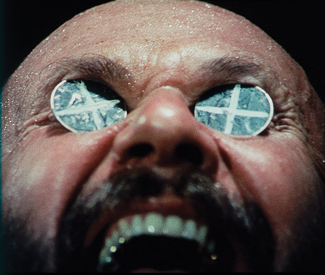
FILM Wake in Fright opens with a slow 360 degree pan across a dry, barren, isolated landscape. There are railroad tracks and two small structures, but the rest is filled with a whole lot of nothing.

This is Tiboonda, the tiny Australian town where Ted Kotcheff’s 1971 thriller begins. The descriptor “thriller” and the film’s title — not to mention its arrival in theaters under the genre-friendly Drafthouse Films banner — suggests that Wake in Fright is a horror movie, but if it’s Aussie Outback thrill-killing you seek, look elsewhere (starting with 2005’s Wolf Creek). Wake in Fright is more of a psychological thriller, of the escalating-dread-building-to-a-gut-ripping-climax variety. Not for nothing did chatty ol’ Martin Scorsese, a champion of the film since its 1971 Cannes debut, admit “It left me speechless.”

Pity poor teacher John Grant (Gary Bond), assigned to teach in Tiboonda’s one-room schoolhouse by the government he owes money to in return for his own education. Or don’t: Grant, primly dressed in coat and tie despite the scorching weather, can barely disguise his disgust over being plopped into such a backwater. When the six-week Christmas break rolls around, he’s on the first train out of town, heading for an overnight stop in mining town Bundanyabba before flying to Sydney, where cool waters and his sophisticated girlfriend await.

Of course, the best laid plans of desperate, sweaty men always go astray. Kotcheff — who is actually Canadian and whose best-known film is probably the first Rambo movie, 1982’s First Blood (or 1989’s Weekend at Bernie’s) — sets the tone early with that lonely 360 degree shot, but Grant’s misplacement becomes even more obvious once he starts encountering locals in “the Yabba.” Everyone, except for the odd woman working the front desk at his hotel (has anyone ever come so close to making out with an electric fan?), emits a strange combination of menacing and friendly.

First, there’s the cop (Chips Rafferty) who, five seconds after meeting him in the town’s raucous meeting hall, simply insists that Grant chug multiple beers with him. Boozing leads to a back-room gambling game — where, again, everybody acts like it’s no big deal that there’s an outsider, “the guy in the jacket,” in their midst. “One mere spin and you’re out of it,” reflects an oily man (Donald Pleasence) Grant meets in the chaos. Prescient words: when an unlucky coin toss means Grant’s lost all his money, he’s not only out of the game — he’s out of his Sydney trip, out of any other options, and on his way to going out of his mind.

But he doesn’t get there alone, and Wake in Fright amps up as Grant’s downward spiral begins. There’s beer — gallons and gallons of the stuff — off-roading at breakneck speeds, fistfights, further strange encounters with Pleasence’s character (who turns out to be the unabashedly alcoholic town doctor), and a grim-faced beauty (Sylvia Kay, married to Kotcheff at the time) who is not as out of place in the sticks as Grant first assumes. The film’s most brutal sequence involves kangaroo hunting — it’s so disturbing that it warrants a disclaimer as the end credits roll. But really, all of Wake in Fright is a nasty, grimy, hopeless misadventure, an exposing of the dark heart Grant didn’t realize he had, or was even capable of having. “I got involved,” is all he can say of the experience, though the audience might lean more toward “Uh, what the fuck just happened?”

Wake in Fright‘s return to theaters (and first-ever uncut appearance on US screens) after 41 years is the result of a negative-saved-at-the-last-minute miracle — the sort of tale that makes cinephiles both happy and nervous, wondering about all those films that didn’t get rescued before they went into the shredder. Anyway, be glad Wake in Fright is still with us; it competed at Cannes in 1971, and played there again in 2009 as a “Cannes Classic.” If you didn’t catch it at the 2010 San Francisco International Film Festival, here’s your chance to be freaked out by this newly-available classic.

ALL OUT OF BUBBLEGUM

Horror fans will recognize the name of Wake in Fright star Donald Pleasence from John Carpenter’s 1978 Halloween — ’tis the season, after all, and that film happens to be screening at the Balboa Theatre Oct. 30-31. But the Carpenter movie du jour is 1988’s dystopian-future drama/true story They Live, which comes out on Blu-ray Nov. 6 — never before has Rowdy Piper’s mullet looked so crisply feathered, nor Meg Foster’s eyes so eerily seafoam, nor the black-and-white matte paintings depicting Los Angeles’ subliminally-enhanced landscape (“MARRY AND REPRODUCE”) so stark and startling.

There are some recycled extras, including Carpenter and Piper’s audio commentary, trailers, and a vintage press-kit reel featuring wrestling superstar Piper reflecting on his leading-man debut (“Ain’t a lot of difference between John Nada and Roddy Piper”). But there’s new stuff, too: separate interviews with Foster, Carpenter (who scoffs when he’s asked if he was tempted to edit down the film’s epic, legendary fight scene: “Fuck no!”), and co-star Keith David, who hilariously reminisces how he had to un-learn stage diction when he was hired for his first Carpenter film, 1982’s The Thing — and devotees of that film will want to rewind multiple times, just to hear David jokingly enunciate “You believe any of this voodoo bullshit, Blair?” in near-Shakespearean tones.

For behind-the-scenes junkies, there’s a featurette on the film’s “sights and sounds,” highlighted by an interview with veteran stunt coordinator Jeff Imada, who breaks down that iconic fight scene and reveals he played most of the aliens in the film (including the “What’s wrong, baby?” guy at the end). Just about the only thing missing from this Blu-ray package (kudos for the ridiculous cover art, Shout! Factory)? A pair of sunglasses. 

Wake in Fright opens Fri/26 in Bay Area theaters. Halloween screening info at www.cinemasf.com. They Live Blu-ray info at www.shoutfactory.com


Staunch characters

0

cheryl@sfbg.com

FILM Last year’s The Artist is still glowing months after its multi-Oscar triumph — its canine star just released a memoir, Uggie: My Story, and its human star, Jean Dujardin, will appear in Martin Scorsese’s 2013 The Wolf of Wall Street.

But The Artist had more in common with Hollywood — starting with its setting — than most contemporary French films, which don’t always receive stateside theatrical runs (unless Luc Besson is involved). As you bide your time until Leos Carax’s masterpiece of mindfuckery Holy Rollers arrives Nov. 16, hit the Embarcadero for the San Francisco Film Society’s fifth annual “French Cinema Now” series.

It opens with Noémie Lvovsky’s Camille Rewinds, about a fortysomething woman (Lvovsky, who also co-wrote) who gets a chance at a do-over when she inexplicably wakes up as her teenaged self in 1985. (Yes, it’s been called “the Gallic Peggy Sue Got Married.“) Closing night is Ursula Meier’s well-reviewed Sister, Switzerland’s Oscar entry for Best Foreign Language Film, which stars Léa Seydoux as a woman supported by the petty-thief habits of her 12-year-old brother; if you miss it here, it’ll be in theaters Nov. 9.

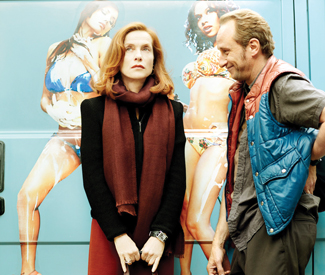
The series’ female-centric theme extends into My Worst Nightmare, which follows icy art curator Agathe (Isabelle Huppert) as her airless, tightly-controlled world begins to crumble — thanks in no small part to an exuberantly uncouth, down-on-his-luck Belgian contractor named Patrick (Benoît Poelvoorde), whose mere presence in Agathe’s orbit gives rise to the film’s title. Director and co-writer Anne Fontaine (2009’s Coco Before Chanel) injects plenty of offbeat, occasionally raunchy humor into what could’ve been a predictable personal-liberation tale — the sight of Huppert driving through a bikini car wash, for instance.

There’s no such mirth in Louise Wimmer, the first narrative feature for director and co-writer Cyril Mennegun, though the two films do share parallel stories of characters battling bureaucracy to secure public housing. In Louise Wimmer, it’s an increasingly anxious pursuit for the middle-aged title character (Corinne Masiero), who’s been living in her sputtering Volvo for months. She has a (crappy, part-time) job, but it’s not enough to pay her ever-increasing debts; what’s worse, the goodwill of those who’ve been helping her is starting to wear thin. Masiero’s believably weary performance suggests a woman clinging to the only things she has going for her — resourcefulness and an innate elegance, though both are fading by the day. On her car stereo, Nina Simone’s “Sinnerman” plays on a constant loop, a frantic, powerful tune that moves Louise to weep and, in her most desperate moment, flail around in a solo dance that’s equal parts cathartic and depressing.

Jane Fonda, in her first French film since 1972’s Tout Va Bien, plays a woman who conceals her cancer diagnosis from family and friends in Stéphane Robelin’s All Together (literal English translation, according to the subtitles: And If We All Lived Together?). It’s an ensemble film about a group of seventysomethings who decide to “go all hippie” and share a house — an arrangement that also rescues the less-robust among them (including a man with a weak heart, and one who’s increasingly forgetful) from being shunted into nursing homes. Some of All Together‘s plot points feel forced — as when a young anthropology student moves into the communal house to “study” its inhabitants — but Fonda is a standout as a woman who faces the end with remarkable reserves of cheer and dignity. In addition to its “French Cinema Now” appearances, the film also opens Oct. 26 at the Christopher B. Smith Rafael Film Center. 

FRENCH CINEMA NOW

Wed/24-Tue/30

Embarcadero Center Cinema

One Embarcadero Center, SF

www.sffs.org


Claws for consideration

0

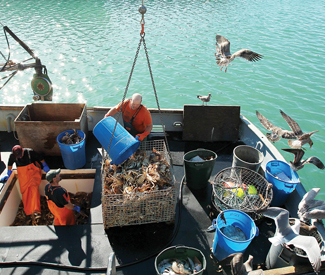
FEAST 2012 This year, Dungeness crab season starts on November 3 — commercial fishing begins in earnest on November 15 — and soon, if the undersea crab nebula hasn’t been environmentally disturbed, we’ll see vast trawler hauls of legs and claws spilling over onto the piers and into local eateries. Get yours at Alioto-Lazio (www.crabonline.com) on Fisherman’s Wharf or New England Lobster Co. (www.newenglandlobster.net) in Burlingame. There’s plenty of time to prepare yourself a traditional San Francisco Thanksgiving feast, so ready that melted lemon butter for dipping.

If you really want to get in the swing of things, and have the means to make the trek, head up to Tomales Bay for the lively Nick’s Cove Crab Catch (November 11, 10am, $40 to participate in crab-catching competition, $45 for cooking demo and lunch. Nick’s Cove and Cottages, 23240 Highway One, Marshall. crabcatch.eventbrite.com), with prizes, crablebrities chefs and hosts, and Nick’s legendary crab mac and cheese.

I think one of my favorite things about Dungeness is that it’s so far failed to fall into the foodie trap — no one gets too snooty about it, although even in the dingiest tourist traps it’s respected enough to get special treatment and presentation. Here are a few of my favorite crab treats. 

PPQ DUNGENESS ISLAND

Hey it’s right there in the name. This is a nice yet unfrilly old school Vietnamese family joint: you can get your whole crab five different ways (peppercorn FTW) but don’t forget the famous garlic noodles as a side!

2332 Clement, SF. www.ppqcrab.com

CRAB HOUSE AT PIER 39

Brave the crowds at Fisherman’s Wharf for a spot at this bright, bustling favorite: great service and good portions elevate it above generic neighbors. The trademark Killer Crab menu offers several feast options, and the Crabby Mood cocktail with vodka, peach schnapps, and cranberry is a great kick-off.

203 Pier 39 Concourse, SF. www.crabhouse39.com

NETTIE’S CRAB SHACK

Such a cute little spot in the Marina with a large patio — charm alone won me over, but then, bam, Dungeness deviled eggs with housemade Old Bay seasoning, an East Coast meets West Coast treat for the ages.

2032 Union, SF. www.nettiescrabshack.com

OLD CLAM HOUSE

The recently renovated San Francisco treasure wows with its authentic, slightly steampunk, interior and a hot iron skillet menu to die for, including the “Lotsa Crab” — three pounds with starters for two to share, $49.95.

299 Bayshore Blvd, SF. www.theoldclamhousesf.com

SOUTHIE

If you’ve got $18 to spare on an amazing sandwich that will fill you up all day, hit up this chill shop in Oakland for its seasonal Dungeness crab roll on brioche, with celery root remoulade and Meyer lemon brown butter. (Check website for availability though!)

6311 College Ave., Oakl. www.southieoakland.com

WOODHOUSE FISH CO.

Or for $12, you can get a yummy Dungeness crab melt at either location of this laidback favorite — piping hot on a toasted roll, served with fries and slaw.

2073 Market and 1914 Fillmore, SF. www.woodhousefish.com

Truffle tour

1

virginia@sfbg.com

FEAST 2012 Clearly, we can’t get enough chocolate. As chocolatiers continue to proliferate around the country, we are blessed with an endless wealth of fine sweets to choose from. Tirelessly sampling chocolates in every city and country I travel in, I’ve found standouts of all kinds. Some chocolatiers have perfected a certain truffle, others a pure bean-to-bar process. Many local greats produce treats in the city, like SF classic Recchiuti, single-minded Hooker’s Sweet Treats, playful Poco Dolce, and forward-thinking TCHO. Here are a few more, plus my notes on favorites, worldwide.

SAN FRANCISCO SHOPS

With a new Victorian-era mercantile on Haight Street, Buyer’s Best Friend has among the best gourmet food selections in the city in many categories – and it is slated to open its second shop in North Beach on October 26 (450 Columbus, SF). When it comes to chocolate, the shop often has samples from rarely-seen small chocolatiers from around the globe, for many of which they are the sole distributor. Start asking questions and you’ll discover a whole world of chocolates you never knew existed.

1740 Haight, SF. (415) 745-2130, www.bbfdirect.com

Eccentric and delightful, Noe Valley’s Chocolate Covered has long been the premier chocolate shop of SF, with a rare and varied selection. I lived directly across the street from it for six years — in dangerously close proximity.

4069 24th St., SF. (415) 641-8123, www.chocolatecoveredsf.com

Tiny but well-curated, Russian Hill’s shiny Candy Store has long been a source for rare and old fashioned chocolates and candies.

1507 Vallejo, SF. (415) 921-8000, www.thecandystoresf.com

BAY AREA CHOCOLATIERS

There’s chocolate and then there’s bean-to-bar chocolate. Whereas most chocolatiers start with already fermented cacao beans (yes, cacao beans go through fermentation), few oversee the entire process from sourcing to processing. Dandelion Chocolates was launched right here in SF by chocolate lovers whose experimentation with bean-to-bar as a hobby turned into a business. Purity of the cacao is their passion, so Dandelion makes chocolate with only bean and sugar, no cocoa butter.

Tasting their bars side-by-side is like sampling wines or coffee, with different nuances and terroir apparent in each. There’s the lush, malty notes of Rio Caribe, Venezuela (my favorite bar), bright citrus-strawberry expression in the Ambanja, Madagascar bar, and earthy, tannic notes from Elvesia, Dominican Republic. Already, Dandelion is easily one of the superior chocolates you’ll find in the Bay.

Visiting the company’s Dogpatch factory last month, I witnessed Dandelion’s entire process: roasting, cracking, sorting, winnowing, grinding, conching, tempering, molding, and packaging, all happening in one small space. Dandelion is moving to its new Mission location on Valencia (though it will keep its Dogpatch space), slated to be factory, tasting room, shop, and cafe all in one. Opening this month, it’s sure to be a hit. It’s inspiring to see passion lead to success — especially when your sweet tooth reaps the benefits.

740 Valencia, SF. (415) 349-0942, www.dandelionchocolate.com

Many artisan chocolatiers boast a couple of exceptional truffles, but none I’ve tried have the volume of Feve Artisan Chocolatier, formerly Au Coeur Des Chocolats, available in shops like Bi-Rite and on the company’s website. Owners Shawn and Kathryn Williams have traveled Europe extensively, visiting many of the world’s best chocolate makers. Besides artful, elegant, precise presentation, Shawn’s truffles succeed first and foremost in flavor.

Many chocolatiers promise flavors like curry or lemongrass or other excitement in their truffles, but often the flavor of truffles (at the standard, expensive $1.50–$3 a piece) is barely discernible or bland, leaving me disappointed, wishing I’d stuck with a straightforward piece of chocolate. Not so in Feve’s line of truffles, in which I struggle to name my favorite overall. There’s cherry-vanilla (dark chocolate and lemon ganache layered with cherry vanilla gelée), cardamom punchy with Scotch, sesame-vanilla crispy with praline, dreamy banana-caramel, pistachio-rosemary caramel with pistachio praline, and vivid passionfruit or yuzu. Each is exquisitely lush.

www.fevechocolates.com

MORE LOCAL FAVORITES

Chocolatier Blue’s truffles, served in its Berkeley shops are fresh and creative. Try the Ants on a Log, filled with celery seed, peanut butter, and currant, or the tart caramel apple or peanut brittle crunch with caramelized banana and creamy peanut butter.

www.chocolatierblue.com

Saratoga Chocolates’ Caramel Cin, a heart-shaped treat of dark chocolate oozing decadent cinnamon caramel.

www.saratogachocolates.com

Sixth Course Artisan Confections’ aromatic caramels, like rosemary, or sage and brown butter.

www.sixthcourse.com

Wine Country Chocolates’ Elvis truffle of peanut butter and banana ganache rules, while the cinnamon and clover honey oozes honey goodness.

www.winecountrychocolates.com

Maison Bouche’s Fleur de Sel is one of the Oakland producer’s elegant, French-spirited bars, a standout made using Brittany salt.

www.maisonbouche.com

NATIONAL FINDS

Alma Chocolates in Portland, Ore. makes an insanely good Thai peanut butter cup with ginger, Thai chile, lime, even red volcanic sea salt varieties. You can usually find it at Portland chocolate haven Cacao.

www.almachocolate.com

Antidote is a quality raw, NY-based bean-to-bar line made in Ecuador. It produces dark chocolate bars in flavors like banana-cayenne, lavender red salt, and almond fennel. Expect subtlety and a earth-like taste in each. Available locally at Buyer’s Best Friend.

www.antidotechoco.com

Chocolat Modern is a longtime New York favorite, making square “bistro bars” that are dark and filled with the tastes like banana and Cognac, pumpkin praline, apricot and Bas Armagnac, and zesty grapefruit. There’s a rotating selection available locally at The Candy Store.

store.chocolatmoderne.com

Responsible for some of the best local chocolates I’ve had from Los Angeles, Compartes creates dark chocolate truffles and bars, including the apricot and shichimi seven-spice chocolate bar ($8), and various truffles. Some of my favorites of these include smoked salt, peanut butter, and the pink peppercorn and Raspberry.

www.compartes.com

Fine & Raw is a Brooklyn-based raw chocolatier that creates treats with high dark chocolate content and cacao butter, managing to maintain creamy texture and flavor all the while. Its most interesting bars are its cacao and coconut, along with the lucuma and vanilla. Buy it in town at Buyer’s Best Friend.

www.fineandraw.com

Though I fear the healthy superfood label when it comes to pleasures like chocolate, Boise, Idaho-based Good Cacao creates “lemon ginger immunity” and coconut omega-3 bars that taste like a tropical vacation. Find it at Buyer’s Best Friend.

www.goodcacao.com

MarieBelle‘s elegant banana chocolate bar shines. The company is a New York favorite, with a Soho tea salon and cacao bar.

www.mariebelle.com

INTERNATIONAL TREATS

Dublin’s Cocoa Atelier makes the best chocolate I had in Ireland. It’s a chic outpost stocking drinking chocolate and elegant truffles that creates its delicacies using local specialties like pot still Irish whiskey.

www.cocoaatelier.ie

Coco Chocolate is my Edinburgh favorite, a darling shop focusing on handmade bars like its rose and black pepper, pink peppercorn and nutmeg, and a tropical-inflected lime and coconut. Coco creates invigorating flavors, embedded in dark chocolate.

www.cocochocolate.co.uk

Kopali Organics is marketed as vegan health food made by passionate founders who live off the grid in Costa Rica. Its fair trade dark chocolate-covered banana bites taste vivid and fresh, nothing at all like some dried, chocolate-covered fruits. Find it in San Francisco at Buyer’s Best Friend.

www.kopali.net

When in Bordeaux, don’t miss charming La Maison Darricau. The romantic shop sells chocolate and creative truffles made fresh daily, infused with flavors like wine-filled Médoc, basil, Szechuan pepper, curry-date, and an excellent blend of prune, almond paste, and Armagnac.

www.darricau.com

In London’s Borough Market, Rabot Estate is a rustic-hip shop with staff pouring cups of free dark hot chocolate and bars like chili with a lush Santa Lucia-grown dark chocolate.

www.rabotestate.com

Among the best chocolates I’ve had in the world are from Paul A. Young, one of the world’s best chocolatiers whose three London shops stock supreme examples of what fresh truffles and exotic bars should be. Go funky with Marmite truffles, or his herbaceous peppermint leaf. Whatever you do, when in London, don’t miss it. Young penned Adventures with Chocolate, a visually striking book that explores the ins and outs of chocolate making from the art of combining beans to yield the best flavor profiles, to making the perfect ganache. Primarily, it is a cookbook, utilizing chocolate in recipes from boozy drinks or teas to savory dishes and desserts.

www.paulayoung.co.uk

Subscribe to Virgina’s twice-monthly newsletter, The Perfect Spot, www.theperfectspotsf.com


\

Avast ye

3

CHEAP EATS Crawdad called me on speakerphone, like she does: in the car, with the childerns. “Will you tell us the story of Moby Dick?” she said.

“Moby Dick,” I said, about as meaningfully as one can say, into an Android, Moby Dick. As it happens, I had just hung up with my dad, who (as it further happens) is an actual, dyed-in-the-whale Melville scholar. Me, no. Not so much. I’ve read it, of course, but . . .

“Dang, is traffic that bad over there?” I asked.

“No. We’re going to get ice cream,” she said. As if that explained everything.

“OK,” I said. “Ice cream.”

I said, “Kids . . . listen up: Moby Dick.”

And while clearing the dishes I proceeded to abridge one of the substantialest-ever works of American literature into four sentences:

“This guy Ahab goes out in a boat to get some whales, and in particular this big old one name a Moby Dick. But Moby Dick is so big and so old that he outsmarts Ahab. Anyway, he outsizes him. He busts up Ahab’s boat and most if not all of his crew, The End.”

I forgot to mention Queemquack, or whatever his name was, but — no worries — I’m de la Cootersitting tomorrow, so I’ll have all day to bring them up to speed.

Poor kids. Even without any knowledge of Queemquack, they were speechless.

“Why did people fish for whales?” Crawdad asked.

“I think maybe they made lamp oil out of their fat, or something,” I said, rendering the kids even speechlesser.

“You have to understand, Chunks,” I added, “this was before the age of light bulbs. People couldn’t just flip a switch and see things; they had to go out and kill giant whales and split their heads open. There was this oil in there that they needed for their lamps, so they could stay up late and read Moby Dick.”

Without which — a century and a half later — my father would never have been able to feed his family. Which reminds me: I would love to tell you about the not-great hashbrowns and sold out “Millionaire’s bacon” at my new favorite restaurant in the Tenderloin, but after all I’m on strike, so …

CHEAP SPORTS

by Hedgehog

It’s been hard to rally any interest in the Giants lately in the Chicken Farmer and Hedgehog household, I’ll admit. It’s not that we wouldn’t be thrilled to hug and high five strangers on the street should they go All The Way, but it seems we left our baseball hearts in Oakland this season — somewhere under the cheap seats in the Coliseum.

It’s been looking like the Giants lost theirs somewhere other than San Francisco, too. Maybe in St. Louis? We went out tonight in search of a TV screen with 49ers on it, and at Hogs and Rocks on 19th they had two screens: one for the 49ers and one for the Giants.

By way of play-by-play, I eavesdropped on a conversation between a father and his small son, sitting across from us.

“The Giants have given up,” declared Father.

“What do you mean?” asked Son in an innocent little voice.

“They’re playing like a team that’s lost its heart,” Father said.

“There’s still time to win I know,” said Son (bottom of the seventh, Giants trailing 8-1). “I have never gaven up in baseball. Ever. I can steal home, it’s so easy. It’s how I make runs!”

I think maybe this kid has figured something out that grown-assed men who get paid way too much to play games haven’t. At least on this side of the bay.

Cheap Eats continued…

Yes, my dear, I just hope your cute little eavesdropee doesn’t grow up to be a whaler. Because in life as in Moby Dick, sometimes it is better to give up than to fight. Call me chicken.

No …

Call me Chicken Farmer.

TAYLOR STREET COFFEE HOUSE

Daily: 7am-2pm

375 Taylor St., SF

(415) 567-4031

MC,V

No alcohol


Japanese within reach

0

virginia@sfbg.com

APPETITE The nuances and clean lines of Japanese cuisine have long intrigued me. I grew up on the East Coast with my lifelong best friend, who is of Japanese descent, discovering authentic cuisine in her home and around New York City. I fondly recall the first time I had sushi, okonomiyaki, sake, and shabu-shabu. San Francisco boasts one of few Japantowns in the US — the oldest and largest Japantown in the country, in fact — one of the reasons to love living here. Sushi is one of my greatest cravings, and the izakaya pub-bar food wave seems to hit SF every few years, with a slew of openings.

Outside of these two dominant categories, we’re blessed with Kappou Gomi’s memorable small plates (buttered scallops, tempura crusted in macadamias and almonds), Kare-Ken and Muracci’s Japanese curry, intimate Minako for organic, unusual dishes, Macha Cafe and YakiniQ Cafe for matcha tea and sweet potato lattes, Kitchen Kura for an okonomiyaki menu, Delica for Japanese deli goods… the list goes on. These three younger Japanese restaurants offer comforting food at a reasonable cost.

CAMP BBQ

Opened this summer, Camp BBQ’s Japanese grilling takes its cues from Korea. The long space is lined in rustic Japanese woods, roomy tables surrounding individual grills. Like Korean BBQ, mini-bowls of dipping sauces such as house miso arrive, then platters of vegetables, including a “rainbow mix” ($6) of carrots, bok choy, onions, and garlic cloves wrapped in foil, ready for the grill. Scallops soak in garlic butter ($7), tender and buttery in foil. When it comes to meats, there are many options, sliced thin, generally tender — only the pork cheek, though juicy, was a little tough to bite. Kobe-style Kalbi chuck short rib ($13 for 3.5 ounces) and ox tongue ($8) are two worthy beef options, though I find the cheaper, savory qualities of spicy pork ($4) and pork cheek ($5) even more appealing. Portions are small enough to mix-and-match while sipping sake, Japanese beer, even pineapple or watermelon slushies. Moving away from the grill, cheese pockets ($5), essentially wontons supposedly filled with cream cheese and shrimp, are disappointingly empty. The setting is mellow with families and friends grilling and singing along to somehow appropriate dance pop tunes as backdrop.

4014 Geary, SF. (415) 387-1378, www.campbbqsf.com

SHABUWAY

Hot pot stylings of shabu-shabu are the basis for Shabuway, the first SF location of a local Bay Area chain that began in 2004 in San Mateo, growing to locations in Mountain View, San Jose, Union City, Santa Clara. Eiichi Mochizuki launched Shabuway using meats from animals fed on an all-vegetarian diet: Angus Prime, American Kobe, Niman Ranch lamb, Kurobuta Berkshire pork. The result translates into a fresher-than-average shabu experience. In keeping with the meaning of shabu-shabu (“swish-swish”), one selects thinly-sliced meat of choice, chooses spicy miso or seaweed broths, then swishes raw meats in boiling broth until done. Vegetables (cabbage, carrots, enoki mushrooms, etc.) and mini-bowls of soy and crave-inducing gomadare (an almost creamy sesame sauce) arrive, filled when running low, with add-ons like udon or ramen noodles a mere $1–$1.75. When you’re finished cooking the meats and veggies, flavor-rich broth is poured over rice, eaten soup-like as a finish. There is little besides shabu-shabu on the menu, an appreciated focus — but a special I’d recommend if you see it is takoyaki ($4.50), octopus dumpling balls topped in benito flakes, essentially okonomiyaki (the fantastic Japanese “pancake”) in bread-y ball form, dotted with customary mayo and savory-sweet okonomiyaki sauce.

5120 Geary, SF. (415) 668-6080, www.shabuway.com

KIRIMACHI RAMEN

Ramen is akin to pho in Vietnamese food or other filling soups in Asian cuisine. Maybe it’s my craving for bold, pronounced flavors that have made me not so much averse to basic broth soups as just bored by them. I typically prefer udon or soba noodles when it comes to Japanese soups for more texture and emphasis on the noodles and may never be obsessed with ramen, pho, or the like. But Kirimachi Ramen, a month’s old spot tucked away in North Beach with 1950s diner chairs and laid back vibe, does well by the genre. All bowls are hefty at $10, with veggie, pork, or chicken as a base. The staff told me they haven’t found a reliable organic pork source yet, but use Marin Sun Farms chicken, focusing on fresh ingredients. I took to Sapporo-style miso ramen with chopped pork, Chinese chives, bean sprouts, corn, with additional toppings ($1) including kikurage mushroom, fish cake, and soft-boiled egg.

450 Broadway St., 415-335-5865, www.kirimachi.com

Subscribe to Virgina’s twice-monthly newsletter, The Perfect Spot, www.theperfectspotsf.com

Intimate company

1

arts@sfbg.com

THEATER With the exception of an occasional Miss Julie, the plays of August Strindberg (and there are more than 60 of them) rarely find productions anymore. Yet the iconoclastic and prolific Swedish writer’s influence on modern drama — including such American playwrights as Eugene O’Neill, Tennessee Williams, and Edward Albee — is considered a given. This year marks 100 years since Strindberg’s death, and San Francisco’s Cutting Ball Theater has gone all out in satisfying a yen for a centennial embrace of this monumental (and definitely temperamental) artist who helped define the terms and concerns of modernism.

Capping a year of readings and discussions of the work and the man, Cutting Ball last week began an audacious program of five late “chamber plays,” to run in repertory through November 18. The project includes five new translations by Yale professor (and former American Conservatory Theater dramaturg) Paul Walsh, and the simultaneous publication of all five in a single volume by Exit Press.

Last week, The Ghost Sonata (1908) began stalking the stage of the Exit on Taylor as the opening gambit in Cutting Ball’s Strindberg Cycle. Its original premiere took place on a stage not too unlike this one, as artistic director Rob Melrose explains in a program note, being written (along with the other plays in the Cycle: Storm, Burned House, The Pelican, and The Black Glove) especially for the opening of Strindberg’s new Intimate Theater in Stockholm. This makes the chamber plays an especially apt choice for Cutting Ball’s stage. A pioneer of the chamber play form, Strindberg meant to foster an immersive experience for his audience with these deeply strange, poetical, dreamlike little plays he modeled on chamber music. The emphasis was thus on coziness, small casts in small houses, without the need for elaborate mise-en-scène. Moreover, a level of invention would dominate in these plays in which form would follow theme, rather than the other way around.

The Ghost Sonata is perhaps the best-known example among the playwright’s chamber works. It concerns a heroic and ambitious young poet named Arkenholz (Carl Holvick-Thomas) who, after saving some people from a burning building, finds himself seduced into the good graces of a fancy upper-class household of an aristo Colonel (Robert Parsons) by the machinations of a mysterious wheelchair-bound old man, Director Hummel (the formidable James Carpenter).

Hummel’s real motives become clearer as the play progresses through three short acts (the entire play runs only about 80 minutes without intermission). But the unfolding of all is like a dream, wherein Arkenholz confers unwittingly with the ghost of a Milkmaid (Ponder Goddard) that Hummel can’t see; pines for the beautiful girl (Caitlyn Louchard) in the fancy apartment building, confined to a sweet-smelling Hyacinth Room; and eventually finds his way into the social circle of the girl’s family, stunned old richies who are variously mad, morose, and generally not what they seem.

There’s an almost hilarious amount of exposition packed into the plot and its several reversals and revelations. But the chamber plays are works of a new era, and for a new era, and The Ghost Sonata — not unlike the naturalistic drama Ghosts by Strindberg’s hated contemporary and countryman Henrik Ibsen — seeks to cast a coruscating light on an older generation and its world, to expose and ridicule its corruption, bemoan its stultifying influence on the young, and generally bleed it out like a pus-filled old sore. As darkly shadowed as The Ghost Sonata is, its formal invention is full of air and light to remake the stage and the age.

That doesn’t mean it’s triumphal, or terribly optimistic. The uncertainties, ambiguities, and pitfalls of patrimony, a deep theme for Strindberg, snake through the surreal story like fissures in a crumbling wall. The Ghost Sonata has a quiet anguish running throughout — even in its touch of sardonic humor, as exemplified by the haughty butler, Bengtsson (played a little too broadly by David Sinaiko) — and it rages under all the delicate and sinister weirdness of its setting and action.

This trembling, contorted energy becomes incarnate, and altogether palpable, in Carpenter’s finely hewn and sensitive performance as Hummel, who even as a central demonic force is ultimately pathetic and even pitiable when his own reversal of fortune finally lands.

Carpenter is the best thing about this uneven if worthwhile production. If the play’s historical influence is one thing, its life on the stage is another, at least here. It does look very striking in the meticulous and persuasive design work of Michael Locher (set), York Kennedy (lighting), and Anna Oliver (costumes). The production also features a pervasive, ethereal score and soundscape by longtime Cutting Ball artistic associate Cliff Caruthers. The stage may be small, for instance, but Locher expertly creates a sense of a marble-cool expanse in which the play’s public street and inner chambers are seamlessly, miraculously evoked. A set of mobile dark-wood closets form a central edifice, first the outside wall of the apartment and then its inner parlor, with graceful economy. Oliver’s fine period costuming adds luxuriously to the dreamy world of the play, as does the vaguely macabre makeup on several characters.

Melrose, moreover, who helms each of the plays in the cycle, has assembled a strong cast, several of whom must carry the play with little or no dialogue and only minute gestures. But while individual performances show flashes of depth and charm, his actors rarely connect forcefully or convincingly. The ensemble may cohere further as the production continues in repertory. But it was plain enough on opening night that this vital element of so intimate and intense a play as this hovers somewhere just out of reach. *


“Strindberg Cycle: The Chamber Plays in Rep”

Through Nov. 18, $10-50 (festival pass, $75)

Exit on Taylor

277 Taylor, SF

www.cuttingball.com

Another look at Olague

22

OPINION As Election Day nears, the chaotic contest for supervisor in District 5 represents a critical decision for progressive voters in the district — and for activists across the city.

The campaign for Julian Davis, the original first choice of many left/liberal activists, has imploded and is now in free-fall. The repercussions of the board’s vote on Sheriff Ross Mirkarimi continues to reverberate, nowhere more than in District 5. And respected progressive advocates who had worked together for decades are now estranged, even as our city faces urgent challenges of great complexity.

I don’t know Davis or the other candidates in District 5, but I sat down with Supervisor Christina Olague last month after she received the endorsement of the San Francisco Labor Council. It was our first meeting, and as I rode the Metro to Civic Center I was, frankly, not expecting much. Like many San Franciscans, I could not help but be skeptical of anyone appointed by Mayor Ed Lee. I had heard of decisions made and votes cast by Olague that troubled me. I was not expecting to like her, but friends of mine in the labor movement encouraged me to speak with her directly and I’m glad I did.

I started to like Olague as we walked from her office to find some lunch. Before we got to a restaurant I was already asking her questions about some of the tougher choices she’s made. We didn’t agree on everything, of course, but I was struck by her candor, her common sense, and pragmatic progressive values.

Christina Olague grew up in a migrant labor community in the Central Valley. She survived the often-brutal working conditions and poverty that define the lives of some of the most cruelly exploited workers in the United States. She became active in politics early in life, put herself through school, and moved to San Francisco, where she became a familiar figure in the city’s grassroots community.

As a Latina, and as a member of the LGBT community, Olague’s life experiences shaped her politics and basic values. Her candidacy is important in a city that seems every day more destined to become an enclave reserved exclusively for only the very wealthy and most privileged.

I endorsed Olague several weeks before she cast her vote on the struggle between Lee and Mirkarimi. I would have continued to support her regardless of her vote that day. But the bitterness of that controversy, and the nature of the scandal now surrounding Davis, underscore the need for progressives to heal, to repair our alliances and to demonstrate political leadership grounded in respect for all our communities.

The UNITE HERE International Union represents hotel, restaurant, casino, food service and laundry workers throughout the US and Canada. The majority of our members — the people I work for — are immigrant women. In our union we stand together: LGBT and straight, brown and black and white, immigrant and native-born. In all our actions we seek to build power for working people and to strengthen the broader movement for peace and social justice.

San Francisco has seen many changes in the 40 years since I first hitchhiked here as a youth from Arizona. While the political landscape has certainly altered, I reject the notion that the city’s voters have moved irrevocably to the right. I do believe that progressive activists must do better in communicating our values and our vision for this beautiful and unique city we all love. I think Olague could be an important part of that process.

On behalf of the members of UNITE HERE Local 2, and as a longtime organizer for LGBT and worker rights, I ask my many friends in District 5 to take another look at Christina Olague and to consider casting your vote for her on November 6.

Cleve Jones is a longtime activist and the founder of the NAMES Project AIDS Memorial Quilt

Men behaving badly

10

The fiasco that was the candidacy of Julian Davis for Supervisor has shed a spotlight on the long simmering sexist underside of progressive San Francisco politics. For years, men have dominated elections and institutions; the lack of women in progressive leadership has been obvious, but too often unaddressed.

San Francisco has a long history of electing women to high office — Dianne Feinstein, Nancy Pelosi, Louise Renne, Kamala Harris … it’s not as if politics in general is controlled by men. But most of those women have been from the more moderate (in some cases, conservative) side. The elected officials who are leaders in the progressive movement have, for most of the past decade or more, been overwhelmingly male.

And it’s hard to ignore the obvious questions: How could so many progressives get behind a candidate with such a history of poor treatment of women? Why did it take so long for the truth to come out? When did attitudes on the left devolve to the point where groping was considered a minor detail?

More important, where are we going from here? How is the progressive movement going to encourage a new generation of women leaders? How are we going to address the perception, and sometimes the reality, that the politics of the San Francisco left is not a welcoming place for women?

It’s going to take a while to talk all of this out, but this week, we want to start the conversation.

>>A NEW FEMINISM FOR SAN FRANCISCO: Community activists on a guide to compassion, redemption, and accountability

>>THE “HEIGHTENED SENSITIVITY” BLUES: Hey progressives, why don’t you stop being such idiots? (An angertorial)

A new feminism for San Francisco

34

OPINION Accountability is one of the hardest things that we have to do. Being accountable stretches us to our very limits as human beings. Blame and deflection is a function of shame, and more often than not, when we make a mistake, it’s more common to point the finger at someone else than it is to acknowledge our mistake and work towards a different practice. The story time and time again is how it never happened — and then when the water gets too hot, there’s generally a soft acknowledgment that something did happen, but by then, the damage is done and trust is broken.

As feminists working in the progressive community for social justice, we are calling for a new type of accountability — one that’s not about demonization or polarization, but instead consists of checking ourselves, checking each other, supporting each other when we are brave, and having the courage and integrity to acknowledge our mistakes and work towards making whole what has been damaged.

Progressives need to take a look at ourselves and come together so that we can advance our vision for San Francisco. We aim to build a progressive movement in San Francisco that is rooted in compassion and love, that acknowledges our contradictions and works to create bridges across class, race, and gender that are so often the typical pitfalls that keep us from accomplishing what we really want and need. Checking ourselves is an act of love for ourselves and for our communities.

The last few weeks in San Francisco have not just been about men behaving badly; it’s also been about women treating each other badly. White feminists in San Francisco came together to “save” Eliana Lopez, an immigrant woman of color, but never actually included her in the conversation — and then treated her like she had Stockholm syndrome. Women who supported Sheriff Ross Mirkarimi were suddenly not feminists anymore. Survivors of domestic violence who supported Mirkarimi and supported redemption were shunned by a large portion of the domestic violence community.

We recognize that there are important reasons why domestic violence law allows charges to brought without the consent of the survivor; however, in this case, these laws were misused. How demoralizing to see a largely white, second-wave feminist advocate community come together around a woman they failed to include in the conversation about what she felt was best for herself and her family. Are we still in the 1950s?

The attempt to remove Mirkarimi from office was a political attack. It does a disservice to the cause of domestic violence to use it as a political tool to unseat a politician. At the same time, it was also regrettable that many progressives supporting the sheriff did not take the domestic violence charges against him seriously enough — both in the initial outcry that surrounded the charges and by being disrespectful towards the domestic violence advocates who testified at City Hall.

On the other hand, following close on the heels of the Mirkarimi situation, District 5 candidate Julian Davis was accused of a troubling history of inappropriate and nonconsensual groping by more than one woman. We have to take into account that there is an unacceptable cultural reality that people are likely to believe accusations against men of color by white women that are untrue, but that is not what has happened with the accusations brought forward about Davis.

In this scenario many in the progressive community knew about this history and were complicit in silencing any real conversation about it. It was only when Davis started intimidating one of the women that brought accusations against him with threats of legal action that a real conversation opened up.

Our goal is not to rehash Davis’s past behavior; everyone deserves redemption. However, it would make it easier for those of us who want to work with him going forward if he could take responsibility for his past instead seeking to silence his accusers.

Many have stood up to support the woman who came forward, but sadly others have not. For women and feminists in our movement it was exceedingly demoralizing to watch people who call themselves progressives attack a woman who came forward or dismiss her allegations because of political allegiances. One blog even went so far as to try and discredit her by alleging that she had been in a pornography film, as if somehow this would cast doubt on her allegations.

We seek a kind of feminism that supports and empowers women to make informed choices about their lives, not the type that falls into the same pattern of erasing the voices of women of color and immigrant women. We are calling for a cutting-edge feminist movement that includes men in our strategy of ending violence against women, and a feminist movement that walks away from this tired dualism between “victims and perpetrators,” when we all know that these so-called perpetrators are often victims of violence themselves.

We are calling for restorative justice that bridges the divides of class and race and gender and makes us stronger to achieve the lives that we want and need. We seek a feminist movement that sees housing and economic justice and racial justice and gender justice as all part of the same movement.

The truth of the matter is that in our progressive movement here in San Francisco, there is still a prominence of straight white men who continue to believe that they are the sole arbitrators of what is or is not progressive in this city, who go after women of color in leadership with a ferocity that they do not for our progressive male counterparts, and who continue to excuse problematic behavior in ways that undermine us all.

So much has happened so quickly that it has been hard to orient ourselves and keep fighting for our rights and our communities. After the election, we call for a public conversation around what it means to be a third- or even fourth-wave feminist progressive that we can build our work around — where men are feminist and women of color leaders can actually get some support from the progressive left. Gabriel Haaland is a queer, transgender Labor feminist and domestic violence survivor. Jane Martin and Alicia Garza are queer, feminist community organizers in San Francisco’s working-class communities of color

DCCC’s Mirkarimi resolution gets delayed

126

San Franciscans will get a chance to take a deep breath – and their politicians will be able to get past Election Day – before wading back into the sordid saga surrounding Sheriff Ross Mirkarimi’s fitness for office, thanks to a resolution condemning him being pulled from tomorrow night’s San Francisco Democratic County Central Committee agenda.

The measure’s chief sponsor, Zoe Dunning, today sent her DCCC colleagues an email thanking supporters of the measure but noting that “a few of you also expressed your belief that collaborating on an amended but substantially similar resolution would help maximize consensus on the DCCC. In consideration of these sentiments and my desire for consensus, I’ve decided to temporarily withdraw my resolution from consideration.”

Instead, Dunning said that she would reintroduce a new resolution for the following meeting, which is scheduled for Nov. 28. Her resolution condemns Mirkarimi for the domestic violence incident against his wife – for which he accepted criminal responsibility in March and survived an attempt to remove him from office for official misconduct last month – and voiced support for his recall by voters.

Inside sources tell us the reason for the delay has less to do with the substance of the measure than with its timing, coming while emotions are still so raw and emotionally charged on both sides of the Mirkarimi question. Few DCCC members had the stomach right now for a replay of the ugly, hours-long public testimony that marked the Oct. 9 Board of Supervisors meeting – particularly coming during Game 1 of the World Series.

Dunning conceded that one factor in her decision was that she “got the feedback that emotions are a little raw right now,” although she told us her main reason was to gather more support: “The timing aspect of it was getting more consensus on the measure. I’m not doing this to be divisive, but I would like the party to take a stand on this.”

That wasn’t the only dramatic item on tomorrow’s DCCC agenda, which also includes a proposal to revisit the DCCC’s “no endorsement” vote in the contentious District 5 supervisorial race and make an endorsement. The effort was sparked by supporters of London Breed who hope the moderate-dominated body will offer its support to counter current efforts to consolidate progressive support around Christina Olague in the wake of Julian Davis’ current difficulties around his handling of allegations of past misbehavior toward women.

Few sources that we spoke to wanted to offer their predictions for how the D5 endorsement would go, but some were relieved that it was decoupled from the Mirkarimi measure that was placed just ahead of it on the agenda.

Yet Mirkarimi is still likely to be hit with the DCCC’s condemnation when it reconvenes next month, barring a change in the political climate or a deescalation by either the Mayor’s Office or the DV community, which isn’t likely.

Matt Dorsey, the spokesperson for the City Attorney’s Office who was elected to the DCCC in June with progressive support, co-sponsored the resolution and told us a recall election is needed to bring closure to this saga.

In an email response to our questions, he wrote: “First, I disagree that a recall would fuel a continued divisive climate. To the contrary, a successful recall would resolve division. Frankly, even an unsuccessful recall would offer both sides the satisfaction of knowing that voters settled the matter – without questions over the legitimacy of the official misconduct proceeding or legal interpretations of the Charter.”

Mirkarimi didn’t respond to our inquiries, but Olague told us last week that she would like to see the fight put to rest. “What I’m concerned about right now is a lot of people are exploiting issues around domestic violence and politicizing it,” Olague said, calling for people to “stop demonizing him” and accept that he’s been punished and is getting the help he needs. “Now it’s so convenient to try to destroy Ross and I think that’s wrong.”

She said the twin scandals involving how Mirkarimi and Davis have treated women – and how those incidents are being exploited – are damaging the city, but she hopes they will give rise to more productive discussions.

“What I’m concerned about is the progressive movement find a way to heal and come together in a way that is more respectful of women,” Olague told us. “Rather than dancing on the grave of Julian Davis, how do we come together and talk about how we treat women?”

The ‘heightened sensitivity’ blues

74

OPINION 

“No one can deny that there is presently a particular sensitivity around domestic violence issues, and this may have been a contributing factor in their decision in this instance. I want to emphasize that I respect this heightened sensitivity and I will not criticize those allies of mine that have chosen to withdraw support.”

– Oct. 17 press statement from District 5 candidate Julian Davis

This is not a Julian Davis hit piece. Just as much as any young progressive in this town, I know the guy. He’s not a bad guy.

He can be a boor. But to be fair, he’s only doing what he’s been taught to do in this era of the San Francisco City Hall progressive scene.

Lemme take it back to my first assignment covering politics for the Bay Guardian (indulge me.) I was a culture intern.

I was assigned to the Democratic County Central Committee election-night party at the Great American Music Hall. I had the early shift, because those hours of the evening are boring enough to entrust to an intern with little background knowledge of the San Francisco political scene. While I was there, gamely interviewing the only person I recognized from the newspapers (a man who I’ve been told ad nauseum is a leader of the San Francisco progressive movement), a shrill -– to appropriate a term usually coded for women and gays –- elderly, straight male blogger approached us and inquired loudly if I was the politician’s escort.

Now, I am pro-sex worker. But as a young woman who was performing an important task for the first time, when a dinosaur implies that you are at a stone-dull political happening to solicit sexual favors for money -– well I’m sorry, brothers and sisters, but I was there to interview people for a newspaper. I don’t think this man’s query, shouted as it was over the crowd, implied a high degree of sex-positivity.

The progressive leader seemed unfazed. Who knows, maybe it happens all the time. He briefly made introductions and ninja-moved into the social melée, leaving me with old blogger, who commenced interrogating me rudely, on camera, from a distance close enough that I could smell him. It wasn’t a superlative scent.

Perhaps Kay Vasilyeva felt similarly six years ago when she went to Bill Barnes, who was serving as campaign manager for Chris Daly, the San Francisco progressive deity at whose campaign event she says the most egregious incident with Davis took place.

Davis groped her, she told Barnes. He told her she could report the incident to the police, and when questioned about the incident by Fog City Journal last week, he said “my memories that are most clear about that campaign were the political side of what was going on, not about the interpersonal issues.”

I’ve told my election night story a couple times over the last week since it stands out clearly as the moment I knew, for sure, I would never get involved in San Francisco politics.

More than one of my friends told me I was asking for this humiliation, what with having identified myself as a Guardian reporter. I’ll admit, that perhaps I could have expected such diminutive behavior. The paper’s, like, “controversial.” All the same, I told those friends, as respectfully as possible, to fuck off.

In the wake of the Ross Mirkarimi and Julian Davis debacles, and in the wake of reaction to said debacles (decidedly the more catastrophic happenings, even compared with the acts themselves), many are realizing that the dominant face of SF progressivism is that of a self-absorbed, hierarchy-enforcing man.

Perhaps some are making the cognitive leap to wonder about why we’re not exactly overwhelmed with progressive females in elected office.

Could it be that through sloppily coded language like that used in Davis’s email, the Barnes response, and my election night incident, an environment is systematically being created that no intelligent young women would ever sanely choose to take part in?

Tell me I’m too soft for politics. Sure you’re right. Tell me it’s equal opportunity assholery. Probs. Tell me that’s just how it is.

I’ll tell you this: being progressive is about more than voting in favor of rent control and raising teacher’s wages. Being pro-choice is not the end of one’s involvement in women’s issues. You can have all the right politics on paper, but if you make those who are different from you feel like shit when you’re two cocktails into election night, take a seat, wrench your eyes from their tits, and let someone else take the lead, because you’re the reason why the progressive movement, the labor movement, et. al., are stale and worn.

Convince all the young women and other people who are not the face of power in this country that they have no place and they will find a different place, and your slate will be all the dumber for it.

Beware, boorish men, when you blame the current spate of sexual abuse unmaskings on “political climate” or “interpersonal issues.” Denigrate actual justice as a “trend” or “gossip” and you will most certainly find yourself fighting for something that you really, really don’t want — the increased infirmity of the movement you claim to hold so dear.

“Heightened sensitivity” getting you down? Hit up a pharmacy, I bet they have a cream for that.

Move on, Mr. Mayor

21

EDITORIAL San Francisco politics hasn’t been this tense in years — and it’s not just because of the upcoming election. The battle over Mayor Lee’s attempt to oust Sheriff Ross Mirkarimi has left bitter divisions at City Hall and in communities all over town. And the mayor is only making things worse.

In an odd way — and we say odd because it was so expensive and a misuse of mayoral power — the system worked. Mirkarimi, who had a physical altercation with his wife that left a bruise on her arm, took responsibility and pled guilty to a misdemeanor; he’s now on probation and undergoing counseling.

After the mayor decided to invoke a rarely used Charter provision and suspend Mirkarimi without pay, the Ethics Commission held hearings, conducted and extensive inquiry and voted to uphold the charges, with the chair, Benjamin Hur, strongly dissenting. Every one of the commissioners raised thoughtful points; several poked big holes in the mayor’s case.

Then the Board of Supervisors met — and again, the members carefully considered Mirkarimi’s actions, the language and history of the City Charter, the prevailing law, and the facts of the case. There was remarkably little political grandstanding; we listened to the entire meeting, lasting more than seven hours, and were left with the impression that the supervisors took their job seriously, weighed the case, forced the City Attorney’s Office, representing the mayor, and Mirkarimi’s defense team, to justify their arguments, and rendered a ruling.

Nine votes were needed to remove the sheriff; that’s appropriate for such a profound sanction. Only seven supervisors sided with the mayor, and the four who rejected the charges had excellent, well-stated and credible reasons.

That’s the way the Charter outlined this process playing out, and in the end, the mayor lacked the overwhelming consensus he would have needed to use his executive authority to remove from office someone duly chosen by the voters. It’s done; it’s over. Most of the city would like to move on.

That’s not to say that Mirkarimi should be celebrating. He did an inexcusable thing. Domestic violence advocates have every right to be unhappy with his actions — and nobody, nobody in town should condone his behavior. He’s not denying it, either; he accepted the criminal consequences and will now have to demonstrate that he’s able to do his job.

But the mayor won’t move on. Mirkarimi sent him a note asking for a meeting, and Lee hasn’t responded. That shows a lack of leadership — and a lack of the civility that the mayor promised us when he took office. Ed Lee started this political process, and now that it’s over, he should be leading the effort to pull the city back together, to recognize that there were valid arguments on both sides of this case and his didn’t prevail — and to stop the demonization of people who didn’t agree with him.

Dick Meister: Labor’s wise election choices

2

By Dick Meister

Dick Meister, former labor editor of the SF Chronicle and KQED-TV Newsroom, has covered labor and politics for more than a half-century. Contact him through his website, www.dickmeister.com, which includes more than 350 of his columns.

No issue on the November election ballot anywhere is of greater importance to working people and their unions than Proposition 32 on the California ballot.

As the State AFL-CIO notes in its call for an all-out campaign against Prop 32, it’s “a brazen power play” by billionaire corporate interests and other anti-union forces to all but silence labor’s political voice, while at the same time greatly increasing the political strength of labor’s wealthy opponents.

Prop 32’s corporate sponsors deceptively call their measure an even-handed attempt to limit campaign spending. Yet it would only limit – and severely limit – the political spending of unions. There would be no limit on the political spending of corporations and other wealthy interests.

A Prop 32 victory would have a serious national impact, since passage of the measure in the country’s largest state would certainly lead to attempts to enact similar measures elsewhere.

California Propositions 30 and 38 also could have major, though less direct, effects nationally.  Both measures would raise badly needed new funds for education.

Prop 30, which is widely supported by unions and a broad base of community organizations, would do it through a tax increase that would be levied on wealthy Californians with annual incomes of $250,000 or more.

But Prop 38, bankrolled by some of the same billionaire interests that are contributing heavily to the Yes on 32 campaign, would raise money by taxing everyone, including the poor. And while Prop 30 specifically calls for added education funds to go to schools at all levels, including the community colleges that train workers for jobs that are heavily unionized, Prop 38 does not apply to community colleges.

There are, of course, other state as well as local and national issues and candidates that are of particular interest to labor. That includes, as it very well should, labor-friendly President Obama and just about any other Democrat.

Although the odds are heavily against Democrats regaining control of the House or adding to their narrow margin in the Senate, that has not kept labor and its supporters from trying to beat the odds.

National Democratic strategists are relying on California to be a leader in raising funds to make that happen. They’re sending out an unprecedented barrage of requests to Californians for money for Democratic candidates in general and especially for candidates in battleground states.

Unions are playing an important role in that effort and in many local elections as well. That naturally includes the voting in San Francisco, long one of the country’s premier labor cities and national pacesetter for labor.

As usual, the SF Labor Council and SF unions generally have endorsed all of the Democrats running for national and state offices. It would be hard to quarrel with that or with most of labor’s other choices of who and what to back and oppose on the city’s election ballot.

Locally, labor is backing incumbent Supervisors Eric Mar (District One) and David Campos (District Nine) and newcomer F.X. Crowley, a longtime union leader and activist who’s running in District Seven. All have consistently supported labor.

Labor is rightly eager to defeat Crowley’s opponent, Mike Garcia, a candidate of the downtown interests that have consistently opposed labor.

Voters would be wise to follow the guidance of the teachers union on candidates for the SF Board of Education. The union has endorsed Matt Haney, Beverly Popek, Sam Rodriguez and Shamann Walton. All would be new to the board.

The teachers union and the Service Employees Union local that represent SF City College workers agree that the best candidates for the Community College Board that governs City College are Hanna Leung, Rafael Mandelman and incumbents Natalie Berg and Chris Jackson.

As far as local propositions go, labor’s support for a parcel tax to raise badly needed funds for City College (Prop A) and for a trust fund to help lower and middle income families secure affordable housing (Prop C) makes very good sense.

Unfortunately, labor did not take an official position on Prop G, the policy statement that calls for a Constitutional amendment to reverse the U.S. Supreme Court’s Citizens United decision that has allowed unlimited political spending by corporations and wealthy individuals.

Otherwise, however, labor has provided voters with an invaluable election guide.

Dick Meister, former labor editor of the SF Chronicle and KQED-TV Newsroom, has covered labor and politics for more than a half-century. Contact him through his website, www.dickmeister.com, which includes more than 350 of his columns.

Agnos and other progressives rally for Olague

72

A string of prominent local progressive leaders today offered their support to Sup. Christina Olague – including former Mayor Art Agnos, who announced his endorsement of her in the District 5 supervisorial race – in a rally on the steps of City Hall.

In the process, many voiced a need to broaden and redefine progressivism as valuing independence and diversity of perspective more than just stands on specific issues, traits they said Olague embodies. But more than anything, the rally seemed aimed to consolidating progressive support around Olague as the best hope to beat moderate London Breed in one of the city’s most progressive districts.

“District 5 is often referred to as the most progressive of San Francisco’s supervisorial districts. It includes a diversity of views and opinions on how to meet the challenges all our communities face,” Agnos said. “And it takes a supervisor who know how to listen, to hear and respect those differing views, while working for a resolution that moves us forward.”

Sup. David Campos made only a veiled, indirect reference to the problems some progressives (himself among them) have had with some of Olague’s stands since she was appointed to the job by Mayor Ed Lee, but he said, “Those of us who have worked with her know what’s in her heart…She has been the independent person we always knew she would be and I’m proud to stand with her today.”

Several speakers made reference to Olague’s working class roots, her perspective as a Latina and member of the LGBT community, and her history of progressive activism in San Francisco. Cleve Jones, Gabriel Haaland, Sandra Fewer, and Sup. Eric Mar were among those there to offer support.

“It was a big give by the Mayor’s Office to appoint someone who wasn’t always going to agree with him,” said Sup. Jane Kim, but that was about the only positive reference to the Mayor’s Office, which turned on Olague after she voted to reinstate Sheriff Ross Mirkarimi, setting the stage for her return to the progressive fold.

“To be a progressive is to share an ideology that understands and believes that the best decisions for our city require the participation of all of us, no matter who we are, where we live, or how big our checkbook is,” Agnos said. “As with so many who have endorsed her, that progressive label says she is a politician who understand this fundamental truth.”

SF Rising board member Alicia Garza kicked off the rally by saying, “We are here to set the record straight that the progressive movement is alive and well in San Francisco.” Later, she praise Olague’s history as a community organizer, saying that, “She understands deeply what it means to empower communities.”

Sup. John Avalos, another supervisor who hasn’t always agreed with Olague in the last nine months and just endorsed last week, commended her for the courage it takes to assert her values instead of simply supporting the mayor who appointed her. He said Olague recognizes that, “We live in a city of extremes, with extreme differences between the haves and have-nots.”

Another new progressive endorsement, coming in the wake of one-time progressive favorite Julian Davis’ troubles, was Quintin Mecke, who said he first worked with Olague on anti-gentrification issues 13 years ago. “I trusted her work then and I trust her work today,” he said. Activist Lisa Feldstein – like Mecke, a former D5 candidate – echoed the sentiment.

“I’m here because I really trust Christina and want to fight for her,” Feldstein said. “She comes from a place of integrity and compassion.”

When Olague finally took the podium, she said, “I am humbled by the heartfelt words of my colleagues.” She also tried to help define progressivism in San Francisco, said that it “isn’t about a cult of personality.”

Instead, she said it’s about working to building people’s capacity to create an inclusive and just city. “It’s about building a movement that can weather any storm,” Olague said, closing by saying she’ll ensure “the progressive voice is always strong in District 5 and I’ll keep working to make it heard until I’m blue in the face…I am the most progressive person in the race.”